The AmsterdamNewsassumes no responsibility for the return of unsolicited manuscripts or photographs. Photographs and manuscripts become the property of The Amsterdam News. Published weekly. Periodicals Class postage paid at New York, N.Y. POSTMASTER: Send address corrections to NYAmsterdamNews,2340 Frederick Douglass Blvd., New York, NY 10027.
MAIL SUBSCRIPTIONS INFORMATION
NYC Comptroller: Black-owned businesses still lag behind in city contracts
By TANDY LAU Amsterdam News Staff
NYC Comptroller Mark Levine found disparities persist in the city’s contracting of certified Minority and Women-owned Businesses (M/ WBEs) according to a report released on Jan. 30. He pointed to contract value, rather than procurement rates, as the key issue.
“It’s important to distinguish the number of contracts awarded from the dollar amounts,” Levine told the AmNews. “The number of contracts we award [is] about 200,000 contracts and purchase orders. Overall, about 25% of that does actually go to M/WBEs, and that’s not too far off from our goal of 30%, but the picture is much less positive if you focus on dollar values.”
Levine added that, “The $2.4 billion in contracts we awarded to M/WBEs only represent about 5% of total contract awards we’ve made. The disparity is that awards to M/WBE tend to be for smaller amounts. For non-certified firms, the average contract was $3.6 million. For [M/WBE-] certified firms, it was $754,000.”
His report also highlighted a “disparity within a disparity” among M/WBEs themselves. In the already-paltry 5% share, Black- and Brown-owned businesses win significantly less contract value compared
to certified vendors owned by white women and Asian-American men. In addition, there is a gender disparity, and Native Americanowned firms received close to no contracts.
The Comptroller’s Office oversees the city agency contracting process, which provides a window into M/WBE procurement numbers. However, Levine said subcontractor un-
der-reporting means city money will trickle down to certified businesses without any official data. “Even considering that under-reporting, women of color and Black and Latino men are still underrepresented,” he added. M/WBE certification stems from the Department of Small Business Services and
NYC protesters, politicians have had it with ICE after violence, deaths
By ARIAMA C. LONG Amsterdam News Staff
New York’s opposition to the U.S. Immigration and Customs Enforcement (ICE) only continued to grow last weekend, as thousands of demonstrators took to the streets in Manhattan for a national strike.
“What we have witnessed happening across communities, across America, under this administration — the Trump administration — is truly an atrocity,” said Congressmember Yvette Clarke, who chairs the Congressional Black Caucus, at a state of the district event in Flatbush, Brooklyn on Jan. 29. “It is a crime in every sense of the word. Day after day, our neighbors have been forced to view a neverending stream of kidnapping, torture, and indeed, even murder.”
Many protesters in the streets on Jan. 30 were angry over what is being called the “state-sanctioned” shootings of Alex Pretti and Renee Nicole Good in Minnesota. Their deaths are added to others who have lost their lives at the hands of ICE agents in the past year, including Keith Porter in California and Silverio Villegas Gonzalez in Illinois.
On Jan. 29, the U.S. Senate voted to block an appropriations bill that would give ICE roughly $10 billion in funding, but passed
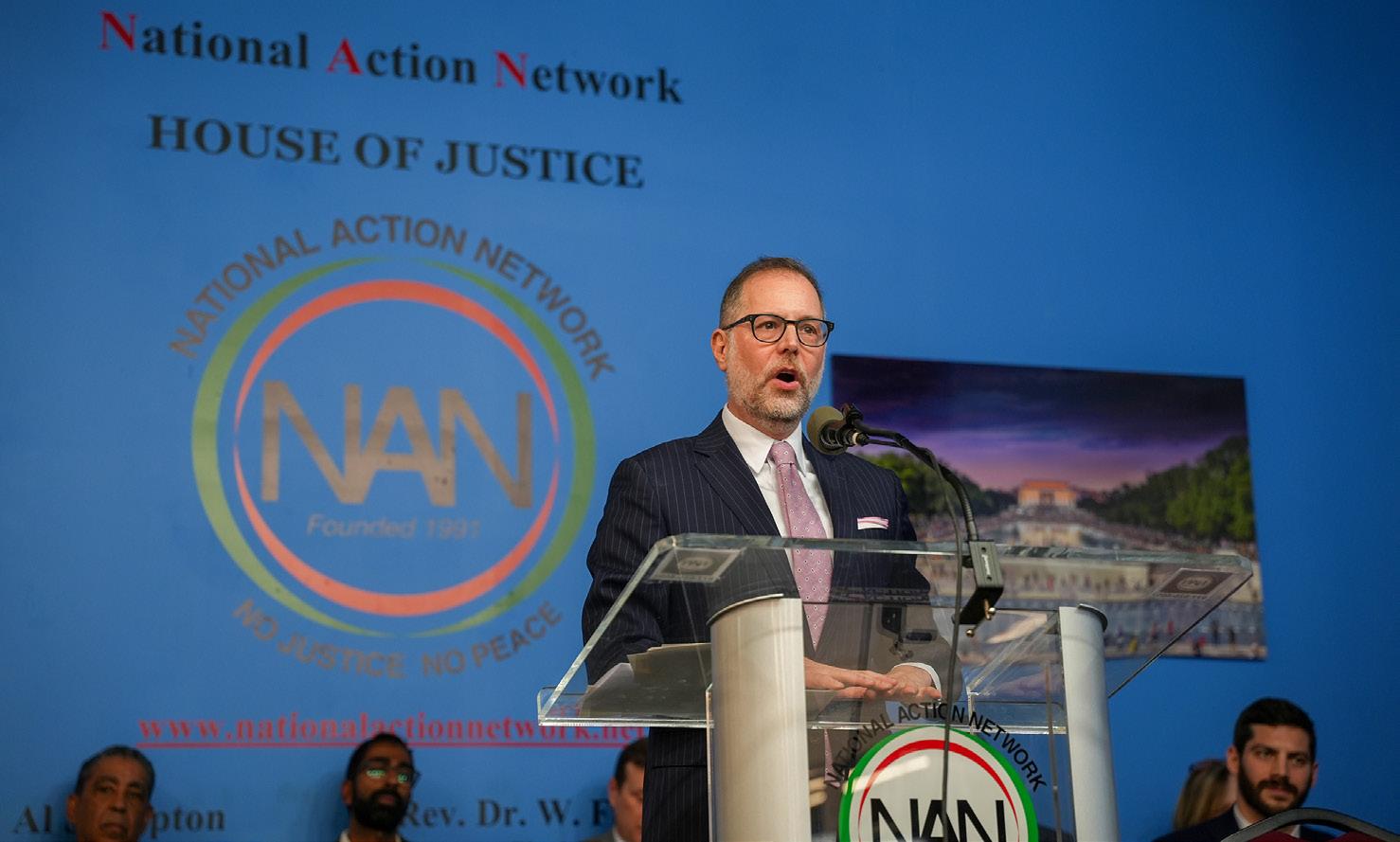
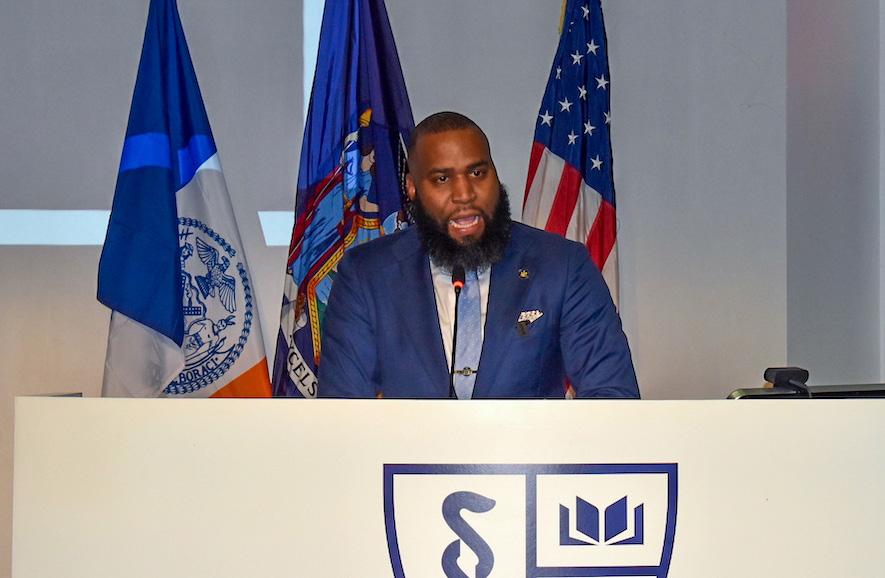
NYC Comptroller Mark Levine speaks at Harlem’s House of Justice. (Ayman Siam/Office of NYC Comptroller photo)
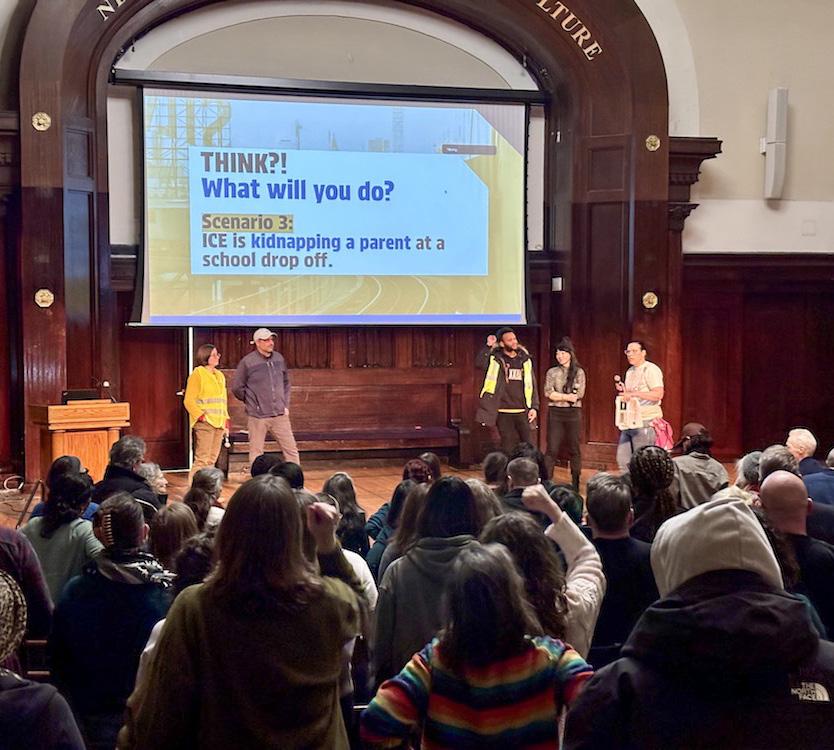
Hands Off NYC coalition holds massive Know Your Rights training at New York Society for Ethical Culture in Manhattan on Saturday, Jan. 31, 2026. (Ariama C. Long photo)
From detainee to commissioner: Stanley Richards to lead city jails
By REUVEN BLAU THE CITY
This story was originally published by THE CITY.
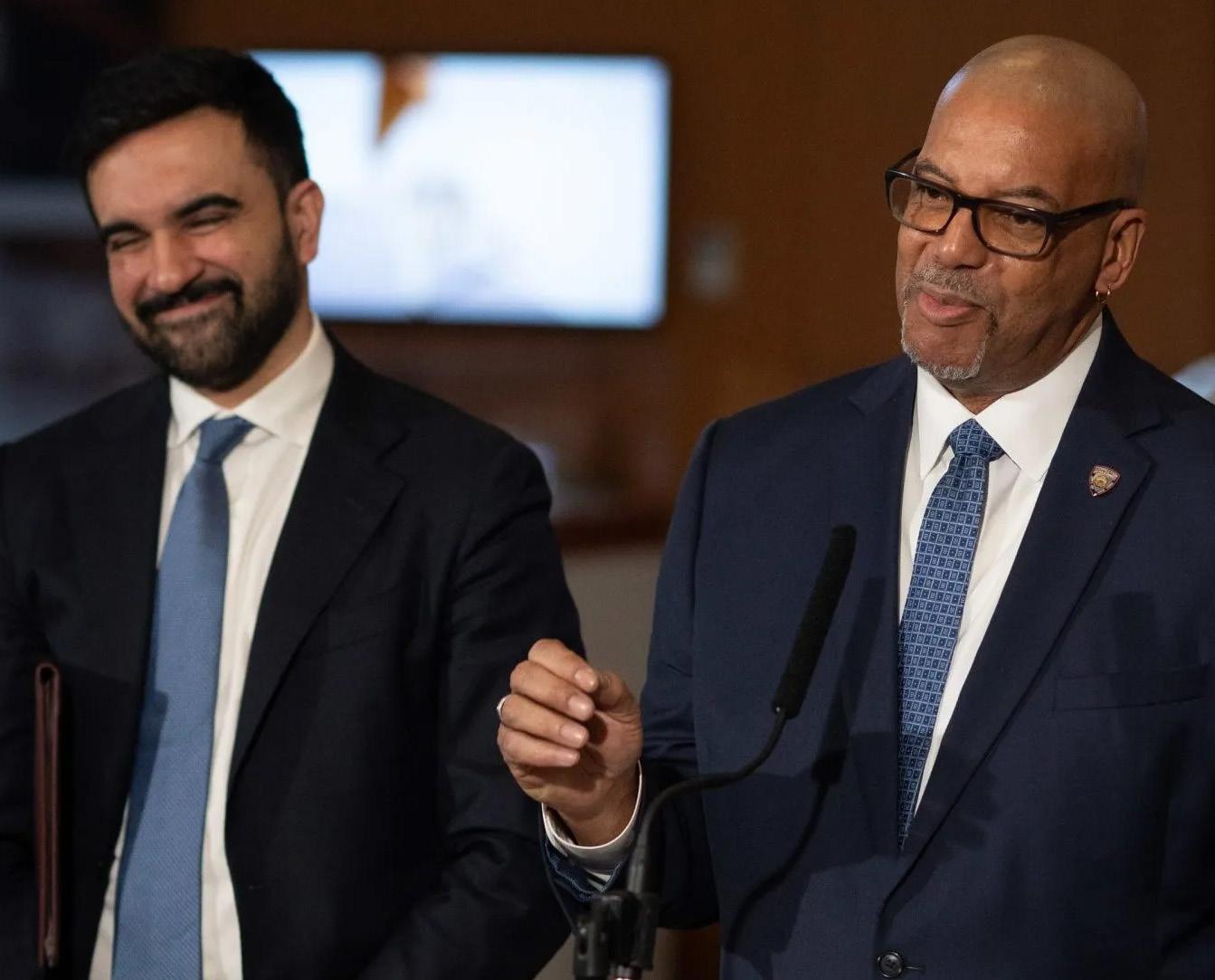
Stanley Richards, who did multiple stints on Rikers Island as a youth before going on to lead the city’s largest nonprofit assisting people who have been locked up, was announced on Saturday by Mayor Zohran Mamdani as the city’s Correction Department commissioner.
Richards takes over the department at a pivotal moment. Last week, a federal judge appointed a court-ordered remediation manager with sweeping powers to reform conditions at Rikers, which has been long plagued by safety issues and which the city is under pressure to shutter. He is expected to work closely with that remediation manager, Nicholas Deml, a former top detention official from Vermont, who will have final say over many key issues there.
“Today, we turn the page and we start a new era,” Richard told reporters Saturday night. “Under Mayor Mamdani’s leadership, we will chart a path of hope, healing, and transformation.”
Mamdani said he had not yet spoken to Deml, but his administration has been in touch.
“We look forward to working with the remediation manager on improving conditions in our city’s jails, both for those in custody and for correction officers,” the mayor told reporters. Richards echoed that
sentiment, saying Deml will work in “partnership” with him and his team.
Richards’s appointment marks a major change in direction from the administration of former Mayor Eric Adams, who vowed to bring back the use of solitary confinement and appointed a former police detective to lead Correction while the union represent-
ing its officers cheered on.
By contrast, Richards served as a deputy commissioner of the Correction Department during the last six months of the de Blasio administration, in between decades of work at the Fortune Society. During his previous stint at DOC, the Correction Officers Benevolent Association (COBA)
repeatedly attacked him and his boss, Vincent Schiraldi, arguing that they put the interests of people behind bars over officers and other jail staff.
“We will prioritize the safety of staff and incarcerated people,” Richards said Saturday, adding that he planned to “strengthen connections to community services” for housing, healthcare, and employment.
In a statement issued Saturday night, COBA President Benny Boscio said the union had long been willing to work with jail leaders, despite what he called “false narratives” portraying the union as an obstacle to reform.
Boscio said COBA expects Richards to respect the rights of correction officers and recognize that officer safety is central to the functioning of the city’s jails. “The jails cannot and will not operate as safely as possible if the concerns of our members are brushed aside,” Boscio said.
He added that the union hopes Richards will demonstrate a commitment to putting safety and security ahead of “any political ideology.”
Richards’s appointment was welcomed by leaders in the legal defense community.
Tina Luongo, chief attorney of the Criminal Defense Practice at the Legal Aid Society, said few people understand the city’s jail system “and what is needed to reform it” more deeply than Richards, pointing to his lived experience, previous senior leadership role in the Department of Correction,
Why the NYPD is being sued over allegedly rampant ‘driving while Black’ searches
By TANDY LAU Amsterdam News Staff
Westchester County resident Justin Cohen recounted stopping for food in the Bronx on his way to the casino with a friend on May 3, 2023. Police pulled him over, accusing the 35-year-old Black man of speeding. Then, officers allegedly searched him without his consent according to body camera footage.
“NYPD officers pulled me over in the middle of the night, subjected my friends and me to a humiliating search, and took my car away for no other reason than the color of my skin,” said Cohen in a statement. “This traumatizing experience has left a lasting impact on me. Now, anytime I get behind the wheel and see a police car, I feel my stomach drop.”
The officers did not find anything illegal but still arrested and detained him. They ultimately issued him a speeding ticket (which was later dismissed), before allegedly making him walk out of the precinct without his shoes. The Civilian Complaint Review Board, the city’s independent police oversight agency, investigated the incident and found the stop unlawful and racially biased.
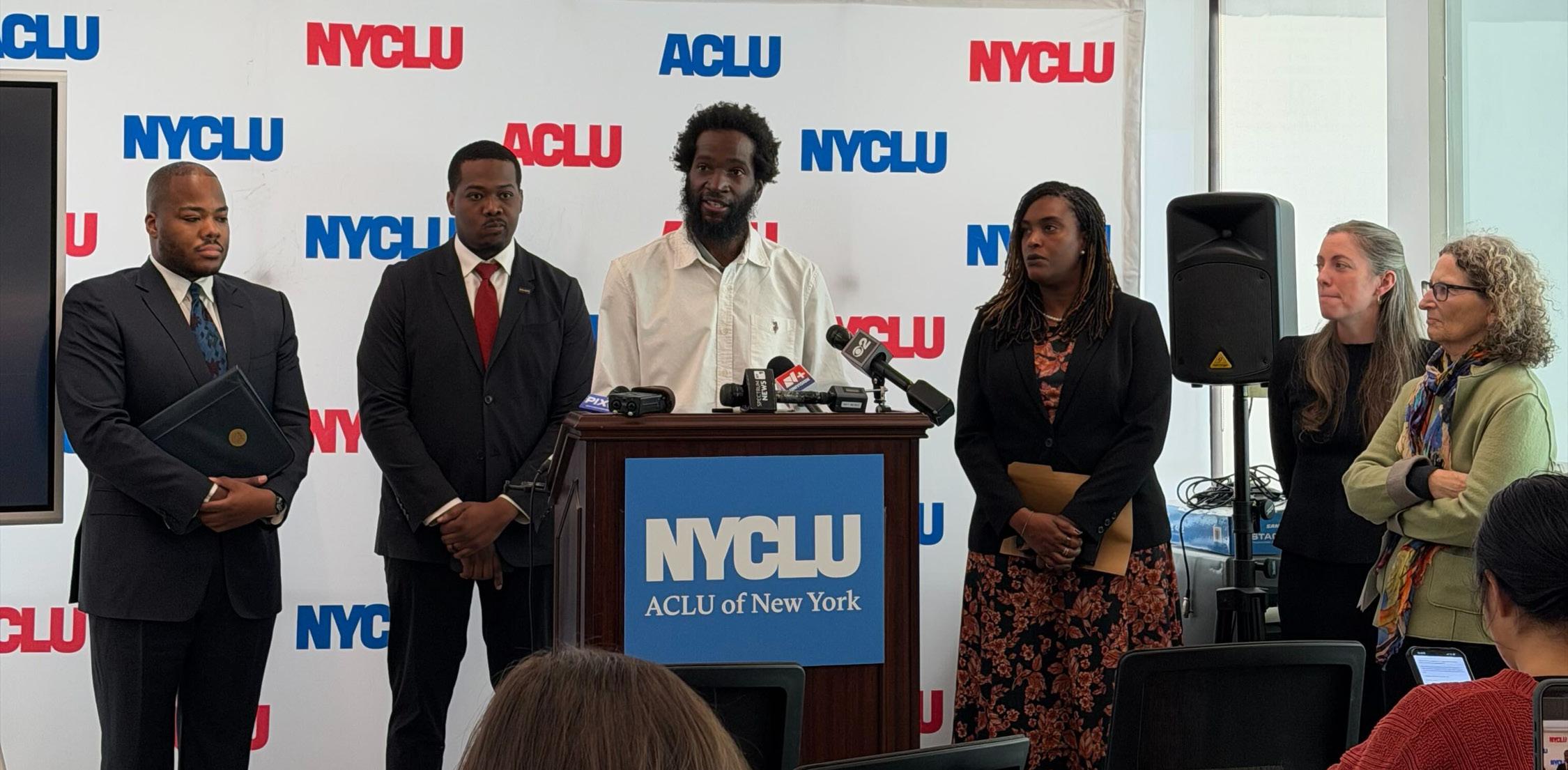
in 2023 at the NYCLU headquarters. (
Cohen now joins another Black man and the NAACP New York State Conference in suing the NYPD for allegedly targeting Black and Brown drivers in unconstitutional searches. The plaintiffs enlisted legal representation from the New York Civil Liberties Union (NYCLU), the Bronx Defenders, and corporate law heavyweight Milbank LLP. They announced the lawsuit on Thursday, Jan. 29, at the NYCLU offices. “What we’re seeing now is stop-and-frisk on wheels,” said NYCLU Executive Director Donna Lieberman. “The routine and discriminatory searching of Black and Brown drivers by the NYPD: the numbers speak for
See RICHARDS on page 25 See NYPD on page 25
Mayor Zohran Mamdani appoints Stanley Richards as commissioner of Department of Correction (Michael Appleton/Mayoral Photography Office)
Plaintiff Justin Cohen speaks about the NYPD allegedly stopping and searching him
Mohamed Tagnine/NYCLU)
Former Sierra Club Foundation director sues over internal racism that he says hinders its mission
By ASSOCIATED PRESS
NEW YORK (AP) — It seemed like a highprofile opportunity to lead an influential environmental group’s ambitious new push for green energy financing, so, in May 2023, Pedro da Silva joined the Sierra Club Foundation, the charitable arm of the nonprofit started by naturalist John Muir.
A former investment management professional, da Silva directed its “Shifting Trillions” program that aimed to move major banks’ investments away from the fossil fuel industry and toward climate solutions.
The effort emerged as George Floyd’s murder prompted the Sierra Club to place newfound emphasis on environmental justice. As institutions grappled with their perpetuation of white supremacy, the club apologized for its founder’s racist views and vowed to hire more diverse staff.
However, da Silva said the foundation’s commitments to racial justice did not extend internally. In a wrongful termination suit filed Thursday in California state court, the 29-year-old former employee alleged that normal workplace interactions got twisted into an unfair harassment complaint that leaned on racist stereotypes about predatory Black men. He took the firing as a form of retaliation
for the dissatisfaction he repeatedly expressed with the organization’s discrimination and lack of diversity.
“That’s what hurts movements so much,” da Silva told the Associated Press. “Especially organizations like these — they publish these statements about diversity being a strength and then they make it impossible for diverse leaders to survive.”
It’s been a tumultuous period for the Sierra Club, among the country’s oldest grassroots environmental groups. Facing a $40 million budget deficit in 2023, then-Executive Director Ben Jealous oversaw three rounds of layoffs that eliminated about 10% of the staff.
Jealous, its first Black leader, was ousted last August after staff accusations of harassment and bullying — a move Jealous considers “racial retaliation.” Jealous and da Silva are represented by the same civil rights and employment firm: Hadsell Stormer Renick & Dai LLP.
A Sierra Club Foundation spokesperson said the decision to fire da Silva was “carefully considered.” His claims “were not the cause of his termination, are antithetical to our values and policies[,] and are completely without merit, and we are in the process
The truth about Trump Accounts and Black wealth
By DEDRICK ASANTE-MUHAMMAD and DR. LATOYA B. PARKER Word in Black
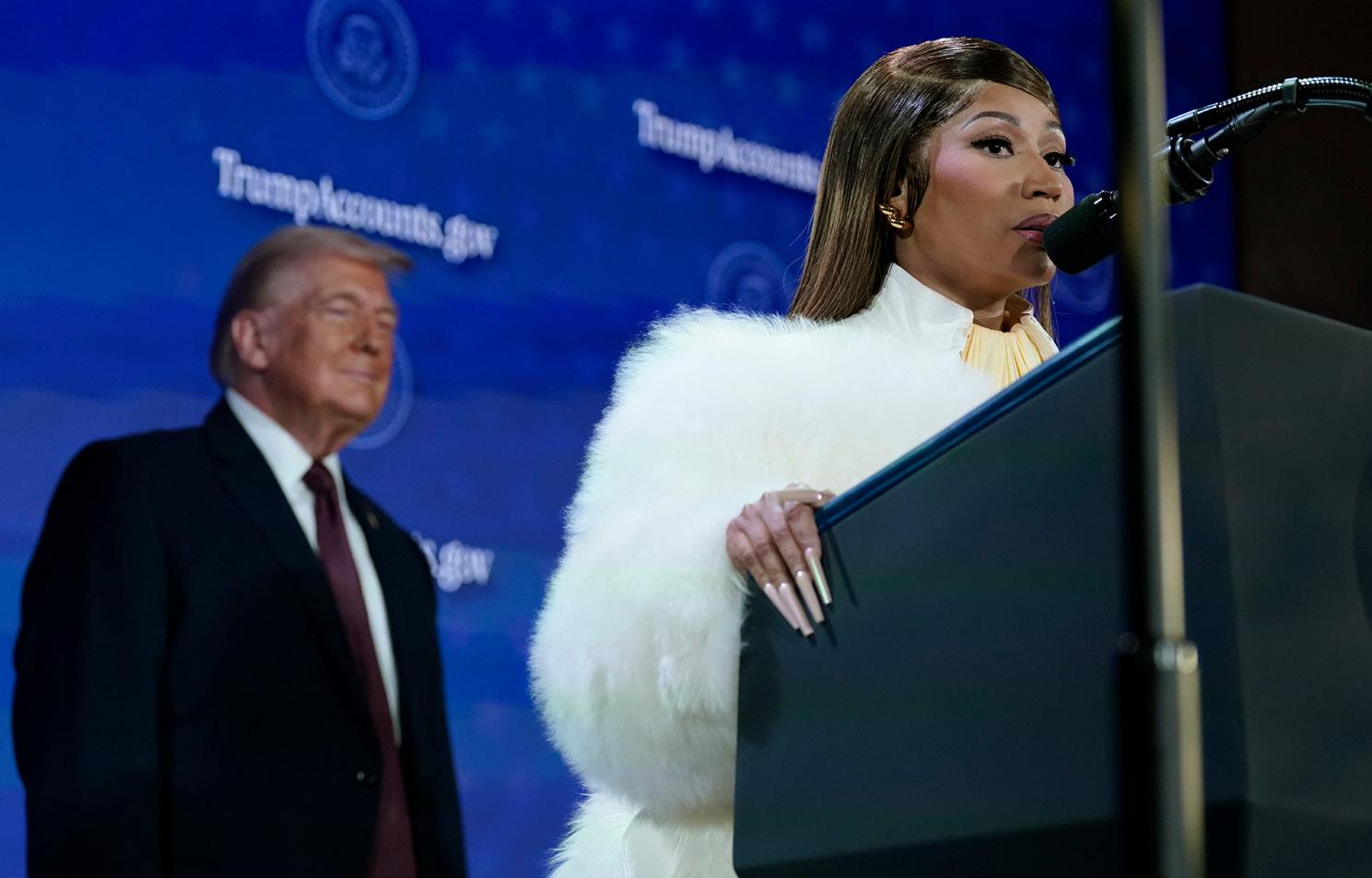
When President Donald Trump launched his new “Trump Accounts” for babies, he surrounded himself with billionaires, big banks, and a surprise guest: rap star Nicki Minaj. She has pledged hundreds of thousands of dollars, reportedly between $150,000 and $300,000, to fund Trump Accounts for her fans’ children, the so-called “Barbz babies.”
However, Trump Accounts are political fool’s gold: shiny and celebrity-studded on the surface, structurally designed to leave most Black children with crumbs while channeling real gains to families who already have wealth.
Every child born between 2025 and 2028 is eligible for a Trump Account, a tax-advantaged investment account seeded with $1,000 in public funds if parents opt in. Families, employers, and donors can then contribute up to $5,000 a year, invested in mutual funds and similar products. On paper, the goal is to give every child “skin in the game” and a nest egg for college, homeownership, or retirement.
How inequality gets built in Analysts warn that Trump Accounts are
likely to widen, not close, the racial wealth gap. In 2022, the median wealth for Black families was about $44,900, compared with $285,000 for white families. In Trump Accounts, balances grow with both market returns and additional contributions, so the children who gain the most will be those
whose families and employers can consistently add thousands of dollars a year.
A child whose family maxes out contributions could have a six-figure account by adulthood; someone whose family cannot add beyond the initial $1,000 deposit may end up with only a few thousand dollars.
Corporate America is already lining up to invest in these regressive investment accounts. As Politico recently reported, companies like Intel, SoFi, JPMorgan Chase, Bank of America, and BlackRock are pledging to match the Treasury’s $1,000 deposit for their employees’ children. Venture capitalist Brad Gerstner plans to send $250 to young children in Indiana, while Dell CEO Michael Dell has promised a staggering $6.25 billion contribution.
Who actually benefits
Those are real dollars, but they will flow first to families with steady jobs at large firms and access to financial institutions, not to low-wealth/income parents least able to save on their own. In other words, corporate Trump Account dollars follow good jobs, not the communities with the greatest need.
For Black families, who are more likely to experience low wages, income volatility, and far less family wealth than white households, that contribution structure is the policy’s fatal flaw. Trump Accounts effectively say: “You, too, can have a big nest egg, if you and your employer can save like the rich.” That is the essence of fool’s gold.
Decades of data show that Black households have only a fraction of the wealth of white households, even at similar incomes,
Sierra Club Foundation’s website is open on a laptop. (James Pollard/AP)
President Trump listens as Nicki Minaj speaks during launch of program known as Trump Accounts. (Jose Luis Magana/AP)
See SIERRA CLUB on page 27
See TRUMP on page 28
Kelly Farrow, connecting business, ministry, and activism
By JASON PONTEROTTO Special to the AmNews
Kelly Farrow has many jobs and a lot on her plate.
She is an ordained minister, lecturer, businesswoman, and social justice advocate. She manages her apartment building on W. 145th St. in Harlem, which has been a Housing Development Fund Corporation (HFDC) for four decades, and serves as its president.
When she is not attending to the building, Farrow’s work as a minister keeps her occupied. Liberation is at the center of her approach to ministry. Womanism, a theological discipline that centers Black women and is derived from Black Liberation Theology (a framework outlined by James Cone, who taught at Union Theological Seminary), is a core methodology she uses.
She inherited her apartment from her grandmother, with whom she split her time while growing up with another grandmother in the Bronx. But the Bronx formed much of her identity and she likes to say she is authentically South Bronx, and that community has always inspired her life as well as her preaching style.
“Hip-hop informs my theology…when I preach, my cadence of sounds,” said Farrow, 50. “My authenticity was birthed on the streets of the Bronx.”
She brings that theology to her work as minister of discipleship at Double Love Experience Church in Brooklyn and associate minister of the Convent Avenue Baptist Church in Harlem, where her great-grandmother was a founding member and which she attended growing up.
“When I show up in a church, or in the pulpit…I’ve never left myself behind; I’ve always shown up as my full self,” Farrow said. “I’ve never shrank.”
While attending City College, Farrow first realized she wanted to enter the ministry. While serving kids in youth ministry at Convent, she says she discovered that she needed to be herself in her approach. She received her master of divinity at Alliance Theological Seminary and was officially ordained in 2009. As her work is interdisciplinary with other areas, Farrow is able to get involved with social justice causes, like housing and education.
In 2018, Farrow established the Kelly U. Farrow Institute for Black Preaching and Education, where she has built a sisterhood through a program, the Circle of SacredFire, which provides education and mentorship for women of color who want to get into ministry. Mental health and wellness are also a focus. More than 50 different circles have taken place across different cities like Chicago and Atlanta, with 15 at colleges, including Morehouse College and McAfee School of Theology.
“Circle of SacredFire teaches women the methodology, how to command presence
Black
New Yorker
in the pulpit, how to put a good, strong sermon together, but also how to sister another woman so we diminish competition and that ‘crabs in a barrel’ mentality, how to walk through womanist ethics and how to embody being a womanist, and what that means, and how to be a good servant leader,” Farrow said. “I’m teaching them that when you bring a seat to the table, you bring an extra empty chair, someone to come sit with you.”
But Farrow is also committed to helping people with ownership in her HFDC building because she has been one herself from a young age.
Her Harlem grandmother, Barbara Jean, served on the board of the apartment building until her passing in 2021. Farrow says Jean was intentional about passing it down and made her a shareholder when she was around 10 years old. She was also instilled with a passion for social justice from her grandmother, who had been active in the Civil Rights Movement, participated in the 1963 March on Washington, and was a member of the 1199 nurses union.
“What granny taught me was that life insurance policies are the keys to getting Black people into generational wealth,” Farrow said. “When my grandmother passed away, she left us no debt. She left us a legacy of a building and money in the bank, and she had already paid for her own funeral.”
Under her leadership, the building has gained two new shareholders, after not adding any in 40 years.
“I’m in justice work, I’m in mission work,” Farrow said, “and that transcends areas for me, whether it’s in housing, whether it’s in the pulpit, whether it’s on the streets or the Bronx.”
THE URBAN AGENDA
By David R. Jones, Esq
New York Must Lead Where the Federal Government Has Failed
At a moment when federal immigration enforcement has descended into a crisis of lawlessness, New York has an opportunity—and an obligation—to lead the nation toward justice. That is why Senate Majority Leader Andrea Stewart-Cousins’ support for the New York for All Act deserves recognition. It is a principled, necessary stand at a time when the federal government’s abuses are literally killing Americans.
Across the country, and acutely in Democratic-led states like New York, ICE and Border Patrol officers have been routinely stopping, questioning, and detaining U.S. citizens and lawfully present residents. These are not isolated mistakes but part of a pattern of unconstitutional policing rooted in racial profiling, intimidation, and unchecked power. And now, the consequences have turned fatal.
We all know what happened last month: Renee Nicole Good and Alex Pretti were killed by federal immigration officers in Minneapolis, in separate incidents less than three weeks apart. According to multiple reports, Good was shot four times, including in the head, on January 7, 2026, after ICE officers approached her car; bystander video contradicts federal claims that she weaponized her vehicle. Her death has been officially ruled a homicide.
Then, on January 24, Pretti, an ICU nurse, was shot multiple times during what federal officials claimed was an armed confrontation. However, video verified by The New York Times and described in contemporaneous reporting shows Pretti standing among protesters with both hands visible—holding only a phone— before agents peppersprayed the crowd, tackled him to the ground, and opened fire. These killings were so egregious that federal prosecutors in Minnesota have threatened mass resignation over what they describe as illegal ICE operations and a Justice Department smear campaign designed to justify the deaths.
This is not simply federal overreach—this is federal misconduct. When ICE violates court orders nearly 100 times in a single month, as a federal judge reported, and carries out “militarized raids” that terrorize residents, the states must respond.
Last Friday, Governor Kathy Hochul introduced legislation that would effectively bar ICE from co-opting state and local law enforcement in civil immigration enforcement. The governor’s action – which follows new measures she unveiled in her annual `State of the State’ address to protect the constitutional rights of New Yorkers from federal overreach and hold federal agents accountable for unconstitutional action -- is significant because across the nation, ICE agents are using rough-handed search and seizure methods on citizens. And here’s the point: when federal agents abuse their authority, act aggressively and trample constitution-
al rights it erodes trust between communities and all law enforcement.
That is why the New York for All Act matters so profoundly.
The act (S2235A/A3506) would prohibit state and local agencies from cooperating with federal immigration enforcement in ways that enable abuses—such as turning over personal data, assisting in warrantless detentions, or participating in ICE operations that target people based on race, language, or perceived immigration status. At its core, the New York for All Act reinforces a simple truth: public safety does not come from violating people’s rights.
The bill also recognizes a reality that Minneapolis tragically illuminated: when federal officers operate with impunity, every resident—regardless of citizenship—is at risk. The killings of Good and Pretti were not just violations of immigration norms but of the most fundamental American principles: due process, equal protection, and government accountability.
Communities across the nation are not accepting these abuses. Anti-ICE demonstrations have erupted nationwide, including student walkouts and mass protests in New York City. New York, however, can do more than protest. It can legislate.
By advancing the New York for All Act, Majority Leader Stewart-Cousins is asserting that New Yorkers will not be conscripted into the federal government’s civil rights violations. She is also upholding a long-standing New York value: the belief that our diversity is a point of pride, not suspicion. The bill ensures that residents can access schools, hospitals, courts, and public services without fear of being profiled, detained, or funneled into a deportation pipeline simply because an ICE officer decided that their skin color or accent made them a “target.”
The killings of Renee Nicole Good and Alex Pretti are now part of our national conscience. Their names belong in the same conversation as past victims of abusive government force. But they also serve as a warning: if states do not draw clear boundaries, federal agencies that violate their mission will keep pushing until tragedy becomes routine.
And in this moment—when masked federal officers are stopping people on streets and at workplaces without warrants, profiling them because they speak Spanish, work lowwage jobs, or simply look “foreign”—New York must send a resounding message:
This is not who we are. And we will not be complicit. The New York for All Act is not just good policy; it is moral leadership. And it is exactly what this moment demands.
Kelly Farrow (Courtesy of Kelly Farrow.)
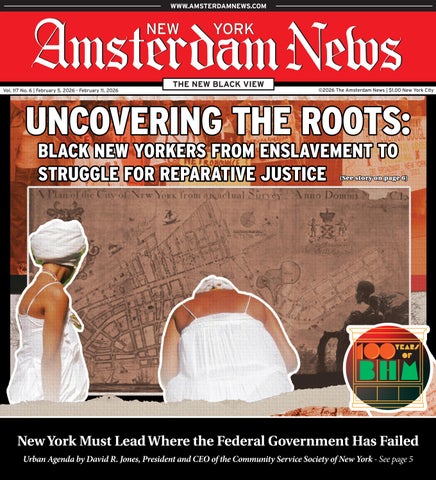
Uncovering the roots: Black New Yorkers from enslavement to struggle for reparative justice
As America approaches its 250th birthday, historians and activists are fighting to ensure a place in history for Africans and their descendants
By KAREN JUANITA CARRILLO Amsterdam News Staff
Africans — enslaved and free — helped shape New York City in the 18th century.
That fact was brought home to New Yorkers in 1991, when the literal bones of the city’s pioneer Black citizens resurfaced as the African Burial Ground was uncovered in lower Manhattan.
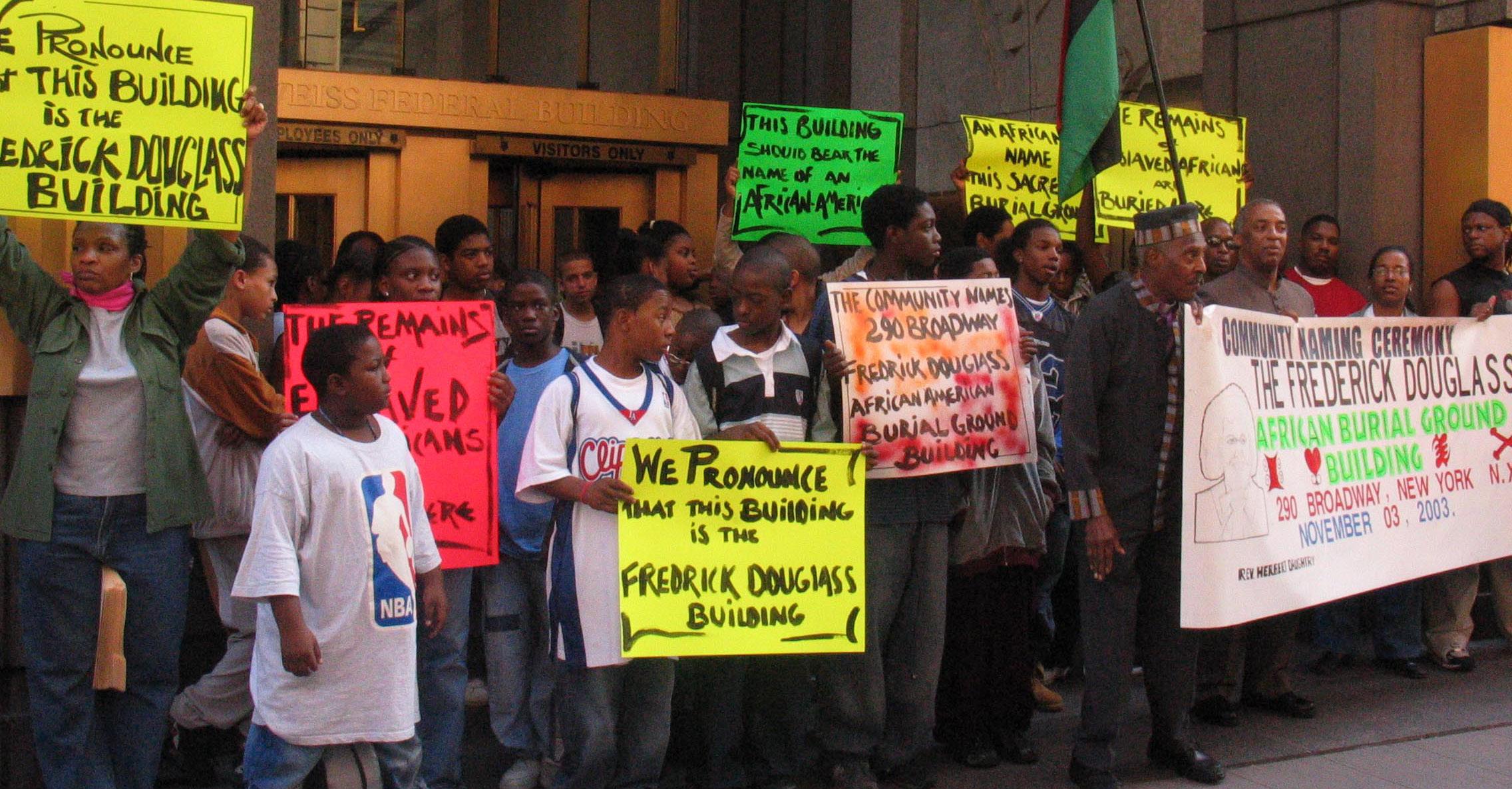
The subsequent decades-long fight to maintain the sanctity of the six-acre African Burial Ground centered on the importance of highlighting the extent of Black slavery in colonial New York — a fact that had long been forgotten — and the free communities that had formed here.
That fight has been a struggle to tell the stories of Black people in New York that are often forgotten because so much of the city’s Black population came during the Great Migration or in the waves of immigrants who arrived in the 20th century.
Since 2024, however, New York State’s Reparations Commission has taken on the task of documenting Black New Yorkers’ past and present by collecting public comments, holding hearings, and conducting research. Questions of justice, acknowledgment, and historical repair are the main issues under debate.
“We’re still gathering data and listening to communities across the state,” explained Seanelle Hawkins, chair of the commission. “The trauma of history is still evident today, and the process of redress must address not just compensation but also policy change and programs that create real opportunity.”
The commission, signed into law by Gov. Kathy Hochul on Dec. 19, 2023, is scheduled to deliver its recommendations to the governor and the legislature by early 2027. It will chronicle centuries of racial injustice in New York and connect that history to actionable steps for justice today.
Black life and labor in 18th-century New York
The roots of New York’s current racial and economic divides stretch back 250 years, to when the labors of Black New Yorkers — those held in slavery and those who were free — helped shape the city’s development.
Historian Leslie M. Harris described 18th-century New York as a “slave city” in her book, “In the Shadow of Slavery” — it was second only to Charleston, South Car-
olina, in the number of enslaved residents living there. Harris said New York at that time had a wide variety of people of African descent. “Slaves brought to Manhattan reflected a variety of backgrounds,” she wrote. “The Royal African Company imported slaves from the British Caribbean islands of Jamaica, Barbados, and Antigua. Dutch merchants continued to import some slaves from the Caribbean island of Curaçao. Slaves directly from Africa came from the Gold Coast, the Bight of Benin, the Bight of Biafra, and the Congo.”
These Africans, made up of many ethnic groups and coming from many nations, were the hands that built colonial New York when it was still called New Amsterdam, and ultimately became an important part of building its economy.
“Slavery was foundational to life in New York City,” Marquis Taylor, research assistant at the Tenement Museum, said in an interview. “The labor of enslaved people was central to the city’s development. People were doing all kinds of work — domestic service, building boats, working on the docks. It wasn’t the plantation model of the South, but it was just as pervasive.”
By the mid-1700s, more than 20% of New York City’s population was enslaved. The See story on next page
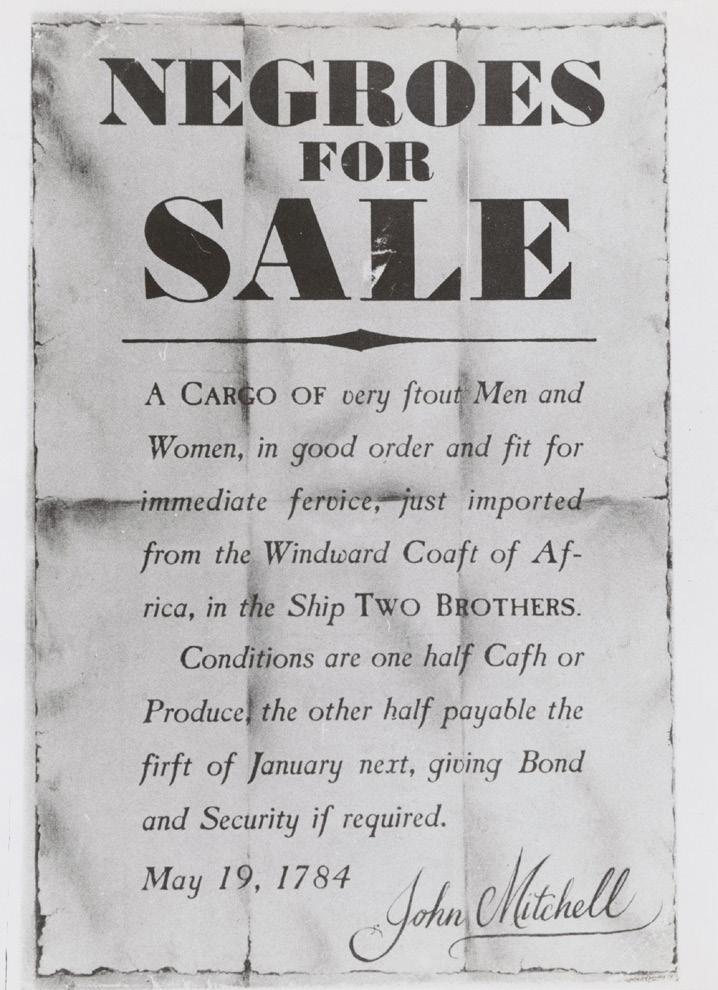
“Negroes for Sale”: Broadside advertising sale of shipment of slaves. (Courtesy of the Schomburg Center for Research in Black Culture)
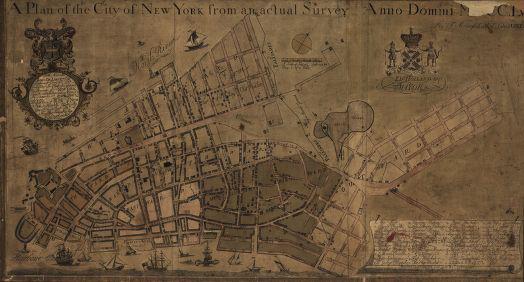
Survey map of New York from 1755, Maerschalck Plan, clearly delineates Negroes Burial Ground.
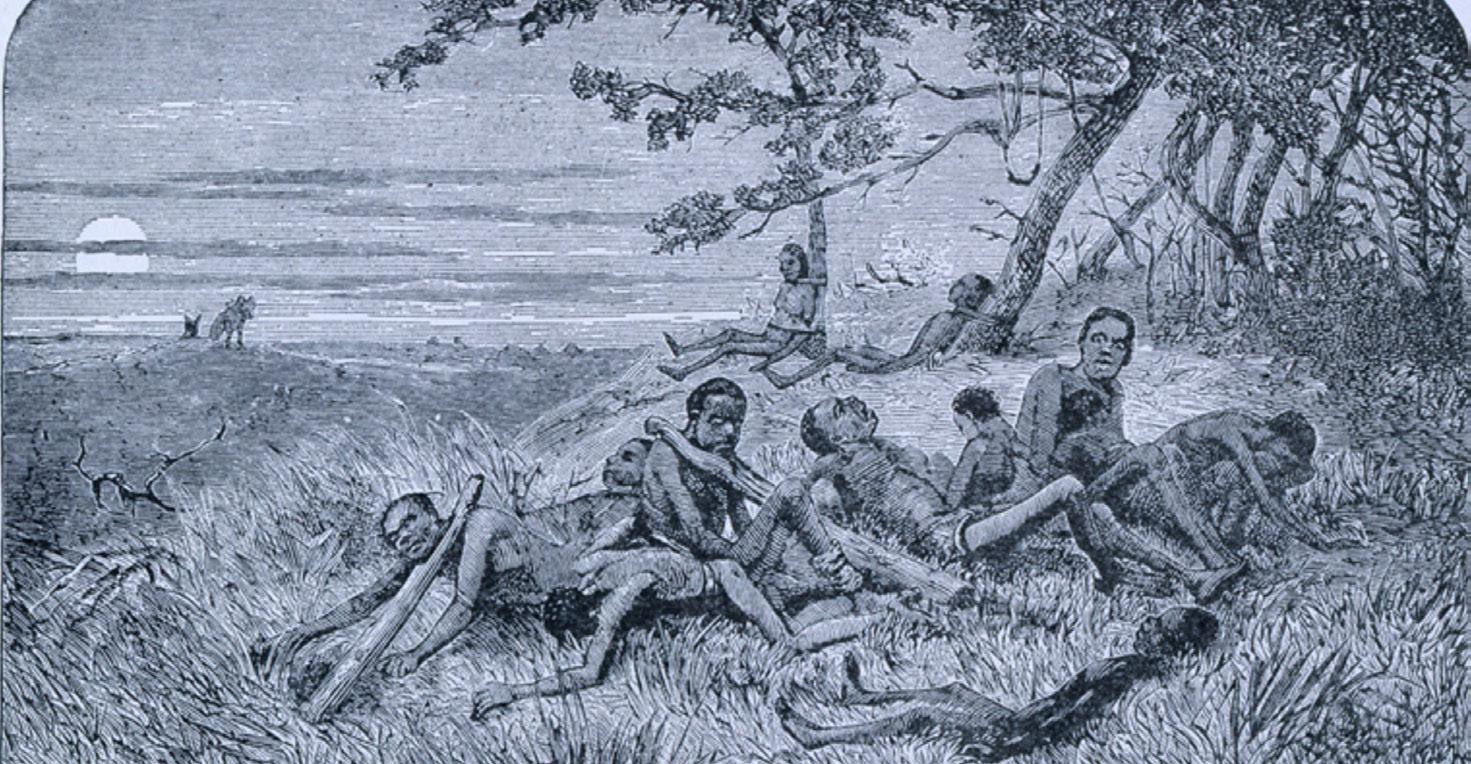
Left by slave traders to their fate. (Courtesy of the Schomburg Center for Research in Black Culture)
city’s slave market, at Wall Street between Pearl and Water Streets, was in operation from 1711 to 1762; some 60% of all enslaved Africans in the United States entered through New York’s port. Brooklyn, then Kings County, had the highest percentage of slaveholding homes in the North, according to genealogist Stacey G. Bell, president of the Afro-American Historical and Genealogical Society.
“Wall Street became Wall Street because of this trade in humans,” Bell said. “Modern-day companies like Brooks Brothers made their name by making clothing for — for the lack of a better word — house slaves. Their records are still out there — a direct link to this history. They made clothing for the horse drivers, the carriage men; they made clothing for the butlers [who] worked in the houses, for the handmaids, for the seamstresses, for the people who were in contact with the Europeans, because they couldn’t have them in rags made of potatoes while working in the house and working in close proximity to them. That’s how Brooks Brothers got started — and they’re still a company today.”
Enslaved Black New Yorkers loaded and unloaded ships, built roads and fortifications, refined sugar, manufactured rum, and performed skilled trades, among other jobs essential to creating what became the nation’s largest city.
“People often think of slavery as a Southern institution, but it was woven into urban life here,” said Taylor. “Many docks and shipyards we see today were built by enslaved people, who were sometimes ‘hired out’ to perform vital work across the city’s growing waterfront.” Domestic service was also a constant presence, with enslaved men and women cooking, cleaning, and caring for households in close quarters with their enslavers.
Yet even during slavery, Black New Yorkers were able to forge connections and commit acts of resistance. Early on, they created Black enclaves like the Land of the Blacks, an area just north of colonial New Amsterdam’s wall, where free and “halffree” African settlers owned farms between 1643 and 1716. Later, after the U.S. Revolution, communities like Seneca Village, established in what would become Central Park, and Weeksville, the town founded by James Weeks in what is now Crown Heights, Brooklyn, were established. “We have to look for people as property in records — like tax documents, insurance papers, even slave tags,” Bell noted as she explained the detective work required to reconstruct the lives of Black New Yorkers when researching genealogies. “We get stories from family Bibles, oral histories, and the breadcrumbs left in the archives.”
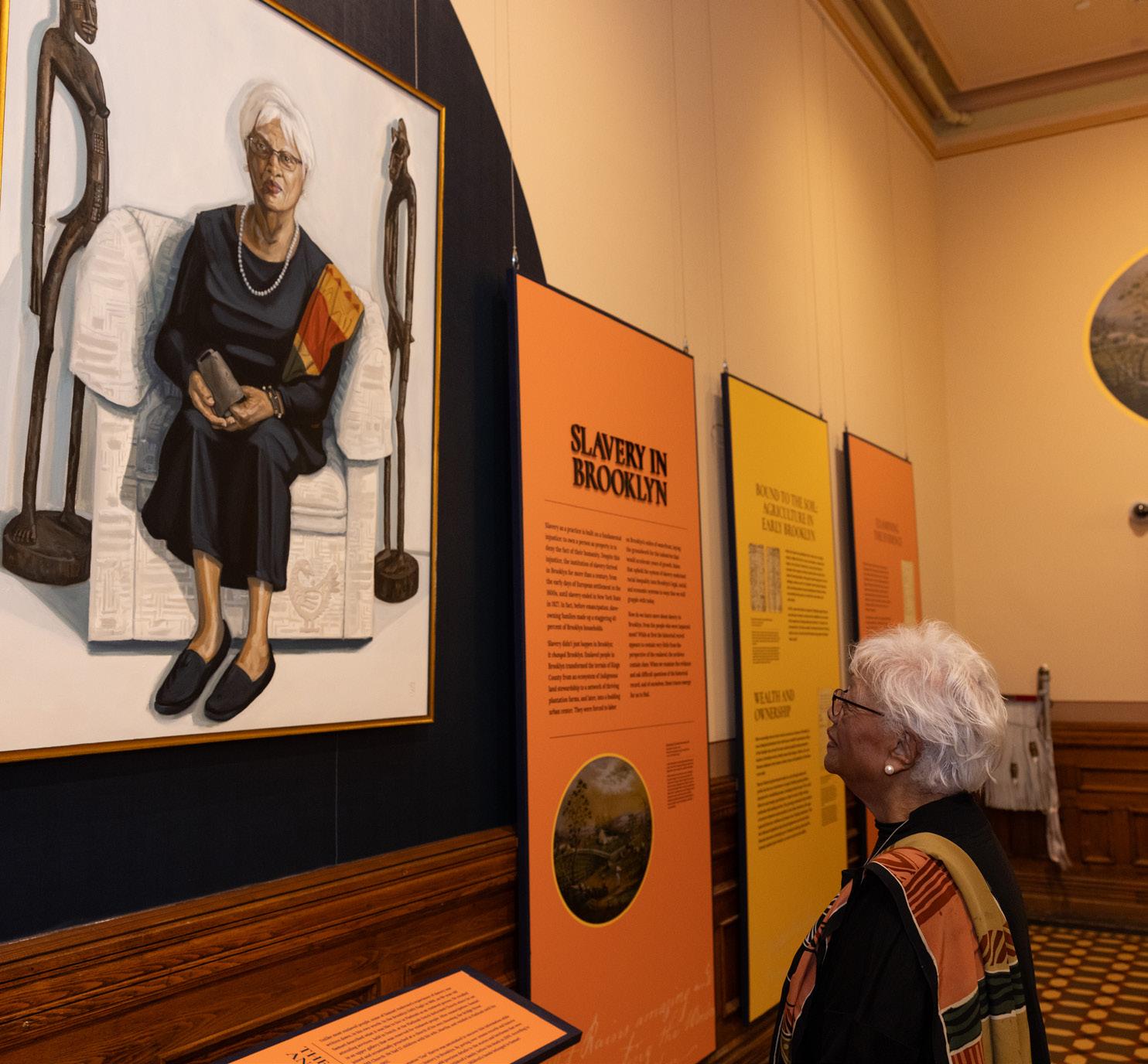
Recalling the exhibit “Trace/s: Family History Research and the Legacy of Slavery,” on view at the Center for Brooklyn History last year, Bell added, “When you walk into these historical societies or museums, you see paintings of enslavers, but rarely of
us. That’s why we centered our exhibition around the descendants of enslaved people — like Mildred Jones — so our story is finally told on our terms.” The diversity of Black experience was always present. “Every family had to do what was best for them, whether to flee with the British during the Revolution, stay and build new lives, or resist in ways large and small.”
Resistance, revolution, and the path to freedom
Two and a half centuries ago, the American Revolution transformed the city’s Black population. When British forces occupied New York in 1776, thousands of enslaved people took the opportunity to escape, encouraged by British promises of freedom.
“Life was hazardous,” said Taylor. “The September 1776 fire destroyed much of the city. Food and clean water were scarce, and disease was rampant. But the upheaval gave Black people a chance to negotiate for freedom — whether by working for the British, joining the Patriots, or seeking new lives elsewhere.”
The city’s Black residents were never a monolith. “Some joined the Loyalists, hoping for emancipation, while others cast their lot with the Continental Army or simply tried to survive,” said Taylor. “The era was complex: Everyone was searching for the best path to freedom and stability.”
After the war, Black Loyalists accepted British offers to move to places like Nova Scotia.
The end of British rule did not bring immediate freedom — those who remained in the new United States remained enslaved.
In this area, they were still forced into both urban and rural slavery: In Manhattan, enslaved people tended to do both domestic and urban labor, and lived close to their enslavers; in the other boroughs, plantationstyle slavery meant a higher percentage of white households held slaves. “There were
free people of color communities, and the legacy is still present in places like Van Cortlandt Park, which was once a plantation,” Bell said.
New York’s Gradual Emancipation Act of 1799 only freed those born after July 4 of that year, leaving many still in slavery for decades until final emancipation in the state on July 4, 1827. To commemorate this final end of slavery in New York, Abolition Commemoration Day is observed annually on the third Tuesday of July.
Historical records rarely tell the complete story of Black New Yorkers. “We have to look for people as property in banking records, tax documents, insurance policies — places where people were listed as taxable
or mortgaged,” Bell observed. “We rely on oral histories, family Bibles, and the fragments left behind.” Despite these obstacles, ongoing research and family stories continue to reveal the rich tapestry of Black life and resistance.
Historical memory and the push for reparations
For generations, the story of slavery in New York was overlooked or minimized in public memory. The discovery of the African Burial Ground in lower Manhattan in 1991 and the “Slavery in New York” exhibition at the New-York Historical Society (2005–2006) forced a citywide reckoning, See ROOTS on page 29
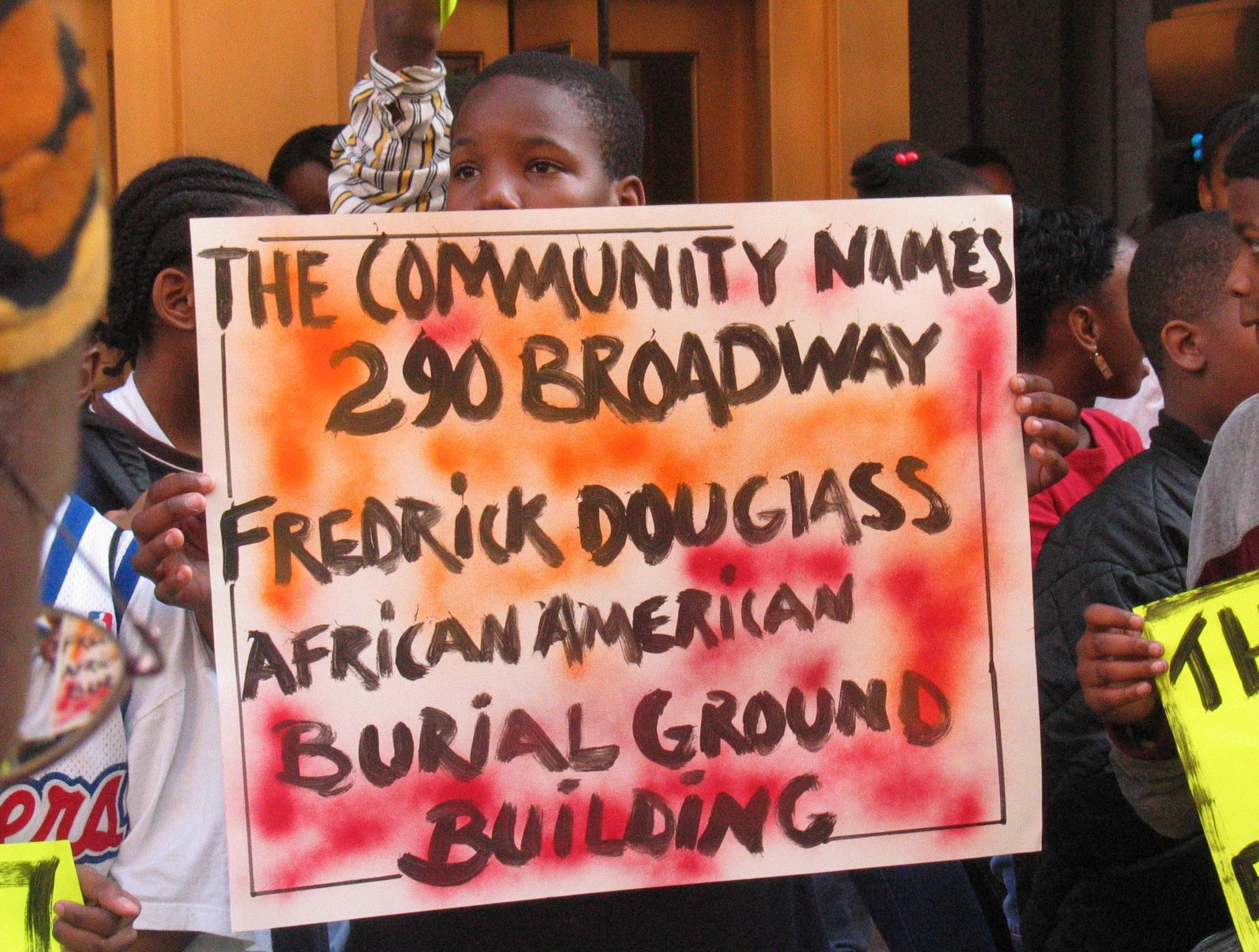
In 2003, students from Brooklyn’s Susan McKinney school marched to push for re-naming of 290 Broadway as African Burial Ground building. (Karen Juanita Carrillo photo)
In 2003, students from Brooklyn’s Susan McKinney school marched to push for re-naming of 290 Broadway as African Burial Ground building. (Karen Juanita Carrillo photo)
How Black banks have fought injustice and created currency for the culture
Solutions That Empower is an editorial series spotlighting financial empowerment and racial equity. We’ll feature changemakers, community voices, and practical tools that help our readers build wealth, access resources, and drive real change.
By ARIAMA C. LONG Amsterdam News Staff
Throughout U.S. history, Black-owned banks have played a pivotal role in counteracting systemic racial injustices. Although they have declined in numbers over the decades, dozens are still in operation and want to be a part of strengthening Black communities.
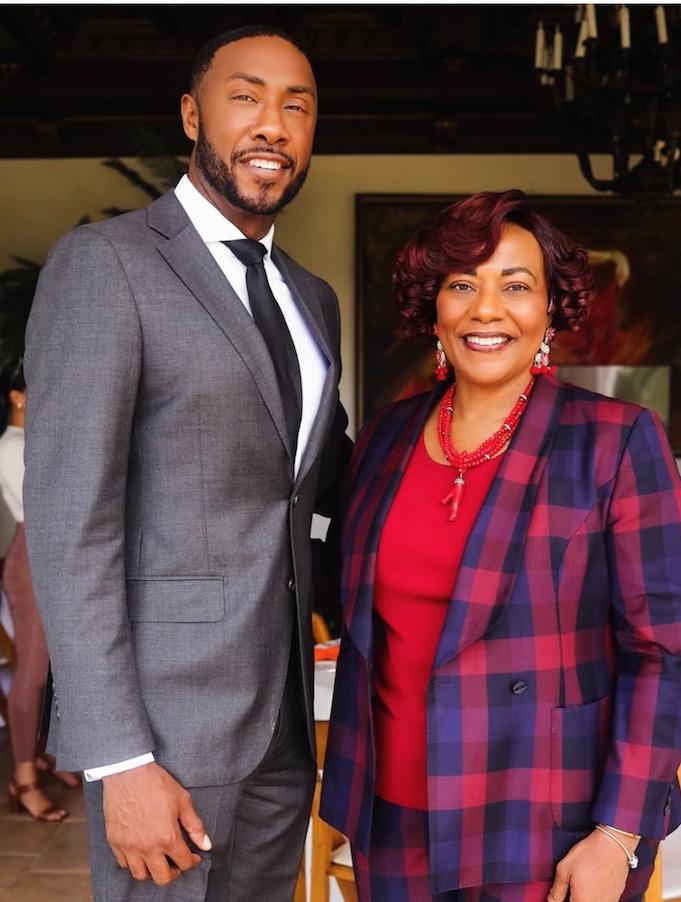
One of the nation’s newer Black banks is Redemption Bank, formerly Holladay Bank & Trust, in Salt Lake City. It became the first Black-owned financial institution in the Rocky Mountain region in 2025. Co-founder Ashley Bell, a former advisor to President
Donald Trump, launched the bank in partnership with Bernice A. King, daughter of Rev. Martin Luther King Jr. In many ways, Redemption is picking up where King left off just before his assasination, in calling for a Black banking movement, said Bell.
“The reality is that communities don’t have access to banks that are FDIC-insured, regulated banks. If you don’t have one in your neighborhood, that’s the equivalent [of] having a banking desert,” said Bell in an interview with the Amsterdam News.
Currently (as of Sept. 30, 2025), there are 24 federally insured Black-owned banks in the U.S., according to the FDIC’s Minority Depository Institutions list. This does not include credit unions and other minority-run financial institutions.
The first year under the current Trump administration has seen a serious economic downturn for Black communities across the board, according to the most recent study from the Institute on Taxation and Economic Policy (ITEP). Black unemployment rose from about 6.2% to 7.5%, especially among Black workers who were federally employed and Black women. Federal support was taken away from disadvantaged businesses, and the disparity in Black homeownership has only
grown, according to the study. With the reality of a Black recession on the horizon, against the backdrop of Trump’s mass deportation agenda, Black banks have continued their legacy of fair lending and community activism. This is in large part because of a long practice of resiliency and perseverance in the face of immense odds and violence throughout
Black History Month Events to Attend in NYC Feb. 8-14
By TYRA WATTS Special to AmNews
As the 100th anniversary of Black History Month continues, here are some events going on in New York. From live comedy shows to viewing preserved footage of the Black Panthers, these events showcase the importance and excellence of Black history.
Tuesday, Feb. 10 — 4:00 p.m. - 4:45 p.m.
Brooklyn Public Library: Park Slope Branch 431 6th Ave., Brooklyn, NY 11215
The Brooklyn Public Library’s Park Slope Branch is hosting a “Jack and Friends Black History Month Celebration” concert with musical guest Conroy Warren. In this interactive performance, variations of jazz, calypso, and reggae will intertwine through singing and dancing. Registration for this concert will open 24 hours before it begins.
Wednesday, Feb. 11 — 6:00 p.m. - 8:00 p.m.
The City College of New York Shepard Hall Room 291 259 Convent Ave., New York, NY 10031
The City College of New York’s Documentary Forum, in collaboration with Third World Newsreel, is hosting a pre-
sentation at Shepard Hall called, “Black Panther Shorts — Digitally Preserved.” Newly digitally preserved films from the late 1960s will be shown. These preserved films include the historic Black Panthers. Third World Newsreel digitally preserved these films, including “Black Panther” (aka “Off the Pig”), “Mayday Panther,” and “Bobby Seale.” Not only will there be viewings of these films, but a special guest will be in attendance. The event is free, and you can get your tickets on Eventbrite.
Wednesday, Feb. 11 — 8:00 p.m.
651 ARTS, 10 Lafayette Ave., 4th Fl Brooklyn, NY 11217
651 ARTS is hosting a two-night celebration, “Memory, Intergenerational Sound & Living History,” bringing together Black elders and younger artists whose works reflect Black music and the ever-evolving shape of collaboration, care, and freedom of expression. The first concert, “For Amiri Baraka - David Murray Solo,” will take place on Wednesday, Feb.11. Murray will honor Baraka in this performance. Doors open at 7:30 p.m. and the performance will start at 8:00 p.m. The tickets are $25 per person. You can purchase your tickets on Eventbrite.
Thursday, Feb. 12 — 8:00 p.m.
651 ARTS, 10 Lafayette Ave., 4th Fl Brooklyn, NY 11217
For the second night of this two-night celebration, “Memory, Intergenerational Sound & Living History,” Blacks’ Myths, a music and research project led by bassist Luke Stewart with drummer Warren Trae Crudup, will explore Blackness on Earth and beyond alongside Marshall Allen, a 101-year-old saxophonist and leader of the Sun Ra Arkestra, an American jazz group originating from Philadelphia. Just like the first concert, doors will open at 7:30 p.m., and the performance will start at 8:00 p.m. Tickets are also $25 per person and available to purchase on Eventbrite.
Thursday, Feb. 12 — 11:15 a.m. - 12:45 p.m.
Hofstra University
The Toni and Martin Sosnoff Theater at the John Cranford Adams Playhouse South Campus
118 Hofstra University, Hempstead, NY 11549
Hofstra University will have former White House press secretary and senior advisor to former U.S. President Joseph R. Biden Jr., Karine Jean-Pierre, as a guest speaker as part of their Signature
the country’s history, such as the Reconstruction Era, Great Depression Era, Civil Rights Movement, and 2008 Great Recession.
To be unbanked and underbanked
A household is considered “unbanked” if there is no one with a checking or savings account at a traditional bank or credit union. Reasons cited for this are usually because someone doesn’t have enough money to meet minimum balance requirements, can’t keep up with account fees, doesn’t have the ID needed to open an account, wants more privacy, or simply doesn’t trust banks.
Many potential bank customers may use reloadable prepaid cards or online services, such as Venmo and Cash App, instead of traditional bank accounts. Nationwide rates of being unbanked are significantly higher among Black, Hispanic, and Native American households compared to their white counterparts, according to a 2023 Federal Deposit Insurance Corporation (FDIC) nationwide survey.
Similarly, a household is “underbanked” if someone has a regular bank account and a traditional credit card, but also uses money orders, check cashing services, or wires to pay most of their bills and receive income. They often have alternatives to mainstream credit, such as personal loans, rent-to-own services, pawnshops, tax refund anticipation loans, or payday loans with high interest rates. More than one in five Black, Hispanic, and Native American households were considered underbanked when compared with one in 10 white households in the U.S, according to the FDIC report.
“...when we talk about communities that are underbanked, it is those that live in banking deserts where the majority of the options are expensive to get access to their funds, which highlights the American enigma that it is expensive to be poor,” said Bell.
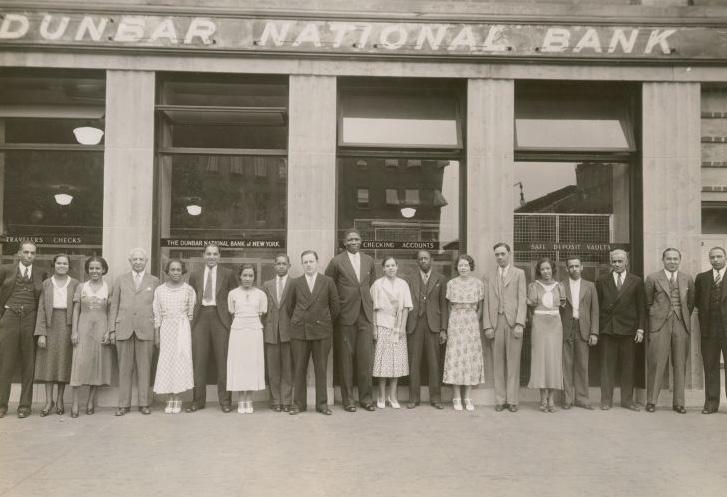
Staff of Dunbar National Bank, Harlem, New York City, circa 1930. (The New York Public Library, Schomburg Center for Research in Black Culture PHOTO)
Rev. Dr. Martin Luther King Jr.
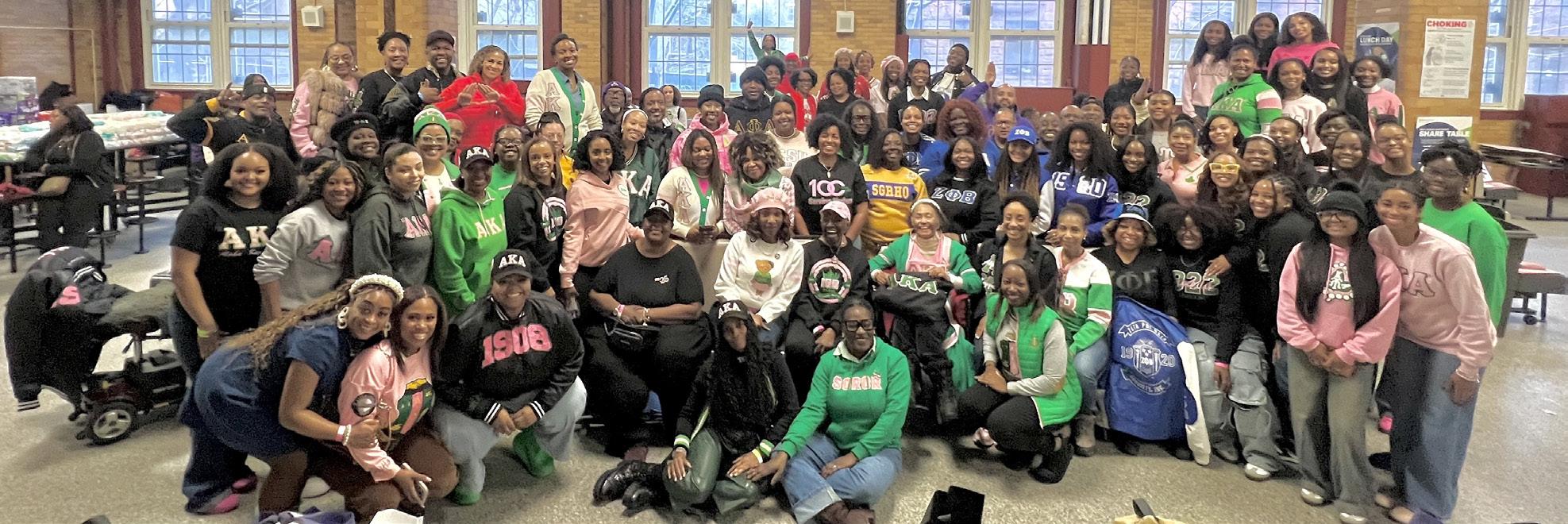
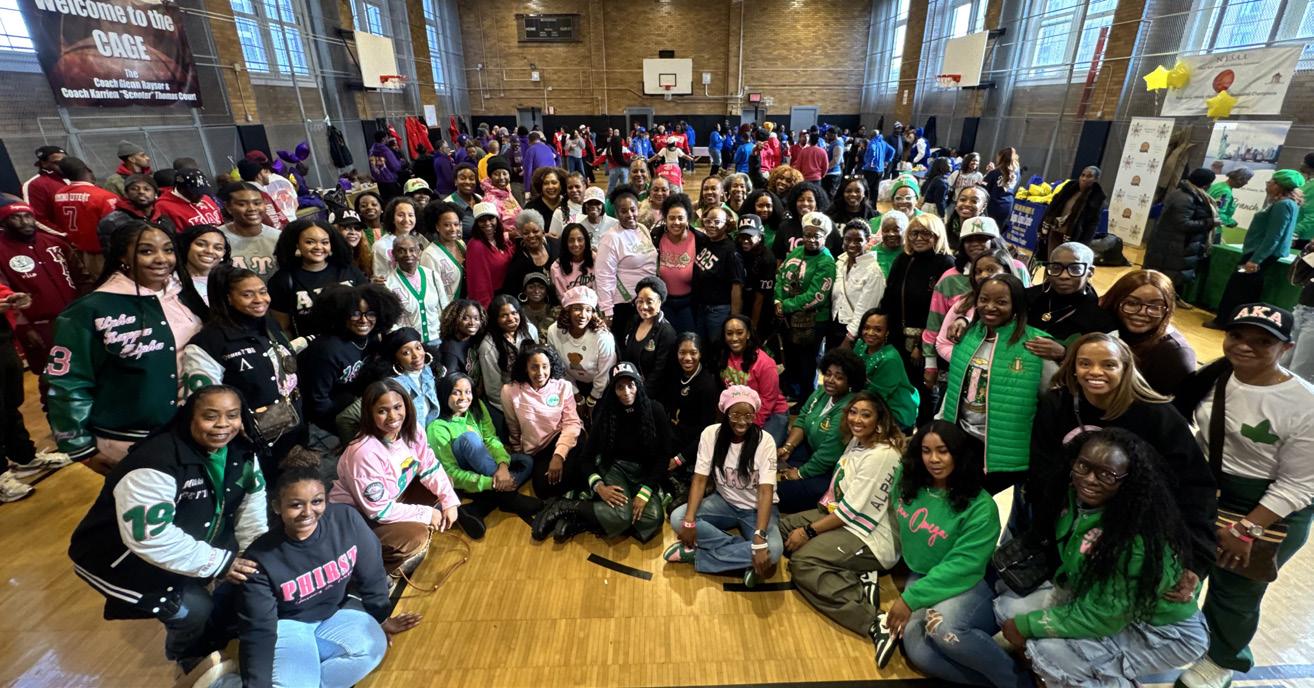
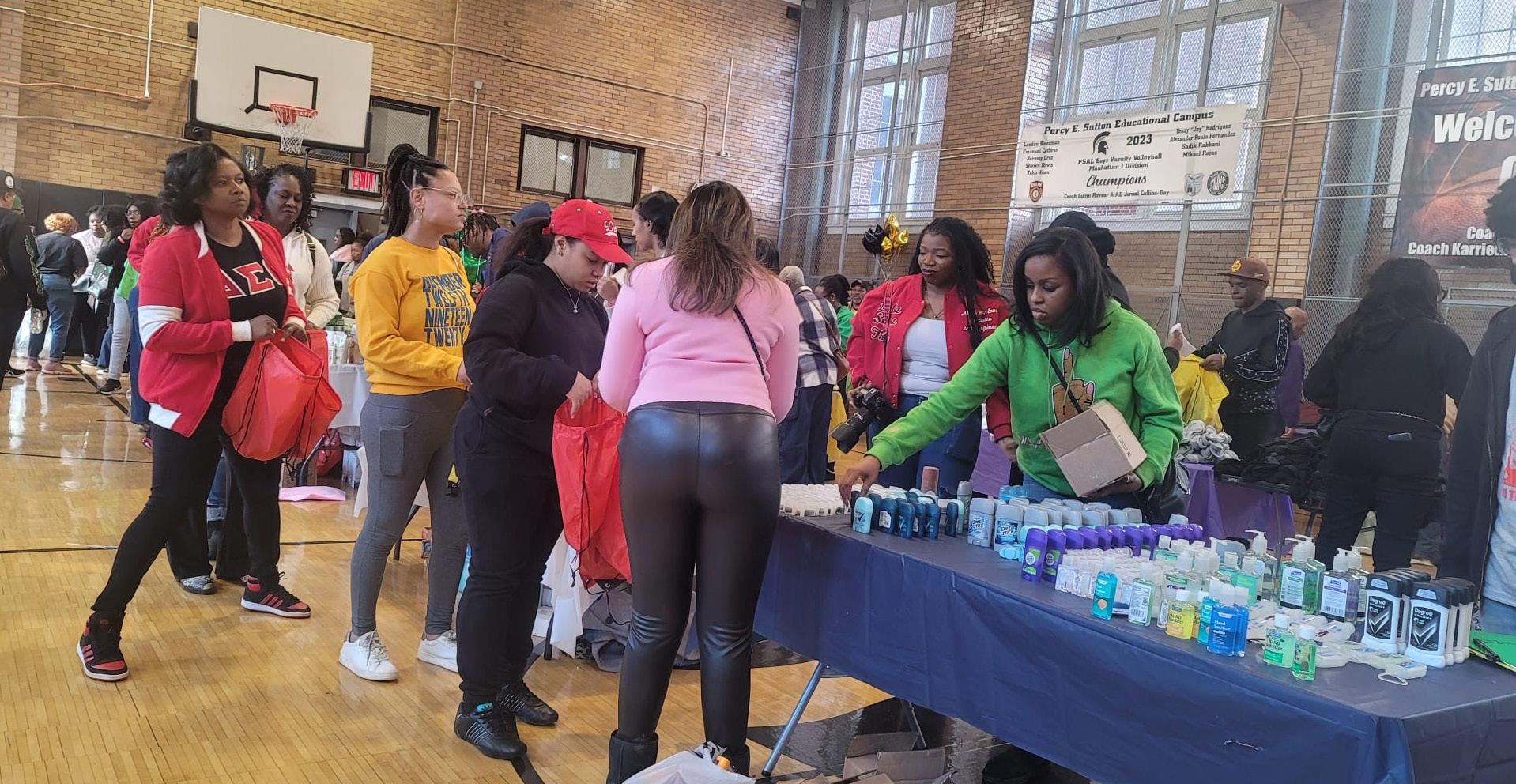
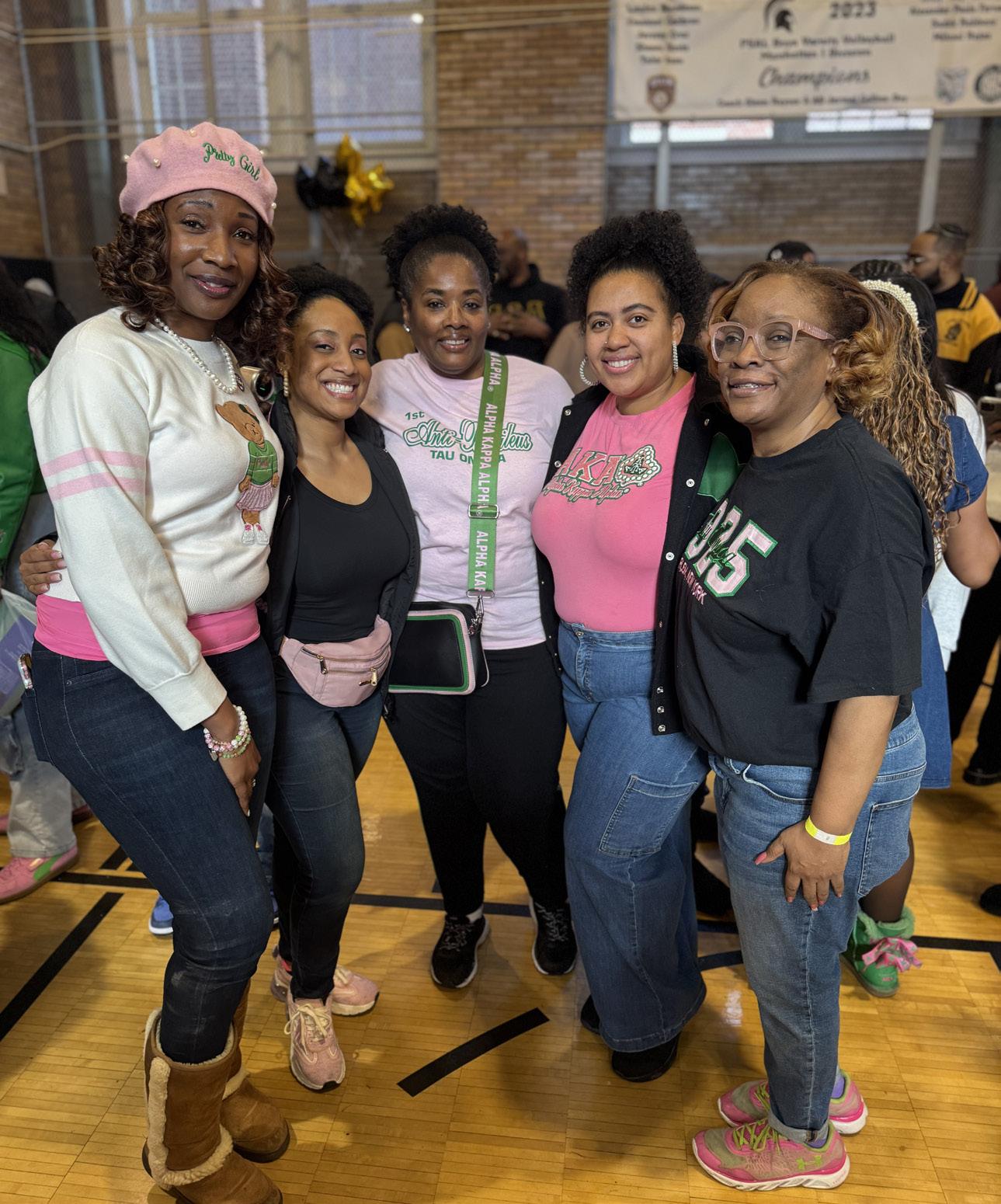
Divine Nine Organizations united with community partners during a Day of Service event in honor of the memory and enduring legacy of the late Rev. Dr. Martin Luther King Jr. Tau Omega Chapters of Alpha Kappa Alpha Sorority, Inc. hosted the event with Black Greek Letter Organizations, community partners, and supporters at the Eagle Academy for Young Men of Harlem. The theme of the event was We Are One.
Members of Divine Nine Organizations, community partners, and supporters as collective efforts made a difference during MLK Day of Service. (Photos by/courtesy of Regina Fleming, member of Tau Omega Chapter of Alpha Kappa Alpha Sorority, Inc.)
(L-R): Nia Medder, chair of Strengthen Our Sisterhood; Bianca Pierre-Louis, co-chair, Strengthen Our Sisterhood; Lisa Penzellna, vice president, Tau Omega Chapter, AKA Sorority, Inc.; Valerie Henderson, president, Tau Omega Chapter; and Effie McCartney-Donaldson, second vice president, Tau Omega Chapter. (Regina Fleming photo)
Members of Tau Omega Chapter of AKA alongside volunteers, Divine Nine organizations, community partners, and supporters whose collective efforts helped make MLK Day of Service a resounding success.
Members of Divine Nine organizations working together to coordinate and assemble care packages in support of MLK Day of Service initiative.
KAYLYN KENDALL DINES, MBA
NYSNA strike stalled; Brooklyn nurses call for aid
By KAREN JUANITA CARRILLO Amsterdam News Staff
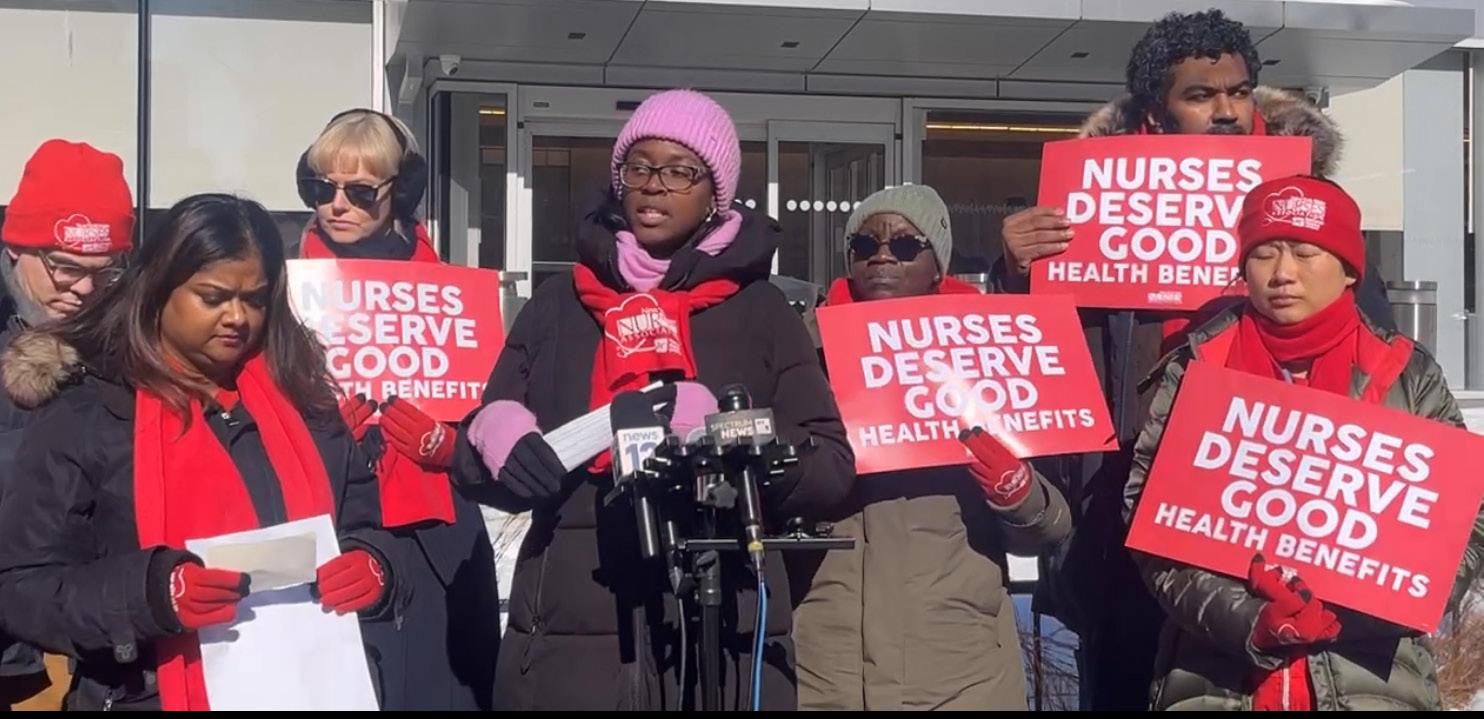
In the frigid fourth week of the historic New York State Nurses Association (NYSNA) strike, the union’s battle with local private hospitals for safe staffing pivoted to a rally for health coverage at The Brooklyn Hospital Center (TBHC), where nurses protested against their loss of health insurance.
NYSNA’s strike against the private hospitals, which began on Jan. 12, appears to have stalled over the past several days. Nurses from Montefiore, Mount Sinai, and NewYork-Presbyterian gathered at Manhattan’s Javits Center to go over their strategy after the union rejected what they termed “unserious” counteroffers from management on Feb. 2.
“The same greedy hospital executives that have left nearly 15,000 frontline nurse heroes outside in the bitter cold for more than three weeks now insult us with proposals that fail to address key issues: safe staffing and protections from workplace violence,” said NYSNA President Nancy Hagans.
Now, on top of the Javits Center negotiations, nurses at TBHC — who had initially avoided striking after reaching a tentative agreement with management — called for an emergency rally after their healthcare coverage was cut off on Jan. 31.
TBHC’s management has reportedly failed to make payments to the nurses’ healthcare and pension funds for three consecutive months.
“That’s why the nurses are outside today,” said Assembly Member Phara Souffrant Forest, a nurse herself, “and they have to have their assembly member standing with them to say, ‘That’s not right! It is not okay to have NYSNA nurses who provide health care for the people in this building behind me every day, not have healthcare to protect them. Are they not humans too? Are they not people too?
“As the representative for this hospital,” she continued, “I know I’ve also fought hard for state funding to ensure that the hospital, the institution, makes good on its promise to the community, to continue to be stewards of healthcare and provide healthcare right here to the neighbor-
hood that needs it the most. But as a nurse, I know that these workers are the people who keep the hospitals working.”
She called on Gov. Kathy Hochul to help the striking nurses.
“The nurses that are on this line right now are the people who are keeping this hospital progressing. They show up! They show up, and I know that the hospital has to make tough choices between payroll and benefits, but these nurses show up each and every time. So, I call on my governor and her executives and her agencies to show
up for us,” she said.
TBHC has faced financial challenges for the past few years. This past November, the hospital’s CEO, Gary G. Terrinoni, told NY1 the organization would consider filing for bankruptcy. Recent reports are that the hospital’s administration and local officials are requesting $160 million in state aid from Gov. Hochul’s office to avoid closure.
The irony of the situation was not lost on Rehana Lowtan, a TBHC nurse.
“This is happening during one of the worst flu outbreaks in the city’s
recorded history,” Lowtan told the crowd. “As nurses, we care for the most vulnerable workers and keep the community safe, yet we have lost our healthcare coverage. This is happening to nurses who care for this community and the whole of New York. As healthcare workers, we can’t do that when we don’t even have healthcare ourselves. If we’re not healthy, how can we care for the population?”
Council Member Lincoln Restler pointed to a systemic failure in how the state distributes aid, noting that TBHC serves a largely Medicaid and Medicare-dependent population but lacks the financial cushions of wealthier institutions.
“This is a safety net hospital that the working class of Brooklyn depends on every single day,” Restler said. “But unlike other safety net hospitals like Maimonides or One Brooklyn, which get tens of millions from the Department of Health in Albany, Brooklyn Hospital Center hasn’t gotten a penny.” The Brooklyn Hospital Center did not respond to the Amsterdam News’ request for comment by deadline.
Why unemployment trends among Black people are pointing to a Black recession
By KAREN JUANITA CARRILLO Amsterdam News Staff
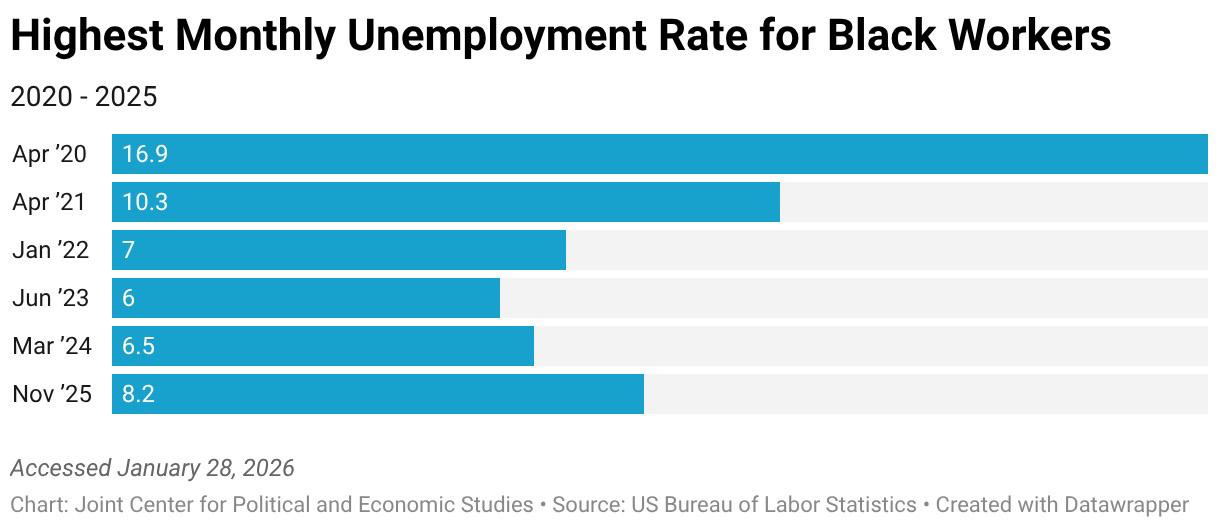
The number of unemployed Black workers reached a dangerous high in 2025. If other ethnic groups were posting unemployment numbers like these, the Joint Center for Political and Economic Studies said in a recent analysis, the whole nation would be seen as facing an economic crisis.
Unemployment among U.S. Black workers reached 8.2% in November, more than double the highest rate for white workers that month.
The Joint Center, a leading U.S. public policy group for Black America, looked at Bureau of Labor Statistics data showing major job losses for Black workers in 2025. In 2024, Black workers had an unemployment rate of 6.9%, an increase from 6% the year before. The unemployment rate for all groups decreased to 4.3% from 4%, while white unemployment remained relatively insulated at 3.7%.
The trend is “alarming,” Gabrielle Smith Finnie, senior research
analyst at the Joint Center, told the AmNews. “I think it’s important for us to take note of what’s going on in the world, some impact factors, and how Black workers are definitely faring versus other demographics of workers –– and even all workers.”
In Nov. 2025, the Black unem-
ployment rate rose to 8.2%, its highest monthly level since Aug. 2021. By December, a total of 7.5 million U.S. citizens were unemployed, according to official statistics. “In December, the number of unemployed people was 7.5 million,” Finnie explained, acknowledging the numbers, “but sometimes we forget that
the data is people, right? There are people behind these numbers, and 7.5 million is, again, just alarming.” There are several reasons for the increase in Black unemployment.
Automation and the increased use of artificial intelligence have led to job losses in sectors like food service, retail, office support, and trans-
portation, where Black workers are overrepresented. On top of that, the Trump administration’s federal job cuts at agencies like the Departments of Education, Housing and Urban Development (HUD), Veterans Affairs (VA), Health and Human Services (HHS), U.S. Agency for International Development (USAID), and Treasury have deeply affected the employment of Black women. Finnie explained, “Those federal job cuts have definitely impacted Black women, since Black women were overrepresented in the federal workforce in 2020. Black women made up nearly 12% of the federal workforce. We are in need of more data to analyze how many Black women are still in the federal workforce due to these cuts, but we cannot overstate the current and future impacts of the elimination of diversity, equity, and inclusion agencies and those federal layoffs on unemployment trends and the overall labor market as a whole.” Trade policy changes, like Trump’s
Assembly Member Phara Souffrant Forrest joined NYSNA members at The Brooklyn Hospital Center to protest their loss of health insurance coverage. (NYSNA photo)
Highest Monthly Unemployment Rate for Black Workers (Bureau of Labor Statistics | Graphic: Joint Center for Political and Economic Studies)
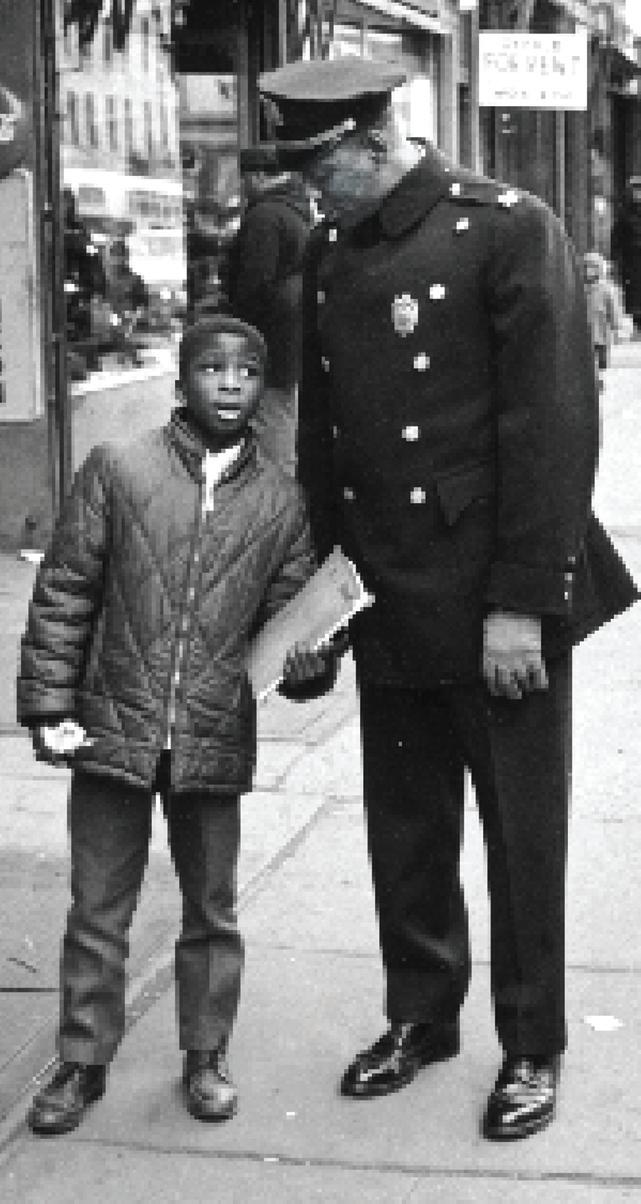
In August 1964, Capt. Lloyd Sealy addresses the 28th Precinct police officers in his command.
Recent Democratic victories in Texas may not be a harbinger that things are about to change for Democratic races across the nation, but they are a sign that the far right’s hold on American politics could be cracking. Christian Menefee’s win in a U.S. House runoff election last Saturday is one such sign. After the 18th Congressional District position was left vacant since last March by the death of Rep. Sylvester Turner, the people there had no legislative representation. With the former Harris County Attorney’s victory, the Republican party’s slim majority has now thinned to 218-214. “You’ve gone nearly a year without hearing from the people of the 18th Congressional District of Texas,” Menefee said after the election, speaking directly to Donald Trump. “The results here tonight are a mandate for me to work as hard as I can to oppose your agenda.”
Elsewhere in Texas, Taylor Rehmet’s 14point victory in a special election for the Texas State Senate was cause for surprise because the win came in a red district Trump won by 17 points in 2024. Ken Martin, chair of the Democratic National Committee, said it is certainly a positive outcome for “everyday working people.”
However, the news is not all good from the Lone Star state. Last Friday, Texas A&M University announced that its certificate program in Women’s and Gender Studies will be ending. While that is probably welcome for Trump’s educational advocates, it’s a terrible setback for students desiring such a syllabus and course of study.
According to one report, “Texas A & M’s re-examination of its core curriculum and degree programs charts the path forward for other universities that want to ensure their degree programs are highquality, value-neutral, transparent, and cost-efficient. Others should follow the university’s example.” We might add that they are free of any tendency toward subscribing to diversity, equity, and inclusion (DEI) precepts.
While we hail the new Black congressmembers, the state senate flip in Texas, and all the possibly good implications these may have, the educational turnabout is a terrible foreboding.
Hidden Histories: What the slave masters of the Bronx left us
By ALICE AUGUSTINE
This fall, I introduced 42 Lehman College honors students to the Enslaved African Burial Ground at Van Cortlandt Park. As the college’s director of Campus Honors and Scholar Engagement, I have made it mandatory that all Campus Honors students participate in this project, Hidden Histories, in their first year.
Colleagues and students are often surprised to learn that there were enslaved people as far north as the Bronx. However, Jacobus Van Cortlandt, who served two terms as mayor of New York City, made profits from the buying and selling of Africans in Manhattan’s markets. A walk through the Bronx reveals streets and parks named after other plantation owners — the Pells, the Morrises, and the Fords.
My students learn firsthand how difficult it is to find information on people of African descent who lived in the colonial Bronx. But it is not impossible. Over the last two years, they have dug through original documents to learn about the talented and resourceful Africans whose labor contributed significantly to making early Bronx residents among the wealthiest in the state.
Their stories are hidden in bills of landing, records of sale, runaway ads, wills, legal actions, and diaries. Little Haneh, age 52; Hager, age 42; Long Betty, age 31; Zibia, age 27 — these are four of over 90 names of enslaved people my students have identified and geotagged on a digital map of the colonial Bronx.
mation on the people we have come to see as our ancestors.
My hope is that more students sign up for the research-intensive phase of the project — the ongoing module invested in unearthing the hidden stories of highly-skilled enslaved Africans. It is too easy to forget the contributions of Blacks in the Bronx when negative and untrue stereotypes of this borough roll off tongues with reckless abandon.
At the northeast corner of the burial ground, my students created an unofficial altar on top of a jagged rock shaped like a bench. They and community members have left flowers and photos of deceased loved ones there. We pour libations with water from Hester and Piero’s lake and call their names aloud as a collective.
Elinor R. Tatum: Publisher and Editor in Chief
Damaso
Editor
When we started, our goal was to contribute to the Northeast Slavery Record Index at John Jay College. Our initial search yielded little, but we gravitated toward wills after reading “Blacks in the Colonial Bronx” by Lloyd Ultan. The enslaved mostly appeared in recorded history only when wealth changed hands. Ironically, those diligent records of property are now the cracks where history lets in the light. There were no birth certificates for Africans enslaved in the colonial Bronx and neither were there recordings of deaths. However, the heirs of enslavers were not deprived of their property. In wills, we learned of bequests of linen, kitchenware, land, rugs, and enslaved Africans that heirs would receive. Bequests quickly became our most trusted source of infor-
The project is in its third cycle of joint stewardship with volunteers from the Van Cortlandt Park Alliance, which has done much to increase awareness. In 2021, Van Cortlandt Lake was renamed the Hester and Piero’s Mill Pond in honor of an enslaved couple — Piero the Miller and his wife Hester. The park now celebrates Juneteenth and Pinkster, an African American holiday which was originally a Dutch celebration of Pentecost. In 2024, the Mellon Foundation awarded a grant to the alliance to engage the community on ideas for a memorial at the Burial Ground. I serve on an advisory council for the construction, along with four of my students.
However, too much remains unknown. My students and the wider Bronx community deserve the chance to know, mourn, and celebrate our ancestors. My students are not historians; their majors span disciplines from biology to art. But almost all have incorporated lessons from this project as they go on to conduct research in their respective fields.
Our hearts are filled with love as we continue to build the project even as funding sources become scarcer. In July, our digital map disappeared from the StoryMaps website after the free version we used was retired. We are currently seeking grants for software to support our findings long-term. Our goal is to make this a community-based research initiative that can be replicated at other colleges and perhaps high schools.
I created Hidden Histories knowing that the answers we seek may take decades to uncover. The process is beautiful and heart-wrenching. We are eager to learn everything we can about the enslaved in the colonial Bronx, even as we are deeply shaken by the cruelty of enslavement. We are, however, clear that our ancestors wanted us to find them and share their stories, and we will keep learning and searching and listening.
Alice Augustine is director of Campus Honors and Scholar Engagement at Lehman College and a Paul & Daisy Soros fellow and public voices fellow with The OpEd Project.
(NYC Parks photo)
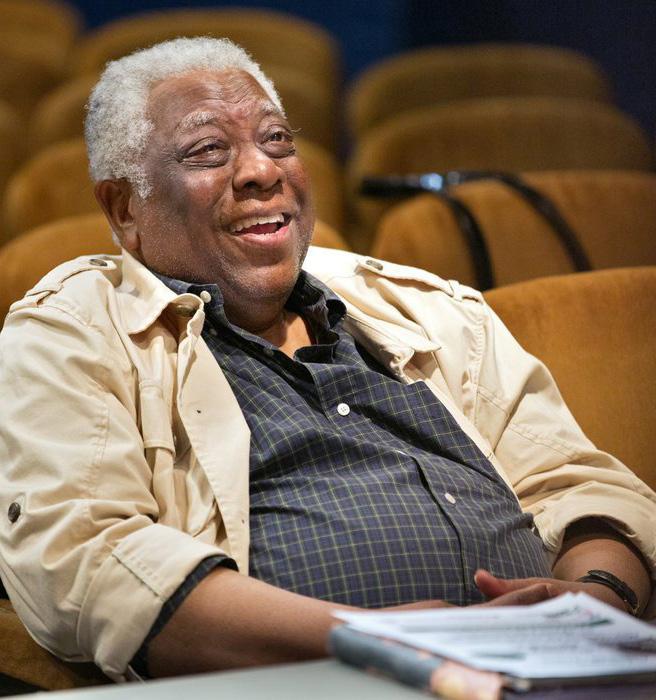
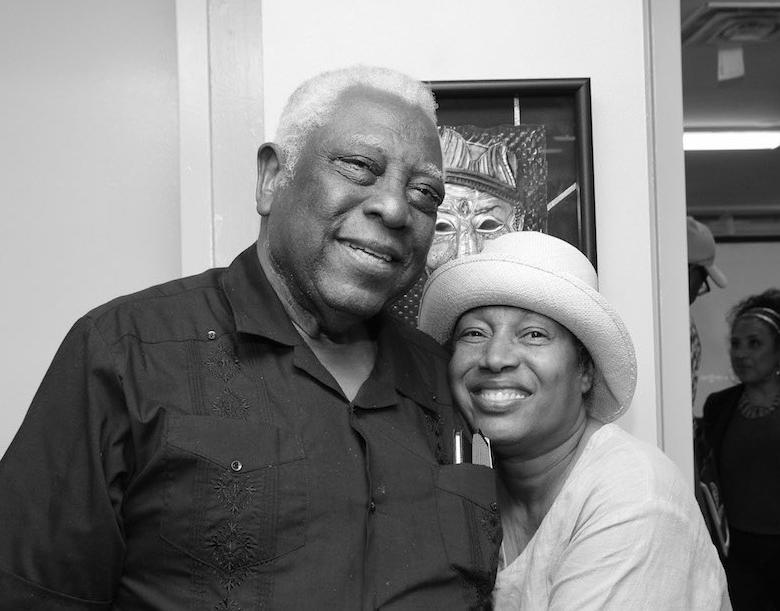
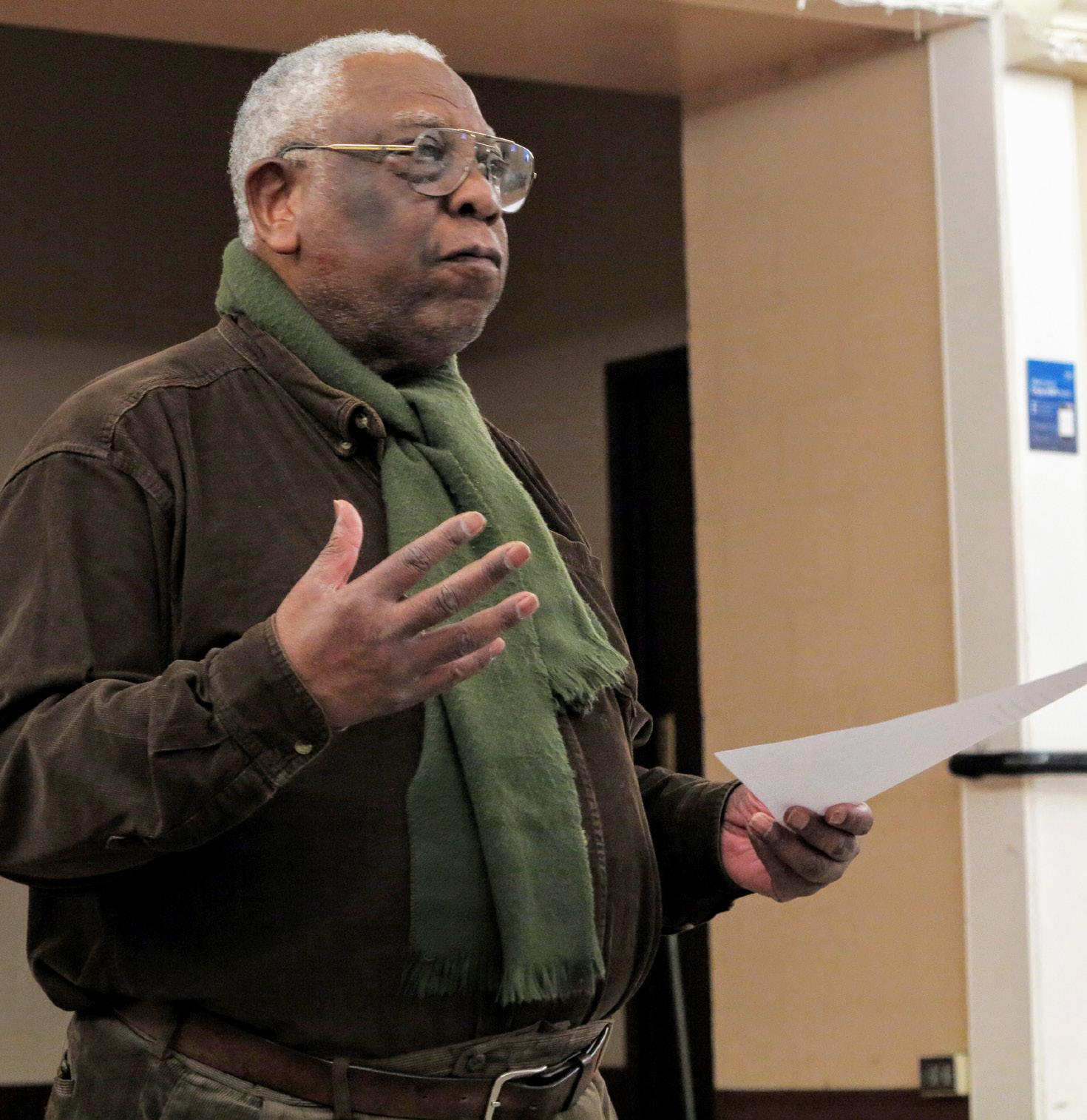
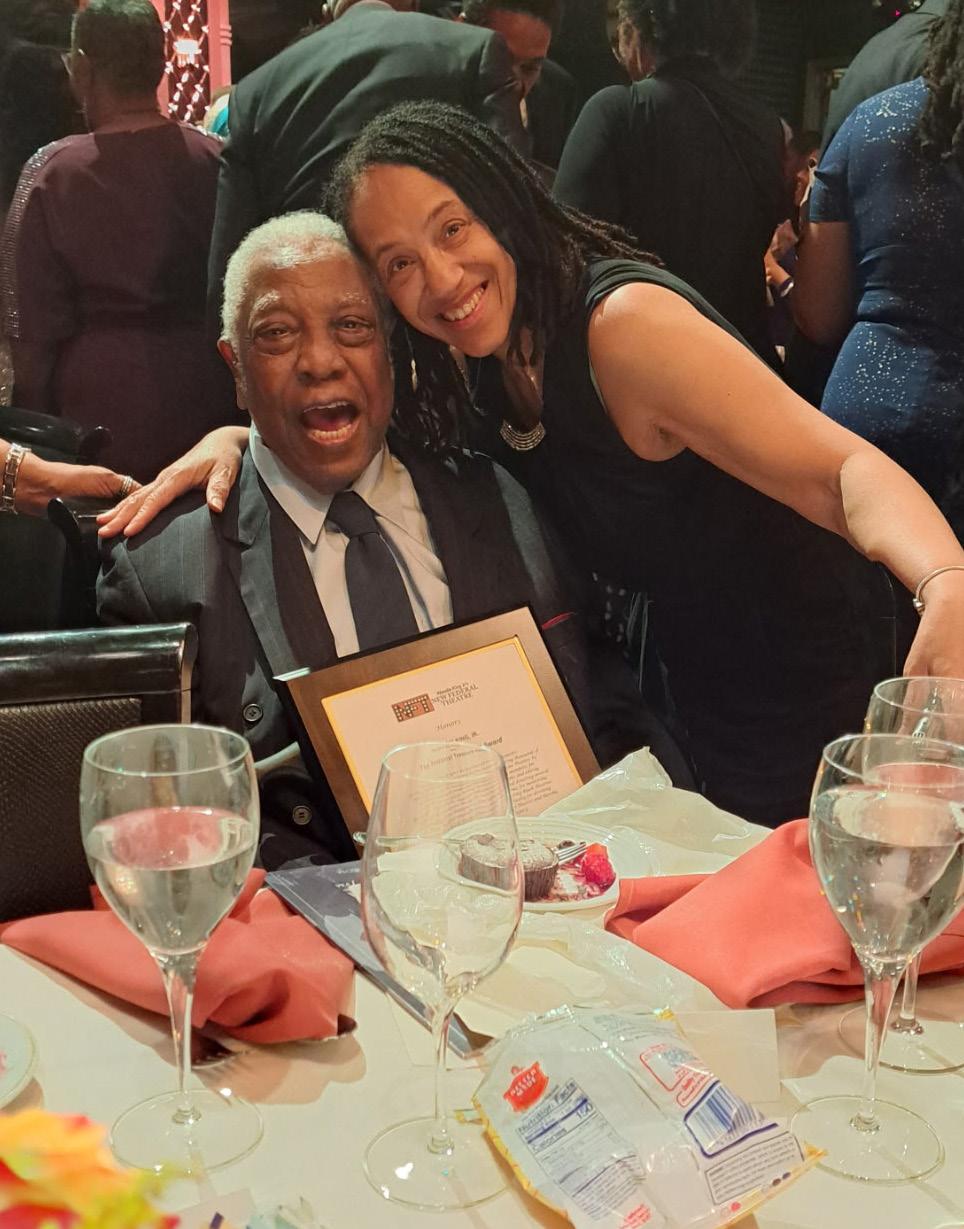
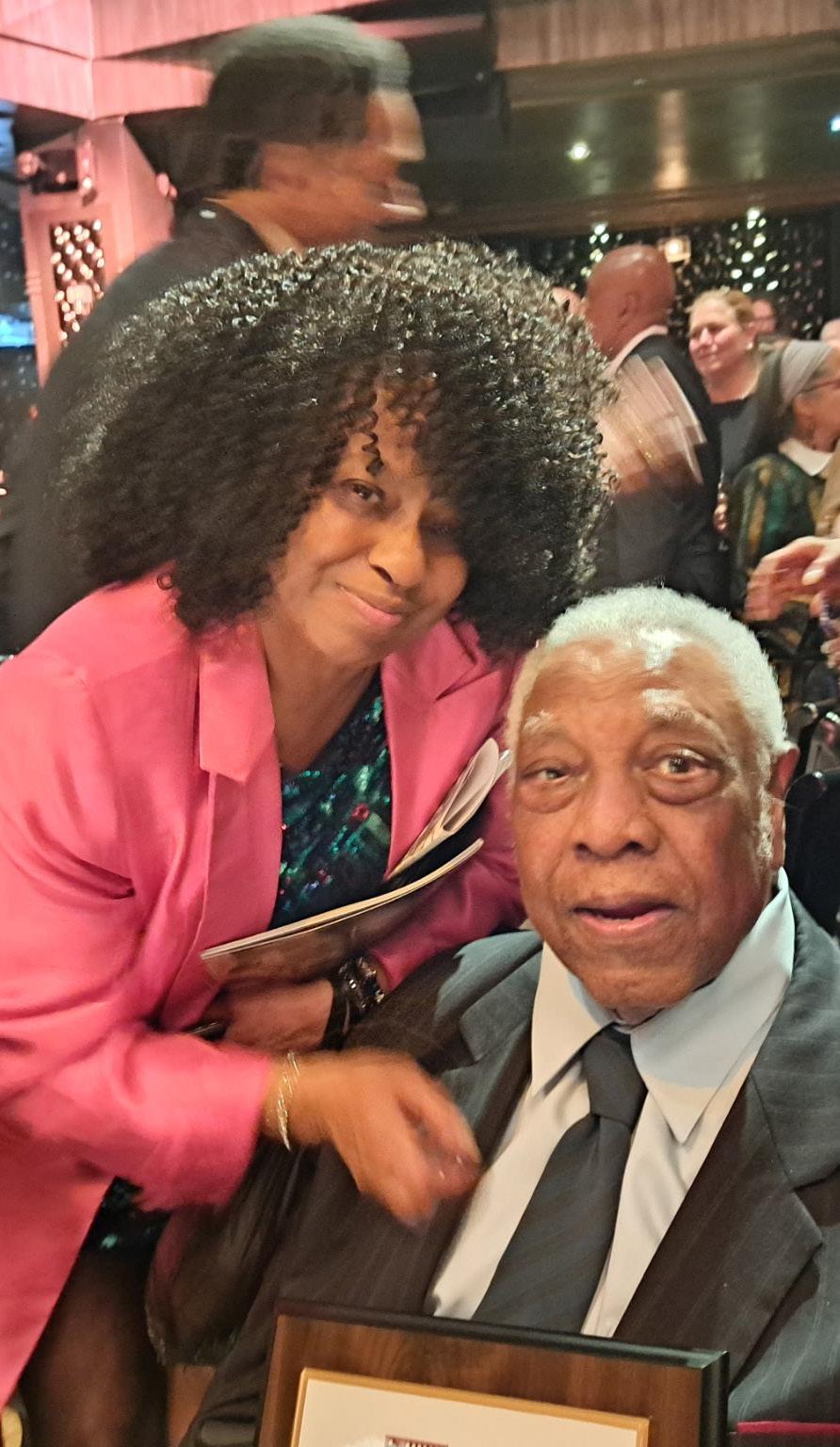
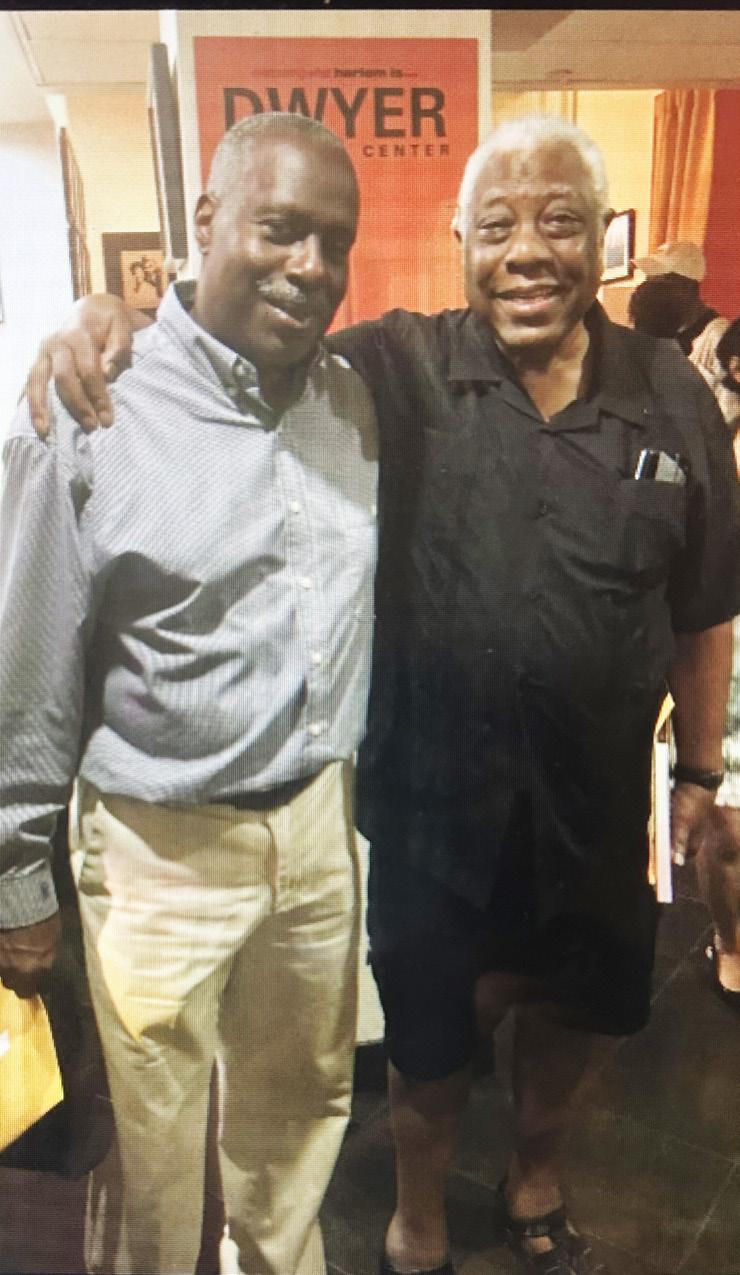
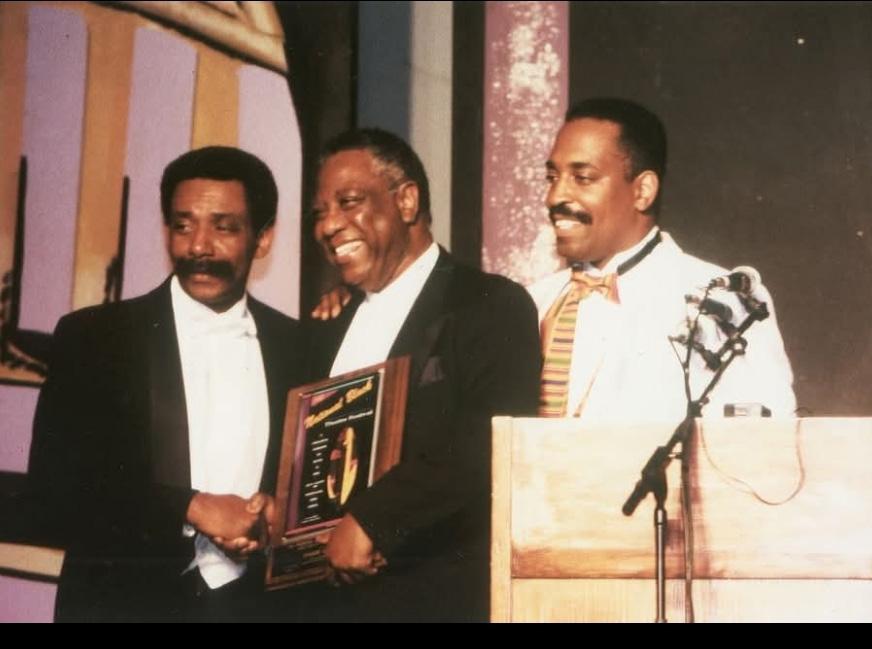
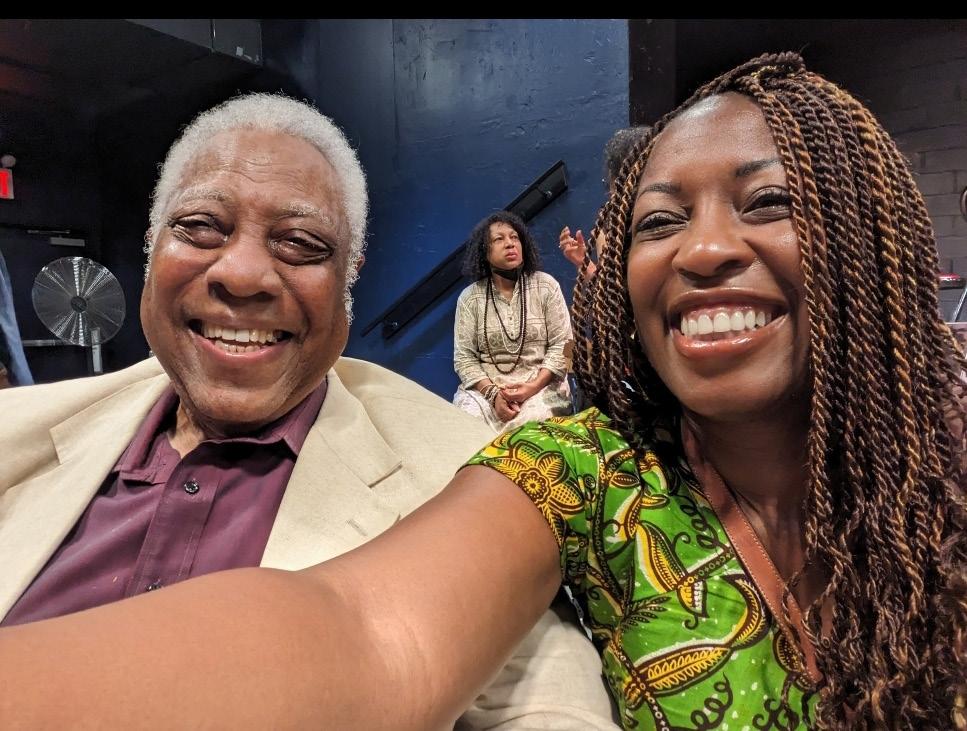
Remembering Woodie King Jr., the doyen of Black Theatre
By HERB BOYD
Woodie King Jr. and I had a special greeting for each other whenever we met.
“Hey, MANY,” I would say, and he would respond, “And hey MANY” to me.
The word was an acronym signifying Michigan, Alabama, and New York. It was a trajectory we shared: places where we were born, raised, and, at last, ventured to the Big Apple.
News of his passing on Jan. 29 brought down the curtain on a remarkable career across several facets of the theater, and the flood of encomiums will provide only a glimpse of his contributions. He was 88 and reportedly died of complications from emergency heart surgery at the Weill Cornell Medical Center.
I thought of King recently, as I composed an obituary of David Rambeau, who, like King, was a stalwart in the theater in Detroit. And it was impossible not to mention King when Cliff Frazier joined the ancestors in 2022. They left the Motor City and arrived together in New York. Each found an unforgettable niche in their chosen endeavors.
Undoubtedly, one of the best biographies of his eventful life is at History-
Makers, where he recounts his birth in Baldwin Springs, Alabama, in his own words — though that may have been misconstrued. (There were still other articles citing Mobile as his birthplace.) He was 10 when he moved to Detroit, and after some coming-of-age adventures among the city’s gangs, he attended the academic magnet high school Cass Tech, where his interest in performing blossomed to the point that he won a scholarship to Will-O-Way School of Theater in Bloomfield Hills, Michigan.
After graduating from Cass Tech, he recalled getting his first real job at the Ford Motor Company, which lasted only long enough for him to realize he needed to seek other employment. All the while, he became an avid film and theater goer, particularly influenced by Sidney Poitier’s success.
As a student at Wayne State University, he took classes and participated on stage and in other community activities. With the onset of the Civil Rights Movement and the Black liberation struggle, he joined several artistic activists in launching Detroit’s Concept East Theater. From 1960 to 1963, King was its theater director. A tour of Malcolm Boyd’s play “A Study in
Color” under King’s direction, included a stop in New York City, and after the performances, he decided to stay.
Always energetic and curious, he juggled several writing, directing, and producing projects before combining all the pursuits in the creation of the New Federal Theater in 1970. And this has been the platform through which a plethora of phenomenal productions have made him an artiste extraordinaire, guiding notables such as Leslie Uggams, Morgan Freeman, Denzel Washington, and another former Detroiter, S. Epatha Merkerson, to say nothing of his relationships with Ed Bullins, Amiri Baraka, Charles Fuller, and Ron Milner.
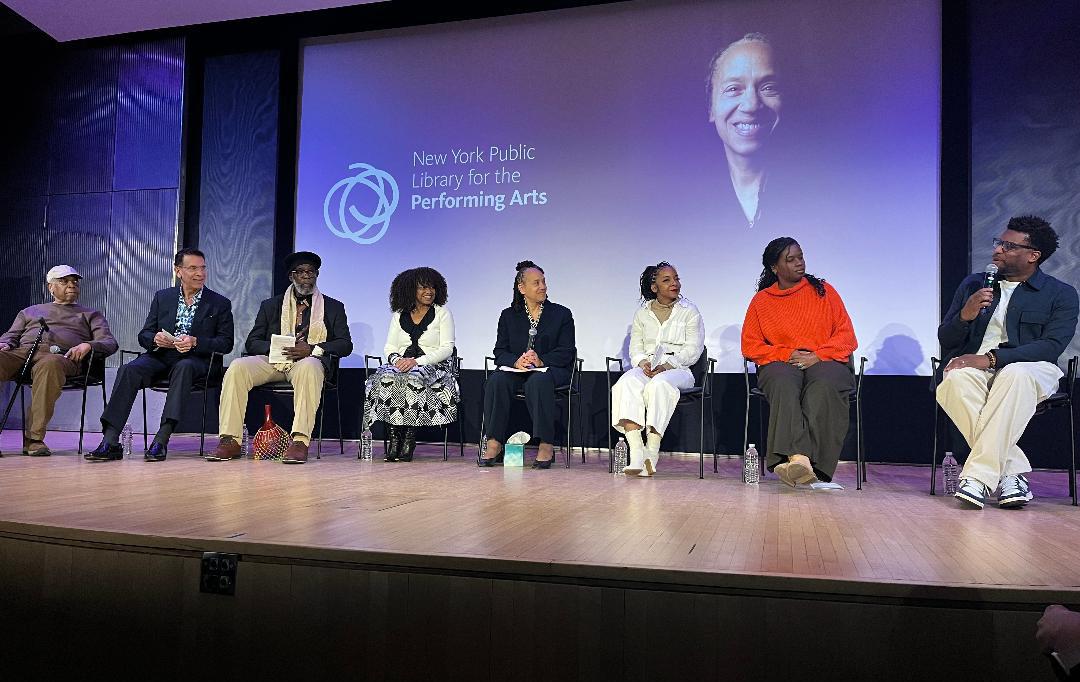
A sizable compendium is necessary to capture the full range of the writers, actors, producers, and theater people he embraced, and who embraced him. I have a storehouse of memories with him, but none more informative than the moment in 2019 at City College when Glenn Hunter of the Harlem Gallery Archives asked me to return to the campus after my retirement there to moderate a panel that included Leonard Jeffries, James Small, and King. He beguiled the audience with his theater history, es-
pecially his five years as the cultural arts director at Mobilization for Youth.
During the panel, I asked him to elaborate on his experiences with Haki Madhubuti of Third World Press, who published his book “New Plays for the Black Theatre,” and he explained that Madhubuti wanted the book to also include the purposes and historical importance of Black theater in the overall struggle for selfdetermination, which he did most elegantly. The various obituaries and reflections on his time among us will, collectively, distill his significant legacy, which continues to grow without end, and easily extended by the wall full of awards and commendations.
King is survived by his loving wife, Elizabeth Van Dyke, a fine actress who often performed under his direction; his three children, Geoffrey, Michael, and Michelle King Huger, whom he shared with their mother, Willie Mae Washington; and several grandchildren.
We still await the funeral and memorial services for a doyen of Black Theater. Farewell, dear MANY, may you rest in peace and power, and know that we have one final part of our trip to complete together.
How New York can use this legislative session to start addressing affordability
By ED TOWNS
New York is one of the most popular states in the nation, but it is also one of the most expensive places to live. That is why restoring affordability remains a top political priority for New Yorkers across income levels, regions, and party lines.
With the state legislature back in session this week, I write as a former lawmaker, offering my support to those who now have just 60 insession days to make good on their campaign promises to bring this problem under control. They have their work cut out for them
in multiple sectors.
Fortunately, several concrete proposals are already sitting in Albany.
One long-discussed effort to tackle hidden pricing is the New York Junk Fee Prevention Act. The bill would require businesses to advertise the total price of goods or services upfront, banning the common practice of tacking on mandatory fees at the checkout counter. By stopping companies from hiding costs in the fine print, the legislation would make price comparisons easier, putting downward pressure on the state economy. The measure passed
the state Senate last year and now awaits action in the Assembly.
Health care is one industry where targeted reform is especially needed. Drug companies are reporting price increases to the state’s Drug Accountability Board every month, which has all too often caused essential prescription drugs to become out of reach for everyday New Yorkers.
Encouragingly, the Senate has already approved the New York Affordable Drug Manufacturing Act, which would direct the state Department of Health to partner with manufacturers to
It’s Black History Month: Time to get educated
CHRISTINA GREER, PH.D.
Happy Black History Month to all.
Black history is American history and as the nation celebrates her 250th birthday in just a few months, it is important for us to take stock of all of the ways Black people have contributed to the physical, intellectual, technological, and cultural foundation of this nation. I think about what this country would look like and what it would have been able to contribute to the world had it not been for Black people.
bring new generic drugs into markets to lower costs. By increasing competition, the bill would help push drug prices down. The bill now awaits consideration in the Assembly’s Health Committee.
Energy affordability must also be part of any serious affordability conversation. Recent data shows that the average New Yorker’s monthly electric bill has risen by roughly one-third over the past decade, which is why 82% of state residents feel their energy bills are too high.
Last session, lawmakers narrowed a sweeping
So many of the contributions of Black men and women have been deliberately erased from history books and classrooms under this presidential administration. Plaques commemorating the contributions of Black people are being taken down in cities all across the country. Museums, cultural markers, national parks, libraries, and classrooms are quietly erasing the contributions of Black and non-white people under the current presidential regime. It is a deliberate attempt to raise future generations with a false foundation that only white people contributed to the building of the nation. We know that is patently false, but as more of these stories and pictures and summaries of Black contributions are taken down, it is incumbent on us to educate ourselves, family members, and especially young people about the true history of Black contributions to American democracy and the nation more broadly.
If you are ever in Baltimore, you must visit the National Great Blacks in Wax Museum. So many great museums across the country tell the story of Black contributions and heroes,
but none do so with wax figures to make history come alive. There are so many museums that use the stories and histories of Black people to help educate young people, Black and non-Black, foreign visitors, and so many more about the beauty and resilience of Black people in this country. Black History Month for me is also a time to think of the diasporic relationships we have with our Caribbean and African brothers and sisters who have persevered in their various homelands and colonial subjugations. It is important for us to remember our collective and shared struggles as we attempt to build coalitions and continue to fight racism and oppression collectively, at home and abroad.
We are in a time of rampant anti-Black racism — a time when it is shocking to some to see how blatant discrimination and racism and xenophobia have become. This current administration is tapping into some of the worst instincts of American exclusion while simultaneously endangering communities large and small. This Black History Month, we must look to the lessons and leaders of the past to help us chart a path forward. We must find strength in the struggles of the past to find confidence for the fights ahead.
Christina Greer, Ph.D., is an associate professor at Fordham University; author of the books “How to Build a Democracy: From Fannie Lou Hamer and Barbara Jordan to Stacey Abrams” and “Black Ethnics: Race, Immigration, and the Pursuit of the American Dream”; and co-host of the podcast FAQ-NYC.
Caribbean Update
U.S. pressures St. Lucia to ban students studying in Cuba
By BERT WILKINSON Special to the AmNews
Despite the fact that, historically, the Caribbean hasn’t done anything of significance to harm the U.S., the Trump administration appears to have unleashed a string of unwarranted political and superpowered attacks on the region; a type so severe that governments are baffled about how to stave them off and keep going at the same time.
First, USAID closed off all its programs, leaving several key projects in the lurch; then the administration began to pressure governments into accepting third-country deportees from the U.S. As a signal to the others, it suspended tourist visa applications for citizens of Dominica and St. Vincent in the Eastern Caribbean in December, and last month included most of the 15-nation bloc, excluding Guyana, Suriname, and Trinidad, on a list of 75 countries that it has banned from immigrant or permanent visa processing. Demands were also made of nations like Grenada — which the U.S. had invaded back in 1983 — to allow the military to set up radar stations on local soil to help it dominate the region.
Now it appears that Washington is about to unleash a new form of political pressure on the Caribbean Community. Recently reelected, St. Lucian Prime Minister Philip
Pierre told an international health conference in the past week that the mighty U.S. has virtually ordered authorities to cease sending students to Cuba to study medicine and other subject areas.
So far, only St. Lucia has publicly admitted to receiving such an edict from Washington and PM Pierre says this will present an enormous set of problems for his island nation and its health sector in the coming months.
In recent weeks, Washington, through Secretary of State Marco Rubio as its front man, has been threatening visa revocations on any regional official linked to Cuban medical professionals working in the Caribbean, as has been the case since the 1970s. Rubio has argued that the current payment system, through which the professionals take home less than 20% of their full monthly pay, should be abandoned to cut out the Cuban system from swallowing up the remainder. As a result, several countries like The Bahamas, Guyana, and Antigua have rushed to comply, in part to allow the medical brigades to continue their lifeline work and to avoid attracting sanctions like visa revocations. PM Pierre says he is unsure what the future holds.
“Many of our doctors got trained in Cuba, and now the great U.S. has said we cannot do that any longer, so that is a major problem I have to face. Some of my colleagues (other regional prime ministers) have already taken a position on this and banned them. So, the American government has said that we cannot even train them in Cuba, so I have a major issue on my hands,” he told the conference.
Regional leaders are scheduled to meet in St. Kitts in the last week of this month in what is certainly shaping up as one of the most consequential heads of government meetings in decades, with a list of tough agenda items.
‘Sinners,’ vampires, and Nicki Minaj
FELICIA PERSAUD
IMMIGRATION KORNER
In “Sinners,” Director Ryan Coogler uses vampirism as more than a horror spectacle. The film’s vampire mythology operates as a layered metaphor, one that probes white supremacy, cultural extraction, and the seductive dangers of assimilation, particularly for those navigating proximity to power, while remaining marked as “other.”
At the center of this metaphor is Mary, a white-passing woman in the Jim Crow South who becomes a vampire. Her transformation reflects a grim bargain: escape the immediate violence inflicted on Black women by aligning with the very system that feeds on the Black community. Passing offers protection, but only at the cost of becoming complicit — no longer prey, but predator.
That metaphor came rushing back to me last week while watching Trinidad and Tobago-born immigrant and rapper, Nicki Minaj, publicly embrace MAGA politics, declaring herself the president’s “number one fan.” The image was jarring to me as a Caribbean immigrant — not simply because
of partisan alignment, but because it came days after Alex Pretti was killed in a snowy Minneapolis street and weeks after Renee Good was shot dead by federal immigration agents protesting immigrant raids.
Minaj was once a self-described undocumented immigrant. In a widely shared 2018 post, she condemned family separations at the U.S.-Mexico border, writing that she herself entered the United States without legal status as a child.
“I can’t imagine the horror of being in a strange place & having my parents stripped away from me at the age of 5,” she wrote at the time, pleading for compassion toward detained children during the first Trump administration.
That voice now feels distant.
What happened between 2018 and 2026? How does someone move from public empathy for immigrant children to smiling alongside a political movement that is actively dismantling constitutional protections, terrorizing immigrant communities, and normalizing state violence?
The answer may lie in power — and who it ultimately serves.
Under the Trump administration, wealth has become a fast track to immunity. The socalled “Trump Gold Card” offers U.S. resi-
The meeting will ironically be chaired by Prime Minister Terrance Drew, himself a Cuban-trained medical doctor and staunch supporter of the professionals working in the region as well as of students studying in Cuba. He says no one is exploiting the Cubans.
“Since 2003, St. Kitts and Nevis has welcomed Cuban professionals who have come, not as outsiders, but as family, helping us to build a stronger, healthier, and more resilient nation. Our Cuban health care professionals have saved lives. Our Cuban-trained professionals have become pillars of society, let there be no doubt. Let me be unequivocal. The federation values its relations with both Cuba and the U.S. We are a friend to all and an enemy of none. Any accusations of labor practices in our federation are inconsistent with our laws and values,” the PM said in a recent address to the nation. “I, like so many of my fellow citizens, had the privilege of receiving a firstclass education in Cuba. Cuba has been an indispensable partner of the Caribbean,” he said, defending the program.
Most of the 15 members of the bloc have retained the services of Cuban health care professionals. Several governments had made it clear to Secretary Rubio on a visit to the region last year that some health sectors would collapse without them.
dency to foreign nationals willing to pay a $15,000 DHS processing fee and contribute $1 million. A forthcoming “Platinum” version reportedly raises that price to $5 million, granting extended U.S. stays without taxation on foreign income. The message is blunt: borders harden for the vulnerable, but dissolve for the wealthy.
Minaj, now a green card holder, does not appear to need such a program but who knows? Her enthusiastic claim that she was given a Trump gold card and is now applying for U.S. citizenship aligns with a movement built on exclusion. It raises a deeper question: when proximity to power offers safety, does solidarity become optional?
Reports that Minaj has pledged hundreds of thousands of dollars to support Trumpbacked tax-advantaged investment accounts for newborns — framed as generosity toward her fans — only complicate the picture. Charity does not cancel complicity. Philanthropy does not absolve political harm.
In “Sinners,” vampirism represents the loss of cultural memory and moral grounding. Survival is promised, but at the price of selferasure. The vampire no longer remembers who they were — or who they once stood with.
Minaj’s political transformation mirrors that arc. An immigrant woman, born in the
Caribbean region, who once spoke as a child of migration, now appears willing to overlook policies designed to erase Black history, criminalize Black, Brown, and white bodies, and redefine belonging through wealth.
That is the danger Coogler warns us about. Not monsters in the shadows, but assimilation so complete, it forgets its origins — and feeds on those left behind.
In “Sinners,” the vampire’s greatest weapon is not violence, but amnesia. It forgets where it came from, who it once stood beside, and who is still being hunted. That kind of forgetting may offer comfort and protection, but history shows it is never consequence-free.
The warning for Nicki Minaj — and for those in Black and Brown communities trading solidarity for status — is simple: wealth may buy access, and loyalty may buy time, but neither buys exemption. Systems built on exclusion eventually consume everyone they decide does not belong.
Felicia J. Persaud is the founder and publisher of NewsAmericasNow.com, the only daily syndicated newswire and digital platform dedicated exclusively to Caribbean Diaspora and Black immigrant news across the Americas.
Prime Minister of Saint Lucia Prime Minister Philip Pierre at the Department of State in Washington, D.C., May 6, 2025. (Official State Department photo by Freddie Everett)
Families of Trinidadian men killed by U.S. military boat attack sue Donald Trump
By LLOYD B. DAVIS
Special to the AmNews
The families of two Trinidadian men who were killed by a U.S. missile strike are suing the Trump administration, accusing the government of causing their death unlawfully in what officials claim was an attempt to prevent drug trafficking.
In October, Chad Joseph, 26, and Rishi Samaroo, 41, were returning from Venezuela to their homes in Trinidad and Tobago when a missile struck their boat, killing them and four others. Since the U.S. military campaign hunting alleged drug traffickers in the Caribbean began last year, attacking small boats, an estimated 125 people have been killed.
The suit, filed in Massachusetts U.S. District Court by Joseph’s mother and Samaroo’s sister, on behalf of the families, accuses the government of violating federal statutes that protect human rights, including the Death on the High Seas Act and the Alien Tort Act, according to the court complaint.
Joseph was from Las Cuevas, a small fishing community on the northern coast of Trinidad, about 20 nautical miles from Venezuela. He would often stay in Venezuela for weeks or months at a time while he worked as a fisherman and farmer in the country. While away from home, Joseph was known to call his wife and children daily. He also regularly called his family and would hold group WhatsApp calls
BHM events
Continued from page 8
Speaker Series. Jean-Pierre will be speaking about two books she published last year, “Moving Forward: A Story of Hope, Hard Work, and the Promise of America” and “Independent: A Look Inside a Broken White House Outside the Party Lines.” Both books will be available to purchase, and a book signing will take place after the discussion. The event is free and open to the public, but advanced registration is required.
Thursday, Feb. 12 — 5:30 p.m. - 6:30 p.m.
Queens Public Library Langston Hughes 100-01 Northern Blvd., Corona, NY 11368
with his mother and wife.
“We know this lawsuit won’t bring Chad back to us, but we’re trusting God to carry us through this, and we hope that speaking out will help get us some truth and closure,” said Lenore Burnley, Joseph’s mother.
Samaroo was a resident of Las Cuevas and the main breadwinner in his family until 2009. He was imprisoned from 2009 to 2024 on a reported homicide charge and, on release, moved to Las Cuevas, where he started work as a fisherman.
Samaroo took a photo of himself wearing a lifejacket and sent it to his sister, telling her he would see her in a few days. That was the last time anyone in the family heard from him.
“Rishi was a hardworking man who paid [his] debt to society and was just trying to get back on his feet again and to make a decent living in Venezuela to help provide for his family,” said Sallycar Korasingh, Samaroo’s sister. “If the U.S. government believed Rishi had done anything wrong, it should have arrested, charged, and detained him, not murdered him. They must be held accountable.”
Since the men posed no immediate threat to the United States and were not members of any organized armed groups, the Center for Constitutional Rights (CCR), which is aiding the families, sees these killings as unlawful.
“It is absurd and dangerous for any state to just unilaterally proclaim that a ‘war’ exists in order to deploy lethal military
force,” said Baher Azmy, the CCR’s legal director, in a press statement. “These are lawless killings in cold blood; killings for sport and killings for theater, which is why we need a court of law to proclaim what is true and constrain what is lawless.”
The U.S. government has provided little, if any, evidence that the fishing boats it has attacked in the Caribbean “Operation Southern Spear” maneuvers are part of “narco-terrorist” operations shipping
drugs into the United States, but it does claim that the strikes are within its rights.
“Our operations in the Southcom region are lawful under both U.S. and international law, with all actions in compliance with the Law of Armed Conflict. These actions have also been approved by the best military and civilian lawyers up and down the chain of command,” Pentagon Press Secretary Kingsley Wilson told reporters in December.
Friday, Feb. 13 — 6:00 p.m. - 8:00 p.m.
The Kota Alliance 43 St Nicholas Place New York, NY 10031 (West Harlem)
The Kota Alliance is hosting a poetry writing workshop, “I AM: A Love Letter to Myself,” led by artist Ruthy Valdez and poet Danielle B. Wright. The workshop will focus on a love letter to yourself, with self-reflection on the power of Black identity in honor of Black History Month and Valentine’s Day, through guided prompts and a community discussion. The workshop is primarily for women of color at all different levels of writing. Advanced registration is required to attend the workshop.
The Queens Public Library Langston Hughes is hosting a poetry recital, “Black History Month: Our Voices In Narratives And Verses,” honoring historic eras in literature, such as the Harlem Renaissance, the Chicago Renaissance, Black Arts Movement, and much more. Poet, essayist, and artist, Bob McNeil, will perform the recital. The event is for adults and is free. You can reserve your spot on the Langston Hughes Library Eventbrite page.
Friday, Feb. 13 — 7:30 p.m.
The Manhattan School of Music Neidorff-Karpati Hall 130 Claremont Ave., New York, NY 10027
The Manhattan School of Music is hosting a “Celebrating Black History Month” concert, presented by MSM’s Black Student Union. The concert will showcase various pieces that will honor Black History Month. The concert is free to the public, no tickets required.
Friday, Feb. 13 — 7:30 p.m. - 9:00 p.m.
Drunk Black History
The Bell House, 149 7th St., Brooklyn, NY 11215
Comedian Brandon Collins is bringing his educational, live comedy show, “Drunk Black History,” to Brooklyn to celebrate the 100th anniversary of Black History Month. The comedy show will include fun, educational lessons on Black figures, drunken commentary, and audience giveaways. Along with Collins, there will be guest ap-
pearances by improv group UCBLK (NY Comedy Festival), Akilah Hughes (Crooked Media), Meka Mo (Don’t Tell Comedy), and more. The front bar opens at 5:30 p.m. and doors open at 6:30 p.m. The event is for adults 21 and over with a valid, government-issued photo ID. It is a standing and seated event, but seating is on a first-come, first-served basis. You can buy tickets to the event on Ticketmaster.
Saturday, Feb. 14 — 1:00 p.m. - 2:30 p.m.
NYC Parks/NYC Parks Urban Park Rangers West 81st St. and Central Park West Central Park, New York, NY
NYC Parks and the NYC Parks Urban Park Rangers are celebrating Black History Month by hosting an educational tour of Seneca Village, also known as modern-day Central Park. You’ll learn on this tour the history of Seneca Village and its residents during the 1800s. The event is free to attend with no registration required.
USS Gerald R. Ford enters Caribbean Sea in increase of U.S. military presence in area. (U.S. Southern Command photo)
new edition with boyz II men & toni braxton
Fri, Feb 13 @ 8PM
Prudential Center
The New Edition Way Tour brings together three of music’s most enduring and influential acts. Experience these legends up close on a dynamic 360 stage.
coltrane 100
Both Directions at Once Sat, Apr 18 @ 7:30PM
Saxophonists Joe Lovano and Melissa Aldana, pianist Nduduzo Makhathini, bassist John Patitucci and drummer Jeff “Tain” Watts pay tribute in this centennial celebration.
john legend
apr 21 an evening of songs & stories
Fri, Apr 3 @ 8PM
Award-winning comic Deon Cole (Black-ish, Average Joe) heads back to NJPAC for another round of hilarious jokes. deon cole
david and tamela mann
The Love & Relationship Tour Fri, Apr 24 @ 8PM
An electrifying night of praise, worship and soul-stirring gospel with the iconic power couple David and Tamela Mann.
Fri, Apr 17 @ 8PM
“Raucously funny” (Esquire) comedian Aida Rodriguez will have you “laughing, crying and begging for more” (Decider). aida rodriguez
Fri, May 8 @ 8PM; Sat, May 9 @ 8PM Sun, May 10 @ 3PM
Feel the joy and elation of African American culture with Alvin Ailey American Dance Theater, a highlight of our season.
Arts & Entertainment
Woodie King Jr.: July 27, 1937 - January 29, 2026
Woodie King Jr. with actress and director Elizabeth Van Dyke. (Lia Chang photo)
(L-R): Douglas Turner Ward, co-founder of Negro Ensemble Company, and Woodie King Jr., founding director of New Federal Theatre, inscribe sidewalk panels to be placed in front of Theatre 80 St. Marks at an Honors Ceremony held at the theater on November 16, 2016. (Jonathan Slaff photo)
Woodie King Jr. speaks at a luncheon celebrating New Federal Theatre Workshops in January 2016. (Farnaz Taherimotlagh photo)
Woodie King Jr. (Photo courtesy of New Federal Theatre)
Woodie King Jr: Black theater community shares remembrances and thoughts about a great man
By LINDA ARMSTRONG Special to the AmNews
On Thursday, Jan. 29, Woodie King Jr., film actor and founder of the New Federal Theatre, died at the age of 88. On hearing the sad news, the theater community poured out their hearts as they shared their fondest memories of this great, humble man. I feel fortunate to say that Woodie got his flowers while he was here: He received a Special Tony Award and a Special AUDELCO Award; was the subject of the documentary “King of Stage: The Woodie King Jr. Story”; and was also the subject of a bronze bust. This man gave so many people love and started them off on their acting, playwrighting, and directing careers. This gentle giant had a heart of gold and a hearty laugh that filled the room. I wanted to share my fondest remembrance of Woodie and thoughts of those who knew and loved this man all these decades. I wrote this the same day I found out the news.
I feel numb. I just received the news that Woodie King Jr., a man
I affectionately referred to as
“Mr. Black Theatre,” has passed away. I have known, been friends with, and had a great respect and love for Woodie King Jr. In addition to founding the New Federal Theatre, Woodie possessed a knowledge of theater that was astounding. The productions that he helmed at New Federal Theatre always focused on important issues in the Black community. His passion and love for theater, and telling our stories in the way only we can do it, is something that will always live on.
Since I’ve known Woodie, in the 40 years I’ve been a theater critic, I have had many beautiful experiences with this man. Whether speaking with him over the phone about productions or things going on in my life, or going to him for his vast theater knowledge, which was like a friendly encyclopedia of dates, people, and events, I’ve been blessed to have him in my life.
In October, the Lincoln Center Performing Arts Library held a panel in honor of my 40 years as a theater critic and Woodie was one of the panelists, despite the
fact that he was feeling under the weather. When I saw Woodie in the green room with Elizabeth Van Dyke, I asked him how he was feeling. He looked into my eyes and said, “Linda, I’m only here because it’s you.” I said, “I could not have imagined this panel without you — we have been together since I began.”
During the panel, the moderator asked the panelists questions about my impact on Black theater. Woodie’s reply was so detailed and beautiful. Then he proceeded to ask me questions about my reviews over the years. I loved how he participated and felt honored and privileged to answer his questions. Woodie King Jr. was one of the kindest souls I’ve come across in my life. I will miss him more than words can express. I love you, Woodie!
Jackie Jeffries, president of AUDELCO, beautifully addressed the late Woodie King Jr.: “There truly was a King who lived among us. Whether he was holding court telling stories at B Smith’s, West Bank Cafe, or the Marriott in North Carolina, to name a few, I could sit for hours listening to
his insightful stories of his personal life, theatre stories, historical commentaries, and travels around the world. Talking about his experiences with veteran playwrights, directors, actors, and fellow producers, or sharing nuggets about some new and upcoming star. He had a memory that was infallible. I loved to hear him call people’s names as they passed by and stopped in their tracks to hear what the King had to say.
“For over 35 years, I have had the distinct honor to work with this legendary man. That smile, your laughter, and your wisdom are priceless jewels I will cherish forever. He has become one of the greatest influences in my life. An awesome mentor, friend, and theater father! Thank you for being an awesome living example of how to motivate, educate, and inspire people to fulfill their purpose in life. You have opened so many doors for me and countless others. We will always be in your debt. You will live on forever through the seeds you planted in us all. Peace and Love Always!”
Dr. George Faison, director/
choreographer/producer/writer and founder of the Faison Firehouse Theatre, had this to say regarding his fondest memory of Woodie King Jr. “I came to New York in 1965, and I had my heart set on being a dancer. It was a time when we were changing and moving. People were thinking of a myriad of things to go and be. A lot of us were crawling in the beginning. All these people from places like Detroit came here, like Woodie. We were a group of dreamers.
“Woodie is one of the architects of what Black Theatre is now. He is a giant like me. Woodie wanted people to know the good news about what theater could do. It could help them see the possibility of their lives. You could always depend on Woodie to lead that, to bring us home, to be inspired. Mine and Woodie were kindred spirits that gave us lessons in building and making community and making theater, and he created artists along the way.”
Kenny Leon, Broadway director and founder of the True Colors Theatre company, humbly said,
Frankie Faison, Richard Wesley and Woodie King Jr. (Richard Wesley photo)
Woodie King Jr. and Linda Armstrong at AUDELCO Awards. (Linda Armstrong photo)
“Woodie is responsible for probably everything that I am as an artist. When I had to go and seek out people from the previous generation, I sought out Lloyd Richards and Woodie King. He directed me in ‘A Raisin in the Sun.’
“I was just listening to Woodie when he accepted the Tony honors award and what it meant to him on a video. That was one of the proudest moments of my life — being on the Tony honors committee and calling to tell him that he was going to be honored. He made me feel like I was getting the award.
“Everything that I stand on is because of Woodie King. I didn’t know it was possible for a Black man to run a theater company. When I
first met Woodie, I was an actor. He knew me from the beginning. The freshest memory is he called me one night because he was thinking about me. I’ll miss his laughter, but he lived a great life, a long life. I don’t see how any of us could be where we are today without him. He was proud of me running the Alliance Theatre and then I started the True Colors Theatre Company. The great thing is remembering that laugh and the gift that he was to all of us. Not just to Black America, but American theater.”
Juney Smith, documentary filmmaker, creator, and director, said, “Glynn Turman and I were sitting with Woodie King in a restaurant after a performance of a one-man
show with Timothy Simonson playing Adam Clayton Powell. It was amazing listening to Woodie talk about writers and authors in a way that was so introspective. I realized that I was sitting among an erudite and a theatre legend that a movie should be done about, and that was the moment that I knew that Glynn and I were going to do the documentary film, ‘King of Stage, the Woodie King Jr. Story.’”
Herman LeVern Jones, MFA, cocreator and special assistant to the producer (Larry Leon Hamlin) of the National Black Theatre Festival, National Black Touring Circuit, associate producer, executive producer, and artistic director of TheatreSouth Inc., had this
to say: “Woodie King Jr. was more than my colleague at New Federal Theatre and the National Black Touring Circuit, Inc. — he was my mentor, my artistic compass, and my brother in the struggle to elevate Black voices on the American stage. His belief in our stories shaped the course of my life and the lives of countless artists who found a home under his vision. We built work together that mattered, work rooted in truth and dignity, and his passing leaves a space in our community that cannot be filled. Yet his legacy lives in every stage he opened, every artist he nurtured, and every story he insisted was worthy of being told.”
Actor Ralph Carter had this
message for Woodie: “I sincerely appreciated that you’ve always given me a job and an opportunity to work. It was always my honor to call you my big brother. Thank you for respecting me as a man and the work that I delivered. My fondest remembrance of him was his laughter, and I always wondered, when does this guy get any sleep? They say James Brown was the hardestworking man in show business, but Woodie King was the hardest-working man in show business. He taught me a lot. Woodie King, mission accomplished.” For more remembrances of theater legend Woodie King Jr., read the full article at amsterdamnews.com.
Larry Leon Hamlin, Woodie King Jr., and Herman LeVern Jones at National Black Theatre Festival as King is honored. (Herman LeVern Jones photo)
Woodie King Jr. and Bianca LaVerne Jones. (Bianca LaVerne Jones photo)
Woodie King Jr., Brian Stokes Mitchell, Rome Neal, Jackie Jeffries, Linda Armstrong, Kara Young, Brittani Samuel, and Keenan Scott II at Lincoln Center Performing Arts panel, “Linda Armstrong: Celebrating 40 years of New York Theater Criticism.” (Linda Armstrong photo)
Jackie Jeffries and Woodie King Jr. at AUDELCO Awards. (Linda Armstrong photo)
Juney Smith and Woodie King Jr. (Juney Smith photo)
Salem United Methodist Church: then and now, an abiding presence of faith
By MICHAEL HENRY ADAMS Special to the AmNews
Completed in 1887, Harlem’s Richardsonian Romanesque-style Salem United Methodist Church was designed by John Rochester Thomas for the white congregation of the Calvary Methodist Episcopal Church. Boasting the city’s largest Methodist membership, the building has seating for 2,200 people.
The brick building was purchased in 1922 by the Salem United Methodist Church, for $25,000. A weeklong revival by evangelist John Wilson Becton in 1933 retired its mortgage. Salem was established by Rev. Frederick Asbury Cullen, foster father of the great poet Countee Cullen.
Over the years it’s been the backdrop of many momentous occasions. President William McKinley once worshipped here, in 1899. It was also the church home of Marian Anderson. Spectacularly, Salem was the setting for Countee Cullen’s 1928 Easter Monday wedding to Yolande Du Bois. The lavish service (reusing Sunday’s profusion of flowers and caged love birds), had sixteen bridesmaids and as many ushers. All 1,300 guests must have whispered to one another, “Doesn’t she know he’s gay?” while, outside, crowds of spectators thronged Seventh Avenue for a better view.
In “The Crisis,” the bride’s father proclaimed of her betrothal: “The symbolic march of young black America … possessed of dark and shimmering beauty … a new race; a new thought; a new thing rejoicing in a ceremony as old as the world.”
The honeymoon only lasted a weekend, because as a teacher, Mrs. Cullen needed to get back to her school in Baltimore. According to plan, she did join Cullen (who worked at Dewitt Clinton High School where he taught French to James Baldwin), in Paris later. Right after they married, he went to do research with a Guggenheim Fellowship. She didn’t arrive until school let out, by which time Harold Jackman, her husband’s best man, had come and gone. Called Harlem’s hand-
somest man, he was not Cullen’s lover. Close friends, they were like “sisters.” Nevertheless, the couple soon divorced anyway.
Called one of the most elaborate ever conducted in Harlem, the funeral of star female impersonator Clarence Edwin Henderson, was held here in Aug. 1936. A former schoolteacher, twice married (the second time for just five weeks), “Clarenz” had a six-yearold daughter.
The AmNews wrote how he’d told his landlady, “My life is miserable. I love Alberta. She is sweet to me, does anything she can to make me happy. But she doesn’t understand me. My life is my own and I have to live it to suit myself.”
With that, bounding out of his chair, he leapt to his death from his fourth-floor kitchen window. His note, addressed to a man, read: “She loves me. She hates you. But I adore you. You love me. So what?”
The funeral ritual was presid-
ed over by the “burying preacher of Harlem,” the Rev. W. Willard Monroe. A year earlier he’d founded the Memorial Baptist Church. Carried into the church on the shoulders of eight men, a 12-foot floral cross took half an hour to place on the rostrum above the brier. It was a tribute from Leroy McDonald, proprietor of the 1-0-1 Cabaret.
Billed as Harlem’s greatest master of ceremonies, Clarenz worked at the 1-0-1 for just two years. He was only 25.
Under the leadership of the Rev. Noel N. Chin, Salem still continues its commendable traditions. It still stages memorable rites that sustain the lives of folks pursuing righteousness. Attracting a crosssection of our community’s best, Harlem’s leave taking of Lloyd A. Williams, leader of Greater Harlem Chamber of Commerce, took place here on Aug. 23, 2025. In the African American cultural capital, Salem still manifests an abiding presence of faith.
Salem United Methodist Church at 129th Street and Adam Clayton Powell Jr. Boulevard. (Carl Van Vechten photo via The Library Of Congress)
Composed of vibrantly colored abstracted patterns, Salem’s stained glass windows are magnificent. (Michael Henry Adams photos)
In the 1938 hurricane, church towers all along the northeast’s coast lost their roofs. Many, like this one, were replaced with smaller versions.
Lesser-known Luminaries of Harlem
Raoul Abdul, who taught me that Black Gay History is Black History too
By MICHAEL HENRY ADAMS Special to the AmNews
Notwithstanding any problems, Harlem still offers all who live here the possibility of a better life, in the world’s best place.
Improving every day, Harlem’s quality of housing, its comparative spaciousness and relative affordability, its sense of place and historic ambiance, are all unrivaled on Manhattan Island. As a Black man, I’m a preservationist and historian because of Harlem’s Black heritage. It represents immeasurable accomplishment in the face of adversity and disdain. Imbued in every brick of each old building here is the best of America. By celebrating Blackness, by including us, Harlem embodies me; all that I am.
Over the years, what drew me here had also lured other Ohio natives. Langston Hughes was one (although not born there, he grew up in Cleveland). Another was Raoul Abdul (née Raoul Abdul Rahim), the classical singer, author, and AmNews music critic, who would become Hughes’s last personal assistant and secretary.
When I first arrived in Uptown, one initial surprise was reading a review in Raoul’s column, “Reading the Score.” He’d written about a production of “Tosca” at the Metropolitan Opera. Discovering, in an otherwise normal newspaper, something so esoteric, yet easily readable; such nuanced insight and scholarly erudition, astonished me. “Who was this African American connoisseur,” I wondered, “and how did he come to have such an unusual name?”
Becoming friends with Raoul by the early 1990s, in time I learned he was born not far from my home in Akron — in Cleveland,
Ohio, on November 7, 1929. Raoul Abdul’s father was from Calcutta. His patrician Black mother was able to trace her ancestry back to the pre-Revolutionary War period. His aunt married Count Basie.
In 1990, in the AmNews, he explained this for himself: “When I was eighteen years old, Leonard Hanna Jr. (grandson of Mark Hanna, who put McKinley in the White House) treated me to my first trip to New York City. As I boarded the bus, he pressed into my hand a slip of paper with the [message]: ‘Dear Jimmy, this is Raoul Abdul. Give him anything he wants and save the bill for me.’”
Educated at John Hay High School, precocious Raoul was participating in children’s theater productions by age 6. After secondary school, he began working as a journalist for Northeastern Ohio’s leading Black newspaper, the Cleveland Call & Post. Attractive, highly gifted, and gay, Raoul was noticed and encouraged by the rich art patron Leonard Hanna, whose further backing allowed the 22-year-old to move back to New York permanently in 1951.
A concert baritone and German lieder expert, Raoul studied voice with renowned Russian baritone Alexander Kipnis from 1959 to 1962. It was under Kipnis’s tutelage that Raoul eventually earned a diploma from the Vienna Academy of Music. Raoul also studied at the Cleveland Institute of Music, New School for Social Research, New York College of Music, Mannes College of Music, and Harvard.
Singing with such notables as William Warfield (who married diva Leontyne Price) and the legendary Marian Anderson, a founding director of Harlem’s Coffeehouse Concerts, Raoul served as literary assistant to Hughes from 1961 until Hughes’s death in 1967. Cast through this position into the sometimes unwelcomed role of confidant, Raoul, for me, put to rest a spate of academic equivocating about his boss and friend’s sexuality, stating, “Unfortunately, I was obliged to sleep with Mr. Hughes twice.”
On his first evening in town, he told me, “I took a taxi (as instructed) down to Eighth Street in the Village and presented myself with just my valuable scrap of paper as a letter of introduction to Mr. Jimmie Daniels, the handsome and debonair gentleman who held court nightly at the very fashionable playground of the rich called Bon Soir. Phyllis Diller and a just-starting-out Barbra Streisand also performed there.”
One problem Raul never had that plagued lots of other creative queer men was an unsupportive family, pressuring him to do something more marketable. I did experience that. “You can’t be an artist or an interior designer,” my father told me. “White people won’t hire you!” Hughes, Jules Bledsoe, and James Lesley “Jimmie” Daniels heard much the same thing.
Born in Laredo, Texas, Daniels grew up in Little Rock, Arkansas. Talented as a performer, he was smart enough to move to New York
to attend classes at Bird’s Business Institute in the Bronx. Upon completing, he even returned home and worked as an administrative assistant to the president of the Century Life Insurance Company. By 1928, though, he was back. In those first years in Harlem, he hosted cocktail-musicales where he sang, for a dollar per person, at the Bronze Studio (227 Lenox Avenue, extant). Built as a grand townhouse, it was a catering hall owned by Iolanthe Sidney, the patron of low-cost housing for artists, dubbed by Zora Neal Hurston “Niggeratti Manor” (267 West 136th Street; since demolished).
Performing at the Hot-Cha nightclub (2280 Seventh Avenue; extant), where Billie Holiday started, Daniels met architect Philip Johnson in
1934, who told me he was “the first Mrs. Johnson.” Daniels was living at this time with writer Wallace Thurman as his roommate. They were the subtenants of their friends, actress Edna Thomas; her husband Lloyd Thomas; and Edna’s lover, English aristocrat OliviaWyndham, all occupying the spacious co-op they owned on Harlem’s most posh boulevard (1890 Seventh Avenue).
In short order, he had his own Harlem nightspot: Jimmie Daniels’s supper club (114 West 116th, operating 1939–1942; extant).
On January 27, 1940, Marvel Cooke wrote of Daniels’s progress in the AmNews, “When Jimmie first came to Harlem a dozen or so years ago, he had no idea that someday he would be the toast of sophisticated circles on both sides of the Atlantic and that he would number among his friends European royalty, the kings and queens of stage and screen[,] and the princes of industry. The story of Jimmie Daniels reads like something out of a book.”
Some castigated Daniels’s singing voice as having been “slight,” comparable to Bobby Short’s or even to Rex Harrison’s! Not Raoul, though. “His voice? His diction and style were a revelation. One of the special characteristics of Daniels’s vocal performances was always his exemplary English with such precise particularity!”
Raoul Abdul
The Winter Show welcomed me home on the coldest week of the year
By MICHAEL HENRY ADAMS Special to the AmNews
On a bitterly cold night, warmly welcomed by my wonderful friend Wendy Goodman, I immediately felt at home, especially after grabbing a waiting glass of champagne. As the Winter Show’s Design Council Honorary Chair, worldwide, Goodman counts as a design community powerhouse. Since 2007, she’s served as the design editor at New York Magazine. In said role, she has featured two different apartments where I’ve lived and include one in her book, “May I Come In?”
These reunions with Goodman and other friends made over 42 years, attending the opening night and the young collectors party a week later, are a highlight of my year. In the process — from being so expectant at 28, to about
to turn 70 — and amazed by all my good fortune to still be here, I’ve been greatly enriched.
What is the Winter Show? It was started two years before my birth to support East Side House Settlement. Back then this charitable institution, started in 1891, helped empower German and other immigrant families living in the relatively downtrodden community of Yorkville. But conditions changed. Today, young executives pay $9,000 a month to live in some of Yorkville’s walkup tenement flats, renovated with granite counters and stainless steel stoves. Now, since 1963, it’s a Bronx-based nonprofit, advancing educational and career opportunities for more than 14,000 residents across the Bronx and Upper Manhattan. Mightily due to the Winter Show, under the guidance of Executive Director
Daniel Diaz, East Side House has expanded annual funding tenfold, from $3 million to $30 million.
New York’s longest-running arts, antiques, and design fair; hosting over 70 of the most renowned international galleries and art dealers, showcasing important or exquisite modern and historic artifacts spanning the last 5,000 years, is incomparable. Not long after I started attending, I began to write about what was then called the Winter Antique Show’s opening festivities for the Huffington Post. Now covering these events for the AmNews, looking back, what’s astonishing, is how consistently marvelous both the objects offered for sale and the brio of the stylish people who come out to buy them have remained. The angel who so splendidly produced the Winter Show, making sure there was always a
place for me at this launching of New York’s social season, was until her recent retirement, Harlem’s Eula Johnson. This year opening night paid tribute to Caroline Kennedy. I remember photographing her here when she was contemplating a senate run. A longtime Winter Show supporter, she first frequented opening nights with her mother, Jacqueline Kennedy Onassis. Over the years I’ve also seen Martha Stewart and her daughter Alexis looking at pearls and Peter Brant with his parents as well. And this all pinpoints the exhibition’s wise stratagem of identifying and hooking tomorrow’s customer-donors today. Disappointments? I’ve had few here. Two times, once with Diahann Carroll and later with Star Jones, I aimed my camera to discover there was no power left. But I’ve also attended with friends
like Alma Rangel, filmmakers Patrik-Ian Polk and Chester Argenal Gordon, and photographer par excellence Marvin P. Smith, so I have no regrets. Is there any other occasion in town where one enjoys such a fun time virtuously aiding a good cause? Some come close, but …. At both of their gala events there’s always plenty that’s good to eat and drink, but best of all, there are always lots of people one knows; or ‘because they are so striking, elegant’ or good looking, so many people one would like to know better. And, come what may, no matter who they are, they always wear the most dashing, daring, darling, sophisticated and chic clothes, shoes and adornment possible. Everyone’s determined to look smashing and seldom fail. BRAVO THE
SHOW!
WINTER
Journalist Marilyn Kirschner of lookonline, and Tinu Naija, editor of Shoeholics Magazine (Michael Henry Adams photos)
Treasured friend and Winter Show
Vice Chair Michael Diaz-Griffith East Side House scholarship recipients acting as opening night hosts.
Renee Smith and attorney Joy Vida Jones
Retired judge Eugene Oliver, East Side House board member, with Sharlene Oliver, executive director of Castle Hill YMCA.
AmNews FOOD
Mouth-watering wings to help you serve the heat on Super Bowl Sunday
By KELLY TORRES Special to the AmNews
Super Bowl Sunday is coming up, and if you haven’t got the slightest idea as to what to serve your guests, these plump, gingery sweet wings are the solution to your menu dilemmas and will be the highlight of your party! Coated in a thick honey sauce flavored with ginger, garlic, tamari, and red chile flakes, these wings will be sticky and a touch spicy, but definitely not boring. Using a microplane to grate the ginger and garlic works best because it essentially breaks down these aromatics into a puree, making it smoother and easier to blend in with the honey. The combination of these flavors will perk up your senses, especially with the generous amount of red chile flakes. Even though the spice level is fairly mild, a light Pilsner beer will be the best pairing to wash down the fiery heat. So as you’re moving to the rhythmic beats Bad Bunny is serving on the screen, turn up your party with these finger-licking wings.
Honey Ginger Chicken Wings
Yields 4 servings
Ingredients:
3 lbs split chicken wings
¼ cup extra virgin olive oil
Salt & pepper, to taste
1 cup honey
1 tbsp. ginger, grated
4 cloves garlic, grated
¼ cup tamari sauce
1 tbsp. red chile flakes
1 scallion, sliced on a bias, as garnish
Instructions
1. Preheat the oven to 425 degrees Fahrenheit.
2. Coat wings with extra virgin olive oil. Season with salt & pepper, to taste.
3. Roast in a sheet pan for 25 minutes, or until the temperature reaches 165 degrees when the thermometer is inserted in the thickest part of the wing. Check the temperature on several wings to get a true temp check.
4. In the meantime, heat the honey, garlic, ginger, tamari sauce, and the red chile flakes in a saucepan on high heat until it begins to bubble, approximately 4 minutes. Turn the heat to low and cook for another 4 minutes, stirring to keep the sauce from bubbling over. Turn off the heat and let it cool so that it slightly thickens.
Assembly
Place the chicken wings fresh out of the oven into a bowl, discarding any excess oil or juices left in the sheet pan. Pour the honey ginger sauce all over the wings and combine until each wing is thoroughly coated in the sauce. If your wings need more color, preheat your broiler on high heat. Return the honey ginger-coated wings and any excess honey ginger sauce to the sheet pan. Broil on high heat for 1-2 minutes, checking every minute because it will burn quickly if you ignore it. When the wings are nicely browned, remove from the broiler. Transfer to a serving platter. Pour extra honey ginger sauce over the wings or into ramekins for dipping. Garnish with scallions. Enjoy!
Honey Ginger Chicken Wings (Kelly Torres photo)
Woodie King Jr., pillar of Black theater, dies at 88
Woodie King Jr., an influential force in Black theater as founder of the New Federal Theatre (NFT), who helped Black playwrights amplify their voices with a stage to tell their stories of cultural expression and social change, died at a hospital in New York on January 29. He was 88.
King’s cause of death was myocardial infarction, as confirmed by his long-time associate Voza Rivers.
King celebrated his 80th birthday at New York City’s Midtown Castillo Theatre, which became his new home for the NFT. He retired from his role as producing director at NFT in 2021, but remained on the board.
Juney Smith of the Rainbow Media Group and Reed R. McCants of Black History Mini Docs captured King’s journey from Detroit to Manhattan’s Lower East Side and beyond in their documentary “King of Stage (The Woodie King Jr. Story).”
The trailblazing producer, director, author, and actor founded the NFT in 1970, and for more than six decades, it became his incubator, where he championed new works by Black playwrights, artists of color, and women, premiering more than 200 productions at Henry Street Settlement, including the 1976 world premiere of Ntozake Shange’s “for colored girls who have considered suicide/when the rainbow is enuf”; “Death of a Prophet” starring Morgan Freeman; “Checkmates” by Ron Milner; and “The Taking of Ms. Janie.” He also produced such Broadway shows as “For Colored Girls …”; “What the Wine Sellers Buy”; and “Checkmates,” which he also directed.
King’s landmark shows launched stars like Denzel Washington, Viola Davis, Glynn Turman, Phylicia Rashad, and Samuel L. Jackson, and gave voice to urgent stories, earning him the National Black Theatre Festival Living Legend Award, an Obie, AUDELCO lifetime honors, Obie Award for Sustained Achievement, the Actors’ Equity Association’s Paul Robeson Award and its Rosetta LeNoire Award, and a Tony Honors for Excellence in the Theater in 2020.
King was the architect of the National Black Touring Company in the late 1960s. The goal was to coordinate national Black theater tours across America. “That was shortly lived; the unions in those theaters were taking all the money and we weren’t allowed to bring in our own trained people,” King told this writer in an AmNews 2017 interview. “We then started touring the college and university circuit that proved successful until 2010.”
His co-founding of the National Black Theater Festival in 1979 with
Larry Leon Hamlin has blossomed into an annual Black theater cultural event in Winston-Salem, N.C., featuring more than 40 productions with more than 55,000 people participating.
Woodie King Jr. was born on July 27, 1937, in Baldwin Springs, Alabama. At the early age of five, he and his parents moved to Detroit, Michigan. Like many young men, after graduating from high school, in 1956, King took a job at the Ford Motor Company on the assembly line, where he toiled for three
own Black Theatre. We all contributed financially, and participated in acting, and out of it emerged a great playwright, Ron Milner. Woodie and I sometime later starred in the national tour of ‘Study in Color’ written by the Episcopal priest Malcolm Boyd.” King, armed with his guerrilla producer/director’s degree from the streets, left Detroit for New York in 1964, at the pinnacle of the Black Power and Black Arts Movements. He became friends with Amiri Baraka, who had created the Black Arts Repertoire Theater School (BARTS) in 1964 that played a pivotal role in Black arts.
“Amiri set a new standard,” said King. “We became friends and I eventually optioned some of his plays, like the Black Quartet. He had a good group of brothers from Newark that we both worked with when we were doing plays. It was a whole radical movement.”
That same year, he was hired as the cultural arts director at Mobilization for Youth, an anti-poverty program in Manhattan. He held the position for five years before establishing the New Federal Theatre. In those days, a college degree wasn’t necessary to run a theater, produce, or direct, but King eventually earned his MFA at Brooklyn College in 1999. In 2008, he received an honorary doctorate of humane letters from Lehman College.
years before taking a position as a draftsman with the city of Detroit.
Black plays didn’t exist in Detroit during King’s era, so he made his own. “That was when I became a producer, still not understanding the full concept, but it was on the job training,” said King to the AmNews. “Back then, it only cost us about $100 to rent a bar and get the actors.”
According to Cliff Frazier, Emmy Award winner and longtime Detroit friend, “In Detroit there was no Black theatre. He created his
King’s New Federal Theatre inspired Voza Rivers while he was under the tutelage of Roger Furman at Harlem’s Roger Furman Repertory Theatre in 1964. Two of America’s major Black theater companies came together in 1983 when Rivers and King first collaborated on Laurence Holder’s drama “When the Chickens Come Home to Roost.” Their relationship and partnership endured until King’s transition. “Our partnership was not defined by contracts, but by deep respect and shared purpose,” said Rivers. “We’ve cheered each other’s triumphs, shared in the struggle for resources, and celebrated the stars we’ve helped discover together.”
According to King, “Black theatre is about helping and bringing people along to carry on the tradition.”
King is survived by his wife, Elizabeth Van Dyke, and his three children, Geoffrey King, Michael King, and Michelle King-Huger, whom he shared with ex-wife Willie Mae Washington, as well as five grandchildren.
Woodie King, Jr. at the 74th Tony Awards in 2020. (Contributed photo)
Continued from page 3
and his tenure at the Fortune Society.
Luongo added that Mamdani’s decision to support the appointment of a remediation manager presents “a new opportunity to turn the page on Rikers Island and finally end its dysfunction, disorder, and depravity.”
Richards spent time in Rikers during the late 1980s as he struggled with substance addiction. He has described himself as a “predator” during that time who would sell
smuggled contraband cigarettes and drugs to fellow detainees. He turned his life around and most recently served as president and CEO of the Fortune Society, where he helped people successfully re-enter society after jail and advocated for alternatives to incarceration. Richards first joined the nonprofit in 1991 as a re-entry counselor and rose through its ranks over three decades. He later served as first deputy commissioner of the Department of Correction, becoming the first formerly incarcerated person to hold a senior leadership position at the agency. COBA was enraged by his appointment and opposed multiple propos-
als he made during his short tenure. More than 1,000 officers called out sick for long stretches, creating a massive staff shortage. The staffing crisis largely abated shortly after an Adams appointee, Louis Molina, took over the department in January 2022.
Richards also made history as the first formerly incarcerated person appointed to the city’s Board of Correction, where he led the working group that pushed to end punitive segregation.
In recognition of his work, Richards was named a Champion for Change by the Obama administration. He holds an associate degree from Medaille University and
earned both a bachelor’s degree and a Master of Public Health from Hunter College.
The first challenge Richards and Deml will face together will be to come up with a plan to strictly reduce the use of solitary confinement. Mamdani has ordered the department to issue a roadmap to finally make that reform possible after a City Council law ordering that change has been put on hold for close to five years.
“I pledge to work with the City Council, our unions, advocates, and communities to deliver results,” Richards said. “We’ll innovate boldly and measure success by the lives that are transformed, not by lockups.”
Continued from page 3
themselves. Black and [Latino] drivers are respectively 10 and six times more likely to have their cars searched by the NYPD than white drivers in New York City.”
“This story is not a new one,” added NAACP New York State Conference Executive Director Chris Alexander. “This is a reality for Black New Yorkers. It’s been a reality for Black New Yorkers. It’s about time we start to address it in a more meaningful and significant way.”
The lawsuit focuses specifically on traffic searches, which face starker racial disparities than just the stops themselves.
The constitutional threshold is also much higher. Warrantless vehicle searches require probable cause, reasonable suspicion, or consent.
Traffic searches generally skyrocketed by 83% from 2023 to 2024, according to the NYCLU’s analysis. The group also found police search Black and Brown drivers more frequently in all 78 precincts. They rarely recover a weapon.
The NYCLU built such findings from a trio of lawsuits last year. But these efforts also piggyback off the broader legacy of the Floyd litigation, which found the city liable (civil court’s version of guilt) for racist stop-and-frisk practices. Reforms included a federally-appointed monitor. Other similar cases sprang up at the time, including one led by NYCLU. Many led to
settlements. However, most previous lawsuits addressed pedestrian encounters rather than vehicle searches.
Advocates in the case point to the NYPD’s specialized street teams dedicated to getting guns off the street. Christopher Oliver, the other individual plaintiff, claims he faced at least four illegal searches. Two incidents involved officers from a specialized street team, according to NYCLY supervising attorney Daniel Lambright.
“Anti-crime or street crime units were notoriously involved in a lot of racist policing in the past,” said Lambright. “These units were thought to be necessary to get the ‘worst of the worst.’ In reality, they just terrorized mass amounts of Black and Latino people. They killed Amadou Diallo. They killed Eric Garner.
“Mayor de Blasio got rid of them and then Eric Adams reconstituted them with different names. There's the Neighborhood Safety Team, there's the Community Response Team…what the stop-and-frisk monitor found was that much of their activity was centered on vehicle stops.”
During the press conference, several speakers, including Alexander, expressed optimism or confidence in Mayor Zohran Mamdani. But the case names his NYPD Commissioner Jessica Tisch as a key defendant for her allegedly central role in reestablishing such units under the previous Adams administration.
“They rely on racialized stereotypes about who's carrying guns, and they need to use better proxies than race to determine who is carrying guns,” said Lambright.
Education
Report shows how educational disparities continue to negatively affect Black boys
By LLOYD B. DAVIS Special to the AmNews
New research outlines how suspensions, expulsions, and school-based law enforcement referrals disproportionately remove Black boys from classrooms and increase their likelihood of justice system involvement.
The U.S. Commission on the Social Status of Black Men and Boys (CSSBMB) released its 2025 Annual Report on January 16, highlighting the school-to-prison pipeline. The report featured multiple key findings. Some of them include how racial disparities in school discipline are driven by differential treatment and sorting, rather than differences in student behavior, and how Black male preschoolers in southern states face disproportionately high rates of suspension and expulsion.
These findings pointed out racist flaws embedded in the early education system of Black boys, hindering their academic growth.
“Our mission is clear: to create a future where every young man can reach his full potential, free from systemic obstacles that have historically held them back,” said Florida Rep. Frederica S. Wilson, who is also CSSBMB commissioner.
The contents of the report go deeply into the history of the school-to-prison pipeline. During the 1980s and 1990s, the report said, ideas and rhetoric about tough-on-crime punishment began to surface in response to an increase in juvenile crime and highprofile school shootings at the time.
“This fueled a perception of schools as unsafe environments and students as dangerous individuals requiring strict control,” the report reads. “[I]n response, policymakers and school officials, seeking quick solutions to these concerns, adopted ‘tough-on-crime’ approaches from the justice system. Consequently, schools began to adopt approaches similar to those used in the criminal justice system to handle both serious and minor student misbehavior.”
Even in infancy, Black boys face discrimination and neglect in the educational system. Studies following Black boys from pre-K to adulthood reveal the importance of this stage of developmental learning.
The High/Scope Perry Preschool Project followed 123 low-income Back students aged 3–4 through adulthood, aiming to determine the effect of pre-school on life outcomes. Students were randomly placed
into control groups and research groups.
Students in the research group received pre-K education while students in the control group did not.
“In terms of education, 65% of the program participants graduated from regular high school, compared to only 45% in the non-program group,” according to the findings. “The difference was even more pronounced among females, with 84% of program participants graduating compared to 32% in the non-program group.
“Program participants also consistently outperformed their peers on intellectual and language tests during their preschool years up to age seven, as well as on school achievement tests at ages nine, 10, and 14,
and literacy tests at ages 19 and 27.”
Studies like this show the importance of early education and make the statistics on expulsion rates all the more outrageous.
According to the report, Black male preschoolers account for only 9% of all preschoolers but 20% of all expulsions.
The report does offer some suggestions for mitigating these issues and finding alternatives to out-of-school suspension and expulsion.
“Teachers, administrators, school boards, unions[,] and parents should develop a collective, agreed[-]upon comprehensive matrix that addresses a variety of student behavior ranging from small acts of defiance (classroom disruption, nuisance behaviors) to more troublesome acts of delinquency.”
According to CSSBMB Director Mark Spencer, “Education was meant to be a gateway to opportunity, not a sorting mechanism that determines who is punished and who is protected.”
In School Suspension (ISS) programs can start offering additional academic, social, and behavioral support instead of out-ofschool suspension. Communities can also begin implementing service programs intended to improve student behavior inside and outside the classroom. Schools can also implement progressive school discipline programs.
(Pexels/Katerina Holmes)
Sierra Club
of vigorously defending our position in the appropriate legal forum,” the spokesperson said.
For da Silva, the experience illustrates what he sees as a pattern at the Sierra Club and a sector-wide problem in philanthropy: progressive nonprofits hired highly qualified leaders of color when liberal donors wanted to see racial justice after 2020, but failed to support them and their equitable visions.
The lawsuit comes amid broader concerns in the sector that, with those visions facing new setbacks in the wake of the Trump administration’s crusade against diversity, equity, and inclusion (DEI) initiatives, Black staffer turnover may be on the horizon just after many enter positions of power.
“When equity is woven into leadership development, decision-making, and accountability, it’s less vulnerable to political cycles,” said Michael Leach, the first-ever White House chief diversity officer, under President Joe Biden. “We have to start investing more in trust, not just externally, but internally.”
A ceiling for Black nonprofit leaders as DEI funding retrenches
Institutions have recently faced a reckoning over their embrace of racial justice.
Scores have backtracked on diversity commitments over the last year after the Trump administration’s executive orders banned “illegal DEI” at organizations interacting with the federal government.
Candid, a nonprofit research service, and ABFE, a membership group for Black philanthropy professionals, recently surveyed more than 200 Black-led nonprofits about the backlash against race-explicit work.
In interviews, ABFE President Susan Taylor Batten said Black leaders repeatedly mentioned the psychological toll of “constantly negotiating their identity” as they balanced their missions against financial sustainability.
“I am concerned that, while the numbers may not yet be so visible, we will see exits in the field of Black leaders,” Taylor Batten said.
‘Things started to go south’
So transformational was Shifting Trillions’ mission that da Silva said he took a 40% pay cut to build what he was told would become an entire department — the foundation’s flagship program. The job description said the leader should “model equity, inclusion, and justice.”
According to da Silva, the foundation’s executive director, Dan Chu, told him he’d hire “a bunch of people” in his second year, expecting a staff of six to 10. Within two years, da Silva said he’d influenced more than $2 trillion despite being denied “virtually all of the resources” promised. His accomplishments brought a raise, he said,
but he had to fight just to get one team mate.
What changed, in his view, is that he started speaking up. He pointed out the foundation’s board had no Black women. He objected to the notion that the Fearless Fund lawsuit meant they should stop in vesting with Black-led asset managers. He suggested a more qualified Black woman had been passed over for a white candi date as the new chief legal officer.
On a trip to Monterey, California, accord ing to the lawsuit, Chu confided to da Silva that he was helping the Sierra Club “drum up harassment complaints” against Jeal ous to oust him. da Silva said he expressed concern that Jealous was “hired as a Black man who would be set up to fail” and then scapegoated.
He said their interactions grew colder. Chu shortened the timeline when da Silva tried to discuss five-year plans. Chu’s dis missive remarks about Black employees continued, according to the lawsuit. Chu asked da Silva to identify board members who could take over aspects of his role.
“It was really when I started raising those concerns directly to the executive director about how Black employees were being treated, spoken about most often by him, that things started to go south,” da Silva said. “I realized that I had sort of stepped into something that was not con sistent with what they claimed publicly were their values.”
In late Jan. 2025, according to the law suit, the new chief legal officer texted da Silva that he was under investigation. The foundation accused him of harass ment and hostility for interactions with his subordinate that included recom mending an Octavia Butler novel, sharing music by Etta James and Outkast, sending after-hours texts, and taking a work walk through the park.
Rising ranks and stagnant support
Other non-white nonprofit workers have described leadership as a “hollow prize.”
Chanda Causer, who previously led a small business advocacy network, said there wasn’t much money to be made in social justice work for a while, but around 2015, she noticed those same jobs started carrying higher salaries. All of a sudden, the leaders in the room looked a lot more like her.
However, a sobering reality sunk in at leadership retreats: she met other women of color who felt they’d been hired to rescue poorly run organizations that, unbeknown to them, were running out of money.
Now, as a consultant who coaches mostly women leaders of color, Causer said her clients often feel heightened pressure to “get it right” as the first person of their identity to hold their position. “If funders are coming in to support, espe cially, people of color for the first time in leadership roles, they also have a fidu ciary responsibility to do oversight and support and help them get to those out comes,” Causer said.
Health
Why you should be aware of Glaucoma, the ‘sneak thief of sight’
By HEATHER M. BUTTS, JD, MPH, MA Special to the AmNews
The early part of the year brings not only cold weather in New York, but awareness for the “sneak thief of sight,” Glaucoma.
The devastation that the disease can bring is particularly challenging for African Americans, who, along with Latino and Asian populations, have much greater risks of Glaucoma, as well as faster onset of the disease and more rapid progression than European Americans.
Glaucoma refers to a group of eye diseases that, in most cases, produce increased pressure within the eye. The pressure is caused by the backup of fluid in the eye that damages the optic nerve
“Glaucoma is often called the ‘sneak thief of sight’ because many people with glaucoma don’t know they have it. It causes no pain. It causes no redness, and there are no early warning signs,” Elena Sturman, president and CEO of the Glaucoma Foundation, told the AmNews . “In most cases with Glaucoma, you can lose vision gradually, very slowly, and your brain compensates. So you don’t even notice changes until serious damage is done. That’s why going to an eye doctor is so important, because it could be diagnosed earlier and the progression of glaucoma could be prevented.”
The Glaucoma Foundation indicated numerous risk factors for the disease such as:
• People with diabetes are twice as likely to get glaucoma than people without diabetes.
• Asians are at an increased risk for the less common types of glaucoma: angleclosure glaucoma and normal-tension glaucoma.
• People over the age of 40 are at greater risk.
• People with extremely high or low blood pressure, thin corneas, and nearsightedness are at greater risk.
Sturman notes the importance of regular eye exams. She says it’s important to go to your eye care provider, who can check the back of the eye, along with eye pressure.
“For certain groups with risk, we recommend doing it before age 40. If you have a risk factor, if you have somebody in a family with glaucoma, if you have a sibling with glaucoma, if you belong to communities at higher risk, you should definitely start going to an eye doctor regularly before age [40].”
It is important for people to get this care, Sturman says, and there are a number of resources that are available for New Yorkers.
“There are a lot of clinics in New York City that people can go to and find a doctor and get their eyes checked,” she says. “There are also community centers. So the good news about glaucoma and its sort of a silver lining [is that if] diagnosed early enough, it can be treated.
“The progression could be slowed down, and you know there are a lot of new treatments,” Sturman continued. “There are eye drops, there are laser procedures, there are incisional procedures, but all of these could slow or prevent vision loss if the disease is found early enough.”
For more information about Glaucoma Resources, please visit the Glaucoma Foundation at https://glaucoma.org/. Medicare provides annual eye exams for individuals to detect diseases such as Glaucoma for those who are 65 years old and older with certain specific criteria.
The National Eye Institute has details regarding additional resources: Glaucoma Resources | National Eye Institute.
Trump
Continued from page 4
because of longstanding discrimination in housing, labor markets, the tax code, and the economy’s concentration of wealth over the last 40 years. On top of that, Trump Accounts are opt-in and require navigating banks, paperwork, and investment choices, which policy experts warn will leave out many low-income and Black and Brown families.
If we truly want to close the racial wealth divide, we do not need more fool’s gold. We need policies that recognize how wealth is distributed now and invest most heavily in children starting with the least. That is the idea behind Baby Bonds.
A different model already exists Economist Darrick Hamilton, alongside William “Sandy” Darity and other scholars, began developing the Baby Bonds concept more than two decades ago, proposing government-funded trust accounts for every U.S. newborn, with the largest deposits going to children from the
Today, Baby Bonds are no longer just an idea. States and jurisdictions, including Connecticut, California, and Washington, D.C., have all enacted Baby Bonds-style programs that provide larger, automatic deposits for children in lowincome families. Researchers estimate a robust national Baby Bond program could reduce the Black-white wealth gap among young adults by more than 90% at the median.
The contrast with Trump Accounts could not be clearer. Trump Accounts give the same modest $1,000 to every child and then turbocharge the advantages of families who can afford to contribute thousands more each year. Baby Bonds invest far more in children whose parents cannot save, and they do it automatically, without complicated opt-ins or Wall Street gatekeepers. One accelerates existing inequality; the other is designed to repair it.
From fool’s gold to real investment Congress should transform
these Trump Accounts into progressive Baby Bonds. Policymakers should guarantee larger automatic public deposits for children in low-wealth or low-income households, and shift from opt-in enrollment to automatic enrollment at birth.
To bridge growing wealth inequality, which is the leading cause of ongoing racial inequality, we need to embrace the original structure of Baby Bonds and broader structural reforms that move resources toward families who have been locked out of wealth for generations. These changes would move the program away from fool’s gold and toward something closer to genuine wealth - building for Black children.
Dedrick Asante-Muhammad is president of the Joint Center for Political and Economic Studies. Dr. LaToya B. Parker is the senior researcher in the Office of the President at the Joint Center for Political and Economic Studies, where she leads the organization’s Economic Policy and Tax Policy programs.
(Pexels/Antoni Shkraba Studio)
lowest wealth families.
displaying artifacts — slave tags, shackles, legal records — that testified to two centuries of forced labor and the enduring impact of slavery on the city’s prosperity and identity.
“The only thing we have in common as Brooklynites is the story we tell ourselves about what it means to be here,” said Dominique Jean-Louis, chief historian at the Center for Brooklyn History. “We owe it to the communities of the past to truly acknowledge their contributions — voluntary or otherwise.” The African Burial Ground, Seneca Village, and other sites are now recognized as essential to the city’s narrative. Today’s fight for reparations seeks to connect historical injustice with present-day disparities.
“We’ve heard that reparations means more than just compensation — it could be policy change or programs, like free college tuition or economic advancement,” Hawkins said of the Reparation Commission’s ongoing hearings. “New Yorkers are saying there has to be a process of redress, but it hasn’t yet been spelled out in every community.” The commission’s work is a chance to empower those whose ancestors built the city but rarely reaped its rewards.
Historians and community leaders agree that uncovering the full story of Black New Yorkers — enslaved and free — is essential to informing policy. “History has plenty to
tell us about who was allowed to reap the benefits of the Brooklyn we have built, and who was left out,” said Jean-Louis. “There are quantifiable, empirical pieces of evidence that can guide conversations about reparations and reinvestment. The question is not just general; it’s specific. When was the wealth generated? Who benefited? Who was denied?”
By linking the 18th-century slave market to modern policy, the New York State Reparations Commission is trying to ensure that the contributions of Black New Yorkers are finally met with justice.
The final report from the commission could suggest a way to bridge this violent history with a more hopeful future.
Hawkins said the hearings have shown that for many, reparation means more than just compensation: “We’re learning about what Black New Yorkers want, and what we’re hearing from a variety of New Yorkers is that they’d like to see not just compensation. I think when we talk about reparations, people think, ‘Cut me the check.’ Now, we’ve certainly heard many times, ‘Cut the check and don’t tell us how to spend our money.’
“But we’ve also heard that reparations mean more than compensation. It could be a policy change, or it could be programs. We’ve heard a variety of programs that people talked about, whether it is free college tuition or opportunities to make sure that there is economic advancement for Black New Yorkers. We’ve heard a variety of things, and we’re still listening.”
5
Tips for New York ‘Solopreneurs’ to Grow Their Businesses in 2026
Sponsored
content by
You’ve put in the late nights, the weekends and the hustle. And now, what started as an opportunity to make extra money has turned into an enterprise with real potential.
If you handle everything on your own – logistics, production, marketing, finances and everything in between –you’re part of a growing group of entrepreneurs nicknamed “solopreneurs.” While the image of a small business often includes an owner and a few employees, for many entrepreneurs, “solopreneurship” makes the most sense for their business model and goals.
If you’re considering the solopreneur life or have already launched your business, here are five helpful tips for you to grow your business in 2026.
1. Identify or solidify a business opportunity.
If you want to become a solopreneur or enhance your current offerings, look for a need in New York or come up with an innovative idea. Maybe it’s a service that can help others or a product that could enhance or simplify their lives.
Once you have your big idea, careful planning and preparation can give your startup its best shot at becoming a success. That can include researching your industry’s trends to see if you’re meeting a niche or a growing need. Look for long-term demand and understand your total addressable market, not just seasonal or trendy success.
2. Make a business plan.
Start by writing or refining a business description to outline your goals and strategy. Your plan doesn’t have to be long, but it should outline your mission, goals, competitive analysis, marketing approach and financial forecasts.
If you’re already running a business, examine your customer base. Do you have repeat customers? Are they referring others to you? Side hustles that work have a steady and growing customer base. If yours does, it’s a positive sign your business may be ready for the next step.
3. Maximize savings to impact growth.
Many entrepreneurs use some personal savings to get their businesses started but also pursue business lines of credit or small business loans to fund equipment and marketing plans. No matter how you get started, prioritizing saving along the way will help secure the funds you need to get your business up and running. One powerful tool for solo entrepreneurs is the new Solo 401(k) from JPMorganChase. This plan is designed for business owners without full-time employees, apart from their spouse, and allows for high annual contributions — up to $72,000 for themselves and their spouse — with both pre-tax and Roth options. The key is consistency. According to data from Chase, while Solo 401(k) accounts are a popular choice for self-employed business owners, 70% didn’t contribute in the past year. Building small, sustainable habits — such as
setting up automatic monthly contributions or scheduling quarterly check-ins with a financial advisor — can strengthen follow-through. Over time, these simple actions add up, helping ensure Solo 401(k) accounts reach their full potential and deliver meaningful long-term results. You could also look for additional financing from angel investors—wealthy individuals that can provide small investments, usually in the very early stages of a business. Angel investors accept more risk but want an ownership stake. Crowdfunding can also be beneficial for solopreneurs. With the right product and approach, you can raise small dollar amounts from a large pool of individual online backers with the bonus of connecting with your target customers early on.
4. Develop your marketing and brand strategy. Define your brand voice and value proposition and choose the right marketing channels for growth. You might explore channels such as social media, email marketing or paid advertising. As you set a realistic marketing budget, consider the cost of tools, advertising and outsourced services like graphic design or content writing. Start small, measure results and scale what works.
You should also build a strong network to find mentors who can provide startup advice. Stay focused on your target audience so you can market to them effectively.
5. Plan for growth and operations. The logistical side of entrepreneurship includes thinking about order fulfillment, customer service, project management and scheduling. Invest in the right tools to streamline daily operations, improve customer experience and save time.
A final note: Self-employment comes with new tax responsibilities, including quarterly estimated taxes and self-employment tax. You may also need to collect and remit sales tax, depending on your industry—and you could have to pay sales tax in all the states where your goods or services are sold.
You may already be operating as a sole proprietor, but going full time could mean exploring a more formal business structure. While creating an LLC for your side hustle is common, consider which structure best supports your long-term goals and legal needs. Depending on your industry, you may need licenses, permits, insurance, contracts or compliance paperwork before you can legally or safely scale operations.
If you want more assistance in taking your solo business to the next level, your local financial institution has resources that can help. You can also reach out to a Chase business banker today for more information and advice.
JPMorgan Chase
Center for Brooklyn History’s “Trace/s” exhibition focused on descendants of enslaved, such as Mildred Jones. Her great-great-grandfather, Samuel Anderson, enslaved by politician John A. Lott’s family, was emancipated in 1827. Anderson became Brooklyn property owner and co-founded Bridge Street AWE Church. (Gregg Richards photo)
British Nigerian Cartoonist, Tayo Fatunla is drawing for the Amsterdam News, documenting Black History through his OUR ROOTS illustrated feature this Black History Month.
NYC protesters
several spending bills later, sending them to the House. Clarke had said her colleagues in the House are also determined to hold the line on ICE funding, but called it a “battle.” The block had led to a partial government shutdown, but the House voted on Feb. 3 to pass the bill, which President Donald Trump signed.
The arrests of several Black independent journalists, including Don Lemon and Georgia Fort, by federal agents have intensified the national outcry against the recent immigration enforcement measures. The journalists were detained supposedly in connection with a protest they were covering at a St. Paul church on Jan. 18. Both have been released, but their arrests marked the Trump administration’s “escalating effort and actions to criminalize and threaten press freedom under the guise of law enforcement,” said the National Association of Black Journalists in an open letter it released Jan. 30.
At the state level, members of the Black, Puerto Rican, Hispanic, and Asian Legislative Caucus rallied in Albany for immigration protections and anti-ICE bills. Many legislators have taken a multifaceted approach, introducing pieces of state legislation in tandem that work to tackle issues that are affecting immigrant communities. These efforts include bills that unmask ICE and law enforcement officers on duty or make it easier to defend constitutionally protected civil rights violated by ICE in court.
Assemblymember Brian Cunningham sponsors Assembly Bill A9589, which bars federal immigration officers from entering
Unemployment
Continued from page 10
increased use of tariffs, have slowed imports and reduced activity at logistics hubs, further limiting employment opportunities. But Finnie warned that, “We don’t have enough data to fully show the breadth and depth of how these tariffs are actually impacting workers in the labor market.”
The unemployment crisis has impacted Black men, women, and youth differently. In November, unemployment for Black men reached 8.4% while Black women experienced a rate of 8%. The average unemployment rate in 2025 was 6.7% for Black women (up from 5.6% in 2024) and 7.1% for
hospitals or carrying out arrests on people receiving care, employed, or otherwise present at a hospital throughout the state. Cunningham, who is of Jamaican background, said that his office often works with Caribbean immigrants in the district.
“No question I represent two of the largest hospitals in Brooklyn, Downstate and Kings County. Both are safety net hospitals. Both are hospitals that a lot of immigrant communities come to because of lack of healthcare or just accessibility,” said Cunningham.
“As immigrants are coming to hospitals, they shouldn’t feel threatened.”
Cunningham said that states have the ability and responsibility to respond rapidly in their jurisdictions when the federal government does not act.
Black men (up from 6.3%).
Young Black workers ages 16 to 24 had it the hardest; their unemployment reached 20.8% in November. The average rate for this group climbed from 13.2% in 2024 to 15% in 2025.
“Looking at the average unemployment rate for young Black workers, it increased significantly,” Finnie noted. She said there is an urgent need for targeted interventions.
Policies and solutions
With fewer jobs added to the economy — just 600,000 in 2025, compared with 2 million in 2024 — there is an increased need for policy solutions. But while we are waiting for those, Finnie emphasized the importance of Black workers taking advantage of upskilling and reskilling opportunities so
Raoul Abdul
Continued from page 21
With his own thorough training, advantageous connections, and prodigious talents, what became of the similarly glittering career that everyone expected for Raoul Abdul?
“I had two rather bad addictions,” Raoul explained once over lunch. “Yes! I was an excellent
musician, and I cared greatly about music, but I cared more about drinking and sex.”
Publishing his first book, “3000 Years of Black Poetry,” in 1970 with author Alan Lomax, he added “The Magic of Black Poetry,” “Famous Black Entertainers of Today,” and “Blacks in Classical Music” over the next several years. Appreciating how arduous writing and getting into print can be, Raoul was quite complimentary about my 2001 book, “Harlem Lost
“Whether it’s the millions of dollars in capital, and expense money to nonprofits in that area, or restoring funding for basic services, or whether it’s a capital investment in this district, I think all those things tell a unique story of what is happening in Albany,” said Cunningham. “Sometimes the distraction, the media in terms of TV, is a lot of the federal government — the drama and theatrics that happen in Washington — but their municipalities and state-level officials, not just here in New York, but across the country, who are really standing up at this time when we need the government to stand up. We’re not seeing that kind of resistance and pushback on the federal level, but we are seeing that state by state.”
Locally, organizations and nonprofits are focused on growing grassroots resistance
they can meet the demands of a changing labor market, position themselves to secure high-wage jobs, and remain competitive in an AI-driven market.
Community members should look out for vocational and technical training opportunities, like the Workforce Pell initiative, which gives financial support for training and postsecondary education. Non-degree credentials and employer investment in training can also create direct pathways to employment for Black workers. Black workers can also consider joining apprenticeship programs, which we tend to be underrepresented in. “Finding nimble, adaptable ways to create outreach strategies that connect Black workers to apprenticeship opportunities is crucial,” Finnie said. She men-
and Found, an Architectural and Social History, 1765-1915.” As to my forthcoming “Homo Harlem, Lesbian and Gay Life in the African American Cultural Capital, 1915–1985,” Raoul was beside himself, with both praise and support. After the Gay Pride Parade in 1995, he wrote in his column in the AmNews, “Michael Henry Adams is a knowledgeable young man who has studied Harlem’s history and architecture. He is writing a book about Harlem’s
campaigns, walkouts, mass demonstrations, sit-ins, and civilian rapid response teams in real time to protect perceived immigrants targeted by federal officers.
The Hands Off NYC coalition said they saw a large jump in the number of first-timers joining their Know Your Rights training this past weekend. Their sessions emphasized how to combat authoritarianism, adapt to constantly changing immigration laws, know their fundamental rights, and what to do as a bystander or witness in encounters with officers. Their training also includes how to identify not just ICE agents, but other federal agencies cooperating with them, such as Department of Homeland Security, Customs and Border Protection, Federal Bureau of Investigation, Drug Enforcement Administration, Federal Bureau of Prisons; or the Bureau of Alcohol, Tobacco, Firearms, and Explosives.
“It’s unacceptable that ICE continues to murder people,” said City Council Speaker Julie Menin at a Hands Off training at the New York Society for Ethical Culture on Saturday, Jan. 31.
A lot of the outrage and shock has pushed many New Yorkers to be on high alert for appearances of ICE throughout the five boroughs, constantly posting to social media about warnings and confrontations with assumed agents.
Meanwhile, New York City’s council members are making some headway with anti-ICE legislation. They recently voted to re-enact the Safer Sanctuary Act (Int. 1412), which would bar federal immigration authorities from maintaining offices in jails or anywhere the Department of Correction (DOC) has jurisdiction. This was one of the bills vetoed by former Mayor Eric Adams on Dec. 31, 2025, just before he left office.
tioned that skills-based hiring could really open doors for people with nontraditional workforce backgrounds, like those reintegrating after incarceration.
“As Black people are resilient and as we’re navigating different times, folks are just trying to find ways to survive, which means seeking upskilling opportunities, going to higher education, trying to find training opportunities, and continuing to advance in their careers as well,” said Finnie. “I think it takes a lot to continue to be agile and nimble, but I think historically we have always seen how Black people have persisted in this world and continue to make survival happen for their families or even generational well-being for their loved ones.”
gay and lesbian past, and I only hope that some of you can take some of the things he’s discovered …”
Relocated in Riverdale from his West 22nd Street apartment, after the death of his long-term white lover, attorney Richard Haber after heart-by-pass surgery, Raoul Abdul died quietly on January 15, 2010, at the age of 80.
Like Harlem music lovers, I lost a true friend.
Assemblymember Brian Cunningham at his State of the State address in Brooklyn on Friday, Jan. 30, 2026. (Ariama C. Long photo)
CLASSIFIED ADS
RULES AND REGULATIONS
CANCELLATIONS must be made in writing by 12 Noon Monday.
The forwarding of an order is construed as an acceptance of all advertising rules and conditions under which advertising space is sold by the NEW YORK AMSTERDAM NEWS. Publication is made and charged according to the terms of this card.
Rates and regulations subject to change without notice. No agreements as to position or regulations, other than those printed on this.
Til forbid orders charged for rate earned. Increases or decreases in space take the rate of a new advertisement.
The New York AMSTERDAM NEWS reserves the right to censor, reject, alter or revise all advertisements in accordance with its rules governin g the acceptance of advertising and accepts no liability for its failure to insert an advertisement for any cause. Credit for errors in advertisements allowed only for first insertion.
CLASSIFIED
• Classified advertisements take the regular earned rate of their classification. Four line minimum on all ads except spirituals and horoscopes (14 lines).
CLASSIFIED DISPLAY
• Classified Display (boarder or picture) advertisements take the regular earned rate of their classification. Display (boarder or picture) advertisements one column wide must be 14 lines deep; two columns, 28 lines deep; 3 columns, 56 lines deep. Classified Display (boarder or picture) placed as close to classifications as rules and makeup permit.
CLASSIFICATIONS
All advertisement accepted for publication is classified according to the standard classifications. Misclassification is not permitted.
BASIS OF CHARGE
Charges are based on point size and characters per line. Upon reaching 15 lines the rate converts to column inch. Any deviation from solid composition such as indentation, use of white space, bold type, etc., will incur a premium. In
NOTICE OF SALE SUPREME COURT COUNTY OF NEW YORK First Republic Bank, Plaintiff AGAINST H. Gill Sawhney, et al., Defendant(s) Pursuant to a Judgment of Foreclosure and Sale duly entered January 15, 2026, I, the undersigned Referee will sell at public auction at the New York County Courthouse in Room 252, located at 60 Centre Street, New York, NY on March 10, 2026 at 2:15 PM, premises known as 542 LaGuardia Place, Apt 6A, New York, NY 10012. All that certain plot piece or parcel of land, with the buildings and improvements erected, situate, lying and being in the Borough of Manhattan, City and State of New York, Block: 537 Lot: 1110. Approximate amount of judgment $1,892,391.89 plus interest and costs. Premises will be sold subject to provisions of filed Judgment Index #850262/2019. Elaine Shay, Esq., Referee McCalla Raymer Leibert Pierce, LLC 420 Lexington Avenue-Suite 840 New York, NY 10170 23-15507NY 88824
NOTICE OF SALE SUPREME COURT. NEW YORK COUNTY. WELLS FARGO BANK, NATIONAL ASSOCIATION, AS TRUSTEE, FOR THE BENEFIT OF THE HOLDERS OF CD 2019-CD8 MORTGAGE TRUST COMMERCIAL MORTGAGE PASSTHROUGH CERTIFICATES, SERIES 2019-CD8, Pltf. vs. 63 SPRING LAFAYETTE, LLC, et al Deft. Index# 850042/2022. Pursuant to judgment of foreclosure and sale entered April 23, 2025, I will sell at public auction in Room 252 of the New York County Courthouse, 60 Centre Street, New York, NY on March 10, 2026 at 2:15 p.m. prem. k/a 63 Spring Street, New York, NY a/k/a Block 496, Lot 34. Approximate amount of judgment is $28,125,967.56 plus cost and interest. Sold subject to terms and conditions of filed judgment and terms of sale. ELAINE SHAY, Referee. BALLARD SPAHR LLP, Attys. for Pltf., 1675 Broadway, 19 Floor, New York, NY. #102744
Notice of Qualification of ADEPTUS ADVISORS GROUP, LLC Appl. for Auth. filed with Secy. of State of NY (SSNY) on 12/10/25. Office location: NY County. LLC formed in Delaware (DE) on 06/03/25. Princ. office of LLC: 4350 W. Cypress St., Ste. 100, Tampa, FL 33607. SSNY designated as agent of LLC upon whom process against it may be served. SSNY shall mail process to Corporation Service Co., 80 State St., Albany, NY 12207-2543. DE addr. of LLC: 251 Little Falls Dr., Wilmington, DE 19808. Cert. of Form. filed with DE Secy. of State, 401 Federal St., Ste. 4, Dover, DE 19901. Purpose: Any lawful activity.
SUPREME COURT COUNTY OF NEW YORK.
BOARD OF MANAGERS OF ONE UNITED NATIONS PARK CONDOMINIUM, Plaintiff against ZIWEN ZHANG, et al Defendant(s). Pursuant to a Judgment of Foreclosure and Sale dated November 5, 2025 and entered on December 8, 2025, as amended by the Order of the Hon. Francis A. Kahn III, entered on January 6, 2026, I, the undersigned Referee will sell at public auction in Room 252 of the New York County Courthouse, 60 Centre Street, New York, NY on March 10, 2026 at 2:15 p.m. the premises situate, lying and being in the Borough of Manhattan, County, City and State of New York, known as Unit No. 32H in the building known as "One United Nations Park" together with an undivided 0.2741% interest in the common elements. Block: 945 Lot: 1145 Said premises known as 685/699 1ST AVENUE a/k/a 343/345 EAST 39TH STREET a/k/a 332/344 EAST
40TH STREET a/k/a 685 1ST AVENUE, NEW YORK, NY 10016
Approximate amount of lien $158,388.37 as of September 18, 2025, together with further accrued common
charges, taxes, insurance premiums or other advances necessary to preserve the property, interest & costs.
Premises will be sold subject to provisions of filed Judgment and Terms of Sale. Index Number 850400/2024.
SOFIA BALILE, ESQ., Referee
Fox Rothschild LLP Attorney(s) for Plaintiff 101 Park Avenue, 17th Fl, NY, NY 10178
NOTICE OF SALE
SUPREME COURT: NEW YORK COUNTY. NYCTL 2021-A TRUST AND THE BANK OF NEW YORK MELLON AS COLLATERAL AGENT AND CUSTODIAN, Pltf. vs., JILA SOROUDI, Defts. Index #157345/2022. Pursuant to for judgment of foreclosure and sale entered May 8, 2024, and decision and order of Hon. Francis A. Kahn, III entered January 16, 2026, I will sell at public auction in Room 252 of the New York County Courthouse, 60 Centre Street, New York, NY on March 10, 2026 at 2:15 p.m. prem. k/a 150 West 51st Street, Unit 15-5, New York, NY 10019 a/k/a Block 01003 Lot 1240. Judgments amount $52,273.92 Sold subject to terms and conditions of filed judgment and terms of sale. DORON LEIBY, Referee. THE DELLO-IACONO LAW GROUP, P.C., Attys. For Pltf., 312 Larkfield Road, Lower Level, East Northport, NY. File No. 22-000027 - #102750
SUPREME COURT ‑ COUNTY OF NEW YORK. RIO, THE CONDOMINIUM & SPA, BY ITS BOARD OF MANAGERS, Plaintiff ‑against‑ LINA POLYAKOVA, et al De fendant(s). Pursuant to a Judg ment of Foreclosure and Sale dated November 18, 2025 and entered on December 9, 2025, I, the undersigned Referee will sell at public auction in Room 252 of the New York County Courthouse, 60 Centre Street, New York, NY on Tuesday, March 10, 2026 at 2:15 p.m. premises situate, lying and being in the Borough of Manhattan, County, City and State of New York, known as Rio, "The Condominium and Spa and buy the Street Number 304 East 65 Street, together with an undivided .5914% in terest in the common elements. Block: 1439 Lot: 1123
Said premises known as 304 EAST 65TH STREET, UNIT 10D, NEW YORK, NY
Approximate amount of lien $37,637.54 plus interest & costs.
Premises will be sold subject to provisions of filed Judgment and Terms of Sale. Index Number 153301/2025.
ELAINE SHAY, ESQ., Referee Schwartz Sladkus Reich Green berg Atlas LLP Attorney(s) for Plaintiff 444 Madison Ave., 6th Floor, New York, NY 10022
{* AMSTERDAM*}
NOTICE OF SALE SUPREME COURT COUNTY OF NEW YORK JPMorgan Chase Bank, National Association, Plaintiff AGAINST Naciye Kocak a/k/a N. Kocak; et al., Defendant(s) Pursuant to a Judgment of Foreclosure and Sale duly entered October 7, 2025, I, the undersigned Referee, will sell at public auction at the New York County Courthouse in Room 252, located at 60 Centre Street, New York, NY 10007 on February 24, 2026, at 2:15 PM, premises known as 432 Park Avenue, Unit 81A, New York, NY 10022. The Condominium Unit (the 'Unit') known as Unit No, 81A in the building (the "Building”) known as 432 Park Condominium and by the street number 432 Park Avenue, Borough of Manhattan., City of New York, County of New York, Block: 1292 Lot: 1439. Approximate amount of judgment $12,187,850.25 plus interest and costs. Premises will be sold subject to provisions of filed Judgment Index# 850209/2022. Clark Whitsett, Esq., Referee LOGS Legal Group LLP Attorney(s) for the Plaintiff 175 Mile Crossing Boulevard Rochester, New York 14624 (877) 4304792 Dated: December 1, 2025 87922
M/WBE bids sought for 1537 Vyse Avenue, Bronx, NY construction project. A scope meeting will be held on February 9. Contact bidding@taxaceny.com for details
SUPPLEMENTAL SUMMONS
SUPREME COURT OF THE STATE OF NEW YORK COUNTY OF NEW YORK 57TH ST. VACATION OWNERS ASSOCIATION, INC., BY AND THROUGH ITS BOARD OF DIRECTORS, Plaintiff, -againstSTEPHEN W. ANDRASKO, LORETTA A. ANDRASKO, if living, and if they be dead, any and all persons unknown to Plaintiff, claiming, or who may claim to have an interest in, or generally or specific lien upon the real property described in this action; such unknown persons being herein generally described and intended to be included in the following designation, namely: the wife, widow, husband, widower, heirs-at-law, next of kin, descendants, executors, administrators, devisees, legatees, creditors, trustees, committees, lienors and assignees of such deceased, any and all persons deriving interest in or lien upon, or title to said real property by, through or under them, or either of them, and their respective wives, widows, husbands, widowers, heirs-at-law, next of kin, descendants, executors, administrators, devisees, legatees, creditors, trustees, committees, lienors and assigns, all of whom and whose names, except as stated, are unknown to Plaintiff, Defendants. INDEX NO.: 850051/2024 FILED: 12/23/2025 Plaintiff designates New York County as the place of trial pursuant to CPLR §507 TO THE ABOVE NAMED DE-
FENDANTS: YOU ARE HEREBY SUMMONED to answer the complaint in this action, and to serve a copy of your answer, or, if the complaint is not served with this summons, to serve a notice of appearance on the plaintiff's attorney within 20 days after the service of this summons, exclusive of the day of service or within 30 days after completion of service where service is made in any other manner than by personal delivery within the State. In case of your failure to appear or answer, judgment will be taken against you by default for the relief demanded in the complaint. The foregoing Summons is served upon you by publication pursuant an Order of the Hon. Francis A. Kahn III, a Justice of the Supreme Court, of New York County, dated December 17, 2025 and entered December 18, 2025. Dated: November 24, 2025, Westbury, New York. Maria Sideris, Esq., DRUCKMAN LAW GROUP PLLC Attorneys for Plaintiff 242 Drexel Avenue, Westbury, New York 11590 (516) 876-0800
MTA REAL ESTATE Request for Proposals
RFP No. EP2026130: Opportunity to lease ten (10) retail units throughout NYCT’s Jackson Heights–Roosevelt Avenue/74th Street Station, Queens, New York. For more info on this RFP, please go to https://new.mta.info/agency/ real-estate/
NOTICE OF SALE SUPREME COURT ‑ COUNTY OF NEW YORK. 57TH ST. VACATION OWNERS ASSOCIATION, INC., BY AND THROUGH ITS BOARD OF DIRECTORS, Plaintiff ‑against‑ ADELAIDE C. MIRARCHI, et al Defendant(s). Pursuant to a Judgment of Foreclosure and Sale dated November 19, 2025, I, the undersigned Referee will sell at public auction in Room 252 of the New York County Courthouse, 60 Centre Street, New York, NY on March 3, 2026 at 2:15 p.m. premises situate, lying and being in the Borough of Manhattan, County of New York, City and State of New York, being an undivided owner ship interest as tenant‑in‑com mon with other owners in the Timeshare Unit in the build ing located at 102 West 57th Street, New York, NY. Together with an appurtenant undivid ed 0.00986400000% common interest percentage. This is a foreclosure on ownership inter est in a timeshare unit, a studio penthouse on a floating use basis every year, in accordance with and subject to declara tions. Declaration of Covenants, Conditions and Restrictions dated October 10, 2008 and October 31, 2008 as CFRN # 2008000426142 as recorded in the Office of the City Register, County, City and State of New York. The Timeshare Unit is also designated as Block 1009 and Lot 37.
Said premises known as 102 WEST 57TH STREET, NEW YORK, NY 10019
Approximate amount of lien $15,323.56 plus interest & costs.
Premises will be sold subject to provisions of filed Judgment and Terms of Sale.
Index Number 850296/2023.
GEORGIA PAPAZIS, ESQ., Referee DRUCKMAN LAW GROUP PLLC
Attorney(s) for Plaintiff 242 Drexel Avenue, Westbury, NY 11590
DLG# 39329 {* AMSTERDAM*}
Notice of Qualification of 400 CAPITAL MERCHANT STREET FUND LP Appl. for Auth. filed with Secy. of State of NY (SSNY) on 01/08/26. Office location: NY County. LP formed in Delaware (DE) on 12/15/25. Princ. office of LP: 660 Fifth Ave., 27th Fl., NY, NY 10103. NYS fictitious name: 400 CAPITAL MERCHANT STREET FUND L.P. Duration of LP is Perpetual. SSNY designated as agent of LP upon whom process against it may be served. SSNY shall mail process to the Partnership at the princ. office of the LP. Name and addr. of each general partner are available from SSNY. DE addr. of LP: c/o Corporation Service Co., 251 Little Falls Dr., Wilmington, DE 19808. Cert. of LP filed with Secy. of State of the State of DE, 401 Federal St., Ste. 4, Dover, DE 19901. Purpose: Any lawful activity.
SUPREME COURT OF THE STATE OF NEW YORK COUNTY OF NEW YORK
U.S. BANK TRUST NATIONAL ASSOCIATION, NOT IN ITS INDIVIDUAL CAPACITY BUT SOLELY AS OWNER TRUSTEE FOR RCF 2 ACQUISITION TRUST,
-against-
GIANLUIGI TORZI, INDIVIDUALLY AND AS PRESIDENT OF SUNSET U.S. CORPORATION IF LIVING, AND IF SHE/ HE BE DEAD, ANY AND ALL PERSONS UNKNOWN TO PLAINTIFF, CLAIMING, OR WHO MAY CLAIM TO HAVE AN INTEREST IN, OR GENERAL OR SPECIFIC LIEN UPON THE REAL PROPERTY DESCRIBED IN THIS ACTION; SUCH UNKNOWN PERSONS BEING HEREIN GENERALLY DESCRIBED AND INTENDED TO BE INCLUDED IN THE FOLLOWING DESIGNATION, NAMELY: THE WIFE, WIDOW, HUSBAND, WIDOWER, HEIRS AT LAW, NEXT OF KIN, DESCENDANTS, EXECUTORS, ADMINISTRATORS, DEVISEES, LEGATEES, CREDITORS, TRUSTEES, COMMITTEES, LIENORS, AND ASSIGNEES OF SUCH DECEASED, ANY AND ALL PERSONS DERIVING INTEREST IN OR LIEN UPON, OR TITLE TO SAID REAL PROPERTY BY, THOUGH OR UNDER THEM, OR EITHER OF THEM, AND THEIR RESPECTIVE WIVES, WIDOWS, HUSBANDS, WIDOWERS, HEIRS AT LAW, NEXT OF KIN, DESCENDANTS, EXECUTORS, ADMINISTRATORS, DEVISEES, LEGATEES, CREDITORS, TRUSTEES, COMMITTEES, LIENORS AND ASSIGNS, ALL OF WHOM AND WHOSE NAMES, EXCEPT AS STATED, ARE UNKNOWN TO PLAINTIFF, ET AL.
NOTICE OF SALE
NOTICE IS HEREBY GIVEN pursuant to a Final Judgment of Foreclosure and entered in the Office of the Clerk of the County of New York on December 9, 2025 , wherein U.S. BANK TRUST NATIONAL ASSOCIATION, NOT IN ITS INDIVIDUAL CAPACITY BUT SOLELY AS OWNER TRUSTEE FOR RCF 2 ACQUISITION TRUST is the Plaintiff and GIANLUIGI TORZI, INDIVIDUALLY AND AS PRESIDENT OF SUNSET U.S. CORPORATION IF LIVING, AND IF SHE/HE BE DEAD, ANY AND ALL PERSONS UNKNOWN TO PLAINTIFF, CLAIMING, OR WHO MAY CLAIM TO HAVE AN INTEREST IN, OR GENERAL OR SPECIFIC LIEN UPON THE REAL PROPERTY DESCRIBED IN THIS ACTION; SUCH UNKNOWN PERSONS BEING HEREIN GENERALLY DESCRIBED AND INTENDED TO BE INCLUDED IN THE FOLLOWING DESIGNATION, NAMELY: THE WIFE, WIDOW, HUSBAND, WIDOWER, HEIRS AT LAW, NEXT OF KIN, DESCENDANTS, EXECUTORS, ADMINISTRATORS, DEVISEES, LEGATEES, CREDITORS, TRUSTEES, COMMITTEES, LIENORS, AND ASSIGNEES OF SUCH DECEASED, ANY AND ALL PERSONS DERIVING INTEREST IN OR LIEN UPON, OR TITLE TO SAID REAL PROPERTY BY, THOUGH OR UNDER THEM, OR EITHER OF THEM, AND THEIR RESPECTIVE WIVES, WIDOWS, HUSBANDS, WIDOWERS,
TEREST IN OR LIEN UPON, OR TITLE TO SAID REAL PROPERTY BY, THOUGH OR UNDER THEM, OR EITHER OF THEM, AND THEIR RESPECTIVE WIVES, WIDOWS, HUSBANDS, WIDOWERS, HEIRS AT LAW, NEXT OF KIN, DESCENDANTS, EXECUTORS, ADMINISTRATORS, DEVISEES, LEGATEES, CREDITORS, TRUSTEES, COMMITTEES, LIENORS AND ASSIGNS, ALL OF WHOM AND WHOSE NAMES, EXCEPT AS STATED, ARE UNKNOWN TO PLAINTIFF; ET AL. are the Defendant(s). I, the undersigned Referee will sell at public auction at the NEW YORK COUNTY COURTHOUSE, 60 CENTRE STREET, Room 252, NEW YORK, NY 10007, on 02/17/2026 at 2:15PM, premises known as 46 MERCER STREET, UNIT 4W , NEW YORK , New York 10013 ; and the following tax map identification, -474-1407 .
THE UNIT KNOWN AS UNIT NO. 4W IN THE BUILDING KNOWN AS THE SOHO APARTMENTS, A CONDOMINIUM LOCATED AT 473 BROADWAY, A/K/A 46 MERCER STREET, IN THE COUNTY, CITY AND STATE OF NEW YORK
Premises will be sold subject to provisions of filed Judgment Index No.: 850554/2023 . Mark L. Mckew , Esq. - Referee . Robertson, Anschutz, Schneid, Crane & Partners, PLLC 900 Merchants Concourse, Suite 310 , Westbury, New York 11590, Attorneys for Plaintiff. All foreclosure sales will be conducted in accordance with Covid-19 guidelines including, but not limited to, social distancing and mask wearing. *LOCATION OF SALE SUBJECT TO CHANGE DAY OF IN ACCORDANCE WITH COURT/CLERK DIRECTIVES.
NOTICE OF SALE
SUPREME COURT – NEW YORK COUNTY – BOARD OF MANAGERS OF 11 HANCOCK PLACE CONDOMINIUM, Plaintiff v. KAKO ENTERPRISE LLC, Defendant (Index No. 850398/2024). Pursuant to a Judgment of Foreclosure and Sale and Decision and Order on Motion entered on December 9, 2025 (the “Judgment”), I will sell at public auction to the highest bidder in Room 252 of the New York County Supreme Court, 60 Centre Street, New York, New York, on March 10, 2026 at 2:15 p.m., the premises known as 11 Hancock Place, PH 206, New York, New York 10027 (the “Premises”). All that certain plot, piece or parcel of land, with the buildings and improvements thereon erected, situated, lying and being in New York County and State of New York: Block 1951 Lot: 1072, as more particularly described in the Judgment. Approximate amount of Judgment is $13,903.34, plus additional interest, inspection fees, maintenance charges, further accrued common charges, taxes, insurance premiums and other advances. Premises will be sold subject to the provisions of the Judgment and Terms of Sale. The foreclosure sale will be conducted in accordance with the 1st Judicial District’s Covid-19 Policies and foreclosure auction rules.
Elaine Shay, Esq., Referee. Cozen O’Connor, 3 WTC, 175 Greenwich Street, New York, New York 10007, Attorneys for Plaintiff.
NOTICE OF SALE
WILMINGTON TRUST, NATIONAL ASSOCIATION, AS TRUSTEE FOR THE BENEFIT OF THE REGISTERED HOLDERS OF WELLS FARGO COMMERCIAL MORTGAGE TRUST 2016C34, COMMERCIAL MORTGAGE PASS-THROUGH CERTIFICATES, SERIES 2016-C34, BY AND THROUGH ITS SPECIAL SERVICER, LNR PARTNERS, LLC, Plaintiff v. 153 ELIZABETH STREET, LLC, 153 ELIZABETH HOTEL LLC, 30 KENMARE MASTER, LLC, EDMOND LI, ENVIRONMENTAL CONTROL BOARD OF THE CITY OF NEW YORK, THE CITY OF NEW YORK, and PEOPLE OF THE STATE OF NEW YORK, Defendants, Index No. 850275/2021. Pursuant to a Judgment of Foreclosure and Sale and Decision and Order on Motion dated August 8, 2024, which was duly entered in the above-entitled action and filed in the Office of the New York County Clerk on August 12, 2024 and December 26, 2024, as amended by the Decision & Order on Motion dated September 24, 2024, which was duly entered in the above-entitled action and filed in the Office of the New York County Clerk on September 26, 2024 (the “Judgment”), I the undersigned Referee in said Judgment named, will sell at public auction to the highest bidder at Room 252 of the Courthouse, located at 60 Centre Street, New York, New York, the premises directed by said Judgment to be sold. The premises will be offered for sale, as one parcel, on Tuesday, March 10, 2026 at 2:15 p.m. The premises therein described are located at 153 Elizabeth Street, New York, New York 10023, also known as Block 479, Lot 29 on the Tax Map for the County of New York, together with the buildings, improvements, fixtures, machinery, equipment, personalty and other rights or interests of any kind or nature located thereon, and more particularly described in the Judgment. The premises will be sold subject to the provisions of the filed Judgment, Index No. 850275/2021, and the Terms of Sale, all of which are available from plaintiff’s counsel upon request.
The approximate amount of the Judgment, for the property referred to therein, is $35,312,720.52, plus interest and costs, as provided in the Judgment. The successful bidder will be required to deposit 10% of the bid by certified or official bank check, unendorsed, made payable to the Referee. Scott H. Siller, Esq., Referee (516) 644-6769 Herrick, Feinstein LLP, Attorneys for Plaintiff, Two Park Avenue, New York, New York 10016, (212) 592-1400, Attention: David R. King, Esq.
SUPPLEMENTAL SUMMONS SUPREME COURT OF THE STATE OF NEW YORK COUNTY OF NEW YORK
NOTICE
Notice is hereby given that a license, number #NA-0240-26101368 for Beer & Wine has been applied for by the undersigned to sell Beer & Wine at retail in a Restaurant under the Alcoholic Beverage Control Law at 1724 2 Nd Ave, NY, NY 10128, New York County for on premises consumption. Tulsi Brothers Inc, Tulsi Brothers Inc.
HNY CLUB SUITES OWNERS ASSOCIATION INC., BY AND THROUGH ITS BOARD OF DIRECTORS, Plaintiff, -against- HAMID EBRAHIMZADEH, ZAHRA MIRHOSSEINI, if living, and if they be dead, any and all persons unknown to Plaintiff, claiming, or who may claim to have an interest in, or generally or specific lien upon the real property described in this action; such unknown persons being herein generally described and intended to be included in the following designation, namely: the wife, widow, husband, widower, heirs-at-law, next of kin, descendants, executors, administrators, devisees, legatees, creditors, trustees, committees, lienors and assignees of such deceased, any and all persons deriving interest in or lien upon, or title to said real property by, through or under them, or either of them, and their respective wives, widows, husbands, widowers, heirs-atlaw, next of kin, descendants, executors, administrators, devisees, legatees, creditors, trustees, committees, lienors and assigns, all of whom and whose names, except as stated, are unknown to Plaintiff, Defendants. INDEX NO. 850202/2020 FILED: 12/18/2025 Plaintiff designates New York County as the place of trial pursuant to CPLR §507. TO THE ABOVE NAMED DEFENDANTS: YOU ARE HEREBY SUMMONED to answer the Complaint in this action, and to serve a copy of your answer, or, if the complaint is not served with this Summons, to serve a notice of appearance on the Plaintiff's attorney within 20 days after the service of this Summons, exclusive of the day of service or within 30 days after completion of service where service is made in any other manner than by personal delivery within the State. In case of your failure to appear or answer, judgment will be taken against you by default for the relief demanded in the Complaint. NOTICE OF NATURE OF ACTION AND RELIEF SOUGHT THE OBJECT of the above captioned action is to foreclose a Notice of Lien for Unpaid and Delinquent Timeshare Owners Association Assessments (the "Lien") in the amount of $21,796.04, filed in New York County Clerk's Office on October 26, 2020 in CRFN 2020000297644 of Liens in connection with the premises known as 1335 Avenue of the Americas, New York, New York 10019-6012 and to obtain additional assessments, fees, legal fees, costs and disbursements associated therewith. Said Premises is also known on the Land and Tax Map of the County of New York as Block 1006 and Lot 1302. The relief sought in the within action is a final Judgment of Foreclosure and Sale directing the sale of the Premises described above to satisfy the debt secured by, the lien for unpaid assessment described above. The Plaintiff also seeks a deficiency judgment against Hamid Ebrahimzadeh and Zahra Mirhosseini for any debts secured by the lien for unpaid assessments, which are not satisfied by the proceeds of the sale of said Premises. To the Defendants except for Hamid Ebrahimzadeh and Zahra Mirhosseini : The Plaintiff makes no personal claim against you in this action. The claim for a deficiency judgment is made only against Hamid Ebrahimzadeh
the sale of said Premises. To the Defendants except for Hamid Ebrahimzadeh and Zahra Mirhosseini : The Plaintiff makes no personal claim against you in this action. The claim for a deficiency judgment is made only against Hamid Ebrahimzadeh and Zahra Mirhosseini and not against any other Defendants. The foregoing Summons is served upon you by publication pursuant an Order of the Hon. Francis A. Kahn III, a Justice of the Supreme Court, of New York County, dated December 10, 2025 and entered December 11, 2025. Dated: November 11, 2025, Westbury, New York. Maria Sideris, Esq. DRUCKMAN LAW GROUP PLLC Attorneys for Plaintiff 242 Drexel Avenue Westbury, New York 11590 (516) 876-0800 WE ARE ATTEMPTING TO COLLECT A DEBT AND ANY INFORMATION OBTAINED WILL BE USED FOR THAT PURPOSE.
SUPPLEMENTAL SUMMONS
SUPREME COURT OF THE STATE OF NEW YORK COUNTY OF NEW YORK
HNY CLUB SUITES OWNERS ASSOCIATION INC., BY AND THROUGH ITS BOARD OF DIRECTORS, Plaintiff, -againstHAMID EBRAHIMZADEH, ZAHRA MIRHOSSEINI, if living, and if they be dead, any and all persons unknown to Plaintiff, claiming, or who may claim to have an interest in, or generally or specific lien upon the real property described in this action; such unknown persons being herein generally described and intended to be included in the following designation, namely: the wife, widow, husband, widower, heirs-at-law, next of kin, descendants, executors, administrators, devisees, legatees, creditors, trustees, committees, lienors and assignees of such deceased, any and all persons deriving interest in or lien upon, or title to said real property by, through or under them, or either of them, and their respective wives, widows, husbands, widowers, heirs-at law, next of kin, descendants, executors, administrators, devisees, legatees, creditors, trustees, committees, lienors and assigns, all of whom and whose names, except as stated, are unknown to Plaintiff, Defendants. INDEX NO.: 850201/2020 FILED: 12/18/2025 Plaintiff designates New York County as the place of trial pursuant to CPLR §507 TO THE ABOVE NAMED DEFENDANTS: YOU ARE HEREBY SUMMONED to answer the Complaint in this action, and to serve a copy of your answer, or, if the complaint is not served with this Summons, to serve a notice of appearance on the Plaintiff's attorney within 20 days after the service of this Summons, exclusive of the day of service or within 30 days after completion of service where service is made in any other manner than by personal delivery within the State. In case of your failure to appear or answer, judgment will be taken against you by default for the relief demanded in the Complaint. NOTICE OF NATURE OF ACTION AND RELIEF SOUGHT THE OBJECT of the above captioned action is to foreclose a Notice of Lien for Unpaid and Delinquent Timeshare Owners Association Assessments (the "Lien") in the amount of $16,861.91, filed in New York County Clerk's Office on October 26, 2020 in CRFN 2020000297670 of Liens in connection with the premises known as 1335 Avenue of the Americas, New York, New York 10019-6012 and to obtain additional assessments, fees, legal fees, costs and disbursements associated therewith. Said Premises is also known on the
known as 1335 Avenue of the Americas, New York, New York 10019-6012 and to obtain additional assessments, fees, legal fees, costs and disbursements associated therewith. Said Premises is also known on the Land and Tax Map of the County of New York as Block 1006 and Lot 1302. The relief sought in the within action is a final Judgment of Foreclosure and Sale directing the sale of the Premises described above to satisfy the debt secured by, the lien for unpaid assessment described above. The Plaintiff also seeks a deficiency judgment against Hamid Ebrahimzadeh and Zahra Mirhosseini for any debts secured by the lien for unpaid assessments, which are not satisfied by the proceeds of the sale of said Premises. To the Defendants except for Hamid Ebrahimzadeh and Zahra Mirhosseini: The Plaintiff makes no personal claim against you in this action. The claim for a deficiency judgment is made only against Hamid Ebrahimzadeh and Zahra Mirhosseini and not against any other Defendants. The foregoing Summons is served upon you by publication pursuant an Order of the Hon. Francis A. Kahn III, a Justice of the Supreme Court, of New York County, dated December 10, 2025 and entered December 11, 2025. Dated: November 11, 2025, Westbury, New York. Maria Sideris, Esq. DRUCKMAN LAW GROUP PLLC Attorneys for Plaintiff 242 Drexel Avenue Westbury, New York 11590 (516) 876-0800 WE ARE ATTEMPTING TO COLLECT A DEBT AND ANY INFORMATION OBTAINED WILL BE USED FOR THAT PURPOSE.
Notice of formation of limited liability company (LLC). Name: BUBBLEGUM & STRING LLC. Articles of
Organization filed with Secretary of State of New York (SSNY) on 12/23/2025. NY office location: NEW YORK County. SSNY has been designated as agent of the LLC upon whom process against it may be served. The post office address to which the SSNY shall mail a copy of any process against the LLC served upon him/her is The LLC 358 WEST 47TH STREET STE 3E NEW YORK, NY, 10036. Purpose/character of LLC: Any Lawful Purpose.
NOTICE OF QUALIFICATION of CMFH LLC. Application for authority filed with Secretary of State of NY (SSNY) on 7/6/2022. Office Location: NY County. LLC formed in DE on 5/2/2022. SSNY designated as agent of LLC upon whom process against it may be served. SSNY shall mail process to Corporation Service Company, 251 Little Falls Dr, Wilmington, DE 19808. P/B/A: 2218 Broadway, Num 218, New York, NY 10024. Cert. of Formation filed with DE Secy of State, 401 Federal St, Ste 4, Dover, DE 19901. Purpose: any lawful activity.
Notice of formation of ENDYMION GROUP LLC. Articles of Organization filed with the Secretary of State of NY (SSNY) on 8/29/25. Office location: New York County (Manhattan). SSNY designated as an agent of Limited Liability Company (LLC) upon whom process against it may be served. SSNY should mail process to UNITED STATES CORPORATION AGENTS, INC.: 7014 13TH AVENUE , SUITE 202 BROOKLYN, NY, 11228, USA. Purpose: Any lawful purpose.
NOTICE OF SALE Supreme Court County of New York Embrace Home Loans, Inc., Plaintiff AGAINST Kwame Dougan a/k/a Kwame L. Dougan a/k/a Kwame Leslie Dougan, et al, Defendant Pursuant to a Judgment of Foreclosure and Sale duly entered on December 26, 2025, I, the undersigned Referee, will sell at public auction at the New York County Courthouse, 60 Centre Street, Room 252, New York, NY 10007 on March 10, 2026 at 2:15 PM premises known as 207 East 120th Street, Apt 1F, New York, NY 10035. All that certain plot piece or parcel of land, with the buildings and improvements erected, situate, lying and being in the County of New York, State of New York, BLOCK: 1785, LOT: 1001. Approximate amount of judgment is $613,091.54 plus interests and costs. Premises will be sold subject to provisions of filed Judgment Index # 850489/2023. For sale information, please visit Auction.com at www.Auction.com or call (800) 280-2832. Jason Paul Sackoor, Referee FRENKEL LAMBERT WEISMAN & GORDON LLP 53 Gibson Street Bay Shore, NY 11706 01-098364-F00 88636
NOTICE OF SALE SUPREME COURT COUNTY OF NEW YORK CITIBANK, N.A. AS OWNER TRUSTEE OF NEW RESIDENTIAL MORTGAGE LOAN TRUST 2019-RPL3, Plaintiff AGAINST PHREE T. NOEL AKA PHREE NOEL, AKA PHREE T, NORDE, JUDY H. NOEL, ET AL., Defendant(s) Pursuant to a Judgment of Foreclosure and Sale duly entered December 24, 2025, I, the undersigned Referee will sell at public auction at the New York County Courthouse in Room 252, located at 60 Centre Street, New York, NY on March 10, 2026 at 2:15 PM, premises known as 372 Central Park West, Apartment 4W, New York, NY 10025. All that certain plot piece or parcel of land, with the buildings and improvements erected, situate, lying and being in the County of New York, Borough of Manhattan, City and State of New York, Block 1833, Lot 2082. Approximate amount of judgment $646,022.32 plus interest and costs. Premises will be sold subject to provisions of filed Judgment Index #850243/2024. For sale information, please visit Auction. com at www.Auction.com or call (800) 280-2832. Sofia Balile, Esq., Referee Gross Polowy, LLC 1775 Wehrle Drive Williamsville, NY 14221 23-003813 88713
Notice of Qualification of HARVEY CAPITAL PARTNERS, L.P. Appl. for Auth. filed with Secy. of State of NY (SSNY) on 01/20/26. Office location: NY County. LP formed in Delaware (DE) on 01/07/25. Princ. office of LP: 888 7th Ave., 27th Fl., NY, NY 10106. Duration of LP is Perpetual. SSNY designated as agent of LP upon whom process against it may be served. SSNY shall mail process to Corporation Service Co., 80 State St., Albany, NY 12207-2543. Name and addr. of each general partner are available from SSNY. DE addr. of LP: c/o The Corporation Trust Co., Corporation Trust Center, 1209 Orange St., Wilmington, DE 19801. Cert. of LP filed with Secy. of State, 401 Federal St., Ste. 4, Dover, DE 19901. Purpose: Any lawful activity.
Notice of Qualification of ALTA VISTA PRODUCTIONS, LLC Appl. for Auth. filed with Secy. of State of NY (SSNY) on 01/12/26. Office location: NY County. LLC formed in Delaware (DE) on 01/07/26. Princ. office of LLC: 1041 N. Formosa Ave., West Bldg., 4th Fl., West Hollywood, CA 90046. SSNY designated as agent of LLC upon whom process against it may be served. SSNY shall mail process to Corporation Service Co., 80 State St., Albany, NY 12207-2543. DE addr. of LLC: 251 Little Falls Dr., Wilmington, DE 19808. Cert. of Form. filed with Secy. of State, 401 Federal St., Ste. 4, Dover, DE 19901. Purpose: Any lawful activity.
Notice of Qualification of DERBY FIG HOLDINGS 1, LP Appl. for Auth. filed with Secy. of State of NY (SSNY) on 12/29/25. Office location: NY County. LP formed in Delaware (DE) on 01/14/25. Princ. office of LP: 41 Madison Ave., 40th Fl., NY, NY 10010. NYS fictitious name: DERBY FIG HOLDINGS 1, L.P. Duration of LP is Perpetual. SSNY designated as agent of LP upon whom process against it may be served. SSNY shall mail process to Corporation Service Co. (CSC), 80 State St., Albany, NY 12207-2543. Name and addr. of each general partner are available from SSNY. DE addr. of LP: CSC, 251 Little Falls Dr., Wilmington, DE 19808. Cert. of LP filed with State of DE, Secy. of State, John G. Townsend Bldg., 401 Federal St., Ste. 4, Dover, DE 19901. Purpose: To engage in or transact any lawful act, activity or business permitted under the laws of New York.
Notice of Qualification of FORTHILL HOLDER 1, LLC Appl. for Auth. filed with Secy. of State of NY (SSNY) on 06/12/25. Office location: NY County. LLC formed in Delaware (DE) on 05/27/25. Princ. office of LLC: 60 East 42nd St., Ste. 1300, NY, NY 10165. SSNY designated as agent of LLC upon whom process against it may be served. SSNY shall mail process to Corporation Service Co., 80 State St., Albany, NY 12207-2543. DE addr. of LLC: 251 Little Falls Dr., Wilmington, DE 19808. Cert. of Form. filed with DE Secy. of State, Div. of Corps., John G. Townsend Bldg., 401 Federal St., Ste. 4, Dover, DE 19901. Purpose: Any lawful activity.
Notice of formation of Sugar Hill Pictures L.L.C.. Articles of Organization filed with the Secretary of State of NY (SSNY) on 11/22/2025. Office location: New York County (Manhattan). SSNY designated as an agent of Limited Liability Company (LLC) upon whom process against it may be served. SSNY should mail process to Devin Hill: 447 Broadway Ave., 2nd Floor, #1413, New York, NY 10013. Purpose: Any lawful purpose.
Notice of formation of Marvelous Well LLC. Articles of Organization filed with the Secretary of State of NY (SSNY) on 10/14/2025. Office location: New York County (Manhattan). SSNY designated as an agent of Limited Liability Company (LLC) upon whom process against it may be served. SSNY should mail process to LegalZoom : 7014 13TH AVENUE, BROOKLYN, NY 11228. Purpose: Any lawful purpose.
Notice of Qualification of MOTEK UPPER WEST SIDE
LLC Appl. for Auth. filed with Secy. of State of NY (SSNY) on 09/05/25. Office location: NY County. LLC formed in Florida (FL) on 07/21/25. Princ. office of LLC: 2170-2178 Broadway, NY, NY 10024. SSNY designated as agent of LLC upon whom process against it may be served. SSNY shall mail process to the FL addr. of LLC: 2895 Collins Ave., Ste. B, Miami Beach, FL 33140. Cert. of Form. filed with Cord Byrd, State of FL at Tallahassee, the Capital, 500 South Brough St., Tallahassee, FL 32399. Purpose: Restaurant dine-in and bar, catering, third-party delivery.
Notice of Qualification of ESRT 41-55 NORTH 6TH STREET, L.L.C.
Appl. for Auth. filed with Secy. of State of NY (SSNY) on 12/16/25. Office location: NY County. LLC formed in Delaware (DE) on 12/08/25. Princ. office of LLC: 111 West 33rd St., 12th Fl., NY, NY 10120. SSNY designated as agent of LLC upon whom process against it may be served. SSNY shall mail process to Corporation Service Co. (CSC), 80 State St., Albany, NY 12207-2543. DE addr. of LLC: c/o CSC, 251 Little Falls Dr., Wilmington, DE 19808. Cert. of Form. filed with Secy. of State, 401 Federal St., Ste. 4, Dover, DE 19901. Purpose: Any lawful activity.
Notice of formation of More Than Zero Holdings LLC. Articles of Organization filed with the Secretary of State of NY (SSNY) on 10/29/2025. Office location: New York County (Manhattan). SSNY designated as an agent of Limited Liability Company (LLC) upon whom process against it may be served. SSNY should mail process to UNITED STATES CORPORATION AGENTS, INC: 7014 13TH AVENUE SUITE 202 BROOKLYN NY 11228. Purpose: Any lawful purpose.
Notice of formation of D2 Communications LLC. Articles of Organization filed with the Secretary of State of NY (SSNY) on 10/16/25. Office location: New York County (Manhattan). SSNY designated as an agent of Limited Liability Company (LLC) upon whom process against it may be served. SSNY should mail process to UNITED STATES CORPORATION AGENTS, INC.: 7014 13TH AVENUE , SUITE 202 BROOKLYN, NY, 11228, USA. Purpose: Any lawful purpose.
Notice of Qualification of HARVEY CAPITAL MASTER FUND, L.P.
Appl. for Auth. filed with Secy. of State of NY (SSNY) on 01/20/26. Office location: NY County. LP formed in Cayman Islands (C.I.) on 07/02/25. Princ. office of LP: 190 Elgin Ave., Grand Cayman, C.I. KY1-9008. Duration of LP is Perpetual. SSNY designated as agent of LP upon whom process against it may be served. SSNY shall mail process to Corporation Service Co., 80 State St., Albany, NY 12207-2543. Name and addr. of each general partner are available from SSNY. Cert. of LP filed with Registrar of Partnerships, Government Administration Bldg., 133 Elgin Ave., George Town, Grand Cayman, C.I. KY1-9000. Purpose: Any lawful activity.
Notice of Qualification of SKYDANCE SPORTS, LLC Appl. for Auth. filed with Secy. of State of NY (SSNY) on 12/16/25. Office location: NY County. LLC formed in Delaware (DE) on 12/14/22. SSNY designated as agent of LLC upon whom process against it may be served. SSNY shall mail process to Corporation Service Co., 80 State St., Albany, NY 12207-2543. DE addr. of LLC: 251 Little Falls Dr., Wilmington, DE 19808. Cert. of Form. filed with Secy. of State of the State of DE, 401 Federal St. - Ste. 4, Dover, DE 19901. Purpose: Any lawful activity.
Notice of formation of NY WINDOWPRO LLC. Articles of Organization filed with the Secretary of State of NY (SSNY) on 11/04/2025. Office location: Bronx County. SSNY designated as an agent of Limited Liability Company (LLC) upon whom process against it may be served. SSNY should mail process to UNITED STATES CORPORATION AGENTS, INC. : 7014 13TH AVENUE , SUITE 202 BROOKLYN, NY, 11228, USA. Purpose: Any lawful purpose.
Notice of formation of Dinner Date NY LLC. Articles of Organization filed with the Secretary of State of NY (SSNY) on 1/10/2026. Office location: New York County (Manhattan). SSNY designated as an agent of Limited Liability Company (LLC) upon whom process against it may be served. SSNY should mail process to UNITED STATES CORPORATION AGENTS, INC: rickikossoy@ dinnerdateny.com. Purpose: Any lawful purpose.
Notice of formation of Good Soup Bev LLC. Articles of Organization filed with the Secretary of State of NY (SSNY) on 10/09/2024. Office location: New York County (Manhattan). SSNY designated as an agent of Limited Liability Company (LLC) upon whom process against it may be served. SSNY should mail process to United States Corporation Agents, Inc: 7014 13th Avenue, Suite 202, Brooklyn, NY 11228, USA. Purpose: Any lawful purpose.
Notice of formation of Desiree Fisher Advisory Services LLC. Articles of Organization filed with the Secretary of State of NY (SSNY) on 1/28/2026. Office location: New York County (Manhattan). SSNY designated as an agent of Limited Liability Company (LLC) upon whom process against it may be served. SSNY should mail process to ZENBUSINESS INC.: 41 STATE STREET, SUITE 112 ALBANY, NY, 12207. Purpose: Any lawful purpose.
Notice of formation of Raven's Cake Studio LLC. Articles of Organization filed with the Secretary of State of NY (SSNY) on 11/15/2025. Office location: Albany County. SSNY designated as an agent of Limited Liability Company (LLC) upon whom process against it may be served. SSNY should mail process to New York State Department Of State: Ravenscakestudio@gmail.com. Purpose: Any lawful purpose.
Notice of formation of STYLE HOSPITALITY LLC. Articles of Organization filed with the Secretary of State of NY (SSNY) on 11/17/2025. Office location: New York County (Manhattan). SSNY designated as an agent of Limited Liability Company (LLC) upon whom process against it may be served. SSNY should mail process to THE LLC: 91 ATTORNEY ST APT 6D, NEW YORK, NY, 10002. Purpose: Any lawful purpose.
Notice of Formation of COLONY LAKES ACQUISITION, LLC Arts. of Org. filed with Secy. of State of NY (SSNY) on 01/16/26. Office location: NY County. Princ. office of LLC: 30 Hudson Yards, 72nd Fl., NY, NY 10001. SSNY designated as agent of LLC upon whom process against it may be served. SSNY shall mail process to Corporation Service Co., 80 State St., Albany, NY 12207. Purpose: Any lawful activity.
Formation of D’Annunzio – Servidone, JV, LLC filed with the Secy. of State of NY (SSNY) on 12/12/2025. Office loc.: NY County. SSNY designated as agent of LLC upon whom process against it may be served. The address SSNY shall mail process to Michael A. D’Annunzio, 3730 Park Ave., S. Plainfield, NJ 07080. Purpose: Any lawful activity.
Notice of formation of GLOW PSYCHOTHERAPY MENTAL HEALTH COUNSELING, PLLC, a domestic PLLC. Arts. of Org. filed with SSNY on 1/16/2026. Office location: New York County. SSNY has been designated as agent upon whom process against the PLLC may be served and the SSNY shall mail a copy of any process to: 400 West 63 rd Street, Apt. 1102, New York, NY 10069. Purpose: Any lawful purpose.
Notice of formation of Libra Collective. Articles of Organization filed with the Secretary of State of NY (SSNY) on 01/13/2026. Office location: New York County (Manhattan). SSNY designated as an agent of Limited Liability Company (LLC) upon whom process against it may be served. SSNY should mail process to United States Corporation Agents, Inc.: 7014 13th Avenue, Suite 202 Brooklyn NY 11228. Purpose: Any lawful purpose.
Notice of formation of LT UNITED TRANSPORT SERVICES . Articles of Organization filed with the Secretary of State of NY (SSNY) on 10/25/2025. Office location: New York County (Manhattan). SSNY designated as an agent of Limited Liability Company (LLC) upon whom process against it may be served. SSNY should mail process to LT UNITED TRANSPORT SERVICES LLC: 161west 140TH STREET apt 27. Purpose: Any lawful purpose.
Notice of formation of Bridgeway Solutions. Articles of Organization filed with the Secretary of State of NY (SSNY) on 01/12/2026. Office location: New York County (Manhattan). SSNY designated as an agent of Limited Liability Company (LLC) upon whom process against it may be served. SSNY should mail process to Janet Pien: jan3lee@gmail.com. Purpose: Any lawful purpose.
Notice of formation of Maureen Healy, LCSW PLLC. Articles of Organization filed with the Secretary of State of NY (SSNY) on 11/10/2025. Office location: New York County (Manhattan). SSNY designated as an agent of Professional Limited Liability Company (PLLC) upon whom process against it may be served. SSNY should mail process to Maureen Healy: 80 East 116th Street, Apt. 305 New York, NY. 10029. Purpose: Any lawful purpose.
Notice of formation of PORTAGE PRIME LOGISTICS . Articles of Organization filed with the Secretary of State of NY (SSNY) on 11/03/2025. Office location: Montgomery County. SSNY designated as an agent of Limited Liability Company (LLC) upon whom process against it may be served. SSNY should mail process to Marco Brown: 51 LINCOLN AVE, AMSTERDAM, NY, 12010, USA. Purpose: Any lawful purpose.
Notice of Formation of POST ROAD RE LLC Arts. of Org. filed with Secy. of State of NY (SSNY) on 12/17/25. Office location: NY County. Princ. office of LLC: 31 West 52nd St., 22nd Fl., NY, NY 10019. SSNY designated as agent of LLC upon whom process against it may be served. SSNY shall mail process to Corporation Service Co., 80 State St., Albany, NY 122072543. Purpose: Any lawful activity.
Notice of formation of AFS Housing Solutions, LLC. Articles of Organization filed with the Secretary of State of NY (SSNY) on 12/20/2025. Office location: New York County (Manhattan). SSNY designated as an agent of Limited Liability Company (LLC) upon whom process against it may be served. SSNY should mail process to Davia Steeley: 206 East 118th Street, Apt 4D, New York, N.Y. 10035. Purpose: Any lawful purpose.
Notice of formation of FRANCISCO J. GONZALEZ ARTS LLC. Articles of Organization filed with the Secretary of State of NY (SSNY) on 12/09/2025. Office location: New York County (Manhattan). SSNY designated as an agent of Limited Liability Company (LLC) upon whom process against it may be served. SSNY should mail process to FRANCISCO J. GONZALEZ: 40 W 116 ST A715 NY, NY. Purpose: Any lawful purpose.
Notice of formation of AI Economics LLC. Articles of Organization filed with the Secretary of State of NY (SSNY) on 12/02/2025. Office location: New York County (Manhattan). SSNY designated as an agent of Limited Liability Company (LLC) upon whom process against it may be served. SSNY should mail process to Robert B Cohen: 90 Riverside Drive, Apt. 12D, New York, NY 10024. Purpose: Any lawful purpose.
Notice of formation of Eternal Job Lot LLC. Articles of Organization filed with the Secretary of State of NY (SSNY) on 12/05/2025. Office location: New York County (Manhattan). SSNY designated as an agent of Limited Liability Company (LLC) upon whom process against it may be served. SSNY should mail process to New York Secretary of State: New York Secretary of State One Commerce Plaza 99 Washington Ave Albany, NY 12231. Purpose: Any lawful purpose.
Notice of formation of Hamilton Productions LLC. Articles of Organization filed with the Secretary of State of NY (SSNY) on 10/17/2025. Office location: New York County (Manhattan).
SSNY designated as an agent of Limited Liability Company (LLC) upon whom process against it may be served. SSNY should mail process to Kyle Hamilton: 2 Bethune St, 3B New York NY 10014. Purpose: Any lawful purpose.
Notice of formation of Hifive Creative LLC. Articles of Organization filed with the Secretary of State of NY (SSNY) on 09/03/2025. Office location: New York County (Manhattan).
SSNY designated as an agent of Limited Liability Company (LLC) upon whom process against it may be served. SSNY should mail process to New York Secretary of State: Dept of State, One Commerce Plaza, 99 Washington Ave, Albany NY 12231-0001. Purpose: Any lawful purpose.
Notice of formation of Fortuna Filmworks. Articles of Organization filed with the Secretary of State of NY (SSNY) on 11/26/2025. Office location: New York County (Manhattan). SSNY designated as an agent of Limited Liability Company (LLC) upon whom process against it may be served. SSNY should mail process to Jarritt Negri: jarrittnegri@fortunafilmworks.com. Purpose: Any lawful purpose.
Notice of formation of SASSY ENTERPRISES EAST 25 LLC. Articles of Organization filed with the Secretary of State of NY (SSNY) on 11/11/2025. Office location: New York County (Manhattan). SSNY designated as an agent of Limited Liability Company (LLC) upon whom process against it may be served. SSNY should mail process to OMRY SASS: 55 W 17th Street, Apt 304 New York, NY 10011. Purpose: Any lawful purpose.
Notice of formation of Yamshon Consulting LLC. Articles of Organization filed with the Secretary of State of NY (SSNY) on 12/11/2025. Office location: New York County (Manhattan). SSNY designated as an agent of Limited Liability Company (LLC) upon whom process against it may be served. SSNY should mail process to Samuel Yamshon: 145 W 67th St Apt 3D New York NY 10023. Purpose: Any lawful purpose.
66-74 St. Nicholas Place Owner LLC. App. for Auth. filed with the SSNY on 06/07/24. Originally filed with the Secretary of State of Delaware on 06/05/24. Office: New York County. SSNY designated as agent of the LLC upon whom process against it may be served. SSNY shall mail copy of process to the LLC, 515 Madison Ave, 29th Floor, New York, NY 10022. Purpose: Any lawful purpose.
Notice of formation of Seremony. Articles of Organization filed with the Secretary of State of NY (SSNY) on 10/29/2025. Office location: New York County (Manhattan). SSNY designated as an agent of Limited Liability Company (LLC) upon whom process against it may be served. SSNY should mail process to Kathleen Taboada: 57 w 57th street NY, NY 10019 4th floor suite 412. Purpose: Any lawful purpose.
Notice of formation of Knolls Lodge Ventures LLC. Articles of Organization filed with the Secretary of State of NY (SSNY) on 1/30/2026. Office location: New York County (Manhattan). SSNY designated as an agent of Limited Liability Company (LLC) upon whom process against it may be served. SSNY should mail process to Vikram Soni: vikssoni@gmail.com. Purpose: Any lawful purpose.
1 • February 20, 2025 - February 26, 2025
101 LEGAL NOTICES
Notice is hereby given that a license, serial #NA-0340-25103028 for beer, wine & liquor has been applied for by the undersigned to sell beer, wine & liquor at retail in a restaurant under the ABC Law at 994 Columbus Ave., New York, NY 10025 for on-premises consumption; Limone LLC
Notice of formation of Dakini Ventures LLC. Articles of Organization filed with the Secretary of State of NY (SSNY) on 12/27/2025. Office location: New York County (Manhattan). SSNY designated as an agent of Limited Liability Company (LLC) upon whom process against it may be served. SSNY should mail process to Alexis Hamill: alexis@dakiniventures. com. Purpose: Any lawful purpose.
NOTICE is hereby given that a license, number NA-0370-24135212 for liquor, wine, beer & cider has been applied for by the undersigned to sell liquor, wine, beer & cider at retail in a bar/tavern under the Alcoholic Beverage Control Law at 4371 3rd Ave; Bronx, NY 10457 in Bronx County for on premises consumption. Zion Restaurant and Lounge Corp d/b/a Zion Restaurant and Lounge
Notice of formation of MIMI Agency. Articles of Organization filed with the Secretary of State of NY (SSNY) on 01/06/2026. Office location: New York County (Manhattan). SSNY designated as an agent of Limited Liability Company (LLC) upon whom process against it may be served. SSNY should mail process to Gillian Schutzer: Gillian. Schutzer@gmail.com. Purpose: Any lawful purpose.
Notice of formation of Vestry Services LLC. Articles of Organization filed with the Secretary of State of NY (SSNY) on 10/21/2025. Office location: New York County (Manhattan). SSNY designated as an agent of Limited Liability Company (LLC) upon whom process against it may be served. SSNY should mail process to Vestry Services LLC: 244 Madison Ave #1070, New York, NY 10016. Purpose: Any lawful purpose.
101 LEGAL NOTICES
Notice of Qualification of AP CREDIT SOLUTIONS HOLDINGS (AIV) II, L.P. Appl. for Auth. filed with Secy. of State of NY (SSNY) on 01/08/25. Office location: NY County. LP formed in Delaware (DE) on 12/26/24. Princ. office of LP: Attn: General Counsel, 9 W. 57th St., 43rd Fl., NY, NY 10019. Duration of LP is Perpetual. SSNY designated as agent of LP upon whom process against it may be served. SSNY shall mail process to the Partnership at the princ. office of the LP. Name and addr. of each general partner are available from SSNY. DE addr. of LP: c/o Corporation Service Co., 251 Little Falls Dr., Wilmington, DE 19808. Cert. of LP filed with The Secy. of State of the State of DE, Dept. of State, Div. of Corps., John Townsend Bldg., Dover, DE 19901. Purpose: Any lawful activity.
Continued from page 2
Formation of KELLUM 1551 LLC filed with the Secy. of State of NY (SSNY) on 12/3/2025. Office loc.: NY County. SSNY designated as agent of LLC upon whom process against it may be served. The address SSNY shall mail process to Stephen Liakas, c/o Liakas Law, 40 Wall St., 50th Fl., New York, NY 10005. Purpose: Any lawful activity.
Notice of formation of Hunter Forrest LLC. Articles of Organization filed with the Secretary of State of NY (SSNY) on 07/24/2025. Office location: New York County (Manhattan). SSNY designated as an agent of Limited Liability Company (LLC) upon whom process against it may be served. SSNY should mail process to Steven Forrest Hicks Jr: forrest@hunterforrest.com. Purpose: Any lawful purpose.
Notice of formation of HADII MEDIA LLC. Articles of Organization filed with the Secretary of State of NY (SSNY) on 1/26/2026. Office location: New York County (Manhattan). SSNY designated as an agent of Limited Liability Company (LLC) upon whom process against it may be served. SSNY should mail process to Harold De Longchamp II: Harold.delongchamp@gmail.com. Purpose: Any lawful purpose.
Notice of Formation of Erica Krakovitz PSYD PLLC. Arts. of Org. filed with NY Secy. of State 10/27/2025. Office: New York County. SSNY agent for service of process; mail to 40 W 13th St., New York, NY 10011. Purpose: lawful activity.
Notice of formation of Cross & Cross Enterprise LLC. Articles of Organization filed with the Secretary of State of NY (SSNY) on 9/05/2025. Office location: Bronx County. SSNY designated as an agent of Limited Liability Company (LLC) upon whom process against it may be served. SSNY should mail process to Renee Cross: 3333 Kingsland Avenue. Purpose: Any lawful purpose.
101 LEGAL NOTICES
195 HELP WANTED 195 HELP WANTED
opens the door for NYCbased businesses with at least 51% ownership by a woman or non-white citizen or permanent resident to procure designated contracts reserved for promoting economic equity in the city’s portfolio. For many vendors, city contracts offer reliable revenue in an increasingly unreliable small business environment.
ed paying vendors faster and proactively re-upping certifications, which lapse after half a decade.
Adams indictment
Continued from page 4
Generally, the comptroller believes the city is making progress, but significant work remains to be done. Levine said the disparities are a “solvable problem.”
Occupational Therapist Priority Care Staffing. Full time. Bronx. 75,712/year (36.4/ hour) Evaluate patients’ conditions; Develop and implement treatment plans; Demonstrate exercises to help relieve patients’ pain; Evaluate results and progress of occupational therapy on patients; Educate caregivers and family members of clients on patient care. usotjobs@prioritycarestaffing. com.
The report provides several recommendations, including cutting red tape for M/WBEs to compete for contracts and certifying more minority- and women-owned businesses focused on goods and services already in demand by city government. The comptroller also suggest -
Levine’s report builds on efforts by his predecessor Brad Lander, who reviewed M/WBE procurement for previous years. Last year, a law passed mandating that the NYC Comptroller’s Office produce these reports each year. For the new comptroller, the findings set the tone for tackling “deeply personal” economic opportunity issues dating back to his time teaching in the South Bronx.
“This is a major challenge that I am going to address as comptroller,” said Levine. “I want the people who get contracts from [the] city government to better reflect the diversity here, and I want to use the tools that my office has at its disposal to move us forward.”
Affordability
Continued from page 13
proposal known as the Customer Savings and Reliability Act to emphasize ratepayer protections, tighter oversight of utility spending, and grid reliability, responding to concerns about rising energy bills. While portions of the measure were enacted, broader reforms remain on the table and are worth another look at this session.
Affordability is also a concern that extends from household essentials to the cultural experiences that make New York so unique.
Event ticketing fees in New York State have risen more than 30% since 2016, often adding hundreds of dollars to each family’s ticket order.
Fortunately, New York Attorney General Letitia James is suing the company that controls 80% of event ticketing on monopolization and price gouging grounds, but now, she needs our elected leaders’ support.
The legislature should back laws that expand
her authority to enforce the federal BOTS Act, the statute designed to stop ticketing platforms from allowing scalpers to use automated “bot” software to purchase massive blocks of tickets the instant they go on sale. At the same time, lawmakers should steer clear of the price controls that the ticketing giants have proposed, which economists warn would bankrupt smaller competitors and ultimately leave dominant firms with even greater power to raise ticketing fees.
New Yorkers are here to support our leaders and are excited about what they can accomplish over the next 60 session days. We don’t expect miracles. We just expect progress.
Ed Towns represented two Congressional districts (NY-10; NY-11) in Brooklyn for 30 years and was also a member of the Congressional Black Caucus.
Solutions That Empower
In New York City, the numbers of unbanked households have followed national trends in decreasing. However, since 2015, rates of unbanked remain the highest in nine neighborhoods, all of which are predominantly Black or Hispanic except for one. The majority of these neighborhoods are in the Bronx and Brooklyn, according to the city’s Department of Consumer and Worker Protection (DCWP) data.
In 2023, the DCWP reported that the Bronx accounts for a total of 16% of the city’s households, yet the Bronx represents nearly a third of all unbanked households. This means Bronxites are more likely to hit up risky financial servicers disproportionately located in their neighborhood to borrow money when needed.
“You’re paying more just to do business with these type of institutions, and therefore, limiting your ability to save and everything else. You’ll pay out more in those fees than you’ll ever accumulate in your net worth. That’s the issue with [being] unbanked and underbanked,” said Brandon Comer, a managing partner at the Alterity Capital & Comer Capital Group and an investor in Redemption Bank.
“We should be thinking about how we grow with our financial literacy and our financial education, and that’s the care that comes with a mission-driven institution,” said Comer. “That’s the care that comes with the Blackowned bank that may get lost with a lot of larger financial institutions.”
Impact on housing
In New York City, the role of Black-owned banks is tied to historic redlining and its lasting effects on access to credit for Black and Brown communities.
For decades, Black neighborhoods in Brooklyn and Harlem were systemically denied mortgages and business loans. One would think this was only a problem that occurred until the Civil Rights Movement, but it’s documented that these neighborhoods were financially ostracized well into the 1990s and even today.
According to 2024 loan data from the New Economy Project, Black homebuyers continue to pay higher mortgage interest rates and face higher denial and refinancing rejection rates than white borrowers, even at similar income levels, at three of the city’s major banks: Bank of America, Citibank, and JPMorgan Chase. DCWP research also shows that “fewer young, Black, and lower-income households” have been able to transition from renting to homeownership in the city since the housing collapse and economic recession of 2008. All together, these continuing inequities lead to the harshest impact of all: the inability to build generational wealth.
“Housing is so critical because it’s the number-one [recipe for] success in America,” said Bell. “We’re set up for us to live in a world where we’re paying for your home, but not living in a home that we own, so you [have] to think about what’s the next generation. The next generation without the ability to have real estate passed down from one generation
to the next — that accumulation is stifled.” Bell added that many non-Black customers or small businesses owners who use his bank are able to put up their home or a relative’s property for collateral and access to capital.
History rooted in community
After the Civil War ended, there were meager efforts from the government toward reparations for former slaves during the Reconstruction Era (1865–1877). Congress established the Freedmen’s Bureau, a kind of social services agency, and the Freedman’s Savings Bank (or the Freedman’s Savings and Trust Company). This savings bank was largely white-led, but catered to Black clientele at the time the Ku Klux Klan was founded, beginning a wave of anti-Black domestic terrorism.
Despite this violence over Reconstruction policies, there was a historic rise of a Black class of entrepreneurs, former Union soldiers, and property owners contributing to the Freedman’s bank. By 1873, though, the general economy of the country and the New York Stock Exchange had tanked and political corruption among the bank’s leaders took hold. Freedman’s floundered, and it was shut down in 1874.
Tuskegee University founder Booker T. Washington wrote in his book “The Negro in Business,” published in 1907, that the “first bank conducted by Negroes” was a failure. “The little savings of thousands of industrious freedmen were lost. Widespread as was the confidence and the hope that this institution inspired among all classes when it was first founded, the discouragement caused by its failure was even more wide-reaching,” wrote Washington. “It was years before the Negro people regained sufficient confidence in banks and in themselves to make a Negro bank possible.” This sentiment is somewhat misleading
— Freedman’s Bank was not Black-owned.
In addition, as Timothy Todd, a historian with the Federal Reserve Bank of Kansas City, wrote in his book “Let Us Put Our Money Together, The Founding of America’s First Black Banks,” that a type of financial system was formed by the Free African Union Society in 1780 in Newport, Rhode Island. This organization evolved into giving loans, kept savings, provided funds for the sick and poor, and helped with burial costs. Todd also said that beyond Freedman’s bank, there were community credit associations, as well as Black private lenders and wealthy Black business owners that provided community members with small loans, charitable donations, and lines of credit going all the way back to the 1830s and ’40s.
Still, it wouldn’t be until 1888, some 14 years later, that the first official Black-founded and -run banks were established, with the United Order of True Reformers’s Savings Bank of the Grand Fountain in Virginia and the Capital Savings Bank in Washington, D.C.
From there, Black banks flourished in places like Richmond, Virginia; Boley, Oklahoma (as opposed to Tulsa); Chicago, Illinois; Memphis, Tennessee; and Detroit, Michigan. Ironically, Harlem, dubbed the “Black Mecca,” had no Black-owned banks. The first bank in Harlem was the Dunbar National Bank, started by John D. Rockefeller Jr. in 1928.
Industrial Bank was founded in 1934 in D.C, and has had a longstanding Harlem branch on West 125th Street.
“Without question, there [are] very few of us left,” said Willie Blalock III, senior vice president and market manager at Industrial Bank for NY & NJ. “We were there when no one else wanted to bank with us. A lot of the customers we receive — they come to us because they’ve applied other places and have made deposits all these years, and now when they need the financial institution to do something for them, it’s an automatic ‘no.’”
The original branch started with just six employees and $192,000 in assets. Blalock joked that their founder, Jesse Homer Mitchell, literally went door to door asking for donations in the depths of the Great Depression. Now, more than 90 years later, Industrial is the oldest Black-owned commercial bank in the Mid-Atlantic region and still family-run. It has more than 140 employees and $770 million in assets, and is a Community Development Financial Institution. The bank annually rein-
vests more than 60% of its assets back into the communities they serve through local hires, financial education sessions, financial fraud awareness programs, and investing in formerly incarcerated individuals and youth.
“Our Justice Exposed program is extremely unique,” said Blalock. “We actually go into prisons and talk to individuals who are incarcerated — women and men — about financing. In some cases, some have been in there for awhile and need a catch-up on all the technologies that are out there. We coach them on how to build banking relationships when they get out and are looking for employment. We’re one of the very few banks that are doing that because it is such a big part of our community.”
The future with mobile banking and crypto
With the advent of smartphones and widespread access to the internet, walking into a brick-and-mortar bank branch to deal with a teller is becoming a relic of the past. Almost half of banked households use mobile and online banking to access their accounts through their phones, computers, or tablets, reported FDIC.
“The phone is your bank now,” said Blalock. He’s in favor of the shift toward mobile and online banking, and considers it a good way to manage and secure money when fraud is so prevalent. “I work at a bank and I can’t tell you the last time I had to walk up to a window to deposit a check or get money, unless it’s a substantial amount.”
Bell said banking deserts essentially exist because of geography. He said certain commercial banks look at largely Black and Hispanic or low-income areas and “assume the crime rate is too high” or the “income is not high enough to make a profit.” He firmly believes the future of Black banking is in mastering technology and reaching college-aged youths, who aren’t carrying cash as much as older generations.
“Far too many of our banks are regionally locked or locked inside neighborhoods,” said Bell. “At some point, if they moved out and now they’re not physically driving by that bank, they’re not using it. … We need to close that gap and be the bank that technologically you’ll want to use.”
This need to be more flexible with banking options became abundantly apparent during the COVID pandemic in 2020. Since that time, mobile banking in New York City has increased by 63%, said the DCWP.
There’s also been a boom in the use of cryptocurrency, a largely unregulated virtual and public encrypted financial system that is not government-backed. The FDIC survey found that crypto tends to be used more by highincome earners, more-educated people, a younger demographic, and Asian and white households. It’s becoming more popular with Black and Latino communities, but little regulation of the currency has left these same communities disproportionately vulnerable to related predatory fees, discriminatory lending, and financial fraud, reported ITEP.
Redemption Bank co-founder Ashley Bell and Dr Bernice King. (Contributed photo)
Basketball’s original Black pioneer, Bucky Lew, deserves Hall of Fame induction
By CHRIS BOUCHER Special to the AmNews
Sunday’s NBA Pioneers Classic, at the TD Garden in Boston, featuring the Celtics and Milwaukee Bucks, was a bittersweet reminder that basketball was actually open to Black players several generations before the NBA undid its ban. And the man who achieved that landmark, “The Original,” Harry Haskell “Bucky” Lew, born on Jan. 4, 1884 in Lowell, Massachusetts, integrated both college and pro basketball by 1903!
The Pioneers Classic honored the 75th anniversary of Chuck Cooper, Nathaniel “Sweetwater” Clifton and Earl Lloyd breaking the NBA’s color barrier in 1950. The event was a deserving reminder of the historical significance of the aforementioned trio, each a member of the Naismith Memorial Basketball Hall of Fame, located in Springfield, Massachusetts, Lew’s home state. Still, Lew has not made it there with them. It’s time he receives his rightful induction.
It is fairly well known in basketball circles that Lew integrated the professional ranks when he joined a Lowell team in the New England League back in 1902. Lew took the floor with the Pawtucketville Athletic Club in November of that year, making history.
What is not as widely known is that he also integrated college basketball the following year! Lew coached the Lowell Textile School team in 1903. The name of the school may not be familiar, but it still exists today, known as the University of Massachusetts Lowell and competing at the Division 1 level.
It wasn’t until I started researching my second book on Lew that I learned of Lew’s second stunning accomplishment. One easily-missed line in a Feb. 10 rundown of the school’s prospects for the upcoming season, as the Lowell Daily Courier revealed that: “The coach of the team is Harry H. Lew of the P.A.C.”
A Black man coaching the sons of New England’s elite was a remarkable turn of events. Lew’s opening came because the school needed help. It had just moved into the newly constructed Southwick Hall, a yellow brick building whose uppermost floor with high ceilings was designed for basketball. (Now home to the robotics lab, parts of the markings for the circles at center court and the top of the key are still visible today.)
Coaching a college team in 1903 put Lew
Black NFL head coaches
Continued from page 40
corporations. In line with the lack of Black NFL coaches, there are only four Black general managers: the Cleveland Browns’ Andrew Berry, the Detroit Lions’ Brad Holmes, the Chicago Bears’ Ryan Poles and
well ahead of his time. Most YMCAs in the country were segregated and the few Ys available to Black athletes did not have appropriate facilities for basketball. And the AAU, which had taken control of the game from the YMCA when it grew too big for the Y to handle, barred Black participation.
The timing is significant because it means Lew integrated the game before several better-known pioneers and Hall of Famers had even seen it! “The Grandfather of Black Basketball,” Edwin Henderson, and the “The Father of Black Basketball,” Robert “Bob” Douglas, would only be introduced to it in the years that followed.
Henderson first learned the game at Harvard in 1904. He brought it back to Washington, D.C.’s segregated school system after earning his degree, where he organized the Public School Athletic League in 1905 and the Inter-Scholastic Athletic Association of Middle-Atlantic States in 1906 to ensure Black participation in sports.
Douglas first saw basketball in 1905 when he witnessed men playing the game in a New York City park. He later set up professional Black teams in the 1910s and founded the famous Renaissance squad in the 1920s. Of course, the New York Rens would remain one of pro basketball’s dominant teams up to the start of the NBA. (When they were denied admission.)
So how could Lew pull off playing pro and coaching college at the same time? Because coaching in those days wasn’t as time intensive as it is today. Lew wasn’t running up and down the sidelines like he was playing on the college court, either. In fact, coaches were not allowed to talk to players during games. If that seems strange, consider that the game’s inventor, Dr. James Naismith, did not think basketball suitable for coaching at all. He thought of himself as a teacher.
Team managers and captains owned some of what we consider coaching responsibilities today. Textile School’s student manager was responsible for operating the team on a day-to-day basis, and the captain was responsible for directing the team’s performance on the court. Lew’s role was to provide strategic direction and tactical instruction before and after games.
Still, Lew was a busy man, playing pro ball, coaching college, continuing to refine his own game at the YMCA, and working at the family dry cleaning shop as well. Somehow, he pulled
the Atlanta Falcons’ Ian Cunningham. The NFL’s Rooney Rule, established in 2003 with the purpose of increasing opportunities for general manager, head coaching, and coordinator opportunities for minority candidates has failed at closing the disparity of Black and white GM and head coaches.
“We need to continue to make progress,” said NFL Commissioner Roger Goodell on
it all off. It obviously helped that the school was located only blocks from both home and work, and that Lew presumably had a flexible work schedule at the family business.
So why has Lew’s role been unknown for so long? Basketball was slightly over a decade old and the college game didn’t receive much press. In those early days, colleges played most of their games against high schools and YMCAs, where they often struggled. For example, when Lew captained the YMCA team a few years prior, they defeated MIT and Tufts.
His coaching stint was also brief. He only coached the one year before PAC manager James Gray, possibly in a fit of jealousy over Lew becoming the face of the franchise, “loaned” him to an expansion Haverhill team for the next season. The distance may have made continuing in the role impractical.
Lew would, however, return to coaching. He coached at Lowell Commercial College when
Monday in a session with the media at the leadup to the Super Bowl. “I think we have become a more diverse league across every platform, including coaching but we have more work to do.”
In an economic, social and political environment in which Fortune 500 CEOs and some of this country’s preeminent educational institutions are dismantling their di-
the New England League folded in 1906 and returned to UMass Lowell in 1922. And he kept playing all the while, not hanging up his sneakers until 1926!
So props to the NBA as well as Chuck Cooper, Nat Clifton, and Earl Lloyd for eradicating the color line once and for all. But let’s not forget their predecessors who first lit the spark that became a spectrum!
“Harry ‘Bucky’ Lew: A Biography of Basketball’s First Black Professional” is Chris Boucher’s fourth book. A lifelong basketball fan and resident of Lowell, Massachusetts, Chris hadn’t heard of Lew until he started researching early basketball in his backyard. He was shocked to learn all his hometown hero accomplished and now hopes to get Lew his proper due. The book is available on the McFarland website here: https://mcfarlandbooks.com/product/ harry-bucky-lew/
versity, equity, and inclusion (DEI) initiatives under threats from President Donald Trump, who has used gangster-like extortion tactics to achieve racist objectives, NFL owners have mirrored much of the larger society.
The song “A Change is Gonna Come” by legendary crooner Sam Cooke was released in 1964. The prevailing question that still permeates the NFL, and America, is when?
Bucky Lew (Lowell Sun Archives)
Knicks surge as shakeup in East changes landscape
By JAIME C. HARRIS AmNews Sports Editor
One week before the NBA All-Star break begins next Thursday, the Knicks will essentially finalize their roster for a run at a conference and league championship with today’s trade deadline at 3 p.m. When this article went to press, the Knicks had not made any moves. Their assumed ardent pursuit of Milwaukee Bucks forward Giannis Antetokounmpo had not yet come to fruition nor had any other deals.
During this period of speculation amplification about the Knicks’ interest in acquiring the 31-year-old Antetokounmpo, they have played as well as any team in the association. They went into last night’s (Wednesday) game at home at Madison Square Garden as winners of seven straight games and knotted with the Boston Celtics, both with 32-18 records, for the No. 2 seed in the Eastern Conference, 5.5 games behind the 37-12 No. 1 seed Detroit Pistons.
The Celtics and Pistons did execute trades to shore up areas of need. The Celtics added size in former Chicago Bulls center Nikola Vučević, sending the Bulls guard Anfernee Simons, and the Pistons bartered with the Bulls to secure the three-point shooting services of guard Kevin Huerter
in a three-team exchange that also included the Minnesota Timberwolves. Furthermore, the Cleveland Cavaliers, No. 5 in the East at 30-21 as of yesterday, dealt for Los
Angeles Clippers guard James Harden.
The Knicks face the Pistons tomorrow on the road (7:30 p.m.) and the Celtics this Sunday (12:30 p.m.) in Boston.
It is sound judgment for the Knicks to want to bring Antetokounmpo under their tent. He is a true force multiplier — a singular presence that could levitate the Knicks above their chief competitors. At 6’11”, he is one of the best all-around players of this generation, a seven-time first team All NBA performer, two-time league MVP, 2021 champion and Finals MVP with the Bucks, and 10-time All-Star.
As of late Wednesday morning, though, Knicks head coach Mike Brown was preparing for the Nuggets with a squad already a formidable East contender, albeit still vulnerable. A critical area of improvement over the past two weeks has been stronger defense — the Knicks held every opponent in the seven-game win streak under 110 points, four at 100 or less, before playing the Nuggets.
“I think the small adjustments that were made can be credited to the success we are having,” said Knicks forward OG Anunoby after a 112-110 victory against the Los Angeles Lakers at home Sunday. “There are going to be slumps during the season. That’s expected. Just improved communication and great coaching from [assistant] Coach Brendan O’Connor and [assistant] Coach Darren Erman. We are just following their game plan.”
Will the young, rebuilding Nets make moves at the NBA trade deadline?
By DERREL JOHNSON Special to the AmNews
After a December that saw the Brooklyn Nets have a strong 7-4 record over the 31-day stretch, the team followed that up by winning only three of 17 games in January. The Nets are 13-36, 13th out of 15 teams in the Eastern Conference when they face the Orlando Magic tonight on the road after Tuesday night’s 125-109 home loss to the Los Angeles Lakers at the Barclays Center.
With 33 games remaining in the regular season for the Nets and little hope for even a play-in berth, as they are 10 games behind the No. 10 seed Chicago Bulls (24-27), the rest of this campaign is about developing the team’s young core, with some soon-tobe-answered questions about the roster. One is what moves will they make before today’s 3 p.m. ET trade deadline. Will the team trade Michael Porter Jr., who has had a noteworthy season thus far? The 27-year-old, seven-year veteran forward is averaging career highs in points (25.6), rebounds (7.3), and assists (3.2), all while shooting a solid 48.2% from the field playing in 38 of the team’s 49 games.
At the time this article went to print, Porter was still a member of the team. Brooklyn’s general manager Sean Marks cannot expect to get a haul similar to what the Nets received when the franchise
who has one more year remaining on the five-year, $179.3 million deal he signed with the Denver
forward Cam Johnson. He will be an unrestricted free-agent after next season, so his expiring contract could be an appealing asset for the Nets heading into this offseason.
Guard Cam Thomas, who will be an unrestricted free-agent after this season, also may garner interest in the trade market. The 24-year-old, 6’3” guard is the Nets’ second leading scorer at 16 points per game.
Regardless of whether Porter Jr. remains on the team after today, developing young talent, like third-year pro Noah Clowney, will be the main focus of the team the rest of the way.
“We’ve all seen the next steps that he’s taking with his drives, getting to the freethrow line, being an impactful player almost everywhere,” said Nets head coach Jordi Fernandez of Clowney. “His defense, his size, making winning plays, driving, free throws, threes, all that stuff, and as a young player, I always keep telling Noah, ‘I’m never going to use the excuse that you’re 21.’
“I’m going to always ask you to be consistent and more and more and more in a good way. Because I believe he can do it. That’s how much we believe in him.”
After the Magic tonight, the Nets return to the Barclays Center to host the Washington Wizards on Saturday. The Bulls and Indiana Pacers visit Brooklyn on Monday and Wednesday respectively before the NBA All-Star break begins next Thursday.
traded forward Mikal Bridges to the New York Knicks in July of 2024, the centerpiece being five first round picks. Brooklyn may keep the 6’10” Porter Jr.
Nuggets before they traded him to Brooklyn last summer for
Knicks forward OG Anunoby tries to slow down Los Angeles Lakers’ LeBron James in Knicks’ 112-100 victory on Sunday at Madison Square Garden. (AP Photo/John Munson)
The Brooklyn Nets Micheal Porter Jr. elevates for a jump shot versus the Los Angeles Lakers at the Barclays Center on Tuesday. (Bill Moore photo)
Brown University’s Kia McNeill builds a powerhouse women’s soccer program
By TYRESE ALLEYNE-DAVIS
Special to the AmNews
Kia McNeill has helped turn Brown University women’s soccer into an elite NCAA Division I program. Now in her 10th season as coach, she has laid the foundation by fostering a winning mentality rooted in culture, accountability, and consistency.
“When I came to Brown, they weren’t used to winning like they had in the past. I wanted to develop a winning culture. I wanted to have the right players and staff, building an environment where there was a standard of doing things,” McNeill said.
That philosophy has translated directly to success on the pitch.
Under McNeill’s leadership, Brown women’s soccer has captured four Ivy League titles (2019, 2021, 2022, and 2023), firmly establishing itself as one of the conference’s premier programs.
Reflecting on her upbringing, McNeill shared how soccer became a pathway to opportunity while growing up.
“When I grew up in Avon, Connecticut, my parents did not know much about soccer. My family
was the only Black family in the area,” McNeill said. “My parents, wanting my older sister and I to be active, pushed us to pursue soccer. As I got older and started to progress and get invited to camps, and had an opportunity in high school with the national team, I saw soccer as a way of providing myself greater opportunity as far as education and life.”
A former Boston College women’s soccer standout defender from 2004 to 2008, McNeill’s understanding of the game was shaped under legendary head coach Alison Foley.
“When I accepted the position at Brown University, I thought a lot about how I was coached from my college career to my professional career,” McNeill said. “When you are a coach that has also played the sport, you understand your players on a different level. I try to coach how I would want to be coached to get the best out of my team.”
McNeill’s playing career extended across international borders. In 2008, she began her professional career with Swedish club Kristianstad DFF in the Damallsvenskan women’s league before returning to the United States in 2009
as the ninth overall pick by the Saint Louis Athletica of the nowdisbanded Women’s Professional Soccer league. She later had a brief stint in Russia before playing in the early years of the Boston Breakers,
a foundational club in the National Women’s Soccer League that has since rebranded as Boston Legacy.
Following her playing career, McNeill transitioned into coaching. She served as an assistant coach at
Boston College from 2009 to 2013 and at Northeastern University from 2014 to 2015, helping guide those programs to five NCAA Tournament appearances in six seasons, including an Elite Eight and three Sweet 16 runs at Boston College.
“I am very proud to see how far women’s soccer has grown since I was a player,” McNeill said. “During my time, there weren’t many opportunities in the States, and going overseas was necessary.”
As McNeill gears up for her 11th season at Brown, her focus remains unchanged. She continues to work tirelessly with her staff to bring in top talent in pursuit of another Ivy League championship run, while valuing her greatest victories off the pitch.
“What I am most proud of as a coach is watching my players grow from girls to young women who go on to have amazing careers in many different fields,” she said. “Just knowing that I was a part of that journey brings me happiness.”
When asked to sum up her journey with soccer up to this point, McNeill responded with a warm smile.
“Grateful. I feel grateful for everything.”
The CIAA, the oldest Black athletic conference, heads to its hoops tournament
By LOIS ELFMAN Special to the AmNews
The Central Intercollegiate Athletic Association (CIAA), the nation’s first and oldest historically Black athletic conference, is excited to again stage the CIAA Men’s and Women’s Basketball Championship Tournament in Baltimore, Maryland. Although the conference is based in Charlotte, North Carolina, the tournament moved to Baltimore in 2022, and it has proven to be hugely successful both for the conference and the city.
“You all know how proud we are to host the CIAA each and every year here in the city of Baltimore,” said Mayor Brandon Scott. “We know this is about culture, this is about family, this is about legacy and our future. For us, we are also very happy about the economic impact that it has. Since coming to Baltimore generating over $100 million in economic impact.”
Some of the kids who participated as helpers in the first tournament are now playing basketball
at CIAA schools. It is uncommon to see men’s and women’s college basketball tournaments held together at one site, but the CIAA makes a bold statement toward gender equity. Also, CIAA events held in connection with the bas-
ketball tournament include Fan Fest, Career Expo, Education Day, Step Shows, Super Saturday, and more. Scott called it “hosting a big Black family reunion in Black Baltimore.”
The conference is using the
hashtag #FebruaryIsCIAA. “February is Black History Month,” said CIAA Commissioner Jacqie McWilliams Parker. “It’s about a legacy, it’s about leadership, it’s about community, and most of all it’s about excellence as we cel-
ebrate an incredible game that has shaped the heart of HBCU sports and Black tourism.”
This is the 51st CIAA women’s basketball tournament. There is a commitment to keep the tournament in Baltimore at least through 2029. Baltimore native Sonia Chase, a former WNBA player turned sports executive and philanthropist, is an official ambassador for the tournament. She was the first graduate of the University of Maryland, College Park, to be drafted into the WNBA. Chase currently works in the area of NIL/athlete compensation and NIL education.
“We appreciate being in the Charm City,” said McWilliams Parker, who noted that only three HBCU women’s programs have won Division II NCAA titles. “We are celebrating the legacy and history of individuals who have proved and shown how important this tournament is and how to share those stories. … Milestones speak to the longevity of resilience and cultural impact of the CIAA and its community partners.”
Brown University women’s soccer coach Kia McNeill. (Brown University Athletics photo)
Queens native Maia Charles leads Winston-Salem State University into the CIAA tournament. (Winston-Salem State Athletics photo)
And then there were three: The concerning decline of Black NFL head coaches
By JAIME C. HARRIS AmNews Sports Editor
“The equality in political, industrial, and social life which modern men must have in order to live, is not to be confounded with sameness. On the contrary, in our case, it is rather insistence upon the right of diversity…human equality does not even entail…absolute equality of opportunity…but there is more and more clearly recognized minimum of opportunity….”
So wrote W.E.B. Du Bois in his seminal work “The Souls of Black Folk,” published in 1903. One of the most effectuating figures in the history of this country, Du Bois was a leading intellectual of his time, a social scientist, civil rights activist, and the first Black man to earn a Ph.D from Harvard University. His words to open this piece aptly apply 123 years after he penned them to the current state of the National Football League.
The NFL, the most popular sports league in the United States, began this season with six Black head coaches of its 32 franchises. It is now down to three: the Tampa Bay Buccaneers Todd Bowles, the Houston Texans DeMeco Ryans, and the New York Jets’ Aaron Glenn. There was a league all-time high of 10 head coaching openings during this current hiring cycle. No Black man filled any of the vacancies. The Las Vegas Raiders are the only team with an availability that has yet to officially name its new head coach but it has been widely reported that Klint Kubiak, the offensive coordinator for the Seattle Seahawks, who will be facing the New England Patriots in the Super Bowl this Sunday (6:30 p.m.) at
Levi’s Stadium in Santa Clara, California, is a lock for the job. It can be logically construed that the social construct of structural racism is at the root of NFL franchise owners overwhelmingly favoring white coaches over Black coaches. Cultural comfort and familiarity are at play in a league that is composed mostly of Black players, the numbers fluctuating between 57 to roughly 70% over the past decade. There are no Black owners, and if there were, it isn’t a certainty they would put their multi-billion-dollar asset under the leadership of a Black man either. However, the conscious or unconscious bias demonstrated by owners in their head coaching hiring practices is comparable to the state of America when Du Bois authored “The Souls of Black Folk.” Opportunities for Black men to ascend to the highest rungs of the corporate ladder still remain scarce, and the NFL is one of this country’s most well-known and followed
See BLACK NFL HEAD COACHES on page 37
Erin Jackson enters her third Olympics intent on winning more speedskating gold
By LOIS ELFMAN Special to the AmNews
Speedskater Erin Jackson’s respect and status among her peers have earned the three-time speedskating Olympian, along with bobsledder Frank Del Duca, the honor of being the U.S. flagbearers at tomorrow’s 2026 Milan Cortina (Italy) Winter Olympics opening ceremony.
When Jackson went to her first Olympic Winter Games in 2018, she was a novice in the sport, having made the move from inline skating to speed skating one year prior. She entered the 2022 Olympics with loftier goals despite nearly not making the team. Determined to make the most of the opportunity given to her by teammate Brittany Bowe, who gave up her spot in the 500-meter race to Jackson. She then went on to win gold in the women’s 500-meter long track event and became the first Black woman to win a medal in speed skating.
“My first Olympics was kind of
a whirlwind of an experience and then my second one I was fortunate enough to be able to win the gold,” said Jackson. “This time around, I’ll be defending my gold medal in the 500 and then I’ll have another opportunity in the 1,000 meters. I’ve been working really hard on that one and we’ll see how that goes, as well.”
Despite injuries before this season and one mid-season, Jackson has medaled at two World Cup races. Heading to the Games, she said she was feeling good. She appreciates that speed skating is a sport where racers focus more on their own performances rather than competitor tactics.
“Each time I go out there, I’m just trying to do my personal best and hit all of my things that I’ve been working on,” said Jackson, whose family will be in attendance, something not possible back in 2022 due to COVID protocols. “I know that when it’s game time, I can always kind of show up, so I’m really looking forward
to it. As far as the 1,000 meters, that’s been a new event for me on the world stage. … I’m excited to get out there and show what I can do.”
At 33, Jackson is one of the older skaters on the speed skating team. A graduate of the University of Florida, where she earned a degree in material science and engineering, she understands that she must adapt accordingly.
“I have three disc herniations in my lower back, so that really changes how I can train and how I can prepare,” said Jackson. “I’ve been really fortunate to have [an] amazing coaching staff and medical staff to help me kind of modify things along the way. … I’m feeling super confident and excited to give it another go.”
Speedskater Erin Jackson will be competing in her third Olympics as the Games officially begin tomorrow with the opening ceremony in Milan and Cortina d’Ampezzo, Italy. (AP Photo/Matthias Schrader)
Tampa Bay Buccaneers head coach and Elizabeth, New Jersey, native Todd Bowles is one of only three Black head coaches in the NFL. (AP Photo/Peter Joneleit)