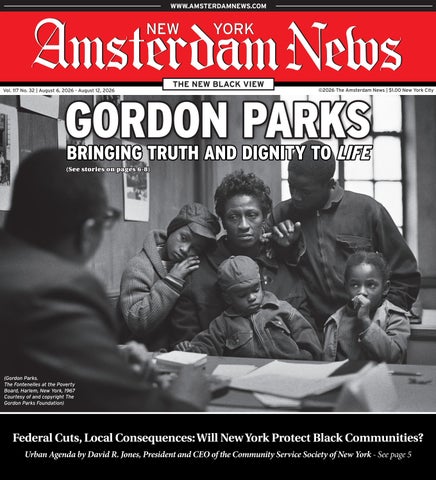
PARKS
(File photo
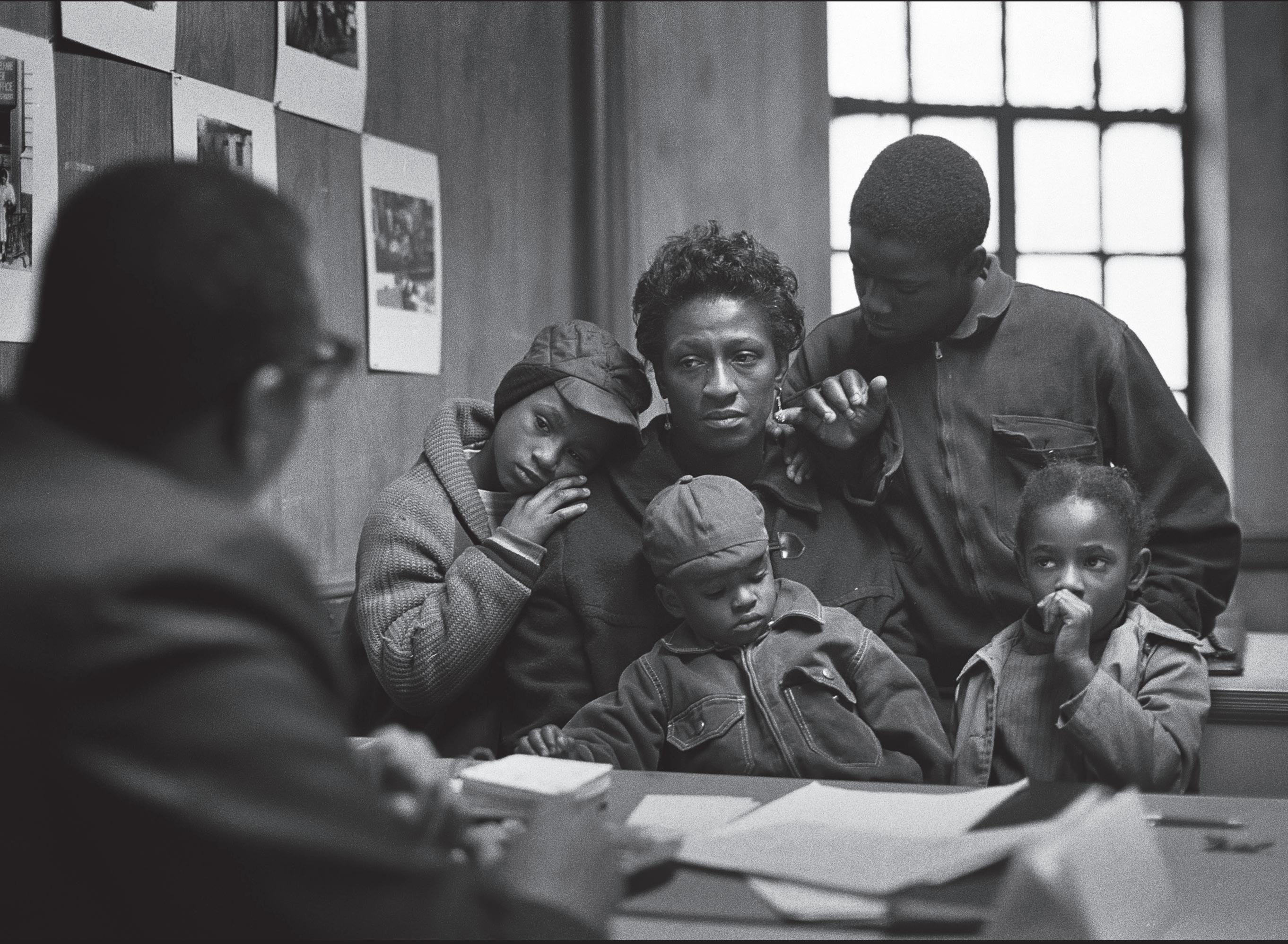
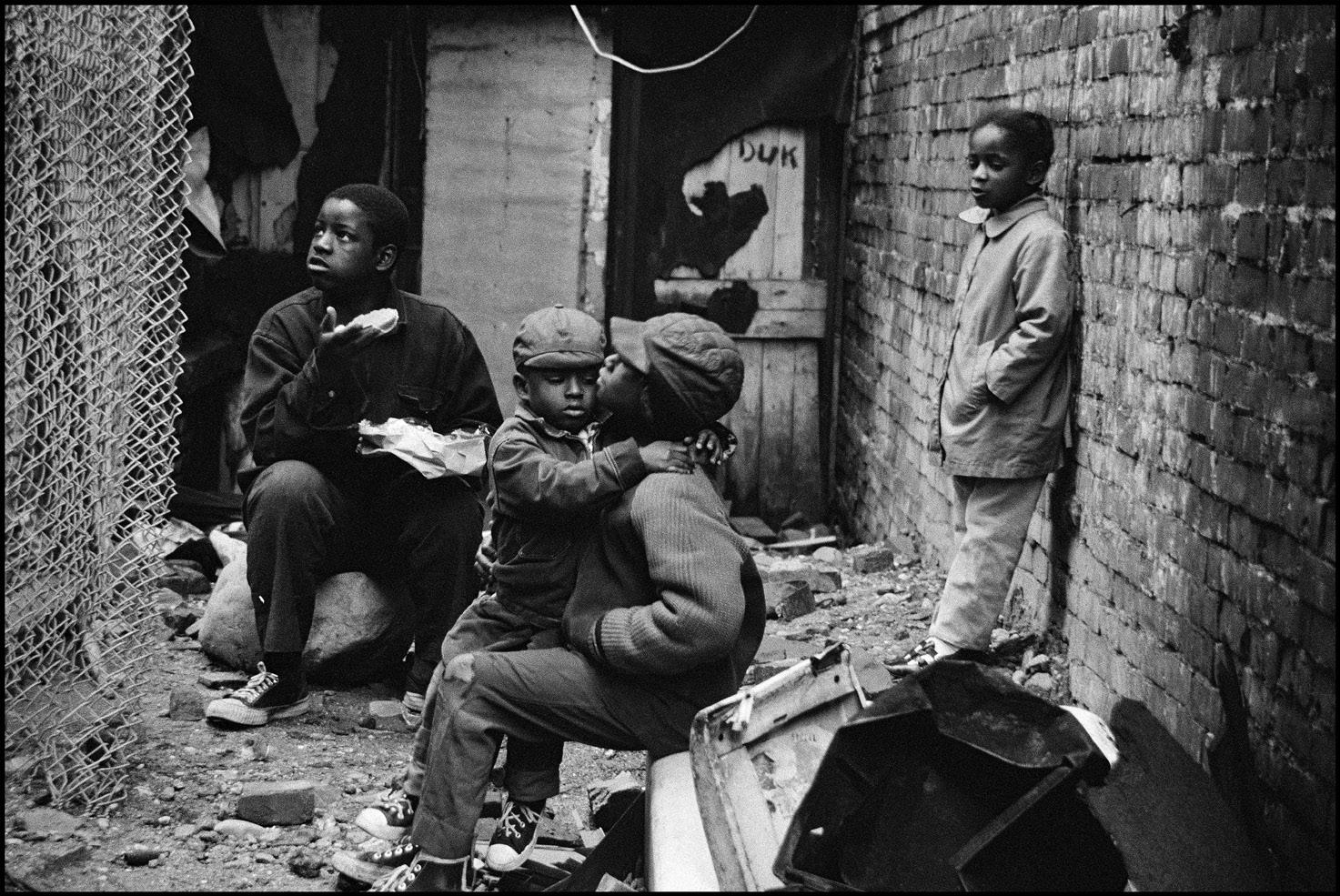
(Gordon Parks.
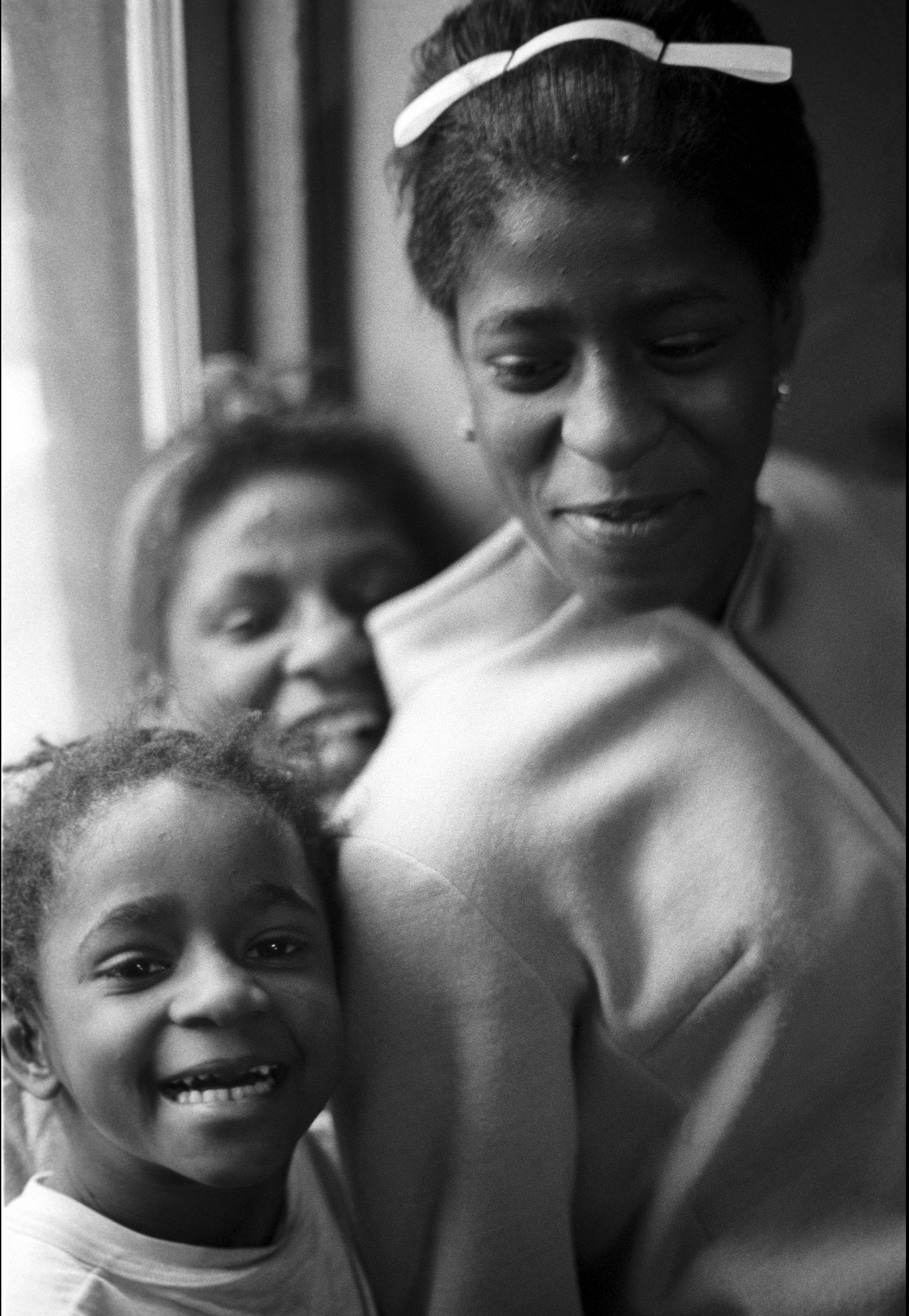
The Fontenelles at the Poverty Board, Harlem, New York, 1967 Courtesy of and copyright The Gordon Parks Foundation)
USPS 382-600/ISSN#00287121
2340 Frederick Douglass Boulevard
New York, New York 10027 (212) 932-7400 / FAX (212) 222-3842
DIRECTORY
EDITORIAL
Executive Editor – Madison J. Gray
Madison.Gray@AmsterdamNews.com
Managing Editor – Kristin Fayne-Mulroy KFM@AmsterdamNews.com
Digital Editor - Josh Barker
Josh.Barker@AmsterdamNews.com
Editor at Large – Damaso Reyes
Damaso.Reyes@AmsterdamNews.com
STAFF WRITERS
Karen Juanita Carrillo
Karen.Carrillo@AmsterdamNews.com
Shannon Chaffers
Shannon.Chaffers@AmsterdamNews.com
Ariama C. Long Ariama.Long@AmsterdamNews.com
Tandy Lau
Tandy.Lau@AmsterdamNews.com
DIGITAL, BRANDED CONTENT & HYBRID ADVERTISING MANAGER
Ali Milliner (347) 350-4316
Ali.Milliner@AmsterdamNews.com
DISPLAY & DIGITAL ADVERTISING CONSULTANT
William “Bill” Atkins (212) 932-7429
William.Atkins@AmsterdamNews.com
LEGAL, LLC & CLASSIFED ADVERTISING
Brian Lawrence (617) 704-3735
Brian.Lawrence@AmsterdamNews.com
CIRCULATION / SUBSCRIPTION
Benita Darby (212) 932-7453
Benita.Darby@AmsterdamNews.com
The AmsterdamNewsassumes no responsibility for the return of unsolicited manuscripts or photographs. Photographs and manuscripts become the property of The Amsterdam News. Published weekly. Periodicals Class postage paid at New York, N.Y. POSTMASTER: Send address corrections to NYAmsterdamNews,2340 Frederick Douglass Blvd., New York, NY 10027.
MAIL SUBSCRIPTIONS INFORMATION
U.S. Territories & Canada
Black enrollment at specialized high schools drops; elected leaders concerned
By ARIAMA C. LONG Amsterdam News Staff
To tackle the ongoing racial disparities at New York City’s highly sought-after high schools, members of the city council are pushing legislation to address any underlying structural barriers causing a decline in Black student enrollment.
Over the course of years, the same outcome seems to be consistent: very few Black students are getting into the city’s nine specialized high schools –– eight of which use a controversial admissions exam. A whole host of reasons are theorized, including a lack of resources and tutoring at younger grade levels for Black students. Many have blasted the Specialized High Schools Admissions Test (SHSAT) for “lopsided scoring” on a multiplechoice exam that further segregates a school system already rife with racial disparities, and demanded the city get rid of the test.
Yet little has changed.
“I do not believe that you need to go to Stuyvesant, or if you go to one of these specialized high schools, you’re going to be successful. However, I do believe that all people should have the opportunity and those things should not be limited to some folks,” said Althea Stevens, who co-chairs the City Council’s Black Steering Committee. “Our Black and Brown students are just as smart as anyone else…and it should not be taken off the table just because there are other options.”
With the other council members in the Black Steering Committee, Stevens is calling for an examination of schools that have historically served as pipelines to the city’s specialized high schools and the development of preparation programs for students of color beginning as early as fifth grade, a review of SHSAT outcomes, investment in equitable access to advanced coursework, increased transparency around admissions trends, and a commitment from the education department and the Mayor’s office to address systemic inequities.
Only three Black students were admitted to Stuyvesant High School in Manhattan with an incoming fall class of 777 students. One Black student out of 300 was admitted to Staten Island Tech. Larger schools, like Brooklyn Tech and Bronx High School of Science, did accept more Black students, but overall in 2026, Black students received 3.5% of the 4,023 acceptance letters to specialized high schools. While Latino students received 6.5%, white students received 23%, and Asian students were given more than half of all offers, according to Community Service Society (CSS) data.
While not a question of the ability, intelligence, or potential of Black students, these figures tally with the trend over the years that show a dwindling number of Black students in these schools. In 2025, Stuyvesant admitted eight Black students. In 2024, there were 10 Black students. In 2019, when former Mayor Bill de Blasio proposed elim-

inating the SHSAT and replacing it with a system based on grades and state exams, there were seven Black students.
To further complicate matters, many noted that in previous decades far more Black students were admitted into specialized high schools. Although, objectively, the rates were still low in comparison to other races. For instance, in 2003, Stuyvesant High had 23 Black students in its graduating class, according to the New York State education department accountability report.
Vladimir Lewis-Thomas, an administrator of school counseling for the Department of Education (DOE), served for almost 33 years before retiring in 2020. He remembers that diversity wasn’t an issue the way it is currently.
“I worked in The Bilingual Center, PS 189. I started there as a school counselor back in the early 90s, and I became an assistant principal. We had 125 eighth graders, and out of that we easily got 25 students into the specialized high school. And that was from just one school,” said Lewis-Thomas. “We would identify kids as early as grade 5 who were doing well in reading. Every student who scored three years above grade level we’d provide with additional ELA and math, not just one time but until they sat for the exam. What it takes to get into these schools is preparation, and I think that’s what we lack today.”
According to the Manhattan Institute, under former Mayor Michael Bloomberg in 2002, the city expanded SHSAT-based admissions. The city also massively overhauled the entire public education system by eliminating the school board in 2002, or “decentralized.” This moved crucial funding away from school districts and superintendents to the DOE with a distinct lack of transparency, said Lewis-Thomas.
Coupled with the fact that there’s been a mass exodus of Black families from the city, and therefore fewer Black students in the public school system, since the early 2000s,” said Lewis-Thomas.
As of the 2024-25 school year, Black students make up only 19% of all New York City public school students, according to NYCPS data. The majority of school children are Latino at 42%, while Asian students make up 19% and white students make up 16%.
Additionally, Lewis-Thomas pointed out that today’s generation of students might lack interest in preparing for or taking the exam. He noted they could feel compelled to go to “the city’s ivys,” even if those institutions do not align with their educational or cultural preferences. As a student, he nervously took the SHSAT test in the 1980s because his parents desired to see him be a doctor, but he recalls that he didn’t want to take it.
Stevens attended the High School for Leadership and Public Service in Manhattan in the early 1990s. She remembers being interested in Brooklyn Tech, but her mother said it was too far away to travel to. She felt she ended up at the school that she needed, a smaller campus and a nurturing environment.
“I think that we have a serious issue in school in general, because a lot of times, families are looking at schools that they think are good and not what schools are good for their kids,” said Stevens. “So I personally believe that we need to be looking at revamping the whole high school process anyway.”
At her core, Stevens said she’d rather improve all the city’s high schools unilaterally in the long term than just increase access to a select few. “I think it’s so important that we’re putting a light to it and making sure that when we’re thinking about education, we’re really thinking about equity and equity is about not everybody getting the same amount, but people at least having access to it.”
What can be done now?
To initiate legislative action, Deputy Speaker and Council Member Nantasha Williams introduced a resolution this year calling on
(Photo by Keira Burton via Pexels.com)
Deed theft victims fight a second punishment after scammers take their homes
By KAREN JUANITA CARRILLO Amsterdam News Staff
Brooklyn homeowners who felt relieved when courts confirmed their deeds had been stolen are now finding out that vindication is only half the battle: even after fraud is exposed, they still have to spend time and money reclaiming property that’s rightfully theirs.
Many deed theft victims find that they still have to file motions and affidavits, pay legal bills, and spend days sitting in courthouse hallways trying to prove that the home they bought, fixed, rented, inherited, or raised children in was actually theirs.
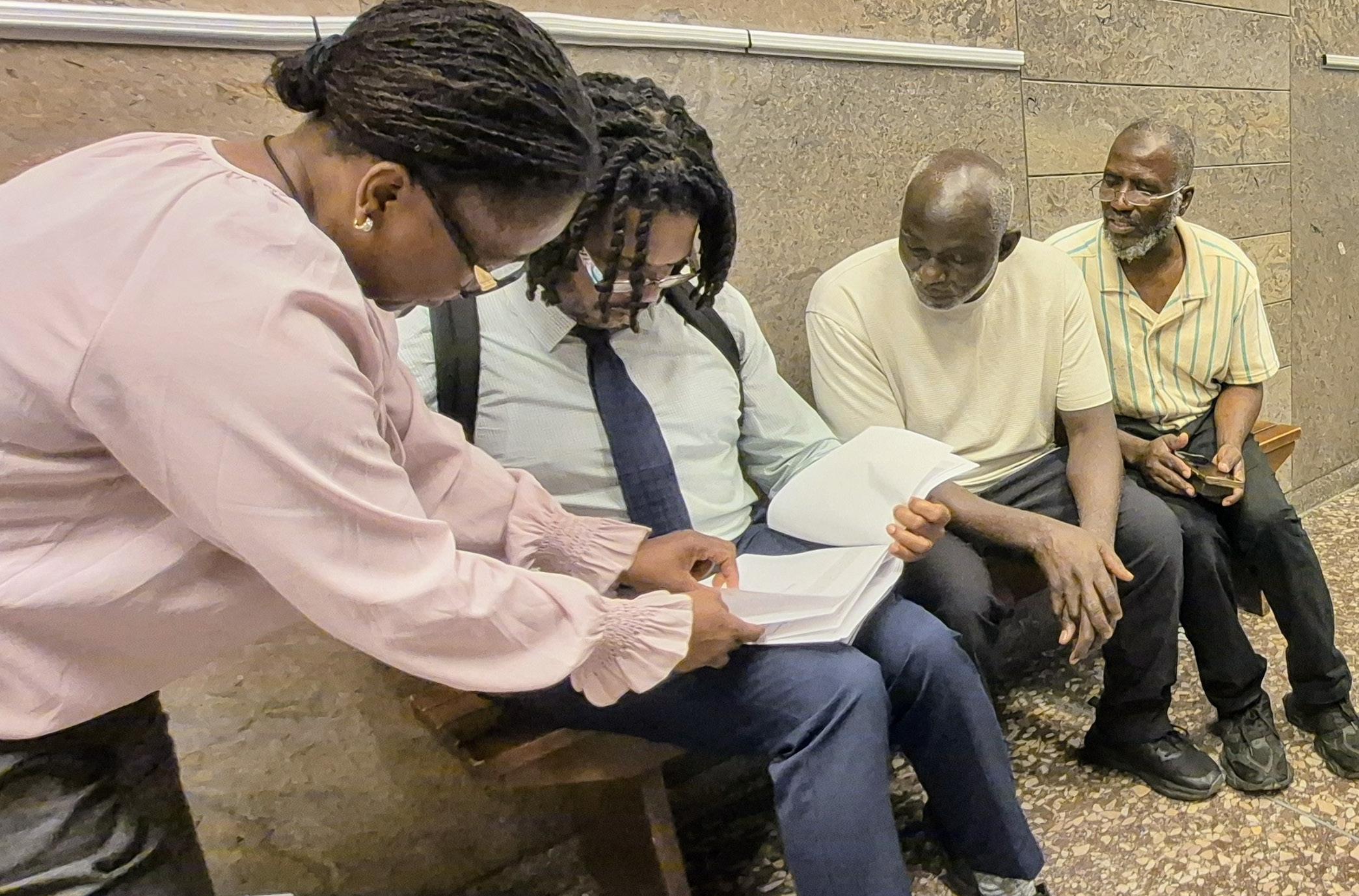
Gaoussou Ouedraogo and Patrice and Clotilde “Wendy” Sawadogo are still fighting to recover 406 East 21st Street in Flatbush, one of the Brooklyn properties tied to disbarred attorney Sanford Solny’s decade-long deed theft scheme. The Brooklyn District Attorney’s office said Solny targeted homeowners in foreclosure and falsely promised to help arrange short sales, but instead transferred deeds to himself or companies he controlled. In June 2025, Solny was convicted of stealing deeds to 11 Brooklyn properties; in November, Brooklyn Supreme Court Justice Danny Chun sentenced him to two and a half to seven years in prison and nullified the fraudulent deeds.
But Ouedraogo and the Sawadogos are still fighting to regain their ownership of the Flatbush property, which was sold even though it should not have been. They have been forced back to court to challenge the sale and defend against attempts to remove them from the property. Their other prop-
erty, 729 Eldert Lane in East New York, was also part of the Solny case.
Solny’s conviction helped prove that his victims had been defrauded, but the court did not order him to return nearly $500,000 in rent prosecutors said to be collected from stolen properties. Even now, his attorney is appealing his conviction.
Olondi LeGrand says he is also fighting a deed theft case, this one involving property at 964 St. Johns Place in Crown Heights. The Amsterdam News is still reviewing documents in his case and has not independently confirmed all of his claims. But LeGrand insists the public record shows transactions that should have raised questions. “They put a mortgage on the property and had a transfer on the whole property,” LeGrand said. “They allegedly had a purchase of 50 percent interest in the property.”
LeGrand argues that many deed theft victims are pushed into representing themselves after years of paying lawyers. “The judicial system is showing this systematic and problematic conduct which is happening to pro se litigants who can no longer afford lawyers,” he said. LeGrand claims that even when victims can afford to pay for an attorney, they later feel they weren’t fully represented by them.
LeGrand says he is putting together an event called T.R.A.C.E.R.S. (Transparency, Resources, Accountability, Enforcement, Resolutions, Strategic Solutions) as a community roundtable for homeowners, advocates and officials to discuss deed theft, elder exploitation and ways to protect family property. The next roundtable is scheduled for Thursday, Aug. 13, from 4
p.m. to 8:30 p.m. Organizers say invitations have gone to Peter S. White of the mayoral office of deed theft prevention and Edwin Raymond of the NYC Sheriff’s Department, though their attendances had not been confirmed by AmNews deadline.
Vira Jones, who has been fighting to get back into her four-family home at 130 Greene Avenue in Clinton Hill, Brooklyn, said she had an emergency order to show with a temporary restraining order allowing her to return to her property last month, but local police would not allow her to reclaim her home. Instead, the police accepted the claims of the other people who claimed they owned the property. “And I
left because I didn’t want to be arrested because [of] what they’re doing to us,” she told the Amsterdam News. “They turn it on us like we’re … what do they call this –– trespassers and squatters –– and throw us out.”. Jones said she tried to show the court order to the police. “I said, ‘This is a judge’s court order: She signed it! Look at it!’” she recalled. But in the end, she backed down. Now, she says, she is preparing to return to court on Aug. 13. Like the other homeowners, Jones is fighting over the meaning of homeownership in a city where stolen deeds can still leave victims paying the price.
For information about T.R.A.C.E.R.S., contact Stopdeedtheft.us@gmail.com.
National Night Out returns to the Harlem State Building Office plaza
By TANDY LAU Amsterdam News staff

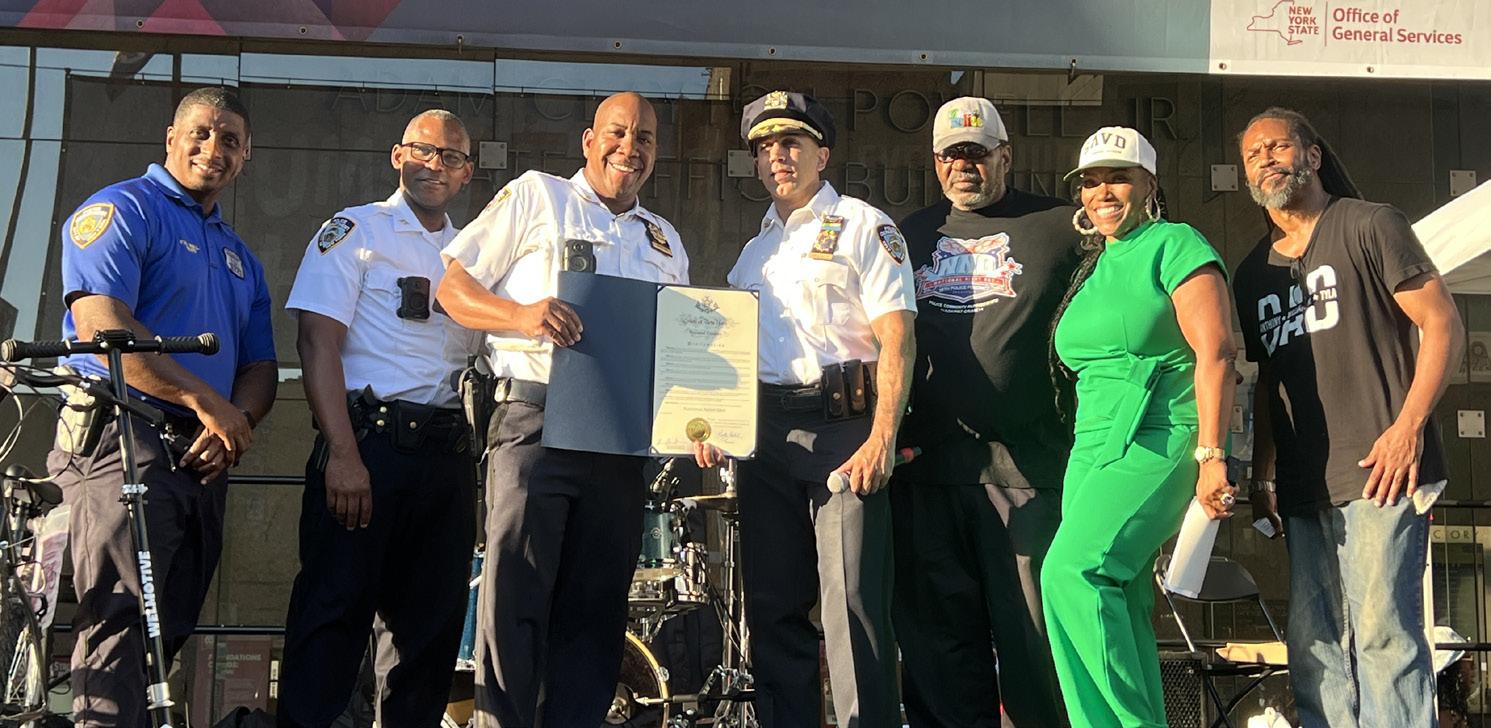
Despite a rainy forecast nearly all week, the skies stayed clear on 125th Street for National Night Out Against Crime as the 28th Precinct Community Council once again took over the Adam Clayton Powell State Office Building plaza and brought cops and residents together on Aug. 4.
The event marked a nationwide and citywide trust-building exercise between law enforcement and the local communities they serve across the country. The event coincides with Harlem Week and marks a part of the neighborhood celebration, which is themed “Honoring Our Legacy” this year.
As they have before, 28th Precinct Community Council president Leman Jake McGhee and vice president Pastor Staci Ramos spearheaded the event. They ex-
tolled the power of prayer and underscored the importance of safe, free fun for the neighborhood.
“Every year, the whole United States would get together and say, hey, we could feed people, we could party, we could dance [and] we could have a good time,” said McGhee. “That’s what the atmosphere of a community is about…that’s what the whole thing is about: showing that we can enjoy each other without being violent.”
“And we can come together in unity,” added Ramos. “This is not a fallacy; this is the hope, and we are surrounded around God…because clergy has always been on the ground [and] knows what’s going on.”
Like many precinct community council leaders, McGhee and Ramos long played key roles as a bridge between police and residents. “Community policing” proponents long maintained that trust and cooperation between cops and those they serve can drive down crime and increase safety. In a way, National Night Out in Harlem provides an annual culmination for those efforts, which include recurring precinct community council meetings and
other family-friendly events. Several prizes were raffled off, including a scooter, while the Police Athletic League set up an inflatable sports game. Harlemites lined up as a crew grilled up hot dogs and handed out free food. Local organizations tabled. Elected officials like Rep. Adriano Espaillat and former assemblywoman Inez Dickens pulled up. So did a mobile prostate cancer screening truck.
But unfortunately, there were items like
the rock wall, mini train ride, and officer dunk tank from last year that did not make a return. “Somebody beat us to it,” said McGhee, with a chuckle.
Editor’s Note: In an article on HARLEM WEEK in The Amsterdam News’ Jul 30, 2026 issue, Barbara Burwell, the late treasurer of the Greater Harlem Chamber of Commerce was misidentified. The error has been corrected in our online edition.
Members of the 28th Precinct and 28th Precinct Community Council celebrate designation. (Tandy Lau photo)
Clotilde “Wendy” Sawadogo and attorney Michael B. Bailey II, look over paperwork in a Brooklyn Supreme Courtroom. Patrice Sawadogo and Gaoussou Ouedraogo look on as they wait for a judge to hear their case. (Karen Juanita Carrillo photo)
National
Johanna Fernández, Young Lords historian and prison abolitionist, dies at 55
By KAREN JUANITA CARRILLO Amsterdam News Staff
Dr. Johanna Fernández, the Dominican American historian, prison abolitionist, and movement scholar, died on July 30, after years-long struggle with non-small cell lung cancer. She was 55.
A professor of history at Baruch College and the CUNY Graduate Center, Johanna Fernández was a leading scholar of the Young Lords, the Puerto Rican and Latino radical organization whose New York chapter fought for health care, sanitation, breakfast programs, lead-poisoning testing, and community control.
Her award-winning book, “The Young Lords: A Radical History,” was based on oral histories, archives, and recovered police surveillance files obtained through a Freedom of Information Law lawsuit she filed against the New York Police Department. Her suit helped uncover the Handschu files, an over one million NYPD surveillance file, compiled between 1954 and 1972, on anti-Vietnam War demonstrations, civil rights rallies, early LGBTQ+ rights protests, the Black Panthers, the Young Lords, and the Nation of Islam. The NYPD had for decades claimed the files were lost.
Former Young Lord and veteran journalist Juan González told the AmNews, Fernández’s book stands apart because of the scope and seriousness of her research.
“There’s been about a dozen books on the Young Lords that have been published,” González said: “Johanna’s book is by far the best, the most complete and the most analytical, and one that best places the role and contributions of the Young Lords in the historical context of social change in the United States and of revolutionary movements. She really was, I guess, the only person who really distilled and summarized what was unique about the Lords compared to other organizations, other revolutionary social change organizations of that era.
“She really was not only the best analyst,” González added, “and I say this even though I had some disagreements with some of the stuff in her book. I didn’t agree with all of it, but I totally respect the devotion and the time she took to try to place the Lords in the proper historical context of that era. And she was very dogged in her research, digging up many documents that other people had not.”
“I think there are going to be some memorials happening,” Mickey Melendez, cofounder and former head of security for the New York Young Lords, said. “We don’t know the dates yet, and we don’t know if there’s going to be a viewing or not. The family’s going to follow up … But basically, as her
brother said, you know, she was so busy living life that she left no instructions.”
The interviews and exchanges Johanna had with Young Lords’ founders while writing her book helped her build relationships with them. For the rest of her life, Fernández stayed close to Young Lords veterans, pushed to protect their archives, and insisted on bridging their work with the efforts of today’s organizers. The exhibition, “¡Presente! The Young Lords in New York,” which she co-curated with Dr. Yasmín Ramírez, was on view at the Bronx Museum of the Arts, El Museo del Barrio, and Loisaida Inc. between July and December 2015. In later work, she created the Latinx Freedom Movement Archive and Exhibition Project, with historian Felipe Hinojosa, and it is currently on view at The Shed in Hudson Yards.
Filmmaker and producer Cionin Lorenzo said Fernández’s archives “need to really be protected,” calling the work “brave” and “brilliant.” She recalled watching visitors encounter the Latinx Freedom exhibition at The Shed and realizing the reach of Fernández’s labor. “It made me very emotional to see it,” Lorenzo said, “and I knew what it was about. I knew the background. We’ve talked about all these things so many times. But just seeing it there, at The Shed, where there are so many tourists, I was waiting for someone, so I had an hour to kill, and I really just wanted to sit there and watch people see the exhibition. And I was really blown away. People from all over the world, all different cultures, ages, languages, you know, whether they stopped for five minutes or stayed half an hour. You would hear their conversations, and they were
smart. People would talk to each other. They would see something and be kind of blown away.
Like, that’s the effect her work has. It doesn’t matter where you’re from; it’s a universal struggle, telling the story of people who love and want everyone to be equal, to be safe, and to live their freedom and their truth. And that resonates with people. I saw it in that one hour that I was standing by the Latinx Freedom.”
A life of giving
Fernández’s life — a mix of scholarship, activism, family, and friendship — was rooted, her brother Geovanny explained, in lessons learned from their parents, especially their father, Tirso.
Tirso Fernández was born in the rural Dominican Republic settlement of Lavapiés, near San Juan de la Maguana. He and his wife, Minerva, who are from La Vega, were refugees of the 1965 Dominican Civil War. They raised Johanna and her brothers, Geovanny, Osvaldo, and Tirso Jr., in New York City, with a politics that Geovanny described as based on generosity.
“I think the idea was to help people, particularly those who didn’t have a voice,” he said. Their father, he remembered, measured family visits back home partly by whether his children had helped others: “Did I give any money? How much money did I give?
“As for politics, my cousin said that the purpose of politics is to help others. Certainly, that was an ethos of my sister, [that] she learned from her father, Tirso Fernandez.” Fernández’s commitment to prison abolition
led her to edit “Writing on the Wall: Selected Prison Writings of Mumia Abu-Jamal,”co-edit a special issue of Socialism and Democracy with Abu-Jamal on the roots of mass incarceration, and write and produce “Justice on Trial: the Case of Mumia Abu-Jamal.”
Mickey Melendez says there will be upcoming events to celebrate Dr. Fernández and the legacy of her work, along with remembrances of three original Young Lords female founders who all passed away this year: Denise Oliver-Vélez, Minerva Solla, and Connie Cruz.
Even while ill, Fernández kept working. González said that he last saw her in April at the Latinx Freedom Conference at the CUNY Graduate Center. “She insisted on participating in everything and continued to coordinate the conference even as she was battling her cancer,” he said. The project brought movement veterans, scholars, artists, and community leaders together to preserve oral histories and archives of Latinx freedom struggles across the country. At the time of her death, Fernández was also working with Melendez and Lorenzo on a scripted miniseries about the Young Lords, intended to bring the organization’s story to broader audiences. Lorenzo said Fernández would have been essential as a consultant because of the historical knowledge she brought and because “she had such deep relationships with so many of the members and they trust each other so much.”
Melendez said the goal was to create an exciting series that showed the momentum and urgency of the Young Lords’ organization. “The intent of the series was to make it exciting, to end each episode with a cliffhanger so you come back, and things of that nature,” Melendez said. “So I’m going to continue that work as best as I possibly can to see this finished.”
Geovanny Fernández attests that his sister was a professor, organizer, activist, friend, daughter, and sibling—someone who “was too busy living to have left us instructions on what to do” now that she has passed. She carried forward her parents’ political ethic of generosity and expanded it into archives, classrooms, exhibitions, prison justice work, and intergenerational organizing. “She did a lot in 55 years,” he said.
In a statement, Fernández’s family said: “Our family is taking time to grieve and make arrangements. Funeral and memorial service information will be shared as soon as it is available. Thank you for your prayers, love, and support during this incredibly difficult time. With love, The Fernandez Family.”
For more information about Johanna Fernandez, visit her website: https://www. johannafernandez.info
Dr. Johanna Fernández, Dominican American historian and prison abolitionist, passed away on July 30, 2026. (David Galarza photo)
Larry Wilson in the lead chair: Why Levels Barbershop represents the best of Harlem
THE URBAN AGENDA
By David R. Jones, Esq
New Yorker
By JASON PONTEROTTO
Special to the AmNews
Levels Barbershop, known as a cultural institution in Harlem, is celebrating 30 years in business this summer. That’s three decades of heated debates on different topics, old school R&B music playing, sports playing on TV, vendors coming in to sell items, and community members stopping in to greet everyone in the shop, all staples of Black barbershop culture.
“It’s almost like a hub for the community, a place where people can actually go from different socio-economic backgrounds, and be comfortable, almost like a safe place,” said Co-founder Larry Wilson, 60, who has cut and styled hair in 125th Street barbershops since 1988. “Community can come together whether it is professionals or whether you’re from the housing projects or you’re from the street, and we can all mesh and get along and gel and share different opinions.”
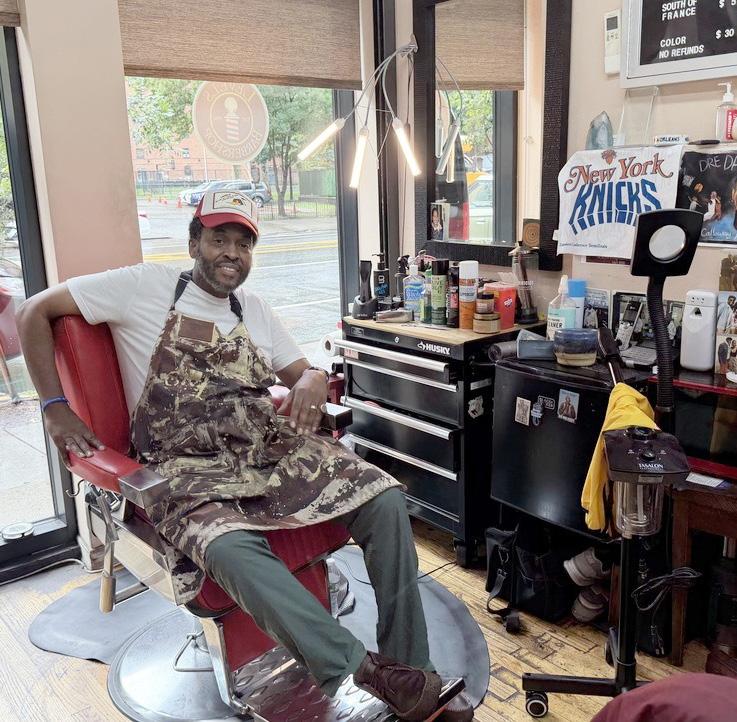
Wilson, along with Kamal Nuru and DeNorval Parks, opened the shop in 1996. Of the three, Wilson is the only one who continues to cut regularly and the only one remaining at the flagship location on 125th St. His chair can be found on the far left of the shop, where he sometimes chimes in on the ongoing debates while in the middle of a cut. His station is surrounded by trinkets and items that are special to him, including
family photos, a Knicks Eastern Conference Champions banner, and an award from the OG Barber Conference in 2024.
But in the space, you can also find Black art portraits, children’s books from Black authors, and various pamphlets providing community resources.
“We want to have information available to you, cultural things that some kids or even adults don’t have access to,” said Wilson, 60, noting that he is proud the shop has stood the test of time. ”We want to try to expose people to their history and their culture.
Early cuts
Raised in Crown Heights, Brooklyn, Wilson spent much of his time as an athlete playing basketball and playing in tournaments across the city while attending John Dewey High School. But he said he was always drawn to artistry, whether it was drawing, dancing, or music, which is likely what connected him to cutting hair as a teenager, something he considers an art form.
“It’s an art form in a sense. So maybe that’s why I gravitated to it,” Wilson said. Around high school, he would line up his hairline and begin cutting hair for his brothers and in the neighborhood.
After attending Lincoln University, Wilson enrolled in Atlas Barber School, which had See BNY on page 21
Federal Cuts, Local Consequences: Will New York Protect Black Communities?
Here’s a hard truth about public policy: When government retreats from its responsibility to protect vulnerable families, Black communities often feel the impact first and the longest. For generations of Black Americans in New York City, this has been the reality.
Today, New York stands at another such moment.
As Congress and the White House move forward with significant reductions in federal support for programs that millions of Americans depend on, the consequences are beginning to come into focus. These same political leaders are celebrating delivering tax cuts to the wealthy at the expense of working-class communities across the country, and in New York, who are left wondering how they will absorb the loss of health care, nutrition, housing, and income supports that help struggling families remain afloat. To be sure, these concerns are particularly acute in Black communities, where generations of economic inequality have left many households with fewer resources to weather financial shocks.
Last year my organization, the Community Service Society of New York (CSS), released a statewide health care affordability survey that found that 68 percent of New Yorkers experienced at least one health care affordability burden in the past year, while 80 percent worry about affording health care in the future. Even more troubling, 66 percent reported delaying or going without needed medical care because of cost. Nearly one-third said medical expenses forced them to deplete savings, incur debt, or sacrifice other necessities.
Those findings should serve as a warning.
If New Yorkers are already struggling to afford health care before the full impact of federal funding reductions is felt, what happens when support for health coverage and safety-net programs is reduced further? What happens to working families living paycheck to paycheck? What happens to seniors, people with disabilities, and children whose access to care depends on public programs?
The answer is simple: hardship increases. And hardship is not distributed equally. Black New Yorkers continue to face higher rates of poverty, lower household wealth, greater housing insecurity, and more significant barriers to economic mobility than many other groups. CSS’s longstanding research on economic insecurity—including our Unheard Third surveys—has consistently documented the precarious financial circumstances faced by millions of low-income New Yorkers. Our research shows that one-third of New York City’s voting-age citizens live in low-income households, underscoring just how many residents remain vulnerable to economic shocks.
That vulnerability is occurring at a time when the cost of living continues to soar.
Housing remains unaffordable for far too many families. Transportation costs strain household budgets. Health care expenses continue to rise faster than wages. Food insecurity remains a daily reality in many neighborhoods. Federal spending cuts threaten to intensify every one of these challenges.
According to the Fiscal Policy Institute, H.R.1’s cuts to Medicaid and SNAP will cost New York $5.8 billion in FY27 and rise to$14.3 billion in FY30. The danger of these cuts is not just the loss of funding itself, but the cascading effect that follows.
When food assistance is reduced, more families turn to food pantries. When health coverage becomes more difficult to obtain, people delay treatment until illnesses worsen. When housing assistance becomes harder to access, more families risk eviction and homelessness. Each problem compounds the next. The costs eventually shift to local governments, hospitals, schools, nonprofits, and neighborhoods.
Fortunately, New York is not without options.
City and state leaders must begin preparing now for what lies ahead. That means protecting access to affordable health coverage, strengthening rental assistance programs, investing in anti-hunger efforts, and preserving supports that help working families remain economically stable. A good example of this is the decision to expand the Fair Fares transit discount program in the city’s recently enacted budget. As a result, more than 1.3 million working-age New Yorkers will be eligible for half-priced bus and subway fares later this year.
So, the question facing New York is not whether the federal cuts will have consequences. They will. The real question is whether we will act quickly enough to protect the communities that have the most to lose. History teaches us that moments of economic uncertainty often deepen existing inequities unless government intervenes intentionally and aggressively. Without action, the burden will once again fall disproportionately on Black communities and other New Yorkers already struggling to get by.
That outcome is not inevitable.
New York has a long tradition of standing up for working families and vulnerable residents when others turn away. The months ahead will test whether we remain committed to that tradition. The next crisis is not a distant possibility. It is already taking shape.
Our challenge now is to ensure that the people who can least afford another setback are not asked to bear the greatest sacrifice. The future of thousands of New York families depends on the choices we make today.
Larry Wilson, co-founder of Levels Barbershop in 1996, at his barber chair, surrounded by trinkets of decoration including a 2026 NY Knicks banner, painting, award from the OG Barber Conference, and family photos. (Jason Ponterotto photo)
Revisiting Gordon Parks’ groundbreaking photography in
‘A Harlem Family’
By ROBERT GERHARDT Special to the AmNews
During its heyday, LIFE magazine reached roughly one out of every three Americans. Over its run, the magazine commissioned more than 10 million photographs in 120,000 stories, according to its archive. The photo stories that LIFE published brought the world into the homes of readers in a very intimate and powerful way. Gordon Parks was one of the best, and of all the stories that he did for LIFE, “A Harlem Family” stands out above the rest. It ran in the March 8, 1968, issue of the magazine in a special section titled, “The Cycle of Despair: The Negro and the City.” The release of the story was timed to come out the week after the Kerner Commission report that looked at the cause of the “explosion” of urban “riots.”
In 2012, Steidl first published “Gordon Parks: A Harlem Family 1967” as a book in conjunction with the Gordon Parks Foundation and the Studio Museum of Harlem. Since then, additional photographs from the series have been discovered, and research has been conducted about the accompanying film, “Diary of a Harlem Family” (1968). This new volume tells the story of Parks’ project more fully with their inclusion. The book also contains previously unpublished texts and ephemera, including correspondence and other documents Parks amassed over the years while he kept in touch with the Fontenelles, letters written by LIFE readers showing an outpouring of support for the family, and the transcript of a conversation between Parks and Michael Torosian about the making of the story.
As Leigh Raiford, a scholar, author, 2026 Gordon Parks Foundation Genevieve Young Fellow in Writing, and professor of African American and African Diaspora Studies at the University of California, Berkeley, recounts in her essay in the new book, “Parks later recounted that his contribution to ‘The Cycle of Despair’ grew out of a conversation between him and a friend, LIFE’s assistant managing editor, Philip Kunhardt. Over lunch, Kunhardt asked Parks, ‘Why is there so much racial tension across the country? And why are Blacks rioting in the big cities practically every month?’”
Kunhardt was not the only one wondering what was going on in the cities. Between 1964 and 1967, there had been more than 100 uprisings in more than 50 cities across the United States, driven by poverty, social inequality, police overreach, high unemployment, and overt racism. White Americans who lived outside of the cities had no idea what was going on, while some in the cities chose to ignore these issues or overlook them for far too long.
After the conversation, Parks decided he was going to follow a single family for the special edition. Working with Robert Haggins, who directed an antipoverty program (Neighborhood Board #4 at 123rd Street and St. Nicholas Avenue), Parks interviewed potential families but found that many were See story on next page
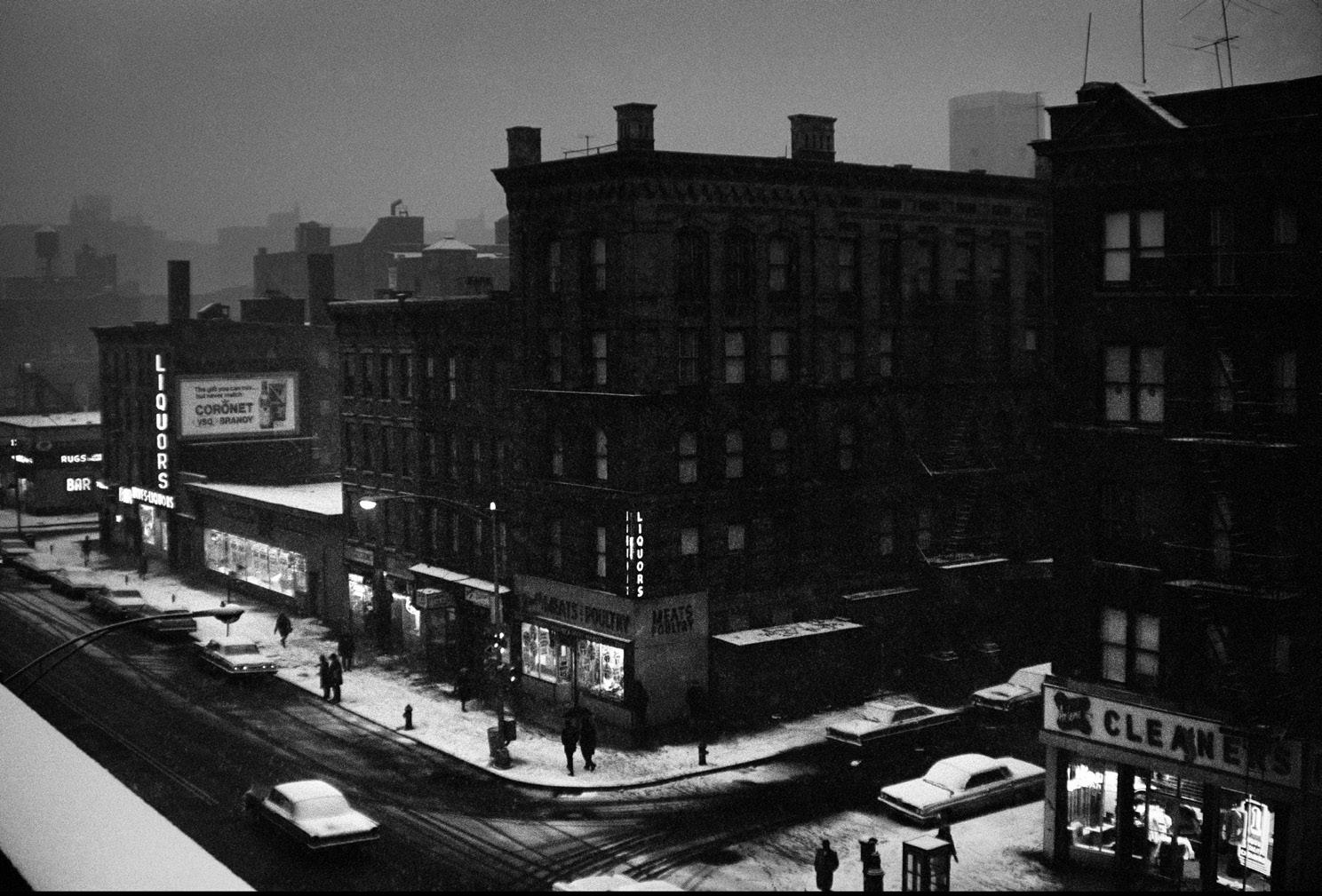
Gordon Parks. Untitled, Harlem, New York, 1967. (Courtesy of
too embarrassed about their living conditions to take part in the project. In the end, Bessie Fontenelle agreed to let her family be photographed for the story.
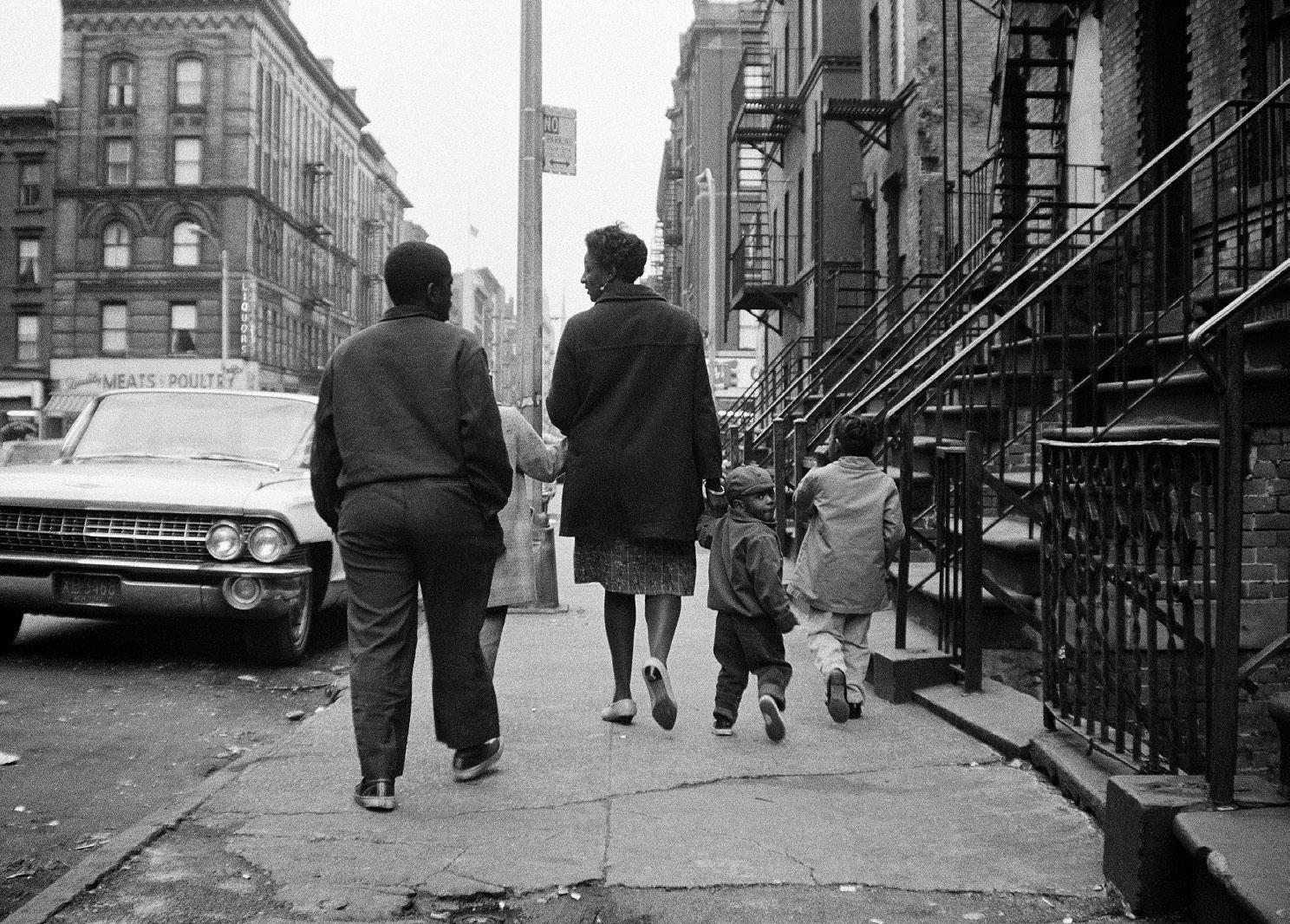
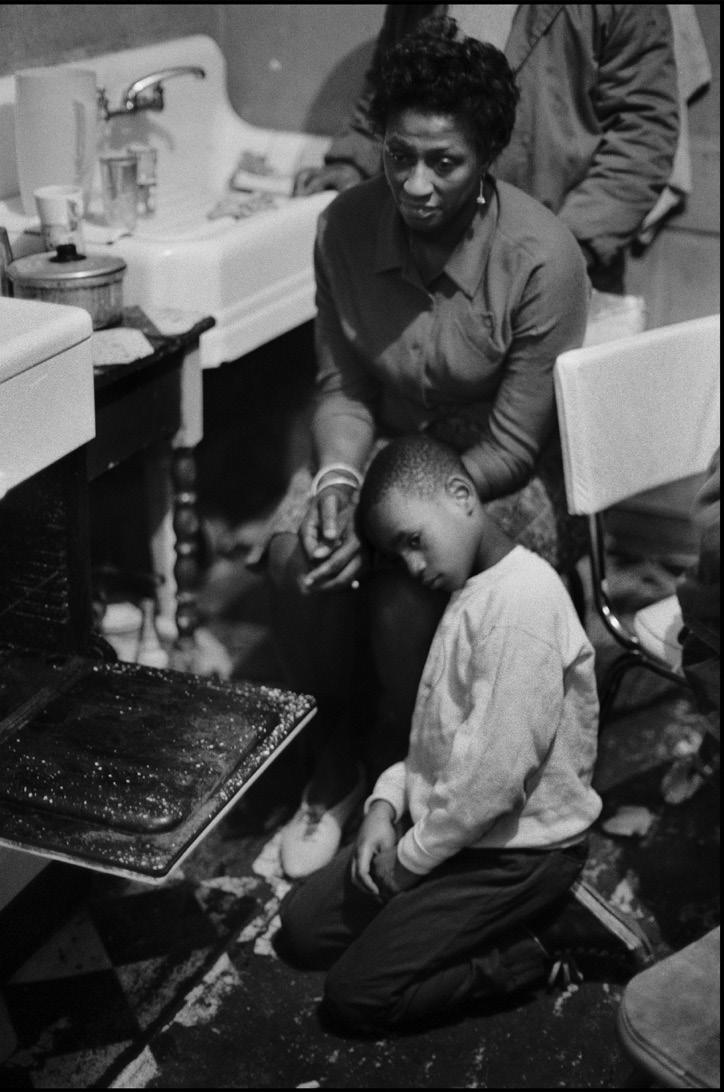
“Parks spent a month with the Fontenelles, eating meals with them (sometimes food he’d brought them), following them through the neighborhood, speaking with them individually and collectively,” Raiford said via email. “As with most of his assignments, Parks first sought to build rapport with the family, which in this case meant he started the assignment without his camera. It was a week before he actually started making photographs.”
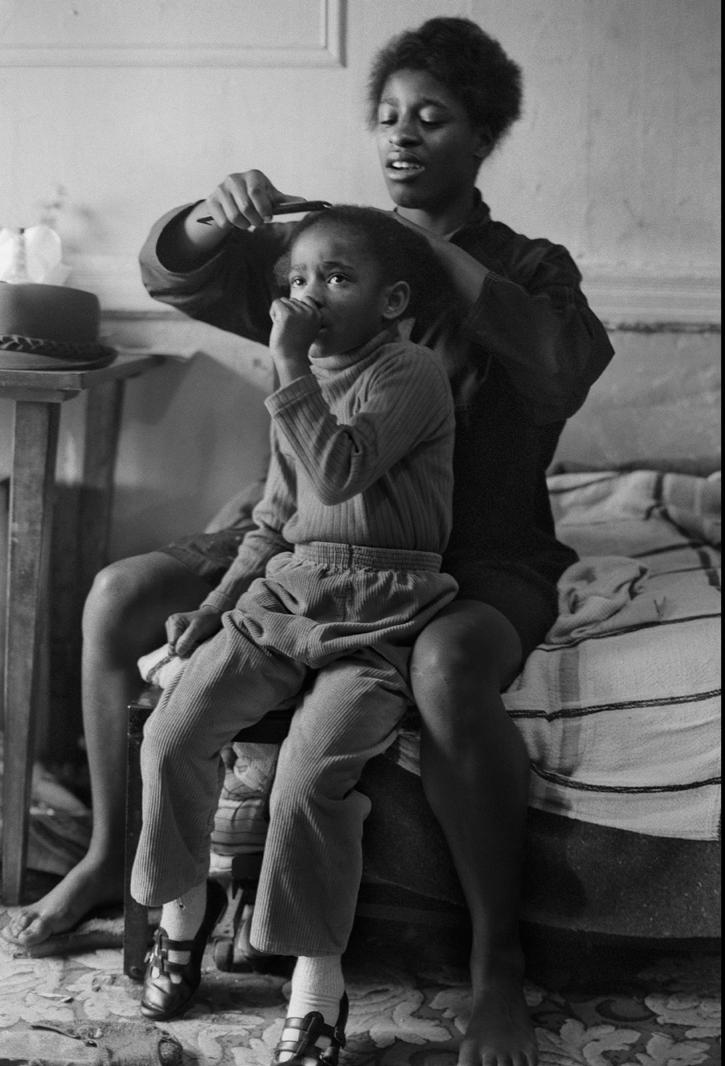
The searing photographs that Parks made of the Fontenelles brought home what life for Black Americans living in poverty in the inner cities was really like. He walked the tightrope of both showing the truth of the living conditions of the family while maintaining their dignity in front of the camera.
Parks also never stopped worrying that
his work was exploiting the Fontenelles. He had grown up in poverty, but he still found their situation almost unbearable. Parks was aware of how far he had come, and although he tried to help the family, there was also tragedy.
“Once the article came out, letters of support, and also derision, flooded LIFE’s offices. Many included checks or cash. Parks convinced the magazine to match the donations in order to purchase a home for the Fontanelles out of Harlem and in the suburbs,” Raiford said. “Tragedy befell the family when the house caught fire, killing father Norman, Sr. and eight-year-old Kenneth. For the rest of his life, Parks continued to check in with the family, providing cash on occasion and [paying] for the funerals of several of the family members.”
“A Harlem Family” still stands as one of Parks’ most powerful and important perspectives on the social and economic issues that affected everyday people. He had spent
20 years at LIFE by the time the article was published in 1968, and was in his mid-50s. The movie he made of it, using his photographs along with additional film footage and his narration, played on PBS and showed his interest in moving into creating films. In fact, soon after “A Harlem Family,” Parks went on to direct “The Learning Tree,” based on his semi-autobiographical first novel that he had published in 1963.
“‘A Harlem Family’ was also one of the last of his ‘damage’ essays — the kind of sociological studies about the devastating impacts of social-economic forces on the lives of everyday people that Parks had perfected over the course of his two decades with LIFE magazine,” Raiford said. “In the Black Power era, Black audiences especially were interested in different kinds of stories and depictions of their lives, and Parks’ turn to filmmaking (as well as poetry, painting, and music composition) is also evidence of that desire for new kinds of representa-
tion. I think by 1968, Parks was outgrowing LIFE magazine, its appeal to white liberalism, and the social issue photo-essay format along with it. ‘A Harlem Family’ was a nail in the coffin, so to speak.”
The story remains a poignant one in today’s world. The issues that Parks covered through the story of the Fontenelles are once again coming into play through the government’s current regression in social safety nets and more heavy-handed policing policy, which is once again leading to higher rates of poverty, racial inequality, rising job insecurity, and the normalization of racism. The same factors of the 1960s drove the Black Lives Movement, again to the surprise of white Americans who, again, were either ignorant of the issues or simply overlooked them. And one can anticipate the will toward unrest.
“‘A Harlem Family’ is important for at least two reasons,” Raiford wrote. “First, in the context of the Kerner Commission report and the urban uprisings of the 1960s, when the government solution to Black poverty was more police, more prisons, and more surveillance, Parks’ photo essay foregrounds economic inequity and racial injustice to me. Even more, he does so by centering the Fontenelles as human individuals deserving of dignity and respect, while also making clear that they are representatives of the larger societal forces that left them in the pitiable circumstances in which Parks photographed them. I understand Parks as a visual theorist of racial capitalism: the interlocked conditions of race and poverty. ‘A Harlem Family’ showcases the kind of brilliant work Parks did for decades, photographing Black and poor subjects in their beauty and complexity, outside of the grammar of victimhood and pathology.”
“Diary of a Harlem Family 1967/1968” is published by Steidl and the Gordon Parks Foundation, and can be ordered through the Steidl website at steidl.de.

Gordon Parks
“Family Crowds Around Open Oven for Warmth,” Harlem, New York, 1967. (Courtesy of and copyright the Gordon Parks Foundation)
Gordon Parks Untitled, Harlem, New York, 1967. (Courtesy of and copyright the Gordon Parks Foundation)
Gordon Parks Untitled, Harlem, New York, 1967. (Courtesy of and copyright the Gordon Parks Foundation)
Gordon Parks Untitled, Harlem, New York, 1967. (Courtesy of and copyright the Gordon Parks Foundation)
Gordon Parks Untitled, Harlem, New York, 1967. (Courtesy of and copyright the Gordon Parks Foundation)
Bearing witness without judgement: Gordon Parks and the humanistic view
By JIMMIE BRIGGS Special to the AmNews
Growing up a bookish daydreamer in St. Louis, Missouri, I discovered Gordon Parks’s autobiography “A Choice of Weapons” during my sophomore year in high school. The narrative journey of his hardscrabble upbringing in neighboring Kansas to documenting fashion runways, favelas in Brazil, and the heroic everyday Americans driving the Civil Rights struggle captured my imagination. More than anything, the kaleidoscopic life he led was a living rejoinder to a contested literary line attributed to writer F. Scott Fitzgerald: “there are no second acts in American lives.” Gordon Parks lived multiple ones in his sprawling 93 years: photographer, memoirist, filmmaker, painter, and choreographer.
In comparatively minor ways, I sought to follow in the large footsteps he left for countless aspiring storytellers by leaving the Midwest at the soonest opportunity I could and moving to New York to become a journalist, eventually finding my way to LIFE magazine as he had, but becoming a staff reporter instead of a photographer.
A decade after first picking up “A Choice,” early in my four-year stint at LIFE magazine. I met Gordon at a holiday party. Star-struck but determined to speak with him, I went over to where he was standing amongst a group of older magazine alumni and awaited my turn to say “hello.” Our conversation that evening was extremely brief but sparked a relationship which lasted till his death. Irregularly, I would go to his apartment at the UN Plaza overlooking the East River to soak up any anecdotes, guidance, or feedback on ideas I could. Just a few years before his death at that point, he was the veritable “lion in winter” with a flowing white mane of hair, his signature mustache, and sparkling eyes. Sitting on a living room sofa or at the dining table, Gordon was gracious, patient, and still impassioned.
We actually ended up working together on a re-creation of the famous Art Kane photo “A Great Day in Harlem,” bringing together, in 1995, the dozen surviving jazz musicians from the 1958 original, ironically on the same day as the Million Man March — a conflict both he and I spoke about and deeply regretted.
For much of the mid- to late 20th century, LIFE magazine was the undisputed visual chronicler of the American dream, though an overwhelmingly white one. Between 1937 and 1972, less than three percent of LIFE’s coverage was devoted to everyday Black life, and for much of its initial publication run, Gordon Parks was
cieties, separate and unequal, driven by white racism, police misconduct, and economic abandonment.
the only Black photographer on staff, till John Shearer was hired in 1969. Mostly, Black Americans were flattened into tropes: sensationalized figures of crime, extraordinary sports stars, or distant victims in moments of acute crisis, except through the lens of Gordon Parks. When he joined the publication in 1948, he was the sole Black member of the full-time photographic staff and remained so till John Shearer, a mentee whose father was a friend, was hired in 1969. Gordon would go on to complete more than 300 assignments over his career at LIFE , tasked with forcing white mainstream readers to confront the complex, unflinching humanity of Black America.
Harlem became a frequent focus of his. For his breakout story, he shadowed 17-year-old Leonard “Red” Jackson. While LIFE’s white editors aggressively cropped and edited his work to lean into sensationalized fear, Gordon consistently strived to capture the tenderness and vulnerability of a young Black man molded by structural neglect, yearning to survive. In that same year, he teamed up with his close friend Ralph Ellison on the unpublished photo essay “Harlem Is Nowhere,” probing the psychological toll of urban segregation at Harlem's Lafargue Mental Hygiene Clinic. Four years later, in 1952, Parks and Ellison collaborated again for LIFE , constructing haunting set pieces, such as a basement glowing with 1,369 lightbulbs.
Fifteen years later, as his ascendance in journalism and the arts had reached the status of lore, Gordon Parks went back
to Harlem for what would become a defining work of humanistic, documentary excellence of Black life. To understand the weight of his seminal photo-essay on the Fontenelles, “A Harlem Family," published in LIFE on March 8, 1968, one must understand the socio-political inferno in which it was born. Against the backdrop of firehoses, dogs, beaten protesters, burning churches, and lynchings in the South, cities in the North were veritable tinderboxes. In July 1964, the shooting of fifteen-year-old James Powell by an off-duty police officer sparked six nights of uprising in Harlem. By the “long, hot summer” of 1967, dozens of American cities were engulfed in civil disorder. White Washington sought answers, but the dominant political narrative was shaped by then Assistant Secretary of Labor Daniel Patrick Moynihan’s controversial 1965 report, The Negro Family: A Case for National Action. His framing pathologized urban Black life, blaming a “tangle of pathology” and broken family structures rather than centuries of institutional racism. White policymakers treated Moynihan as the definitive oracle on urban Black life, ignoring decades of rigorous scholarship from Black intellectuals like E. Franklin Frazier and Kenneth Bancroft Clark, among others.
When President Johnson appointed the Kerner Commission to investigate the 1967 riots, their landmark report — released on February 29, 1968, just one week before Parks’ Fontenelle story hit newsstands — offered a stark diagnosis: America was moving toward two so -
To fully understand what Gordon Parks captured in the snow-bound Harlem of 1967, I urge readers of “Gordon Parks: Diary of a Harlem Family, 1967–68” to return to James Baldwin’s prophetic 1960 essay for Esquire, “Fifth Avenue, Uptown.”
Writing at the dawn of the decade, Baldwin observed a Harlem that was already being systematically walled off and neglected by a city that viewed its Black residents with indifference or fear. In “Fifth Avenue, Uptown,” Baldwin warned that if America continued to ignore the desperate cries of Harlem, the bitterness festering in the northern ghettos would eventually boil over into an explosive, inescapable rage.
Standing in the Fontenelle home, seven years after Baldwin published that essay, Gordon Parks was looking directly at Baldwin’s prediction made flesh. He didn’t photograph the Fontenelles as sociological data or political fodder; rather, he embedded himself into their reality. Without judgment, he bore witness, fighting to change how everyday Black life was depicted.
Less than a month after the story’s publication, Martin Luther King Jr. was assassinated in Memphis (Gordon would document his funeral for LIFE), and the country erupted once more. Parks would go on to photograph Eldridge Cleaver, the Black Panthers, and Muhammad Ali, before expanding his oeuvre into Hollywood to direct “The Learning Tree” and “Shaft”, but the Fontenelle essay remained his most intimate statement on the power of documentary photography to demand empathy and expect humanity.
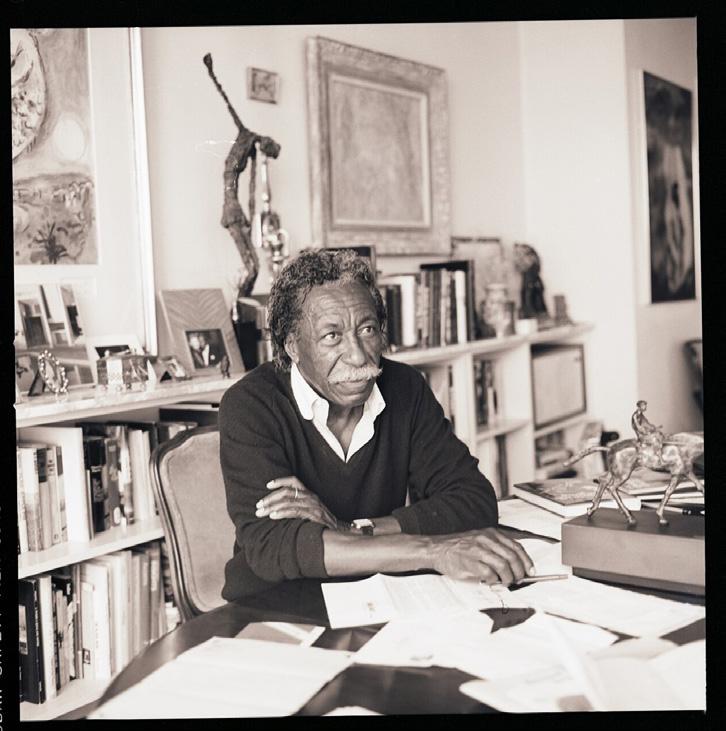
Gordon Parks in his study, late 1980s, negative by David Finn.
(Department of Image Collections, National Gallery of Art Library, Washington DC / Creative Commons photo)
Gordon Parks Untitled, Harlem, New York, 1967. (Courtesy of and copyright the Gordon Parks Foundation)
Reparations advocates link their work with Black August struggles
By KAREN JUANITA CARRILLO Amsterdam News Staff
The discussion over reparations found an ally in the Black August movement at a July 29 press conference, where the Why We Can’t Wait Reparations Network discussed the concept alongside the continuing fight to free Black political prisoners as the movement began its monthlong commemoration.
The network is a national coalition of reparations advocates. Speakers at the press conference spoke of how important it was to prove that reparations are not a form of charity but rather are the only valid way to respond to centuries of enslavement, Jim Crow, racial terror, state violence, political repression, and segregation.
Kenniss Henry, national co-chair of N’COBRA (National Coalition of Blacks for Reparations in America), noted that her organization’s reparations organizing started in 1987 with Dr. Imari Obadele, a political prisoner and Republic of New Afrika leader who later earned a doctorate and helped build an organization dedicated to “full reparations” for Black African descendants.
“One check cannot repair centuries of harm, nor the ongoing vestiges of those centuries of harm,” Henry said. She said N’COBRA’s five areas of injury include health, education, criminal punishment, wealth and poverty, and the loss of peoplehood and nationhood. She argued that the movement’s work has pushed reparations “from a whisper to a conversation” heard across dinner tables and public life.
In June, when N’COBRA held its national convention at Howard University, Henry said they held a debate around the ongoing question of who should receive reparations.
“There are those who declare that reparations should be just for a few people, and it is dubbed as lineage-based: you have to prove who you are, who your ancestors were, and maybe you can get some reparations. And then N’COBRA on the other side,

of course, there’s this full reparations for everyone who is in the diaspora and also in the surrounding areas of the diaspora that belong to this country.
“Everyone was, of course, concerned because we had no idea how this would play out, whether it would become World War Five or whether or not we could pull it off,” Henry said. “We had an amazing debate, we had an exchange of ideas, and of course, we did agree to walk away, agreeing to disagree, but we did it amicably.”
The Why We Can’t Wait press briefing marked the same date when in 2008 the U.S. House passed H.Res. 194, apologizing for slavery and Jim Crow. That nonbinding resolution, though, did not lead to compensation or legal redress. H.R. 40, the federal bill to study and develop reparations proposals, was voted out of the House Judiciary Committee in 2021, but never received a floor vote.
Dreisen Heath, executive director of the network, said the press conference was part
of a long-term campaign. “Our focus right now is on getting this through the House politically, and then you know, focusing on what type of executive action [works] thereafter,” Heath said.
Black August, created in 1979 by incarcerated organizers in California prisons, honors fallen Black liberation fighters like George Jackson, who was killed at San Quentin in 1971. Its practices of study, fasting, discipline and struggle have long connected prison resistance to the broader Black freedom movement. This year’s remembrances, speakers said, must also highlight those still living with the consequences of political repression.
N’COBRA’s Henry lifted up political prisoner and organizer Baba Herman Ferguson, who devoted his post-prison life to supporting political prisoners. She also honored Queen Mother Audley Moore and Callie House, early reparations advocates who faced federal repression.
Lorne Runnels, executive director of
Black Roots Alliance in Chicago, described local organizing around a Chicago Reparations Task Force and said community conversations show people want deeper repair. “Folks ain’t just looking for a check,” Runnels said. “Folks is looking for reparative justice and repair.” He invoked Black August by naming political prisoners and prisoners of war, including Mumia Abu-Jamal, Kojo Bomani, Sundiata Acoli and Sundiata Sadiq, saying organizers continue to work for their freedom and for the reparations vision they carried.
Roger Wareham, counsel and founding member of the December 12th Movement, stressed that administrations respond to organized pressure, not moral appeals alone. “Frederick Douglass was correct 150 years ago that power concedes nothing without a demand,” he said. Wareham urged reporters to help educate communities that reparations means institutional repair tied to healthcare, education, employment and community survival.
When asked about who is supposed to be eligible for reparations, Wareham argued that African people suffered “a collective injury” and that repair must be collective, including investments in institutions that serve Black communities. Heath pointed to other reparations and restitution programs that use place- or status-based standards, and said imposing burdens of proof could exclude elders who have been the most harmed by Jim Crow and segregation. Wareham also noted that Aug. 29 marks the approximate opening date of the 2001 World Conference Against Racism in Durban, South Africa, which produced the Durban Declaration and Program of Action, a global framework against racism that recognized slavery and the Transatlantic Slave Trade as crimes against humanity. He said gatherings in Chicago, Detroit, New Orleans, Atlanta and elsewhere would commemorate Durban’s 25th anniversary while using Black August to renew organizing for reparations now.
NAN’s Jennifer Jones Austin long championed social justice. She will now lead city efforts for police accountability
By TANDY LAU Amsterdam News staff
The Civilian Complaint Review Board (CCRB), which investigates NYPD officer misconduct, finally has a new permanent chair, but the road to getting decorated social justice leader Jennifer Jones Austin for the opening was a long and winding one.
In June 2021, Rev. Frederick Davie congratulated Eric Adams on winning the democratic mayoral primary. Then, he gave his six-month notice. Davie planned on stepping down as CCRB chair by 2022 with the new administration coming in.
A carousel of acting chairs followed for nearly half a decade, perpetually audition-
ing for, but never securing, the role. New York Urban League CEO Arva Rice stepped in for Davie, but could never shake the interim label and was reportedly pushed out in 2024 after calling for more agency funding and blasting the NYPD response to the police killing of Kawaski Trawick, a 32-yearold Black man.
Her successor, Dr. Mohammad Khalid, fell out of favor with the police unions and resigned late last year after attacks from conservative media comparing him to then-incoming mayor Zohran Mamdani despite having no political similarities and likely because of their shared race and religion. Up until last week, the CCRB went without a permanent chair since Davie’s
resignation in early 2022.
Finally, on July 31, Mamdani tapped Jones Austin, 57, for the opening. Current acting chair Sherene Crawford, Esq., will remain on the CCRB board. Jones Austin will serve a guaranteed three-year term and says she is maintaining an open mind and points to how her work examining policy can inform practice.
“I have been trained as an individual raised in the House of Justice to look at issues with an eye towards fairness and transparency,” said Jones Austin. “It would be imprudent of me to have, at this particular point in time, foregone conclusions about where I think the CCRB under my tenure should find itself in the next several years. [But] I
have a vision [to] get to a shared level of respect between all parties — the CCRB, the community, and] the NYPD.”
Jones Austin brings real muscle and credibility to the often overlooked CCRB through city government experience dating back more than three decades. Notably, she served as Civil Rights Bureau deputy chief at the New York State Attorney General, coleading an investigation on the 1999 police killing of unarmed Guinean immigrant Amadou Diallo, which later contributed to the landmark Floyd litigation that ultimately found the city liable for unconstitutional racial profiling in 2013.
Interactions at the Why We Can’t Wait Reparations Network’s “We Kept the Receipts” art installation, held on June 20 at the BLIS Collective (Black Liberation–Indigenous Sovereignty Collective) Reclamation Day event in Brooklyn. (Corey Ohama photo)
Labor & Workplace
Harlem’s Neighborhood Defenders reach tentative agreement; Bronx Defenders still on picket line
By KAREN JUANITA CARRILLO Amsterdam News Staff
A tentative agreement has been reached between Harlem’s Neighborhood Defender Service (NDS) Union and management. Workers at NDS offices in Harlem, Detroit, and Texas ended their work stoppage on August 4 and resumed meeting with legal clients. They received presentations about the proposed agreement that night.
“With a tentative agreement reached, we are excited to welcome members of the Union back to our New York, Detroit, and Texas offices to resume normal op -
erations,” NDS management said in a statement. “We are deeply grateful to our staff and supervisors for their enduring commitment to our mission, and we are ready to move forward together, fully focused on delivering the high-quality, holistic representation our clients count on every day.”
Union members said management made two major concessions that helped lead to the tentative agreement. There is now a proposal for a 3% annual increase in salary scales. Management initially proposed a 1% increase over several years, then shifted to 1% annually, but
now they have agreed to a tentative deal for 3% each year.
The NDS Union also said they secured an improvement to the healthcare language in their current contract. They’ll continue to have no-cost healthcare, but where their existing contract states that if healthcare premiums increase by more than 10% in a year, there would be a discussion with management about sharing those costs, they’ve been able to raise that threshold to 20%. Now, premiums would have to rise above 20% within a year before the union would have to discuss cost-sharing with management.
As of August 6, the union had not yet scheduled a ratification vote. After the union presents the contract terms to its members at a meeting and in writing, members will be able to vote yes or no on its proposals.
Meanwhile, members of Bronx Defenders Union-UAW Local 2325 (BxD Union) say they are still bargaining with their management, after they became the city’s third public defense group to strike this month when they walked off the job on July 27. BxD claims there seems to be movement on some of the non-economic terms, but still no agreement on salary.
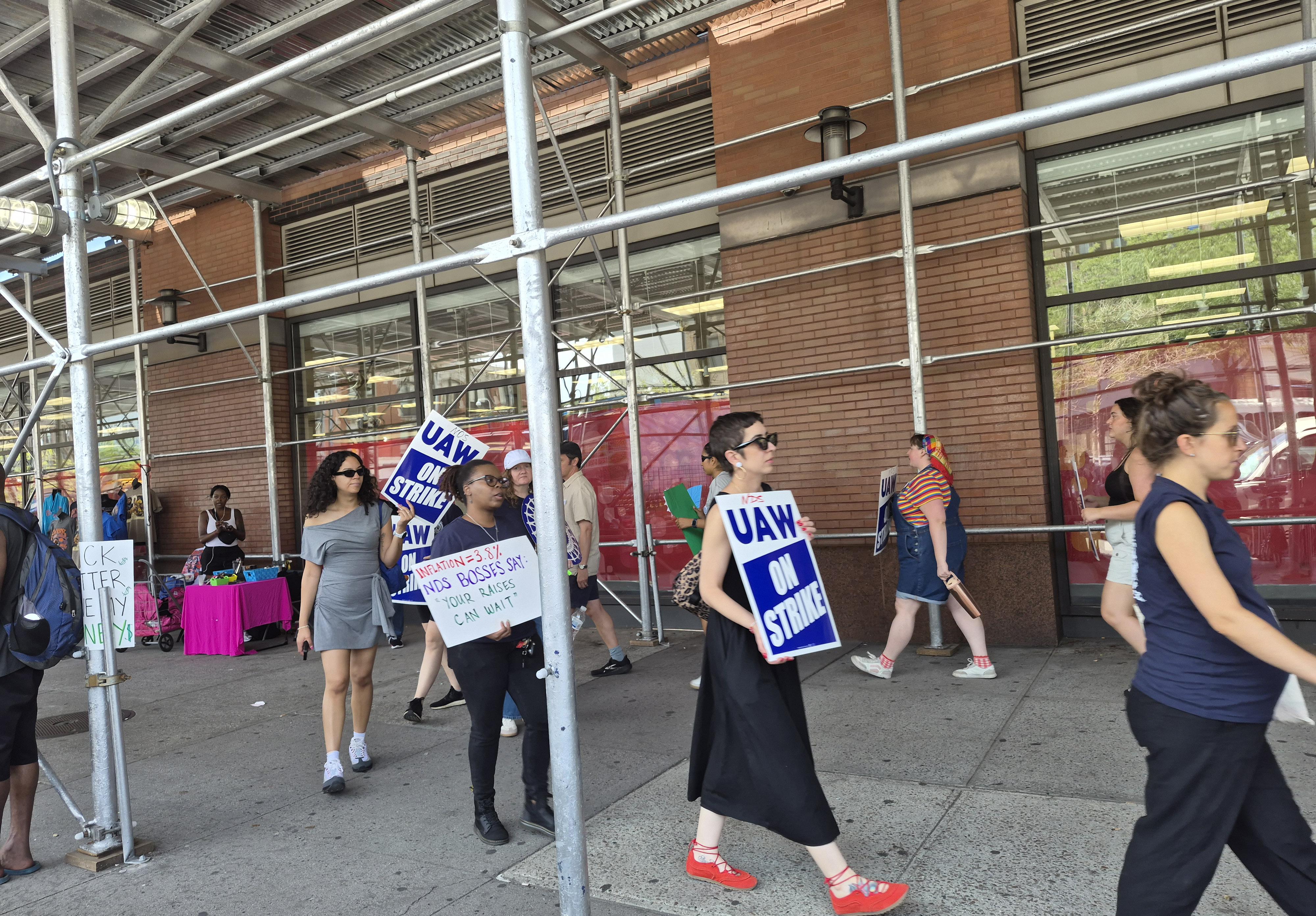
Harlem NDS union workers may have reached a tentative agreement; they went on strike on July 24. (Karen Juanita Carrillo photo)

NYC JOBS & CAREERS FAIR
CONNECT WITH EMPLOYERS HIRING ACROSS
Whether you're starting your search, changing careers, or looking for your next opportunity, connect with hiring employers, workforce organizations, and free career workshops—all in one place.















Opinion
Why the reparations debate
is still a growing issue — here and abroad
When it comes to discussions about reparations for past enslavement and injustices against Black Americans, there is a veritable alphabet soup of organizations here in New York, and they often differ about the remedies.
Let’s first list a few of them, beginning with the New York State Community Commission on Reparations Remedies, a body created by Gov. Kathy Hochul in 2023 to study the legacy of the issue. A year earlier, the New York City Commission on Racial Equity weighed in via ballot with its public process for the matter. Unlike the state’s initiative, the city’s study is due next July, before the state’s conclusions.
There are other such organizations: Get Free, New Yorkers for Reparations, the Freedmen Project, and the longstanding National American Reparations Commission (NAARC), which is spearheaded by the New York-based Institute of the Black World 21st Century.
In fact, largely through the efforts of the IBW, reparations have evolved into a global demand, particularly with African and Caribbean nations joining the push for restitution and/or some form of compensation for the economic ramifications of the Transatlantic Slave Trade, and the subsequent years of racism and discrimination. Keeping the international implications for a later discussion, the issue here at home is complicated enough, but there appears to be a minuscule amount of agreement between the governor and the mayor.
Each, to some degree, is awaiting the outcome of the studies but seemingly in agreement on the state and city’s complicit role in the historic devastation of slavery. While nine states have apologized for their past involvement in slavery, only the municipality of Evanston, Ill., has funded a tangible program that provides up to $25,000 in housing and property grants to eligible Black descendants affected by local housing discrimination.
That’s a significant step in the push for some form of compensation, although the question of who are the rightful descendants has surfaced among the organizations and created an element of discord. As a result, we are still possibly decades from a settlement about who pays, and who are the recipients. La luta continua (the struggle continues).
What our ancestors have always known: Black children are not broken.
By DR. ARLETHA D. LIZANA, PhD, MPH, MBA
Between 2018 and 2022, the suicide rate among Black youth rose by more than 50 percent, surpassing the rate among white youth for the first time. While overall youth suicide rates have declined, the rate for Black Americans climbed. This means something is not working and the prescription we have been handed for so long has failed.
In December 2021, thenU.S. Surgeon General Vivek Murthy issued a rare public health advisory warning that young people were facing a mental health crisis that the pandemic had dramatically exacerbated. That alarm has echoed ever since. Yet, as policymakers debate funding and clinicians scramble for solutions, Black families are being offered the same things that have failed us for decades: more therapy referrals to providers who don’t look like us, more hotlines in languages that don’t speak to our experience, and more clinical frameworks built on cultural erasure.
We are being rerouted, delayed and abandoned. The data is beginning to confirm what our grandmothers always knew: ancestral healing is not an alternative to public health; it is public health.
I am a public health researcher, an ancestral healing practitioner, and a Black woman who has spent more than two decades at the intersection of science and spirit.

Elinor R. Tatum: Publisher and Editor in Chief
Investigative Editor
Ancestral healing is the practice of reconnecting to the traditions, wisdom, and spiritual legacies of those who came before us and using that connection as medicine for the mind, body, and community. Epigenetics has shown us that trauma does not die with the person who experienced it. It is written into the body and transmitted across generations. Centuries of en-

slavement, segregation, and systemic racism have left a biological imprint. The descendants of people who were not permitted to be fully human now carry that history in their nervous systems, immune responses, and their children’s bodies.
No amount of cognitive behavioral therapy addresses what was written into the DNA across generations.That generational trauma is compounded by the trauma Black Americans endure today. Research from Harvard School of Public Health, drawing on a nationally representative sample of more than 34,000 adults, found that Black Americans experienced trauma types, most likely, to produce lasting psychological harm, including significantly higher rates of assaultive violence, and childhood maltreatment compared to white Americans.
A related study found that nearly 65% of Black American youth report traumatic experiences, compared to 30% of their peers from other racial and ethnic groups. Proper treatment must also be culturally competent. When Black youth obtain care, they often encounter providers not trained to recognize that
depression in a Black child may look like anger, that silence may be self-protection, and that hypervigilance may be inherited wisdom.
There are more effective ways to help our children. A landmark review published in the “Annual Review of Clinical Psychology” examined decades of research on African American youth mental health and arrived at a striking conclusion: ethnic and racial identity, racial socialization, spirituality, and connection to cultural community function as measurable protective factors against the mental health harms of racism. Studies showed that positive racial attitudes significantly buffered the negative effects of chronic exposure to community violence, and that higher cultural regard reduced the impact of discrimination on depressive symptoms. Knowing who you are and where you come from is not just a feel-good addition to treatment. The science shows it is treatment.
To be clear: I am not asking us to choose between the clinic and the community altar. I am not asking Black families to abandon therapy for ritual, or to distrust medical science in favor of spir-
itual practice. The either/or framing is itself a product of the same colonial thinking that stripped our ancestors of their healing traditions in the first place. What I am asking is that we stop pretending that a healing system built without us, can save us. We need both. And we must insist that both be taken seriously, as well as adequately funded, studied, and integrated. If we are serious about Black youth mental health, we must invest in culturally grounded healing frameworks as legitimate public health infrastructure. Fund them. Study them. Integrate them. Our children are not broken. They are burdened; by history, by systems, by a culture that has asked them to perform resilience while denying them the roots that make resilience possible. Ancestral healing returns those roots. It says to a Black child: you come from people who survived the unsurvivable. You carry their strength. You are not alone in your body, and indeed you never were.
Dr. Arletha D. Lizana, PhD, MPH, MBA is is a public voices fellow on youth wellbeing and power with The OpEd Project and Hopelab.
Madison Gray: Executive &
Kristin Fayne-Mulroy: Managing Editor
Cyril Josh Barker: Digital Editor
Damaso Reyes: Editor at Large Siobhan "Sam" Bennett:
(Pexels/Zaid Isaac photo)
New York City is burning — but fire is not doing it
By VICKI YANG
“New York City is being burned alive …” is a statement that will come as a shock to the more than 8.5 million residents of the city where dreams are made. However, this same city has experienced an average temperature increase of above 2.5°F since 1901, the largest increase in its recorded history.
For some, this rise in temperature is just a minor inconvenience. However, for workers in the construction, transportation, and manufacturing sectors, this heat will disproportionately cause intense, long-lasting issues such as dehydration, heat exhaustion, and heat stroke. Low-income and Black communities, as well as older residents with underlying health conditions, will also be disproportionately affected. These conditions are tied to more than 500 heat-related deaths annually in NYC, and at least 2,000 annual deaths throughout the country. Change is needed now more than ever from on a state and community level … and we are already behind.
I grew up in Sunset Park, Brooklyn, and shared a threebedroom, one-bathroom, rent-stabilized apartment in a seven-member household. In elementary school, current events often discussed global warming as a “good” thing. I remember reading media articles that asked, “Who doesn’t like warmer weather, a sign of summer break, watermelon popsicles, and playground water sprinklers?”
However, outside of school, I experienced how rising temperatures and humidity made every journey home grueling as my family climbed the steep, narrow, and wornout staircases that separated us from our home. When I walked around the neighborhood with my grandfather, we noticed streets constantly filled with scattered plastic litter and empty bottles, and cans tucked in plain sight against bushes and sidewalk corners.
Public trash cans would stay overfilled each day, contributing to the air pollution and the spread of microplastics. Certain corners and alleyways became “mini landfills” as large garbage bags, food scraps, and scrap
materials were abandoned, increasing the risk for methane release, a key contributor to climate change.
Now, as a public health student, I understand climate change as a preventable but urgent problem that puts Black communities at double the risk for heat stress-related deaths compared to all other racial and ethnic groups. This public health crisis requires both systemic and community efforts to tackle deeply rooted social, environmental, and housing inequities.
From a systemic level, reallocation of funding towards housing and water inspections is needed to ensure residents are living in cool, well-ventilated, and safe spaces, especially in older NYCHA buildings. Efforts to promote green spaces in neighborhoods with high heat vulnerability index (HVI) levels will protect air quality for generations to come and would be preventive measures to mitigate the incidence of asthma and other lung diseases. Lastly, proper sanitation efforts to remove garbage and promote recycling can control the
amount of pollutants lingering on the streets.
At a community level, organizations can regularly plan local events and initiatives that were historically held annually during Earth Day. Collaboration between New York Parks, the Department of Transportation, local gardens, community centers, and schools can offer interactive planting workshops, litter cleanups, climate education, and running and biking races to engage the community and encourage collective efforts to mitigate the effects of climate change.
In a city that prides itself on building from the hopes and dreams of millions of diverse individuals, it is our shared responsibility to battle the heat, educate ourselves about local initiatives to protect our friends and neighbors, and engage in both communitybased and state-level efforts to maintain a city that future generations can continue to thrive in.
Vicki Yang is a student currently working toward a master’s in public health degree at the SUNY Downstate School of Public Health.
Doing the work of the Young Lords: Denise Oliver-Velez and Dr. Johanna Fernandez
By HERB BOYD
The recent deaths of Denise Oliver-Velez and Dr. Johanna Fernandez that occurred just 15 days apart provide double significance to the history of the civil rights organization, Young Lords party.
Oliver-Velez was a founder of the Young Lords and Fernandez became one of its chief biographers. In a pamphlet about the Ideology of the Young Lords, OliverVelez, who was the party’s minister of economic development, wrote: “We are all fighting against an enemy, the Yankee and the Puerto Rican lombrices [earthworms]. The major thing that holds us back in our fight to liberate Puerto Ricans and
all oppressed people is a lack of unity. If we are not united, like a fist, we are weaker in our battle. In unity there is strength, and a nation divided is a weak nation.”
Fernandez touched on the same topic in her book, “The Young Lords: A Radical History” (University of North Carolina Press, 2019), in her recognition of the party’s fight against imperialism. “Over the course of their brief, yet productive life-span, the Young Lords won significant reforms and used local battles to expose the United States’ quiet imperial project in Puerto Rico, which became a U.S. territory in 1898. In just a few short years, the group grew from a little-known organization to
the stuff of legend. In the process, their media-conscious urban guerrilla offensives, combined with the group’s multiethnic membership, redefined the character of protest, the color of politics, and the cadence of popular culture in the city,” she wrote. Fernandez also allocated considerable space for Oliver-Velez’s stance against male chauvinism or “machismo,” which is just one element of her determination to embrace “the revolution within the revolution.” This was, Fernandez further observed, “a deliberate part of her struggle to deconstruct and challenge the manifestations of power dynamics, racism, and sexism in everyday life among movement
Getting a handle on the news — in a Black way

CHRISTINA GREER, PH.D.
There is a new app on the market and I think it will change the way we understand the onslaught of news around us. The app is called Aisha, and its mission is to connect Black communities with knowledge, trusted sources, and tools to help us navigate the digital world with confidence. It is the brainchild of Esosa Osa, founder and CEO of Onyx Impact, a nonprofit research, media, and technology organization dedicated to amplifying Black voices and protecting Black communities in an era of propaganda.
AI and chat assistants are everywhere these days. The difference is that Aisha is an AI agent built to serve people better where mainstream AI has failed. It centers Black sources and history as foundational principles. In an era where there are attempts to erase Black history in all facets of American life, an app built for us and by us is more important than ever.
participants. The effort was also a trademark of the radical wing of the women’s movement, articulated in the slogan ‘The personal is political.’”
Both were dedicated writers and teachers — Fernandez for many years a professor at Baruch College and Oliver-Velez at SUNY New Paltz. Shortly before she joined the Young Lords, Oliver-Velez taught Black American and Puerto Rican history at East Harlem Prep, a local school launched by the Real Great Society, a community youth collective. The institution offered an educational space to this new class of young people
The mission of Aisha is to help combat bad actors circulating misinformation and disinformation in Black online spaces. There are many critiques of artificial intelligence, its surveillance tendencies, shaky environmental standards, and so much more. But the founders of Aisha have kept these concerns in mind by designing and building a safer and more culturally relevant experience that helps Black communities navigate this space with greater clarity and confidence.
If you visit www.onyximpact.org, you can find out more about Aisha, as well as how to establish “Good Habits for Bad News Cycles.” Ososa and her team have put together various resources to help protect our truth, protect our kids, and pro-
tect our culture. They provide a plethora of resources beginning with five steps to help you navigate this rapidly changing and unclear digital world. To do so, we must: Recognize platform manipulation, read through the day’s headlines on a trusted news site first, follow Black news and journalists directly, don’t contribute to uncertainty, and Protect Your Peace. There are so many algorithms manipulating the news we see. We must rely on news sources beyond Facebook and TikTok and support news organizations like TheRoot.com and TheGrio. com, and of course, The New York Amsterdam News, as well as follow trusted journalists, professors, and politicos who have the credentials and have done the research. I often rely on the analysis of friends and colleagues like Dr. Jason Johnson, Danielle Moodie, Elie Mystal, Kimberley Crenshaw, Charles Coleman, Tressie McMillan Cottom, Mitchell Jackson, Brittney Cooper, Trymaine Lee, Maya Wiley, Dorian Warren, Stacey Abrams, and Nikole Hannah-Jones, to name just a very small few. Let’s protect our peace as well as our presence online. We must make an effort to find and follow trusted sources so we can be leaders in our communities, sharing and spreading truth-filled information. I am so thankful the app Aisha can help us do so.
Christina Greer, Ph.D., is a Professor at Fordham University; author of the books “How to Build a Democracy: From Fannie Lou Hamer and Barbara Jordan to Stacey Abrams” and “Black Ethnics: Race, Immigration, and the Pursuit of the American Dream”; and co-host of the podcast FAQ-NYC.
Caribbean Update
Four Caribbean nations on permanent U.S. visa bond mandate
By BERT WILKINSON Special to the AmNews
Once again, the U.S. is applying unrelenting pressure on some regional nations, apparently, to make them bend to its will, and has ruled that citizens from four Caribbean nations, including three from the Eastern Caribbean, must lodge a bond of up to $20,000 when applying for tourist visas.
High officials like Antiguan Prime Minister Gaston Browne and former Jamaican Prime Minister Bruce Golding say that a region that is among the friendliest to the U.S. globally is being unfairly punished by an insensitive administration in Washington for petty reasons.
Over the weekend, the State Department announced plans to make the visa bond program permanent and mandatory for three Caricom bloc nations — Antigua, Dominica, and Grenada — in addition to Cuba
in the wider Caribbean.
Angered by the latest development, Browne fired off a letter to President Donald Trump asking for a review of the mandate. U.S. Secretary of State Marco Rubio sent a formal diplomatic note asking for an explanation about why Antigua and Barbuda had been included in the list of nations whose citizens must fork out up to $20,000 to obtain a limited B-1 or B-2 visa to the U.S.
“The government’s objective is not confrontation,” Browne said. “It is to ensure that decisions affecting the people of Antigua and Barbuda are based upon accurate information and upon the substantial steps our country has taken in close cooperation with the United States to address every legitimate concern that has been raised. We believe the time is now right for a review.”
The latest developments come as Antigua and the U.S. spar over the number of non-national deport-
ees the U.S. intends to dump on the federation each month. The cabinet has made it clear it will accept no more than 10 individuals per year who are healthy; possess no criminal records; and whose boarding, lodging, and medical care are taken care of by a reluctant U.S. Washington, on the other hand, wants to send up to 120 deportees per year. Browne has said this number would amount to political suicide in a nation of merely 103,000 because the deportees would not only stand out among the population but could also pose a security threat.
In a separate weekend statement, Browne urged locals to stand strong against bullying and the unfair treatment by the U.S.
“Stand firm against the evil, discriminatory, and bullying practices of the powerful,” he said. “Do not fear. Do not despair. Soldier on in optimism for a brighter future. Do not worry, my dear people. Do not fear. We are
covered by God’s almighty hand. The challenges that are meant to break us will certainly make us stronger.”
In this regard, he appeared to have the support of former Jamaican Prime Minister Bruce Golding. Speaking at a weekend function in Philadelphia, Pennsylvania, Golding contended that he understands why regional governments have been acting and responding to U.S. interaction with the Caribbean in a careful manner: They are being bullied by a superpower.
“When Caribbean governments adopt a measured, cautious approach to America’s bullying tactics, it is because they understand the pickle they are in,” Golding said. “Make a wrong move, defiantly defend the Cuban [medical] assistance programs and our partnership with China — they pay a price. They understand how careful they have to be when their hand is in the mouth of an angry lion. I cautiously cling
to the hope that this will pass, that the hemisphere will once again be a neighborhood of peace; mutual understanding and respect; where true friendship prevails; where all of its people can pursue their own destiny with dignity and purpose; and where we can look upon America as a friend indeed.”
The bond mandate was first announced late last year, linked by American officials to discomfort with the sale of golden passports and local citizenship to foreigners with alleged dubious backgrounds, and to the number of visa overstays from Antigua, Dominica, and Grenada. Officials in all three nations have baulked at such suggestions that these tiny nations with tiny populations can contribute to significant overstay rates, linking the bond issue to punishment for their reluctance to accept a large number of deportees and also their reluctance to back U.S. policies on Venezuela.
Where are the Haitians for Trump as 350,000 face deportation?

FELICIA PERSAUD IMMIGRATION KORNER
For years, they were impossible to miss. “Haitians for Trump” proudly promoted Donald Trump as the best choice for Haitians and America, insisting that conservative values, border security, and economic opportunity outweighed any concerns about his rhetoric toward immigrants.
They stood by him after he falsely claimed Haitian immigrants in Springfield, Ohio, were “eating the pets.” They stood by him when he promised the largest mass deportation operation in American history. Now, more than 350,000 Haitians who had been protected under Temporary Protected Status (TPS) are facing deportation following the Trump administration’s successful effort to terminate the humanitarian program.
A simple question hangs over the Haitian-American community: Where are the Haitians for Trump now?
One of the most visible supporters has been Madgie Nicolas, who identifies herself as chair of Haitians for
Trump Official, describing the organization as “The Official Haitians for Trump Coalition of Donald J. Trump for President.”
To her credit, Nicolas has not abandoned Haitian TPS holders. In recent weeks, she publicly thanked Congressman Mike Lawler for supporting Haitian TPS and tagged Homeland Security Secretary Markwayne Mullin and Donald Trump, urging continued efforts on behalf of Haitian beneficiaries.
She also forcefully criticized conservative commentator Megyn Kelly after Kelly told Haitians to “go home.”
“As a first-generation American, a conservative, I expect institutional logic,” Nicolas wrote, reminding Kelly that TPS was created by Congress and that Haitian beneficiaries entered the program legally, passed extensive background checks, and contribute billions of dollars in taxes.
Her frustration is understandable, but it also raises an uncomfortable question. If TPS holders deserve protection today, why was there so little public criticism from many of Trump’s Haitian supporters when he repeatedly promised mass deportations during the campaign? Why was there so little outrage when he portrayed Haitian
immigrants as a public menace in Springfield, Ohio? Why did so many believe those policies would somehow stop short of their own community?
Miami immigration attorney and longtime Trump supporter Mayra Joli likewise joined Nicolas in the past in urging the administration to extend TPS for Haitians. Yet, those appeals have failed to change the administration’s course.
On July 27, TPS officially ended for more than 330,000 Haitians after the Supreme Court allowed the administration to move forward with terminating the program. The Department of Homeland Security defended its decision by arguing that conditions in Haiti have improved sufficiently to permit the safe return of Haitian nationals and that TPS “was never intended to become a de facto asylum program.”
At the same time, the U.S. State Department continues to advise Americans not to travel to Haiti, maintaining a Level 4 advisory because of kidnapping, widespread gang violence, political instability, and limited access to emergency services.
Those two government positions are difficult to reconcile. If Haiti remains too dangerous for Ameri-
can citizens to visit, many Haitians ask, how can it suddenly be safe enough for hundreds of thousands of people to be deported there? The consequences reach far beyond immigration policy.
According to a recent fact sheet from FWD.us, the UndocuBlack Network, and the Haitian Bridge Alliance, approximately 158,000 Haitian TPS holders live in South Florida alone, where they have become essential workers in healthcare, hospitality, construction, transportation, and senior care.
Miami-Dade County Mayor Daniella Levine Cava warned that ending TPS would separate families, weaken the regional economy, and deepen labor shortages. “Their labor is absolutely essential,” added Paul Christian Namphy of the Family Action Network Movement, particularly in healthcare and elder care throughout South Florida.
The House of Representatives has already voted to extend Haitian TPS for another three years. The bill now awaits action in the Senate. Meanwhile, thousands of Haitian families are living in uncertainty. Many are reporting to mandatory immigration checkins, wearing ankle monitors, while wondering whether they will be allowed to remain in the only
country their children truly know. Every American has the right to support the political candidate of their choice; that is democracy. But democracy also carries responsibility. When the policies you champion begin hurting the very community you promised would benefit, silence is no longer simply a political choice. It becomes part of the story.
Today, more than 350,000 Haitians’ fate hangs in the balance. Parents are wondering whether they will lose the jobs they have held for years. Families are wondering whether they will be separated. Churches, employers, and community organizations are scrambling to help those who suddenly find themselves at risk of deportation. Yet, many of the loudest voices that once urged Haitians to trust Donald Trump have become remarkably quiet. Perhaps they are working behind the scenes; perhaps they still believe the administration will change course; perhaps they simply do not know what to say, but this is precisely the moment leadership is tested. Not during campaign rallies; not while celebrating election victories, but when the people who believed you are frightened and looking for answers.
See CARIBBEAN on page 28
Arts & Entertainment
Betye Saar, a brilliant artist of transformative assemblages, passes at 99
By HERB BOYD Special to the AmNews
Each time I pass the statue of Harriet Tubman at the intersection of St. Nicholas and 123rd Street, I think of Betye Saar because the monument to the great abolitionist and freedom fighter was created by her daughter, Alison. That old expression about the fruit never falling far from the tree has real currency with the Saar family, and I thought of the matriarch again this week, when news came that Betye had died at 99. According to several sources, Saar, best known for her imaginative assemblages, died peacefully in her sleep in Los Angeles on July 26, just four days shy of her 100th birthday. She is remembered for how her art was transformative; converting the negative images of Black Americans into positive, powerful spiritual impressions of family histories, and progressive visions. A consistent theme in her works was the way she assailed racism and upended demeaning stereotypes — always with an artistic flourish so characteristic of her stylish love and passion for Black people. Centering her innovative creativity on assemblages that were mainly derived from her early childhood watching the erection of Simon Rodia’s “Watts Towers,” she recalled being fascinated by Rodia’s use of broken dishes, sea shells, rusty tools, and other found objects. “To me,” she exclaimed, “they were magical.”
Complementing these early inspirations were the sites she witnessed during visits to the Field Museum in Chicago, particu-
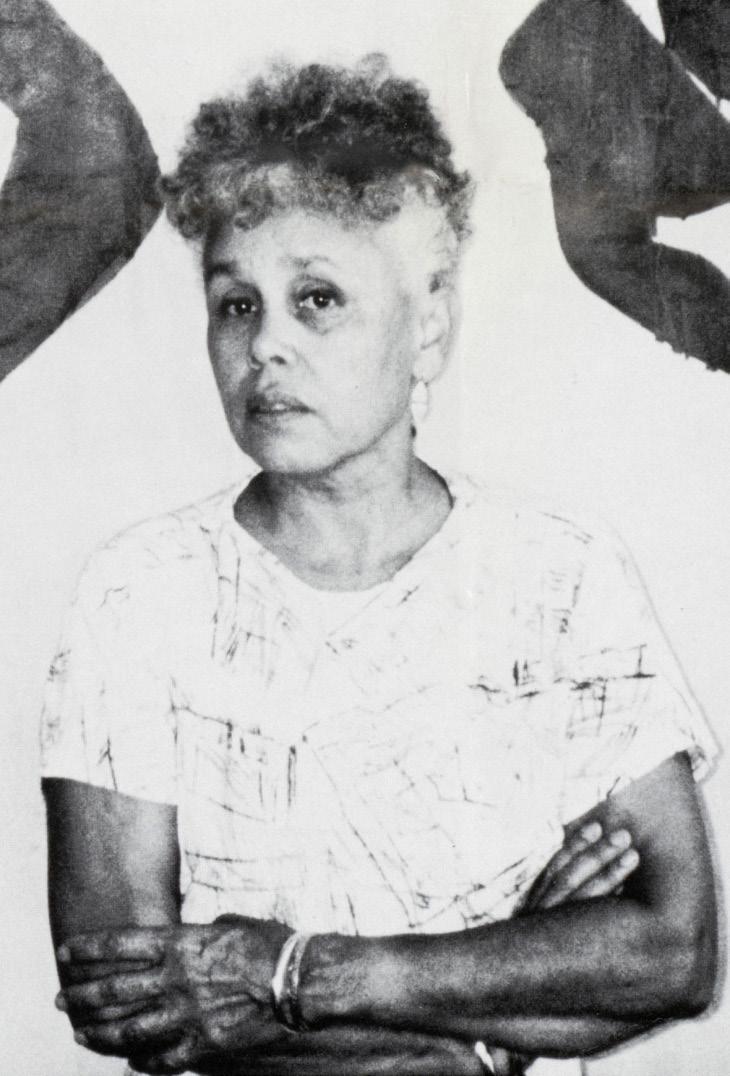
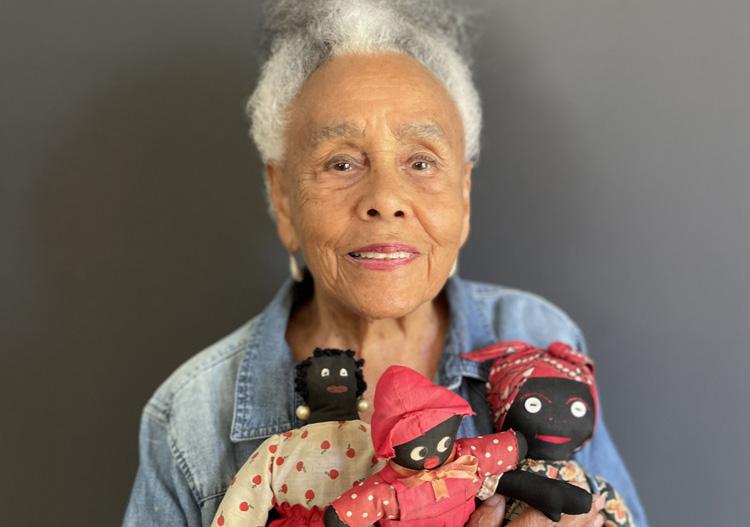
larly seeing the expansive and exquisite displays of Oceanic and Egyptian art. Emerging from her first creations were elements of her mixed heritage, aspects of her African American, Native American and Irish ancestry.
Betye Saar was born Betye Irene Brown on July 30, 1926 to Jefferson Maze Brown and Beatrice Lillian Parson in Los Angeles, where she spent early years before moving to the Watts section after her father’s death
in 1931. Subsequently, she moved to Pasadena to live with her great aunt and her husband, Robert E. Keys, although it was her aunt, Hattie, who raised her and to whom she dedicated “Record For Hattie,”one of her most significant works. She began creating and repairing found objects and attending classes at Pasadena City College, where she earned a bachelor’s degree in design in 1947.

At several California colleges and the American Film Institute, she pursued graduate studies, and she also married Richard Saar. They had three daughters — Tracye, Alison and Lezley — all of them blessed with their mother’s artistic creativity.
Given her productive longevity as an artist, it’s worth noting that her “The Liberation of Aunt Jemima,” was inspired by a derogatory “mammy” memo-pad holder she found during one of her many trips scouring flea markets. One of the striking aspects of the work, which at first seems to be a painting but in fact is a three-dimensional piece, is the figure holding a white baby, bracketed by a broom on one side and a rifle on the other. It would not be surprising to see her step from the box and start marching alongside Alison’s Harriet Tubman.
Right up until the end of her life, Betye was a tireless creator, and the accumulation of awards and honorary doctorates are a testament to an artist who Angela Davis said helped launch the Black Women’s Movement.
If you hurry, you can still catch some of her works at two museums in Manhattan. “Betye Saar’s Black Dolls,” now on display at The New York Historical, is yet another facet of her boundless energy and interest in preserving some precious items of African American history. Her work is also included in the “Tarot! Renaissance Symbols, Modern Visions” exhibit at the Morgan Library & Museum. Both exhibitions are currently running until Oct. 4 of this year.

Tracye Saar-Cavanaugh (b. 1961), Betye Saar with Black dolls from her collection, 2025. (Courtesy of the artist and Roberts Projects, Los Angeles, California. Tracye Saar-Cavanaugh photo)
Betye Saar (b. 1926) House of Tarot, 1966, The Museum of Modern Art, New York © Betye Saar. (Courtesy of the artist and Roberts Projects, Los Angeles, California. Digital Image © The Museum of Modern Art/Licensed by SCALA Art Resource, NY)
Betye Saar (b. 1926), Hoo Doo Woman, 1974. Mixed fabrics with metal jewelry, leather, and beads. The New York Historical, promised gift of Betye Saar. (Courtesy of the artist and Roberts Projects Los Angeles, California. Robert Wedemeyer photo)
Portrait of Betye Saar, from the 1989 Site Installations exhibition poster. (Public domain photo)
From the Bronx to the world: Legendary singer Arlene Smith of the Chantels passes at 84
By JASON PONTEROTTO
Special to the AmNews
Legendary lead vocalist Arlene Smith of the Bronx’s own Chantels died of a cardiac arrest on July 29 at age 84. Laurence Smith, her cousin, said she spent her final years at Bronx Care on Grand Concourse.
Smith, an original member and songwriter for the all-girl doo wop group, was responsible for singing and co-writing hits like “Maybe” in 1957. The group served as inspiration and paved the way for other groups like the Crystals, the Ronettes, both from New York, and the Shirelles from New Jersey, and are credited with helping lay the groundwork for modern rock ’n’ roll and R&B.
Raised in the Morrisania neighborhood, Smith began singing early on. With her classmates at St. Anthony of Padua Catholic School, which closed in 1977, she formed the group with Sonia Goring Wilson, Jackie Landry Jackson, Lois Harris, and Renée Minus White, who is a fashion contributor for the Amsterdam News and has continued singing with the Chantels to this day.
“We didn’t go into it for the money or anything like that,” White said about the group. “We just loved to sing together.”
The girls got together and would copy groups like Frankie Lymon and the Teenagers from Harlem, performing songs like “Why Do Fools Fall in Love” or The Five Satins’ “In the Still of the Night.”
They had been taught classically in their school choir, learning skills from the choir masters, and would sing on the street corners outside of school, because White said they would be in trouble with the nuns if caught singing those types of songs.
“Everybody was singing. It wasn’t just us,” White said about the time, as she recalls some even showing jealousy at times of their success, “but we had a special sound because we came from the school choir.”
Smith had been trained at Carnegie Hall, and the girls’ musical influences were classical and Latin music. They auditioned for Richard Barrett, who also discovered the Teenagers and signed them to End Records.
They recorded the harmonic ballad “Maybe,” co-written by Smith, Barrett, and others in a small studio in a midtown church in Oc-
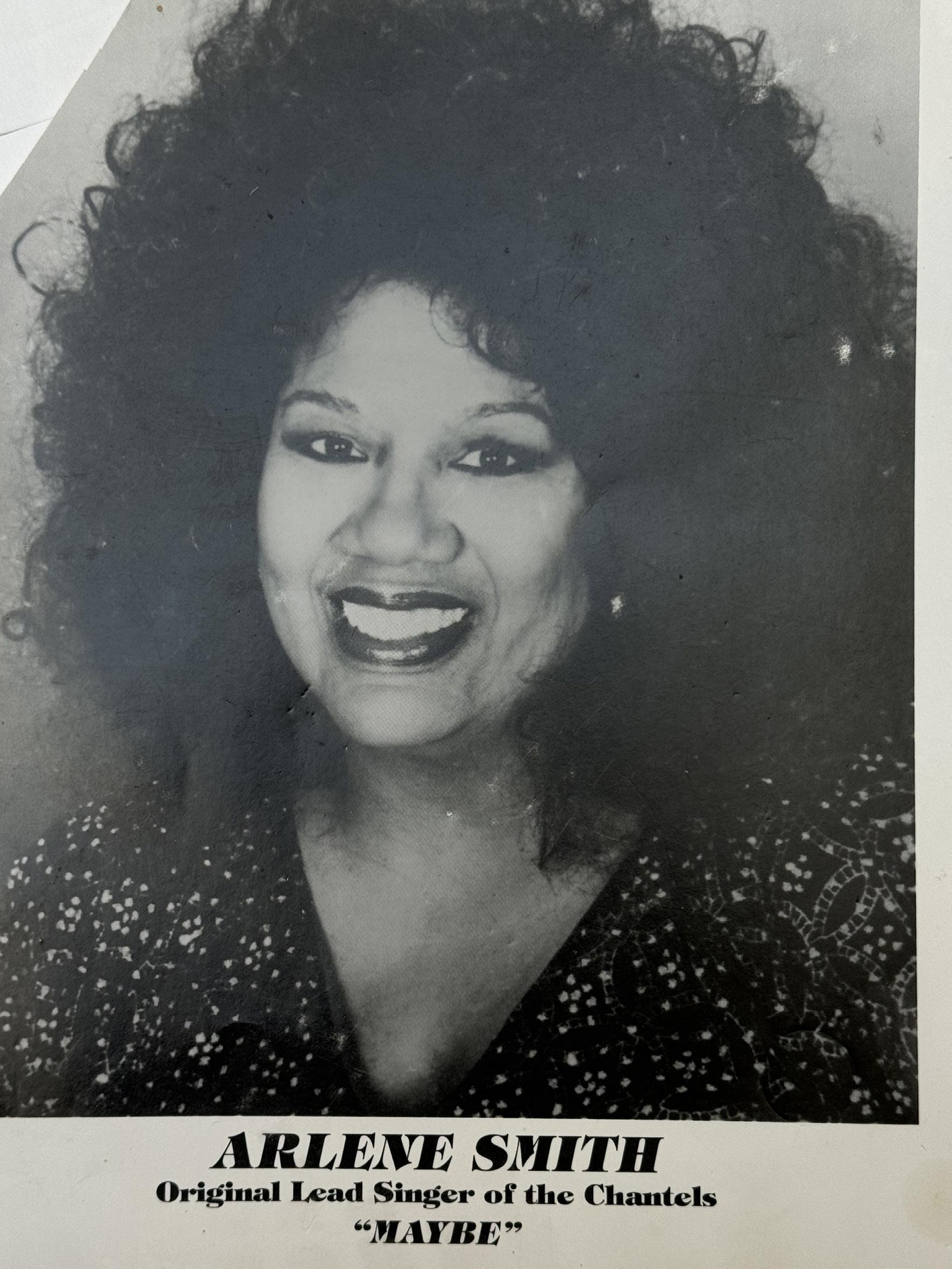
White said she stayed close with Smith all these years, talking on the phone regularly. She has been the fashion and beauty editor for the AmNews since 1975 and said she had the support of Smith. She wrote about the full story of the group in her book, “Maybe: My Memoir.” “She knew I wanted to be a fashion writer,” White said. “I talked to Arlene about that when I was like 11, 12.”
Years after leaving the group, Smith became a teacher at PS 157 in the same neighborhood where she grew up, and had been retired for over a decade.
Fordham Professor Dr. Mark Naison, who created the Bronx African American History Project, credited Smith and the Chantels as one of the main pioneering acts that reshaped music history.
“[Arlene] was one of many great African American singers and songwriters to come out of the Bronx’s Morrisania neighborhood in the 1950s and 1960s, permanently changing popular music in the U.S. and globally,” Naison said. Vince Aschettino, a long-time friend of more than 50 years, said he had been a fan since 1957. “Her voice changed my life,” Aschettino said. “Because of her music, I met my high school sweetheart.”
He fondly remembers seeing the Chantels perform in Brooklyn venues as a teenager. “I have all the records; I played them constantly. I had to buy the remakes because I wore them out.”
As a music promoter, Aschettino eventually met and befriended Smith in the early 1970s and said he would book her for shows over the years. He said he introduced her to jazz legend Dakota Staton in 1976, which began a longtime friendship between the two until Staton’s death in 2007.
tober 1957, about pleading for a lost lover to return. After being released in December, the song became a major hit, reaching No. 15 on the Billboard Hot 100 and No. 2 on the R&B charts. It became the first song by a harmonic urban women’s group to sell 1 million records. The success of the song was
massive for the group as they began touring. White said it was a culture shock to witness segregation and racism when they would perform down south, since they had only vaguely heard about those such instances. Smith eventually left the group in 1959 to pursue a solo career. White
said the group never truly hit the highs they were supposed to because they weren’t together as a unit for long, and would have other lead singers over the years. Today, White’s daughter Naomi sings as lead and says she is startled by how much her voice reminds her of Smith when she sings “Maybe.”
The group was inducted into the Vocal Group Hall of Fame in 2002 and nominated in both 2001 and 2009 for the Rock & Roll Hall of Fame, although yet to be inducted. In 2019, they had a street named after them at the corner of Prospect Avenue and East 166th Street in the Bronx.
According to White, the Chantels’ music has stood the test of time. “You’re falling in love with what we sang and the way we sang it … That’s where the babies were made,” White said. “It was special because what we did, we did together.”
Arlene Smith, founder, songwriter, and lead vocalist for vocal group the Chantels out of the Bronx, died on July 29 at age 84. Smith worked as a schoolteacher in her neighborhood before retiring several years ago.
(Photo courtesy of Laurence Smith.)
Chantels mourn passing of Arlene Smith
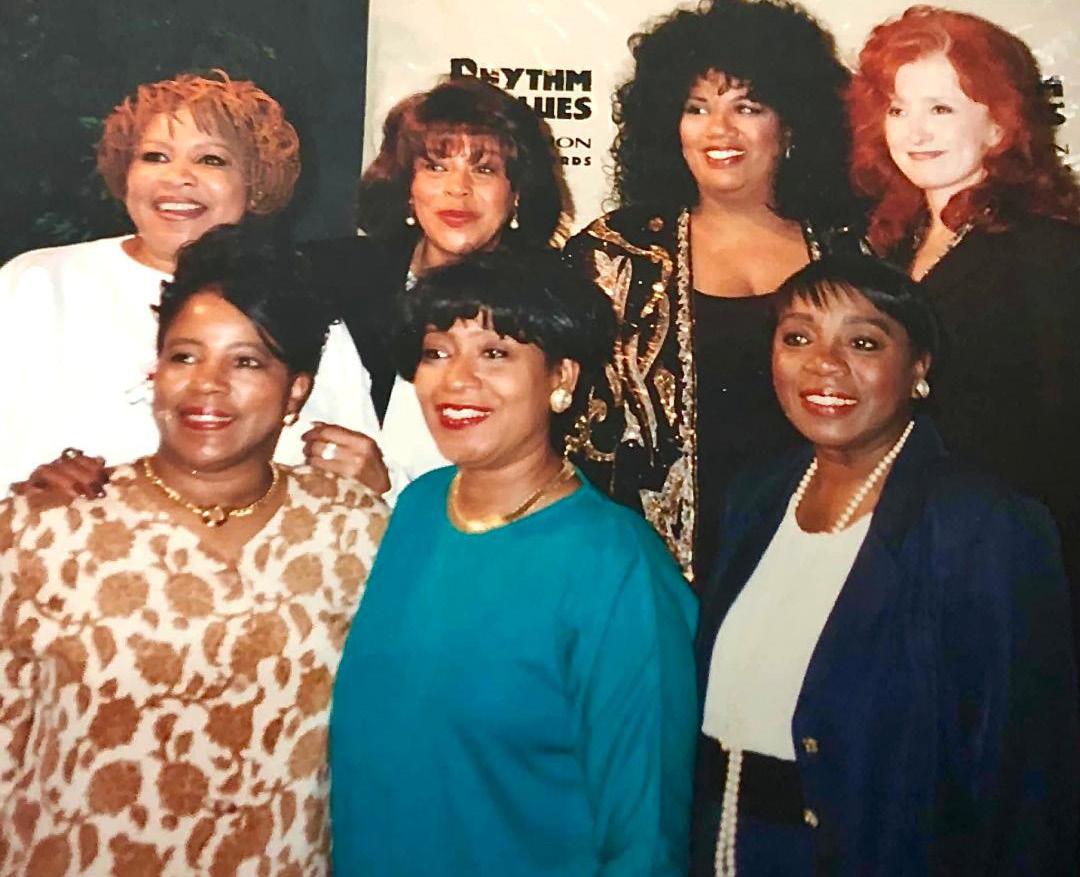
By RENEE MINUS WHITE Fashion & Beauty Editor and Original Member of The Chantels
Arlene Smith, one of the founding members of the famous ’50s doo wop group the Chantels, doed on July 29, 2026, at age of 84, due to heart disease.
The Chantels were blessed with beautiful harmony. Arlene’s golden lead voice elevated the Chantels, whose 23 hits stunned national and international audiences, into musical history. Their youth, beauty, and Catholic church choir sound reign to this day. She is loved and will always be remembered.
In a recent formal statement, the three surviving members of the Chantels — Lois Harris Powell, Sonia Goring Wilson, and Renee Minus White — said, “It is with profound sadness that we announce the passing of our beloved friend, sister, and founding member, Arlene Smith. Arlene was far more than the extraordinary lead voice of the Chantels — she was an inspiring artist and one of the true pioneers of rock and roll, rhythm and blues, and the girl vocal-group sound. Through her remarkable talent, unwavering faith, and gentle spirit, she helped create a musical legacy that forever changed the landscape of American music.
“As an original member of the Chantels, Arlene’s soaring lead
vocals brought timeless classics such as ‘Maybe,’ ‘Every Night (I Pray),’ and the heartfelt ‘He’s Gone’ to audiences around the world. The Chantels were one of the first Black female groups to successfully transition into the pop music mainstream, breaking barriers and helping to pave the way for generations of artists who followed. Arlene’s voice carried an emotional depth and authenticity that transcended generations, inspiring countless artists who followed in her footsteps. Beyond her extraordinary accomplishments, Arlene was a woman of grace, humility, compassion, and strength. She remained deeply devoted to her faith, family, friends, and the fans who embraced the Chantels throughout the decades.”
When I visited Arlene in the hospital recently, the nurse asked her, “Do you know this woman?”
Arlene answered, “Yes, that’s Renee, my little sister.” Sonia and Lois phoned her during this visit. While sitting at her bedside, I fed her lunch and helped her sit up for some water. In and out of sleepiness, she asked, “Are the Chantels still singing?” I replied, “Yes, but
we haven’t performed for a while. My daughter Naomi White Randolph joined the group.” Arlene smiled. I also told her to get well soon because we are still waiting to receive the Rock & Roll Hall of Fame Award. The Chantels were nominated twice, and the group has received the Rhythm & Blues Award and the UGHA Awards.
As I sat by her bedside, I remembered Arlene coming to my
house and asking my mother if I could be in the group. I was 11 years old at the time. The visit also brought back such beautiful memories, including conversations about our futures. I’d shared with her my dream to become a fashion and beauty writer. I could never forget how we all cried during the 52 takes it took to finally record “Maybe.” We were simply too young to experience the womanly feelings that our manager and record producer wanted us to express, yet we sang our hearts out.
In my book, “Maybe: My Memoir,” a story about my life and experiences as one Chantel, I wrote a chapter about the group’s appearance at Jacob’s Field in Cleveland, Ohio, to receive the United Group Harmony Hall of Fame Award. The show’s promoters, including Bill Crosby, son of the late Bing Crosby, were emphatic and insisted that we sing “Maybe” as the Chantels. The world’s top vocal groups wanted to hear our harmony and sound together. I remembered us spending time with Arlene Smith backstage in the dressing room. Mind you, Arlene had left the Chantels
in 1959 to become a solo artist. However, for this show, she was a part of the group again. Backstage in our dressing room, we gave Arlene love and attention, making sure she would feel comfortable on stage with us. We all fussed over her makeup and hair, and offered styling tips. While going over the show, I suggested that she walk out on the runway, which stretched out to the center of the field, closer to the audience. For this show, Arlene dressed in a shimmering copper lamé jacket over black satin pants and a tank top. Her ensemble was perfectly coordinated with our black velvet gowns and gold lamé tops. Our performance of “Maybe” was flawless. After the performance, Arlene turned to us and threw kisses. It was a beautiful, memorable moment. Sonia, Lois, and I looked at each other and agreed, “It doesn’t get better than this.” We have also appeared with Arlene for awards and on PBS specials that often run on Channel 13 and other TV stations throughout the world. According to three of us, the surviving members of the Chantels: ”Today, we do not simply mourn the loss of an iconic performer — we celebrate the life of a remarkable woman whose music gave hope, comfort, and joy to millions. Her influence will forever live on through every artist she inspired and every listener whose heart was moved by her unforgettable voice. Rest in eternal peace, Arlene.”
Chantels on the cover of ’50s magazine. (Photos courtesy of Chantels manager Marshall Schein)
Chantels featured at Harlem’s Apollo Theatre.
Chantels featured at Harlem’s Apollo Theatre.
AmNews FOOD
Reverence Phoenix: Expanding Harlem hospitality at Unity Market
KYSHA HARRIS FOOD EDITOR, @SCHOPNYC
This past Saturday, I made my way to Central Park North at 110th Street. Normally, that would mean sitting by or walking around the Meer, but this time, it was to finally experience Chef Russell Jackson’s culinary mission after missing the opportunity to do so at his celebrated Harlem chef’s-table restaurant, Reverence.
After almost six years at the corner of 138th Street and Frederick Douglass Boulevard, a time filled with highs and lows and a worldwide pandemic, Reverence had to close its doors in 2025. However, Chef Jackson’s dedication to Harlem and his reverence (pun intended) for his craft and for hospitality would not let him stop.
As the legend goes, just like a phoenix rising from its own ashes … in partnership with the Central Park Conservancy, Unity Market was born and Reverence Phoenix rose on June 20, 2026. Every Saturday until the last Saturday in November, weather permitting, the market offers regional, organic, wild, and foraged produce; artisanal and small-batch products; signature provisions; and grab-and-go foods from local Harlem food vendors.
I walked through the Farmers Gate entrance, past the welcome booth and several vendors, to find Reverence Phoenix in the heart of the market. There, under a black canopy, Jackson gave new breath to the term “open kitchen” as he prepared his team for the weekly $55, four-course prix fixe lunch service, with a standing communal table primed for guests.
What struck me immediately was not simply that Jackson had found a new place to serve his food, but that he had created a new way to think about what a restaurant could be and how it could serve its community in myriad ways. When I misnomered Reverence Phoenix as a “pop-up restaurant,” Jackson corrected me: “It’s a

stand-up restaurant.” “Pop-up” connotes something temporary, while Jackson’s mission is as permanent as any brick-andmortar restaurant. I stand corrected!
On this Saturday, my experience began with a fermented amuse bouche made with whatever produce Jackson and his team are preserving at the time from trusted purveyor Norwich Meadows Farm. A combination of beets, kohlrabi, and carrots, it was the perfect introduction to the ingredients and set the intention for what was to come.
The first course was compressed watermelon with aged Reverence Provisions vinegar, seasoned oil, salmon roe, and nasturtium. The dish hit all five tastes — sweet, salty, sour, bitter, and umami — in one bite.
I was hooked!
Next, the local dry-aged fluke aguachile was my favorite dish of the afternoon. I watched Jackson build the plate methodically, layering fresh fluke from Aqua Best with citrus-seasoned avocado, shaved fennel, shoyu-washed spring onions, thinly sliced onion and serrano, lime zest, and house-made umami spice derived from dehydrated leaves used in their shoyu-making process. The way this dish spoke to me: clean, bright, curated. Nothing on the plate was unnecessary. No notes.
Next came grilled cousa squash with fermented tofu espuma and an abundant herb salad. The squash, prepared on the plancha, received the same care as a traditional pro-

tein, while the fermented tofu added body and creaminess under the fresh herbs.
Fig madeleines closed the meal, carrying the same balance and intention as the savory courses. The dessert was composed without being fussy or unrecognizable while still reflecting Jackson’s point of view.
After the meal, Jackson took time to speak with me more about the philosophy behind Reverence Phoenix. I ended our conversation by asking him to describe it in three words. The question sparked a larger conversation before he arrived at his answer: “iconic,” “community,” and “layered.”
By “layered,” Jackson was not simply describing flavor or technique. He was speaking about the many things encompassed by his efforts: continuing the mission of Reverence, creating a restaurant outside a conventional dining room, working with trusted purveyors, supporting — and being supported by — Unity Market and its vendors, gathering people around food, and offering intentional hospitality in a public space in Harlem.
“Community” could be seen at the shared table and in the conversations around it, but extended far beyond the diners. Unity Market’s farmers, makers, and purveyors formed an ecosystem of mutual support around Reverence Phoenix. The market was not incidental to Jackson’s restaurant; it was a continuation of it. His hospitality extended beyond the final course into the people

AmNews FOOD News
On Saturday, August 8, Harlem’s Chef Lexis Gonzalez and the Blacklining Foundation will transform a Harlem block into a communal table for “Dinner in Harlem: A Community Block Dinner,” an outdoor celebration of food, fellowship, and neighborhood pride. Visit Eventbrite for more info and tickets.
growing, producing, and sharing food around him, and into the Harlem community the project was created to serve.
“Iconic,” Jackson explained, meant that Reverence Phoenix and Unity Market have “the ability to provide somebody a quintessential New York moment.” It may sound ambitious for a project still in its first season, but Jackson’s spirit is ebullient. He is carrying the intentions of Reverence forward while expanding what the restaurant can accomplish and whom it can reach. “We’ve built the vehicle,” he said. “All people have to do is get in and take the ride with us.”
Reverence Phoenix is more than an excellent Saturday meal in Central Park. It is a chef continuing his mission, a market supporting independent producers and a gathering place rooted in Harlem. Reverence has risen again from its own ashes — not by recreating what came before, but by giving it new life, purpose, and form.
Thanks for reading, and happy eating!
Kysha Harris is a chef, culinary producer, and food editor for the NY Amsterdam News. As a consultant and owner of SCHOP!, a personalized food service in NYC for more than 23 years, she remains on the hunt for the city’s next great bite. Follow her on Instagram and on Facebook, @SCHOPnyc.
Questions, comments, requests, feedback, invitations! Email us at AmNewsFOOD@ SCHOPnyc.com. Follow us on Instagram and Facebook, @NYAmNewsFOOD.

Bee Favored founder Kimberly Gould speaks with customers at Unity Market.
AmNews FOOD Editor Kysha Harris with Chef Russell Jackson, founder of Reverence Phoenix, at Unity Market in Central Park. (Kysha Harris photos)
Course 2: fluke aguachile with avocado, fennel, onion, serrano, and lime. Course 3: cousa squash with fermented tofu espuma, herb salad.
4: fig madeleines.
‘Michael’ biopic hits $1 billion at box office, breaking several records along the way
By MATTHEW ALLEN Special to the AmNews
Michael Jackson is still breaking records 17 years after his death. Earlier this month, “Michael,” the Lionsgate biopic about the late, great singer/songwriter, surpassed $1 billion at the global box office, as reported by the New York Times. The milestone is a watershed moment for the continued legacy of the 13-time Grammy winner.
“Michael,” starring Jackson’s nephew Jafaar Jackson in the lead role, overcame titanic obstacles to get to this point. Before the film’s April 24 release, it was all but universally panned by critics, receiving a 38% critics rating on Rotten Tomatoes. Their main complaint seemed to revolve around the lack of acknowledgment of Jackson’s past child molestation accusations. Director Antoine Fuqua did include the 1993 accusations against Jackson in the original cut, but had to omit the footage for legal reasons, leading to reshoots and its opening day being rescheduled from 2025 to 2026. Critics still chose to lambast the film despite the news of the reshoots being reported nearly a year before the film’s release.
Patrons ignored the frosty and sinister critical lashing, and made the “Michael” movie what Michael the man was: a worldwide phenomenon. Here are the records it broke along the way.

Highest-grossing opening weekend for a music biopic
“Michael” reached No. 1 at the domestic box office with $97.1 million and earned $217 million globally after its opening weekend, according to Billboard. It was the highest-grossing opening weekend for a musical biopic, beating the N.W.A. biopic, “Straight Outta Compton,” which opened at $60.1 million in 2015.
Highest-grossing musical biopic ever
Less than two months after its premiere, the movie that follows the King of Pop’s life and career from 1966 to 1988 became the highestgrossing music biopic of all time after pass-
ing “Bohemian Rhapsody,” the biopic about British rock band Queen and frontman Freddie Mercury. By June 12, “Michael” reached $911.9 million globally, overtaking “Bohemian Rhapsody” at $910 million, as reported by People. “Michael” producer Graham King also produced “Bohemian Rhapsody.”
Highest-grossing biopic ever
Two weeks after usurping “Bohemian Rhapsody” as the highest-grossing music biopic, “Michael” became the highestgrossing global biopic after passing “Oppenheimer,” the 2023 biopic about atomic bomb maven J. Robert Oppenheimer. On June 28, as reported by Variety, “Michael”
hit $977.4 million, compared to the “Oppenheimer” $975 million global earnings. “Michael” also became the highest-grossing domestic biopic after passing “The Passion of the Christ,” the 2004 film about the last hours of the life of Jesus Christ. Just a week after passing “Oppenheimer,” “Michael” reached $371 million at the U.S. box office, more than “The Passion of the Christ,” which peaked at $370 million.
First live-action 2026 film to reach $1 billion
While “Michael” became the first biopic ever to cross the billion-dollar threshold, it currently stands as only the second film this year to reach $1 billion globally. “Michael” joins “Super Mario Galaxy Movie,” the sequel to the animated 2023 hit, “The Super Mario Bros. Movie,” currently is at $1.011 billion in box office earnings, making “Michael” the only live-action film to cross the $1 billion threshold so far in 2026.
“Michael” achieved this tremendous success despite negative critical reception and also, after the film became available on video-on-demand on June 9. Lionsgate and Universal released physical copies of “Michael” on July 14, available on BluRay, DVD, and 4K Ultra BluRay. Lionsgate confirmed in May that a sequel has officially been greenlit, with studio chief Adam Fogelson telling Variety that “25 to 30%” of the sequel has already been shot, from Fuqua’s footage for the first film.
9.6”
Scene from “Michael,” now in theaters. (Photo courtesy of Lionsgate)
Spotlight on Andrew Cyrille, Amber Weekes, and the Oscar Brown Jr. centennial

Drummer and composer
Andrew Cyrille is an artist whose fearless playing ignites any band. After six decades, he remains the risk-taking music explorer with some inventive surprises to share. He returns to his old storied red door haunt, the Village Vanguard (178-7th Ave.), on Aug. 4-9 with his reliable quartet: pianist David Virelles, bassist Ben Street, and guitarist Bill Frisell.
The quartet’s most recent album, “The News” (ECM 2021), includes the same lineup as 2016’s “The Declaration of Musical Independence” (ECM 2016) with the exception of Virelles, Richard Teitelbaum on synthesizers and piano.
Whether playing mainstream, electric, or beyond structured boundaries, Cyrille’s polyrhythmic sounds consolidate the jazz idiom. He is perhaps the only living elder who formerly studied drums and composition with the iconic Philly Joe Jones in 1958. Under maestro Jones’ mentorship, he learned how to adjust his style of playing for any group or individual’s needs.
As evidenced by his playing with the likes of Coleman Hawkins, Rahsaan Roland Kirk, Mary Lou Williams, and Nigerian percussionist Babatunde Olatunji; his 15-year collaboration with pianist Cecil Taylor, and 35-year collaboration with Trio 3 that featured bassist Reggie Workman and saxophonist Olive Lake — one of the most influential trios in jazz history (1980s-2022).
Catch the remaining shows each night at 8 p.m. and 10 p.m. For tickets, visit villagvanguard.com.
At Evander Childs High School (East Bronx), for a male student to eat lunch at the “cool table,” there was a waiting list or perhaps a pecking order, and one prerequisite: recite Oscar Brown Jr’s lyrics to “Signifin’ Monkey.” It was during those magical days of ivy-league-ness, wearing buttondown shirts, penny loafers, and blue blazers that Oscar Brown Jr. became my idol, a true jazz hero. His first album, “Sin & Soul” (Columbia 1961), raced around my turntable 10,000 times and is one of the most significant revolution-
ary soul albums ever recorded. Years later, I finally had the pleasure of meeting Brown (the Chicago native) at the Cape May Jazz Festival in N.J. (introduced by Carol Stone and Woody Woodland, the concert producers), which he headlined for two consecutive years. We had breakfast the next morning and I had to pinch myself a few times — me having breakfast with my idol, the great Oscar Brown Jr. We instantly became friends and spoke often by phone. Unfortunately, this was years before iPhones or social media, so there are no photos, no recorded videos, and to this day, I am still hoping to run across my interview with him.
As 2026 also celebrates Brown’s centennial (October 10), it is “a big deal,” as Bobby Short would say, although he isn’t getting the same fanfare as Miles Davis or John Coltrane. But he was instrumental in the construction of jazz vocalism. His unique vocals inspired the works of Gil Scott-Heron, spoken word artist Common, and poet Jill Scott. In the 100 years of Miles, Coltrane, and Brown, no one has come close to resembling their musicianship.
Brown’s lyrics were based on the West African griot oral tradition, through storytelling, music, and a little wit. Each song, a vivid story based in Black life (like the novels of Chester Himes): some sin “But I Was Cool,” “Forbidden Fruit,” and “Mr. Kicks;” some soul “Hazel’s Hips,” horrific history like the tune “Bid’em In,” or “Forty Acres and a Mule,” the early rumbling of retributions. The “Humdrum Blues,” looking for spiritual relief; reflecting on the past, a wasted life on “Somebody Buy Me a Drink.”
Brown’s 1960s lyrics, some of which became classics and Black anthems, have traveled into this 21st century, with more resonance against the White House’s active policies directing the erasure of Black history and book banning. The directives have become a quiet reality as opposed to an explosive abomination of American justice. “Brown Baby” and “Dat Dere” offer hope for future generations.
Brown’s work defies simple categorization. Known as a pioneering “socially conscious” artist, his artistry challenged the status quo, bridging jazz, soul, and theater, influencing future generations of poets and musicians. The singer, songwriter, playwright, poet, actor, and civil rights activist

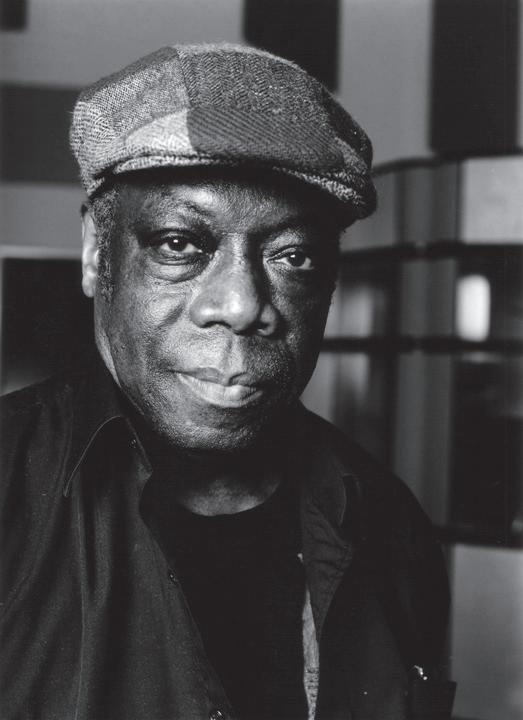
has written many songs (125 have been published), 12 albums, and more than a dozen musical plays. He, along with Langston Hughes and Amiri Baraka, significantly influenced American culture and American Black music while addressing the evolving landscape of what W.E.B. Dubois called “America’s race problem.”
The iconic gospel singer Mahalia
Jackson recorded his song “Brown Baby,” and Nina Simone, another ‘60s activist, covered his “Work Song.” Brown collaborated with Max Roach on his seminal album “We Insist! Freedom Now Suite” (Candid Records, 1961). Jazz vocalist Amber Weekes recently released her tribute album celebrating Brown’s centennial, entitled “To Oscar with Love (Amber
Inn Records 2026). “There was no way I wasn’t going to do this album and his centennial is the right time,” said Weekes. “I have listened to his music for many years — he was a real master of song, so unique, and under-appreciated, I just wanted to elevate his mastery during my career.” With imagination, emotion, and inspiration, Weekes effortlessly covers 12 of Brown’s most cherished gems, some standards, except for the little-known pearls “A Tree and Me” and “Strong Man,” the latter he wrote for Abbey Lincoln. Oddly, it is on these two that Weekes shines, with her enticing timbre that calls in the night; the latter tune may become her signature. On Oscar’s standards, like the opening tune “Mr. Kicks,” she adopts a jazzy interpretation with pizzazz, “Afro Blue,” and “Brown Baby,” such a beautiful ballad, echoes a lullaby which Brown sang as a loving father full of hope and love, and Weekes adds even more love and emotion. It’s so refreshing to hear Weekes’ perspective with the same creativity and joy as Carmen McRae in “Sings Monk,” Charenee Wade in “Offering - The music of Gil Scott-Heron & Brian Jackson, Karrin Allyson in “Ballads: Remembering John Coltrane,” and Cynthia Felton’s 2008 album “Afro Blue: The Music of Oscar Brown Jr.”
These exceptional female vocalists offered us a daring excursion which is what this music is about, evolving into something magical and different. Weeks has successfully forged Brown’s work into another dimension with rousing arrangements. Her vocal prowess is a glow and the question arises as to why the New York clubs haven’t become a regular stop for her. Now, we have “To Oscar with Love,” which says it all! Visit her website, amberweekes. com. Oh, for longtime Harlem residents, Weekes (although a native Californian), her grandparents owned Weekes Luncheonette years ago, located on 155th Street and St. Nicholas, where Duke Ellington could often be found.
Oscar Brown Jr.’s 100th birthday is being celebrated with a year-long series of events led by his daughters, Maggie and Africa Brown. The celebration includes concerts, an outdoor fest in Chicago’s Harper Court, and presentations of his plays, and the re-release of his poetry book “What It Is.” For more info, visit oscarbrownjr.org.
Amber Weekes. (Craig Cochrane photo)
Andrew Cyrille. (Shawn Brackbill Brooklyn, NY / Creative Commons photo)
been in operation since the 1950’s. Once he received his license, Wilson soon began working at West Side Barbershop on 125th St. in 1988.
With a strong footprint and large clientele in Harlem, he anchored himself in the community. By 1996, he and Nuru had been working at Prestige Styling between Lenox and 5th Avenue when a former colleague who operated a shop at 425 W 125th St. offered the space to them to open up. Wilson, along with Nuru and his cousin Parks, then opened Levels within three to four months. A little later on, legendary Harlem barber Denny Moe joined the crew and stayed with them for 10 years.
They soon realized there were structural issues with the brick wall and realized repairs needed to be made. The men rolled up their sleeves and got to work, tearing down the drywall and applying polyurethane. Wilson says they were intentional about wanting a unique aesthetic for the shop, including hardwood floors to give it an old-school and rustic feel.
At one point, they had seven locations across the city. Today, there are four, two in Harlem and two in Brooklyn. But Wilson also says to look out for merchandise celebrating 30 years of Levels Barbershop. His team is also looking into real estate ventures, as he says they eventually want to
own a building for the shop.
Old cuts, new fades
One of the special things Wilson says he receives is customers coming up to him sharing how important the shop was in their life and how they remember coming since they were just kids. Over the years, he recalls cutting customers, plus their sons and grandsons.
“I’ve seen maybe three, four generations of families that I’ve cut,” Wilson said. “It’s very rewarding and fulfilling to look back and see where we started and where we’ve come and just to still be around.”
Wilson notes he has seen the major changes in Harlem over the last 30 years, even within the shop, as he says it was primarily Black and Latino customers coming in to get their hair cut, but now he may have some of different ethnic backgrounds and different hair textures, noting he may cut more straight hair. He also highlights the changes on 125th St. specifically, with fewer “mom and pop” stores and more large corporate brands.
However, Wilson is proud of what Levels continues to represent as he says the Black barbershop remains an important space.
“From an institutional standpoint, (Levels) is [not just] an outlet; it’s many things for the community,” Wilson said. “There’s many different elements and layers with what we represent, or what we give, or what comes out of us being here in the community and being a Black business.”

A Q&A with local Home Lending Manager, Jacqueline Plaza Sponsored content by JPMorgan Chase
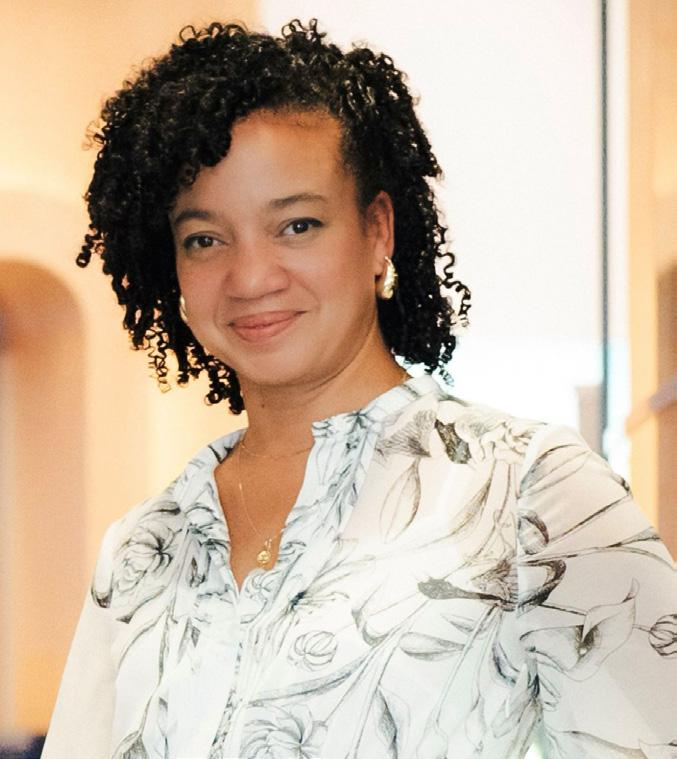
For most Americans, owning a home has long been considered a cornerstone to building and preserving generational wealth. A home purchase often symbolizes more than just securing a place to live – homeownership can help anchor families, support long-term financial stability and fuel local economic growth.
If you currently own a home or if homeownership is one of your financial goals, it’s important to understand how your home can be a foundational pillar in helping you build and maintain generational wealth. A home can be an asset that appreciates over time as you build equity which can serve as a financial resource for you and your family for decades to come.
Jacqueline Plaza, a Home Lending Manager in New York City shares more about the connection between homeownership and building generational wealth, and how you can make sure your home becomes, or remains, your most important financial asset.
Q: How does a home create generational wealth?
A: There are several perks to homeownership, many of which contribute to building wealth. Owning your home may be cheaper than renting in the long term if you have a mortgage with competitive rates; however, it’s important to keep in mind other home expenses, like insurance and taxes, when considering costs. Plus, since you own the home, that means you can build and tap into your equity for future expenses or profit when your home is sold.
Another way to think of homeownership as it relates to your financial picture is that it can influence your overall net worth. When you make monthly payments, you’re slowly owning more of your home and it can become an asset. On the other hand, if you rent, your monthly housing costs are just an expense for a place to live and you don’t own any of it when you leave. Put simply, owning a home may help you grow your
money over time.
Q: Explain home equity and how building equity works.
A: The technical definition of home equity is the difference between the fair market value of your home and how much you still owe on your mortgage. Essentially, think of it as the part of your home’s value that you truly own. It’s made up of the amount you’ve already paid off, plus any increase in your home’s value. So, if you’re home’s value goes up, so does your equity and vice versa. Equity grows as you pay down your mortgage and, as mentioned earlier, the market value of your home increases.
Q: How can this be beneficial financially?
A: There are a few ways. You can borrow against your home equity by taking out a loan, using your property as collateral to secure the loan. There are a variety of ways you can do this such as through a home equity loan, home equity line of credit (HELOC) or a cash-out refinance. You may use these funds to cover other expenses, like high-interest credit card debt, make home improvements, invest in another home or in an emergency. Home equity loans also tend to have more favorable terms than credit cards or other personal loans, potentially saving you money in the long run.
Q: What if you sell your home?
A: The more equity you have, the more you can profit from selling your home if you do so in the future. For example, if you’ve paid off your entire mortgage before you sell, you may get to keep all potential profits. If you haven’t paid off your mortgage, any profits will pay off what you owe and you’ll keep the remaining funds-the more home equity you have, the greater your profit could be.
Q: What other benefits come from owning your home?
A. Homeownership offers the potential opportunity for tax deductions. The interest you pay on your mortgage, insurance premiums, property taxes and even improvements to your energy efficiency may provide an opportunity for tax deductions. You can consult with your tax advisor if you’re looking to understand how buying a home may impact your taxes.
There’s no place like home
Homeownership has long been a powerful tool for building generational wealth in communities across the U.S. and can help you secure a solid financial future for yourself and your family. Your home is more than just the place where you rest your head—it can be your greatest financial asset.





A ‘Great Day In Harlem’ returns to Harlem Week as the tradition continues
By NAFISSATOU YATTASSAYE
Special to the AmNews
As Upper Manhattan prepares for one of summer’s most anticipated cultural gatherings, HARLEM WEEK is set to host its outdoor opening event, ‘A Great Day In Harlem,’ Sunday, Aug. 9, at the Ulysses S. Grant National Memorial Plaza from 12- 7 p.m. What began over five decades ago as a single-day rally to bring the Harlem community together, is now an annual tradition featuring a festival celebrating the heritage, arts, and economic vitality of Harlem.
The festival’s significance is rooted in family and community history. L. Adé Williams, first vice chair of HARLEM WEEK, continues the mission set forth by his late father, Lloyd Williams, a visionary civic leader and co-founder of HARLEM WEEK. The elder Williams helped launch the first official event in the mid-1970s to help uplift the neighborhood spiritually and economically during a time of hardship, Williams said.
“HARLEM WEEK is a celebration not only of our local community, but of what Harlem gives to the world,” added Williams. “Harlem is great not only because
of its geography, but because what people see us accomplish here inspires everyone across the globe. This is our time to share our work.”
Sunday’s free public festival will feature a wide range of music, vendors, and community programming, starting with The International Village, where a dozen businesses and artisans offer quality international cuisine, handcrafted goods, and local fashion. Onstage, the event will feature gospel and legacy tributes honoring figures such as gospel legend Richard Smallwood and soul titan Peabo Bryson.
Musical direction led by Harlem’s own Ray Chew from “Dancing with the Stars” will bring together household names, upand-coming artists, and regional jazz and R&B performers. The day will include the movie screening of “Zootopia” for children at the East River Plaza at 4:30 p.m. and activities from 12-4 p.m. RSVP is required.
Beyond the mainstage entertainment, organizers stress that the festival aims to provide resources, equity and opportunity. The event is not only free but accessible. And those who cannot attend events in person can watch events on the HARLEM WEEK website, where every event will be

livestreamed. This year, the festival celebrates America’s 250th anniversary, while placing a direct spotlight on Harlem’s foundational role in shaping American history, music, and civil rights and “elevating it,”
Williams added.
“As we look forward to incredible entertainment, a warm sense of reunion, and the continued renewal of Harlem, we remain
deeply committed to addressing the real, serious issues facing our community today. HARLEM WEEK isn’t just about celebrating where we’ve been; it’s about informing, empowering, and building where we go next.”
For more HARLEM WEEK events from now through August 16, feel free to check out their website at www.harlemweek.org.
It’s a run for history, and for the fun of it at the Percy Sutton Harlem 5k Run
By REBEKAH JANAE’ and ANDREA ROBBIN Special to the AmNews
Some will be there for the fun of it, others are hoping for a shot at the marathon circuit. Whatever their reasons, seasoned runners, first timers, along with residents, elected officials and curious visitors will be gathering in the streets of Harlem on Aug. 8 for the annual Percy Sutton Harlem 5K Run during HARLEM WEEK.
“I’ve been running a long time,” said State Sen. Robert Jackson, a longtime participant. “I've run several New York City marathons, and I've participated in the Harlem 5K for years. When you want to honor Percy Sutton, you have to stand up and say I can do that.”
For Jackson, the race, which draws more than 5,000 runners annually and is hosted by New York Road Runners in partnership with the Greater Harlem Chamber of Commerce, also serves as a visible reminder that community leadership happens outside government buildings.
“It’s about making sure Harlem is on the map,” he said. “People see that you're running, participating, and supporting the community.”
For newcomers thinking about participating in the race for the first time this year, Jackson's advice is simple: participation matters more than pace.
“You can walk or run, depending on your health,” he said. “It's more a symbol of working together to improve the outcomes of Harlem. I think it's important to set a good example. If you can run in the race, run. If not, come out and enjoy it.”
Sutton, a civil rights activist and entrepreneur, served as Manhattan Borough President and was also a member of the group that purchased The Amsterdam News in 1971 along with Publisher Emeritus Wilbert A. Tatum.
He was also a lifelong supporter of the New York City Marathon and New York Road Runners. As Manhattan Borough President in 1975, he attended the New York City Marathon, which took place solely in Central Park at the time. He presented the idea and ambition for the race to become a Five Borough marathon to then-mayor Abraham Beame.
Sutton co-founded Harlem Week along with Lloyd Williams, Voza Rivers and Ossie Davis, in 1974 to grow Harlem economically while celebrating its history, community, and culture. He died in 2009, and the first 5K

race named in his honor was run that year during HARLEM WEEK.
This year’s race begins on Edgecombe Avenue at W. 136th Street. The route centers around St. Nicholas Park and circles Harlem. It counts as a 9+1 qualifier for the New York City Marathon.
“You're honoring the people that made it possible for us to be there and continue Harlem as a place where the community stays together,” said Jackson. “You see runners, but you also see people participating simply because they want to be part of something bigger.”
(HARLEM WEEK)
(Bill Moore photo)
Jones Austin
More recently, she chaired the New York City Racial Justice Commission, which led to charter revisions mandating the implementation of racial justice and equity within city government. Currently, Jones Austin serves as vice chair of the National Action Network board, and CEO and president of the Federation of Protestant Welfare Agencies, which led advocacy efforts for a $15 minimum wage. Beyond her own expansive resume, she also hails from a long line of civil rights champions and faith leaders, including her father Dr. William A. Jones Jr. of BedfordStuyvesant’s Bethany Baptist Church — the first New York chapter chair of Dr. Martin Luther King Jr.’s Southern Christian Leadership Conference.
“Jennifer Jones Austin has spent her career standing with New Yorkers who are too often shut out of the halls of power,” said Mamdani in a statement. “She understands that public safety and accountability go hand in hand, and that trust must be earned through action. Jennifer will lead the CCRB with integrity, compassion and an unwavering commitment to justice. I am grateful she has answered the call to serve our city.”
In a phone interview, Jones Austin recounted first connecting with the Mamdani administration shortly after the mayor entered office this year. Whether for due diligence or
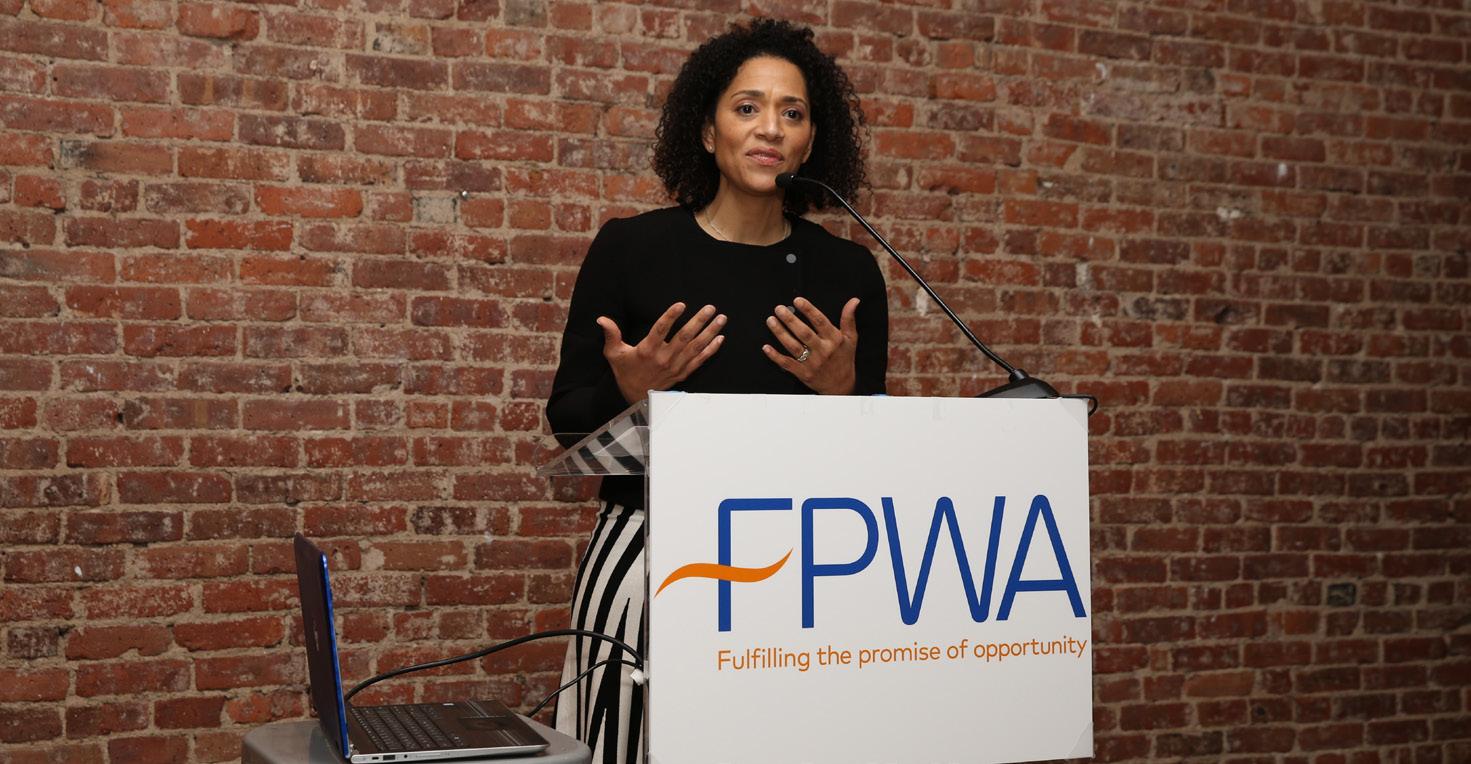
advanced talent scouting, the new regime took an interest in her public safety and community organizing work and how such experience could be helpful as the young democratic socialist built out his team.
“Since I got out of law school, going back to 1993 [when Rudy] Giuliani [was] in office, I have sought to either work in or with government on matters of well-being and safety for all New Yorkers and especially for communities that have been made vulnerable,” said Jones Austin. “So one would not be surprised when the Mamdani administration went into office, we had conversations about my work in this space. Not necessarily for joining the administration or serving in a commission or board post, but just always desirous of being
helpful and bringing whatever experiences I’ve had to the table to help strengthen and inform the work that is being done by the city on behalf of the community.”
She will now tackle such work heading the CCRB, which is both lauded as a national model for civilian-led police accountability and criticized for its severely limited authority. The agency cannot fire or discipline the cops it investigates and prosecutes. Rather, an ostensible court run by the NYPD oversees serious misconduct claims, and even when it rules against an officer, the police commissioner can override any punishment directed by the department handbook.
Still, the CCRB’s authority expanded immensely during the past decade and now
handles many investigations once reserved for the NYPD’s Internal Affairs Bureau. Civil rights lawyer Darius Charney, lead counsel for the Floyd litigation, joined the agency in 2021 to direct a new agency dedicated to investigating racial profiling.
Jones Austin remained complimentary of NYPD commissioner Jessica Tisch, who long drew praise inside the CCRB for revoking a statute-of-limitations policy employed by her predecessors to automatically dismiss otherwise credible misconduct claims. “What I have seen in our current commissioner is a desire to best understand and engage with [the] community,” she said.
Several Black leaders commended Jones Austin’s appointment as CCRB chair, including Attorney General Letitia James, Rev. Al Sharpton and Manhattan District Attorney Alvin Bragg. The announcement also included positive statements from two prominent Black democratic socialists: Council member Chi Osse and New York Communities for Change’s James Inniss. Many proponents in the press release pointed to a different role listed on Jones Austin’s exhaustive resume. Now, she will add another line.
“I’ve had people through the years say to me, ‘how do you balance your day job with some of the other responsibilities you take on? — how do you find the time?’” said Jones Austin. “What I share with people is… one through-line: advancing the concerns and aims of marginalized communities.”
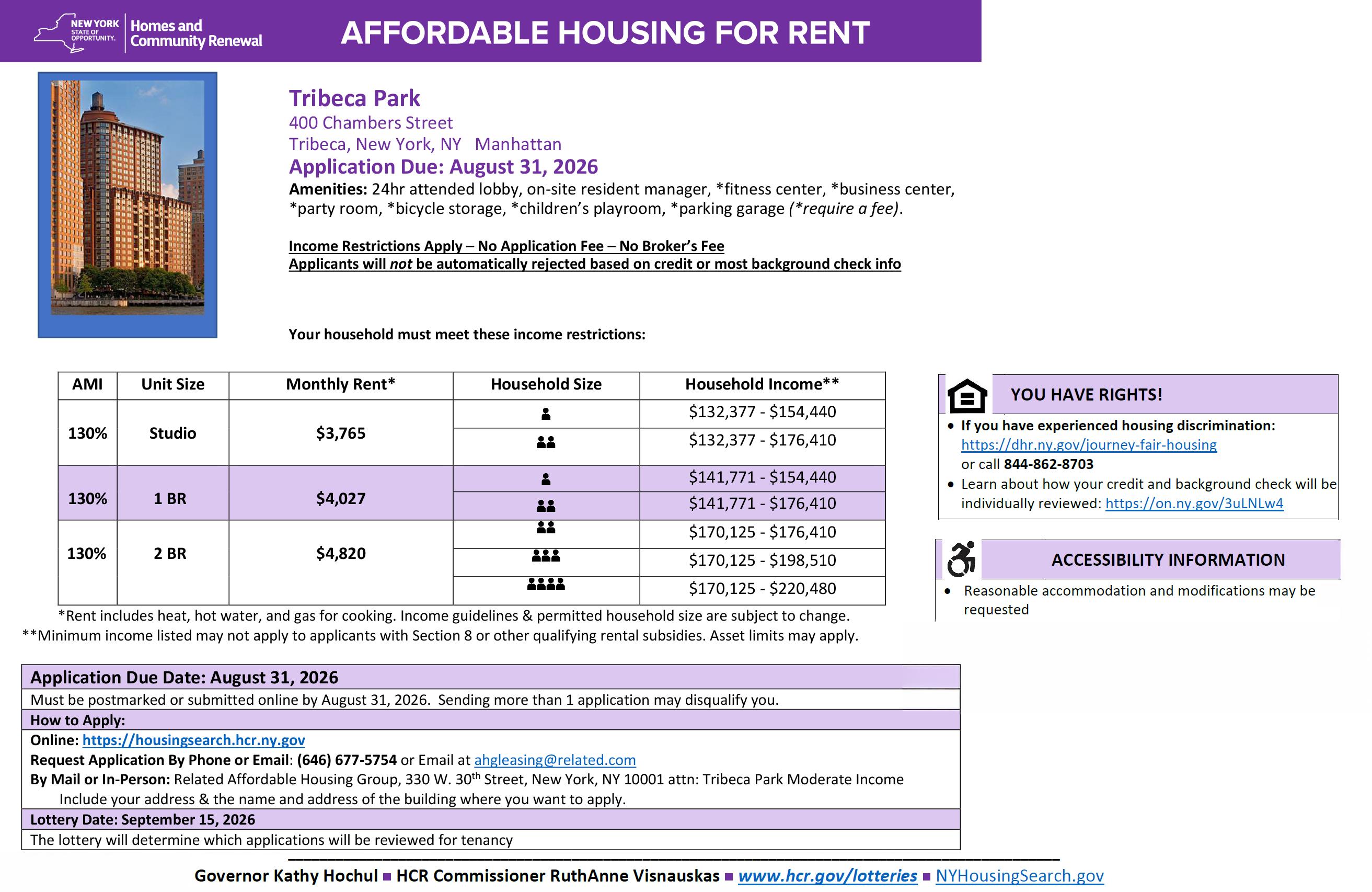
Jennifer Jones Austin in 2019. (Mark Von Holden/AP Images for FPWA)
in
RULES AND REGULATIONS
CANCELLATIONS must be made in writing by 12 Noon Monday.
The forwarding of an order is construed as an acceptance of all advertising rules and conditions under which advertising space is sold by the NEW YORK AMSTERDAM NEWS. Publication is made and charged according to the terms of this card.
Rates and regulations subject to change without notice. No agreements as to position or regulations, other than those printed on this.
Til forbid orders charged for rate earned. Increases or decreases in space take the rate of a new advertisement.
The New York AMSTERDAM NEWS reserves the right to censor, reject, alter or revise all advertisements in accordance with its rules governin g the acceptance of advertising and accepts no liability for its failure to insert an advertisement for any cause. Credit for errors in advertisements allowed only for first insertion.
CLASSIFIED
• Classified advertisements take the regular earned rate of their classification. Four line minimum on all ads except spirituals and horoscopes (14 lines).
CLASSIFIED DISPLAY
• Classified Display (boarder or picture) advertisements take the regular earned rate of their classification. Display (boarder or picture) advertisements one column wide must be 14 lines deep; two columns, 28 lines deep; 3 columns, 56 lines deep. Classified Display (boarder or picture) placed as close to classifications as rules and makeup permit.
CLASSIFICATIONS
All advertisement accepted for publication is classified according to the standard classifications. Misclassification is not permitted.
BASIS OF CHARGE
Charges are based on point size and characters per line. Upon reaching 15 lines the rate converts to column inch. Any deviation from solid composition such as indentation, use of white space, bold type, etc., will incur a premium.
In Case of error, notify
212-932-7440
Boulevard West in Syracuse; and 535 Washington Street in Buffalo.
Reservations are required for individuals wishing to attend hearings in person. Interested individuals must RSVP by calling (518) 486-3452 or sending an e-mail to HCRConPln@hcr. ny.gov no later than 5:00 pm , August 17, 2026. Attendees must present a valid driver’s license or other government-issued photo ID upon entry to any of the facilities.
NOTICE OF PUBLIC HEARING NEW YORK STATE 2027 Annual Action Plan
To participate in certain federal community development and housing programs, the State of New York must prepare a 5-year Consolidated Plan and an annual Action Plan and provide opportunities for citizens to participate in its development. As part of this process, the State will conduct public hearings to obtain the views of citizens, public agencies, local governments, and other interested parties on the housing and non-housing community development needs of the State before a draft Annual Action Plan for the year 2027 is prepared.
The Consolidated Plan and the Annual Action Plan focus principally on five federal programs: the New York State Community Development Block Grant Program; the HOME Investment Partnerships Program; the Housing Trust Fund; the Housing Opportunities for Persons with AIDS Program; and the Emergency Solutions Grants Program.
The Annual Action Plan will describe the State’s planned use of federal Fiscal Year 2027 funds to address the needs identified by its five-year Consolidated Plan and further the Consolidated Plan’s objectives and will also describe the State’s methods for distributing these funds.
The State of New York seeks to obtain the views of citizens and interested parties on the development of the 2027 Action Plan. As part of this process, the State will conduct a series of virtual public hearings on August 18, 2026 at 1:00 pm and August 19, 2026 at 10:00 am to give a brief overview of the program objectives and timeline for Plan development. Interested parties may participate via computer, telephone, or in person. Information on how to participate in the virtual public hearing may be found at https:// hcr.ny.gov/pressroom , or by requesting a direct link through HCRConPln@hcr.ny.gov . For any person that wishes to present testimony in person, the following HCR locations will be connected to the virtual hearing via WebEx; 641 Lexington Avenue in New York City; 38-40 State Street in Albany; 620 Erie Boulevard West in Syracuse; and 535 Washington Street in Buffalo.
Reservations are required for individuals wishing to attend hearings in person. Interested individuals must RSVP by calling (518) 486-3452 or sending an e-mail to HCRConPln@hcr. ny.gov no later than 5:00 pm , August 17, 2026. Attendees must present a valid driver’s license or other government-issued photo ID upon entry to any of the facilities.
Each site is accessible to individuals with mobility impair-
Each site is accessible to individuals with mobility impairments. Every effort will be made to accommodate persons with other special needs. To do so, it will be necessary to receive any requests no later than Friday, August 13, 2026. Individuals seeking additional information regarding the hearings may call (518) 486-3452.
All speakers are urged to provide a written copy of their community needs testimony. Individuals who are unable to attend in real time may view the recorded presentation on our website: https://hcr.ny.gov/pressroom and submit comments to NYS HCR, Attention: Rachel Yerdon, 38-40 State Street, Albany, NY 12207, or e-mail them to HCRConPln@hcr.ny.gov . All comments must be received no later than August 31, 2026.
SUPREME COURT-NEW
YORK COUNTY- HILTON RESORTS CORP., Pltf. v. ROBERT WALDEN, Deft. - Index # 850171/2025. Pursuant to Judgment of Foreclosure and Sale dated June 18, 2026, I will sell at public auction in Room 130 of the New York County Courthouse located at 60 Centre Street, New York, NY on Tuesday, August 25, 2026, at 2:15 pm, an interest of an undivided 0.0171734803822393% tenant in common interest in the timeshare known as 48TH STREET VACATION SUITES located at 12 East 48th Street, New York, NY. Approximate amount of judgment is $62,445.21 plus costs and interest as of April 14, 2026. Sold subject to terms and conditions of filed Judgment and Terms of Sale which includes annual maintenance fees and charges. Harvey Steven Mars, Esq., Referee. Cruser, Mitchell, Novitz, Sanchez, Gaston, & Zimet LLP, Attys. for Pltf., 341 Conklin Street, Farmingdale, NY.
SUPREME
COURT - COUNTY OF NEW YORK
392 CENTRAL PARK WEST CONDOMINIUM BY ITS BOARD OF MANAGERS, Plaintiff -against- PERRY KNIGHT, et. al., Defendant(s). Pursuant to a Judgment of Foreclosure and Sale dated May 28, 2026 and entered on June 8, 2026, I, the undersigned Referee will sell at public auction on August 18, 2026 at 2:15 p.m., at the New York County Supreme Courthouse, 60 Centre Street, New York, NY, in the courtroom designated by the posting outside of Room 130, or at such other location within the Courthouse as may be designated by the Clerk of the Court and/or the Office of Court Administration, the premises situate, lying and being in the Borough of Manhattan, City, County and State of New York, known as Unit No. 16-H in the condominium building known as "392 CENTRAL PARK WEST CONDOMINIUM " together with an undivided .21667590 percent interest in the common elements as described in the Declaration of 392 Central Park West Condo-
New York, NY, in the courtroom designated by the posting outside of Room 130, or at such other location within the Courthouse as may be designated by the Clerk of the Court and/or the Office of Court Administration, the premises situate, lying and being in the Borough of Manhattan, City, County and State of New York, known as Unit No. 16-H in the condominium building known as "392 CENTRAL PARK WEST CONDOMINIUM " together with an undivided .21667590 percent interest in the common elements as described in the Declaration of 392 Central Park West Condominium. Block 1833, Lot 3312. Said premises known as 392 Central Park West, Unit No. 16H, New York, New York. Approximate amount of lien $27,392.92 plus attorney’s fees and costs as awarded in the judgment, along with interest and costs.
Premises will be sold subject to provisions of filed Judgment and Terms of Sale.
Index Number 160092/2025
GREGORY M. LaSPINA, ESQ., Referee Levin & Glasser, P.C., Attorney(s) for Plaintiff, 551 Fifth Avenue, Ste. 1200, New York, NY 10176
NOTICE OF SALE
{* AMSTERDAM*}
SUPREME COURT COUNTY OF New York , CITIMORTGAGE, INC. , Plaintiff, vs. NICOLE M. CHRISTIE, ET AL., Defendant (s).
Pursuant to a Judgment of Foreclosure and Sale duly entered on October 21, 2025 I, the undersigned Referee will sell at public auction at Room 252 of the New York County Courthouse, 60 Centre Street, New York, NY 10007 on September 1, 2026 at 2:15 PM, premises known as 300 W 135TH STREET, UNIT 7E, NEW YORK, NY 10030. The Condominium Unit (the “Unit”) in the Building known as Strivers Gardens Condominium located at and known as by street number 300 West 135 th Street, New York, New York, Block: 1959, Lot: 1053 formerly part of lot 31 with an undivided .4094 percent interest in Common Elements of the Condominium. Approximate amount of judgment is $136,087.19 plus interest and costs. Premises will be sold subject to provisions of filed Judgment Index # 850043/2024. If the sale is set aside for any reason, the Purchaser at the sale shall be entitled only to a return of the deposit paid. The Purchaser shall have no further recourse against the Mortgagor, the Mortgagee, the Mortgagee's attorney, or the Referee.
SOFIA BALILE, Esq., Referee
Halliday, Watkins & Mann, P.C., 6851 Jericho Turnpike, Suite 185, Syosset, New York 11791, Attorneys for Plaintiff
SUPREME COURT-NEW YORK COUNTY- HILTON RESORTS CORP., Pltf. v. MARIO J. PUJOL and VALESCA C. PEREZ, Defts. - Index # 850224/2025. Pursuant to Judgment of Foreclosure and Sale dated June 18, 2026, I will sell at public auction in Room 130 of the New York County Courthouse located at 60 Centre Street, New York, NY on Tuesday, August 11, 2026, at 2:15 pm, an interest of an undivided 0.0343469607644787% tenant in common interest in the timeshare known as 48TH STREET VACATION SUITES located at 12 East 48th Street, New
SUPREME COURT-NEW YORK COUNTY- HILTON RESORTS CORP., Pltf. v. MARIO J. PUJOL and VALESCA C. PEREZ, Defts. - Index # 850224/2025. Pursuant to Judgment of Foreclosure and Sale dated June 18, 2026, I will sell at public auction in Room 130 of the New York County Courthouse located at 60 Centre Street, New York, NY on Tuesday, August 11, 2026, at 2:15 pm, an interest of an undivided 0.0343469607644787% tenant in common interest in the timeshare known as 48TH STREET VACATION SUITES located at 12 East 48th Street, New York, NY. Approximate amount of judgment is $31,009.11 plus costs and interest as of May 20, 2026. Sold subject to terms and conditions of filed Judgment and Terms of Sale which includes annual maintenance fees and charges. Elaine Shay, Esq., Referee. Cruser, Mitchell, Novitz, Sanchez, Gaston, & Zimet LLP, Attys. for Pltf., 341 Conklin Street, Farmingdale, NY.
CLASSIFIED ADS
unit, a studio penthouse on a floating use basis every year, in accordance with and subject to declarations. Declaration of Covenants, Conditions and Restrictions dated October 27, 2003 and November 3, 2003 as CFRN # 2003000442512 as re corded in the Office of the City Register, County, City and State of New York. The Timeshare Unit is also designated as Block 1006 and Lot 1302. Said premises known as 1335 AVENUE OF THE AMERICAS, NEW YORK, NY 10019
Approximate amount of lien $26,609.81 plus interest & costs.
Premises will be sold subject to provisions of filed Judgment and Terms of Sale. Index Number 850293/2023. DORON LEIBY, ESQ., Referee DRUCKMAN LAW GROUP PLLC
Attorney(s) for Plaintiff 242 Drexel Avenue, Westbury, NY 11590 DLG# 39268 {* AMSTERDAM*}
SUPREME COURT-NEW YORK COUNTY- HILTON RESORTS CORP., Pltf. v. ROWENA VILLAMAR, Deft. - Index # 850088/2025. Pursuant to Judgment of Foreclosure and Sale dated May 28, 2026, I will sell at public auction in Room 130 of the NY County Courthouse located 60 Centre Street, NY, NY on Tuesday, August 25, 2026, at 2:15 pm, an interest of an undivided 0.07412762675592057% tenant in common interest in the timeshare known as Phase II of HNY CLUB SUITES located at 1335 Avenue of the Americas, New York, New York. Approximate amount of judgment is $58,196.37 plus costs and interest as of December 30, 2025. Sold subject to terms and conditions of filed Judgment and Terms of Sale which includes annual maintenance fees and charges. Christy M. Demelfi, Esq., Referee. Cruser, Mitchell, Novitz, Sanchez, Gaston, & Zimet LLP, Attys. for Pltf., 341 Conklin Street, Farmingdale, NY.
NOTICE OF SALE SUPREME COURT ‑ COUNTY OF NEW YORK. HNY CLUB SUITES OWNERS ASSOCIATION INC., BY AND THROUGH ITS BOARD OF DIRECTORS, Plaintiff ‑against‑ THIRUNAVUKARASU THAY APARAN, et al Defendant(s). Pursuant to a Judgment of Foreclosure and Sale dated May 12, 2026, I, the under signed Referee will sell at public auction at the New York County Supreme Courthouse, 60 Cen tre Street, New York, NY, in the courtroom designated by the posting outside of Room 130, on Tuesday, September 8, 2026 at 2:15 p.m., premises being an undivided ownership interest as tenant‑in‑common with other owners in the Timeshare Unit in the building located at 1335 Avenue of the Americas, New York, NY; known as The NYH Condominium. Together with an appurtenant undivided 0.0381% in common interest percentage. This is a foreclosure on own ership interest in a timeshare unit, a studio penthouse on a floating use basis every year, in accordance with and subject to declarations. Declaration of Covenants, Conditions and Restrictions dated October 27, 2003 and November 3, 2003 as CFRN # 2003000442512 as re corded in the Office of the City Register, County, City and State of New York. The Timeshare Unit is also designated as Block 1006 and Lot 1302. Said premises known as 1335 AVENUE OF THE AMERICAS, NEW YORK, NY 10019
NOTICE OF SALE
SUPREME COURT ‑ COUNTY OF NEW YORK. 57TH ST. VACATION OWNERS ASSOCIATION, INC., BY AND THROUGH ITS BOARD OF DIRECTORS, Plaintiff ‑against‑ MEMG INTERNATIONAL, LTD, A REPUBLIC OF MAURITIUS COMPANY, et al Defendant(s). Pursuant to a Judgment of Foreclosure and Sale dated May 28, 2026, I, the under signed Referee will sell at public auction at the New York County Supreme Courthouse, 60 Cen tre Street, New York, NY, in the courtroom designated by the posting outside of Room 130, on September 1, 2026 at 2:15 p.m. premises situate, lying and being in the Borough of Manhat tan, County of New York, City and State of New York, being an undivided ownership interest as tenant‑in‑common with other owners in the Timeshare Unit in the building located at 102 West 57th Street, New York, NY. Together with an appurtenant undivided .015838% common interest percentage. This is a foreclosure on ownership inter est in a timeshare unit, a studio penthouse on a floating use basis every year, in accordance with and subject to declara tions. Declaration of Covenants, Conditions and Restrictions dated October 10, 2008 and October 31, 2008 as CFRN # 2008000426142 as recorded in the Office of the City Register, County, City and State of New York. The Timeshare Unit is also designated as Block 1009 and Lot 37. Said premises known as 102 WEST 57TH STREET, NEW YORK, NY 10019
Approximate amount of lien $73,393.97 plus interest & costs.
Premises will be sold subject to provisions of filed Judgment and Terms of Sale. Index Number 850124/2023. JEFFREY R. MILLER, ESQ., Referee
DRUCKMAN LAW GROUP PLLC
Attorney(s) for Plaintiff 242 Drexel Avenue, Westbury, NY 11590
DLG# 39098 {* AMSTERDAM*}
ANNITA RETAIL GROUP LLC. Arts. of Org. filed with the SSNY on 06/02/2026. Office: New York County. SSNY designated as agent of the LLC upon whom process against it may be served. SSNY shall mail copy of process to: 845 United Nations Plaza, Apt 53A, NY, NY 10017. Purpose: Any lawful.
Notice of Qualification of CRITERION ORIGINAL PRODUCTIONS LLC
Appl. for Auth. filed with Secy. of State of NY (SSNY) on 06/08/26. Office location: NY County. LLC formed in Delaware (DE) on 05/29/26. SSNY designated as agent of LLC upon whom process against it may be served. SSNY shall mail process to Corporation Service Co., 80 State St., Albany, NY 12207-2543. DE addr. of LLC: 251 Little Falls Dr., Wilmington, DE 19808. Cert. of Form. filed with Secy. of State, John G. Townsend Bldg., 401 Federal St., Ste. 4, Dover, DE 19901. Purpose: Any lawful activity.
Notice of formation of Imagine F&B NYC LLC. Articles of Organization filed with the Secretary of State of NY (SSNY) on 07/07/2026. Office location: New York County (Manhattan). SSNY designated as an agent of Limited Liability Company (LLC) upon whom process against it may be served. SSNY should mail process to REGISTERED AGENT SOLUTIONS, INC.: 99 WASHINGTON AVENUE, SUITE 1008, ALBANY, NY, 12260. Purpose: Any lawful purpose.
Notice of Qualification of MONICA VINADER SPRING STREET NY LLC
Appl. for Auth. filed with Secy. of State of NY (SSNY) on 06/18/26. Office location: NY County. LLC formed in Delaware (DE) on 03/18/26. Princ. office of LLC: 151 Spring St., NY, NY 10012. SSNY designated as agent of LLC upon whom process against it may be served. SSNY shall mail process to Corporation Service Co., 80 State St., Albany, NY 12207-2543. DE addr. of LLC: 251 Little Falls Dr., Wilmington, DE 19808. Cert. of Form. filed with Secy. of State, Div. of Corps., 401 Federal St., Ste. 4, Dover, DE 19901. Purpose: Retail sales of jewelry and related services.
Notice of Qualification of OFF THE COUCH CLUB HOLDINGS LLC
Appl. for Auth. filed with Secy. of State of NY (SSNY) on 07/24/26. Office location: NY County. LLC formed in Delaware (DE) on 07/23/26. SSNY designated as agent of LLC upon whom process against it may be served. SSNY shall mail process to the LLC, 40 E. 83rd St., Apt. 6S, NY, NY 10028. DE addr. of LLC: 251 Little Falls Dr., Wilmington, DE 19808. Cert. of Form. filed with Secy. of State, John G. Townsend Bldg., 401 Federal St., Ste. 4, Dover, DE 19901. Purpose: Any lawful activity.
Notice of Qualification of SAKS EQUITY ACQUIROR LLC
Appl. for Auth. filed with Secy. of State of NY (SSNY) on 06/10/26. Office location: NY County. LLC formed in Delaware (DE) on 06/05/26. SSNY designated as agent of LLC upon whom process against it may be served. SSNY shall mail process to Corporation Service Co., 80 State St., Albany, NY 12207-2543. DE addr. of LLC: 251 Little Falls Dr., Wilmington, DE 19808. Cert. of Form. filed with Secy. of State of the State of DE, Div. of Corps., 401 Federal St., Ste. #4, Dover, DE 19901. Purpose: Any lawful activity.
Notice of Qualification of SARA ADLER ADVISORY, LLC
Appl. for Auth. filed with Secy. of State of NY (SSNY) on 07/23/26. Office location: NY County. LLC formed in Delaware (DE) on 01/27/26. SSNY designated as agent of LLC upon whom process against it may be served. SSNY shall mail process to the LLC, 40 E. 83rd St., Apt. 6S, NY, NY 10028. DE addr. of LLC: 251 Little Falls Dr., Wilmington, DE 19808. Cert. of Form. filed with Secy. of State, John G. Townsend Bldg., 401 Federal St., Ste. 4, Dover, DE 19901. Purpose: Any lawful activity.
Notice of Qualification of SUREGO TECHOLOGIES LLC. Certificate of Authority filed with Secretary of State of NY (SSNY) on 05/01/2026. Office location: New York County (Manhattan). Limited Liability Company (LLC) formed on 04/20/2026. SSNY designated as agent of Limited Liability Company (LLC) upon whom process against it may be served. SSNY shall mail process to Registered Agent Solutions, Inc: 195 Canal St Suite 203 New York, NY 10013. Articles of Organization originally filed with Secretary of State (SOS). 1603 Capitol Ave Suite 310 Cheyenne, WY 82001 Purpose: Any lawful purpose.
Notice of Qualification of 5FLR23, LLC Appl. for Auth. filed with Secy. of State of NY (SSNY) on 07/10/26. Office location: NY County. LLC formed in Delaware (DE) on 07/09/26. Princ. office of LLC: 211 S Main St., Joplin, MO 64801-2307. SSNY designated as agent of LLC upon whom process against it may be served. SSNY shall mail process to Corporation Service Co., 80 State St., Albany, NY 12207-2543. DE addr. of LLC: 251 Little Falls Dr., Wilmington, DE 19808. Cert. of Form. filed with Secy. of State, 401 Federal St., Ste. 4, Dover, DE 19901. Purpose: Any lawful activity.
Notice of Qualification of AI Infrastructure OpCo II, LLC
Appl. for Auth. filed with Secy. of State of NY (SSNY) on 07/01/26. Office location: NY County. LLC formed in Delaware (DE) on 03/04/26. Princ. office of LLC: 500 Howard St., San Francisco, CA 94105. SSNY designated as agent of LLC upon whom process against it may be served. SSNY shall mail process to Corporation Service Co., 80 State St., Albany, NY 12207-2543. DE addr. of LLC: 251 Little Falls Dr., Wilmington, DE 19808. Cert. of Form. filed with Secy. of State, DE Div. of Corps., PO Box 898, Dover, DE 19903. Purpose: Any lawful activity.
Notice of Qualification of The National Guitar Museum, LLC. Certificate of Authority filed with Secretary of State of NY (SSNY) on 06/12/2026. Office location: New York County (Manhattan). Limited Liability Company (LLC) formed on 10/06/2008. SSNY designated as agent of Limited Liability Company (LLC) upon whom process against it may be served. SSNY shall mail process to Trini C. Newquist: trini@newquist.net. Articles of Organization originally filed with Secretary of State (SOS). 303 E. 83rd Street 31A, New York, NY 10028 Purpose: Any lawful purpose.
Notice of formation of Afterglow NYC LLC. Articles of Organization filed with the Secretary of State of NY (SSNY) on 3/09/2026. Office location: New York County (Manhattan). SSNY designated as an agent of Limited Liability Company (LLC) upon whom process against it may be served. SSNY should mail process to Katie Rue: 45 Orchard St, Storefront, New York, NY, 10002. Purpose: Any lawful purpose.
Notice of Qualification of Alexander White Agnecy, LLC. Certificate of Authority filed with Secretary of State of NY (SSNY) on 7/01/2026. Office location: New York County (Manhattan). Limited Liability Company (LLC) formed on 07/30/2013. SSNY designated as agent of Limited Liability Company (LLC) upon whom process against it may be served. SSNY shall mail process to Alexander White: 12 E 49th Street, Floor 11, New York, NY 10017. Articles of Organization originally filed with Secretary of State (SOS). 999 Peachtree Street NE , Suite 400, Atlanta, GA 30309 Purpose: Any lawful purpose.
Notice of Formation of HENRY JACQUES NEW YORK LLC
Arts. of Org. filed with Secy. of State of NY (SSNY) on 06/11/26. Office location: NY County. SSNY designated as agent of LLC upon whom process against it may be served. SSNY shall mail process to c/o Tarter Krinsky & Drogin LLP, Attn: Emily Ayoob, Esq., 1350 Broadway, 11th Fl., NY, NY 10018. Purpose: Any lawful activity.
Notice of formation of Salt & Story, LLC. Articles of Organization filed with the Secretary of State of NY (SSNY) on 5/57/26. Office location: New York County (Manhattan). SSNY designated as an agent of Limited Liability Company (LLC) upon whom process against it may be served. SSNY should mail process to LEGALZOOM USCA, Inc.: 45 Main Street, Suite 238, Brooklyn, New York 11201. Purpose: Any lawful purpose.
Notice of formation of Aura Medical Management LLC. Articles of Organization filed with the Secretary of State of NY (SSNY) on 06/09/2026. Office location: New York County (Manhattan). SSNY designated as an agent of Limited Liability Company (LLC) upon whom process against it may be served. SSNY should mail process to Zhaonan Wang: 9 SHADETREE LANE, ROSLYN HEIGHTS, NY, 11577. Purpose: Any lawful purpose.
Notice of Qualification of Highmark Building Systems LLC. Certificate of Authority filed with Secretary of State of NY (SSNY) on 06/02/2026. Office location: New York County (Manhattan). Limited Liability Company (LLC) formed on 11/26/2025. SSNY designated as agent of Limited Liability Company (LLC) upon whom process against it may be served. SSNY shall mail process to Highmark Building Systems LLC: 49 West 45th Street, 11th Floor, New York, NY 10036. Articles of Organization originally filed with Secretary of State (SOS). 1209 Orange Street, Wilmington, New Castle County, Delaware 19801 Purpose: Any lawful purpose.
Notice of Qualification of CIG DEVELOPMENT MANAGEMENT LLC
Appl. for Auth. filed with Secy. of State of NY (SSNY) on 07/17/26. Office location: NY County. LLC formed in Delaware (DE) on 07/11/25. Princ. office of LLC: 2101 Wilson Blvd., Ste. 525, Arlington, VA 22201. SSNY designated as agent of LLC upon whom process against it may be served. SSNY shall mail process to Attn: Marisa McGaughey at the princ. office of the LLC. DE addr. of LLC: 251 Little Falls Dr., Wilmington, DE 19808-1674. Cert. of Form. filed with Secy. of State, 401 Federal St. 4, Dover, DE 19901. Purpose: Any lawful activity.
Notice of formation of DEMI LINGO STUDIO LLC. Articles of Organization filed with the Secretary of State of NY (SSNY) on 06/18/2026. Office location: New York County (Manhattan). SSNY designated as an agent of Limited Liability Company (LLC) upon whom process against it may be served. SSNY should mail process to Demi Lingo: 6634 108th Street Apt. 2B, Forest Hills, New York 11375. Purpose: Any lawful purpose.
HIGH FALLS PARTNERS LLC Articles of Org. filed NY Sec. of State (SSNY) 02/09/2026. Office in New York Co. SSNY desig. agent of LLC upon whom process may be served. SSNY shall mail copy of process to 500 W 30th St Apt 18C, New York, NY 10001. United States Corporation Agents, Inc. desig. as agent for SOP 7014 13TH Avenue , Suite 202, Brooklyn, NY 11228. Any lawful purpose.
Notice of formation of MACLLAREN & CO. BARBERS N.Y. LLC. Articles of Organization filed with the Secretary of State of NY (SSNY) on 06/19/2026. Office location: New York County (Manhattan). SSNY designated as an agent of Limited Liability Company (LLC) upon whom process against it may be served. SSNY should mail process to New York Secretary of State: 35 E 1ST ST, WEST STOREFRONT, New York, NY 10003. Purpose: Any lawful purpose.
Notice of formation of Brookdale Farms LLC. Articles of Organization filed with the Secretary of State of NY (SSNY) on 07/02/2026. Office location: New York County (Manhattan). SSNY designated as an agent of Limited Liability Company (LLC) upon whom process against it may be served. SSNY should mail process to Matt DeGraw: 2 Brookdale Place, Rye, NY 10580. Purpose: Any lawful purpose.
NOTICE OF FORMATION OF STUDIO JONES DESIGN LLC. Arts. of Org. filed with the Secy. of State of NY (SSNY) on 5/12/26. Office Loc. New York County. SSNY designated as agent upon whom process against it may be served. SSNY shall mail a copy of any process to: Studio Jones Design LLC at 340 E 66th St, Apt 3G, NY, NY 10065. Reg. Agent: eResidentAgent, Inc.1 Rockefeller Plaza Ste 1204, NY, NY 10020. P/B/A: 340 E 66th St, Apt 3G, NY, NY 10065. Purpose: any lawful activity.
Notice of formation of VELOR FILMS, LLC. Articles of Organization filed with the Secretary of State of NY (SSNY) on 03/27/2026. Office location: New York County (Manhattan). SSNY designated as an agent of Limited Liability Company (LLC) upon whom process against it may be served. SSNY should mail process to Northwest Registered Agent LLC: 418 Broadway, STE N Albany, NY 12207. Purpose: Any lawful purpose.
Notice of Formation of JOANNA VARGAS MANAGEMENT LLC Arts. of Org. filed with Secy. of State of NY (SSNY) on 07/08/26. Office location: NY County. Princ. office of LLC: 501 5th Ave., Fl. 3, NY, NY 10017. SSNY designated as agent of LLC upon whom process against it may be served. SSNY shall mail process to the LLC at the addr. of its princ. office. Purpose: Any lawful activity.
Notice of formation of Julia Stevens LLC. Articles of Organization filed with the Secretary of State of NY (SSNY) on 01/14/2026. Office location: New York County (Manhattan). SSNY designated as an agent of Limited Liability Company (LLC) upon whom process against it may be served. SSNY should mail process to Julia Stevens: 82 IRVING PL, 6A, New York, NY 10003. Purpose: Any lawful purpose.
Notice of Formation of STRETCH WANNIGAN 2, LLC
Arts. of Org. filed with Secy. of State of NY (SSNY) on 06/30/26. Office location: NY County. Princ. office of LLC: 97 Perry St., Apt. 4, NY, NY 10014. SSNY designated as agent of LLC upon whom process against it may be served. SSNY shall mail process to the LLC at the addr. of its princ. office. Purpose: Any lawful activity.
NOTICE OF FORMATION OF VNESS, LLC. Arts. of Org. filed with the Secy. of State of NY (SSNY) on 2/19/26. Office Loc. NY County. SSNY designated as agent upon whom process against it may be served. SSNY shall mail a copy of any process to: Vness, LLC at 1001 Ave of the Americas, 2nd Fl, NY, NY 10018. Reg. Agent: eResidentAgent, Inc. 1 Rockefeller Plaza Ste 1204, NY, NY 10020. P/B/A: 1001 Ave of the Americas, 2nd Fl, NY, NY 10018. Purpose: any lawful activity.
Notice of formation of Yellow Artemis, LLC. Articles of Organization filed with the Secretary of State of NY (SSNY) on 06/16/2026. Office location: New York County (Manhattan). SSNY designated as an agent of Limited Liability Company (LLC) upon whom process against it may be served. SSNY should mail process to Yellow Artemis LLC: 108 W 39th Street, STE 1006, #2511 New York, NY 10018. Purpose: Any lawful purpose.
Notice of Formation of VCW JV, LLC Arts. of Org. filed with Secy. of State of NY (SSNY) on 06/10/26. Office location: NY County. SSNY designated as agent of LLC upon whom process against it may be served. SSNY shall mail process to the LLC, 370 Lexington Ave., 23rd Fl., NY, NY 10017. Purpose: Any lawful activity.
Notice of formation of 10 Topaz EH, LLC. Articles of Organization filed with the Secretary of State of NY (SSNY) on 6/22/2026. Office location: New York County (Manhattan). SSNY designated as an agent of Limited Liability Company (LLC) upon whom process against it may be served. SSNY should mail process to Andrew Koff: PO Box 111 New York, NY 10028. Purpose: Any lawful purpose.
108 HIGH POND RD LLC. Arts. of Org. filed with the SSNY on 06/03/26. Office: New York County. SSNY designated as agent of the LLC upon whom process against it may be served. SSNY shall mail copy of process to the LLC, 251 Central Park West, Apartment 8A, New York, NY 10024. Purpose: Any lawful purpose.
Notice of Qualification of QUIETT LUXURY FOODS GROUP L.L.C. App. for Authority filed with NY Secy. of State (SSNY) on 05/13/2026. Office: NY County. Formed in CA on 04/05/2024. SSNY designated agent for process; mail process to 167 E 111ST APT 5F, NY, NY 10029. CA office: 4082 BAKMAN AVE, STUDIO CITY, CA 91602. Purpose: any lawful purpose.
VTID LLC filed Arts. of Org. with the Sect'y of State of NY (SSNY) on 11/6/2025. Office: New York County. SSNY has been designated as agent of the LLC upon whom process against it may be served and shall mail process to: The LLC, 2 Cornelia St, Apt 801, New York, NY 10014. Purpose: any lawful act.
SKYLARK TALENT MANAGEMENT, LLC Articles of Org. filed NY Sec. of State (SSNY) 07/16/2024. Office in New York Co. SSNY desig. agent of LLC upon whom process may be served. SSNY shall mail copy of process to 192 East 3rd Street, Apt, 4A, New York, NY 10009. Purpose: Any lawful purpose.
Notice of Formation of WHITTINGHAM LAW PLLC Arts. of Org. filed with Secy. of State of NY (SSNY) on 05/29/26. Office location: NY County. Princ. office of PLLC: 3 Columbus Circle, Fl. 15, NY, NY 10019. SSNY designated as agent of PLLC upon whom process against it may be served. SSNY shall mail process to the PLLC at the addr. of its princ. office. Purpose: Law.
Notice of Formation of CANNON MADISON LLC Arts. of Org. filed with Secy. of State of NY (SSNY) on 06/26/26. Office location: NY County. SSNY designated as agent of LLC upon whom process against it may be served. SSNY shall mail process to Corporation Service Co., 80 State St., Albany, NY 122072543. Purpose: Any lawful activity.
GALLIUM PRESS LLC. Arts. of Org. filed with the SSNY on 06/03/26. Office: New York County. SSNY designated as agent of the LLC upon whom process against it may be served. SSNY shall mail copy of process to the LLC, 15 West 67th Street, Suite 4FW, New York, NY 10023. Purpose: Any lawful purpose.
York
FENDANTS:
INDEX NO.: 850399/2025
Date Filed: 5/26/2026
SUPPLEMENTAL SUMMONS WITH NOTICE
MORTGAGED PREMISES:
131 Bank Street, Unit 3, New York, New York 10014
BL #: 635-1103 fka BL 635-1
Plaintiff designates NEW YORK County as the place of trial; venue is based upon the county in which the mortgaged premises is situate.
STATE OF NEW YORK
SUPREME COURT: COUNTY OF NEW YORK
JPMorgan Chase Bank, N.A.
Plaintiff, vs. Otsego County Treasurer, as Limited Administrator of The Estate of George Cangialosi, deceased; Unknown Heirs of the Estate of George Cangialosi and all the heirs at law, next of kin, distributees, devisees, grantees, trustees, lienors, creditors, assignees and successors in interest of any of the aforesaid defendants, next of kin, distributees, devisees, grantees, trustees, lienors, creditors, assignees and successors in interest of any of the aforesaid classes of person, if they or any of them be dead, and their respective husbands, wives or widows, if any, and all of whom and whose names and places of residence are unknown to plaintiff, except as herein stated; Shira Small Cangialosi, as Heir to The Estate of George Cangialosi, deceased; Donna Boscolo, as Heir to The Estate of George Cangialosi, deceased; Steven Cangialosi, as Heir to The Estate of George Cangialosi, deceased; David L. Zinsser a/k/a David Zinsser, Individually and as Heir and Next of Kin of The Estate of John S. Zinsser a/k/a John S. Zinsser, Jr., deceased; Salisbury Bank & Trust Company n/k/a NBT Bank, as Trustee of the John S. Zinsser a/k/a John S. Zinsser, Jr. Revocable Trust u/a dated June 7, 2007; Stephen W. Zinsser, as Heir and Next of Kin of The Estate of John S. Zinsser a/k/a John S. Zinsser, Jr., deceased; Amanda Z. Moffat, as Heir and Next of Kin of The Estate of John S. Zinsser a/k/a John S. Zinsser, Jr., deceased; Ann C. Zinsser, as Heir and Next of Kin of The Estate of John S. Zinsser a/k/a John S. Zinsser, Jr., deceased; Cathy Austrian, as Co-Executrix of The Estate of Joan Kadushin, deceased; Rachel Kadushin as Co-Executrix of The Estate of Joan Kadushin, deceased; Matthew Kadushin, as Co-Executor of The Estate of Joan Kadushin, deceased; United States of America o/b/o Internal Revenue Service; New York State Department of Taxation and Finance; Board of Managers of 131 Bank Street Condominium; New York City Transit Adjudication Bureau; New York City Environmental Control Board; New York City Parking Violations Bureau; New York State Department of Taxation and Finance; United States of America o/b/o Internal Revenue Service; John Doe #1 through #6, and Jane Doe #1 through #6, the last twelve names being fictitious, it being the intention of Plaintiff to designate any and all occupants, tenants, persons or corporations, if any, having or claiming an interest in or lien upon the premises being foreclosed herein.
YOU ARE HEREBY SUMMONED to answer the Complaint in this action and to serve a copy of your answer, or, if the Complaint is not served with this Summons, to serve a notice of appearance on the attorneys for the Plaintiff within 20 days after the service of this Summons, exclusive of the day of service (or within 30 days after service is complete if this Summons is not personally delivered to you within the State of New York). In case of your failure to appear or answer, judgment will be taken against you by default for the relief demanded in the Amended Complaint. NOTICE YOU ARE IN DANGER OF LOSING YOUR HOME IF YOU DO NOT RESPOND TO THIS SUMMONS AND COMPLAINT BY SERVING A COPY OF THE ANSWER ON THE ATTORNEY FOR THE MORTGAGE COMPANY WHO FILED THIS FORECLOSURE PROCEEDING AGAINST YOU AND FILING THE ANSWER WITH THE COURT, A DEFAULT JUDGMENT MAY BE ENTERED AND YOU CAN LOSE YOUR HOME. SPEAK TO AN ATTORNEY OR GO TO THE COURT WHERE YOUR CASE IS PENDING FOR FURTHER INFORMATION ON HOW TO ANSWER THE SUMMONS AND PROTECT YOUR PROPERTY. SENDING PAYMENT TO YOUR MORTGAGE COMPANY WILL NOT STOP THIS FORECLOSURE ACTION. YOU MUST RESPOND BY SERVING A COPY OF THE ANSWER ON THE ATTORNEY FOR THE PLAINTIFF (MORTGAGE COMPANY) AND FILING THE ANSWER WITH THE COURT. THE OBJECT of the above captioned action is to foreclose a Mortgage to secure $100,000.00 and interest, recorded in the Office of the City Register of the City of New York on December 5, 2007, as CRFN 2007000599788, covering premises known as131 Bank Street, Unit 4, New York, NY 10014, BL #: 635-1103 fka BL 635-1.
The relief sought in the within action is a final judgment directing the sale of the premises described above to satisfy the debt secured by the Mortgage described above. The Plaintiff also seeks a deficiency judgment against the Defendants and for any debt secured by said Mortgage which is not satisfied by the proceeds of the sale of said premises. TO the Defendants Unknown Heirs of the Estate of George Cangialosi and all the heirs at law, next of kin, distributees, devisees, grantees, trustees, lienors, creditors, assignees and successors in interest of any of the aforesaid defendants, next of kin, distributees, devisees, grantees, trustees, lienors, creditors, assignees and successors in interest of any of the aforesaid classes of person, if they or any of them be dead, and their respective husbands, wives or widows, if any, and all of whom and whose names and places of residence are unknown to plaintiff, except as herein stated, the foregoing Supplemental Summons with Notice is served upon you by publication pursuant to an Order of the Hon. Francis A. Kahn, III, J.S.C. of the Supreme Court of the State of New York, County of New York, dated May 19, 2026 and filed May 21, 2026.
Dated: June 10, 2026
/s/ Deborah M. Gallo
Deborah M. Gallo, Esq. McCalla Raymer Leibert Pierce, LLP
TO THE ABOVE NAMED DEFENDANTS: YOU ARE HEREBY SUMMONED to answer the Complaint in this action and to serve a copy of your answer, or, closed herein. TO THE ABOVE NAMED DE-
2026 and filed May 21, 2026.
Dated: June 10, 2026
/s/ Deborah M. Gallo
Deborah M. Gallo, Esq. McCalla Raymer Leibert Pierce, LLP
420 Lexington Avenue, Suite 840
New York, New York 10170
Phone: 347.286.7409
Fax: 347-286-7414
Attorneys for Plaintiff, JPMorgan Chase Bank, N.A. HELP FOR HOMEOWNERS IN FORECLOSURE NEW YORK STATE LAW REQUIRES THAT WE SEND YOU THIS NOTICE ABOUT THE FORECLOSURE PROCESS. PLEASE READ IT CAREFULLY.
SUMMONS AND COMPLAINT YOU ARE IN DANGER OF LOSING YOUR HOME. IF YOU FAIL TO RESPOND TO THE SUMMONS AND COMPLAINT IN THIS FORECLOSURE ACTION, YOU MAY LOSE YOUR HOME. PLEASE READ THE SUMMONS AND COMPLAINT CAREFULLY. YOU SHOULD IMMEDIATELY CONTACT AN ATTORNEY OR YOUR LOCAL LEGAL AID OFFICE TO OBTAIN ADVICE ON HOW TO PROTECT YOURSELF.
SOURCES OF INFORMATION AND ASSISTANCE.
The State encourages you to become informed about your options in foreclosure.
In addition to seeking assistance from an attorney or legal aid office, there are government agencies and non-profit organizations that you may contact for information about possible options, including trying to work with your lender during this process.
To locate an entity near you, you may call the toll-free helpline maintained by the New York State Banking Department of Financial Services at 1-800-342-3736 or visit the Department's website at www.dfs.ny.gov.
FORECLOSURE RESCUE SCAMS
Be careful of people who approach you with offers to "save" your home. There are individuals who watch for notices of foreclosure actions in order to unfairly profit from a homeowner's distress. You should be extremely careful about any such promises and any suggestions that you pay them a fee or sign over your deed. State law requires anyone offering such services for profit to enter into a contract which fully describes the services they will perform and fees they will charge, and which prohibits them from taking any money from you until they have completed all such promised services.
SUPREME COURT - COUNTY OF NEW YORK
BOARD OF MANAGERS OF SAGA HOUSE CONDOMINIUM, Plaintiff -against- HANNA JESIONOWSKA PRACTICE
L.L.C , et. al., Defendant(s). Pursuant to a Judgment of Foreclosure and Sale dated September 8, 2025 and entered on September 10, 2025, I, the undersigned Referee will sell at public auction on September 1, 2026 at 2:15 p.m., in the New York County Courthouse, 60 Centre Street New York, New York 10007, in the courtroom designated by the posting outside of Room 130, or at such other location within the Courthouse as may be designated by the Clerk of the Court and/or the Office of Court Administration,
designated by the posting outside of Room 130, or at such other location within the Courthouse as may be designated by the Clerk of the Court and/or the Office of Court Administration, the premises situate, lying and being in the Borough of Manhattan, City, County and State of New York, known as Medical Unit No. 1 in the condominium building known as "Saga House Condominium" together with an undivided 6.19% interest in the common elements as described in the Declaration of Saga House Condominium. Block 1409 and Lot 1001.
Said premises known as 157 East 74 th Street, Medical Unit No. 1, New York, New York. Approximate amount of lien $251,391.84 plus attorney’s fees and costs as awarded in the judgment, along with interest and costs.
Premises will be sold subject to provisions of filed Judgment and Terms of Sale.
Index Number 156127/2024
JEFFREY R. MILLER, ESQ., Referee
Levin & Glasser, P.C., Attorney(s) for Plaintiff, 551 Fifth Avenue, Ste. 1200, New York, NY 10176
{* AMSTERDAM*}
SUPREME COURT OF THE STATE OF NEW YORK, COUNTY OF NEW YORK, STORMFIELD CAPITAL FUNDING I, LLC , Plaintiff, against 2647 BROADWAY APTS LLC; JONAH BAMBERGER; AMIR HELDI; ZVI CHALAMISH; AMACO MANAGEMENT CONSTRUCTION INC; IMP PLUMBING HEATING CORP; NYC FIRE SERVICES GUARDS LLC; CITY OF NEW YORK ENVIRONMENTAL CONTROL BOARD; DEPARTMENT OF HOUSING PRESERVATION AND DEVELOPMENT OF THE CITY OF NEW YORK; and JOHN DOE NO. 1 THROUGH JOHN DOE NO. XXX, inclusive, the last thirty names being fictitious and unknown to plaintiff, the persons or parties intended being the tenants, occupants, persons or corporations, if any, having or claiming an interest in or lien upon the premises described in the complaint, Defendants. INDEX NO. 850438/2025. TO DEFENDANTS JONAH BAMBERGER AND AMIR HELDI: You are hereby summoned to answer the complaint in this action and to serve a copy of your answer, or, if the complaint is not served with this summons, to serve a notice of appearance, on the Plaintiff’s attorney within 20 days after the service of this summons, exclusive of the day of service (or within 30 days after the service is complete if this summons is not personally delivered to you within the State of New York); and in case of your failure to appear or answer, judgment will be taken against you by default for the relief demanded in the complaint. The basis of venue is the location of the subject property, which is New York County, New York. TO THE ABOVE-NAMED DEFENDANTS: The foregoing summons is served upon you by publication, pursuant to an Order of Francis A. Kahn, III, a Justice of the Supreme court, dated April 16, 2026, and filed with the supporting papers in the New York County Clerk’s Office. This is an action to foreclose on the property known as 2647-2649 Broadway, New York, New York 10025, legal description: Block 1872 and Lot 52 of the New York County Tax Assessment Map in the Borough of Manhattan, State of New York. The relief sought is the finding that Plaintiff has a first and best lien on the property; an Order finding that Plaintiff has the legal right and is authorized
of the New York County Tax Assessment Map in the Borough of Manhattan, State of New York. The relief sought is the finding that Plaintiff has a first and best lien on the property; an Order finding that Plaintiff has the legal right and is authorized to foreclose on the Property; an Order finding the such foreclosure will vest in the purchaser thereat free and clear title to the Property, free of any and all interests that are or might be asserted by the Defendants; an Order that Plaintiff has the right to credit bid at such foreclosure sale any and all amounts due to Plaintiff under the Loan Documents; an Order directing that the Sheriff of New York County, New York, or any referee appointed in this action, foreclose the Property and deliver the title to the successful bidder at such foreclosure; an Order directing how to apply the proceeds of the sale; an Order that Borrower has no right of redemption or reinstatement with respect to the Property; and an Order finding that Plaintiff has preserved its right to pursue any deficiency that may exist. Dated: April 27, 2026, POLSINELLI PC, Aaron P. Davis, Esq., Attorneys for Plaintiff STORMFIELD CAPITAL FUNDING I, LLC, 600 Third Avenue, 42nd Floor, New York, New York 10016, adavis@polsinelli.com, (212) 803-9918.
SUPREME COURT OF THE STATE OF NEW YORK COUNTY OF NEW YORK
MEB LOAN TRUST VII, U.S. BANK NATIONAL ASSOCIATION, NOT IN ITS INDIVIDUAL CAPACITY, BUT SOLELY AS TRUSTEE, -against-
LEWIS WU, ET AL.
NOTICE OF SALE
NOTICE IS HEREBY GIVEN pursuant to a Final Judgment of Foreclosure entered in the Office of the Clerk of the County of New York on January 3, 2025, wherein MEB LOAN TRUST VII, U.S. BANK NATIONAL ASSOCIATION, NOT IN ITS INDIVIDUAL CAPACITY, BUT SOLELY AS TRUSTEE is the Plaintiff and LEWIS WU, ET AL. are the Defendant(s). I, the undersigned Referee, will sell at public auction at the NEW YORK COUNTY CIVIL SUPREME COURTHOUSE, 60 CENTRE STREET, NEW YORK, NY 10007, on September 8, 2026 at 2:15PM, premises known as 80 ELIZABETH ST, UNIT 6J, A/K/A 80 ELIZABETH ST, NEW YORK, NY 10013; and the following tax map identification: 1-239-1075.
THE CONDOMINIUM UNIT (THE “UNIT”) KNOWN AS UNIT NO. 6J IN THE BUILDING (THE “BUILDING”) KNOWN AS THE ROYAL ELIZABETH CONDOMINIUM (THE “CONDOMINIUM”) AND BY THE STREET NUMBER 80 ELIZABETH STREET, BOROUGH OF MANHATTAN, COUNTY, CITY AND STATE OF NEW YORK, SAID UNIT BEING DESIGNATED AND DESCRIBED BY THE ABOVE UNIT NO. 6J, IN A CERTAIN DECLARATION DATED SEPTEMBER 12, 1990, MADE BY 159 HESTER STREET REALTY ASSOCIATES, L.P., PURSUANT TO ARTICLE 9-B OF THE REAL PROPERTY LAW OF THE STATE OF NEW YORK (THE “CONDOMINIUM ACT”);
TOGETHER WITH AN UNDIVIDED 0.8358% INTEREST IN THE COMMON ELEMENTS; ALL THAT CERTAIN PLOT, PIECE OR PARCEL OF LAND, WITH THE BUILDINGS AND
TOGETHER WITH AN UNDIVIDED 0.8358% INTEREST IN THE COMMON ELEMENTS; ALL THAT CERTAIN PLOT, PIECE OR PARCEL OF LAND, WITH THE BUILDINGS AND IMPROVEMENTS THEREON ERECTED, SITUATE, LYING AND BEING IN THE BOROUGH OF MANHATTAN, COUNTY, CITY AND STATE OF NEW YORK
Premises will be sold subject to provisions of filed Judgment Index No.: 850209/2016. Scott H. Siller, Esq. - Referee. Robertson, Anschutz, Schneid, Crane & Partners, PLLC, 900 Merchants Concourse, Suite 310, Westbury, New York 11590, Attorneys for Plaintiff. All foreclosure sales will be conducted in accordance with Covid-19 guidelines including, but not limited to, social distancing and mask wearing. *LOCATION OF SALE SUBJECT TO CHANGE DAY OF IN ACCORDANCE WITH COURT/CLERK DIRECTIVES.
NOTICE OF SALE
SUPREME COURT ‑ COUNTY OF NEW YORK. HNY CLUB SUITES OWNERS ASSOCIATION INC., BY AND THROUGH ITS BOARD OF DIRECTORS, Plaintiff ‑against‑ UNKNOWN HEIRS AND DIS TRIBUTEES OF THE ESTATE OF THOMAS A. FITZGERALD, if living, and if they be dead, etc.., et al Defendant(s). Pursu ant to a Judgment of Foreclo sure and Sale dated June 18, 2026, I, the undersigned Refer ee will sell at public auction at the New York County Supreme Courthouse, 60 Centre Street, New York, NY, in the courtroom designated by the posting out side of Room 130, on August 18, 2026 at 2:15 p.m. premises being an undivided ownership interest as tenant‑in‑common with other owners in the Time share Unit in the building lo cated at 1335 Avenue of the Americas, New York, NY; known as The NYH Condominium. Together with an appurtenant undivided 0.0381% in common interest percentage. This is a foreclosure on ownership inter est in a timeshare unit, a studio penthouse on a floating use basis every year, in accordance with and subject to declara tions. Declaration of Covenants, Conditions and Restrictions dated October 27, 2003 and November 3, 2003 as CFRN # 2003000442512 as recorded in the Office of the City Register, County, City and State of New York. The Timeshare Unit is also designated as Block 1006 and Lot 1302.
Said premises known as 1335 AVENUE OF THE AMERICAS, NEW YORK, NY 10019
Approximate amount of lien $23,067.72 plus interest & costs.
Premises will be sold subject to provisions of filed Judgment and Terms of Sale. Index Number 850036/2020. PAUL SKLAR, ESQ., Referee DRUCKMAN LAW GROUP PLLC
Attorney(s) for Plaintiff 242 Drexel Avenue, Westbury, NY 11590
DLG# 38644
{* AMSTERDAM*}
Notice of formation of Anil R Shah Medical NYC PLLC. Arts. of Org. filed w/ Secy. of State of
Purpose: Any lawful activity.
NOTICE OF FORECLOSURE
SALE OF REAL PROPERTY - MANHATTAN SUPREME COURT COUNTY OF NEW YORK. QPTF LLC, Plaintiff against 224 SAPPHIRE LLC, et al., Defendant(s). Pursuant to that certain Judgment of Foreclosure and Sale and Decision + Order on Motion dated May 28, 2026 and entered on June 5, 2026, , as amended by the Order Correcting the Judgment of Foreclosure and Sale entered herein and dated July 21, 2026 (collectively, the “Judgment”), I, the undersigned Referee will sell at public auction at the New York County Supreme Courthouse, 60 Centre Street, New York, NY, in the courtroom designated by the posting outside of Room 130, on Tuesday, September 1, 2026 at 2:15 p.m. premises as follows. Parcel I: Overall Description ALL that certain plot, piece or parcel of land, situate, lying and being in the Borough of Manhattan, City, County and State of New York, bounded and described as follows: BEGINNING at the corner formed by the intersection of the Easterly side of Broadway with the Southerly side of 57th Street; RUNNING THENCE Easterly along the Southerly side of 57th Street, 141 feet 4 inches to a point on the Southerly side of 57th Street distant 310 feet 1 inch Westerly from the corner formed by the intersection of the Southerly side of 57th Street with the Westerly side of Seventh Avenue; THENCE Southerly parallel with Seventh Avenue and along a line forming an exterior angle of 90 degrees 05 minutes 00 seconds with the last mentioned course, 116 feet 10 ¼ inches to the Northerly line of land heretofore conveyed by the Century Realty Bond and Trust Company to The Broadway Tabernacle Society; THENCE Westerly along the Northerly line of said land conveyed to the said Broadway Tabernacle Society and along a line forming an interior angle of 96 degrees 09 minutes 35 seconds with the last mentioned course, 91 feet 3 3/8 inches to a point on the Easterly side of Broadway distant 80 feet Northerly from the corner formed by the intersection of the Easterly side of Broadway with the Northerly side of 56th Street, measured along the said Easterly side of Broadway; and THENCE Northerly along the Easterly side of Broadway, 136 feet 2 1/8 inches to the point of place of BEGINNING Parcel II: Block 1028 Lots 1101, 1103, 1104, 1106 The Condominium Units (the “Units”) in the building (the “Building”) known as The 224 West 57 Leasehold Condominium said Units being designated and described as (see attached “Unit Schedule”) in a certain declaration dated December 5, 2011, made by the sponsor pursuant to Article 9-B of the real property law of the State of New York (the “Condominium Act”), establishing a plan for condominium ownership of the Building and land (the “Land”) upon which the Building is situate, which declaration was recorded in the New York County Office of the Register of The City of New York on December 30, 2011, as CRFN 2011000453432, as amended by first amendment to declaration dated as of April 10, 2012, recorded June 27, 2012, as CRFN 2012000254472 (which declaration and amendment thereto are collectively referred to as the “Declaration”). These
to declaration dated as of April 10, 2012, recorded June 27, 2012, as CRFN 2012000254472 (which declaration and amendment thereto are collectively referred to as the “Declaration”). These Units are also designated as tax lots (see attached Unit Schedule) in block 1028 of the Borough of Manhattan on the tax map of the Real Property Assessment Department of The City of New York and on the floor plans as filed with said assessment departments as condominium plan no. 2306 and also filed in the City Register’s Office on December 28, 2011, maps recorded on December 30, 2011, as CRFN 2011000453433, as amended by condominium plan no. 2306A, maps recorded on June 27, 2012 as CRFN 2012000254473. TOGETHER with an undivided interest in the general common elements (as such term is defined in the Declaration) (see below “Unit Schedule”). 224 WEST 57 LEASEHOLD CONDOMINIUM UNIT SCHEDULE
Units Tax Lot Percentage Interest in General Common Elements
OFF 1101 96.7500%
RET-A 1103 2.4672%
RET-B 1104 0.7827%
ROOF 1106 0.0001%
For information only: Old Tax Lots 45, 47, 48, 49 and 50 which became base tax lot 47 n/k/a Tax Lots 1101, 1103, 1104, and 1106 f/k/a tax Lots 1101 through 1106.
Interested bidders must appear at the aforementioned location, time, and day of the public auction with at least ten percent (10%) of the sum bid, with all certified and bank checks made payable to Jeffrey R. Miller, Esq., as referee. Interest bidders who do not appear with funds, pursuant to the Foreclosure Judgment, may not be permitted to bid or otherwise participate in the auction. The approximate amount of the lien, pursuant to the Foreclosure Judgment is $158,741,981.64 plus interest and costs. Said premises (the “Premises”) will be sold together as a single parcel and is further subject to the provision of the Judgment and Terms of Sale.
Index Number 850134/2024.
JEFFREY R. MILLER, ESQ., Referee New York, NY 10019
Holland & Knight LLP
Attorney(s) for Plaintiff 787 Seventh Avenue, 31st Floor New York, NY 10019
{* AMSTERDAM*}
NOTICE OF SALE SUPREME COURT ‑ COUNTY OF NEW YORK. 57TH ST. VACATION OWNERS ASSOCIATION, INC., BY AND THROUGH ITS BOARD OF DIRECTORS, Plaintiff ‑against‑ JODY ANNE FLEISCHMANN, THEODORE WILLIAM FLEIS CHMANN, et al Defendant(s). Pursuant to a Judgment of Fore closure and Sale dated July 14, 2026, I, the undersigned Refer ee will sell at public auction at the New York County Supreme Courthouse, 60 Centre Street, New York, NY, in the courtroom designated by the posting out side of Room 130, on Tuesday, September 1, 2026 at 2:15 PM, premises situate, lying and be ing in the Borough of Manhat tan, County of New York, City and State of New York, being an
side of Room 130, on Tuesday, September 1, 2026 at 2:15 PM, premises situate, lying and be ing in the Borough of Manhat tan, County of New York, City and State of New York, being an undivided ownership interest as tenant‑in‑common with other owners in the Timeshare Unit in the building located at 102 West 57th Street, New York, NY. Together with an appurtenant undivided .009864% common interest percentage. This is a foreclosure on ownership inter est in a timeshare unit, a studio penthouse on a floating use basis every year, in accordance with and subject to declara tions. Declaration of Covenants, Conditions and Restrictions dated October 10, 2008 and October 31, 2008 as CFRN # 2008000426142 as recorded in the Office of the City Register, County, City and State of New York. The Timeshare Unit is also designated as Block: 1009 and Lot 37.
Said premises known as 102 WEST 57TH STREET, NEW YORK, NY 10019
Approximate amount of lien $16,974.11 plus interest & costs.
Premises will be sold subject to provisions of filed Judgment and Terms of Sale.
Index Number 850321/2023.
HARVEY STEVEN MARS, ESQ., Referee
DRUCKMAN LAW GROUP PLLC
Attorney(s) for Plaintiff 242 Drexel Avenue, Westbury, NY 11590 DLG# 39174
SUPREME COURT - COUNTY OF NEW YORK
JG FUNDING CORP., Plaintiff -against- 1363 FIRST OWNER LLC; 453 EAST 83RD STREET LLC; PERL WEISZ; CHESKIE WEISZ; NEW YORK CITY ENVIRONMENTAL CONTROL BOARD; NEW YORK CITY DEPARTMENT OF TAXATION; NEW YORK STATE DEPARTMENT OF TAXATION AND FINANCE; SHARESTATES INVESTMENTS, LLC; LEVON CAPITAL LLC;
“JOHN DOE #1” through “JOHN DOE #99,”, Defendant(s). Pursuant to a judgment of foreclosure and sale dated October 4, 2024 and entered on October 15, 2024, I, the undersigned Referee will sell at public auction in Room 130 at the
portico of the New York County Courthouse located at 60 Centre Street, New York, NY on September 8, 2026 at 2:15 p.m., the premises known as 1363 1ST AVENUE, NEW YORK, NY 10021; Block 1448, Lot 24 and 453 E 83RD STREET, NEW YORK, NY 10028; Block 1563, Lot 121 as more fully described in the complaint and Judgment. Approximate amount of lien $7,490,500.00 plus interest and costs Premises will be sold subject to provisions of filed Judgment and Terms of Sale. Index Number 850430/2023
ELAINE SHAY, ESQ., Referee
MENASHE AND LAPA LLP, ATTORNEY(S) FOR PLAINTIFF
400 RELLA BLVD., SUITE 190, SUFFERN, NY 10901
DATED: June 22, 2026
M/WBE bids sought for 1601 St Johns Place, Brooklyn, NY construction project. A scope meeting will be held on August 10th Contact bidding@taxaceny.com for details
NOTICE OF SALE
SUPREME COURT - COUNTY OF NEW YORK
U.S. BANK NATIONAL ASSOCIATION, AS TRUSTEE FOR STRUCTURED ASSET
INVESTMENT LOAN TRUST MORTGAGE PASS-THROUGH CERTIFICATES, SERIES 2006-BNC3
Plaintiff, Against MAY Q. MANGOSING; et al
Defendant(s)
Pursuant to a Judgment of Foreclosure and Sale, duly entered 03/13/2025, I, the undersigned Referee, will sell at public auction, in Room 130 at 60 Centre Street, New York, NY 10007 on 8/18/2026 at 2:15PM, premises known as 240 East 41st Street a/k/a 235 East 40th Street, New York, New York and described as follows:
ALL that certain plot piece or parcel of land, with the buildings and improvements thereon erected, situate, lying and being in the Residential Unit (The "Unit") known as Unit No. 11F in the premises known as the Vanderbilt Condominium and by the street number 240 East 41st Street and 235 East 40th Street, Borough of Manhattan, City, County and State of New York, said Unit being designated and described as Unit No. 11F in the Declaration. Together with an undivided .210026% interest in the general common elements.
Block 1314 Lot 1096 Unit 11F.
The approximate amount of the current Judgment lien is $1,281,897.89 plus interest and costs. The Premises will be sold subject to provisions of the aforesaid Judgment of Foreclosure and Sale; Index # 850124/2015
Bruce N. Lederman, Esq., Referee. – Please note: Referee does NOT accept cash.
MCCABE, WEISBERG & CONWAY, LLC, 10 Midland Avenue, Suite 205, Port Chester, NY 10573
Dated: 6/5/2026 File Number: 19-300840 CA
NOTICE OF SALE SUPREME COURT COUNTY OF NEW YORK LAELIA, LLC, Plaintiff AGAINST LUIS ROYER, HEIR TO THE ESTATE OF LUIS A. ROYER; ET AL., Defendant(s) Pursuant to a Judgment of Foreclosure and Sale duly entered March 20, 2026, I, the undersigned Referee will sell at public auction at the New York County Courthouse, see posted location outside room 130, at 60 Centre Street, New York, NY on August 25, 2026 at 2:15 PM, premises known as 68 Bradhurst Avenue, Unit 8D, New York, NY 10039. All that certain plot piece or parcel of land, with the buildings and improvements erected, situate, lying and being in the Borough of Manhattan, City, County and State of New York, Block: 2045 Lot: 1136. Approximate amount of judgment $771,297.43 plus interest and costs. Premises will be sold subject to provisions of filed Judgment Index #113514/2009. Georgia Papazis, Esq, Referee Fein, Such & Crane, LLP 28 East Main Street Rochester, NY 14614 LHFJC040 90091
SUPREME COURT ‑ COUNTY OF NEW YORK. TICO INVESTMENT VEHICLE VIII, LP., Plaintiff ‑against‑ GO JKO BARICEVIC, MARCIA BARICEVIC, et al Defendant(s). Pursuant to a Judgment of Fore closure and Sale entered herein and dated June 15, 2026, I, the undersigned Referee will sell at public auction at the New York County Supreme Courthouse, 60 Centre Street, New York, NY, in the courtroom designated by the posting outside of Room 130, on August 25, 2026 at 2:15 p.m. premises situate, lying and being in the Borough and Coun ty of Queens, City and State of New York, bounded and de scribed as follows: BEGINNING at a point on the southerly side of 32nd Avenue, distant 100.75 feet westerly from the corner formed by the intersection of the southerly side of 32nd Avenue with the westerly side of Jordan Street; being a plot 100 feet by 23.25 feet by 100 feet by 23.25 feet. Block: 6024 Lot: 15 Said premises known as 198‑32 32ND AVENUE, FLUSHING, NY 11358
Approximate amount of Judg ment $3,739,319.68 plus inter est & costs.
Premises will be sold subject to provisions of filed Judgment and Terms of Sale. Index Number 453275/2022. TOM KLEINBERGER, ESQ., Referee Offit Kurman, P.A. Attorney(s) for Plaintiff 590 Madison Ave, 6th Floor, New York, NY 10022 {* AMSTERDAM*}
Notice of Qualification of BOWHEAD MISSION SOLUTIONS, LLC
Appl. for Auth. filed with Secy. of State of NY (SSNY) on 07/21/26. Office location: NY County. LLC formed in Alaska (AK) on 01/23/14. Princ. office of LLC: 6564 Loisdale Ct., Ste. 900, Springfield, VA 22150. SSNY designated as agent of LLC upon whom process against it may be served. SSNY shall mail process to Corporation Service Co., 80 State St., Albany, NY 12207-2543. Cert. of Form. filed with Commissioner, 333 Willoughby Ave., 9th Fl., Juneau, AK 99801. Purpose: Any lawful activity.
Notice of Qualification of GOLAN CONSULTING LLC
Appl. for Auth. filed with Secy. of State of NY (SSNY) on 05/11/26. Office location: NY County. LLC formed in Delaware (DE) on 04/22/26. Princ. office of LLC: 217 W 18th St. #81, NY, NY 10113. SSNY designated as agent of LLC upon whom process against it may be served. SSNY shall mail process to the LLC at the princ. office of the LLC. DE addr. of LLC: c/o Corporation Service Co., 251 Little Falls Dr., Wilmington, DE 19808. Cert. of Form. filed with Secy. of State of DE, Dept. of State, Div. of Corps., John G. Townsend Bldg., 401 Federal St., Ste. 4, Dover, DE 19901. Purpose: Any lawful activity.
169 OXFORD BLVD LLC filed Arts. of Org. with the Sect'y of State of NY (SSNY) on 3/2/2026. Office: New York County. SSNY has been designated as agent of the LLC upon whom process against it may be served and shall mail process to: c/o St. Marks Hotel, 2 St. Marks Place, New York, NY 10003. Purpose: any lawful act.
Notice of Qualification of BLACKSTONE TACTICAL OPPORTUNITIES FUND (VG CO-INVEST) L.P. Appl. for Auth. filed with Secy. of State of NY (SSNY) on 07/15/26. Office location: NY County. LP formed in Delaware (DE) on 05/28/26. Princ. office of LP: 345 Park Ave., NY, NY 10154. Duration of LP is Perpetual. SSNY designated as agent of LP upon whom process against it may be served. SSNY shall mail process to Corporation Service Co. (CSC), 80 State St., Albany, NY 122072543. Name and addr. of each general partner are available from SSNY. DE addr. of LP: c/o CSC, 251 Little Falls Dr., Wilmington, DE 19808. Cert. of LP filed with DE Secy. of State, Div. of Corps., John G. Townsend Bldg., 401 Federal St., #4, Dover, DE 19801. Purpose: Any lawful activity.
NOTICE OF QUALIFICATION OF SUKHADAA NY, LLC. Appl. for Auth. filed with the Secy. of State of NY (SSNY) on 7/21/26. Office Loc. New York County. LLC formed in Delaware (DE) on 7/21/26. SSNY designated as agent upon whom process against it may be served. SSNY shall mail a copy of any process to: Sukhadaa NY, LLC at 3940 Laurel Canyon Blvd., #946, Studio City, CA 91604. Reg. Agent: eResidentAgent, Inc.1 Rockefeller Plaza Ste 1204, NY, NY 10020. DE address of LLC is 500 Delaware Ave., 903, Wilmington, DE 19801. P/B/A: 3940 Laurel Canyon Blvd., #946, Studio City, CA 91604. Cert. of LLC filed with Secy. of State of DE located at 401 Federal St, 4, Dover, DE 19901. Purpose: any lawful activity
Notice of Qualification of CHARTBOOST, LLC Appl. for Auth. filed with Secy. of State of NY (SSNY) on 07/06/26. Office location: NY County. LLC formed in Delaware (DE) on 12/10/24. Princ. office of LLC: 26 O'Farrell St., 10th Fl., San Francisco, CA 94108. SSNY designated as agent of LLC upon whom process against it may be served. SSNY shall mail process to Corporation Service Co. (CSC), 80 State St., Albany, NY 12207-2543. DE addr. of LLC: CSC, 251 Little Falls Dr., Wilmington, DE 19808. Cert. of Form. filed with Secy. of State, John G. Townsend Bldg., 401 Federal St., Ste. 4, Dover, DE 19901. Purpose: Mobile in-app programmatic advertising and monetization platform.
Notice of formation of DROPPINGJEMZ LLC. Articles of Organization filed with the Secretary of State of NY (SSNY) on 05/05/2026. Office location: New York County (Manhattan). SSNY designated as an agent of Limited Liability Company (LLC) upon whom process against it may be served. SSNY should mail process to LEGALZOOM USCA, INC. 45 MAIN STREET, SUITE 238 BROOKLYN, NY, 11201, USA: DROPPINGEMZLLC@outloo. com. Purpose: Any lawful purpose.
M/WBE bids sought for 434 Troy Avenue, Bronx, NY construction project. A scope meeting will be held on July 20. Contact bidding@taxaceny.com for details.
Notice of formation of Douceur from the heart LLC. Articles of Organization filed with the Secretary of State of NY (SSNY) on 7/1/2026. Office location: New York County (Manhattan). SSNY designated as an agent of Limited Liability Company (LLC) upon whom process against it may be served. SSNY should mail process to Secretary of State of the State of New York: 356 East 78th Street, New York, NY 10075. Purpose: Any lawful purpose.
Notice of formation of Litmatic, LLC. Articles of Organization filed with the Secretary of State of NY (SSNY) on 7/02/2026. Office location: New York County (Manhattan). SSNY designated as an agent of Limited Liability Company (LLC) upon whom process against it may be served. SSNY should mail process to Kenneth Musante: 127 W83rd St, #227, New York NY, 10024. Purpose: Any lawful purpose.
Notice of Formation of RHODES CREDIT PARTNERS II LLC
Arts. of Org. filed with Secy. of State of NY (SSNY) on 07/23/26. Office location: NY County. Princ. office of LLC: 120 W. 45th St., 2nd Fl., NY, NY 10036. SSNY designated as agent of LLC upon whom process against it may be served. SSNY shall mail process to the LLC at the addr. of its princ. office. Purpose: Any lawful activity.
Notice of formation of Sutra Sangha. Articles of Organization filed with the Secretary of State of NY (SSNY) on 05/04/2026. Office location: New York County (Manhattan). SSNY designated as an agent of Limited Liability Company (LLC) upon whom process against it may be served. SSNY should mail process to Florence Homolka: 110 W 86th St # Apt 5D. Purpose: Any lawful purpose.
Notice of Formation of SWIRL PROJECTS LLC
Arts. of Org. filed with Secy. of State of NY (SSNY) on 06/26/26. Office location: NY County. Princ. office of LLC: 41 Fifth Ave., Apt. 15A, NY, NY 10003. SSNY designated as agent of LLC upon whom process against it may be served. SSNY shall mail process to Isabelle D. Conner at the princ. office of the LLC. Purpose: Any lawful activity.
Notice of Formation of 130E6312B, LLC Arts. of Org. filed with Secy. of State of NY (SSNY) on 06/26/26. Office location: NY County. SSNY designated as agent of LLC upon whom process against it may be served. SSNY shall mail process to Corporation Service Co., 80 State St., Albany, NY 122072543. Purpose: Any lawful activity.
Notice of Formation of DATAMINER, LLC Arts. of Org. filed with Secy. of State of NY (SSNY) on 06/18/26. Office location: NY County. SSNY designated as agent of LLC upon whom process against it may be served. SSNY shall mail process to Dr. Albert Sebag, 145 East 76th St., Apt. 5A, NY, NY 10021. Purpose: Any lawful activity.
Notice of formation of Prompt Studios, LLC. Articles of Organization filed with the Secretary of State of NY (SSNY) on 06/02/2026. Office location: New York County (Manhattan). SSNY designated as an agent of Limited Liability Company (LLC) upon whom process against it may be served. SSNY should mail process to Prompt Studios, LLC: 140 Broadway 28th Floor New York, NY 10005. Purpose: Any lawful purpose.
Notice of Authority of RLB Official LLC. App. for Auth. filed with SSNY on 12/3/25. Offc. Loc: NY Cty. SSNY desig. for service of process. SSNY shall mail process to the LLC, c/o Square Seven Management, LLC, 15 E 26th St, Ste 602, NY, NY 10010. Purpose: any lawful purpose
Notice of formation of KW Consulting LLC. Articles of Organization filed with the Secretary of State of NY (SSNY) on 7/19/2026. Office location: New York County (Manhattan). SSNY designated as an agent of Limited Liability Company (LLC) upon whom process against it may be served. SSNY should mail process to Kaizheng Wang: 500 W 120th St #419, New York, NY 10027. Purpose: Any lawful purpose.
Notice of formation of Good Timing Platform, LLC. Articles of Organization filed with the Secretary of State of NY (SSNY) on 12/11/2025. Office location: New York County (Manhattan). SSNY designated as an agent of Limited Liability Company (LLC) upon whom process against it may be served. SSNY should mail process to Good Timing Platform, LLC: 110 West 40th Street, Suite 1500, New York, NY 10018. Purpose: Any lawful purpose.
YS NEXUS LAW PLLC Articles of Org. filed NY Sec. of State (SSNY) 05/28/2026. Office in New York Co. SSNY desig. agent of PLLC upon whom process may be served. SSNY shall mail copy of process to 1608 Nogales Street, Suite C13, Rowland Heights, CA 91748. Any lawful purpose.
Notice of formation of Verse Architecture PLLC. Articles of Organization filed with the Secretary of State of NY (SSNY) on 07/01/2026. Office location: New York County (Manhattan). SSNY designated as an agent of Professional Limited Liability Company (PLLC) upon whom process against it may be served. SSNY should mail process to Dyuthi Prakash: 1350 Ave of the Americas, Fl 2-1047. Purpose: Any lawful purpose.
Notice of formation of Revolutionary Therapeutic Services, LLC. Articles of Organization filed with the Secretary of State of NY (SSNY) on 3/30/2026. Office location: Bronx County. SSNY designated as an agent of Limited Liability Company (LLC) upon whom process against it may be served. SSNY should mail process to Shakeem E. Holmes: Shakeemh@ yahoo.com. Purpose: Any lawful purpose.
HOMES AND MORE LLC. App. for Auth. filed with the SSNY on 06/25/26. Originally filed with the Secretary of State of Delaware on 06/22/26. Office: New York County. SSNY designated as agent of the LLC upon whom process against it may be served. SSNY shall mail copy of process to the LLC, 122 East 42nd Street, Ste 2405, New York, NY 10168. Purpose: Any lawful purpose.
Notice of formation of Platinum Lux LLC. Articles of Organization filed with the Secretary of State of NY (SSNY) on 06/26/26. Office location: Bronx County. SSNY designated as an agent of Limited Liability Company (LLC) upon whom process against it may be served. SSNY should mail process to Jose David Mora: 2600 Marion Avenue. Purpose: Any lawful purpose.

Notice of formation of Manvi Mittal PR. Articles of Organization filed with the Secretary of State of NY (SSNY) on 04/19/2026. Office location: New York County (Manhattan). SSNY designated as an agent of Limited Liability Company (LLC) upon whom process against it may be served. SSNY should mail process to Manvi Mittal: manvimittal.pr@gmail.com. Purpose: Any lawful purpose.
Notice of Formation of PHIPPS SOLAR I, LLC Arts. of Org. filed with Secy. of State of NY (SSNY) on 06/04/26. Office location: NY County. Princ. office of LLC: c/o Phipps Houses, 257 Park Ave. South, 12th Fl., NY, NY 10010. SSNY designated as agent of LLC upon whom process against it may be served. SSNY shall mail process to the LLC at the addr. of its princ. office. Purpose: Any lawful activity.
Notice of Formation of LUCID MEDIA ENTERTAINMENT PRODUCTIONS LLC
Arts. of Org. filed with Secy. of State of NY (SSNY) on 06/10/26. Office location: NY County. SSNY designated as agent of LLC upon whom process against it may be served. SSNY shall mail process to the LLC, 1 Saint St., Apt. 2, Brooklyn, NY 11217. Purpose: Any lawful activity.
Notice of Formation of AVID RISK PARTNERS, LLC
Arts. of Org. filed with Secy. of State of NY (SSNY) on 07/16/26. Office location: NY County. Princ. office of LLC: Avid Holdings, LLC, 14 East 33rd St., Ste. 7S, NY, NY 10016. SSNY designated as agent of LLC upon whom process against it may be served. SSNY shall mail process to the LLC at the addr. of its princ. office. Purpose: Any lawful activity.
Notice of Formation of 65 CPW 1G LLC Arts. of Org. filed with Secy. of State of NY (SSNY) on 06/02/26. Office location: NY County. SSNY designated as agent of LLC upon whom process against it may be served. SSNY shall mail process to Cindy Kadet, 65 Central Park West, Apt. 1G, NY, NY 10023. Purpose: Any lawful activity.

Young Lords
Continued from page 13
permanently expelled from the public school system. Having been suspended for her activism at Howard University, Oliver-Velez was startled by her success with what the school system perceived as “incorrigible students … a lot of kids in the community who weren’t in school at all. They were considered to be refuse, unteachable, unreachable; a lot of them were in gangs,” Fernandez wrote.
There isn’t time or space here to fully dissect the intersection of these two marvelously revolutionary activists, but that will and should be done by comrades more informed about their lives. It also shouldn’t be ignored that both succumbed to cancer after relentlessly battling the disease. During appearances on “Dialogos,” the Inti Media podcast, the two were separately interviewed last December. Fernandez expounded at length on the subject of fascism, while Oliver-Velez, because of her illness, offered a brief discussion of the origins of the Young Lords that stemmed from the city’s reluctance to remove trash and address other signs of municipal neglect.
Caribbean
Continued from page 14
The House of Representatives has voted to extend Haitian Temporary Protected Status. Now, the bill awaits action from the Senate. Until then, more than 350,000 Haitian immigrants remain in limbo.
And so, the question remains — not out of spite, but out of accountability: Where are the Haitians for Trump? Because if a political movement asks for a community’s votes, its loyalty, and its trust, then surely that community has the right to expect its leaders to speak just as loudly when that same community stands on the brink of losing everything.
Felicia J. Persaud is the founder and publisher of NewsAmericasNow.com, the only daily syndicated newswire and digital platform dedicated exclusively to Caribbean Diaspora and Black immigrant news across the Americas.
Mamdani promises 30% discount at city grocery stores to offset skyrocketing food costs
By ARIAMA C. LONG Amsterdam News Staff
New Yorkers are struggling to put food on the table, and in a push of his campaign promise Mayor Zohran Mamdani said he is moving ahead with plans to deliver affordable, city-run grocery stores. He recently announced a 30% discount on a “core basket” of everyday essentials.
“Once a month, our five city-run grocery stores will set prices for this core set of goods at 30% below typical retail prices,” said Mamdani at a press conference in Brooklyn on July 27. “No exceptions, no gimmicks. The savings will last for the entire month. That means no weekly fluctuations nor sticker shock at the checkout line.”
All five of Mamdani’s chosen grocery stores, under the N.Y.C. Groceries initiative, are slated to be open over the next four years, including La Marqueta in East Harlem. Mamdani has allocated $70 million in the capital budget for the groceries initiative. The city’s core basket of discounted goods will include eggs, milk, chicken, fresh fruits, vegetables, meat, and seafood, as well as “roughly 20 additional categories” of pantry staples, dairy, and refrigerated goods.
According to the Mayor’s True Cost of Living 2026 report, about 62% of New Yorkers do not have the resources to meet the cost of living in the city, which includes things like housing, food, healthcare, child care, and transportation. This disparity becomes even more extreme for Black and Hispanic New Yorkers.
The city said the discount will apply to all, regardless of income. The discount is projected by the city to save consumers at least 15% on their grocery bills.
“Since 2019, food prices have soared at grocery stores around the city by roughly 30% ... Talk to shoppers around the city and you’ll often hear the same frustration. Wages have not kept up,” said Mamdani. “Making matters even worse, some corporations have built out tech -
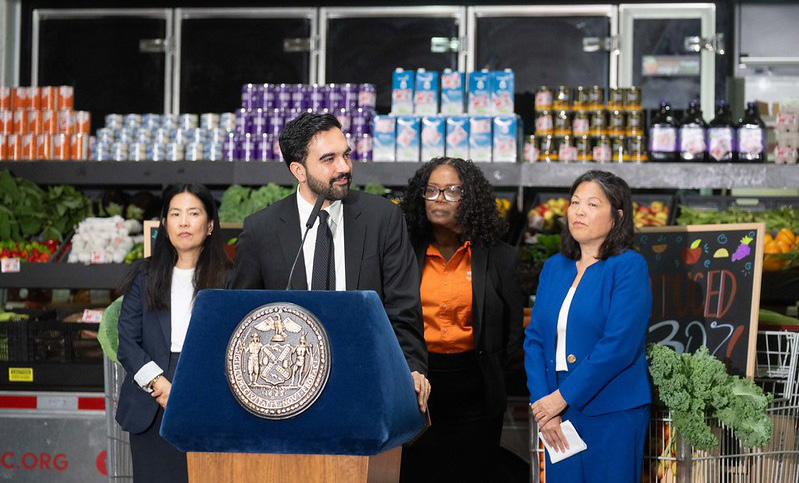
nology that allows for something called surveillance pricing — collecting personal data to charge some people more than others for the same carton of eggs, for the same gallon of milk. All of this leaves too many New Yorkers feeling like groceries are out of reach, and that is frankly unacceptable, which is why the city government is stepping in to make people’s lives more affordable.”
Deputy Mayor for Economic Justice
Julie Su acknowledged that while many of the factors that are driving up prices, specifically the ongoing Iran war and “erratic tariffs,” are beyond the city’s control, they remain determined to take action regarding food and jobs.
Specialized high schools
the state to repeal the Hecht-Calandra Act of 1972, which is the state law that requires the city to use the SHSAT test for admission for three of the eight specialized high schools: Stuyvesant High School, Brooklyn Tech, and Bronx Science.
There is also a state bill on the books, introduced by Senator Julia Salazar, that would repeal the Act as well.
“It has been very difficult because, as a locality, we’re either preempted by state law, or we’re preempted by mayoral control.
And so I have not been able to pass actual legislation,” said Williams at a roundtable about Black issues in City Hall on July 21, 2026. “The truth of the matter is that the test, to me, is a very clear example of how we at city public schools are failing our children. I don’t think that students should only be judged by a single test, [but] I do understand that if our students were more prepared to take the test, we would see better results.”
City Council Speaker Julie Menin added
“While we don’t control all the reasons that groceries are unaffordable, we are going to be ambitious and imaginative about what we can do,” said Su. “As we’ve also said many times, affordability is about both sides of the equation — bringing prices down and bringing up what workers get and the number of good jobs in this city. Today, we’re making it absolutely clear that these grocery stores will provide quality jobs, with families sustaining benefits and wages for the people stocking the shelves, ringing you up, and keeping the lights on.”
Meanwhile, a host of independent grocery stores throughout the city worry Mamdani’s initiative is “competition” that
that she is focused on providing more free test prep for young students, and expanding the Gifted & Talented programs in Black and Brown communities that work as a “pipeline” in many cases for these specialized high schools.
Currently, the city has the power under mayoral control of the schools to end the use of SHSAT for five specialized high schools. As of July 14, Mayor Zohran Mamdani said, at a press conference, that there’s more work to be done for young students, especially to address the racial inequities that exist across the whole system. He said there have been internal conversations with Chancellor Kamar Samuels, deputy
could put them out of business. However, Mamdani insists there’s enough market available that it shouldn’t overly affect local businesses or mom-and-pop shops.
“We are not looking to compete with bodegas or grocery stores when it comes to their ability to survive. What we’re looking to do is to provide affordability that is guaranteed to New Yorkers,” said Mamdani.
Mamdani also issued a request for proposals (RFPs) for qualified grocers or firms to serve as operators of one or more N.Y.C. Groceries stores. The selected operator will be responsible for day-to-day store operations, including merchandising, staffing, and adherence to strong labor practices.
chancellors, and the team at DOE on how to do that tangibly, but he did not commit to eliminating the test –– as he considered while campaigning.
“I will say that we know that a single test does not reflect the aptitude of students across the city. We know that Black and Latino students are excelling across the five boroughs, as are students in a wide variety of schools,” said Mamdani, who attended Bronx High School of Science. “We have to ensure that we’re doing everything we can to deliver for those students at the earliest ages.”
The council’s Black Steering Committee is hoping to meet with Mamdani and Samuels to discuss reforms, said Stevens.
Mayor Zohran Kwame Mamdani, Deputy Mayor for Economic Justice Julie Su, and New York City Economic Development Corporation (NYCEDC) announce that a core basket of everyday groceries will be 30% cheaper at five new municipal grocery stores. Brooklyn on Monday, July 27 2026. (Michael Appleton/Mayoral Photography Office)

Will the Liberty move up in the tight WNBA standings?
BY DERREL JOHNSON Special to the AmNews
The New York Liberty went into last night’s (Wednesday) match up against the Seattle Storm 18-13 and the WNBA’s No. 7 overall. They had won five of their last six, only losing to the defending champion Las Vegas Aces (104-99) on the road last Thursday. The top eight seeds of the league’s 15 teams advance to the postseason.
Star guard Sabrina Ionescu, who had a slow start to the season because of a left foot and ankle injury, and did not score over 20 points in her first eight games of the season, has averaged 21.6 points and 5.4 assists in her last 12 games heading into last night. Unfortunately, Ionescu’s college teammate, forward Satou Sabally, has not played since June 23 when she left the game against the Aces (an 87-76 win) due to a concussion.
Liberty head coach Chris DeMarco has had to navigate player injuries while maintaining high expectations for a squad that remains one of the top betting favorites to reach the finals in October.
The Liberty were fourth in the WNBA in scoring at 90 points per game when the league’s schedule tipped-off yesterday, and DeMarco contends the offense is still evolving.
“I think we all know, on the floor and on the bench, what we are looking for, which is just a quality shot,” he said after Monday’s 95-83 victory over the Seattle Storm at the Barclays Center.
“We’ve talked a lot in the last few weeks about going and trying to win games. We’re trying to win games. It doesn’t matter if we have a lead or we are down; we are not trying to protect it and slow it down.
“… Yes, we can respond to ad-
UPSHOT League announces inaugural season championship
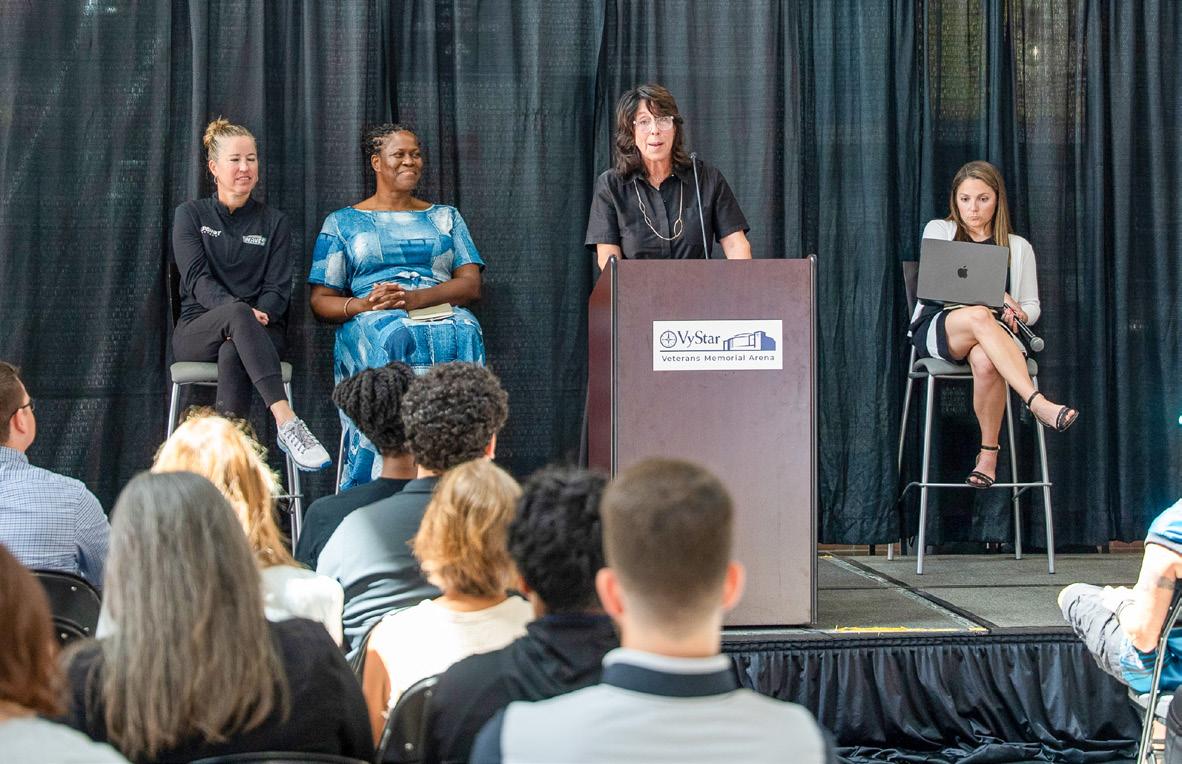
By LOIS ELFMAN
Special to the AmNews
“We launched UPSHOT with the clear belief that everyone deserves a shot to be their best,” said Donna Orender, co-founder and commissioner of the UPSHOT League, a basketball league that launched this summer with four teams — Greensboro Groove, Charlotte Crown, Jacksonville
Waves and Savannah Steel. “We believe that rising talent uplifts communities and that elite women’s basketball players deserve more opportunities.”
Taj McWilliams-Franklin, UPSHOT League’s vice president of basketball operations, noted that the players want opportunity. “Not only for the women that play, [but also] for our communities, for our coaches, for our partners, for ourselves to grow
In a controversial agreement between the United States and Russian governments, Griner was swapped for the infamous Russian arms dealer Viktor Bout, who was serving a 25-year sentence in U.S. federal prison. Before Griner’s confinement in Russia under

and get an opportunity to change the landscape of women’s professional sports,” said McWilliams-Franklin. Seventy percent of the games this season have been decided by 10 points or less. “For our championship, that is going to be important,” said McWilliams-Franklin.
The regular season will wrap up on August 23. “We are now entering the most consequential part of our inaugural season,” said Orender.
harsh conditions, the WNBA was a relative blip on the mainstream media’s radar.
versity,” the Liberty’s first-year coach continued, “and it’s not just a few players, it’s our whole team right now … we have great leadership in the huddles … they have the right messaging, the right leadership, and now that we’re kind of going through this together, we can feel it, like we’re okay. You can just tell.”
Ideally for the Liberty, moving up from seventh place to the top four would afford them home court advantage in the opening round of the playoffs. In the current standings, the seventh and eighth seeds would face the league’s two best teams: the Minnesota Lynx (25-6) and Aces (21-9).
The Liberty will host the Aces on Sunday afternoon, then travel to Indiana to play the Fever on Tuesday. The Liberty will host the Los Angeles Sparks at the Barclays Center a week from today.
“Every possession matters. Every game matters. Every result can change the road to Jacksonville.”
The inaugural UPSHOT League championship will be played on August 29 at the VyStar Veterans Memorial Arena in Jacksonville, Florida. The championship game will feature the two teams that finished atop the league’s standings. While the Waves have a commanding hold on first place and
Griner was a well-known athlete in the country, having been a three-time Russian National League champion (2015-17), including twice with the legendary Diana Taurasi as her teammate.
the Crown seem settled in second, the Groove and the Steel still have a chance to secure the second spot.
Many of the league’s players will be on hand for championship weekend even if their team isn’t in the final game. There will be events, including basketball clinics, fan experiences and panel discussions about the current world of women’s sports.
“The UPSHOT League MVP trophy will be named for the inimitable, great Ann Meyers Drysdale,” said Orender. The award, along with additional seasonal honors, will be presented during championship weekend.
Two players expressed their gratitude to UPSHOT. “[This league gives me the] opportunity to play back in the States so my family can come see me,” said Ariel Hearn, 32, who has also played with Athletes Unlimited. “[We’re] playing against great players with the goal of trying to get back to the W,” said Lindsey Pulliam, 27, who was drafted in 2021 by the Atlanta Dream.
The international incident garnered widespread global attention for the WNBA, a league that was still endeavoring to appeal to a broader fan base.
The WNBA is now steeped in the old public relations adage that all publicity is good publicity.
Donna Orender, co-founder and commissioner of the UPSHOT League. (UPSHOT League photo)
UPSHOT League players Lindsey Pulliam (l) and Ariel Hearn of the Jacksonville Waves.
New York Liberty guard Rebekah Gardner glides in for a layup in the Liberty’s 95-83 win on Monday at the Barclays Center versus the Seattle Storm. (New York Liberty photo)
Coco Gauff executive produces films spotlighting tennis history
By LOIS ELFMAN
Special to the AmNews
The Tennis Channel and the award-winning media company Religion of Sports are partnering with tennis champion Coco Gauff on two original docu-shorts that will be part of the series “Tennis Story.” Gauff’s company IROC will co-produce the films, which premiere later this month, and Vashni Korin, a Harlem Junior Tennis and Education Program (HJTEP) alumna, directs.
The first film will explore the history of fashion in tennis, looking at game-changing moments and their impact on culture.
“Tennis fashion is definitely in a Renaissance period right now,” said Korin. “This piece is told through a woman’s lens, highlighting how women have utilized their voice and their celebrity to bring attention to social justice moments.”
There will be mention of various bans female tennis players faced — from Gussie Moran, who caused a ruckus in 1949 for wearing a shorter skirt and lace-trimmed knickers at Wimbledon to Serena Williams wearing a black jumpsuit at the French Open. “I wanted to dig into the criticism that society has had on women’s bodies and show how far we’ve come,” said Korin. “I love how women are pushing boundaries.” Producer Chelsea Marotta noted there is a push-and-pull on athlete self-expression as athletes have adeptly challenged the system.

The second film spotlights former touring professional Zina Garrison. Garrison was a high-profile Black player on the pro circuit in the 1980s and 90s. Today, she is based in Houston, Texas, passionate about inspiring young people to take up tennis. Gauff has indicated that Garrison is one of her heroes.
“The piece on her is called ‘The Zina Effect,’” said Korin. “It follows her current life
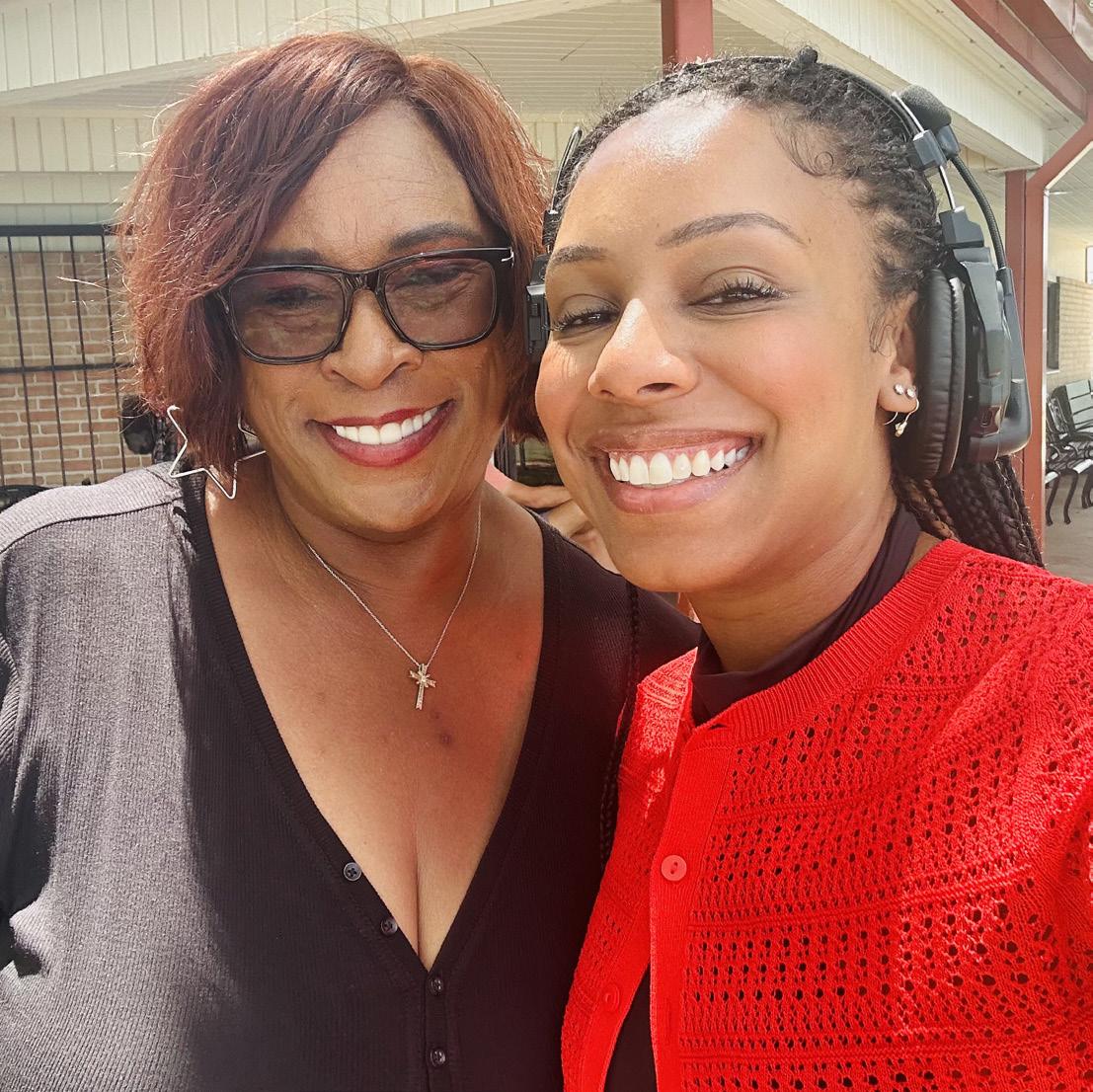
as she continues her work as a coach, mentoring students in Houston. It’s really a community-centered story: inner-city kids from Houston basically continuing her legacy.”
When Arthur Ashe passed away in 1993, his widow, Jeanne Moutoussamy-Ashe, told Garrison that she needed to continue his community work. At the time, Garrison was only 29, and it seemed a huge responsibili-
ty that she didn’t feel ready to take on, but she acquiesced.
“She’s not just a coach; she’s a mentor; she calls herself an auntie in a sense,” said Korin.
“She’s always there for her students. What was so compelling about her is how much she loves her community. … In a tennis world where Black representation isn’t as prominent…she’s fostered a support system.”
Senegal’s Moustapha Diakhaté impresses in PFL debut
By DERREL JOHNSON Special to the AmNews
Senegalese mixed martial arts competitor
Moustapha Diakhaté made his Professional Fighters League (PFL) debut on Friday at the UBS Arena in Elmont, N.Y., in spectacular fashion. Diakhaté (6-0-1) put the light heavyweight division on notice when he made short work of late replacement opponent Darryl Walker (2-1), winning halfway through the first round via technical knockout (TKO).
Fighting in the United States for the first time, the 6-4, 205-pound Diakhaté scored an early takedown. From there, he punished Walker and earned a stoppage at 2:35 of the first round.
“It was very difficult,” Diakhaté said regarding getting the bout. ”Six fighters said no. Thank you for my opponent, Darryl. He’s the best. He’s the man. He accepted this fight one or two days before the fight. I’m ready to be here at my home. New York is my home. New York has more Senegalese people.”
In the main event, Usman Nurmagomedov (22-0, 1NC) retained his PFL lightweight championship with a dominant first-round TKO of previously undefeated challenger Archie Colgan (13-1). Nurmagomedov now becomes the hottest free agent in MMA, be-

cause his contract with PFL has expired. With Most Valuable Promotions (MVP) and the PFL announcing a merger last week, there could be a bidding war for the services of the talented Russian. The promotion returns to-
morrow with the 14-fight PFL Charlotte.
After suffering his first defeat last summer in Queens to Shakur Stevenson, William Zepeda defeated Lamont Roach Jr. to win the vacant WBC lightweight championship.
Zepeda (33-1, 27 KOs) was relentless, throwing 884 punches over 12 championship rounds en route to a unanimous decision with scores of 117-111, 117-111, and 118-110. Roach Jr. (25-2-3, 10 KOs) had no answers for the Mexican, in a disappointing performance, after two consecutive draws against Gervonta Davis and Isaac Cruz in 2025.
“I am overjoyed with this victory; this is 20 years of hard work and sacrifice,” said the 30-year-old Zepeda. “I always dreamed of becoming a world champion and today, with my incredible team, we were able to achieve it. We were able to show that I can be an adaptable fighter, that I can box, and that I can meet any opponent. Right now, I am ready to rest and enjoy this victory with my family, and we’ll see what’s next for us.” In a packed month of combat sports action, the Ultimate Fighting Championship (UFC) returns to Philadelphia for the first time since March 2019 with UFC 330 on August 15. On the same night in Atlanta, Claressa Shields will move down in weight to challenge Kaye Scott for her WBA and WBC middleweight titles. A week later, Rolando Romero will defend his WBA welterweight championship against Brooklyn’s Teofimo Lopez Jr., who suffered a loss to Shakur Stevenson earlier this year in the light welterweight championship clash.
United States tennis star Coco Gauff waves to the crowd after losing a match against Karolina Muchova of the Czech Republic in their Semifinals Women’s Singles at the Wimbledon Tennis Championships in London last month. (AP Photo/Kirsty Wigglesworth)
Senegal’s Moustapha Diakhate (right) strikes Darryl Walker in their Professional Fighters League (PFL) match on Friday at UBS Arena in Elmont (Long Island), N.Y. (Professional Fighters League photo)
Tennis icon Zina Garrison (l) with “Tennis Story” director Vashni Korin. (Religion of Sports photo)
Sports
With John Harbaugh at the helm, the Giants start over again
By JAIME C. HARRIS
AmNews Sports Editor
When the Giants fired former head coach Brian Daboll (now the offensive coordinator for the Tennessee Titans) on Nov. 10 of last year, the team was 2-8 with no realistic path to the playoffs. They won just two more games and finished the 17-game NFL season with a record of 4-13. Overall, Daboll’s Giants tenure produced a record of 21-41-1, a .341 winning percentage. He led the team to one playoff appearance, going 9-7-1 in the 2022 campaign, earning a wildcard berth and one postseason victory — with the Giants defeating the Minnesota Vikings in a wildcard game before losing to the Philadelphia Eagles in the divisional round.
Now the Giants turn to John Harbaugh. The decision came from the franchise’s leadership: co-owner John Mara, his sons John Mara Jr. and Chris Mara, and general manager Joe Schoen. They concluded that a steady, proven winner was needed to reset the team’s navigational instruments.
The 63-year-old Harbaugh had been let go by the Baltimore Ravens after a remarkable 18-year term as their head coach during which he had the most regular season (180113) and postseason coaching wins in the


the media one week after the move.
While head coaching stability has been a pillar of the Ravens, Harbaugh is the Giants’ fifth head coach since 2018, including interim head coach Mike Kafka, who replaced Daboll for the remainder of last season. Harbaugh’s charge is to end the unenviable trend of losing and reconstruct the Giants into a perennial playoff contender.
A key component of that objective is wide receiver Malik Nabers. A 2024 first round pick (No. 6 overall) from LSU, Nabers flashed All-Pro potential as a rookie, amassing 109 receptions, 1,204 yards receiving, seven touchdowns, and a Pro Bowl spot. But he suffered a torn ACL and meniscus injury in his right knee last September, in Week 4, and was out for the rest of the season.
franchise’s history. He captured six AFC North division titles and one Super Bowl, beating his younger brother Jim, then the head coach of the San Francisco 49ers, 34-31 in the classic SB XLVII (47) in February 2013.
But it is winning just one Super Bowl that ultimately was a fundamental reason Ravens owner Steve Bisciotti fired Harbaugh. The Ravens have fallen short of returning to the
Super Bowl with rosters in recent years that arguably have been the best in the NFL, spotlighted by quarterback Lamar Jackson, a twotime NFL MVP (2019, 2023), MVP runner-up (2025) and three-time First Team All-Pro (2019, 2023, 2024).
“I just hope you respect me enough to know that 100 percent my instincts told me that this was the time,” Bisciotti said, speaking with
He has been carefully working his way back at the Giants training camp being held in Sulphur Springs, West Virginia.
“I’d say it’s part of the process,” responded Harbaugh when asked about Nabers sitting out last Friday’s session. “He’s worked real hard, he’s made a lot of progress, and that’s what he decided to do today.”
The Giants open their preseason schedule on August 15 (1:00 p.m) at MetLife Stadium versus the Minnesota Vikings.
Political and social issues bring the WNBA to media forefront
By JAIME C. HARRIS
AmNews Sports Editor
The WNBA and its players are making headlines as the subjects of social and cultural issues than the stellar performances of its most notable teams and superstars. The Indiana Fever’s point guard Caitlin Clark, a supremely gifted offensive talent and the world’s most popular women’s player, has been a weapon of the country’s culture wars since she entered the league as the No. 1 overall pick in 2024, after a historic college career at the University of Iowa.
A plethora of right-wing activists, including numerous members of the media, has portrayed Clark as a victim of so-called reverse discrimination, an alleged target of bias and jealousy from her LGBTQ basketball peers, because, as some contend, she’s a wholesome, Midwestern, heterosexual white woman who drives the league’s television ratings and revenue. There is no denying Clark has been a ratings and attendance magnet and by extension an economic force multiplier.
Meanwhile, Clark’s Fever teammate, Sophie Cunningham, has found herself at the center of a national debate about transgender girls
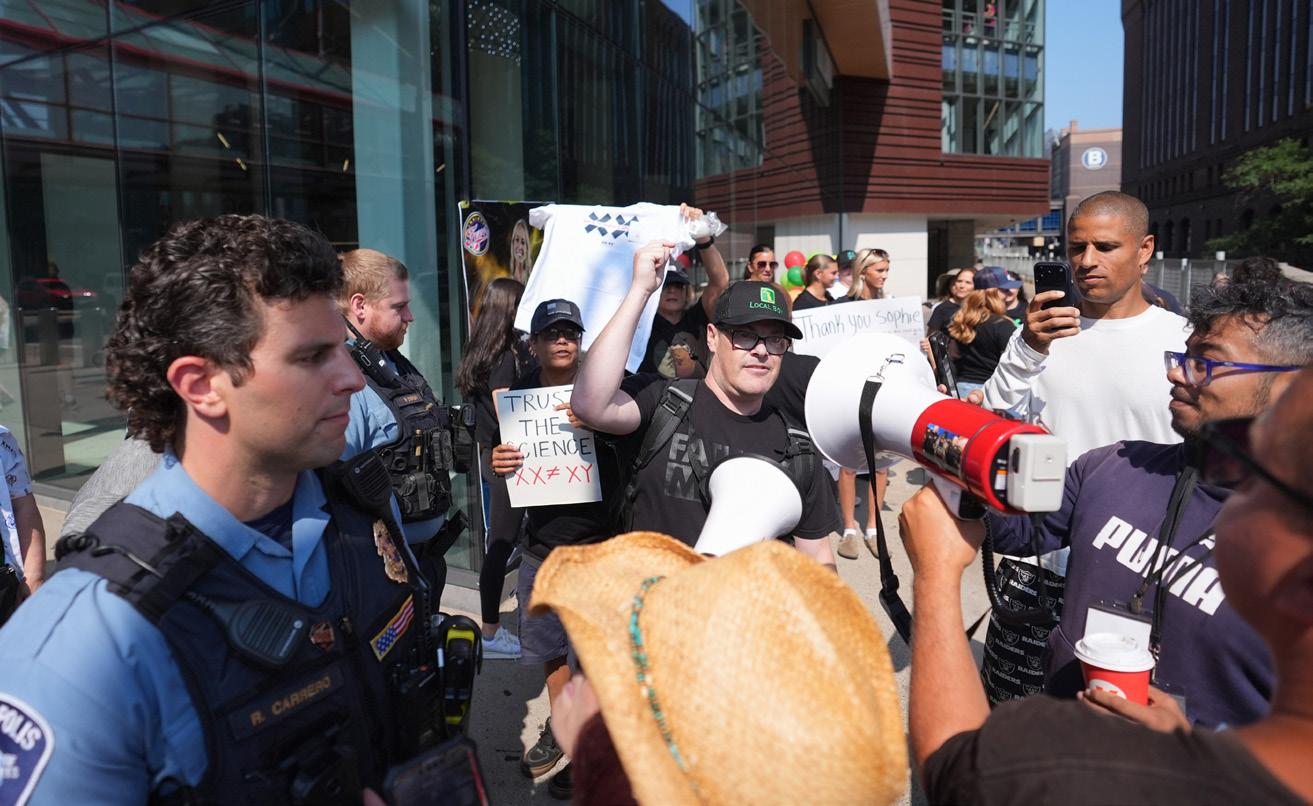
and women competing in women’s sports.
In a mid-July interview with ESPN, Cunningham expressed her opposition to transgender athletes participating in women’s sports, positing they have an unfair physical advantage. Her position on the topic, which for the past few years has been a wedge issue in both local and national political elections, has sparked protests inside and outside of arenas where the Fever have played. Anti- and pro-Cun-
ningham factions have been equally fervent. Brittney Griner, one of the greatest players in women’s basketball history and a threetime Olympic gold medalist, was detained in Russia for 293 days, from Feb. 17 to Dec. 8, 2022, after an airport check near Moscow found her in possession of less than a gram of cannabis oil in vape cartridges. She subsequently became a pawn in the geopolitical machinations of two global superpowers.


Carlson)