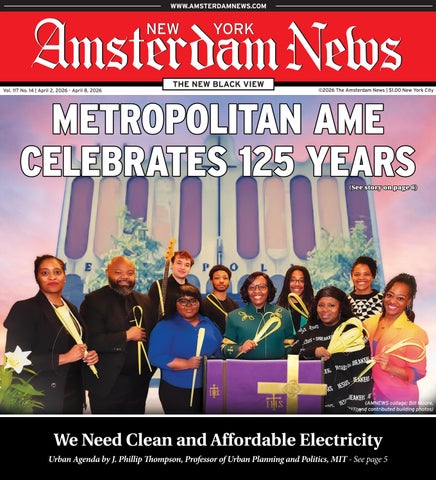

METROPOLITAN AME CELEBRATES 125 YEARS
(AMNEWS collage; Bill Moore, and contributed building photos)
USPS 382-600/ISSN#00287121
2340 Frederick Douglass Boulevard
New York, New York 10027
(212) 932-7400 / FAX (212) 222-3842
DIRECTORY
EDITORIAL
Executive Editor – Madison J. Gray Madison.Gray@AmsterdamNews.com
Managing Editor – Kristin Fayne-Mulroy KFM@AmsterdamNews.com
Digital Editor - Josh Barker
Josh.Barker@AmsterdamNews.com
Editor at Large – Damaso Reyes Damaso.Reyes@AmsterdamNews.com
STAFF WRITERS
Karen Juanita Carrillo
Karen.Carrillo@AmsterdamNews.com
Shannon Chaffers
Shannon.Chaffers@AmsterdamNews.com
Ariama C. Long Ariama.Long@AmsterdamNews.com
Tandy Lau Tandy.Lau@AmsterdamNews.com
DIGITAL, BRANDED CONTENT & HYBRID ADVERTISING MANAGER
Ali Milliner (347) 350-4316 Ali.Milliner@AmsterdamNews.com
DISPLAY & DIGITAL ADVERTISING CONSULTANT
William “Bill” Atkins (212) 932-7429 William.Atkins@AmsterdamNews.com
LEGAL, LLC & CLASSIFED ADVERTISING
Brian Lawrence (617) 704-3735 Brian.Lawrence@AmsterdamNews.com
CIRCULATION / SUBSCRIPTION
Benita Darby (212) 932-7453 Benita.Darby@AmsterdamNews.com
The AmsterdamNewsassumes no responsibility for the return of unsolicited manuscripts or photographs. Photographs and manuscripts become the property of The Amsterdam News. Published weekly. Periodicals Class postage paid at New York, N.Y. POSTMASTER: Send address corrections to NYAmsterdamNews,2340 Frederick Douglass Blvd., New York, NY 10027.
MAIL SUBSCRIPTIONS INFORMATION
NYS Black Legislative Task Force works to secure $30M for Black and Brown organizations
By ARIAMA C. LONG Amsterdam News Staff
Leaders of the New York State Black Legislative Task Force report they were able to secure another year of funding for Black-run organizations in underserved communities throughout the state.
In the One House Budget for fiscal year 2026-2027, the task force has $30 million set aside for more than 200 small nonprofits and organizations that work in crisis intervention, housing, economic development, workforce development, healthcare, education, and civic engagement.
The final approval for the budget bills was expected April 1, however multiple outlets have reported that it will likely be later in the week because of disagreements over climate law rollbacks and a tax hike on the rich.
“We’re not going to tolerate this money coming out…it’s not even an option for us. And the truth is that I don’t even have to speak like that because our leadership showed how important it was for them because they put it in there. The governor voted on it last year,” said Assemblymember Chantel Jackson, the chair of the task force, about ongoing budget talks. “But I’m ready to fight though. I ain’t playing about this.”
Jackson said it was a little harder to get the funding in the budget bill last year because it was the first time the task force was requesting it. The initial request was for $50 million,
before Gov. Kathy Hochul signed off on the agreed upon $30 million. Last year, the task force also hosted a statewide listening tour to identify local community needs.
“We were in Long Island, Buffalo, Syracuse, Albany, Westchester. We went to all five boroughs…sometimes people think that it’s just New York City, but there are under-
served and specifically Black New Yorkers across this great state,” said Assemblymember Landon Dais. “And this task force really did something positive and we look forward to doing it again in this year’s budget and hoping that the governor and the speaker and majority leader will sign off on it again.”
Mamdani administration’s first Black deputy mayor talks reforming public safety
By TANDY LAU Amsterdam News Staff
Renita Francois calls her recent appointment as deputy mayor of community safety a “homecoming,” but her return to city politics remains far from the same old song and dance. The former de Blasio administration staffer will now shape and deliver Mayor Zohran Mamdani’s ambitious campaign pledge to shift the city away from defaulting to police on issues like mental health calls and gun violence prevention through the city’s Office of Community Safety, which the mayor hopes to make a full department.
“I was working on neighborhood safety in NYCHA communities in the de Blasio administration for seven years,” said Francois over the phone. “I’ve been a frontline social service worker working on Section 8 programs [and] I’ve been in Brooklyn family court working with the youth. I’m really excited to bring all that experience full circle here to help build a long-lasting and sustainable vision for community safety for the city.”
On March 19, Mamdani handpicked Francois, the former executive director
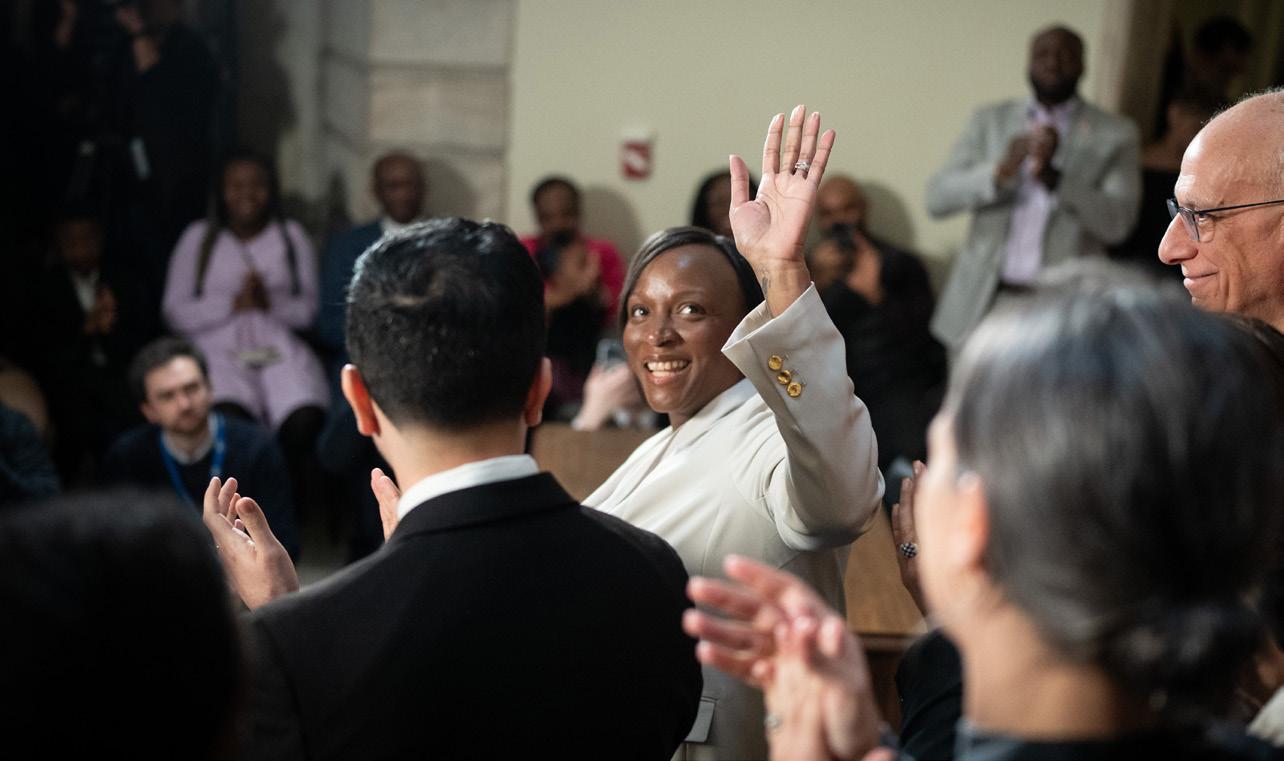
New York City Mayor Zohran Mamdani appoints Renita Francois as deputy mayor for community safety and signs Executive Order to create first-ever Mayor’s Office of Community Safety at City Hall on Thursday, March 19, 2026. (Michael Appleton/ Mayoral Photography Office)
of the Mayor’s Action Plan for Neighborhood Safety under de Blasio, while establishing the Office of Community Safety. She becomes the administration’s first Black deputy mayor after most recently serving as chief strategy officer and chief program officer at the nonprofit Beyond Impact. A commissioner who directly answers to Francois will lead the Office of Community Safety,
which stems from Mamdani’s comprehensive Department of Community Safety plan that was unveiled last spring.
Disability rights advocates have long criticized the city’s B-HEARD pilot for deploying police to nonviolent mental health calls, given that the program exists to divert those calls to civilian responders. Mamdani’s De-
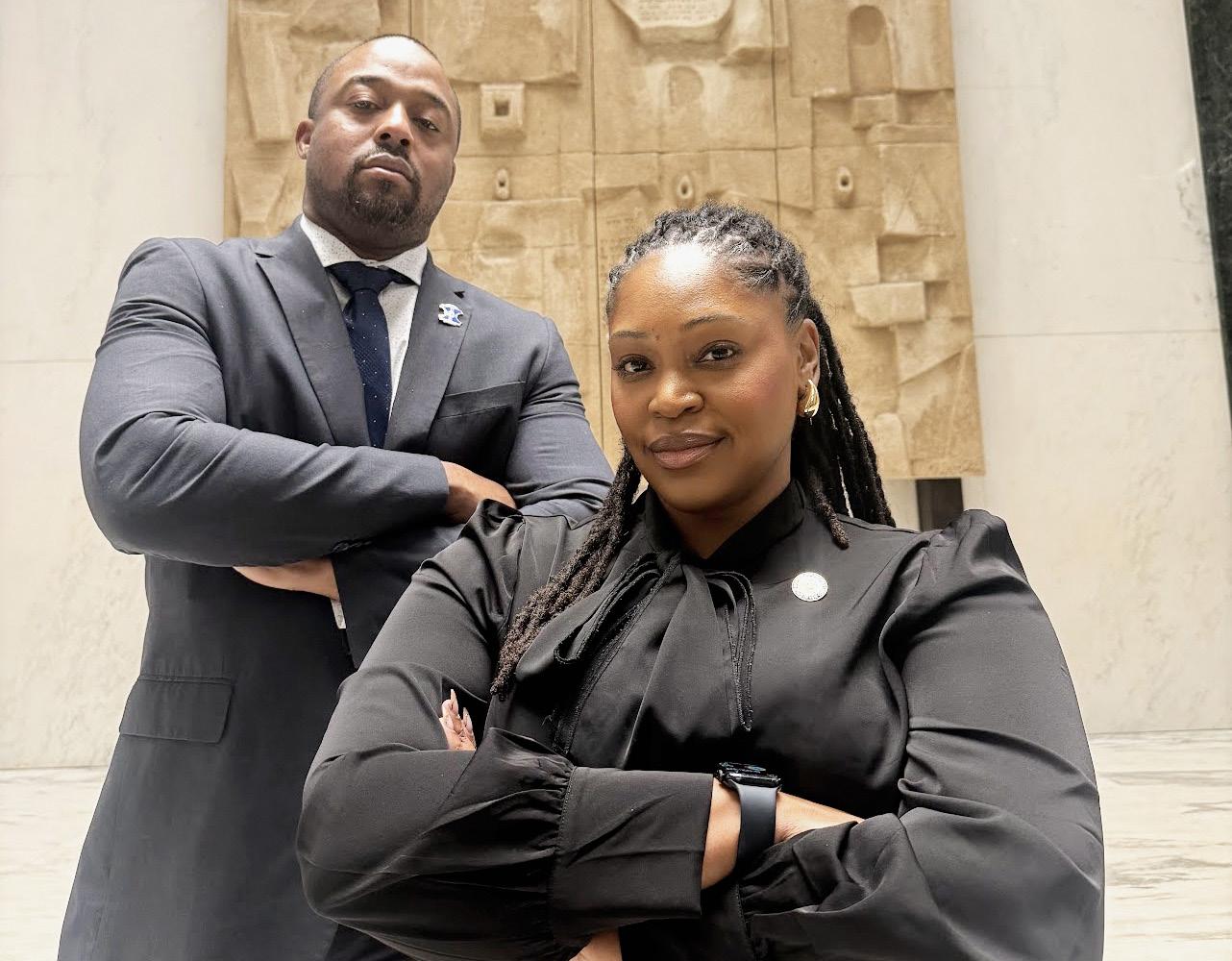
Assemblymember Landon Dais (left) and Assemblymember Chantel Jackson, the Black Task Force chair (right). (Photo contributed by Assemblymember Jackson’s office)
Rep. Hakeem Jeffries joins frustration over continuing airport chaos as long lines persist
By ARIAMA C. LONG Amsterdam News Staff
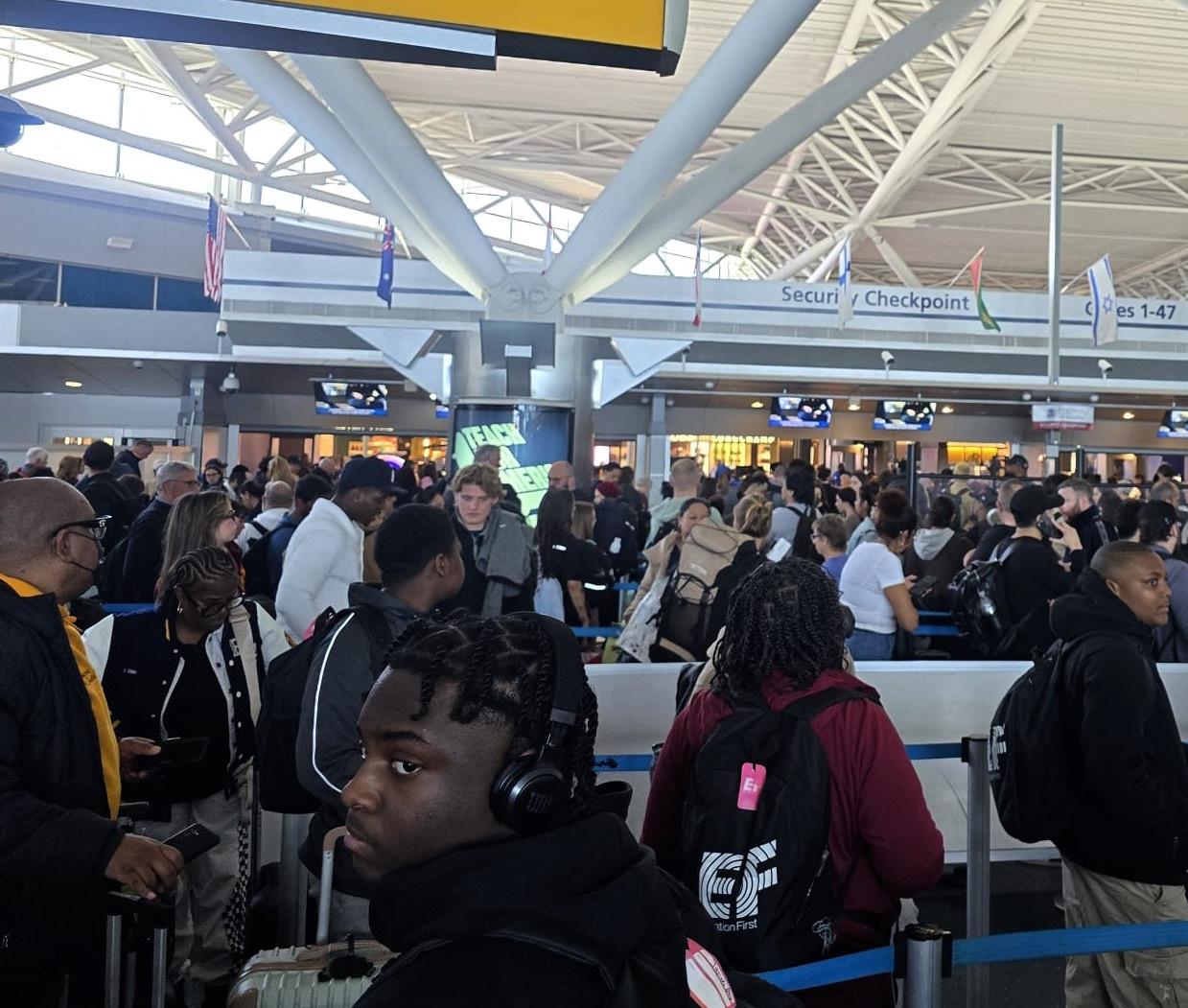
Incredibly long lines at John F. Kennedy International Airport and LaGuardia Airport continue to create travel snarls as Congress took off for a two-week recess this week, amid a partial government shutdown causing the chaos. Meanwhile, unions and elected officials are advocating for holding Immigration and Customs Enforcement (ICE) accountable and getting Transportation Security Administration (TSA) workers paid.
Lawmakers, including House Minority Leader Hakeem Jeffries, have been pushing for a bipartisan Senate deal that would have reopened the TSA, as well as the Federal Emergency Management Agency and the Coast Guard, but House Republicans rejected it on March 27. Jeffries blamed Republicans for the continued shutdown and airport chaos.
“Mr. Speaker, we believe that immigration enforcement in this country should be fair, just, and humane. That’s not what’s happening right now. ICE is out of control,” Jeffries said in an impassioned speech on the House floor. “The American people know it, which is why changes need to be made that are bold,
meaningful, dramatic, transformational, and common sense at the same period of time. Instead, Republicans have chosen to double- and triple-down on their extremism, on their brutality, and on their violence that has been unleashed on everyday Americans all across the country.”
Jeffries said that the legislation is categorically not about defunding ICE since the agency received $75 billion, a “$65 billion slush fund” for U.S. Customs and Border Protection (CBP), and $165 billion for the Department of Homeland Security (DHS) overall in the passage of Trump’s tax bill. He added that the same bill defunded Medicaid for millions of Americans, and made cuts to nutritional assistance for children, seniors, and veterans.
“[Speaker] Mike Johnson has chosen to say no to a bipartisan bill so he could say yes to continuing to force TSA agents to work without pay,” said Jeffries. “Mike Johnson has said no to a bipartisan bill so he can say yes to continuing to inconvenience millions of the American people across the country. Mike Johnson has said no to a bipartisan bill so House Republicans could say yes to chaos at airports all across the country. Mike Johnson has said no to a bipartisan bill
New report outlines better non-police practices for dealing with mental health crises as NYC makes changes
By TANDY LAU Amsterdam News staff
In 2023, Human Rights Watch reported its research on “rights-respecting” practices for addressing mental health calls in light of then-Mayor Eric Adams’ directive to employ involuntary removals. The findings broke down how Toronto’s Gerstein Center Crisis Centre provided an alternative blueprint for how local governments could properly remove police from responses while complying with the United Nations Convention on the Rights of Persons with Disabilities (CRPD).
On March 30, the international watchdog released a follow-up in collaboration with New York Lawyers for the Public Interest (NYLPI) and the Center for Racial and Disability Justice at UCLA Law School as Adams’ successor Mayor Zohran Mamdani moves forward with retooling the mental health call diversion pilot, B-HEARD.
Titled “Self-Determination is the Pathway to Liberation,” the new report examines more than 150 existing non-police programs across the country and points
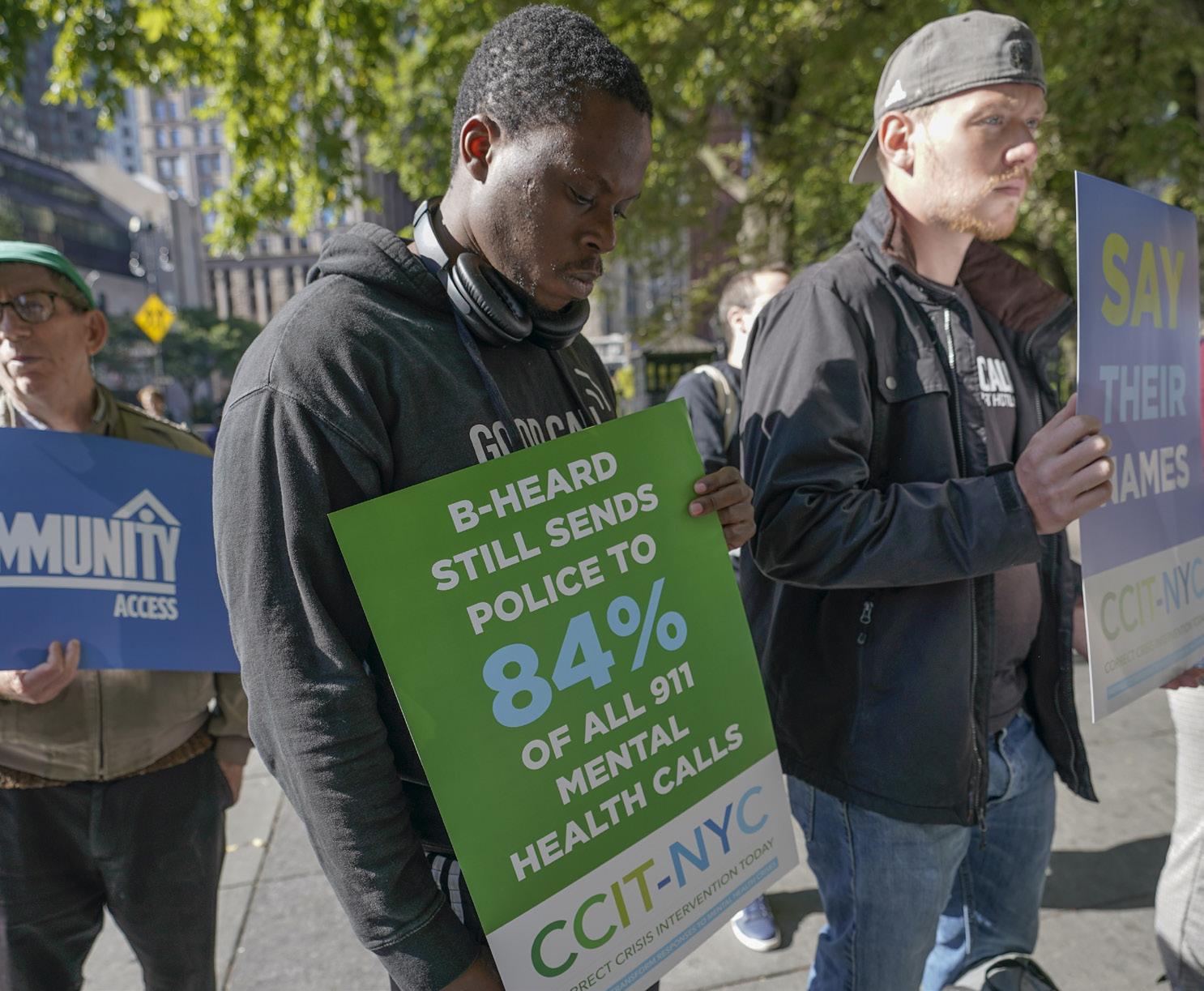
to eight for implementing certain best practices. William Juhn, a senior staff attorney for NYLPI’s Disability Justice Program who helped author the research, says no organization is perfect. But the eight specifically-identified programs check off key recommendations.
“We basically talk about 12 different categories that we think should be part of any ‘rights-based’ crisis response system,” said Juhn. “Which includes [a] consent-centered approach, placing people experiencing mental health crises at the center of the decision-making. So no involuntary services.”
For example, the Black-led Mental Health First in Oakland, California, opposes forced treatment and requires consent before providing any services. For participants who ask to go to the hospital, the program often accompanies them to help them with law enforcement and medical professional interactions. The report also underscores increased risk Black people face during mental health responses. Jordyn Jensen, communications manager at the Center See MENTAL HEALTH on page 25
See JEFFRIES on page 25
Long waiting times at John F. Kennedy International Airport in Queens, N.Y., on Monday, March 30, 2026. (Ariama C. Long photo)
Activists participate in a rally to call for peer-led, non-police response to mental health crisis calls in New York. (Mary Altaffer/AP photo)
2026 Black Census Project invites participants to imagine and build a functional future
By KAREN JUANITA CARRILLO Amsterdam News Staff
Black communities today face high daily expenses, threats from far-right politicians, and a federal government that is openly working to increase inequality. With the launch of its third Black Census Project, the advocacy group Black Futures Lab wants to document how Black people are handling these issues. For this census, it asks Black people how the country could improve.
For this year’s project, launched on March 30, Black Futures Lab wants to get more Black people across the country to participate than ever before. It builds on two previous censuses, conducted in 2018 and 2022. “We’ve done it now twice,” said project leader Kristin Powell in an interview. “In 2018, …we reached 30,000 Black people across the country. … In 2022, [we] reached 211,000 Black people. And our goal this time is to reach 300,000.”
Powell acknowledged that “Black people don’t want to share information for all the reasons that we know,” she said. “We’ve been harmed, we’ve been lied to, we’ve been manipulated, and our data has been used against us, right? In 2018, we had that hill to climb, where we’re coming in, asking people … if we can listen to them. But also, we’ve had a lot of promises made, and nothing comes of it, so in 2018, it was about building with Black people and making sure that they understood that this is our data, this is not being sold to people, this is not being used for…some capitalistic gain. This is about what do we want, and how do we push an agenda together around that?”
In 2018, the Black Census Project was the impetus for an agenda that prioritized criminal justice reform, healthcare access, living-wage jobs, voting rights, and environmental justice. In 2022, Black Census respondents emphasized economic issues.

“The economy, the economy, and the economy” was the dominant theme, Powell said. “We had a lot more people talking about their pocketbooks, and when they talked about affordability, they were really talking about three things: I can’t afford housing, I can’t afford childcare, I can’t afford healthcare. There was also some talk about student loan debt, but that was centered around a certain demographic — millennials like myself who are kind of drowning in student loan debt. The first three were universal, across all age groups.”
The Black Census Project is not affiliated with the federal census that is conducted every 10 years. In this anonymous survey, the Black Futures Lab is trying to get a reading on the needs of Black people from different regions, age groups, and backgrounds, and to ask their opinions about how they are being governed.
Economic inequality has long shaped Black life in the United States, but Powell noted that in recent years, price spikes have been unprecedented. In cities like Valdosta, Georgia, she said, rents jumped from $800 to $1,500 in a single year, even though the aver-
age income remained under $40,000. “Those kinds of increases are new, and people are feeling them everywhere,” she said.
The 2022 census also showed that Black communities have a mistrust of major institutions such as banks, police departments, and the federal government, yet many Black individuals have conservative views about taxation, corporations, and small businesses because they believe any increase in taxes might affect them personally, Powell said.
Instead of re-asking questions the organization already feels have been answered, about policing, schools, or economic stress, this year’s survey focuses heavily on imagination.
“Our last two surveys assumed we had some semblance of a democracy where elected officials believed they worked for us,” Powell said. “We’re not currently in that system.
“Because of the system that we’re currently in, where we have an escalation of fascist policies, we’re using this next iteration as a little bit of an imagination project to get Black people to envision what a system of government should look like that would work for all of us.”
Participants are invited to describe what a system that truly works for its citizens would look like — and how it might be built. The organization does not publicly release the raw data from its findings, but will share the information in reports, press briefings, community road shows, and an interactive dashboard that it will post on the Black Futures Lab website. A preliminary analysis of the Black Census Project’s findings is expected to be completed by late summer 2026.
People of African descent from across the U.S. are urged to take part, including immigrants, the formerly incarcerated, and those whose voices are usually not included in public data collections. Most survey takers will be able to complete it online at https://blackcensusproject.org/, but in-person surveys — the result of doorknocking, community event pop-ups, and partnerships with grassroots organizations — will also take place. The survey is available in at least six languages: English, Spanish, Haitian Creole, Portuguese, Amharic, and Yoruba. For a hard (paper) copy, send a request by email to holla@blackfutures.org.
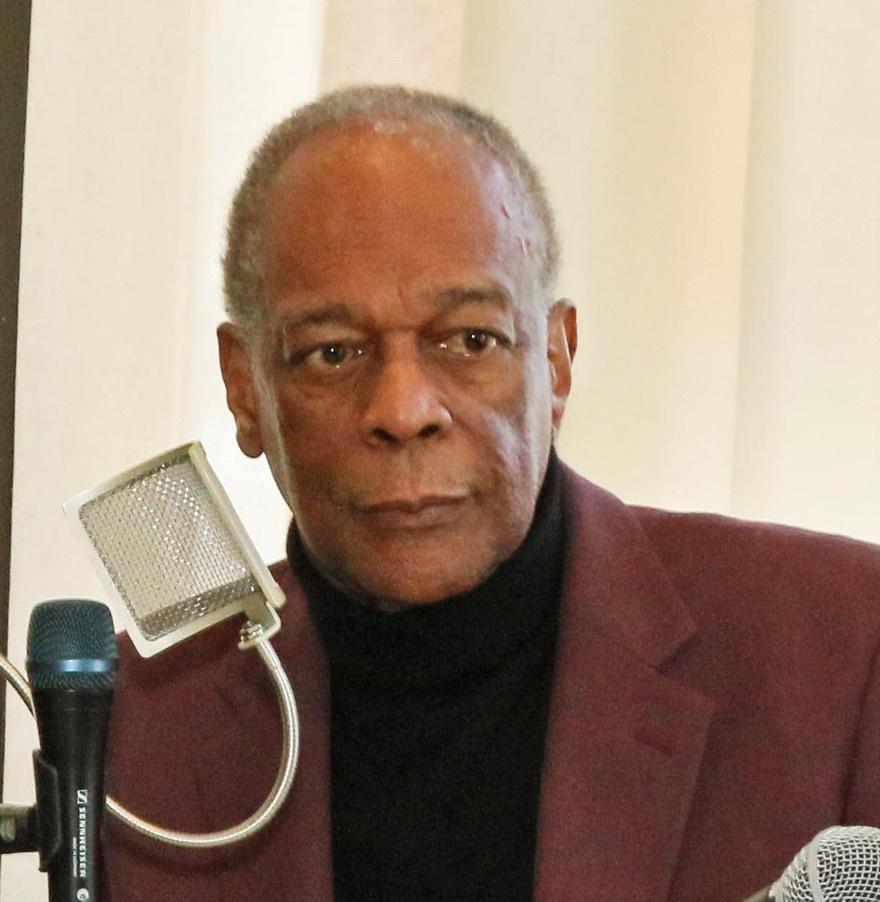
Remembering radio griot Bob Law, a fearless voice for the people
By HERB BOYD Special to the AMNEWS
When I heard that Bob Law had joined the ancestors on March 30 at the age of 86, I could still hear his melodious voice asking me a question and then answering it for me. He was a radio commentator who knew more about the subject than his invited guest, and he could elaborate on it extensively. That was his style, no matter the station or format, and for more than 50 years, he never bit his tongue and championed a host of issues that other broadcasters refused to touch. Last year was my last appearance on his show, which was aired on the Streamyard platform. We discussed the Trump administration and the
need for African Americans not to be intimidated by his “arrogance of power.”
Bob certainly wasn’t, nor was he fearful of anyone else in the streets or on the other side of the microphone. Several of his comrades have offered their impressions of his passing, noting that he was a pioneer and a giant in Black radio, both literally and figuratively, standing at least 6-foot-6 inches.
“Bob Law was a pioneer in National Black Talk radio,” said Rev. Al Sharpton. “His unparalleled NightTalk show was the political grapevine of Black America. He was one of a kind, a true representative and voice of Black radio, and he gave me my first radio program when I was 16. He, along with Hank Spann, introduced me to James Brown. My personal rela-
tionship with him and his queen, Muntu, ran deep and strong for over 50 years. I will miss him dearly.”
Rennie Bishop, former program director of New York’s WWRL radio station and Bob’s producer, said that “He stood at the mic like a lighthouse, unblinking in the storm. A voice for the people, a spine for the truth. Fearless in witness, relentless in love for his community. An icon, not because he sought it, but because he earned it.” In a lengthy encomium, Todd Steven Burroughs linked Law with Imhotep Gary Byrd and the late Gil Noble, a veritable triumvirate of sonic boom on the airwaves. “All three seem to be addressing the same audience — one seeking the Black
Advertisements for this year’s third Black Census Project. (Black Futures Lab)
Harlem’s Yasmin Hurston Cornelius says becoming an NFL mom birthed something special
Black
New Yorker
By JASON PONTEROTTO
Special to the AmNews
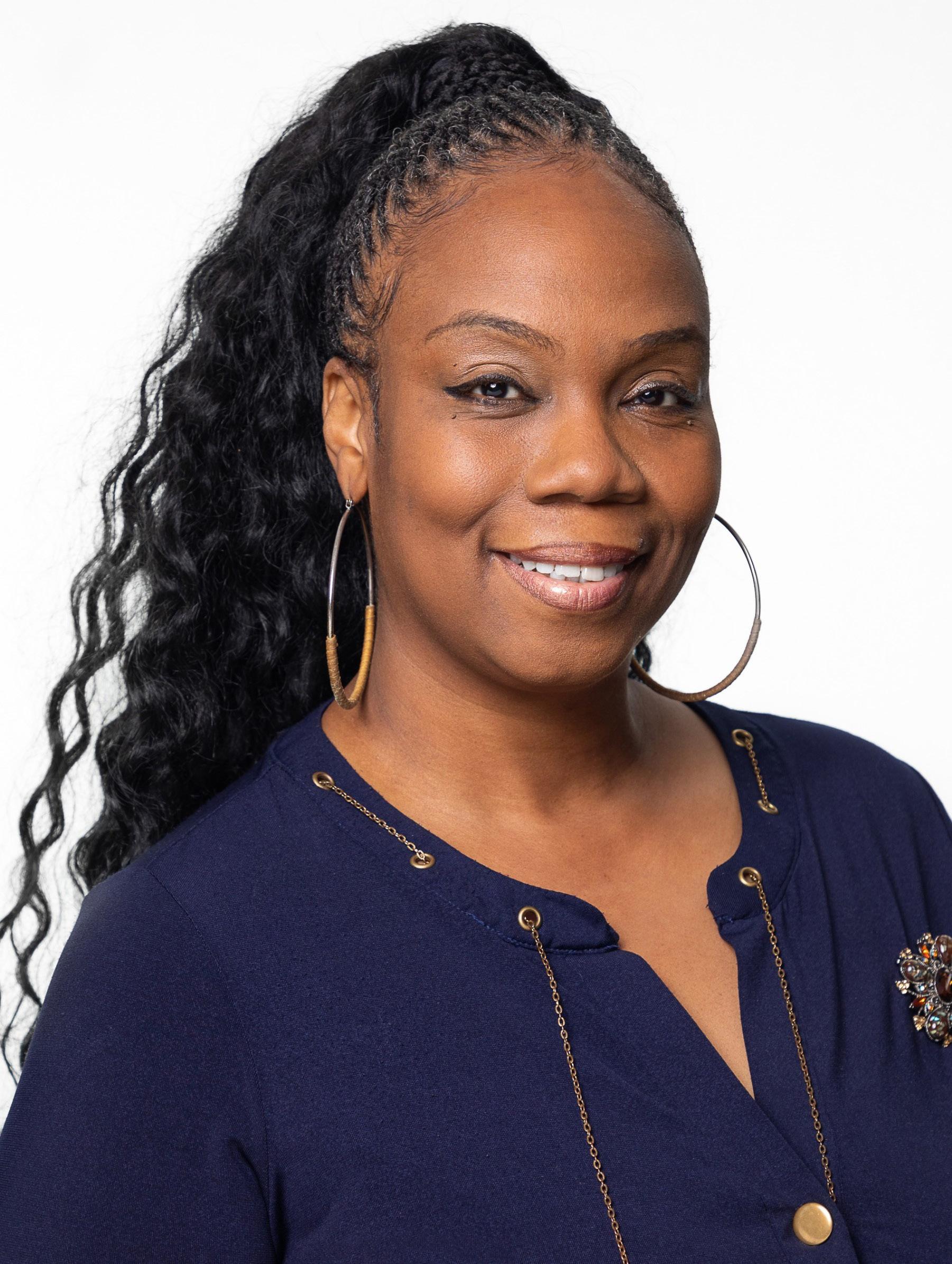
It was a special moment in April 2025 for longtime Harlem community leader Yasmin Hurston Cornelius: Her son, Ajani Cornelius, was about to receive the call from the Dallas Cowboys that he was drafted. The family had rented a house and had around 75 family members and friends all waiting for the call during the three-day NFL Draft. She was crying tears of joy.
“It’s like childbirth,” Cornelius said. “All the pain and anguish that happened before the child — once that baby came, you forget everything, and you’re just happy.”
Cornelius, 54, now runs 2 Sports Moms, a nonprofit she co-founded with lifelong friend Dr. Sabratha Thomas. The organization provides support resources for student-athletes and their families. They are
celebrating their first anniversary this week.
Advocacy has been central to Cornelius’s work throughout her life. In all of her experiences, she said the common thread she realized is that people don’t need only access but guidance as well.
“A lot of times, people have so much access to opportunities, but they don’t always know how to understand or how to support or how to navigate the system to get those opportunities, and that’s where the guessing comes,” Cornelius said.
In Harlem and beyond, Cornelius has held leadership roles with the NAACP; worked at different levels of city government, including the New York State Assembly; served as district manager for Community Board (CB) 10; and held senior titles with real estate firms. She has also hosted and shows with radio stations WHCR and WWRL. She See BNY on page 30
THE URBAN AGENDA
J. Phillip Thompson, Prof. of Urban Planning and Politics, MIT
We Need Clean and Affordable Electricity
Governor Hochul has proposed delaying implementation of the 2019 Climate Leadership and Community Protection Act for four years; it’s already two years behind. Delay puts-off implementing the state’s “cap and invest” program that would fine out-of-compliance polluters and generate billions to help residents reduce energy consumption, transition to cheaper clean energy, and assist the neediest families afford utility bills.
The Governor insists that enforcing emission regulations right now will cost residents too much money; not mentioned is that electricity costs are going through the roof regardless of clean energy mandates. Average electric bills are expected to increase by 50-90% over the next 15-20 years because the electrical grid is old and needs to be upgraded; because climate change is causing more frequent heat spikes that increase demand for electricity to cool buildings; and, because of huge electricity and transmission needs for AI data centers and micro-chip manufacturing.
A big question is who can, and who can’t, afford to pay for upgrading the grid and new energy generation? The cost of electricity has already been rising rapidly. In New York City average electric bills rose over 45% from 2019 to 2024. Last summer average summer electric bills rose by nearly 10%, up to $747 per household. These energy burdens are not equitable. Low-income, especially Black and Latino, households tend to live in older and more poorly insulated buildings and pay more than others per square foot for heating and cooling. It’s no wonder that many can’t afford to keep their lights on.
Con Ed disconnected 88,000 households in New York City and Westchester for non-payment in the first half of 2025 alone; this year will be worse. Without a dramatically new and accelerated approach, electricity will become entirely unaffordable for increasing numbers of New Yorkers.
What can the State and City do to keep down the cost of electricity? Lots of things. They can help residents use less electricity by aggressively funding programs to retrofit drafty old buildings so that it costs less to heat and cool them. They can use public land to build industrial-sized geothermal plants--using constant underground temperature (around 50 degrees) for heating in the winter and cooling in the summer. They can ramp up installing solar panels on rooftops all over. Ironically, wealthy households are more likely to do all these things for their own properties and avoid rising electricity fees, leaving lower-income people to pay for upgrading the grid.
The State and City could take additional quick actions to bring down electricity costs. New York City already subsidizes big batteries for large manufacturers so that they can
purchase electricity during off-peak hours (at night) when prices for electricity are far cheaper. During the day, the companies draw electricity from the batteries which both eases pressure on the grid and saves the companies money. Why not do the same thing for low-income communities?
Government could also help organize communities to get paid by utilities for better managing their collective use of electricity. When large numbers of residents install “smart” internet-connected thermostats that allow utilities to raise the temperature in their building a few degrees during peak hours on a hot day, it reduces demand for electricity and the utility’s need to bring online outdated, dirty, and expensive power plants just to avoid blackouts. Such community-utility compacts are called “Virtual Power Plants” (VPPs) because they can eliminate the need for additional actual power plants. Utilities will pay ratepayers for VPP compacts because it saves money, maintaining backup power plants costs about $500 million/year in New York City alone. Seeing a business opportunity, Google, which manufactures a type of smart thermostat, is one of several companies setting up VPPs among their own customers. The State and City could help residents negotiate good transparent deals with these private VPPs. Even better, government could help set up community-owned VPPs that don’t have to share benefits with private company investors.
VPPs can also give the grid some needed breathing space, spreading the cost for grid upgrading over a longer period. Although grid operators are warning that the grid is nearly “at capacity,” this is only the case on exceptionally hot and cold days. These peak periods average less than a few days per year, the rest of the time energy demand takes up far less of the grid’s capacity. VPPs reduce the risk of grid overload (blackouts) during these peak periods and mitigate the capacity crisis.
While New York is moving more quickly than many other states on clean energy, this is a very low bar. Clean energy programs are moving too slowly to hold down escalating electric bills. A new clean energy infrastructure will cost money, but it will cost less than new gas and nuclear power plants over time. Moreover, it’s hard to imagine a better investment for worker pension funds than clean energy programs that reduce energy consumption, purchase energy when it’s cheaper, and enable the use of nature (sunlight, wind, or the inner Earth) to bring down energy costs. On top of that, a vigorous clean energy transition program would create an estimated 300,000 good blue-collar union jobs in the state while reducing billions in healthcare costs from respiratory illnesses like asthma. Green jobs can be a way out of poverty for lots of young people. Clean energy creates hope for the future. Delay kills it.
Yasmin Hurston Cornelius, longtime Harlem community leader and mom to Dallas Cowboys’ Ajani Cornelius, runs 2 Sports Moms, advocacy nonprofit for parents of studentathletes. (Courtesy Yasmin Hurston Cornelius)
Knowing the history, keeping the faith: Harlem’s Metropolitan AME plans journal to chronicle its 125-year life and ministry

By LLOYD B. DAVIS Special to the AmNews
The record of a church’s history after 125 years is something complex with many stories to tell about African Americans in New York, especially if it is Harlem’s Metropolitan AME Church. But leaders of the church are doing just that as they prepare to celebrate the milestone, remembering its important place in the community.
“This anniversary is not only a celebration of our past, but a recommitment to our future and continued commitment to our community,” said Rev. Dr. Linda C. Hill, pastor of Metropolitan AME Church, who has held that position since 2021. She says that church leaders are planning to construct a journal that highlights the church’s rich history and legacy. “For 125 years, God has sustained us, and we remain dedicated to sharing the love of Jesus Christ through effective preaching, teaching, and outreach to all people.”
The celebratory theme for the anniversary quotes biblical scripture: “Following the Charge, Running the Race, Keeping the Faith.”
Journaling a history
The print and digital version of the journal is planned within the coming months to coincide with the 125th anniversary. But even before the journal is released, public information already available about the church is a journey through history, recounting its relationship with New York City.
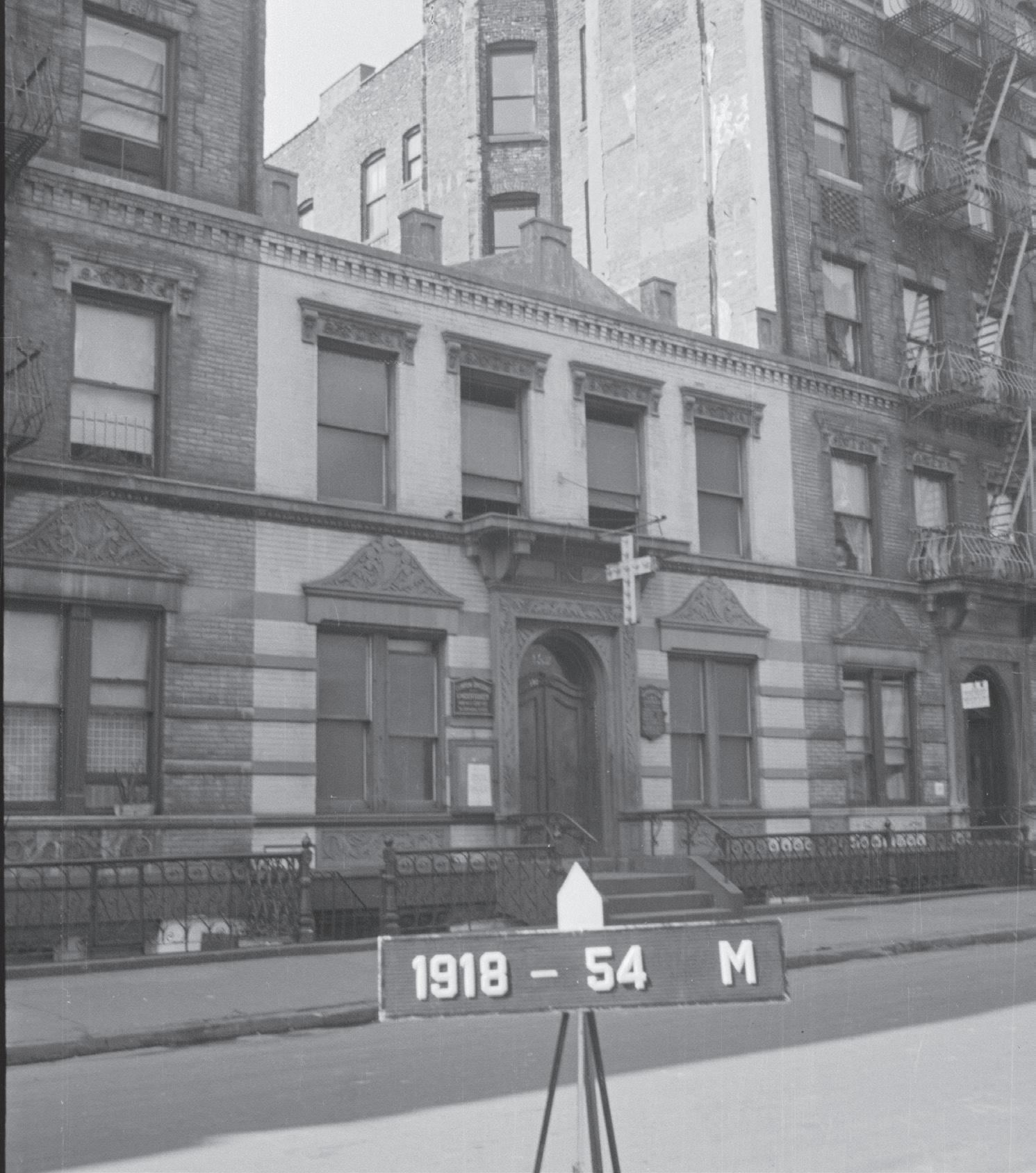
Founded April 3, 1901, by Rev. W.D. Wisher, it is the second oldest congregation of the AME Church in Manhattan. The church’s original home was at 239 W. 41st St. It later moved to 62nd West 135th Street, however the property was torn down in demolition and the historic Lincoln Theatre, which was the first theatre in Harlem to cater specifically to Black clientele was built in its place.
From 1917-1962, Metropolitan AME’s home was at 132 W. 134th St., but in 1962 it moved back to 135th, where it has been since that time. Currently the church is temporarily housed on West 119th Street and demolition of the old structure was expected to begin with anticipation of a planned new building to house worshippers. During its lifespan Metropolitan has had a number of benchmarks in Black activist See story on next page

history, as research in the Amsterdam News archives reveals.
In 1960, Rev. J.L. Joiner was part of a committee that financially backed student sit-ins in the south as the Southern Christian Leadership Conference, the NAACP, and others were on the ground engaging in Civil Rights battles. In 1964, Metropolitan was one of dozens of churches in New York that provided “Freedom Schools” for more than 464,000 children who were boycotting the public schools to protest segregation and poor standards for Black and Latino students. In 1969, Metropolitan’s Rev. R.L. Pruitt led several churches in a push to keep Harlem Hospital open to serve the community.
These are just a few examples of the impact Metropolitan A.M.E. has had in its lifespan.
Rev. Hill says Metropolitan is looking for anyone in the community to help in the process of chronicling its history. The journal committee has already reached out to politicians who represent the area, as well as local businesses and vendors situated near the church. Everyone’s voice is appreciated and the church wants to amplify them in the journal.
“What we’re going to do is preserve our history. It is so critical, I think, as a people of color that we know what our history is,” said Rev. Hill.
A lifelong relationship
Different clergy and church members reminisced and talked about their relationship with the church and how they have seen the church’s relationship with the New York community evolve over the years. Even though some of them describe themselves as transplants, their dedication to ministry and spreading faith brought them all together.
Rev. Harrison Lewis has been a part of Metropolitan AME for more than 30 years. As the son of a preacher, making Metropolitan his New York City church was an important way to connect to his past.
“The church has been a staple in the Harlem community. We not only attend church and worship, we have flea markets, reach out in the community, and help people in need,” said Lewis. “It’s been a valuable place for me to come and try to get reconnected to my roots.”
Numerous ministries have provided outreach to the community, allowing for service in multiple areas.
“We had a kitchen that operated at Metropolitan that fed the community and Harlem Hospital. People from the Bronx, Queens, and Brooklyn came for the food and that was a way to reach out into the community, but not only reach out into the community but help ourselves as well,” said Lewis.
“The church means everything to me,” said Ayanna Hill — no relation to Rev. Hill, a longtime member of the church. “We also have our missionaries that were out there during the cold winter months giving coffee, giving hot chocolate, and giving bottles of water when it was too hot. We would have people that would come in when we used to keep


clothing there. So if anybody needed clothing, needed shoes, needed anything to wear — even car fare to get some place, we gave it to whoever was in the church and whoever was in need.”
“Metropolitan has been and is a safe place,” said Rev. Hill in connection to the Church’s position on supporting victims of domestic violence and abuse.
While the Metropolitan’s journal committee is hard at work putting together the final project, Rev. Hill looks forward to sharing what they create and showcasing the best of their church community. The church is now looking towards telling the stories of the many ministers, worshippers, and visitors who are part of that tapestry.
“We’re gathering photos from previous administrations, we are trying to make sure that in the journal that they see themselves and


125 years.”
who they are and how god has blessed the church for
Metropolitan AME is hosting a celebratory gala for the church’s 125th anniversary. It
takes place May 30, from 1 to 6 p.m. at the Alhambra Ballroom, 2116 Adam Clayton Powell Blvd. You can call the church at 212-690-1834 for tickets.
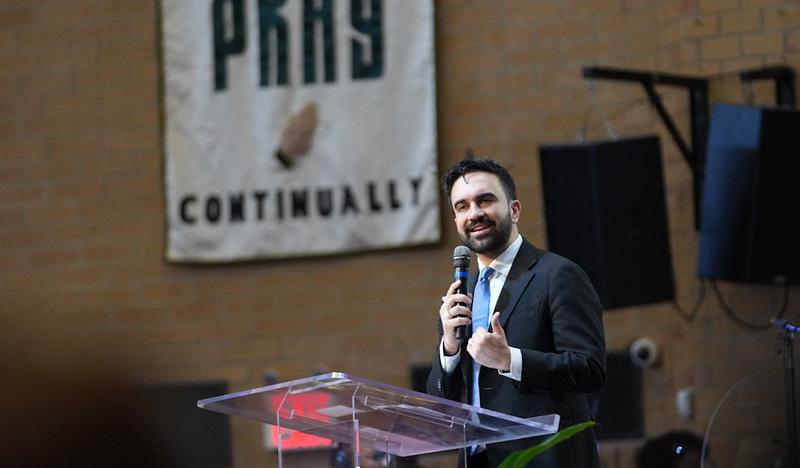
Metropolitan AME Church Youth Sunday / Palm —Service also Women’s History Month Dedication. (Bill Moore photos)
Pastor Rev. Dr. Linda C. Hill.
Pastor Rev. Dr. Linda C. Hill and members.
Mamdani poised to pause the city’s controversial tax lien sale
By ARIAMA C. LONG Amsterdam News Staff
Mayor Zohran Mamdani is poised to cancel this year’s tax lien sale, which has been widely criticized as predatory and disproportionately impacting Black and Brown senior homeowners. His administration is planning on launching a six-month review to replace the city’s system.
“What we are doing is pausing this sale for six months as we direct the Department of Finance to lead a review of the program with the intent of developing a more equitable approach to managing this kind of debt across different property types,” said Mamdani.
When a property is on the city’s tax lien sale list, it generally means the owner owes property taxes or has past-due water, sewer, and other property-related charges. The city can then sell the debt to private investor-backed trusts at a discount. They in turn make a collection for what’s owed, opening up homeowners to aggressive debt collectors and foreclosure. The list is usually posted every year in May.
A tax lien can be triggered by even seemingly low debts, which was the case for Brooklyn homeowner Filmore Brown in August 2025. His home was auctioned off without his knowledge over a past-due $5,000 water bill. Brown said he wasn’t informed about what was happening until the supposed new owners breached the house in the middle of the
night, drilled out the locks, and installed surveillance cameras while his family and tenants were awakened from their sleep.
According to a NYU Furman Center report, the city started authorizing “in rem foreclosures” in 1976, taking over thousands of properties in the next few years until they placed a moratorium on the process in 1993. Under Mayor Rudy Giuliani, the city came up with the current version of the tax lien sale system in 1996. This generated huge revenue for the city, more than $1.3 billion between 1997 and 2015. These were one to three-unit homes or multifamily buildings concentrated in Black and Brown neighborhoods like Central Harlem in Manhattan; Bedford-Stuyvesant, East New York, and Starrett City in Brooklyn; Jamaica and Hollis in Queens; and several parts of the Bronx, said the report.
“I used to knock on the doors of Queens homeowners whose names were listed on the tax lien sale to try and get them off that list,” said Mamdani, recalling his days as a foreclosure prevention housing counselor with Chhaya CDC. “And I knew then what so many New Yorkers have also noticed, which is that this is a broken system that disproportionately targets Black homeowners, especially in central Brooklyn and Southeast Queens.”
The City Council made some strides in passing reforms for the tax lien sale and a city-established land bank last year in
Theft Prevention office would coordinate all city enforcement mechanisms to stop deed theft in progress. This includes filing a motion to stay an eviction or foreclosure proceeding under the 2023 state laws, which allow a local government agency to investigate deed theft cases. The idea is to focus on places where deed theft has been rampant.
an attempt to make the system more equitable. The package of bills was vetoed by former Mayor Eric Adams before leaving office. However, the city council voted to override his vetoes and re-enact the bills in January 2026.
On the campaign trail, Mamdani vowed to end the tax lien sale as well as establish an Office of Deed Theft Prevention.
Deed theft is also a widespread problem, particularly affecting Black New Yorkers, where a homeowner’s deed is forged and their home is literally scammed out from under them. In one instance, Manhattan District Attorney Alvin Bragg indicted three people for deed theft and mortgage fraud for allegedly stealing a Harlem brownstone from a family that had owned their house for nearly 40 years.
“I think what we can see is that in both of them [deed theft and the tax lien sale], they are disproportionately impacting Black homeowners. Especially again, Central Brooklyn, Southeast Queens, are the neighborhoods where we see both of these issues really affecting homeowners’ ability to afford to stay in their homes,” said Mamdani.
“And what we also have seen is that deed thieves have used the publication of the tax lien sale list as a tool in targeting homeowners for deed theft,” he continued. “They approach somebody who they know is behind on their water bill or their property taxes. They promise them a refinancing to allow them to have more access to capital, and instead, what they end up doing is stealing that title from that homeowner.”
Mamdani said that the Deed
Meanwhile, the deadline for the state budget approval is April 1. But it is projected to be late due largely to negotiations over Mamdani’s proposed tax hike on the wealthy and climate law rollbacks, said state lawmakers. If that falls through, the city will be forced to raise property taxes in order to deal with the remaining gap in the city budget. Naturally, a lot of already financially stressed Black and Brown renters and homeowners are a little bit worried with the looming uncertainty.
“Raising property taxes is a path of last resort,” said Mamdani. “And that’s one that I have been working to prevent ever since we had to put forward our preliminary budget. And I’ve said then, and I will continue to say, and I’m working on how to ensure our budget reflects instead an ending of the drain that has long characterized the state’s relationship with the city. And also a plan that taxes the wealthiest New Yorkers and the most profitable corporations. Not a budget that is being balanced on the backs of middle-class New Yorkers who are just struggling to make ends meet.”
Nonprofit applications open for up to $200K in state cannabis reinvestment grants
By TANDY LAU Amsterdam News Staff
The New York State Office of Cannabis Management (OCM) wants nonprofits in Black, Brown, and any other communities disparately impacted by the drug war to apply for the Community Reinvestment Program grant by the May 13 deadline at 5 a.m. The fund stems from 40% of tax money collected by the state for legal marijuana sales. Awards range from $50,000 to $200,000 based on organization size. In total, the state plans on handing out $5 million.
“The focus is really community repair, after a history and legacy of racist and classist drug law enforcement,” said the fund’s director, Matthew Wilson. “It is, at some level, an effort at restitution and an effort at
justice for communities that were disadvantaged because of drug laws, getting additional support.”
This application cycle marks the program’s second round and specifically focuses on “youth-serving initiatives” for participants aged 24 and under through five specific focus areas: mental health, workforce development, housing, harm reduction, and substanceuse disorder services. Applicants must be a 501(c)3 non-profit with in-state services.
Wilson recommends those interested in applying to start now.
He points to resources on the process available at https://cannabis. ny.gov/prospective-grantees. Materials range from tutorial videos to priority area maps, although those operating outside identified zip codes can still apply and explain
how the drug war impacted their service areas.
“Our priority is to reinvest in those communities that were most harmed in the drug war,” said Wilson. “We have created a database that looks at the cannabis arrest rates across the state and identifies the specific census tracks where the cannabis arrest rate was significantly higher than the state average. When you apply to the fund, we actually ask applicants to go to that map and identify the specific communities disproportionately affected that they plan to serve. Applicants also need Statewide Financial System prequalification, a separate requirement for anyone receiving grant funding from New York State. Last cycle, roughly 80 applications were not
pre-qualified and therefore could not be reviewed.
OCM awarded 50 organizations last year in the inaugural class with a sizable disbursement in the New York City area. Around $2.6 million went towards mental health services while workforce development-centric projects received around $1.9 million, and housing-related programs took home a total of $500,000.
Kassandra White, a spokesperson for Gov. Kathy Hochul, says the state hopes people will apply. “Governor Hochul has been a champion for the growth of New York’s equitable, multibillion-dollar cannabis industry,” she said. “The State’s Community Reinvestment Grant Fund is about providing resources to communities that were disproportionately harmed by prior drug
laws, and giving back to those communities to uplift them and provide positive and impactful opportunities. The State encourages organizations to apply and open more doors for New Yorkers statewide.”
The money simply comes from tax money collected from adultuse cannabis sales, but does not need any connection to marijuana (although pitches for helping young adults break into the cannabis retail workforce are welcome).
“The only connection this fund has to cannabis, in terms of the money, is that it originates out of the tax revenue of adult-use cannabis sales,” said Wilson. “40% of adult use cannabis tax revenue comes to this fund. What we do with the money doesn’t have to have anything to do with cannabis whatsoever.”
Mayor Zohran Mamdani delivers remarks at The Greater Allen A.M.E. Cathedral of New York for Palm Sunday. Jamaica, NY. Sunday, March 29, 2026. (Ed Reed/Mayoral Photography Office photo)

Divine Nine News
Swim 1922: A water safety program for you
My head was above the water as my hands gripped the edge of my parents’ in-ground pool. “Don’t move,” my parents shouted. I was a curious, confident six-year-old until I stepped backward on the pool’s slope. That step could have cost me my life. I was fortunate, but not every child is rescued. Some families face tragedy and some individuals have a life-long fear of water. Sigma Gamma Rho Sorority, Incorporated has a program aimed at changing these realities.
Swim 1922 is a water-safety clinic that is held in partnership with the USA Swimming
Foundation. Together, they have connected with several organizations, including Diversity in Aquatics, to present programming that reduces drowning disparities in Black and underserved communities. Although all ages are welcome to attend, the sorority’s signature program was created for youth ages eight to 18.
The Northeastern Region of Sigma Gamma Rho Sorority invites you to attend Swim 1922 in person, or watch the simulcast on Saturday, April 11, from 11 a.m. to 3 p.m., as they broadcast on their social media channels from three locations: Commonpoint

Community Center, Bronx, New York; Howard University — Burr Gymnasium in Washington, D.C.; and Stratford Richardson YMCA in Charlotte, North Carolina.
At each location, music will be playing; food truck vendors will be lined up; and water polo, other games, and giveaways will be available. There is no fee for admission. Led by lifeguards and swim instructors, participants can join water-safety activities in and outside of the pool.
Olympic swimmers will be onsite: Natalie Hinds in the Bronx, Arianna VanderpoolWallace in North Carolina, and Maritza McClendon inWashington, D.C. All three Olympians are members of Sigma Gamma Rho Sorority.
“I have had the honor to be involved with Swim 1922 since its inception in 2012 and I’m dedicated to the work we do through Swim 1922,” said McClendon. “As the first Black woman to make a U.S. Olympic swim team, I understand both the power of representation and the barriers that have historically limited access to swimming in Black and Brown communities. These same communities continue to face disproportionately high drowning rates, and that’s something we have the power to change for the good.”
McClendon, who will lead in-water instruction focused on foundational water-safety skills, added, “Through Swim 1922, we’re not just teaching people how to swim; we’re creating access, building confidence, and saving lives. I’m committed to being part of that change by ensuring that more children and families see themselves in the water and understand what’s possible. If my journey can inspire even one person to

Sigma Gamma Rho Sorority, Inc. and USA Swimming Foundation present Swim 1922 on April 11 in sorority’s “Distinctly Notable Northeastern Region”: Bronx, NY; Washington, DC; and Charlotte, NJ. (Image courtesy of
believe they belong in this space, then we’re moving in the right direction.”
Since its inception in 2012, the program has reached more than 100,000 children and adults nationwide. McClendon said her sorority sister, Talia Mark, developed the Swim 1922 program, which launched in Mount Vernon, New York.
According to Dr. Jodi Jacobs, the sorority’s Northeastern Region programs coordinator, Swim 1922 programs are conducted by chapters nationwide every year between May and August to reduce the level of fear and apprehension about learning to swim. According to the Centers for Disease Control and Prevention, 40 million Americans reported they do not know how to swim and each year there are more than 4,000 unintentional drowning deaths in the U.S.
“We understood that 11 people drown every day in the United States and, even more startling, 70% of our African American children and 60% of our Hispanic children and children of color do not know how to swim,” Jacobs said. “African American children are three times more likely to drown than Caucasian children, even though
we’re generally not the ones [who] own the pools.”
According to Jacobs, two Howard University swim athletes will receive $7,000 swim scholarships. In the Bronx and Charlotte, seven families will “receive seven swim lessons so they can continue on their journeys within the pool” thanks to Macy’s sponsorship of Swim 1922.
Naila Cadden, a Howard University student and member of Sigma Gamma Rho, wants to make a difference. She is a certified lifeguard, member of Howard’s Water Polo Club, and one of the facilitators who will help youth understand “what CPR is, how it can save somebody’s life, and what to do in emergency situations.”
Jacobs added, “We go by the Distinctly Notable Northeastern Region of Sigma Gamma Rho,” with about 150 chapters with more than 5,000 alumni, undergraduate members, and affiliate group members from Maine down to North Carolina. Internationally, the sorority has chapters in Bermuda, Canada, Ghana, and South Korea. The sorority is based in Raleigh, N.C. For more information and to attend, go to bit.ly/swim1922ner.
Howard University junior Naila Cadden, member of Sigma Gamma Rho Sorority, Inc., is excited about participating in Swim 1922 with her “Oh So Fly sorors of the Alpha Phi Chapter.” (Photo courtesy of Naila Cadden)
Sigma Gamma Rho Sorority, Inc.)
KAYLYN KENDALL DINES, MBA
32BJ SEIU building workers plan strike vote before April contract deadline
By KAREN JUANITA CARRILLO Amsterdam News Staff
Despite an April 20 contract deadline approaching, negotiations between 32BJ SEIU, the union representing more than 34,000 NYC residential workers, and the Realty Advisory Board on Labor Relations (RAB), which speaks for residential building owners, have grown tense.
The current contract for doorpersons, porters, superintendents, handypersons, and resident managers was approved in 2022 during the COVID-19 pandemic. It guarantees fully employer-paid family health care, pension benefits, paid leave, and job training.
The board’s proposals for the new contract include fair wage increases, but the board wants employees to help pay the cost of healthcare premiums. “32BJ members are part of only 5% of U.S. employees that do not contribute anything for family healthcare premiums,” RAB argued in a recent statement. “In contrast, the average U.S. employee pays over $6,850 in healthcare premiums for family coverage.”
32BJ SEIU wants to keep its employer-paid health care, plus get wage increases that keep pace with inflation, strengthen its pension benefits, and improve working conditions.
The board also wants to establish a “Tier II” workforce for new hires, who would most likely have different pay and benefits. The board has said it’s concerned about current expenses building owners are incurring, stating that doorpersons and porters earn approximately $62,000 annually, with total employer costs exceeding $112,000, while handypersons cost more than $119,000. Their employees receive comprehensive packages that offer full family health insurance — covering medical, dental, optical, and prescription drugs — without any employee premium. The board is warning that its members are facing existential threats, such as increased operational costs — for insurance, utilities, maintenance — and the possibility of a 0% rent increase on one million rent-stabilized NYC apartments, which could keep it from being able to afford any wage increases.
Howard Rothschild, board president on labor relations, said in a statement, “To keep the industry
strong going forward, we must continue to work together to negotiate a fair contract that ensures its longterm sustainability.”
Union leaders argue that the board’s contract proposals won’t help workers keep up with the city’s cost of living.
“Listen, what we have in front of us is that we’re coming off four of the highest years of inflation,” said 32BJ SEIU President Manny Pastreich, who told the Amsterdam News that wages, health insurance, and retirement are the union’s central issues. “Our members are struggling to pay rent to live in the city, to pay for the groceries –– we see the cost of transportation going up every single day.
“The people who moved out of New York City are working people who just are struggling to get by. That’s been the experience of our members, so there are some issues on the table that are strike issues. Premium-sharing for us is a strike issue. The two-tier wage system is a strike issue. Then there’s going to be a fight over the money — you know, how much.”
Negotiations began on March 5, with each side submitting initial proposals. The union’s priorities were presented first, followed by management’s response during the second session on March 24. Although the early meetings were reportedly friendly, union leaders criticized RAB’s counterproposals as “insulting” and argued they could weaken the essential protections secured in the existing contract.
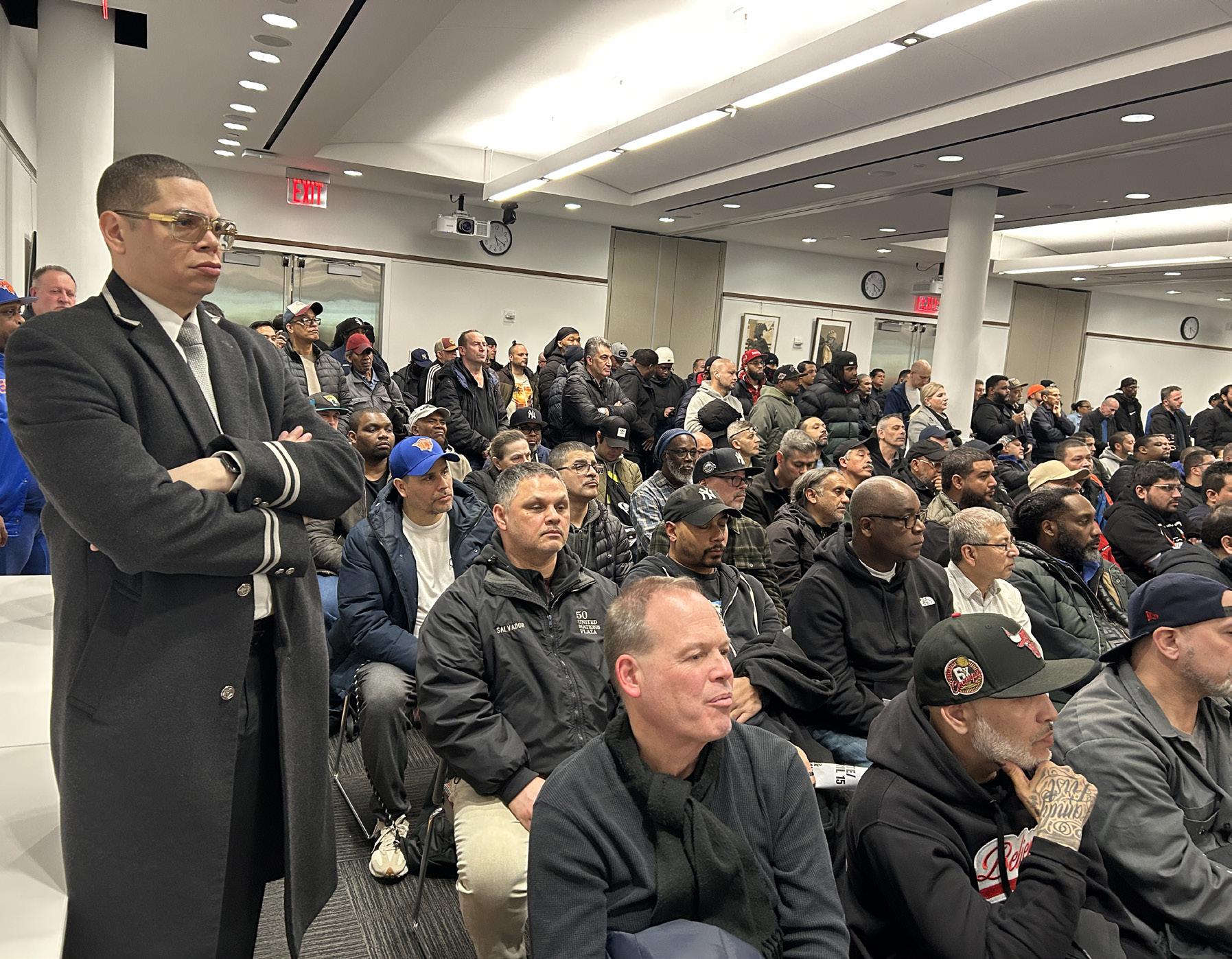
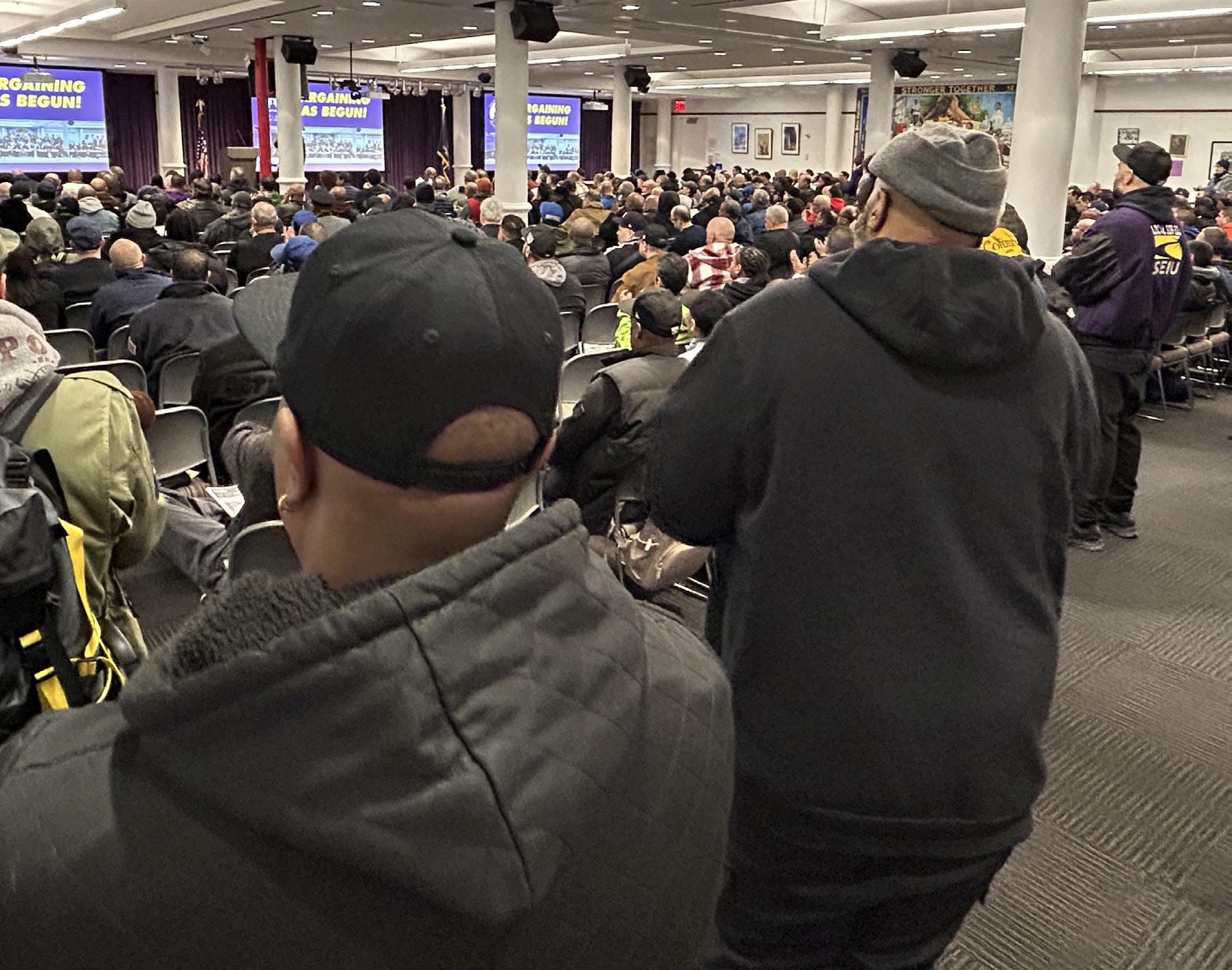
32BJ SEIU has already mobilized some 1,400 strike captains just in case these contract negotiations fail. A formal strike vote and union rally on Park Avenue is set for April 15, just days before the contract expires.
“I think every union member is hesitant about the possibility of a strike,” Pastreich added. “It’s a serious thing. We just saw what the nurses went through for well over 30 days. That is a hard burden for people, especially living in the city today. We take this very seriously, but we know we are defending the contract we have, and we’re working hard. We have to move forward because without action, folks might not be able to live in the city. A strike is a last resort, but we have to be ready for it.”
32BJ SEIU has already mobilized around 1,400 strike captains in preparation for possible failed contract talks with Realty Advisory Board on Labor Relations. Formal strike vote and union rally are scheduled on Park Ave for April 15, just before contract deadline. (32BJ SEIU photos) Contract talks between

alvin ailey american may 8 – 10 dance theater
coltrane 100
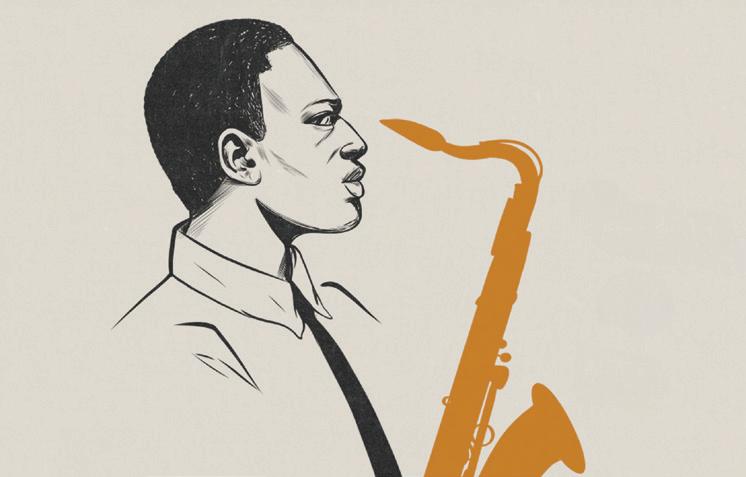
Both Directions at Once Sat, Apr 18 @ 7:30PM
Saxophonists Joe Lovano and Melissa Aldana, pianist Nduduzo Makhathini, bassist John Patitucci and drummer Jeff “Tain” Watts pay tribute in this centennial celebration.




Fri, May 15 @ 8PM
This all-star lineup featuring The Stylistics, The Chi-Lites, Bloodstones Legacy and Eddie Holman will make you want to slow dance with the one you love.


john legend
An Evening of Songs & Stories Apr 21 @ 7PM
Get personal with the 13-time GRAMMY® winner (“All of Me,” “Ordinary People,” “Tonight”) in this intimate concert.
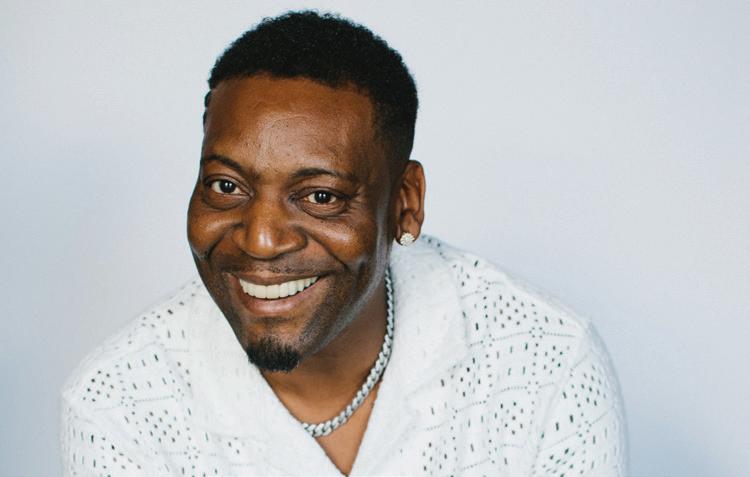
Sat, May 30 @ 6 & 9PM
Majah Hype (the “Caribbean King of Comedy”) returns to NJPAC with his original characters and relatable impressions. majah hype
david and tamela mann
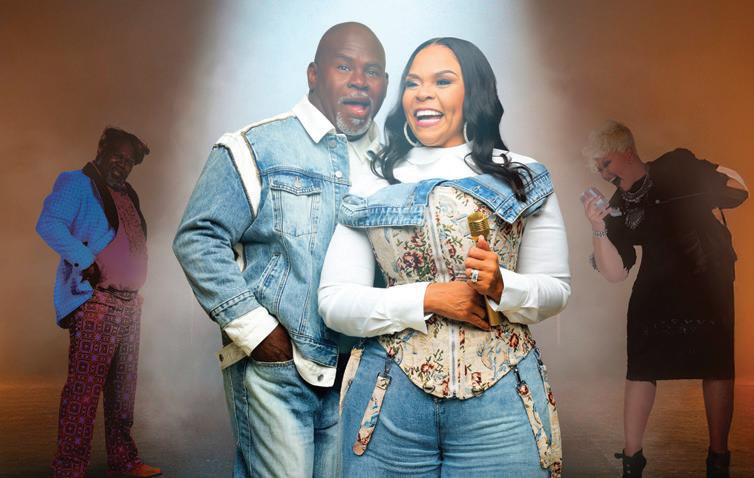
The Love & Relationship Tour Fri, Apr 24 @ 8PM
An electrifying night of praise, worship and soul-stirring gospel with the iconic power couple David and Tamela Mann.

Jun 17 @ 7:30PM
Step into a retro-futuristic universe where funk, soul and theatrical genius collide in the most electrifying show of summer.
Ghana’s slavery proposal adopted by the UN, but reparations
are
sidestepped
For years, African and African American activists have been demanding that the transatlantic slave trade be recognized as a crime against humanity and that reparations be considered. Last week, Ghana proposed a resolution on this grievance and had it adopted at the United Nations.
While 123 nations supported the resolution, the U.S. and Israel remain adamantly opposed to it, and this comes as no surprise. 52 other nations abstained. To some degree, the vote is a decisive step but nonbinding.
We agree with Justin Hansford, a law professor at Howard University, that the resolution is the furthest the United Nations has gone in recognizing the issue. “I cannot overemphasize how large a step that is,” he said.
Even so, it’s a long way from the demand for reparations and getting more states to apologize for the inhumanity of slavery and how that oppression continues in significant ways. In the summer of 2009, the U.S. Senate passed a resolution apologizing for what it determined was “the fundamental injustice, cruelty, brutality, and inhumanity of slavery.” Racial segregation was included in the resolution; however, it explicitly stated that it cannot be used for “restitution claims.” And therein lies the rub, and the ongoing struggle waged by Black activists here and a few abroad.
Voicing his opposition to the resolution, U.S. Ambassador to
the UN, Dan Negrea, said the U.S. “does not recognize a legal right to reparations for historical wrongs that were not illegal under international law at the time they occurred. He also expressed an objection to the “cynical usage of historical wrongs as a leverage to reallocate modern resources to people and nations who are distantly related to the historical victims.” This position is consistent with the U.S.’s resistance to providing restitution to victims of the Tulsa Massacre in 1921.
Few participants in this debate have been as passionate and insightful as Dr. James Counts Early, a former Smithsonian Institution assistant secretary for education and public service. In a statement to the Ghanaian Ministry of Culture, he noted in his response to Ghana’s proposal that it be “framed with a historical rationale in order to provide public education. And I recommendpropose that the initiative outline meaningful progressive legal and material preparatory global and country-specific policy actions that could and should evolve from the initiative of…President [John] Mahama.”
He is currently expanding his discussion on this critical issue.
As for the next steps in this matter, it may take some time, but it’s good to know that António Guterres, the UN secretarygeneral, is insisting on “bolder action” by more member states to “confront historical injustices.”
To date, only the Netherlands, among European nations, has issued a formal apology for the role it played in the slave trade.
Elinor R. Tatum: Publisher and Editor in Chief

Micah Lasher has shown us many times who he is
By BERTHA LEWIS
For more than four decades, I fought on the front lines for working class Black and Latino communities. As a founder of the New York Working Families Party and the Black Institute, my life’s work has been rooted in a clear set of values: building independent, multiracial power, lifting up those marginalized by the political establishment, and speaking unapologetic truth to that same power.
Through these battles, I’ve learned Maya Angelou’s lesson: “When someone shows you who they are, believe them the first time.”
Today, as New York State Assemblymember Micah Lasher seeks to position himself as a progressive and inclusive leader, we must remember that this is a man who built his career on the art of racial division.
As a staffer on Mark Green’s 2001 mayoral campaign, I believed we were engaged in a tough but fair fight against “Freddy” Ferrer. I was at the table for nearly every major decision, which made the truth so painful: A calculated, divisive strategy was operating in the shadows of our own campaign, and I only discovered it after the fact.
At the center of those racially divisive tactics was Micah Lasher.
It is now a matter of public record that Lasher was the operative responsible for flooding wealthy white neighborhoods with one of the most racist political cartoons in the city’s history. The image depicted a diminutive Ferrer with big lips kissing Rev. Al Sharpton as a bloated figure with an inflated backside.
Lasher didn’t just print it; he ensured it was flooded into white,wealthy neighborhoods through mailers in the final days of the campaign. The goal was to weaponize fear and make white New Yorkers resent their Black and Latino neighbors. Rev. Sharpton didn’t mince words about it then or later, labeling Lasher a “bigoted consultant” for his role in that ugly campaign.
The hurt and humiliation I faced
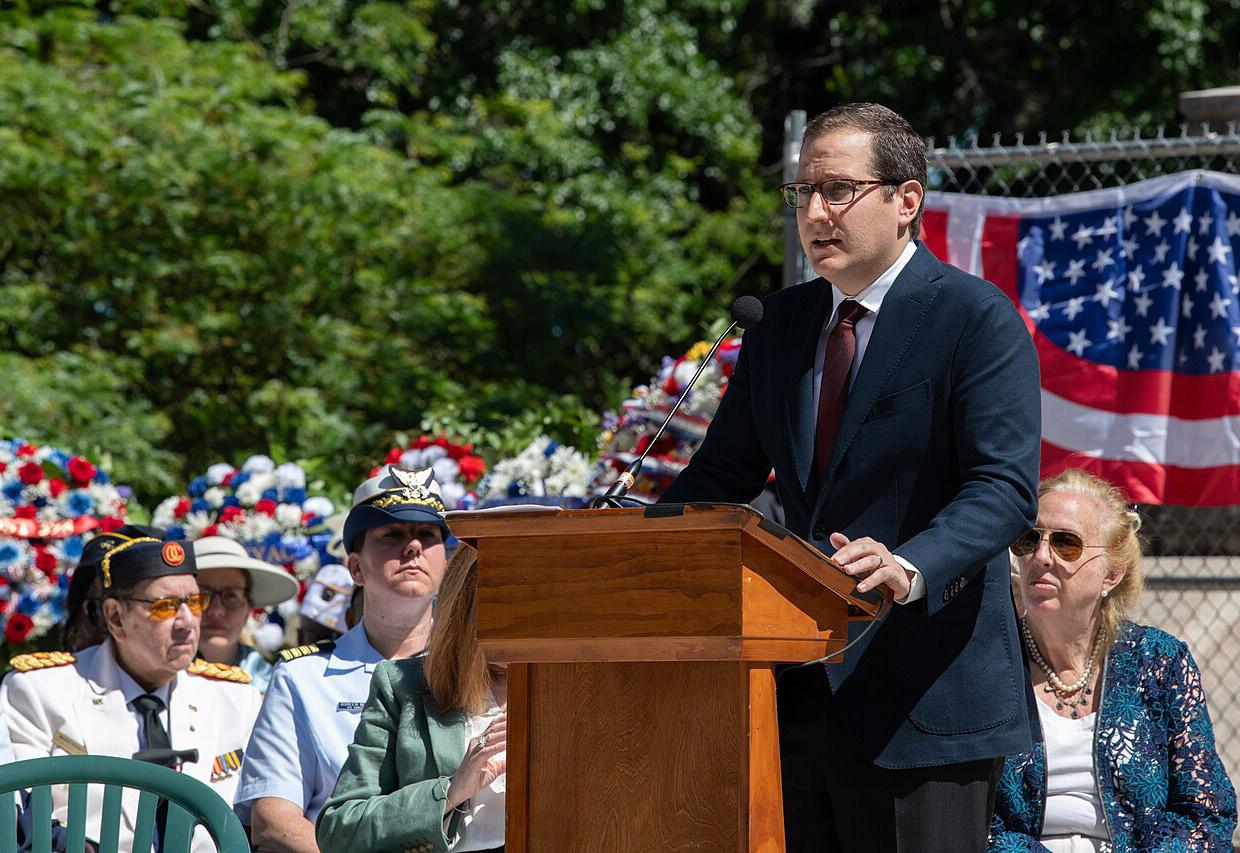
as one of the few advisors of color was profound. Realizing my own side used such political gamesmanship was a devastating reality check. To this day, I continue to share rooms with Micah Lasher in various spaces, but knowing what he did, I still could never look him in the eyes again.
Lasher eventually admitted to his role in disseminating those fliers, but a small act of damage control years later does not erase the damage done to the fabric of our city. It also forces a critical question about the kind of leaders we empower. Donald Trump has shown us the devastating cost of a New York politician who builds his brand on racial division. We cannot claim to stand against that kind of bigotry nationally without questioning Micah Lasher — a man who wrote the playbook for it here at home.
If it were a one-time “mistake” of a young operative, perhaps there would be room for grace, but for Lasher, targeting communities of color became a professional hallmark.
Years later, Lasher emerged as a chief architect and defender of “stop-and-frisk.” Hundreds of thousands of innocent Black and Brown men were being harassed, humiliated, and detained on street corners for the “crime” of walking while Lasher was in the halls of power defending the practice. He called it a “proven crime deterrence” method. He chose to ignore the trauma in-
flicted on our youth in favor of a policy that turned our neighborhoods into occupied zones. Perhaps most dangerously, Lasher has stood on the record as defending the NYPD’s “Gang Database” — a secretive, racially biased list that the NAACP Legal Defense Fund and other civil rights groups have fought to abolish. This isn’t just a local issue; it is a direct pipeline to deportation. Federal immigration agencies like ICE frequently use these types of local databases to target immigrants. Lasher is defending the very machinery that tears families apart today. You cannot claim to protect our immigrant neighbors while simultaneously championing the tools ICE uses to hunt them down.
From racist mailers to stopand-frisk and deportation-enabling databases, Micah Lasher’s career is defined by marginalizing Black and Brown New Yorkers.
For Micah Lasher, our communities weren’t constituencies to be served; they were collateral damage for his ambition.
New York City has a long memory. We know the kind of guy Micah Lasher is because he has spent his entire professional life showing us. It is time we finally believe him.
Bertha Lewis is the founder and president of the Black Institute and worked for then-Public Advocate Mark Green’s mayoral campaign in 2001.
Madison Gray: Executive & Investigative Editor
Kristin Fayne-Mulroy: Managing Editor
Cyril Josh Barker: Digital Editor
Reyes: Editor
Large
NYS Assemblymember Micah Lasher. (Public Domain photo)
In New York, slavery still shapes who gets paid
By DONNA HYLTON and SEN. ROBERT JACKSON
In 2026, New York still pays certain workers pennies an hour — and the system that allows it was designed in the shadow of slavery. It’s time for New York State to end these practices, once and for all.
After Emancipation, newly freed Black workers were locked into no-wage and low-wage labor. In the hospitality industry, employers refused to guarantee wages, shifting responsibility to tips from white customers. The subminimum wage for tipped workers was not an oversight — it was a deliberate structure, designed to deny Black workers a guaranteed wage at all.
Similarly, the line from slavery to today’s brutal and exploitative prison labor system is direct and clear. The 13th Amendment abolished slavery with one exception: for those convicted of crimes. Even as New York was gradually abolishing slavery, it was building a replacement. The “Auburn System,” pioneered at Auburn Prison more than 200 years ago, forced incarcerated New Yorkers to work for little or no pay to produce goods sold for profit.
Fast-forward to today, where, of the 32,000 people currently incarcerated in New York, more than three in four are people of color, and half are Black. Incarcerated workers make furniture, eyeglasses, and other goods sold to state and local government entities. Between 2010 and 2021,
New York’s prison manufacturing enterprise sold more than $545 million worth of goods and services. The workers who produced that value earned, at most, 65 cents an hour — with the vast majority earning less than 33 cents. Wages for New York’s incarcerated workers have not increased in more than 30 years.
One of us knows this system from the inside. When Donna was incarcerated, she earned 25 cents an hour. That was not a wage — it was a reminder that her labor had no value. She could not send money home to her daughter. She could not afford basic hygiene products — the small necessities that preserve a sense of self. That 25 cents an hour made it impossible to be a provider, a parent, a person with responsibilities beyond the walls.
If we expect incarcerated people to take responsibility, learn skills, and prepare for reentry, then we must also value their labor. A living wage inside facilities is not charity — it is a commitment to dignity, family stability, and true rehabilitation. That commitment should not disappear because someone is serving time.
In the same vein, tipped workers can be paid a subminimum base wage and told to rely on customer generosity to survive. According to One Fair Wage research, nearly 318,000 tipped restaurant workers in New York earn just 67% of the state minimum wage before tips — between $10.35 and $11
an hour. Most make roughly $18,625 a year. Over a third of tipped workers in New York City live at or near the poverty line — more than twice the rate for nontipped workers. Nearly one in five relies on food stamps. This causes real harm to Black New Yorkers. One Fair Wage’s February 2026 report found that Black women in tipped jobs earn just 63 cents for every dollar white men in the same industry make. In New York, Black women tipped workers earn nearly $8 per hour less than their white male counterparts, a disparity 60% larger than the national average.
When Black women — who are disproportionately primary earners and caregivers — are paid less by design, family stability is undermined. The result is that full-time work produces and continues poverty — by design, not by accident. In prisons, the harm compounds. The state’s prison industry program, Corcraft, generates roughly $50 million a year in revenue. During COVID-19, incarcerated workers produced 11 million bottles of hand sanitizer — without protective equipment, and barred from using the product they made. Families on the outside absorb the cost: One in three is driven into debt by supporting an incarcerated loved one, while commissary prices have surged and wages remain frozen at rates set in 1993.
New York likes to see itself as a leader on racial justice, but the consequenc-
es of these subminimum wages are not symbolic — they are measurable. Workers with disabilities can still be paid less than the minimum wage under outdated carve-outs that assume diminished value.
These systems look different, but they share a common logic inherited from the same source: Some people’s labor does not deserve full pay. It’s time to get rid of all of these subminimum wages in New York, because no human is subhuman.
We are not asking New York to remember slavery as history. We are asking New York to stop profiting from its design.
That is why Senator Jackson has introduced the One Fair Wage Act (S.415A) in the State Senate: to end the subminimum wage for tipped workers and ensure every worker in New York receives the full minimum wage, with tips on top. In the Assembly, Assemblymember Demond Meeks has introduced the Living Wage For All Act (A.10507), which would raise New York’s minimum wage to $30, end all subminimum wages — including for incarcerated workers and workers with disabilities, and index wages to inflation. Together, these bills would dismantle a pay structure rooted in slavery and replace it with one grounded in dignity.
Along with 13th Forward, the NAACP, One Fair Wage, and the growing statewide
See ONE FAIR WAGE ACT on page 36
Trump’s contradictions are predictable
By HERB BOYD
Superhero training for Black boys comes to Brooklyn

CHRISTINA GREER, PH.D.
We are constantly wringing our hands about the direction of our youth and what is to become of Black boys in this increasingly hostile environment, both locally and nationally. Luckily, we have people who move beyond worrying and put their concerns into action.
On April 11, Black Superhero Bootcamp will be in full effect for boys ages 12–17 at Brownsville Community Middle School BCMS; 85 Watkins Street in Brooklyn. No, they won’t be dressing up like the Black Panther or Batman, but they will be developing skills that will help them navigate these sometimes unwelcoming environments. Black Superhero Bootcamp is the brainchild of Charles Coleman, my friend and colleague from MS NOW (formerly MSNBC ). Many of you may know Coleman from his tenure as a civil rights attorney and MS NOW legal analyst and guest host.
conference of activities, workshops, speakers, and panels that focus on the development of Black boys. Attendees will be divided into groups, with each group cycling through 50-minute sessions for “superhero” trainings. The sessions will be led by our guest speakers and panelists with a focus on three themes: The Power of Choice, Leading Where You Are, and A Plan to Finish Strong. The goal of this year’s Black Superhero Bootcamp is to encourage our young men to be more intentional in applying critical thought to how they navigate everyday decisions in their lives. There will also be a physical activities portion that will involve organized competition during one of the sessions.
A recent example of the president’s contradictions occurred when he cast his mail-in vote last week during a special election, a method of voting he often calls cheating.
But maybe I shouldn’t be alarmed about this violation, as he claims, and merely place it in context with all
In an editorial several weeks ago, the AmNews commented on Donald Trump’s contradictory behavior, at that time, pointing out how he could pardon former Honduran President Juan Orlando Hernández, who was sentenced to 45 years in prison for facilitating the flow of cocaine to America, and at the same time, targeting and destroying boats for allegedly doing the same thing.
of his other violations. And this one happened right in his own Florida bailiwick, where his presumably Republican vote did little to stop the flipping of a state legislative seat to blue. This, compared to his pre-presidential statement of being opposed to instigating wars, is minor to the ongoing conflict with Iran. Day to day, he vacillates on the war’s condition, his
strategy, and when it will end. The most meaningful result of the Mar-a-Lago, Palm Beach reversal is that Trump’s neighbors are in disfavor of his policies, or seemingly so. It’s my hope that the trend continues, given indications across the nation as the midterm elections loom.
One thing is certain: Trump’s contradictions will not stop, nor his predilection for bombast and ego-tripping.
“America’s current conversation continues to treat Black boys as an afterthought. Now, more than ever, it has become apparent that the community has a collective responsibility to engage on behalf of our boys to do for them what we cannot count on others for,” Coleman said. “In that spirit, Black Superhero Bootcamp is a day of fun, which will bring together Black boys in junior high school and high school in support of their continued growth and development to super-charge them with a morale boost that will power them past the finish line for the final weeks in the school year.”
Black Superhero Bootcamp is a one-day youth
The day will begin with breakfast at 9 a.m. and sessions starting at 10 a.m., with lunch for everyone around noon. The afternoon sessions will finish at 2:30 p.m. with brief closing remarks and a 3 p.m. dismissal. The best part for busy parents is … it is a free program. Parents and guardians will drop off their sons for a day of inspiration, collaboration, and skill-building. There is limited space, so to sign up a loved one or volunteer themselves, go to bit. ly/3Q7fGUI.
Christina Greer, Ph.D., is an associate professor at Fordham University; author of the books “How to Build a Democracy: From Fannie Lou Hamer and Barbara Jordan to Stacey Abrams” and “Black Ethnics: Race, Immigration, and the Pursuit of the American Dream”; and co-host of the podcast FAQ-NYC.
Caribbean Update
U.S. pressure on Caricom countries continues. Dominica ties up deportee deal
By BERT WILKINSON Special to the AmNews
The unrelenting pressure the Trump administration has been exerting on Caribbean community nations to comply with American edicts is continuing, with tiny Dominica saying that it had completed an agreement to accept deportees from the U.S. in the coming weeks.
The island’s cabinet says it has completed all negotiations for what has been dubbed the Third Country National Arrangement (TCNA) and is readying to accept a small number of deportees in the coming months. So far, the Eastern Caribbean nation of just 66,000 is the only one that has advanced so far in its talks with the U.S., hinting that the underpopulated island needs a few more people to help spur development. The major hospital on the island recorded only 513 births last year, officials said.
Others, including Guyana and Grenada, have said that their talks about a framework agreement are ongoing.
Providing details in the past week, Prime
Minister Roosevelt Skerrit vowed that the Dominica program will be handled responsibly and in the nation’s interest. “The agreement was formally signed on March 18, 2026, by Dominica’s ambassador to the United States of America,” he told a press conference. Importantly, this arrangement is non-binding, and Dominica retains full discretion at all times. “This means we have the authority to accept or reject any individual. We also maintain the right to refuse entry to persons with a criminal history, and we will have advanced access to relevant medical and security information before any decision is made.”
The island’s agreement with the U.S., according to Skerrit, will see fewer than 30 people being sent to the country annually.
Critics say that Dominica is moving fast to tie up arrangements with an administration that announced partial visa restrictions and travel for several categories late last year, including tourist visas for its nationals. The same restrictions were applied to neighboring Antigua, putting political pressure on the local administration.
As an indication of how the region is sometimes being more than subtly pressured to live with orders from Washington, the State Department recently added fellow Eastern Caribbean member nation Grenada to the list of countries worldwide whose citizens must lodge refundable visa bonds of between US$5,000–$15,000 before applying for a visa. The move is blamed on an alleged growing number of visa overstays. In recent months, Grenadian officials had resisted pressure from the U.S. to establish a high-tech military-grade radar in the country which the U.S. had invaded back in 1983. The radar was eventually erected in nearby Tobago in the lead-up to the military action to capture former Venezuelan President Nicolás Maduro in early January.
As the island prepares, Skerrit said authorities are reaching out to the International Organization of Migration (IOM) for help in hosting deportees. Caribbean governments have stated that they will not accept any criminal deportees or those with terminal illnesses and other major issues, even suggesting that they would welcome those with
engineering and other skills. Those expected in the region will have been allegedly rejected by their home countries or unwilling to return to their native lands.
Skerrit said he wants Washington to know it can rely on Dominica. “It is important to find key points of agreement and compromise between our countries,” he told reporters. “This engagement is based on our responsibility to safeguard the well-being of our people, particularly their access to lawful travel, education, employment, and family connections, while strengthening cooperation between our governments. I believe this will further deepen our longstanding relationship and signal clearly that Dominica remains a willing and reliable partner of the United States in the region.”
Skerrit added that, “In other words, no requests have been made of the government of Dominica so far to accept anyone. We’ll continue to keep the public informed as more details become available, and I want to assure the Dominican people that the process will be managed carefully, responsibly, and in our national interest.”
Miami Republicans step up for Haitians — and that should tell us something

At a time when immigration politics in the United States feels increasingly rigid and polarized, something unexpected is unfolding — and it is happening in Miami, Florida. A bipartisan effort to protect Temporary Protected Status (TPS) for Haitians gained traction in Congress last Friday, not just with Democrats, but with a notable group of Republican lawmakers, many of them tied to South Florida. And that matters.
For months, the national conversation has painted immigration policy as a onesided battle, but on the ground, where communities live, work, and vote, the reality is often more complicated.
According to last Friday’s reporting, a discharge petition to force a vote on extending TPS protections for Haitians reached the required 218 signatures, clearing a key procedural hurdle in the House. The measure, H.R. 1689, would
require the Department of Homeland Security to maintain Haiti’s TPS designation and extend protections for roughly 350,000 Haitian nationals currently living and working in the United States.
What pushed it across the finish line was not just Democratic support, but Republican backing that advocates are calling historic.
Among those supporting the effort are Republican Representatives María Elvira Salazar, Brian Fitzpatrick, Mike Lawler, and Don Bacon — a group that helped close the gap after the petition had stalled for weeks. Lawler made the reasoning clear: The crisis in Haiti makes it untenable to send people back.
That statement alone signals something deeper, because this is not just about policy — it is about proximity.
Miami, in particular, has a front-row seat to the Haitian reality. Haitian TPS holders are not abstract figures in a policy debate. They are nurses, caregivers, parents, business owners, and students. In MiamiDade County alone, thousands of public school students have ties to Haiti, and a significant number of TPS holders work in healthcare and caregiving roles, sectors al-
ready under strain.
Strip away TPS, and the impact is immediate: families separated, classrooms disrupted, care systems weakened. That is not ideology. That is lived reality.
That reality is clearly influencing some Republican lawmakers — particularly those representing districts where immigrant communities are deeply embedded in the local economy.
It is also a reminder that immigration, when viewed up close, often looks very different than from a distance.
At the same time, this legislative push is unfolding alongside a high-stakes legal battle. Federal courts have already blocked the administration’s attempt to terminate Haiti’s TPS designation, and the issue is now headed to the Supreme Court, which is expected to hear arguments later this spring. That means the fate of hundreds of thousands of Haitians remains uncertain, caught between Congress, the courts, and shifting executive policy. Even if the House passes the bill, it still faces an uphill battle in the Senate.
However, the significance of this moment goes beyond whether the legislation ultimately becomes law. It signals a crack —
however tiny — in the hardened narrative that immigration policy must always fall along strict party lines.
Here is the truth: When immigration is reduced to slogans, it becomes easy to ignore the people behind it, but when lawmakers are forced to confront the realities in their own communities, the conversation changes.
What is happening in Miami suggests that immigration policy is not as politically fixed as it appears. It can shift. It can respond. Under the right pressure, it can even find common ground.
The question now is whether that moment expands — or disappears under the weight of national politics.
For the Haitian families whose lives depend on these decisions, this is not about party lines. It is about stability, survival, and the simple right to remain in a country they have already helped build.
Felicia J. Persaud is the founder and publisher of NewsAmericasNow.com, the only daily syndicated newswire and digital platform dedicated exclusively to Caribbean Diaspora and Black immigrant news across the Americas.
NYC archives detail the last days of George Rex, the city’s ‘last slave’
By KAREN JUANITA CARRILLO Amsterdam News Staff
Archival records have revealed some interesting history about an enslaved Black man in New York, but also how those held captive lived and how African Americans with roots in the city can trace their heritage.
George Rex is recorded as having died on March 2, 1885, in Elmhurst, Queens, at the age of 89. At the time of his death, Elmhurst was known as “Newtown,” and the town’s archives — now part of the NYC Municipal Archives — show next to his name that in the category for his “occupation,” he was described as “the last slave.”
Archivists learned about Rex after Dr. Michelle Morse, the acting commissioner and chief medical officer of the Department of Health and Mental Hygiene, toured the archives. She noticed that manumission records — the documents created to comply with New York State’s 1799 Act for the Gradual Abolition of Slavery — listed the date a child was born to an enslaved woman alongside any other information necessary for their emancipation.
“Dr. Morris was particularly intrigued by them,” notes Kenneth Cobb, assistant commissioner for records and information services. “The manumission records date from 1799, when New York State passed a law for the gradual emancipation. Any child born to an enslaved woman after July 4, 1799, would be automatically free — men at age 25, women at 28. To keep track of their age, they needed to report the birth before some town official.”
But the records missed some details: “The problem with those records is, for example, it says the male child by the name of so and so was born on such day, but what’s the father’s name? It’s not recorded,” said Cobb . “What name did he take when he was free at age whatever? I thought, maybe the vital records we have — birth, death, and marriage records — could help fill in some of that lack of information and give these children more sense of identity and dignity.”
While they went over Newtown’s death ledger, Cobb and
his coworkers found an entry for George Rex. His label as “the last slave” was probably just local recognition that Rex had been enslaved in New York. When Rex died, his death was covered in local newspapers: the Brooklyn Daily Eagle ran articles about him, like “Frozen to Death” on March 3, 1885, which described how Rex, known as George Recks in some records, vanished from his home on Quincy Street near Lewis Avenue in what is now Bedford-Stuyvesant, Brooklyn.
The article notes that Rex had been enslaved by the Rapelye family and was believed to be the last enslaved person freed on Long Island. “One of the newspaper stories said he was named for King George, as was his father apparently,” Cobb explained, noting
the different spellings of the family name: Rex, Recks, Ricks. Rex lived for years in a small house on Quincy Street. “He lived in Brooklyn, on land from the Rapelye family. They had given him this place,” Cobb explained. “The records we have of property ownership and so forth showed the lot where he lived.”
Tracing George Rex’s lineage shows that Black families can access vital records, press reports, property maps, and death certificates through municipal archives to build family trees. Cobb encourages those interested in their own genealogical research to also consult the city’s Municipal Archives.
“Most of these vital records have been digitized and they’re online and quite accessible either direct-
ly from the municipal archives or by way of Ancestry.com,” Cobb explained. “If you don’t have a subscription, you can go to any public library and get free access to Ancestry.com. We help people do their family research using these records, which are mostly digitized and online now. It’s fairly accessible at this point.”
The Municipal Archives has a transcription project for manumission records that is temporarily paused but should start up again soon. Cobb said that will help researchers even more. “The idea is that they’ll transcribe the manumission records. You’ll get names, and then we can take those names and look for them in the vital records later on.”
The city’s archivists traced George Rex’s family for multi-
ple generations. A marriage certificate for his daughter, Phoebe Ricks, showed that her parents were George Ricks and Isabella Crips. Isabella’s death certificate shows she was born in Virginia and buried at the “Weekesville” Cemetery in Crown Heights, Brooklyn. More of George Rex’s children were identified through the Historical Vital Record collection, including daughters Margaret and Jane, as well as sons William, Thomas, and Peter, who died young. Research into Phoebe and her husband, Joseph Trower, found at least two sons, Walter and Herbert, whose records listed Phoebe Ricks and Joseph A. Trower as their parents. “The idea is we’ll take this forward, perhaps even find some of George Rex’s descendants to this day,” Cobb said.
NYC Municipal Archives showing George Rex was listed as “the last slave.” George Rex’s house, on lot 18, was located at the corner of what used to be the Rapelye farm. (NYC Municipal Archives, from “Mr. George Rex, ‘The Last Slave,’” Department of Records & Information Services photos, AmNews photo collage)
“My overall experience was great. I love the window, and from sales to scheduling, the experience was very good. The installers are highly skilled professionals and I would recommend Renewal by Andersen to all my contacts.” – LYNN F. | RENEWAL BY ANDERSEN CUSTOMER
KEEP THE HEAT IN AND THE COLD




































Arts & Entertainment
Black Girl Magic Ball changes venues, is loud and proud as ever

By MARIELLE ARGUEZA Special to the AmNews
A spotlight glows over actress and activist Amanda Seales. She smiles from the corner of the stage behind a podium and greets a massive crowd seated in the rows of Alice Tully Hall at Lincoln Center.
“This is not the Oscars. This is an award show that matters. We’re here, we see each other. And we are loud about what we see in each other,” she said to uproarious applause.
There was a lot to celebrate at the Black Girl Magic Ball, held on March 26. The brainchild of organizer, writer, and Lincoln Center’s current poet-in-residence, Dr. Mahogany L. Browne, and named after her groundbreaking poem “Black Girl Magic,” the Black Girl Magic Ball has been a gathering to celebrate Black women, girls, and their allies, usually in a gala-style event. In its ninth year, it’s much the same, except for the venue change. The event has moved to theater-style seating for the first time at Alice Tully Hall, with a capacity of over 1,000 people. “The growth feels surreal. Finally, we’ve arrived in a place where we are matching outwardly, how we have always felt internally,” said Browne.
The annual ball is a big production, which in the past has included a wide display of talented Black artists, musicians, DJs, and poets. This year, that lineup of entertainment included DJ Libby Brothers, Mumu Fresh, Obbie West, and more. The event also featured returning performances from former NYC poet laureate Kai Diata Giovanni and AbunDance.

“It
What’s also different this year is the theme of the ball: MATRIARCHS. For Browne, the theme came about when she thought about the people who have been a transformative and guiding force in her life.
The ball is one part creative conference,
and another part an ode to the figures helping make room for Black women, femmes, and girls in all spaces. That latter element is acknowledged in two ways: the theme, MATRIARCHS, and this year’s awardees.
“The theme came from me trying to
think about the way in which I moved in the world. Who are those pillars in my life that make it possible for me to do that? It’s matriarch[s],” she said. “It’s the aunties, and the daughters or seedlings. So I wanted to make room for those three different pillars,” said Browne.
This year’s honorees completely embody the theme and include Veronica Chambers, Patricia Smith, Qween Jean, and V, formerly known as Eve Ensler (the ally honoree).
Through their work as an editor and author, not only did Chambers write her own books, but she also played a pivotal role as an editor to help Black authors publish their own work. Smith, who is a poet, author, and former journalist, now teaches at Princeton’s Lewis Center for the Arts, helping guide the next generation of creative writers and thinkers. Qween Jean, apart from their work in boundary-pushing costume design in “Cats,” co-founded Black Trans Liberation Kitchen, which helps nourish the trans and gender-nonconforming community with homecooked meals. And V, of course, is best known for their seminal work “The Vagina Monologues,” which unapologetically and transformatively pushed how women and women’s bodies could be seen on stage.
Other than their roles in the Black community and exemplifying what it looks like to lead in matriarchy, Browne said they embody what she called “courageous resilience.”
“It is showing up. Fighting the fear, the exhaustion, all the obstacles put in the way to tear into you and cause distraction, and showing up consistently every time. So it’s courageous resilience,” she said.
A lineup of new artists, DJs, and musicians was on the roster, but also returning performers like the dancers of AbunDance.
Dr. Mahogany L. Browne gets her photo taken by one of the many photographers at the event. (Marielle Argueza photos)
is in the technology of the Black femme divine femininity that I have found my voice, my recipes and pathway to freedom,” said Qween Jean, accepting her award in a bright red gown.
A look inside the Outsider Art Fair
By MALCOLM JOHNSON Special to the AmNews
Merriam-Webster defines an “outsider” as someone who does not belong to a particular group, but a more fitting definition might be someone who is not expected to win. Over the weekend, hundreds of artists manifested their genre-bending originality, pushing back against the constraints of traditional art spaces, at this year’s Outsider Art Fair. The event once again brought together an avalanche of artists winning the hearts, minds, and attention of viewers, in ways the art world could have never anticipated.
Founded more than two decades ago, the Outsider Art Fair has executed full collaborative fairs since 2013, but its mission has remained the same: to provide a platform for self-taught artists and create a central forum for the global conversation about work produced outside formal artistic training. Just as the halls of the fair displayed
a wide range of artistic styles, the true diversity was found in the artists themselves, and the cultural frameworks woven into their work.
One of many Black artists featured prominently at the fair was Dominant Dansby. The local artist has been earning recognition in New Jersey and New York City since the early 2000s for his unforgettable approach to world-building. Dansby carves, paints, and draws entire neighborhoods into a single 37-by-33-inch display, layering storylines and details into a world that feels both expansive and deliberate. Pieces like “Cleft Dimension/Perspective” left audiences stupefied, inviting them to study every inch of the work. The depth and contrast of his work create an enchanting fluidity, clearly influenced by jazz, yet there is order within his expression. The dimensions Dansby constructs mirror the complexity of the Outsider Art Fair itself: intricate, unpredictable, and deeply intentional. His mind works dif-
ferently, and thousands gathered to witness it.
“I don’t think of [these artists] as outsiders,” said Krista Gregory of North Pole Studio in Portland, Oregon. “They are marginalized by us. They live outside of what the general public is willing to expect.”
Some gallery representatives traveled from around the world to take part in this year’s fair, but North Pole Studio’s cross-country journey is no small feat. The selfdescribed progressive art studio provides advocacy and support for adult artists with intellectual disabilities and autism. One of the featured artists, Mark Bishop, is a self-taught portrait artist whose work is both striking and contemplative. His use of bright flashes of color, contrasted with cooler tones, reveals a deep introspection, most notably in the way he renders his own eyes, reflecting a quiet contentment.
“I think especially with this year’s fair, you’re seeing a lot of progressive art studios here,” Gregory said. “The boundaries of
what’s considered art are becoming more elastic, and inclusion is a big part of embracing people’s expression artistically.”
What sets the fair apart isn’t just the presence of historical, high-value works from artists no longer with us, like the exhibition featuring Sam Doyle; it’s the combination of powerful, culturally rich content juxtaposed with lighter, more whimsical expressions of Black joy. Together, they form not just a figurative spread of artistic perspectives, but a literal one as well.
“My whole job here is to interact with people and make artwork,” said Montrel Beverly, an artist whose preferred medium is pipe cleaners.
The SAGE Studio and Gallery displayed Beverly’s colorful still life creations, depictions of a fruitful harvest that are not at all edible but are no less inviting. I watched as he molded pipe cleaners into new forms in real time. A butter platter took shape before my eyes, joining a dinner table that already featured shrimp cocktail, a three-
tiered cake, and champagne on ice, all crafted from the same humble material.
As visitors gathered to engage with Beverly and observe his impromptu exhibition, he remained reflective about being among such a wide range of artists. Despite his noticeable brilliance, he expressed a desire to develop some of the skills he admired in others. Still, his motivation was clear, rooted in the very spirit of the fair itself: to bring joy to those who experience his work.
“The world is starting to get sadder and more upsetting,” Beverly said. “I want people to look at my artwork and forget about real life for a second — just relax and let their inner child out.”
In a space designed for those once considered outside the margins, the artists on display were not just being seen, they were redefining what it means to win.
While the Outsider Art Fair has concluded for this year, it’s expected to return in 2027. For more info, visit outsiderartfair.com.
Bright and colorful piece in leather by Winfred Rembert. (Malcolm Johnson photos)
Artwork from Sam Doyle such as “Rae” was among highly soughtafter pieces.



Group works to understand complexities of piece from Dominant Dansby. (Malcolm Johnson photos)
A rose sits on table of Montrel Beverly’s dinner spread.
Collectors and enthusiasts walk up and down aisles of Outsider Art Fair.
Close-up image of “Recycling Despair” by Dominant Dansby.
Close-up image shows silent reflection of Mark Bishop’s “Watching the Blazers.”
AmNews FOOD
Talking SCHOP! Let Me Find Out …

I bumped into my friend Ellie from last week’s column about our visit to Bar Manje. The first thing she said was, “I am still thinking about those Trini doubles from dinner.” Me: “Girl, same!” We will return.
Now, Miss Spring is finally showing a leg (below the knee only, of course) around these parts, which has me outside in neighborhoods and places I
haven’t been in a while and eating some viral foods that went previously unchecked. You might want to give them a go, too …
Let’s start with being in Midtown East at lunchtime. My mouth was saying one thing until I stumbled across a Korean bowl place, potentially influenced by the Chipotle model, called Ongi (warmth in Korean).
With three locations mostly in Midtown Manhattan, Ongi is an unassuming fast-food spot. You first fill out a laminated card with your name and order. It can be a custom bowl by ticking the size of your bowl, base elements (rice,

salad, noodles), varied proteins (bulgogi beef, spicy jeju pork, garlic shrimp), unique toppings, and sauces of choice.
I fashioned a $14.95 medium bowl with salad and japchae noodles, pork, and shrimp, all of the toppings with yuja ponzu and the spicy scallion (this is a must) sauces. If decisions are not your ministry, you can also choose one of their signature bowls and add some sides of dumplings, bao (buns), or Korean fried chicken nugg’s. I was happy and will most certainly be back to Ongi!
Ironically, I finally visited the other viral place I was considering the day I tried Ongi, All’Antico Venaio. This successful Florence family business blew up on social media with their craveable Italian sandwiches on freshly made focaccia. Lines were long and patient, and came away with delicious sandwiches.
Today, All’Antico Venaio has locations in six U.S. states and eight in Manhattan. I visited one near Times Square. On deck was La Calvino (bresaola, stracciatella, caramelized onion cream, arugula), $19, and the Hot Italian (turkey, nduja, provolone, calabrian chili honey, arugula), $17. Italian chips and sodas to boot.
Both of our sandwiches were fantastic but the Hot Italian was fantastico — the red blended hot honey is the star! I will return for
their famous mortadella sandwich with the pistachio cream. When I do, I will go to their NoMad location where all of the breads, meats, and toppings are prepared for all of their locations. You should, too!
Where should I go next? Let me know where you’re eating out these days. Thanks for reading and happy eating!
Kysha Harris is a chef, food writer, and editor, culinary producer, consultant, and owner of SCHOP!, a personalized food service in NYC for more than 23 years. Follow her on Instagram, @SCHOPnyc and on Facebook, @SCHOPnyc. Questions, comments, requests, feedback, invitations! Email us at AmNewsFOOD@SCHOPnyc. com. Follow us on Instagram and Facebook @NYAmNewsFOOD.
KYSHA HARRIS FOOD EDITOR, @SCHOPNYC
Ongi exterior. (Kysha Harris photos)
All'Antico Venaio exterior.
Mádé Kuti makes NYC debut, discusses afrobeats, grandfather Fela, and more

By JOHNNY KNOLLWOOD
Special
to the AmNews
Multi-instrumentalist Mádé Kuti, son of composer Femi Kuti and grandson of afrobeat pioneer Fela Kuti, made his U.S. debut as a solo artist at the Winter Jazz Fest in New York City earlier this year. The Lagos-based musician, who studied classic composition at Trinity College in London and has previously performed with his father’s band, Positive Force, appeared at venues including Brooklyn Bowl, NuBlue, and LPR, performing his own material and joining musicians who include Kassa Overall and the Freedom Riders, on the heels of his latest album, “Chapter 1, Where Does Happiness Come From?,” which was released last July.
Kuti, who performs most of the instruments on his albums, was unable to bring his Lagos-based band to the U.S. due to visa restrictions and budget restraints. Despite some apprehension, “it worked out amazingly well,” Kuti told the AmNews in an exclusive interview via Zoom from Lagos, Nigeria. Kuti tapped Weedie Braimah after meeting at a performance in Africa led by Wynton Marsalis. The renowned djembe player put Kuti in touch with the right people in NYC to put together a formidable band. “They were fantastic. We played at [the] Brooklyn Bowl; it was our first gig. … It was also special because, going on stage, I realized my dad had played there a few times. That full circle moment was really nice.”

Kuti comes from a long line of artistry and activism rooted in afrobeats — a unique blend of socially charged funk, jazz, African rhythms, and pop that was pioneered by Fela Kuti in the 1970s. The youngest Kuti continues to carry on the legacy and work of his family while carving out his own unique voice, using his own experiences and draw-
ing influence from perhaps unlikely sources like Japanese indie-rock and classical piano, while maintaining what he describes as the core of the genre of music: “groove.”
On his latest album, “Chapter 1,” Kuti continues a family tradition of reflection and observation on the socio-political climate of his home in Nigeria. “In Nigeria, a
lot of people still call Fela a ‘prophet,’ and I take offense [to] that because a prophecy is predicting something that will happen in the future. Fela never did that. He was always speaking about the immediate reality of the situation that was around him,” Kuti said. “A lot more ideological change could have happened in our mindset, if he had a tiny bit of support.”
Kuti recalled the infamous 1977 attack on Fela Kuti’s house by 1,000 Nigerian soldiers that ended in the burning of the musician’s home and the eventual death of Fela’s mother, activist Funmilayo RansomeKuti. “The military entered, they raped the women, they threw his mother out from the window, they beat and mercilessly abused a bunch of people inside the house including his brother, but what they don’t mention is that there were thousands of people outside of Fela’s house watching it all happen without any interference, because they were afraid,” Kuti told the AmNews. “We’re sort of ruled by this fear — we’re afraid to do anything drastic for the kind of change that we want because we are afraid of losing the things that we have. Looking at all of this, I decided that my music, I think, should reflect more about the necessity of the individual to be responsible for the kind of change that they want to see in the world.”
Kuti is currently writing new music and has plans to tour the U.S. this summer. You can stay up to date at madekuti.com and listen to “Chapter 1: Where Does Happiness Come From?” wherever you stream music.
Mádé Kuti (below, and far right), performing with Freedom Riders at Winter Jazz Fest at LPR in Manhattan. (Johnny Knollwood photos)
The remarkable life of pioneering career woman, Geraldyn Hodges Dismond, aka Gerri Major
By MICHAEL HENRY ADAMS Special to the AmNews
As another Women’s History month closes, it’s only fitting for the AmNews, led by a dynamic woman, Elinor Tatum, to shine the spotlight on an astonishing, but now obscure, woman journalist and editor from our past. “It’s one of the most important things that the new, New York Amsterdam News Museum of Black Journalism will do,” said scholar Dr. Ray AlexanderMinter. “They are going to celebrate the great contributions of Black women even as they bring the enduring relevance of African Americans documenting the news from out of the shadows of oblivion, where it was tried to bury it!”
Marvel Cooke, Thelma Berlack Boozer, Nora Holt, Evelyn Cunningham, Kathy Connors and others have all added to the Amsterdam News’ luster. “But the most important sister of all to work there, was Geraldyn ‘Gerri’ Hodges Dismond Major,” insisted Alexander-Minter.
Using each of her married names, from 1939 to 1952 Dismond-Holland-Major served with distinction as a New York Amsterdam News columnist and editor.
During the 1920s-30s ‘Negro Renaissance period,’ as a counterpart to Hollywood movies extolling the glamorous escapades of Nick and Nora Charles, Harlem had the real-life hijinks of Geraldyn and Binga Dismond to gossip about. Seemingly, like Zelda and F. Scott Fitzgerald, they were their era’s most dazzling couple, attending every worthwhile party and theater first night on the calendar.
Geraldyn Hodges was born in Chicago in 1894, to Herbert and Mae Powell Hodges. Because her mother died during childbirth, her father said it saddened him just to look at her. Fortunately, under the circumstances, she was adopted by her mother’s sister, her Aunt Maud Lawrence. Mr. and Mrs. David Lawrence were both not only encouraging, but able to offer their ward material and social advantages like an introduction to the Southside’s Black elite at a debutante dance and (on scholarship) a college education.
Like so many women of her day, deciding to educate children was seen as a suitable pursuit. But she dreamed of doing more. So it was that at just 19, she launched a journalist career, beginning as a reporter for the Chicago Defender. The Midwest’s most renowned Black newspaper, thanks to Chicago’s status as a transportation hub and Pullman porters who saw it as their duty to circulate unbiased Black news throughout the boondocks during their travels, its influence was even broader. This was an auspicious start for a young woman of color. Tall and handsome Dr. H. (Henry) Binga

Dismond, the son of a physician, was born in 1891, in Virginia. He would graduate from Howard University, joining the Alpha Phi Alpha fraternity. His freshman year, Dismond broke a 19-year track record and was subsequently chosen to compete in Berlin as a member of the 1916 U.S. Olympic team. Although the games were canceled, Dismond was awarded a gold medal anyway for matching the American quartermile record time of 47.2/5 seconds. Defeating the titleholder, he became the Western Intercollegiate champion and earned his varsity letter. Urged by his banker-cousin Jesse Binga, he enrolled in the medical program at the University of Chicago. On completion of enlisting in the army, exhibiting valor recognized by the French government, Dismond left a decorated war hero. A man’s man, some were surprised at the sensitivity of the poetry Dr. Dismond published. Amongst other notables, he was to count Langston Hughes as a friend and patient. Somehow in the midst of this flurry of activity, Dismond found time to marry and
Along Adam Clayton Powell, Jr. Boulevard, 138th and 139th Streets to Frederick Douglas Boulevard, are the 160 houses and four apartment buildings that David King built in 1893 as the “King Model Houses.” They were meant to show how elegant housing should best be planned. Several architects participated, but they were guided by New York’s foremost designer of the Edwardian era, Stanford White. Stately and elegant, these buildings have always stood in high regard. A century ago, the biggest houses facing busy Seventh Avenue (Adam Clayton Powell, Jr. Boulevard), were the developments most desirable homes. Not one is now still a private house for one family attended by a staff of full-time, live-in servants. By contrast, the apartments along Eighth Avenue, unsought after because of the irritation of the elevated train going by, revamped with modern units with every amenity and no more elevated train, have become much more than buildings meant to screen noise. Nearer to Frederick Douglass Boulevard’s thriving restaurant row, they have become Strivers’ Row’s gateway to the good life, which is more easily attainable in Harlem than in any other part of Manhattan. The name Strivers’ Row was once used by Blacks finally allowed to live in the King Houses in 1918, to poke fun at the lucky few able to scrape together enough to buy here. Surviving as an exclusive enclave even after the Great Depression, in 1938, proposed to be leveled by the city and replaced by a middle-class housing project, the row was seriously threatened. Only the united opposition of Black politics and political bosses, led by the Amsterdam News and other stalwarts of the Black press, saved it from destruction. Presenting planning tsar Robert Moses with an unprecedented defeat, it also scored one of the nation’s nascent, still largely overlooked, historic preservation victories!
It was unusual in the Roaring ‘20s for most middle-class women to work, but the Dismonds wanted the best of everything. They arrived in New York less than a decade after houses in Strivers’ Row first became available to African Americans. Acquiring the home of lightweight champion boxer Harry Wills, they became among the area’s most notable residents. Unlike other well-to-do Harlemites who owned houses, but took in roomers, engaging their neighbor, architect Vertner Tandy, the Dismonds remodeled their house into a mixed-use facility. Dr. Dismond’s medical practice occupied the ground floor. With the help of innovative interior designer Harold Curtis
then to quickly divorce. Throughout his life, the soon-to-be doctor seems always to have found time for feminine companionship. His first wife had been a teacher too, but she was nothing like Gerri Hodges, who while a university student, was one of five founding members of an undergraduate chapter of the Alpha Kappa Alpha sorority. This golden couple who met while studying at the University of Chicago, made headlines when they wed at the Texas army base where Dismond trained. Geraldyn Dismond was obliged to teach school for a short time. With the declaration of World War I, she joined the Red Cross as a nurse, rising to the rank of major. A few years after war’s end, in 1923, they migrated to New York for better opportunities. The Dismonds first lived on 135th Street, the spine of “America’s Black Cultural Capital.” Their building, next door to the 32nd police precinct headquarters, unlandmarked, still stands. A short time after their arrival, they were joined by novelist Nella Larsen and her physicist professor husband Elmer S. Imes. The couples became fast friends. Nonetheless, nearby Strivers Row beckoned.
Pioneering career woman, Geraldyn Hodges Dismond, aka Gerri Major, wearing a Willard Winter original hat, Ca. 1947 by Carl Van Vechten. (Photo courtesy the Library of Congress)
April 2026 Dance Calendar
By CHARMAINE PATRICIA WARREN Special to the AmNews
For the 21st annual La MaMa Moves! Dance Festival, April 9-May 10, at La MaMa’s Ellen Stewart Theatre and The Downstairs Theatre, and The Club and Community Arts Space, dance artists at all stages of their careers will experiment, collaborate, and share new work. Curated by Nicky Paraiso, the festival will include 12 productions across La MaMa’s four venues, and up to four in-person community workshops and public discussions. This year’s festival line-up features dancemakers Donald Byrd, Beth Corning with guest puppeteer Tom Lee, Vangeline, Patricia Hoffbauer, Dancers Unlimited, Sun Kim Dance Theatre, Green Cow, Iver Findlay, BamBam Frost & Ori Flomin, Pioneers Go East Collective, and ms. z tye & Mina Nishimura in a shared evening curated by La MaMa Curatorial Residents Martita Abril & Blaze Ferrer, and so March more. For more info, visit lamama.org.
April 2: As part of the BAAD! Ass Women Festival, in the program titled “Decolonize The Pelvis: A Discussion,” Awilda RodríguezLora, Priscilla Marrero, and Megan Curet will discuss works rooted in Caribbean traditions. For more info, visit baadbronx.org.
April 10-11: The Kitchen presents Jonathan González: “Swerve Fatigue,” a new performance work unfolding at the boundaries of dance and sound. González will be joined by Ananda Naima González, India Lena González, Marguerite Hemmings, Kingsley Ibeneche, AJ Wilmore, and Wayne Arthur Paul, plus sonic practitioners Alexis De La Rosa (Delabae) and GENG PTP. For more info, visit thekitchen.org/on-view.
April 10-11: In “Legends & Visionaries (2026)” at Judson Church, New York Theatre Ballet’s spring season will offer works by Antony Tudor, Merce Cunningham, plus world premieres by Julian Donahue and Kevin Iega Jeff. For more info, visit nytb.org.
April 11: Danspace Project’s “Conversation Without Walls” returns with Jasmine Hearn, Victoria Lynn Awkward, Myssi Robinson, and Charmaine Warren offering a longform, roundtable discussion centered on Black femme dance writing and archiving. For more info, visit danspaceproject.org.
April 12: As part of the BAAD! Ass Women Festival collection at BAAD!, comes the student-designed recital led by Maya McGuire (Juilliard), highlighting underrepresented female creatives and inviting dialogue around womanhood, representation, and the future. For more info, visit baadbronx.org.
April 14-15: Clark Center NYC and The American Dance Guild join forces to present “The Politics of Movement: When Dance Speaks Out,” at the Theater at the
14th Street Y. Eight companies and choreographers will represent generations, aesthetics, and cultural lineages: Sokolow Theatre/ Dance Ensemble, Dances We Dance, Francesca Todesco, Catherine Gallant (Dances by Isadora), Anabella Lenzu/DanceDrama, H.T. Chen & Dancers, Alpha Omega Theatrical Dance Company, Eleo Pomare, Monét Movement Productions, Arthur Avilés Typical Theater, Ted Shawn, and Jamel Gaines Creative Outlet. For more info, visit clarkcenternyc.org.
April 14-19: Choreographers Jamar Roberts, John Heginbotham, Caili Quan, and Melissa Toogood come together with violinist Johnny Gandelsman in the New York premiere of “Johnny Loves Johann” at The Joyce, pairing Johnny’s folk-inspired violin interpretation of Johann Sebastian Bach’s complete Cello Suites. For more info, visit joyce.org.
April 16-18: A.I.M by Kyle Abraham brings the New York premiere of “Cassette Vol. 1” to NYU Skirball. Abraham “weaves together the pop, R&B, and New Wave sounds of his youth, to craft “Cassettee Vol. 1,” which moves between camp and critique, honoring the influences that shaped him,” notes the release. For more info, visit nyuskirball.org.
April 16-19: Dance Theatre of Harlem returns to New York City Center with their take on the legendary “Firebird,” the classic Russian folk tale of love, but in a Caribbean setting. It was originally created in 1982 by John Taras with sets and costumes by Geoffrey Holder. The program also includes new and recent works by DTH Artistic Director Robert Garland. For more info, visit nycitycenter.org.
April 17-18: 92NY’s Future Dance Festival, now in its fifth year, continues to spotlight new talent and new work. This year, as part of 92NY’s Women Move the
World 2025/26, featured artists are: Madeline Maxine Roman, Laura Coe, Grace Yi-Li Tong & Stephanie Shin, Lu Wang, Jessee Leigh Robinson, Miho Ryu, Jeevika Bhat, Imani Gaudin, Rylan Joenk, Solenn Etienne, Victoria L. Awkward, Hannah French, Avery Renee, and Savea Kagan. The program will stream April 16-23. For more info, visit 92ny.org.
April 17-25: Symara Sarai presents “Angelic Architectures,” “a dance play that showcases the inner anarchy of Black queer femininity,” according to the release. Featured will be Kentoria Earle, Kashia Kancey, CHIMI, and Sarai. For more info, visit abronsartscenter.org.
April 18-19: The Joffrey Concert Group, NYC, brings back their ICONS Dance Festival with performances by The Joffrey Concert Group, Limon2, and BH2 (Ballet Hispanico) at the Ailey Citigroup Theater. Featured will be works by José Limón, Annabelle Lopez Ochoa, and more. For more info, visit joffreyconcertgroupnyc.com.
April 19: At CPR, “Open AiR” artist Yiseul LeMieux offers a participatory evening of performance, titled “Die Cute,” that “uses cuteness to gently disarm people and guide them through grief in a way that is both playful and deeply empathetic,” notes the release. For more info, visit cprnyc.org.
April 20-27: The annual E-Moves Festival at Harlem Stage returns with a masterclass and conversation with Camille A. Brown, CEO & Artistic Director of Harlem Stage Dr. Indira Etwaroo, emerging choreographers Kamani Abu, Derick McKoy Jr., Naia Neal, and Kasey Orava, a screening of “Paris Is Burning” with a post-show conversation, and “Black Men in Dance,” a conversation with Donald Byrd, Robert Battle, and Lil Buck, alongside live performance. For more info, visit harlemstage.org/.
April 21-26: Flamenco Vivo Carlota Santana returns to The Joyce with the premiere of “QUINTO ELEMENTO (Fifth Element),” an evening-length work by Patricia Guerrero that explores the fifth element of the earth. For more info, visit joyce.org.
April 23-25: Mufutau Yusuf returns to the Irish Arts Center with “Impasse,” a duet with Shafiki Sseggayi, “that seeks to understand the politics and representation of the Black body in contemporary Western society,” notes the release. For more info, visit irishartscenter.org.
April 23: An “Open Door” program at CPR, Tesora Garcia and Zacarías González come together to build an evening that questions our physical and spiritual nourishment inside of extractive, colonial systems. For more info, visit cprnyc.org.
April 23-25: At Danspace Project, Stacy Matthew Spence brings the solo “With in, Around, With out... me,” continuing Spence’s interest in navigating internal and external terrains. For more info, visit danspaceproject.org.
April 23-26: Ballet Hispánico presents “MUJERES: Women in Motion” — the company’s second program dedicated to female choreographers. Included are two world premieres: “Trança (Braid)” by Brazil’s Cassi Abranches, and “Reactor Antígona (Reacting to Antigone)” by Cuba’s Marianela Boán. Also on the program is “Línea Recta” by Annabelle Lopez Ochoa, and Stephanie Martinez’s “Otra Vez, Otra Vez, Otra Vez.” For more info, visit ballethispanico.org.
April 24-25: jaamil olawale kosoko comes to Lincoln Center with “//shrouded\\,” a new work integrating dance, poetry, visual art, original music, and ceremony “to recast the body as an archive of memory and transformation,” according to the release. For more info, visit lincolncenter.org.
April 26: Each “Sundays on Broadway” performance is a unique, one-time-only event, curated by Cathy Weis with co-curators David Guzman and Zo Williams. Marguerite Hemmings, Jonathan Matthews-Guzmán, and Jodi Melnick share an afternoon. For more info, visit cathyweis.org.
April 30-May 2: EMERGE125 celebrates 10 years under Artistic Director Tiffany Rea-Fisher at El Museo del Barrio. On the program are new works by Rea-Fisher and collaborators. For more info, visit emerge125.org.
April 30-May 2: At Trisk, Dorchel Haqq will present “the underscore,” “an immersive physical theatre work…offering a lens into the Black fragility, Afropessimism, Afrofuturism, and more,” notes the release. For more info, visit triskelionarts.org.
April Dance Calendar artist Dancers Unlimited. (Contributed photo)
Jazzcultural opens, Orrin Evans plays Birdland

The anticipation is over! Jazzcultural, the much-needed jazz club, recently celebrated its premiere with sold-out shows for the entire weekend. Located in the pulsating heartbeat of Times Square at 349 West 46th St. on the historical treelined block of Restaurant Row, it seems to be the perfect fit for hip jazz enthusiasts and theater crowd.
History buffs will linger in glee knowing they are only blocks away from the fabled West 52nd Street, once known as “Swing Street,” the block that had more boppin’ jazz clubs than anywhere on the planet.
Of course, I passed quite a few restaurants that actually piqued my interest as possible eateries before arriving at Jazzcultural. Some folks were hanging in front under the new awning and bright lights, joyfully lost in conversation. Just a few steps and I was inside being greeted by the manager, who escorted me past the bar on my left into the listening space where he offered me a few seats of my choice. All the seats upfront were occupied, but be assured, there’s no problem seeing performances from any angle or distance in the 90-seat listening room. Most importantly, the one-drink minimum was extremely reasonable, and nondrinkers weren’t penalized with overpriced fruit punches or forced to buy a beer to meet that special charge. “It was a pleasure being one of the first artists to play in Spike [Wilner]’s new club Jazzcultural. I felt very comfortable playing there,” said tenor saxophonist and composer Eric Wyatt.
This first sold-out weekend featured the Jesse Davis Quartet with pianist Spike Wilner, bassist John Webber, and the great drummer Lewis Nash. The band was in rare form. It was my first time seeing Davis, a riffing saxophonist, who knows his way around Thelonious Monk tunes and hard bop; the expatriate lives in Italy. When it comes to versatility, Nash is the man, with a firm grasp of how to integrate melodies in any direction, combining with Webber’s deep bass bellows, and with Spike’s weaving rhythms in the moment,
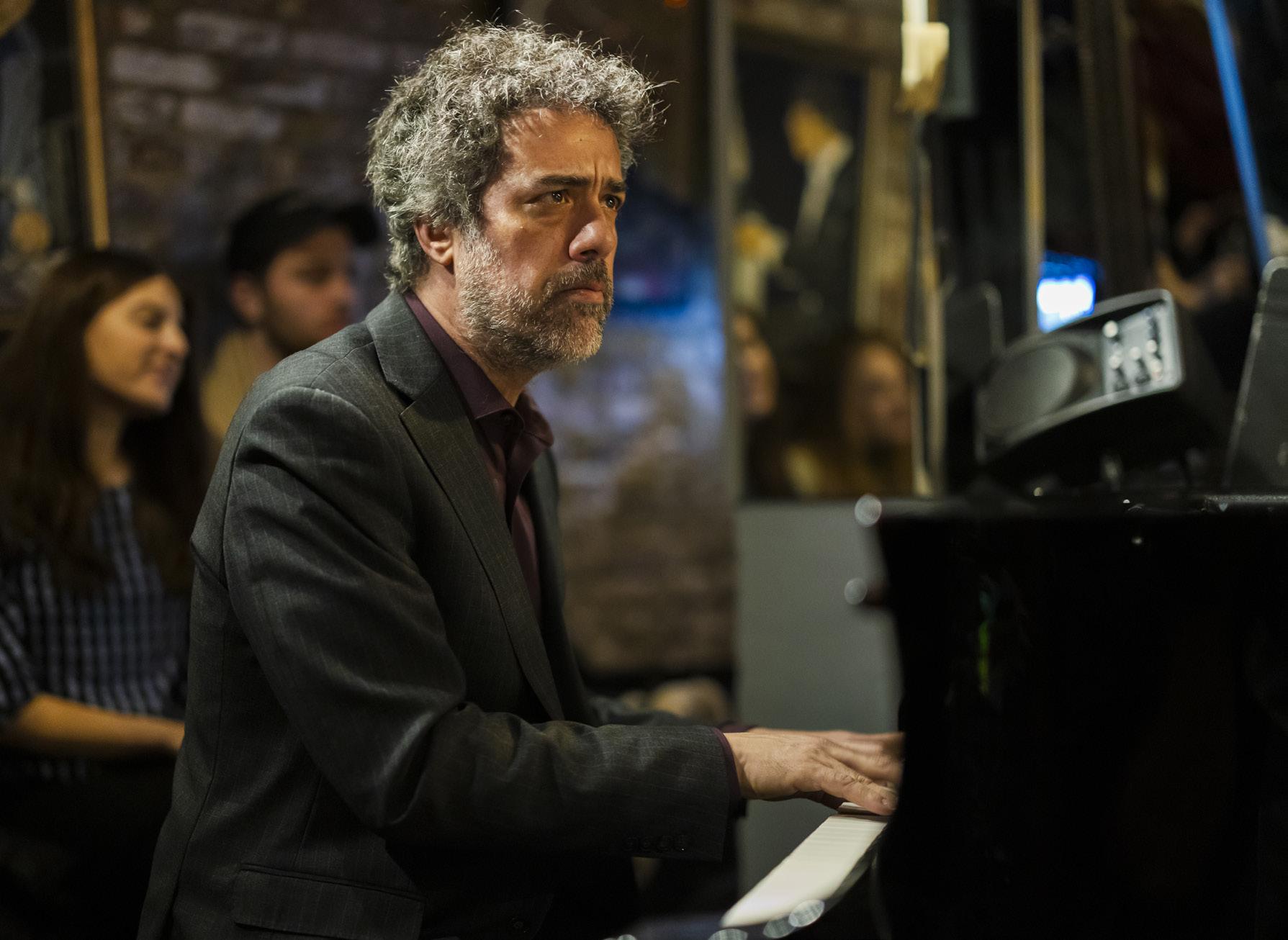
giving an understated force.
I found Jazzcultural to be very relaxed. The chairs and tables aren’t pushed together, giving customers the sense they are rehearsing for their next life as canned sardines. After the set, there’s the option to leave or hang at the bar. Following the second set, I spoke with a few artists before stopping at the bar. Upon leaving, I hung outside in front, talking to friends and meeting some new folks. This club, like Spike’s Smalls and Mezzrow, will be the new hangout for jazz folks. “Spike has picked up the ball for NYC jazz; he has a jazz reality that the other club owners lack,” said Wyatt.
Unlike most NYC jazz clubs, the room isn’t cleared out for each set, which allows for a friendly socializing atmosphere. Most of the crowd that evening were real jazz heads, not many tourists — though of course that is sure to change given the location. SSShhhhh! I think the spirits of those smooth hipsters have made their way from the dark stages of “Swing Street” to the new digs here at Jazzcultural. This space was originally Swing 46, the home of live music and dancing, a sanctuary for musicians, swing dancing, and jazz fans. Do you suppose the spirits from both spaces have converged here to compare notes from beyond?
The raised platforms from the old dance hall had been removed, and the familiar Swing 46 bar remained. Spike demolished most of the old space and reimagined the back room as what he calls “almost like a theater,” as stated in w42st.com. Spike was familiar with the venue, having performed there on previous occasions.
When the building became available, he reached an agreement with owner John Akhtar, allowing him to make a clean break with a new lease and new liquor licenses.
Setting a new jazz standard, Jazzcultural will swing as a daytime cafe serving light-fare breakfasts, sandwiches, soups, and salads until 5 p.m. The jazz room will open at 7 p.m. No food will be served in the performance space, only in the cafe. That really does make a big difference — we have all been distracted in various clubs by scurrying servers taking orders and leaning over you. Food service will begin sometime during the end of April or mid-May. Like any creative artist, Spike thrives in the daring realm beyond structured jazz clubs with the same old format. His jazz clubs, Smalls and Mezzrow, have defied such goings on. Now all three have varied hours from breakfast and afternoon jam sessions to latenight sessions that run until 4 a.m. He presents at least two different
was performing with me in 2000 which is a result of my growing up with the Black Arts Movement and Amiri Baraka.”
Rachael drops dagger lyrics like “Hear the sound of justice/Among Just us/share this justice farther and farther than just us.” Black man you ain’t free/the fight has been nullified/wrongly imprisoning me I am free serving life infused with a few bars of “Lift Every Voice and Sing.”
The poet expressed “I write cause I can’t take it anymore/the melting pot is boiling over, it’s very hot.” As the words find solace in listeners’ hearts, Evans played invigorating improv piano. His deliberate rhythms called out, you can’t just sit. “Unfortunately, performers and writers don’t perform together as they once did but the art is coming back; that is why I invited my siblings to be a part of these performances.”
acts per night, enticing serious intergenerational audiences.
Spike seems to be creating a jazz dynasty as the only independent or corporate club owner with three New York City venues to his credit. He seems to be the only proprietor forging his own path, pushing jazz performances in new directions.
On April 9 - 12, Jazzcultural presents Gregory Hutchinson’s Kind of Now, two shows at 7 p.m. and 9 p.m., and David Gibson Quintet 10:3011:30 p.m. (4/9 only); Jason Marshall Quartet (4/10 - 11 only). For reservations, visit smallslive.com.
Pianist, composer, arranger, and exploring adventurer Orrin Evans recently blazed Birdland’s formalized jazz room with his conceptualized trio configuration of drummer Will Calhoun and guitarist Anthony Tweed. Together they played through blues, soul, Black power, and straight-up electronica. His brother, poet Todd Evans, and sister, spoken-word artist Racheal Maianno, were special guests.
There were no black berets, no clenched fists, but the message was clear: It’s nation time, time to build political awareness, and time to instigate change, understanding, and healing. “The message is always there, the idea of spoken word is something I will always push,” said Evans during a phone interview. “Sonia Sanchez
It was my first time hearing Evans sing, a beautiful ballad tinged with gospel blues dedicated to his mom, Frances Evans, who was an opera singer. “The message can scare people but the message needs to be told,” said Orrin. “Also realize that everyone isn’t ready to hear it. When honoring truth there’s a potential for tears.” The young lady sharing my table, a tourist from Europe, actually cried.
Orrin’s music references our times, agitated tyranny in the global streets, precipitated by someone called the president of the U.S. His Birdland performance served as a healing force, awareness of injustice that has never died, and Hope, moved forward with his positive music energy.
The pianist noted he’s been shaping fusion/electronics into his sound since 2004 with his project “Luvpark,” which featured a multi-dimensional large ensemble with Will Calhoun. “These are elements of performing I’ve been doing for a while. I have to remind myself to keep these things going,” said Orrin. “I knew Will would bring something that would fit. He speaks the same language regardless of what he uses — he speaks to the motherland Africa and that’s what I wanted.”
“This is precisely the time when artists go to work. There is no time for despair, no place for self-pity, no need for silence, no room for fear. We speak, we write, we do language. That is how civilizations heal.” — Toni Morrison.
Jazzcultural owner and pianist Spike Wilner. (William Brown photo)
so House Republicans can continue to say yes to ICE brutality.”
The usual funding for the DHS, which the TSA agency is under, expired on Feb. 14 as politicians fought over increasingly dangerous immigration enforcement. For months, there have been massive delays and TSA workers going unpaid.
JFK and LaGuardia security checkpoints have posted ICE agents, but they are doing very little to assist with actual screening functions.
Mental health
for Racial and Disability Justice, pointed to disparities covered in the findings ,ranging from diagnosis and outcome to police violence and incarceration.
“What we highlight in the report is that about half of all people killed by law enforcement had a disability, and Black people with mental health conditions are particularly vulnerable,” said Jensen. “In New York City alone, police have killed over 20 people experiencing a mental health crisis since 2015, with most of them being people of color. And then on the other end,
Bob Law
Continued from page 4
media imperative as preferred programming. In my view, the audience Law, Byrd, and Noble seem to target is composed of seriousminded African American adults…all were part of a generation of Blacks influenced by the Civil Rights and Black Power Movement.” And Burroughs singled out Law’s background as a community organizer and much more from his Ph.D. dissertation.
One of his most notable achievements as a community organizer was co-chairing the New York contingent of the historic Million Man March with Dr. Ron Daniels in 1995. Daniels, who spearheads the Institute of the Black World 21st Century, said of Law that “without a doubt, Bob Law was a towering figure in the history of Black talk radio. I call him the tall one. He had this unique style of posing a question and laying out solutions. I had the honor of hosting Night Talk before American Urban Radio Network decided to bring on the beloved Bev Smith. You can bet that in the ancestor realm, Bob will be organizing talks and Pan-African strategies.” He added that he was planning to have Bob on his show on WBAI, but didn’t hear back from him, noting that the fearless broadcaster was challenged by daily trips to dialysis.
“Bob Law changed my life,” said Fern Gillespie, a veteran publicist and journalist. “In 1981, after I had produced a high profile on talk radio shows at progressive WHUR in D.C. and New York’s WMCA, Bob asked me to pro-
“For over five weeks, TSA officers across the country showed up without being paid to ensure the safety of the flying public and our airports,” said Hydrick Thomas, president of the American Federation of Government Employees (AFGE) TSA Council 100, in a statement. “We have performed our duty. Unfortunately, Congress has failed to perform theirs. To leave Washington while tens of thousands of workers are going without pay shows a clear lack of respect for the essential employees tasked with keeping our nation safe.”
you see this in involuntary treatment and incarceration, with people of color disproportionately being incarcerated.
“This is exactly why these non-police community-rooted alternatives [that are] rights-respecting matter so much. The programs that we highlight, many were built by and for communities of color in direct response to this harm.”
Traditionally, similar case studies focus on the Gerstein Crisis Centre and Oregon’s CAHOOTS (which the report specifically avoids “because it has been widely covered elsewhere”). The state cites both as models through the Daniel’s Law task force, which examines how local New York governments can properly roll out non-police crisis re-
duce Vy Higginsen’s new morning talk show and music magazine. It was the first Black news talk/music wake-up show in NYC.”
Later, he tapped her to serve as AURN’s producer and to host the first nationally syndicated live Black talk show. “I’m glad I was able to interview Bob last year for Our Time Press. His voice was radio strong. He is a radio legend, may he rest in peace and power.”
During one of his closing remarks at the National Black Leadership Alliance, Bob stressed that Black sisters and brothers should not only push back against racism and white supremacy but also, to wage this struggle effectively, join our hands and minds to harness the strength and energy to bring about change. We must love each other, not hate each other, and that energy of love will empower us and bring about justice to end injustice.
State Sen. Cordell Cleare and New York Attorney General Letitia James were among those offering condolences for Law. “My heart is with the family and loved ones of Bob Law,” James wrote on Facebook. “Bob was a renowned radio talk show host and a tireless activist for the Black community, and his impact will continue to be felt for generations to come. May he rest in peace.” Law was preceded in death by his wife, Muntu.
Whether from a radio studio, a church vestry, as he did on many occasions at Abyssinian Baptist Church, or from Namaskar, his health food store, Bob’s voice was one of political clarity and unflinching resonance, and it is by no means stilled when you consider the thousands of voices now echoing his legend.
Small wins
President Donald Trump was forced to issue an executive order to get TSA agents paid as the busy travel season ramps up.
Thomas said some members have received back pay, although several have received incorrect pay amounts, missed overtime payments, and improper tax withholdings. As a result, many AFGE members still have piled up bills, interest, and late fees; have had their cars repossessed; and have seen their families thrown into disarray, he said.
“To say we are utterly disgusted and
sponse teams.
Several legal frameworks exist to keep mental health responses in check according to the report. The United States is signed onto, but has not ratified the CRPD. The international human rights treaty mandates governments approach people living with disabilities with “the same range, quality, and standard of free or affordable health care” as those without one. The World Health Organization also offers guidelines opposing involuntary treatment.
Beyond international human rights, the city’s mental healthcare practices also faces compliance concerns from NYLPI based on the United States Constitution, the Americans with Disabilities Act of 1990, and the
disappointed with our elected officials is an understatement. Congress must come back to Washington, fix this crisis, and stop putting politics over people and vacation over values,” said Thomas.
The U.S Senate also voted on March 26 to fund all of the DHS through the end of the fiscal year with the exception of ICE and CBP.
“This long-overdue agreement in the Senate to pass funding for TSA allows Congress to continue to work on necessary reforms to ICE and CBP. The House must now pass this bill,” said Public Citizen Copresident Lisa Gilbert in a statement.
city’s own anti-discrimination guidelines.
The law firm currently represents plaintiffs in Baerga v. City of New York, which accuses the city of violating such rights by deploying police to mental health calls while assigning healthcare professionals to other medical emergencies.
“People get killed while they’re having a mental health crisis and I always think about when someone’s having a heart attack — we send out EMTs and not police officers,” said Juhn. “Because police officers are simply not trained to do the job. Why is it that when we have a mental health crisis we send out police officers instead of mental health workers who are actually trained to do the job?”
Moby Dick


DÜSSELDORFER SCHAUSPIELHAUS
MUSIC BY ANNA CALVI
DIRECTION, DESIGN AND LIGHTING BY ROBERT WILSON APR 29 — MAY 3
Education
Amid ‘massive shortfall’ of school safety officers, NYPD deploys assistant agents as young as 18
By ALEX ZIMMERMAN Chalkbeat
This story was originally published by Chalkbeat. Sign up for their newsletters at ckbe.at/newsletters
Walk into a New York City public school, and you may be greeted by a police official who is not old enough to buy cigarettes or order a drink.
That’s because the Police Department has deployed 114 assistant school safety agents as young as 18 and fresh out of high school to patrol the city’s elementary schools, city officials confirmed this week.
The assistant agents are responsible for answering phones, operating recently installed video intercoms, greeting visitors, and helping identify people “violating New York City Public Schools rules and regulations,” according to the job description. The position pays $37,339 a year, about $2,000 more than minimum wage.
First announced in 2023, the program was slow to get off the ground. It has also faced sharp criticism from dozens of education advocates who oppose police presence in schools and tried to convince former Mayor Eric Adams to drop the program.
City officials hope the assistant agents will help replenish the ranks of school safety officers, who wear police uniforms but are unarmed. Including the new crop of assistant school safety agents, there are nearly 3,600 police officials stationed in the city’s schools, down from 5,000 or about 28% over the last six years. The decline has been fueled by attrition during the pandemic connected to the COVID vaccine mandate, low wages, and moves by Adams not to restaff the division.
School leaders have raised alarms that the drop in school safety agents has compromised safety. It’s also caused delays in getting to class since the agents are responsible for operating metal detectors on campuses that require students to be screened before entering the building.
“We are experiencing a massive shortfall,” Mark Rampersant, the education department’s safety chief, said at a City Council hearing this week.
Kevyn Bowles, principal of New Bridges Elementary School in Brooklyn, initially feared that an assistant safety agent might not have the emotional maturity to respond to conflict or high-stress situations. After his school was assigned one, though, he changed his mind. “Schools are stretched, so any extra help is beneficial and appreciated,” Bowles said.

The assistant agent largely supervises the front desk and buzzes people in, freeing up the other agent to respond to behavioral crises or safety issues. In the past, a school staff member would have to cover the front desk if the school’s sole safety agent was responding to an incident or on a lunch break.
“She’s very calm, professional, respectful — maybe I shouldn’t have doubted the 19-year-olds of the world,” Bowles added of his school’s assistant safety agent.
Still, a range of education advocates and civil rights groups have raised concerns about the new role and argue that the city should focus more on staffing up mental health support and using alternative approaches to conflict resolution.
Johanna Miller, director of the education policy center at the New York Civil Liberties Union, emphasized that the assistant agents receive about eight weeks of training, which
is less than half of what regular agents receive.
“We’re concerned about poorly trained NYPD officers in elementary schools,” Miller said. “There are a lot of people who could be qualified to watch a door without having a direct line to the NYPD and the potential for children to be arrested.”
A police department spokesperson did not respond to questions about the assistant agents’ training.
Officials noted that major crimes in schools have fallen 9% so far this school year compared with last year, and school arrests are down about 10%. As part of a reorganization of the school safety division, staff who previously held administrative positions were deployed to schools.
It remains to be seen whether the assistant agents will make a dent in the city’s efforts to restaff the school safety division. The 114 assistant agents assigned to
schools are far below the 400 agents the Police Department was originally approved to hire. (Officials did not respond to a question about what the current target is.)
Rampersant said officials are visiting high schools and parent association meetings to advertise the program to get more recruits, but that low wages remain a sticking point for all school safety agent roles; starting salaries for other law enforcement agencies are significantly higher.
“When you are a school safety agent [and] you [would] rather work in a correctional facility than a school, right? — That’s really telling,” Rampersant said.
Alex Zimmerman is a senior reporter for Chalkbeat New York, covering NYC public schools. Contact Alex at azimmerman@chalkbeat.org. Chalkbeat is a nonprofit news site covering educational change in public schools.
After years of delays, New York City has deployed 114 assistant school safety agents to elementary schools to combat shortfall in school security staff. (Christina Veiga/Chalkbeat)
Religion & Spirituality
In New York, faith-based groups prepare for ICE pushing farther into city
By ARIAMA C. LONG Amsterdam News Staff
The contentious U.S. deportation system has long been criticized for its disproportionate impact on Black and Brown immigrants. In the 1980s, an interfaith social justice movement emerged to protect undocumented refugees across the U.S. This effort drew its inspiration from the Underground Railroad, the extensive abolitionist network that helped enslaved Africans escape bondage, and became the basis of current sanctuary cities nationwide.
The current opposition to President Donald Trump’s wielding of U.S. Immigration and Customs Enforcement (ICE) has only continued in recent weeks, as protesters once again took to the streets for another ‘No Kings’ Day demonstration on March 28.
This is especially apparent for thousands of travelers who have had to uneasily deal with ICE agents stationed at airports amid the partial government shutdown over Department of Homeland Security funding. All this as the number of deaths in immigration detention centers or while in ICE custody is markedly increasing.
The fight against ICE
On the ground in New York City, faithbased organizations have been doggedly preparing for a similar “incursion” of ICE and federal law enforcement, as seen in Minnesota. Protestors continue to speak out against the “state-sanctioned” shootings of Alex Pretti and Renee Nicole Good. Their demonstrations also remember others who have died at the hands of ICE agents over the past year, including Keith Porter in California and Silverio Villegas González in Illinois.
“People’s lives are already on the line,” said Rev. Dr. Chloe Breyer, executive director at the Interfaith Center of New York. “I think the idea that we are exempt from the hate and cruelty that’s out there because we’re people of faith is quite the opposite. The calling we have to try and stand up, and stand with the vulnerable in our community…we are not guaranteed that we won’t be betrayed.”
Breyer said, while circumstances are different from the 1980s movement, it’s clear that the Underground Railroad models being used to protect immigrants are alive and well. The Interfaith Center is strongly advocating for the passage of the New York 4 All Act, which is legislation that would stop the collusion between local cops and
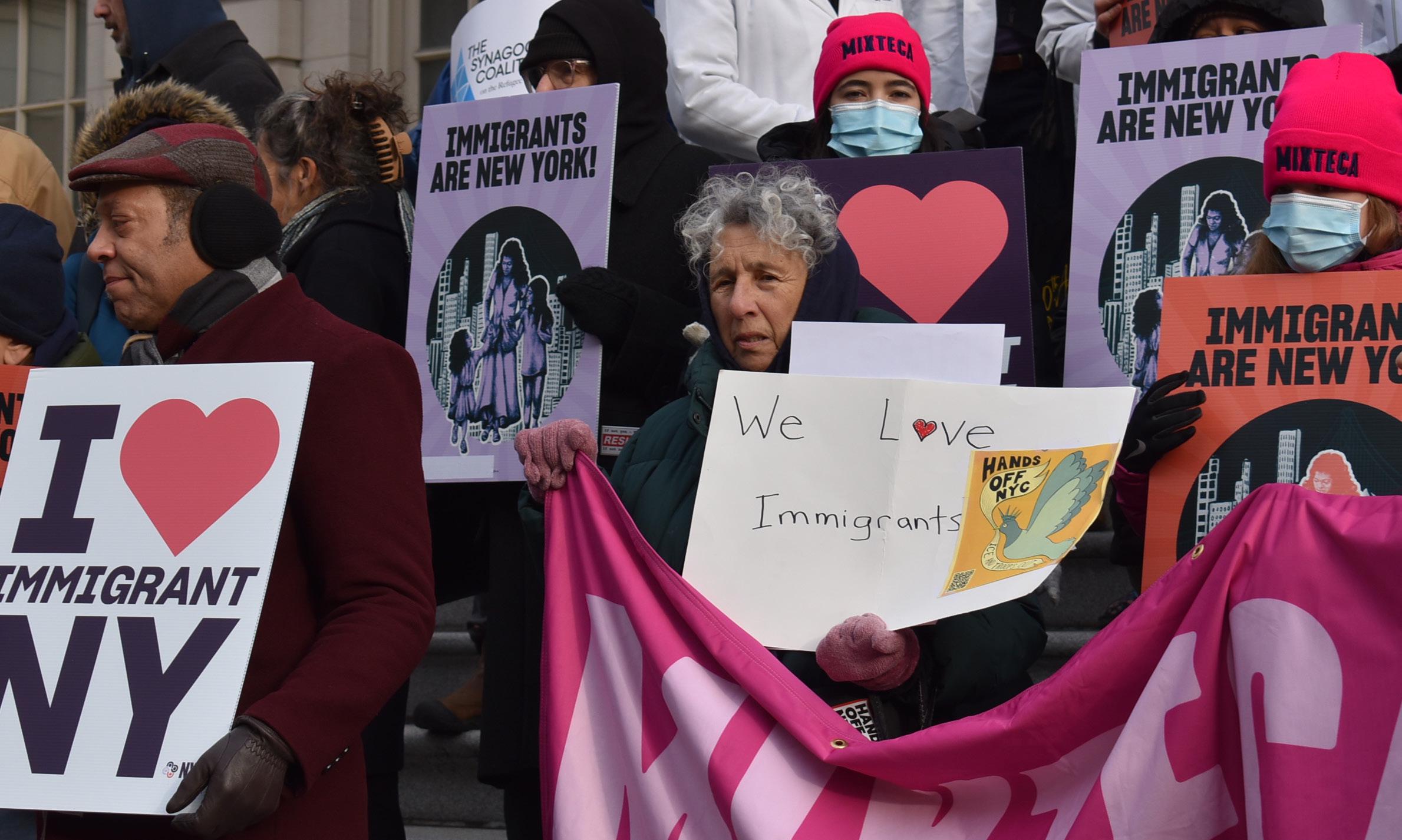
ICE. This would extend the sanctuary declaration across New York as opposed to just a handful of counties.
“Faith communities are stepping up in real and tangible ways to support our immigrant neighbors, continuing a long tradition of faith-based solidarity and immigrant justice. They are hosting Know Your Rights trainings, building rapid response networks, and opening their doors as spaces of safety, care, and connection,” said Councilmember Shahana Hanif, who was born to Bangladeshi parents and is the first Muslim woman to be elected to the council.
Hanif recently hosted an interfaith immigration summit at a local synagogue to share resources for houses of worship against ICE. “In the face of fear and uncertainty, our faith leaders are choosing to organize, protect, and show up for one another,” she continued. “This is what solidarity looks like today, and it is how we build a city where every New Yorker can live with dignity and security.”
Rt. Rev. Matthew F. Heyd, 17th Bishop of the Episcopal Diocese of New York, added in a statement: “From vigils, to funding legal defense efforts, to calling on our lead-
ers to stand up to federal immigration authorities, we are dedicated to creating safety and reclaiming our shared humanity with our immigrant communities. In this time of increasing fear and chaos, we remain steadfast in the belief that human dignity is non-negotiable.”
New York City as a ‘Sanctuary’
Ellis Island and the Statue of Liberty famously welcomed over 12 million mostly European immigrants from 1892 to 1954. But in New York City’s 400-year history, it has always been home to immigrants of all kinds, going all the way back to before its founding in the 17th century. Now, Mayor Zohran Mamdani, an immigrant himself, has vowed to protect fellow immigrant New Yorkers.
While there isn’t a legal designation for NYC as a sanctuary when it comes to undocumented immigrants, there are several policies in place that aim to provide public services regardless of immigration status and limit cooperation with federal immigration officers. These policies mean federal officers are banned from certain spaces, like houses of worship, schools, and city hospitals, and aren’t supposed to enter pri-
vate spaces without a judicial warrant. Unfortunately that leaves many vulnerable to detainment in certain areas, like the federal courthouse in Manhattan or during ICE check-ins.
The city also has a right-to-shelter law, enacted under the Callahan vs. Carey consent decree in 1984, that essentially established the five boroughs as a “sanctuary for the unhoused.” Republican-led states put thousands of migrants and asylum seekers on buses and flights to cities with these types of laws as a political stunt in 2022.
“So when the buses [with migrants and asylum seekers] first started arriving at Port Authority, it was really the groups on the ground that were meeting them. We began to try to resource,” said Breyer. She added that her organization mobilized against anti-immigrant rhetoric during Trump’s first term in 2016.
The right to shelter law faced significant challenges due to the influx of new arrivals from several countries, since it was interpreted that those arriving qualified for the same services as the city’s existing homeless population. Former Mayor Eric Adams
A crowd of immigrant advocates gather in front of NYC City Hall ahead of a council hearing on immigration on Monday, Dec. 8, 2025. (Ariama C. Long)
Health
HBCU attendance may be linked to Black alumni brain health
By JENNIFER PORTER GORE Word in Black
Middle-aged and aging alumni of the nation’s Historically Black Colleges and Universities (HBCUs) could very well be reaping health benefits decades later, according to a recent study.
Researchers examined a sample of 1,978 Black American adults who attended college between 1940 and 1980, 35% of whom had attended an HBCU. The study also examined college attendees who had also attended high school in a state with an HBCU.
The study, published on the JAMA Network Open website, found that “HBCU attendance was associated with better cognition compared with PWI attendance for aging Black adults.” The study also found the positive outcome held for those attending college before and after the landmark Brown v. Board of Education ruling ending racial segregation in schools. Data for this recent study came from the Reasons for Geographic and Racial Differences in Stroke study, which recruited Black and white adults aged 45 years and older from 2003 to 2007. A total of 56% of the Black par-
ticipants lived in the nation’s Stroke Belt — the eight Southern states that have a higher than average number of stroke deaths.
Better memory, language, and overall cognition
The study finds that HBCU alumni outperformed their peers from predominantly white institutions in memory, language, and overall cognition decades later.
The alumni were in school during the 1954 Supreme Court’s Brown v. Board of Education ruling, as well as during and after the passage of the 1964 Civil Rights Act, which effectively ended legal racial discrimination in the nation’s schools.
“HBCU attendees had better cognition across all three of those different time periods,” Dr. Marilyn Thomas, an assistant professor of medicine at the University of California, San Francisco, said in an interview with The Guardian.
Black adults aged 62 who had attended an HBCU had better memory and cognitive function than those who attended a predominantly white institution.
There are indications that having a college education may reduce the risk of de-
veloping Alzheimer’s disease and related dementias — also called ADRD. But there are still disparities in the rate of cognitive diseases between Black and white collegeeducated individuals. More than 7 million Americans are living with ADRD. More than 60% of them are women, and Black Americans are at least twice as likely to develop Alzheimer’s as whites. Alzheimer’s is currently the seventh leading cause of death for all Americans.
Segregation-ending policies may affect brain health long term
Dr. Thomas and co-authors from Rutgers University, the University of Alabama-Birmingham, Columbia University, Boston University, and Harvard University conducted this study to see if there were different outcomes between HBCU graduates and graduates of predominantly white institutions. It appears that when or how participants were exposed to “state-sanctioned racialized education policies” affected the students later in life.
This “exploratory” study is the first of its kind since this one specifically looked at the schools’ environments, while previous
studies examined how the number of years of schooling affects cognition. Thomas describes the study as a “first step,” so it’s likely further studies will be needed to see if other scenarios have affected the alumni. For example, someone who received a bachelor’s degree from a predominantly white institution for undergraduate school, but then attended an HBCU for graduate school, may have a different outcome.
“There’s a growing body of evidence demonstrating that those years of schooling differently impact people by race,” Thomas said. Instead of measuring how many years the participants attended college, this study examined whether attending an HBCU for any length of time was associated with a positive outcome.
“What’s really important about this finding is that it suggests that, yes, culturally affirming spaces actually can help promote and protect cognitive health,” Thomas said. “It’s even more than that because it doesn’t just demonstrate that it’s protective against cognitive health, but the benefits to this exposure last well beyond graduation – these are people at [a] mean age [of] 62. These benefits are long-lasting.”


Continued from page 5
credits figures like Harlem leader Jackie Rowe Adams as longtime mentors and inspirations.
Born and raised in Harlem, Cornelius has lived in the same apartment for almost all of her life. Her building at 110th and 7th Avenue is a Housing Development Fund Corporation (HDFC), of which she is a coowner. At one point, she served as president of her building. Her mother, Azeeza Hurston, was a prominent tenant activist and responsible for turning the building into an HDFC.
Cornelius attended the Harlem School of the Arts and LaGuardia High School. As a child, she was also involved in helping to feed the homeless. She was soon connected to the NAACP through the ACT-SO youth program, eventually becoming Youth Council president, a national board member, and president of the Mid-Manhattan branch. She graduated from City College, where she also founded its NAACP chapter.
As district manager for CB10 in the mid 2000s, Cornelius was able to bring resources directly to community members. In 2016, she was elected as a New York State Assembly Committee member for Harlem’s 70th District.
Professionally, Cornelius worked in community and real estate development with the Local Initiative Support Corporation and the L&M real estate firm, where she created and led the Community Affairs Department. She left that role in 2024 to focus on supporting Ajani, 23, through his pre-draft transition process. It was around
this time that she founded the nonprofit after connecting with several other parents and feeling there was a need for support.
“We focus on making the student-athletes prepared, not just physically, but academically, mentally, and emotionally, and that their families feel equipped to support them,” Cornelius said about 2 Sports Moms. They work with student athletes ages eight to 21 and their families, provide mentorship, and other opportunities and guidance about how to navigate decisions on the field and beyond.
“It’s always great when that athlete is doing well, but what happens when something occurs, when that game is lost, or if there is an injury — how do you support that athlete … how do you handle big moments?” Cornelius asked.
To Cornelius, active parenting is important in supporting whatever their children’s interests are.
“There were times we didn’t have all the answers, but we kept moving, learning, and advocating in real time,” she said. "[Ajani's] journey has been inspiring, not just because of where he is, but because of the discipline, the resilience, and commitment it took to get there. He showed me what it looks like to stay ready and rise to the moment.”
Cornelius also celebrates her older son, Tchiyuka, 26, who has followed her footsteps into property management.
“I’ve raised two young men who took different paths, but the same blueprint carried them … in knowing who they are, and that’s why this work matters to me,” Cornelius said. “They both had their own paths, but I was so proud of both of them and where they landed.”
Interfaith
Continued from page 27
was determined to modify and repeal rightto-shelter in 2023.
1980s Faith-Based Sanctuary Movement
Breyer is a firm believer that providing sanctuary, which in the biblical sense meant refuge in a church, is a key component of immigrant justice as well as a principle of most religions.
“For me, sanctuary is something that is the cornerstone, not only of Christianity, where we have a long tradition of offering safe haven to people, but also across faith traditions,” said Breyer. “This notion of it being close to hospitality…the sense that we are called to be responsible for our neighbors and for the stranger.”
This idea of a safe haven for the vulnerable as the core of religious activism was most encapsulated in the 1980s Sanctuary Movement. The movement started in 1981 under former President Ronald Reagan. It began with a few primarily Hispanic-led churches in western states, like Arizona and California, that took in illegal refugees fleeing violent civil wars from their home countries in El Salvador and Guatemala. At the time, the U.S had the Refugee Act of 1980 in place.
“Offering unsanctioned refuge, however, amounted to, let's be clear, civil disobedience since harboring and transporting undocumented immigrants violated federal law,” said Lloyd D. Barba, assistant professor of Religion and core faculty in Latinx and Latin American Studies at Amherst College. By 1985, over 500 churches and synagogues were active members of the sanctuary network. Institutions like La Iglesia de Nuestra Señora la Reina de Los Ángeles, or The Church of Our Lady the Queen of the Angels, in Los Angeles, provided shelter to refugees who were threatened with deportation. Santa Barbara became a sanctuary stronghold for refugees with local groups, like the Jewish Congregation B'nai B'rith and the Unitarian Society, pushing back against federal authorities.
The New ‘Underground Railroad’
Frustrated with how massive the Sanctuary Movement had become, the government sent U.S Immigration and Naturalization Service and FBI spies to infiltrate churches in a ten-month investigation called Operation Sojourner. This led to the sanctuary trials of 1985 and 1986 in which eight organizers were convicted, said Barba.
In response, the sanctuary network came to be known as the “overground railroad” or the new underground railroad. Despite the risk of arrests and convictions, organizers created the “Freedom Train” or a caravan of safe houses and churches hiding Central American refugees, moving them towards Canada through the Midwest, Chicago, and Vermont. Sometimes refugees would change their identities, said Barba.
“Many within the sanctuary movement understood the English Americas to be a
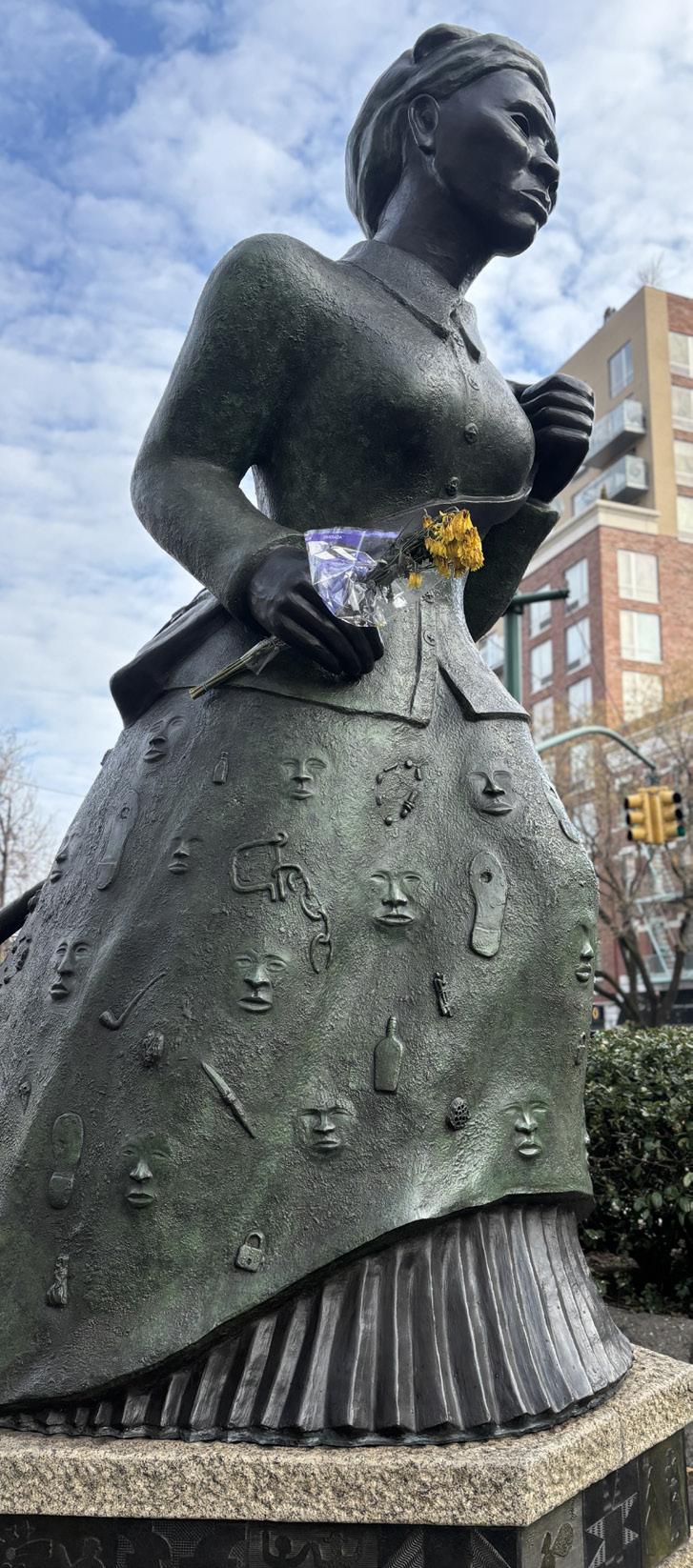
land of sanctuary,” said Barba, in his talk at the University of California, Santa Barbara in 2025. “A place to flee from every form of oppression and persecution. No precedent in American history evoked such inspiring stories of sanctuary as did the 19th-century underground railroad for fugitive slaves.”
The Sanctuary Movement also used the images of civil rights and religious figures, like El Salvadoran Archbishop Óscar Romero, who was assassinated while offering mass at a hospital in 1980.
Eventually, houses of worship began housing asylum seekers and hoping to sway public opinion, often by encouraging those seeking sanctuary to speak publicly about their experiences to congregations. “The sanctuary movement after all had no legal basis upon which to declare sanctuary,” said Barba. “Houses of worship became protective spaces as both a threat was ritually identified in the testimonios, [those who testified to human rights violations], and a sacred demarcation was pronounced in the sanctuary declaration. … Refugees made clear why their stories needed to be told.”
Los Angeles was the first city to pass a sanctuary policy in 1979. As did Berkeley and San Francisco in 1985, in a “landmark resolution that became the basis for many other Sanctuary City declarations.” More recently, California declared itself the first “Sanctuary State” in 2017, as forceful deportation of the undocumented and anti-immigrant rhetoric over the next several decades continued.
Harriet Tubman Memorial located in Harlem. (Ariama C. Long)
Brown, the main ‘first’ or ‘Parlor’ floor was made into the couple’s apartment, replete with leaded casement windows. The toptwo floors were devoted to income-producing “efficiency” apartments. Modern, well-equipped and up to date, they were always much sought after.
Geraldyn Dismond reported on the Harlem social and artistic scene in The Inter-State Tattler. It was a brilliant Black journal with subscribers nationwide, a combination of Town and Country, Fortune, and Vanity Fair. Keeping up a fast-paced social life, Dismond was always careful to document herself and her mate at the shindigs she covered. She was ‘Lady Nicotine’ and he, ‘The Night Hawk.’ As popular in Greenwich Village as they were uptown, the Dismonds were part of a social movement of whites and Blacks who enjoyed each others’ company in defiance of convention.
Any New York visitor and many prominent downtown residents like Cary Grant, Gertrude Vanderbilt Whitney, and Barbara Hutton, flocked to Harlem after seeing Eubie Blake’s hit Broadway musical, “Shuffle Along.” A much larger number of people unfamiliar with Harlem, learned all about its special charms, reading what Geraldyn Dismond wrote. The following lines appeared in 1929:
“The greatest joy in life is to be able to express one’s inner self. The second greatest joy is to be able to mingle with one’s kind. The third greatest joy is to receive the plaudits of one’s fellows. And thereby hangs the success of the Hamilton Lodge dances which for sixty-one years have thrilled and entertained the most blasé of New York … gowns of all descriptions, jewels, feathers and beauty beyond words. But above and over all, a spirit of abandon, hilarity and camaraderie that fired the imagination and made for a true fiesta. Of course, a costume ball can be a very tame thing, but when all the exquisitely gowned women on the floor are men and a number of the smartest men are women, ah then, we have something over which to thrill and grow round-eyed … Never no wells of loneliness in Harlem…”
Besides writing a column in the Tattler, Dismond also served as the magazine’s managing editor. In addition to this, she wrote for the Amsterdam News, The Pittsburgh Courier, and other African-American weekly newspapers. She was also a radio announcer and the first African-American woman to host her own regular program. “The Negro Achievement Hour,” broadcast on WABC, later appeared on other area stations. Childless, as a journalist, editor, newscaster, publicist, public health official, author, and community leader, Dismond’s life never lacked for excitement.
A dedicated fashion plate, Dismond liked to patronize creative young Black designers like milliner Willard Winter and couturier Stefan Young, aka ‘Stefan’! A personal fashion statement that announced her approach with every step, was a golden charm
with countless miniature charms that documented her love of world travel. Dismond, who unloaded her philandering first husband in 1933, just before he married one of their friends and tenants, married twice more. Interviewed by David Levering Lewis for his groundbreaking book, “When Harlem was in Vogue,” indicative of some of the tactics she must have employed to nail a story, she asked, “How much do you pay?” She also confessed, “If only I’d traveled to West Africa where men practice polygamy, before marrying my first husband, I’d have understood him better.”
Nuptials with New Jersey mortician John Richard Major, her third and final husband, took place in Buenos Aires just after World War ll. Assuming her husband’s surname (which she also had while married to Stirling Holland) was how she became Gerri Major.
Disaffected by America’s political parties, as early as 1928 she declared in the Pittsburgh Courier: “I do not see how any intelligent, self-respecting Negro can support either [party]…” Both were condemned for upholding, “the practices of Jim-Crowism, disenfranchisement, and race discrimination by which Negroes are degraded and oppressed.” So for a time Major admired American communism. In due course however, as the nation’s bicentennial approached, she would revert to Democratic activism.
Major remained an inveterate reporter all her life. Society editor for the still published Ebony and Jet magazines, she covered everything from the coronation of Queen Elizabeth ll, to the active love life of Eartha Kitt. In 1977, she wrote a nostalgic illustrated book with Doris E. Saunders that naturally included her own family, “Black Society.” In 1984, Major died in Harlem.

bracelet
Harlem’s Renaissance man, Dr. H. Binga Dismond. (Author’s collection)
CLASSIFIED ADS
RULES AND REGULATIONS
CANCELLATIONS must be made in writing by 12 Noon Monday.
The forwarding of an order is construed as an acceptance of all advertising rules and conditions under which advertising space is sold by the NEW YORK AMSTERDAM NEWS. Publication is made and charged according to the terms of this card.
Rates and regulations subject to change without notice. No agreements as to position or regulations, other than those printed on this.
Til forbid orders charged for rate earned. Increases or decreases in space take the rate of a new advertisement.
The New York AMSTERDAM NEWS reserves the right to censor, reject, alter or revise all advertisements in accordance with its rules governin g the acceptance of advertising and accepts no liability for its failure to insert an advertisement for any cause. Credit for errors in advertisements allowed only for first insertion.
CLASSIFIED
• Classified advertisements take the regular earned rate of their classification. Four line minimum on all ads except spirituals and horoscopes (14 lines).
CLASSIFIED DISPLAY
• Classified Display (boarder or picture) advertisements take the regular earned rate of their classification. Display (boarder or picture) advertisements one column wide must be 14 lines deep; two columns, 28 lines deep; 3 columns, 56 lines deep. Classified Display (boarder or picture) placed as close to classifications as rules and makeup permit.
CLASSIFICATIONS
All advertisement accepted for publication is classified according to the standard classifications. Misclassification is not permitted.
BASIS OF CHARGE
Charges are based on point size and characters per line. Upon reaching 15 lines the rate converts to column inch. Any deviation from solid composition such as indentation, use of white space, bold type, etc., will incur a premium.
Notice of Qualification of NEUBERGER BERMAN LOAN ADVISERS EUROPE II LP Appl. for Auth. filed with Secy. of State of NY (SSNY) on 02/19/26. Office location: NY County. LP formed in Delaware (DE) on 06/26/25. Princ. office of LP: 1290 Ave. of the Americas, NY, NY 10104. NYS fictitious name: NEUBERGER BERMAN LOAN ADVISERS EUROPE II L.P. Duration of LP is Perpetual. SSNY designated as agent of LP upon whom process against it may be served. SSNY shall mail process to the Partnership at the princ. office of the LP. Name and addr. of each general partner are available from SSNY. DE addr. of LP: 251 Little Falls Dr., Wilmington, DE 19808. Cert. of LP filed with Secy. of the State of DE, Div. of Corps., John G. Townsend Bldg., 401 Federal St., Ste. 4, Dover, DE 19901. Purpose: Any lawful activity.
Notice of formation of IRVING GOODS, LLC. Articles of Organization filed with the Secretary of State of NY (SSNY) on 02/02/2026. Office location: New York County (Manhattan). SSNY designated as an agent of Limited Liability Company (LLC) upon whom process against it may be served. SSNY should mail process to ERESIDENTAGENT, INC. : 1 ROCKEFELLER PLAZA, SUITE 1204 NEW YORK, NY, 10020, USA. Purpose: Any lawful purpose.
Notice of formation of Atelier ADW, LLC. Articles of Organization filed with the Secretary of State of NY (SSNY) on 02/24/2026. Office location: New York County (Manhattan). SSNY designated as an agent of Limited Liability Company (LLC) upon whom process against it may be served. SSNY should mail process to ERESIDENTAGENT, INC. : 1 ROCKEFELLER PLAZA, SUITE 1204 NEW YORK, NY, 10020. Purpose: Any lawful purpose.
Notice of formation of Emerson Rose Properties LLC. Articles of Organization filed with the Secretary of State of NY (SSNY) on 01/29/2026. Office location: Kings County (Brooklyn). SSNY designated as an agent of Limited Liability Company (LLC) upon whom process against it may be served. SSNY should mail process to Michael Emerson Ryan : mike@emersonroseny.com. Purpose: Any lawful purpose.
Notice of Formation of TH135 LLC Arts. of Org. filed with Secy. of State of NY (SSNY) on 03/12/26. Office location: NY County. SSNY designated as agent of LLC upon whom process against it may be served. SSNY shall mail process to Corporation Service Co., 80 State St., Albany, NY 122072543. Purpose: Any lawful activity.
Notice of Qualification of Four Seasons Promos, LLC. Certificate of Authority filed with Secretary of State of NY (SSNY) on 02/06/2026. Office location: New York County (Manhattan). Limited Liability Company (LLC) formed on 03/31/2017. SSNY designated as agent of Limited Liability Company (LLC) upon whom process against it may be served. SSNY shall mail process to Botwinick & Company, LLC: 365 W. Passaic Street Rochelle Park NJ 07662. Articles of Organization originally filed with Secretary of State (SOS). 40 E. 80th St. NYC NY 10075 Purpose: Any lawful purpose.
Notice of Qualification of GUAPO MEDIA, LLC. Certificate of Authority filed with Secretary of State of NY (SSNY) on 01/30/2026. Office location: New York County (Manhattan). Limited Liability Company (LLC) formed on 01/29/2026. SSNY designated as agent of Limited Liability Company (LLC) upon whom process against it may be served. SSNY shall mail process to eResidentAgent, Inc: 1 Rockefeller Plaza, Suite 1204, New York, NY 10020. Articles of Organization originally filed with Secretary of State (SOS). 401 Federal Street, Suite 4, Dover, DE,19901 Purpose: Any lawful purpose.
Notice of formation of Hawkes Fine Art LLC. Articles of Organization filed with the Secretary of State of NY (SSNY) on 01/25/2026. Office location: New York County (Manhattan). SSNY designated as an agent of Limited Liability Company (LLC) upon whom process against it may be served. SSNY should mail process to United States Corporation Agents, Inc.: 7014 13th Ave, Suite 202, Brooklyn, NY 11228. Purpose: Any lawful purpose.
NOTICE OF FORMATION OF Bray & Yaffe LLP Articles of Organization filed with the Secretary of State of NY (SSNY) on March 5, 2026. Office Location New York County. SSNY has been designated as agent upon whom process against it may be served. The Post Office address to which the SSNY shall mail a copy of any process against the LLP served upon him/her is: 119 West 23rd Street, Suite 900 New York, NY 10011.The principal business address of the LLP is 119 West 23rd Street, Suite 900 New York, NY 10011. Purpose: Law
Notice of formation of Social Atlas Media LLC. Articles of Organization filed with the Secretary of State of NY (SSNY) on 02/10/2026. Office location: New York County (Manhattan). SSNY designated as an agent of Limited Liability Company (LLC) upon whom process against it may be served. SSNY should mail process to United States Corporation Agents, INC. : 7014 13th Avenue, Suite 202, Brooklyn, NY, 11228. Purpose: Any lawful purpose.
Notice of Qualification of ESPN CLASSIC, LLC Appl. for Auth. filed with Secy. of State of NY (SSNY) on 02/06/26. Office location: NY County. LLC formed in Delaware (DE) on 09/16/96. SSNY designated as agent of LLC upon whom process against it may be served. SSNY shall mail process to Corporation Service Co. (CSC), 80 State St., Albany, NY 12207-2543. DE addr. of LLC: c/o CSC, 251 Little Falls Dr., Wilmington, DE 19808. Cert. of Form. filed with Secy. of State, John G. Townsend Bldg., 401 Federal St., Ste. 4, Dover, DE 19901. Purpose: Any lawful activity.
Notice of Qualification of ESPN ENTERPRISES, LLC
Appl. for Auth. filed with Secy. of State of NY (SSNY) on 02/06/26. Office location: NY County. LLC formed in Delaware (DE) on 03/15/89. SSNY designated as agent of LLC upon whom process against it may be served. SSNY shall mail process to Corporation Service Co. (CSC), 80 State St., Albany, NY 12207-2543. DE addr. of LLC: c/o CSC, 251 Little Falls Dr., Wilmington, DE 19808. Cert. of Form. filed with Secy. of State, John G. Townsend Bldg., 401 Federal St., Ste. 3, Dover, DE 19901. Purpose: Any lawful activity.
Notice of Qualification of ESPN SALES & MARKETING, LLC
Appl. for Auth. filed with Secy. of State of NY (SSNY) on 02/06/26. Office location: NY County. LLC formed in Delaware (DE) on 08/06/98. SSNY designated as agent of LLC upon whom process against it may be served. SSNY shall mail process to Corporation Service Co. (CSC), 80 State St., Albany, NY 12207-2543. DE addr. of LLC: c/o CSC, 251 Little Falls Dr., Wilmington, DE 19808. Cert. of Form. filed with Secy. of State, John G. Townsend Bldg., 401 Federal St., Ste. 4, Dover, DE 19901. Purpose: Any lawful activity.
Notice of Formation of FORTUNE AND GLORY LLC Arts. of Org. filed with Secy. of State of NY (SSNY) on 03/13/26. Office location: NY County. Princ. office of LLC: 509 E 83rd St., #3W, NY, NY 10028. SSNY designated as agent of LLC upon whom process against it may be served. SSNY shall mail process to Corporation Service Co., 80 State St., Albany, NY 12207-2543. Purpose: Any lawful activity.
Neinstein Consulting LLC filed w/ SSNY 2/1/26. Off. in NY Co. Process served to SSNYdesig. as agt. of LLC & mailed to the LLC, 1 Central Park S PH 2011, NY, NY 10019. The reg. agt. is United States Corporation Agents, Inc., 7014 13th Ave, Ste. 202, Brooklyn, NY 11228. Any lawful purpose.
Application for Authority of APG Six Int LLC filed with the Secy. of State of NY (SSNY) on 2/20/2026. Formed in DE on 2/19/2026. Office loc.: NY County. SSNY is designated as agent of LLC upon whom process against it may be served. The address SSNY shall mail copy of process to 379 Thornall St., Fl. 9. Ste. 9, Edison, NJ 08837. The office address required to be maintained in DE is 919 N. Market St., Ste. 425, Wilmington, DE 19801. Cert. of formation filed with the DE Secy. of State, 401 Federal St., Ste. 4, Dover, DE 19901. Purpose: Any lawful activity.
Notice is hereby given that Application ID Number NA-034025-126099 for a On-Premises Restaurant license has been applied for by the undersigned to permit the service of beer, wine and spirits in a restaurant under the Alcoholic Beverage Control Law at Venue42 located at 5 Times Square, Floor 4, New York in New York County for on-premises consumption. RXR 5TS Owner LLC and Dinex NY Restaurant Services LLC, 5 Times Square, 5 th Floor, New York, NY 10036.
CLEARHOME LLC Articles of Org. filed NY Sec. of State (SSNY) 03/01/2026. Office in New York Co. SSNY desig. agent of LLC upon whom process may be served. SSNY shall mail copy of process to 228 Park Ave S #927698, New York, NY 10003. United States Corporation Agents, Inc. desig. as agent for SOP 7014 13TH Avenue , Suite 202, Brooklyn, NY 11228. Purpose: Any lawful purpose.
Notice of Qualification of CS RESORT MANAGER, LLC Appl. for Auth. filed with Secy. of State of NY (SSNY) on 03/19/26. Office location: NY County. LLC formed in Delaware (DE) on 01/30/26. SSNY designated as agent of LLC upon whom process against it may be served. SSNY shall mail process to Corporation Service Co., 80 State St., Albany, NY 12207-2543. DE addr. of LLC: 251 Little Falls Dr., Wilmington, DE 19808. Cert. of Form. filed with Secy. of State, 401 Federal St., Ste. 4, Dover, DE 19901. Purpose: Any lawful activity.
Notice of Qualification of ESPN, LLC Appl. for Auth. filed with Secy. of State of NY (SSNY) on 02/06/26. Office location: NY County. LLC formed in Delaware (DE) on 06/16/82. SSNY designated as agent of LLC upon whom process against it may be served. SSNY shall mail process to Corporation Service Co. (CSC), 80 State St., Albany, NY 12207-2543. DE addr. of LLC: c/o CSC, 251 Little Falls Dr., Wilmington, DE 19808. Cert. of Form. filed with Secy. of State, John G. Townsend Bldg., 401 Federal St., Ste. 4, Dover, DE 19901. Purpose: Any lawful activity.
Notice of Qualification of 127W28 HOTEL NOTEHOLDER, LLC Appl. for Auth. filed with Secy. of State of NY (SSNY) on 02/13/26. Office location: NY County. LLC formed in Delaware (DE) on 02/10/26. SSNY designated as agent of LLC upon whom process against it may be served. SSNY shall mail process to c/o 109Co, 54 West 21st St., Ste. 607, NY, NY 10010. DE addr. of LLC: 251 Little Falls Dr., Wilmington, DE 19808. Cert. of Form. filed with Secy. of State, Div. of Corps., 401 Federal St., Ste. 4, Dover, DE 19901. Purpose: Any lawful activity.
Notice of formation of 1315 Madison Street LLC. Articles of Organization filed with the Secretary of State of NY (SSNY) on 3/16/2026. Office location: New York County (Manhattan). SSNY designated as an agent of Limited Liability Company (LLC) upon whom process against it may be served. SSNY should mail process to Katzner Law Group, P.C.: 1407 Broadway, Room 4002, New York, NY 10018. Purpose: Any lawful purpose.
Notice of Formation of 2794 MILL AVE OWNER LLC Arts. of Org. filed with Secy. of State of NY (SSNY) on 02/23/26. Office location: NY County. Princ. office of LLC: 1384 Broadway, Ste. 1004, NY, NY 10018. SSNY designated as agent of LLC upon whom process against it may be served. SSNY shall mail process to Corporation Service Co., 80 State St., Albany, NY 122072543. Purpose: Real estate.
Notice of Qualification of 63 MADISON DF PARTICIPANT LLC
Appl. for Auth. filed with Secy. of State of NY (SSNY) on 03/12/26. Office location: NY County. LLC formed in Delaware (DE) on 03/05/26. Princ. office of LLC: 1 Vanderbilt Ave., NY, NY 10017. SSNY designated as agent of LLC upon whom process against it may be served. SSNY shall mail process to Corporation Service Co., 80 State St., Albany, NY 12207-2543. DE addr. of LLC: 251 Little Falls Dr., Wilmington, DE 19808. Cert. of Form. filed with Secy. of State, 401 Federal St., Ste. 4, Dover, DE 19901. Purpose: Any lawful activity.
Notice of Formation of BRIGHAM CONSULTING SERVICES LLC Arts. of Org. filed with Secy. of State of NY (SSNY) on 02/24/26. Office location: NY County. Princ. office of LLC: 360 W. 119th St., Apt. 4A, NY, NY 10026. SSNY designated as agent of LLC upon whom process against it may be served. SSNY shall mail process to the LLC at the addr. of its princ. office. Purpose: Any lawful activity.
SUMMONS Index No.
850443/2025 STATE OF NEW YORK SUPREME COURT
– COUNTY OF NEW YORK
WILMINGTON SAVINGS FUND SOCIETY, FSB, NOT IN ITS INDIVIDUAL CAPACITY BUT SOLELY AS OWNER
TRUSTEE OF OBX 2024NQM7 TRUST, Plaintiff, -vsREUVEN SAGI, whether he/ she be alive or dead, or the successor in interest, if any, of said defendant who may be deceased, and the respective Heirs at Law, next of kin, distributees, devisees, grantees, trustees, lienors, creditors, assignees and successors in interest of the aforesaid classes of persons, if they or any of them be dead, and their respective husbands, wives or widows, if any, all of whom and whose names and places of residence are unknown to the plaintiff; NEW YORK CITY ENVIRONMENTAL CONTROL BOARD; NEW YORK CITY PARKING VIOLATIONS BUREAU; ZAHRA ALSHUMARY; JOHN DOE #2, individual whose name remains unknown to Plaintiff; JANE DOE #1, individual whose name remains unknown to Plaintiff; JOHN DOE #3, individual whose name remains unknown to Plaintiff; JANE DOE #2, individual whose name remains unknown to Plaintiff; Defendants. Mortgaged Premises: 632 West 158th Street, New York, NY 10032 TO THE ABOVE NAMED DEFENDANT(S): YOU ARE HEREBY SUMMONED to answer the Complaint in the above entitled action and to serve a copy of your Answer on the plaintiff’s attorney within twenty (20) days of the service of this Summons, exclusive of the day of service, or within thirty (30) days after service of the same is complete where service is made in any manner other than by personal delivery within the State. The United States of America, if designated as a defendant in this action, may answer or appear within sixty (60) days of service hereof. Your failure to appear or answer will result in a judgment against you by default for the relief demanded in the Complaint. In the event that a deficiency balance remains from the sale proceeds, a judgment may be entered against you, unless the Defendant obtained a bankruptcy discharge and such other or further relief as may be just and equitable. NOTICE YOU ARE IN DANGER OF LOSING YOUR HOME If you do not respond to this summons and complaint by serving a copy of the answer to the attorney for the mortgage company who filed this foreclosure proceeding against you and filing the answer with the court, a default judgment may be entered and you can lose your home. Speak to an attorney or go to the court where your case is pending for further information on how to answer the summons and protect your property. Sending payment to your mortgage company will not stop this foreclosure action. YOU MUST RESPOND BY SERVING A COPY OF THE ANSWER ON THE ATTORNEY FOR THE PLAINTIFF (MORTGAGE COMPANY) AND FILING THE ANSWER WITH THE COURT. NEW YORK County is designated as the place of trial. The basis of venue is the location of the mortgaged premises.
Dated: August 13, 2025
Mark K. Broyles, Esq. FEIN SUCH & CRANE, LLP Attorneys for Plaintiff Office and P.O. Address
28 East Main Street, Suite 1800 Rochester, New York 14614
tion of the mortgaged premises.
Dated: August 13, 2025 Mark K. Broyles, Esq. FEIN SUCH & CRANE, LLP Attorneys for Plaintiff Office and P.O. Address
28 East Main Street, Suite 1800 Rochester, New York 14614
Telephone No. (585) 232-7400 Block: 2134 Lot: 156 NATURE AND OBJECT OF ACTION
The object of the above action is to foreclose a mortgage held by the Plaintiff recorded in the County of NEW YORK, State of New York as more particularly described in the Complaint herein. TO THE DEFENDANT, the plaintiff makes no personal claim against you in this action. To the above named defendants: The foregoing summons is served upon you by publication pursuant to an order of HON. FRANCIS A. KAHN, III
Justice of the Supreme Court of the State of New York, dated February 19, 2026 and filed along with the supporting papers in the NEW YORK County Clerk’s Office. This is an action to foreclose a Mortgage. ALL that certain plot, piece or parcel of land, situate, lying and being in the Borough of Manhattan Mortgaged Premises: 632 West 158th Street, New York, NY 10032 Tax Map/Parcel ID No.: Block: 2134 Lot: 156 of the Borough of Manhattan, NY 10032 89336
SUPREME COURT OF THE STATE OF NEW YORK COUNTY OF NEW YORK SUPPLEMENTAL SUMMONS INDEX # 850165/2025 Original filed with Clerk April 8, 2025 Plaintiff Designates New York County as the Place of Trial The Basis of Venue is that the subject action is situated New York County Premises: 159 W 121st St New York, NY 10027 CREDIT SUISSE FIRST BOSTON MORTGAGE SECURITIES CORP., CSMC MORTGAGE-BACKED PASSTHROUGH CERTIFICATES, SERIES 2006-3, U.S. BANK NATIONAL ASSOCIATION, AS TRUSTEE, Plaintiff, -againstDARRYL JONES; WOLLMUTH MAHER & DEUTSCH LLP; DARK MATTER INC.; SALT MILL LLC; GEORGE MILLER; CITIBANK (SOUTH DAKOTA) NA; JOANNE C. NERLINO; MIDLAND FUNDING LLC; NATION’S STANDARD MORTGAGE CORP.; NEW YORK SUPREME COURT; NEW YORK STATE DEPARTMENT OF TAXATION AND FINANCE; NEW YORK CITY ENVIRONMENTAL CONTROL BOARD, NATION’S STANDARD MORTGAGE CORP.; NANCY SCHUNK; MAXIMA WASSERMAN if living, and if he/she be dead, any and all persons unknown to plaintiff, claiming, or who may claim to have an interest in, or generally or specific lien upon the real property described in this action; such unknown persons being herein generally described and intended to be included in the following designation, namely: the wife, widow, husband, widower, heirs at law, next of kin, descendants, executors, administrators, devisees, legatees, creditors, trustees, committees, lienors, and assignees of such deceased, any and all persons deriving interest in or lien
upon, or title to said real property by, through or under them, or either of them, and their respective wives,
widows, husbands, widowers, heirs at law, next of kin, descendants, executors, administrators, devisees, legatees, creditors, trustees, committees, lienors and assigns, all of whom and whose names, except as stated, are unknown to plaintiff; RICH-
tors, devisees,
legatees, creditors, trustees, committees, lienors and assigns, all of whom and whose names, except as stated, are unknown to plaintiff; RICHARD M. COHEN, ESQ. and JOHN DOE AND JANE DOE #1 through #7, the last seven (7) names being fictitious and unknown to the Plaintiff, the persons or parties intended being the tenants, occupants, persons or parties, if any, having or claiming an interest in or lien upon the mortgaged premises described in the complaint, Defendants.
TO THE ABOVE-NAMED DEFENDANTS: YOU ARE HEREBY SUMMONED to answer the Complaint in this action and to serve a copy of your answer, or, if the Complaint is not served with this Summons, to serve a notice of appearance, on the Plaintiff’s Attorney(s) within 20 days after the service of this Summons, exclusive of the day of service (or within 30 days after the service is complete if this Summons is not personally delivered to you within the State of New York); the United States of America may appear or answer within 60 day of service hereof; and in case of your failure to appear or answer, judgment will be taken against you by default for the relief demanded in the Complaint. TO THE TO THE ABOVE NAMED DEFENDANTS: The foregoing Summons is served upon you by publication pursuant to an Order of the Hon. Francis A. Kahn, III, a Justice of the Supreme Court, County of New York on February 11, 2026 and filed with the complaint and other papers in the New York County Clerk’s Office. THE OBJECT OF THE ACTION is to foreclose a mortgage recorded in the Office of the City Register of the City of New York on June 16, 2006 at Instrument No. 2006000342211, covering premises 159 W 121 st Street, New York, NY 10027 a/k/a Block 1906, Lot 6. NOTICE YOU ARE IN DANGER OF LOSING YOUR HOME If you do not respond to this Summons and Complaint by serving a copy of the answer on the attorney for the mortgage company who filed this foreclosure proceeding against you and filing the answer with the court, a default judgment may be entered and you can lose your home. Speak to an attorney or go to the court where your case is pending for further information on how to answer the summons and protect your property. Sending a payment to your mortgage company will not stop this foreclosure action.YOU MUST RESPOND BY SERVING A COPY OF THE ANSWER ON THE ATTORNEY FOR THE PLAINTIFF CREDIT SUISSE FIRST BOSTON MORTGAGE SECURITIES CORP., CSMC MORTGAGE- BACKED PASSTHROUGH CERTIFICATES, SERIES 2006-3, U.S. BANK NATIONAL ASSOCIATION, AS TRUSTEE AND FILING THE ANSWER WITH THE COURT. Dated: Uniondale, New York January 15, 2026 Pincus and Tarab, Attorneys at Law, PLLC By: Robert Markel Robert Markel, Esq. Attorneys for Plaintiff 425 RXR Plaza Uniondale, NY 11556 516-699-8902- File No. 01132025.64781- #102853
AUTOMOTIVE PRODUCTS1
LLC Articles of Org. filed
NY Sec. of State (SSNY) 02/03/2026. Office in New York Co. SSNY desig. agent of LLC upon whom process may be served. SSNY shall mail copy of process to 13251A POPLE AVE # 2FLF, FLUSHING, NY 11355. Purpose: Any lawful purpose.
MTA REAL ESTATE Request For Proposals
RFP No. LH03262026: Opportunity to lease the retail kiosk located at LIRR's Nassau Boulevard, Garden City, NY.
RFP No. TG03312026: Opportunity to lease the retail space located at Metro-North's Harrison Station, Harrison, NY 10528.
RFP No. TG03242026: Opportunity to lease the retail space located at Metro North's Croton-Harmon Station, Croton-on-Hudson, NY 10520.
RFP No. TG03312026A: Opportunity to lease MNR's Pelham Station Building, 1 Pelhamwood Avenue, Pelham, NY 10803.
For more information on the above RFPs, please go to https://new.mta.info/agency/ real-estate/
NOTICE
Notice is hereby given that a license, number #NA-0267-25131582 for Beer &Amp; Wine has been applied for by the undersigned to sell Beer &Amp; Wine at retail in a Cafe under the Alcoholic Beverage Control Law at 203W 82nd St., New York, NY 10024, New York County for on premises consumption. ANTB Corp., ANTB Corp.
NOTICE OF SALE SUPREME COURT COUNTY OF NEW YORK U.S. BANK NATIONAL ASSOCIATION, AS TRUSTEE FOR BNC MORTGAGE LOAN TRUST 2006-2, MORTGAGE PASS-THROUGH CERTIFICATES, SERIES 2006-2, Plaintiff AGAINST REGINALD BORGELLA, ET AL., Defendant(s) Pursuant to a Judgment of Foreclosure and Sale duly entered April 1, 2025, I, the undersigned Referee will sell at public auction at the New York County Courthouse in Room 252, located at 60 Centre Street, New York, NY on April 28, 2026 at 2:15 PM, premises known as 140 7th Avenue, Unit 7R, New York, NY 10011. All that certain plot piece or parcel of land, with the buildings and improvements erected, situate, lying and being in the Borough of Manhattan, City of New York, County of New York, State of New York, Block 768, Lot 1203. Approximate amount of judgment $1,043,907.05 plus interest and costs. Premises will be sold subject to provisions of filed Judgment Index #850069/2014. Scott H. Siller, Esq., Referee Gross Polowy, LLC 1775 Wehrle Drive Williamsville, NY 14221 00-299477 89438
Notice of Qualification of iVigee USA LLC. Certificate of Authority filed with Secretary of State of NY (SSNY) on 02/17/2026. Office location: New York County (Manhattan). Limited Liability Company (LLC) formed on 02/19/2013. SSNY designated as agent of Limited Liability Company (LLC) upon whom process against it may be served. SSNY shall mail process to iVigee USA LLC: c/o Shui Ki Seto, M.D., 1500 District Ave, Burlington, MA 01803. Articles of Organization originally filed with Secretary of State (SOS). c/o Shui Ki Seto, M.D., 1500 District Ave, Burlington, MA 01803 Purpose: Any lawful purpose.
SUPREME COURT ‑ COUNTY OF NEW YORK.
VALLEY NATIONAL BANK, Plaintiff ‑against‑ 325 GREEN WICH STREET LLC, et al De fendant(s). Pursuant to a Judg ment of Foreclosure and Sale dated July 28, 2025 and en tered on September 29, 2025, I, the undersigned Referee will sell at public auction in Room 252 of the New York County Courthouse, 60 Centre Street, New York, NY on Tuesday, April 14, 2026 at 2:15 p.m. premises situate, lying and being in the Borough of Manhattan, Coun ty of New York, City and State of New York, bounded and de scribed as follows: BEGINNING at the intersection of the North erly side of Duane Street and the Easterly side of Greenwich Street; being a plot 50 feet by 40 feet by 50 feet by 40 feet. Block: 143 and Lot: 16.
Said premises known as 325 GREENWICH STREET a/k/a 325/327 GREENWICH STREET a/k/a 187 DUANE STREET, NEW YORK, NY 10013
Approximate amount of lien $4,616,960.06 plus interest & costs.
Premises will be sold subject to provisions of filed Judgment and Terms of Sale. Index Number 850452/2023. ROBERTA ASHKIN, ESQ., Ref eree Zeichner Ellman & Krause LLP Attorney(s) for Plaintiff 730 Third Avenue, New York, NY 10017
{* AMSTERDAM*} NOTICE OF SALE SUPREME COURT NEW YORK COUNTY APEX CONDOMINIUM BOARD OF MANAGERS, Plaintiff against JMJ MANAGEMENT GROUP, LLC, et al Defendant(s) Attorney for Plaintiff(s) Mandelbaum Barrett PC, 570 Lexington Ave, 21st Floor, New York, NY 10022. Pursuant to a Judgment of Foreclosure and Sale entered January 15, 2026, I will sell at public auction to the highest bidder at Room 252 at the Supreme Court, New York County, 60 Centre Street, New York, New York on April 14, 2026 at 2:15 PM. Premises known as 2300 Frederick Douglas Boulevard a/k/a 2300 8th Avenue a/k/a 270 West 124th Street, New York, NY, Unit CFU. Sec 7 Block 1929 Lot 1346. All that certain plot, piece or parcel of land, situate, lying and being in the Borough of Manhattan, City, County and State of New York. Approximate Amount of Judgment is $13,260.30 plus interest, fees, and costs. Premises will be sold subject to provisions of filed Judgment Index No 850101/2025. The foreclosure sale will be conducted in accordance with 1st Judicial District's Covid-19 Policies and foreclosure auction rules. The Referee shall enforce any rules in place regarding facial coverings and social distancing. Referee will only accept a certified bank check made payable to the referee. Jeffrey R. Miller, Esq., Referee File # 41718-001
1025 GARNETT HOLDINGS, LLC. App. for Auth. filed with the SSNY on 01/30/26. Originally filed with the Secretary of State of Montana on 08/27/25. Office: New York County. SSNY designated as agent of the LLC upon whom process against it may be served. SSNY shall mail copy of process to the LLC, c/o Stenger, Glass Hagstrom, Lindars & Ieule LLP, 1136 Route 9, Wappingers Falls, NY 12590. Purpose: Any lawful purpose.
NOTICE OF SALE SUPREME COURT COUNTY OF NEW YORK U.S. BANK NA, SUCCESSOR TRUSTEE TO BANK OF AMERICA, NA, SUCCESSOR IN INTEREST TO LASALLE BANK NA, AS TRUSTEE, ON BEHALF OF THE HOLDERS OF THE WAMU MORTGAGE PASS-THROUGH CERTIFICATES, SERIES 2007- HY7, Plaintiff AGAINST TERRE SIEPSER SIMPSON A/K/A TERRE S. SIMPSON A/K/A TERRE SIMPSON A/K/A TERRE SIEPSE-SIMPSON; ET AL., Defendant(s) Pursuant to a Judgment of Foreclosure and Sale duly entered August 4, 2025, I, the undersigned Referee will sell at public auction at the New York County Courthouse in Room 252, located at 60 Centre Street, New York, NY on April 28, 2026 at 2:15 PM, premises known as 106 Central Park South, Unit 3B, New York, NY 10019. All that certain plot piece or parcel of land, with the buildings and improvements erected, situate, lying and being in the Borough of Manhattan, City, State and County of New York, Block: 1011 Lot: 4089. Approximate amount of judgment $1,863,650.44 plus interest and costs. Premises will be sold subject to provisions of filed Judgment Index #850164/2023. Allison Furman, Esq., Referee Fein, Such & Crane, LLP 28 East Main Street Rochester, NY 14614 SPSNC846 89363
NOTICE OF SALE SUPREME COURT COUNTY OF NEW YORK Morgan Stanley Private Bank, National Association, Plaintiff AGAINST Joseph Ceccarelli; et al., Defendant(s) Pursuant to a Judgment of Foreclosure and Sale duly entered April 29, 2021, I, the undersigned Referee, will sell at public auction at the New York County Courthouse, in Room 252, located at 60 Centre St, New York, NY 10007 on April 14, 2026, at 2:15PM, premises known as 200 East 32nd Street, New York City, NY 10016. All that certain plot piece or parcel of land situate, lying and being in the Borough of Manhattan City, County and State of New York, Block 912 Lot 1165. Approximate amount of judgment $1,676,660.05 plus interest and costs. Premises will be sold subject to provisions of filed Judgment Index# 850018/2017 Arthur Greig, Esq., Referee LOGS Legal Group LLP f/k/a Shapiro, DiCaro & Barak, LLC Attorney(s) for the Plaintiff 175 Mile Crossing Boulevard Rochester, New York 14624 (877) 430-4792 Dated: February 26, 2026 89233
NOTICE FOR FORMATION of a limited liability company (LLC). The name of the limited liability company is 350 W42 8L LLC. The date of filing of the articles of organization with the Department of State was February 9, 2026. The County in New York in which the office of the company is located is New York. The Secretary of State has been designated as agent of the company upon whom process may be served, and the Secretary of State shall mail a copy of any process against the company served upon him or her to The LLC, 30 Riverside Boulevard, 31B, New York, NY 10069. The business purpose of the company is to engage in any and all business activities permitted under the laws of the State of New York.
Notice of formation of What's Underneath Media, LLC. Articles of Organization filed with the Secretary of State of NY (SSNY) on 10/24/2025. Office location: New York County (Manhattan). SSNY designated as an agent of Limited Liability Company (LLC) upon whom process against it may be served. SSNY should mail process to WHAT'S UNDERNEATH MEDIA, LLC: 101 PARK AVE, SUITE 1700 NEW YORK, NY, 10178, USA. Purpose: Any lawful purpose.
NOTICE OF QUALIFICATION OF SANTA ANDREA I LLC. Authority filed with Secy. of State of NY (SSNY): 12/30/2025. Office: NY County. LLC formed in DE: 11/08/2024. SSNY designated agent for service of process. SSNY shall mail process to: 200 E. 69th St., Unit 16D, NY, NY 10021. DE addr.: 131 Continental Dr., Suite 301, Newark, DE 19713-4323. Cert. of Form. filed with DE Secy. of State, P.O. Box 898, Dover, DE 19903. Purpose: any lawful activity.
Notice of formation of ALBERTCOLOR-HAIR NYC, LLC. Articles of Organization filed with the Secretary of State of NY (SSNY) on July 01 2025. Office location: New York County (Manhattan). SSNY designated as an agent of Limited Liability Company (LLC) upon whom process against it may be served. SSNY should mail process to UNITED STATES CORPORATION AGENTS, INC: 7014 13TH AVENUE SUITE 202 BROOKLYN NY 11228. Purpose: Any lawful purpose.
Notice of Qualification of PI2 HOLDINGS LLC Appl. for Auth. filed with Secy. of State of NY (SSNY) on 03/20/26. Office location: NY County. LLC formed in Delaware (DE) on 03/11/26. SSNY designated as agent of LLC upon whom process against it may be served. SSNY shall mail process to the LLC, 500 Washington St., Ste. 400, San Francisco, CA 94111. DE addr. of LLC: 251 Little Falls Dr., Wilmington, DE 19808. Cert. of Form. filed with Secy. of State, DE, John G. Townsend Bldg., 401 Federal St., Ste. 4, Dover, DE 19901. Purpose: Any lawful activity.
Notice of Qualification of Loft on 53 White Street LLC. Certificate of Authority filed with Secretary of State of NY (SSNY) on 12/30/2025. Office location: New York County (Manhattan). Limited Liability Company (LLC) formed on 05/19/2025. SSNY designated as agent of Limited Liability Company (LLC) upon whom process against it may be served. SSNY shall mail process to SSNY: c/o Clermont Directors (USA) Corp., 2 Righter Parkway, Suite 100, Wilmington, DE 19803. Articles of Organization originally filed with Secretary of State (SOS). 401 Federal St., Dover, DE 19901 Purpose: Any lawful purpose.
MARLOW 1 LLC. Arts. of Org. filed with the SSNY on 03/04/26. Office: New York County. SSNY designated as agent of the LLC upon whom process against it may be served. SSNY shall mail copy of process to the LLC, c/o Blumenson Accounting, 420 Lexington Avenue, Suite 300, New York, NY 10170. Purpose: Any lawful purpose.
Notice of formation of Niner Ivy LLC. Articles of Organization filed with the Secretary of State of NY (SSNY) on 1/9/2026. Office location: New York County (Manhattan). SSNY designated as an agent of Limited Liability Company (LLC) upon whom process against it may be served. SSNY should mail process to UNITED STATES CORPORATION AGENTS, INC.: 7014 13TH AVENUE , SUITE 202 BROOKLYN, NY, 11228, USA. Purpose: Any lawful purpose.
Notice of formation of SORAVELLE LLC. Articles of Organization filed with the Secretary of State of NY (SSNY) on 01/02/2026. Office location: New York County (Manhattan). SSNY designated as an agent of Limited Liability Company (LLC) upon whom process against it may be served. SSNY should mail process to Secretary of State of New York: 603 W 184TH STREET APT 1EF, NEW YORK, NY, 10033. Purpose: Any lawful purpose.
Notice of formation of STONE AND BLOEM LLC. Articles of Organization filed with the Secretary of State of NY (SSNY) on FEBRUARY 19,2026. Office location: New York County (Manhattan). SSNY designated as an agent of Limited Liability Company (LLC) upon whom process against it may be served. SSNY should mail process to JENNIFER M. STONE: 2109 Broadway New York, NY 10023. Purpose: Any lawful purpose.
Notice of Qualification of The Becoming Agency LLC. Certificate of Authority filed with Secretary of State of NY (SSNY) on 02/02/2026. Office location: New York County (Manhattan). Limited Liability Company (LLC) formed on 01/20/2026. SSNY designated as agent of Limited Liability Company (LLC) upon whom process against it may be served. SSNY shall mail process to United States Corporation Agents, Inc.: 7014 13th Avenue , Suite 202, Brooklyn, NY, 11228. Articles of Organization originally filed with Secretary of State (SOS). 142 Autumn Ln, Altoona, PA 16601 Purpose: Any lawful purpose.
Notice of formation of The Picture Palace LLC. Articles of Organization filed with the Secretary of State of NY (SSNY) on 10/26/2025. Office location: New York County (Manhattan). SSNY designated as an agent of Limited Liability Company (LLC) upon whom process against it may be served. SSNY should mail process to SSNY: 228 PARK AVE S #603848, NEW YORK, NY, 10003, USA. Purpose: Any lawful purpose.
Notice of Formation of WEQUONNOC VILLAGE DEVELOPER, LLC Arts. of Org. filed with Secy. of State of NY (SSNY) on 03/13/26. Office location: NY County. Princ. office of LLC: 30 Hudson Yards, 72nd Fl., NY, NY 10001. SSNY designated as agent of LLC upon whom process against it may be served. SSNY shall mail process to Corporation Service Co., 80 State St., Albany, NY 12207. Purpose: Any lawful activity.
Notice of formation of Afterglow NYC, LLC. Articles of Organization filed with the Secretary of State of NY (SSNY) on 3/09/2026. Office location: New York County (Manhattan). SSNY designated as an agent of Limited Liability Company (LLC) upon whom process against it may be served. SSNY should mail process to Katie Rue: 45 Orchard St, Storefront, New York, NY, 10002. Purpose: Any lawful purpose.
Notice of formation of Allen Signature Services, LLC . Articles of Organization filed with the Secretary of State of NY (SSNY) on 02/20/2026. Office location: New York County (Manhattan). SSNY designated as an agent of Limited Liability Company (LLC) upon whom process against it may be served. SSNY should mail process to Khadeidra Allen : 121 Saint Nicholas Ave, Apt. 5D, New York, NY 10026. Purpose: Any lawful purpose.
Notice of formation of Studio 258 LLC. Articles of Organization filed with the Secretary of State of NY (SSNY) on 2/17/2026. Office location: New York County (Manhattan). SSNY designated as an agent of Limited Liability Company (LLC) upon whom process against it may be served. SSNY should mail process to Angelina DeSimone: 258 St. Nicholas Avenue #3C, New York, NY 10027. Purpose: Any lawful purpose.
Notice of formation of APL Consulting Group LLC. Articles of Organization filed with the Secretary of State of NY (SSNY) on 02/07/2026. Office location: New York County (Manhattan). SSNY designated as an agent of Limited Liability Company (LLC) upon whom process against it may be served. SSNY should mail process to Alyssa Fallon: alyssa@aplconsultinggroup.com. Purpose: Any lawful purpose.
Notice is hereby given that Application ID Number NA-034025-129513 for a On-Premises Restaurant license has been applied for by the undersigned to permit the service of beer, wine and spirits in a restaurant under the Alcoholic Beverage Control Law at RXR 5TS Owner LLC located at 5 Times Square, Floor 4, New York in New York County for on-premises consumption. RXR 5TS Owner LLC, 5 Times Square, 4 th Floor, New York, NY 10036.
Notice is hereby given that Application ID Number NA-041525-109759 for a On-Premises Bottle Club license has been applied for by the undersigned to permit the service of beer, wine and spirits in a bottle club under the Alcoholic Beverage Control Law at Boots & Beer LLC located at 105 Wooster Street, New York in New York County for on-premises consumption. Boots & Beer LLC, 105 Wooster Street, New York, NY 10012.
CYNDE IVERSON DESIGNS, LLC filed Arts. of Org. with the Sect'y of State of NY (SSNY) on 12/17/2025. Office: New York County. SSNY has been designated as agent of the LLC upon whom process against it may be served and shall mail process to: The LLC, 263 W 136th St, New York, NY 10030. Purpose: any lawful act.
Notice of formation of Brian B Burgess LLC . Articles of Organization filed with the Secretary of State of NY (SSNY) on 01/02/2026. Office location: New York County (Manhattan). SSNY designated as an agent of Limited Liability Company (LLC) upon whom process against it may be served. SSNY should mail process to Brian Burgess : signalspotwireless@ gmail.com. Purpose: Any lawful purpose.
Notice of formation of New York's Studio Salon, LLC. Articles of Organization filed with the Secretary of State of NY (SSNY) on April 1st, 2025. Office location: Queens. SSNY designated as an agent of Limited Liability Company (LLC) upon whom process against it may be served. SSNY should mail process to Evelin Enciso: 10835 53rd ave 2F, NY, New York 11368. Purpose: Any lawful purpose.
Notice of formation of MIMI AGENCY LLC. Articles of Organization filed with the Secretary of State of NY (SSNY) on 01/06/2026. Office location: New York County (Manhattan). SSNY designated as an agent of Limited Liability Company (LLC) upon whom process against it may be served. SSNY should mail process to Gillian Schutzer: Gillian.Schutzer@ gmail.com. Purpose: Any lawful purpose.
Notice of Formation of CT INVESTOR 2026, LLC Arts. of Org. filed with Secy. of State of NY (SSNY) on 03/13/26. Office location: NY County. Princ. office of LLC: 30 Hudson Yards, 72nd Fl., NY, NY 10001. SSNY designated as agent of LLC upon whom process against it may be served. SSNY shall mail process to Corporation Service Co., 80 State St., Albany, NY 12207. Purpose: Any lawful activity.
Notice of formation of CUE Hospitality LLC. Articles of Organization filed with the Secretary of State of NY (SSNY) on 01/06/2026. Office location: New York County (Manhattan). SSNY designated as an agent of Limited Liability Company (LLC) upon whom process against it may be served. SSNY should mail process to Sebastian Lysen: 460 W 50th St, New York, NY 10019. Purpose: Any lawful purpose.
Notice of formation of Epj Psych LLC. Articles of Organization filed with the Secretary of State of NY (SSNY) on 09/15/2025. Office location: New York County (Manhattan). SSNY designated as an agent of Limited Liability Company (LLC) upon whom process against it may be served. SSNY should mail process to Legal Zoom: 9000 Spectrum Drive Austin Texas 78758. Purpose: Any lawful purpose.
Notice of formation of Equus Arcadia LLC. Articles of Organization filed with the Secretary of State of NY (SSNY) on 3/16/2026. Office location: New York County (Manhattan). SSNY designated as an agent of Limited Liability Company (LLC) upon whom process against it may be served. SSNY should mail process to eResidentAgent, Inc: 1 Rockefeller Plaza, Suite 1204, New York, NY 10020. Purpose: Any lawful purpose.
Notice of formation of FL NYC, LLC. Articles of Organization filed with the Secretary of State of NY (SSNY) on 3/23/2026. Office location: New York County (Manhattan). SSNY designated as an agent of Limited Liability Company (LLC) upon whom process against it may be served. SSNY should mail process to eResidentAgent, Inc: 1 Rockefeller Plaza, Suite 1204. Purpose: Any lawful purpose.
Notice of Formation of FRESH WATER POND DEVELOPER, LLC Arts. of Org. filed with Secy. of State of NY (SSNY) on 03/13/26. Office location: NY County. Princ. office of LLC: 30 Hudson Yards, 72nd Fl., NY, NY 10001. SSNY designated as agent of LLC upon whom process against it may be served. SSNY shall mail process to Corporation Service Co., 80 State St., Albany, NY 12207. Purpose: Any lawful activity.
Notice of formation of GALA DINNERS LLC . Articles of Organization filed with the Secretary of State of NY (SSNY) on 03/06/2026. Office location: New York County (Manhattan). SSNY designated as an agent of Limited Liability Company (LLC) upon whom process against it may be served. SSNY should mail process to eResidentAgent, Inc.: 1 Rockefeller Plaza, Suite 1204, New York, NY 10020. Purpose: Any lawful purpose.
The Law Office of Kate E. Roberts, PLLC Immigration Legal Services
Business Address: 232 W. 116th Street, Unit 1645 New York, NY 10026 774-279-0190
Notice of formation of Jenny Rader Bookkeeping LLC. Articles of Organization filed with the Secretary of State of NY (SSNY) on 12/14/2025. Office location: New York County (Manhattan). SSNY designated as an agent of Limited Liability Company (LLC) upon whom process against it may be served. SSNY should mail process to Jenny Rader: 217 West 18th Street, New York, NY. Purpose: Any lawful purpose.
Notice of formation of JINSAI LLC. Articles of Organization filed with the Secretary of State of NY (SSNY) on 2/17/2026. Office location: New York County (Manhattan). SSNY designated as an agent of Limited Liability Company (LLC) upon whom process against it may be served. SSNY should mail process to Ameer Youssef: 72 Barrow Street Apt 2E, New York NY, 10014. Purpose: Any lawful purpose.
Notice of formation of Arlen Joy Caranay, NP in Psychiatry PLLC. Articles of Organization filed with the Secretary of State of NY (SSNY) on 12/30/2025. Office location: New York County (Manhattan). SSNY designated as an agent of Professional Limited Liability Company (PLLC) upon whom process against it may be served. SSNY should mail process to Arlen Joy Caranay : Arlenjoy.caranay@gmail.com. Purpose: Any lawful purpose.
Notice of formation of Lindi Gordon Photography, LLC. Articles of Organization filed with the Secretary of State of NY (SSNY) on 2/02/2026. Office location: New York County (Manhattan). SSNY designated as an agent of Limited Liability Company (LLC) upon whom process against it may be served. SSNY should mail process to ZenBusiness: RA@ZenBusiness.com. Purpose: Any lawful purpose.
Notice of formation of NOT4SALE LLC. Articles of Organization filed with the Secretary of State of NY (SSNY) on 01/06/2026. Office location: New York County (Manhattan). SSNY designated as an agent of Limited Liability Company (LLC) upon whom process against it may be served. SSNY should mail process to Michael Linczyc: 9 West 31st Street, Suite 26F, New York, NY 10001. Purpose: Any lawful purpose.
Notice of formation of Wendy Li, MD, PLLC. Articles of Organization filed with the Secretary of State of NY (SSNY) on 11/13/2025. Office location: New York County (Manhattan). SSNY designated as an agent of Professional Limited Liability Company (PLLC) upon whom process against it may be served. SSNY should mail process to Wendy Li: li.wendy13@ gmail.com. Purpose: Any lawful purpose.
Notice of formation of Village West LLC. Articles of Organization filed with the Secretary of State of NY (SSNY) on 2/18/2026. Office location: New York County (Manhattan). SSNY designated as an agent of Limited Liability Company (LLC) upon whom process against it may be served. SSNY should mail process to Evergreen Capital LP: 40 Bleecker St, Suite PH-F, NY, NY 10012. Purpose: Any lawful purpose.
Notice of formation of Truffle Omelette LLC. Articles of Organization filed with the Secretary of State of NY (SSNY) on 01/15/2026. Office location: New York County (Manhattan). SSNY designated as an agent of Limited Liability Company (LLC) upon whom process against it may be served. SSNY should mail process to David Allee: david@davidallee.com. Purpose: Any lawful purpose.
NOTICE OF FORMATION OF THE KADDU LAW FIRM, PLLC. Articles of Organization filed with the Secretary of State of NY (SSNY) on 02/10/2026. Office Location New York, County. SSNY has been designated as agent upon whom process against it may be served. The principal business address and the Post Office address to which the SSNY shall mail a copy of any process against the PLLC served upon him/her is: 244 Fifth Ave Ste K252, New York, NY 10001/Allan Kaddu. Purpose: Legal Services.
Notice of formation of Treehouse Creative LLC. Articles of Organization filed with the Secretary of State of NY (SSNY) on 2/03/2026. Office location: New York County (Manhattan). SSNY designated as an agent of Limited Liability Company (LLC) upon whom process against it may be served. SSNY should mail process to Corey Green: corey@treehousecreativenyc.com. Purpose: Any lawful purpose.
1 • February 20, 2025 - February 26, 2025
LEGAL NOTICES
Notice is hereby given that a license, serial #NA-0340-25103028 for beer, wine & liquor has been applied for by the undersigned to sell beer, wine & liquor at retail in a restaurant under the ABC Law at 994 Columbus Ave., New York, NY 10025 for on-premises consumption; Limone LLC
Notice of formation of Still Loft LLC. Articles of Organization filed with the Secretary of State of NY (SSNY) on 1/25/2006. Office location: New York County (Manhattan). SSNY designated as an agent of Limited Liability Company (LLC) upon whom process against it may be served. SSNY should mail process to Val Moran: stillloftllc@ gmail.com. Purpose: Any lawful purpose.
NOTICE is hereby given that a license, number NA-0370-24135212 for liquor, wine, beer & cider has been applied for by the undersigned to sell liquor, wine, beer & cider at retail in a bar/tavern under the Alcoholic Beverage Control Law at 4371 3rd Ave; Bronx, NY 10457 in Bronx County for on premises consumption. Zion Restaurant and Lounge Corp d/b/a Zion Restaurant and Lounge
M/WBE bids sought for 5843 Kings Highway, Brooklyn, NY construction project. A scope meeting will be held on April 27. Contact bidding@taxaceny.com for details.
Notice of formation of Wifi Shark LLC. Articles of Organization filed with the Secretary of State of NY (SSNY) on 05/23/2024. Office location: New York County (Manhattan). SSNY designated as an agent of Limited Liability Company (LLC) upon whom process against it may be served. SSNY should mail process to Joshua Ryan Gerson: 326 Columbus Ave Apt 5J, New York, NY 10023. Purpose: Any lawful purpose.
LEGAL NOTICES
Notice of Qualification of AP CREDIT SOLUTIONS HOLDINGS (AIV) II, L.P. Appl. for Auth. filed with Secy. of State of NY (SSNY) on 01/08/25. Office location: NY County. LP formed in Delaware (DE) on 12/26/24. Princ. office of LP: Attn: General Counsel, 9 W. 57th St., 43rd Fl., NY, NY 10019. Duration of LP is Perpetual. SSNY designated as agent of LP upon whom process against it may be served. SSNY shall mail process to the Partnership at the princ. office of the LP. Name and addr. of each general partner are available from SSNY. DE addr. of LP: c/o Corporation Service Co., 251 Little Falls Dr., Wilmington, DE 19808. Cert. of LP filed with The Secy. of State of the State of DE, Dept. of State, Div. of Corps., John Townsend Bldg., Dover, DE 19901. Purpose: Any lawful activity.
CRESCENT ROAD LLC Articles of Org. filed NY Sec. of State (SSNY) 10/10/2025. Office in New York Co. SSNY desig. agent of LLC upon whom process may be served. SSNY shall mail copy of process to 169 Madison Ave Ste 38431, New York, NY 10016. Purpose: Any lawful purpose.
NOTICE OF FORMATION of Herbie Law PLLC. Arts of Org filed with Secy. of State of NY (SSNY) on 2/25/2026. Office location: NY County. SSNY designated as agent upon whom process may be served and shall mail copy of process against PLLC to 413 W 14th Street, Suite 200, New York, NY 10014. Purpose: any lawful act.

AUDREY V. LAWRENCE
Audrey was born on April 19, 1955 in Queens, New York. Audrey attended High schools in Queens, NY, and Hunter College, obtaining her B.A. in Health Education in June 1978. Audrey was a prolific student of the renowned Bernice Johnson Cultural Arts Center (BJCAC) from 1968 to 1981. Having positively impacted the lives of students for many years, Audrey transitioned to heaven on November 17, 2025, The celebration of her life and legacy will be conducted on April 19, 1955, at the South Lake High School, located at 15600 Silver Eagle Road, Groveland, Florida 34736. Send your photos, gifts, reflections to her daughter’s email address at shannonj. lawrence@gmail.com.


First Black deputy mayor
partment of Community Safety plan promises to retool the initiative and fashion it after Oregon’s CAHOOTS, a national model that has a three-decade track record without a single recorded death or serious injury.
The plan also lauds the city’s Crisis Management System (CMS) and looks to financially bolster the network of civilian-led gun violence prevention organizations, which deploy rehabilitated ex-gang members and other trusted community leaders to intervene in potentially deadly feuds and provide mentorship to at-risk youth. Research shows that this work significantly decreases shootings in key hotspots.
Earlier this year, several CMS organizations expressed excitement over Mamdani’s vision and recalled productive conversations. Francois said there’s definitely a seat at the table for these groups, which almost exclusively operate in Black and Brown communities.
“CMS organizations — those are my folks,” she said. “[Through] my time spent in the Office of Neighborhood Safety, I’ve gotten to know many of them very well and I would say that I count them amongst the people who have supported me in this position and the development of the office.”
The Mamdani administration faces a reality check, however. While a bill introduced by allied Councilmember Lincoln Restler currently exists to create a Department of Community Safety, the City Council remains reluctant to pass the legislation. Mamdani took matters into his own hands with an executive order to establish the $260 million Mayor’s Office of Community Safety, which could be undone by his successor, rather than his original $1.1 billion standalone department.
“Our administration will not wait for change; we will build it,” said Mamdani in a statement. “With the creation of the Office of Community Safety and the appointment of Renita Francois as Deputy Mayor, we are taking a decisive step toward a city where everyone, in every neighborhood, can live
One Fair Wage Act
Continued from page 13
Living Wage For All coalition, we are calling on the New York Legislature to eliminate all subminimum wages. Not gradually. Not with carve-outs. For all workers.
New York cannot lead on racial justice while maintaining pay structures that were built to deny it.
Donna Hylton is a criminal justice reform advocate, author of “A Little Piece of Light,” and founder of A Little Piece of Light, a nonprofit serving women and girls affected by incarceration.
State Sen. Robert Jackson represents the 31st Senate District in Manhattan and is the lead sponsor of the One Fair Wage Act.
free from violence.”
As the Office of Community Safety attempts to rectify former Mayor Eric Adams’s more heavy-handed public safety approach and a broad historical reliance on police and prisons, similar issues continue to plague New York City four months into Mamdani’s tenure. Two people — Barry Cozart and John Price — recently died on Rikers Island and NYPD officers shot Queens man
plan to life is a massive undertaking, even with full cooperation from the City Council, but it is not an unprecedented one, said Francois. For example, Rudy Giuliani’s executive order initially established NYC Emergency Management as a Mayor’s Office before later developing it into a fullfledged independent agency.
Under Mamdani’s executive order, several existing offices and programs will move under the Department of Community Safety and split between three divisions. B-HEARD now calls the Division of Community Mental Health home. The Office to
“Our administration will not wait for change, we will build it ... With the creation of the Office of Community Safety and the appointment of Renita Francois as Deputy Mayor, we are taking a decisive step toward a city where everyone, in every neighborhood, can live free from violence.”
—Mayor Zohran Mamdani
Jabez Chakraborty in January after a mental health call. Mamdani sees his Department of Community Safety as a solution by diverting people from city jails and mental health calls away from armed police. With civilians handling matters like mental health and gun violence prevention, the mayor maintains that the NYPD can focus on investigating and solving serious felonies and upping clearance rates.
He recalled speaking with police last year about their frustrations with the “ever-intensifying reliance on them to deal with our frayed social safety net and how it prevents them from doing their actual jobs.”
For the Mamdani administration, bringing the Department of Community Safety
Task Force
Continued from page 2
At least 1,127 organizations then applied for the grants, totaling $25,000 to $250,000 in some cases. In New York City, that’s groups like VIP Services and Figure Skating of Harlem.
“I’m hoping that the nonprofits can build capacity and serve more people. I know that a number of them may have reduced funding because of federal cuts and things of that nature, or they just never were able to apply because they just didn’t have a grant writer to help them with the process. So I’m hoping that this funding can get them started,” said Jackson. “We just want to make sure that they can survive and thrive and compete.”
be [successful and sustainable].”
Community safety offices are not a new concept. Francois and Mayor’s Office staffers previously examined existing agencies in other cities. For example, Richmond, Calif., established an Office of Neighborhood Safety in 2007 and just boasted an all-time low murder rate. Durham, N.C., created a Community Safety Department in 2021 and now offers a robust alternative mental health response program.
Community justice spans beyond pedagogy for Francois, who hails from South Central Los Angeles and points to her time living in Brooklyn neighborhoods like Bedford-Stuyvesant and Canarsie. She credits her mother, a postal worker, for navigating her children “through the epidemics of gun, drug, and gang violence, poverty, civil unrest, and disparate health outcomes,” and her grandmother, “a natural-born odds-beater from the deep south of Louisiana.”
“I feel so connected to the people of New York, especially those who come from communities that experience distress in all forms,” said Francois. “Whether that be economic, threats to safety, [or] health vulnerabilities, I come from that, so when I approach this work, it’s deeply personal for me. This is not something I read and studied about … it’s something that I lived and experienced.”
Prevent Gun Violence, Office to End Domestic and Gender-Based Violence, and Office for the Prevention of Hate Crimes will all fall under the Division of Neighborhood Safety. All will have their own contracts and previous dealings.
“We want to build this with intention, and for the long haul, and that means not hastily springing up a department without taking the proper steps to build the infrastructure necessary,” said Francois. “That infrastructure includes things like procurement … there’s all these other technical bureaucratic things that happen under departments. We want to make sure that we are building that capacity for the folks who are doing the actual frontline work to
There are five groups tasked with distributing the funds to local groups: Elmcor, United Way of New York State, the Federation of Protestant Welfare Agencies, the Local Initiative Support Corporation, and the New York Urban League.
“A big thanks and congratulations to the Black task force for having the vision, the leadership, the drive, and the tenacity to push for this funding. It is no small feat, and it really is historic,” said Arva Rice, CEO of the New York Urban League.
The actual funds from last year have not been dispersed yet. Rice explained that they are currently going through the contracting process with the Department of State, turning in required forms so that funds can finally be sent to grantees in the next couple of weeks.
“It is incredibly important for there to be an investment in these types of communi-
She jokes about the hackneyed concept of giving “voice to the voiceless.” Folks are far from voiceless, in Francois’s experience, when providing input on their communities’ needs and wants. Instead, she plans on amplifying them.
“I hope people see the Department of Community Safety as the ‘people’s department,’” she said. “This is a place for people to come to us to help us understand how government can best support them, and for us to figure out the best, most innovative ways for us to respond. We don’t have to do a thing just because we’ve done a thing — we can pivot, grow, learn, [and] evolve.
“For this administration, we talk a lot about it being a new era and a new day. It’s a new era on safety as well. We will not be limited by the fears of the past. We’re going boldly into the future.”
ties, particularly at the federal level where diversity, equity, and inclusion has become almost a bad word,” said Rice. “We know that when supported, Black excellence is everywhere throughout our state. And so we’re so grateful to the elected officials for recognizing it and advocating for it.”
The task force plans to increase its allocation in next year’s budget. “We need to show that it made a tangible positive difference. And if we can do that, I think we can demonstrate to the Governor that this needs to be replicated and increased,” said Dais. “I think we can have more success with this down the line.”
Jackson added that the task force is also focusing on the upcoming Census count and bolstering financial literacy in Black and Brown communities at the city and state levels.
Judge will turn boos into cheers with first World Series win
By ROB PARKER, MLBbro Special to the AmNews
SAN FRANCISCO — Of course, Aaron Judge was booed on MLB Opening Night here.
And he probably deserved it. After all, the reigning American League MVP completed the “Golden Sombrero” — striking out four of the five times he came to the plate against his hometown team, a team he spurned in free agency to stay with the New York Yankees.
But when he left the Bay, after the Yankees’ three-game sweep of the San Francisco Giants, they remembered why they wanted him so bad. Judge hit a homer in each of the final two games of the series.
On Saturday, Judge went yard for a solo home run that hit the top of an ambulance in left field parked in the tunnel.
It’s not that Judge is a bad guy, a player you can’t stand on sight. It simply goes with the job of being the best player on the planet.
“I think never, I think never,”
said Judge when asked by reporters if he had ever hit a homer off the roof of an ambulance to reporters. “Glad I was able to give us one more run and give our pitching staff a little bit more cushion to win the ballgame.’’
Giants’ fans have now seen Judge go 6-0 with the Yankees at Oracle Park, hitting .348 with five home runs and nine RBI in just six career games here.
They have to believe he’s the best player in baseball.
Judge, 33, enters the 2026 season as the best — and most-feared — hitter in the game and it isn’t even close.
The goal and mission this season for Judge is to continue solidifying his spot as the greatest righthanded hitter we have seen. And, of course, finally win a World Series. Judge is built differently. He plays above the noise. Never gets too high or too low. And striking out each of his first four at-bats of the season won’t change anything. This Yankees team is good. Make no mistake about it. Last season,
they tied the Toronto Blue Jays with 94 wins. The Jays won the division because of the tiebreaker.
But what most people always forget is that the Yankees lost their ace for the season. Gerrit Cole didn’t throw a pitch. He will be back on the hill sooner than later. And the Yankees will have a chance to get back to the World Series for the second time in three years.
Until Judge holds up that World Series trophy, boos will follow him. Still, he is simply a monster at the plate. The biggest proof came last season when he won his second straight AL MVP award against Cal Raleigh, a catcher who hit a record-setting 60 home runs from behind the plate.
And it still wasn’t enough to take Judge down. Last season was historic with 53 HRs and his first batting title with a .331 average. He led the league in key categories, boasting a 9.7 bWar and a 1.144 OPS.
Judge became the 13th player in MLB history to win at least three MVPs and the first Yankees player

to win back-to-back MVPs since Roger Maris.
Nonetheless, it didn’t stop the boos for Judge when he stepped to the plate as the second batter in the first inning in the opener.
“A lot of friends, a lot of family,” Judge said. “A lot of boos.”
“I love it. This is a ballpark I grew up coming to and watching, watch-
ing a lot of great players come through here.”
When the 2026 season is over, many fans, not just Yankees fans, will finally cheer Judge.
(Note: This version of the story has been edited due to space constraints. The full story can be read at MLBbro.com.)
Combat sports athletes should retire sooner for their own health
By DERREL JOHNSON Special to the AmNews
Muhammad Ali, nicknamed “The Greatest,” entertained and inspired the world both inside and outside of the boxing ring. But Ali fought until he was nearly 40-years-old, losing three of his last four fights, his final bout in December 1981. Less than three years later, Ali was diagnosed with Parkinson’s disease, which sometimes results from head trauma.
Although boxing matches were reduced from 15 to 12 rounds soon after the tragic death of South Korean lightweight Kim Duk-koo, who died in November 1982 after a brutal fight versus American Ray “Boom-Boom” Mancini, collapsing into a coma inside the ring and passing away five days after the match — combat sport athletes are still susceptible to short- and longterm damage. Would Ali have lived a better quality of life if he had not absorbed so much head trauma in the ring? Boxers in particular, and combat sports athletes in general, need to consider retiring sooner for their own health.
On Saturday night in Las Vegas,
former unified welterweight champion Keith Thurman battled Sebastian Fundora for his World Boxing Council (WBC) super welterweight title in only his third fight since August 2019, losing by TKO in the sixth round after dropping the first five rounds on all three scorecards.
“The fans were loving the action and the referee stopped the fight too early,” a delusional and busted-up
Thurman, who will turn 38 later this year, said after the fight. “They don’t have the guts to let the fights go on like the Erik Morales days. He talked to me and said if I was moving my feet, he wouldn’t stop the fight. I wasn’t on the ropes, taking shots. It was very unfortunate to not give the fans a better show. Win, lose, or draw, I thought it was a little bit premature. I had more in me.”
After earning arguably the best win of his career by recapturing the UFC middleweight title by defeating Alex Pereira in April 2023, MMA legend Israel Adesanya, who will turn 37 this summer, lost his fourth consecutive fight, with the last two by TKO, after a Saturday night defeat to Joe Pyfer in Seattle. Despite the consecutive losses, Adesanya emphatically stated after the fight that
he is not retiring.
Former WBC heavyweight champion Deontay Wilder, who once famously said “I want a body on my record” — or literally to kill a fighter in the ring — is 4-4-1 in his last nine fights after winning the first 40 fights of his career (39 by knockout). Despite suffering three brutal knockout losses in those fights, most recently being knocked out by Zhilei Zhang in June 2024, Wilder is scheduled to fight Derek Chisora next Saturday at the O2 Arena in London, England.
For these fighters, continuing to earn a living and return to the glory of being a champion is the goal, but at what expense? Perhaps more combat sports athletes need to make the decision that former three-time undisputed champion Terence Crawford made; he retired in December at 38 with a 42-0 record.
“We all [looked] up to Ali as the most iconic boxer ever, and to see him deteriorate like he did, we don’t wanna be like that,” Crawford told podcast host Ryan Clark in a recent interview. “You’re the greatest fighter of all time, but you can’t take care of yourself.”
Boxer Keith Thurman (right), his face bloodied, was defeated by WBC super welterweight champion Sebastian Fundora in Las Vegas this past Saturday. (Photo courtesy of Sean Michael Ham/ Premier Boxing Champions)
New York Yankees’ outfielder Aaron Judge, right, is congratulated by Ben Rice (22) after hitting a home run against the San Francisco Giants in San Francisco on Saturday. (AP Photo/Jeff Chiu)
The Knicks encounter adversity as they close out the regular season
By JAIME C. HARRIS AmNews Sports Editors
Winning an NBA title is an arduous endeavor. The obstacles are multifaceted. Encountering adversity is inherent. The Knicks are currently in that space.
Eight days after notching their seventh-straight victory, the Knicks went into Memphis last night to play the Grizzlies on a three-game losing skid, having consecutive road defeats to the Charlotte Hornets last Thursday (114-103), Oklahoma City Thunder on Sunday (111-100) and Houston Rockets (111-94) on Tuesday.
How they lost is a warning sign for the team.
The Knicks started slowly in each, trailing in the first quarter — by double digits to the Hornets and Rockets — and never established consistently resolute play on either the offensive or defensive half of the floor. They were thoroughly outplayed in multiple phases and didn’t threaten either the Hornets or Rockets. In falling to OKC, the Knicks have been on the wrong side of the scoreboard in their last six meetings with the defending NBA

champions and are 2-10 over the last 12 head-to-head games. The more immediate and critically important matter when the Knicks (48-28) tipped-off against the lowly (25-50) Grizzlies is that they were only one game ahead of
the Cleveland Cavaliers (47-29) for the No. 4 seed in the Eastern Conference sprint to the playoffs with just 10 days remaining in the regular season. The Boston Celtics (5025), the No. 2 seed, were 2.5 games above the Knicks and the No. 1
seed Detroit Pistons (55-21) were holding steady at seven games ahead of them with New York having just five more games left before the start of the postseason.
Knicks forward Josh Hart affirmed the obvious after the loss to
the Rockets.
“I just think we’re not going in the right direction, we’re not trending upwards,” he said via the MSG Network. “You know, and we have to figure it out. Three tough ones and we have another one tomorrow and that’s a must win for us and do it from there.”
He added that their performance versus the Rockets was “pretty embarrassing.”
“They didn’t feel us at all in the pick-and-roll game,” Knicks head coach Mike Brown said regarding what he deemed as insufficient physicality by his team. “It has to be there. I’m frustrated with that part. Because I sound like a broken record…
“I thought we made strides against Oklahoma City. You gotta give our guys credit. We competed. We came out to start the game, they felt us, but tonight everything was just real easy [for the Rockets].”
The Knicks will take on the Chicago Bulls at the Garden tomorrow, be in Atlanta on Monday to play the Hawks and back home next Thursday for a much anticipated and likely consequential game versus the Celtics.
Expansive sports betting is a long and never-ending problem
By TONY PAIGE Special to the AmNews
The NCAA men’s and women’s Final Four will be held this weekend. And while the tourney keeps humming along, tossing buzzer beaters and agita left and right, people will have bet over three billion dollars on these games.
Remember when the intersection of sports and gambling was viewed by many as shameful? Sports and gambling? How could they? The 1919 Black Sox scandal changed people’s minds about the unholy marriage between the two.
There has been gambling scandal after gambling scandal in sports, most notably with college basketball in the 1950s. But with endless commercials for gambling sites like FanDuel and DraftKings saturating the radio and TV airwaves, how do you stop people from wasting their money? Call 1-800-Gambler if you have a problem, right?
Now, gambling issues have spread its talons into pro basketball and back into Major League Baseball. A 2007 FBI investigation into sports betting and controlling the point spread led to 13-year NBA ref-
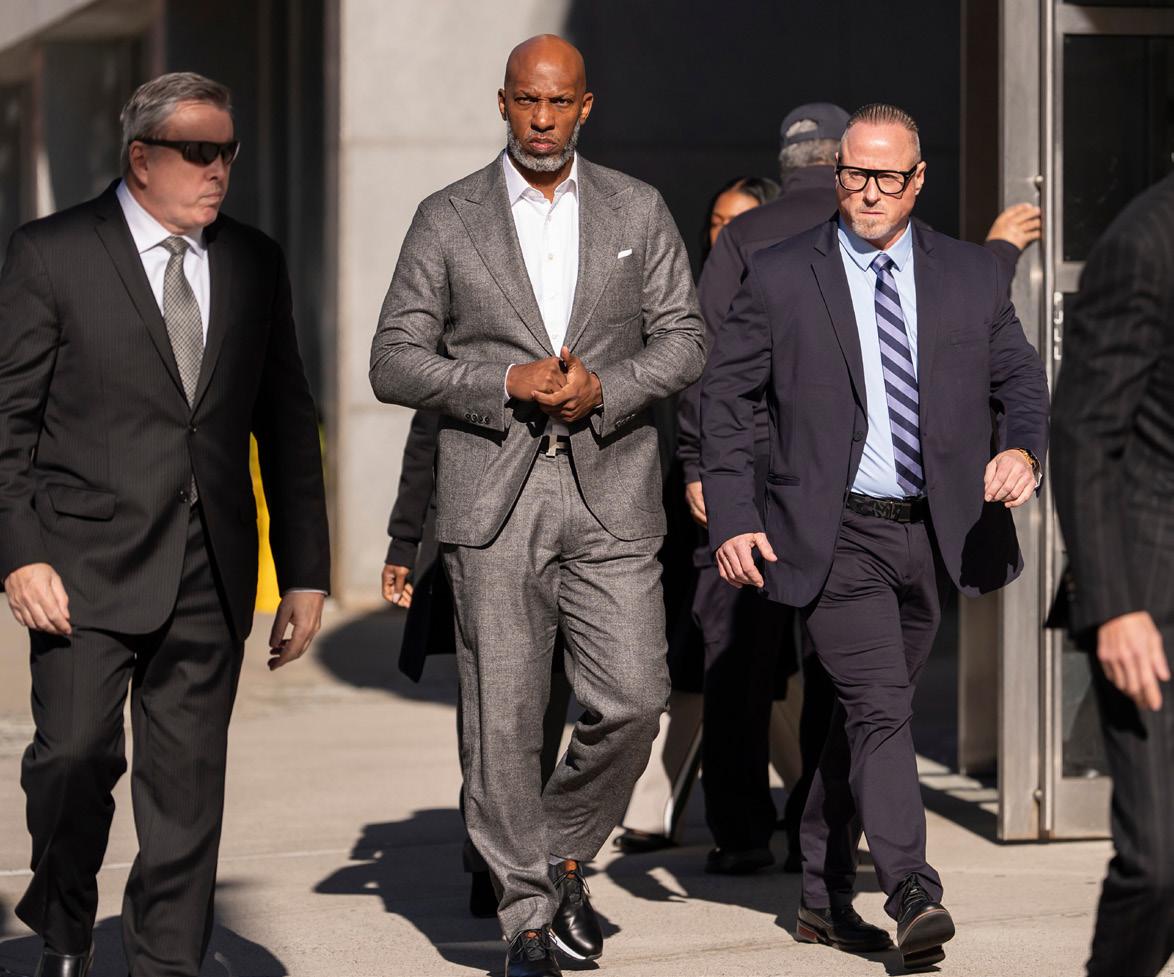
eree Tim Donaghy’s conviction in 2008 and a 15-month jail sentence. Last year, Hall of Fame player and Portland Trail Blazers’ head coach Chauncey Billups, the Miami Heat’s Terry Rozier (both suspended), and former Cavs assistant coach Damon Jones were arrested in an illegal sports betting and rigged poker games scandal.
Baseball has its own brewing scandal as two Cleveland Guardian pitchers — three-time All Star Emmanuel Clase and Luis Ortiz — will not play nor be paid this year as they answer charges of “pitch rigging.” Clase, allegedly, did pitch manipulation in 48 games from 2023-25. What’s “pitch manipulation?”
A pitcher can let betting insid-
ers know that he will throw a pitch over or under a certain speed (like 95 mph) or when he will throw a ball and not a strike. What’s a future bet? How many times a ball player spits … or scratches his butt… and in what inning … and what cheek? By the way, is that a parlay?
Then there are new betting sites like Manhattan-based Kalshi, which allows you to do sports betting and “prediction betting” where you can wager on anything. MLB just announced that it is partnering with Polymarket as its “official prediction exchange partner.”
Meanwhile, the U.S. Senate is examining both Polymarket and Kalshi, and a bill would prohibit betting on prediction markets for government employees and lawmakers. In 2020, HBO aired a documentary entitled “The Scheme” about the plan to funnel money from coaches to players to get star recruits to sign with their schools.
Assistant college basketball coaches Book Richardson (Arizona), Tony Bland (USC), and Lamont Evans (South Carolina and Oklahoma) were all convicted and did jail time. Former NBA
star and Auburn assistant coach Chuck Person was involved but served no jail time. He was sentenced to 200 hours of community service and two years’ probation. Christian Dawkins, one of the money men, was found guilty in federal court and sentenced to a year and a day in prison. When released, he predicted the future. “Should the players be paid? One thousand percent,” he told me back in 2020 after his jail time. He admitted his guilt but saw the big picture. “A player is not going to turn down money when they don’t have any.
“Eighty percent don’t have thousands of dollars saved. Players should be able to market themselves.”
And Dawkins today?
He’s the CEO of Seros Partners and accompanied by elite guard Mikel Brown Jr. on his recruiting visit to the University of Louisville, where he eventually enrolled. In his just-concluded freshman year, the 6’5” guard averaged 18 points and almost five assists.
Can you say Lottery Pick? Want to bet he goes pro?
By the way, how’s your NCAA bracket?
New York Knicks forward Josh Hart (holding the ball) and his teammates, pictured facing the Charlotte Hornets at Madison Square Garden, will host them again on April 12 to end the regular season. (Bill Moore photo)
Portland Trail Blazers’ head coach Chauncey Billups, currently on indefinite administrative leave, exits Brooklyn (New York) federal court on Nov. 24, 2025. (AP Photo/Yuki Iwamura)
Rugby Hall of Famer Phaidra Knight takes on MMA full bore
By LOIS ELFMAN Special to the AmNews
A member of the World Rugby Hall of Fame, Phaidra Knight is all about embracing challenges. She discovered rugby while in law school, making her debut with the U.S. team the year she graduated.
She participated in three Women’s Rugby World Cups and was named USA Rugby’s Player of the Decade in 2010. After retiring from competitive rugby in 2017, she served as president of the Women’s Sports Foundation and developed a career as a commentator, podcaster, speaker, and coach.
She also leads a nonprofit, PeaK Unleashed, focused on empowering girls and women through sport and health initiatives.
In 2019, Knight began training to become a Mixed Martial Arts
(MMA) fighter. She had a Muay Thai event in spring 2021 and her first MMA fight in August 2021. Now, at 51, she is pursuing the career intent on showing age isn’t an obstacle and is presently trying to line up her next fight.
“It’s particularly difficult for women because the pool is so much smaller to schedule fights,” Knight said. “I’m in that process now with the hope to fight in May and get a few fights in this year to build my pro experience and my record.”
Always a sports trailblazer — she is being inducted into the LGBTQ Sports Hall of Fame in June — she wants to learn various disciplines in martial arts and continue on competitively. Knight feels she has a tremendous amount of athleticism and desire to do this and believes she can succeed.
“Every six months I kind of assess
how I am feeling … from an analytical perspective,” Knight said. “I continue to find ways to feel good, to train six days a week and to increase my skillset. I do it because I can, and I also want to prove to myself and to the world that the process of aging and age are two different things. If you can get an understanding of your own physiological landscape, you can control to some degree the process of aging and still perform. My goal is to perform at a world class level in this sport.”
As Knight continues to thrive athletically, she also hopes to create opportunities and develop businesses around the needs of women over 50. “Women who don’t necessarily want to compete as athletes in the way I am, but who want to continue to be athletic,” she said. “I live it daily, so there’s no better person to do that.”
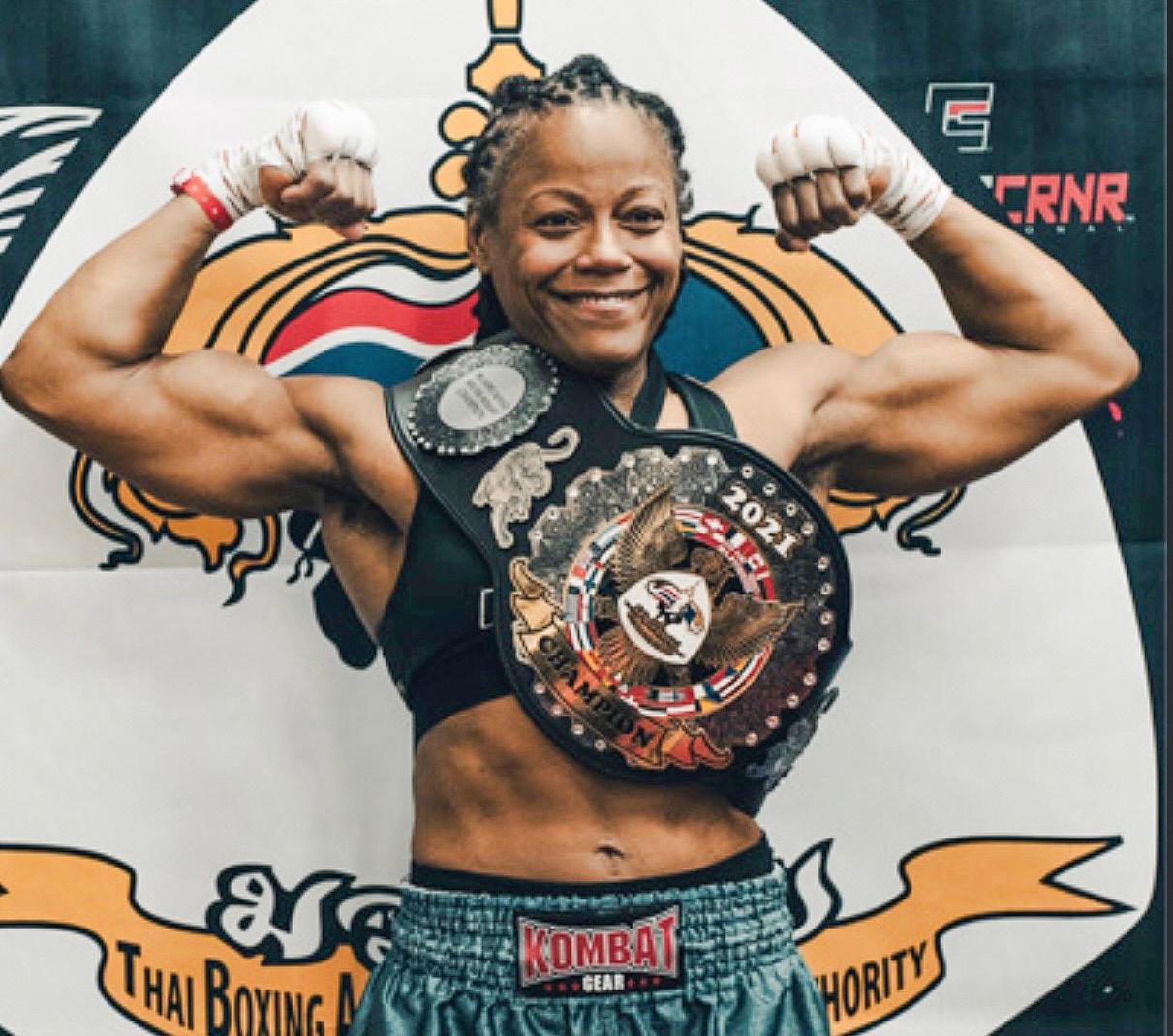
Fordham sprinter Alexandra Williams treasures her final collegiate meets
By LOIS ELFMAN
Special to the AmNews
Fordham University senior sprinter Alexandra Williams opened the outdoor season with a win in the 200-meters at the Army West Point Open. Last weekend, the Elmont Memorial High School (Nassau County, Long Island) graduate headed to Raleigh Relays in North Carolina, competing in the 200 and 400 meters. With several college offers upon graduating from Elmont, Williams detailed why she chose to pursue her post-high school path at the Bronx campus.
“I picked Fordham because I wanted to have a balance of academics and athletics,” said Williams, a Queens native studying prelaw. “I stayed with Fordham because I feel like I’ve made such great connections with people. A lot of friendships turn into sister-
College coaches
Continued from page 40
that support the Student-Athlete Act have made is that it is for the betterment of the athletes education and future. It is a flawed if not farcical assertion on its face. Tubberville, a Republican, who is now running for governor of Alabama, erected his political career on the foundation of being one of the most prominent and popular figures
hood. Also, the training program, I kept progressing each year, dropping times. I felt I was also gaining a great rapport with the coaches and they understood what I needed to get better.
“Keeping a resilient mindset has helped me a lot as well,” she added.
“There are always going to be rough times … but I don’t need a lot to run well. My mindset keeps me going.”
Over her four years at Fordham, Williams has increased her mental toughness. While she does have some anxiety, she’s learned how to focus and perform, calling on her family’s Caribbean roots. By reassuring herself of her preparation, she’s able to calm down.
“I know that every room I step into, I’m made to be here; every race that I’m in, everyone around me, I’m in the same boat as them, so I can definitely get it done,” said Williams. “My best event, I would say, is the 400 meters. My stride
in the state as the head football coach of Auburn University from 1999-2008. He, along with his buddies President Donald Trump, Speaker of the House of Representatives Mike Johnson, who ironically is from Louisiana where LSU sits at the top of college sports excess and impertinence, and other politicians are attempting to remake name, image, and likeness (NIL), now that student-athletes have agency in the capitalistic eco -
frequency is very 400.”
She admires Allyson Felix and says thinking of Felix’s accomplishments has given her strength.
“In the 400, every time I step up to the line, I know it’s going to hurt, but I kind of just embrace the pain and turn it into an experience. Whatever happens, happens, but I give it my all,” Williams said. Williams plans to work as a paralegal after graduation. She has started studying for the LSAT and will take them next year. She wants to become an attorney to advocate for marginalized groups, perhaps in employment law where she can address workplace discrimination. Being a student-athlete has been great preparation.
“Maybe law school will be easier for me to manage my time because I had so much on my plate during undergrad,” she said. “Now, the sky’s the limit once I go to law school.”
nomic free-market they otherwise champion. One such vehicle is the SCORE Act, a Republican-driven framework that would federalize NIL, which today is governed state by state. They are intent on ensuring that college sports, a multibillion dollar business, never achieves a semblance of egalitarianism and continues to suppress the power of the men and women directky generating numerous sports departments massive revenue.

Fordham University sprinter Alexandra Williams, displaying her medals at the Atlantic 10 indoor championships, is concluding a successful collegiate career. (Fordham Athletics photo)
Final Four
Continued from page 40
“South Carolina has improved a lot from the beginning of the year. This South Carolina team is one of the better teams in terms of offensive execution.”
The UCLA/Texas match up also could go either way. UCLA’s one loss this season came against Texas in November.
“This is the most consistent that (UCLA senior center) Lauren
Betts has played in the NCAA Tournament,” said Naumovski. “She’s playing with a purpose knowing that this is her last year. But I do think Texas matches up well with UCLA. Madison Booker (Texas junior forward) is obviously tremendous in the tournament as well. I don’t think [UCLA] has a good one-on-one matchup for Madison Booker. It’s going to take team defense to slow her down. Rori Harmon (Texas) has been the best point guard in the tournament.”
Former rugby great Phaidra Knight is now fully immersed in mixed martial arts. (Phaidra Knight photos)
College coaches should be subject to restrictions as the athletes they lead
By JAMIE C. HARRIS
AmNews Sports Editor
Hypocrisy and duplicity drip from many college coaches, college administrators, and elected political officials.
They want to impose what can reasonably be construed as punitive transfer restrictions on student-athletes while affording themselves unfettered freedom to abandon their previous jobs with impunity for more lucrative opportunities.
In 2021, the National Collegiate Athletic Association adopted the “one-time transfer” legislation, which fundamentally allowed Division I student-athletes the right to transfer once to another school without having to sit out a full year of competition, as most were required to do prior to the new policy (with exceptions for those with a waiver for special circumstances).
Then in 2024, the legislation was amended again after
legal challenges, granting student-athletes unlimited transfers through the NCAA transfer portal — a digital database — without having to sit out a year of competitive play. Coaches have never been subject to the same or similar regulations. Contracts are nominally binding as multimillion dollar buy-out clauses, paid by the institution they are jetting off to, give coaches comfortable pathways to walk away from the athletes they wooed to help them build resumes that command deals exceeding $100 million for some.
Consider Will Wade, the current head basketball coach, and Lane Kiffin, the current head football coach, for Louisiana State University. A little over one week ago, LSU announced it had rehired Wade, whom it fired in 2022, ending his five-year tenure due to major recruiting violations. Wade then coachd McNeese State from 2023 to 2025, then North Carolina State this season before bolting
to LSU, leaving dozens of players behind, many of them teenagers, in his wake.
Kiffin basically told Ole Miss (University of Mississippi) to kick rocks as his team was about to begin a run in the College Football Playoff (they lost in the semifinals). In late November, he signed a seven-year, $91 million contract with LSU to become their head coach. It is the 50-yearold Kiffin’s sixth head coaching job — including a stint with the then Oakland Raiders (2007-08) — and fifth college head coaching position since 2007.
Tommy Tuberville, a senior United States senator from Alabama, has introduced the Student-Athlete Act, a bill that would circumscribe studentathletes to having five consecutive years to play in five consecutive seasons, essentially the NCAA reverting back to the 2021 one-time transfer rule. One claim Tubberville and those
See COLLEGE COACHES on page 39
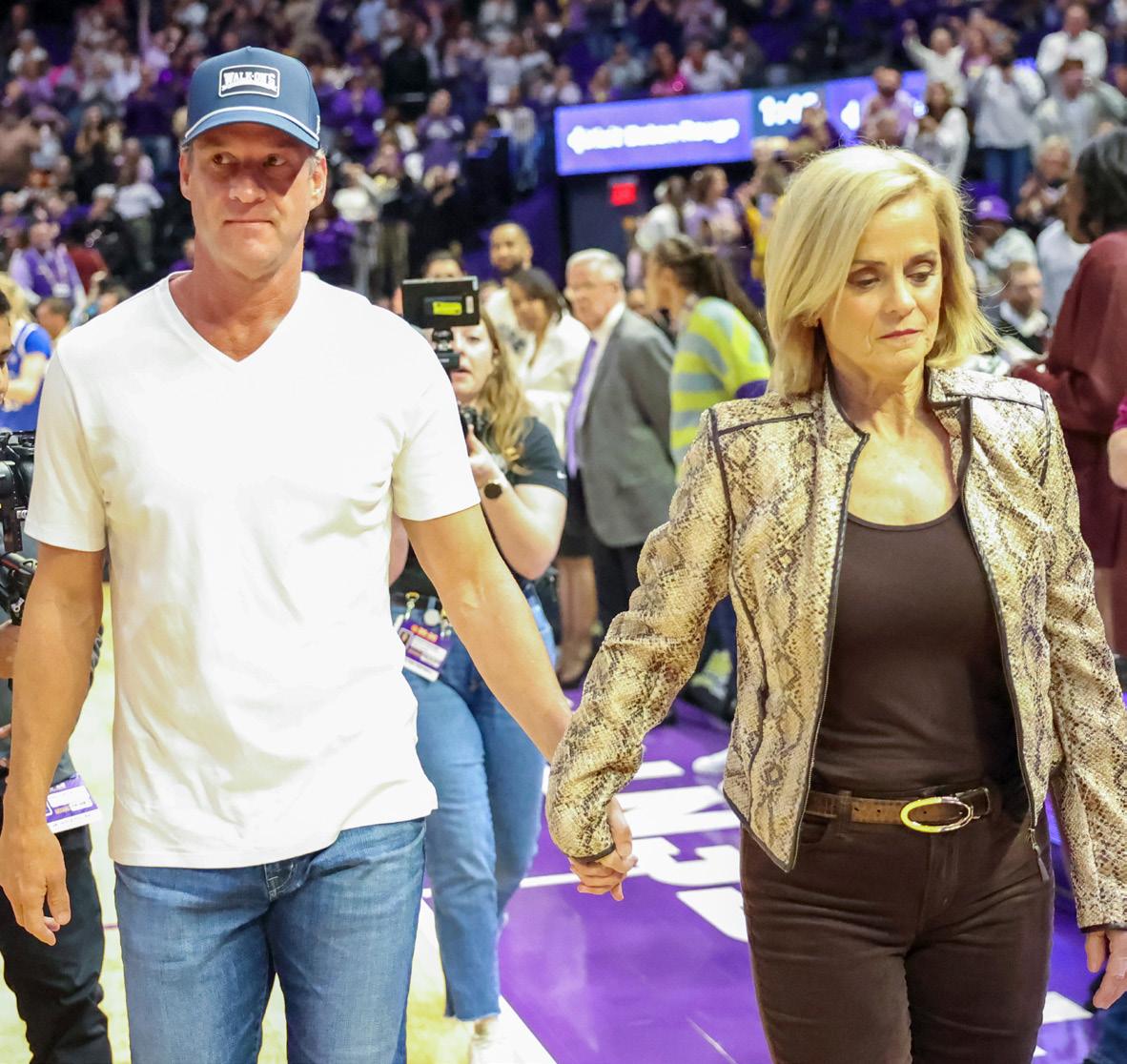
UConn, UCLA, Texas and South Carolina advance to the women’s Final Four
By LOIS ELFMAN Special to the AmNews
While the Columbia Lions women’s basketball team didn’t make it to the NCAA Tournament this year after an appearance last season, they did have a strong postseason showing.
The Lions advanced to the Women’s Basketball Invitational Tournament (WBIT) championship game, where they faced BYU last night at Charles Koch Arena in Wichita, Kansas after a 67-50 win over Nebraska in the semifinals on Monday.
“The rhythm of the game, I do think we dominated for the most part,” said Columbia coach Megan Griffith following her team’s decisive victory.
The 2026 NCAA Division I Women’s Basketball Championship Final Four looks a lot like last year as the UConn, UCLA, University of Texas, and University of South Carolina all return. The one difference is all of them had No. 1 seeds in their region a season ago except

UConn, the eventual national champion, which was a No. 2 seed. This time around, the undefeated (38-0) Huskies are the prohibitive favorites. But all four squads rolled through their opponents with relative ease to get to Phoenix. While there were some brief challenges in the Elite Eight, notably TCU leading South
Carolina in the first quarter, it appeared pretty obvious who would be heading into the season’s last weekend to vie for the title.
UConn, the only unbeaten DI team this season, is aiming for its 13th NCAA championship. The Huskies take on South Carolina (35-3), with the Gamecocks seeking their fourth national chip. UCLA
(35-1), chasing its first, plays Texas, which hasn’t hoisted the championship trophy since 1986 — forty years ago.
An expert eye, Elizabeth Naumovski, former head coach at Queens College (2011–25), is expecting close matchups. The one thing not up for
debate is who is the most dominant player. That distinction is held by UConn sophomore forward Sarah Strong.
“Statistically, where she ranks with scoring and rebounding, she’s one of the greats already. She’s strong on both ends,” said Naumovski. “A fitting last name.”
Naumovski expects a close game between UConn and South Carolina, but the Gamecocks need to limit Strong to no more than 20 points if they want to come out on top.
“The last two games, UConn has shown they’re not infallible; they haven’t looked as dominant as they have in the past, although obviously, they’re still terrific,” she said.

The Columbia women’s basketball team faced BYU last night (Wednesday) for the WBIT title. (Columbia Athletics photo)
LSU head coach Kim Mulkey, right, brings LSU head football coach Lane Kiffin, left, onto the court in the first half of a game against Kentucky in Baton Rouge, La., on Jan. 1. (AP Photo/Peter Forest)