NUEVA ERA AÑO. 3 NO. 63 MONDAY SEPTEMBER 21 2026
ALEJANDRO OYERVIDES
heraldousa.com/
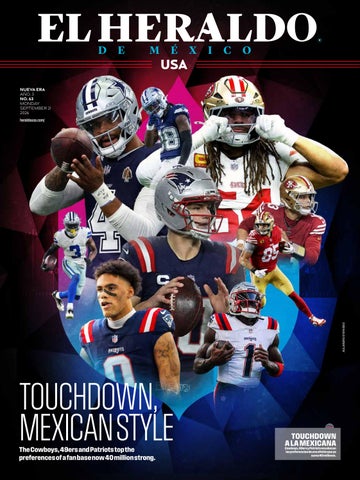
TOUCHDOWN, MEXICAN STYLE The Cowboys, 49ers and Patriots top the preferences of a fan base now 40 million strong.
TOUCHDOWN A LA MEXICANA Cowboys, 49ers y Patriots encabezan las preferencias de una afición que ya suma 40 millones.
OPINION
ÁNGEL JARAMILLO TORRES X: @AngelJa66608581
THE IDEOLOGICAL PROJECT OF TRUMPISM
Silicon Valley intellectuals, strategists, and philosophers have shaped the ideological project behind Trumpism, which seeks to expand presidential power. Their ideas also pose risks to U.S. democracy and to Mexico’s sovereignty
T
o understand Donald Trump, it is necessary to look beyond the man himself and examine the political thinkers, philosophers, and academics who have spent years developing an ideology that supports his administration. Upon closer examination, that ideology is not entirely coherent; it contains contradictions. Still, a network connects these ideas and has grown stronger, especially during the Biden years (2021–2025), when Trump was out of power. These thinkers do not work inside the government but outside it. They operate in academia, Silicon Valley, and the media. They are not Marco Rubio or Cabinet secretaries. They are the people shaping the project. Trump has never read Plato or Machiavelli. He says his favorite books are the Bible and one of his own. Yet his instinctive views align with these new ideas, which stem from serious political analysis. That is the connection worth understanding.
WHAT BRINGS SUCH DIFFERENT FIGURES TOGETHER
Peter Thiel, Steve Bannon, and the Claremont School have tensions among them, but they converge on one central point: for this project to work, executive power must be strengthened so that the legislative and judicial branches cannot limit it as they have until now. Thiel makes the case from Silicon Valley. Bannon does so by critiquing elites who abandoned workers. The Claremont School approaches it through political philosophy. All three arrive at the same destination: an executive with no real checks on its power.
Keyfacts In 2004,Peter Thiel invested $500,000 in Facebook. When he sold his shares,he earned more than $1 billion. Thiel financed and politically mentored JD Vance, the current vice president of the United States, whom he met while Vance was studying law at Yale. Since 1788, the United States has held presidential elections every four years without interruption. January 6,2021,marked the first time that process was violently disrupted.
circle, and later helped usher him into politics. To understand the vice president of the United States, one must first understand Peter Thiel. Animal Farm is a parody of the Soviet Union, but it also offers a broader critique, including the idea that a society can be changed for the better through revolution. Orwell argued that this was not possible: a revolution is always captured by ideologues with tyrannical ideas, and utopia always turns into a tyranny that glorifies a leader. In this case, the farm is populated by these intellectuals. They did not arrive after Trump took power. They were essential to his rise and will play a decisive role in what comes next. JD Vance is part of that project. Marco Rubio is not.
SILICON VALLEY AND THE NEW RIGHT
Peter Thiel may be the most important of these thinkers and the least known. He partnered with Elon Musk to create PayPal, became Facebook’s first outside investor, and is a billionaire—but he is also a philosopher. He studied philosophy and law at Stanford. In 2004, he invested $500,000 in Facebook. When he sold his shares, he made more than $1 billion. His argument is that there has been a digital revolution, but not an industrial one. The promises of the 1960s and 1970s—supersonic trains and the transportation systems of the future—never came true. He places the blame on the federal bureaucracy that has dominated Washington for decades. More importantly, Thiel has said that democracy is no longer compatible with freedom. In his view, promoting freedom in the United States and around the world means that democracy can no longer be promoted as it is currently understood. Along with others, he argues that the president should become a kind of monarch. The goal is not to reform government so it remains a liberal democracy. It is something different. Thiel is also the force behind JD Vance. He met Vance at Yale, brought him into his business
MEXICO AND SOVEREIGNTY
For Mexico, Trumpism has implications that extend beyond the economy, even as the economic consequences are already visible. An annual review of a trade agreement could create uncertainty and give Trump a permanent means of pressuring the country. But there is also a political project. What this administration is building points toward Mexico giving up part of its sovereignty. President Claudia Sheinbaum’s administration has had to move carefully on that terrain. However, as the United States approaches the November 2026 elections, Democrats could gain the ability to limit Trump’s power if they win majorities in Congress. Mexican and Latin American immigrant voters could help shape that outcome. Since 1788, the United States has held presidential elections every four years without interruption. January 6, 2021, marked the first time that process was violently disrupted. * The author is an international relations specialist, political philosopher, and professor at the Autonomous University of Puebla. He specializes in U.S. political philosophy and in studying Trumpism and its ideological foundations.
ANGEL MIERES ZIMMERMANN
ANTONIO HOLGUIN ACOSTA
FRANCO CARREÑO OSORIO
ALFREDO GONZÁLEZ CASTRO
ALEJANDRA ICELA MARTÍNEZ RODRÍGUEZ
CHAIRMAN OF THE BOARD
VICE PRESIDENT OF INSTITUTIONAL RELATIONS
GENERAL DIRECTOR
EDITORIAL DIRECTOR
COORDINATOR, HERALDO USA
DANIEL ERNESTO BENET SÁNCHEZ NORIEGA EDITOR, HERALDO USA
alejandra.martinezr @heraldodemexico.com.mx
daniel.benet @heraldodemexico.com.mx
L
El proyecto ideológico del Trumpismo Intelectuales de Silicon Valley dieron forma al proyecto ideológico del trumpismo, que busca ampliar el poder presidencial y amenaza la democracia estadounidense y la soberanía de México. POR ÁNGEL JARAMILLO TORRES* ARTE: ANI CORTÉS
LOS FILÓSOFOS DETRÁS DE TRUMP
P
ara entender a Donald Trump es necesario analizar algo más que su propia figura, es necesario entender a los intelectuales políticos, filósofos y académicos que han construido, desde hace años, una ideología que le da sustento a su gobierno. Esa ideología, luego de analizarla, no es todavía coherente del todo, tiene contradicciones. Sin embargo existe una red que la articula y que se ha ido consolidando, sobre todo durante el período de Biden (2021-2025), cuando Trump estuvo fuera del poder. Esos intelectuales no trabajan dentro del gobierno sino fuera de él. Operan desde la academia, desde Silicon Valley y desde los medios. No son Marco Rubio ni los secretarios de Estado. Son quienes piensan el proyecto. Trump nunca ha leído a Platón ni a Maquiavelo. Dice que sus libros favoritos son la Biblia y uno de los suyos propios. Pero hay una compatibilidad entre lo que él piensa de manera intuitiva y estas nuevas ideas que sí vienen de un análisis político serio. Es aquí donde surge la conexión que conviene entender.
LO QUE UNE A PERSONAJES TAN DISTINTOS
Peter Thiel, Steve Bannon y la Escuela de Claremont tienen tensiones entre sí, pero convergen en un punto central y es que para que este proyecto funcione, el poder ejecutivo debe fortalecerse de una manera que el legislativo y el judicial no puedan limitar como lo han hecho hasta ahora. Thiel lo plantea desde Silicon Valley. Bannon lo plantea desde una crítica a las élites que abandonaron a los trabajadores. La Escuela de Claremont lo plantea desde la filosofía política. Los tres llegan al mismo lugar: un ejecutivo sin contrapesos reales.
compatible con la libertad. Que si se quiere promover la libertad en Estados Unidos y en el mundo, ya no se puede promover la democracia tal como se la conoce. Junto con otros, sostiene que el presidente debe convertirse en una especie de monarca. No se trata de reformar el gobierno para que siga siendo una democracia liberal. Se trata de algo diferente. Thiel es también quien está detrás de JD Vance. Lo conoció en Yale, lo introdujo en su grupo empresarial y luego lo llevó a la política. Para entender al vicepresidente de Estados Unidos, hay que entender primero a Peter Thiel. La rebelión en la granja es una parodia de la Unión Soviética, pero detrás hay una crítica más amplia que incluye la idea de que por medio de una revolución una sociedad puede cambiar para bien. Orwell argumentaba que eso no era posible, que una revolución siempre es capturada por ideólogos con ideas tiránicas, y que siempre se transforma la utopía en una tiranía que ensalza a un líder. En este caso, la granja son estos intelectuales. No llegaron después de que Trump tomara el poder. Fueron fundamentales para que llegara. Y van a ser determinantes para lo que venga después. JD Vance es parte de ese proyecto. Marco Rubio no lo es. MÉXICO Y LA SOBERANÍA
Para México el trumpismo tiene implicaciones que van más allá de lo económico, aunque lo económico ya cuenta con elementos visibles como la revisión anual de un tratado comercial podría generar incertidumbre y le daría Trump una palanca de presión permanente sobre el país. Pero hay también un proyecto político. Lo que este gobierno está construyendo apunta a que México ceda parte de su soberanía. El gobierno de Claudia Sheinbaum ha tenido que moverse en ese terreno con cautela. No obstante, hacia las elecciones de noviembre de 2026 en Estados Unidos, si los demócratas logran mayorías en el Congreso, tendrán posibilidad de limitar el poder de Trump. El voto de las personas migrantes mexicanas y latinoamericanas puede pesar en ese resultado. Desde 1788, Estados Unidos ha celebrado elecciones presidenciales de forma ininterrumpida cada cuatro años. El 6 de enero de 2021 fue la primera vez que ese proceso fue interrumpido de manera violenta. *El autor es internacionalista,filósofo político y profesor de la Universidad Autónoma de Puebla.Especialista en filosofía política estadounidense,dedicado al estudio del trumpismo y de sus bases ideológicas.
SILICON VALLEY Y LA NUEVA DERECHA
Peter Thiel es quizás el más importante de estos intelectuales y el menos conocido. Fue socio de Elon Musk en la creación de PayPal, fue el primer inversor en Facebook, es billonario, pero también es filósofo. Estudió filosofía y derecho en Stanford. En 2004 invirtió 500 mil dólares en Facebook. Cuando vendió sus acciones, obtuvo más de mil millones de dólares. Lo que él sostiene es que ha habido una revolución digital pero no una revolución industrial. Las promesas de los años sesenta y setenta, los trenes supersónicos, los sistemas de transporte del futuro, nunca se cumplieron. Y la responsabilidad recae sobre la burocracia federal que ha dominado Washington durante décadas. Pero más importante aún es lo que Thiel ha dicho sobre la democracia y es que ya no es
Datosclave
Peter Thiel invirtió 500 mil dólares en Facebook en 2004.Cuando vendió sus acciones,obtuvo más de mil millones de dólares. Thiel financió y formó políticamente a JD Vance,actual vicepresidente de Estados Unidos,a quien conoció mientras estudiaba Derecho en Yale. Desde 1788,Estados Unidos ha celebrado elecciones presidenciales de forma ininterrumpida cada cuatro años.El 6 de enero de 2021 fue la primera vez que ese proceso fue interrumpido de manera violenta.
Monday / 9 / 21 / 2026 heraldousa.com/
3
MEXICAN CULTURE
IN NEW YORK CONFRONTS ITS OWN EXPANSION In just over two decades, New York’s Mexican community has built a cultural ecosystem that now extends to museums, parks, schools, and community spaces. Its expansion has increased visibility, but it has also created challenges related to funding and preserving authenticity. BY JUAN AGUIRRE ARTWORK: ANI CORTÉS
M
exican culture had only a marginal presence in New York in the 2000s. In just over two decades, a community that arrived without organizational infrastructure built an entire cultural ecosystem now found in museums, parks, educational institutions, and community spaces across the five boroughs. That growth has created a need for more thorough analysis. It has also produced tensions that affect both the authenticity of cultural expressions and the financial viability of the organizations that sustain them. A SMALL BUT ACTIVE ECOSYSTEM
Between 2000 and 2003, when New York’s Mexican population reached the critical mass needed to sustain collective initiatives, the first organizations dedicated to Mexican culture emerged. Today, no more than 10 formally incorporated nonprofit organizations—with an official registration number—focus solely on Mexican culture. Most groups active in this field are informal. This is not a negative development but a sign of growing interest in Mexican culture in the city. These include folkloric dance collectives, musical groups, and community initiatives without legal status or access to institutional funding. Formal cultural organizations, meanwhile, differ from groups that use cultural events to provide social services, such as medical care, immigration counseling, and mental health support. The latter have larger budgets because they address basic needs. Organizations devoted strictly to culture operate with more limited resources and rely on a diversified funding model that faces mounting pressure in the current political climate.
administration because these programs rely on the state’s own resources. •New York City government: Municipal funds designated for culture are distributed through annual competitive grant programs. •Private foundations: These philanthropic organizations fund cultural initiatives selected from a broad applicant pool. Competition in this segment has intensified over the past two years. •Community donations: Individual contributions from community members account for the smallest share of total funding.
THE FUNDING MODEL AND ITS FIVE SOURCES
Mexican cultural organizations in New York receive funding from five channels: •Federal government: This is the most competitive funding source and the least accessible to cultural organizations. Federal funds are primarily directed to health and social service programs. Cultural grant programs select only a small number of recipients from among thousands of applicants. •State government: New York State maintains funding programs for cultural organizations that have not been altered by the federal
4
However, federal funding cuts for social service organizations have created a ripple effect. Organizations that once received federal support for health or immigration services have shifted to the same funding sources that have historically
Monday / 9 / 21 / 2026 heraldousa.com/
sustained cultural organizations. A grant program that received 500 applications two years ago now receives 3,000. Available funding has not increased at the same pace. DAY OF THE DEAD AS A CASE STUDY
Day of the Dead is the best-documented example of the simultaneous expansion and transformation of a Mexican cultural expression in New York. Until 2017, the city hosted three or four celebrations. Today, museums, parks, and institutions of all kinds hold events under that name, with an estimated total of more than 300 such events across the city. This growth is partly due to the influence of productions such as Pixar’s Coco (2017), which popularized the celebration’s visual style among non-Mexican audiences. As a result, the celebration expanded considerably, and its content
shifted: many current events now feature altars without real elements such as fresh flowers, food, and photographs, replacing them with decorative installations that lack a ritual component. In museums, institutional restrictions prevent the use of perishable items, leading to displays that replicate the visual form but not the original function. Organizations with more than two decades of uninterrupted celebrations preserve the traditional altar model, built with authentic materials, papel picado, candles, and real food, all prepared in the weeks before the event. FINAL REFLECTIONS ON IDENTITY
Records from community programs indicate a role that goes beyond entertainment. In children’s music programs with 150 participants, records showed that children who initially re-
La cultura mexicana en Nueva York enfrenta su propia expansión
Cultureunderstrain Growth opens doors but also puts identity and funding at risk. Fewer than 10 formal organizations are dedicated to Mexican culture. Day of the Dead celebrations now feature more than 300 events across the city. One grant program saw its applications increase from 500 to 3,000 in just two years. Cultural programs help children and adults reconnect with Mexico's culture.
En poco más de dos décadas, la comunidad mexicana de Nueva York construyó un ecosistema cultural que hoy llega a museos, parques, escuelas y espacios comunitarios. Su expansión ha elevado la visibilidad, pero también plantea retos de financiamiento y de preservación de la autenticidad. POR JUAN AGUIRRE
L
a presencia de la cultura mexicana en Nueva York en la década de los 2000 era ciertamente marginal. En poco más de dos décadas, una comunidad que llegó sin infraestructura organizativa construyó todo un ecosistema cultural que hoy se expresa en museos, parques, instituciones educativas y espacios comunitarios en los cinco boroughs. Ese crecimiento ha generado la necesidad de analizarlo con mayor exhaustividad. También han surgido tensiones que afectan tanto la autenticidad de las expresiones culturales como la viabilidad financiera de las organizaciones que las sostienen.
Culturaentensión El crecimiento abre espacios,pero también pone a prueba identidad y recursos. Menos de 10 organizaciones formales se dedican solo a la cultura mexicana. Las celebraciones de Día de Muertos ya superan las 300 en toda la ciudad. Una convocatoria pasó de 500 a 3,000 solicitudes en solo dos años. Los programas culturales ayudan a niños y adultos a reconectar con México.
• Donaciones comunitarias: Aportaciones individuales de la propia comunidad. Representan el porcentaje más bajo del financiamiento total. No obstante, el recorte de fondos federales a las organizaciones de servicios sociales ha generado un “efecto en cascada”. Las organizaciones que antes recibían financiamiento federal para salud o migración han migrado hacia las mismas fuentes que históricamente han sostenido a las organizaciones culturales. Una convocatoria que hace dos años recibía 500 solicitudes hoy recibe 3,000. Los montos disponibles parece que no han crecido en la misma proporción. EL DÍA DE MUERTOS COMO UN CASO
sisted speaking Spanish and felt little connection to Mexico developed ties to their culture of origin over time. They expressed those ties spontaneously by using Spanish, referring to the Mexican flag, and identifying with the country. For adults, workshops in crafts, embroidery, and traditional cooking offer opportunities to reconnect with childhood experiences and with their communities of origin. People of Mexican origin make up 80% of participants in these programs; the remaining 20% are Americans or Latinos from other backgrounds. Mexican culture in New York does not face a visibility problem. Its challenge is different: preserving the distinctive character of its expressions in an environment that both amplifies and transforms them. *The author,a cultural promoter based in New York, can be found on Instagram at @mexculture.
UN ECOSISTEMA REDUCIDO PERO ACTIVO
Entre los años 2000 y 2003, cuando la población mexicana en Nueva York alcanzó una masa crítica suficiente para sostener iniciativas colectivas, surgieron las primeras organizaciones dedicadas a la cultura mexicana. Hoy, el número de organizaciones sin fines de lucro formalmente constituidas (con un número de registro oficial) y enfocadas estrictamente en la cultura mexicana no supera los diez. La mayoría de los grupos activos en este campo son informales, lo cual no es negativo, sino un síntoma del crecimiento del interés por la cultura mexicana en esta ciudad. A decir: colectivos de danza folclórica, agrupaciones musicales e iniciativas comunitarias sin estatus legal ni acceso a financiamiento institucional. Por otro lado, las organizaciones culturales formales se distinguen de las agrupaciones que utilizan eventos culturales como herramienta para ofrecer servicios sociales, como atención médica, asesoría migratoria y atención en salud mental. Estas últimas cuentan con presupuestos más altos porque atienden necesidades primarias. Las organizaciones estrictamente culturales operan con recursos más limitados y dependen de un modelo de financiamiento diversificado que, en el contexto político actual, enfrenta presiones crecientes.
El Día de Muertos es el caso más documentado de la expansión y la transformación simultáneas de una expresión cultural mexicana en Nueva York. Hasta 2017, la ciudad contaba con tres o cuatro celebraciones y, en la actualidad, museos, parques e instituciones de todo tipo realizan eventos bajo esa denominación, con un estimado superior a 300 en la ciudad. Este crecimiento responde, en parte, al impacto de producciones como Coco, de Pixar (2017), que popularizó la estética de la celebración entre audiencias no mexicanas. El efecto fue una expansión considerable de la celebración, acompañada de una transformación de los contenidos: buena parte de las celebraciones actuales prescinde de ofrendas con elementos reales, flores naturales, comida y fotografías, y las sustituye por instalaciones decorativas sin componente ritual. En espacios museísticos, las restricciones institucionales impiden colocar elementos perecederos, lo que deriva en montajes que replican la forma visual, pero no la función original. Las organizaciones con más de dos décadas de celebración ininterrumpida mantienen el modelo de ofrenda, construido con materiales auténticos, papel picado, velas y comida real, elaborados durante semanas previas al evento.
EL MODELO DE FINANCIAMIENTO Y LAS 5 FUENTES
REFLEXIONES FINALES SOBRE IDENTIDAD
Las organizaciones culturales mexicanas en Nueva York acceden a recursos a través de cinco vías: •Gobierno federal: es la fuente más competitiva y la menos accesible para las organizaciones culturales. En este caso, los fondos federales se destinan prioritariamente a programas de salud y servicios sociales. Las convocatorias culturales seleccionan a un número mínimo de beneficiarios entre miles de solicitantes. • Gobierno estatal: En el caso del Estado de Nueva York, este mantiene programas de financiamiento para organizaciones culturales que no han sido modificados por la administración federal, al tratarse de recursos propios del estado. • Gobierno de la Ciudad de Nueva York: Aquí, los fondos municipales destinados a la cultura se distribuyen mediante convocatorias competitivas anuales. • Fundaciones privadas: Son organizaciones filantrópicas que financian iniciativas culturales entre un amplio universo de solicitantes. La competencia en este segmento se ha intensificado en los últimos dos años.
Los registros de programas comunitarios apuntan a una función que trasciende el entretenimiento. En programas de música para niños con 150 participantes, se documentó que menores que al inicio mostraban resistencia al español y escasa identificación con México desarrollaron en ese lapso vínculos con su cultura de origen, expresados de forma espontánea: uso del español, referencias a la bandera, identificación con el país. Para los adultos, los talleres de artesanía, bordado y cocina tradicional funcionan como espacios de reconexión con las experiencias de la infancia y con las comunidades de origen. El 80% de los participantes en estos programas son personas de origen mexicano; el 20% restante son estadounidenses o latinos de otras procedencias. La cultura mexicana en Nueva York no enfrenta problemas de visibilidad. El reto es de otra naturaleza: sostener la especificidad de sus expresiones en un entorno que las amplifica y las transforma al mismo tiempo. El autor es promotor cultural en Nueva York y participa en IG como @mexculture
Monday / 9 / 21 / 2026 heraldousa.com/
5
TRANSFORMINGSTORIES AND MYTHOLOGIES: WHO HAS THE POWER TO TELL STORIES AND DEFINE CULTURAL NARRATIVES?
Cecilia Beaven is a Mexican visual artist who, from Chicago, builds her own mythology through painting, drawing, animation, film, and sculpture. Originally from Mexico City, her work draws on personal experiences, mythological explorations, and a playful approach to Mexican identity to create worlds populated by fantastical and unsettling creatures and landscapes. Her career includes exhibitions in Mexico, the United States, Colombia, Sweden, Italy, and Japan, as well as murals in various cities, including a section of the border wall between Mexico and the United States BY DANIEL BENET ARTWORK: GERALDINE CRUZ
D Semilla Semilla brought six art forms together to explore migration, mythologies, and a more hopeful future.
2024 Semilla opened in Chicago.
6 art forms shaped the exhibition.
aniel Benet – Was there a particular moment, work, or artist that defined your desire to become a visual artist? Cecilia Beaven – I always liked drawing. I remember drawing for as long as I can remember: cartoon characters, people from my family, characters I invented. As a child, I took visual arts classes at the Centro Cultural Arte Contemporáneo, a museum in Mexico City that no longer exists. That experience had a huge impact on me because the classes were connected to the museum’s exhibitions: they would take us to see contemporary artworks, and afterward we would create projects inspired by what we had seen. I couldn’t say there was a particular artwork that made me decide I wanted to become an artist, but I do remember very clearly the feeling of discovering that art could be something incredibly strange and inexplicable. One piece that particularly impressed me was a red light cube by James Turrell. Although my current work is not directly related to that piece, I remember perfectly how strange and fascinating it felt to stand in front of a space that seemed infinite and unreal. I think experiences like that made art become more than just drawing for me and turned it into a much broader way of exploring ideas and experiences. DB – Beyond the historical cultural connection between Mexican people and muralism,what drew you to this artistic format?
CB – I’m very interested in the fact that contemporary muralism has such a complex visual history. On the one hand, it comes from Mexican muralism and modernism, but it is also deeply connected to graffiti, folk art, and other forms of visual production that take place outside traditional art spaces. I find that combination very interesting. I’m also drawn to the relationship between murals and public space. Unlike a work that exists inside a gallery or museum, a mural is part of everyday life and encounters many different
6
Monday / 9 / 21 / 2026 heraldousa.com/
kinds of people. I’m interested in the possibility that an image can become integrated into architecture, into a community, and become part of the everyday experience of the people who see it. DB – How do your works come into being?
CB – I draw obsessively in a sketchbook. That’s where many of the ideas I need when making a work live—not only visual ideas, but conceptual ones as well. It’s a space where I take notes, write down ideas that emerge from conversations, things I hear in conversations with artists or curators, ideas I read about in books, things I observe or think about. I do it for pleasure and out of necessity, without thinking about what will happen to the drawings or notes afterward. Once I’m in the studio, the drawings begin to suggest possibilities: sometimes I think something could become a painting, or another drawing wants to become three-dimensional. And while I’m making one work, ideas for others inevitably emerge. My practice is multidisciplinary, so an important part of my process is finding connections between different media and looking for unexpected encounters between materials, images, and ideas. The sketchbook functions as that place where all these things can coexist before becoming a work of art. DB – How do Mexico, the United States, and Chicago appear in your work? Are their differences evident, or is there an integration of the three? CB – Mexico is still the foundation of my imagination: its history, its mythologies, its colors, and its ways of telling stories. But I’ve been living in Chicago for nine years, and that experience of migration has inevitably transformed the way I see the world and, above all, the way I see Mexico from the outside. In Chicago, I’ve become very interested in the Mexican communities here. I’m fascinated by the stories of different generations of migrants and the ways they have adapted Mexican culture to a new reality, creating something that did not exist before. I think observing these processes has reinforced my interest in our ability to actively participate in the creation of culture. I realize that we are all part of a living, changing organism that is culture, and that our decisions, stories, and ways of relating to it directly
Creative map Her art builds new mythologies by blending Mexican identity,memory, feminism,and the natural world. She has exhibited in 6 countries. 9 years based in Chicago.
transform it. That’s why I’m not interested in separating Mexico from Chicago, but rather in observing what happens when different places, histories, and experiences come together and begin to transform one another. DB – In your biographical profiles,you mention that “Cecilia questions who gets to tell stories and establish the official cultural narratives.”We are living at a time of intense efforts to change the cultural narrative of the United States and Mexican identity on both sides of the border.Has this changed the message you seek to convey through your work?
CB – Rather than changing my message, it has reinforced the importance of the questions I was already asking myself. I’ve always been interested in thinking about who tells the stories, who has the ability to construct cultural narratives, and which voices are left out of official accounts. This has also made it increasingly important for me not only to talk about Mexican communities, but to engage directly with them. In Chicago, I’m interested in teaching classes and workshops, painting murals, and participating in projects that contribute to the development of these communities. An important part of my practice is creating spaces where the voices of more Mexican and Mexican-American people can emerge and be amplified. I believe art can be a tool for actively participating in the construction of culture. It’s not only about representing an identity that already exists, but understanding that our everyday participation is also creating the culture of the future. DB – What themes keep appearing throughout your work?
CB – The construction of contemporary mythologies, identity, memory, feminism, and the relationship between human beings and nature. I’m also very interested in the act of telling stories. Many of my works function as scenes from a larger narrative, where the characters seem to belong to the same universe and the viewer can imagine what happened before or what will happen next. DB – Is there a particular piece that you consider especially important? Why?
Transformando relatos y mitologías ¿Quién tiene el poder de contar las historias y definir las narrativas culturales? Cecilia Beaven es una artista visual mexicana que, desde Chicago, construye una mitología propia a través de la pintura, el dibujo, la animación, el cine y la escultura. Originaria de la Ciudad de México, su obra parte de experiencias personales, exploraciones mitológicas y una aproximación lúdica a la identidad mexicana para crear universos poblados por criaturas y paisajes fantásticos e inquietantes. Su trayectoria incluye exposiciones en México, Estados Unidos, Colombia, Suecia, Italia y Japón, además de murales en distintas ciudades, incluido un segmento del muro fronterizo entre México y Estados Unidos. POR DANIEL BENET ARTE: GERALDINE CRUZ
Daniel Benet - ¿Hubo algún momento, obra o artista que definiera tu deseo de ser artista visual?
Cecilia Beaven - Siempre me gustó dibujar. Recuerdo dibujar desde que tengo memoria: personajes de caricaturas, personas de mi familia, personajes que inventaba. De niña tomé clases de artes plásticas en el Centro Cultural Arte Contemporáneo, un museo de la Ciudad de México que ya no existe. Esa experiencia me impactó muchísimo porque las clases estaban vinculadas con las exposiciones del museo: nos llevaban a ver obras de arte contemporáneo y después hacíamos proyectos inspirados en lo que habíamos visto. No podría decir que hubo una obra que determinara que quería ser artista, pero sí recuerdo con mucha claridad la sensación de descubrir que el arte podía ser algo rarísimo e inexplicable. Una pieza que me impresionó especialmente fue un cubo de luz roja de James Turrell. Aunque mi trabajo actual no tiene una relación directa con esa obra, recuerdo perfectamente lo extraño y fascinante que me resultaba estar frente a un espacio que parecía infinito e irreal. Creo que experiencias como esa hicieron que el arte dejara de ser para mí solamente dibujar y se convirtiera en una forma mucho más amplia de explorar ideas y experiencias.
CB – I’m going to cheat and choose an exhibition… Semilla (National Museum of Mexican Art, 2024) was a particularly meaningful solo exhibition for me because it brought together many of the ideas I had developed over the years: migration understood as transformation, the creation of new mythologies, and the possibility of imagining a more hopeful future. It was also an opportunity to integrate different media—painting, drawing, ceramics, mural, sculpture, and animation—and to build an immersive experience, something I’m interested in continuing to explore.
DB - Además del histórico vínculo cultural de las personas mexicanas con el muralismo, ¿qué te atrajo a este formato artístico?
DB – Recommend a work or artist by someone you admire at the moment.
DB - ¿Cómo nacen tus obras?
CB – In Mexico, I love Germán Venegas’s work. I find it powerful and playful at the same time. I’m very interested in his cultural and historical references and the way he works with different materials. I like to think of him as both an artist and a craftsman because there is such a deep understanding of materials and processes in his work. Here in Chicago, I love the comics scene, and one of my favorites is Chris Ware. I think he has an extraordinary ability to observe and understand human nature, even in its more uncomfortable, small, or everyday aspects. And right now, I also love the work of Nicole Eisenman, a figurative painter from New York who is an expert at painting crowds and groups of people. I like the way she constructs complex and ambiguous scenes, and how through painting she develops a feminist and multifaceted perspective on human relationships and society.
mitologías, sus colores y sus formas de contar historias. Pero llevo 9 años viviendo en Chicago, y esa experiencia de migración inevitablemente ha transformado mi manera de ver el mundo y, sobre todo, la forma en la que veo México desde fuera. En Chicago me he interesado mucho en las comunidades mexicanas que están aquí. Me fascinan las historias de distintas generaciones de migrantes y las maneras en que han adaptado la cultura mexicana a una nueva realidad, creando algo que no existía antes. Creo que observar estos procesos ha reforzado mi interés en nuestra capacidad de participar activamente en la creación de cultura. Me doy cuenta de que todos somos parte de un organismo vivo y cambiante que es la cultura, y que nuestras decisiones, historias y formas de relacionarnos con ella la transforman directamente. Por eso no me interesa separar México de Chicago, sino observar qué sucede cuando diferentes lugares, historias y experiencias se encuentran y empiezan a transformarse mutuamente.
CB - Me interesa mucho que el mural contemporáneo tenga una historia visual tan compleja. Por un lado, viene del muralismo mexicano del modernismo, pero también está profundamente relacionado con el graffiti, el arte popular y otras formas de producción visual que suceden fuera de los espacios tradicionales del arte. Esa mezcla me parece muy interesante. También me atrae la relación del mural con el espacio público. A diferencia de una obra que existe dentro de una galería o un museo, un mural forma parte de la vida cotidiana y se encuentra con personas muy distintas. Me interesa esa posibilidad de que una imagen pueda integrarse a la arquitectura, a una comunidad, y convertirse en parte de la experiencia cotidiana de quienes lo ven. CB - Dibujo obsesivamente en un sketchbook. Ahí están muchas de las ideas que necesito cuando hago una obra, no solamente visuales, sino también conceptuales. Es un espacio donde tomo notas, escribo ideas que surgen de conversaciones, cosas que escucho en pláticas de artistas o curadores, ideas que leo en libros, cosas que observo o pienso. Lo hago por gusto y necesidad, sin pensar en qué va a pasar después con los dibujos o notas. Ya en el estudio, los dibujos empiezan a sugerir posibilidades: a veces pienso que algo podría convertirse en una pintura, o que otro dibujo quiere ser tridimensional. Y mientras estoy haciendo una obra, inevitablemente aparecen ideas para otras. Mi práctica es multidisciplinaria, así que una parte importante de mi proceso consiste en encontrar conexiones entre distintos medios y buscar encuentros inesperados entre materiales, imágenes e ideas. El sketchbook funciona como ese lugar donde todas esas cosas pueden convivir antes de convertirse en una obra. DB - ¿Cómo aparecen México, Estados Unidos y Chicago en tu obra? ¿Son evidentes sus diferencias o hay una integración?
CB - México sigue siendo la base de mi imaginario: su historia, sus
DB - En tus reseñas biográficas mencionas “Cecilia cuestiona quién tiene el derecho de contar las historias y establecer las narrativas culturales oficiales”; vivimos un tiempo de un fuerte esfuerzo por cambiar la narrativa cultural de los Estados Unidos y la identidad mexicana en los dos lados de la frontera. ¿Ha cambiado esto el mensaje que buscas transmitir con tus obras?
CB - Más que cambiar mi mensaje, ha reforzado la importancia de las preguntas que ya me hacía. Siempre me ha interesado pensar quién cuenta las historias, quién tiene la posibilidad de construir las narrativas culturales y cuáles son las voces que quedan fuera de los relatos oficiales. Esto también ha hecho que para mí sea cada vez más importante no solamente hablar sobre las comunidades mexicanas, sino vincularme directamente con ellas. En Chicago me interesa dar clases y talleres, pintar murales y participar en proyectos que contribuyan al desarrollo de estas comunidades. Una parte importante de mi práctica es crear espacios donde puedan aparecer y amplificarse las voces de más personas mexicanas y mexicano-americanas. Creo que el arte puede ser una herramienta para participar activamente en la construcción de cultura. No se trata solamente de representar una identidad que ya existe, sino de entender que nuestra participación cotidiana también está creando la cultura del futuro. DB - ¿Qué temas aparecen una y otra vez en tu trabajo?
CB - La construcción de mitologías contemporáneas, la identidad, la memoria, el feminismo y la relación entre los seres humanos y la naturaleza. También me interesa mucho el acto de contar historias. Muchas de mis obras funcionan como escenas de una narrativa más amplia, donde los personajes parecen pertenecer a un mismo universo y el espectador puede imaginar qué ocurrió antes o qué sucederá después. DB - ¿Hay alguna pieza que consideres especialmente importante? ¿Por qué?
CB - Voy a hacer trampa y escoger una exposición… Semilla (National Museum of Mexican Art, 2024) fue una exposición individual especialmente significativa para mí porque reunió muchas de las ideas que había desarrollado durante años: la migración entendida como transformación, la creación de nuevas mitologías y la posibilidad de imaginar un futuro más esperanzador. También fue una oportunidad para integrar distintos medios (pintura, dibujo, cerámica, mural, escultura y animación) y construir una experiencia inmersiva, algo que me interesa seguir explorando. DB - Recomiéndanos el trabajo de alguna persona u obra que admires en este momento.
CB - En México me encanta el trabajo de Germán Venegas. Me parece poderoso y divertido al mismo tiempo. Me interesan mucho sus referencias culturales e históricas y la manera en que trabaja con distintos materiales. Me gusta pensar en él como artista tanto como artesano, porque existe un conocimiento muy profundo de los materiales y de los procesos en su trabajo. Aquí en Chicago me encanta la escena de cómics, y uno de mis favoritos es Chris Ware. Creo que tiene una capacidad extraordinaria para observar y entender la naturaleza humana, incluso en sus aspectos más incómodos, pequeños o cotidianos. Y actualmente también me encanta el trabajo de Nicole Eisenman, una pintora figurativa de Nueva York que es experta en pintar multitudes y grupos de personas. Me gusta cómo construye escenas complejas y ambiguas, y cómo a través de la pintura desarrolla una mirada feminista y multifacética sobre las relaciones humanas y la sociedad.
Monday / 9 / 21 / 2026 heraldousa.com/
7
At 74, Chicana writer Carmen Tafolla continues to defend Spanish, family memory, and the right of young Latinos to take pride in living between two cultures. In her novel in verse, Warrior Girl, a young girl reclaims the name, history, and voice that others tried to take from her. BY OSO OSEGUERA ARTWORK: ELIHU GALAVIZ
S
ome names are simply pronounced, while others are inherited. Names that carry a grandmother’s voice, the scent of a family kitchen, a mariachi song, or the memory of those who lived on the land long before borders and flags were drawn. That is why, when the main character in Warrior Girl arrives at school for the first time and proudly introduces herself as Tere, she does not understand why her teacher insists on calling her Terry. The correction may seem minor, almost harmless, but for writer Carmen Tafolla, it marks the beginning of erasure: first the name is changed, then the language is forbidden, and finally the history is hidden. “Every time she tries to be herself, they correct her,” Tafolla said in an interview with Heraldo USA. Born in San Antonio, Texas, on July 29, 1951, Carmen Tafolla is 74 and one of the most important voices in Chicano literature. A poet, storyteller, educator, academic, and cultural activist, she served as San Antonio’s first poet laureate from 2012 to 2014 and as Texas poet laureate in 2015. She is also a professor emerita and the author of more than 30 books. Yet behind the honors and recognition lies the warm voice of a woman raised on San Antonio’s West Side, steeped in family stories, Spanish, English, and the everyday blend now known as Spanglish. A GIRL RECLAIMS HER NAME
Warrior Girl, also published in Spanish as Guerrera, is a novel in verse about a 12-year-old Chicana who begins to question her identity and why the world seems intent on erasing part of it. Tere was born in the United States. Her family has Mexican, Indigenous, and Mexican American heritage. At home, she listens to stories, celebrates traditions, and speaks both languages. At school, however, she discovers that her name, her Spanish, and her culture are treated as errors to be corrected. The story becomes even more painful when the family moves to San Antonio. Tere is excited to live with her grandmother and attend a bilingual school, but on the night before classes begin, her father is detained and deported. No one tells the family where he is. They do not know whether he is alive, whether he remains in detention, or whether he has been locked in one of the immigration facilities Tere sees on television. The story unfolds between 2019 and 2020, a period marked by deportations and the onset of the pandemic. Although the novel is not strictly autobiographical, Tafolla says that everything in it was
8
CARMEN TAFOLLA:
THE WARRIOR WHO TURNED HER ROOTS INTO A SHIELD either experienced by her or witnessed in her community. The author grew up at a time when speaking Spanish in Texas schools could result in physical punishment and public humiliation. During the interview, she even recalled the wooden pad-
Monday / 9 / 21 / 2026 heraldousa.com/
dles used to strike students for speaking their language. Those experiences are part of the collective memory of several generations of Mexican Americans. They also help explain why defending bilingualism is so central to her work.
THE BORDER THAT CROSSED FAMILIES
For Carmen Tafolla, Mexican American identity cannot be explained solely by recent immigration. Her family has lived for centuries in the territories now part of Texas and New Mexico. “We did not cross the border; the border crossed us,” she said. The phrase sums up a historical experience shared by thousands of families who remained on the same land after the 1848 Treaty of Guadalupe Hidalgo, even as their nationality and the governments ruling over them changed. Tafolla notes that San Antonio was Indigenous, Spanish, and Mexican territory, part of the Republic of Texas, part of the United States, and later part of the Confederacy before returning to the Union. While flags changed overhead, families remained, preserving their language, food, and worldview. That history also challenges the notion that a person must choose between being Mexican and American. For Tafolla, both identities can coexist without conflict. She grew up identifying as both culturally Mexican and a U.S. citizen. In Mexico, people might call her a gringa; in the United States, some told her to “go back” to a country she had never come from. Faced with that contradiction, the Chicano movement allowed her to claim an identity of her own and to turn a once-insulting word into an expression of pride. A GRANDMOTHER’S SHIELD
At the heart of Warrior Girl is the relationship between Tere and her grandmother. Her grandmother teaches Tere that resistance does not mean living in anger but rather means preserving joy, kindness, and the ability to celebrate. The grandmother turns each day into a
Carmen Tafolla: la guerrera que convirtió sus raíces en un escudo A sus 74 años, la escritora chicana Carmen Tafolla sigue defendiendo el español, la memoria familiar y el derecho de los jóvenes latinos a sentirse orgullosos de vivir entre dos culturas. En su novela en verso Warrior Girl, una niña recupera el nombre, la historia y la voz que otros intentaron arrebatarle. POR OSO OSEGUERA
H
Rootsas ashield In Warrior Girl, Tere learns that her name,Spanish,and family traditions are not obstacles, but a shield against racism,loss, and attempts to erase her identity.
small celebration. If it is Mariachi Day, they listen to music; if it is Laughter Day, they tell jokes; if it is Chef Day, they cook something new. Her lesson is simple: if a person has a reason to sing, dance, write, or remember, nothing has been taken away. She also teaches Tere to build an imaginary shield that deflects insults while still letting love, friendship, and hope in. That shield is not only for self-protection. It can also protect a friend or an entire community. The novel also shows how traditions can build bridges. When a white classmate dismisses Day of the Dead as “Mexican Halloween,” Tere is initially offended. Following her grandmother’s advice, she then invites the girl to see the family altar. The girl places a photograph, a cap, and an orange on the altar in memory of her grandfather. The Mexican celebration becomes a shared space for remembrance of someone who is gone. For Tafolla, that scene captures one of the book’s central ideas: difference does not create distance. It can also spark curiosity, empathy, and affection. Warrior Girl addresses deportation, racism, and loss, yet it is not a story of defeat. It celebrates young people growing up between cultures and learning that they need not give up either one. It is also the message of a writer who, at 74, continues to remind new generations that their Spanish is not a flaw, their last names do not need translation, and their roots can become their strongest shield. A girl becomes a warrior when she stops feeling ashamed of her history and learns to say, with complete clarity: this is my name, this is my family, and this is my land too.
ay nombres que se pronuncian y nombres que se heredan. Nombres que guardan la voz de una abuela, el olor de una cocina familiar, una canción de mariachi o la memoria de quienes habitaron una tierra mucho antes de que cambiaran las fronteras y las banderas. Por eso, cuando la protagonista de Warrior Girl llega por primera vez a la escuela y se presenta orgullosamente como Tere, no entiende por qué su maestra insiste en llamarla Terry. La corrección parece pequeña, casi inocente, pero para la escritora Carmen Tafolla representa el comienzo de un despojo: primero se modifica el nombre, después se prohíbe el idioma y, finalmente, se oculta la historia. “Cada vez que ella trata de ser quien es, le van a corregir”, explica Tafolla en entrevista con Heraldo USA. Nacida en San Antonio, Texas, el 29 de julio de 1951, Carmen Tafolla tiene 74 años y es una de las voces fundamentales de la literatura chicana. Poeta, narradora, educadora, académica y activista cultural, fue la primera poeta laureada de San Antonio, entre 2012 y 2014, y poeta laureada de Texas en 2015. También es profesora emérita y autora de más de 30 libros. Pero detrás de los reconocimientos conserva la voz entrañable de una mujer criada en los barrios del West Side de San Antonio, entre relatos familiares, español, inglés y esa mezcla cotidiana que hoy conocemos como spanglish. UNA NIÑA RECUPERA SU NOMBRE Warrior Girl, publicada también en español con el título
Guerrera, es una novela en verso sobre una niña chicana de 12 años que comienza a preguntarse quién es y por qué el mundo parece empeñado en borrar una parte de ella. Tere nació en Estados Unidos. Su familia tiene raíces mexicanas, indígenas y mexicoamericanas. En casa escucha historias, celebra las tradiciones y habla los dos idiomas. Sin embargo, en la escuela descubre que su nombre, su español y su cultura son vistos como errores que deben corregirse. La historia adquiere una dimensión todavía más dolorosa cuando la familia se muda a San Antonio. La niña está ilusionada porque vivirá con su abuela y asistirá a una escuela bilingüe, pero la noche anterior al inicio de clases su padre es detenido y deportado. Nadie les informa dónde se encuentra. La familia no sabe si está vivo, si permanece detenido o si ha sido encerrado en una de las instalaciones migratorias que Tere ve en la televisión. La historia ocurre entre 2019 y 2020, en una etapa marcada por las deportaciones y el comienzo de la pandemia. Aunque la novela no es estrictamente autobiográfica, Tafolla asegura que todo lo que aparece en sus páginas fue vivido por ella o presenciado en su comunidad. La autora creció en una época en la que hablar es-
pañol en las escuelas de Texas podía acarrear castigos físicos y humillaciones públicas. Durante la entrevista incluso recordó las tablas con las que golpeaban a los estudiantes por utilizar su idioma. Esas experiencias forman parte de la memoria colectiva de varias generaciones de mexicoamericanos. También explican por qué la defensa del bilingüismo ocupa un lugar central en su obra. LA FRONTERA QUE CRUZÓ A LAS FAMILIAS Para Carmen Tafolla, la identidad mexicoamericana no
puede explicarse únicamente a partir de la migración reciente. Su propia familia ha vivido durante siglos en los territorios que hoy forman parte de Texas y Nuevo México. “Nosotros no cruzamos la frontera; la frontera nos cruzó”, afirma. La frase resume una experiencia histórica compartida por miles de familias que permanecieron en el mismo territorio después del Tratado de Guadalupe Hidalgo de 1848, aunque su nacionalidad y las autoridades que las gobernaban cambiaron. Tafolla recuerda que San Antonio fue territorio indígena, español y mexicano, parte de la República de Texas, de Estados Unidos y, posteriormente, de la Confederación, antes de regresar a la Unión. Mientras las banderas cambiaban, las familias permanecían allí, conservando su idioma, su cocina y su manera de entender el mundo. Esa historia también cuestiona la idea de que una persona deba elegir entre ser mexicana o estadounidense. Para la escritora, las dos identidades pueden convivir sin enfrentarse. Ella misma se crió considerándose culturalmente mexicana y ciudadana estadounidense. En México podían llamarla gringa; en Estados Unidos, algunos le exigían que “regresara” a un país del que no había llegado. Frente a esa contradicción, el movimiento chicano le permitió a los chicanos nombrar una identidad propia y convertir una palabra antes despreciada en una expresión de orgullo. EL ESCUDO DE LA ABUELA
En el centro de Warrior Girl está la relación entre Tere y su abuela. Es ella quien le enseña que resistir no significa vivir enojada, sino mantener intactas la alegría, la bondad y la capacidad de celebrar. La abuela convierte cada jornada en una pequeña fiesta. Si es el día del mariachi, escuchan música; si es el día de la risa, cuentan chistes; si es el día del chef, cocinan algo distinto. Su lección es sencilla: mientras una persona conserve una razón para cantar, bailar, escribir o recordar, nadie le ha quitado todo. También le enseña a construir un escudo imaginario que haga rebotar los insultos, pero que permita entrar el amor, las amistades y la esperanza. Ese escudo no sirve únicamente para protegerse. También puede defender a un amigo o a toda una comunidad. La novela muestra incluso cómo las tradiciones pueden crear puentes. Cuando una compañera blanca reduce el Día de Muertos a un “Halloween mexicano”, Tere se ofende primero. Después, siguiendo el consejo de su abuela, decide invitarla a conocer el altar familiar. La niña termina colocando allí la fotografía, una gorra y una naranja en memoria de su abuelo. La celebración mexicana se convierte así en un espacio compartido para recordar a quien ya no está. Para Tafolla, esa escena encierra una de las ideas esenciales del libro: la diferencia no tiene por qué producir distancia. También puede despertar curiosidad, empatía y afecto. Warrior Girl habla de deportación, racismo y pérdida, pero no es una historia derrotista. Es una celebración de los jóvenes que crecen entre culturas y aprenden que no necesitan renunciar a ninguna de ellas.
Monday / 9 / 21 / 2026 heraldousa.com/
9
NFL TEAMS WITH
THE MOST FANS IN MEXICO
NFL fandom has grown in Mexico for decades, making it one of the league’s most important international markets. The Cowboys, 49ers, and Patriots are the top choices for millions of fans. BY DIEGO CARREÑO ARTWORK: ALEJANDRO OYERVIDES
T
he NFL has become one of the world’s most popular sports leagues, and Mexico is no exception. After the United States, Mexico has the second-largest NFL fan base, with about 40 million followers. Super Bowl broadcasts reached Mexico in the late 1960s, immediately capturing the attention of a new audience accustomed to soccer, lucha libre, and baseball, the dominant sports at the time. It was not until the 1970s that American football firmly established itself among Mexican
10
sports fans. Teams such as the Miami Dolphins gained a following after finishing the 1972 season undefeated and winning a second consecutive championship the following year under head coach Don Shula. The Pittsburgh Steelers also became extremely popular after winning four championships in the same decade. In the 1990s, the Dallas Cowboys became a worldwide phenomenon and a fixture of popular culture. Between 1992 and 1995, the Cowboys won three championships, prompting their players and coaches to appear on a wide range of merchandise, including movies, television shows, trading cards, posters, and more. The success and charisma of players such as Troy Aikman,
Monday / 9 / 21 / 2026 heraldousa.com/
Emmitt Smith, and Michael Irvin resonated immediately with Mexican fans. In 1994, a historic crowd of 112,376 packed Estadio Azteca for the American Bowl, a preseason game between the Dallas Cowboys and the Houston Oilers. With support from the “Vaqueritas,” the world-famous Dallas Cowboys Cheerleaders, the Cowboys remain Mexico’s most popular NFL team, even though 30 years have passed since their last championship. The organization’s outstanding marketing over the years has helped keep the Cowboys a phenomenon, despite the much-criticized quarterback Dak Prescott, who has been unfairly blamed for the team’s recent failures. Prescott holds the franchise record for passing yards, an achievement that should not be taken lightly. With defensive reinforcements added this season, the Cowboys hope to become contenders again. On offense, they have one of the league’s
most explosive receiving duos in CeeDee Lamb and George Pickens, capable of changing the course of a game at any moment. In second place are the San Francisco 49ers, who will return to Mexico next November to face the Minnesota Vikings. It will mark the third time the 49ers have played in Mexico (2005, 2022, and 2026), and on each occasion the “Faithful,” as their fans are known, have packed the stadium. San Francisco enjoyed its glory years from the 1980s through the mid-1990s, when the team won five championships. Countless legends have worn the 49ers uniform, including Joe Montana, Steve Young, Jerry Rice, and Roger Craig, players who captured the hearts of Mexican fans. This year, Kyle Shanahan’s 49ers have one goal: winning their sixth championship, and they have started the season on the right foot. Fred Warner, the leader of the defense, has spent
several years proving he is the best linebacker in the league. But that will mean little if Brock Purdy, George Kittle, and Christian McCaffrey cannot elevate the offense and finally put behind them the disappointment of losing to the Kansas City Chiefs in Super Bowl LVIII, played in February 2024. Finally, the New England Patriots rank third and are the “newest” team on this list. They once had relatively few fans outside their home market, having never won a championship before 2001. From then on, however, fans witnessed the rise of one of the greatest dynasties in American football, led by head coach Bill Belichick and quarterback Tom Brady, widely regarded as one of the greatest quarterbacks in NFL history. From 2001 to 2018, the Patriots won six Super Bowl titles, tying the Pittsburgh Steelers for the most in NFL history. For Drake Maye, the team’s starting quarterback, filling the enormous shoes left by his predecessor has not been easy. However, in just his first two years in the league, he has already led his team to the Super Bowl last season, where the Patriots unfortunately fell to the Seattle Seahawks. Now, with wide receiver A.J. Brown, the team’s new acquisition for this season, New England hopes its offense can take the next step once Brown recovers from the ankle injury that will keep him sidelined for several weeks. On defense, the Patriots have Colombian-American cornerback Christian Gonzalez, whose tremendous performances were recently rewarded with a four-year, $135 million contract extension, making him the NFL’s highest-paid cornerback. The Patriots’ third-place ranking among Mexican fans may seem surprising, but it also makes sense. New generations of fans grew up watching them win. In addition, the NFL has experienced extraordinary growth in Mexico over the past 20 years, a trend likely to continue as the league’s owners have invested significant time and money in global expansion to bring fans ever closer to their favorite teams.
PassionfortheNFL
40
5
million NFL fans are estimated to live in Mexico.
titles were won by the 49ers between the 1980s and 1990s
112,376
6
fans packed Estadio Azteca for the 1994 American Bowl game.
Super Bowls were won by the Patriots during the Brady-Belichick era.
Equipos de la NFL con más aficionados en México La afición por la NFL ha crecido durante décadas en México, uno de sus mercados internacionales más importantes. Cowboys, 49ers y Patriots encabezan las preferencias de millones de seguidores. POR DIEGO CARREÑO
P
aulatinamente, la NFL se ha convertido en una de las ligas deportivas más populares del mundo, y México no ha sido la excepción. Después de Estados Unidos, nuestro país se ha convertido en el segundo con la mayor cantidad de aficionados, con alrededor de 40 millones. Desde principios de los años 60 comenzaron a llegar las transmisiones de los Super Bowls, lo que de inmediato captó la atención de toda una nueva audiencia, más acostumbrada al fútbol soccer, a la lucha libre y al béisbol, deportes que eran los reyes en ese entonces. No fue sino hasta la década de los 70 cuando el futbol americano terminó por consolidarse en el gusto de los mexicanos, con equipos como los Miami Dolphins, que terminaron invictos en la temporada de 1972 y, al año siguiente, consiguieron el bicampeonato de la mano del entrenador Don Shula. Otro equipo que también se volvió muy popular fue el de los Pittsburgh Steelers, tras conquistar cuatro títulos en esa misma década. En los años 90 surgió a nivel mundial el auge de los Dallas Cowboys, quienes se convirtieron en parte de la cultura popular. Entre 1992 y 1995, los Vaqueros lograron tres campeonatos, lo que llevó a sus jugadores y entrenadores a aparecer en mercancía de todo tipo, así como en películas, programas de televisión, tarjetas coleccionables y pósters. El éxito y carisma de jugadores como Troy Aikman, Emmitt Smith y Michael Irvin lograron captar de inmediato la atención del público mexicano, que en 1994 colmó el Estadio Azteca con una asistencia histórica de 112,376 aficionados para presenciar el American Bowl, partido de pretemporada en el que se enfrentaron los Dallas Cowboys y los Houston Oilers. Con el apoyo de las “Vaqueritas”, las porristas deportivas más famosas del mundo, hasta la fecha los Cowboys continúan siendo el equipo más popular de México, a pesar de que han transcurrido 30 años desde su última coronación. El magistral trabajo de marketing que han realizado a lo largo de los años ha logrado que los Cowboys sigan siendo todo un fenómeno, sin importar que cuenten con el tan criticado quarterback Dak Prescott, a quien injustamente se le ha culpado de los fracasos del equipo en los últimos años. Prescott es el mariscal de campo con el mayor número de yardas por pase en la historia de esta franquicia, un récord que no debería tomarse a la ligera. Con los refuerzos defensivos que llegaron para esta temporada, los Cowboys esperan ser contendientes nuevamente, ya que en la ofensiva cuentan con una de las duplas de receptores más explosivos, formada por CeeDee Lamb y George Pickens, quienes pueden cambiar el curso de un partido en cualquier momento. En segundo lugar, se encuentran los San Francisco 49ers, equipo que el próximo mes de noviembre jugará de nuevo en México, esta vez ante los Minnesota Vikings. Con esto, ya serán tres las ocasiones en las que los 49ers hayan jugado en nuestro país (2005, 2022 y 2026), y en todas ellas los “Fieles”, como también se conoce a sus aficionados, han llenado el estadio. El equipo de San Francisco vivió su época de gloria desde la década de los 80 hasta mediados de los 90, cuando consiguió los cinco títulos
con los que cuenta. Por este equipo han pasado un número incontable de leyendas, como Joe Montana, Steve Young, Jerry Rice y Roger Craig, quienes se robaron el corazón de los aficionados de nuestro país. Este año, los 49ers de Kyle Shanahan tienen un solo objetivo: conseguir su sexto título y, para ello, han iniciado la temporada con el pie derecho. Fred Warner, capitán de la defensiva, lleva varios años demostrando por qué es el mejor linebacker de la liga, pero esto servirá de poco si Brock Purdy, George Kittle y Christian McCaffrey no logran llevar a la ofensiva a un nuevo nivel y, con ello, sacarse la espina que tienen clavada desde que cayeron ante los Kansas City Chiefs en el Super Bowl LVIII, disputado en febrero de 2024. Por último, los New England Patriots son el tercer equipo y el más “nuevo” de esta lista. Antes, casi no tenían aficionados fuera de su localidad, ya que hasta 2001 nunca habían ganado un título, pero a partir de esa fecha fuimos testigos del comienzo de una de las mayores dinastías del fútbol americano, encabezada por el entrenador Bill Belichick y su mariscal de campo, Tom Brady, considerado uno de los mejores en la historia de la NFL. De 2001 a 2018, los Patriots lograron seis títulos, igualando a los Pittsburgh Steelers como los equipos con el mayor número de campeonatos en la historia. Para Drake Maye, su mariscal de campo titular, no ha sido nada sencillo llenar los enormes zapatos que dejó su antecesor. Sin embargo, en sus dos primeros años en la liga, ya puede presumir que la pasada temporada llevó a su equipo hasta el Super Bowl, donde, lamentablemente para su causa, cayeron ante los Seattle Seahawks. Ahora, con el receptor A.J. Brown, una nueva adquisición del equipo para esta temporada, se espera que su ofensiva dé el siguiente paso, una vez que Brown se recupere de su lesión en el tobillo, que lo mantendrá fuera durante varias semanas. En la defensiva, cuentan con el esquinero de origen colombiano Christian González, cuyas tremendas actuaciones se vieron recompensadas hace poco al convertirse en el esquinero mejor pagado de la NFL, tras firmar una extensión de contrato por cuatro años más a cambio de 135 millones de dólares. Que los Patriots se encuentren en el tercer lugar de las preferencias de los mexicanos es un poco sorprendente, pero a la vez bastante comprensible, ya que las nuevas generaciones de aficionados crecieron viendo a los Patriots ganar. Además, en los últimos 20 años, la NFL ha experimentado un crecimiento astronómico en nuestro país, tendencia que seguramente continuará, pues los dueños de la liga han invertido tiempo y dinero en su expansión global, con la meta de acercar cada vez más a los aficionados a sus equipos favoritos.
PasiónporlaNFL
40
5
112,376
6
millones de aficionados a la NFL se calcula que existen en México.
fans llenaron el Azteca para el American Bowl de 1994.
Monday / 9 / 21 / 2026 heraldousa.com/
títulos conquistaron los 49ers entre la década de los 80 y los 90.
Super Bowls ganaron los Patriots durante la era de Brady y Belichick.
11
PACHUCOS:
BEYOND THE BORDER From Harlem to Los Angeles, pachucos turned clothing into a statement of identity and resistance. Their history of discrimination, violence, and belonging still echoes in the immigration realities of the United States today. BY DIANA ALCALÁ ARTWORK: ANI CORTÉS
W
hy is it still relevant to talk about pachucos in 2026? Chances are that when you hear the word “pachuco,” Tin Tan comes to mind: his perfectly pressed, wide-legged trousers, oversized jacket, and a style that almost seems like a satire of elegance. But the history pachucos share with Mexico and with Mexicans on the other side of the border runs far deeper than a simple fashion trend. In fact, the pachuco originated in Harlem. Cab Calloway and other African American jazz musicians popularized the loose-fitting suit during the 1930s. As artists living on the cultural margins of the United States, they quickly connected with other groups facing discrimination. Among them were Mexicans. During the Great Depression, between 1929 and 1939, the United States carried out mass deportations of people of Mexican origin. Estimates suggest that around 60% of those expelled were U.S. citizens. That wound, that tension between belonging and being rejected, reached one of its most violent moments in 1943, two years after the United States entered World War II. In Los Angeles, California, a large group of sailors was transferred to a training center in Chávez Ravine, an area with a significant Mexican American population. Add to that a rapidly expanding city, a housing crisis, and wartime propaganda that portrayed the pachuco’s suit as unpatriotic because it used too much fabric. That was the combustible mix that triggered one of the most violent episodes between members of the U.S. armed forces and communities of Mexican origin. It all began on May 31, 1943, when a group of Mexican American teenagers dressed as pachucos clashed with 12 sailors. One of the sailors suffered a broken jaw. That was all the pretext needed. On June 3, about 50 sailors armed with clubs and belts left their naval barracks and headed toward downtown Los Angeles to hunt pachucos. Civilians, more sailors, and Marines soon joined them. Over the next five days—from June 3 to 8, 1943—the city experienced what we now know as the Zoot Suit Riots. The violence escalated to the point that some taxi drivers offered to transport the attackers around the city free of charge. In their wake were burned zoot suits and, above all, the humiliation of people who had been beaten and publicly stripped in an episode marked by xenophobia. The pachucos also fought back and staged several ambushes. And the Los Angeles police? They watched.
12
Local authorities distanced themselves from the violence, arguing that it was a matter for the military police. Only after military commanders declared the city off-limits to their men and ordered them to withdraw did the police finally begin to act. And when they did, they primarily arrested hundreds of Mexican Americans. Local authorities arrested only two service members. Military authorities, meanwhile, detained about 500 members of the armed forces, although they did not face criminal charges. The situation became so significant that even U.S. First Lady Eleanor Roosevelt wrote a column about the events, describing them as a racial conflict rather than a dispute over clothing. Her position prompted some Los Angeles newspapers to accuse her of being a “communist.” The riots ended. The scar did not. In the 1960s, the children of that generation embraced a new identity: Chicano. They took a term long used disparagingly and turned it into an affirmation of belonging and pride. They were of Mexican origin, yes, but many had never been to Mexico. At the same time, people in Mexico could see them as Americans. Once again, fashion became a unifying force for that generation, not necessarily as a way to belong to a country, but as a way to tell the world that they existed in their own right. Chicanos in the 1960s adopted an aesthetic different from their parents’: high-waisted, perfectly pressed trousers and, among women, large, eye-catching hairstyles. At the intersection of identity, empowerment, and social struggle emerged a pivotal figure: Dolores Huerta, the civil and labor rights activist who mobilized the community and, together with César Chávez, co-founded the organization that would eventually become the United Farm Workers (UFW). More than eight decades later, that history still echoes with unsettling resonance. Zoot suits are no longer burned in the streets of Los Angeles, but raids, deportations, and debates over who “belongs” and who does not remain part of the American reality. The pachucos left behind a lesson that still resonates: when society denies you a place, you can also create one of your own. Through identity, attitude, and sometimes even the way you dress.
Identityandresistance
Monday / 9 / 21 / 2026 heraldousa.com/
The zoot suit went from jazz fashion to a symbol of Mexican American identity. In June 1943,Los Angeles saw five days of violence against pachucos. The Zoot Suit Riots exposed racial tensions that went far beyond clothing. Chicano identity embraced that resistance and transformed it into collective pride.
Los pachucos, más allá de la frontera De Harlem a Los Ángeles, los pachucos convirtieron la ropa en identidad y resistencia. Su historia de discriminación, violencia y pertenencia todavía encuentra ecos en la realidad migratoria de Estados Unidos. POR DIANA ALCALÁ
¿P
or qué hablar de los pachucos sigue siendo relevante en pleno 2026? Lo más probable es que, al escuchar la palabra “pachuco”, venga a la mente Tin Tan: sus pantalones de piernas anchas perfectamente planchados, el saco holgado y un estilo que parece casi una sátira de la elegancia. Pero los pachucos comparten con México y con los mexicanos al otro lado de la frontera una historia mucho más profunda que la de una simple moda. Porque el pachuco, en realidad, nació en Harlem. Cab Calloway y otros músicos afroamericanos de jazz popularizaron ese traje holgado durante los años treinta. Como artistas que vivían en la periferia cultural de Estados Unidos, rápidamente conectaron con otros grupos que también sufrían discriminación. Entre ellos, los mexicanos. Durante la Gran Depresión, entre 1929 y 1939, Estados Unidos deportó masivamente a personas de origen mexicano. Se calcula que alrededor del 60% de quienes fueron expulsados eran ciudadanos estadounidenses. Esa herida, esa tensión entre pertenecer y ser rechazado, encontró uno de sus momentos más violentos en 1943, dos años después de que Estados Unidos entrara en la Segunda Guerra Mundial. En Los Ángeles, California, un numeroso grupo de marinos fue transferido a un centro de entrenamiento en Chávez Ravine, una zona con una importante población de origen mexicano. A eso hay que sumar una ciudad en plena expansión, una crisis de vivienda y la propaganda de guerra, que señalaba al traje de pachuco como antipatriótico porque requería demasiada tela. Ese fue el cóctel que desató uno de los episodios más violentos entre miembros de las fuerzas armadas estadounidenses y las comunidades de origen mexicano. Todo comenzó el 31 de mayo de 1943, cuando un grupo de adolescentes mexicoamericanos vestidos de pachucos se enfrentó a doce marinos. Uno de ellos terminó con la mandíbula rota. Eso bastó como pretexto. El 3 de junio, cerca de cincuenta marinos armados con palos y cinturones salieron del cuartel naval rumbo al centro de Los Ángeles para cazar pachucos. A ellos se sumaron civiles, más marineros e infantes de marina. Durante los siguientes cinco días —del 3 al 8 de junio de 1943— la ciudad vivió lo que hoy conocemos como los Zoot Suit Riots, los disturbios de los trajes zoot. La violencia escaló al grado de que algunos taxistas ofrecían llevar gratuitamente a los agresores por distintos puntos de la ciudad. A su paso quedaban trajes de pachuco quemados y, sobre todo, la humillación de quienes habían sido golpeados y desnudados públicamente en un episodio marcado por la xenofobia. Los pachucos también se defendieron y protagonizaron algunas emboscadas. ¿Y la policía de Los Ángeles? Miraba. Las autoridades locales se deslindaron con
el argumento de que se trataba de un asunto de la policía militar. Solo cuando los mandos militares declararon la ciudad fuera de los límites permitidos para sus hombres y los obligaron a retirarse, la policía comenzó a actuar. Y lo hizo deteniendo, sobre todo, a cientos de mexicoamericanos. Apenas dos militares fueron arrestados por las autoridades locales. Por su parte, la justicia militar detuvo a unos 500 miembros de las fuerzas armadas, aunque no enfrentaron cargos criminales. La situación alcanzó tal relevancia que incluso la primera dama de Estados Unidos, Eleanor Roosevelt, escribió una columna sobre lo sucedido y lo calificó como un conflicto racial, no como una disputa por la vestimenta. Su postura provocó que algunos periódicos de Los Ángeles la acusaran de “comunista”. Los disturbios terminaron. La cicatriz, no. En los años sesenta, los hijos de aquella generación abrazaron una nueva identidad: la chicana. Tomaron un término que durante años había sido utilizado de manera despectiva y lo convirtieron en una afirmación de pertenencia y orgullo. Eran de origen mexicano, sí, pero muchos nunca habían estado en México. Y, al mismo tiempo, desde México podían ser vistos como estadounidenses. Una vez más, la moda se convirtió en un elemento aglutinador de esa juventud. No necesariamente para pertenecer a un país, sino para decirle al mundo que existían por derecho propio. Los chicanos de los años sesenta utilizaron una estética distinta a la de sus padres: pantalones de talle alto y perfectamente planchados; entre las mujeres, peinados voluminosos y llamativos. Y en ese cruce de identidad, reivindicación y lucha social aparece una figura fundamental: Dolores Huerta, defensora de los derechos civiles y laborales que movilizó a la comunidad y cofundó, junto con César Chávez, la organización que daría origen a United Farm Workers (UFW). Más de ocho décadas después, aquella historia conserva ecos inquietantes. Ya no se queman trajes zoot en las calles de Los Ángeles, pero las redadas, las deportaciones y las discusiones sobre quién “pertenece” y quién no continúan formando parte de la realidad estadounidense. Los pachucos dejaron una lección que sigue vigente: cuando una sociedad te niega un lugar, también puedes construir uno propio. Con una identidad, una actitud y, a veces, hasta con una forma de vestir.
Identidadyresistencia El traje zoot pasó de la escena del jazz a símbolo de identidad mexicoamericana. En junio de 1943,Los Ángeles vivió cinco días de violencia contra pachucos. Los Zoot Suit Riots expusieron tensiones raciales más allá de la vestimenta. La identidad chicana retomó esa resistencia y la convirtió en orgullo colectivo.
Monday / 9 / 21 / 2026 heraldousa.com/
13
Mexico’s proximity to the United States has led the two countries to maintain close relations of various kinds, bringing them closer together and driving them apart from the nineteenth century to the present day. Being neighbors with the world’s leading economic and military power, although its standing is being called into question by the trade battle with China and the armed conflict with Iran, places considerable pressure on our country.
MEXICAN & SOUTH
AMERICAN SOVEREIGNTY IN THE FACE OF U.S. HEGEMONY BY DR. JAIME ECHEVERRÍA GARCÍA* ARTWORK: GERALDINE CRUZ
S
ince the United States, initially formed by 13 colonies, gained independence from England in 1776, it experienced rapid economic and industrial development and, in parallel, demonstrated a clear expansionist tendency. This contrasted with the precarious economic situation of the newly established Mexican state following its independence from the Spanish Crown, as well as with the internal conflicts arising from the struggles between
14
liberals and conservatives, which persisted throughout much of the nineteenth century. This scenario contributed to shaping a relationship of economic dependence on the United States and, subsequently, to the loss of a considerable portion of the national territory in 1848. Before the independence movement, in the late eighteenth century, Spanish authorities were aware of the risks facing their possessions north of New Spain due to their sparse population and the expansionist interests of the rising American nation. Amid growing tensions over territorial boundaries between Spain and the United States, the two nations signed the AdamsOnís Treaty on February 22, 1819, although it was
Monday / 9 / 21 / 2026 heraldousa.com/
ratified two years later. Its name derives from its principal negotiators: John Quincy Adams, then U.S. Secretary of State, and the Spanish minister in Washington, Luis de Onís y González. Under this agreement, also known as the Transcontinental Treaty, Spain ceded Florida and other territories to the United States, while boundaries between the two nations were established as far as the Pacific Ocean. In return, the United States relinquished its claims to Spanish Texas, thereby defining the territorial borders between the Crown and the American nation. The United States remained neutral toward the independence movements in the Spanish colonies. This does not mean that the American
power did not benefit from these processes. On the contrary, with the consummation of Mexico’s independence in 1821, the United States found itself in a favorable position to strengthen its expansionist project and its growing hegemony on the continent. As soon as this process concluded, the power considered the Adams-Onís Treaty obsolete in its pursuit of a more clearly defined southern border. Within a continental context, and in an effort to establish economic control over the newly independent nations and thereby prevent the commercial influence of European powers in the Americas, President James Monroe presented a declaration to the U.S. Congress rejecting any interventionist or colonialist actions by European powers on American soil. This position would become known as the “Monroe Doctrine,” later summarized in the slogan “America for the Americans,” and it has shaped U.S. foreign policy toward Mexico and Latin America in general to this day. Under this policy, South American nations have been viewed as incapable of governing themselves and therefore in need of domination by a nation to which God has assigned the task of exercising control over the entire Americas. This divine mission is known as “Manifest Destiny.” Under this vision, U.S. territorial expansion was presented as a historical and almost providential mission. Both concepts helped legitimize, from different perspectives, the expansion of American influence and the incorporation of new territories, as well as control over strategic resources. The assaults on Mexican sovereignty by the northern nation intensified. In 1836, the inhabitants of Texas, primarily Americans, proclaimed their independence, and nine years later, the United States completed its annexation. In this context, politician, historian, and lawyer José Fernando Ramírez addressed a letter to President Antonio López de Santa Anna in June 1846, warning him of the neighboring country’s expansio-
La soberanía mexicana y sudamericana frente a la hegemonía estadounidense La vecindad entre México y Estados Unidos ha motivado que los dos países mantengan estrechas relaciones de diversa índole, que los ha acercado y distanciado desde el siglo XIX hasta la actualidad. La cercanía con la principal potencia económica y militar del mundo, aunque la batalla comercial con China y el conflicto bélico con Irán lo ponen en entredicho, implica una gran presión para nuestro país. POR DR. JAIME ECHEVERRÍA GARCÍA ARTE: GERALDINE CRUZ
D
13
colonies gave rise to the United States in 1776.
1848
Mexico lost more than half of its territory.
$15
million Washington paid for the territories.
nist intentions and its strategic and commercial interests: “The enterprising and adventurous spirit of the neighboring nation, its ambition for land, its pride, and the immense importance that acquiring it holds for its commerce and politics are causes that must drive it to encourage emigration to Texas in order to secure the position of a Territory.” The annexation of Texas gave the United States a new expansionist impetus. Following the war from 1846 to 1848, Mexico was unable to sustain the defense of its territory, and a peace agreement was reached. On February 2, 1848, the Treaty of Guadalupe Hidalgo was signed in Villa de Guadalupe, Mexico City, establishing the new border between the two countries, defined in large part by the Rio Grande. The treaty meant that Mexico lost slightly more than half of its national territory. The ceded territories comprise the present-day states of California, New Mexico, Nevada, and Utah, as well as parts of Arizona, Colorado, Wyoming, Kansas, and Oklahoma. In return, the United States paid Mexico $15 million. In the current political context of the American continent, where U.S. interventionist attitudes in various Latin American countries are becoming increasingly evident, both in their electoral processes and in economic policy decisions, it is essential to engage in an exercise of remembrance and recall of episodes in which the kidnapping of inconvenient presidents has been used or economic embargoes against equally inconvenient nations have intensified. More than ever, it is necessary to pay attention to the history of the formation of the nation-states of South America and the relations they have maintained with the United States, because understanding these precedents makes it possible to recognize that the defense of national sovereignty is not a matter of the past. *Researcher at Universidad La Salle and specialist in cultural history, social representations, and anthropology
Territory California, New Mexico, Nevada,and Utah. Also parts of Arizona, Colorado,and Wyoming. The cession included areas of Kansas and Oklahoma. The Rio Grande defined much of the border.
esde que Estados Unidos, conformado inicialmente por 13 colonias, logró independizarse de Inglaterra en 1776, experimentó un acelerado desarrollo económico e industrial y, de manera paralela, manifestó una clara tendencia expansionista. Esto contrastó con la precaria situación económica del recién formado Estado mexicano tras su independencia de la Corona española, así como con los conflictos internos derivados de las pugnas entre liberales y conservadores, que se mantuvieron durante buena parte del siglo XIX. Este escenario contribuyó a configurar una relación de dependencia económica respecto de Estados Unidos y, posteriormente, a la pérdida de una parte considerable del territorio nacional en 1848. Previo al movimiento de independencia, a finales del siglo XVIII, las autoridades españolas eran conscientes de los riesgos que corrían sus posesiones al norte de la Nueva España debido a su escaso poblamiento y frente a los intereses expansionistas de la pujante nación estadounidense. Ante las crecientes tensiones en torno a los límites territoriales entre España y Estados Unidos, ambas naciones firmaron el Tratado Adams-Onís el 22 de febrero de 1819, aunque este fue ratificado dos años después. Su nombre proviene de sus principales negociadores: John Quincy Adams, entonces secretario de Estado de Estados Unidos, y el ministro español en Washington, Luis de Onís y González. Mediante este acuerdo, también llamado Tratado Transcontinental, España cedió a Estados Unidos la Florida y otros territorios, al tiempo que se establecieron los límites entre ambas naciones hasta el océano Pacífico. A cambio, Estados Unidos renunció a sus reclamos sobre la Texas española, con lo cual quedaron delimitadas las fronteras territoriales entre la Corona y la nación estadounidense. Estados Unidos permaneció neutral ante los movimientos de independencia de las colonias españolas. Esto no significa que la potencia americana no se beneficiara de dichos procesos. Por el contrario, con la consumación de la independencia de México, en 1821, Estados Unidos se encontró ante un escenario favorable para fortalecer su proyecto expansionista y su creciente hegemonía en el continente. Apenas culminó este proceso, dicha potencia consideró obsoleto el Tratado Adams-Onís para buscar una mejor definición de su frontera sur. En un contexto continental, en aras de establecer un control económico sobre las naciones
recién independizadas y, por tanto, impedir la influencia comercial de las potencias europeas en América, el presidente James Monroe presentó ante el Congreso estadounidense una declaración que rechazaba toda acción injerencista y colonialista de las potencias europeas en suelo americano. Esta postura sería conocida como la “doctrina Monroe”, sintetizada posteriormente en el lema “América para los americanos”, y que ha determinado hasta la fecha la política exterior estadounidense con México y, en general, en América Latina. Desde esta política, se ha pensado que las naciones sudamericanas son incapaces de gobernarse a sí mismas, por lo que tienen que ser dominadas por una nación a la que Dios le ha asignado la tarea de ejercer control sobre toda América. A esta misión divina se le conoce como “Destino Manifiesto”. Bajo esta visión, la expansión territorial de Estados Unidos se presentó como una misión histórica y casi providencial. Ambas concepciones contribuyeron a legitimar, desde distintas perspectivas, la ampliación de la influencia estadounidense y la incorporación de nuevos territorios, así como el control sobre recursos estratégicos. Los embates a la soberanía mexicana por parte de la nación norteña se intensificaron. En 1836, los habitantes de Texas, principalmente estadounidenses, proclamaron su independencia y, nueve años después, Estados Unidos concretó su anexión. En este contexto, el político, historiador y abogado José Fernando Ramírez dirigió en junio de 1846 una carta al presidente Antonio López de Santa Anna, en la que advertía sobre las intenciones expansionistas del país vecino y su interés estratégico y comercial: “El espíritu emprendedor y aventurero de la nación vecina, su ambición de tierras, su orgullo y lo altamente importante que es aquella adquisición a su comercio y a su política, son causas que deben determinarla a fomentar la emigración á Tejas para asegurarse la posición de un Territorio”. La anexión de Texas dio a Estados Unidos un nuevo impulso expansionista. Tras la guerra de 1846 a 1848, México no pudo sostener la defensa de su territorio y se llegó a un acuerdo de paz. El 2 de febrero de 1848 se firmó el Tratado de Guadalupe Hidalgo, en la Villa de Guadalupe, en la Ciudad de México, que estableció la nueva frontera entre ambos países, definida en buena parte por el río Bravo. El tratado significó para México la pérdida de poco más de la mitad de su territorio nacional. Los territorios cedidos comprenden los actuales estados de California, Nuevo México, Nevada, Utah y partes de Arizona, Colorado, Wyoming, Kansas y Oklahoma. A cambio, Estados Unidos pagó a México 15 millones de dólares. En el contexto político actual del continente americano, donde cada vez son más evidentes las actitudes injerencistas de Estados Unidos en distintos países latinoamericanos, tanto en sus procesos electorales como en decisiones de política económica, resulta indispensable hacer un ejercicio de memoria y recordar episodios en los que se ha recurrido al secuestro de presidentes incómodos o se han recrudecido los embargos económicos contra naciones también incómodas. Más que nunca, es necesario poner atención a la historia de la conformación de los Estados nacionales de América del Sur y a las relaciones que han mantenido con Estados Unidos, pues conocer estos antecedentes permite comprender que la defensa de la soberanía nacional no es un asunto del pasado. Investigador de la Universidad La Salle y especialista en historia cultural, representaciones sociales y antropología
Monday / 9 / 21 / 2026 heraldousa.com/
15