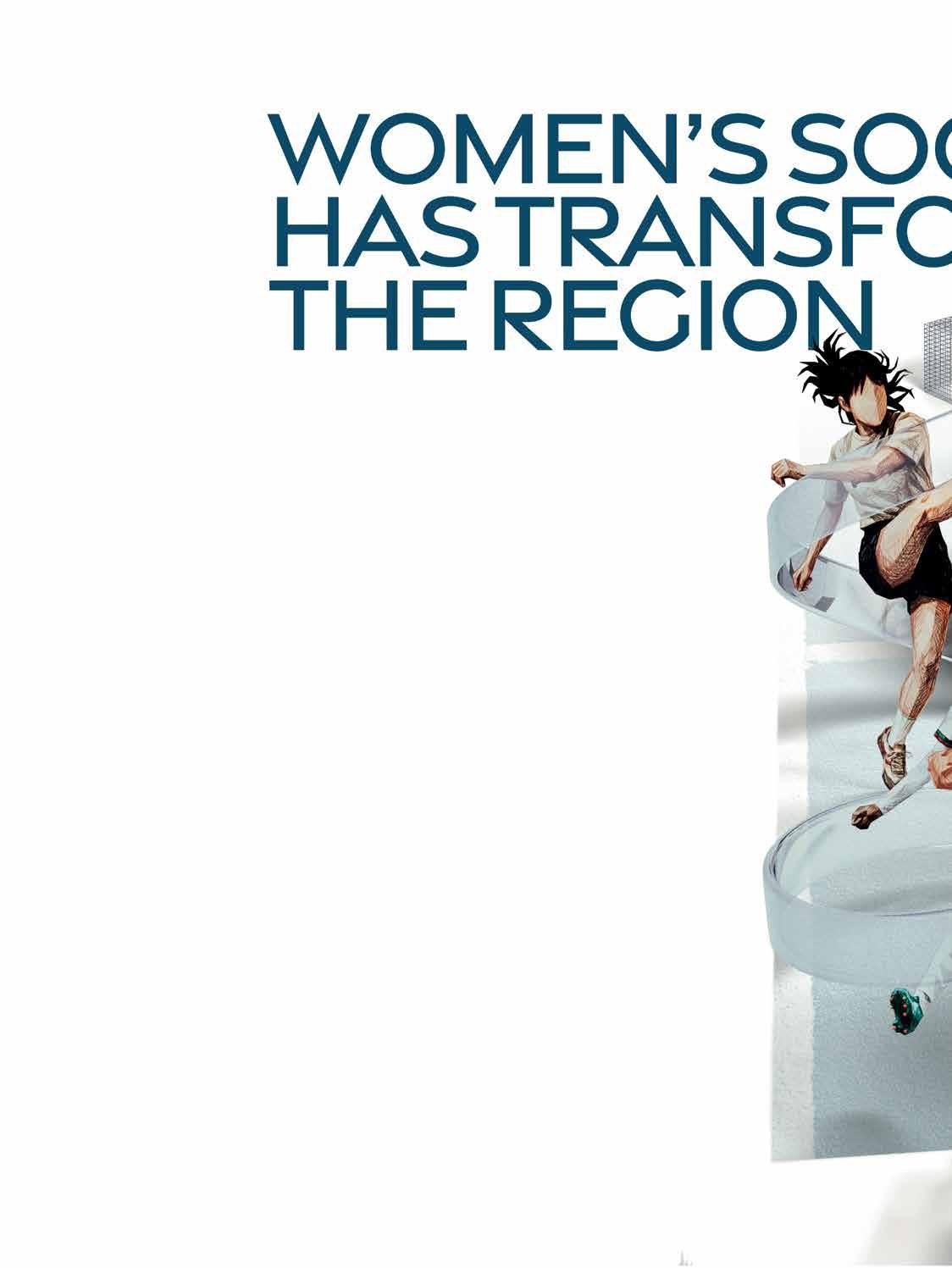
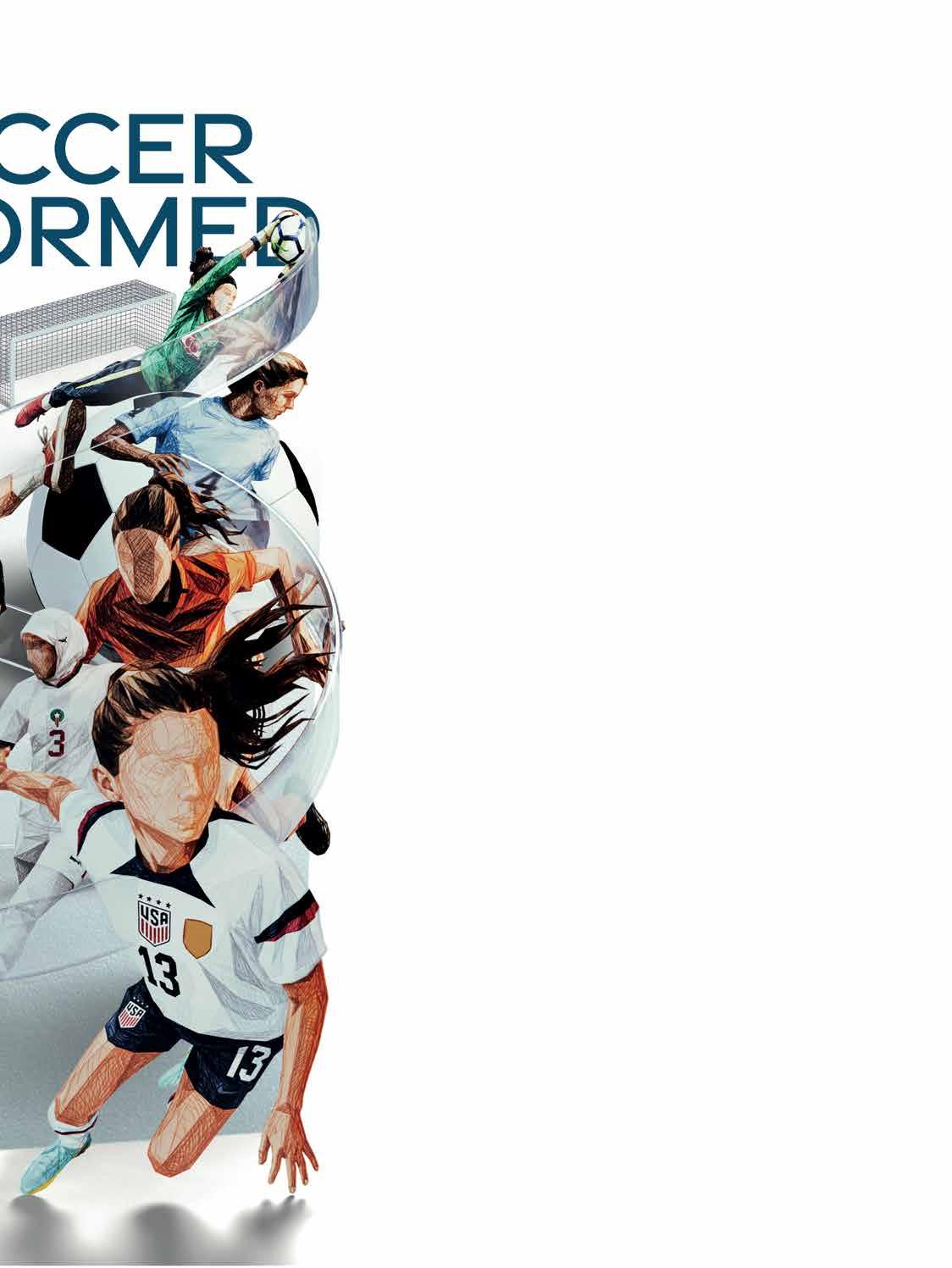
As North America prepares for the 2026 FIFA World Cup, the growth of women’s soccer signals a deeper cultural transformation across Mexico, the United States, and Canada, where new generations of women are redefining who belongs at the game’s center.
BY SOLEDAD ACOSTA OVIEDO*
ARTWORK: DANTE ESCOBAR
For decades, soccer in North America had a distinctly male face. Stadiums, sports narratives, media figures, and even the emotions deemed acceptable within the game seemed built around the same idea: soccer belonged to men. As Mexico, the United States, and Canada prepare to host the 2026 FIFA World Cup, the world’s attention will be on the region. It is also an opportunity to examine the growth of professional women’s soccer as part of a much deeper cultural transformation: women redefining who can inhabit the sport and how it can be experienced.
Talking about women’s soccer in North America today means examining different processes that, although advancing at different speeds, ultimately converge within the same regional landscape. The United States built Major League Soccer in 1993 and developed a historically strong structure around women’s sports through universities, institutional investment,andathleticdevelopment.Canada,with the launch of the Northern Super League in 2025, strengthened sports policies that are more closely tied to inclusion and community-based athletics. Mexico, meanwhile, experienced a different kind of emergence—one that was faster, more emotional, and socially explosive.
It is impossible to forget the 1971 Women’s World Cup, hosted by Mexico, where the Mexican national team reached the final and finished as runner-up to Denmark. FIFA should officially recognize that tournament. Forty-six years passed before Liga MX Femenil was established in 2017, opening a symbolic space that had remained partially closed to women within Mexican soccer culture for decades. The phenomenon cannot be understood solely through attendance figures or digital audiences. The change is also visible in everyday stories: girls wearing jerseys of female players, entire families following women’s matches, and young people finding athletic role models that previously did not exist.
In Mexico, the growth of women’s soccer has a distinctive feature that makes it especially interesting: culture seems to have advanced faster than institutions. While clubs, media outlets, and sponsors continue to adapt to a new sporting reality, fans have already begun to build new forms of identification with female players. In many ways, the emotional closeness between players and supporters has created a different relationship with the sports spectacle itself. Many players still project an everyday normalcy that fosters immediate identification. Their journeys remain relatable to thousands of girls and young women who grew up playing in parks, schools, or makeshift leagues. Women’s soccer in North America, particularly in Mexico, still preserves a human dimension that is difficult to find in some of the hyper-commercialized spaces of modern men’s sports. It is no coincidence that a sport like soccer is part of a broader social process.
NORTH AMERICA ON THE ROAD TO THE 2026
A new soccer era
Women’s soccer is reshaping sports culture across North America,creating new role models and shaping identities.
46
years later
Mexico hosted the 1971 Women’s World Cup. Liga MX Femenil was launched 46 years later,in 2017.
Fans lead change Families and young supporters are embracing women’s soccer more quickly than many institutions.
Road to 2031
The next Women’s World Cups will be held in the Americas: Brazil in 2027 and Mexico in 2031.
Beyond the pitch
Women’s soccer has become a space for inclusion, identity, and cultural belonging.
Changing the game
Girls now attend matches wearing jerseys with the female players’ names.
Social media helped players build direct connections with fans and their communities.
Many professionals still face unequal pay and limited infrastructure support.
Latino communities view women’s soccer as a space for shared representation.
That sense of closeness has also transformed how the sport is consumed. Social media became a central vehicle for the growth of women’s soccer, allowing players to build more direct digital communities with fans. While major television networks long determined who deserved visibility in soccer, digital platforms helped partially break that dynamic. Many young women began following players not only for what they accomplished on the field but also because they could see themselves reflected in them. Public spaces became spaces for women, where the possibility of becoming a professional player was no longer viewed as exclusively male.
In cities across Mexico, the United States, and Canada, it is increasingly common to see girls attending matches wearing jerseys with female players’ names. It may seem like a small detail, but it signals a historic transformation in the region’s sporting culture. For decades, references to female soccer players were scarce or invisible. Today, new generations are growing up with a different vision of who can take center stage in sports.
Yet behind this expansion lie tensions that reveal the contradictions of a sport in transition. The media growth of women’s soccer has not always been matched by the same level of institutional development. Pay disparities, unequal infrastructure, and job insecurity remain part of the daily reality for many players across the region. What is particularly revealing is that these inequalities exist throughout society, not only in soccer. Sport is not a reflection of some abstract social essence; it is an integral part of society and can serve as a lens through which to examine it. In countries such as the United States, Mexico, and Canada, female players continue to fight for recognition, better working conditions, and greater representation.
Perhaps the most significant changes occur far from cameras and institutional speeches. They emerge in the personal stories of players and those who work in professional leagues. That is where soccer ceases to be merely entertainment and becomes a social experience.
In interviews for my research on Liga MX Femenil, many players described how their relationship with soccer began in childhood, amid family tensions, stereotypes, or everyday resistance. Some recall soccer-loving fathers who encouraged their passion, while mothers tried to steer them toward activities considered more “appropriate.” Others grew up playing with boys because there were no teams for girls. What makes these stories significant is that they reveal something much larger: women’s soccer in Mexico was born through a constant process of cultural negotiation.
And that negotiation continues even within the professional ranks.
Players speak about unequal salaries, infrastructure disparities, labor uncertainty, and power dynamics within clubs. Yet they also describe something that rarely appears in traditional sports coverage: the emotional weight of occupying a space that has historically been masculinized. They face constant pressure to prove their abilities, a sense of representing something larger than themselves, and an awareness of belonging to a generation that opened a door that did not previously exist.
At the same time, women’s soccer is beginning to play an important role in shaping new cultural identitiesacrossNorthAmerica.MigrantandLatino communities, particularly in the United States and Canada, have found in this growth in sports a space foremotionalconnectionandsharedrepresentation. FormanyLatinofamilies,attendingwomen’smatches or following Mexican, American, or Canadian playersisalsoawayofculturallybelongingtoaregion shaped by mobility, diversity, and cultural blending.
In that sense, the 2026 World Cup could become much more than a mega sporting event. It may serve as a regional mirror, reflecting cultural transformations that have been unfolding for years. While the spotlight will remain on the biggest stars of the men’s game, another story continues to grow beneath the same World Cup infrastructure: the consolidation of new generations of women who no longer see soccer as exclusively a male domain.
Soccer has always been much more than a sport. It is identity, emotion, belonging, and collective representation. That is why the growth of women’s soccer is so significant: it transforms not only the playing field but also how societies imagine who has the right to occupy the center of the sporting spectacle. The growth of women’s soccer in the region is also tied to what lies ahead. The next Women’s World Cups will be held in the Americas, first in Brazil in 2027 and then in Mexico in 2031.
Perhaps that is one of the most important stories on the road to 2026. Not only who will lift the trophy, but also what kind of soccer culture will emerge in North America after the tournament.
*The author is an international relations scholar, sociologist,and researcher specializing in gender and sport.
2026 WORLD CUP
Norteamérica rumbo al Mundial 2026: el futbol femenil cambió la región
A las puertas del Mundial 2026, el crecimiento del futbol femenil refleja una transformación cultural profunda en México, Estados Unidos y Canadá, donde nuevas generaciones de mujeres están redefiniendo quién puede ocupar el centro del espectáculo deportivo.
POR SOLEDAD ACOSTA OVIEDO*
ARTE: DANTE ESCOBAR
Durante décadas, el futbol en Norteamérica tuvo un rostro profundamente masculino. Los estadios, las narrativas deportivas, las figuras mediáticas e incluso las emociones permitidas dentro del juego parecían construidas bajo una misma lógica: el futbol pertenecía a los hombres. Ahora, rumbo al Mundial 2026, organizado por México, Estados Unidos y Canadá, tendrá la mirada internacional de la sociedad, donde vale la pena ver el crecimiento del futbol femenil profesional desde una transformación cultural mucho más profunda: la manera en que las mujeres están reconfigurando quién puede habitar el futbol y desde dónde puede vivirse. Hablar hoy del futbol femenil en Norteamérica implica observar procesos distintos que, aunque avanzan a velocidades diferentes, terminan encontrándose en un mismo escenario regional. Estados Unidos construyó la Major League Soccer en 1993, históricamente una estructura sólida en torno al deporte femenil, mediante universidades, inversión institucional y desarrollo deportivo. Canadá, con su liga Northern Super League en 2025, consolidó políticas deportivas con una narrativa más vinculada a la inclusión y al deporte comunitario. México, en cambio, vivió una irrupción distinta: más acelerada, emocional y socialmente explosiva.Cómo olvidar el Mundial Femenil de 1971, en el que México fue anfitrión, la selección mexicana llegó a la final y quedó en segundo lugar frente a Dinamarca. Hay que recordarle a la FIFA que reconozca este mundial. Tuvieron que pasar 46 años para que se creara la Liga MX Femenil en 2017, lo que abrió un espacio simbólico que durante décadas había permanecido parcialmente cerrado para las mujeres en la cultura futbolística mexicana. El fenómeno no puede entenderse únicamente a partir de los números de asistencia ni de las audiencias digitales. El cambio ocurre también en los relatos cotidianos: niñas usando camisetas de futbolistas mujeres, familias enteras siguiendo partidos femeniles, jóvenes encontrando referentes deportivos que antes simplemente no existían.
En México, el crecimiento del futbol femenil ha tenido una particularidad que lo vuelve especialmente interesante: la cultura parece haber avanzado más rápido que las estructuras. Mientras los clubes, medios de comunicación y patrocinadores todavía intentan adaptarse a una nueva realidad deportiva, las aficiones ya han comenzado a construir nuevas formas de identificación en torno a las jugadoras. En muchos sentidos, la cercanía emocional entre las futbolistas y el público ha permitido crear una relación distinta con el espectáculo deportivo.Muchas jugadoras continúan proyectando una sensación de cotidianidad que genera una identificación inmediata. Sus trayectorias todavía parecen cercanas a las de miles de niñas y jóvenes que crecieron jugando en parques, en escuelas o en ligas improvisadas. El futbol femenil en Norteamérica, particularmente en México, aún conserva una dimensión humana que resulta difícil de encontrar en ciertos espacios hipercomercializados del deporte varonil contemporáneo. No es casualidad que un deporte como el futbol sea parte de un proceso social. Esa cercanía también ha transformado la manera en que se consume el deporte. Las redes sociales se convirtieron en un vehículo central para el crecimiento del futbol femenil, permitiendo que las jugadoras construyeran comunidades digitales mucho más directas con la afición. Mientras que durante años las grandes cadenas televisivas definieron quién merecía visibilidad en el futbol, las plataformas digitales ayudaron a romper parcialmente esa lógica. Muchas jóvenes comenzaron a seguir a futbolistas no solo por lo que hacían en la cancha, sino también por la posibilidad de verse reflejadas en ellas. Los espacios públicos se convirtieron en ámbitos para las mujeres, donde la posibilidad de ser jugadora profesional dejó de ser exclusiva de los varones.
En ciudades de México, Estados Unidos y Canadá, cada vez es más común observar a niñas asistiendo a partidos con cami-
setas con nombres de futbolistas femeninas. Puede parecer una escena menor, pero representa una transformación histórica en la cultura deportiva regional. Durante décadas, las referencias futbolísticas femeninas fueron escasas o invisibilizadas. Hoy, nuevas generaciones están creciendo con otro imaginario posible sobre quién puede ocupar el centro del espectáculo deportivo. Sin embargo, detrás de esta expansión también hay tensiones que revelan las contradicciones propias de un deporte en transición. El crecimiento mediático del futbol femenil no siempre ha estado acompañado del mismo desarrollo institucional. Las diferencias salariales, la infraestructura desigual y la incertidumbre laboral siguen siendo parte de la realidad cotidiana para muchas futbolistas de la región, y aquí está lo interesante: estas desigualdades se viven en todas las esferas sociales, no sólo en el futbol. El deporte no es un reflejo de alguna esencia postulada de la sociedad, sino una parte integral de la misma, que puede utilizarse como medio para reflexionar sobre ella. En países como Estados Unidos, México y Canadá, las jugadoras continúan disputando el reconocimiento, las condiciones laborales y los espacios de representación.
Pero quizá el cambio más interesante ocurre lejos de las cámaras y de los discursos institucionales. Aparece en las historias íntimas de las jugadoras y de quienes trabajan en la liga profesional. Ahí es donde el futbol deja de ser únicamente espectáculo y se convierte en experiencia social.
En las entrevistas realizadas para mi investigación sobre la Liga MX Femenil, muchas jugadoras describían cómo su relación con el futbol comenzó desde la infancia, en medio de tensiones familiares, estereotipos o resistencias cotidianas. Algunas recuerdan a padres futboleros que impulsaban su pasión, mientras que las madres intentaban orientarlas hacia otras actividades “más apropiadas”. Otras crecieron jugando con hombres porque simplemente no existían equipos para niñas. Lo interesante es que estas trayectorias personales terminan revelando algo mucho más grande: el futbol femenil en México nació en medio de una constante negociación cultural.
Y esa negociación continúa incluso dentro del profesionalismo. Las jugadoras hablan de salarios desiguales, diferencias en la infraestructura, incertidumbre laboral y dinámicas de poder en los clubes. Sin embargo, también narran algo que rara vez aparece en las coberturas deportivas tradicionales: el peso emocional de habitar un espacio históricamente masculinizado. La presión de demostrar constantemente su capacidad, la sensación de representar algo más grande que ellas mismas y la conciencia de formar parte de una generación que abrió una puerta que antes no existía. Al mismo tiempo, el futbol femenil comienza a desempeñar un papel importante en la construcción de nuevas identidades culturales en Norteamérica. Las comunidades migrantes y latinas, particularmente en Estados Unidos y Canadá, han encontrado en este crecimiento deportivo un espacio de conexión emocional y de representación compartida. Para muchas familias latinas, asistir a partidos femeniles o seguir a futbolistas mexicanas, estadounidenses o canadienses también implica una forma distinta de pertenecer culturalmente a una región marcada por la movilidad, la diversidad y el mestizaje cultural. En ese sentido, el Mundial 2026 puede convertirse en mucho más que un megaevento deportivo. Puede funcionar como una especie de espejo regional, en el que Norteamérica observe las transformaciones culturales que ya ocurrían desde hace años. Porque mientras los reflectores estarán puestos sobre las grandes figuras del futbol varonil, debajo de esa misma infraestructura mundialista continúa creciendo otra historia: la consolidación de nuevas generaciones de mujeres que ya no entienden el futbol como un territorio exclusivamente masculino.
El futbol siempre ha sido mucho más que un deporte. Es identidad, emoción, pertenencia y representación colectiva. Por eso el crecimiento del futbol femenil resulta tan significativo: no sólo transforma las canchas, sino que también transforma las formas en que las sociedades imaginan quién tiene derecho a ocupar el centro del espectáculo deportivo.
El crecimiento del futbol femenil en la región tampoco puede separarse de lo que viene en el horizonte: los próximos Mundiales se jugarán en el continente y uno de ellos en Norteamérica, primero en Brasil 2027 y después en México 2031.
Quizá esa sea una de las historias más importantes rumbo al 2026. No solo quién levantará la copa, sino también qué tipo de cultura futbolística emergerá en Norteamérica al término del torneo.
* La autora es una académica internacionalista y socióloga, además de investigadora en género y deporte.
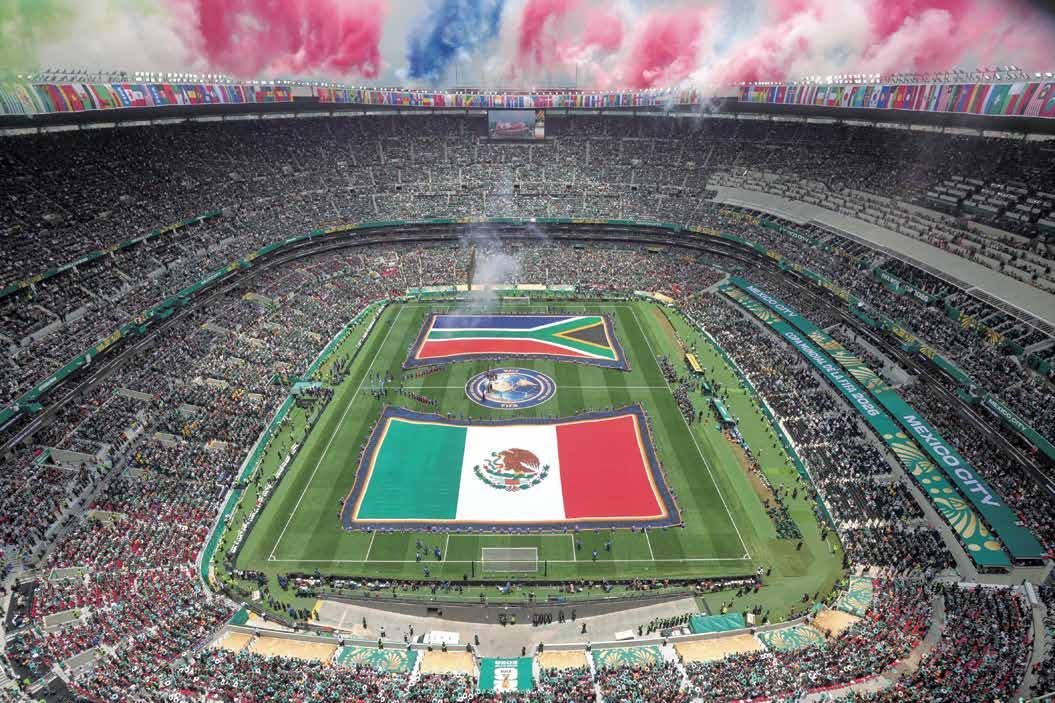
Mexico once again made history by opening the FIFA World Cup 2026 at Azteca Stadium with a spectacular ceremony celebrating the country’s culture, passion, and football tradition. The event launched an unprecedented World Cup jointly hosted by Mexico, the United States, and Canada.
MAGNIFICENT, ASTONISHING, & UNFORGETTABLE THE WORLD CUP OPENING CEREMONY
BY DAMIÁN MARTÍNEZ GARCÍA
PHOTO: A. NAVA, D. OJEDA Y G. O´GAM
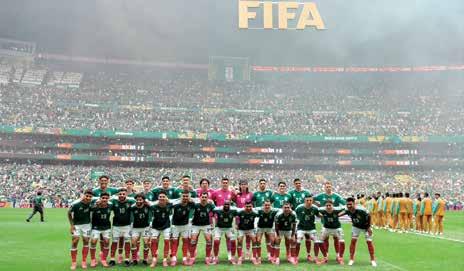
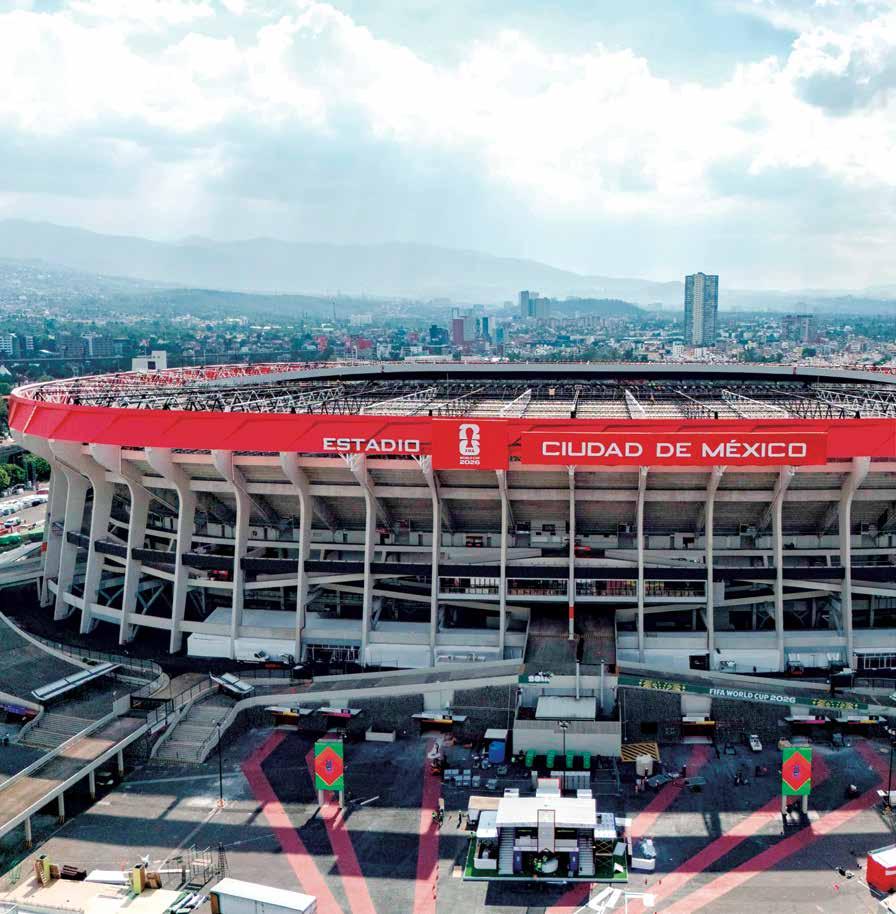
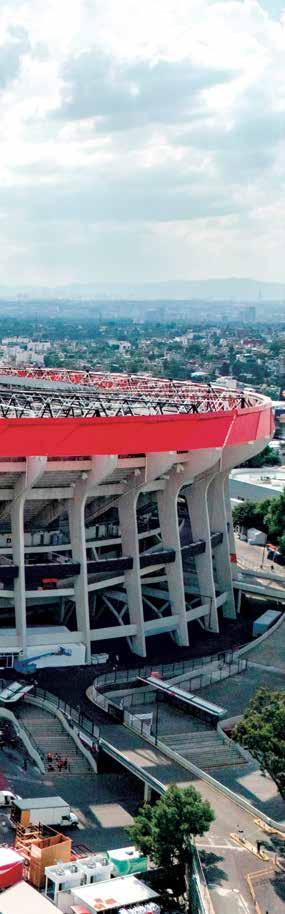
The world of soccer once again turned its eyes to Mexico. With a ceremony rich in emotion, symbolism, culture, tradition, and history, the majestic Azteca Stadium shone once more before a global audience. Now known as Mexico City Stadium, the venue hosted
the opening match of the FIFA World Cup 2026, becoming the first stadium in history to host the opening matches of three different World Cups, following those in 1970 and 1986.
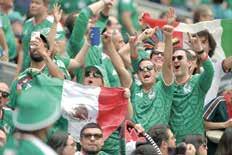
Even before sunrise in Mexico City, thousands of fans began arriving at the renovated stadium. Green, white, and black jerseys flooded not only the Azteca but also the entire country. National flags and chants for the Mexican National Team created an unforgettable atmosphere, turning the day into a nationwide celebration.
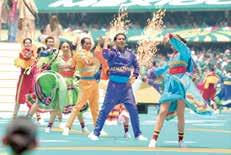
The opening ceremony was steeped in mysticism and color, showcasing a piece of Mexico’s identity to the world through music, dance, and symbols that represent the country’s rich cultural heritage. The show blended cutting-edge technology and music with Mexican traditions, folklore, and the passion that defines the nation.
Giant screens, dazzling light displays, and a world-class production accompanied the official launch of the most important tournament in international soccer. More than 80,000 spec-
tators — 80,824 fans, according to the official figure — witnessed an unprecedented event that put Mexico at the center of the world’s most beloved sport.
The opening also marked the start of a historic edition of the tournament. For the first time, the World Cup features 48 national teams and is hosted jointly by three countries: Mexico, the United States, and Canada.
Excitement reached extraordinary levels in the days leading up to the opening match. Mexi-
80,824
fans official attendance at the FIFA World Cup 2026 opening ceremony in Mexico City.
48
teams compete in the largest World Cup ever, expanding the tournament format.
3 nations Mexico,the United States, and Canada are hosting the tournament together.
can fans responded in droves, turning El Tri’s debut into one of the year’s most anticipated sporting events. Entire families, international tourists, and supporters from around the world gathered to be part of a day that will remain etched in the collective memory of Mexican sports.
The Azteca has hosted legendary moments featuring icons such as Pelé and Diego Armando Maradona, and it added another chapter to its rich history. After an extensive modernization to meet FIFA standards, the stadium unveiled a refreshed look while preserving the essence that has made it one of the most recognized venues on the planet.
Local and federal authorities highlighted the event’s importance to Mexico’s international image. Beyond its sporting impact, the World Cup opening is a major economic and tourism opportunity for Mexico City, which expects to welcome hundreds of thousands of visitors in the coming weeks. The celebration continued both inside and outside the stadium. Across the capital, fan festivals, gathering areas, and giant screens allowed thousands of people to follow the start of the competition.
With the ball rolling and excitement overflowing throughout Azteca Stadium, Mexico once again secured a privileged place in the history of world soccer. The opening of the FIFA World Cup 2026 confirmed the country’s ability to host world-class events and reaffirmed the special bond between Mexican fans and the planet’s most popular sport.
Thus, the 2026 World Cup began in sublime fashion: with a historic victory for Mexico, marked by laughter and tears, joy and drama, all unfolding at a venue that once again became the heart of world soccer — Azteca Stadium.
Azteca makes history
First stadium ever to host the opening match of three World Cups.
The ceremony blended technology, folklore,music, and Mexican traditions.
Thousands of fans arrived before sunrise to join the nationwide celebration.
The event showcased Mexico’s culture and passion to a global audience.
Imponente, asombrosa e inolvidable la inauguración del Mundial
El futbol mundial volvió a mirar hacia México. Con una ceremonia cargada de emociones, simbolismo, cultura, tradición e historia, el majestuoso Estadio Azteca brilló una vez más ante los ojos del planeta entero. El ahora llamado Estadio Ciudad de México abrió el telón de la Copa Mundial de la FIFA 2026, convirtiéndose en el primer recinto en la historia en albergar partidos inaugurales de tres Copas del Mundo distintas, tras las celebradas en 1970 y 1986. Desde antes de que saliera el sol en la capital mexicana, miles de aficionados comenzaron a llegar al renovado inmueble. Camisetas verdes, blancas, negras invadieron no solo el Azteca sino el país entero. Banderas nacionales y cánticos de apoyo a la Selección Mexicana crearon un ambiente inolvidable, un día que transformó al país en una auténtica celebración popular.
La ceremonia inaugural se llenó de misticismo y color, que mostraron al mundo una parte de la identidad mexicana a través de la música, la danza y elementos representativos de la riqueza cultural del país. El espectáculo combinó música y tecnología con las tradiciones mexicanas, el folclor nacional y la pasión que caracteriza a México. Pantallas gigantes, juegos de luces y una producción de nivel internacional acompañaron la presentación oficial del torneo más importante del balompiémundial.Másde80milasistentes—80,824 aficionados,fuelacifraoficial—fuerontestigosdeun evento sin precedentes, en el que México se convirtió en el epicentro del deporte más hermoso del mundo. Lainauguracióntambiénmarcóeliniciodeuna edición histórica de este torneo. Por primera vez, el Mundialcuentaconlaparticipaciónde48selecciones nacionales y es organizado conjuntamente por tres países: México, Estados Unidos y Canadá.
La expectativa alcanzó niveles extraordinarios en los días previos al encuentro inaugural. La afición mexicana respondió de manera masiva y convirtió el debut del Tricolor en uno de los eventos deportivos más esperados del año. Familias completas, turistas extranjerosyaficionadosdedistintospaísessedieron cita para formar parte de una jornada que quedará registradaenlamemoriacolectivadeldeportenacional.
El Azteca ha sido el escenario de momentos legendarios protagonizados por figuras como Pelé y Diego Armando Maradona; sumó un nuevo capítulo a su rica historia. Tras un proceso de modernización y adecuaciones para cumplir con los estándares exigidos por la FIFA, el inmueble presentó una imagen renovada sin perder la esencia que lo ha convertido en uno de los estadios más reconocidos del planeta. Las autoridades locales y federales destacaron la relevancia del evento para la proyección internacional de México. Además del impacto deportivo, la inauguracióndelMundialrepresentaunaimportante oportunidad económica y turística para la Ciudad de México, que espera recibir a cientos de miles de visitantes en las próximas semanas.
La fiesta continuó tanto dentro como fuera del estadio. En distintos puntos de la capital se organizaron actividades para los aficionados, zonas de convivenciaypantallasgigantesquepermitieronamilesde personas seguir de cerca el inicio de la competencia.
Con el balón en movimiento y la emoción desbordando en cada rincón del Estadio Azteca, México volvió a ocupar un lugar privilegiado en la historia del futbol mundial. La inauguración de la Copa Mundial de la FIFA 2026 confirmó la capacidad del país para organizar eventos de talla internacional y reafirmó el vínculoespecialentrelaaficiónmexicanayeldeporte más popular del planeta.
AsíarrancóelMundial2026demanerasublime, con una victoria histórica para México, con risas, con llanto, con felicidad, con dramatismo, y lo hizo en un escenarioque,unavezmás,seconvirtióenelcorazón del futbol mundial: el Estadio Azteca.
80,824
aficionados asistieron oficialmente a la ceremonia de inauguración de la Copa Mundial de la FIFA 2026 en la Ciudad de México.
48
selecciones compiten en la Copa Mundial más grande de la historia,ampliando el formato del torneo.
3
naciones,México,Estados Unidos y Canadá,son sede conjunta del torneo.
El Azteca hace historia
Primer estadio en albergar el partido inaugural de tres Copas Mundiales.
La ceremonia combinó tecnología,folclore, música y tradiciones mexicanas.
Miles de aficionados llegaron antes del amanecer para unirse a la celebración nacional.
El evento mostró la cultura y la pasión de México a una audiencia global.
On Thursday, June 11,
the largest sporting event in the world got underway
BY DANIEL BENET
ARTWORK: ALEJANDRO OYERVIDES
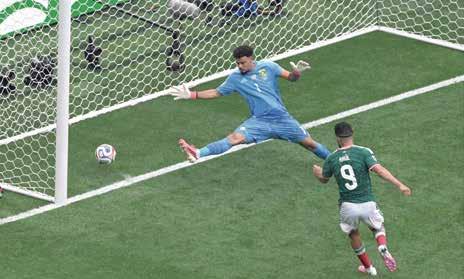
Mexico defeated South Africa 2–0 in the opening match. The excitement will linger in the air for a few weeks, but what the World Cupleavesbehindwillenduremuchlonger. Nowmorethanever,footballandtheWorld Cup extend far beyond the realm of sports.
When the United States negotiated its way past the investigations into corruption within Blatter’s FIFA andtheNorthAmericanbidwasputforward,football becameabusinessopportunityfortheUnitedStates. Mexico, on the other hand, contributes the World Cup spirit, the football culture, and the rich football tradition that exists in this country. Canada, despite having very good players, is a country that has not yet forged a strong football identity. Moreover, the proportion of Canadians interested in football is relatively low compared to other sports.
If we look at American newspapers, the sports section is completely focused on the NBA Finals and the baseball season. It is difficult to find football stories. In Mexico, meanwhile, the World Cup occupies the front page, the political section, the business section, the local news section, and the sports section. There is no news story in this country that is not, in some way, connected to the World Cup.
What football represents for each country is this: for the United States, it is a business; for Canada, it is an opportunity to remain associated within North America; and for Mexico, it is the culture and depth of football fandom in this region.
FIFA’s business model is increasingly distinguished by being highly exclusionary; we could say it is designed in concentric circles. First are the global partners, which form the corporate core of the organization. These companies occupy the highest level ofpartnershipwithFIFAandarethebiggestwinners.
At a second level are the World Cup sponsors, who are not partners of the international federation but are crucial to staging the event.
Then come the official promoters, which is another form of membership, and in addition there are all the officially licensed products. These have generated considerable controversy because FIFA’s authorization to use its trademarks and images— even phrases that have gone viral online—is tied to those who pay for an official product license.
Theorganizationisbuildingitsbusinessmodel around broadcasting through FIFA Plus, which sells rights to TikTok, which in turn sells content to the companies that broadcast football.
The companies that traditionally held broadcasting rights and resold content, such as major television networks, now have to purchase content from FIFA Plus through TikTok’s parent company.
What FIFA is seeking is a totalizing World Cup experience. They want videos of every kind, influencers recording at different moments—not only the matchesthemselves,butalsoastarhavingbreakfast, peoplewalkingaround,andsoon—sothatanyevent connected to the World Cup is highly likely to be documented by someone linked to this digital media ecosystem and, therefore, to ensure that nobody profits from the event except them.
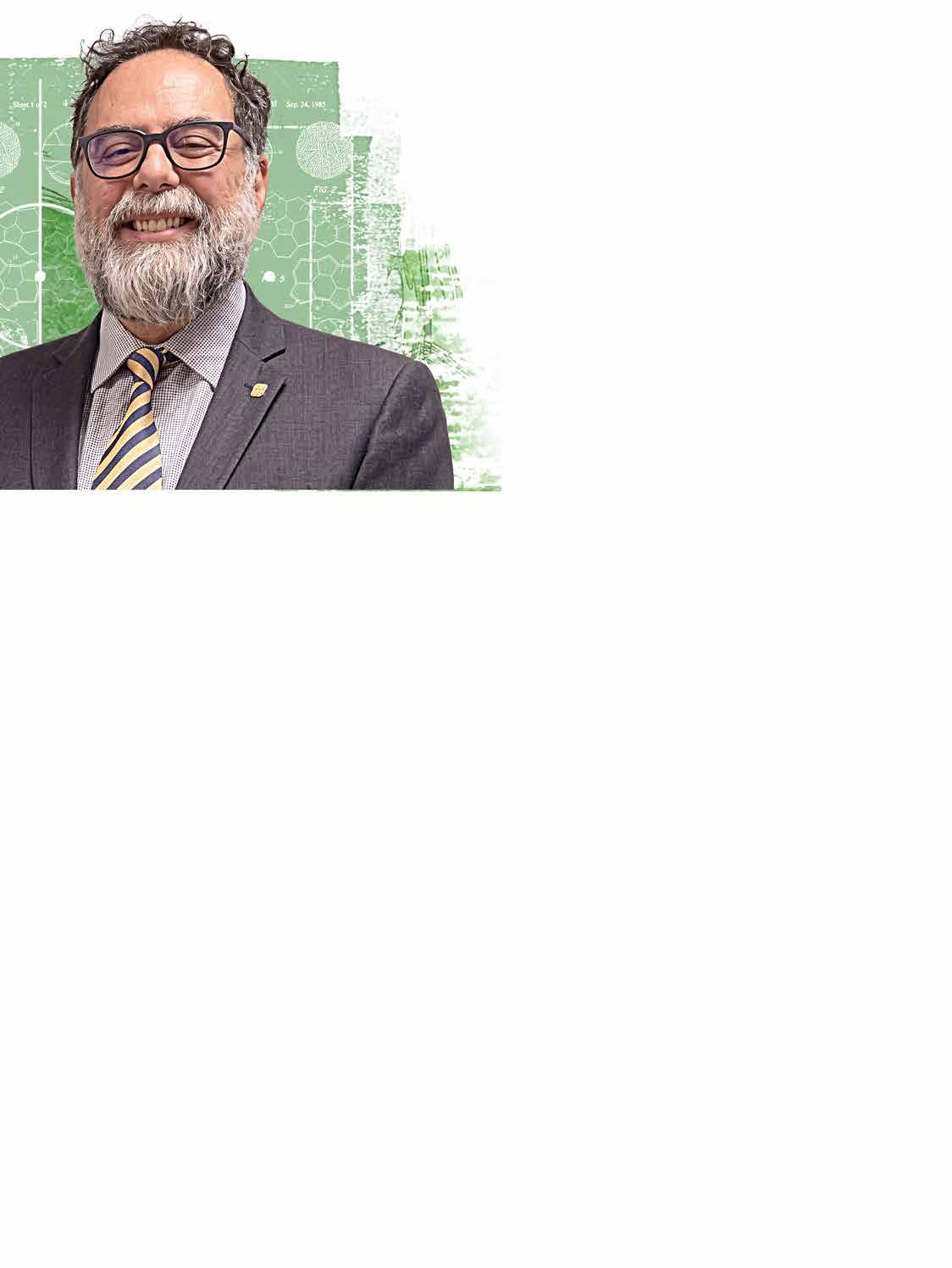
INTERVIEW WITH JUAN CARLOS BARRÓN PASTOR*
A NEW WORLD ORDER SEEN THROUGH
All of this constitutes FIFA’s business ecosystem.
And I began by saying that it is highly exclusionary because it is designed to prevent activity from taking place outside this corporate ecosystem.
Furthermore, they require countries, including Mexico of course, to modify their legal frameworks so that sanctions can be enforced if FIFA decides to impose them on an actor operating outside this sponsorship structure.
FIFA’s model is designed to bring people together and keep them inside it. It is what is known as a walled-garden marketing strategy or ambush-marketingprotection,intendedtoensurethatnoonecan step outside those boundaries.
At the same time that the three countries are hosting this event, they are also negotiating adjustments to the free trade agreement that binds them together. In some viral videos, people question whether FIFA’s rules or Mexico’s laws take precedence. It seems that sport has become a product whose objective is to create the legal framework necessary for profit-making rather than to promote an event aimed at unity and the development of sport.
There are many opinions about how these issues will be resolved. Some believe that this could be the last World Cup as we know it because an entire spectrumofpossibilitiesisopeningup,tiedtowhatanew world order may look like—one in which economic liberalism and the form of globalization we have known no longer prevail.
TheTrumpadministrationanditsallies,among
Beyond the pitch
For experts,the 2026 World Cup is as much about business,politics,and power as it is about the sport.
whom is the organizer of the World Cup, behave as though they are eternal, as though this phase will last forever. There are many reasons to think it is a transitional and chaotic period that is unlikely to become permanent, mainly because of its disregard for institutions and its disregard for maintaining a fair-play system of rules.
Of course, all three countries will come away bruised by this World Cup. Politically, it is definitely not benefiting anyone. The wear and tear is simply too great, and there will be a massive hangover after the tournament—a political hangover and an economic hangover that all three governments will have to pay for. Many political costs will emerge as a result of this World Cup. We had already seen since the Athens Olympics that these kinds of sporting events no longer necessarily produce political and economic windfalls.
3 48
countries are jointly hosting the World Cup for the first time: Mexico,the United States,and Canada.
national teams are competing in the largest World Cup ever staged.
Throughout this century, countries that have hosted major events—Brazil being a recent example—the Brazilian left paid a very high price for that WorldCup.Weshouldtakethatasawarningbecause FIFA’s exclusionary model means that once it packs upitsbagsofmoneyandleaves,theproblemsremain with local governments.
The first thing that should be said is that a large part of the problems surrounding this World Cup stem from the contradiction between the values FIFA claims to defend—fair play, inclusion, combating homophobic and racist chants, and so on—and the alliances it chooses to make.
FIFA has committed itself strongly to these principles, yet it aligns itself with a country like the United States, where Infantino has allied himself with Donald Trump and with figures in other parts of the world whose positions run directly counter to the values the organization claims to uphold.
For example, Aramco is one of FIFA’s principal partners, which makes the organization’s agenda regarding women’s football and gender issues pale in comparison to its choice of sponsor.
In the case of the United States, we have four countries whose citizens are not eligible for visas, a Somali referee who has reportedly been denied entry, and Iran’s national team, which had to remain in Tijuana and is being required to travel back and forth to Seattle. Thus, the host nation itself becomes the clearest symbol standing in opposition to the values FIFA claims to defend.
Fair play means inclusion and combating racism, and these principles are reflected in stadium regulationsbecauseFIFAseeksstrictcontroloverfan expression.Yetitcannotcontroltheexpressionsand policiesofoneofitshostcountries,whichitconsiders an indispensable partner.
All of these contradictions will generate a torrent of scandals and controversies, reinforcing the perception that FIFA is not truly committed to the values it claims to defend. It will have to take steps to recover its credibility among its partners because,
at the end of the day, it is an association of football federations.
In Mexico’s case, we would need to get through the group stage comfortably, advance to the Round of 32, face an African team—which I would not underestimate—and then, depending on how things unfold, we could meet England. England does not play particularly well at Mexico City’s altitude, so it is possible thatwhen we are sent toMiami for the quarterfinals, that is where our journey would come to an end.As for the United States, they have an excellent coach and a very good team. I believe the United States has a realistic chance of reaching the quarterfinals. Canada has talented young players, but of the three hostnations,itwouldbetheteamleastlikelytomake a deep run in the tournament.
It is unlikely that we will see any of the host countries reach the semifinals. Mexico is the one facing the greatest pressure to get there, but it looks difficult, especially with so many teams under pressure to win the trophy, including England, Spain, Portugal, France, and of course Brazil.
From a sporting perspective, it will be a highly entertaining World Cup, one that will generate tremendous excitement. And as for who will lift the trophy, I believe Portugal will win the World Cup. *DirectoroftheCenterforResearchonNorthAmerica(CISAN)attheNationalAutonomousUniversity ofMexico(UNAM)
Un nuevo orden mundial visto desde el fútbol. Entrevista con Juan Carlos Barrón Pastor*
El jueves 11 de junio arrancó el evento deportivo más grande del mundo.
POR DANIEL BENET
ARTE: ALEJANDRO OYERVIDES
México venció en el partido inaugural a Sudáfrica con 2-0. La ilusión estará en el aire algunas semanas, pero lo que deje después el mundial perdurará mucho más. Ahora, más que nunca, el fútbol y el mundial escapan de lo meramente deportivo.
CuandoocurrelanegociacióndeEstadosUnidosparadejaratrás lasinvestigacionesquehicieronsobrecorrupciónenlaFIFAde Blatter y se presenta la candidatura de América del Norte, para Estados Unidos el fútbol se convierte en una oportunidad de negocio. Mientras que México lo que aporta es el espíritu mundialista,elespíritufutbolero,latradiciónfutbolísticaquehayen este país. Canadá, a pesar de que tiene muy buenos jugadores, es un país que todavía no ha forjado una identidad futbolística. Además,laproporcióndecanadiensesquelesinteresaelfútbol es baja comparada con otros deportes. Vemos que en los diarios estadounidenses la sección deportivaestácompletamenteenfocadaalafinaldebásquetbol, a la temporada de béisbol. Cuesta trabajo llegar a notas futbolísticas. Mientras que en México el mundial ocupa la primera plana, la de política, la de economía, de ciudad, de deportes. No haynoticiaenestepaísquenoestédealgunamaneravinculada con el Mundial de fútbol.
Loquerepresentaelfútbolparacadapaíses:paraEstados Unidosesunnegocio,paraCanadáunaoportunidaddecontinuar asociada en América del Norte y para México es la cultura y la profundidad de la afición futbolera en esta región.
El modelo de negocios de FIFA se está distinguiendo por ser un modeloaltamenteexcluyente;podríamosdecirqueestápensado en círculos concéntricos.
Lo primero son los socios globales que son el corazón corporativo de la organización: estas empresas que están en el nivel de socio de FIFA y son las grandes ganadoras. En un segundonivelestánlosquesellamanpatrocinadoresdelmundial, que no son socios de la federación internacional, pero que son muyimportantesparalarealizacióndelevento.Luegoestánlos promotoresoficiales,escomootramembresíay,además,están todoslosproductosconlicenciaoficial,quehangeneradomucho revueloporquelaautorizacióndeFIFAparaelusodesusmarcasy susimágenes,inclusodefrasesquesehanviralizadoeninternet, tienequeverconquienespaganestalicenciadeproductooficial.
La asociación está basándose en un modelo de negocio detransmisiónatravésdeFIFAPlusquienlevendelosderechos a TikTok, quien a su vez venderá los contenidos a las empresas que hacen las transmisiones de fútbol.
Lasempresasquetradicionalmenteteníanlosderechos detransmisiónyrevendíancontenidos,comolasgrandestelevisoras,ahoratienenquecomprarcontenidosaFIFAPlusatravés de la empresa matriz de TikTok. Lo que está buscando FIFA es que tengamos una experiencia mundialista totalizadora. Que haya videos de todo tipo, influencersquegrabenendiferentesmomentos,nosolamente el partido, sino también: una estrella desayunando, la gente caminandoaquíyallá,paraquecualquiersituaciónqueocurra enrelaciónconelmundial,estéconaltaprobabilidaddeserdocumentada por alguien vinculado a este ecosistema de medios digitales y, por lo tanto, no vaya a pasar que alguien gane dinero ynoseanellos.TodoesoeselecosistemadenegociosdeFIFA.Y empezaba esto diciendo es altamente excluyente porque está diseñadoparaquenosesalgadeesteecosistemadecorporaciones. Además,obliganalospaíses,incluyendoMéxico,porsupuesto,aquemodifiquensusmarcosjurídicosparapoderhacer ejecutablelasanciónencasodequeFIFAquieraejercerlacontra algúnactorquenoestédentrodeesteesquemadepatrocinadores.
ElmodelodeFIFAestápensadoparaaglutinar,paramanteneralagenteadentrodeél.Esloqueseconocecomomarketing amurallado o marketing de emboscada para asegurarse de que nadie pueda salirse de esos márgenes.
Al mismo tiempo que estamos en este evento los tres países estamos sobre la mesa ajustando el tratado de libre comercio que tenemos firmado. En algunos de los videos virales se cuestionan si son las leyes de FIFA o las de México las que prevalecen.Parecequeeldeporteseconvierteenproductocuyo objetivo es tener el marco jurídico que les permita ganar dinero más que promover un evento con objetivos de unidad y de fomento del deporte.
¿Creesqueestosereviertaoserálatendenciadelosmundiales? Haymuchasopinionessobrecómosevanaresolverestascosas. Algunospiensanqueestepodríaserelúltimomundialcomolos conocemos porque es todo un espectro de posibilidades que se estánabriendoyquetienequeverconcómoseráunnuevoorden mundial en el cual ya no impere el liberalismo económico, la globalización como se estaba llevando a cabo. LaadministraciónTrumpysusaliados,entrelosqueestá elorganizadordelmundial,secomportancomosifueraneternos, comosiestaetapaenlaqueellosestánfueraparasiempre.Hay muchasrazonesparapensarqueesunaetapatransitoria,caótica yquedifícilmentevaapoderserpermanente.Principalmentepor sudesdénporlasinstitucionesysudesdénparaelsostenimiento deunfairplaydelasreglas.Porsupuesto,lostrespaísesvamosa salir raspados de este mundial, definitivamente a nadie le está conviniendopolíticamente.Eldesgasteesdemasiadograndeyva ahaberunasupercrudadeestemundial,unacrudapolítica,una cruda económica que van a pagar los tres gobiernos. Vanavenirmuchoscostospolíticosaraízdeestemundial, yahabíamosvistodesdelasOlimpiadasenAtenasqueestetipo deeventosdeportivosyanorepresentabanunabonanzapolítica y económica. Durante este siglo, los países que han albergado eventosgrandes,Brasil,porponeruncasoreciente,laizquierda brasileña pagó el precio de ese mundial de una manera muy fuerte y nosotros podríamos poner nuestras barbas a remojar porque este estilo excluyente que tiene FIFA, hace que una vez que tomen sus maletas de dinero, les dejan el problema a los a los gobiernos locales.
Loprimeroquehabríaquedeciresesagranpartedelaproblemáticaqueestáocurriendoenestemundialenelquelosvaloresque dice FIFA defender como: juego limpio, inclusión, persecución decánticoshomofóbicosyracistas,enfin,unconjuntodetemas con los que se ha comprometido FIFA de manera decidida pero se allega con un país como Estados Unidos en donde se alía Infantino con Donald Trump y con personajes en otras partes delmundoquevanjustamenteencontradeesosvaloresquela organización dice defender.
Por ejemplo, tenemos a Aramco como principal socio de FIFA y que hace que la agenda de la organización en torno al fútbol femenino y cuestiones de género palidezca frente a la elección de este socio. En el caso de Estados Unidos tenemos cuatropaísesquenotienenderechoaentradadevisa,tenemos aunárbitrosomalíalqueselehanegadolaentrada,tenemosal equipo nacional de Irán que tuvo que quedarse en Tijuana y los van a obligar a tener viajes de ida y vuelta a Seattle. Entonces el anfitrión es el principal emblema en contra de los valores que dice defender FIFA.
Elfairplayesinclusión,escombatealracismoysemanifiesta en las reglas de los estadios porque FIFA quiere tener un férreo control de la expresión de los aficionados, pero no puede controlarlasexpresionesdeunodesuspaísesanfitrionesalque tiene como un socio indispensable.
Todoeseconjuntodecontradiccionesvaaseruntorrente de escándalos, de malas maneras, de que no está comprometida realmente con esos valores que dice defender, va a tener que hacer cosas para tratar de recuperar su credibilidad frente a sus socios, porque al final de cuentas es una asociación de federaciones de fútbol.
EnelcasodeMéxicotendríamosquepasarbienlafasedegrupos, pasaradieciseisavos,enfrentarnosaunequipoafricanoqueyo nolopondríatanalaligera,yluegodependiendocómosedenlas cosas,podríamosrecibiraInglaterra.Inglaterranojuegabiencon laaltura[delaCDMX],entoncespodríaserquecuandonoslleven a Miami en cuartos de final, ahí es donde se va a acabar nuestra aventura. En el caso de Estados Unidos, tienen un excelente entrenador, un muy buen equipo. Yo creo que Estados Unidos tieneposibilidadesdellegaracuartosyenelcasodeCanadá,tiene jugadoresjóvenes,peroseríaelequipoconmenosprobabilidades de avanzar lejos en el torneo.
Difícilmente veremos a uno de los países anfitriones en semifinales, sería México el que tiene más presión para llegar ahí, pero se ve difícil, además hay muchos equipos que están con la presión de ganar la copa, incluyendo Inglaterra, España, Portugal, Francia y por supuesto Brasil.
En términos deportivos va a ser un mundial muy entretenido,unmundialquesívaapodergenerarmuchaexpectativa. Ypues,yopiensoquelacopaselavaaquedarPortugal.
A coalition of activists and experts is urging USMCA members to update digital trade rules, arguing that greater platform transparency and accountability are essential to combat digital violence and protect online human rights.
THE USMCA’S
NEXT BIG CHALLENGE:
PROTECTING HUMAN RIGHTS IN THE DIGITAL AGE
BY OLIVIA TOLEDO
ALEJANDRO OYERVIDES
ARTWORK:
Activists, academics, and digital rights experts are pushing for changes to three sections of the United States-Mexico-Canada Agreement (USMCA) to ensure that online platforms cooperate with author-
ities, increase transparency, and help guarantee access to justice for victims of online abuse.
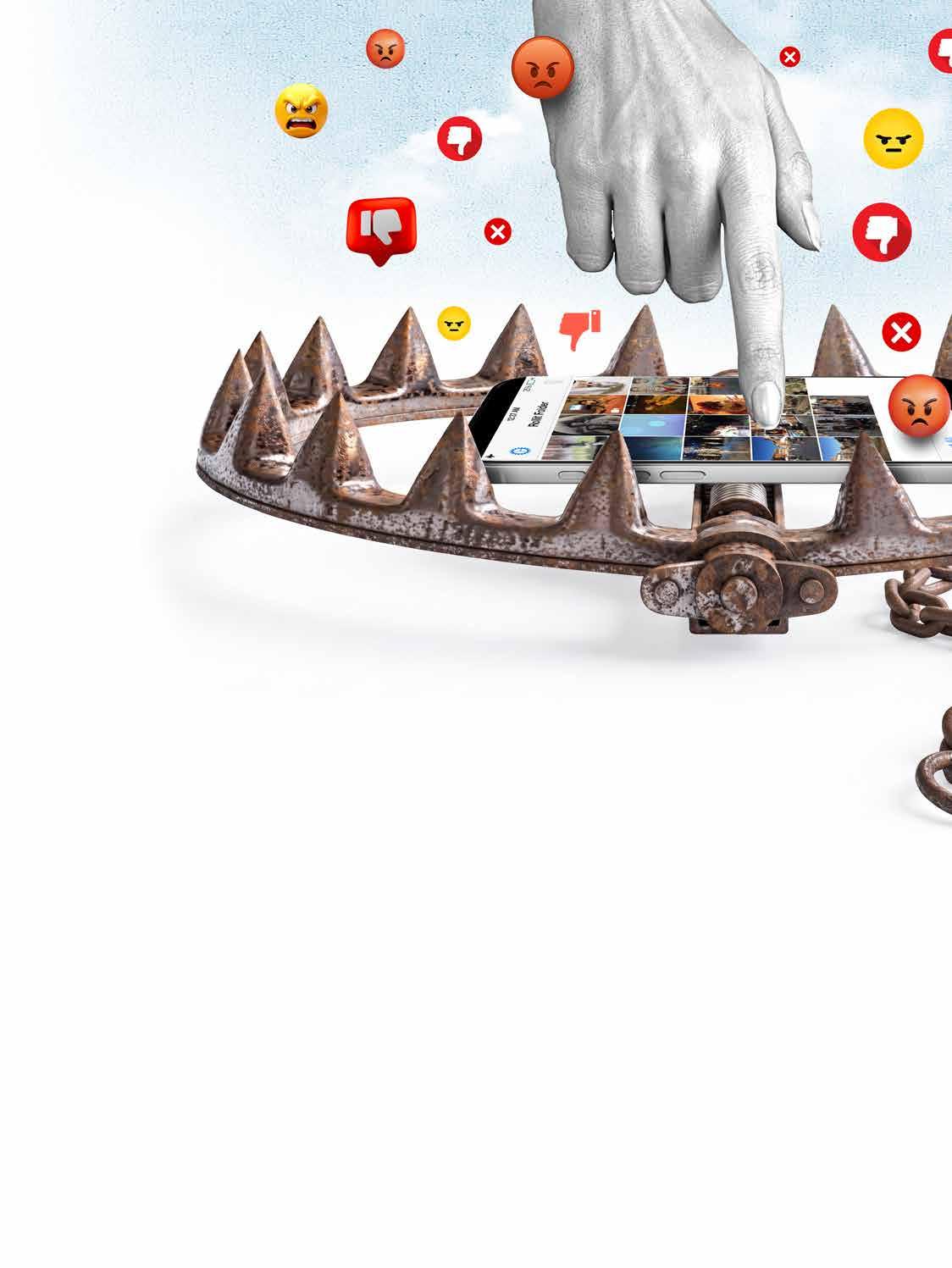
For years, discussions about the USMCA have centered on trade and business. Now, a coalition of activists—including Olimpia Coral Melo—along with academics, digital rights advocates, and civil society organizations wants to raise a different issue during the agreement’s upcoming review: digital violence, a problem that doesn’t stop at national borders.
To address this challenge, the Movement for the Olimpia Law, part of the Latin American Network of Digital Defenders, joined forces with the National Autonomous University of Mexico’s University Program on Democracy, Justice and Society (PUEDJS) and the Mexican Bar Association. Together, they released a manifesto calling for changes to three provisions in Chapter 19 of the USMCA, which addresses digital trade. Their argument is straightforward: the
current rules make it harder to obtain digital evidence, limit Mexican authorities’ ability to investigate crimes, and allow major tech platforms to avoid responsibility by granting them legal immunity.
The urgency is reflected in the numbers. Eight out of ten victims of digital violence are women, and as many as 73% of complaints face barriers because critical digital evidence is unavailable or information from platforms operating abroad cannot be obtained.
THREE CHANGES FOR A NEW DIGITAL REALITY
The proposal focuses on amending Articles 19.12, 19.16, and 19.17 of the agreement.
Article 19.12: Effective Jurisdiction
Online platforms should be accountable to the laws and authorities of the countries in which they operate.
Article 19.16: Algorithmic Transparency Technology companies should be required to explain how their algorithms work when those systems may affect human rights.
Article 19.17: Platform Responsibility Platforms should cooperate with authorities and victims in cases of digital violence and other violations of fundamental rights.
WHERE TRADE MEETS HUMAN RIGHTS
The debate comes at a critical moment. The USMCA review is underway amid growing trade tensions among the three countries and an increasing global discussion about the power of major technology companies.
According to digital rights advocates, the
Digital violence
Eight out of every ten victims of digital violence are women.
Up to 73% of complaints face barriers because of missing evidence or unavailable platform data.
Activists seek changes to three USMCA articles to improve access to justice.
digital trade chapter was built on an early-internet mindset, when platforms were seen simply as places to share information. Today, they play a much larger role—they are essential infrastructure for public life, the economy, and society.
From that perspective, the conversation is no longer solely about free speech or the free flow of data. It is also about real access to justice.
Supporters of the initiative emphasize that the goal is not to censor content or slow innovation. Instead, they call for basic standards of transparency, cooperation, and accountability for platforms operating in markets where millions of people exercise their fundamental rights every day.
A DEBATE BIGGER THAN MEXICO
The Mexican proposal reflects a broader international trend. Across Europe, new regulations are requiring digital platforms to assume greater responsibility for transparency and user protection. Countries such as Brazil and Chile have also explored ways to limit legal immunity when fundamental rights are at stake.
The organizations behind the proposal believe the USMCA review offers a unique opportunity to bring this conversation to the regional level. Their goal is to have digital rights treated not only as a technology issue but also as a human rights issue.
The message behind the initiative is simple yet powerful: if digital violence knows no borders, the protection of rights should not either.
Want to support the initiative?
Scan the QR code to access the full manifesto, the technical study, and the petition to sign.
La agenda pendiente del T-MEC: proteger los derechos humanos frente a la violencia digital
Activistas, académicas y especialistas buscan modificar tres artículos del tratado para que las plataformas digitales colaboren con las autoridades, transparenten sus algoritmos y garanticen el acceso de las víctimas de violencia digital a la justicia.
POR OLIVIA TOLEDO
ARTE: ALEJANDRO OYERVIDES
Durante años, la discusión sobre el Tratado entre México, Estados Unidos y Canadá (T-MEC) se ha centrado en temas comerciales. Sin embargo, un grupo de activistas, entre quienes destaca Olimpia Coral Melo, académicas, especialistas en derechos digitales y organizaciones civiles, busca colocar un tema distinto en la próxima revisión del acuerdo comercial: la violencia digital, una realidad que trasciende fronteras.
Frente a este escenario, la alianza conformada por el Movimiento Ley Olimpia, que integra la Red LatinoamericanadeDefensoresDigitales,juntocon el Programa Universitario de Estudios sobre Democracia, Justicia y Sociedad (PUEDJS) de la UNAM y la Barra Mexicana, Colegio de Abogados, presentó un manifiesto para promover cambios en tres disposiciones del Capítulo 19 del T-MEC, dedicado al comercio digital.
El argumento: las reglas vigentes dificultan la obtención de evidencia digital, limitan la capacidad delasautoridadesmexicanasparainvestigardelitos ypermitenquelasgrandesplataformastecnológicas eviten responsabilidades mediante esquemas de inmunidad jurídica.
La urgencia del tema se refleja en las cifras: 8 de cada 10 víctimas de violencia digital son mujeres, y hasta el 73% de las denuncias enfrentan obstáculos para avanzar debido a la falta de pruebas digitales o a la imposibilidad de obtener información de plataformas que operan desde el extranjero.
Three keyreforms
Effective jurisdiction: platforms should be accountable to the laws and authorities of the countries in which they operate.
Algorithmic transparency: tech companies should explain how their algorithms work when human rights may be at risk.
Platform responsibility: companies should cooperate with authorities and victims in cases of digital violence.
TRES CAMBIOS PARA UNA NUEVA REALIDAD DIGITAL
La propuesta se centra en modificar los artículos 19.12, 19.16 y 19.17 del tratado.
Artículo19.12. Jurisdicción efectiva Que las plataformas digitales respondan ante las leyesylasautoridadesdelospaísesenlosqueoperan.
Artículo19.16.Transparencia algorítmica
Violencia digital
Ocho de cada diez víctimas de violencia digital son mujeres.
Hasta el 73 % de las denuncias encuentran obstáculos debido a la falta de pruebas o a la indisponibilidad de datos en la plataforma.
Activistas buscan modificar tres artículos del T-MEC para mejorar el acceso a la justicia.
Que las empresas tecnológicas rindan cuentas de sus algoritmos cuando estos puedan afectar los derechos humanos.
Artículo19.17.Responsabilidad de plataformas Que las plataformas colaboren con las autoridades y las víctimas en casos de violencia digital y otras violaciones de derechos fundamentales.
EL CHOQUE ENTRE COMERCIO Y DERECHOS HUMANOS
La discusión ocurre en un momento oportuno. La revisióndelT-MECsedesarrollaenmediodetensiones comerciales entre los tres países y de un debate internacionalcrecientesobreelpoderdelas grandes empresas tecnológicas.
Paralasdefensorasdigitales,elproblemaesque el capítulo sobre comercio digital fue diseñado con unalógicaeconómicapropiadelosprimerosañosde internet,cuandolasplataformasseveíanúnicamente como espacios de intercambio de información. Hoy,estassehanconvertidoeninfraestructurasfundamentales para la vida pública, económica y social. Desde esa perspectiva, la discusión ya no gira únicamente en torno a la libertad de expresión o al libreflujodedatos,sinoalaccesoefectivoalajusticia. La iniciativa no busca censurar contenidos ni frenar la innovación tecnológica. El objetivo es establecer reglas mínimas de transparencia, colaboración y rendición de cuentas para plataformas que operanenmercadosenlosquemillonesdepersonas ejercen diariamente sus derechos fundamentales.
UN DEBATE QUE REBASA A MÉXICO
La propuesta mexicana coincide con una tendencia internacional. En Europa, diversas regulaciones han comenzado a exigir mayores obligaciones a las plataformas digitales en materia de transparencia y protección de los usuarios. En países como Brasil y Chile,tambiénexistenprecedentesparalimitarelalcancedelainmunidaddelasempresastecnológicas cuandoestáninvolucradosderechosfundamentales. Las impulsoras consideran que la revisión del T-MEC representa una oportunidad inédita para incorporar esta discusión al ámbito regional. Su apuesta es que los derechos digitales dejen de verse como un asunto exclusivamente tecnológico y comiencen a tratarse como un tema de derechos humanos.
La consigna que sintetiza la iniciativa es sencilla, pero apunta a un debate de fondo sobre el futuro de internet: si la violencia digital no conoce fronteras, la protección de los derechos tampoco debería conocerla.
¿Quieres apoyar la iniciativa?
Te dejamos el código QR que te da acceso al manifiesto completo, al estudio técnico y a la iniciativa para firmar.
Tres reformas clave
Jurisdicción efectiva: las plataformas deben rendir cuentas ante las leyes y autoridades de los países en los que operan.
Transparencia algorítmica: las empresas tecnológicas deben explicar cómo funcionan sus algoritmos cuando los derechos humanos puedan estar en riesgo.
Responsabilidad de las plataformas: las empresas deben cooperar con las autoridades y las víctimas en casos de violencia digital.
More than a training program, the Fifth U.S.Mexico Security Executive Course has become a binational platform where government officials, academics, security experts, and privatesector leaders work to strengthen cooperation on the challenges shaping North
TWO NATIONS, ONE
INSIDE THE FIFTH US-MEXICO SECURITY EXECUTIVE COURSE
America’s future.
BY MARÍA ÁNGELA RODRÍGUEZ CUÉLLAR*
ARTWORK: ANI CORTÉS
Few bilateral relationships in the world carry theweightoftheonesharedbyMexicoandthe UnitedStates.Nearly40millionpeopleofMexican origin live north of the border. Almost half atrilliondollarsingoodscrosstheborderevery year.Families,supplychains,andentireregionaleconomiesexistbecausebothcountriesdecided,decades ago,thatintegrationwasmorevaluablethandistance. However,thatintegrationhasneverbeenwithout friction. Illegal migration, drug trafficking, arms flows,andorganizedcrimedonotrespectsovereignty, and the political tensions they generate have repeatedly strained the relationship. Security has become one of the most sensitive and consequential dimensionsofthebilateralagenda:notbecausecooperation hasfailed,butbecausethechallengeshaveoutpaced the institutions designed to address them.
Initiatives like the U.S.–Mexico Security Executive Course operate precisely in the space between the emergence of shared challenges and the limits of formalmechanismstoaddressthem.Since2019,over 500 alumni from both countries have been professionalized in analyzing the bilateral security agenda, bringing together government officials, legislators, military personnel, intelligence professionals, academics, and private-sector representatives: a combinationnoothercohortinMexicocurrentlyreplicates.
Since its first edition, the U.S.–Mexico Securi-
Building security
A binational program is helping Mexico and the U.S.strengthen security ties.
500 + alumni
Since 2019, more than 500 professionals have completed the executive course.
Beyond government Officials, academics, and business leaders work together on shared challenges.
ty Executive Course has consolidated a sustained, cross-sector network of professionals from both countries who share a common analytical framework. From this effort, a permanent platform for applied research and strategic dialogue emerged. The United States–Mexico Center for Strategic Studies (USMXCSS) was founded and is managed byalumniofthecourseitself.Itisexpectedtooperate as a binational think tank connecting governments, academic institutions, private-sector actors, and civil society around the issues that define North American stability.
The program’s broad reach stems from strong institutionalcooperation,sustainedbythreeorganizations whose contributions are as distinct as they are complementary. The United States Embassy in
Mexico,throughitsPublicAffairsSection,hasbeena fundamental partner from the outset, providing diplomaticbacking,institutionalcoordination,andabilateral perspective that elevates the program beyond the academic sphere and into policy conversations. Its involvement, year after year, signals that this initiativecarriestheweightofagovernmentcommitted to security cooperation grounded in knowledge and sustained dialogue.
Finally, the Universidad de las Américas Puebla (UDLAP) has served as the program’s academic backbone, designing the curriculum, convening the scholarsandpractitionerswholedeachsession,and providing the institutional legitimacy required to attract speakers from the highest levels of government and academia in both countries.
TheFifthU.S.-MexicoSecurityExecutiveCourse was inaugurated on April 9, 2026, in Mexico City. Its agenda,spanning7weeksand40hoursofinstruction, covered the full range of issues defining the current bilateralsecurityrelationship:theinstitutionalarchitecture of both countries’ national security systems, cooperation mechanisms, transnational organized crime, fentanyl and illegal arms trafficking, illegal migration, cybersecurity, artificial intelligence, and thesecurityplanningrequiredformajorinternational events, such as the upcoming World Cup.
The online sessions featured experts from institutions including the Congressional Research Service, the Mexican Ministry of Foreign Affairs, the National Autonomous University of Mexico (UNAM), the U.S.-Mexico Center for Strategic Studies, the Organization of American States, the U.S. Department of Defense, and various federal agen-
Course at a glance
140+ Graduates: A cross-border cohort that brings together strategic voices from 15 states in Mexico and 3 in the United States.
Multisector participation: federal,state,and municipal governments;academia;the private sector; the armed forces;and U.S.government agencies. 62% Male / 38% Female: Reflecting a shift in a traditionally male-dominated field,as women’s presence increases at the bilateral security table.
cies in both countries. The experts’ sessions laid a strong theoretical foundation for the bilateral relationship, and as the instruction phase came to an end, the focus necessarily shifted from learning to implementation, requiring these diverse actors to share a physical space.
OnMay14,UDLAP’scampusinCholula,Puebla, hosted more than 70 in-person attendees, bringing together municipal police officers, federal officials, legislativestaff,academics,andprivate-sectorleaders in a single space where alumni could step out of the digital classroom to connect face-to-face, exchange on-the-ground realities, and translate their course trainingintocoordinatedactionwithintheirrespective fields. The event gathered, in roundtables, some ofthemostconsequentialvoicesinbilateralsecurity; figureswhosecareersspanthinktanks,federalagencies,researchbodies,andinternationalorganizations.
The discussions were structured around the course’s central tension: the challenges defining the
ONE GOAL
Mexico-U.S.securityrelationshiparebecomingmore complex faster than the frameworks designed to addressthem.Participantsleftwithaclearerunderstanding of where institutional cooperation holds, where it fractures, and what would need to change for it to consolidate.Aclosingceremonyformallyconcluded arigorousseven-weekprocessofbinationalstrategic dialogue.TheceremonywaspresidedoverbyUDLAP PresidentDr.LuisErnestoDerbezBautista,Prof.GerardoRodríguezSánchezLara,afull-timeprofessorand researcheratUDLAPandaNationalSecurityanalyst, andMinisterofPublicDiplomacyattheU.S.Embassy inMexico,SilvioI.González.Thediplomapresentation honored the dedication of those committed individuals who extended already demanding schedules to join a bilateral network of cooperation and mutual trust, an effort minister González acknowledged as essential to the relationship: “When we know each other better, we work better. When we work better, wefindbettersolutions—andbettersolutionsmean safer countries.”
Ultimately, beyond the course, the event in Cholulamarkedtheculminationofatrulyenriching experience. The V Executive Course demonstrated that security can no longer be confined to the operational or reactive sphere, as it requires proactive preparation and cross-border partnerships. The issues at the center of this program’s agenda are not abstract policy points; they are the daily reality for millions of people who navigate the space between Mexico and the United States. Considering the families, communities, and supply chains that rely on a stable region, the scale of what is at stake makes the existence of a collaborative program like this one more significant and its continuity remarkable. In the end, our two nations share one defining goal: a safer, more resilient region that cannot be sustained by high-level policy and high-range dialogue alone but must be actively built through multisector participation and commitment.
*The author is an International Relations and Political Science honors student at Universidad de las Américas Puebla (UDLAP).Volunteer at the US-Mexico Center for Strategic Studies and an alumnus of the Center for the Study of the Presidency and Congress,Washington,D.C.
Sharedchallenges
Security threats transcend borders and require coordinated responses.
The course created a lasting network of experts from both countries.
Cooperation grows through dialogue,trust,and cross-sector partnerships.
Dos naciones, un objetivo: dentro del Quinto Curso Ejecutivo de Seguridad Estados Unidos-México
Más que un programa académico, el Quinto Curso Ejecutivo de Seguridad Estados Unidos-México se ha consolidado como una plataforma binacional en la que funcionarios, académicos, especialistas en seguridad y líderes del sector privado fortalecen la cooperación ante los desafíos que definirán el futuro de Norteamérica.
POR MARÍA ÁNGELA RODRÍGUEZ CUÉLLAR*
ARTE: ANI CORTÉS
Pocas relaciones bilaterales en el mundo tienen el peso que tienen las que comparten México y Estados Unidos. Cerca de 40 millones de personas de origen mexicano viven al norte de la frontera. Casi medio billón de dólares en mercancías cruza la frontera cada año. Familias, cadenas de suministro y economías regionales enteras existen porque ambos países decidieron, hace décadas, que la integración valía más que la distancia. Sin embargo, esa integración nunca ha estado exenta defricciones.Lamigraciónirregular,elnarcotráfico,eltráfico dearmasyelcrimenorganizadonorespetanlassoberanías, y las tensiones políticas que generan han puesto a prueba la relación en repetidas ocasiones. La seguridad se ha convertido en una de las dimensiones más sensibles y trascendentes de la agenda bilateral, no porque la cooperación haya fracasado, sino porque los desafíos han superado la capacidaddelasinstitucionesdiseñadasparaenfrentarlos. Iniciativas como el Curso Ejecutivo de Seguridad Estados Unidos-México operan precisamente en ese espacio donde surgen desafíos compartidos y los mecanismos formales encuentran sus límites. Desde 2019, más de 500 egresados de ambos países se han profesionalizado en el análisis de la agenda bilateral de seguridad, reuniendo a funcionarios públicos, legisladores, integrantes de las fuerzasarmadas,profesionalesdeinteligencia,académicos y representantes del sector privado, una combinación que actualmente ninguna otra generación en México replica.
El Curso Ejecutivo de Seguridad Estados Unidos-Méxicohaconsolidado,desdesuprimeraedición,unaredmultisectorial y permanente de profesionales que comparten un mismo marco analítico. De este esfuerzo surgió una plataforma permanente de investigación aplicada y de diálogoestratégico.ElCentrodeEstudiosEstratégicosEstados Unidos-México (USMXCSS) fue fundado y está gestionado por egresados del propio curso. Se espera que funcione comouncentrobinacionaldepensamientoestratégicoque conecte a gobiernos, instituciones académicas, actores del sector privado y organizaciones dela sociedadcivil entorno a los temas que definen la estabilidad de Norteamérica. El amplio alcance del programa es resultado de una sólida cooperación institucional, sostenida por tres organizaciones cuyas contribuciones son tan distintas como complementarias. La Embajada de Estados Unidos en México, a través de su Sección de Asuntos Públicos, ha sido una aliada fundamental desde el inicio, aportando respaldo diplomático, coordinación institucional y una perspectiva bilateral que eleva el programa más allá del ámbito académico y lo sitúa en el terreno de las políticas públicas. Su participación constante demuestra que esta iniciativacuentaconelrespaldodeungobiernocomprometido con una cooperación en materia de seguridad basada en el conocimiento y el diálogo permanente.
Por su parte, la Universidad de las Américas Puebla (UDLAP)hafungidocomoelpilaracadémicodelprograma, diseñando el plan de estudios, convocando a especialistas y profesionales para cada sesión y brindando la legitimidad institucionalnecesariaparaatraeraponentesdelosmásaltosnivelesgubernamentalesyacadémicosdeambospaíses. El Quinto Curso Ejecutivo de Seguridad Estados Unidos-Méxicofueinauguradoel9deabrilde2026enlaCiudad de México. Su programa, desarrollado a lo largo de siete semanas y 40 horas de formación, abordó la gama completa de temas que hoy definen la relación bilateral en materia de seguridad: la arquitectura institucional de los sistemas
de seguridad nacional de ambos países, los mecanismos de cooperación, el crimen organizado transnacional, el tráfico de fentanilo y armas ilegales, la migración irregular, la ciberseguridad, la inteligencia artificial y la planeación de seguridad necesaria para grandes eventos internacionales, como la próxima Copa Mundial de Futbol.
Las sesiones virtuales contaron con expertos de instituciones como el Congressional Research Service, la Secretaría de Relaciones Exteriores de México, la Universidad Nacional Autónoma de México (UNAM), el Centro de Estudios Estratégicos Estados Unidos-México, la Organización de los Estados Americanos, el Departamento de Defensa de Estados Unidos y diversas agencias federales de ambos países. Estas sesiones proporcionaron una sólida base teórica para comprender la relación bilateral y, conforme concluyó la etapa académica, el enfoque pasó naturalmente del aprendizaje a la implementación, lo que requería que estos diversos actores compartieran un mismo espacio físico.
El14demayo,elcampusdelaUDLAPenCholula,Puebla, recibió a más de 70 asistentes presenciales. Policías municipales, funcionarios federales, asesores legislativos, académicosylíderesempresarialescoincidieronenunmismoespaciodondelosegresadospudieronsalirdelaulavirtual para encontrarse cara a cara, intercambiar experiencias de campoytraducirlosconocimientosadquiridosenacciones coordinadas dentro de sus respectivos ámbitos. El evento reunió, mediante mesas de trabajo, a algunas de las voces más influyentes en la seguridad bilateral, figuras cuyas trayectoriasabarcancentrosdeinvestigación,agenciasfederales, organismosacadémicosyorganizacionesinternacionales. Las discusiones giraron en torno a la tensión central del curso: los desafíos que definen la relación de seguridad entreMéxicoyEstadosUnidossevuelvenmáscomplejosa unritmosuperioraldelosmarcosinstitucionalesdiseñados para atenderlos. Los participantes concluyeron el encuentro con una comprensión más clara de dónde funciona la cooperación institucional, dónde se fractura y qué cambios serían necesarios para consolidarla. Una ceremonia de clausura puso fin formal a un riguroso proceso de siete semanas de diálogo estratégico binacional. El acto fue encabezado por el presidente de la UDLAP, doctor Luis Ernesto Derbez Bautista; el profesor Gerardo Rodríguez Sánchez Lara, investigador de tiempo completo y analista en seguridad nacional; y el ministro de Diplomacia Pública de la Embajada de Estados Unidos en México, Silvio I. González. La entrega de diplomas reconoció la dedicación de quienes hicieron espacio en agendas ya de por sí exigentes para integrarse a una red bilateral de cooperaciónyconfianzamutua,unesfuerzoqueelministro González consideró esencial para la relación entre ambos países: “Cuando nos conocemos mejor, trabajamos mejor. Cuando trabajamos mejor, encontramos mejores soluciones, y mejores soluciones significan países más seguros”. Más allá de la conclusión de un curso, el encuentro en Cholula marcó el cierre de una experiencia profundamente enriquecedora. La quinta edición del Curso Ejecutivo demostró que la seguridad ya no puede limitarse a una visión operativa o reactiva, pues requiere preparación anticipada y alianzas que trasciendan fronteras.
Los temas abordados no son conceptos abstractos de política pública; forman parte de la realidad cotidiana de millones de personas que viven, trabajan o se desplazan entre México y Estados Unidos. Considerando a las familias, comunidades y cadenas de suministro que dependen de una región estable, la magnitud de lo que está en juego explicalarelevanciadeprogramascolaborativoscomoestey haceaúnmásnotablesucontinuidad.Alfinal,nuestrasdos naciones comparten un objetivo fundamental: construir una región más segura y resiliente, una meta que no puede sostenerse únicamente mediante acuerdos de alto nivel o diálogos diplomáticos, sino que requiere la participación y el compromiso activo de múltiples sectores.
*La autora es estudiante de excelencia académica en Relaciones Internacionales y Ciencia Política en la Universidad de las Américas Puebla (UDLAP),voluntaria del Centro de Estudios Estratégicos Estados Unidos-México y egresada del Center for the Study of the Presidency and Congress,en Washington,D.C.
Monday / 06 / 15 / 2026
Toronto,Vancouver,Los Angeles,Dallas,Houston and Mexico City
Some of the busiest air corridors will be during the tournament.
More than 40 MILLION
Passengers travel between Mexico and the United States every year.
More than
2 MILLION
Travel annually between Mexico and Canada.
Crossborder fans The World Cup air bridge
68 MILLION
Latinos in the United States are part of one of the planet’s biggest soccer audiences.
11.1 MILLION
Mexicans born in Mexico live in the United States.
130,000
Mexicans reside in Canada
800,000
People born in the United States live in Mexico.
8,800
Canadians reside in Mexico.
Sources
U.S.Census Bureau,Migration Policy Institute (MPI),Banco de México,Statistics Canada, INEGI,Secretaría de Relaciones Exteriores (IME),FIFA,Deloitte Sports Business Group,Oxford Economics,U.S.Department of Transportation,Secretaría de Infraestructura,Comunicaciones & Transportes (SICT) and Organización Mundial del Turismo (ONU Turismo).
More than 3,000
weekly flights connect cities in Mexico and the United States during peak seasons.
65 BILLION
In remittances arrived in Mexico from abroad in 2025
Almost 96% Of remittances came from the United States.
1.8 TRILLION
Is the annual trade among the three USMCA countries.
More than
3 MILLION
Jobs depend on trade between the United States and Mexico.
The 2026 World Cup will tell the story of a shared region: families divided by borders, migrant communities that have transformed entire cities economically and socially, and a deep passion for soccer that now brings three countries together on the same stage.
BY OSO OSEGUERA
ARTWORK: ALEJANDRO OYERVIDES
The 2026 World Cup will be much more than a soccer tournament. Data show that Mexico, the United States, and Canada have long been deeply connected through millions of people, flights, remittances, tourism, and cultural ties. The tournament’s organization will simply make visible what already happens every day across North America: a region where borders are constantly crossed to work, live, travel, or support a national team.
The enormous Mexican presence in the United States, the growth of Latino communities in host cities such as Los Angeles, Houston, and Miami, and the constant flow of travelers among the three countries help explain why this World Cup will have a distinct identity unlike any other. In many ways, it will be a tournament played “at home” for millions of Latino fans living outside Mexico, while maintaining an unbreakable cultural and soccer connection to their roots.
The economic figures also reveal the scale of the phenomenon. Trilateral trade, tourism, and remittances show a highly integrated region where soccer moves not only emotions but also billions of dollars. The projected economic impact confirms that the World Cup will be one of the most significant events North America has seen in decades.
72 MILLION
Soccer fans live in the United States.
More than
20 MILLION
Regularly follow Liga MX from U.S. territory.
WHERE ARE THE
Tourists without soccer jerseys
Cities with soccer passion
FANS?
¿Dónde
están los aficionados?
El Mundial 2026 contará la historia de una región compartida: familias divididas por fronteras, comunidades migrantes que transforman ciudades enteras, tanto económica como laboralmente, y añaden una pasión futbolera que hoy une a tres países en un mismo escenario.
POR OSO OSEGUERA
FOTOARTE: ALEJANDRO OYERVIDES
El Mundial 2026 será mucho más que un torneo de futbol. Los datos muestran que México, Estados Unidos y Canadá ya están profundamente conectados desde hace años por millones de personas, vuelos, remesas, turismo y relaciones culturales. La organización del certamen de futbol simplemente hará
visible algo que ya ocurre todos los días en Norteamérica: una región donde las fronteras se cruzan constantemente para trabajar, vivir, viajar o apoyar a una selección. La enorme presencia de mexicanos en Estados Unidos, el crecimiento de comunidades latinas en ciudades sede como Los Ángeles, Houston o Miami, y el flujo permanente de viajeros entre los tres países ayudan a explicar por qué este Mundial tendrá una identidad distinta a la de cualquier otro. En muchos sentidos, será un torneo jugado “en casa” para millones de aficionados latinos que viven fuera de México, pero mantienen intacta su conexión cultural y futbolera. Las cifras económicas también revelan la magnitud del fenómeno. El comercio trilateral, el turismo y las remesas muestran una región altamente integrada, donde el futbol no solo mueve emociones, sino también miles de millones de dólares. La expectativa de derrama económica confirma que el Mundial será uno de los eventos más importantes para Norteamérica en décadas.
Aficionados transfronterizos
El puente aéreo del Mundial
Pasión que grita gol en EE.UU.
Ciudades con pasión futbolera
Backed by an extensive program of events and comprehensive mobility and security plans, Mexico City is opening its doors to fans from around the world.
BY EDITORIAL STAFF
FOTOS: CUARTOSCURO Y SHUTTERSTOCK
The World Cup is arriving in the city as a transformative force, and Mexico City has responded not only with upgrades to its civic and tourism infrastructure but also with ambitious plans for security, mobility, and public well-being to ensure the celebration unfolds safely and smoothly both inside and outside the stadium.
As a host city named in 2018, when Mexico submitted its joint bid alongside the United States and Canada, the capital is now ready to put years of planning to the test. This summer, city authorities and residents alike will showcase the renowned hospitality that has long defined Mexico City as they welcome fans arriving to share in the excitement of the World Cup.
MOBILITY
keeping the city moving
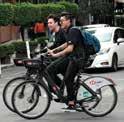
City officials have unveiled a Comprehensive Mobility Plan to help thousands of fans reach the stadium and major tourist destinations with ease.The strategy’s cornerstone is reducing reliance on private vehicles in favor of public transportation and alternative modes of travel,such as bicycles and scooters.
LET THE CELEBRATION BEGIN!
Fans can park in designated areas and take electric shuttle buses to the stadium.Round-trip service costs 500 pesos.
Additional electric buses will run from tourist hubs such as Bellas Artes, Chapultepec,and the Angel of Independence,with fares at 350 pesos.
The El Ajolote Light Rail line,which connects Taxqueña and Xochimilco,will suspend regular service three hours before each match to focus solely on moving spectators.
Two thousand Ecobici bicycles and two thousand scooters will be available at five peripheral locations,including Corral de Héroes del 47, Coyoacán,and Viaducto Tlalpan.
More than 1,000 registered taxis will operate from designated pickup zones,including Gran Sur, Paseo Acoxpa,and Renato Leduc Avenue.Ride-hailing vehicles will be subject to access restrictions.
Around the stadium,fans should expect a 15- to 30-minute walk along clearly marked pedestrian routes.
CELEBRATION
Keep in mind
As part of World Cup preparations, Mexico City’s Secretariat of Citizen Security issued 10 recommendations to help ensure the safety of residents and visitors during the tournament:
Stay aware of your surroundings
¡Que comience la fiesta!
Apuntalada por un expansivo programa de eventos, así como comprensivos planes de movilidad y seguridad, la capital del país abre sus puertas para recibir aficionados de todo el mundo
Toma en cuenta
Be discreet and avoid drawing attention to valuable items
1 2
Always keep your belongings secure 3
Stay with companions whenever possible 4
Report any unusual activity 5 Follow official instructions and 6 Use official transportation and designated routes 7
LREDACCIÓN
FOTOS: CUARTOSCURO Y SHUTTERSTOCK
a Copa del Mundo llega a la ciudad como una fuerza transformadora para la ciudad que ha respondido no sólo con renovaciones en su infraestructura cívica y turística, sino que ha desplegado ambiciosos planes de seguridad, movilidad y bienestar diseñados para garantizar que la fiesta se viva en orden tanto dentro como fuera del estadio.
Nombrada sede desde 2018, cuando nuestro país presentó su candidatura de la mano de Estados Unidos y Canadá, esta semana, la capital está lista para poner a prueba el trabajo de planeación de las autoridades responsables y la famosa hospitalidad de su población para recibir con los brazos abiertos a los aficionados que vengan a compartir las celebraciones mundialistas.
MOVILIDAD
Dinamismo urbano
Las autoridades capitalinas presentaron un Plan Integral de Movilidad que busca facilitar la llegada de miles de aficionados al estadio y los principales puntos de interés para los visitantes.La columna vertebral de esta estrategia es desincentivar el uso de automóviles propios en favor de las rutas de transporte público y opciones alternativas de movilidad,como scooters y bicicletas.
La primera alternativa ofrece dejar el auto en estacionamientos estratégicos y llegar al estadio en autobuses eléctricos.El servicio cuenta con un costo de 500 pesos por viaje redondo
También se habilitarán autobuses eléctricos desde zonas turísticas como Bellas Artes,Chapultepec y el Ángel de la Independencia con un costo de 350 pesos.
El Tren Ligero “El Ajolote”, que conecta Taxqueña con Xochimilco, suspenderá su servicio ordinario tres horas antes de los partidos para dedicarse al traslado de espectadores.
Se pondrán en funcionamiento dos mil Ecobicis y dos mil scooters distribuidos en cinco puntos periféricos como el Corral de Héroes del 47, Coyoacán y Viaducto Tlalpan.
Más de mil taxis registrados operarán en bahías designadas en sitios como Gran Sur,Paseo Acoxpa y la avenida Renato Leduc; el ingreso de vehículos de aplicación estará restringido.
Mantente atento a tu entorno Sé discreto y evita llamar la atención con objetos de valor
1 2
Cuida tus pertenencias en todo momento
3
Mantente acompañado mientras te sea posible
4 Reporta cualquier situación inusual 5
Respeta las indicaciones y zonas establecidas
6
Utiliza rutas y transporte oficial 7
Lleva tu celular con batería y acceso activo 8
Enpreparaciónparalajustamundialista,laSecretaríadeSeguridadCiudadanadelaCiudaddeMéxicopresentó unlistadode10recomendaciones paraprocurarlaseguridaddelocalesy visitantesdurantelaCopadelMundo. a protected celebration
In an interview with Heraldo Televisión, Mexico City Public Security Secretary Pablo Vázquez Camacho said that more than 56,000 police officers will be deployed across the capital.Of those, 7,708 officers and 682 vehicles will be assigned to protect the stadium area and its surroundings.
Keep your phone charged 8
En las inmediaciones del estadio,los aficionados realizarán una caminata de 15 a 30 minutos a través rutas peatonales señalizadas.
SEGURIDAD Celebración blindada
Ubica a policías y módulos de apoyo 9
Identify nearby police officers and assistance centers 9 Remain calm in any situation
En entrevista para Heraldo Televisión,el secretario de Seguridad Ciudadana,Pablo Vázquez Camacho,aseguró que los preparativos están finalizados e informó que la Policía de la Ciudad de México desplegará a más de 56 mil elementos en toda la capital, mientras que 7,708 policías y 682 vehículos se encargarán de resguardar la zona del estadio y sus inmediaciones.
Mantén la calma ante cualquier situación
10
As the first metropolis to host the FIFA World Cup three times, Mexico City is ready to showcase its most passionate and cosmopolitan side.
BY: REDACCIÓN
PHOTOS: SHUTTERSTOCK
Layers of history
Mexico City’s intricate Historic Center invites visitors to immerse themselves in centuries of history and Mexican identity. Built atop the ancient Aztec capital of Tenochtitlán,the Historic Center is a UNESCO World Heritage Site and features magnificent colonial palaces,lively pedestrian streets,and the iconic Metropolitan Cathedral.
A Classic Neighborhood Experience
In the southern part of the city,neighborhoods such as Coyoacán,San Ángel,and Altavista welcome visitors with historic residences,charming public squares,and photogenic corners far removed—both physically and emotionally—from downtown’s bustle. Here,travelers can experience a romantic vision of the city’s colonial past,complete with cobblestone streets and colorful mansions.
Close to the action
The neighborhoods surrounding the World Cup stadium offer fans a completely different perspective on the capital. Far from the city center,these authentic residential communities offer opportunities to enjoy art,sample traditional cuisine,and experience everyday life in one of the world’s great metropolises.
URBAN ADVENTURE
Blessed with one of the finest views of Plaza de la Constitución,this acclaimed Mexican restaurant offers seasonal tasting menus that showcase the country’s extraordinary diversity of flavors.
Led by renowned chef Israel Aretxiga,Zeru—also in Lomas de Chapultepec—welcomes diners with a carefully curated menu of Spanish cuisine,featuring rice dishes,seafood,and grilled meats,each prepared with exceptional attention to detail.
Just minutes from the stadium,this spacious,lively restaurant has earned a reputation as one of the city’s best for traditional birria and Mexican comfort food.With more than seven decades of history,it also serves favorites like sopes and chilaquiles.
Located next to Plaza de la Ciudadela,this renowned market showcases Mexico’s rich artistic heritage.Its colorful corridors are ideal for discovering and buying unique handcrafted pieces from all 32 states.
Affectionately known as the Red House—in conversation with the famous Blue House,just a few blocks away—this fascinating museum,inaugurated last September,delves into Frida Kahlo’s personal and family life.
Masterfully designed by Diego Rivera to house his private collection of pre-Hispanic art,the Anahuacalli was conceived as a volcanic-stone temple modeled after an ancient Mesoamerican pyramid.
Palace of Autonomy
A WALK THROUGH SAN ÁNGEL
For a slower pace,set aside an afternoon to wander through the charming San Ángel neighborhood,known for its flower-filled parks,centuries-old churches,and picturesque historic streets lined with traditional restaurants and design boutiques.
Downtown Tlalpan
Steeped in history,Tlalpan first flourished as a pre-Hispanic settlement and later as an elegant colonial retreat. Today,visitors can enjoy a peaceful atmosphere reminiscent of Mexico’s celebrated Pueblos Mágicos.
Balcón del Zócalo
Zeru San Ángel
Michoacaníssimo
Ciudadela Handicrafts Market
Museo Casa Kahlo
Anahuacalli Museum
Located near the Templo Mayor archaeological site,this magnificent 19th-century building currently hosts Pompeii,an exhibition showcasing artifacts recovered from the legendary city buried by Mount Vesuvius in A.D.79.
ADVENTURE
With local identity
Known for their striking Art Deco architecture, lush parks, and vibrant arts and cultural scenes, the neighboring Roma and Condesa districts are the creative epicenters of the
Mexican capital. During the World Cup, visitors will find the districts’ tree-lined streets and local businesses the perfect places to extend the festivities.
Housed in a beautiful historic mansion, Tacos Romita offers a fresh take on Mexico’s signature dish. With an impres-
sive selection of salsas and top-quality ingredients, it is the ideal place to explore authentic Mexican flavors.
Few museums in the country offer such an intimate look at everyday life as the entertaining MODO.The eclectic institution is currently presenting The Collection,In Every Letter,an exhibition celebrating its 15-year history and the objects that have defined it.
The excitement extends well beyond matchday.After dark,the triangle formed by Roma, Condesa,and Juárez comes alive with the festi-
ve energy of its restaurants and bars,many of which have earned spots on lists of the world’s best dining and nightlife destinations.
Aventura urbana
Como la primera metrópolis en albergar la Copa Mundial de la FIFA tres veces, la Ciudad de México está lista para mostrar su lado más apasionado y cosmopolita.
POR REDACCIÓN
FOTOS: SHUTTERSTOCK
Capas de historia
El intrincado Centro Histórico de la ciudad invita a los viajeros a sumergirse por completo en siglos de historia e identidad mexicana. Erigido sobre la antigua capital azteca de Tenochtitlán y declarado Patrimonio de la Humanidad por la UNESCO,presume impresionantes palacios coloniales,animadas vías peatonales y la famosa Catedral Metropolitana.
Balcón del Zócalo
Privilegiado con una de las mejores vistas hacia la Plaza de la Constitución,este restaurante de comida mexicana presenta menús degustación que cambian con las estaciones para resaltar la inigualable diversidad de sabores que habitan nuestro país.
la Ciudadela
A un costado de la Plaza de la Ciudadela,el mercado de artesanías del mismo nombre traza un recorrido a través del patrimonio creativo de México.Sus coloridos pasillos son perfectos para admirar y adquirir piezas únicas provenientes de los 32 estados.
Palacio de la Autonomía
Ubicado en las inmediaciones del Templo Mayor, se trata de un magnífico edificio del siglo XIX.Actualmente presenta la exposición “Pompeya”,que exhibe piezas recuperadas en la legendaria ciudad sepultada por la erupción del volcán Vesubio en el año 79.
Barrio clásico
Al sur de la ciudad,colonias como Coyoacán,San Ángel y Altavista reciben a los visitantes entre antiguas residencias,encantadoras plazas públicas y rincones fotogénicos alejados física y ánimicamente del bullicio de los barrios más céntricos.
Aquí los viajeros se pueden adentrar en una visión romántica del pasado colonial de la ciudad,con calles empedradas y coloridas casonas.
Zeru San Ángel
A cargo del reconocido chef Israel Aretxiga,Zeru –que también cuenta con una dirección en Lomas de Chapultepec– recibe a los comensales con un cuidado menú de platillos españoles que incluye arroces,mariscos y carnes asadas preparadas a la perfección.
Museo Casa Kahlo
Cariñosamente conocido como Casa Roja –en diálogo con la famosa Casa Azul,a unas cuadras de distancia–, este fascinante museo,inaugurado en septiembre del año pasado,está dedicado a explorar a fondo la vida personal y familiar de Frida Kahlo.
Un paseo por San Ángel
Para bajar el ritmo,incluye en tu agenda una tarde tranquila dedicada a pasear por el encantador barrio de San Ángel,famoso por sus hermosos parques
floridos,iglesias centenarias e idílicas calles históricas delineadas por restaurantes tradicionales y tiendas de diseño.
Cerca de la acción
Las diversas zonas que rodean el estadio de la Copa del Mundo ofrecen a los aficionados una perspectiva completamente diferente de la capital.
Lejos del cuidado centro,estos auténticos barrios residenciales brindan la oportunidad de disfrutar de lugares de interés artístico,degustar delicias tradicionales y empaparse del ambiente característico de la metrópolis.
Michoacaníssimo
A sólo unos minutos en auto del estadio,este extenso y siempre animado local se ha hecho fama como uno de los mejores para probar birria tradicional y antojitos en la ciudad. Con más de siete décadas de historia, también sirve antojitos como sopes y chilaquiles.
Museo Anahuacalli
Magistralmente diseñado por Diego Rivera para albergar su colección privada de arte prehispánico,el Anahuacalli fue proyectado como un templo de piedra volcánica que se asemeja a una antigua pirámide mesoamericana.
Centro de Tlalpan
Impregnado de una rica historia,el centro de Tlalpan floreció primero como un asentamiento prehispánico y,más adelante,como un elegante refugio colonial. Hoy,los viajeros pueden disfrutar de una atmósfera tranquila similar a la que ofrecen los Pueblos Mágicos.
Con identidad local
Conocidos por su llamativa arquitectura art déco, sus exuberantes parques y una amplia oferta de arte y cultura, los barrios contiguos de Roma y Condesa son, sin duda, los epicentros creativos de la capital. Durante el Mundial, los viajeros encontrarán en sus calles arboladas y negocios locales el sitio perfecto para extender las celebraciones.
Tacos Romita
Al interior de una hermosa casona histórica,Tacos Romita plantea un acercamiento novedoso al platillo insignia de nuestro país.Con una exuberante selección de salsas para todos los gustos,así como ingredientes de primera calidad,es el lugar perfecto para explorar diferentes sabores típicos de México.
Museo del Objeto
Pocos museos en el país ofrecen una mirada tan íntima a la vida cotidiana de nuestro país que el divertido MODO. Actualmente, este ecléctico museo presenta “La colección, con todas sus letras”, un recorrido a través de sus 15 años de historia y los objetos que lo caracterizan.
Tiempo extra
Las jornadas de emoción se extienden mucho más allá de los partidos.Al caer la noche,el “triángulo” compuesto por la Roma,la Condesa y la colonia Juárez se transforma ante el espíritu festivo que emana de sus restaurantes y bares,muchos de ellos incluidos en los listados de los mejores del mundo.