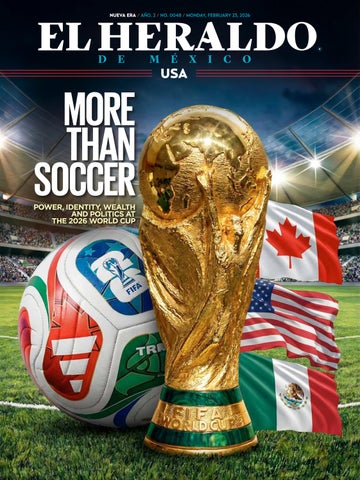

MORE THAN SOCCER
POWER, IDENTITY, WEALTH AND POLITICS AT THE 2026 WORLD CUP


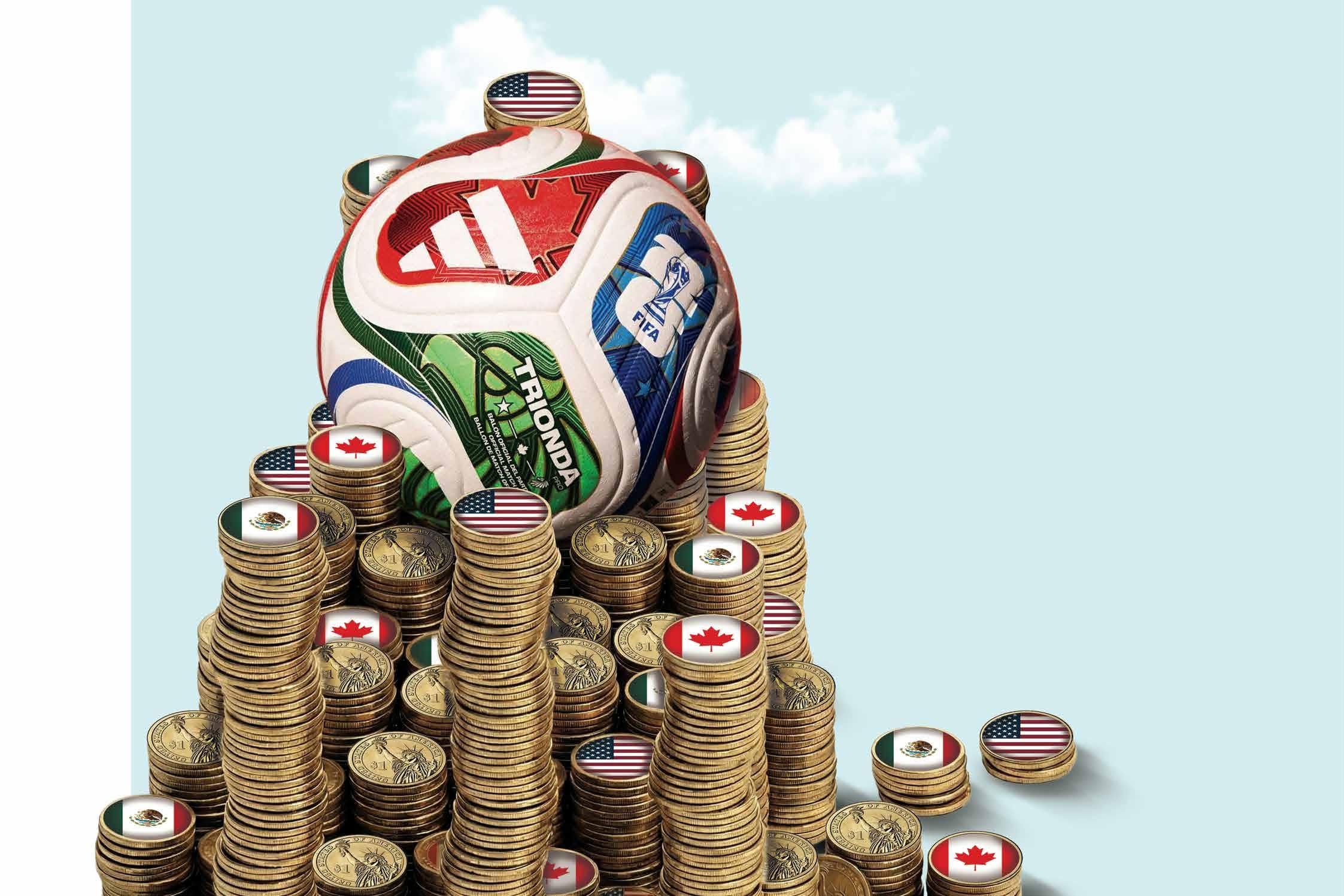
event.
and
THE WORLD CUP AS A TESTING GROUND IN NORTH AMERICA BEYOND THE SCOREBOARD
BY: ALEJANDRO MERCADO CELIS*
ALEJANDRO OYERVIDES
orth America is hosting an unprecedented sporting event: a trinational World Cup organized by Mexico, the United States, and Canada. The World Cup is not just a tournament; it is a cultural, economic, and political mega-event that sparks extensive social change. It will be held in 16 host cities: Mexico City, Guadalajara, and Monterrey; Toronto and Vancouver; and in the United States, Atlanta, Boston, Dallas, Houston, Kansas City, Los Angeles, Miami, New York/New Jersey, Philadelphia, the San Francisco Bay Area, and Seattle. This geographic diversity alone makes the 2026 edition a unique opportunity to see how territories, identities, and economies are reshaped across North America.
The Centro de Investigaciones sobre América del Norte (CISAN), a research center on North America at UNAM, has started a series of academic and public outreach activities to explore the significance and impacts of the World Cup across the three countries. During the tournament, investment grows, tourism
increases, infrastructure advances, and cultural markets become active. Meanwhile, media narratives strengthen, city-branding strategies speed up, and debates arise about who benefits, who bears the costs, and who is marginalized.
In a transnational region like North America, shared passions and identities also cross borders. The World Cup will be experienced not only in stadiums but also through diasporas — especially the Mexican diaspora — and via digital networks that connect communities beyond geography.
Examining the World Cup from an academic perspective involves asking questions that aren’t always apparent during the celebration. How does a major event change urban space? How does it affect public policy priorities? What kinds of cultural ideas does it support — or challenge?
CISAN plans to use the tournament as a testing ground to observe current regional trends. These include institutional collaboration and geopolitical conflicts; competition among cities to attract global investment; gentrification and urban reorganization; socio-environmental effects linked to infrastructure; and cultural debates over identity, representation, and inequality.
The program is centered on six thematic axes.
The first perspective sees the World Cup as a regional reflection. A trinational organization needs coordination in security, mobility, communication, and governance, while also exposing differences and tensions among countries and cities.
The second axis focuses on culture, identity, and sports diplomacy. The World Cup serves as a platform through which countries and cities present their images, negotiate symbols, and construct political narratives for a global audience.
A third axis examines migration, diasporas, and transnational communities. For millions, the tournament will be experienced through hybrid identities and cross-border networks, both physical and digital. Soccer becomes a shared language — and sometimes a battleground.
The fourth axis examines how mega-events impact infrastructure, tourism, employment, security, formal and informal commerce, and potential processes of displacement or exclusion.
The fifth axis examines digital media, technology, and cultural consumption, including platforms, algorithms, data, new broadcasting models, participation, and sports-related monetization.
The sixth axis focuses on soccer, gender, and diversity. The sport’s history features inequalities and cultural changes. The World Cup offers an opportunity to highlight the progress of women’s soccer and the inclusion of various nationalities and ethnic groups in the tournament.
In this way, the 2026 World Cup is more than just a competition for a trophy; it’s a chance for North America to reflect on itself — its conflicts, shared problems, and hopes as a region.
* The author is a researcher at the Centro de Investigaciones sobre América del Norte (CISAN), UNAM.
ARTWORK:

A new socio-statistical study maps the size, diversity, and political influence of Mexican communities throughout the U.S. It provides a crucial tool for understanding their impact—and the future of U.S.-Mexico relations.
BY SILVIA NÚÑEZ GARCÍA* ARTWORK: ALEJANDRO OYERVIDES
Great Lakes, the Southeast, and the Northeast. This structure helps readers understand political trends in specific areas that either support or oppose migrant communities.
The border region includes Texas, Arizona, and New Mexico—states shaped by unequal interdependence between the two countries. Cross-border movement there is unmatched anywhere else. The differences are stark: thriving communities next to severely impoverished ones. This area also hosts the most Mexican consulates (17), making it a hub of encounter and cultural strength.

Reading México(s) en los Estados Unidos. Estudio Socioestadístico sobre las Comunidades Mexicanas en EE. UU., by Laura Vázquez Maggio and Francisco Reyes-Vázquez, offers an excellent opportunity to reconsider the scope and influence Mexican nationals have achieved in the United States.
In the interior states—the Heartlands—Mexican communities tend to be smaller and more dispersed. Limited consular access raises their vulnerability, especially amid harassment from racist and anti-immigrant groups. The Great Lakes region, which has a longer history of welcoming Mexican migrants, is notable for its strong community organization. Their influence through votes is growing, especially in federal elections that determine the Electoral College.

The institutional backing for this important research—sponsored by Mexico’s Ministry of Foreign Affairs, the National Autonomous University of Mexico (UNAM), and the Fondo de Cultura Económica— demonstrates the topic’s strategic importance and highlights the careful attention devoted to developing the study.
This insight highlights one of the book’s major contributions: a clearer understanding of how the U.S. electoral map’s complexity relates to migrant communities. Some states lean progressive, others are mostly conservative, while Swing States switch between the country’s two main political forces.
In the Southeast, including Arkansas and Alabama, Mexican migration is relatively recent but increasing. Anti-immigrant sentiment is stronger in this region— shaped by the Civil War and the legacy of slavery—where xenophobia remains deeply embedded in social memory.
THE NUMEROUS
Using a detailed analytical framework filled with data, categories, and geographic information, the authors show both intellectual rigor and strong methodological skills. One main goal remains clear: to create knowledge that can help improve the lives of millions of Mexicans living in the United States.
Vázquez and Reyes have produced a significant work, especially considering the quality of its demographic data. Demography becomes a crucial starting point for both short- and long-term forecasts, with first- and second-generation Mexicans playing vital roles.

The book combines quantitative and qualitative data from 51 U.S. jurisdictions, including the 50 states and Washington, D.C. By integrating Mexican data—such as consular registration records— with U.S. sources like the American Community Survey, the authors present a valuable methodological approach essential for addressing shared challenges.
COMMUNITIES WITHIN THE UNITED STATES
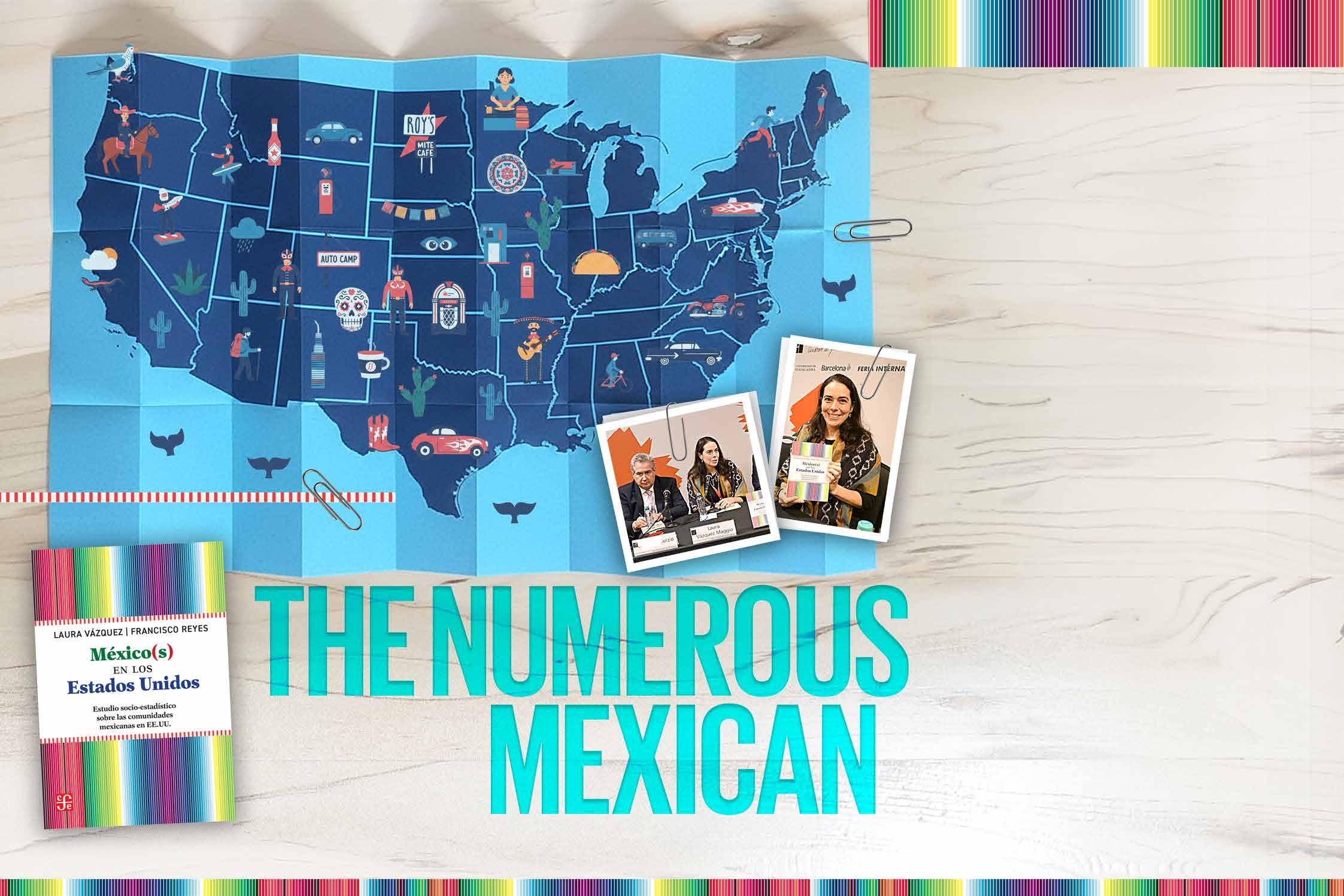


Interviews with Mexican consuls included in the book provide not only qualitative depth—showing their firsthand knowledge of the challenges faced by Mexican communities—but also encourage readers to rethink their relationship with Mexicans abroad and consider whether those connections have been truly compassionate.
One of the book’s strengths is its division of the United States into six geographic regions: the border, the West, the interior, the
A particularly sensitive issue discussed in the book involves the protection challenges faced by Mexicans in detention across the country. Many recent mass deportations have been linked to criminal records among undocumented migrants, highlighting the legal vulnerabilities of this group. The book is published at a critical moment for North America and multilateral cooperation. Migration and the future of the Mexican diaspora are changing amid geopolitical tensions and declining trust between Mexico and the United States. In this context, this study becomes an essential resource for understanding the most urgent issues in the bilateral relationship. Its potential readership extends well beyond policymakers. It serves as a valuable resource for migrant organizations, educators, communicators, and scholars of human mobility—particularly those studying the neighborly relationship between Mexico and the United States.
The book establishes an important precedent.
* The author is a researcher and former director of the Center for
President Donald Trump’s renewed rhetoric about possible military action in Mexico has reignited a tense debate: cooperation or intervention. While bilateral security efforts have achieved tangible results against drug trafficking, underlying factors — from fentanyl demand to arms flows — continue to drive a crisis that no single approach has fully resolved.
Following recent statements by President Donald Trump, Mexico has once again become central to the debate over U.S. security policy. At different times, Trump has left the possibility open of using military force to fight drug cartels, several of which were designated as Foreign Terrorist Organizations in February 2025 by the Trump administration.
The Mexican government has reaffirmed its rejection of any direct military action, emphasized its sovereignty, and promoted bilateral cooperation. This cooperation has achieved significant operational results, although it has not addressed the structural challenges that continue to fuel the drug trafficking crisis.
Since his first presidential campaign in 2016, Donald Trump focused on fighting drug trafficking and cartels in his security talks. Although he did not suggest direct military action then, his push for “tougher” measures set the stage for viewing the issue as more than just crime—seeing it also as a strategic threat.
This narrative intensified in November 2019, after an attack in Mexico that killed U.S. citizens. Trump declared that the United States was ready to “wage war” on the cartels and that, in some cases, “an army is needed.” The proposal was rejected by the Mexican government and did not translate into concrete policy, but it marked a turning point in the bilateral tone by explicitly introducing the military option into public debate.
The 2020 arrest of former Mexican Defense
Secretary General Salvador Cienfuegos in the United States further exposed the limits and tensions within security cooperation. Although he was later released and sent back to Mexico, the case highlighted the fragile balance between operational collaboration, interagency trust, and respect for national sovereignty.
Beginning in 2023, fentanyl trafficking became the main focus of U.S. anti-drug policy. The involvement of criminal organi-

zations from Mexico in the production and transit of the drug was increasingly portrayed as a national security threat, fueling calls for stricter measures. In this context, the results of bilateral cooperation — intelligence sharing, joint operations, extraditions, and financial enforcement actions — contrasted with a more complicated reality: despite tactical successes, the overdose crisis in the
continued to
After returning to the
in
further advanced by designating several Mexican cartels as Foreign Terrorist Organizations, a move that analysts viewed as an effort to broaden the legal and operational scope of U.S. actions. That same year, he confirmed that he had offered to send U.S. troops to Mexico as a form of cooperation—an offer that was rejected. In 2026, statements indicating that U.S. troops could “start hitting land” in Mexico signaled a notable shift in tone: from offering support to suggesting the possibility of unilateral action. This shift has not happened in a context of no cooperation, but rather amid ongoing collaboration that has yielded tangible results — though not enough to change the fundamental dynamics of the issue.
High-profile arrests, joint operations, and coordinated financial measures show clear progress in the fight against drug trafficking. However, these successes have not led to a significant drop in fentanyl flow into the United States. Factors like domestic demand, southbound arms trafficking, and persistent illegal financial networks continue to influence results. In this context, the push for a military solution seems to respond less to a lack of cooperation and more to the challenge of tackling a structural and transnational issue through security measures alone.
The data highlight the magnitude of the crisis. About 69% of all drug overdose deaths in 2023 involved synthetic opioids. In 2025 alone, the U.S. Drug Enforcement Administration (DEA) seized approximately 47 million fentanyl pills and nearly 10,000 pounds of fentanyl powder — enough to cause over 369 million lethal doses. On January 20, 2026, the DEA reported seizing an additional 503,700 pills across the United States. Mexican authorities, for their part, seized 1.8 tons of fentanyl between October 2024 and early 2026. Between February and March 2025, 130 kilograms—equivalent to an estimated 65 million doses—were confiscated as part of Operation Northern Border. Between 2025 and 2026, Mexico extradited 92 high-profile prisoners linked to drug trafficking to the United States: 55 in two transfers in 2025 and 37 in January 2026. In the 12 months ending in August 2025, the United States reported 69,172 overdose deaths. National data also showed a 25% decrease in overdose fatalities for the year ending March 2025 compared to the previous year, which recorded an estimated 54,743 fentanyl-related deaths. Between 2025 and 2026, the U.S. Treasury’s OFAC and FinCEN sanctioned numerous individuals linked to Mexican cartels and imposed special measures on Mexican financial institutions allegedly involved in fentanyl money laundering.
Official Mexican figures reported approximately 18,398 intentional homicides from January to September 2025, with a 22.4% decrease in the monthly average of victims between September 2024 and March 2025. Mexico estimates that around 200,000 firearms trafficked illegally from the United States enter the country each year, highlighting the shared nature of the security challenge.
BY: PATRICIO PÉREZ CARBALLO* ARTWORK: ARTURO RAMÍREZ
CLIMATE CHANGE
A SHARED COST FOR MEXICO AND THE UNITED STATES
Rising
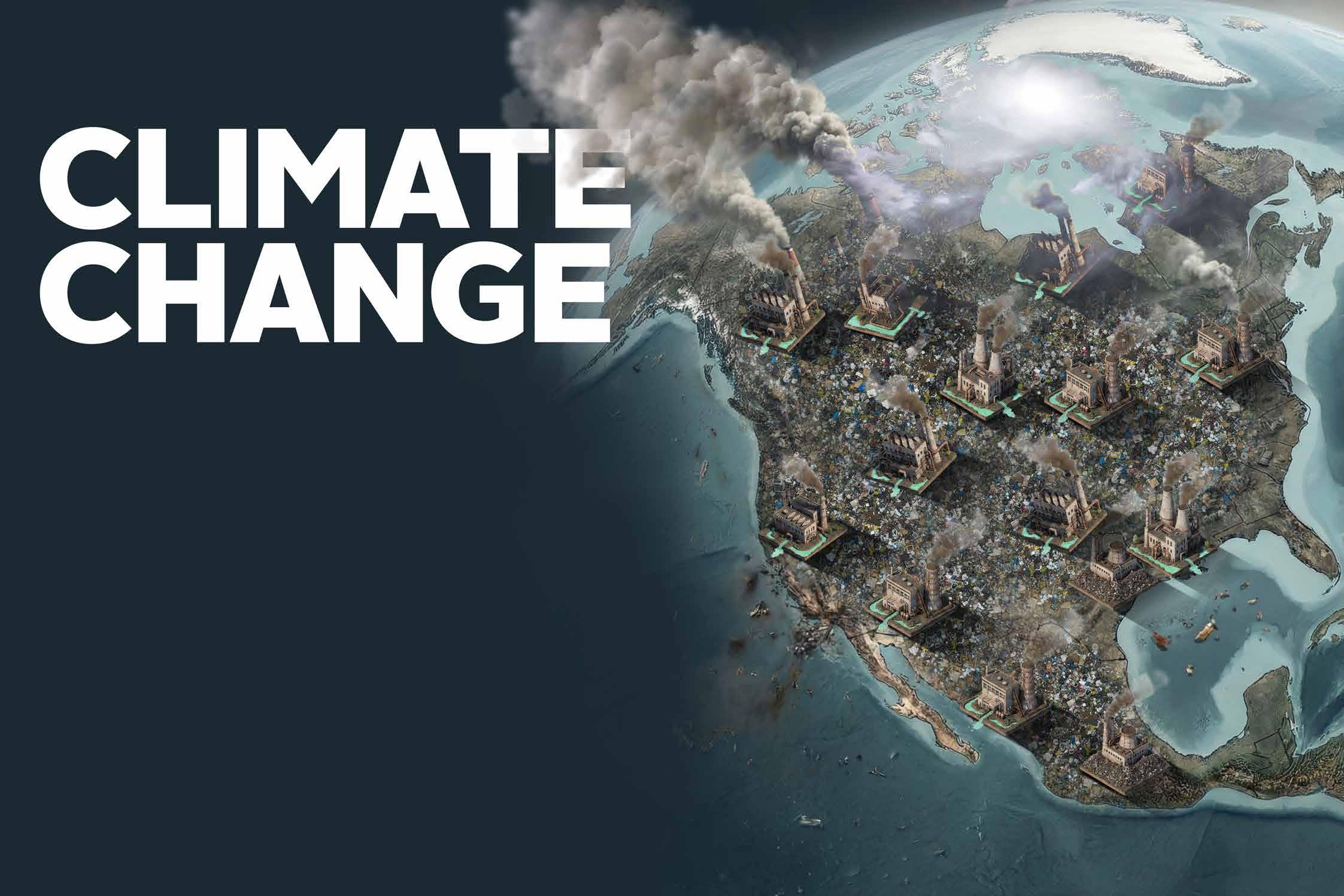
demands binational cooperation.
The IPCC describes climate change as the alteration of the global atmosphere caused directly or indirectly by human activity, which changes its composition and influences natural climate variability. To grasp its implications, territory must be seen as a system: it is not just a geographic space but a structure made up of environmental, social, and economic factors that constantly interact.
When the environmental component changes, its effects naturally extend to the other two areas. The data available today are not just projections—they are ongoing measurements. The effects of rising temperatures on agriculture, fisheries, water supply, and hydroelectric power are already visible in many parts of the country, and the trend shows no sign of a short-term reversal.
Glacier behavior is one of the clearest signs of global warming. The rapid melting of these ice masses directly threatens water systems that cross the Mexico–U.S. border and particularly affects northern river basins.
Meanwhile, rising sea levels are affecting
infrastructure, housing, and economic activities in coastal regions of both nations, with impacts already seen in financial losses and population displacement.
The connection between environmental degradation and human displacement is well-established. Extended droughts decrease soil productivity. That reduction makes it impossible for communities to sustain their livelihoods and forces them to relocate—often northward—in search of conditions that support survival.
A recent study published in Proceedings of the National Academy of Sciences (2024) finds that agricultural populations in Mexico are more likely to engage in irregular migration after drought episodes and less likely to return when adverse climate conditions persist.
Climate change does not directly cause migration, but it worsens existing stresses and can turn displacement into a matter of survival.
This change even influences the world of sports.
At the Milano-Cortina 2026 Winter Olympics, Mexican athletes will need to train abroad because Mexico has never experienced the climate conditions required for winter sports, and climate variability makes that challenge even more difficult.
Restoring coastal ecosystems, especially mangroves, is an effective strategy for both mitigation and adaptation. Ecosystems that once covered hundreds of acres of barren land are now regaining their structure and biodiversity through ongoing restoration efforts.
However, the sustainability of these results relies on ongoing funding from both governments and regulatory frameworks that prevent the reoccupation of restored areas.
Mangrove restoration does not substitute for emission-reduction measures, but it offers clear, measurable results that strengthen a serious climate agenda.
Mexico and the United States share coastlines along the Gulf, along with the benefits these ecosystems provide and the impacts of their
BY: RACIEL QUIRINO
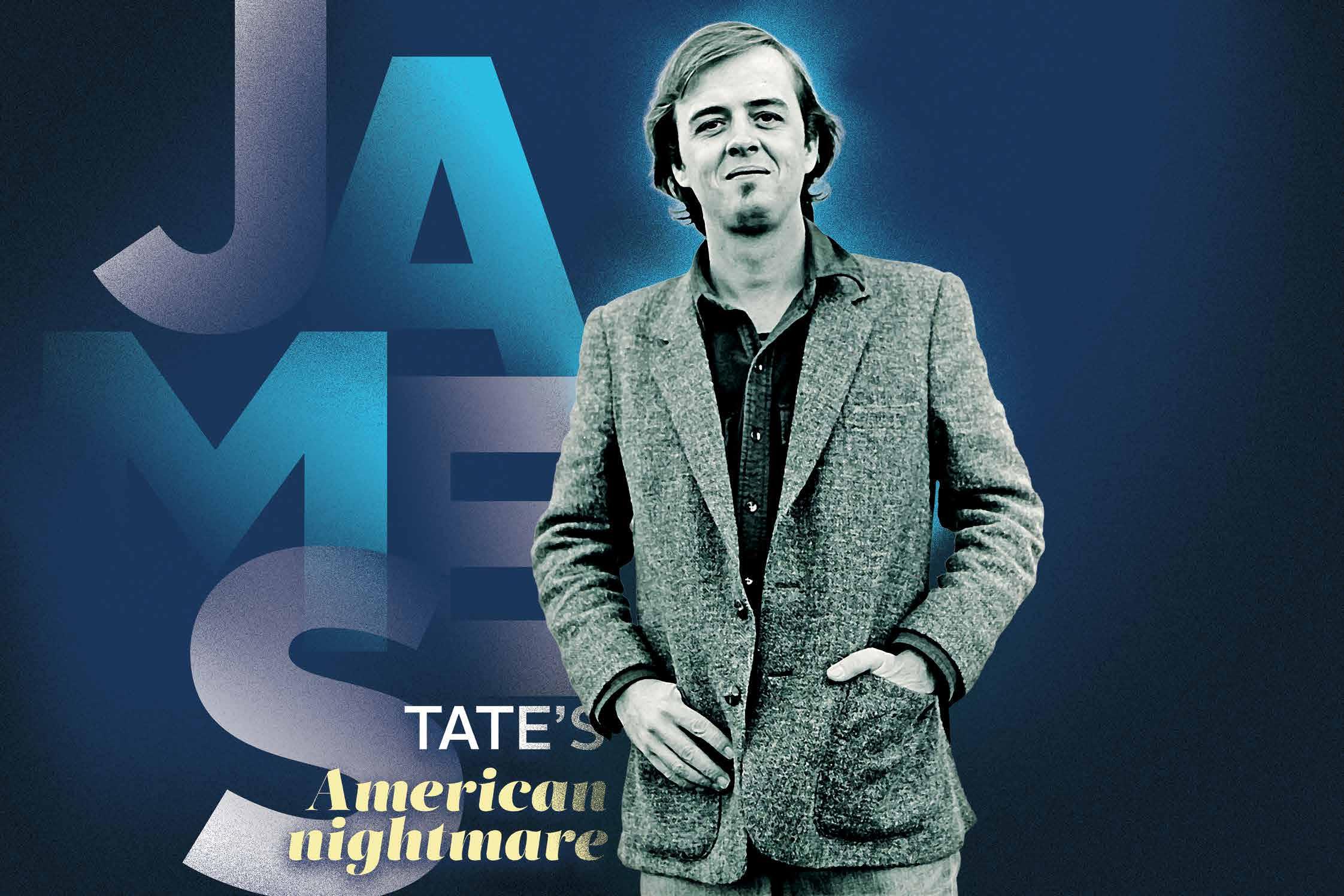
ames Tate (1943–2015) is a poet who remains largely unknown in the Spanish-speaking world. Only a few scattered translations are available online, along with a single anthology published in Spain. This is surprising, considering he is one of the most distinctive and intense voices in American poetry of the second half of the 20th century. His work navigates an uncomfortable space between absurd satire and a diluted form of lyricism, set amidst dark scenes that fluctuate between humor and nightmare.
Through parodic absurdity, Tate’s poetry creates a kind of emotional insight into the American Dream, portrayed as a suffocating narrative. His poems avoid explicit condemnations or explanations. Instead, they develop through carefully crafted verbal techniques that expose the contradictions, blind spots, and dangers of American life. His humor—keen and often delirious—coexists with a melancholy that never fully breaks through but lingers in every scene.
Some might compare his style to a snapshot of everyday life: phone calls, trivial conversations, trips to the grocery store, seemingly normal encounters. Yet these familiar scenes—along with senseless war, compulsive consumerism, and persistent paranoia—gradually twist into disturbing caricatures of what Tate once called “that long plain dotted with Burger King and Kentucky Fried Chicken joints,” representing the American way of life. The poet’s biography illuminates his outlook. James Tate was born in Kansas City in 1943, during World War II. His father, who co-piloted a B-17 bomber, was killed at age 22 during an air mission over Stuttgart, when Tate was just four months old. That absence became a hidden core in his work. In the late 1960s, just before reaching the age at which his father died, Tate wrote “The Lost Pilot,” an elegy that marked his debut as a promising young poet. Over the years, his writing evolved from a stronger emphasis on verse and recurring lyrical themes to prose poems, longer lines, and a more narrative style. The open expression of loss and orphanhood became integrated into the structure: impersonal settings, eccentric characters, oppressive dialogues, absurd situations that reflect the impossible gags of Buster Keaton, the dark logic of Kafka and Beckett, and the sarcasm of The Simpsons and Family Guy. The form of absurdity in Tate’s poetry depends on accumulation. His poems often begin in a stable, familiar setting, but soon something goes wrong. Everything seems the same, yet nothing is. A snowball effect starts: naive protagonists find themselves chased by government agents or torturing officials; sects worship meaningless objects; overly human extraterrestrials appear; and unidentifiable forces take over. The poem falls apart without providing explanation or comfort, and when it finally hits the ground, order is not restored. A clear example of this approach appears in the poem “Inescapable Duty,” from Return to the City of White Donkeys. The protagonist receives a phone call from the President of the United States, who requests a puzzling favor: “Just act / as if nothing were happening. Act normal.” The poem was published in 2004, three years after the September 11 attacks, when George W. Bush urged Americans to return to normal life and move forward as they had before 2001. Tate turns that political slogan into an almost impossible personal demand. The effort to appear normal gradually makes the protagonist paranoid: even buying milk feels like a monitored and suspicious act. “I could feel / those little radar-guns peeking out from behind every tree and bush.”
Beyond the loyal audiences who joyfully laughed at his public readings, James Tate received praise from poets like John Ashbery and Charles Simic, and earned prestigious awards and fellowships. However, his importance isn’t in awards or institutional recognition. It’s in his ability to blend humor, melancholy, absurdity, the sinister, and satire into what could be called an American absurd. In his work, laughter doesn’t set you free — it unsettles. It becomes a way of inhabiting a world where normality turns out to be a hollow and coercive fiction. The critical power of his poetry lies in what humor exposes:
James Tate’s poetry blends absurd satire and subtle lyricism to expose the emotional contradictions of the American Dream. Through humor and discomfort, he presents a version of normalcy that feels both familiar and deeply unsettling. BORN IN 1943, TATE LOST
PHOTOART:
ISMAEL ESPINOZA
In 1976, when cynicism had not yet become the official soundtrack of the West, a green amphibian appeared on television with the discipline of a Broadway producer and the emotional fragility of a poet.
THE MUPPET SHOW IS BACK
AND IS AS MUPPETATIONAL AS ALWAYS
BY: GONZALO LIRA GALVÁN ARTWORK: ALEJANDRO
OYERVIDES
Fifty years later, in 2026, The Muppet Show returns—this time from the algorithmic cloud of Disney’s streaming platform—like someone revisiting a demolished theater where applause once felt eternal.
The question is not whether we needed its return. The question is whether we are still capable of understanding it.
Created by Jim Henson, the original show was an anomaly: a televised vaudeville act that mocked itself long before irony became a moral alibi. It was not a children’s program; it was a cabaret spectacle with puppets speaking about failure, inflated egos, and musical numbers that sometimes fell apart. At its center stood Kermit the Frog, a cultural manager condemned to administer chaos with an amphibian smile and a resignation any Latin American bureaucrat would recognize.
The 2026 return is not merely nostalgic revivalism. It is a political act—though no one will admit it—within a platform sustained by data and repetition. Disney does not rescue the Muppets out of romanticism; it does so because the algorithm has detected that contemporary cynicism needs a gentle counterweight. Nostalgia today is the last refuge of the saturated viewer.
But here lies the dilemma: The Muppet Show was born in an era when spectacle was still imperfect. Puppets tangled, human guests did not always know how to react, and humor could be uncomfortable. Can that spirit survive in an age of permanent correction and audited sensitivity?
In its time, the stage welcomed figures such as Elton John, David Bowie or Liza Minelli—artists capable of laughing at themselves. The show worked because its guests understood that ridicule was a superior form of elegance. Today, celebrity is a fortified brand. Mistakes are no longer endearing; they are trending topics.
Disney+ promises a version that “respects the original spirit while engaging with the present.” That
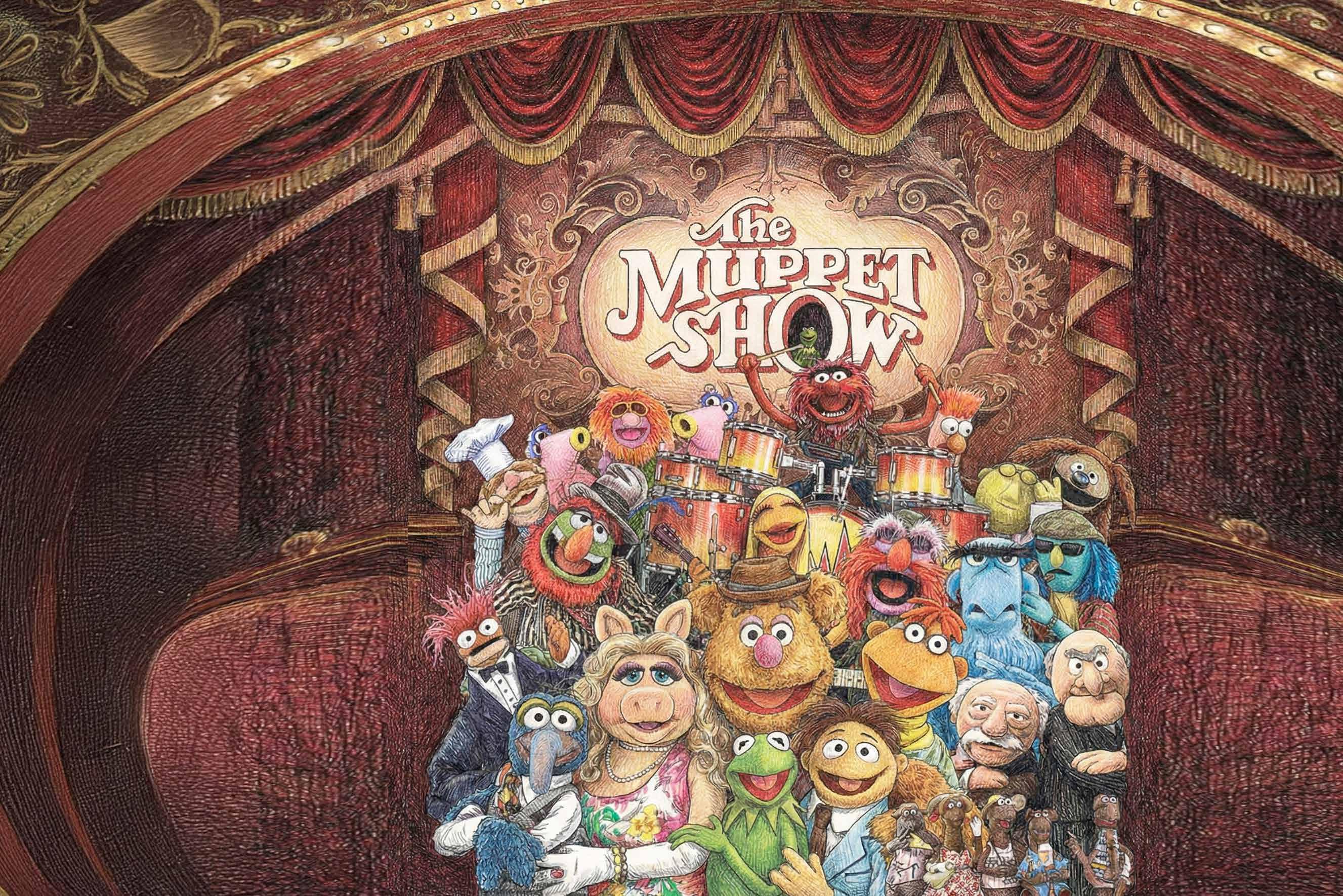
executive phrasing conceals a risk: when the industry speaks of “spirit,” it often means a sanitized version of memory. And yet, there is something profoundly subversive about the return of these felt creatures. The Muppets were always a distorting mirror of the entertainment world. Miss Piggy—the narcissistic diva and incurable romantic—anticipated influencer culture before Instagram existed. Fozzie Bear embodied the comedian who fails repeatedly yet persists.
And Kermit, with his almost Protestant work ethic, remains the perfect metaphor for the contemporary producer: managing talent, calming egos, surviving the budget. In 2026, the Muppet theater competes not with traditional television but with dispersion. Viewers no longer wait for a fixed time slot; they wait for a notification.
The challenge is not only creative—it is existential. Can vaudeville survive the culture of the infinite scroll? We sat down, face to face, with both Kermit and Miss Piggy to discuss this important contemporary subjects. This is the conversation that we had:
HERALDO USA: Hi Kermit. Hi Miss Piggy. How are you?
KERMIT THE FROG: Hi hello there.
HERALDO USA: What did you find in Seth Rogen’s creative process that excited you about bringing
The Muppet Show back again?
KERMIT THE FROG: Well, you know, we wanted to do a Muppet Show special and Seth was a friend who said that he wanted to help in any way that he could. think it’s great to find people who have things in common.
MISS PIGGY: Honestly, I couldn’t tell you what he did. But I know he loves me and really that’s all that counts.
HERALDO USA: We all know that there’s no bigger star than Miss Piggy.
MISS PIGGY: Yeah, we know. We know that.
HERALDO USA: So I wanted to know how did you choose who can or can’t share the Muppet Show stage with her?
MISS PIGGY: Funny you should ask because I’ve been wondering the same thing for the last 50 years. Maybe Kermit knows. Kermit, maybe you can answer that.
KERMIT THE FROG: Yeah, can answer that. Yes. You see, we try to find the most interesting performers and then we tailor the show to their talents and, you know most of the time it turns out actually pretty good.
MISS PIGGY: Wow, so there is a process
HERALDO USA: Kermit, you’ve said that it’s not easy being green, yet the world has become more diverse. Has it become easier to be green?
KERMIT THE FROG: don’t know. I mean. I said that as a part of a song, you know. And that song really is about being happy with who you really are. In spite of whatever challenges you encounter in the world. I like being green. You know, it’s beautiful. And so are all the other colors
MISS PIGGY: You’re out not going to sing now, are you?
KERMIT THE FROG: No, I’m not going to sing.
MISS PIGGY: mean, you have a lovely singing voice, but I think we’ve all heard that song.
KERMIT THE FROG: No, I’m not going to sing. I’m just answering the question.
MISS PIGGY: You’ve sung too many times.
HERALDO USA: Hey! Before everything gets too chaotic. And because part of the Muppets’ DNA is chaos. Tell me how do you handle and embrace chaos? Why do you think it’s important to accept it and what can we learn from it?
KERMIT THE FROG: Actually, you know what? don’t think I have a choice but to embrace the chaos. I mean, have you seen who I work with?
MISS PIGGY: Wait a minute! Where are you getting at?
KERMIT THE FROG: What? Oh, nothing. No, nothing.
MISS PIGGY: I have no idea what he’s talking about, do you?
KERMIT THE FROG: Didn’t think you would.
HERALDO USA: Let’s change the subject then.
KERMIT THE FROG: Okay.
HERALDO USA: It’s known that it’s nice to be important, but it’s more important being nice. You’ve said it before, Kermit.
KERMIT THE FROG: Yes, sure.
HERALDO USA: For you, what makes The Muppet Show such an important milestone in entertainment and how do you manage to keep being nice with all that fame? Any tips for young audiences?
KERMIT THE FROG: I think that being nice is just a part of who we are. Everything’s easier and better when we’re kind. That’s always been something the Muppets believe in. And as far as tips for younger audiences…

Proud of his roots in Guerrero, Cruz Contreras speaks with pride about his work animating the clothing, hair, and accessories of the lead characters in K-Pop Demon Hunters, the animated film that earned two Oscar nominations: Best Animated Feature and Best Original Song for “Golden.”
This is not Contreras’s first time receiving an Oscar nomination. In fact, Spider-Man: Across the Spider-Verse (2024), a film he also worked on, won the Academy Award for Best Animated Feature.
Still, he says he appreciates each recognition because it reminds him that he achieved his dream of working in film.
From a young age, Cruz knew he wanted to dedicate his life to cinema. He regularly went to the movies with his mother and loved every scene—sometimes watching two or three films in a row.
Toy Story laid the foundation for his decision to pursue animation, though the path was not easy. Once he chose his career, he had to decide where to study, so he moved to Cuernavaca to earn a degree in Animation and Digital Art at Tecnológico de Monterrey.
He was part of the program’s second graduating class. After finishing his studies, he struggled to break into major productions because there is little animation work in Mexico. One day, however, he attended a job fair and discovered Sony Pictures Imageworks. He left his résumé—and the rest is history.
“I started sharing my story, and unintentionally, it became very inspiring for many people. Young students approach me and say I’m the reason they’re studying animation, which makes me feel pressure and responsibility to do things right,” he said in an interview.
He also shares his experiences to highlight the work of animators, which he considers extensive and important.
“For many years, animation artists went unnoticed, and there are so many of us—especially Mexicans. That’s why
MONTHS. HE IS ALREADY WORKING ON A NEW PROJECT FOR SONY. HE HOPES TO PRODUCE A FILM IN MEXICO SOON.
I decided to share everything on social media, and now other colleagues are doing the same, so new generations know that breaking into this industry is not impossible.” Contreras shares details of his work, discusses the animation techniques he uses, comments on other films, and posts small glimpses of his daily life in Canada, where he has lived for 10 years on his Instagram account.
“I think it’s great when people watch my videos and then see the movie, because they view it from a different perspective. It helps them appreciate and understand it better. You enjoy it a little more,” he said.
The Mexican animator hopes the film wins the golden statuette, which he looks forward to seeing in person when the producers bring it to the studio. There is usually a day when all the animators can see it or take photos with it.
Working on the film “KPop Demon Hunters” was a dream come true for him. As a child, he was a fan of “Sailor Moon” and other anime, so he asked his bosses to include him in the production. After some time, they did, and the experience deepened his appreciation for Korean culture.
“After finishing the project, I went to Seoul. I stayed for three months, but I didn’t want to sit around doing nothing, so I decided to learn Korean. I went back to school and learned to read some words. It’s fun — at least can read the signs that appear in the film. I don’t know what they mean, but I can read them,” he said with a laugh.
Speaking about the Oscar nominations, he admitted he never imagined being in that position. When he was studying, he felt the future did not look very promising. “I studied filmmaking, but honestly, I felt like was never going to make it, because the industry seemed incredibly far away. That’s why I think telling my story can help others pursue their dreams — maybe not only in animation, but also in music or composition.”
He also recently worked on the film “La Cabra,” where he handled the animation of the characters’ hair and clothing — a major challenge, but one he thoroughly enjoyed.