
Heraldo USA Lunes 4 de mayo de 2026

Page 1


Two years may seem brief on the calendar. But in the life of a journalistic supplement, they can mark a profound transformation.

El Heraldo USA was born with a clear conviction: to tell, with rigor and closeness, the complex relationship between Mexico, the United States, and Canada, not as a sum of borders, but as a shared space of decisions, tensions, and opportunities. Today, two years after that first issue, we celebrate more than continuity—we celebrate the building of a voice.

Over this time, we have brought together a mosaic of perspectives that enrich the public conversation. Consuls who provide an on-the-ground institutional view; specialists who unpack the challenges of migration, security, and trade; academics who offer context and depth; and respected contributors who, with craft and sensitivity, translate complexity into clear ideas for our readers.

It has also been a space to listen to stories that might otherwise remain scattered: those of migrant communities living between two countries; entrepreneurs operating within a regional logic; and students, workers, and families who embody, day by day, the interdependence of North America.

That diversity is no accident. It is an editorial commitment grounded in the understanding that the trilateral relationship does not lend itself to single readings or simplifications. It demands nuance, a contrast of ideas, and, above all, responsibility in handling information.

Over the past two years, El Heraldo USA has consolidated a specialized, useful, and timely journalistic offering. A supplement that not only informs, but also accompanies; that not only explains, but connects.

As part of El Heraldo Media Group, a multiplatform conglomerate committed to truthful journalism —now marking nine years since its relaunch— this space reaffirms its vocation: to inform with responsibility, clarity, and depth.

To those who write, those who read, and those who trust us: thank you for making this space a meeting point.

We move forward.

os años parecen pocos en el calendario. Pero en el pulso de un suplemento periodístico, pueden significar una transformación profunda. El suplemento El Heraldo USA nació con una convicción clara: contar, con rigor y cercanía, la compleja relación entre México, Estados Unidos y Canadá. No como una suma de fronteras, sino como un espacio compartido de decisiones, tensiones y oportunidades. Hoy, a dos años de ese primer número, celebramos algo más que la permanencia: celebramos la construcción de una voz.

En este tiempo, hemos reunido un mosaico de miradas que enriquecen la conversación pública. Cónsules que aportan la perspectiva institucional desde el terreno; especialistas que explican los desafíos de la migración, la seguridad y el comercio; académicos que ofrecen contexto y profundidad; y plumas de prestigio que, con oficio y sensibilidad, traducen la complejidad en ideas claras para nuestros lectores.

También ha sido un espacio para escuchar historias que, de otro modo, quedarían dispersas: las de comunidades migrantes que viven entre dos países, las de emprendedores que operan en una lógica regional, las de estudiantes, trabajadoras, trabajadores y familias que encarnan, día a día, la interdependencia de América del Norte.

Esa diversidad no es casual. Es una apuesta editorial porque entendemos que la relación trilateral no admite lecturas únicas ni simplificaciones. Requiere matices, contraste de ideas y, sobre todo, responsabilidad en el tratamiento de la información.

A lo largo de estos dos años, El Heraldo USA ha consolidado una oferta periodística especializada, útil y oportuna. Un suplemento que no solo informa, sino que también acompaña; que no solo explica, sino que conecta.

El reto por delante es mayor. En un entorno en el que las decisiones políticas impactan directamente en millones de vidas, el periodismo debe ser más preciso, más ágil y humano. Ese es el compromiso que renovamos hoy.

Como parte de El Heraldo Media Group, un conglomerado multiplataforma comprometido con el periodismo veraz -que este año cumple 9 años de su relanzamiento- este espacio reafirma su vocación: informar con responsabilidad, claridad y profundidad.

A quienes escriben, a quienes leen, a quienes confían: gracias por hacer de este espacio un punto de encuentro.

Seguimos.

Franco Carreño Osorio DIRECTOR GENERAL

ANGEL MIERES

ZIMMERMANN CHAIRMAN OF THE BOARD

MARÍA CRISTINA

MIERES ZIMMERMANN ANDRADE GROUP FOUNDATION

TWO YEARS OF CONNECTION IN NORTH AMERICA DOS AÑOS

ANTONIO HOLGUIN ACOSTA VICE

ALFREDO GONZÁLEZ CASTRO EDITORIAL DIRECTOR

FRANCO CARREÑO OSORIO GENERAL DIRECTOR ALEJANDRA ICELA MARTÍNEZ RODRÍGUEZ COORDINATOR, HERALDO USA alejandra.martinezr @elheraldodemexico.com

Reason of state, Carney’s gamble

LA RAZÓN DE ESTADO Y MARK CARNEY

AS TRUMP INTENSIFIES PRESSURE, CANADA CLOSES RANKS—BUT AT A COST. MARK CARNEY SECURES A FRAGILE MAJORITY THROUGH POLITICAL MANEUVERING THAT

RISKS ERODING PUBLIC TRUST.

A MEDIDA QUE TRUMP INTENSIFICA LA PRESIÓN, CANADÁ CIERRA FILAS, PERO A UN ALTO PRECIO. MARK CARNEY CONSIGUE UNA FRÁGIL MAYORÍA MEDIANTE MANIOBRAS POLÍTICAS QUE CORREN EL RIESGO DE EROSIONAR LA CONFIANZA PÚBLICA.

In the 16th century, Niccolò Machiavelli wrote The Prince and planted an uncomfortable truth that has endured through the ages: when power feels threatened, morality often becomes a dispensable luxury. From this emerged what would later be known as the reason of state—the idea that the government’s survival justifies decisions that would otherwise be unacceptable. If the outcome works, scruples take a back seat.

Five centuries later, in an era marked by geopolitical realignment and Donald Trump’s return to the White House, that logic is once again on full display. In moments of uncertainty, many governments find that citizens will tolerate

En el siglo XVI, Nicolás Maquiavelo escribió El Príncipe y dejó sembrada una verdad incómoda que atraviesa los siglos: cuando el poder se siente amenazado, la moral suele convertirse en un lujo prescindible. De ahí nació lo que después se conocería como razón de Estado, es decir, la idea de que la supervivencia del gobierno justifica decisiones que, en tiempos normales, serían inadmisibles. Si el resultado funciona, los escrúpulos pasan a segundo plano.

Cinco siglos después, en una era marcada por la reconfiguración geopolítica y el regreso de Donald Trump a la Casa Blanca, esa lógica vuelve a exhibirse sin pudor. En momentos de incertidumbre, muchos gobiernos descubren que la ciu-

almost anything when national defense is invoked. Leaders may break their word, sacrifice principles, or bend the rules; it is enough to wrap themselves in the flag. In the name of the nation, even wrongdoing is absolved. That is precisely what is happening in Canada today.

Since Mark Carney took office as prime minister in April of last year, a country once defined by predictable stability has begun testing maneuvers that would have seemed unthinkable just a few years ago. The favorite technocrat of Western globalism—central banker, Davos figure, advocate of enlightened governance—has suddenly become a political operator willing to do whatever it takes to consolidate power.

This is the same Carney who, in February 2026, addressed financial elites in Davos, delivering a speech defending liberal resistance to rising nationalism. The same Carney who, for years, saw himself as a citizen of the world, holding Canadian, British, and Irish citizenship, was more comfortable in international forums than in the public square. Today, however, he presents himself as the guardian of Canadian sovereignty in the face of Trump—and nothing fuels instant patriotism like an external threat. Threats are not in short supply. Trump has renewed trade pressure, cast doubt on the USMCA’s future, and once again toyed with the idea of making Canada the 51st state. For any Canadian government, such provocations would constitute a crisis—but for Carney, they became an opportunity.

It should be noted that Canada is neither a banana republic nor an improvised democracy. It has held 47 uninterrupted federal elections since 1867, without assassinations, coups, civil wars, or the political violence that has marked other nations. That is precisely why what is happening in Ottawa today is so revealing. Carney quickly realized he could position himself as the sole figure capable of containing Trump—and he did so with surgical precision. In March 2025, he swept the Liberal Party leadership race with 86% of the vote, despite not being a long-standing party insider. Shortly after, he defeated the Conservatives, led by Pierre Poilievre, whose MAGA-style rhetoric and unrestrained populism alienated moderate voters.

Carney won—but without an absolute majority. He secured 169 of the 343 seats in the House of Commons, three short of a comfortable governing margin. In any mature parliamentary democracy, that would have forced negotiations with other parties, particularly the New Democratic Party (NDP), whose seven seats could have tipped the balance in exchange for social concessions.

But Carney does not come from the school of political debate. He comes from the world of balance sheets, markets, and efficiency—unromantic—and he acted accordingly.

Instead of negotiating publicly, he began recruiting lawmakers from other parties. Between late 2025 and March 2026, four Conservative MPs and one NDP legislator left their parties to join the Liberal caucus. They did so, of course, af-

ter sudden ideological conversions and last-minute personal awakenings—once again proving that in politics, conscience often arrives just when a better offer comes along.

Canada then witnessed unprecedented scenes: anti-abortion Conservatives sitting alongside progressive Liberals; figures questioned for alleged ties to Chinese interests becoming fervent defenders of the government; and left-wing Inuit activists embracing party discipline. All united by a single doctrine: convenience.

But even that was not enough. More seats were still needed to secure a majority. Then came the April 13, 2026, by-elections, with three seats up for grabs. Among them was the seat of Chrystia Freeland, former deputy prime minister under Justin Trudeau. After failing to lead the Liberal Party, she resigned from Parliament and moved to Ukraine to advise Volodymyr Zelensky in the war against Russia, while still facing the longstanding controversy over her maternal grandparents’ historical links to collaborationist publications during the Nazi occupation of Ukraine.

In those elections, the Liberals won all three districts. Yet another miraculous conversion did not go unnoticed: Dolly Begum, long associated with Ontario’s NDP, switched to the Liberal Party just in time to retain power and influence in her province. Party-switching politicians thus became the hallmark of Carney’s current majority in the House of Commons—something unprecedented in Canadian history.

The result: Carney reached 174 seats and secured a parliamentary majority not built on an electoral wave but on defections, opportunism, and precise political calculation. A legal majority, yes—but also a revealing one. The man who arrived promising technocratic decency ended up practicing the old manual of raw power. Machiavelli with central banker credentials. Davos with backroom tactics. Globalism with teeth.

The move may work in the short term. Against Trump, Canada projects unity. To the markets, it signals stability. To the world, it preserves appearances. But every bill comes due—and the one Canada may have to pay is the erosion of public trust. When voters see their representatives switch parties as easily as they change ties, democracy begins to look less like a mandate and more like an auction. Mark Carney won the majority. What remains to be seen is how much Canada lost in the process.

1. Carney secured 174 seats after defections, not by winning votes, thereby reshaping Canada’s political balance.

2. Trump’s pressure on USMCA and trade revived nationalism and boosted Carney’s approval ratings.

3. Canada has held 47 elections since 1867, yet today’s shifts are testing its democratic stability.

4. In March 2025, Carney won 86% of the Liberal vote despite having no party roots.

dadanía tolera casi todo cuando se invoca la defensa nacional. El dirigente puede faltar a su palabra, sacrificar principios o torcer reglas; basta con envolverse en la bandera. Así, en nombre de la patria, hasta el pecado encuentra absolución. Eso es precisamente lo que hoy ocurre en Canadá. Desde la llegada de Mark Carney al cargo de primer ministro, en abril del año pasado, el país de la estabilidad predecible comenzó a ensayar maniobras que habrían parecido impensables hace apenas unos años. El tecnócrata favorito del globalismo occidental —banquero central, hombre de Davos, predicador de la gobernanza ilustrada— se convirtió, de pronto, en un operador político dispuesto a hacer lo necesario para consolidar su poder. Hablamos del mismo Carney que en febrero de 2026, ante las élites financieras reunidas en Davos, lanzó un discurso de resistencia liberal frente al nacionalismo emergente. El mismo Carney que durante años se asumió como ciudadano del mundo, con nacionalidades canadiense, británica e irlandesa, más cómodo en los foros internacionales que en la plaza pública. Hoy, sin embargo, se presenta como el guardián de la soberanía canadiense frente a Trump, y es que, nada como una amenaza externa para fabricar patriotas exprés. Y ciertamente, amenazas no faltan. Trump ha reactivado la presión comercial, ha lanzado dardos sobre el futuro del USMCA y ha vuelto a jugar con la idea de convertir a Canadá en el estado 51 de la Unión Americana. Para cualquier gobierno canadiense, semejante provocación sería una crisis, pero para Carney, fue una oportunidad.

Debe señalarse que Canadá no es una república bananera ni una democracia tropical improvisada. Es un país que presume 47 elecciones federales ininterrumpidas desde 1867, sin magnicidios ni golpes de Estado, sin guerras civiles, sin la violencia política que marcó a otras naciones, y es precisamente por eso que resulta tan revelador lo que hoy sucede en Ottawa.

Carney entendió rápido que podía presentarse como el único hombre capaz de contener a Trump, y lo hizo con eficacia quirúrgica. En marzo de 2025 arrasó en la elección interna del Partido Liberal con 86 por ciento de los votos, pese a no haber sido un militante orgánico de esa fuerza. Poco después derrotó en las elecciones federales a los conservadores de Pierre Poilievre, cuyo discurso imitador del estilo MAGA y su estilo populista desenfadado, terminó por ahuyentar al votante moderado.

Carney ganó, sí, pero sin mayoría absoluta. Obtuvo 169 de los 343 escaños de la Cámara de los Comunes, tres menos de los necesarios para gobernar con comodidad. En cualquier democracia parlamentaria madura, eso habría obligado a negociar con otras fuerzas, especialmente con el New Democratic Party (NDP), cuyos siete asientos podían inclinar la balanza a cambio de concesiones sociales.

Pero Carney no viene de la escuela del debate político. Viene del mundo de los balances, de los mercados y de la eficiencia sin romanticismos, y así decidió actuar en consecuencia.

En vez de pactar públicamente, comenzó a absorber legisladores ajenos. Entre finales de 2025 y marzo de 2026, cuatro diputados conservadores y una legisladora del NDP abandonaron sus partidos para sumarse a la bancada liberal. Lo hicieron, por supuesto, tras profundas conversiones ideológicas de

último minuto y nirvanas personales. Demostrándose una vez más que la conciencia, en política, suele llegar justo cuando aparece una oferta mejor. Así, Canadá vio desfilar escenas inéditas; conservadores antiabortistas sentados junto a liberales progresistas; figuras cuestionadas por supuestos vínculos con intereses chinos convertidas en fervientes defensores del gobierno; activistas inuit de izquierda abrazando la disciplina oficialista. Todos unidos por una misma doctrina: la conveniencia. Pero ni eso bastó. Aún faltaban escaños para asegurar la mayoría. Entonces llegaron las elecciones especiales del 13 de abril de 2026, con tres curules vacantes en disputa. Entre ellas destacaba la de Chrystia Freeland, ex viceprimera ministra de Justin Trudeau, quien tras fracasar en su intento por liderar al Partido Liberal renunció al Parlamento y partió hacia Ucrania para asesorar a Volodímir Zelenski en la guerra contra Rusia. Todo ello mientras arrastra la vieja controversia familiar en torno a sus abuelos maternos, vinculados históricamente a publicaciones colaboracionistas durante la ocupación nazi en Ucrania.

En esas elecciones recientes, los liberales ganaron los tres distritos. Pero es importante añadir que tampoco faltó una nueva conversión milagrosa, la diputada Dolly Begum, formada durante años en el NDP de Ontario, decidió cambiar a la camiseta liberal justo a tiempo para conservar poder e influencia en su provincia, haciendo de los políticos tránsfuga el sello de la mayoría actual de Carney en la Cámara de los Comunes canadiense. Algo sin precedentes en la historia del país. El resultado final de todo este acto: Carney alcanzó 174 escaños y consolidó una mayoría parlamentaria construida no sobre una ola electoral, sino sobre deserciones, oportunismo y cálculo milimétrico. Una mayoría legal, sí, pero también profundamente reveladora, porque el hombre que llegó prometiendo decencia tecnocrática, terminó practicando el viejo manual del poder desnudo. Maquiavelo con credenciales de banquero central. Davos con tácticas de pasillo. Globalismo con colmillos. Quizá la jugada le funcione en el corto plazo. Frente a Trump, Canadá proyecta unidad. Frente a los mercados, transmite estabilidad. Frente al mundo, conserva las formas. Pero toda factura llega, y la que puede pagar Canadá no es menor por la erosión de la confianza pública. Cuando los votantes descubren que sus representantes cambian de partido con la facilidad con que cambian de corbata, la democracia deja de parecer un mandato ciudadano y empieza a parecer una subasta.

Mark Carney ganó la mayoría. Lo que está por verse es cuánto perdió Canadá en el proceso.

1. Carney obtuvo 174 escaños tras deserciones, no por votación popular, lo que reconfiguró el equilibrio político de Canadá.

2. La presión de Trump sobre el T-MEC y el comercio reavivó el nacionalismo e impulsó la popularidad de Carney.

3. Canadá ha celebrado 47 elecciones desde 1867, pero los cambios actuales ponen a prueba su estabilidad democrática.

4. En marzo de 2025, Carney obtuvo el 86% del voto liberal a pesar de no tener afiliación política.

“History has taught us that the political projects that truly matter —the ones that stay in the people’s memory— are not the ones that rest on their laurels, but the ones that arrive without ever having slept.”

LA HISTORIA NOS HA ENSEÑADO QUE LOS PROYECTOS POLÍTICOS

QUE VALEN LA PENA, LOS QUE SE QUEDAN EN LA MEMORIA POPULAR, NO SON AQUELLOS QUE SE DUERMEN EN SUS LAURELES, SINO LOS QUE LLEGAN SIN HABER DORMIDO.

ARTWORK: ALEJANDRO OYERVIDES

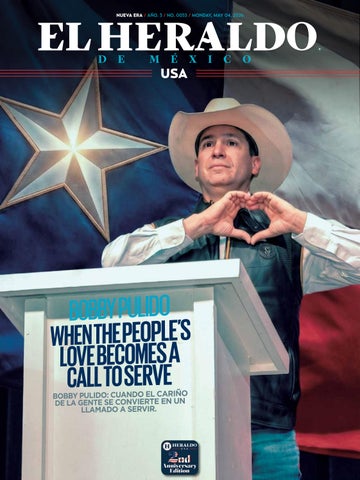
There’s a certain kind of restlessness you only understand if you’ve lived close to the line — not just a border on a map, but the kind that runs through language, culture, and identity. That’s where the name Bobby Pulido starts to land differently today. Not just as the voice that once defined a generation along the border, but as a man stepping into public representation in Texas’ 15th district — a place where being Latino isn’t a talking point… it’s everyday life.

Some songs don’t age… they evolve. They stop being what they were and turn into something else: a symbol, a shared language, a kind of quiet prophecy. That’s what Desvelado became. What started as an intimate confession now reads like something bigger — like it was always pointing somewhere beyond the music.

Because some lyrics don’t just get sung… they come true.

“SERÁ FE QUE YO ENCONTRÉ / UNA VOZ DE TERNURA.”

For years, that voice was his. Familiar. Close. The kind of voice that didn’t need explaining because it already belonged. But time does what it does — and what once felt like it was meant for someone specific starts echoing

POR: LEO COLLADO

ARTE: ALEJANDRO OYERVIDES

En ese territorio del desvelo colectivo comienza a inscribirse hoy el nombre de Bobby Pulido: no solamente como el cantante que marcó una época en la memoria sentimental de la frontera, sino como un hombre que ha decidido dar el paso hacia la representación pública en el distrito 15 de Texas, uno de los espacios donde la identidad latina no es discurso… es vida cotidiana. Hay canciones que no envejecen… se transforman.

Dejan de ser lo que eran para convertirse en otra cosa: símbolo, lenguaje, destino. Eso ocurre con Desvelado, una pieza que nació como confesión íntima y que, con el tiempo, terminó pareciéndose más a una premonición que a una simple balada. Porque hay letras que no solo se cantan… se cumplen.

“SERÁ FE QUE YO ENCONTRÉ / UNA VOZ DE TERNURA”. Durante años, esa voz fue la suya: cercana, reconocible, parte del paisaje emocional de quienes crecieron escuchándolo. Pero el tiempo hace lo suyo, y lo que en una canción parecía dirigido a una sola persona, empieza, casi sin darse cuenta, a resonar

DESVELADO

DESVELADO

DESVELADO

across a much wider room.

And that’s when the direction shifts.

“ESCUCHO CADA DÍA LA RADIO / SEGURO QUE LA VUELVO A OÍR.”

What once sounded like longing now feels like something else — like waiting. Like a community that’s spent too long tuning in, hoping to hear something that actually sounds like them, not just about them.

And slowly, without forcing it, the song starts to move.

“VOY DESVELADO / POR ESTAS CALLES, ESPERANDO ENCONTRAR.”

It’s no longer just the man in the song walking those streets. It’s the people. The ones moving through South Texas, through that shared border identity, looking for more than a promise — looking for a voice that doesn’t feel foreign.

The question is still there. But it doesn’t sound personal anymore. It sounds collective:

“¿DÓNDE ANDARÁ?”

Where is that voice that doesn’t have to study what we’ve lived?

Where is that representation that doesn’t need to translate what, to us, is everyday reality?

And then, almost without trying, the song stops speaking for him… and starts sounding like something people would say to him: Nuestros deseos no nos dejan descansar that a worthy voice represents the Latino people. Vamos desvelados por estas calles esperando encontrar that voice to represent us in Congress.

(Our desires don’t let us rest until a worthy voice represents the Latino people. We walk these streets sleepless, hoping to find that voice to represent us in Congress.)

That’s when a line like “Y mi deseo no me deja descansar” stops being about love… and starts sounding like something else entirely. A shared urgency. A kind of collective unrest. The feeling of people who are still waiting to be represented in a way that goes beyond being counted — and actually means being understood.

And that’s where context matters.

Texas’ 15th district isn’t abstract. It’s working families. It’s migrant stories. It’s culture that doesn’t switch off when you cross a line. It’s language that carries history in every word. Representing it isn’t just a political job… it’s a lived responsibility.

This isn’t a forced reading. It’s a natural one.

Because when a song truly settles into popular memory, it stops belonging entirely to the one who sang it. It belongs to the people who needed it. And Desvelado, without even knowing it, had been holding onto a quiet thesis all along — about Bobby Pulido’s path into something beyond music: into representation.

Not out of convenience, but out of recognition.

Not out of strategy, but out of lived connection.

Not because he’s trying to speak to the people now… but because the people have been listening to him for years.

“YO SEGUIRÉ DESVELADO” doesn’t just sound like a lyric anymore. It sounds like a stance. The kind of stance that doesn’t come into power looking for rest — but carrying the weight of a community that hasn’t been able to rest for a long time.

Because some folks step into power to finally take a breath… and some step in already wide awake.

And when they’re the real deal, they’re not just carrying a campaign.

They’re carrying a cause.

en muchos más.

Entonces la dirección cambia.

“ESCUCHO CADA DÍA LA RADIO / SEGURO QUE LA VUELVO A OÍR”.

Lo que antes era insistencia amorosa, hoy puede leerse como otra clase de espera: la de una comunidad que ha pasado demasiado tiempo buscando una voz propia en medio de discursos que hablan de ella, pero rara vez desde ella.

Y ahí, sin estridencias, la canción empieza a desplazarse.

“VOY DESVELADO / POR ESTAS CALLES, ESPERANDO ENCONTRAR”.

Ya no es únicamente el hombre de la canción quien camina. Son también los que recorren esas mismas calles del sur de Texas, de la frontera extendida, de la identidad compartida, esperando algo más que una promesa: esperando una voz que no les resulte ajena. La pregunta permanece, pero ya no como intimidad, sino como eco colectivo: “¿DÓNDE ANDARÁ?”

¿Dónde está esa voz que no tenga que aprender lo que el pueblo latino ha vivido por generaciones? ¿Dónde está esa representación que no necesite traducir la experiencia de quienes sostienen con trabajo, cultura y memoria buena parte del pulso de esa región?

Y entonces, casi sin forzar nada, la canción deja de hablar solo de él y comienza a parecerse a lo que la gente podría decirle a él: Nuestros deseos de que una voz que represente al pueblo latino no nos dejan descansar. Andamos por estas calles esperando encontrar a esa voz que nos represente en el Congreso.

Por eso una línea como “Y mi deseo no me deja descansar” ya no suena únicamente al desvelo del amor, sino al de una esperanza colectiva. A la inquietud de quienes siguen esperando una representación que no se limite a nombrarlos, sino que verdaderamente los entienda.

Y es ahí donde el contexto importa. El distrito 15 de Texas no es un territorio abstracto. Es frontera viva. Es trabajo migrante, es herencia cultural, es idioma compartido, es familia extendida a ambos lados de una línea política. Representarlo no es una tarea técnica… es una responsabilidad histórica.

No es una apropiación forzada. Es una evolución natural.

Porque cuando una canción logra quedarse en la memoria popular, deja de pertenecerle por completo a quien la interpreta. Empieza a pertenecerle a quienes la necesitan. Y Desvelado, sin saberlo, parecía guardar desde hace años una pequeña tesis sobre el tránsito de Bobby Pulido hacia algo más que la música: la posibilidad de convertirse en una voz de representación.

No por oportunismo, sino por reconocimiento previo.

No por cálculo, sino por cercanía real.

No porque ahora quiera hablarle al pueblo, sino porque durante mucho tiempo el pueblo ya lo había escuchado a él.

“YO SEGUIRÉ DESVELADO” deja entonces de ser solo una frase de canción. Se vuelve una posibilidad política. La de alguien que no llega a descansar en el poder, sino a cargar el insomnio de una comunidad que todavía exige ser vista, escuchada y defendida con autenticidad.

Porque hay quienes llegan al poder para dormir tranquilos… y hay quienes llegan sin haber dormido. Y esos, cuando son auténticos, no cargan solamente una candidatura. Cargan una causa.

Guadalajara has always been an anomaly. While Cannes and Venice posture as arbiters of cinematic prestige, Guadalajara has functioned more like a living archive—messy, vibrant, occasionally contradictory, yet always rooted in the idea that Latin American cinema is not a niche, but a necessity. Since its founding in 1986, the festival has quietly chronicled the evolution of a region’s identity through film, capturing not only aesthetic trends but political tensions, generational shifts, and the fragile hope that storytelling still matters.

The 2026 edition feels especially significant because it arrives at a moment when the global film industry is undergoing a kind of existential recalibration. Streaming platforms have flattened borders but diluted cultural specificity; algorithms have replaced curators. And yet, in Guadalajara, the old ritual persists: filmmakers, critics, students, and dreamers gathering in dark rooms to watch something that may never trend—but might endure.

What makes this year stand out is not just its programming, but its sense of historical awareness. The festival is no longer merely a showcase; it has become a reference point. To attend Guadalajara today is to engage with four decades of cinematic memory, to recognize that what was once regional has become foundational.

Nowhere is this more evident than in the celebration of the 15th anniversary of the Premio Maguey. When the award was introduced, it was, in many ways, a corrective— an acknowledgment that LGBTQ+ narratives in Latin American cinema deserved not only visibility but critical legitimacy. Fifteen years later, the Premio Maguey is no longer a sidebar; it is a central pillar of the festival’s identity.

The retrospective programming dedicated to its anniversary is not merely commemorative—it is revelatory. Films that once struggled to

find distribution are now recognized as essential texts in the region’s cinematic canon. What emerges from this curated history is a pattern: these stories were never marginal; they were simply ignored. The Premio Maguey did not invent a movement—it illuminated one.

More importantly, the award has shaped the industry itself. Filmmakers who once operated on the fringes now find themselves influencing mainstream narratives. The ripple effect is undeniable: a generation of directors, writers, and actors who see representation not as a concession, but as a starting point. In that sense, the Premio Maguey is less an award than a declaration—a statement that identity, in all its complexity, belongs at the center of the cinematic frame.

But if the Premio Maguey represents the festival’s moral and cultural evolution, the masterclasses of this year speak to its intellectual ambition.

Darren Aronofsky’s session was, predictably, intense—less a lecture than a controlled detonation of ideas. Aronofsky has always been a filmmaker obsessed with obsession itself, and his masterclass unfolded like one of his films: nonlinear, confrontational, and strangely intimate. He spoke not about success, but about compulsion—the necessity of making films even when the system resists you. For a room filled with aspiring filmmakers, it was both inspiring and unsettling. What stood out was his refusal to romanticize the process. Aronofsky dismantled the myth of the auteur as a solitary genius, replacing it with something far more uncomfortable: the idea that filmmaking is an act of endurance. You do not make films because you are talented; you make them because you cannot stop. In a festival environment that often leans toward celebration, his presence injected a necessary dose of realism.

Fernando Eimbcke’s masterclass, by contrast, was understated, almost deceptively simple. Where Aronofsky was fire, Eimbcke was quiet precision. He spoke about rhythm, about silence, about the

spaces between dialogue. His films have always operated in those spaces, and his teaching mirrored that philosophy.

What made Eimbcke’s session remarkable was its accessibility. He did not position himself as an authority, but as a practitioner— someone still figuring things out. And in doing so, he offered something arguably more valuable than Aronofsky’s intensity: a model of sustainability. Not every filmmaker needs to burn out to create something meaningful. Sometimes, the most radical act is to observe, to listen, to trust the small moments.

And then there are the winners— those films that, whether by consensus or controversy, crystallize the spirit of the festival. This year’s awarded works gravitated toward themes that feel less like trends and more like urgencies: migration not as spectacle but as lived fragmentation; violence not as narrative device but as ambient reality; identity not as declaration but as negotiation. What is striking is not just the subject matter, but the tone—these films resist resolution. They offer no easy catharsis, no moral clarity. Instead, they linger in ambiguity, forcing the viewer to confront discomfort rather than escape it. In a global industry increasingly addicted to closure, that refusal feels almost subversive.

Together, these masterclasses and the awarded films form a kind of dialectic: intensity versus restraint, chaos versus control, observation versus confrontation. And perhaps that is what defines the Guadalajara International Film Festival at this stage of its existence. It is no longer trying to prove anything. It is comfortable holding contradictions, allowing different philosophies of cinema to coexist without forcing a resolution.

The 2026 edition does not announce itself as revolutionary. It doesn’t need to. Its significance lies precisely in its continuity—in its ability to remain relevant without abandoning its roots. And in a cultural landscape defined by constant reinvention, that kind of consistency feels, in its own way, radical.

There is something quietly defiant about the 2026 edition of the Guadalajara International Film Festival. Not defiant in the loud, selfcongratulatory way of global festivals that measure their worth in red carpets and distribution deals, but in the deeper sense—an insistence on cultural continuity in a world that increasingly forgets its own stories.

Hay algo discretamente desafiante en la edición 2026 del Festival Internacional de Cine de Guadalajara. No desafiante en el sentido estridente y autocomplaciente de los festivales globales que miden su valor en alfombras rojas y acuerdos de distribución, sino en un sentido más profundo: una insistencia en la continuidad cultural en un mundo que cada vez olvida más sus propias historias.

POR:

FOTO: DIEGO GASCA

Guadalajara siempre ha sido una anomalía. Mientras Cannes y Venecia se posicionan como árbitros del prestigio cinematográfico, Guadalajara ha funcionado más bien como un archivo vivo: caótico, vibrante, ocasionalmente contradictorio, pero siempre arraigado en la idea de que el cine latinoamericano no es un nicho, sino una necesidad. Desde su fundación en 1986, el festival ha documentado silenciosamente la evolución de la identidad de una región a través del cine, capturando no solo tendencias estéticas, sino también tensiones políticas, cambios generacionales y la frágil esperanza de que contar historias todavía importa.

La edición de 2026 se siente especialmente significativa porque llega en un momento en que la industria cinematográfica global atraviesa una especie de recalibración existencial. Las plataformas de streaming han aplanado las fronteras, pero han diluido la especificidad cultural; los algoritmos han reemplazado a los curadores. Y, sin embargo, en Guadalajara persiste el viejo ritual: cineastas, críticos, estudiantes y soñadores reunidos en salas oscuras para ver algo que tal vez nunca será tendencia, pero que podría perdurar.

Lo que distingue a este año no es solo su programación, sino su sentido de conciencia histórica. El festival ya no es únicamente una vitrina; se ha convertido en un punto de referencia. Asistir hoy a Guadalajara es involucrarse con cuatro décadas de memoria cinematográfica, reconocer que lo que alguna vez fue regional se ha vuelto fundamental.

En ningún lugar esto es más evidente que en la celebración del 15.º aniversario del Premio Maguey. Cuando se creó el galardón, fue, en muchos sentidos, un correctivo: un reconocimiento de que las narrativas LGBTQ+ en el cine latinoamericano merecían no solo visibilidad, sino legitimidad crítica. Quince años después, el Premio Maguey ya no es un apartado secundario; es un pilar central de la identidad del festival.

La programación retrospectiva dedicada a su aniversario no es mera-

mente conmemorativa: es reveladora. Películas que alguna vez lucharon por encontrar distribución ahora son reconocidas como textos esenciales dentro del canon cinematográfico de la región. Lo que emerge de esta historia curada es un patrón: estas historias nunca fueron marginales; simplemente fueron ignoradas. El Premio Maguey no inventó un movimiento; lo iluminó.

Más importante aún, el premio ha moldeado a la propia industria. Cineastas que antes operaban en los márgenes ahora influyen en narrativas principales. El efecto expansivo es innegable: una generación de directores, guionistas y actores que ven la representación no como una concesión, sino como un punto de partida. En ese sentido, el Premio Maguey es menos un premio que una declaración: una afirmación de que la identidad, en toda su complejidad, pertenece al centro del encuadre cinematográfico.

Pero si el Premio Maguey representa la evolución moral y cultural del festival, las clases magistrales de este año hablan de su ambición intelectual.

La sesión de Darren Aronofsky fue, como era de esperarse, intensa: menos una conferencia que una detonación controlada de ideas. Aronofsky siempre ha sido un cineasta obsesionado con la obsesión misma, y su clase magistral se desarrolló como una de sus películas: no lineal, confrontativa y extrañamente íntima. No habló del éxito, sino de la compulsión: la necesidad de hacer cine incluso cuando el sistema se resiste. Para una sala llena de cineastas en formación, fue a la vez inspirador e inquietante.

Lo que destacó fue su negativa a romantizar el proceso. Aronofsky desmontó el mito del autor como genio solitario, sustituyéndolo por algo mucho más incómodo: la idea de que hacer cine es un acto de resistencia y de persistencia. No haces cine porque eres talentoso; lo haces porque no puedes dejar de hacerlo. En un entorno de festival que suele inclinarse hacia la celebración, su presencia inyectó una dosis necesaria de realismo.

La clase magistral de Fernando Eimbcke, en contraste, fue sobria, casi engañosamente simple. Donde Aronofsky era fuego, Eimbcke era precisión silenciosa. Habló del ritmo,

del silencio, de los espacios entre los diálogos. Sus películas siempre han habitado esos espacios, y su enseñanza reflejó esa misma filosofía. Lo que hizo notable la sesión de Eimbcke fue su accesibilidad. No se posicionó como una autoridad, sino como un practicante: alguien que aún está resolviendo las cosas. Y al hacerlo, ofreció algo posiblemente más valioso que la intensidad de Aronofsky: un modelo de sostenibilidad. No todos los cineastas necesitan consumirse para crear algo significativo. A veces, el acto más radical es observar, escuchar, confiar en los momentos pequeños. Y luego están los ganadores: aquellas películas que, ya sea por consenso o controversia, cristalizan el espíritu del festival. Las obras premiadas de este año gravitaron hacia temas que se sienten menos como tendencias y más como urgencias: la migración no como espectáculo, sino como fragmentación vivida; la violencia no como recurso narrativo, sino como realidad ambiental; la identidad no como declaración, sino como negociación. Lo que resulta llamativo no es solo el tema, sino el tono: estas películas resisten la resolución. No ofrecen catarsis fácil ni claridad moral. En cambio, permanecen en la ambigüedad, obligando al espectador a confrontar la incomodidad en lugar de escapar de ella. En una industria global cada vez más adicta al cierre, esa negativa se siente casi subversiva.

En conjunto, estas clases magistrales y las películas premiadas forman una especie de dialéctica: intensidad frente a contención, caos frente a control, observación frente a confrontación. Y quizás eso es lo que define al Festival Internacional de Cine de Guadalajara en esta etapa de su existencia. Ya no intenta demostrar nada. Se siente cómodo al sostener contradicciones, permitiendo que distintas filosofías del cine coexistan sin forzar una resolución.

La edición 2026 no se anuncia como revolucionaria. No lo necesita. Su importancia radica precisamente en su continuidad: en su capacidad de mantenerse relevante sin abandonar sus raíces. Y en un panorama cultural definido por la reinvención constante, ese tipo de consistencia se siente, a su manera, radical.

BETWEEN TWO LANGUAGES

MIGRANT POETRY FROM CHICAGO

ENTRE

DOS

LENGUAS:

POESÍA MIGRANTE DESDE CHICAGO

A Mexican poet reflects on how migration, bilingualism, and life in the United States transform language into resistance, identity, and memory

UN POETA MEXICANO NARRA CÓMO LA MIGRACIÓN, EL BILINGÜISMO Y LA VIDA EN ESTADOS UNIDOS TRANSFORMAN LA PALABRA EN RESISTENCIA, IDENTIDAD Y MEMORIA

D.B. Gregorio Gómez Aguayo is a writer, director, producer, and cultural organizer. He is a key figure in Chicago’s artistic communities: host of the legendary open mic Weeds Live Poetry, which has influenced many generations of poets in the city. He has been published in magazines and anthologies such as Ecléctica, Stray Bullets, Poetry for Peace, and Not My President. The recipient of numerous awards, he recently published a book titled REQUIEM: Journey Through a Poetic Odyssey. Tell us about your arrival in the United States.

G.G. I am Mexican, born in Tierra Blanca, Veracruz. My father brought us to Chicago in ’63. One of the things all immigrants go through is learning English. I was always a kid who told stories. My mom would say, “Ay, mijo, stop telling lies.” But they were stories that came out of my head. When I started learning English, I began writing it in phrases, because I didn’t have full command of the language. Those phrases started turning into poetry. Although I never considered myself a poet when I was young. I was always active in different movements, but I kept developing my writing, even though I didn’t see it as art, I saw it as personal expression. As an adult, around age 33, I decided to start participating in bohemian nights.

POR: DANIEL BENET

FOTOARTE: ALEJANDRO OYERVIDES

D.B. Gregorio Gómez Aguayo es escritor, director, productor y organizador cultural. Es una figura clave de las comunidades artísticas de Chicago: anfitrión del legendario micrófono abierto Weeds Live Poetry que ha influenciado a muchas generaciones de poetas en la ciudad, ha sido publicado en revistas y antologías como Ecléctica, Stray Bullets, Poetry for Peace y Not My President. Ganador de innumerables reconocimientos, recientemente publicó un libro titulado REQUIEM: Journey Through a Poetic Odyssey. Platícanos sobre tu llegada a los Estados Unidos.

G.G. Soy mexicano, nacido en Tierra Blanca, Veracruz. Mi padre nos trajo hasta Chicago en el 63. Una de las cosas que pasamos todos los inmigrantes es desarrollar el idioma inglés. Yo siempre fui un niño que contaba historias. Mi mamá decía, “Ay, Mijo, deja de decir mentiras”. Pero eran historias que me salían de la cabeza. Cuando empecé a aprender inglés, lo empecé a escribir en frases, porque no tenía la facilidad del idioma. Esas frases empezaron a convertirse en poesía. Aunque yo nunca me consideré poeta de joven.

Siempre fui activista en diferentes movimientos, pero yo seguía desarrollando la escritura, aunque no la veía como arte, la veía como expresión personal. Ya de adulto como a los 33 años, decidí empezar a participar en noches bohemias.

PHOTOART: ALEJANDRO OYERVIDES

I went to one of those events and realized that I was accepted by the audience and by the other poets, and it was that night, around ’85, when I was introduced as “the poet.” That was when I began to accept and present myself as a poet. Writing in English most of the time, I started to develop the idea of writing in another language. I was losing my Spanish because I was immersed here all the time, and I wanted to recover it.

I realized that I began mixing the two languages, and in that fusion I developed poetry in which I could begin in one language and continue the same idea in the other without losing rhythm. That’s how I began developing that bilingual poetry.

D.B. You work with words, as a poet in a culturally vibrant city like Chicago, also called the Windy City, and although some people believe it’s because of the weather, it actually has more to do with politicians from many years ago who had a great ability for rhetoric and for “selling air.”

We are seeing now that words in the United States are being distorted. Stories are being told with the intention of harming certain groups of people, truth is being distorted, and words are losing their value in that country.

What does this book you just published tell us about migrant communities and the use of language in the United States?

G.G. In the book I use all my ability as a writer. I’m not going to say I’m a great writer—that I leave to others. But in this book I include thoughts about death, about living, trying to explain the experiences of Mexicans in this country, experiences of racism, and also everyday life experiences. We—and I would like to be part of that as a poet—must be able to explain, to fight, or to speak. I don’t confront things directly by saying “you are this or that”; I put my writing on paper, and I read it wherever I can.

I am invited to speak about what is happening, and I try to be as honest as possible in terms of who I am and my position as a poet trying to speak truths, or a truth that is developed through two characters.

The Mexican character that I am and the adopted character of this country, or the Mexican American experience of living in this country. And within those two identities I try to talk about politics, I try to talk about life, about when my mother died, when my father died, or how I see things in terms of how our people are treated—not only Mexicans, but other immigrants as well.

I believe one must realize that we are being attacked with very aggressive language, and we have to continue, we have to express ourselves not only with words but also through other forms of art like theater, putting on stage what is happening to us, and it is very important to be part of that.

D.B. Now that you mention theater and the arts, including poetry, literature, and music.

What space do you see for these expressions in this context of the rise of artificial intelligence, short attention spans, and disposable entertainment? How do you see the future?

G.G I see that with artificial intelligence, phones, our new generations have lost awareness of the environment around them because of these devices. They have their eyes fixed on their phones or wear headphones that block out their surroundings, and often their personal understanding—the intelligence they are developing—comes directly from artificial sources. They don’t read books, they

don’t explore other forms of information, they don’t go to the theater, they almost never go to the movies anymore because everything can be watched on YouTube or the internet. So a way of communicating has been lost, or is being lost.

I have noticed that many young people don’t know how to write well. I learned to write in Mexico, but kids today, my goodness, it’s all keyboard. And if they can barely sign their name, it’s illegible. These are skills they are losing because instead of writing a note, it’s “Alexa, do this,” and so on.

Maybe we are developing bigger brains and acquiring other skills, but we are also losing certain things. I’ll give you an example: when I arrived in the United States, the pressure to speak English was so great that I began to forget Spanish because I wasn’t practicing it. So by not practicing the language, my native language suffered.

After five years, I began to lose most of my language. When I became aware of this situation, that’s when I started to reclaim it, and in that process I also began to understand political issues, the education system in this country. How is it that things are taken away from us to replace them with others? And that’s the same thing that is happening now.

Many of the young people we see on the street don’t know about politics, they don’t understand social issues, they only know about K-pop and things that come directly from YouTube or their phones, and they are losing critical thinking. There’s another example I can give you. I gave my book to a young friend; she’s 28 years old.

Two weeks later I asked her, “What do you think about the book?” And she said, “Oh, I haven’t read it yet.” So I asked, “Why? Aren’t you curious about what’s inside the book?” And she said, “Oh, I don’t read books. I don’t know what poetry means.” So she doesn’t understand literature.

But she does know how to handle money because she’s a banker. She understands another language that will not be lost: the language of money.

D.B. To better understand this process you mentioned earlier, about languages being the foundation of the ideas we build in our lives. When you begin to write, are there feelings in your writing that have a Mexican inspiration and others that are distinctly American? Or is it a fusion that becomes inseparable when you express yourself?

G.G. Well, I cannot leave out the influence of the United States. Living in this country, the influence is very strong, and one lives within this cage.

I have tried to preserve as much as possible not only the language but also traditions. I try to listen to banda music, I like boleros, ranchera music. I am from Veracruz, I still listen to son, and I grew up in Monterrey, so norteño music is also part of me. I try to maintain all those influences, but I also use them within the American environment.

That is part of the evolution that all immigrants in this country have experienced. Many of us Mexicans think about returning or have a small ranch; we think here and live there. So we exist in both places.

The migrant community will further strengthen the cultural environment of this country, and one of the reasons why the Anglo population is very much against us, particularly Mexicans, is because they are realizing that Mexicans have developed not only a strong culture but also a strong economy, and we are now present in political arenas from local to national levels, like Congressman Jesús “Chuy” García.

That’s how we are influencing language, writing, culture, and the country.

Fui a una de esas noches bohemias y me di cuenta de que fui aceptado por el público y por los otros poetas y fue en esa noche, como en el 85, donde me presentaron como “el poeta”. Fue entonces cuando empecé a aceptar y presentarme como poeta. Escribiendo en inglés la mayoría del tiempo, empecé a desarrollar la idea de escribir en otro idioma. Estaba perdiendo el español porque estaba sumergido aquí todo el tiempo, y quería recuperar mi idioma, el español.

Me di cuenta de que empecé a mezclar los dos idiomas y en esa fusión desarrollé poesías en las cuales yo podía comenzar en un idioma y seguir la misma idea en el otro idioma sin perder ritmo. Así empecé el desarrollo de esa poesía del bilingüismo.

D.B. Tú trabajas con palabras, como poeta en una ciudad que es culturalmente vibrante como Chicago también llamada Windy City y aunque algunas personas creen que es por el clima, tiene más que ver con los políticos de hace muchos años que tenían una gran habilidad discursiva y de “vender aire”.

Estamos viendo en estos tiempos que las palabras en Estados Unidos se están distorsionando. Ahora están contando historias con el objetivo de perjudicar a ciertos grupos de personas, se distorsiona la verdad y las palabras están perdiendo su valor en ese país.

¿Qué nos dice este libro que acabas de publicar sobre las comunidades migrantes y el uso de la palabra en los Estados Unidos?

G.G. En el libro yo utilizo toda mi habilidad de escribir. No voy a decir que soy un gran escritor, eso se lo dejo a otros. Pero dentro de este libro pongo pensamientos de muerte, de vivir, de tratar de explicar las experiencias del mexicano en este país, experiencias de racismo y también experiencias de la vida cotidiana. Nosotros, y me gustaría ser parte como poeta, debemos de poder explicar o pelear o hablar. Yo no me agarro de frente: que tú eres esto o aquello, yo pongo mi escritura en el papel, la leo donde puedo. Me invitan a hablar sobre lo que está pasando y trato de ser lo más honesto posible en términos de quién soy yo y mi posición como poeta tratando de hablar las verdades o una verdad que viene desarrollada bajo dos personajes.

El personaje mexicano que soy y el personaje adoptado de este país, o los Mexicoestadounidenses, la experiencia de vivir en ese país. Y dentro de esas dos personalidades trato de hablar sobre la política, trato de hablar sobre cosas de la vida, cuando mi madre murió, cuando mi padre murió o cómo veo las cosas en términos de como tratan a nuestros pueblos, no solamente al mexicano, también a otros inmigrantes.

Creo que uno tiene que darse cuenta de que nos están atacando con un lenguaje muy agresivo, nosotros tenemos que seguir, tenemos que desahogarnos no solamente con la palabra, también con otras formas de arte como el teatro, poner en escena lo que nos está pasando y es muy importante ser parte de eso.

D.B. Ahora que mencionas esto del teatro y de las artes e incluyendo ahí a la poesía, a la literatura y a la música.

¿Qué espacio le ves a estas expresiones en este contexto de la llegada de la inteligencia artificial, de los intervalos breves de atención, del entretenimiento desechable? ¿cómo ves el futuro?

G.G. Yo veo que, con la cuestión de la inteligencia artificial, el teléfono, nuestras nuevas generaciones, han perdido por estos artefactos la conciencia del ambiente alrededor de ellos. Porque tienen la mirada clavada en el teléfono o traen los audífonos que no escuchan su alrededor y muchas veces la ignorancia personal, la inteligencia que están desarrollando viene directamente de lo artificial y no leen

libros, no ven otras formas de información, no van al teatro, ya casi nunca van al cine, porque todo lo pueden ver por YouTube y por el internet. Entonces se ha perdido o se está perdiendo, un modo de comunicarse.

Me he dado cuenta de que muchos jóvenes no saben escribir bien. Yo aprendí a escribir en México, pero los muchachos de hoy, madre mía, puro teclado. Y si apenas pueden firmar su nombre es ilegible. Eso son habilidades que están perdiendo porque ahora en lugar de hacer una nota es “Alexa haz esto” etc. A lo mejor estamos desarrollando un cerebro más grande y adquiriendo otras habilidades, pero también estamos perdiendo ciertas cosas. Te voy a dar un ejemplo, cuando yo llegué a los Estados Unidos, estar aquí con la presión de hablar inglés fue tan grande que empecé a olvidar el español porque no lo practicaba. Entonces al no practicar el idioma, el idioma natal sufrió.

Después de 5 años empecé a perder la mayoría de mi idioma. Al darme yo cuenta de esta situación fue cuando empecé a reconquistar el idioma y en esa reconquista también empecé a darme cuenta de la cuestión política, de la cuestión de la educación en este país. ¿Cómo es que nos quitan cosas para ponernos otras? Y es lo mismo que está pasando ahora.

Muchos de los muchachos que encontramos en la calle no saben de política, no saben de la cuestión social, nomás saben del K-pop y de cosas que vienen directas del YouTube o del teléfono y están perdiendo el pensamiento crítico. Hay otro ejemplo que te puedo dar. Mi libro se lo regalé a una amiga joven, tiene 28 años.

Dos semanas después le pregunto: “¿qué es lo que piensas del libro?” Y me dijo, “Oh, no lo he leído todavía.” Y entonces le dije, “¿Por qué? ¿Que no tienes curiosidad qué es lo que lleva dentro el libro?” y me dice, “Oh, es que yo no leo libros. Yo no sé lo que quiere decir poesía.” Entonces no entiende literatura.

Pero sí sabe manejar dinero porque es banquera. Entiende otro lenguaje que no se va a perder, el lenguaje del dinero.

D.B. Para conocer un poco cómo es este proceso que nos contabas al principio, de los idiomas que son la base de las ideas que construimos en nuestra vida. Cuando tú empiezas a escribir, ¿hay sentimientos de lo que escribes que tienen una inspiración mexicana y otras distintas estadounidenses? o ¿es la fusión, que es indisociable cuando te quieres expresar?

G.G. Bueno, no puedo dejar la influencia fuera de los Estados Unidos. Al vivir aquí en este país la influencia es muy fuerte y uno vive dentro de esta jaula.

He tratado de mantener lo más posible no solamente el idioma, también tradiciones, yo trato de escuchar música de banda, me gustan los boleros, la música ranchera. Soy jarocho, sigo escuchando el son y crecí en Monterrey, así que la música norteña también la tengo en mente. Todas esas influencias las trato de mantener, pero también las utilizo dentro del ambiente estadounidense.

Eso es parte de la evolución que hemos llevado todos los inmigrantes en este país. Hay muchos de nosotros mexicanos que piensan regresar o que tienen su ranchito, piensan aquí y viven allá. Entonces, están en las dos partes.

El pueblo migrante va a fortalecer más el ambiente cultural de este país y una de las razones por las cuales el anglosajón está muy en contra de nosotros, en particular, el mexicano, porque el anglosajón se está dando cuenta de que el mexicano ha desarrollado no solamente una cultura fuerte, también una economía fuerte y estamos ahora en las urnas políticas locales a nacionales como el compañero congresista Jesús Chuy García. Así es estamos influenciando el lenguaje, la escritura, la cultura, el país.

Turn static files into dynamic content formats.
Create a flipbook