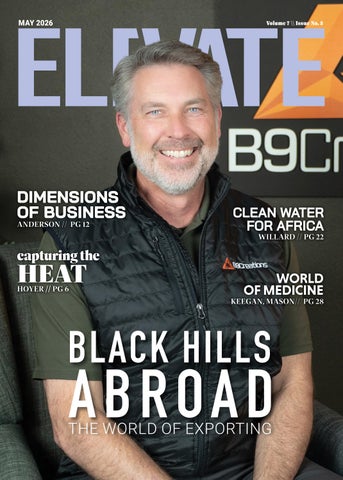
BLACK HILLS ABROAD


May 2026 // Vol. 7 // Issue No. 5
DROP
John Willard III By Michelle Pawelski
Dan Hoyer
By
Kory Lanphear
Keegan & Mason By Wade
Ellett
May 2026 // Vol. 7 // Issue No. 5
John Willard III By Michelle Pawelski
Dan Hoyer
By
Kory Lanphear
Keegan & Mason By Wade
Ellett
In the Black Hills, we know the value of hard work, innovation, and building something that lasts. In this issue of Elevate Magazine, we’re celebrating the businesses and leaders who are taking those values beyond our borders and into the global marketplace.
May is World Trade Month—a time to recognize the impact international trade has on our local economy. Here in Rapid City and across western South Dakota, exporting is more than shipping products overseas. It’s sharing ideas, technology, expertise, and innovation with the world while bringing new revenue, opportunities, and jobs back home.
Inside these pages, you’ll meet businesses and leaders proving that global reach can begin right here in the Black Hills. From B9Creations expanding advanced manufacturing solutions internationally, to DH Geothermal exporting knowledge and expertise across continents, to Keegan Mason & Associates improving healthcare systems worldwide, and Willard Water changing lives one drop at a time. These stories highlight the strength of local businesses making a global impact.
GOING GLOBAL, REMAINING LOCAL
Shon Anderson
By Michelle Pawelski
Elevate is a monthly publication produced by Elevate Rapid City. It is the premier business magazine for the Black Hills region telling the stories that make our area unique and vibrant.
PO Box 747 Rapid City, SD 57709 605.343.1744
elevaterapidcity.com
INTERIM CEO
Todd Kenner
INTERIM COO
Darren Haar
SR WORKFORCE DEVELOPMENT & PARTNERSHIPS DIRECTOR
Taylor Davis
SR MARKETING & COMMUNICATIONS DIRE CTOR
Shiloh Francis
SR PUBLIC POLICY DIRECTOR
Garth Wadsworth
OPERATIONS DIRECTOR
Liz Highland
CREATIVE SERVICES DIRECTOR
Bailey Sadowsky
ECOSYSTEM SUPPORT & PROPERTY MANAGER
Loni Reichert
HOUSING & COMMUNITY DEVELOPMENT MANAGER
Laura Jones
BUSINESS DEVELOPMENT MANAGER
Kallie Ruland
BUSINESS PROSPECT MANAGER
Drew Staufer
EVENTS & MARKETING MANAGER
Kamryn Wainwright
INVESTOR SALES MANAGER
Adam Braun
WORKFORCE PROGRAMS MANAGER
Krystal Bresnahan
EXECUTIVE
ADMINISTRATIVE ASSISTANT
Ashley Simonson

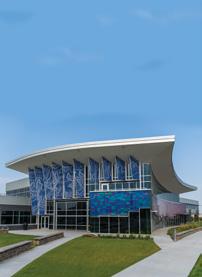
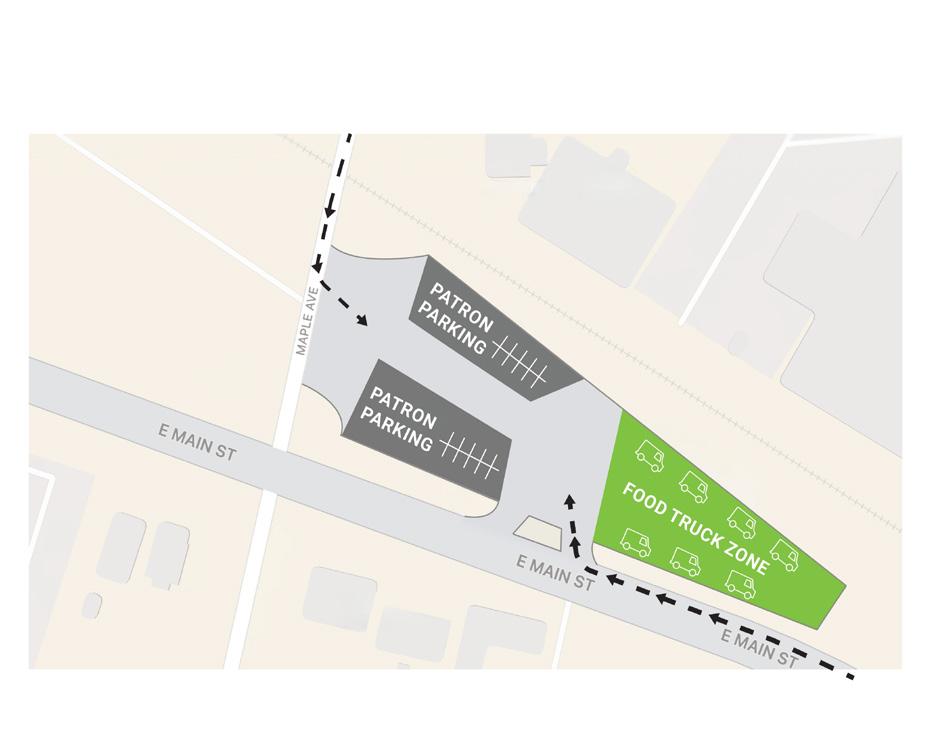

May 1
CECE TENEAL’S DIVAS OF SOUL Performing Arts Center Rapid City rapidcityconcertassociation.com/ schedule.html
DAKOTA COUNTRY DANCE NIGHT
The 707 Night Life thepark.ticketspice.com
May 1–3
NAJA SHRINE CIRCUS
The Monument themonument.live/events

May 2
CRASHING WAYWARD LIVE
The 707 Night Life thepark.ticketspice.com
DERBY PARTY
Paddy O’Neill’s Irish Pub & Grill alexjohnson.com/events

KOUNTRY JUNKIN’ VINTAGE AND HANDMADE
The Monument themonument.live/events
SPRING FLING: A POP-UP
MARKET AT YOUR CO-OP Breadroot Natural Foods Co-op breadroot.coop
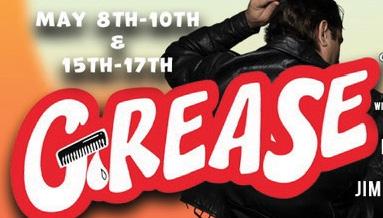
May 8–17
GREASE: THE MUSICAL Seraphim Theatrical Entertainment seraphimte.com
May 10
MOTHER’S DAY BRUNCH
Hotel Alex Johnson alexjohnson.com/events
May 16
BRANDON ANDERSON BIN 605 Wine Beer & Tapas Bar
WAYNE “THE TRAIN” HANCOCK Aby’s Rapid City abysrapidcity.com/events

May 19
STEAM CAFE
Hay Camp Brewing Company
May 22
OPENING DAY OF THE FOUNTAINS Main Street Square visitrapidcity.com/event
May 23
NICK MURPHY COMEDY SHOW
The Box thebox.live/events-calendar
May 26
RIVERDANCE 30
The Monument themonument.live/events

May 30
FRÜHLINGSFEST
Featuring High Rise Main Street Square visitrapidcity.com
Events are curated with the most accurate information available at the time of print. Please check the event website for full details or changes.


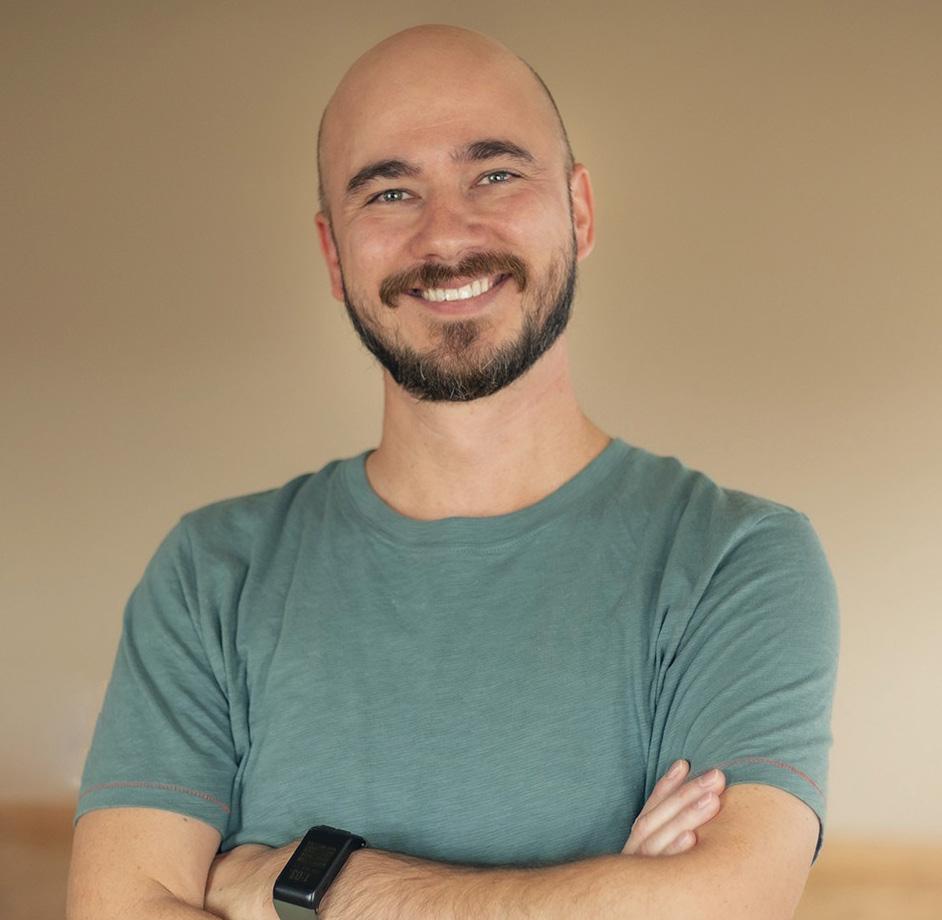
WHAT DO YOU LOVE TO DO IN THE BLACK HILLS?
I love hiking, backpacking, and just wandering through the woods. I never know what I'm going to find, but I always head home grateful for the experience.
WHAT'S YOUR FAVORITE PLACE TO EAT?
I love the vibe, food, and brews at Independent Ale House. I'm a total pizza fiend, and they have great, sometimes weird, always delicious pies.
DO YOU HAVE A RAPID CITY RESTAURANT HACK?
I'm not really a "hack" kind of guy, but I believe in always being kind with the staff, and asking what they recommend. There are lovely people working in the restaurants and bars around here.
DO YOU HAVE ANY PETS?
Two semi-wild mutts, Inkling and Ollie, who always keep things interesting.
WHAT’S YOUR GO-TO COFFEE ORDER?
I'm terribly boring when it comes to coffee; I like mine black, whether it's piping hot or ice cold. Sometimes I do a little stepping out with a hazelnut latte.
Wade’s new to the Elevate scene, so it’s fitting that his first issue was the January 2026 Fresh Faces!
EXECUTIVE PRODUCER
Mark Houston
PUBLIC SERVICE DIRECTOR
Leslie Cline
IT/ENGINEERING
Chris Jaques
PRODUCER
Amber Clement
Rapid City Business Journal is a weekly show and a business news website produced by Elevate Rapid City and The HomeSlice Group. We strive to produce daily and weekly business news supporting Rapid City, The Black Hills, and South Dakota.
333 West Boulevard Ste. 200 Rapid City, SD 57709
605.343.6161
rapidcitybusinessjournal.com
PRODUCTION
Oakley Tye
PROMOTIONS
Mitchell Stafford
WEBSITE DESIGN
Chris Hornick
DATA MANAGEMENT
Josh Partridge
OPERATIONS
Toni Kinney


THE CAST
M ark Houston
Leslie Cline
Amy Rose
Mitchell Stafford
Oakley Tye
Brandon Jones
Gary Matthews
Francie Ganje
Another HomeSlice Audio Production
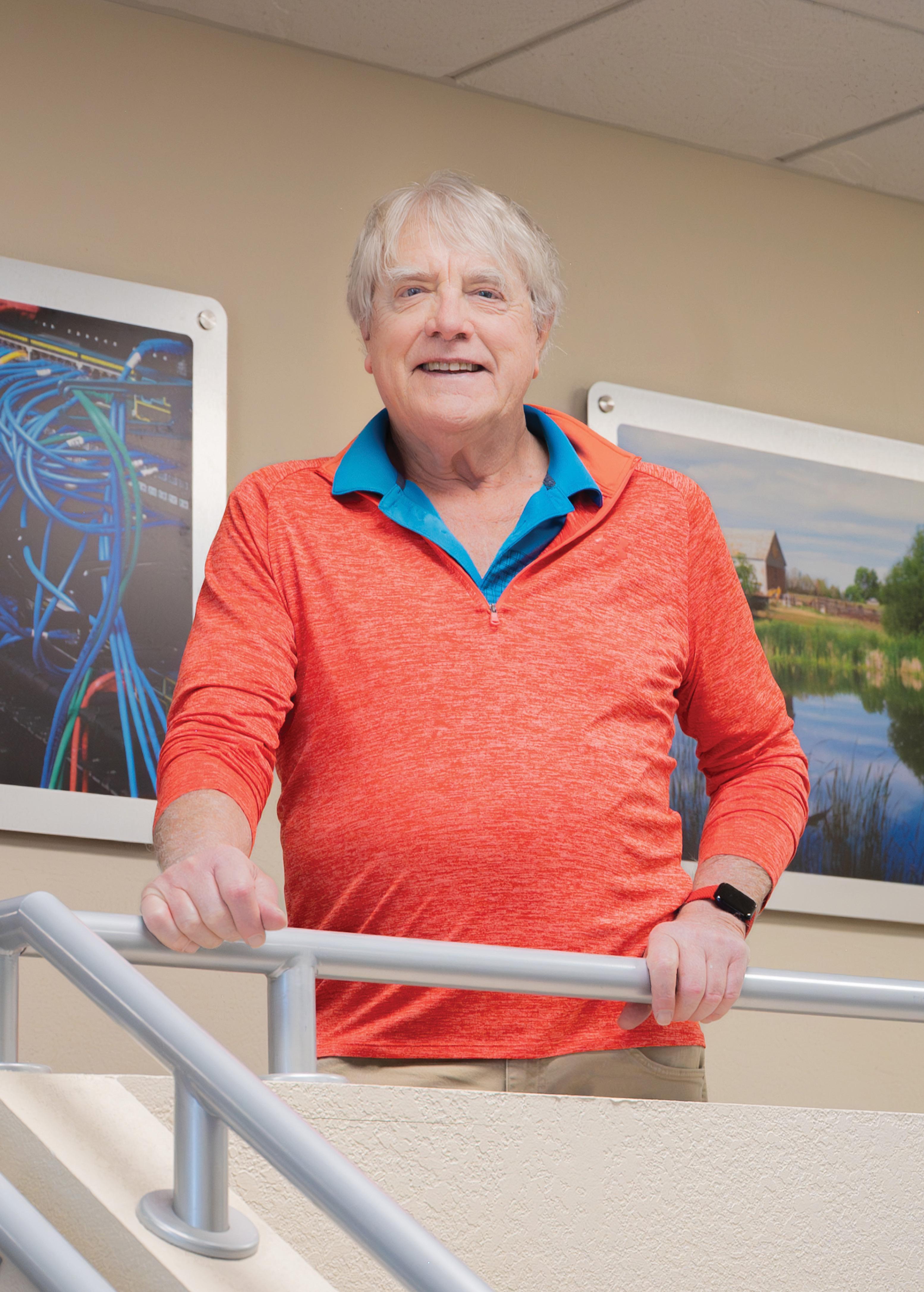
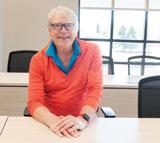
Dan Hoyer brings erudition to the world, but his heart stays in Rapid City.
Dan Hoyer could live anywhere.
And he has. He’s lived in California, New Zealand, and the Philippines. He’s spent time in multiple African countries. Yet, he chose Rapid City, not know for its geothermal industry, as the base of operations for his energy exporting company, DH Geothermal.
Over the years, Dan has spent a lot of time in Rapid City. He lived here in his youth and worked as a stable boy on the west side of town in an area that is now a neighborhood full of houses, but was once a horse pasture. He also acquired a bachelor’s, master’s, and a Ph. D. from South Dakota Mines. Admiration for Rapid City and respect for its
people are themes Dan returns to often.
“I was an Eagle Boy Scout. We did hiking, biking and swimming in the Black Hills. And when I was in college, I was really poor, so I know the Black Elk wilderness like the back of my hand, because that's what I did,” said Dan. “So Rapid City is just really comfortable. Got some great golf courses, good people — they got grease underneath their fingernails.”
But, how exactly does one export geothermal energy? As President of DH Geothermal, Dan, 71, serves as everything from a consultant to project manager to Chief Operating Officer for a variety of geothermal acquisi-
tion ventures both stateside and international. As such, he isn’t exporting a product, but his own knowledge.
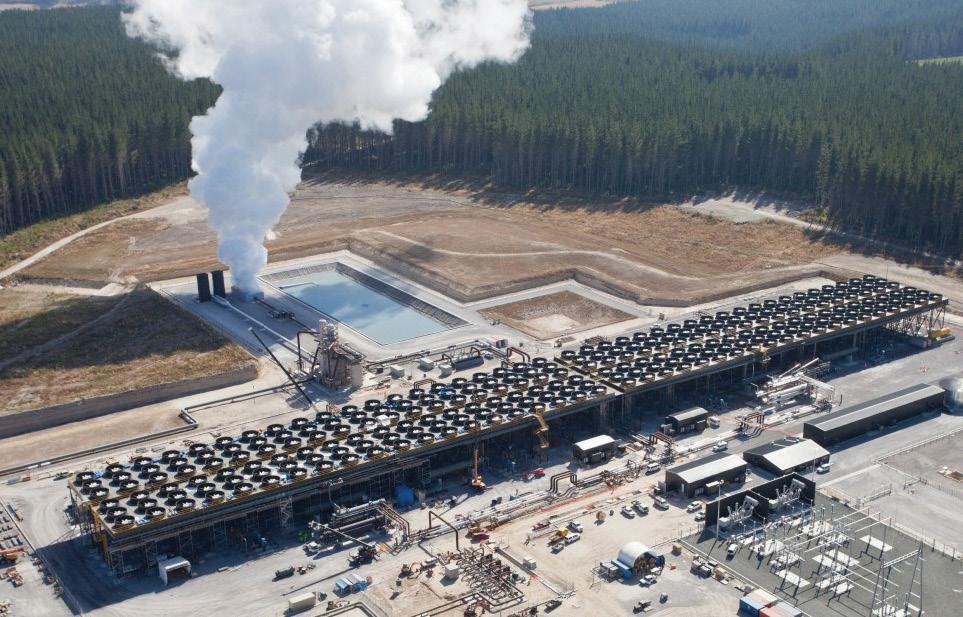
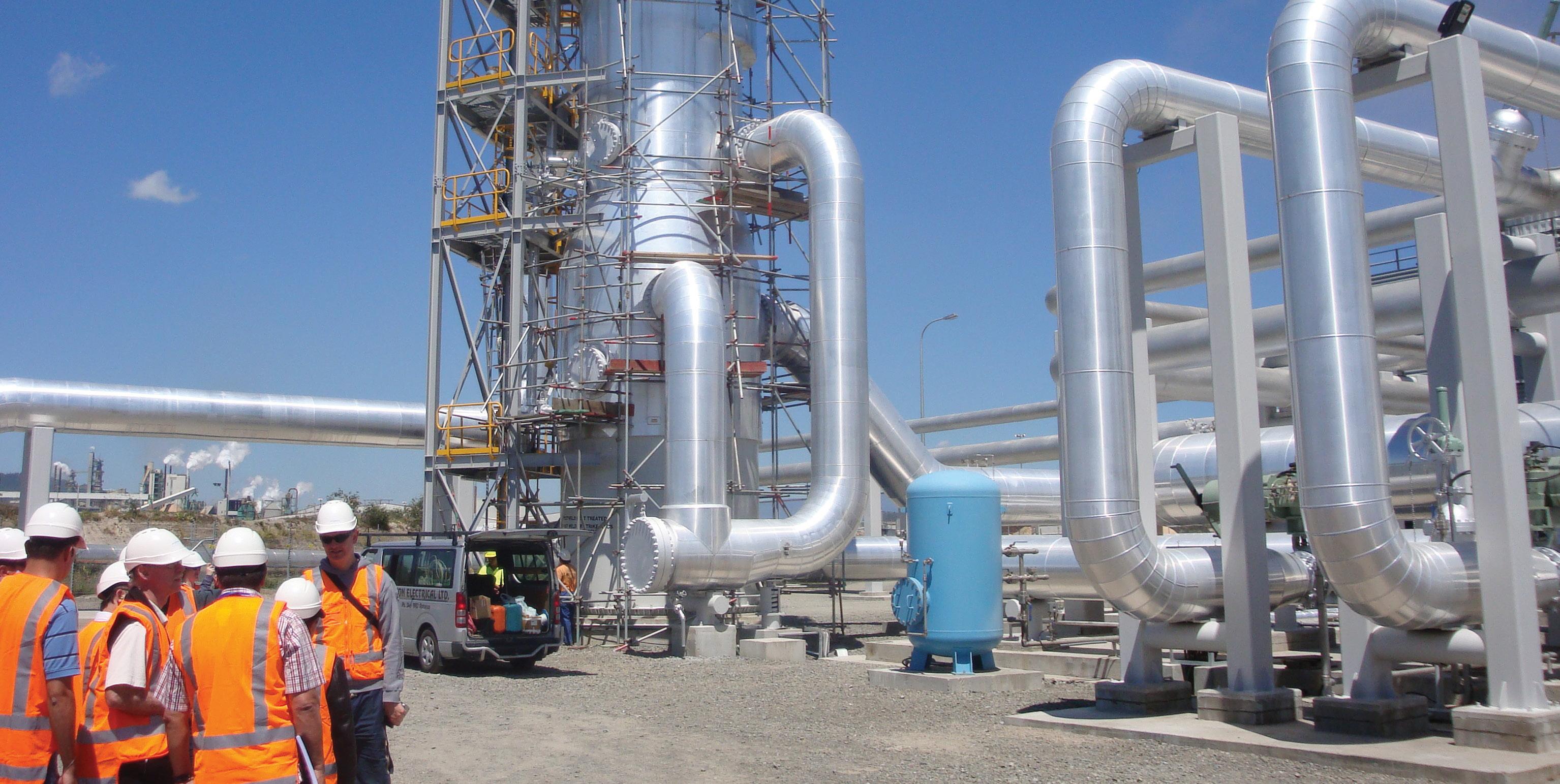
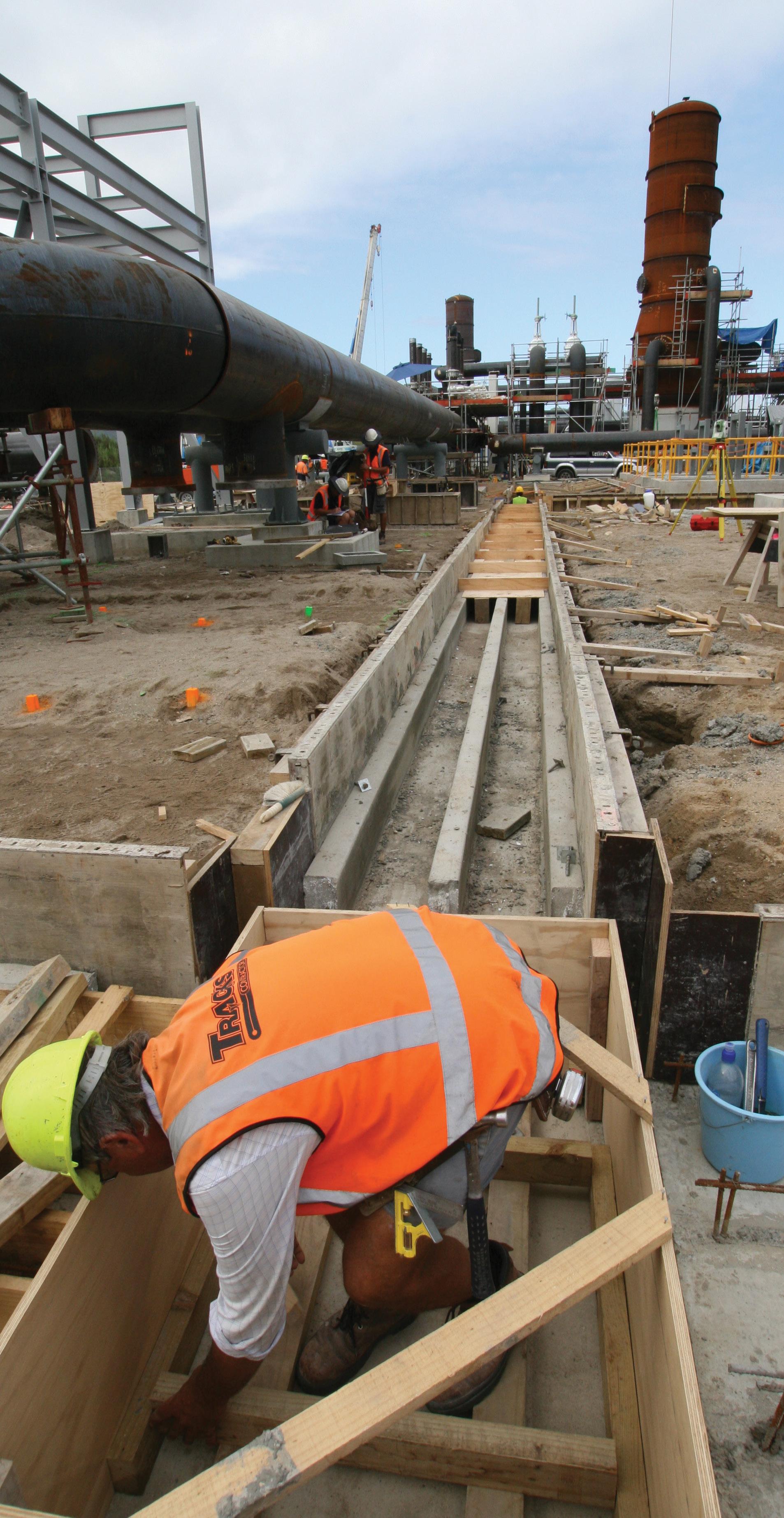
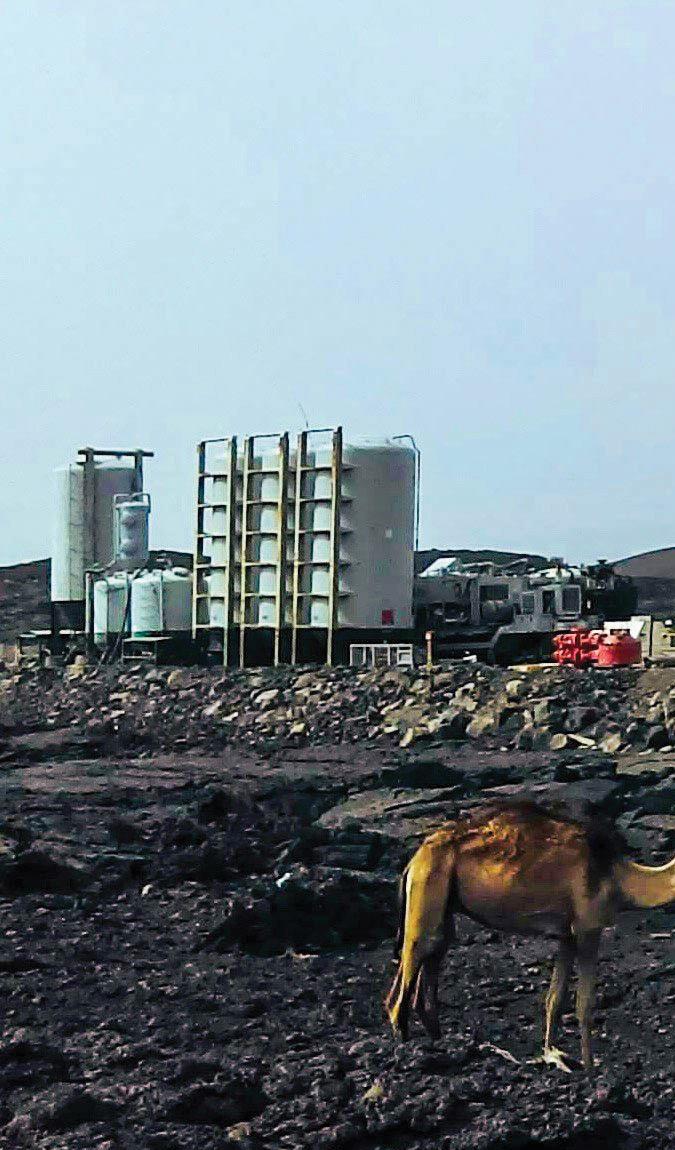
“Yellowstone is probably the tourist trap geothermal, where you have hot springs that come out of the ground. It's hot water that usually can be on site of a volcano or hot magma close to the Earth's surface,” said Dan. “You drill wells that are 5,000 to 10,000 feet deep and you produce hot water 500, 600 degrees Fahrenheit. And that water comes up and you separate the steam from the water and run it through a turbine and make electricity.”
At his office inside the RESPEC building in Rapid Valley, Dan
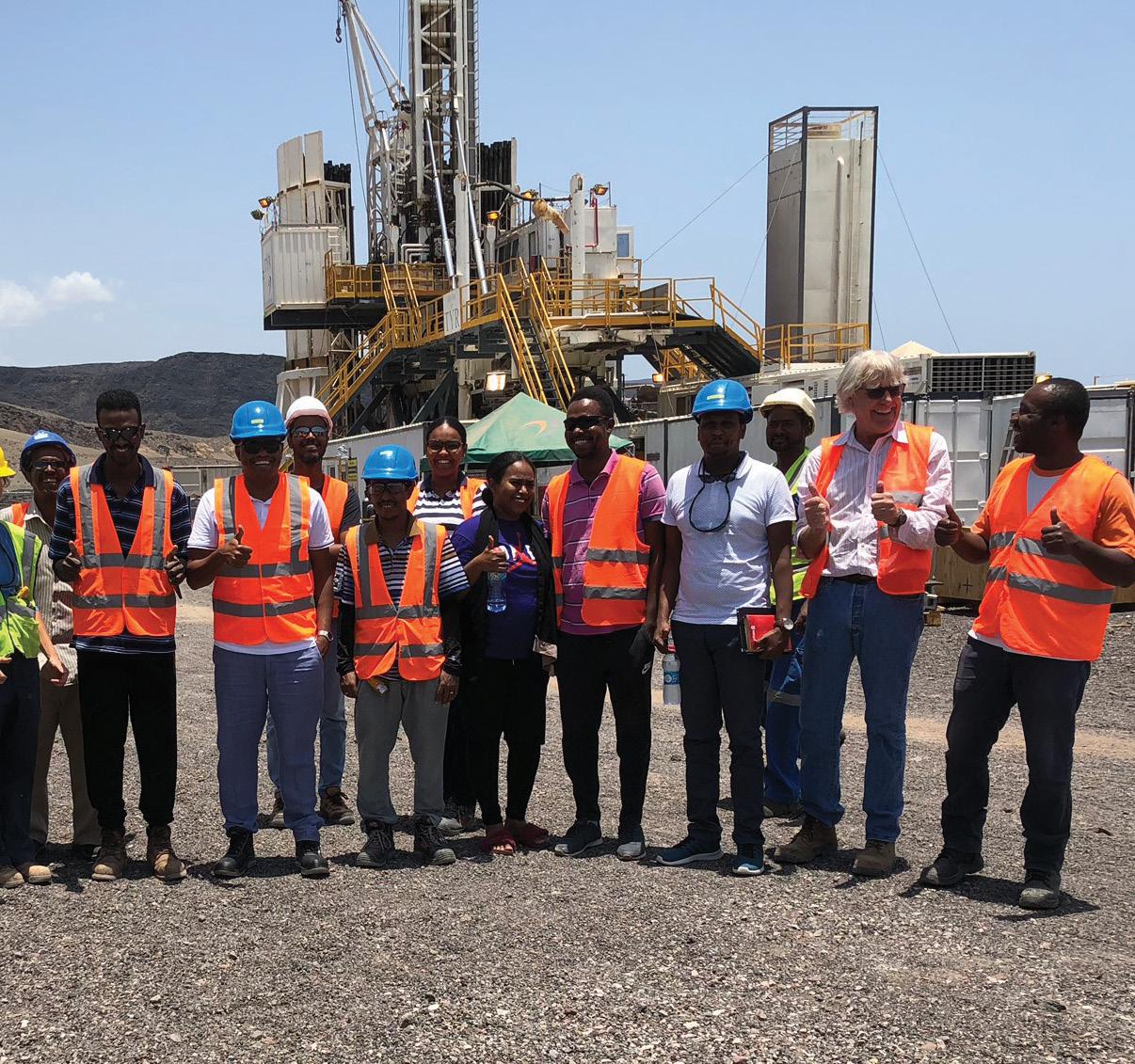
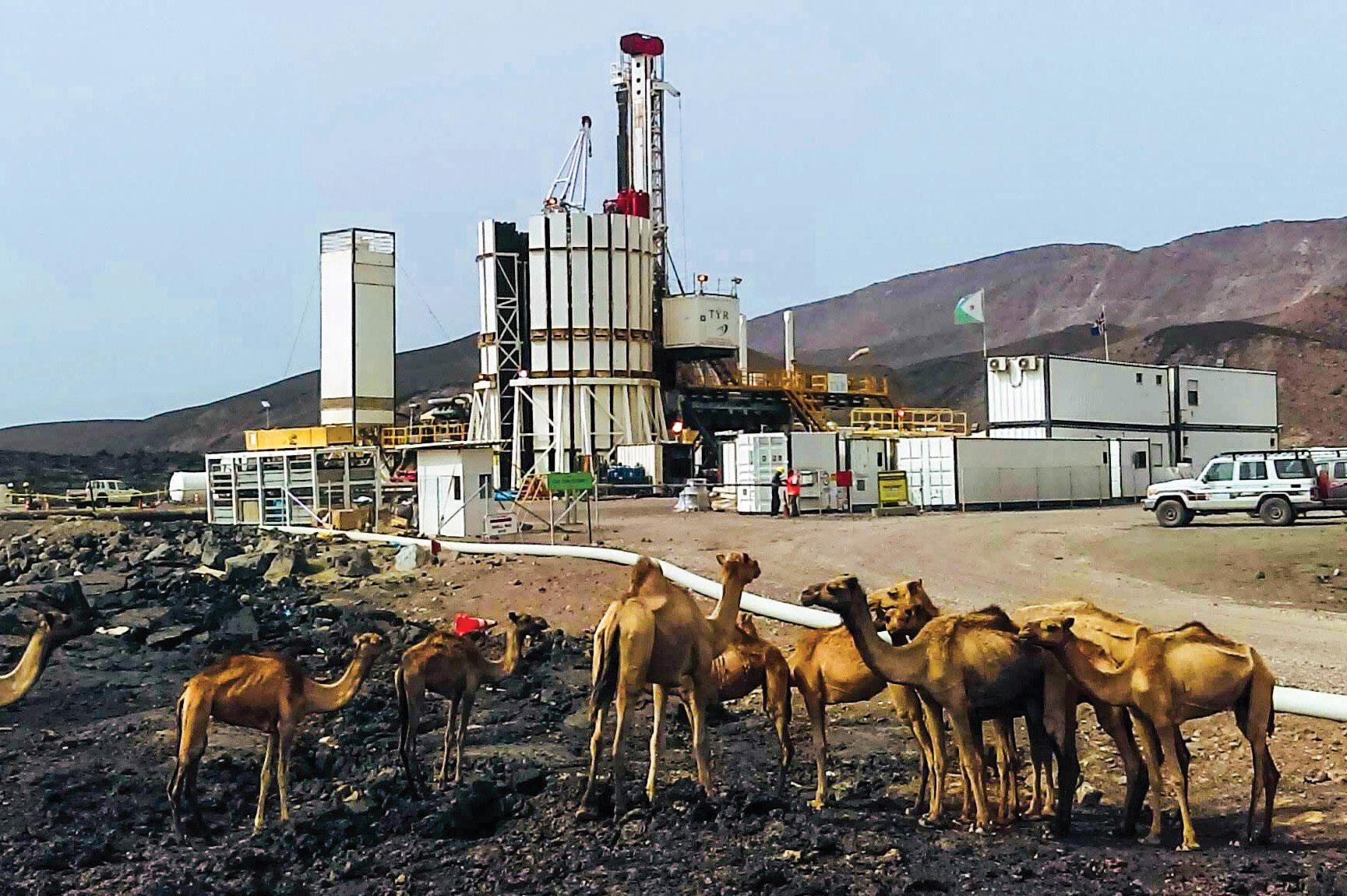
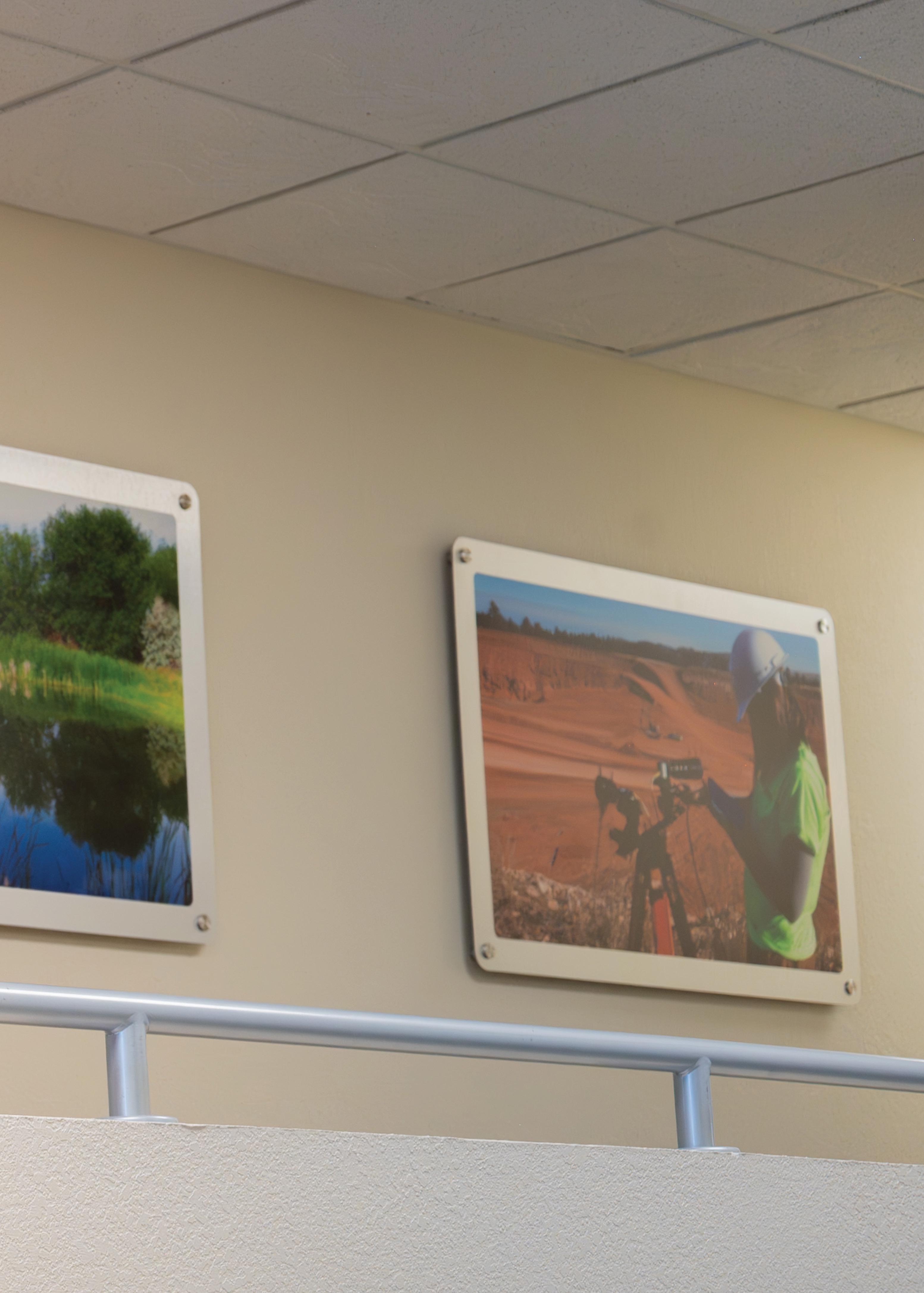
keeps large, framed photos from the various international projects he has been involved with over the years. Among other projects, Dan is helping RESPEC grow their geothermal group by contributing his overseas knowledge and expertise.
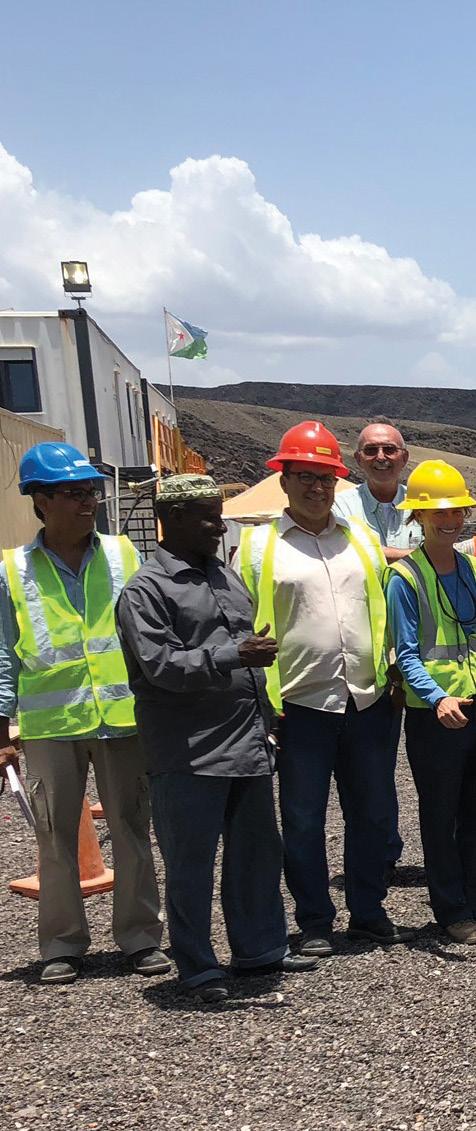
“The reason that I've spent so much time overseas is because I really get a kick out of figuring out how to be an effective leader,” he said. “The body language is different. The language is different. I mean, the Philippines has 14 words for ‘rice’ as an example. It's really fun. It’s a matter of how you communicate with them. Do they trust you?”
Since many of the projects Dan works on are larger in scale, but
short in duration, on aspect of his expertise is good business sense, which he augmented with an MBA from Kellogg School of Management in Illinois.
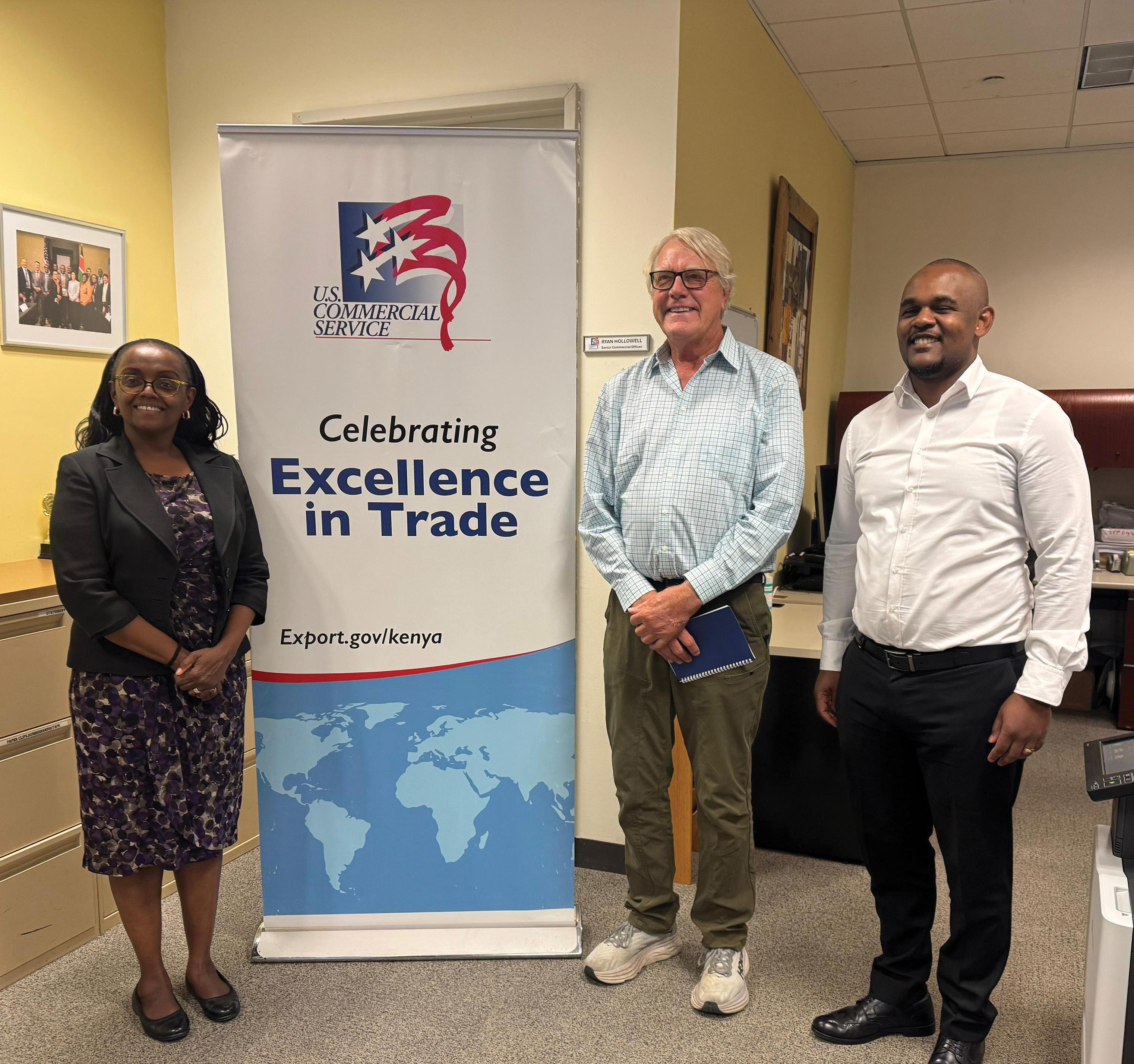
A current project to optimize a large geothermal field in Kenya requires Dan’s fiscal smarts, scientific knowledge and full leadership capabilities. Dan traveled there last September, and will return at the end of the project, next December.
“There's probably 10 square kilometers of 300 wells with a bunch of pipelines that connect these wells and the power plants and produce the fluids. So probably the highest value is to take the existing infrastructure and figure out how to get more power out of that system,” he explained. “The second part of that is: are there efficiency improvements to the existing plants? Can I put in new parts and pieces? Twenty years ago, how we designed the
turbine was less efficient than it is today. And then the third part is: can I build some more power plants? You got all these assets, and then you are responsible for profit, loss, and capital.”
When he tells people on these farflung projects where he is from in the United States, though, they usually haven’t heard of Rapid City.
But that’s where it all comes back to for Dan:
“I'm on the edge of retirement. So I'm practicing. I don't work Fridays. I'm thinking about not working Mondays, too. My current thought is that I will stay active. I like the idea of continuing to mentor or coach. I think about giving back to the community. It'd be fun to teach.”
Even in retirement, Dan will keep working on exporting knowledge. *
PAWELSKI
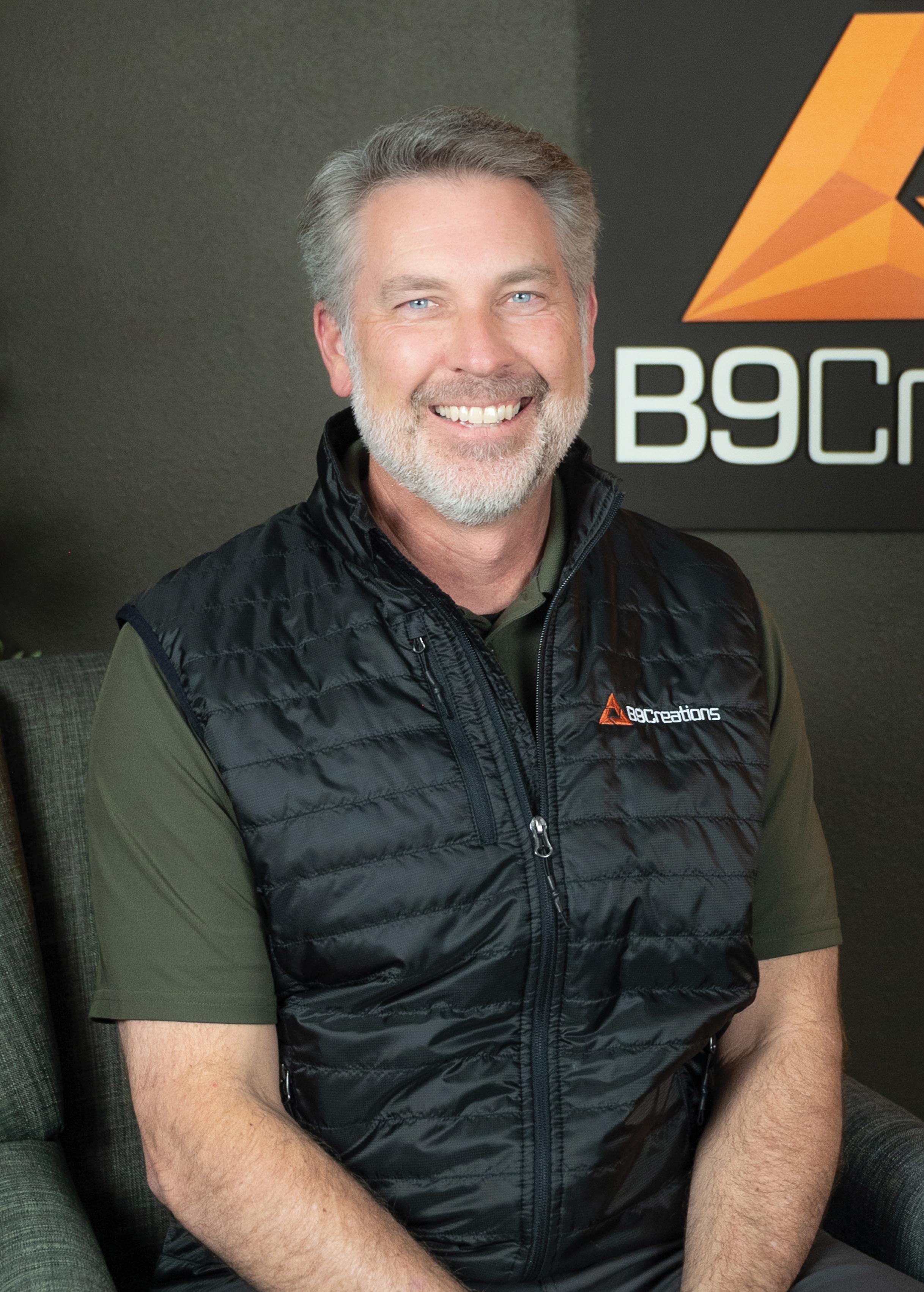
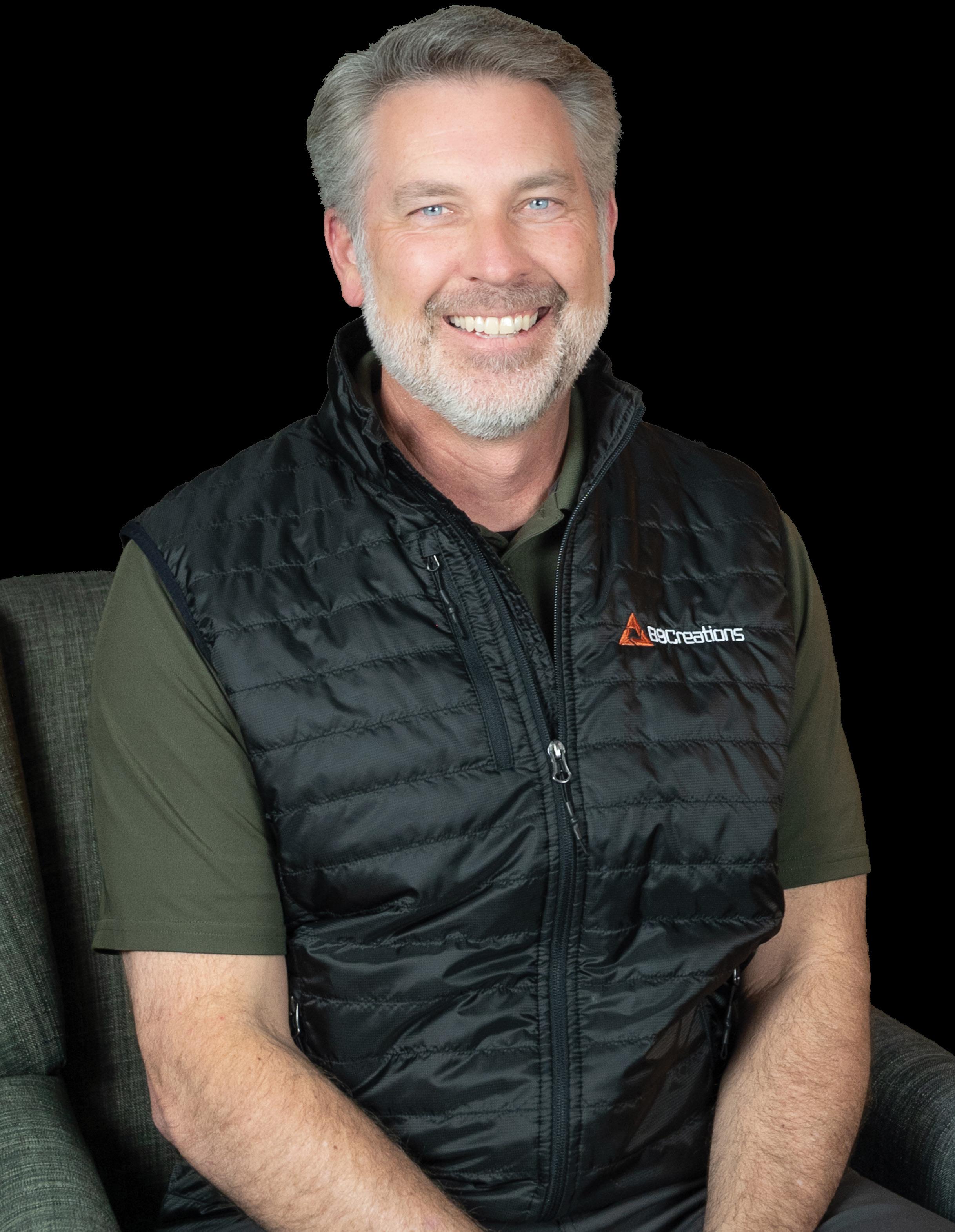
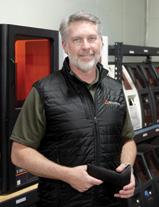
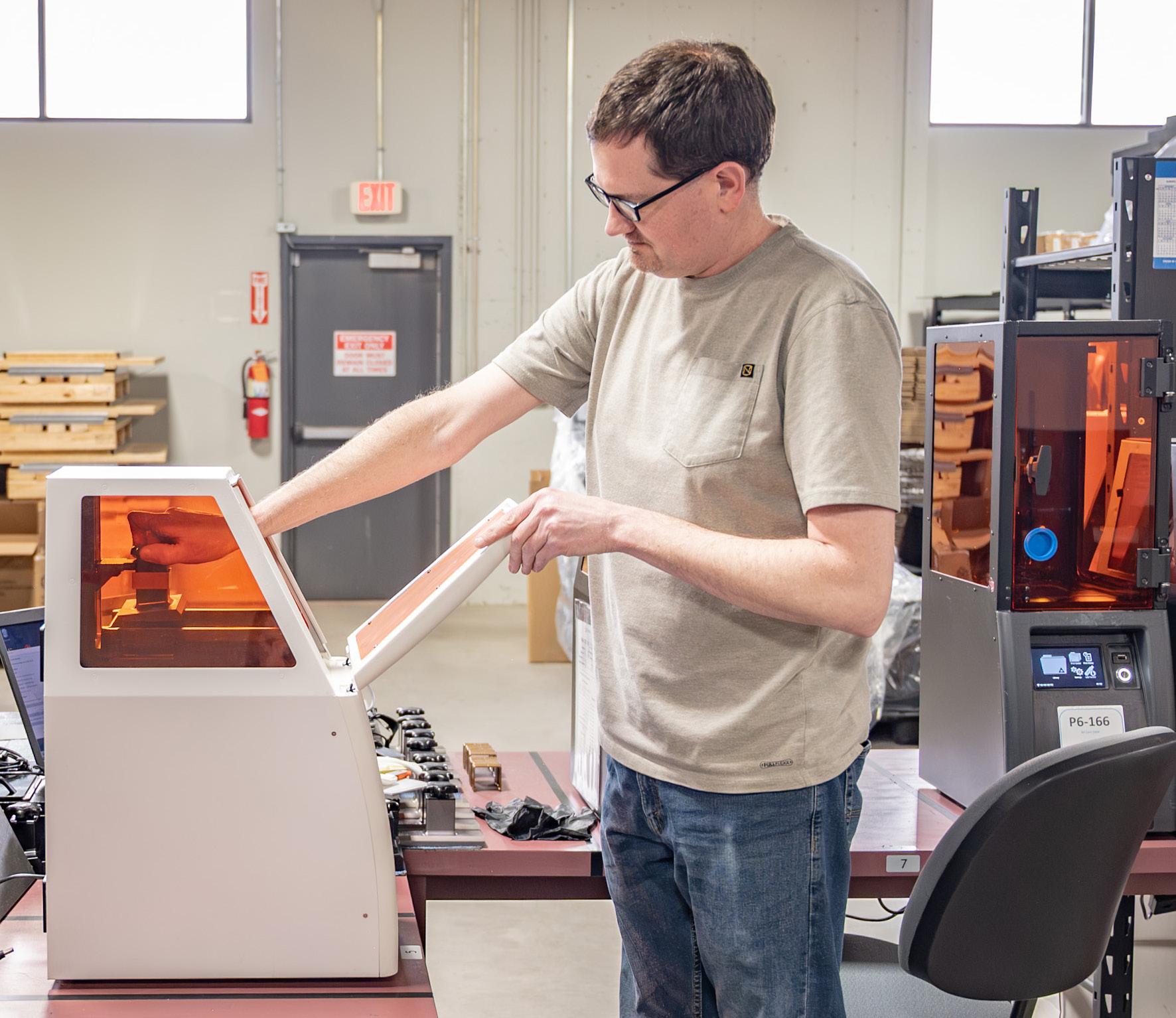
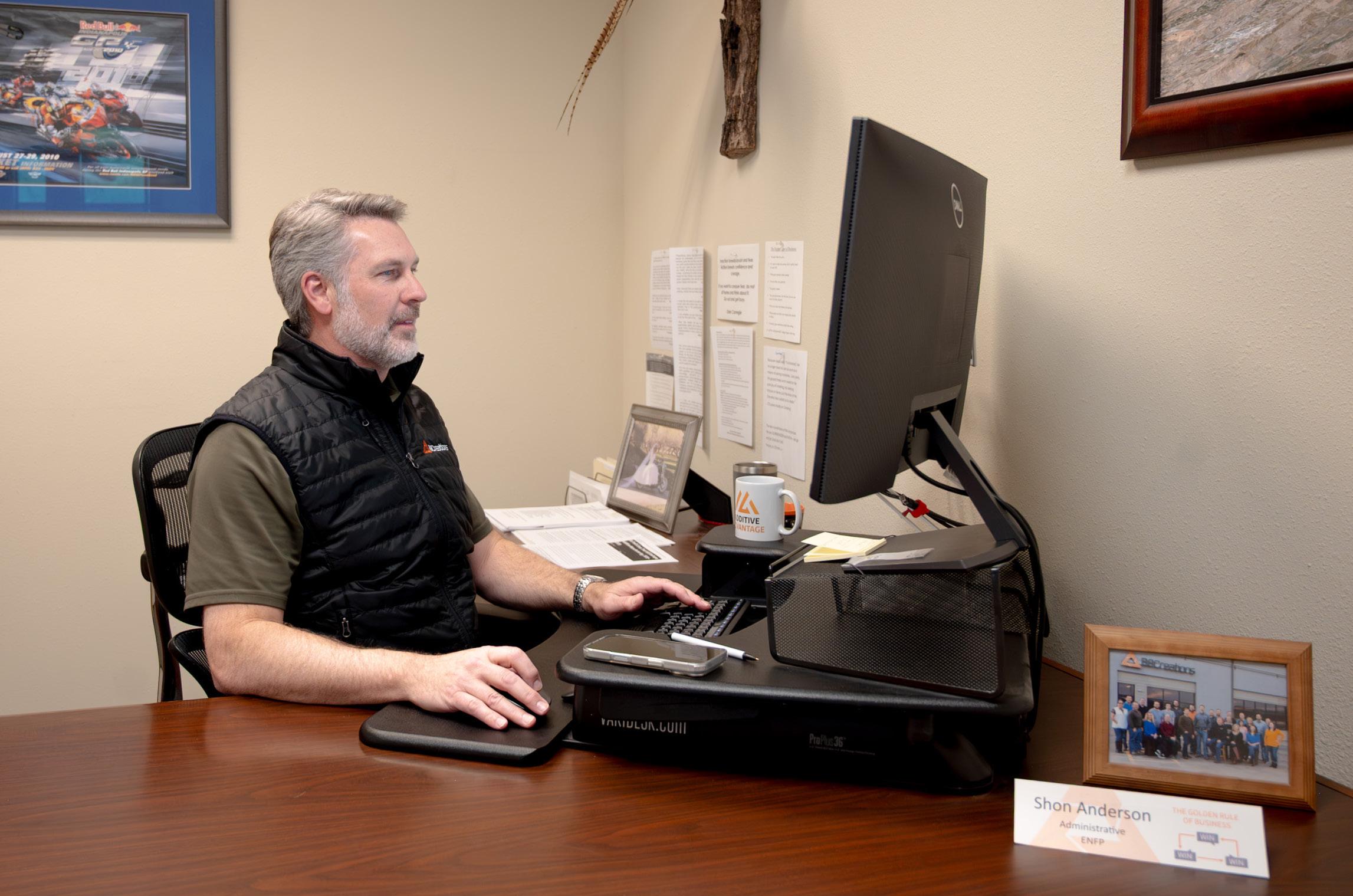
Shon Anderson spent two years as a mechanical engineering student at South Dakota Mines and the next 20 years finding a way back to the Black Hills.
Not the easiest task.
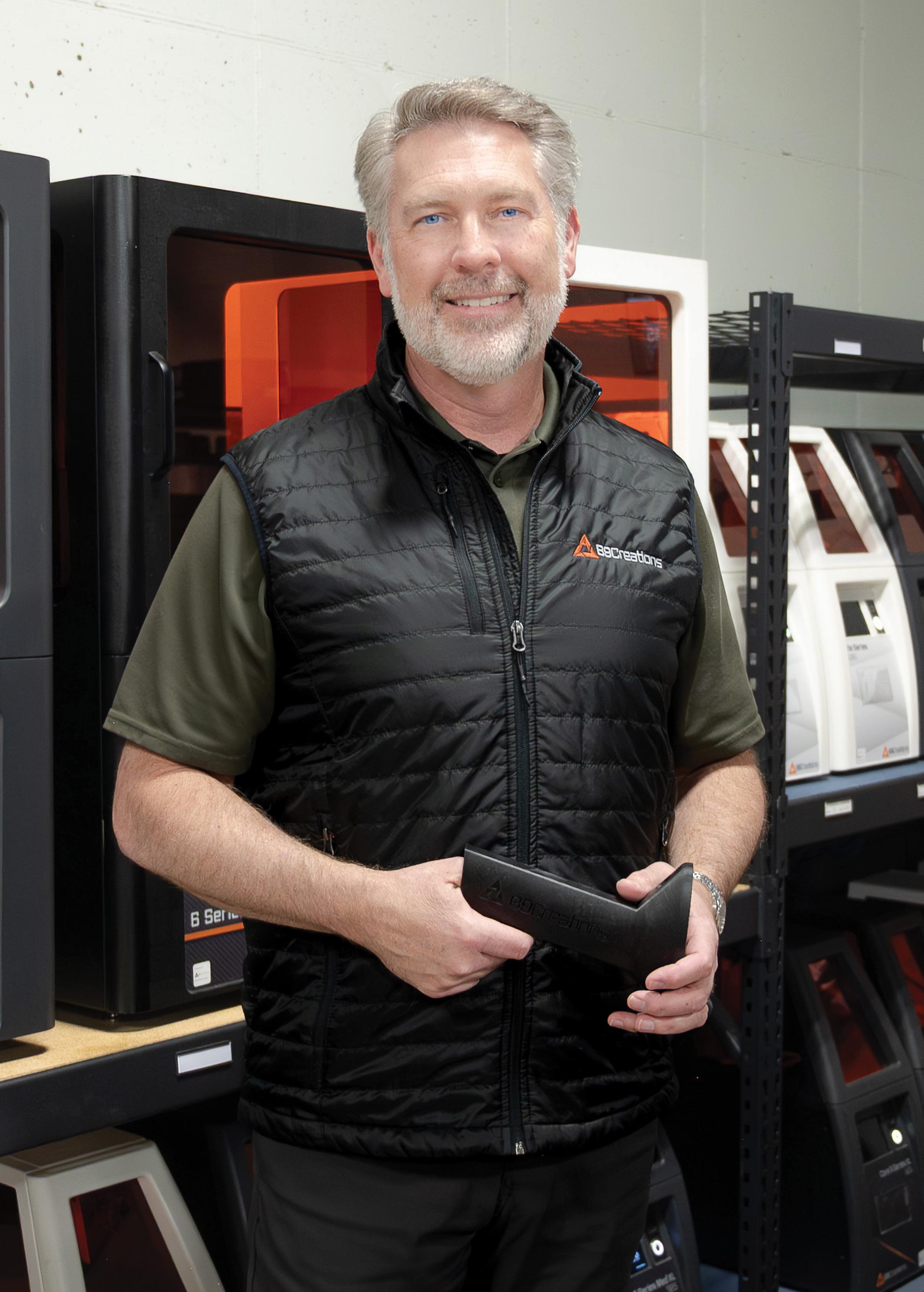
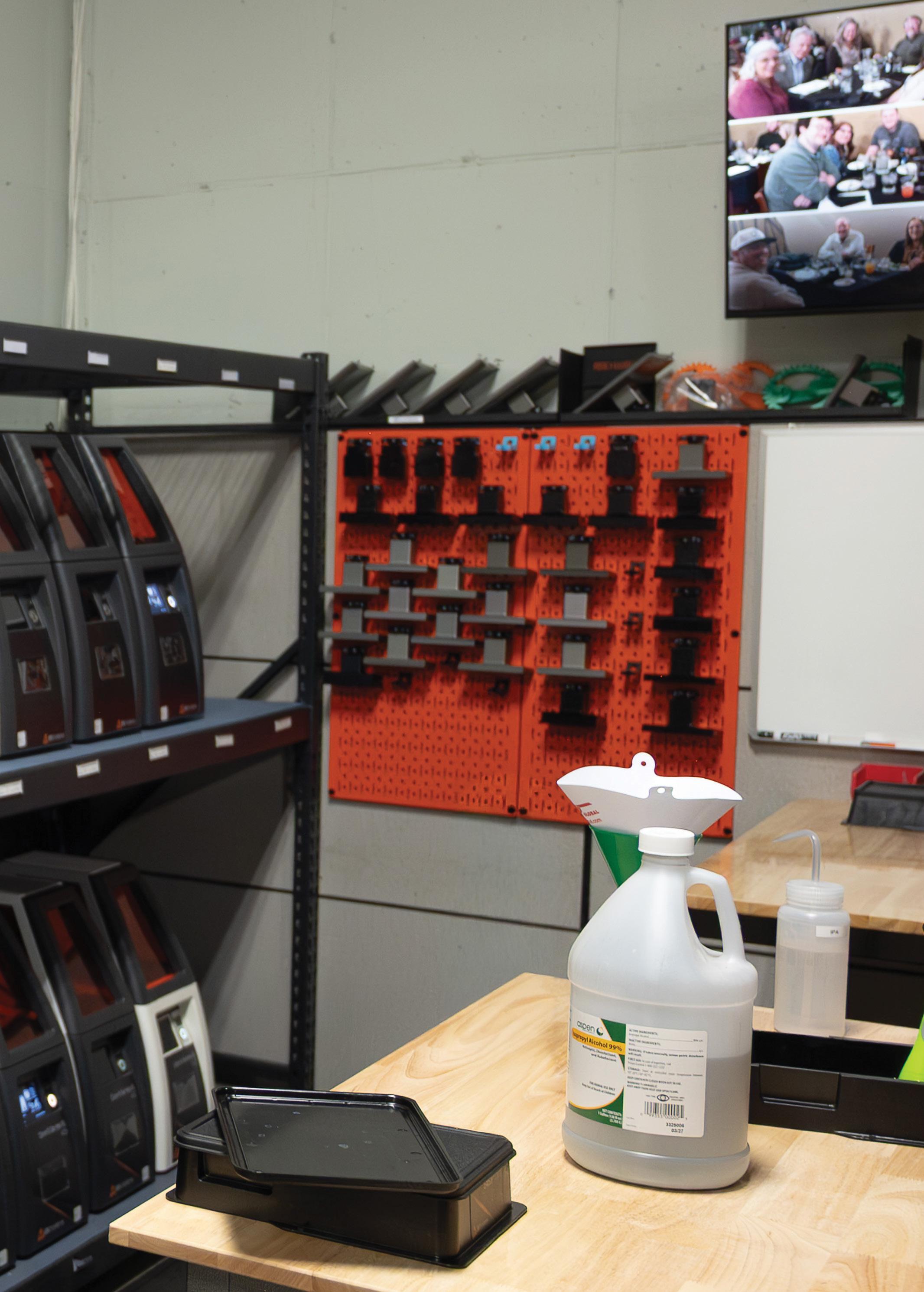
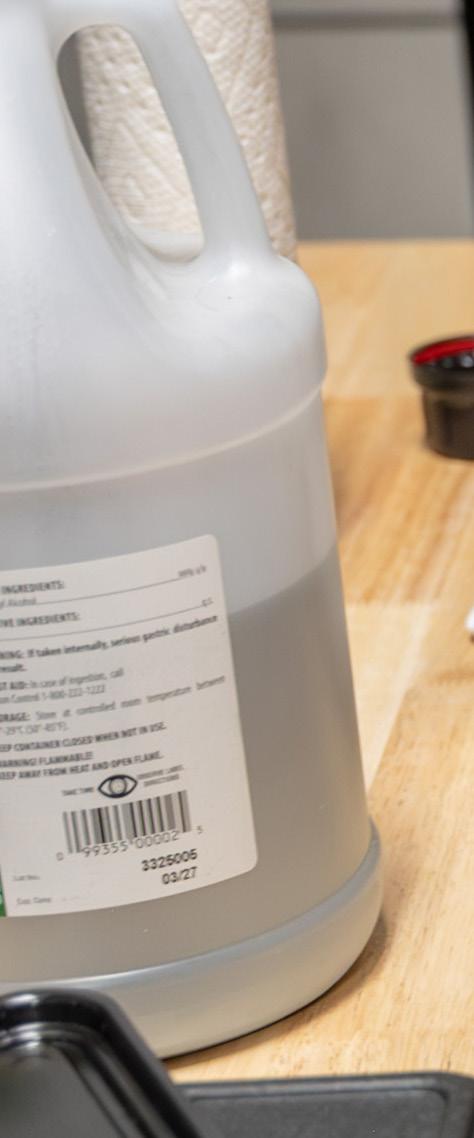
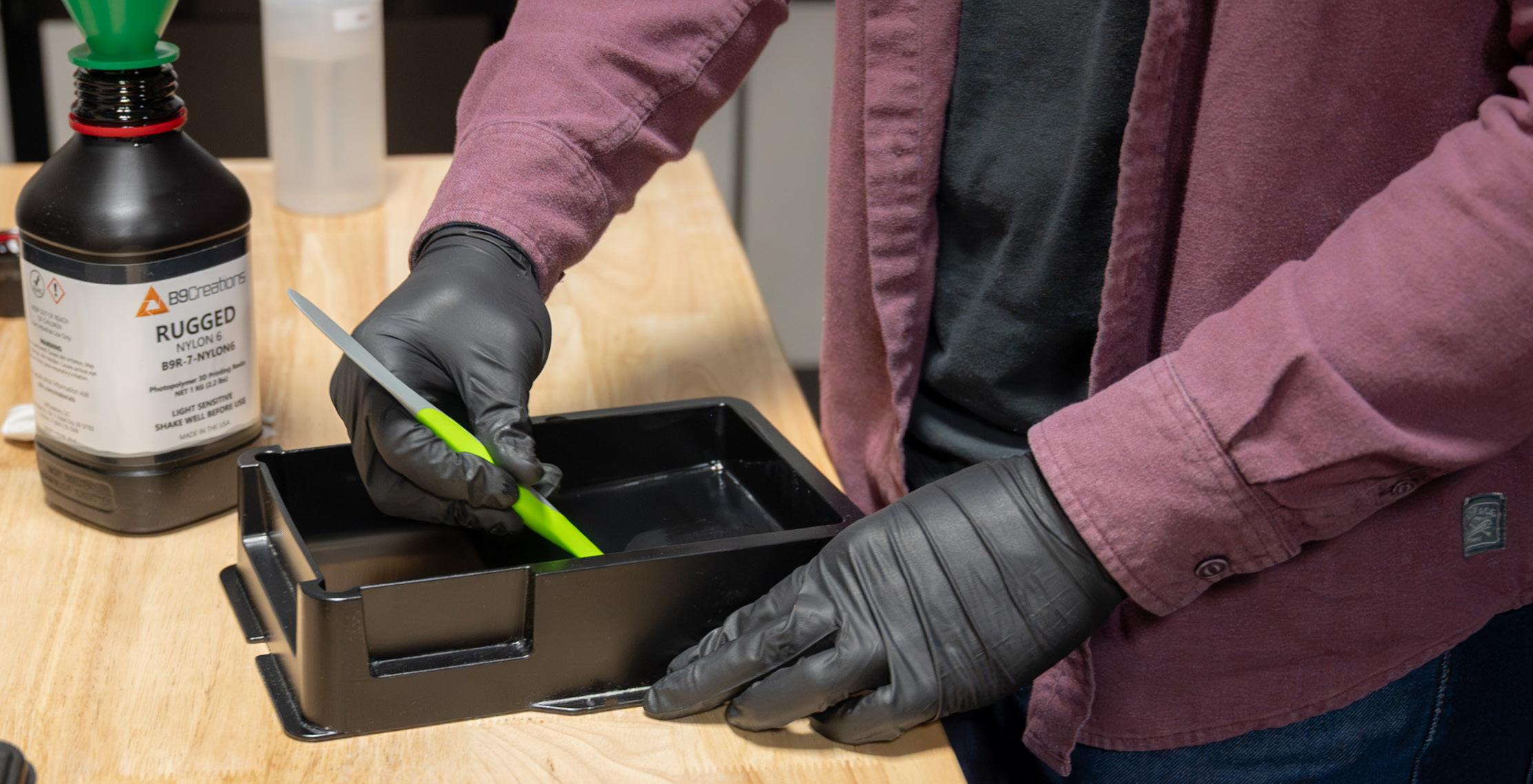
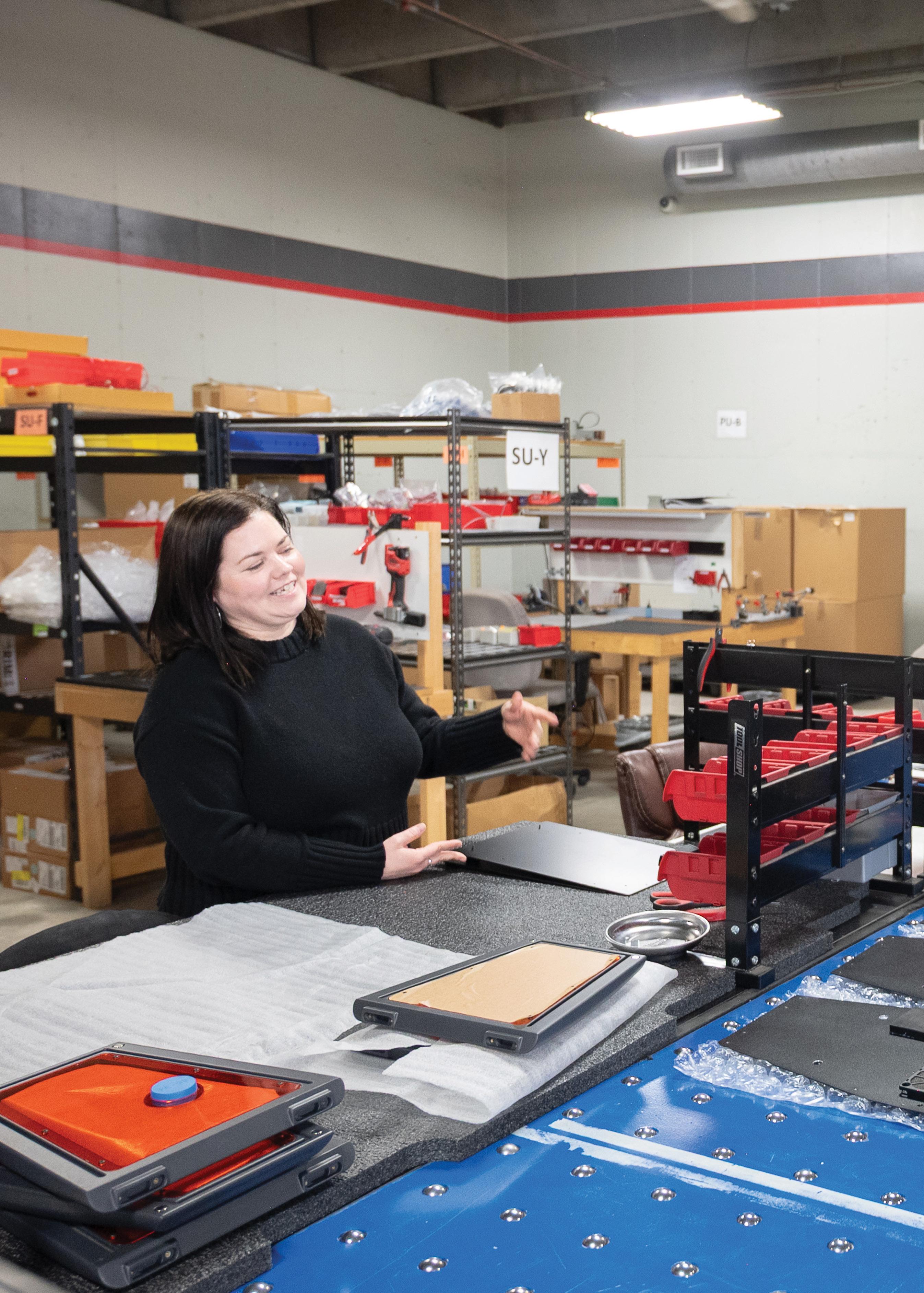
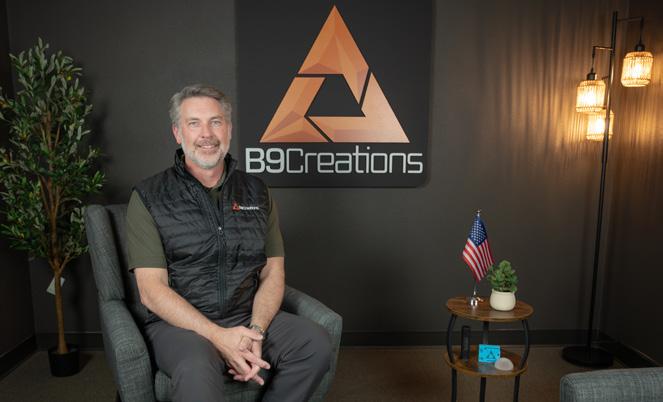
“Typically, there were not a lot of opportunities, especially in engineering,” said Shon, the chief executive officer at B9Creations, a Black Hills-based technology company offering top-of-the-line 3D printing hardware, software, accessories, materials and customizable solutions.
That landscape, however, is beginning to shift. Companies like B9Creations are expanding their international customer base while remaining rooted locally, an approach that brings outside revenue back into the region and helps strengthen the local economy.
“We do have a handful of customers in South Dakota, and we love that,” Shon said. "They are the ones we get to meet face to face with and meet on a regular basis. But, depending on what you are selling, the number of customers is limited here, especially being a technology company.”
Originally from DeSmet, SD, Shon moved West River to attend college at SD Mines. After two years, his path took him to Texas, where he graduated from the University of Texas at Arlington and, through a blind date, met his wife, Tori.
He then spent the next two decades growing, developing, and leading businesses in the cleantech industry. During that time, he worked for small regional firms and Fortune 500 companies, aligning and growing businesses around new market opportunities, all while gaining experience that would eventually lead him back home.
“
IF YOU ARE CLEAR ON THE CUSTOMER YOU ARE A GOOD FIT FOR AND THE PROBLEMS YOU ARE SOLVING, IT IS VERY LIKELY THOSE PROBLEMS EXIST IN ASIA, SOUTH AMERICA, EUROPE. THAT IS HOW YOU EXPAND YOUR POOL OF CUSTOMERS.”
- SHON ANDERSON
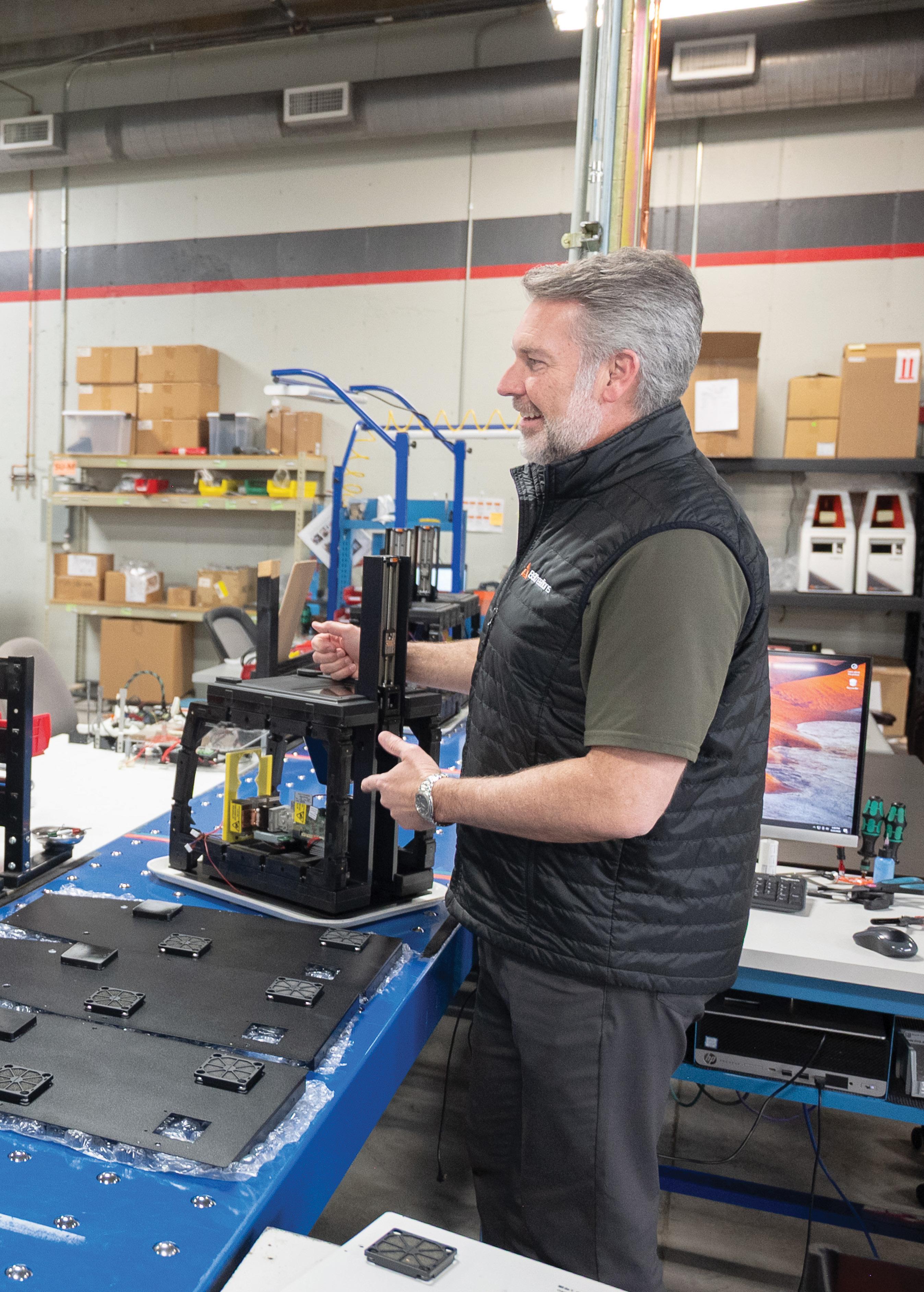


Shon’s talent, and what he has spent his career doing, is bridging the gap between the business and technical world – two areas, he said, that don’t always communicate effectively.
Since moving back to the Black Hills in 2012, he has been building on what B9Creations founder Mike Joyce, a retired U.S. Air Force pilot who also fell in love with life in the Black Hills, started in 2004. Mike began B9Creations in the basement of his home, later expanding to the Ascent Innovation business incubator on the SD Mines campus, before eventually moving to its current location off Deadwood Avenue.
“There has been an international component really from the beginning, and that has grown significantly to where it is now and is a big chunk of what we do,” Shon said.
Over the past decade, B9Creations' global business has at times accounted for 50 percent of its revenue and typically runs between 35 and 40 percent.
“We have some key partnerships that drive a lot of that,” Shon said.
One of those key partnerships came in 2017 with a German dental company looking for a partner to build a 3D printing platform and software to its specifications.
“We saw this as a huge opportunity,” Shon said. “They had a large existing sales division and a distribution network all over the world. That really took our international business from small but present to being 30 –50 percent of our sales.”
Key partnerships, combined with a strong focus on customer-funded research and development, set the company apart from its larger competitors. As a smaller company, B9Creations leans into its agility, which Shon describes as being “strategically opportunistic.”
“We understand the problems that we can solve and our target customers, and then we are opportunistic in mechanisms to solve those problems for those customers, whatever that might be.”
And that mindset extends beyond a single market. Challenges faced by one customer segment are often shared across regions and industries.
“If you are clear on the customer you are a good fit for and the problems you are solving, it is very likely those problems exist in Asia, South America, Europe,” he said. “That is how you expand your pool of customers.”
With the internet, AI and organizations like South Dakota Trade, B9Creations has been able to diversify its reach while remaining
rooted in the Black Hills – a goal of both Shon and Mike.
That balance of local roots and global reach is one Shon came to value long before returning to South Dakota. Prior to coming back, he worked for a company with a significant international footprint, traveling extensively and gaining a global perspective on business. By the time he left, that business was serving customers from Asia to Europe and had more than 20 offices across the US.
“That experience showed me what’s possible,” Shon said. “We need businesses like that in Rapid City, companies that operate on a global scale but choose to call this
community home. Places that offer challenging, high-paying career opportunities. "
Shon’s vision was to build a work culture like that in Rapid City. A vision he and his team are accomplishing at B9Creations, and one that he shares with a growing network of local businesses and organizations committed to expanding opportunity in the region.
“There is so much about the friendliness and culture of the Black Hills that makes it a great place to not just raise a family but to start and grow a business.”
Businesses that reach far beyond state lines. *



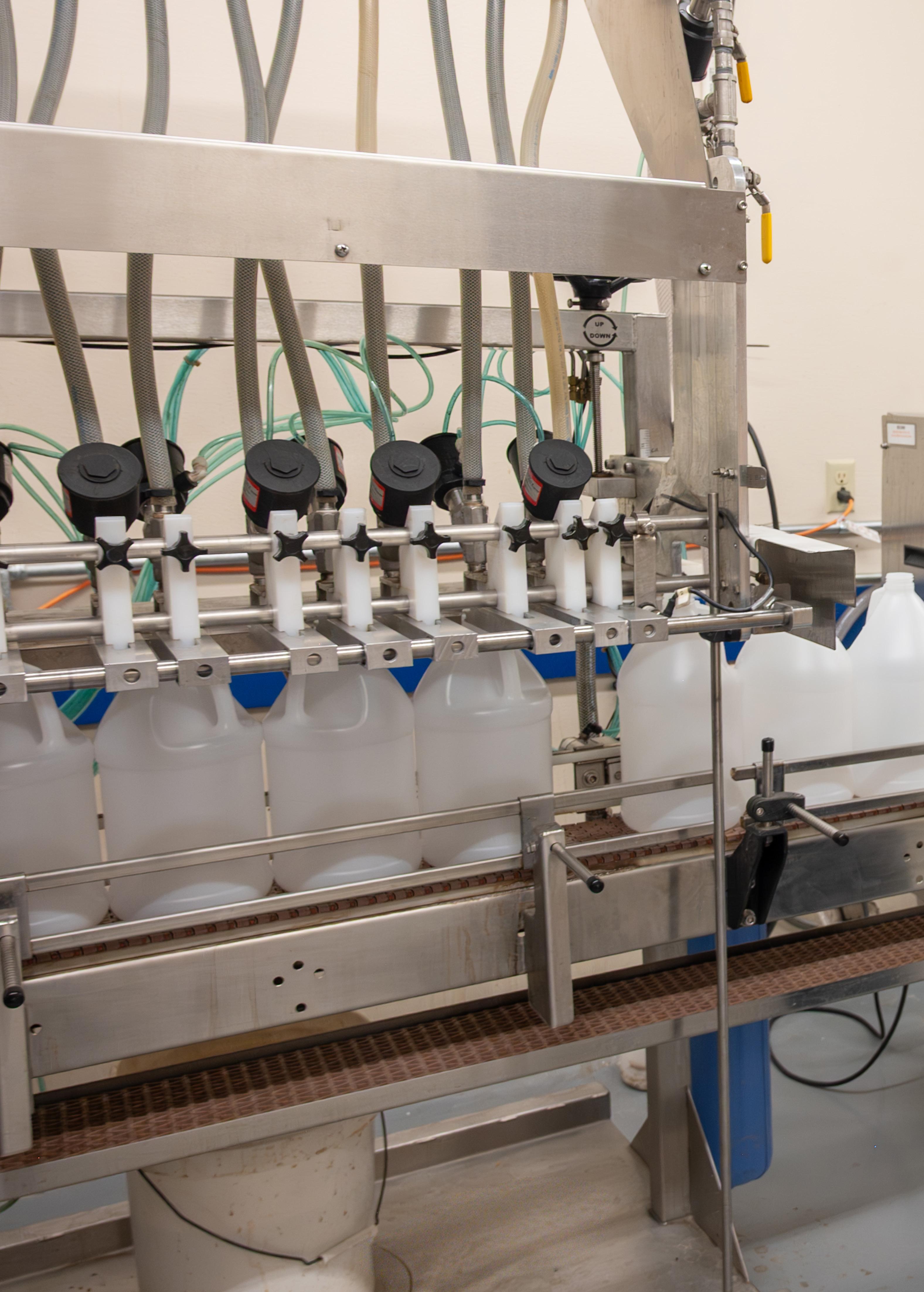
John Willard III carries on the Willard Water family legacy.
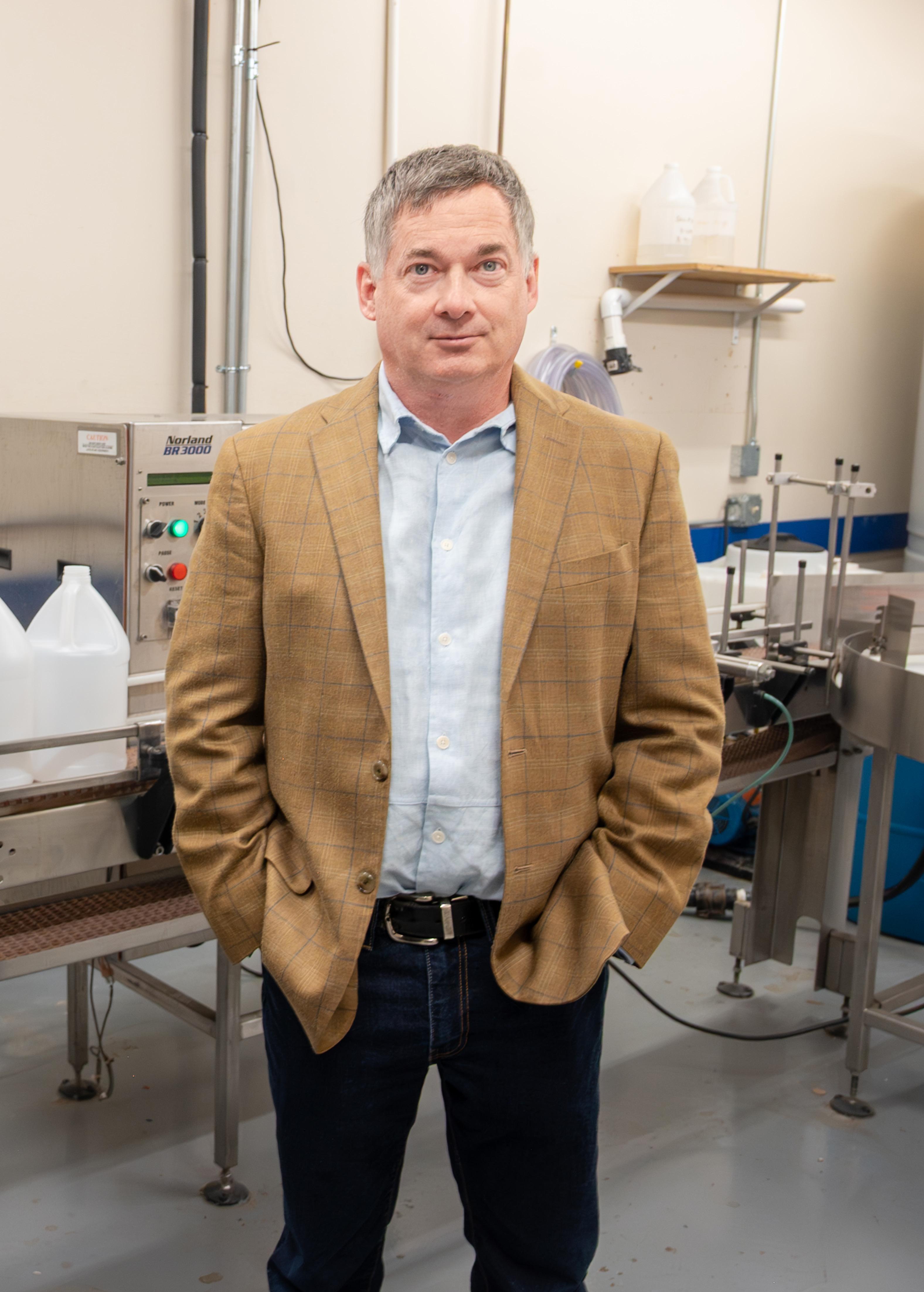
Carrying on the family business was never part of John Willard III’s plan.
He built his early career in Washington, D.C., working for U.S. Senators Tim Johnson and Tom Daschle and serving as a political appointee in the Clinton Administration.
In fact, John chuckles when he reveals he failed chemistry – hardly the expected path of the grandson of Dr. John “Doc” Willard, a renowned chemist, South Dakota Mines professor and scientist on the Manhattan Project.
But in 2011, when his father, John Willard Jr., retired from the business, John returned home, trading politics for science and business, and stepping into a legacy rooted in making a difference in the world.
And that is exactly what he is doing.
John said his grandfather, who died in 1991, called the invention of Willard Water, a catalyst activated water (CAW), dumb luck.
“My grandfather was very much a scientist,” John said. “He had a lab at home and was constantly doing different things.” Many of the elder Willard’s greatest ideas came while he wandered through the Black Hills, a pastime he loved to do.
Doc’s “super water” grew out of an unrelated project with local farmers in the 1930s. He noticed they were feeding pigs leftover ash from coal-burning stoves during the winter and wondered why.
His research led him to lignite, or brown coal, which he found contains naturally occurring mineral nutrients, and antifungal and antibiotic properties. While raw lignite is toxic, the burning process neutralized those toxins. At the same time, Doc was experimenting with a non-toxic cleaner. By combining the research, he developed a safe, year-round supplement for livestock – the foundation of what became Willard Water.
“He diluted it, began drinking it and tested his blood cells for toxicity,” John said. “He found it was boosting the movement of the platelets in his blood stream very rapidly.”
Willard Water first came on the market in 1973 and since then has evolved into a global product, with new applications and benefits continuing to emerge decades later.
“Fast forward more than 50 years and
*CAW Industries Inc. is the parent company that produces Williard's Water and PlantCatalyst.
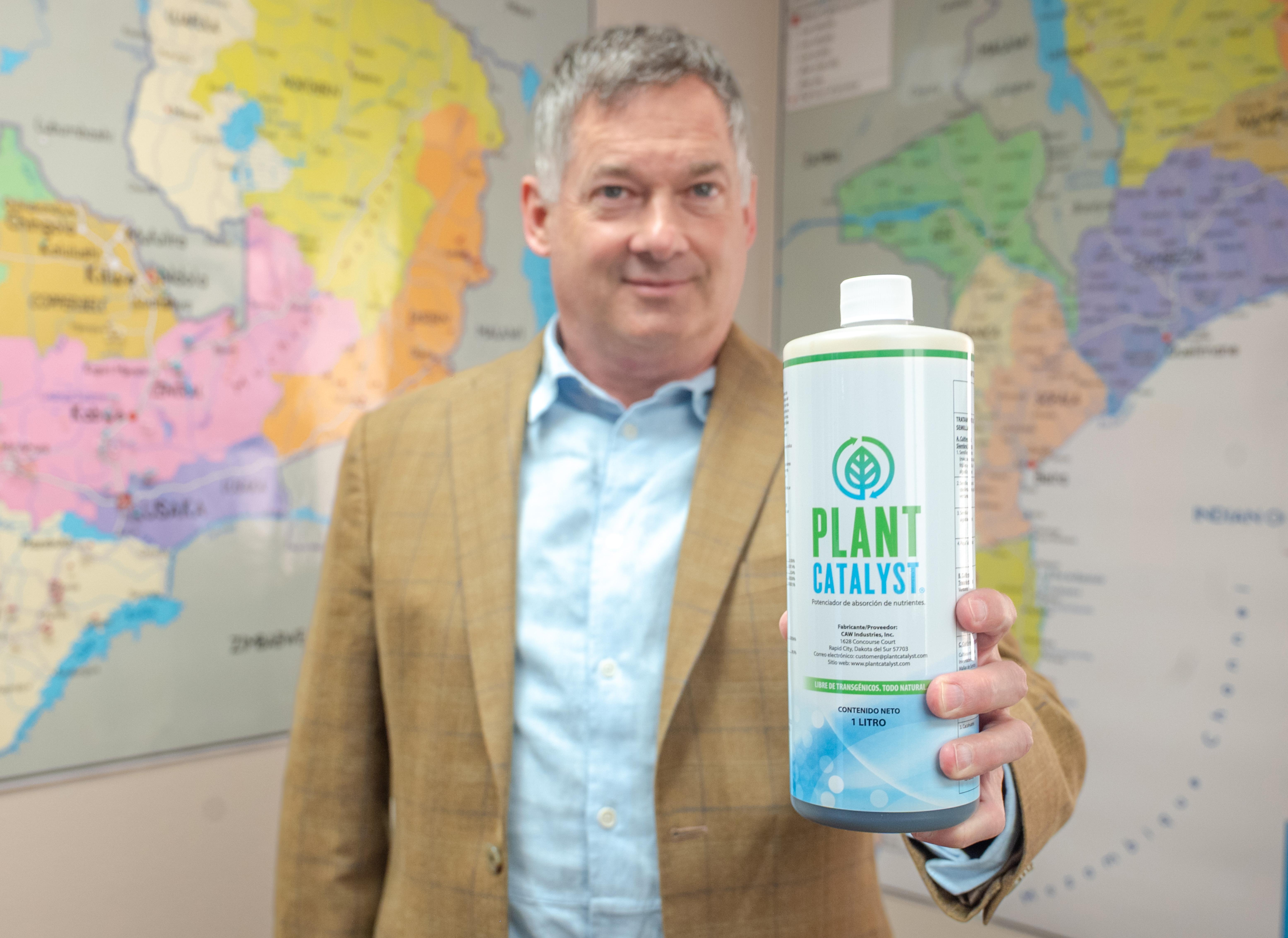
we sell it in almost every way you can think of where people are looking for a nutrient delivery system,” John said. Every product is derived from CAW 7, the seventh version of the catalyst.
While Doc was the scientist behind the product, his son and grandson were the savvy business leaders.
Sales of Willard Water got a boost in 1980 when Harry Reasoner of CBS’s “60 Minutes” visited Rapid City to do a feature on Doc and the “super water.” At that same time, the opportunity to expand beyond the U.S. borders came available when a Canadian marijuana grower in British Columbia saw a magazine advertisement for the water catalyst.
From there it spread.
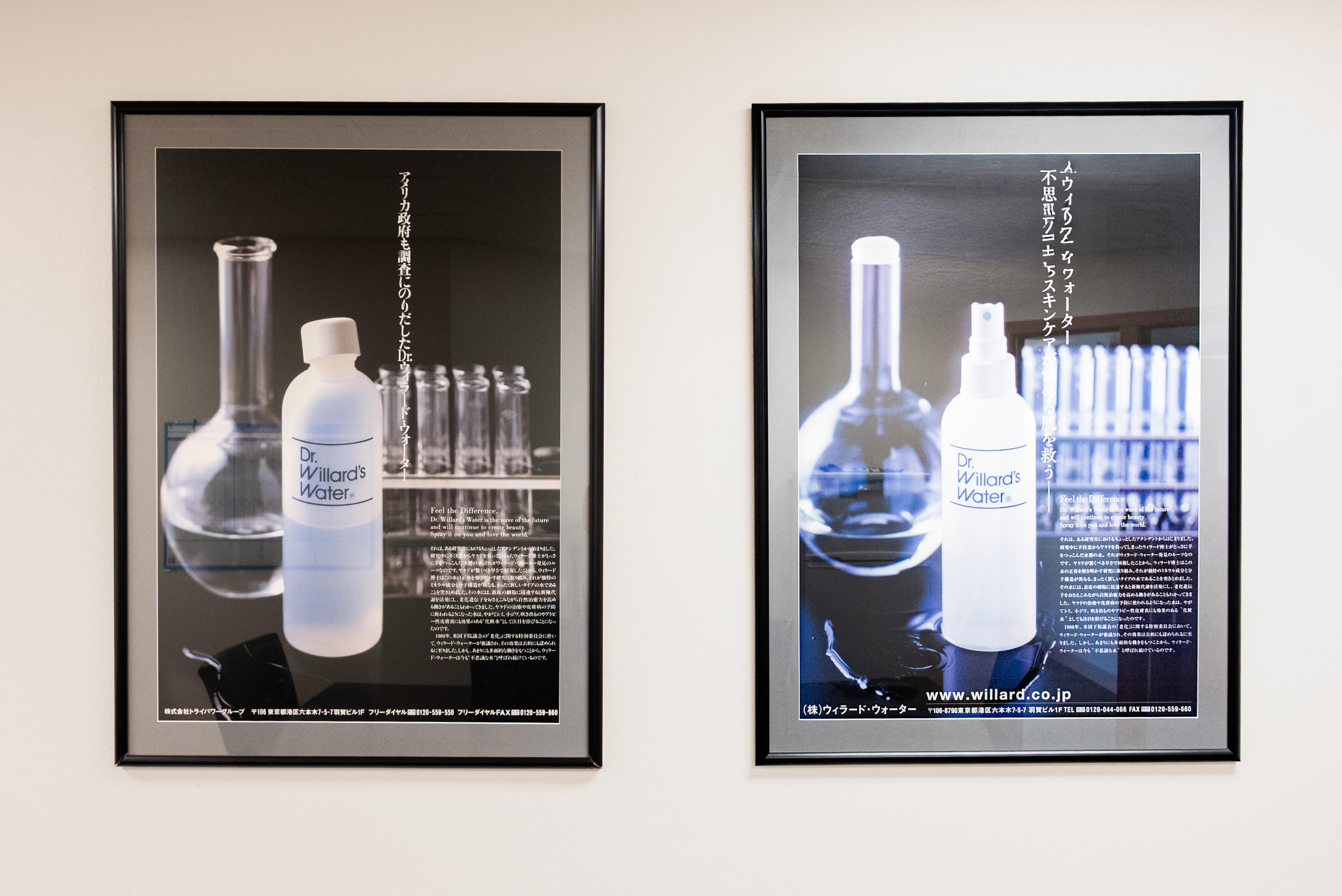
A Japanese businessman attending graduate school at the University of South Dakota saw the “60 Minutes” episode and wanted to buy the catalyst for an entire skin care line. Farmers in Korea and Saudi Arabia use it to increase feed conversion rates for their chickens.
“It was my dad who pushed us out to the international markets,” said John. “He was in the Navy, so he traveled a lot and had a larger world view and wanted to explore that.”
John’s vision aligns with his dad, who passed away last September.
“I did some revitalization in the U.S. market but by and large my vi-
"I REALLY WANT THIS AFRICAN SEGMENT TO BE MY GRANDFATHER’S LEGACY AND TO SAY THAT WE HAVE HAD AN IMPACT. "
- JOHN WILLARD III
sion is more my dad’s on expanding our international business,” said John, who serves on the South Dakota Trade Board.
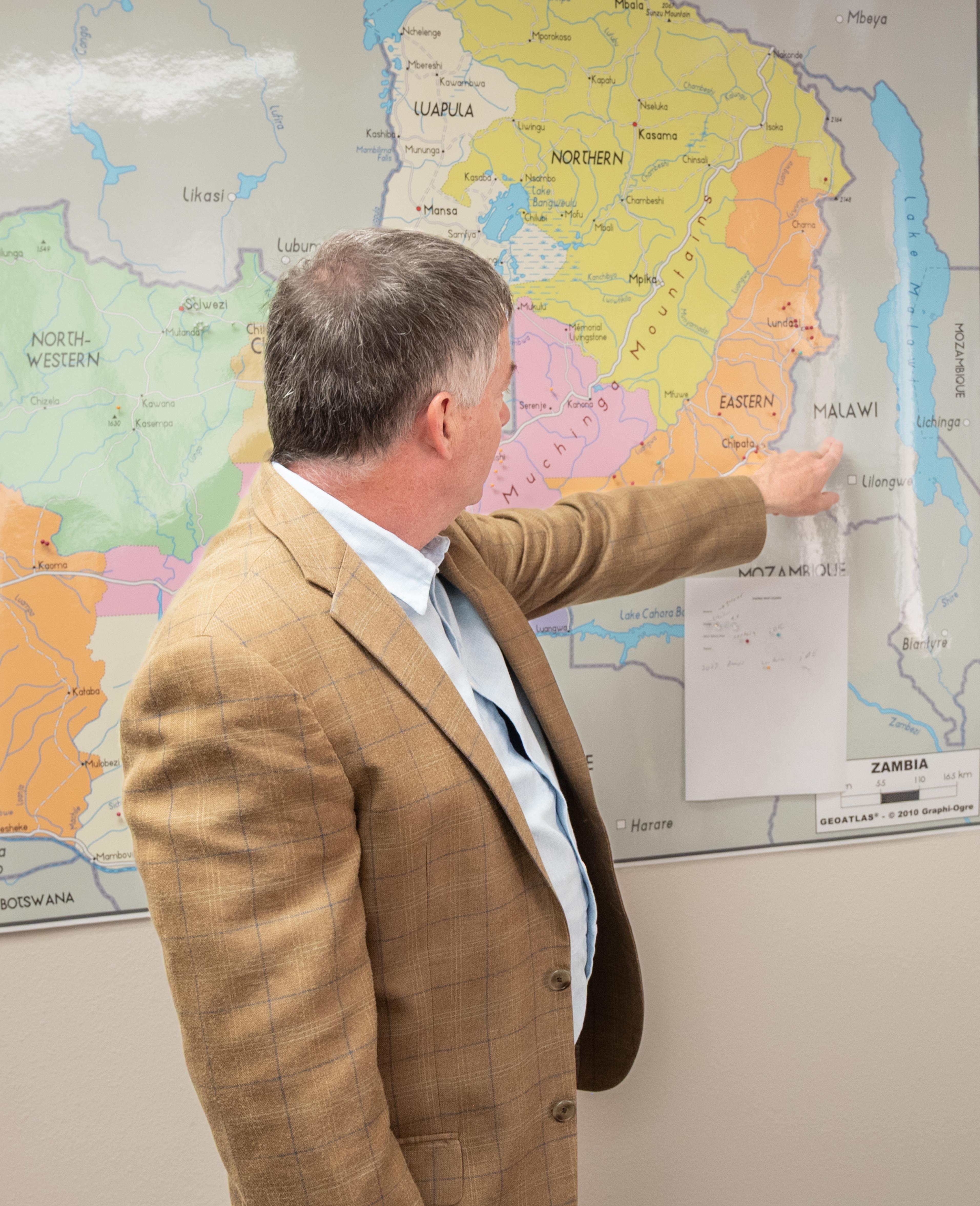
Now, his focus is finishing his grandfather’s mission of using Willard Water to help reduce famine and economic instability in sub-Saharan Africa, a vision that started in the early 1980s. Years earlier, Doc developed PlantCatalyst, an all-natural water additive shown to reduce fertilizer use while increasing crop yields.
“My grandpa had always wanted to introduce it into Africa,” John said. “He had gone there in 1982 and believed it was a way he could address famine. It bothered him that the Manhattan Project was going to be his legacy. He wanted Willard Water to be his positive legacy.”
For more than a decade, John has worked to bring that vision to
life. In 2015, he traveled to Washington, D.C., pitching his idea to nearly 20 nonprofits connected to U.S. Agency for International Development (USAID) and U.S. Department of Agriculture.
Only one nonprofit agreed to work with him. But that was enough.
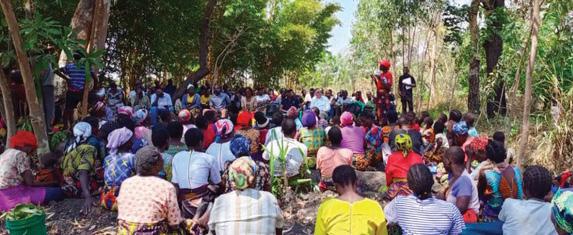
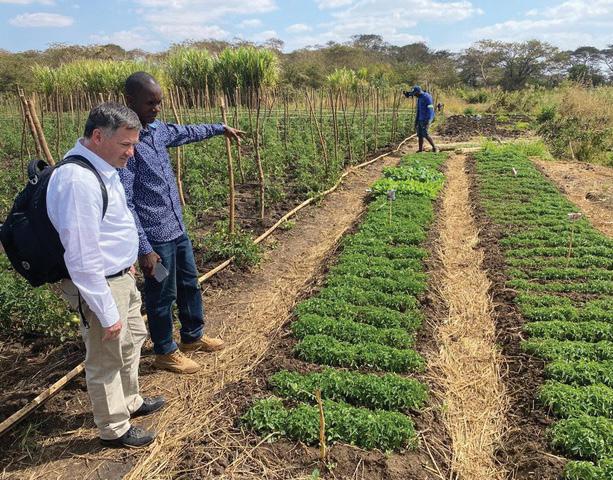
After years of trials, PlantCatalyst has a presence in seven African countries, and is helping 17,000 small farmers in Zambia alone. Willard Water also has a plant in Africa where most of the company’s employees work.
“I really want this African segment to be my grandfather’s legacy and to say that we have had an impact,” John said.
He is well on his way to fulfilling that mission, growing a global product while staying rooted in the place where it all began. *
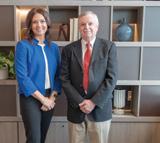
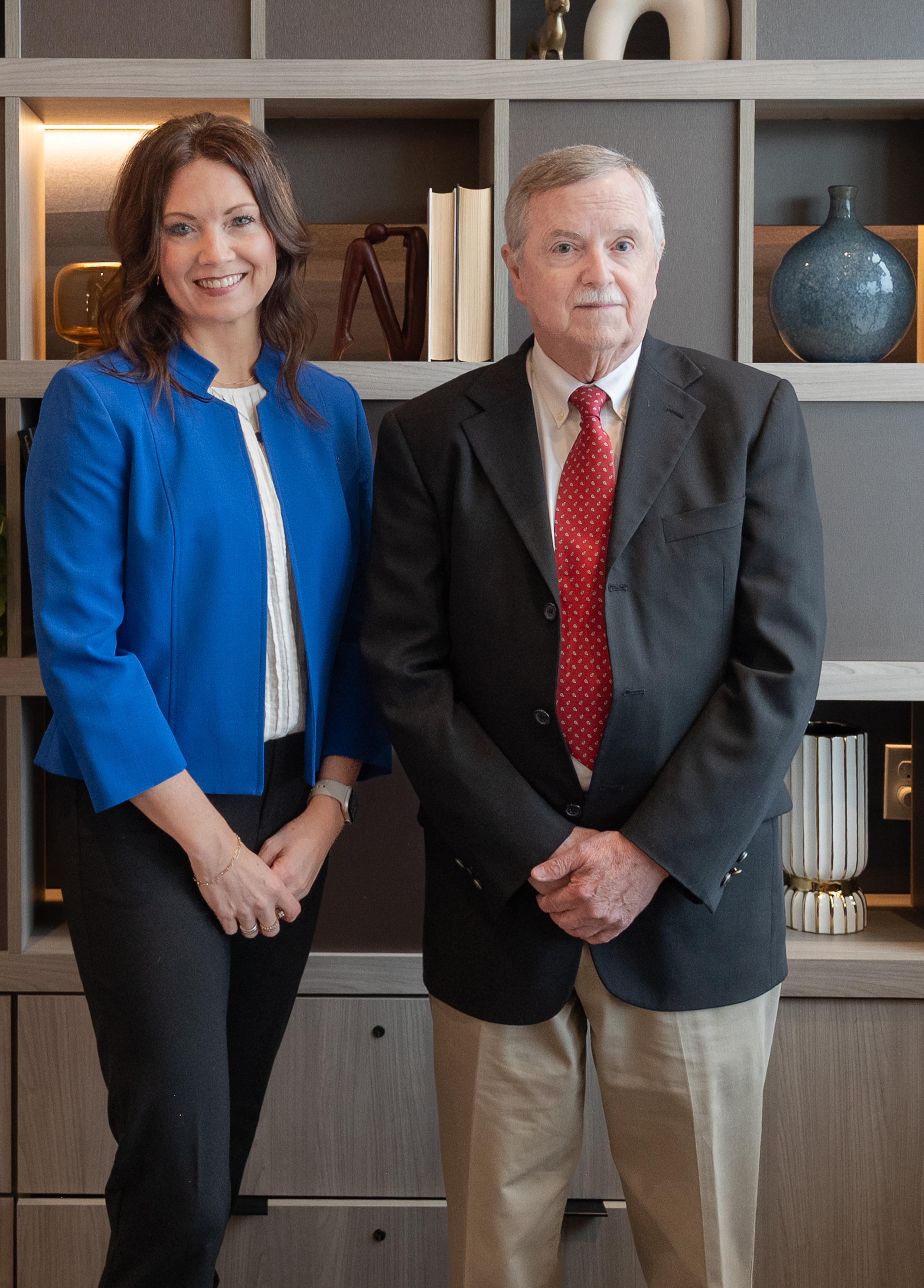
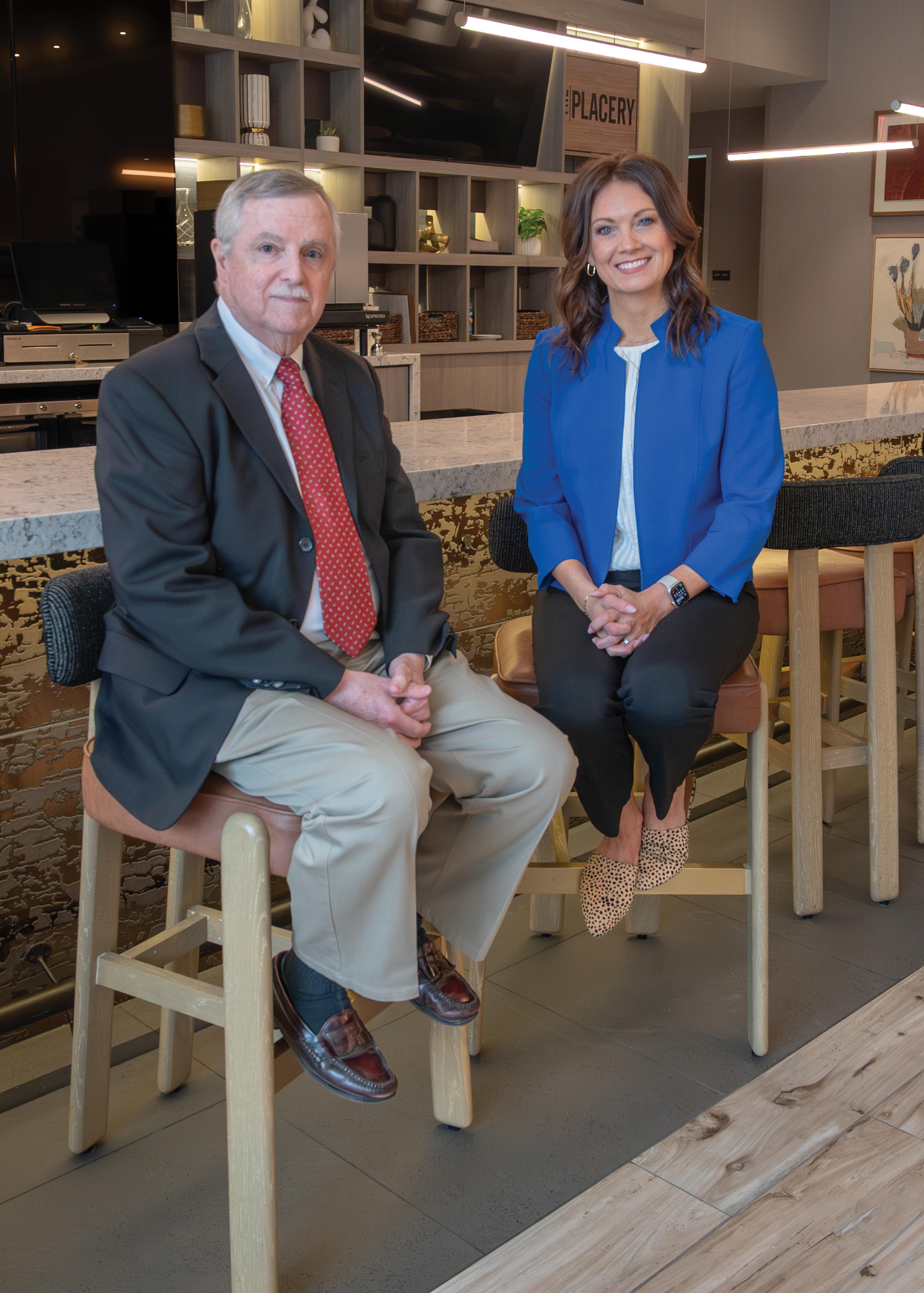
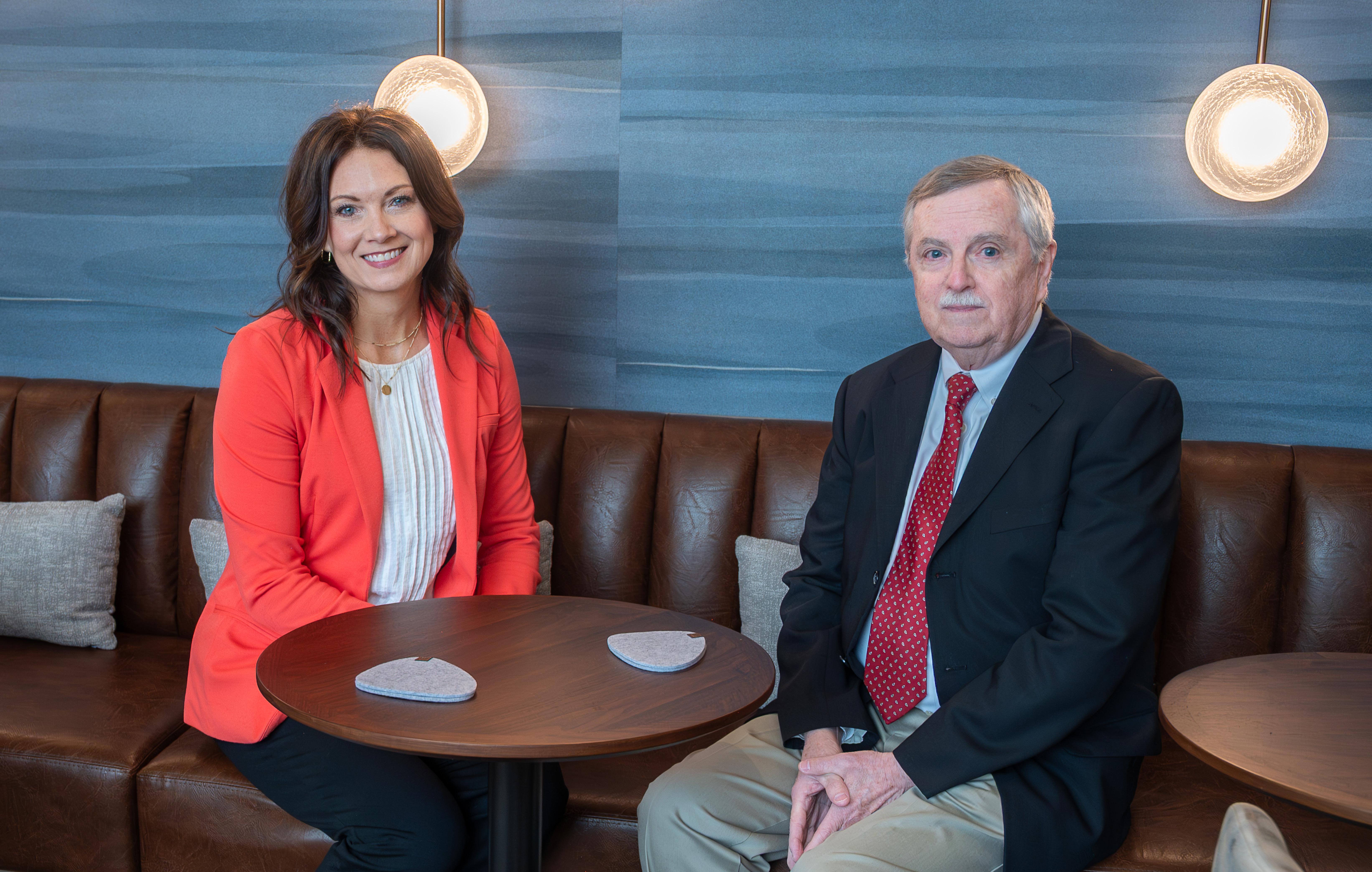
Dr. James Keegan & Randee Mason, RN, are helping healthcare systems make smarter decisions.
Chances are you’ve taken antibiotics at some point. They’re one of the most effective tools in modern medicine, capable of turning once-deadly infections into manageable conditions.
But for Dr. James Keegan and Randee Mason, RN, that success comes with a complication.
Over decades in healthcare, they kept seeing the same pattern. Antibiotics were being used when they weren’t needed. What started as well-intentioned decisions often led to unintended consequences for patients and, over time, entire healthcare systems.
It was not one defining moment that changed their thinking. It was seeing the same issue play out again and again.
Their paths into healthcare started in different places.
Randee grew up in Wall, South Dakota, where caring for others was just part of community life. She started college at the South Dakota School of Mines on a basketball scholarship, and joked, “I kind of majored in basketball, but eventually realized it wouldn’t take care of me for life.” She pivoted to nursing, earning her degree from South Dakota State University, and began working at Rapid City Regional Hospital.
“I just love taking care of people,” she said, “And nursing was a sustainable path that offered a meaningful, long-term way to do that.”
That transition has carried her through more than two decades in nursing, evolving from bedside care into large-scale quality and coordination work.
Dr. Keegan approached the issue from a clinical standpoint. As an infectious disease specialist with more than 30 years of experience, he treated severe and complex infections on a regular basis. Over time, he began to notice a pattern. Many of the hardest cases were tied to how antibiotics were being used in the first place.
That realization shifted his focus.
“Rather than just treating infections, I started considering how to prevent them from becoming more dangerous at a systems level,” he said.
At Regional Health, now Monument Health, their perspectives began to align. Dr. Keegan and Mason began to see the same issue from different sides; well-intentioned decisions that didn’t always lead to the best outcomes.
“We’ve been in the trenches together for a long time,” Mason said. “We know how to work together whether we’re focusing locally, on the other side of the U.S., or in a different country.”
About nine years ago, they chose to do something about it.
They founded Keegan Mason & Associates, building a model that allowed them to focus fully on antibiotic stewardship. The business is intentionally small, just the two of them, but their work reaches hospitals and healthcare organizations across the country.
At its core, the concept is straightforward: use the right treatment, at the right time, for the right reason.
“If it's a virus and not a bacterial infection, an antibiotic is not going to do you any good,” Mason explained. “And then it will kill the protective bacteria you have, which puts you at risk.
Their goal is to reduce unnecessary antibiotic use and improve patient and community outcomes.
KMA’s hands-on approach. Rather than operating at a distance, they embed themselves in the environments they’re trying to improve.
Site visits are a requirement because understanding how a facility operates and identifying the people who can influence change is critical to the process.
From there, the work becomes collaborative. They partner with physicians, nurses, pharmacists, and leadership teams to build strategies that fit each organization. “Most everybody that we've worked with, when given good data,
will make good decisions,” Dr. Keegan said. “They do want what's best for their patients and their communities.”
That belief shapes how they work and who they choose to work with.
“We want to work with people that actually want to make a difference and are good people,” Randee said. “That’s why it’s important for us to meet with people in person and establish that relationship.”
If that commitment is not there, they walk away.
Antibiotic resistance is not limited by geography. The same patterns they’ve addressed in South Dakota are showing up across Europe, Canada, and beyond.
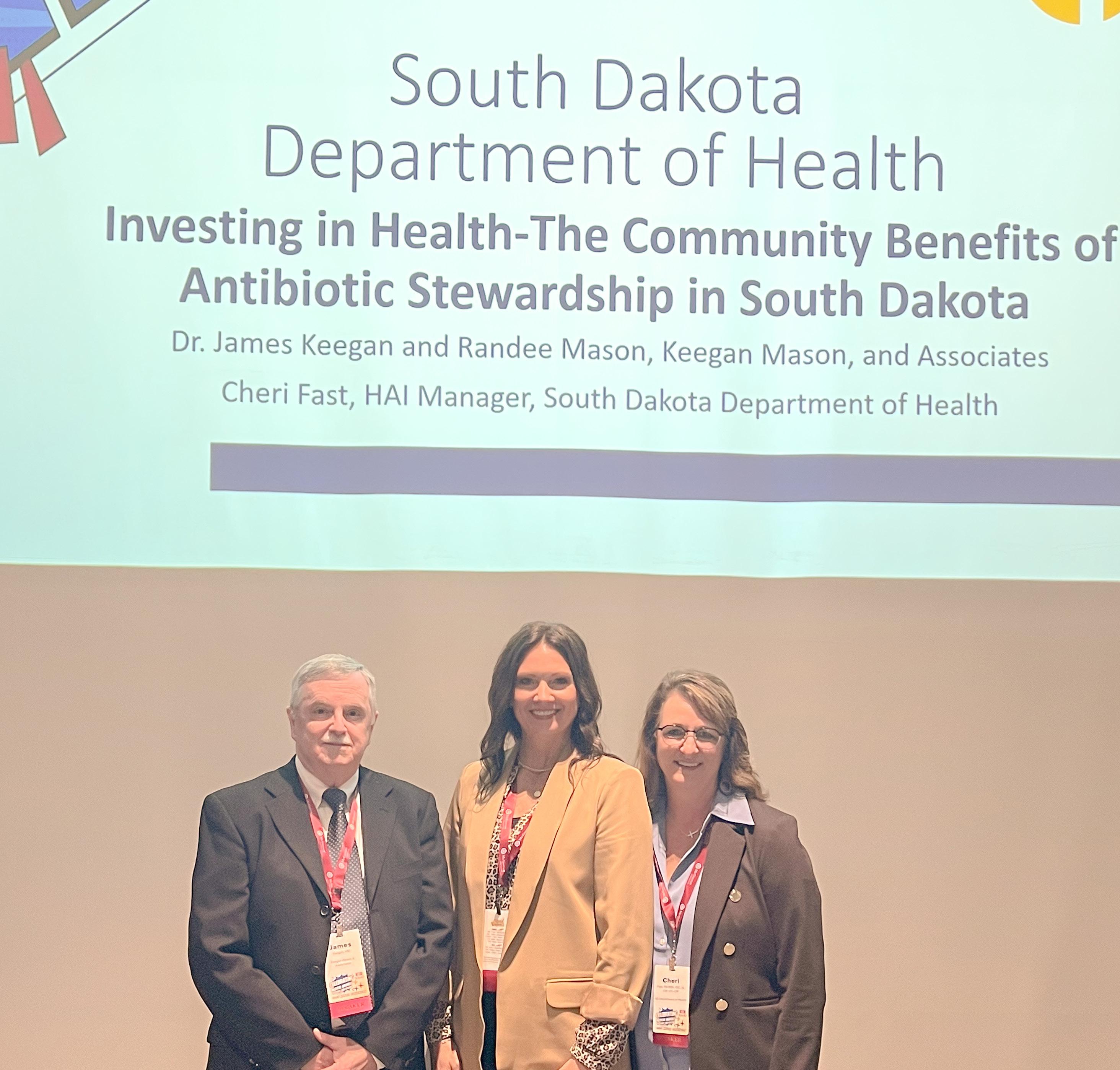
In recent years, KMA has built relationships with clinicians and organizations in countries including Japan, Israel, England, and the Netherlands. They’ve also taken part in global conferences, including one in Lake Bled, Slovenia, where they presented their work with rural hospitals in South Dakota.
The need is clear, but expansion requires the right partners.
In many cases, clinical leaders understand the importance of antibiotic stewardship. Broader adoption often depends on whether non-clinical decision-makers recognize the urgency.
As a result, Dr. Keegan and Mason are moving forward carefully. They’re exploring opportunities in Canada, the United Kingdom, and Ireland, while

continuing to build connections through conferences and conversations.
“Do they truly want to make things better for their patients and for their communities?”
Dr. Keegan said. “If the answer is no, we walk away.”
For the KMA duo, success comes down to a simple idea: “We want to provide the highest quality with the best safety for the lowest cost,” Dr. Keegan explained.
The foundation is rooted in Rapid City, where
KMA KEEGAN MASON & ASSOCIATES KEEGANMASONLLC.COM
relationships matter and practical solutions carry weight. It allows them to work nationally and internationally without losing the core of how they operate.
No matter where they go, the approach stays the same: understand the problem, work with the people involved, and build something that lasts.
“No matter where we’re working, it’s about helping to make things better,” Mason said. “It could be across the globe or close to home, the guiding principles stay the same.” *