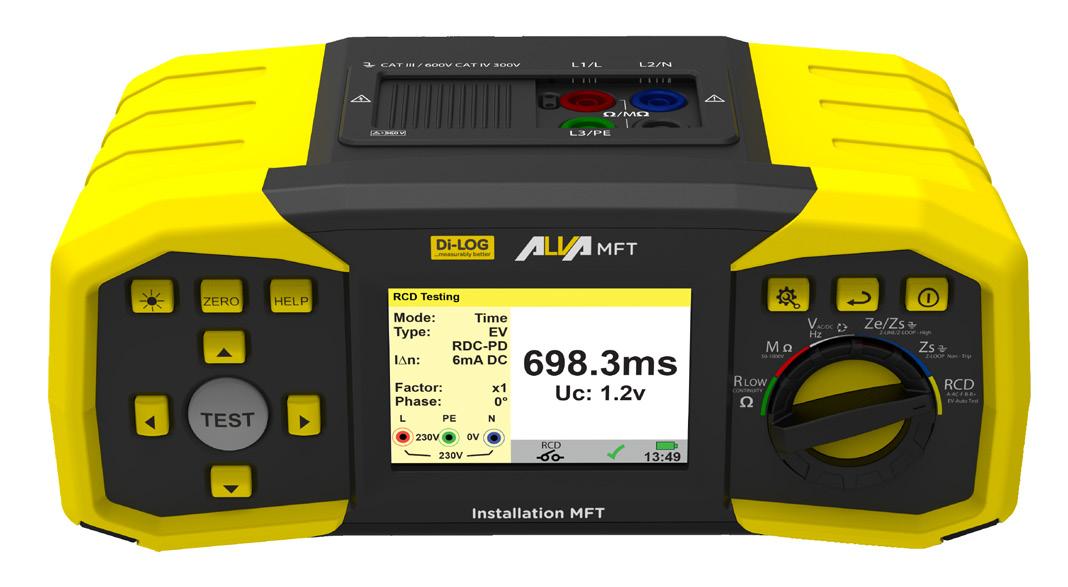
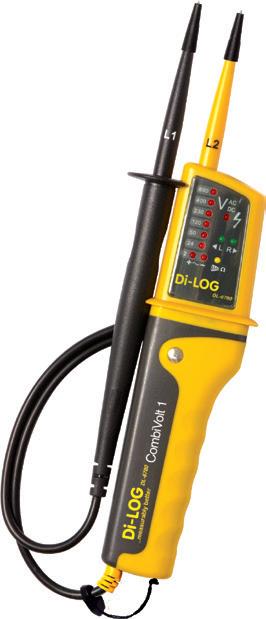
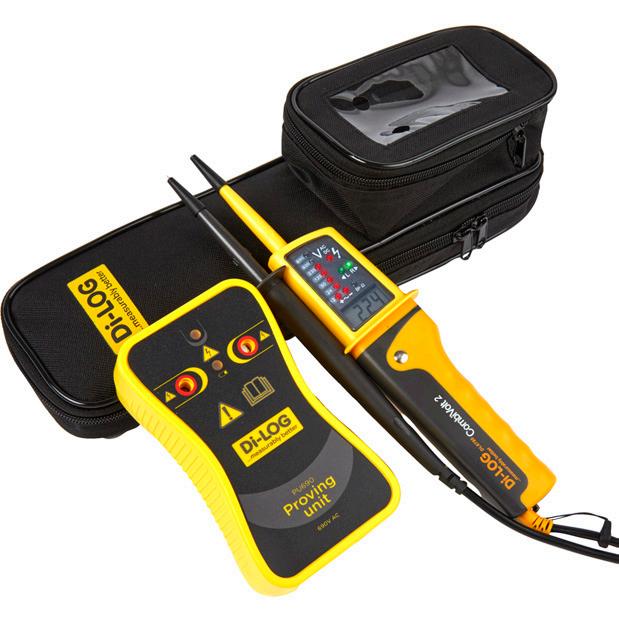
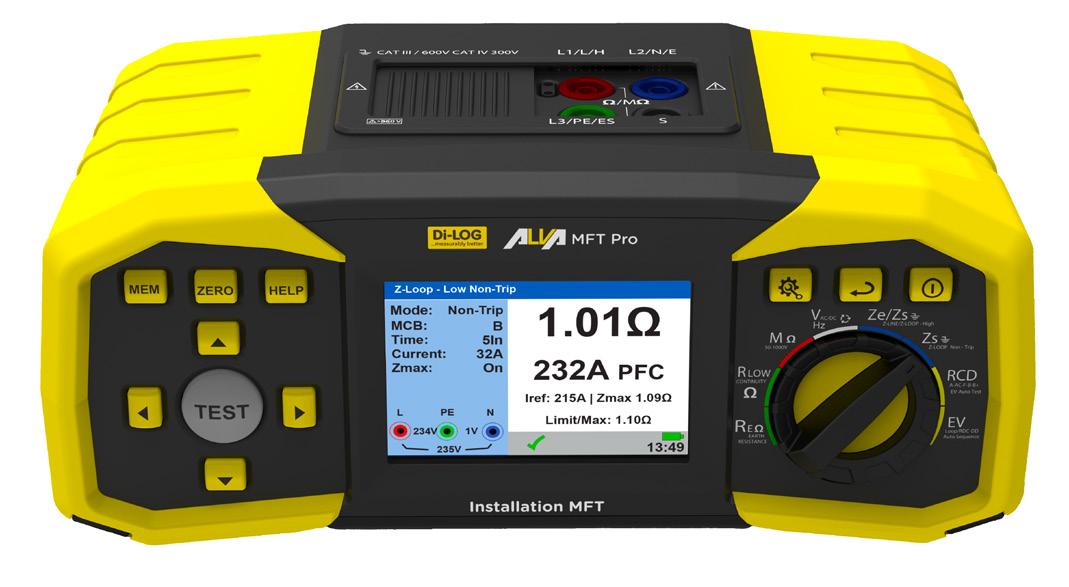
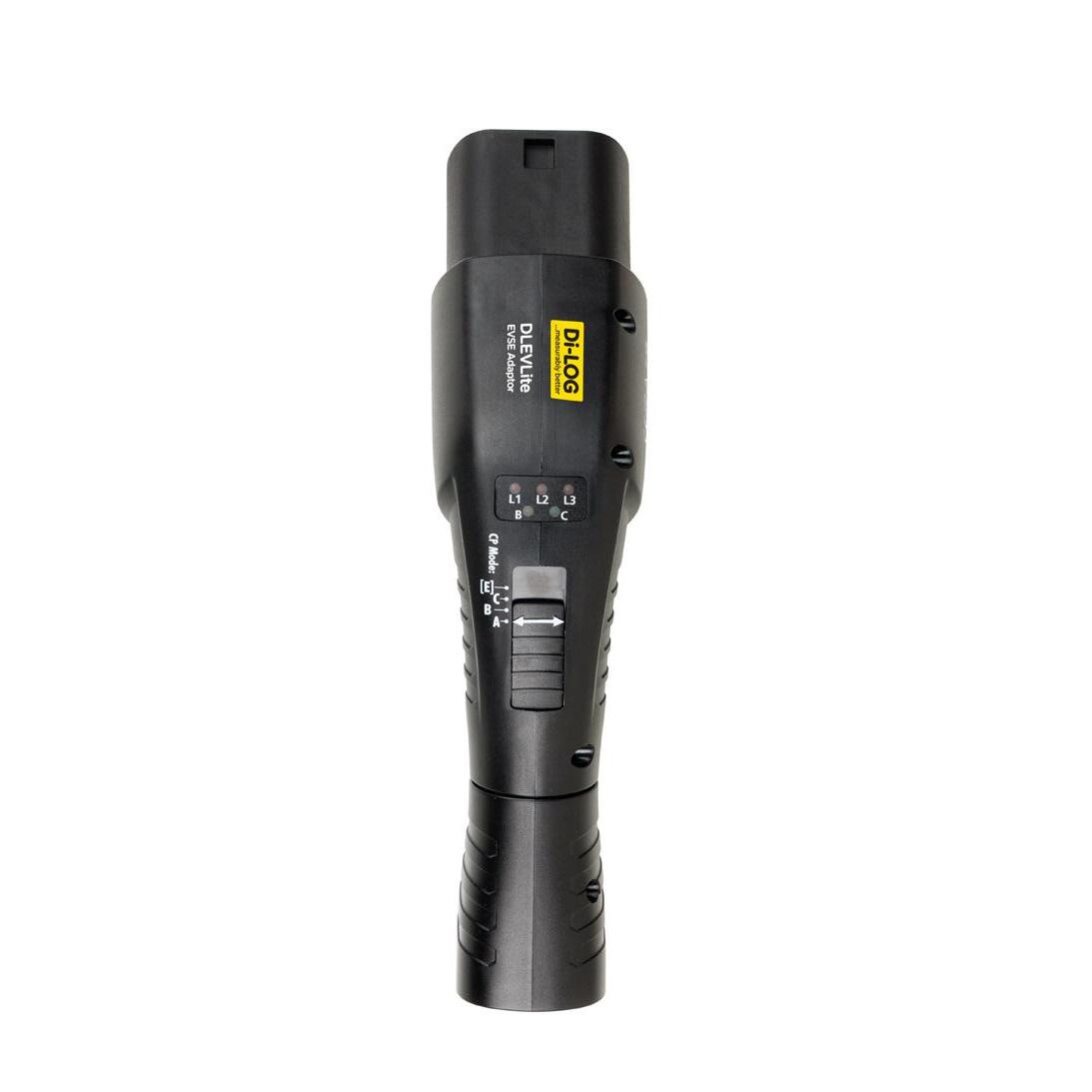
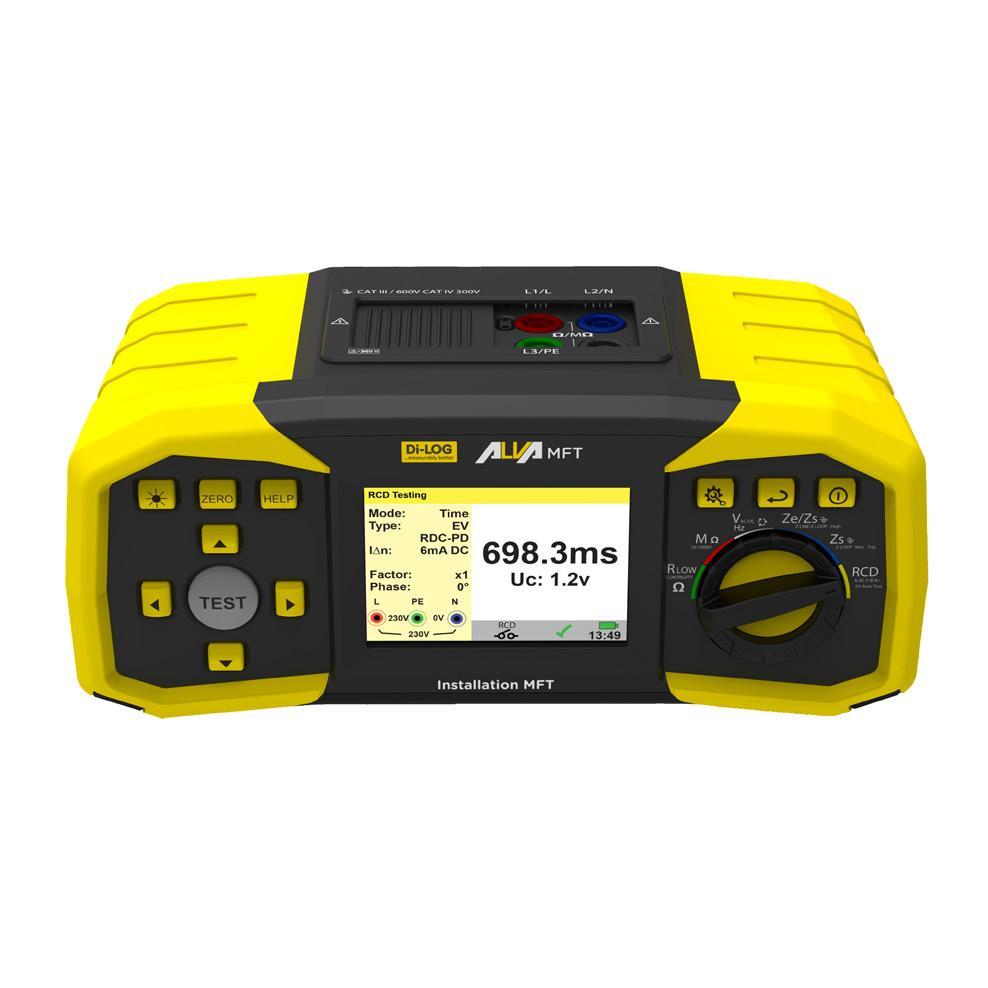
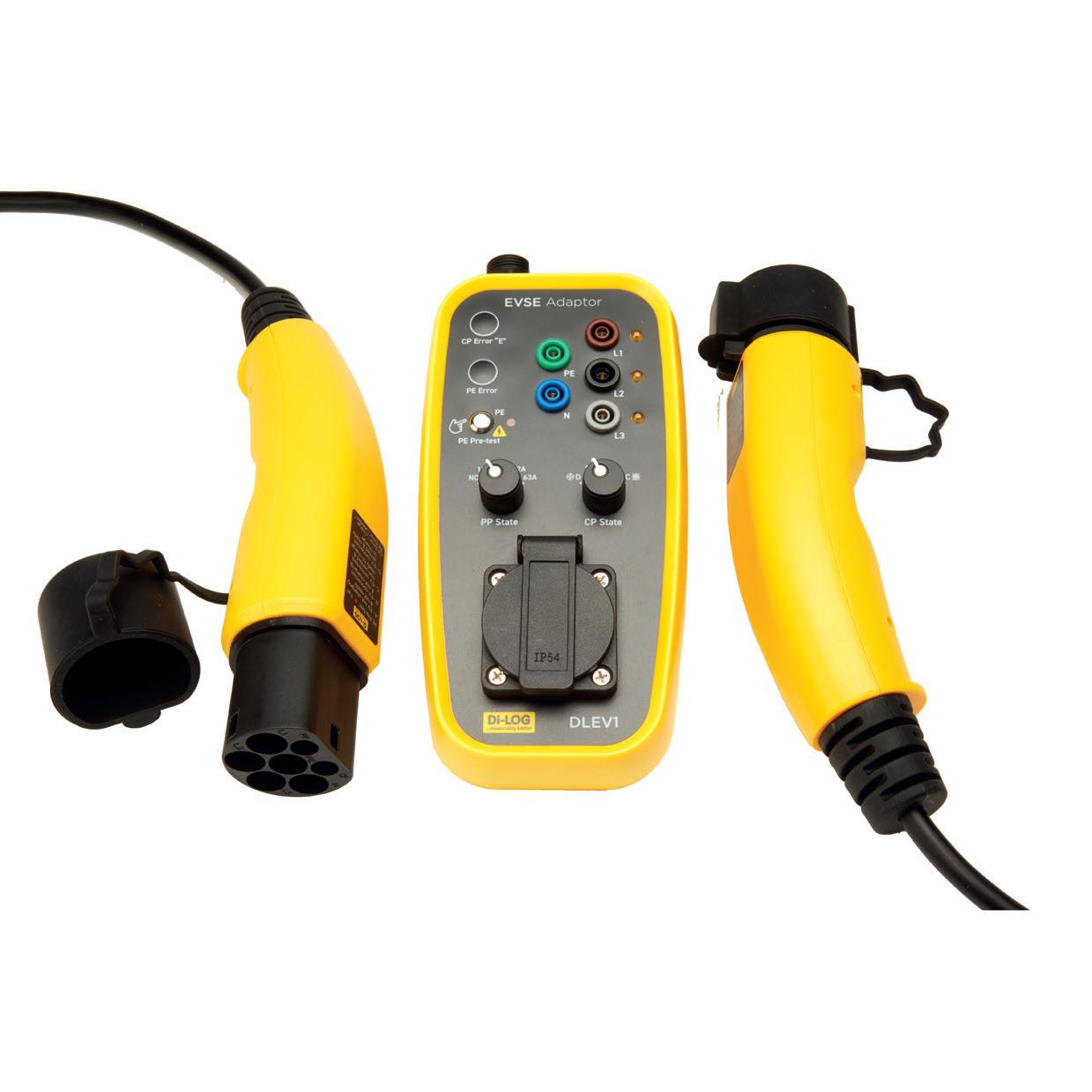
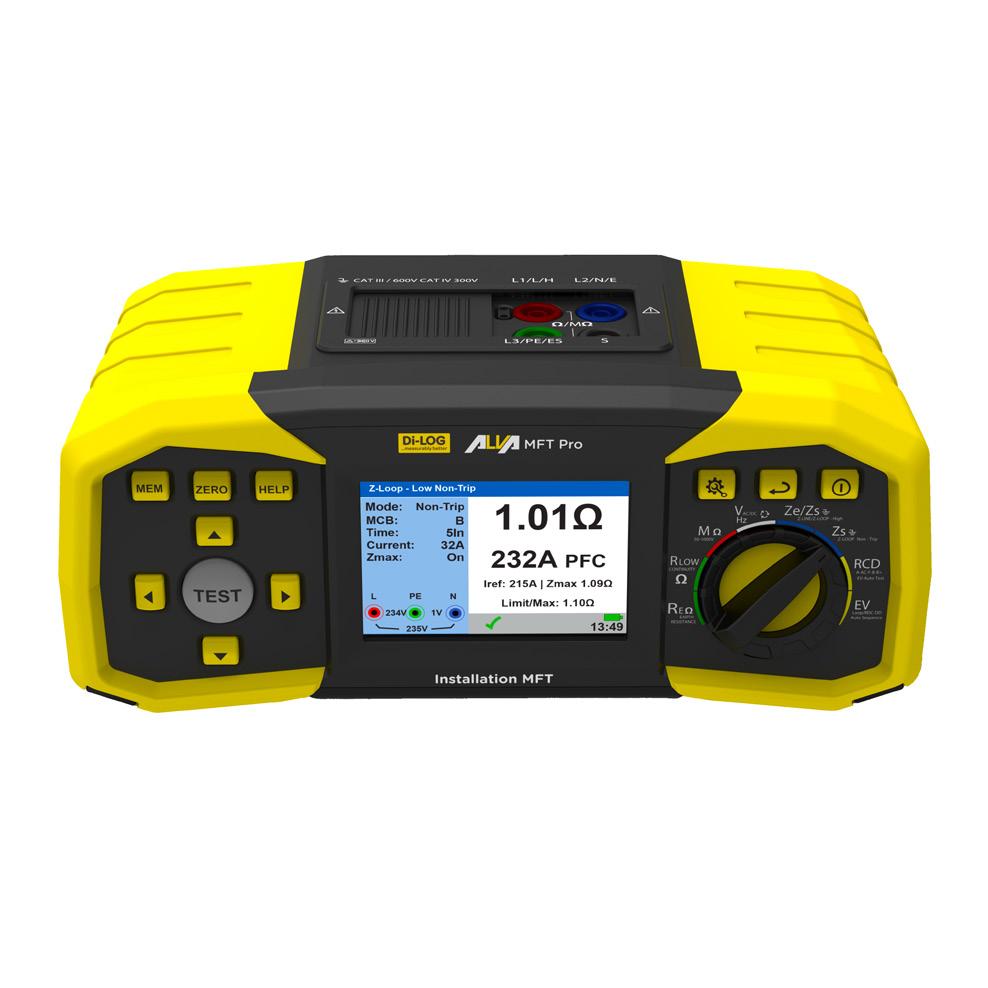
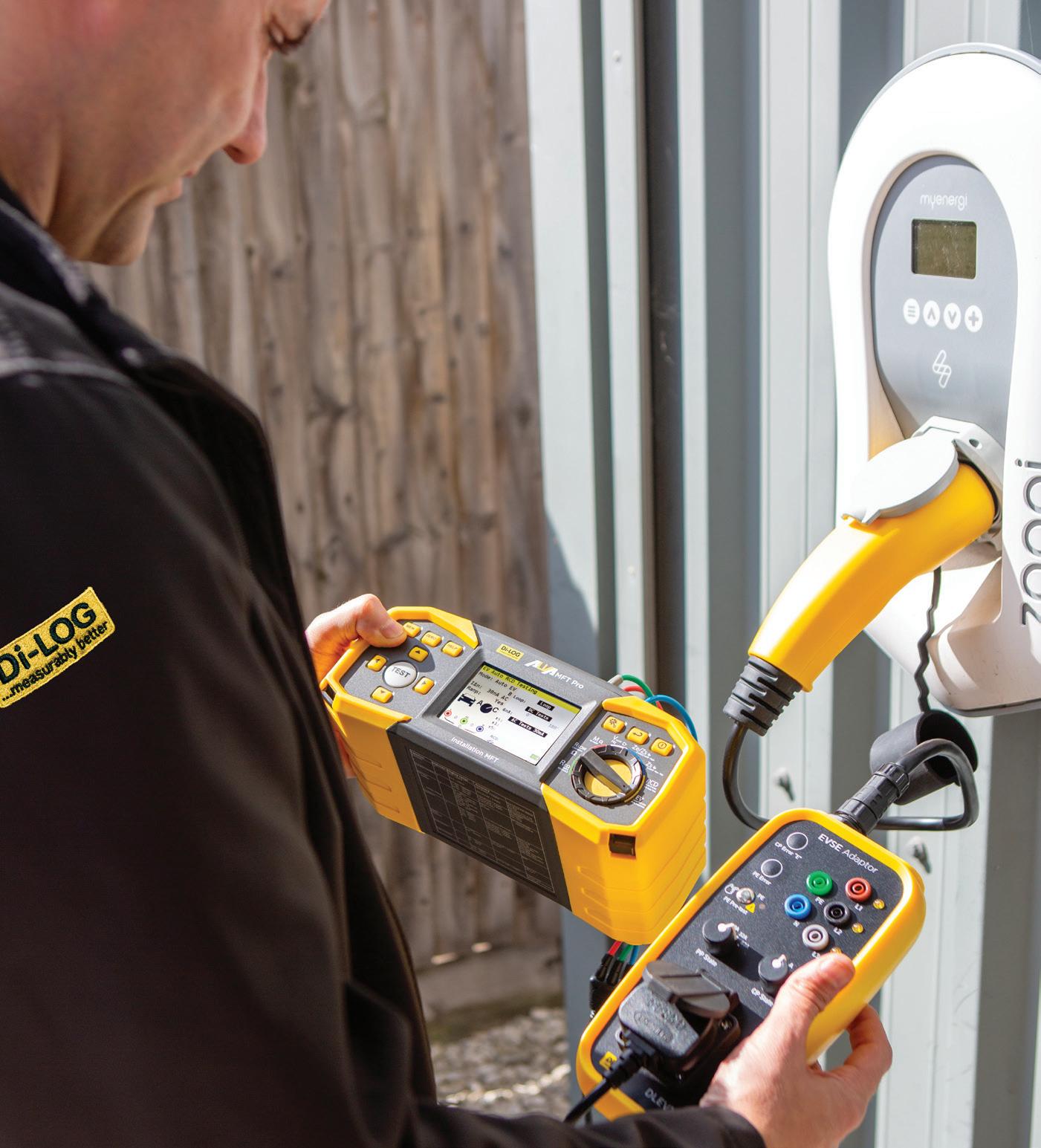
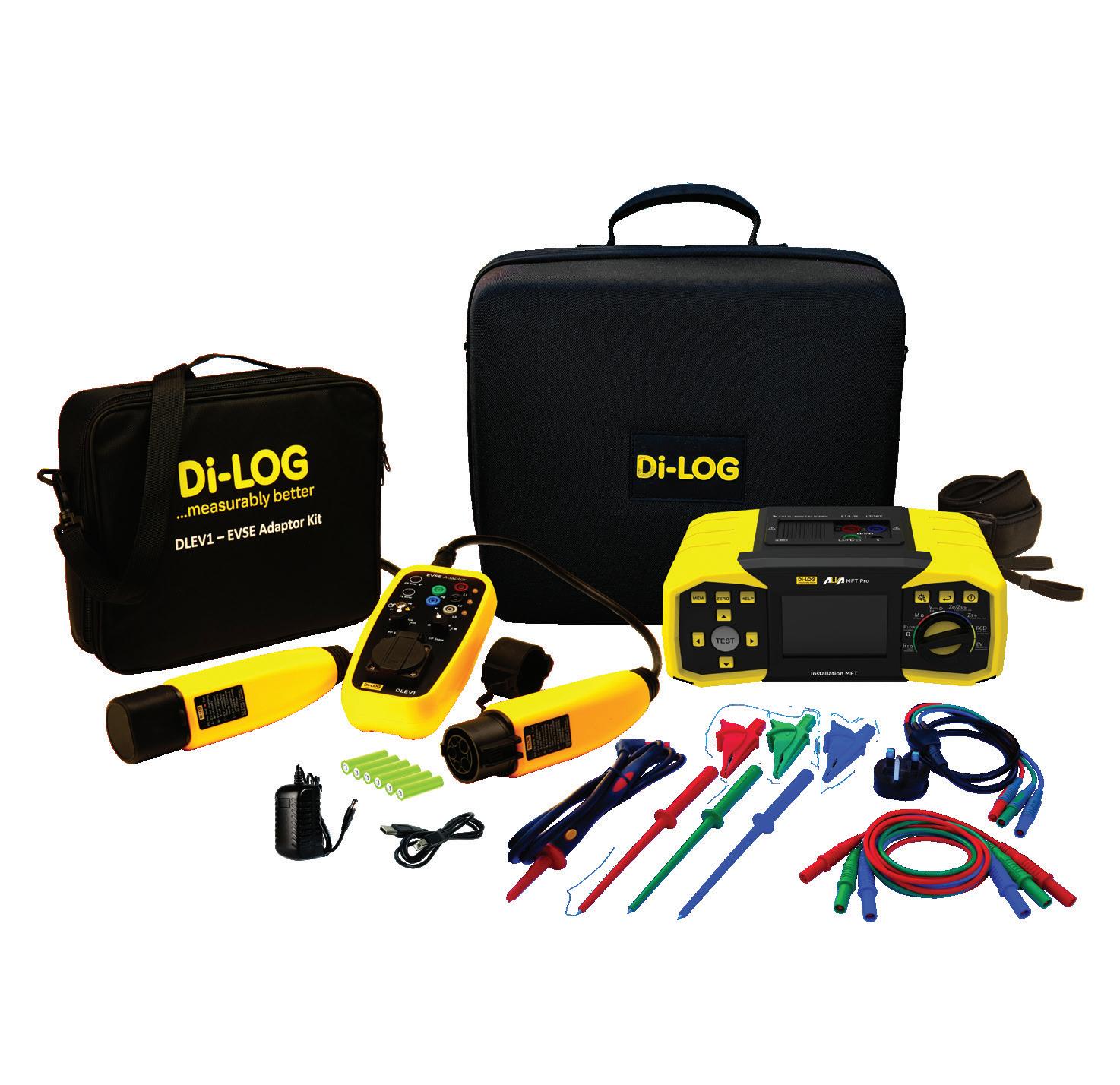
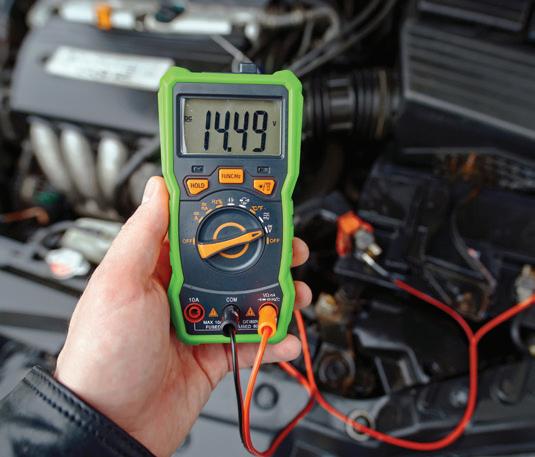
Introducing the NEW Di-LOG ALVA Series EV Ready Multifunction Tester The Next-Generation of Electrical Testing.
Designed for 18th Edition compliance, the ALVA Series MFT combines precision, automation, and cutting-edge technology for seamless electrical testing. Its full-colour TFT screen and intuitive ALVA UI enhance usability with pass/ fail settings, on-screen guidance, and full range RCD testing functionality (AC, A, EV, F, B & B+).
Take your time back with Trimble Total
Request a demo
From the Editor
News
April 2026 saw the publication of BS 7671 Amendment 4 (see page 10), with the IET and BSI encouraging electrical professionals to ensure they become familiar with the changes before the previous version is withdrawn later this year. In addition to IET guidance and training packages, a raft of support has been announced to help navigate the changes.
ECA support materials include a guidance note and editable certificates and forms, as well as a new Fireside Chat video series which explores what the changes mean in practice. NICEIC resources include the Let’s Get Technical Plus Amendment 4 workbook, four dedicated episodes of The Wire webinar series which review the changes in detail, and updated Pocket Guides, certificates and reports.
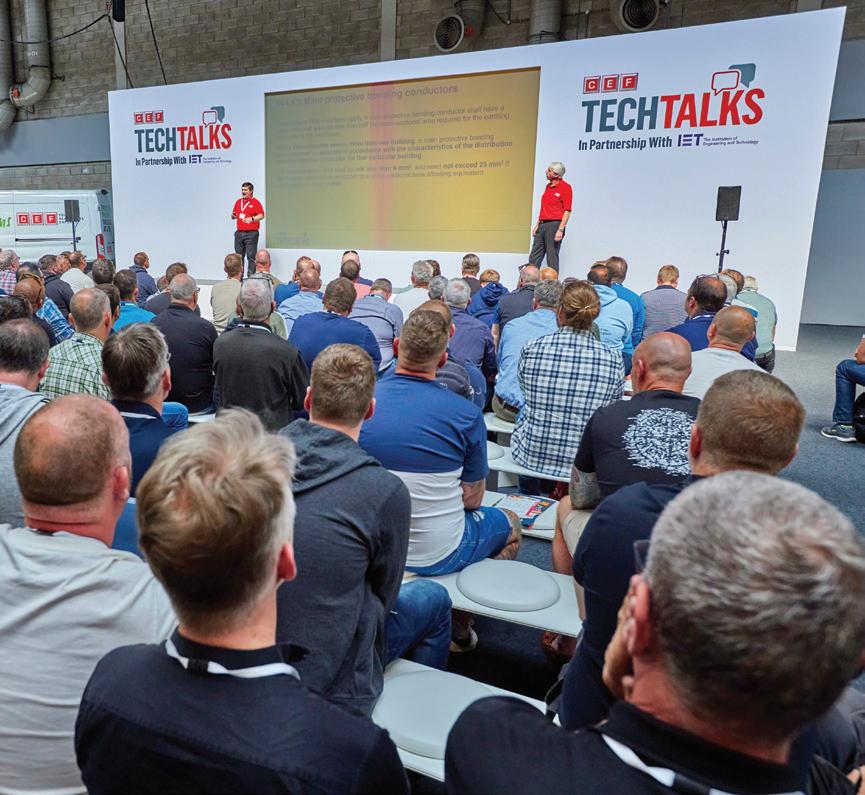
CEF, meanwhile, kicks off its TechTalks in May, with 26 live events taking place across the UK, designed to help electrical professionals understand Amendment 4. CEF’s Andrew Moseley tells us what’s in store at the events on pages 18-19. On that note, we’re delighted to welcome Andrew back as our guest editor this issue. After an introduction on page 8, he adds his thoughts on topics and trends throughout the magazine.
We’ve also recently seen the publication of the Government’s long-awaited Future Homes Standard (see page 11), with industry largely welcoming the announcement. News that the Government plans to make plug-in solar panels available in shops ‘within months’ was met with caution, however, with safety and regulatory challenges highlighted. Darren Staniforth tackles the issue on pages 26-27.
Elsewhere in this issue, we’re getting into the footballing spirit ahead of this summer’s big tournament. Schneider Electric has announced its Score to Win 26 competition (page 13) and Scolmore Group has unveiled the It’s Coming Gnome promotion, complete with a football-themed mascot (page 2). We caught up with the asyet-unnamed gnome ahead of a busy summer of appearances to find out who they’re backing during the tournament (page 24)!
Editorial Director Carly Woodhead
Editorial Director Carly Woodhead carly.woodhead@lylamedia.co.uk
Design & Production
Sophia Kerby design@lylamedia.co.uk
Advertising & Subscriptions
To request a free regular copy of Electrotechnical News or speak to a member of the sales team email: info@electrotechnicalnews.com
Director Nathon Woodhead nathon.woodhead@lylamedia.co.uk
LinkedIn
Disclaimer
The opinions expressed in editorial material do not necessarily represent the views of Electrotechnical News. Unless specifically stated, goods or services mentioned in editorial or advertisements are not formally endorsed by Electrotechnical News, which does not guarantee, endorse, or accept any liability for any goods and/ or services featured in this publication.
Electrotechnical News
Lyla Media Ltd, Hoo St Werburgh, Rochester, Kent, ME3 9UY
From the Guest Editor
As we move into a year of regulatory change, the electrical industry is poised to turn challenge into opportunity. In partnership with the IET, CEF is launching the fifth series of its award-winning TechTalks, designed to help electricians and contractors get ahead of Amendment 4:2026 to BS 7671:2018. The update will affect compliance, safety and product choices – so clear, practical guidance is vital to help businesses adapt. Read more about the latest Amendment on page 10.
This year also marks CEF’s 75th anniversary – a milestone that underlines our long-standing commitment to supporting the industry through change. Our TechTalks translate technical updates into practical, actionable steps installers can apply on site – reducing risk, improving efficiency and unlocking new commercial opportunities driven by evolving standards and technologies.
As regulations evolve, straight-talking explanation and education become ever more important. We encourage readers to take advantage of our CPD-accredited sessions, engage with IET experts and explore the products and solutions that will help turn regulatory change into growth, raise standards across the industry and seize the opportunities ahead. Find out more about our TechTalks on pages 18-19.
Andrew Moseley is Commercial Director at City Electrical Factors (CEF), leveraging over 30 years of industry experience in procurement and operational management. In his current role, Andrew leads strategic initiatives that enhance category management and brand development, contributing to business growth and efficiency. He is also responsible for the Sustainability and Social Value, Health and Safety, Fleet and Technical Training teams and strategies. Recognised for his expertise and collaborative approach to negotiations and the management of substantial budgets, Andrew ensures that CEF’s commercial strategies deliver sustainable growth. As a member of the EDA and ETIM Boards, Andrew also plays a key role in navigating the complexities of the electrical wholesale market, positioning CEF for continued success in an ever more complex and competitive landscape.
Commercial Director, City Electrical Factors (CEF)
Andrew Moseley
Newsroom
IET and BSI officially publish Amendment 4
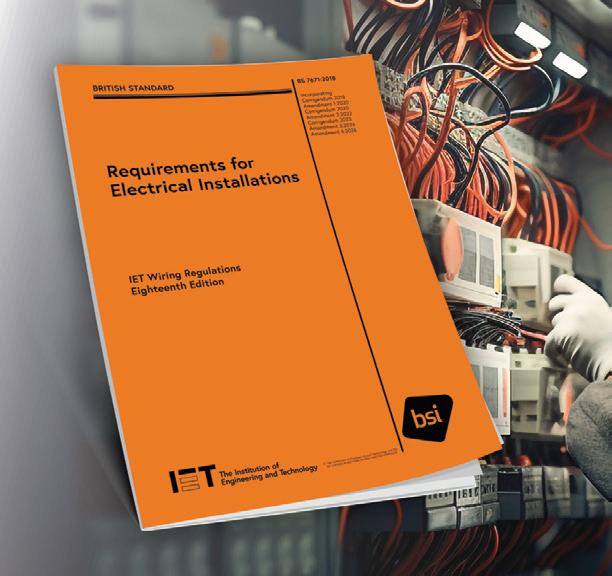
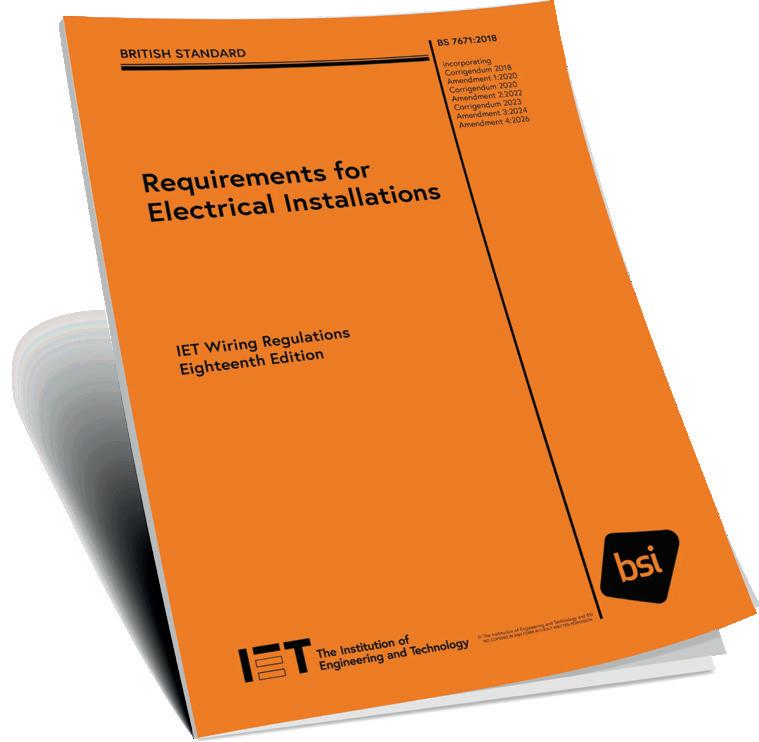
On 15 April 2026, the Institution of Engineering and Technology (IET) together with the British Standards Institution (BSI) released Amendment 4 (2026) to the standard Requirements for Electrical Installations (BS 7671:2018) (18th Edition of the IET Wiring Regulations), marking the latest update to the UK’s national standard for electrical installation safety.
This essential update to the IET Wiring Regulations forms the UK national standard for:
• All new low-voltage electrical installations.
• Additions and alterations to existing installations.
• Periodic inspection and testing of existing installations.
This new amendment reflects the fast-paced evolution of technologies across the sector and introduces substantial changes, including:
• New chapter: Stationary Secondary Batteries.
• New section: Power over Ethernet (PoE).
• Major revision: Medical Locations.
• New section: Functional Earthing and Functional Equipotential Bonding for ICT Equipment and Systems.
Further changes are included throughout all parts of BS 7671:2018+A4:2026, including the incorporation of Amendment 3:2024 to BS 7671:2018 as part of the main document. The Amendment also sees the further adoption of CENELEC Harmonized Documents and IEC standards as the UK continues the inclusion of standards for new and developing technologies.
The IET and BSI encourage all electrical professionals to ensure they become familiar with the changes now that they have been published.
Amendment 4 is now available for purchase via theiet.org/gettheregs – you can also learn more about the IET’s guidance and training packages here. The previous version, BS 7671:2018+A2:2022+A3:2024, will be withdrawn on 15 October 2026.
theiet.org
Andrew Moseley, Commercial Director, City Electrical Factors (CEF)
“Amendment 4 to BS 7671 is a major update. CEF is helping installers make the transition through our CPD-accredited TechTalk events – run in partnership with the IET, where attendees can speak with 20+ leading suppliers for product guidance and technical advice, get to grips with the new standards and earn CPD credits whilst doing so. Pre-order the new regs book at cef.co.uk, via your local CEF branch, or at one of the 26 free TechTalk events across the UK from May to July.”
You can register at cef.co.uk/ events/techtalks-series-5
Heat pump sector calls for policy certainty
The Heat Pump Association
UK has set out key policy recommendations to accelerate the deployment of heat pumps in commercial, public sector and industrial settings in the UK.
Whilst heat pump sales continue to grow in the UK, with more than 125,000 heat pumps sold in 2025, the vast majority of these are installed in domestic properties. Heat pumps in non-domestic settings remain a small fraction of the market, despite it representing a significant share of the UK’s heat demand.
The Climate Change Committee expects 88% of non-residential heating to come from low-carbon sources by 2040, with rapid electrification required to meet the UK’s 2050 targets.
HPA UK key policy recommendations for Government include calls to:
• Publish a national ‘Plan for the Electrification of Non-Domestic Heat’, supported by a dedicated taskforce to deliver this.
• Work to reduce the high cost of electricity relative to fossil fuels for all non-domestic energy users to improve UK competitiveness.
• Provide clarity on future funding mechanisms for public sector decarbonisation, following the announced closure of the Public Sector Decarbonisation Scheme in June 2025.
• Identify fast-track grid connection zones for industrial electrification.
• Develop business models to unlock private investment in heat pump technologies.
hpauk.org.uk
Future Homes Standard published
The Government has published the details of its long-awaited Future Homes Standard, which includes measures to ensure that, from 2028, new homes are built cheaper to run, with solar panels and clean heating as standard.
The Future Homes Standard will introduce a functional requirement to the Building Regulations that new homes – with some exceptions, including high-rise buildings –are built with on-site renewable electricity generation. The Government anticipates the majority of this will be solar panels. The standard will also see homes built with lowcarbon heating such as heat pumps and heat networks.
These measures on new homes could save families up to £830 a year on their energy bills, compared to a standard home with an EPC rating of C. This will ensure homes are more comfortable and affordable – and create at least 75% less carbon emissions than those built to the 2013 standards.
gov.uk
ECA launches Safe Energy Transition Charter
The ECA has launched its Safe Energy Transition Charter, calling for faster clean electrification across heat, transport and power – with safety, competence and high-quality installation standards treated as the foundation for delivery.
ECA warns that as low-carbon technologies scale at pace, the UK must avoid a race to the bottom on standards: safe system design, competent installation and effective maintenance are essential to protect consumers, businesses and the resilience of the electricity system.
Against a backdrop of energy volatility and supply chain risk, ECA says electrification can strengthen UK resilience and competitiveness – with the CBI estimating green growth opportunities could add £37-£57 billion to UK GDP by 2030. The Charter sets out targeted actions to unlock investment in EV charging, heat technologies, solar PV, battery storage and smarter energy use – while embedding safe installation as a non-negotiable principle.
The Charter also reiterates the case for reforming energy pricing and rebalancing levies to remove barriers to clean electrification as the grid decarbonises.
eca.co.uk
EV tax could cost UK economy £4.8bn
Bringing in the Electric Vehicle Excise Duty (eVED) in 2028 could cost the UK economy up to £4.8 billion under worst-case scenarios, according to BEAMA. This cost would exceed the total revenue the new tax policy is forecast to raise by 2031 (around £4.3 billion).
The forecast is based on BEAMA research which shows that if EV sales collapse at a similar rate to when New Zealand introduced a pay-per-kilometre tax (>50% decline), and sales aren’t replaced by petrol or diesel cars, the Treasury could lose £4.8bn in 2028 and potentially more in 2029.
BEAMA, EVA England, ChargeUK and REA are calling out the fiscal contradictions in the current policy. The coalition argues that introducing the tax in 2028 will damage consumer confidence, suppress demand and create unworkable conditions for leasing companies and fleet operators, as well as delay planned investments in the charging sector.
beama.org.uk
Government crackdown on late payments
Small businesses will be paid on time – that’s the clear message from Government as it cracks down on late payments, with the largest set of reforms in over a generation.
The Small Business Commissioner will be given sweeping new powers to investigate poor payment practices, adjudicate payment disputes, and fine the worst offenders – with fines worth tens of millions for firms that persistently pay late or fail to comply with the new laws.
The changes will include a new 60-day cap on payment terms on all large firms when paying smaller suppliers, while new mandatory interest on late payments will also be introduced. The Government also proposes to ban the withholding of retention payments under the terms of construction contracts.
gov.uk
Britain embraces solar revolution
New Government data shows that more than 27,000 solar installations were completed in March 2026 – the highest monthly total since 2012 – bringing the total number of solar installations across the UK to more than two million for the first time.
Solar capacity increased by 11.7% over the past year, adding 2.3 GW of clean, homegrown electricity to Britain’s energy mix. This growth means more British renewable power is being generated domestically, helping to protect families and businesses from international gas price shocks.
April saw a new record for solar generation, with National Energy System Operator data showing solar output passing 15 GW for the first time on Britain’s electricity system, underlining the pace at which clean, homegrown power is being rolled out.
gov.uk
MCS launches interactive learning platform
MCS, the UK’s quality mark for small-scale renewables like solar panels and heat pumps, has launched a new interactive learning platform for installers looking to become MCS certified.
It has been created for anyone who is considering certification and covers:
• What MCS does and how it works with industry.
• How certification can help installation businesses to grow.
• The practical steps to becoming certified.
The platform is part of MCS’s ongoing commitment to supporting the industry as small-scale renewables continue to see record-breaking numbers.
It is the latest in a series of investments for installers joining the redeveloped installer Scheme, which is rolling out across 2026.
mcscertified.com
It’s back!
Beat the keeper and compete with electrical installers across the UK for a top place on the Score to Win 26 leaderboard!
Top scorers have the chance to win:
• Premier League hospitality or standard tickets
• A football shirt signed by a legend
• Football stadium tour
• A gift card for multiple retail outlets
To enter:
Visit any par ticipating wholesale branch, or selected partner website, and earn one attempt for every £250 spent on Schneider Electric offers!* Learn
Terms and conditions apply.
*Minimum £250 spend in a single transaction to enter
Employment Rights Act: key changes you need to act on
If you run an electrical contracting business, the Employment Rights Act isn’t one to park. It reshapes holiday pay, sick pay and family leave – with tougher enforcement from 2026-2027. Acting now helps protect cashflow, reduce disputes and avoid penalties as the Fair Work Agency steps up checks. Here, Catherine Watt, Director of Employment and Skills at ECA, provides a practical summary of what’s live now, plus a checklist to make your payroll, policies and records inspection-ready.
ACatherine Watt Director of Employment and Skills at ECA
pril 2026 marked the first major phase of Employment Rights Act reforms, with more changes due later in 2026 and into 2027.
Key dates at a glance
• 6 April 2026: Statutory Sick Pay (SSP) reform took effect, with day one rights for Paternity Leave and
Unpaid Parental Leave (plus the new Bereaved Partner’s Paternity Leave).
• 7 April 2026: Fair Work Agency established (bringing together enforcement activity).
What has changed?
1. Holiday pay records: new legal duty – and a criminal offence if you get it wrong
Keep six years of records showing statutory leave entitlement/taken, how holiday pay was calculated (and which pay elements were included), and any payment for untaken statutory leave on termination – enough to evidence compliance if inspected.
Important: failure to keep adequate holiday records is now a criminal offence, punishable by an unlimited
fine – even if the underlying holiday pay calculation is correct.
Holiday pay is where contractors get caught out because pay can be complex. Regular overtime/ allowances can change what counts as ‘normal remuneration’. Treat this as a this-week check.
Common slip-ups:
• Different parts of statutory leave can be paid differently – be clear what leave is being taken and how it’s paid.
• Where pay varies, statutory holiday pay may need to reflect ‘normal remuneration’, not basic pay only.
What to do now:
• Confirm payroll captures variable
pay correctly for holiday calculations.
• Spot-check three to five people with regular overtime/allowances and make sure the record trail is there.
2. Statutory Sick Pay (SSP): bigger cost exposure from day one SSP is likely to hit contractors fastest: day-one entitlement increases immediate cost and can disrupt cover across live jobs. Two core rules have changed:
1. SSP is payable from day one of sickness absence (the ‘waiting days’ have been removed).
2. The Lower Earnings Limit has been removed, meaning more workers qualify.
Guidance also reflects a new calculation: SSP is the lower of 80% of average weekly earnings or the flat weekly rate (guidance references £123.25). Transitional protections apply for anyone already on SSP when the rules changed.
What to do now:
• Update payroll and absence processes so SSP applies from the first qualifying day.
• Brief supervisors so day-one SSP is handled consistently (evidence, reporting, return-to-work).
3. Family leave: ‘day-one’ rights and greater flexibility
More family leave rights now start
“SSP is likely to hit contractors fastest: dayone entitlement increases immediate cost and can disrupt cover across live jobs.”
from day one – which can mean earlier requests and faster resourcing decisions on jobs.
• Paternity Leave: the current 26-week qualifying period is removed.
• Unpaid Parental Leave: the current one-year service requirement is removed.
Practical steps:
• Update policies/manager notes for day-one eligibility and timing.
• Plan cover for earlier leave requests.
What to do now:
• Update your handbook/contract
ECA Member support
Need help? ECA has support materials for Members available at: eca.co.uk/member-support/employee-relations/contractshandbook/employment-law-update – use them now, before a payroll query or inspection escalates.
pack and brief managers so you can give consistent answers when a request comes in.
4. New Bereaved Partner’s Paternity Leave (day one)
Since 6 April 2026, Bereaved Partner’s Paternity Leave gives a day-one right to time off if the mother or primary adopter dies within the first year after birth/adoption (timing-dependent, potentially up to 52 weeks). Guidance notes there’s no automatic statutory pay, so any paid leave depends on your policy.
Practical steps:
• Set a simple process and a single HR contact.
5. Other changes employers should note (even if not ‘leave/pay’)
Two other changes can raise risk (and cost) quickly:
• Collective redundancy: the maximum protective award is doubled to 180 days’ pay (raising exposure where consultation rules are not followed).
• Fair Work Agency (since 7 April 2026): enforcement is consolidated, increasing the likelihood and pace of activity around rights such as holiday pay and SSP.
Employer checklist: what to update now
1. Payroll: SSP day-one settings, eligibility and calculation.
2. Policies: sickness absence and family leave updated for day-one rights (including bereavement).
3. Holiday pay: confirm what pay elements must be included, and keep a six-year record trail.
Bottom
line
This isn’t a headline issue – it’s the everyday processes that keep jobs profitable and teams available. The April 2026 changes are live, and enforcement is becoming more joined-up.
This week: check SSP settings, tighten holiday pay records, and update leave policies so you’re not firefighting later.
eca.co.uk
JTL’s National Awards are back for 2026
Taking place on 10 June 2026 at Plaisterers’ Hall, London, the JTL National Awards celebrate the very best in electrical and mechanical engineering services training.
JTL’s annual National Awards showcase the incredible achievements of JTL apprentices, tutors, training officers and employers. Recognising future talent and exceptional support shaping the building services engineering sector, the event celebrates outstanding contributions to apprenticeship training.
The annual ceremony sees leading industry stakeholders join apprentices, employers and colleagues to celebrate the industry’s brightest stars. The event recognises the best of JTL’s recently completed apprentices, rising star apprentices in their first or second year, JTL’s exceptional tutors, and the training officers who mentor and assess apprentices during their four-year journey. The awards also recognise the commitment of employers who partner with JTL to bring new talent to the sector.
Plaisterers’ Hall, London
This year, the ceremony will be held at the magnificent Plaisterers’ Hall in London on Wednesday 10 June 2026. The 2026 award categories are:
• JTL Apprentice of the Year, incorporating the Electrical Apprentice of the Year and MES Apprentice of the Year
• JTL Rising Star of the Year
• JTL Teaching Awards, incorporating Tutor of the Year and Training Officer of the Year
• Employer Recognition Awards
A career for life
Regional winners have now been announced and will face a panel interview with JTL judges ahead of the awards ceremony, where national category winners will be announced.
Chris Claydon, Chief Executive of JTL, said, “Our regional winners are fantastic examples of the talent coming through our industry and
JTL National Apprentice of the Year 2025, Stephanie Hitch
this recognition is well deserved. Their achievements demonstrate the impact that high-quality apprenticeship training can have. These trades are pivotal to the UK economy; they give individuals a career for life and it’s a privilege to be part of their journey. We look forward to celebrating their success at the National Awards in June.”
The JTL National Awards 2026 are supported by headline sponsors Milwaukee and Baxi, with further sponsorship provided by Electrical & Plumbing Skills, ECA, Schneider Electric, EAL, Scolmore Group, JIB, Edmundson Electrical, UK Plumbing Supplies, Di-LOG, Titus, Talentia/ Dovetail & Slate and CompEx.
jtltraining.com
The leading trade body for electrotechnical contractors
STRENGTHEN YOUR BUSINESS THROUGH ECA MEMBERSHIP
Recognised professional credibility across public and private sector clients
Technical and business-critical expertise to support compliance, reduce risk and protect margins
Tailored savings and services that deliver measurable value
Access to a powerful peer network, shaping industry standards and policy
For electrotechnical contractors committed to excellence, resilience, and growth, ECA membership is essential.
Discover more at eca.co.uk/unlock
CEF TechTalks return for Series 5
Andrew Moseley, Commercial Director at City Electrical Factors (CEF), looks at what’s in store for CEF TechTalks Series 5 – your guide to Amendment 4, with 26 live events nationwide.
KAndrew Moseley Commercial Director at City Electrical Factors (CEF)
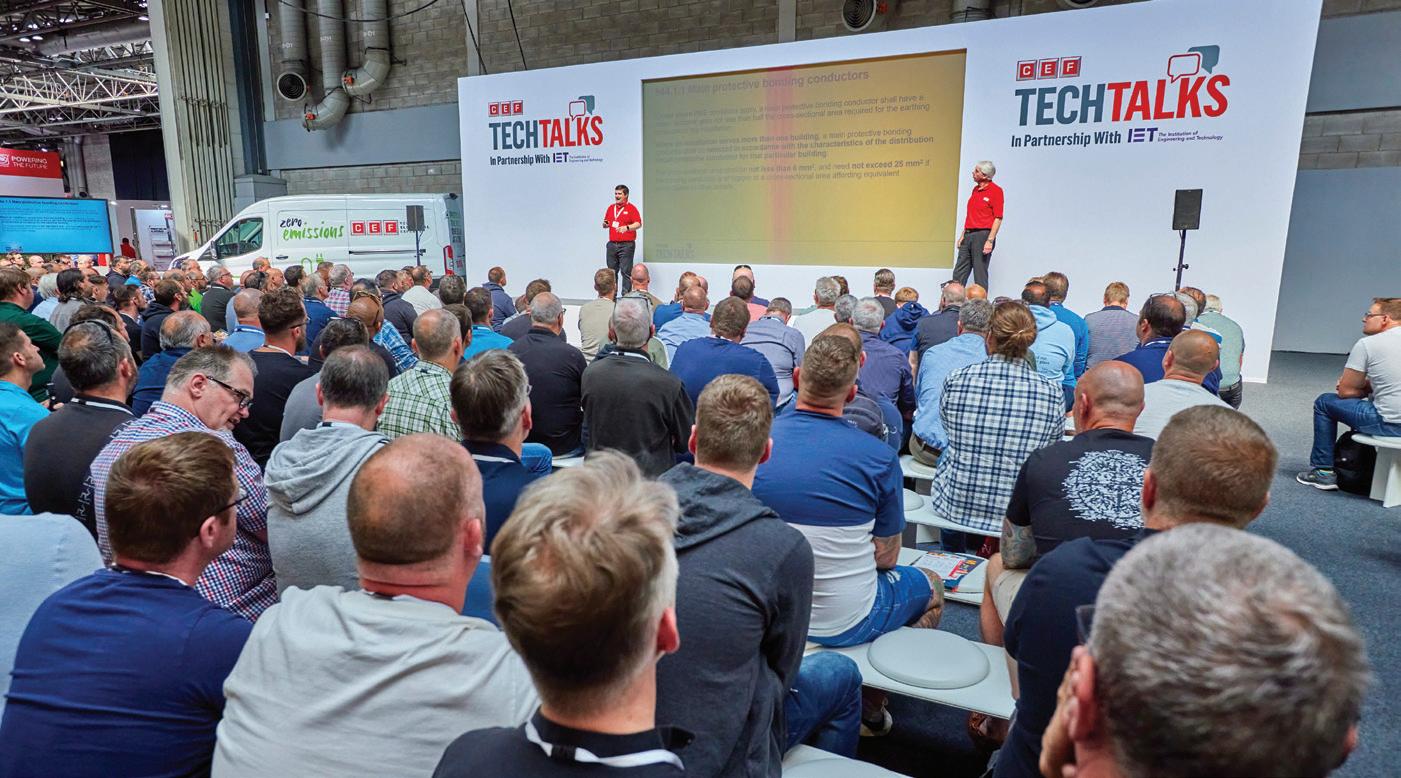
icking off on 7 May in Bristol, CEF’s TechTalks Series 5 comprises 26 live events across the UK, designed to help electricians and contractors understand Amendment 4 to the 18th Edition (BS 7671).
With Darren Staniforth and Dave Austin returning to lead the sessions, the programme delivers practical interpretation and clear guidance on the regs update, helping attendees stay compliant and confident as the changes come into force.
What to expect
• A simple explanation of the key changes: Darren Staniforth and Dave Austin will unpack Amendment 4, explaining the key changes to wiring regulations, inspection and testing, coding, and equipment selection. Their sessions translate technical content into practical, on site application.
• CPD-accredited learning: Each TechTalk provides 3.5 hours of CPD, helping attendees meet professional development requirements while gaining vital knowledge.
• TechTalks are free to attend: Making essential regulatory guidance accessible to electricians, contractors and engineers across the UK.
• TechCards and giveaways: Attendees receive a new set of TechCards summarising key changes, plus the chance to win a copy of the new regs book at each event.
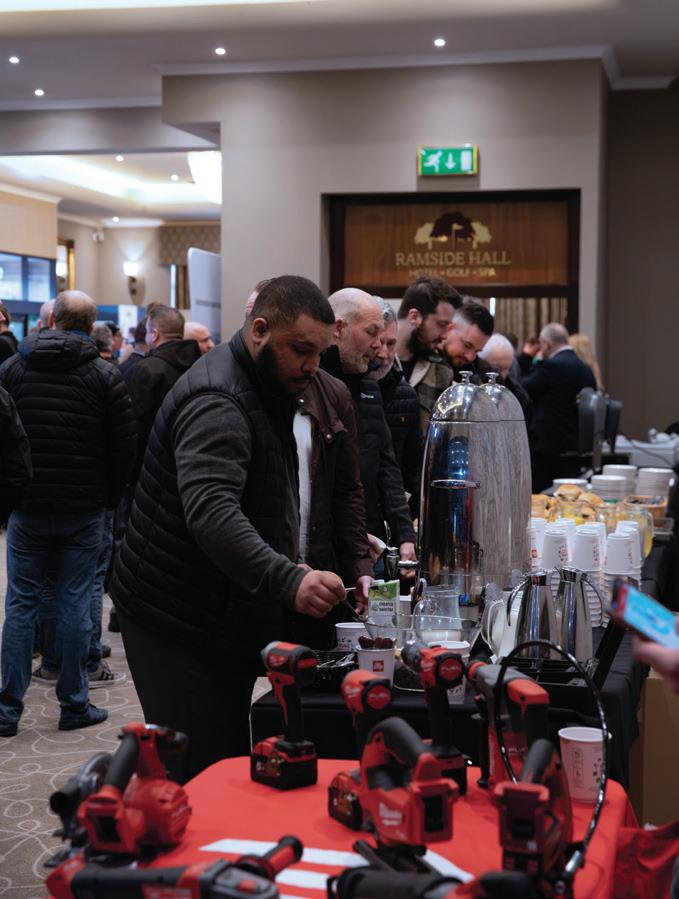
• Refreshments and networking: Enjoy free breakfast butties and hot
drinks while browsing the exhibition – networking with peers and over 20 leading brands.
Bigger venues, more access
TechTalks Series 5 reflects expanded capacity at 10 locations, moving to larger venues and introducing TechTalks PLUS. The PLUS format doubles the number of exhibitors, giving attendees more brands to see and extra space for in-depth technical conversations.
Leading brands
Every TechTalk features industryleading brands exhibiting products and solutions linked to the new regulations. Across all 26 dates we are proud to be supported by our headline sponsors: AICO, LED Group, Legrand, Schneider Electric and Scolmore Group. Their presence ensures attendees can discuss compliant product choices, installation considerations and new technologies face-to-face.
Practical sessions beyond the regs
Alongside the core Amendment 4 update, TechTalks will cover associated topics that matter –from changes to electrical scheme requirements and coding for EICRs, to tackling damp and mould issues and evaluating renewables. These focused sessions highlight commercial opportunities and real-world applications of the new regs.
Why attend?
Amendment 4 represents a significant change for the industry. Misinterpretation risks noncompliance and potential safety issues. CEF’s TechTalks are built to close that knowledge gap quickly and practically, combining expert teaching, hands-on exhibitor support and CPD accreditation in a single morning.
Whether you’re a sole trader, lead electrician or contract manager, TechTalks give you the tools to adapt,
Dates & locations
• 7 May: Bristol
• 8 May: Newport
• 13 May: Derry
• 14 May: Belfast
• 20 May: Newmarket
• 27 May: Inverness
• 28 May: Glasgow
• 4 June: Southampton
• 5 June: North London
• 10 June: Cheltenham
• 11 June: Brighton
• 16 June: Leeds
• 17 June: Rotherham
select the right products and deliver compliant, future-proof installs.
How to join us
Book at cef.co.uk/events/techtalksseries-5 to secure your free place. Come for the regs, stay for the
• 18 June: Loughborough
• 24 June: Exeter
• 25 June: Oxford
• 26 June: Birmingham
• 7 July: Durham
• 8 July: Preston
• 9 July: Manchester
• 10 July: Bangor-on-Dee
• 15 July: Kent
• 16 July: Woking
• 22 July: Jersey
• 23 July: Guernsey
• 29 July: Isle of Man
conversations, the TechCards and the bacon butties.
cef.co.uk
interview The
Sit down with: Recolight’s Nigel Harvey
Meet
Nigel
Nigel Harvey joined Recolight as Chief Executive in 2009. He is very active in both the lighting and WEEE sectors. He has been Chair of the UK’s WEEE compliance scheme trade association, the WEEE Scheme Forum (WSF), since 2011. Nigel became widely known as a climate activist when he was first arrested at an Extinction Rebellion protest in 2019. Since then, he and the Recolight team have been incredibly influential in shaping and encouraging a circular economy and greater sustainability in the lighting industry. Nigel is also an active member of two key BSI committees that cover the review of WEEE treatment standards and the code of practice for the remanufacture of lighting equipment.
Electrotechnical News speaks to Nigel Harvey, Chief Executive of Recolight, about the changing landscape of lighting sustainability, the challenges still facing the sector, and why reuse, repurpose and remanufacture must become the new industry standard.
Established by the UK lighting industry in 2005, primarily for the purpose of operating a Waste Electrical and Electronic Equipment (WEEE) Compliance Scheme on behalf of lamp producers in the UK, Recolight received scheme operator approval and went live operationally in 2007, with Nigel appointed Chief Executive in 2009. Having been with the organisation since its early days, he has seen the lighting landscape shift considerably – not least the transition to LED technology.
“Clearly there has been a lot of change over the years,” Nigel comments. “Back in 2019 we had 56 lighting producer members; now we are nudging 220. Although it is fair to say that some of that growth has arisen because the technology change to LED has allowed more manufacturers to set up, it is also testimony to our track record in sustainability.
“Lighting companies know that Recolight wants to make a difference, and they therefore want to be
associated with our brand.”
With current net zero goals pushing companies to move beyond box-ticking obligations to placing greater focus on long-term environmental responsibility and measurable impact – including Environmental Product Declarations, TM 65 (embodied carbon) and TM 66 (circular economy design) – Nigel believes manufacturers will take their sustainability commitments even further.
“Low-energy lighting undoubtedly drives energy efficiency and so helps companies decarbonise,” he says. “But as the Government quite rightly doubles down on renewables and accelerates the move away from oil and gas, the carbon intensity of the UK grid will drop – good news. So as operational carbon (the carbon footprint of turning on the lights) drops, so embodied carbon (the carbon footprint of making the lights) becomes ever more important. That means manufacturers will need to take big steps to reduce embodied carbon, and to ensure they can provide their customers with this data.”
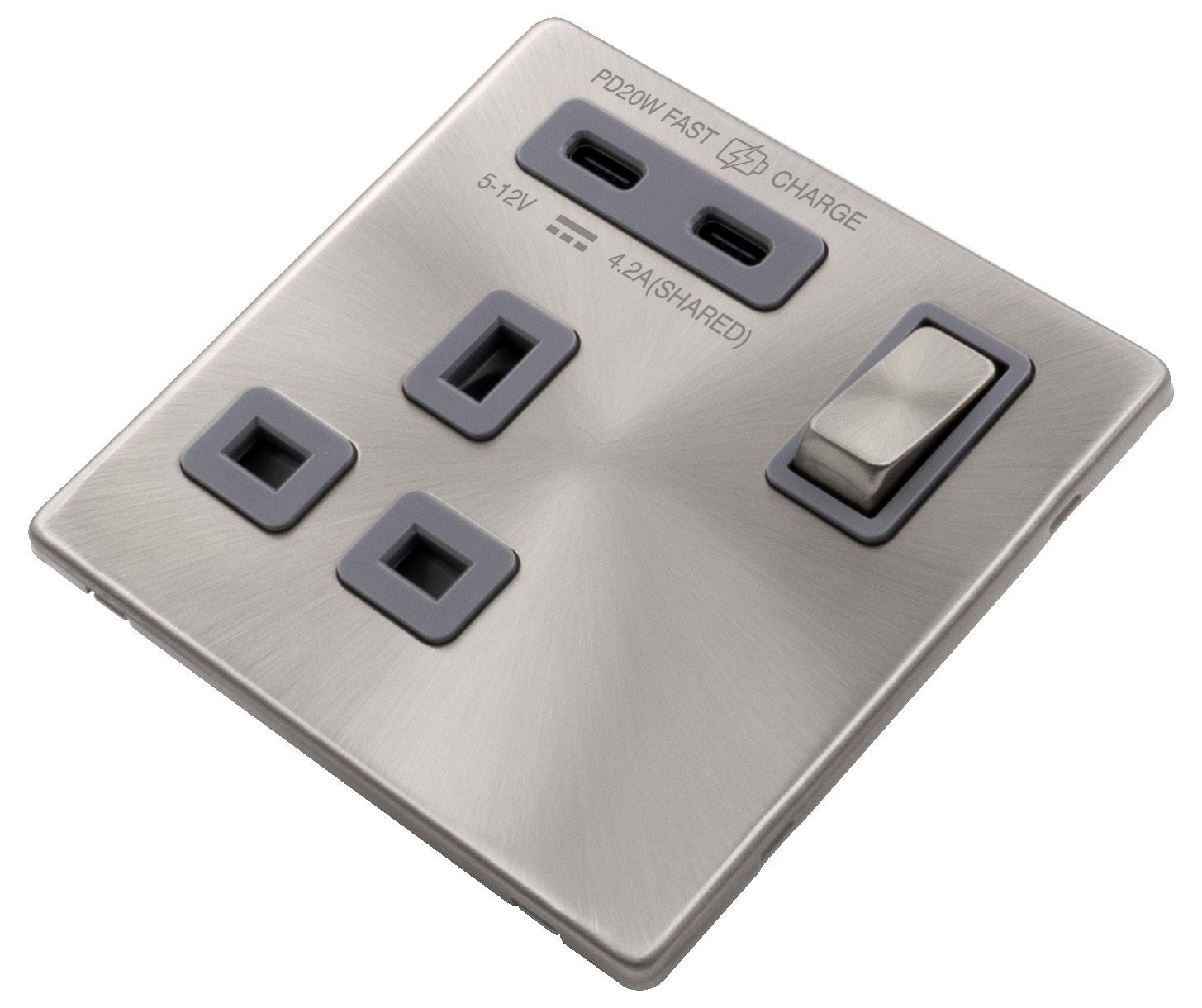
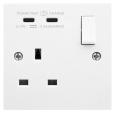
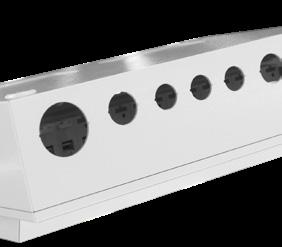
Explore our range of 1 & 2 Gang Type C USB Sockets. Experience up to 70% faster charging compared to standard 5W USB chargers.
20W USB POWER DELIVERY
TYPE C USB (5-12V DC, 3A MAX)
The new standard for power delivery.
3 PIN SAFETY SHUTTER SOCKETS
Available throughout our Click Wiring Accessory ranges.
With a precision-engineered 20W USB-C PD output, it delivers fast charging that matches or in many cases outperforms higher wattage alternatives.
* When both USB Ports are in use, the 4.2A charge is shared. The intelligent chip inside the USB PCB adjusts the output according to the load connection.
Lighting recycling and reuse misconceptions
Whilst manufacturers push on with sustainable lighting innovation, Nigel says misconceptions around lighting recycling persist among contractors: “Sadly, most commercial lighting equipment is not recycled properly. Many, perhaps most, contractors will simply place used lights in a scrap metal skip. That is unlawful. Commercial lighting often contains Persistent Organic Pollutants (or POPs), and recycling as scrap metal will not destroy the POPs. Environment Agency data suggests that only around 7% of lighting waste is properly recycled as WEEE. That should concern us all.”
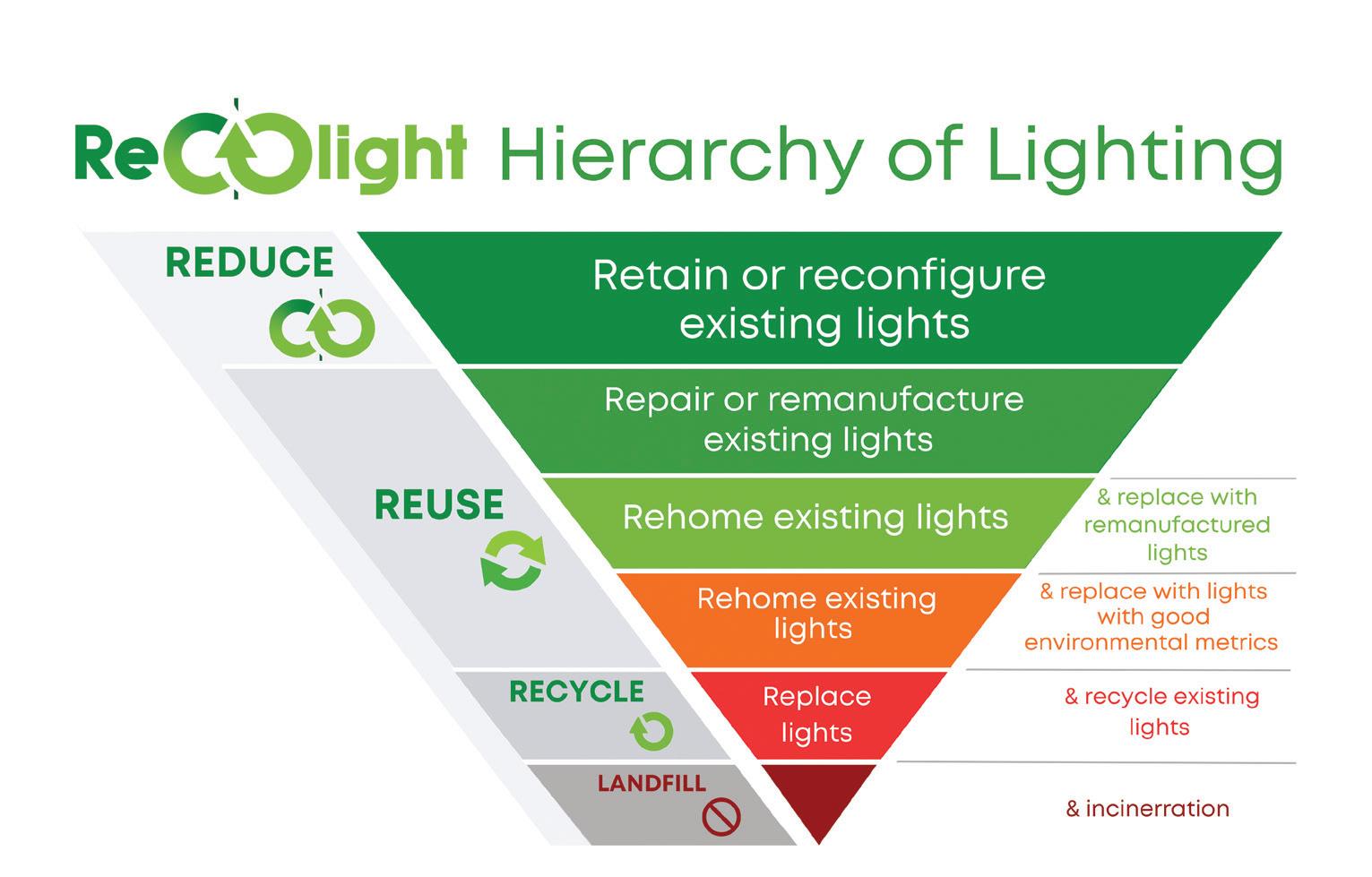
Reuse, too, is misunderstood: “Far too often, we ignore the options for reuse or refurbishment of existing light fittings. That can result in vast quantities of unnecessary recycling and lost embodied carbon, when, for example, simply upgrading the light source to LED is a very viable alternative.”
However, Nigel suggests recent policy developments are a welcome step in the right direction: “The publication of British Standards is not often a cause for excitement – but when BS 8887-221 was issued at the very end of 2024, it was genuinely a cause
for celebration. It was the result of some two years’ hard work by a committee of a dozen or so, who worked hard to develop a code of practice for remanufacture of lighting equipment. It gives practical advice to those involved in remanufacture, and confidence to those specifying remanufactured product. It has the
“BS 8887-221 gives practical advice to those involved in remanufacture, and confidence to those specifying remanufactured product. It has the potential to be a real gamechanger.”
potential to be a real gamechanger in the sector.”
He also emphasises recent Government action to ensure online retailers pay their fair share towards the cost of recycling waste electricals as a positive step forwards – and one of the highlights of his time with Recolight. “After nearly 10 years of meetings with Defra ministers, letters to ministers, preparing proposals for Defra officials, and detailed evidence gathering, online marketplaces were legally required to pay their share of WEEE costs from August last year.
“It is of immense personal satisfaction to see giants like Amazon and eBay at last required to ensure the product sold through their platforms is WEEE compliant. A level playing field is essential to ensuring that compliant companies are not put at a disadvantage, and this change is a big move in the right direction.”
More Government action needed
Shortfalls in the current WEEE landscape remain, however, with Nigel keen to see more action on waste electricals from businesses.
“The current WEEE regulations are great at managing the collection, recycling and financing of household electricals, but they are largely ineffective when it comes to waste electricals from businesses,” he explains. “The Government knows this, but constraints in the time available to draft and lay legislation, and a nervousness about placing any new obligations on businesses, mean this challenge, so far, remains unaddressed.”
He’s also concerned that the urgency to act on climate change has seemingly weakened and expects this to have a ripple effect in years to come. “The previous consensus on the need for urgent action on the climate has vanished, with two political parties both committed to repeal the Climate Change Act. That is deeply troubling,” he stresses. “Within 10 years, it seems increasingly likely that the scale and devastation of the climate crisis will necessitate huge handbrake turns in Government policy. That could mean reuse and repair are mandated wherever possible, and energy efficiency is even more important.
“For the lighting industry, that will mean sustained growth in remanufacture of lights, rather than the supply of new lights. That, in turn, may also mean more activities undertaken in the UK, as remanufacture close to the product installation site is far more logical. Remanufacture in Asia of lights from the UK is a non-starter.”
Spreading the message: reuse, refurbish or upgrade
Despite the challenges, Nigel remains optimistic – most of the UK population wants to see action on climate change, and Recolight is committed to playing its part. “What gives me hope is that the population knows better,” he says. “A major survey showed that 84% of the UK population want the Government to strengthen its commitments to address climate change.
“I am incredibly privileged to be part of a passionate and committed team that really want to provide great customer service and operational excellence, and to make a difference at the same time.”
He considers the 2021 establishment of the Circular Lighting Live conference one of his career highlights: “It has been amazing to see the way the event has resulted in real sustainability action in lighting companies.” He also points to the success of Recolight’s webinars in spreading the message: “Our webinars have been remarkably impactful too. Since 2020, we have
run 30 webinars, with 130 speakers. They have been joined by 2,800 attendees, with a further 6,500 listening in after the event.”
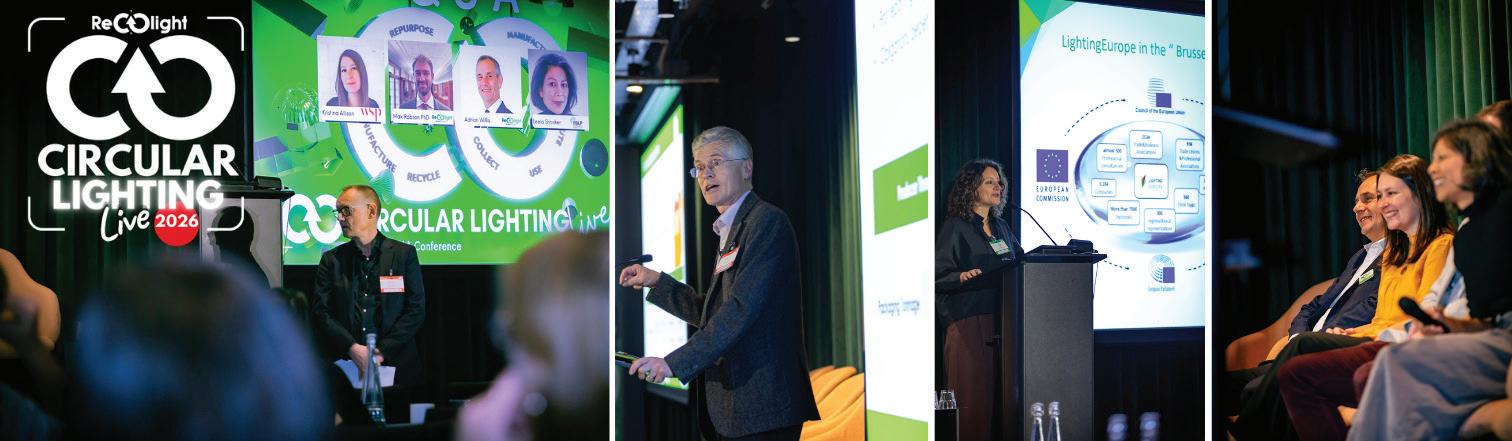
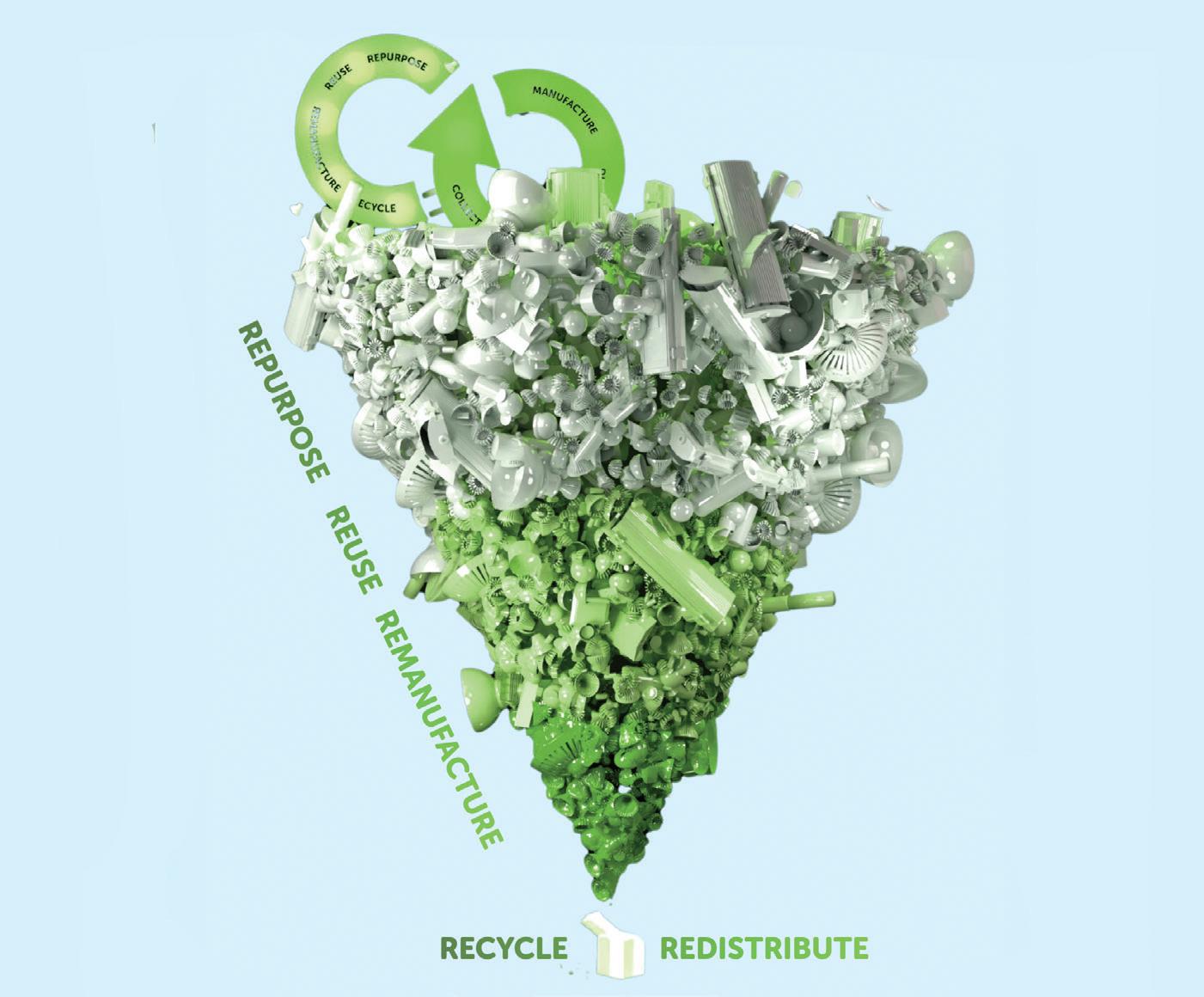
Recolight is currently focusing on partnering with organisations passionate about reducing carbon emissions, including FIS Project Reuse, Climate Action for Associations, Donate-A-Light and, most recently, Circularity in Practice. This new initiative, inspired by King Charles, invites businesses to commit to a circular economy and encourages them to rethink how products are designed, used and managed, with a strong emphasis on reuse, remanufacturing and repurposing.
To continue the good work, what’s the one practical change every electrical contractor could make today to improve end-of-life handling of lighting? “Hundreds of thousands of lights that have not yet reached end-of-life are needlessly landfilled or sent for recycling as scrap metal,” Nigel explains. “The one change any and every contractor could make immediately is always seek to reuse, refurbish or upgrade instead.
“It’s not just good for sustainability; it also creates a new income stream, and a new service. What’s not to like?”
Nigel is a passionate climate activist
It’s Coming Gnome!
Scolmore Group has kicked off a major football-themed promotion designed to reward electricians and installers during one of the biggest sporting moments of the year. The campaign – aptly titled It’s Coming Gnome – brings a playful twist to tournament season, putting installers at the centre of the action with weekly giveaways and two headline prizes of £5,000 holiday vouchers. At the heart of the promotion is Scolmore Group’s new football-themed gnome mascot. Electrotechnical News caught up with the character for a light-hearted chat.
If you were a professional footballer, what position would you play?
Being England Gnomeber 7 has always been my dream – David Beckham is my idol.
Who is the best footballer within Scolmore Group?
Aside from me, Ben from SGTV will give me a run for my money!
What is the standout prize in the It’s Coming Gnome promotion?
You can win one of two £5,000 holiday vouchers.
Which team do you predict will bring it home this summer?
Well, I do love an underdog story, so let’s go for Haiti.
We understand you remain nameless, so we’ve combined some Scolmore Group brands
with footballers to create some name ideas. Do you like any of the below?
• Bobby ScolMoore
• SangaMo Salah
• Harry MagOvia
• Jordan Clickford
• Wayne Roonycrimp
• Thierry HenrESP
I love them! I think my favourite would be Bobby ScolMoore.
Tell us a little more about how you can find a name…
If you visit our Instagram, @scolmore_group, we’ll be accepting name suggestions over on there – and maybe running a cheeky little competition!
SMART SECURITY
AT YOUR DOORSTEP
Protect your home with smart monitoring with the new Fort Wi-Fi Outdoor Doorbell and Camera
ECCXT2K
Ask the expert
Darren Staniforth Head of Electrotechnical Solutions, CEF
With over 30 years’ experience, Darren is one of the electrical industry’s leading technical experts. He began his career as an electrical apprentice, working across a range of domestic, commercial and industrial projects, before qualifying as a lecturer at Bedford College. Well known from his previous role as Senior Technical Presenter with NICEIC, Darren was appointed Head of Electrotechnical Solutions at CEF in 2022.
Have a question or industry comment?
Darren is here to provide expert technical advice and answer your queries. Send your questions to: info@electrotechnicalnews.com
Plug-in solar: safety first
In March, the Government announced plans to make plug-in solar panels available in shops ‘within months’ –but could they create a new electrical safety risk for UK homes?
The idea of plug-in solar is easy to understand and even easier to sell. A householder buys a small solar panel kit, mounts it on a shed, balcony or wall, plugs it into a standard 13-amp socket, and starts offsetting electricity use. In some European countries, so-called ‘balcony solar’ systems have become popular as a lowcost route into microgeneration. It is no surprise, then, that the concept is now attracting attention in the UK, especially with the current rise in energy costs.
But while the sales pitch sounds simple, the technical reality is not. If plug-in solar products start to gain a foothold in Britain, they will raise serious safety and compliance concerns for electricians, network operators, landlords and householders alike.
The central problem is that UK electrical systems are not designed around the same assumptions as those found in much of continental Europe. Many British homes rely on ring final circuits and BS 1363 fused plugs. These circuits, protective devices and wiring methods were developed on the basis that current flows from the consumer unit to the load. A plug-in solar inverter changes that relationship by introducing generation onto an existing socket circuit, effectively pushing power back into wiring that was not designed as a generation circuit.
That raises immediate questions about conductor loading, protection coordination and fault behaviour. On a ring final circuit, current paths can already be complex under certain loading conditions. Add reverse power flow from a plug-in inverter and there is a risk that sockets, plugs, terminations or upstream protective devices may be exposed to operating conditions they were never intended to handle. Even if the generation is relatively small, repeated or
continuous export through final circuits supplying socket outlets could create localised overheating, particularly where there are loose terminations, ageing accessories or hidden defects already present.
A complex issue
The issue is not simply one of good practice; it goes to the heart of compliance with UK installation standards. BS 7671 and the established guidance around photovoltaic systems assume that solar generation will be connected by a dedicated final circuit, with appropriate isolation, fault protection and means of disconnection. Professionally installed PV systems are hard-wired via consumer units through correctly rated protective devices, with suitable labelling and safe isolation arrangements. A plug-in kit bypasses that established installation model.
This matters most in abnormal and fault conditions. One of the major safety concerns with plug-in solar is the lack of a clear, robust isolation strategy. Emergency services, maintenance electricians and DNO staff need confidence that a circuit can be made dead and remain dead. If a plug-in generator is feeding into an ordinary socket, the situation becomes less predictable. There may be no obvious isolator, no correct circuit labelling, and no assurance that the inverter has been installed in a way that supports safe shutdown. In an emergency, that uncertainty is unacceptable.
Protection is another major concern. A standard BS 1363 plug fuse is intended to protect the flexible cable connected to an appliance, not to manage a generator operating for long periods near its upper output limits. Continuous export currents may stress plugs and sockets thermally, especially if cheap adaptors, extension leads or imported connectors are involved. If lowercost products begin to enter the UK through online marketplaces, there is a real risk that poorly certified inverters, non-compliant plugs or unsuitable cables will be used in domestic settings without any competent assessment.
Then there is the grid connection issue. In the UK, even small-scale generation is not a free-for-all. Embedded generators must comply with Engineering Recommendation G98 or G99, and the relevant Distribution Network Operator must be notified or approval obtained, depending on the installation. Plugin solar products are marketed on convenience and simplicity, but that convenience can encourage users to skip the formal connection process altogether. If these systems are adopted at scale without notification, local networks could face problems such as voltage rise, phase imbalance and unmanaged generation on feeders that were never assessed for it.
The regulatory grey area is especially problematic because plug-in systems blur the line between appliance and
fixed installation. A panel fixed to a balcony or garden frame and feeding into a home’s electrical system is not just another consumer device; it is generation equipment, and it should be treated with the same seriousness as any other source of electrical energy.
Proceed with caution
None of this means small-scale solar should be discouraged. On the contrary, there is a strong case for making solar more accessible. But accessibility cannot come at the expense of safety. If plug-in solar products are to enter the UK market in any meaningful way, they will need a proper framework – product certification, UK-specific technical standards, defined installation
requirements, compliant inverters, suitable isolation methods and clear DNO procedures.
Until that framework exists, I believe the industry should be cautious. What may appear to be a clever consumer innovation could quickly become a new category of electrical risk.
For UK electricians, the message is clear: if plug-in solar starts to arrive in volume, safety, compliance and system integrity must remain the priority.
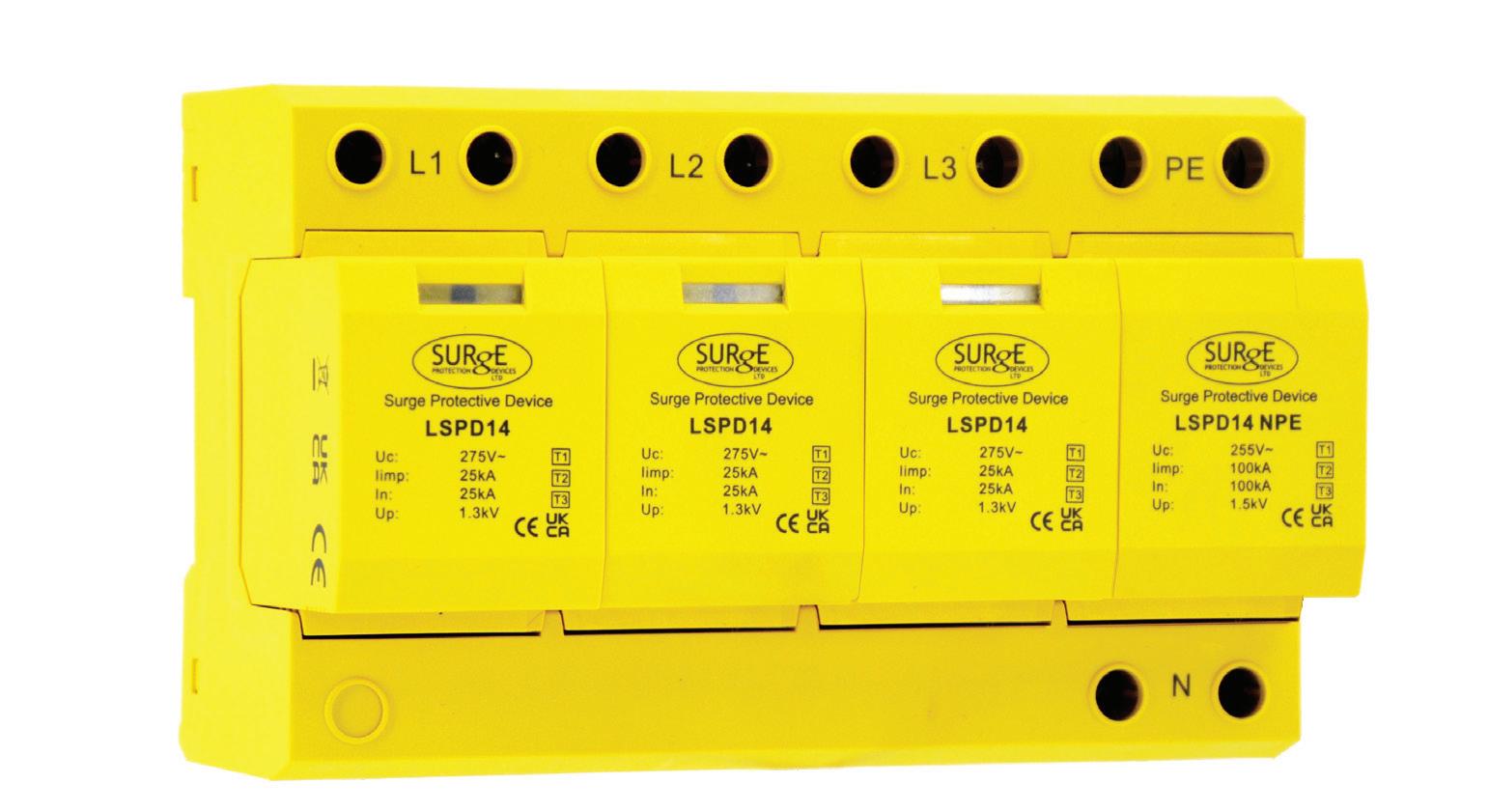
SPDs: considerations for renewables
By this point, most electrical professionals will be familiar with the term surge protection device (SPD). However, there is still confusion around when SPDs are required and which type should be installed. Kirsty Johnson MIET, Technical Director, Surge Protection Devices Ltd, provides a practical overview of SPD selection and clarifies the requirements under BS 7671, including specific considerations for EV charging and solar PV installations.
Kirsty Johnson MIET Technical Director, Surge Protection Devices Ltd
There are three types of SPD, selected based on what part of the installation requires protection.
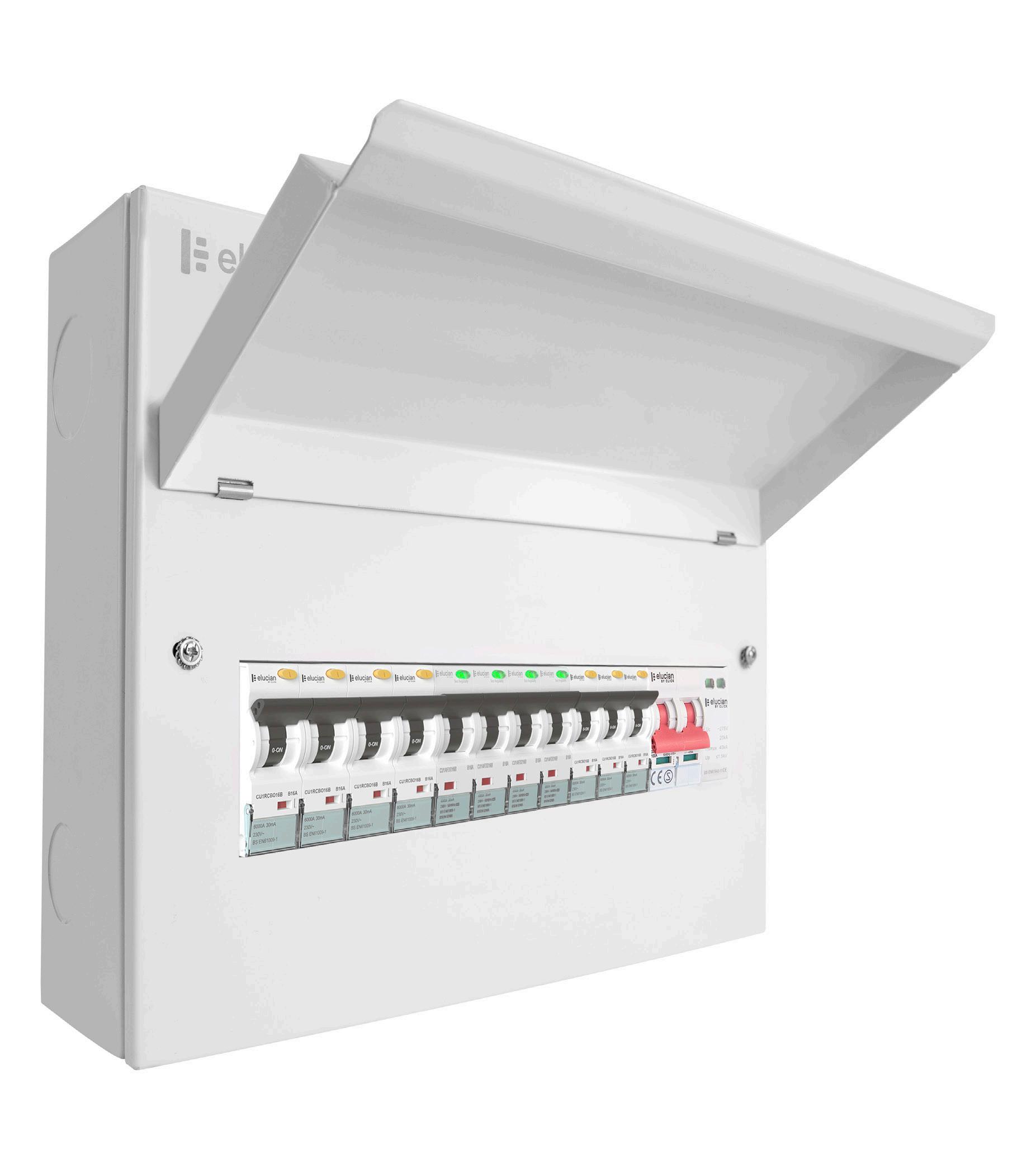
Type 1 and Type 2 SPDs are typically installed at distribution boards or consumer units, while Type 3 SPDs are used to protect specific items of equipment, such as a socket outlet or fused spur.
A Type 1 SPD is only required where a building has an external lightning protection system or where the
installation is supplied via an overhead line. In all other cases, a Type 2 SPD will generally provide adequate protection for distribution boards. Where protection is required at the point of use for sensitive or critical equipment, a Type 3 SPD may be installed downstream.
When are SPDs required?
Regulation 443.4.1 of BS 7671 states that protection against transient overvoltages shall be provided where the consequences could:
• Result in serious injury to, or loss of human life, or
• Result in significant financial or data loss.
For all other installations, SPDs are still required unless the person ordering the work formally declines surge protection and accepts the associated risk to wiring and equipment as tolerable.
“Because EV charging circuits often run externally, they are particularly vulnerable to the effects of nearby lightning strikes.”
The requirement relating to the protection of life is the most onerous. Any distribution board supplying equipment intended to protect life or prevent injury will require surge protection. As a result, the practical position of Section 443 is now that
SPDs should be installed in the majority of installations.
In reality, most buildings contain circuits that fall within Regulation 443.4.1, meaning that most distribution boards will require an SPD. Only in limited cases, where none of the criteria apply, should a discussion take place between the electrical designer and client to assess whether the omission of surge protection is acceptable.
Where a building has an external lightning protection system, BS EN 62305 applies. In these cases, a Type 1 SPD is required at the origin of the installation, and BS 7671 requirements are secondary. Type 1 SPDs will also be needed on any distribution boards supplying external circuits.
This has direct implications for two of the fastest-growing areas of the industry: EV charging and solar PV.
EV chargers and SPDs
EV chargers are both sensitive to overvoltage and commonly installed in exposed locations. Many manufacturers now either specify the installation of an SPD or reference surge protection within their warranty conditions.
Damage to EV chargers can occur due to overvoltages originating within the installation, such as switching surges or disturbances on the supply network. These repetitive overvoltages can degrade the sensitive electronic components used in modern chargers.
Equally important is the impact EV chargers can have on the wider installation. Any cable entering or leaving a building presents a potential route for overvoltages. Because EV charging circuits often run externally, they are particularly vulnerable to the effects of nearby lightning strikes.
Where a building has an external lightning protection system, the distribution board supplying the EV charger will require a Type 1 SPD, as it is feeding an external circuit. This requirement does not apply to buildings without an external lightning protection system.
Solar PV and SPDs
The rise in solar PV installations continues as consumers seek to reduce energy costs and adopt a more prosumer-based approach to energy use. One area frequently overlooked in PV system design is surge protection.
Section 443.4 of BS 7671 applies to both AC and DC installations, meaning that surge protection requirements extend to the DC side of solar PV systems – a detail often missed during design and installation.
Some inverters claim to include overvoltage protection. For an integrated SPD to satisfy the Wiring Regulations, the manufacturer must clearly state that protection is provided on the DC side of the inverter. Many products marketed as having surge protection only provide protection on the AC side. Others include individual varistors, which do not constitute a complete SPD.
Where there is any uncertainty, installers should request a certificate of conformity from the manufacturer. This document confirms the standards the equipment complies with and provides assurance of its suitability.
It is also important to note that inverters typically only incorporate Type 2 SPDs. If a building is fitted with an external lightning protection system, additional external Type 1 SPDs will always be required to comply with BS EN 62305, as PV cabling will cross lightning protection zones. The same applies to any distribution board supplying the PV system, as it is feeding an external circuit. Again, this only applies where an external lightning protection system is present.
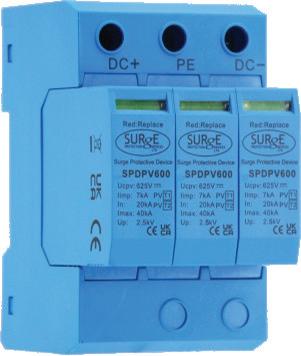
Although SPDs are still classified as Type 1 and Type 2 devices, DC SPDs for PV systems are specifically designed for DC applications and differ significantly from their AC counterparts. Only SPDs designed and rated for DC use should be installed on the DC side of a solar PV system.
Selecting a PV SPD is straightforward once the required type has been identified. The remaining consideration is the inverter operating voltage, most commonly 600V or 1000V, although specialist systems may require alternative ratings. surgedevices.co.uk
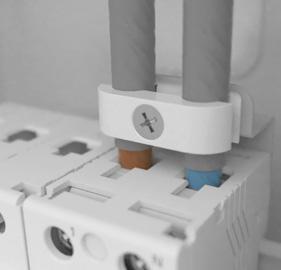
Secure hold: Two stage locking mechanism ensures reliable retention of all conductor types
Convenient test ports: Located on both sides for quick continuity checks in any position.
Maximum visibility: Transparent housings and strip length guide for easy visual inspection.
No accidental release: Lever opens and closes in the opposite direction to the conductor entry point.
Fast installation: Simply strip solid conductors and push them in - no need to open the lever.
Wide compatibility: Suitable for solid, stranded, and flexible conductors from 0.14 mm² to 4.0 mm² - rated up to 32 A.
Compact design: Perfect for installations in tight or crowded spaces.
32A 4mm2
ATS: reliable power when it matters most
Automatic transfer switches (ATS) may not be the most visible part of an installation, but most contractors will agree they are among the most critical. When power continuity matters, the ATS is where a good design proves itself, or where weaknesses begin to show, say Kieran DeBanks, ATS Offer Manager, and Louise Baker, Contractor Channel Manager, Schneider Electric.
WLouise Baker Contractor Channel Manager, Schneider Electric
Kieran DeBanks ATS Offer Manager, Schneider Electric
ith standby generators now common across commercial, healthcare and infrastructure projects, contractors are paying closer attention to how transfer switches behave on site. That includes how smoothly they commission, how they respond to genuine supply faults rather than minor disturbances, and how practical they are to maintain.
What matters now is not simply compliance at handover, but confidence that the system will respond sensibly and remain workable long after everyone has left site.
Where ATS choices make the difference
At its core, an ATS ensures power to the demand when the normal supply fails. In reality, contractors know performance is defined by how a system behaves under real conditions, not just on paper. How an ATS monitors voltage and frequency,
“What matters now is not simply compliance at handover, but confidence that the system will respond sensibly and remain workable long after everyone has left site.”
how decisively it responds to real faults, and how it manages generator operation all influence long-term performance. Poor decisions here often show up as nuisance transfers, unnecessary generator starts, or systems that behave differently during a real outage than they did during witnessed testing.
On sites such as hospitals, data
facilities and transport infrastructure, even short interruptions can cause disruption or equipment resets. Transfer switches that behave predictably help avoid these issues and reduce the likelihood of contractors being called back to investigate problems that only appear once a site is live. Commercial clients are increasingly expecting the same standard of performance.
There is also greater scrutiny around generator run hours. ATS systems that avoid unnecessary starts and extended runtimes reduce fuel use and equipment wear, making both handover and ongoing operation simpler to justify.
Matching the technology to the job
Different projects still demand different approaches, and understanding load tolerance remains fundamental. Open transition transfer switches continue to suit installations where a brief
interruption is acceptable. Closed transition systems are increasingly specified where power continuity is critical, helping limit disturbance during changeover and protect sensitive equipment.
Bypass isolation has also become a key consideration. Being able to maintain or test the ATS itself while keeping the load energised removes a significant future risk, particularly on live buildings or refurbishment projects where shutdowns are hard to agree.
How manufacturers are supporting contractors
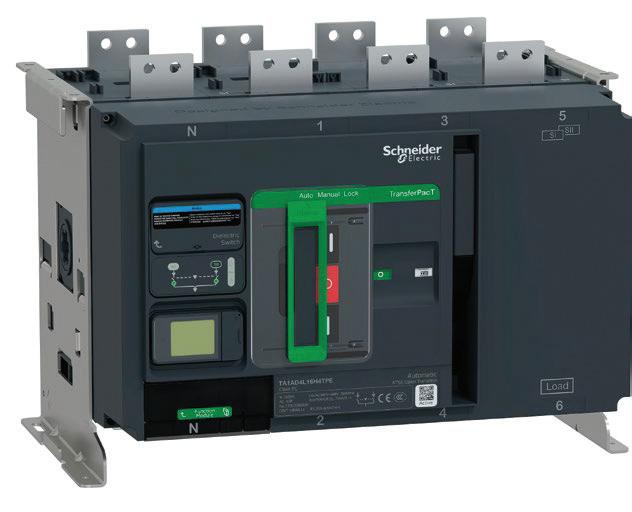
Manufacturers are responding by prioritising long-term performance over headline features. Schneider Electric’s TransferPacT Automatic platform focuses on flexibility and visibility, allowing control, monitoring and communications to be tailored to the installation.
To ensure the TransferPacT stays up to date with the demand of the application, the use of hot-swappable function modules allows contractors to simply and effectively update the features and functionalities of the TransferPacT throughout its lifespan without disrupting power.
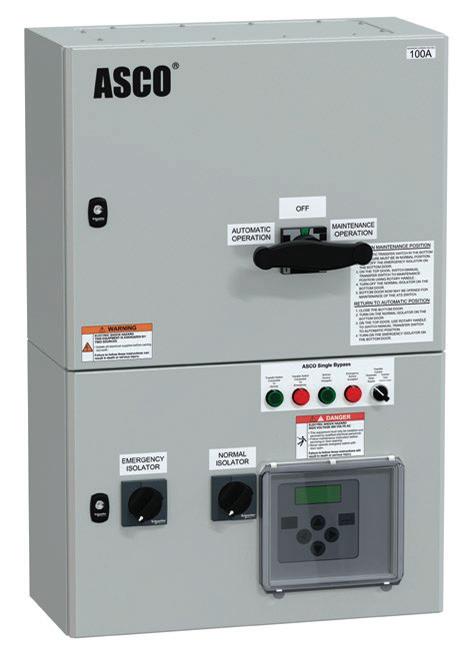
ASCO Power Technologies places strong emphasis on robustness and maintainability, particularly for mission critical environments. Its transfer switching solutions support safe servicing and reliable long-term operation, with a range of bypass arrangements that help avoid power disruption during maintenance or servicing of the ATS.
What is changing next?
Recent developments reflect contractor feedback around serviceability and control. Single way bypass solutions at lower current ratings are making maintainable ATS designs achievable on a wider range of commercial projects and life-safety applications. ASCO’s forthcoming Single Way Bypass transfer switch supports this shift, allowing essential maintenance to be carried out while keeping the load live, with options for both indoor and more demanding environments.
Andrew Moseley, Commercial Director, City Electrical Factors (CEF)
“ATS selection should prioritise predictable performance and maintainability. Schneider’s TransferPacT platform, for example, includes modular control, closed-transition and bypass options that help avoid nuisance transfers and simplify servicing. CEF provides product information and technical support to help contractors match ATS features to real site needs and ensure reliable long-term operation.”
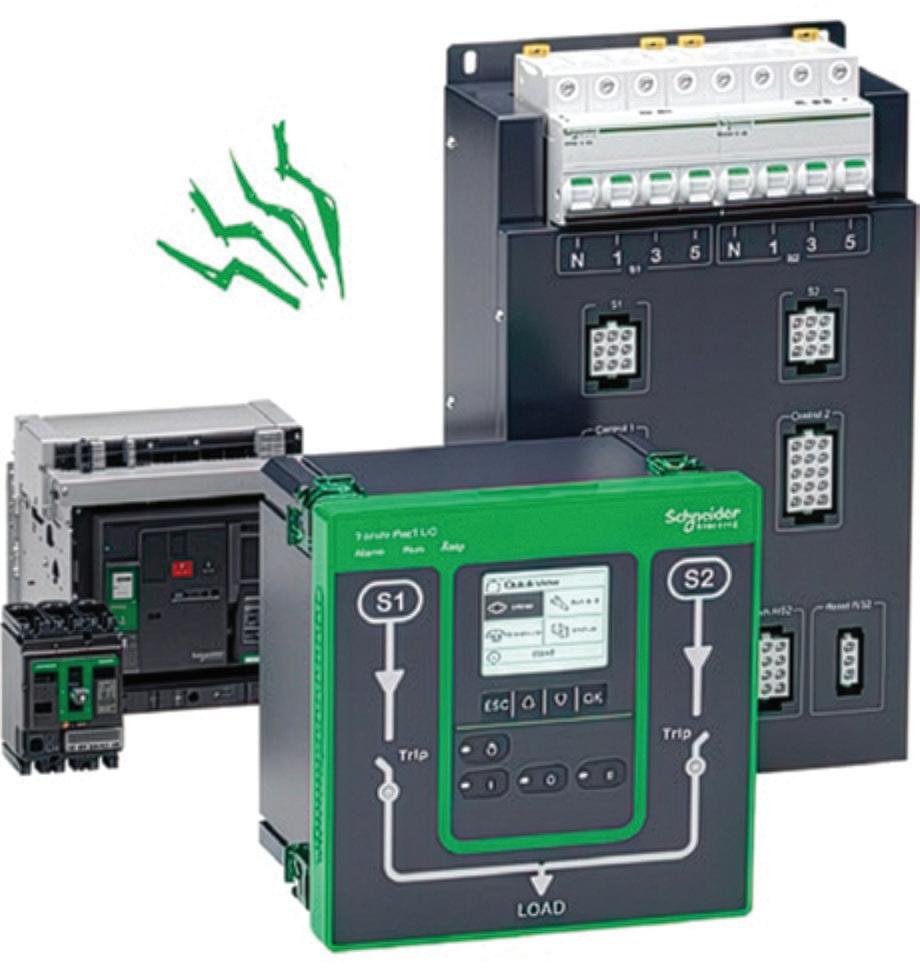
At the controller level, Schneider Electric’s forthcoming TransferPacT Universal Controller introduces greater control over switching behaviour. Improved supervision of voltage and frequency, along with modular expansion options, helps installers align system behaviour with real site conditions and future monitoring needs.
For electrical contractors, ATS selection is no longer a box ticking exercise. It affects how a site runs, how easily it can be maintained, and how often you get called back after handover. Choosing systems that behave predictably, are practical to work on, and suit the realities of the building helps prevent problems surfacing years later.
When an ATS reacts correctly to real faults and never becomes a talking point, it is usually the result of the right decisions being made early.
se.com
Cable myth-buster part three: CPR
In the final instalment of a three-part series debunking common cable misconceptions, Paul Bellamy, Managing Director of flex7, discusses CPR and why – confusing as it might be – it’s not going anywhere.
“SPaul Bellamy Managing Director of flex7
ince Brexit, CPR is not a requirement in the UK.” Sorry, that’s wrong. Just like many of the rules and regulations that govern our everyday lives here in the UK, not much has really changed since Brexit and, with respect to CPR,
that’s a very good thing.
The requirement for cables to be CPR-tested, classified and certified became mandatory in the UK in July 2017, and that legal requirement remains in place today. CPR provides everyone responsible for specifying or selecting a cable for installation the means to compare one against another in respect of its reaction to fire in a way that was almost impossible before its introduction.
Testing systems and categories
Broken down into seven Euroclass categories, the way a cable will react to fire ranges from ‘Unknown’ (FCA) to
‘No Reaction’ (ACA). Between these two extremes are a further five categories and two testing systems. Products that fall into Euroclass ECA or DCA are tested using System 3, whereas products from CCA through to ACA must undergo the far more rigorous System 1+.
Without going into the nitty-gritty of the different testing systems and category requirements (and there’s a lot of nitty-gritty to wade through), a simple rule of thumb for anyone selecting cables for installation in public or densely populated buildings (schools, hospitals, offices, etc.) would be to head straight for those tested to System 1+ as a starting point. These have gone through stringent testing by an authoritative body such as BASEC and must be retested on a regular basis. System 3 products are tested once with no requirement to be tested again, ever.
The certification and Declaration of Performance that is issued against a System 1+ product is also far more detailed, and rather than just showing
the overarching Euroclassification, for example DCA, goes on to give information relating to smoke propagation, burning droplets of molten material produced and the acidity of any harmful gases emitted –an example would be CCA s1a, d1, a1.
It’s also worth noting that a higher classification can be used where a lower classification is specified, but not the other way round.
Easier cable selection
Remember, CPR is only focused on a cable’s reaction to fire and, generally, the higher the Euroclass, the more expensive the product. For example, a cable in the ECA class is probably there because it uses PVC compounds which are relatively cheap. At the other end of the spectrum is ACA
“A higher classification can be used where a lower classification is specified, but not the other way round.”
where we’re looking at something like an MICC cable, and I doubt many of us would expect to buy 100m of pyro for the same price as 100m of PVC T&E.
Read the previous two instalments of the cable myth-buster series online at electrotechnicalnews.com
The subject of CPR can be daunting, but fundamentally it’s a great tool to have at the disposal of those tasked with cable selection. For that reason alone, we should be glad it wasn’t gleefully lobbed back across the English Channel at the end of January 2020.
So, there we have it. Three common cable misconceptions that, when taken at face value, seem perfectly reasonable – no doubt the reason they’ve gained traction in the first place. Dig a little deeper, though, and it becomes obvious why they don’t hold water: BASEC is not the world’s police for cable (and I doubt it wants to be); LSF and LSHF cables are produced using completely different compounds; and CPR makes cable selection for reasons of safety 100% easier than it used to be.
flex7.co.uk
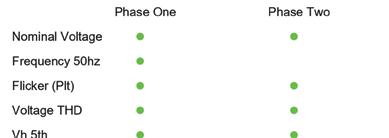
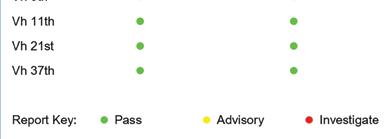
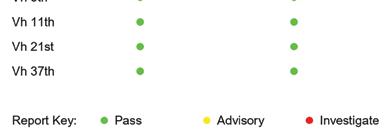
Power Quality Surveys
• Power quality measurements to identify power problems and hidden issues
• Recommendations on power quality solutions to improve voltage quality
Harmonic Analysis
• Verification of harmonic compliance with power quality standards
• Understand the source of the harmonic distortion on the electrical network
Power Quality Clinic
• Reporting and consultancy with our Power Quality as a Service (PQaaS)
• Flexible subscription plans for all sizes of business (Free tier available)
Power Quality Health Check
• Upload your own survey data to us through our secure online portal
• Standardised power quality report compatible with any analyser or logger
Expert in the measurement and analysis of power quality
Fire safety compliance
Fire safety compliance is a critical consideration for every project. With regulations continuing to evolve, you must understand how to remain compliant in order to protect lives. Here, Terry Adams, Technical Services Manager at Marshall-Tufflex, looks at the key requirements in relation to cable management to ensure your work stands up under scrutiny.
Terry Adams Technical Services Manager at Marshall-Tufflex
In recent years, stricter fire safety rules around cable management have been introduced following serious incidents where cable systems failed in fire conditions. When containment systems collapse under extreme heat, loose cables can obstruct escape routes and create serious hazards for both occupants and emergency services.
These risks led to major changes in the 18th Edition of the IET Wiring Regulations, particularly Regulation 521.10.202. This requires all cables to be supported by non-combustible fixings that can withstand temperatures of up to 1000°C for as long as 120 minutes. Importantly, this now also applies across the entire installation – not just in escape routes as was previously the case.
Choosing compliant cable support methods
There are two main ways to achieve compliance. The first is using steel cable management systems. Steel containment, such as trunking, tray or basket, is widely regarded as a straightforward and practical
solution, as it meets the fire resistance requirements due to its ability to maintain structural integrity at very high temperatures.
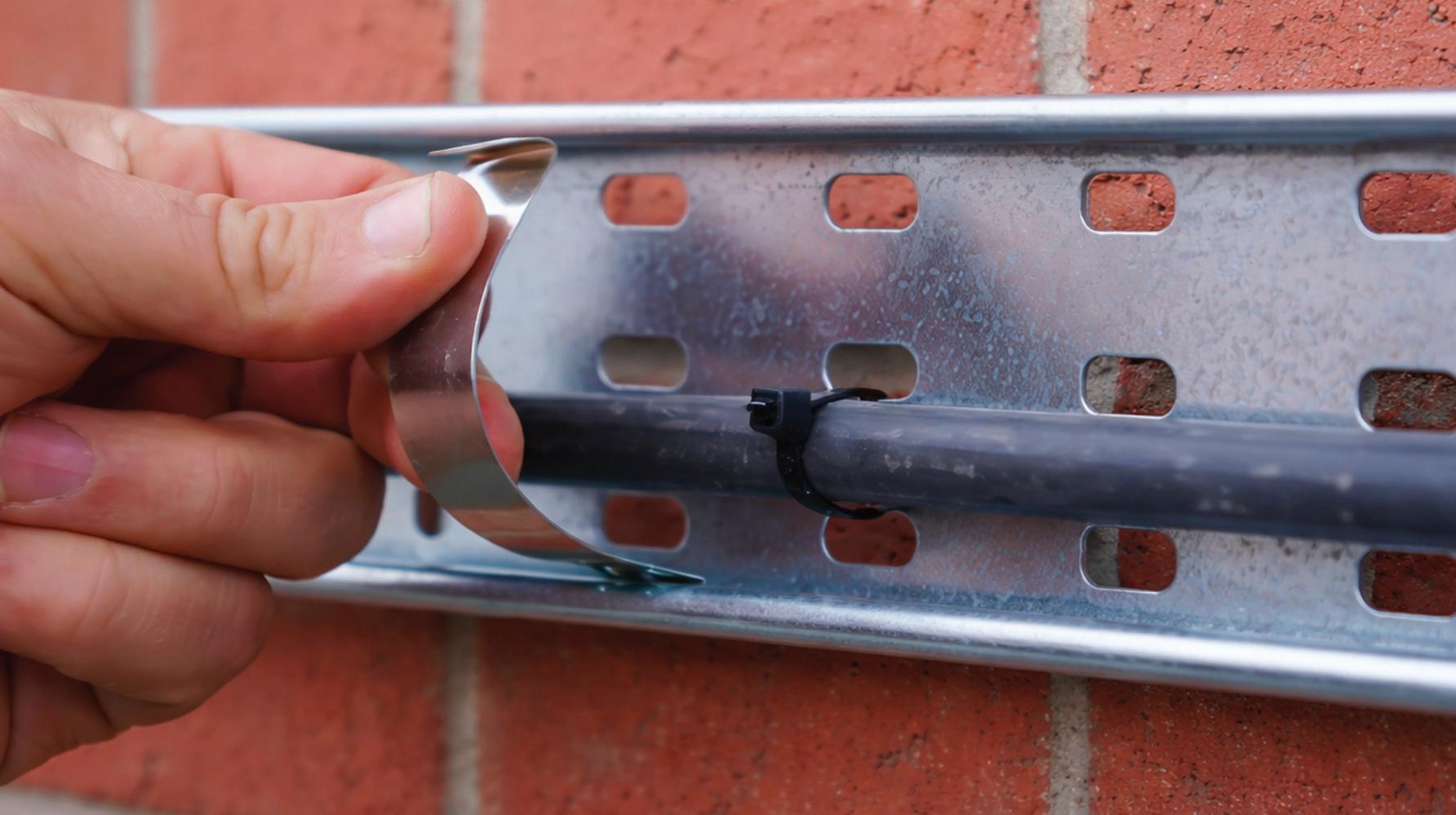
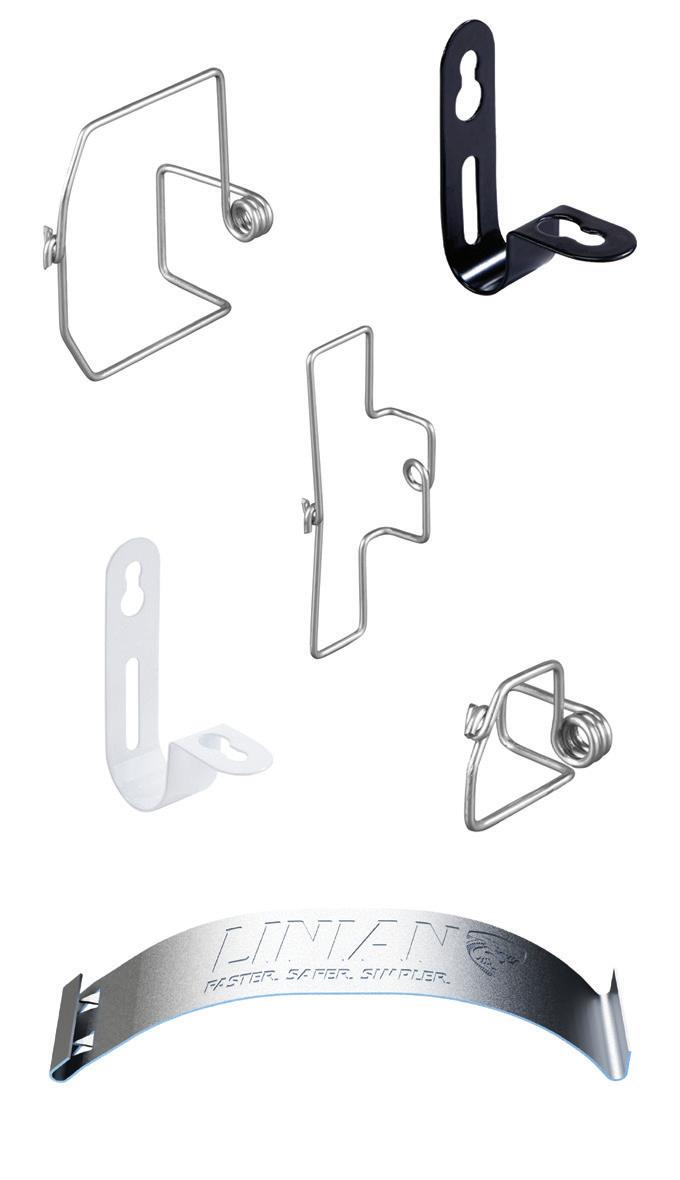
The second option is to use fireresistant metal fixings to secure cables directly to the structure. This includes steel clips, cleats and ties
“Traditional plastic fixings are no longer suitable as a sole means of support, as they can fail quickly in fire conditions.”
fixed with appropriate fire-rated anchors such as masonry screws or metal cavity fixings. This approach is particularly useful where plastic containment is still being used, but additional support is required to meet the regulation.
It’s important to note that traditional plastic fixings are no longer suitable as a sole means of support, as they can fail quickly in fire conditions.
Matching products to installation types
Different installations will require different solutions, and understanding this can save time on site. For example, PVC-U conduit and mini trunking typically require steel clips that secure over the containment and fix back to the wall. PVC-U perimeter trunking systems, on the other hand, will need internal cable clips to ensure cables remain
supported if the trunking softens or fails. For cable tray installations, firerated steel cable tray clips can lock into place by hand and will maintain their hold under extreme heat.
Many contractors are now opting for system-specific accessories designed to integrate directly with containment products, helping to speed up installation while ensuring compliance.
Installation standards that impact work
Clearly, compliance isn’t just about the products being used; it’s also about how they are installed. Guidance from industry bodies such as BEAMA outlines best practice for preventing premature collapse of cable systems in fire conditions. This includes defining zones within a building that dictate how much movement cables are allowed in the event of a fire:
Andrew Moseley, Commercial Director, City Electrical Factors (CEF)
“Recent cable management regulation changes rightly focus on robust support and fire resilience. Systemmatched steel containment installed using fire-rated metal fixings and guidance from trusted manufacturers such as Marshall-Tufflex makes compliance straightforward. CEF offers technical guidance and comprehensive product availability to help contractors specify and purchase compliant solutions that meet the new standards and protect escape routes.”
• Low-level areas (up to 800mm) and mid-level zones (up to 2100mm) have strict limits on how far cables can drop.
• High-level installations must ensure cables do not fall below safe head height.
• Vertical runs must be tightly secured to prevent excessive movement.
These requirements directly affect fixing spacing and the quantity of supports needed, so it’s important to factor this into installation planning. Doorways and access routes also require special attention, with restrictions on where cables can be routed around these areas to maintain safe egress.
Staying ahead of compliance
Clients expect the highest standards from contractors. Demonstrating a clear understanding of compliant cable management can set you apart and reduce the risk of costly callbacks or failed inspections.
Trusted manufacturers will be able to provide valuable technical guidance and support, as well as a portfolio of reliable and tested product solutions, to ensure your work is compliant and able to perform as intended should a fire or potential hazard occur.
marshall-tufflex.com
The latest updates on skills training and apprenticeships for employers, educators and learners...
The latest updates on skills, training and apprenticeships for employers, educators and learners...
• Perfect for employers who want to keep up to date with the latest news and views
• Perfect for employers who want to keep up to date with the latest news and views
• Regular product giveaways
• Regular product giveaways
• Informing the industry on funding, legislation and key updates
• Informing the industry on funding, legislation and key updates
•
Technical focus
Jake Green Head of Technical Engagement at Scolmore Group
Jake Green is Head of Technical Engagement at Scolmore Group, having joined the business in 2021 and progressed from Technical Engagement Engineer to lead the function. He works closely with consultants, specifiers and contractors, advising on compliant solutions amid evolving regulations. With 17 years’ industry experience, Jake began as an apprentice before moving into maintenance and facilities management, later delivering technical training at Certsure (NICEIC/ELECSA).
Changes to BS 5266-1 Emergency Lighting
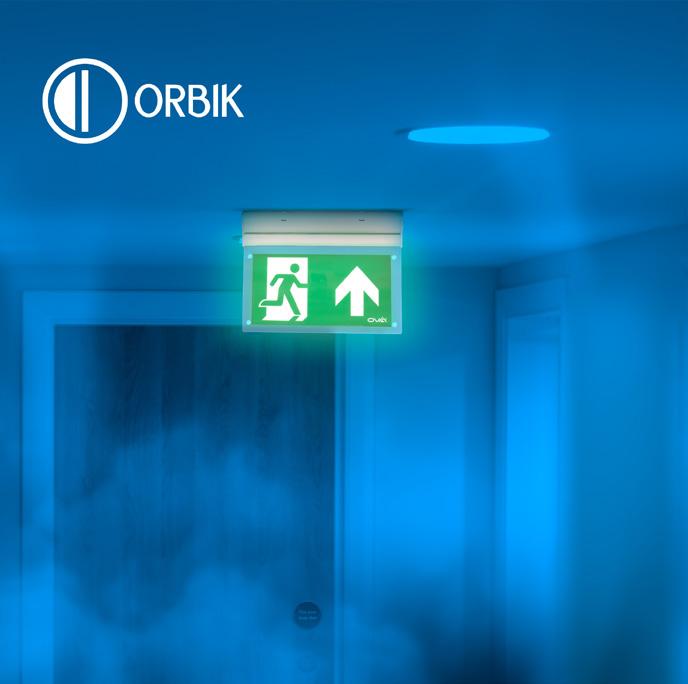
Jake Green, Head of Technical Engagement at Scolmore Group – which includes the Orbik emergency lighting range by Ovia – examines what the 2025 updates to BS 5266-1 mean for emergency lighting designers and installers.
The updating of the emergency lighting code of practice, BS 52661:2016, to the 2025 version has recently been published. This update follows the amendments to the related EN standards, EN 1838 (Lighting applications – Emergency lighting for buildings) and EN 50172 (Emergency escape lighting systems), both of which were published in 2024.
This article will highlight some of the changes made to the standard. However, it should be noted in general that some notes have become clauses, and some clauses have become notes.
Emergency lighting functions
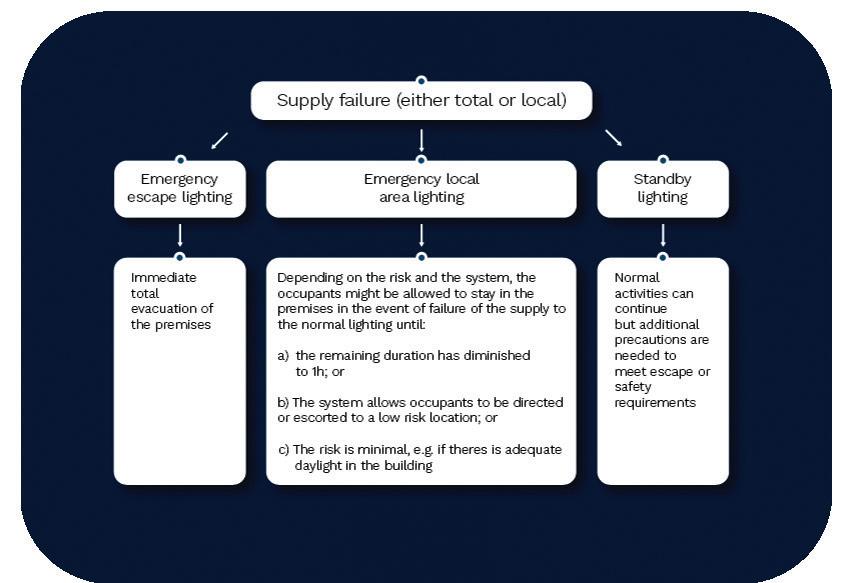
The 2025 edition has added emergency local area lighting
(formerly emergency safety lighting), which provides lighting for safe movement in premises when the occupants do not need to evacuate the premises immediately.
Figure 1 (below) of the standard has been updated to detail this change.
Supply of plans
Clause 4.2 has incorporated the recommendations in BS EN 50172 for the supply of plans to include escape route signs and special locations.
Defined escape routes (5.2.5)
There has been a slight change to the minimum recommendations regarding the floor level illuminance in defined escape routes. The minimum level is now to be 1 lx across the whole escape route width.
However, the border up to 0.5 m may be excluded. Where the defined escape route is less than 2 m, the borders of ¼ of the escape route width should be excluded.
Open areas (5.2.6)
In the 2016 standard, open areas having a floor area in excess of 60 m2 were recommended to have a minimum illuminance of 0.5 lx – this remains the case in the 2025 standard. However, where an escape route passes through an open area which is not clearly defined, the 2025 standard recommends that all of the open area should be treated as an escape route. In such a case, the emergency escape lighting should be a minimum of 1 lx at floor level. BS EN 1838 gives details on illuminance for open areas.
High-risk task areas (5.2.7)
The recommendations regarding high-risk task areas to have a minimum illuminance level of 10% remains. However, the 2025 standard recommends that the illuminance is never less than 15 lx at the location of the point of risk.
Siting of luminaires and special locations (5.2.8.1)
The list detailed in this clause has been amended and added to. Emergency escape lighting must now also be provided in escape routes, open areas, high-risk task areas, and points of emphasis, including:
• externally illuminated escape route signs, escape route direction signs and other safety signs needing to be illuminated under emergency lighting conditions.
• at each change of direction.
• …outside a building to a place of ‘ultimate safety’.
• near the call point where an alarm call is received from a passenger lift car and the associated lift winding facilities.
• corridors from all passenger lift doors to the nearest escape routes.
• near each piece of firefighting equipment and call point so that at least 5 lx vertical illuminance is provided at the fire alarm call points, firefighting equipment, panel, also escape and rescue plans as defined in BS ISO 23601.
• near each first aid post so at least 5 lx vertical illuminance is provided at the first aid box.
External areas in the immediate vicinity of exits (5.2.8.2)
Reference is now made to places of ultimate safety, and not merely to exits to a place of safety. Furthermore, the performance recommendations for the illumination of those areas and assembly points should be included in the building’s fire risk assessment and evacuation plan.
Toilet facilities and changing rooms (5.2.8.5)
There has been an expansion of
the recommendations concerning toilet facilities and changing rooms having an area exceeding 8 m2. These locations should be fitted with antipanic lighting and have emergency escape lighting to levels required for escape routes (1 lx).
For single occupancy toilets with baby changing facilities, illuminance of 5 lx should be provided at the height of the changing mat. Where toilet alarms exist, these should also have 5 lx vertical illuminance.
In accessible toilets, a minimum level of illumination is 5 lx at floor level. Furthermore, accessible toilets and multi-closet facilities should have emergency illumination from at least one luminaire.
Public indoor swimming pools (5.2.8.8)
This is a new clause recommending minimum illuminance of 5 lx on the water surface as well as circulation areas and pool surrounds. The clause also references BS EN 12193:2018 which covers light and lighting in sports facilities.
Distance factors and viewing distance for sign identification (5.2.9.1.3)
Clause 5.2.9.1.3 has been updated and has had a title change. Reference is still made to BS 5499-4:2013 Table 3 and Table 2.
Other externally illuminated safety signs (5.2.9.2)
Clause 5.2.9.2 now combines the previous recommendations of 5.2.9.2.1 and 5.2.9.2.2 and simplifies the clause.
Power supplies and equipment used as electrical sources for safety services (ESSS) (7)
The commentary to this clause makes it clear that the ESSS is for the exclusive purpose of supplying power to the emergency escape lighting during normal power failure.
Clause 7.1.1 makes it clear that the ESSS should remain operational even should a circuit fault occur in a dedicated safety circuit. Furthermore, the system designer should apply independent ESSS for each safety service to limit any lack of functionality of the safety service.
The system should be designed to deliver the rated output power in both ‘watts’ and ‘volt-amperes (VA)’, taking account of the power factor of the load. Account should also be given to inrush current or starting load. Any change to the load during the life of the system requires the load data to be recalculated and records updated.
Central safety power supply systems should be operated, tested and serviced in accordance with manufacturer’s instructions (7.1.2).
Where use is made of an uninterruptible power supply (UPS), similar recommendations regarding manufacturer’s instructions exist (7.1.3). Reference should also be made to the requirements of Regulations 560.11 of BS 7671 and the referenced BS 8519 standard.
The previous clause 7.2.3 has been updated in clause 7.1.4 and now, in addition to the existing recommendations, also recommends the power supplies are only accessible to skilled or instructed persons and are also adequately ventilated.
Clause 7.2.1 makes general recommendations regarding compliance with manufacturer’s instructions for emergency lighting applications. This includes any replacement policy. Care should also be given to any end-of-life requirements under current legislation.
Wiring
systems and circuits (8)
Section 8 has been significantly rewritten, although much that existed remains.
Clause 8.2.1 now details a list, a) to g), for a designer to address as part of their responsibilities. This includes measures for continuity of supply as well as conditions where it is not possible to loop in and out of luminaires.
Clause 8.2.2 provides greater clarity on the recommendations regarding types of cables and wiring systems. However, much of this remains consistent with the 2016 standard.
Reference is made to the requirements regarding premature collapse within BS 7671 in addition to those detailed in clause 8.2.3.
Clause 8.2.5 now details recommendations regarding the impact strength (5 J) as well as the use of cables in conduit for aesthetic purposes and for the conduit to conform to BS EN 61386-1.
Greater clarity is provided where the ambient temperature is either high or low within clause 8.2.10.
Clause 8.2.14 recommends that all cables supplying emergency lighting luminaires are identified either by a common colour or at every connection to ensure that they are distinguished from other circuits.
Design procedure (10)
In this section a variety of changes have been made, and designers should take particular care to ensure they have addressed the changes. For example, clause 10.3 has added a new recommendation regarding the checking of disability glare.
Similarly, clause 10.4 now recommends an additional check on the procedures to protect a system in case they are shut down for a prolonged period. Additional notes are also included providing informative help.
Clause 10.7.2 covering the handover documentation is much more detailed than the 2016 standard and provides a checklist to ensure the correct documentation is included in any handover.
Certificates and logbooks (11)
As with clause 10, this section has been amended and enhanced.
The commissioning inspections and tests as detailed in BS EN 50172:2024 are to be part of the handover documentation. Any variations from BS 5266 within the specification or design proposal should also be documented and included in the handover documentation.
An additional recommendation is now included where photometric verification of the system, in accordance with BS EN 50172:2024, is now to include both initial verification and at intervals not exceeding five years. This is to confirm that the emergency lighting system performance remains valid.
Conclusion
Any designers, installers, maintainers and responsible persons should avail themselves of the updated standard.
There have been a number of significant changes and particular note should be given to the regularity of the photometric verification as well as the increase in illuminance in escape routes and open areas used as escape routes.
Beelo combines modular lighting heads, premium finishes, and an optional emergency version with smart performance controls. Adjust colour temperature and wattage using the built-in CCT and power switches for complete control over your outdoor lighting.
SELF TEST AVAILABLE
Also part of the Beelo range:
Bollard Head options
Impact Absorbing Base
Lighting matters
CPD: an investment in your future
In today’s fast-changing environment, electrical professionals must stay up to date with regulatory changes, emerging technologies and market developments to demonstrate ongoing professionalism, competence and robust knowledge. Continuing Professional Development (CPD) plays a key role in helping contractors maintain and update their existing skills, acquire new skills and progress their careers, says James Bennett, Professional Business, Market Leader, Signify UKI.
James Bennett Professional Business, Market Leader, Signify UKI
It is not possible to train for a career and expect that, once qualified, there is little more to learn. The growth of knowledge and competitive pressures make it essential to keep learning while on the job.
Employers, too, often require employees to be more flexible, and many career opportunities require individuals to have broader education and training achievements. In the case of a new job, increased responsibility may demand a rapid and systematic upgrading of knowledge and skills. This could simply be due to increasing seniority,
which requires leadership skills, as well as training, developing and mentoring others, all of which demand new learning.
In addition, there is increasing emphasis on competence. Only someone who can demonstrate ongoing competence will be able to make a reasonable professional judgement. CPD demonstrates achievements and is evidence of both your continuing competence and your aim to realise your full potential.
For electricians, CPD covers everything from staying current with BS 7671 amendments and
new installation methods to developing specialist skills in emerging technologies. In the UK, for electricians registered with competent person schemes such as NICEIC, CPD is a formal requirement with a minimum annual hour target – NICEIC requires a minimum of 30 hours per year while other schemes have similar requirements. For all other electricians, CPD is strongly recommended as a professional best practice.
Whether or not it is mandatory for you, the benefits are clear – better technical knowledge, safer working practices, ability to offer more services, higher earning potential and greater confidence on every job.
CPD for lighting professionals
CPD selection should be based on short- and long-term career intentions, learning opportunities available, employer business objectives, interests, and development gaps one may recognise. For lighting professionals, CPD should focus on topics that matter, such as humancentric lighting, workplace lighting, sustainability practices and smart buildings.
At Signify, we support this need through Chartered Institution of Building Services Engineersaccredited CPD courses available through the Signify Lighting Academy. We are dedicated to advancing industry knowledge through our comprehensive CPD training programmes that are designed to keep professionals abreast of the latest trends, technologies and best practices in the lighting industry. These on-demand
courses are free for learners and form part of a comprehensive programme designed to advance knowledge and professional capability, to be able to specify and install lighting solutions that meet the highest standards.
Developed by leading lighting experts, the academy provides high-quality educational resources covering a wide range of topics. Each course includes assessments and certification upon completion. The programme is designed for specifiers, lighting designers, facilities managers and installers, equipping them with the knowledge required to address key industry challenges – from sustainability targets to essential lighting design principles.
Courses cover topics such as the science behind circadian lighting, the impact of human-centric lighting, segment-specific lighting applications like healthcare, outdoor applications, connected lighting, and sustainability topics such as EPDs and designing through 3D printing. The courses vary in duration, ranging from 15 minutes to one hour.
Andrew Moseley, Commercial Director, City Electrical Factors (CEF)
“CPD remains essential as standards and technologies are changing more quickly than ever. Accredited programmes such as Signify’s Lighting Academy help installers stay up to date with BS 7671, human-centric lighting and smart building topics. As a distributor, CEF supports electricians with accessible training, technical guidance and product information to facilitate continuous professional development and ensure new technologies are available and able to be installed safely.”
Our programme of courses, seminars and events helps lighting professionals maintain and update their skills, develop new expertise and support career progression. By participating in the academy, professionals can strengthen their credibility, achieve personal development goals and realise their full professional potential.
Bright ideas
At Signify Lighting Academy, we believe knowledge is as powerful as illumination. Our CPD courses are designed to give architects, designers, contractors and consultants the confidence to specify and install lighting solutions that meet the highest standards. Whether you’re refreshing core knowledge or staying ahead of the latest innovations, our sessions combine technical depth with real-world insights.
CPD will build your knowledge and understanding to help you deal with the emergence of new demands and priorities in the profession, changes in the law or regulations, and new challenges at work. It is the armour needed to maintain your professional competency and fill any gaps in your knowledge, while building on your strengths.
signify.com
Next-generation electrical testing
David Sweetman, Managing Director – Commercial at Di-LOG Group, introduces the ALVA Series, which combines automation, innovation and affordability to support efficient, accurate and compliant testing.
TDavid Sweetman Managing Director – Commercial at Di-LOG Group
he electrical industry is undergoing rapid change, driven by new technologies, increasing compliance requirements and ongoing pressure on operating costs. Against this backdrop, contractors need tools that deliver efficiency, reliability and longterm value.
It was with these challenges in mind that the Di-LOG ALVA Series was developed. The range is built around a clear philosophy: Automation, Innovation and Affordability. This is not simply a product strapline, but a practical commitment to supporting electricians throughout their careers – from those starting out through apprenticeships to experienced contractors working on complex commercial installations.
Automation
Automation is a defining characteristic of the ALVA Series. Electrical testing often involves repetitive processes that consume valuable time on site. The ALVA Series reduces this burden through intelligent automation that improves consistency and helps ensure nothing is overlooked. A key example is the Auto EV Sequence, which automatically guides the user through the required electric vehicle tests in the correct order. As EV installations become a standard part of electrical work, this functionality helps contractors complete jobs more efficiently while maintaining confidence in compliance.
Ease of use is further enhanced by the colour TFT display fitted across the range. The clear, high-resolution screen improves visibility in a wide range of site conditions and allows results, menus and guidance to be displayed clearly. This is particularly valuable when reviewing readings on site or explaining results to clients.
To support electricians at all levels of experience, the ALVA Series also includes built-in help screens and reference tables. Integrated help guides users through test functions directly on the instrument, while
built-in fuse tables provide quick access to essential information without the need for printed manuals or external apps. This approach supports apprentices and less experienced users while also saving time for seasoned professionals.
Innovation
Innovation within the ALVA Series is focused on delivering meaningful technical benefits rather than unnecessary complexity. Rmax continuity testing is a clear example of this. During continuity testing, the
“The Auto EV Sequence automatically guides the user through the required electric vehicle tests in the correct order.”
instrument automatically records the maximum measured value, either R1 + R2 on a ring final circuit or R2 on a radial circuit. This is the value required for recording on the Electrical Installation Certificate. Automating this process removes uncertainty, reduces errors and streamlines certification.
Another significant innovation is Variable Non-Trip Loop Testing. In installations where higher milliamp RCDs are fitted, particularly in commercial environments, low current loop tests can be affected by electrical noise, voltage fluctuations
maintaining non-trip operation of the RCD. This improves the stability and accuracy of earth loop impedance readings, reducing the need for repeat testing and increasing confidence in recorded results.
The ALVA MFT Pro extends this capability further with dedicated earth resistance testing. This function supports contractors working on a wider range of installations, including commercial and specialist applications, and reinforces the Pro model as a versatile tool for advanced testing requirements.
Power options across the range have also been carefully considered. Rechargeable batteries are supplied as standard with the ALVA MFT Pro, supporting regular site use and reducing ongoing battery costs. For added flexibility, rechargeable batteries are available as an optional extra on the ALVA MFT entry model, allowing users to select the configuration that best suits their working practices and budget.
The ALVA Series consists of two core multifunction testers, the ALVA MFT and the ALVA MFT Pro. Both models are designed to deliver professional performance, with the Pro offering additional functionality for those requiring enhanced capability.
The ALVA MFT EV and ALVA MFT Pro EV are supplied with an EV adaptor, providing a practical and costeffective solution for EV charge point testing straight out of the box.
Affordability
Affordability underpins every aspect of the ALVA Series. The entry-level ALVA MFT is available at less than £600 plus VAT, making professional-grade multifunction testing accessible to a broader audience. This is particularly relevant for apprentices and newly qualified electricians, where high initial investment in tools can be a barrier.
Delivering advanced functionality at an accessible price supports long-term skills development across the industry. This approach closely aligns with our support of JTL Training, which plays a vital role in developing future electricians through structured apprenticeships. By combining support for training organisations with practical, accessible test equipment, Di-LOG Group aims to contribute positively to the sustainability of the trade.
The ALVA Series represents a toolset designed for modern electrical work. It brings together automation that saves time, innovation that improves accuracy, and affordability that supports resilient businesses.
To find out more, electricians can view our current registration promotions by visiting dilog.co.uk/ promo. You can also meet us in person at the InstallerSHOW at the NEC in Birmingham from 23-25 June 2026 on stand 3G9b, where the ALVA Series will be on display.
At Di-LOG Group, we remain committed to supporting the electrical industry through practical innovation, intelligent automation and products that deliver real value. The ALVA Series is a reflection of that commitment.
Learn more about the ALVA Series on pages 4-5.
diloggroup.com
Transform electrical estimating
Are you ready to transform your estimating process? Discover how to win and deliver more profitable projects with MEP estimating solutions from Trimble.
Electrical takeoffs and estimates are an essential part of any business. However, they can become time-consuming and tedious to do right, without the correct tools. The ever-changing economic landscape is an additional challenge for electrical contractors to navigate, from material shortages to volatile price increases. Having accurate estimates has never been so important, protecting you from under or over bidding, or even losing out on a project entirely, putting your profit at risk.
When you’re spending hours, or even days, to ensure the accuracy of your electrical cost estimates, it’s worth looking at how you could work more effectively, quickly and accurately. This is especially important for SMEs; the more estimates you can get out of the door, the more work you stand to win.
Quicker and more accurate estimates
Regardless of the size of your business, we have the solution. Trimble Total Estimating is a cloudhosted estimating and contract management solution for MEP estimators and project managers in the UK and Ireland, while Estimation MEP is the all-in-one estimating solution specifically designed for small and medium-sized MEP
contractors. It combines document storage, graphical takeoff, material and labour pricing, and supplier pricing into one fully integrated solution.
Whichever solution you use, you can wave goodbye to error-prone spreadsheets and say hello to increased accuracy, with fully linked graphical takeoffs and up-to-date pricing. Thanks to the Luckins database, you can search and access over one million products to ensure that every procurement list you produce is an up-to-date manufacturing bill of materials and prices. Plus, internal and external collaboration is made a breeze, with the ability to store all documents digitally and centrally for easy access.
Manually counting symbols on a drawing schedule can take up a large part of your day as an electrical estimator. It’s slow, prone to error and can keep you from getting
estimates done. That’s why Trimble has launched an AI takeoff feature within Trimble Total Estimating and Estimation MEP, helping estimators to take their time back and focus on completing tasks faster.
Transform your estimating process
• Unlike standalone tools, takeoff is fully integrated with Trimble’s estimating solutions, reducing manual data entry and helping prevent errors.
• Win more work with intelligent AI features removing repetitive tasks and saving you time.
• Work smarter by accessing real-time pricing and product data via the Luckins database.
• Protect your profit margin with consistently accurate estimates.
trimble.com/en/products/ total-estimating
A WINNING COMBINATION
with Scolmore Group’s comprehensive range of solutions