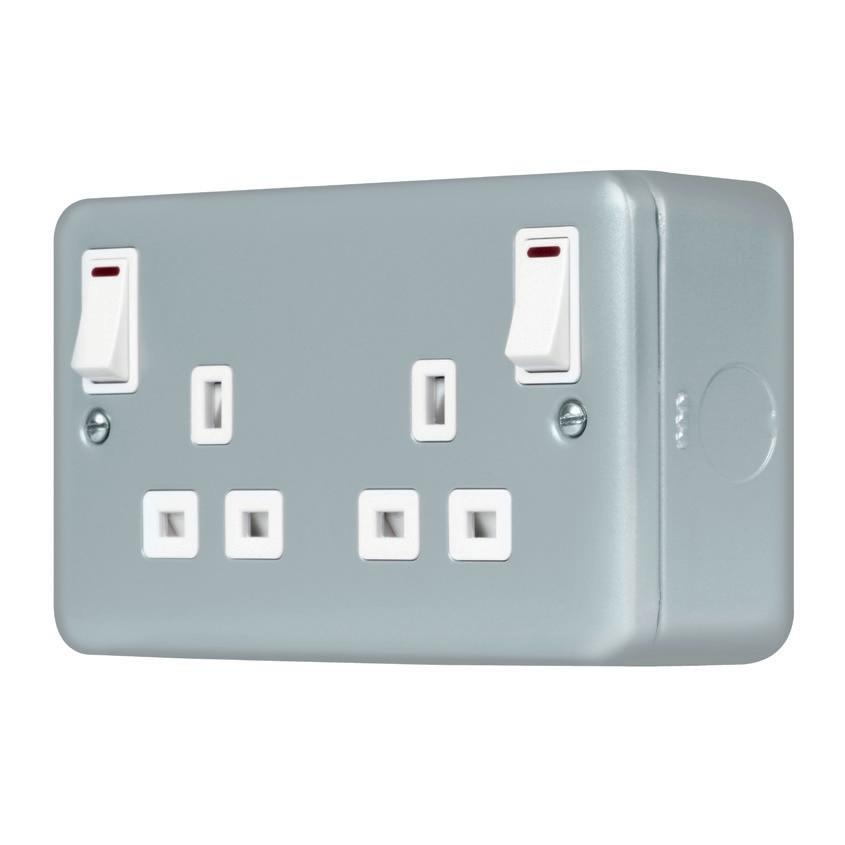
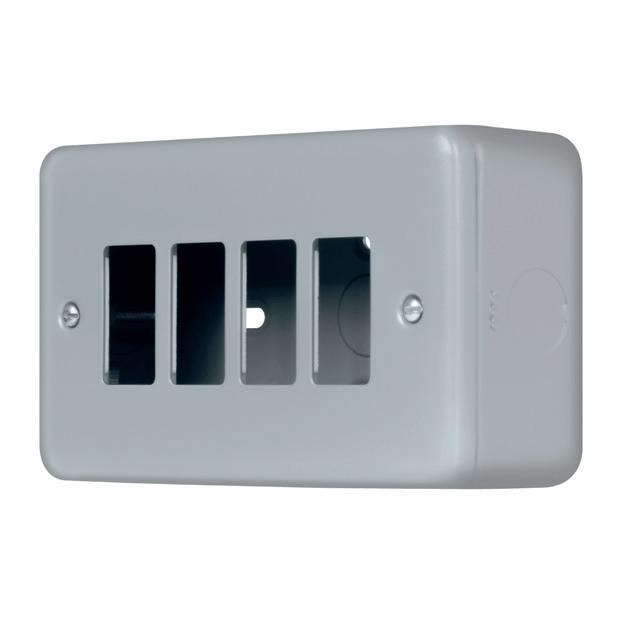
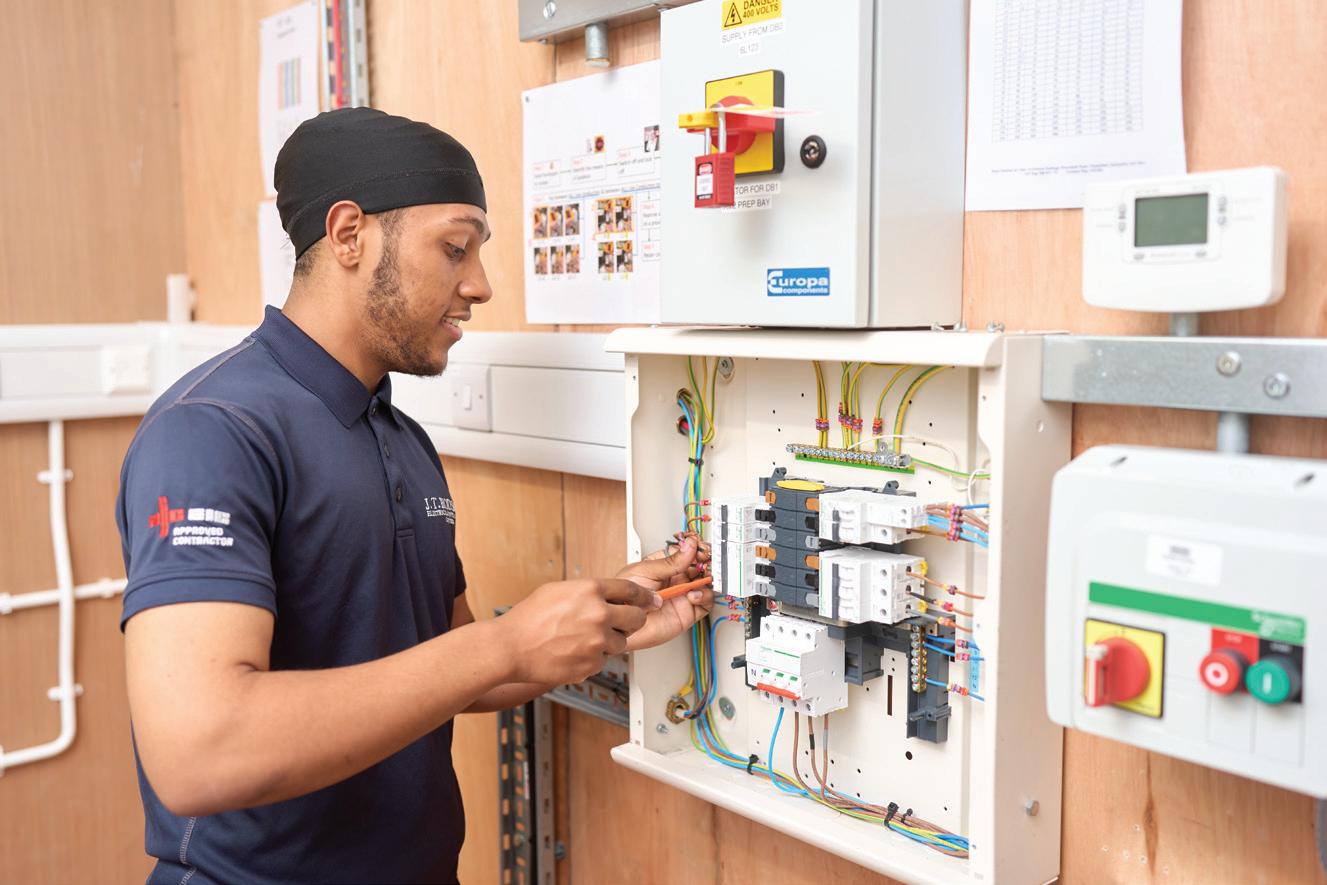
We have over 400 locations across the UK, where we locally stock a wide range of top-branded electrical products, from the world's leading manufacturers
LOCAL SERVICE
Our teams are empowered to become industry experts, because we believe that our customers deserve excellent customer service from knowledgeable staff, without exception We can also cater our local stock to best suit you!
SPECIALIST SUPPORT?
We cater to ALL of your electrical needs with our specialist divisions! UKGT delivers sustainability, energy-saving and solar expertise, while UKLD provides nationwide lighting support with free compliant advice, design, value engineering, and lamp phase-out planning Our wider network includes Cabletech’s specialist cables, Datatech’s high-quality IT infrastructure and electrical solutions, ventilation and hazardous-area divisions, plus EDS - ready-built panel boards that are pre-wired, populated, metered, and surge-protected.
From the Editor
Two months into the year, and 2026 is already shaping up to be a big one for the electrotechnical industry. ECA is celebrating its 125th anniversary and NICEIC is marking 70 years. The Government has launched its highly anticipated £15 billion Warm Homes Plan, while the Future Homes Standard is expected in ‘early 2026’. Meanwhile, Amendment 4 of BS 7671 – the ‘orange book’ – will be published on 15 April, and 1 October will bring changes to the Electrotechnical Assessment Specification (EAS). It’s all systems go!
To help you stay on top of it all, we’ve expanded our line-up of regular features, bringing you more technical content, regulatory updates and insight into emerging technologies. In this issue, Scolmore Group’s Jake Green kicks off our new ‘Technical focus’ series with a look at three-phase supplies (pages 20-22), and Signify launches our new ‘Lighting matters’ section by exploring Environmental Product Declarations (EPDs) (pages 36-38). Meanwhile, CEF’s Darren Staniforth returns with the latest instalment of our ‘Ask the expert’ column, this time examining the upcoming EAS changes mentioned above (pages 18-19).
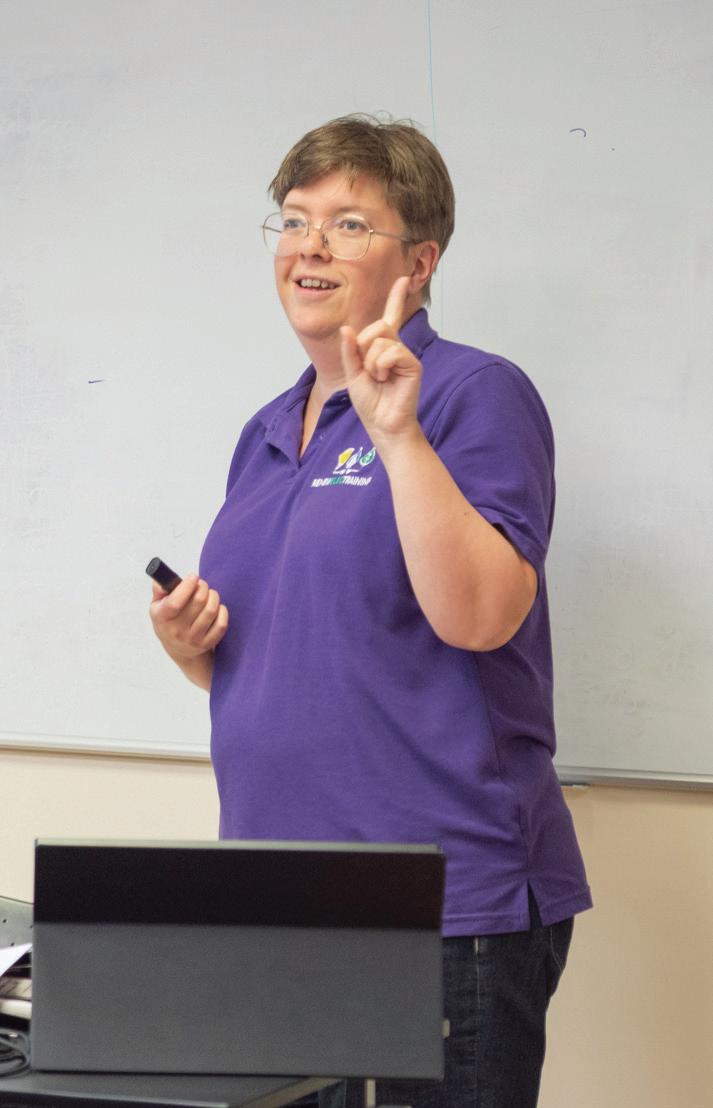
Back to upcoming dates: International Women’s Day takes place on 8 March, so we’re pleased to feature an interview with Renew Elec, the UK’s first female-run electrical training centre and a venture that began life on TikTok (pages 46-47). Elsewhere, we speak to BM Technical, a family-run company led by siblings Alex, Danine and Lauren. Rather than take over their parents’ electrical firm, they decided to build something of their own –and 10 years on they’re delivering some fantastic projects (pages 14-16). It’s always encouraging to see businesses thriving in the industry.
Until next time…
Editorial Director Carly Woodhead
News
Editorial Director
Carly Woodhead carly.woodhead@lylamedia.co.uk
Design & Production
Sophia Kerby design@lylamedia.co.uk
Advertising & Subscriptions
To request a free regular copy of Electrotechnical News or speak to a member of the sales team email: info@electrotechnicalnews.com
Director Nathon Woodhead nathon.woodhead@lylamedia.co.uk
LinkedIn
Disclaimer
The opinions expressed in editorial material do not necessarily represent the views of Electrotechnical News. Unless specifically stated, goods or services mentioned in editorial or advertisements are not formally endorsed by Electrotechnical News, which does not guarantee, endorse, or accept any liability for any goods and/ or services featured in this publication.
Electrotechnical News
Lyla Media Ltd, Hoo St Werburgh, Rochester, Kent, ME3 9UY
Newsroom
EBSSA publishes first ever Sector Skills Plan
The Engineering and Building Services Skills Alliance (EBSSA) has published its strategic Sector Skills Plan, as part of the work undertaken by the Construction Mission Skills Board.
The plan combines Government and industry data analysis to highlight the sector’s skills needs and gaps, and summarises existing strengths and good practice.
Ongoing skills challenges highlighted include more than 50% of vacancies being hard-tofill and declining apprenticeship starts. The plan warns that, if action is not taken, these skills issues will persist and threaten future capacity to deliver on the Government’s housing and infrastructure targets, as well as the transition to net zero.
The plan was created with input from engineering and building services trade bodies, awarding organisations, skills partnerships and training providers. It makes 10 recommendations for industry and Government:
1. Formally recognise EBSSA.
2. Use sector-led labour market intelligence.
3. Support SMEs.
4. Strengthen skills requirements in contracts.
5. Review worker status.
6. Protect and expand industry recognised training routes.
7. Reprioritise adult upskilling.
8. Develop a national installer skills matrix.
9. Boost tutor and assessor capacity.
10. Improve progression rates from classroom-based courses. ebssa.uk
£4 million boost to NHS charge point scheme
The NHS in England is receiving a £4 million boost to roll out hundreds of new EV charging sockets, thanks to an extension to the Department for Transport’s NHS Chargepoint Accelerator Scheme.
The extension builds on Government funding supporting the delivery of over 1,000 EV charging sockets to power up electric ambulances and fleets, saving millions on maintenance and fuel costs, which can be invested directly back into frontline care.
This announcement brings total Government investment in NHS charging infrastructure to £22 million. This will support the NHS to modernise some of its 20,000 strong fleet of medical vehicles, helping to decarbonise 460 million miles of travel each year.
gov.uk
se.com/uk
TESP publishes insights into apprentice charge-out rates
Research exploring employers’ different approaches to chargeout rates for electrical apprentices has been published by TESP.
This latest piece of work was carried out to enhance the apprentice Return on Investment (ROI) calculations that TESP conducted in 2025, which found that businesses can still realise a positive ROI, albeit at a lower return than found in 2019 calculations.
With the rate at which an apprentice is charged out being a key element in determining the ROI of apprentices, the results showed that most
interviewed businesses (76%) work on a fixed price basis – this was slightly higher for medium/large (85%) than micro/small businesses (67%).
When determining apprentice charge-out rates, many (78%) businesses apply an hourly rate for their apprentice when pricing work. Most (65%) have a formal process in place for this, taking into account associated costs such as apprentice wages, supervision, equipment, administration and travel. Several (30%) increase charge-out rates in line with wages, while some (24%) apply a charge-out rate as
Grant boost to cover almost half the cost of installing EV chargers
Renters, flat owners, homeowners without driveways and businesses will be able to save up to £500 when installing EV charge points, thanks to an over 40% increase in charge point grant amounts.
The uplift will cover almost half the cost of a typical charge point installation until March 2027, helping thousands more drivers access cheaper domestic electricity rates at home or work to power their car for as little as 2p per mile –that’s the equivalent of London to Birmingham for £3.50.
The move is the latest in a raft of action from the Government to tackle two of the biggest barriers to driving electric – upfront costs and worries about finding somewhere to charge.
gov.uk
a proportion of the cost of a fully qualified electrician (which may vary depending on the ability/experience of the apprentice).
the-esp.org.uk
Consumer choice essential in heat electrification
BEAMA has submitted a comprehensive response to the Department for Energy Security and Net Zero’s Alternative Clean Heat Solutions consultation.
Key takeaways include:
• Consumer choice is essential on the pathway to heat electrification, and Government needs to urgently introduce equitable treatment of all storage-related technologies across all policy instruments and normalise heat electrification via MCS, fiscal incentives and advice linked to the forthcoming Warm Homes Agency.
• The assumed archetypes for technologies such as high heat retention storage heating, amongst others, demonstrate a clear lack of understanding of how heat is deployed across housing and customer segments.
• Government needs to better understand the concept of whole-house heating with mixed systems.
• There is concern around the prospect of replacing potentially critical energy infrastructure flex technologies with air-to-air heat pumps.
beama.org.uk
Make More Energy With SolarEdge
The Power Behind Every Panel
SolarEdge Power Optimizer
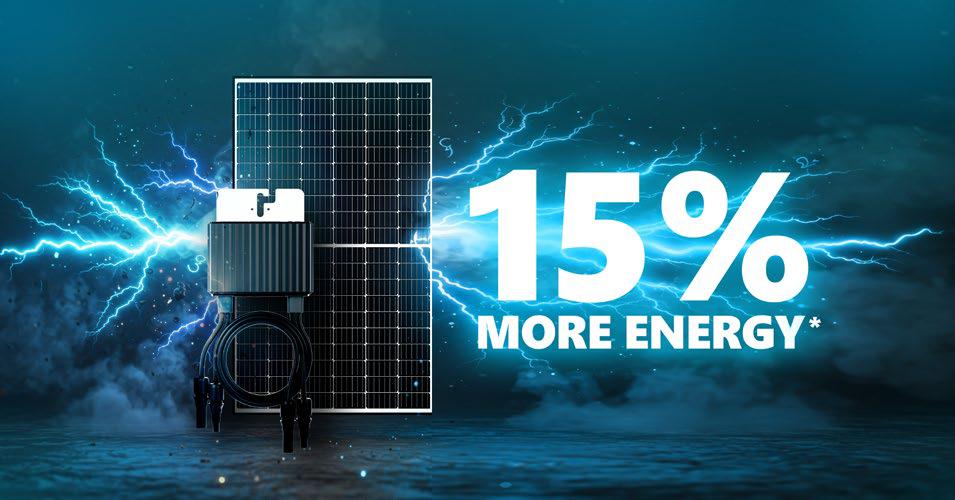
Traditional solar systems connect panels in a single string, so if one panel underperforms, the whole system slows down. SolarEdge’s DC Optimised Technology lets each panel work independently, helping your system capture more energy from every ray of sunlight.
Proven Performance
Independent research from the University of New South Wales (UNSW) School of Photovoltaic and Renewable Energy Engineering (SPREE) shows that SolarEdge systems can harvest over 15% more energy from solar arrays than conventional string systems - based on realworld data from multiple countries
What This Means for You:
15%+ More Energy SolarEdge’s DC Optimised Technology Can Harvest Over 15% More Energy from Solar Arrays than Conventional String Systems *
Greater Savings Up to $1,000 more in Year 1 from improved energy yield **
Faster battery charging Store more, sooner, especially in the morning and late afternoon.
*Based on research conducted by the UNSW SPREE using real-world data The results define how much DC energy can be harvested at a module level (1:1) compared to a typical string system (with a single string), not talking into account system efficiency differences. Actual results may vary depending on system design, installation, and environmental conditions. SolarEdge does not guarantee specific energy gains. Full academic publication pending
**Estimated revenue based on a 13 2kWp system (30 x 440W modules), 5 1 peak sun hours, $0 30/kWh peak rate, $0 06/kWh feed-in tariff, 90% self- consumption, 3% annual power increase, and 0 976% DC-to-AC conversion efficiency (Inverter + optimizer)
Industry appointments
Andrew Eldred appointed MD of ECA
Andrew Eldred has been appointed Managing Director of ECA. He will take responsibility for all ECA trade association operational activities and leadership of the association’s senior management team. Steve Bratt continues as Group CEO of ECA.
eca.co.uk
Andy Reakes appointed JIB Acting CEO
The JIB has announced that Chief Executive Officer Jay Parmar will step down from his role in early March 2026, after six years leading both the JIB and the ECS. Andy Reakes, currently Chief Operating Officer, will be appointed Acting CEO with effect from 4 March 2026.
jib.org.uk
BCIA announces new President and VP
Jen Vickers has been appointed BCIA President, with Ron Purcell taking on the role of Vice President. Vickers succeeds Stacey Lucas, who has served as BCIA President for the past two years.
bcia.co.uk
UK heat pump sales reach record
high, but more must be done to meet targets
New data published by the Heat Pump Association UK (HPA UK) shows that heat pump sales reached another record high in 2025, with over 125,000 units sold in the UK, a 27% increase on the previous year. This marks another year of sustained growth for the sector, with 36% of heat pump sales being manufactured in the UK.
Breaking down the HPA UK factory gate sales data further, key highlights include:
• 125,037 total heat pump sales, including 110,353 hydronic heat pump sales in 2025.
• A 27% increase compared to 2024 sales.
• All types of heat pumps saw a steady increase in sales when comparing
2025 to 2024, with a 26% rise in air to-water monobloc heat pumps, a 32% increase in ground and water source heat pumps and a 36% increase in domestic hot water heat pump sales.
• The number of heat pumps sold in the UK that were manufactured in the UK increased by 38% in 2025 relative to 2024.
Whilst this growth is very positive, the rate of growth has slowed compared to the 56% surge recorded in 2024. To achieve 450,000 heat pumps installed per year by 2030, in line with the target set out in the Warm Homes Plan, the market would need to see 33% compound growth in heat pump sales year on year.
hpauk.org.uk
SkillELECTRIC 2026 open for entries
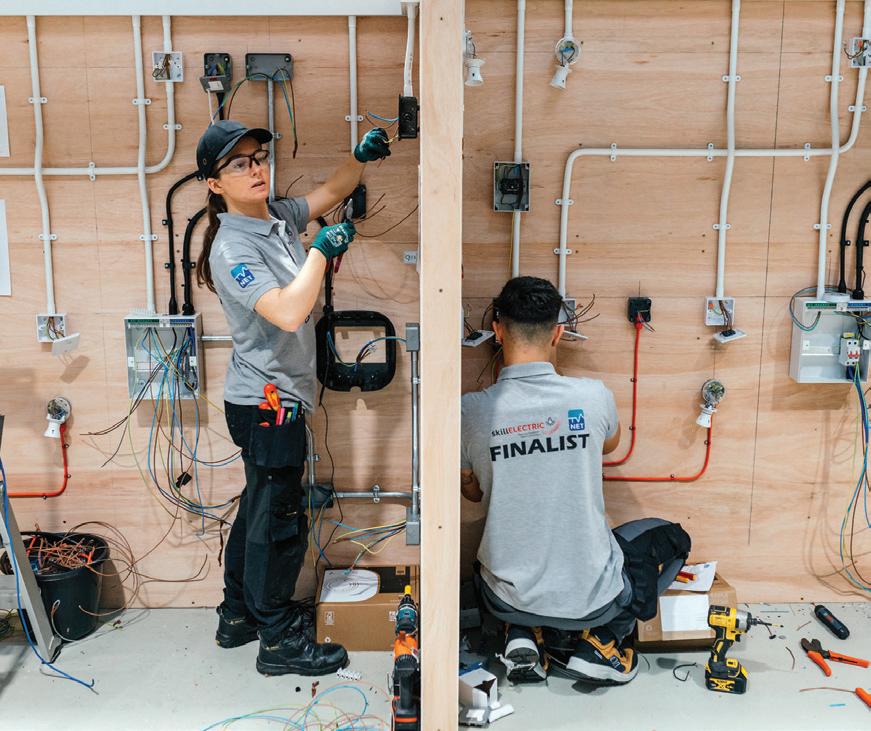
Talented electrotechnical students are being encouraged to register for this year’s SkillELECTRIC competition. The application window closes on 27 March 2026.
The event, which is organised by National Electrotechnical Training
(NET), is part of the WorldSkills UK competition network.
All those who register will take part in an online, interactive app-based task which tests skills around health and safety, inspection and testing, regulations, electrical principles and installation practices and procedures. The top scoring competitors from this stage will be invited to complete a challenging practical task at one of nine national qualifying heats around the UK between May and June.
Those who score most highly at the live heats will progress to the SkillELECTRIC UK final in November.
skillelectric.org.uk
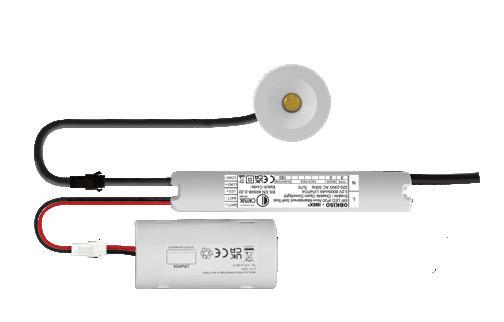
SPECIALISTS IN EMERGENCY LIGHTING
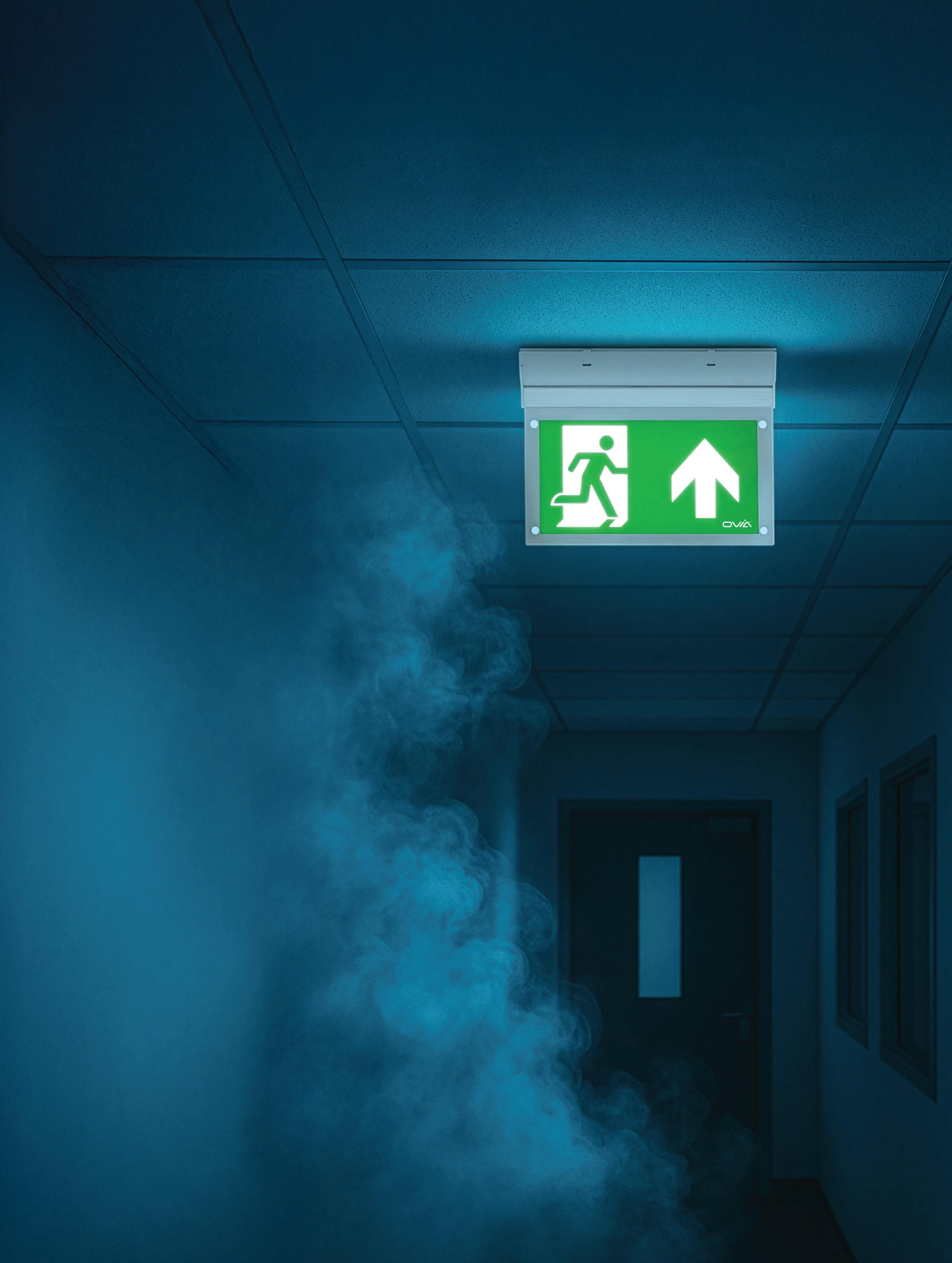
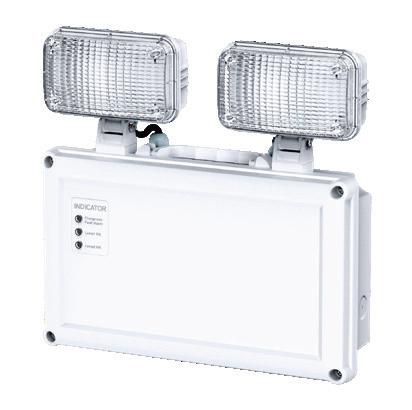
At Ovia, we understand that emergency lighting is not just another component, it’s a life safety system that must perform when everything else fails.
That’s why Orbik products are built to the highest standards of durability, performance, and compliance.
Various products within the range are available in black and white finishes.
Twin Spots Down Lights Exit Signs
Bulkheads
interview The
Meet the team
Alex Bennett Managing Director/Project Manager Danine Maskill Commercial Director Lauren Saunders Office & Accounts Manager
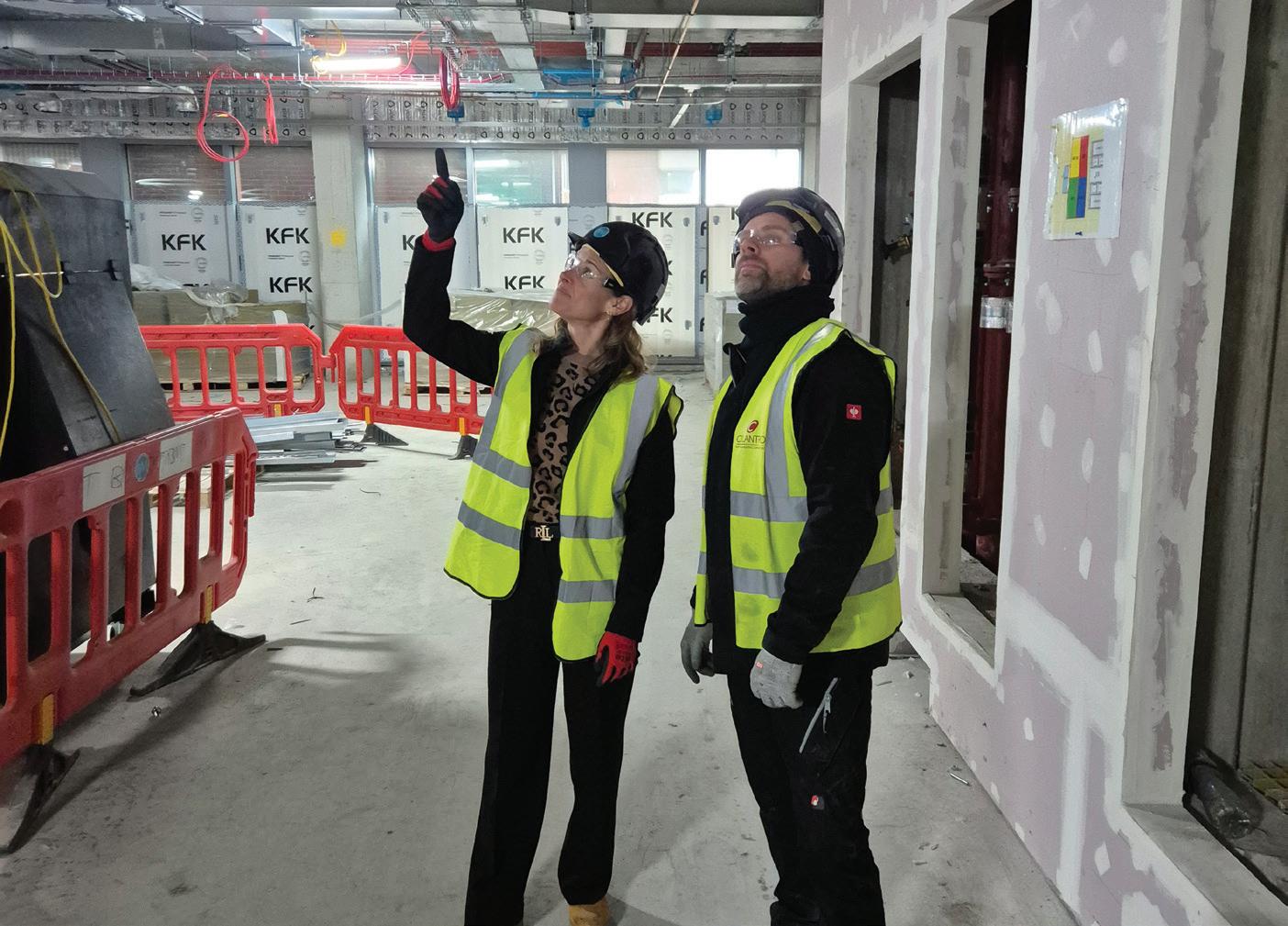
Electrical contractor BM Technical will celebrate its 10-year anniversary in 2026, but for owners Alex, Danine and Lauren, the journey began much earlier, with the siblings ‘brought up in the electrical industry’. “Our parents founded their electrical contracting business from our family home,” explains Danine. “In the early days it was run around the kitchen table – drawings spread out, calls taken in the hallway, paperwork squeezed between family life.
“As children, we grew up immersed in the rhythms of construction. School holidays were spent on sites or in
Sit down with: BM Technical
BM Technical, a family-run business led by siblings Alex Bennett, Danine Maskill and Lauren Saunders, celebrates its 10-year anniversary this year, but the family’s connection to the electrical industry goes back decades. The trio grew up immersed in the industry, learning the business from their parents. Today, they lead a specialist M&E-focused firm delivering projects in London and the South East. Electrotechnical News finds out more.
the office as the business expanded, eventually moving into substantial premises in Luton. Those were formative years for us. We didn’t just witness entrepreneurship – we lived inside it.”
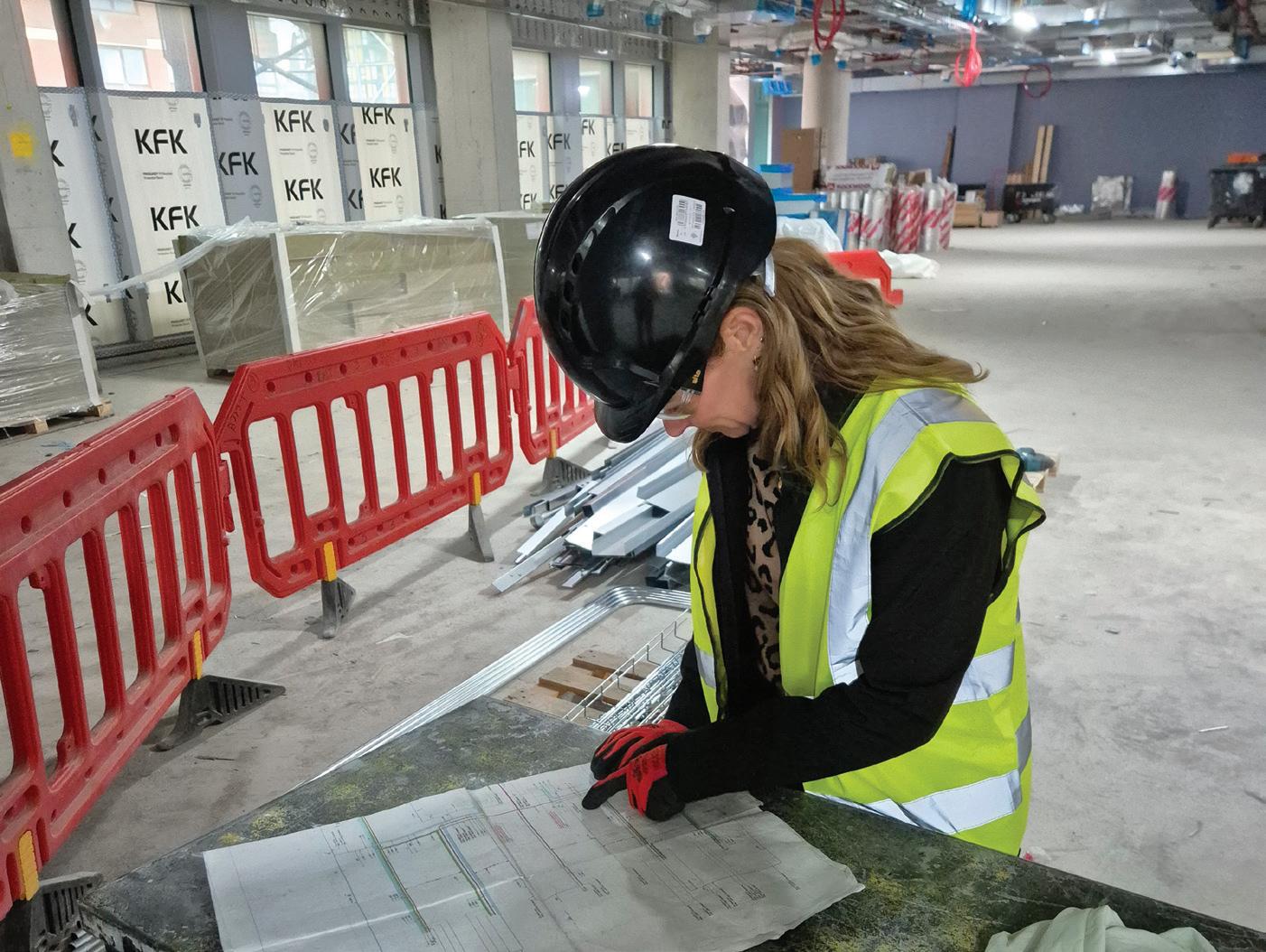
After initially pursuing their own paths, all three returned to the family business. Danine went to university and built a career in politics and media before joining the company. “I came into the business with corporate experience – structures, processes, procedures – and learned the rest on the job, from estimating and CAD drawings to health and safety and test certification requirements,” she says. Lauren
took on an administrative role during a period of growth, while youngest sibling Alex completed his apprenticeship with the company, progressing to Supervisor and then Project Manager.
A new venture
When their parents retired, the siblings faced a decision – replicate what had been built or create something different.
“Like many regional contractors, the original business became increasingly dependent on large construction contracts, particularly those linked to the Vauxhall
plant,” Alex explains. “When the plant closed, the ripple effect was significant. The loss of that economic anchor, combined with heavy reliance on main contractor relationships, exposed the vulnerability of a business model tied too closely to a limited client base. It was a difficult period and one that reshaped our understanding of risk, diversification and commercial strategy.”
And so, in 2016, the trio established a new business, BM Technical, focused solely on supporting large-scale M&E contractors. “We were determined to build on our parents’ technical expertise while taking a different strategic path,” says Lauren. “Projects were becoming more complex, programmes tighter, and risk increasingly transferred down the supply chain. Rather than working directly with main contractors, we positioned ourselves as a specialist electrical partner to established M&E firms.”
Ten years on, that shift has proved critical. “We understand the pressures M&E contractors face – labour volatility, programme acceleration, margin erosion and risk transfer,” comments Danine. “Our aim is to improve delivery certainty, not add to project risk.”
Working on large London and South East schemes means high expectations and tight margins. “The most challenging aspect of the past decade has been navigating volatility – labour shortages, compressed programmes, supply chain disruption, shifting commercial risk and, of course, Covid-19,” Danine continues. “At the same time, that challenge is what makes it rewarding. We’re particularly proud of building a business that clients trust. We’ve grown steadily, maintained strong repeat relationships, and delivered on complex projects without compromising our standards. For us, success isn’t just turnover – it’s reputation.”
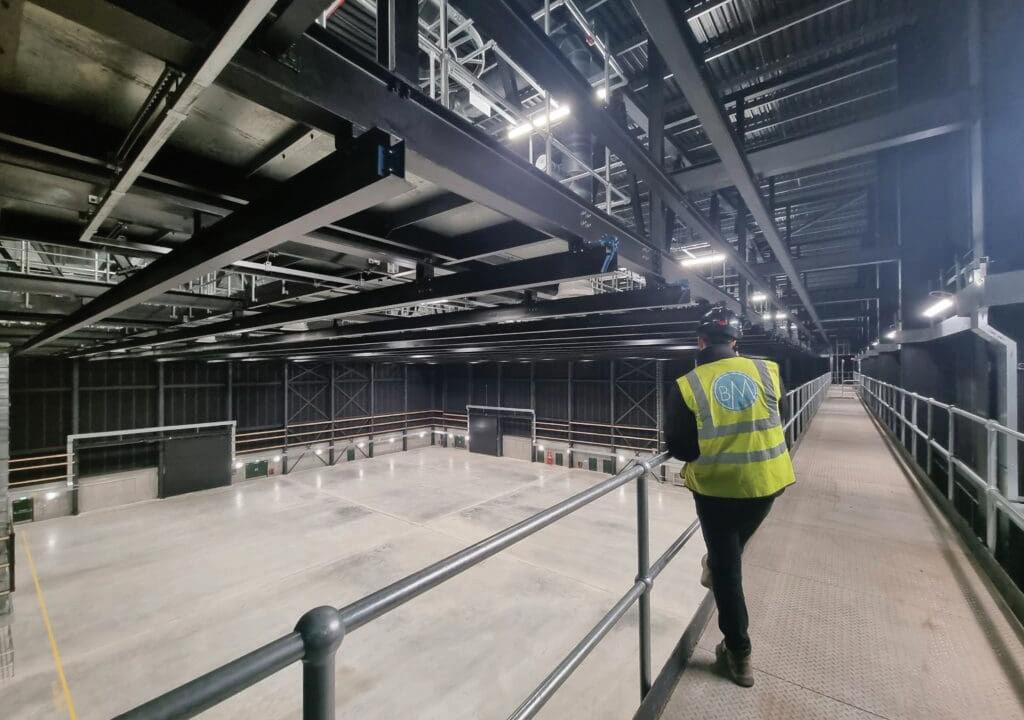
Recent projects include the redevelopment of Shepperton Studios, where BM Technical delivered full power and electrical distribution installations across new sound stages and production spaces; and the Olympia transformation, where the team delivered power and distribution services within the CAT A fitout of the new Olympia Central building.
“As children, we grew up immersed in the rhythms of construction. School holidays were spent on sites or in the office as the business expanded.”
The company is now completing the final phase of the Elephant and Castle regeneration, installing LV distribution boards, sub-main cabling, containment systems and final circuit wiring at H11B Elephant Park for landlord and tenant areas. Having been on site since 2017, BM Technical has delivered electrical installations to over 1,000 apartments. The team is also currently working on the City of London’s new flagship project, dubbed the ‘Justice Quarter’, alongside Dornan Engineering.
Today’s electrical sector
The business delivers lighting, power, IT, fire alarms, security and AV systems, offering a full design and installation package within the newbuild residential, commercial and industrial markets. But what do they
believe is shaping the modern electrical landscape? “There is significant demand in infrastructure-heavy installations – particularly power distribution, containment systems and integrated building services coordination,” says Alex. “We’re also seeing continued growth in data cabling and IT infrastructure, especially as buildings become more digitally integrated.”
Sustainability is embedded in modern project design, with smart building integration becoming standard rather than optional.
“Lighting control systems, building management systems, and integrated security platforms are becoming far more sophisticated,” Alex continues. “There’s also a noticeable increase in prefabrication and modular installation methods. These improve quality control, reduce site labour and help manage programme risk.”
As the sector evolves, continuous development is essential. “We invest in ongoing technical training, updated regulations, health and safety certifications, and leadership development,” says Danine.
“Equally important is commercial awareness. Understanding drawings, documentation and change management protects both the individual and the business. We encourage progression – from operative to supervisor, from supervisor into management roles – wherever capability allows.”
Company culture and success
The company culture reflects its family roots. Much of the 30+ team consists of long-term colleagues and close family friends, creating a tightknit structure that, while unusual, has proved effective.
“Being siblings brings a deep level of trust and alignment,” explains Lauren. “We share the same values, the same work ethic and the same understanding of what this industry demands. We grew up watching our parents build a business from nothing, so resilience and accountability are ingrained in us.
“That foundation shapes the culture of the company. There’s a strong sense of loyalty and fairness. We expect high standards, but we also understand the importance of supporting our people. Decisions are made quickly, communication is direct, and there’s very little ego. It’s professional, but personal in the best sense.”
Several employees have been with the business from the start, including Lewi, affectionately known as the ‘fourth sibling’. Whilst at school, Lewi completed his two-week work experience placement with the parents’ original company, before returning to do his apprenticeship. Once qualified, he began working for the business full-time. He’s now a Senior Project Manager at BM
Technical – and his brother now works for the business too!
Apprenticeships remain central to the company’s ethos, with four currently employed. “Supporting new talent is vital for the long-term health of the industry,” says Lauren. “Our apprenticeship pathways combine on-site experience with formal technical training. Construction offers genuine long-term careers, and we’re keen to encourage young people to see it as a professional and rewarding option.
“When we take an apprentice on, we like to see career progression for them, so once qualified they’ll begin as an electrician. That’s how most of our supervisors started out.”
In addition, with two women at the helm, the business is also keen to see greater female representation in operational and leadership roles. “There have been positive changes in the industry, particularly around professionalism and diversity, but there’s still work to do,” Danine comments. “More visibility of women in operational and leadership roles will help normalise that presence.
“For women entering the sector: don’t underestimate your value. Construction needs strong communicators, strategic thinkers and organised leaders just as much as technical specialists. Learn the
“We understand the pressures M&E contractors face – labour volatility, programme acceleration, margin erosion and risk transfer.”
detail, ask questions, and don’t apologise for being ambitious.”
Steady, sustainable growth Looking ahead, the siblings are focused on steady, sustainable growth. “We want to deepen relationships with key M&E partners, expand our technical capability and continue strengthening our management structure,” says Alex. “Quality, reliability and reputation will remain central. The goal is to be recognised as a specialist electrical contractor known for disciplined delivery and strong commercial control – a partner that adds certainty in a complex industry.”
“We’re not chasing growth for growth’s sake,” adds Danine. “We’ve built a loyal customer base that returns to us repeatedly. If we maintain that model, we’ll continue to grow steadily.”
And with Lauren’s young son already a dab hand with his toolkit, the family’s connection to the electrical industry looks set to continue. “With the three of us in the business together, people always say, ‘Oh wow, I bet that’s tricky,’” she laughs. “Of course, we’ve had moments –sometimes it can be a bit fraught –but we each have our responsibilities and we work well together.”
As for their father? “We still can’t walk into the house without him asking what’s happening with such and such!”
bm-technical.co.uk
As the UK’s leading membership body for electrical contractors, we help businesses like yours prepare for whatever’s next.
Become an ECA Member and unlock the tools you need to win contracts, grow stronger and get your voice heard.
Enjoy tailored support across your business for…
• Technical issues
• Safety, health and environment
• Employee relations
• Legal and business
• Education and skills
Visit eca.co.uk/unlock
SECURE YOUR SUCCESS
Ask the expert
Darren Staniforth Head of Electrotechnical Solutions, CEF
With over 30 years’ experience, Darren is one of the electrical industry’s leading technical experts. He began his career as an electrical apprentice, working across a range of domestic, commercial and industrial projects, before qualifying as a lecturer at Bedford College. Well known from his previous role as Senior Technical Presenter with NICEIC, Darren was appointed Head of Electrotechnical Solutions at CEF in 2022.
The possible bottleneck in the electrotechnical qualifications sector
Are new EAS requirements and tighter ECS criteria set to squeeze the workforce at a time when electrical expertise is more critical than ever?
The UK electrotechnical sector is approaching a critical pressure point. Following the introduction of the updated Electrotechnical Assessment Specification (EAS) and wider electrical scheme changes coming into force this October, registered organisations are actively reviewing the qualifications and competence of their workforce.
Compliance has always been central to the industry, but the latest requirements are creating
a significant bottleneck that risks slowing progress at a time when demand is only increasing.
Most responsible electrical companies already recognise the importance of employing competent individuals to carry out specialist work such as renewable energy installations and Electrical Installation Condition Reports (EICRs). However, the forthcoming expectation that operatives must also hold a Level 3 qualification specific to the area of work they undertake raises the bar further.
Practical impact
On the surface, raising qualification standards is a positive step. It formalises competence and provides
Have a question or industry comment?
Darren is here to provide expert technical advice and answer your queries. Send your questions to: info@electrotechnicalnews.com
“If qualification pathways become too restrictive or inaccessible, the industry risks throttling down its own workforce.”
reassurance to clients. The challenge lies not in the principle, but in the practical impact. Thousands of experienced electricians may now need to return to college to complete short courses in renewables, inspection and testing in order to meet the new scheme requirements.
Access to these courses is not straightforward. In many cases, electricians must hold an ECS Gold Card (or an equivalent) to enrol.
The ECS Gold Card has long been recognised as proof of a qualified electrician, demonstrating that an individual has achieved the required vocational qualifications and industry standards. Yet the criteria for obtaining and retaining the Gold Card have themselves recently changed, tightening eligibility and making it harder for some experienced operatives to qualify.
This combination of factors is creating a bottleneck. Electricians who are competent in practice may
now find themselves temporarily excluded from certain types of work until they obtain both the relevant Level 3 qualification and the appropriate ECS status.
The consequence is a potential reduction in the number of individuals available to carry out renewable installations and EICRs across the UK from October this year. At a time when the country is accelerating efforts towards net zero, expanding solar PV, battery storage, electric vehicle charging infrastructure, and improving building safety through regular inspections, restricting workforce capacity could slow progress.
Coordinated approach
The sector must strike a careful balance. Maintaining high standards of competence is non-negotiable – public safety, system reliability and consumer confidence depend on it. However, if qualification pathways become too restrictive
or inaccessible, the industry risks throttling down its own workforce.
A coordinated approach is essential. Training availability must increase in line with demand. Transitional arrangements should recognise existing experience while upholding standards. Clear guidance must help employers plan effectively without sudden workforce disruption.
Contractors really need to get ahead of this potential problem coming down the line.
The UK electrotechnical sector plays a pivotal role in delivering the infrastructure required for net zero. Ensuring both competence and sufficient workforce numbers is not just an industry issue.
cef.co.uk
Power Quality Surveys
• Power quality measurements to identify power problems and hidden issues
• Recommendations on power quality solutions to improve voltage quality
Harmonic Analysis
• Verification of harmonic compliance with power quality standards
• Understand the source of the harmonic distortion on the electrical network
Power Quality Clinic
• Reporting and consultancy with our Power Quality as a Service (PQaaS)
• Flexible subscription plans for all sizes of business (Free tier available)
Power Quality Health Check
• Upload your own survey data to us through our secure online portal
• Standardised power quality report compatible with any analyser or logger
Expert in the measurement and analysis of power quality
Technical focus
Jake Green Head of Technical Engagement at Scolmore Group
Jake Green is Head of Technical Engagement at Scolmore Group, having joined the business in 2021 and progressed from Technical Engagement Engineer to lead the function. He works closely with consultants, specifiers and contractors, advising on compliant solutions amid evolving regulations. With 17 years’ industry experience, Jake began as an apprentice before moving into maintenance and facilities management, later delivering technical training at Certsure (NICEIC/ELECSA).
Basic three-phase supplies
Jake Green, Head of Technical Engagement at Scolmore Group, explores threephase electrical supplies – where do they originate, and what are the key terms you need to understand when working with them?
It has long been recognised that it is more efficient and effective to generate threephase supplies rather than single-phase supplies. Three-phase machinery is more efficient than its single-phase equivalent and threephase supplies can deliver higher power more effectively than singlephase arrangements.
Generation of three-phase
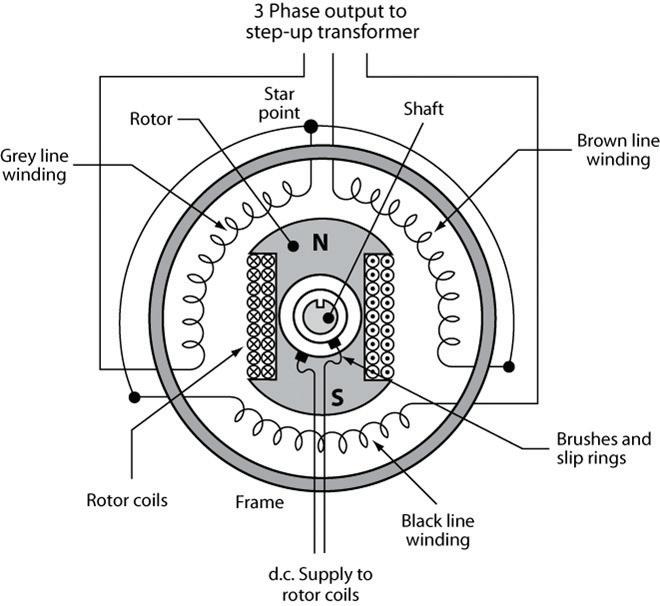
Typically, a three-phase supply is generated when a series of three windings spaced 120° apart are rotated at 3000 rpm (50 rps) within a magnetic field (Figure 1).
Figure 1 shows the DC supply to the rotor coils creating the magnetic field, whilst three windings (black,
grey and brown) are set apart by 120°. As the coils are rotated within the alternator, the voltages generated within the windings will rise and fall as each passes the relative ‘north’ (N) and ‘south’ (S) of the magnetic field.
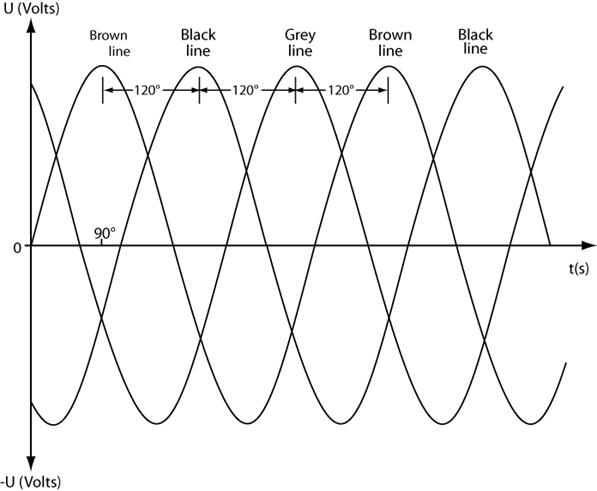
The generated voltage will be sinusoidal in shape (Figure 2) and the voltage will depend on the nature of the alternator, but is typically in the region of 25 kV in the UK. This voltage is transformed up for transmission purposes and then transformed down for distribution to business and domestic consumers.
Irrespective of the level of voltage, the three phases remain constant, that is, separated by 120°.
Terminology
When considering anything to do with three-phase supplies, it is important that correct terminology is used. The labels for voltage and current vary because the relative relationships are different depending on what is being measured.
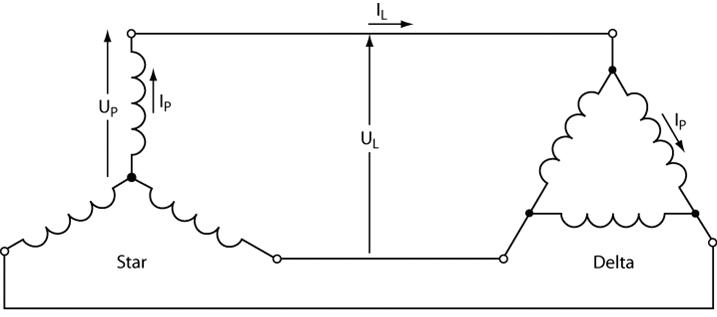
Delta connection – start of one coil is connected to the end of the other into a closed loop.
In delta-connected systems, the
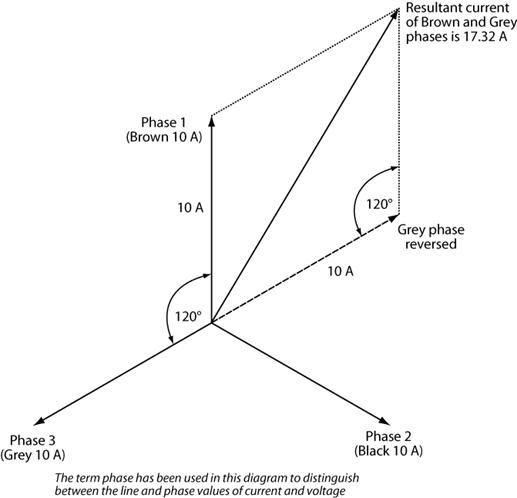
line voltage and phase voltage are the same. For example, a 400 V line voltage is the same as the phase voltage. However, the relationship between line and phase currents differs by a factor of √3; (IL=√3 IP). For example, for a phase current of 10 A the line current would be: IL=√3×IP=√3×10=17.32 A. This equation can be shown in a phasor diagram (Figure 4 – overleaf).
Star connection – the end points of each coil are connected to a common point (the neutral point).
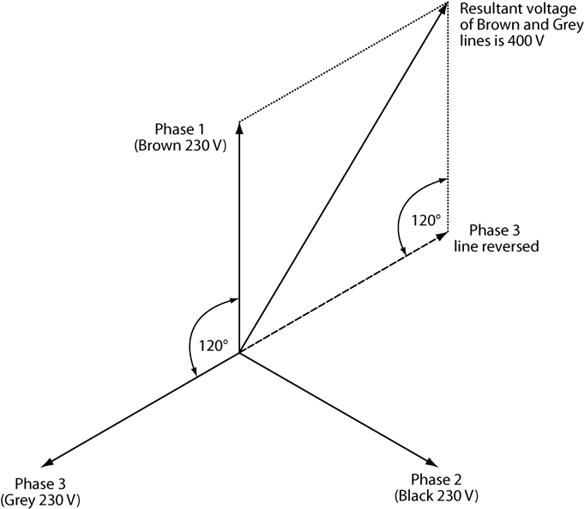
In star-connected systems, the line current and phase current are the same. For example, a 13 A line current is a 13 A phase current. However, the relationship between line and phase voltages differs by a factor of √3; (UL=√3 UP). For example, a 230 V
Figure 1: Alternator-power generator (image courtesy of T.J. Bratley)
Figure 2: Generated three-phase supply (image courtesy of T.J. Bratley)
Figure 3: Three-phase labelling (image courtesy of T.J. Bratley)
phase voltage means that the line voltage would be √3×UP=√3×230=400 V. This equation can be shown in a phasor diagram (Figure 5).
Supplies to premises
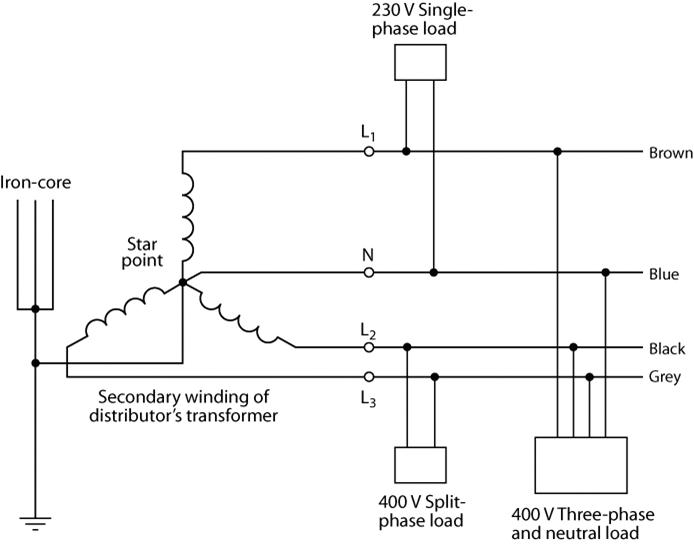
The final supply to premises is generally derived from a local distribution transformer and the connection at the transformer is in ‘star’.
The low-voltage side of the transformer allows for a series of single-phase, split-phase (two-phase), or threephase supplies. Because the supply is star connected, a neutral conductor is provided, and this conductor is connected to the general mass of Earth at the star point of the transformer (Figure 6). The neutral is assumed to be at Earth potential (taken as 0 V).
Conclusion
This is a general introduction to three-phase systems. It is important to note that line and phase currents and voltages may have different values depending on whether the system is star or delta connected.
There are several questions which will need further consideration as they relate to the system described in Figure 6. For example: What happens when the single-phase loads have differing current values or the other loads are unbalanced? How much current will flow through the neutral conductor? What happens when harmonics are present on the neutral conductor?
These and other questions will be addressed in subsequent articles.
Figure 4: Resultant current in a delta-connected system (image courtesy of T.J. Bratley)
Figure 5: Resultant voltage in a star-connected system (image courtesy of T.J. Bratley)
Figure 6: Supplies and voltages (image courtesy of T.J. Bratley)
Tackling payment disputes
The construction sector is facing considerable challenges, with increasing pressure on contractors and subcontractors to complete projects on time and on budget. With payment disputes and adjudications on the rise, Payapps recently gathered industry leaders to discuss conflict avoidance and the important subject of fair and prompt payments.
The session, held at London’s F1 Arcade, began by highlighting growing concern over the rising number of adjudications, referencing a King’s College London report that revealed the annual number of construction adjudications between May 2023 and April 2024 reached an all-time high of 2,264 – a 9% increase on the previous year. According to the report, 50% of respondents claimed inadequate contract administration was the leading cause of payment disputes.
Smash and grab adjudications –where the dispute is focused on the failure of the contractor to issue a valid payment notice or pay less notice, not the valuation of the work itself – formed 63% of all adjudications referenced in the report.
Rob Driscoll, ECA’s Director of Legal and Business, revealed that insolvencies had risen by 20% compared to pre-pandemic levels. However, this number had stabilised. He said, “They have ameliorated over the past couple of years down to a stable level. They are still at 20% though. In many ways, the chain is more fragmented and more disaggregated than any other industry. This makes payment even more fragile and volatile, but also makes project delivery more precarious. So, it doesn’t surprise me that adjudications are on the rise.”
Attempts to improve payment transparency
With inaccurate and late payments an oft-seen problem across the construction industry, the Fair Payment Code (FPC) was introduced in December 2024. This initiative
was launched to help smaller construction firms identify reliable and trusted partners while tackling the issue of lengthy payment terms and late payments.
It came after SME appeals for a more ambitious, robust and aspirational approach towards business-tobusiness payment culture and replaced the Prompt Payment Code. As a result, business owners can apply for one of three different award tiers – Gold, Silver or Bronze. Each tier is aimed at awarding and recognising best practice while driving improvements in payment performance.
Driscoll believed that while the introduction of the FPC was undoubtedly a positive step in the right direction, the tiered approach may cause some confusion in the industry.
Reasons behind increasing legal disputes
Iain McIlwee, CEO of Finishes and Interiors Sector, commented on the dramatic rise in construction adjudications in recent years, revealing that construction firms are spending around 1.6% of turnover on legal fees – double that of the industry norm. He said, “There is a lot of change happening at the moment and this is creating new challenges. There is an increased cost of compliance and added levels of uncertainty, which makes estimating tougher. We’ve got Part Two of the Building Regulations – this forces us to focus on competence duty, accountability and responsibility. Yet we’re seeing ever more heavily amended contracts shifting risk into the supply chain.
“As more design risk is being forced into the supply chain, we’re seeing the quality of technical design being novated. The confusion is adding to the level of disputes. Ultimately, we need to find better ways to manage that and that those better ways aren’t just taking all the risk and sending it down the supply chain.”
Avoiding conflict
With adjudications and payment disputes costing construction businesses vital time and money, identifying ways of avoiding conflict, where possible, is imperative. McIlwee suggested the process
“By automating repetitive tasks, we’re freeing up our teams to concentrate on more impactful activities.”
begins with understanding responsibilities: “It starts with the way that we contract – often people don’t understand what they’re responsible for. That’s why we need to talk about responsibilities at the very start of a project and then make sure there is transparency about valuations, too.
“Similarly, there needs to be clear application dates and a clear process of establishing what price should be paid and when people should be paid, and then adhering to it. The conflict avoidance process is essentially a common-sense approach to managing information and ensuring there’s transparency and conversation, to ultimately avoid disputes.
“There must be a technological solution to this, because half of the disputes we’re seeing are due to procedural error thanks to someone being off sick or on leave. Nobody knows what’s happening to that piece of paper. That should be where we are focusing our attention – digitising and looking for automation in the process.”
Streamlining the payment process
As Commercial Director at Mitie, Reiss Duthie considers regulatory compliance and the standardisation of procedures key aspects of the auditing process; he is using Payapps software to automate the application for payment process. He explained, “As a FTSE-listed business, corporate governance and compliance with the Construction Act is really important to us. Using Payapps brings standardisation to our procedures and we’re able to audit and set workflows so that we know every payment notice that’s left. Plus, there’s a proper assessment to ensure every application for payment is properly authorised and approved.
“Commercial and operational resource is in high demand at the moment, so it’s important that our skilled people are able to focus on work that truly adds value. By automating repetitive tasks – like moving data between spreadsheets – we’re freeing up our teams to concentrate on more impactful activities. This shift is a real gamechanger, enabling our colleagues to use their expertise where it matters most and helping us deliver even greater results for our customers.”
Able to be used across the entire supply chain, Payapps helps contractors certify and manage applications for payment, not only streamlining the process but also increasing accuracy and reducing the potential for missed payment notices, late responses and disputes.
Read the full report, From gridlock to green light: tackling rising adjudications and tips for conflict avoidance, on the Payapps website. payapps.com
Why you can’t rely on AI
Whilst AI can have its uses, it cannot be relied upon for answering electrical queries or technical questions relating to the BS 7671 Wiring Regulations – or for any electrical installation work or guidance, warns Pro Certs Software.
AI does not have direct access to BS 7671, or any of the supporting documents such as the Guidance Notes or Design Guides, because these documents are copyrighted by the IET.
Therefore, for any AI agent to answer your prompt (question), it will scour the internet for a matching phrase to your question and then return the results in its own words. This means it will return a snippet of text it found on a website somewhere. As such, the answer may well be wrong, out of date, or even dangerous.
We tested AI with a few commonly asked electrical questions and found that, most of the time, it returned the wrong answer. We also found that different AI agents gave different answers to the same question –this again is likely due to where the specific AI agent sourced its information from.
We asked an AI agent: Why shouldn’t electricians use AI for BS 7671 regulations advice?
As you can see from its response in the screenshot below, AI itself advises you not to rely upon it.
Here are five reasons why electricians should not rely on AI:
1. AI does not have access to BS 7671.
2. AI does not have access to any of the Guidance Notes.
3. AI relies on information from publicly accessible websites (be that right or wrong).
4. It is generally out of date.
5. It cannot interpret real-world scenarios or specific cases.
Putting AI to the test
During our research we used a variety of different AI agents and asked them a few simple electrical questions relating to the UK Wiring Regulations.
AI prompt 1: What is the distance a socket must be from a bath?
AI prompt 2: What is the Maximum Zs value for BS EN 60898 Type B 32 Amps?
AI answer: 1.44 Ω – incorrect. Correct answer: 1.37 Ω.
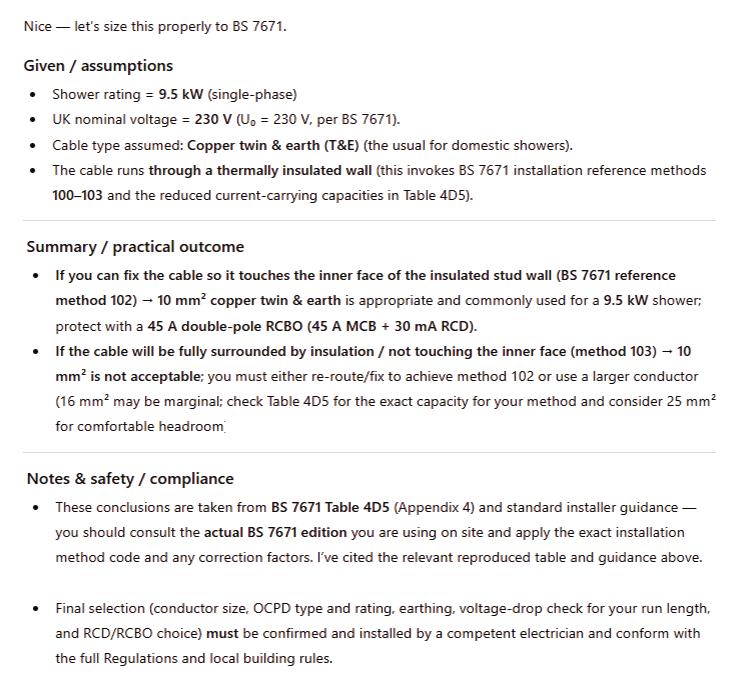
AI cable calc prompt 3: Calculate the required cable size for a 9.5kW single phase shower circuit, the cable will run through a thermally insulated wall. Use BS 7671 for the calculation. AI answer: (see excerpt below).
Pro Certs Software has been designing, developing and maintaining a collection of mobile apps and software solutions for the electrical industry since 2011, specifically for electricians. With over 30 years’ hands-on experience in the electrical contracting industry, our extensive and in-depth knowledge, training and expertise have been put to good use in the development of smart electrical apps and certification software. This knowledge and experience is also applied to our online electrical blog – visit our website to find out more.
The issue with AI cable calculations is the assumptions it makes. In addition, it missed out vital calculation steps such as the Maximum permitted Zs for fault protection. AI:
• Assumed the length of circuit.
• Assumed the MCB type (type unknown).
• Did not take Ze into account (for Max Zs compliance).
• Asked you to check Table 4D5 yourself.
It did not ask for the length or circuit (run) for its voltage drop calculation, nor did it consider the type of MCB (ie. type B, C, D) or ask what the Ze value is to check against the Maximum Zs value depending on the selected MCB type.
AI can make mistakes
If the best AI tools in the world can make mistakes, then so can any other AI tool or agent. Yes, humans can also make mistakes, but we can learn from ours.
Don’t let AI de-skill you; strive to be the best in your field and learn from trusted sources and professionals who have been there and done it. AI cannot replace or replicate real world experience.
AI responds to your specific prompt, so if you are asking AI for a solution, it is unlikely to suggest the correct one, partly due to the prompt you use. For example, if you ask AI to calculate a cable size for you, but you do not know you must allow for any pre-existing voltage drop from the source up to the point from where you are calculating from, AI will not take that into account – because you didn’t tell it to.
If you use AI, you should check its results against official sources such as the relevant regulations, BS 7671, IET Guidance Notes and any associated Building Regulations, amongst others.
If you must manually check AI’s results to ensure compliance and safety, you may as well save time and just do that in the first instance. Also, it’s good practice to keep your skills sharp rather than relying on AI to solve everything for you, which may or may not be correct.
Don’t use AI for electrical guidance, assistance or to solve your electrical problems – if in doubt, seek expert advice from a trusted source, not an AI agent.
suited for multi-scale projects and developments
*Auto Dimming LED Status Light
Powering tomorrow’s data centres
sustainability for
DChris Cutler Business Development Manager – Data Centres, Riello UPS
ata centres are undergoing a period of rapid transformation. Hyperscale expansion, combined with the accelerating adoption of AIdriven workloads, is pushing rack densities and power consumption to unprecedented levels. At the same time, operators must contend with unpredictable load profiles, rising electricity costs and increasing pressure to meet ambitious sustainability targets.
While reliability remains nonnegotiable, today’s UPS systems must also deliver higher efficiency, greater flexibility and a lower lifetime environmental impact.
From established technologies to new possibilities
For decades, UPS systems have relied on Insulated Gate Bipolar Transistors (IGBTs). This siliconbased technology is mature, reliable and cost-effective, and has served the industry well. Over time, manufacturers have improved efficiency through refinements such as three-level inverter architectures and improved filtering components.
However, the power demands and operational complexity of modern data centres mean these evolutionary improvements are reaching their
limits. To achieve the next step forward in performance and sustainability, a more radical shift in power electronics is required. This is where silicon carbide (SiC) comes in.
How SiC changes the game SiC isn’t a new technology, of course, what with its widespread adoption in the electric vehicle industry. But for UPS manufacturers, it does offer several inherent advantages compared to silicon-based IGBTs:
• Increased power density: SiC enables more compact designs, allowing higher output power from smaller, lighter systems.
• Increased thermal stability: SiC can operate at higher temperatures than IGBTs, translating to a broader operational range and reduced cooling demands. IGBTs require larger heat sinks as they dissipate more energy.
• Enhanced frequency response: rapid response to load changes makes SiC-based UPS systems better suited to volatile, AI-driven workloads.
• Durability: the robustness of SiC and its ability to withstand high surge currents or voltage spikes reduces overall wear and tear, leading to extended component and UPS lifecycles, as well as reducing maintenance needs.
It is important to acknowledge that SiC components do take four to six times the energy to manufacture. This inevitably results in increased
Chris Cutler, Business Development Manager – Data Centres, Riello UPS, explores how silicon carbide (SiC) technology is enabling a new generation of modular UPS systems that deliver higher efficiency, resilience and
modern data centres.
production costs and the amount of CO2 generated. However, these issues are more than offset by the overall energy savings across the lifecycle of the UPS.
Turning technology into performance
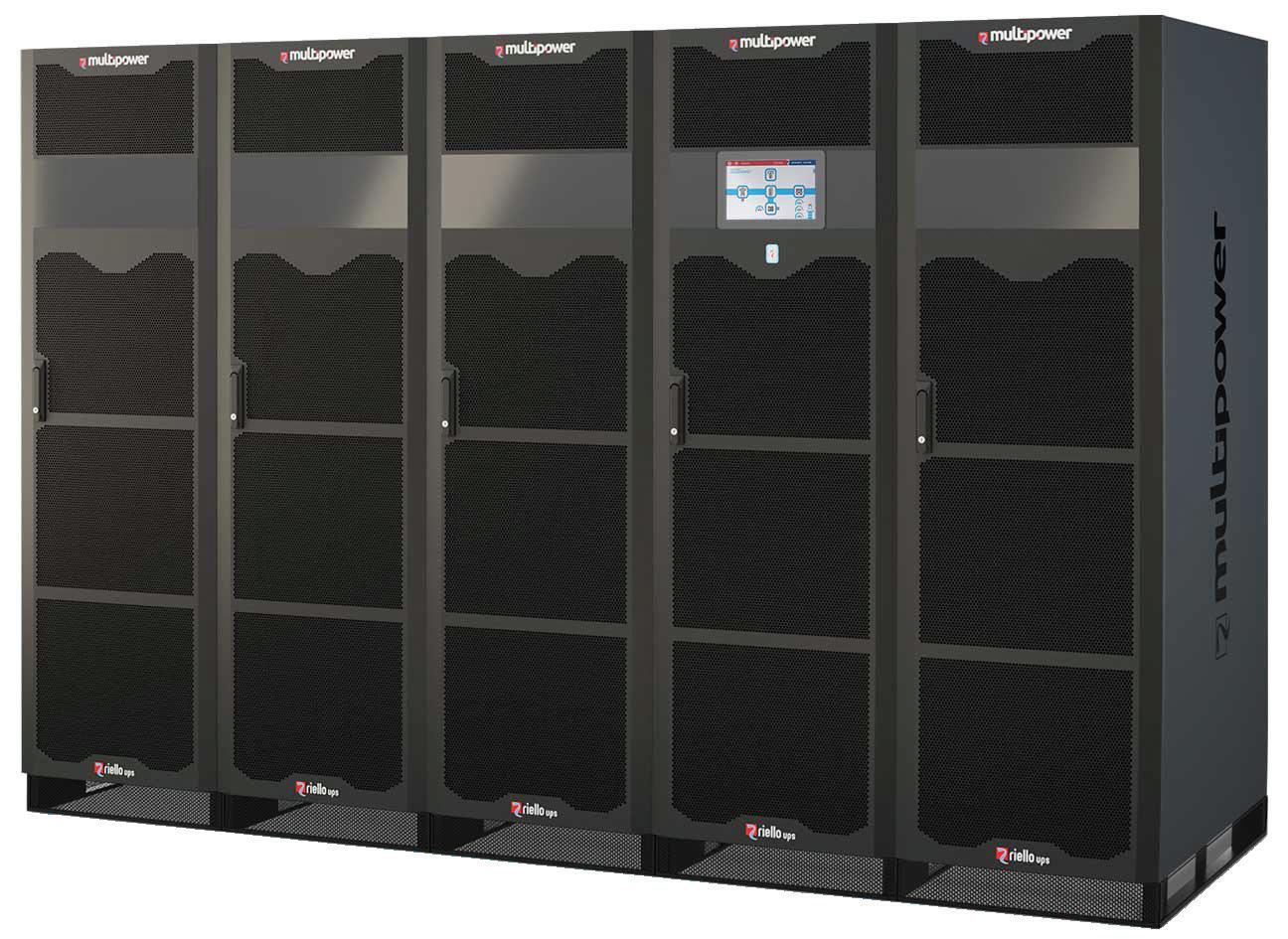
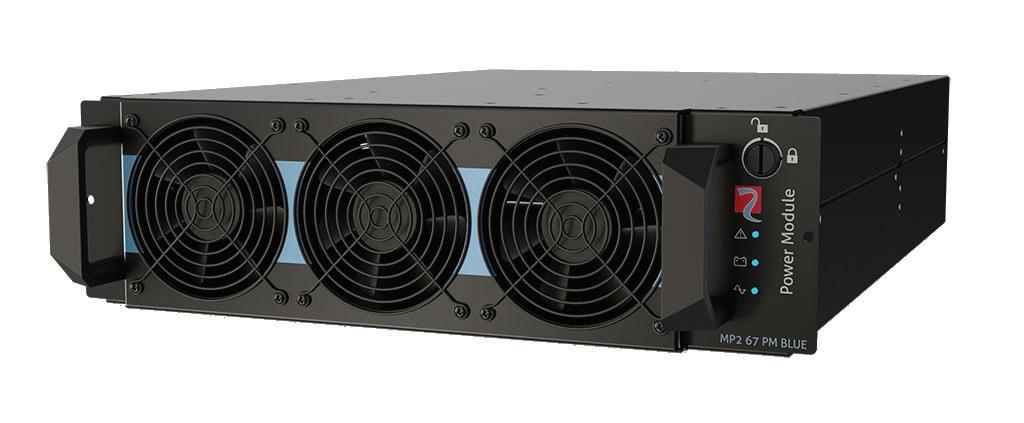
Riello UPS has incorporated SiC technology into its latest modular UPS, the Multi Power2 range. The series comes in three versions: MP2 (300-500-600 kW versions), Scalable M2S (1000-1250-1600 kW versions),
“SiC’s durability enhances the UPS’s ability to cope with
rapidly fluctuating AI workloads, while also improving long-term reliability.”
and our new model M2X, which protects up to 120 kW and is designed with smaller data centres in mind. All variants are built around highdensity power modules incorporating SiC components. The result is ultra-high efficiency of up to 98.1% in online double-conversion mode, delivering significant reductions in energy consumption, operating costs and carbon emissions.
The advantages extend beyond efficiency; SiC’s durability enhances the UPS’s ability to cope with rapidly fluctuating AI workloads, while also improving long-term reliability. For example, with a typical UPS you’ll need to swap out the capacitors at service life year five to seven –potentially that’s two or three times over a 15-year lifespan – but with the durability of SiC, it is realistic to go through the entire lifespan without having to replace the capacitors at all, cutting maintenance and disposal costs.
And don’t forget the broader benefits of modular UPS too, namely ‘pay as you grow’ scalability that allows a data centre to add extra modules or cabinets as and
when its load requirements change, and hot-swappable modules that ensure zero-downtime maintenance.
Quantifying the cost and energy savings
So, what is the tangible impact of a UPS manufactured using SiC with one that isn’t? Say you’re a data centre with a 3.2 MW load. Replacing a UPS with 96% efficiency with a modern system achieving 98% efficiency can deliver:
• Over 840,000 kWh of energy savings per year.
• Approximately £130,000 reduction in annual electricity costs.
• Around £2.5 million saved over a 15-year operating life.
• Roughly 96 tonnes of CO2 emissions avoided each year.
When reduced maintenance requirements are factored in, particularly the avoidance of repeated capacitor replacements, total savings can increase by a further £80,000£120,000 over the UPS lifecycle.
Summing up SiC
While SiC-based UPS systems typically carry a higher upfront price than traditional IGBT designs, the long-term picture tells a different story. Lower cooling demands, reduced energy consumption and extended component lifecycles combine to deliver a significantly improved total cost of ownership.
SiC isn’t a silver bullet, but it is rapidly becoming a critical enabler for the next generation of power infrastructure. As efficiency expectations rise and AI workloads continue to reshape demand, SiC is set to play a central role in how UPS manufacturers support the data centres of tomorrow.
riello-ups.co.uk
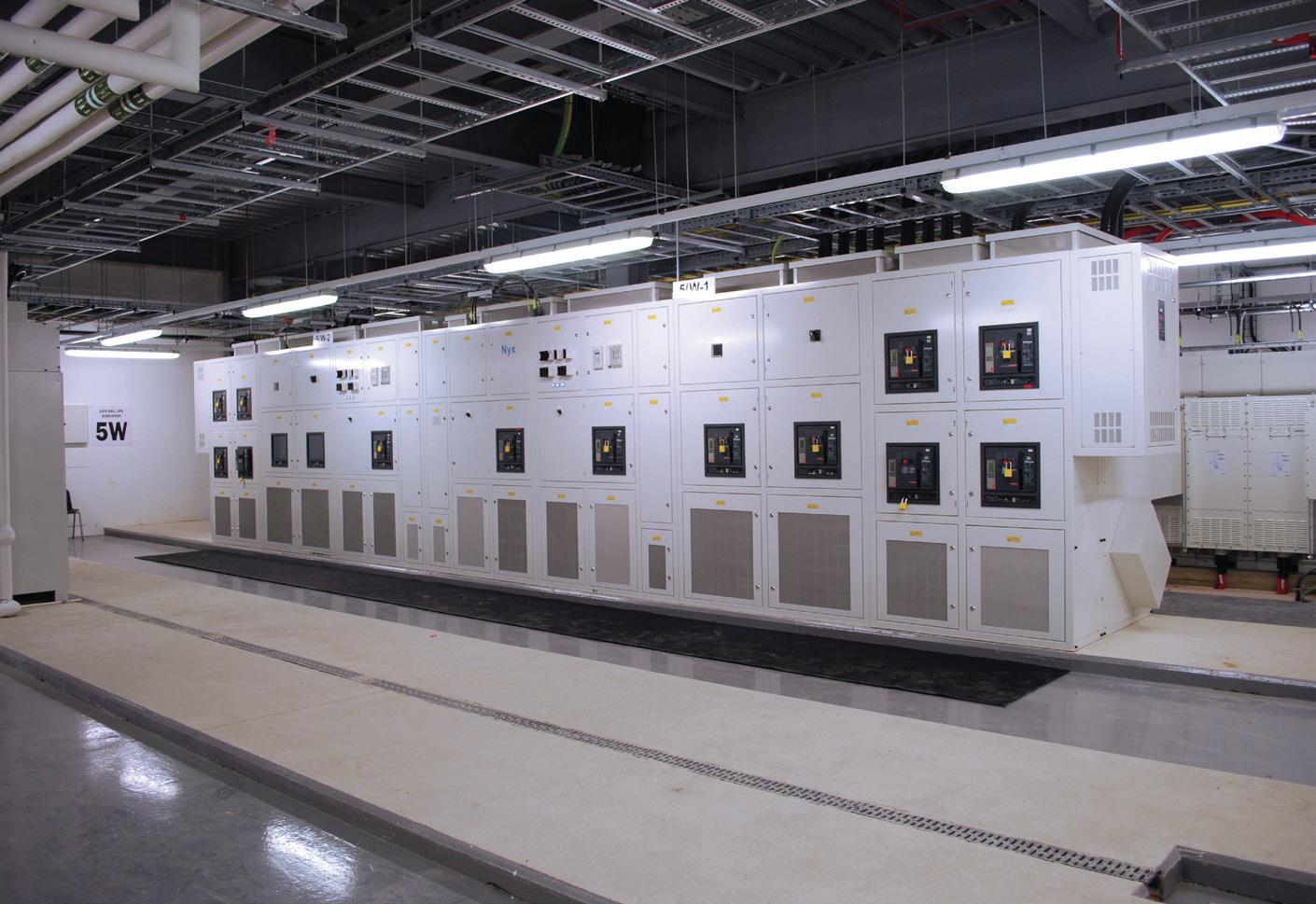
Rethinking switchgear procurement
The rapid growth of digital infrastructure has permanently reshaped demand for switchgear. Commercial construction must adapt by planning earlier and procuring more strategically, says Adhum Carter Wolde-Lule, Director at Prism Power Group.
SAdhum Carter Wolde-Lule Director at Prism Power Group
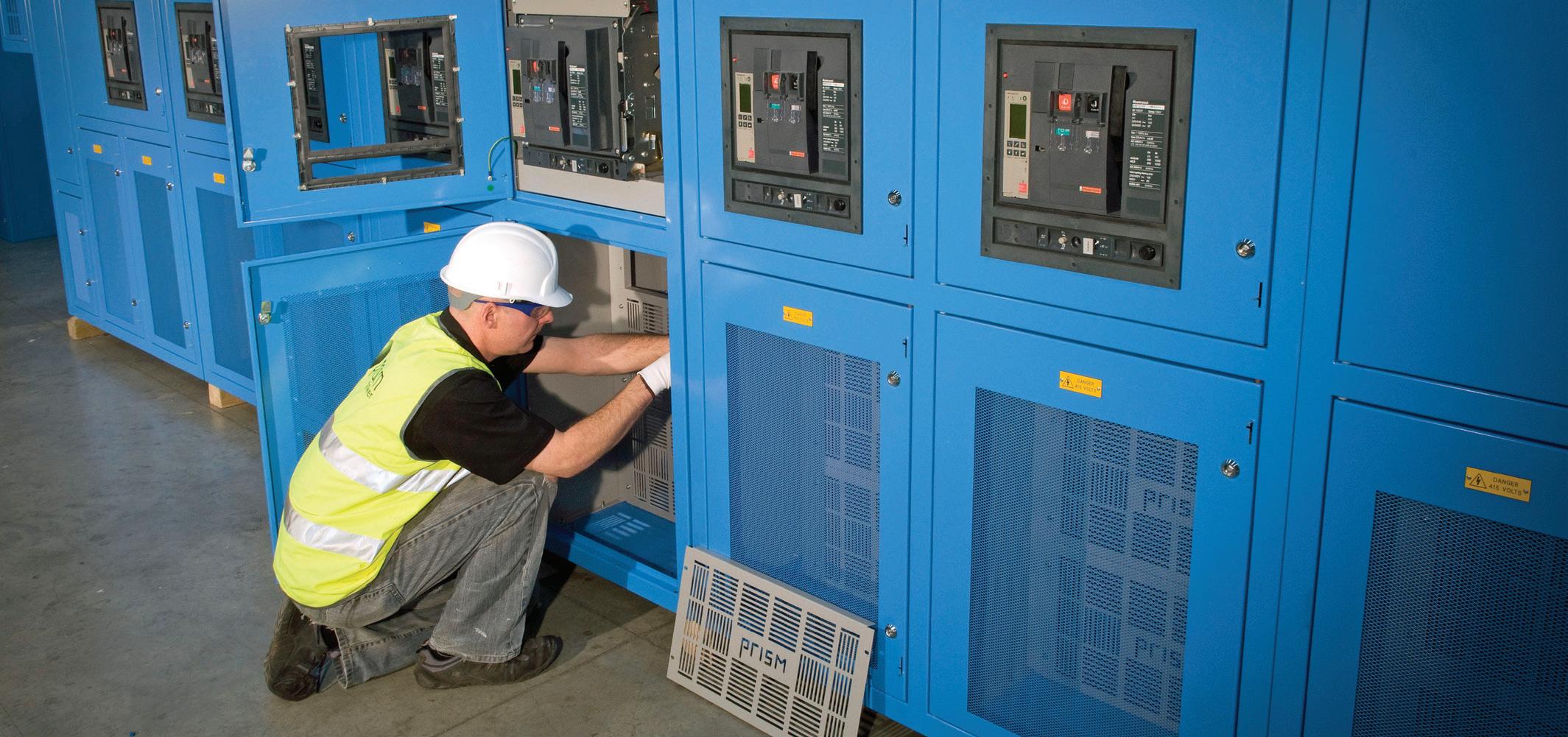
ustained investment in digital infrastructure –particularly data centres – has reshaped demand for low- and medium-voltage switchgear. Lead times that were once predictable now reflect a market operating at consistently high capacity, driven by AI workloads, hyperscale cloud expansion and strong government backing of digital infrastructure.
With data centres requiring significant volumes of electrical distribution equipment,
manufacturers are aligning production with long-term, largescale frameworks that offer continuity and technical consistency. Whilst this structural shift is positive for the sector overall, it does mean commercial construction must plan differently. Switchgear can no longer be treated as a late-stage procurement item inserted once designs are largely complete. It has moved firmly onto the critical path.
Programmes built on historic lead time assumptions may encounter pressure. Early design freeze, early contractor involvement and early engagement with manufacturers are now essential. Leave it too late and commissioning windows collapse, temporary power arrangements become extended, redesign pressure increases and cost certainty evaporates.
Commercial projects must now operate in a more structured and forward-planned manufacturing environment. That makes early alignment crucial. The projects that succeed are those that engage sooner and build realistic lead times into their programmes.
Maintaining engineering integrity is equally important. As demand remains strong across the digital infrastructure sector, the focus must remain on specifying equipment correctly for the application, rather than selecting based solely on availability. Electrical infrastructure is not decorative; it underpins safety, resilience and operational performance and cannot be compromised without consequence.
At the same time, the industry is transitioning towards
new-generation, SF6-free mediumvoltage equipment. Environmentally, this evolution is absolutely the right direction, but product transitions require engineering familiarity, requalification and, in some cases, redesign.
Strategic procurement
When you combine surging digital infrastructure demand, wider electrification, technology transition and finite manufacturing capacity, you do not have a short-term spike; you have sustained structural pressure.
For commercial developers and contractors, the response is clear – treat switchgear as a strategic procurement item. Two-stage procurement and long-lead item strategies are no longer optional.
Government also has a role. If the UK is serious about accelerating housing delivery, commercial development, electrification and digital infrastructure, then domestic and European electrical manufacturing capacity must be recognised as part of national infrastructure resilience.
AI is not slowing, nor is electrification
or data centre construction. These sectors are driving innovation, investment and technological advancement across the industry. Commercial construction is now competing in that same supply chain ecosystem – and success depends on adapting programme structures and procurement strategies accordingly.
At Prism Power, we are adapting. We
Prism Power-ing into the US
Prism Power Group, with its HQ in Watford, is expanding into the US to fill the equipment, skills and services gaps created by an unprecedented boom in data centre construction.
The company is looking to purchase a US business that already has UL certification – for compliance, safety and quality assurance regulations – and is raising $40 million for the acquisition and expansion in the UK.
With surging data centre demand straining power infrastructure and outpacing domestic capacity, US developers are actively seeking trusted overseas suppliers to simply keep pace and keep projects on track. Prism is well-placed to take
are engaging much earlier, designing smarter and working closely with clients so we don’t have bottlenecks. Switchgear may not be glamorous, but without it, nothing turns on.
prismpower.co.uk
advantage, having forged its reputation on delivering complete mechanical and electrical infrastructure for modular data centre initiatives in the UK and across Europe since 2005. Its engineers have executed a variety of end-to-end installations, from high-voltage substations and backup generators to the low-voltage switchboards that safeguard servers, in tightly scheduled, turnkey data centre projects.
Adhum Carter Wolde-Lule, Director at Prism Power Group, said: “The scale and urgency is such that America’s data centre expansion has become an international endeavour, and we’re again able to punch well above our weight in providing the niche expertise that’s missing and will augment strained local supply chains – on the ground, straight away.”
• Save time: 80% faster than threaded rod
• Design-to-sign-off support
• Full compliance: Complete technical data for a stress-free sign-off
Ideal for lighting, containment & suspended services.
Lighting matters
EPDs: a tool to decarbonise your lighting
James Bennett, Professional Business, Market Leader, Signify UKI, explores what an Environmental Product Declaration (EPD) is, why it matters, and how EPDs can help businesses to align with sustainability goals and stakeholder expectations.
James Bennett Professional Business, Market Leader, Signify UKI
As the UK, like all global communities, grapples with the pressing challenges of environmental degradation and resource depletion, there is a growing imperative on manufacturers, government and consumers to understand and minimise the environmental impacts associated with the products they produce,
regulate and consume. This pursuit of environmental sustainability has sparked a heightened demand for reliable and transparent information that can guide informed decision-making towards more environmentally conscious choices.
For stakeholders and customers of the UK lighting industry, the situation is no different. Manufacturers,
“EPDs offer a comprehensive assessment across a product’s entire lifecycle, covering all environmental aspects, following standardised formats and undergoing independent verification.”
designers, installers, specifiers – they are all looking for that holy grail of a single, understandable and reliable method to guide their decisions.
However, quantifying and comparing the multifaceted environmental footprints of products across various impact categories poses a formidable challenge. The intricate web of supply chains, manufacturing processes and disposal or reuse methods that underpin the lifecycle of a product makes it exceedingly difficult to accurately assess and compare the environmental implications of different products and their alternatives.
The need for assessing environmental impacts has indeed led to a proliferation of green labels, circularity scores and sustainability rating methods aimed at simplifying the comparison of products. However, reducing the complex matter of evaluating various environmental impacts to a one-dimensional, simplified rating system or a single logo is problematic and can be misleading.
Enter EPDs
As sustainability becomes an increasingly vital consideration in architectural and construction projects, Environmental Product Declarations (EPDs) serve as essential tools for navigating the myriad choices available. First, what is an EPD?
An EPD is a standardised document that provides comprehensive information about the environmental impact of a product throughout its lifecycle. This includes data on raw material extraction, production, usage and end-of-life disposal, ensuring that this is a source of information that is transparent, reliable and comparable across similar products. EPDs offer data on energy consumption, carbon emissions and resource usage.
By utilising EPDs, consultants and architects can make informed decisions that align with their sustainability objectives, ultimately contributing to greener and more ecoconscious designs.
EPDs are derived from Life Cycle Assessments (LCA), which consider all stages of the product lifecycle, including raw material extraction and transport, product manufacturing and delivery including installation, operation, disposal and recycling.
EPDs vs other regulations
As a stepping stone towards full EPDs, the UK’s Chartered Institution of Building Services Engineers (CIBSE) developed a Technical Memorandum in 2021: TM65/TM65.2 – Embodied carbon in building services: A calculation methodology, which basically is a narrowed-down EPD focusing on carbon footprint only. TM65/TM65.2 simplifies
but builds on international ISO standards that have been developed by experts over the years. As such, it is a halfway step towards a practice where full EPDs are being created to demonstrate all environmental impacts of products throughout their lifecycle. By TM65, the UK lighting industry is being pointed towards more robust and complete calculation methods. It should also be noted that TM65 states that if a product EPD exists then the TM65 assessment does not need to be applied.
In 2021, CIBSE introduced TM66, that sets out what designing and manufacturing to comply with circular economy principles entails and includes a checklist, a method of assessing a product’s circular economy performance, and realworld examples of good practice. TM66 was created to address an immediate need that was emerging in the lighting industry. Manufacturers were seeking ways to make their products more sustainable, create circular designs, explore remanufacturing and substantiate their green claims. Likewise, customers and specifiers were seeking independent evidence of claims made, and a simple scoring system to compare at least some of such product claims was more than welcome. The TM66-CEAM tool was useful for filling that gap.
EPDs, on the other hand, offer a
comprehensive assessment across a product’s entire lifecycle, covering all environmental aspects, following standardised formats and undergoing independent verification. In some cases, a product might have both an EPD and a TM66 report, providing an even more in-depth look at its environmental impact.
Think of an EPD as a detailed environmental biography of a product, while TM66 is a specific chapter focusing on its end-oflife potential. Use an EPD for a comprehensive environmental impact assessment across any product category. Use TM66 for a quick assessment of a lighting product’s circularity characteristics, particularly embodied carbon (manufacturing emissions).
At Signify, we walk the talk
As lighting currently accounts for 12% of global electricity consumption and 5% of global CO2 emissions, transitioning to energy-efficient LED lighting can significantly reduce global electricity consumption. EPDs quantify products’ environmental impact over their full lifecycle,
enabling comparisons to comparable products and empowering customers to make informed decisions on lighting investments.
In addition to driving greater transparency for customers, EPDs are advancing evidence-based sustainable innovation within Signify, providing a quantified footprint which acts as a baseline for further improvements in next generation product iterations.
EPD certification is particularly relevant to several key stakeholders – specifiers, end users and environmentally-conscious consumers. For manufacturers, EPD certification is a proactive approach to environmental responsibility and compliance with international sustainability standards. For businesses and end users, especially those with sustainability goals, EPDcertified products are invaluable. Incorporating the EPD-certified products into their infrastructure allows these companies to align with their environmental objectives and meet regulatory requirements. EPD certification also provides
The next article in Signify’s Lighting matters series will focus on CPD – read it in the May/June issue of Electrotechnical News.
“Lighting currently accounts for 12% of global electricity consumption and 5% of global CO2 emissions.”
the data needed to substantiate sustainability claims, making it easier for businesses to report on their environmental impact.
We recognise that, and so have already made available more than 2,000 EPDs, covering more than 70,000 product variations around the world. Due to customer demand, the Americas are currently served by the Declare labelling system. As the EPD programme continues, all products worldwide will ultimately receive EPDs. We have also committed to sharing the environmental impact of its full range of products.
Informed decisions and sustainability goals
By providing transparent and verified information about a product’s environmental impact, EPDs empower stakeholders to make informed decisions and contribute to global sustainability goals. Whether you are a manufacturer seeking certification or a designer selecting materials for a project, understanding the importance of EPDs ensures alignment with industry standards and a commitment to a sustainable future.
The time is now for the UK lighting industry to raise its ambition and embrace EPD methods tailored for the industry that will better stand the test of time.
Read our whitepaper, Assessing & substantiating environmental impacts with EPDs, on our website to see how Signify walks the talk.
signify.com
20 years of real homes
Paul Smith, Managing Director, NIBE UK, asks: What does long-term deployment teach us about low-carbon heating?
Paul Smith Managing Director, NIBE UK
Two decades ago, lowcarbon heating in UK homes was considered a specialist solution. Early adopters were typically selfbuilders, sustainability advocates or homeowners willing to try emerging technology. Today, electrification of heat is central to national decarbonisation goals and heat pumps are steadily moving into mainstream housing.
At NIBE, we have spent 20 years deploying and supporting heat pump systems in UK homes, giving us a clear view of what truly determines performance, reliability and customer satisfaction over the long term. Some things have changed significantly; others have not changed at all.
Technology has advanced considerably. Modern heat pumps are quieter, more efficient and more intelligent than earlier systems. Controls are more intuitive, connectivity is standard and integration with wider energy systems is increasingly seamless.
Homes have evolved too. Improved building fabric, better airtightness and higher construction standards mean many new properties are well suited to low-temperature heating,
cooling and ventilation. Yet the fundamentals remain unchanged.
Correct system design continues to be the single greatest determinant of performance. Accurate heat loss calculations, appropriate emitter sizing and sound hydraulic design mattered 20 years ago and remain critical today. Where systems underperform, the root cause is rarely the heat pump itself; it is more often design, installation or commissioning.
Equally constant is the role of the homeowner. Even the most advanced system cannot deliver optimal comfort and efficiency if it is not understood and operated correctly. Clear handover, intuitive controls and accessible guidance remain essential.
Real homes reveal what actually works
Long-term deployment highlights a simple truth: real homes, occupancy patterns and practical constraints ultimately determine system success.
UK housing stock presents unique challenges – from space limitations and retrofit complexity to varying levels of insulation and ventilation.
Engineering principles must be applied with these realities in mind. Systems that perform consistently do so because they have been designed and commissioned to suit the property, not simply specified to meet a checklist.
For installers, this reinforces the importance of detailed surveys, emitter upgrades where required and commissioning that verifies performance under real operating conditions.
Why systems thinking is now essential
As the market matures, the conversation is shifting away from individual products towards wholehome performance.
Heat pumps increasingly operate within a broader ecosystem that may include mechanical ventilation, domestic hot water demand management, solar PV, battery storage and smart tariffs. Optimising performance depends on how these elements interact.
This shift demands a systems approach. Designers must consider the building as a complete energy environment. Installers must understand hydraulic integration, control strategies and weather compensation. Manufacturers must ensure interoperability and provide robust technical support.
“Real homes, occupancy patterns and practical constraints ultimately determine system success.”
As electrification accelerates, intelligent controls and load management will play an increasing role in balancing comfort, efficiency and grid demand.
Integrated heating and cooling is becoming standard
Another change over the past two decades is the growing recognition that heating and cooling don’t have to be treated separately.
Rising summer temperatures, improved airtightness and changing comfort expectations are increasing demand for cooling and ventilation
control in UK homes. Heat pump systems capable of providing heating, cooling and ventilation offer a practical response, delivering yearround comfort from a single solution.
For specifiers and installers, this means anticipating overheating risk, selecting compatible emitters and ensuring controls support seasonal operation. Future homes will increasingly expect integrated climate control rather than distinct heating and cooling systems.
Why aftercare is critical to system performance
One of the clearest lessons from long-term deployment is that installation is only the beginning. Connected systems now enable remote monitoring, performance optimisation and predictive maintenance. These tools help identify issues early, reduce unnecessary callouts and ensure systems continue to operate as designed.
For installers, this reduces repeat visits and strengthens customer confidence. For homeowners, it provides reassurance and consistent comfort. For the wider industry, performance data offers valuable insight into real-world operation.
As adoption grows, structured aftercare and performance verification will become essential to maintaining quality and protecting the reputation of low-carbon heating technologies.
Priorities for the next phase
Low-carbon heating is now established infrastructure entering mass adoption. The lessons from two decades of real-world deployment clearly show us that long-term performance depends on consistent engineering, skilled installation and ongoing support.
If we apply these lessons consistently, the next phase of adoption will deliver not only lower emissions, but better comfort, stronger system resilience and improved outcomes for homeowners across the UK.
nibe.co.uk
Electrifying heat
Government policy, funding and planning reform are driving rapid heat pump growth, creating new opportunities for electrical contractors ready to expand, says Neil Sawers, Commercial Technical Manager at Grant UK.
Neil Sawers Commercial Technical Manager at Grant UK
The interest in heat pumps from electrical contractors is on the rise. With the Government’s Warm Homes Plan (WHP) now in place, heat pumps are firmly positioned at the centre of the UK’s heating strategy. It presents a real opportunity for electrical contractors ready to expand what they offer customers.
Launched in January 2026, the Warm Homes Plan commits £15 billion over this Parliament to upgrading up to
five million homes. Clean heating is at the heart of the policy, with a target of more than 450,000 heat pump installations per year by 2030.
Legislation driving demand
The Warm Homes Plan builds on existing incentives like the Boiler Upgrade Scheme (BUS) which has been available since 2022 and offers homeowners and small business property owners in England grants of up to £7,500 towards the supply and installation of low-carbon heating systems. Similar funding is available in Scotland, Wales and Northern Ireland through region-specific schemes.
Since its launch, more than 100,000 BUS applications have been submitted, the majority for air source heat pumps (ASHPs). The UK was also the fastest growing
heat pump market in Europe in 2024 with a 40% increase in BUSsupported installations year on year to November and growth continuing into 2025.
Alongside funding, planning changes are making it easier for installations to go ahead. Updates to permitted development rights in England now allow ASHPs to be installed closer to property boundaries. Larger units and up to two heat pumps on detached properties can also be installed without planning permission in most instances. The intention is clear: remove barriers, increase uptake and make low-carbon heating the default choice.
For electrical contractors, this policy direction provides confidence that heat pumps are not a short-term spike but are embedded in long-term Government strategy.
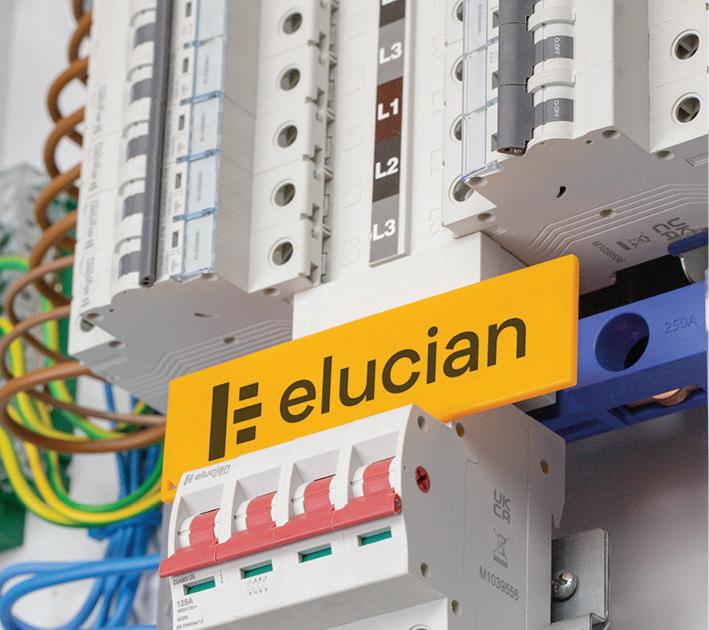
The Elucian range of Three Phase and Neutral Distribution
or
Isolator (RCCBs
New revenue streams
Every heat pump installation relies on a solid electrical infrastructure. Heat pumps are frequently installed alongside solar PV, battery storage or smart energy management systems. Electrical contractors who understand how these technologies interact are well placed to become trusted partners in whole-home electrification projects.
Wilts Electrical Contracting (WEC) is one company that shows how diversification can take place. Originally focused on domestic, commercial and agricultural electrical installations, the Wiltshirebased firm expanded into renewables as demand grew.
They became MCS/NAPIT approved installers for solar PV in 2010, but recognising the rise of ASHPs, decided to invest in additional skills and
“This policy direction provides confidence that heat pumps are not a short-term spike but are embedded in longterm Government strategy.”
accreditation to enter the plumbing market. Director Darren Axford trained to become a heating and plumbing engineer and, by 2014, WEC had become approved installers for ASHP systems under MCS/NAPIT. Continued training along with growing the team was a company aim. They invested in apprenticeships and WEC staff took the Grant Aerona ASHP installer course, becoming approved Grant G1 Installers, boosting their technical know-how and providing their customers with extended product warranties and strong after-sales support.
For electrical contractors, this is not about becoming heating engineers overnight; rather, with the right training, partnerships and support, renewables can open up new revenue streams.
Training and technical confidence
As the market matures, in-depth knowledge becomes a differentiator and manufacturers are responding to this demand with more structured support. Grant UK, for example, offers dedicated training and product courses covering ASHP system integration, installation requirements and performance considerations.
Its training facilities in Swindon and at centres throughout England, Scotland and Wales provide installer-focused courses to build practical competence. The Grant Aerona 290 Air Source Heat Pumps (ASHP) Course, for example, covers the Grant Aerona 290 heat pump including construction, principles of operation, electrical wiring, controller settings, installation and commissioning the complete system.
Online ASHP training is also available via the Grant eLearning Academy which offers on-demand courses that let candidates work through the content at a time and place that suits them.
The norm rather than the exception Consumer satisfaction levels with heat pumps installed under the BUS are reported at between 90 and 95%. In colder European climates such as Norway, Sweden and Finland, heat pumps are already mainstream, with almost half of households using them. The UK is following that trajectory.
As existing fossil fuel systems reach end of life and building standards tighten, low-carbon heating will increasingly become the norm rather than the exception. For electrical contractors, this change is both a challenge and an opportunity. Those who engage now, build technical understanding and align with reputable manufacturers will be well placed to support the electrification of heat at scale.
Heat pumps are no longer on the sidelines of the industry. With policy, funding and market demand aligned, they are moving into the mainstream and the electricians who recognise that early can position themselves at the centre of the transition.
grantuk.com/professional
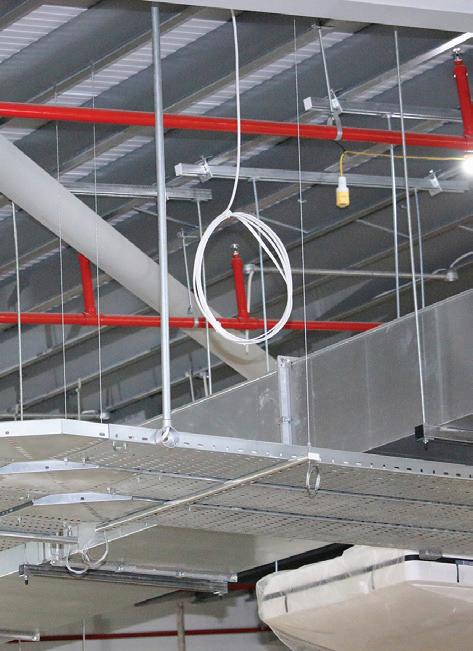
Wire suspension: from components to complete, compliant solutions
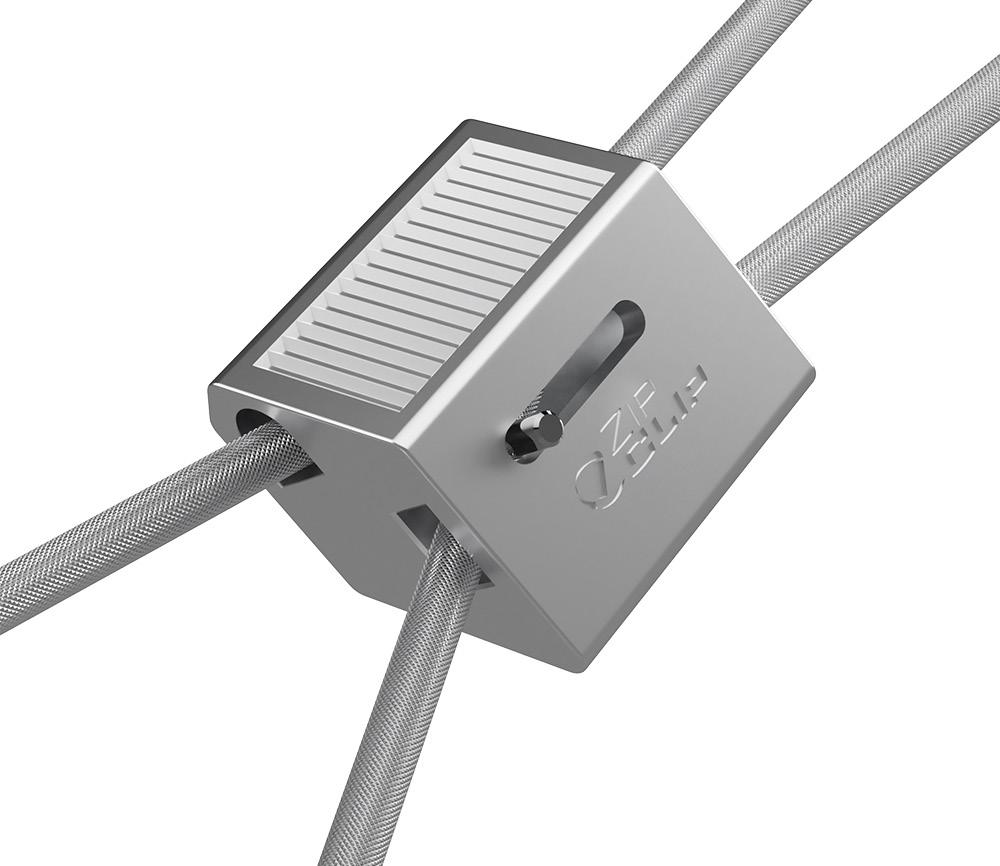
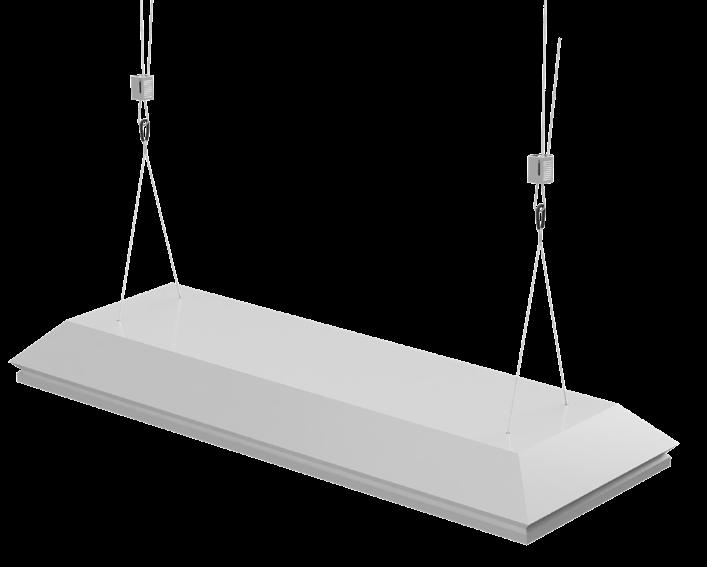
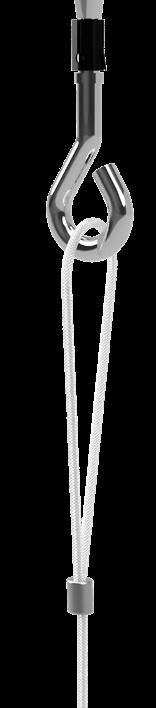
Wire suspension systems have long been a staple in the electrical contractor’s toolkit. From lighting and containment to signage and acoustics, the concept is well-established: highstrength, flexible steel wire that is fast to install and visually discreet.
However, as project complexities increase, the industry is shifting. Modern wire suspension has evolved from a simple product purchase into a sophisticated, engineered system. At Zip-Clip, we recognise that while many jobs require simple, flexible suspension components, larger-scale projects demand a more integrated ‘design-tosign-off’ service to reduce risk, slash onsite labour time and costs, and simplify final inspections.
Versatility for every scale
The true strength of the Zip-Clip range lies in its scalability. For everyday installations, our off-the-shelf kits provide the ultimate flexibility, allowing contractors to adapt to site conditions on the fly. But for increasingly complex builds – where higher loads, tighter tolerances, and stricter compliance are non-negotiable – we offer a comprehensive technical partnership that goes far beyond the hardware.
The turnkey advantage
Our ‘design-to-sign-off’ approach moves complexity from the job site to the design phase. By assessing load requirements, fixing substrates, and environmental constraints upfront, we specify a fully compliant system before a single wire is cut. For contractors, this removes the headache of manual calculations and guesswork, providing a package that arrives engineered and ready for installation.
Integrated design and on-site support
We believe a suspension system is only as good as the support behind it. Our in-house design team utilises advanced CAD systems and takeoff services to ensure precision from day one. To ensure total compliance and peace of mind, we also provide:
• On-Site Technical Guidance: Troubleshooting and expert advice during the install.
• Toolbox Talks & Training: Empowering teams with the knowledge to install safely and efficiently.
• Comprehensive Documentation: Providing the load data and technical submittals required for a seamless sign-off.
Proven
performance: University of Worcester
A recent project at the University of Worcester’s Elizabeth Garrett Anderson Building perfectly illustrates the value of this integrated approach. The transformation of a former newspaper office into a modern medical school presented significant challenges, including uneven ceilings and a complex layout.
Traditional threaded rod would have been heavy, slow to install, and difficult to adjust within the existing structure. By opting for a Zip-Clip designed system, the project team achieved:
• Speed: A significant reduction in installation time compared to traditional methods.
• Precision: Tool-free adjustment allowed for instant levelling and fine-tuning.
• Compliance: Because the system was supplied with full technical data, there was no uncertainty during
the inspection process.
The result was a professional, clean finish delivered within the programme, backed by the confidence that the solution met every performance and safety standard.
A smarter way to work
Wire suspension is no longer just a fixing method; it is a critical building service. Whether you need a simple, flexible kit for a quick fix or a fully engineered solution for a major infrastructure project, Zip-Clip provides the bridge between components and compliance.
Whether you’re starting a new project or looking to improve your current installation processes, our technical team is here to help. Get in touch with us today to learn more about how ZipClip can support your next big project.
Celebrating the UK’s first female-run electrical training centre
At the end of last year, Redditch-based Renew Elec training centre opened its doors, offering a range of LCL Awards and City & Guilds electrical courses. Renew Elec stands out for several reasons. Firstly, its founders and primary trainers, Alex Tranter and Sam Lawler, are both women. Secondly, the centre was born out of TikTok.
When Alex Tranter’s videos to support electrical apprentices went viral with people clamouring to get trained in person, opening a real centre was the obvious next step. Alex explains the journey: “The rationale behind Renew Elec is simple, to open up opportunities in electrical trades to as many people as possible. We believe in inclusive, high-quality electrical education, bringing together electricians, learners, manufacturers and others who share our vision.
“Our approach is to challenge traditional routes into the sector, supporting learners who may not have thrived in a conventional college environment.
“Our TikTok fan base is encouraging – 20% of our followers are female, which bucks the trend of women making up just 1% of all electrical installers.”
“Unlike the majority of other LCL Awards centres, we’ve done things backwards. Social media is usually something businesses explore after they’re established, whereas we got TikTok up and running first and were inspired by the interest. The egg definitely came before the chicken in our case!”
From new entrants to experienced electricians
“Prior to Renew Elec I was teaching in colleges, helping often struggling students grasp complex electrical equations. A suggestion from a pupil started the TikTok channel and it quickly became clear that a lot of trainees, and others, found this medium much easier to grasp. Bitesized, three-minute videos seem to be
Sam Lawler
Alex Tranter
the sweet spot, often with the aid of my dog!
“I was blown away by how quickly the channel grew (currently over 18,000 followers), and soon people were asking me if I delivered courses. It was then that I approached Sam (also a teacher and qualified electrician) and we got in touch with LCL Awards – they were one of our first choices; the renewable qualifications they offer were particularly appealing. Our plans for this year include adding their Level 3 qualifications in solar PV, battery storage and electric vehicle charging.
“We’re passionate about helping installers access the opportunities that the path to net zero brings,
supporting electricians at every stage of their career – from new entrants to experienced electricians upskilling for the future of the industry.”
The first but hopefully not the last “Sam and I are proud to be flying the flag for women in the industry; it’s great to be the ‘first’ female-owned training centre, but I hope that in the future this isn’t such a headlinegrabbing claim. Our TikTok fan base is encouraging – 20% of our followers are female, which bucks the trend of women making up just 1% of all electrical installers.
“When Sam and I first met we’d never worked with any other female electricians. Things are clearly changing and we hope that there are
“We’re passionate about helping installers access the opportunities that the path to net zero brings.”
many more female electricians and female-owned training centres in the future.
“Inclusivity means welcoming everyone, however; there is a massive shortfall of electricians, making it a really good career choice for many people. We want to level the playing field for electricians from all backgrounds and the positive engagement we get on TikTok is from men and women alike.”
A safe space
“Creating a safe space for learning where you don’t feel judged, where it’s ok to ask questions, with flexibility to spend more time on the bits you might find harder is crucial. The social media posts really help here, giving learners something to refer back to as many times as they like.
“We’ve only just become LCL Awards approved, but we plan to join its Inclusivity Charter, a great initiative designed to help centres become more welcoming and accessible spaces for people from all walks of life – it really aligns with our own ethos. We are already members of INclusive Worcestershire Leaders, a voluntary programme designed to enhance inclusivity in our community.
“For any female electricians out there thinking of getting into teaching, I recommend it! It’s really important that trainers are representative of a broad spectrum of society – this is key to encouraging more people from all walks of life into the centres.”
Cable myth-buster part two: LSF vs LSHF
In the second of a three-part series debunking common cable misconceptions, Paul Bellamy, Managing Director of flex7, looks at LSF and LSHF cables and if it really matters which you use.
L“Paul Bellamy Managing Director of flex7
SF, LSHF? It’s the same stuff.” On behalf of every cable manufacturer – no! That’s like saying a McLaren F1 and a Lada are the same because each has four wheels and gets you from A to B (admittedly, not always the case with the Lada).
Low Smoke & Fume (LSF) cables are made using PVC compounds. Yes, they have a few extras added to inhibit, to some degree, the production of hydrogen chloride emissions in the event of a fire, but that’s all. There are no standards that dictate the level of emissions or the density of the smoke produced when burning, which begs the question: How low is low, exactly?
If your common or garden PVC cable emits, say, 27% hydrogen chloride, is it acceptable for an LSF variant to emit 25%? Should we expect 15% or 10% or even 13.86%? They’re all lower than the 27%, and therein lies the fundamental problem with cables that are marketed as LSF. Without a standard to nail these emission levels down to, LSF
cables are like Forrest Gump’s famous box of chocolates: You never know what you’re gonna get. Surely, when it comes to selecting one product over another for its potential safety benefits, a prerequisite should be that it’s abundantly clear what those benefits are?
On the other hand, Low Smoke Halogen Free cables (LSHF, aka LS0H, LSZH) contain no PVC and that means hydrogen chloride emissions during the burning process are virtually zero. A cable cannot be marketed as being LSHF if, during testing, it is found to emit more than 0.5% hydrogen chloride. In addition, smoke production should be low and result in visibility not being reduced by more
than 40%. Zero hydrogen chloride and vastly improved visibility are key properties to safer evacuation from a burning building; the benefits of installing LSHF cable over PVC or LSF are clear.
In hindsight, perhaps the McLaren/ Lada comparison was a poor choice, as they look nothing like each other. That’s probably where a lot of the confusion lies with LSF and LSHF cables. The acronyms commonly used are almost identical, and one type of cable looks very similar to another, especially if the only difference is the chemical composition of the ‘plasticky’ stuff it’s covered in. However, where comparing these two cars does work is when it comes to performance, as they’re obviously poles apart on that front – much the same as LSF and LSHF cables.
flex7.co.uk
Ovia unveils enhanced ‘Orbik by Ovia’ emergency lighting portfolio
Ovia, part of the Scolmore Group, recently announced the launch of the newly enhanced Orbik by Ovia emergency lighting range. The development marks the next chapter for the long-established Orbik brand, which was brought under Scolmore Group’s distribution last year and integrated within Ovia’s growing lighting portfolio.
Ovia has invested heavily in the redevelopment of the range, combining Orbik’s trusted reputation in emergency lighting with Ovia’s own focus on innovation, performance, and compliance. The result is a comprehensive, fully refreshed collection of emergency lighting solutions designed to meet the requirements of today’s commercial, industrial, and residential environments.
Four new flagship products
The enhanced Orbik by Ovia portfolio introduces four new flagship products, each engineered to deliver improved performance, flexibility, and installation efficiency. Alongside these launches, the entire Orbik range has been upgraded, featuring enhanced self-test functionality, long-life LiFePO4 battery technology, and refined designs to meet the evolving demands of modern emergency lighting applications.
Novem HO5 – High-Output Emergency Bulkhead
Leading the upgraded portfolio is the Novem HO5, a high-performance, non-maintained emergency bulkhead, delivering over seven times the lumen output of the standard Novem5 model. With a light output of 920 lumens in emergency, the HO5 delivers significantly enhanced brightness and energy efficiency, making it suitable for larger installations and high-ceilinged spaces.
The new Calvip 65 combines robust performance with a slim, contemporary design. Featuring an IP65 ingress protection rating, the unit is well suited to damp or humid environments such as changing rooms and shower areas, where reliability is essential.
Synex5 – Five-in-One Exit Sign
Designed for maximum flexibility, the Synex5 provides multiple mounting options within a single unit – ceiling and wall mount as standard, with additional accessories available for suspended, recessed, or side-mounted installations. This provides contractors and specifiers with a true five-in-one solution, adaptable to any application.
Vipex5 – 4W Polycarbonate Exit Box
Delivering outstanding performance, the Vipex5 boasts a 36-metre viewing distance for maximum visibility and safety. Its ultraslim frame creates a sleek, modern aesthetic, while the robust polycarbonate construction provides a durable upgrade from traditional metal exit boxes. Designed for versatility, this polycarbonate exit box can be easily retrofitted, making an ideal stylish solution for both new installations and refurbishment projects.
Stand out features across the Orbik by Ovia range
All products within the Orbik by Ovia range benefit from a number of key technical and functional upgrades:
• Enable/disable self-test function – automated periodic testing simplifies compliance and reduces maintenance costs.
• Optional black finish – available on selected models to meet the design requirements of modern interiors.
• Five-year warranty – covers all Orbik by Ovia emergency lighting products.
The expanded Orbik portfolio
In addition to the four new flagship products, the complete Orbik by Ovia range encompasses upgraded solutions across the following categories:
• Exit Signs and Exit Boxes – offering 26-34m viewing distances, 3-hour minimum operation, and directional legends.
• Twin Spots and Pin Spots – improved Newem5 and Ibex5 models with 6000-6500K colour temperature LEDs for high visibility.
• Bulkheads, Circular and Square Spots – a variety of IP20-IP65 options with interchangeable lenses for corridor, widecorridor, and open-area applications.
• Control Gear and Accessories – compact, compliant emergency conversion kits built to BS EN 60598-2-22 standards.
All products are supplied in Ovia’s ecofriendly recyclable packaging, reflecting the company’s wider commitment to sustainable manufacturing and distribution practices.
Bespoke Emergency Lighting Designs
Ovia also offers bespoke Emergency Lighting Design schemes engineered to comply with the latest BS 5266 code of practice, incorporating all design objectives for optimal performance. Ovia’s highly skilled specialists produce detailed, accurate lighting layouts tailored to project requirements, ensuring comprehensive solutions that are perfectly engineered for safety, compliance, and peace of mind.
YOUR BUILDING, ONLY SMARTER
Imagine a building that doesn’t just operate, it thinks.
ABB Ability™ BuildingPro brings all your building’s systems together by leveraging edge technology. The result? A truly intelligent environment that drives energy efficiency, operational excellence, and enhanced comfort for every occupant.
ABB Ability™ BuildingPro, with its scalable architecture, cloud readiness, and robust cybersecurity, ensures your building is ready for today and prepared for tomorrow.