
TABLE OF CONTENTS
PAGE 03
PAGE 06
PAGE 10 PAGE 16

China pivotChinese tech enabling African solutions PAGE 06



Taking care of another human being is a fundamental TRUTH of BEING a HUMAN BEING…
Taking care of another human being is a fundamental TRUTH of BEING a HUMAN BEING… I was ushered into the position of LEGAL authority to be responsible for the well being of my Mother. She has been battling Dementia (Likely Caused by Alzheimer's) since her first brain scan in 2016. She was officially diagnosed in 2019. I began my unofficial caregiver responsibilities for her in 2019 before her diagnosis. When the pandemic hit in 2020, everything
changed. She was already battling a disease when a deadly disease was spreading around the world. I am her ONLY son. So our family naturally surrounded her. However, there is a real legal structure that is in place to LEGALLY make me the person responsible for her care and well-being when the doctors determined she could no longer make rational decisions for herself.
My mother and stepfather created wills and power of attorney documents on his deathbed in 2011. Those tough decisions are shaping lives today - mine, my wife's, my sister's, our children's. That was intention. That was generational IMPACT.
Now I tend to her daily needsemotional, spiritual, hygiene, nutritional, mental, sensory, hydration, exercise, sleep. And I see it clearly: Helping others WHEN they need it MOST is THE MOST POWERFUL IMPACT we can make. How This Shapes Electric Boat News
If I write about $500,000 luxury yachts to our 272 Ethiopian readers, am I making impact? They're not browsing for entertainment. They're seeking solutions for lakes and rivers where fuel costs 3-5x global prices and supply chains fail regularly.
• They NEED practical knowledge.
• They NEED affordable options.
• They NEED information to build local solutions.
Just as my mother needs me NOWnot someday, not theoretically -
If I write about $500,000 luxury yachts to our 272 Ethiopian readers, am I making impact?
these communities need actionable information TODAY. That's our fiduciary responsibility as a benefit corporation. Not to showcase wealth, but to share knowledge that sparks innovation where it's needed most.
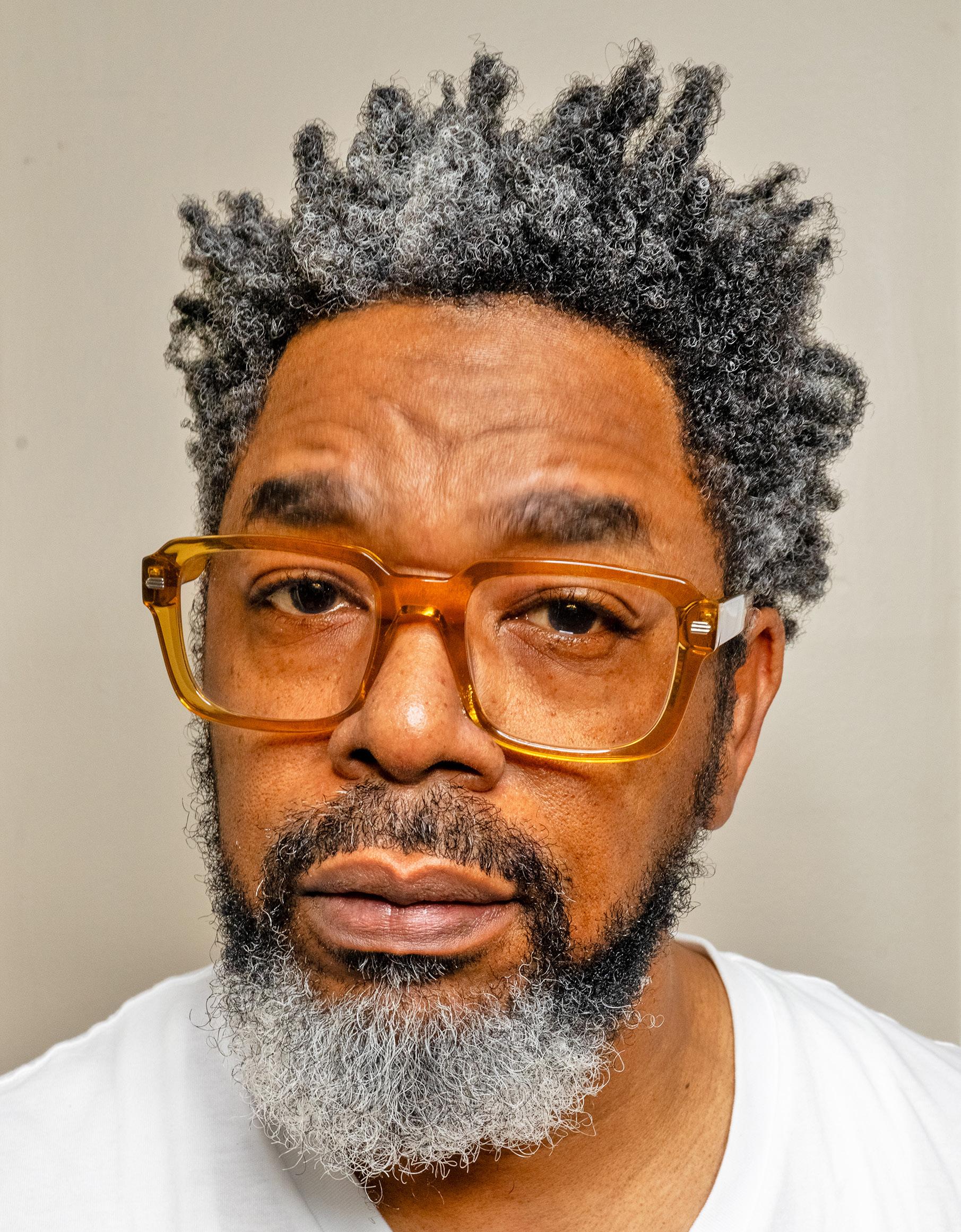
My mother worked 46 years for the US government, serving others. She took care of me. Now it's my turn. And through Electric Boat News, it's our turn to take care of communities that traditional marine media ignores. Real impact isn't about what we want to give. It's about what others actually need.
Discovering

researchteam@electricboatnews.com
https://www.electricboatnews.com kev@electricboatnews.com
Sustainability
Whatsapp: +16786611419
Email: kdrodge1@asu.edu

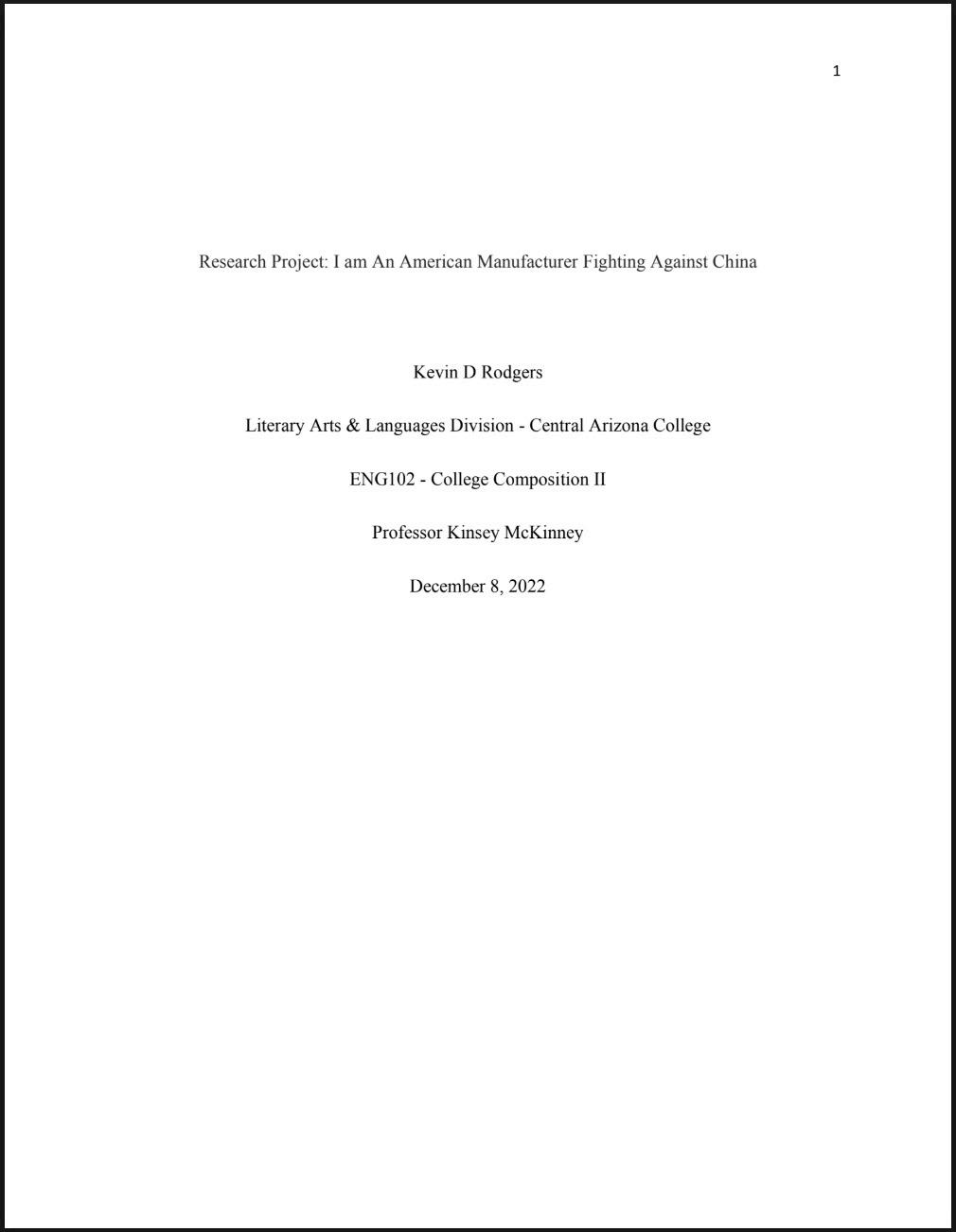
Click here to read my 2022 paper: "I am An American Manufacturer Fighting Against China" <<< Please read to understand why I have made the adjustment in my thinking.
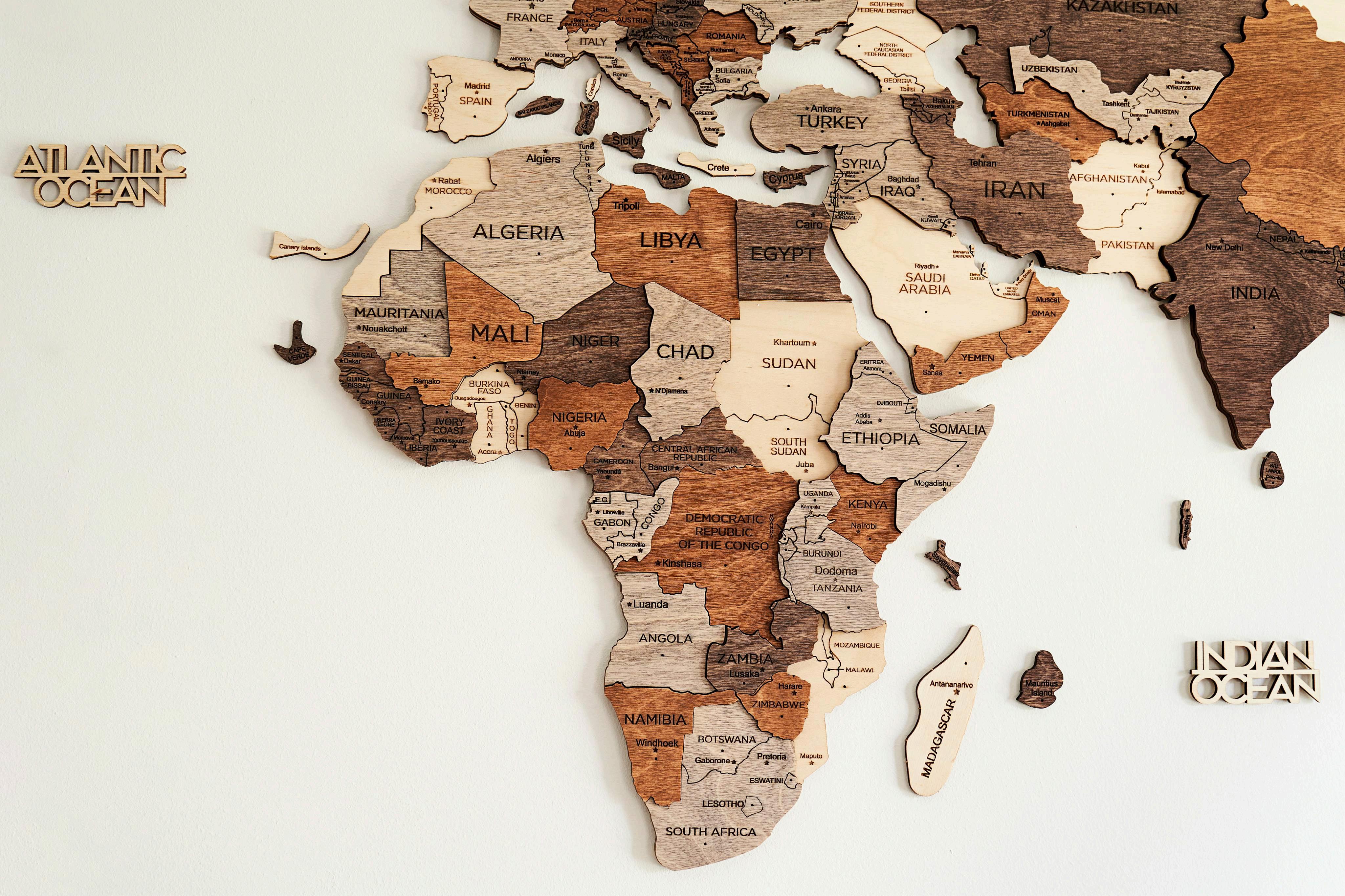
Three years ago, I wrote that paper in anger. As a Master Barber and pomade manufacturer, I watched Chinese products selling for $3.17 while mine cost $15.99 to produce. I called for Americans to "BUY MADE IN THE USA!" and saw China's state-owned enterprises as existential threats to American manufacturing. I documented the trade deficit, analyzed currency manipulation, and rallied against unfair competition.
That was 2022. Today, I'm studying Chinese, publishing Electric Boat News, and actively trying to understand the adoption of Chinese battery technology in African waterways. What changed? Everything.
To understand this transformation, you need to read that original paper first. See my mindset then. Feel my frustration. Understand my fight then. If you read the paper, you will understand my pivot much better.
My 2022 paper never mentioned artificial intelligence. I was focused on manufacturing costs, labor practices, and currency manipulation. I couldn't have predicted that by 2025, I'd be collaborating with AI systems to research battery technology, or that China would dominate not just manufacturing but the AI infrastructure that's transforming global innovation.
While I was fighting the last war - traditional manufacturing competition - China was already winning the next one.
The same state-directed investment I criticized in 2022 has positioned China at the forefront of both battery technology and AI development. While I was fighting the last wartraditional manufacturing competition, China was already winning the next one.
Their batteries now power Ethiopia's 100,000 electric vehicles deployed in just one year. Their AI models compete with Silicon Valley's best. The vertical integration I dreamed of achieving in pomade manufacturing, China achieved in the entire electric transition supply chain.
Bloomberg's September 2025 report revealed something that would have shocked my 2022 self: developing countries from Nepal to Costa Rica are buying more electric vehicles than fossil-fuel ones. China isn't flooding these markets with inferior products as I claimed they did with cosmetics.
They're providing affordable technology that's enabling transportation revolutions.
Ethiopia, (where 272 of my ezine readers live) banned imports of petrol and diesel cars entirely. They didn't do this because they love China. They did it because Chinese batteries and motors offered escape from 3-5x fuel markups and unreliable supply chains. The "unfair advantage" I identified in Chinese manufacturing has become a humanitarian tool.
The UN's Rob de Jong predicts 2025 is the year EV's take off in low and middle-income countries, stating "Electric vehicles are getting close to price parity with petrol and diesel vehicles."
In China, a standard family car costs $15,000. That accessibility I resented in pomades is now enabling fishers on Lake Tana to switch from expensive petrol outboards to solar-charged electric motors.
China has massive problems - labor practices, environmental damage, authoritarian control. I documented these in my 2022 paper. But here's the uncomfortable truth: Chinese battery technology is about to liberate billions of people from fuel poverty.
This isn't exaggeration. Consider the math: 2 billion people live near waterways in developing nations. Most depend on boats for food, transport, or trade. They pay 3-5x global fuel prices due to transport costs and corruption. Every fishing trip means calculating fuel cost against potential catch. Every ferry crossing drains family budgets.
Chinese manufacturers like ePropulsion and Hangkai aren't making luxury products. They're mass-producing $500 motors and $400 battery packs that can transform a wooden fishing boat into electric propulsion for under $2,000. That's not charity - it's business. But the impact is revolutionary.
The Scale of Change:
• Indonesia: 270 million people, 17,000 islands
• Bangladesh: 170 million people living in river deltas
• Nigeria: 200 million, Niger River
communities
• Congo Basin: 75 million dependent on river transport
• India: 600 million near waterways
That's 1.3 billion people in just five regions who could benefit immediately from affordable electric marine propulsion. Add Southeast Asia, Pacific Islands, and Latin American river communities - we're talking about improving life for 2+ billion people. Chinese batteries aren't perfect. But when a Ethiopian fisher can replace $50 weekly fuel costs with solar charging, when a Bangladeshi ferry can run silent and clean through villages, when Congo River traders can actually predict transport costs - that's quality of life transformation at planetary scale.
The irony isn't lost on me. The same Chinese manufacturing I fought against as a pomade maker is now the only force capable of democratizing clean marine transport globally. Not through altruism, but through mass production economics that make electric propulsion cheaper than fuel engines. That's not exaggeration. That's just math.
I was partially right in 2022. China does have a strategy for global domination. But it's not through cheap pomades or unfair trade practices. It's through becoming indispensable to the global energy transition. While I was fighting for "Made in USA" labels, China was building the infrastructure for humanity's shift away from fossil fuels.
The "slave-like labor" and "environmental destruction" I condemned still deserve criticism. But the calculus changes when Chinese batteries eliminate ongoing pollution in African lakes, prevent carbon monoxide deaths, and enable solar-powered transportation for millions. The binary thinking of my 2022 paper - USA good, China bad - has given way to recognizing complex global interdependence.
Today, Electric Boat News operates on a different principle than "Buy American." We operate on "Use What Works." For Ethiopian fishers, that might be Chinese batteries charged by German solar panels documented by American research. For Congo River ferries, it could be Indian-designed systems manufactured in Kenya using Chinese cells. The trade war continues, but I've switched battlefields. Instead of fighting Chinese manufacturing, I'm fighting ignorance about electric marine technology. Instead of building walls around American products, I'm building
bridges between global innovations and local needs. The same state-owned enterprises I vilified now provide batteries that could prevent those 14 daily boating deaths our research identified.
My 2022 conclusion still rings true: "There is a way we can turn the import/export tide with China." But the way isn't through protective nationalism. It's through strategic collaboration, open-source knowledge sharing, and recognizing that humanity's challenges - climate change, poverty, unsafe transportation - require global solutions. The electric boat revolution isn't about which flag flies over the battery factory. It's about whether a father in Ethiopia can ferry his children safely across Lake Tana, whether Congo River communities can transport goods without destroying their environment, and whether the next generation inherits waterways they can actually use.
My thinking hasn't just shifted - it's transformed entirely. From fighting China to studying Chinese. From protecting American manufacturing to facilitating global innovation. From selling pomades to spreading knowledge. The trade war framework of 2022 has given way to something more complex, more nuanced, and ultimately more useful: helping people access the technology they need, regardless of where it was made.
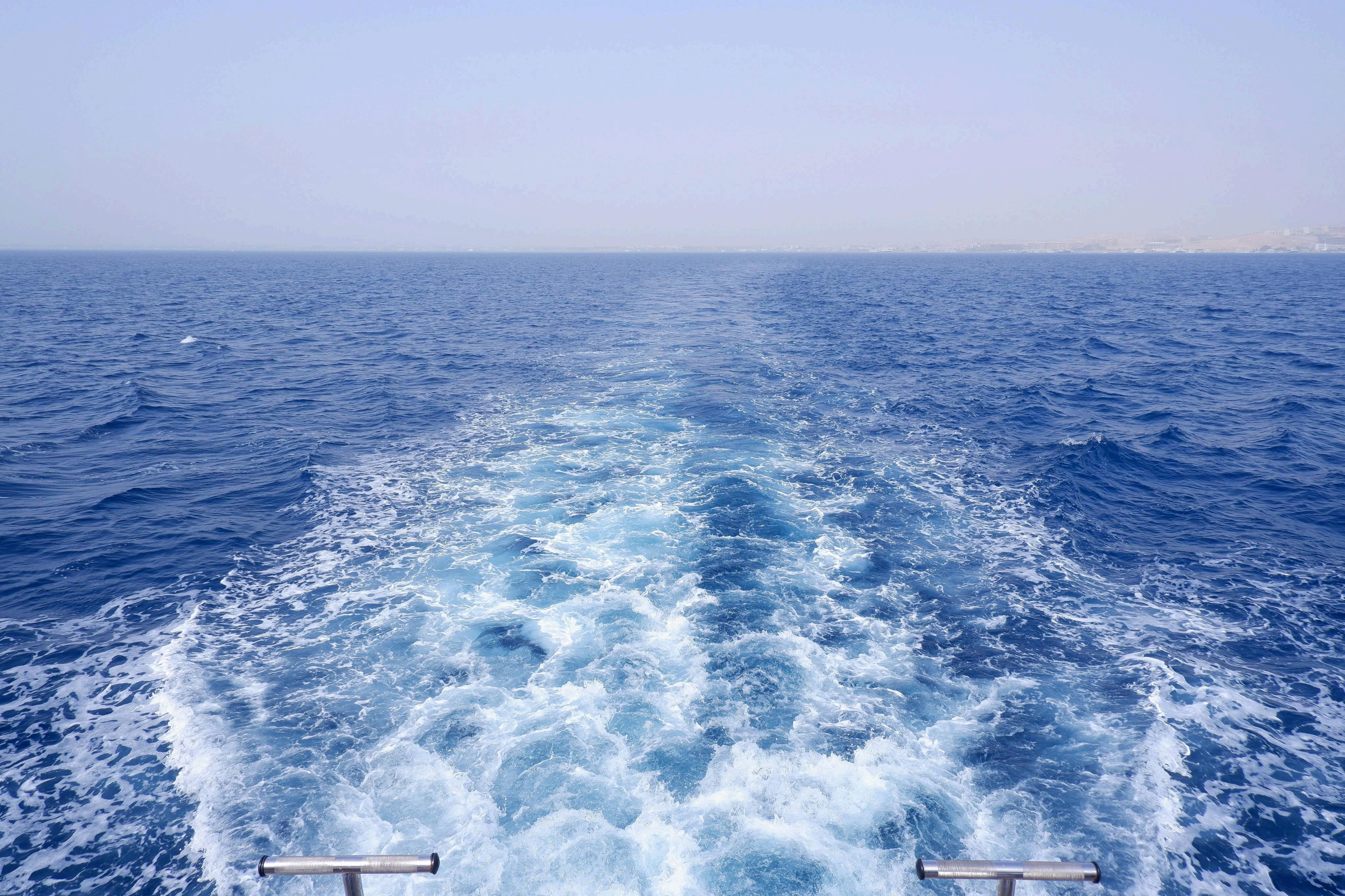
The High Seas Treaty, which Morocco's 60th ratification on September 19, 2025 triggered to enter into force on January 17, 2026, creates the first comprehensive legal framework for protecting marine biodiversity beyond national boundaries. For the first time in history, we have international law governing the two-thirds of
our ocean that belongs to no single nation. But protecting the high seas requires addressing pollution at its source - and for Africa, that source flows through rivers carrying the continent's waste, chemicals, and fuel residues directly to the ocean.
The Niger and Nile rivers rank among the world's top ten contributors to ocean plastic pollution, collectively dumping millions of tons of waste into international waters annually. The Congo River's massive discharge carries mining contamination that impacts Atlantic water quality far beyond national boundaries. Lake Victoria feeds the Nile, which flows to the Mediterranean. The Congo system drains into the Atlantic. These aren't isolated waterwaysthey're highways delivering African pollution directly to the newly protected high seas. Research confirms that South Africa's Vaal River, Kenya's Nairobi River, and Lake Victoria itself have become hotspots for "forever chemicals" (PFAS) that never break down, accumulating up the food chain until they reach the ocean.

From east to west bank of river Nile.
Urban rivers across Tanzania show life-type pollution characteristics with nitrogen, phosphorus, and other compounds accumulating significantly as they flow through cities toward the sea.
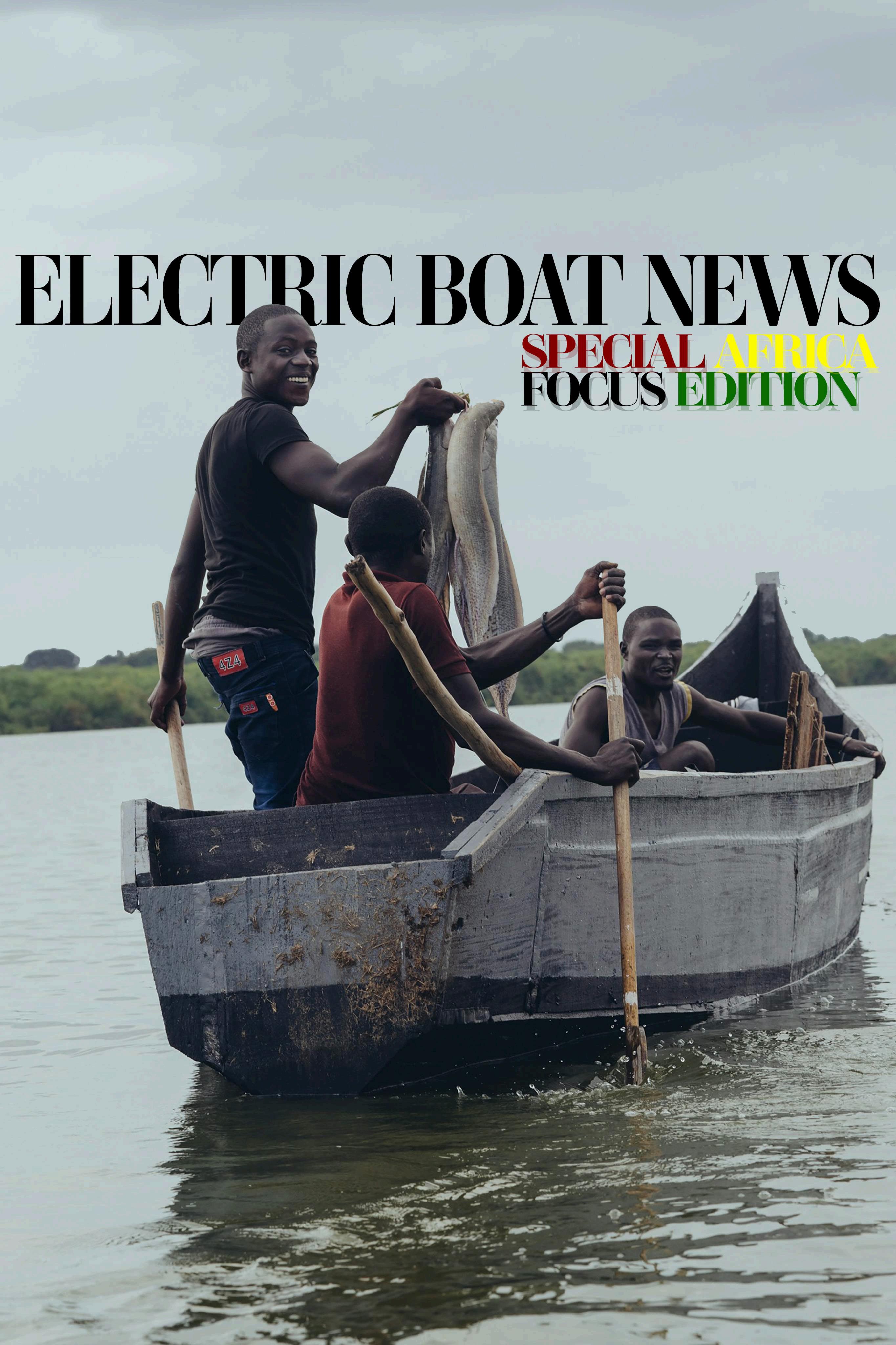
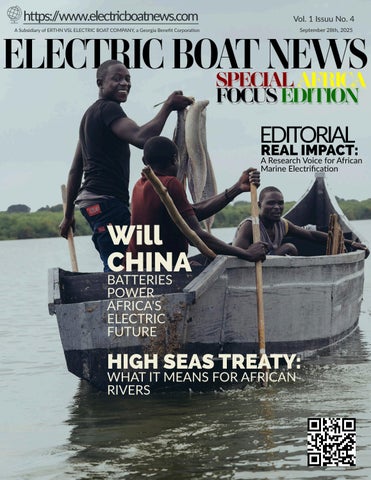
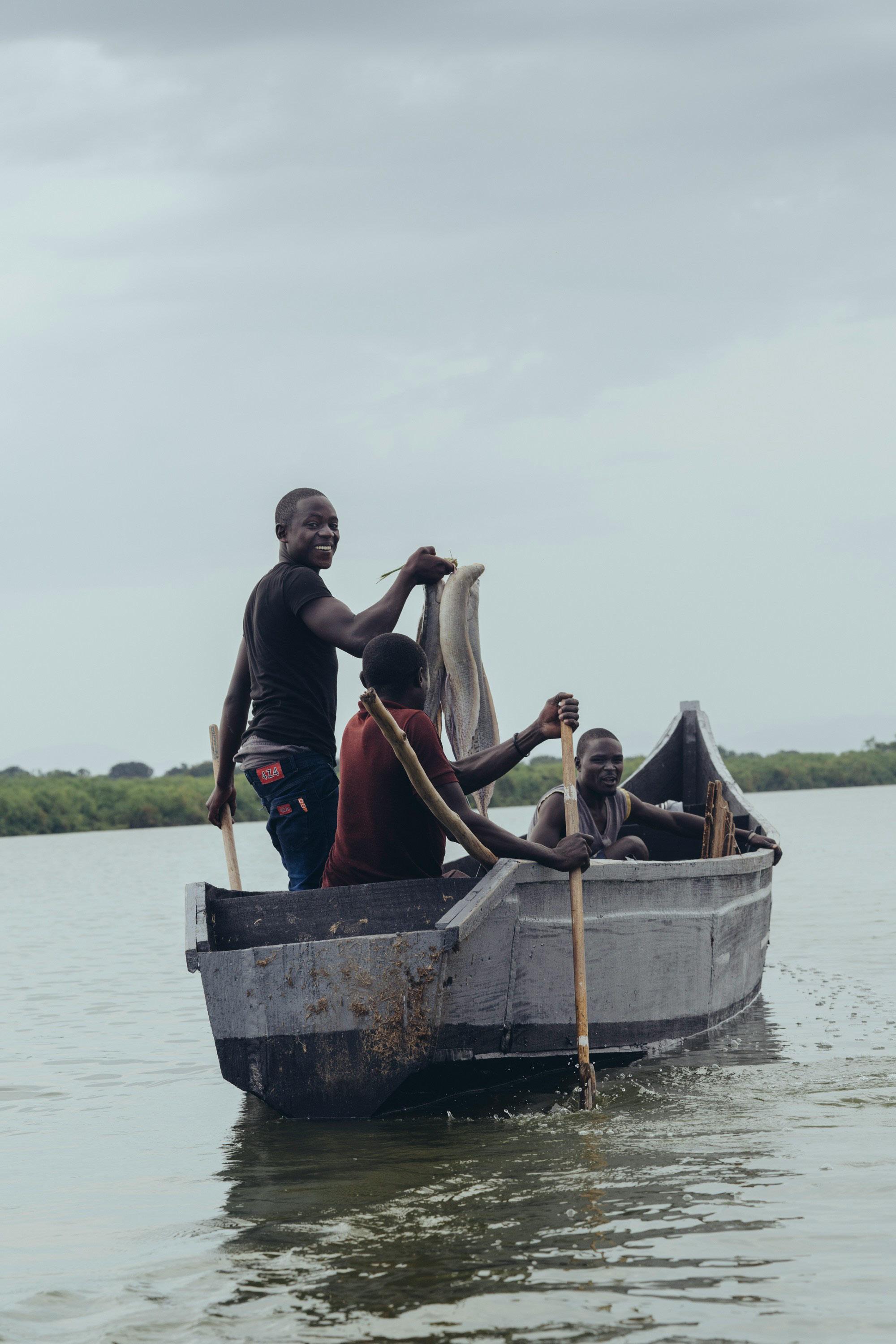
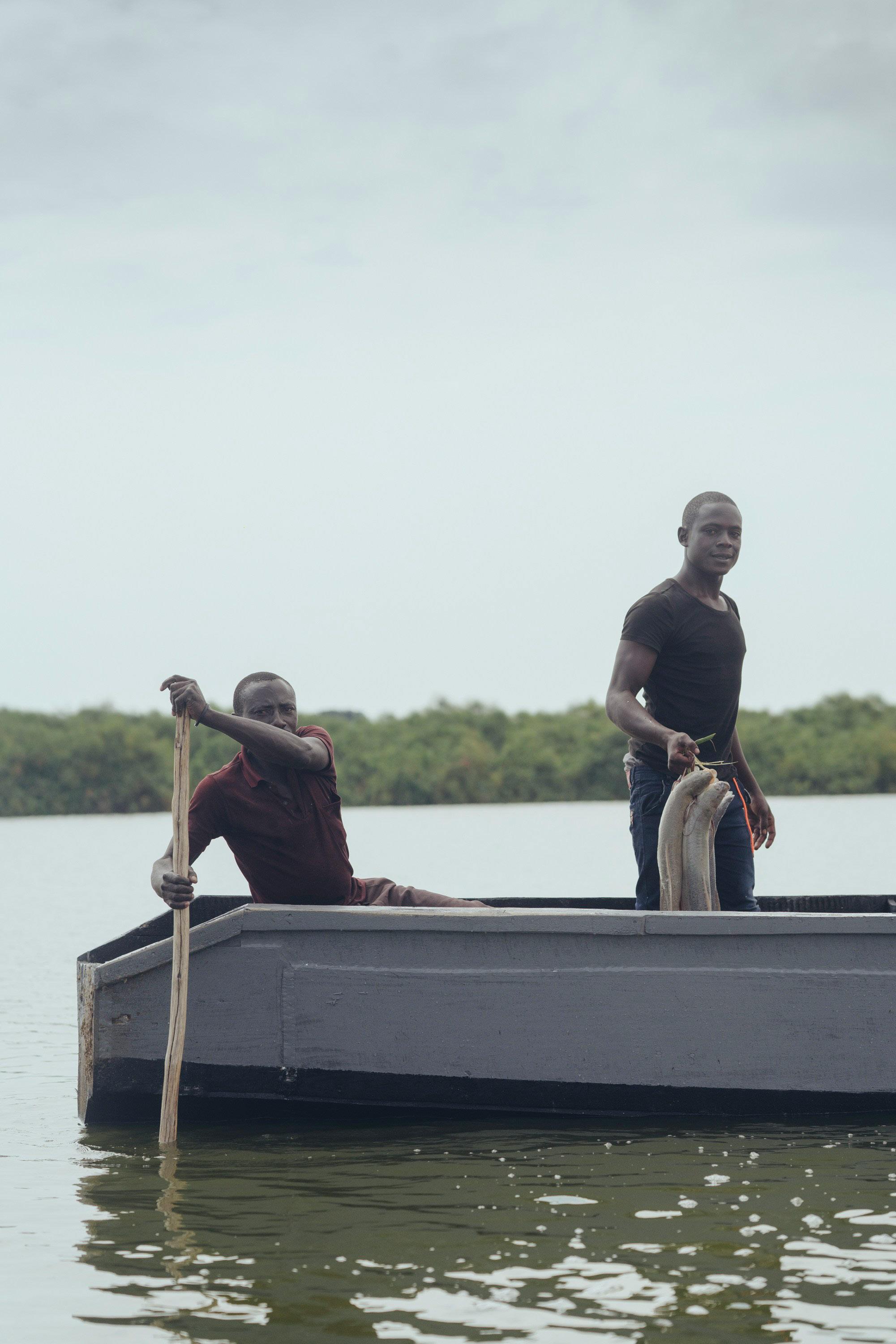
These fishermen in the image represent millions across Africa who depend on waterway transportation for survival. They row wooden boats with manual oars, burning calories that could be spent fishing, unable to travel far from shore, vulnerable to weather changes. For them, electric propulsion isn't about environmental activism - it's about practical improvement in daily life.
Electric boats eliminate several pollution streams simultaneously. No fuel means no spills that become non-point source pollution. No exhaust means no particles settling on water surfaces. Silent operation doesn't churn sediment, keeping heavy metals and other pollutants settled rather than suspended. Every liter of fuel not burned on a Lake George in Uganda is pollution not flowing through the Nile River system, ultimately flowing to the Mediterranean Sea.
Free to use under the Unsplash License
The Nile flows north - an oddity of geography that makes every fishing boat on Lake George in Uganda matter to the Mediterranean. Pollution from Uganda's highlands travels 4,130 miles through water-stressed South Sudan, Sudan, and Egypt before reaching international waters. Those three fishermen rowing manually today are upstream from 300 million people. Yes, boat emissions are a fraction of Africa's pollution challenges - plastic waste, mining runoff, sewage, and industrial chemicals dwarf marine fuel impacts. But electric boats offer something crucial: an implementable starting point. While governments debate plastic bans and mining regulations, a fisher can swap batteries tomorrow. The economics are already shifting. Battery prices that enabled Ethiopia's deployment of 100,000 electric vehicles in one year will soon make electric boats accessible. Chinese manufacturers now offer complete systems

under $2,000 - less than a year's fuel costs for many African fishers.
As the High Seas Treaty enters force in January 2026, every electric boat on African waters reduces pollution reaching protected international waters. But more importantly, it improves individual lives today. A Ugandan fisher spending nothing on fuel can afford school fees. A silent motor doesn't scare fish away. Lower center-of-gravity from batteries prevents capsizing deaths.
The revolution isn't in the technologyit's in recognizing that protecting oceans starts with helping the people who live beside the rivers that feed them.
Electric Boat News exists to bridge that gap: from research to reality, from global treaties to village solutions, from China's factories to Africa's waterways, one informed decision at a time..
Website: electricboatnews.com
Kevin Rodgers, Editor/Publisher
https://www.electricboatnews.com
kev@electricboatnews.com
Sustainability Major | College of Global Futures
Arizona State University
Whatsapp: +16786611419
Email: kdrodge1@asu.edu
LinkedIn Profile