ISSUE NO 03 // SUMMER 2026
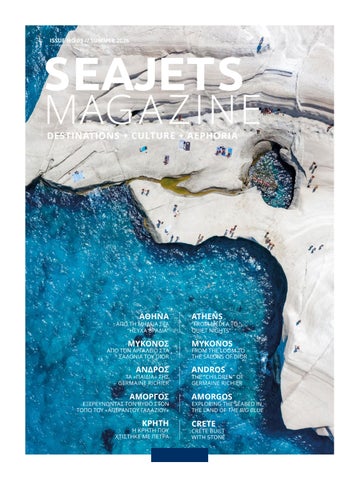
ISSUE NO 03 // SUMMER 2026
ATHENS “FROM MEDEA TO
QUIET NIGHTS”
MYKONOS FROM THE LOOM TO THE SALONS OF DIOR ANDROS THE “CHILDREN” OF GERMAINE RICHIER AMORGOS
EXPLORING THE SEABED IN THE LAND OF THE BIG BLUE
CRETE CRETE BUILT WITH STONE
Our Services:

PHYSICAL SUPPLY
BUNKERING & TRADING
CARGO TRADING SHIPPING AGENCY
Founded in 1979, SEKAVIN has grown into a trusted and established partner in the global bunkering industry. Built on the values of reliability, transparency, and long-term partnerships, we have spent more than four decades supporting the shipping industry with integrated, high-quality solutions.
Today, SEKAVIN Group combines deep industry knowledge with a strong maritime heritage and an expanding international presence across key global hubs. From physical supply and bunkering operations to cargo trading and shipping agency services, we deliver fully integrated services designed to meet the evolving needs of modern shipping.
What defines us in not only what we do – but how we do it. We move fast, stay close to the market, and adapt to changing conditions. In a sector shaped by volatility, our partners rely on us for consistency, responsiveness, and operational excellence.
In

The Aegean is more than just your destination.
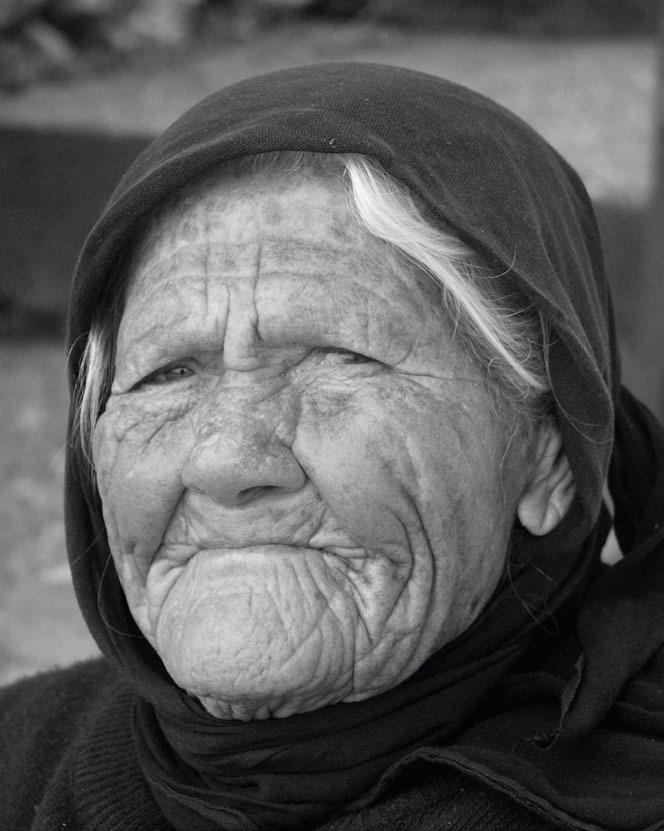
Discover how we protect the heart of the Aegean.
The Aegean is more than just your destination.

Discover how we protect the heart of the Aegean.






SEAJETS
Property SEAJETS
2 D. Gounari Str., 185 31, Piraeus, tel.: +30 210 4121001
Publishing - Production: Elc Productions
Content Curation: Elculture.gr
Managing Director: Calliope Alpitsi
Editor in Chief: Pepi Nikolopoulou
Εditors: Deana Kartsagouli, Zoe Lymperis, Miriam Paraskevopoulou, Katerina Parri, Stelios Parris, Dr. Anna Podara, Sofia Triantou
Set Design: Mariangela Zampeli
Copy Editors: Anastasia Statha
SEAJETS media: Nikos Ververidis
Advertising: Maria Manioudaki
Financial Consultant: Konstantinos Tzortzis
Accounting: Konstantina Theofilopoulou
Photos: Unsplash, iStock by Getty images
Printing: Haidemenos S.A.
SUMMER EDITION
The “SEAJETS Co” isn’t responsible for the contributors’ opinions as they are represented on issues. It is illegal to publish, reproduce, or transmit in whole or part of the magazine without the written permission of the publisher.
Free Copy



Summer has its own way of telling stories. You find them in a stone-built mansion in Anogeia, Crete, in a narrow alleyway of Naxos where the everyday life of another century is revived, and in a ceramics workshop that has been faithfully preserving its tradition for six generations.
This issue is dedicated to the people who keep the memory of their places alive, as well as to those who continue to create new cultural pathways. From the weaving workshops of Mykonos and the ceramic heritage of Lesvos to the trails and underwater world of Amorgos, the summer screenings at the Medieval Castle of Kimolos, the stone-built communities of Crete, and the black-and-white photographs of Robert McCabe that captured an Aegean seemingly belonging both to the past and the present.
You will meet people who have devoted their lives to preserving local heritage, artists who engage in dialogue with the present, musicians who give new voice to Greek tradition, and creators who demonstrate that culture does not reside only in museums and monuments, but also in everyday acts, in crafts, songs, materials, and stories passed down from one generation to the next.
At SEAJETS, we strive to make this journey comfortable and fast, but above all welcoming, allowing every passenger to experience our authentic hospitality. With the largest high-speed fleet in the world, we connect 50 ports and offer more than 400 connections, creating bridges that bring people closer together and help the stories worth hearing travel further.
This summer, we invite you to look beyond the beaches and landscapes. Discover the workshops, museums, courtyards, trails, flavours, memories, and people that shape the deeper identity of the Aegean.
Because every island is a story. And every journey is a way of getting to know it.
Have a wonderful summer and a pleasant journey.
team The
016
Πολιτιστική
Cultural Agenda
024
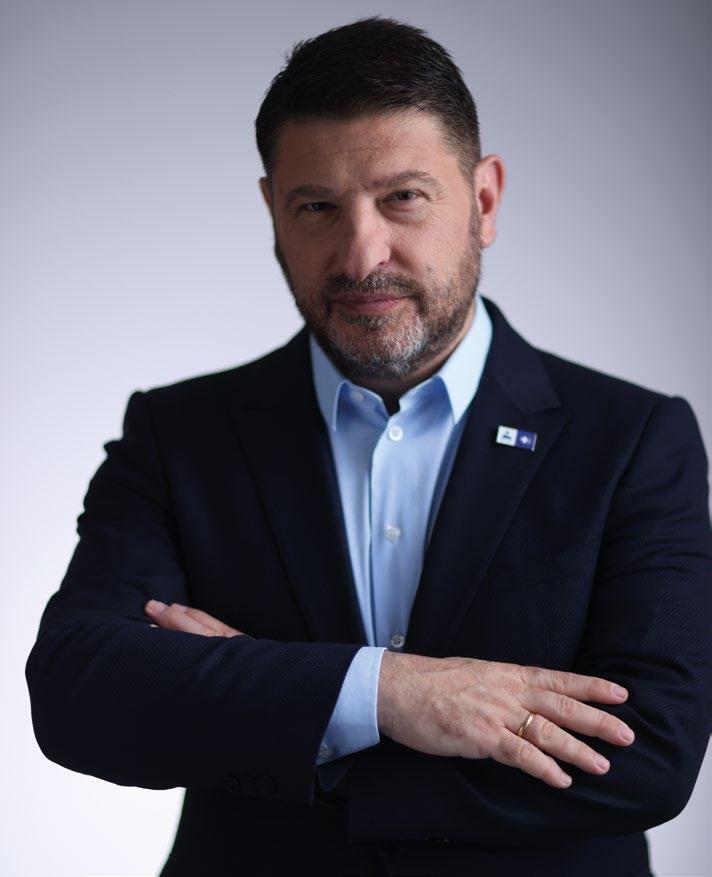
Nikos Hardalias:
“My vision is for Attica to become a metropolis of art and culture”
028 Η
Naxos of land and memory
038
Ερμούπολη:
Hermoupolis:200 Years of Elegance in the Aegean
050 Τα
Germaine Richier» στην
The “Children of Germaine Richier” in Andros
062
Amorgos: Exploring the seabed in the Land of The Big Blue
072 Tήνος:
Tinos: The House of Yiannoulis Chalepas Reopens
078
Μύκονος:
Dior
Mykonos: From the loom to the Salons of Dior
086
Έλληνες
Greek Musicians Map the Aegean
094
Kimolos: Stories of a living island
108
Herbs of the Aegean
112
South Aegean: A cultural symbol
116
"Reuniting the Parthenon"
International documentary "Reuninting the Parthenon"
126
To
Robert McCabe
The Aegean of Robert Mc Cabe
138
Athens: Gallery Hopping
146
Mo Vintage Athens
Αthens: Mo Vintage Athens
150
Greek National Opera
158
Biennale
2026
Rhodes: Biennale of Contemporary Ceramics 2026
166
A Visit to the AEK History Museum
170
A tour through the Museum of Refugee Hellenism
176
Crete built with stone
182
Lesvos: Time shaped in clay
188
Lateen Sailinge
192
Culture:
STOA Culture: Summer in the courtyard
196
Why does looking at the sea clams us?
Where cruising grows responsibly, through expertise and integrated solutions for your fleet.

Our experience. Your growth. rina.org
Theodore: A Cold Summer | 10.10.2026
“Inspiration – Inspiration – Ispirazioni: Ancient Greek Art in Italy” | 16.06 – 30.08.2026
A rare exhibition dedicated to the enduring influence of ancient Greek art on Roman and European civilization. Through forty exceptional works from Italian museums – ceramic, bronze, and marble masterpieces that rarely travel abroad – the exhibition sheds light on the profound cultural relationship between Greece and Italy, from Magna Graecia to Canova and De Chirico. A major international collaboration that reveals how antiquity continues to inspire contemporary European identity.
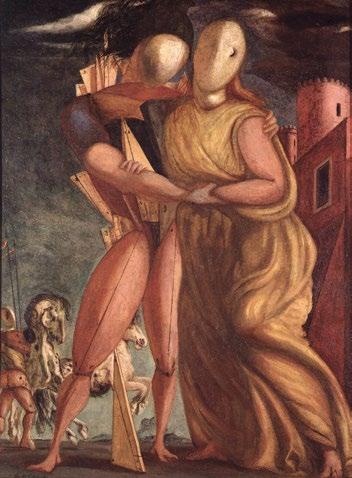
Acropolis Museum, Dionysiou Areopagitou 15, 11742 Athens
Info: www.theacropolismuseum.gr
www.emst.gr
South by Southeast: Reorienting the Collection | From 11.06.2026
An exhibition that invites us to reconsider Greece’s place on the map. Through more than 100 works by 50 artists from the Mediterranean, the Balkans, the Middle East and North Africa, the National Museum of Contemporary Art Athens presents a journey through shared histories, cultural exchanges and contemporary identities. Among the participating artists are internationally acclaimed figures such as Mona Hatoum, Walid Raad, Michael Rakowitz and Gabriel Orozco, while works by major Greek artists including Chryssa, Jannis Kounellis, Maria Papadimitriou and Stelios Faitakis hold a prominent place in the exhibition. Curated by Katerina Gregos, the exhibition marks a new chapter for the museum’s collection and proposes a different way of thinking about Greece’s place in the world.
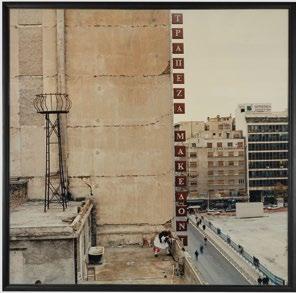
EMST | Kallirrois Avenue & Amvrosiou Frantzi Street (former FIX Brewery), Athens 11743 Information: www.emst.gr
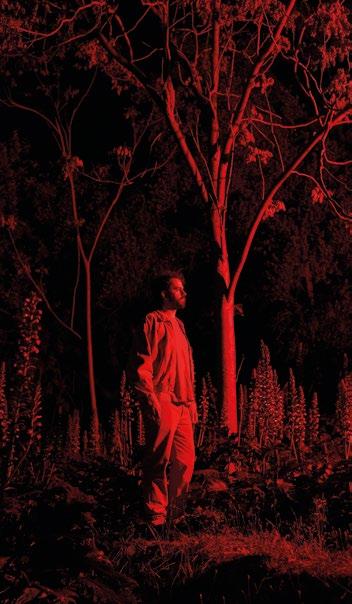
Theodore: A Cold Summer | 10.10.2026
STOA Culture is transformed into an audiovisual environment where light, image and music come together to form a unified narrative. Inspired by his new single A Cold Summer, Theodore presents a unique evening that combines moments from his discography with new material, exploring the relationship between the uncertainty of the present and the need for hope and companionship. Opening the concert are THE Astrolabe, the cinematic electro-pop project of Thanos Giamas, in a performance that will be presented for one night only. STOA Culture, 5 Pesmazoglou Street, Arsakeio Arcade, Athens Information: www.stoaculture.gr




Shop Boys, Gramatik & Saint Etienne | 27.06.2026
Pet Shop Boys, Gramatik & Saint Etienne | 27.06.2026
One of the biggest musical nights of the summer brings the legendary British duo Pet Shop Boys to Water Plaza. Neil Tennant and Chris Lowe return to Release Athens with the spectacular Dreamworld: The Greatest Hits Live, performing the songs that helped shape the history of pop music. Joining them are Gramatik and Saint Etienne on their farewell tour, for an evening filled with electronic sounds, timeless hits and unforgettable stage energy.
Plateia Nerou, Faliro, Kallithea. Information: www.releaseathens.gr

TAO Dance Theater: 16 & 17 | 13–14.07.2026
TAO Dance Theater: 16 & 17 | 13–14.07.2026
The internationally acclaimed TAO Dance Theater returns to the Athens Epidaurus Festival 2026 with 16 & 17, a double bill that captures with remarkable clarity the choreographic language of award-winning creator Tao Ye. Through circular movements, collective rhythms and a continuous dialogue between body and sound, the dancers create a mesmerising universe where movement becomes an experience of deep observation. One of the highlights of this year’s dance programme, by an artist who continues to redefine the boundaries of contemporary dance. Pireos 260 (H). Information: www.aefestival.gr
Πληροφορίες: www.goulandris.gr
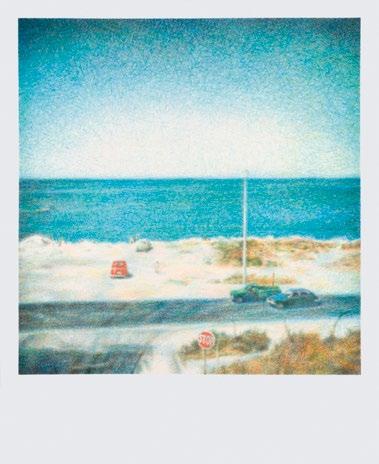
Yannis Psychopedis: Landscapes of Memory. What I Kept | 20.05 – 04.10.2026
A rare opportunity to enter the world of Yannis Psychopedis through the works he chose to keep close to him. This tribute at the Basil & Elise Goulandris Foundation brings together 70 works spanning more than six decades of artistic creation, from 1962 to the present day, offering a personal journey through memory, history and artistic exploration. Through 20 thematic chapters, the exhibition sheds light on the artist’s relationship with Greek and European reality, while revealing how art can serve as a record of an entire era.
Basil & Elise Goulandris Foundation – Museum of Contemporary Art, 13 Eratosthenous Street, Athens 11635
Info: www.goulandris.gr




12th Andros International Festival | 25.07 – 24.08.2026
The festival opens on 25 July with the concert This Is Love by Aleka Kanellidou, featuring Eleonora Zouganeli and Katerina Polemi, and concludes on 24 August with Euripides’ Medea, directed by Nikita Milivojević. This year’s programme includes the nationwide premiere of the documentary Lefteris Vogiatzis’ Andros (29–31/07), the premiere of Samuel Beckett’s Happy Days (01.08), directed by Dimitris Tarlow, Aristophanes’ Peace directed by Nikos Karathanos, major musical events including the concert Viva Maestro! Giorgos Katsaros – The Melodies That United Generations (04/08), as well as activities for children, once again transforming the island into a meeting point for contemporary culture.
For the first time, a classical music concert conducted by Ioakeim Baltsavias will be presented in the courtyard of the Byzantine Church of Taxiarchis in Mesaria.
Open Theatre of Chora, Andros (except for the film screenings, which will take place at Cine Avli of the Andros Film Club).
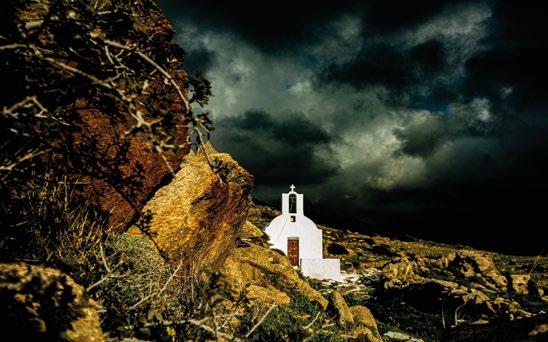
In the Light of the Gods, by Paul Raphael | 01.05-19.07.2026
The exhibition presents 30 photographs capturing the unique Greek light as it moves across the seascapes and rocky formations of Ios, an island Raphael has known since childhood and has chosen in recent years as his permanent home. The works are presented through large scale photographic prints displayed in light boxes, emphasising the power of the Mediterranean sun, whether in the radiant clarity of summer or in the lesser known, untamed face of winter.
As the artist himself explains: “I wanted to find a way for the sun to pass through the images,” he says, “to illuminate them from within”.
Gaïtis - Simossi Museum, Ios
Menacing Storm Clouds©Paul Raphael, 2026
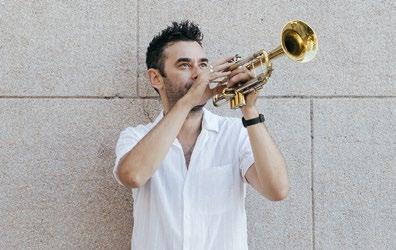
Bring Your Chair – Cozy Festival | 08.08 – 28.08.2026
Info: www.festivalandros.gr
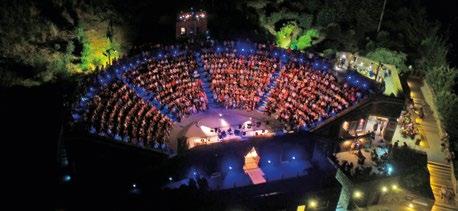
www.bringyourchairfestival.com
Sifnos’ beloved festival returns with a programme that brings together cinema, music, gastronomy and the island’s cultural heritage. On 8 August, at the Sifnos Primary School in Fyrogia, it welcomes acclaimed Polish director Paweł Pawlikowski. On 16 August, at the Dragatsis Building in Artemonas, the new Creative Sifnos section is launched, dedicated to Sifnian pottery and its international recognition by UNESCO. On 23 August, at the Sifnos Primary School in Fyrogia, the documentary The Fifth Season will be presented in its Greek premiere, with the participation of chef Cristina Bowerman and director Giuseppe Carrieri. The festival concludes on 28 August at the Mycenaean Acropolis of Agios Andreas with a concert by Andreas Polyzogopoulos and the presentation of his new work HAWK TALES, a deeply personal musical journey. Info: www.bringyourchairfestival.com

ZfinMalta National Dance Company,
Movement of Hope / II Chapter: Organi,
www.dancedays.gr
Adriano Bolognino,
16th International Contemporary Dance Festival | 20.07–02.08.2026
Dance Days Chania returns for its 16th edition, transforming Chania into a meeting point for contemporary dance creation from across Europe. This year's programme focuses on resilience, vulnerability and the power of human connection. Through works that engage with the challenges of the contemporary world, the festival presents Mortal Heroes by Sita Ostheimer and the ZfinMalta National Dance Company, a poetic odyssey between chaos and love, light and shadow; Glorious Epic by Sofia Mavragani; and Last Movement of Hope / II Chapter: Organi by Adriano Bolognino, a choreographic exploration of the human experience, our fears, relationships and the hope that drives us forward. Information: www.dancedays.gr
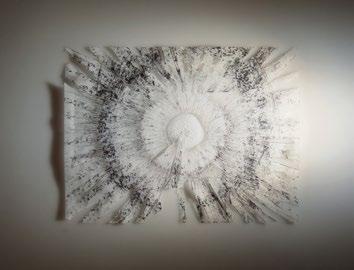
Νεφέλη Μασία: Voyages of Light | 09.07 – 29.08.2026
www.mgamuseum.gr
Nefeli Masia: Voyages of Light | 09.07 – 29.08.2026
Presented at the New Wing of the Nestorideion Melathron in Rhodes, Voyages of Light explores light as a force that shapes perception. Through installations combining acrylic elements, mylar film, marble dust and LED interventions, Nefeli Masia creates shifting environments inspired by the unique intensity of Rhodian light. Drawing on the island’s sea, stone and atmosphere, the exhibition invites visitors into an immersive experience where image, space and light remain in constant transformation.
Museum of Modern Greek Art of Rhodes – New Wing of the Nestorideion Melathron, Rhodes. Info: www.mgamuseum.gr
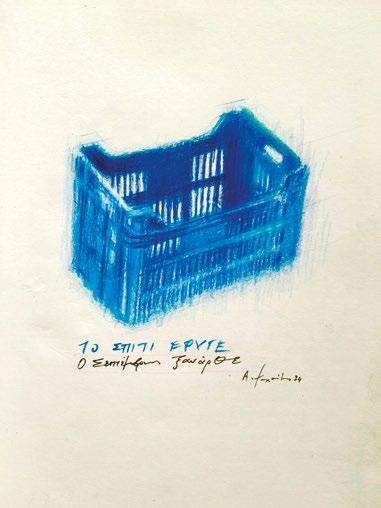
“I Was Only Endangered by Uncontrolled Thoughts” | 16.05 –4.10.2026
More than 150 works – including paintings, installations, animation, comics, and sculptures – come together to form a new reading of the 40-year artistic journey of Alexandros Psychoulis, shedding light on his relationship with technology, pop culture, the digital landscape, and the contemporary Greek visual arts scene. The works intermingle, engage in dialogue, and confront one another, revealing the “keys” to Alexandros Psychoulis’ practice: language as a force that permeates and defines his entire body of work, the handmade coexisting with technological mediation, and the intertwining of the urban and digital landscape within a constant state of transformation.
Municipal Art Gallery of Chania 98-102 Chalidon Street, 73131 Chania, Crete Information: www.pinakothiki-chania.gr
There is always a moment that defines everything. In Santorini, moments are the experience itself. This is the philosophy behind Santorini’s Luxury Travel, a boutique local travel agency that was born from a single idea: to create journeys shaped by feelings. Create moments that stay, return and become part of you.
Since arrival the journey finds its rhythm. Everything flows seamlessly, effortlessly, almost intuitively. The privately owned fleet of premium vehicles and the professional chauffeurs’ set the tone that every need and travel style is covered.
Santorini is what you feel. The reason behind why Santorini΄s Luxury Travel designs experiences that connect you with the island in a more personal, sensory way. Creates memories that stay close to you and change you in a self-more free, more real, more you.
In the village of Vourvoulos, the Culinary Atelier is the signature of Santorini΄s Luxury Travel in gastronomy which brings people together. Food, flavors, aromas become connection. Recipes become stories. Inspired by the tradition of the Greek festival (panigiri), cooking, tasting and sharing turn to a modern experience.
Moments of Santorini΄s Luxury Travel extend beyond Santorini, reaching Mykonos and Crete with the same balance of authenticity and understated luxury. Different destinations. The same essence. More destinations are on the way, each one enriching the journey further.
Some moments are planned. Others happen unexpectedly. With Santorini’s Luxury Travel, you are invited to experience the journey, to slow down, and create something truly yours. In the end, what remains is your moments and how they turn into a worth to tell experience.


SANTORINI’S LUXURY TRAVEL : +30 2286 771168, +30 22860 21743 | : +30 6981804339 ( , ) : www.santorinisluxurytravel.com | : info@santorinisluxurytravel.com : #santorinisluxurytravel | : santorinisluxurytravel : Santorini΄s Luxury Travel
“My vision is for Attica to become a metropolis of art and culture”
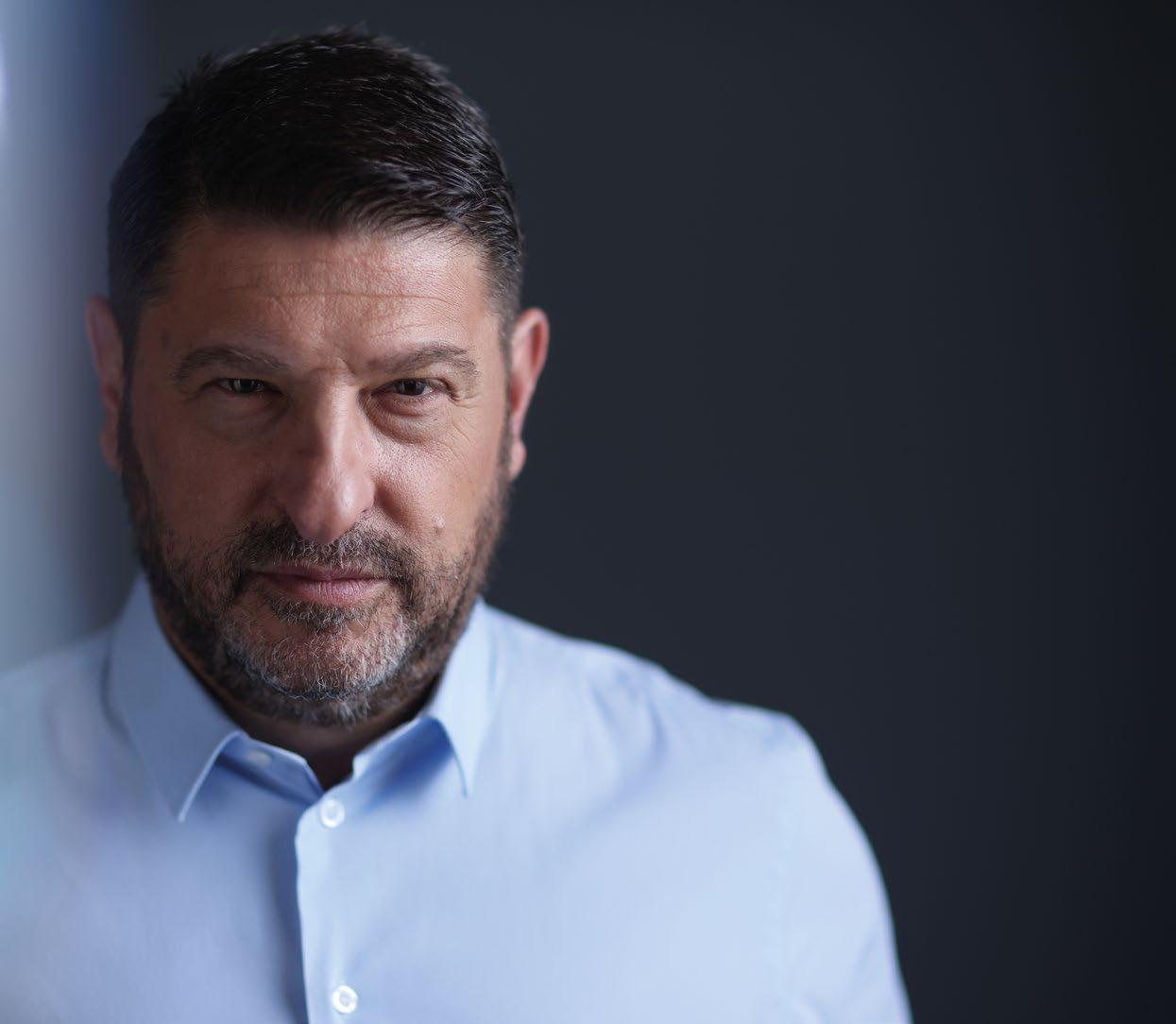
THE “IN THE EMBRACE OF ATTICA” PROGRAMME IS RETURNING FOR A SECOND YEAR WITH EVEN MORE EVENTS AND ACTIVITIES. WHAT CONVINCED YOU THAT THIS INITIATIVE WAS WORTH INVESTING IN?
Iwould say that it was the citizens themselves who chose to keep In the Embrace of Attica alive, through their enthusiastic response and active participation. That is genuinely moving and deeply rewarding for me. People embraced the programme wholeheartedly, turning it into a new institution that is clearly here to stay. Through dozens of individual events, offered completely free of charge, the only thing we ask in return is a smile.
During the programme’s first year, we saw families, children, young people and older residents actively taking part, meeting one another, sharing experiences and bringing public spaces to life. Most importantly, the same enthusiasm was evident across all 66 municipalities of Attica, regardless of the character or profile of each area.
At the same time, we are preparing a new music festival that we also hope will become a lasting institution, as it brings together our musical heritage
and contemporary culture. The programme will be announced in the coming days and will feature concerts by beloved artists, naturally with free admission, at some of Attica’s most important cultural landmarks through the end of July. It is a new initiative that we have been working on for a long time and one of which we are particularly proud.
We often think of culture as something that takes place in major theatres, museums or festivals. You have chosen instead to bring it into neighbourhoods. What changes when culture becomes part of everyday life?
When we enjoy ourselves, when we have a good time, and our neighbours experience the same, we share in the joy of life and community. That is why we often say, even if it sounds like a cliché, that culture, art and sport bring people closer together.
For us at the Region of Attica, culture is both a shared experience and a powerful, genuine vehicle for social cohesion, collective participation and openness. It means ensuring that everyone, without exception, has access to high-quality cultural activities, free from discrimination or exclusion. At the same time, integrating culture into everyday life highlights the unique identity of each area and draws attention to different neighbourhoods across the region.
Attica welcomes millions of visitors every year. How can the cultural identity of its lesser-known areas be highlighted beyond the traditional points of interest?
You are absolutely right. Attica is not only the Acropolis and its world-famous monuments. It is a multifaceted metropolis, with a distinct and unique cultural wealth in every corner.
Our goal is to reveal this authentic identity by connecting visitors with experiences that go beyond the obvious and already crowded attractions. We are already implementing our Integrated Territorial Investments programme, supporting cultural activities in public spaces, creating new institutions and strengthening cooperation with cultural organisations. In short, we are investing in the diffusion of culture throughout the entire region. Because culture and Attica are inseparable concepts.
What do you consider to be Attica’s greatest cultural assets today that remain relatively unknown even to its own residents?
The most overlooked aspect of culture in Attica is what is happening right now: all the remarkable, innovative and daring initiatives taking place around us. To mention just a few examples, there have been pioneering free events such as last year’s Plásmata 3 exhibition and this year’s STEGI.RADIO programme at the newly upgraded Pedion tou Areos Park.
At the same time, through resources from the 2021–2027 NSRF and the Integrated Territorial Investments programme, with a total budget of €50 million, the Region is bringing hidden or forgotten landmarks back into public life. One example is the restoration of the listed historic building on Filellinon Street. Personally, I believe that culture in our region is not merely an expense or a showcase. It is a productive investment. Every euro invested generates €3.44 for the national economy, while Attica is home to 58% of all cultural enterprises in Greece.
Our aim is therefore to bring this vibrant national wealth closer to every resident, in every municipality, on equal terms and with free access for all.
If you were to imagine Attica ten years from now, what role would you like culture to play in that future? More broadly, what is your personal vision for Attica’s cultural identity?
My vision can already be seen in what we have begun to implement: transforming Attica into a metropolis of art and culture. I envision our region as a metropolis with a human face, where art, culture and sport play a central role. The Attica we aspire to build is open, participatory and accessible to everyone. For me, culture and sport are not luxuries. They are public goods and fundamental rights, essential everyday experiences that do far more than entertain. They bring people together, create communities, cultivate values and improve quality of life. That is our greatest challenge: to dismantle the misconception that culture belongs exclusively to major stages, museums or festivals, or that art is only for an elite audience. Culture belongs in neighbourhoods, squares and parks. Only then can it achieve a meaningful and lasting social impact.
For over a century, Accelleron has been leading innovation in turbocharging.
At Accelleron, we're proud to power Seajets exceptional passengers’ experience through our advanced turbocharging solutions. Our cutting-edge turbochargers deliver the optimal combination of performance, fuel efficiency, and reliability that Seajets' fleet depends on, day after day. By enhancing engine power while reducing fuel consumption and emissions, Accelleron technology enables Seajets to maintain its impressive schedules and speeds while minimizing environmental impact. This partnership represents our shared commitment to excellence—providing passengers with smooth, dependable journeys across the beautiful Aegean waters while ensuring operational efficiency and sustainability for the future of maritime travel.
In 1924, the first commercial heavy-duty turbocharger was manufactured in Baden, Switzerland, to increase the efficiency of our customers‘ engines.
Our commitment to innovation has ensured that our technology remains just as relevant a century later. Today, we are a leading provider of turbochargers, digital solutions and services to industries that form the backbone of modern life. We are supporting our customers on their decarbonization journey with technology, expertise, and smart solutions.
Accelleron has an installed base of approximately 180,000 turbochargers and a network of more than 100 service stations across 50 countries worldwide.
From the old craftsmen’s quarter of Fasolas to the vineyards of Kato Sangri
FAR FROM THE BEACHES AND POSTCARD-PERFECT IMAGE OF THE CYCLADES, THERE IS ANOTHER NAXOS. A MOUNTAINOUS, STONE-BUILT ISLAND DEEPLY CONNECTED TO THE LAND, MANUAL LABOR, AND THE MEMORY OF ITS PEOPLE. THIS IS THE NAXOS OF VILLAGES, DRY-STONE WALLS, VINEYARDS, AND OLD WORKSHOPS.
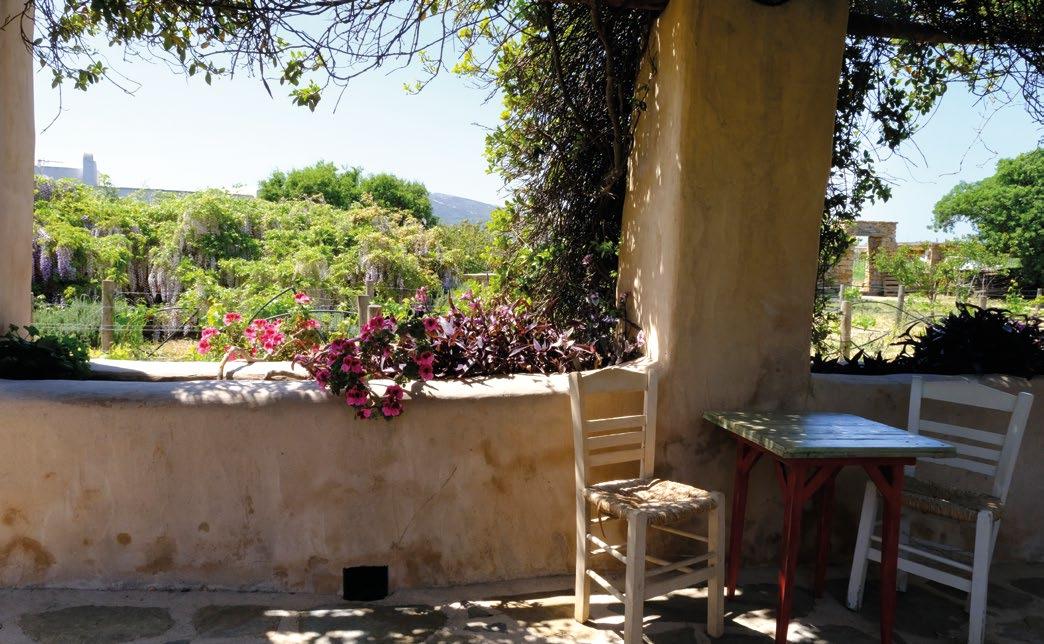
In Filoti, one of the largest villages of mountainous Naxos, this feeling becomes immediately apparent. Built at an altitude of around 400 meters, beneath the slopes of Mount Zas and surrounded by olive groves, the village feels far removed from the stereotypical image of the Cyclades. Stone-paved alleys, flower-filled courtyards, cafés, and small squares create a place that still preserves its own rhythm.
At the heart of the village, next to the church of Panagia Filotitissa, the Folklore and Ecclesiastical Museum stands as a living imprint of everyday life from another era. It was created through the initiative of Father Ioannis Manios and the active contribution of local residents, who donated objects from their homes and family histories, turning the museum into a collective act of memory.
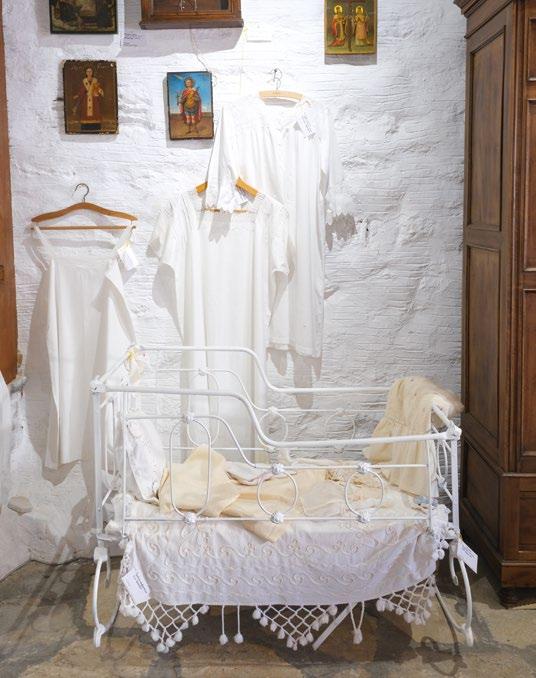
Among the exhibits are old wedding and christening garments from the 1930s, embroidered handicrafts, carved wooden furniture, woven textiles, and family heirlooms that transport visitors into the world of old Naxian households. Alongside them, everyday objects - a wooden icebox, old oil lamps, hand mills, copper utensils, and clay vessels used for wine and olive oilreveal a way of life based on self-sufficiency, patience, and craftsmanship. A special place is also given to the traditional clay sfouni, the characteristic Naxian vessel used for drawing and serving wine, directly linking village life with the island’s winemaking tradition.

&
A little further away, in the neighborhood of Fasolas, survives today a rare small universe of old island life. Before the opening of the provincial road, Fasolas was the commercial and social center of the village. Grocery stores, tailor shops, blacksmiths, cafés, carpentry workshops, and small craft spaces once operated here.
As Nikolaos Moustakis, Secretary General of the Friends of Naxos Association, explains to me, the restored “craftsmen’s neighborhood” offers an authentic picture of the economic and social organization of a Naxian village during the 19th and first half of the 20th century, while also revealing the true scale and human dimensions of traditional workspaces.
The neighborhood was abandoned after the construction of the provincial road in the early 1930s. However, many of the old shops remained almost untouched and unused over time, allowing for their gradual restoration. Today, the blacksmith’s workshop, carpentry shop, tailor shop, barber shop, grocery store, and café have all been revived, forming a living nucleus of memory.
Nikolas Moustakis was the visionary and driving force behind the restoration, which began in 2010, with significant financial support from the association’s president Jenny Metaxa and, later, from the members of the organisation founded in 2021, but above all from the project’s Major Sponsor, EY (Ernst & Young). Particularly noteworthy is the story of the old café, whose restoration was made possible through a donation from the American foundation “Once Upon a Time,” following the interest shown by a visitor to the village, Professor David Levine from the University of Arkansas.
The aim now is to restore the former telephone office and a traditional house. The idea is for children visiting the neighborhood to communicate with one
by










another through the old shops using telephones, experiencing firsthand how the first telecommunication networks once operated.
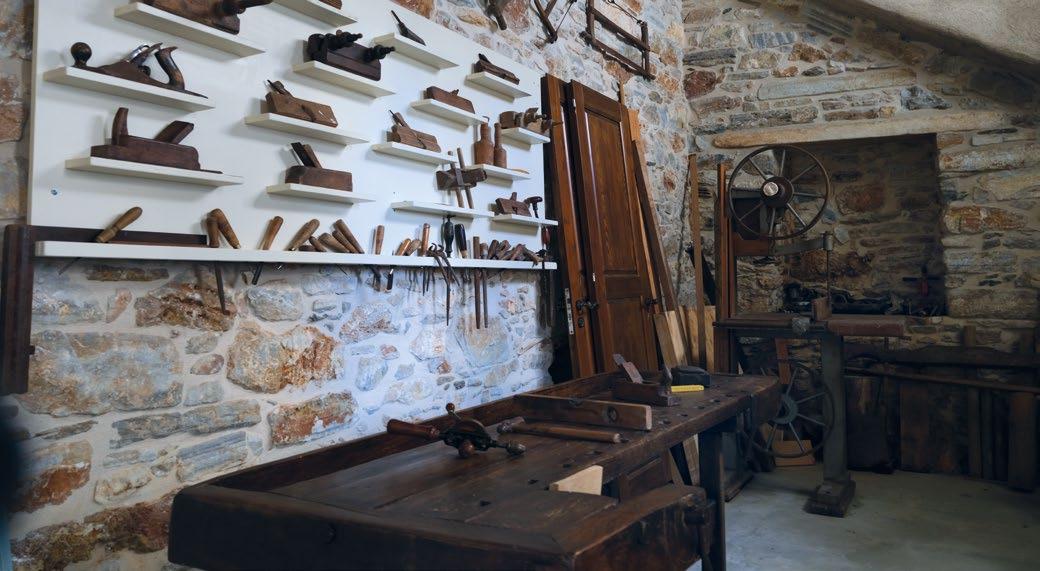
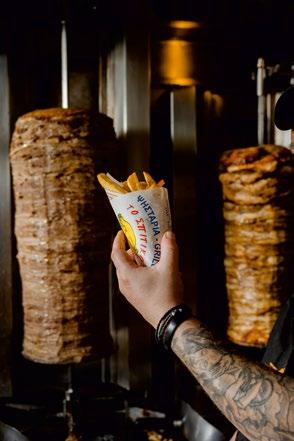
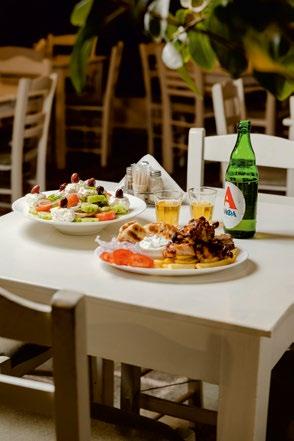
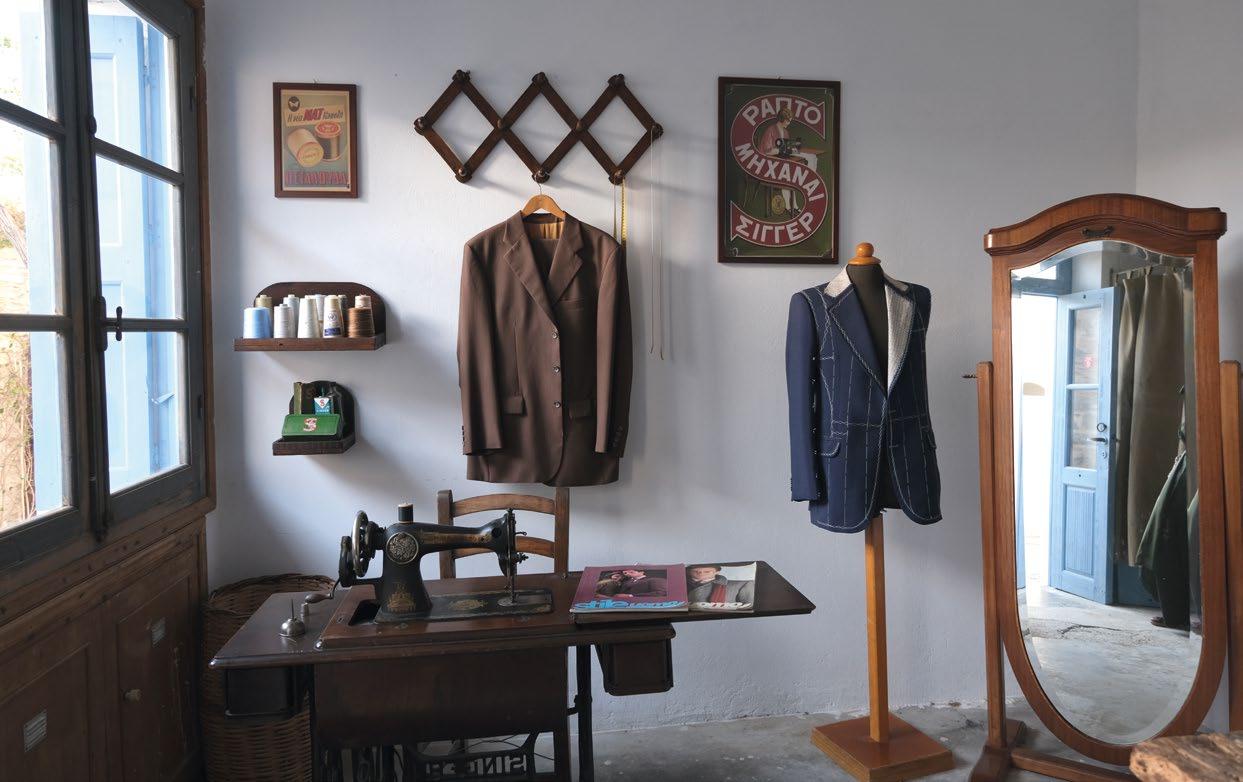
The old blacksmith’s workshop known locally as “Giorgos t’ Antoni” still preserves the tools and atmosphere of a time when the blacksmith supplied the entire region with handmade equipment. The carpentry workshop “of Katsouros,” with its planes, benches, and traditional woodworking tools, recalls the physical relationship between people and raw materials. In “Tsakas’ barber shop,” the old barber’s chair and hats from the 1950s seem to be waiting for their customers, while the grocery store “of Smilomichalis,” with its authentic packaging, vintage advertisements, and wooden shelves, resembles a time capsule of everyday Greek life.
Nikolaos Moustakis also proposes a small route through Fasolas, a journey into the everyday history of Naxos. One of its highlights is the old café “of Manolaras,” a building from 1887 made of carved marble stone, where the atmosphere of traditional cafés from the early 20th century has been preserved. Inside, authentic period objects - an ice refrigerator, coffee grinder, gramophone, old advertisements, and the iconic “Parrot Loumidis” mirrorrecreate the social life of the village as it once was.
A little further along the old carriage road lies the “Nikolaos Moustakis Coin Collection,” where coins and banknotes from Greece and Cyprus dating from 1820 until the introduction of the euro are exhibited. Through the display cases and the large map featuring
Taκing care of your journey!
Yachts of all sizes can be replenished throughout our numerous state-of-the-art bunkering and retail stations that are established along the Aegean and Ionian seas. Small ,medium or mega size yachts can be supplied with both duty paid and duty free marine fuels from our bunkering stations where permanent marine fuel stocks are maintained.
You can find us
GREECE-ISLANDS: Kalymnos-Kos-Leros-Patmos(new)-Leipsoi-Tilos-Astypalaia- Karpathos-Naxos-ParosAntiparos-Koufonisi-Milos-Santorini- Anafi-Folegandros-Skyros-Kefalonia-Corfu.
GREECE-MAINLAND: We can supply at All Truck Accessible. Ports and Marinas.
ARGO S.A.
Eleyftherias Square, 85200 Kalymnos Greece
T: +30 22 43 05 97 75
Μ: +30 697 25 00 707 (+WhatsApp)
Μ: +30 694 41 89 700 (+WhatsApp)
E: bunkers@argo-oil.gr
MEMBER OF GROUP

E: milatou@argo-oil.gr www.argo-oil.gr
Our Yachting Services, 24/7 All around the Greek Islands, just for you ! - Marina Arrangements - Customs Formalities - Bunkering - all around Greece - Provisioning - Technical support and assistance - Telecommunication services - Entertainment Arrangements - Shopping assistance - Medical and beauty arrangements - Travel and Tourism services - Parcel / Cash Transfers - All Tugboat Services
YOU ASK IT WE PROVIDE IT, TRY US... !!
Yachting Department
T: +30 22 43 05 94 02
F: +30 22 43 05 94 03
Μ: +30 698 01 04 127 (+WhatsApp)
Enoria Xristou, 85200 Kalymnos Greece MEMBER OF GROUP
Μ: +30 694 41 89 700 (+WhatsApp)
E: yachting@psarompas-maritime.gr

E: info@psarompas-maritime.gr www.psarompas-maritime.gr
ancient Greek coinage, visitors can discover, in a direct and experiential way, small yet significant aspects of the economic and political history of the Greek world.
From Filoti, the road continues toward Kato Sangri, one of the most fertile regions of the island. There, among hills, dry-stone terraces, and vineyards, lies Terra Grazia Estate, a contemporary endeavor deeply connected to the agricultural history of Naxos.
At the heart of the estate stands the Della Rocca–Grazia Tower, an 11th-century fortified structure with battlements, a dovecote, and Venetian elements. In 2004, restoration work began on the tower and its auxiliary buildings, with the aim not only of preserving the monument but also of reviving the area’s historic vineyard.
Naxos’ relationship with viticulture is ancient. In mountainous Naxos, most inhabitants cultivated vineyards on terraces supported by stone retaining walls, taming the rugged landscape with endless labor and patience.
The people of Naxos often say that the Greek word for vineyard, ampeli, comes from belas - meaning trouble - because of the constant care it requires. Indeed, the entire year revolved around vineyard work: pruning, planting, layering, sulfur treatment, and harvesting. Words that sound almost poetic, yet carry centuries of accumulated knowledge.
At Terra Grazia, this knowledge is being given new continuity today. The estate cultivates local Naxian grape varieties following the principles of biodynamic farming, while also actively participating in the search, preservation, and identification of old indigenous grape varieties from the island. Behind this effort lies the desire to preserve an entire agricultural cultural heritage.
As the sunlight falls across the dry-stone walls and spreads over the vineyards, one begins to understand that Naxos is not merely a summer destination. It is an island that continues to cultivate its memory through its people, stories, flavors, and land. Far from the beaches and the postcard image of the Cyclades lies the most authentic side of the Aegean.



Η πρωτεύουσα της Σύρου
γιορτάζει 200 χρόνια ιστορίας, αρχιτεκτονικής και κοσμοπολίτικης μνήμης
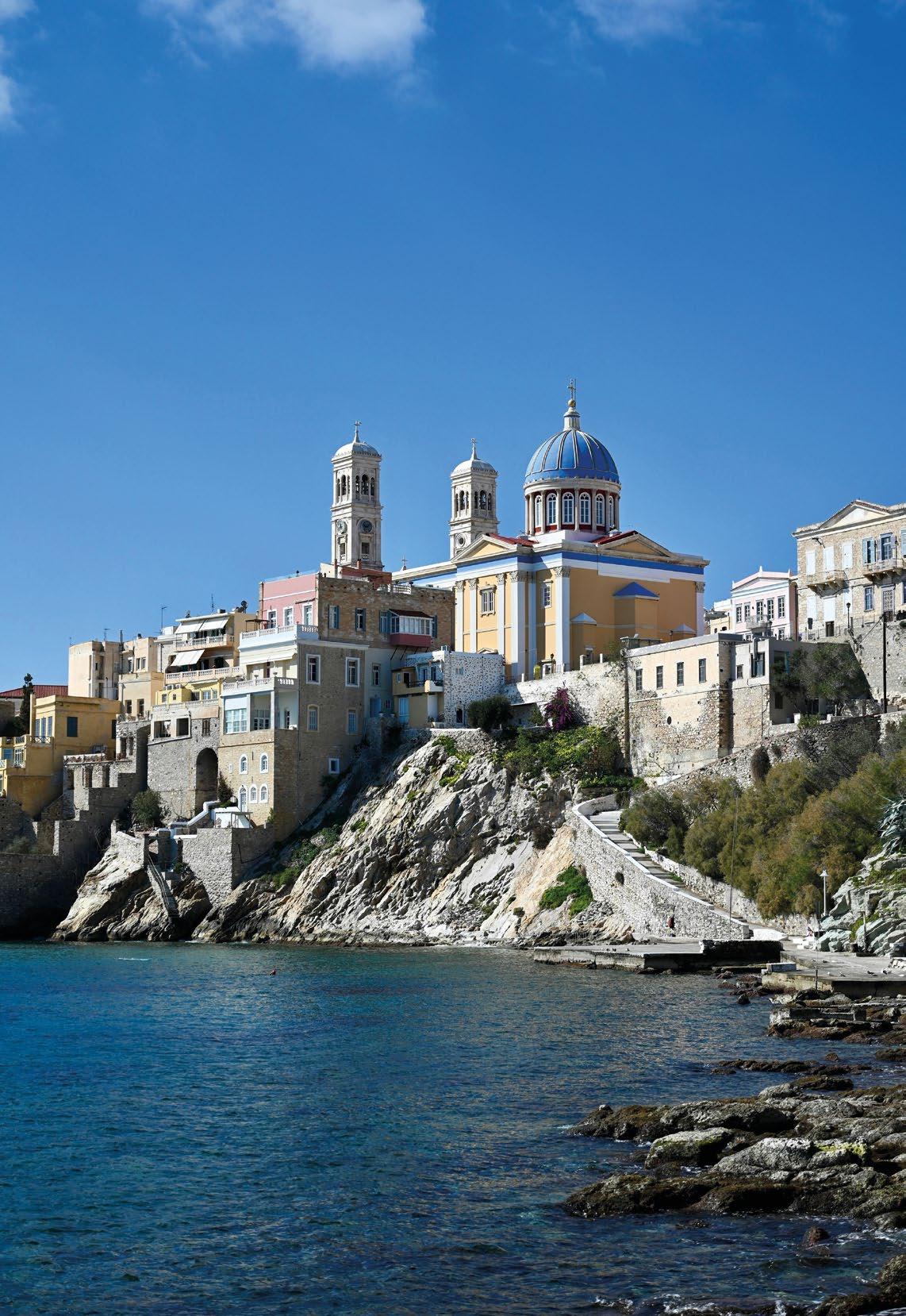
The capital of Syros celebrates 200 years of history, architecture, and cosmopolitan memory.
THERE IS THAT MOMENT WHEN THE FERRY TURNS AS IT ENTERS THE HARBOR, WHEN TIME IN THE AEGEAN SEEMS TO MAKE A CHARMING LEAP. THE UNSUSPECTING TRAVELER EXPERIENCES A SUDDEN REVELATION THAT ARRIVES WITHOUT WARNING. ALL AT ONCE, THE CLASSIC CYCLADIC IMAGE - THE BARREN LANDSCAPE, THE LOW WHITEWASHED HOUSES WITH BLUE WINDOWS - GIVES WAY TO A SPECTACLE OF GRANDEUR.
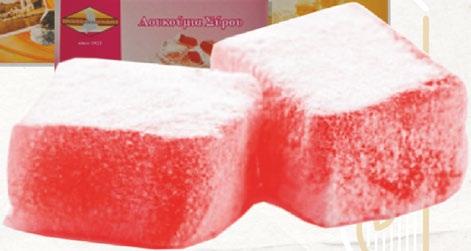
Syrα, as those who know it well call it, is crowned by its capital Hermoupolis, with its two hills rising like a theatrical backdrop above the harbor. One, to the left as we look at the city from the sea, crowned by the Catholic Saint George of Ano Syros, a remnant of the Middle Ages, and the other to the right by the Orthodox Church of the Resurrection. Between them unfolds a wondrous city full of life, sweet loukoumia, built from marble, light, and history.
Welcome to Hermoupolis, the city of Hermes the Merchant and the Scholar - merchant as protector of trade and travel, and scholar as protector of speech, letters, and the arts.
To truly understand Hermoupolis, you must walk through it and listen to its story from the beginning. This is not a city that evolved slowly through the centuries, nor a fishing village that naturally expanded. It was born abruptly from the ashes of the Greek Revolution of 1821. At that time, the destruction and massacres of Chios, Psara, Kasos, and Smyrna forced thousands of wealthy refugees, merchants, sailors, and craftsmen to seek safe refuge on Syros, which was then under French protection and maintained a relative neutrality. These people did not arrive empty-handed. They brought
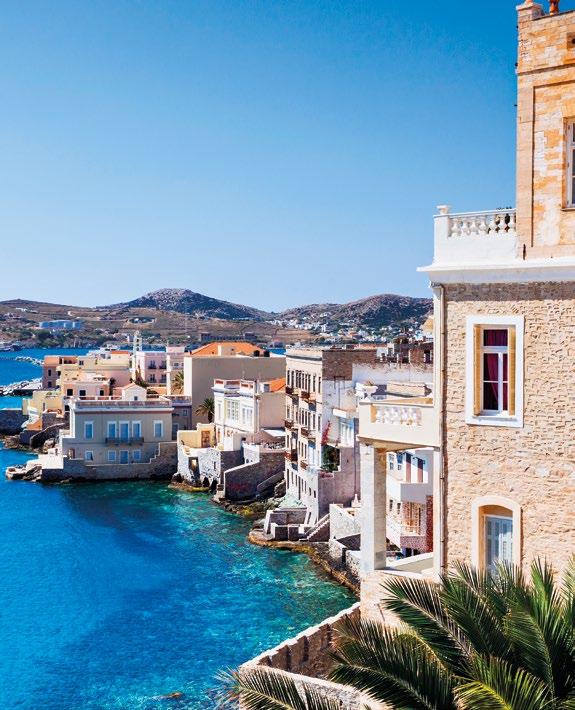
with them their cosmopolitan spirit, their international connections, their capital and, above all, their determination to rebuild their lives anew.
In 1826, the residents of the new city gathered and gave it the name Hermoupolis in honor of Hermes the Merchant, the god of commerce. It was a clear declaration of identity. And indeed, within just a few years, upon the wild and inhospitable rocks, an economic and urban miracle took place unlike anything else in the history of the Mediterranean. The 19th century found Hermoupolis as the largest industrial, shipping, and commercial center of the free Greek state, surpassing for a long period even Athens and the country’s other great port, Piraeus, in wealth and population. Its geographical position at the center of the Aegean transformed it into a commercial hub connecting Western Europe, the Black Sea, and the East.
The first Greek shipyard, Neorion, was founded in Hermoupolis. The city was also home to the first major textile mills, windmills, tanneries, and the first Greek steamship company. Alongside this economic boom, the city became a beacon of culture and education. The first secondary school of the modern Greek state was founded here, with Eleftherios Venizelos among its graduates.
The first newspapers were published here in Hermoupolis and the first printing houses operated here as well. Walking through the city, one realizes that the merchants and shipowners of Syros did not wish to live in simple houses, but in palaces reflecting their education, cosmopolitan aura, and prosperity. They invited important Greek and European architects who transformed Hermoupolis into a living museum of neoclassicism.














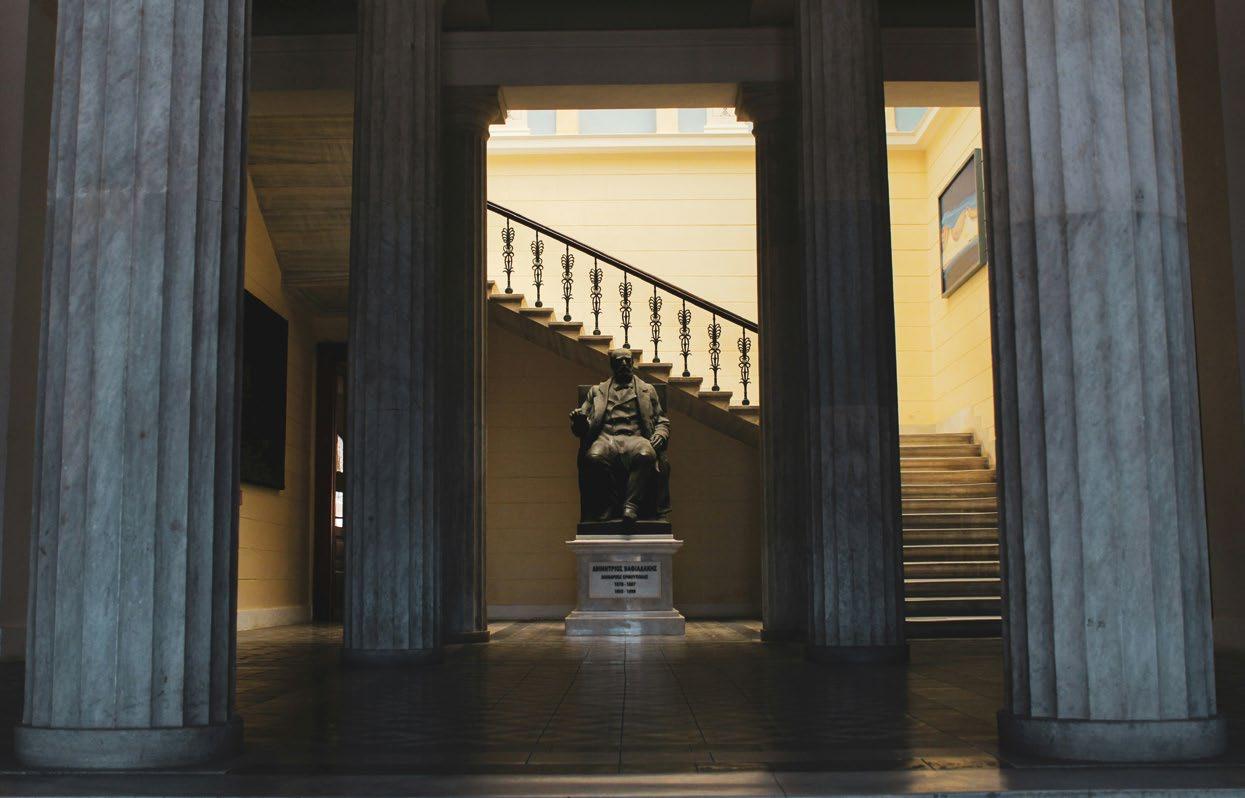
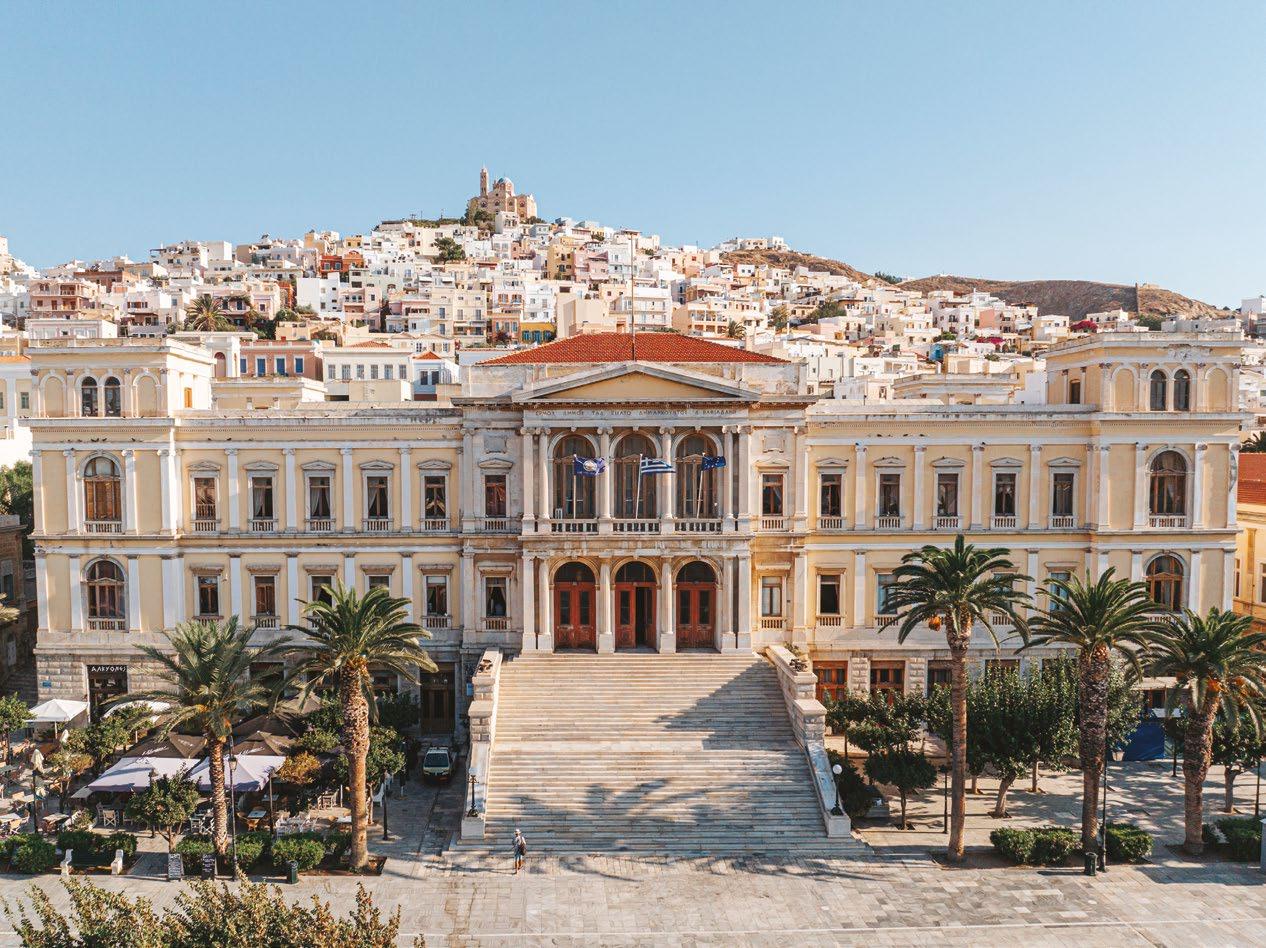
As you wander through its narrow streets, the feeling of its glorious past remains untouched. You come across Miaouli Square, a vast marble-paved square full of life, at the center of which stands the imposing Town Hall designed by Ernst Ziller in 1876. With its grand marble staircase and Renaissance lines, it resembles a palace more than a public building.
A little higher up, you encounter the Apollo Theatre, designed by the Italian architect Pietro Sampo and built in 1864. It is considered a miniature version of La Scala in Milan and still preserves the charm of another era, with its red seats, velvet balconies, and painted ceilings.
The city’s most aristocratic neighborhood is Vaporia. There, wealthy shipowners built their mansions directly above the sea, with marble balconies, highceilinged rooms, and frescoes painted by Italian artists. At the highest point stands Saint Nicholas of the Rich, with its distinctive blue dome.
Even after the city’s era of economic prosperity faded, its greatest achievement was that its residents refused to turn it into a mere tourist backdrop. Hermoupolis remained a living city throughout the year, serving as the administrative capital of the Cyclades and home to the University of the Aegean, preserving its youthful energy while harmoniously combining it with its historical continuity.
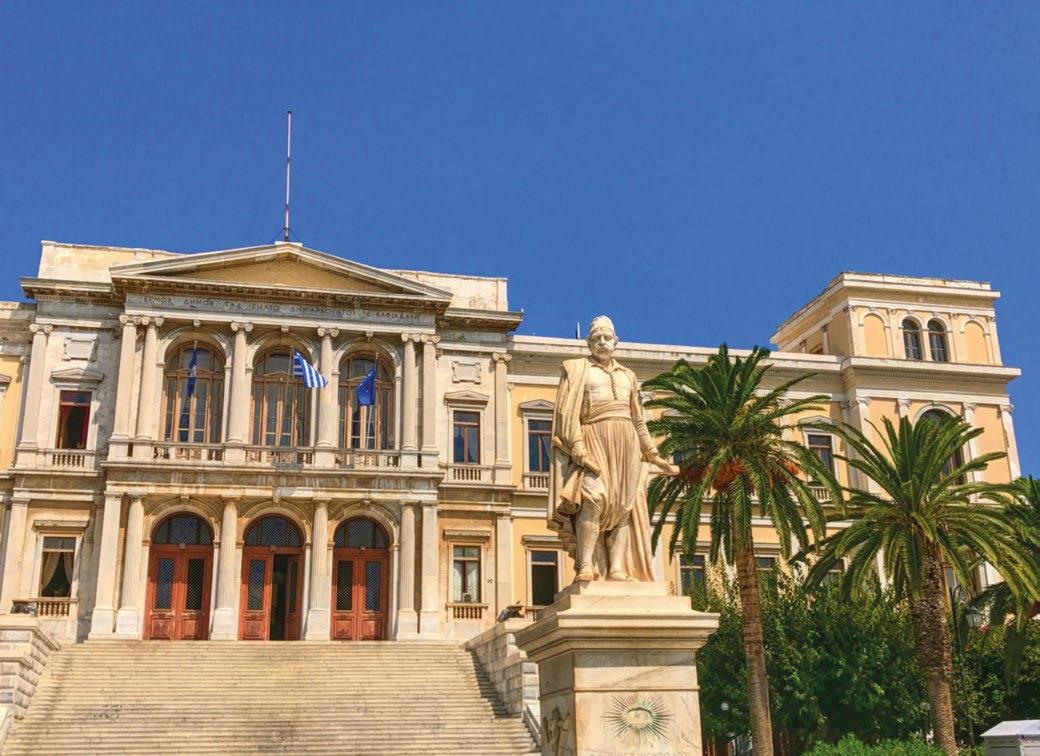



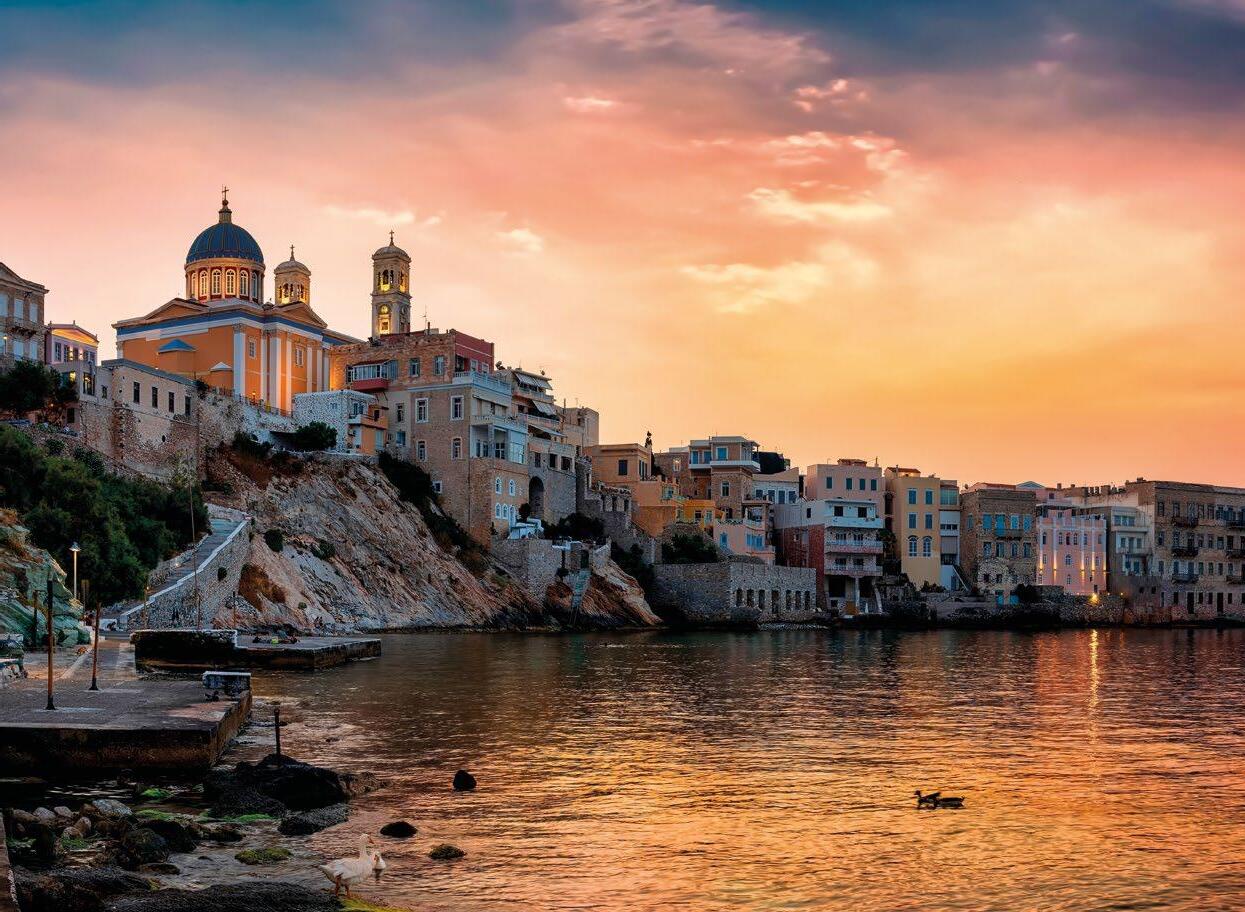
Syros appeals more to the traveler seeking architecture, culture, and genuine hospitality than to someone looking only for cosmopolitan entertainment and beaches.
Rebetiko music, after the Asia Minor Catastrophe of 1922 and before reaching Piraeus, also made a stop in Syros. Markos Vamvakaris, the great rebetiko musician from Syros, was born in Ano Syros. Hermoupolis hosts rebetiko evenings dedicated to him, while the city is also home to the Cyclades Classical Music Festival and the International Animation Festival Animasyros.
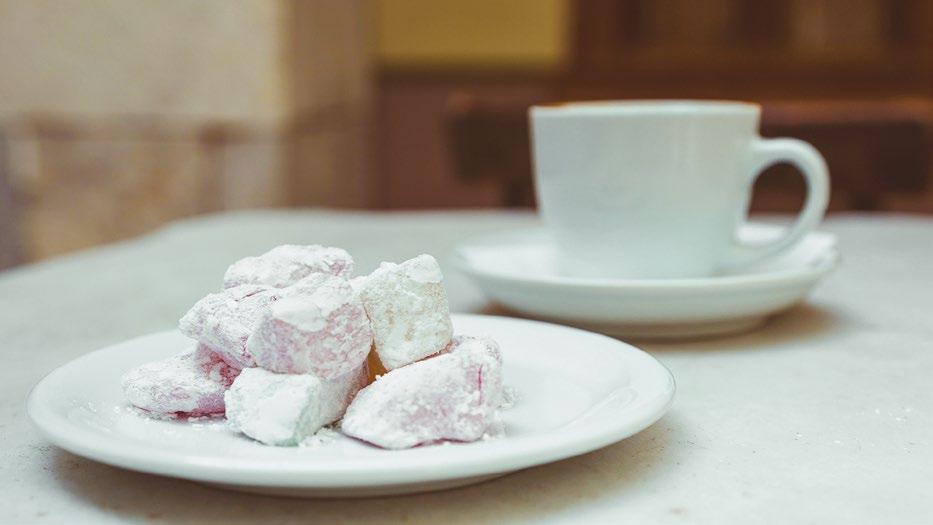
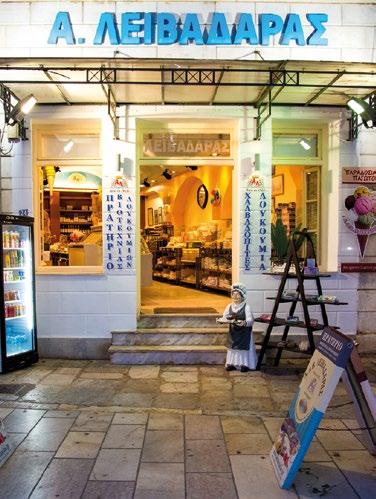
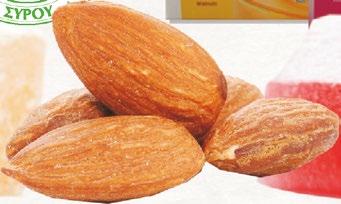
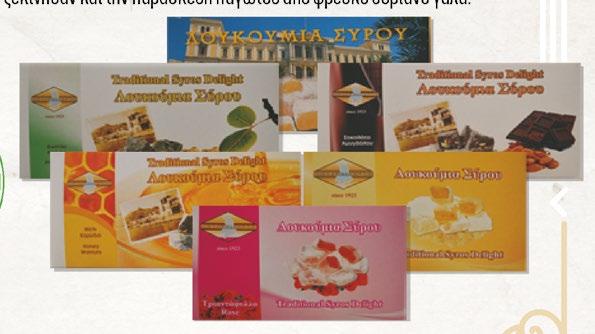
Traveler, when you find yourself in Hermoupolis, you will wake up in the morning and stroll through the traditional market of Chios Street with its fresh fish and local herbs. At noon, you will head to Asteria in the Vaporia district and dive from the marble platform with the mansions as your backdrop. Afterwards, hungry from the sea, you will taste the famous San Michali cheese with its spicy flavor in one of the city’s many restaurants. Hermoupolis certainly will not disappoint you. Its famous loukoumi, officially produced on the island since 1837 by craftsmen from Chios, owes its uniqueness to the brackish water from the island’s few springs and makes the perfect sweet gift to bring back to your friends. Take some halvadopita and almond sweets with you when you leave and you will remember this island for a long time.
Hermoupolis celebrates its 200th anniversary this year and, despite the difficulties it has faced, it has remained the grand lady of the Cyclades. It has aged beautifully, preserving the elegance of its past thanks to its residents. Do not hesitate to ask them anything. They are proud to live in Hermoupolis and always ready to share the stories passed down from generation to generation.
Seethefullprogrammeofevents:www.syros-ermoupolis.gr


























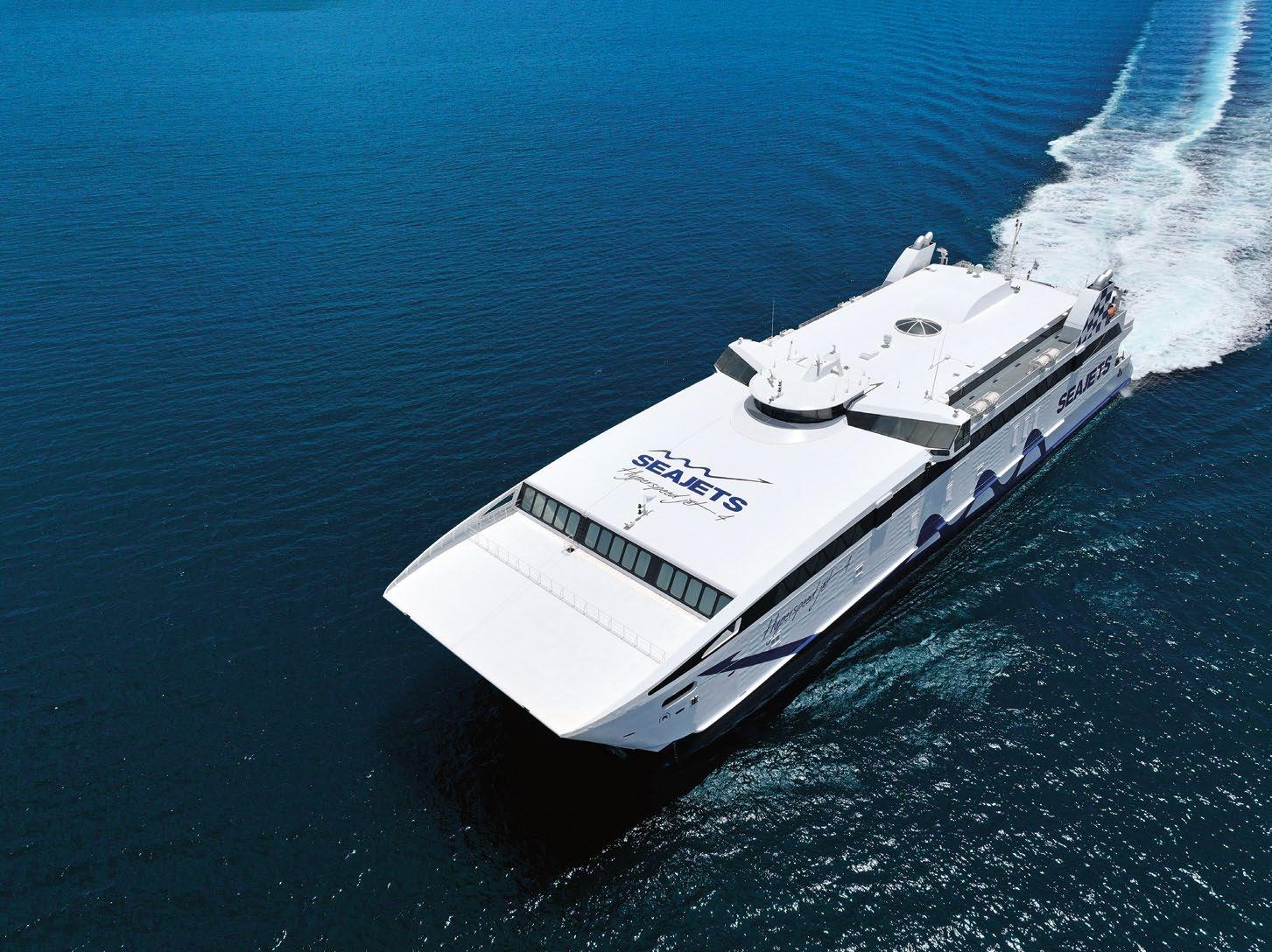
This summer, Andros is the island you can reach before your coffee even gets cold. With multiple departures from the port of Rafina and a journey time of just one hour , SEAJETS brings one of the Cyclades’ most distinctive destinations within easy reach of Athens.
Board in Rafina and leave everyday life and the pace of the city behind. Before you have even had time to settle into holiday mode, the Aegean will begin to open up before you and Andros will appear on the horizon. The fast connection and frequent routes make the trip easier, more flexible and ideal even for a short getaway. Whether you want to set off early in the morning and enjoy a full day on the island, or you prefer an afternoon departure after work or other commitments, Andros is always closer than you think.
Your first glimpse of the island awaits you in Gavrio, the port of Andros. From there, you can begin exploring towards Batsi, one of the island’s favourite seaside villages, with cafés, restaurants and views of the Aegean. Chora, the capital of Andros, is reason enough to travel to the island. Elegant, atmospheric and built between two beaches, it stands out for its neoclassical buildings, museums, squares
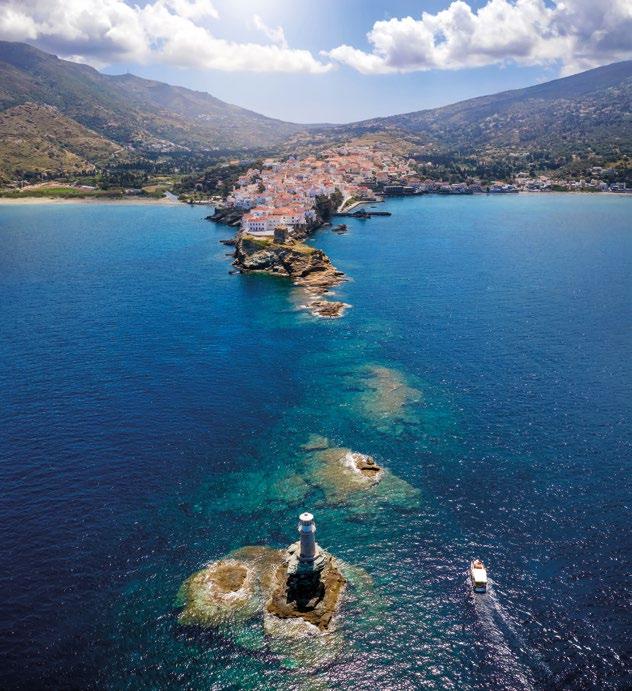
and unique view of the Tourlitis Lighthouse, one of the island’s most iconic landmarks.
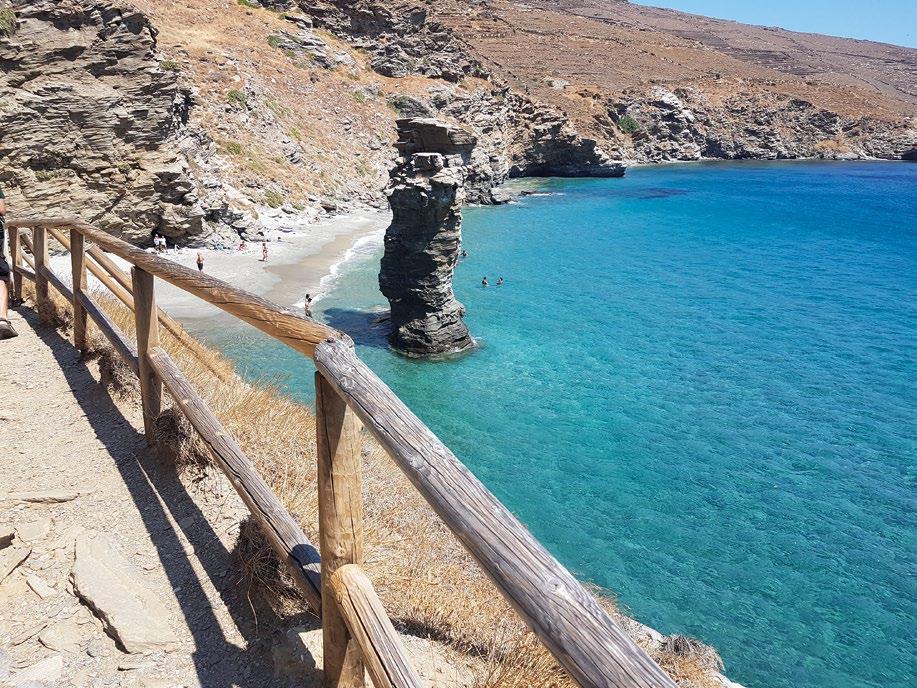
For nature lovers, Andros reveals another side of the Cyclades. Lush landscapes, running waters, springs, ravines and marked trails make the island ideal for hiking and exploration. The Pithara Springs, Menites and the inland villages reveal a Cycladic island with a character all its own. Of course, the sea always takes centre stage. From cosmopolitan Chrisi Ammos and Agios Petros to the impressive beach of Tis Grias to Pidima, Zorkos and the island’s more secluded shores, Andros offers options for every traveller. Sometimes organised and easy to reach, sometimes wild and unspoilt, each beach has its own beauty. And when it is time to eat, this island will continue to surprise you. Local flavours, traditional sweets, fresh products and seafood come together to create a culinary experience worth discovering. Try local specialities, enjoy a meal by the sea and take a little of the island’s flavour with you before you return.
This is how Andros becomes that spontaneous idea that easily turns into a trip. The morning escape that gives you an entire day on the island, and the afternoon departure that leaves the city behind before you even realise it. With SEAJETS’ multiple routes from Rafina, you can quickly and comfortably reach a destination filled with elegance, beaches, flavours and authentic Cycladic images.
All it takes is one ticket, about an hour on the Aegean and… you are already there!
The major exhibition by the Basil & Elise Goulandris Foundation sheds light once again on a significant figure of European sculpture.
AAntoine
Germaine Richier
deeply Mediterranean woman and remarkable artist finds her artistic place this summer at the Museum of Contemporary Art of the Basil & Elise Goulandris Foundation. French sculptor Germaine Richier, who originated from Grans, near the Mediterranean city of Arles, allowed the sea to permeate her work. She was a pioneer, devoted to her art and, despite her premature death from breast cancer at the age of 57 (1902–1959), she left a powerful mark on 20th-century European sculpture. She studied in the studio of Antoine Bourdelle and was the only female sculptor to participate in the historic exhibition The New Decade, organized by the Museum of Modern Art in New York in 1955. The very next year, she became the first woman to whom the National Museum of Modern Art in Paris dedicated a major retrospective during her lifetime, an honour that until then had been granted only to Henri Matisse.
What raises questions in the case of Germaine Richier, however, is that despite the recognition she received during her lifetime, unlike other artists of her era, her name gradually began to disappear from the international map until she faded into obscurity even within her own country.
Maria Koutsomalli-Moreau, Collection Curator at the Basil & Elise Goulandris Foundation, who co-curates the summer exhibition in Andros together with Laurence Durieu, specialist in Richier’s work

and author of the biography Germaine Richier –L’Ouragane, notes: “What amazes me is how this great artist disappeared. Today, the value of Richier’s works has skyrocketed, but she remains known only within a certain circle, and this saddens me because, deep down, I see that it has to do with the fact that she died far too young. It also has to do, of course, with the fact that she did not have the fortune of finding a gallerist who would truly support her and continue defending her after her death, as many do. I believe it is time for her role to be highlighted, because the fact that she was a woman certainly did not help at the time.”
She continues, shedding light on Richier’s own perspective: “Whenever people asked her how a woman ended up practising sculpture, which is the most physically demanding of all the arts, she would always reply: ‘I cannot understand what you mean. I see a man or a woman; gender does not interest me as long as they are a good artist.’ But I think harsh reality shows that the fact she was a woman at that time certainly did not help.”
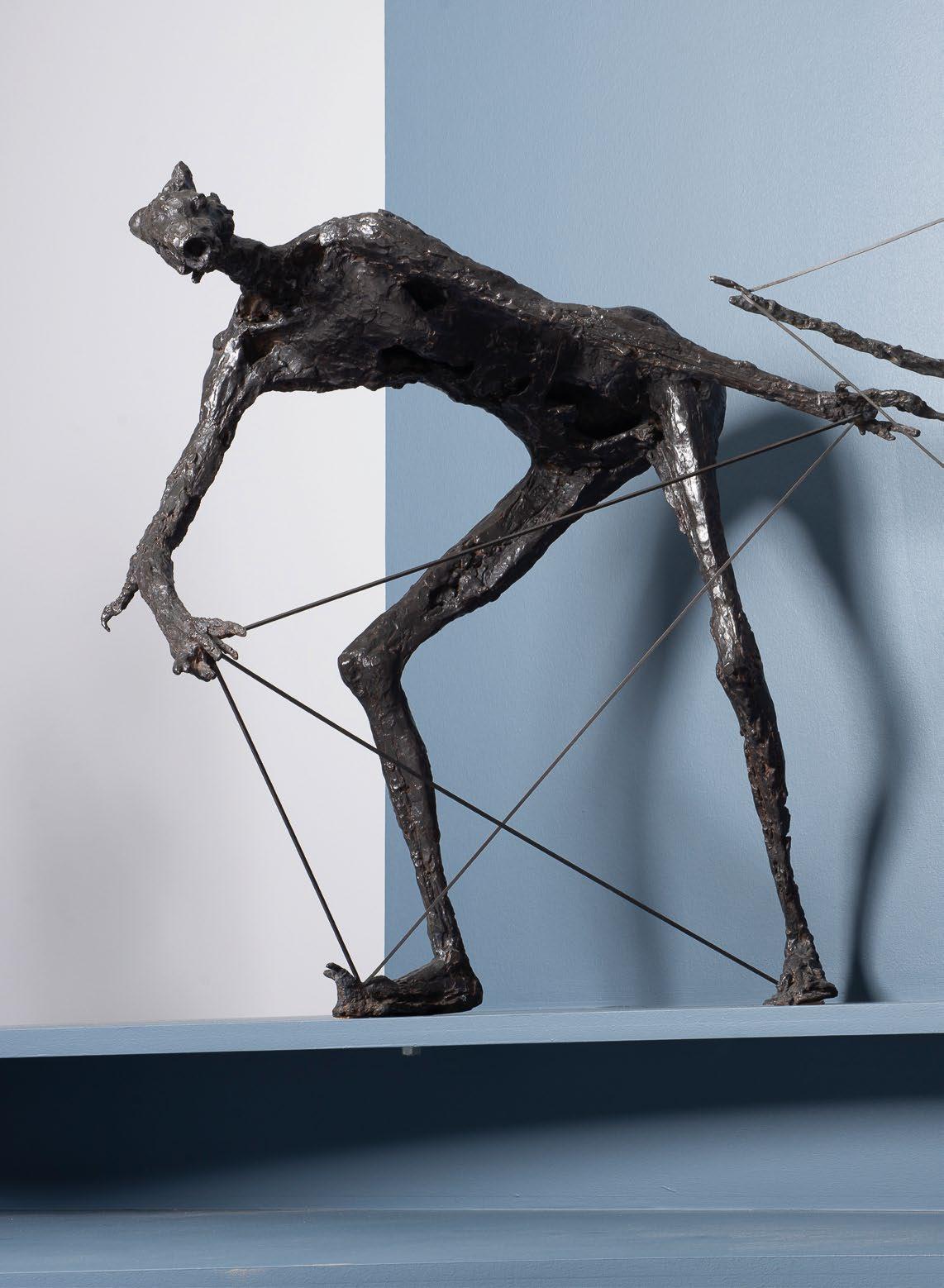
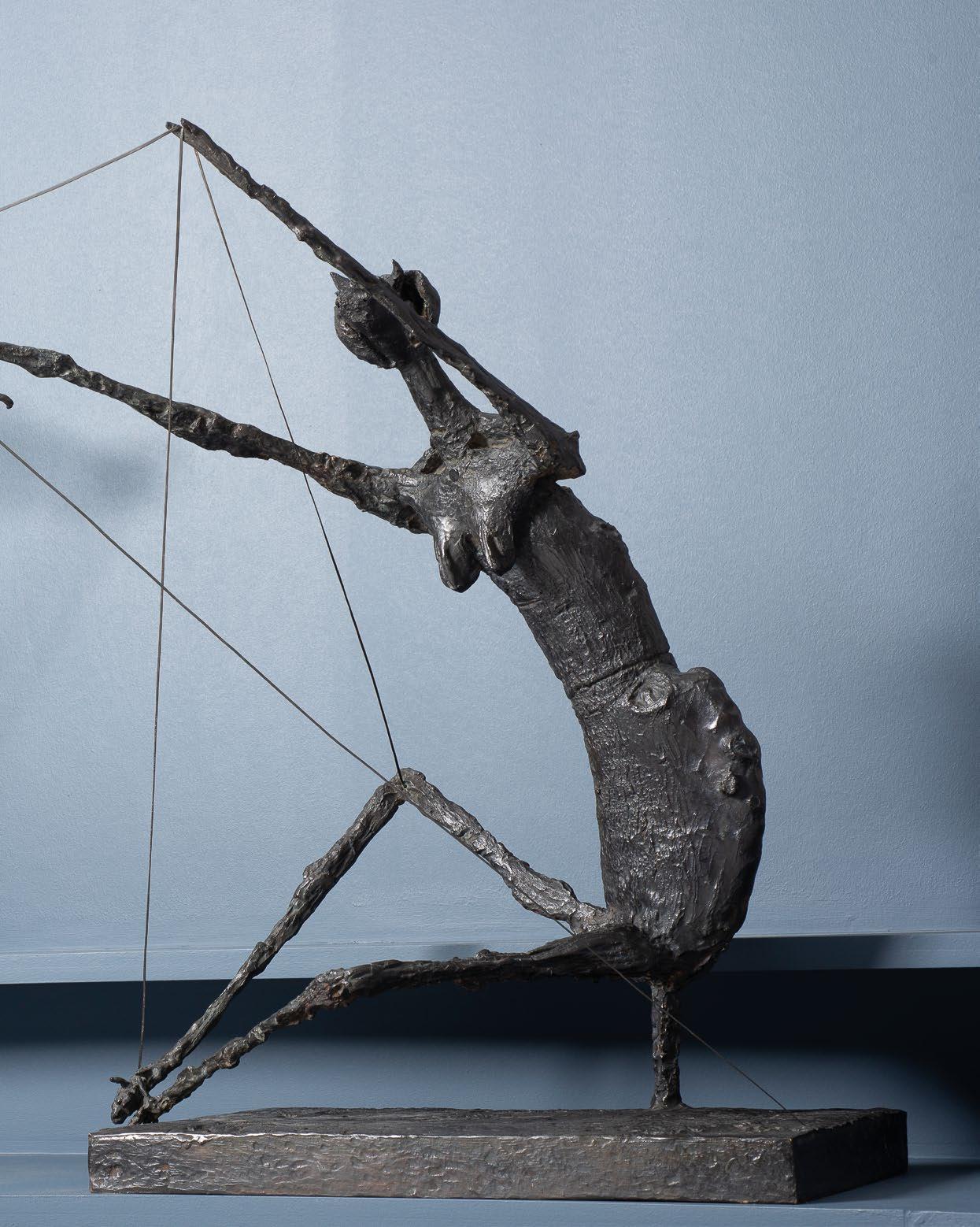
Looking at her art, somewhere between heads and bodies of men and women blending into a play between genders, one cannot help but feel how profoundly human-centred it is. Her talent for portrait busts defined the early years of her work, while from the 1940s onward, during her exile in Switzerland, she gradually introduced nature and the animal kingdom into her works, creating hybrid beings. She worked until the very end using the tools of the classical sculptor, experimenting with techniques, from plaster to bronze with dark patina, but also natural bronze resembling gold, as well as engraving.


Centre Pompidou,
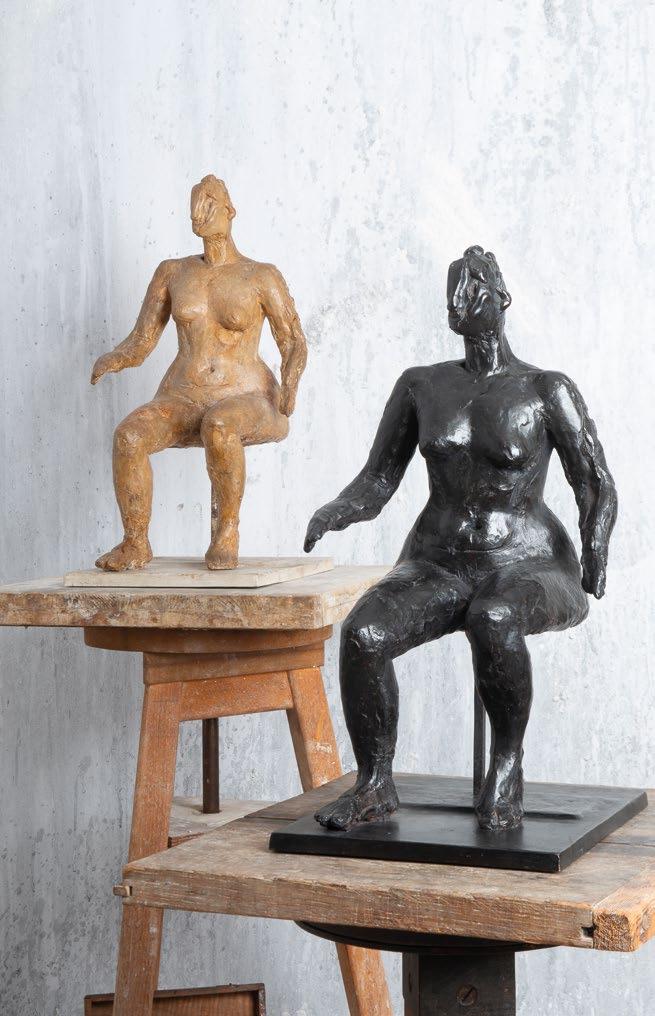
Violence and war “wrote themselves” into Richier’s art: “This is not sculpture made to be aesthetically pleasing, sensual, or inviting you to approach it and admire it. It is truly raw sculpture. When you see the works as a whole, it is true that they create an environment that is, in a strange way, both defensive and aggressive. There is both defence and attack in all the forms,” notes Maria Koutsomalli-Moreau.
“She did not particularly accept the idea that the war influenced her, but her art changed radically during the war years. She always said that humanity carries within itself a violence capable of creating the worst things imaginable, but in her own case she considered the violence within her to be productive and something she needed.”
In the 1970s, Vasilis Goulandris and Eliza Goulandris, deeply admiring the work of Germaine Richier, acquired four of her works, which remain part of the Foundation’s collection to this day.

INFO GERMAINE RICHIER (1902-1959) -
Μουσείο
22820 22444
Η Richier
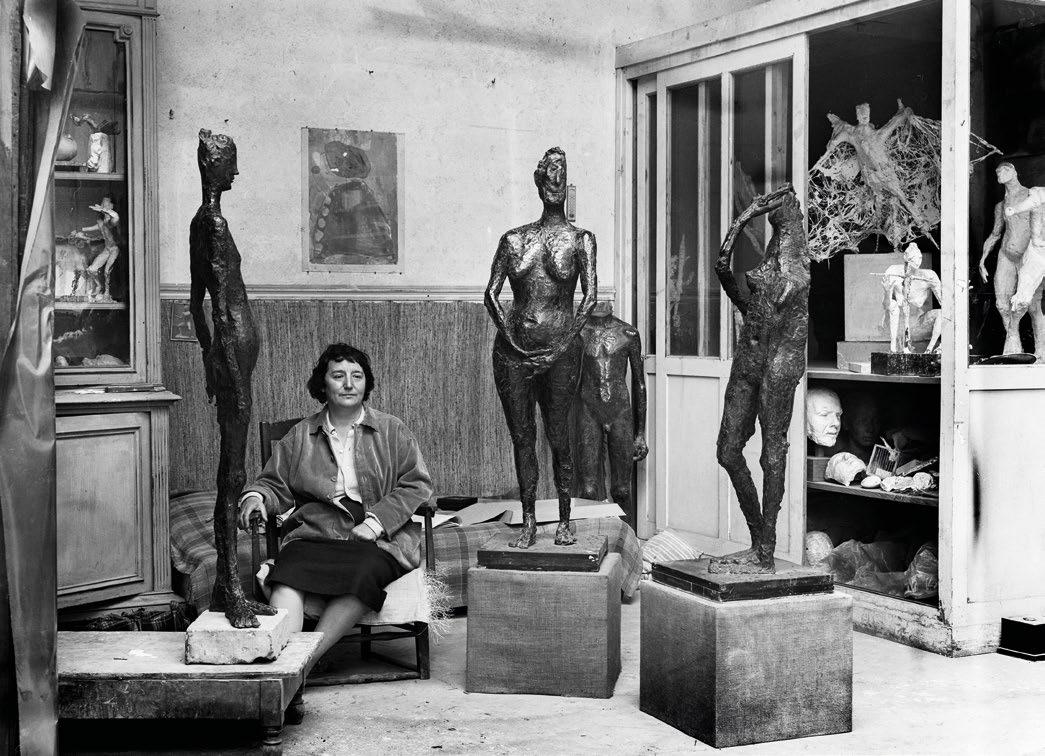
1954 / Richier with two of her sculptures, 1954

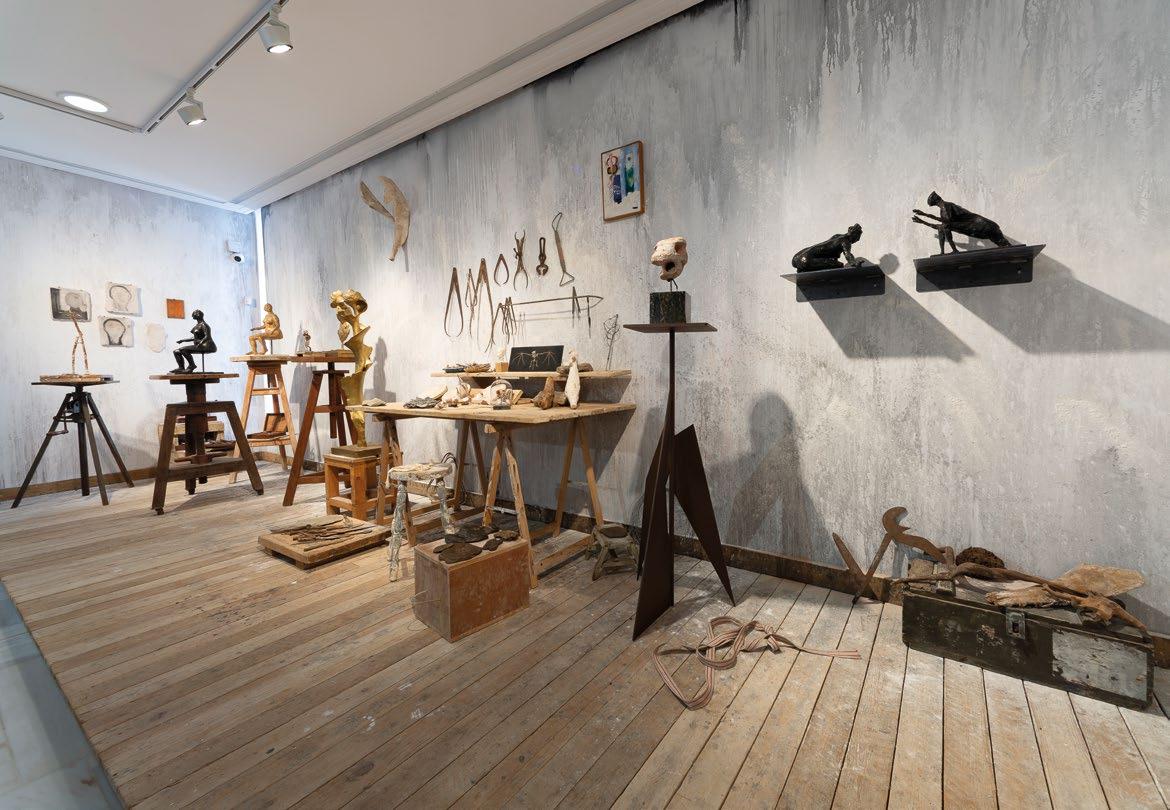
Following the Centre Pompidou, which in 2023 presented the first major retrospective dedicated to Richier in at least three decades, and always aiming to highlight artists represented in its collection, the Basil & Elise Goulandris Foundation, from June 14 onward, casts light once again on the work of this great sculptor, a light she was denied through the passing of time. More than 70 of her works arrive at the west wing of the Museum of Contemporary Art of the Basil & Elise Goulandris Foundation, and thus the “Conversations” unfold, as though we are entering her studio, surrounded by her objects, the bases she used to work on her sculptures, the metal armatures she constructed. The works stand there in pairs and “converse”.
Maria Koutsomalli-Moreau explains: “What she loved doing, both in her exhibitions and especially in her studio, was grouping them in pairs, or threes, or even more. She always placed them so they could ‘converse’. She believed they opened a dialogue with one another when they were not alone, and that is why we wanted to recreate the dialogues she herself had chosen and also imagine additional ones. Richier did not have children, but she considered her sculptures to be her children. In various letters or messages she left to friends, she would say, ‘I’m going to take care of my children.’ She believed that her sculptures too would one day die and would need another sculpture to come and honour them.”
Among the “Conversations”, a group of ten warriors stands out, as well as a “solitary” work at the centre of the exhibition entitled The Water, a female figure who appears almost like the mother of all the others.
We also encounter the Christ of Assy, a work created by Richier for a small church in the Alps, which, however, sparked a scandal in the early 1950s after being considered blasphemous by a group of extremist Catholics.
“This scandal affected her deeply because she never intended to create art that would appear blasphemous to anyone, but she was convinced she was on the right path,” concludes Maria Koutsomalli-Moreau.
And so, from June 14 onward, we meet in Andros at the Museum of Contemporary Art of the Basil & Elise Goulandris Foundation to “converse” with the “children” of Germaine Richier and connect with the work of an artist who possessed the courage and talent to become a pioneer in her art during a time that did not favour her.
INFO
GERMAINE RICHIER (1902–1959) – CONVERSATIONS
Duration: 14.06 – 27.09.2026
Museum of Contemporary Art of the Basil & Elise Goulandris Foundation
Basil and Elise Goulandris str. | Chora Andros 845 00, Greece Τ. +30 22820 22444
Μονή
/ Monastery of Panagia Hozoviotissa
The
island of the big blue is closer than ever
This summer, Amorgos is closer than ever. The island forever associated with The Big Blue, wild landscapes, and the authentic side of the Cyclades is now an even easier choice for a summer escape.
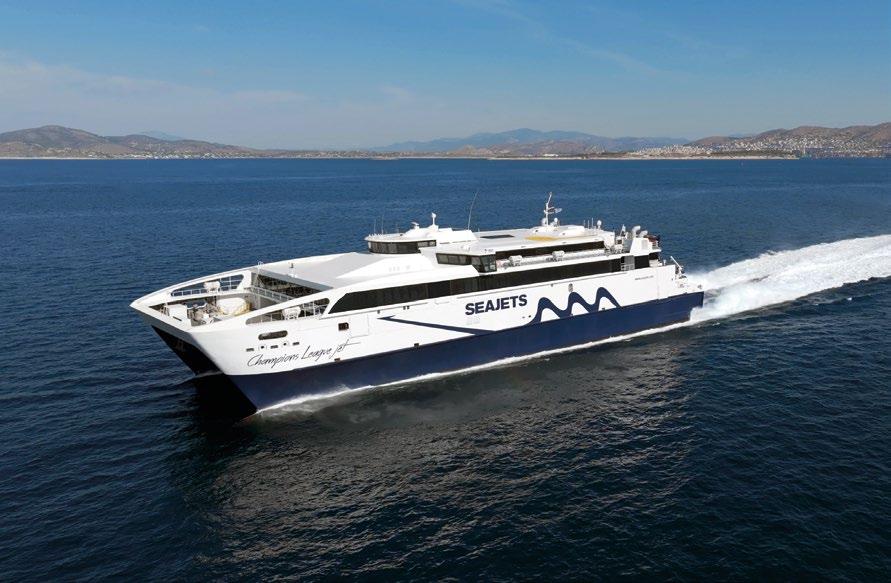
Board from Piraeus and, in just 4 hours and 35 minutes, you will arrive in Amorgos, an island that still seems to move to its own effortless rhythm. The journey time makes the getaway more direct and comfortable, giving you more time for what truly matters: experiencing the destination itself, without losing the magic of the journey.
Chora of Amorgos captures the island’s identity in the most characteristic way. A walk through its narrow alleys is enough to understand why many consider it one of the most beautiful villages in the Cyclades. It stands out for its graceful simplicity, unique architecture, and the many churches that appear between its winding streets. In Troullos, the windmills give the landscape a classic Cycladic image that is well worth a stop.
Stone-paved lanes, white houses with flowerpots, courtyards scented with jasmine and honeysuckle, tavernas, ouzeri, and traditional buildings
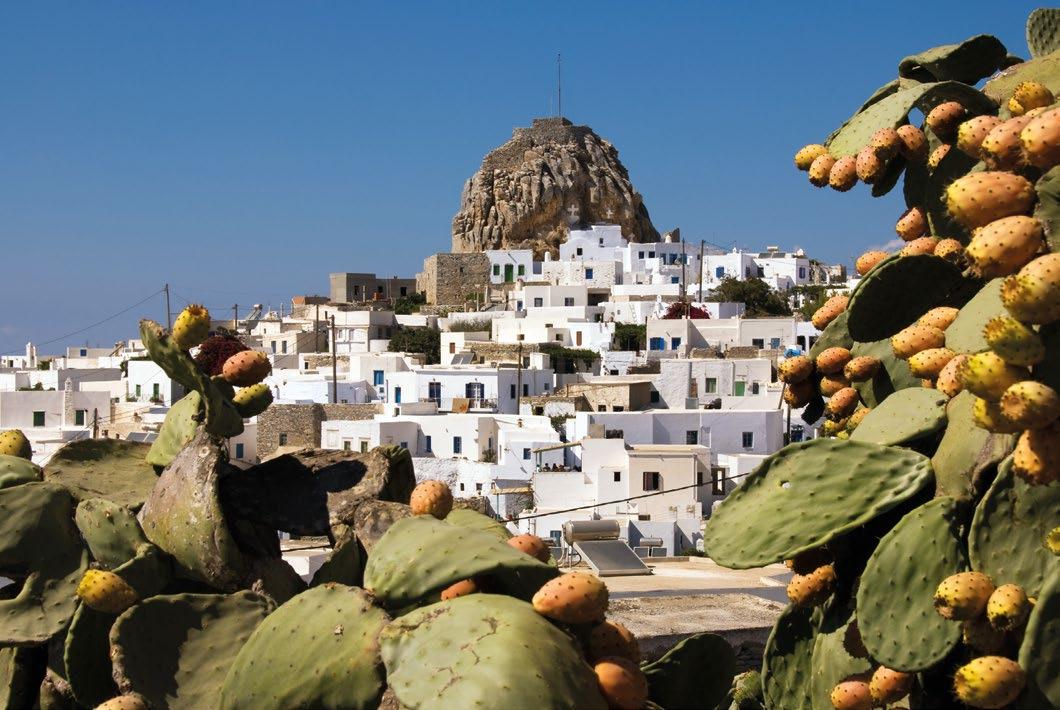
create the atmosphere of Chora: lively yet untouched by mass tourism, carefully preserved and deeply traditional.
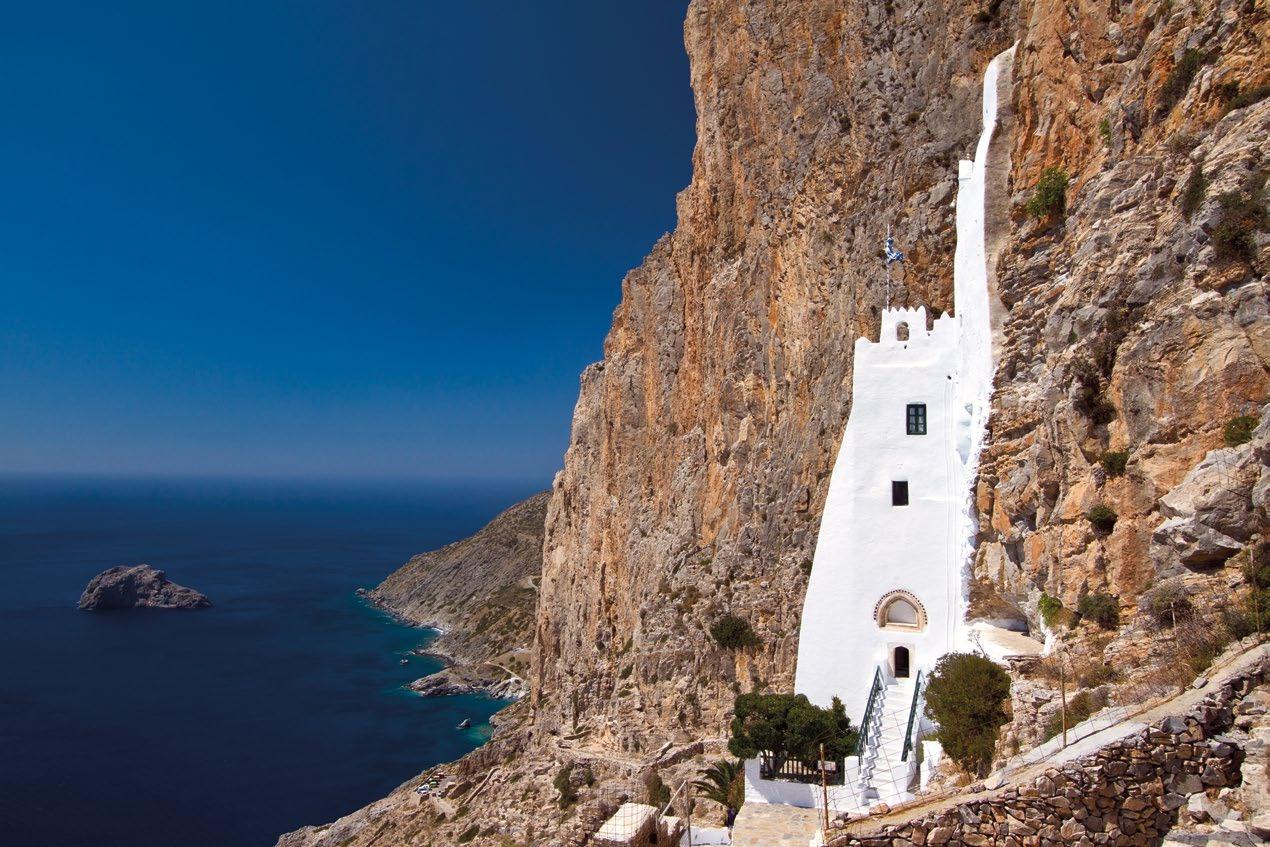
No trip to Amorgos is complete without a visit to the Monastery of Panagia Hozoviotissa. Built into the rock at one of the most impressive points on the island, its white, minimal form seems to hover above the Aegean. The view stretches uninterrupted all the way to the horizon, creating one of the most iconic images of Amorgos.
The island’s beaches stand out for their crystal-clear waters, dramatic scenery, and unpretentious beauty. Agia Anna, closely connected with Luc Besson’s The Big Blue, is perhaps the most emblematic image of this side of Amorgos, as scenes from the film that made the island famous around the world were shot there. With deep waters, rocky surroundings, and a peaceful landscape, it perfectly captures the unique character of the island.
Mouros, Kalotaritissa, and the beaches of complete the experience, each offering a different setting while preserving the same feeling of natural beauty and Cycladic simplicity.
SEAJETS, the journey to Amorgos begins from Piraeus and becomes part of the experience. In just a few hours, you leave the city behind and arrive at a destination with a truly distinctive identity, natural beauty, and authentic Cycladic character.
It is time to discover Amorgos: From your first glimpse at the port to your final dive into… the endless blue.
BY DEANA KARTSAGOULI
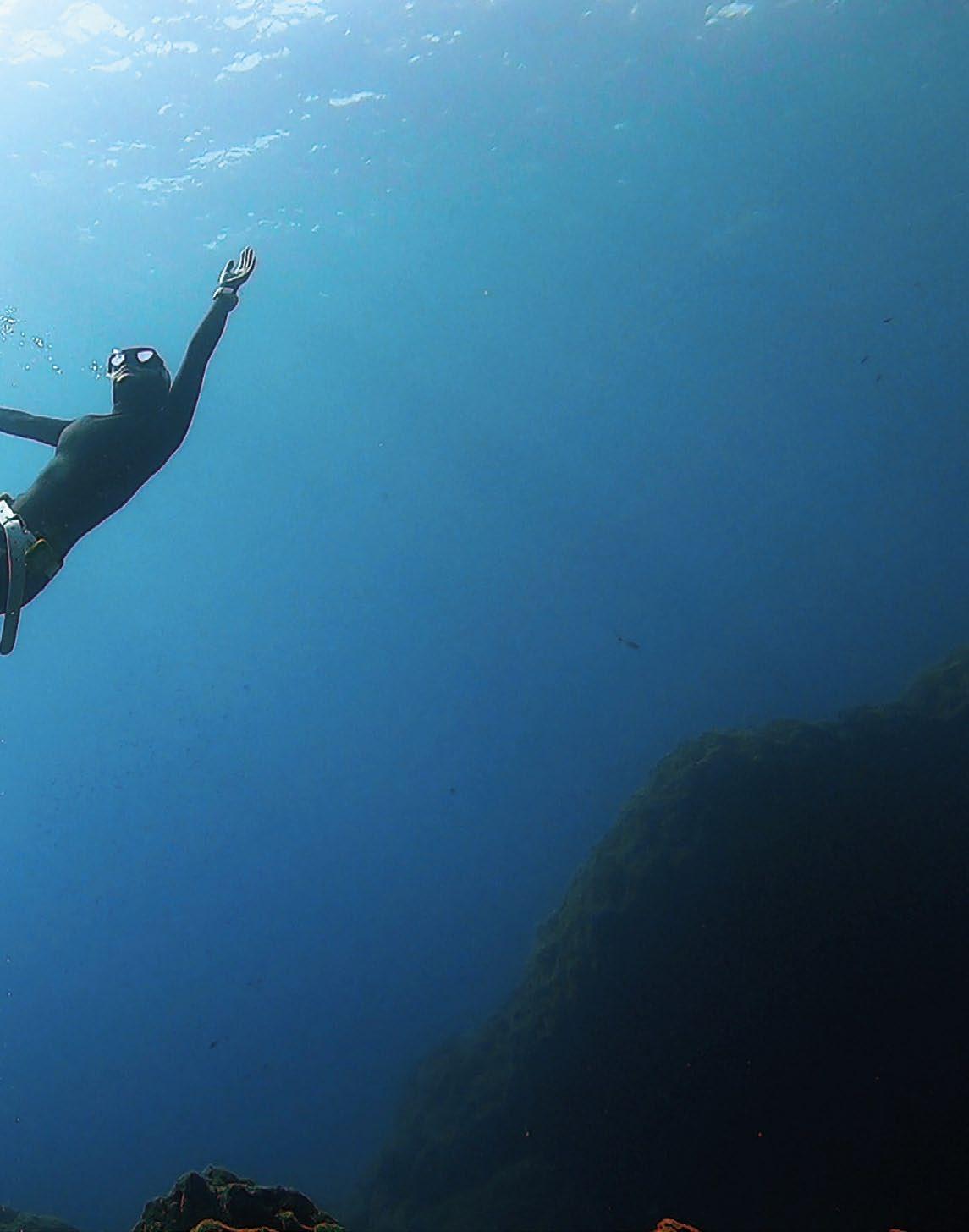
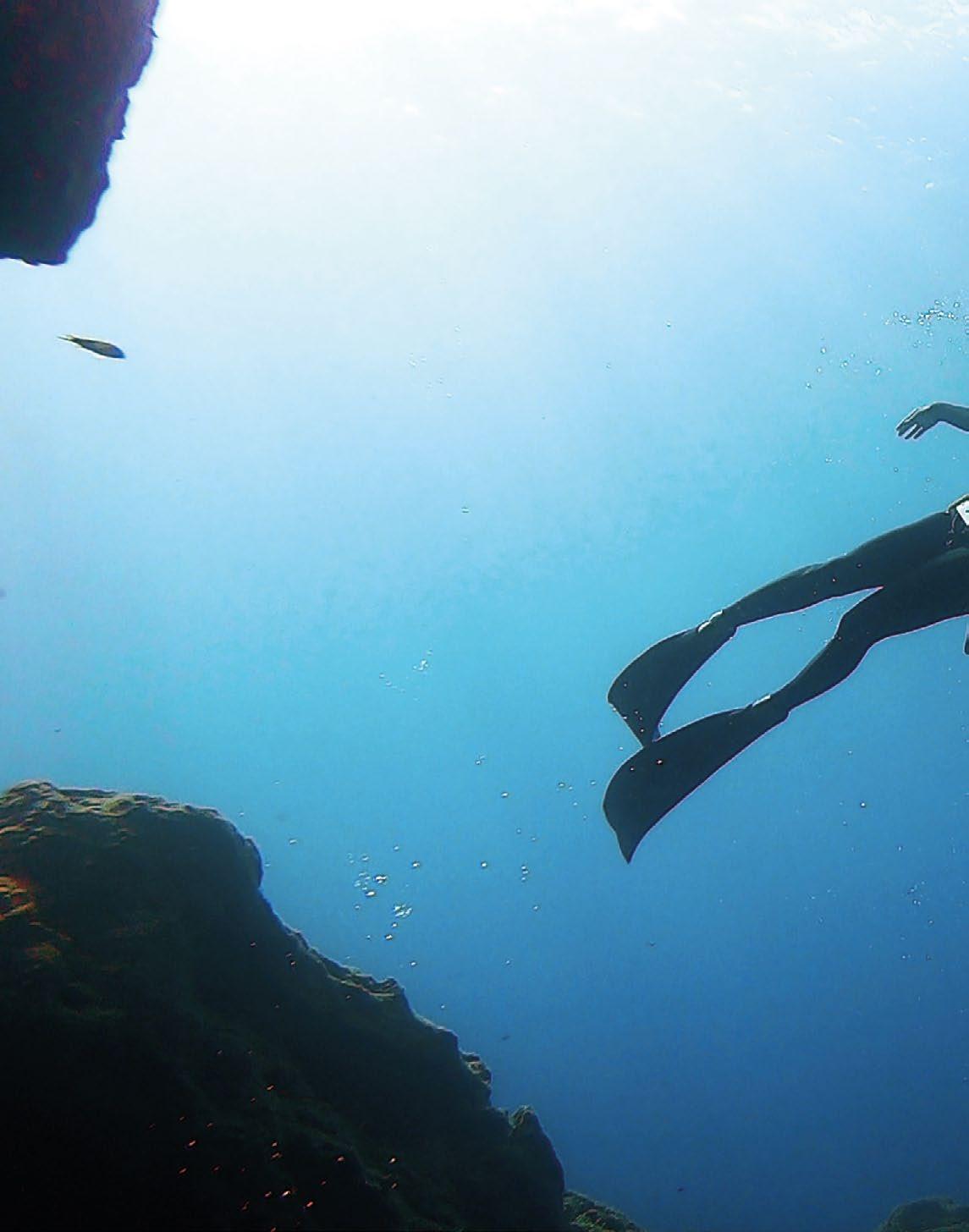
Its distinctive terrain, crystal-clear waters, and rich seabed make the island of Hozoviotissa an ideal destination for divers of all l evels.
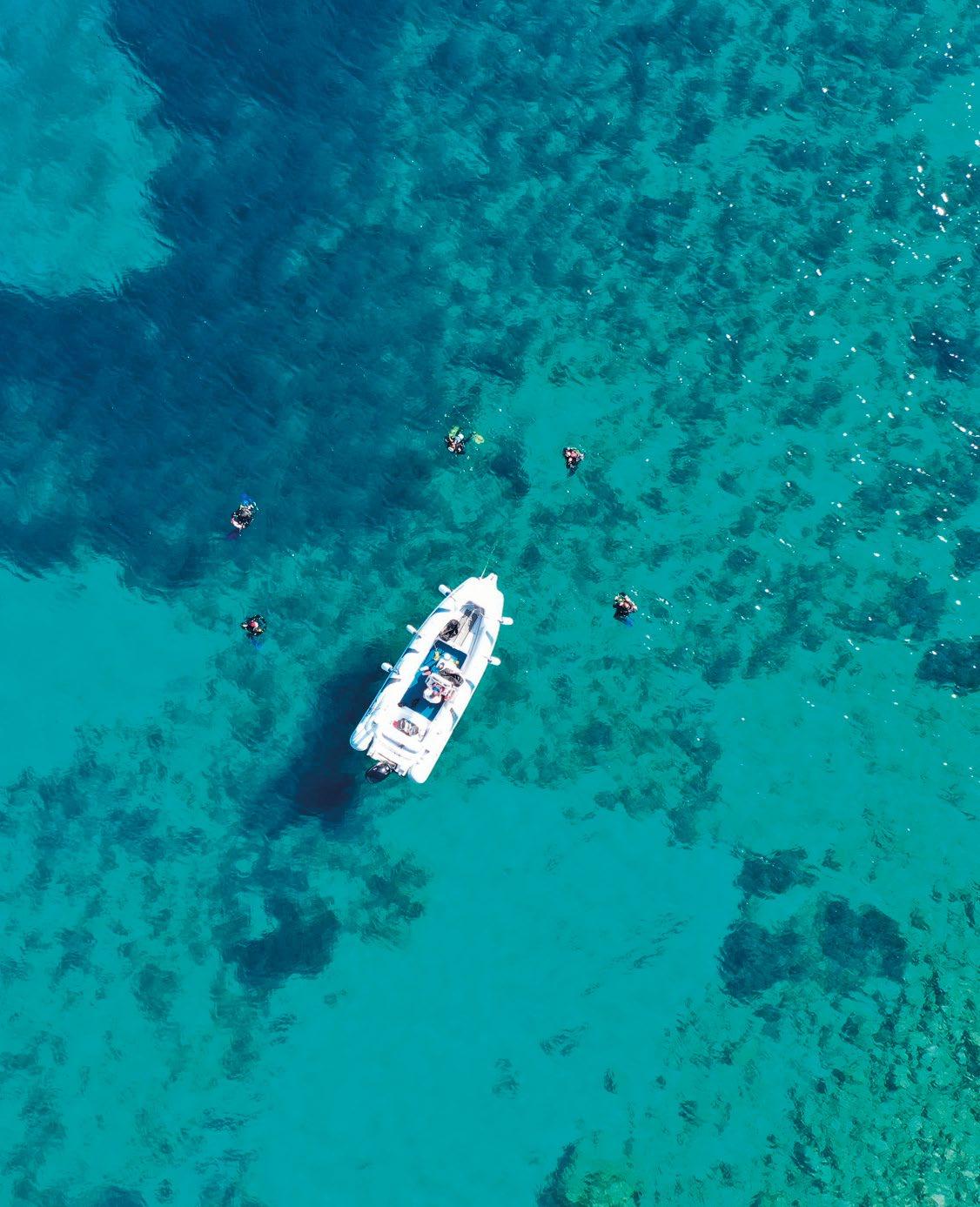
FOR ANYONE WHO HAS VISITED IT EVEN ONCE, AMORGOS MEANS SOMETHING DIFFERENT. FOR MANY, IT IS ITS TRAILS AND THE WILD BEAUTY OF ITS ROCKY LANDSCAPES; FOR OTHERS, ITS 360 CHURCHES, WITH THE MONASTERY OF HOZOVIOTISSA STANDING OUT, OR ITS CHARMING CAFÉS, WHERE LOCALS AND VISITORS ALIKE SIP THE ISLAND’S FAMOUS PSIMENI AND ENJOY TRADITIONAL MEZE.
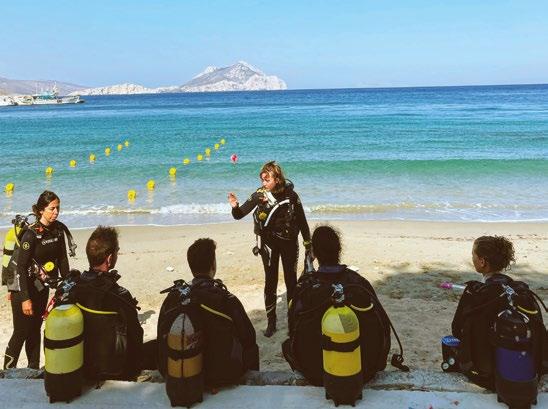
Yet there is another side of Amorgos, one that does not reveal itself at first glance. It unfolds the moment you dive into its deep blue waters and look beneath the surface. Whether on your own or with the guidance of an expert like Mr. Dimitris Synodinos.
Owner of the Amorgos Diving Center in Aegiali for nearly twenty years, he has turned a childhood dream-born from the filming of the French movie The Big Blue in the late 1980s into a reality that places Amorgos on the global map of alternative tourism.
“I was born here; this is my home,” says Synodinos, explaining how the film by Luc Besson became a catalyst for his future path. After serving in the Special Forces and completing his training, he returned to the island to fill a gap: the absence of organized diving in a seabed with truly unique characteristics.
As he explains, what makes Amorgos’ underwater world so distinctive is, first and foremost, the clarity of its waters. “Visibility reaches 30 to 40 meters, which is rare for the Mediterranean,” he notes. This is due to the composition of the seabed, which is not volcanic like that of Santorini, nor does it feature the fine sand found in Koufonisia.
Equally impressive is the morphology of the seabed, as well as its flora and fauna. It is filled with sea caves ready to be explored and “underwater paths” lined with sponges and corals, while a shipwreck near the nearby islet of Kinaros attracts those fascinated by ruins and history.
Local fishermen also play a significant role in protecting Amorgos’ marine environment. Through the “Amorgorama” initiative, the local fishing association has chosen to refrain from fishing activities during certain months of the year, focusing instead on coastal clean-ups and the protection of specific marine zones.
“It’s something truly unique - something that even attracted National Geographic,” Synodinos notes.
“Our fishermen closed off certain areas, and the results are already visible, especially in grouper populations. Today, Amorgos is one of the few places in the Cyclades with protected zones, offering visitors a rich marine life and one of the most vibrant underwater experiences in the Aegean.”
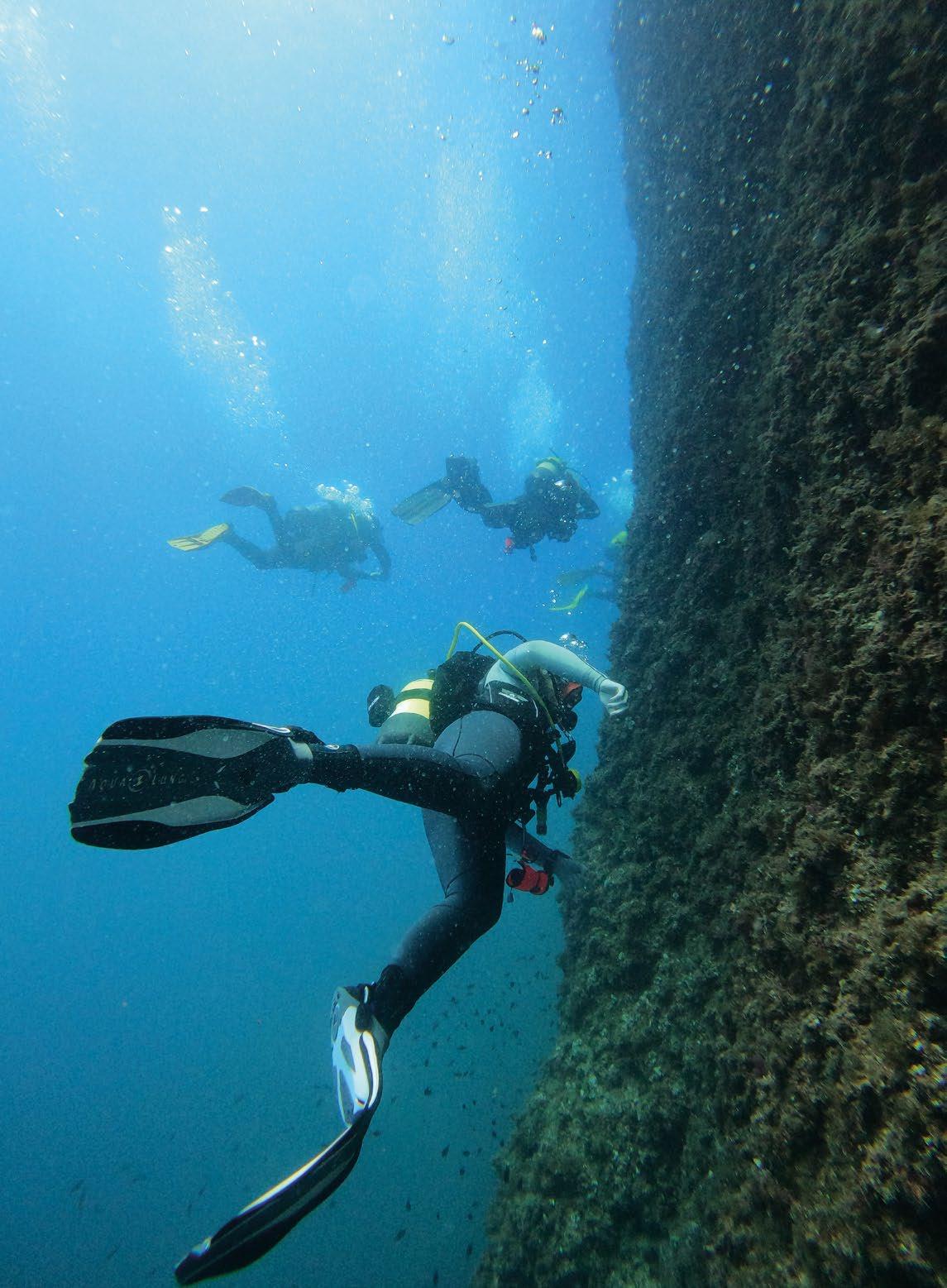
/ Diving in Amorgos reveals a hidden geography of the island beneath the waters of the Aegean.
With over 30 years of expertise and 21 stores across Greece, SMK GROUP provides a plethora of E/M and lighting solutions, which contribute to aesthetic enhancement and focus on functionality.
Driven by quality, powered by service, and trusted by professionals and consumers alike — Our growth is built on your trust! Our Company www.smkgroup.gr
Εκτός
T. 22850 73611 | Κ. 693 224 9538 info@amorgos-diving.com
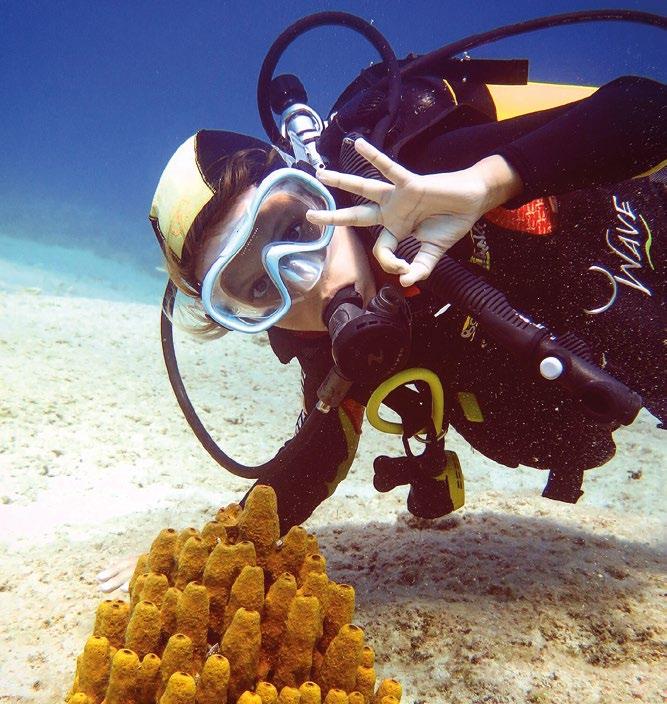
Beyond scuba diving, the Amorgos Diving Center also focuses on freediving, which has seen significant growth in recent years. “It’s the yoga of water. You learn to relax, to control your breathing and your heart rate,” explains the instructor. Remarkably, even beginners can, within just four days of training, safely reach depths of up to 20 meters.
The profile of visitors is highly diverse: from families with children (starting from the age of eight) to professionals who travel from abroad to obtain instructor certification.
“We recently had a woman from Spain who stayed for four months to become a professional diver,” he adds. The center offers comprehensive training programs, including instructor-level certification.
Despite its reputation as a “remote destination,” Amorgos is now more accessible than ever: via Santorini, just one hour away by high-speed ferry, as well as through the new route from Piraeus launched this year. And perhaps this is its most compelling characteristic: it remains one of the few islands untouched by mass tourism, preserving a calm and authentic character-whether experienced from the land or beneath the sea.
INFO
AMORGOS DIVING CENTER
Aegiali, Amorgos, Cyclades T. +30 22850 73611 | M. +30 693 224 9538 info@amorgos-diving.com
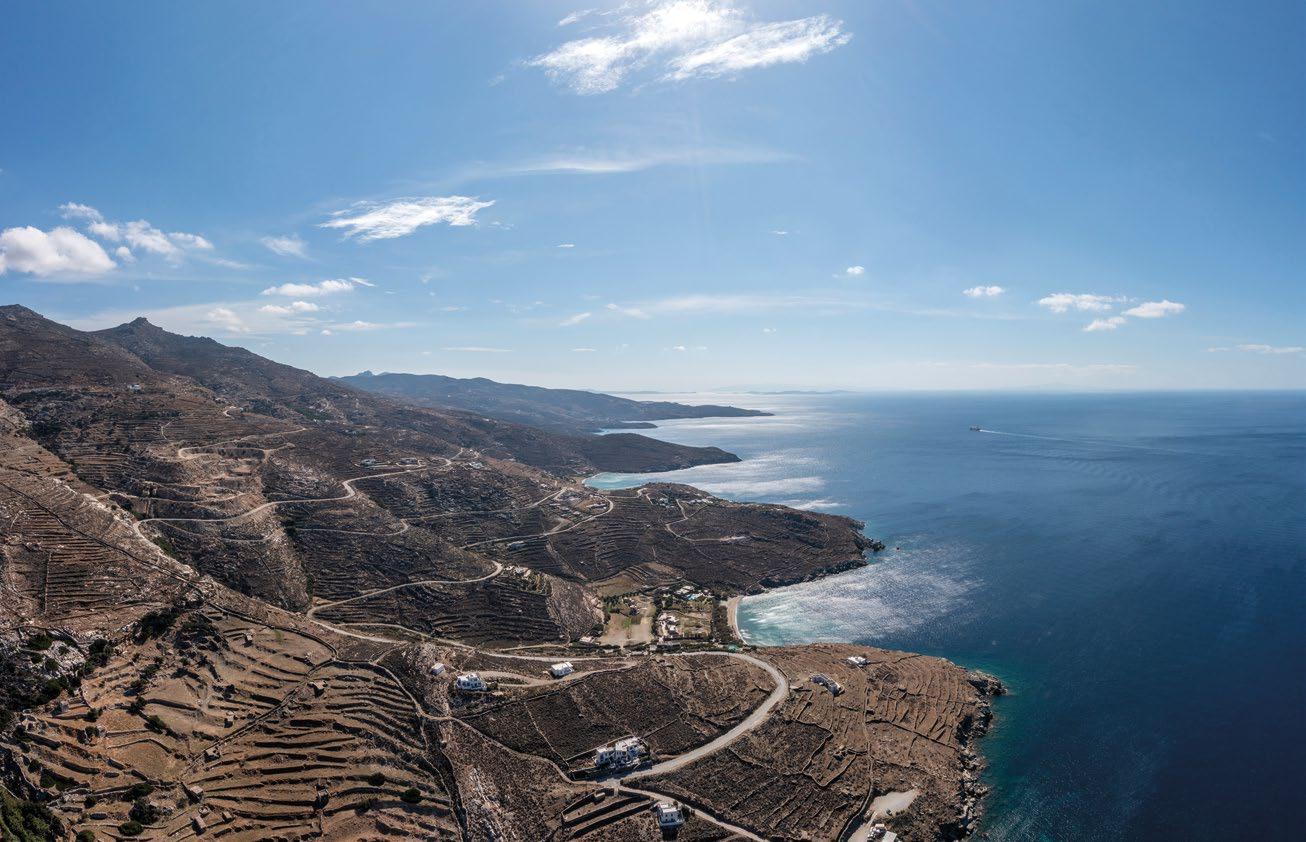
Tinos is one of those Cycladic islands with a rare kind of charm. With its art, marble villages, unspoiled beaches and distinctive Cycladic aura, it is sure to leave a lasting impression.
With multiple ferry routes from Rafina, Tinos becomes a destination that adapts to your own pace, not the other way around. You do not have to limit yourself to just one departure or lose valuable time waiting around. With morning and afternoon options from Rafina, Tinos fits easily into every kind of plan: a spontaneous summer escape, a long weekend, a few days of rest or a holiday you want to begin without any hassle. In just 2 hours, you’ll be in Tinos, enjoying the endless blue of the Aegean Sea. On an island that wins you over with its simplicity, beauty and character.
Tinos has its own special way of welcoming you. In Chora, the Panagia of Tinos gives the island its spiritual identity and remains its most iconic landmark. Yet beyond this first, familiar image lies a place of architecture, art, gastronomy and landscapes that reveal themselves gradually.
In Pyrgos, marble is everywhere: in the squares, courtyards, doorways, fountains and workshops. The village feels like an open-air museum, but without the coldness of one. It is full of life, traditional cafés, aromas and authentic details that have remained beautifully unchanged.
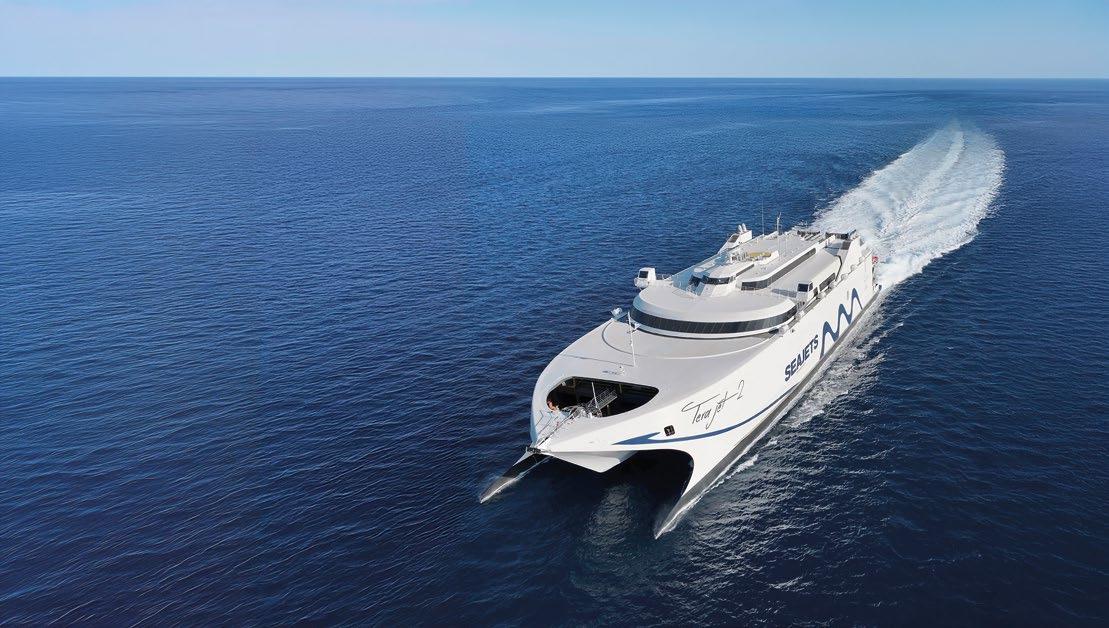
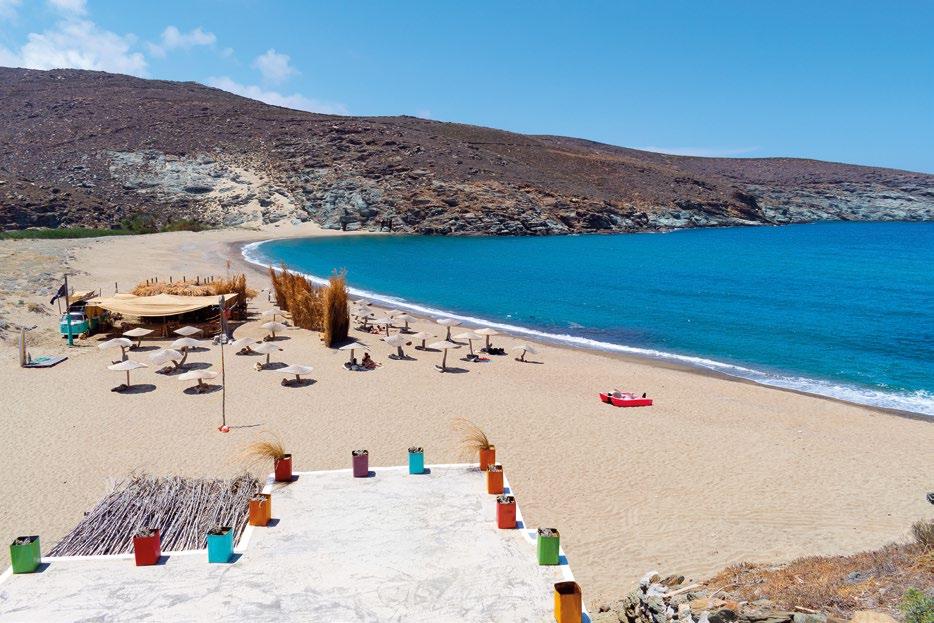
In Volax, the scenery changes completely. Huge granite boulders create an almost lunar landscape, unexpected for the Cyclades. If Pyrgos is the artistic soul of Tinos, Volax is its most poetic side. A village that seems to have been built among stones and myths. In Ysternia and Kardiani, the view opens out towards the Aegean in a way that makes every stop feel like a small ritual. Tinos is also an island with beautiful beaches and crystal-clear waters. Kolymbithra is one of the visitors’ favourite beaches. Agios Fokas, close to Chora, is ideal for those who want an easy swim without travelling far. Kionia, Agia Kyriaki, Pachia Ammos and the island’s quieter shores offer carefree summer moments by the sea.
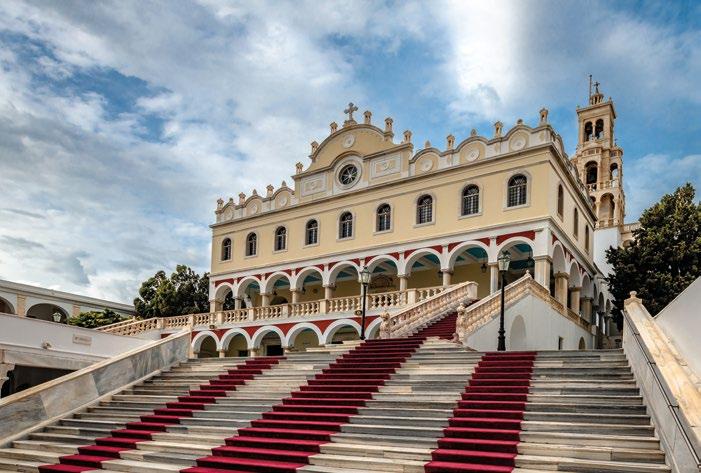
Its gastronomy is just as enjoyable. Local cheeses, loutza, artichokes, capers, honey, wine and products from small producers bring to the table flavours that are deeply connected to the land. All you have to do is board the ferry, leave Rafina behind for a while and gaze at the Aegean until the island appears on the horizon. With multiple routes and a journey that is fast and comfortable, the escape becomes simple and unforgettable. Leave the journey to us and save your time for discovering one of the true wonders of the Cyclades: Tinos.
BY DEANA KARTSAGOULI
The renovated residence of the great sculptor reopens to the public, shedding light on his life and creative journey.
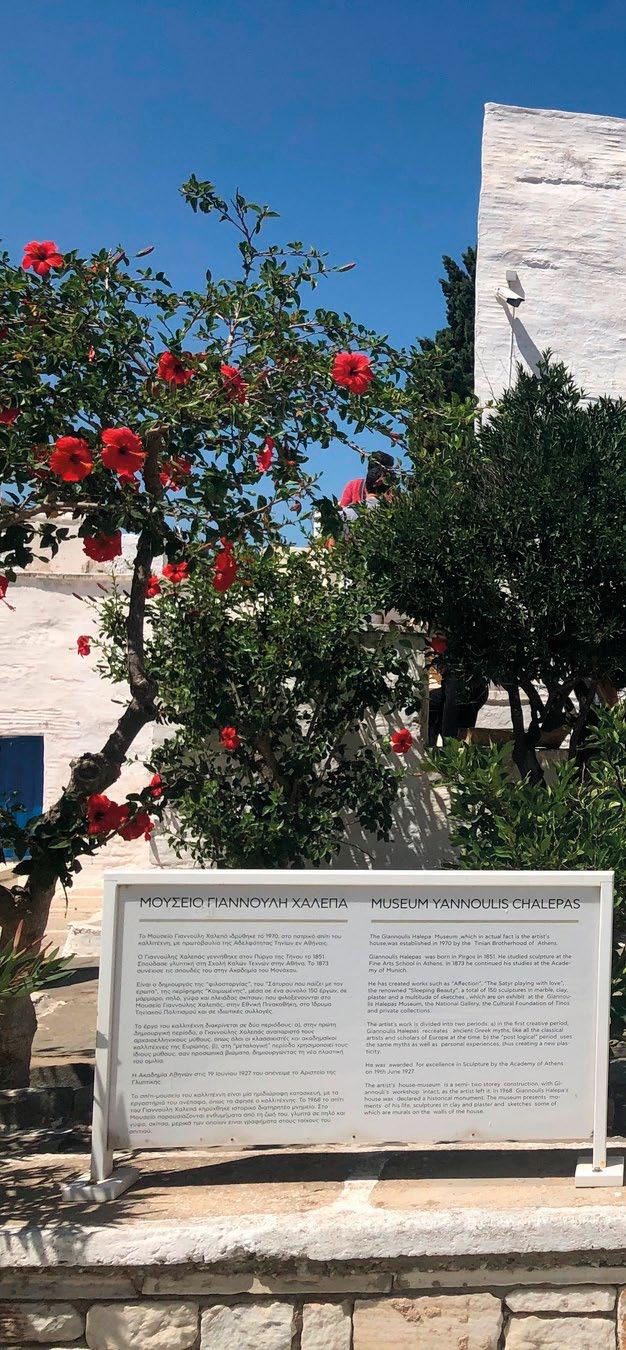
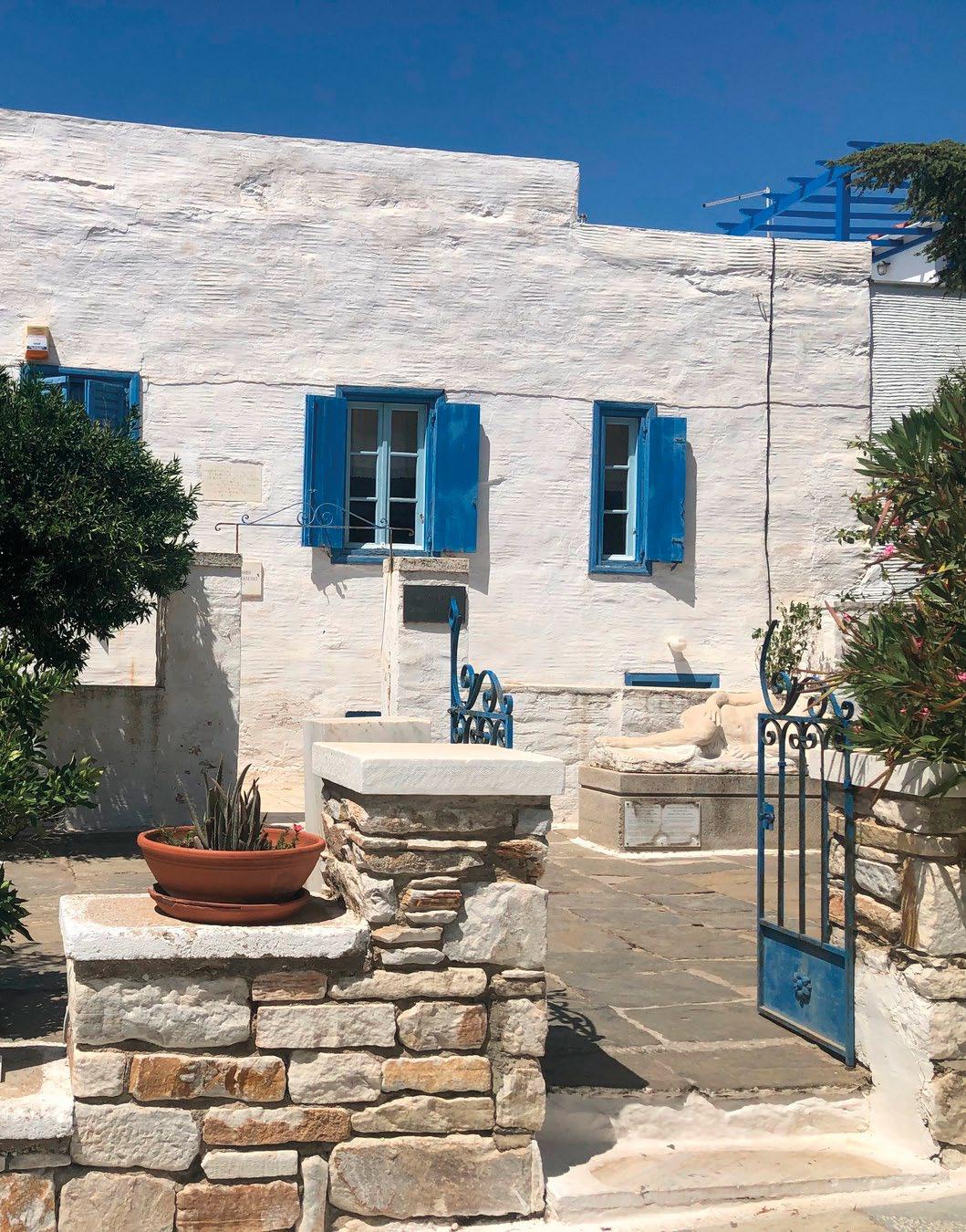
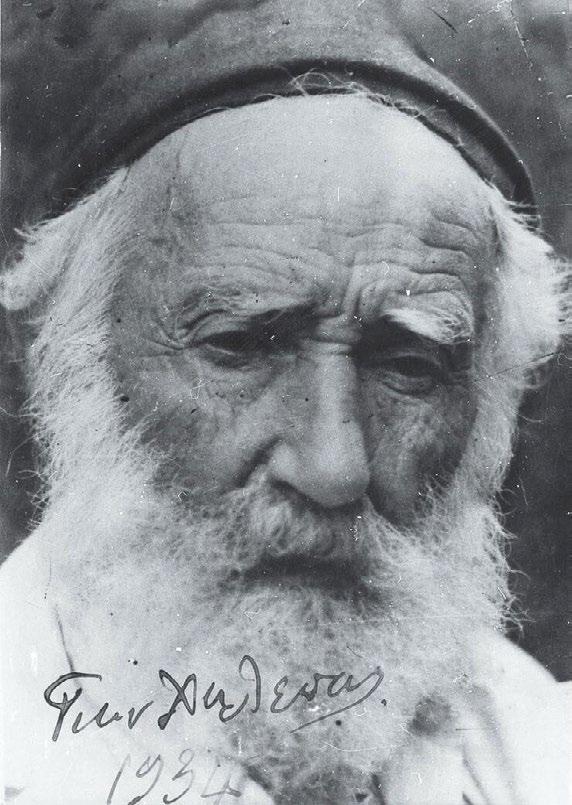
/ Yiannoulis Chalepas
THROUGHOUT A LIFE MARKED BY CREATION, ISOLATION AND PROFOUND PERSONAL TRIALS, YIANNOULIS CHALEPAS ALWAYS RETURNED TO PYRGOS ON TINOS, ONE OF THE ISLAND’S MOST BEAUTIFUL VILLAGES. IN THE VILLAGE OF MARBLE SCULPTORS WHERE HE WAS BORN, HE FOUND A STEADY POINT OF REFERENCE EVEN DURING THE DARKEST PERIODS OF HIS LIFE.
In Pyrgos, marble seems like a natural extension of the landscape itself. It can be found in the houses, the alleyways, the courtyards and the workshops that, even today, continue to keep the art of marble carving alive. It was within this environment that Chalepas’ world was shaped.
And Pyrgos itself, even 88 years after his death, continues to honour his life and work.
Within this context, his architecturally distinctive residence, which differs from the architectural style of the village’s other houses, is preserved as a historic monument. Since 2023, however, it had suspended its operation in order to undergo conservation and restoration works. Today, these works have been completed, allowing visitors once again to admire the Tinian artist’s personal belongings and works up close, and to step for a moment into his singular world.
The restoration of the two-storey 19th-century building, with its stone-built walls and wooden floors, was carried out with the aim of highlighting the human side of Chalepas. The spaces now function as an experiential portrait of his journey, from the early years of innocence to the dark periods of isolation. Through a significant investment of resources, the Ministry of Culture sought to offer an immersive experience, in which the exhibits — a total of 51 selected pieces from a collection of 174 objects — are arranged in narrative sections. This restoration honours the memory of the artist, highlighting the historic character of the space through contemporary and digital means.
Yiannoulis Chalepas, whose best-known work is The Sleeping Maiden (1878), located in the First Cemetery of Athens, was born in 1851 and grew
An Elevated Collection of Greek Escapes, from sea to mountain.
Five hotels, three destinations, one philosophy.
Cyclades
Sporades
Mountain Nafpaktia
Alasi Boutique Hotel Tinos
Cycladic charm, redefined. www.alasitinos.gr
Feels like home, touched by the Aegean. www.althea-alonissos.gr
www.anemoliavillas-alonissos.gr
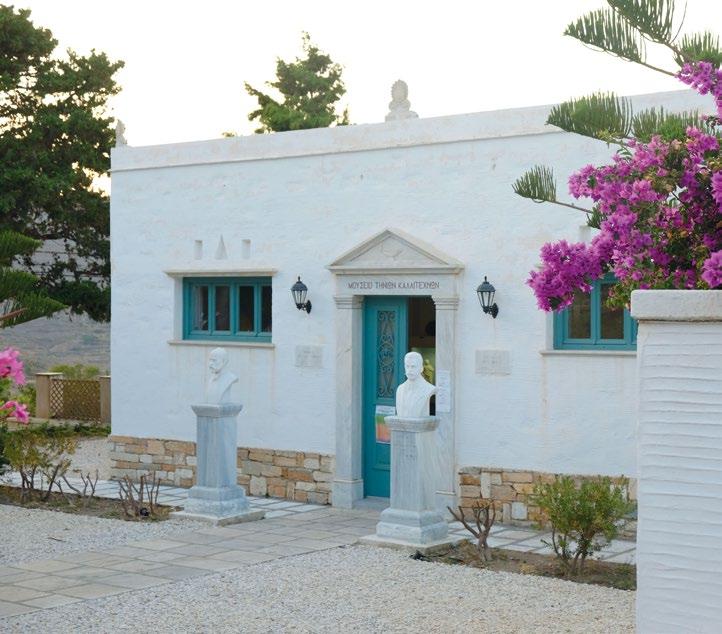
Nearby is the Museum of Tinian Artists
up listening to the sound of chisels in his father’s workshop, as he was the son of one of Pyrgos’ renowned marble craftsmen. He studied at the Polytechnic School of Athens and later in Munich.
Despite his brilliant beginnings, however, his psychological collapse, which even led to institutionalisation, interrupted an artistic career that might have become even greater.
After a period spent in darkness, occupied solely with farming and livestock breeding, the death of his strict mother in 1916 - she herself had destroyed several of her son’s works - marked the beginning of the artist’s “post-logical” period, during which he began once again to create in a more instinctive and modern manner.
The museum’s new exhibition is structured precisely around these periods: on the upper floor, visitors encounter his biography and the transition from classicism to artistic awakening, while on the ground floor they come into contact with his everyday life, his furniture, clothing and personal belongings. Alongside sculptures and drawings, the museum space also displays archival photographic material, a relief medal bearing his portrait, handwritten notes, furniture and graphic elements on the walls. The documentation was based on bibliographical research and on-site recording of both the collection and the space itself.
With this project, together with the parallel expansion of the School of Fine Arts in Panormos, which now extends to 2,500 square metres, Tinos is being further elevated as a global capital of marble craftsmanship.
��������� ������ SHIP REPAIRS
��������� ������� PUMP REPAIRS
����������� ������� ENGINE �VERHAU�S
���������� ����������� PARTS MANU�ACTURING
������������ SPARE PARTS
��������� �������� SUR�ACE REC�NDITI�NING
������ ����������� THREAD CUTTING �������� ������ ����� HEAVY DUTY MACHINING
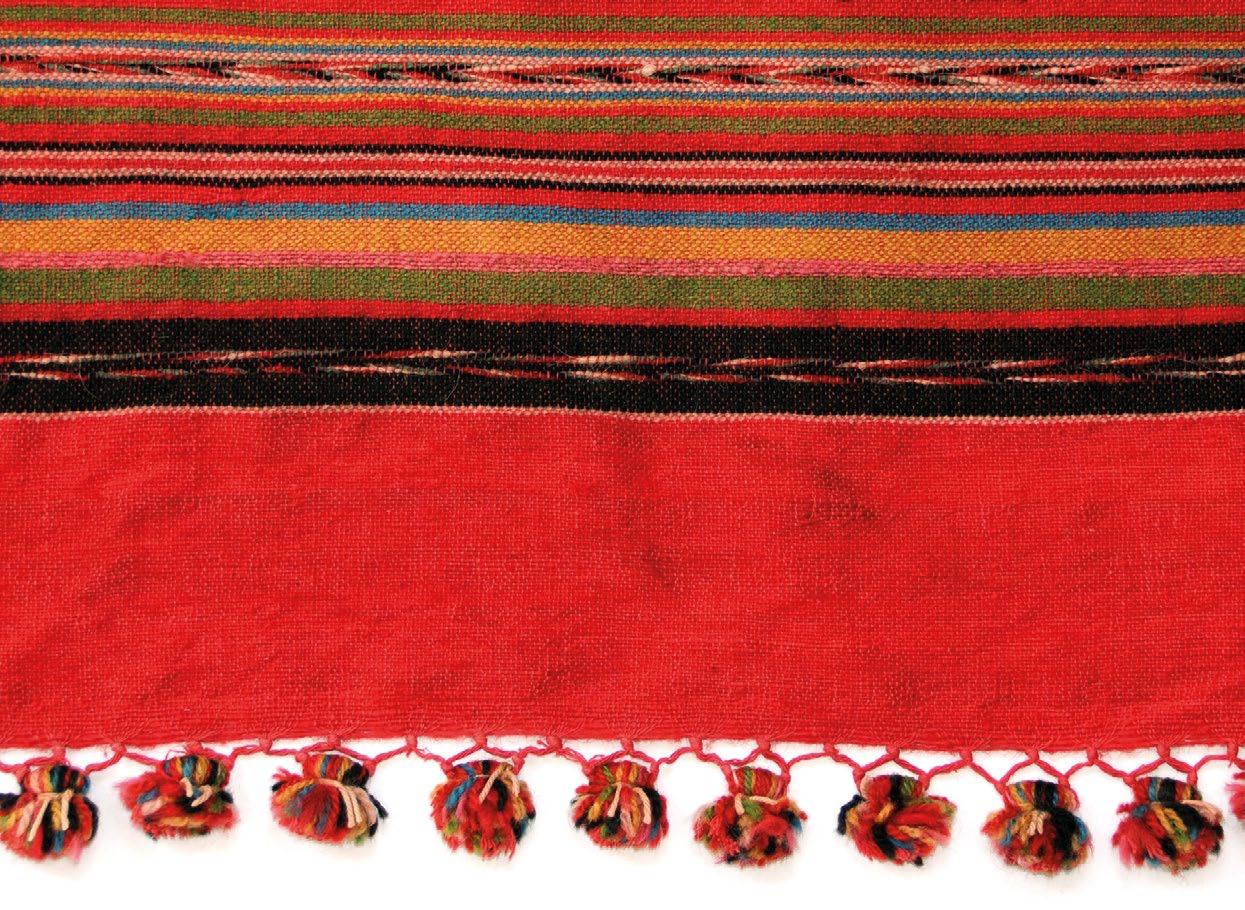
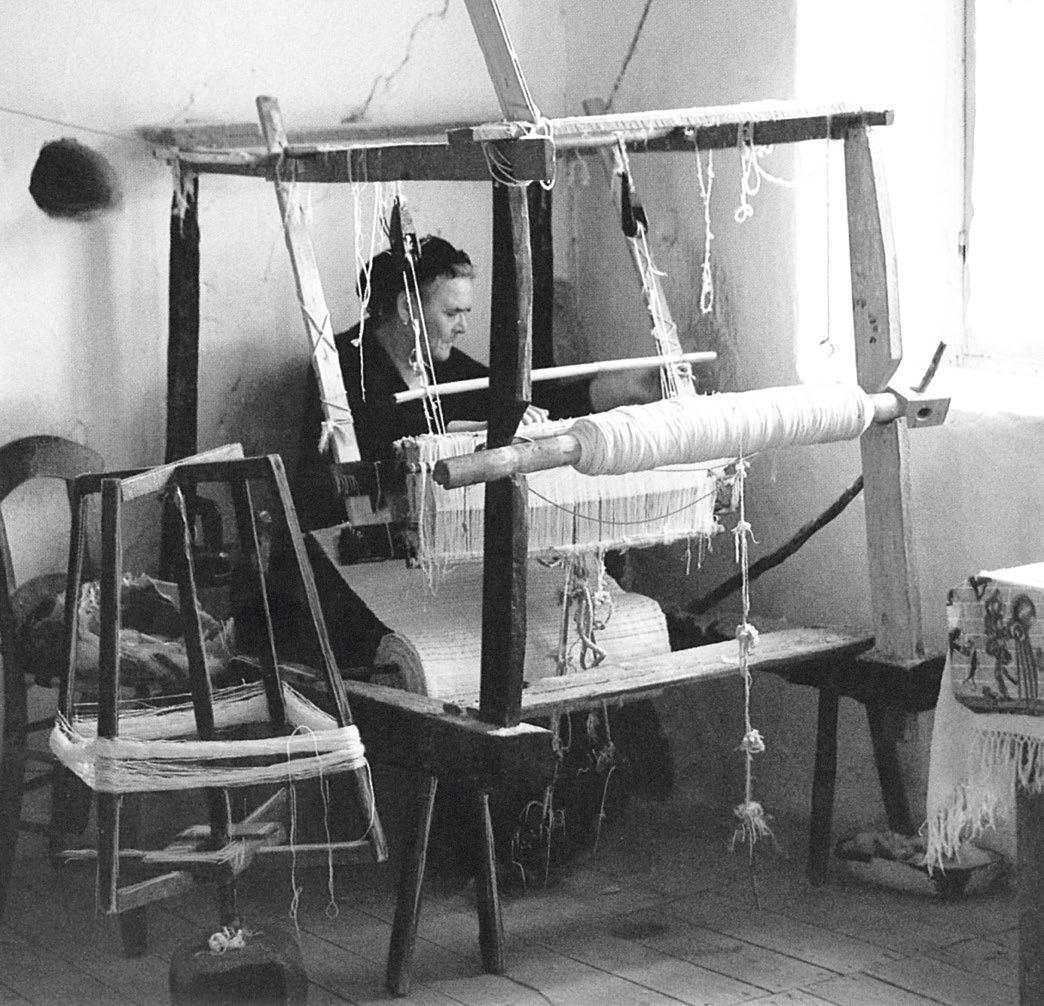
Long before Mykonos Town became the bustling island of the international jet set, the sound that dominated its picturesque alleys was the rhythmic beating of the loom. It began in the morning, when the women of the island started working, and stopped only once an order had been completed. “When you have at least 500 looms operating within the Town, you understand that every house functioned as a small cottage industry,” explains Mrs Dimitra Sikinotou-Nazou, co-author, together with Panagiotis Chatzidakis, of the book Mykonian
How the loom, the diligence and the ingenuity of the women of Mykonos lifted the island out of poverty and carried it into the world of haute couture.
At the loom, Anna Xenariou (of Gastromenos)
Weaving in the 20th Century, published by the Cultural Folklore Association of the Women of Mykonos. Every member of the family contributed to the work in their own way. The men helped with shearing the animals, washing and dyeing the wool, one daughter would weave, another would sew, while the women themselves promoted and sold the products. It is estimated that, in Mykonos Town alone, around 1958, during the golden age of Mykonian weaving, 70% of the women had, at some point in their lives, worked as weavers. With commercial instinct and a willingness to work tirelessly, the women of Mykonos realised early on that their craft could become a means of economic independence and, ultimately, emancipation.
In the early years of tourism development, when the first cruise ships began arriving in Delos, the women of Mykonos loaded their woven goods onto boats and, even in difficult weather conditions, crossed to the small island to sell them to visitors. One of those visitors was Simone de Beauvoir, who was enchanted by the handmade garments worn by the women, believing them to be the island’s authentic traditional costume. And it was not only the French intellectual who admired Mykonian weaving. During the Greek Civil War, King Paul visited Mykonos with his children and pur-
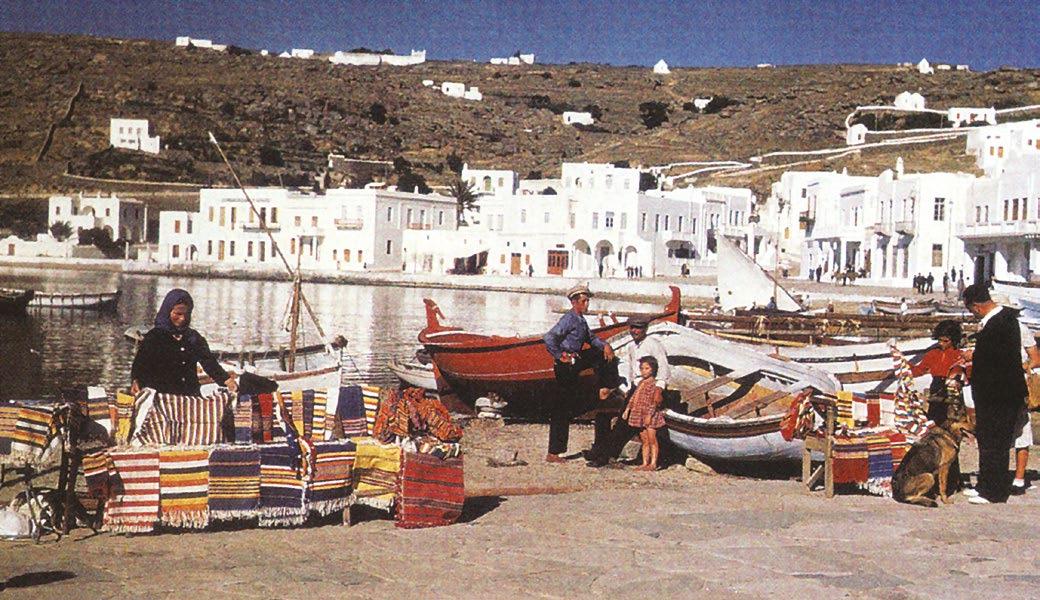
1970. Stalls with woven textiles at Gialos, 1970s.
chased many of the creations, promoting them in Athens. Among those captivated by Mykonian weaving was also Christian Dior, who drew inspiration from the island’s weavers for his 1953 collection and collaborated with them. At Galeries Lafayette, Mykonian dresses were sold to French high society women under the “Charmant” label of Anna Fouskei. “At one point, everyone knew Mykonian weaving, but they did not know where Mykonos was,” says Mrs Sikinotou-Nazou.
If you ask her what led Mykonian weaving to such moments of glory, the first things she will mention are the industriousness of the women, the cleverness of the merchants and the promotion it received through the journalists and magazines of the time.
She begins the story in 1925, when, for the first time, a Mykonian creation received an award abroad, specifically in Paris. A second distinction followed in 1930, proving that the island’s craftswomen were already competitive at an international level.
Everything came to a halt during the Second World War and the Greek Civil War. Yet the generation that undertook the revival of the weaving tradition in the 1950s consisted of former weavers who had already laid its foundations.
During the same period, Mykonos gradually began attracting visitors from Greece and abroad. Artists, entrepreneurs, designers, architects and academics arrived on the island, bringing new influences and encounters. Some of the island’s most perceptive weavers used these connections to further develop their craft.

(Μπέµπαινας, 1908-1984)
1970. Katerina Kousathana-Kouka (of Lykos) weaving at the loom in the atelier of Vgenoula Kousathana-Kousathana (Bebaina, 1908–1984) in Fournakia. 1970s.
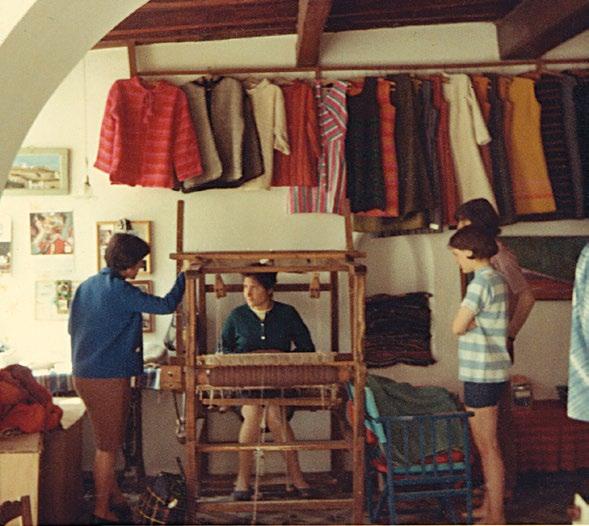
A characteristic example was Vienoula Kousathana. Armed with her excellent command of English and a rare extroversion for the era, she opened the doors of her home workshop to the world. Listening to the advice of her painter friends, she dared to introduce bold colour combinations that were considered unconventional at the time. She learned how to mix colours and use yellow, green combined with brown, and purple with red.
At the same time, she simplified the weaving process, moving away from the strict Mykonian border pattern that had dominated until the mid-1960s. This change made production more flexible and encouraged other weavers to experiment with new forms and colour combinations.
Mrs Sikinotou-Nazou also speaks of innovation in the types of creations produced. Every year they invented something new. The skirt with the characteristic border pattern, the two-piece outfits and scarves were followed by shorts, trousers, men’s ties and woven shoulder bags. “The men’s jackets with elastic waistbands made by the women of Mykonos were also hugely successful. All the young men, even our students who went to Athens, wore them,” she says. Around six hundred examples from that era are preserved today at the Folklore Museum of Mykonos, collected by Vasilis Kyriazopoulos (1903–1991), founder and donor of the Folklore Collection of Mykonos.
The same inventiveness, despite the fact that weaving has been in decline since 1985, can still be found among contemporary weavers, as Mrs Sikinotou-Nazou, who teaches weaving, explains: “New talents have emerged through the visual arts workshops of the Municipality of Mykonos.”
Today, through the work of institutions such as the Folklore Museum and the Archaeological Museum of Mykonos, as well as the Museum of Cycladic Art, the Mykonian weaving tradition continues to be preserved. Behind the glamorous image of contemporary Mykonos, the echo of those women still remains, women who wove not only fabrics, but also the very course of the island itself.






















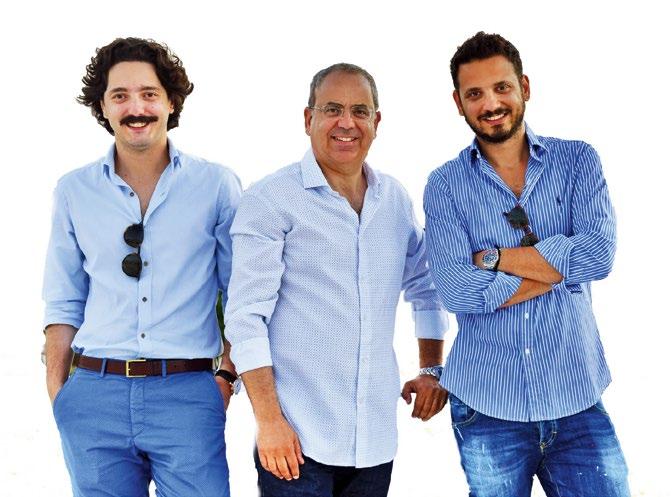
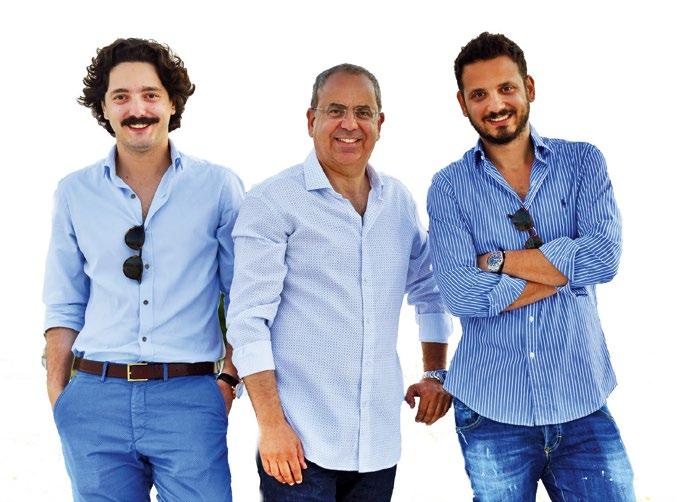
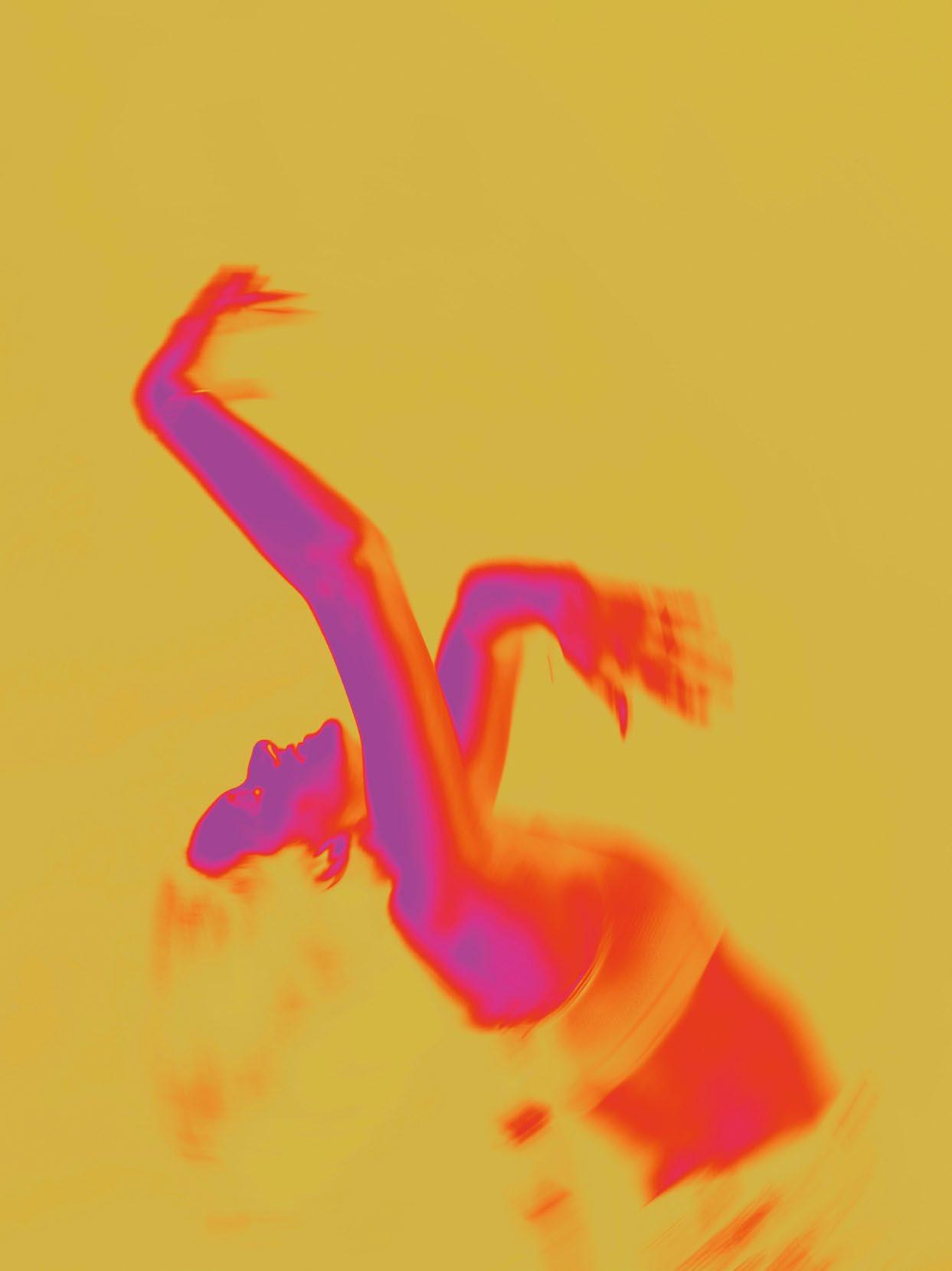
SUMMER IN GREECE ALWAYS CARRIES ITS OWN SOUND. IT IS THE WIND PASSING THROUGH THE NARROW ALLEYS OF THE ISLANDS, A LYRA ECHOING FROM AFAR, A SONG PLAYING AT A BEACH BAR JUST BEFORE SUNSET, GROUPS OF FRIENDS STAYING AWAKE LATE BY THE SEA. WE ASKED CONTEMPORARY GREEK MUSICIANS TO CONNECT THEIR MUSIC WITH THE AEGEAN AND SPEAK TO US ABOUT ISLANDS, LIGHTHOUSES, SUNSETS AND PLACES WHERE TIME SEEMS TO STAND STILL.

Scan here and let the music take you on a journey.
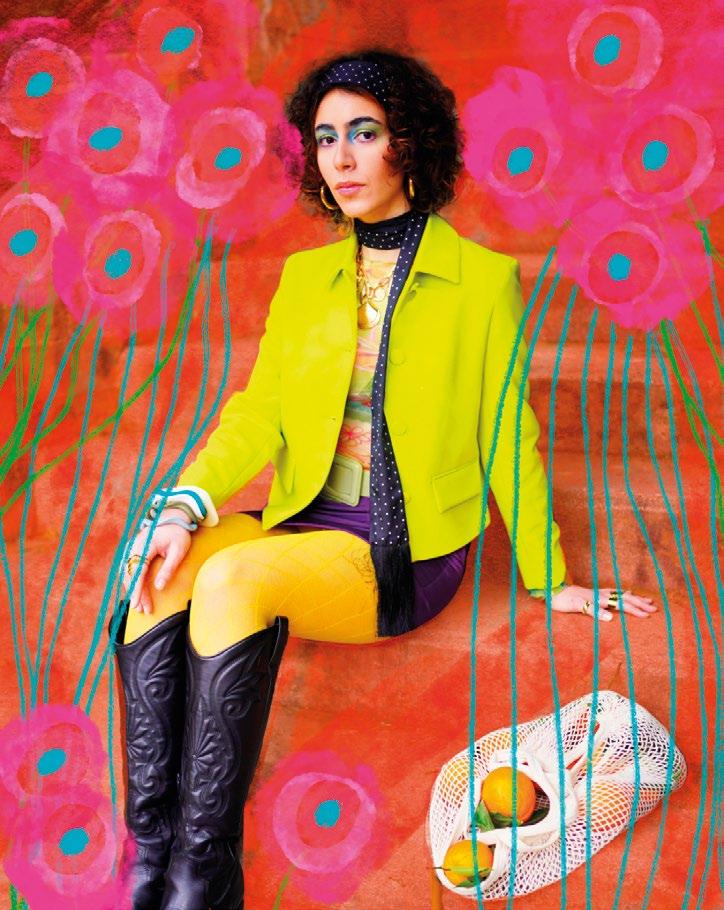
Lah Porellah
Singer-songwriter with dreamy pop influences and deeply personal lyrics
If your band were doing a soundcheck on a beach, what would be the first song?
Definitely “Iliotopos” (“Sunplace”) - the song for every sunset. Filled with warmth and vulnerability, dipped in deep orange hues, it draws you in from the very first chords. I wrote it in July 2024, when I was living in Kallithea, and it was the second track released from my debut album, Prasini Skala (“Green Staircase”).
I’ll leave the lyrics here for company too:
“My sunset, you melt my heart within
Red colour drips, stay a little longer
Cover my body now
My sunset, slow down my steps
Bring the flame of fire, burn me a little more I cannot bear for us to be apart”

Scan here and let the music take you on a journey.
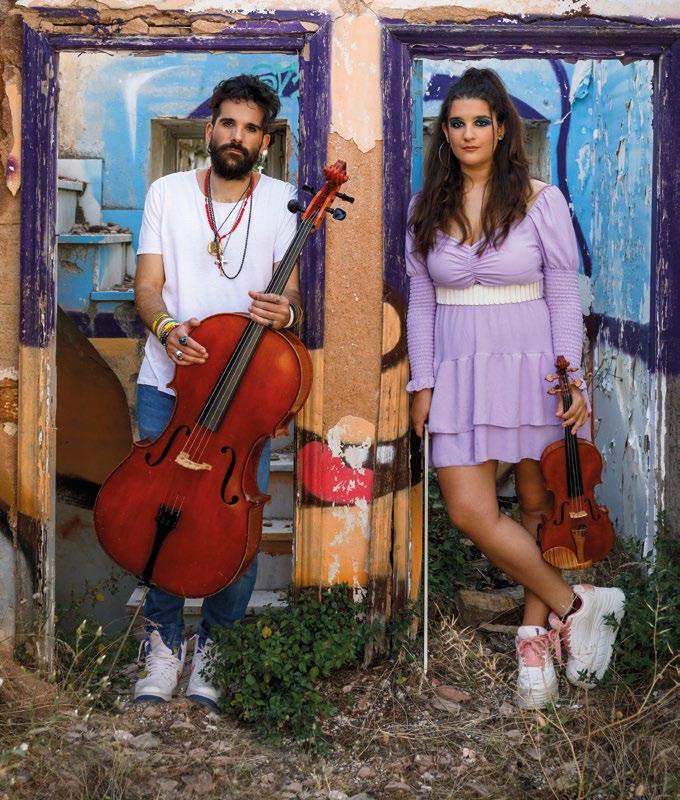
Which greek Island resembles a music genre the most, and why?
If Crete were music, it could never be confined to a single genre. It is a blessed place that stubbornly refuses labels, perfectly reflecting our own artistic philosophy as String Demons. Our music is never trapped inside one category; it moves between genres, constantly opening new musical pathways.
This unique identity is mirrored in the island itself: Crete is the ultimate symbol of contrasts. A magical composition of images and sensations. From the old town of Rethymno to the wild mountains of Psiloritis and Anogeia, where we had the indescribable experience of performing at the Ideon Cave at 1,600 metres altitude, in that cave where it felt as though we were playing for the gods themselves. An unbelievable, raw and unprecedented feeling. Then there is the velvety sensation of the sea in Rodakino, in southwestern Crete, where time feels as if it has stopped. Lydia has swum countless kilometres there and at beautiful Triopetra gazing at the sand dunes, while Konstantinos remembers delicacies in Agios Nikolaos overlooking the lagoon and incredible bougatsa in Heraklion.
You have to experience Crete. Just like music, you cannot truly describe it - you have to listen to it, to feel it. This mosaic of Crete, where the “madness” of its people and landscapes blends with serenity and grounding, matches the way we perceive music, both in our original compositions and when we reinterpret a song.



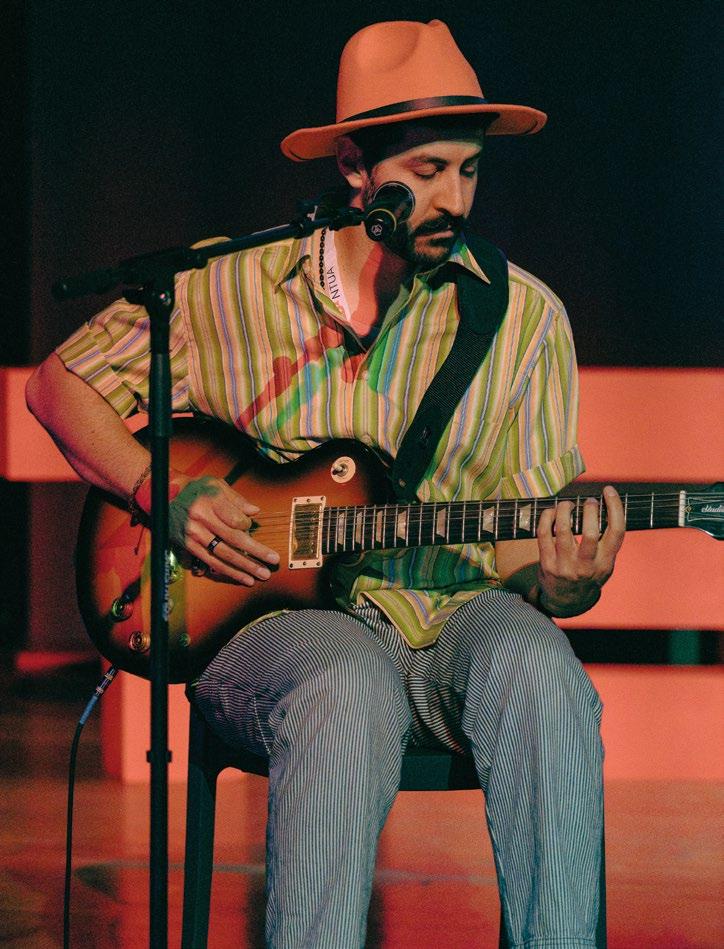
Scan here and let the music take you on a journey.
If you could perform live at a lighthouse, who would you invite with you?
The only answer is Psarantonis. A voice rising from the depths of the soul and the heart of the sea. A figure resembling a captain who has not seen land for years. I imagine a lighthouse in the middle of the night, gigantic waves crashing all around and a wild rocky landscape somehow guiding every sailor. A piercing lyra cutting through the forces of nature, with Poseidon as our audience. Epic!
Even if it were a regular concert, I think he is someone who reminds me of the primal truth and need for expression, without all the unnecessary additions. Alongside Dimitris Apostolakis, he helps me compose my creations. Beyond the music itself, I would also be curious to see how we would communicate with each other.

Scan here and let the music take you on a journey.
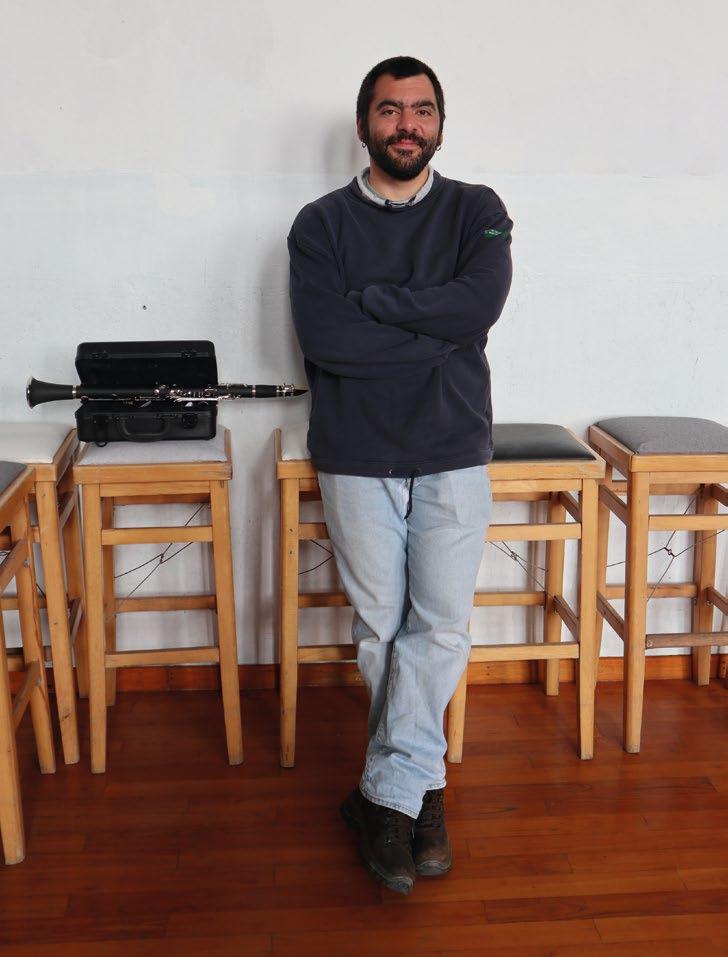
Dimitris Kourtikakis
Singer-songwriter and musician deeply connected to nature and tradition
On which island do you think you could live for a month without looking at the time?
Because it is very difficult for me to name only one such island, I would suggest three (and even those after a lot of thought). First, I would say Tinos, because the combination of the sea landscape with the island’s mountainous energy, the beautiful villages planted on hillsides and ravines, and the countless terraces and dry-stone walls, create for me one of the finest examples of a healthy coexistence between humans and nature. I could also completely lose my sense of time on the beaches and mountains of Southern Crete, as well as on the beautiful island of Samothrace



Stories, crafts, flavours and collective initiatives that keep the island alive
/
BY PEPI NIKOLOPOULOU
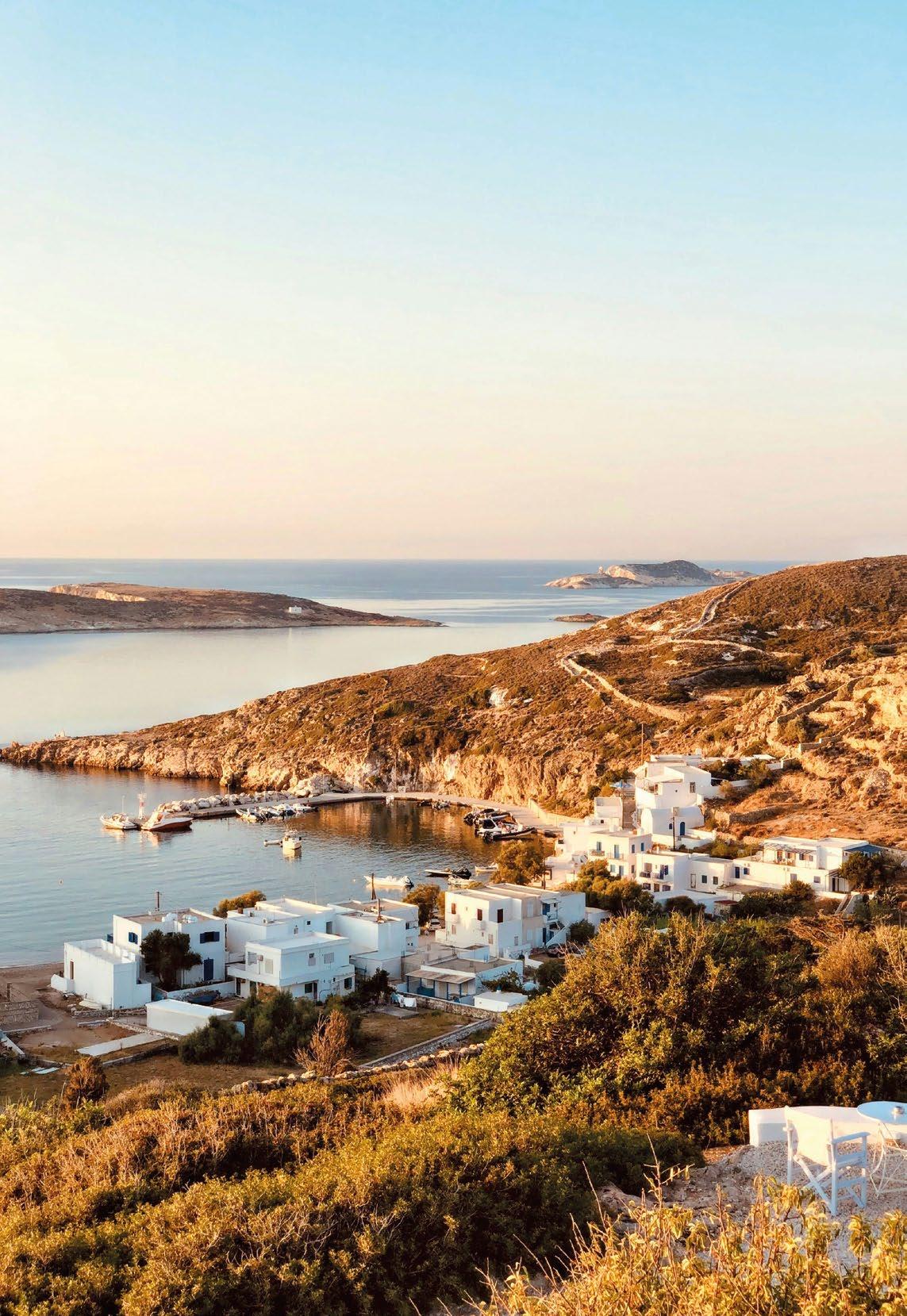
KIMOLOS IS A SMALL ISLAND FILLED WITH PEOPLE WHO CONTINUE TO KEEP EVERYDAY PRACTICES, FLAVOURS AND WAYS OF COEXISTENCE ALIVE — THINGS THAT ELSEWHERE SEEM TO HAVE FADED AWAY.
Through the stories of people and groups active on the island, we encounter the Kimolistes and Cine Kalisperitis, wander through the Medieval Castle and meet people who continue to create with their hands.
For the past fifteen years, the Kimolistes, a group that began through simple volunteer initiatives - beach clean-ups and the care of public spaceshave created a multidimensional network of culture and participation on the island.
Today, their activities extend across Kimolos and Polyaigos: music evenings, hiking walks, open libraries for all, environmental awareness actions and the revival of local customs.
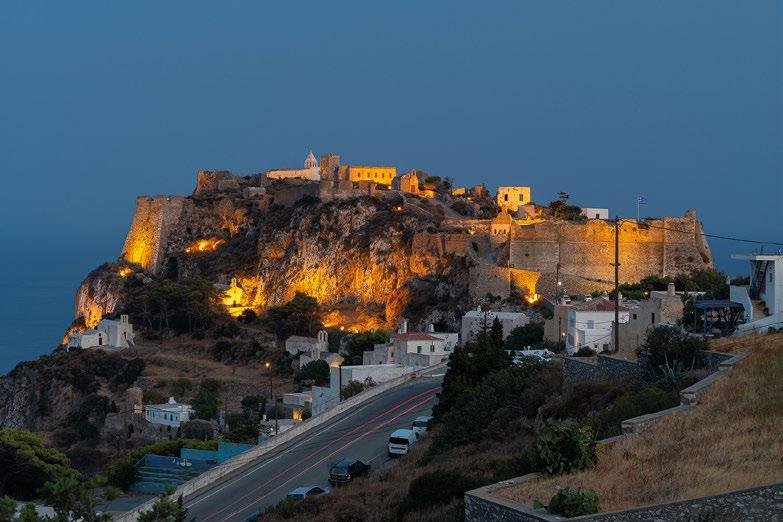
At the heart of everything is Cine Kalisperitis, an open-air cinema initiative that transforms remote beaches, the Medieval Castle and parts of Polyaigos into cinematic settings beneath the starry sky, attracting hundreds of spectators every summer. Its screenings are free and open to everyonelocals and travellers alike - and it takes its name from the first star that appears in the sky at dusk, which the island’s residents call “Kalisperitis”.
Agathi Rodi discovered Kimolos before ever visiting it. An educator, writer and researcher, she first came into contact with the Kimolistes through a foreign publication presenting their activities and gradually developed an active connection with the island. Images of Kimolos and Polyaigos led her to write the book A young Kimolistas, based on stories shared by the island’s residents.
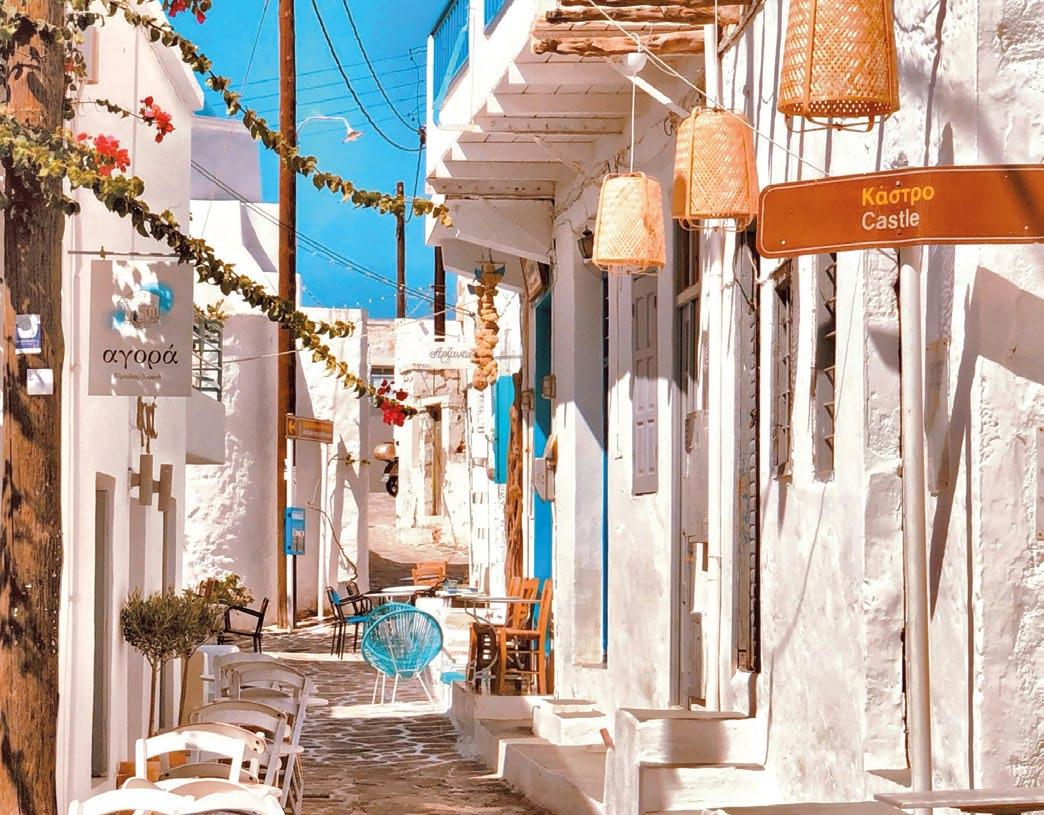
“The first image of Kimolos that I saw was the Medieval Castle, with scattered lanterns casting a soft golden light on the rough texture of the stone and the arches,” she says.
In September 2021, she returned to the Castle, taking notes and observing the remains of the surrounding houses. That same evening, she helped prepare the setting for Cine Kalisperitis and the screening of A Touch of Spice in the presence of director Tassos Boulmetis.
“The soundscape of the film and the starry sky conveyed to me a unique sense of cultural continuity: the connection between the past, represented by the Medieval Castle, and the present through the art of cinema.”
Today, as founder of Cyclades Unified, she continues documenting elements of Kimolian oral tradition, with the aim of creating a digital museum of cultural memory for the island.
In Kimolos, reed weaving survives through family memories. Giannis Ventouris is today the island’s last craftsman still practising this tradition, a craft passed down from grandfather to uncle, then to father and finally to him. “I stole it,” he says with a smile. He remembers himself as a child carrying water in a watering can to soak the reeds before weaving.
Like
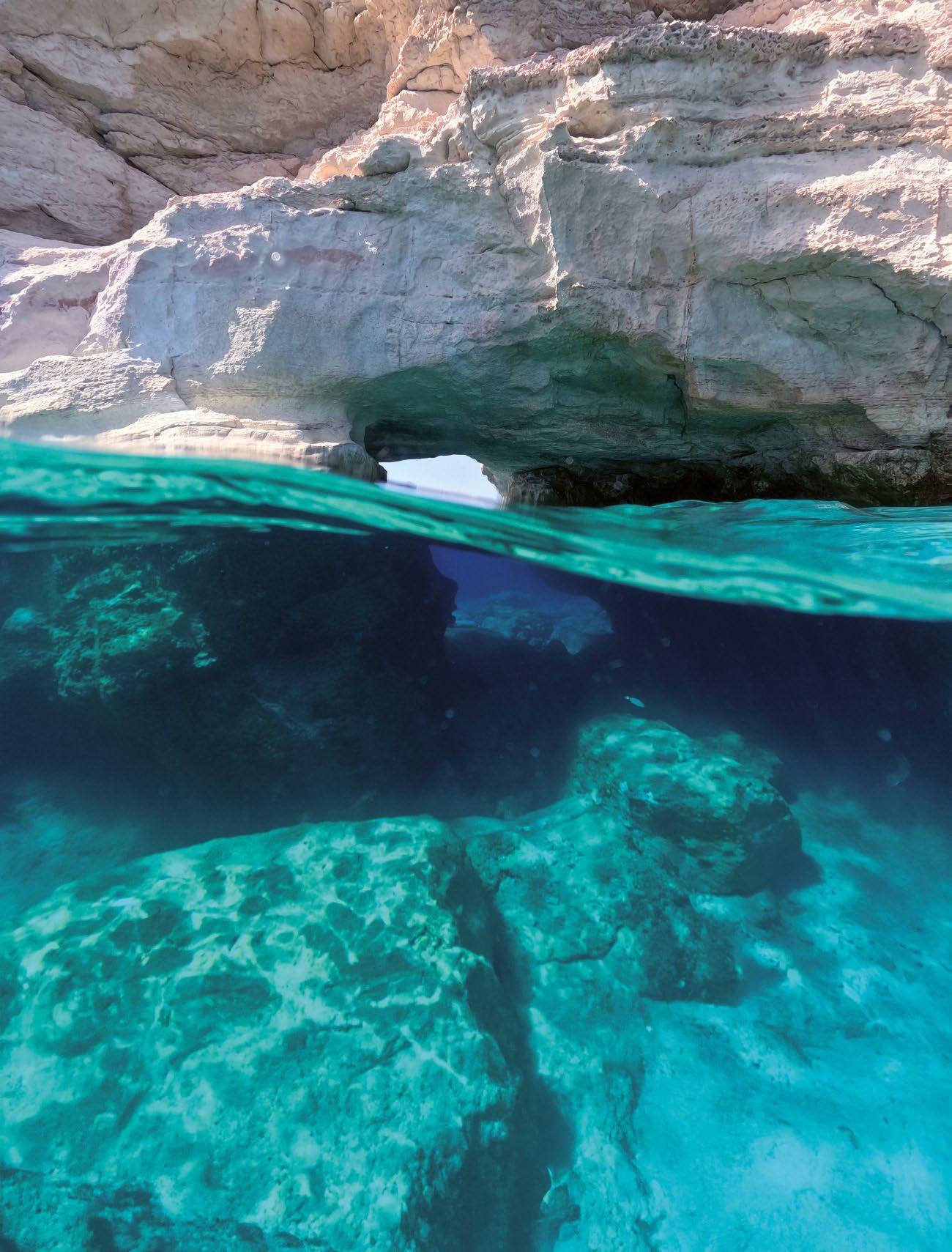
Have you ever thought that an island in the Cyclades could be the other side of yourself? A place away from mass tourism, ready to fill every selective visitor with experiences? If so, welcome to Kimolos! A destination that, despite the times, stands out for its authenticity, without «decorations». Kimolos is a small, authentic island in the Cyclades, known for its pure natural beauty and unique character. Far from the crowds, it offers experiences full of tranquility and authenticity. The Village, with its narrow cobblestone streets, the Medieval Castle, and the Windmills, creates a charming image, while over 80 churches and chapels reveal the island’s rich historical and religious heritage.
Kimolos, apart from its uncomparable natural beauty, is famous for the geological monument «Skiadi» and its crystal-clear beaches, such as Prassa, which have earned international recognition for their cleanliness. Beaches like Rema, Bonatsa, and Mavrospilia with their magical sunsets create unique landscapes. The island’s gastronomy, based on local products, offers authentic flavors. Other notable spots include the beaches of Ellinika, Dekas, Monastiria-Soufi, and many more accessible by boat, such as the Cave of Gerakia, Therma, Agioklima, Kastro, and Athinias, as well as the beaches of Polyaigos, all contributing to the island’s breathtaking scenery. These are just a few elements that make Kimolos unique for those who want to escape the daily routine and seek experiences that will stay with them long after they leave, till they return!

He remembers his uncle walking down to the harbour even at an old age, simply to help and remain close to the work he loved.
Once there were seven craftsmen on the island. Today, only one remains.
Reed weaving in Kimolos was born out of necessity. Reeds were mainly used for the roofs of houses, alongside seaweed, wooden beams and bentonite, the island’s characteristic soil which functioned as natural insulation. Reeds were abundant in and around the Castle, directly linking the craft to the morphology and materials of Kimolos itself.
Today, their use has shifted from practical necessity to decorative and architectural expression: lighting fixtures, frames, headboards, furniture and handmade constructions created entirely by hand, from gathering and drying the reeds to the final weaving process.
In Chorio, visitors also meet Theano, the island’s seamstress. Her workshop, “Sousta Vista”, takes its name from the traditional Kimolian skirts known as “vistas”, while she continues to create the island’s traditional ntourvades and the Kimolian sourtari, the characteristic woven shoulder bag.
The island’s relationship with the landscape naturally extends to its flavours. Provatsa –a wild green with a slightly bitter taste, often served with spring onion and fennel–, rusk with schinos berries, prickly pears transformed into liqueurs and jams, Kimolos manoura cheese and the traditional ladenia with tomato, onion and oregano are all deeply connected to the land, seasonality and the simplicity of Cycladic cuisine. In Chorio, a stop at Samblo Farm offers a more meaningful introduction to Kimolos’ local products and flavours.
INFO
BEBA’S LADENIA THE KIMOLIAN VERSION OF THE TRADITIONAL CYCLADIC PIE
Ingredients
• 800 g flour • 1 sachet dry yeast • 1 teaspoon salt
• 2 glasses lukewarm water • a little olive oil for kneading • 2 large onions • 3 ripe tomatoes • oregano, salt, olive oil
Method
Knead the flour with the yeast, lukewarm water and olive oil until a soft dough forms and allow it to rise. Spread it onto an oiled baking tray, add sliced tomatoes and onions, season with salt and oregano and bake at 180°C until golden.
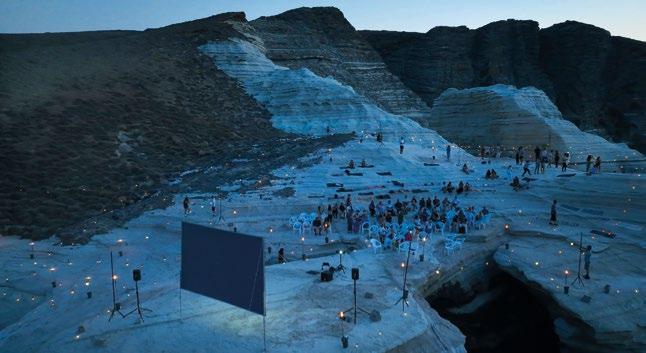
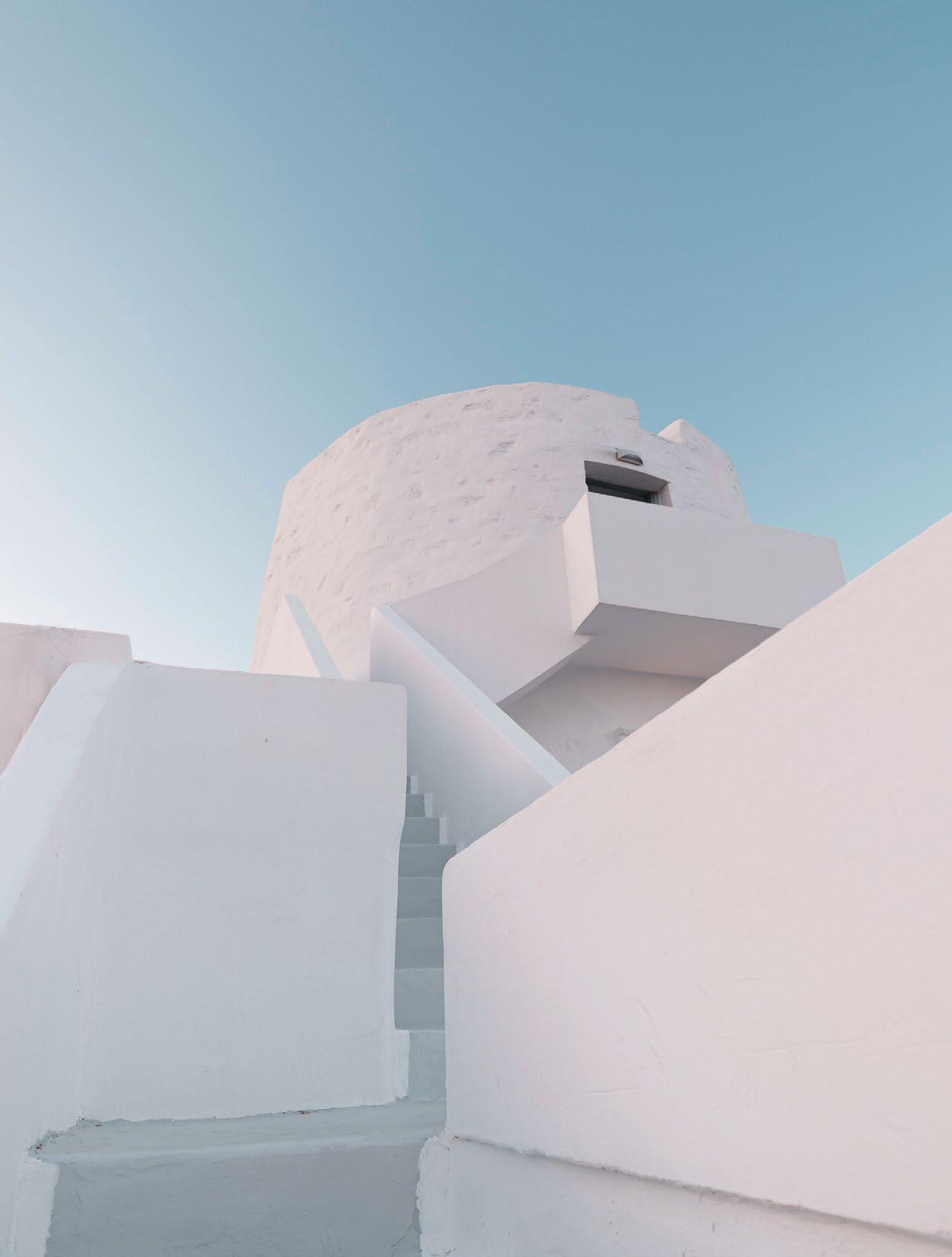

Don’t miss Gerakia Cave, an impressive natural landmark on the northern coast of Kimolos, featuring crystalclear shallow waters, volcanic rock formations, and unique geological features.
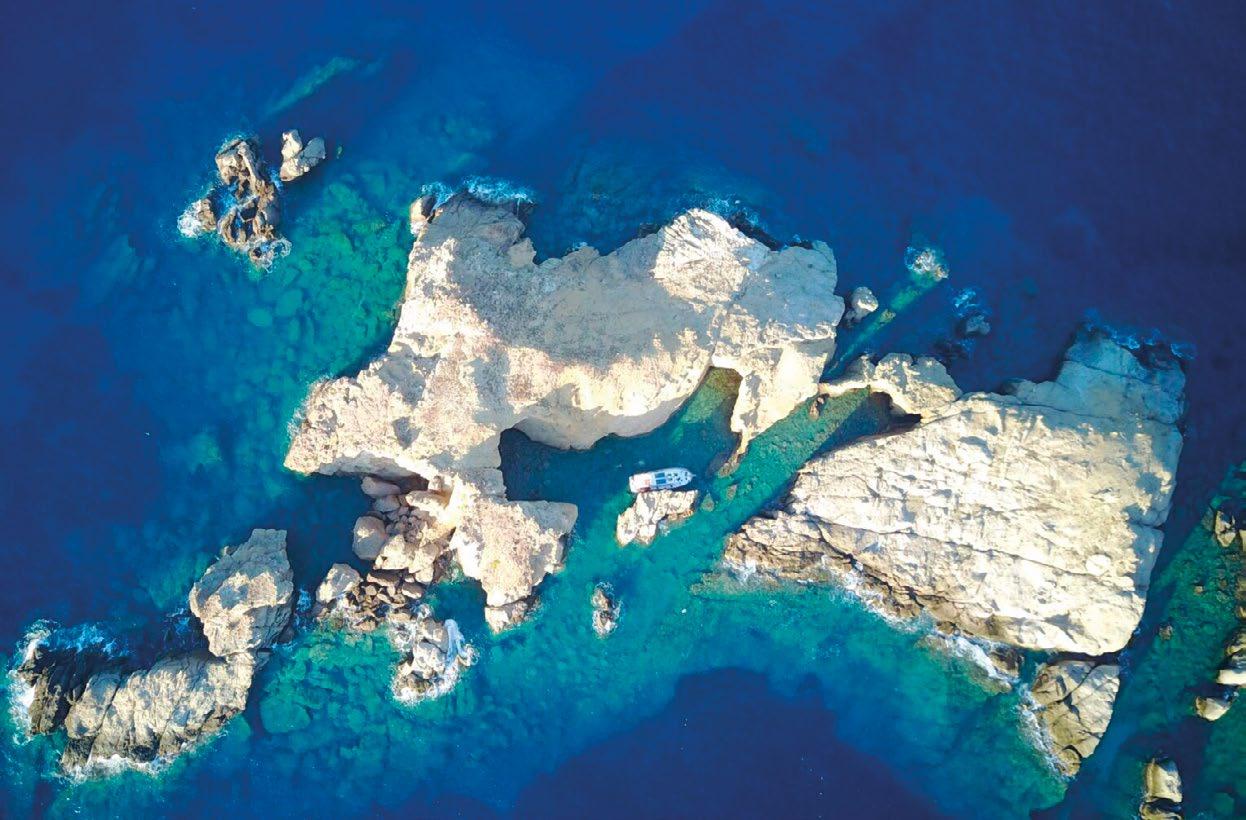
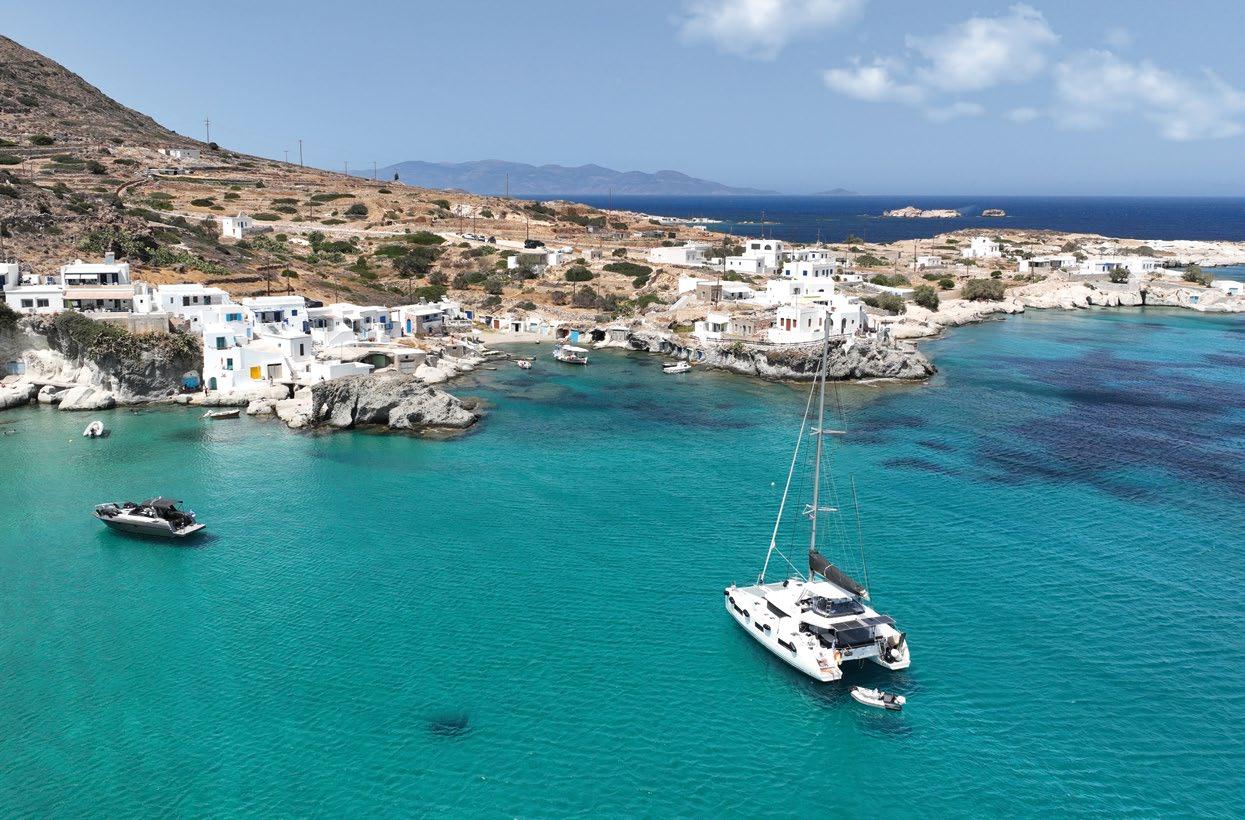



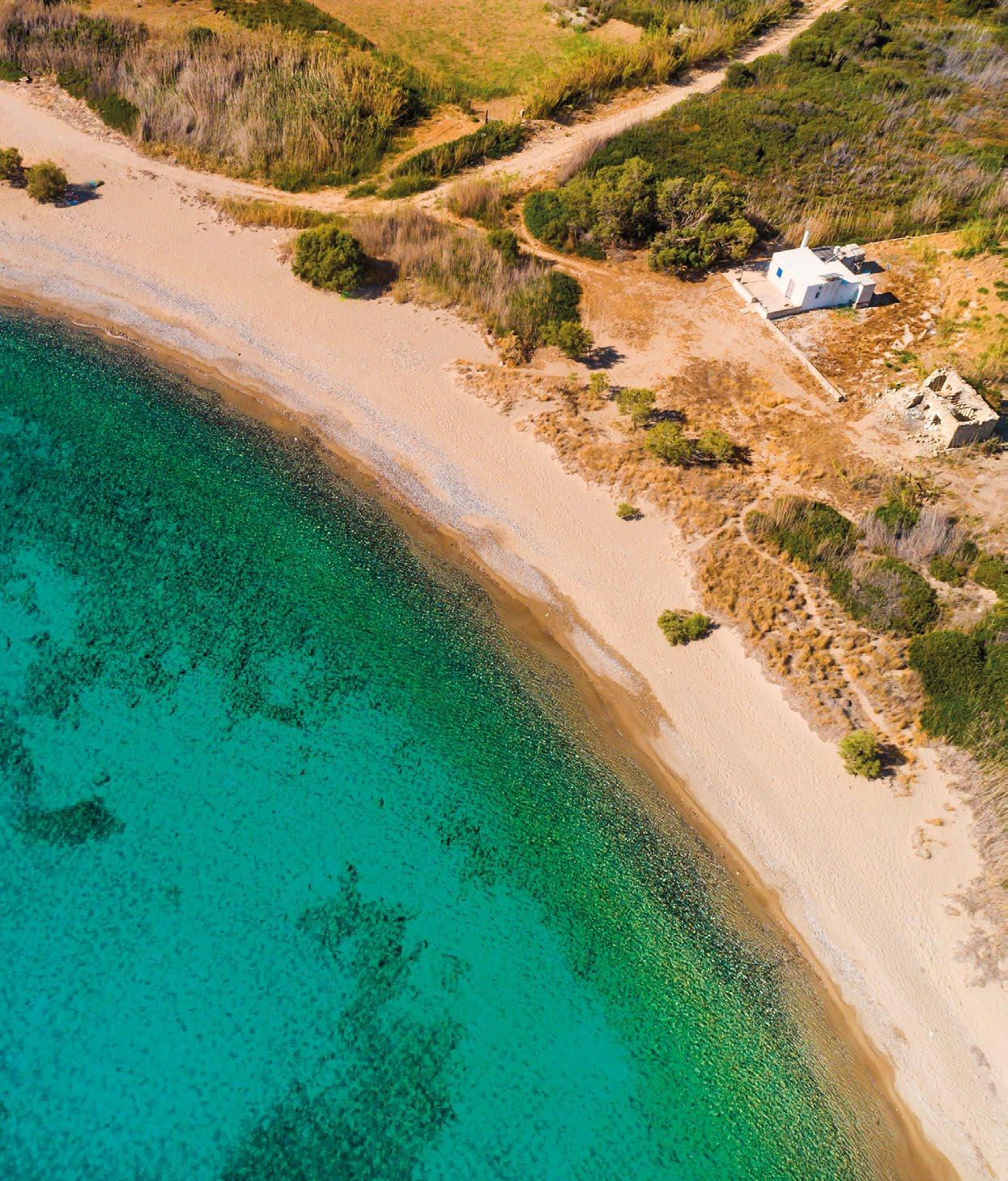
The beaches follow the same gentle rhythm as the rest of the island. Some are illuminated by the first morning light, others remain almost silent even in August, while some feel ideal for a swim after a Cine Kalisperitis screening.
For an early morning swim - Prassa
Early in the morning, before the wind rises and before most visitors arrive, Prassa feels almost silent. Its white sand and milky waters reflect the first light of the day, creating a sense of complete clarity.
The colourful fishermen’s syrmata sit almost on the water’s edge. As the sun sets, the rocks and façades take on warm tones and the small bay begins to feel almost cinematic.
More secluded and rocky, Monastiria retains a sense of distance from time. The landscape remains sparse and almost untouched, leaving space only for the sound of the sea and the wind.
After the evening screenings of Cine Kalisperitis, many continue the night beside the sea. In Psathi, the harbour is softly illuminated and the feeling of the island changes rhythm - calmer, almost hypnotic, like a natural continuation of the cinematic experience.
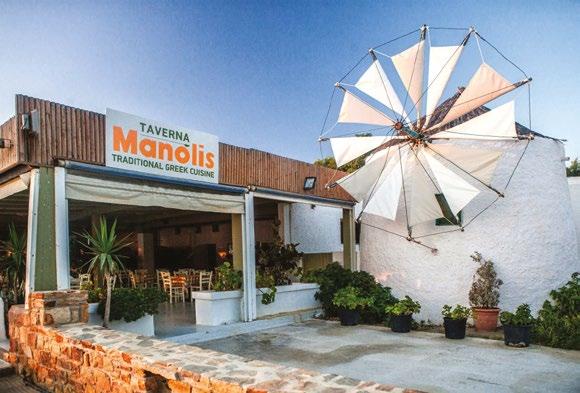
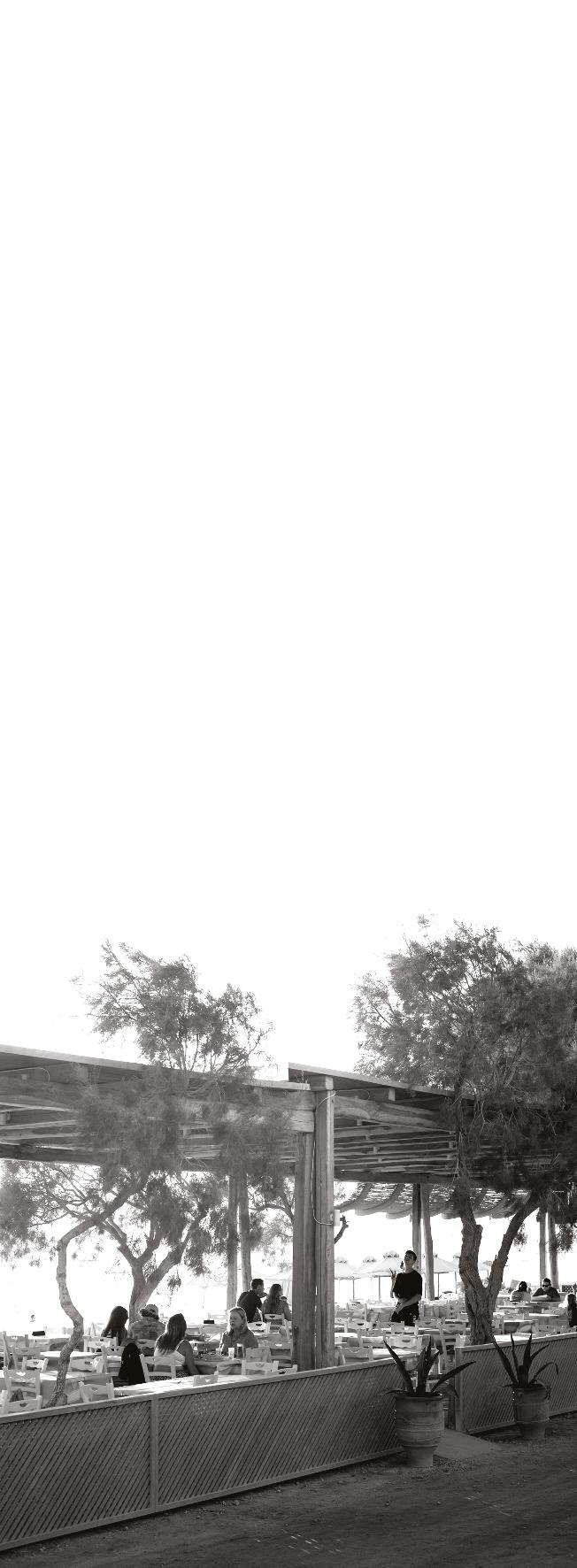
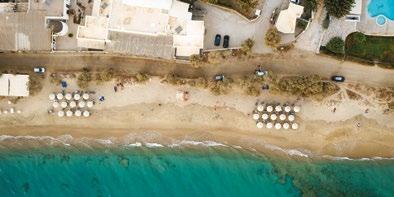
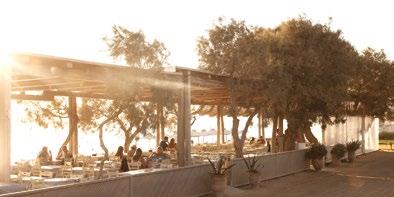
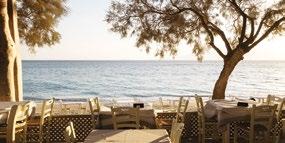
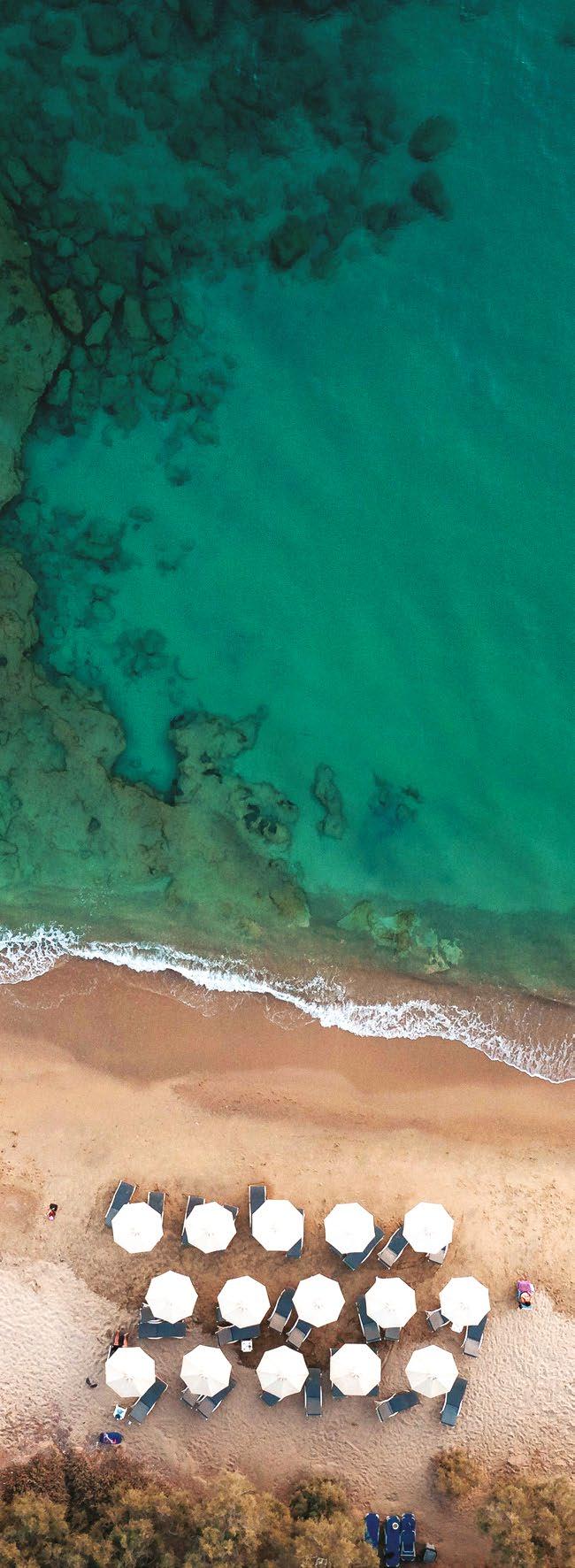
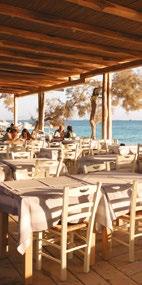
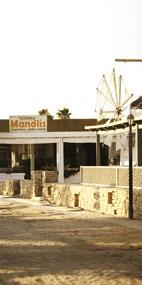
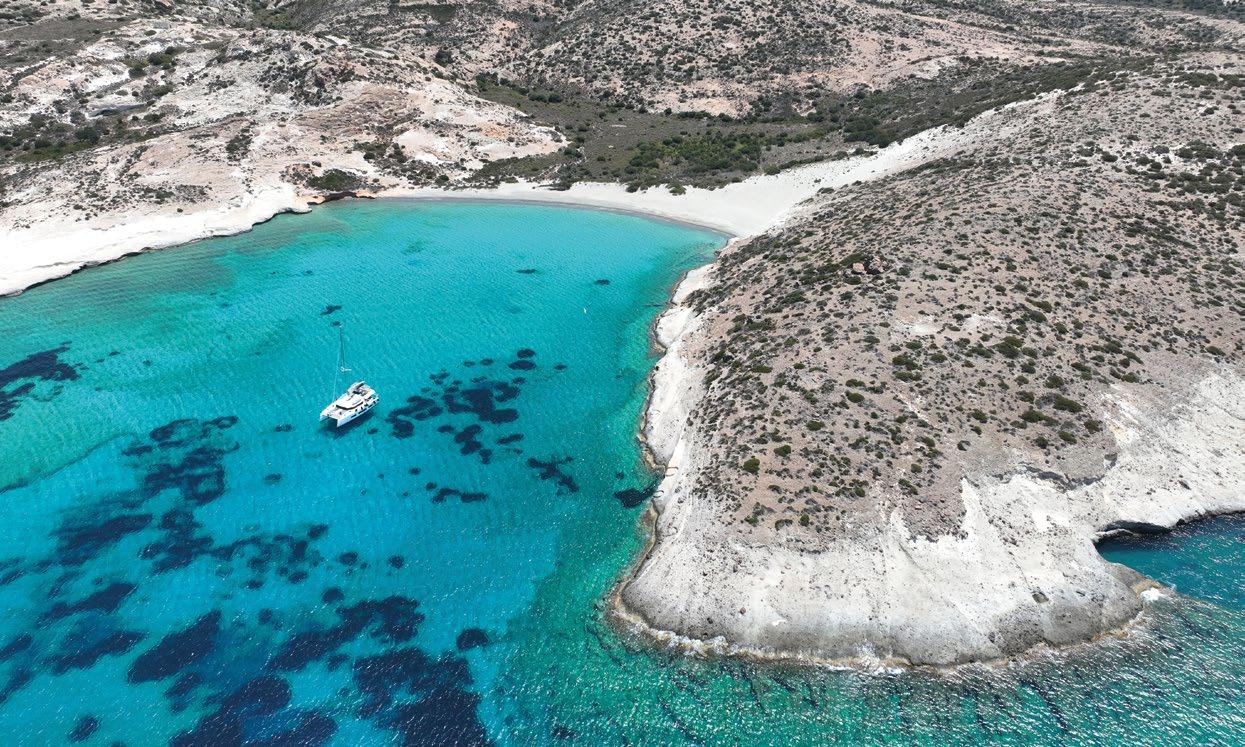
Justa few minutes by boat separate Kimolos from Polyaigos, the largest uninhabited island in the Aegean Sea. It takes its name from the many goats that once roamed freely across its slopes. Today, it remains a place of silence and natural beauty, without permanent residents, where white cliffs plunge into waters of astonishing shades of blue.
Its small coves, such as Panagia t' Avlaki, Amoura and Kalogeroi, are accessible mainly by boat and rank among the most spectacular landscapes in the Cyclades. Polyaigos is also home to the Maskoula Lighthouse, built in 1898, one of the most remote lighthouses in the Aegean. The island serves as a refuge for rare species of flora and fauna, while its sea caves and rugged coastline are a reminder of how wild and unspoiled the Aegean can still be.
A day trip is enough to understand why the people of Kimolos speak of Polyaigos with such affection, regarding it as an inseparable part of their island identity.
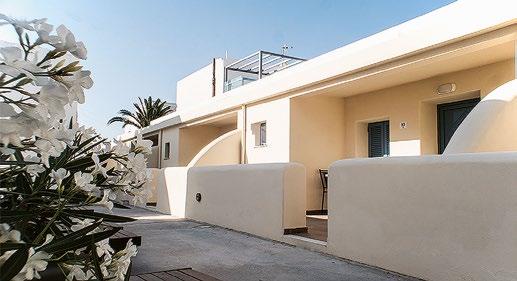
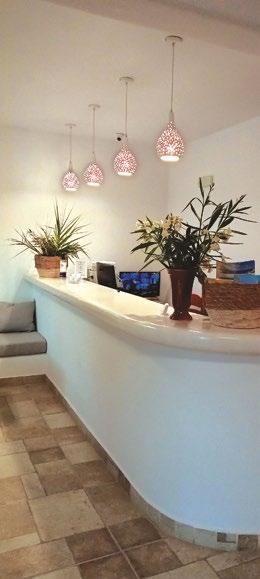

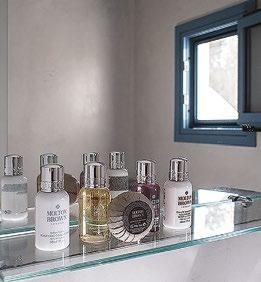
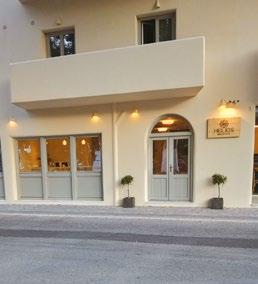

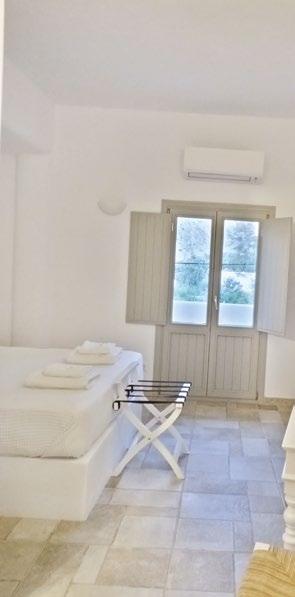
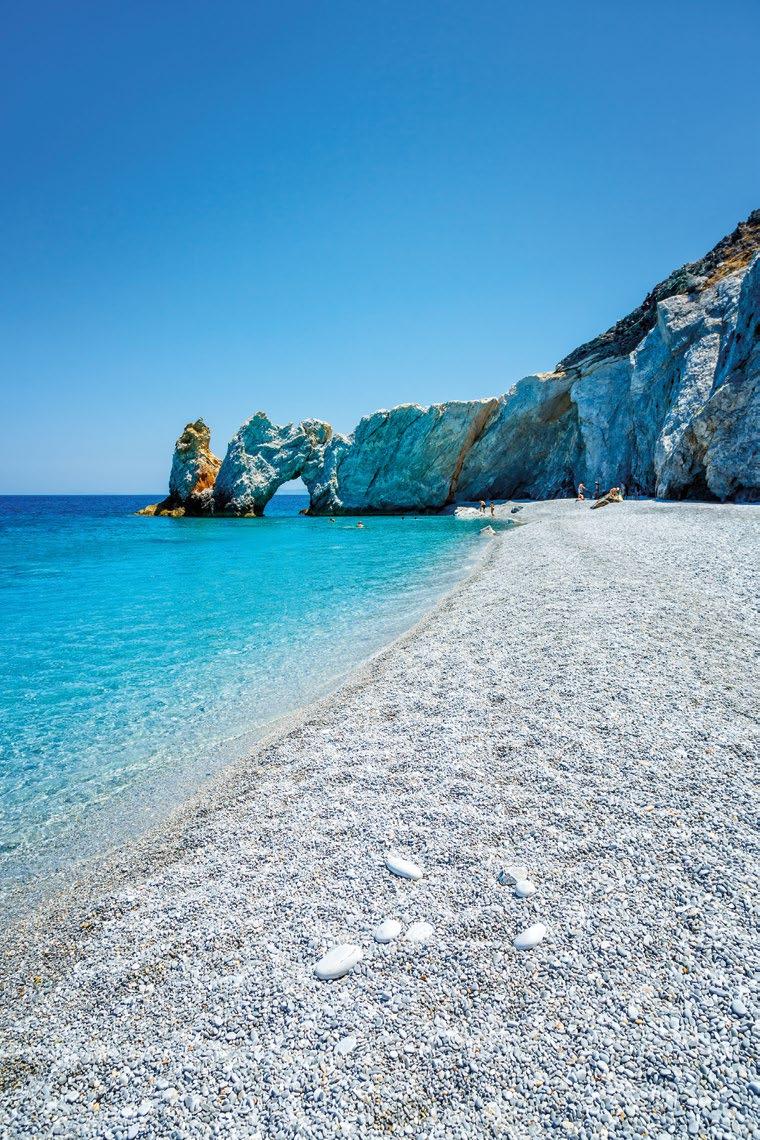
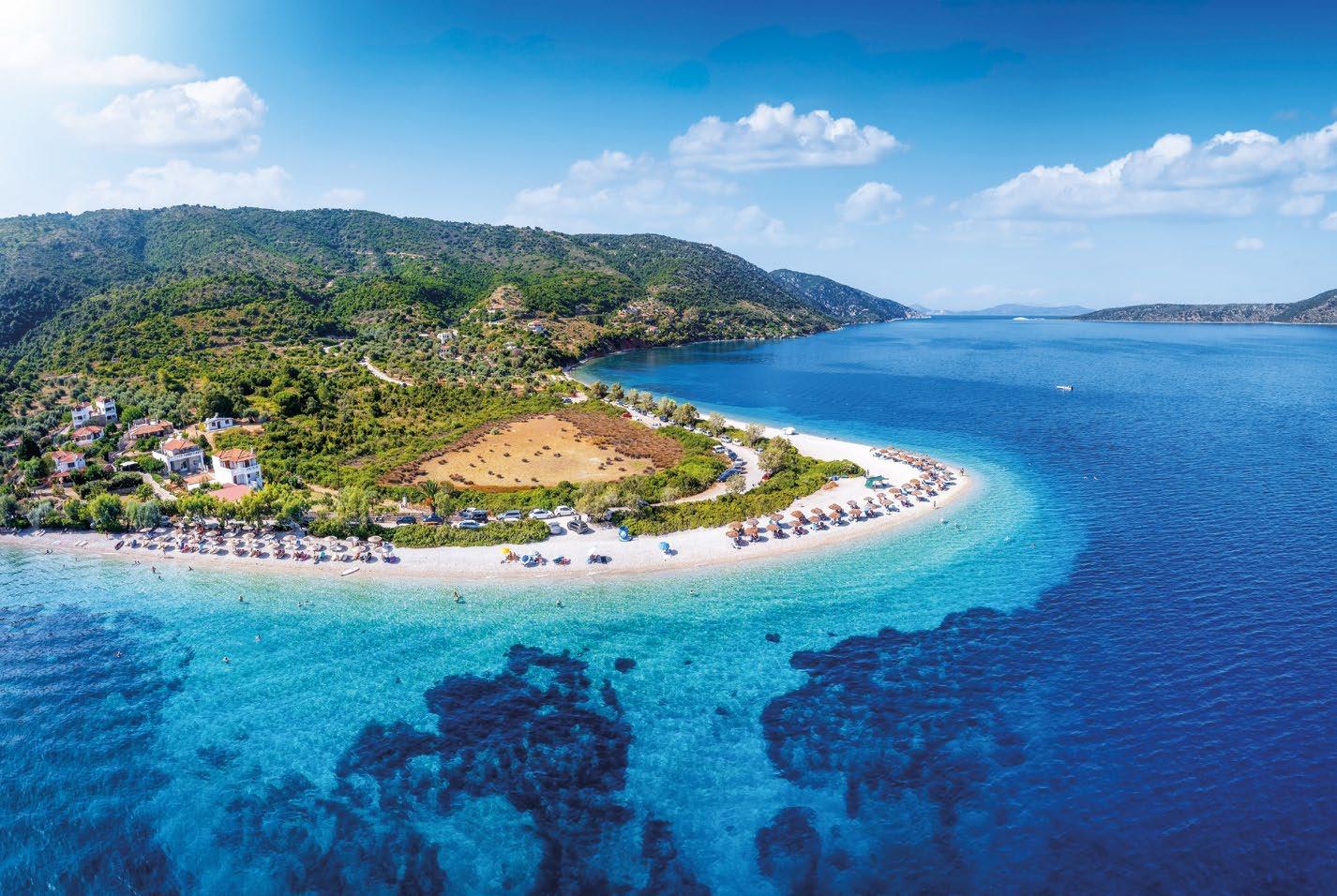
Between Pines & Waves
Whichever island you choose, the natural beauty, turquoise waters, and charming alleys will captivate you. Summer in the Sporades flows at a relaxed pace, full of cinematic landscapes, the scent of pine, and uniquely delicious flavors.
You’ll reach Skiathos in record time, a lively destination known for its exotic beaches, like the much-photographed Lalaria. Koukounaries, with its fine white sand and dense pine forest, is considered one of Greece’s most beautiful beaches, while Mikri and Megali Banana beaches are perfect for water sports.
Swim at Agnontas and at Skopelos’ most famous beach, Milia, where pine trees reach all the
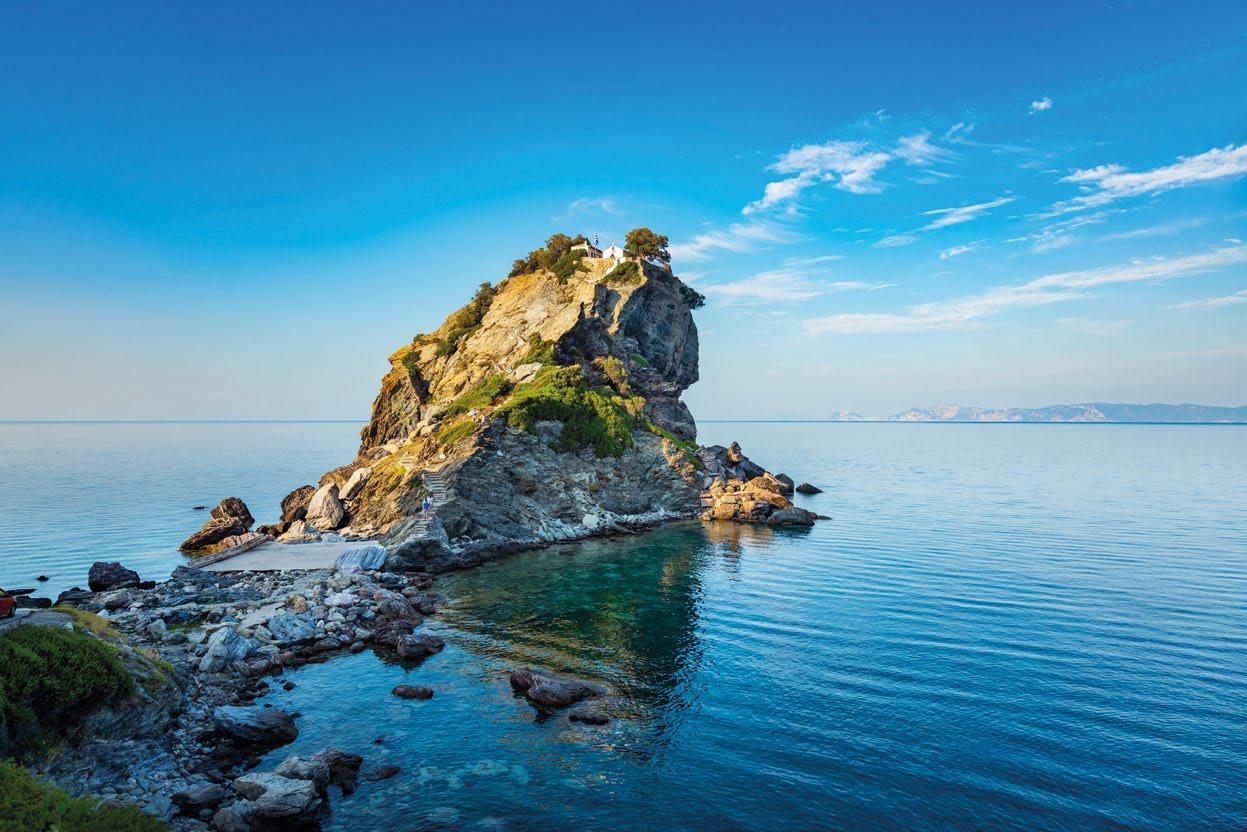
way down to the emerald waters. Don’t miss the stunning Perivoli beach, which is often described as a small paradise, and pair your visit with a stop at the home of the famous author Alexandros Papadiamantis. Agios Ioannis at Kastri in Skopelos, perched atop a 100-meter-high rock, is where scenes from the movie Mamma Mia! were filmed, offering a magical view.
Visit the Alonissos National Marine Park, the first of its kind established in Greece and today the largest marine protected area in Europe. Alonissos, the most peaceful and alternative of the Sporades, is also home to the rare Mediterranean monk seal, Monachus monachus.
With daily departures from Mantoudi in Evia, just 2 hours from Athens, you’re even closer to this island paradise. Board the Speedrunner Jet and kick off your summer with daily routes and impressive travel times:
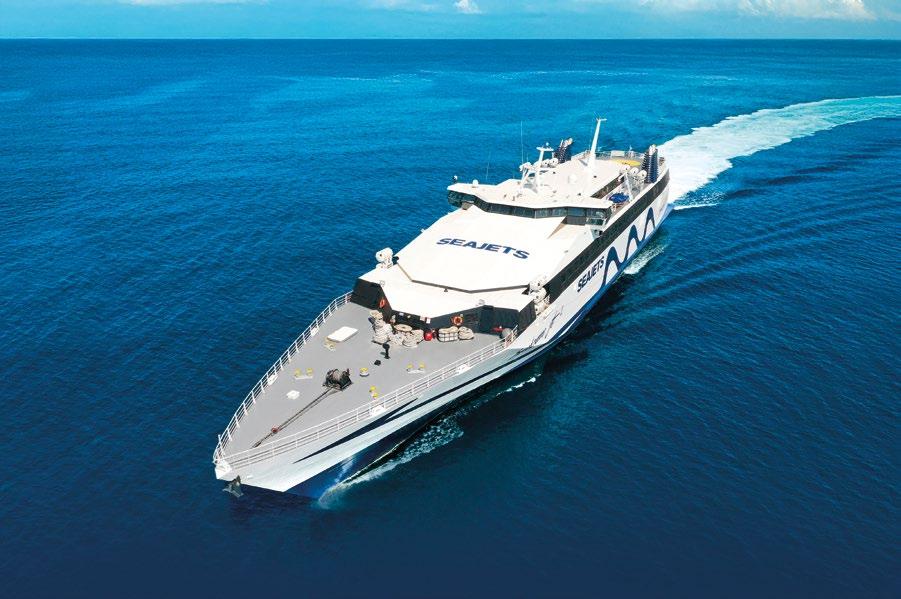
• Skiathos in just 40 minutes
• Glossa (Skopelos) in 1 hour
• Skopelos in 1 hour & 30 minutes
• Alonissos in 1 hour & 55 minutes
You can also begin your journey from Volos, another popular departure hub for the Sporades. And don’t forget, the short distances between the islands make island hopping easier than ever- in just 15 minutes, you can hop between Skiathos, Skopelos, and Alonissos. One trip, three islands.
GREECE IS OFTEN DESCRIBED AS A BOTANICAL PARADISE, AND NOT WITHOUT REASON. ALTHOUGH IT OCCUPIES ONLY ABOUT 2% OF EUROPE’S LAND AREA, IT HOSTS MORE THAN 6,500 PLANT SPECIES, APPROXIMATELY 1,600 OF WHICH ARE ENDEMIC, MEANING THEY ARE NOT FOUND ANYWHERE ELSE IN THE WORLD.
The rate of endemism, which reaches up to 20–25%, places the country among the most important centers of plant biodiversity in Europe and the Mediterranean.
Among the most characteristic endemic plants is Sideritis syriaca, known as malotira of Crete. It can be found at high altitudes, with its characteristic woolly greyish leaves. Its name is associated with the idea of removing “evil,” as it derives from the Latin male (bad) and tirare (to draw out), and indeed it has traditionally been used to treat colds, as a digestive aid, and to strengthen the body. Today, many simply know it as Cretan mountain tea.
One of the emblematic endemic plants of Greece is also found in Crete: Origanum dictamnus, known as dittany. It grows in rock crevices, often at altitudes above 1,600 meters, in locations that are difficult and
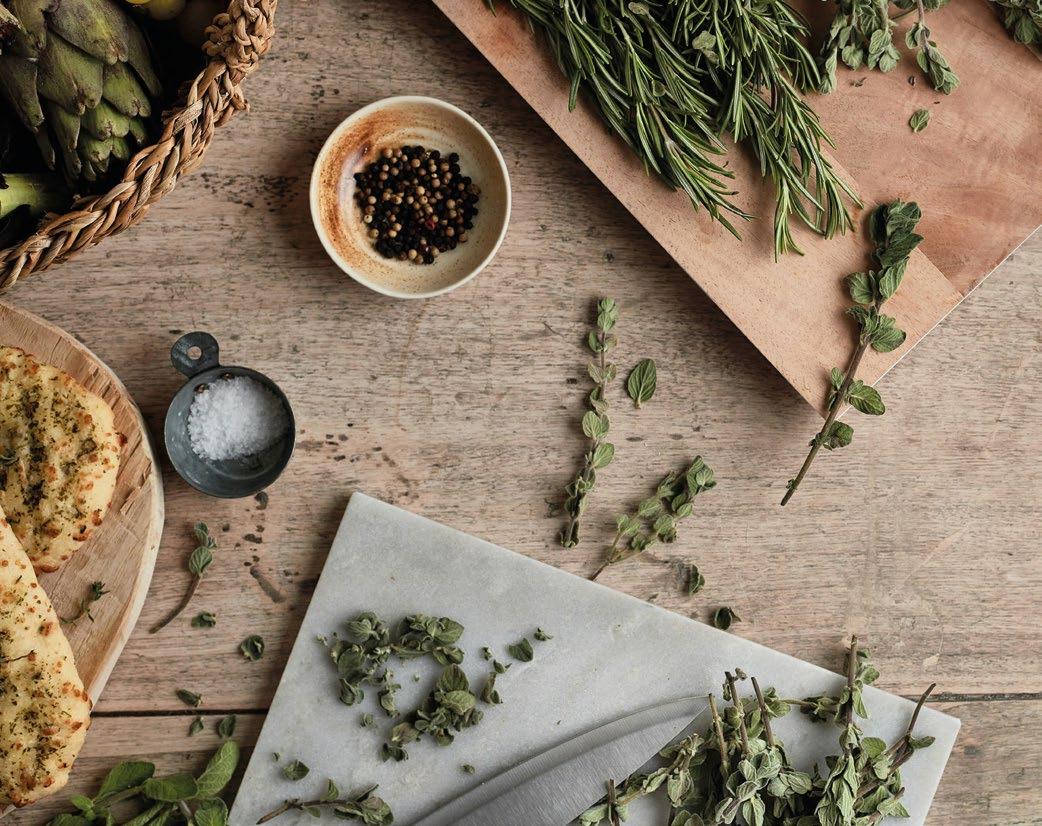
by
«Greece ranks among the most important centers of plant biodiversity in Europe and the Mediterranean».
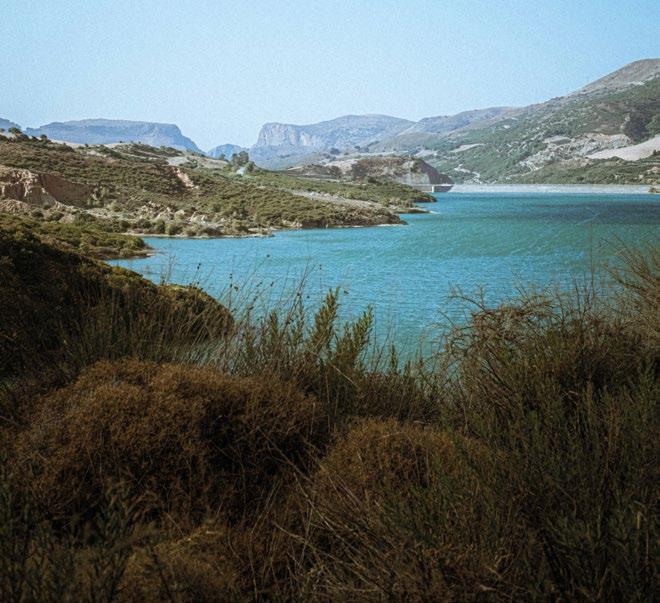
dangerous to access. According to tradition, anyone who wished to prove their love would climb to collect it, risking their life-this is why dittany was called “erontas” (love). Other accounts connect the name to its tonic properties. In any case, it is a valuable plant, rich in antioxidants, used for colds, stomach discomfort, and also as a poultice for minor wounds.
The Aegean caper (Capparis spinosa) and greek oregano (Origanum vulgare subsp. hirtum) are two more characteristic examples of the uniqueness of greek flora, reflecting the importance of the place where a plant grows.
Capers emerge in dry, rocky areas close to the sea. Exposed to the intense greek summer light and the saltiness of the sea, they acquire their distinctive bitterness and strong flavor. It is said that Phryne, before becoming one of the most famous courtesans of antiquity, lived in poverty collecting and selling capers-a story that reminds us that this humble plant was once considered so valuable that in certain periods its worth was compared even to that of gold. Today, we consume its tender buds (before they open) and shoots, mainly in salads and in dishes with red sauces.
Similarly, greek oregano differs significantly from other European varieties due to its exceptionally high content of essential oils, which gives it its intense, warm, and penetrating aromatic character. The harsh conditions on the hills of the greek islands of the Aegean-the strong sun, drought, and poor soils-act as a natural test for the plant. Through this process, the plant becomes stronger, producing more substances that protect it, while at the same time giving it the intense aroma and flavor we recognize.
Perhaps this is also one of the reasons why the traditional greek salad is so flavorful. Oregano and capers add the strong aromas produced by our land, blending with the freshness of local tomato, crisp cucumber, and extra virgin Greek olive oil. Small, everyday flavors that carry an entire natural and cultural heritage.

SOUTH AEGEAN: A cultural symbol, then and now
NATURAL LANDSCAPES AND INTANGIBLE ELEMENTS INTERTWINE, CREATING A RICH MOSAIC OF CULTURAL HERITAGE AND A VISIONARY FUTURE UNIQUE TO EACH ISLAND.
From the medieval city of Rhodes to the sacred landscape of Delos, and from monastic Patmos to the traditional settlements of Karpathos, each island of the South Aegean tells its own cultural story.
Cultural Continuity: From Monuments to Living Communities
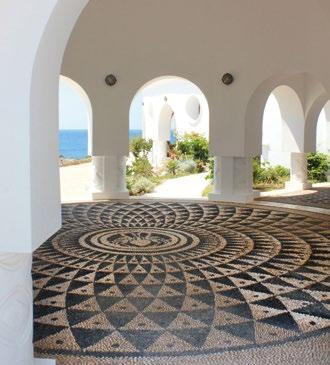
• Δήλος / Delos:
/ The mythical birthplace of Apollo and Artemis, Delos is today a UNESCO World Heritage Site. The famous Terrace of the Lions, the temples of Apollo, the mosaics, and the ruins of houses and marketplaces bear witness to the cosmopolitan prosperity of the ancient city.
•
/ Chora, the Monastery of Saint John the Theologian, and the Cave of the Apocalypse compose a place of profound spirituality and historical continuity. At the same time, Patmos has evolved into a place of contemporary cultural dialogue through the Aegean Film Festival, combining film screenings with environmental initiatives and discussions on the sustainability of the Aegean.
/ Naxos:
/ The imposing Portara, the monumental marble gateway of the unfinished Temple of Apollo on the islet of Palatia, is the island’s emblematic landmark. Naxos combines important archaeological remains with vibrant rural traditions, mountain villages, and local crafts that continue to be passed down from generation to generation.
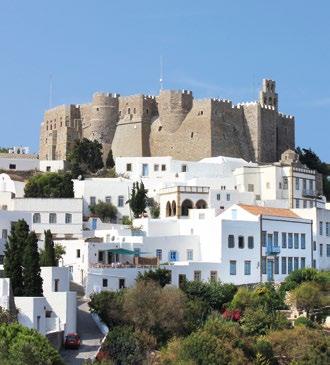
Biennale of Ceramics. / Its medieval city, a UNESCO World Heritage Site, preserves its impressive walls, the Palace of the Grand Master, and the Street of the Knights. The National Theatre, an emblematic example of Italian rationalist architecture dating from 1937, is being restored and returns as a contemporary cultural hub. This summer, the island will host the Biennale of Ceramics.
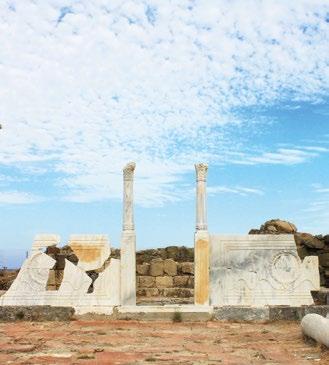
/ Karpathos:
/ In the remote village of Olympos, daily life moves at a different pace. Until the 1980s, the village was difficult to access, a fact that contributed to the preservation of the local dialect, songs, customs, and traditional costumes. The women of the village still wear their characteristic garments during celebrations and bake bread in wood-fired ovens, preserving a rare form of cultural continuity.
monument of Episkopi, originally a Roman mausoleum and later a Byzantine church, is a remarkable example of layered cultural history. Its restoration received a Europa Nostra award in 2022, while the works revealed important archaeological findings, including the tomb of Nikò, a woman of high social status from the Roman period.
/ Syros:
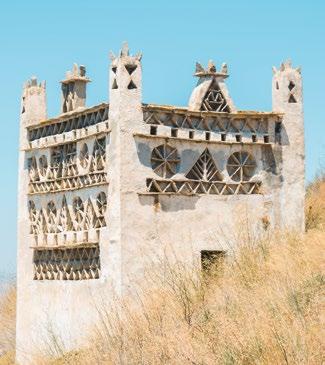
/ With its neoclassical Ermoupoli and long urban history, Syros is today one of the Aegean’s most important cultural hubs. Festivals such as Animasyros and the Syros International Film Festival strengthen the island’s contemporary cultural character every year.
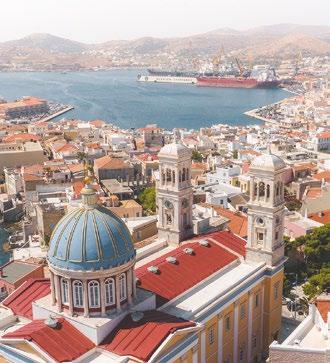
/ A different side of the Aegean emerges through Lakki, one of the most important settlements of Italian rationalist architecture outside Italy. Buildings influenced by Bauhaus, art deco, and modernism narrate the period of Italian presence in the Dodecanese during the interwar years.
/ Tinos, known for its marble craftsmanship and deep artistic tradition, is evolving into a meeting point for contemporary musical and creative expressions. The Tinos World Music Festival creates an open dialogue between local cultural identity and the international scene.
•
/ On Kos, the Asklepion attracts medical students and history enthusiasts alike, as it was here that Hippocrates founded a healing sanctuary and medical school.
• Κάσος/Νίσυρος / Kasos / Nisyros:
/ On Kasos, the island’s largest celebration takes place on August 15, while on Nisyros the feast of Panagia Spiliani stands out as one of the island’s most important religious celebrations.
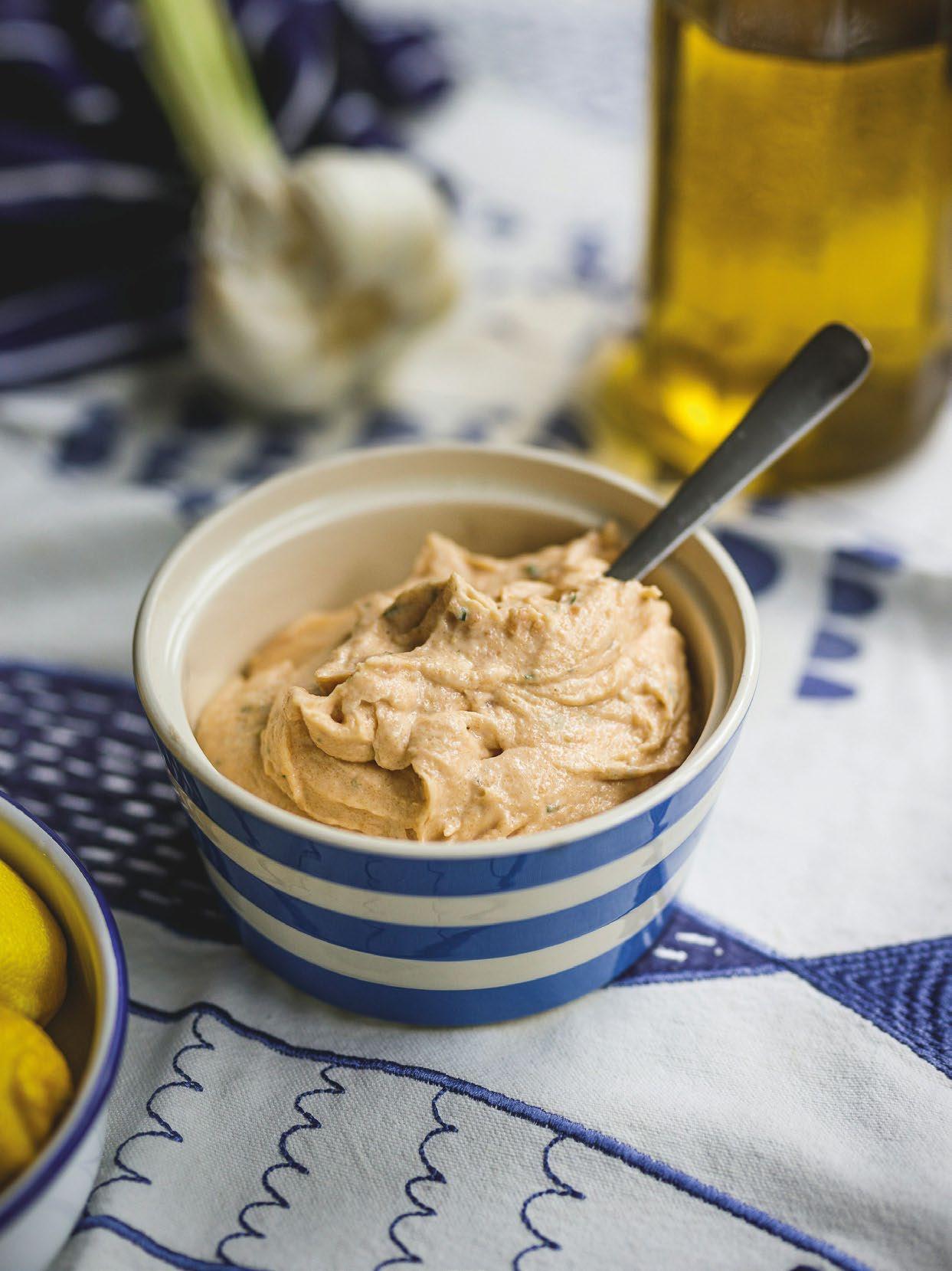
FROM SANTORINI’S FAVA TO THE FESTIVALS OF KASOS, AEGEAN GASTRONOMY TELLS STORIES OF PLACE, PEOPLE AND TRADITION.
For years, the islands of the South Aegean have been internationally associated with light, sea and Cycladic landscapes. Yet behind this familiar image, another force was quietly shaping the travel experience: gastronomy. A cuisine born from simplicity, the wisdom of necessity, and a deep respect for the land and the sea.
“The beaches and landscapes brought visitors to our islands. Gastronomy, however, is one of the reasons that kept them here,” notes the Governor of the South Aegean, Giorgos Hatzimarkos.
The Region’s investment in gastronomy began more than twenty years ago with the creation of the “Aegean Cuisine” network, when he was still serving at the Dodecanese Chamber of Commerce. “It proved to be the most rewarding investment in tradition, local production, the reputation and the economy of our islands,” he characteristically states.
Today, more than 40 gastronomic events are supported and co-organised every year across the islands of the South Aegean, strengthening the connection between local production and the traveller’s cultural experience. This strategy led the South Aegean to be named Greece’s first “European Region of Gastronomy” in 2019.
In a dry and seemingly barren landscape, the Cyclades and the Dodecanese developed products of limited production but exceptional quality. Santorini’s fava and tomatoes, Naxos potatoes, Tinos artichokes, Kea almonds and the wild herbs of Folegandros compose a gastronomic landscape deeply connected to the nature of the islands.
Traditional recipes, born out of necessity, evolved into authentic expressions of culture. Sifnos chickpea stew, Amorgos patatato, Ios goat pilaf and the spoon sweets of the Cyclades remain inseparably linked to local festivals and the collective life of the islands.
At the same time, young chefs and small-scale producers are gaining international recognition through initiatives such as European Young Chef and the World Food Gift Challenge, where the organic honey of the Rota family from Serifos received an award in 2022.

A new international documentary sheds light on the world’s greatest cultural heritage case.
BY DR. ANNA PODARA, JOURNALIST & RESEARCHER
OVER THE PAST FIVE YEARS, DOCUMENTARIES AND TELEVISION PRODUCTIONS, FROM AUSTRALIA TO CHINA, HAVE ONCE AGAIN TURNED INTERNATIONAL ATTENTION TOWARD THE DEMAND FOR THE REUNIFICATION OF THE PARTHENON MARBLES. THE LARGEST PROJECT OF ALL IS NOW PREPARING FOR INTERNATIONAL DISTRIBUTION. IT IS AN INTERNATIONAL SERIES OF FOUR ONE-HOUR DOCUMENTARIES, ALONG WITH A FEATURE FILM TITLED REUNITING THE PARTHENON, FEATURING SPEAKERS FROM DIFFERENT PARTS OF THE WORLD, FROM AUSTRALIA AND VENEZUELA TO PALERMO IN ITALY AND NEW YORK.
When I was invited to undertake the research for this project, the complexity of an issue that cannot simply be reduced to the binary of “they are not yours – they are ours” between Greece and Great Britain gradually unfolded before me.
The story resembles a cinematic script. The object of contention in this unique dispute is the Marbles that Lord Elgin removed from the marble temple by exploiting the influence he held within the Ottoman Empire as British ambassador. From 1801 to 1804, he detached tons of marble sculptures and structural elements from the monument. He loaded them onto 27 ships and gathered them in various ports across England with the intention of placing them in his villa, Broomhall, in Scotland. The ship carrying the heaviest pieces sank in the Aegean Sea. Their recovery lasted three years, with the assistance of highly skilled local divers who dived on a single breath, risking their lives. Upon returning to Great Britain, Lord Elgin was driven to financial ruin following his costly divorce and was forced to sell his collection to the then newly established British Museum. There the Marbles remain today, forming one of the institution’s most impor-
Paul Cartledge,
British Committee for the Reunification of the Parthenon Marbles
«If they were just any other objects, I don’t think the trustees would fight so hard to keep them. They became the British Museum’s jewel in the crown, and perhaps, more than 200 years later, they still are».
Paul Cartledge, Emeritus Professor, University of Cambridge & Vice-Chair of British Committee for the Reunification of the Parthenon Marbles
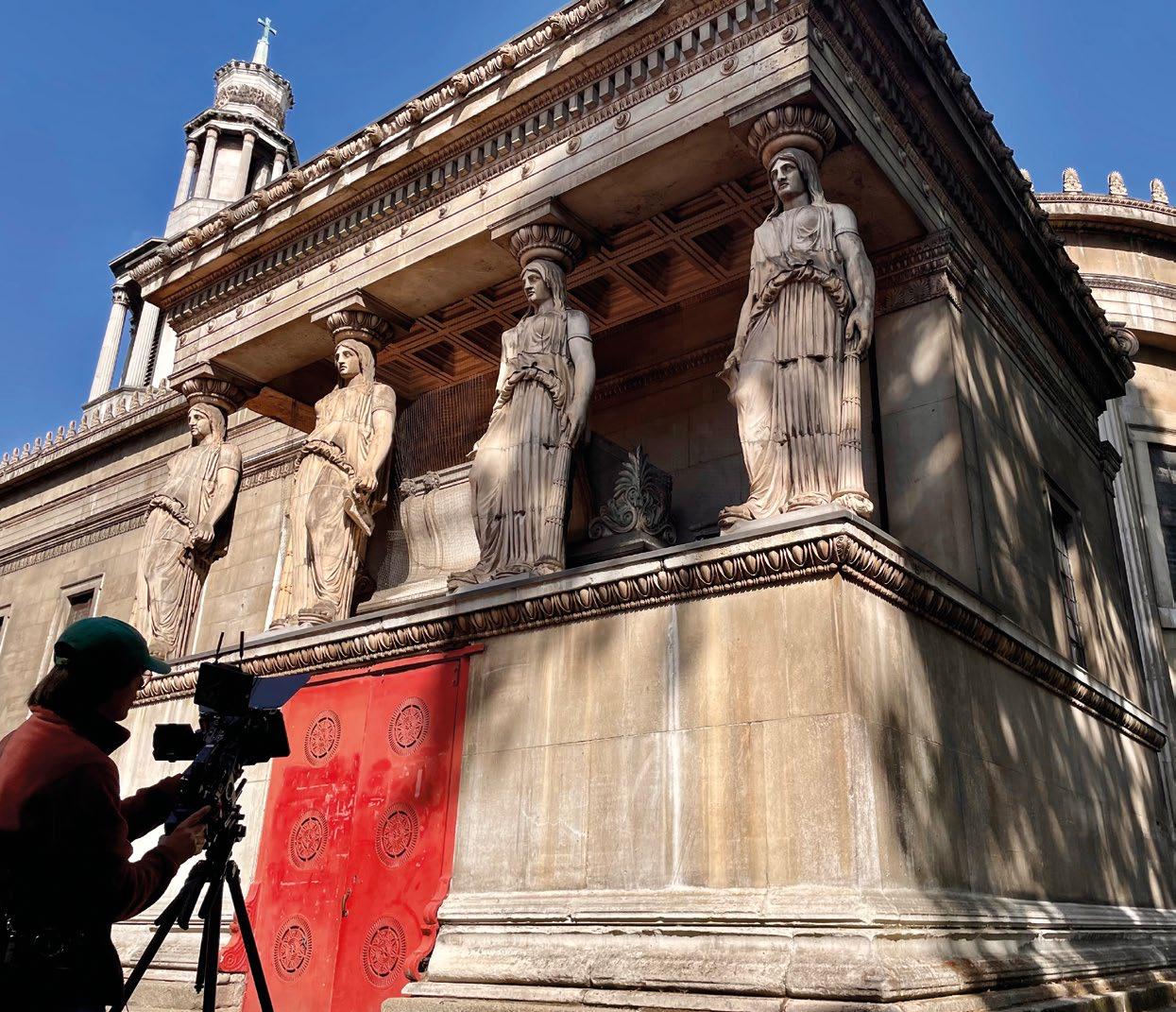
Kris Tytgat,
«When somebody asks to whom belong the Parthenon sculptures, I say the Parthenon sculptures belong to nobody. They belong to the Parthenon!».
Kris
Tytgat, president of International Association for the Reunification of the Parthenon Sculptures
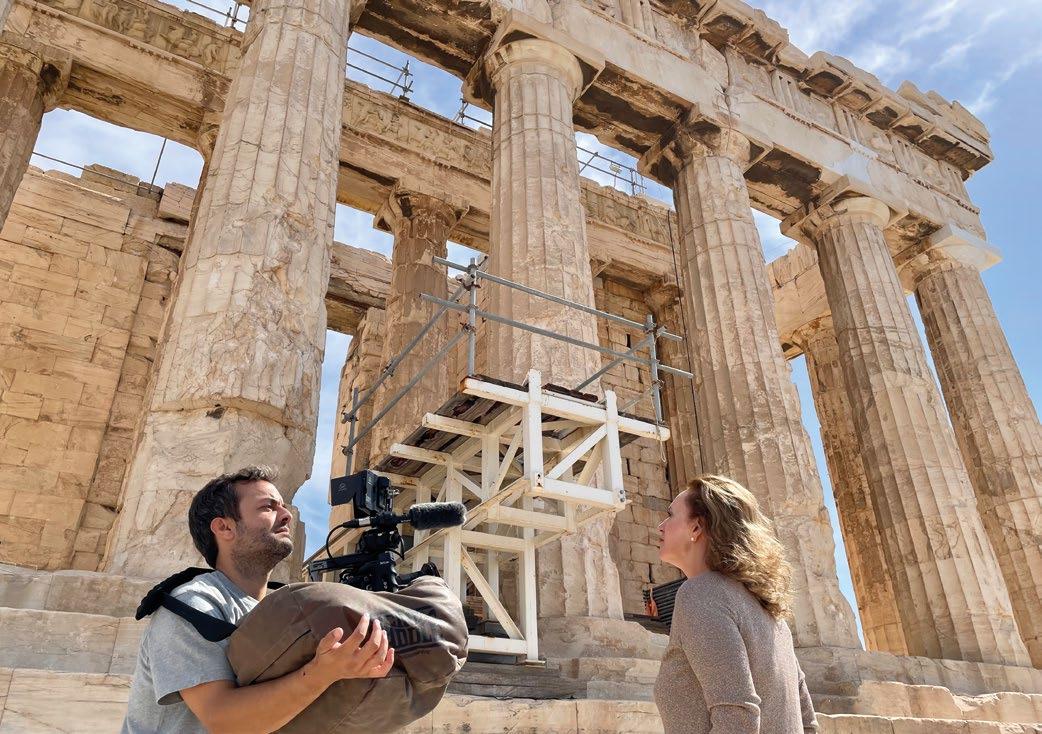
tant collections, while Greece has never ceased to demand their return.
For the British supporters of their retention, these marbles are now part of their own cultural heritage, part of the history of the British Museum. For Greece, the reunification of the Marbles is primarily a matter of monument integrity and historical justice, while for the British side it has also become a matter of institutional role and international prestige surrounding what the British Museum is and what a universal museum should represent.
In the project Reuniting the Parthenon, we placed great emphasis on allowing both sides to be heard, including arguments that may unsettle viewers but are important for them to understand before agreeing or disagreeing. Yet if I had to choose one










(reunification).
argument that I consider unfair, it would be the one reflected in the title of the series Parthenon Reunited: “if we give anything, then we give everything.” In other words, if the Parthenon sculptures are returned, Pandora’s box will open and museums everywhere will begin to empty. The key word here is reunification.
We are extremely fortunate that the scientific supervision of the series is undertaken by the two women who represented Greece for nineteen years in UNESCO negotiations concerning the reunification of the Marbles. Elena Korka, Honorary Director of Antiquities and Cultural Heritage at the Ministry of Culture, began working alongside Melina Mercouri forty years ago and was in fact the first Greek woman granted access to Elgin’s letters and archive. Irene Stamatoudi, Director of the Law School at the University of Nicosia, has spent twenty-six years studying and publishing on the legal solutions surrounding this negotiation. Their participation is the reason why everyone we approached agreed so willingly to speak with us.
The British side often invokes the argument of the ‘universal museum’, where major institutions such as the British Museum narrate the history of civilizations and allow visitors to compare different eras and societies. The modern Acropolis Museum, by contrast, is presented as a thematic museum: a museum devoted exclusively to the monuments of the Acropolis. For Greece, the issue is not only who possesses an object, but who can present its story in its entirety.
Thus, the question is whether a work of art can fully narrate its story when it exists divided in
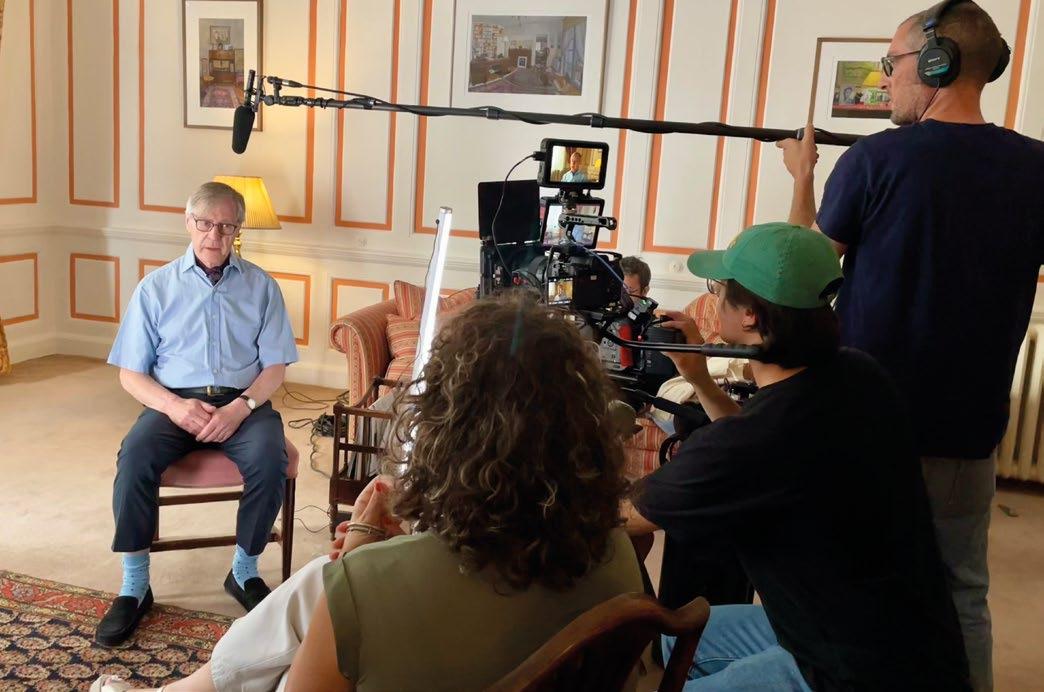
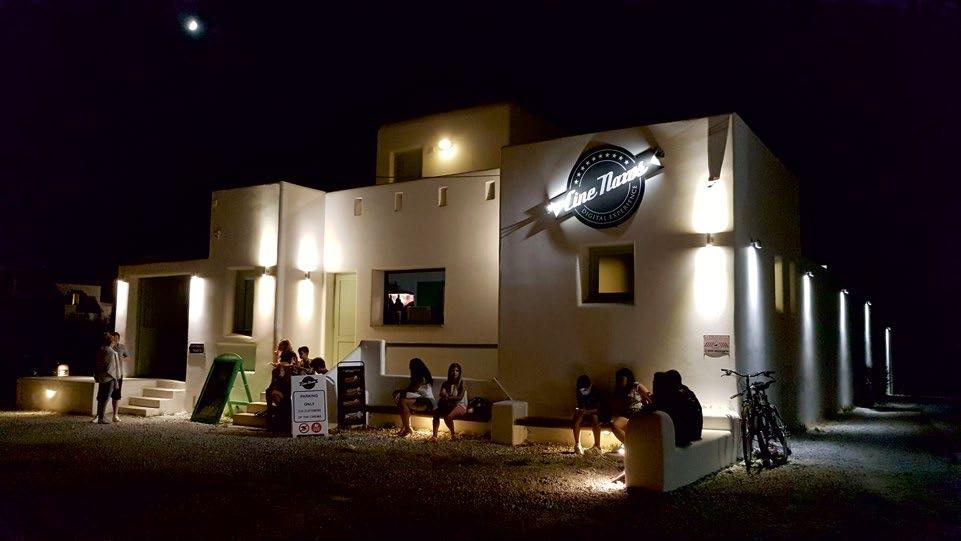
two. Within this framework, Reuniting the Parthenon offers a different perspective. The coexistence of numerous speakers from different backgrounds creates a language of collaboration rather than confrontation. This is precisely why we move one step beyond the documentaries that have been released so far and explain in detail all the possible alternatives for resolving this particular dispute. At the same time, we present the three reunification actions that have already taken place, involving Parthenon fragments formerly held by the Vatican, Heidelberg and Palermo in Italy.
Polls show that an increasing number of citizens in Great Britain support the return of the Sculptures to Athens. At the same time, academics, historians and even former British politicians who once opposed the idea are reconsidering their stance. The public debate surrounding colonialism, the role of museums and the restitution of cultural artefacts appears to be gradually shifting the climate.
A documentary can contribute visibility, awareness, and space for understanding within public discourse. This pursuit of understanding, which can open the way to solutions, lies at the core of ELC Productions, a company that for the past twenty years has approached current affairs through the lens of culture and its impact on public dialogue, politics, and collective memory.
«The Parthenon is the greatest surviving wonder of the ancient world. Why keep it divided instead of reuniting it, so that all can see it as close as possible to what it once was?».
Geoffrey Robertson, distinguished Australian human rights barrister and author of "Who Owns History"
DOCUMENTARY CREDITS
Director: Giannis Vakrinos
Research – Script: Anna Podara
Production Director: Alexandros Christogiannis
Executive Producer: Petros Adamantidis
Producers: Alexandros Christogiannis | Konstantinos Tzortzis | Nikos Ververidis
Directors of Photography: Argyris Papatheodorou | Giannis Vakrinos
Editing: Ilias Apostolidis





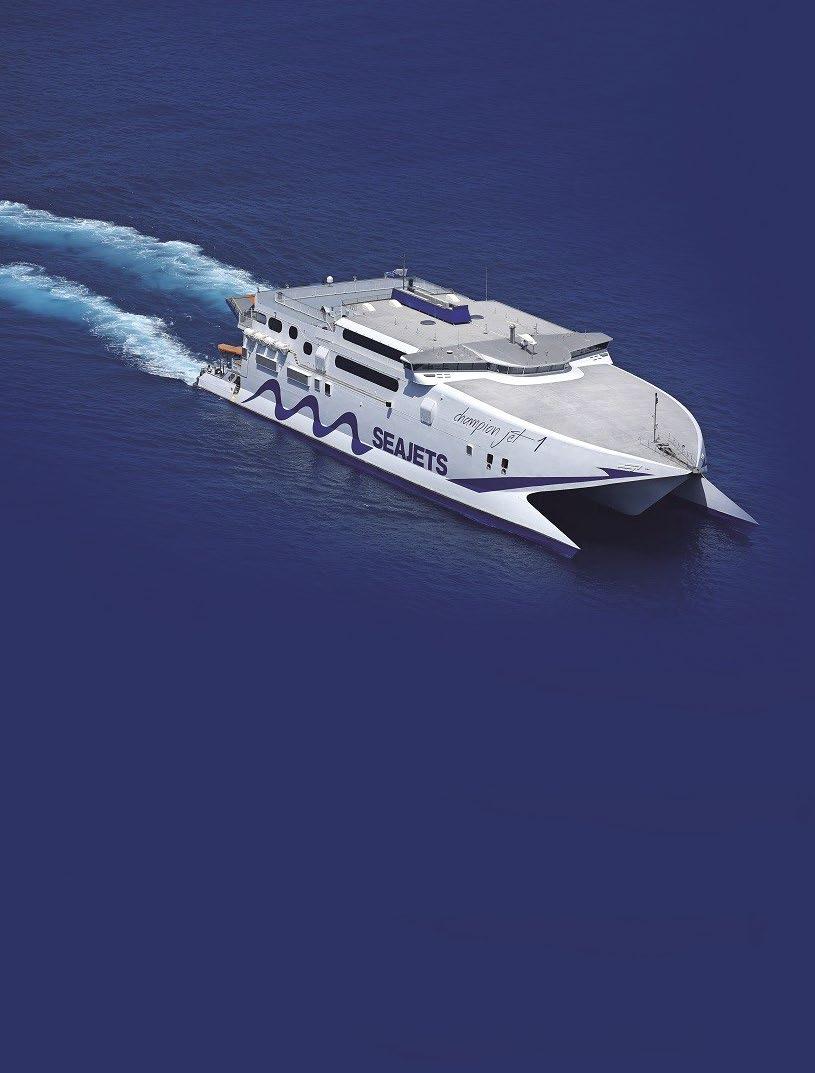





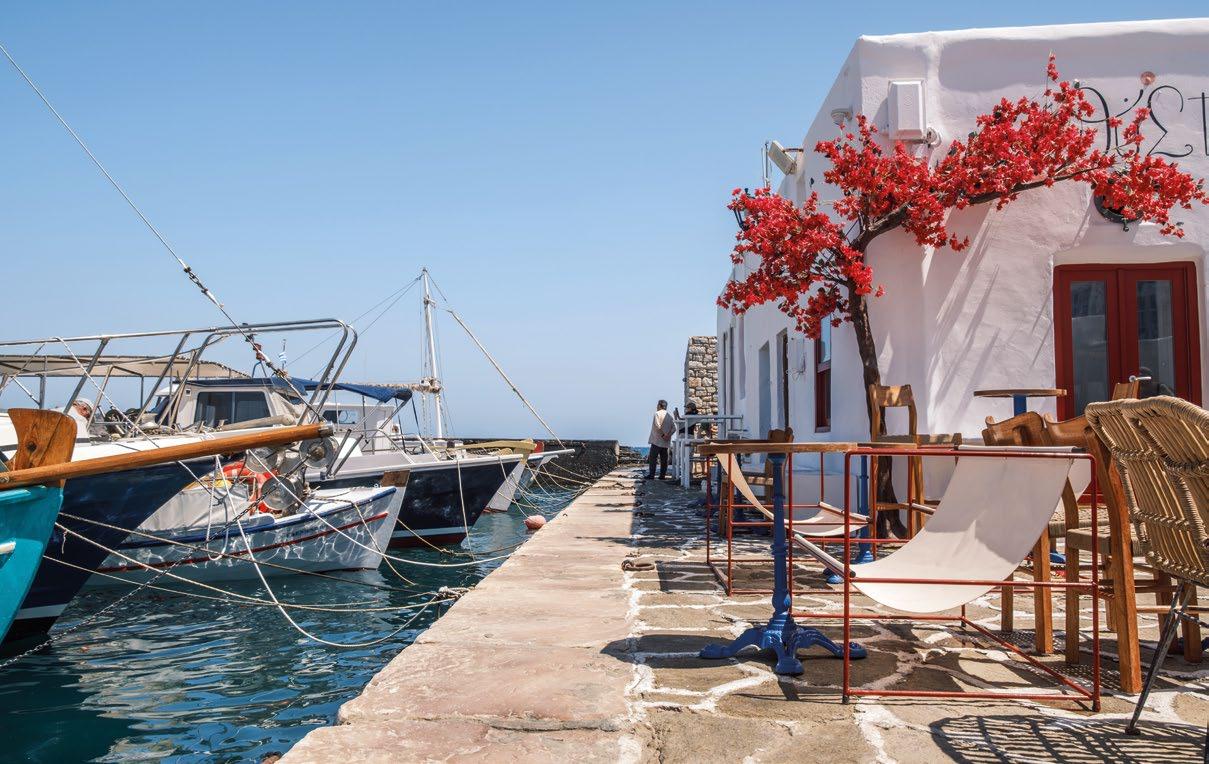
Νάουσα,
A journey filled with the essence of summer
Paros and Naxos are two of the most beloved destinations in the Cyclades: two islands with distinct personalities, yet both sharing the same promise of an authentic summer experience. And this summer, with SEAJETS’ multiple routes from Piraeus and Rafina, it is even easier to enjoy unforgettable moments in the heart of the Cyclades.
Paros is the cosmopolitan island of the Cyclades, moving to its own rhythm. With departures from Piraeus and Rafina and multiple ferry routes available, Paros becomes an even easier choice for your summer escape. Board one of SEAJETS’ high-speed
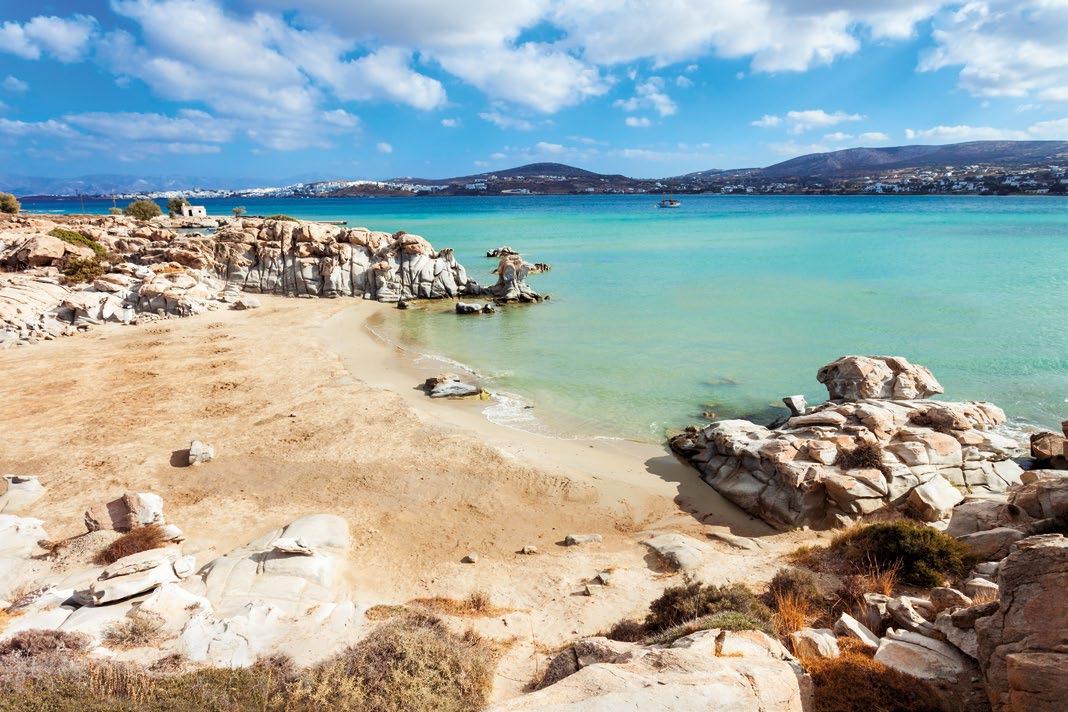
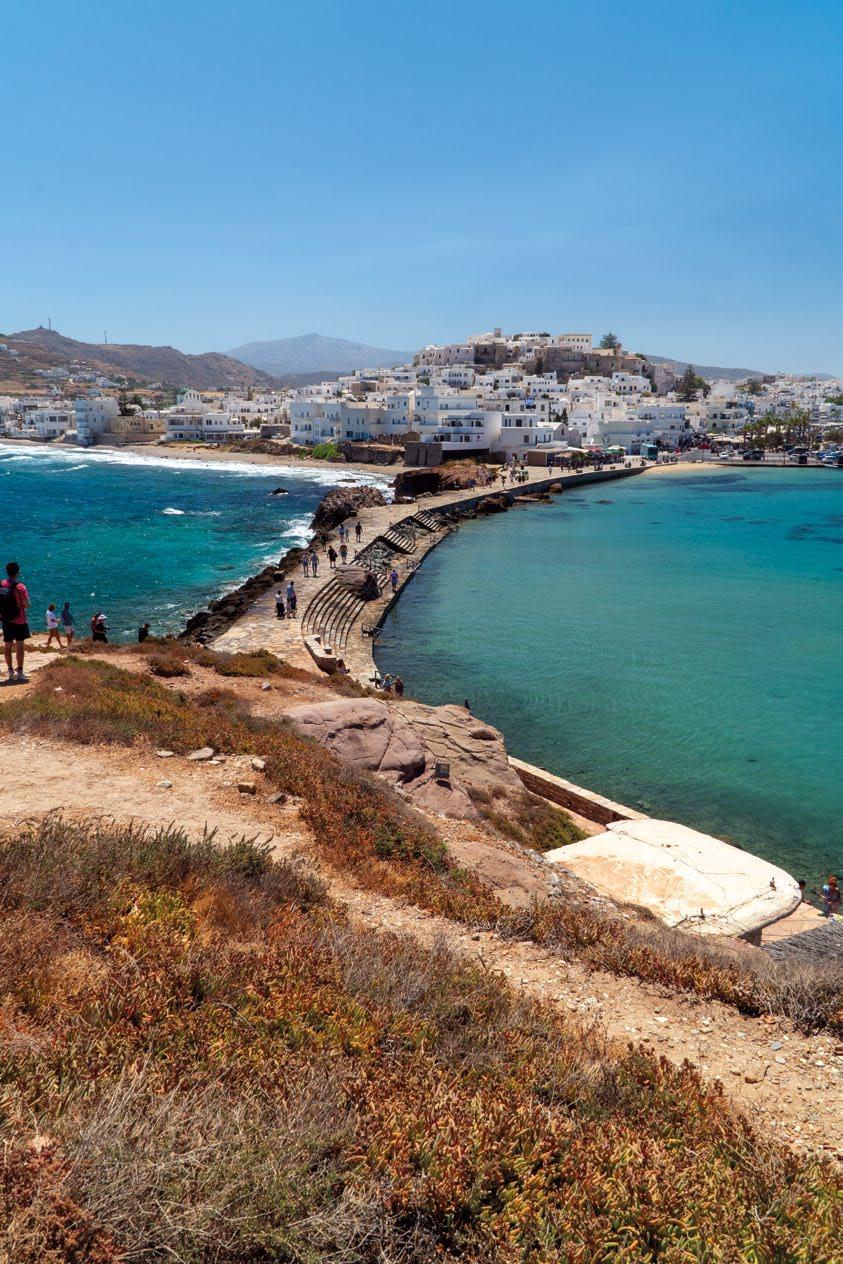
vessels from the port of Piraeus and, in just 2 hours and 40 minutes, you will arrive at one of the most elegant gems of the Cyclades. In Parikia, the old town, the narrow alleys and the Church of Panagia Ekatontapiliani remind visitors that the island carries centuries of history.
Naoussa, the fishing boats, the Venetian castle and the tables set beside the small harbour create the most vivid image of Paros. And surrounding all of this are the beaches. From Kolymbithres and Golden Beach to Santa and the quieter shores of the south, Paros gives visitors the chance to swim in emerald waters and discover landscapes that feel almost lunar.
, on the other hand, has a different kind of energy. It is larger, more traditional, more grounded and effortlessly authentic, an island that does not reveal itself at first glance. Whether you depart from the port of or from Piraeus, Naxos welcomes you with the , the island’s iconic marble landmark, before leading you into Chora, with its narrow alleys, Castle and the atmosphere of a Cycladic town that still holds strong traces of its history. As you explore it, Naxos gradually reveals all its beauty: long beaches with open horizons, Agios Prokopios, Agia Anna and Plaka; mountain villages with their own distinctive character, such as Apeiranthos, Filoti and Halki; inland routes, local products, flavours with a strong sense of place and a unique feeling of authenticity. In Naxos, summer is not limited to the sea. It has the taste of graviera cheese, Naxos potatoes and kitron liqueur, the image of villages resting at the foot of Mount Zas, and the feeling of a place that remains deeply connected to the land and tradition. And you can experience all of this in just 3 hours and 15 from Piraeus
What makes Paros and Naxos so beloved by visitors is not only their beauty, but also the ease with which they can become a different kind of journey for every traveller. They can be a romantic getaway, a family holiday, a trip with friends, the starting point for island hopping, or even a journey decided almost at the very last moment.
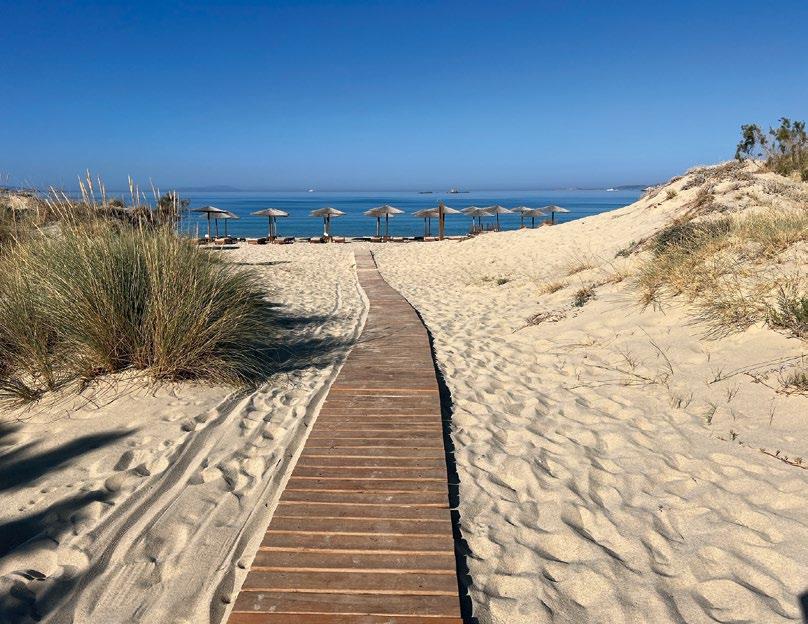
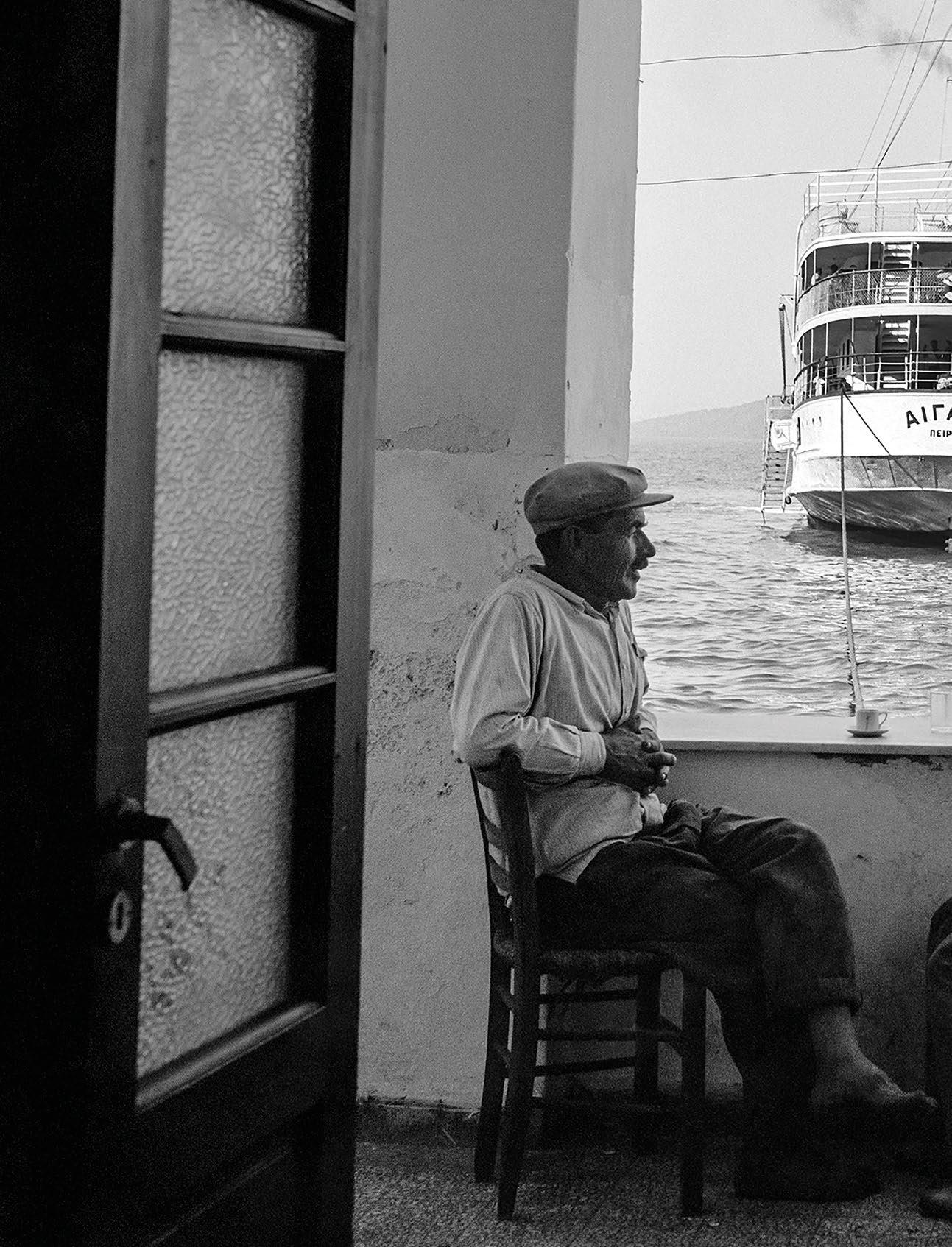
Captain Giannis “Trikoulis” Kafieris (left) and Manolis “Kastorias,” a mule driver from Kontochori, rest at the kafeneio of Gialos, the port of Fira. The “Aigaion” was launched in 1911 (the same year as the “Titanic”). It was initially used as a cruise ship and later as a passenger vessel
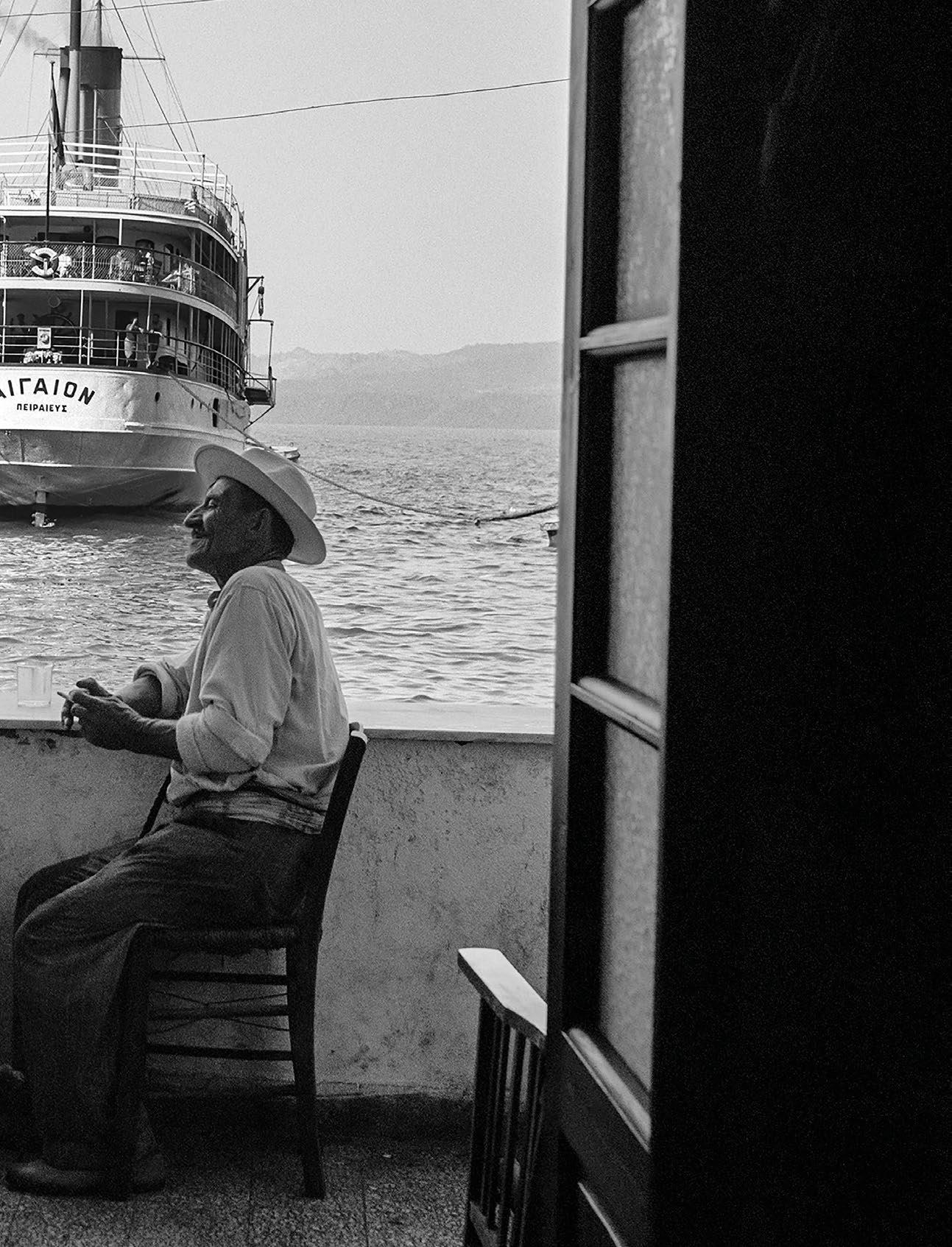
Images from the islands of another time
An interview with Robert McCabe on the occasion of his exhibition “Memories from the Aegean” in Paros
BEFORE THE AEGEAN BECAME A POSTCARD OF GLOBAL TOURISM, IT WAS A PLACE OF SILENCE, LABOUR, STONE, WIND, AND EVERYDAY INGENUITY. ROBERT MCCABE ENCOUNTERED IT THEN, DURING HIS FIRST JOURNEYS TO THE GREEK ISLANDS, AND CAPTURED IT IN A WAY THAT TODAY FEELS ALMOST INVALUABLE. NOT ONLY BECAUSE HE DOCUMENTED A GREECE THAT HAS SINCE CHANGED, BUT BECAUSE HE MANAGED TO SEE WITHIN IT SOMETHING THAT STILL ENDURES: MEASURE, SIMPLICITY, AND THE RELATIONSHIP BETWEEN PEOPLE, THE LANDSCAPE, AND THE SEA.
On the occasion of his exhibition in Paros, titled Memories from the Aegean, hosted at the Porto Aoussa Art Space in Naoussa and bringing together 90 selected photographs from the Aegean, we return with him to those first journeys, to the images he never forgot, and to the truths Greece revealed to him. We spoke about his early travels to the Greek islands, the sea, the self-sufficiency of these places, and what continues to resonate through the images of a world that has now changed.
If you close your eyes and return to the Aegean of the decades you photographed, which place comes to mind first? And why?
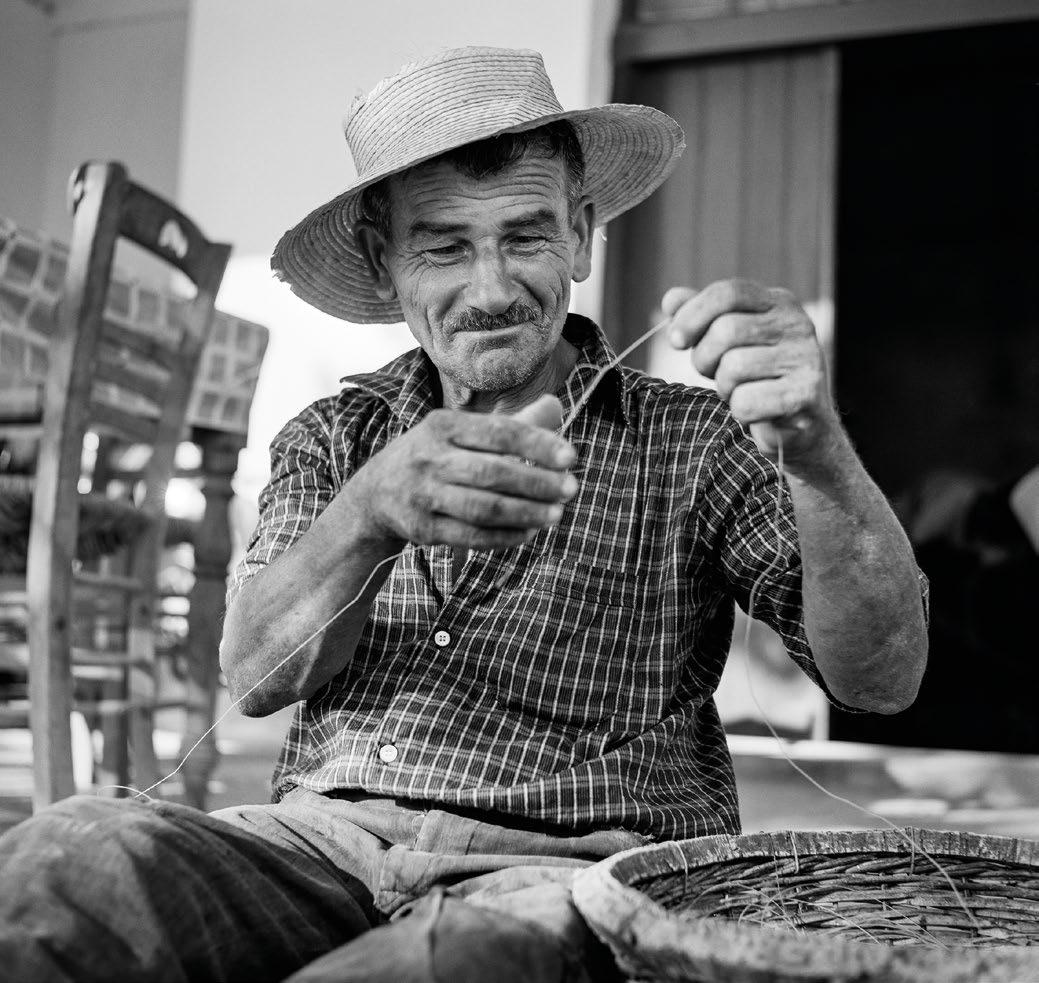
Μύκονος, 1955. Ψαράς / Mykonos, 1955. Fisherman
1954 -1955.
| Paros, 1954–1955. The chapel of Saint Nicholas the Seafarer
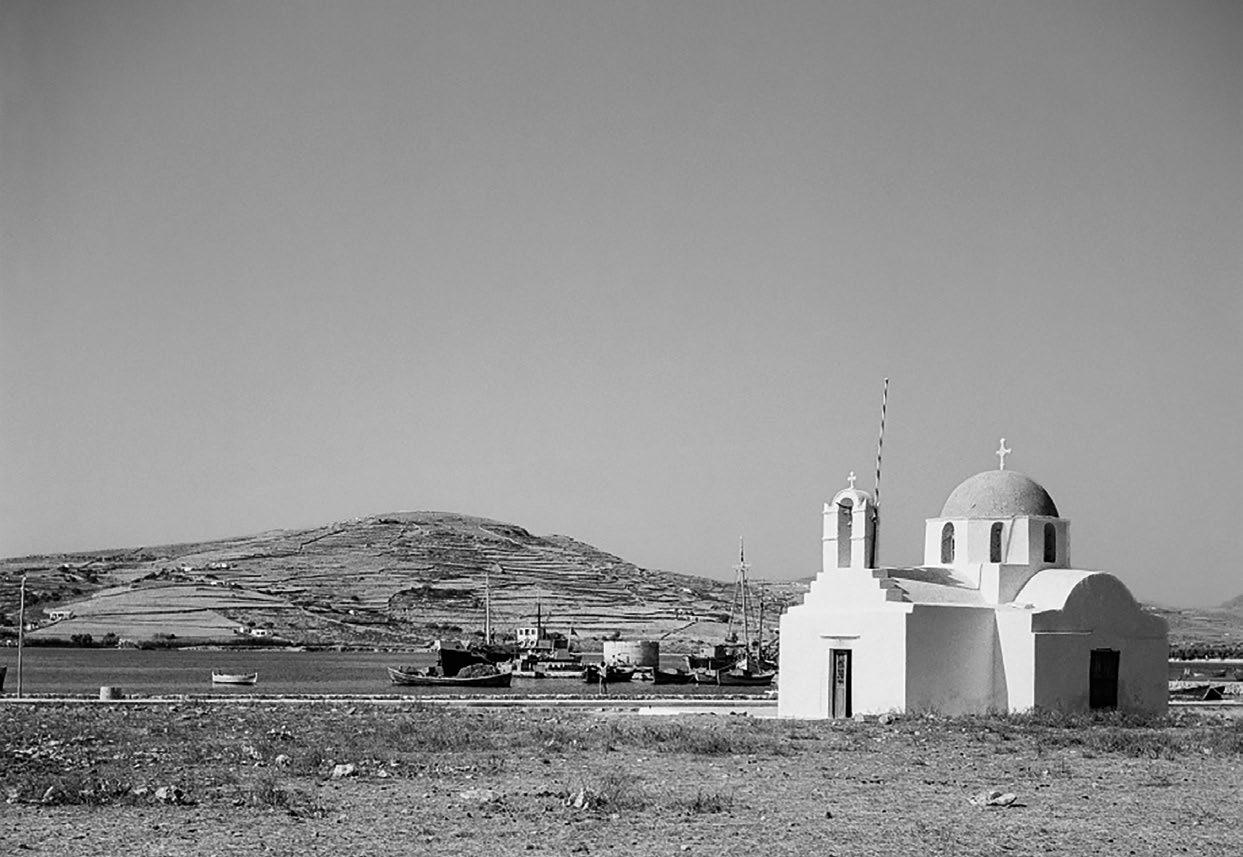
Sorry, but two places come to mind at the same time! Santorini and Mykonos. Santorini was one of the first islands I visited when my brother and I first came to Greece in 1954. Our host’s family was originally from Santorini, and soon after our arrival we headed there. I had no idea such a place existed in the Aegean. I had studied geology and was familiar with marine calderas, but I had never seen one. Of course, our visit in 1954 preceded the devastating earthquake of 1956, so I had the opportunity to photograph the island before 80 percent of the structures were destroyed.
As for Mykonos, I didn’t have the opportunity to visit until 1955. Recently I found letters I had written home in the hours after my arrival. I was struck by the beauty of the island, by the hospitality, and by the deep religiosity of its inhabitants, as reflected in the large number of churches and religious festivals.
When you look at these images from the 1950s and 1960s today, do they feel like they belong more to you, or to a Greece that has since been lost?
Both, really. In some cases, they evoke very specific memories. In others, they simply document a way of life that has disappeared.
«The greek islands are a wonderful example of self-sufficiency».
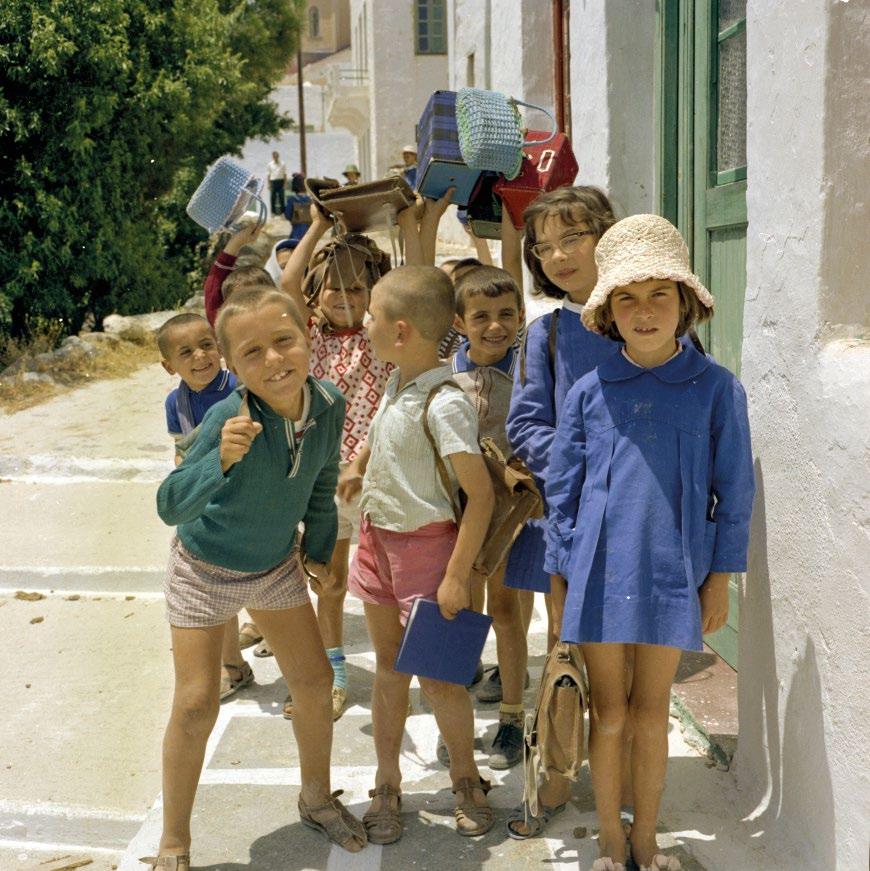

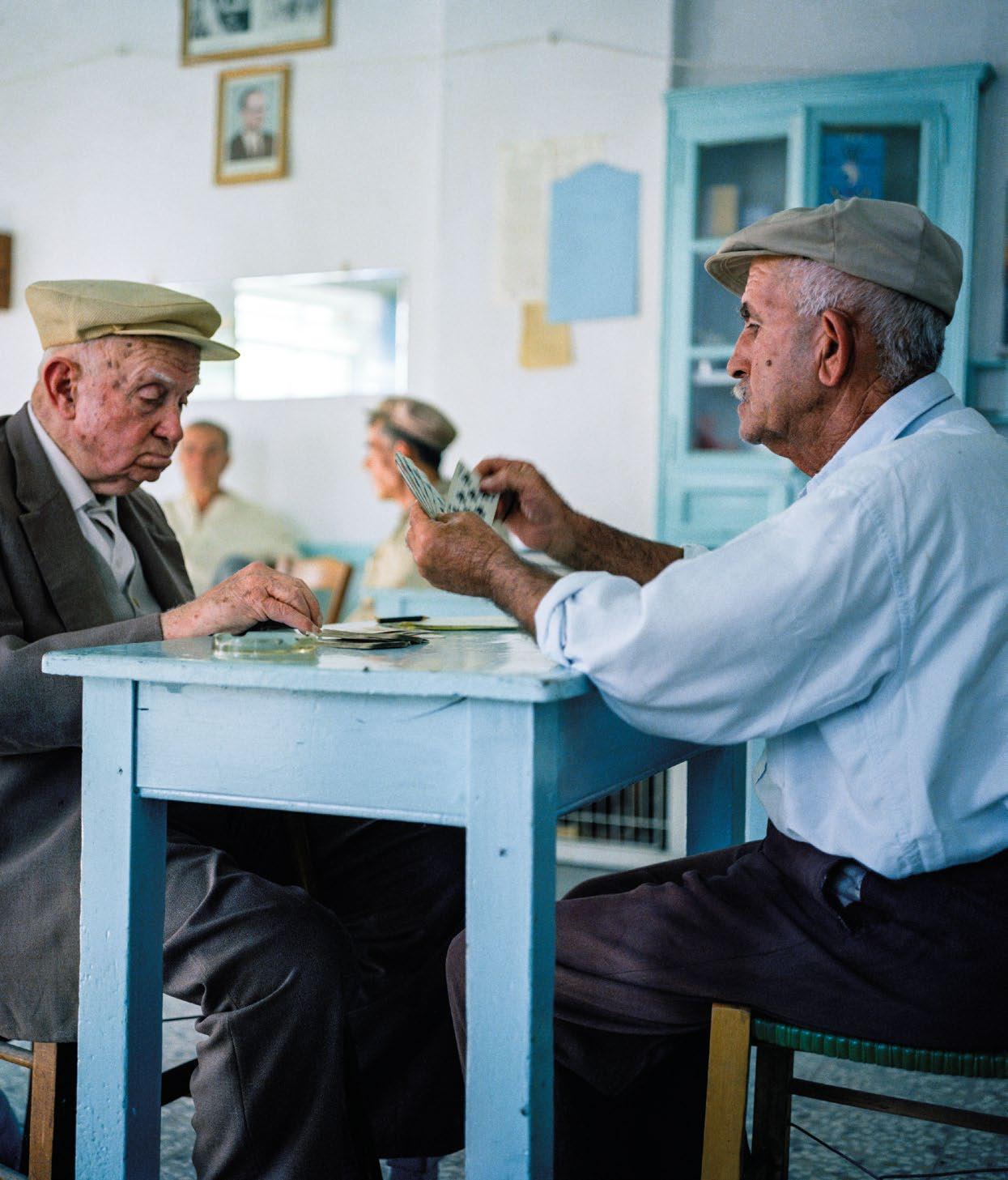
1965 / Kasos, 1965
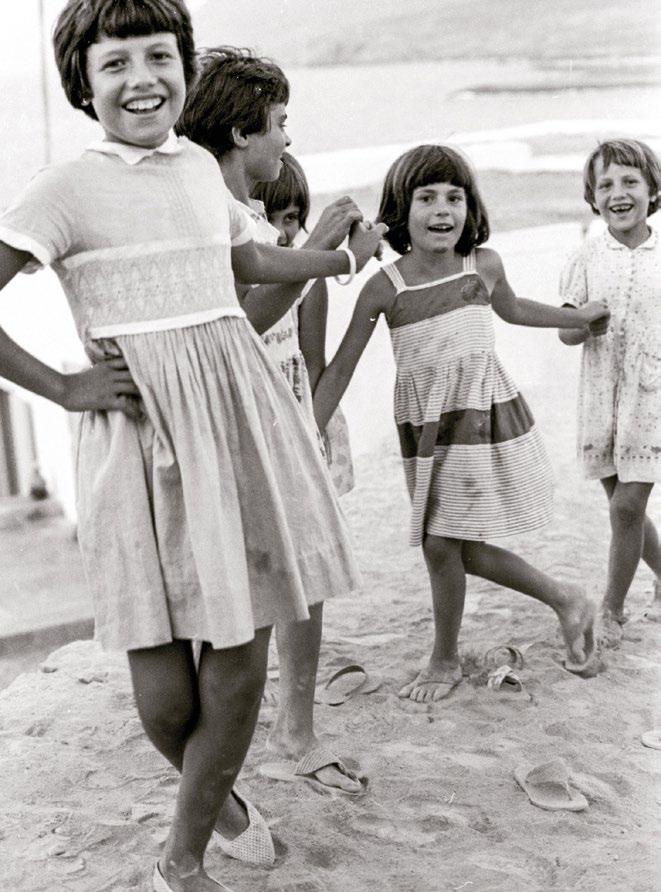
For Mykonos: «I was struck by the beauty, the hospitality, and the deep religiosity of the island».
As a foreigner in Greece at that time, what did you notice that perhaps the Greeks themselves could not see?
Sometimes, when I would comment to a Greek on the beauty of the country, I would get the response of rubbing fingers together and saying, “Yes, but poor.”
In your work, the Aegean appears not only as a landscape, but almost as a character. What role did the sea play in the way you photographed? Of course, the sea was everywhere, and many of my photographs show people interacting with it. The sea certainly becomes, as you say, a “character” when you are at sea in 8 Beaufort.
There is a sense of simplicity in your images, almost a feeling of self-sufficiency. What did that Greece teach you about what it means to have “enough”?
The greek islands are a wonderful example of self-sufficiency. Imagine the era before motor ships and modern means of transport, and the need to have water supplies and agricultural land sufficient to feed the population. It required resourcefulness and a great deal of physical effort. The terracing speaks volumes.
Is there a person you photographed whom you have never forgotten? What stayed with you from that encounter?
There are many examples, but one stands out. It was Father Gregory, the lone monk who maintained the monastery in the Strofades single-handedly for 39 years. Together with Katerina Lymperopoulou, we made a book about him, The Last Monk of the Strofades, which received an award from the Academy, something we are very proud of.
If you were to return today to the same place where you took one of your favourite photographs, would you feel the need to photograph it again, or to leave the image as it is?
I would probably photograph it again. To create a record of change or to evoke a memory.
Seven exclusive boutique suites, each with its own private pool and uninterrupted ocean views. Designed for discerning travelers seeking privacy, serenity, and elegance—this is beachfront living at its most sublime.
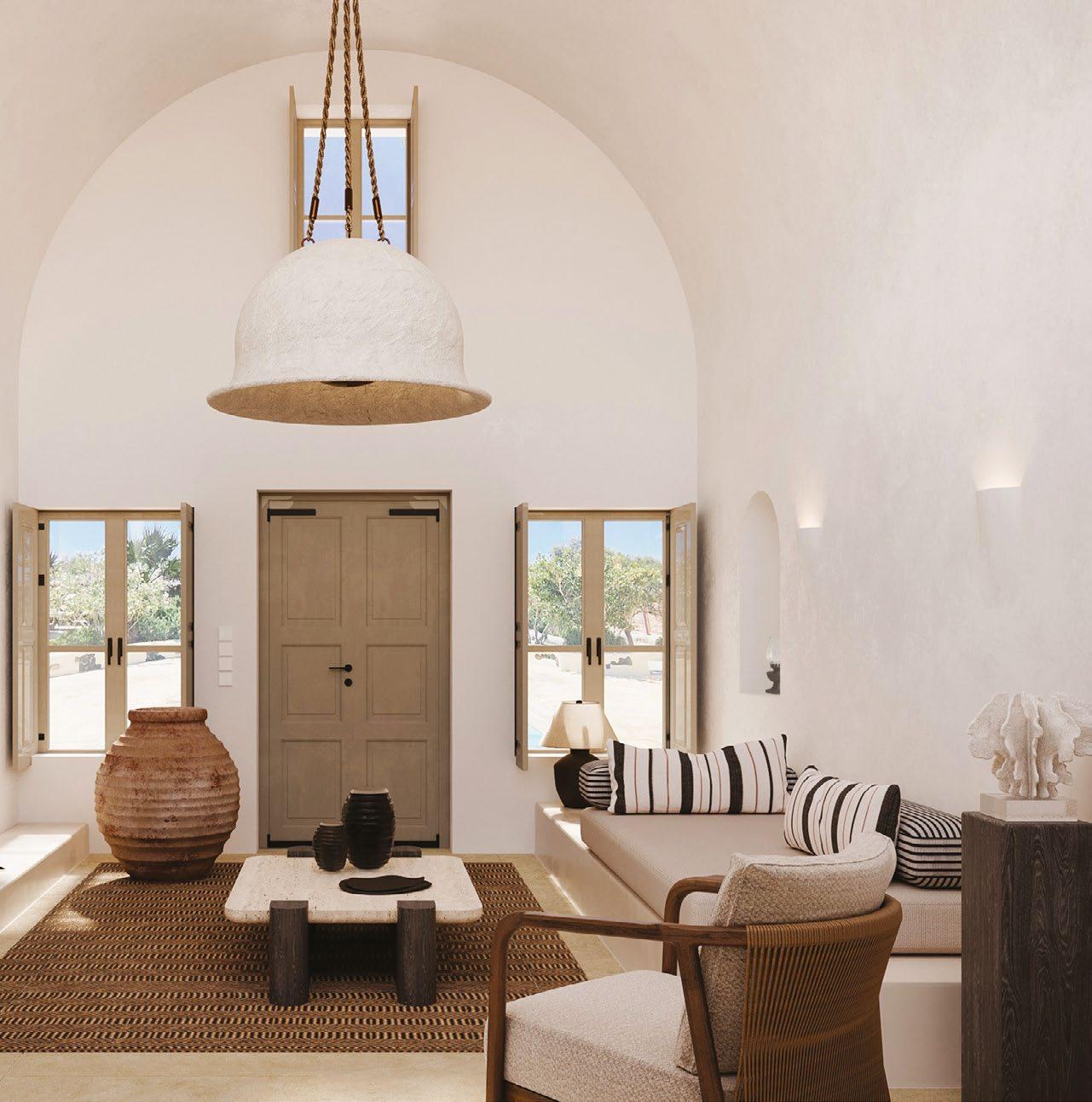
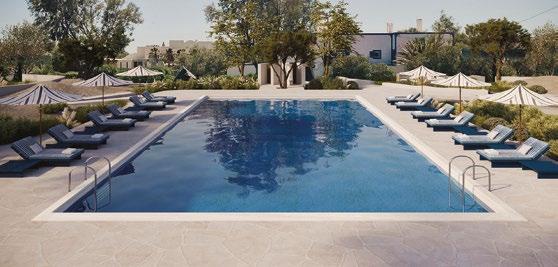
1970 / Chalki, Naxos –The Parava family,
Robert A. McCabe’s photographic album titled Aegean Memories /
is published by Patakis Publishers. The bilingual edition brings together 300 photographs from his travels across the Aegean beginning in 1954, offering a complementary visual narrative of his photographic journey.
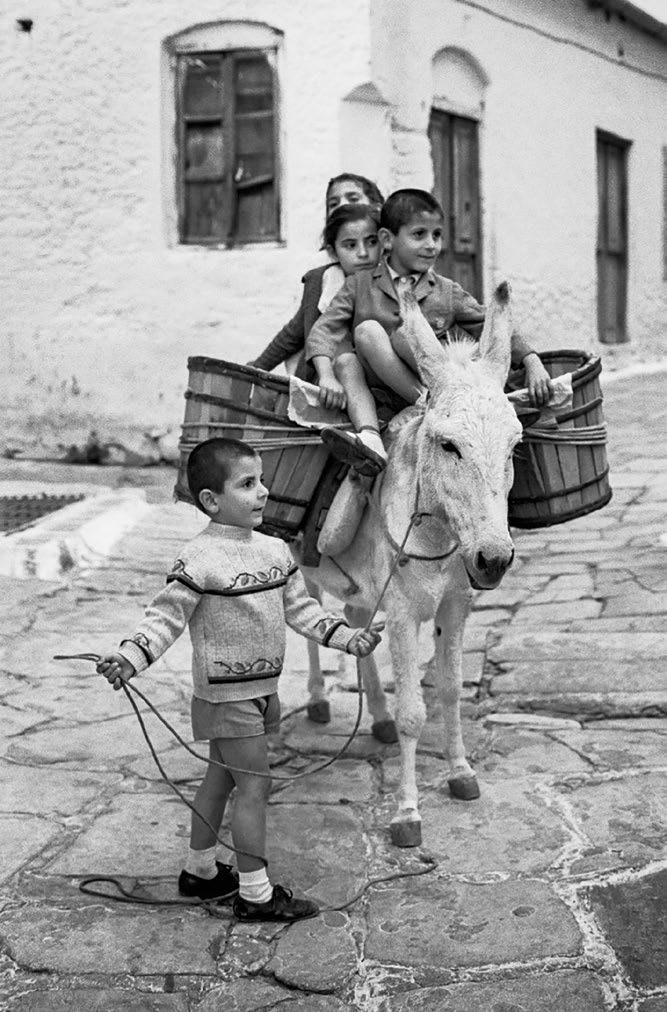
If your work were a journey by boat through the Aegean, what would be its first and its final stop?
The first stop would be Sounion, with a pause in the shelter of the promontory of the Temple of Poseidon if the winds were strong. The final stop would be Kastellorizo.
Which image from your work would you want someone to encounter “from the deck” of a boat, as they approach an island?
The Kasos dancers. That was the welcome I received when I first visited Kasos in 1965.
What did Greece teach you that no other country could have?
The value of family.
INFO
MEMORIES FROM THE AEGEAN BY ROBERT McCABE
March 28 – September 30, 2026
Art Space Porto Aoussa, Naoussa, Paros
The exhibition is hosted by the Environmental and Cultural Park of Paros. Curated and designed by Kostas Vidakis and Maria Somaripa.
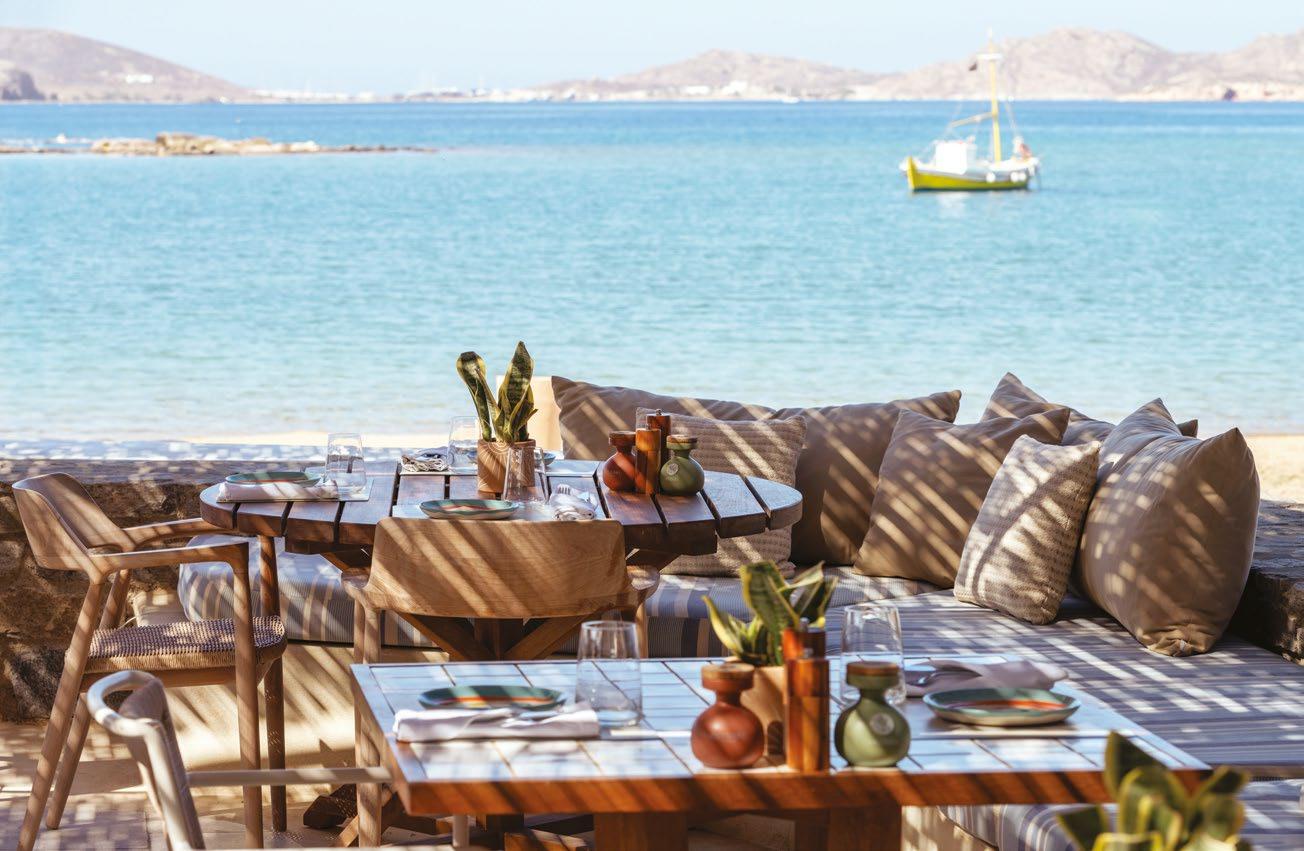
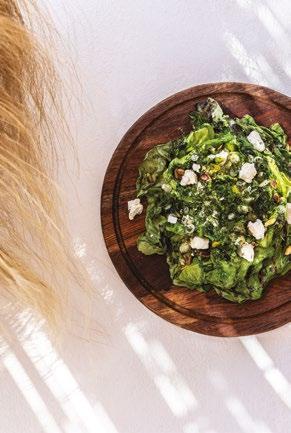
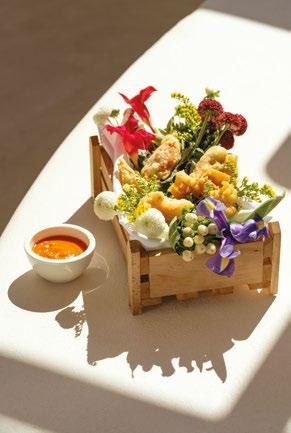
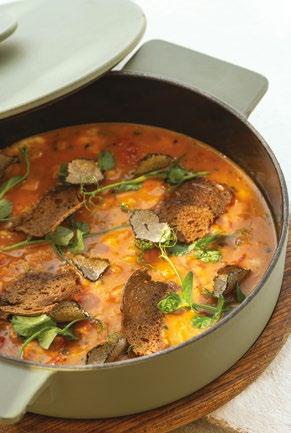
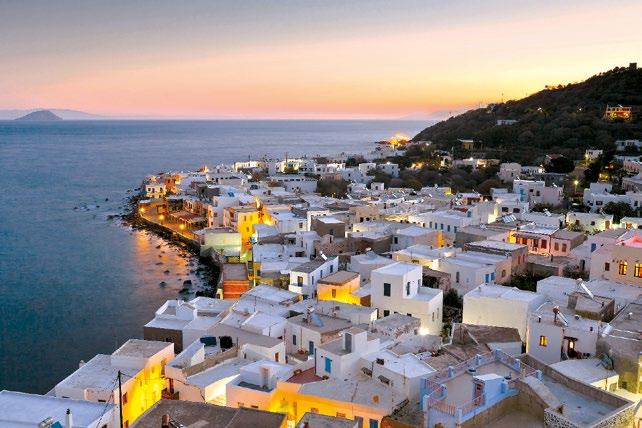
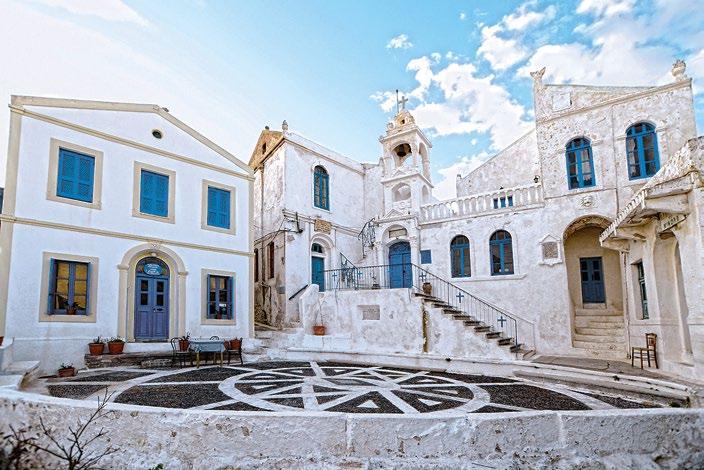
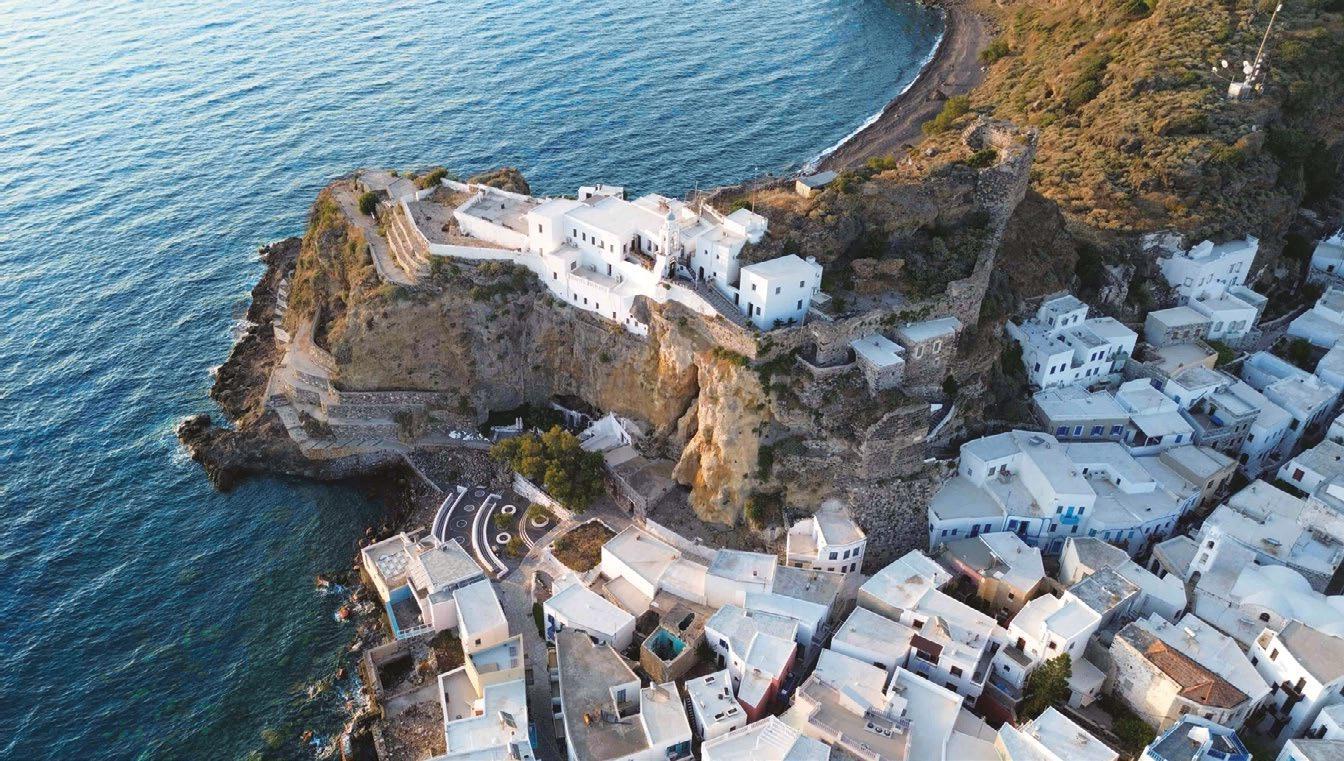
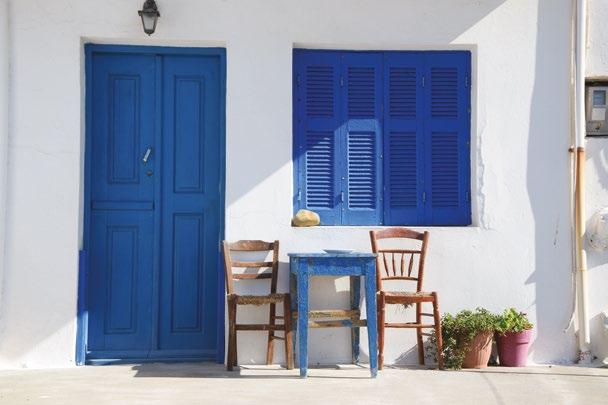
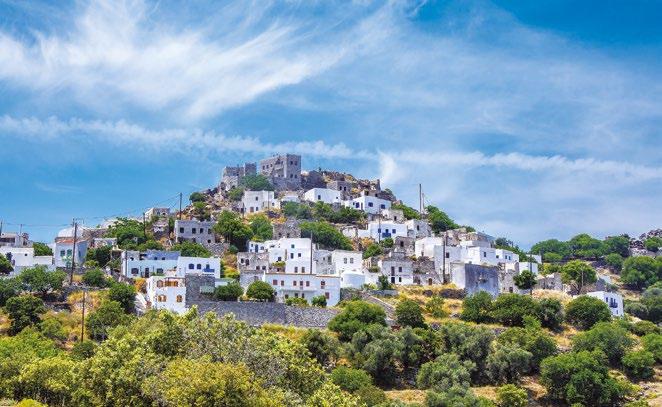
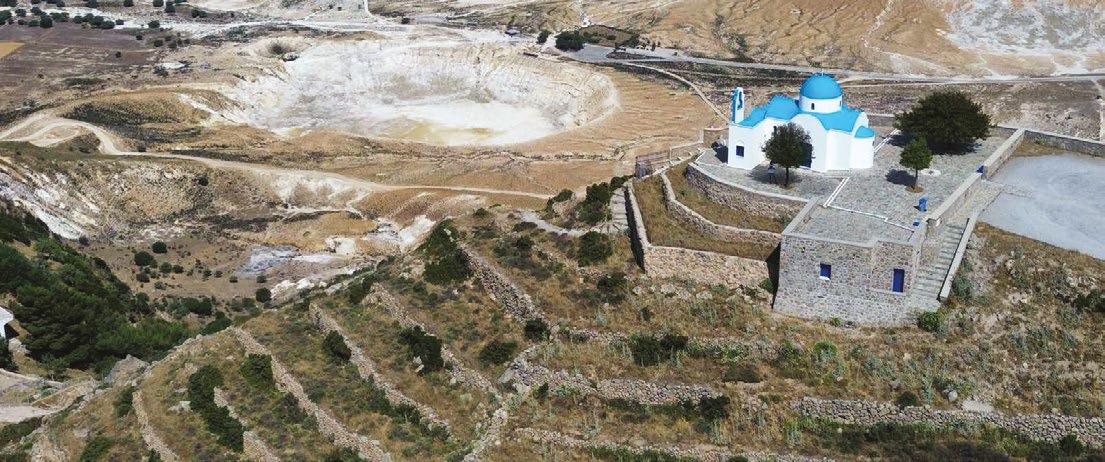
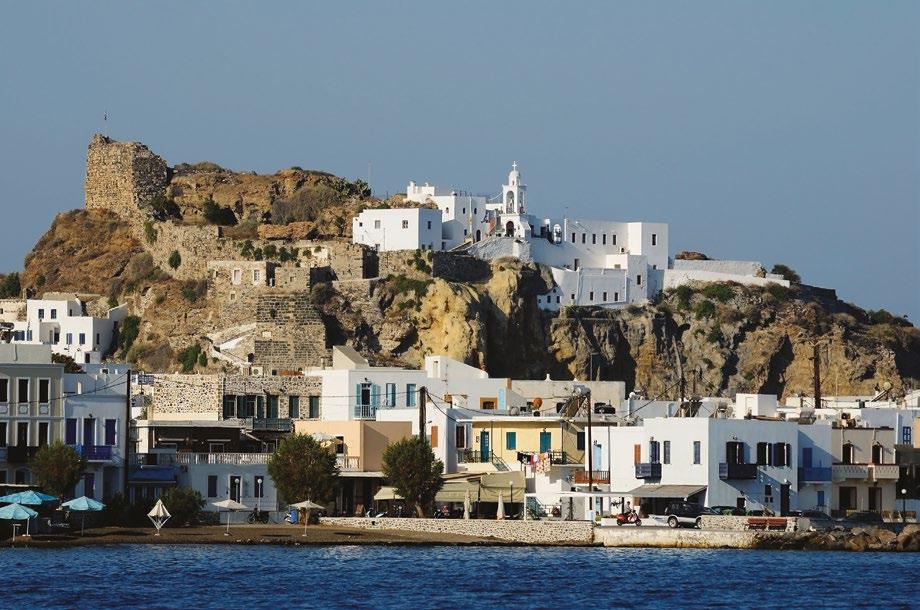
Located in the southeastern part of the Aegean Sea, this small volcanic island offers an unforgettable experience to those seeking authenticity, natural beauty, and the charm of traditional Greek island life – all without the crowds.
Nisyros is one of the most remarkable volcanic islands in the Mediterranean. The entire island forms a natural geological monument and has been designated as a Geopark Candidate for UNESCO’s Global Geoparks Network.
Nisyros Geopark showcases outstanding volcanic landscapes, impressive caldera views, unique geological formations, and a wide network of enjoyable trails. At its heart lies the Stefanos Crater, one of the largest and most accessible hydrothermal craters in the world, where visitors can safely walk on warm volcanic ground still shaped by the forces of nature.
According to legend, Poseidon created Nisyros by breaking off a piece of Kos and throwing it at the giant Polyvotis, imprisoning him beneath the earth—his struggles said to cause the island’s tremors to this day.
Inhabited since prehistoric times, Nisyros flourished as a city-state in the 4th century BC and later became part of the Roman and Byzantine empires. The impressive Paleokastro, an ancient acropolis with 2,600 years of history, and the medieval Knights’ Castle above Mandraki, reflect the island’s rich and layered past.
Today, Nisyros has around 1,000 permanent residents spread across four traditional villages—Mandraki, Nikia, Emborios, and Pali. Local life blends agriculture, fishing, volcanic mining on nearby Yali islet, and sustainable tourism. The island is also known for its folk art, embroidery, traditional dialect, and vibrant diaspora communities around the world.
Visitors to Nisyros can explore thermal springs, Byzantine churches, hiking paths, and breathtaking vistas from villages perched above the caldera. The emphasis on preserving both natural and cultural heritage is at the core of the Geopark’s mission.
Nisyros invites you to experience a destination where the earth’s energy, ancient myths, and authentic Aegean life come together in perfect harmony.
nisyrosgeopark
Nisyros Geopark

Three galleries, three different views of contemporary Athens
ATHENS’ CONTEMPORARY ART SCENE DOES NOT EXIST ONLY WITHIN ITS MUSEUMS. IT LIVES IN ITS NEIGHBOURHOODS. ON A STREET IN PSYRRI WHERE GRAFFITI CHANGES FROM WEEK TO WEEK, IN AN INDUSTRIAL SPACE NEAR THE PORT OF PIRAEUS, INSIDE A NEOCLASSICAL BUILDING AT THE FOOT OF THE ACROPOLIS.
WE FOLLOW A SMALL ROUTE THROUGH THREE GALLERIES IN ATHENS AND WE TALK TO SOME THE PEOPLE WHO SHAPE THE CITY’S CONTEMPORARY CULTURAL IDENTITY.
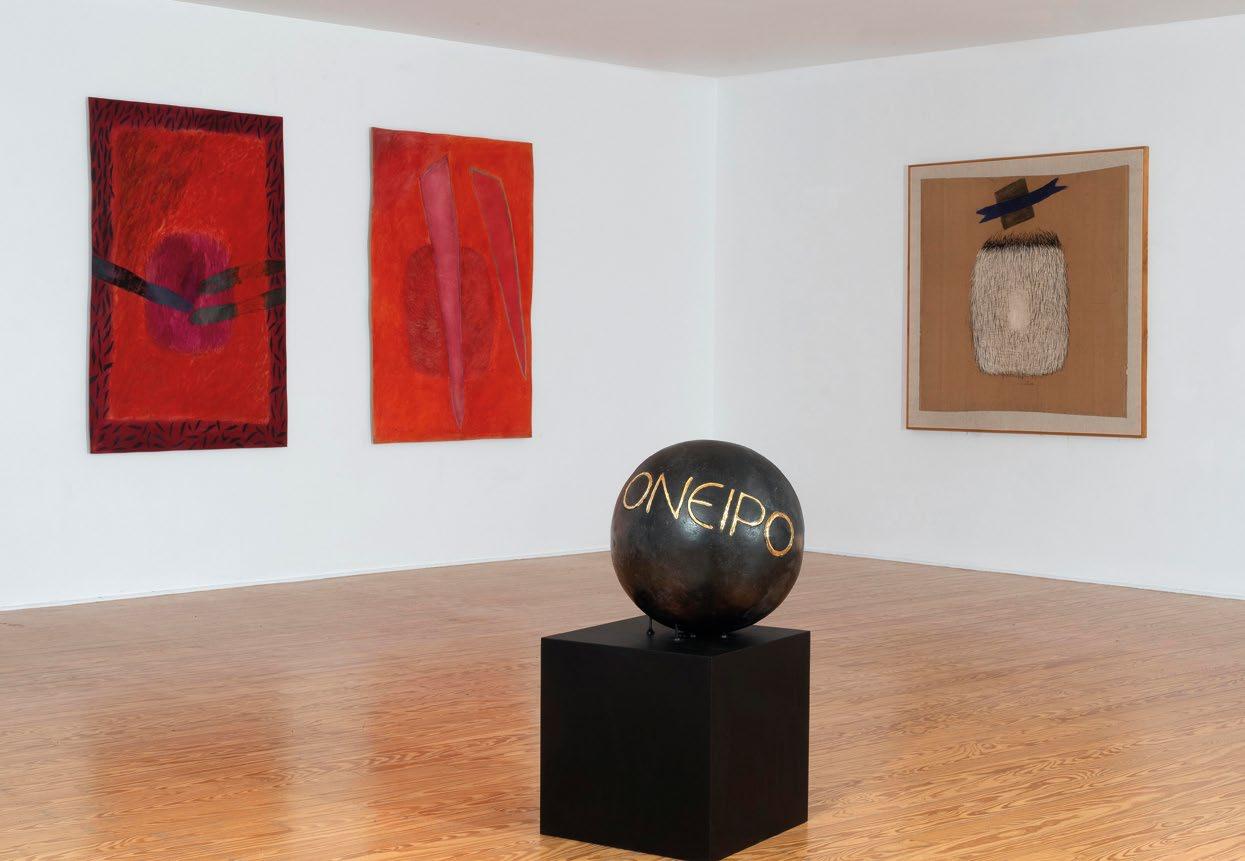
www.aaart.gr A.ANTONOPOULOU.ART
With a presence of nearly four decades in Psyrri, A.ANTONOPOULOU.ART is one of the historic galleries of the contemporary Athenian art scene. Angeliki Antonopoulou continues to shape the gallery’s programme around social, political and environmental issues, always keeping at its core the need for meaningful dialogue through art.
“Ιt’s a historic gallery - forty years and counting. And I would add: with consistency in what I support, namely Contemporary Art. In recent years we have presented more exhibitions dealing with social, political and environmental issues, while over time I have also expanded into photography, printmaking and other perhaps lesser-known forms of art”.
“I want art to align with my ideas and visions. To raise questions and awaken consciences. Through art I learn a great deal about people - their existential, social and climate anxieties, their desires and disappointments”.
“One more thing that matters greatly is to have communication with the artist in the same ‘language’. An artist may be the best there is, but if there is no real understanding between us, I am not interested. As I grow older, I can no longer compromise either my standards or my goals and collaborations”.
“A walk through the historic centre, the graffiti on the walls before they are painted over, a stop at my gallery, at the 1907 bakery on Sarri Street and at one of the small, charming traditional eateries in the area”.
“I am happy because there is activity, movement, new spaces and new people who follow and buy art. There is EMST with a continuous flow of exhibitions and a large audience, the National Gallery, Onassis Stegi, the Stavros Niarchos Foundation, the Benaki Museum, the Museum of Cycladic Art and, until recently, NEON. Honestly, it makes me very happy”.
Current exhibition: Giannis Tzortzis, Greenland: Blue Ice | Environmental photography exhibition under the auspices of the Embassy of Denmark in Greece | Until 13/06/2026
Aristofanous 20, Psyrri 105 54, Athens
T: +30 210 3214994
Curchod: Lotteria
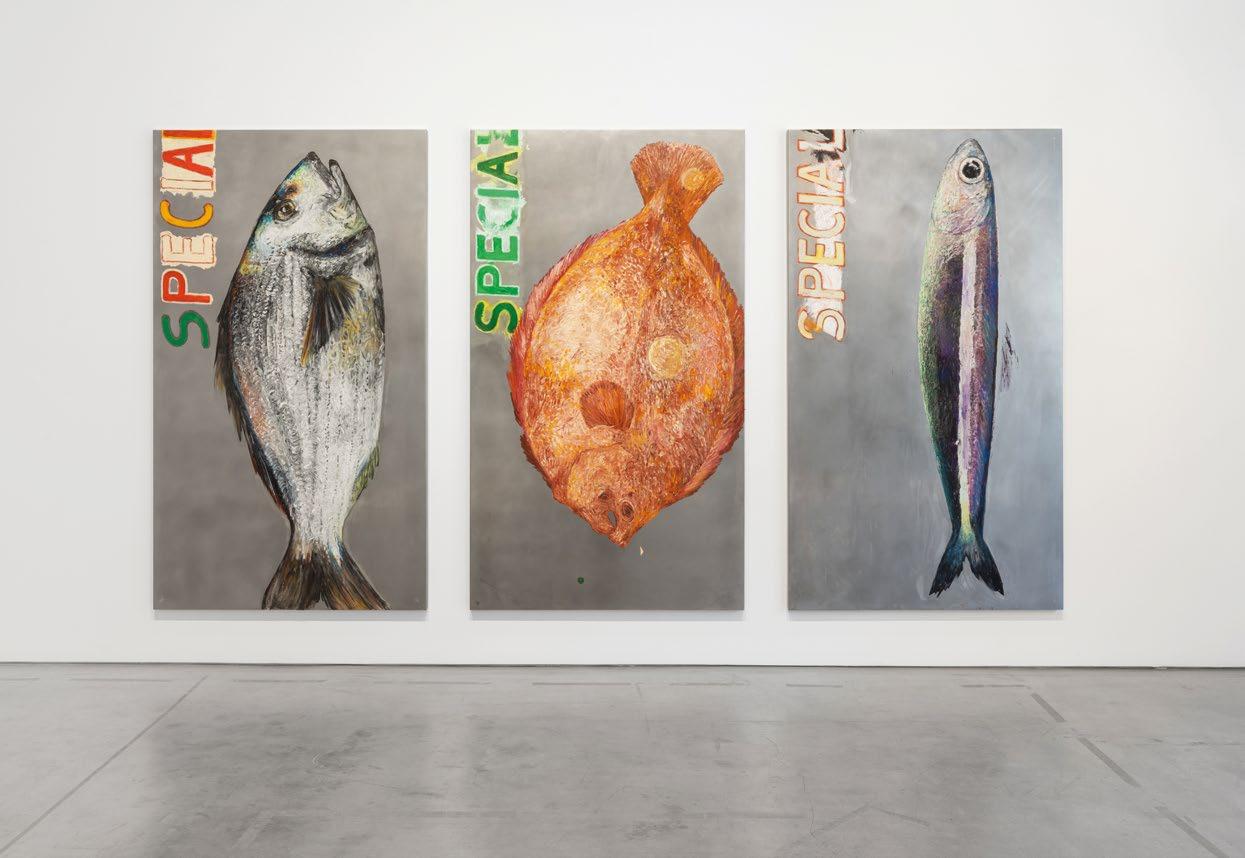
The Intermission, 20
2026 Installation view, Henry Curchod: Lotteria at The Intermission, 20 May - 1 Augoust 2026
Artemis Baltogianni created THE INTERMISSION as a contemporary art space with an international orientation, which in recent years has become one of the most interesting points of Piraeus’ emerging art scene. Between exhibitions, screenings, discussions and projects, the gallery functions as a meeting point for different artistic practices, but also as an opportunity to rediscover the city itself.
“The Intermission is a contemporary art space with an international orientation, functioning as a meeting point between different generations, geographies and artistic practices. Our programme combines young and emerging artists with historical or already established figures of contemporary art, often prioritising artists who are being presented in Athens for the first time”.
“At the same time, it operates as a space for community, exchange of ideas and interdisciplinary dialogue through talks, screenings and projects. Recently, we launched the Sonic Histories series, which explores the relationship between music, society, the city and cultural history, expanding the dialogue of the space beyond the field of visual arts”.
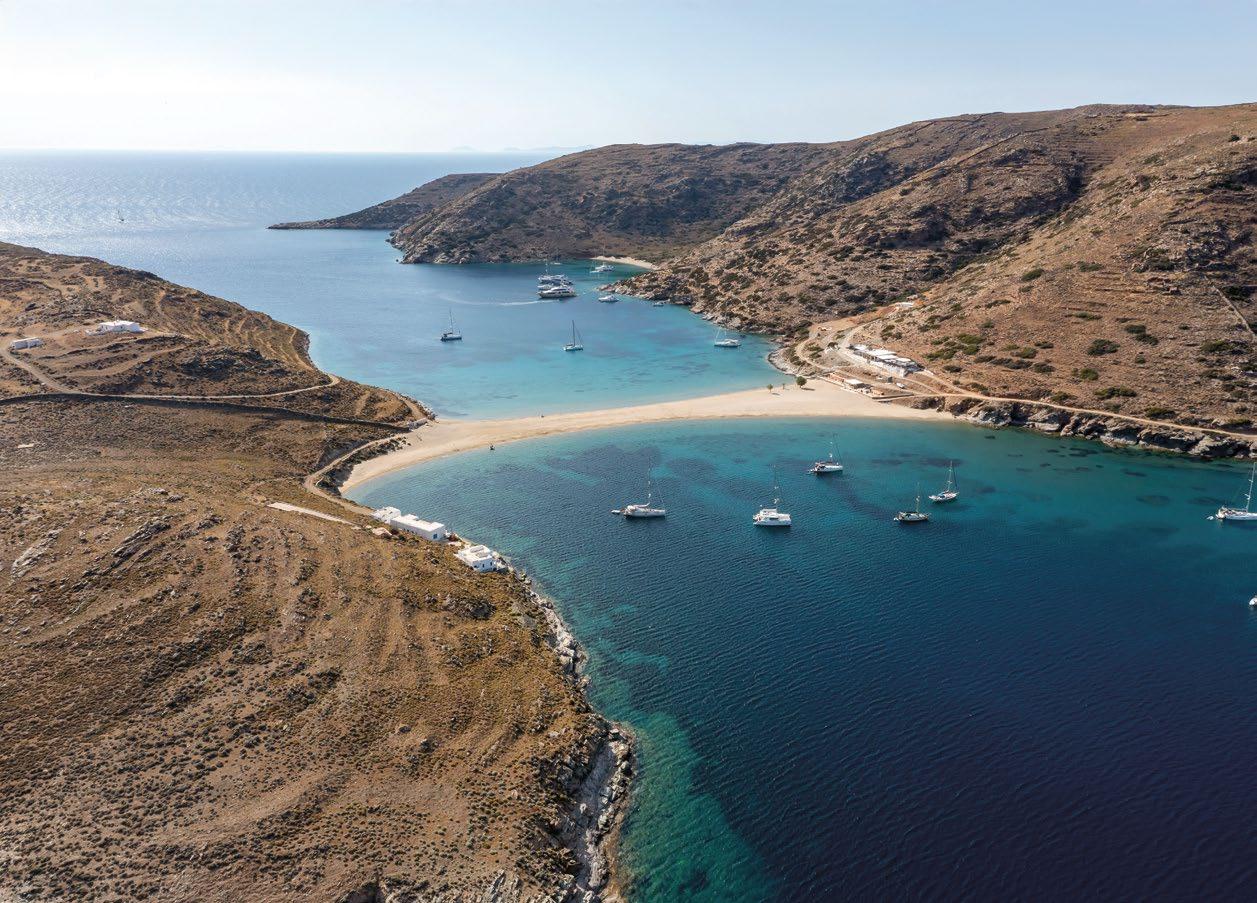
Fast getaway:
Kythnos from Piraeus
Just 1 hour & 35 minutes!
Kythnos embodies the timeless elegance of the Cyclades. It is known as the island of simplicity. Minimal, bright, and serene. A destination that wins over travelers with its true character: unpretentious, unexplored, and stunning. And now, thanks to SEAJETS, it’s closer than ever.
With daily routes from Piraeus, the Champion Jet 1 takes you to Kythnos in just 1 hour & 35 minutes. A unique destination awaits you, perfect for short getaways or extended holidays, for relaxation or adventure.
Discover the iconic Kolona Beach, unwind in the thermal springs of Loutra located right by the sea, and wander through the narrow alleys of Chora and the traditional village of Dryopida, with its tiled roofs and underground cave. Don’t miss a visit to Panagia Kanala, one of the Aegean’s most important pilgrimage sites, nestled among pine trees and the sea. This island is an authentic Cycladic destination, boasting over 100 beaches, hiking trails, and genuine local flavors.
SEAJETS takes you to Kythnos, an authentic Cycladic destination, with comfort, speed and daily service.
Πολυδεύκους 37Α,
Henry Curchod, Lotteria |
01/08/2026
18545 | T: +30 210-4131504 www.theintermission.art
“I am interested in artists who open up new ways of thinking and reading. Sometimes this has to do with how groundbreaking their work is; at other times with the consistency and quality of their practice. Since I also live and work in America, there is inevitably an ongoing dialogue with the Los Angeles scene, something that influences the way I shape the gallery’s programme”.
“What makes our neighbourhood special is primarily Piraeus itself. It is a city with a strong identity, where the port, industrial history, residential life, small shops and a younger generation of creative spaces and people all coexist”.
“You should not miss the feeling of the city itself — the view of the port, the streets around the gallery, the energy created by the coexistence of these different worlds. Piraeus has an authenticity and an atmosphere that are difficult to describe and very different from the rest of central Athens”.
“Athens’ contemporary scene is going through a very good period right now. There is great momentum, new initiatives, spaces and collaborations, while the scene has become more diverse and international - both in terms of artists and programmes and in terms of audiences”.
Current exhibition: Henry Curchod, Lotteria | Until 01/08/2026
The artist’s first solo exhibition in Piraeus.
Polydefkous 37A, Piraeus 18545 | T: +30 210 4131504 www.theintermission.art
In the heart of Athens’ historic centre, just steps away from the Acropolis, BERNIER/ELIADES has for decades been one of the most important points of reference for contemporary art in Greece. With an international presence and long-standing collaborations with major artists and movements, the gallery continues to connect the contemporary Athenian art scene with the international artistic dialogue.
An international journey
“Bernier/Eliades was founded in Athens in 1977 and has since maintained a dynamic presence in the field of contemporary art. Through its consistent participation in international art fairs and an international network of collaborations, the gallery has played a decisive role in introducing important movements such as Arte Povera, Minimalism and Conceptual Art to the Greek public.”







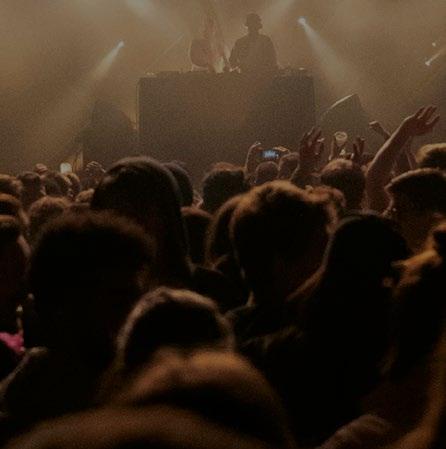

Tony Cragg,
Schütte
Mario Merz,
Tindara Spartà, MAD HOUSE | Μέχρι 01/07/2026
Επταχάλκου 11, Θησείο 11851, Αθήνα | Τηλ: +30 210 3413935-7 www.bernier-eliades.com
“Since its early years, the gallery has maintained long-standing collaborations with important figures of contemporary art such as Giovanni Anselmo, Tony Cragg, Mario Merz, Marisa Merz, Thomas Schütte and Franz West, while continuously seeking out and supporting emerging artists.”
“The gallery is located in Thissio, just below the Acropolis. Behind its imposing neoclassical façade, the exhibition space follows the minimal white cube aesthetic, creating the ideal environment for contemporary art exhibitions. Hidden inside is also a courtyard oasis, an ideal stop after a walk through the neighbourhood and the nearby archaeological sites.”
“Athens’ contemporary art scene today is particularly dynamic, open and outward-looking. In recent years, the city has evolved into a meeting point for artists, curators and institutions from different countries, while maintaining a strong local identity. Despite the challenges, there is significant creativity and a willingness to experiment, especially among younger artists and independent spaces. What makes it interesting is that it remains less ‘homogenised’ compared to other major art capitals; there is still room for risk, personal voices and meaningful dialogue around art.”
Current exhibition: Tindara Spartà, MAD HOUSE | Until 01/07/2026
The artist’s first solo exhibition in Greece.
11 Eptachalkou St., Thissio 11851, Athens | T: +30 210 3413935-7 www.bernier-eliades.com
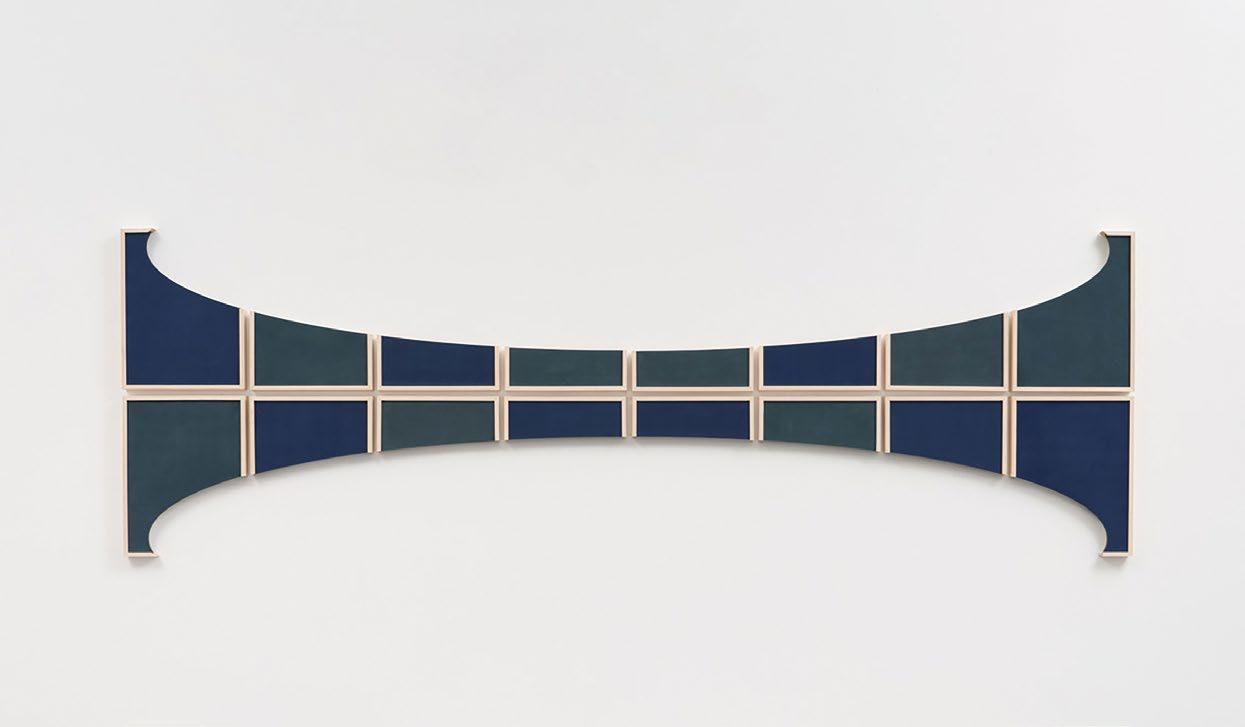
Martina Quesada | If This is a Space (mirrored horizon), 2025
Courtesy of the artist and Bernier/Eliades Gallery
Martina QUESADA | If This is a Space (mirrored horizon), 2025, Glass, wood, pigment on paper, 84,5 x 261,5 cm
Courtesy of the artist and Bernier/Eliades Gallery


Yiorgos Mo on the new vintage culture city’s and the contemporary aesthetic
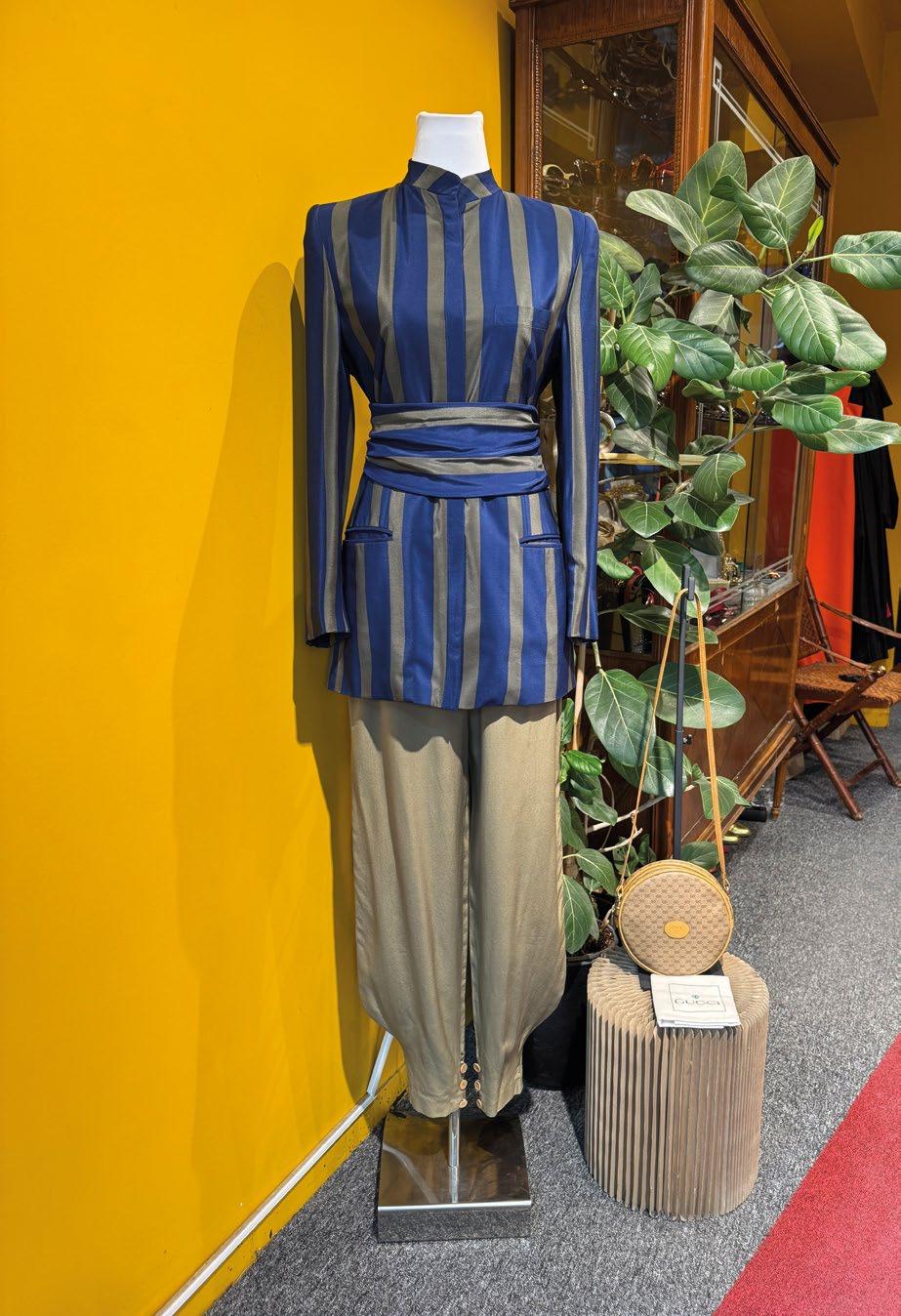
Vintage was once the domain of a small circle of insiders. Today, it is part of a broader shift in the way we perceive clothing and its value. In contrast to the logic of fast consumption, a new generation is rediscovering the joy of objects that offer longevity, quality and history.




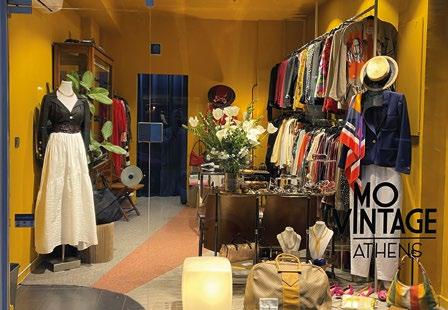
Mugler, Issey Miyake, Kenzo, Prada, Chloé, Gucci και Romeo Gigli
Coffee: Cafe Lotte,
Soundtrack: Roller Girl – Anna Karina
Vintage
Within this landscape, places such as Mo Vintage Athens reintroduce the past as a contemporary and remarkably relevant choice.
Vintage Yves Saint Laurent jackets, Giorgio Armani suits from the 1970s and 1980s, and rare pieces from major fashion houses are given a new life through a highly personal curatorial approach that places greater emphasis on quality, craftsmanship and a sense of time than on designer labels alone.
Founder Yiorgos Mo personally selects every item that enters the store. What interests him is not simply a designer’s name or the market value of a garment, but its aesthetic qualities, the era it comes from, the quality of its construction and, above all, its condition. “I am not interested in presenting a piece simply because it bears a famous signature,” he says. “I only choose pieces that I consider truly exceptional.” For him, a great vintage garment represents far more than a trend; it embodies the craftsmanship, care and quality of another era.
The store specialises primarily in creations by Yves Saint Laurent and Giorgio Armani from the 1970s and 1980s, decades he considers pivotal in the history of fashion. Its racks also feature pieces by Thierry Mugler, Issey Miyake, Kenzo, Prada, Chloé, Gucci and Romeo Gigli, garments made from natural materials such as silk, wool, cotton and cashmere, produced at a time when the founders of these fashion houses still maintained full creative control over their collections.
“My love for vintage clothing begins with an admiration for the fabrics, the stitching and the technical construction of that period,” he explains. “These are pieces made in Italy, France or Switzerland with a level of quality that is rarely encountered today.” Every time he acquires a truly remarkable piece, he admits that he still feels the same sense of awe he experienced when he first opened Mo Vintage Athens.
For him, vintage is not simply about fashion but about an entire culture built around quality, longevity and individuality. “Vintage is no longer a niche culture,” he says. “It has become part of Athens’ contemporary everyday aesthetic.” Perhaps that is why more and more young people today are searching for objects with history, character and a second life. Just like the garments he selects, his relationship with the city is rooted in the search for authenticity. His personal Athens is filled with small discoveries, images and routes that continue to gain value over time.
INFO
ATHENS NOTES | Yiorgos Mo's Athens
Favourite neighbourhood: Kynosargous Hill
Favourite time of day in Athens: Anafiotika at sunrise
Coffee: Cafe Lotte, Koukaki
Soundtrack: Roller Girl – Anna Karina
Vintage Philosophy: “Give clothes a second life and allow their cycle to continue”.
Μο Vintage Athens, 9 Veikou Street, Koukaki, Tel. +30 2114169278, Instagram: @mo_vintage_athens
BY PEPI NIKOLOPOULOU
In the summer of 1961, Maria Callas stepped onto the stage of the Ancient Theatre of Epidaurus as Medea, one year after her legendary appearance as Norma at the same venue. Behind this historic encounter stood a rare artistic collaboration that would leave an indelible mark on Greek culture. Callas, who had already reintroduced Luigi Cherubini’s Medea to 20th-century audiences as early as 1953, chose Alexis Minotis for the direction, a man deeply associated with ancient tragedy, while Yannis Tsarouchis created the sets and costumes for a production that balanced ancient drama and lyrical theatre in a truly unique way.
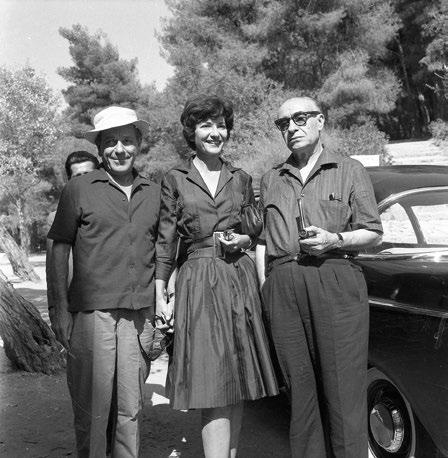

The production’s journey from Dallas and London to Epidaurus and finally La Scala in Milan was almost mythical. Critics at the time spoke of a “supernatural yet profoundly human Callas,” of Minotis’ bold direction, and of Tsarouchis’ unique handmade costumes. In Epidaurus, Minotis redefined the function of the production specifically for the open space of the ancient theatre, seeking, as he himself said, to restore “the function of myth according to the ancient model” without betraying Cherubini’s music.
Sixty-five years later, the Greek National Opera returns to that legendary moment. Through Alexis Minotis’ directing notebooks, Yannis Tsarouchis’ sketches, and the photographic material preserved from Callas’ performances in Epidaurus, the new production attempts to reconnect with the thread of that rare cultural encounter.
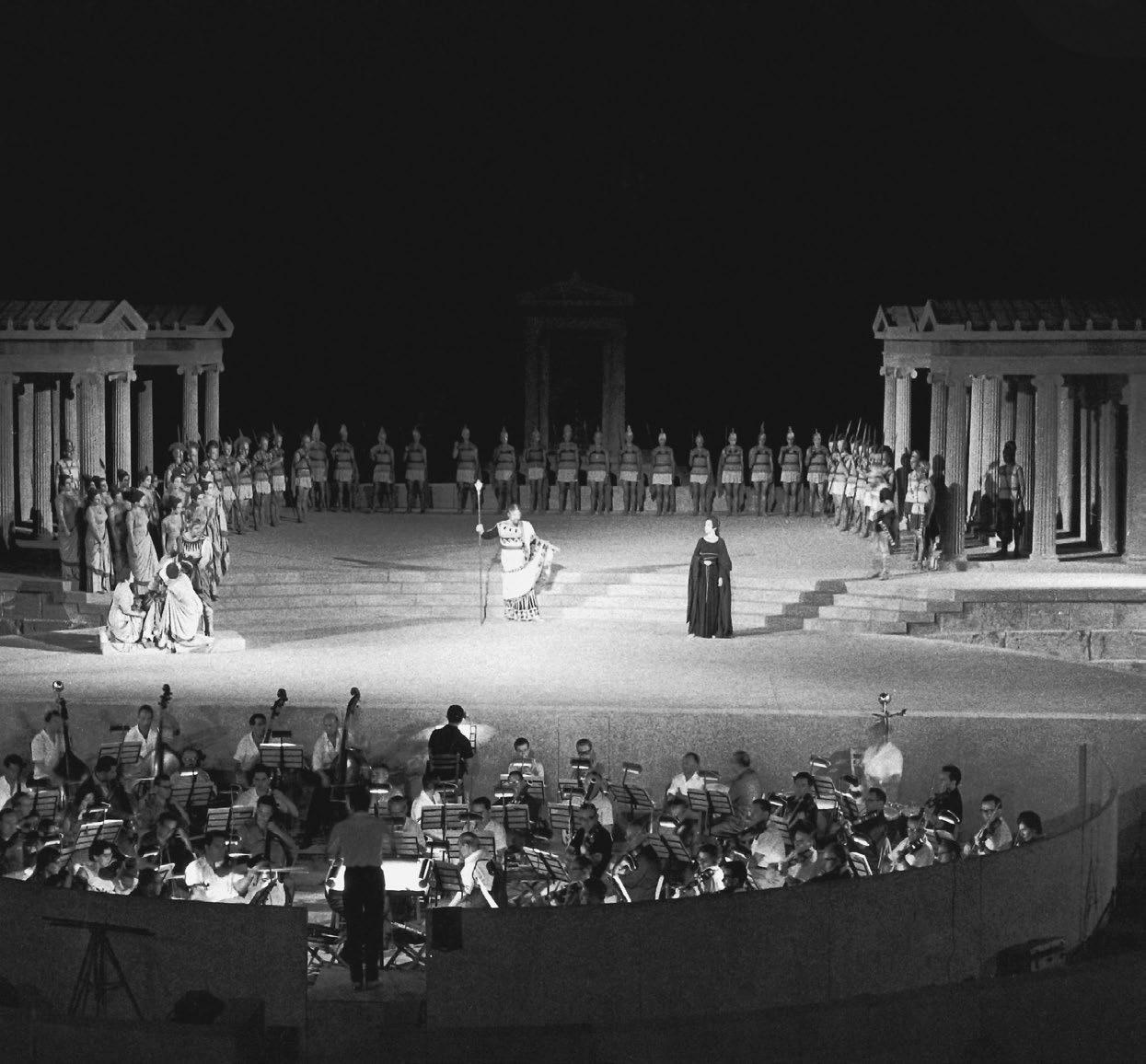
The Greek National Opera maps out a landscape of memory, passion, and female voices.
This new reconstruction by the GNO does not become trapped in nostalgia. Instead, it seeks ways to bring the intensity of that encounter into the present day. Director Panagis Pagoulatos, set designer Lily Pezanou, costume designer Tota Pritsa, and lighting designer Christos Tziogkas are called upon to approach an almost sacred cultural imprint without sterilizing it. In the title role, dramatic soprano Anna Pirozzi confronts one of the most demanding
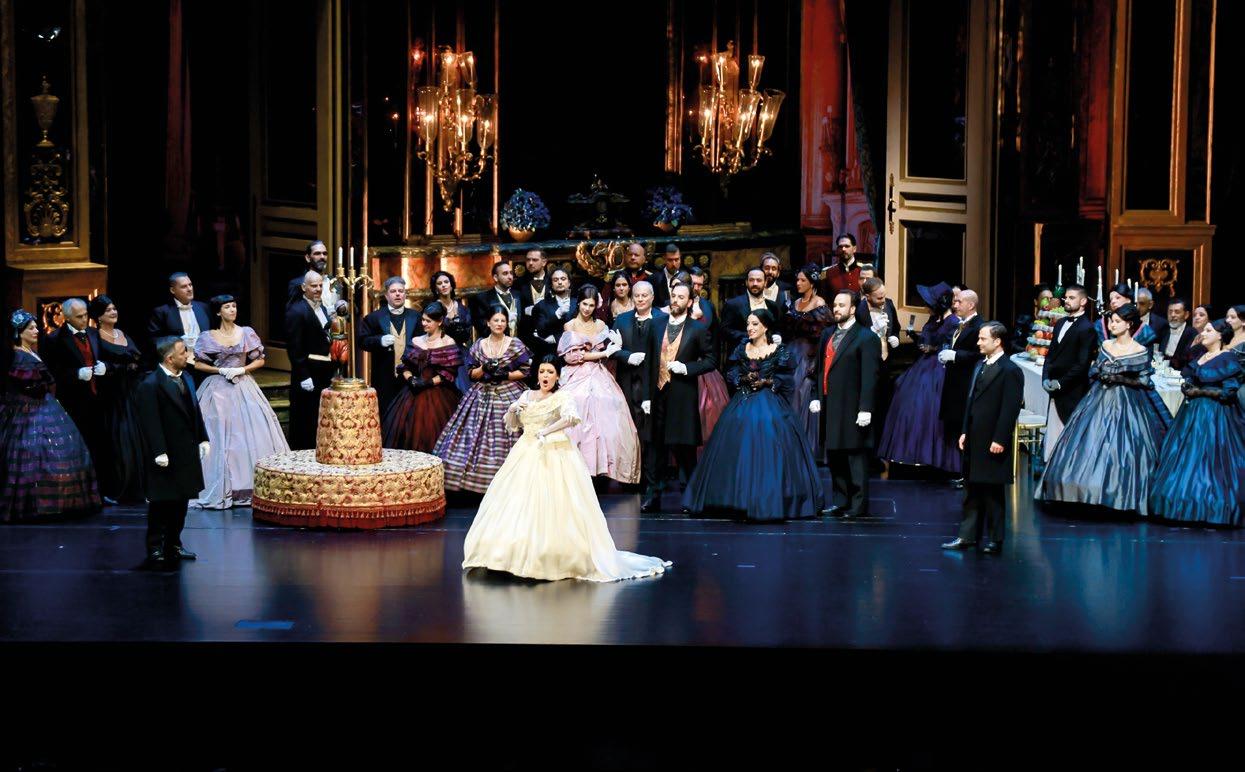
heroines of the operatic repertoire, inevitably carrying the shadow of Callas with her.
Following the closure of the Odeon of Herodes Atticus for restoration works, the Greek National Opera transfers its summer productions to the Ancient Theatre of Epidaurus, returning there for the first time in the 21st century and sixty-five years after the last opera presentation in the venue.
Following the highly anticipated Medea, Verdi’s La Traviata, the final production of the 2025/26 season, inaugurates a new era of summer performances at the Stavros Niarchos Hall, proposing a different viewing experience within the protected, almost velvety atmosphere of an indoor theatre.
Nikos S. Petropoulos’ iconic staging, returning to the GNO twenty-five years after its first presentation at the Olympia Theatre and following its triumphant tour in Thessaloniki and China, resembles an exquisitely crafted postcard from 19th-century France. Impressive salons, heavy fabrics, dazzling costumes, and the atmosphere of a Paris balancing between splendour and decay compose the world of Violetta Valéry.
Violetta is a woman trapped between love, social hypocrisy, and mortality. In La Traviata, Verdi writes almost directly onto the heroine’s body itself. Her voice transforms alongside her psychology: from the brilliant virtuosity and sensual freedom of the first act to the profound inwardness of the second. It is no coincidence that a work considered a failure


1,
Αίθουσα
at its 1853 premiere evolved into one of the most beloved operas of all time. La Traviata continues to move audiences because it speaks with rare immediacy about human vulnerability.
Then, in autumn, the Greek National Opera returns dynamically. From tragedy and romanticism, it moves into a world more allusive, playful, and tender. The musical performance Even If You Leave…, conceived and artistically curated by Dimitra Galani, sheds light on the multifaceted universe of Marianina Kriezi, a creator who managed to transform everyday life into poetry.
From Lilipoupoli to the songs that marked contemporary Greek discography, her writing always retained a rare sense of freedom. Tender but never naïve, ironic without cruelty, deeply emotional without melodrama, she could discover poetry in the small details most people overlook. Her lyrics did not speak only to children. They spoke to all those who continued to defend sensitivity, playfulness, and imagination within themselves.
Together with Savina Yannatou and Yiannis Palamidas, Dimitra Galani revisits these songs through new orchestrations and a “reworked” sound that highlights the lyricism and playful allusiveness of Kriezi’s writing.
From the primal tragedy of Medea to the fragile humanity of La Traviata and from there to the delicate poetic sensibility of Marianina Kriezi, the Greek National Opera constructs a triptych around the female voice, the trace that art leaves upon time, and our need to return again and again to the things that move us.
INFO
MEDEA
by Luigi Cherubini
As part of the Athens Epidaurus Festival 2026 20 June 2026 | Start time: 21:00
Ancient Theatre of Epidaurus
New production by the Greek National Opera Reconstruction of the historic 1961 production starring Maria Callas Historic 1961 production
LA TRAVIATA
by Giuseppe Verdi

18, 19, 21, 23, 24, 26, 28, 30 July 2026 | Start time: 20:00
Stavros Niarchos Hall
Stavros Niarchos Foundation Cultural Center
MUSIC THEATRE • NEW PRODUCTION
Even If You Leave…: Tribute to Marianina Kriezi
1, 3, 4, 7 October 2026 |Start time: 20:00
Stavros Niarchos Hall – Greek National Opera
Stavros Niarchos Foundation Cultural Center
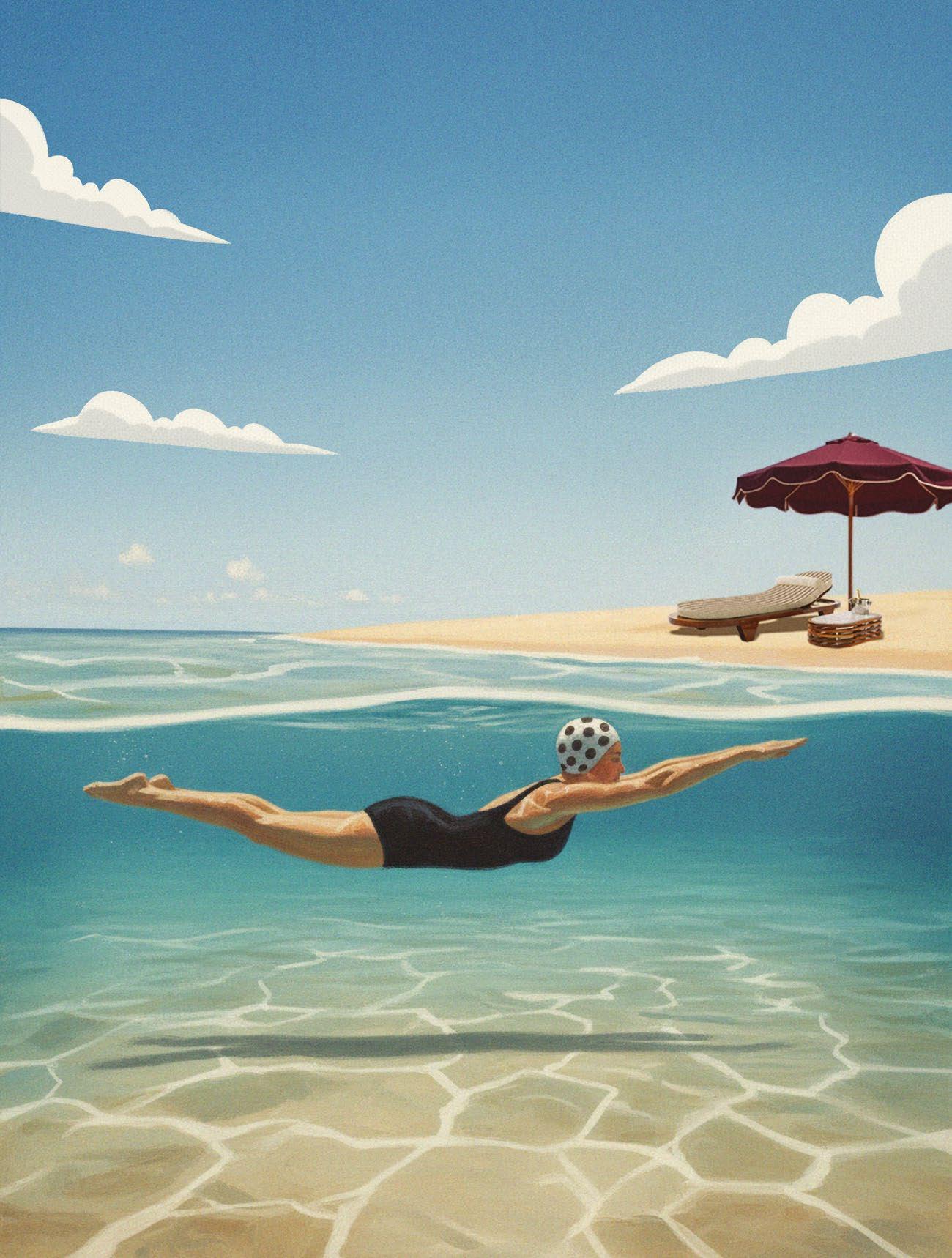
3 Νησιά,
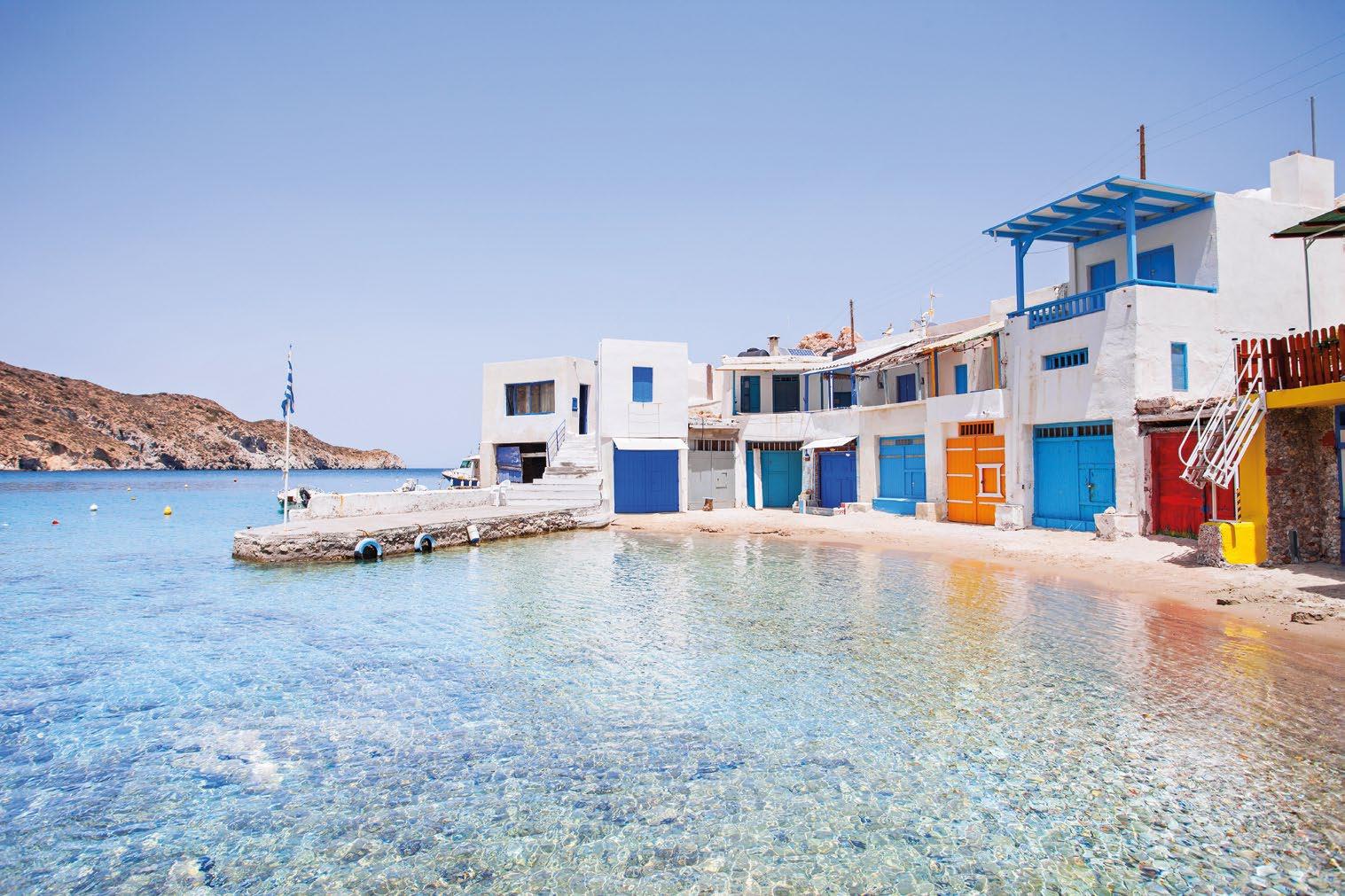
There are summers you’ll never forget. And there are places that seem to be made for those unforgettable summers. In the heart of the Cyclades, three islands stand out: wild Serifos , elegant Sifnos , and enchanting Milos . Different from one another, yet equally captivating, they invite you to discover them.
Σέριφος / Serifos
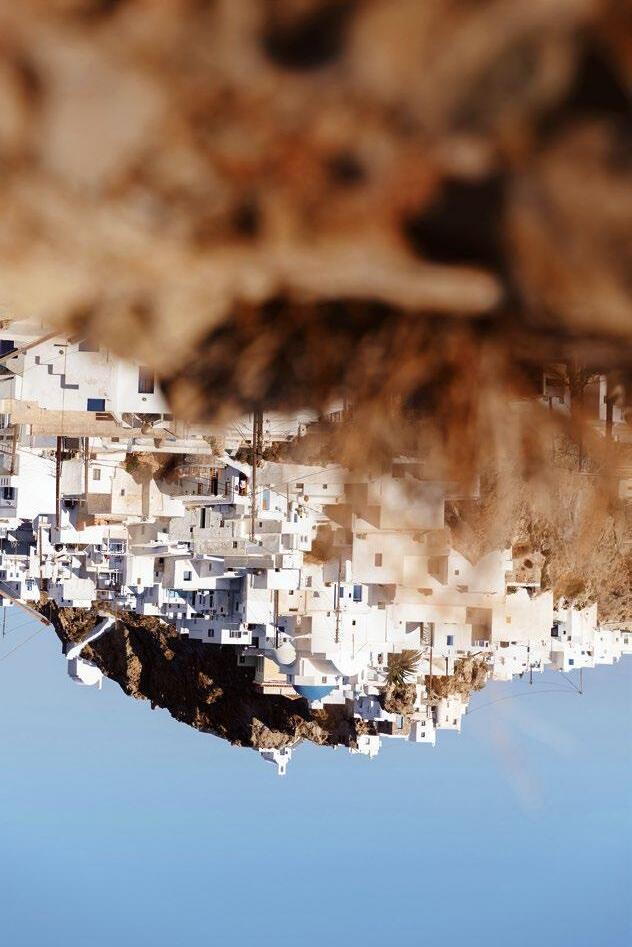
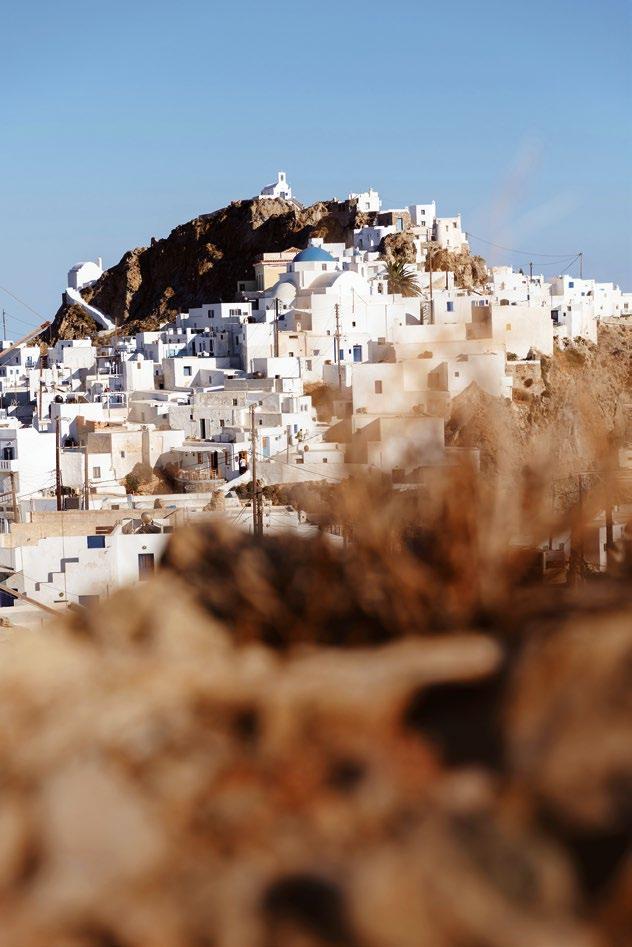
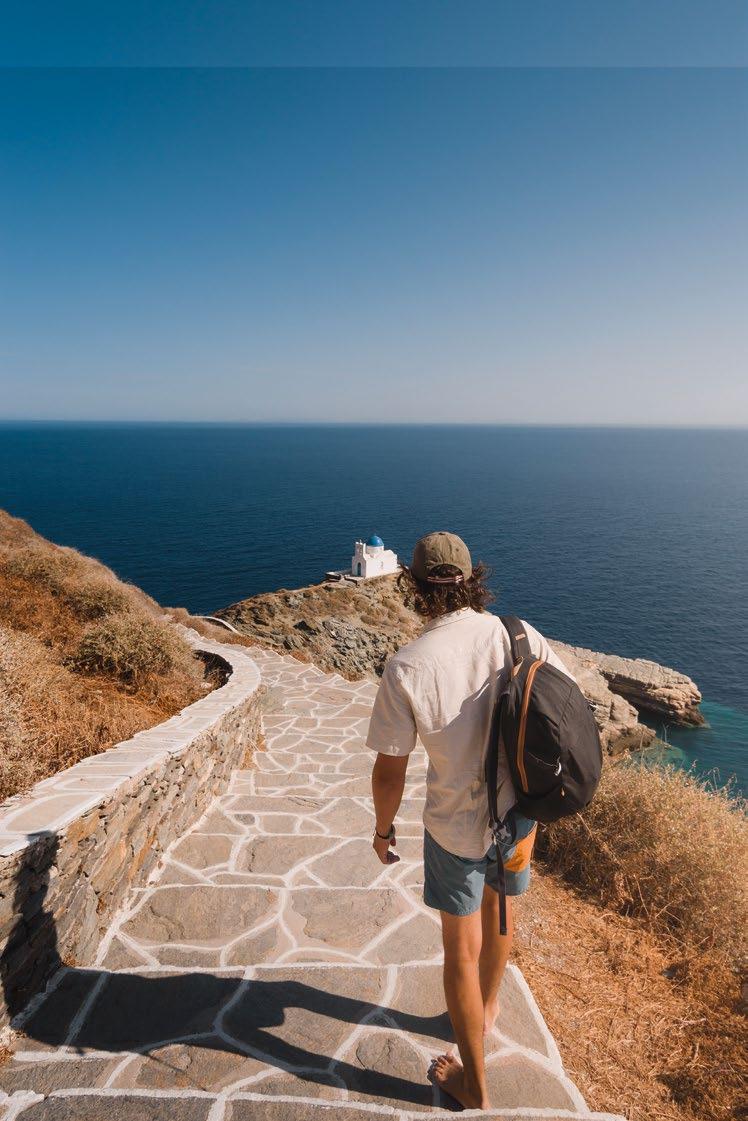
As you approach Serifos, the landscape feels like it’s come straight out of an old Greek film: dry-stone walls, a whitewashed village clinging to the hillside, and beaches that suddenly appear at the end of dusty dirt roads. This is an island that blends rugged Cycladic beauty with absolute tranquility. Award-winning Psili Ammos awaits with its clear, shallow waters, while Ganema offers moments of pure relaxation and carefree feeling.
Atmospheric, serene, lively, and cosmopolitan, Sifnos is one of the Cyclades’ most refined and flavorful destinations. It welcomes you with its picturesque villages, walking paths overlooking the Aegean Sea, and a culinary tradition that has become legendary. From the historic village of Kastro to the charming Artemonas, every step on this island feels like a journey through time.
The volcanic island of the Cyclades, where the famous Venus de Milo was discovered, feels almost exotic with its turquoise waters, colorful or stark white rock formations, and tales of pirates. In Sarakiniko, you’ll feel as if you’re walking on the moon, while at Kleftiko, you’ll swim through sea caves and passages like pirates of a
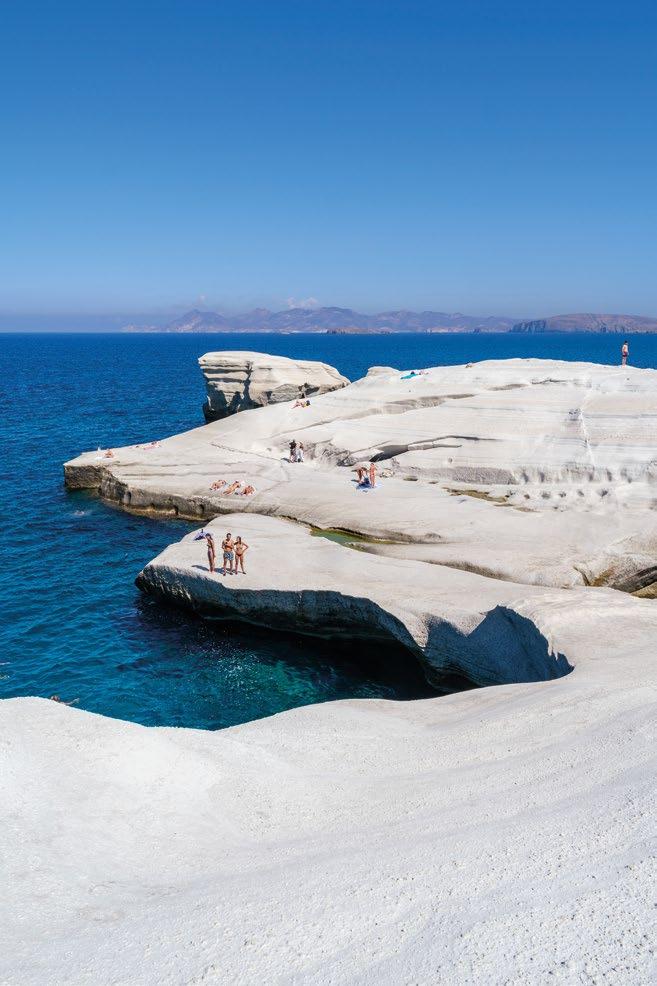
KATERINA PARRI
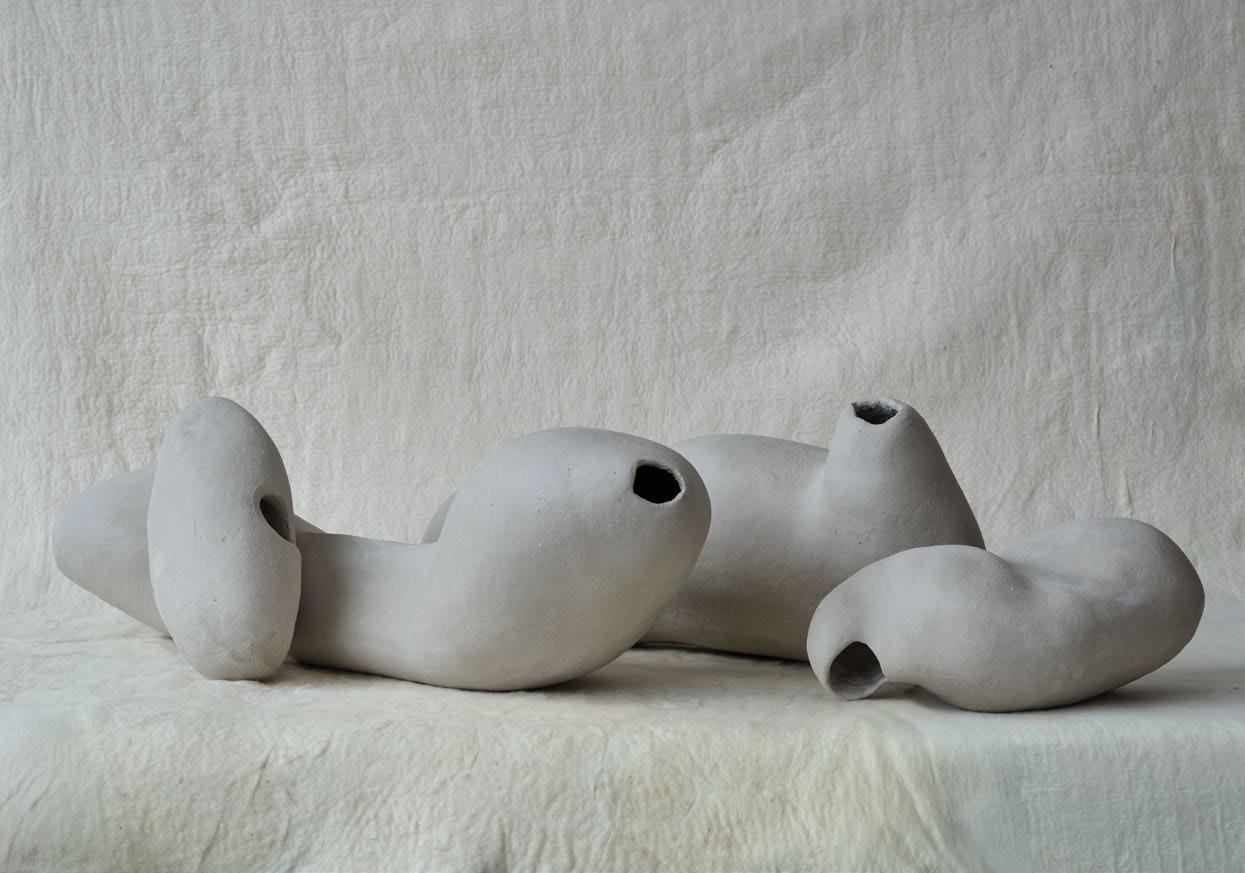
OVuslat, It Is What It Is, 2026,
/ Vuslat , It Is What It Is, 2026, clay and sound installation, dimensions variable
ne of the well-known myths of Rhodes says that when the gods divided the earth among themselves, Helios received no share and complained to Zeus, asking for a place that no god had yet laid eyes upon. Thus, Rhodes emerged from the sea, together with the nymph Rhodos or Rhode, whom Helios fell in love with and made queen, granting the island the mythical identity that accompanies it to this day. Rhodes, therefore, as the eastern edge of Greece, where “the day begins,” was chosen as the next destination of BCK 2026 (Biennale of Contemporary Keramics). This unique and nomadic Biennale of Contemporary Ceramics in Greece, following its first edition in
Santorini (2024), returns under the title “Where the Day Starts” across five emblematic and historic venues in Rhodes. From June 6 to October 31, 2026, its Medieval City becomes an international meeting point for contemporary ceramic art. Helios, the island’s patron god, runs as a narrative thread throughout this year’s Biennale, illuminating it with 42 artists from 18 countries, curated by Stamatia Dimitrakopoulou (GR), Loukia Thomopoulou (GR), and Anissa Touati (FR). History, light, and contemporary creation coexist on the island of Rhodes, acting as a bridge between the cultures of three continents while hosting works and pioneering projects focused on the Mediterranean.
The curators speak about BCK 2026, the notion of “Mediterraneanism,” and the Sun as the central theme of this year’s exhibition.
What was your own “beginning” for BCK 2026? What were the first thoughts that came to mind when you learned that the Biennale would take place on the island of Rhodes?
Loukia Thomopoulou: My own beginning for BCK 2026 dates back to June 2024. The Santorini exhibition had just opened, and I was already in the process of exploring the next destination. Together with the team, we were considering different options, including Corfu, looking for an island with strong potential and perspective. Rhodes, however, belongs to the same region as Santorini, and we had received very positive messages from its representatives, which for us signaled genuine interest. This was followed by our first visit in July 2024 with the Regional Authority and the Deputy Regional Governor for Culture, Mr. Christos Michalakis, as well as the honorary French consul in Rhodes, Ms. Moschi, who for years has curated the ceramics and artist residency programme at the Auberge de France. Both were supportive from the outset, with a sincere willingness to highlight the culture of the place. That is how this journey began. At that point, I also started thinking about the theme, about the element that could convey a message from Rhodes to the outside world. The first thing a visitor notices is the strong presence of medieval history, the castle, the Knights, the crusades. I was therefore searching for something less obvious yet equally powerful on an experiential level. This led me to the Sun and the island’s mythological narrative, an aspect perhaps less widely known, yet deeply felt. That was the starting point of the curatorial approach.
Where the Day Starts” with the Sun Illuminating the Second Biennale of Contemporary Ceramics on the Island of Rhodes
Elif Uras, The Great Mother, 2025, μικτή
/
Elif Uras, The Great Mother, 2025, materials, dimensions.
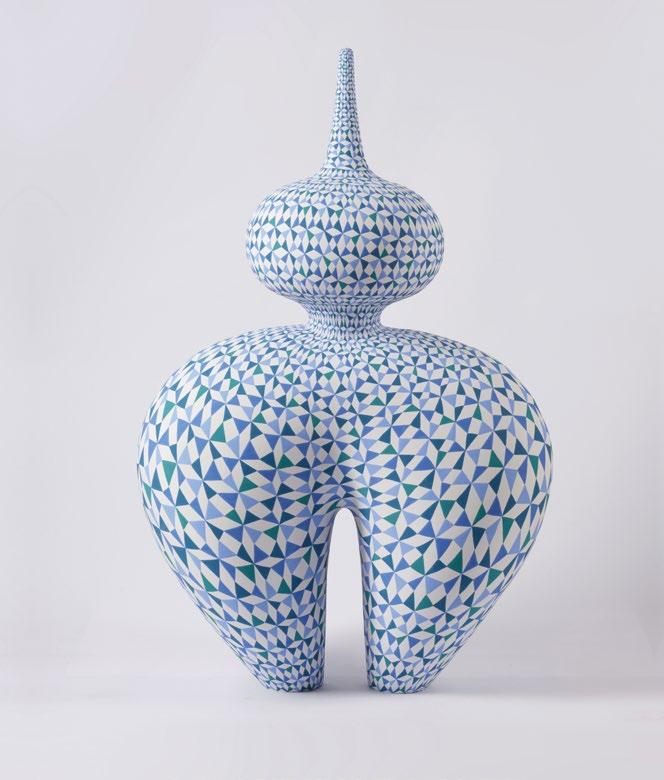
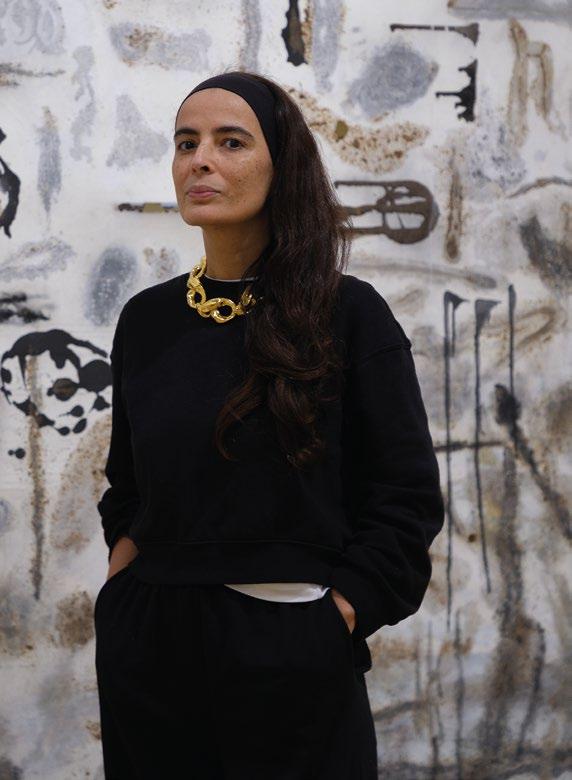
Stamatia Dimitrakopoulou: Rhodes hosts the 2nd Biennale of Ceramics following Santorini in 2024. When I learned that the next stop would be there, I felt that a meaningful pattern was beginning to emerge around the institution, where the geographical richness of each island is directly reflected in its historical depth and cultural identity. At the same time, both Santorini and Rhodes are places of immense beauty and history, but also destinations that have experienced the pressures of overtourism. Rhodes is a cradle of civilizations, a microcosm of the Mediterranean and of all that has passed through it over the centuries. Ceramics function as testimony to this history. There is something remarkable in the fact that the same material that carried culture so many centuries ago still invites people today to rediscover the place through a new lens.
Anissa Touati: For me, the starting point of BCK 2026 is a reversal - both geographical and temporal. Rhodes functions as a threshold, at the eastern edge of Europe, facing Asia and Africa, where the day seems to constantly shift between different time zones, histories, and geographies. This very tension became the point of departure. Here, time does not flow linearly; it accumulates, unfolding in multiple layers of duration, closer to the notion of “kairos” as a lived moment rather than a straight chronology. Thus, “Where the Day Starts” does not refer to a single beginning, but to multiple beginnings that coexist.
Tell us about the notion of “Mediterraneanism” anditsperspective.Howdidyouchoosetoapproach it within the curatorial framework of BCK 2026?


by Thanasis Karatzas
Loukia Thomopoulou: Mediterraneanism refers to a shared style and aesthetic identity among all the countries located around the Mediterranean basin. It is a region where different cultures, religions, and histories coexist and shape a common mindset. In the curatorial approach of BCK 2026, this perspective is reflected through the selection of artists with different backgrounds and experiences, who collectively define it through their works.
Stamatia Dimitrakopoulou: Mediterraneanism is a notion that attempts to define a distinct Mediterranean identity, though it more importantly suggests a condition of constant exchange and coexistence. The Mediterranean has always been a space of movement, trade, conflict, influence, and cultural intersections. Ceramics are perhaps one of the clearest traces of this shared journey. Clay, techniques, and forms continuously travelled from place to place, creating a common cultural thread across the Mediterranean while never losing the uniqueness of each location. In the curatorial approach of BCK 2026, we were especially interested in this dimension of the Mediterranean as a living space of dialogue, where different histories, memories, and practices coexist and are constantly transformed.
Anissa Touati: For me, Mediterraneanism is a critical tool I have worked with for years in order to understand how cultures are shaped through proximity, movement, and conflict. It resists the idea of a fixed identity or aesthetic. What I call Mediterraneanism is precisely this porous nature, this interaction: the way forms, techniques, and imaginaries travel, expand, and reappear along different shores, as a process of continuous growth rather than as a confined territory. Thus, in the Biennale, the Mediterranean is both geographical and conceptual. Geography anchors the project - these are artists connected to the region - but conceptually it functions as a field of rela-
/ Atalanti Martinou, Quatrefoil, 2026, hand painted and glazed earthware clay, installation of 40 pieces of various dimensions
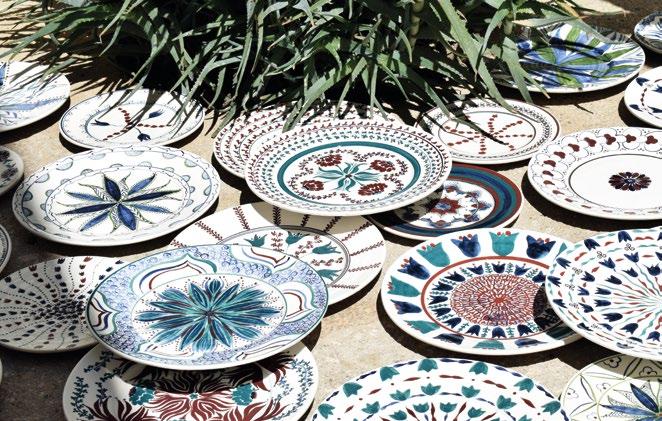
tionships where histories, materials, and sensibilities intersect and continuously transform. The Mediterranean has always been a space of circulation of forms, techniques, and knowledge, but also a surface upon which meanings are projected, reinterpreted, and transformed. If there is such a thing as a “Mediterranean sensibility,” it lies precisely in this density and fluidity, in the way everything is interconnected, both materially and symbolically.
The central exhibition of BCK 2026 revolves around the Sun. How will we encounter its symbolism and its “light” throughout the exhibition?
Loukia Thomopoulou: The exhibition takes the Sun as both its title and theme, but also the island itself, its history, and its connection to the wider Mediterranean region and to the peoples who share its light, along the same geographical axis, within the same broader zone of earth and time. The title Where the Day Starts opened up a wide field for artistic interpretation, and each artist approached it in a personal and experiential way. They speak about life and death, migration, the sea and the land, religion, the environment, light and darkness. The works reflect both personal and collective experiences, while the symbolism of the Sun appears at times directly and at other times more subtly.
Stamatia Dimitrakopoulou: The central exhibition of BCK 2026 revolves around the Sun, not only as a natural element but as an archetypal symbol running through different cultures, myths, and cosmologies. The Sun is connected to the notion of life, time, rebirth, creation, but also transformation. And in Rhodes it acquires a particular symbolic weight already through the island’s mythology: according to the myth, when the gods divided the earth among themselves, Helios was absent and received no share. He then asked Zeus for a place no god had yet seen. Rhodes emerged from the sea, together with the nymph Rhodos, whom Helios loved and made his queen.
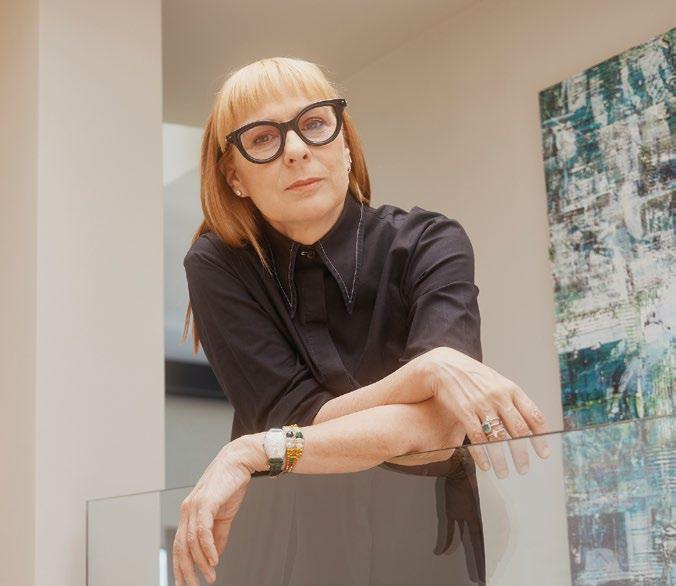
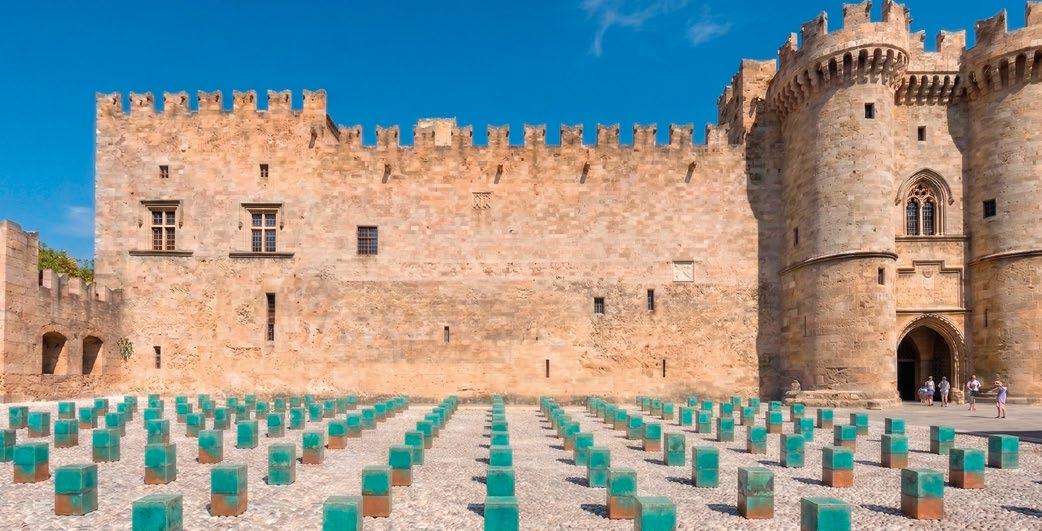
Meriem Chabani x Gorbon Ceramics, A House Awaits, 2026, εφυαλωμένοτούβλο,15×15μ.Ευγενικήπαραχώρησητης καλλιτέχνιδαςκαιτηςGorbonCeramics.Μετηνυποστήριξη τουInstitutFrançaisdeGrèce/ BCK 2026 Venues: Archaeological Museum of Rhodes, Hall of the Pithoi, Panagia tou Kastrou, Decorative Arts Collection of Rhodes, Recep Pasha Mosque, Bastion of the Palace of the Grand Master, Garden of the Palace of the Grand Master, Auberge de France, and Auberge of the English Langue
Yet for ceramics, the Sun and light do not function only symbolically. Fire is the element that transforms clay from earth into object, from fragile material into something capable of preserving memory and time across centuries. This transformative power of fire and light lies at the heart of this year’s Biennale.
Molinos Gordo, Elif Uras, Meriem Chabani, Emmanouil Bonis, Robert Brambora, Malek Gnaoui,
Fatima Mohisen,
οι Elina Belou, David Scanavino, Lucille Uhlrich, Vuslat, Luke Edward Hall,
Alban Turquois
Lynn Kodeih
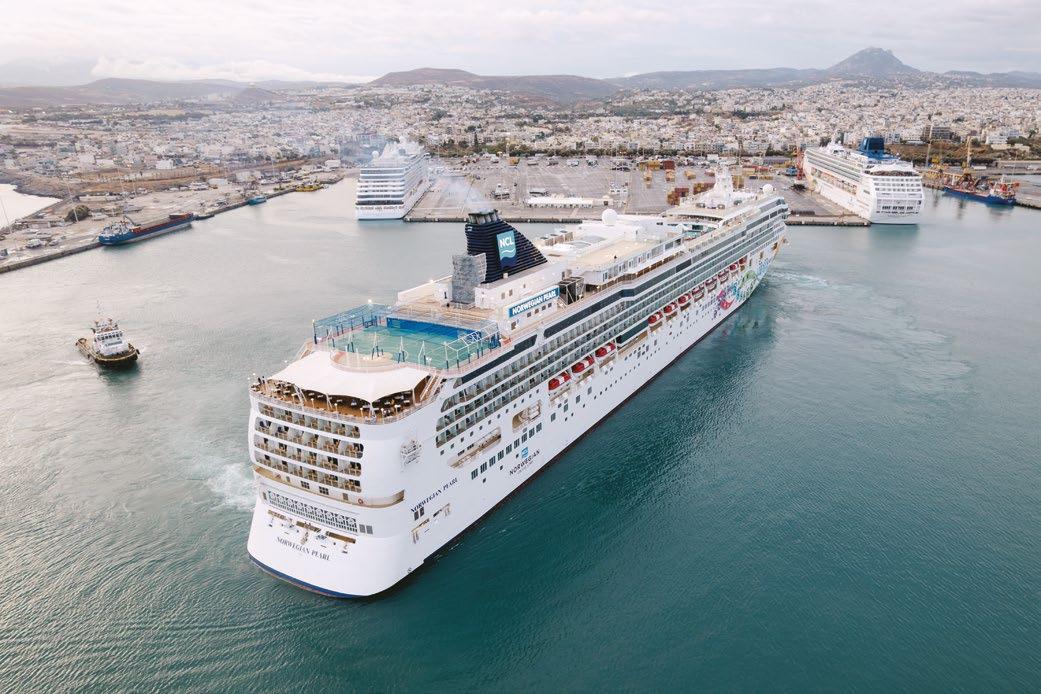
Jorge Cabieses-Valdes, Ben Wolf
Noam, Leonardo Bartolini
GianMarco Porru
INFO
BCK 2026 (BIENNALE OF CONTEMPORARY KERAMICS)
Anissa Touati: In BCK 2026, the Sun is approached as a place of relationships - a force that, over centuries, has shaped Mediterranean ways of living, building, moving, imagining, and transmitting culture. In Rhodes, where histories, mythologies, trade routes, and civili zations constantly intersect, the artists approach light not as a fixed symbol, but as a condition of transfor mation. I would mention, for example, Asunción Mo linos Gordo, Elif Uras, Meriem Chabani, Emmanouil Bonis, Robert Brambora, Malek Gnaoui, Menandros Papadopoulos, and Fatima Mohisen, whose works en gage with themes of fire, folk knowledge, architecture, ritual practices, mythology, and the circulation of forms and techniques throughout the Mediterranean. At the same time, artists such as Elina Belou, David Scanav ino, Lucille Uhlrich, Vuslat, Luke Edward Hall, Atalanti Martinou, Lynn Kodeih, and Alban Turquois approach the theme through atmosphere, perception, temporal ity, silence, decay, and the sensory landscapes shaped by light. Meanwhile, artists such as Kyriaki Goni, Jorge Cabieses-Valdes, Ben Wolf Noam, Leonardo Bartolini, and GianMarco Porru open the exhibition toward more speculative, cosmological, and imaginary territories connected to technology, spatial narratives, and the future developments of the Mediterranean. Ultimately, BCK 2026 explores what the power of light reveals: new connections between memory and the future, place and imagination, tradition and renewal.
INFO
BCK 2026 (BIENNALE OF CONTEMPORARY KERAMICS) "WHERE THE DAY STARTS /
June 6 – October 31, 2026
BCK 2026 Venues: Archaeological Museum of Rhodes, Hall of the Pithoi, Panagia tou Kastrou, Decorative Arts Collection of Rhodes, Recep Pasha Mosque, Bastion of the Palace of the Grand Master, Garden of the Palace of the Grand Master, Auberge de France, and Auberge of the English Langue.
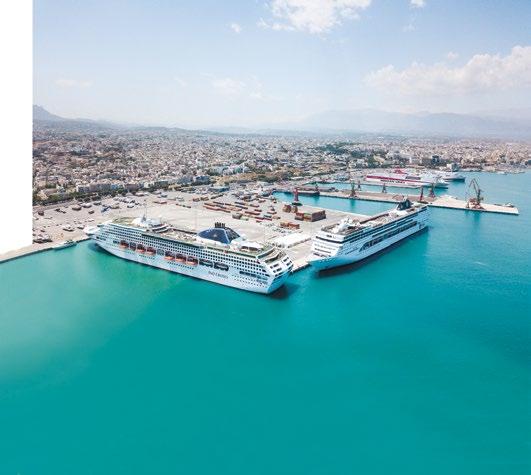
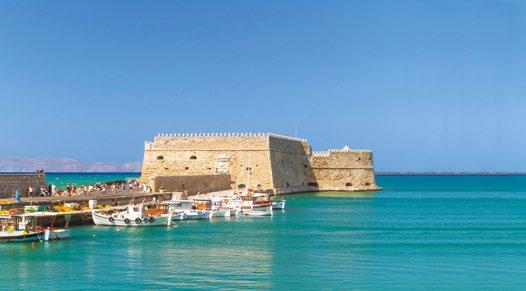

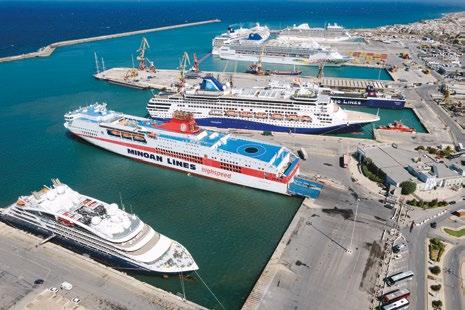




BY PEPI NIKOLOPOULOU
Touring the museum with its General Director, Gerasimos Gasparinatos
An old jersey. The foundation stone of the stadium. Faded photographs, trophies, scarves and objects that once belonged to the everyday lives of people who carried AEK with them throughout their lives. In Nea Filadelfeia, the AEK History Museum tells a story of memory, displacement and collective identity that continues to pass from one generation to the next.
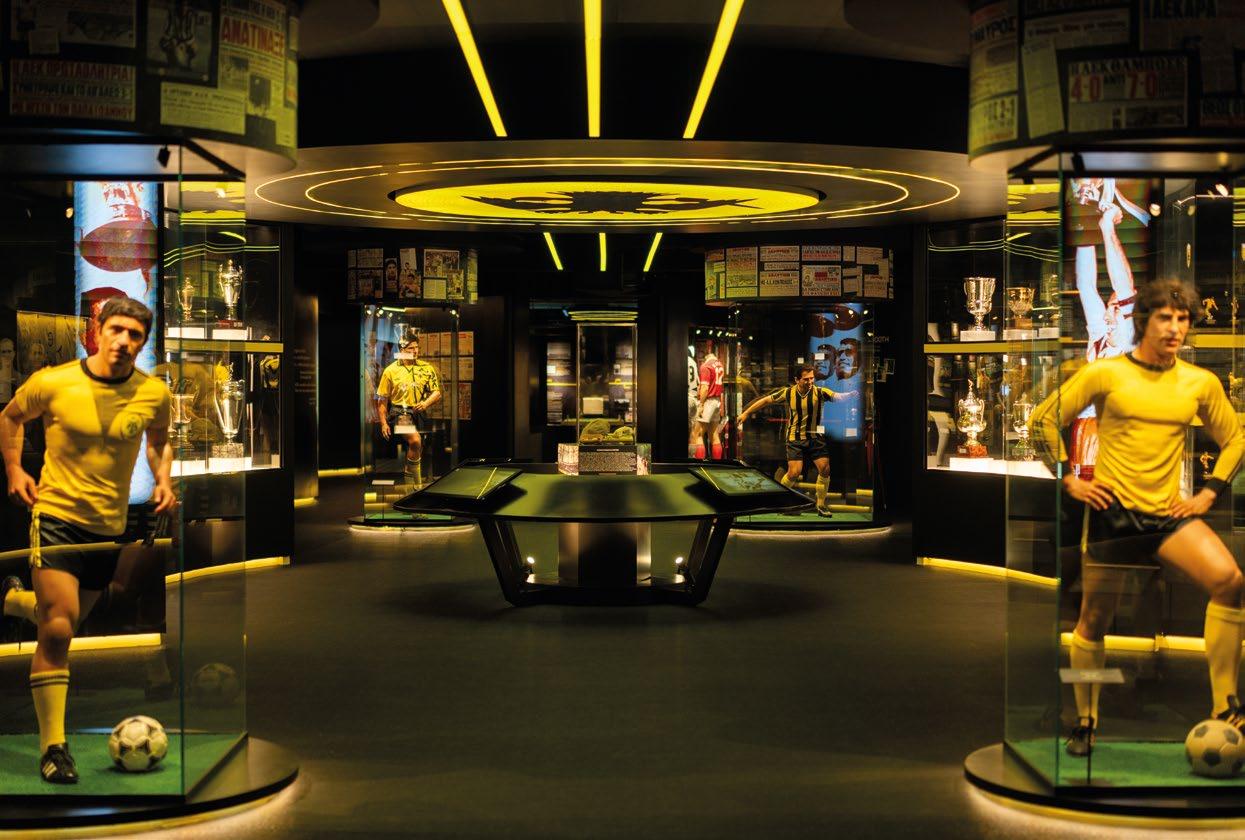
It opened its doors in April 2024 and occupies the entire third floor of the building next to the ALLWYN Arena. Across a 1,000 sq.m. space, the journey of AEK unfolds chronologically, beginning with the Constantinopolitan founders of the club and extending to the present day.
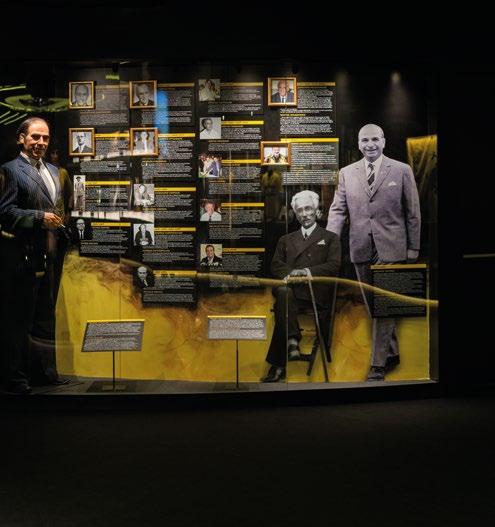
At the centre of the museum stands the football team’s trophy collection, while above it dominates an illuminated black-and-yellow double-headed eagle, a symbol of Byzantine heritage and AEK’s historical continuity. The museum’s thematic sections shed light on different aspects of the club’s journey: historic presidents and coaches, international achievements, AEK’s relationship with the Greek National Team, as well as the club’s other sports divisions, from basketball and athletics to cycling and handball. A special place is dedicated to the historic jerseys associated with great moments and legendary footballers, as well as the six iconic cannons at the end of the route, dedicated to the top scorers in AEK’s history.
The museum combines authentic memorabilia with contemporary technological media, including large LED screen projections and interactive experience points. At the same time, it seeks to engage with visitors of all ages through specially designed activities, such as the now well-established Christmas Treasure Hunt, which attracts hundreds of children every year.
As the museum’s General Director, Gerasimos Gasparinatos, explains, the strongest element remains emotion.
“The oldest visitors, especially those over 80 years old, often burst into tears as they relive memories of their youth,” he notes. “The most interesting cases are when three generations visit the museum together: grandfather, son and grandson. All emotions coexist there: the excitement of the child, the emotion of the grandfather, and in the middle the father trying to balance the two extremes.”
As for the future of the museum, Mr. Gasparinatos says with a smile that he hopes they will soon need to make room for new trophies. Above all, however, the goal remains for the museum to continue narrating the history of AEK with respect not only for the club itself but also for its rivals. After all, as he points out, the creation of sports museums can also serve as a reminder that “in sports there are opponents, but there are no enemies.”
INFO
AEK HISTORY MUSEUM
Tuesday to Sunday: 10:00 a.m. – 6:00 p.m. | Closed on Mondays
Address: Fokon 11, Nea Filadelfeia 143 41 Tel. +30 210 225 5275
WorldChampion Jet
Champions League Jet 2 & Elite Jet.
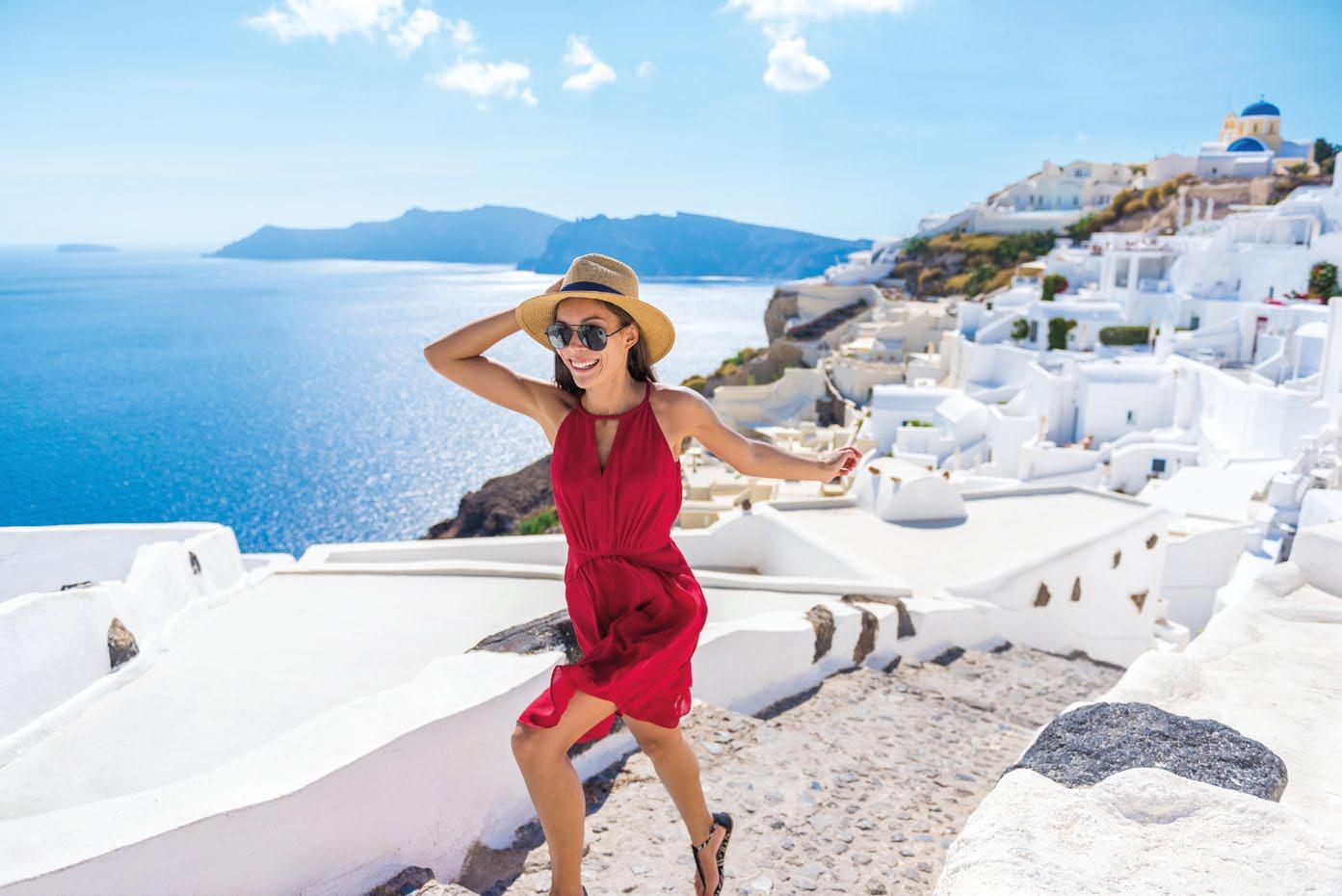
One Day Tour: Santorini from Heraklion & Rethymno
With the world’s fastest high-speed vessel, the Worldchampion Jet and the stunning Champions League Jet 2 & Elite Jet.
Santorini is where nature and myth blend into a breathtaking landscape of whitewashed villages, volcanic cliffs, and endless Aegean blue. From the postcard-perfect streets of Oia to the dramatic views of the Caldera and the island’s colorful beaches, this world-famous destination offers a once-in-a-lifetime opportunity.

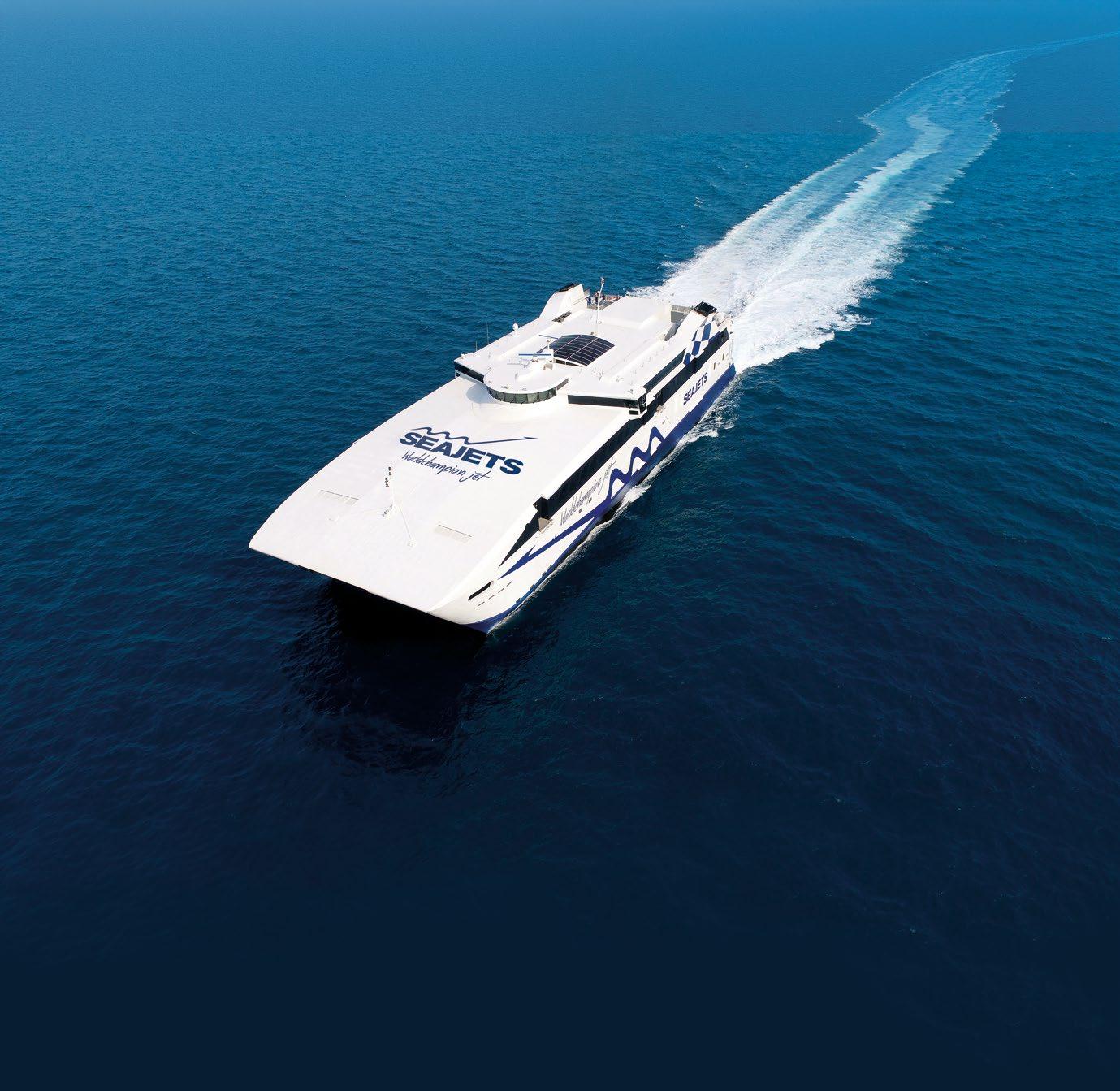
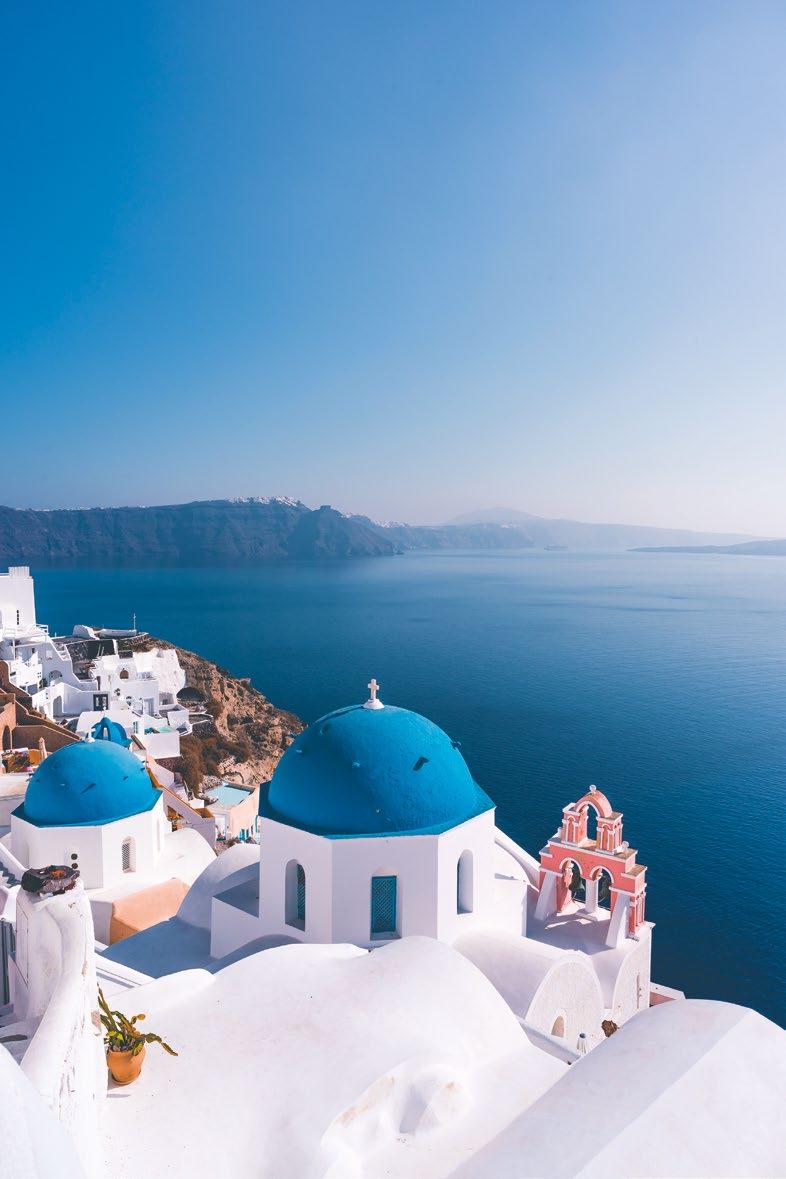
our buses will be waiting to take you on your Santorini adventure. Your first stop is Oia, built along the rim of the Caldera, offering magnificent views of houses carved into the volcanic cliffs.
Next, explore the island’s lively capital, Fira, with its picturesque alleys, shops and cafes.
You can also choose to join an optional boat trip to the volcano aboard traditional wooden vessels and swim in the warm, mineral-rich waters of the hot springs.
Travel from:
• From Heraklion: in just 1h 45min
• From Rethymno: every Tuesday & Sunday in 2h 20min
Your journey is accompanied by the Worldchampion Jet, the Guinness World Record holder for the fastest speedboat. Don’t miss the chance to take a photo with the authentic Formula 1 car located inside.
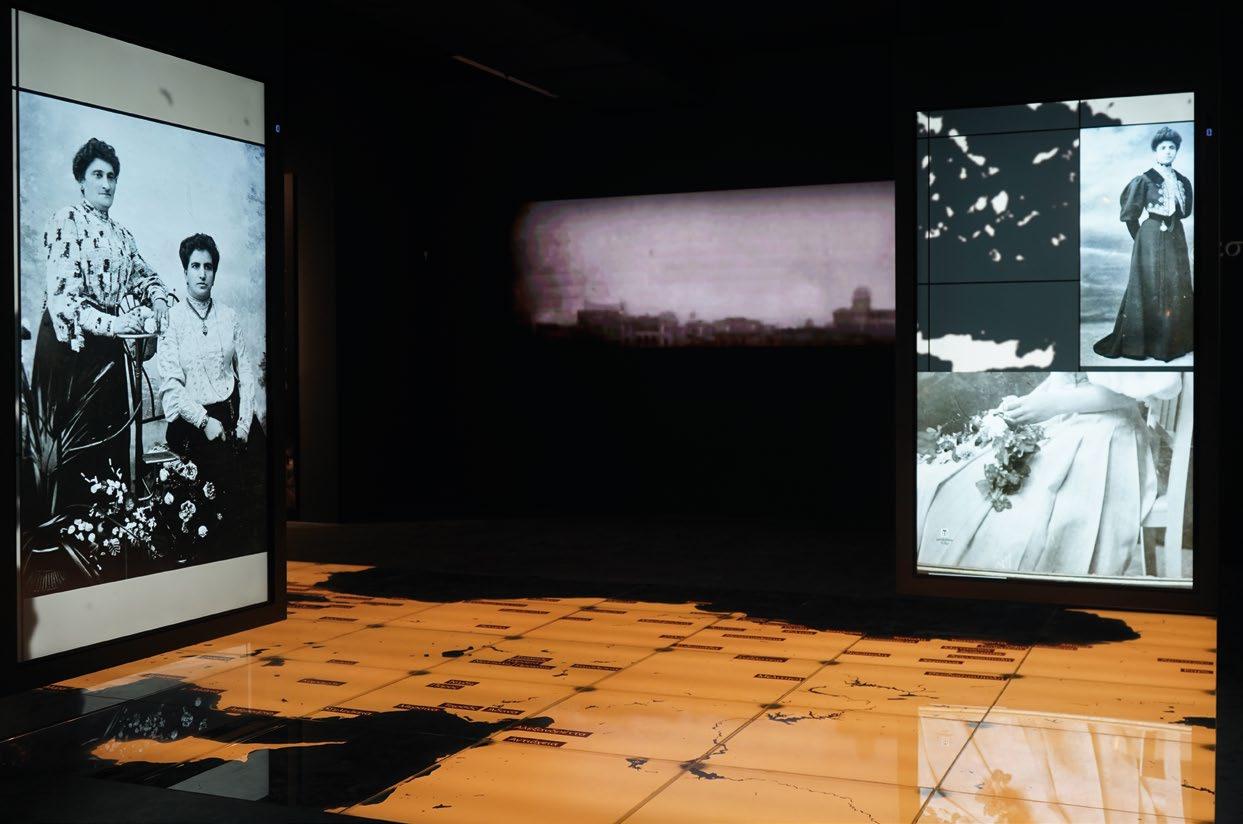
The scissors are small, worn by time, humble inside the glass display case where they are exhibited today. And yet, they carry within them an entire journey of uprooting, survival and memory. They belonged to a seamstress from Trebizond in Pontus, who kept them with her when her family sought refuge in the Soviet Union and later, during the Stalinist persecutions of the 1930s, brought them to Greece believing that with them she could secure “a piece of bread” for her family. Today, these scissors are housed at the Museum of Refugee Hellenism, donated by the woman’s granddaughter from Larissa.
“The heirlooms remain alive and they speak,” says the Museum’s General Director, Efi Mavropoulou, who has been personally and deeply connected with the history
NIKOLOPOULOU
of Refugee Hellenism for more than twenty years. “It is not at all easy to part with a piece of your family history,” she explains, speaking about the object donations that continue to enrich the collection to this day.
The Museum of Refugee Hellenism opened in November 2023, following a long journey that had already begun in 2018 with the first presentation of the vision for its creation. Today, it stands as the only museum in Greece entirely dedicated to Refugee Hellenism of Asia Minor, more than a century after the Asia Minor Catastrophe.
For the first time, all refugee regions – Pontus, Cappadocia, Ionia, Smyrna, Constantinople and Eastern Thrace – coexist under the same roof, without geographical divisions. Yet what truly distinguishes the museum, according to Efi Mavropoulou, is something deeper:
“For the first time, we do not present only displacement and its tragedy. We also present the miracle.”
The museum route begins with a large map of Asia Minor that introduces visitors to the geographical and historical world of the lost homelands. The first section is dedicated to religious faith, a defining element for refugee communities as a point of cohesion and identity. Among the important exhibits are the sacred vestments of Ecumenical Patriarch Bartholomew, which he wore during the reopening of Panagia Soumela in Pontus, almost a century after the persecution of the Greeks of the region.
The section “Asia Minor Once Upon a Time” then reconstructs the everyday life of the Greek communities through objects, photographs and personal heirlooms. Through them emerges a deeply cosmo-
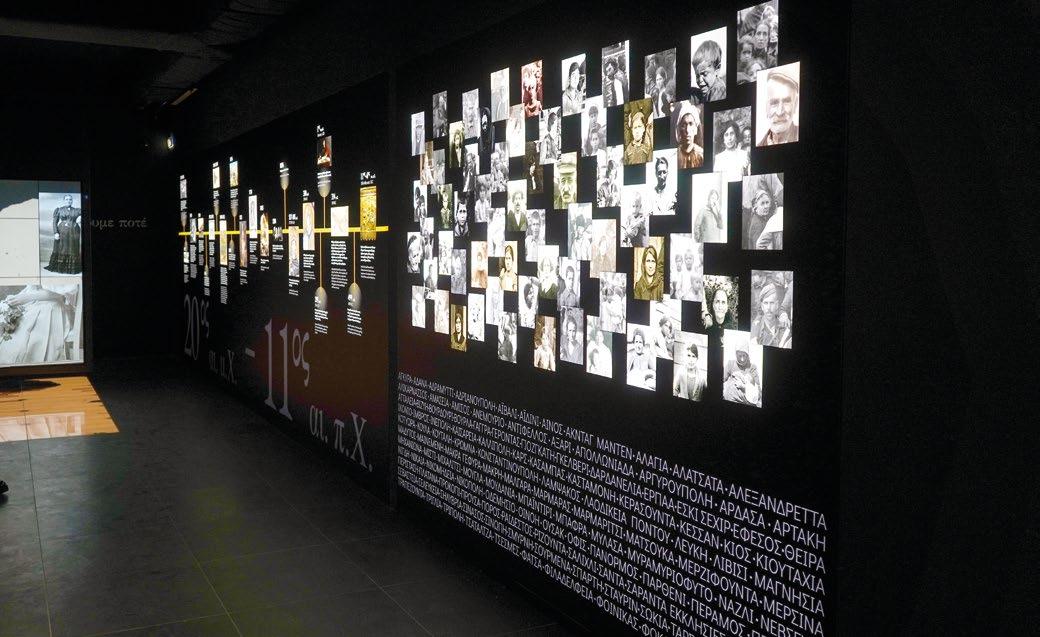

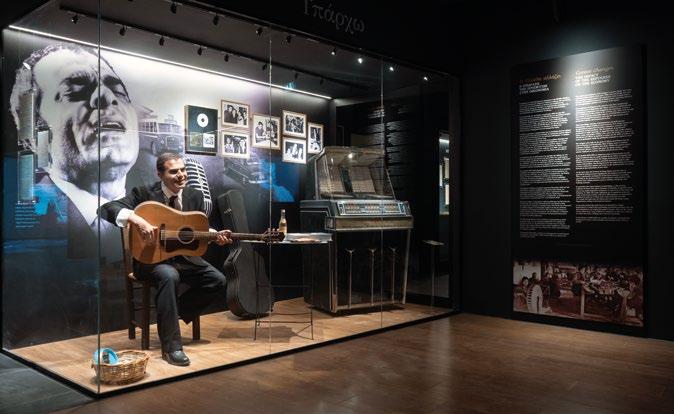
politan world, marked by a profound love for education, music, the arts and literature. Small personal objects, which today may seem insignificant, acquire a different weight when one realizes that they were saved amid conditions of escape and destruction.
The narrative continues with the Asia Minor Campaign and the Catastrophe of Smyrna, where historical documents, videos and contemporary technological media attempt to bring visitors closer to the experience of displacement. Among the exhibits stands out the sword of a soldier from Naxos, which he took as a trophy during the campaign.
The final section, entitled “The Children of the Refugees,” is dedicated to those people who, despite adversity, managed to rebuild their lives in Greece and leave a strong imprint on culture, entrepreneurship and the arts. From Stelios Kazantzidis and Aristotle Onassis to Haroula Alexiou, Giorgos Dalaras, photographer Nelly’s and Dimitris Psathas, the museum highlights the creative continuity of refugee memory.
“These people left us with a legacy that no matter what happens, life goes on. We look ahead and move forward,” notes Efi Mavropoulou.
The route concludes with the pyrrhichios dance, the oldest surviving Greek dance, which according to tradition was performed by warriors before battle in order to draw strength and fighting spirit. It is no coincidence that the museum chooses to close with this image.
“This is how we want visitors to leave this museum as well,” she says.
Today, the museum welcomes visitors and schools daily, while through educational programmes such as “The Hunt for Memory” and “The Refugee’s Backpack,” it seeks to bring younger generations into contact with a part of Greek history which, as Efi Mavropoulou stresses, “we were never taught as we should have been.”
The most important achievement of the Museum of Refugee Hellenism is that it tells a story of continuity, a story of people who, even in the darkest circumstances, managed to keep memory, dignity and creativity alive.
INFO
MUSEUM OF REFUGEE HELLENISM
11 Fokon Street, Nea Filadelfeia | Tel.: +30 210 225 5275
Opening Hours: Monday: Closed | Tuesday – Sunday: 10:00 – 18:00


















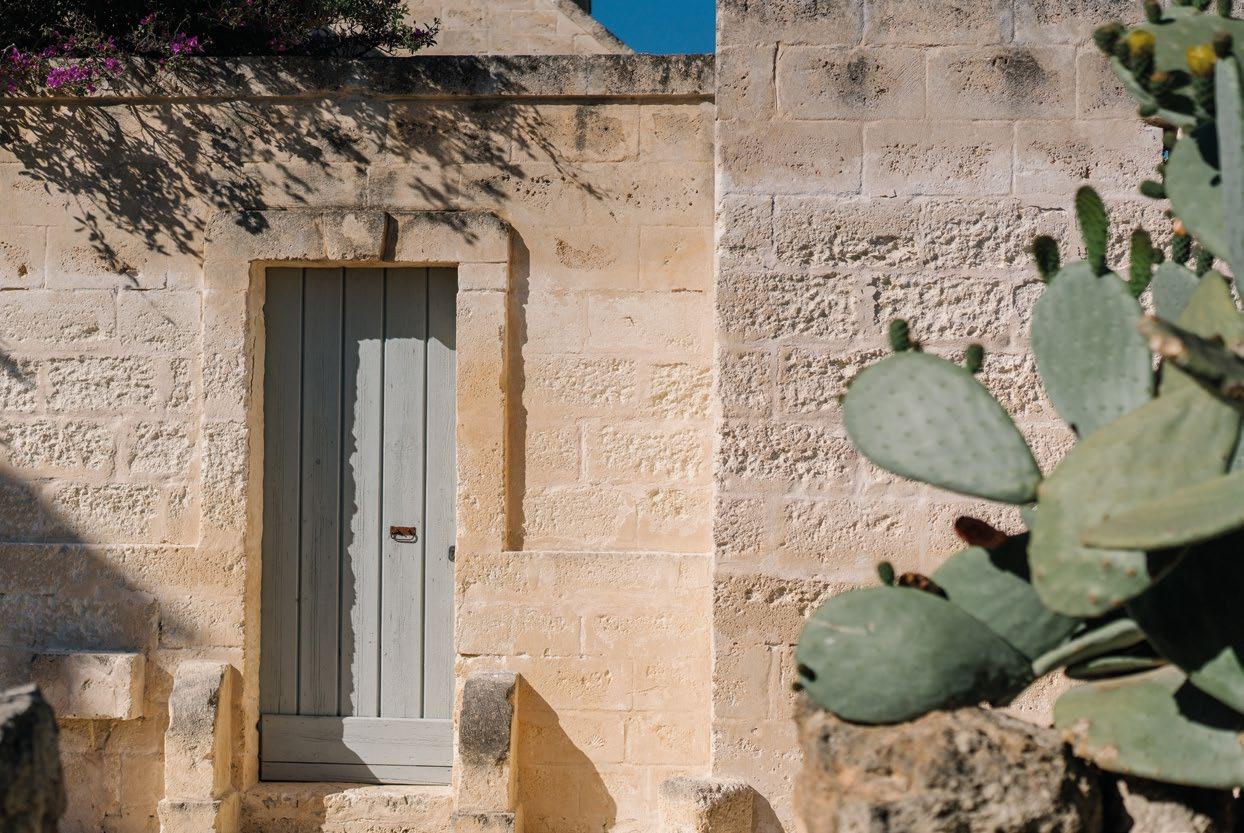
EVEN MORE THAN ITS ENCHANTING BEACHES OF INCOMPARABLE BEAUTY, THE AUTHENTIC CHARM OF CRETE LIES IN ITS MOUNTAINS. IN THE MOUNTAIN PASSES OF THE WHITE MOUNTAINS, ON THE FOOTHILLS OF PSILORITIS AND ACROSS THE NATURAL PLATEAUS OF LASSITHI, ENTIRE SETTLEMENTS, UNCHANGED THROUGH THE CENTURIES, STAND PROUDLY AS THOUGH THEY WERE A NATURAL EXTENSION OF THE ROCKS THEMSELVES. THESE STONE-BUILT VILLAGES, LIVING LESSONS IN BIOCLIMATIC WISDOM, CONSTITUTE THE MOST AUTHENTIC MONUMENT TO THE CRETAN COUNTRYSIDE.
A journey through the stone-built villages of mountainous Crete, from Margarites and Milia to Etia and Voila
Without modern means or industrial materials at their disposal, the old master builders relied mainly on stone, earth, and wood to construct houses, fortresses, churches, and roads. Drawing on vernacular wisdom and working in harmony with the surrounding landscape, they built in order to protect themselves from the elements. This is evident in the double stone walls of the houses, which functioned as thermal accumulators.
It is equally apparent in the kamarospito, the imposing stone arch placed at the centre of the house, which supported the weight of the roof while also providing insulation. Even the interior courtyards, almost always facing south, were shaded in summer by grapevines, while in winter they allowed sunlight to warm the façade.
Today, these beautiful villages attract visitors seeking to wander through their cobbled alleys and feel themselves part of a story that often begins in Antiquity, passes through the eras of Venetian and Ottoman rule, and reaches present-day Crete, which continues to honour its past and traditions.
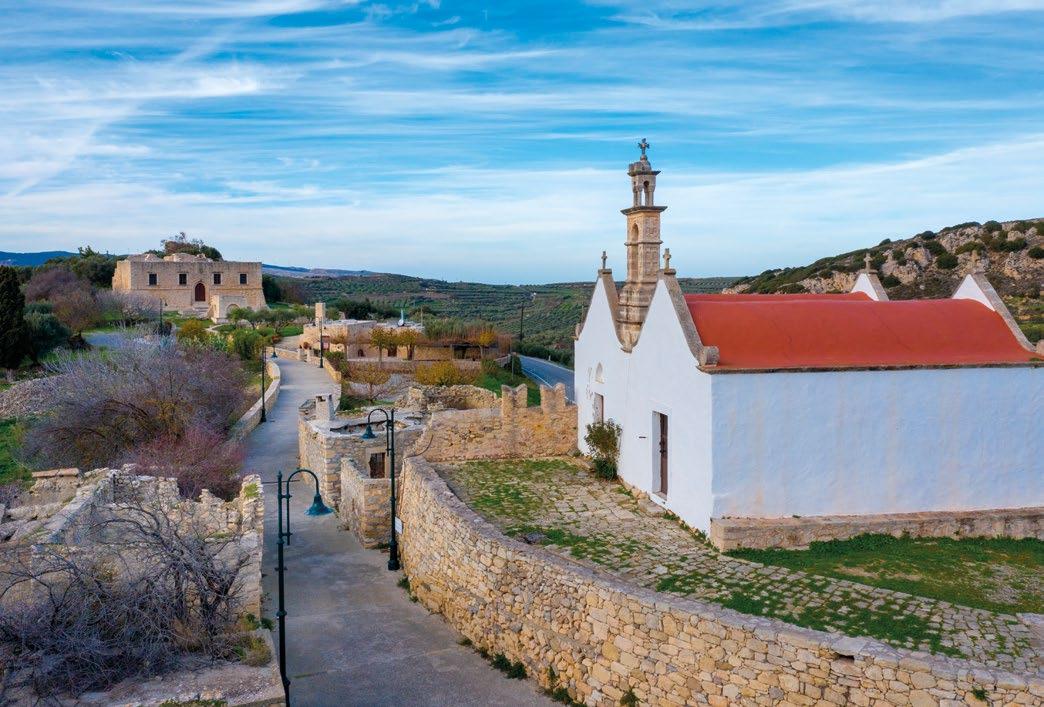
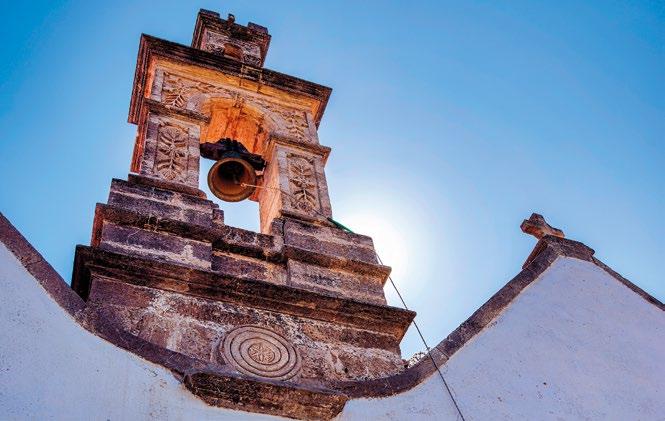
Perhaps the most famous of these stone villages is Margarites, primarily because it is considered the centre of Cretan pottery. Narrow cobbled alleys, restored mansions, inner courtyards overflowing with clay jars, and ornate Venetian doorways define the village. Local craftsmen succeeded in combining the ruggedness of stone with the plasticity of clay, incorporating ceramic elements into the chimneys and gutters of the houses.
Hidden deep within the remote, lush hinterland of Kissamos, surrounded by chestnut trees, strawberry trees, and plane trees, this medieval settlement of the 15th century, located 56 km from Chania, had been abandoned to decay after its last inhabitants left in the 1940s, leaving its stone houses in ruins.
During the revival of Milia, the old kamarospita were restored one by one using exclusively the stone already found on site. In this way, the ghost village was transformed into an internationally recognised model ecological settlement, operating even without electricity from the public grid and relying instead on alternative energy sources for its basic needs.
This historic town in the Apokoronas region was once the capital of the Sfakia area, enjoying economic and administrative prosperity. This affluence was reflected in its architecture, with large and imposing mansions where traditional Cretan stone masonry was combined with elegant neoclassical elements.
Over the decades, however, and with the migration of residents to the cities, many of these stone masterpieces were left to deteriorate. Old partially ruined olive mills, guesthouses, the former girls’ school, and mansions from the 18th and 19th centuries were restored with respect for traditional building techniques. A visit is also worthwhile to the ruins of the large olive mill with its twelve arches, located at the Monastery of Agios Georgios in Karydi, about 2 km from Vamos.
At the easternmost edge of Crete, in a rugged and arid landscape constantly battered by the wind, stone architecture became a matter of survival. In the wider
region of Sitia lie abandoned medieval settlements where time seems to have frozen the moment the last inhabitant departed. One of these is Etia, home to the famed De Mezzo mansion, a three-storey Venetian stone manor of the 15th century, considered the most important example of private Venetian architecture in the Cretan countryside.
A few kilometres away lies the medieval settlement of Voila, now protected by the Archaeological Service, with its half-ruined stone houses built during the Ottoman era. The most important surviving structure, however, is the Tower of Tzen Ali, which bears distinct Venetian architectural features, along with the twin-aisled 15th-century church of Agios Georgios
The bioclimatic wisdom of Lassithi also extends to the steep mountain slopes, where the dry-stone terraces - recognised by UNESCO as intangible cultural heritage - can still be found. Countless terraces, the famous pezoules, were built by locals to retain the region’s precious soil from the erosion caused by winter torrents and to make cultivation possible.
Finally, on the renowned Lassithi Plateau, stone was combined with the white canvas sails of thousands of traditional windmills, creating what is often described as “the world’s oldest wind farm”. It is an image that even inspired Odysseas Elytis
If you find yourself in Anogeia, it is worth visiting the Weaving Centre established by architect and UNESCO Goodwill Ambassador Constantza Sbokou-Konstantakopoulou, who transformed her grandmother’s house into a model Centre for Weaving and Craft Heritage.
The Centre functions as a living organism, where the permanent exhibition Genealogy in Thread preserves the knowledge of the women of the region, while also hosting contemporary artists who reinterpret tradition.
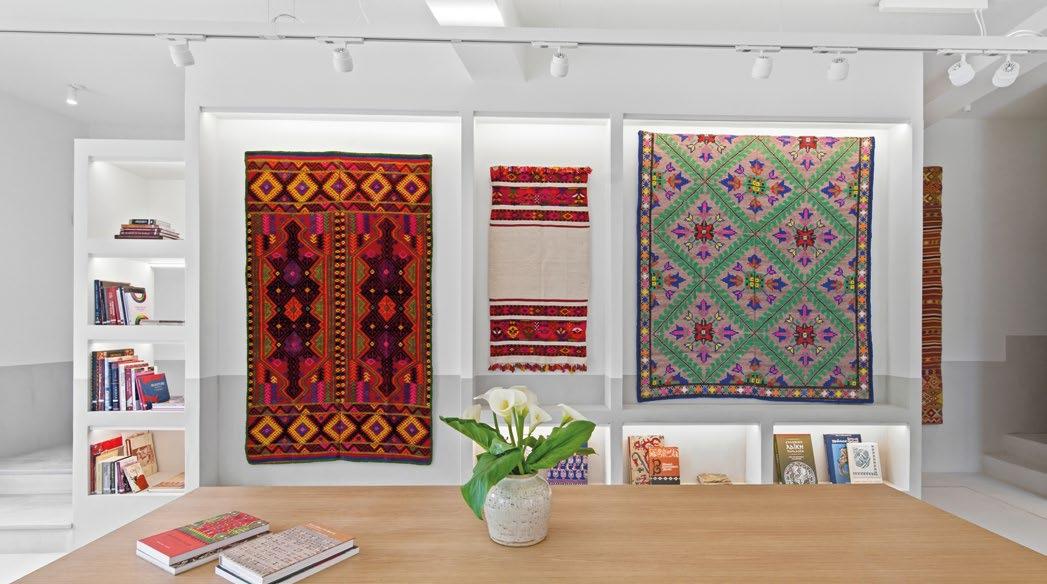
SEAJETS is the largest network of high speed vessels, registering a continuous growth in its industry.
31 FERRIES
6
SEAJETS is continuously developing its fleet, growing through its own capital and having almost zero bank liabilities. With the powerful development of its routes, SEAJETS has managed to attract tourists that wish to discover the beauty of the Greek Islands, while at the same time encouraging island hopping.
Covering the needs of every traveler that wishes to discover the Aegean, SEAJETS serves a total of 50 ports and more than 400 interconnections from Piraeus, Rafina Thessaloniki, Lavrio, Crete, Volos and Mantoudi Evia to final destinations in the Cyclades, the Sporades and the Aegean Sea.
The ferry reached a top speed of almost 50 knots setting a new World Record for the Guinness World Records. Awarded by LLOYD’S LIST AWARDS as Ship Of The Year.
TOTAL CAPACITY
50
PORTS AROUND THE AEGEAN SEA
35.000 passengers ACTIVE
400
INTERCONNECTIONS
12 months of the year & 5.200 vehicles
ESTABLISHED A COMPREHENSIVE NETWORK BY LINKING ALL ISLANDS WITH INTERNATIONAL AIRPORTS LOCATED IN THE AEGEAN SEA & CRETE
MORE THAN
1.200 employees
2 HRS & 10 MIN
2 HR & 40 MIN
DYNAMIC GROWTH OF PASSENGER COUNT
1 HR & 40 MIN
ECONOMY, SILVER, CLUB & PLATINUM SEATS WITH COMFORTABLE SEATING AND PERSONALIZED SERVICE
CONTINUOUS GROWTH OF FLEET
Mykonos – Santorini
2 HRS & 10 MIN
MORE THAN IN GREECE AND AROUND THE WORLD
VISION: TO CONNECT THE AEGEAN FROM LENGTH TO BREADTH
2.000 AGENTS
High-speed onboard, High-speed online!
FOR EMERGENCY CASES S T A N D B Y
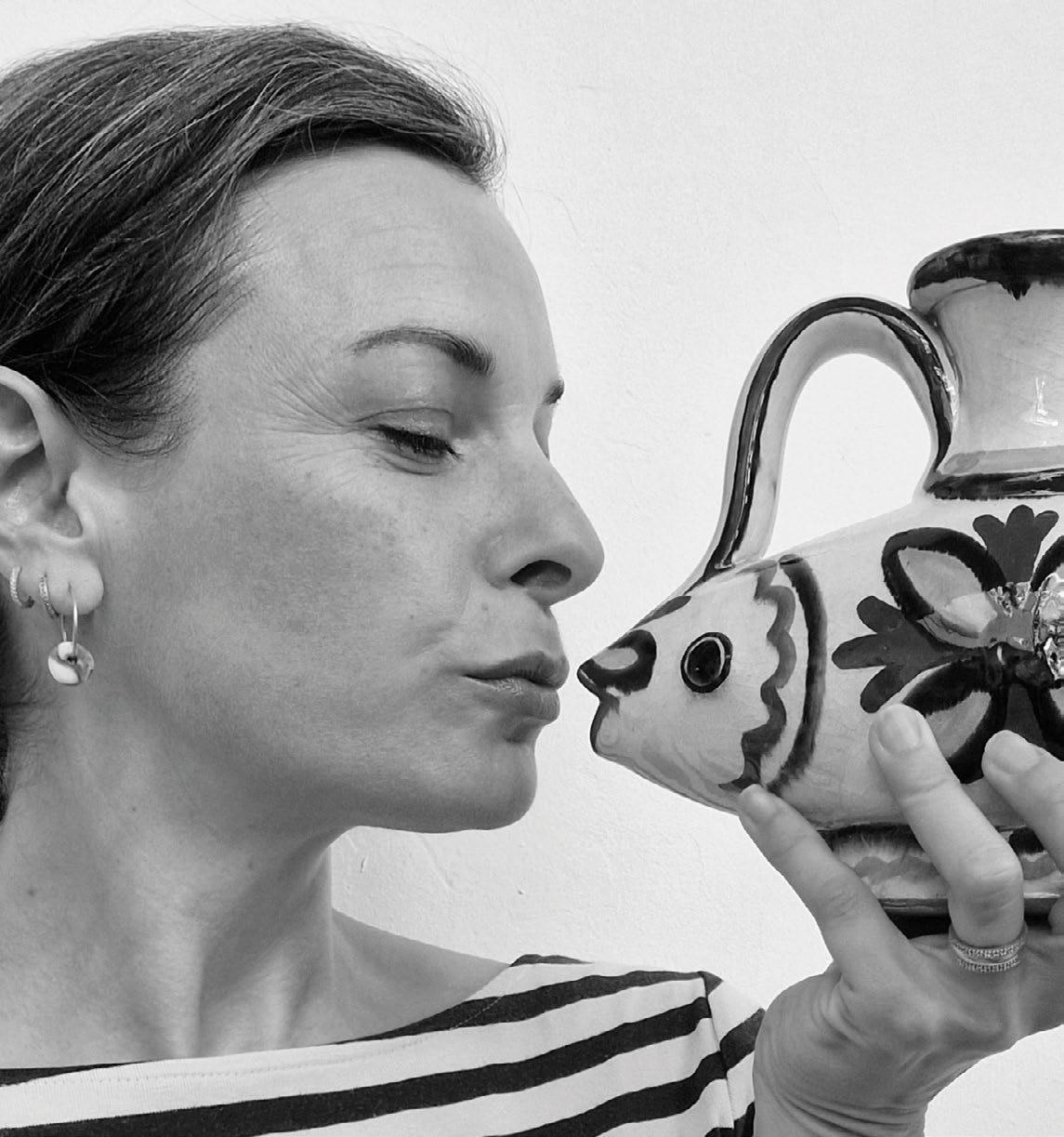
In Agiasos, on the island of Lesvos, the Kourtzi family has been working with clay for six generations. According to documented records preserved in the family archive, its story begins in 1820, at a time when ceramics were an integral part of everyday life. The "tskalia" as traditional clay cooking pots were known in Agiasos, could be found in every household, in kitchens, storerooms and on dining tables across the island.

/ Elpida Kourtzi
BY PEPI NIKOLOPOULOU
Over nearly two centuries of continuous creation, the Kourtzi family developed a distinctive ceramic identity, recognised through its techniques, forms and characteristic decorative motifs.
Elpida Kourtzi, the sixth-generation representative of the family today, grew up listening to stories told by her father, Ilias, about clay, kiln fires, and the people who devoted their lives to the art of ceramics. Her grandfather, Nikos Kourtzis, was one of the most influential figures in the history of the workshop.
Each generation added its own element to the craft. From the primitive and purely functional forms of the early years, the family’s ceramics gradually evolved to include decoration, colour and motifs. “Each generation added something of its own,” she explains. The major turning point came with her grandfather, Nikos Kourtzis. “He was completely devoted,” she says. “Even shortly before he passed away, he was still sitting at the wheel, shaping clay with his hands.”
Beyond his craftsmanship, he possessed a rare ability to anticipate the times and understand what the market would be looking for before it even appeared. “He was incredibly inventive,” she recalls. “He could launch a new line of production while continuing another, even though we are not talking about a factory but a small workshop where everything passed through the same hands.”
The workshop in Agiasos, which she visited almost every weekend as a child, bore little resemblance to a contemporary ceramics’ studio. The floor was damp earth, the workbenches were handmade by carpenters, and the tools were crafted by hand. Even the brushes were made in-house, while materials were processed within the workshop itself.
She still keeps one of her grandfather’s grinding tools, a handmade stone device used to grind glass into a fine powder. “It is very moving to look at it today,” she says. “We buy ready-made clay, readymade colours and materials. Back then, they made everything themselves.”
(δεκαετία 1980) / Nikos Kourtzis loading the kiln and preparing it for firing, 1980s
The firing process was even more demanding. Long before electric kilns appeared, potters had to feed wood into the fire and monitor the temperature constantly, knowing that even a slight variation could ruin an entire batch.
“I truly believe what they did was heroic,” she says. “It required endurance, immense passion, perseverance and a deep understanding of fire.”
It was within this environment that the family’s famous black ceramics were born. One day, Nikos Kourtzis noticed that part of a vessel had turned black during firing while the rest had retained its terracotta colour. He broke the piece open to see whether the blackening had penetrated the clay body and, in doing so, came to understand the reduction-firing technique that allows colour to permeate the entire vessel rather than remain on the surface.
The celebrated “Kourtzi blacks” were not painted but darkened through the firing process itself. The technique earned him an innovation award at the time and went on to influence an entire generation of ceramic artists.
Although she grew up surrounded by this world, Elpida never imagined she would follow ceramics professionally. She studied in a different field and only in 2012 consciously decided to devote herself entirely to clay.
“I enjoyed it as a hobby,” she says. “I never imagined I would make a living from it.”
Today she works exclusively in ceramics, teaches the craft and creates contemporary porcelain jewellery characterised by delicate lines and 22-carat
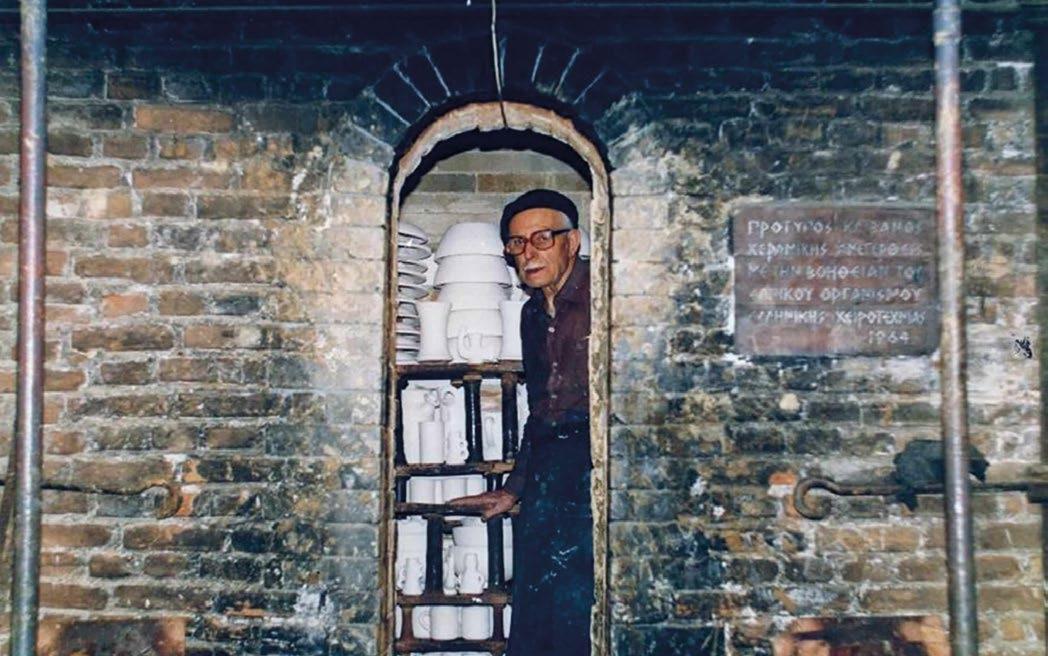
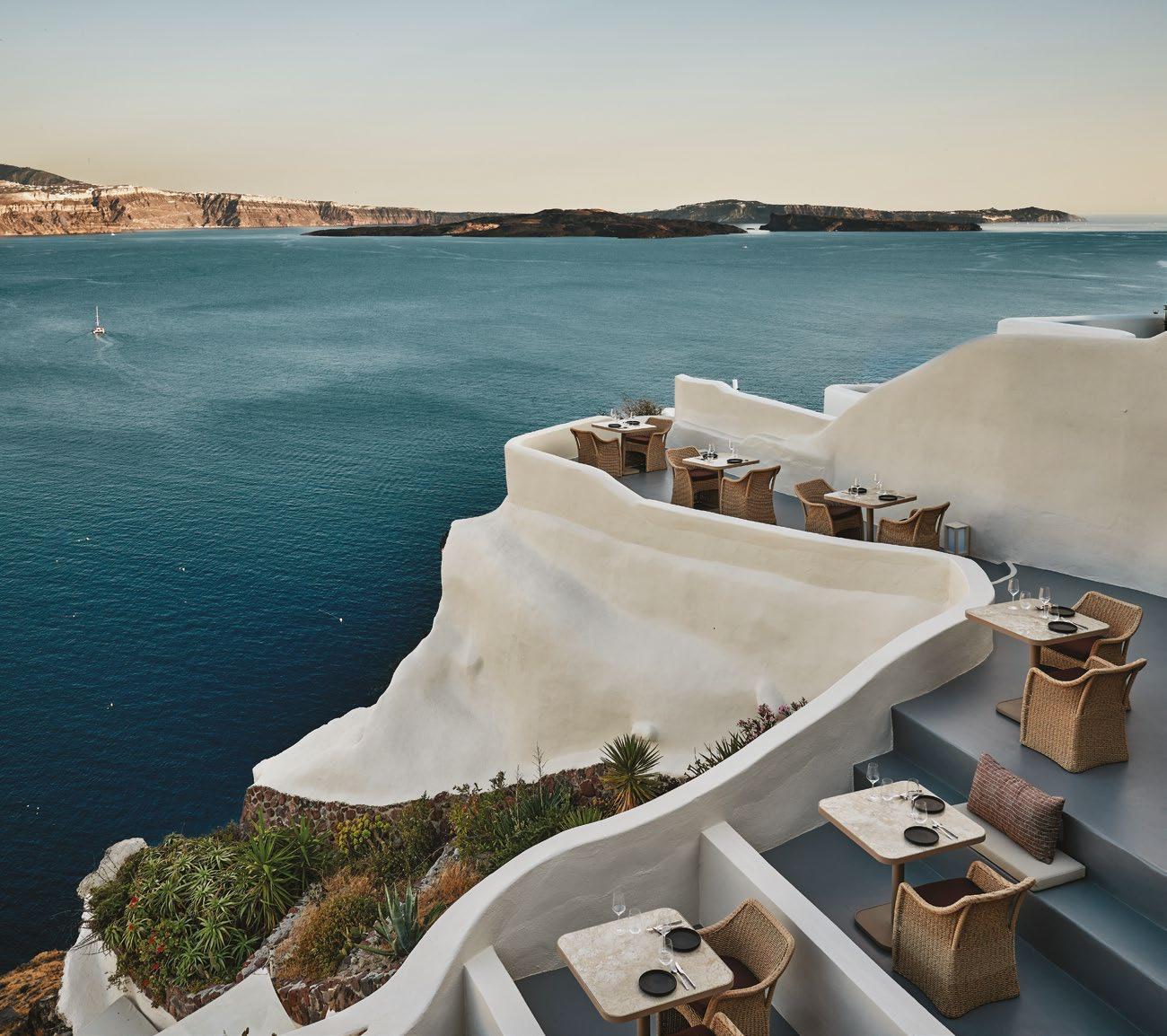
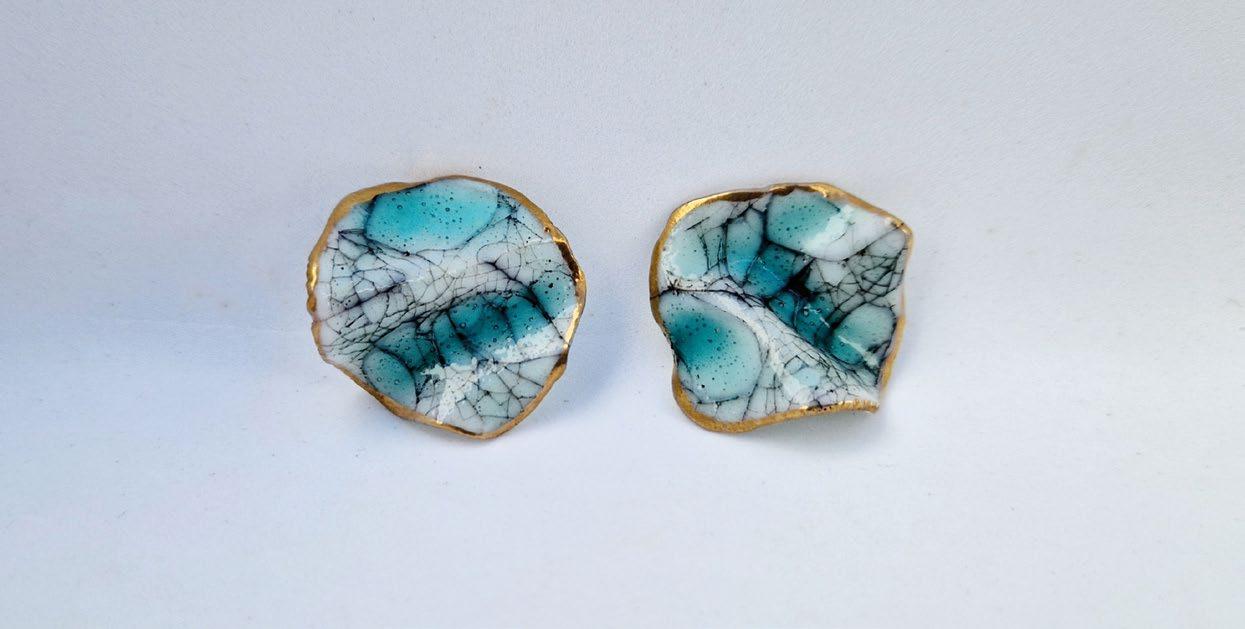
Handcrafted earrings by Elpida Kourtzi
gold lustre. Each piece remains unique, as she consciously avoids repetition and mass production.
Her relationship with clay is deeply physical.
“There isn’t a single person who touches clay and doesn’t become attached to it,” she says with a smile.
For her, ceramics engages the entire body. It is not simply drawing or decoration but direct contact with matter, a process that demands hands, strength, failure and persistence.
“Failure is an inseparable part of ceramics,” she explains. “There’s simply no way you can make one hundred pieces and have all one hundred come out perfectly.”
Today, through her work, she strives to preserve not only a technique but an entire cultural identity. The workshop’s characteristic motifs, inspired by the culture and folk traditions of Agiasos, continue to appear in her creations. Daisies, flowers and decorative patterns first developed decades ago within the family workshop are now given new life through contemporary applications and interpretations.
“At a certain point in my life, I realised that all of this is my responsibility,” she says.
“Everything I create carries my energy,” says Elpida Kourtzi. “My story and the state of mind I was in at that particular moment.”
Although she lives and works in Athens, her connection to Lesvos remains strong. She returns to the island at least twice a year and continues to see it as a place that has managed to preserve its character. She speaks of an island with a rich cultural tradition, the homeland of Theofilos, Myrivilis and Elytis, but also of a place with remarkable diversity
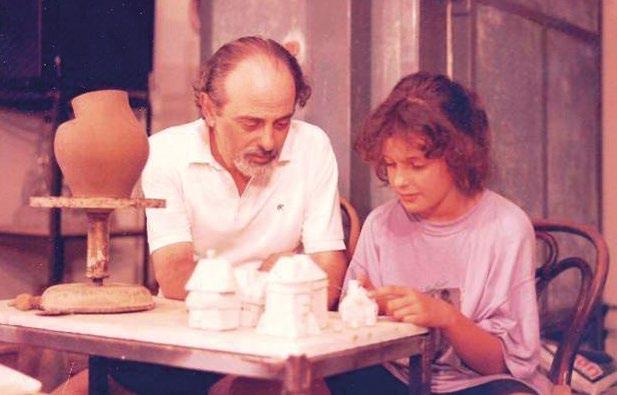
/ Elpida Kourtzi with her father, Ilias Kourtzis
of landscapes. From the forests of the eastern side to the rugged western terrain and the Petrified Forest of Sigri, every corner of the island possesses its own distinct identity.
The pride with which she speaks about Lesvos extends beyond its history and culture.
“We are an incredibly productive place,” she says. “And I’m very proud of that.”
The island’s gastronomy is an essential part of this identity. Kalloni sardines, PDO Ladotyri Lesvos cheese, local cheeses, olive oil, ouzo and traditional sweets remain important points of reference for both residents and visitors. She singles out stuffed zucchini blossoms, stuffed onions known on the island as sougania, and almond sweets that are still made in the traditional way. Equally important are the women’s cooperatives that continue to preserve local culinary traditions through spoon sweets, jams and other regional products.
For Elpida Kourtzi, all these elements come together to form a Lesvos that remains authentic and deeply connected to its land and its people.
INFO
The Ceramic Tradition of the Kourtzi Family
The ceramic tradition of the Kourtzi family has been inscribed in the National Inventory of Intangible Cultural Heritage of Greece, recognising an unbroken lineage of six generations of potters in Agiasos, Lesvos, and the preservation of knowledge and techniques passed down from one generation to the next.
(4η
/ Kourtzi Workshop, 1950s. Ilias Kourtzis (3rd generation) at the potter’s wheel, with his son Nikos Kourtzis (4th generation) in the foreground
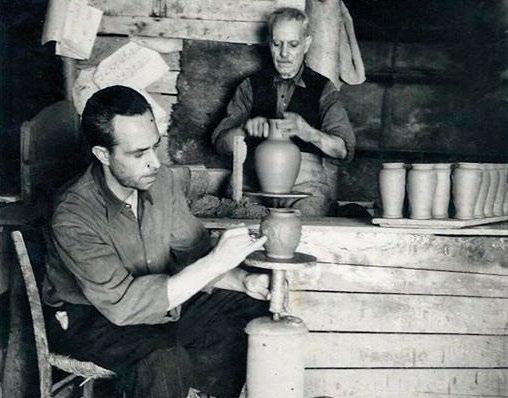
THE IMAGE OF A WHITE TRIANGULAR SAIL GLIDING ACROSS THE CALM, DEEP-BLUE WATERS OF THE AEGEAN IS EMBLEMATIC OF A COUNTRY THAT HAS RELIED MORE THAN ANY OTHER ON THE SEA AND ITS SAILORS. TODAY, THIS SAIL REMAINS FAMILIAR IN ITS SIMPLICITY, YET FEW KNOW HOW TO CALL IT BY ITS NAME AND EVEN FEWER HOW TO USE IT. THIS IS ONE OF THE REASONS THAT LED TO ITS INSCRIPTION IN THE NATIONAL INVENTORY OF INTANGIBLE CULTURAL HERITAGE IN 2024, IN AN EFFORT TO SAFEGUARD A CRAFT THAT IS AT RISK OF DISAPPEARING.
It is the lateen sail, distinguished by its triangular shape and the way it is mounted on a long yard set at an angle to the mast. In the Aegean, its use was widespread until the early decades of the 20th century, offering advantages in the particular conditions of the archipelago, as it harnesses the intensity and variability of the wind. In this way, the vessel is protected from capsizing. This quality made traditional boats virtually unsinkable in the hands of experienced sailors who knew how to “read” the weather.
“It is a Mediterranean sail. It existed in the Aegean and across Greece, but also throughout the Mediterranean -France, Italy, along the Dalmatian coast, everywhere. Even on the lakes of Switzerland,” says Kostas Damianidis, an architect with a PhD in traditional Greek ship-
Its recognition as intangible national cultural heritage brings back into focus the traditional triangular sail that tamed the Greek seas for c enturies.
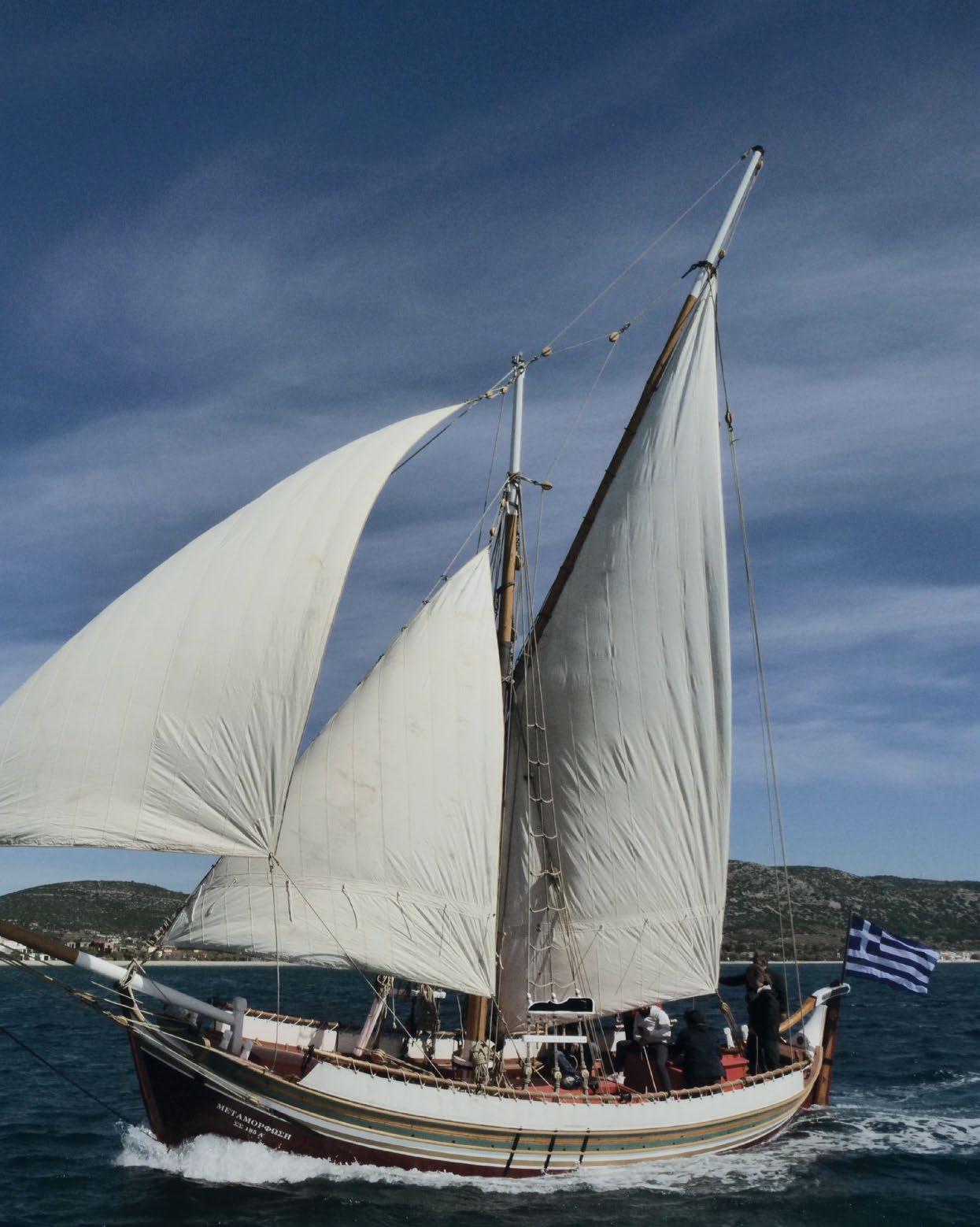
DEANA KARTSAGOULI
building, who, as scientific director of the Museum of Aegean Shipbuilding and Maritime Arts in Samos, was among the key figures behind the effort to promote this craft internationally and secure its recognition.
As Mr. Damianidis explains, a joint nomination has also been submitted with France, Spain, Italy, Croatia, and Switzerland for the inclusion of the lateen sail in UNESCO’s Intangible Cultural Heritage, as the sail of the Mediterranean.
He points out, however, that despite its shared Mediterranean roots, each lateen sail varied from country to country. The particularity of the Greek version lies mainly in the way the sail is rigged to the vessel and in its overall geometry.
“There are technical differences in the way the lateen sail is rigged in Greece compared to other countries. Ours is lighter in the construction of the yard and has different proportions in the mast, which makes it faster and more ‘responsive’ in manoeuvres between the islands of the Aegean,” Mr. Damianidis explains.
The making of a lateen sail is a complex process that begins in the sailmaker’s workshop. The panels of cloth are sewn with double stitching and overlapping seams following precise measurements. The craft of the sailmaker lies in the details, in the so-called “psaria” or “pines”, small adjustments in the fabric that allow the sail to form the necessary curvature to properly catch the wind.
Beyond its historical value, the lateen sail is today re-emerging as a practice of sustainability, with a zero-energy footprint, as it relies exclusively on wind and human skill. At the same time, it carries a body of knowledge passed down from generation to generation, still preserved today through communities and groups such as the Sea Scouts.
In Samos, at the MNΝΤΑ, three out of the fourteen vessels in the collection remain rigged with lateen sails and are launched into the sea every year, sailing around the island. This is part of the museum’s effort to remain “active”, preserving and transmitting the living knowledge of how one sails traditional boats.
A valuable opportunity to highlight the craft of the lateen sail will be the closing ceremony of the Aegean Regatta, the established institution of the General Secretariat for the Aegean and Island Policy, which will take place this year in Samos on August 28.
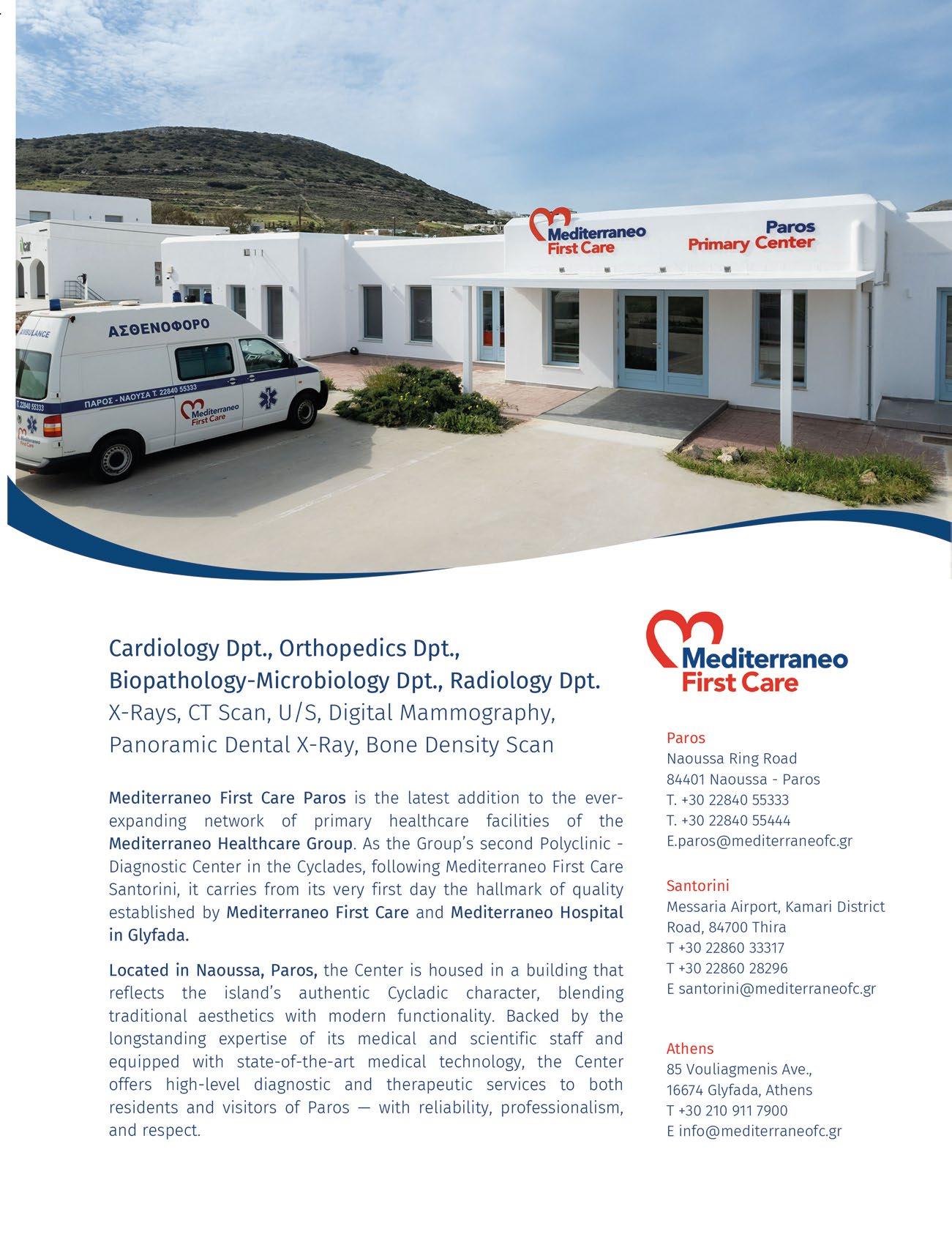
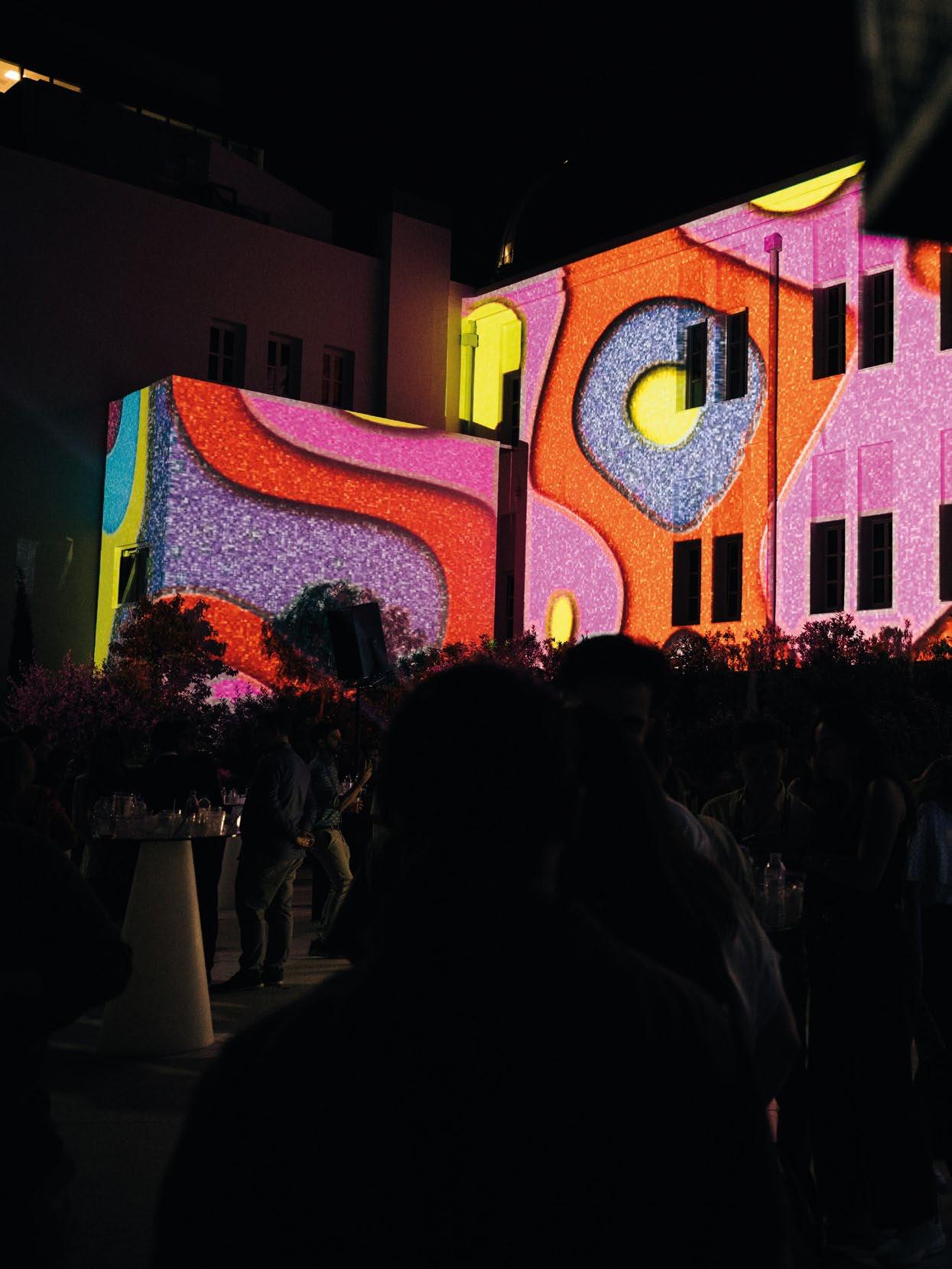
STOA Culture brings a new pulse to the heart of Athens
Σκάναρε εδώ / Scan here
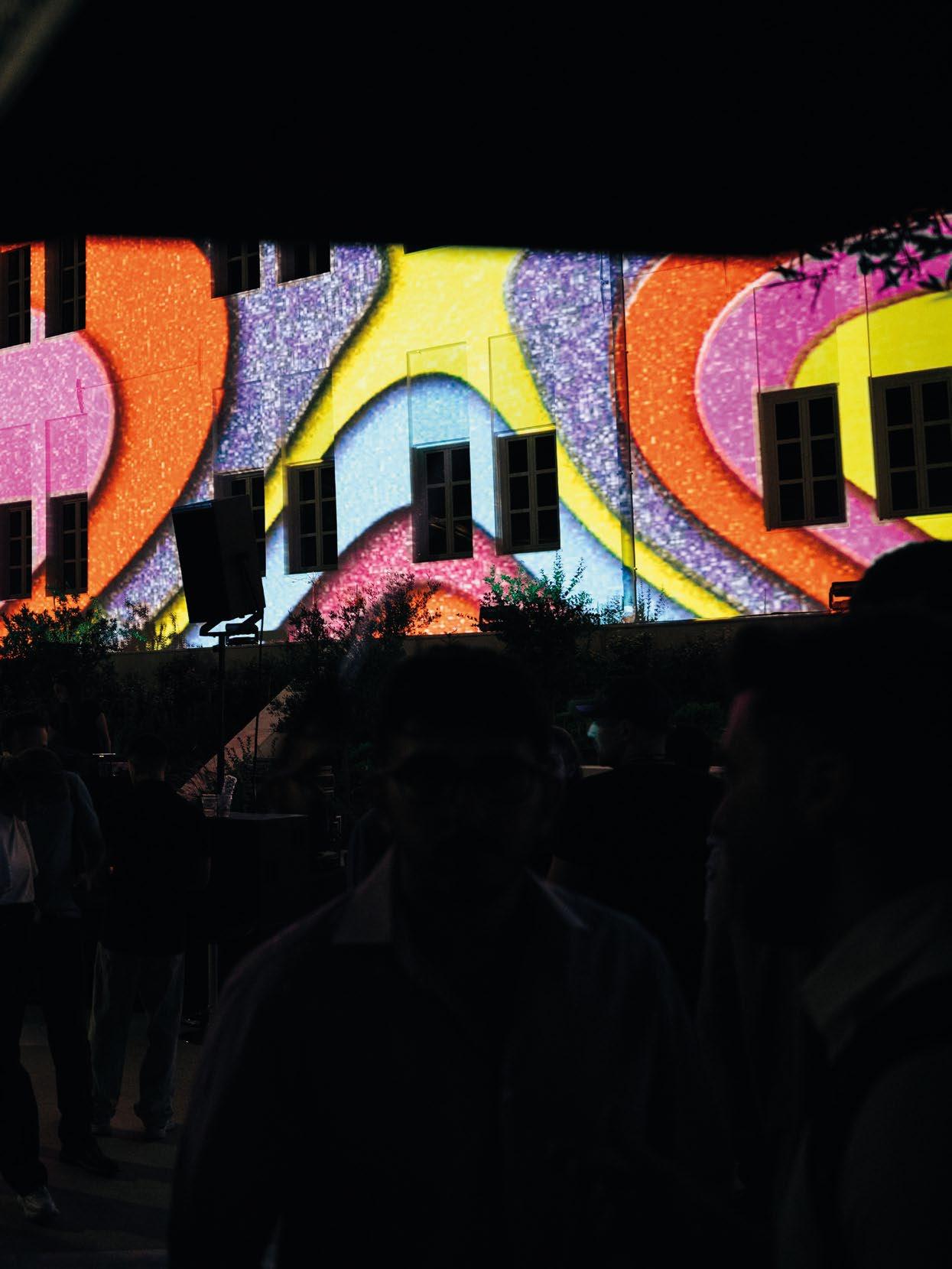
For more than a century, the Arsakeio Mansion has been one of the landmark buildings in the centre of Athens. Designed in the 19th century by Ernst Ziller and closely linked to the history of the Arsakeio School and the Phileducational Society, it served for decades as a vibrant meeting place. Bookstores, stationery shops, cafés, and small businesses shaped the daily life of thousands of Athenians, turning the historic complex into a natural passageway within the city's urban fabric.
Today, this historic complex, in the heart of Athens, where the city’s history meets contemporary urban life, is entering a new cultural chapter through STOA Culture. A space dedicated to the meeting of art, ideas, creativity, and technology.
STOA Culture is much more than a conventional event space. It resembles a living urban organism that changes form throughout the day and night, hosting music, screenings, performances, talks, podcasts, and artistic activities in the city center.
The programme “Summer in the Courtyard – Art in Progress,” curated by Stavros Gasparatos, unfolds from May through September and includes more than forty days of events that activate the space across different time zones and for diverse audiences. Throughout the summer, the programme will evolve dynamically, continuously enriched with new collaborations, performances, concerts, film screenings, and photographic projects, creating an experience that develops in step with the rhythm of the city.
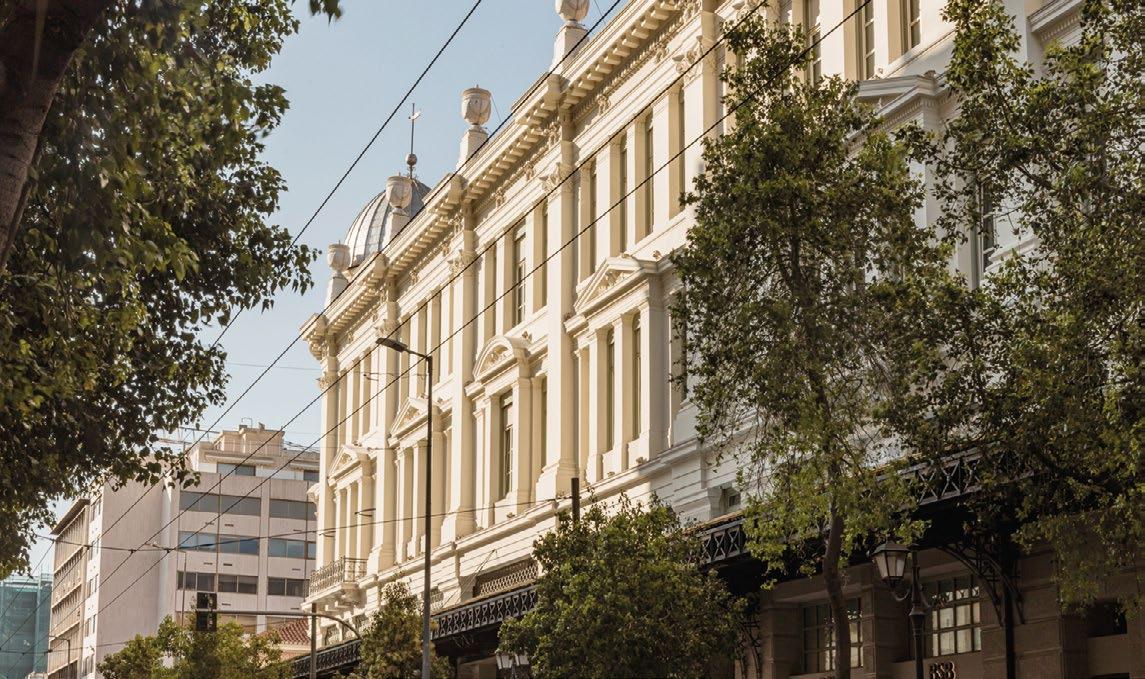
The renovated façade of the Arsakeio Mansion facing Stadiou Street
The first events already set the tone for this multifaceted identity. Concerts, open-air film screenings in the courtyard, discussions around social issues, collaborations with Athens Photo World, and the musical evenings that follow come together to form a programme that is constantly evolving, just like the city itself.
Particular interest also surrounds POV Urban Studio, an open creative hub within the urban landscape that will host music sessions, podcasts, DJ sets, radio-style broadcasts, and live recordings. Also part of this framework are the Tiny Concerts, intimate performances that bring artists and audiences closer together while simultaneously extending the experience into the digital sphere.
What makes STOA Culture truly stand out is its relationship with the city itself.
INFO
STOA Culture
Upcoming Highlight
Nalyssa Green &
| 17 July 202
Two of the most distinctive singer-songwriters of the contemporary Greek music scene come together at STOA Culture for a special evening of music, poetry, and unexpected artistic encounters.
More information: www.stoaculture.gr
Arsakeio Arcade, Pesmazoglou 5,, Athens 10564
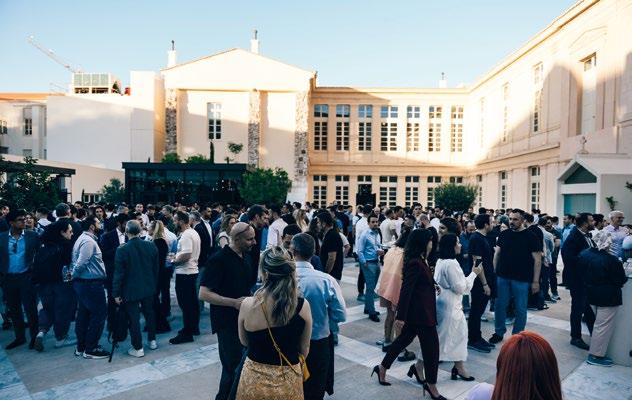
Register now at the SEAJETS SEACLUB and begin a journey filled with exclusive benefits, gifts and discounts.
SEACLUB is a unique privileged program, specially designed to maximize the benefits of its members with every transaction. Start travelling with SEAJETS and get rewarded on every step of your journey.
Join the SEAJETS SEACLUB in just 1 minute:
1. Visit seajets.com or scan the QR code below
2. Fill in the online application form
3. Welcome to the SEACLUB
Enjoy the benefits!
Your rewards journey starts here!


Have you ever noticed that just a few minutes spent gazing at the sea can make you feel calmer and more refreshed? It is no coincidence. Our brains tend to respond positively to natural environments such as the sea.
In our daily lives, we constantly look at screens, mobile phones, and objects at close range. When we look at the distant horizon:
• The eye muscles relax.
• Visual fatigue is reduced.
• The brain receives signals of safety and calm.
The rhythmic sound of the sea acts like a natural, low-intensity background. Studies show that natural sounds can:
• Reduce stress levels.
• Improve concentration.
• Increase feelings of relaxation.
Exposure to water and open horizons has been associated with:
• Better mood.
• Reduced mental fatigue.
• A greater sense of freedom.
Scientists refer to these environments as “Blue Spaces”, natural settings associated with water and mental well-being.
Step out onto the deck and take two minutes:
1. Look at the horizon.
2. Take slow breaths.
3. Listen only to the sound of the sea.
You may discover that the sea offers more than beautiful views: a natural way to restore balance to both body and mind.