THE MAGAZINE FOR THE WORLD’S SHIP OWNERS & SHIP MANAGERS
STRAIGHT TALK FIRST PERSON
8 – When freedom of navigation becomes casualty of war
Removing
Hormuz bottleneck not that easy
Get our magazine digitally. Scan QR code and fill in your details to receive.
10 – Strait of Hormuz remains ‘theatre of uncertainty’
13 – John Denholm takes up ICS role at ‘pivotal time’ for industry
14 – Latest BIMCO and ICS report warns of potential future officer shortage
15 – New tool launched to help tackle illegal seafarer recruitment fees
16 – Post-incident reporting and the risks that managers overlook: ITIC
NAUTICAL INSTITUTE
18 – Giving maritime professionals the tools to deliver excellence
INTERMANAGER
OUTLOOK
20 – “Carrying world trade. Carrying the risks”: Recognising the people behind global shipping
Capt. Kuba Szymanski
22 – Harry Vafias Shipping’s New Age of Geopolitical Exposure
HOW I WORK
26 – Sebastian von Hardenberg Chief Executive Officer, BSM and President, InterManager
CREW TRAINING
28 – The seafarer training gap nobody wants to talk about
VESSEL OPERATIONS
30 – Why vessel age no longer defines fleet performance
31 – Port disbursements - shipping’s last analogue problem
REGIONAL FOCUS
Germany Report
32 – Industry bracing for geopolitical risk
33 – Growing Asian focus at SMM
34 – River Elbe an issue once more
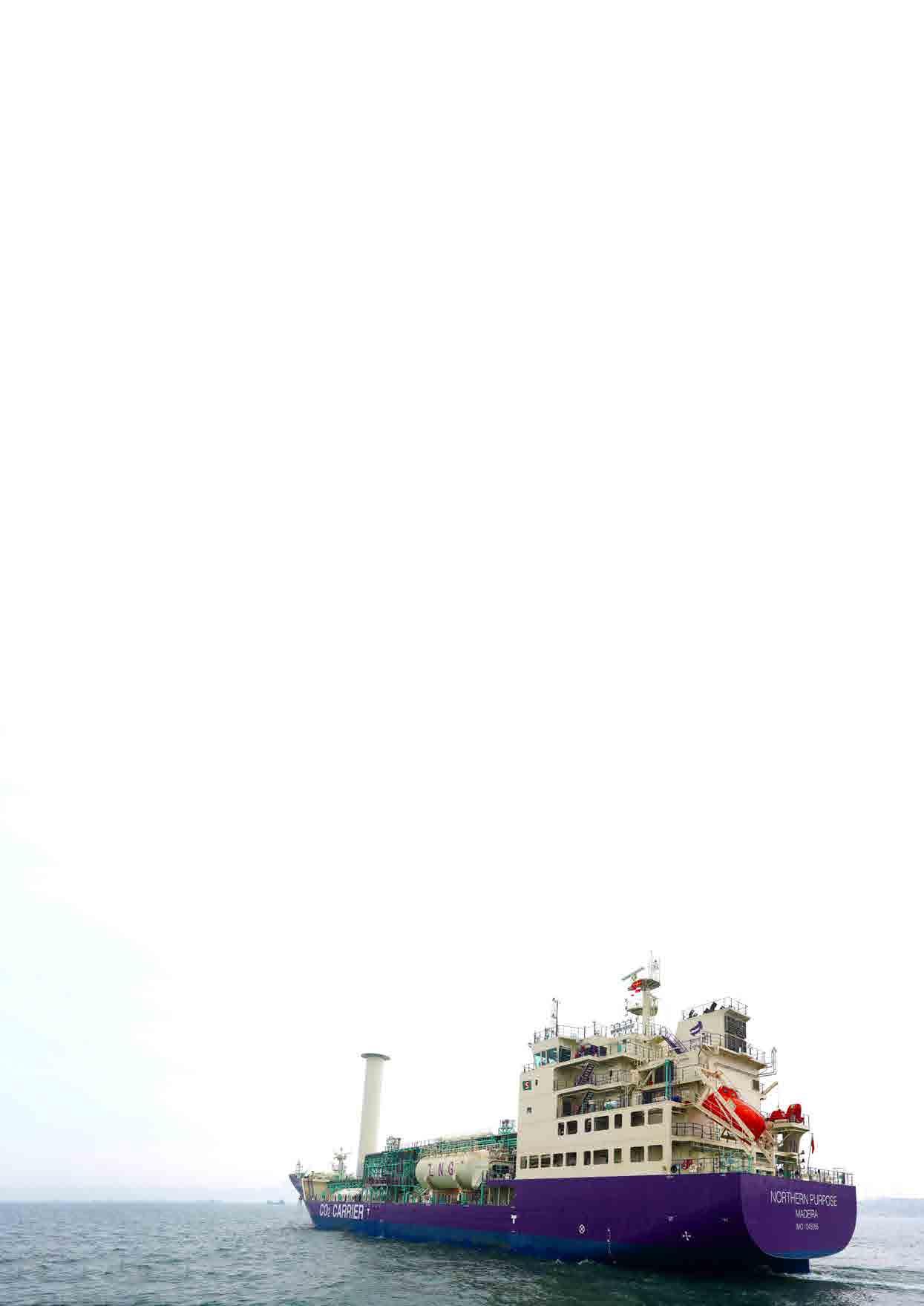
36 – Bernhard Schulte’s first LCO2 carrier christened in China
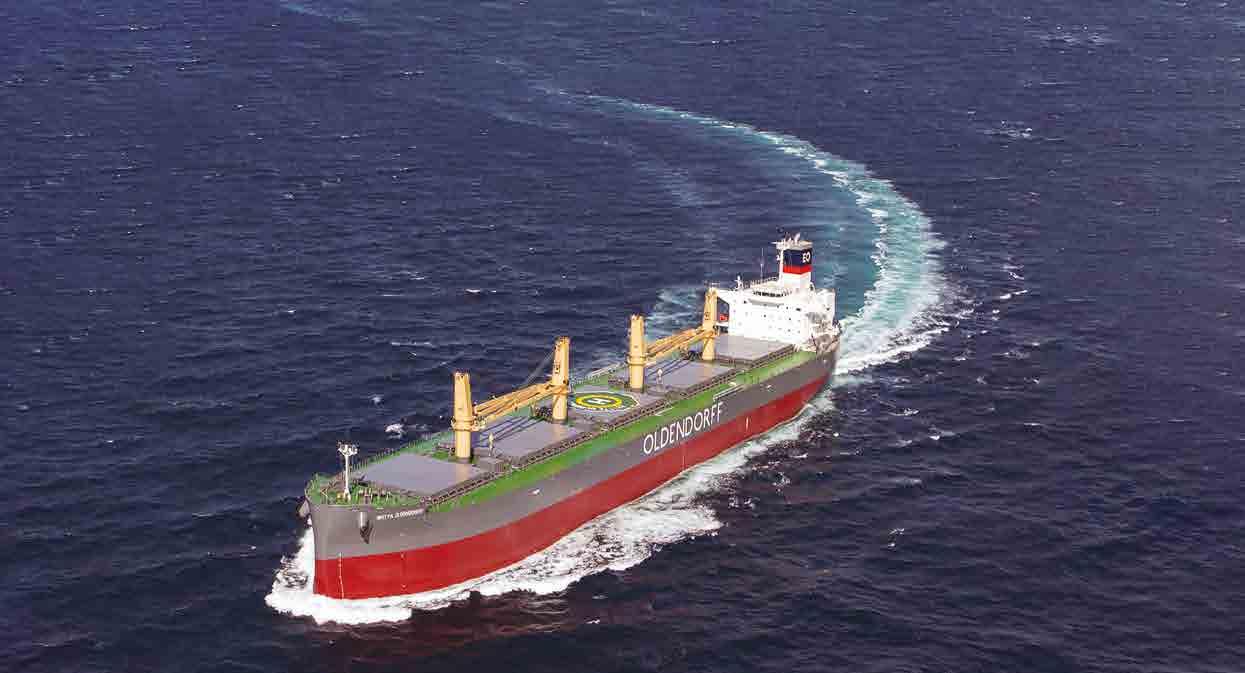
38 – Oldendorff opts for Starlink connectivity
Gibraltar Report
47 – UK-EU border agreement brings relief to ‘the Rock’
54 – Choosing a flag in 2026 - Why quality matters more than ever
CREW WELFARE
42 – Celebrating crew diversity with menus that honour multinational teams at sea
SMART TECHNOLOGY
& AI
57 – Bringing fleet reality into reach: How AI assistant Stevie supports shipping’s daily decisions
58 – Benefits of AI begin to permeate shipping
61 – Smart technology and AI: Growing in importance
62 – Study highlights strong impact of AI on navigational safety
63 – ‘Smart’ ships are failing to turn data into real intelligence, warns SmartSea
ANALYSIS
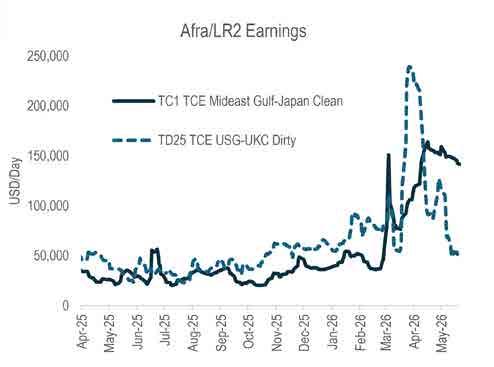
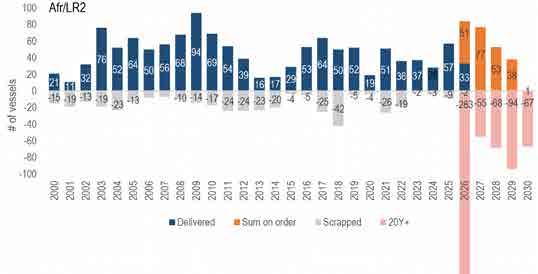
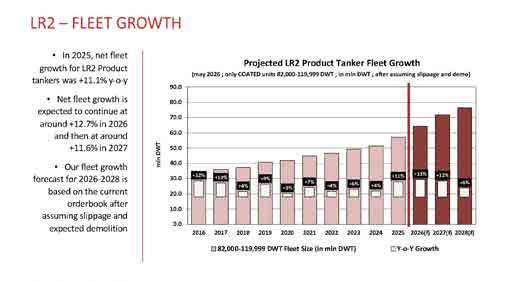
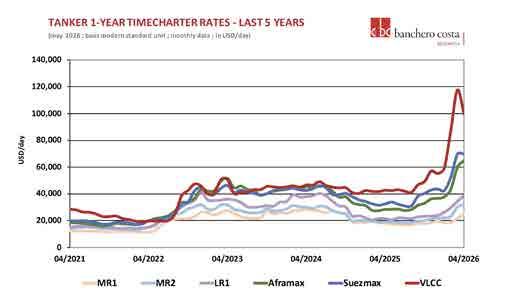
64 – Spotlight on LR2s - cashing in
NORWAY NUCLEAR
67 – Nuclear propulsion moves closer to reality, but collaboration will decide its future
TECHNICAL
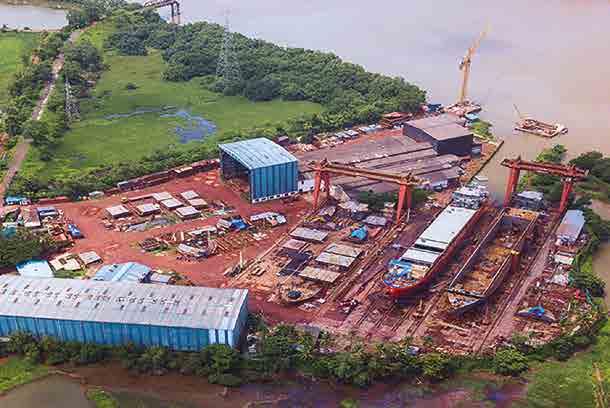
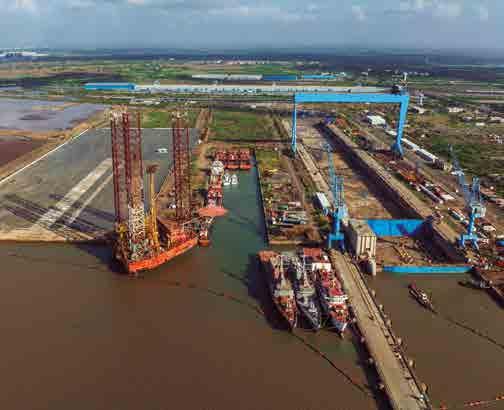
70 – Shipbuilding: A rising star in India’s economy
NAVIGATION
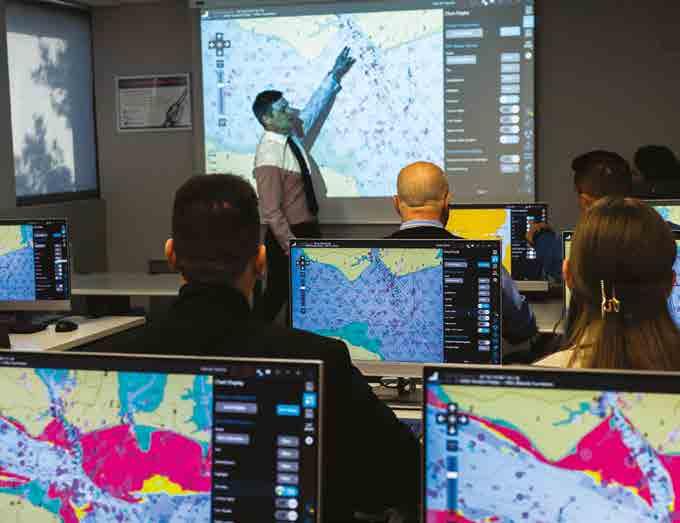
74 – Why ECDIS competence remains critical as navigation evolves
75 – NorthStandard ECDIS Training Assessment tool results
76 – Our regular diary section
AD HOC COMMUNICATIONS
78 – Viasat’s Gert-Jan Panken: Bonded to the future of Energy and Maritime
80 – Better vessel connectivity brings benefits all round
81 – Space Norway: Reading the runes on satcom connectivity
ALTERNATIVE VIEWPOINT
82 – When malicious interference becomes normalised
SHIP REPAIR
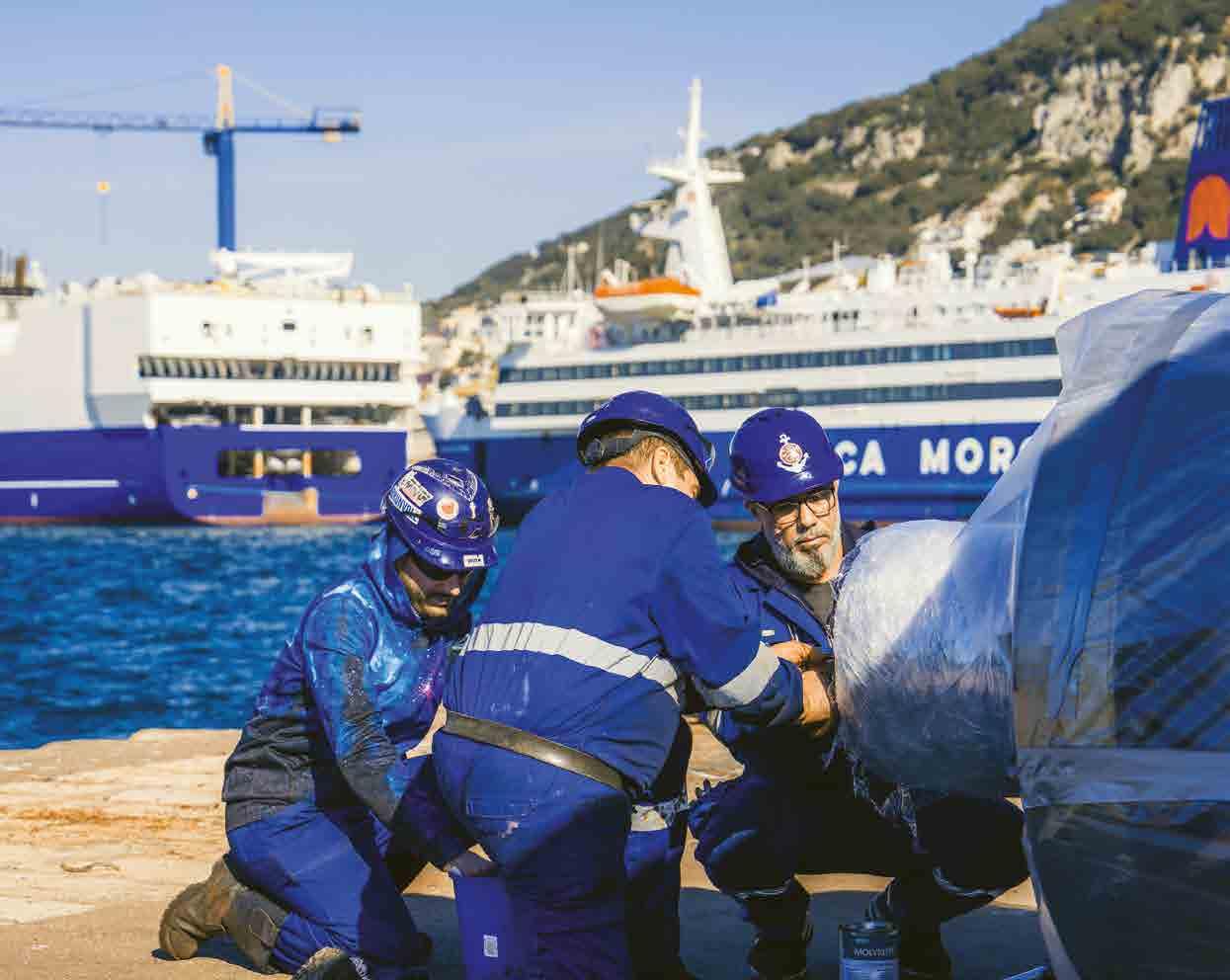
83 – Successful rudder repair by MarineShaft
84 – From biofouling prevention to better performance: Why the industry must act, not react
OBJECTS OF DESIRE
86 – Our pick of the most coveted creations
REVIEW
88 – Bringing you the best in arts & culture
LIFESTYLE
90 – Motors: VW Tayron
The July/August issue of Ship Management International magazine (SMI 122), to be distributed at the Saudi Maritime & Logistics Congress in Jeddah 21-22 October 2026, will feature a regional focus on the Middle East & Dubai, including a look the effects of the Iran conflict including the emerging logistics landbridge in the Gulf.
There will also be special reports on Ship Supply, featuring latest news from the International Shipsuppliers & Services Association (ISSA), and Crew Training - an area of growing concern given rapid advances in technology and the advent of alternative fuels,
For advertising enquiries, please contact Sales by emailing vijayatha@elaboratecomms.com You can also keep abreast of news and subscribe to our daily newsletter at shipmanagementinternational.com
Issue 121 May/June 2026
STRAIGHT TALK
When freedom of navigation becomes casualty of war
The effectiveness of Iran’s retaliatory measures to the US/Israeli air strikes that began on 28 February has taken the world by surprise, and catapulted shipping to the top of the global news agenda.
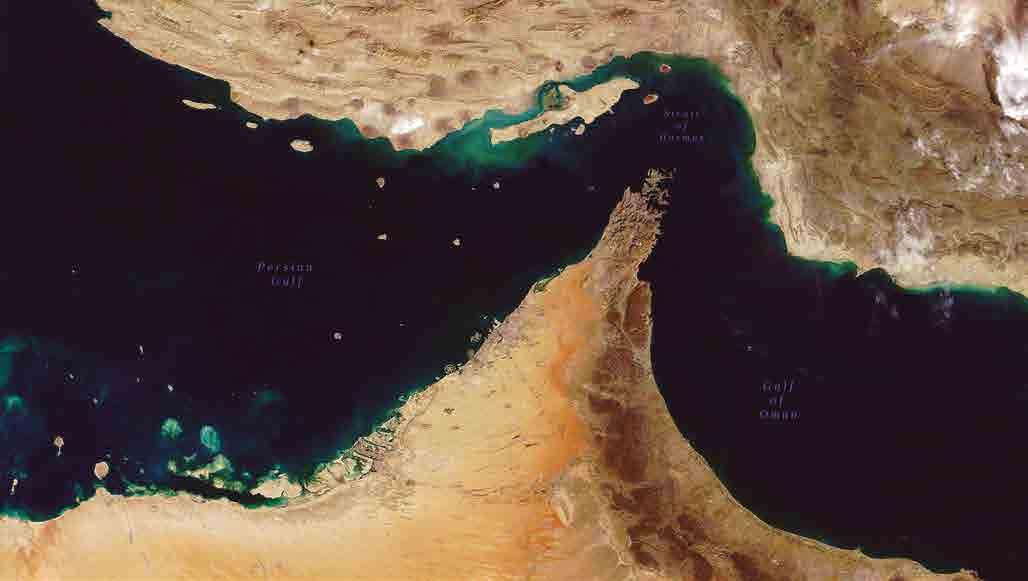
No-one is now unaware of the strategic importance of the Strait of Hormuz, conduit for some 20% of the world’s oil and liquefied gas, or of the ripple effect of increased prices for energy and related commodities such as fertilisers. The Strait of Hormuz had just provisionally reopened after having been closed for some months at the time of writing (end-June), and economies around the world were feeling the pain.
The great and the good of shipping continue to espouse the right of ‘freedom of navigation’ and seek a return to the pre-conflict status quo of free passage through the Strait of Hormuz.
IMO announced what it deemed a safe Evacuation Plan for the estimated 600 ships and 11,000 seafarers trapped inside the Gulf, offering alternative routes via either a Northern (Iran) Corridor or Southern (Oman) one, but had to pause it three
Sales Enquiries
Vijayatha Poojary Phone: +44 (0) 1296 682 051
Email: vijayatha@elaboratecomms.com
Editorial
Bob Jaques Phone: +44 (0) 1296 682 089
Email: editorial@elaboratecomms.com
Email: bjaques@elaboratecomms.com
Finance
Lorraine Kimble Phone: +44 (0) 1296 682 051
Email: accounts@elaboratecomms.com
days after an Evergreen vessel using the Southern Corridor was struck by a drone – presumably fired by Iran at a vessel using a routing contrary to its wishes.
The situation remained anything but clear as this issue went to press. But it appeared that the possibility of vessels transiting the Strait of Hormuz entirely free of charge – without a ‘toll’, mandatory transit insurance or so-called ‘maritime service fees’ for completing the crossing – can no longer be taken for granted.
For their part, Iranian authorities have declared that “everyone should know that the administration of the Strait of Hormuz will never go back to the way it was before the war” [see also following article].
Whoever is deemed responsible for having opened the Pandora’s Box of disputed control over navigation through this strategic bottleneck, it will be no easy task to return to the pre-conflict status quo. Or, if freedom of navigation is resumed, to ensure that it isn’t withdrawn again at the slightest provocation. l
Publisher: Sean Moloney
Editor: Bob Jaques
Sales Manager: Julian Berry
Vijayatha Poojary
Finance: Lorraine Kimble
Design and Layout: Diptesh Chohan
Regular Contributors: Michael Grey
Felicity Landon
Ian Cochran
Margie Collins
Martin Stopford
Motoring Journalist: Rob Auchterlonie
Technical Editor: David Tinsley
Editorial contributors: The
SMI news and reports from around the world
Strait of Hormuz remains ‘theatre of uncertainty’
It all seemed so easy in mid-June when the US and Iran finally signed an MOU for a 60-day ceasefire that was intended to pave the way to a definitive peace deal, and in the meantime allow vessel traffic to resume transits of the Strait of Hormuz unhindered.
“Ships of the world, start your engines and let the oil flow”, US President Donald Trump declared on social media. Shipping leaders welcomed the move. “This signals a crucial return to peace, dialogue, multilateralism and diplomacy, and in particular, an important step toward restoring safety in this vital maritime corridor for seafarers and ships, as well as safeguarding the fundamental principle of freedom of navigation,” International Maritime Organization (IMO)
Secretary-General Arsenio Dominguez (pictured) said in a statement.
International Chamber of Shipping (ICS) Secretary General Thomas Kazakos concurred: “This announcement comes as a relief to the 20,000 seafarers who have been caught in the middle of this war. Their safe departure from the region must be a top priority but will take time.”
BIMCO already sounded a prescient warning note, however. “The statements by the US and Iran are currently unclear and do not offer sufficient information regarding key aspects such as timings and safe routes,” said the association’s Chief Safety & Security Officer, Jakob Larsen. “Due to lack of details and a history of overly optimistic reassurances, we believe the security
situation for the shipping industry remains volatile, and we still consider it very risky for ships to commence transits at this point.”
Undeterred,
the IMO pushed ahead with drawing up a Hormuz Evacuation Plan, which it issued just over one week later after a number of vessels had already exited the Gulf. “We will begin the implementation of the evacuation plan for over 11,000 seafarers still stranded in the region,” stated the IMO Secretary-General. “This largescale operation will be carried out in close cooperation with Iran, Oman, all other coastal States in the region, the United States and the maritime industry. We have secured the necessary safety guarantees and have thoroughly verified the conditions for safe navigation to support these operations.”
The IMO followed up with a series of Operational FAQs about how ships should follow the Plan in order to exit the Gulf through the Strait of Hormuz. This envisaged use of one of two possible routes – a Nothern (Iran) Corridor and Southern (Oman) Corridor – to avoid the main channel that had been mined earlier during the US/Israel-Iran conflict that began 28 February,
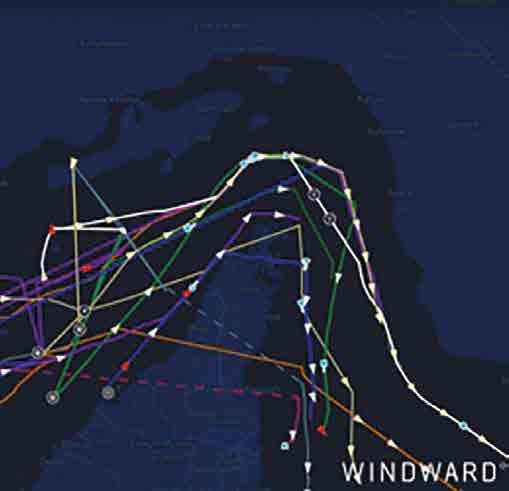
The US was quick to encourage vessels to use the southern route, thereby not having to submit to any fees or conditions that Iran would enforce. But the Iran Revolutionary Guard Corp ominously declined to recognise the validity of the Oman corridor, publicly warning that it would be “dangerous’ for ships to try to use that. According to maritime intelligence service Windward, vessels embarking on the route were contacted by the IRGC and warned to turn back. This followed Iran’s founding, in early May, of a Persian Gulf Strait Authority (PGSA) to manage transits through the Strait of Hormuz with claimed authority over the entire breadth of the waterway.
Then on Thursday June 25, Singapore-flagged Evergreen containership Ever Lovely sustained minor damage to the bridge area from an “unknown projectile” off the Oman coast while leaving the Strait of Hormuz. All 21 crew members were
reported safe and the vessel was able to continue on its voyage.
The IMO pointed out that the vessel had not followed all the points of the Evacuation Plan, for example failing to alert the Omani Navy of its intended passage. But nonetheless, in the interests of seafarer safety, it decided to pause the Evacuation Plan while it gathered further details of the attack and pending guarantees from all parties involved that no more attacks on innocent seafarers would take place.
The US authorities claimed that Iran had in fact launched drone attacks on four vessels off Oman, with just the Ever Lovely hit. President Trump called it a “foolish violation” of the 60-day ceasefire agreement, and the US military retaliated with air strikes on Iranian missile and drone storage facilities and coastal radar positions.
Another drone strike in the Strait occurred, this time against a Panama-flagged vessel, and the US retaliated again with more strikes, before both sides reportedly agreed to stand down hostilities.
IMO Secretary-General Arsenio Dominguez had meanwhile convened a press briefing on 25 June in which he defended the initial success of the Evacuation Plan, pointing out that some 115 vessels carrying 2,500 seafarers had successfully transited the Strait and left the Gulf in the three-and-a-half days the evacuation plan was in force, he said, This left around 500 vessels and 8,500 seafarers still trapped in the Gulf, with the safe evacuation of these remaining IMO’s priority, he said, followed by a de-mining of the Strait.
Questioned by journalists about whether Iran had ever approved the Omani route, the Secretary-General stressed that IMO had been following a multilateral approach, and that is was not up to IMO to advise shipowners on what route to take. This left the distinct impression that Iran had not approved the Omani route, suggesting the safety of its use remained in question.
Tanker owners’ association INTERTANKO issued a statement immediately after the Secreatry-General’s briefing, calling for a diplomatic solution to what it dubbed a ‘crisis’ situation.
“This latest development highlights the fragile nature of the situation in the Strait of Hormuz and the urgent need for a diplomatic resolution to resuming safe transits,” said Tim Wilkins, MD of INTERTANKO.
INTERTANKO was advising Members that, if possible, they should delay transits through the Strait until the situation became clearer. However, if they were planning to use the Southern (Oman) route then they should contact the US Navy to ensure the latest information regarding the threat and route is available, it added.
“The Northern (Iranian) route remains a cause for concern, due to the requirements of the Persian Gulf Strait Authority (PGSA) that present sanctions, contractual and insurance risks to owners.”
deadline and recent announcements create significant uncertainty and added pressure on owners and seafarers when considering safe transits.”
INTERTANKO stated.
“Despite the relative initial success of the IMO plan, as well as the wider routeing, there are issues and ambiguities that need to be addressed in any followup measures to ensure safe navigation,” the tanker body continued.
INTERTANKO’s Marine Director, Phillip Belcher, said: “We would like to see more active vessel traffic management, and 24/7 transits through the routes as we feel it is the best way to ensure full, pre-conflict-level numbers are resumed, while providing navigation safety for the seafarer.”
Furthermore, “INTERTANKO continues to raise concerns over the long-term implications of the US-Iran MoU, and would like clarity on the 60-day limit and planned imposition of mandatory Iranian insurance. Joint statements by both Iran and Oman have indicated that costs will be imposed on traffic. The 60-day negotiation
INTERTANKO MD Wilkins added that the imposition of fees “of course, goes against UNCLOS in that vessels’ rights to transit are seemingly revoked with freedom of navigation being ignored.”
But Iran's chief negotiator, Mohammed Bagher Ghalibaf, was reported as having told state-affiliated news outlets that "everyone should know that the administration of the Strait of Hormuz will never go back to the way it was before the war" [see also Straight Talk p8].
In the words of one captain of a trapped ship that appeared in the maritime press, the daily reality of manning a ship in the Strait of Hormuz has become “theatre of uncertainty”. Add in the fact that drone strikes continue on vessels using the approved corridor in the Black Sea, with at least two seafarer fatalities occurring in separate attacks in late June, and ‘freedom of navigation’ seems to have become a rather quaint notion for now in these geopolitically troubled times. l
John Denholm takes up ICS role at ‘pivotal time’ for industry
John Denholm, former President of both the UK Chamber of Shipping and BIMCO, has succeeded Emanuele Grimaldi as Chairman of the International Chamber of Shipping (ICS).
Commenting on the appointment, Denholm said: “I take on this responsibility at a moment of considerable upheaval and uncertainty for the world economy and for international shipping. Our industry continues to navigate geopolitical tensions, security threats, rapid technological change, the energy transition, and evolving trading patterns. Yet throughout every challenge, shipping continues to perform its essential role: keeping global trade moving and delivering the goods, energy, and resources upon which societies depend. I look forward to working with the ICS Board of Directors and Secretariat during this pivotal period for our industry.”
ICS Secretary General Thomas A. Kazakos welcomed the new Chairman’s “decades of experience as a shipowner, business leader, and industry representative, together with a deep understanding of the challenges and opportunities facing our sector.” He also thanked outgoing chair Emanuele Grimaldi for his “outstanding leadership” over the past four years,
during“one of the most demanding periods in recent maritime history”. Under Grimaldi’s stewardship, ICS “helped guide the industry as it responded to attacks on civilian shipping and the disruption of major trade routes, adapted to significant shifts in global trading patterns, and engaged with an unprecedented programme of international regulatory change,” Kazakos pointed out. l
Latest BIMCO and ICS report warns of potential future officer shortage
The Seafarer Workforce Report 2026 from BIMCO and the International Chamber of Shipping (ICS), issued this June, forecasts that given the growing demand for STCW certified officers, there will be a need for an additional 113,735 officers by 2030 to operate the world merchant fleet.
The report estimates that 2.57 million seafarers currently serve the fleet, operating 85,148 merchant ships around the globe. The report also estimates that 2026 will see a shortage of 39,100 STCW certified officers and a surplus of 56,890 ratings.
To meet the future demand, it is estimated that an additional 22,747 officers and 8,475 ratings will need to join the workforce each year until 2030, representing an average annual increase of 2.0% and 0.5% respectively.
The Seafarer Workforce Report is published every five years and was last issued in 2021. The report provides a comprehensive overview of the supply and demand balance for STCW certified seafarers.
“The recruitment, training and retention of the seafarer workforce will be crucial to ensuring that our industry is prepared for the future,” says BIMCO Secretary General & CEO, David Loosley. “We have a big collective task ahead of us in working with all stakeholders and the countries that are the biggest suppliers of the seafarers operating our ships. The report can help ensure that recruitment and employment policies are future focused,”
Since the 2021 report, demand for STCW certified seafarers has increased by 35%, representing a significant increase from the previous two reports in 2021 and 2015. The demand for officers has increased by 23.1% and the demand for ratings has increased by 46.3% compared to 2021 levels. The growth in demand for both ratings and officers is likely driven by the expansion of the global merchant fleet and the recovery from the COVID-19 pandemic.
“Seafarers are the backbone of global trade, and this report reinforces just how important they are to keeping the world economy moving, especially in an increasingly fragmented world,” says ICS Secretary General, Thomas A. Kazakos. “Without continued investment in both recruitment and training, the workforce gap risks growing at a time when the industry needs skilled seafarers more than ever.”
As the predicted demand for officers will require continued high intakes of STCW certified officers, the report concludes it is essential that maritime education, training and careers at sea are promoted, including information on transitioning to shore-based roles. It is also crucial that levels of seafarer recruitment and retention are regularly and closely monitored by maritime administrations. This will help inform the industry and policymakers of the global supply and demand situation of the workforce. l
New tool launched to help tackle illegal seafarer recruitment fees
Anew tool was launched in late June, coinciding with IMO’s Day of the Seafarer, to help the maritime industry tackle recruitment fees being charged to seafarers, a widespread practice that is illegal under the Maritime Labour Convention.
The tool is backed by over 30 major global shipowners, ship operators, charterers and container cargo owners, insurers and investors - including Odfjell, CMA CGM, NYK Ship Management, Wilhelmsen Ship Management, IMC Ship Management, Anglo American, Louis Dreyfus Company, Mercuria, Inter IKEA Group, Gard, South32 and many others. It is also supported by Mission to Seafarers, MACN, ISWAN, Rafto Foundation, Sustainable Shipping Initiative, shipping associations, ITF and other unions and civil society organisations.
Created by the Institute for Human Rights and Business (IHRB) and TURTLE, the toolkit provides a simple five-phase approach to risk management and compliance to help companies identify and mitigate recruitment fee risks in their operations and supply chains. The phases move from foundational controls to active oversight, supported by collective action throughout.
Francesca Fairbairn, who leads IHRB’s work on shipping, said: “No worker should face the scourge of recruitment fees. Yet our research shows these illegal fees are endemic in shipping, putting a heavy burden on the seafarers who transport our goods and keep 90% of the world’s trading running. Further, the financial stress of the debt they face as a result of fees can lead to unsafe working conditions on board ships. Seafarers deserve better.”
“Part of the problem is knowing if there are fees being paid by crew up the chain, and many seafarers are unaware that these fees are illegal. We hope this simple tool will equip the maritime industry to address fees in their systems, and ideally prevent them. The toolkit is designed to be used as a living compliance instrument, not a one-time audit.”
Isabelle Rickmers, the CEO and founder of TURTLE, said: "You cannot solve a talent shortage with an industry that charges people to enter it. Illegal recruitment fees do more than break the law, they poison the very entry point our industry most needs to protect. When a newcomer's first experience is exploitation, we lose them before they begin, along with everyone they would have brought in behind them. That is why this concerns all of us, and why TURTLE is proud to stand with IHRB and the Action Group on Seafarer Recruitment Fees behind a toolkit that gives companies a practical way to act."
The toolkit has been created as a means for shipping companies to take action following IHRB and TURTLE’s research findings into illegal recruitment fees, which showed that almost a third (31%) of seafarers have been asked to pay a recruitment fee to secure a job onboard a merchant vessel. Of the seafarers surveyed in their 2024 study, almost half of those who were charged fees paid between $500 – $5,000, with some seafarers reporting being charged more than $10,000. 74% of those asked to pay a fee did so, in part due to a lack of awareness that the practice is illegal. The resulting levels of debt push many seafarers towards modern slavery conditions and are linked to unsafe conditions aboard ships, according to researchers. IHRB, TURTLE, and others like the Maritime Anti-Corruption Network are raising awareness among seafarers to curb payment of illegal fees. l
Post-incident reporting and the risks that managers overlook
By Geraldine Koon, Director, Senior Legal Advisor, ITIC
Ship managers are frequently required to produce reports following an incident, whether for Flag State, owners or in accordance with the ship’s SMS. A clear, factual account of what happened, what went wrong and what might be done differently is genuinely useful. The problem arises when such reports are then used against the managers or their principals, the owners. The ISM code promotes a no-blame culture. In practice, when something goes wrong, the opposite can quickly take hold.
Any incident carries the potential for dispute and costly litigation. The
parties involved will ask for every report connected to the incident and go through them carefully, looking for anything that supports an argument on blame or liability.
ITIC regularly sees reports and correspondence from managers who have been quick to state that they were at fault and to apologise to owners, believing this to be good client service or that this may help resolve an ongoing issue. In some instances, however, this has the opposite effect. Rather than resolving matters, it can give owners grounds to bring a claim against managers or provide a basis for third parties to pursue owners. This is particularly common when commercial
relationships sour at a later stage, or when owners are looking for justification to withhold management fees. It is worth remembering that an apology can be treated as an admission of liability, and that most insurance policies contain a specific provision that liability must not be admitted. A well-intentioned apology can therefore place a manager in breach of their own cover.
When reporting on an incident, managers should therefore ensure that they do not comment on anything that is outside their knowledge and is not strictly necessary to the understanding of the incident. Reports should set out facts only and contain no speculation.
Opinions on causation are a matter for experts. Questions of liability and blame are for lawyers, based on the relevant laws and contractual provisions.
The way an incident is described in a report can have significant consequences for how liability arguments are later constructed. For example, under the SHIPMAN agreement, generally, managers are not liable where the crew caused the incident, even where that crew acted negligently. However, the position is different where crew incompetence was itself a product of the manager’s failure to fulfil a training duty.
Furthermore, where crew incompetence is found, the ship may be considered unseaworthy, which can leave owners unable to resist certain third-party claims. This is not something a postincident report should be determining. It is a conclusion that belongs to legal investigation.
Managers should also remember that any incident can be the result of one or more of multiple causes, and often, until the issues are fully investigated, it will not be possible to say which factors were causative. They should therefore take care when setting out the circumstances surrounding and potentially leading to the incident. Furthermore, liability under the Shipman is restricted to where the loss has been caused “solely” by the manager, therefore liability is not something that should be addressed in the report.
Where not strictly necessary, reports should avoid referring to other documents. Doing so draws attention to material that may turn out to be irrelevant but that will now need to be disclosed. The performance review history of a crew member, for instance, is unlikely to be appropriate in a factual account of what took place.
If there is any uncertainty about how
a report should be framed, managers should send the draft to their insurers and lawyers for review before it is finalised and distributed.
If managers feel that they may face some claim, they should also avoid discussing the issue internally in writing and should be careful what they say in correspondence to owners or third parties. Under English law, and many other jurisdictions, internal correspondence is disclosable to the other side if the matter proceeds to litigation. Managers who discuss liability risk creating documents that damage their position later. Again, managers are advised to inform their insurers and lawyers as soon as possible. Doing so also increases the chance of asserting litigation or legal advice privilege over subsequent correspondence, meaning those documents may not need to be disclosed. l
Giving maritime professionals the tools to deliver excellence Nautical Institute
By Captain John Lloyd FNI, Chief Executive, The Nautical Institute
Shipping depends on people making good decisions in complex environments.
Whether at sea or ashore, maritime professionals are required to interpret risk, apply technical knowledge, lead teams, manage pressure and uphold standards that directly affect safety, efficiency and operational performance. Those demands are becoming more complex as the industry responds to new technologies, evolving regulation, decarbonisation, cyber risk and closer interaction between ship and shore.
In that context, professional competence cannot be viewed as something achieved at a certain point in a career. It must be maintained, refreshed and developed continuously.
This is why continuing professional development is central to the future of the maritime profession.
Formal qualifications and certification provide an essential foundation, but modern shipping requires more than initial training alone. Professionals need access to practical guidance, current technical knowledge, structured learning and opportunities to exchange experience with others facing similar operational challenges.
At The Nautical Institute, our aim is to support maritime professionals throughout their professional journey. It is a central part of our work to provide individuals with the right tools to deliver excellence in their field by promoting professionalism, safety and best practice across the industry.
Continuing professional development goes beyond STCW standards and, in an era of rapid technological change, takes many forms. It includes online training and interactive courses that support leadership, critical thinking and operational assessment skills. It includes technical publications that translate expert knowledge into practical guidance, webinars that allow knowledge and diverse experiences to be shared, and in-person events that bring together maritime professionals from different sectors, regions and career stages.
The common thread is professional growth that supports people to perform competently, more efficiently, and to make better decisions and contribute to safer operations.
Technical knowledge in shipping is fundamental, but with the
increasing use of technology, safe operations also rely on critical thinking, effective communication, accountability and leadership. These professional qualities must be developed deliberately.
Lead auditing, for example, is not only about understanding standards and procedures. It also requires the ability to ask the right questions, identify gaps, communicate findings constructively and support collaboration. Safety management is not only about compliance. It depends on people identifying risk, influencing behavioural change and building trust. Leadership is not confined to senior roles. Officers, managers, assessors, trainers and shore-based professionals all carry leadership responsibilities in different ways.
Professional bodies, training centres and educational institutions all have an important role to play here. The Nautical Institute brings together a global community of maritime professionals, educators, technical specialists and industry leaders reflecting the diversity of expertise and knowledge found in our industry. This diversity matters because professional development is better informed by real operational experience, not only by regulation or policy.
In a global sector, this exchange of knowledge is particularly valuable. Shipping operates across different jurisdictions, ship types, trades and cultures, but many of the underlying professional challenges are shared. A lesson identified in one context may help improve practice elsewhere.
Professional development is therefore not simply a personal benefit. It is an industry requirement.
When maritime professionals continue to develop their knowledge and capability, the whole sector benefits. Standards become more consistent. Decision-making improves. Safety cultures become stronger. Teams are better supported. Organisations become more resilient.
The challenges facing shipping will continue to evolve and the need for capable, informed and resilient professionals will increase.
If the industry wants safer operations, stronger leadership and higher standards, it must continue investing in the people who make those outcomes possible. Providing maritime professionals with the right tools to deliver excellence is not optional. It is central to the future of the maritime profession. l
“Carrying world trade. Carrying the risks”: Recognising the people behind global shipping InterManager
Outlook
By Capt. Kuba Szymanski, Secretary General, InterManager
Seafarers are often described as the backbone of global trade, but behind that familiar phrase are thousands of men and women simply doing their jobs at sea. Every day, they navigate ships through busy waterways, challenging weather conditions and increasingly complex operating environments to ensure goods reach their destinations safely and efficiently.
This year’s IMO Day of the Seafarer theme, ‘Carrying world trade. Carrying the risks’, is a timely reminder that while the movement of global trade is often measured in cargo volumes and supply chains, it ultimately depends on people.
Seafarers are the human face of our industry and are highly skilled professionals who go to work each day with the same expectations as anyone else, which is to do their job well, to work safely and to return home to their families when their contract ends.
Yet their workplace is unlike any other. It is mobile, remote and often unpredictable. The sea has always presented challenges, but today’s operating environment is becoming increasingly complex. Ongoing geopolitical tensions, disruption to global trade routes, growing regulatory
demands and security concerns all add to the pressures crews already face. Long periods away from home, fatigue and the demands of life onboard can place an additional strain on those working at sea. Being away from family has always been part of a seafaring career. However, social media, constant connectivity and changing attitudes towards work-life balance have transformed expectations, particularly among younger generations entering the profession.
Despite this, seafarers continue to show remarkable professionalism and resilience. Day after day, they adapt to changing circumstances and continue doing the job the world depends upon, even when trade routes change, regulations evolve or global events create uncertainty, ships continue to sail because seafarers continue to deliver.
It is important, however, that we do not take this commitment for granted. The theme of this year’s campaign rightly acknowledges that while seafarers carry world trade, they also carry the risks that come with it. Behind every vessel are individuals making personal sacrifices to support the global economy and ensure essential goods reach communities around the world.
Their contribution often goes unnoticed because it happens far from
public view. Most people rarely think about shipping until something disrupts the supply chain, yet seafarers are central to almost every aspect of modern life and without them, global trade simply would not function.
As an industry, we have a responsibility to recognise not only what seafarers do, but also what they experience. That means continuing to improve safety, wellbeing and support both onboard and ashore while listening to their concerns, addressing the challenges they face and ensuring they feel valued and respected for the vital role they perform.
At InterManager, we believe that supporting seafarers is a shared responsibility across the maritime sector. Ship managers, owners, charterers, regulators and governments all have a role to play in creating a safer, more sustainable and more supportive working environment.
As we mark Day of the Seafarer (25 June), let us recognise not only the cargoes that move around the world, but also the people who make that movement possible. Shipping carries world trade, but it is seafarers who carry shipping and their professionalism, dedication and resilience deserve our thanks, our respect and our continued support. l
Harry Vafias First Person Shipping’s New
Age of Geopolitical Exposure
There was a time, not so long ago, when shipping could largely conduct its business beyond the public gaze. It was global, essential and profitable, but it remained largely invisible to those outside the industry. That era, according to Harry Vafias, has gone. Shipping, once “somewhat obscure”, has become central to the world’s geopolitical, energy and security debates. Oil, gas, sanctions, war risk, seafarer welfare, alternative fuels and the future of global trade are now all converging around the commercial decisions of shipowners.
For Harry, the transformation is not theoretical. It is being felt directly in the daily running of ships, in the cost of insurance, in chartering exposure, in newbuilding decisions and in the growing difficulty of planning a fleet strategy when political events can reshape markets almost overnight. “Shipping,” he says, “has become very trendy lately.” But behind that sudden attention lies a harsher reality: a business that has always lived with risk is now being forced to operate in an environment where risk has multiplied, become more political, and become far harder to price.
His most immediate concern is the Middle East Gulf and the disruption around the Strait of Hormuz. Harry Vafias describes the present situation as unprecedented. “We are in a situation that we have never been before,” he says. “We are in a situation where there is a double blockade, i.e. Iran and US are actually closing down the straits, which is unheard of.”
The consequences, he argues, are not evenly spread. A laden vessel at least has the protection of income. The charterer continues to pay hire and, in many cases, the war risk insurance. But the position changes dramatically for an empty vessel trapped in the area. “If the ship has finished and is empty in the straits then you have to pay your daily running costs. You have to pay the war risk insurance, which is actually very expensive, and you have no income.”
That simple imbalance captures the commercial brutality of the present crisis. Owners may be exposed to high running costs, escalating war insurance, crew issues and operational uncertainty, all while the vessel itself is generating nothing. He says the closure has already stretched into months. For owners with more than one ship caught in the region, the cumulative exposure becomes substantial. “If you add up the numbers we’re talking about significant numbers,” he says, “especially if you have more than one ship stuck in there.”
What clearly frustrates him is not only the closure itself, but the difficulty of making rational decisions amid contradictory political messaging. He is openly sceptical about optimistic signals from Washington. In his view, shipowners cannot base strategy on political statements that change from week to week. “Trump has lost credibility,” he says, arguing that early suggestions of a short-lived conflict and a rapid resolution have not been borne out by events. “We are approaching three months with no real light at the end of the tunnel.”
That uncertainty, he suggests, forces owners to prepare for the worst rather than hope for the best. “We need to be prepared for a longer state of closure for the Hormuz trades,” he says. He draws a comparison with Russia’s invasion of Ukraine, which was initially presented by Moscow as a short military operation but has dragged on for years. His point is not that the two conflicts are identical, but that shipping has learned the danger of accepting political timelines at face value. Wars rarely end because markets would like them to.
Asked for his instinctive view of where the situation is heading, Harry is blunt. “My feeling is that there’s going to be war,” he says. “It’s my gut feeling. I might be wrong, but that’s my gut feeling.” He believes the United States may conclude that it has little option but to act if it remains serious about preventing Iran from acquiring a nuclear weapon. That is a stark view, but it reflects the tone of a shipowner who sees the practical risks of diplomacy failing not as an abstract political question, but as something that could determine the fate of vessels, crews, cargoes and balance sheets.
Seafarers add a further layer of complexity. Vafias is careful to distinguish between those who are genuinely distressed and require support, and those who, in his words, may try to exploit the situation. His companies manage their ships in-house, so the responsibility is direct. Some crew members, he says, are deeply worried about their safety and need psychological support while trapped in a highrisk region. Others are “less worried about their safety and more worried about what money they’re going to extract out of this situation.”
He describes cases where crew threaten to abandon ships unless owners pay additional sums. For owners, that creates a dangerous dilemma. Replacing crew in a closed or conflictaffected area may be almost impossible. If seafarers leave, the vessel can be left inadequately manned or even without crew. “The ship owners have two more worries on their heads,” he says. Alongside no income and continuing expenses, they must support genuinely anxious seafarers while also dealing with those he accuses of trying to “greenmail” owners.
It is a hard-edged assessment, but it underlines an important point: the human element of a crisis is not simple. Seafarer welfare is rightly a central concern, but owners are also managing contractual, legal, safety and operational pressures in real time. In an environment where crew changes are difficult and risk is elevated, the relationship between owner and seafarer becomes even more sensitive.
If the Middle East crisis is reshaping immediate risk, Vafias believes the wider tanker market has been distorted for several years by geopolitics. He sees the current strength in rates not as the product of a normal market, but as the result of repeated disruptions. Ukraine, sanctions, Gaza, Suez Canal disruption, the possibility of a China-Taiwan crisis and now the Iran-US confrontation have all combined to support freight markets. “The last four years the market has been distracted and distorted as we didn’t have a normal competitive open market,” he says.
That distortion has favoured owners. Crude tanker rates, in particular, have reached extremely high levels. But Harry Vafias warns that owners should not assume this can last indefinitely. If major geopolitical disruptions ease, he expects a significant decline. “If you take all these geopolitical events out,” he says, “you’re going to have a significant rate deterioration.”
The pressure, he believes, will be compounded by supply. A large orderbook is due to deliver between 2027 and 2029, and many ships were contracted at historically high prices. Owners, therefore, need to prepare not just for lower earnings, but for the possibility that expensive new vessels may need to be supported through weaker markets. “The owners and their respective companies have to be ready for this rate decline and have enough money on the side to subsidize these ships when they deliver,” he says.
That is the paradox at the heart of today’s tanker market. High rates encourage ordering, but the ships arrive later, often into a very different market. The owners who appear strongest during a boom can find themselves exposed if they have overpaid for assets or expanded too aggressively. Vafias is clearly alive to that risk, even as his own group makes a significant move back into the VLCC sector.
His view of the so-called dark fleet is equally direct. He sees little reason why many of these older vessels will be scrapped while they remain able to trade, even under opaque structures. “If you have a ship which you’ve bought last year for 50 million and it’s old but not very old and you still can trade it even with fake papers, why would you scrap it?” he asks.
For Harry Vafias, the issue is not only sanctions enforcement but liability. He argues that sanctions have not yet created enough practical pressure to stop many of these vessels operating. Some companies may be sanctioned by the United States, but if they do not deal in US dollars and have no physical presence in America, the deterrent effect may be limited. “They don’t care,” he says. “They continue to do their job as normal.”
The greater fear is an accident. Older ships, uncertain insurance, questionable registration and opaque ownership structures create the conditions for a major environmental incident. “If there is a pollution incident or an accident or a crash or whatever with fake papers and probably no insurance, I don’t know who will foot the bill of a major oil spill,” Vafias says. Yet he sees little meaningful action from governments or the IMO to address the risk. “They will keep trading until there is no demand or they’re legally not allowed to.”
This leads naturally to one of Harry’s strongest criticisms: the weakening of unified global rule-making in shipping. He argues that the IMO, once accepted as the central lawmaker for the industry, has lost authority as individual states and blocs increasingly create their own rules. “What’s the point of making laws that half the globe doesn’t accept?” he asks.
His criticism is especially sharp on decarbonisation. Vafias is not arguing against cleaner shipping, but he believes the current regulatory direction is flawed because it penalises owners before viable alternatives are available at scale. “You cannot have a net zero law when you don’t have alternative fuels,” he says. “You are penalizing the current fuels and you make owners pay for using the current fuels that are supposedly polluting when there is nothing to replace them with.”
He compares shipping with aviation and automobiles, arguing that the buyer of the latest available ship should not be punished for the limitations of current technology. “We don’t control the technology ourselves,” he says. “In the car making industry, you penalize the car makers. You don’t penalize somebody because you bought the latest BMW and that BMW is polluting.”
His proposed logic is straightforward: push engine makers to develop ammonia-burning engines, ensure bunker suppliers can provide green fuels at major ports, and then require owners to switch. But in his view, imposing penalties before that infrastructure exists lacks commercial sense. He is also openly sceptical about what would happen to the large sums raised by any IMO-linked net zero levy. “What will the IMO do with all this money?” he asks.
For Harry, the energy transition timetable has already been forced to confront reality. He believes policymakers have realised that hydrocarbons cannot be removed from the system as quickly as some had hoped. LNG and LPG may be cleaner than oil, but they are not fully green. Ammonia, methanol and nuclear may offer future pathways, but he argues they require decades, not a handful of years. “We need another 20 years,” he says, “not another three or five.”
That realism also shapes his fleet strategy. Vafias says his group remains unusual in Greece because, despite its size, it has no Chinese-built vessels. While many major Greek groups have shifted at least part of their ordering to China due to price and delivery advantages, his group has continued to favour Japan and Korea. “We are the last big group that are still resisting to switch to China,” he says.
The decision is expensive, but deliberate. His current orderbook of 15 vessels is placed in Japan and Korea. Vafias says the group continues to believe in the quality difference and in the resale premium attached to Korean and Japanese tonnage. “When you try to sell a secondhand ship, the Korean or Japanese ship has a significant premium over the equivalent Chinese ship,” he says. That position may not be permanent. He acknowledges that the time may come when switching becomes unavoidable. “That time is actually coming,” he says, “but is not yet.”
Across the group’s five companies — three listed and two private — the total fleet, including newbuildings, stands at 105 ships. It is spread across gas carriers, tankers and bulk carriers. The group exited VLCCs around 2008, but is now returning to the sector almost two decades later. The rationale is to provide customers with a full range of tanker services, from product tankers up to VLCCs. The VLCC order has gone to Korea, which Vafias describes as probably the best place to build such ships.
Yet even this expansion is tempered by caution. Deliveries are largely scheduled for 2027, 2028 and 2029, with gas carriers in Japan delivering earlier. He accepts that the tanker
market may currently be “falsely inflated” by geopolitics, and says the group must be ready for weaker conditions if the wars end. Demand does not worry him. Supply does. “Most of the countries are starved for energy,” he says. “We are not worried on the demand side. We’re worried on the supply of ship side.”
Scrapping would help. The disappearance of the dark fleet would help. But Vafias is not counting on either. “We have to also be prepared for a downturn,” he says.
On Greece, however, his tone becomes more expansive and more openly proud. He sees the Greek shipping cluster as an extraordinary anomaly: a country of around 10 million people controlling thousands of ships and competing head-to-head with China. “We have 6,000 ships, which if you think about it, it’s unbelievable,” he says. China has the state, shipyards, crews, cargoes and industrial scale behind it. Greece, he argues, has none of those structural advantages, yet remains one of the world’s dominant shipowning nations. “For me, this is an incredible story.”
He hopes Greece can maintain its leading role in Europe and remain among the largest shipowning nations worldwide. But he is more cautious about generational change. Vafias himself became known as a more open and publicly visible shipowner, including through listed companies. He does not see many younger owners following that path. “Not many are open and transparent like myself,” he says. “The majority are following their father’s footsteps and trying to stay more secretive.” He does not condemn that choice. “There’s no right or wrong. Owners should choose their path.”
That openness has also taken him beyond shipping. His role on the Greek version of Dragon’s Den has given him a different kind of public profile. For Harry, the programme is not primarily a business exercise. “It’s my psychotherapy,” he says. “I go there and forget everything else.” He describes it almost as charity: investing in young people and their first businesses, while rarely expecting serious returns. “We give money to young people to set up their first business and we rarely make any returns,” he says.
It is a revealing aside. After an interview dominated by war, blockades, insurance, sanctions, regulation and fleet risk, he presents the television show as a release valve. Shipping may have become trendy, but for those actually running ships, the attention has come with a heavy burden. The industry is no longer obscure. It is exposed, politicised and central to the world’s energy security. Harry Vafias’s message is that owners must recognise the opportunity in today’s markets, but they must also prepare for the consequences when geopolitics, regulation and supply finally turn against them. l
How I Work
Sebastian von Hardenberg Chief Executive Officer, BSM and President, InterManager
In his dual role as head of Bernhard Schulte Shipmanagement (BSM) and current President of ship and crew management trade association InterManager, Sebastian Hardenberg has plenty of professional demands on his time and overarching industry issues to address. In this exclusive interview with SMI, he runs through just a few of the main topics in his in-tray.
First up, with his BSM hat on, he says he is ‘absolutely convinced’ that scale adds “significant advantages” as far as shipmanagement companies are concerned.
Most obviously there is competitive OPEX, where the cost savings that large managers are able to achieve through their purchasing power with vendors “can easily offset the management fees we are charging”.
Then there’s the “dependable access to crew through the big agency networks that large managers provide, as well as the necessary resources to invest heavily in IT systems, as all large ship managers realise they need to do. These systems also need expert teams if they are to successfully run ships in the “increasingly complex ecosystem” that shipping has become. Here he cites as a good example “decarbonisation” – a subject dear to his heart, which we shall return to anon.
Finally, Hardenberg suggests that large ship managers are able to establish more easily good relationships with oil majors and other maritime stakeholders that may be important to shipowners such as RightShip and other vetting bodies.
In fact, all these advantages are such that he remains slightly puzzled that third party shipmanagement – by companies both large and small - still only accounts for about 18-20% of the world fleet by number of ships.
But there are more pressing geopolitical problems for ship managers to address
right now, especially in the Middle East. Some 20 of the vessels for which BSM provides management services (including crewing) were still trapped in the Gulf at the time of writing, involving about 400 seafarers, out of the company’s total managed fleet of around 680 ships.
“I think it’s important to say that there are tremendous stresses, first and foremost on seafarers and their families,“ Hardenberg says.
Seafarers have the right to request sign-off in such dangerous conditions, he explains, while managers need to be ready to engage constantly with seafarers and hear their concerns. But it’s the same “make-or-break scenario” with shipowners, he points out, with managers “having to understand what their plans and risk appetite are, in order to operate the ship in line with the owner’s wishes” and be ready to go at a moment’s notice. Is the current challenging situation for seafarers exacerbating an underlying problem of crew shortages?
“There is intense competition for good people,” begins Hardenberg. “The problem [of crew shortages] definitely exists and is one of the key challenges for ship managers. The key is to offer competitive wages and benefits. We have to be aware that some traditional markets like the Philippines and India now present stiff competition for talent. We have to stay on our toes.
“In the Philippines, for example,” he continues, “we have to move out of Manila and into second- and third-tier cities. We also need to open up new markets” – as BSM is doing in Ghana, where the Group has already trained 600 African cadets at a new state-of-the-art training centre, adding to its existing five
fully-owned training schools in Manila, Cochin, Limassol, Shanghai and Gdynia. In this way the company is able to sustain a seafarer workforce of 25,000 in total plus around 15,000 hotel and catering staff.
One of the points Hardenberg is most keen about is the need to move with the times and embrace advances in digitalisation, not only to optimise vessel efficiency but also because that is what a younger workforce requires. BSM has already invested heavily in this area and boosts a highly developed IT department including affiliated company MariApps Marine Solutions, with some 1,300 employees and offices worldwide. MariApps’ PAL shipmanagement software products are in use aboard some 5,000 ships, with reference clients including Maersk and CMA CGM. BSM itself, with some 2,000 shore-based employees, is also pushing ahead with the integration of AI into its operations, but “as an assist to humans, not a replacement” [see also Smart Technology & AI report].
As regards InterManager, Hardenberg sees the association as primarily a lobby group “to ensure that its members’ voices are heard, particularly with regulators as so many new regulations are coming into force”. In most cases its interests are aligned with those of shipowners, who he acknowledges have bigger lobbying groups, but in some important cases are not. InterManager has “engaged substantially with the decarbonisation rule set,” he says, in particular having had a ”significant effect on the improvement of the EU ETS.” The group continues to lobby on Fuel EU Maritime, which the InterManager President says he considers ‘deeply flawed’, and to contribute to the framing of the Net Zero Framework, where he feels the draft ”still needs a lot of detailing”, for example with the funding.
“The EU and UK must pledge to remove their rule sets,” he stated. “I don’t think anyone can expect double or triple taxation to be acceptable. And I also believe that to further improve the [NZF] rule set, the role of LNG has to be considered,” he concludes. l
Need to diversify crew supply, as with BSM’s new training school in Ghana
Crew Training
By Allan Falkenberg, COO, V.Group (V.)
The seafarer training gap nobody wants to talk about
There is a conversation that the shipping industry has been having for years, and it tends to go like this: someone raises the growing shortage of trained seafarers; someone else points to the difficulty of attracting people to a career at sea; a third voice brings up seafarer wellbeing. Compounding all of this is decarbonisation, which is reshaping the vessels these crews work on and the skills they need to do their jobs.
Each point is acknowledged as important, but what rarely happens is that anyone comes to terms with the reality that these are not separate problems, but rather interconnected challenges.
How these complexities interact with one another matters for ship managers.
For example, recruiting more cadets can help to resolve the talent pipeline problem but does little for the experienced chief engineer who has spent their career-todate operating heavy fuel oil systems and now faces the prospect of working on a vessel running on methanol.
New regulations, fuels and technologies all introduce new systems, involve modified procedures and hold vastly differing safety considerations. A study commissioned by the Maritime Just Transition Task Force found that at least 300,000, and possibly up to 800,000 seafarers need to be trained on
alternative fuels by 2030, depending on the ambition of the transition pathway.
V.’s own research with the Mærsk Mc-Kinney Møller Center for Zero Carbon Shipping and Lloyd’s Register found that adopting new fuels like ammonia will impact seafarers in several ways. It should come as a relief that a lot of what crew already know and do every day will continue to be highly relevant. The priority for seafarer training should be how to handle these new fuels through realistic simulations, emergency scenario exposure, and a genuine understanding of the substances they are handling.
To do this, it’s critical that the industry employs immersive learning methods, simulation, gamification and blended e-learning. These techniques are proven to improve knowledge retention and, crucially, improve engagement among crew who have historically seen training as an obligation rather than an investment in their career. Importantly, realistic training means that when a seafarer does eventually need to handle a new fuel or technology onboard, or meet their compliance obligations, they have the confidence to do so.
At V., we have more than two decades of experience with transition fuels, including LNG, and are operating LNG, LPG and methanol dual-fuelled vessels across our ship management portfolio. That real-world operational experience feeds directly into how we train our crew.
That kind of hands-on experience is irreplaceable, but it can only be built in real life, on real vessels in the water - and dualfuelled tonnage is still scarce. This is the real bottleneck. Senior officers can only gain alternative-fuel experience on the ships that run those fuels, and while that fleet stays small, so does the pool of officers who have worked on it.
This is compounded by the fact that fewer people are choosing a career in seafaring in the first place. The attractiveness of a life at sea has fallen as wage and welfare expectations increase and fewer people want to spend months away from their friends and families. Sadly, geopolitics is a factor as well. The de facto closure of the Strait of Hormuz has trapped 20,000 seafarers and led to tragic loss of life. The realities of the job have made seafaring a harder sell to recruits weighing career options.
A well-trained, happy and well-lookedafter crew is clearly a commercial and competitive advantage for shipowners. Ships don’t sail without people, and owners who fail to realise that crew are shipping’s ‘true fuel’ will find themselves paying more for less experienced crews, absorbing higher rates of attrition and facing higher degrees of operational risk.
Diversity and inclusion are also equally important in building talent pool resilience.
At present, women only represent less than two per cent of the global seafaring workforce. The V.Cadets pool currently has six per cent female representation, and a target of increasing this to 20% by 2030. We will do this by continuing to invest in initiatives that actively address barriers to more women joining the industry, including our female cadet programme and ensuring we have PPE that is designed for women. These are active steps in making seafaring an accessible and welcoming career for people of all genders and from all walks of life.
The launch of the V.Ships Learning Academy in Chennai is part of our response to these challenges. With approximately 7,000 Indian seafarers serving on V.managed vessels, deepening our presence at source - with IMO and STCW-compliant programmes, bridge and engine room simulation, and a direct pathway from cadet to officer level - was an easy investment to make in our long-term talent pipeline.
The seafarers entering the profession now or sailing at sea today will be the people who navigate the energy transition and who operate the first generation of truly zero-emission vessels. They will help determine whether a voyage is completed safely and whether a fleet is compliant with international regulations. How well prepared they are for the realities of seafaring in 2030, 2040 and 2050 is a choice that the industry can make today, through the quality of training, through diversifying recruitment pipelines and through treating wellbeing and career development as strategic priorities - not cost items on a balance sheet. l
Vessel Operations
Why vessel age no longer defines fleet performance
For many years, vessel age has been used as a simple way to judge performance.
Newer ships were generally expected to be more efficient, easier to operate, and expected to be compliant with future regulatory requirements. Today, that assumption is being challenged.
Rising fuel costs, tightening emissions regulations, and more complex operating conditions are prompting owners to look beyond age as the main indicator of performance. The focus is shifting towards how a vessel is managed over time, rather than when it was built.
The key reasons are the increasing financial exposure linked to operations and the rapidly evolving regulatory landscape. Fuel remains one of the largest cost items for most vessels, with carbon pricing, emissions trading schemes, and compliance costs expected to increase.
At the same time, vessels are long-term assets, typically operating over a 20-to30-year lifespan, meaning decisions taken today need to remain viable across changing regulations and financial boundaries.
This is where lifecycle optimisation is becoming a critical decision. Owners are placing greater emphasis on maintaining efficiency, uptime, and compliance over a vessel’s full life, as these factors directly affect the total cost of ownership. Even relatively modest improvements matter.
A 5 to 10 percent efficiency gain, applied consistently, translates into substantial
fuel cost savings over time, particularly as fuel and carbon costs increase.
Achieving this requires moving away from reactive maintenance and isolated upgrades towards more structured, dataled approaches.
In practise, this is changing the way fleets are being evaluated. Wellmaintained vessels that have been incrementally upgraded can outperform newer tonnage that has not benefitted from the same level of optimisation.
Retrofit projects are increasingly central to this shift. Rather than waiting for major refits or fleet renewal cycles, owners are implementing targeted upgrades that deliver measurable improvements in efficiency and performance.
A recent example of this would be the Pascal Paoli, a ferry operated by Corsica Linea, which saw a 22% fuel saving after a Wärtsilä retrofit package upgrade to the vessel’s propulsion and energy systems. That is equivalent to US$7,700 per trip. Projects like this show how existing vessels can significantly reduce fuel consumption through carefully planned technical improvements, extending asset life while lowering both operating costs and emissions.
Regulation is also driving change. Requirements are evolving at different speeds across regions, and ensuring compliance is an increasingly complex process. This increases the importance of flexibility and continuous optimisation.
Whilst a modern vessel typically
By Jan Othman Vice President, Project Services, Wärtsilä Marine
meets today’s regulatory standards, its true performance hinges on how well it aligns with its specific operating profile. Consequently, an older ship that has undergone targeted optimisation and upgrades tailored to its operational needs can, in some cases, outperform newer vessels when it comes to total cost of ownership and emissions.
These dynamics are influencing investment decisions. Rather than relying solely on newbuilds, owners are increasingly focusing on improving existing assets. For ship managers, this shift increases their role in overall performance. The focus is not only on reliability, but also on delivering efficiency, managing compliance, and supporting commercial outcomes across a mixed fleet operating in competitive markets.
Vessel age still matters, but it is no longer the main indicator of performance. What matters more is how vessels are operated, maintained, and adapted over time. l
Port disbursementsshipping’s last analogue problem
By Alexandros Trachanas, Chief Customer & Operating Officer
at HarborLab, Athens-based provider of AI-based port cost estimation, disbursement account (DA) evaluation and husbandry cost management for the shipping industry.
How can an industry that manages multimillion-dollar vessels through sophisticated algorithms still manage port costs on Excel? While fuel efficiency, voyage planning, and crew logistics have undergone revolutionary digital transformation, port cost management remains trapped in the analogue age, managed through sprawling Excel spreadsheets and email chains. In an era where every percentage point of profitability matters, this contradiction is proving costly.
Port costs represent the secondlargest expense in shipping after fuel. Port disbursement accounts are among the most complex cost streams a shipping company manages. A single port call involves coordination with dozens of stakeholders: port authorities, pilots, tugboat operators, stevedores, customs brokers, bunker suppliers, repair vendors, and numerous regulatory bodies. Each brings its own invoice format, payment terms, currency requirements, and timing. Without systematic validation, teams waste countless hours on administrative work that prevents them from engaging in highervalue activities.
The acute pressure on the industry right now makes this inefficiency even more glaring. Whether freight markets are tight or strong, port cost visibility has a direct bearing on profitability resilience. In softer markets, cost variance can materially affect voyage profit and loss (P&L), turning what
may have once been considered a rounding error into a much more significant issue when margins are under pressure and scrutiny on cost accuracy intensifies. In stronger markets, operational costs often receive less scrutiny, allowing value leakage to go unnoticed across the operational chain. In both scenarios, automated validation and continuous cost control help operators retain value, improve transparency, and strengthen commercial performance regardless of freight cycle.
The problem becomes even more obvious when supply chains are disrupted.
The crisis in the Red Sea during 2024/2025, for example, didn’t simply reroute vessels; it multiplied port calls and triggered relationships with unfamiliar agents, sending disbursement account volumes surging. Companies operating with analogue systems found themselves overwhelmed precisely when margin pressure was most acute. Port cost management, previously a back-office afterthought, became a critical competitive variable.
A key challenge is that port charges are not standardised. The same service at different ports (or even within the same
port) can have wildly different pricing. There is no standard cost for pilot services, towage, berth fees, or stevedoring. Nor is there transparency in pricing. Invoices frequently lack clear itemisation, making it virtually impossible to identify overcharges or negotiate effectively for future port calls.
The competitive advantage, however, is clear. Forward-thinking fleet owners are building the operational infrastructure that drives immediate efficiency gains and cost control. Autonomously validating disbursement accounts against live tariffs, benchmarking rates against the market, and integrating port cost data directly into enterprise resource planning systems are not marginal improvements. Average savings from AI-assisted DA validation: approximately $700 per port call, with proven examples. One major operator ran a controlled split-fleet test over three months, with their incumbent DA review provider on one half of the fleet and HarborLab on the other. The incumbent recovered $70,000 in overcharges. HarborLab recovered $220,000 on the same volume, in the same period.
One of the industry’s last operational frontiers remains frustratingly manual and inefficient. The question facing shipowners and operators today is not whether to modernise port cost management, but when. Should they act now and capture the efficiency gains ahead of competitors? Or wait and risk being outmanoeuvred by rivals who have already transformed this last bastion of analogue shipping? The port cost control revolution is already underway. l
Bracing for geopolitical Regional Focus
risk
Germany’s shipping industry has been caused considerable hardship by Middle East hostilities and the closing of the Strait of Hormuz. At least 50 vessels operated by 10 German shipping companies - with approximately 1,000 seafarers on board – found themselves stranded in the Middle East Gulf as events unfolded, the German Shipowners’ Association (VDR) reported.
“The war involving Iran highlights just how closely geopolitical conflicts and global supply chains are intertwined,” said Gaby Bornheim, President of the VDR, at the association’s annual press conference in Hamburg. “Around twothirds of Germany’s foreign trade is transported by sea. For an export nation like Germany, safeguarding merchant shipping—and, above all, the seafarers who operate these vessels—is therefore of strategic importance. Our thoughts are with the seafarers who continue to work under extremely challenging conditions.”
Germany remains one of the world’s leading maritime nations with a merchant fleet currently comprising 1,716 vessels of 46.7 million gross tonnage (gt), making it the seventh largest merchant fleet worldwide. The country’s container shipping fleet is particularly strong. With 30.4 million gt, its fleet has moved up from third to second place globally, overtaking China (30.2 million gt) - only Switzerland remains ahead, with 41.2 million gt, almost all belonging to Geneva-based MSC.
Germany’s container ship fleet is set to grow further with the proposed $4.2bn takeover of Israeli line ZIM by Hapag-Lloyd, a deal approved by both companies but still subject to regulatory approvals. This would move the Hamburg-based carrier up a place to become the world’s fourth largest container carrier, overtaking COSCO and behind just MSC, Maersk and CMA CGM. Its operations have already benefited this past year from the start up of its Gemini Co-operation with Maersk launched in February 2025, ensuring greater parity with market leader MSC.
MARITIME MILITARY SERVICE?
“Germany’s merchant fleet is a strategic asset,” emphasises Martin Kröger, CEO of the VDR. “It safeguards the country’s economic and public supply and, when needed, can also
support military reinforcement and logistics operations as well as humanitarian missions.”
In light of growing geopolitical risks, VDR believes Germany will need a larger national maritime workforce in the long term to ensure the operational capability of its merchant fleet in even the most extraordinary crisis situations. The association is therefore proposing introducing a maritime service within merchant shipping as part of the country’s new military service framework.
Aim of the VDR proposal is to build a civilian maritime reserve whose members could help maintain seaborne supply chains in an emergency. At the same time, it says, such service would offer young people a pathway into the shipping industry by providing practical onboard experience and training credits that could later be recognised and shorten formal maritime training.
And should compulsory military service ever be reintroduced in the future, this maritime service could also serve as a civilian alternative within merchant shipping – with active seafarers similarly deferred from military service on account of their indispensable role in transport and supply.
Development of young talent within the German maritime industry is already encouraging, reports the VDR. Since 2023, the number of new entrants at sea has risen from 418 to 537—an increase of nearly 30 percent and the highest level since 2012. This includes nautical and technical officer career paths as well as training as ship mechanics.
“The increase in young talent is a very positive development and excellent news,” says Bornheim. “It shows that more and more young people recognize the opportunities offered by careers in shipping. This is a strong signal for the future of our maritime sector.” l
Growing Asian focus at SMM
Organisers of the gigantic SMM 2026 trade fair taking place in Hamburg 1-6 September say the event is increasingly positioning itself as a central platform for cooperation between Europe and the Asia-Pacific region.
“SMM brings together the strengths of both regions: Asia as a dynamic driver of growth and Europe as a leader in innovation and technology, supported by clear regulatory frameworks for the maritime transition,” says Claus Ulrich Selbach, Vice President Exhibitions Maritime & Energy at organiser Hamburg Messe und Congress.
International cooperation is becoming a decisive success factor, he continues. Topics such as decarbonisation, digitalisation, energy efficiency, resilient supply chains and maritime security are all driving closer integration between Europe and Asia, as well as creating increasing demand for technologies, expertise and partnerships.
“SMM provides exactly the environment required for this transformation: a global platform where decision-makers meet, partnerships are formed and concrete business opportunities are developed,” he adds.
Companies from Asian markets – particularly Southeast Asia and China – are continuously expanding their presence at SMM, reports Selbach, and using the event as a strategic entry point into the European market. India is also significantly stepping up its engagement: for the first time, the Indian government is organising an official national pavilion, highlighting the country’s growing importance as a maritime nation at the world’s leading trade fair in Hamburg.
Korea is likewise expanding its participation: the national pavilion is growing by around 15% and underlines the country’s strong and consistent presence at SMM. In addition, companies from Indonesia, Malaysia and Vietnam are planning to participate for the first time, while Japanese companies have already secured around 13% more exhibition space compared to SMM 2024, while the national pavilion organised by JSMEA has grown by 22%.
With more than 2,200 exhibitors and around 50,000 participants from 120 countries, SMM represents a key platform for further strengthening cooperation between Europe and Asia, concludes the Hamburg Messe event organiser. l
River Elbe an issue once more
By Felicity Landon
Not so long ago, the Port of Hamburg fought long and hard to secure the deepening of the River Elbe in order to accommodate the world’s mega containerships. After years of years of legal challenges and environmental objections, the go-ahead finally came from the courts in 2018; dredging of the 130 kms fairway was completed in 2021.
Five years later, the Elbe is back on the agenda and causing concern. Germany’s Federal Environment Agency has proposals to transfer up to 65 million cubic metres of water from the Elbe to the River Spree every year; this is in response to the phase-out of coalfired power generation which will end the inflow of pumped water from Lusatian open-case mines, reducing the Spree’s water supply.
An alliance of environmental and port interests, and other stakeholders, has warned that the Elbe has itself increasingly suffered from low water levels, with commercial inland navigation frequently disrupted because of this. “Any further abstraction of water would exacerbate conditions for downstream users; shipping conditions in the Port of Hamburg would deteriorate, sediment input would increase and valuable floodplain ecosystems such as the UNESCO Elbe River Landscape Biosphere Reserve would flood even less frequently,” the alliance has warned. Additional dredging requirements in the Port of Hamburg could cost tens of millions of Euros, according to the partners, who are urging for solutions to be prioritised within the Spree catchment area.
Hamburg posted a ‘positive year’ in 2025 as total cargo throughput rose by 2.6% to 114.6m tonnes. This included a 7.3% increase in containers, to 8.3m TEU – growth driven mainly by trade with China, which rose 6.5%, Malaysia, up 84%, and India, up 49%. However, US container volumes fell by more than 25%, partly due to the sweeping US tariffs.
Axel Mattern, CEO at Port of Hamburg Marketing, said the outlook for the port is positive – three new Asian services were recently announced, and the Mediterranean Shipping
Co is expected to bring an additional 1m TEU a year based on its 49.9% stake in Hamburger Hafen und Logistik Aktiengesellschaft (HHLA).
HHLA’s Burchardkai container terminal (CTB) is being transformed from conventional to autonomous operations in works described by HHLA as ‘the industry’s largest brownfield project’. “While operations continue, we are transforming the terminal into a future-proof, high-performance container hub within our European logistics network with the help of innovative automation technology,” said HHLA.
CTB handles about one-third of all containers passing through Hamburg; automation will increase capacity at the terminal from 2.5m to 6m TEU when work is completed this year.
Meanwhile, the modernisation of the HHLA Container Terminal Altenwerder (CTA) in Hamburg is progressing, with new ship-to-shore container cranes being delivered and installed between mid-May and July (2026).
There has been digital transformation for German ports, too. In May, the software/port community systems providers DAKOSY and dbh announced the completion of a largescale project to digitalise container release across Germany’s North Sea ports. The German Ports IT platform will be used by container terminals, shipping lines, freight forwarders and transport companies at the ports of Hamburg, Bremerhaven and Wilhelmshaven, replacing the previously used PIN-based system. Over a phased process of six months, all companies involved have been onboarded and the new process – which covers the entire workflow from each container’s arrival through to collection – has been established as standard. The legal framework for the digital container release process was provided by an amendment to Germany’s Port Security Act.
“With this uniform cross-port standard, the North Sea ports are taking a united stand against drug smuggling, using digitalisation to close a gateway for misuse and data breaches,” said the project partners. l
Bernhard Schulte’s first LCO2 carrier christened in China
Bernhard Schulte, the ship owning arm of the Schulte Group, is to take delivery of its first liquefied carbon dioxide (LCO₂) carrier. The vessel, which was christened ‘Northern Purpose’ in mid- May, marks an important milestone in the group’s strategic expansion into carbon capture and storage (CCS)-related shipping.
Built at Dalian Shipbuilding Offshore Co., Ltd. (DSOC) in China, ‘Northern Purpose’ has been custom-designed to transport liquefied CO₂ as part of the Northern Lights project, the world’s first cross-border CO₂ transport and storage infrastructure. Following her delivery, the 130-metrelong vessel will enter a long-term time charter and support the safe and efficient transport of captured CO₂ from industrial customers in Northwest Europe to Norway for permanent geological storage.
“Our new LCO₂ carrier marks the exciting expansion of Bernhard Schulte’s fleet portfolio into this innovative tanker segment. We are delighted to be part of Northern Lights’ industry-leading project to provide CO₂ transport and storage infrastructure,” said Johann Schulte, Majority Shareholder of the Schulte Group and Chief Commercial Officer of Bernhard Schulte. “The close collaboration with DSOC as selected shipbuilding partner underscores our long-standing relationships with Chinese shipyards.”
“We welcome the ‘Northern Purpose’ into the world’s first fleet of dedicated CO₂ carriers,” said Tim Heijn, Managing Director in Northern Lights. “The delivery of the ‘Northen Purpose’ marks an important milestone in scaling the transportation capacity needed to support Europe’s decarbonisation. We are looking forward to working with Bernhard Schulte to deliver safe, efficient and reliable operations for many years to come.”
The newbuilding is the first vessel of this type for the Bernhard Schulte fleet and the fourth LCO2 carrier for Northern Lights. All four ships are sister vessels with the same design and have a cargo capacity of 7,500 m³ each, distributed across two cylindrical pressure tanks. They are engineered to safely handle CO₂ at low temperatures and medium pressure, ensuring operational reliability across the entire transport chain. The four ships are the first of their kind to safely transport CO₂ from European emitters to Northern Lights’ CO₂ receiving terminal at Øygarden, before it is permanently stored beneath the Norwegian continental shelf.
“Northern
Purpose” features a range of technologies aimed at reducing its operational carbon footprint. The vessel is equipped with an LNG dual-fuel propulsion system. Combined with other proven technologies, in particular a wind-assisted rotor sail and an air lubrication system, this results in significantly lower CO2 emissions.
The vessel is managed by Bernhard Schulte Shipmanagement (BSM), also part of the Schulte Group. The “Northern Purpose” represents BSM’s entry into the management of liquefied CO₂ carriers, adding a new vessel type to its global fleet of more than 670 managed vessels. l
Oldendorff opts for Starlink connectivity
Oldendorff Carriers has expanded its longstanding partnership with Satcom solutions provider Marlink through the integration of flexible Starlink Low Earth Orbit (LEO) connectivity across its owned vessels, supporting reliable, high-performance digital operations across the company’s bulk carrier fleet.
The agreement extends connectivity capabilities from Marlink’s Possibility Portfolio integrating LEO into existing (GEO) VSAT and MSS backup, provided across more than 80 Oldendorff vessels.
Under the expanded framework, Marlink now provides a shared pool of monthly data capacity delivered over the Starlink LEO network, enabling flexible bandwidth allocation across the fleet according to dynamic operational and crew requirements.
The expanded hybrid connectivity environment delivers resilient, highperformance communications across Oldendorff’s global trading routes. Through dynamic fleet-wide bandwidth allocation, vessels can access Starlink capacity according to need, supporting reliable ship-to-shore data exchange, digital operational workflows and enhanced onboard internet access for seafarers.
Headquartered in Lübeck, Germany, Oldendorff Carriers is one of the world’s largest dry bulk shipping companies, operating a modern fleet serving global commodity and raw material trades. With vessels operating in diverse regions and trading routes, reliable and resilient connectivity plays an increasingly important role in maintaining operational efficiency and optimising global fleet management.
“As demand for operational and crew connectivity continues to grow across our vessels, we require flexible and dependable network solutions that can scale dynamically with our operational needs,” said Matthias Hamann, Head of IT Operations at Oldendorff Carriers.
“By expanding our partnership with Marlink and integrating managed LEO connectivity into our existing network environment, we are enhancing the
As demand for operational and crew connectivity continues to grow across our vessels, we require flexible and dependable network solutions that can scale dynamically with our operational needs
performance, flexibility and resilience of onboard communications worldwide.”
The deployment reflects the accelerating adoption of LEO connectivity across the maritime sector, where shipowners are increasingly combining multiple satellite technologies for higher bandwidth, lower latency and improved resilience at sea. Hybrid network architectures integrating GEO and LEO services are enabling vessels to support a growing range of operational and crew applications while maintaining service continuity across changing operational and geopolitical environments.
“Our expanded partnership with Oldendorff Carriers demonstrates how hybrid network solutions integrating multiple GEO-LEO services can support modern vessel operations while ensuring reliable digital experiences for crews worldwide,” said Tore Morten Olsen, President Maritime at Marlink. “Through our managed service approach, we help customers adapt new technologies in a secure and operationally efficient way.” l
The future of biofouling management
- How underwater AI and ROVs will change the industry
Q&A with Michael Stein, Co-Founder and CEO, Vesselity Maritime Analytics
Q1) Please give a brief overview of the history and development of Vesselity Maritime Analytics and the scope of its services.
I founded Vesselity Maritime Analytics in 2023 as a spin-off from my five-year maritime consultancy business, where I had focused on implementing drone systems, digital tools and data-driven solutions in port and maritime operations.
My own background is in shipping, port logistics, maritime management and research. From the beginning, the company was therefore never intended to be a generic IT consultancy. Our aim has always been to translate real maritime operational challenges into practical digital solutions.
Through our work with fleet operators, I realised that one of shipping’s largest unresolved cost drivers remains hidden below the surface: marine biofouling. Biofouling has a
direct impact on vessel efficiency, fuel consumption and emissions, yet it is still difficult for many owners to measure and manage consistently. To address this, we shifted our focus towards micro-ROVs — remotely operated vehicles — as a safe, cost-efficient and scalable method for underwater inspection.
But underwater video alone does not solve the problem. Shipowners need to quantify what they are seeing. At Vesselity, we combine ROV technology with advanced AI-based image segmentation to extract actionable data from underwater footage. This allows owners and managers to understand hull condition more objectively, evaluate hull performance and make better decisions on inspection, cleaning and coating strategies.
Today, Vesselity addresses a growing demand for knowledge management, data science and practical
decarbonisation tools in shipping. We are growing steadily, with an increasing number of shipowners and ship managers using our services, and our team of IT specialists and maritime experts has now grown to more than ten people.
Q2) Your website says that you ‘provide state-of-the-art ship hull inspections combined with underwater AI analysis for biofouling risk management`. Can you please provide some reference cases of solutions that you have provided, particularly in reference to German companies/ports?
A major milestone for us took place here in Germany in September 2023, when we successfully completed what we understand to be the world’s first full intermediate class survey of a seagoing vessel using only ROVs, without deploying conventional human divers. This “drone class” inspection was officially accepted by Lloyd’s Register.
For us, this was a major breakthrough. It demonstrated that remote systems can fundamentally change the way ships are inspected and documented for classification purposes. For shipping companies, this is highly relevant because it reduces dependency on diver availability, increases operational flexibility, improves documentation quality and creates structured visual data that can later be used for AI-based analysis.
On the software side, several German ship operators now use our Hull-Sight platform. Hull-Sight cross-references AIS routing data with historical and environmental risk factors to dynamically monitor biofouling risk across a fleet. This enables fleet managers to predict fouling development and schedule underwater inspections or cleanings proactively, rather than waiting for a severe drop in vessel performance.
Our strongest asset is our in-house underwater video AI analysis tool. It detects and quantifies biofouling from ROV footage, ranging from microfouling and slime to macrofouling such as algae, barnacles and tubeworms, while also identifying coating condition and paint damage.
I believe Vesselity is becoming a forerunner in AI-based biofouling management. Our ambition is to bring this technology into everyday fleet operations and help the shipping
industry make hull performance management more transparent, measurable and data-driven.
Q3) Do you think in general that German shipping companies are especially advanced in respect to their adoption of digitalisation and why?
Germany is advanced in many areas, but I would not say that German companies are automatically faster than others when it comes to adopting digitalisation — quite the opposite in some cases. Germany has very strong engineering capabilities, process discipline and a deep industrial base, which has traditionally led to excellent hardware, machinery and infrastructure. However, on the digitalisation side — particularly in software, data science and AI — I still see many companies ranking among the late adopters.
The maritime sector itself, whether German or international, remains very traditional and cautious. It tends to focus on necessity rather than digitalisation trends. However, I believe the necessity for digital transformation has now reached the industry as a wakeup call. After the COVID lockdowns, even the most senior personnel became comfortable with online meetings and remote collaboration. Over the past three years, I have also seen more data scientists, AI specialists and digital transformation teams entering shipping companies. The IT department has moved from the cellar to the management floor, where it always belonged.
At the same time, the pressures of decarbonisation, IMO regulations, EU requirements and rising operating costs are acting as major catalysts. Because environmental compliance and operational efficiency are now under much closer scrutiny, German shipowners and port authorities are investing more seriously in predictive analytics, smart infrastructure and data-driven decisionmaking. They recognise that digitalisation is no longer an optional IT upgrade; it has become a core survival, efficiency and compliance strategy.
In my view, maritime companies are at their best when digitalisation is linked to a clear operational or regulatory need: reducing emissions, improving safety, increasing port efficiency, supporting classification, or lowering fuel consumption. If the business case is concrete, German companies can be very strong adopters. However, there is also a tendency to wait until a technology is mature and fully proven before adopting it widely. That reduces risk, but it can also slow down transformation. If the digitalisation case is abstract or only fashionable, German companies are understandably sceptical.
Q4) What do you see as the trends in maritime digitalisation that are coming down the track?
To answer this question properly, I think we need to divide “digitalisation” into three main pillars: software, robotics and AI.
Regarding software, the first major trend is the move from digitalisation as documentation to digitalisation as decision support. For many years, the maritime industry primarily used software to replace paper: digital reports, dashboards, forms and archives. The next step is different. With the growing availability of IT experts, data scientists and digital transformation teams inside traditional shipping companies, data is becoming a new operational resource. It is no longer only used to describe what has already happened; it is increasingly used to support better decisions in real time.
This leads to the second major software trend: the shift from descriptive analytics to predictive and proactive operations. Instead of simply telling a fleet manager that fuel consumption has increased, future systems will explain why
it happened, what is likely to happen next, and what action should be taken. This is highly relevant for voyage optimisation, maintenance planning, hull performance, emissions reporting and port operations.
The second pillar is robotics. We are still some years away from robots travelling permanently on board commercial vessels and carrying out routine crew tasks, but I believe this will come faster than many expect. My estimate is that early adopters could begin using such systems around 2035. In the meantime, drone systems have already made major progress. ROVbased, class-approved in-water surveys, for example, have cleared the path for strong growth in underwater hull inspections.
This is also being accelerated by the growing importance of biofouling management. Ports and coastal states such as Australia, New Zealand, Brazil and others are increasingly focusing on hull cleanliness and invasive species risk. As a result, shipowners need better evidence, better inspection records and better planning tools. ROVs, aerial drones and autonomous systems will therefore become mobile data collectors. The value will not only be in the robot itself, but in the structured, verifiable data it creates.
The third pillar is AI. Today, AI is often used as a marketing buzzword, but I believe it will fundamentally change the way shipping companies understand digitalisation and operate their fleets. The next step will not simply be better dashboards. It will be the emergence of agentic systems that can analyse information, recommend actions and coordinate workflows across departments. Tables, dashboards and PDF reports will not disappear immediately, but they are tools designed
primarily to assist humans. Future systems will increasingly be designed for collaboration between humans and AI agents. Similar to the way autonomous vessels may one day be designed without the same accommodation, leisure and safety spaces required for a conventional crew, future shipping companies may no longer be organised around traditional PC workplaces and fragmented software tools.
Instead, AI agents with access to company knowledge, vessel data, market information, regulatory requirements and operational history will become a new layer of collaboration. Offices as we know them will change. The most successful shipping companies will be those that learn how to combine human maritime expertise with AI systems that can process complex information at a speed and scale no human organisation can match.
Q5) Do you have any other points that you would like to make to the readers of SMI?
My main message is that maritime digitalisation should not be treated as an abstract technology topic. It must solve real operational problems.
In our own work, especially with Vesselity, we see enormous value in areas that were previously difficult to measure. Biofouling is a good example. For decades, the industry has known that hull condition affects fuel consumption, emissions and vessel performance. However, it was difficult to measure hull condition consistently and even more difficult to connect visual inspection findings with commercial decisions. With ROVs, AI-based image analysis and performance data, this is changing.
For ship managers, this is highly relevant because decarbonisation will not be achieved only through future fuels or newbuildings. A large part of the global fleet will continue operating for many years. That means we need practical, scalable solutions that improve the efficiency of existing vessels today. Better hull performance monitoring, smarter inspection intervals and data-driven maintenance can deliver measurable benefits without waiting for the next generation of ships. The maritime industry is conservative for good reasons: safety, regulation and reliability matter. But we should not confuse conservatism with inaction. The companies that will benefit most from digitalisation are those that combine maritime experience with a willingness to test, measure and scale new tools responsibly.
For Germany, I believe this is a real opportunity. We have strong maritime expertise, excellent engineering capabilities, innovative ports and a growing need for efficient, sustainable shipping. If we connect these strengths with faster implementation, stronger data collaboration and a more open innovation culture, Germany can play a leading role in practical maritime digitalisation.
Ultimately, the question is not whether shipping will become more digital. It already is. The real question is whether we use digitalisation to create operational value, reduce emissions and make better decisions. That is where I see the greatest opportunity for ship managers, technology providers and the wider maritime industry. l
Crew Welfare Celebrating crew diversity with menus that honour multinational teams at sea
An article by Cyprus-based global maritime catering management and training company MCTC , first published in their in-house magazine ‘What’s Cooking’.
Multinational crews have long been a defining strength of modern shipping. Cultural exchange, shared learning, and workforce sustainability are all natural outcomes of managing diverse teams at sea.
Food plays a central role in this experience. A well-planned menu can unify a crew, support morale, and create a sense of respect and belonging. For seafarers spending months away from their families and cultures, a familiar meal can provide comfort, connection, and a small reminder of home.
At MCTC, we believe that every meal is an opportunity to support crew wellbeing and create a sense of home at sea—one meal at a time.
Poorly planned meals, however, can quickly become a source of dissatisfaction, waste, and avoidable complaints. Creating menus for a diverse crew requires more than good intentions. It demands a structured, operationally realistic approach that balances nutrition, cultural and religious considerations, cost control, storage limitations, galley capacity, and compliance with MLC 2006 guidelines.
WHY CULTURALLY INCLUSIVE MENUS MATTER
Culturally inclusive menus add variety, colour, flavour, and balance to daily meals. More importantly, they demonstrate respect for the people consuming them.
Beyond nutrition, food carries emotional value. It connects people to their culture, traditions, and personal identity. When
crews see their backgrounds reflected in the menu cycle, they feel recognised, respected, and valued.
When crews feel considered, morale improves. Complaints to the galley decrease, participation in meals increases, and food waste is reduced through better acceptance of what is served.
Inclusive menu planning also supports:
• Crew wellbeing and mental comfort
• A sense of fairness across nationalities
• Greater crew engagement during mealtimes
• Reduced pressure on galley staff caused by repeated dissatisfaction
• Stronger onboard harmony and social connection
When diversity is planned thoughtfully, it becomes an operational advantage rather than a challenge.
INCORPORATING DIVERSE DISHES WITHOUT LOSING CONTROL
Introducing multicultural elements does not mean cooking separate menus for each nationality. The key is smart standardisation with flexible presentation.
Menus should be planned to ensure:
• Adequate quantity for the entire crew
• Consistent quality across all preparations
• Fair access to familiar food elements for different cultures
• Practical execution within existing galley resources
Care must be taken that diversity does not dilute standards. Quality should never be compromised in the attempt to satisfy everyone individually.
Waste management remains a major challenge onboard. Thoughtful use of leftovers, handled safely and creatively, plays an important role in maintaining both sustainability and variety.
BALANCING VARIETY, NUTRITION AND OPERATIONAL REALITY
The objective of multicultural menu planning is balance. Welfare expectations and compliance requirements must be met while respecting:
• Budget limitations
• Galley staffing levels
• Storage capacity
• Supply chain reliability
• Available equipment and resources
Equally important is the competence of the cooking team. Cooks must be appropriately trained to execute simple, repeatable methods that deliver consistent results while keeping the crew satisfied.
A small, well-trained team operating a clear and practical system will always outperform a complex menu that exceeds operational capacity.
PRACTICAL GUIDELINES FOR MULTICULTURAL MENU PLANNING
When planning balanced menus for multinational crews, the following principles consistently deliver positive results:
• Standardise starch options. Rice, chapati, pasta, or potatoes should form a familiar foundation for daily meals.
• Unify protein choices. Use versatile proteins such as chicken, fish,
eggs, lentils, or beans. Where mixed crews are involved, avoiding pork or adopting halal-certified meat options can help maximise inclusivity.
• Always provide a vegetarian main option. Vegetarian dishes create flexibility and support a wide range of dietary, cultural, and religious preferences.
• Allow personalisation. Serve spices, chilli, condiments, and sauces separately so individuals can adjust flavours according to their own tastes.
• Avoid over-customisation. Menus designed around individual likes and dislikes quickly become operationally unsustainable and difficult to manage.
Use leftovers creatively and safely. Examples include:
• Scrambled eggs incorporated into fried rice
• Poached eggs served with shakshouka
• Boiled eggs used in Kerala-style egg roast These practices maintain fairness, control costs, reduce waste, and still provide meaningful variety.
THE GALLEY AS A PLACE OF CONNECTION
The objective is not to create separate food systems for every nationality onboard. The objective is to create shared dining experiences where every crew member feels welcome.
When done well, the galley becomes more than a workplace service. It becomes one of the few places onboard where crews can relax, connect, and build community beyond their daily responsibilities.
In an industry where people spend months away from family and familiar surroundings, these moments matter. A meal may only last thirty minutes, but the impact on morale, wellbeing, and crew cohesion can last much longer.
SIMPLICITY OUTPERFORMS COMPLEXITY
A nutritionally sound, culturally inclusive food system, executed consistently, outperforms a complex nationalitydriven approach in every key area: safety, morale, cost control, operational efficiency, and sustainability.
At sea, success lies not in cooking everything for everyone, but in feeding everyone well, fairly, and reliably.
That is how diversity becomes strength, and the galley becomes a place of unity rather than division.
MCTC – CREATING HOME, ONE MEAL AT A TIME
At MCTC, we understand that catering is about far more than feeding crews. Every meal served onboard is an opportunity to support wellbeing, strengthen morale, and create a sense of comfort for seafarers living and working far from home.
Through practical menu planning, nutritional expertise, culinary training, and operational support, MCTC helps shipowners and managers create dining experiences that respect cultural diversity while maintaining the highest standards of quality, efficiency, and compliance.
Because when crews feel valued, respected, and cared for, vessels perform better, teams work stronger, and life at sea becomes a little more like home.
MCTC. Creating home, one meal at a time. l
Regional Focus
UK-EU border agreement brings relief to ‘the Rock’ GIBRALTAR REPORT:
By Felicity Landon
Overlooking the Strait of Gibraltar and at the crossroads of global trade, Gibraltar has been a strategic shipping hub for centuries. The Rock has long punched above its weight, thanks to its perfect position at the southern tip of the Iberian Peninsula next to one of the world’s most important shipping lanes.
The territory is also proudly British. In a referendum nearly quarter a century ago, Gibraltarians rejected joint UK-Spanish sovereignty by 98.9 per cent. And yet, this tiny British Overseas Territory was overwhelmingly at odds with the UK in 2016, when Gibraltarians voted 95.9 per cent to remain in the European Union.
Anyone who imagines that Brexit was done and dusted need only look at Gibraltar and the border challenges created by the UK’s departure from the EU.
Every day, around 15,000 people – more than half of the territory’s
workforce – cross the border with Spain. However, the EU’s new Entry/ Exit System (EES) was threatening to create a hard border, with mandatory passport checks and inevitably endless queues. This, the Government of Gibraltar noted recently, would have devastated the territory’s economy, costing hundreds of millions of pounds a year and putting pressure on the UK to provide fiscal support.
Hence the collective sigh of relief when the Draft Treaty between the UK and EU regarding Gibraltar was published earlier this year. The treaty, entering into force this summer,
“resolves the last major unresolved issue from Brexit”, avoiding the need for checks on people and goods crossing the Gibraltar-Spain border which would have threatened Gibraltar’s way of life and prosperity, said the UK Government. It creates a fluid border between Gibraltar and Spain and a tailored Customs model that “will eliminate burdensome goods checks at the land border”, said Chief Minister of Gibraltar Fabian Picardo. Notably, it also opens the door to direct flights between the Rock and EU destinations, where previously flights have operated only to and from the UK.
Picardo said the agreement protects the territory’s position on sovereignty, safeguards its economy and delivers the certainty that businesses need.
Fabian Picardo
“It allows Gibraltar to look to the future with confidence … while unlocking new opportunities for growth and prosperity.”
The dismantling of barbed wire fencing, canopies and other structures is symbolic on both sides of the border.
The agreement was welcomed by John Barnard, Commercial Director at the increasingly busy Gibdock shipyard. He highlighted the challenges of the border since Brexit. Speaking to SMI, he said: “As of 15 July it will be an open frontier, with people and cargo moving through freely. As a shipyard, one of the most common questions we get asked by customers has been – what about the frontier? With most projects there have been no problems at all, but people always remember the one issue, perhaps because the paperwork was not correct, or because relations between the UK and
Spain have not been right. This could result in deliveries taking two days to get in – and that’s what people remember. Having the frontier open again will be fantastic. We also hope that this will open up flights to other European destinations.”
Maritime services stronghold
Maritime services form one of the main pillars of the Gibraltarian economy, generating 14 per cent of the territory’s GDP. The Gibraltar Ship Registry is a Category 1 Red Ensign register and on the Paris MoU White List. Some 120,000 vessels transit the Strait of Gibraltar each year. The Gibraltar Port Authority is responsible for 11,000 port calls and 9,000 bunkering operations a year, with LNG volumes increasingly rapidly. The
port also hosts more than 240 cruise calls and over 660 yacht visits every year.
There has been a concerted effort to pull together all the maritime threads through the government-led Gibraltar Maritime Services (GMS) initiative led by Aaron Lopez, who is GMS Director of Business Development and also heads up the University of Gibraltar’s Maritime Academy.
The GMS stand at Posidonia featured a delegation including the port authority, Gibraltar Maritime Administration and stakeholders from the Rock’s maritime, bunkering, shipping and legal services.
The Posidonia visit, led by Gemma Arias-Vasques, Minister for the Port and Maritime Affairs, demonstrated the strength of collaboration under one clear and unified message – “that Gibraltar remains a professional, competitive and forward-looking maritime jurisdiction”, said the government. There was, it said, a particular emphasis on the port’s
strategic location and its reputation as a leading Mediterranean bunkering hub.
The geographical advantages for Gibraltar are without question – but “geography alone does not build a competitive hub”, Arias-Vasquez said – and the Rock’s ambitions extend “well beyond the enduring advantage of its location”.
She added: “Gibraltar’s perspective is rooted in its role as a major Mediterranean port and bunkering hub. We support seafarers’ rights through practical welfare support for crews visiting Gibraltar, strong Maritime Labour Convention (MLC) standards for Gibraltar-flagged vessels, and a port community that recognises seafarers as essential to global trade. On decarbonisation, Gibraltar supports a realistic transition through cleaner bunkering, readiness for alternative
fuels and close alignment with IMO objectives, ensuring the maritime sector reduces emissions while remaining safe, competitive and operationally resilient.”
The Captain of the Port, John Ghio, represented GPA and GMS at the Ship Energy panel on decarbonisation in Athens. “Ports have an important role to play in the energy transition, and Gibraltar is committed to being part of that discussion in a practical, responsible and commercially realistic way,” he said.
Investment and innovation
The Gibraltar Maritime Services business development strategy is pushing to develop the territory’s status as a leading global maritime centre of excellence, based on modernisation, attracting investment and promoting innovation, building public/private
John Barnard
Gemma Arias-Vasquez
Aaron Lopez
sector collaboration and introducing new tax incentives.
A practical example of collaboration within the maritime cluster is a scheme for the placement of maritime students, including at Gibdock. The Maritime Academy is looking to spread awareness of its BSc (Hons) Maritime Science Cadetship, the only MCA-approved degree of its kind outside the UK. In a recent LinkedIn post, Aaron Lopez described the cadetship as “a route to kickstart a very rewarding maritime career with endless opportunities within a maritime setting. That’s very valuable to shoreside operations too.”
The ‘highly valuable collaboration’ between Gibdock and the university provides first-hand experience of the shipyard for students and will help them in their future career, said Lopez.
John Barnard said providing student placements had been a positive experience for Gibdock, giving the yard a better understanding of the students’ perspective, and vice versa.
“Some of these students decide they want to work in a shipyard. Many more will go to sea and likely come ashore later to do superintendent, drydocking and maintenance jobs –and they will have had this experience of seeing how a shipyard works.”
Gibdock will be working with GMS on building up apprenticeships, Barnard added. “If the maritime industry in Gibraltar is strong, we will all thrive. We need to feed work in, but we also need to feed people in.”
“The Gibraltar Maritime Services initiative is aiming to better coordinate government-led services together and get the industry behind that. It is really making headway. Of course, we are
respectful of so much that has been done before – but there are also significant opportunities for the future, especially if we all push in the same direction.”
Positive times for Gibdock
By all accounts, Gibdock is thriving, and it looks set for interesting times ahead after owner Balaena acquired APCL Group – including A&P Tyne, A&P Falmouth and Cammell Laird, Birkenhead – in June.
Maritime engineering and shipbuilding group Balaena, based in Cornwall, also owns a shipyard in Padstow. Announcing the APCL deal, it said: “The acquisition marks a significant milestone in Balaena’s mission to expand and improve Britain’s maritime and naval shipbuilding and ship repair capability and capacity.
“Not only will the new enterprise provide the basis for increased support to UK defence interests and underpin the government’s UK Industrial Strategy,
but it will also offer one of the UK’s most comprehensive commercial ship repair and refit networks, serving operators in the offshore energy, cargo, cruise and ferry sectors. The enlarged group will provide enhanced drydocking, hull fabrication and life-extension services, reducing vessel downtime and strengthening Britain’s position as a competitive hub for ship repair.”
Gibdock was acquired by Balaena in 2022; since then, business has grown and strengthened, with record revenue. “During our private equity and Cammell Laird (also a previous owner) years, Gibdock’s business stabilised and it gained a solid reputation as a reliable ship repair company,” said Barnard. “Over the past four years, Balaena has taken that next step up – and we still think there is potential to do twice as much as we are doing at the moment, with the potential for Gibdock to exceed £80m revenue a year. A huge amount of that goes almost directly back into the local economy – the multiplier effect is huge in Gibraltar, and the Spanish side also benefits.”
Deep Blue – a Gibdock record
Last year Gibdock carried out its biggest project ever – the repair and renewal of Deep Blue, the flagship in Technip’s specialised pipelay and subsea construction fleet.
The vessel was relocated from the US Gulf for the life extension works and also redeployed outside Europe following completion. In the scheduled drydocking, Gibdock undertook steel and piping renewal works, hull and tank surface blasting and recoating, and machinery overhauls.
There were, said Barnard, several hundred people involved, including
contractors on the ship and in the yard. “The hotels and restaurants were full on nights that they wouldn’t normally be, and this spills over into the Spanish side.”
Balaena’s acquisition of APCL opens up more opportunities for Gibdock, said Barnard, not least because of APCL’s well regarded apprentice training scheme and partnerships with universities. “We will be supporting each other, sharing our knowhow and expertise in specific areas.”
The yard is now part of a group network of 12 drydocks with a strong focus on Royal Navy and Royal Fleet Auxiliary contracts. Its own acquisition in 2022 saw the revival of the yard’s military history, with a significant upswing in usage by the Royal Navy.
Naval and offshore work
In May, Gibdock completed the conversion and mobilisation of the RFA Lyme Bay, fitting the vessel with autonomous mine countermeasure systems. The vessel departed with a team from the Royal Navy’s Diving and Threat Exploitation Group on board, heading for a support role
in the Strait of Hormuz. This, of course, ties in neatly with Gibdock’s history as a Royal Navy dockyard from 1903 to 1984 and with the remaining naval base next door.
As well as the Deep Blue contract, Gibdock has completed a series of offshore projects over the past year, including from Boskalis, and it has seen an exceptionally busy season (running from December to June) for ferry repair work. “All the main ferry operators in the region had their ships in with Gibdock,” said Barnard. “This has ranged from one-week jobs through to eight-week refits.”
There are, he said, exciting plans in the pipeline, although he said it was too early to give any details. “We have three big development projects that we’d like to do in the shipyard, and civil engineers are working on them at the moment. We have the business cases for these and over the next 12 to 18 months hope that we will see all three begin – although two might be more realistic.”
A happy outcome of being so busy is that regular customers who previously may not have committed to a project until very late are now more likely to give 60 days’ notice; clearly valuable in planning workflows and facilities. “Our customers see that we are busier and busier. Some are already asking to talk about our availability next summer. We are hoping for a record-breaking year again with some really big projects ahead.”
Peninsula celebrates Gibraltar-based independent marine energy supplier Peninsula is
celebrating its 30th anniversary this year. Founded in 1996 as a small marine fuel supplier, it has grown into a global operation supplying marine fuels in more than 500 ports, through a network of 21 offices and more than 50 physical supply ports and storage facilities. Gibraltar remains ‘the operational heart’ of its supply network.
Peninsula’s operations are based on vessels owned by and chartered through its sister company Hercules Tanker Management. The company has continued to expand its lowercarbon supplies, including through biofuel infrastructure and LNG and bio-LNG supply and trading.
CEO and founder John A. Bassadone said: “As we celebrate 30 years, we remain focused on delivering reliable energy solutions while innovating for a zero-carbon future.” l
Choosing a flag in 2026 - Why quality matters more than ever
By Yvonne Chu, Partner, Hassans International Law Firm Limited
For many years, the choice of flag was often viewed as a largely administrative exercise.
While considerations such as registration costs, efficiency and operational convenience have always played a role, today’s maritime environment demands a more strategic approach.
Shipowners and managers are operating in an increasingly complex landscape shaped by evolving environmental standards, sanctions regimes, cybersecurity risks, transparency requirements and growing stakeholder scrutiny. Against this backdrop, the selection of a flag state has become an important component of a vessel’s wider commercial and regulatory strategy.
The quality, reputation and responsiveness of a registry can have
implications far beyond the registration process itself. It can influence relationships with financiers and insurers, affect chartering opportunities and contribute to a vessel’s overall risk profile. As the maritime sector continues to evolve, quality is becoming an increasingly important differentiator
More regulatorydemandingenvironment
Few industries have experienced the pace of regulatory change seen in shipping over the past decade.
The drive towards decarbonisation continues to reshape operational and investment decisions. Environmental reporting requirements have become more sophisticated and shipowners are increasingly expected to demonstrate
their commitment to sustainability and responsible governance. At the same time, sanctions compliance remains a significant challenge, particularly for operators engaged in international trade across multiple jurisdictions.
Alongside these developments, cybersecurity has emerged as a critical concern. As vessels and shore-based operations become more interconnected, protecting digital infrastructure is now recognised as an essential component of maritime risk management.
These changes have elevated the importance of working with registries that are not only efficient but also capable of providing a stable and credible regulatory framework within which shipowners and managers can operate.
Reputation matters
The reputation of a flag state has always carried weight, but its significance is arguably greater today than ever before.
Financiers, insurers, charterers and regulators are placing increasing emphasis on governance, compliance and transparency. The flag a vessel flies can form part of the broader assessment of risk undertaken by these stakeholders.
A well-regarded registry can provide confidence that vessels are operating within a robust regulatory environment and are subject to recognised standards of oversight. Conversely, registries perceived as prioritising volume over quality may face greater scrutiny from market participants.
This is not to suggest that there is a single model that suits every operator. The shipping industry is diverse and owners’ priorities will naturally vary depending on vessel type, trading patterns and commercial objectives. However, there is a growing recognition that the cheapest option is not always the most costeffective one over the life of an asset.
The consequences of regulatory issues, compliance failures or reputational concerns can quickly outweigh any initial savings achieved through registration costs alone.
Importance of legal certainty
As ownership structures become increasingly international and financing arrangements more sophisticated, legal certainty has become another important consideration.
Shipowners today often operate through structures spanning multiple jurisdictions, involving a range of stakeholders including lenders, investors, insurers and service providers. In such circumstances, predictability and clarity within the legal framework supporting vessel registration can be highly valuable.
Jurisdictions founded on established legal principles and supported by experienced maritime administrations are often well placed
to provide that certainty. For many operators, access to a stable legal environment remains a key factor when assessing registration options.
Role of maritime ecosystems
Increasingly, shipowners are looking beyond the registry itself and considering the wider ecosystem that supports maritime business.
Registration is rarely an isolated exercise. Vessel acquisitions, financing transactions, corporate structuring, insurance arrangements and regulatory compliance frequently form part of the same commercial picture. Access to experienced maritime professionals who understand these interconnected issues can therefore be a significant advantage.
Successful maritime centres tend to be those that combine an effective registry with a broader network of legal, financial, insurance and corporate expertise. Such ecosystems enable shipowners and managers to access specialist support throughout the lifecycle of a vessel, from acquisition and financing through to operation and eventual disposal.
Gibraltar’s place in the modern maritime landscape
Against this backdrop, Gibraltar continues to demonstrate the characteristics increasingly sought by quality operators.
As a Category 1 member of the British Register group, Gibraltar is authorised to register vessels of any size and type. The jurisdiction benefits from a legal system based on English common law, providing a familiar and internationally respected legal framework.
Its strategic position at the entrance to the Mediterranean has long given Gibraltar a close connection to international shipping. Over time, this has been complemented by the development of a sophisticated professional services sector encompassing maritime law, financial services, insurance and corporate administration.
Importantly, Gibraltar’s maritime
offering has traditionally focused on quality rather than volume. This approach aligns closely with the direction in which many parts of the industry are moving. As regulatory expectations continue to increase, owners and managers are placing greater value on jurisdictions that combine credibility, responsiveness and professional expertise.
The GMA has earned a reputation for maintaining high standards while remaining commercially aware and accessible. In an industry where timing and efficiency often matter greatly, this balance can be particularly valuable.
Looking ahead
The maritime industry has always adapted to change, and the current period is no exception. Decarbonisation, digitalisation and increasing regulatory scrutiny will continue to shape the operating environment for years to come.
As these trends develop, the choice of flag is likely to become an even more strategic consideration. Owners and managers will increasingly seek registries that offer more than administrative efficiency alone. Reputation, legal certainty, regulatory credibility and access to specialist expertise are becoming central components of the decision-making process.
For jurisdictions that can provide these qualities, the future presents significant opportunities. Gibraltar’s combination of an established maritime tradition, respected legal framework and strong professional services ecosystem positions it well within this evolving landscape.
Ultimately, while every owner’s requirements will differ, one principle appears increasingly clear: in a more complex maritime world, quality matters more than ever. l
Smart Technology & AI
Bringing fleet reality into reach: How AI assistant Stevie supports shipping’s daily decisions
By Matthew Talbot, co-CEO of Complexio
Shipping is a multigenerational industry where decades of accumulated operational knowledge is at once its greatest strength and weakness. That knowledge is among the hardest things in business to capture in structured data systems.
Complexio is the intelligence layer for enterprise AI, founded as a joint venture between leading tanker operator Hafnia and deep tech specialists Símbolo. It captures the operational knowledge that lives in the unstructured communications between employees, drawing systems, people, conversations, and relationships into a single connected picture of how a business is operating — from PMS and voyage management to crewing tools and inboxes. Within weeks of being pointed at a company’s data, it has learnt that company’s own vocabulary — the vessels by name, the trades by route, the people by role. Think of it as institutional memory that does not retire.
Earlier this year we introduced Stevie, the conversational layer that sits on top of the Complexio platform. With Stevie, teams receive proactive briefings on what has changed overnight and query them as they would a colleague, putting tacit operational knowledge within reach anywhere inside your organisation.
Stevie draws from Complexio’s Event Knowledge Graph, a living model the
platform builds itself by reading emails, reports, and procedures, and fusing them with the structured systems where shipping’s daily reality is recorded: voyage management, PMS, crewing, finance, and on-board sensors. There’s no schema to design, no taxonomy to negotiate, no consultants interviewing operators. The graph learns your vessels, charterers, ports, contracts, and cargoes, together with the events that link them. That is what lets Stevie answer the questions a colleague would, not the questions one tool can at a time, with each answer traceable to the communications and records it drew on.
Stevie is now in production at several leading shipping organisations. Because it runs alongside their existing systems, customers move quickly from pilot to active use.
Inside Marfin Management, CEO Alex Albertini calls Stevie “part of our daily operating rhythm.” For a crewing department, that rhythm could start with a question Stevie answers in seconds: which seafarers are due for change next month, on
which vessels, and what flights, certificates, and visas are outstanding. The same exercise, done by piecing together emails and recorded events, can absorb most of a working day.
Speed is one part of the story. Dry bulk operator TST Group offers another. Chairman Massimo Giovannini calls it “capturing the tacit knowledge that experienced people apply every day.” For an accounts payable team, that could mean Stevie reading the tone of incoming invoice emails to flag which need attention today, applying the judgment experienced staff would otherwise carry alone. The knowledge stays with the company even as the people who carried it move on.
In shipping, intelligence compounds. Every voyage, fixture, and port call adds to a picture that grows richer with use. Companies adopting this now hold a context advantage that takes late starters years to close. Shipping’s enduring strength has always been the knowledge it carries forward. Complexio makes sure that continues. l
Benefits of AI begin to permeate shipping
A sure sign that the use of Artificial Intelligence (AI) is taking hold in commercial shipping operations was provided by the prominence the subject enjoyed at premier industry event Posidonia 2026 that took place in Athens during the first week of June.
Asurvey conducted by Posidonia Exhibitions ahead of the show found that more than 40 exhibitors had integrated AI into their business operations in some capacity — a figure that would have been unthinkable at Posidonia 2024, when AI-driven tech for maritime operations was tested in labs and pilot projects. From classification societies to software developers, from equipment manufacturers to logistics platforms, the technology is permeating every corridor of the industry, concluded the organisers
The practical dimension of that transformation was on full display during a dedicated technology showcase hosted by the UK Department for Business and Trade in partnership with the Society of Maritime Industries (SMI). The session brought together a complementary portfolio of British maritime technology companies, each addressing a distinct operational pressure facing Greek shipowners and fleet operators in an environment shaped by tightening regulation, fuel cost volatility, and accelerating digital transformation.
The showcase highlighted five technology clusters of particular relevance to the Greek shipping community: wind-assisted propulsion and energy-saving devices; digital asset management and operational control; propeller optimisation and systems integration; and physical
Noel Tomlinson, Business Development
- Commercial Shipping & Ports at
BMT, said: “Decision clarity is the key challenge for operators. The real question is which technology is right for the specific vessel or fleet and when to adopt it. Operators drown in a sea of data so having confidence in the decisions they are making depends largely on the quality and structure of that data.”
vessel security — together offering what organisers described as a ‘full-stack’ approach to fleet readiness.
Dr. Milad Armin, Executive Director at Enki Marine, focused on the benefits AI have brought to marine propulsion
AI is here to stay and every company needs to think of how they can implement it
Joshua Divin, ABS
technologies. “We have launched Deep Impact, a breakthrough AI solution sitting at the intersection of decarbonisation and digitalisation,” he related. “It’s a platform for the digital era designed to help propulsion systems maintain peak performance at all times.” According to Armin, this technology helps shipowners achieve significant annual fuel consumption efficiencies ranging from $200K - $500K depending on vessel type.
If the UK session offered concrete technology solutions, the ‘Navigating the Future: AI in Global Shipping’ panel - held as part of the 5th Trading in US Waters Conference - provided the strategic and regulatory coordinates within which those solutions must operate. Three speakers brought distinct but complementary vantage points: classification, entrepreneurship, and academia.
Joshua Divin, SVP for Marine Business Development at ABS, addressed AI’s
implications for classification and safety assurance — the regulatory infrastructure upon which the entire industry depends. ABS runs an AI centre of excellence “to help us build a foundation of data that is relevant and useful to operators,” he said, and is also offering AI consulting services and products such as Plato, a powerful AI tool designed to accelerate maritime compliance, which acts as a digital conversational assistant that helps professionals quickly navigate class rules and regulatory requirements. “AI is here to stay and every company needs to think of how they can implement it,” he concluded.
A central theme throughout all discussions on artificial intelligence at Posidonia, however, was the importance of maintaining human oversight and professional judgement as AI-powered technologies become increasingly integrated into operational and strategic decision-making processes.
Representing the AI tech SME community, Maria Kolitsida, Founder and CEO of Signal Fusion, brought the human element of AI adoption to the surface. She said: “Ships are safer than ever, but risk has been transferred to the human aspect of operation and this is how AI can help us systematically measure the human element. AI helps turn fragmented insight into a consistent operational signal. AI systems can now help us better understand and predict how crews perform under pressure, in context, and over time - in short, operational behavioural intelligence analytics is now possible for shipping crews.”
George Kokosalakis, Executive Director of the Centre of Excellence in Shipping, Logistics & Energy and Associate Professor at the American College of Greece, spoke about AIpowered decision support designed to improve carbon footprint of fleets. “The
most powerful tool today to help us with decarbonisation is AI. We have identified a few gaps inhibiting full implementation of AI systems, the trust gap, the automation paradox (as AI improves operators use manual skills less degrading judgment for the moment that matters most), cybersecurity and organisational readiness.
However AI-enabled Decision Support Systems are not a distant aspiration because solutions are commercially available today.”
Meanwhile, Greek company Fleetwork is offering the first fully cloud maritime ERP platform developed entirely in Greece and designed specifically for the needs of modern shipping companies. Giannis Sarris, Founder and CEO of Fleetwork, stated: “At Posidonia 2026, we are presenting the next generation of our platform, with a strong focus on our new AI-driven tool, smarter workflows, and cloud-based capabilities that enhance real-time collaboration between vessel and shore operations. Our goal is to help shipping companies achieve greater flexibility, better utilisation of operational data, and more efficient day-to-day processes through a modern cloud maritime ERP environment, that is always looking toward the future.”
Prevention at Sea was present at Posidonia as part of the Cyprus pavilion and ran a couple of seminars looking at how to reduce safety risk. One of these was titled: ‘AI in Maritime
Decision Making: Tool or Authority?’, which brought together maritime and technology professionals to explore the opportunities, risks, and realities of artificial intelligence in shipping.
From decision support systems and predictive analytics to operational optimisation and risk management, panellists discussed how AI is reshaping maritime operations and creating new opportunities for efficiency and informed decisionmaking. At the same time, the discussion addressed critical questions regarding accountability, transparency, trust, and the limits of automation.
The discussion featured perspectives from Eftihia Benaki, ICT Manager / CySO, IT Department, Minerva Marine Inc.; Nick Chubb, Founder and Strategy Director, Thetius; and Efstratios Arvanitidis, ICT Manager – Fleet Division, Angelicoussis Group.
A central theme throughout the session was the importance of maintaining human oversight and professional judgement as AI-powered technologies become increasingly integrated into operational and strategic decision-making processes. Panellists examined where the boundaries between human expertise and machine intelligence should be drawn and how the industry can adopt emerging technologies responsibly while preserving the knowledge and experience that remain fundamental to safe and effective maritime operations. l
Posidonia 2026
SSmart technology and AI: Growing in importance
By Cristina Saenz de Santa Maria, CEO Maritime at DNV
By Cristina Saenz de Santa Maria, CEO Maritime at DNV
mart technology and AI are becoming fundamental to how shipping operates. They enhance decisionmaking, improve consistency in operations, and help manage the growing complexity of modern vessels and regulations. For us, this is about strengthening technical quality and enabling safer, more efficient performance across the fleet.
At the same time, the real challenge is not the technology itself, but trust. Adoption depends on robust data, secure integration, and clear governance. Cyber risk is also part of that conversation, because as AI usage becomes a bigger part of maritime operations, the integration between onboard systems and external data creates a bigger potential attack surface, while the same AI tools improving our operations are also making attacks more sophisticated and harder to detect. Managing cyber risk involves knowing where data originates, which systems it touches, and who holds accountability when something fails. This ensures that decisions remain transparent, reliable, and grounded in operational reality.
Our role at DNV is to help the industry adopt these technologies with confidence, based on facts. That starts with independent verification, ensuring that AI-enabled systems behave predictably, operate within defined limits, and meet requirements for safety, robustness, and transparency.
In practice, we focus on the foundations: High-quality data, secure connectivity, and controlled integration between digital and physical systems. We support customers throughout the lifecycle, from risk assessment
to deployment, helping them safely integrate new solutions into existing operations while maintaining system integrity, cybersecurity, and regulatory compliance.
DNV’s Smart class notation provides a structured way to recognize vessels that use digital and technical solutions to improve performance, whether in machinery, hull integrity, or environmental efficiency. It builds on existing class requirements by incorporating monitoring, data use, and advanced technologies.
For autonomous and remote operations, our AROS framework provides a modular, function-based approach covering navigation, engineering, safety, and operations. This aligns well with the IMO’s recently adopted MASS Code, which establishes a goal-based global framework to ensure autonomous ships meet the same safety, security, and environmental standards as conventional vessels.
The MASS Code also emphasizes risk assessment, system robustness, cybersecurity, and human oversight, including the continued responsibility of the master. AROS is designed with these principles in mind, supporting safe, step-
by-step adoption as regulation continues to mature.
DNV recently launched Phase Two of its Centre of Excellence for Maritime Decarbonization & Smart Shipping Asia Pacific (COE) in Singapore, a natural location due to its position as a leading global maritime hub, with close collaboration between regulators, shipowners, and technology providers. This creates a strong environment for testing, validating, and scaling new solutions in close dialogue with the industry.
The Centre of Excellence in Singapore reflects the strong link between decarbonization and digitalization, and the need to address both in an integrated way. The work is focused on combining data analytics, advisory services, and technical expertise to support smarter vessel operations, including the application of advanced digital systems and AI to improve performance, efficiency, and emissions management.
AI and smart technologies represent a significant opportunity for the maritime industry, but they require a measured and disciplined approach. The technology is advancing quickly, while the frameworks around it, including regulation, standards, and governance, are still maturing.
The key, in my view, is to anchor progress in trust. This means focusing on transparency, data quality, and accountability alongside innovation. If the industry achieves that balance, these technologies can become an important enabler of improved performance, better decision-making, and more sustainable operations over time. l
Study highlights strong impact of AI on navigational safety
Alarge-scale operational study conducted jointly by Orca AI and leading P&I club NorthStandard marks the first time an AI navigation provider and marine insurer have combined large-scale operational data to quantify the real-world impact of AI on navigational safety.
The study, whose results were released in April, found that deployment of Orca AI’s platform resulted in a 52% reduction in high-severity close encounters over 12 months, with an initial 22% reduction achieved within the first six months.
The study examined results from a globally operating cohort of 139 vessels of mixed types over more than 10.8 million nautical miles of voyages, comparing the initial system adaptation period (first three months after installation) with the stabilised usage phase (months 10–12). The primary safety metric was the incidence of highseverity close encounters, defined using objective parameters including Closest Point of Approach (CPA), Time to Closest Point of Approach (TCPA), COLREGs interactions, and traffic density.
Improvements were consistent across vessel ages, underscoring that AI-enhanced situational awareness can strengthen safety
performance regardless of legacy bridge systems.
The report found increased adherence to SMS protocols in open waters, mirrored by measurable reductions in high-severity close encounters across congested shipping corridors, including the North and Baltic Seas (36%) and the China Sea and Japan Sea (18%).
In these congested areas, the analysis also identified a clear shift toward more proactive behaviour, reflected in higher usage of the Orca AI platform. Crews relied more heavily on the system in environments with the highest navigational complexity - where bridge teams manage dense traffic, multiple contacts, and limited decision time.
In such conditions, AI decision support plays a critical role in enabling safe and timely decision-making. The findings show that crews actively use AI-assisted situational awareness to manage multiple contacts, prioritise risk, and maintain awareness in rapidly developing situations.
This combination of improved outcomes and increased usage demonstrates that AI
is not only effective, but operationally embedded. Together, these findings suggest that AI is becoming an integral part of bridge operations, supporting more consistent, proactive decision-making in environments where risk is highest and the margin for error is lowest.
Yarden Gross, CEO and Co-founder of Orca AI, said: “What this joint analysis does is validate, at scale, what we’ve been seeing across our customer base for several years— that earlier, better-informed decisions on the bridge lead directly to safer voyages. By improving detection, prioritisation, and response in real time, crews are able to manage developing situations before they escalate into high-risk encounters.
“As this shift becomes measurable and consistent across fleets, we can expect it to increasingly be reflected in reduced risk exposure—and over time, in how insurers assess that risk.”
Colin Gillespie, Head of Loss Prevention at NorthStandard said: “Fleet growth, crewing shortages, rising asset values, and increasing disruption to navigation systems - including GNSS interference and spoofing that recent geopolitical conflicts have exposed at scale - are compounding navigational risk. The operating environment today is more complex, less predictable, and less forgiving.”
“What we’re seeing through our work with Orca AI, and now reinforced by this study, is that improved situational awareness and earlier risk detection can materially reduce close-quarters situations. For our members, and bridge teams, that translates directly into safer operations, lower exposure to navigational risk, and more consistent decision-making under pressure.” l
‘Smart’ ships are failing to turn data into real intelligence,
warns SmartSea
The maritime industry’s push towards ‘smart shipping’ is falling short, with many vessels collecting vast amounts of data but failing to use it effectively, according to maritime technology company SmartSea.
Despite heavy investment in sensors, AI and onboard connectivity, most ships are already generating significant volumes of operational data. However, much of that information remains underused because it is not being properly harvested, integrated or analysed to support better decision-making onboard or ashore.
Over the past decade, shipowners have deployed a wide range of digital tools, from engine monitoring to voyage optimisation and maintenance systems, but these technologies are rarely designed to work together. The result is a fragmented environment in which valuable data is collected across multiple systems but not combined in a meaningful way, limiting its operational value and adding complexity rather than clarity.
SmartSea, which as a company is focused on improving digital integration across vessel and shore operations, argues that the industry’s challenge is not a lack of data, but a failure to make better use of the data already available.
Kris Vedat (right), CEO of SmartSea, said: “The industry is not short of data — ships are already collecting huge amounts of it every day. The real problem is that too little of that data is being harvested, connected and analysed in a way that supports better decisions. If crews still need to piece together information from multiple platforms, then the ship is not smart, it is just more complicated.”
This lack of integration and analysis means critical decisions around speed, fuel consumption, maintenance and routing are often made without drawing on the full picture of vessel operations. At the same time, seafarers are expected to manage multiple systems that can present overlapping or inconsistent information, reducing confidence in onboard technology and increasing operational pressure.
SmartSea is addressing this challenge by integrating existing onboard technologies into a single operational layer, enabling data to flow seamlessly and be translated into clear, actionable insight for both ship and shore.
One example of this is its FacePod AI-assisted crew mobility tool, inspired by aviation body SITA’s SmartPath technology. It enables secure, biometricverified travel from home to vessel, helping operators track, manage, and move personnel more efficiently. By automating verification at every step, FacePod cuts delays and administration, making travel smoother for crews and logistics teams alike.
Mr Vedat added: “Shipping does not need more dashboards or more raw data, it needs better use of the data it already has. That only happens when information is connected, analysed properly and presented in a way that people can actually use.” l
Analysis Spotlight on LR2s - cashing in
Before the Middle East conflict, LR2s (coated Aframaxes) were fundamental in moving jet fuel and naphtha, plus other products, from the large Middle East refineries to Asia and Europe in around 80,000 tonne lots.
To follow the most remunerative markets, LR2s have the advantage of being able to switch from clean to dirty cargoes. This scenario first gathered pace in the fourth quarter of 2025.
With the current geopolitical developments, switching to dirty cargoes has accelerated in recent months, Gibson Shipbrokers said in a recent report.
As the outbreak of war paralysed the Middle East Gulf, around 2.4 mill
barrels per day of clean products were immediately removed from the tanker market.
This resulted in a plethora of tonnage repositioning from the East towards the Atlantic Basin in search of employment.
In the West, a significant operational shift occurred when owners started to switch coated LR2s to dirty trades to capture more lucrative returns.
This trend accelerated in April, as TD25 (US Gulf to ARA range) spot earnings spiked at an average of $153,250 per day, up from $85,750 per day in February.
While clean rates also firmed, they lagged significantly behind. For example, TC15 (Mediterranean to Far East) spot returns, via the Cape of Good Hope, averaged $81,750 per day in April, compared to just $27,000 per day in February.
CRUDE EXPORT SURGE
In general, Aframax demand was underpinned by a surge in US crude
By Ian Cochran
exports, boosted by a wide open arbitrage and strategic reserve releases, which fuelled the TD25 route, whilst simultaneously increasing vessel shuttling requirements for VLCC reverse lightering.
The return of Venezuelan crude to the mainstream market further tightened regional demand, with total export volumes to the US Gulf hitting 485,000 barrels per day in April, up from 280,000 barrels per day in January.
By now, the Pacific was serving as a secondary refuge. After discharging Middle Eastern naphtha in Asia, many owners faced little or no clean export options and chose to switch to dirty trading for the Transpacific leg, Gibson said.
Vessels started competing for TMX (Trans Mountain pipeline) cargoes out of Vancouver or ballasting as far south as Argentina to capitalise on debottlenecked export facilities.
By the latter half of April, coated LR2s engaged in dirty trades had reached about 52.5% of the total fleet.
This, combined with an influx of Aframax tonnage from the East and the easing of seasonal weather delays, saw rates soften towards pre-War levels, albeit still at historically high levels.
Looking ahead, Gibson said that the prospect of dirty LR2s returning to the clean trades was limited. Even if transits through the Strait of Hormuz are reinstated soon, the physical damage to Middle Eastern refineries will result in a slow CPP export volume recovery, meaning that fewer LR2s will be required until the volumes fully recover.
Gibson also warned that switching a dirty LR2 back into the clean trades does incur costs and is not as easy as switching into dirty trades.
As such, it may take some time for LR2s to be cleaned and repositioned to the West, if and when Hormuz transits return, potentially adding upside to rate volatility.
RUSSIA BAN
Looking at the West trades, a critical variable remains the Mediterranean and Black Sea. Russian crude and fuel oil exports have continued to decline following Ukrainian attacks on its processing facilities.
While the European Union recently put a full maritime services ban on Russian crude on hold, any reversal of this policy would alter the market dynamics.
Such a ban would immediately push G7-compliant tankers out of Russian trades, likely creating a short-term supply glut in conventional markets. However, this would eventually be countered by a gradual migration of tonnage into the ‘dark’ fleet, including Aframaxes.
Aframax demand could also come under pressure from lower Mexican exports, although rising Venezuelan production and the potential for higher Kurdish volumes from Turkey’s Ceyhan Terminal could offset any Mexican declines.
Perhaps the most daunting chapter of this story lies in the looming supply pressure, Gibson said. Some 83 LR2/ Aframax newbuildings are scheduled for delivery through 2026 — a level of fleet growth not seen since 2009.
Unless clean trading volumes recover rapidly, the disparity in earnings is likely to trigger even more dirtyingup activity, creating a cascading effect that could also ultimately drag down Aframax earnings, leaving the
industry to navigate a high-supply, high-uncertainty environment for the remainder of this year.
An example of the earning power of LR2s/Aframaxes was highlighted by major tanker owner Frontline in its first quarter results presentation.
Frontline said that its 18 timechartered LR2s/Aframaxes had averaged $50,700 per day during the quarter, compared to $33,500 per day in the previous quarter.
The company also revealed that in May, its spot timecharter equivalent (TCE) market was around $125,000 per day against daily operating costs of $23,500 per vessel.
As for the total fleet, according to Frontline’s figures as of 20th May, supplied by Fearnleys, the number of trading LR2s stood at 524.
In addition, another 186 were under construction or on order. Although a high figure, this sector is facing an ageing fleet scenario, as 48 LR2s are over 20 years old and another 159 are over 15 years of age, Out of the total fleet, some 72 were sanctioned as being under Russian control, Frontline added. l
Norway Nuclear
Nuclear propulsion moves closer to reality, but collaboration will decide its future
By Sean Harris
Nuclear energy is back on shipping’s agenda.
This year’s International Conference on Nuclear Propulsion for Shipping, coorganised by the Norwegian University of Science & Technology (NTNU) and DNV in Ålesund in mid-June, made clear that the debate is no longer about whether a reactor can power a ship. It was whether the industry can build the regulatory, financial, operational and public-confidence framework needed to make nuclear-powered shipping viable.
Shipping’s energy transition remains unsettled. LNG currently leads the field ahead of methanol, ammonia and other alternative fuels, but the conference highlighted how difficult it will be to secure enough clean energy at the scale, price and pace required by 2050. One example discussed at the event suggested that even the amount of clean energy produced by Europe and the United States combined would still be insufficient to convert the global fleet to green ammonia, underlining the scale of the challenge.
That uncertainty matters because fuel choice shapes vessel design, maintenance planning, crew competence, chartering flexibility, asset value and operational risk. A ship ordered today may still be trading in the 2040s, so choosing the wrong energy pathway is not simply a fuel procurement decision; it can become a stranded-asset problem. That is one reason nuclear propulsion is drawing renewed attention.
A survey of 95 shipowners presented at the conference suggested the market remains cautious. Asked what energy carrier they would choose for a new vessel today, owners leaned towards marine gas oil and, for shorter-distance trades, batteries, while ammonia and hydrogen were viewed far less favourably. The result does not mean the sector is ignoring decarbonisation. It suggests many owners remain wary of
Delegates attending
betting new tonnage on fuel supply chains that may not mature quickly enough.
Nuclear propulsion offers a different proposition. It could reduce exposure to fuel-price volatility, provide very high energy density, zero operational carbon emissions and remove dependence on future bunkering networks. But the technology also brings major drawbacks: high capital cost, licensing burden, uncertain residual value and unfamiliar liability structures.
Professor Jan Emblemsvåg of NTNU’s Department of Ocean Operations and Civil Engineering in Ålesund, says that Norway is pushing nuclear propulsion from concept towards commercial reality. He pointed to two demonstration concepts: a nuclearpowered LNG tanker backed by Knutsen OAS and a specialised offshore vessel being developed with Island Offshore. He also highlighted NuProShip II, where ship designers, class societies and operators are examining how small modular reactors could be integrated into realistic vessel concepts.
The NuProShip work has focused on Generation IV reactors and SMR concepts in the 5-55MW range, identifying three reactor types with maritime potential: molten salt reactors for large ocean-going cargo vessels, high-temperature gas-cooled reactors with engine-like performance, and liquid metal fast reactors for stationary or floating assets with stable loads. The implication is clear: there will not be one nuclear solution for every ship.
Safety arguments are also evolving. New concepts emphasise passive safety, where the reactor can stabilise or shut down without external intervention. TRISO fuel, made of uranium fuel particles coated in protective ceramic layers, was highlighted as part of that case because of its ability to withstand very high temperatures and help contain radioactive by-products even under severe conditions.
Even so, the commercial questions remain formidable. Shipping still needs answers on collision, grounding, fire, salvage, port emergency planning, security, public communication and crew response before nuclear propulsion can be adopted at scale. For many delegates, those issues are now more pressing than the reactor technology itself.
Alfred Butros, Director of Global Shipping, Logistics and Offshore at Citigroup, argued that maritime finance has adapted before, but nuclearpowered vessels would stretch today’s business model. Ownership structures, charter cash flows, mortgage security, export credit agencies, equity capital, government support and insurance would all need to be reconsidered.
Insurance may be the hardest commercial question of all. Delegates discussed the current nuclear risk insurance cap of around €1.2 billion and the possibility that caps for small modular reactors could eventually be lower. For this to happen, insurers want legal certainty, proven technology and a clear regulatory framework. Financiers want insurance before committing
Jan Emblemsvåg
capital. Regulators want confidence in the operating model. Ports want to know what happens in an emergency.
From
a policy perspective, the barriers are now less technical than regulatory, commercial and political. Speakers argued that SOLAS Chapter VIII and the existing IMO nuclear code may need review to reflect modern nuclear shipping. Nuclearpowered ships sit at the intersection of maritime law, nuclear regulation, flag-state control, port-state control, safeguards, liability conventions and class rules.
Professor
of NTNU’s Department of Ocean Operations and Civil Engineering
Jan Kvåldsvold, Vice President - Business Development, DNV Maritime said: “Although nuclear holds real promise for maritime, realising it will take time, and it won’t be delivered by any single party. Realising nuclear’s potential will require involvement from multiple stakeholders, both from within our industry and beyond, which means close collaboration is the only way this progresses.”
Port access is critical. A technically sound nuclear vessel that cannot enter enough ports is not a commercial ship. One proposal discussed at the conference was for countries to establish bilateral or regional agreements covering port access, liability and insurance before a complete global regime exists. IMO, IAEA, flag states, coastal states and class societies will all need to be involved.
Crew competence was another notable theme. A survey of 500 crew members found nuclear was the second most frequently selected fuel option for 2050, behind LNG, while heavy fuel oil was selected by only 12%. Norwegian crew members were especially positive, with 65% saying they would be willing to work on board a nuclear-powered vessel.
Training will need to reflect that reality. A proposed Master of Maritime Nuclear Operations was discussed, drawing on IAEA guidance, maritime regulation and naval nuclear training. The US Navy model, with its rigorous selection, continuous training, exams, drills and simulators, was presented as a useful benchmark.
Waste management was also addressed more directly than many observers might expect. One 2040 scenario suggested that spent fuel volumes from cost-effective nuclear shipping segments could be manageable, using less than 15% of existing repository capacity. If validated, that would support
the view that waste is more an engineering and logistics issue than a fundamental blocker. Even so, the industry would still need clear answers on fuel ownership, spent fuel logistics, decommissioning, security and liability.
For now, the path to nuclear propulsion remains uncertain. It is not waiting for a single technological breakthrough, but for an ecosystem that includes regulation, class approval, training, insurance, finance, waste logistics, public acceptance and, crucially for ship owners and managers, charterer acceptance.
The question is no longer whether nuclear propulsion is technically possible. It is who will carry the first risk — and who will say yes first. l
Although nuclear holds real promise for maritime, realising it will take time, and it won’t be delivered by any single party… close collaboration is the only way this progresses
Jan Kvåldsvold, VP - Business Development, DNV Maritime
Jan Kvåldsvold, Vice President of Business Development at DNV Maritime
TECHNICAL Shipbuilding: A rising star in India’s economy
By David Tinsley
Government and the private sector are working together on a roadmap to put India in the top echelon of world shipbuilders.
New central policy directives championing India’s shipbuilding sector give succour to an industry whose endeavours are realising increased business on the global market.
India’s rising profile in ship construction befits a nation with a far-reaching maritime tradition underpinned by centuries of seafaring and commerce.
The drive to bolster the country’s shipbuilding capabilities and status has a solid foundation through heightened performance achieved in the export domain by several established players, complemented by inward investment from industrial groups at home and overseas, backed by a supportive government. Newbuild capacity, yard technology and productivity, and product range are all on the increase.
The Indian government acknowledges that, while shipbuilding is inherently a low-margin business, it assumes strategic importance given its economic multiplier effect. Investment is said to typically provide a return at 1.8 times the capital input, as well as boosting direct and indirect employment and foreign earnings.
One of the foundational pillars of government support is the Shipbuilding Financial Assistance Scheme (SFAS), which offers 15-30% in aid for newbuild projects, depending on the scale and technical standard of vessel involved. The higher end of the subvention range is applicable to vessels featuring, for instance, ‘green’ fuels and hybrid propulsion systems, and
those maximising the use of domestic subcontractors. The scheme has an overall funding depth of R24,736 crore (some US$2.8 billion).
The Maritime Development Fund (MDF), with a similar order of financial provision (R25,000 crore) as the SFAS, has a broad application remit, encompassing the development of shipyards, repair facilities and ancillary industries as well as the expansion of Indian shipping capacity, port modernisation, and promotion of a modal shift to coastal and waterway transportation.
Another key policy is the Right of First Refusal, whereby Indian yards get priority in government tenders. Moreover, under the Public Procurement Preference, ships under R200 crore (US$22 million) must be ordered from home yards in accordance with the Make in India Order of 2017.
In keeping with the declared aim of becoming one of the world’s top five shipbuilding and shipping nations over the next couple of decades, the Maritime Amrit Kaal Vision 2047 strategy of the Indian government foresees the establishment of new facilities as well as expansion of existing shipyards.
Five states, namely Tamil Nadu, Gujarat, Andhra Pradesh, Maharashtra and Odisha, have been shortlisted for the construction of a new shipyard, and assessment is under way as to the most suitable location. For its part, Tamil Nadu state government has signed a business agreement with HD Hyundai of South Korea to prepare plans for a US$4 billion yard on a greenfield site at Thoothukudi
New-generation European trader, Wilson’s diesel-electric class from UCSL in Karnataka State. (credit: Wilson ASA).
(formerly Tuticorin) with a production capacity of some 3-4 million gt per annum.
The Hyundai proposal would include an entire shipbuilding vendor ecosystem, including steelmaking by compatriot POSCO. A substantial contribution towards capital costs can be expected from both national and state coffers, together with subsidies from the union government on newbuild transactions.
Earlier in 2025, HD Hyundai put down a marker in India by signing a preliminary agreement with Cochin Shipyard, entailing cooperation across a wide field, including design and procurement support and productivity enhancement.
The recent re-birth of one of India’s largest private shipyards exemplifies the new-found importance placed by the country on the industry and the scope it offers.
Having acquired Reliance Naval and Engineering (RNEL), originally Pipavav Shipyard, in December 2022, Mumbai-based conglomerate Swan Corp has set in train the revival of India’s largest yard, with the objective of creating a world-class hub for shipbuilding and heavy engineering.
Re-born as India Stock Exchange-listed Swan Defence & Heavy Industries (SDHI), the Pipavav complex on the west coast of Gujarat is centred on a 662m x 65m drydock that can accommodate vessels up to 400,000dwt, with the potential to double the country’s shipbuilding capacity.
The yard had been idle since Reliance’s insolvency in 2019. Swan’s decision to bring a critical national asset back to life was coloured by the government’s roll-out of a road map for the industry and the financial support available through a raft of policy measures. Reactivation has been rapid, abetted by SDHI’s partnership with the Gujarat Maritime Board for a R4,250 crore (US$456 million) programme covering yard and infrastructural development, and by a contemporaneous agreement with South Korea’s Samsung Heavy Industries spanning next-generation vessel designs, ‘green’ technologies, and digital shipbuilding methodologies.
Swan’s determined entry into the industry has been endorsed by a clutch of contracts for newbuilds in the higher added-value category. Formalisation in January this year of an order for six 18,000dwt chemical tankers to the account of Norwegian owner Stenersen has been followed by a deal embracing four 92,000dwt bulkers booked by Energy ONE, part of the Channel Islandsregistered investment fund New Energy One (NEO). The bulkers have been specified with ammonia-capable dual-fuel propulsion.
The US$227 million Stenersen contract calls for handover of the first of the chemtanker sextet in October 2028, and includes options on six further vessels. Deliveries of the NEO bulkers, which will be the largest-ever commercial ships constructed in India, are scheduled to commence in October 2029. Design input for the programmes is coming from Europe and South Korea, respectively.
Among further projects sought by SDHI is a requirement from a Shipping Corporation of India joint venture for up to four medium-range tankers, and plans for the construction of as many as eight very large gas carriers (VLGCs).
SDHI’s prospective business reach has greater dimension by virtue of the fact that the new company is already building on Pipavav’s record in the naval sector, while the Pipavav facilities also include a dedicated offshore yard. The present overall annual steel throughput of 144,000t or more exceeds any other Indian yard.
Using the measure of compensated gross tons (cgt), which adjusts for structural complexity, Indian shipyards typically operate at around 200 man-hours per ton, compared to 30-40 for yards abroad using greater automation and more sophisticated process disciplines and where labour costs are higher. SDHI has set an initial target of 90 man-hours per ton as part of its transformational roadmap for Pipavav.
Attuned to the government’s vision of Atmanirbhar Bharat (a policy framework to promote national self-reliance), SDHI has signed a memorandum of understanding with state entity Garden Reach Shipbuilders & Engineers (GRSE). The proposed pact relates to partnering capabilities in commercial and naval vessel design, production and project management, and the strengthening of the vendor and supply chain ecosystem.
To help open up further opportunities, SDHI also plans to collaborate with Netherlands-based Royal IHC on the design, build and retrofitting of offshore construction vessels, pipelayers and support ships at the Pipavav complex.
Chowgule’s
shipbuilding division ranks as one of the Indian pace setters on the international market, having scored its first orders from European short-sea cargo vessel owners in 2002-2003.
Targeting clientele with strong balance sheets and long-term business models, the company has gone on to chalk up sales of some 80 ships, progressively raising the technological standard and increasing the size range in its offering. Profits have been ploughed back into the development of a network of shipyards.
Drawing principally on Dutch technical and operational know-how in the smaller and multipurpose cargo vessel domains, Chowgule has been a prime facilitator of the shift to diesel-electric powering solutions within ever-more efficient designs.
While production has hitherto been concentrated at three yards in the Loutulim and Rassaim districts of Goa, where recent investments have raised capacity, the acquisition of the New Mangalore Shipyard has given a major boost to Chowgule’s scope in ship size, from about 7,000dwt to 25,000dwt.
Purchased after the bankruptcy of former owner Bharati Defence & Infrastructure, the Mangalore facility—renamed Mangaluru Shipyard—has cut its teeth under Chowgule control on a new generation of Conoship-designed multipurpose cargo vessels of 8,500dwt for Dutch and German interests.
Employing a modular, multi-genset electric powering solution, the ECO-8500 class will be commercially deployed by the Dutch firm NewTide Chartering. Eight newbuilds are involved, for Dutch operators Boomsma Shipping and JR Shipping, and Germany’s Leonhardt & Blumberg. Lead vessel Frisian Future made her service debut earlier this year, with subsequent deliveries scheduled through 2026 and into 2027.
ECO-8500 encapsulates Indian shipbuilding’s work with tonnage that affords operators higher value over ship lifetime by allowing for economic upgrading. From the early design phase onwards, space and weight margins have been allowed for future-orientated technologies such as wind-assisted propulsion, battery operation, and carbon capture, enabling owners to respond to regulatory and operational changes without necessitating major structural modifications.
Chowgule’s current workload includes a series of 10,700dwt geared tweendeckers for the expansion-minded Vertom Group of the Netherlands. Featuring a diesel-hybrid propulsion system incorporating a 910kWh battery package, and an advanced hull form and wave-piercing Cross-Bow form conceived by Groot Ship Design, four newbuilds are due to be completed over 2027 and 2028. The vessels will be deployed in the Europe Caribbean Line (ECL) service connecting northwest Europe with the northern coast of South America, for breakbulk and dry bulk cargo.
Indian competitiveness in the global market for the smaller but more sophisticated types of cargo vessel has also been
expressed in the construction by Udupi Cochin Shipyard (UCSL) of a flotilla of Norwegian diesel-electric coasters. Under the 14-ship programme for Bergen-domiciled Wilson ASA, deliveries of six 3,800dwt singledeckers commenced in mid 2025, followed by production of a series of eight 6,300dwt vessels based on the same, Conoship technical platform.
A multi high-speed diesel generator set is at the heart of the power configuration and modular design concept applied, achieving both fuel efficiency and operational versatility. It is expected that the new and forthcoming fleet entrants will remain carbon intensity indicator (CII)-compliant for years without modifications.
UCSL was previously the privately-owned Tebma Shipyards, and was renamed in 2022 after being taken over by Cochin Shipyard, one of India’s top 10 public sector organisations. Investments are ongoing at UCSL, whose central feature is a 165m x 46m x 30m covered shed, and a transfer bay and winch-assisted cradle system for launching vessels of up to 90m x 20m.
Parent Cochin Shipyard built India’s first indigenous aircraft carrier, commissioned in 2022, and its orderbook is primarily composed of contracts from the Indian Navy. However, the handover in January this year of a 7,000dwt multipurpose cargo vessel, the first in an eight-ship series for HS Schiffahrts, signalled the corporation’s breakthrough in the European short-sea sector.
A much increased presence on the commercial market is a prominent feature of Cochin’s business strategy, with recourse to its multi-faceted technical and developmental pact with HD Hyundai. The opening phase of an envisaged 50:50 joint venture with the Korean group would entail a hull block production facility at Kochi.
Given sustained government backing, strategic collaborations, and nurturing of the indigenous supply chain—and assuming the continued trajectory in contractual performance—India is well positioned to emerge as a global shipbuilding centre. l
A new jewel in the Indian crown: Pipavav shipyard has been re-born under Swan Corp ownership (credit: SDHI)
Prolific builder of the smaller classes of cargo vessel, Chowgule has been a prime mover for India on the export market (credit: Chowgule SBD)
Navigation Why ECDIS competence remains critical as navigation evolves
With Electronic Chart Display and Information Systems (ECDIS) becoming more advanced and more deeply embedded in everyday bridge operations, their role in safe navigation has never been more important. As digital navigation continues to evolve, safe operations not only depend on access to information, but increasingly on bridge teams understanding how ECDIS presents information and how systems behave in practice.
By Tom Mellor, Head of Technical Partnerships, The UK Hydrographic Office (UKHO)
Recent findings from NorthStandard’s ECDIS Training Assessment (ETA) report highlight why this remains important. The report found that 66% of mariners could not reliably recognise Electronic Navigational Chart (ENC) updates, while one-third of bridge teams demonstrated gaps in core ECDIS knowledge.
Key gaps identified included alarm management, data interpretation, ENC updating and the configuration of safety settings. The report also found inconsistencies in how bridge teams interpret data quality indicators when making navigational decisions.
Why practical understanding matters
Small gaps in understanding can have wider operational implications
when crews are working in safety-critical environments.
For example, a bridge team that cannot confidently identify ENC updates risks making decisions using incomplete information. Equally, misunderstanding alarm behaviour or incorrectly configured safety settings can reduce the effectiveness of safeguards designed to support situational awareness and route monitoring.
The challenge is not whether crews can operate ECDIS, but whether they fully understand how the system behaves, how data is presented and what assumptions may sit behind it.
The importance of up-to-date knowledge
For shipping companies, the findings reinforce the importance of continuous competence management and refresher
NorthStandard ECDIS Training Assessment tool results
Two years after launching its ECDIS Training Assessment (ETA), NorthStandard has amassed the evidence to show how and why its free of charge online tool for Members is helping bridge teams make strides towards safer navigation. Part of the “Get SET!” digital tools portfolio the global marine insurer offers to enhance ship safety and efficiency, ETA features questions developed in a collaboration with the UK Hydrographic Office based on real ECDIS use scenarios.
training. Initial ECDIS training provides a foundation, but knowledge can become inconsistent or outdated over time, particularly across fleets operating different ECDIS platforms and software versions.
The industry is already recognising the need for stronger continuous digital training. The UK Maritime and Coastguard Agency’s Cadet Training & Modernisation Programme is introducing a more “digital first” approach, with greater focus on cyber security, digital charts and modern navigation systems.
Alongside formal training, accessible resources, such as ADMIRALTY reference publications published by the UK Hydrographic Office, also have an important role to play in supporting practical use of ENCs and ECDIS.
For bridge teams, consulting guidance on ENC management, updating and installation could help refresh understanding and address the knowledge gaps identified in the report. Equally, guides to chart symbology can be a helpful reference to make more effective use of the information available within ECDIS and optimise displays for different operating conditions.
Finally, ship operators may want to seek out maintenance records that support crews with maintaining accurate ENC records – enabling vessels to demonstrate that chart data is being managed and updated appropriately.
Looking ahead to S-100
With the introduction of S-100 on the horizon, strong operational understanding of ECDIS will remain essential. S-100 will introduce richer capabilities, but safe navigation will still depend on bridge teams understanding their systems and interpreting information correctly.
The NorthStandard findings provide a timely reminder that technology alone does not improve navigational outcomes. Safe and effective navigation depends on informed bridge teams, supported by appropriate training, clear procedures and practical guidance. Strengthening that understanding today will help ensure crews are prepared for the next generation of digital navigation. l
“The ETA provides insight into crew knowledge at a granular level and gives individual crew members the opportunity to take charge of their own upskilling,” says John Southam (pictured), Loss Prevention Director – Greece, NorthStandard. Based on analysis, owners can also consider the focus for future safety campaigns or targeted training across their fleets, he says.
Once NorthStandard members register on the NorthStandard website, they can self-administer the assessment to their bridge teams globally. The ETA administrator can monitor participation fleet-wide and reminder notifications to complete the assessment are sent to crew automatically.
Data gathered over two years in service show that knowledge gaps diminish when ETA use is repeated, with improvements on average of 10% recorded between a first- and second-time participants.
NorthStandard Member Angelicoussis Group has integrated the ETA into its generic ECDIS training course. Participants use ETA prior to and after they have completed their theoretical sessions and practical simulator exercises.
“Over the past year, we have collected and analysed consolidated ETA results from all courses delivered,” says. Angelicoussis Group crew trainer and superintendent, Capt. Konstantinos G. Strikos. “The data has proven extremely valuable in identifying recurring weak areas — particularly in operational safety settings, alarm management, ENC interpretation, contour configuration, route monitoring discipline, and system limitations awareness. Based on these findings, we have reinforced specific modules and adjusted simulator exercises to directly address the identified gaps.
“Overall, we consider ETA [to be] a structured, data-driven instrument that supports targeted competency development and contributes positively to navigational safety standards. It functions not only as an assessment tool, but as a measurable feedback mechanism supporting continuous improvement of our training delivery.”
To date, over 7,000 assessments have been submitted to NorthStandard from almost 200 Members. l
Ad Hoc
Our regular diary section
Intermodal South America celebrates 30th edition in style LR launches training initiative in Nigeria
Brazil’s newly appointed Ports Minister, Tomé Franca (pictured, third from left) conducted the opening ceremony and gave his thoughts on the latest hot topics in Brazilian shipping at this year’s Intermodal South America event held in São Paulo mid-April.
Marking its 30th anniversary, the event broke its attendance record with 55,655 visitors - despite its relatively new venue in the Anhembi district of Sao Paulo having introduced a US$20 entrance fee for those without links to stand owners.
MSC was main sponsor for the event, but the shipping-and-ports giant would not have been best pleased when Franca promised that the auction for the jewel in the crown of the Brazilian port privatisation process – the Santos Tecon 10 project, expected to cost around $1.3bn and be able to handle 3.25M TEU – would move ahead this year. The current bidding format includes neither MSC’s ports arm Terminal Investment Limited (TIL), nor Maersk’s equivalent APM Terminals, which both own a share of the existing BTP terminal, as the Brazilian Government wants more
competition in the sector. However, some predict Tecon 10 may still be delayed until after October’s Presidential election – with MSC, Maersk and other shipping lines allowed back in after that.
Simulators, Brazilian-made robots and AI all featured heavily on the Intermodal event menu, with locally based TASKR Robotics, for example, showing how their robots can help move cargo in and around port terminals.
The Chinese presence was also heavy for the second year running. “With all the shenanigans we are seeing from Trump, partnerships are forming between the two BRIC nations and Chinese investment is pouring into Brazil now,” said one regular event goer.
Exhibitor Prosegur Cash, the Spanish multinational private security company, praised Intermodal South America for aiding its penetration of the Brazilian market as well as helping raise the standard of supply chain security in South America in sensitive areas such as the pharmaceutical industry. “We had over 1,000 interactions with clients, partners, and new opportunities related to digital transformation,” stated the company’s Adriano Guardiano. l
Lloyd’s Register (LR) inaugurated its Future Navigators Schools Programme pilot in Lagos, Nigeria, aimed at inspiring young people to explore maritime and STEM (Science, Technology, Engineering and Mathematics) careers through in-person interactive workshops and a bespoke mobile game.
The pilot programme engaged more than 270 young students, aged 14–16 across three schools in Lagos, combining in-person learning with digital tools designed to help increase awareness and understanding of maritime and STEM career pathways, in a way accessible to young people.
Gareth Hulley-Carter, Chief People Officer, LR, said: “By combining education, technology and industry insight, we hope to provide young people with a better understanding of the opportunities available to them and inspire greater interest in the skills that will shape the future of maritime.”
The programme’s next steps include development of an online digital learning platform which will be available to schools. l
Posidonia 2026 sets new visitor and exhibitor records Wallem WoW factor wins Diversity Award
The 29th edition of the biennial Posidonia Exhibition took place at the Athens Metropolitan Expo in early June, attracting a record attendance of more than 35,000 visitors and 2,200 exhibitors. Against a backdrop of unprecedented geopolitical and regulatory pressure - from the Red Sea and Strait of Hormuz disruptions, protectionist trade policies to the accelerating and controversial IMO 2030/2050 decarbonisation timeline - this year’s event proved an invaluable opportunity to meet with and hear the views of the world’s largest shipping nation.
The highly anticipated press conference of the Union of Greek Shipowners (UGS) brought the event to a close, with the body’s President Melina Travlos reminding all that the 2026 edition marked the first Posidonia held entirely within the European Union's Emissions Trading System for shipping - a regulatory reality that has fundamentally altered the economics of vessel operation for European-flagged and European-calling fleets.
The strength of Greek shipping was showcased during the week by a flurry of new business deals. George Prokopiou's Dynacom Tankers led the charge with a $1.47bn order for 12 VLCCs at China's
Hudong-Zhonghua Shipbuilding, while Hengli Heavy Industries announced a $2.2bn package spanning 21 firm orders plus four options across six international shipowners, with Greek owners prominently represented. Also, ONEX Shipyards signed a 4+4 design-andconstruction contract with V Group's Antipollution for eco-friendly work vessels to be built entirely in Greece at Elefsina and Syros.
Theodore Vokos, MD of Posidonia Exhibitions, said: “As in every edition, Posidonia 2026 served as the preferred venue for the maritime industry's most significant commercial announcements, with major transactions concluded across newbuilding orders, technology partnerships, classification agreements and fuel transition initiatives.”
The event also played host to its normal packed agenda of sporting events, glittering social occasions and in-depth shipping conferences, cementing its position as the world’s most influential and all-embracing shipping gathering.
Posidonia 2026 was organised under the auspices of the Ministry of Maritime Affairs and Insular Policy, the Hellenic Chamber of Shipping and the UGS, with the support of the Municipality of Piraeus and the Greek Shipping Co-operation Committee. l
Wallem Group won the Royal Institution of Naval Architects (RINA) Maritime Diversity Award 2026, sponsored by BP, in recognition of its WoW initiative and its commitment to the IMO-backed Adopt A Ship programme. Actual winner was Capt. Ceferino Leal, President of the Philippines-based seafarer agency WallemWestminster, in acknowledgement of his leadership role in both programmes.
Women of Wallem (WoW) is a core element of Wallem’s diversity and inclusion strategy. The scheme is run by shore staff in collaboration with relatives of seafarers as a non-profit organisation to provide family members of Wallem crew with emotional and financial support while their loved ones are serving at sea.
“The WoW initiative gives seafarers peace of mind that their family members are being looked after while they are away, helping them to concentrate fully on their jobs,” Capt. Leal said. “This has a positive impact on the safety and efficiency of operations.”
Capt. Leal has also taken oversight of Wallem Westminster’s partnering with the Adopt a Ship programme since 2023, as part of his dedication to advancing gender equality and supporting the involvement of young people in maritime. l
Communications of Energy and Maritime Bonded to the future
A career at the intersection of satellite communications and digital technology has convinced Gert-Jan Panken, General Manager and Vice President at Viasat Energy and Maritime, which includes Inmarsat Maritime, that shipping stakeholders will only be satisfied by connectivity that feels no different from life onshore.
At a time when shipping’s critical role in global trade is increasingly in the spotlight, leading a business that underpins both safety and digital transformation at sea comes with significant responsibility. From enabling global search and rescue operations to delivering office-like and home-like connectivity to remote assets, the expectations are high - and rising.
Gert-Jan Panken recently stepped into the role of General Manager and Vice President after more than a decade with Inmarsat Maritime, a Viasat company since 2023, bringing with him deep experience across satellite services, digital platforms, and cybersecurity.
Today, whether travelling between key maritime and energy hubs or at his waterfront home near Rotterdam watching vessels move through Europe’s largest port, he reflects on both the scale of global shipping and the people behind it.
“Shipping is essential, yet often invisible. We rely on it every day but rarely think about the realities for the crew who keep it running. It’s normal for aircraft crew to jump every line, and we don’t think twice about it - even if we’re in that line,” he says.
“Now think about what 15 crew members have to go through when they get off a vessel – if they are allowed to disembark at all.”
The human perspective has stayed with him since his earliest days in the industry.
Early insight
Entering the satellite industry after graduation in 1997, Gert-Jan joined Station 12 - one of the first movers in maritime services – to start a career that has remained at the leading edge of digital developments.
Vivid memories from his first ship visits remain infused with an understanding of the profound contribution connectivity makes to safety, security, efficiency and crew welfare.
“Once you’ve been on board a ship, spoken with crew, seen a bridge and been down in the engine room, shipping is infectious; and you start to understand what our services mean to the industry.”
That understanding is reinforced by Inmarsat Maritime’s role in GMDSS (global maritime distress safety service) which remains a cornerstone of global maritime safety.
“If you took a poll at Inmarsat, you’d find it was safety that hooked our staff and that it’s still a powerful motivation. Keeping crew and vessels safe and connected remains a key driver for many in our team.”
Broader bandwidth
While safety remains foundational, expectations at sea have evolved. Today’s seafarers expect ‘home-like’ internet experiences, comparable to what they enjoy onshore. This is not only for crew entertainment functions, Gert-Jan says.
“Rather, we bridge the gap between home and vessels in a way that has a major impact on well-being. We sometimes receive gratitude messages from crew members, for example from one able to witness their child’s first steps by video link, and from others able to join family celebrations remotely. This is truly impactful and I am proud that our services make it possible.”
Gert-Jan had exposure to platform development and the broader digital ecosystem early in his career, shaping his view of how satellite connectivity would evolve beyond basic communications.
Subsequent roles, including time in Dubai growing satellite services and later driving content and cyber-security platforms further strengthened his expertise in secure, reliable, scalable digital infrastructure.
The combination of satellite, digital, and cybersecurity expertise proved pivotal when he joined Inmarsat Maritime in 2014, supporting the launch of Fleet Xpress - shipping’s first
highspeed Ka-band network service and a step change in maritime connectivity.
News breaking NexusWave
“Inmarsat brought high-speed broadband to maritime, making it affordable and fast, and a sizeable part of commercial shipping embraced the transformation,” says Gert-Jan. But the market didn’t stand still.
Industry consolidation, the impact of COVID-19 and the rapid emergence of low earth orbit (LEO) services reshaped the connectivity landscape. The acquisition of Inmarsat by Viasat in May 2023 marked another turning point, creating the foundation for a more integrated, multinetwork approach to connectivity.
“The shift wasn’t just about speed,” Gert-Jan explains. “It was about reliability, certainty, security and consistency, delivering the connectivity experience that customers can truly depend on.”
That shift is embodied in NexusWave, Inmarsat Maritime’s fully managed bonded connectivity service.
NexusWave combines multiple network layers, including Ka-band, LEO, LTE and L-band, into a single bonded service designed to deliver seamless, always-on connectivity globally, with the users experiencing ‘officelike’ and ‘home-like’ internet at sea.
“The key difference is bonding,” says Gert-Jan. “We’re not switching between networks, we’re combining, or aggregating, them. That removes disruption and allows applications to run smoothly which is critical for both operations and crew experience. NexusWave is also truly unlimited, meaning there are no concerns with overages and overspend.”
This approach enables virtually everything from real-time operational systems to cloud applications and crew welfare services, while maintaining enterprise-grade cybersecurity and control. It also addresses one of the key challenges in the evolving connectivity landscape.
“Standalone solutions can offer performance, but integration, security, and global consistency are what matter at scale,” he says. “Customers increasingly want a fully
managed service that brings it all together and allows them to realise the full value of the technologies and applications onboard.”
The rapid adoption of NexusWave reflects this shift in mindset. What was once viewed as cost is now seen as a strategic enabler.
As shipping continues its digital transformation, connectivity is becoming core infrastructure, underpinning everything from operational efficiency to sustainability to crew welfare.
“That’s the direction of travel,” Gert-Jan concludes. “Connectivity is no longer just about being online, it’s about enabling the entire digital ecosystem at sea.”
From 1 April, Gert-Jan also assumed responsibility for Viasat’s Energy business, bringing maritime and energy into a single, integrated business unit.
“It’s an exciting opportunity to bring these two worlds closer together,” he says. “Both maritime and energy operate in highly demanding, remote environments where connectivity is mission-critical. By aligning the two, we can accelerate innovation, share best practices, and unlock new value, whether that’s applying advanced digital services developed for energy into maritime, or scaling proven maritime capabilities across offshore operations. Ultimately, it’s about delivering more integrated, resilient and secure solutions to our customers.” l
Graphic: Evolution of NexusWave, with Gert-Jan Panken inset
Better vessel connectivity brings benefits all round
There’s been a quiet revolution in telecoms connectivity for ships taking place in recent years thank to the arrival of various networks of Low Earth Orbit (LEO) satellites operating at altitudes of between 160km and 2,000km above the Earth’s surface, far more accessible than earlier-generation satellites located 36,000km away. By smart switching between these different systems and the ever-more-powerful mobile telephony networks available for land-based use, ships are now able to stay connected virtually all the time, at a fraction of the cost of previous satcom use.
Robert Blackman, Senior Manager, Service Business Development at US-based KVH Industries, explained in a recent SMI webcast how his company, as a provider of integrated connectivity solutions, has reacted to this evolution.
KVH’s initial CommBox product, well-established in the maritime market for a number of years, was basically just a “communications gateway”, he said. But as customers’ communications needs started becoming more complex and diverse, coinciding with the dawn of satellite LEO communications and other service providers entering the market, customers were acquiring a myriad of connectivity options. Hence KVH responded in early 2024 by introducing CommBox Edge, which it describes as a connectivity ‘ecosystem’ with a host of new system features and cloud-centric technology, able to manage all of a vessel’s communications systems, including 5G/LTE, VSAT, Starlink, OneWeb, WiFi, Ethernet and more, together with a pay wall allowing customers to control crew satellite use aboard vessels in a costeffective way.
One key use of satellite communications these days is for crew welfare, Blackman adds, with reliable connectivity considered essential for recruiting and retaining crew members. At the same time, it is important to have separation between a
vessel’s business and crew communications networks, he points out, to limit cybersecurity risk and bandwidth saturation. KVH offers a dedicated KVH Link service for crew streaming of entertainment packages.
Increased data speeds and reliability of connections are also helping ship owners and operators better manage vessels’ operations through real-time ship-to-shore communications.
In short, the days of a ship being a remote ‘island’ cut off from the communication possibilities that are taken for granted in most places ashore, are virtually over. The dawn of LEO connectivity and variety of communications networks available today means the ship and crew can remain connected, providing the switching between different services is handled efficiently. “The customer doesn’t care what the network is but connectivity must be good” says Blackman, and ship operators have realised that “having a happy crew” and crew retention are of primary importance, not a secondary consideration as was once the case.
It is currently a requirement under latest amendments to the Maritime Labour Convention that seafarers be provided with regular and affordable social connectivity, including internet access, to contact loved ones. In addition, this year’s World Health Day (7 April) saw a group of maritime health and welfare experts call for provision of free internet access as a basic right for seafarers. l
The customer doesn’t care what the network is but connectivity must be good
Image: DNK
Reading the runes on satcom connectivity
Space Norway acquired Telenor Satellite back in January 2024, making it Northern Europe’s leading satellite operator. On the back of that acquisition, it currently provides connectivity for well over 1500 vessels of all types throughout Europe and the Middle East, as Jan Hetland, Director Data Services Division at Space Norway, explains to SMI.
Hetland begins with a quick run-through of what he says are the three different main categories of satellite communications options available today - L-band GMDSS services, GEO (Geostationary Earth Orbit) services and LEO (Low Earth Orbit) services.
“While the first category, L-band GMDSS (Global Maritime Distress and safety System), is mandatory for vessels of a certain size, the capabilities of those services are somewhat limited in terms of data rates,” he says “Hence, the popularity of GEO and LEO services is largely due to the ability to deliver much higher data rates than traditional L-band GMDSS services.
“While GEO still has a large installed base and widespread usage, the trend is that LEO is increasingly adopted due to its higher performance, lower latency (i.e. time lag) and lower terminal cost while GEO is used for backup purposes and traffic which is not delay sensitive. But GEO can absolutely be costcompetitive against a LEO solution when measured on GByte volume basis. Today, we sell both GEO and LEO services and with that we can cover most of our customer’s needs.”
So how should a modern shipowner make best use of these different connectivity choices available?
“Shipowners have a variety of requirements and needs and it is sometimes difficult to give very generic recommendations,” replies Hetland. “But we believe shipowners should look at total cost of ownership, reliability and factor in the level and quality of support they receive from their service provider.
“We pride ourselves on being able to provide sound technical advice to our customers,” he continues, “and as a consequence I think they have come to trust us and rely on us. Consequently, our customers tend to stay with us year after year, it is rare for us to lose a customer completely.”
As regards the importance of connectivity to crew welfare, Space Norway doesn’t survey seafarers itself but subscribes to various market research available which suggest that
connectivity is a very important part of crew welfare/morale. “Today, seafarers expect to be able to communicate with friends and family despite being away at sea, so they take this for granted really,” says Hetland.
Ship owners, for their part, need both reliability and to minimise their operating costs, he adds, different vessel segments tending to place different emphasis on cost versus reliability.
Security considerations are also of increasing importance with Space Norway now commercialising a maritime domain awareness capability developed over the past decade with the Norwegian Armed Forces. To be marketed under the name ‘No Vessel Unseen’, the new service will be ‘noncooperative’ meaning that it is designed to address one of the major weaknesses of traditional vessel tracking - reliance on cooperative AIS (Automatic Identification System) signals that increasingly are being turned off by vessels seeking to evade attack or disguise illicit activity. A first satellite offering the new service is scheduled for launch next year, with full global coverage expected by 2031.
Hetalnd concludes: “In Space Norway, service providers will find a competent and lean satellite operator focusing on satellite-based services for the maritime market. Our northern location means we are exposed to harsh winter conditions and we know what it takes to operate under those conditions. Along with our pan-European distribution network, we can find the solutions which work for your particular segment or vertical, all-year and everywhere.” l
By Michael Grey, MBE, An internationally respected maritime commentator
Alternative Viewpoint When malicious interference becomes normalised
Nobody can say there were no warnings about the probable effects of external interference on the ship’s extensive suite of electronics. The first alerts were given some twenty years ago when police became aware of car thieves buying little hand-held jamming devices to cancel out the signals from tracking devices fitted to cars they had stolen. These, typically, were being shipped out from the UK to their criminal clients via European ports, but when activated, were affecting the GPS reception aboard ships in and around them.
Soon after this menace had been recognised, a more serious study into the shipping industry’s vulnerability was revealed after a voyage in the North Sea of a sophisticated lighthouse tender with a very high specification outfit, which was subjected to deliberate jamming. The sheer extent of the equipment which was relying on timing signals from satellites in space went far beyond the navigational outfit, and which could easily be jammed was spelt out, along with advice on the importance of resilience, and the use of unaffected alternatives.
In the case of navigation, this largely meant a more sceptical attitude to equipment, which ships’ officers were relying on every day. When the electronic navaids never appeared to give
a moment’s concern, it took a certain discipline to employ skills which had seemed virtually redundant, to ascertain the ship’s position. Nevertheless, there were enough incidents of groundings, when over-reliance on GPS was cited by the investigators, to maintain the pressure for the practice of “traditional” navigational methods.
Since then, jamming and spoofing of GNSS signals has become mainstream and almost institutionalised, with hostile governments, agents acting on their behalf, along with the criminal fraternity, all identified as responsible for interference around the world. “Hot spots” where both spoofing and jamming have been reported include the eastern Mediterranean, Black Sea, Red Sea, Persian Gulf, South China Sea and Sea of Japan. Both collisions and groundings have been linked to such interference and there are regular warnings about the need for maximum caution in these waters.
Equipment which once had been reliable now has serious warnings attached to its use.
Prudent navigators are urged to practice their traditional skills of celestial and visual navigation, which
have probably become somewhat rusty. Another associated risk attributed to current political instabilities is the worrying habit of sanctioned shipping “going dark” – turning off their AIS broadcasts, to the confusion of those aboard other ships in their vicinity.
Earlier this year, the Royal Institute of Navigation issued an insightful and important report on the “Impacts of GNSS interference on Maritime Safety”. Based on a survey of the whole spectrum, its contributors involved more than 100 experts in the field, along with some 300 shipmasters and shore operational staff. It points out that hundreds of vessels are being affected daily, with signals being jammed by noise, or illegitimate data being fed into equipment by malicious players. It also emphasises that the threat goes far beyond positioning and navigation, beyond transport itself, to every facet of modern life and infrastructure, with its dependence upon satellites generating timing signals from space.
It is unsurprising that the costs of electronic countermeasures, aboard warships in particular, have hugely increased. For the navigator aboard less expensively provisioned commercial ships, a greater reliance is recommended on the ancient cautions of “lead, log and look-out.” l
Ship Repair Successful rudder repair completed
by MarineShaft
Denmark-based MarineShaft reports that it recently completed a repair of the rudder equipment for the crew change vessel M/V Esvagt Beta in cooperation with the involved Danish shipyard, Kynde & Toft.
The vessel had sustained rudder damage, resulting in a bent rudder stock and misalignment of the rudderhorn pintle centreline.
BENT RUDDER STOCK
The rudder stock runout test showed a 0.5 mm deflection on the rudder stock cone, and we restored the alignment to 0.05 mm using our cold straightening method. The rudder stock sustained no other damage, and before one day in our workshop, it was returned to the shipyard.
As the rudder horn pintle bearing seat was out of line, there were two repair options: Welding up inside the rudder horn casting or machine the rudder horn pintle bearing to oversize dimension and install a new bushing.
POSITIVE MATERIAL IDENTIFICATION (PMI)
To identify and verify whether the rudder horn casting was weldable material, MarineShaft conducted a PMI test. The test result was used as documentation in the repair plan presented to the classification society, in this case, BV.
MOVING RUDDER HORN PINTLE CENTRELINE
As the rudder horn pintle bearing seat was misaligned, the repair solution was to machine it to an oversized dimension, realign the rudder horn’s centerline, and install a new oversized pintle bearing bush.
The shipyard had machine capacity for the new bushing, and we supplied them with the bronze bushing material, which we
had in stock for immediate delivery. The shipyard also handled the reassembly of the rudder equipment.
MarineShaft sees this as a case in point of successful cooperation between all parties in finding an effective repair solution. l
From biofouling prevention to better performance: Why the industry must act, not react
By Nick Cowley, President of Cathelco
For too long, biofouling has remained on the sidelines of the maritime industry’s list of priorities. The impact of biofouling on fuel consumption has often been overlooked and addressed only through periodic hull cleaning. However, following the IMO’s Sub-Committee on Pollution Prevention and Response (PPR 13) and the latest progress towards a legally binding framework for the control and management of ships’ biofouling, there are now clear signs that the industry’s attitude is beginning to shift.
The accumulation of marine growth on a vessel’s hull increases hydrodynamic drag, forcing ships to burn more fuel to maintain speed. Even moderate fouling can significantly increase resistance, with studies suggesting fuel consumption can increase by up to 20% depending on the severity of fouling.
If biofouling is left untreated, it can also undermine vessel performance, with unmanaged hulls leading to vessel damage as well as a significant increase in emissions, posing as an obstacle to the industry’s decarbonisation objectives. Given the clear constraints this has on vessel performance, biofouling has been treated as a minor maintenance issue, addressed only through periodic repainting or fouling removal once vessel efficiency has already been reduced, rather than an operational, financial and decarbonisation imperative.
Preventative technologies
Repositioning biofouling prevention begins with reframing its role. A clean, well-maintained hull is not simply a maintenance outcome, it is a key driver of energy efficiency, regulatory performance and commercial returns.
Waiting for fouling to accumulate before taking action leads to avoidable fuel penalties and increased emissions. Preventative technologies offer a more effective alternative, enabling ship operators to maintain optimal hydrodynamic performance, preserve efficiency between drydocking cycles, and avoid the performance losses associated with fouling buildup. This is where the industry must evolve, shifting from reactive cleaning to proactive prevention.
At a time when the conversation around decarbonisation is heavily focused on alternative fuels, propulsion innovation and future vessel designs, it is important to recognise that many of these solutions require substantial investment and long-term infrastructure development. Preventative biofouling technologies, by comparison,
are proven, available today and capable of delivering immediate, measurable and verifiable fuel savings. They should be recognised for what they are - energy saving technologies that deliver impact now, not in the future.
Understanding the link between hull condition, fuel consumption and emissions is essential for informed decisionmaking. Maintaining hull performance directly supports compliance with the increasingly stringent regulations set by the IMO, such as the Carbon Intensity Indicator (CII) and the Energy Efficiency Existing Ship Index (EEXI), where operational efficiency is key to avoiding penalties and protecting commercial viability.
Technologies that prevent fouling before it forms offer a clear advantage. By preserving hull efficiency, this enables vessels to maintain speed while consuming less fuel. This in turn reduces emissions without compromising operational performance or revenue generation.
Cathelco’s approach is built on this principle of prevention over cure. Ultrasonic antifouling systems, such as our USP DragGone solution, are designed to stop biofouling and hard fouling from establishing in the first place, supporting continuous hull efficiency and delivering fuel savings of up to 13%.
This reinforces a broader industry message, whereby meaningful emissions reductions do not always require complex transformation. In many cases, they can be achieved through smarter application of existing technologies.
In short, improving hull performance is one of the most practical and scalable ways to reduce emissions across the existing global fleet. It requires relatively low investment, minimal operational disruption and delivers immediate returns. If shipowners are serious about decarbonisation, the focus must go beyond future fuels, and to include solutions that can deliver results today. Preventative biofouling technologies represent a low-risk, high-impact pathway to achieving this. l
Come Fly With Me
For lovers of motorcycling and engineering innovation, the Volonaut Airbike transforms a once-distant concept into reality. This hoverbike delivers the thrill of flight with the familiarity of a motorcycle, only seven times lighter. Whether soaring above open countryside or expansive private estates, it offers a freedom that once belonged in films. Constructed from carbon fibre and powered by redundant jet turbines, it replaces exposed propellers entirely, giving onlookers the illusion of effortless flight. With only a limited number of reservation slots currently available, early adopters can secure their place ahead of production.
An In-House Retreat
In a world where being busy has become a badge of honour, the Iris Pod offers permission to pause. Whether located in a workplace, residential development or wellness space, it provides a dedicated environment for stepping away from the demands of everyday life. Combining immersive sound, light therapy, aromatherapy and guided meditation, the pod is designed to help users reset in as little as 12 minutes. Think of it as a modern cocoon: enter carrying the stress of emails, meetings and endless notifications, and leave feeling calmer, more focused and ready to tackle the day ahead. Better still, regular use can support improvements in cognitive performance over time, making those few minutes an investment rather than an indulgence.
Website: IRIS POD | OpenSeed Meditation Pods
Price: The Iris pod is $25,500 plus shipping and installation. There is also an option to add red light therapy for an additional $2,500 USD. View Iris Product Brochure >
Prices: Reservation fee (non-refundable) - $2,000
Deposit - $80,000 | Full price - $880,000
Website: volonaut.com
Ditch the Needle
Yachting, Made Personal
For those unwilling to compromise luxury for size, the Jet Capsule is the perfect alternative to traditional yachting. Made in Italy and fully customisable, owners can tailor everything from the interior layout to propulsion and onboard features, creating an atmosphere tailored to their individual taste. Compact in stature yet surprisingly spacious, it can be configured for anything from leisurely day trips to overnight escapes, with options including sleeping accommodation, onboard amenities and open-air spaces for relaxing in the sun. Its smaller size also offers an added sense of freedom, allowing owners to enjoy the water without some of the constraints that often accompany larger boats.
Price: Available upon request.
Website: jetcapsule.it
Timeless Elegance
There are some styles that truly withstand the test of time and changing eras, and the Blancpain Ladybird Tribute is one of them. Once worn by the Queen of Hollywood herself, Marilyn Monroe, this is more than just an accessory, it is an heirloom destined to be passed down through generations. Crafted in white gold, the collection is presented in seven colourways inspired by Marilyn herself, with each piece taking its cue from a different letter of her name. As a limited-edition release, its rarity only adds to its appeal among collectors and admirers of Monroe alike. Both classic and beautiful, it is a fitting tribute to one of the most recognisable women ever to grace people’s screens.
Price: $54,300
Website: The Ladybird collection
For those seeking a less invasive approach to skincare, expensive treatments and preventative Botox are no longer the only options. Using red, infrared and deep infrared light therapy, the LumaLux Face+ Pro LED Light Therapy Face & Neck Mask helps tackle blemishes, dryness, fine lines and hyperpigmentation, allowing users to care for their skin without having to lift a finger. Ideal for those who don’t have the time for rigorous skincare rituals, sessions last between three and six minutes and treat the face, neck and décolletage simultaneously, with professional results. Perhaps most tellingly, the mask comes with a 60-day money-back guarantee and twoyear warranty, offering reassurance through the brand’s quiet confidence.
From its original venue on the 57th floor of Marina Bay Sands in Singapore, the CÉ LA VI pan-Asian bar & restaurant chain now offers jaw-dropping high-end venues in five major business hubs worldwide, having expanded to Taipei, Tokyo, Dubai and now London. Taking its name from the French expression for ‘that’s life’, CÉ LA VI’s latest ‘Sky Bar’ opened on the 17th and 18th floors of Paddington Square last September, offering modern Asian cuisine and cocktails in West London’s highest rooftop restaurant. The venue affords spectacular views across the UK capital from atop the Renzo Piano-designed cube building, handily placed for the Paddington rail terminal which hosts the Heathrow Express 15-minute link to the capital’s busiest airport. Like its counterparts in Asia and the Middle East, the restaurant/bar is perfect for a business meeting designed to impress, or for that special celebration with one floor reserved for hosting groups and receptions. ldn.celavi.com
Hiroshi Sugimoto: Form Is Emptiness
Singapore Art Museum
‘Hiroshi Sugimoto: Form Is Emptiness’, taking place at the Singapore Art Museum this summer and early autumn, marks the internationally acclaimed artist’s first major survey exhibition in Southeast Asia. Bringing together 63 works from 11 series, alongside 14 fossils from the artist’s personal collection, the exhibition traces five decades of artistic inquiry and sustained conceptual exploration. The exhibition title draws from a wellknown line in the ‘Heart Sutra’, a foundational Buddhist text. The phrase “form is emptiness” articulates a profound yet direct insight: nothing exists independently, and we perceive the world in a certain way because of the definitions we have created for ourselves. Although Sugimoto is best known for his photography, his work extends far beyond a single medium, encompassing sculpture, installation, writing, and architectural design. For him, these are not departures from photography but expansions of photographic thinking—ways of distilling and contemplating time and space so that a moment becomes a catalyst for deeper perception.
For admission details see: www.singaporeartmuseum.sg
David Hockney: A Year in Normandie and Some Other Thoughts about Painting
Serpentine North Gallery, London, until 23 August
One of the ‘greats’ of modern art, David Hockney, died at his home in London aged 88 in June, prompting tributes from his contemporaries in the art world, the UK Prime Minister and senior members of the Royal Family. Memorial services are planned in London, Los Angeles and Paris early next year. Hockney’s work famously included paintings like ‘The Splash’ and ‘A Bigger Splash ’of L.A. pools – while later works
included iPad Drawings and his giant murals of the changing countryside through the seasons in his native Yorkshire and around his holiday home in Normandy. A selection of the Normandy works is currently on show at the Serpentine North Gallery - a striking pavilion in central London’s Hyde Park that was designed by fellow late ‘great’, Iraqi-British architect and artist Zaha Hadid.
Der König der Löwen – The Lion King musical in Hamburg
Now celebrating its 25th year, Disney’s The Lion King in Hamburg is exclusively performed in German (as Der König der Löwen). However, the iconic Elton John music is sung in both English and Swahili, and because the storyline is widely known, English-speaking visitors can easily follow the visual spectacle, which features more than 300 breathtaking masks, puppets and props. As the most successful musical worldwide, Disney’s ‘Lion King’ has already won more than 70 international awards! It relates the story of the eternal cycle
Henri Matisse – Yves Saint Laurent
‘Beauty, Fashion and Happiness’ Nice, 17 June to 28 September
If you’re holidaying in or near the South of France this summer, why not head along to what is probably the region’s biggest showcase exhibition this year, at the Musée Matisse in Nice. The museum has teamed with the Musée Yves Saint Laurent Paris to present a major exhibition dedicated to these two leading creators who shared determination to transcend the traditional boundaries between fine arts and applied arts, and helped define the 20th century’s modern aesthetic. Sewing and painting were activities that involved the same experimentation with lines, and the same precision in the arrangement of contrasts, between the materials and the volumes, and even though Henri Matisse and Yves Saint Laurent never met, it now appears that the ‘dialogue’ between them was well established. The exhibition aims to highlight these connections and relies on the rich collections of the two museums, complemented by prestigious loans, from both French and international institutions.
of life, of growing up and of happiness, love and responsibility towards others. And 11 million visitors in Hamburg alone can’t be wrong, so why not catch it during SMM, enjoying the theatre’s waterside location and maybe even a ferry ride across the harbour to access an unforgettable evening’s entertainment.
Tickets from €45 Theater im Hafen, Norderelbestraße 6, 20457 Hamburg
VW Tayron: Lifestyle Roomy
and practical SUV for the large family
When Volkswagen put back the launch date of their electric Golf to the end of the decade it doesn’t take a genius to work out that possibly all is not well with the once all-conquering German car industry.
By Rob Auchterlonie
The official line is that the car is not needed yet as they have other electric offerings coming on stream in the next 12 months, notably the ID Polo.
But the fact remains that the industry is in a bit of a crisis, facing intense competition from China and its serried ranks of EVs, falling profits and high restructuring costs in the transition to EV manufacture, the sales of which have been lower than expectations.
It’s meant significant job losses in the pipeline with VW’s third quarter losses last year exceeding €1 billion, and Porsche profits suffering too, not helped in any way by US tariffs.
It means there is still an emphasis on hybrid/combustion engines to keep the coffers topped up, and as such there’s always room for a vehicle that can fully cater for the family.
When it comes to SUVs, Volkswagen has pretty well got all the bases covered, but there’s always room for one more, so here’s the Tayron.
It fits into the range between Tiguan and Touareg, and in effect takes the place of the Tiguan Allspace.
Volkswagen Tayron R-Line
Price: £41,655
(£47,755 as tested)
Engine: 1.5 litre, four cylinder, petrol, mild hybrid
Power: 148bhp
Torque: 184lb/ft
Transmission: 7 speed DSG
Top speed: 127mph
0-62mph: 9.4 seconds
Economy: 42.9mpg
CO2 emissions: 150g/km
But it’s much more than just a stretched Tiguan that’ll take up a wee bit more than your average parking space at nearly 4.8 metres long. And its roominess and practicality make it one to consider if your family is growing (there are seven seats available) or if you spend a proportion of your leisure time towing a caravan around the countryside.
With a longer wheelbase there’s an increase in the interior space. It’s spacious and airy, and the second row of seats gives passengers plenty head and leg room as they can slide back and forward (the seats!) and are reclinable. The third row, available in all bar the PHEV, is OK for short adults on short trips, and fine for kids.
Fold that row down though and there’s 850 litres of space available for luggage, camping equipment, whatever you choose to load in.
Move back up front and you’ll immediately notice how supportive the front seats are. They keep you well located and on the R-Line version here there was plenty of adjustment to end up with the ideal driving position.
Every variant gets a 10.25 inch digital instrument cluster and a 12.9 inch central touchscreen which is easier to use than on previous VW offerings.
There’s an upgrade available to a 15 inch screen which also includes a head-up display. Take the car out at night and it’s like being in a mobile disco, with ambient lighting visible in the usual places as well as on the dash and door trim panels.
There’s a wide choice of engines available, from petrol and mild hybrids to PHEVs and diesels.
Sampled here is VW Group’s widely used 1.5 litre petrol engine with its 48v mild hybrid system. Basically the same unit as in my trusty Skoda Karoq, but, four years on, one which now uses a 8v lithiumion battery and 48v belt starter motor instead of an alternator and starter motor for increased efficiency.
There’s good low down torque so even with a kerb weight of 1723kgs, the engine here does well to get the Tayron up to speed efficiently and the fuel return of 42.9 mpg is surprisingly easy to attain on a run.
It has a composed feel when cornering and the steering is confidence-boosting with good feel.
And if you want a car that stands out in the dark, this is the kiddie. Its distinctive LED headlights are backed up by illuminated VW badges, 3D taillights and a full-length LED crossbar at the rear. Very distinctive indeed. l
There’s a wide choice of engines available, from petrol and mild hybrids to PHEVs and diesels