8 – Weaponisation of shipping reaches new extremes
NOTEBOOK
10 – IMO approves new guidelines on ship registration
12 – New President for UK Chamber of Shipping
Get our magazine digitally.
Scan QR code and fill in your details to receive.
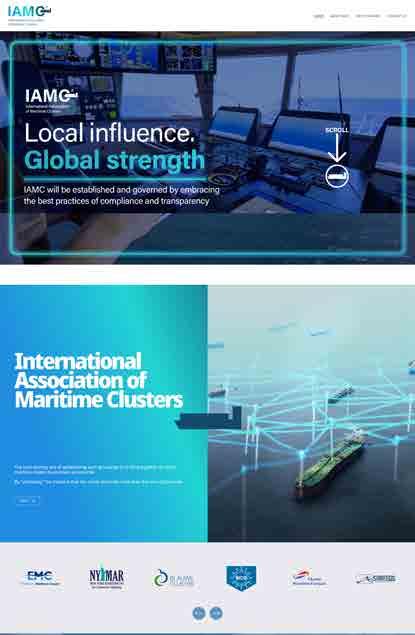
13 – International Association of Maritime Clusters (IAMC) confirms its first members with more on the way
14 – Celebrating crew diversity: How menus can honour multinational teams at sea
16 – Lessons for ship managers from ‘The Happy Aras’
INTERMANAGER OUTLOOK
By Kuba Szymanski, Secretary General, InterManager
18 – Shipping has changed — now it must learn to measure what matters
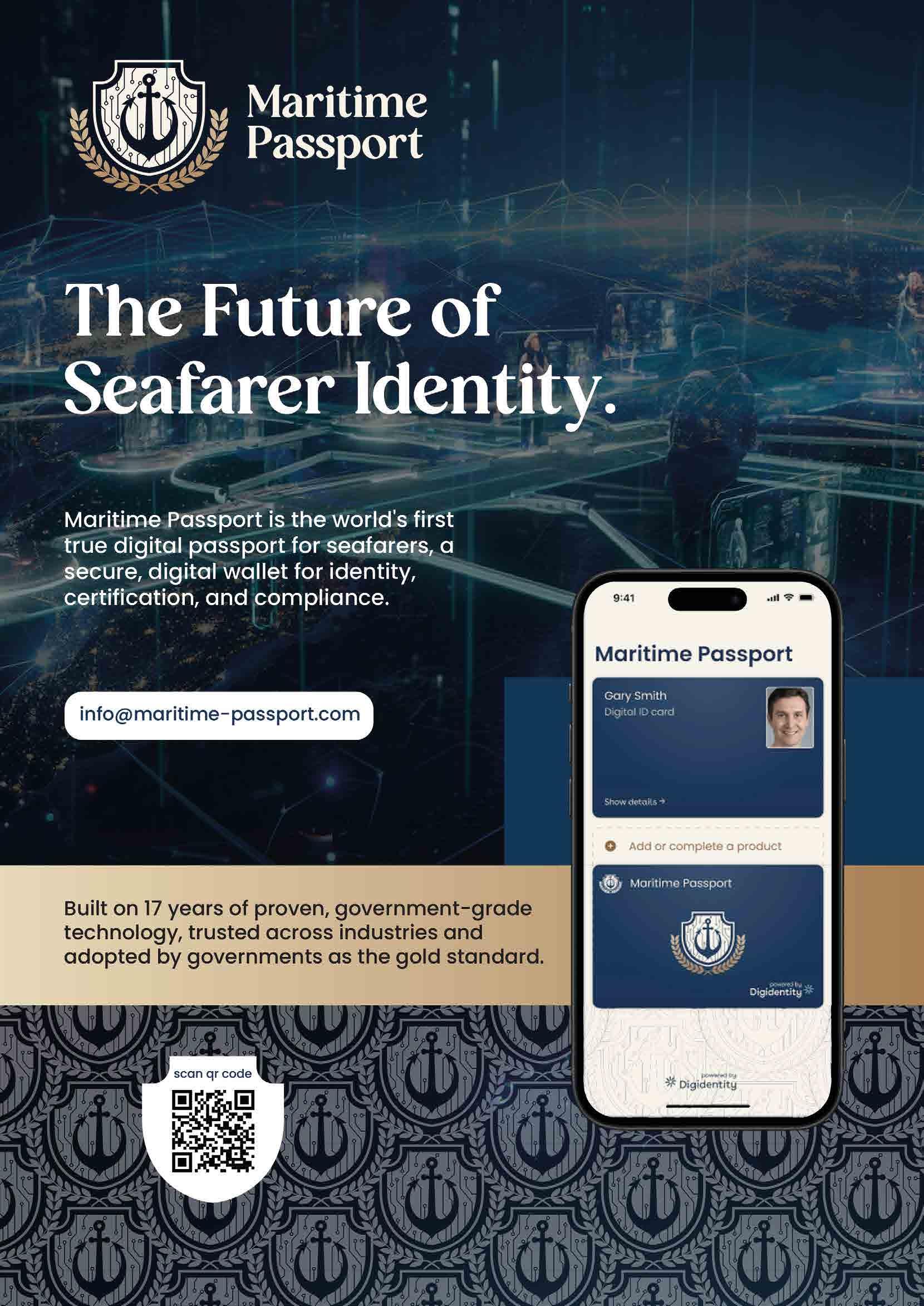
MARITIME PASSPORT
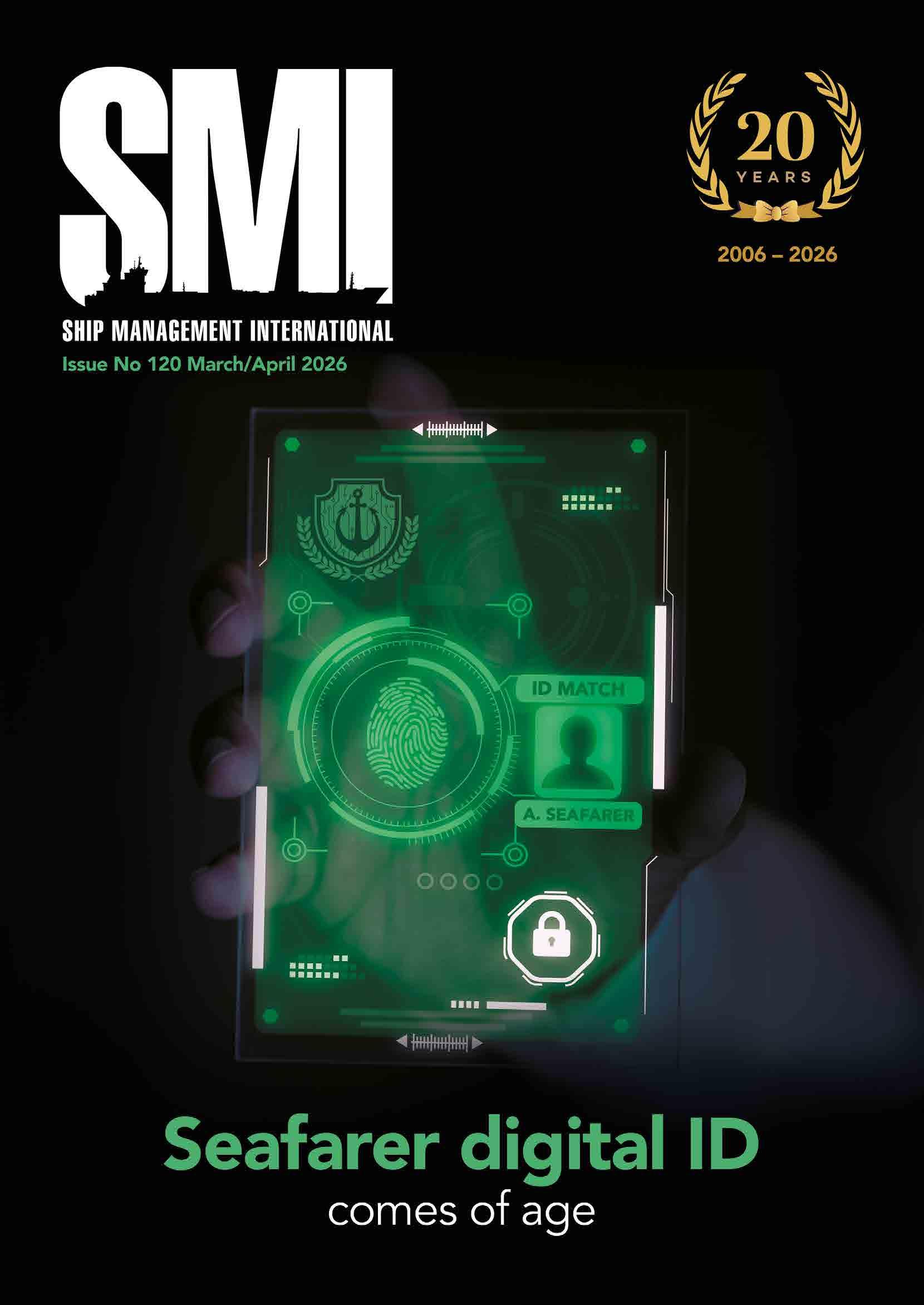
20 – Giving seafarers back their lives, digitally
MARITIME SAFETY
24 – Cultural shift needed to stem tide of enclosed space fatalities
25 – Beyond compliance: Advancing maritime safety in practice
MARITIME SECURITY
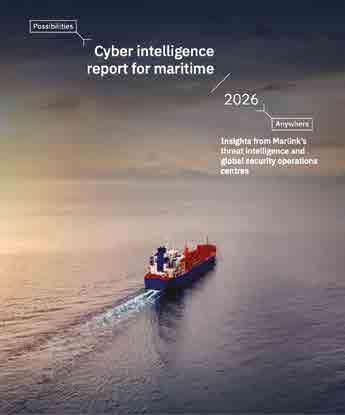
29 – Marlink report reveals evolving cyber risk driven by user credentials and human error
30 – Countering AIS spoofing and GPS jamming
INSURANCE & FINANCE
32 – Insurers’ response to the Iran war
35 – When payments fail, ships do not sail
REGIONAL FOCUS
UK Report
38 – UK remains leading maritime professional services hub
Greece Report
59 – Greek owners urge ‘realism’ in any industry carbon plan
62 – MERC moves ahead on practical emissions reduction
64 – Navios’ three-segment strategy: Strength through diversification
66 – Maritime AI developments to be showcased at Posidonia 2026
Cyprus Report
68 – Cyprus Shipping holds steady as cluster broadens and digitalisation gains pace
70 – Cyprus is being shaped by global issues
72 – Q&A with Mrs. Sylvia Loizides Board Member, Head of Audit KPMG in Cyprus
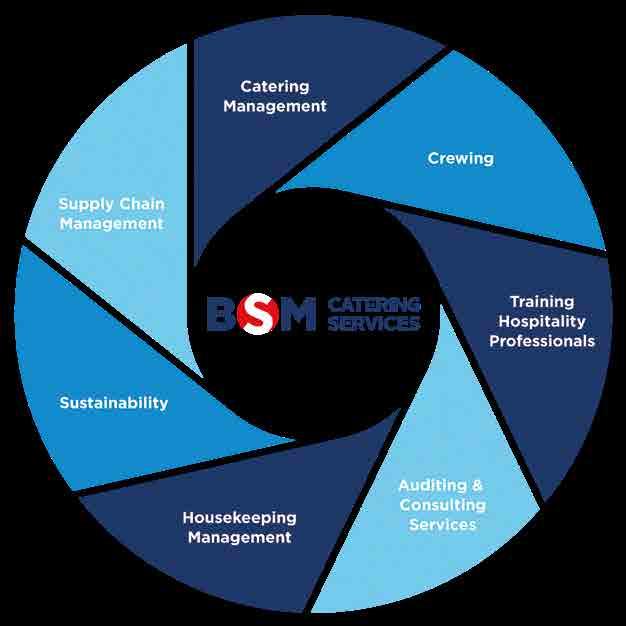
74 – Resilient onboard catering more essential than ever
41 – Challenges for flags keep on multiplying
51 – Is tramp box shipping dead, or ‘just resting’?
20 YEARS OF SMI TECHNICAL
52 – Two decades at sea: How shipowning and shipmanagement have navigated 20 years of change
82 – Cargo liquefaction still an ever-present hazard
SHIP RECYCLING
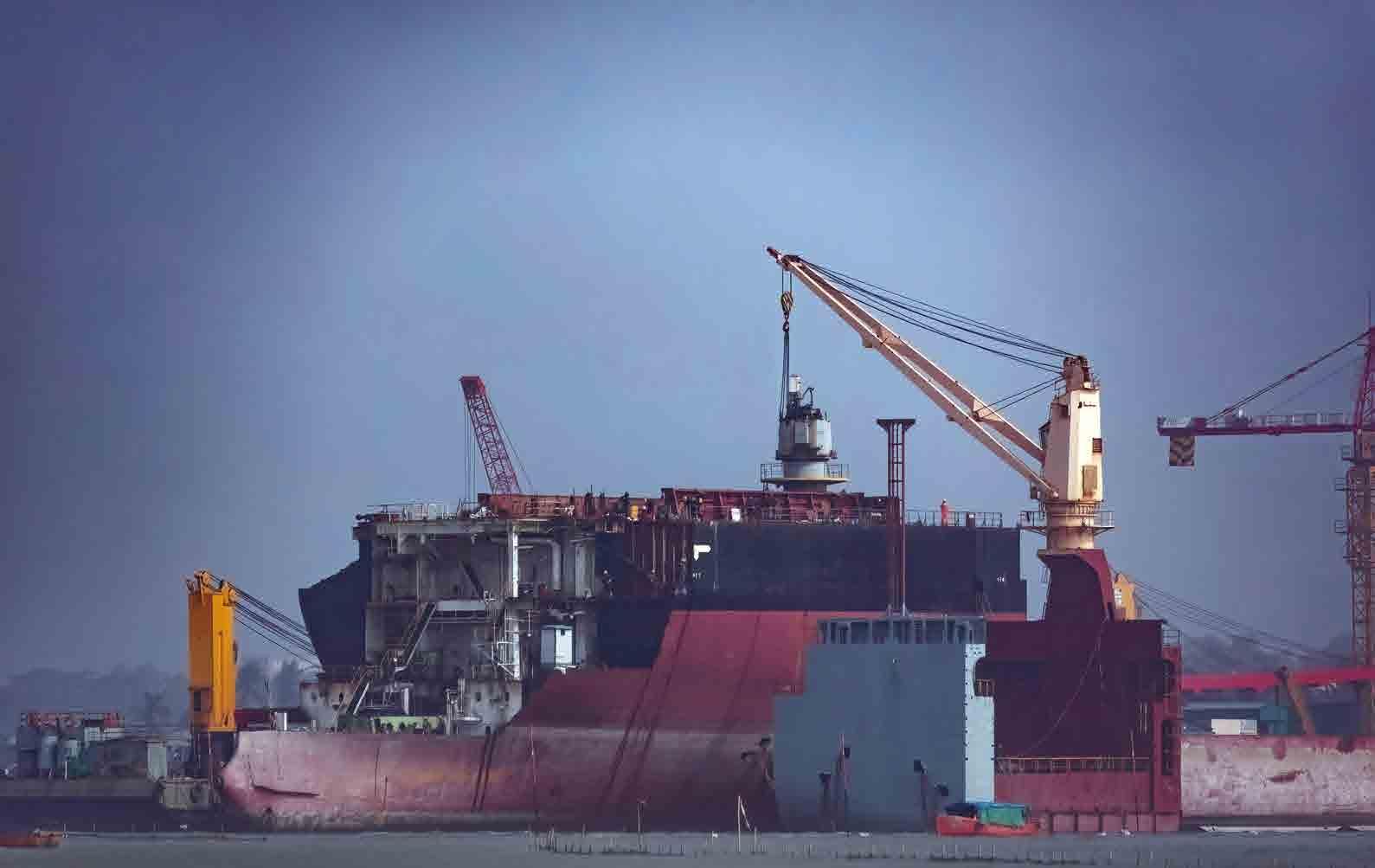
86 – With the Hong Kong Convention in force, now the industry has to prove it means it
AD HOC
78 – Our regular diary section
ANALYSIS
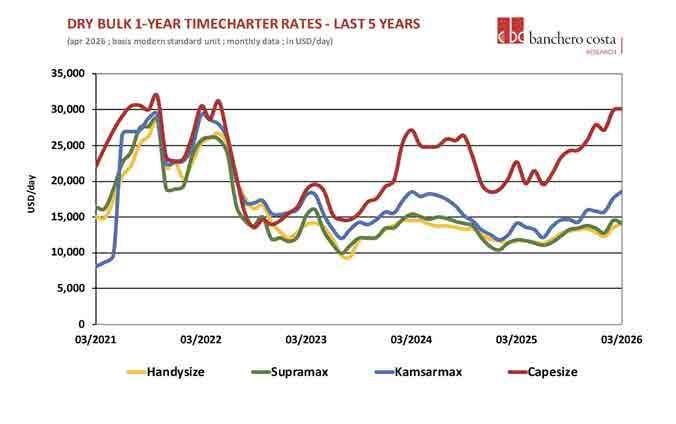
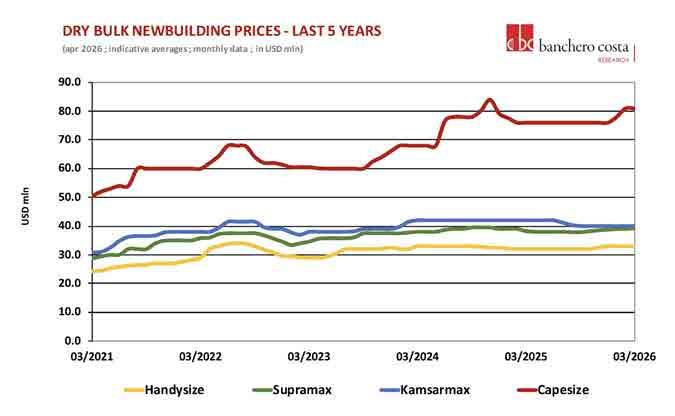
80 – Gulf conflict has only minor impact on dry bulk trades
88 – New hull cleaning standard ready to ensure better environmental practices
OBJECTS OF DESIRE
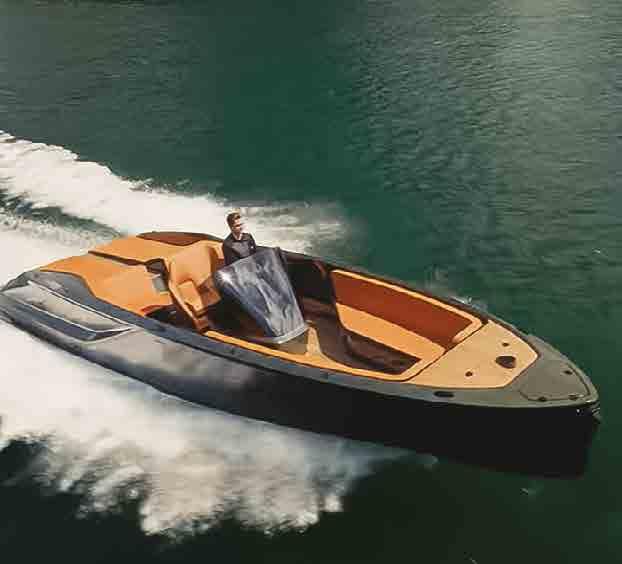
90 – Our pick of the most coveted creations
CLEAN OCEANS REVIEW
92 – Bringing you the best in arts & culture
LIFESTYLE
94 – The new old age – Life may go on longer than you expect
The May/June issue of Ship Management International magazine (SMI 121) is to enjoy bonus distribution at the huge SMM event in Hamburg this September, and will feature special country reports on industrial powerhouse Germany, as well as the strategically located maritime hub that is Gibraltar
The issue will also contain special technical reports on Smart Technology & AI, featuring some of the innovations to be unveiled or showcased at SMM, plus Navigation & Bridge Equipment (including Communications)
For advertising enquiries, please contact Sales by emailing vijayatha@elaboratecomms.com You can also keep abreast of news and subscribe to our daily newsletter at shipmanagementinternational.com
STRAIGHT TALK
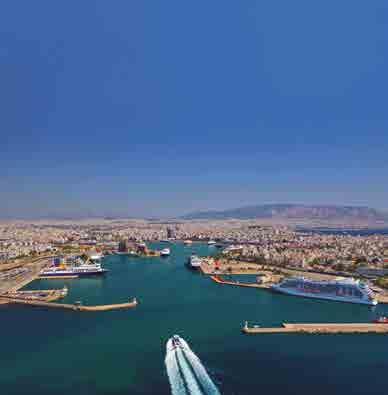
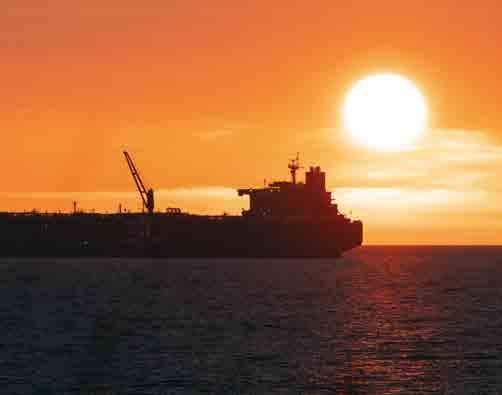
Weaponisation of shipping reaches new extremes
Iran’s chokehold on the Strait of Hormuz during the Middle East conflict once again demonstrated shipping’s ability to inflict turmoil on the world economy due to supply chain disruption. Other recent examples included the pandemic, obstruction of the Suez Canal by the Ever Given grounding, drought restrictions on Panama Canal transits, and Houthi attacks on merchant vessels in the Red Sea area.
Latest events in the Gulf represent a blatant ‘weaponisation’ of shipping, but some might argue that they are merely the latest development of a creeping trend that has included increasing sanctions on so-called dark or shadow fleet vessels trading with the likes of Russia, Iran and Venezuela, leading to the spate of military seizures of ships at sea that began last December.
Meanwhile, unexplained explosions on vessels linked with the carriage of Russian oil have continued, around the Black Sea and further out into the Med, and naval escorts for commercial vessels have begun to become reality.
In short, commercial shipping seems to have become a
Sales Enquiries
Vijayatha Poojary Phone: +44 (0) 1296 682 051
Email: vijayatha@elaboratecomms.com
Editorial
Bob Jaques Phone: +44 (0) 1296 682 089
Email: editorial@elaboratecomms.com
Email: bjaques@elaboratecomms.com
Finance
Lorraine Kimble Phone: +44 (0) 1296 682 051
Email: accounts@elaboratecomms.com
weapon of choice in the modern climate of asymmetric warfare.
Shipowners and operators have usually found a way to extract huge profits from the extra tonne/miles and other ‘inefficiencies’ such disruptions have caused. But it is seafarers who have borne the brunt of hardships involved, suffering pronged absences from their homes and families, mental stress and in some cases serious injury or death while merely carrying out their jobs.
Maritime leaders and international bodies have been quick to defend the principle of ‘freedom of navigation’ and the right to safety of seafarers carrying out work that is vital to the smooth running of the world economy. “No attack on innocent seafarers or civilian shipping is ever justified,” reiterates IMO Secretary-General Arsenio Dominguez - a message that he and other industry voices will continue to stress.
As SMI marks its 20th anniversary, this magazine’s continuous focus these past two decades on the benefits of safe global navigation and on the welfare of seafarers, likewise remains unaltered. l
Publisher: Sean Moloney
Editor: Bob Jaques
Sales Manager: Julian Berry
Vijayatha Poojary
Finance: Lorraine Kimble
Design and Layout: Diptesh Chohan
Regular Contributors: Michael Grey
Felicity Landon
Ian Cochran
Margie Collins
Martin Stopford
Motoring Journalist: Rob Auchterlonie
Technical Editor: David Tinsley
Editorial contributors:
Notebook IMO approves new guidelines on ship registration
The IMO’s Legal Committee has approved a new set of guidelines to improve transparency and due diligence in ship registration, as well as prevent fraudulent registrations and misuse of flags.
The guidelines help to close a key regulatory gap for the maritime industry, given there is currently no binding international framework to regulate the registration of ships.
The newly approved Guidelines will assist new and existing flag state ship registries by providing practical measures to strengthen verification and due diligence, ensure accurate ownership records, and improve oversight of registration procedures.
Closing the 113th session of the Legal Committee held in London (13-17 April), IMO Secretary-General Mr. Arsenio Dominguez said: “This is a welcome step towards ensuring due diligence in ship registration systems for the benefit of safety, protection of the marine environment and the well-being of seafarers, essential for the safety and security of international shipping. The Guidelines will also aid in eliminating cases of fraudulent registration.”
The Legal Committee noted that the number of ships flying a false flag had increased since the previous session in 2025, with 529 ships falsely flying the flag of a country in the past year. Nearly 40 Member States had seen cases of their flags being fraudulently used by criminal groups without their knowledge or consent.
The Guidelines focus on:
• Legislation governance and control on who can perform registration of ships
• Procedures for quality assurance in ship registration
• Due diligence on ownership and ship identification
• Due diligence on ship identity and eligibility checks
• Information sources and information sharing.
The Committee also took decisions on the following issues:
Substandard shipping
The Committee re-established a correspondence group to continue working on the Regulatory Scoping Exercise to review IMO conventions and other tools available to Member States, with the aim of developing actions to prevent unlawful operations, including substandard shipping. The correspondence group will develop terms of reference for a working group to be convened at the next session to focus on the issue.
Strait of Hormuz
The Committee strongly condemned the threats and attacks against vessels in the Arabian Sea, Sea of Oman and the Gulf Region, particularly in and around the Strait of Hormuz.
The Committee strongly condemned the Islamic Republic of Iran's threats related to the laying of mines in and around the Strait of Hormuz, in particular the Traffic Separation Scheme (TSS). It further condemned the reported toll system for vessels passing through the Strait of Hormuz and the discriminatory measures imposed by the Islamic Republic of Iran, which were contrary to the purposes of IMO.
The Committee affirmed that the Islamic Republic of Iran's actions were contrary to the right of transit passage, which must not be impeded, through the Strait of Hormuz in accordance with international law.
Fair treatment of seafarers
The Committee noted with alarm that from 1 January to 31 December 2025, a total number of 410 new cases had been reported on the joint IMO/ILO database on seafarer abandonment, affecting more than 6,000 seafarers. These figures excessively surpass all the previous years' record of reported cases. In 185 reported cases, there was no obligatory financial guarantee.
In addition, from 1 January 2026 a further 103 abandonment cases have already been recorded on the joint ILO/IMO database.
The Committee urged Member States to ratify the Maritime Labour Convention, 2006, including its 2014 amendments, and to apply the 2022 joint ILO/IMO Guidelines on how to deal with seafarer abandonment cases. It stressed that port, coastal and flag States must take seafarers' rights seriously and cooperate with other stakeholders to resolve cases.
With regards to the ILO/IMO abandonment database, the Committee requested the Joint ILO/IMO Tripartite
Working Group (JTWG) to consider creating a clear stepby-step guide (Standard Operating Procedure) with specific timelines and trigger dates, so authorities know exactly when and how to act quickly in urgent abandonment cases. It should not create extra administrative burden.
It asked the Task Force to recommend means to enhance the accuracy and verification of financial security documentation, through a secure reporting interface within IMO's existing systems.
Liability and compensation regime related to alternative fuels
The Committee agreed that a regulatory gap existed in relation to liability and compensation for incidents involving alternative fuels used for ship propulsion and that existing international liability regimes do not adequately address the specific risks of these fuels. This gap must be addressed to ensure legal certainty and effective compensation for victims.
The Committee agreed there is a need to develop a dedicated regime, or amend existing ones, to ensure that their use in ship operation and propulsion is adequately covered. It established a correspondence group to continue the work on this matter and report back to the next session. l
New President for UK Chamber of Shipping
At its AGM in late March, the UK Chamber of Shipping elected Karrie Trauth, EVP of Shipping & Maritime at Shell plc, as its new President, succeeding JB Rae Smith, Director John Swire & Sons Private Group Companies, who concluded his two-year term. The AGM also confirmed the election of Donnacha O’Driscoll, EVP of Maritime & Sustainability at Carnival UK, as Vice President.
In her first remarks as President, Trauth highlighted the strategic importance of the UK’s maritime sector and the need to further strengthen the UK’s competitiveness as a global shipping nation.
“Our sector is vital to the UK’s prosperity and global stability,” she said. “At a time of evolving challenges, we must ensure the UK remains one of the most competitive and attractive maritime nations in the world.”
UK Chamber of Shipping CEO Rhett Hatcher welcomed the appointment, saying: “Karrie brings enormous experience, strategic clarity, and global perspective to the presidency at a time of geopolitical volatility, economic transition and rapid technological change. Her leadership on decarbonisation, innovation, and maritime safety is well recognised across the industry.
“We look forward to working closely with her and with Vice President Donnacha O’Driscoll to strengthen the UK’s position as a world-leading maritime nation.
Trauth has emphasised that strong industry and government collaboration will be essential to ensuring the UK remains resilient, competitive, and capable of leading the transition to cleaner, safer and more innovative maritime operations.
Last September, the UK Chamber published a major new report by the Centre for Economics and Business Research (Cebr), confirming the UK’s position as one of the world’s most competitive maritime nations. The report, launched at the start of London International Shipping Week, introduced the Shipping Competitiveness Index, an international benchmark assessing 44 maritime countries that together represent over 80% of globally owned deadweight tonnage. The UK ranked 5th overall in the Index, maintaining its position over the last decade and demonstrating resilience in the face of geopolitical instability, Brexit, and the global pandemic. Strongest pillar of the UK performance was its Regulatory Environment and Governance (4th overall), driven by top scores in flag performance, regulatory transparency, and market openness.
More recently, the Chamber has been closely monitoring the situation in the Middle East and issuing regular updates. Following agreement of the two-week conditional ceasefire in early April it commented:
“We welcome the announcement of a conditional ceasefire and hope
this de-escalation signals a first step on the path to stability in the region. We recognise that this is a short-term development and is unlikely to result in an immediate return to normal trading conditions.
“In the immediate period, the industry’s priority is the safety of vessels and crews currently in the region. The ceasefire may offer an opportunity for ships to exit the Strait, but any movement will depend on transparent details from the parties involved and effective international coordination. Seafarers continue to face the direct consequences of this geopolitical instability, and their safety, welfare and rights must remain paramount.
“A lot of work is still needed to turn this announcement into lasting improvements in the Strait. The UK Chamber of Shipping will continue to work closely with government, international partners and industry stakeholders to encourage a durable solution that allows maritime trade to resume in a safe, predictable and secure manner.” l
International Association of Maritime Clusters (IAMC) confirms its first members with more on the way
As many as 17 national and regional maritime clusters have underlined their commitment to improved like-minded cooperation and the worldwide sharing of best practice by joining the International Association of Maritime Clusters (IAMC), and many more are expected to follow suit in the next few months.
Heading up the list of new members is the European Network of Maritime Clusters and its members from Belgium — De Blauwe Cluster; Bulgaria — Marine Cluster Bulgaria; France — French Maritime Cluster; Greece — STRATEGIS Maritime ICT Cluster; Italy — Federazione del Mare; Luxembourg Maritime Cluster; Malta Maritime Forum; Poland — Baltic Sea & Space Cluster; Portugal — Fórum Oceano; Spain — Clúster Marítimo Español; Ukrainian Maritime Cluster. Other clusters who have joined include the Isle of Man Maritime; the Ethekwini Maritime Cluster in South Africa; the Chambre Monegasque du Shipping in Monaco; Mersey Maritime in the UK and NYMAR – New York Maritime, in New York.
Peter Shaerf, Chairman, New York Maritime (NYMAR) and President of the IAMC, welcomed the surge of new members saying there was a clear and strong need in the industry for collaboration at cluster level. “As we reached out to the global network of clusters we were excited at the interest they showed in advancing the agenda of IAMC which is primarily to promote the global maritime ecosystem,” he said. “The Board of Governors for the
association is in formation and will have representatives from all over the globe.”
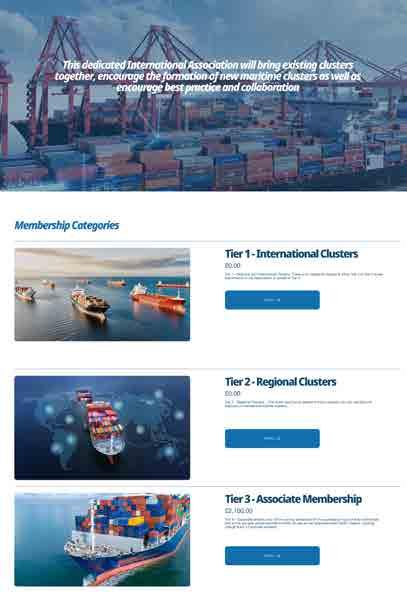
Membership of the IAMC is free to international, national and regional clusters while corporate and private companies can join and benefit from high level business networking and cooperation for a small annual fee.
Mr Shaerf added, “There are many commercial and business development benefits to joining IAMC, including faster access to markets and partners; stronger value chains through the alignment of shipowners, ports, energy providers, and service companies across the world.”
The IAMC represents a unified voice at a global level which can engage more effectively with bodies like the International Maritime Organization; provide coordinated input on decarbonisation, digitalisation, and safety regulation; and represent not just shipowners, but the entire maritime value chain.
Among other things, its role will be to operate as a regional to global policy bridge, translating local challenges into global policy recommendations while ensuring that smaller or emerging maritime nations have a voice.
The launch of the new International Association of Maritime Clusters (IAMC) took place in the heart of the City of London last September, as part of London International Shipping Week 2025, and the early engagement of so many cluster organisations has continued to confirm the value of the association.
Clusters or companies wishing to join the IAMC can do so by emailing secretariat@iamclusters.org l
You can view more information about the association by visiting the IAMC website: https://www.iamclusters.org/ and the association’s LinkedIn page @ International Association of Maritime Clusters
Peter Shaerf, Chairman, New York Maritime (NYMAR) and President of the IAMC
Celebrating crew diversity: How menus can honour multinational teams at sea
Cyprus-based MCTC places strong emphasis on educating galley crew and seafarers on health principles, encouraging the adoption of healthier lifestyles at sea, and promoting the use of food as a unifying force onboard.
Multinational crews have long been a defining strength of modern shipping, it says. Cultural exchange, shared learning, and workforce sustainability are all natural outcomes of managing diverse teams at sea.
Food plays a central role in this experience. A well-planned menu can unify a crew, support morale, and create a sense of respect and belonging. Poorly planned meals, however, can quickly become a source of dissatisfaction, waste, and avoidable complaints.
Creating menus for a diverse crew requires more than good intentions. It demands a structured, operationally realistic approach, one that balances nutrition, cultural and religious considerations, cost control, storage limitations, galley capacity, and compliance with MLC 2006 guidelines.
Culturally inclusive menus add variety, colour, flavour, and balance to daily meals. More importantly, they demonstrate respect for the people consuming them.
When crews feel considered, morale improves. Complaints to the galley decrease, participation in meals increases, and food waste is reduced through better acceptance of what is served.
Inclusive menu planning also supports:
• Crew wellbeing and mental comfort
• A sense of fairness across nationalities
• Reduced pressure on galley staff caused by repeated dissatisfaction
When diversity is planned thoughtfully, it becomes an operational advantage rather than a challenge. Introducing multicultural elements does not mean cooking separate menus for each nationality. The key is smart standardisation with flexible presentation.
Menus should be planned to ensure:
• Adequate quantity for the entire crew
• Consistent quality across all preparations
• Fair access to familiar food elements for different cultures
Care must be taken that diversity does not dilute standards. Quality should never be compromised in the attempt to satisfy everyone individually.
Waste management remains a major challenge onboard. Thoughtful use of leftovers, safely and creatively, plays an important role in maintaining both sustainability and variety.
The objective of multicultural menu planning is balance. Welfare expectations and compliance requirements must be met while respecting: budget limitations, galley staffing levels, storage capacity, and supply chain reliability
Equally important is the competence of the cooking team. Cooks must be appropriately trained to execute simple, repeatable methods that deliver consistent results while keeping the crew satisfied.
A small, well-trained team executing a clear system will always outperform a complex menu that exceeds operational capacity.
Practical guidelines
When planning balanced menus for multinational crews, the following principles consistently deliver good results:
• Standardise starch options: Rice, chapati, pasta, or potatoes should form a familiar base for all meals;
• Unify protein choices: Use common proteins such as chicken, fish, eggs, lentils, or beans; avoid beef or pork, or use halal meat as a standard for mixed crews;
• Always provide a vegetarian main option: Serve spices, chilli, and sauces separately to allow personal adjustment;
• Avoid over-customisation: Menus designed to satisfy individual likes and dislikes quickly become unmanageable. l
Lessons for ship managers from ‘The Happy Aras’
In The Happy Aras [2026] EWHC 7 (Admlty), the court drew a clear line between navigational negligence and unseaworthiness caused by an incompetent crew. The decision highlights the limits of relying on crew negligence as a defence and underlines the importance of proper crew management systems and evidence.
When a casualty occurs, the immediate focus is often on the vessel and the navigational decisions taken at the time. A recent decision of the English Admiralty Court is a reminder that the court may look much further back, in particular at how the crew were selected, trained, and managed. Seaworthiness is not limited to the physical condition of the vessel. A competent crew is a fundamental element of seaworthiness, and ship managers cannot assume that reliance on crew negligence will always provide a defence when something goes wrong.
In ‘The Happy Aras’ [2026] EWHC 7 (Admlty), the court considered whether a grounding resulted from navigational negligence or from a failure to exercise due diligence to make the vessel seaworthy. The distinction was critical, with the direct consequences for liability, and it offers some clear lessons for ship managers.
The
facts and the finding
The vessel grounded while transiting the Datca Peninsula off the Turkish coast. In the hours leading up to the grounding, the Master made a series of poor decisions. He sent the lookout off the bridge, deviated from the
passage plan to save time, failed to fix the vessel’s position as required, and did not maintain a proper lookout. Following the grounding, the owners declared General Average and sought contribution from cargo interests.
Cargo insurers refused to contribute, arguing that the vessel was unseaworthy due to the Master’s incompetence. The court agreed. It described the Master’s conduct as a complete dereliction of duty. On that basis, it found that the vessel was unseaworthy because she was not manned by a competent crew. The owners were unable to show that they had exercised due diligence to make her seaworthy and were therefore unable to recover General Average contributions.
Negligence, incompetence, and SHIPMAN
A key feature of the judgment was the distinction between negligence and incompetence. The court accepted that even competent crew members can make mistakes. A single navigational error will not necessarily render a vessel unseaworthy.
This distinction is reflected in standard ship management contracts. Under SHIPMAN, managers are not liable for acts or omissions of the crew, even where those acts are negligent, grossly negligent, or wilful. However, that protection is not absolute. The exclusion does not apply where
By Robert Hodge, General Manager, ITIC
the crew’s acts or omissions result from a failure by the managers to discharge their crew management obligations. In those circumstances, liability may still arise, subject to the contractual limits.
This is deliberate drafting. SHIPMAN is intended to protect managers from isolated operational errors by the crew. At the same time, it makes clear that managers remain responsible for the systems used to recruit, train, supervise, and review crew. If an incident points to a wider failure in those systems, the contractual protection may fall away.
Due diligence is an active obligation
The judgment reinforces that due diligence in crew management is an active obligation. It is not enough to rely on certificates, licences, or minimum manning compliance. Documentary qualifications alone will rarely be sufficient.
Managers should be able to demonstrate robust recruitment processes, proper assessment of experience and suitability, relevant training, and effective supervision. Performance reviews and audits should be meaningful. Where issues are identified, there should be clear evidence that they have been addressed.
In this context, the SHIPMAN wording is highly relevant. If a manager cannot show that crew management obligations were properly discharged, reliance on the exclusion for crew negligence may be misplaced.
The importance of records
One of the most practical takeaways from The Happy Aras is the importance of documentary evidence. Managers will be judged not only on what they say they did, but on what they can prove they did.
Records of recruitment decisions, training programmes, competency assessments, audits, and appraisals can be decisive. Without them, it may be difficult to establish that due diligence was exercised, with potentially serious consequences for liability, recovery, and insurance.
A clear message
Seaworthiness is not limited to the ship itself, and responsibility for the crew does not end at their appointment. SHIPMAN provides important contractual protection, but that protection depends on managers being able to demonstrate that they have properly discharged their crew management obligations. Crew management should be treated as a core risk function. When incidents occur, the paperwork may matter just as much as the facts. l
Shipping has changed — now it must learn to measure what matters InterManager
Outlook
Over the past 20 years, shipping has changed enormously. What was once a business driven mainly by operations, efficiency and cost is now shaped by compliance, decarbonisation, cybersecurity and relentless scrutiny. Ship managers today are expected to do much more than keep vessels moving. We are asked to protect owners’ interests, support seafarers, manage risk, deliver compliance and respond to crisis after crisis, from global pandemics to the current geopolitical issue affecting the Persian Gulf.
Previously, third-party ship management was often seen simply as a service. Today it’s much more of a partnership. Good ship managers are no longer just there to fulfil an owner’s demands. They should help define them by bringing ideas, options, judgement and measurable value. In other words, the relationship should be less transactional and more strategic.
Many years ago, InterManager members recognised that you cannot manage what you do not measure. It is easy to say performance is improving
By Kuba Szymanski, Secretary General, InterManager
but much harder to prove it. That is why InterManager introduced the idea of shipping KPIs, essentially common performance indicators that allowed managers and owners to assess outcomes using the same measurements.
The ambition was straightforward but important. Instead of vague opinions or subjective judgments, owners and managers could have a transparent framework for performance. Safety, technical management, drydocking, crewing and other core areas could be measured properly. That would open the way to better conversations, better contracts and, potentially, performancebased partnerships.
In many ways, it was the right idea too early. The KPI framework was developed but the industry was not ready to use it properly at the time. Now, I believe that is changing. As shipping becomes more sophisticated and data focused, the need for meaningful measurement is needed now more than ever. Without clear measures, we are still too often left with opinion instead of evidence. This matters not only for businesses, but for the global workforce too.
At InterManager, we have spent years speaking out on enclosed space deaths, crew fatigue and seafarer criminalisation. These are not abstract policy issues, they are real failures, affecting real people. We know the risks of enclosed spaces, and still seafarers die. We know fatigue remains a serious problem, yet the gap between paperwork and reality onboard remains too wide. We also know seafarers are too often criminalised when they should be protected.
If we are serious about improvement, this also needs to be measured properly, transparently and consistently.
That, to me, is one of the biggest lessons of the past 20 years. Shipping has modernised and ship management has evolved. However, the industry still too often struggles to turn experience into evidence and evidence into action.
The future will bring even more change, from AI to autonomy and new commercial models. Ship managers should remain at the centre of that conversation. Whilst shipping as we once knew it has changed, we must all now learn not only to adapt, but to measure what really matters. l
Maritime Passport
Why Maritime Passport is pushing new boundaries Giving seafarers back their lives, digitally
The maritime sector has long grappled with a structural imbalance: a seagoing workforce that is globally distributed, operationally critical, and yet often disconnected from the systems that govern compliance, employment and oversight. For years, the ambition has been to bring the digital ecosystem closer to the seafarer, while giving employers greater visibility and regulators stronger assurance of compliance.
That ambition is now beginning to take shape.
At the centre of this shift is Maritime Passport, a platform that reflects a more advanced phase of maritime digitalisation: less about incremental improvement and more about rethinking how identity, data and compliance are managed. Built on globally recognised security and identity standards, it places interoperability and security at its core, addressing two of the industry’s most persistent challenges.
A key feature is the shift in data ownership. Personal information sits with the seafarer, accessible through a secure, mobile interface. Biometric authentication underpins a high-assurance digital identity, allowing remote onboarding and credential verification without weakening trust or control.
The platform also introduces a digital seafarer record
book. Sea-time records are secured using cryptographic signatures, making them verifiable and resistant to tampering. The result is a single, reliable record of employment history, available in real time to employers, flag administrations and port authorities.
Certification management is handled in the same way. Seafarers can upload and maintain STCW and other IMO-required documentation directly within the system, allowing continuous validation and reducing administrative burden. Integration with ship registries adds a further layer, providing real-time visibility of vessel status, certification and compliance.
In practical terms, this goes beyond digitising existing processes. It establishes a portable identity layer for maritime labour—one that improves efficiency, supports compliance and gives seafarers direct control over their own data.
The question of control sits at the heart of the wider digitalisation debate. For Maritime Passport, the position is clear: the seafarer owns the data.
As Marcel Wendt, Chief Technical Officer of Maritime Passport and founder of Digidentity, puts it, the platform is not designed to act as a centralised gatekeeper. Instead, it allows individuals to manage and share their professional
credentials and certifications directly. The inclusion of the seafarer discharge book in mDoc format reinforces this approach, removing the risk of tampering with one of the industry’s most important documents.
The technology behind the platform is already well established. mDOC standards are widely used in government-issued digital identity systems, including mobile driving licences, and are embedded in everyday tools such as Apple Pay and Google Pay. Applying the same standards to maritime brings a level of familiarity and trust that has often been missing from industry-specific solutions.
Mr Wendt notes that the technology has been years in the making. After nearly two decades working with legacy systems, his focus shifted towards emerging digital identity frameworks at a point when the standards were still evolving. Those foundations are now in place, with maritime among the first sectors to adopt them at scale.
“This tried and tested technology is already the gold standard for global security and identification, making it the safest way to share personal identity information. This technology is adopted internationally by almost every government for the new mobile driving licence on the phone, for instance. You see it in Apple and Google Pay, you see it in your wallet in your bank card,” he said.
“At Maritime Passport, we can issue the seafarer identity because the system is responsible for undertaking the identity verification process and generating the mDoc. This is important for companies like Stream Marine run by Maritime Passport CEO Martin White, who can update and view the STCW certificates, for example,” he said.
As Mr Wendt added, the seafarer’s identity and personal documents really belong to the seafarer. Seafarers can never now be held hostage by the crewing agency because they may hold the seafarer’s certificate of competence. Personal data must never be immorally monetised, he underlined.
As the system is an app on a hand-held device, it is always encrypted and backed up on the Maritime Passport platform.
For operators such as Stream Marine, and Maritime Passport CEO Martin White, the benefits are immediate. Certification data, including STCW records, can be viewed and updated in real time, reducing administrative overhead while strengthening compliance.
“The increase in efficiencies and the move away from paper-based training certification is a massive economic benefit to me,” he said. It is also bringing the seafarer closer to the office, making our crew feel more valued.
The broader implications are significant. By keeping identity and certification data with the seafarer, longstanding frictions within crewing and employment practices are reduced. The risk of individuals losing access to critical
Marcel Wendt, Chief Technical Officer of Maritime Passport and founder of Digidentity
Martin White, CEO, Maritime Passport
Peter Phillips, Chief Commercial Officer and co-founder of Maritime Passport
documentation, whether through inefficiency or commercial pressure, is effectively removed. Personal data remains under the control of the individual, rather than being held or leveraged by third parties.
Regulation is also playing a role in accelerating change. Organisations such as the International Maritime Organization and national flag states are increasingly signalling the need for digital solutions. Paper-based accreditation systems are becoming less compatible with modern shipping, and the direction of travel is clearly towards fully digital frameworks.
For Peter Phillips, Chief Commercial Officer and cofounder of Maritime Passport, the transition is as much about mindset as technology. Moving to digital identity requires engagement across the industry, from seafarers and operators to regulators and service providers, and a shared understanding of how these systems will be used in practice.
Interoperability is central to that process. The platform has been designed to integrate with existing systems, allowing data to move securely and efficiently across the maritime ecosystem. This is particularly evident in onboarding.
Once a seafarer accepts an assignment, pre-boarding documentation can be shared directly through the platform, limited to what the individual has agreed to provide. This creates a controlled and transparent flow of information, reducing duplication and simplifying compliance.
The impact is most visible at embarkation. A QR code generated onboard allows the seafarer to verify their identity instantly via the app. Within seconds, confirmation is provided that credentials are valid and identity has been securely verified, removing the need for manual checks of paper records.
The scope extends further. The same framework can support the issuance of verifiable medical certificates and other credentials requiring trusted identity verification. In that sense, Maritime Passport is not a single-purpose tool, but a broader infrastructure layer for managing maritime workforce data.
“This comes back to the interoperability piece,” says Peter Phillips, “as the platform can talk and link into other
existing platforms seamlessly. When the seafarer is invited to join the ship, and once he or she accepts it, by using Maritime Passport they can provide all of the pre-boarding data that’s required, and what he/she has agreed to share.
“As soon as the seafarer board the ship, the Master produces a QR code, which the seafarer scans, and then receives a green tick, saying that the seafarer is the person who they say they are and has accepted the trip, and that his/her identity has been digitally verified and secured. This means that the crew manager or the Master doesn’t have to go through all the paper record books.”
As Martin White added, the breadth of what can be done by Maritime Passport is endless, whether it is issuing verifiable medical certificates or anything where digital identity verification is needed.
Industry response has been encouraging. The platform was presented at the FAL 50 meeting of the International Maritime Organization at the invitation of the Bahamas Maritime Authority, where it received strong interest from both regulators and industry stakeholders.
Adoption, however, remains mixed. Some in the industry are still uncertain about the practical benefits of digitalisation. Others recognise its potential and are moving quickly with their own systems. A third group understands the value but is unclear on how to proceed.
Flag states are likely to play a decisive role in bridging that gap. Many crew managers are waiting for clearer direction from administrations before committing to change.
So where is Maritime Passport precisely in its development phase? Well, according to Marcel Wendt, any last minute testing or pre-production can go handin-hand with signing important customer contracts. And while Maritime Passport will be ready for use by the time this article is published, new ideas and advantages will continually be added to this important piece of software.
The direction itself is not in doubt. As regulatory pressure increases and practical use cases continue to demonstrate value, platforms such as Maritime Passport are positioning themselves as part of the industry’s future operating model, supporting a more connected, efficient and compliant maritime sector. l
Cultural shift needed to stem tide of enclosed space fatalities
By Akshat Arora, Regional Loss Prevention Director (Singapore), UK P&I Club
Despite
long-established regulatory frameworks and detailed safety requirements designed to support seafarer safety, enclosed space fatalities remain concerningly high.
Areport published by the International Bulk Terminals Association (IBTA) revealed that between 2000 and 2024, at least 1,010 ship and shore workers lost their lives because of enclosed space-related incidents. These figures encompass all types of enclosed space fatalities, arising from a range of causes, and equate to roughly 40 per year over the past 25 years. Taken together, they highlight persistent gaps between regulatory intent and effective risk control, despite a widespread understanding of the importance of safety. As a result, enclosed space incidents remain one of the leading causes of death at sea.
comprehensive safeguards for enclosed-space entry across the industry.
It is also commonly noted that the standards of training and drills vary from ship to ship. While some companies invest in sophisticated training and education tools, many do not, resulting in inconsistent levels of preparedness across the fleet. Recognising this inconsistency, the International Chamber of Shipping (ICS) has proposed amendments to the STCW Convention and Code (HTW 12/6/2) to enhance mandatory training related to the entry, operation within, and rescue from enclosed spaces.
Enclosed spaces are particularly dangerous because the safety risks are not always obvious. Toxic gases are often colourless, odourless and undetectable without appropriate testing. A space may appear safe while in fact presenting an immediate danger due to oxygen depletion or the presence of hazardous atmospheres.
Unsuccessful rescue attempts are also a recurring feature in many incidents. In these scenarios, crew members can become victims by rushing into enclosed spaces without adequate protection while attempting to assist a colleague, often compounding the severity of the incident.
To address the continued loss of life associated with enclosed space entry, the IMO Sub-Committee on Carriage of Cargoes and Containers (CCC 10) agreed in 2024 to amend Resolution A.1050(27). These amendments were subsequently adopted by the Maritime Safety Committee at its 110th session (MSC 110) in June 2025 through Resolution MSC.581(110) and later endorsed by the 34th Assembly in December 2025. With that endorsement, Resolution A.1050(27) was formally revoked, signalling a clear shift toward stronger, more
But these are not solutions in themselves; they are enablers. Regulation and advanced training are only fully effective if safety is viewed as a strategic imperative. This requires a sustained shift to prioritise a positive safety culture that permeates the organisation at every operational touchpoint, at sea and onshore. Such a culture is underpinned by regular, enhanced training, robust monitoring, open communication, and timely feedback that extends from crew members all the way up to senior management.
Leadership is the critical variable. Those who implicitly undermine strong safety practices by creating cultures where it is acceptable to disregard adequate risk assessments in favour of meeting commercial schedules, or who treat near-misses as inconveniences rather than operational shortcomings, are actively compromising the frameworks they are responsible for upholding.
Regulation sets the baseline that the industry must adhere to, but strong leadership defines the culture in which these frameworks are applied in practice. When safety is consistently prioritised, we will start to see a decline in preventable enclosed space fatalities, alongside wider operational and commercial benefits associated with effective risk management. l
Beyond compliance: Advancing maritime safety in practice
A
contributed article by Iasonas Lalizas, Marketing & Communications Director at LALIZAS
Beyond certification and innovation, the most critical factor for ensuring the real-world reliability of lifesaving and fire-fighting equipment on board is consistent maintenance, correct operation and thorough crew knowledge. Experience has shown that even the most advanced, fully certified equipment cannot deliver safety on its own if it is not properly maintained or if crews are unfamiliar with its correct use. From a manufacturer’s perspective, reliability is not defined at the point of sale; it is shaped throughout the entire lifecycle of the equipment — from correct product selection and authorised servicing to regular onboard inspections and continuous crew training. Safety is ultimately a function of preparedness, not just technology.
The regulatory landscape has become increasingly demanding, with evolving IMO requirements, different interpretations and local enforcement variations adding complexity for ship operators. In this environment, the role of a manufacturer goes beyond supplying certified equipment; it is about providing clarity, guidance and continuity. At LALIZAS, by combining certified products with technical documentation, regulatory insight, training solutions and a worldwide network of authorised service stations, compliance becomes more than a boxticking exercise. When it is supported by understanding, preparedness and
proper servicing, it evolves into a genuine operational advantage rather than an administrative burden.
While technology continues to advance, the human factor remains central to maritime safety. Digital innovation undoubtedly enhances safety, but it does not replace human judgment in high-risk, unpredictable environments. The priority is to empower seafarers, not overwhelm them. Training and knowledge-sharing are therefore as important as product innovation. Onboard training sessions, refresher courses and practical demonstrations ensure that crews remain familiar with the equipment’s condition, location and correct operation. Digital tools and documentation can support this process, but safety outcomes ultimately depend on people who understand and trust the equipment they rely on.
Servicing quality is another critical pillar of operational readiness. A growing concern in the industry is the
servicing of lifesaving and fire-fighting equipment by non-authorised providers, often using non-approved spare parts or incorrect procedures. In safetycritical systems, such compromises can have serious consequences. Quality in servicing is as important as quality in manufacturing, and operators should evaluate service partners not solely on cost, but on authorisation, technical competence and accountability. Safety is not a one-off purchase; it is an ongoing process requiring consistency across all stakeholders.
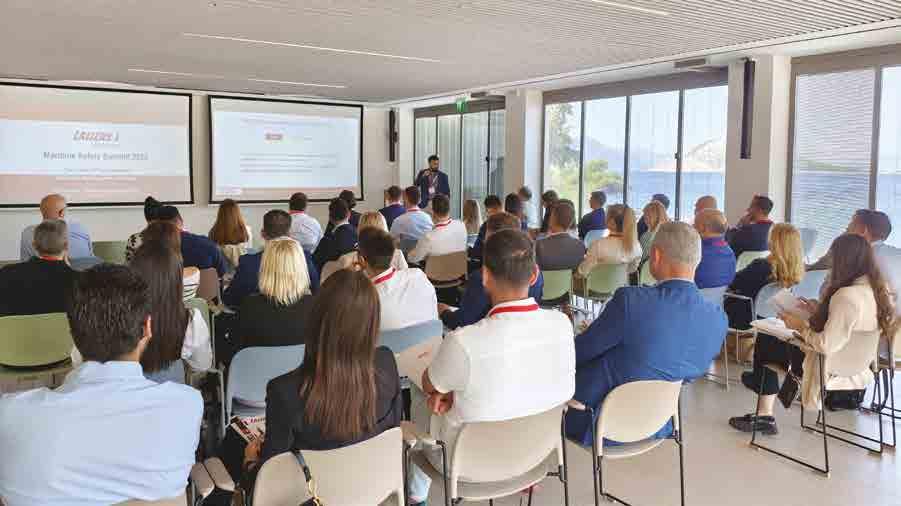
Regulatory change, while often perceived as disruptive, can also serve as a catalyst for leadership. Initiatives such as the Maritime Safety Summit 2025, hosted by LALIZAS on Aegina Island, demonstrate how industry collaboration can transform uncertainty into clarity. By bringing together shipowners, managers, classification societies and other stakeholders to address upcoming IMO regulatory changes — including
LALIZAS Maritime Safety Summit for the New IMO Regulations on Onboard Foam Systems
the transition away from PFOS- and PFOA-based materials in firefighting systems under IMO resolution MSC 532(107) — the focus shifts from reaction to preparation. Providing practical insight, technical clarity and clear pathways to compliance supports informed decision-making at fleet level.
In an era defined by geopolitical uncertainty and shifting global trade patterns, operational resilience depends on global reach combined with local capability. Disruptions such as port closures, rerouted shipping lanes or regulatory changes can place significant pressure on operators if service availability is inconsistent. A worldwide network of approved service stations, supported by certified equipment and consistent technical standards, ensures continuity, reliability and confidence, particularly in emergency or timecritical situations.
The current pragmatic phase of the green transition further reinforces the importance of long-term thinking in asset management. Rather than focusing on short-term adjustments, the emphasis is on future-proofing safety systems responsibly. While regulatory timelines may evolve, the overall direction remains clear. Investing in compliant and sustainable solutions today helps protect long-term asset value, reduce future retrofit risks and maintain operational continuity. The objective is not only to meet environmental targets, but to
ensure that safety systems remain effective, compliant and reliable throughout their lifecycle.
Ultimately, maritime safety is not defined solely by regulations or products, but by how well people understand, maintain and rely on the equipment designed to protect them. Through certified equipment, authorised servicing, dedicated training solutions and a global support network, LALIZAS supports operators move beyond compliance, building a practical, resilient approach to safety that performs when it matters most. l
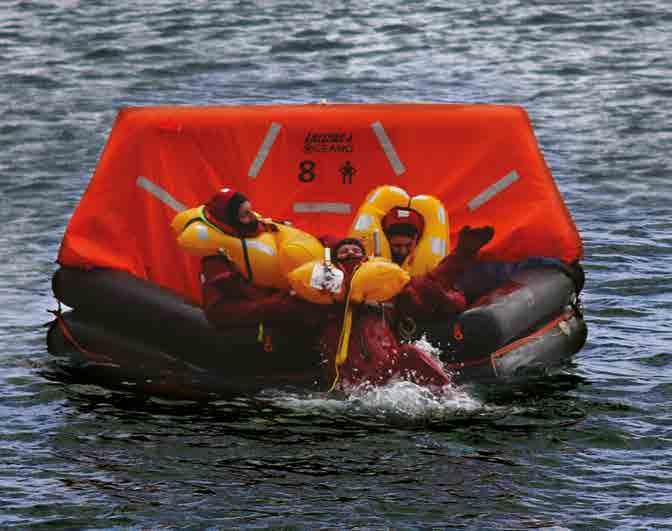
LALIZAS lifesaving products in action
Maritime Security
Marlink report reveals evolving cyber risk driven by user credentials and human error
Marlink, a global leader in secure managed services for business-critical digital solutions, has released its ‘Cyber Intelligence Report for Remote Operations 2026’, highlighting how evolving cyber threats are increasing the risk of disruption across maritime, energy, enterprise and critical infrastructure sectors.
The report reflects growing exposure to safety, operational, financial and reputational risk as digital dependency increases across remote environments. Based on continuous monitoring from global Security Operations Centres (SOCs) and more than 200 cyber security assessments, it identifies a clear shift in how attacks occur, with key findings including:
• Trusted access and credentials are now primary attack pathways
• Greater information technology (IT)/operational technology (OT) integration has expanded the attack surface
• The human factor continues to drive initial compromise
These vulnerabilities allow attackers to exploit trusted access pathways, making incidents harder to detect and increasing the likelihood of cyberattacks resulting in network and operational downtime. Identity-based attacks now dominate, with the report finding that 69% of observed risks were linked to compromised user credentials, compared with 12% related to traditional technical vulnerabilities, signalling a decisive shift in attacker behaviour.
According to the report, IT/OT convergence is further expanding exposure across digitalised operations on ships
and industrial sites in remote environments on land. In 2025, 60% of assessed sites relied on shared infrastructure, over 70% had undocumented or poorly secured connections, and 30–40% of OT assets were initially unknown or unmanaged. These gaps are increasingly exploited through trusted access rather than malware.
The human factor remains a critical focus in cyber security. Phishing simulations showed that 20% of users clicked malicious links and 11% disclosed credentials, while only 11% reported incidents. Ransomware continues to scale, with incidents detected across Marlink-monitored environments rising from 5,740 in 2024 to 7,793 in 2025. More than half of these incidents targeted transportation, energy and manufacturing. In maritime environments, 82% of alerts were concentrated in crew network zones, reinforcing user-facing systems as the primary attack surface.
“The data confirms a clear shift in how cyber threats materialise in remote environments,” said Nicolas Furgé, President, Marlink Cyber. “Addressing these structural weaknesses requires more than additional tools. It demands an identity-first security model, stronger control of trusted access, and closer integration between cyber security and operational infrastructure.
“Measures such as multi-factor authentication, network segmentation across IT and OT, continuous monitoring, and targeted user awareness programmes are critical to reducing exposure and improving resilience in remote environments.” l
Countering AIS spoofing and GPS jamming
By Saleem Khan, Chief Data & Analytics Officer, Pole Star Global
The London Maritime Academy says: “AIS spoofing refers to the deliberate manipulation of Automatic Identification System (AIS) signals by sending false messages that show inaccurate locations or provide fake information about a vessel's identity, ship's position, or destination. This process includes the use of fake transmitters, GNSS systems, and broadcasting techniques, which falsify data on radar screens, tracking reports, navigation logs, and even security systems. Characteristics, location, ship type, and speed are vulnerable to falsification through this process.”
Related to this form of cyberattack is GPS jamming. This can be broadly defined as the intentional disruption of positioning signals, undermining AIS reliability.
Awareness of these kinds of incidents is increasing globally too. No thanks to recent events at the Strait of Hormuz, where AIS spoofing and GPS jamming is high. Additionally, last year, Finland’s Coast Guard shone a light on jamming and spoofing in the Baltic Sea too. It has said that it has detected constant disturbances to satellite navigation signals in the Baltic Sea last October, with some tankers spoofing location data and covering up visits to Russia.
In either case, AIS spoofing or GPS jamming, presents serious risks and implications for operators and crew on vessels. For shipping operators, spoofed or jammed data undermines safety in congested waters. This can increase the chance of collision or grounding. For supply chain and logistics professionals, false position data distorts the visibility of cargo flows. This disrupts planning and undermines service reliability. Whereas for financial institutions, spoofed data creates blind spots in sanctions compliance and beneficial ownership checks. This exposes organisations and clients to further regulatory and reputational risk.
To appreciate the concerns with AIS spoofing and GPS jamming, it is helpful first to understand them.
Protection with persistent tracking
A better approach to vessel tracking is, therefore, required. Persistent tracking offers this answer. Essentially, this technique overlays multiple vessel tracking services and data sources, including AIS and secure point-to-point satellite tracking systems (Inmarsat-C, Iridium, etc.), voyage plans when available, Earth Observation (EO) data when relevant, and it uses realtime analytics to transform the accuracy of reliability and vessel location data.
With multiple, layered data sources and robust crossreferencing and analysis, a persistent tracking model allows the industry’s various stakeholders to have increased confidence in true vessel positions. The guessing is eliminated. Errors associated with false positives are minimised. This enables stakeholders to ensure any anomaly or vessel deviation is immediately identified and notified, and that it is open to appropriate investigation.
As part of this approach, multiple, diverse vessel detection technologies feed into live dashboards. This provides stakeholders with the essential visibility and control required to confidently locate and manage their vessels. What is more, by adding the power of predictive analytics, artificial intelligence and machine learning, stakeholders can gain far more insight into the extent of cyberattacks. This ensures secure, safe and compliant shipping operations.
Pole Star Global is a leading maritime intelligence company, fusing AIS, satellite detections, ownership, and behavioural analytics to help governments, insurers, and shipping companies separate malfunction from manipulation. Our data offers an unusually granular view into how conflict, coercion, and digital deception are reshaping global trade in real time – and where the next fractures might appear. l
Insurance Insurers’ response to the Iran war
An analysis by Limassol-based Aphentrica Marine Insurance Brokers
On 28 February, the world woke up to find a new outbreak of hostilities in the Middle East that quickly turned the entire region into a battlefield, with severe consequences for shipping and global supply chains.
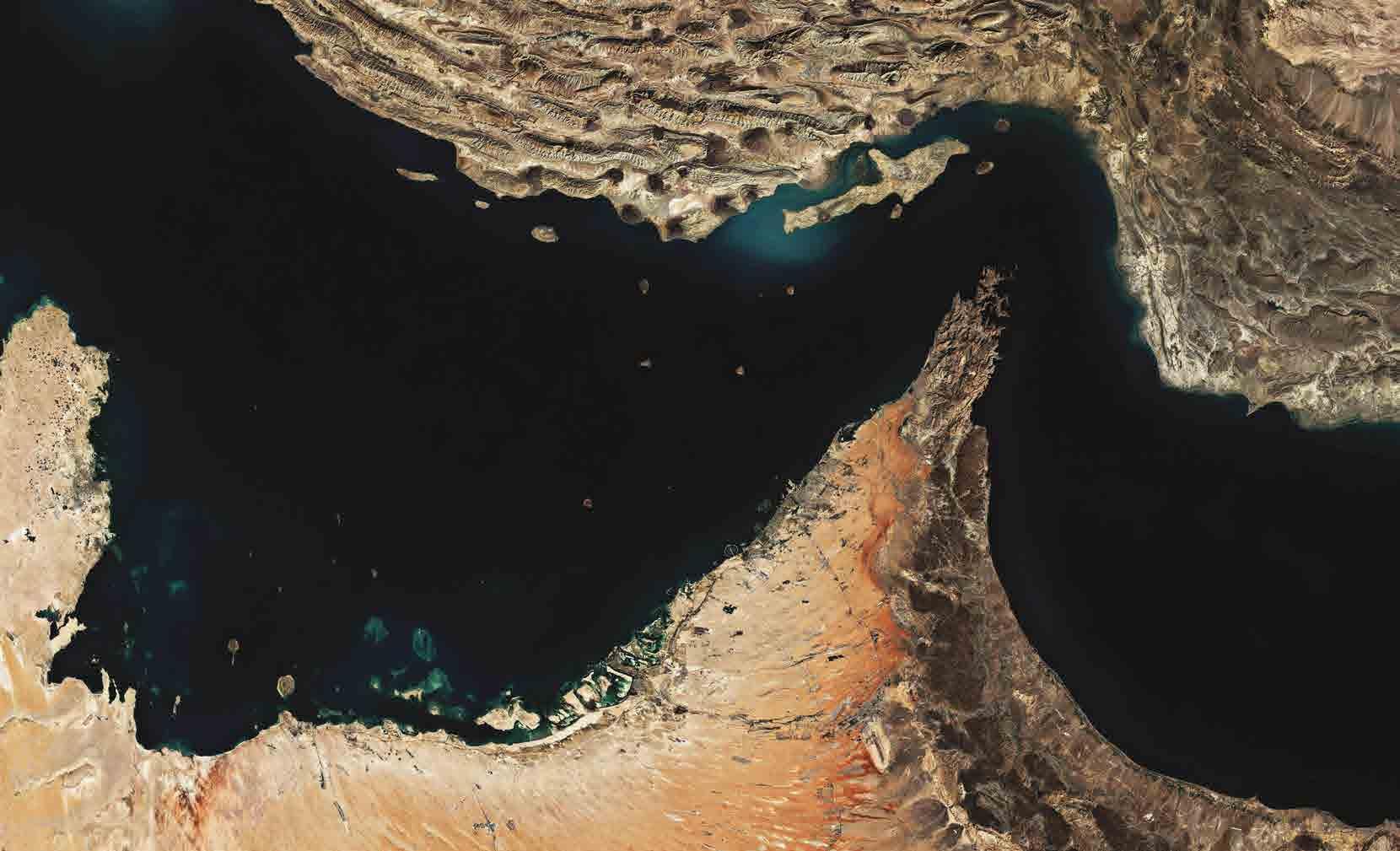
According to publicly available data, the closure of the Strait of Hormuz has ‘grounded’ more than 3,000 vessels, representing 4% of the global fleet, and according to the IMO, entrapped nearly 20,000 seafarers. Six cruise vessels were among the vessels that were stranded with thousands of passengers unable to return home, as the war has also brought air travel in the region to a virtual standstill.
Shipping was attacked daily. According to the IMO’s briefing on April 24th, there had been 29 incidents against ships, with 10 reported fatalities during these attacks, while ships had also been detained in Iranian waters.
Navigation through the Strait shrunk by some 95% due to the blockage while mines have also been detected –not limited to the Traffic Separation Scheme (TSS). Some vessels managed to get through the Straits, with the majority however, being linked to Indian, Iranian, Chinese and Middle East interests while there has been speculation of ‘transit tolls’ in the level of US$2 million to ensure safe passage. Iranian lawmakers are reported to br working
on legislation to formalise transit fees on ships passing through the Strait despite freedom of navigation being non-negotiable under international law.
Faced with the significantly increased exposure, war insurers as well as P&I Clubs (on their fixed entries) have exercised their rights under their policies and issued Notices of Cancellation to allow them to re-evaluate their contracts and consequently their rating to reflect the enhanced risk. In parallel, the Gulf area has been broadened compared with the previously defined High Risk Area.
Overall, the market went into a ‘panic’ mode during the first week as insurers were trying to reset themselves and shipowners being concerned over the availability of cover which in some instances has been pulled, albeit temporarily. The vessels that were already in the Gulf before 28 February, entered under different circumstances and under different, much lower insurance terms.
Long term, what has probably been the biggest contributor to the anxiety among shipowners, charterers and insurers alike, is the rapidly changing picture between attacks and cease fires and the closing and re-opening of the Straits, the failed exit attempts and the uncertainty that the prolonged blocking has created. Some even feared of a scenario similar to the Russia-Ukraine war and
the possibility of having to rely on their Blocking and Trapping Clause. This has caused great instability with war rates going up and down like elevators.
At the time of writing (in late April), in the last eight weeks since the beginning of the war we have seen rates fluctuate significantly.
Persian Gulf rates, which were quoted around 0.125% with 50% No Claim Bonuses (NCB) for vessels entering before 28/02, with the clock stopping for time in port in most Gulf countries, now climbed to 1% at its highest peak – almost 10 times higher than before – with time in port now counting. In some instances, NCBs were also reduced and as the situation had somewhat calmed down, rates stabilised between 0.5%-0.75% and NCBs reinstated, with each risk being reviewed on a case by case basis. In monetary terms, some of these accumulated premia are in the region of millions of dollars depending on ship values making insurance almost unaffordable.
On the Strait of Hormuz transit side, rates in the beginning of March were around 3-3.5% and at some point a 10% was quoted for a risk. Thereafter transit rates fluctuated between 5%-7.5% at the time of writing, albeit with NCBs still at lower levels ranging from nil to max of 50% during announced ceasefires. Their validity, however, is only 24 hours and brokers and their clients find themselves working to secure cover today for them to be non-valid tomorrow. Additionally, the list of warranties imposed on such cover, in some instances, seemed impossible to meet considering the approvals required. In monetary terms, if we
assume an LPG valued US$60 million, this would translate to a 12 hour transit premium ranging between US$ 1.8 – US$2.25 million (if we assume the 7.5% rate including a best case scenario of 50% NCB).
The United States has mooted the idea of a maritime reinsurance initiative, including war risk for both hull and cargo, aimed to insure losses of up to US$20 billion ‘on a rolling basis’ on vessels, in an effort to restabilise the flow of energy and commercial trade in the Gulf, which has temporarily challenged the realities of the London market. However, whilst the initiative has secured partners from recognised war leaders, it has not yet launched pending a viable security framework and the shipping industry does not appear to feel confident on how the scheme would function in practice.
While the market continues to provide cover, albeit at these high levels, it remains unclear how and for how long the shipping industry will be able to sustain these unforeseen costs and how the parties down the chartering chain will be able to absorb them. The industry is also bracing for the disputes that are manifesting from the disruptive effect on the contracts. Will the insurance market be faced with a situation of unpaid premia? Will we see an increase in FD&D disputes on the P&I side?
As the disruption continues, brokers are defending cover and monitoring developments ensuring their clients’ exposures are fully covered while they remain exposed to the hostilities in the area. Prolonged delays are affecting stranded vessels and conditions in this high-risk area have become an increasing
humanitarian issue. Until the TSS is confirmed safe, the IMO is urging shipowners and operators not to make transits in ways that place seafarers’ lives at risk. De-mining and safe passage corridor arrangements should be a pre-requisite before any transit takes place.
The insurance market is standing by shipowners as it has always done, but the cost to the industry will only be quantified at the end of it all. Will the situation subside and equilibrium be re-instated or are we looking at a new status quo in the area? The only certain thing is that shipping never sleeps and that the shipping industry has always shown resilience through adverse circumstances.
At the time of writing, the prevailing feeling was one of hope with ceasefire negotiations ongoing. It is the sincerest hope of the authors that when this article reaches readers, the situation will have been resolved and not escalated. l
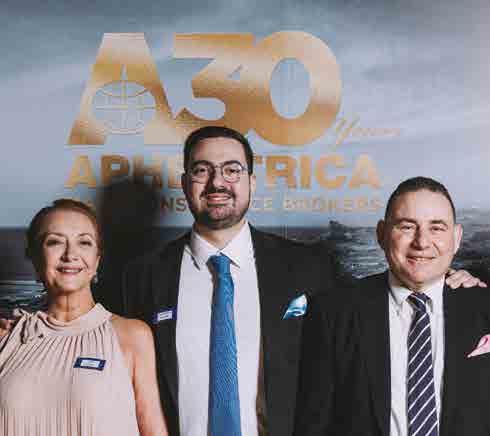
• Aphentrica Marine Insurance Brokers Ltd. is a Limassol-based company with an extensive client base across Greece, Cyprus and Middle East countries. The company celebrated its 30th anniversary during Maritime Cyprus last October.
War rates have been going up and down like elevators
When payments fail, ships do not sail
Financial infrastructure is becoming a critical operational issue for global shipping, explains this article by maritime payment solutions provider ShipMoney.
Avessel is preparing to depart port. Agents are waiting for payment confirmation. Crew payroll is due. A supplier invoice must be settled before services can proceed. Suddenly a payment is delayed for compliance review. A banking corridor tightens overnight. Documentation is requested again.
What begins as a financial delay can quickly become an operational problem.
Global shipping has always operated within a complex financial environment. Vessels move continuously across jurisdictions, currencies and regulatory frameworks, while operators manage large volumes of payments to vendors, ports, agents and crew through multiple banking systems.
Recent geopolitical events, evolving sanctions regimes and tightening banking compliance requirements have begun to expose a deeper structural issue within maritime finance.
Treasury risk is increasingly becoming operational risk
When a payment corridor becomes restricted, when a bank suddenly changes its appetite for maritime exposure, or when compliance reviews delay time sensitive payments, the consequences are no longer confined to finance departments. The effects ripple across operations.
“Operators that are best positioned today are those strengthening resilience in their financial infrastructure, diversifying payment rails and improving visibility across their global payment flows,” says Stuart Ostrow, President, ShipMoney.
Port disbursements are delayed. Vendor relationships come under strain. Crew payroll becomes uncertain. Voyage schedules face disruption.
In a sector where timing and reliability are critical, the ability to move money across borders reliably has become a core operational requirement rather than simply a financial function.
Payments that were once routine can now encounter unexpected friction
Rupert Fee, B2B Payments Lead, ShipMoney
Operators that are best positioned today are those strengthening resilience in their financial infrastructure, diversifying payment rails and improving visibility across their global payment flows
Hidden fragility in maritime banking structures
Many maritime operators still rely on fragmented banking relationships built over many years. Different entities within a group may maintain accounts across multiple banks and jurisdictions, each with its own compliance frameworks, cut off times and corridor restrictions.
and geopolitical environment. Payments that were once routine can now encounter unexpected friction,” says Rupert Fee, B2B Payments Lead, ShipMoney.
Operational cost of payment delays
While this structure may function during stable periods, it can quickly become fragile when external conditions change. Sanctions regimes can shift rapidly. Banks may reassess risk exposure to particular corridors or sectors. Documentation requirements can increase overnight.
In these situations operators often find themselves navigating several banking relationships simultaneously, attempting to resolve blocked payments while maintaining continuity across operations.
“What we are seeing across the industry is that many maritime treasury structures built ten or fifteen years ago are struggling to keep pace with today’s regulatory
Shipping is an industry where operational continuity is paramount. Vessel schedules are tightly coordinated, port calls are time sensitive and delays can carry significant financial implications. When payments cannot be executed reliably, the impact can be immediate.
A delayed port disbursement may affect a vessel’s ability to complete a port call smoothly. Vendor payments held for compliance review can strain relationships with critical service providers. Crew payroll disruptions not only create operational risk but also affect seafarer welfare and morale.
“In shipping, payments are rarely just financial transactions,” says Karen Martin, Global Brand Ambassador, ShipMoney. “A port payment determines whether a vessel can operate smoothly. Crew payroll affects morale and welfare on board, while vendor payments sustain critical relationships across the maritime supply chain.”
Reliable financial execution is therefore fundamental to operational continuity.
Maritime-specific financial infrastructure
These changes reflect a broader recognition that shipping is a highly specialised sector. Financial solutions designed for general corporate payments often struggle to accommodate the operational realities of maritime businesses.
A growing number of maritime focused financial platforms are emerging to address this challenge. ShipMoney, for example, has developed infrastructure designed specifically around maritime operational flows, enabling operators to manage vendor payments, crew payroll and treasury oversight within a unified framework.
Solutions tailored for maritime operations can integrate vendor payments, treasury management and crew financial services into a single system. This allows operators to manage payments more efficiently while strengthening financial control and compliance oversight.
More importantly it helps reduce the operational risk created by fragmented payment structures.
Financial
continuity as operational strategy
The maritime industry has always demonstrated remarkable resilience in the face of global disruption. From pandemics to geopolitical conflicts, operators consistently adapt to maintain the flow of global trade.
Financial infrastructure is now becoming part of that resilience strategy.
Ensuring that vendor payments, port disbursements and crew payroll can continue reliably, even when regulatory environments shift, is no longer simply a treasury objective.
It is a business continuity requirement.
For ship managers and operators responsible for maintaining safe and efficient fleet operations, the ability to execute global payments with certainty provides something invaluable.
Peace of mind.
Because in shipping continuity is everything, and the financial infrastructure supporting global fleets must now be designed with that reality in mind. l
In shipping, payments are rarely just financial transactions
Karen Martin, Global Brand Ambassador, ShipMoney
Regional Focus
UK remains leading maritime professional services hub
Jos Standerwick is standing down as Chief Executive of Maritime London after nearly nine years in the position, moving on to become Head of Membership at the Baltic Exchange as well as Chair of the Steering Group for London International Shipping Week 2027 (LISW27). Here he provides his parting observations on the UK maritime professional services sector in excerpts from his speech at the recent AGM of Maritime London – which coincided with the association’s 25th anniversary.
When I first started in this role, I don’t think that anybody could have been aware of quite what was coming down the track in regard to the regulatory, geopolitical and geoeconomic environment.
Since then, we’ve lived through COVID, the invasion of Ukraine, and the subsequent use of shipping as a direct tool of foreign policy, the effective closure of Suez, and now, of course, the evolving crisis in the Gulf. Alongside this, we’ve seen an unprecedented wave of regulation, both domestic, regional and supranational, including CII, EU ETS, FuelEU Maritime and of course the proposed Net Zero Framework.
All of this has changed how our industry operates, how it manages risk, and how it thinks about compliance. Throughout this period of complexity, the London market has adapted, and as various industry reports continue to state, shown remarkable resilience and positioned itself firmly as a solution centre for global shipping.
For Maritime London’s part, regardless of the geopolitical or regulatory challenge, we have consistently demonstrated our ability to inform policymakers of industry realities, whilst also convening and informing our members. During COVID, for example, we worked closely with government to inform how the market was responding at a time when global supply chains were under an unprecedented strain. And at the same time, we rapidly pivoted to support our members and during lockdown were hosting fortnightly webinars that attracted hundreds of participants each time.
I think the other significant evolution we saw during COVID were the beginnings of a material shift in sanctions policy. In 2019, OFAC issued the first maritime advisory, quickly followed by OFSI in 2020. For the first time, regulators explicitly targeted the maritime mid-sector with detailed compliance expectations.
The invasion of Ukraine in February 2022 meant for the first time shipping was not just affected by geopolitics, it became a central instrument of it. The G7 response introduced a complex sanctions regime that directly targeted the maritime sector. And almost overnight questions of legal interpretation, compliance and commercial viability became central considerations to the market.
The introduction of the Oil Price Cap represented a further step change, an ambitious novel piece of sanctions policy that relied heavily on the participation of maritime professional services. Maritime London worked with partners, helping government to understand the practical realities of compliance and the potential consequences of the mechanism.
And I think as recent developments have shown, sanctions policy continues to evolve in ways that can be entirely unexpected and difficult to interpret. Supporting members through this complexity will be a key priority for the association moving forward.
The geopolitical disruption, of course, did not stop with Ukraine. We saw attacks in the Red Sea and, of course, the current crisis in the Gulf. Throughout this, I think Maritime London’s position has been consistent with Government. The London market is responding as it should to a crisis of this nature. The primary constraint is not commercial. It is a question of safety. Safety of seafarers, of assets, and of course, to avoid significant environmental harm.
Alongside these geopolitical challenges, we’ve also navigated the evolving decarbonisation agenda. We’ve run seminars and briefings helping members understand the implications of new regulation, and we’ve been proactive in highlighting the commercial and contractual barriers to decarbonisation.
Alongside our Maritime UK colleagues, we worked with the Department for Transport towards the establishment of UK SHORE and together unlocked over £700 million worth of government funding through to the end of the term of this Parliament. We’ve also advocated for practical solutions to support investment into the market, including the recognition of UK services under export finance frameworks.
A longstanding structural issue with the UK has been the decline of indigenous ship ownership. While challenges remain, particularly in relation to the broader fiscal and residency environment, we’ve worked closely with government and members to improve the competitiveness of UK tonnage tax and, as a consequence, of reforms in 2023, we’ve seen a 20% rise in tonnage within the scheme, which I think is a significant achievement.
And we’ve also supported the development of the UK Shipping Concierge, taking learnings from other jurisdictions in terms of supporting international operators establish a presence in the UK.
Maritime London was created by the Baltic Exchange as the promotional arm of the London and professional services market. While Maritime London become independently constituted 25 years ago, promoting the market overseas has remained at the heart of what we have continued to do.
Over the years, forums in Greece, Turkey, China (including Hong Kong) and other countries have become embedded in those markets’ shipping calendars, providing our members with platforms to showcase their expertise internationally. Our role in London International Shipping Week has also been significant.
I’d also like to take this opportunity to highlight the work of our affiliated charity, the Maritime London Officer Cadet Scholarship. When I first became involved in the charity as a trustee, we had two cadets in training. Today we have grown significantly; we have 11 cadets in training and I think three due to join in the next intake.
If I may end on a more personal reflection, I think that one of the most significant changes in recent years has been the level of scrutiny placed upon this industry. Shipping is now firmly in the public and political spotlight, and with that comes both opportunity but also risk.
Misunderstandings, whether around sanctions, ownership structures or market behaviour, can have real world consequences now, perhaps in a way that they did not in the past. Maritime London has a critical role to play in ensuring that the voice of this market is heard clearly, but most importantly, accurately. However, we can only do that with the support and engagement of the membership. We should be really proud of this market and the role that it plays in the global economy. And if we want it to remain the world’s leading centre for maritime professional services, we must be as strong at telling that story as we are in delivering it. l
Registries Challenges for flags keep on multiplying
By Felicity Landon
Even before the Iran war, the world’s ship registries were already knee deep in compliance, regulatory, due diligence and admin demands. These related to constantly changing sanctions, the growing threat of the shadow fleet and allied instances of seafarer abandonment, the proliferation of false flags, AIS/GPS jamming and spoofing, fraudulent documentation… to name just a few.
The conflict in the Middle East has turned the dial to max when it comes to ongoing and new challenges. Quite apart from the huge concerns around the safety and wellbeing of thousands of seafarers stranded onboard vessels unable to transit the Strait of Hormuz, the crisis has added new dimensions to the problems that were already there.
Trump’s waiver on Russian oil added confusion around US and other sanctions regimes, already complex enough. AIS spoofing and jamming has gone crazy. Under Iran’s selective blocking of the Strait of Hormuz, many vessels of questionable status from the shadow (or ‘dark’, ‘grey’ or ‘parallel’ – take your pick) fleet have had the privilege of passing through the Strait, while other legitimate, compliant vessels have not; the US Navy’s subsequent blockade of Iranian ports has merely complicated matters further.
Ship registries must make sense of conflicting information, contradictory news, fantastical AIS tracking reports and Trump’s sanctions policy whims. Every piece of information must be checked and double checked.
Capt. Dwain Hutchinson, Managing Director and CEO of the Bahamas Maritime Authority (BMA), said: “There is concern in the industry that there is a lot of false information out there. Make sure you validate and verify everything before you share it out.”
He says the BMA position towards the ‘non-compliant fleet’ remains the same: track vessels, pick up any potential non-compliance, escalate, investigate and, if any non-
compliance is confirmed, take corrective action. “In some cases, the only action may be that we request that the ship leaves the registry.”
However, he said flag states could not get involved in every single cargo transaction, commercial operation and practice of every ship. “Our expectation is that the managers will take in the requirements of port and coastal state where they operate and follow those requirements – and, if they breach those requirements, this would be reported to us. That is where collaboration of member states is so critical.”
Widespread AIS spoofing and jamming is compounding the difficulties, said Hutchinson. “Everyone can see the benefits of technology: enhanced processes, more economic and environmentally friendly. But with the advances of technology come challenges of negative use of that technology. If we had a ship that apparently travelled the equivalent of five days in one day, we would undertake an investigation. Spoofing or mirroring of AIS equipment is a problem the industry is facing.”
Ships are allowed to turn off AIS if it is deemed to be a risk to the ship. “We make allowance for safety and security risks. However, while AIS can be turned off under SOLAS, there is a mandatory requirement on Long-Range Identification and Tracking (LRIT). ; we say they cannot turn it off. We can increase the reporting frequency of LRIT, and we have done that without having to go back to the owners or managers.”
This delivered interesting stats in the Persian Gulf. “When the conflict first started, we had about 28 ships based on our tracking within the region. This dropped to just under 15 within two days when you looked at AIS – but the LRIT numbers matched what we knew. So we did have a good idea of the ships in there.”
Ship registries have to learn the new sanctions regulations as they evolve, said Evan Curt, VP Maritime Security at IRI, managers of the Marshall Islands Registry.
Dwain Hutchinson, Bahamas Maritime Authority
Evan Curt, IRI/Marshall Islands
Bill Gallagher, IRI/Marshall Islands
Nick Makar, IRI/Marshall Islands
“Sanctions compliance has become more confusing and difficult because a lot of what was previously sanctioned is now legally permitted to trade – including waivers on Venezuelan, Iranian and Russian oil. We still have to check whether a ship has a licence to go to Venezuela. It’s not like a free pass – you still have to check.”
If a ship is found to be carrying sanctioned oil, the Marshall Islands acts on a case-by-case basis, he said. “The legal department will go to the operator and ask for their side of the story, give them the evidence we have and see what they have to say. If they don’t have an excuse, we have a right to strike them off.”
In fact, the Marshall Islands hasn’t had to deal with a sanctioned vessel in well over a year – Bill Gallagher, IRI President, said: “When you have a very compliant fleet on the technical side of things, they tend not to be the kind of vessels that end up doing nefarious trades.” However, he said: “Our biggest exposure is on the corporate side. The Marshall Islands is a very well-known corporate jurisdiction for the maritime community.”
It’s a case of ‘pull on the string and find more degrees of connectivity’, according to IRI, which has expanded its legal and trade compliance teams again recently, and has designated compliance specialists in its regional offices as well as HQ.
There were 185 Marshall Islands flagged vessels stuck beyond the Strait of Hormuz towards the end of March. About 60 of these were anchor handlers, tugs and the like, but the biggest concern was for a similar number of tankers and gas carriers, said Evan Curt, who said conflicting advice doesn’t help. Naval advice might be that vessels should keep moving – ‘don’t be a sitting duck’ – but that gets difficult when a ship is at anchor and the port state might want it to stay put for safety reasons.
IRI reported a high level of AIS interference. MidMarch, AIS tracking showed a vessel that had been sent for scrapping was heading through the Gulf. “There is AIS
hijacking where people are taking ghost vessels and using their identity. It is very rare, but we have to figure out how they are doing it and hopefully we can act.”
Much of the AIS jamming in the Gulf is due to antimissile systems that jam signals, he said. However, there have been cases of ships tracked across the middle of the desert. “This is all very concerning for navigation – it’s a huge safety issue.”
He also warned that any electronic emissions from a ship could help nefarious actors to track a vessel – and that could include seafarers’ mobile phones. “We are advising seafarers to shut that off.”
The Marshall Islands Registry is concerned about the emergence of false flags and/or mismanaged registries and Nick Makar, IRI’s Senior Vice President, Maritime Administration and Regulatory Affairs, said: “The agendas at the IMO legal committee are dealing with this and I would like to see the work at IMO progress on that. We want to see the development of best practice on registration, due diligence, etc., but ultimately it comes down to those administrations which have established flags ensuring they are appropriately resourced to execute their responsibilities.
“When it comes to bad actors and those intentionally falsifying documents, web pages, etc., that’s a much bigger issue.”
Here, the IMO’s GISIS (Global Integrated Shipping Information System) is vital for sharing information on the registration status of ships, including ships that have been thrown off a registry, and on false flagging, said Curt. “When a sketchy ship leaves one registry, it goes on this database, and all the registries can see this and know not to reflag it. However, not every flag is on this system, so it’s still an issue.”
As Gallagher pointed out, care is needed before deciding a ship is ‘flag-hopping’ for suspect reasons. “Ships do change flags mid-ocean legitimately from time to time,” he said. Makar added: “We have to be mindful of
Capt.
Ivan Tabone, Malta Ship Registry Ms Marina Hadjimanolis, Shipping Deputy Minister, Cyprus
Giovanni Ciniglio, Barbados Maritime Ship Registry
not overriding or preventing legitimate transactions. It’s the same with ship-to-ship transfers – it’s a fine balance, enabling legitimate processes to take place while trying to address those that are not legitimate but could appear to be.”
Tackling the shadow fleet and other substandard ships should be a strategic priority, as these vessels pose systemic risks to environmental protection, maritime safety and the integrity of global trade, said Dr Ivan Tabone, Registrar General of Shipping and Seamen at the Malta Ship Registry. “Shadow fleet vessels are typically defined by their age, substandard maintenance, questionable insurance and registration in jurisdictions with lax oversight, all designed to bypass legally enacted sanctions.
“As the EU’s largest ship registry and a top-tier global flag, Malta maintains a zero-tolerance policy towards any activity that undermines international law or maritime safety. The Malta Ship Registry is not merely a ship registry but a rigorous regulator. Our policy is uncompromising: we ensure all vessels flying the Maltese flag adhere strictly to legally enacted international sanctions. By leveraging risk analysis tools and collaborating closely with the Sanctions Monitoring Board and other international partners, we proactively seek to deter and stop deceptive maritime practices.”
Tabone said that because of its ‘stringent gatekeeping measures’, Malta has not had cause to deregister vessels for sanctions breaches to date, but if it received evidence of a breach or failure to maintain international safety standards, it would move decisively to revoke registration.
Identifying shadow activities is an evolving challenge because of complex ownership structures and frequent name changes but Malta, with its partners, has the technical capability to trace beneficial ownership and spot suspicious trade patterns, said Tabone. “It is important to distinguish these from vessels operating under legitimate sanctions
exemptions with the requisite documentary evidence; those adhering to the rule of the law are not considered part of the shadow fleet.”
Malta is highly vigilant regarding AIS ‘dark’ periods and GPS spoofing, he added. “We treat any unauthorised AIS deactivation as a significant red flag. Our monitoring teams scrutinise these gaps; if a lack of transmission is not justified by immediate safety or security concerns, it triggers an immediate investigation.”
Tabone described the rise of false flags as a direct threat to safety of life at sea and the environment. “While a comprehensive framework of IMO instruments exists, the solution lies in more robust implementation and transparency. Malta advocates for a unified, global digital verification system. We have already led by example, transitioning to fully digital, tamper-proof certification with QR code authentication, allowing any port state to instantly verify a vessel’s legitimacy. We want to see increased international cooperation to blacklist fraudulent registries and ensure rogue vessels are denied access to global ports.”
Cyprus deleted a number of vessels from its ship registry when the EU first adopted restrictive measures against Russia, but there have been no reported cases of Cyprus-flagged vessels failing to comply with the measures, said Marina Hadjimanolis, Cyprus Shipping Deputy Minister. “Continuous monitoring, due diligence on the ship registration level, high safety and ship registration standards, close communication with shipowners and managers and the issuance of official guidance through sanctions information notices and circulars contribute to maintaining this high level of compliance,” she said.
While AIS or GPS interference has been reported internationally as part of sanctions evasion practices, no confirmed cases have involved Cyprus-flagged vessels, said Hadjimanolis. “The Cyprus Ship Registry remains vigilant, particularly given the growing concern around shadow
Dr
Bertrand Smith, Maritime Authority of Jamaica
fleet activities, and continues to ensure that vessels flying the Cyprus flag operate with transparency, safety and full compliance with international regulations.”
Hadjimanolis described the proliferation of false flags or fraudulent registrations as “a matter of serious concern for the international maritime community”.
“These practices destabilise the integrity of the global regulatory framework, distort fair competition and, most importantly, pose significant risks to safety, security and environmental protection.”
Fraudulent registration and registries undermine the fundamental rights granted under international law to authorised flag administrations to lawfully grant the nationality to ships on their registers, she added.
“Furthermore, they have an adverse impact on the global economy, which greatly relies on international shipping, as well as a negative effect on the safety of navigation, and creating a negative image of the shipping industry.”
Hadjimanolis said the issue highlighted the urgent need for stronger international cooperation and transparency. “We support enhanced verification mechanisms within global systems, particularly through closer collaboration between flag states, port states and international organisations,” she said. “Digitalisation and better data-sharing tools can play a key role in preventing fraudulent registrations.”
Timely and unimpeded information exchange is vital and the GISIS is an important platform for this, Hadjimanolis added.
Calling for ‘severe and internationally unified’ disciplinary measures she added: “We would also encourage
stricter enforcement actions against entities facilitating such practices. Ultimately, safeguarding the credibility of legitimate flags requires a collective and coordinated response at the global level.”
Giovanni Ciniglio, CEO and Principal Registrar at the Barbados Maritime Ship Registry (BMSR), said that if a vessel becomes sanctioned while flying the Barbados flag, it is deleted from the registry and an administrative penalty of US$25,000 is applied.
“Sanctions regimes are established at national or regional level rather than universally,” he emphasised. “Barbados cooperates with partner jurisdictions and monitors relevant sanctions lists. In recent years, the BMSR has deregistered vessels when they become subject to sanctions while flying the Barbados flag, but such cases have been relatively limited.”
Monitoring vessel activity globally is complex, said Ciniglio. “Flag states rely on a combination of open-source maritime intelligence, information from specialised service providers, and cooperation with other administrations and authorities.”
He said AIS interference was an increasing concern in several regions, and determining the actual location and trading patterns of vessels involved in such practices requires specialised intelligence capabilities.
Ciniglio also warned that fraudulent ship registration was not limited to so-called fake flags. “In some cases, shipowners or intermediaries attempt to operate vessels using forged certificates from legitimate registries.”
Despite the pressure the shipping sector faces from
geopolitical uncertainty, illicit activities and environmental requirements, there is clear opportunity where the industry continues to invest in technology, people and cooperation, Bertrand Smith, Director General of the Maritime Authority of Jamaica (MAJ), said recently.
He was speaking as the MAJ said that paper-based processes were no longer fit for purpose in modern maritime operations – warning that outdated practices increasingly pose operational and safety risks in 2026.
The authority said it expects operators to be able to demonstrate how digital systems, cyber resilience and crew training are being addressed as part of day-to-day operations, as reliance on manual processes continues to fall away across the sector.
Jamaica is committed to international regulations and good practices in ship registration and is firmly against the practice of vessels breaking sanctions and not abiding by international regulations, Smith told SMI. “Relevant agencies of government and the MAJ/JSR are required to ensure that all Jamaican ships, and all foreign ships calling at Jamaica ports, are compliant with applicable international conventions and regulations. Consequently, vessels are only considered for registration where such vessels do not appear on the list of sanctioned vessels published by the UN or OFAC or other sanctions lists applicable to Jamaica.”
Although not a frequent occurrence, Jamaica has deleted vessels found to be in violation of international sanctions, Smith said. A recent case involved a vessel that did not have a history of violations at the time of registration.
Jamaica relies upon industry resources to identify vessels and, to this extent, does not have a difficulty with identifying where vessels are and the particular trade in which they are involved, said the MAJ Director General. “The location of a vessel may be tracked by the vessel’s (LRIT) system, which is constantly monitored on an international platform by service providers approved by the sector, and AIS for vessels near-shore (Jamaican waters).
“The shadow/dark fleet, and vessels otherwise engaged in illicit activities, would typically turn their equipment off. Locating vessels in such instances may therefore be challenging. Without satellite assistance, it is not possible to know what a vessel is doing at an instant in time – and more so, where the vessel engages in activities offshore.”
The proliferation of illicit activity of any form is usually an indication of perceived opportunities of high risk, in respect of which restrictions apply, Smith points out. “Shipping is no different. This issue of a larger number of false flags also raises concerns in respect of the threat to the marine environment and welfare of seafarers, who may not be fully aware of the nature of the operation. The international framework for the regulation and administration of ships and shipping must be assertive, and states should be encouraged to develop and maintain an environment of collective global responsibility. Rogue states and individuals/entities must be encouraged to voluntarily comply and otherwise be heavily sanctioned such that the incentive for selfish gain becomes unappealing.”
Abandonment – A cause for concern
The rise in the number of cases of seafarer abandonment is a serious concern, with such situations violating the essential rights of seafarers, according to Cyprus Shipping Deputy Minister Marina Hadjimanolis. “The welfare and protection of seafarers should always be a priority in the maritime industry,” she said. “The phenomenon is particularly worrying when linked to vessels operating within the so-called shadow fleets, where regulatory oversight may be limited or unclear.”
Cyprus has a robust policy framework in place to prevent and address any cases of seafarer abandonment, said Hadjimanolis. It is also calling for stronger international coordination, improved compliance with measures to tackle the issue, and increased speed and quality of cooperation between flag states, port authorities and other stakeholders in terms of providing assistance to abandoned crew.
“Cyprus has encountered a limited number of cases over time, reflecting the high standards and strict oversight of our registry,” she added. “Each situation is handled with urgency and the utmost seriousness to ensure that affected seafarers receive immediate support.”
Seafarer abandonment is a “humanitarian crisis and a stain on the maritime industry”, said Dr Ivan Tabone at the Malta Ship Registry. “Malta views this with the utmost gravity. There is a link between illicit shipping activities and abandonment; operators who circumvent legal sanctions are often the same ones who disregard the human element.”
Malta believes that seafarer welfare is inseparable from ship safety, and that any entity ignoring the wellbeing of its crew “cannot be recognised as a serious maritime player”. The Maritime Authority of Jamaica described seafarer abandonment linked to the shadow fleet as ‘of grave concern’ but also emphasised that seafarers have a responsibility to scrutinise properly offers of employment and the terms that apply.
“Seafarer supplying nations also have an obligation to sensitise seafarers to the rising dangers of the shadow fleet and highlight the risks of abandonment. The shadow fleet would appeal to the appetite for ‘good pay’ because of the risk associated. Seafarers have a responsibility to themselves, their families and their countries to seek after their welfare and protect their interests; all that glitters is not gold.
“A seafarer who knowingly joins a vessel operating illegally is complicit in the illegal activity and must bear the consequences. Where seafarers do not knowingly accept employment in the ‘shadow fleet’, the global framework of support must provide them necessary assistance to leave the environment.”
Crewing agencies and seafarers are encouraged to verify the legitimacy of offers and operations with which
Our priority will always be the health and safety of seafarers
they seek to become involved, said the MAJ. “They should stay clear of all activities that may prove detrimental to their interest whether directly or indirectly. States should explore welfare programmes to provide assistance to seafarers leaving illicit environments or otherwise seeking to advance their welfare.”
Having a robust compliance culture in place (within a ship registry) should prevent incidents of abandonment, said Nick Makar at IRI. “However, this is not just about having a strict statutory compliance approach. A lot of us have worked at sea and are very deeply connected to the industry. Our seafarers group handles complaints under the requirements of MLC, which of course also requires companies to have insurance in place for abandonment and a system in place to address this.
“If all these things are working properly, we should hear any complaints first and we should see if there are certain behaviours where insurance seems to have lapsed.”
Given the compliance requirements for flags and vessels under MLC, said Makar, “It is a fair connection to associate any rise of cases of actual seafarer abandonment with those involving the shadow fleet. The continued ability of these vessels to operate under the radar poses safety and environmental risks; humanitarian risks can be associated with that as well.
“We take a very serious approach to this. It’s a resourcing and implementation issue and, as a result, we have no active cases on the IMO/ILO database at present. If we do receive information, we work closely with all the stakeholders involved to make sure information is communicated and acted upon.”
Capt. Dwain Hutchinson at the BMA said: “Our approach to this is making sure that any ships with us have MLC provisions in place, with annual inspections. We have a reporting tool through which seafarers can report to us if something happens. But the key thing is, we can’t act if we don’t know. If the media throws something at us that we are not aware of, we need to investigate it and make sure we have all the correct information. Sometimes the information coming in may not be the complete picture. But once we have that, we act on it.”
He concludes: “Our priority will always be the health and wellbeing of the seafarers on board the ship.” l
Alternative Viewpoint
Is tramp box shipping dead, or ‘just resting’?
By Dr Martin Stopford, leading maritime analyst and economist
When I joined shipping in 1971, my boss took me to visit a London Greek shipping company. In the taxi, he explained that they tramped tweendeckers, with cargoes like grain, or chartered to liner companies, carrying general cargo.
The company was worrying about its future. Container services were elbowing out cargo liners and bulkers were consolidating the small bulk parcels at rates tramp ships could not match. Switching to bulk carriers was an obvious option, but for a tramp company in 1971 it looked dauntingly different. Of course they made the move, and never looked back!
The point of this anecdote is that history might be about to repeat itself, in reverse! After 60 years when the big companies dominated container transport, maybe it’s time to welcome tramps back into the container transport business.
There are four ways tramp companies could add value: -
- Create a global ‘spot market where container shippers could fix transport to a specific port by a tramp container ship in their loading zone. With today’s technology and container cargo volume, the challenge would be getting enough tramps, of the right size and type, to make a market.
- Serve outlying ports: globally over 1000 ports can now handle containers, ranging from Greenland and the Pacific Islands to Singapore and Rotterdam. But “cross trades” between outlying ports are not well served and tramps might be the catalyst for trade, searching out niche trades, a traditional tramp company skill.
- Add flexibility: another tramp company skill is getting their ships to loading zones where there are more cargoes than ships. That makes the transport system flexible, helping general cargo shippers to deal with disruption and congestion.
- Lower box freight rates: tramp companies traditionally cut costs by outsourcing everything, carrying their office ‘under their hat’. Today they can use brokers, agents, freight forwarders and logistics companies to do the heavy lifting. In the 19th century the liner companies, with their big overheads, were plagued by these outsiders, developing conferences to keep them at bay.
When containers were introduced in the 1960s, liner services continued, but with just one terminal per country, which was
all they could afford. So instead of picking up cargo from the local port, the containers had to be transported to and from the new container terminal by trucks and the railways. At the time this worked well, because railways were losing passenger traffic to cars, and the new motorways had spare capacity. But 60 years later things are very different. Inland transport systems are busting at the seams, costs are sky high, and their emissions are unwelcome. Meanwhile local ports, many of which can now handle containers, are left out in the cold. For example, in the UK less than 10 % of containers are delivered to local ports. The rest are distributed by road and rail, an easily overlooked way to cut carbon.
In summary, a global spot market for ships tramping containers would add flexibility to the complex liner services the big liner companies provide. It could also cut transport costs, reduce emissions and support under-served cross trades.
Could it really happen? In Monty Python’s Norwegian Parrot Sketch, the parrot is nailed to its perch – it is dead, an ex-parrot. Although that roughly describes the current status of tramp box shipping, you could argue, as I have tried to, that it may be just resting, and general cargo transport needs it to revive. Recently, container shipping has got very expensive (see chart) and the cross trades need better services. Tramps could help with both. Armed with modern technology, it would also bring an entrepreneurial edge to general cargo transport, as it did under the old cargo liner system. But maybe, like the Norwegian blue parrot, it really is dead. What do you think? l
20 years of
Two decades at sea:
How shipowning and shipmanagement have navigated 20 years of change
On the occasion of Ship Management International’s 20th anniversary, SMI publisher and founder Sean Moloney looks back at how shipping has changed during that time, inviting leading industry figures to do the same.
When Ship Management International was launched two decades ago, the shipping industry operated largely out of sight and, for the most part, out of mind. It was a sector defined by pragmatism, commercial instinct and a quiet resilience—moving around 90% of global trade with limited public scrutiny. Today, that landscape looks markedly different. Shipping has moved from the margins into the spotlight, shaped by geopolitical shocks, regulatory pressure, technological disruption and growing societal expectations.
Over the past 20 years, shipowning and shipmanagement have not simply adapted—they have been fundamentally reshaped.
Historically, shipping’s low public profile allowed it to operate with a degree of autonomy. That began to change in the early 2000s and accelerated through a series of high-profile events: piracy off Somalia, environmental disasters, supply chain disruptions, and most recently, the global pandemic and Red Sea security concerns.
The COVID-19 crisis, in particular, brought unprecedented attention to the role of seafarers. Crew change restrictions left thousands stranded at sea, exposing the human cost
Largest containerships have nearly doubled in capacity since 2006 (as above)
of global trade to a wider audience. Governments, media and the public became more aware of the industry’s reliance on a workforce that often operates under difficult and isolated conditions.
At the same time, incidents such as the ‘Ever Given’ blockage of the Suez Canal and ongoing geopolitical tensions have reinforced shipping’s central role in global supply chains. What was once a largely invisible industry is now regularly part of mainstream economic and political discourse.
Professionalisation of shipmanagement
One of the most significant structural shifts over the past two decades has been the evolution of shipmanagement from a fragmented service offering into a highly professionalised global industry.
Twenty years ago, technical and crew management were often handled in-house by shipowners or outsourced in a relatively informal manner. Today, third-party shipmanagement has matured into a sophisticated sector, with global operators managing large, diverse fleets under increasingly complex regulatory frameworks.
Standards have risen sharply. Compliance is no longer a box-ticking exercise but a core operational function. The introduction and tightening of regulations—from the ISM Code to more recent environmental and safety frameworks—have required shipowners and shipmanagers to invest heavily in systems, training and governance.
This shift has also been driven by the growing expectations of charterers, financiers and insurers. Transparency, accountability and performance benchmarking are now integral to commercial relationships. As a result, shipmanagement companies have had to develop capabilities that extend well beyond traditional technical oversight, encompassing risk management, data analytics, ESG reporting and crew welfare.
In many respects, shipmanagement today resembles other mature industrial service sectors—structured, data-driven and increasingly consolidated.
If there is one theme that has defined the past decade in particular, it is digitalisation. While early efforts were often piecemeal, the industry has gradually recognised that digital transformation is not optional—it is essential.
The initial focus was on operational efficiency: voyage optimisation, fuel monitoring and maintenance planning. Over time, this has expanded into more advanced applications, including predictive analytics, remote inspections and integrated fleet management systems.
Connectivity has been a key enabler. Improved satellite communications have allowed vessels to move from isolated units to fully integrated nodes within a global data network. This has transformed how shipowners and managers monitor performance, manage risk and make decisions.
More recently, attention has turned to data integrity and interoperability. As the volume of data has increased, so too has the need for trusted frameworks to ensure that information can be shared securely and used effectively across stakeholders.
POINTS OF VIEW: 20 YEARS IN FOCUS
Andrian
Dacy, Managing
Director
and Group
Head,
Global Transportation Group, J.P. Morgan Asset Management - Alternatives
“As the global fleet has grown, with attendant regulatory, crewing, emissions, safety, and geopolitical complexity, ship managers have provided the critical scale needed to solve these complex challenges for their clients. Especially for smaller and medium sized owners, working with ship managers can deliver the certainty needed to meet a growing global matrix of operational requirements not easily addressed with a small, in-house team. Ship managers can free shipowners to focus exclusively on the daily commercial challenges of building and deploying a fleet optimized to take advantage of the global trading opportunities of the future.”
POINTS OF VIEW: 20 YEARS IN FOCUS
Ben Palmer OBE, President, Viasat Commercial
“In the time I’ve been close to shipping, the pace of digitalisation has accelerated dramatically, but expectations have moved even faster. Connectivity has shifted from a support function to an operational backbone, underpinning safety, efficiency and crew welfare. What the industry has struggled with is moving collectively. Too often innovation is fragmented, slowing real impact and leaving significant value on the table.”
Bjorn Hojgaard, CEO Anglo Eastern
“The biggest change has been the industrialisation of shipping – scale, systems, and global talent have made it far more structured and professional. What we have failed to do is move beyond short-term cost thinking. Price is still too often mistaken for value – a persistent case of being penny wise and pound foolish.”
Digitalisation is also beginning to reshape the relationship between ship and shore. Remote support, automated reporting and, in some cases, semiautonomous operations are reducing the administrative burden on crews while enhancing oversight from shorebased teams.
However, progress has not been uniform. The industry continues to grapple with legacy systems, fragmented standards and a natural caution towards large-scale change. Even so, the direction is clear: digital capability is becoming a defining feature of competitive advantage in shipping.
Decarbonisation agenda
Perhaps the most profound challenge facing shipowning and shipmanagement today is the transition to alternative fuels and the broader decarbonisation agenda.
Twenty years ago, environmental regulation was a growing consideration but not a central strategic issue. Today, it sits at the heart of decisionmaking. The International Maritime Organization’s targets for reducing greenhouse gas emissions, coupled
with regional measures such as the EU Emissions Trading System, are driving a fundamental reassessment of how ships are designed, fuelled and operated.
The shift from conventional fuels to alternatives such as LNG, methanol, ammonia and, potentially, hydrogen represents a step change in complexity. Each option brings its own technical, commercial and safety challenges. For shipowners, the question is not just which fuel to choose, but when to invest and how to manage the risk of technological obsolescence.
For shipmanagers, the implications are equally significant. Managing vessels powered by new fuels requires new skills, new procedures and new safety frameworks. Training and competency development have become critical, particularly as crews are asked to operate increasingly complex systems.
At the same time, operational measures—such as speed optimisation, route planning and energy efficiency technologies—continue to play an important role. The decarbonisation journey is not a single leap, but a series of incremental steps supported by both technology and operational discipline.
Editorial credit: Afdhaluddin / Shutterstock.com
René Kofod-Olsen, Group Chief Executive Officer, V.
“Over the past 20 years, ship management has been transformed for the better - evolving from a narrow, technical service into a professional, mission-critical discipline that touches virtually every aspect of how a vessel is run. V. embodies that evolution across our divisions, bringing together a fully integrated maritime platform which includes V.Ships, offering tier 1 ship management at scale for owners worldwide, alongside V Services, a portfolio of businesses providing capabilities across technical services, travel, catering, insurance and beyond. The best operators give owners genuine peace of mind; acting as a trusted counterparty handling everything from geopolitics and regulation to decarbonisation and AI advancement. Where the industry has fallen short is consistency. The gap between those who have professionalised at the necessary scale and those who haven’t remains too wide, and in a sector responsible for hundreds of thousands of seafarers, that matters.”
What is clear is that the energy transition is no longer a compliance issue. It is a strategic imperative that will shape the industry for decades to come.
Amid all the technological and regulatory change, the welfare of seafarers remains one of the most pressing—and unresolved—issues.
Over the past 20 years, there have been genuine improvements. Greater attention has been paid to training, safety standards and onboard conditions. Connectivity has improved, allowing seafarers to stay in touch with families and access support services.
Yet significant challenges persist. Long contracts, isolation, fatigue and mental health pressures continue to affect large parts of the workforce. The pandemic highlighted how vulnerable seafarers can be to external shocks, with many left stranded due to travel restrictions and administrative barriers.
There is also an ongoing tension between efficiency and welfare. As ships become more technologically advanced and operationally optimised, crew sizes have not necessarily increased to match the complexity of onboard systems. In some cases, the burden on individuals has grown.
The industry has recognised these issues, and there are numerous initiatives aimed at improving welfare, from enhanced communication systems to mental health support programmes. However, progress has been uneven, and the gap between aspiration and reality remains.
If shipping is to sustain its licence to operate—particularly in a more visible and scrutinised environment—addressing seafarer welfare will be critical.
Looking ahead
The past 20 years have seen shipowning and shipmanagement move from a relatively insular, operationally focused industry to one that is increasingly visible, regulated and strategically complex.
Digitalisation is redefining how ships are managed and how decisions are made. The energy transition is reshaping investment and operational strategies. Professionalisation has elevated standards across the board. And through it all, the human element— embodied by the seafarer—remains central.
As Ship Management International marks its 20th anniversary, the industry it has chronicled stands at another point of inflection. The pace of change is unlikely to slow. If anything, the next two decades promise to be even more transformative.
The challenge for shipowners and shipmanagers will be to navigate this complexity while maintaining the resilience and adaptability that have long defined the sector. The stakes are higher, the scrutiny greater—but so too are the opportunities for those able to evolve. l
Luis Benito, Group Business Development & Marketing Director, Wallem
“Adoption of technology, for greener, safer, more automated and digitally enabled industry is the biggest change I have experienced, beyond industry standard organic efficiency gains. The adaptation to the pace of technology development and the business models enabled by them, focusing on the optimum integration of humans within the new models, and nurturing partnerships that enable the new models to thrive are the areas where acceleration would be most welcomed.”
Sebastian von Hardenberg,
CEO, Bernhard Schulte Shipmanagement and President, InterManager
“Over the past two decades, shipping has become safer than ever, despite far higher traffic volumes. Serious incidents and total losses are now rare. Yet this progress is under pressure as the increasing number of wars and conflicts lead to significant safety challenges. What shipping has so far failed to do is fully integrate the vast opportunities of digitalisation. However, change is accelerating, with some players moving faster than others, generating positive ripple effects.”
Harry Vafias,
President and CEO, StealthGas and a leading Greek shipowner
“The biggest change I have seen is the lack of common decisions and laws about shipping. In the past the IMO made the rules and everybody played by the same rules! Nowadays, the IMO says one thing and then individual countries come up with their own rules and regulations making the business impossible to run properly and in many cases leading to unfair competition! Net zero regulation was one of these farces! In addition, shipping should have been a very powerful industry with one voice, like the airline industry for example, but we have so many fora and associations with different views that we cannot influence legislators or politicians and end up shooting our own feet! “
Denis
Petropoulos,
past Chairman of the Baltic Exchange
“Over the last 20 years I have seen, first-hand, many proposed changes to shipping legislation and even adopted changes, but no one is properly positioned to take responsibility for ensuring these measures are adhered to. Shipowners are always keen to improve efficiencies and are persistently challenged by shippers to do so, but sadly it is those shippers who show resistance to invest in support.”
Capt. Kuba Szymanski, Secretary General, InterManager
“The biggest change has been the transformation of shipping from a largely operational business into one defined by compliance, transparency and transition. Twenty years ago, efficiency and cost were dominant. Today, decarbonisation, ESG expectations, cybersecurity and stakeholder scrutiny are shaping every boardroom discussion. Back then, we were offering third-party ship management. Today, what we do is much closer to secondparty ship management, a more joined-up, partnership-based way of working. We hope owners will see the value in that and be willing to build a real partnership with both their crew and ship managers. What shipping has failed to do is address the human element with enough urgency. We have not made life at sea sufficiently attractive; we have not reduced avoidable administrative burden enough; and we have not consistently protected seafarers from unfair treatment. The industry cannot call itself sustainable if it is not sustainable for the people working in it.”
Greek owners urge ‘realism’ in any industry carbon plan
The Union of Greek Shipowners (UGS) rarely makes public pronouncements, but when it does they are usually worth careful consideration.
In mid-April, UGS President Melina Travlos issued a statement on the forthcoming IMO MEPC 84 session, where talks were to resume on the thorny issue of the international body’s proposed Net Zero Framework (NZF). The plan failed to attract consensus approval at MEPC 83 last October, with Greece reported to have departed the official EU position of supporting the NZF and been ready to abstain in any vote, that in the event was postponed for a year with preparatory discussions to resume at MEPC 84.
“With the global shipping industry turning its attention to the upcoming session of the International Maritime Organization’s Marine Environment Protection Committee,” began the mid-April statement, “the Union
of Greek Shipowners calls upon all Member States to rise to the occasion in a spirit of pragmatism and constructive cooperation.
“Greek shipping, representing the largest cross-trading merchant fleet in the world, has consistently been at the forefront of environmental stewardship. The Greek shipowning community continues to invest substantially in fleet renewal, energy efficiency and technological innovation, demonstrating that operational excellence and environmental responsibility go hand in hand.
We remain firmly committed to the decarbonisation of our sector.”
And then came the kicker: “However, ambition must be grounded in realism. The draft Net-Zero Framework (NZF) does not constitute an appropriate solution, as evidenced by the absence of support from major and influential States representing a significant share of global tonnage, an element that cannot be overlooked.
“We therefore urge Member States to work towards a global, realistic and implementable solution that can ensure a just and equitable transition, while prioritising safety and providing the necessary certainty for long-term investments. Failing this, the risk of a fragmented regulatory landscape, marked by regional measures that distort competition, will become inevitable.”
The statement ended: “In this context, we call upon governments to match the industry’s commitment with the necessary political will and determination.”
Earlier, the Chairman of the Londonbased Greek Shipping Co-operation Committee (GSCC), Haralambos J. Fafalios, had been even more forthright in his remarks at the body’s Vasilopita cake-cutting reception held in early January, where IMO SecretaryGeneral Arsenio Dominguez was guest of honour.
Lamenting that no sufficient supply of suitable alternative fuels was yet
available, he criticised the regulatory approach to date for having been “all stick and no carrot”.
“Shipping needs global solutions and tramp shipping in particular, which encompasses the largest part of the world shipping fleet, cannot rely on haphazard solutions which are not yet there in terms of reliability and, more importantly, in terms of safety,” Fafalios said.
“The carbon-free solution is still not around and will not be so for the next 10-20 years and therefore levying more taxes will not encourage a cleaner world. Those who are levying these taxes should be responsible for finding the real solutions.”
He continued: “With regards to the IMO NZF, unless the world shipping industry can be directly involved in the drafting of this legislation, it cannot be anything more than window dressing. More taxes only mean a greater burden for the consumer since it is they alone who will pay.”
All of which suggests that what is generally considered the world’s largest shipping nation will not be a willing party to any revival of the NZF in its current format, despite IMO’s stated intention that a one-year pause on debating its adoption was merely a ‘postponement’.
Meanwhile, great strides in energy efficiency and emissions reduction are already underway with existing design ships, the GSCC Chairman pointed out, and this is borne out by the number of vessels among Greek shipowners’ voluminous fleets and newbuilding orders that are dual-fuel-capable, scrubber-fitted and/or fitted with energy saving devices. Leading Greek shipowners are also involved in joint technical efforts on decarbonisation such as Athens-based non-profit collaboration the Maritime Emissions Reduction Centre (see following article).
Desirable’ vs. ‘doable’
One Greek owner involved in particularly aggressive fleet expansion – and a staunch opponent of the NZF in its current form - is Dynacom group founder George Procopiou, who has as many as 80 new vessels on order, the vast majority at Chinese yards including much-in-demand Hengli Heavy Industries
Receiving a special award at the 30th anniversary celebration of the Hellenic Chinese Chamber in late 2025, Procopiou recounted how in total he had ordered some 160 ships in China since 2000. He praised the Chinese for being a “reasonable” people who could see the difference between the “desirable” - which he said as “is what politicians promise” - and the ‘doable’ - what businesses can actually deliver.
Decarbonisation was desired by all at IMO but China (and others) in the end opposed the IMO’s NZF plan because they realised it was not ‘doable’, ran Procopiou’s argument.
The shipowner went on to point out that despite China being “very advanced in all sectors of renewables simultaneously”, the country continues to “push all the other forms of energy,”. And it’s that mix of crude oil, coal, gas, wind, hydroelectric, nuclear, solar etc, that is now needed, he said, calling it an “energy addition” rather than “energy transition”.
Echoing the sentiments of UGS President Melina Travlos, Procopiou declared that “cooperation, not confrontation, should be the motto of our times.”
In short, Procopiou and fellow Greek shipowners seem to be pushing for a more inclusive, less punitive, approach to decarbonisation going forward. Advancing at a realistic pace with a ‘coalition of the willing’ leading the way, one might say, rather than a route march at breakneck speed that is enforced on all.
Shipping’s neutrality
The UGS, and Ms. Travlos personally, have also been very outspoken on the issue of military attacks on commercial vessels, and excerpts from their statement made at the beginning of the year remain even more relevant today.
“Shipping is not a battlefield and it should not be used or targeted as a means of political pressure,” declared the UGS President. “As I also stated at the United Nations Security Council in May 2025, shipping should be kept out of fields of geopolitical tension and military confrontation. Seafarers are civilians … [and] protection of seafarers and freedom of navigation are not optional, they are fundamental European and international obligations.
“As Greek shipping, we have consistently served and continue to serve peace, cooperation, and stability. … The European Union must immediately take steps, in a coordinated and decisive manner, to protect its shipping industry, its people, and the strategic role shipping plays in the prosperity of Europe and its citizens.
It must make it clear that no attack on civilian vessels is acceptable and no threat against seafarers can be tolerated.
“Shipping connects the world, and no geopolitical argument can justify it being violently targeted.” l
Board of Directors at UGS, representing 20% of world tonnage
MERC moves ahead on practical emissions reduction
The Athens-based Maritime Emissions Reduction Centre (MERC) was co-established two years ago by the Lloyd’s Register Maritime Decarbonisation Hub and leading shipowners Capital Group, Navios Maritime Partners, Neda Maritime Agency, Star Bulk and Thenamaris (Ships Management) Inc., with enabling support from Lloyd’s Register. Its stated aim was to accelerate the reduction of greenhouse gas emissions of the global shipping fleet by identifying, validating and promoting technology and operational solutions that can deliver efficiency and scalable impact and ensure existing vessels contribute to global decarbonisation efforts.
Since its inception, MERC has developed its impact strategy around
several research and development pillars, including optimising hydrodynamic efficiency, benchmarking wind assisted propulsion solutions, exploring alternative auxiliary power generation, and scoping a data programme to integrate technical and commercial use of performance data to drive emissions reduction optimisation and benefit sharing.
Dubai-based Drydocks World shipyard became the latest international partner to join, in February this year. MERC’s newly appointed Managing Director Nikos Kakalis (pictured) commented that Drydocks World’s involvement provides “an essential layer of applied engineering experience that complements MERC’s technical and analytical work. The organisation brings the kind of practical insight that is only
gained through decades of delivering major retrofit projects. This expertise will help us understand not only what is technically possible, but what can be delivered efficiently and safely in a real shipyard environment.
“That combination of deep engineering knowledge and handson experience will help MERC ensure that emerging technologies can be installed safely, efficiently and in a commercially viable way.” l
Navios’ three-segment strategy: Strength through diversification
Angeliki Frangou, Chair and CEO of Piraeus-headquartered Navios Maritime Partners (NMM), delivered some plain truths about the situation that shipping now finds itself in when presenting the company’s 2025 Q4 results in midFebruary this year.
Conflicts and geopolitical tensions are rerouting trade, increasing voyage distances, costs, and transit times. As political considerations grow in importance, trade routes are no longer determined solely by efficiency.”
unchanged from $731.6 million in 2024 - and net income of $285.3 million, allowing it to increase its dividend distribution to shareholders by a healthy 20%.
“We are witnessing the evolution of a new world order, with new trade agreements emerging from the dust of decaying institutions,” she declared. “At the same time, trade has become an instrument of national policy, as governments prioritise exports, industrial policy, and strategic control of supply chains, with national security considerations increasingly at the forefront of decision making.
And then the payoff message: “In this changing environment, we believe our proven platform— combining a diversified fleet with a disciplined risk management culture—positions us to continue delivering value through a wide range of market conditions.”
Financial results for 2025 bore out that confidence. Navios Maritime Partners (Navios Partners) reported EBITDA of $744.6 million - virtually
A key reason for Navios’ financial stability lies in its fleet structure. Among Greek shipowners the company is almost unique in that its owned and operated fleet, totalling more than 170 vessels, is split almost equally across three different segments – 67 dry bulk vessels, 51 containerships and 53 tankers. These totals include 26 newbuilds on order - 16 tankers (11 aframax/ LR2 and five MR2 product tanker chartered-in vessels under bareboat contracts), eight containerships of around 8,000 to 9,000 TEU, and two (chartered -in under bareboat
charters) capesize vessels delivering roughly a year later than the previous in H2 2028 through H1 2029. Originally a dry bulk specialist, Navios is thus gradually evening out the size of its three pillars, prioritising tankers and containerships over bulkers.
At the same time, the company is disposing of less fuel-efficient tonnage across all three segments, giving an average vessel age (delivered vessels only) of 9.6 years, versus an industry average of 13.5 years. By segment this breaks down into dry bulk 11.5 years, containerships 9.8 years and tankers 6.5 years.
The foundations for Navios’ three-way diversification of tonnage had been laid as far back as 2021 when NMM began consolidating the different Navios Group businesses to form a single, large-scale shipping entity. Initial moves included NMM’s mergers with Navios Containers and Navios Acquisitions, later augmented by the buyout of Navios Maritime Holdings in 2023. Previously the group - initially founded as a subsidiary of US Steel to transport iron ore – had first moved into containerships a few years earlier, with the opportunistic acquisition of distressed vessels belonging to beleaguered German KG funds.
Rationale & benefits
In a Marine Money Greek Ship Finance Forum interview at the time, Angeliki Frangou explained creating a single platform worth around $4.5bn
We have the advantages of getting even returns while there is uneven performance in the different segments
not only provided the benefits of scale but also avoided the risk of “singlesegment volatility” and allowed crosssegment subsidy, facilitating better chartering and acquisition decisions. Specifically, a big uptick in the container market – following Covidinduced disruption of supply chains early 2020 onwards - had provided the security of lower breakeven for the rest of the fleet, allowing greater flexibility in chartering options, and also enabling Navios to acquire an established tanker company with 45 vessels at a good entry point for that segment during a depressed cycle.
Questioned whether this meant Navios was pursuing a conglomerate approach – something of a derogatory term at the time among analysts preferring ‘pureplay’ companies - Frangou dismissed the label. Conglomerates lump together a collection of unrelated businesses and therefore trade at a discount because no-one can really put a value on all their different parts, she explained, whereas NMM has a single, unifying focus - on blue-water maritime transportation. Different shipping segments still require the same employee skill sets and are driven by the same dynamics – as well as being covered by the same analysts, she observed.
“So I wouldn’t call us a conglomerate,” Frangou pronounced. “I would say a bluewater maritime transportation company with the advantages of getting even returns while there is uneven performance in the different segments.”
More recently, announcing
several senior appointments earlier this year, Frangou provided this account of group strategy: “With these promotions, we will continue to build optionality in chartering and capital allocation across market cycles through our diversified fleet while optimising leverage and liquidity. In parallel, we are also advancing operational efficiency, environmental performance, and safety through the ongoing digital transformation of our business.”
A fourth-generation shipowner who took over control of Navios from her father Captain Nicolas Frangos in 2004, Frangou benefited from herself from the triple advantages of tradition, technical training and financial trading. From a young age, when she would visit shipyards with her father, she learned the inherent cyclicality of shipping markets. Through her studies in mechanical engineering to Master’s level (at Columbia University), she gleaned the intricacies of how to run ships safely and efficiently. And in early work experience as an analyst on Wall Street, she came to understand the workings of the financial markets and how they are influenced.
This background seems to have allowed Angeliki Frangou to shape – and explain to sceptical financial analysts – Navios’ strategy of diversification across different shipping segments. This marks something of a return to a typical private shipowner model for spreading risk, and one that others might care to heed amid the heightened volatility of the
Maritime AI developments to be showcased at Posidonia 2026
Newly available maritime Artificial Intelligence (AI) services and products will be presented at Posidonia, as the industry is slowly incorporating its potential into everyday operations. The maritime industry, traditionally measured in its adoption of new technologies, is steadily advancing its engagement with AI, though not without caution, according to findings of a recent Posidonia survey.
Ahead of Posidonia 2026, which will take place from 1-5 June at the Athens Metropolitan Expo, organisers observe growing dialogue among exhibitors and industry stakeholders around AIdriven solutions spanning predictive maintenance, fuel optimisation, digital compliance, and operational analytics. Yet, the overall sentiment across the sector remains balanced: shipping is neither rushing into AI nor standing still.
“Artificial Intelligence is clearly transitioning from theoretical discussion to operational application,” said Posidonia Exhibitions Managing Director, Theodore Vokos. “Over 40 Posidonia 2026 exhibitors have lent their insights regarding AI adoption by their businesses, and what we are witnessing is not blind adoption,
but structured experimentation. The maritime industry is assessing AI through the lens of safety, compliance and return on investment.”
“In a period of intense geopolitical turbulence, the shipping industry is already preparing for the next day. Posidonia 2026 will be more topical than ever, as a wide range of issues and developments will be discussed, including, among others, the consequences of the conflict in Iran. But as has been proven in the past, shipping responds faster than other sectors to challenges, and this is also reflected in this year’s survey on the adoption of Artificial Intelligence,” continued Mr. Vokos.
Industry responses, gathered in the run-up to the exhibition, reveal three distinct approaches: active adopters embedding AI into products and services; companies selectively integrating AI for internal optimisation; and others maintaining a cautious, observational stance.
Classification societies and technology leaders appear among the most proactive. Bureau Veritas, for example, sees AI increasingly embedded in routing optimisation, fuel consumption prediction, and riskbased inspection frameworks. Through digital tools that combine drone
imagery, scanning and intelligent data processing, AI enhances survey precision while preserving human oversight.
Alex Gregg-Smith, President, Marine & Offshore at Bureau Veritas, said: “AI adoption in the shipping industry is progressing steadily and is expected to accelerate as digitalisation, decarbonisation and data-driven decision-making become central to maritime operations. Rather than replacing existing practices, AI is increasingly embedded in practical applications such as vessel routing optimisation, fuel consumption prediction, risk-based inspection, and predictive maintenance schemes. Regulatory drivers and the growing availability of real-time ship data are further supporting this shift.” l
• The growing presence of women in top shipping roles in Greece will be in evidence at this year’s Posidonia. Leading associations the Union of Greek Shipowners (UGS), HELMEPA and HEMEXPO are currently helmed by Melina Travlos, Semiramis Paliou and Eleni Polychronopoulou, respectively, while Greece’s Elpi Petraki is nearing the end of her second two-year term as President of international body WISTA (Women’s International Shipping and Trading Association). In addition, several women now feature among Greece’s leading shipowners, including Maria Angelicoussis, Angeliki Frangou and Ioanna Procopiou. Pictured is the newly elected Board of Directors of WISTA Hellas.
Cyprus Shipping holds steady as cluster broadens and digitalisation gains pace
Cyprus’s shipping cluster continues to show resilience, with its core shipmanagement base remaining strong while the wider maritime ecosystem expands into new service areas, according to Alexandros Josephides, Director General of the Cyprus Shipping Chamber (CSC).
He said the sector continues to make a substantial contribution to the national economy, accounting for around 7% of GDP, and stressed that the value of that contribution has increased as Cyprus’s economy has grown. Rather than a rush of new shipmanagement companies setting up on the island, the more notable trend has been the strengthening of existing players, with established members managing more tonnage and deepening their presence.
That steady growth is being supported by the broader development of the Cyprus maritime cluster. Mr Josephides pointed to an increasingly capable network of service providers, ranging from technical and operational support to finance and other specialist services. He said the island was now offering a much stronger service environment capable of supporting a wide range of shipping activities, with banks, suppliers and manufacturers all playing a larger role. The arrival of new financing capacity, including stronger ship finance support, is also helping to reinforce Cyprus’s position.
Technology is part of that story, although the CSC is careful not to overstate it. According to Mr Josephides, there is growing discussion around AI, IT and digital services, and that technologyfocused companies are gradually expanding their presence. At the same time, more traditional service providers, including engine manufacturers and spare parts suppliers, are also building their operations in Cyprus in response to the scale and stability of the shipmanagement cluster.
The Cyprus flag has also shown encouraging progress. Government figures indicate that tonnage has risen by close to 20% over the past two to three years, with the registry maintaining its standing and adding new ships without sacrificing its focus on quality. While this has not transformed Cyprus’s ranking overnight, it points to steady, credible expansion.
A major factor behind that confidence remains Cyprus’s tonnage tax regime. Mr Josephides described it as the foundation of the island’s attractiveness, noting that the current framework is secure until 2029 and that there are good prospects for renewal beyond that. He also highlighted the government’s efforts to digitalise maritime administration, particularly through new modules covering seafarer certification and taxation. These changes, he said, are beginning to improve speed, efficiency and ease
Alexandros Josephides, Director General of the Cyprus Shipping Chamber (CSC)
of interaction between the administration and the resident shipping industry.
Looking ahead, the CSC believes decarbonisation could create further opportunity for Cyprus. In his view, large shipmanagement companies based on the island are well placed to help owners navigate an increasingly complex regulatory and commercial environment. Their ability to provide integrated technical, crewing, IT and commercial services could make Cyprus an even more attractive base for managing fleets through the transition.
At the same time, he acknowledged that geopolitical tensions are weighing on the wider economy, particularly tourism, and are creating concern for vessels and seafarers in the Gulf region. Even so, his overall message on shipping was clear:
Kyriacos Georgiou, Chief Operating Officer at MCTC
Cyprus remains on solid ground, and if it continues to improve competitiveness, services and administrative efficiency, the cluster is well positioned for the next phase of growth.
Cyprus is entering its next phase as a maritime centre from a position of growing confidence, with shipmanagement still at the heart of its proposition but with increasing emphasis on building a wider, more sophisticated services cluster, according to Kyriacos Georgiou, Chief Operating Officer at MCTC.
The island’s future growth will depend not simply on expanding shipmanagement volumes, but on deepening the ecosystem that supports them. “Cyprus has already established itself as a very credible
shipmanagement hub, and the next phase of growth will come from strengthening the broader ecosystem around it,” he said.
That means creating more depth in specialist and value-added services as shipping becomes more demanding. Georgiou points to clear opportunities in compliance, sustainability, digital capability and operational support, all areas that are becoming more central to owners and managers as regulatory obligations intensify and operating models evolve.
Cyprus, he argues, is already moving in that direction. Growth is being seen not only in shipmanagement itself, but also in legal, insurance, advisory and other specialist maritime services.
“Cyprus is gradually evolving into a more complete maritime services hub,” he said.
That evolution reflects a strategy focused on integrating shipmanagement with legal, financial and technical expertise, while also aligning with broader industry priorities such as compliance, sustainability and digital transformation. Progress, Georgiou suggested, is steady rather than dramatic, with long-term success depending on consistent execution.
Cyprus has also continued to strengthen its appeal to Greek owners, helped by geographical proximity, familiarity and what Georgiou describes as a strong operational framework. While there is further room to develop complementary services such as arbitration and insurance, the overall direction remains positive.
At the same time, regional instability is sharpening Cyprus’ appeal. With conflict and tension affecting sentiment in the Gulf,
Georgiou believes Cyprus is well placed as a stable alternative within the wider region. “For Cyprus, this reinforces its position as a stable and established alternative,” he said, adding that any change is more likely to be a gradual rebalancing of activity than a sudden shift.
For MCTC, Cyprus remains central. “Cyprus is central to MCTC as our headquarters and foundation, both from an operational and strategic perspective, while our activities are fully international,” Georgiou said.
He added that growth opportunities are emerging as clients place greater weight on reliability, transparency and crew welfare. In a market shaped by geopolitical uncertainty, cost volatility and tightening compliance demands, Georgiou’s message is clear: those who stay adaptable, while maintaining quality and protecting seafarers, will be best placed to succeed. l
Cyprus is being shaped by global issues
Cyprus is entering a new phase in the development of its maritime cluster, according to Martina Meinders, Managing Director of Marin Shipmanagement (pictured right), moving beyond traditional expansion in ship management and towards a broader, more diversified services base.
While the island remains a top-tier global shipmanagement centre with the strength of an EU flag, growth is increasingly being shaped by the wider changes affecting international shipping.
She points to digitalisation, decarbonisation and the steady arrival of ancillary maritime services as the key drivers of this shift. Bunker suppliers, chartering specialists, technical companies and firms focused on fleet optimisation are all becoming more visible in Cyprus. At the same time, the cluster is expanding into areas such as finance and insurance, particularly where Cyprus offers practical advantages for Greek shipowners, including proximity, familiarity, language and a strong legal and banking framework.
Martina argues that human capital remains a shared challenge across all shipping centres. Cyprus is still working to attract more young people into seafaring, but is also creating opportunities beyond the traditional shipmanagement model. Institutions such as the Cyprus Marine and Maritime Institute are helping to position the country as a centre for research, innovation and technology, while incentives are being used to attract skilled people back to the island after studying or working abroad.
Government support is also playing a role. Martina highlights financial incentives linked to decarbonisation,
regulatory advantages for greener ships, a digital one-stopshop for opening shipping companies and the continued attractiveness of Cyprus’ tonnage tax regime.
Referring to the issue of decarbonisation, she told SMI: “Yes, I think it stays relevant, even with the current push to drill more oil. What we are seeing is a short-term reaction to energy security and high prices, but not a reversal of the long -term direction,” she said.
“Taking our industry as an example, the IMO just postponed its Net Zero Framework after political pushback, but it wasn’t cancelled. The industry remains firmly committed, the work continues, and shipowners are still planning around it. Hydrocarbons will not vanish overnight, but the green transition keeps moving as it is increasingly driven by economics, regulation, and resilience and especially for energy security, not just climate reasons.
“It is less about ‘if’ and more about ‘how’ fast it moves.”
Despite regional instability, Martina does not believe the current conflict in the Gulf will damage Cyprus’ shipping prospects. Tourism may feel the strain more directly, but shipping, she says, is adaptable and resilient. In fact, Cyprus may emerge stronger if it continues to make itself easier, faster and more attractive for international maritime business.
For her, the biggest long-term opportunities lie in greener ships, smarter operations and better-trained, better-supported seafarers. l
With Mrs. Sylvia Loizides Board Member, Head of Audit KPMG
in Cyprus
Q) Hostilities in the Middle East this past month have severely disrupted shipping in the region, with knock-on effects on energy supplies, stock prices and the global economic outlook. What advice are you giving clients to deal with this period of extreme turbulence?
In recent days, we have seen disrupted Hormuz flows, higher energy prices, tighter financial conditions and weaker global growth expectations, all of which can rapidly translate into pressure on freight markets and liquidity. In this kind of environment, the companies that perform best are those that already have a clear understanding of their operational and financial vulnerabilities. That means stress-testing voyages, fuel exposure, insurance cover and counterparty risk under a range of scenarios, including a more prolonged period of disruption. It also means engaging early with banks, insurers, charterers and shipowners, so that if conditions deteriorate, decisions can be taken calmly, quickly and from an informed position.
Q) Over recent months sanctions on so-called ‘dark’ or ‘shadow’ fleet have intensified, including widening them along the supply chain to include all those involved with prohibited trades and vessels. Can you please provide an update on the new restrictions and explain what advice you are giving clients on how to avoid being inadvertently blacklisted?
What has changed in recent months is that sanctions enforcement is no longer focused only on the vessel itself. Restrictions are being applied more broadly across the supply chain, with greater scrutiny on owners, operators, managers, traders and service providers connected to
prohibited trades, particularly where there are concerns around opaque ownership structures, suspicious trading patterns or links to sanctioned cargoes and vessels.
Our advice to clients is simple: raise your threshold for comfort, know exactly who you are dealing with and what trade your vessel is supporting, and do not rely on a oneoff screening check. For owners in particular, that means understanding all parties connected to the transaction chain relating to their vessels, both direct and indirect: from the immediate charterparty counterparty through to the ultimate charterer or operator. Counterparties, ownership structures, trading patterns and unusual operational behaviour all need to be monitored much more closely.
In this environment, stronger due diligence, ongoing monitoring and a willingness to walk away from questionable business are the best protections against exposure to sanctioned counterparties, prohibited trades and high-risk service relationships.
Q) As regards Cyprus, how is it affected by its proximity to both the Middle East and Black Sea areas of conflict?
Do you think that the perception of the island as being a ‘safe’ place to do business may result in a new influx of companies relocating to the island?
Cyprus is inevitably affected by its location. Its proximity to both the Middle East and the Black Sea means regional instability is felt quite quickly, even through business sentiment alone. Even where Cyprus is not directly involved, it is close enough to these fault lines to feel the secondary effects, and we have seen that reflected more broadly in Europe’s focus on Eastern Mediterranean security and maritime traffic.
That said, proximity cuts both ways. It brings exposure, but it also reinforces Cyprus’ relevance as a well-established base for managing regional operations from within the EU. I do think the island’s reputation as a stable and familiar place to do business will continue to attract relocation interest, particularly from companies that want to remain close to the region without being directly exposed to the disruption. Recent investment promotion activity and business engagement also suggest that Cyprus continues to be positioned in exactly that way: as an Eastern Mediterranean hub for regional growth and operational scale.
Q) With ‘energy security’ becoming more important than ever due to the aforementioned geopolitical instability, how do you think this affects the importance of Cyprus’ plans to exploit its natural gas reserves and their scheduled timeframe?
Geopolitical instability has clearly increased the strategic importance of Cyprus’ gas plans. When energy security moves higher up the agenda, projects that may once have been viewed mainly in commercial terms start to take on broader significance, particularly for regional supply diversification and Europe’s effort to reduce dependence on less secure sources and supply channels. That is very much the context in which Cyprus now finds itself. Cyprus is targeting first gas exports around 2028, although as with any project of this scale, the timing will depend on execution and delivery staying on track.
My view is that this makes timely execution more important than ever. The opportunity for Cyprus is not just to have gas reserves, but to bring them to market within a
timeframe that still aligns with regional demand, infrastructure availability and Europe’s diversification priorities.
These are still technically complex, capital-intensive projects, and markets can change quickly. So while the strategic case for developing Cyprus’ reserves is now stronger, the real priority is to maintain momentum and avoid delay.
Q) Are there any recent changes to tax laws that are affecting your clients in Cyprus and if so how are you helping them address these challenges?
Yes, the main development has been the implementation of Cyprus’ wider tax reform from 1 January 2026. While the increase in the corporate tax rate to 15% has attracted most of the attention, the reform is broader and more balanced than a rate change alone. It reflects Cyprus’ alignment with the wider international tax environment, while also introducing measures intended to preserve competitiveness and maintain the jurisdiction’s overall attractiveness.
For our clients, the main challenge is less about headline rates alone and more about implementation. They need to understand how the new framework affects structures, effective tax positions, the treatment and timing of profit distributions, incentives and compliance processes. Our role is to help them assess the impact in practical terms, model the effect on their business and make any necessary adjustments early so they remain efficient and compliant. l
Resilient onboard catering more essential than ever
By Yannis Petrakis, MD of BSM Catering Services
BSM Catering Services provides integrated catering and hospitality management across the global fleet. Our scope covers catering management, housekeeping, supply chain management, training, auditing, and consulting, including menu planning, nutrition management, procurement, logistics, hygiene compliance, and onboard service support. We support multinational crews with healthy, cost efficient meal planning and maintain safe, clean living conditions onboard.
We currently serve more than 600 vessels and cater to crews representing over 40 nationalities. Our portfolio spans gas carriers, tankers, bulk carriers, container vessels, offshore units, and specialised tonnage across multiple fleets. We operate with a standardised global model designed to ensure consistent quality, cost control, and safe living conditions for seafarers.
A substantial share of the vessels we serve are owned by the Schulte Group or technically managed by Bernhard Schulte Shipmanagement (BSM). Approximately 70% of our catering portfolio falls within the Schulte/BSM fleet.
Our focus remains on delivering reliable, transparent, and scalable catering solutions that meet the operational and welfare requirements of modern shipmanagement.
Middle East impact
The conflict in the Middle East and the effective closure of the Strait of Hormuz have created a high volatility operating environment. For us, the impact is clear: disrupted supply chains, longer routing, and reduced predictability in vessel movements. These factors directly affect planning, provisioning cycles, and logistics for vessels that would normally transit the area.
We have acted early. We increased forward planning, diversified supply points, and built more flexibility into procurement and delivery schedules. Our global network allows us to reroute catering and hospitality support without compromising service levels. The situation demands faster decisions and tighter coordination, and we have adjusted accordingly.
Cost pressure is present, especially in logistics and selected food categories affected by regional constraints. We manage this through diversified sourcing, long term supplier partnerships, and strict cost control. Despite the pressure, service delivery has remained stable and vessel operations have not been materially affected.
The outlook remains uncertain. Volatility is likely to continue in the near term, and constraints on transit and supply routes may persist until there is a clear geopolitical de-escalation. Our priority is straightforward: maintain continuity and ensure crews onboard remain fully supported, regardless of external disruptions.
Tackling disruption
The most effective way to manage disruptions of this scale is to operate with resilience built into the system. We rely on diversified sourcing, multiple supply routes, and clear decision lines. When a region becomes unstable, we shift immediately — no delays, no dependence on single points of failure. Flexibility in procurement and logistics is not optional; it is a core operating principle.
We have tightened our risk assessments, increased the speed of internal coordination, and expanded the use of alternative supply points. These measures ensure that service levels remain stable even when vessel movements or regional access change with little notice.
Service wheel
Going forward, we are strengthening our procedures further. This includes broader supplier diversification, deeper data driven forecasting, and additional contingency planning for high exposure regions. The objective is straightforward: maintain uninterrupted support for crews and vessels, regardless of external volatility.
Importance of diet
Diet is a core element of a seafarer’s health, wellbeing, and overall performance. Long voyages, demanding work, and limited access to fresh provisions make nutrition a critical operational factor, not an afterthought. We treat it as part of our duty of care. A well structured diet reduces fatigue, supports mental resilience, and directly contributes to safety onboard.
To optimise this, we have standardised menu planning based on nutritional guidelines, caloric needs, and the physical demands of different vessel types. We use structured procurement, controlled portioning, and regular audits to ensure consistency. Our training programmes for cooks and stewards focus on balanced nutrition, food safety, and cost efficient preparation. These measures ensure that crews receive healthy, reliable meals regardless of where the vessel operates.
Catering for multinational crews is a practical challenge, but it is one we manage through planning and cultural awareness. We work with menu cycles that incorporate regional preferences, religious requirements, and familiar comfort foods. At the same time, we maintain nutritional balance and cost control. The aim is simple: respect cultural diversity without compromising operational standards.
In practice, this means offering variety, maintaining flexibility, and ensuring that every crew member can access meals that align with their dietary expectations while still meeting the health and safety standards we set across the fleet.
Catering services
Catering, hospitality, and food science are moving toward greater standardisation, stronger nutritional focus, and more data driven planning. For us, the priority is to integrate developments that improve crew health, operational reliability, and cost control. Trends only matter when they deliver measurable value onboard.
One clear shift is the move toward healthier, performance oriented diets. We have strengthened our menu planning with updated nutritional guidelines, structured portioning, and more balanced meal cycles. This ensures crews receive the right caloric and nutritional profile for demanding work at sea. We also apply tighter controls on salt, sugar, and processed ingredients.
Training is another important trend. Expectations for onboard catering competence are rising, and we have expanded our training programmes for cooks and stewards to ensure consistent nutrition, food safety, and cost efficient
preparation across all vessels. This is essential for maintaining standards in a global fleet.
Digitalisation is also reshaping the way catering is managed. We are expanding data driven forecasting, standardised recipe management, and structured procurement to improve planning and reduce waste. These tools help us maintain quality while keeping costs stable, even in volatile markets.
Cultural diversity remains a constant factor in maritime catering. The trend here is not new, but the expectations are higher. We manage this through menu cycles that reflect regional preferences and religious requirements, while maintaining nutritional balance and operational discipline. Variety is important, but structure is essential.
In hospitality, the focus is on maintaining safe, clean, and predictable living conditions. We continue to strengthen hygiene standards, housekeeping procedures, and onboard training to ensure that crews have a stable environment that supports wellbeing and performance.
Our approach is straightforward: adopt trends that improve health, efficiency, and reliability, and avoid anything that adds complexity without operational benefit.
Final conclusions
One point I would highlight is the increasing importance of discipline and standardisation in maritime catering and hospitality. The industry is operating in a more volatile environment, and the ability to deliver consistent, reliable support across a global fleet is becoming a differentiator. This requires strong processes, trained people, and a clear operating model.
I would also underline the role of crew wellbeing. Nutrition, hygiene, and living conditions are not secondary services — they directly influence safety, performance, and retention. As vessels become more complex and voyages more demanding, the basics matter even more.
Finally, resilience is essential. Whether the disruption comes from geopolitics, supply chains, or market volatility, our responsibility is to ensure continuity for the crews onboard. That remains our focus, and it will continue to guide how we develop our services going forward. l
APM holds record-breaking event in Singapore
The 19th Asia Pacific Maritime (APM) exhibition and conference held in Singapore during late Match was the largest ever edition of the event, welcoming 19,431 attendees over its three days alongside more than 819 exhibitors from 41 regions/ countries, including 20 pavilions, and 112 speakers from across the globe. Notably, the Indonesian National Shipowners’ Association (INSA) led a delegation of 60 shipowners representing 20 shipping lines.
Yeow Hui Leng, Group Project Director of APM, said: “The numerous deals and partnerships announced at the event underscore APM’s role beyond that of a maritime marketplace; it also serves as a platform for showcasing best-in-class innovations and setting the stage for solutions that will shape the future of the industry.”
The conference stressed that alternative fuels need to continue to progress, despite uncertainty in formal regulatory adoption, especially given the concerns over energy sovereignty, with an emphasis on fuel optionality.
APM will return for its 20th edition from 22-24 March 2028. l
Executive Group celebrates International Women’s Day
Executive Group celebrated International Women’s Day (8 March) across its field offices in India, acknowledging the contributions of women and the importance of gender equality in the workplace.
In Mumbai, a gathering was hosted which was attended by employees from multiple departments of Executive Ship Management (ESM), along with representatives from Group companies SIMS Mumbai and Arc Marine. Ms. Akshaya Mondkar, ESM’s in-house nutritionist, spoke on the role of nutrition in supporting women’s hormonal health, while Mr. Maneesh Jha, Principal, SIMS Mumbai, shared personal reflections on gender equity, and Capt. Sumit Sahni, Director, ESM India, spoke on the growing representation of women within ESM.
Other International Women’s Day events were held at Executive Group offices in Chandigarh, Cochin, Chennai and Patna. Pictured is Executive Group Deputy CEO Sikha Singh with SIMS (Samundra Institute of Maritime Studies) female cadets. l
DP World launches seaweed farming initiative in India
As climate pressures and declining fish catches continue to impact coastal communities in India, DP World has launched a seaweed farming initiative along Maharashtra’s Raigad coastline supporting fishing families to diversify their income while remaining closely connected to the marine environment.
More than 250 cultivation units have already been established, offering a low-impact livelihood that requires no land or freshwater and can be harvested multiple times a season. The seaweed farms also act as natural biofilters, improving water quality while creating habitats for marine species such as prawns, crabs and small fish. Biodiversity and ecosystem impact are being monitored as the programme develops.
The programme is engaging women-led self-help groups, supporting broader community resilience in the face of climate change. l
CMA remembers founder Jim Lawrence
The Connecticut Maritime Association’s (CMA) Shipping 2026 event closed with the traditional Gala Dinner on its third day in mid-March.
Here Dag von Appen, on the Board of global shipping giant Ultranav (and previously its CEO) as well as serving as Non-Executive Chairman of Navigator Gas, received the prestigious Jim Lawrence Commodore Award.
After receiving the award from 2025 honoree Todd Clough (a long-time executive with Fairfield Chemical Carriers- now part of MOL Chemical Carriers), and donning the Commodore hat (pictured, courtesy Tom Butler Photography), von Appen emphasized the importance of “family business” traditions. Ultranav, controlling hundreds of vessels across multiple sectors, was founded in the 1960s by his grandfather.
The dinner, with 500+ attendees, also included a tribute to Jim Lawrence- who passed away a year ago, creator of the annual event and driving force behind its growth. This year, the Commodore award had been re-named in his honour, and a separate Jim Lawrence Memorial Scholarship Award went to Leith Elzie, a student at Great Lakes Maritime Academy. l
National Maritime Museum publishes ‘The Ocean Map’
To celebrate World Ocean Day 2026, the UK’s National Maritime Museum has published a new illustrated book, ‘The Ocean Map’, and is hosting a free festival inviting families to explore the wonders of the ocean.
Written by Aimee Mook, ocean expert and Museum curator, the book presents the ocean as a single, connected system using the Spilhaus projection, and explores its many facets, drawing on the Museum’s work in ocean literacy. It is intended for younger audiences and anyone beginning to explore ocean science. Copies can be ordered at: https://shop.rmg.co.uk/collections/ our-publications/products/the-ocean-map-exploring-our-wateryworld l
Maritime London marks silver anniversary
UK professional services body Maritime London celebrated the 25th anniversary of its incorporation with a special reception held fittingly at the historic Watermen’s Hall in the City of London.
The event was attended by more than 120 guests – members, current and former directors, and government representatives, including UK Maritime Minister Keir Mather MP. Pictured is Maritime London’s Honorary President Lord Mountevans (centre foreground), sharing a joke with Foresight Group’s Founder & Executive Chairman Dr Ravi Mehrota CBE (right), now based in Dubai, and HFW’s Guy Main (left). l
Analysis
Gulf conflict has only minor impact on dry bulk trades
By Ian Cochran
Despite geopolitical uncertainties and shifting trade routes, total global dry bulk demand is forecast to grow by around 2.5% this year, Veson Nautical reports.
Longer-haul voyages and evolving commodity flows are reshaping tonne-mile demand and creating new commercial dynamics for owners, operators, and charterers.
Now in its second month, the escalating Middle East conflict risks disrupting nearly 30 mill tonnes of dry bulk trades per month, equivalent to over 1,000 bill tonne-miles, or more than 7% of global drybulk shipping demand, according to Drewry Maritime Research.
However, vessels diverting away from the area and sailing via the Cape of Good Hope, plus the potential to substitute coal for oil and gas, for use as energy, could provide a partial demand upside, particularly for Supramaxes and Panamaxes.
The Middle East region imports more than 150 mill tonnes of drybulk commodities annually, including grain, iron ore, coal, sugar, rice, steel products, cement and clinker and exports a similar volume, including fertilisers, gypsum, limestone and other minor bulks.
In addition, intra-regional dry bulk trades amount to roughly 50 mill tonnes per annum, largely involving aggregates, sand and steel products.
Drewry estimated that dry bulk cargo movements of nearly 30 mill tonnes per month, involving both international and intraregional voyages, are at risk of disruption if the conflict continues for any length of time, as a result of the Strait of Hormuz shutdown and Iranian-backed Houthi militia possibly restarting attacks on shipping passing the Bab al-Mandab Strait at the Red Sea’s southern entrance.
The region’s cargoes are usually destined for India, China, the US, Europe, Canada and Brazil, while imports mainly originate from Russia, India, China, Turkey and the US.
Distances travelled translates to more than 1,000 bill tonnemiles per year, a little over 7% of global dry bulk shipping demand. Notably, more than 40% is carried on Supramaxes, making this segment particularly exposed, Drewry said.
HORMUZ TRANSITS
Before the conflict began, dry bulk vessels undertook around 7,000 transits of the Strait of Hormuz each year or roughly 20 transits per day, which underlines the exposure to any closure or part closure.
Any disruption or closure would have immediate knock-on effects on fleet deployment, voyage economics and regional trade flows, even if actual cargo volumes were partially diverted or deferred.
Even with the Red Sea attacks over the past year, more than 2,000 dry bulk vessels continued to transit the Suez Canal each month, Drewry said.
With renewed threats to attack vessels, bulkers are now likely to avoid the region entirely and use the Cape of Good Hope route, significantly increasing voyage distances and sailing days, thereby raising tonne-mile demand and absorbing additional vessel capacity, offering near-term support to dry bulk demand fundamentals.
In addition, if Middle Eastern oil and gas exports remain constrained for any length of time, which looks highly likely, coal demand could rise sharply.
Asia currently accounts for nearly 90% of global coal demand, with India, China, Japan and South Korea collectively importing almost 700 mill tonnes of thermal coal in 2025, out of total global seaborne trade of just over 1,000 mill tonnes.
Thus any increase in coal shipments would translate directly into higher dry bulk trade volumes, tonne-miles and freight rates.
A prolonged disruption, especially to energy supplies, would tilt the balance towards firmer dry bulk demand, with Supramax and Panamax segments standing to benefit the most, Drewry said.
Signal Ocean said that during the first week of the conflict, about 240 bulk carriers of plus 25,000 dwt were stuck inside the Strait of Hormuz, split almost evenly between laden and ballast vessels.
The laden vessels were mainly carrying minor commodities with corn (maize) being the largest at around 12.5% of the total.
Other commodities trapped on vessels inside the Gulf included fertilisers (mainly urea), bauxite, limestone, sands, sulphur, and iron ore, according to AXSMarine, which recently became a subsidiary of Ocean Signal.
Later, AXSMarine estimated that dry bulk outbound transits fell from 387 in February to 65 in March, down by 83%, while inbound transits dropped from 386 to just 28, a fall of 93%.
At the end of March, 319 bulk carriers and multi-purpose carriers were reported to be still stuck in the Gulf, including 82 operating with AIS disruption. l
Technical Cargo liquefaction still an ever-present hazard
By David Tinsley
Alerts from the insurance sector stress the undiminished need for extreme caution and rigorous oversight with shipments of iron ore fines and nickel ore.
Cargo liquefaction has been of concern for over a century and even in recent decades has taken a shocking toll of seafarers’ lives.
The phenomenon remains a compelling safety issue for bulk carriers and potentially other dry cargo vessels, and some specific trade developments have again concentrated minds on the issue. In particular, the resumption of shipments of iron ore fines out of Goa and new export flows of nickel ore from the Solomon Islands have led to calls by industry bodies and the P&I insurance community for stringent oversight of the loading and transport process to ensure safe carriage by sea.
Sensitivities have been sharpened by memories of a multiplicity of cases since 2010 where the death tolls ranged from between 10 and 22 from ships lost as a consequence of cargo shift through liquefaction, primarily with nickel ore brought out of Indonesia and the Philippines. The number of fatalities linked to incidents with vessels carrying nickel ore is all the more alarming given the specific cargo type’s very low proportional representation (perhaps no more than 2%) in seaborne bulk freight transportation as a whole.
If certain minerals are taken aboard with a moisture content (MC) exceeding prescribed limits, the cargo may develop a fluid state as a consequence of vessel
motions in a seaway. Ensuing liquefaction can result in a loss of the ship’s positive stability through a reduction in metacentric height (GM). The effect can be sudden and dramatic, the rapidity in the loss of stability hampering the crew’s ability to evacuate and survive.
Stakeholders in the cargo supply chain are required to know the cargo hazards, provide correct cargo declarations, and comply at all times with the International Maritime Solid Bulk Cargoes (IMSBC) Code. Although just a handful of commodities are under the spotlight, IMO has in fact identified 75 bulk cargo types that have the potential to liquefy under certain circumstances—these fall under the Group A categorisation.
Not always plain sailing for bulkers carrying cargoes subject to possible liquefaction
Investigations into high-profile cases have shown that many noncompliant cargoes have been shipped before an incident ultimately occurred. Shortcomings in operational procedures from the outset, including those pertaining to cargo condition verification, are at the heart of the problem, colouring fresh concerns over consignments from various new or revived outlets.
While various solid bulks such as iron ore fines and nickel ore usually contain a degree of moisture within the particles, there can be a substantial increase in moisture levels if the prospective cargo has been stored in the open at source or at the terminal. This calls for the utmost prudence in the pre-loading stage to establish the actual condition of the freight.
Concomitant to Indonesia’s export restrictions on nickel ore, and a decline in exports from the Philippines, there has been an upturn in shipping activity with cargoes out of the South Pacific, notably the Solomon Islands and New Caledonia.
Although a circumspect approach is essential to all localities and spheres of trade in minerals susceptible to liquefaction, at issue presently is the fact that shipments of nickel ore from the Solomons are still only in their early
stages, while the resumption of iron ore fines exports from Goa has followed a period of prolonged inactivity at some of the source mines. Iron ore fines are iron ore with a very high proportion of small particles (10% smaller than 1mm and 50% smaller than 10mm), and carry the risk of liquefaction if the moisture content exceeds the transportable moisture limit (TML). The latter is determined as 90% of the flow moisture point (FMP), which refers to the percentage moisture content at which a flow state develops.
Establishment of TML is essential to the prevention of the risk of cargo liquefaction, and resulting instability, listing or capsize. TML is determined by certified laboratory tests and must be documented to the ship’s master before loading. Should the cargo be assessed as having higher actual moisture content than its TML, the IMSBC Code precludes loading and transportation, unless the vessel has been specially built or fitted for confining cargo shift.
Prior to the resumption of exports of iron ore fines from Goa and other west coast ports in India during the latter stages of 2024 after the ending of the southwest monsoon, stockpiling and consequent exposure to the elements had taken place over many years,
potentially having an adverse impact on cargo characteristics. Moreover, it is claimed that fully representative sampling of static stockpiles for laboratory testing had not been possible due to sampling having been limited to three-metre-deep pits. This underscores the importance of appointing an accredited surveyor in good time to ensure that local and international requirements will be fully met in relation to all phases of handling.
As concerns the Solomon Islands trade, export material is typically a minimally processed, direct shipped ore with a wide range of particle sizes and a material structure influencing material behaviour at differing degrees of saturation. Cargo consignments are prone to water retention if exposed to rainfall and/or if the mineral is already wet when extracted from the mine. P&I specialists have alluded to the immaturity of the trade and the bearing of this on the availability of experienced know-how as to cargo condition evaluation, together with concerns related to the Solomons’ developing country status and the degree of regulatory oversight exercised.
Liquefaction is a consequence of cargo compaction. Even in its so-called ‘dry’ state, a bulk cargo consists of a solid component, a moisture component, and an intervening amount of air (void space). In the dry state, the particles are in contact with each other, and the frictional forces between them confer a measure of physical shear strength. During the voyage, when the cargo is subject to recurring cycles or cyclic forces from ship motions such as rolling, pitching and slamming, and potentially also vibrations, the cargo gradually compacts.
In some conditions, cargo compaction can reach the extent whereby there is minimal or no void space between the solid and water particles. Once the amount of water within the cargo exceeds the void space between the particles or ‘grains’ of cargo, the water pressure may rise. The increase in the pore water pressure pushes the cargo particles apart
Barges being loaded with nickel ore in the Solomon Islands for transhipment to bulkers.
Credit: Nanang Sugi/Shutterstock.com
and diminishes the frictional forces within the cargo.
Should the pore pressure reach a certain point, the shear strength of the material will be lost. The cargo enters a transitory stage where it begins to react like a fluid because of the loss of internal friction, in the process known as liquefaction.
In liquefied form, the viscous state may unexpectedly flow from one side of the hold to the other, causing a shift in the vessel’s centre of gravity, with a dramatic effect on ship stability. Progressive cargo shift in one direction with the ship’s motions can lead to gradual weight aggregation on one side, accentuated and hastened in heavy seas, causing an increasing list and further loss of stability with potential for capsize.
Nickel ore is regarded as posing particular risks in the context of liquefaction. The largest exporters have traditionally been Indonesia and the Philippines, and much of the mineral, which is used for making stainless steel, is obtained from remote, open pit mines subject to the monsoon season. Recent new export flows of nickel ore originating from two mines in the Solomon Islands have also led to the P&I sector calling for closer scrutiny of all phases of the pre-loading period, due to prevailing environmental conditions and reported issues relating to the verification of tests to establish the TML.
Stakeholders in the cargo supply chain must not only be conversant with the risk presented by specific cargoes, but must also correctly declare condition adhering to the requirements of the IMSBC Code. The term ‘dynamic separation’ was introduced by amendments 06-12 to the edict, effective from December 2023 onwards, to describe another mechanism that can lead to moisture-related, Group A cargo failure.
If the moisture that turns into water through compaction can escape from some of the void spaces in the cargo, but cannot drain completely, the water may migrate upwards through pressure differential to ultimately collect on the surface of the cargo in the hold, forming a liquid slurry composed of water and fine solids. Under this so-called dynamic separation, the movement of the slurry with the motion of the vessel can impair the ship’s stability, to potentially disastrous effect.
In the pre-loading stage, laboratory tests undertaken ashore to determine the TML of a cargo should be conducted within six months of loading. Furthermore, the master should check that the moisture content has been established as near as practicable to the loading date, and not more than seven days.
Even if the master has been presented with valid certification, he/ she should be aware of the prevailing climatic conditions after the test has
been performed, such as a prolonged period of rain, which might have significantly altered the moisture content of a cargo that has been left unprotected. It is often suggested that, as an added precaution, the master may take his or her own inspection by way of a ‘can test’ during loading, with associated record-taking or photography. Although not fully definitive, this may indicate whether the cargo has exceeded its flow moisture point.
In a joint advisory entitled ‘Reducing the risk of liquefaction’, Bureau Veritas and its consultancy affiliate TMC Marine, together with London P&I Club, prepared a flow diagram illustrating steps to be followed prior to and during loading of susceptible cargoes. The sequence of considerations was laid out thus: Has the shipper provided all the cargo information?; Has the IMSBC Code been consulted?; Does the master have sufficient information to plan the loading?; Has the cargo been correctly identified?; Is the moisture content lower than the TML?; Are the cargo spaces free of liquid?
With the decision to implement loading, it is then important to visually monitor the handling, take suitable measures to prevent water ingress, and review any need for trimming once the cargo is aboard. In the event of any single step arousing doubt or not being properly fulfilled, loading must not take place or be halted.
For sure, professional cargo management needs to be applied acrossthe-board, by regulatory administrations or authorities, charterers, shipowners, and crew members, so as to avoid further loss of lives, ships and cargoes attributable to liquefaction or other excess moisture-induced events.
There is a need for comprehensive understanding of the mechanisms that give rise to such phenomena, along with adherence to rigorous testing procedures and systematic safety measures throughout the handling and transportation chain. l
P&I sector concerned by the resumption of iron ore fines shipments from Goa
Ship Recycling
With the Hong Kong Convention in force, now the industry has to prove it means it
The ship recycling industry in the HKC party states and ship owners who want to recycle their ships in HKC party states have been left with no more excuses for treating safe and environmentally sound recycling as optional, following the introduction of the Hong Kong Convention (HKC) which came into force on June 26, 2025.
The debate is no longer about whether a proper global framework exists. It does. The real question now is whether the Competent Authorities in the HKC party states are effective to implement it properly, or whether uneven enforcement will create disparities in HKC implementation for recycling ships.
Too much attention is still paid to the number of ratifying countries and reference is made to pre-existing regulations, when the more important point is that the major ship recycling nations handling most of the global recycling tonnage are now within HKC. That changes the market in a practical way. If a vessel is sent for recycling to a party state, it must be recycled in accordance with HKC requirements. That principle does not change because of flag, ownership structure or commercial convenience, and that alone has already shifted expectations across the sector.
The convention should, however, be judged on two things: the quality of the framework itself, and
By Hiitesh Vyas, VP Middle East & Green Recycling Coordinator, Wirana Shipping
the seriousness of its implementation. On the first point, HKC is strong as it provides a detailed structure for the movement of ships to recycling destinations, the standards expected of ship recycling facilities, the handling of hazardous materials and for downstream waste management refers to the national laws of the countries which are party to Basel Convention. It gives the industry a proper framework, and there is no longer any credible argument that responsible recycling standards are too vague, too fragmented or too impractical to follow.
The challenging question is implementation because conventions do not enforce themselves. Real enforcement happens through national laws, national procedures and by national authorities, and that is where the market is now being
tested. Some recycling states have moved faster and more clearly than others in integrating HKC requirements into domestic systems. That is understandable in the early stages, but it is important for Competent Authorities of HKC parties to avoid complacency and at the same time IMO should play an active role in making sure that HKC implementation is uniform across the party states.
If documentary and procedural requirements are embedded strongly in one jurisdiction but are still evolving in another, the industry is not yet operating on a fully level playing field. Ship recycling has suffered for too long from grey areas, inconsistent standards and selective enforcement, and HKC was adopted to reduce those weaknesses. If implementation is uneven, weaker operators will always try to find the least demanding route, and responsible yards that have invested in compliance, worker protection and environmental controls will continue to face distorted competition.
For shipowners, managers and commercial decisionmakers, ship recycling is no longer a simple disposal exercise driven only by price and delivery. It is a compliance-led process that demands planning, credible documentation, proper yard selection and meaningful due diligence on counterparties. Anyone still treating demolition as a purely transactional end-of-life sale is ignoring where the market is heading and underestimating how much the baseline has already changed.
In my view, HKC has already made a real difference. It has raised expectations, increased scrutiny and made it harder for substandard practices to hide behind ambiguity. That is meaningful progress, but progress is not the same as completion, and the industry should work hard and start asking a tougher question: who is truly implementing it, and who is still relying on transition language, partial alignment and weak enforcement? HKC has given ship recycling a serious framework and a very good start to bring about an effective improvement in ship recycling standards considering it reaches to more than 90% of global ship recycling volume. It is important for all stakeholders to support HKC and bring about improvements over a period rather than denigrate HKC.
Dark fleet challenge
Meanwhile, the shipping industry has spent years discussing the dark fleet as a sanctions problem, a compliance problem and a maritime safety problem. All of that is true, but it has still not dealt seriously with one unavoidable question: what happens when these vessels reach the end of their lives? That question is becoming harder to avoid, because the dark
fleet now represents a large body of ageing tonnage, much of it associated with opaque ownership, weak accountability and higher operational risk.
During trading life, those characteristics are already a serious concern. At end of life, they become even more problematic, because the ships retain scrap value while the people behind them often have little interest in how, where or under what conditions they are recycled. That is the core issue. In a conventional recycling transaction, the ownership chain is generally clear and responsibility remains visible until the point of sale. In the dark fleet, that visibility is often absent, and the beneficial owner may be obscured, detached or impossible to identify with confidence.
While such owners are unlikely to walk away from a vessel if value can still be extracted, they are equally unlikely to prioritise worker safety, environmental protection or proper recycling compliance. Their objective is exit, not responsibility, and that is exactly why this issue matters so much. When ownership is opaque and accountability weak, the burden of safe and environmental recycling falls completely on the recycling state and the ship recycling facility to make sure those standards are upheld.
This is where responsible cash buyers can play an important role. If dark fleet vessels or sanctioned vessels can lawfully be channelled through responsible cash buyers such as Wirana Shipping and others operating to proper standards, an additional layer of oversight is introduced into the process. Responsible buyers do not simply broker value. They assess counterparties, scrutinise facilities and work to ensure that the recycling outcome aligns with HKC requirements and responsible industry practice. In a segment of the market defined by opacity and detachment, that added layer of supervision matters.
But this is also where the problem becomes politically and legally difficult. Sanctioning countries are right not to want sale proceeds flowing back to sanctioned owners, and that concern is legitimate. Yet if there is no lawful and practical route to send these ships for responsible recycling, the alternative is not a cleaner outcome.
In my view, this is now one of the most urgent unresolved issues in the maritime industry because dark fleet is essentially old tonnage that will need to be recycled very soon. Unless an official exit route is provided for these dark fleet vessels, they will either be abandoned creating a risk to marine environment or they will be sold to recyclers who are less caring for the global issues and create unfair competition for ship recyclers who are ethical and only work clean ships. l
Clean Oceans New hull cleaning standard ready to ensure best environmental practices
A newly published ISO standard will simplify the rules and process of hull cleaning for ports and ship owners and operators, marking a milestone in ensuring clean hulls to avoid both transfer of aquatic invasive species as well as cutting ship emissions and fuel usage, reports industry coalition the Clean Hull Initiative.
In March, a new ISO (International Organization for Standardization) standard was published to help port authorities, shipowners and operators navigate rules on how ships should be cleaned in an environmentally sound way. Hull cleaning is gaining traction among shipowners, while countries are increasingly introducing regulations—but many ports still lack practical guidance on how to manage it.
“Biofouling on ships’ hulls can spread invasive aquatic species and damage ecosystems. It also increases drag, reducing a vessel’s efficiency and leading to higher fuel consumption and increased greenhouse gas emissions,” says Irene Øvstebø Tvedten, Senior Adviser at Bellona. Tvedten is the project manager for the Clean Hull Initiative (CHI) and has led the work on the new ISOstandard known as ISO 6319, titled “Conducting and documenting in-water cleaning of biofouling on ships”.
One of the key solutions for managing biofouling on ships—hull cleaning—can help prevent the spread of invasive aquatic species and reduce greenhouse gas emissions. ISO 6319 supports these practices by
ensuring that hull cleaning is carried out responsibly and does not release organisms or chemicals into the environment, in line with the United Nations’ ‘Sustainable Development Goal 14: Life Below Water’ to protect marine ecosystems and prevent ocean pollution.
ISO 6319 aims to help ports and regulators request documentation from service providers intending to clean ship hulls, making it easier to assess whether the technology used provides adequate environmental protection.
One of the contributors to ISO 6319 was Port Environment Expert at Port of Antwerp-Bruges, Luc Van Espen. He explains that at the Port of AntwerpBruges, hull cleaning is permitted as part of the port’s commitment to sustainable shipping.
“An internationally accepted and applied standard creates a level playing field among seaports worldwide, strongly limiting the transfer of invasive alien species from one port to another,” says Van Espen.
Globally, approval procedures vary widely among ports and authorities, creating challenges for shipowners. Wallenius Wilhelmsen, a leading global
RoRo operator, was among the shipowners contributing to ISO 6319 and is working to lower fleet emissions through enhanced hull maintenance.
“When applications follow the same structure and technical specifications, ports and authorities can process them more efficiently. For us as a shipping company, this means fewer operational disruptions and greater predictability,” says Senior Manager Kim-Helge Brynjulfsen at Wallenius Wilhelmsen.
Another contributor to ISO 6319 was Jotun, a global leader in marine coatings to tackle biofouling, which also offers a proactive hull-cleaning robot and compatible coatings.
“At Jotun, we find that many ports and authorities lack detailed knowledge about hull cleaning and are often unnecessarily sceptical of cleaning ships,” says Petter Korslund, Regulatory Affairs Manager. “ISO 6319 can help ports assess permits on a case-by-case basis, depending on whether the hull cleaning technology sufficiently protects the environment. There are significant quality differences between hull cleaning systems.”
“ISO 6319 helps guide approval authorities as to what the actual risks of cleaning are and how to manage and mitigate those risks to the greatest extent possible while promoting the environmentally-sound cleaning of ships.” says Mark Riggio, one of the contributors to ISO 6319, and Technical Director at BEMA, an organisation consisting of several hull-cleaning service providers.
“In the group developing this standard, competitors have put commercial interests aside and collaborated to set the terms for hull cleaning. I’m truly impressed by their efforts,” comments Tvedten.
Originally, the standard was initiated by the Clean Hull Initiative, which consists of a range of stakeholders with a shared interest in proactive hull cleaning— meaning sufficiently frequent cleaning to maintain a thin layer of biofouling on the hull. The group produced the original draft four years ago, under the leadership of Bellona.
“Ports and regulators play a key role in enabling or prohibiting hull cleaning. ISO 6319 will help them make informed decisions,” Tvedten concludes. l
Irene Tvedten
Luc Van Espen
Kim-Helge Brynjulfsen
Petter Korslund
Mark Riggio
Objects of desireObjects of Desire
From Wheels to the Water
Health, Styled Differently
Somewhere between jewellery and technology, the Oura Ring 4 slips onto your finger and quietly begins tracking heart rate, variability, blood oxygen levels, sleep stages and recovery. A slim titanium band that looks like jewellery but behaves more like a discreet guide to the body, the Oura Ring will ensure that your health is better than ever before. Designed for uninterrupted wear, it is made from nonallergenic titanium and can be worn in the shower, the pool or even at sea. With everything feeding into an app on iOS and Android, backed by more than a decade of research and a multidisciplinary team of over 30 PhDs, you can move with the quiet confidence that your health is taken care of.
Approx. £350 to £500 https://ouraring.com/store/rings/oura-ring-4
Editorial credit: www.youtube.com/@frauscherboats
There’s something comforting about bringing a sense of home with you, even out on the water. The Frauscher x Porsche 850 Fantom Air captures that feeling perfectly. Reimagined for a different element, where the certainty of roads gives way to the freedom of open water, this day cruiser blends Frauscher’s classic boat-building with Porsche’s latest E-technology, moving across the sea with quiet confidence. It offers four driving modes, including Sport mode for those who crave speed, with a recorded average speed of 49.84 knots. It is the kind of boat that feels considered in every detail. Step aboard and you’re looking at a space designed to bring luxury to the water, impressing even the most discerning of guests.
Price quoted by the manufacturer on request. (Approx £450,000) www.frauscherxporsche.com/en/fantom-air/#details
Not Just a Product, but an Experience
If you’ve ever wished your living room could double as a private cinema, Apple Vision Pro brings that idea to life. With 23 million pixels across both eyes, Apple’s 3D Immersive Video and Spatial Audio create a depth that draws you into what you are watching. Navigation responds to eye movement and simple gestures, allowing you to move between content with ease. The Dual Knit Band is designed for comfort over longer viewing, while the battery slips discreetly into your pocket. ZEISS Optical Inserts can be magnetically attached for those who require prescription lenses, and Optic ID uses iris recognition to unlock the device and authorise purchases securely.
Prices start from £2,588 www.apple.com/apple-vision-pro/
Editorial credit: Erman Gunes / Shutterstock.com
A Postcard in Person
Space Meets Luxury
There are spaces that feel less like rooms and more like escapes from time itself. Apollo is a private lounge that draws you into that world, conceived by Timothy Oulton Studio and built to the scale of NASA’s Apollo 11 space capsule, with its polished steel exterior creating a striking presence that piques interest before you even set foot inside. Once inside, each pod adapts to its owner’s needs, from a private seating area to a workspace or dining pod, with interiors tailored in materials such as leather, sheepskin, velvet and linen. Refusing to sacrifice impact for size, even the smallest of details have been thoughtfully considered. This statement piece is designed to elevate any occasion, creating a setting of both intimacy and allure, and can be made for indoor or outdoor use.
From £130,000 www.timothyoulton.com/studio/apollo
For those who love experiencing nature without sacrificing luxury, The Ritz-Carlton Yacht Collection offers a different way to experience the northern coastline with its Whittier to Vancouver Voyage this August. Time onboard moves between open water and forested shores, with glaciers and shifting landscapes along the way. Each day brings a new location. Onboard, the interiors are elegant and spacious, with a quiet sense of grandeur, alongside 24-hour in-suite dining and service that feels quietly attentive throughout the day. With views like this, it is travel defined as much by the journey as it is by the destinations.
Prices start from £14,400 GBP pp www.ritzcarltonyachtcollection.com/luxury-alaska-cruises/whittier-to-vancouver-13260806
Blooming: The Art of Gardens in East and West
Hong Kong Museum of Art
This exhibition is an unprecedented Hong Kong showcase of 106 selected paintings and artefacts from The Palace Museum in Beijing, the Art Institute of Chicago, the Palace of Versailles in France and the Hong Kong Museum of Art.
Curated around a central theme of garden landscaping, activities in garden and appreciation of artworks inspired by garden culture, the exhibition takes the audience on a journey through the grand gardens of kings and nobles, including Emperor Qianlong of China and King Louis XIV of France. It also highlights romantic gardens portrayed by master artists like Claude Monet, Zhang Daqian and Wen Zhengming, to explore a stunning variety of gardens and the cultural significance behind their designs.
From 24 April to 29 July, 2026
Armada: The Fire
Historical novel by Robert Oliver
‘Armada: The Fire’ is a sweeping historical fiction by US author Robert Oliver released this February, that details the long strategic arc leading to the Spanish Armada in 1588.
Examining fleet decision-making, and the human dimensions of maritime management, this narrative provides historical insights into how leadership choices under extreme geopolitical stress can shape maritime outcomes across decades. It shows how most decisive battles are often fought in letters, in council chambers, and in the private conscience of rulers.
With a sequel, ‘Armada: The Fury’, already planned for release in mid-July 2026, these companion works could make engrossing summer reading for fans of historical and/or nautical fiction. For details see Amazon.com
War Horse
National Theatre, London nationaltheatre.org.uk/productions/war-horse
The global phenomenon that is ‘War Horse’ gallops home to London’s National Theatre, where it first opened 20 years ago, for a limited 10-week run, 16 May — 30 July 2026.
Based on Michael Morpurgo’s beloved novel, it is a timeless story of love, courage and friendship, brought to life by astonishing life-sized horses from Handspring Puppet Company and a stirring musical score.
At the outbreak of the First World War, young Albert’s beloved horse Joey is sold to the cavalry and shipped to France. Too young to enlist, Albert refuses to forget him, embarking on an extraordinary journey from the fields of rural Devon to the trenches of wartime France – determined to bring Joey home.
The exhibition Jeff Koons: ‘Venus’ Lespugue is a unique curatorial project that spans more than 40,000 years of human creativity, exploring the significance of the female form from the paleolithic period to the present day. It showcases ‘Balloon Venus Lespugue (Orange)’ (2013-2019) by internationally acclaimed artist Jeff Koons, most famous for his 1990s series of giant mirrored-glass ‘Balloon Dog’ statues. The work is a homage to the original Venus of Lespugue - a small prehistoric figurine carved from a mammoth tusk approximately 28,000 years ago, that Koons says he has been influenced by ever since the late ‘70s - which is presented in dialogue with 10 paleolithic Venus figurines, certified copies of originals housed in different major European museums.
Loaned from a private collection, Koons’ sculpture is making its first public display at this world-class small museum, which also houses an impressive permanent display of ancient Cycladic figurines. Bookings: cycladic.gr/en/ticket/jeff-koons-venus-lespugue Until 31 August.
The Doom Loop: Why the World Economic Order Is Spiraling into Disorder
by Eswar S. Prasad
The United States is no longer the world’s undisputed superpower. China and India increasingly flex their economic muscle, as the West’s share of global GDP steadily declines--and America’s rules-based system risks becoming irrelevant. In business, competition brings efficiency, balance, and innovation. But not in the marketplace for global power.
Acclaimed economist Eswar S. Prasad argues that the very forces expected to stabilise the world order are fuelling disarray. Globalisation has deepened inequality in many countries, stoked political backlash and triggered trade wars. Economic institutions like the IMF and WTO are no longer fit for purpose. The rise of ‘middle powers’ like South Africa, Brazil, and Indonesia once suggested multipolar stability; but today, such economies are forced to pick sides in the intensifying US-China struggle for hegemony. Hardcover book, published February 2026.
By Margie Collins
THE NEW OLD AGE –LIFE MAY GO ON LONGER THAN YOU EXPECT Lifestyle “I
t’s taken me 15 years to work out how to be a former Prime Minister,” said Tony Blair, 72, who has been out of office for nearly two decades. It’s crazy, he bemoans, that someone can become Prime Minister without prior governing experience. “The tragedy of power is that leaders only acquire true wisdom to govern after they have left office.” He remains close to the nexus of power through his influential Tony Blair Institute for Global Change and his post as a founding member of Donald Trump’s Board of Peace. He told documentarians he sometimes wishes – with the experience he has gained - he were still in Downing Street as he would “do the job much better this time around.”
A former partner for the consulting firm EY, Deepak Swaroop, 60, retired at 55 but within months felt something was missing from his life. He told i Paper’s Pension Diaries: “I realised I still had the energy and drive to contribute
65 is now deemed by many experts to be a “post-war relic”. People are finding they are trying to finance a 30-year (or more) retirement with just 40 years (or fewer) of work. “The worst thing people can do for their mental and physical health, their life, is to retire in their 60s,” says Lyndsey Simpson, CEO of 55/Redefined consultancy, which focuses on age-intelligence for the over-50s.
Bloomberg News’ Stacey Vanek Smith argues that as people over 60 fear they cannot afford to stop working, “the best retirement is no retirement at all.” Old age arrives slowly and then all at once. Figures from a 2024 study by Age UK found that 9.5% of people aged 66 and older were still working, despite some of them saddled with debility or infirmity. Those ruing retirement regret are scrubbing their age from their CVs, using AI to improve their LinkedIn profile, resorting to cosmetic tweakments to forestall age bias.
“People are living longer, but our social institutions
Experts say the new old age requires rethinking how we learn, live and work,” wrote Alice Parks in Time.
Ken Dychtwald, a gerontologist and host of “The Boomer Century”, has been studying the issue of funding longer lives, with only one in seven people saving enough for a decent retirement, and facing downward mobility and pretty thin gruel. “A third of the boomers (56-74 years old) have close to nothing saved for retirement. Far too many people think far too small. That is a massive poverty phenomenon about to happen, unless millions of people work a bit longer, spend less, downsize,” he wrote.
A 2025 study in the journal Intelligence showed that cognitive and behavioural performance often peaks in midlife, from 55-60, the stage when many organisations begin to push people out of their jobs. From a Times leader: “Why push a perfectly capable and useful employee off the cliff edge into retirement at 66 or 67 when they would happily continue to work until 70-75 as long as their hours were reduced in a controlled manner or structured for job shares?” John Rowe, professor of health policy and ageing at Columbia University asks: “Should employment be confined to a finite number of years? Or should employment ebb and flow throughout an entire lifetime? We have to re-engineer our society because our institutions are not designed to support a population with the age distribution we are going to have.”
As medical advances, biohacks and social progress extend longevity, it means most people are now more useful to society for far longer than ever before. A recent study found that the slide into cognitive decline as people age is far from inevitable and that almost half of people actually improve mentally or physically as they grow old, with the biggest boost seen among over 65-year-olds and super-agers who have a cheerful view of later-life. “Those with more positive age beliefs were significantly more likely to show improvements,” said Becca Levy of Yale University’s school of public health.
The paradigm of the contented and comfortable way of life where the standard of living remains constant from generation to generation – thanks to benevolent governments and generous pensions – is a fuzzy myth that needs to be debunked, because it is leading people to sleepwalk into retirement and pension poverty. That magic money tree we thought was growing undisturbed in our garden? Someone’s just taken a chainsaw to it.
A 2022 UN report said the world is ageing rapidly and that by 2050, the number of people aged 60 and over will exceed people under 15, and that an estimated 3.67m people globally are expected to reach the age of 100. Birth-rates are plummeting in most countries. Fertility rates are dropping below the population replacement rate of two births per woman. Almost one in six 18 to 24-year-olds – the future funders of old people’s pensions - are out of work. In Britain,
a great number of disaffected youth is declaring itself “too mentally unwell” to get out of bed and find a job, hence the burden of keeping the lights on falling on older people.
In many southern and eastern European countries, fewer workers are supporting a growing non-working, elderly population. This cohort is forecast to fall further by as much as 20% in about 20 years. Unemployment for those aged 50-64 has risen from 2.8% in 2020 to 3.3% in 2025. Just over 66% of those over aged 55-64 are in work, and many continue working beyond state-pension age. According to Fidelity International, the UK’s state pension is the lowest among the wealthy G7 countries, with pensioners receiving less than a quarter of their pre-retirement salary. Italy is the highest with the average person receiving 76% of their working salary through their pension. In France, where a prime minister quit because he couldn’t get a budget passed and the public won’t accept raising the pension age from 62 to 64, they receive 58%.
“We cannot,” said Einstein, “solve our problems with the same thinking we used when we created them.” In January 2024, the World Economic Forum (where billionaires deign to speak to mere millionaires) in collaboration with the consulting firm Mercer launched the Longevity Economy Principles – a framework for redesigning financial resilience and healthy ageing, promoting longevity literacy that would help older people make informed decisions for a 100-year life. They include adjusting workplaces to support a multi-generational workforce, encouraging older adults to up-skill and re-skill so they can remain productive and solvent for longer; improving levels of preventive care; strengthening social connections and stressing the vital importance of work. “People have a purpose when they go to work, and often need to have something to retire to, rather than to retire from,” said Richard Cakans, financial adviser.
The Longevity Economy Initiative was conceived as an investment opportunity backed by the sum of all economic activity driven by the needs of people aged 50 and older – products, services and spending power. In 2020 this
Mental stretching important too
demographic contributed ca $45 trillion to global GDP. Since 2024 major global bodies including the European Commission, HSBC, Bank of America, BlackRock, etc. have signed up to the Longevity Economy Principles.
Longevity is often framed as a demographic triumph, says Maike Currie, head of personal finance at PensionBee. “It is also a financial revolution. We are living through a fundamental shift in how wealth must be built, invested and sustained. Retirement is no longer the finish line; your money needs to go the distance.” Especially if you’re also supporting family members, including boomerang children.
Far from viewing ageing populations as burdens, they could be seen as untapped assets for innovation and productivity.
“Labour and social experts say that if companies want to be competitive, they should start focusing on retaining their older employees, not showing them the door,” wrote Alice Parks. Sir Charles Mayfield leads the government’s Keep Britain Working initiative. “Keeping pensioners employed made good business sense and could boost economic growth. Some of the people we might lose are also some of the most experienced and most skilled.”
Some countries are already well ahead of this Initiative. In Singapore, which is projected to become a super-aged society by 2026, the government provides grants to companies that employ older workers. Seniors are encouraged, with subsidised courses, to pick up new skills that can be monetised. “MoneySense” helps them to manage their finances. Older people outnumber the young in Japan. Rather than seeing off
older people, corporate giants such as Mitsubishi and Hitachi allow them to continue coming into the office for light work, or to pass on their knowledge and experience to younger employees. The government is spending substantial funds to develop human capital, focusing on re-skilling older works for tech-driven roles.
Governments, crucially, are raising retirement ages. Some companies are employing older workers as mentors and advisors; adopting phased-retirement programmes –part-time, hybrid and flexi-working - to keep older workers and AI refugees in labour for longer. easyJet launched “returnships” aimed at over-50s. A survey by Legal and General found that 11% of 3,000 over-50s had gone back to work after retiring, or are running side-hustles. John Shipton, 94, works three mornings a week on the checkouts at Waitrose’s Exeter branch. He retired at 65; at 80 he applied for this job. “The pleasure of working keeps me going and stops me from going bananas,” he told The Times. “Interaction with others is so important.”
Perhaps it is the saving grace of our lives that we are not like hale and hearty Jonathan, the celebrated 194-yearold tortoise who lives in some comfort in St Helena. And that, as Toby Keith, the country-music singer, once wrote, “All the happiness in the world can’t buy you money.” We look at the passing years of our lives and realise, perhaps too late, that it is getting rather late. “You can be young without money,” wrote Tennessee Williams, “but you can’t be old without it.” l