APP MEANT TO HELP SF DOMESTIC WORKERS TRACK PAID SICK LEAVE, IN DEVELOPING PHASE
Editor’s note: This story is part of a series looking at the impact of paid sick leave on domestic workers in San Francisco and is funded by the Solutions Journalism Network. El Tecolote was selected as one of the newsrooms to participate in SJN’s Labor Cohort.


 Lorena Garibay
El Tecolote
Lorena Garibay
El Tecolote
DESARROLLO, APLICACIÓN PARA AYUDAR A LAS TRABAJADORAS DOMÉSTICAS DE SF
Nota del editor: Este reportaje forma parte de una serie que analiza el impacto de la baja remunerada por enfermedad para las trabajadoras domésticas de San Francisco y el cual es financiado por la Red de Periodismo de Soluciones (SJN).
El Tecolote fue seleccionado para participar en la serie laboral de dicha red.
Evelin
Alfaro has worked as a domestic worker in San Fran cisco for about 12 years, pro viding for her family doing a job that requires a great deal of physical labor.
Evelin
But when Alfaro fell ill, as hu mans often do, she found herself in the same position that other domestic workers find themselves in: having little to no access to paid sick leave. Alfaro ended up getting fired for missing work, and going to the doctor that day with no paycheck.
In a historic move, San Francis co passed first-of-its-kind legislation on Dec. 14, 2021, granting paid sick leave to domestic workers. Yet as we approach the one-year mark of the passing of said legislation, questions remain as to how it will be enforced.
The central tool that city officials and domestic workers hope will help facilitate the implementation of this ordinance is an app that will keep track of users’ hours worked, paid sick leave and funds. The develop ment of the app is currently in its sec ond phase, according to city officials and members of domestic workers groups, and has yet to be implement ed among the workers.
“We’re doing something very novel, hopefully we can create tech nology that would be accessible, but also usable,’’ said Lisa Pagán, strate gic initiatives Director at the Office of Economic and Workforce Devel opment (OEWD).

Dec. 14, 2023 will mark two years since the paid sick leave ordi nance went into effect in San Francis co to secure domestic workers rights
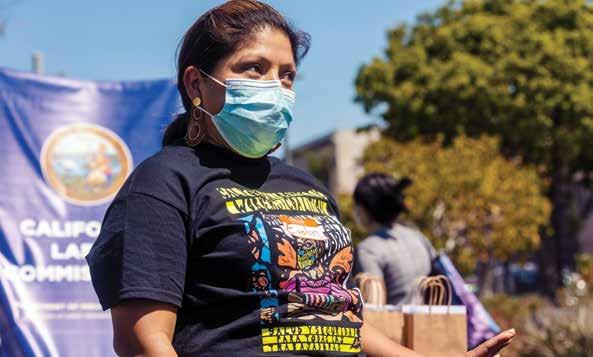
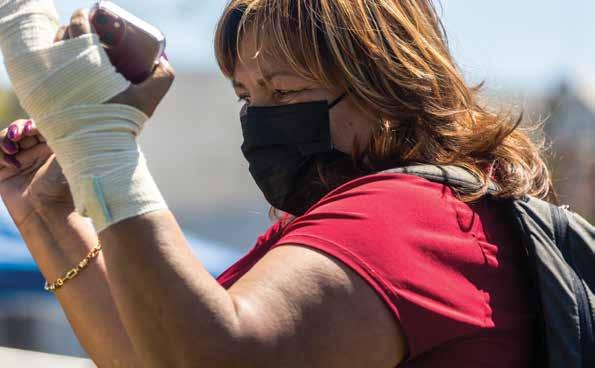
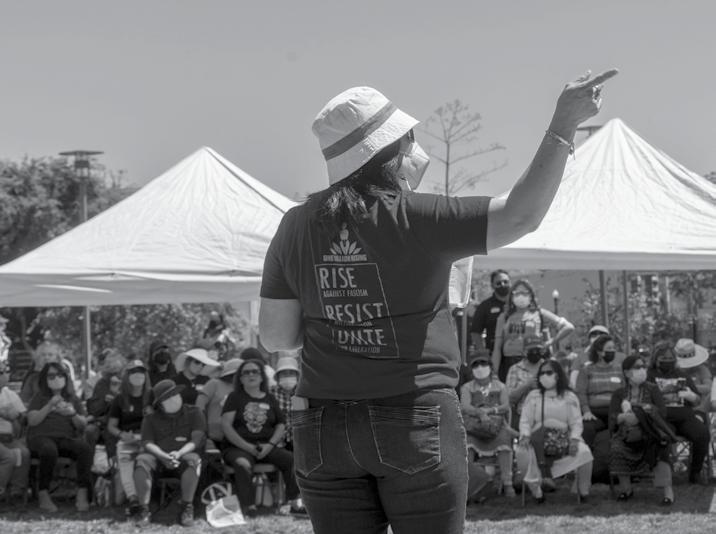
(Arriba) Guillermina Castellanos, co directora de La Colectiva de Mujeres e integrante de CDWC se dirige a los asistentes al festival Verano de Dignidad. Aunque ya no es una trabajadora doméstica, su brazo izquierdo vendado recuerda el trabajo intenso que realizan las trabajadoras domésticas y las lesiones que pueden sufrir. (Above) Gui llermina Castellanos, co-director of La Colectiva de Mujeres and member of CDWC at the Verano de Dignidad festival. She raises her arms as she speaks to attendees at the festival. Although she no longer is a domestic worker her bandaged left arm reminds us of the labor intensive job that domestic workers go through and the injuries that they can sustain. (Abajo) Evelin Alfaro, trabajadora doméstica y miembro de Mujeres Unidas y Activas, junto a la mesa del Comisio nado Laboral de California durante el festival Verano de Dignidad. Ha sido trabajadora del hogar durante aproxi madamente 12 años, pero ahora también trabaja con Mujeres Unidas y Activas apoyando a otras trabajadoras del hogar. (Below) Evelin Alfaro, domestic worker and member of Mujeres Unidas y Activas, stands near the California Labor Commissioner’s table at the Verano de Dignidad festival. She has been a domestic worker for about 12 years but is now also working with Mujeres Unidas y Activas to spread awareness and support to other fellow domestic workers.
to receive what, by law, workers in other fields have been receiving for years. El Tecolote reached out to the San Francisco Office of Labor Stan dards Enforcement (OLSE) asking how many domestic workers have accessed paid sick leave since the ordinance went into effect, but OLSE didn’t respond as of press time.
WORKING TOGETHER
District 9 Supervisor, Hillary Ronen, along with the California Domestic Workers Coalition (CDWC) first in troduced the legislation to the San Francisco Board of Supervisors on Oct. 26, 2021. California labor law states that employees are entitled to paid sick leave, which comes out to one hour paid sick leave per 30 hours of work.
The OEWD is working closely with community members from orga
nizations such as the CDWC, La Col ectiva de Mujeres and Mujeres Uni das Y Activas. To better understand the wants and needs of the domestic workers who will become the users of the developing platform, the OEWD has been holding meetings to discuss such topics.
In these meetings, workers voice their opinions and concerns about accessibility and usability of the technology, language barriers and the information that they may be re quired to give to sign onto the plat form. Pagán stated that the platform is believed to be coming in the form of a portable app, but she also add ed that it may change depending on what occurs in the meetings. The app will be available in the relevant lan guages, according to Santiago Lerma, Ronen’s legislative aide.
Alfaro ha trabajado como empleada doméstica en San Francisco durante unos 12 años, manteniendo a su familia con un trabajo que requiere mucho es fuerzo físico.
Pero cuando enfermó, se encon tró en la misma situación que otras trabajadoras domésticas: tener poco o ningún acceso al permiso por enfer medad. Alfaro acabó siendo despedi da por faltar al trabajo y ese día tuvo que ir al médico sin cobrar.
En un hecho histórico, San Fran cisco aprobó el 14 de diciembre de 2021 la primera ley de este tipo que les concede remuneración por enfer medad. Sin embargo, a medida que se acerca el primer año de su apro bación, sigue habiendo dudas sobre cómo se aplicará.
La herramienta central que los funcionarios de la ciudad y los tra bajadores domésticos esperan que ayude a facilitar ejercer esta ley es una aplicación que lleve la cuenta de las horas trabajadas, las licencias por enfermedad pagadas y los fondos. El desarrollo de la aplicación se encuen tra actualmente en su segunda fase, según los funcionarios municipales y los miembros de los grupos de tra bajadoras domésticas, y aún no se ha implementado entre las trabajadoras.
“Estamos haciendo algo muy no vedoso, esperamos poder crear una tecnología que sea accesible, pero también utilizable”, dijo Lisa Pagán, directora de iniciativas estratégicas de la Oficina de Desarrollo Económi co y Laboral (OEWD).
El 14 de diciembre de 2023 se cumplirán dos años desde que entró en vigor la ley de permiso por enfer
FREE//GRATUITO PUBLISHED BY ACCIÓN LATINA October 6-19, 2022Vol. 52 No. 20
Photos: Jeremy Word
EN
Lorena Garibay El Tecolote
“We would definitely want to work with other ethnic and cultural media to share this information because nobody knows this ex ists or that it’s in the planning phase.”
- Lisa Pagán, OEWD strategic initiatives director
See SICK LEAVE, page 8 Vea APLICACIÓN, página 9
BRAZILIANS TO VOTE IN RUNOFF BETWEEN FAR RIGHT LEADERSHIP AND PROGESSIVE CHANGE
VOTARÃO NUM SEGUNDO TURNO ENTRE A EXTREMA DIREITA E MUDANÇAS PROGRESSISTAS
El Tecolote
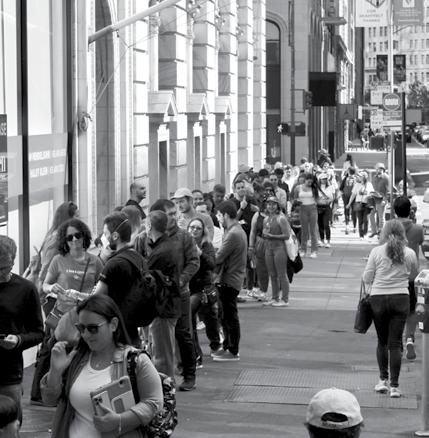
This past Sunday, October 2, the line at the Brazilian Consulate in San Francisco to vote in the presidential election wrapped around four city blocks. Lula—the beloved former Workers Party President—re ceived 48.4 percent of the vote, just shy of the 50 percent needed to secu re a victory in the first round.
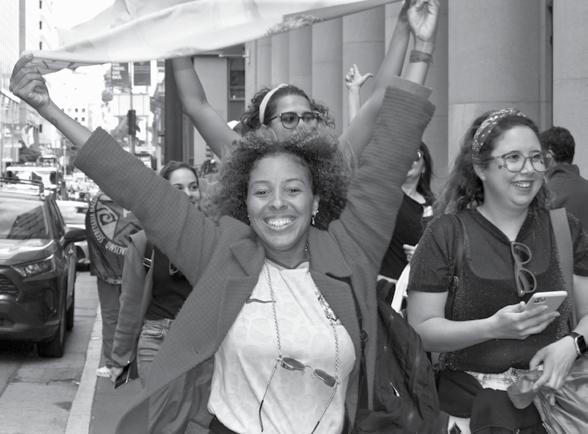
Jair Bolsonaro, the current far-ri ght president—who is openly an ti-Black, anti-Indigenous, anti-LGB TQ+, and pro-dictatorship—came in second, with 43.2 percent. On October 30, voters will return to the Consulate for a runoff election be tween Lula and Bolsonaro that will determine the future of Brazil—from worker’s rights to affirmative action policies to the Amazon forest. El Te colote spoke with voters about what is at stake in this election, and the need for solidarity.
El Tecolote
MARA CAVALLARO
No
último domingo, dia 2 de outubro, a fila de brasilei ros esperando para votar nas eleições presidenciais dava voltas a quatro quarteirões próximo ao Con sulado Brasileiro no centro de São Francisco. Lula—o amado ex-presi dente e líder do Partido dos Traba lhadores (PT)—recebeu 48,4% dos votos, 1,6% a menos do que os 50% necessários para garantir uma vitória no primeiro turno.
Jair Bolsonaro, o atual presidente da ultra-direita—que é abertamente contra populações negras, indígenas, LGBTQ+ e a favor de ditaduras—ga rantiu o segundo lugar com 43.2% dos votos. No dia 30 de outubro, os eleitores retornam ao Consulado para um segundo turno entre Lula e Bol sonaro que irá determinar o futuro do Brasil—dos direitos trabalhistas a po líticas de ação afirmativa a proteção da Amazônia. El Tecolote falou com alguns eleitores sobre o que está em jogo nessas eleições e a necessidade de solidariedade.
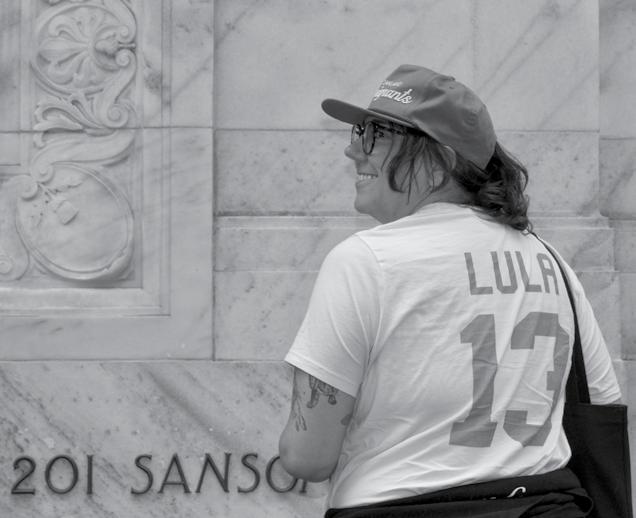
Guadalupe, 39, of Emeryville, debated what to wear to vote, since Bolsonaro and his far-right supporters have co-opted the flag’s yellow, green, and blue. “Do I go with my red [the color of the PT, and Lula] or do I go with something that will recover what we lost in these last four years? Green and yellow are not just theirs. We have to reclaim what we find precious, we have to recover what we’re losing in the Amazon, respect for women… All of that led to the symbolic choice [to wear] this shirt—that is yellow and green but also Lula—and to have Brazil on my chest, because that’s how we’re going to win. We have to fight…for what we love.” Of her hat, she says, “I’m proud to be an immigrant.” Guadalupe, 39, de Emeryville, se debateu sobre o que usar para votar uma vez que Bolsonaro e seus apoiadores da ultra-direita cooptaram as cores da bandeira brasileira para uso político. “Hoje eu tava pensando, eu vou com minha vermelha, ou vou com uma que a gente tem que recuperar—que a gente perdeu nesses últimos 4 anos? O verde e amarelo não é só deles. A gente tem que recuperar o que a gente acha de precioso; a gente tem que recuperar o que a gente tá perdendo de Amazônia, do respeito pelas mulheres. Tudo isso foi um simbolismo de escolher uma camisa hoje, amarelo e verde, e ser do Lula, e ter Brasil no peito, por que assim que a gente vai vencer. A gente tem que lutar para… o que a gente ama.” Do seu boné, ela disse, “Eu tenho orgulho de ser imigrante.”
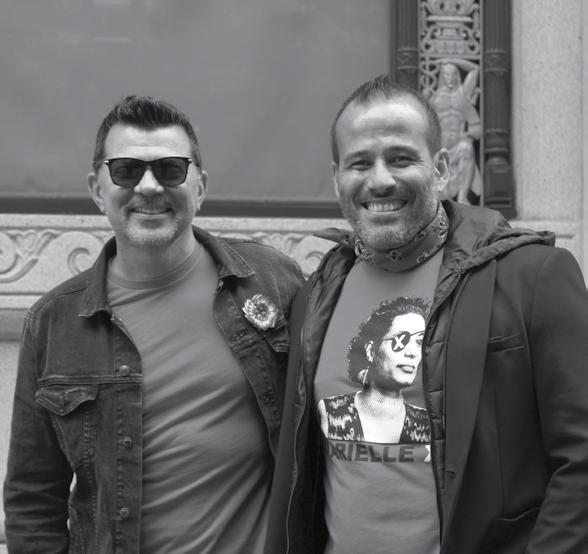
Lalo, 56, and Zé, 50, have been ma rried 27 years. For 25 of those years, they’ve lived together in San Francis co’s Castro District. Both wear red, the color of the PT (Workers Party/ Lula), and Zé (right) wears a shirt in memory of Marielle Franco, a Bra zilian feminist, socialist, bisexual Black woman city councilor who was assassinated in 2018. Lalo, 56, e Zé, 50, estão casados há 27 anos. Duran te 25 desses anos, eles viveram juntos no Distrito Castro em São Francisco. Ambos usam vermelho, a cor do PT, e Zé (à direita) veste uma camiseta em homenagem a Marielle Franco, femi nista, socialista, bisexual, negra e ve readora assassinada no RJ em 2018.
Marina
Adele, 40, of Alameda, says this election might be the most important one since Brazil’s return to democracy in 1985 after decades of violent dictatorship. Bolsonaro has repeatedly expressed support for that dictatorship, praising the general who tortured former president Dilma Rousseff and threatening a coup should he not win this election.
Adele, 40, de Alameda disse que esta eleição talvez seja a mais importante desde que o Brasil voltou a ser uma democracia em 1985, depois de décadas de uma
Amanda Valéria, 25, de San Rafael, saltita descendo a Rua Montgomery com uma faixa do Lula. Como Gua dalupe, hoje ela ressignifica a cami sa da seleção. Amanda Valéria, 25, of San Rafael, skips down Montgomery Street with a banner of Lula. Like Gua dalupe, today she reclaims the Brazi lian jersey.
WWW.ELTECOLOTE.ORG
Mara Cavallaro
2 El Tecolote INTERNATIONAL POLITICS • POLÍTICA INTERNACIONAIS October 6-19, 2022
Mara Cavallaro
BRASILEIROS
Testimonies/Testemunhos“ ”
Gabriel, 24, and Danillo, 29, live in Walnut Creek and San Francisco, respectively. Their ”Ele Não” (“Not Him”) shirts, written in the rainbow of the LGBTQ+ flag—protest Jair Bolsonaro’s homophobia and transphobia.
Gabriel, 24, e Danillo, 29, de Walnut Creek e São Francisco, respectivamente, traziam na camiseta “Ele Não” nas cores do arcoíris da bandeira LGBTQ+—um protesto contra a homofobia e transfobia de Jair Bolsonaro.
ditadura violenta. Bolsonaro expressou várias vezes seu apoio à essa ditadura, elogiando o general que torturou a ex-presidente Dilma Rousseff e ameaçando golpe se ele não ganhar a eleição.
, 26, Kaio, 31, and Marina, 39, are grad students at the University of California Santa Cruz. Of her green bandana—the symbol of the abortion rights movement that emerged in Argentina— Marina (39) says, “It’s a fight that is part of Brazil…and one of the topics that we want to include in the agenda: legalizing
abortion.” Marina
(26), is voting for “the
Black,
quilombola, and Indigenous populations that Bolsonaro simply hates.” Marina, 26, Kaio, 31, e Marina, 39, são estudantes de pós-graduação na Universidade da California Santa Cruz. Com o lenço verde—símbolo do movimento pelo direito ao aborto que se originou na Argentina—Marina (39)
diz, “E uma luta que faz parte do Brasil e é uma pauta que, de certa forma, é pouco abordada mais é muito importante, e eu acho que é uma das pautas que a gente quer colocar na agenda, legalizar o aborto.” Marina (26) disse votar pelas “populações negras, quilombolas, [e] indígenas, que o Bolsonaro simplesmente odeia.”
Emmanuel, 20, and Ana Julia, 19 of San Jose voted for the first time in this election. “It’s an important moment for the nation’s history,” Emmanuel said. They voted Lula “for democracy.” Emmanuel, 20, e Ana Júlia, 19, de San José votaram pela primeira vez nessa eleição. “É um momento importante pra história da nação,” disse Emmanuel. Ambos votaram Lula “pra democracia.”
FEELING FABULOSO: HOW THE WORK OF QUEER ARTIST ALEXANDER HERNANDEZ EMBRACES BODY POSITIVITY
SER FABULOSO: LA OBRA DEL ARTISTA QUEER ALEXANDER HERNANDEZ QUE ACOGE LA POSITIVIDAD CORPORAL
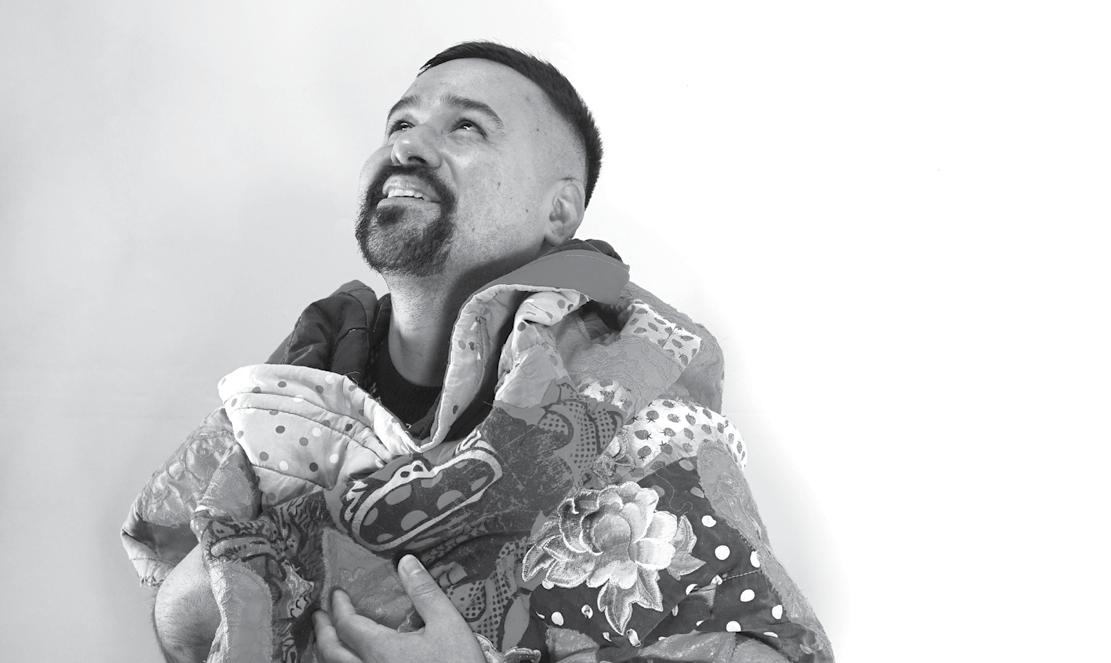
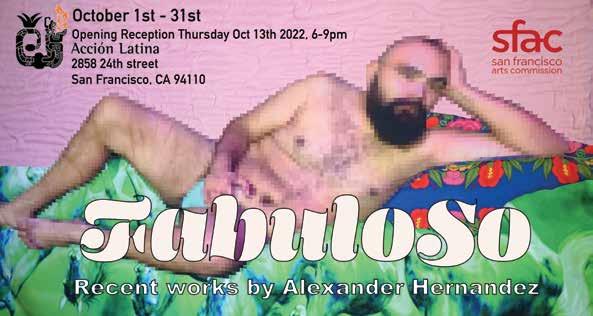
After two years of Acción Latina’s Juan R. Fuentes Gallery being closed due to COVID-19, we are happy to be show casing mixed-media textile artist, Alex ander Hernandez. Born in Huajuapan de Leon, Oaxaca-Mexico and current ly living in San Francisco, Hernandez has created various works of soft-form art and layer quilted textiles to discuss the experiences of those othered, iso lated, and excluded. Hernandez draws from personal experience of being a queer immigrant living with HIV to inspire their art and has curated var ious exhibits throughout the Bay Area. Their latest body of work, “Fabulo so,” features photographs of different “queer men who embrace their hair, husky and bigger builds,” printed on fabric. Their hope with the exhibit is to promote body positivity and dismantle unrealistic body expectations. The ex hibition runs from Oct. 1 - Oct. 31, and the reception will be held on Oct. 13 from 6-9pm at 2958 24th Street, San Francisco, CA.
What is it about art that you are so passionate about and how do you express yourself through art?
Just like materials. I use a lot of textiles. I use patchwork because it’s the only way that I can really talk about my identity.
You know, being a first-generation Mexi can-American, I never felt like I belonged here or there. Using visual language is a way for me to talk about that. I use Mexican and Americana patterns and that kind of talks about what it is to be in between two worlds and also kind of being nomadic and also about my queer identity and all these other identities that I didn’t have.
In art, you want the audience or in this case the observer to feel some emotion or connect with you. What is that for you?
Like I said I like to use patterns that are very meaningful but I also feel they’re some cultural patterns.
For example, the patterns you see in embroi deries or you see in serapes, so I use a lot of those patterns. But then I also use pop cultural patterns, like Looney Tunes, things that are very impactful in the Latin community and how pop culture forms our identity as well.
In this particular case what is the theme?
The show is called “Fabuloso.” I‘ve done work about my HIV identity, my queer identity and then something that I haven’t really talked about is being a chubby Latino, about body positivi ty and how there’re these kind of these tropes about skinny Latino twink lovers. So I wanted to emphasize other types of bodies, specifically bearish like sick chubby. Things you don’t really hear about in the gay normative kind of world.
In the gay men’s world, people really idolize muscles and slim so I wanted to talk about reg ular bodies. Growing up, you know seeing these bodies on [television] I didn’t see my body and I didn’t know there was a world of gay guys that liked each other. So I wanted to touch on [these issues].
Is there a particular piece that you’re most proud of in this showcase?
Well I’m a libra so I’m indecisive. I like all of them for different reasons.
Can you describe the art?
I was informed by gay dating apps and how we like to portray ourselves online. So a cou ple years ago I did a project where I collected a lot of these images that people were sending me and I wanted to use them in work but I didn’t want to show or out people so I pixilated them. You saw the image but you couldn’t really tell who it was.
A lot of my work is quilting and patchwork and so I’m printing them on fabric and then sew ing on top of them. There is a mixture between technology, handmade, quilting and sewing and I also use trim that’s very reminiscent of Latino homes, decorative and vibrant colors. I also cre ated my own San Marcos blanket pattern.
So there’s something kind of familiar but kind of new at the same time and there’s also some pom-pom trim around it that’s very Lat in, very cha-cha and I’m referencing all that as well.
What would you like to tell young aspiring artists or any advice you would like to give someone with similar passions?
It’s going to be a lot harder than you think. You have to be your own public relations, marketing team. People tend to think you can be talented and make great work but if nobody comes and sees it or buys it then it doesn’t really do any thing.
You have to put yourself out there. You have to put yourself in uncomfortable positions and sell yourself so you have to be prepared for that because you can’t just make work and hope that people will come and see it no matter how great
Después de dos años del cierre de la Galería Juan R. Fuentes de Acción La tina por la COVID-19, nos complace presentar al artista textil, Alexander Hernández. Nacido en Huajuapan de León, Oaxaca, México, actualmente residente en San Francisco, ha creado varias obras de arte en formato blan do y textiles acolchados, para discutir las experiencias de aquellos que son discriminados, aislados o excluidos. Hernández se basa en la experiencia personal como inmigrante queer que vive con el VIH para inspirar su arte y ha estado a cargo de la curaduría de varias exhibiciones en el área de la bahía. Su más reciente trabajo, “Fa buloso”, presenta fotografías impre sas en tela sobre los diferentes “hom bres queer que acogen su cabello y complexiones voluminosas”. Espera a través de la exhibición promover la positividad corporal y desmantelar las expectativas corporales irreales. La exhibición estará abierta del 1 al 31 de octubre, y su inauguración será el 13 de octubre a partir de las 6:00 de la tarde en el 2958 de la calle 24, en San Francisco.
Qué
es lo que te apasiona tanto del arte y cómo te expresas a través de ella?
Los materiales: uso muchos textiles. Recurro al patchwork porque es la única forma en que pue do hablar realmente sobre mi identidad.
Sabes, siendo un mexicano estadounidense de primera generación, nunca sentí pertenecer aquí o allá. Usar lenguaje visual es mi mane ra de hablar de eso. Uso patrones mexicanos y estadounidenses y eso habla de lo que es estar entre dos mundos y también sobre ser nómada y sobre mi identidad queer y todas estas otras identidades que no tenía.
En el arte, quieres que la audiencia o, en este caso, el observador sienta alguna emoción o se conecte contigo. ¿Qué es eso para ti? Como dije, me gusta usar patrones que son muy significativos, pero también siento que son al gunos patrones culturales.
Por ejemplo, los que ves en los bordados o en los sarapes, entonces uso muchos de esos pa trones. Pero luego uso patrones culturales pop,
El artista textil de formato mixto Alexander Her nandez estará mostrando su último trabajo “Fa buloso” en la Galería Juan R. Fuentes de Acción Latina. La recepción inaugural se llevará a cabo el 13 de octubre de 6 a 9 p.m., en el 2958 de la calle 24th en San Francisco, CA. Mixed-media textile artist Alexander Hernandez will be showca sing their latest body of work titled, “Fabuloso” at Acción Latina’s Juan R. Fuentes Gallery throu ghout the month of October. It’s opening reception will take place on Oct. 13 from 6-9 pm at 2958 24th Street, San Francisco, CA. Courtesy Photo: Mark Jude Rywelski
como los Looney Tunes, cosas que tienen un gran impacto en la comunidad latina y que, al igual que la cultura pop, también moldea nues tra identidad.
En este caso particular ¿cuál es el tema? El trabajo se titula “Fabuloso”. He trabajado so bre mi identidad con VIH, mi identidad queer y luego algo de lo que realmente no he hablado es ser un latino gordito; sobre la positividad cor poral y cómo existen este tipo de tropos sobre los amantes de los jóvenes latinos delgados. Así que quise enfatizar otro tipo de cuerpos, es pecíficamente osos gorditos. Cosas de las que realmente no escuchas en el mundo común gay.
En el mundo de los hombres homosexua les, la gente realmente idolatra los músculos y lo esbelto, así que quería hablar sobre cuerpos regulares. Mientras crecía, al ver estos cuerpos en [televisión] no veía mi cuerpo y no sabía que había un mundo de hombres homosexuales que se gustaban entre sí. Así que quería tocar [estos temas].
¿Hay alguna pieza en particular de la que es tés más orgulloso en este trabajo? Bueno, soy libra, así que estoy indeciso. Me gustan todos por diferentes razones.
¿Puedes describir el arte?
Me enfoqué en las aplicaciones de citas gay y de cómo nos gusta presentarnos a través de ellas. Entonces, hace un par de años, hice un proyecto en el que recopilé muchas de estas imágenes que la gente me enviaba y deseaba usarlas, pero no quería mostrar a las personas, así que las pixelé. Se ve la imagen pero real mente no se puede saber quién es.
Gran parte de mi trabajo es el acolchado y el patchwork, por lo que los imprimo en tela y luego coso encima de ellas. Hay una mezcla en tre tecnología, lo hecho a mano, el acolchado, la costura y también uso ribetes que recuerdan mucho a las casas latinas, su decoración y con colores llamativos. También creé mi propio pa trón de manta San Marcos.
Así que hay algo un poco familiar pero un nuevo a la vez, y también un adorno de pompo nes alrededor, muy latino, muy cha-cha y tam bién me refiero a todo eso.
¿Qué te gustaría decirles a los jóvenes aspi rantes a artistas, algún consejo que te gusta ría dar a alguien con pasiones similares? Va a ser mucho más difícil de lo que piensas. Tienes que ser tu propio equipo de marketing y relaciones públicas. La gente tiende a pensar que puedes tener talento y hacer un gran traba jo, pero si nadie viene y lo ve o lo compra, en tonces realmente no sirve de nada.
WWW.ELTECOLOTE.ORG Q&A • ENTREVISTAOctubre 6-19, 2022 tEl Tecolote 3
Royvi Hernandez El Tecolote
Royvi Hernandez
El Tecolote
See BODY POSITIVITY, page 7 Vea FABULOSO, página 7
GROWING FLOWERS OUT OF SORROWS
2958 24th Street
San Francisco, CA 94110
Tel: (415) 648-1045
www.eltecolote.org
Member SF Neighborhood Newspaper Association
Editor-in-Chief
Alexis Terrazas
Managing Editor
Kari Vídes
Spanish Copy Editor
Katie Beas
Web/Social Media Manager
Danny Acosta
Audio/Video Editor
Monti Rossetti
Layout Design
Christian Urrutia
Writers
Carlos Barón; Mara Cavallaro; Lorena Garibay; Royvi Hernandez
Photographers
Mara Cavallaro; Abraham Fuentes; Jeremy Word
Illustrator

Bruno Ferreira
Translators
Katie Beas; Daniel de la Torre; Nadejda Marques; Francisco Uribe; Antonio Valencia Advertising Manager
Chiara Di Martino
Chiara@accionlatina.org
Distribution
Johnny García
Photo Archivist Linda Wilson
*Ads published in El Tecolote do not necessarily reflect the views of the newspaper’s staff, volunteers, or its publisher
Acción Latina.
That unlucky tree was born from a crack in the rock.
Instead of feeling sorry for itself, it grew flowers from its sorrows!
- “El aromo”. Song by Atahualpa Yupanqui, Argentinian folklorist

Theseweeks, the Chilean mu sician and writer Fernando (“Feña”) Andrés Torres, is ha ving a wonderful time. A few days ago, his daughter Valentina made him the grandfather of a healthy baby boy. Then, this week, on Oct. 7, La Peña Cultural Center, the venerable Berkeley icon for a progressive mix of Art and Politics, is hosting a recep tion for his first book.
The book is titled, “Walks Through Memories of Oblivion.” An ex-political prisoner’s short stories, essays and other flashbacks about re sistance, prison and exile. Beginning with the title, one might imagine that the book is a bit of a downer. Words such as exile, oblivion and political prison might cause one to think that way.
It is much more than that. It is tender, funny, poetic, and inspiration al work. A deeply moving account of the year spent in jail by a politically aware Chilean teenager.
In his Author’s notes, Torres writes: “But the stories written here are personal; the flesh and bones be hind the young militant that I once was. They are accounts from notes kept in the most unreachable corners of my memory. Some of them are tragicomic, which is emblematic of the typical Chilean response to cop ing by plucking a laugh out of any situation, no matter how tragic.”
Thus, the book is a mix of Feña’s personal experiences of events lived by other prisoners, shared while im prisoned and served to forge ties. Ties that would last a lifetime. Torres
also shares some original segments that can be considered poetic prose. Dreams or adventures that took place before the military coup of Sept. 11, 1973, as well as later encounters, that occurred when he arrived as a politi cal exile in the USA. First to Boston in 1977, then to New York, and even tually, a definitive landing in the SF Bay Area in 1979.
Feña was 18 years old when he was incarcerated by the Pinochet sol diers. He was the youngest among the entire prisoner population. A popula tion comprised of both political and “common criminals.” I believe, ac
cording to personal experience, that the distinction is a way to classify the prisoners according to their perceived level of danger. Danger to the jailers that is.
I remember learning this in my brief period spent in a Chilean jail in 1973. The “common prisoners,” or “comunes” in Spanish, shared the very crowded space with the rest of us, the political prisoners, “Los Po liticos.”
The common prisoners were thieves, drug pushers, and partici
See WRITER, page 7
CULTIVANDO FLORES DE LAS PENAS
Acción Latina Executive Director Fátima Ramírez
El Tecolote Founder Juan Gonzales
Acción Latina Board of Directors
Katynka Martinez; Scott Weaver; Ana Montes; Juan Gonzales; David J. de la Torre; Brooke Oliver; Dennis Jaramillo
El Tecolote uses 40% postconsumer recycled paper, soybased ink and is printed by Fricke-Parks Press. Accionlatina.org
El Tecolote is published by Acción Latina, a San Francisco non-profit organization. The mission of Acción Latina is to promote cultural arts, community media, and civic engagement as a way of building healthy and empowered Latino communities. Please, send us your feedback: editor@eltecolote.org
Facebook: El TecoloteSF
Twitter: @eltecolotesf
Instagram: @eltecolotesf
Carlos Barón El Tecolote
En ese rajón, el árbol nació por su mala estrella. Y en vez de morirse triste se hace flores de sus penas. Estrofa de “El aromo”, del folklorista argentino Atahualpa Yupanqui
cribe: “Pero las historias aquí escritas son personales; carne y hueso del jo ven militante que una vez fuí. Recuer dos sacados de notas guardadas en los más profundos recovecos de mi me moria. Algunos de ellos tragicómicos, algo emblemático de la típica manera chilena de enfrentar la adversidad con una risa, sea cual sea la situación, aún la más trágica”.
escaso con el resto de nosotros, los políticos.
miembros de diversas denomina ciones religiosas.
Estas
son buenas semanas para el escritor y músico Fernando, ‘Feña,’ Andrés Torres. Hace pocos días, su hija Valentina le regaló un sano nietecito, luego este 7 de oc tubre, el Centro Cultural La Peña de Berkeley, el venerable e icónico lugar de eventos progresistas artísticos y políticos, abre sus puertas para lanzar el primer libro de Torres.
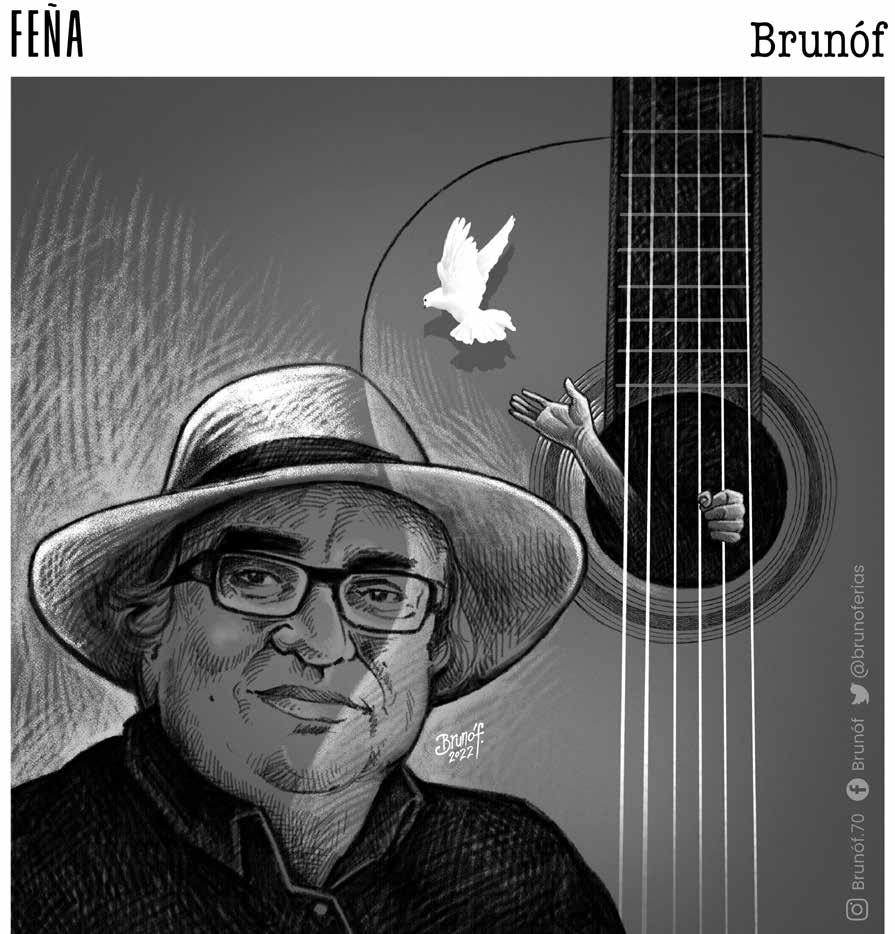
Titulado Caminatas por los recu erdos del olvido, contiene “historias, ensayos y memorias de resistencia, prisión y exilio de un ex prisionero político”. A primera vista, se podría imaginar que el libro es deprimente, lo sugieren las palabras exilio, olvido y prisionero político. Sin embargo, sería un error clasificarlo así. Es mucho más. Es tierno, divertido, poético e inspirador. Un conmovedor recuen to del año que pasó un adolescente chileno concientizado políticamente en las cárceles del dictador Augusto Pinochet.
En sus notas del autor, Torres es
El libro es una mezcla de sus experiencias y de cosas sucedidas a otros prisioneros. Sucesos compar tidos en prisión y que sirvieron para crear lazos para toda la vida. Torres también narra hechos en un estilo de prosa poética. Sueños o aventuras que pasaron antes del golpe militar del 11 de septiembre de 1973, además de hechos posteriores, sucedidos a su llegada a los EEUU como exiliado político. Primero en Boston (1977), luego en Nueva York y, finalmente, al instalarse definitivamente en el área de la bahía de San Francisco (1979).
Fernando tenía 18 años de edad cuando cayó prisionero de los esbir ros de Pinochet. Era el más joven de toda la población penal, población compuesta por presos políticos y reos comunes. Creo, según experiencia, que la distinción era una manera de clasificar a los prisioneros según su posible nivel de peligrosidad, posible peligrosidad para los carceleros. Lo aprendí en el corto período de mi propio encarcelamiento en una cár cel chilena, en 1973. Los prisioneros comunes compartían un espacio muy
Los comunes eran ladrones, usu arios o vendedores de drogas, asal tantes (cogoteros), una gran variedad de actividades criminales. Carecían de educación básica y acostumbraban a vivir en la ilegalidad. Los políti cos eran distintos, considerados más peligrosos que los anteriores. Peligro sos para los carceleros, pues tenían otras aspiraciones, motivados por ideas que la mayor parte de los carcel eros no entendían ni compartían. Además, eran tildados (una tendencia mundial) de “comunistas peligrosos”.
En prisión, primero en la Cárcel Pública de Antofagasta y después en la prisión Tres álamos, en Santiago, la capital de Chile, Fernando Torres tuvo buenas experiencias con algunos co munes. Sin embargo, sus principales y más valiosas vivencias ocurrieron con los prisioneros políticos. Con ellos, logró crear un gran sentido de soli daridad y comunidad. Eso les ayudó a enfrentar y sobrellevar su penosa situación.
Le pregunté a Feña Torres por qué había escrito el libro en inglés, a lo que respondió: “Tenía una deuda con los gringos. Aquí, importa decir que “gringo” no es necesariamente un in sulto. De hecho, Fernando se refiere a activistas y trabajadores de Amnistía Internacional, o norteamericanos de NICH (No Intervención en Chile), a gente con quien compartió muchos años en el Centro Cultural La Peña, incluso puede referirse a importantes
Hubo muchos excelentes gringos y gringas que le ayudaron a encon trar buen refugio en este país. Es por eso que les agradece en inglés con su obra. Orgulloso, continúa explican do: “Una versión en español se está preparando en Chile, en mi ciudad de origen, Antofagasta. Algunos jóvenes leyeron el libro y pensaron que era importante escribir la versión al es pañol. Iré a Chile a finales de este año o a principios de 2023. Presentaré el libro en diversas ciudades, incluyendo a Santiago”.
Terminando nuestra conversación, estuvimos de acuerdo en algo impor tantísimo: para la salud mental in dividual y colectiva de gente que ha pasado por eventos traumatizantes, como el golpe militar de 1973 en Chile, deben sacar sus historias al aire, escribirlas o conversarlas.
No todo lo que le sucedió a Fer nando Torres fue negativo. En prisión, aprendió el verdadero significado de la palabra solidaridad. También ahí escribió sus primeros poemas, con struyó su primer instrumento musical e hizo amistad con gente que le ha inspirado toda la vida. De la prisión salió convertido en un ser humano mejor definido. Un músico, un escri tor, un activista cultural de por vida.
Como el árbol de “El aromo”, de Atahualpa Yupanqui, Fernando Torres se hizo flores de sus penas.
WWW.ELTECOLOTE.ORG THE DEVIL’S ADVOCATE • EL ABOGADO DEL DIABLO4 El Tecolote October 6-19, 2022
Follow us!
Carlos Barón
El Tecolote
Illustration: Bruno Ferreira
NEVER FORGET: A NEW GENERATION OF ACTIVISTS IS CONFRONTING THE MARCOS DYNASTY
Anakbayan-USA
“He was the best public speaker,” my mother remembered fondly.
It was not the response I had been hoping for when I asked how it was living under Ferdinand Marcos’ martial law. I was in my third year of college, enrolled in a class studying Philippine history and its connections with the Filipino diaspora. I had also recently joined Anakbayan-USA, an overseas chapter of a grassroots youth organization whose origins take root in the long history of an ti-fascist struggle in the Philippines.
Needless to say, after the gruesome details I learned about the Marcos dictatorship from these spaces, Mar cos’ eloquence was not the first thing that came to mind when thinking about his more than 20-year reign.
In hindsight, my mother may have had a point. The Marcoses have excelled in public speaking. But the goal of their rhetoric since returning to the Philippines in 1991 has been to distort facts and revise history. The narratives that have saturated public consciousness are not of the tens of thousands of people extrajudicially killed, arrested, and tortured under martial law, but rather, the so-called “golden years” under the Marcos family. The stories emphasize the roads and infrastructure built but ignore the plundering of billions of taxpayer dollars from the national treasury that were supposed to pay for it. They herald the new Marcos as a leader who will spread hope and unity throughout the country, but overlook the family’s culpability in further dividing the country between the rich and the poor.
Ferdinand Marcos Jr., the son of the late dictator, claimed the highest seat of power this past May in argu ably one of the dirtiest elections in Philippine history. Already, we see the dangerous continuity between the administrations of father and son.
Under the guise of a “Unity Budget,” Marcos Jr. plans to continue prioritiz ing funds for debt servicing, counter insurgency, and the financial gain of the few. This amounts to staggering figures of over 11 percent of the na tional budget going toward debt pay ment, P28.9 billion for the National Task Force to End Local Communist Armed Conflict — an agency notori ous for red-tagging even former Vice
President Leni Robredo — and over P621 billion in easily-corruptible presidential “pork barrel” funds. And while Marcos Jr. has not declared martial law, political repression re mains a staple for the new administra tion, with over 800 political prisoners currently behind bars; the disappear ance and arrests of Indigenous activ ists like Steve Tauli and the Pangadas brothers; the rearrest of Adora Faye de Vera, who was originally detained, tortured, and raped under Marcos Sr.’s martial law; as well as Marcos Jr.’s intent to continue former presi dent Rodrigo Duterte’s war on drugs.
My studies in college and with Anakbayan about the Marcos regime now blend with the present day. But on the opposite side of this dark his
tory is the courageous people’s fight that toppled a dictator. This is the truth that we young activists — to gether with our elders — must bring to the fore, especially as the Marcos Jr. administration goes all-out to de fend the martial law years.
Today’s generation of activists is stepping into a pivotal moment in history. We have the responsibil ity to learn the lessons from the de cades-long fight against the Marcos regime and bring them to the current day: the militant street protests of Ka bataang Makabayan and other organi zations in the First Quarter Storm in 1970; the radical vision of the Dili man Commune in 1971; the linking of arms between the youth and the working class exemplified by the La
Tondeña strike in 1975; the unshake able solidarity of Filipino American labor leaders Gene Viernes and Silme Domingo, who were martyred by the Marcos regime in 1981; and, of course, the broad unity forged in the People Power Uprising in 1986.
We are not starting from scratch. When Marcos Jr. was on the cam paign trail, Anakbayan-USA and peo ple’s organizations from across the United States, launched national days of action to protest the return of the Marcos dynasty. We united again un der a manifesto to reject the regime, holding mobilizations in response to his inauguration and first State of the Nation Address. In anticipation of the 50th anniversary of Marcos Sr.’s declaration of martial law and
Marcos Jr.’s visit to New York for the United Nations General Assembly this month, we will once again mount national protests.
We know that more work must be done to strengthen and grow the mass movement against historical revision ism and for genuine democracy in the Philippines. That work begins with our commitment to remembering history and those before us, continu ing the fight, and demanding that the atrocities under the Marcos regime never transpire again. When future generations ask, “how was life under Marcos Jr.?” we will answer with the truth.
NUNCA OLVIDAR: NUEVA GENERACIÓN DE ACTIVISTAS SE ENFRENTA A LA DINASTÍA MARCOS
 Adrian Bonifacio Anakbayan-USA
“Era el mejor demagogo”, mi madre recorda ba con cariño.
No era la respuesta que esperaba cuando pregunté cómo era vivir bajo la ley marcial de Ferdinand Marcos. Estaba en mi tercer año de universidad, inscrito en una clase sobre la his toria de Filipinas y sus conexiones con la diás pora filipina. También me había unido a Anak bayan-USA, una organización extranjera juvenil cuyos orígenes se remontan a la larga historia de la lucha antifascista en Filipinas. No hace falta decir que la elocuencia de Marcos no fue lo pri mero que vino a mi mente después de conocer sobre los espantosos detalles de sus más de 20 años de reinado.
En retrospectiva, mi madre pudo haber te nido un punto. La familia Marcos se ha desta cado por hablar en público. Pero el objetivo de su retórica desde que regresaron a Filipinas en 1991 ha sido distorsionar los hechos y revisar la historia. Las narrativas que han saturado la conciencia pública no son las de las decenas de miles de personas asesinadas, arrestadas y tor turadas extrajudicialmente bajo la ley marcial, sino los llamados ‘años dorados’ bajo la familia Marcos. Las historias enfatizan las carreteras y la infraestructura construida, pero ignoran el saqueo de miles de millones de dólares de los
contribuyentes del tesoro nacional que se supo nía pagarían por ello. Anuncian al nuevo Mar cos como un líder que difundirá la esperanza y la unidad en todo el país, pero pasan por alto la culpabilidad de la familia en dividir aún más a la nación entre ricos y pobres.
Ferdinand Marcos Jr., el hijo del dictador anterior, reclamó el puesto más alto del poder el pasado mayo en, posiblemente, una de las elecciones más sucias en la historia de ese país. Ya vemos la peligrosa continuidad entre las ad ministraciones de padre e hijo. Bajo la aparien cia de un ‘Presupuesto de Unidad’, Marcos Jr. planea continuar priorizando los fondos para el servicio de la deuda, la contrainsurgencia y el enriquecimiento de unos pocos. Esto equivale a cifras asombrosas de más del 11 por ciento del presupuesto nacional destinado al pago de la deuda, 28.9 mil millones de pesos filipinos para el Grupo de Trabajo Nacional para Poner Fin al Conflicto Armado Comunista Local, una agencia conocida por etiquetar en rojo incluso al exvicepresidente Leni Robredo, y más 621 mil millones de pesos filipinos en fondos pre sidenciales para conseguir votos de un sector específico.
Y aunque Marcos Jr. no ha declarado la ley marcial, la represión política sigue siendo un elemento básico de la nueva administración, con más de 800 presos políticos actualmente tras las rejas; la desaparición y detención de activistas indígenas como Steve Tauli y los hermanos
Pangadas; el nuevo arresto de Adora Faye de Vera, quien originalmente fue detenida, tortu rada y violada bajo la ley marcial del antecesor Marcos; así como la intención de Marcos Jr. de continuar la guerra contra las drogas del expre sidente Rodrigo Duterte.
Mis estudios en la universidad y con Anak bayan sobre el régimen de Marcos ahora se mez clan con el presente. Pero al lado opuesto de esta oscura historia está la lucha de un pueblo valien te que derrocó a un dictador. Esta es la verdad que nosotros, los jóvenes activistas, junto con nuestros mayores, debemos sacar a la luz, espe cialmente cuando la actual administración hace todo lo posible para defender los años de la ley marcial.
La generación actual de activistas está en trando en un momento crucial de la historia. Tenemos la responsabilidad de aprender las lec ciones de la lucha de décadas contra el régimen de Marcos y traerlas al presente: las protestas callejeras militantes de Kabataang Makabayan y otras organizaciones en la Tormenta del Pri mer Trimestre en 1970; la visión radical de la Comuna Diliman en 1971; la unión de armas entre la juventud y la clase obrera ejemplificada por la huelga de La Tondeña en 1975; la inque brantable solidaridad de los líderes sindicales filipino-estadounidenses Gene Viernes y Silme Domingo, quienes fueron martirizados por el régimen de Marcos en 1981; y, por supuesto, la amplia unidad forjada en el Levantamiento del
Levantamiento del Poder Popular en 1986.
No estamos empezando desde cero. Cuan do Marcos Jr. estaba en la campaña electoral, Anakbayan-USA y organizaciones populares en los EEUU lanzaron días nacionales de acción para protestar por el regreso de esa dinastía. Nos unimos nuevamente bajo un manifiesto de rechazo al régimen, realizando movilizaciones en respuesta a su toma de posesión y su primer discurso. Anticipándonos al 50 aniversario de la declaración de la ley marcial de su antecesor y la visita de Marcos Jr. a Nueva York para la Asamblea General de las Naciones Unidas este mes, una vez más organizaremos protestas a ni vel nacional.
Sabemos que se debe trabajar más para for talecer y hacer crecer el movimiento de masas contra el revisionismo histórico y por una de mocracia genuina en Filipinas. Ese trabajo co mienza con nuestro compromiso por recordar la historia y a los que nos precedieron, continuar la lucha y exigir que las atrocidades bajo el ré gimen de Marcos no vuelvan a suceder. Cuando las generaciones futuras pregunten, “¿cómo era la vida bajo Marcos Jr.?” responderemos con la verdad.
Adrian Bonifacio es el presidente nacional de Anakbayan en los EEUU. Para participar en las actividades de Conmemoración del 50 ani versario de la Ley Marcial, visite https://www. neveragainneverforget.org/.
WWW.ELTECOLOTE.ORG Octubre 6-19, 2022 El Tecolote 5OPINION • OPINIÓN
Adrian Bonifacio
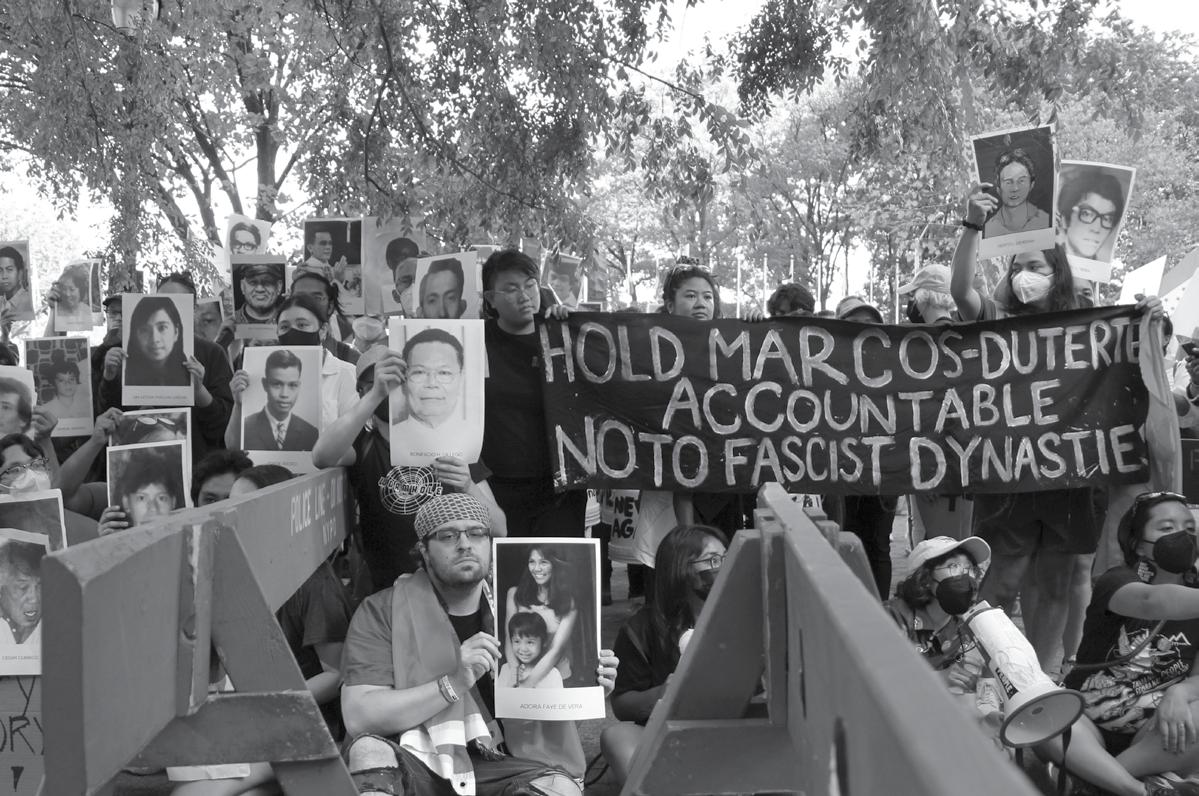
Activistas filipinos y filipino estadounidenses se manifiestan por el revisionismo histórico y los continuos ataques a los derechos humanos bajo Ferdinand ‘Bongbong’ Marcos Jr, quien habló en la Asamblea General de las Naciones Unidas en la ciudad de Nueva York el 20 de septiembre de 2022. Su discurso llega un día previo al quincuagésimo aniversario de la Orden Ejecutiva 1081, la proclamación de la Ley Marcial en Filipinas impuesta por su padre. Filipino and Filipino American activists rally in protest of the historical revisionism and continued attacks on human rights under Ferdinand “Bongbong” Marcos Jr, who spoke at the United Nations General Assembly in New York City on September 20, 2022. His address comes one day before the 50th anniversary of Executive Order 1081, Ferdinand Marcos Sr.’s proclamation of Martial Law in the Philippines. Courtesy: Anakbayan-USA
SACRED WATERS Aguas sagradas
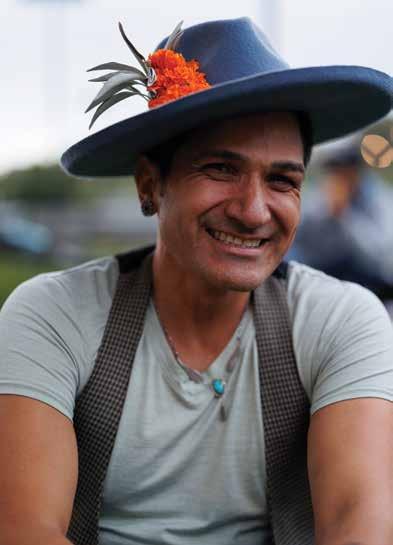
No siempre se llamó Misión Dolores. Antes de la invasión española en 1769, el área que conocemos hoy como San Francisco fue hogar del pueblo Yelamu de los Ramaytush Ohlone. Arroyos y lagunas salpicaban el paisaje pero con las Misiones vino la conversión religiosa forzada, y con ello el genocidio de los pueblos originarios. A medida que crecían los asentamientos, las vías fluviales fueron profanadas y enterradas bajo el hormigón que ahora nos rodea. El 1 de octubre recordamos lo que había aquí antes, con “Sii agua sí”, un festival latinx e indígena organizado por el Festival de Coreógrafos Contemporáneos Latinoamericanos y Dance Mission Theatre, llevado a cabo en el Corredor Mission Creek de la calle 18, ahora conocido como el Distrito Cultural Indioamericano. Las oraciones, las canciones, los discursos, las procesiones y los bailes que se llevaron a cabo fueron para honrar esos reservorios lacustres per didos y conmemorar a los 5,700 antepasados indígenas enterrados en el cementerio de la Misión Dolores.
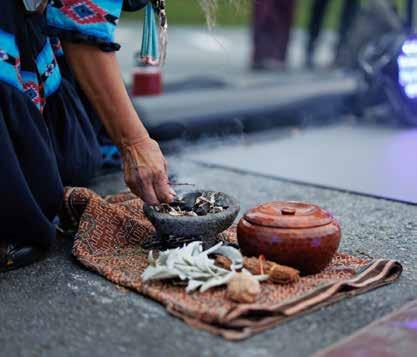
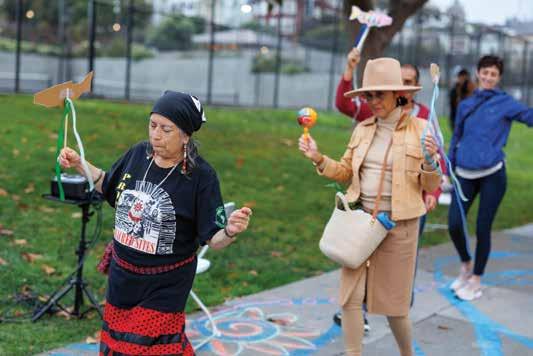
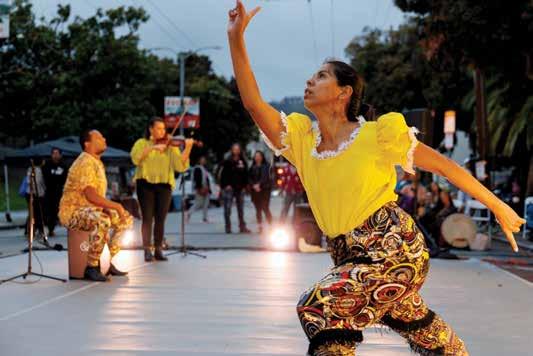
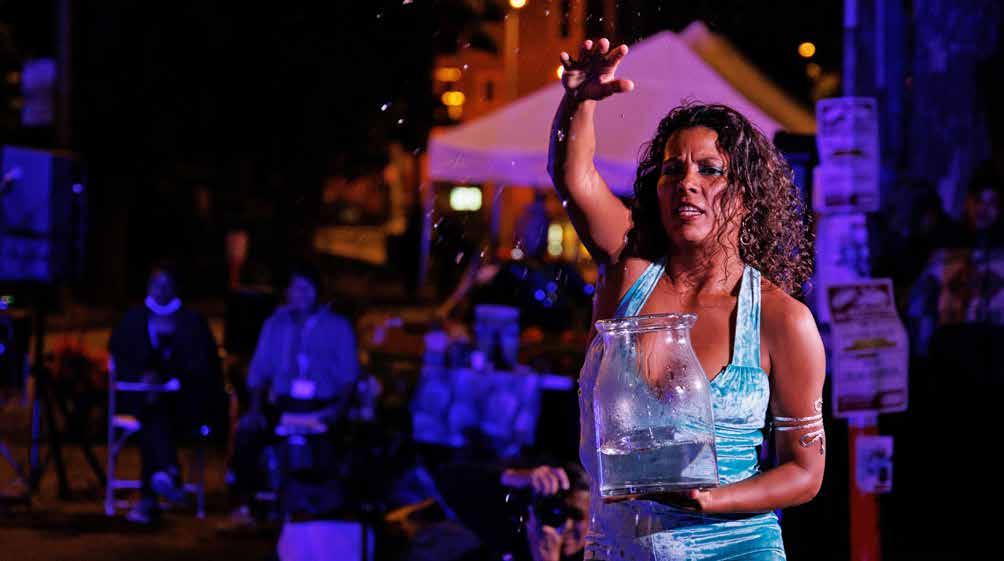
It wasn’t always called the Mission Dolores. Before the Spanish invasion in 1769, the area we know today as San Francisco was home to the Yelamu people of the Ramaytush Ohlone. Creeks and lagoons dotted the landscape back then. But with the Mission System came forced religious conversions, and with that came genocide of the original people’s of this land. As settlements grew, those waterways were desecrated and buried beneath the concrete we see all around us today. But on Oct. 1, we were reminded of what was here before. “Sii agua sí,” a Latinx and Indigenous festival organized by the Festival of Latin American Contemporary Choreographers and Dance Mission Theater, took place on the 18th Street/Mission Creek Corridor, also known as the American Indian Cultural District. The prayers, songs, speeches, waterway processions and dances that took place were all to honor those lost waterways, and memorialize the 5,700 Indigenous ancestors buried in the Mission Dolores cemetery.
WWW.ELTECOLOTE.ORG PHOTO ESSAY • ENSAYO FOTOGRÁFICO6 El Tecolote October 6-19, 2022
ABRAHAM FUENTES
it is. Sometimes it’s hard because you have to realize ‘oh I have to put some of these capitalistic things in here.’
You have to tell yourself ‘who am I making this art for?’ You can make art for yourself but unless you want to put it out in the world you truly have to sell yourself.
What would you say has been your biggest struggle?
I think because I went to art school, I didn’t really realize that I had to build connections and create a network.
I didn’t notice it until it was way too late, that’s something that I had to learn on my own. Being a visual artist is a mixed bag and everybody’s road is different. Some people get recognized right away and [for] some people it may take years before they even get recognized. It’s about how comfortable you are waiting for it to happen.
Have you had this passion for art since you were very young or as you got older?
Yeah, I think I’ve always been visual ly inclined or creative. So when I took a high school art class I fell in love with it and then I couldn’t see myself doing anything else.
It’s also been a way for me to cope with trauma and as I said earlier to express myself. Even if this wasn’t what I was doing in the long run I still would find a way to be creative in any way.
pants in a variety of criminal activi ties. They generally had little educa tion and were accustomed to living on the edge of the law. The “politicos” were considered differently, perhaps more dangerous than the “comunes.”
Dangerous to the jailers because po litical prisoners had motivations that most of the jailers did not dream or care about. “Los Politicos” were bet ter educated and also had been la beled as dangerous communists.
While in prison, first at the Cár cel Pública de Antofagasta, then at the Tres Alamos prison in Santiago, Chile’s capital, Fernando Torres man aged to make contact and have mean ingful and positive encounters with some “comunes.” But his main expe riences occurred among fellow politi cal prisoners. There, a strong sense of solidarity was created, which helped them to face their dire situations.
I asked Fernando why he wrote the book in English. His response: “I had a debt with the “gringos.” It is important to mention that “gringo” is not necessarily a bad term. Torres refers to activists and workers from Amnesty International, or “Norte Americanos” from an organization called NICH (Non-Intervention in Chile), people with whom he shared many years at La Peña Cultural Cen ter, or even some iconic members of various religious denominations.
There were many wonderful grin gos and gringas who helped Fernan do Torres to find refuge in this coun try. That is why he gives thanks to them, in English. He adds, proudly: “A Spanish version is being printed in Chile, in my city of origin, Antofa gasta. Some young people read the book and felt that it was important to write the Spanish version. I am going to Chile, later this year or in early 2023, to present the book in different cities, including in Santiago.”
As we ended our conversation, we agreed that it is very important, for the personal and collective men tal health of those who have gone through some terrible events, like the military coup of 1973 in Chile, to get their stories out. To write them or to tell them to other people.
Not all that happened to Fernan do Torres was negative. In prison, he learned the true meaning of solidari ty, he dared to write his first poems, he made his first musical instrument and became friends with some people who have been an inspiration for his entire journey. He came out a more defined human. A musician, a writer, and a lifelong activist.
Like the Aroma tree from the song “El Aromo”, by Atahualpa Yupanqui, Fernando Torres “made flowers out of his sorrows.”
Tienes que ponerte ahí fuera, ponerte en posiciones incómodas y venderte, así que tienes que estar preparado para eso porque no puedes simplemente hacer el trabajo y esperar que la gente venga y lo vea sin impor tar lo bueno que sea. A veces es difícil porque tienes que darte cuenta ‘oh, tengo que poner algunas de estas cosas capitalistas aquí’.
Tienes que decirte a ti mismo ‘¿para quién estoy haciendo este arte?’
Puedes hacer arte por ti mismo, pero a menos que quieras destacar realmente tienes que venderte a ti mismo.
¿Cuál dirías que ha sido tu mayor lucha?
Creo que debido a que fui a la escuela de arte, realmente no me di cuenta de que tenía que establecer relaciones y crear una red.
No me di cuenta hasta que fue de masiado tarde, eso es algo que tuve que aprender por mi cuenta. Ser un artista visual es una bolsa mixta y el camino de todos es diferente. Algunas personas son reconocidas de inmedia to y [para] algunas otras pasan años antes de serlo. Se trata de cuán cómo do estás esperando que suceda.
¿Has tenido esta pasión por el arte desde que muy joven o con la edad?
Sí, creo que siempre he tenido incli nación por lo visual y creativo. Enton ces, cuando tomé una clase de arte en la escuela secundaria, me enamoré y luego no podía verme haciendo otra cosa.
También ha sido una forma de sobrellevar el trauma y, como dije an tes, de expresarme. Incluso si esto no fuera lo que estaba haciendo a largo plazo, encontraría la manera de ser creativo de cualquier manera.
WWW.ELTECOLOTE.ORG Octubre 6-19, 2022 El Tecolote 7STORIES CONTINUED • CONTINUACIÓN DE HISTORIAS WRITER, from page 4
FABULOSO de página 3 BODY POSITIVITY, from page 3
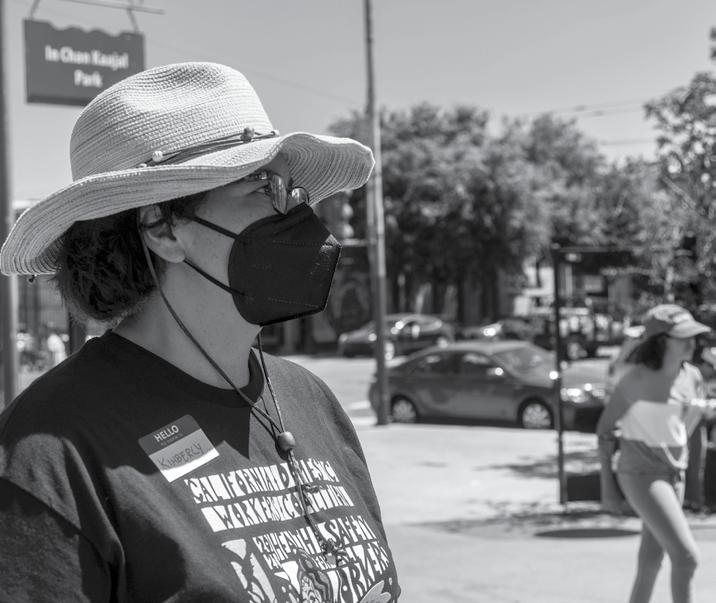
Kimberly Alvarenga, directora ejecutiva de CDWC, al ingreso del Parque In Chan Kajaal en San Francisco. Da la bienvenida a los asistentes al festival de recursos, Verano de Dignidad, que se llevó a cabo el 20 de agosto. Kimberly Alvarenga, executive director of CDWC, stands in the entrance way of the In Chan Kajaal Park in San Francisco. She welcomes attendees of the festival de recursos: Verano de Dignidad (resource festival: Summer of Dignity), which was held on August 20.
En una muestra de solidaridad, las trabajadoras del hogar y miembros de la comunidad se reunie ron en el festival de recursos Verano de Dignidad, celebrado en el parque In Chan Kaajal en San Francisco el 20 de agosto de 2022. El evento fue organizado por la Coalición de Trabajadoras del Hogar de California y tuvo el objetivo de crear conciencia en torno a la ley del pago por permiso por enfermedad. In a showing of solidarity, domestic workers and community members gathered at the Dignity Summer Resource Festival held at In Chan Kaajal Park in San Francisco on Aug. 20, 2022. The event was organized by the California Domestic Workers Coalition, and intended to raise awareness around the paid sick leave ordinance.
Photos: Jeremy Word
SICK LEAVE, from page 1
“We don’t see the meetings concluding be cause we also realize that we have other localities that might have taken the first step …It’s really important to continue to meet with this group,” said Kimberly Alvarenga, executive director of the CDWC.
Alvarenga’s mother immigrated from El Sal vador and was a domestic worker in San Francis co. Her mothers journey is one of the things that motivates her to continue to help others receive support through CDWC.
“I do this work because my mom didn’t have the opportunity to have the same support. She didn’t have a California Domestic Workers Co alition,” said Alvarenga.
Pagán has been conducting research on what other states or cities have implemented regarding paid sick leave resources for domestic workers but so far, she hasn’t found anything quite like what they are envisioning. There is however an app called Alia Benefits that was created by The National Domestic Workers Alliance.
Domestic workers utilizing Alia Benefits can access their funds from the Alia Benefits app, which allows for multi-employer contribution. Multi-contribution is also an important feature for the forthcoming app in San Francisco that the OEWD hopes to develop because oftentimes domestic workers have more than one employer. This means that all hours worked with different employers will be combined and once the em ployee reaches the 30 hour mark, the employers will each contribute an equally divided amount to the paid sick leave fund.
Alia Benefits was made accessible to work ers across the country, unlike the San Francisco app, which will be catering to workers in the city. Alia Benefits was put on hold and its users were notified and received any funds that were in their accounts. Mariana Viturro, deputy director of the National Domestic Workers Alliance, said that they are waiting to see the outcome of the research and development of the San Francisco app.
“We’re waiting to see what comes out of the research and development from the city of San Francisco and we want to be helpful partners. We especially want to share what we know from the previous iterations of Alia,” said Viturro.
Viturro pointed out that a big difference be tween Alia Benefits and the San Francisco app is that the San Francisco app is being developed in a city that has passed a paid sick leave ordinance. Developing an app side by side with an ordinance will make it easier to ensure that the mandated one hour paid sick leave per 30 hours of work is enforced.
Evelin Alfaro, a domestic worker and a mem ber of Mujeres Unidas y Activas, cleans the hous es of about five clients and says that she receives payment for her services via her Venmo account. She believes that having a platform with portable access to paid sick leave can help workers have more control and support.
“Paid sick leave is not something new, we didn’t make it up. It’s a right that already ex ists,” said Alfaro. “We’re just giving them a sort of notebook to keep track of our hours so that they can fulfill their responsibility to pay our sick leave.”
Pagán says that they are still in the planning phase for the app. “We plan to issue a Request for Information this fall followed by a Request for Proposals after to procure a third party devel oper and administrator for the Portable Paid Sick Leave System for Domestic Workers,” wrote Pagán in an email. Once the infrastructure for the app is developed, it will likely be launched in early 2023.
CONCERNS OVER LEGAL STATUS
According to a 2020 report by the City Univer sity of New York Graduate Center, there are at least 10,000 domestic workers in San Francisco. Their study also found that 71 percent of workers are paid by what they described as an “informal employment arraignment,” such as “cash, per sonal check, or app.” These forms of payment are more convenient for those with a complicated legal status.
One of the concerns that has been raised in the meetings is the protection of domestic work ers’ information regarding their legal status. There is fear that this may be something that will discourage the use of the app.
“We want to make sure that this [app] is available to all people regardless of their status,” said Lerma.
He added that another concern is the city’s reporting to the IRS and the requirements needed to proceed. He says that they are working through some of these challenges to try and keep workers’ information confidential.
“We are here working, we don’t want to feel the uncertainty of not knowing what could hap pen in the future,” said Alfaro.
Alfaro said that the domestic workers would like to have the platform be managed by the city or by the organizations of domestic workers. On August 20, Alfaro, Alvarenga and Guillermina Castellanos formed part of the Dignity Summer Resource Festival, held by the CDWC at In Chan Kaajal Park in San Francisco. Domestic workers and community members attended to show soli darity with CDWC.
“We are very excited because it has been a big sacrifice on the part of the women, the do mestic workers who after they’ve finished work, they run to organize and mobilize themselves to do community outreach and help workers who are experiencing theft of payment …” said Cas tellanos, who is co-director of La Colectiva de Mujeres and is also with CDWC.
SPREADING THE WORD
Pagán will oversee the creation of information requests that the OEWD will send to app devel opers to search for the best candidate for the job. She will also be managing the request for propos al, both of which are public procurement process es, meaning they will be open to the public.
“We would definitely want to work with other ethnic and cultural media to share this informa tion because nobody knows this exists or that it’s in the planning phase,” said Pagán.
Alvarenga said that along with having this ordinance enforced and the creation of the app, the city should also invest in educating the public about the current efforts being made. She wants domestic workers — and especially employers and homeowners — to be aware that if they hire domestic workers, they must pay the workers’ sick paid leave.
Similar to the Alia Benefits app, the use of the San Francisco app will not be mandatory, but will instead be a tool to help employers and em ployees keep track of work hours and paid sick leave. What is mandatory under California labor law however, is paying the employees paid sick leave regardless of whether or not they choose to use the app as their tracking tool or any other.
“It’s a way to facilitate their ability, their re quirement to pay sick leave…they already have to pay it under the law,” said Pagán.

Just like Pagán, Alvarenga believes that me dia outlets are a good way to spread the word and she looks forward to collaborating with anyone that’s willing to hear.
“The policies are as successful as the im plementation and so making sure that the city is making an investment in actually sharing infor mation across the city with employers is going to be important,” said Alvarenga.
According to Alvarenga, many employ ers that they have spoken to are willing to help and participate in this new developing platform to help their employees. She wants to teach do mestic workers that it’s ok to stand up and not be afraid to demand what by law they are entitled to.
“Hold employers accountable … to make sure that the domestic worker that works for you gets that one hour pay for every 30 hours worked,” said Alvarenga. “That’s not too much to ask.”
Did this story impact you in a certain way? Let us know by filling out this brief survey
AHORA SE ACEPTAN SOLICITUDES PREVIAS PARA CEATRICE POLITE APARTMENTS VIVIENDA PARA PERSONAS MAYORES
17-21 de octubre de 2022
Los Apartamentos Ceatrice Polite es una propiedad de Vivienda de bajos ingresos asequible situada en 321 Clementina Street en el sur de la zona commercial, con fácil acceso a MUNI y BART.
Los Apartamentos Ceatrice Polite cuenta con estudios y apartamentos de 1 dormitorio. Las comodidades del edificio incluyen un servicio de lavanderia, sala comunitaria y área ubicada en el salón, así un Programa de Actividades de Servicios a los Residentes (RSAP, por sus siglas en inglés) para aquellos que deseen participar.
Todos los residents potenciales deben calificar en base al ingreso annual proyectado, tamaño del hogar, antecedents penales y de alquiler y una persona calificada, ya sea el jefe de hogar or cónyuge debe tener 62 años de edad o más. Consulte los limites de ingresos máximos a continuación:
INGRESO FAMILIAR ANNUAL MÁXIMO (SUJETO A CAMBIOS)
Limites de ingresos Una (1) persona Dos (2) personas
$39,150 $44,750
$65,250 $74,600
Estos limites de ingresos son ajustados periódicamente por el Departamento de Vivienda y Desarrollo Urbano de los Estados Unidos. Todos los hogares pagarán el 30% de su ingreso mensual ajustado combinado para alquiler.
Para más información, puede recoger una presolicitud para Los Apartamentos Ceatrice Polite, en la Oficina de Marketing de TODCO ubicada en 1095 Mission Street, San Francisco entre el horario de las 9:00AM y las 4:00PM del 17 al 21 de octubre. La fecha para la presentación de solicitudes es el 4 de noviembre de 2022.

Si necesita asistencia lingűística o tiene una discapacidad que le impide participar plenamente en este proceso, llame al (415) 957-0227 antes del 21 de octubre de 2022 para recibir una solicitud e instrucciones por correro.
Esta propiedad es un participante activo de la Ordenanza de Oportunidad Justa de San Francisco
TDD: (415) 345-4470

WWW.ELTECOLOTE.ORG 8 El Tecolote STORIES CONTINUED • CONTINUACIÓN DE HISTORIAS October 6-19, 2022
30%
50%
“La baja laboral remunerada no es algo nuevo, no nos lo hemos inventado. Es un derecho que ya existe. Sólo les estamos dando una especie de cuaderno para llevar el control de nuestras horas y que puedan cumplir con su responsabilidad de pagar nuestras bajas”. - Evelin Alfaro, Trabajadora doméstica y miembro de Mujeres Unidas y Activas
APLICACIÓN de página 1
medad pagada en San Francisco para garantizar los dere chos de las trabajadoras domésticas a recibir lo que, por ley, han estado recibiendo empleados de otros sectores durante años.
El Tecolote contactó a la Oficina de Cumplimiento de las Normas Laborales (OLSE) de San Francisco para preguntar cuántas trabajadoras domésticas han accedido a esta licencia remunerada desde que entró en vigor la ley, pero al cierre de esta edición no hubo respuesta de parte de esa oficina.
Trabajando juntos
La Supervisora del Distrito 9, Hillary Ronen, junto con la Coalición de Trabajadoras Domésticas de California (CDWC, por sus siglas en inglés) presentó por primera vez la legislación a la Junta de Supervisores de San Fran cisco el 26 de octubre de 2021. La legislación laboral de California establece que los empleados tienen derecho a una licencia por enfermedad pagada, que equivale a una hora de permiso por enfermedad remunerada por cada 30 horas laboradas.
La OEWD está trabajando estrechamente con miem bros de la comunidad y organizaciones como la CDWC, La Colectiva de Mujeres y Mujeres Unidas y Activas. Para comprender mejor los deseos y necesidades de las trabaja doras domésticas que se convertirán en usuarias de la pla
taforma en desarrollo, la OEWD ha celebrado reuniones para debatir estos temas.
En estas reuniones, las trabajadoras domésticas expre san sus opiniones y preocupaciones sobre la accesibilidad y usabilidad de la tecnología, las barreras lingüísticas y la información que se les puede exigir para registrarse en la plataforma. Pagán afirmó que se cree que la plataforma llegará en forma de app portátil, pero también añadió que puede cambiar en función de lo que ocurra en las reunio nes. Dicha aplicación estará disponible en los idiomas co rrespondientes, según Santiago Lerma, asesor legislativo de Ronen.
“No vemos que las reuniones concluyan porque tam bién nos damos cuenta que tenemos otras localidades que podrían haber dado el primer paso... Es realmente impor tante seguir reuniéndose con este grupo”, dijo Kimberly Alvarenga, directora ejecutiva de la CDWC.
La madre de Alvarenga emigró de El Salvador y fue trabajadora doméstica en San Francisco. El viaje de su madre es una de las cosas que la motiva a seguir ayudando a otros a recibir apoyo a través del CDWC: “Hago este tra bajo porque mi madre no tuvo la oportunidad de tener el mismo apoyo. Ella no tuvo una Coalición de Trabajadores Domésticos de California”.
Pagán ha estado investigando sobre lo que otros es tados o ciudades han implementado en relación con los recursos de licencia por enfermedad pagada para las em pleadas domésticas, pero hasta ahora, no ha encontrado nada como lo que están imaginando. Sin embargo, existe
5 CONSEJOS SOBRE LAS PRUEBAS DEL COVID-19
Las pruebas pueden ayudar a reducir la propagación del virus y proteger a los más vulnerables de síntomas severos y evitar casos mortales.
Presta atención a los síntomas y hazte la prueba inmediatamente.
Estés vacunado o no, hazte la prueba siempre que presentes síntomas como fiebre, escalofríos, tos, dificultad para respirar, pérdida del gusto o del olfato, vómitos, fatiga, dolores corporales o de cabeza. Si el resultado es positivo, comunícaselo a todas las personas con las que has estado en contacto para que también se hagan la prueba. Para evitar contagiar a otras personas, quédate en casa y alejado de los demás (aíslate) hasta que los síntomas disminuyan o desaparezcan.
Si has estado expuesto al COVID-19, hazte la prueba.
Estés vacunado o no, hazte la prueba de 3 a 5 días después de haber estado expuesto. Si la prueba es positiva, aíslate hasta que los síntomas disminuyan o desaparezcan. Si la prueba es negativa, observa los síntomas y vuelve a hacerte la prueba si estos aparecen.
Ten a la mano los kits de pruebas caseras o busca un centro cercano.
Puedes hacer una cita, encontrar una clínica donde realicen la prueba sin cita previa o comprar un kit en tu farmacia para hacerte la prueba en casa. Para más información, visita www.covid.19.ca.gov.
Hazte la prueba antes y después de viajar, o después de asistir a un evento de alto riesgo.
Pasar tiempo cerca de otras personas, especialmente en espacios cerrados muy concurridos, supone un mayor riesgo de exposición al COVID-19. Hazte la prueba antes de viajar, entre los 3 y 5 días posteriores, y de 3 a 5 días después de haber asistido al evento. Si vas a ir a un evento de 1,000 o más personas, te recomendamos hacerte la prueba antes, para evitar contagiar a los demás.
Si das positivo: aíslate, notifica a los demás y recibe tratamiento si eres elegible.
Aislarte y avisar a las personas que te rodean que has dado positivo con COVID-19 evita la propagación del virus. Los nuevos tratamientos pueden reducir los síntomas cuando se toman en una fase temprana de la infección. Consulta con tu proveedor de atención médica para saber si puedes recibir el tratamiento antiviral recomendado.
una aplicación llamada Alia Benefits que fue creada por la Alianza Nacio nal de Trabajadoras Domésticas.
Las usuarias de Alia Benefits pueden acceder a sus fondos desde la aplicación que permite la contribu ción de varios empleadores. La multi contribución es también una carac terística importante para la próxima aplicación en San Francisco que la OEWD espera desarrollar porque a menudo las trabajadoras domésticas tienen más de un empleador. Esto sig nifica que todas las horas trabajadas con diferentes empleadores se com binarán y, una vez que la empleada alcance 30 horas, cada uno de los em pleadores contribuirá con una canti dad dividida a partes iguales al fondo de licencia por enfermedad pagada.
Alia Benefits se puso a disposi ción de los trabajadores de todo el país, a diferencia de la aplicación de San Francisco, que atenderá única mente a las trabajadoras locales. Alia Benefits quedó en suspenso y sus usuarias fueron notificadas y recibie ron los fondos que tenían en sus cuen tas. Mariana Viturro, subdirectora de la Alianza Nacional de Trabajadoras del Hogar, dijo que están esperando a ver el resultado de la investigación y el desarrollo de la aplicación de San Francisco.
“Estamos esperando a ver qué sale de la investigación y el desa rrollo de la ciudad de San Francisco y queremos ser socios útiles. Sobre todo queremos compartir lo que sa bemos”, dijo Viturro, quien además señaló que una gran diferencia entre Alia Benefits y la aplicación de San Francisco es que esta última se está desarrollando en una ciudad que ha aprobado una ordenanza de licencia por enfermedad remunerada. Desa rrollar una aplicación junto con una ordenanza facilitará su cumplimiento.
Evelin Alfaro, trabajadora do méstica y miembro de Mujeres Uni das y Activas, limpia las casas de unos cinco clientes y dice que recibe el pago por sus servicios a través de su cuenta de Venmo. Cree que dis poner de una plataforma con acceso portátil les puede ayudar a tener más control y apoyo.
“La baja laboral remunerada no es algo nuevo, no nos lo hemos in ventado. Es un derecho que ya exis te”, dijo Alfaro. “Sólo les estamos dando una especie de cuaderno para llevar el control de nuestras horas y que puedan cumplir con su responsa bilidad de pagar nuestras bajas”.
Pagán asegura que aún están en la fase de planificación de la aplicación: “Planeamos emitir una solicitud de información este otoño, seguida de una solicitud de propuestas después, para conseguir un desarrollador y ad ministrador de terceros para el siste ma portátil de permiso por enferme dad para trabajadoras domésticas”, escribió en un correo electrónico. Una vez se desarrolle la infraestruc tura de la aplicación, es probable que se lance a principios de 2023.
Preocupación por el estatus legal Según un informe de 2020 del Centro de Postgrado de la Universi dad de la Ciudad de Nueva York, hay al menos 10 mil trabajadoras domés ticas en San Francisco. Su estudio también descubrió que el 71% recibe su paga mediante lo que describen como un “arraigo laboral informal”, como “efectivo, cheque personal o app”. Estas formas de pago son más convenientes para quienes tienen un estatus legal complicado.
Una de las preocupaciones que se han planteado en las reuniones es la protección de la información de las empleadas domésticas sobre su situa ción legal. Se teme que esto sea algo que desaliente el uso de la aplicación.
“Queremos asegurarnos de que esta [app] esté disponible para todas las personas independientemente de su estatus”, dijo Lerma quien añadió que otra preocupación es la presenta ción de informes de la ciudad al IRS y los requisitos necesarios para proce der. Dice que están trabajando a tra vés de algunos de estos desafíos para tratar de mantener la confidencialidad de la información de las trabajadoras.

“Estamos aquí trabajando, no queremos sentir la incertidumbre de no saber qué puede pasar en el fu turo”, dijo Alfaro. Según ella, a las
trabajadoras domésticas les gustaría que la plataforma fuera administrada por la ciudad o por las organizaciones de trabajadoras domésticas. El 20 de agosto, Alfaro, Alvarenga y Guiller mina Castellanos formaron parte del Festival de Recursos de Verano de la Dignidad, celebrado por el CDWC en el parque In Chan Kaajal de San Francisco. Trabajadoras domésticas y miembros de la comunidad asistie ron para mostrar su solidaridad con el CDWC.
“Estamos muy emocionados por que ha sido un gran sacrificio por par te de las mujeres, de las trabajadoras domésticas que después de terminar de trabajar, corren a organizarse y a movilizarse para hacer difusión en la comunidad y ayudar a las trabaja doras que están sufriendo el robo del pago...”, dijo Castellanos, quien es co directora de La Colectiva de Mujeres.
Correr la voz
Pagán supervisará la creación de solicitudes de información que la OEWD enviará a los desarrolladores de aplicaciones para buscar al mejor candidato para el trabajo. También gestionará la solicitud de propues tas, ambos procesos de contratación pública, lo que significa que estarán abiertos al público.
“Definitivamente querríamos trabajar con otros medios étnicos y culturales para compartir esta infor mación porque nadie sabe que esto existe o que está en fase de planifica ción”, dijo Pagán.
Por su parte, Alvarenga dijo que junto con la puesta en marcha de esta ordenanza y la creación de la aplica ción, la ciudad también debería in vertir en educar a la comunidad sobre los esfuerzos que se están realizando. Quiere que las trabajadoras domésti cas —y especialmente los empleado res y propietarios— sean conscientes de que si contratan a trabajadoras domésticas, deben pagarles licencias por enfermedad.
Al igual que la aplicación Alia Benefits, el uso de la aplicación de San Francisco no será obligatorio, sino que será una herramienta para ayudar a los empleadores y a los em pleados a hacer un seguimiento de las horas laboradas y de los permisos por enfermedad remunerados. Sin embar go, lo que sí es obligatorio según la legislación laboral de California es el pago de esas licencias a los emplea dos, independientemente de que deci dan utilizar la app como herramienta de seguimiento o cualquier otra.
“Es una forma de facilitarles la capacidad, la exigencia de pagar la baja por enfermedad... ya tienen que pagarla según la ley”, dijo Pagán. Al igual que ella, Alvarenga cree que los medios de comunicación son una buena forma de difundir la informa ción y está deseando colaborar con cualquiera que esté dispuesto a escu char.
“Las políticas son tan exitosas como su aplicación, por lo que asegu rarse de que la ciudad está haciendo una inversión en el intercambio de información en toda la ciudad con los empleadores va a ser importante”, dijo Alvarenga.
En su opinión, muchos emplea dores con los que ha hablado están dispuestos a ayudar y participar en esta nueva plataforma en desarrollo para ayudar a sus empleadas. Quiere enseñar a las trabajadoras domésticas que está bien organizarse y no tener miedo de exigir lo que por ley les co rresponde: “Exigir a los empleadores que se responsabilicen... para asegu rarse de que el trabajador doméstico que trabaja para ti recibe ese pago de una hora por cada 30 horas trabaja das. No es mucho pedir”.
¿Le ha interesado esta historia? Há ganoslo saber respondiendo esta bre ve encuesta.
WWW.ELTECOLOTE.ORG STORIES CONTINUED • CONTINUACIÓN DE HISTORIASOctubre 6-19, 2022 El Tecolote 9
Please send calendar submissions to calendario@eltecolote.org
Favor de enviar información a calendario@eltecolote.org
Saturday, Oct. 8 • 10am-1pm • $0-$10 • Join Calle 24 to celebrate the Celebrate Latinx Heritage Month with Fiesta de las Américas! Enjoy a fun family picnic-style celebration with folkloric dance, music from DJ La Malcriada, and more! The celebration will take place at La Raza Park (Potrero Del Sol Park). 2827 Cesar Chavez St, San Francisco, CA 94110.
Tuesdays, September 13-October 18 • 4pm-5:30pm • $0-$10 • Precita Eyes Muralists Presents: Drawing and Painting Class. This class meets on Tuesdays for ages 6 to 13, please register to enroll. 348 Precita Avenue, SF, CA 94110.
Thursdays, September 15th-October 20th • 5pm-7pm • $0-$10 • Precita Eyes Muralists Presents: Graffiti Class and Muralism Class. This class meets on Thursdays for ages 13 to 19. 348 Precita Avenue, SF, CA 94110.
Saturday, October 15 • 6pm-10pm • $45-$90 • Join the San Francisco arts community for a celebration of 45 years of mural arts. Mistress of Ceremonies, Bianca Starr, music provided by One Time More Band, DJs Spin Flames, Banda Sin Nombre, and Mission Delirium. Performances by Mojarra and Donna Persona, La Katia and Mama Dora, and 45 years of amazing murals. Delicious food and drinks (cash bar) will be available! A silent auction of incredible art, gifts, wine, and local experiences. Come support your local muralists and keep your city colorful! A vaccination card is required as per venue requirements, and masks are encouraged. Gray Area Theater: 2665 Mission Street, SF, CA 94110.

October 20-November 13 • 6pm-9pm • Free • ArtSpan invites the public to visit the creative spaces of local artists to see where their magic happens and to purchase work directly from creators. A beloved annual tradition since 1975, ArtSpan’s citywide SFOS offers residents and tourists the free opportunity to engage directly with the artists responsible for the unique creative culture and vibrancy that attracts admirers from all over the world. Artisthosted open studio events are accompanied by the expansive SFOS Exhibition of 350+ artworks at the SOMArts Cultural Center. The SFOS Exhibition celebrates the abundant creativity of the region and provides a preview of participating SFOS artists. The exhibition will host a number of in-person festivities, including ArtLaunch, the SF Open Studios kick-off celebration on October 20, and a collector event on November 9. With a full lineup of events and celebrations, SF Open Studios promises to add a hefty dose of creativity to your fall. Discover these free offerings on our website to begin or build your art collection while supporting active artists: artspan.org/sfos.

Saturday, Oct. 22 • 10 am • The American Indian Cultural District and Calle 24 Latino Cultural District are leading the second Clean Streets Happy Hearts/Calle Limpia Corazón Contento (CLCC) event focused on economic recovery, community empowerment, and place-making that will take place on Saturday, October 22nd, 2022. The first CLCC event took place on May 7th in the Latino Cultural District and the American Indian Cultural District activated the streets with live murals, DJs, community street cleaning, and live cultural sharings. We are working with other organizations and agencies like Clecha, MEDA, and OEWD to strengthen and amplify our reach. The objectives of this ongoing program are to help our Cultural District’s recover by 1) providing resources to unpermitted street vendors who are interested in obtaining permits, while creating a path to small business ownership, 2) increasing foot traffic to local businesses in our Cultural Districts 3) using a community based approach for conflict resolution and problem-solving, where San Francisco Police Department involvement should be the last resort as a means to address issues in our communities, 4) using cultural music sharing and mural activations to increase cultural representation and place-keeping in our Districts 5) and providing marketing and social media tools district-wide to vendors and business owners. Please join us for the Clean Streets Planning Meetings on Zoom from 1 pm - 2 pm every Thursday. We would love to develop a meaningful partnership with you to ensure our communities recover and thrive! Contact: palomaf@ americanindianculturaldistrict.org
Oct. 8-Nov. 4 • 6pm-9pm • Free • To Love and Be Loved in Return: Día de Los Muertos 2022 which features 17 new and returning artists as a free exhibition or a $10 suggested donation, all-ages reception on Friday, Oct. 7, 6-9 PM PST. Program highlights include curatorial remarks, the launch of the René Yañez Legacy Fund, and acoustic performances by special musical guests. SOMArts Cultural Center: 934 Brannan Street, San Francisco, CA 94103.
WWW.ELTECOLOTE.ORG TECO CALENDAR • TECO CALENDARIO10 El Tecolote October 6-19, 2022
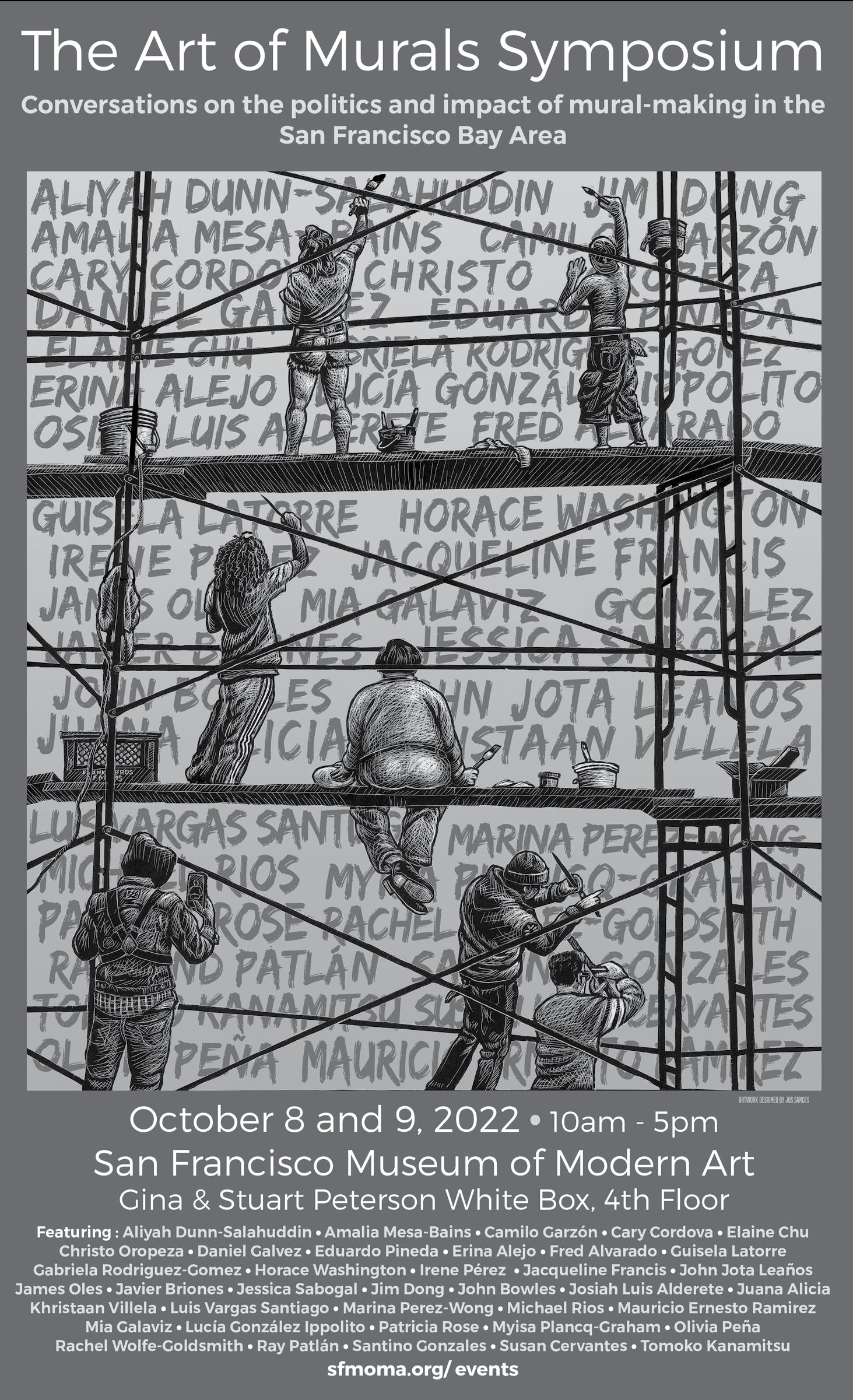
WWW.ELTECOLOTE.ORG Octubre 6-19, 2022 El Tecolote 11
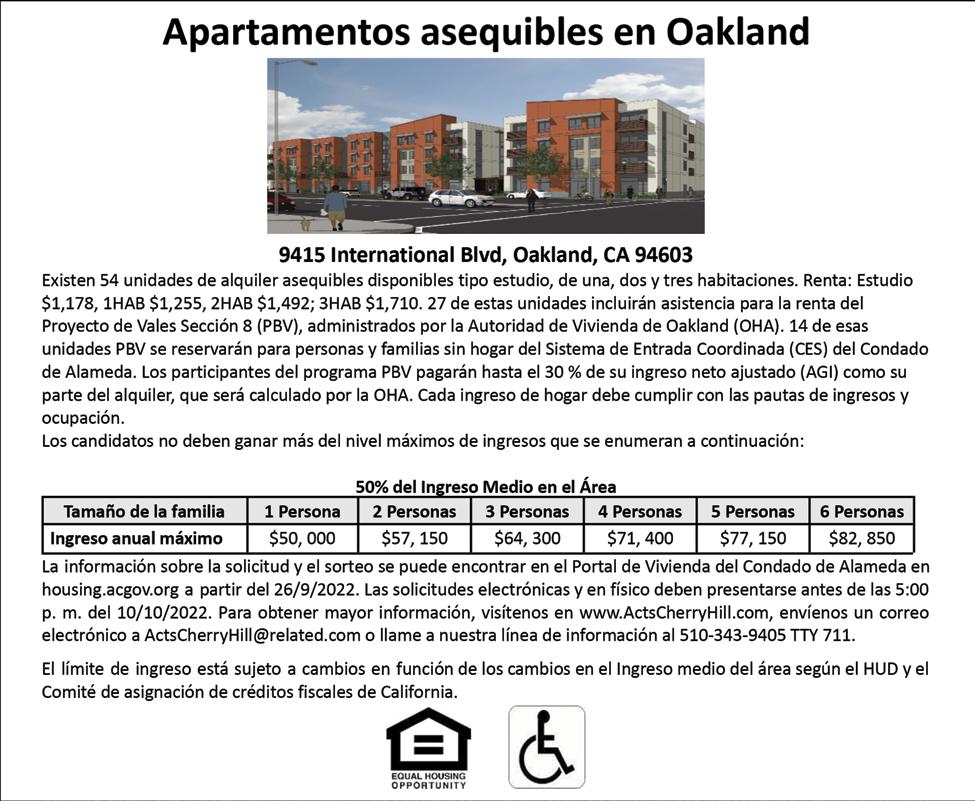
WWW.ELTECOLOTE.ORG 12 El Tecolote October 6-19, 2022
