Karen Yoder: Publication Coordinator/ Graphic Artist
Meredith Klingerman: Assistant Editor
Joe Raber Account Executive
Published by:
Dutch Country Publishing, LLC
P.O. Box 248
Fredericksburg, OH 44627
Phone 330-275-8097
Fax: 888-892-0728
Send inquiries to: editor@eiwmagazine.com
facebook.com/eiwmagazine
This publication and its contents are copyright 2025, Dutch Country Publishing, LLC. Individual copyrighted items, trademarks, etc. contained within are the property of their copyright holders. No part of this publication may be reproduced or redistributed by any means without the expressed, written authorization of the publisher.
Welcometo a special edition of Expressions In Woodcraft.
Two year ago we completed the first of our “Preview Showcase” issues and it was a big hit — with our advertisers and with you, our readers.
We decided right then and there to make this an annual event. The front half of the magazine is the “regular” portion. But in this issue instead of our popular “Spotlight on Featured Designs” section, we’ve dedicated the back half of the magazine to our “Preview Showcase” section. Here, you’ll find alphabetized half-page listings for each of our advertisers.
From talking with visitors to the Ohio Furniture Market, we know that many of you save issues of this magazine. These issues are even more collectible, if you will, because it’s a mini-directory of the area’s furniture manufactures.
Speaking of the Ohio Furniture Market, there’s big news on that front. We’ll have a full writeup in our next issue, but the big news is, the owners of the exhibit building have just completed a major expansion of the facility. What they’ve done — and the timeframe in which they’ve done
it — is nothing short of remarkable. Two buildings that were right next to each other, but at extremely different elevations, hav been carefull knitted together. When you see it, I think you’ll agree that it was a remarkable achievement.
The upshot is, the expansion added tens of thousands of square feet of exhibit space, all of it indoors. Everyone involved with the Ohio Furniture Guild’s “Ohio Furniture Market” is very excited about this, and, again, we’ll have complete details in our next issue. In the meantime, our lead article for this issue is the expansion.
There’s news on other fronts, too, including on the ever-changing picture with respect to tariffs and home mortgage interest rates. These are interesting, fast-moving times, and we’ll do our best to continue to bring you our interpretation of these events as they relate to the furniture world.
Here’s hoping you enjoy the holiday season and,as always, thanks for reading!
our history”
“2026 Market will be the largest in our history”
Dream becomes reality: Mt. Hope Event Center finishes major expansion
Hope Event major expansion
Asthe hardwood furniture industry has grown, so has local furniture builders’ desire to exhibit at the annual Ohio Furniture Guild “Ohio Furniture Market.”
The desire has definitely grown, but over the years exhibit space has been as issue. A number of years ago the space issue was almost resolved with the construction of the “Harvest Ridge” set of buildings that were part of the Holmes County Fairgrounds, west of Millersburg, OH.
Without getting into specifics, Harvest Ridge ended up not being the solution everyone had hoped for.
A few years later, the show added a second location, at the Mt. Hope Event Center in Mt.
Hope, OH. Adding additional exhibitors at Mt. Hope was a solution of sorts, because it allowed more local furniture builders to be part of the show, but having two separate locations approx. 10 miles from each other wasn’t, again, the ideal solution.
It’s not that everyone involved didn’t know that. They did. Suffice it to say that the “ideal” situation of having all the furniture builders at one location, under one roof seemed out of reach. Until now.
The Mt. Hope Event Center recently completed a major expansion of its buildings (on the Mt. Hope Auction grounds) that will allow many more builders to participate in the Ohio Furniture market. The “Mt. Hope Event Center” and the “Dean Beachy Arena,” located adjacent to each
Continued on page 10
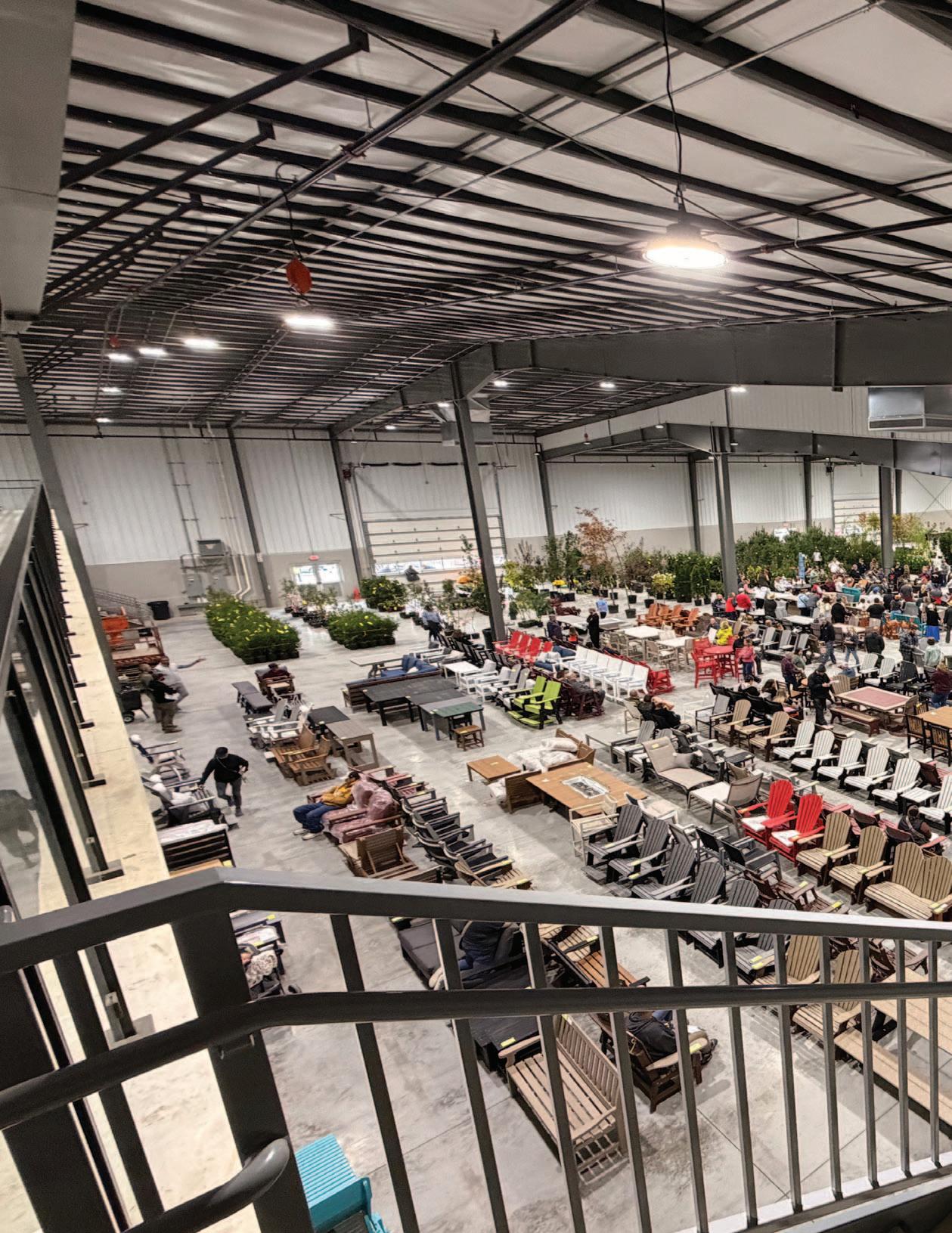
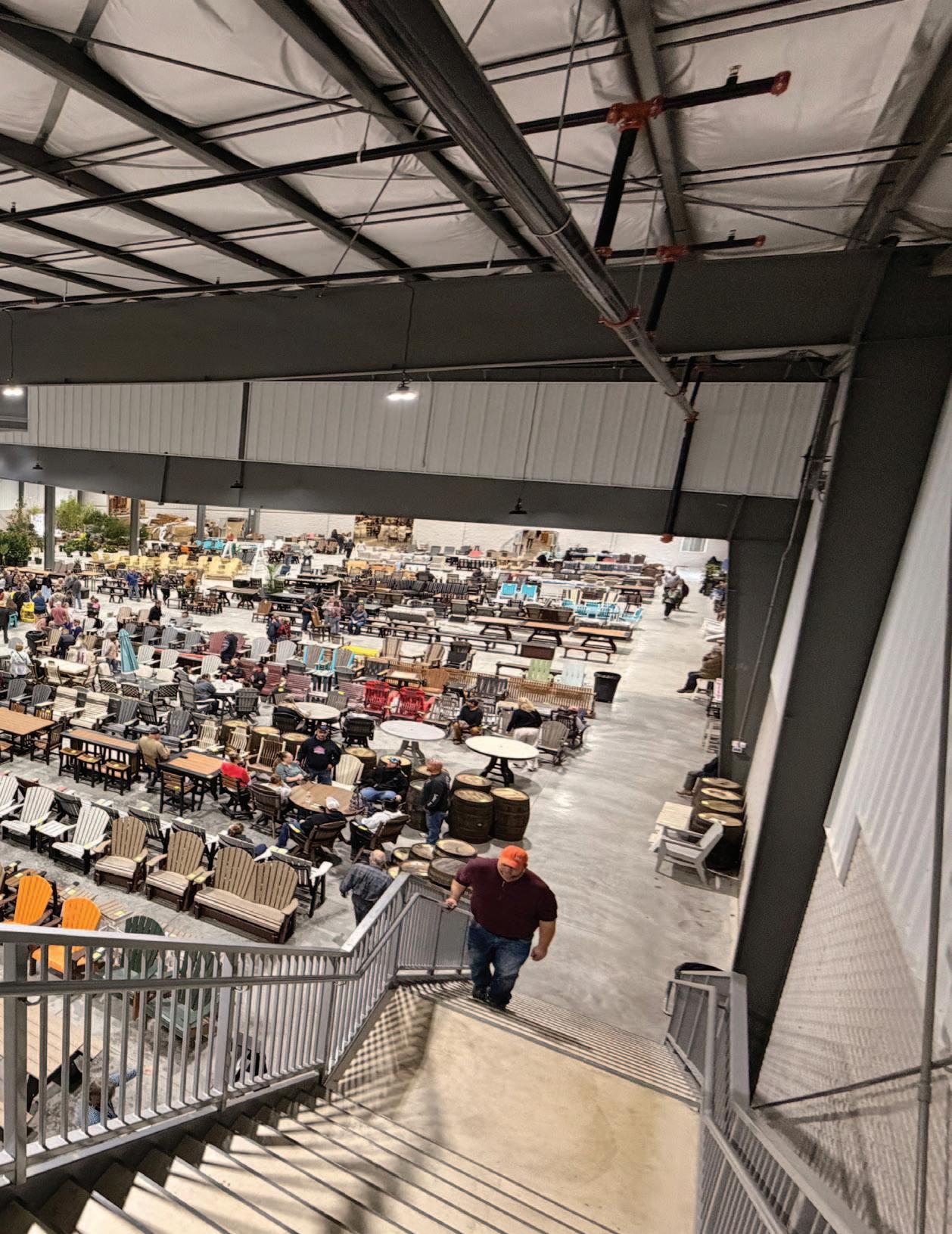
A different climb — where once the buildings at the Mt. Hope Event Center were separated by an outdoor stairway, everything now has been completely transformed, and is under one roof. This is the stairway to the new mezzanine level that connects the two existing buildings. The exhibit space shown also is entirely new. In the background are the formerly-outside entrances to the original Event Center building.
Mt. Hope Expansion
Continued from page 8
other, now have been knitted together into one large building.
Encompassing approx.145,000 square feet, and four distinct exhibit areas, the combined facility promises to take the OFM to a new level. Ohio Furniture Guild Executive Director Kendrick Mullet is excited about the expansion, both for builders and attendees. “The expanded facility at Mt. Hope is a game-changer for the Ohio Furniture Market. With the additional square footage, we now have room for roughly 200 more booths, which means the 2026 Market will be the largest in our history.”
Renewed interest
With the enactment of the STURDY Act in 2024, and now the increased tariffs on imported furniture, the industry here in Ohio’s Amish Country Furniture district is seeing real growth in the interest from retail buyers who previously had not considered this market segment.
As we’ve reported many times over the history of this magazine, Amish-built furniture “ticks a lot of boxes” not only for retailers, but also their customers. It is:
• American made
• Built by small business that support numerous other small businesses
• Built from a highly sustainable, renewable resource
• Exceptional quality
Now, with the expansion of the exhibit facility, and all the builders under one roof, the OFM promises to be the premier event of its kind in the USA. The entire furniture community is excited about the expansion, in particular because there has always been a waiting list for the event. There just wasn’t enough space to fit in everyone who anted to participate. But now, Mullet said, “This expansion allows us to welcome more builders than ever before. For years we’ve had Ohio builders waiting for space to open up — now we can finally bring them in. The excitement from our exhibitors has been incredible.”
With its location in the heart of Ohio’s Amish Country, proximity to excellent lodging and restaurants, and the general beauty of the area, it’s a win for everyone. Note: There is now a high-quality hotel located literally at the edge of the Mt. Hope Auction grounds, and Mrs. Yoder’s Kitchen just across the street, is consistently ranked among the very top of local restaurants. Lodging and meals are important, because as the facility grows, the event calendar itself is growing, too.
Last year’s after-hours meet-and-greet with buyers and builders, which included local food favorites
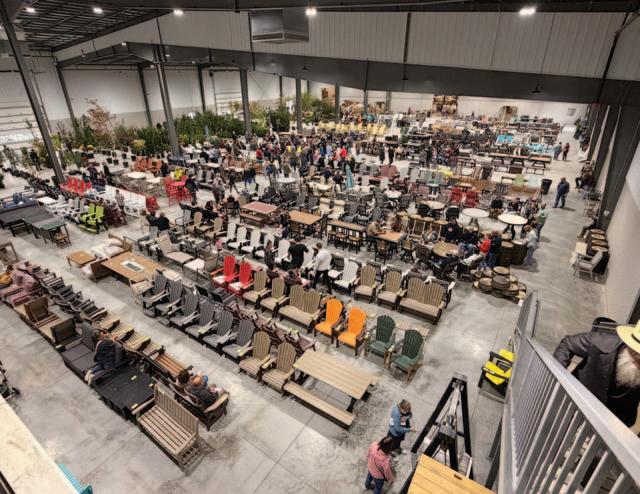
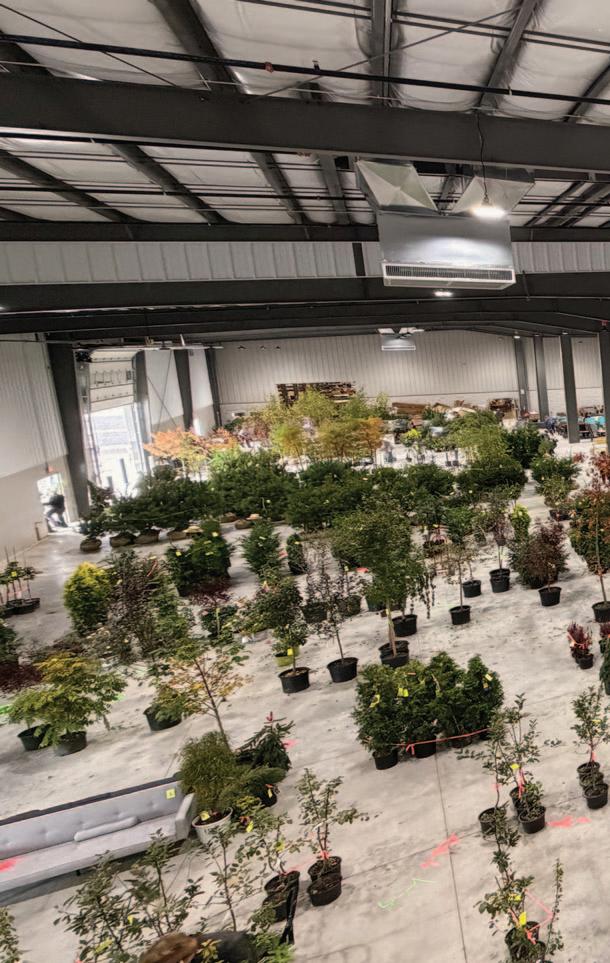
This entire space is new, and used to be between the Mt. Hope Event center and the Dean Beachy Arena. Now, it’s covered exhibit space — and a large space at that! If you look toward the back, you can see the original entrances to the event center.
served in an informal “no sales” environment, was a huge hit. Mulltet commented, “We’ve also expanded our show hours to give retailers the time they need to walk the entire Market. With the growth in exhibitors, it’s realistically a two-day experience now if you want to see everything. Stores will be able to explore more product, more innovation, and more new builders under one roof than ever before.”
In practical terms, hosting the event entirely in Mt. Hope is a major convenience for the builders, most of whom consider Mt. Hope to be in their
“back yard.” Make no mistake: The OFM is a top-ofmind event not only for the Ohio Furniture Guild, its director and its board members, but also for the builders. Months of planning not only go into the event itself, but also for the builders themselves. All of this is a big consideration for the Guild and its members.
Anecdotally, we at Expressions In Woodcraft talk to builders throughout the year, and we know from experience that they plan many months in advance not just to participate, but what they will have in
Continued on page 14
Mt. Hope Expansion
Continued from page 11
their booths as well. Builders know that this is their time to “shine,” if you will, and to introduce new products, as well as updated colors, finishes, etc. Simply put, this is “the big one,” and it’s a major event in the local furniture community. Having all the builders under one roof is a huge accomplishment, and already is generating a lot of excitement in the community. Mullet is well aware of that, saying, ““This is a big moment for our industry here in Ohio. The expansion doesn’t just give us more square footage - it
gives our builders a bigger stage and our retailers a fuller, richer buying experience.”
We first reported on this
“This is a big moment for our industry here in Ohio. The expansion doesn’t just give us more square footage — it gives our builders a bigger stage and our retailers a fuller, richer buying experience.”
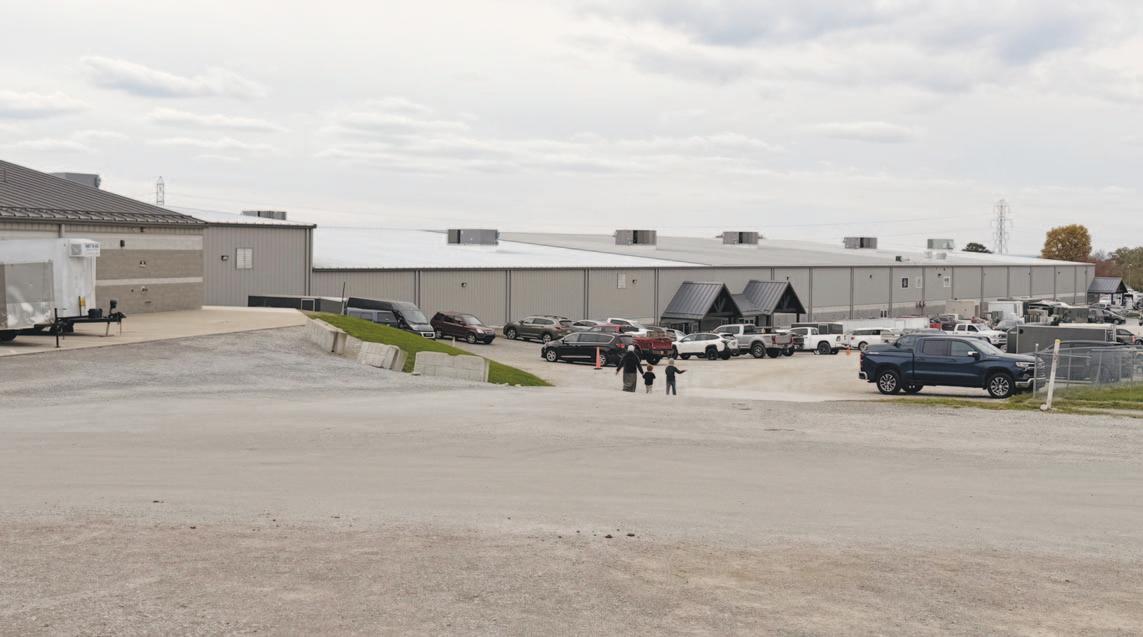
expansion in our Issue #2,2025, and are happy to report that the building is entirely completed. In fact, it’s already in use. The photos accompanying this article
were taken in October, during a consumer-targeted furniture auction that is sponsored by a local auctioneer. (The auction gives builders the opportunity to sell returned items, overstock, models that didn’t catch on as well as hoped, etc.)
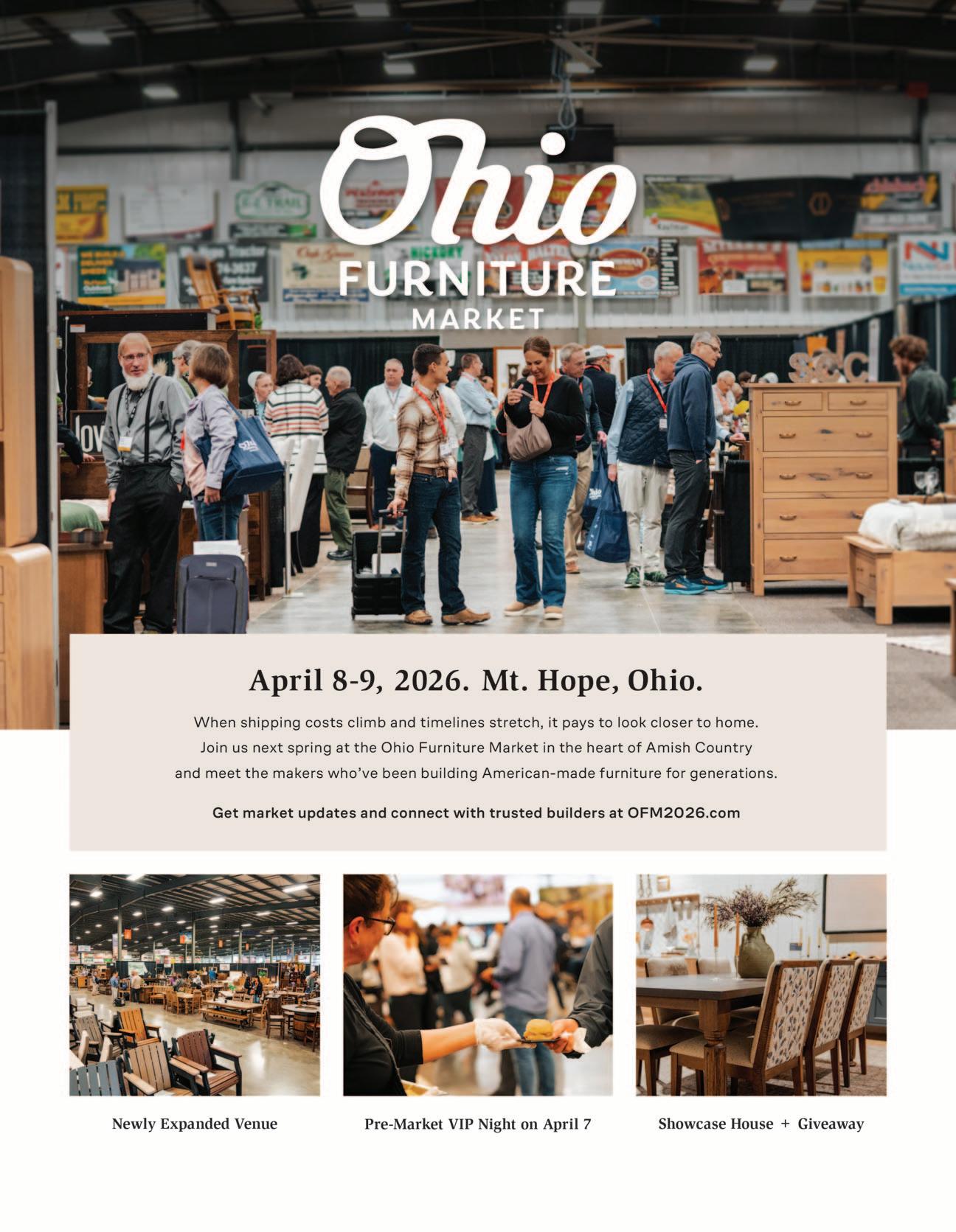
Be sure to mark your calendars now for the 2026 Ohio Furniture Market, April 7-9. Complete details are available at ohiofurnituremarket.com
Nothing can replace an inperson experience, but the photo gallery on the website should give you an idea what this event is all about.
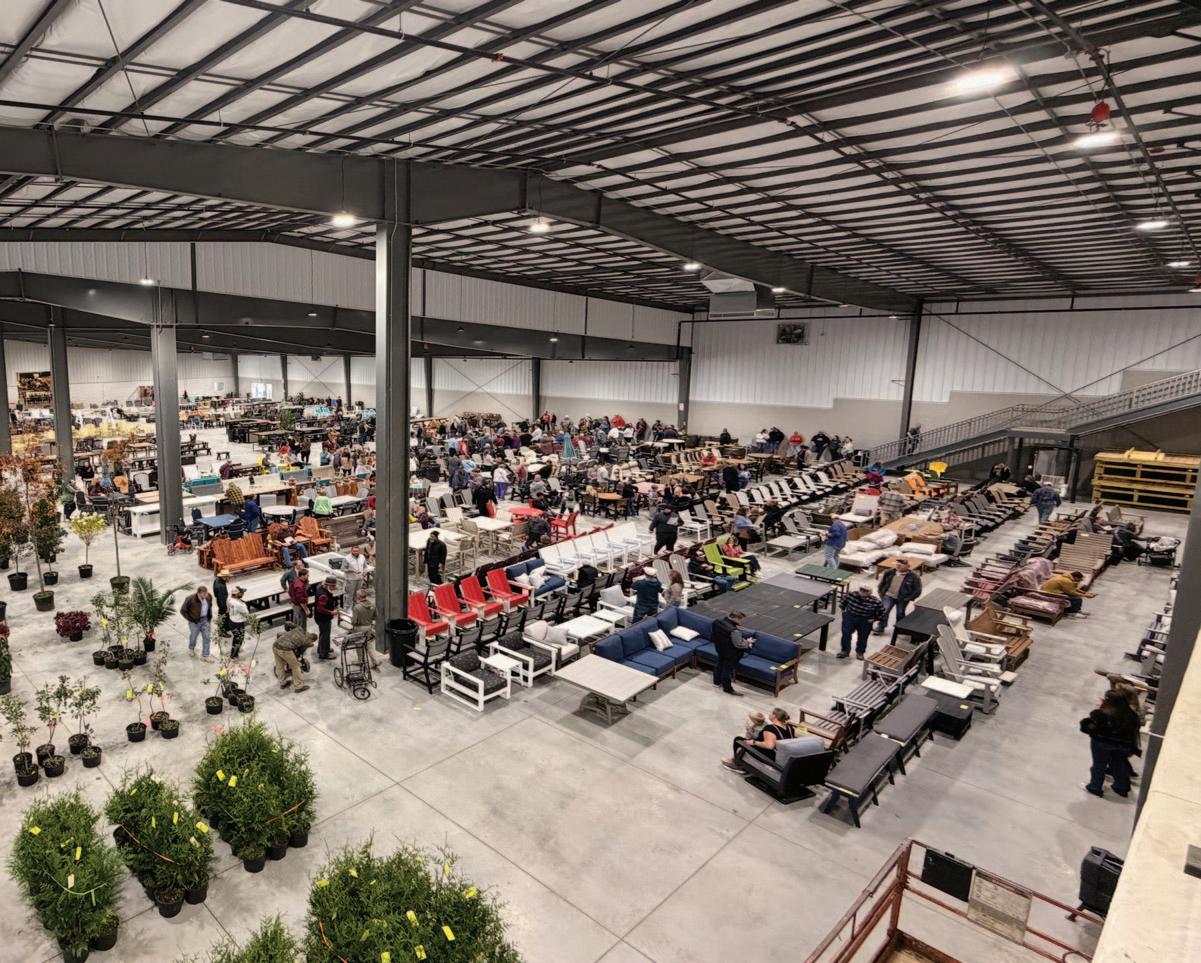
From left, a corner of the Dean Beachy arena flows seamlessly into the expansion potion which “knitted” the two existing buildings together. At far right is the original Mt. Hope Event Center.
Hardwood, Homegrown, and in High Demand: Why Retailers Are Turning to Ohio’s Amish Furniture District Amid
Tariffs and Market Shifts
When the furniture industry shifts, retail store owners feel it first. Inventory costs, freight unpredictability, interest-rate jitters, and now a new wave of federal tariffs — all of it rolls downhill onto the showroom floor. But in the middle of this turbulence, one segment of the U.S. furniture ecosystem stands stronger than ever: Ohio’s Amish Country Furniture District, the largest hardwood furnitureproducing region in America.
As imports become more expensive and fulfillment less predictable, many retailers are rediscovering the draw of American-made, small-business craftsmanship. And that rediscovery couldn’t come at a better time.
Tariffs Are Reshaping the Furniture Landscape
Beginning Oct. 14, 2025, newly imposed federal tariffs hit a wide range of imported wood and furniture products — everything from softwood lumber and plywood to upholstered wooden furniture and cabinetry. For many retailers, the math is simple:
• Higher tariffs = Higher landed costs
• Higher landed costs = Higher prices
• Higher prices = Slower movement on the sales floor
Those tariffs increase again on Jan. 1, 2026, when duties rise to 30% on many of those same items. Import-heavy retailers now face difficult choices: Do you raise your prices? Absorb part of the cost? Source from new suppliers? Shrink your margins? Delay imports?
For some, none of those options feel good.
But there is another option — one that isn’t affected by global trade disruptions, container rates, or political headlines: Buy from American hardwood furniture builders.
Why Retailers Are Pivoting Back to Domestic Hardwood Builders
Retailers across the country are reporting the same pattern: customers want durability, authenticity, transparency, and quality. Even before tariffs, those expectations were pushing the market toward
handcrafted, American-made hardwood furniture. Now, with rising costs on imports, the shift is accelerating. Ohio’s Amish furniture builders offer three advantages that overseas suppliers cannot match:
1.
Stability in a Volatile Market
International supply chains still haven’t returned to pre-pandemic predictability. Lead times swing wildly. Shipping costs fluctuate weekly. And tariffs have injected yet another layer of uncertainty. Amish country’s manufacturers — the vast majority of which are small, family-owned shops operating under time-tested workflows — don’t rely on container ships, geopolitical negotiations, or currency shifts.
Retailers who buy here know exactly what they’ll get:
• Consistent lead times
• Predictable pricing
• Reliable communication
• Shorter, simpler supply chains
That stability counts when you can look customers in the eye and give them solid pricing and realistic delivery timeframes.
2. The Quality Story Retailers Can Sell
Hardwood furniture is not a commodity. But mass-produced imports often are. Amish-built pieces give store owners something that sells itself:
• Solid hardwood
• Unmatched craftsmanship
• No shortcuts
• No offshore mystery-materials
It’s a business model where old-world skill and integrity are baked into the way things are done. And the more global markets fluctuate, the more shoppers gravitate toward “buy it once” quality.
3. Small American Businesses Supporting Other Small American Businesses
This is a story your customers want to hear — and you can proudly tell it. We’ve talked about it many times in these pages (and even produced a
Continued on page 20
high-quality infographic poster about it), but when you purchase here, you are supporting numerous other small businesses. Ohio’s Amish furniture district is a network of:
• Multi-generation woodworking families
• Local sawmills
• Loggers and dry kilns
• Finish shops
• Hardware suppliers
• Trucking companies
• And more
It’s an American ecosystem — and every purchase keeps money circulating through US-based communities instead of drifting offshore. This authenticity gives retailers a marketing edge imports can’t match. American consumers have been gravitating toward US-made products for more than a decade now. When you buy here, you give those customers a solid option to support US businesses.
Housing Market Update: Why This Matters Right Now
Furniture demand moves in lockstep with housing. And despite higher mortgage rates, 2025 has brought steady year-to-date sales in the furniture category, alongside pockets of growth in remodeling and new construction. That means demand is still there — but buyers are more selective. Consumers making large purchases now want:
• Longevity over trendiness
• American-made over foreign-made
• Quality over disposable design
• Transparency in materials and construction
That’s exactly where this region excels. For retailers, the winning strategy isn’t necessarily expanding product variety — it’s expanding the right variety. High-quality hardwood is a category that retains premium pricing power, even when the economy feels choppy.
Why Retailers New to Ohio’s Amish Country Are Visiting Now
Our region continues to welcome new retail partners — many of whom are making their firstever sourcing trip to Ohio. A few common reasons come up again and again:
• Tariffs pushed them to look for alternatives.
• Domestic inventory feels safer than imports.
• Customers are asking for American-made products.
• Margins are stronger with hardwood than with imports.
• They want to build long-term supplier partnerships.
Put simply: when the world becomes unpredictable, retailers go where craftsmanship is predictable.
What “Expressions In Woodcraft” Is Here to Do
Our mission remains the same: To introduce retail store owners to the best hardwood furniture producers in America — small businesses in Ohio’s Amish Country that support other small businesses across the region.
If you’ve been relying heavily on imports and are feeling the pressure of tariff-driven cost increases, this is the perfect moment to diversify your product mix.
Our builders offer:
• Customizable designs
• Premium hardwoods (oak, cherry, maple, walnut and more)
• Competitive pricing
• Domestic reliability
• Consistent craftsmanship
• Transparent production timelines
The Bottom Line for Retailers
The furniture industry is changing — fast. Tariffs are reshaping cost structures. Imports are getting more expensive. Supply chains are still uneven. But American hardwood furniture makers are as steady as they’ve ever been. Retailers who adapt now will come out stronger.
This is the moment to lean into quality, craftsmanship, and American-made value. And there is no better place to start than Ohio’s Amish Country Furniture District — the hardwood capital of the United States.
See related article on page 28: “Retailer tariff FAQ: What do store owners need to know now?”
What the Rate Reset Means for Hardwood Furniture
For the nation’s largest hardwood furniture-producing district the housing market isn’t some distant economic data point. It’s the single strongest predictor of whether retailers stock up, customers remodel, or new-home buyers place large orders.
As of mid-November 2025, the 30-year fixed mortgage rate is holding in the 6.2%–6.3% range. Freddie Mac’s most recent survey pegs the national average at 6.24%, with many lenders quoting slightly below that depending on credit tier and geography. That’s noticeably lower than the 7–7.5% highs of 2024, but still well above the comfort threshold for many would-be homebuyers.
At these levels, the market is “stuck in neutral.” Homes are selling — but slowly. New construction continues — but cautiously. And furniture orders tied to new builds, relocations and remodels remain steady, not surging.
But that could change quickly if mortgage rates break below 6%, especially if they reach the 5.5% range. Why 5.5% Matters More Than It Sounds
Mortgage rates operate like a light switch for the
housing market — except that instead of “on” or “off,” there’s a magic dimmer level where activity suddenly brightens. Industry analysts suggest that the turning point sits right around 5.75%, and a true demand surge begins closer to 5.5%.
Here’s why:
A reduction of just 0.75% on a $400,000 mortgage lowers the monthly payment by hundreds of dollars. That’s enough to pull thousands of households off the sidelines and back into the market.
More moves = more rooms to furnish = more orders for the retailers and builders alike.
Lower rates also free up a frozen segment of the market: homeowners locked into ultra-low pandemic-era mortgages. When the financial math stops feeling punishing, more of them will finally list their homes. More listings increase inventory, which means more transactions. And more transactions lead directly to more furniture demand.
The Fed’s Next Move: A Coin Flip with Big Consequences
The Federal Reserve’s Dec. 9–10 meeting is expected to be pivotal. What had been a 90% market expectation of a December rate cut is now essentially a coin flip — around 50%. Chair Jerome Powell recently emphasized that a cut is “far from a foregone conclusion,” reflecting disagreement within the committee.
Goldman Sachs still forecasts a December cut and two more in early 2026, but without fresh employment and inflation numbers, policymakers lack clear visibility. That means the path from today’s 6.25% to tomorrow’s 5.5% is still possible — but not guaranteed.
If rates decline steadily over the next few months, the hardwood furniture sector could see: More retailer reorders as sales uptick in key regions, higher demand for bedroom and dining collections tied to new-home purchases and increased interest in premium hardwood craftsmanship as consumers feel more financially confident
Stronger traffic at the largest retailers that rely heavily on new-home and relocation customers
A drop toward 5.5% wouldn’t create a “boom” overnight — but it would create a foundation for rising demand over the next 12–18 months. Surges in this industry start slow, then compound as builders, retailers, and consumers synchronize.
Retailer tariff FAQ: What do store owners need to know now?
It’s impossible to predict the future, but in this article we try to answer questions retailers might have about the tariffs on imported
Q1: Will these new tariffs raise my prices?
Yes. If you rely on imported wood or upholstered furniture, your landed costs will increase — in some categories substantially. Many retailers will need to adjust pricing or margins unless they diversify into more domestically produced product lines.
Q2: Is this a temporary situation or a long-term shift?
While tariffs can change with each administration, these increases appear poised to remain through at least 2026. Retailers who pivot toward domestic hardwood suppliers now will be in a much better position than those who continue to source products from overseas.
Q3: Are Amish hardwood products affected by tariffs?
No. Products made in Ohio’s Amish Country Furniture District use domestic hardwoods and local supply chains. Prices, freight and lead times are far more stable than imports.
Q4: Are customers still willing to buy high-end furniture in this economy?
Yes — especially when the value is clear. Today’s shoppers are more selective, but they are spending on high-quality pieces that last. Amish-built hardwood furniture fits the “buy it once” mindset and tends to outperform commodity imports in both margin and customer satisfaction. Remember, in good times or bad, quality always sells.
Q5: I’ve never visited Amish Country manufacturers. What should I expect?
Expect small, family-owned shops — many multi-generational — producing high-quality hardwood furniture with unmatched craftsmanship. Lead times are predictable, and have stabilized a great deal since 2021. Because the vast majority of
items are produced on a made-to-order basis customization is standard, and the business relationships are personal. Many retailers look forward to visiting Ohio’s Amish Country not only for the high-quality products, but also to renew and build on business relationships that often turn into friendships
Q6: Will switching to domestic hardwood affect my margins?
Typically, margins improve. Amish-built pieces hold retail pricing better, carry a stronger value story, and experience fewer returns, repairs and customer complaints.
Q7: How do I begin sourcing from Ohio Amish manufacturers?
Start by contacting a few builders featured in Expressions In Woodcraft or scheduling a trip to Ohio’s Amish Country Furniture District. Many shops welcome appointments, showroom tours, and factory visits — and most offer introductory wholesale programs. Of course, the best way to immerse yourself into this market is to make plans now to attend the annual Ohio Furniture market, sponsored by the Ohio Furniture Guild (see related story beginning on page 8). Here, you can meet dozens of builders and look at hundreds of products on display. The three-day event continues to grow, and does not disappoint!
Q8: My customers ask about sustainability. How do Amish-built products compare?
Amish manufacturing is inherently sustainable:
• Locally sourced hardwoods from well-managed woodlots
• Handcrafted, low-waste production
• Long-lasting construction — this furniture is built to last generations, unlike “disposable” brands
• This is a powerful selling point on your showroom floor.