Karen Yoder: Publication Coordinator/ Graphic Artist
Meredith Klingerman: Assistant Editor
Joe Raber Account Executive
Published by:
Dutch Country Publishing, LLC
P.O. Box 248
Fredericksburg, OH 44627
Phone 330-275-8097
Fax: 888-892-0728
Send inquiries to: editor@eiwmagazine.com
facebook.com/eiwmagazine
This publication and its contents are copyright 2026, Dutch Country Publishing, LLC. Individual copyrighted items, trademarks, etc. contained within are the property of their copyright holders. No part of this publication may be reproduced or redistributed by any means without the expressed, written authorization of the publisher.
It might sound a bit trite, but I’ve always liked the saying, “You’re never too old to become what you might have been.”
As we experience graduation season, I think about what various speakers will tell all those fresh young faces, eager to take on the world. If we’re to be honest, though, most high school graduates are probably rolling their eyes and thinking, “Is this ever going to end?”
I don’t remember what any of the speakers at my own graduation said, and I’m willing to bet that you don’t, either!
The vast majority of those speakers probably will include some form of the message that “learning is a lifelong process.” And that might sound a bit cliché, but it’s true — especially in these times, when robots, AI and other technologies continue to transform workplaces across the nation.
That sentiment also rings true in my own case. I’ve “reinvented” myself several time over the course of my career, and I’m in the process of doing so once again. As I write this, I am one class (and one thesis) away from earning a master’s degree in professional writing from Kennesaw State University, in Kennesaw, GA.
I moved down here almost four years ago, and travel from the Atlanta region to my beloved Ohio frequently.
I’ll return to Ohio full time (I won’t be staying for the winters!) at some point, but for now, I’m officially a Georgian… y’all.
Two years ago, I found out that if you’re of a “certain age” in Georgia, you can go to college for free. Like, really free: No tuition, or any other expenses except books.
I scrolled the KSU website and found a program that sounded great; applied, and was accepted! In December of 2024, I stepped on a college campus as a student for the first time since 1984. (I’ll save you the math: I was 62 at the time.)
It’s been an amazing, exhilarating, and at times challenging experience. But I’ve had the time of my life! Time that otherwise might have been spent watching TV or surfing the web was spent in class, reading, and doing homework.
What’s my point? Simply this: Never, ever stand still. Whether it’s growing your business, taking a step back and asking, “How can we do this better?” or just keeping your mind and skills sharp, life is about accepting, embracing, and managing change.
Keep learning. Keep going. Keep moving forward.
As always, thanks for reading.
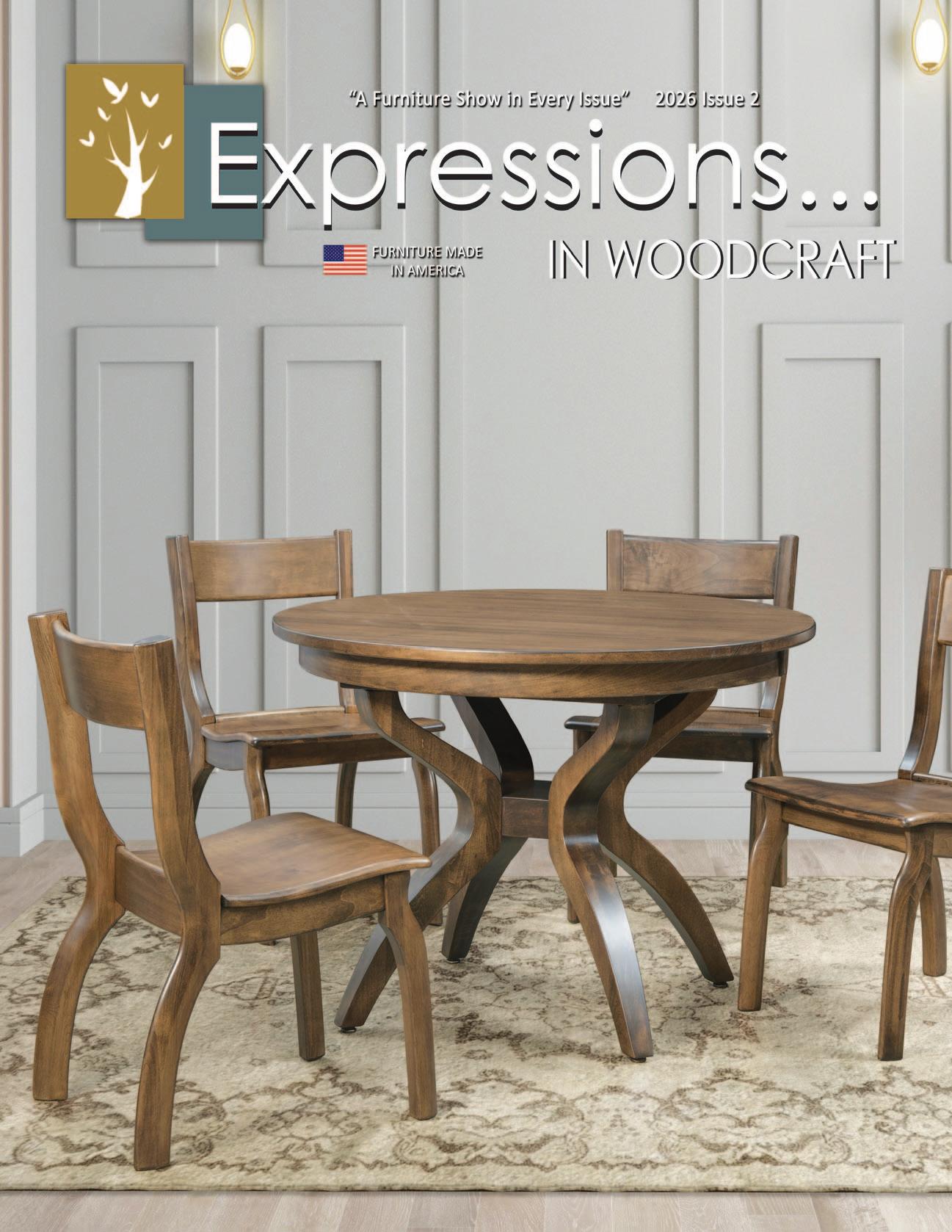
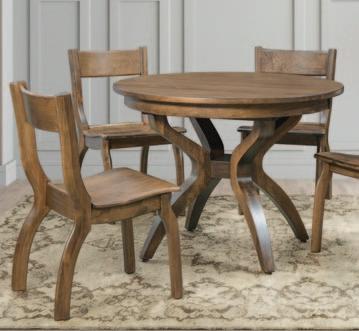
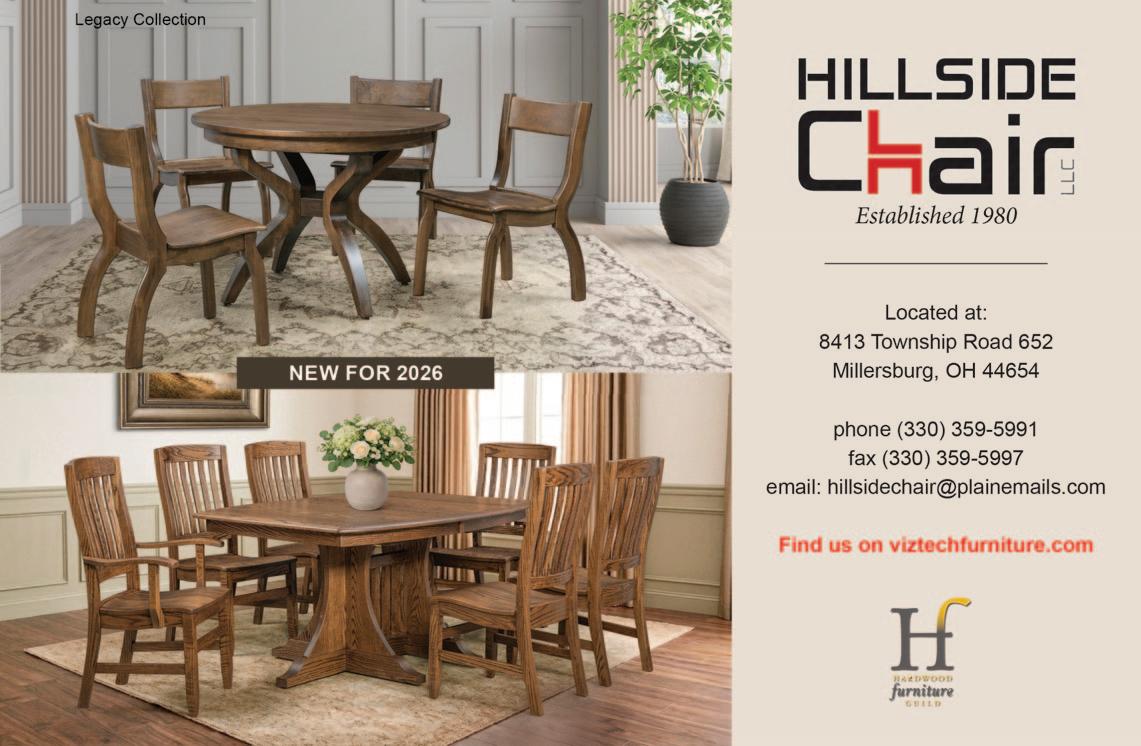
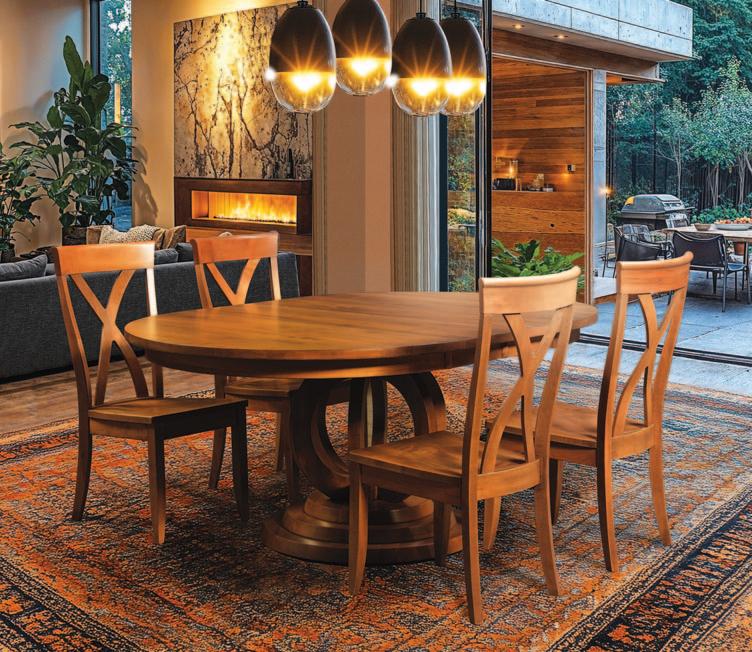
Small footprint, big impact. The Legacy Collection from Hillside Chair packs exceptional styling into a small table, and complementary chairs. The chairs feature a lower-rising back, and mimic the style of the four-point base, which supports an attractive round top. Shown here in Brown Maple with FC 47874 Stockton finish, this set is perfect for smaller spaces — but it’s big on design. —See ad
Every so often, it’s good to stop theorizing and simply ask people what they’re seeing on the showroom floor.
If the recent Ohio Furniture Market has taught us anything, it’s that, while some styles and designs of Amish-built furniture remain strong (and have so for a long time), but also that newer, younger and design-savvy consumers continue to enter the market as well.
room still serves as the “gateway purchase” into higher-quality furniture.
As expected, the answers varied somewhat by region and
What’s Hot, What’s Not — And Who’s Buying? A Snapshot of Today’s Amish Furniture Consumer
Those customers do purchase the always-popular looks, but they also want styles and colors more suited to their tastes. Read: They might want solid oak furniture, but they don’t want furniture that look like their parents or grandparents’ furniture. One only need to go to Facebook Marketplace and type “Oak table” to see that’s true!
Recently, we sent a handful of questions to selected readers of Expressions In Woodcraft — retailers and manufacturers who spend their days talking directly to furniture buyers. We asked what styles are hot, what trends are cooling off, whether younger buyers are finally entering the market, and whether the dining
By Jerry Klingerman
customer base. But several strong themes emerged — and many line up with broader trends we’ve been watching develop over the past few years.
One thing is very clear: consumers continue moving toward furniture that feels authentic, lasting and real.
And that trend plays directly into the strengths of Amish-built furniture.
White Oak gaining in popularity
If there’s one dominant style trend right now, it’s hard to argue against white oak.
Light, natural-looking white oak — especially in matte or
low-sheen finishes — is performing extremely well. Consumers increasingly want wood to look like…well, wood. The heavy, glossy finishes of years past are giving way to softer, more organic looks.
Many retailers describe customers asking for finishes that look natural, matte or “barely finished” and even “warm without being yellow.” The influence of Scandinavian and “organic modern” design continues to shape consumer tastes, especially among younger homeowners and urban buyers.
What’s especially interesting is that plain-sawn white oak has almost become the default luxury wood for contemporary interiors. Ten or 15 years ago, many consumers associated oak — especially red oak — with heavier, more traditional furniture. But white oak is completely changing that perception.
A few reasons builders are probably seeing such strong demand for it:
It takes light, matte finishes beautifully, has enough grain character to feel “real,” but not so
much that it overwhelms a room. It also pairs well with modern materials like black metal, stone, linen and leather. Finally, plainsawn White Oak works across multiple styles, including organic modern, modern farmhouse, transitional and even Scandinavian (dare we add, with no assembly required!).
And importantly for our builders, plain-sawn white oak lets craftsmanship show through without the wood itself dominating the piece. That’s especially true on large plank
Also worth noting is that many consumers probably couldn’t identify white oak by name if you asked them. But they absolutely recognize the look. They see it constantly now in upscale restaurants, boutique hotels and designer Instagram feeds. (Don’t forget, that’s where the 40-andunder crowd absolutely lives: Instagram and Tik-Tok. They might have Facebook accounts, but it’s not their “go to” social media).
So, in many ways, the Amishbuilt furniture
benefiting from a broader architectural and interior-design movement that has elevated white oak into a premium material category.
At the same time, buyers are becoming more visually educated. Increasingly, they notice grain selection, board matching, and cleaner lines. Riftsawn and quarter-sawn looks are drawing attention for their consistency and understated elegance.
Walnut also continues enjoying a strong moment in the
Continued on page 10
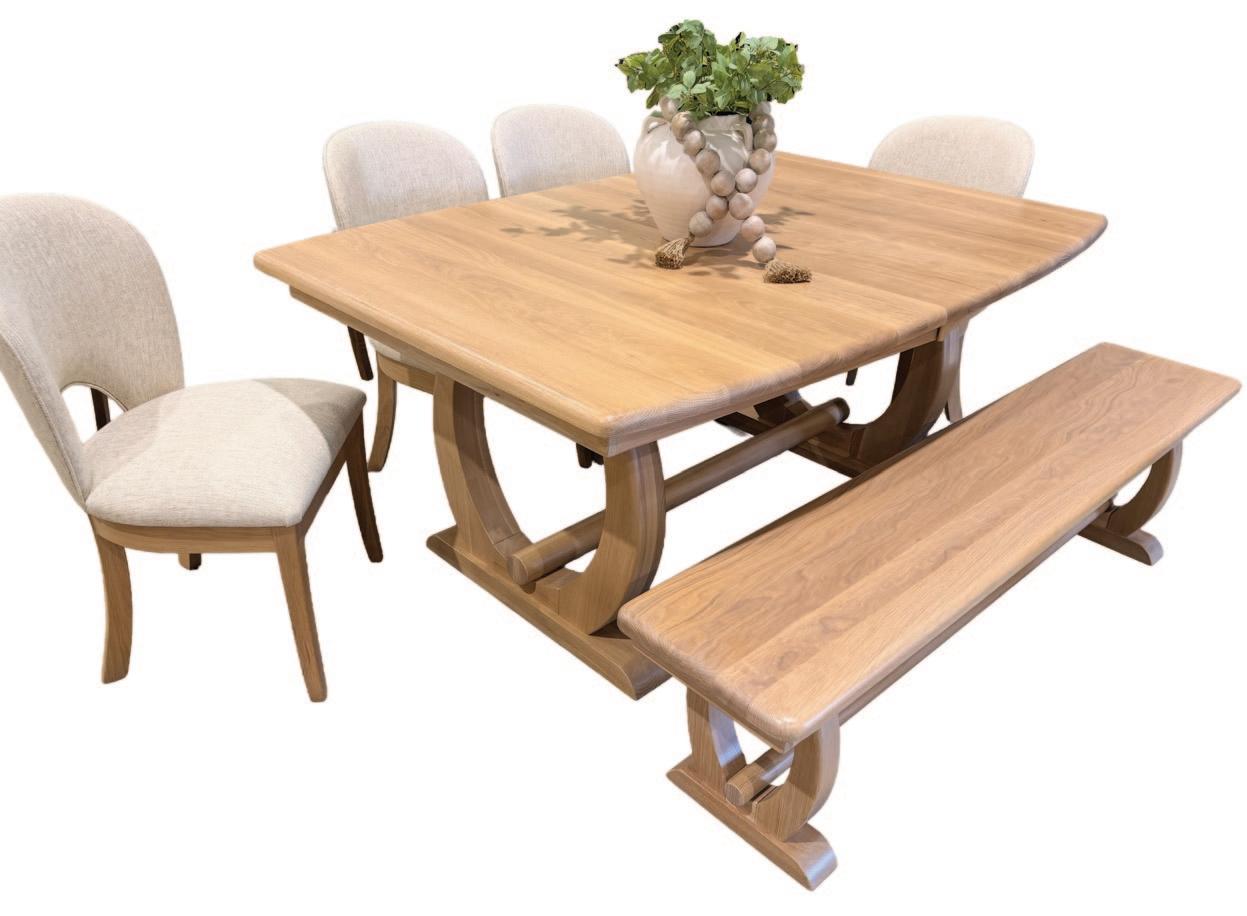
The Ottawa Double Pedestal Dining Set by Centerpiece Furniture is a great example of what’s trending: Great design, shown in flat-sawn White Oak with Bamboo stain. The chairs are by Y&M Chair.
What’s hot...
Continued from page 9
as a “buy once” investment piece.
But we would note that, like the gray-toned selections that exploded on the scene 10 years ago, the Wormy Maple/Walnut combination look seems to have fallen off in a big way. The Maple/Walnut combination
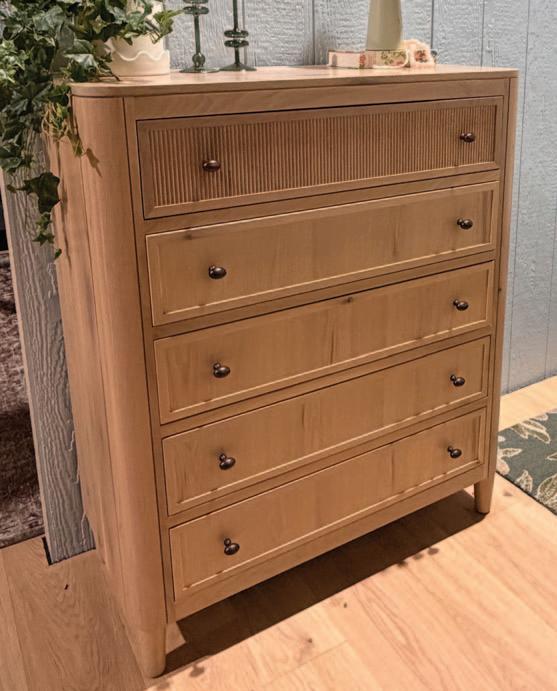
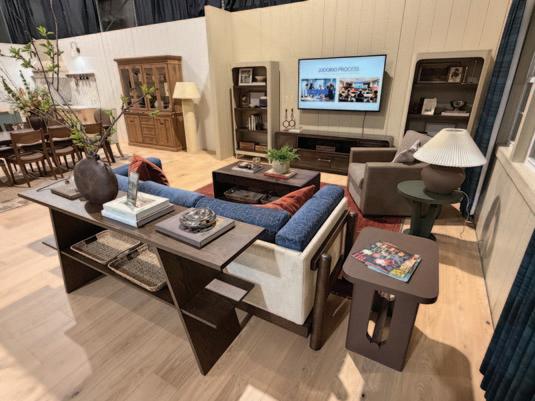
Above: The Millhall Chest of Drawers, by red Barn Woodworking, was featured in the Showcase House at the 2026 Ohio Furniture Market is shown in Rustic White Oak in Sunlit stain.features lighter colors, rounded corners and top and an accordionstyle drawer front.
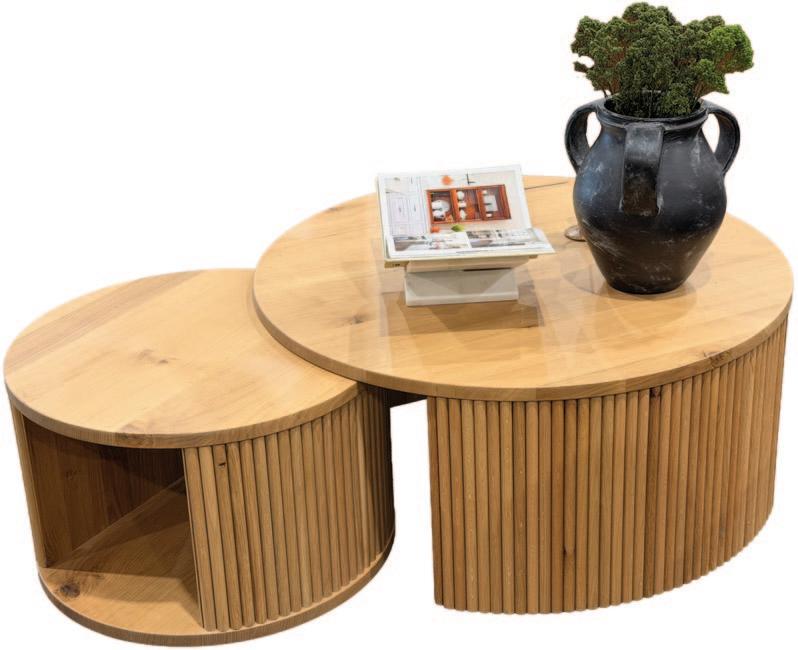
(Right) Criswell Furniture recently introduced the Alden Nesting Tables, shown here in Rustic QSWO, and Wicker stain. This attractive, clever nesting-style table features a unique fluted design.
appealed to a lot of buyers who were looking for something different, and leaning rustic, but it gave way to more “true” rustic styles. Rustic looks have cooled, too, but haven’t disappeared entirely — they’ve simply become more refined. Customers still appreciate character wood, knots, texture and occasional saw marks, but the heavily distressed “barnwood everything” look appears to be cooling.
Gray Is Fading — Warmth Is
increasingly report movement toward natural browns, neutrals and warmer stain palettes.
The overall look today is cleaner, lighter and softer. At the same time, oversized furniture continues to lose ground. Massive entertainment centers and extremely bulky case goods simply fit less comfortably into today’s open floor plans and somewhat smaller homes. For example, recall the large entertainment centers from the 1990s, and trophy/display cases. These days, there’s really very little play in those types of pieces. Consumers still want quality — but increasingly without visual heaviness.
Younger Buyers Are Entering the Market — Carefully
One of the most interesting developments
Continued on page 12
Continued from page 10
noticeable emergence of younger buyers into the solid-wood category. Yes, Gen Z consumers are beginning to show up. Slowly. Not in huge numbers yet. And not necessarily in the same way previous generations did.
Today’s younger consumers tend to marry later, buy homes later and start with smaller living spaces. They also move more frequently than recent generations — that’s driven almost 100 percent by the workfrom-anywhere job market and economics. Americans traditionally have “voted with their feet,” and Gen Z is a
testament to that.
But, like previous generations, Gen Z is becoming deeply frustrated with disposable furniture. After years of dealing with damaged deliveries, particleboard construction and furniture that barely survives a move or two, younger buyers increasingly seem attracted to products that feel permanent and authentic. That creates an interesting opening for Amishbuilt furniture. What’s especially notable is why younger buyers are drawn to it.
Older generations often purchased Amish furniture because, “It’ll last forever.” Younger buyers often respond to
craftsmanship, sustainability and the desire to purchase Americanmade products. They also identify strongly with customization and the “story behind the product” — that’s not exactly new, but it’s interesting to see younger people realizing that Amish-built furniture is part of that story.
And in today’s social-mediadriven environment, products that photograph beautifully — clean white oak, natural finishes, minimalist forms — tend to gain traction quickly on platforms like Instagram and Pinterest.
Is the Dining Set Still the First
“Real” Furniture Purchase?
For decades, many in the furniture industry have believed
that a quality dining set represents a consumer’s first “real” furniture purchase. That idea still appears largely true — though perhaps with some modern variations. The dining table continues to hold tremendous emotional importance. It represents permanence, family, entertaining and even adulthood itself.
Even younger consumers living fairly casual lifestyles often aspire to having a real dining space
where they can host holiday gatherings and dinner parties in a home that feels established.
But the role of the dining table has evolved somewhat. Today, it’s not just where families eat. It’s also a workspace and social hub — the center of the home.
At the same time, some retailers report stronger competition from bedroom furniture, particularly as consumers increasingly focus on wellness, comfort and creating a
personal sanctuary at home. One retailer in our survey commented that “For us, it has always been bedroom furniture. We have had a lot of customers tell us they have waited a long time to get their ‘dream’ bedroom.”
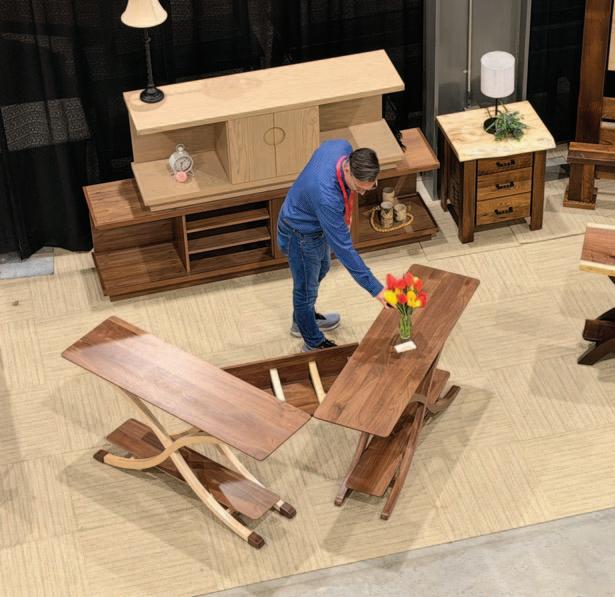
Another noticeable shift: many consumers now invest heavily in one spectacular table rather than purchasing an entire matching dining suite. “Statement” tables — including live-edge designs
Continued on page 41
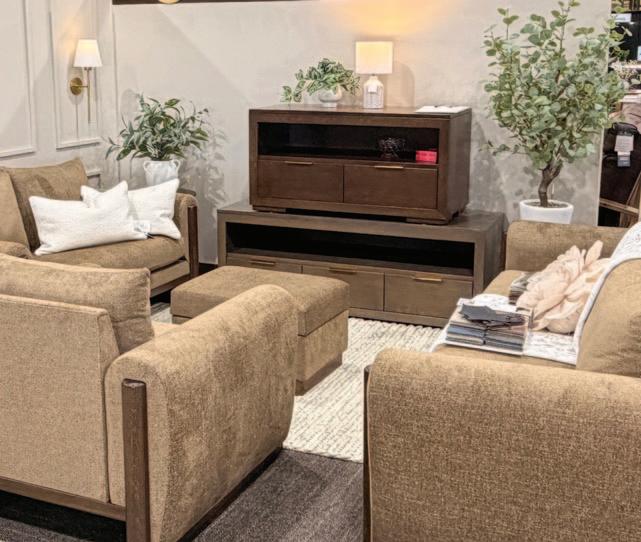
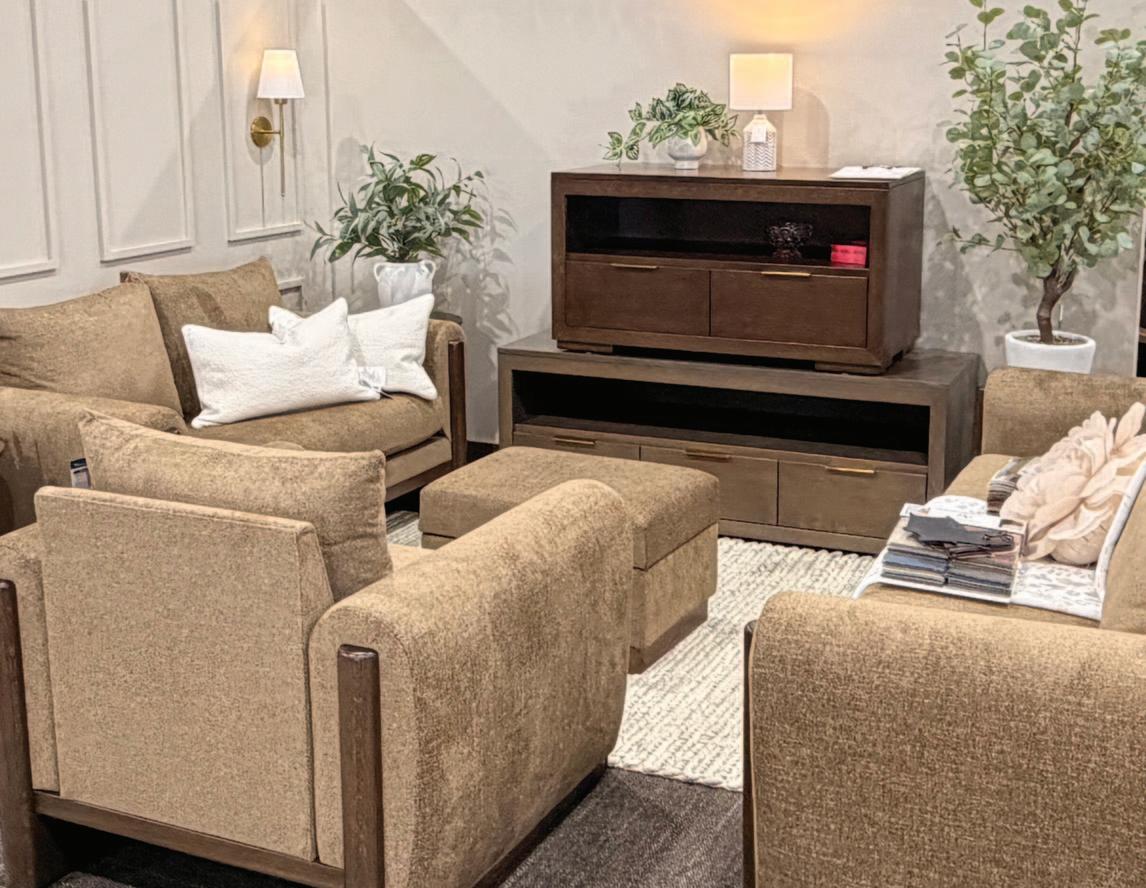
Quality Fabrications created both the upholstered and hardwood furniture shown here, at the recent Ohio Furniture Market. Warm earth tones take center stage here, and the upholstered piece features matching accented wood trim.
The Web Comes to Main Street: Wayfair, Amazon, and the Next Chapter of Furniture Retail
When is a website retailer not a website retailer? When they splash out millions of dollars on a massive retail presence in major cities.
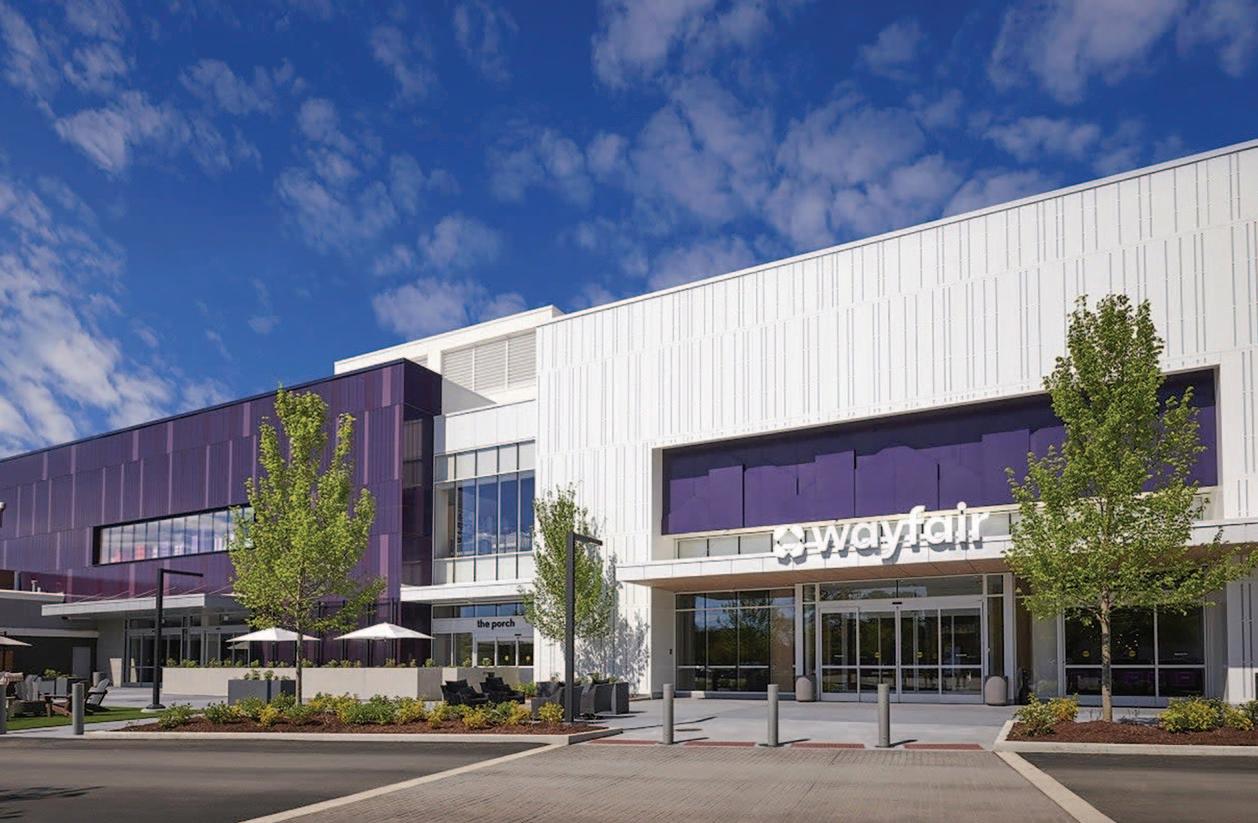
Such is the case with Wayfair (who I’m sure needs little introduction), a major online furniture retailer, which recently opened its second massive bricks-and-mortar store.
For years, the conventional wisdom in the furniture industry was simple: Online retailers would continue to take market share from traditional furniture stores, while consumers increasingly shifted toward ordering sofas, bedroom suites and dining sets with a few taps on a smartphone.
But something interesting is happening.
The biggest online players are now discovering the same thing independent retailers have known for generations: Furniture is still a tactile, emotional purchase. Consumers want to sit on the sofa. Open the drawers. Feel the finish. Walk through a
room setting and imagine it in their own home.
That reality is helping shape the next phase of the furniture business — one in which the lines between e-commerce and traditional retail are rapidly disappearing.
Wayfair’s Big Bet on Physical Retail
In perhaps the clearest sign yet that online retail alone may not be enough, Wayfair has made a major investment in physical stores. The company’s first largeformat location opened in May 2024, in Wilmette, IL (metro Chicago). Its second major store just opened in March in the Atlanta market — it’s a sprawling retail concept designed to showcase furniture, décor, housewares and design inspiration in person.
These are not modest experiments.
The stores are enormous, highly designed spaces intended to immerse shoppers in the “Wayfair experience.” They feature room vignettes, curated
collections and digital integration intended to blend online convenience with physical browsing.
And perhaps most importantly, they represent a recognition that furniture shoppers still value in-person interaction.
For years, Wayfair’s business model centered around being “asset light;” avoiding the costs associated with traditional retail stores. Instead, the company relied heavily on online marketing, search traffic and direct shipping from suppliers.
But the company’s move into physical retail suggests a broader industry realization: Customers who spend thousands of dollars furnishing homes often want more confidence before making a purchase.
That’s especially true in categories like upholstery, mattresses, dining furniture and even home office furniture and higher-end case goods. So, in many ways, Wayfair’s stores are not replacing online retail — they
are supporting it.
A customer may first discover a product online, visit the store to see it in person, then complete the purchase digitally later. Or vice versa. Increasingly, retail is becoming an “omnichannel” experience where online and physical retail work together rather than compete directly. Wayfair isn’t stopping with those two locations. They have announced plans to build stores in three additional markets: Denver CO, Yonkers, NY and Columbus, OH.
At approx. 70,000 square feet, the Columbus location will be markedly smaller than others, but the location in Columbus’s
“Polaris” mega-retail district — one that is saturated with large furniture retailers, including Swedish behemoth Ikea, is significant. (Interestingly, the Polaris/Columbus store will take over the space vacated by Art Van Furniture, which closed abruptly in 2020, just three years after the founder’s family sold out to a private equity group.)
Even though Wayfair’s foray into direct consumer retail might seem like bad news for smaller retailers, consider what they are acknowledging: Consumers still want to see, touch and experience higher-cost furniture items in person, rather than online. That’s good news for
stores that sell high-quality Amish-built furniture.
Amazon’s Continuing Influence
Of course, no discussion of online retail would be complete without Amazon. While Amazon is not traditionally viewed as a furniture specialist, its influence on the industry remains enormous. Amazon continues to shape customer expectations in several key ways:
• Fast shipping
• Transparent pricing
• Simplified returns
• User reviews
• Mobile shopping
• Aggressive discounting
The company has become
Continued on page 18
Wayfair goes retail
Continued from page 15
particularly influential in readyto-assemble furniture, budget furniture, accent pieces and, in particular, home organization and small-space furnishings.
Amazon’s strength lies in convenience and scale. Consumers increasingly begin product searches on Amazon rather than on search engines or retailer websites. That creates both opportunities and challenges for furniture manufacturers and retailers. For commodity-style products, price competition can become intense. Margins are often pressured, and products can quickly become difficult to differentiate.
But for higher-quality furniture makers — particularly domestic hardwood manufacturers — the story is different.
Why Amish-built Furniture Still Holds
a
Powerful Advantage
Despite the growth of ecommerce, one trend has remained remarkably consistent: consumers still value quality, authenticity and craftsmanship. That plays directly into the strengths of the Amish-built furniture industry. Mass-produced imported furniture often competes on price and speed. But Amish-built furniture competes on far more durable features including solid hardwood construction, customization, craftsmanship and
— perhaps more importantly — American-made labels.
In fact, the rise of online shopping may actually increase appreciation for truly distinctive furniture. As consumers become overwhelmed by endless pages of similar-looking imported products, many begin searching for pieces with character, permanence and story. That is where independent furniture retailers — especially those carrying Amish-built collections — continue to shine.
Just as significant: A knowledgeable sales staff, customizable options, wood and stain samples, and the ability to explain how furniture is constructed remain significant competitive advantages.
The Real Future: Blended Retail
The furniture industry is no longer divided into “online” versus “brick-and-mortar.” As Wayfair’s actions suggest, the future is likely a hybrid model. Even traditional independent retailers increasingly rely on strong websites, social media marketing and customer review. Meanwhile, major online retailers are investing in physical stores, showrooms and experiential retail. In other words, both sides are moving toward the center.
Consumers now expect flexibility. They may browse online, visit a store, compare prices on a phone while standing
in a showroom, then complete a purchase later from home.
Retailers that adapt to this blended reality will likely be the ones that succeed.
A Changing Industry — But Not the End of Independent Retail
The industry has definitely changed, and continues to evolve. When the E-commerce began growing exponentially in the early 2000s, many smaller retailers resisted. And, to be fair, some builders here in Ohio’s Amish Country Furniture District requested that photographs of their products not be listed online.
That’s changed.
But predictions that online retail would completely replace traditional furniture stores have not come to pass. Instead, the industry is evolving. Large online retailers are learning that physical retail still matters. Independent retailers are learning to use digital tools more effectively. And consumers continue searching for a balance between convenience and confidence.
For the hardwood furniture industry in Ohio and beyond, that evolution may actually create opportunity. Because while technology changes quickly, craftsmanship never really goes out of style.
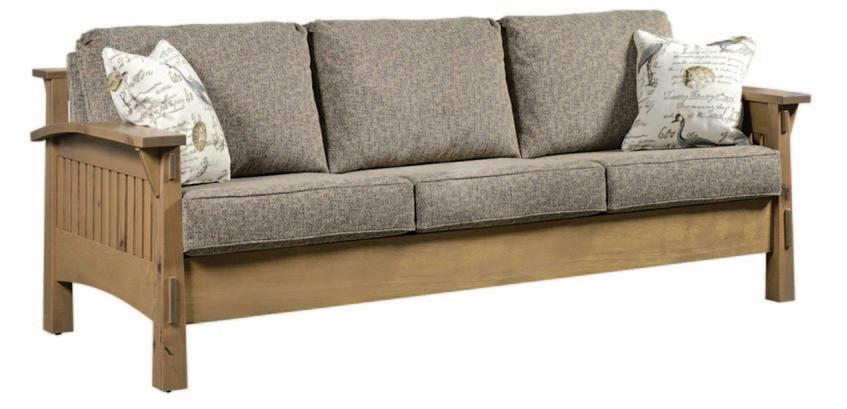
<<<The #4575 Country Mission Reversible Cushions sofa from Quality Fabrications features highend quality, comfort and style sure to please your customers. And, you can choose between the optional Soft or Firm seating cushions. Contact us to see all our latest fabric and finish choices! — See ad on Back Cover
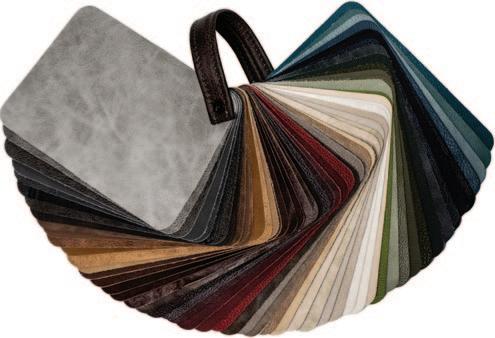
>>> Authentex Leathers supplies leathers for furniture upholstery needs. We use Full grain premium leather that gives a lifetime of durable comfort. These leathers are tested by years of handson experience in upholstery. Our leathers are carefully selected to offer a wide variety of colors and textures, with a soft hand feel that ensures comfort, durability, and ease of application for the craftsman.
— See ad on page 33
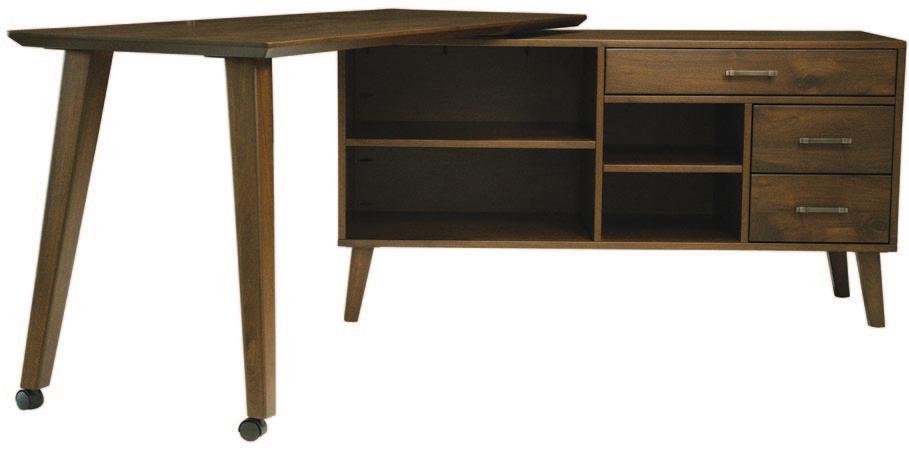
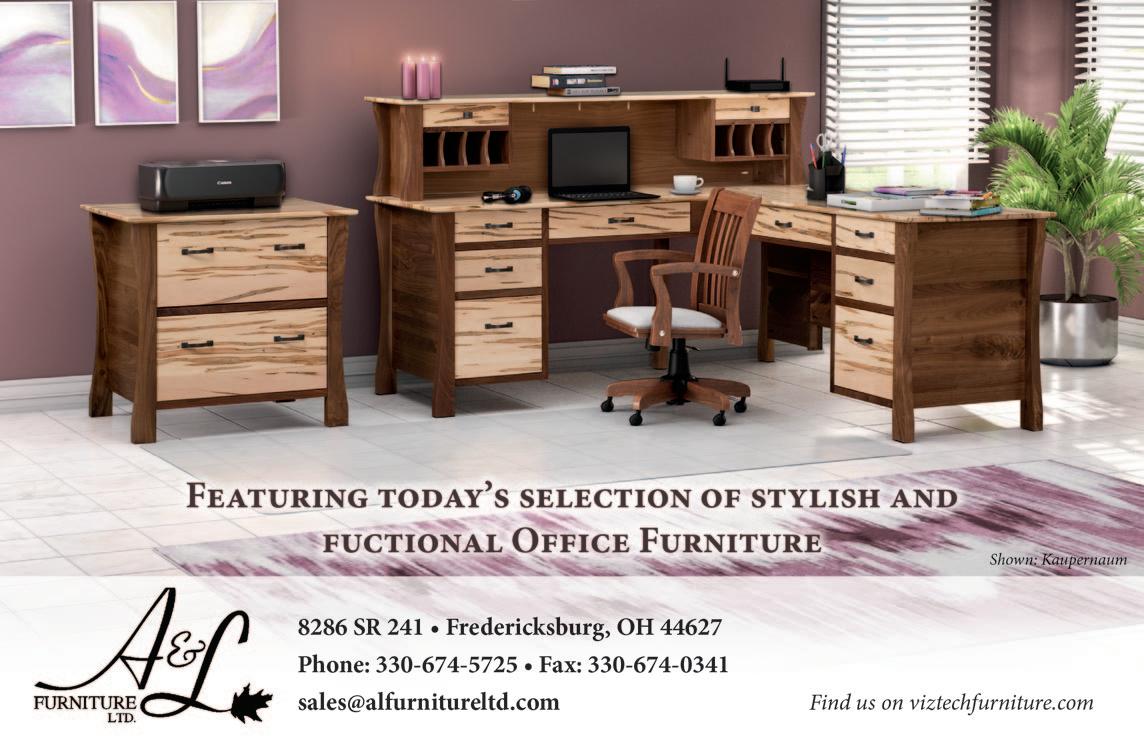
<<< A&L Furniture continues to introduce stylish, functional office and workfromhome solutions. The Lakes Mills Collection desk blends function — the table portion pivots — with distinctive MidCentury Modern style cues. — See ad on page 33
t with any decor. — See ad on page 21
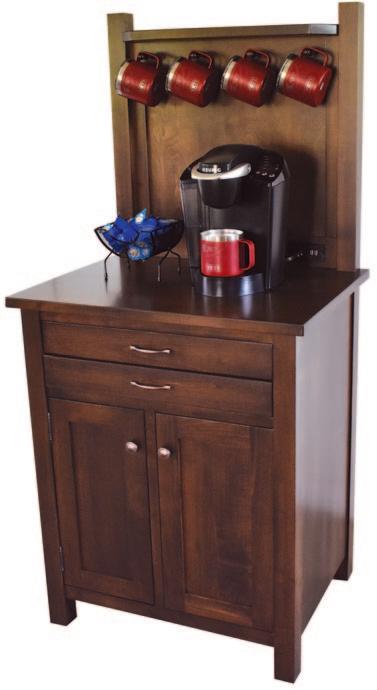
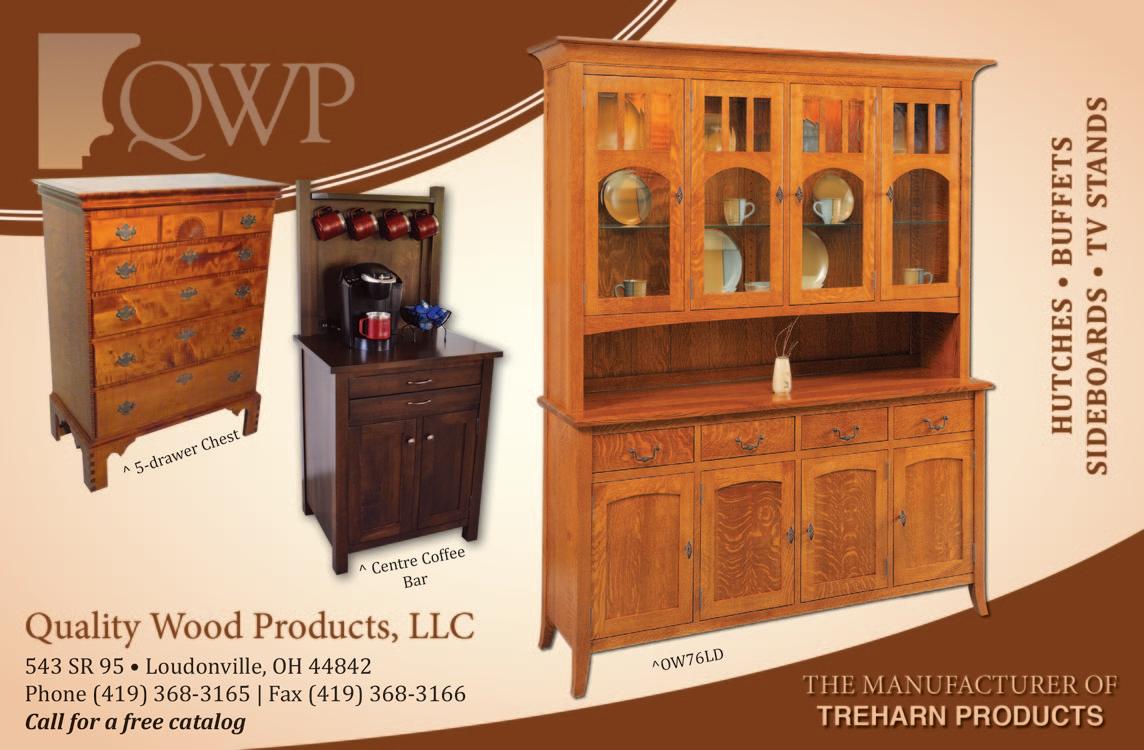
>>>The Centre Coffee bar from Quality Wood Products ng countertop clu
— and easy access for your morning co features sleek inset drawers designed for K Cups, a trash can in one door and storage on the le a phone charge? There also are two handy USB ports! — See ad on page 28
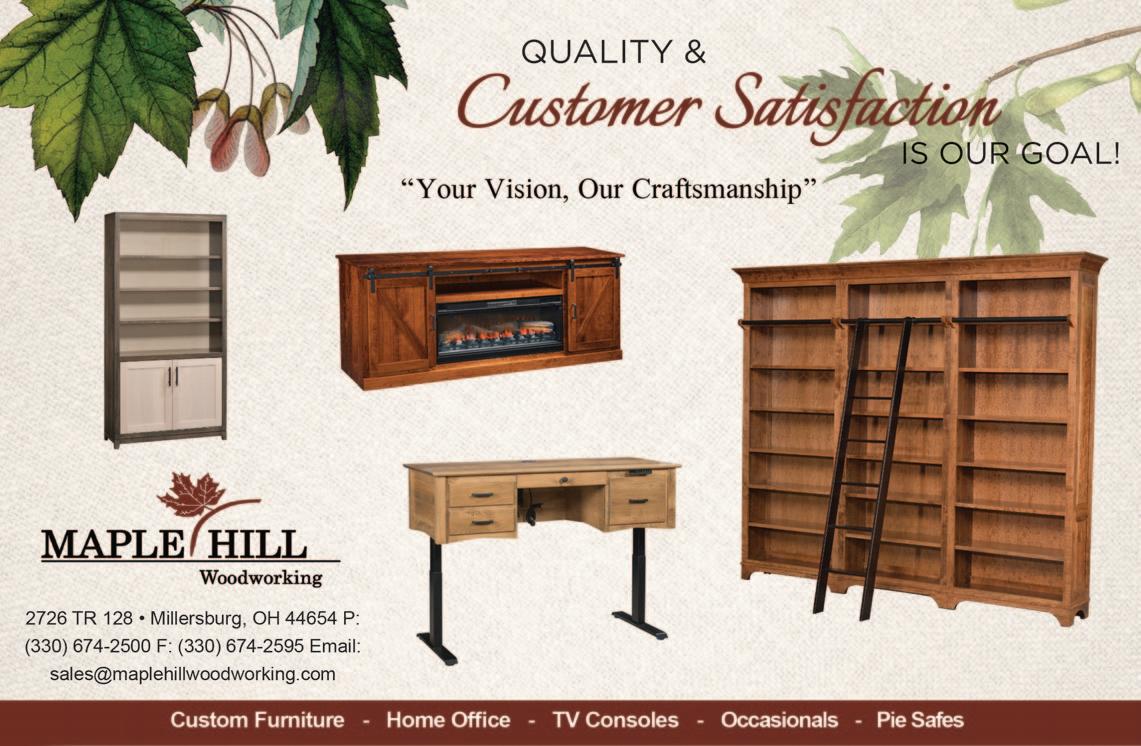
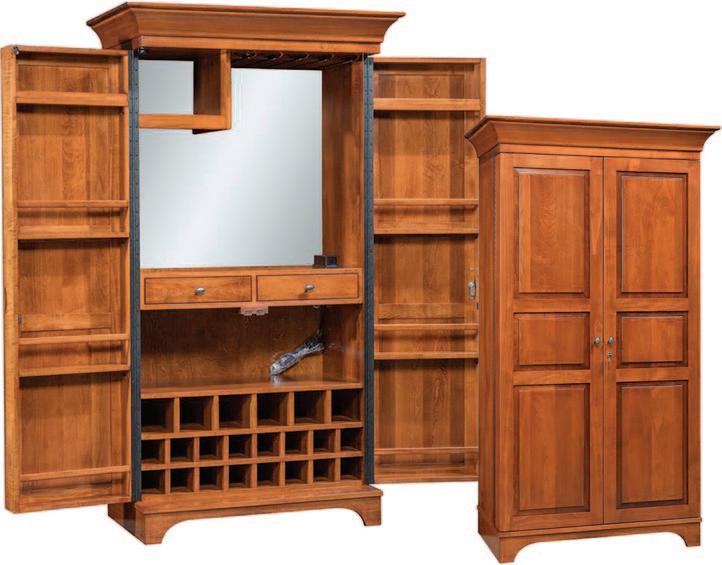
^^^Maple Hill Woodworking now offers a couple options for Wine Bar Cabinets. This cabinet gives you all the abilities to serve your guests with pride on any special occasion with no hassle to get prepared for! Or treat yourself after a hard day of work! Please see our ad on page 17 for our contact info. — See ad on page 17
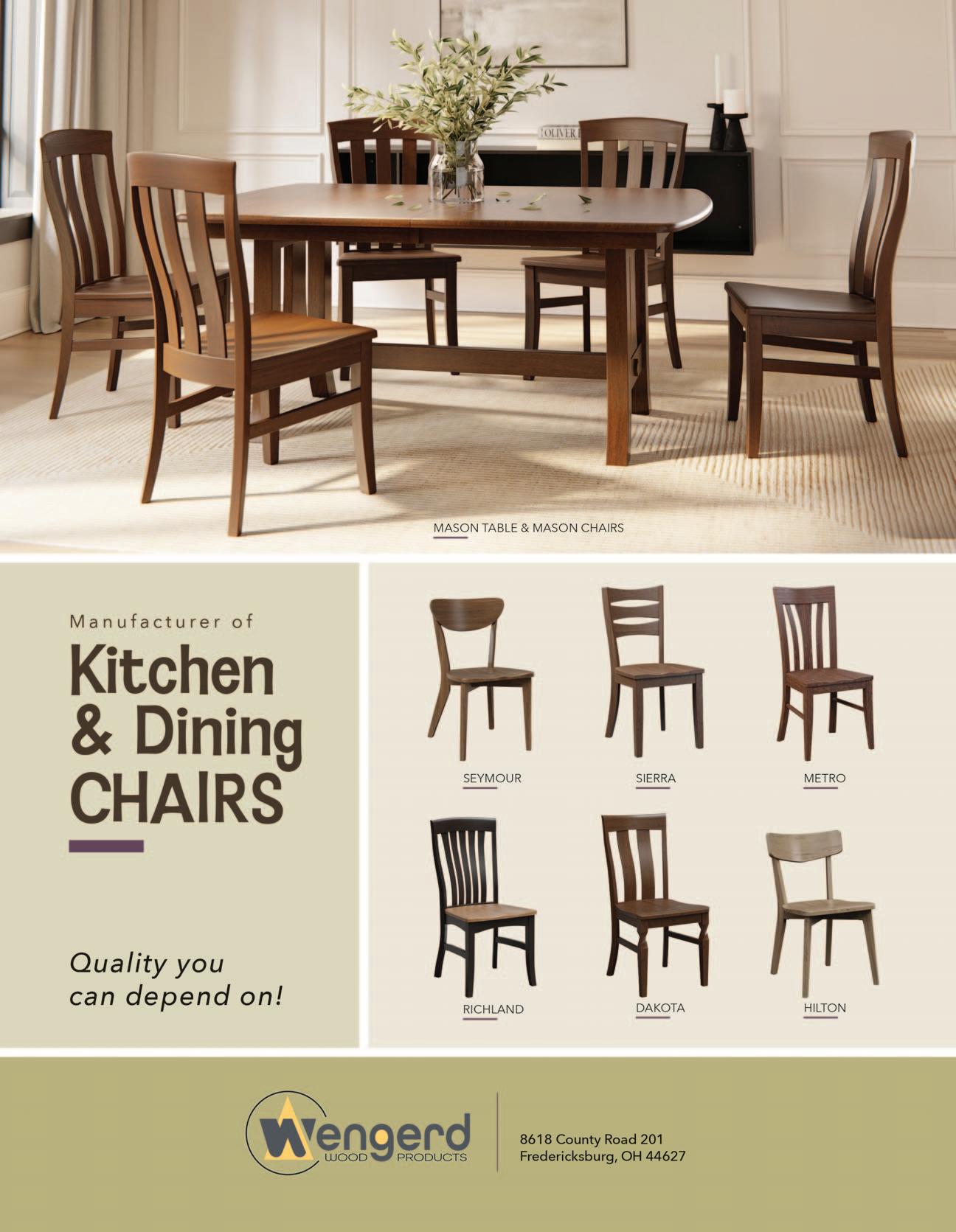
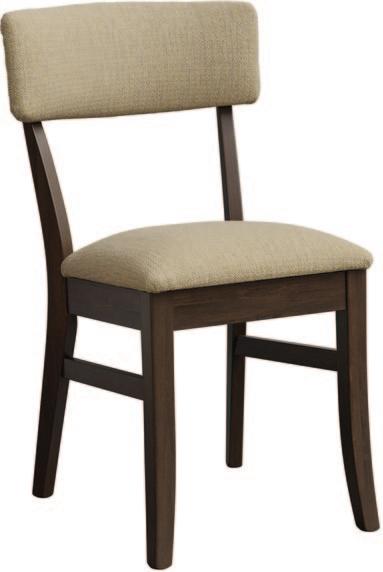
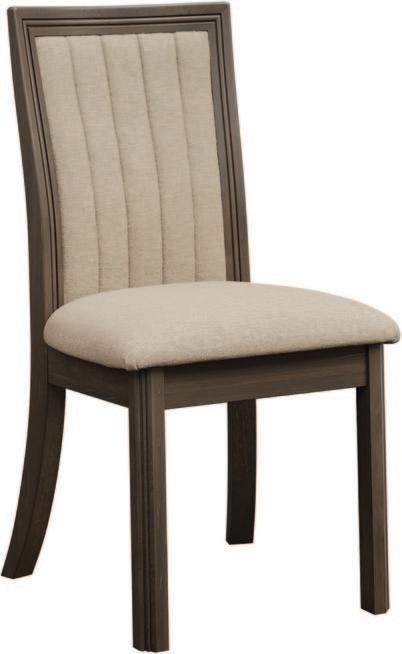
With an open look, and matching fabric features on the seat and back, the Aldrich Chair from Wengerd Wood Products combines clean, functional lines in a contemporary/ transitional look. — See ad on page 2
(Below) Schlabach Handcrafted Fine Furniture — Schlabach’s is family a owned business, providing finishing and manufacturing solid wood furniture. With over 100 years’ experience in the furniture and cabinet industry, we offer Dining / Bedroom and Occasional Furniture in a wide variety of stains and finishes. Schlabach’s staff are no strangers to highend specialty finishes. At Schlabach’s we bring peace of mind to your Showroom floor, using the highest quality coatings and attention to detail in every piece. — See ad on page 12
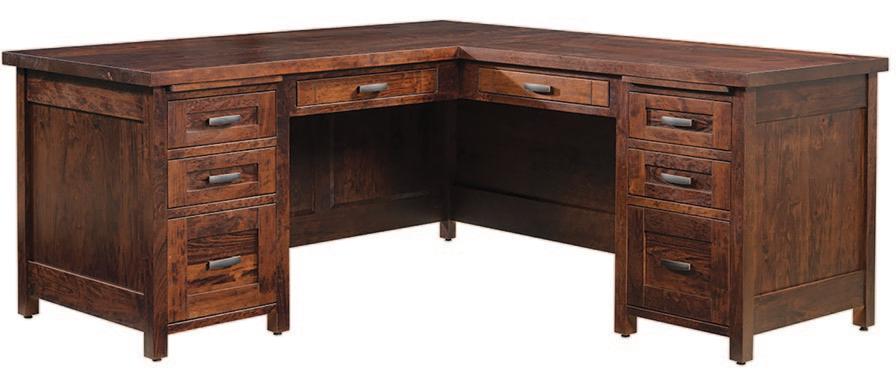
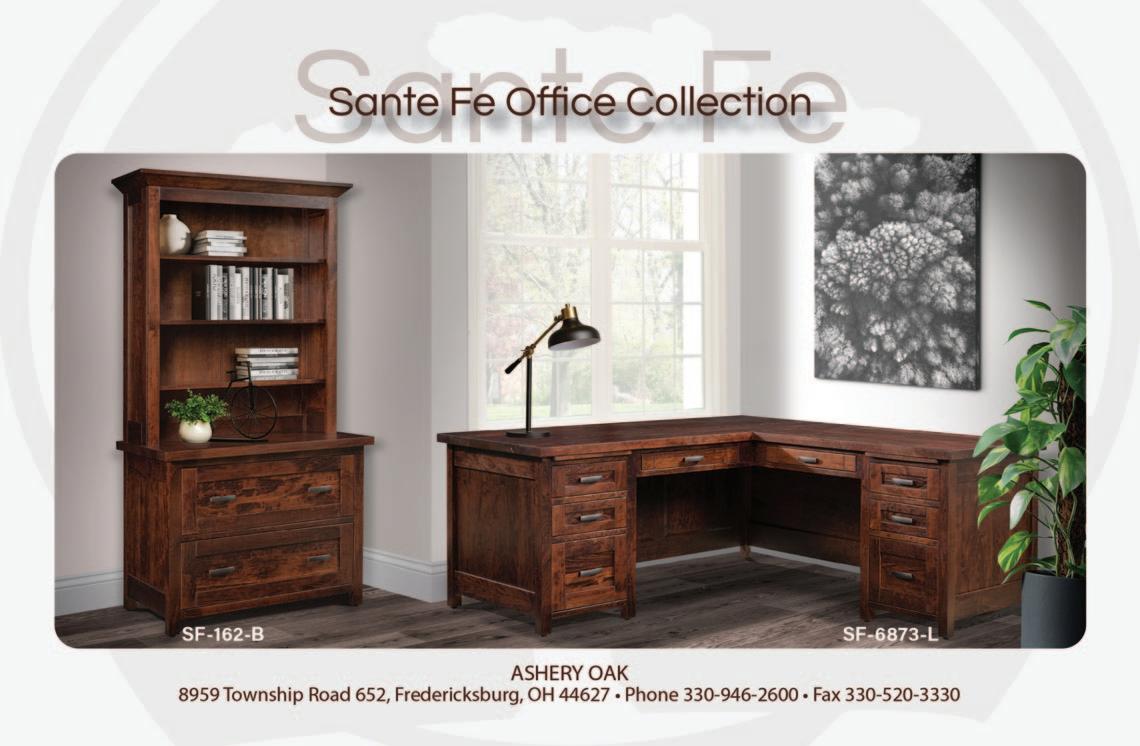
>>>Whether you’ve arrived — or you’re on your way, the SF 6873L Santa Fe Desk from Ashery Oak is the perfect solution for an executive style office space. The side panels and drawers feature an inset look, which is contin ued with the drawers. Forgedlook handles combine with the rich finish to create a look that is sure to please for years to come.
— See ad on page 29
<<<Brand new from Emerson Woodcraft is the Conway #2014 Collection! Shown here in wirebrushed Red Oak and OCS 118 Antique Slate with White finish, this new set features a threeslat ladderback chair and a solid top table with poststyle legs. The cushioned chair offers excellent comfort, and also is available in a swivel stool. — See ad on page 46
<<<The padded, tufted back cushion is just one of several ve features in the Farm
. Keeping with the latest “Transitional” styles, this model also is highlighted stepped molding details and a thick, cushioned seat that will provide hours of comfort. See ad on page 3
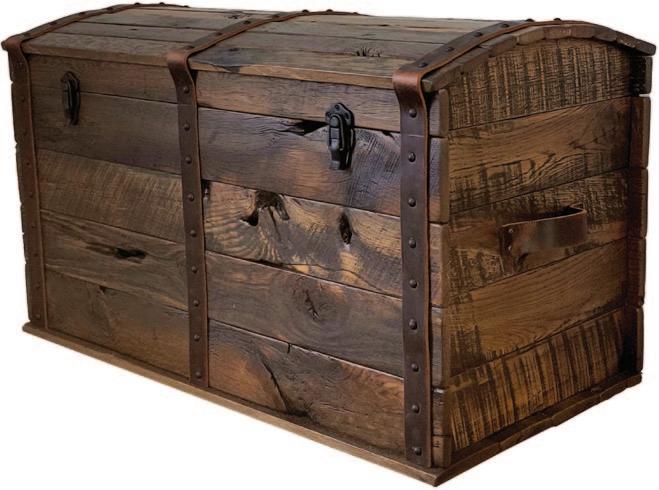
came across the ocean with grandpa, but the #8600 trunk is just one of the latest offerings from Sunrise Wood. With strong rusticwood features and genuine leather straps, your customers will be thrilled to store their “treasure” in this beautiful piece! — See ad on page 19
The durable, vibrant coatings from Finishing Designs are engineered to stand the test of time. We’re available to serve all your custom finishing needs on kitchen and dining room tables and chairs. — See ad on page 21
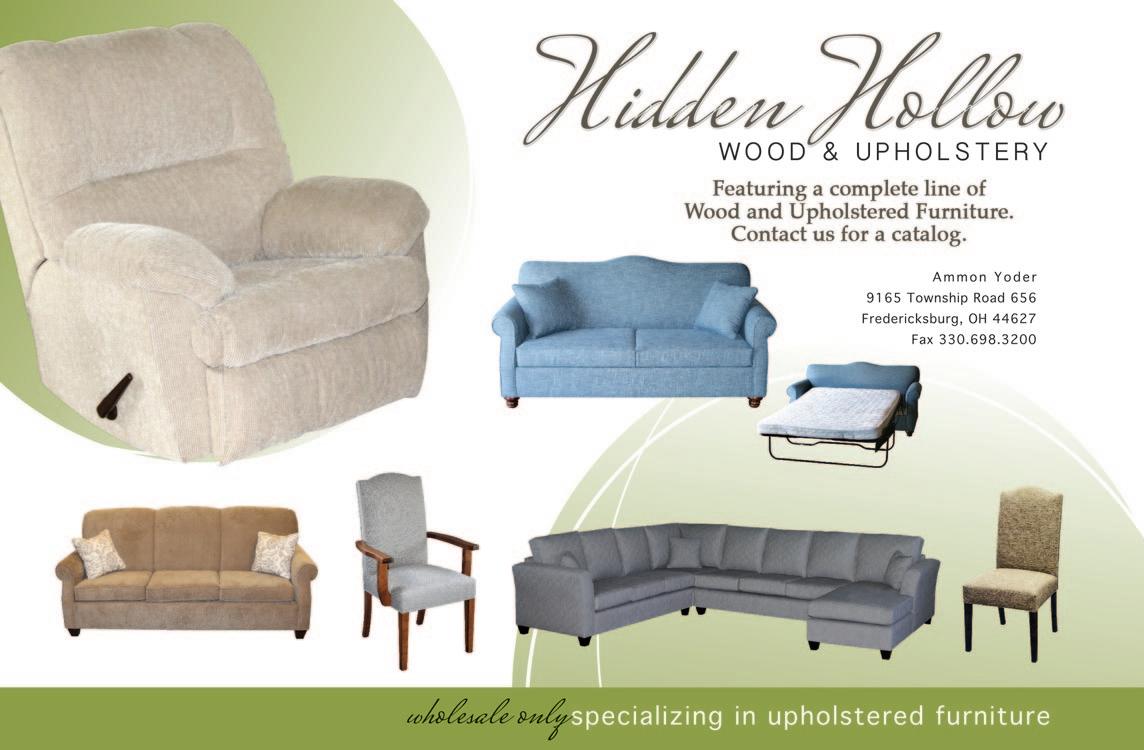
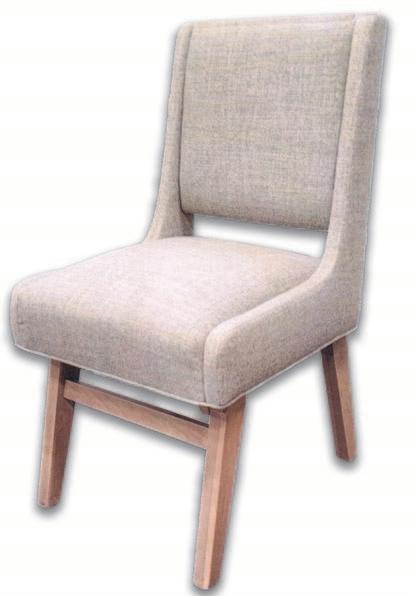
>>>The Coastal Chair from Hidden Hollow Wood and Upholstery is a comfortable, modern and stylish design. The cushioned seat offers maximum comfort, while the angled legs make for an eyecatching design. — See ad on page 16
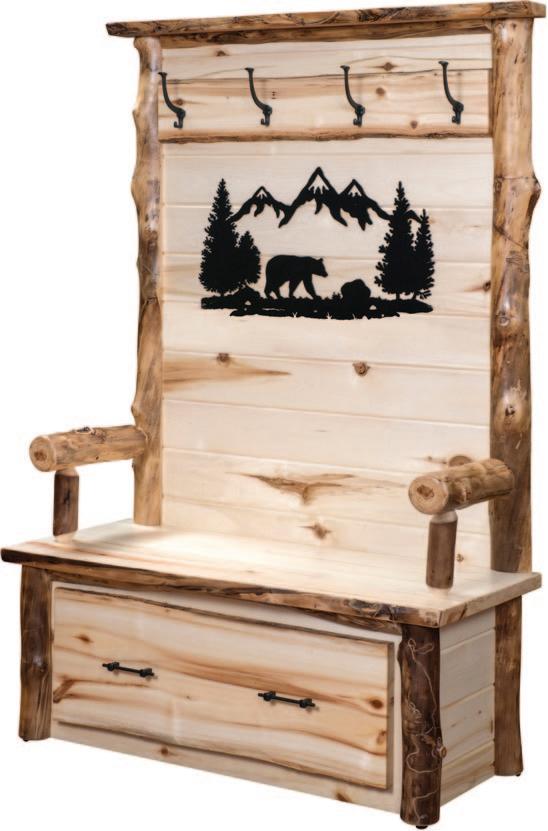
one of our best sellers, with four different metal scenes to choose from. Quad M Rustics offers this piece along with other good sellers in our Quick Ship Program. — See ad on page 20
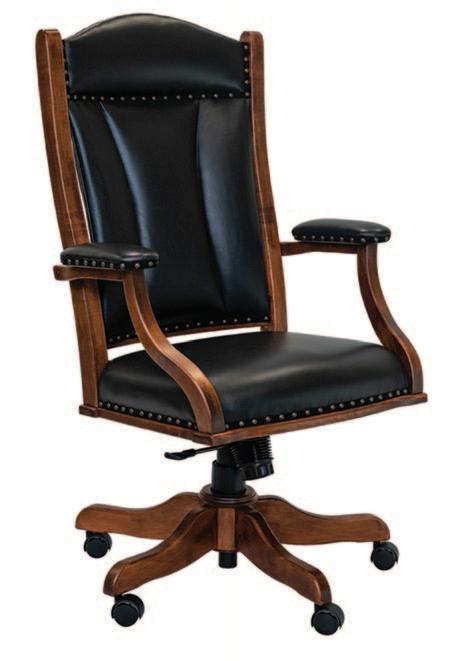
^^^At home in either your corner office or home Office, the DC55 chair from Buckeye Rocker is long on comfort and style. Padded surfaces all around are paired with a classic design, for a chair that is sure to please for many years. — See ad on page 7
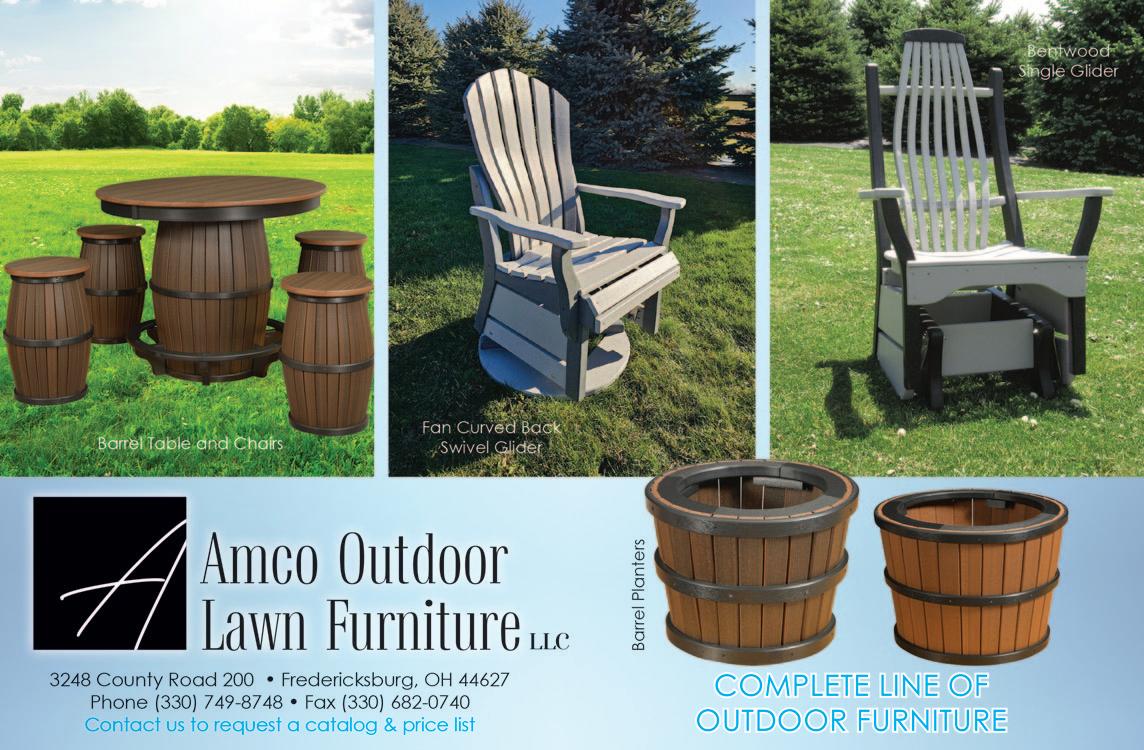
^^^Whether you’re poolside or gathered around the barbecue, outside storage is convenient, sturdy and attractive with the Jackson Outdoor Hutch by Amco Outdoor Lawn Furniture. Shown here in Brazilian Walnut/Birchwood color combo, It’s designed as a server/poolside hutch/storage piece. — See ad on page 32
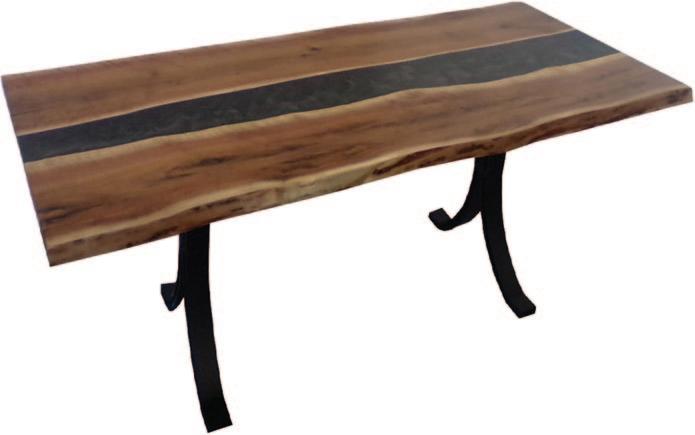
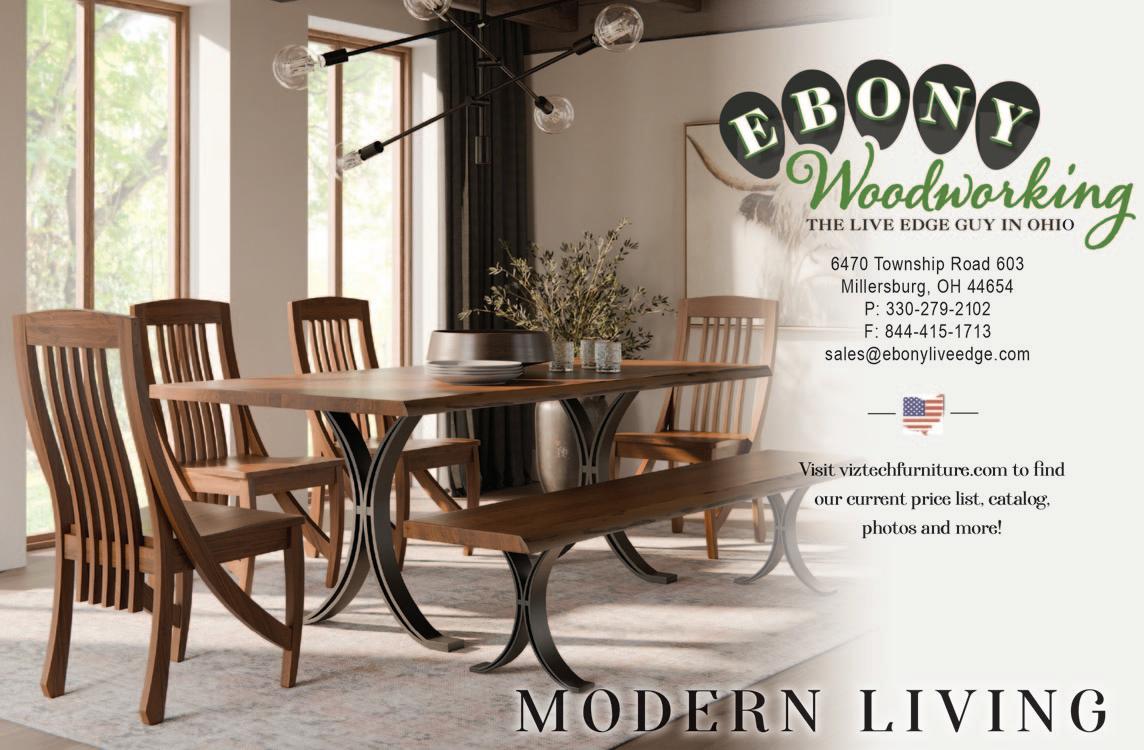
>>>Ebony Woodworking reports that the Walnut River Table is a difficult model for them to keep in stock! With its stylish metal base, and “river” effect in the middle of this thick solid Walnut top, it’s easy to see why! — See ad on page 32
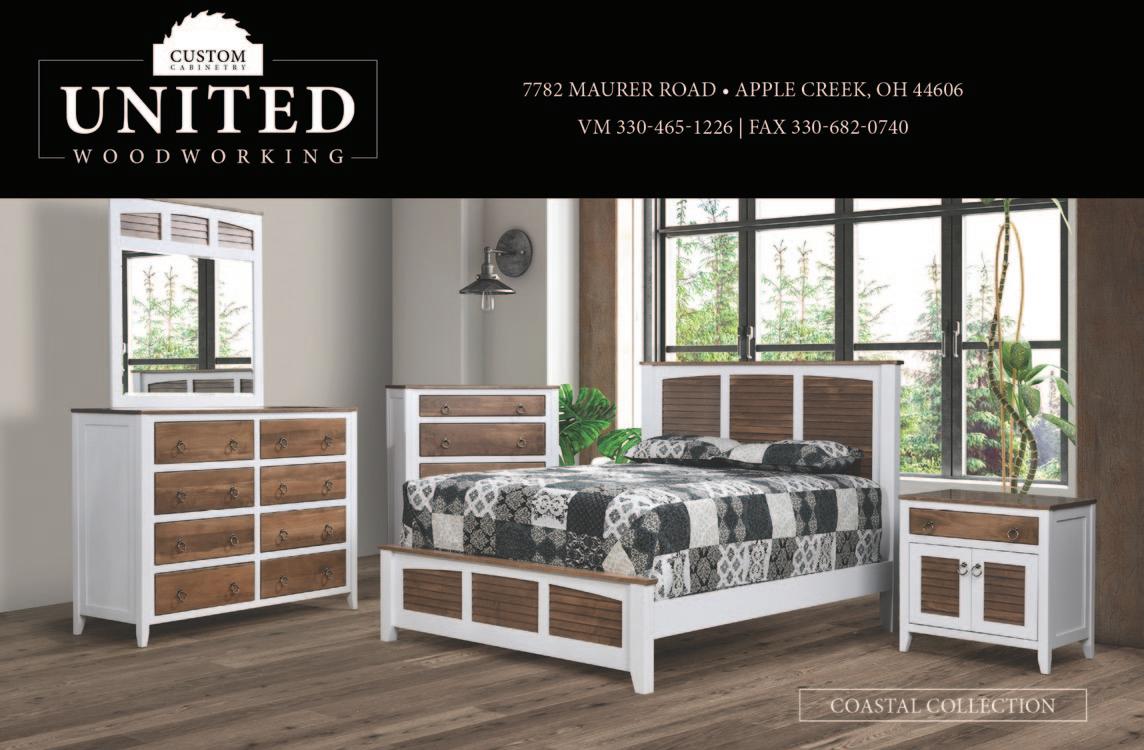
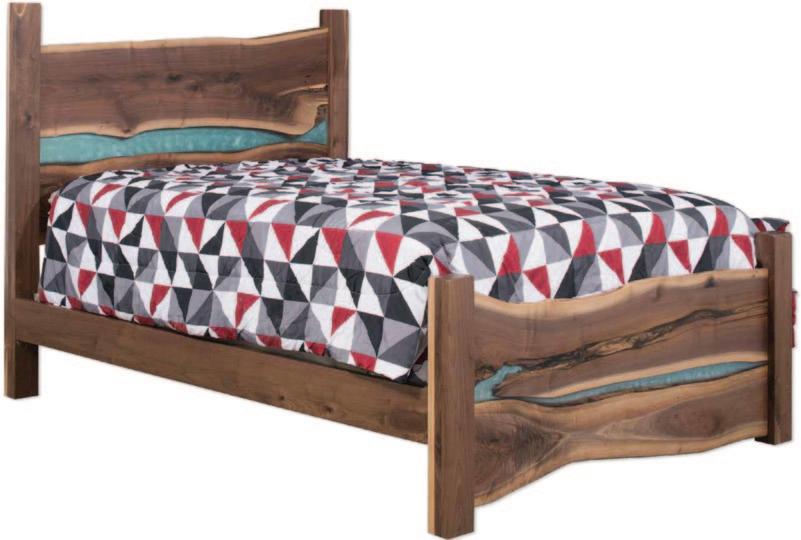
<<<Relying heavily on rustic, liveedge styling it’s no wonder that the Tampa Bay Jr. bed from United Woodworking is a top seller. Shown here in Walnut, every piece has its own unique character and style. — See ad on page 29
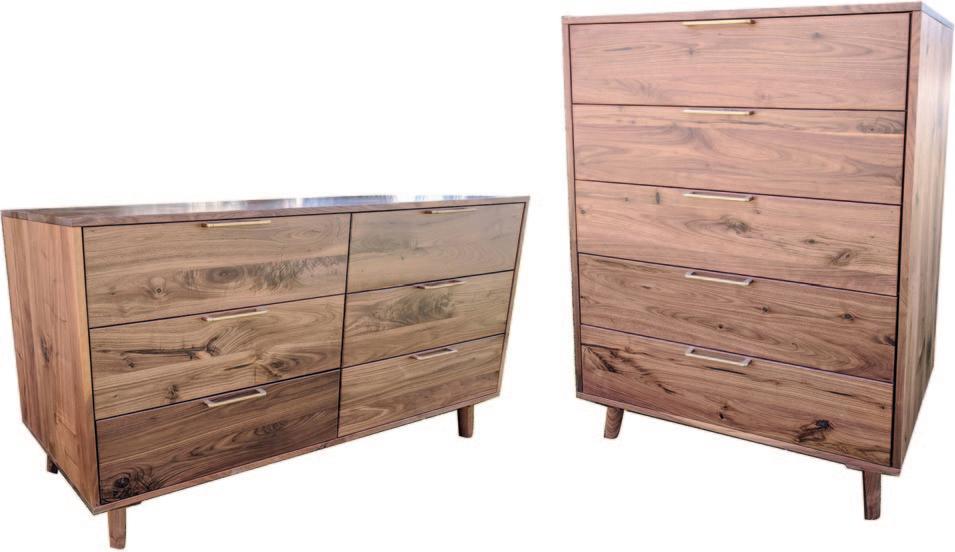
>>>These stunning case goods, shown in beau Dresser and Chest from accented by beautiful metal pulls. for Glass Top Specialti all manufacturing and administrative operations. — See ad on page 24
<<<If you’re looking for an attractive conversationstarting pointofpurchase display from the heart of Ohio’s Amish Country for your store, look no further than these handcrafted soaps from Miller’s Natural Products. Featuring a variety of 72 individual bars in a small footprint, this item is a surefire revenue generator. — See ad on page 11
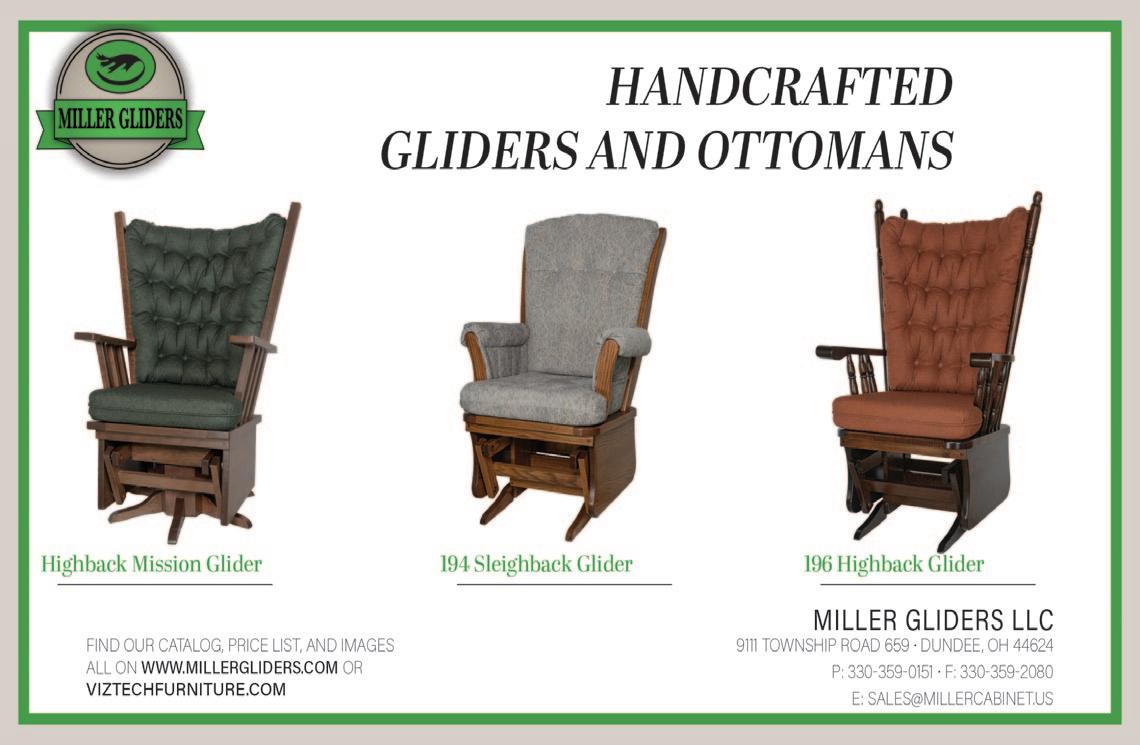
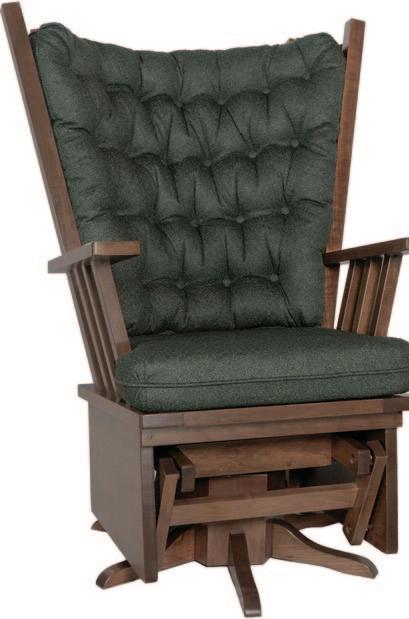
<<<You don’t have to be a grandma or a new mom to enjoy the oldtime comfort of the High Back Mission Glider from Miller Gliders, LLC — but they’re both certain to enjoy it! Thick cushions and a timetested glider mechanism combine to make this a chair everyone in your home will want to experience. — See ad on page 25
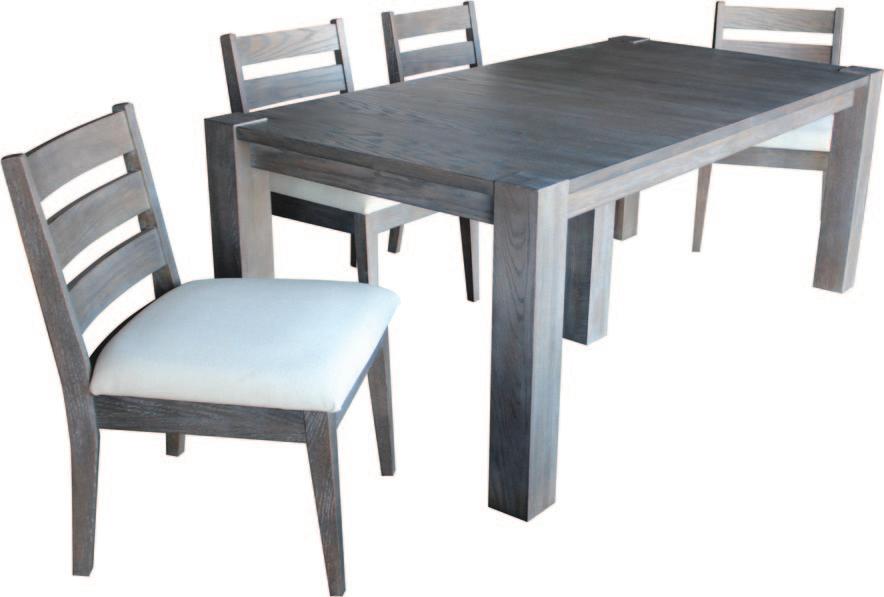
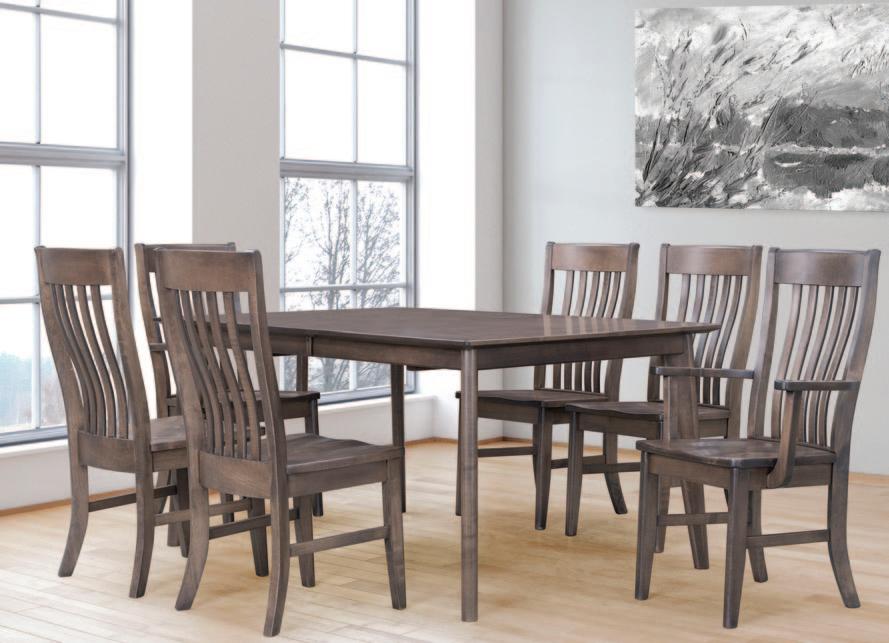
^^^The Albany Dining Set from Hillside Chair features a stylish table with clean, minimalist lines. The legs look almost pencilpost style from a direct view, but actually are neatly tapered, and integrated with the top. The chairs feature a Missionstyle back with curved slats and deeply contoured seats for maximum comfort. — See ad on page 20
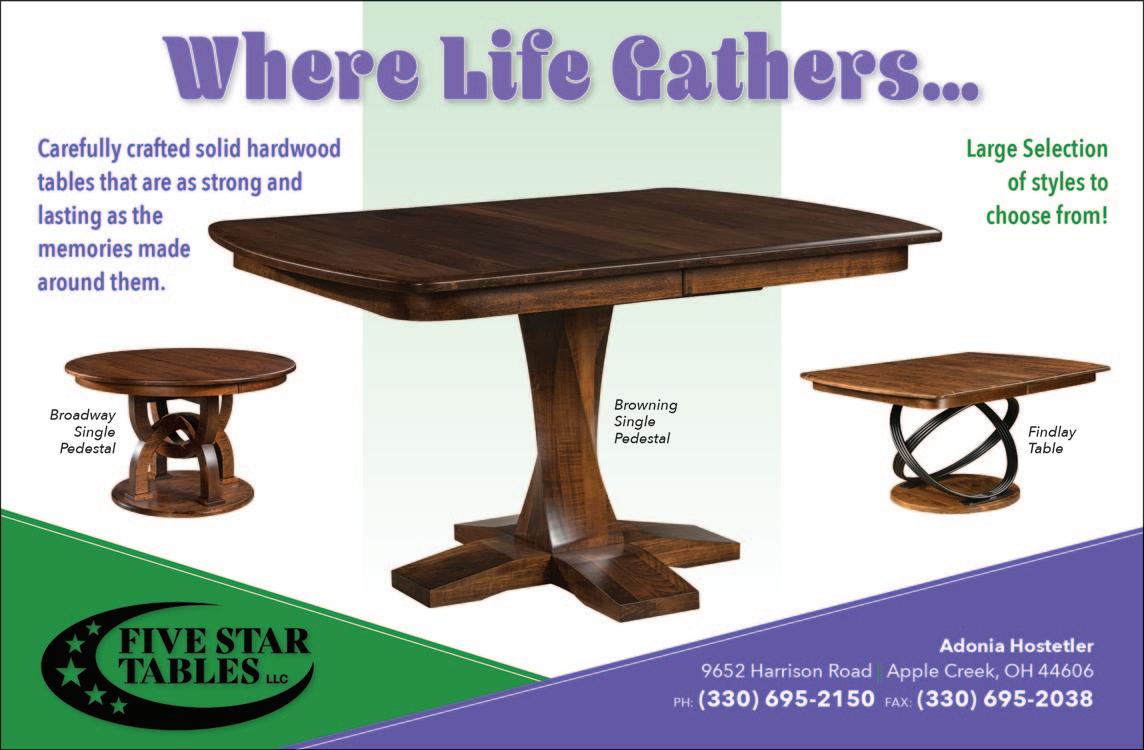
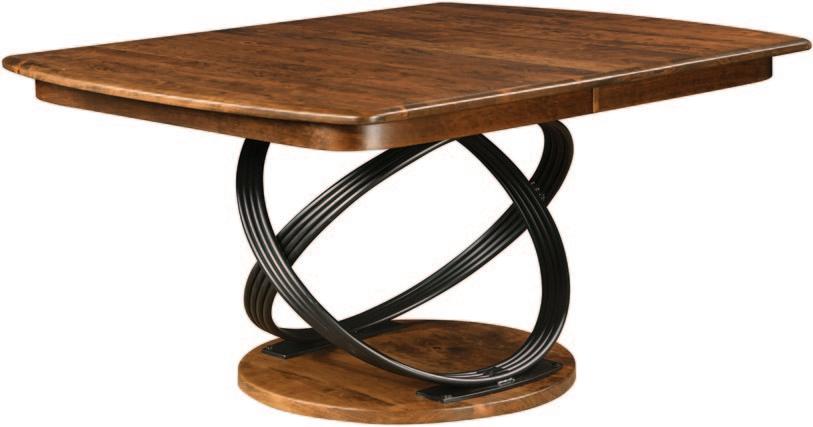
>>>When your customers ask for “something di ent,” you can show them the new Findlay dining table from Five Star Tables Featuring two opposing circular, industrial style supports, on top of a round solidwood base, this new model is sure to be a hit in your show room! — See ad on page 16
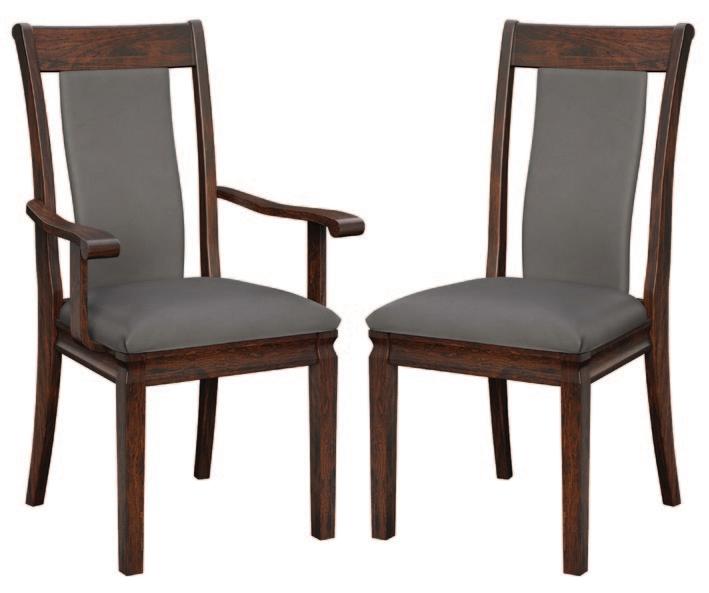
<<<With the introduction of the new Bellville side and arm chair, County Comfort Woodworking has just taken seating to a whole different level. The wide, curved slat is shown here wrapped in leather that matches the padded seat. The entire presentation creates an attractive look that is sure to impress your guests, and provide maximum comfort. — See ad on page 40
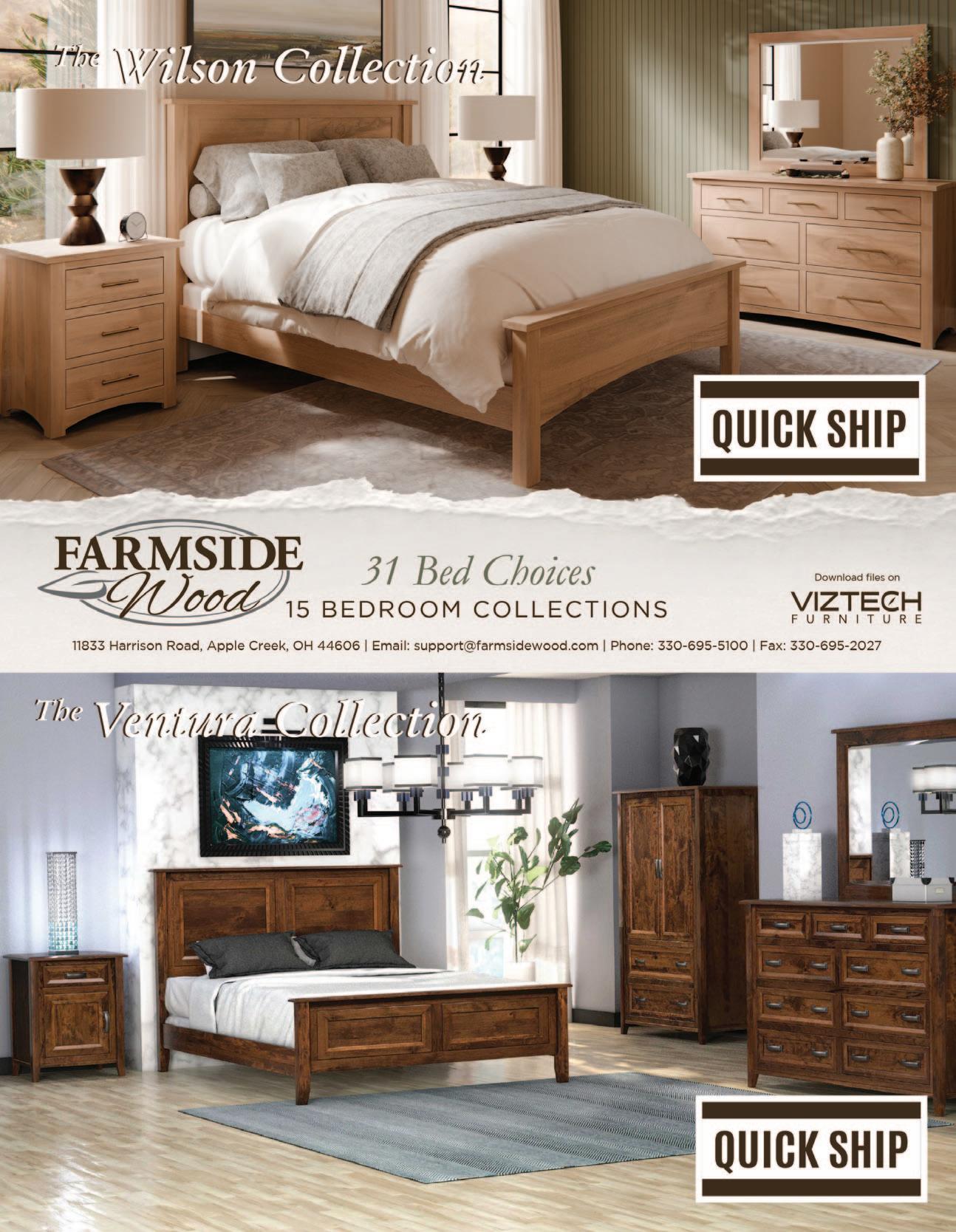
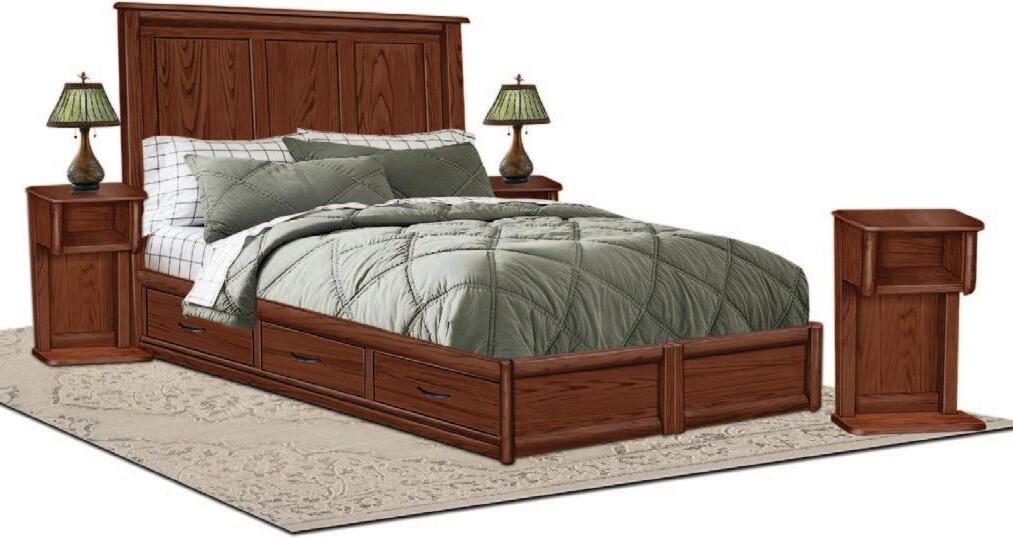
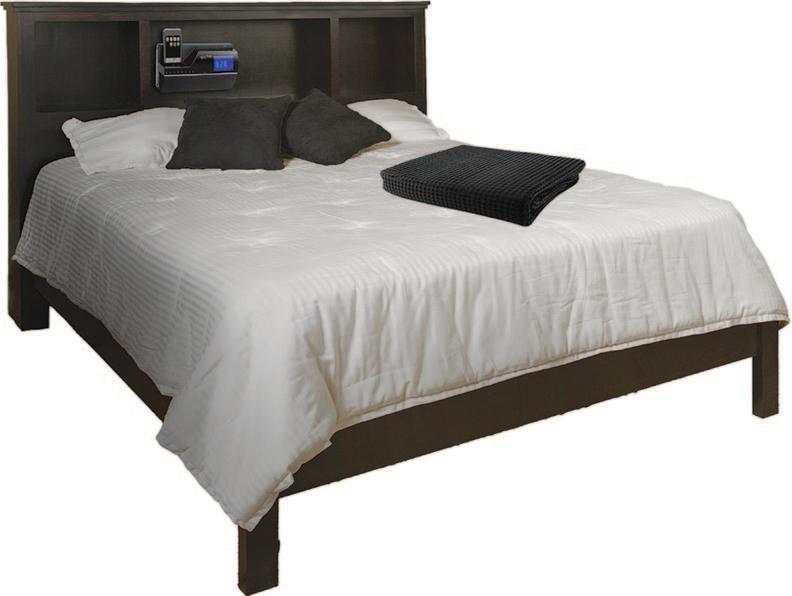
<<<Need more storage in the bedroom? Be sure to check out the #22 Bookcase Bed from Farmside Wood. With room for books, personal electronics and more, it’s an excellent solution in places where a little more space is needed, but you still want to preserve the traditional styling. — See ad on page 5
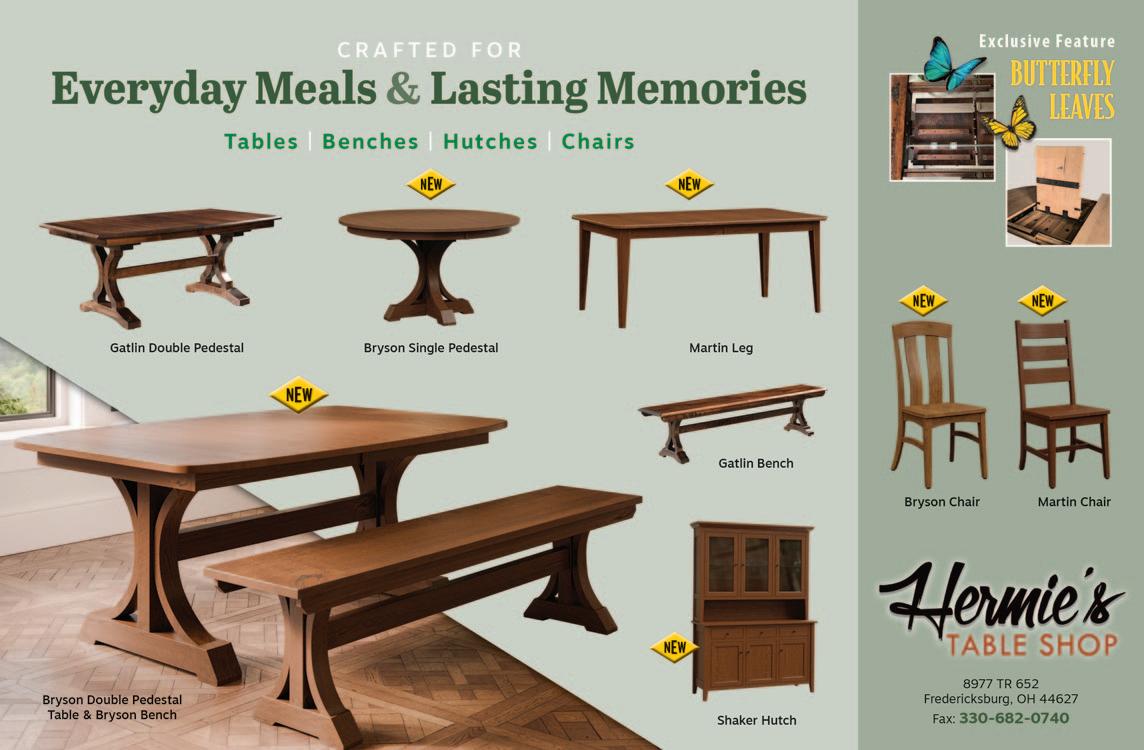
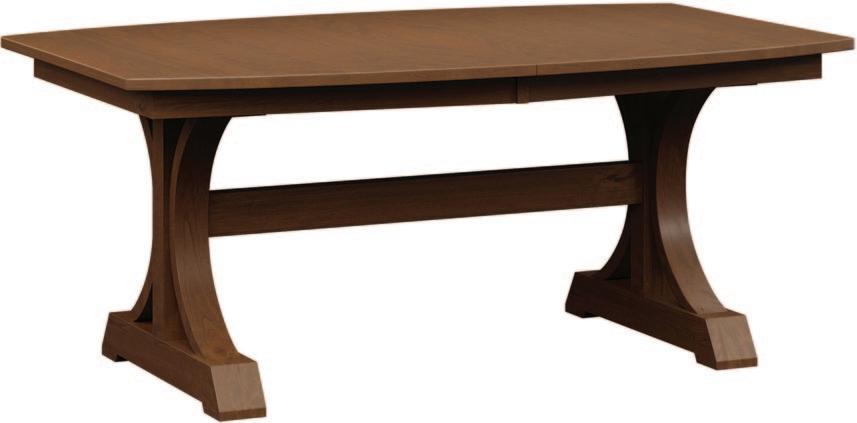
>>>The Bryson Double Pedestal Table from Hermie’s Table Shop is at home in either formal or morecasual spaces. The ends of the pedestals show an updated look, and a partial circle pattern that is with a cross member, while the top is gently nar rowed at the ends. Pair it with your choice of chairs to create just the right look for your home. Be sure to ask us about the latest — See ad on page 24
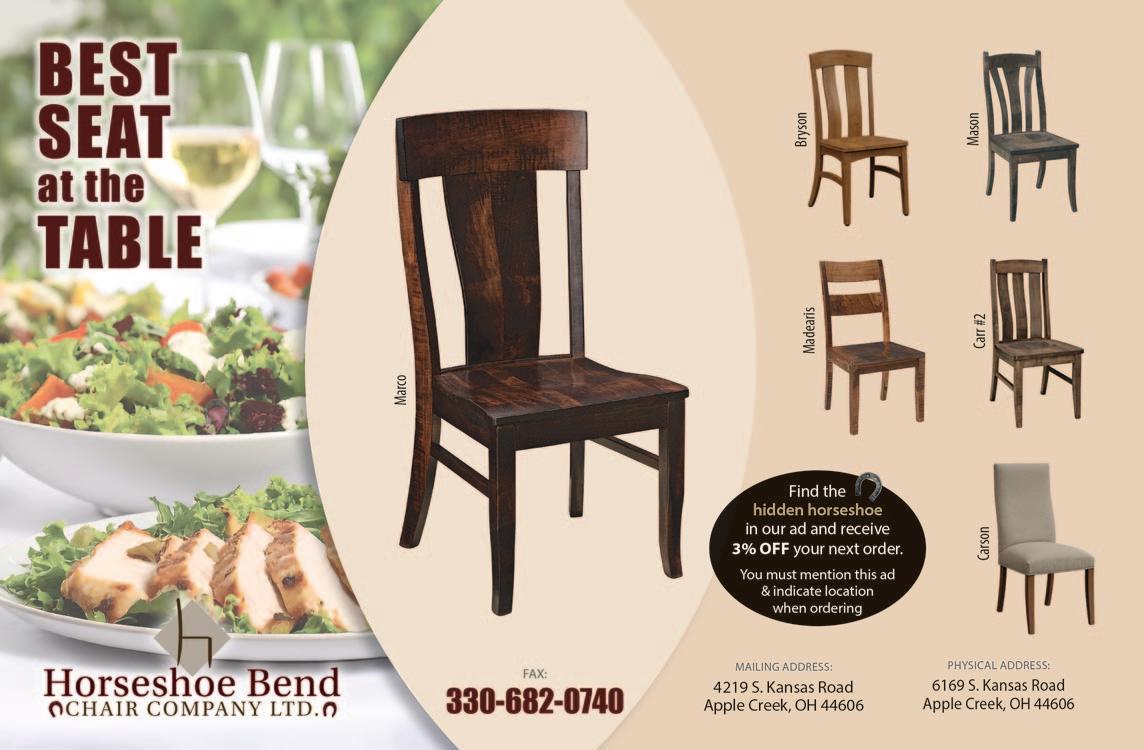
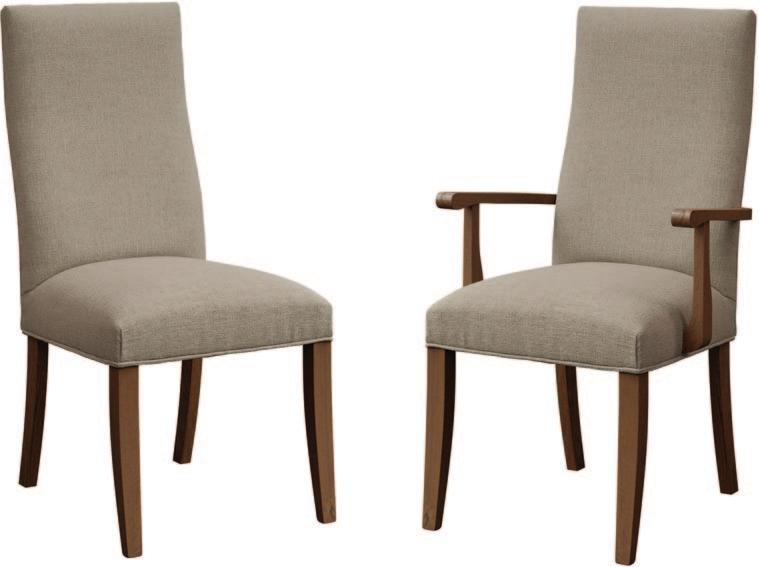
<<< With the addition of the Carson Chair, Horseshoe Bend Chair, offers a model that offers both style and comfort in an upholstered chair. Choose the fabric and stain colors that match your table, and create just the right look for your dining room!
— See ad on page 28
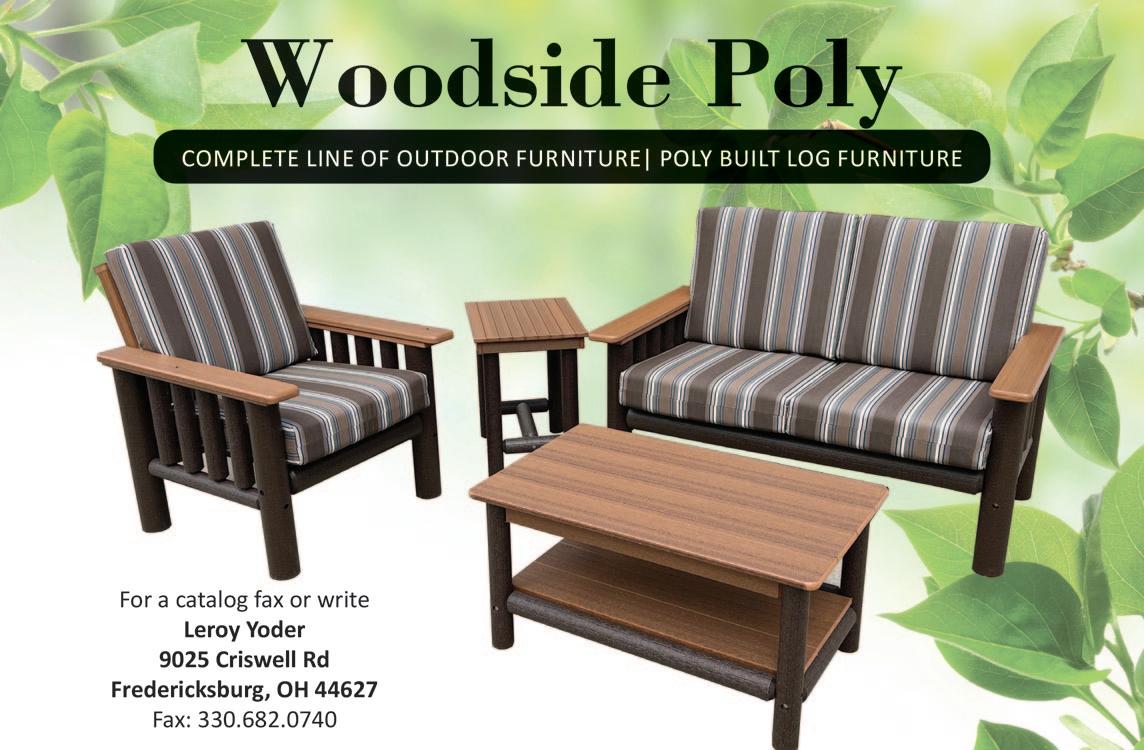
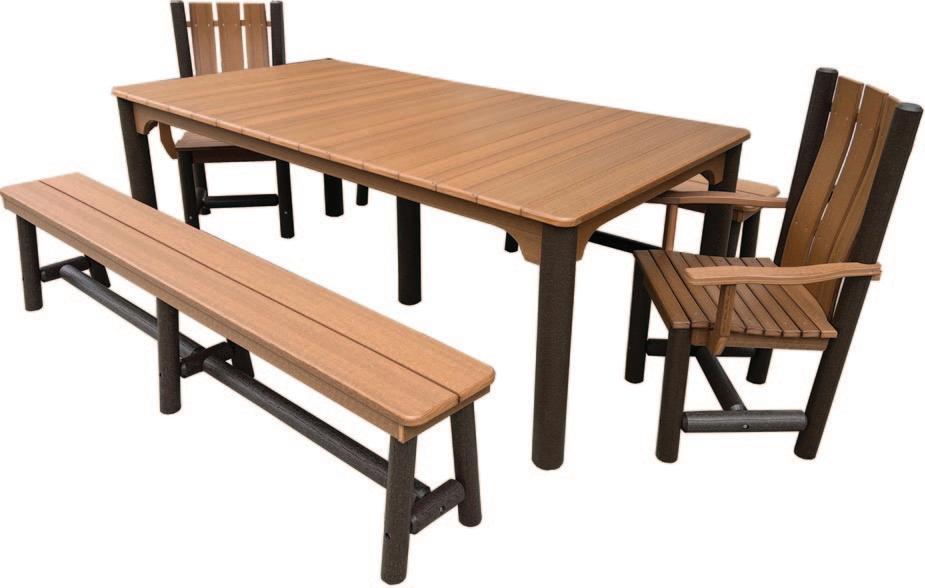
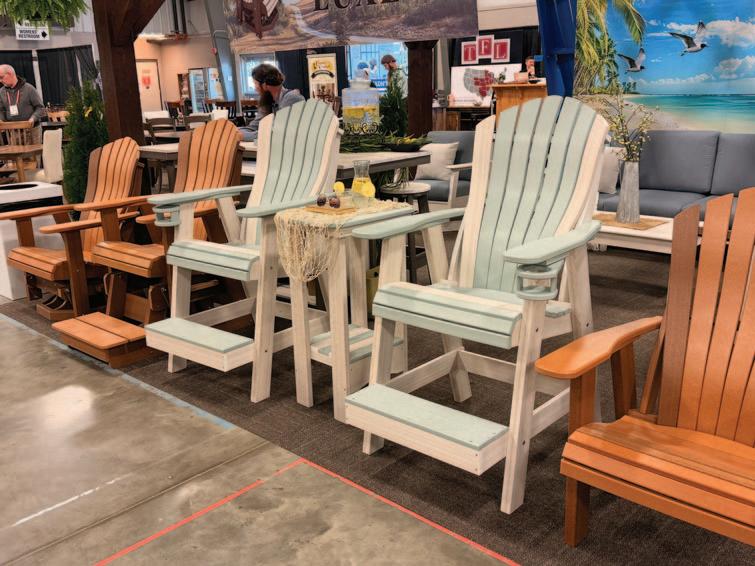
<<< Outdoor dining has come a long , which just introduced this new twoon. The legs, supports, etc. are shaped like real logs, but acturesistant poly lumber. Available with both chairs and benches, See ad on page 25
2026 Ohio Furniture Market was largest ever
As the Ohio Furniture Guild’s ad on page 47 says, “You should have been there.”
If you were at the recent Ohio Furniture Market, you experienced the largest furniture show this region has ever produced.
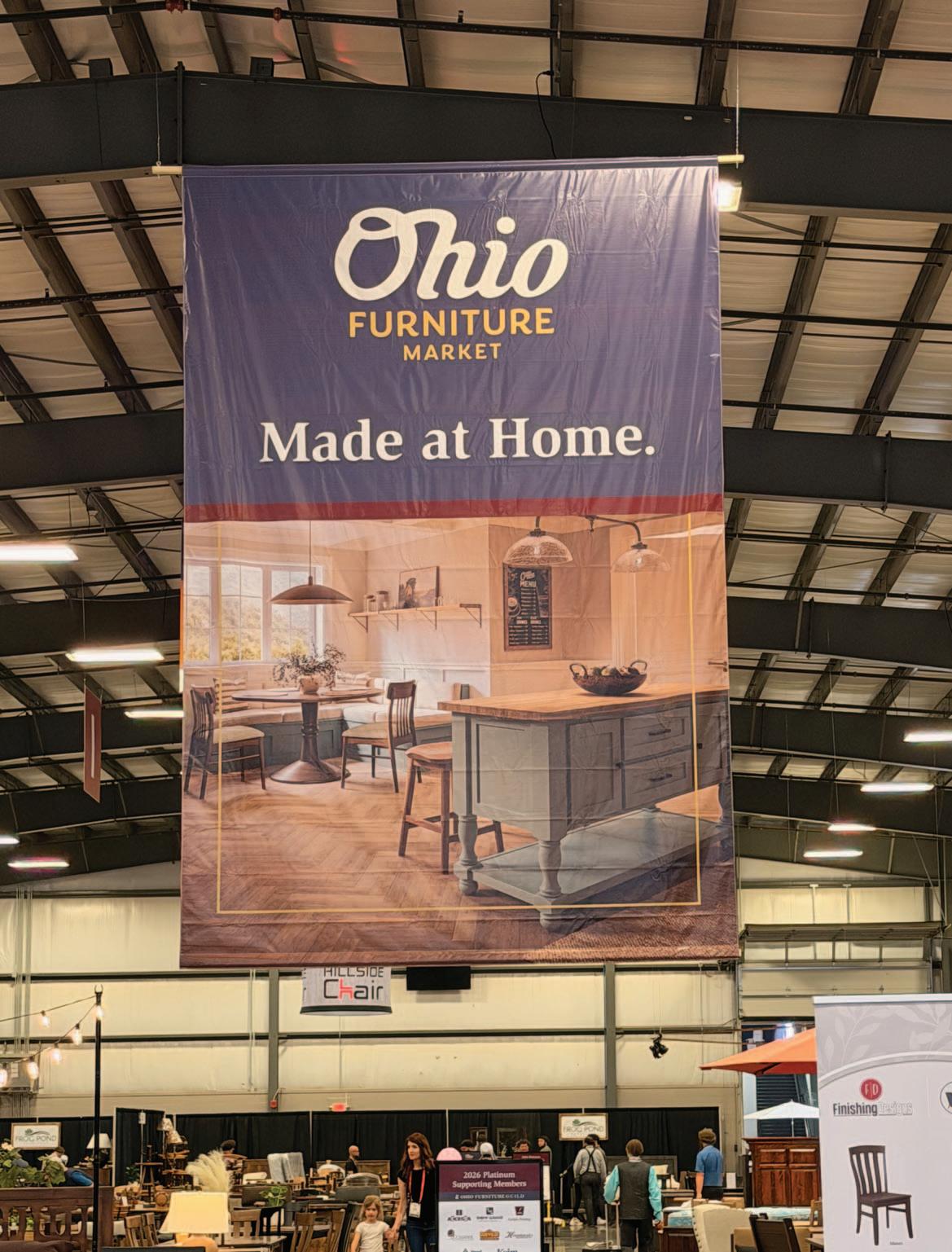
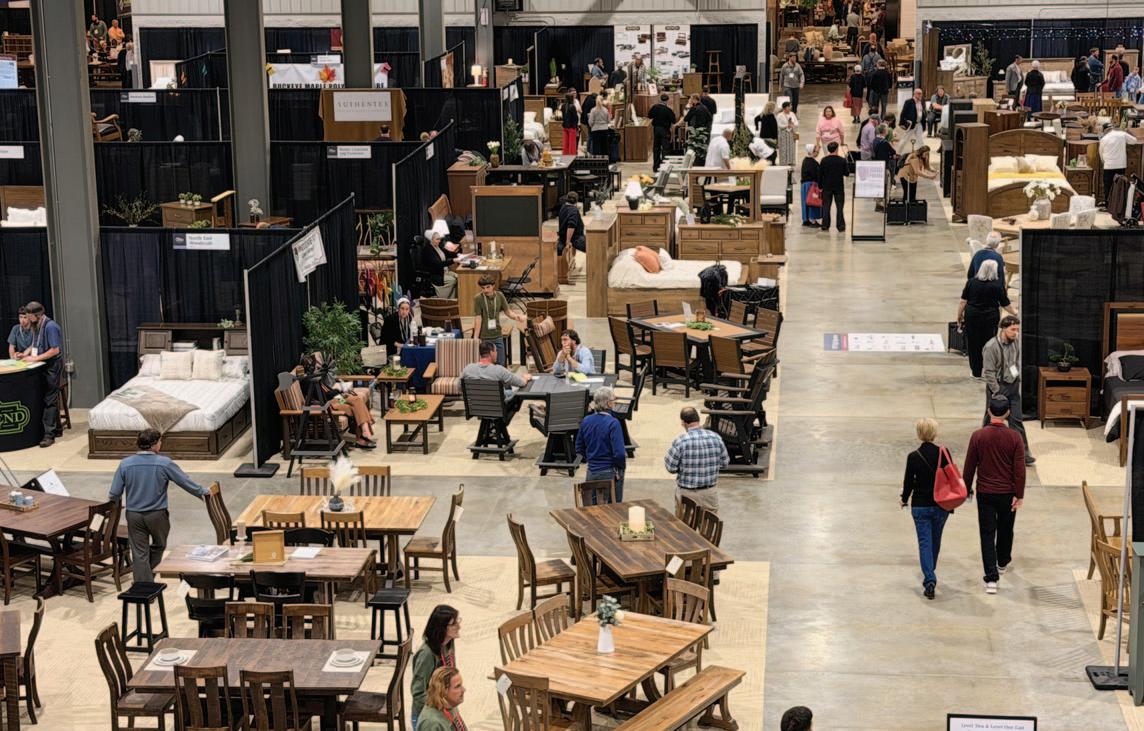
From April 7-9, more than 160 furniture producers and dozens of support businesses from Ohio’s Amish Country Furniture District participated in the greatly expanded event at the Mt. Hope Event Center, in the heart of Ohio’s Amish Country.
Those builders presented their products to a record-sized group of buyers, as well. A total of 436 companies and 1,041 buyers attended the Market, representing 42 states and Canada.
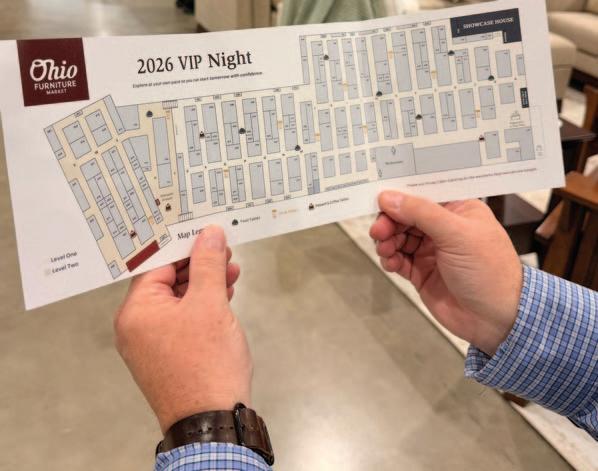
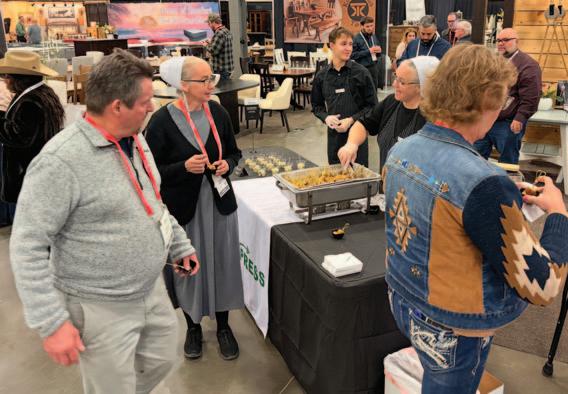
The event included a VIP night, where exhibitors and attendees mixed, mingled and chatted in a relaxed, “no sales” environment that featured a delicious array of h’ors d’oeuvres inspired by Amish-style comfort food. This was the second year for the VIP reception, and it has quickly become a major hit. This year, event organizers, led by the OFG board members and Executive Director Kendrick Mullet, printed a map that led guests through the event center and to the various treats — from entrée-style items to dessert and coffee. It was something akin to a treasure map!
The VIP night attendance was up 41 percent from last year — so the word is out, that this is not to be missed!
Since last year, two of the buildings on the Mt. Hope Auction campus (the Mt. Hope Event Center and the Dean Beechy Arena) were knitted together with a massive connecting space. This not only put the entire event under one roof, and eliminated the need for attendees to traverse a covered outdoor tunnel to the second building, but also added xxx additional booths — all of which were filled.
Whether it was the excitement of finally being in an all-underone-roof location, or just one more sign of how this industry continues to grow, adapt and move with the market, Mullet said the 2026 event made a noticeable impact on buyers attending, “I heard it over and over again from buyers — the Market felt elevated and truly showcased the craftsmanship of Ohio furniture at a very high level.”
Also featured again was the
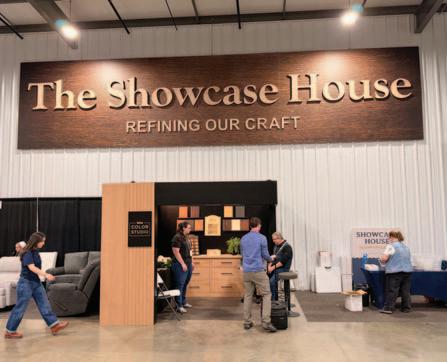
popular Showcase House, where individual rooms and living space were decorated with furniture placed by builders. This year, 39 selections were made from hundreds of builder entries. The Showcase House is a “designforward” exhibit that features currently trending styles and designs, with an eye toward blending in with the latest colors and decorating trends.
Again this year, show attendees and exhibitors were treated to breakfast and lunch by the
Continued on page 38
Treasure map? Not quite, but the VIP Night allowed exhibitors and attendees alike to weave their way through the expanded exhibit space and seek out the many Amish comfort food stations, from savory entree-style items to coffee and dessert.
OFM Show wrapup
Continued from page 37
Mullet recently reported that the OFG not only covered the costs of the food served by the Fund, but also made an additional donation, which brought the total net proceeds to the group to more than $50,000.
Note: If you’re reading all this
and experiencing “FOMO,” (Fear of Missing Out), don’t fret: Mark your calendars now for the next Ohio Furniture Market, which takes place April 5-7, 2027.
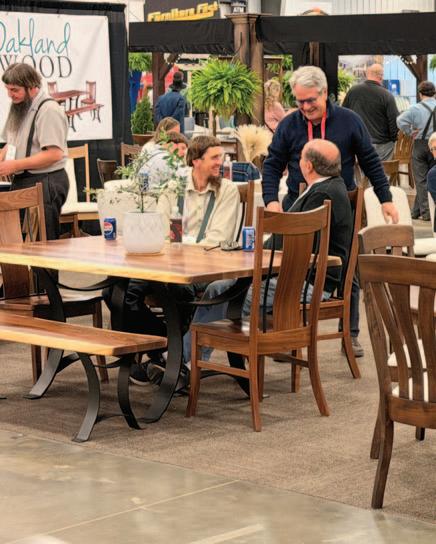
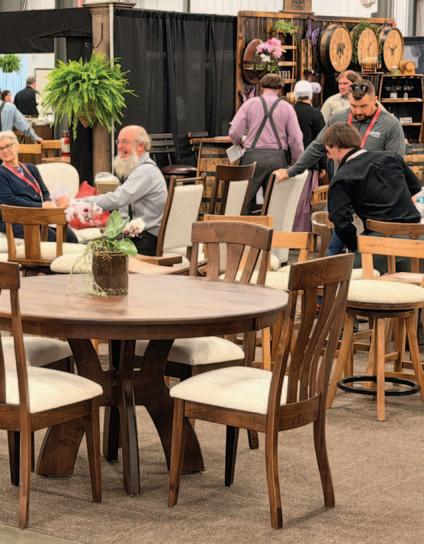
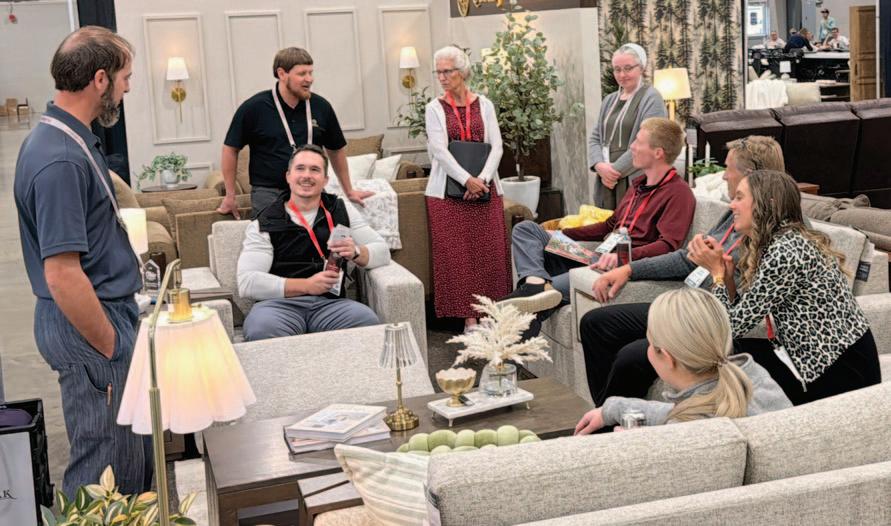
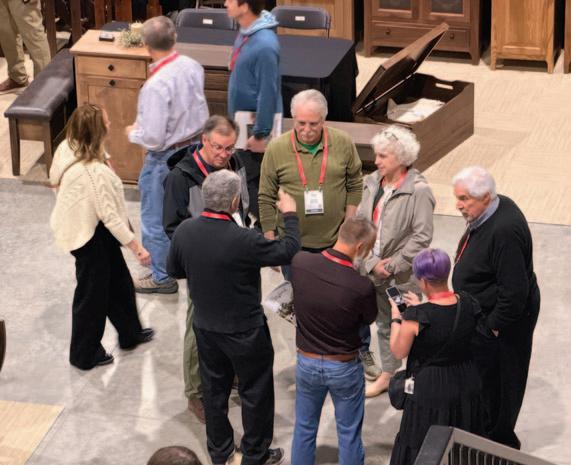
Just like the furniture itself, there are so many stories to tell about the 2026 Ohio Furniture Market! As you can see, making and renewing friendships is a big part of the Market, as is exploring the hundreds of booths showcasing the latest styles and designs from Ohio’s Amish Country Furniture District.
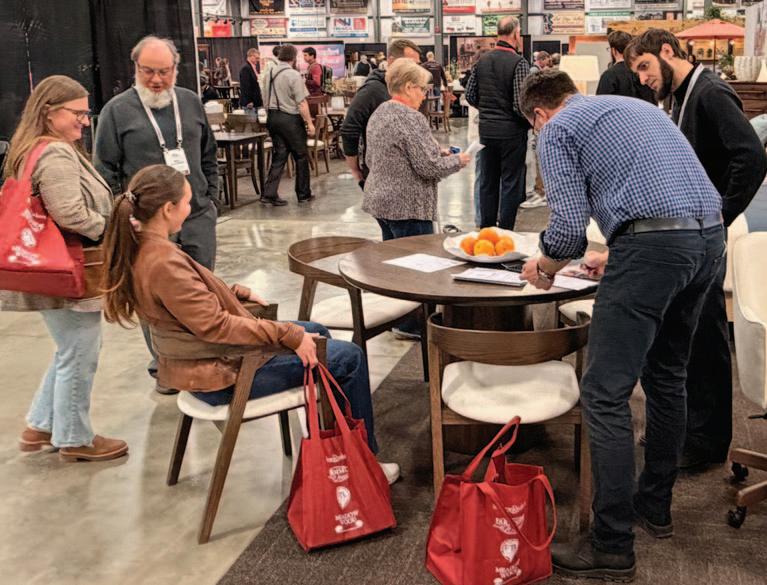
(Above) With the merchandise clearly passing the comfort test, an attendee places an order.
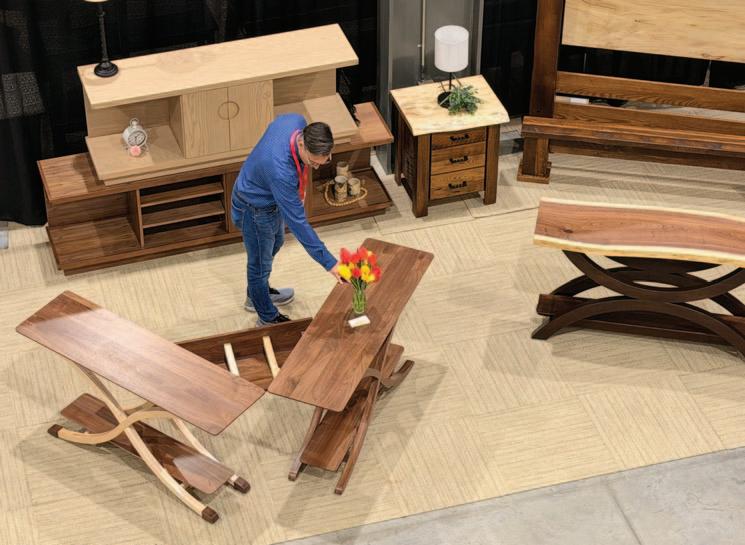
(Above right, and left) With dozens of pieces crafted by local builders, the Showcase House provides an excellent insight into new and upcoming styles and design trends.
Continued from page 13
and large natural-top tables — continue to perform well.
The Questions Consumers Keep Asking
Retailers say consumers still ask many of the same core questions about Amish-built furniture.
At the top of the list: “Why does it cost more?” That conversation, however, may be getting easier. As consumers become more aware of the shortcomings of lower-end imported furniture, many better understand the value differences between solid hardwood and particleboard and, more importantly, bench-built craftsmanship and mass production. And, like previous generations, they understand the difference in value that handcrafted, solid wood furniture represents versus disposable furniture.
Let’s also address the elephant in the room: The “Amazon” effect and lead times. Order something from Amazon and, while the shelf life doesn’t compare, it will arrive tomorrow or the next day in most parts of the country.
Amazon has conditioned consumers to expect instant delivery. But interestingly, many shoppers now associate waiting with quality. More consumers
seem willing to accept longer lead times if they believe they’re receiving something truly special. And perhaps one of the greatest competitive advantages Amishbuilt furniture continues to hold is customization.
Consumers love being able to choose wood species, stain, hardware and even more-specific choices such as dimensions. That level of flexibility remains nearly impossible for mass retailers to replicate.
The Big Picture
If there’s one major takeaway from all these conversations, it may be this: Consumers
increasingly divide furniture into two categories, disposable furniture and lifetime furniture. Amish-built furniture continues to position itself firmly in the second category.
At a time when many consumers feel overwhelmed by cheaply made imports and products designed for short-term use, solid-wood American-made furniture offers something increasingly rare: A sense of permanence. And that may ultimately prove to be one of the Amish furniture industry’s greatest strengths moving forward.
Most common questions consumers ask about Amish-built furniture
Even though new buyers enter the market for Amish-built furnitire every year, the basic questions consumers ask have remained quite constant.
“Why does it cost more?”
This is still the biggest hurdle. But consumers are increasingly receptive when retailers explain:
• Solid wood vs. veneer/particleboard
• Domestic hardwoods
• Bench craftsmanship
• Longevity
“How long will it take?”
Lead times remain a challenge, especially in a culture trained by Amazon. But interestingly, many consumers now associate waiting with quality. Custom furniture buyers increasingly understand that good furniture takes time.
“Can I customize it?”
This is still one of Amish-built furniture’s biggest competitive advantages. Consumers love wood and stain choices, custom dimensions and everything the products represent. Key point: Customization is something mass retailers still struggle to deliver.
“Is this really made in America?”
For many buyers, especially post-pandemic, domestic manufacturing matters more than it did five years ago. Amish-built furniture benefits tremendously from regional identity, reputation and perceived integrity.
American on the move update “Go west, south young man”
Newspaper publisher Horace Greely’s famous words inspired untold thousands of Americans to move from the eastern USA to the west, specifically California.
But 160 years after Greely’s imprimatur, a different trend is emerging: A mass migration to the south and southwestern states.
Americans have always been known for their willingness to “vote with their feet,” and that holds true especially today, with thousands upon thousands of people leaving other states and flocking to the south in record numbers.
You can hardly open a newspaper — or should we say website — these days without reading about the population gains in Texas and Florida. But recent data released by none other than the IRS reveal that neither of those two states actually leads the pace in gaining new residents.
The current leader? The Palmetto State, South Carolina.
According to tax filing data, South Carolina’s population is growing at a faster pace than any other state. For every 100 people already living in the state, one new person from outside the state is moving in.
The ripple effect of Americans pulling up stakes is significant: New home sales, existing home sales, apartment and condo rentals, and virtually every economic segment associated with relocating trending upward.
Not to get deep into the weeds, but TX and FL are still drawing the biggest number of inbound movers, but SC is now growing at the fastest rate.
So, what are the drivers? That is, what are the top reasons people move? It’s probably not surprising, but it largely comes down to the cost of living — items such as lower home prices, cheaper land, lower overall taxes and simply lower day-to-day expenses. For example, a gallon of gas costs at least $2 more in California than South Carolina (that’s current, as well as historical. Gas prices are way up right now, but California’s gas taxes make their prices notoriously high).
Lower taxes appeal to a wide variety of movers, including retirees, small business owners, selfemployed workers and other remote professionals. The post-pandemic work culture has shifted dramatically, allowing more and more individuals to live where they want to, as opposed to being tied to an office. As the University of Pennsylvania recently reported, “more than 80% of remote-capable employees maintain some degree of flexibility, with roughly 55% working a hybrid schedule and 26% working exclusively remotely.” It’s not difficult to project that a workforce that is increasingly remote would also be increasingly mobile. And, not surprisingly, most of the remote workers are collegeeducated.
With the South/Southwest continuing to gain, who’s losing population? Honestly, that hasn’t changed much since Expressions In Woodcraft first began following these trends. The biggest losers from 2022 to 2026 are: California, which lost 530,00 residents, New York lost 460,000 and Illinois lost 140,000. Surprisingly, the next-highest state was Louisiana, which lost 46,000. Those are “net
outbound” numbers, meaning the total of people who left and were not replaced by people moving in.
States gaining the highest numbers of “net inbound” residents remained steady as well. The leaders are Texas at 1.3 million, Florida with 1.1 million, North Carolina at 350,000 and Gerogia at 220,000.
The economic impact behind those numbers is significant: In the most-recent period for which the IRS released data, South Carolina (again growing at the highest percentage of any state) added an additional one percent to its population, with 29,000 new tax filers who earned a combined $4.1 billion. It’s not difficult to project the overall impact of that income over virtually every economic sector — housing being chief among them and, of course everything that goes into those houses.
Finally, age is a huge factor in movers. Millennials and Gen Z make up almost 65% of all people leaving California. The average age for outbound movers rests between 31 and 47 — people who are either in or entering their peak earning years, and who are looking for moreaffordable areas to
buy homes and raise families. Much has been made about high-income earners leaving high-cost states such as new York, but importantly, the highest volume of people leaving both California and New York and low- and moderate-income people, who simply can’t afford to live in those states anymore.
Without injecting politics, it’s easy to see what’s happening — and what has been happing for years now: Americans are moving from high-cost, hightax states to states that have lower taxes, cheaper housing, friendlier business climates and (with the exception of California), much milder weather. This trend has been taking shape for almost five years now, and shows no sign of slowing.