Karen Yoder: Publication Coordinator/ Graphic Artist
Meredith Klingerman: Assistant Editor
Published by:
Dutch Country Publishing, LLC
P.O. Box 248
Fredericksburg, OH 44627
Phone 330-275-8097
Fax: 888-892-0728
Send inquiries to: editor@eiwmagazine.com
facebook.com/eiwmagazine
This publication and its contents are copyright 2025, Dutch Country Publishing, LLC. Individual copyrighted items, trademarks, etc. contained within are the property of their copyright holders. No part of this publication may be reproduced or redistributed by any means without the expressed, written authorization of the publisher.
“Opinions belong on the editorial page.” Those prescient words came from one of my journalism professors, Dr. James Gorman, way back in the early 1980s, when I was a student at Otterbein College (now Otterbein University.)
I was fortunate that, in an age where everyone wanted to become the next “Woodward and Bernstein” (the Washington Post reporters who broke the infamous “Watergate” story that toppled Pres. Richard Nixon), this particular professor eschewed agendabased journalism.
Forty-five years on, I realize that he definitely had his opinions, and I’m pretty sure I know which way he leaned, politically. But to his everlasting credit, he insisted that we fledgling journalists stick to the facts, and straight-up reporting, without our opinions.
I say that because it's clear that the new presidential administration is probably more directly involved on issues that will affect the economy, housing, manufacturing, etc. — issues that directly affect the furniture industry — than any previous presidential administration.
Pres. Trump — arguably the most vocal president in our lifetimes — has even called out the Chairman of the Federal Reserve Bank (the quasi-government entity that sets the nation's monetary policy and interests). That is unprecedented. Pres. Trump wants the Federal Reserve Bank to lower its key lending rates which, in turn, would lower mortgage rates, thus allowing more Ameri-
cans to become homeowners, and spur an economic wave based on home ownership.
Then of course, there is the issue of tariffs — a journalistic land mine if ever there was one!
As we go to press, the Administration has just announced a landmark trade deal with Great Britain, and has promised that many more deals are in the works. No one knows if the president’s strategy of slapping huge tariffs on imports to get our trading partners to the negotiating table will work, particularly with China.
In addition, no one knows better than the purveyors of “big ticket” items (read: furniture) how this strategy has the potential to affect the industry.
All we can do is wait, and report.
To say that we won’t cover these issues would be a disservice to our readers. Everyone has opinions; I have mine and you have yours. So while this all gets sorted out in the coming months and possibly years, what I can tell you is this: We will continue to report on issues that affect, buyers/homeowners, retail furniture sellers and our manufacturing clients.
As we do so, we will make every effort to report factually and be as objective as possible. Dr. Gorman would want it that way!
Thanks for reading.
By Jerry Klingerman
Give us just a moment if you don’t mind...
Not to be too self-congratulatory, but Expressions In Woodcraft has been discussing the concept of “Reshoring” for years. We’ve visited the subject more than once.
Now, however, the subject is hot. Red hot.
As discussed in the Publisher’s Message, we’re going to try as much as possible to avoid opinions in our reporting, and stick to facts. But it’s no secret that the current presidential administration is using a tarriff policy to get US companies to come home (and foreign companies to invest in the USA). Again, we will not debate the politics behind it, only the events themselves.
That being said, there is a flurry of reshoring activity taking place. It will take at least a couple quarters to get hard numbers, but there is a lot of activity on the manufacturing from with respect to companies locating/relocating in the US.
How it began
In the heart of America’s industrial past, factories hummed with activity, producing everything from steel to textiles. But by the late 20th century, a seismic shift occurred. Lured by the promise of lower costs for labor, raw materials and low-cost transportation, companies began moving operations overseas.
But today, a counter-movement — reshoring — is gaining momentum, bringing manufacturing back to U.S. soil. Let’s examine why companies left in the first place, why they’re returning and how the current administration’s tariff policies are shaping this trend.
Reshoring is a response to a world where global supply chains, once seen as cost-efficient, have revealed vulnerabilities. It’s about rebuilding local economies, creating jobs and ensuring that “Made in USA” regains its prominence. For companies, reshoring is both a strategic and patriotic pivot, driven by economics and pragmatism.
Manufacturing Coming home? Reshoring comes of age Manufacturing Coming home? Reshoring comes of age
Why it matters
First things first. Some economists, pundits and politicians have advanced the idea that the golden age of US manufacturing dominace is over, and cannot be recreated. While there may be some truth to that notion, the fact is, it’s worth trying, because for every manufacturing job that is created, it’s estimated that more thanseven “spinoff” jobs are created.
The consensus among organizations that track employment and manufacturing is that the US has lost five million manufacturing jobs since 1998. If just one million new manufacturing jobs were either created or reshored, it would create more than seven million jobs overall.
How it started
The exodus overseas began decades ago, fueled by compelling financial incentives and bad trade deals. In the 1980s and 1990s, countries like China and Mexico offered labor costs a fraction of U.S. wages — sometimes as low as 5% of American
rates. Raw materials, like rare earth minerals in China, were cheaper and more accessible abroad. Producing near emerging markets, such as India’s burgeoning middle class, allowed companies to tap into new customers while minimizing shipping costs.
Offshore hubs also benefited from tax breaks and lax regulations, with special economic zones offering near-zero corporate taxes. The math was simple: offshoring slashed expenses and boosted profits.
Yet, the tides are turning. In 2025, the cost advantage of offshoring has eroded. Wages in China have skyrocketed, rising over 300% since 2000. Global shipping costs, once negligible, have surged: trans-Pacific rates jumped 400% during the 20212022 supply chain crisis. The pandemic exposed the fragility of far-flung supply chains, with factory shutdowns and port bottlenecks delaying critical goods.
Companies like Intel and General Motors are now
Continued on page 10
Continued from page 8
prioritizing resilience, opting for domestic production to avoid such disruptions.(Translation: The shortage of parts these comapnies experienced in 2020-2022 is something they don’t wish to repeat!)
As the Reshoring Institute, a US-based nonprofit organization that tracks reshoring activity points out, Automation has further tipped the scales. Robots and AI-driven manufacturing continue to reduce labor needs, making U.S. factories competitive despite higher wages. A shirt sewn by a $17-an-hour worker in South Carolina is now viable when a machine does most of the work. The idea is, the less actual human labor involved in production, the easier it is to transplant that activity back to the USA.
Beyond economics, reshoring aligns with market and political realities. Fueled by e-commerce giants like Amazon and Wal-Mart, American consumers are demand faster delivery. In many parts of the USA — even some rural and exurban locations — products can be ordered in the evening, and delivered the next afternoon.
Producing domestically cuts lead times, ensuring goods reach shelves swiftly. Access to abundant U.S. resources, like water, electricity and natural gas, reduces reliance on volatile foreign suppliers.
Meanwhile, intellectual property theft, which is a persistent issue in some offshore markets (most notably China), is less risky at home, where legal protections are robust. In the current climate, the integrity of intellectual property has received a great deal of discussion, and certainly has emerged as one of the motivating factors for reshoring. Multiple sources report that American companies lose somewhere between $225 and 600 billion per year to counterfeiting, trade secret theft and piracy of software and other copyrighted works. That number is significantly lower in the US, so as to be considered almost nonexistent.
In addition, there’s no doubt that public sentiment
and government advocacy for “Buy American” campaigns add pressure, nudging companies to look back toward US shores.
Anedotally, Expressions In Woodcraft began seeing a renewed “Buy American” sentiment during the Great Recession years. Furniture shoppers often began their in-store buying process by asking, “Is this made in America?” Of course, with Amish-built furniture, the answer is a resounding, “Yes.”
The current administration’s tariff policies are a significant catalyst for reshoring — yet certainly not without controversy. Producing goods in the U.S. avoids tariff penalties, making domestic factories more attractive. For example, a 25% tariff on imported semiconductors has spurred firms like TSMC to invest in US plants. The administration pairs tariffs with incentives to sweeten the deal for reshoring manufacturers. However, tariffs are a double-edged sword. They raise costs for companies reliant on imported raw materials, like aluminum, potentially offsetting reshoring benefits for some industries. Critics argue this could slow reshoring in sectors where domestic supply chains aren’t yet robust.
It’s far too early to tell what the reshoring landscape will look like two, three or four years from now.
Other factors bolster the reshoring wave
Quality control is easier on U.S. soil, which is critical for industries like pharmaceuticals, where precision is non-negotiable. Geopolitical stability in the US shields companies from most regional conflicts. A skilled American workforce, trained in advanced technologies, supports high-value industries like aerospace. Yet, challenges remain: higher domestic labor costs and stricter environmental regulations can deter full-scale returns. Still, the momentum is clear. From Apple’s $100 billion investment in U.S. manufacturing to small textile firms reopening in the Carolinas, reshoring is reshaping the industrial landscape. It’s a story of adaptation, resilience and a renewed belief in the power of “Made in USA.”
Reshoring at glance Expressions In Woodcraft guide to relevant terms/concepts
Editor’s note: It’s very likely that if you’re not already hearing about reshoring, you soon will. Here is an extended guide to understanding the issue.
WHY THEY LEFT: Reasons Companies
Originally Moved Businesses Overseas: Companies historically offshored operations to capitalize on cost advantages and market opportunities in foreign countries. Key reasons include:
• Lower Labor Costs: Countries like China, India and Mexico offered significantly cheaper labor, with wages often a fraction of U.S. rates. For example, in the early 2000s, manufacturing wages in China were about 3-5% of U.S. levels.
• Access to Raw Materials: Proximity to abundant or cheaper raw materials, such as rare earth minerals in China or textiles in Southeast Asia, reduced input costs.
• Lower Shipping and Logistics Costs: Manufacturing closer to emerging markets or supplier hubs minimized transportation expenses, especially for bulky goods.
• Access to Growing Markets: Offshoring allowed companies to establish a presence in fast-growing economies like China and India, facilitating market penetration and local sales.
• Favorable Tax Policies: Many countries
offered tax incentives, subsidies or relaxed regulations to attract foreign investment, such as special economic zones with reduced corporate taxes.
• Economies of Scale: Large-scale production in centralized offshore hubs enabled cost efficiencies, particularly for labor-intensive industries like electronics and apparel.
WHY THEY’RE COMING HOME: Reasons Companies Are Now Moving Back to the USA
Several factors are driving companies to reshore operations to the US, reflecting shifts in global economics and strategic priorities:
• Rising Overseas Labor Costs: Wages in countries like China have risen significantly, narrowing the cost gap. For instance, Chinese manufacturing wages increased by over 300% from 2000 to 2020.
• Supply Chain Resilience: Disruptions like the COVID-19 pandemic and geopolitical tensions exposed vulnerabilities in global supply chains, prompting companies to localize production to mitigate risks.
• Shipping and Logistics Costs: Escalating global shipping costs, driven by fuel prices and container shortages, have made domestic production more competitive. For example, trans-Pacific shipping rates surged by 400% during 2021-2022.
• Automation and Technology: Advances in automation reduce reliance on cheap labor, making US manufacturing more cost-effective. Automated factories require fewer workers, offsetting higher domestic wages.
• Access to US Markets: Producing domestically shortens lead times and aligns with consumer demand for faster delivery, especially for e-commerce and just-in-time inventory models.
• Tax Policies and Incentives: U.S. policies, such as the Inflation Reduction Act of 2022, offer tax credits for clean energy and manufacturing investments, encouraging reshoring. State-level incentives also play a role.
• Consumer and Political Pressure: Growing demand for “Made in USA” products and government advocacy for domestic jobs incentivize companies to relocate.
• Raw Material Availability: The US has abundant resources like natural gas and minerals, reducing dependency on volatile foreign suppliers.
Relevant Considerations
Beyond the primary drivers, other factors influence reshoring decisions:
• Quality Control: Domestic production often ensures higher quality standards and easier oversight, critical for industries like pharmaceuticals and aerospace.
• Intellectual Property Protection: The US offers stronger legal protections against IP theft, a huge concern in some offshore markets, particularly China.
• Geopolitical Stability: Trade wars, tariffs, and political instability in some regions make the US a safer long-term investment.
• Skilled Workforce: The US offers access to a highly skilled labor pool, particularly for advanced manufacturing and technology-driven industries.
Housing, mortgages, and how it affects you
For retail furniture store owners, the US housing market is a critical indicator of consumer demand. Home sales—both existing and new— drive furniture purchases, as homeowners furnish new spaces or refresh existing ones. Over the past 12 months, the housing market has faced challenges like high mortgage rates and low inventory, but signs of recovery are emerging. Let’s take a look at key concerns, including existing and new home sales, interest rate dynamics, predictions for the next 12 months and beyond, and how these factors influence furniture sales.
Existing Home Sales: A Slow but Steady Climb
Existing home sales, which include single-family homes, townhomes, condos, and co-ops, have been sluggish but show signs of improvement. According to the National Association of Realtors (NAR), existing home sales fell to 4.02 million units in March 2025, a 5.9% decline from February’s 4.27 million, marking the slowest March pace since 2009. Despite this drop, sales were up 2% year-
over-year in January 2025, and inventory grew to a 4-month supply by March, a 19.8% improvement from the previous year.
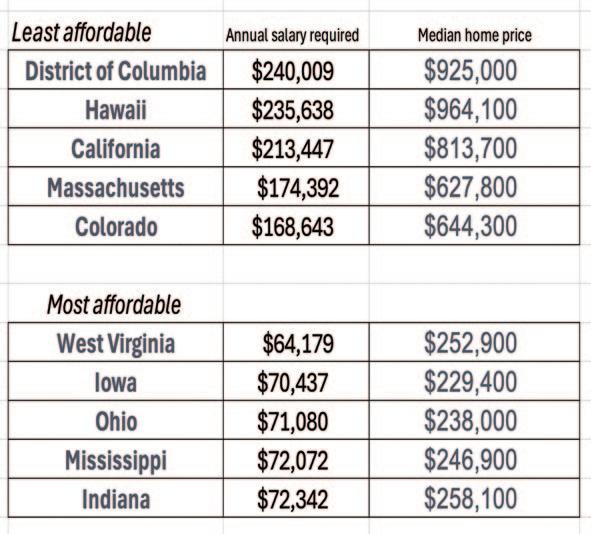
Anyone over age 50 might find it hard to believe, but the median existing US home price hit a record $403,700 in March 2025, which compounds persistent affordability challenges. High prices and mortgage rates above 6.5% continue to keep many buyers on the sidelines, with first-time buyers making up only 26% of sales, well below what experts say is the 40% needed for a robust market. However, NAR is predicting a 6% rise in existing home sales for 2025, reaching approximately 5.6 million transactions by year-end, driven by gradually easing rates and increasing inventory.
For furniture retailers, the uptick in inventory and sales is encouraging. More homes on the market means more opportunities for buyers to furnish new spaces, particularly in regions like the Midwest and South, where median prices are lower ($290,400 and $356,300, respectively).
New Home Sales: A Bright Spot with Challenges
Surprisingly, new home sales have outperformed existing home sales, by offering a surplus of options for buyers. In March 2025, new home sales rose to 724,000 units, up from 674,000 in February, a 7.4% month-over-month increase. The supply of new homes reached 7.3 months in January 2025, with 481,000 units available—the highest since 2007. That is worth noting because, as Expressions In Woodcraft has reported several times, large builders purposely kept inventories low after getting burned by a huge oversupply of new homes that fueled the Great Recession.
About one-quarter of these homes are completed, allowing builders to offer incentives like mortgage rate buydowns and closing cost assistance — incentives that existing home sellers have a hard time competing with.
Despite this growth, new home construction faces headwinds. The National Association of Home Builders (NAHB) reported low builder confidence in April 2025, citing policy uncertainty and rising material costs due to proposed tariffs, which could
increase lumber duties from 14.5% to nearly 40%. Fannie Mae expects housing starts to dip slightly in 2025 before rising in 2026, while the Mortgage Bankers Association (MBA) predicts steady growth. Keep in mind, this all could be temporary if substantial trade/tariff issues are resolved.
New home sales in particular drive furniture demand, as buyers often furnish entire homes from scratch. Retailers can capitalize on this by partnering with builders to offer furniture packages or targeting new developments with promotions. Dining furniture in particular is popular with new construction buyers.
Interest Rates: A Persistent Hurdle
Mortgage rates have been a defining factor in the housing market for several years. The Federal reserve Bank likes to see inflation at about 2%, so when it skyrocketed during the Biden administrtion, the Fed raised rates to try and keep inflation, prices, etc. in check. The average 30-year fixed mortgage rate was 6.86% as of late April 2025, down slightly from a January peak of 7.04% but still well above the three
Continued on page 16
percent rates of just four or five years ago. The Fed’s decision to maintain the federal funds rate in March 2025, coupled with inflation at 2.4% in January, suggests rates will remain in the mid-6% range through 2025.
Experts offer varied forecasts. The MBA projects rates easing to 6.5% by the fourth quarter of 2025, while Realtor.com predicts 6.3%, and NAR forecasts 6.4%. Goldman Sachs anticipates a gradual decline to around 6% by late 2025, assuming at least one Fed rate cut and stable economic growth. However, rapid rate drops could spark demand, reducing inventory gains and pushing prices higher, as warned by Keith Gumbinger of HSH.com.
High mortgge interest rates have created a “lockin effect,” with 83% of homeowners holding mortgages below 6%, discouraging sales and limiting inventory.
For furniture retailers, this can mean fewer move-related purchases. The upside is, when people don’t move, they tend to remodel/redecorate.
Offering attractive financing options or promotions tied to home equity loans can appeal to homeowners who are staying put, but looking to refresh their spaces.
believe rates may dip to 6.1%–6.2% by 2026, if inflation nears the Fed’s 2% target. That’s well below the peak of 8%, but if we were to hit 5.75 or even 5.5%, the market likely would expode.
Policy uncertainties under the current administration, could elevate costs potentially keeping rates and prices high.
Furniture sales are closely tied to these trends. Retailers in parts of the country that have a lot of new construction should expect steady demand from new homebuyers. But slower growth from existing homeowners due to the lock-in effect is likely what other areas can expect.
To thrive in this environment, furniture retailers can adopt several strategies:
1.Target New Homebuyers: Partner with builders or real estate agents to offer furniture packages for new homes.
Predictions for the Next 12 Months and Beyond
Looking ahead, all indications are that the housing market is poised for modest recovery. NAR expects existing home sales to rise 6% in 2025 and 11% in 2026, with median prices increasing 3% and 4%, respectively. New home sales are projected to grow 10% in 2025 and 5% in 2026, supported by continued construction.
Mortgage rates are unlikely to fall below 6% soon, with most forecasts converging on 6.3% to 6.5% by late 2025. Beyond 2025, some sources
2. Emphasize Value and Financing: Offer competitive financing or bundle deals to appeal to budget-conscious consumers facing high homeownership costs.
3. Leverage Renovation Trends: With many homeowners staying put, market furniture as part of home refresh projects.
The US market is a complex web of high mortgage rates, improving inventory and cautious buyer demand. Existing home sales are rebounding slowly, while new home sales offer a surplus of benefits. Over the next 12 months, modest growth in sales and stable-but-elevated interest rates will shape the market. A variable the market is not used to — tariff/trade policies — also could impact the market.
By doing research on your own market to determine whether you’re more likely to see new construction buyers, existing home buyers or those who are remodeling, retailers can develop a marketing strategy that best reflects the types of furniture shoppers they’re most likely to attract.
Farmstead Acres Wood presents the Spiro Chair. This sleek new model is characterized by clean lines and a definite Century Modern style. The base ern and the back and seat promise hours of comfort.
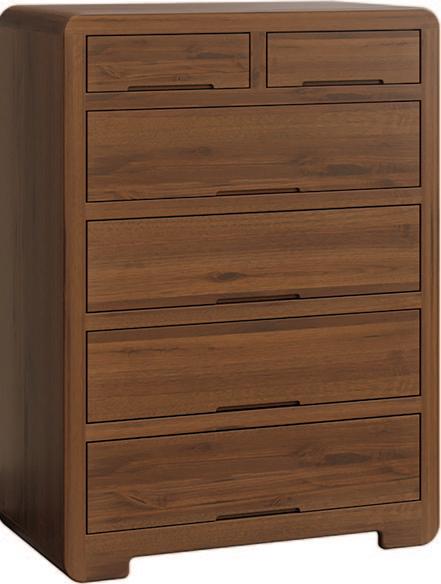
>>> Who says dressers are boring?! New from Farmside Wood is the Europa dresser. Rounded corners and inset drawers — and no hardware — create an exceptionally clean look here. The shown Rustic Walnut on Natural finish only serve to complement this attractive model. — See ad on page 25
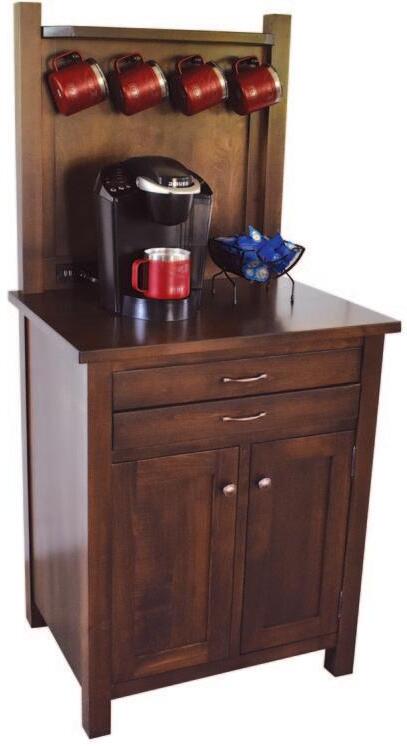
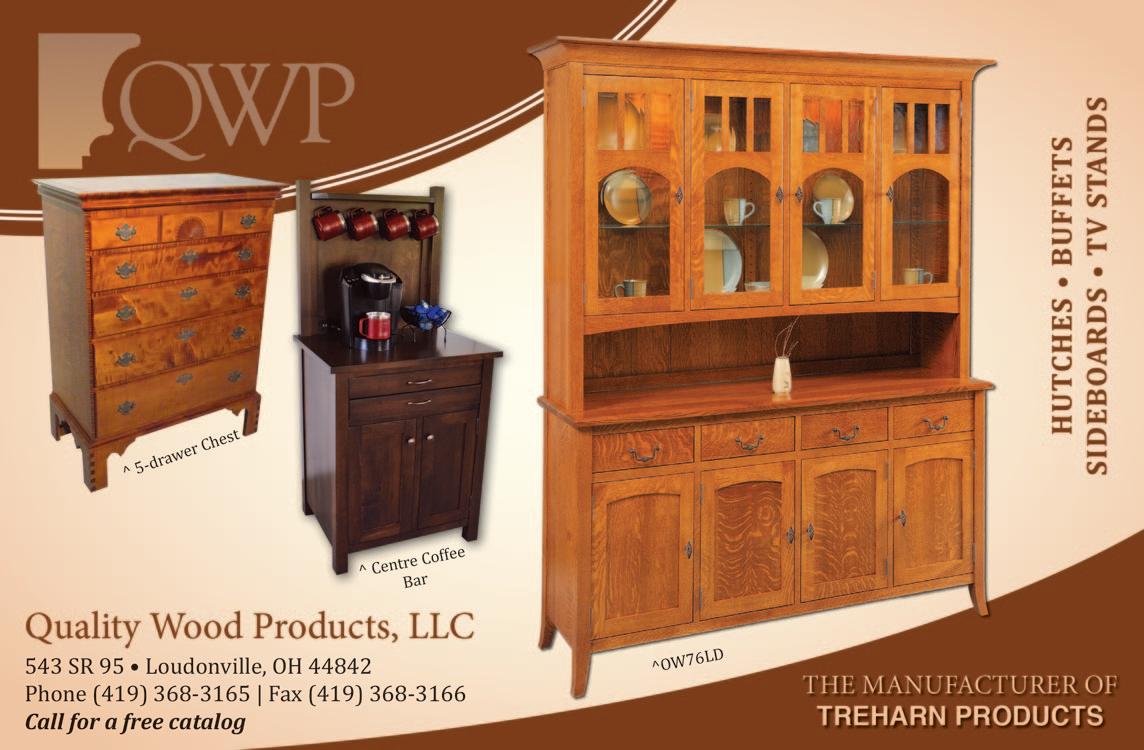
>>>The Centre Coffee bar from Quality Wood Products is an excellent solution for eliminating countertop clutter — and easy access for your morning coffee. It features sleek inset drawers designed for KCups, a trash can in one door and storage on the left side. Need a phone charge? There also are two handy USB ports! — See ad on page 43
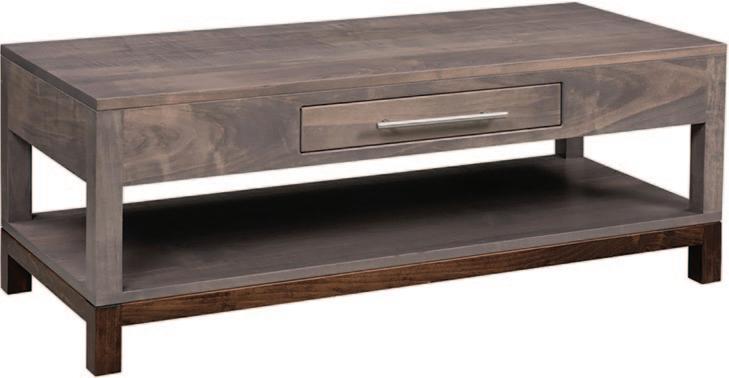
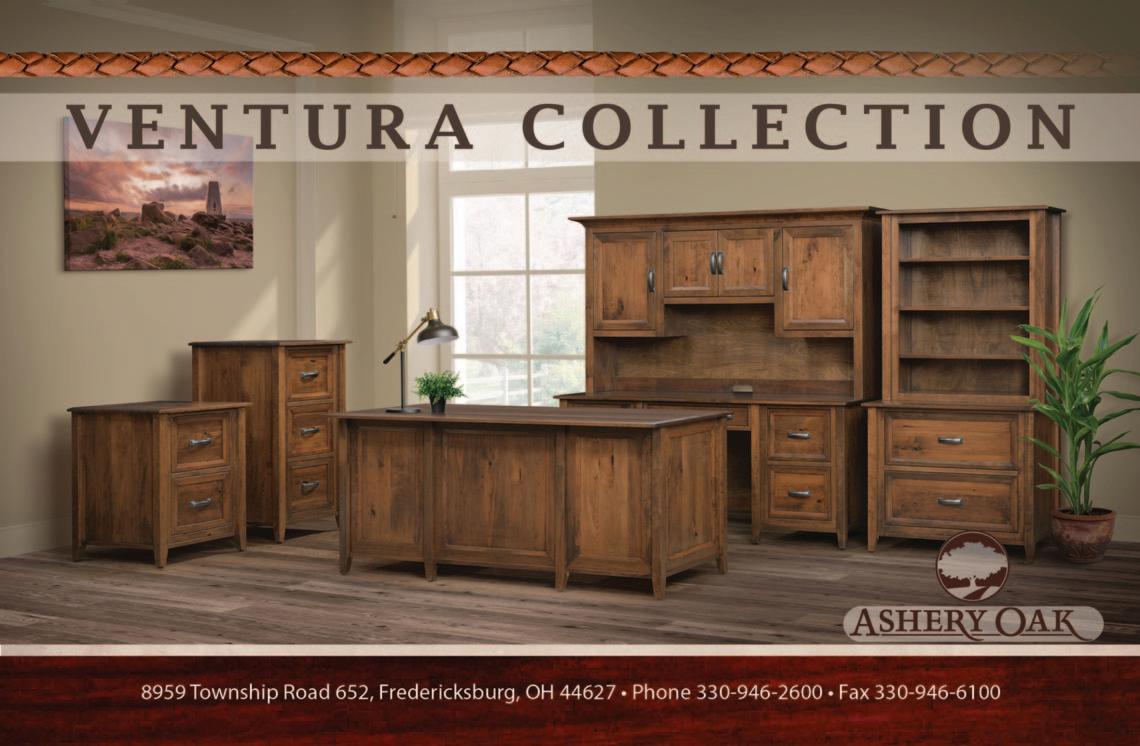
<<<If you’re looking for occasional furniture with a minimalistic style, look no further than the Vienna Coffee Table from Ashery Oak. A single drawer in the center, accented by modern hardware, offers storage, as does the shelf on thej bottom. This piece also features an attractive twotone look. — See ad on page 29
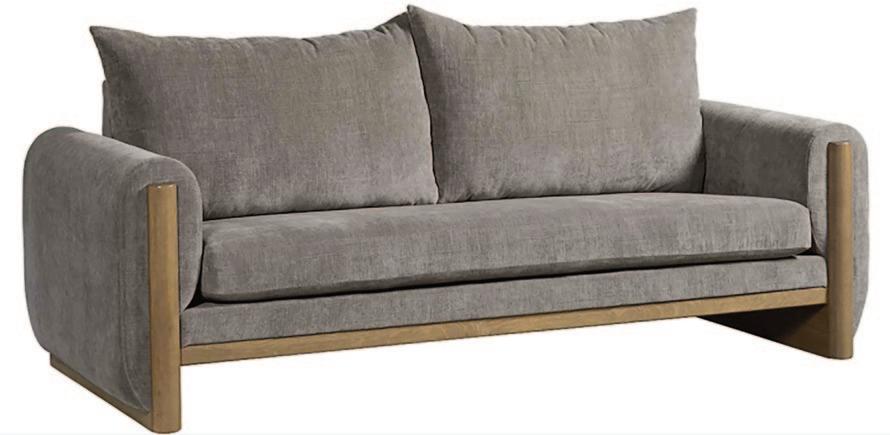
<<<Maximum comfort in a woodbase Quality Fabrications continues to think outside the box, introducing new styles of comfortable living room seating. Here, the Harmony Sofa features a large, twopillow back and a comfortable base cushion that’s designed to endure everyday living. The rounded , cushioned arms ffer more comfort, and the wood accents in the base and arms offer a solid dash of style. — See ad on Back Cover
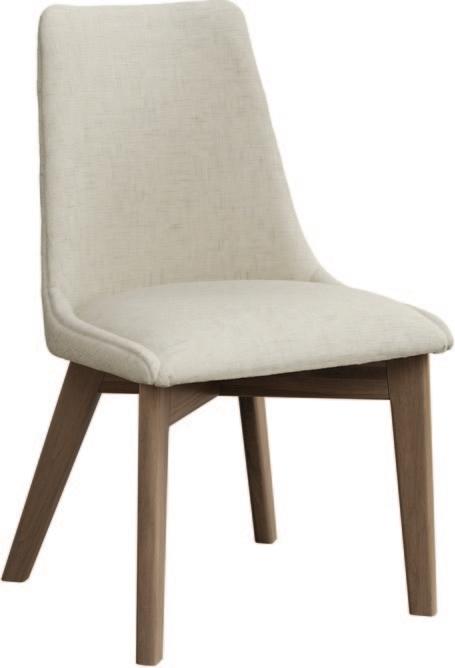
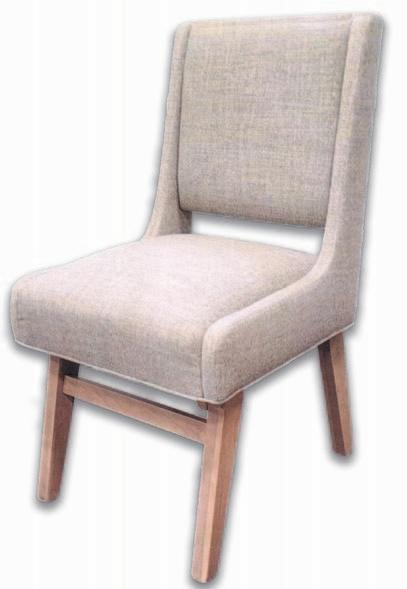
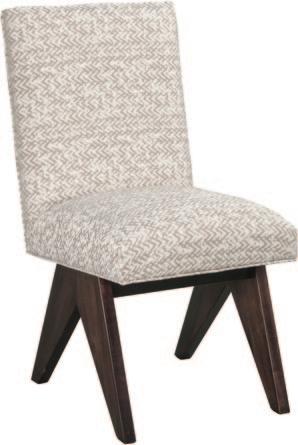
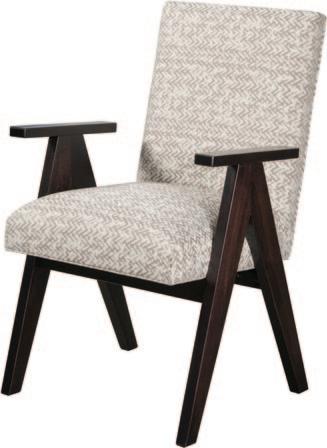
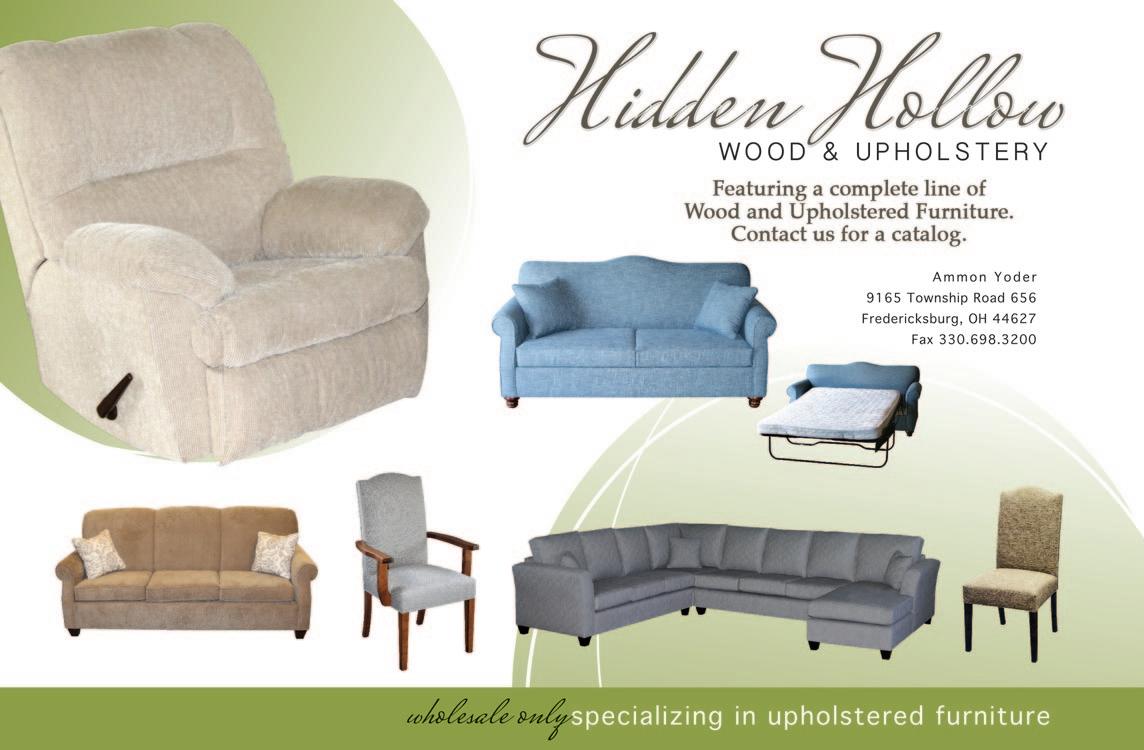
>>>The Coastal Chair from Hidden Hollow Wood and Upholstery is a comfortable, modern and stylish design. The cushioned seat offers maximum comfort, while the angled legs make for an eyecatching design. — See ad on page 45
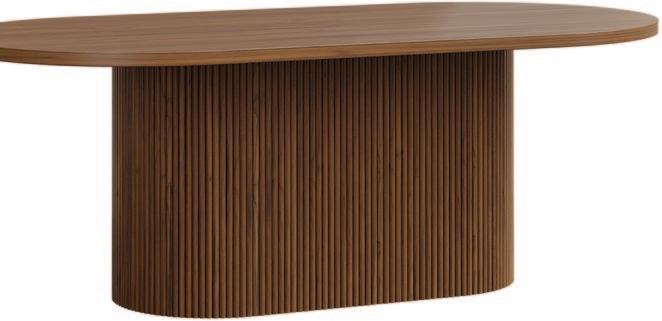
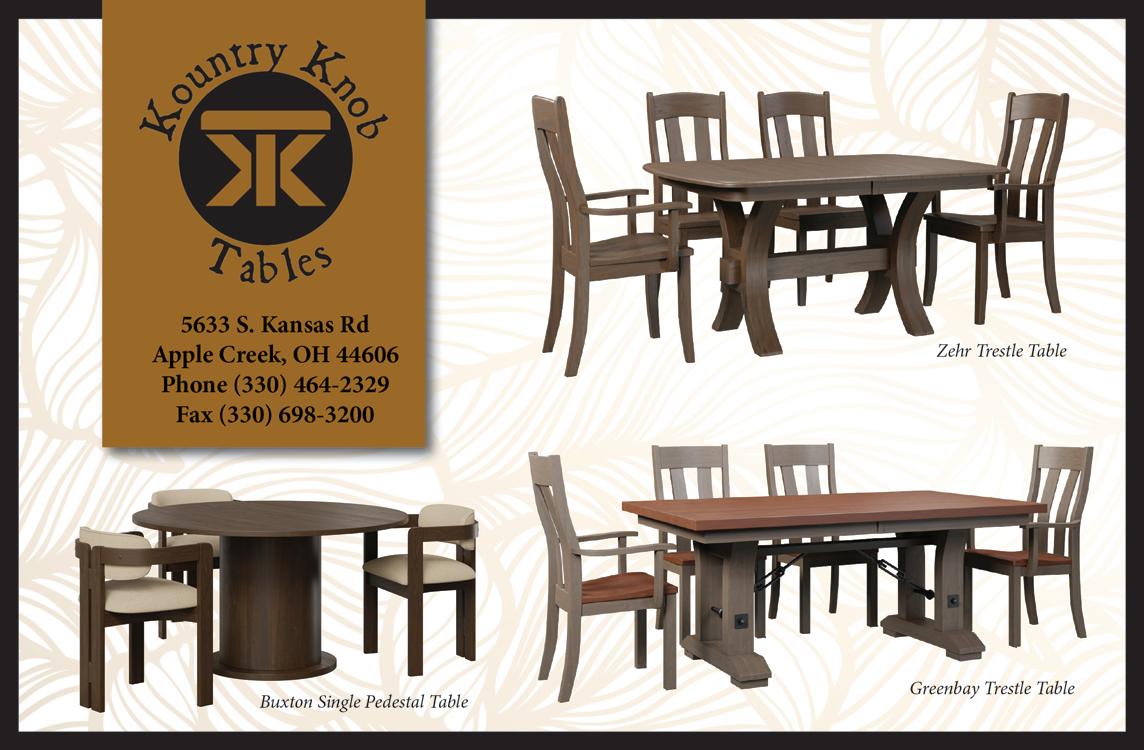
^^^The Zion Dining Table from Kountry Knob Tables has a look all its own. The “elongated oval” construction of the top is carried through to the base, which has a reed style. It’s a sleek, modern look that should appeal to younger buyers who want both high quality and cuttingedge design. Shown here in Rustic Hickory in FC Almond finish. — See ad on page 32
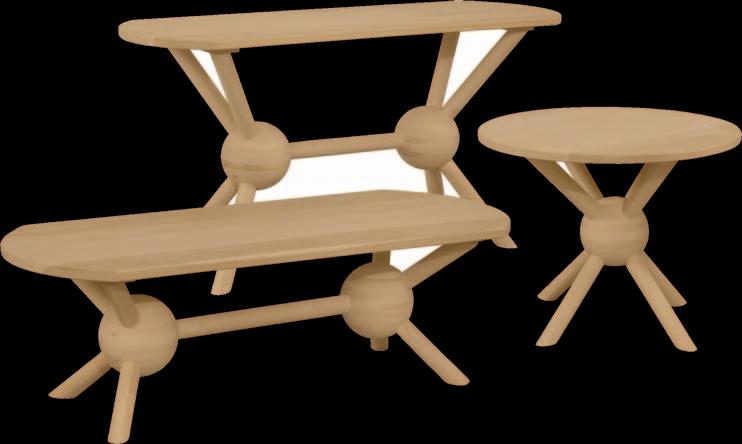
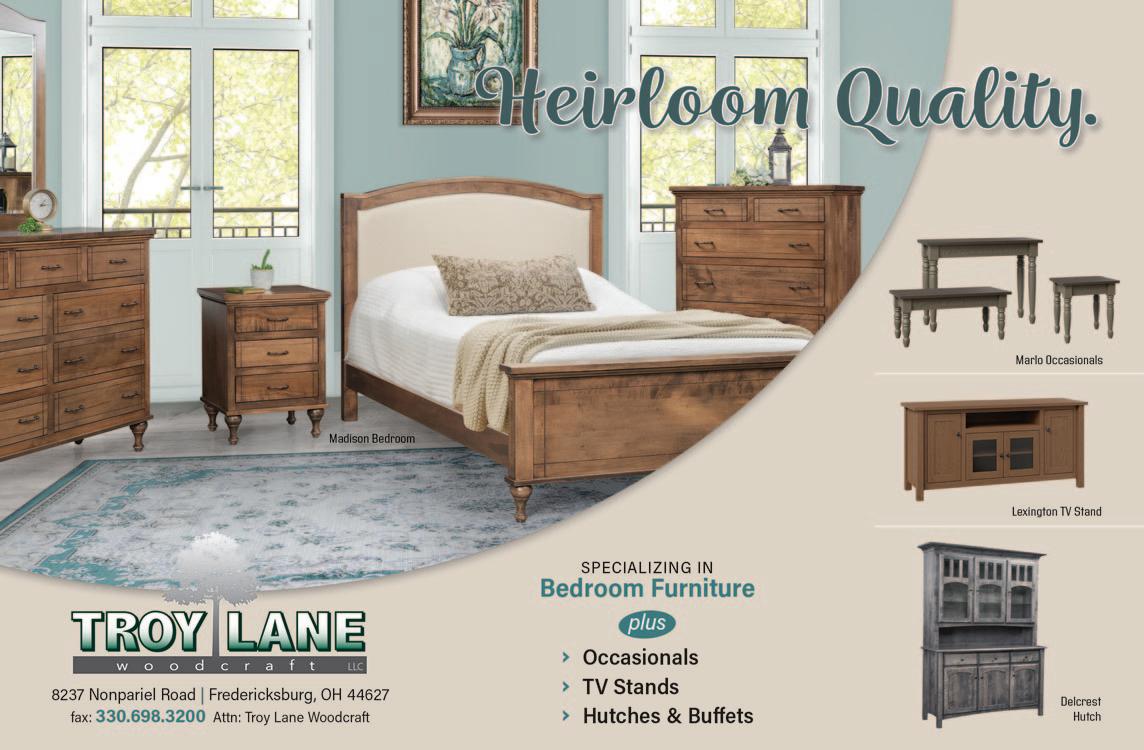
^^^ Using a “ball and spoke” design, Troy Lane Furniture just introduced the Glacier Occasional collection. If you’re looking for something different, this is it! The lines are clean, unexpected and fun. This set is sure to be a conversation starter. — See ad on page 42
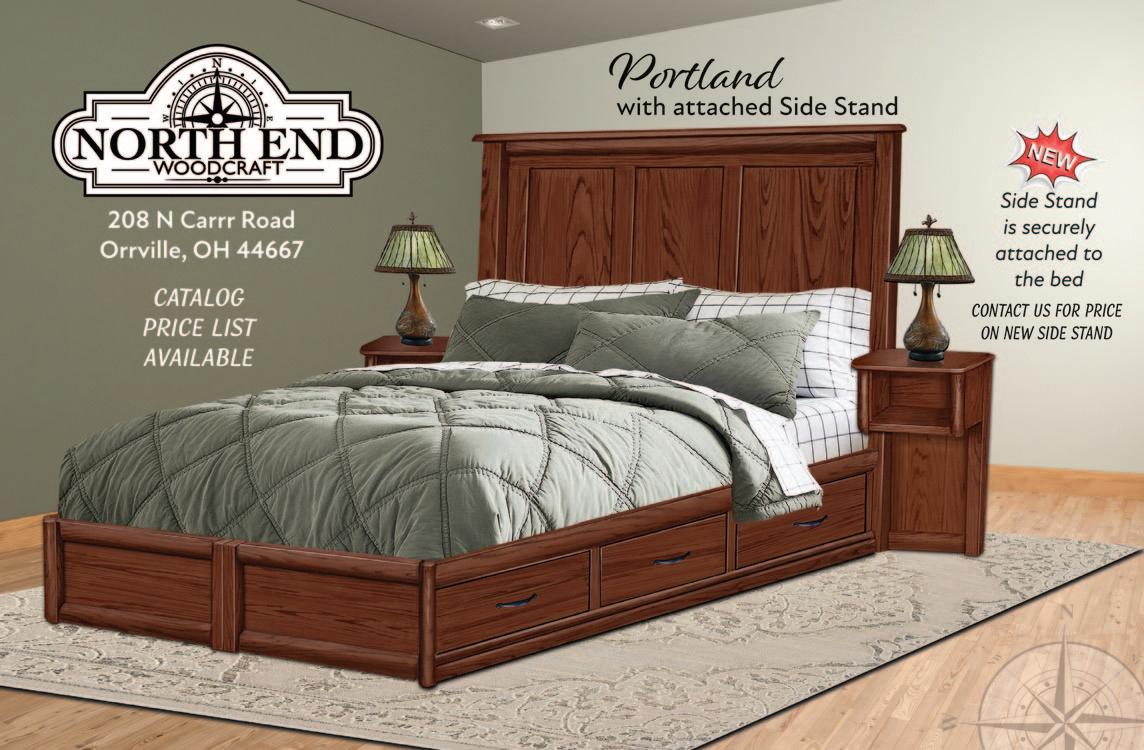
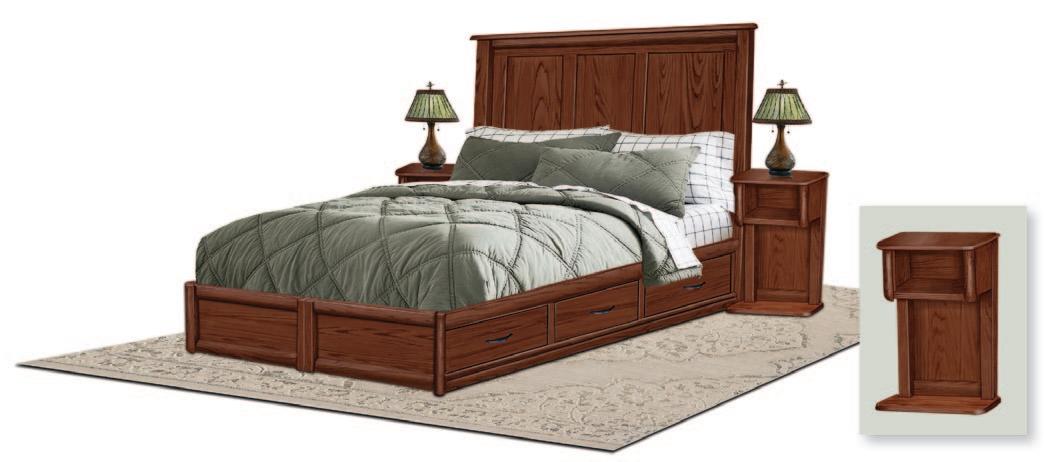
>>>Anywhere storage is at a premium is a great spot for the Portland Bed by cra add the equivalent of a large dresser. Now, the side tables included with the bed are movable. So you can keep them as part of the unit, or move them wherever they’re needed the most. ad on page 17
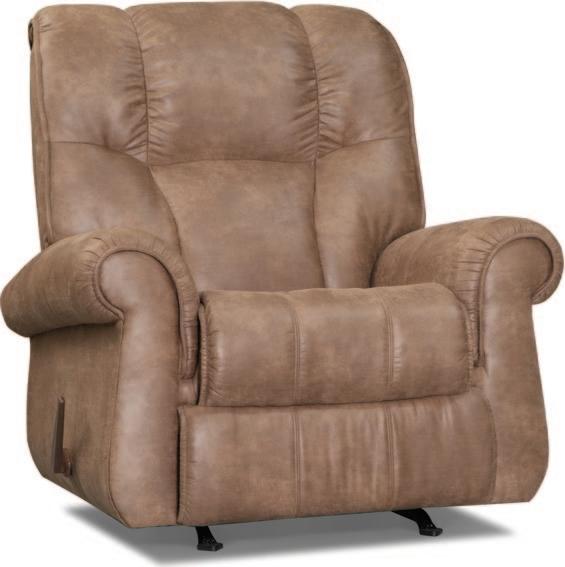
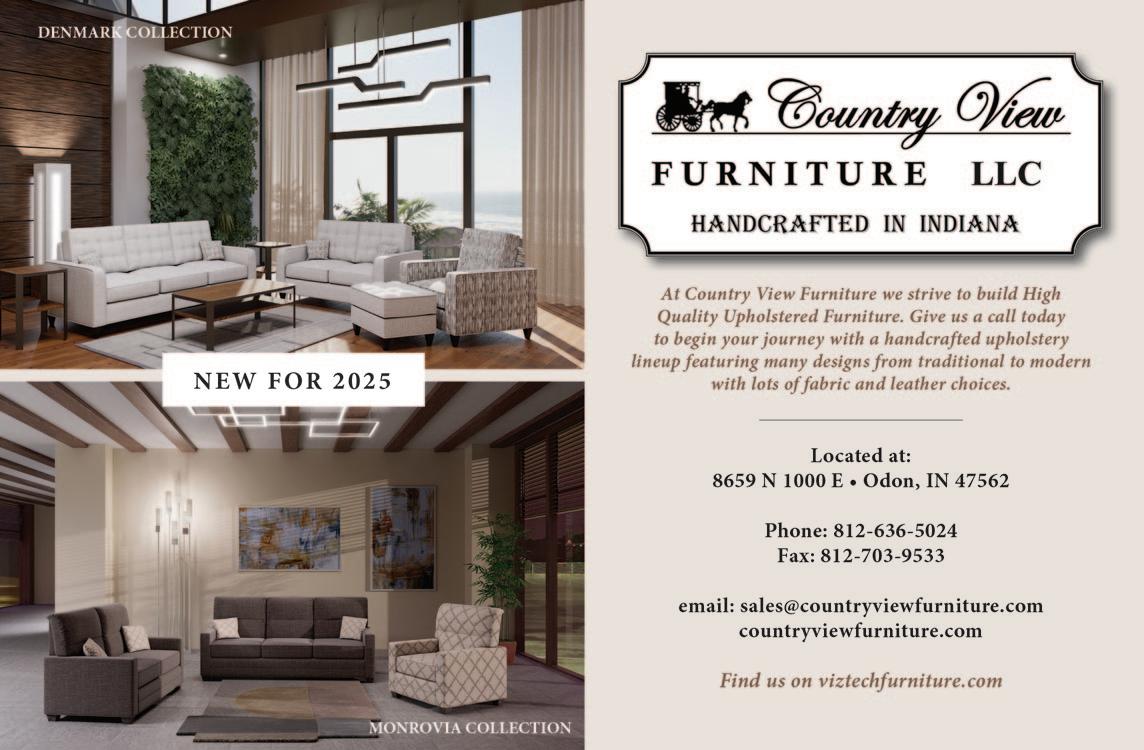
^^^Imagine coming home from a long day at work and sinking into the Ireland Large Rocking Recliner from Country View Furniture! Yes, it’s Amishbuilt right here in the USA. This model is designed to give you all the space — and comfort — you need. — See ad on page 29
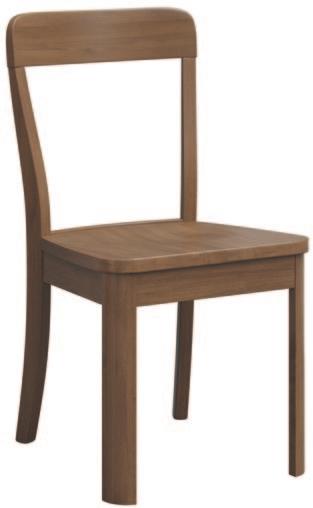
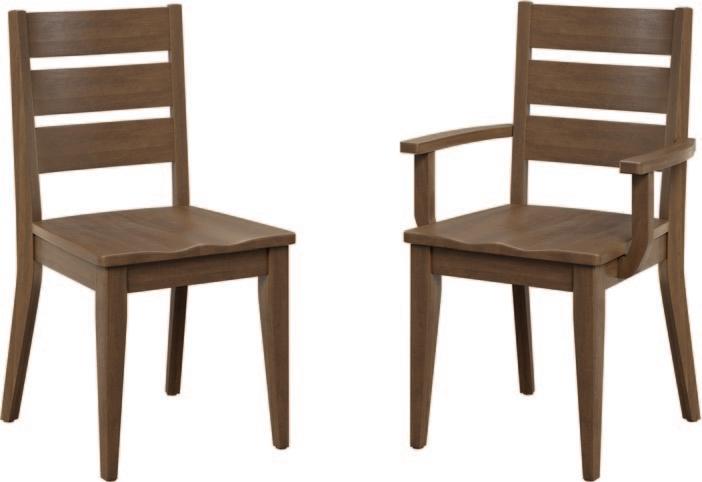
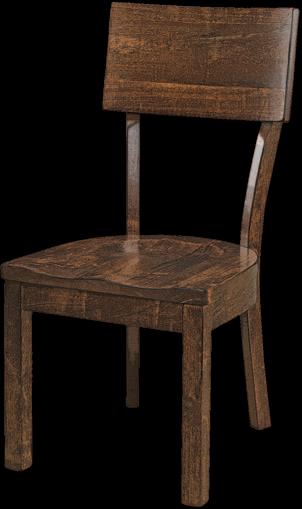
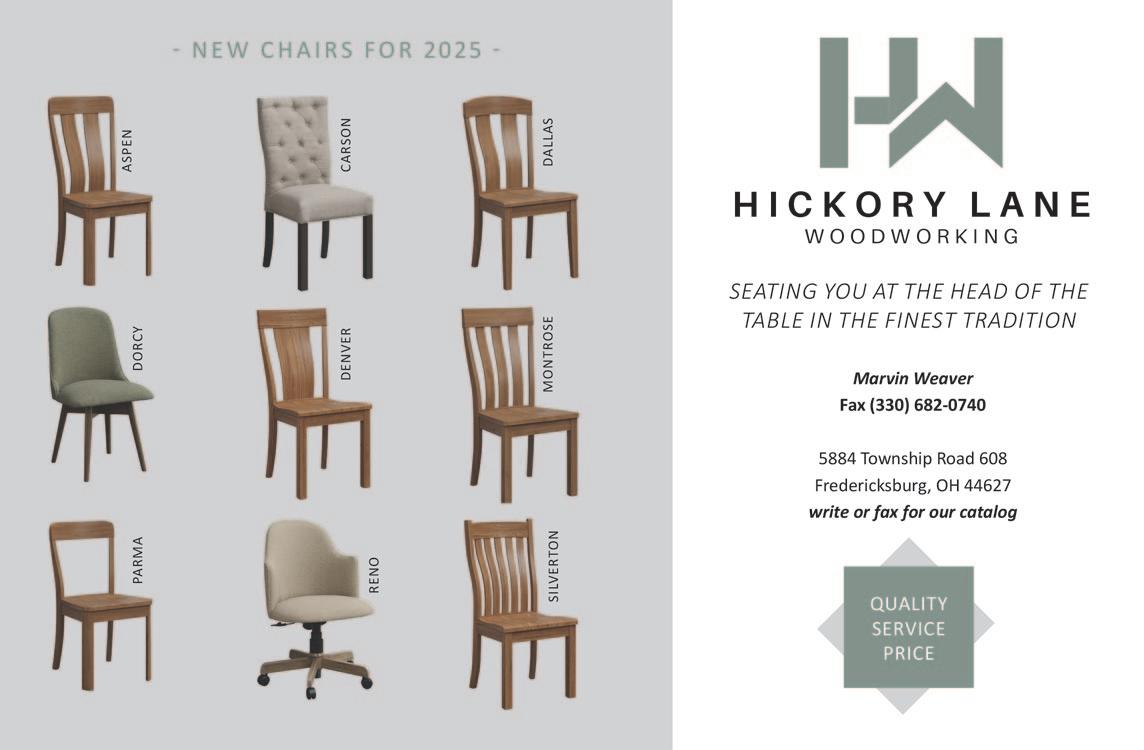
>>>Stylish and sturdy — that’s the best way to describe the Parma chair from Hickory Lane Woodworking. The back and sides offer an open, clean design, the seat is scooped for comfort and the legs turn in toward each other providing a sturdy feeling. — See ad on page 37
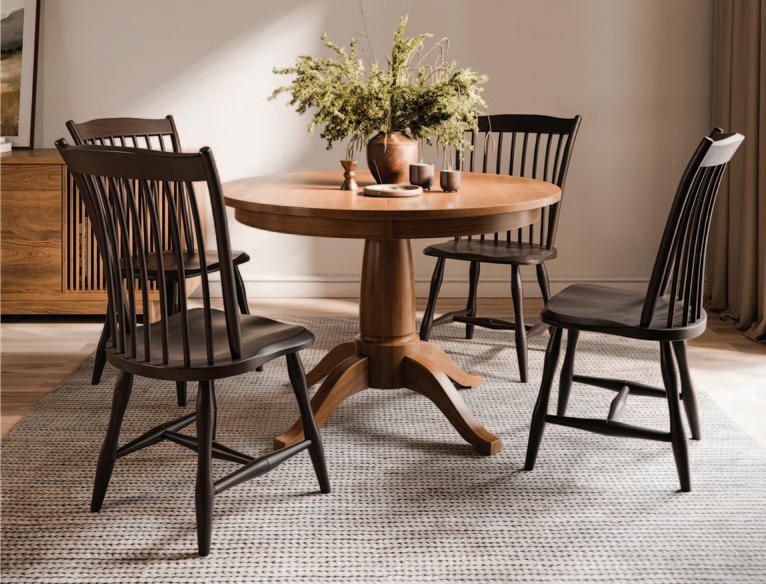
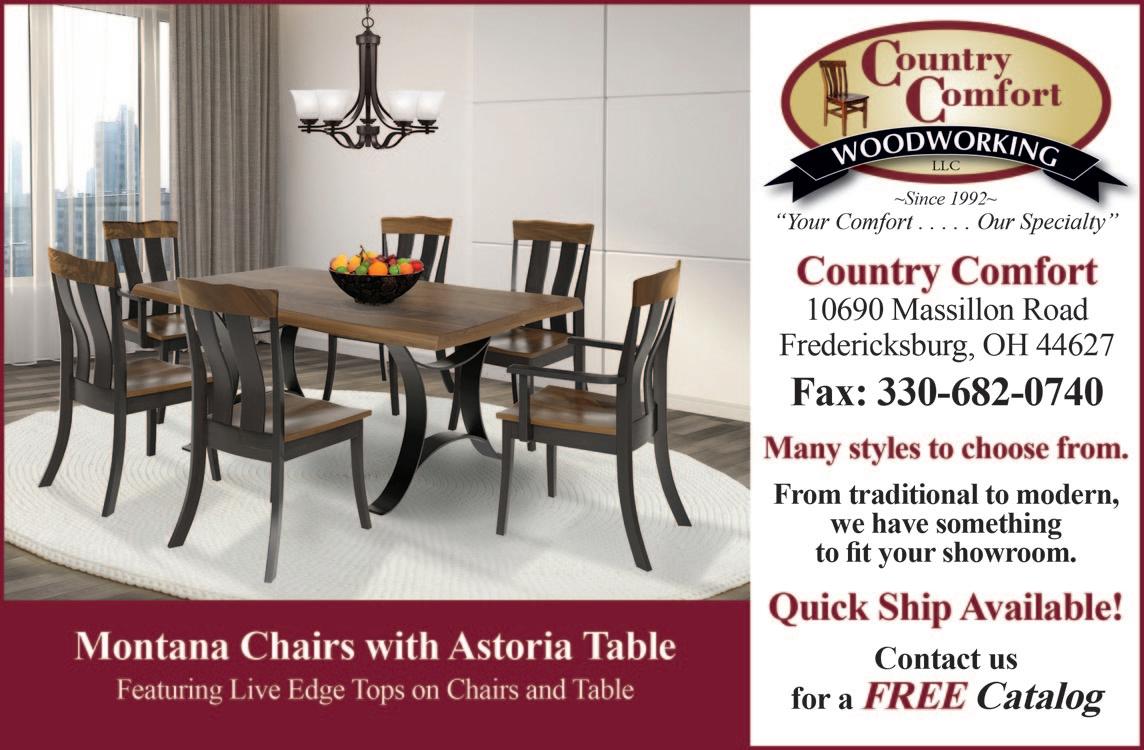
^^^The Chelsea Table with Archback Chairs from Country Comfort Woodworking is the absolute perfect solution for small pages. With its traditional styling, you’ll feel right at home when you enjoy your morning cup of coffee. The twotone finish only makes it better! The table i shown in Brown Maple with Lampton Brown finish, while the chairs are shown in Brown Maple with Ebony.— See ad on page 24
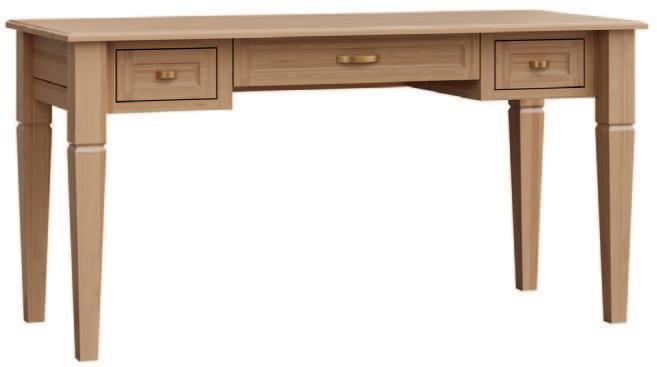
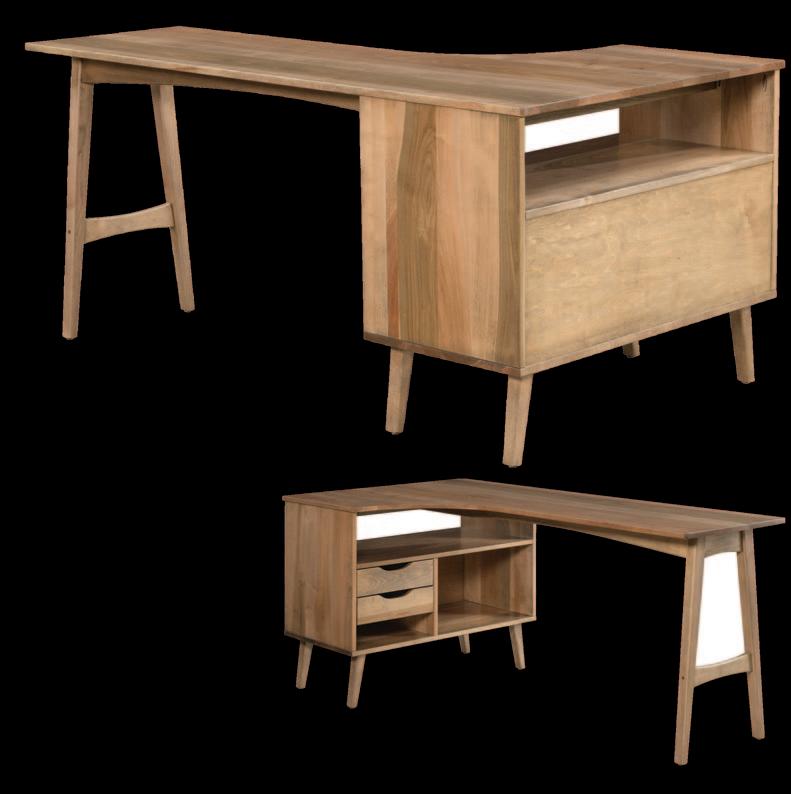
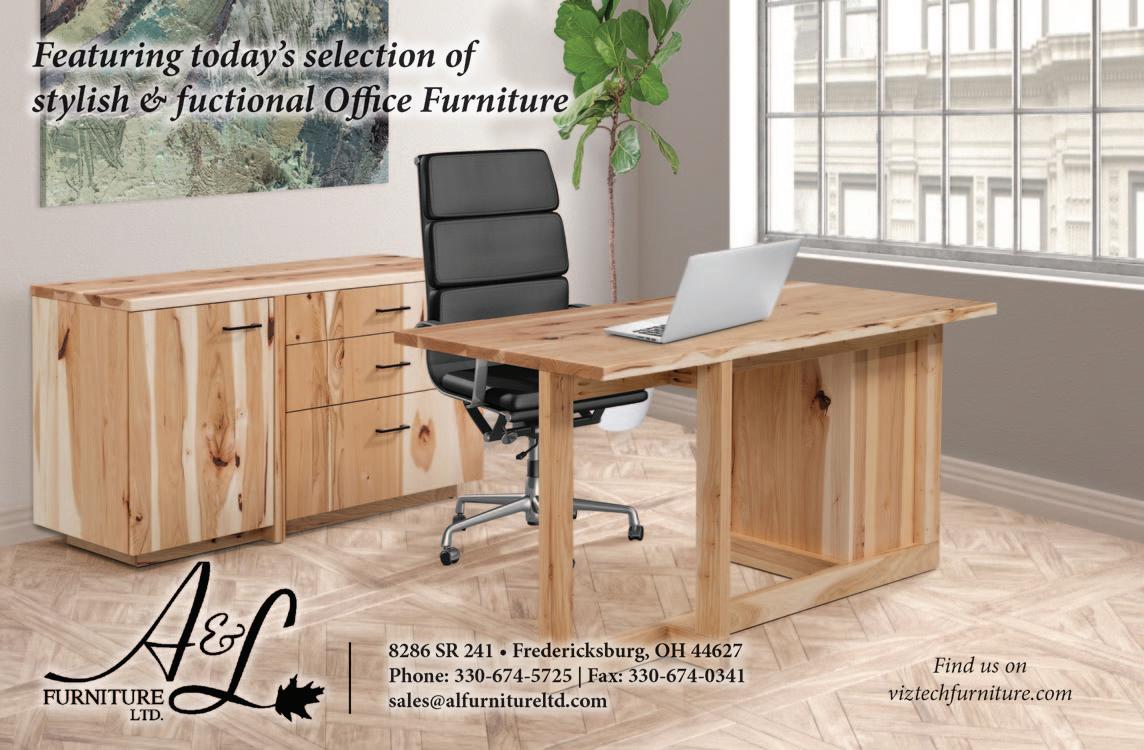
>>>New! A&L Woodworking continues to introduce stylish, functional office product designs that have wide appeal. The LM corner desk definitely is a minimalist ward design, yet features plenty of storage and work space. Shown in Brown Maple with Sandstone stain, this one could be a real hit on your showroom floor! — See ad on page 45
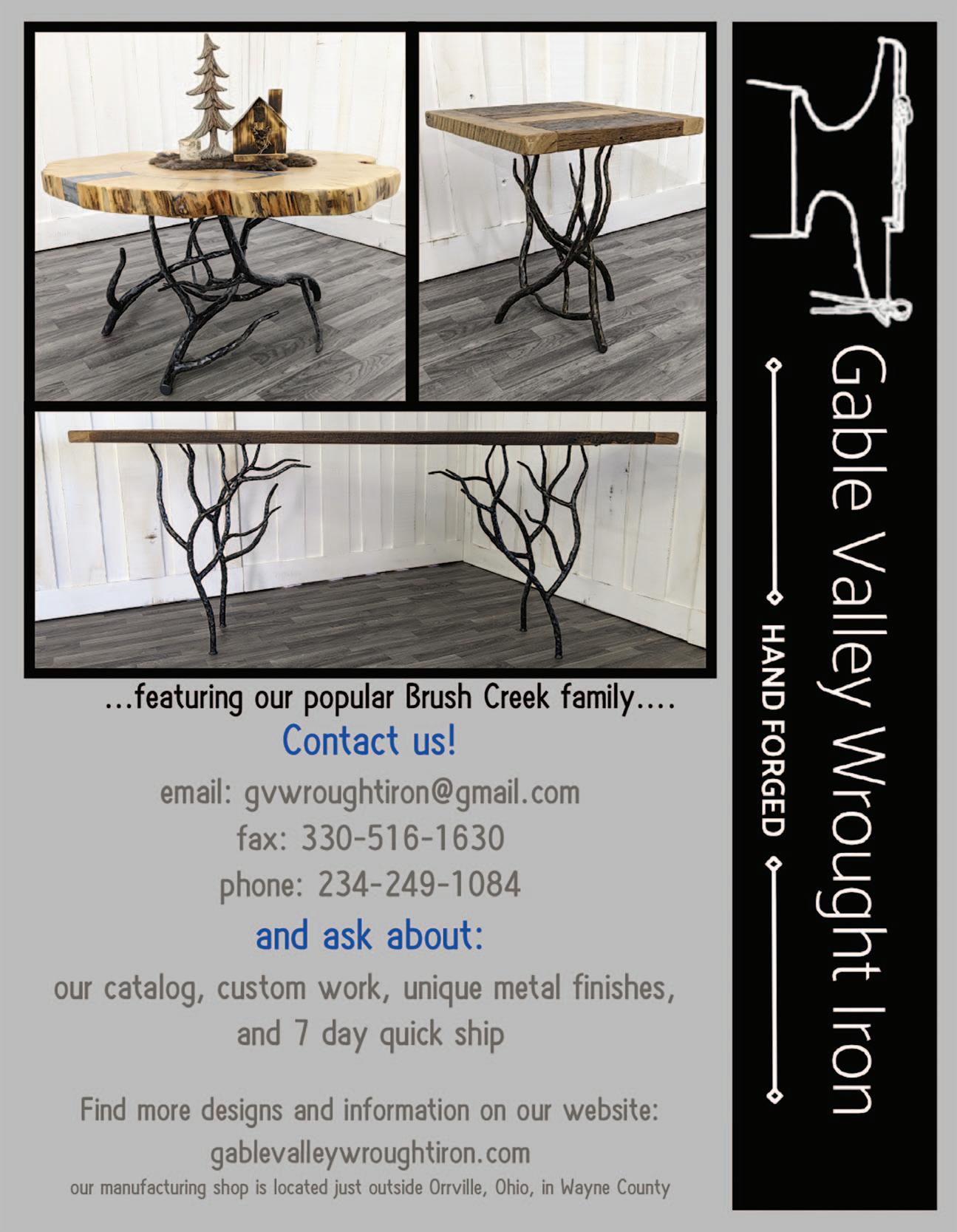
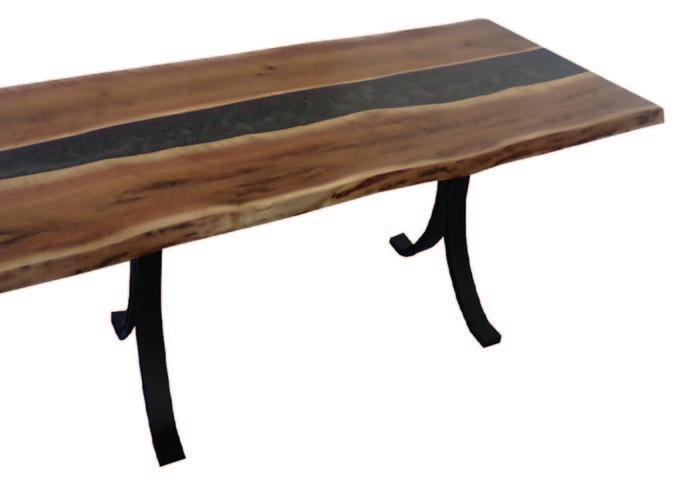
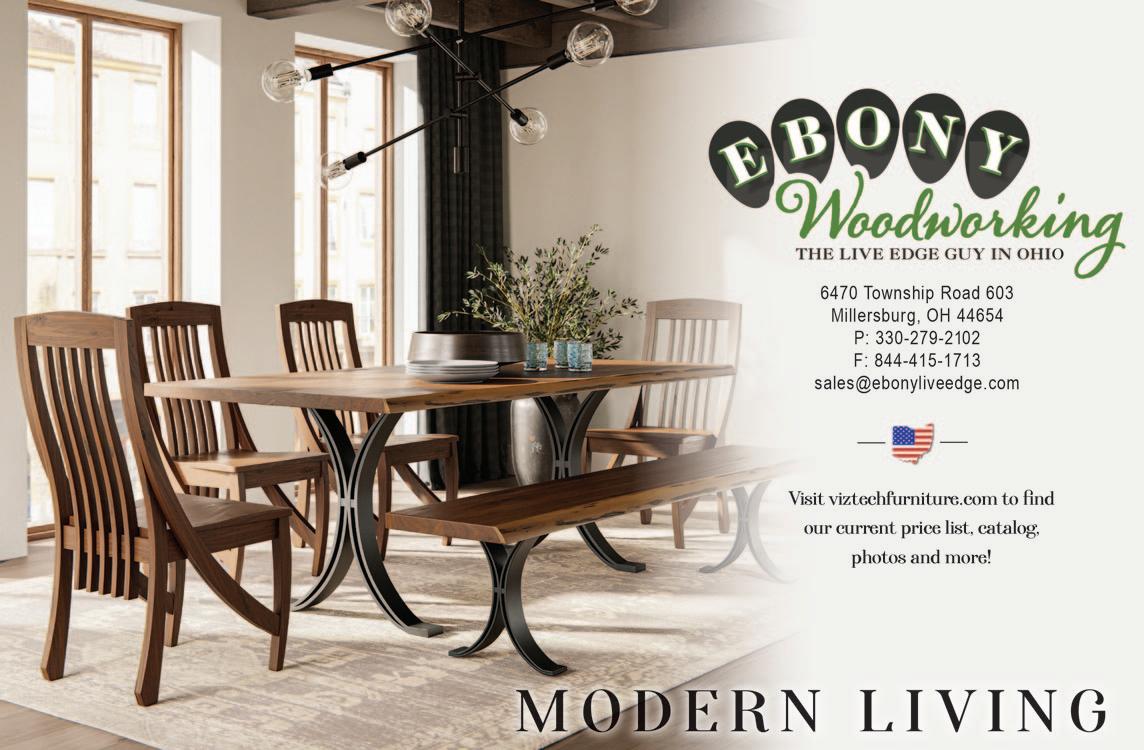
^^^Ebony Woodworking reports that the Walnut River Table is a di cult model for them to keep in stock! With its stylish metal base,and “river” effect in the middle of this thick solid Walnut top, it’s easy to see why! — See ad on page 45
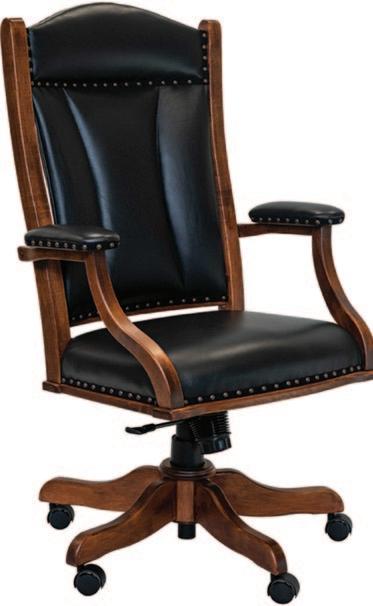
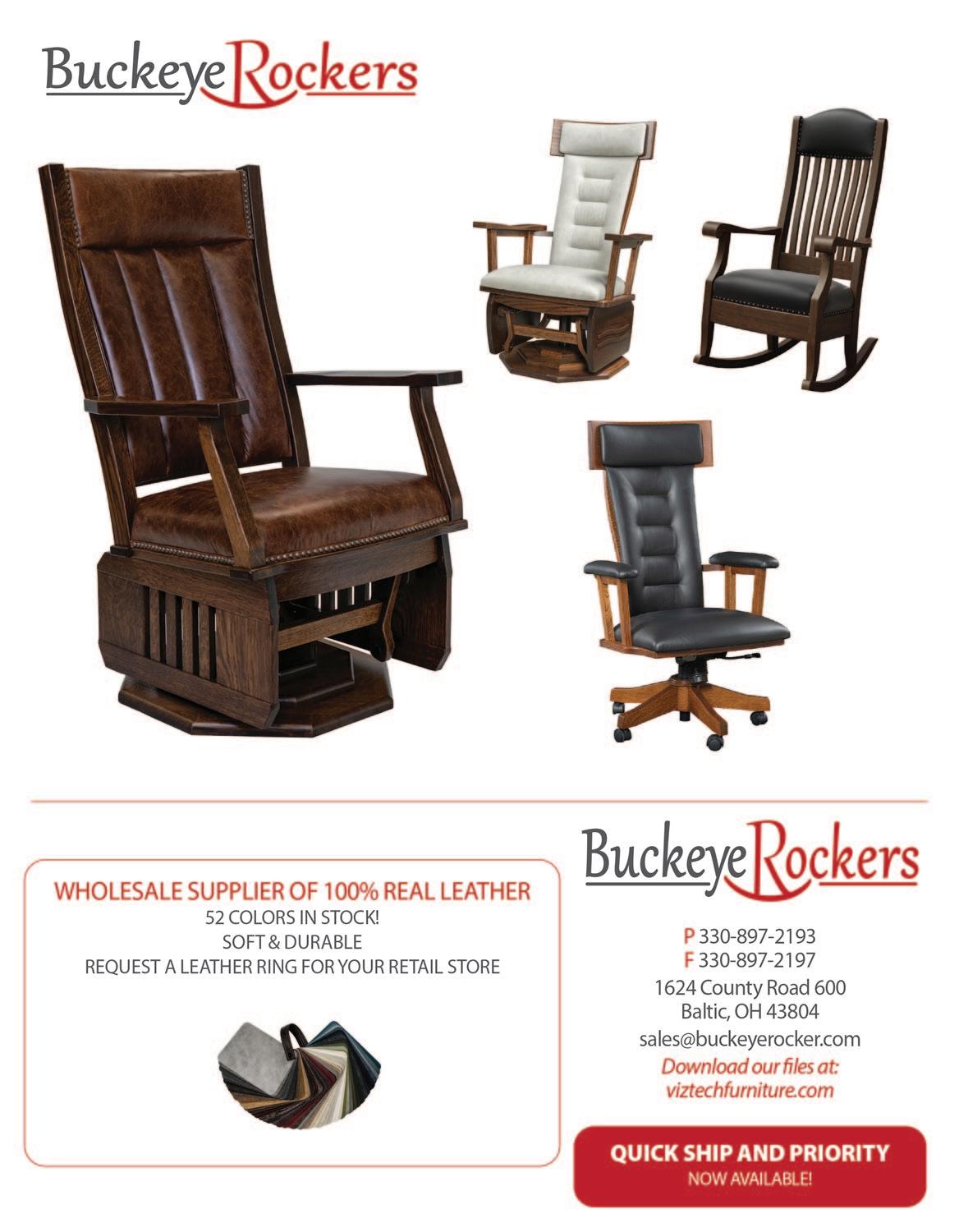
<<<At home in either your corner office or home Office, the DC55 chair from Buckeye Rocker is long on comfort and style. Padded surfaces all around are paired with a classic design, for a chair that is sure to please for many years. — See ad on page 46
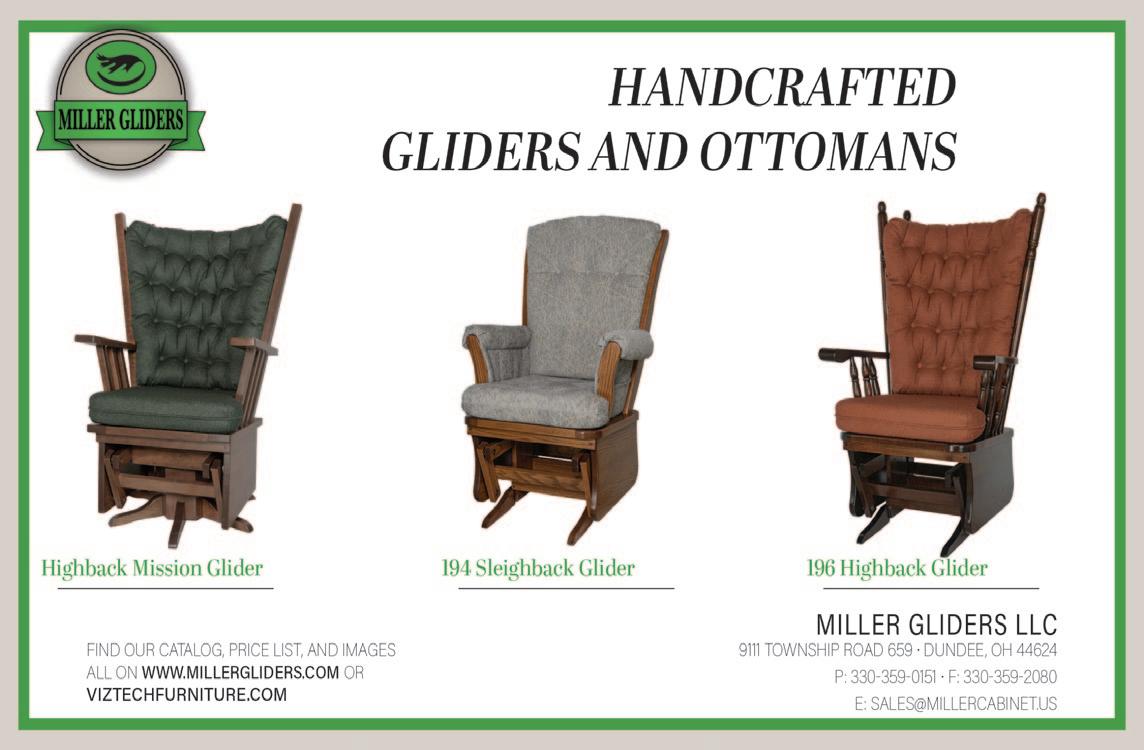
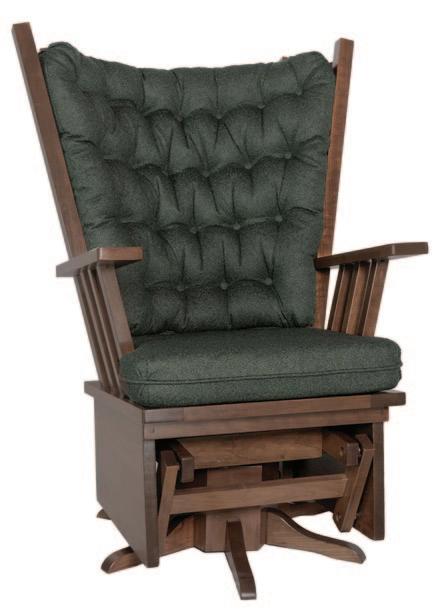
>>>You don’t have to be a grandma or a new mom to enjoy the oldtime comfort of the High Back Mission Glider from Miller Gliders, LLC (new name; same comfort you’ve enjoyed for years!) Thick cushions and a timetested glider mechanism combine to make this a chair everyone in your home will want to experience. — See ad on page 11
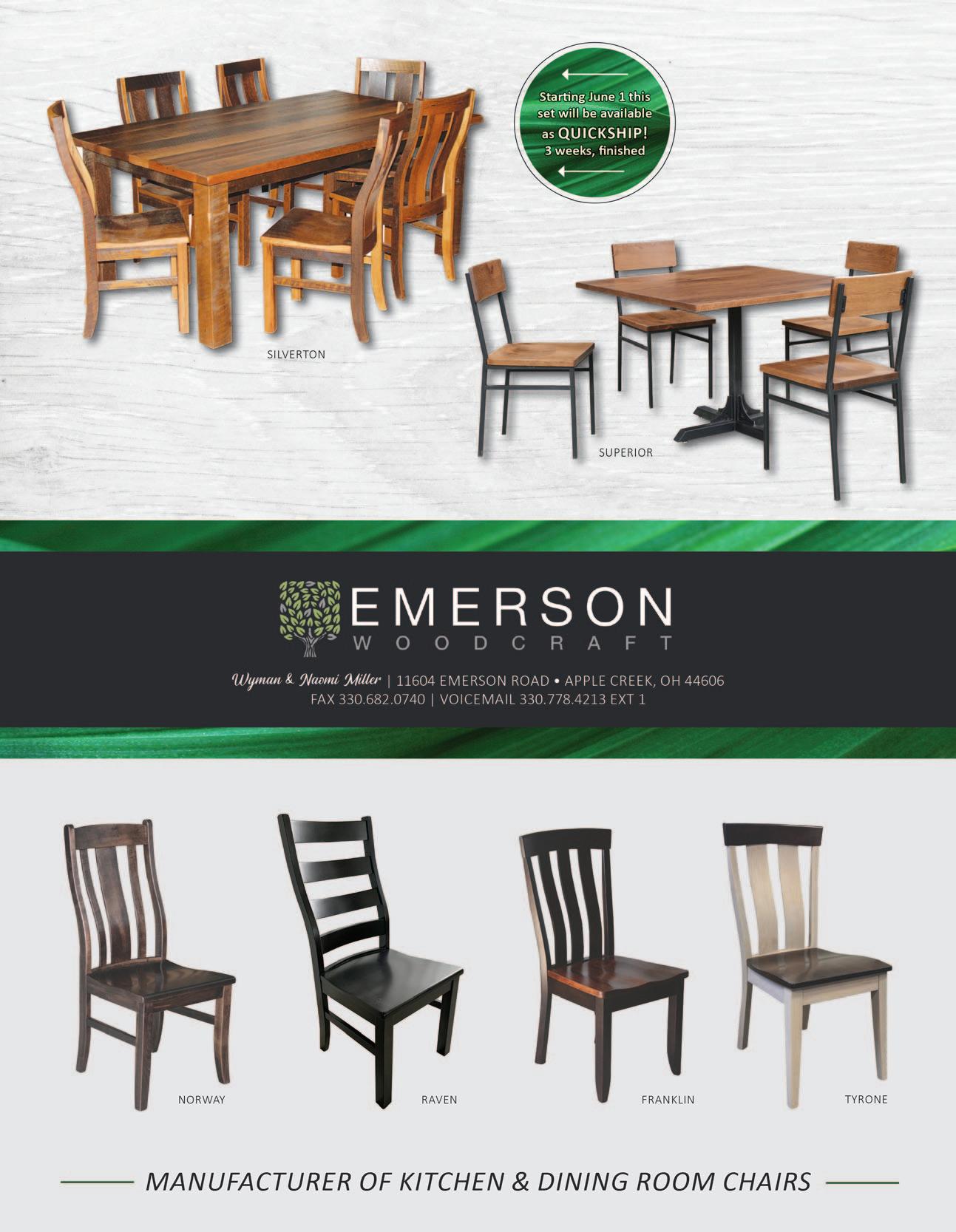
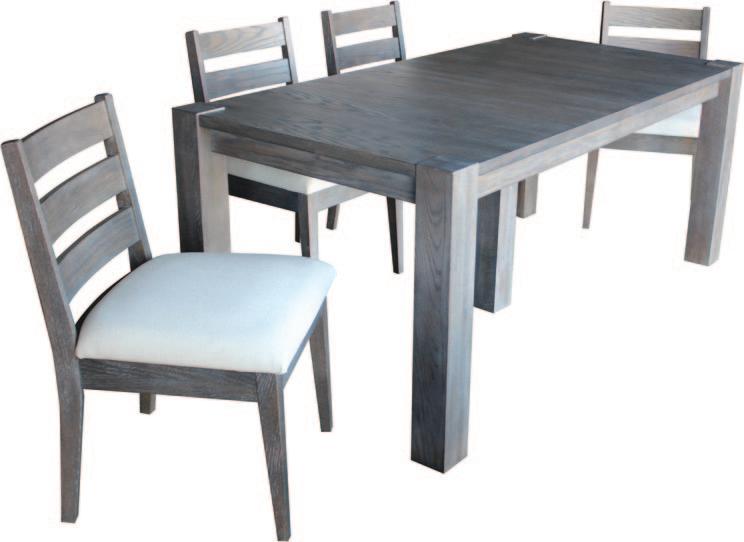
<<<Brand new from Emerson Woodcraft is the Conway #2014 Collection! Shown here in wirebrushed Red Oak and OCS 118 Antique Slate w/White finish, this new set features a threeslat ladderback chair and a solid top table with poststyle legs. The cushioned chair offers excellent comfort, and also is available in a swivel stool. — See ad on page 5
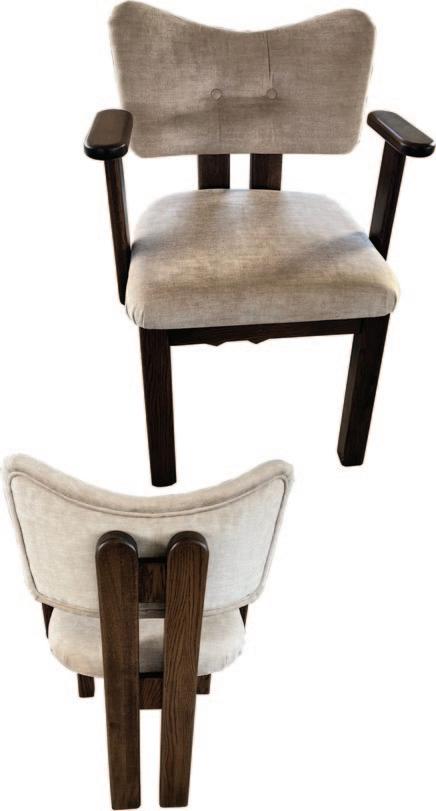
^^^With its new “Breeze” chair, Ridge View Woodcraft brings “thinking outside the box” to a new level. The back is cleverly attatched to the sidebyside back/legs combination, to create a truly unique look. A cushioned seat and back offer excellent comfort. Shown in FlatSawn White Oak with Perfect Brown stain, this new offering is sure to be an attentiongetter! — See ad on page 21
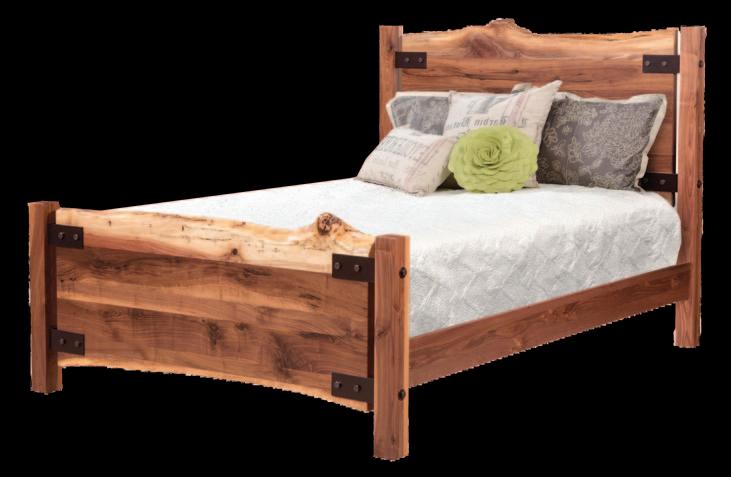
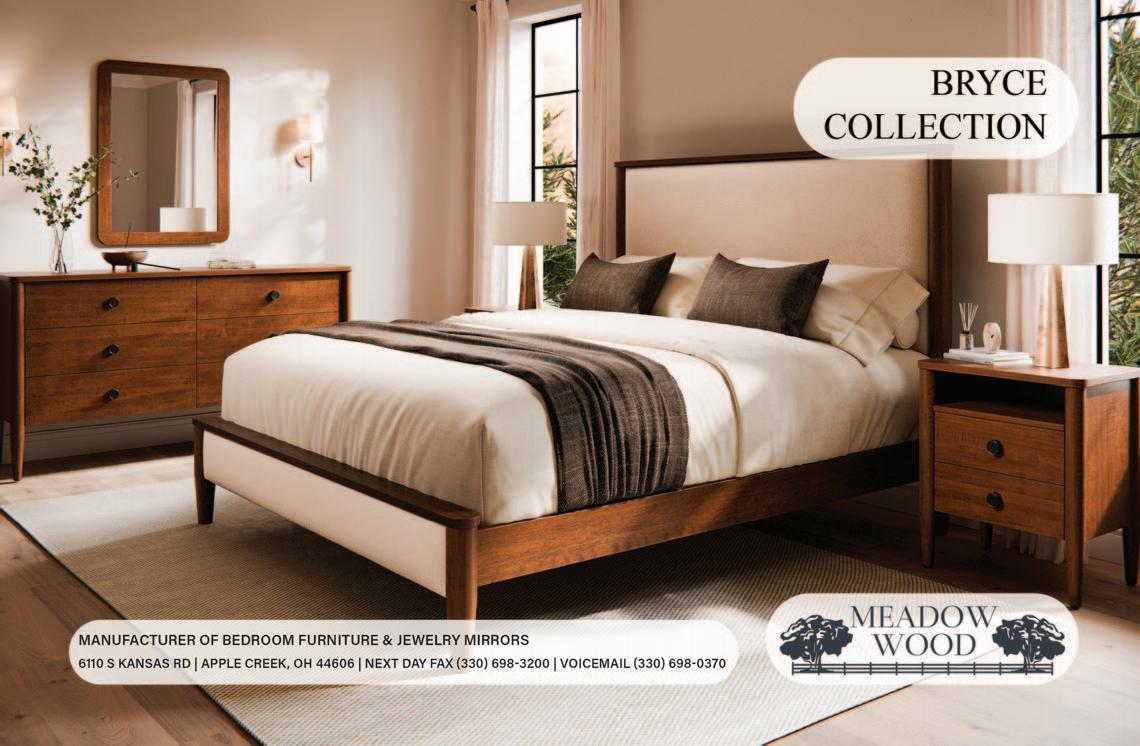
>>>The Last Frontier bed by Meadow Wood Furniture definitely looks like it would have been right at home in pioneer days! Now, you can use it to create an incredibly attractive look in your bedroom. The bed features a live edge headboard and footboard, and is accented by large, sturdy hardware. It all combines for a stunning look! — See ad on page 33
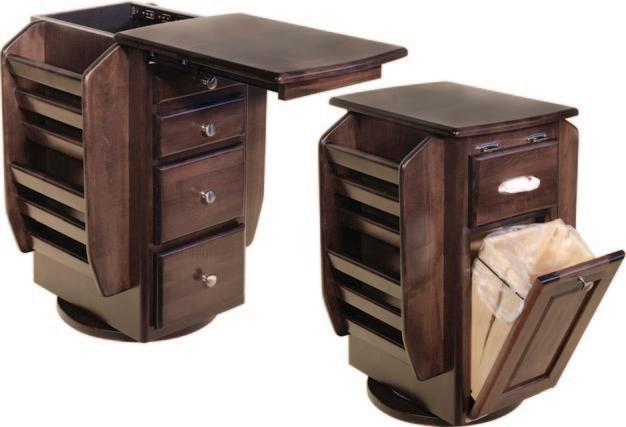
>>> The M010944 Magabout Delight with sliding top by Superior Woodcra is a top seller, and with a long list of use ful features, it’s easy to see why. The op tional feltlined sliding top is a customer favorite, and the rounded corners on the top have been well ceived, too. The rotating base and storage op lots of features in a small footprint. — See ad on page 21
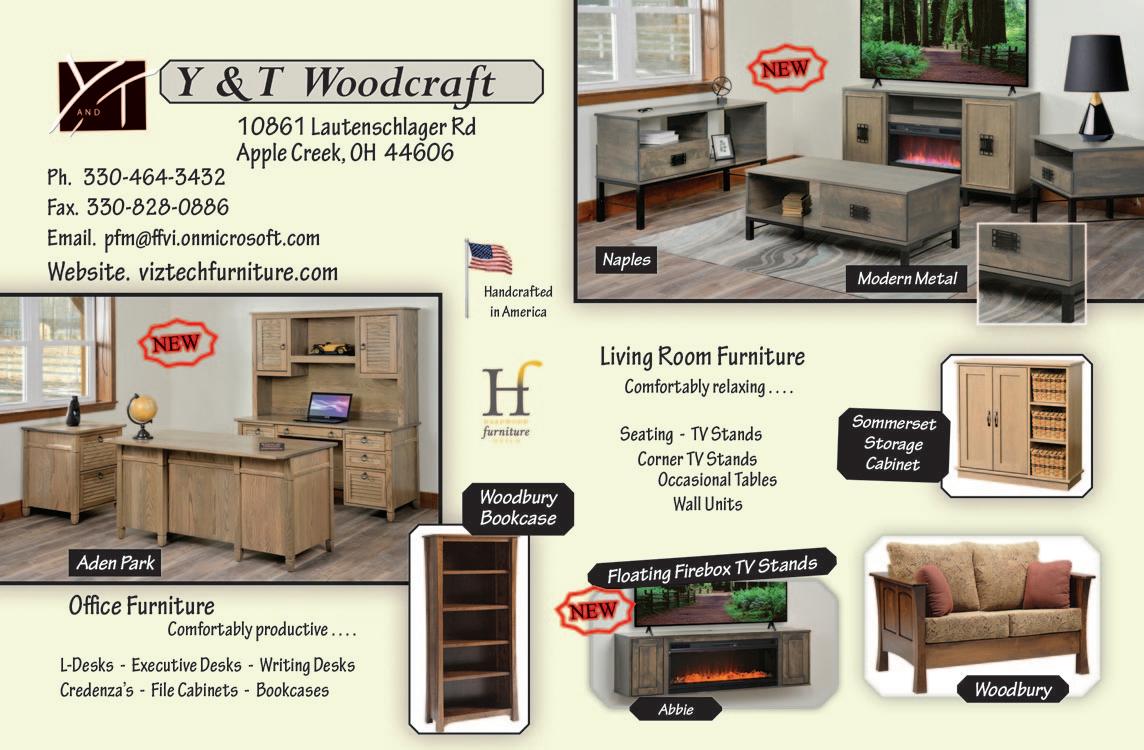
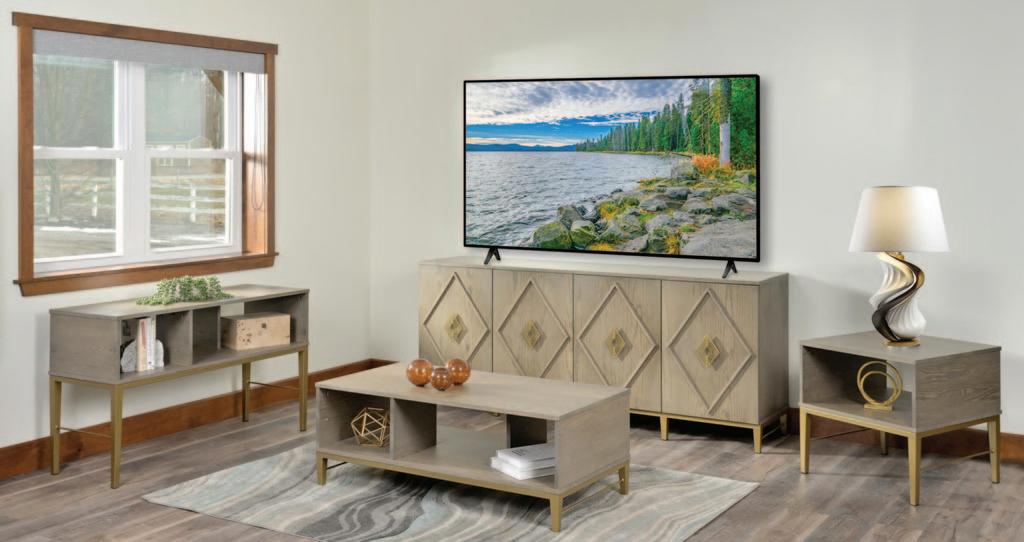
^^^With the introduction of the Cascade Living Room “Metal” collection, Y&T Woodcraft once again sets the standard for stylish occasional/living furniture. The doors in the entertainment/TV stand feature diamondshaped pulls, and are accented by diamond shaped trim. The set is available in three metal colors for the hardware, and eight wood species. This collection is sure to be a hit with customers who demand both style and function. — See ad on page 11
>>>New from Hillside Chair is the Reno chair! This attractive new model features a thick cushioned seat, and sits on top of two different style bases, depending on whether you choose the side chair or arm chair. The back features a slight angle for maximum comfort. Be sure to check with us for fabric and color selections!
— See ad on page 33
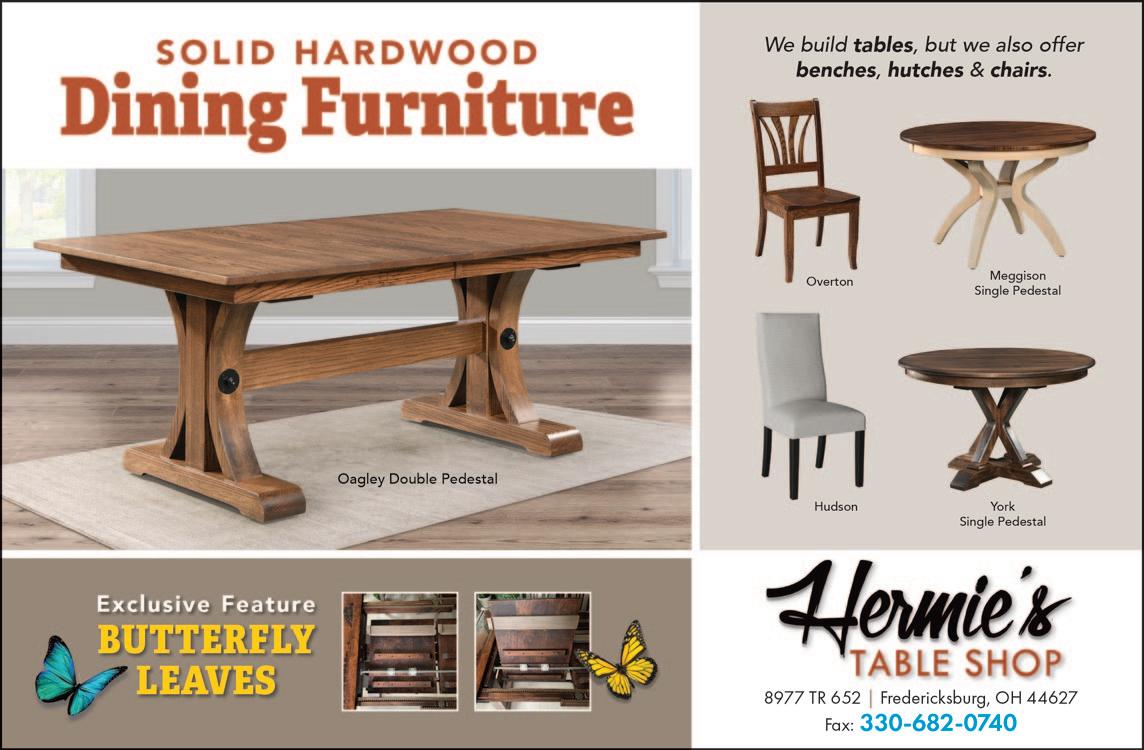
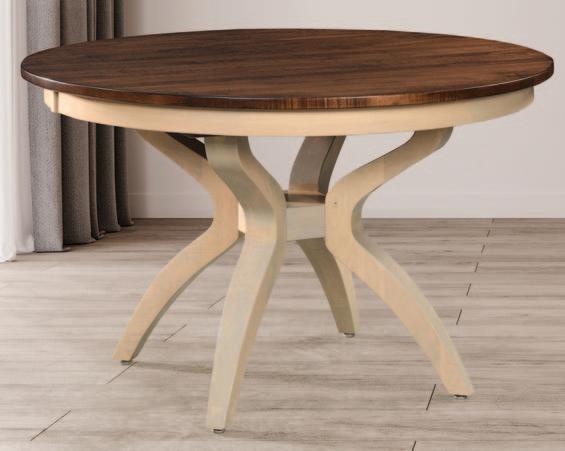
<<<The striking twotone finish of the Meggison model by Hermie’s Table Shop is the first thing that catches your eye. From there, you’ll see the intriguing base, with legs that angle inward, and then, gently curve back out. It’s a beautiful combination that will look great on your sales floor. — See ad on page 14
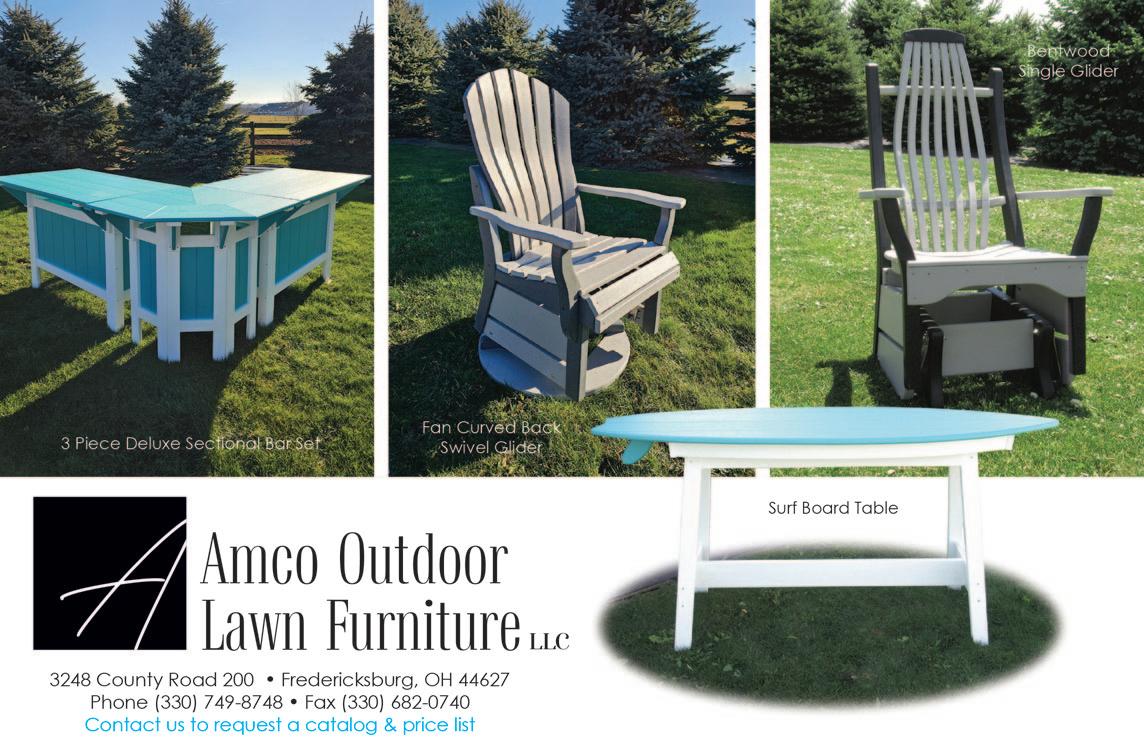
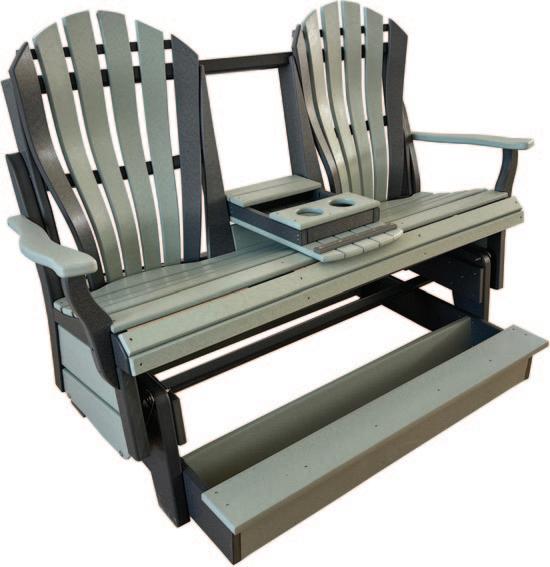
<<<Experience maximum outdoor comfort with the FanCurved Deluxe glider by Amco Outdoor Lawn Furniture. The contoured back invites you to slide in, sit back and enjoy. But wait! You’ll soon discover that this attracve counterheight love seat is also a glider! The folding armrest/drink holder means you can truly relax with your favorite beverage handy. This model also features a perfectly placed footrest. Shown in Mint and dark Gray. Be sure to check this one out! — See ad on page 20
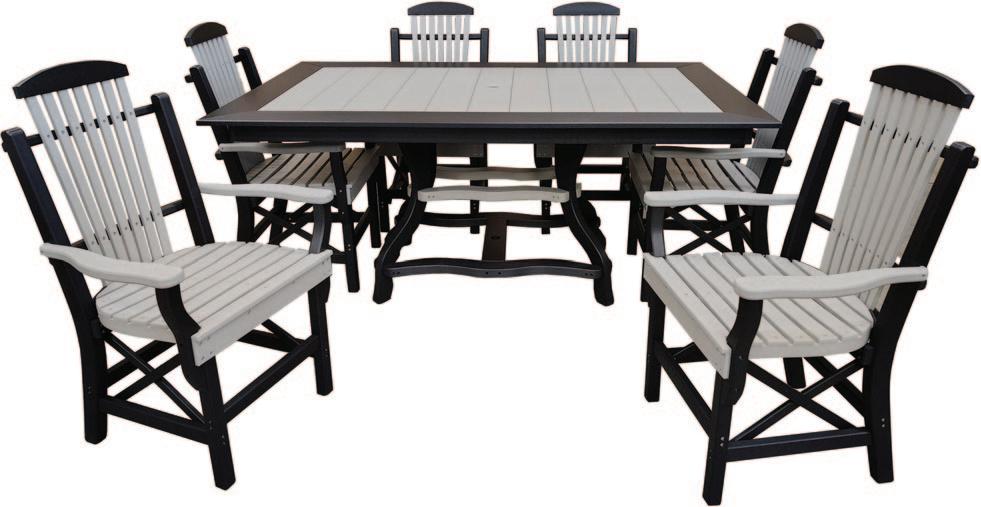
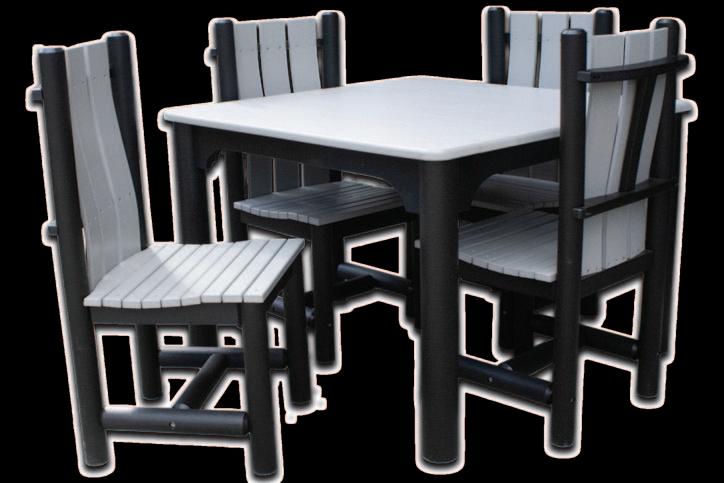
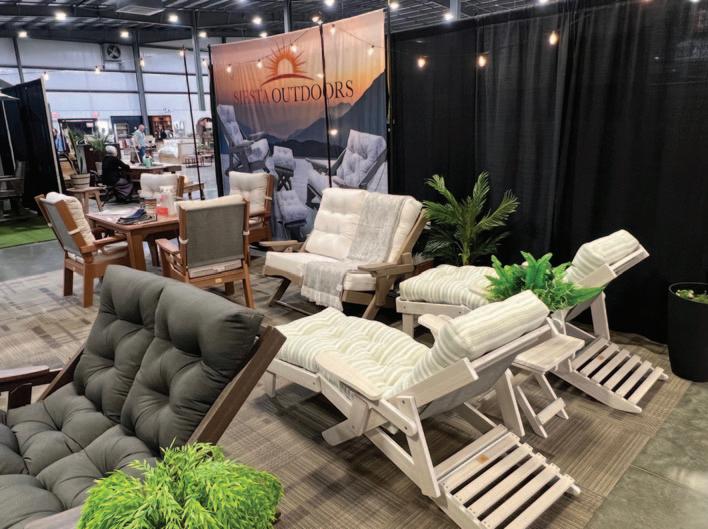
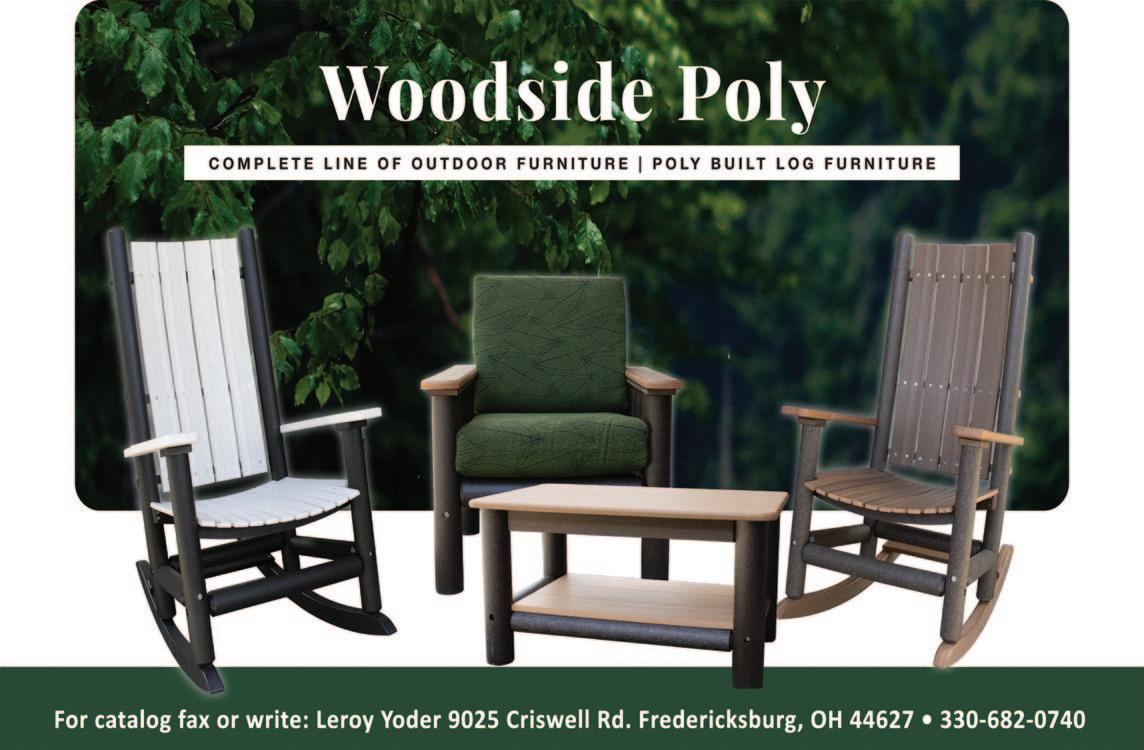
(Below) Woodside Poly is creating outdoor poly furniture that challenges tional notions of how these types of products should look. For example, the set shown above features rounded legs on the table, as well as the diningstyle chairs. The chairs also feature a curved back for — See ad on page 43
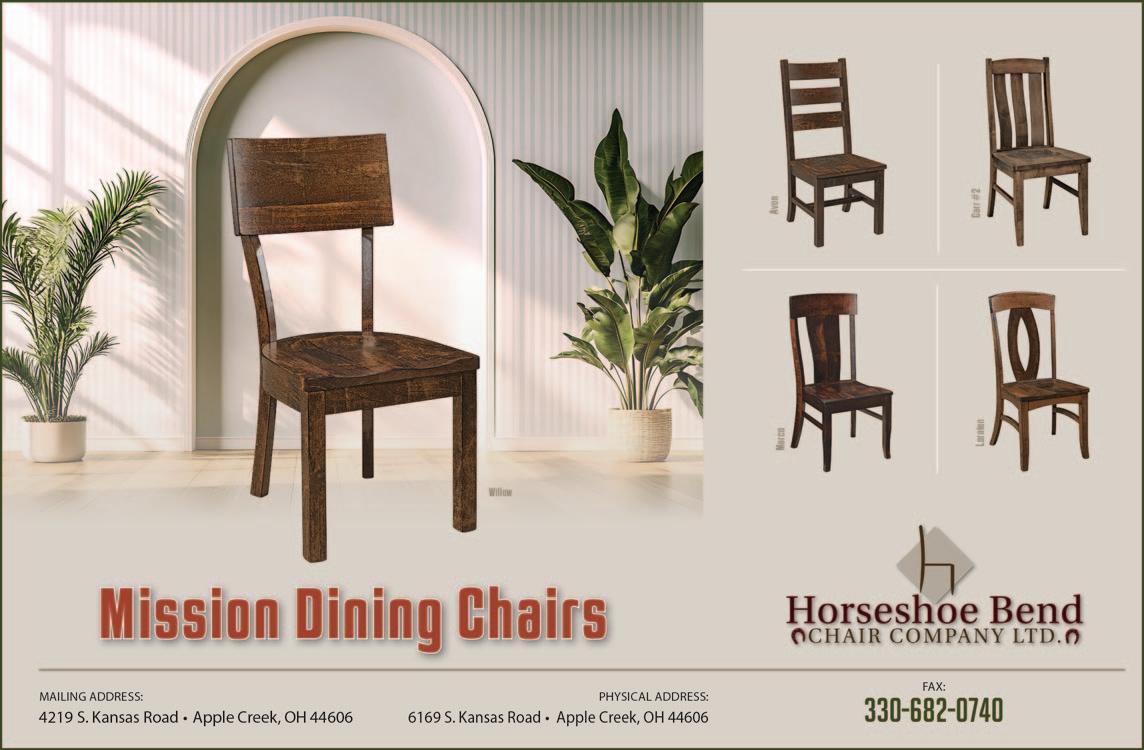
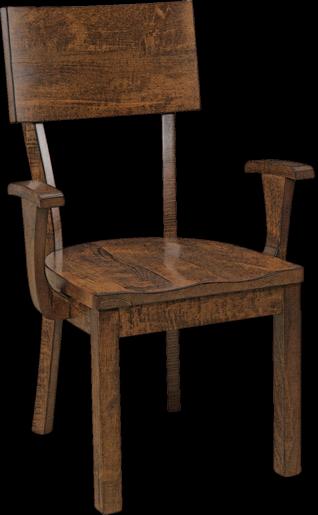
(Below) The new Willow chair by Horseshoe Bend Chair might surprise you! The back looks almost like it’s floating by itself, but make no mistake: In addition to being very comfortable, it’s also very sturdy. The curved back wraps around you, while the scooped seat adds extra comfort. This attentiongetting, stylish model can be paired with almost See ad
^^^While Finishing Designs offers a number of quickship dining set, they are, first and foremost, a fullservice finish shop that custom finish services for dining furniture. They are conveniently located just off St. Rte. 241 between Millersburg and Mt. Hope, for easy access. Contact them today to see how thier expertise can fit into your plans. — See ad on page 36
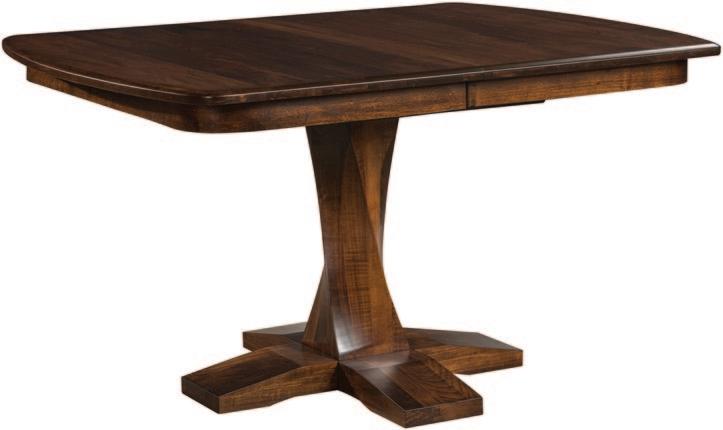
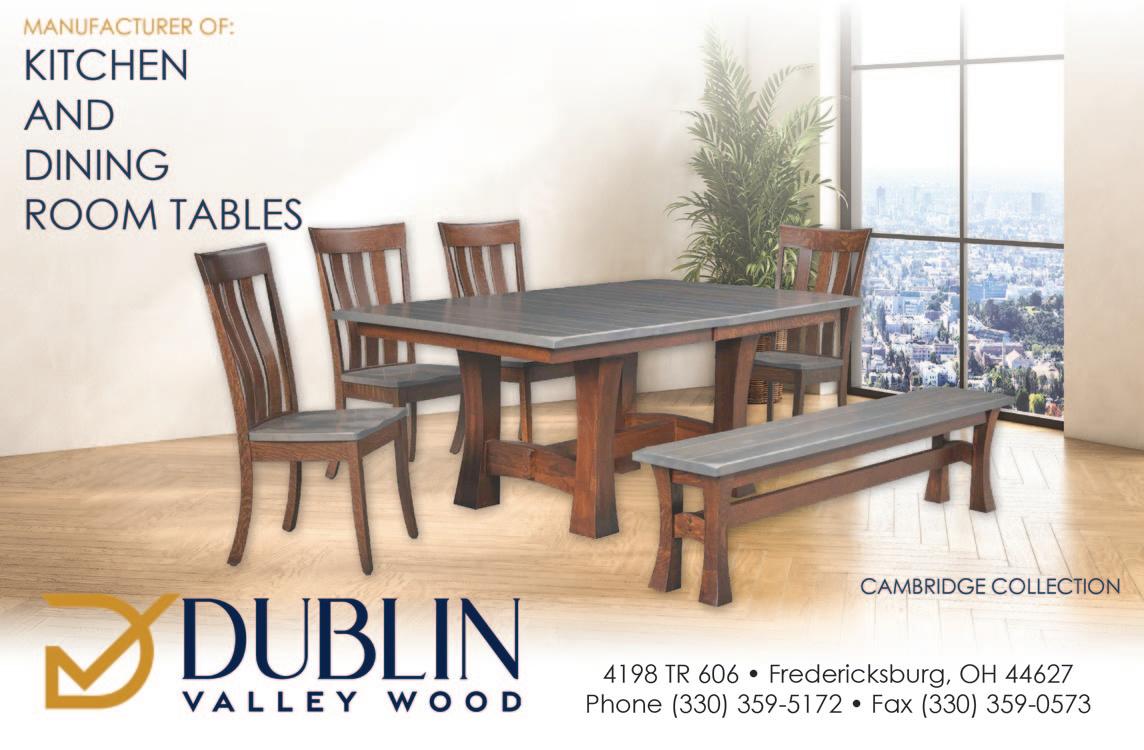
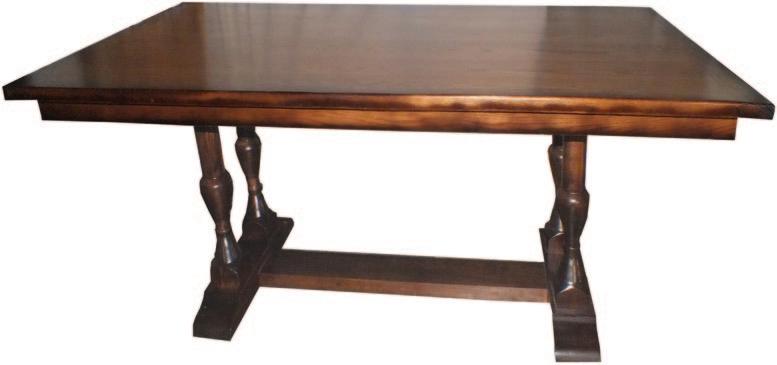
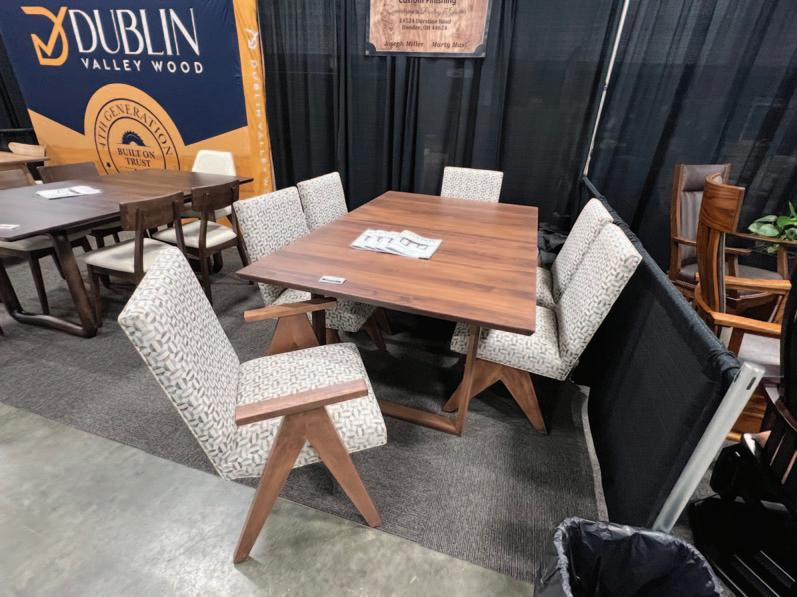
<<< Dublin valley Wood features designs from very modern to very traditional. The Bayhill model, a stylish trestle table that leans hard toward traditional, features a gorgeous solid top. Shown in Red Oak and Seely stain with shaded edges, you can pair it with the chair of your choice to create the look of your choice! — See ad on page 28
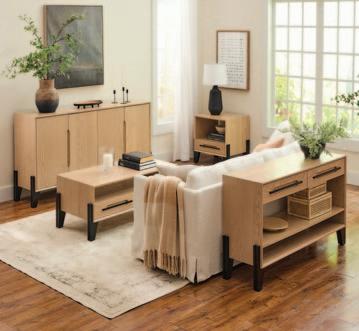
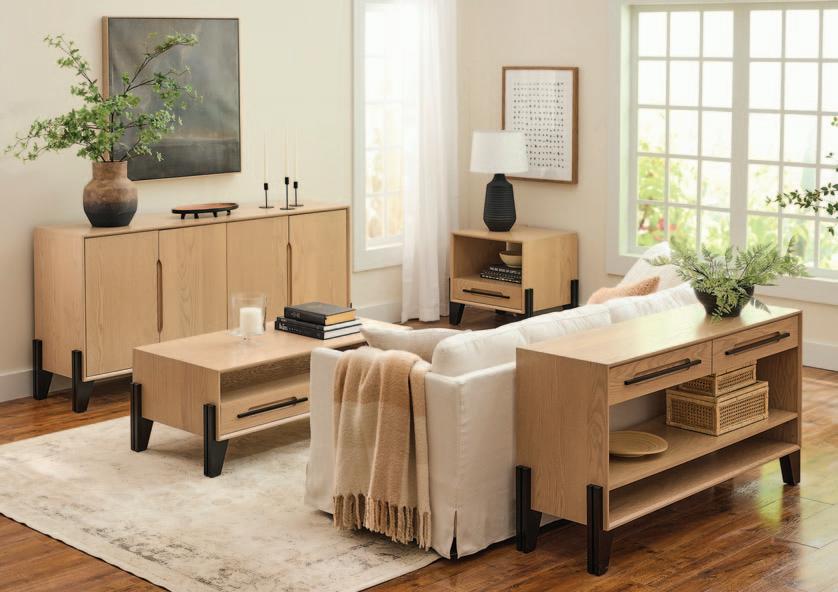
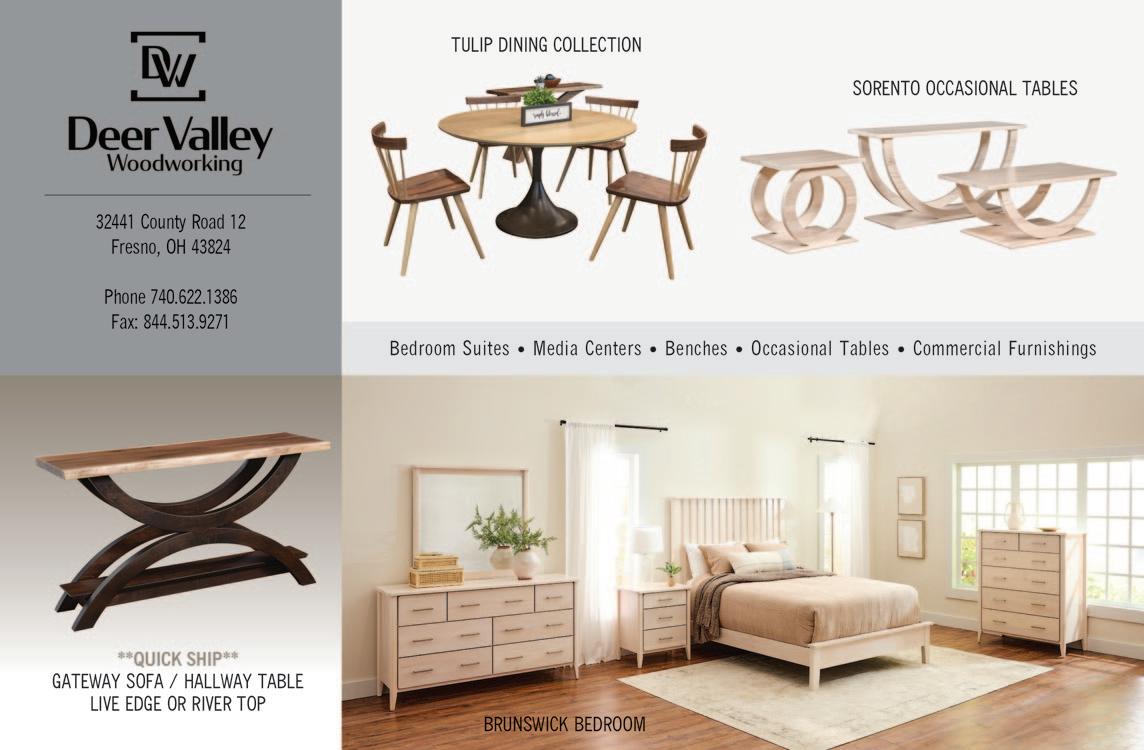
^^^The new Glasgow occasionals group by Deer Valley Furniture projects a clean, minimalist style, yet provides plenty of function. This brandnew offering features extremely clean lines, combined with contrasting colors on the legs and hardware. Perfect for those who prefer a more minimalist approach that also channels MidCentury Modern. Gorgeous! — See ad on page 32
FEATURED DESIGNS
Ohio Furniture Market adds features, sets records
Story and photos by Jerry Klingerman
Editor’s note: We normally devote more pages to the Ohio Furniture Market prior to the event, but this year we thought we’d try to create a little “FOMO” (Fear Of Missing Out) for next year, by giving our readers an extended glimpse inside the show.
With175 exhibitors — a new record — and 1,000 attendees (also a new record) the Ohio Furniture Market was a big hit this year. Organizers worked hard to maximize the venue space available to include as many local furniture manufacturers as possible (more on that in a moment). It’s notable to add that this is the first Ohio Furniture Market that’s been held since the Ohio Furniture Guild (formerly known as the Ohio Hardwood Furniture Guild) announced a major rebranding initiative last year.
Continued on page 38
>>>A simple but satisfying snack. Ohio’s Amish Country is famous for its cheeses, but locals know that a winning combination — that’s served at virtually every gathering held by Amish and English alike — is local swiss cheese combined with a slice of Troyer’s Genuine Trail Bologna, on top of a Ritz cracker. Simple, but delicious!
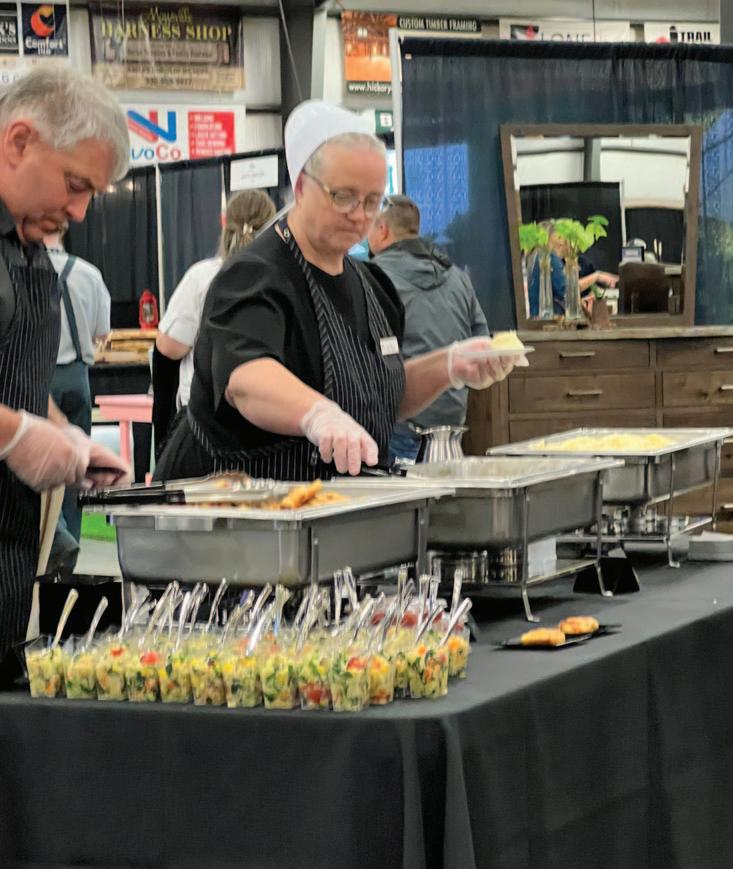
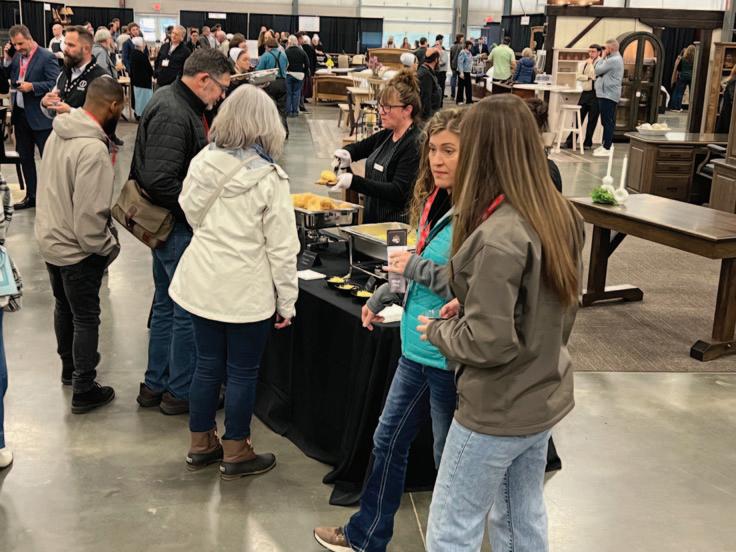
(Above, and right) An undisputed favorite feature from this year’s show was the VIP night, where vendors and attendees mixed over “Amish Comfort Food” hors d’ouvres. It was a “no sales allowed” event where both groups mingled casually to share food and conversation. The menu was an interesting little glimpse into Amish cuisine, as it included a couple wedding favorites as well as a couple church food selections, including deviled eggs. There were a lot of menu items and no one went home hungry!
(Far left) Servers keep a careful watch on the “Amish wedding style” chicken tenders and brown-butter mashed potatoes.
OFM Show wrapup
Continued from page 34
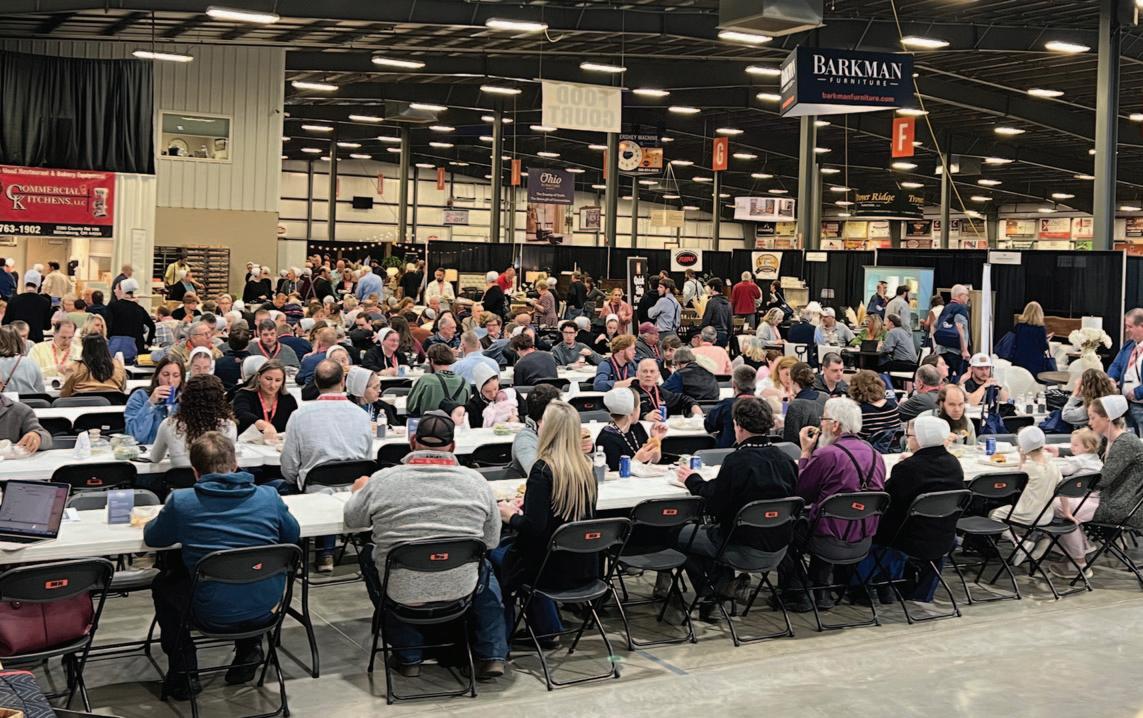
If you feed them they will come Twenty-five years ago, I was put in charge of an annual meeting that normally drew about 100 attendees. The first year we drew 1,000 people.The difference? We fed them. Now, I’m not saying that food has anything to do with the success of the recent Ohio Furniture Market, but we wouldn’t feel right talking about the event without noting that food was a cornerstone of the event — and why not? Ohio’s Amish Country is arguably the Comfort Food capital of the USA, and attendees had a chance to experience a part of that. First, exhibitors and atten-
dees alike were treated to free breakfast and lunch both days of the event.
From hearty breakfast sandwiches and fruit and yogurt parfaits to belt-loosening baked goods, everyone had the opportunity to start the day right. Lunch was more of the same tastebud-pleasing items.
New this year, however, was an event that combined good food and good company. On the evening of the first day of the show, a private VIP night was held, with only vendors and attendees. It was a “no sales allowed” event which allowed vendors to leave their booths and mix freely with attendees, while enjoying more regional taste treats. The mixer created a
huge buzz among both segments, and was considered a great success.
The Ohio Furniture Market already is an event where unprecedented access to the actual manufacturers is one of the hallmarks. But removing the “sales” aspect and creating a mixer-style event based on local taste treats was a huge win.
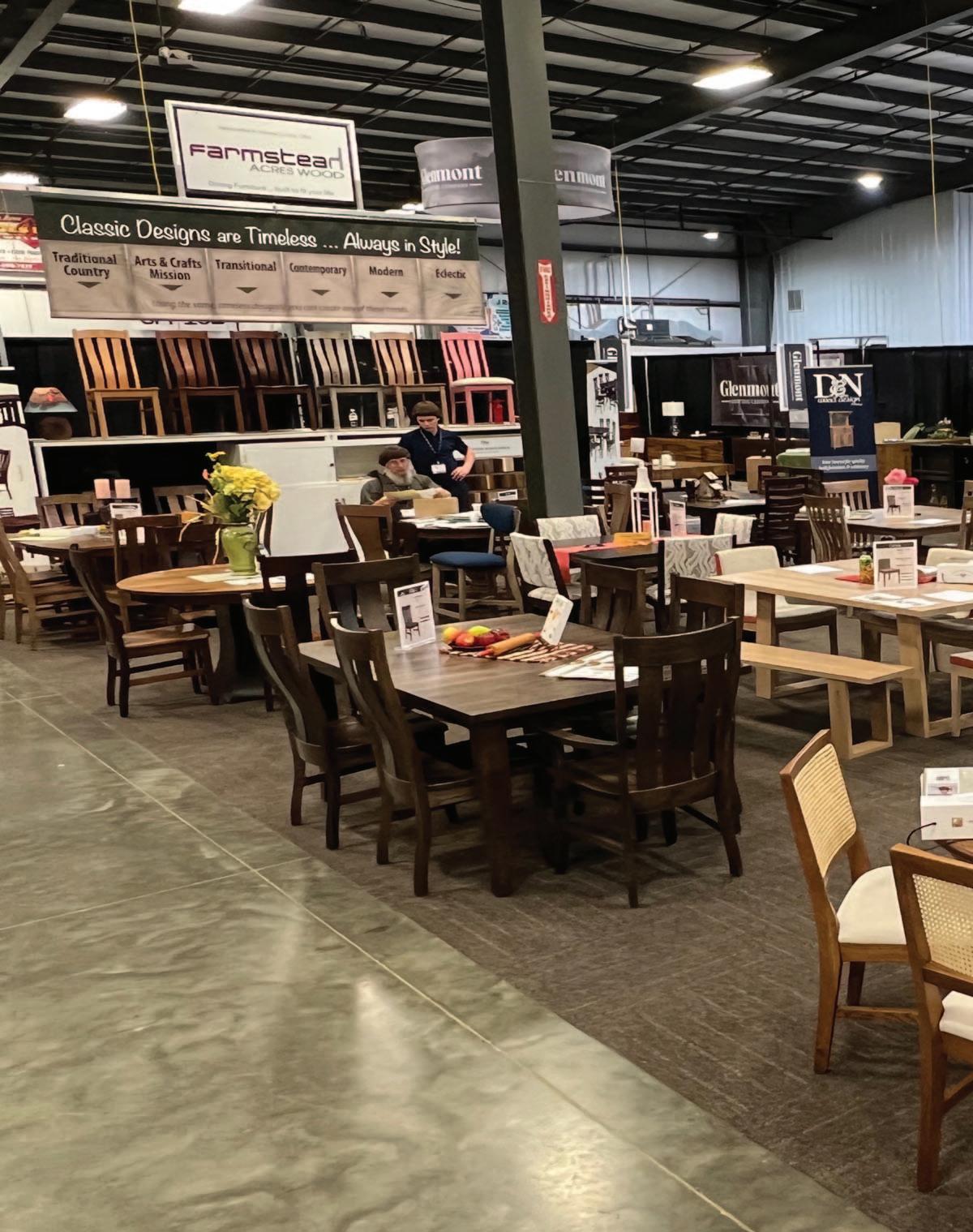
Oh, and then there’s the furniture, of course! The industry continues to grow and mature in ways that would have been hard to imagine 15 or 20 years ago.
We’ll summarize it this way: If you want to sell high-quality American-made furniture that has real value, then this is one of the premier events in the USA to attend. You’ll see hundreds and
Lunchtime! The Ohio Furniture Market again featured free lunch for vendors and visitors alike, who were treated to a variety of local favorites. The meals were served on a “donation-only” basis, and the donated funds were given to the Amish Special Education Fund. The Ohio Furniture Guild paid all expenses, and later made an additional donation of $15,000. Doing that allowed the Amish Special Education Fund to net $48,727!
hundreds of products.
It’s a chance to see the very best furniture this region has to offer, and meet the people who design and build it in a relaxed environment located in the heart of Ohio’s Amish Country.
If you’ve never attended, but sell US-made products, you’re missing out.
In recent years our manufacturers have made great strides with designs, colors — even mixed mediums that combine metal and wood. There’s truly something for everyone’s taste. And, of course, if you don’t see something you’d like to put on your floor, you can always work with a local manufacturer to create a design from scratch.
Showcase House drawing
A number of attendees also went home winners. The contents of the popular Showcase House were given away. Nine lucky attendees won everything from the entryway pieces to the outdoor furniture. The Showcase House is filled with items built and donated by local furniture manufacturers who compete with each other to win a spot in this model home. Designers specializing in style and colors guide the project to ensure the Showcase House reflected the very latest trends.
Venue Expanding
But there’s more! Just after the Ohio Furniture market ended, Continued on page 42
(Below) A portion of the “upper” venue, the Dean Beachy Arena, was sectioned off and turned into the “Market Cafe,” a popup coffee shop. It served as a quiet place to rest and catch up on email, messages, etc. while recharging to take on the rest of the event! (Photo courtesy of Ohio Furniture Guild)
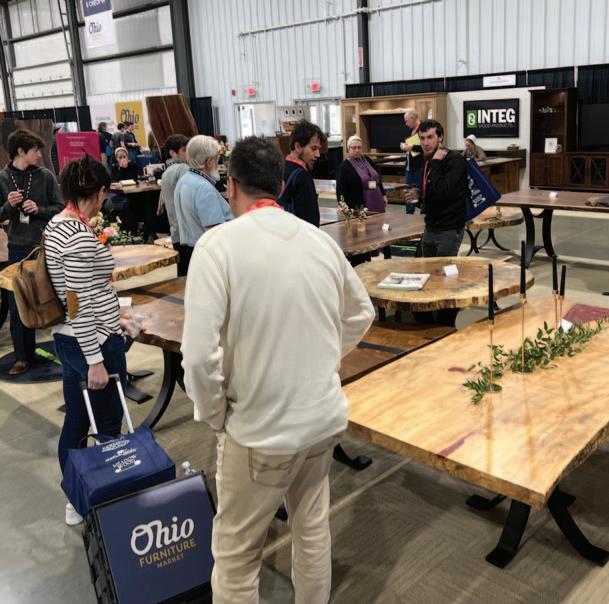
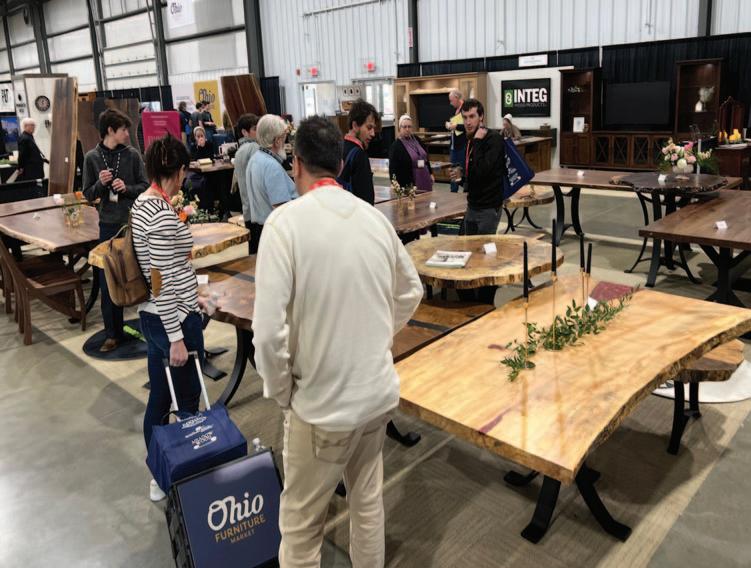
(Above) Live edge furniture continues to be popular, and a number of the selections from Ebony Woodworking combine one-of-a-kind live edge tops with metal bases, creating a stunning look.
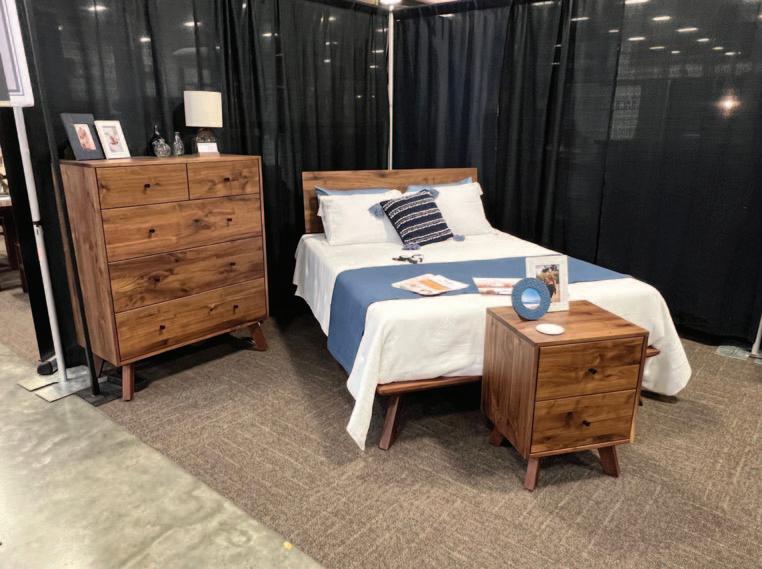
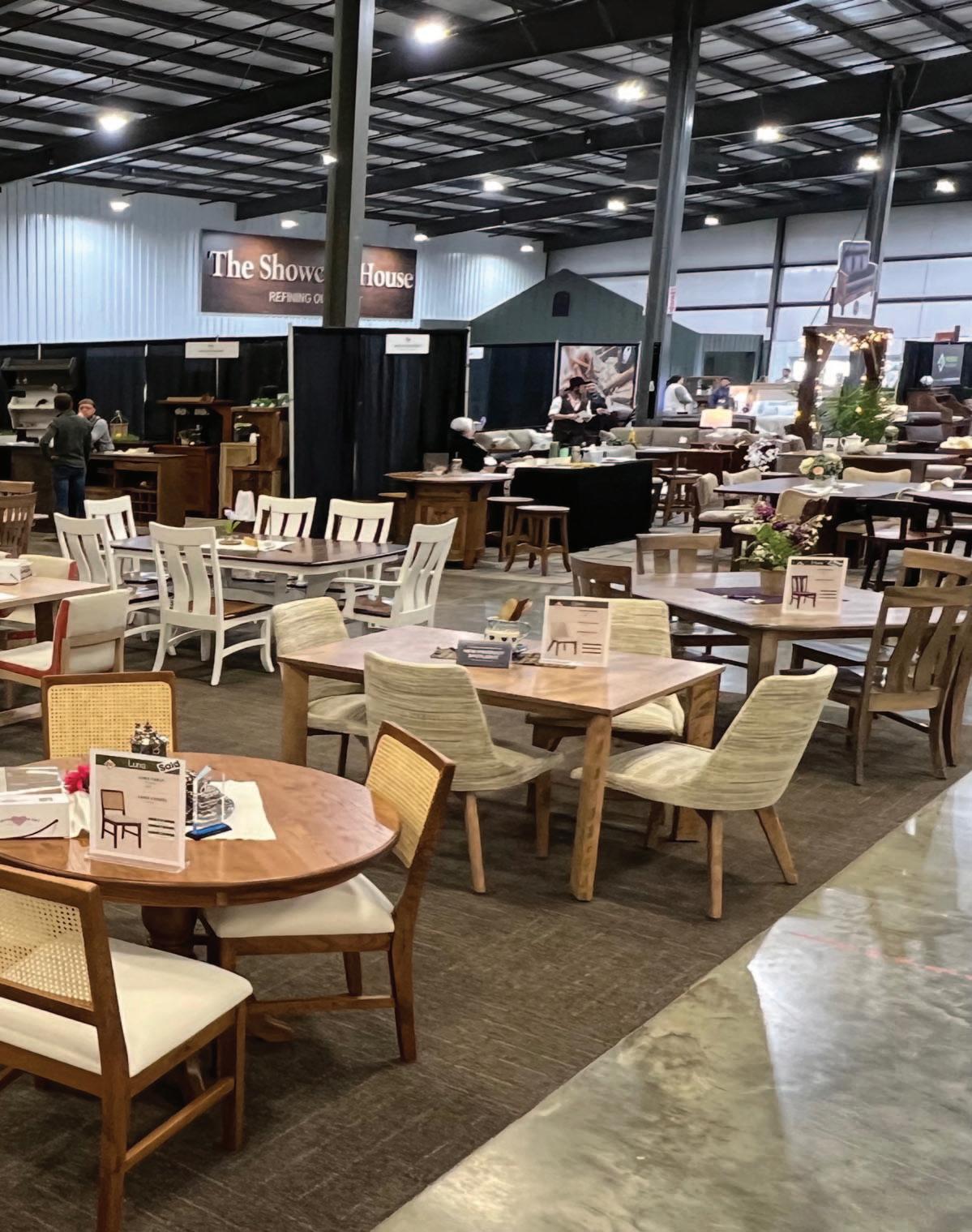
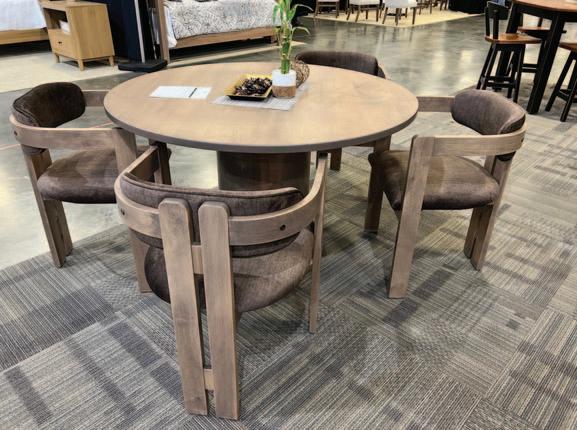
From bedroom to dining to outdoor furniture, the Ohio Furniture Market showcases hundreds of designs from 173 show participants.
Continued from page 38
the owners of the venue broke ground on an expansion that will combine the Mt. Hope Event Center with the adjacent Dean Beachy Arena.
After being held at two sites for several years, the furniture market has been held exclusively at the Mt. Hope, OH site for two years now, and utilized a covered tunnel to provide a weatherproof path to the two buildings. But now they will be connected. Directly after the OFM, ground was broken on a “connector” building that will knit the two individ-
ual exhibit spaces together. Thurman Mullet, part of the family that owns and operates the Mt. Hope Auction and the event buildings told Expressions in Woodcraft that the expansion will add approx. 44,000 square feet to the two buildings, bringing the combined total space to somewhere between 144,000 and 150,000 square feet — more than enough, it is hoped, to allow all the exhibitors who want to participate in the OFM the opportunity to do so. The worked is scheduled to conclude in October, so the venue will be ready far in advance of next year’s show.
Architect’s rendering of the Expanded Mt. Hope Event center.