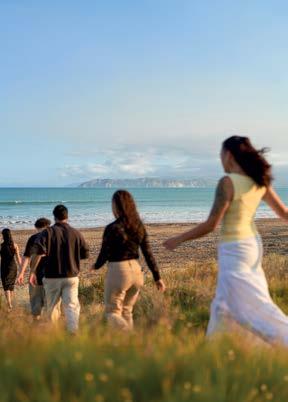
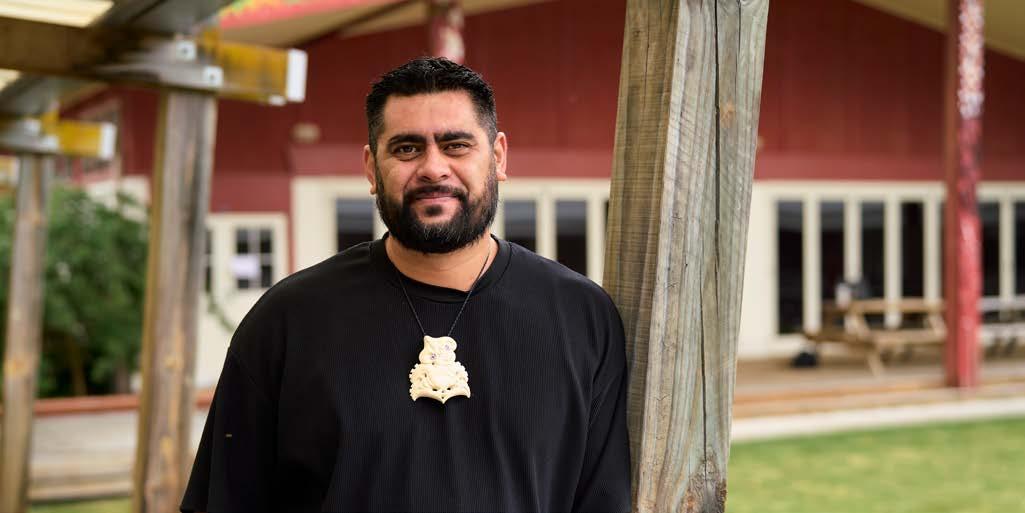
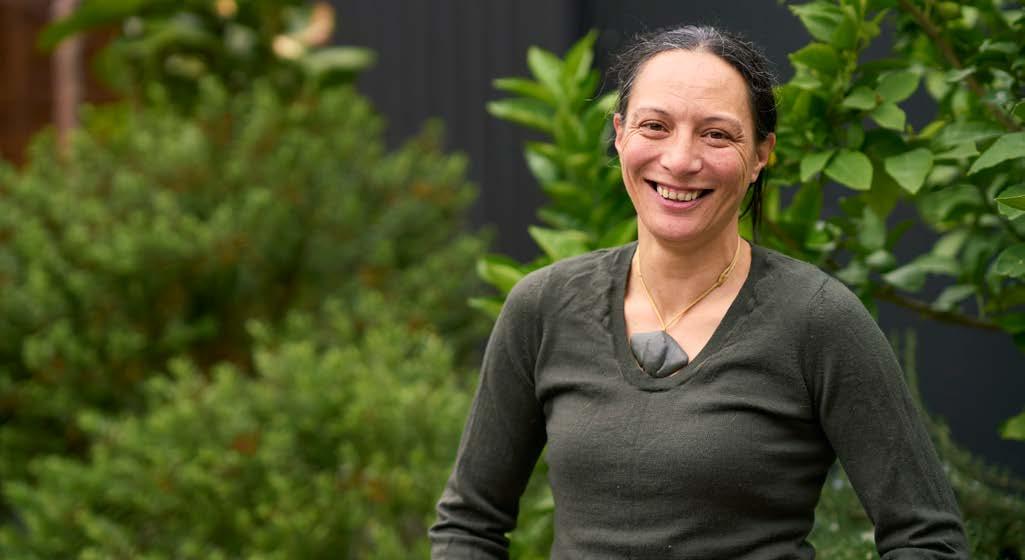
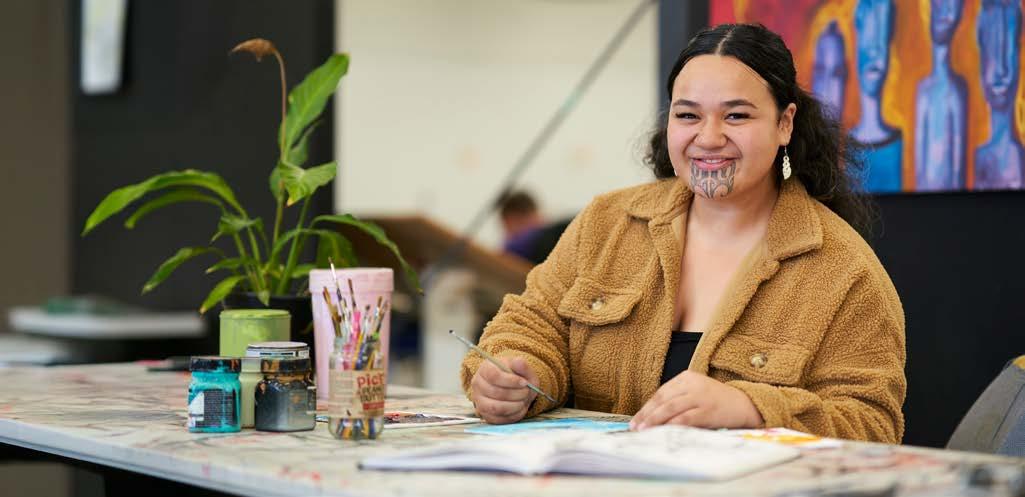
From Left: Alisha Stanford Bachelor of Nursing Student, Kieron Mckay Bachelor of Sport and Exercise Science Student and Mitchell Innes NZ Certificate in Electrical Pre-Trade (Level 3) Student
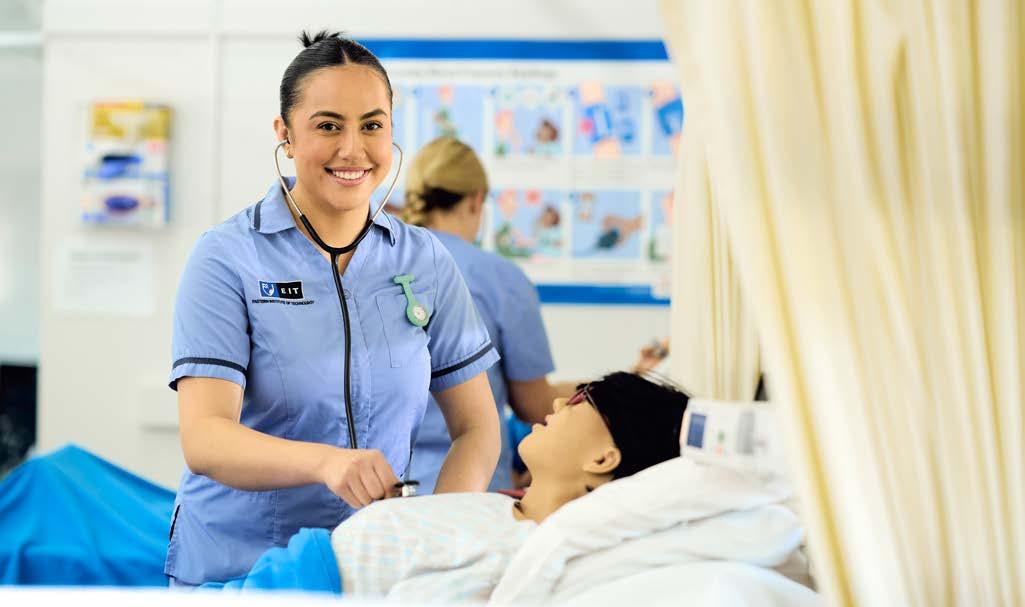
Inside cover photo: Kya Joe Bachelor of Nursing Student
Check out our 2027 prospectus which has even more useful information to help in your study journey.
Find
• All programmes on offer at EIT
• Campus info
• Student support info
• Understanding the different qualifications
• How to enrol
• Plus loads more….
Contact info@eit.ac.nz for your copy or check out eit.ac.nz for a digital copy
Disclaimer: All information in this publication pertains to New Zealand Citizens or Permanent Residents, and is correct at the time of printing but is subject to change. EIT reserves the right to amend/withdraw programmes or courses. Fees for 2027 will be set by November 2026 and are subject to change. For the latest information, or for full programme entry requirements visit eit.ac.nz or phone 0800 22 55 348.
WELCOME WHAKATAU
Nau mai haere mai
So you are looking at studying a degree? EIT has options for you!
When you study at EIT you’ll get experiences that will help you gain the knowledge and skills to get ahead. Become part of a vibrant learning community and be taught by experienced lecturers and tutors who have track records as respected academics, researchers and industry professionals.
Benefit from EIT’s long-established connections with industry local, national and international. Many of our degrees are field based and hands-on to help you develop relevant work skills, gain practical experience and get useful industry contacts, which can set you on the path to a great job while you’re studying.
Learn in classes that are the right size to make sure you get the involvement and support you need. EIT provides help and guidance with everything from study planning to applying for a job after you complete your studies.
Be supported by lecturers and tutors who are here for you, where they’ll know your name and you’ll receive one-on-one attention to make sure you get the support you need to succeed.
We look forward to welcoming you into degree study and into the EIT whānau.
See you soon!
WHAT COULD I STUDY?
He Aha Hei Ako Māku?
Deciding what to study can be a bit overwhelming and we understand that choosing the right EIT programme isn’t always easy. Choosing between a certificate, diploma, degree or even postgraduate studythe decision can be a little daunting.
We are here to help. Our Engagement Team is available to talk to you, to provide guidance on entry requirements and support when working through the application process.
You may have already seen us out and about as our Engagement Team connects with schools, community organisations and other social agencies to showcase EIT and the many programmes we have available.
We can:
• Arrange a campus tour for you
• Connect you with the right person for programme specific queries
• Introduce you to the Student Support Team
• Refer you to potential scholarship opportunities
If you would like more information or help please scan the QR code or email engagement@eit.ac.nz
NEW FOR 2027
School Leaver Scholarships
Karahipi Ākonga Wehekura
Applications open Wednesday, 1 July 2026
EIT is proud to support local school leavers who are passionate about their community and committed to shaping the future of our region.
Apply for one of ten $5,000 School Leavers Scholarships for degree study at EIT Hawke’s Bay or Tairāwhiti.
SCAN ME
For more information or help deciding what to study.
We’re looking for students who:
• Are actively involved in their community – through volunteering, church, cultural groups, sport, youth leadership or service
• Are already contributing and keen to keep giving back
• Have a genuine love for our region and a desire to see it thrive
• Show commitment, initiative and community spirit alongside their studies
If you’re a local school leaver who believes in staying connected, supporting others, and making a difference close to home, this scholarship is for you.
Love local? So do we! Because strong communities grow from local people who care.
From Left: Cameron Akuhata Engagement Advisor (Tairāwhiti), Leanne Harkness Events and Engagement Manager, Josie Morris and Analeah Taufale Engagement Advisors (Hawke’s Bay)
Provides an introduction to a subject and may be a pathway to higher level study. (Level 1-3 are equal to NCEA level 1-3)
Graduate Certificate, Graduate Diploma: This allows a degree graduate to study further courses at the same level as their degree but in a different or additional specialisation.
Postgraduate Certificate, Postgraduate Diploma:
Postgraduate study extends knowledge and skills after completing a Bachelor’s Degree, and prepares students for independent research.
*Based on full-time study.
HOW TO ENROL
Me Pēhea te Whakauru Mai
There is an easy 3-step process to follow when enrolling at EIT
01
Find Your Programme
Go online to eit.ac.nz to see the programmes available for you to study at EIT. Once you find a programme you are interested in, you can download course information to find out more.
02
Apply Online
Applying online at eit.ac.nz is the quickest way to apply to study at EIT. Once you have submitted your application we will let you know if we need a copy of your primary ID or any further documentation from you.
Apply Using RealMe
You can use your RealMe verified identity to apply for study at EIT. If you use your RealMe verified identity you won’t need to provide us a copy of your primary ID (unless you are on a visa from Immigration NZ to be in New Zealand).
Applying by post
You can also apply using a paper enrolment form. Please email us at info@eit.ac.nz and we will send one out to you.
Applying in person
You can return your enrolment form with any additional documentation and your identification to any of EIT’s Regional Learning Centres, or at the Hawke’s Bay or Tairāwhiti Campus.
Next Steps
Once your application has been processed, you will be contacted by your programme’s administrative team. They will provide you with programme information including the start date of your study and any special information regarding your programme. You may also be sent course selection forms which you need to complete and return to us. Depending on your chosen programme of study, you may be invited to attend an interview before you are fully enrolled.
03
Arrange Payment
Full payment of enrolment fees must be arranged before the start of your programme. You will receive an invoice with payment details.
Scholarships
There is information about a range of scholarships on our website eit.ac.nz/students/scholarships
Student Loans and Allowances
If you need to pay for your own study you can choose to apply for a Student Loan and/or Student Allowance with StudyLink. StudyLink is a service of the Ministry of Social Development. Apply well before your programme begins (even if you haven’t been accepted yet) so you will be ready to get your payments when you need them most. Check out what you qualify for at studylink.govt.nz
Student Services Levy
The Student Services Levy is a compulsory, non-tuition fee that is charged to students enrolled at EIT. The levy is to contribute to the provision of quality student services that support learning.
The funds received by EIT from the levy are ring-fenced, meaning they can only be spent on student services.
STUDENT SUPPORT
Te Tautoko Ākonga
Starting your studies at EIT may be your first time away from home, or your first experience of studying at this level. It can all feel a bit new and that’s completely normal. With study taking up much of your time, you might need support with other aspects of life as well.
To help you get the most out of your time at EIT, we offer a wide range of student support services. Whether you need help choosing the right subjects, planning your study, or getting guidance on the best pathway into your chosen career, there’s always someone available to help.
Te Pae Hono is EIT’s student support hub, conveniently located in the heart of Hawke’s Bay Campus in Taradale.
In Te Tairawhiti, the Ākonga Support Services are the first faces you see as you enter the Tairawhiti Campus, with services located between the main reception and library spaces.
This is your go -to place for support, whether you need to book a study room, access advice and services, or simply take a break, relax, and enjoy a cuppa. Here, you’ll find disability and cultural support services, the MPTT training scheme, Youth Guarantee, and StudyLink services.
You’ll also have access to personal, one-on-one support from friendly, experienced staff who are dedicated to helping students succeed. They’re on campus to provide advice, information, and guidance whenever you need it.
We want your time at EIT to be exciting, productive, and successful, so be sure to make the most of the support available to you.
As a student at EIT, you can get support to help you focus on what really matters – your studies and your future.
Academic Learning Services
You can get help and advice with all aspects of your study, from developing study skills and planning your time, to writing assignments, academic writing, computing, and maths support.
Child Care
Ōtātara Children’s Centre at EIT Hawke’s Bay and Manaaki Tamariki Childcare Centre at EIT Tairāwhiti are available, giving you peace of mind that your children are in safe hands while you study. Bookings are essential.
Disability Support
Support is available for students with physical, sensory, intellectual, and learning disabilities — including dyslexia, dyspraxia, and other neurodiversities — as well as mental health conditions. Our services are designed to provide equitable opportunities and are available to students with both permanent and temporary disabilities or health conditions, including those recovering from injury or surgery.
Support is tailored to your individual needs and may include information and advice, assistive technology solutions, and alternative arrangements for tests and examinations.
At the Hawke’s Bay Campus, students can also connect with our disability peer support group, Te Rōpū Āwhina, which meets regularly to share kai, connection, and wellbeing in a supportive environment.
For more information or to access support:
• Hawke’s Bay Campus: (06) 974 8000
• Tairāwhiti Campus: (06) 869 0810
Students’ Association - Younited
Younited are here to represent you. From looking after your interests to organising social events and activities. Plus Younited arranges discounts and exclusive deals for EIT students only.
Scholarships at EIT
EIT recognises that talent, determination, and leadership come in many forms. Our scholarships are designed to support a wide range of learners, including those who show commitment, resilience, community involvement, cultural leadership, or a passion for their chosen pathway. Whether you’re returning to study, balancing work and whānau, or taking a bold next step toward your future, EIT scholarships are here to help remove barriers and open doors. Check out scholarships@eit.ac.nz for more information.
Library
The EIT libraries at both the Hawke’s Bay and Tairāwhiti campuses offer a wide range of facilities to support your study. These include individual and quiet study areas, as well as group and social spaces, all within a relaxed and friendly environment. Our knowledgeable librarians are available to help you access and make the most of an extensive collection of print and online resources. Students also have access to a broad range of electronic resources, online study tools, and computer guides, which can be used both on campus and remotely through the student portal at myeit.eit.ac.nz
Tautua-Pasifika Support Services
Our Pasifika student support team aims to create a trusting and culturally inviting space for students to feel supported and thrive in their education journey. Our team is passionate and dedicated to removing barriers to learning by working with students and their aiga and staff in ensuring diversity and equity is met. We support students with studylink, tutor support, wraparound support and mentoring, cultural competency and much more.
Pouwhirinaki - Māori Student Support
You can get advice, mentoring and support for cultural needs and values, te reo Māori, waiata and tikanga, scholarships, iwi and hapū registrations and grants. We support students with studylink, tutor support, wraparound support and mentoring, cultural competency and much more.
StudyLink Support
We have staff available on campus every day for StudyLink support. This team can help you with your RealMe account, StudyLink application processes and assisting with providing the necessary documents.
Wellbeing Support
Wellbeing support is available to all students. We can help you to identify your goals, support your needs, and connect you with appropriate support on and off campus. We use Te Whare Tapa Whā as our guiding model for holistic support and connectedness.
We have a Rainbow Diversity peer support group Te Roopu Āniwaniwa on the Hawke’s Bay Campus, as well as wellbeing drop-ins and workshops to support you to maintain and improve your wellbeing.
Bachelor of Accounting
Tohu Paetahi Tātari Pūtea
Expand your career options
If you are starting your business career in accounting and you want a degree then EIT’s Bachelor of Accounting is just right for you. There are lots of business degrees and content is often quite similar, our point of difference is that we offer a practical approach together with a supportive learning environment and lots of practical hands-on experience.
The Tairāwhiti courses are delivered via a mix of face to face classes and blended/online.
Degree Structure Example
Bachelor of Accounting (each year made up of 120 credits)
Introduction to Accounting and Taxation (15 credits)
Applied Accounting (15 credits)
Analysis of Financial Information (15 credits)
Budgets for Planning and Control (15 credits)
Commercial Law (15 credits)
Economics (15 credits)
Organisations in an Aotearoa New Zealand Context (15 credits)
Business Environments (15 credits)
Business Functions (15 credits)
Change and Innovation (15 credits)
Intermediate Management Accounting (15 credits)
Intermediate Financial Accounting (15 credits)
Taxation in Aotearoa New Zealand (15 credits)
Introduction to Finance (15 credits)
Data Analytics (15 credits)
Law of Business Entities (15 credits)
Research Methods (15 credits)
Accounting Information Systems (15 credits)
Advanced Management Accounting (15 credits)
Advanced Financial Accounting (15 credits)
Auditing and Assurance (15 credits)
Professional Accounting Project (30 credits)
Chantel Delport Bachelor of Accounting Student
"Studying at EIT gave me the confidence and skills to pursue my career goals. The support from tutors and staff was incredible, they genuinely cared about my success and made learning a truly rewarding experience."
The Bachelor of Accounting is a full-time, three year (or equivalent part-time) undergraduate degree programme, approved by both accounting professional bodies in New Zealand as a stepping stone to Chartered Accounting status.
Highlights
• Full-time learners take four 15 credit courses per semester, part-time learners can take one to three courses per semester and may choose to study only part of the year.
• The programme distinguishes itself from many other business degrees being more practically oriented with a professional accounting project or internship.
• You can expect a supportive environment with small classes and positive, experienced staff.
• A further advantage is readily available one-to-one advice on course selection targeted towards your career subject areas. Management and financial accounting and business finance.
Bachelor of Accounting
Your Career Opportunities
• Accountant
• Financial Adviser
• Accounting Officer
• Budget Analyst
• Consultant
Bachelor of Arts (Māori)
Bachelor of Arts (Māori) Honours
Te Whakangungutanga ki Ngā Tāiro a Kupe / Te Pikitanga ki Awarua
Piki mai, kake mai rā ki Te Aho a Māui
If you want to play a part in shaping a positive social, political and economic future for Aotearoa New Zealand, a thorough understanding of te reo Māori and tikanga is essential.
With Te Whakangungutanga ki Ngā Tāiro a Kupe | Bachelor of Arts (Māori) you’ll enhance your career prospects and social standing within the community while contributing to the ongoing drive to revitalise the culture and language of indigenous New Zealand.
Te Pikitanga ki Awarua | Bachelor of Arts (Māori) Honours blended programme will build on Te Whakangungutanga ki Ngā Tāiro a Kupe | Bachelor of Arts (Māori) giving you advanced knowledge and understanding of the historical foundations and contemporary formations of Māori society. On achieving Te Pikitanga ki Awarua | Bachelor of Arts (Māori) Honours you’ll be able to undertake study and research using te reo Māori as a medium of academic discourse, demonstrate the skills needed to acquire, understand and assess information to express sound academic ideas, express yourself freely within appropriate academic protocols and understand the position of Māori in Aotearoa New Zealand in terms of the historical and contemporary context.
Degree Structure Example
Bachelor of Arts (Māori) | Bachelor of Arts (Māori) Honours (each year made up of 120 credits)
Postgraduate Diploma in Te Reo Māori (Level 8) : Available in 2027
Year 1
Te Kahikatoa Marae Customs and Practices I (15 credits)
Te Whanaketanga Māori Language I (30 credits)
Te Pikinga Māori Language II (30 credits)
He Kaunoti Hikahika Academic Skills (15 credits)
Year 2
Te Tūmatakuru Marae Customs and Practices II (15 credits)
Te Kakenga Māori Language III (30 credits)
Te Rokohanga Māori Language IV (30 credits)
Te Whakaraupapa Rangahau Research Design (15 credits)
Year 3
Te Taraongaonga Marae Customs and Practices III (15 credits)
Te Whakarongo Reo Māori Aural Māori Language (Special Topic) (15 credits)
Te Pānui Reo Māori
Reading Māori Language (Special Topic) (15 credits)
Te Tuhituhi Reo Māori
Writing Māori Language (Special Topic) (15 credits)
Te Rangahau Kīwaha Increasing Fluency – Kīwaha (15 credits)
Te Kōrero Reo Māori
Speaking Māori Language (15 credits)
Year 4 (Honours)
Te Reo o Ngā Tīpuna
The Language of the Ancestors (30 credits)
He Hokinga Mahara Māori Research Methodologies and Proposal (30 credits)
Te Ao o Tuawhakarere
Historical Issues in Te Ao Māori (30 credits)
Te Ao Hurihuri
Contemporary Issues in Māori Society (30 credits)
Optional Courses
Te Ao Māori o Neherā
Traditional Māori Society (15 credits)
Te Puoro me ngā Taonga Whakatangitangi Māori Music and Musical Instruments (15 credits)
Te Anga o Te Reo
The Structure of Language (15 credits)
He Kōwhiringa ā-Reo
Language Teaching Communication Activities (15 credits)
Te Rangahau Kaupapa Motuhake Special Research Topic (15 credits)
Te Whakapono ā te Māori Māori Belief Systems in Change (15 credits)
He Pūkenga Mahi Kōhatu
Māori Introduction to Māori Stone Tool Technology (15 credits)
Elijah Rogers
Ngāti Whakaue, Ngāti Whātua, and Ngāpuhi
Bachelor of Arts (Māori) Graduate, Valedictorian 2025
"Te Ūranga Waka was a great support for me. They gave me a community away from home. It felt like I’d found a new whānau."
After graduating with a Te Whakangungutanga ki Ngā Tāiro a | Bachelor of Arts (Māori), you can gain entry into the one year, full-time (or equivalent part-time) Te Pikitanga ki Awarua | Bachelor of Arts (Māori) Honours, blended programme, which offers you stimulating studies and provides a pathway to a career in a wide range of professions which require in-depth knowledge of the Māori language, including research and those issues affecting Māori society, both historical and contemporary.
Highlights
In particular, the programme is designed to give you advanced skills and knowledge to work in the fields of:
• Gain proficiency in Māori language, customs and culture.
• Enhance your career prospects and social standing within your community.
• Language teaching in kura kaupapa and mainstream primary and secondary schools as well as tertiary institutes.
• Research and cultural consultancy for private and government sectors.
Your Career Opportunities
As a graduate you can pursue a professional career as a:
• Government departments
• Teacher (primary, secondary, tertiary, kura kaupapa, kōhanga reo)
• Kaitakawaenga (cultural advisor)
• Working with Iwi (liaison, policy advisor)
• Researcher (language, history, land, etc.)
• TV/Radio announcer, reporter, scriptwriter or bilingual researcher
• Management
• Language consultant
• Translator/Interpreter
Bachelor of Arts (Māori) • Bachelor of Arts (Māori) Honours
• Hawke’s Bay Campus
• Tairāwhiti Campus (Gisborne)
Check out the careers and salaries that are possible with this qualification
Bachelor of Business Studies
Tohu Paetahi Mātai Pakihi
Real life, real learning, real business
If you are starting your business career and you want a degree then this Bachelor of Business Studies is just right for you. Alternatively, you might not yet know what direction you want to take your career but know you want a degree; in this case a business degree is a good option to develop your generic skills that could be used in a wide variety of careers.
Our philosophy is that business is a practical subject and that is how we teach it so don’t be surprised when you are asked to solve problems in the real business world.
There are lots of business degrees and content is often quite similar, our point of difference is that we offer a practical approach together with a supportive learning environment and lots of practical hands-on experience.
The Tairāwhiti courses are delivered via a mix of face to face classes and blended/online.
Degree Structure Example
Bachelor of Business Studies (each year made up of 120 credits)
Year 1
Organisations in an Aotearoa New Zealand Context (15 credits)
Business Environments (15 credits)
Business Functions (15 credits)
Change and Innovation (15 credits)
Introduction to Leadership (15 credits)
Operations Management and Compliance (15 credits)
Business Planning (15 credits)
Managing Projects (15 credits)
Commercial Law (15 credits)
Economics (15 credits)
Data Analytics (15 credits)
Year 2
Project Management (15 credits)
Accounting and Finance for Managers (15 credits)
Business Planning (15 credits)
Research Methods (15 credits)
Supply Chain and Logistics Management (15 credits)
Designing and Improving Operations (15 credits)
Human Resource Management (15 credits)
Organisational Behaviour (15 credits)
Employment Relations (15 credits)
Marketing Management (15 credits)
Consumer Behaviour (15 credits)
Branding (15 credits)
Year 3
Special Topic (15 credits)
Business Project (30 credits)
Business Internship (30 credits)
Strategic Management (15 credits)
Advanced Operations Management (15 credits)
Advanced Human Resource Management (15 credits)
Career Management (15 credits)
Entrepreneurship and Innovation (15 credits)
Strategic Marketing (15 credits)
Marketing Research (15 credits)
Social Media Marketing (15 credits)
Ashleigh Kearns Steed
Ngāpuhi
Bachelor of Business Studies
Graduate, Mātauranga Māori
Business Lecturer
“I’m extremely grateful for the time that I had at EIT. Many of my friends went to large universities, and I did not realise how privileged I was to be able to generate relationships with my lecturers instead of just learning from them. There was always open opportunity for us to have a korero with our teachers and they made that known. They went above and beyond for me in many circumstances.”
The Bachelor of Business Studies is a full-time, three year (or equivalent part-time) undergraduate degree. There are two majors: management; and marketing. It is also possible to take a double major in management and marketing.
Your Career Opportunities
Management Major
Typical opportunities after graduation include the areas of: human resources; operations management; or developing your own business. You will work initially in roles such as team leader, functional manager or management trainee, progressing to more senior positions with experience. A good generic option.
Marketing Major
Typical opportunities after graduation include work as a marketing manager, sales manager, account manager or product manager and progressing to more senior positions with experience.
Highlights
• The programme distinguishes itself from many other business degrees by being more practically orientated with a work-based placement.
• You can expect a supportive environment with small classes and positive, experienced staff.
• Within each major there is a wide choice of courses available to meet your needs.
Work integrated learning
The workplace component of the BBS degree involves:
• Activities in the majority of courses such as external speakers and site visits.
Management
• Management
• Human resources management
• Operations management
• Entrepreneurship/starting your own business
Marketing
• Marketing management
• Branding
• Marketing research
Bachelor of Business Studies
3 years Full-time or Part-time 7
To find out more check out business.eit.ac.nz
• Hawke’s Bay Campus
• Tairāwhiti Campus (Gisborne)
Check out the careers and salaries that are possible with this qualification
Bachelor of Computing Systems
Tohu Paetahi Pūnaha Rorohiko
At EIT you can gain a practical hands-on qualification that is designed to help you gain employment in the IT industry
This degree will give you an understanding of, and the ability to develop, high quality computing solutions. You will explore the processes and practices necessary to meet the demands of a professional career in the fast-paced computing industry.
As part of your programme, you will undertake a major industry-based project or internship. This provides an opportunity for you to demonstrate your potential to employers, experiencing “real world” computing, and hone your soft-skills within a professional IT environment.
Focus streams include Systems Development, Support and Infrastructure, Information Systems and Intelligent Systems.
Intelligent Systems includes Internet of Things (IOT), Artificial Intelligence and Mechatronics, while Information Systems covers Database Management Systems, Knowledge Management and Data Analytics.
Degree Structure Example
Bachelor of Computing Systems (each year made up of 120 credits)
Information Systems (15 credits)
UX and UI Fundamentals (15 credits)
Introduction to Data Concepts (15 credits)
Agile Projects (15 credits)
Programming Fundamentals (15 credits)
Website Development (15 credits)
Computer Systems Architecture (15 credits)
IT Concepts and Tools (15 credits)
Systems Analysis (15 credits)
Advanced Object-Oriented Programming (15 credits)
Electronics and Internet of Things Technology (15 credits)
Digital Forensics Fundamentals (15 credits)
Database Management Systems (15 credits)
Operating Systems (15 credits)
Automation and Embedded Systems (15 credits)
Maths in Information Technology (15 credits)
Knowledge Management (15 credits)
Advanced Internet and Web Page Development (15 credits)
Advanced Network and the Cloud (15 credits)
Special Topic (15 credits)
Cybersecurity (15 credits)
Data Analytics (15 credits)
Web Application Programming (15 credits)
Enterprise Support and Infrastructure (15 credits)
Machine Learning and Artificial Intelligence (15 credits)
Mechatronics in IT (15 credits)
Applied Project in IT (15 credits)
Project/Internship (45 credits)
Capstone (Part 1) (30 credits)
Capstone (Part 2) (30 credits)
Career Management (15credits) The
Terrence Masiiwa Charamba Bachelor of Computing Systems Student
"Studying at EIT has been a rewarding experience. This programme balances theory and hands-on learning, helping me build practical skills for my future career. The lecturers are supportive and knowledgeable, and the support services have kept me on track. EIT provides a motivating and encouraging learning environment, and I’m confident it’s preparing me well for a successful future in tech."
The Bachelor of Computing Systems is a three year full-time (or equivalent part-time) undergraduate degree, providing a proven pathway into an IT career in one of a myriad of technology-based roles.
Highlights
This programme is designed to:
• Provide a well-defined and relevant core curriculum, with scope for rapid and flexible adoption of new technologies as the frontiers of knowledge expand.
• Prepare you to be effective in a variety of professional roles, with the technical expertise needed to be productive in the chosen discipline.
• Promote independent learning and professionalism to ensure productivity and continued relevance.
• Provide flexible study modes to enable you to personalise your programme of study.
• Embed critical thinking and problem solving exercises to extend learner analysis and research and delivery.
Bachelor of Computing Systems
To find out more check out computing.eit.ac.nz
Your Career Opportunities
Gain a practical qualification to help you seek employment in the well-paid, fast-moving IT industry. There is a huge variety of jobs depending on your specialisation and passion, including:
• Software Developer / Programmer
• Network Support Administrator
• Web Administrator
• Network Security and Data Protection
• Data Analyst
• Industrial Automation Technician
• Project Leader
• Information Systems Manager
• Hardware Technician
• Internet Developer
• Systems Analyst
• Systems Designer
• IT Consultant
• Hawke’s Bay Campus
• Tairāwhiti Campus (Gisborne)
Check out the careers and salaries that are possible with this qualification
Bachelor of Creative Practice
Tohu Paetahi Hanga Mahi Auaha
Start your career in the creative industries
Do you want to turn your creative passion and talent into a successful career? The Bachelor of Creative Practice has you covered.
It is New Zealand’s first project-based creative degree which sets you up for entry into the creative industries and many other vocations which value the transferable skills learnt such as critical/creative thinking, problem solving and collaboration. Engaged in real-life and oncampus projects, you can explore a range of creative disciplines such as design, fashion, music, screen production and visual art.
The programme will allow you to develop specialist technical skills in your chosen media, become proficient in creative process techniques and conventions, and develop transferable professional skills that will boost your job prospects.
You can kick off the degree by studying one of IDEAschool’s diplomas (Level 5 Diploma in Fashion, Arts and Design, Music or Screen Production) and then progress to Levels 6 and 7 of the degree.
Degree Structure Example
Bachelor of Creative Practice (each year made up of 120 credits)
Year 1
Creative Practice Foundations I (30 credits)
Creative Practice Foundations II (30 credits)
Studio/Workshop Practice (30 credits)
Managing an Evolving Project (30 credits)
Year 2
Creative Project I (30 credits)
Creative Project II (30 credits)
Real World Challenge or Community Project (30 credits)
The Business of Being a Creative (15 credits)
Presentation Methodology (15 credits)
Year 3
Creative Project III (30 credits)
Creative Project IV (30 credits)
Final Creative Project (60 credits)
Artist: Keagan Klempel Bachelor of Creative Practice
Darnell Campbell Music Students (2025) Bachelor of Creative Practice
Designer: Kilarney Sherratt Bachelor of Creative Practice
Brooke Rowe
Ngāti Kahungunu ki te Whanganui a Orotu
Bachelor of Creative
Practice
Graduate
"All our tutors were on the ball. They were really patient and helped us through everything. The class sizes were quite small, which was really helpful, especially in a degree like music where you are working closely with each other and forming bands."
During IDEAschool’s Bachelor of Creative Practice programme you will learn through hands-on engagement with the ideas and technologies associated with Design, Fashion, Music, Screen Production and Visual Art.
Highlights
• Be taught a wide range of technical and professional skills that are essential for success in creative industries today.
• Learn industry software alongside practical hand’s on techniques to create Design, Visual Art, Fashion, Music and Screen Production work.
• Be challenged to develop your powers of creative thinking and idea generation.
• IDEAschool has a suite of up-to-date and well-appointed workshops and technologies along with the expert tuition to help you navigate and master them.
• Course content reflects the cultural concerns specific to Aotearoa New Zealand as well as wider contemporary global trends and influences.
• EIT and IDEAschool maintain strong relationships with the local and national creative communities and connects with these through real world projects.
Bachelor of Creative Practice
Your Career Opportunities
There is a huge variety of jobs depending on your specialisation and passion, including:
• Artist (Painter, Printmaker, Sculptor, Illustrator, Multimedia, Ceramics, Photographer, Digital)
Turn your passion for the environment into a meaningful career with the Bachelor of Environmental Studies. This degree combines scientific knowledge with practical skills in areas like ecology, conservation, biosecurity, GIS, and sustainability to tackle real-world environmental challenges in Aotearoa and beyond.
Degree Structure Example
Bachelor of Environmental Studies (each year made up of 120 credits)
Year 1
Sustainability 101 (15 credits)
Environmental Conservation in Aotearoa(15 credits)
Environmental Sampling (15 credits)
Environmental Science (15 credits)
Introduction to Biology (15 credits)
Flora and Fauna of Aotearoa (15 credits)
Introduction to Earth System Sciences (15 credits)
Introduction to Ecology and Biodiversity (15 credits)
Year 2
Freshwater Ecology and Monitoring (15 credits)
Biosecurity (15 credits)
Soil Science (15 credits)
Environmental Monitoring (15 credits)
Sustainable Futures (15 credits)
Principles of Ecology (15 credits)
Geographic Information Systems (15 credits)
Statistics and Research Preparation (15 credits)
Year 3
Ecological Restoration (15 credits)
Envioronmental Conservation Science (15 credits)
GIS Analytics (15 credits)
Scientific Research Project (30 credits)
Applied Field Surveying (15 credits)
Towards Sustainable Business (15 credits)
Environmental Modelling (15 credits)
Kere Pomana
Ngāti Rakaipaaka, Ngāi te Awa and Ngāti Mutunga
Bachelor of Environmental Studies Student
“This whenua raised me, ki uta ki tai. My environmental mahi is really about one thing: protecting the taonga my mokopuna will grow up with.”
You will explore how natural systems work, how human actions affect the environment, and how we can monitor, manage, and restore ecosystems - this programme prepares you for work that matters.
Highlights
As an environmental studies learner you’ll learn core environmental science and sustainability principles, practical field and research skills, and how to manage and protect natural resources.
Subject areas include:
• Biosecurity
• Freshwater Ecology and Monitoring
• Flora and Flora of Aotearoa
• Sustainability 101
• Environmental modelling
• Ecological Restoration
• Applied field surveying
• Scientific research
• Geographic Information Systems (GIS)
Bachelor of Environmental Studies
Your Career Opportunities
Graduates of this qualification will be able to work as:
Māori art is a specialised field that is highly sought nationally and internationally.
As a learner of Te Toi o Ngā Rangi you will be taught by some of Aotearoa New Zealand’s premier Māori artists who have vested many years in ensuring Māori art endures for future generations.
As a graduate of the degree you will be the face, voice and vehicle to move Māori contemporary art beyond the 21st century.
You will initially be introduced to a wide range of art disciplines, with a view to specialisation in year two and fine tuning your craft in year three. Toihoukura’s wānanga based delivery provides the opportunity to link to past traditional practices whilst allowing scope for expression in a modern context.
Nau mai e hika ma.
Degree Structure Example
Bachelor of Māori Visual Arts
(each year made up of 120 credits)
Year 1
Oho Waha Toi (30 credits)
Introduction to traditional narratives and skills, using Toi Reo as a platform to explore a uniquely Māori perspective on creation and creativity.
Oho Ringa Toi (30 credits)
An introduction to tikanga associated with the creation of Toi Māori.
Oho Iri Toi (30 credits)
An introduction to the entire process of curating an exhibition.
Oho Tuku Toi (30 credits)
An introduction to the whakapapa of Toi Māori.
Year 2
Mata Waha Toi (30 credits)
Develop knowledge and skills in traditional narratives using Toi Reo and its relevance to the creation of Toi Māori.
Mata Ringa Toi (30 credits)
Develop the knowledge and practical skills to apply Toi Māori methods and design using various media within the context of tikanga Māori.
Waha Iri Toi (30 credits)
Plan and curate an exhibition as part of a team.
Year 3
Kamo Waha Toi (30 credits)
Advance your knowledge in using traditional Toi Māori narratives for composition, performance, art concepts, and creation.
Kamo Ringa Toi (30 credits)
Guided learning of the personalisation and application of advanced toi methods within the context of tikanga Māori.
Kamo Iri Toi (30 credits)
Individual curation of a major exhibition
Mata Tuku Toi (30 credits)
An introduction to indigenous toi in the wider art scene of Aotearoa.
Kamo Tuku Toi (30 credits)
Indigenous toi on the global art scene
Kamoe Aniva Mili Paki
Ngāti
Maniapoto and Ngāpuhi
Bachelor of of Māori Visual Arts Graduate
"My time at Toihoukura has grounded me in culture, identity, and self-discovery. It's a magical place where I felt accepted for who I am and encouraged to embrace my differences. Through toi and mātauranga Māori, I found not only my voice, but my purpose and passion. Create. Express. Be bold. Be unapologetically you, because creativity isn't just what we do, it's who we are."
Toihoukura has a comprehensive annual exhibition schedule and marae based wānanga programme which is embedded across all year levels to guarantee the integrity of the practice of art within a Māori paradigm.
Highlights
• Te Toi o Ngā Rangi | Bachelor of Māori Visual Arts is taught by some of Aotearoa New Zealand’s premier Māori artists and is well supported by Aotearoa New Zealand’s Māori arts sector, Māori communities and a range of leading Māori art specialists across the nation.
• You will develop your creativity through focusing on art practice underpinned by traditional research methods. As studies are primarily Tairāwhiti based, academic research is informed by te reo Māori me ona tikanga o Te Tairāwhiti.
• Industry-based training - learners will undertake community projects as appropriate.
Tauira
• Realise their full potential intellectually and creatively.
• Understand the importance of te reo Māori.
• Affirm the importance of te reo, tikanga, kawa and mōteatea as the basis of Māori artistic expression.
• Are effective and confident art professionals.
Bachelor of Māori Visual Arts
• Can contribute to the restoration, conservation and development of art and design skills and practices unique to hapū, iwi and waka.
• Are confident and competent in all aspects of Māori culture relevant to Māori art and design.
• Are confident to contribute to projects locally, nationally and internationally.
Your Career Opportunities
Career opportunities can include:
• Practicing artist
• Teacher
• Gallery and exhibitions curator
• Rūnanga and community group positions
• A wide range of creative industry vocations
Bachelor of Nursing
Tohu Paetahi Tapuhi Tangata
Rewarding Study for a Rewarding Career
The Bachelor of Nursing is a full-time, three-year programme (or four to six years equivalent part-time, at the discretion of the Programme Coordinator) that provides a pathway to your professional qualification as a New Zealand Registered Nurse.
The BN programme enables you to apply for registration as a registered nurse with a sound knowledge base of nursing theory, social sciences, biological sciences, research and professional nursing practice skills. Work-integrated learning experiences occur in a wide range of community and acute health care settings and comprise approximately fifty percent of the programme.
Theoretical and nursing practice experiences are balanced throughout the programme. The Bachelor of Nursing programme is delivered in a blended mode. This means there will be face-to-face and online teaching and learning, workshops and work-integrated learning opportunities.
Degree Structure Example
Bachelor of of Nursing (each year made up of 120 credits)
Year 1 Year 2 Year 3
Inquiry for Nursing (15 credits)
Applied Science for Nursing 1 (15 credits)
Knowledge for Nursing Practice 1 (30 credits)
Whaiora (15 credits)
Applied Science for Nursing 2 (15 credits)
Knowledge for Nursing Practice 2 (30 credits)
Bachelor of Nursing
Pathophysiology for Nursing 1 (15 credits)
Knowledge for Nursing Practice 3 (45 credits)
Pathophysiology for Nursing 2 (15 credits)
Knowledge for Nursing Practice 4 (45 credits)
3 years Full-time or Part-time 7
To find out more check out nursing.eit.ac.nz
• Hawke’s Bay Campus
• Tairāwhiti Campus (Gisborne)
Pharmacology for Nursing Practice (15 credits)
Knowledge for Nursing Practice 5 (45 credits)
Evidence-Based Practice for Nursing (15 credits)
Knowledge for Nursing Practice 6 (45 credits)
Check out the careers and salaries that are possible with this qualification SCAN ME
Kya Joe Ngāti Pahauwera, Ngāti Kahungunu ki te Wairoa
Bachelor of Nursing Student
"The School of Nursing at EIT nurtured more than my studies. They helped me find purpose, resilience, and the confidence to care for others wholeheartedly. Like the whakataukī says, ‘Nāu te rourou, nāku te rourou, ka ora ai te iwi,’ every person who shared their knowledge and support added something meaningful to my kete, and that is something I’ll carry with me forever."
This degree will enable you to enter practice as a registered nurse with a sound knowledge base of nursing theory, social and biological sciences, research and professional practice skills.
In order for you to complete the Bachelor of Nursing programme, New Zealand Nursing Council requires you to have undertaken a minimum of 1,000 hours practicum experience. To meet this requirement over the course of the programme you will be required to undertake rotating and rostered shifts (i.e. shifts which may fall any time between Monday – Sunday).
Highlights
This degree provides a balance of theoretical studies and nursing practice experiences which occur in a wide range of community and acute care settings.
You will develop the understanding and skills needed to provide professional nursing care, promote health and develop as a nurse leader.
Subject areas:
• Nursing knowledge and caring
• Anatomy and physiology
• Māori health and health equity
• Therapeutic communication
• Knowledge of professional nursing practice through work-integrated learning placements
Nursing is a professional practice and an essential part of health care. EIT nursing graduates have high rates of employment. Possible jobs and career opportunities can include:
• Public and private hospitals
• Primary care / community health
• Iwi providers / Māori health
• Tamariki Ora / Plunket (Well Child Health)
• Palliative care
• Independent practice
• Aged residential care
• Public health
• Nursing education / management and leadership
• Child health
• Mental health
• Registered nurse prescribing
• Nurse practitioner
• Prison nurse
Bachelor of Professional Creative Practice (Honours)
Te Hono ki Toi (Poutiri a Rangi)
Pursue your creative career
Te Hono ki Toi (Poutiri-ā-rangi) | Bachelor of Professional Creative Practice (Honours) provides the opportunity for you to gain a postgraduate qualification, create an effective and professional body of creative work, make it publicly available and speak professionally about that work, based on in-depth and broad research.
Toihoukura offer Te Hono ki Toi (Poutiri-ā-rangi) with a specific matauranga Māori focus. The programme is delivered online, through compulsory wānanga, and face-to-face.
Honours Structure Example
Professional Creative Practice (each year made up of 120 credits)
Year 4
Tiki-Taketake Critical Reflection and Evaluation of Practice (30 credits)
Tiki-Tohua Proposal (30 credits)
Tiki-Kapakapa Creative Professional Project 1 (60 credits)
Highlights
• Delivery of Te Hono ki Toi (Poutiri-ā-rangi) | Bachelor of Professional Creative Practice (Honours) is “blended” – that is, a combination of online study, wānanga and research by creative practice.
• You will have opportunities to engage with staff and students based at both Toihoukura in Tairāwhiti and IDEAschool in Hawke’s Bay, as well as students who may be practicing throughout Aotearoa and indeed the world.
Your Career Opportunities
There is a huge variety of jobs depending on your specialisation and passion, including:
• Advancement in creative practice/creative industries
• Self-employment/entrepreneurship
• Academic positions in creative practice
• Gallery owner/curator
• The ability to strengthen te toi Māori within a contemporary Māori context
Steve Gibbs
Ngāi Tamanuhiri, Rongowhakaata and Rongomaiwahine Associate Professor Toihoukura
"My creative work is in response to my genealogical connections to Tūranganui-a-kiwa. Everything I do ties me to my mana whenua and mana moana (the land and the ocean). Tairāwhiti is the first place that greets the sun as it climbs out of the South Pacific Ocean. My creative process is inseparable from this natural phenomenon."
Te Hono ki Toi (Poutiri-ā-rangi) is a 120 credit, one year full-time, level 8 programme. It consists of three compulsory courses that will build on your knowledge, skills, and attributes gained in your undergraduate degree in visual arts and design.
Bachelor of Professional Creative Practice
Duration
1 year Blended Programme, Full-time or Part-time 8
To find out more check out toihoukura.eit.ac.nz
• Hawke’s Bay Campus
• Tairāwhiti Campus (Gisborne)
Check out the careers and salaries that are possible with this qualification SCAN ME
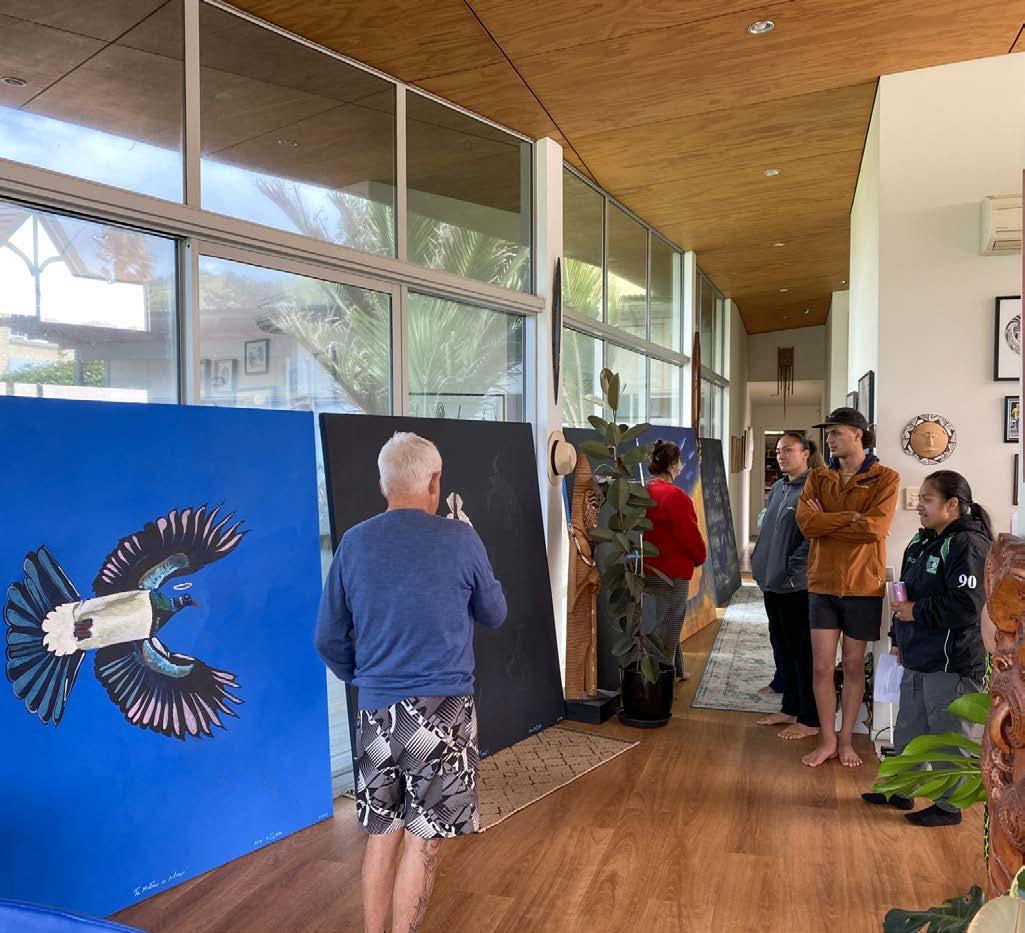
Steve Gibbs and his class
Bachelor of Social Work
Tohu Paetahi Mahi Pāpori
Make a difference in your community
With a degree in social work you will be ready to help empower individuals, families and whole communities to create positive change. Social workers are employed in areas of community development, health and education, child protection, family work, drug and alcohol, domestic violence, probation and reintegration, and more. This inquiry-based degree will prepare you to practice within the bicultural social work context of Aotearoa.
As part of your training you’ll be assigned to social work placements in agencies. You will also gain the skills to reflect on your own perceptions, actions, and processes, as well as the ability to promote social justice. Upon graduating, you will be able to apply for provisional registration as a social worker with the Social Workers Registration Board.
Degree Structure Example
Bachelor of Social Work (each year made up of 120 credits)
Year 1 Year 2
Whakamata Foundation (15 credits)
Stepping into Practice 1 (15 credits)
Trail of Te Tiriti (15 credits)
Who am I in the World? (15 credits)
Biculturalism (15 credits)
Introduction to Community Development (15 credits)
Stepping into Practice 2 (15 credits)
Knowledge for Social Work (15 credits)
Bachelor of Social Work
Duration
Developing the Professional Self (15 credits)
Te Tiriti in Action (15 credits)
Theories into Action 1 (15 credits)
Fields of Practice (15 credits)
Legislation and Policy (15 credits)
Exploring Diversity (15 credits)
Groups (15 credits)
Theories into Action 2 (15 credits)
3 years Full-time or Part-time
To find out more check out socialwork.eit.ac.nz
Year 3
Social Work Practicum 1 (45 credits)
Understanding Community Needs (15 credits)
Mental Health and Addictions (15 credits)
Family Work (15 credits)
Whakakoha Rangatira: Working with Whānau (15 credits)
Hawke’s Bay Campus • Tairāwhiti Campus (Gisborne)
Nathanael Elliott Ngāti Porou, Ngāti Awa, Tuhoe Bachelor of Social Work Student
"As my study journey at EIT draws to a close, I find meaning in the challenges this degree has presented, and reflect on the genuinely supportive relationships I’ve built over five years of studying from “home.”
The Bachelor of Social Work supports people from the Tairāwhiti and Hawke’s Bay communities in becoming competent social work practitioners. It enables registration as a social work practitioner in Aotearoa New Zealand.
Highlights
The objective of this programme is to produce graduates that:
• Are empathic, non-judgmental, respectful, resilient and self-aware.
• Demonstrate integrity, authenticity and professionalism.
• Take a critical, reflective approach to social work practice that includes the use of supervision, continuing professional development, on-going learning and personal wellbeing.
• Are able to promote social justice and social change and to uphold the principles of human rights in both the Aotearoa New Zealand and global contexts.
• Are able to work collaboratively and in partnership with individuals and groups from diverse backgrounds.
• Understand the significance and implications of Te Tiriti o Waitangi and integrate this understanding into social work practice.
• Work in accordance with the Aotearoa New Zealand Association of Social Workers (ANZASW) Code of Ethics and the Social Work Registration Board (SWRB) Code of Conduct.
• Have an extensive knowledge base, skills and professional attributes to work across a range of diverse social work contexts and communities.
• Are proficient in professional literacies, including academic and research literacy, information literacy, numeracy and digital literacy.
Your Career Opportunities
• Social workers are an integral part of today’s society and you could find yourself assisting in a range of areas from setting up programmes and giving guidance to people and communities, to working with government agencies at a policy level.
• This programme will provide you with the knowledge, skills and attributes required for social work practice in a variety of settings such as schools, hospitals, community groups or government agencies.
• Possible agencies and\or fields of practice where you could find employment as a social worker include:
• Oranga Tamariki, Te Whatu Ora, DOVE, Birthright, Presbyterian Support Services, Family Works, schools, Community Mental Health Services, Te Kupenga HauoraAhuriri, Disability Resource Centres, Age Concern, Iwi social services, Directions, prisons and a range of other social service agencies. Check out the careers and salaries that are possible with this qualification
Bachelor of Sport and Exercise Science
Tohu Paetahi Mātai Hākinakina Kori Tinana
Health, Exercise and Performance
With a degree in sport and exercise science that’s exactly what you’ll get as you immerse yourself in exercise and health, sport performance and evidence-based practice. You could find yourself in a gym, a sports science lab, or out on the field coaching or managing individuals and teams as they navigate the sport and exercise world. You’ll acquire a wide range of practical skills for communicating, negotiating, researching and problem-solving with people from all walks of life. Launch a career in the health and exercise industry – empowering you to coach, train and support individuals, groups or communities in achieving peak physical performance and lifelong wellbeing.
Degree Structure Example
Bachelor of Sport and Exercise Science (each year made up of 120 credits)
Year 1
Health, Activity and Nutrition (15 credits)
Te Tū Rangatira – Professional Project (15 credits)
Sport and Recreation Management (15 credits)
Te Aranga Ake - Community Project (15 credits)
Exercise Assessment and Programming (15 credits)
Anatomy and Physiology (15 credits)
Coaching and Leading (15 credits)
Te Pūtake Tuatahi (elective) (15 credits)
Year 2
Health Promotion (15 credits)
Sport Psychology and Sociology (15 credits)
Skill Acquisition (15 credits)
Research Skills (15 credits)
Strength and Conditioning (15 credits)
Biomechanics (15 credits)
Exercise Physiology (15 credits)
Sport and Exercise Nutrition (15 credits)
Electives
You can take 30 credits' worth of elective courses from level 5, 6 or 7 for which you have the necessary prerequisites.
Bachelor of Sport and Exercise Science
Duration Study
Year 3
Advanced Studies in Sport Psychology and Sociology (15 credits)
Applied Skill Acquisition and Biomechanics (15 credits)
Applied Exercise Physiology and Nutrition (15 credits)
Applied Strength and Conditioning (15 credits)
Whakapakari – Industry Project (30 credits)
Te Pou Hākinakina – Sport and Exercise Project (elective) (60 credits)
Career Management (elective) (15 credits)
Innovation (elective) (15 credits)
Te Pūtake Tuarua (elective) (15 credits)
Te Pūtake Tuatoru (elective) (15 credits)
3 years Full-time or Part-time 7 Hawke’s Bay Campus EIT Institute of Sport and Health (EIT ISH)
To find out more check out sport.eit.ac.nz
Jordan Halliday Bachelor of Sport and Exercise Science Student
"Studying at EIT feels so much more personalised with smaller classes and passionate teachers who are invested in your future."
The Bachelor of Sport and Exercise Science is a full-time, three year programme that offers stimulating degree studies, enabling you to become a highly regarded industry professional within the sport, health and exercise science sectors.
Your Career Opportunities
The Bachelor of Sport and Exercise Science provides pathways and employment possibilities across the sport and exercise landscape.
Wellbeing, lifestyle and health promotion
• Consultation and exercise prescription, Green Prescription advisor, corporate wellness consultant, special needs populations activity facilitator, community health initiatives.
Exercise and conditioning
• Business owner, personal trainer, group fitness instructor, team trainer/conditioner.
Sports administration and management
• Sports coordinator, development officer, regional coordinator, player liaison, administrator, sponsor manager.
Sports coaching and leadership
• Coach, coach educator, sports coordinator, team manager, player liaison, player life-skills coach, referee/official.
Community recreation management
• Recreation officer, recreation programmer, special needs programmer, facility management, business owner.
Sport science and support
• Mental skills analysis trainer, exercise physiologist, biomechanist, team trainer/conditioner, research technician.
Highlights
The programme enables graduates to enter employment in the sport, exercise and recreation industry with a sound knowledge of:
• Anatomy and physiology
• Exercise and sport science
• Nutrition and health
• Sport coaching and psychology
• Industry projects
• Research and professional practice skills
This programme is designed to develop:
• Technical skills related to sport and exercise science
• Communication skills necessary for negotiation, coaching, scientific and management level presentations
• Research skills, critical thinking and problem-solving skills necessary to evaluate new information, concepts and evidence from a range of sources
• Professional skills which meet the needs of industry andsociety/communities, and that will enable you to continue to consolidate, apply and extend your knowledge.
Check out the careers and salaries that are possible with this qualification
Bachelor of Teaching (Early Childhood Education)
Tohu Paetahi Whakaakoako (Kōhungahunga)
Make a difference to the lives of others
A passionate, skilled and qualified early childhood teacher has an important role in the learning and development of infants, toddlers and young children. The early years of a young child’s life lay the foundation for life-long learning.
This programme enables you to undertake study two days a week oncampus to attain a teaching qualification while being employed or working voluntarily two days a week in an early childhood setting.
On completion of the Bachelor of Teaching (Early Childhood Education) you will be ready to apply for registration as a provisionally certificated ECE teacher with the Teaching Council of Aotearoa New Zealand.
Degree Structure Example
Bachelor of Teaching - Early Childhood Education (each year made up of 120 credits)
Year 1
Child Development 0-6 (15 credits)
Education and Society (15 credits)
Professional Inquiry in Practice 1: Professional and Reflective Practice (15 credits)
Professional Inquiry in Practice 2: Communication and Relationships (15 credits)
Te Puna Reo (15 credits)
Play, Curriculum and Pedagogy (15 credits)
Artistic Languages of Children (15 credits)
Educational Approaches (15 credits)
Year 2
Infants and Toddlers – The first 1000 days (15 credits)
Equity and Diversity (15 credits)
Professional Inquiry in Practice 3: Assessment for Learning (20 credits)
Professional Inquiry in Practice 4: Professional Identity (15 credits)
Te Puna Tikanga (15 credits)
Emergent Literacies (15 credits)
Early Mathematical and Scientific Concepts (10 credits)
Introduction to Research (15 credits)
Bachelor of Teaching (Early Childhood Education)
Year 3
Holistic Wellbeing of Teachers (10 credits)
Pedagogy, Policy and Practice (15 credits)
Professional Inquiry in Practice 5: Leadership (15 credits)
Professional Inquiry in Practice 6: Collaborative Partnerships (20 credits)
Te Puna Mātauranga (10 credits)
Environments and Learning (15 credits)
Culminating Integrative Assessment (20 credits)
Teacher as Researcher (15 credits)
Tairāwhiti Campus (Gisborne)
To find out more check out
Rebecca Davidson Bachelor of Teaching (Early Childhood) Graduate
"At EIT I developed practical skills, industry connections and gained the professional confidence I needed to start my career."
The Bachelor of Teaching – Early Childhood Education offers you the opportunity to gain a professional qualification as an Early Childhood Teacher leading directly to employment opportunities.
Highlights
• This is a field-based teacher education programme which provides a balance between theory, research and practice.
• Field-based education enables you to regularly apply your classroom learning.
• It allows you to undertake study and attain a teaching qualification while in employment or working voluntarily in an early childhood setting.
• You will attend classes, on-campus, two days a week and undertake a minimum of 12 hours per week in a licensed early childhood education service.
• EIT has partnerships with the Early Childhood Education sector who you will have field-based and professional experience placements with.
• You will undertake four Professional experience placement (PEP) placements across three years. A PEP occurs when a student teacher has a block of teaching experience which is supported by a fully qualified teacher.
Your Career Opportunities
An internationally recognised degree in early childhood education gives a professional qualification that enables opportunities to work in a range of vocations
Career opportunities include teaching in:
• Kindergartens
• Early childhood education and care settings
• Home-based services
• Special education
Check out the careers and salaries that are possible with this qualification
Bachelor of Teaching (Primary)
Tohu Paetahi Whakaakoako (Kura Tuatahi)
Gain the knowledge to be a great teacher
Become a primary teacher and help New Zealand children get off to a great start in life. This degree works in close partnership with primary schools to give you a balance of theory, self-directed learning and practical experience.
As a candidate teacher, you’ll experience two days a week in a school. On-campus, for two days a week you’ll learn the theory and current practice underpinning teaching subjects, such as learning languages and literacy, mathematics, science, social studies, art, technology, health and physical education.
Graduates can apply for registration as a provisionally certified teacher.
Degree Structure Example
Bachelor of Teaching - Primary (each year made up of 120 credits)
Year 1
The Child as a Learner (Literacy) (15 credits)
Who am I as a Teacher? (Health and PE) (15 credits)
How can we explain Learning? (Science) (15 credits)
Engaging with Learners and Learning (Mathematics and Statistics) (15 credits)
The Curriculum in New Zealand Schools (Technology) (15 credits)
Professional Practice and Inquiry Two (15 credits)
Professional Practice and Inquiry Three (15 credits)
Year 3
Pedagogy and Curriculum (20 credits)
Contemporary Issues (20 credits)
Teacher as Researcher (20 credits)
Enhancing Children’s Learning in Literacy and Mathematics (15 credits)
Professional Practice and Inquiry Four (20 credits)
Professional Practice and Inquiry Five (25 credits)
Check out the careers and salaries that are possible with
Ella
Ralph Ngāi Tahu / Kai Tahu Bachelor of Teaching (Primary) Graduate
“Studying at EIT has provided me with the support and hands on learning to achieve my dreams."
The Bachelor of Teaching (Primary) degree offers you the opportunity to gain a professional qualification as a Primary Teacher, Years 0-8 (ages 5-13).
Highlights
• This is a practice-based teacher education programme, which provides a balance between theory, research and practice.
• Learning is supported through a combination of face-to-face, online and self-directed activity, while the practice-based component enables you to apply your on-campus learning to practice in classrooms.
• EIT has partnerships with schools who you will have schoolbased and professional experience placements with.
• School-based learning occurs on two days of each week and typical activities include: observation, teaching, dialogue with colleagues, access to teaching resources, investigations and sharing one’s own experience.
• Practicum school-based placements will be delivered in block course placements of varying length.
• There are 21 practicum weeks in the Bachelor of Teaching (Primary). Each placement is in a different annual time slot allowing for a range of experiences at different times in the school year.
Your Career Opportunities
• Graduating with a degree in primary teaching paves the way to a challenging and rewarding future educating young minds.
• You’ll teach, facilitate and support children in their first eight years of formal learning, in preparation for secondary school and a lifetime of learning.
Bachelor of Veterinary Nursing
Tohu Paetahi Tapuhi Kararehe
Turn your passion for animals into your career
Become an essential part of a veterinary team in a clinic or hospital and provide surgical and medical veterinary nursing, manage services and perform diagnostic sampling and medical imaging.
The Bachelor of Veterinary Nursing will produce degree-level veterinary nurses capable of applying advanced subject-specific knowledge and skills, critical thinking, problem-solving and reflection, who place animal welfare at the forefront of their evidence-based practice.
Degree Structure Example
Bachelor of Veterinary Nursing (each year made up of 120 credits)
Year 1
Veterinary Nursing Practice (15 credits)
Anatomy and Physiology (15 credits)
Animal Husbandry and Behaviour (15 credits)
Companion Animal Practicum I (15 credits)
Introduction to Anaesthesia and Analgesia (15 credits)
Introduction to Medical Nursing (15 credits)
Introduction to Surgery and Diagnostics (15 credits)
Companion Animal Practicum II (15 credits)
Year 2
Anaesthesia Management and Emergencies (15 credits)
Medical Nursing and Diagnostics (15 credits)
Companion Animal Practicum III (30credits)
Surgical Nursing and Dentistry (15 credits)
Imaging and Veterinary Nursing Services (15 credits)
Companion Animal Practicum IV (30 credits)
Year 3
Reflective Practice and Inquiry A (15 credits)
Wildlife and Conservation (15 credits)
Integrated Medical Nursing (15 credits)
Applied Contemporary Animal Welfare (15 credits)
Emergency Care and Response (15 credits)
Reflective Practice and Inquiry B (15 credits)
Applied Animal Behaviour and Cooperative care (15 credits)
Integrated Surgical Nursing (15 credits) *Please note, some programme changes are being rolled out in 2026
Bachelor of Veterinary Nursing
Check out the careers and salaries that are possible with this qualification
Amy Henson Bachelor of Veterinary Nursing Student
“Studying Vet Nursing through EIT has been an amazing experience and has taught me so much in a short period of time. The tutors put in a huge amount of effort and provide support across both theory and practical skills. I’ve enjoyed every minute of learning and experiencing the veterinary environment.”
The Bachelor of Veterinary Nursing is designed for individuals wanting to become highly regarded industry professionals within the veterinary nursing sector.
Highlights
As a graduate of the Bachelor of Veterinary Nursing you will:
• Place animal welfare at the forefront of every veterinary nursing task and procedure performed while also considering human and environmental factors.
• Integrate extensive knowledge and understanding of the professional, cultural, ethical and moral responsibilities of a veterinary nurse.
• Confidently apply advanced theoretical knowledge and skills in veterinary medical nursing, anaesthesia and surgical assistance in practice.
• Think and reflect critically to continuously improve animal well-being, your own practice and the industry as a whole.
• Pro-actively engage in continuous learning and undertake research to support evidence-based practice, solving complex problems in relation to patient care and health.
• Advise clients on the management of individual animal care based on contemporary evidence.
• Recognise the need for and lead the development of strategies to deal with emotionally and otherwise stressful situations.
Clinic Work Placements
During the Bachelor of Veterinary Nursing you must complete clinic work placements as set by the Programme Coordinator and Workplace Coordinator. You will be required to complete 160 hours in year one, 500 hours in year two and 160 hours in year three with the acceptance of non-clinical related hours. In addition to this, year one learners must complete hours in the EIT animal facility as rostered on by the Animal Room Technician. In order to provide you with different perspectives on veterinary nursing, you will complete your clinic work placements in at least two different veterinary practices, unless currently employed at a veterinary clinic.
This is an exciting growth period for the vibrant New Zealand wine industry and great wines cannot be produced without the skills and knowledge of top viticulturalists, winemakers and managers. Study the science of viticulture and winemaking (oenology) in one of New Zealand’s most diverse premium wine growing regions.
You will discover everything about growing quality wine grapes and how wine is made. You will learn about grape varieties, the environments they are best suited to, plus the science and art involved in turning wine grapes into one of New Zealand’s most famous exports.
The degree covers specialist technical, scientific, and business skills necessary for working in the wine industry. The latest research, industry technology and relevant issues related to sustainability are key topics. You will gain hands-on experience in our campus vineyard, purpose-built winery and science laboratory facilities, as well as complete vineyard work experience, a commercial vintage and a research project in tandem with the winegrowing industry.
Degree Structure Example
Bachelor of Viticulture and Wine Science (each year made up of 120 credits)
Year 1
Plant Science (15 credits)
Science Preparation (15 credits)
Chemistry in Wine Science (15 credits)
Wine Fundamentals (15 credits)
Introduction to Wine Business (15 credits)
Microbiology (15 credits)
Viticulture in the Field (15 credits)
Wine Finishing (15 credits)
Year 2
Winery Engineering (15 credits)
Wine Sensory Science (15 credits)
Winegrowing Industry Experience (30 credits)
Wine Business Management (15 credits)
Statistics and Research Preparation (15 credits)
Viticulture Science (15 credits)
Wine Quality (15 credits)
Year 3
Research Project (30 credits)
Viticultural Practice (15 credits)
Flavour Farming (15 credits)
Wine Sensory Assessment (15 credits)
Wine Business Establishment (elective) (15 credits)
Sustainable Winegrowing (elective) (15 credits)
Research Literature Review (elective) (15 credits)
Vine Health (elective) (15 credits)
Excursion* (0 credits)
Elective Options (choose 3)
Vine Health | Wine Business Establishment | Wine Marketing and Sales | Sustainable Winegrowing | Wine Chemistry | Wine Microbiology
*Excursion: All students visit vineyards and wineries in a wine region of New Zealand.
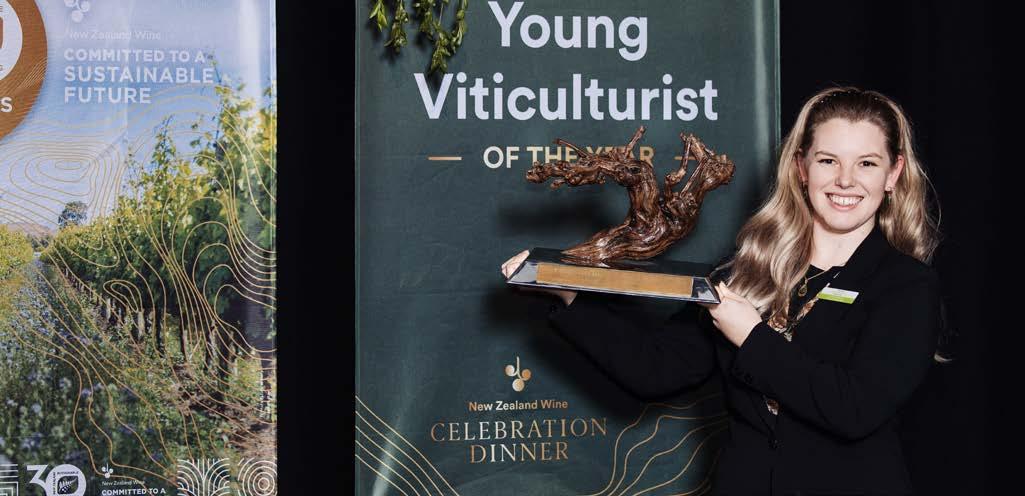
Anna Kelland Bachelor of Viticulture and Wine Science Graduate
“The lecturers at EIT were an amazing support while I was studying, and I use so much of what I learned there in my everyday work."
EIT has been educating quality graduates to enter the wine and viticulture industry for over twenty years.
Highlights
• This degree will give you comprehensive skills and knowledge in both Viticulture and Wine Science. You will learn about grape varieties, the soils, and environments they are best suited to, and the science and art of winemaking involved in turning them into one of New Zealand’s most famous exports.
• The degree provides a strong science foundation with practical application and industry interaction in all three years.
• There is an in-depth focus on growing grapes and making wine, as well as the essential business skills required once working in industry related to people management and wine marketing.
• The latest research, industry technology and relevant issues related to sustainability are key topics.
• You will get an opportunity to make your own wine, work in a vineyard, complete a harvest internship, develop a wine palate and gain practical skills like tractor driving, first aid and forklift driving skills within the degree structure.
• The programme excursion involves visiting vineyards and wineries in the final year of study and builds on field-trips to the Hawke’s Bay winegrowing industry throughout the programme.
Bachelor of Viticulture and Wine Science
Your Career Opportunities
Graduating with a degree in Viticulture and Wine Science from EIT opens up many career pathways for a future in the grape growing (viticulture) and winemaking (wine science) industries at a technical, supervisory or management level.
Careers such as:
• Vineyard manager, viticultural contractor, research and development, owner/operator of a winery/vineyard, or a grower liaison position.
• Winemaker, assistant winemaker, manager in wine, brewing or food industries, research and development, or as a wine/ viticulture educator.
• This degree programme also provides a foundation for on-going learning at postgraduate level.
3 years Full-time or Part-time (on-campus or online) 7 Hawke’s Bay Campus To find out
Photo by smoke.co.nz
POSTGRADUATE STUDY
Akoranga Tohu Paerunga
Advance your career with postgraduate study at EIT.
EIT’s postgraduate programmes combine practical learning, applied research, and industry-connected teaching designed to deepen expertise. You’ll study in small, supportive classes, work with experienced academics and practitioners, and gain skills you can apply immediately in the workplace.
Subject Areas Programme
Business
Creative Studies
Toihoukura
Computing
Enviromental Studies
Māori Studies
With flexible study options and a strong focus on real-world impact, postgraduate study at EIT helps you future-proof your career and make a meaningful difference in your field.
Check out postgraduate.eit.ac.nz for more information.
• Postgraduate Certificate in Business Analytics
• Postgraduate Certificate in Applied Management
• Postgraduate Diploma in Applied Management
• Master of Applied Management
• Postgraduate Certificate in Logistics and Supply Chain Management
• Postgraduate Diploma in Logistics and Supply Chain Management
• Master of Logistics and Supply Chain Management
• Graduate Diploma in Business
• Postgraduate Certificate in Digital Business
• Postgraduate Diploma in Digital Business
• Master of Digital Business
• Master of Professional Creative Practice Te Hono ki Toi (Poutiriao)
• Master of Creative Practice/Te Hono ki Toi (Poutiriao)
• Master of Creative Practice/Te Hono ki Toi (Poutiritāeo)
• Postgraduate Certificate in Information Technology
• Postgraduate Diploma in Information Technology
• Master of Information Technology
• Postgraduate Certificate in Applied Data Analytics (Pending Approval)
• Postgraduate Diploma in Applied Data Analytics (Pending Approval)
• Master of Applied Data Analytics (Pending Approval)
• Graduate Diploma in Enviromental Studies
• Postgraduate Diploma in Professional Practice/Te Tohu Titohu mō Te aka Whakaaroaro
• Master of Professional Practice/Te Tohu Paerua mō Te Aka Whakaaroaro
Subject Areas Programme Continued
Nursing and Health
Social Work
Teaching
Viticulture and Wine
Wine Business
• Postgraduate Certificate in Health Science
• Postgraduate Diploma in Health Science
• Postgraduate Certificate in Health Science (Registered Nurse Prescribing)
• Master of Health Science
• Master of Nursing (Nurse Practitioner)
• Master of Nursing Science
• Postgraduate Certificate in Professional Supervision
• Postgraduate Diploma in Professional Practice
• Master of Professional Practice
• Postgraduate Diploma Professional Practice
• Postgraduate Certificate in Professional Supervision
• Master of Professional Practice
• Graduate Diploma in Wine Science
• Graduate Diploma in Viticulture Science
• Postgraduate Certificate in Wine Business and Innovation
• Postgraduate Diploma in Wine Business and Innovation