“YOU CAN’T CHANGE YOUR PAST, BUT YOU CAN DETERMINE YOUR
DESTINY
BY DECIDING FOR CHRIST”.
-BILLY GRAHAM
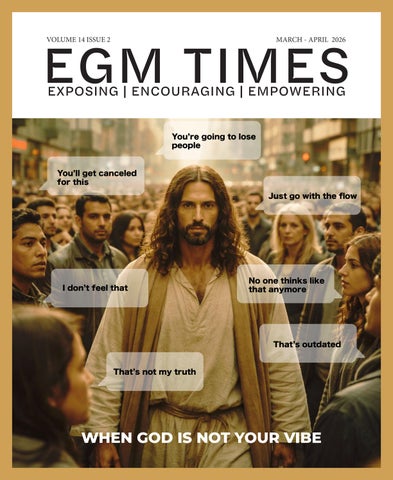
When God Is Not Your Vibe
-Jacob Vilgi Oommen
From Self-Appointed to Surrendered 07 14 22 26 31
Stop Customizing Your Christianity
-Gideon Pingkihan
The Choice to Follow Jesus
-Effie Ochago
The God Who Won’t Cosign the You That You Created
-Dr. Gladys Childs
-Daya Raja
All Bible references are from the New International Version, English Standard Version, New Living Translation, King James Version.
EGM Times is published by Elohim Gospel Ministries, USA. All rights reserved. Reproduction in whole or in part without written permission is prohibited. EGM Times has no subscription price and is supported through contributions worldwide. Because all EGM Times editions are preplanned, we are unable to accept unsolicited manuscripts.
For more information or to sign up for your free copy of egm times, visit: elohimgospelministries.com
President: Evg. Jacob Vilgi Oommen
Associate Editor: Gideon Pingkihan
Content Editor: Effie Ochago
Design: EGM Media
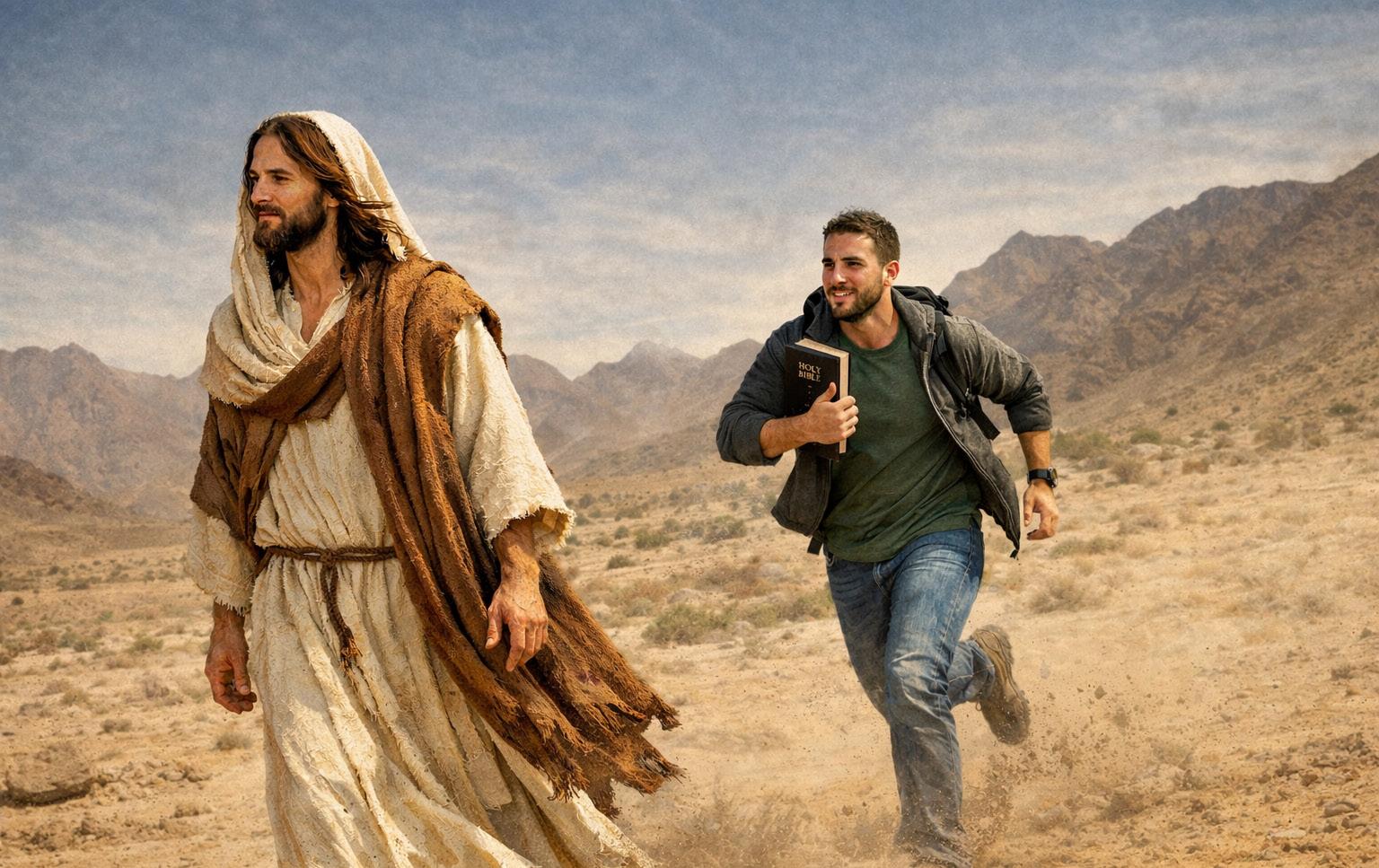
Today, Christianity is facing an alarming crisis with the rise of false teachers. It is unfortunate to see how many are twisting the Word of God to manipulate others and accomplish their own selfish desires and hidden agendas. As a result, many are being influenced and led away from the truth. The message of the Gospel is not about telling people what they want to hear, but about proclaiming what they need to hear. It is not merely about making people feel good. In today’s language, it is not about a selective Christianity that tries to fit within your “vibe.”
Our heart is to proclaim the truth of the Gospel faithfully, the message you need to hear, even when it challenges you and does not align with your personal preferences or “vibe.” If your pursuit of Christ never challenges you, it may be time to examine whether you are truly following Christ according to the Word of God.
In this edition, we explore the theme “When God Is Not Your Vibe.” I invite you to read through this issue prayerfully and thoughtfully, allowing its message to challenge and inspire you to pursue an authentic Christian life, one grounded in the conviction and truth of God’s Word.
God calls us to trust him with all our hearts and to lead a Christian life with the conviction of his truth, rather than living on our personal feelings and vibes. As Christians, we must not forget the truths of God revealed in the Word. Our ultimate destination is eternal life, and our life on this earth is the process towards it. Sustaining in God’s truth in this sinful world is not an easy task, but every challenge you face is worth it in eternity.
Apostle Paul beautifully reminds us in 2 Timothy 4:3-4 ESV “For the time is coming when people will not endure sound teaching, but having itching ears they will accumulate for themselves teachers to suit their own passions, and will turn away from listening to the truth and wander off into myths.”
The return of our Savior is near. Stand firm in the Word of God, and do not let anyone, or even your own flesh, deceive you or lead you away from the sound teaching of Scripture into the myths of false teachers.
How Christian Gen Z are Redefining Evangelism in the Digital Age?
For generations, evangelism has been closely associated with crusades, street preaching, and door-to-door ministry. While these expressions remain relevant, they are no longer the dominant approach among younger believers. Generation Z, shaped by rapid technological advancement and evolving cultural conversations, is redefining how the message of faith is communicated. Rather than abandoning tradition, they are contextualizing the mission—bringing it into spaces that reflect how people now live, connect, and engage with truth.
A major shift can be seen in the use of digital platforms as spaces for evangelism. Social media channels such as Instagram, TikTok, and YouTube have become avenues where young Christians share biblical insights, testimonies, and reflections on issues like identity, anxiety, and purpose. These platforms allow faith conversations to extend beyond church walls, reaching individuals who may never encounter traditional forms of outreach. In this setting, evangelism becomes embedded in everyday digital interaction, making the message both accessible and continuous.
In His Service Evg. Jacob Vilgi Oommen President EGM Times
At the same time, Gen Z emphasizes relational evangelism—grounding faith-sharing in authentic connections. Rather than approaching strangers through structured methods, many young believers engage in meaningful conversations within established relationships. Discussions about faith often arise naturally through shared experiences, personal struggles, and life questions. Because these interactions are built on trust, they tend to be more open and impactful. This reflects a shift from presentation-based evangelism to one centered on presence and genuine connection.
Equally important is the role of lifestyle and storytelling in communicating faith. For Gen Z, evangelism is not only spoken but demonstrated through daily living. Acts of kindness, humility, integrity, and compassion serve as visible expressions of belief in a culture that values authenticity. Alongside this, personal testimonies have become a powerful tool. Stories of transformation, healing, and purpose resonate deeply, making spiritual truths more relatable and tangible for others navigating similar journeys.
Generation Z shows that evangelism is not declining—it is evolving. By integrating digital engagement, relational depth, authentic living, and personal storytelling, they are carrying forward the same unchanging message in ways that speak to the present generation. While their methods may differ from the past, their mission remains clear: to share the hope, truth, and love of Christ in a world continually searching for meaning.
GOD IS
NOT YOUR
VIBE
-Jacob Vilgi Oommen
Have you ever felt that pursuing God is exhausting? You read the Bible, pray, go to church, and try to leave sin behind, yet you still feel stuck.It feels like running through a dark cave searching for light. The harder you run, the longer the cave seems to become.
Olympic champions train for years to compete for only a few minutes on the world stage. The world’s fastest man, Usain Bolt, who won eight Olympic gold medals, trains four to five hours a day. Michael Phelps, the most decorated Olympic swimmer with twenty-eight medals, trains around five to six hours daily. Simone Biles, a seven-time Olympic medalist in gymnastics, trains six to seven hours a day. All this intense effort and hardship is for just a few minutes of competition. But as believers, we are running a far greater race, a race that leads to eternal life.
In the Bible, we see many people who pursued God despite great hardships and intense challenges. Yet they endured faithfully because they knew their reward was not a few moments of glory, but eternity with God.
Noah built the ark, an assignment far beyond his capability, and survived the greatest flood humanity has ever seen. Joseph was sold into slavery by his own brothers, falsely accused by Potiphar’s wife, and thrown into prison even though he was innocent. The Apostle Paul faced immense persecution, shipwrecks, imprisonments, and many hardships. Yet they all endured through it and finished their race faithfully.
“No matter how fearful the circumstances of life may be, when you know that Christ is with you, nothing can truly defeat you.”
If anyone told you that the Christian life is easy, they lied to you. It is not easy at all. Every person who accepts Jesus Christ as Savior and intentionally pursues God will face hardships, challenges, and even persecution. Yet through all these struggles, we press forward because the reward awaiting us is far greater, eternal life with Almighty God. When the reward is greater, the journey toward it is often harder.
We are living in a world where people constantly look for comfort zones and try to build a cultural ecosystem that matches their vibe. When someone disagrees with us, does not like what we like, or holds a different worldview, we quickly label them as “not our vibe.” Everyone is trying to create a life that fits their own preferences. In other words, we are searching for a feel-good life and surroundings.
Unfortunately, this mindset is slowly influencing the Christian world as well. Many people begin to feel that God and His principles do not match their vibe. But a true Christian life demands dedication, accountability, commitment, and sacrifice. Because of this, many Christians struggle to align their lives with God’s standards. But just because God does not fit our vibe, does that give us the right to ignore Him? Is the Christian life merely about maintaining a surface-level lifestyle? Is it about trying to reshape God to fit our preferences? Sadly, many Christians are drifting away from the true path of faith and being carried away by false promises and unrealistic expectations.
The Bible proves it, and the history of countless faithful servants of God confirms it: the Christian life is not something we pursue to satisfy a spiritual checklist we create for ourselves. Instead, it is a call from God to walk with Him on this earth, using the precious gift of life He has given us and enduring whatever it takes to remain faithful until our final breath.
The Christian life is not about escaping the problems and hardships of this world, it is about overcoming them through Jesus Christ. Though we walk a narrow road, it leads to the wide door of eternal life. And we are not walking this road alone. The sovereign God has given us a powerful promise: “And behold, I am with you always, to the end of the age.” (Matthew 28:20, ESV) This promise should be engraved in our hearts. It strengthens us to pursue God faithfully in the midst of life’s trials. A cliff jumper leaps from a mountain with confidence because he trusts the parachute on his back. As he falls through the air, that parachute is his assurance of safety. But if he forgets that the parachute is there because of fear or pressure, the fall would end in disaster. In the same way, believers face the challenges of life with confidence because Christ is with us. His presence is our assurance, our strength, and our hope.
No matter how fearful the circumstances of life may be, when you know that Christ is with you, nothing can truly defeat you. In times of difficulty, you know where to place your trust and whom to turn to. Only through His strength we can endure the trials of this life.
At times, it can be difficult to follow the principles of God’s Word. Rejecting the desires of this world and living a life fully dedicated to Christ can feel overwhelming. In those moments, we may even be tempted to think that God is “not our vibe.” But that should serve as a warning, a call to take urgent steps to draw closer to God.
How can we live a Christian life beyond our “vibe”?
Conviction of Truth
Everything we pursue in life is driven by motivation. Something must inspire us to act. We pursue education to build a career, we learn to swim so we can survive in water, we eat healthy food to maintain our health, we exercise to stay physically and mentally strong, and we read to gain knowledge and wisdom. When the motivation is strong and meaningful, it drives us to take consistent action. Many people struggle to pursue God because they lack the right motivation. The true motivation for pursuing God should be the truth of the Gospel. When the truth of the Gospel deeply convicts our hearts, it becomes the driving force that compels us to pursue God faithfully every day. When the truth of the Gospel goes deep into your heart, nothing can stop you from being loyal to God. The Apostle Paul became a faithful servant of God because he was convinced by the truth of the Gospel. He was even willing to die for that truth.
We were sinners, deserving the wrath of God and eternal judgment. Yet the unconditional love of God reached us and redeemed us from the sin of this world through Jesus Christ, giving us the gift of eternal life. This salvation is a free gift from God.When you have a deep conviction about this truth, every time you wander away from God’s path, it compels you to return to the right track. No material blessing or anything in this world can sustain a godly life. Only the truth of the Gospel can anchor our souls in God’s righteous ways. Like a ship anchored in the ocean, the anchor keeps the ship steady despite the storms and waves that try to push it away. It’s your conviction in the truth of the Gospel that helps you endure the challenges of the Christian life beyond your feelings.
The Bible says in Acts 2:36-38 ESV “Let all the house of Israel therefore know for certain that God has made him both Lord and Christ, this Jesus whom you crucified.”Now when they heard this they were cut to the heart, and said to Peter and the rest of the apostles, “Brothers, what shall we do?”And Peter said to them, “Repent and be baptized every one of you in the name of Jesus Christ for the forgiveness of your sins, and you will receive the gift of the Holy Spirit.”
When the Apostle Peter preached the truth of the Gospel, the Bible says the people were “cut to the heart.” The message convicted them so deeply that they asked Peter, “Brothers, what shall we do?” This is the transforming power of the Gospel when the Holy Spirit convicts hearts through the truth. As Christians, we are called to live every day with a deep conviction of the truth that rescued us from sin and granted us eternal life through Jesus Christ. This conviction becomes the driving force that enables us to pursue God faithfully beyond our feelings and personal “vibes.”
A Lifestyle Based on Truth, Not Feelings
Our daily lifestyle reveals what we truly believe about the Gospel. The way we live cannot be separated from the truth we claim to know. Every aspect of our lives should be a reflection of the truth that has convicted our hearts and anchored our souls. As disciples of Christ, we are not called to live according to our feelings but according to the truth of God’s Word. Yet many times we struggle to obey God’s commands because we cling to our feelings rather than standing firmly on the truth.
As human beings, we naturally want to feel good about everything we do in life. But in reality, the Christian lifestyle is not always comfortable. God’s truth does not always make us feel good, but it leads us in the paths of righteousness. Following that truth requires boldness, perseverance, sacrifice, tears, forgiveness, and sometimes even persecution. Yet in the middle of all these challenges, a true disciple of Christ who seeks to honor the truths of the Gospel experiences a peace that surpasses all human understanding.
The Bible says in Proverbs 3:5 ESV “Trust in the Lord with all your heart, and do not lean on your own understanding.” This verse reveals a key principle for living a lifestyle based on truth rather than feelings. When we trust in the Lord with all our heart—not partially, but completely—we begin to build our lives on the truth of God’s Word. In doing so, we learn not to depend on our own understanding. The moment we begin to lean on our own understanding, we start trusting our feelings and personal reasoning instead of God’s truth. Our emotions begin to guide our decisions rather than the wisdom of God’s Word. In other words, when we rely on our feelings and our own understanding, we struggle to align our lives with God’s ways. But when we trust Him fully, His truth—not our feelings—becomes the foundation of how we live.
“God’s truth does not always make us feel good, but it leads us in the paths of righteousness.”
Have you ever wondered why some people excel in life while others struggle? There may be many reasons, but one of the most significant is a lack of commitment.
A person may have a great business idea, a powerful vision, a compassionate heart to help others, or a passion to raise a family. Yet none of these things produce results unless they are backed by action and commitment.
Often we take pride in the dreams and visions we have without realizing that having a dream is the easiest part. The real challenge is turning that vision into reality through consistent effort and unwavering commitment.
While conviction of truth and a lifestyle based on truth rather than feelings are the keys to starting the Christian life, radical commitment to the truth is the fuel that keeps us running faithfully until the end of our lives. It is all interconnected. The disciples of Jesus Christ were willing to die for the truths of the Gospel, not because of material gain, money, or power, but because of their profound commitment to God and His truth.
We live in a world where it is not easy to live a life of genuine commitment to the Lord. Yet that does not give us an excuse to compromise the truth we know, live according to our feelings, or maintain a shallow commitment to God.
The Bible says in Philippians 3:13-14 ESV “Brothers, I do not consider that I have made it my own. But one thing I do: forgetting what lies behind and straining forward to what lies ahead, I press on toward the goal for the prize of the upward call of God in Christ Jesus.”
Here we see the heart of the Apostle Paul, who was radically committed to the truth he knew. He was not focused on his past, but on pressing forward toward what lay ahead. His unwavering commitment drove him to keep moving forward in pursuing God’s calling, despite the incredible challenges he faced in life and ministry. His focus was not on past failures or achievements, but on the eternal reward that awaited him, the joy of being with Christ forever.
The Christian life is not meant to be led by our personal feelings or our “vibe,” but by the profound truth of the Gospel. It is a life that goes beyond our preferences—a race that must be run with radical commitment. It is not a miserable life, but a selfless life lived for the sake of the Gospel, filled with joy and peace through Jesus Christ. Yes, the road we travel is narrow. It can be long, tiring, and sometimes exhausting. But you are not alone. The very God who gave you the free gift of salvation walks beside you. With Him, you move forward one step at a time, drawing closer to the glorious eternal life He has promised. And in the end, it will all be worth it.
“For I consider that the sufferings of this present time are not worth comparing with the glory that is to be revealed to us.” Romans 8:18 ESV.
THE
STORY BEHIND THE SONG
I Have Decided to Follow Jesus
“I Have Decided to Follow Jesus” is rooted in Christian history as a hymn of uncompromising discipleship. Its origin is commonly traced to a persecuted Christian community in India, often associated with the Garo or Khasi tribes of Assam during the 19th century.
According to the widely shared account, a man named Nokseng, who had converted to Christianity, faced severe persecution from his village for refusing to renounce his faith.
When pressured to abandon Jesus, he reportedly declared words that later formed the hymn’s core message: a resolute decision to follow Christ regardless of consequences. Even after suffering loss—including, in the story, the execution of his family—his response remained steadfast: “The world behind me, the cross before me, no turning back, no turning back.”
A Radical Commitment to the Truth
STOP CUSTOMIZING YOUR CHRISTIANITY
-Gideon Pingkihan
We live in a generation that loves customization. Our playlists are curated. Our social media feeds are tailored to our interests. Even the products we buy can be modified to suit our preferences. This culture of personalization has influenced almost every area of life. Sadly, it has also influenced how many people approach Christianity.
“Following Christ does not mean adjusting the gospel to match our opinions. It means surrendering our opinions to the authority of Christ.”
Some people now treat faith like a menu. They choose the teachings they like and quietly ignore the ones that confront their lifestyle. Verses about love, grace, and blessing are celebrated, while passages about repentance, holiness, and obedience are often avoided. The result is a version of Christianity that feels comfortable but lacks the power to transform a life.
But the truth is clear. Christian faith cannot be customized.
Following Christ does not mean adjusting the gospel to match our opinions. It means surrendering our opinions to the authority of Christ. Jesus addressed this directly when He said, “Why do you call me ‘Lord, Lord’ and not do what I tell you?” (Luke 6:36, ESV). This question exposes a painful contradiction that still exists today. Many people are willing to call Jesus Lord, but they hesitate to live under His authority.
To confess Jesus as Lord is not a symbolic statement. It is a declaration that He has the right to rule every part of our lives. Our desires, decisions, ambitions, and values must submit to Him. Christianity is not about making Jesus part of our life plan. It is about allowing Him to redefine our entire life.
The Apostle Paul reminds believers that genuine faith produces transformation. “Do not conform to the pattern of this world, but be transformed by the renewing of your mind.” (Romans 12:2, NIV). Notice the direction of change. Scripture does not tell us to reshape the gospel so that it becomes culturally acceptable. Instead, it calls believers to resist conformity and allow God to reshape their thinking.
This is where the tension of real discipleship begins.
Jesus did not present faith as a comfortable spiritual option. He described it as a costly commitment. “If anyone would come after me, let him deny himself and take up his cross daily and follow me.” (Luke 9:23, ESV)
Self-denial stands in direct opposition to the culture of self-fulfillment. The cross represents surrender. It means that my desires are no longer the highest authority in my life. Christ is. Modern research also shows how easily people reshape religion to fit personal comfort. Christian Smith’s influential study on contemporary spiritually described a mindset called moralistic therapeutic deism, where God is viewed mainly as someone who helps people feel good and solve problems rather than calling them to repentance and obedience (Smith, 2005). In this framework, faith becomes centered on personal happiness instead of holiness.
When Christianity becomes centered on comfort, it loses its biblical foundation. The gospel was never designed to affirm our old life. It was designed to transform it.
I have personally wrestled with this truth in my own journey. Being involved in ministry, leadership, and media work such as writing and contributing to EGM Times Magazine, it is easy to fall into the trap of measuring success through productivity, recognition, or visible accomplishments. But the Lord repeatedly reminds me that faith is not about building a platform for myself. It is about obedience to Him.
Even in my personal goals and achievements, I have learned that these things cannot define my identity. Whether pursuing academic milestones, professional responsibilities, ministry opportunities, everything must remain submitted to Christ. The Apostle Paul expressed this reality powerfully when he wrote, “I have been crucified with Christ. It is no longer I who live, but Christ who lives in me.” (Galatians 2:20, ESV).
This verse destroys the idea of customized Christianity. If Christ truly lives in us, then our lives must reflect His authority.
The gospel does not adjust itself to our lifestyle. It calls us to leave our old life behind.
Jesus promised that true freedom comes through obedience to His word. “If you abide in my word, you are truly my disciples, and you will know the truth, and the truth will set you free” (John 8:31-32, ESV).
This freedom is not the freedom to invent our own version of faith. It is freedom from sin, from self-centered living, and from the endless pursuit of personal fulfillment that ultimately leaves the soul empty.
Real Christianity transforms the heart. It reshapes priorities. It redirects ambitions. It changes how we live, speak, and think.
The gospel is not something we modify so that it fits comfortably into our lives. It is a truth that confronts us, correct us, and ultimately transform us. In the end, the real question is not whether Christianity fits our lifestyle. The real question is whether we are willing to surrender our lifestyle to Christ. Because once Jesus truly becomes Lord of our lives, customization is no longer an option. Obedience becomes the path forward. And that is where genuine faith begins.
Pingkihan is the Associate Editor of EGM Times and a graduate of Agricultural Engineering from Quirino State University, currently pursuing Theology at Bethesda School of Theology. He is passionate about mentoring the next generation to pursue their dreams while preparing spiritually for eternity.
-2 Timothy 4:3 ESV
For the time is coming when people will not endure sound teaching, but having itching ears they will accumulate for themselves teachers to suit their own passions.
Gideon
IMPACT OF ONE YES
ANTHONY VELASCO A Life of Gospel Impact and Kingdom Leadership
Dr. Anthony Velasco has stood as one of the Philippines’ most influential evangelical pastors, known for his decades of transformative leadership, church growth, and national ministry vision within the Church of God (COG) World Missions Philippines.
His journey in ministry began in 1990 when he and his wife, Georgeanna “Gigi” Velasco, planted Church of God Dasmariñas with roughly 15 members in a modest bungalow in Salitran, Cavite.
From these humble roots, Velasco’s pastoral calling soon bore remarkable fruit. Over the ensuing decades, the congregation experienced exponential growth, prompting relocations to larger worship spaces and ultimately to its current purpose-built facility along Aguinaldo Highway. The church now hosts multiple weekly worship services and ministries that reach thousands of people across age groups and backgrounds.
Under his pastoral leadership, Church of God Dasmariñas became more than a local church; it grew into a vibrant center of discipleship, community engagement, and evangelistic outreach. The church’s growth led to the establishment of gospel-centered initiatives, including schools such as Kerusso Christian Academy, which was born from Velasco’s vision for Christ-centered education.
A defining milestone in Bishop Velasco’s ministry came in 2012, when he was officially commissioned as National Overseer of the Church of God in the Philippines — a role that entrusted him with spiritual oversight and leadership for pastors, ministries, and church networks across the nation. That same period saw landmark events such as the first national youth camp for the denomination, drawing hundreds of young believers and underscoring his commitment to generational discipleship.
Beyond administrative leadership, Velasco was known as a communicator of clear and heartfelt biblical messages. His writings and sermons emphasized whole-life commitment to Christ, steadfast faith, and the centrality of Scripture — themes he championed as essential to vibrant Christian life and mission.
Bishop Velasco’s passion for worship and meaningful church experience also shaped how congregational life was expressed. Under his oversight, the church invested in quality worship environments that enhanced clarity and participation in services, reflecting his belief that worship is both a response to God and a tool for evangelism.
After more than 30 years of service, Dr. Anthony Velasco’s earthly ministry came to an end in 2024. He is remembered not only as Founding Pastor and Senior Pastor (1990–2024) of Church of God Dasmariñas but also as a mentor, shepherd, and spiritual father to many in the wider Church of God family. His legacy continues through the leaders he trained, the ministries he championed, and the countless lives he helped shape.
The church he helped build now continues under new leadership, carrying forward the vision of growth, discipleship, and gospel engagement that Velasco championed. His son, Pastor AJ Velasco, now serves in pastoral leadership, symbolizing the passing of spiritual stewardship to a new generation committed to building on the foundation laid by his father.
Today, his influence extends beyond the local congregation. Leaders who served under his oversight, and churches across the Philippines, continue to reflect his emphasis on scriptural fidelity, generational discipleship, and gospel proclamation. His ministry stands as testimony to the fruits of faithfulness, vision, and servant leadership.
“Under his pastoral leadership, Church of God Dasmariñas became more than a local church; it grew into a vibrant center of discipleship, community engagement, and evangelistic outreach.”
Bishop Velasco said yes to his God-given calling and finished his race well. Will you run from the call of God, or will you courageously run toward it? Say yes to His purpose for your life, it is eternally worth it.
THE PERSECUTED CHURCH
Stand
with the Persecuted Church in Afghanistan.
In Afghanistan, Christians face extreme danger for their faith. Many practice in secret, risking imprisonment, violence, or death if discovered. The Taliban’s rule has made open worship nearly impossible, and converts from Islam face the highest risk.
Points for Prayer:
Pray for protection and courage for Afghan believers. Pray for underground churches and secret communities to remain safe. Pray for hope and perseverance amidst oppression.
“He will sustain you to the end, guiltless in the day of our Lord Jesus Christ.” — 1 Corinthians 1:8 (ESV) Even under threat, God’s people shine as a light—stand with them in prayer.
THE CHOICE TO FOLLOW JESUS
-Effie Ochago
For those who are unfamiliar with the term “vibe,” it comes from the word vibration. It is used to describe a feeling, mood, or energy that someone senses from a person, place, or situation, according to the Merriam-Webster dictionary.
To cite a practical example, there are places you walk into and immediately feel at home. You can say the place matches your vibe. Or there are individuals you meet and instantly get along with. You might say, “the vibe was right.” However, our preferences are not always accurate. They are shaped by our personality, upbringing, culture, community, environment, and lifestyle. Because of this, many people sometimes feel like God is not their vibe. Often this happens because they have the wrong perception of Him.
Many people associate God with their negative experiences with religious people. Yet the truth is that even Jesus Himself had negative experiences with hypocritical people who eventually crucified Him.
You don’t need to feel holy to come to God—He invites you to come honestly, in your need. When you turn to Him in humility and faith, He meets you where you are, and begins to transform you into what He calls you to be.
“Behold, I stand at the door and knock. If anyone hears My voice and opens the door, I will come in to him and dine with him, and he with Me.” Revelation 3:20, NKJV. Jesus intentionally travelled through Samaria to meet a woman with a complicated past, where he spoke to her personally and revealed himself as the Messiah. Zacchaeus the tax collector climbed a tree just to see Jesus pass by. Instead of ignoring him, Jesus stopped and said, “Zacchaeus, come down immediately. I must stay at your house today.”
When you open your heart to Him, He fills you with His Spirit and begins transforming your heart and mind through His Word. He gives you the right desires and the willingness to obey Him.
“I will give you a new heart and put a new spirit within you; I will take the heart of stone out of your flesh and give you a heart of flesh.” Ezekiel 36:26, NKJV. Whether you are living a worldly lifestyle or you simply do not consider yourself a religious person, God is willing to meet you at your level. He begins working inside of you just to the degree that you allow Him.
As sovereign as He is, God does not force Himself on people. Your part is simply to give Him permission to take over your life. God had the power to create human beings who would automatically worship Him, but instead He gave us free will so that our love and obedience could be genuine. “Choose for yourselves this day whom you will serve.” Joshua 24:15, NKJV. Today, you can freely decide whether to follow Him or not. If you are reading this, chances are you have already given your life to Jesus. Sadly, some people still choose to harden their hearts.
The truth is that the second coming of Jesus is closer than ever before. Jesus is coming back for His bride, the Church.
“For the Lord Himself will descend from heaven with a shout… and the dead in Christ will rise first. Then we who are alive and remain shall be caught up together with them in the clouds to meet the Lord in the air.” 1 Thessalonians 4:16-17, NKJV. Even though no one knows the exact day or hour, many prophecies about the end times have already been fulfilled. “But of that day and hour no one knows, not even the angels of heaven, but My Father only.” -Matthew 24:36, NKJV.
“The truth is that the second coming of Jesus is closer than ever before. Jesus is coming back for His bride, the Church.”
Jesus could come at any moment. The question is: Are you ready for Him?
At the end of time, there will be no excuses. It will be either you go with Him or you do not.
“And behold, I am coming quickly, and My reward is with Me, to give to every one according to his work.”
Revelation 22:12, NKJV.
Right now you still have a free choice. But there will come a time when the Holy Spirit will no longer be present on the earth after the Church is raptured.
So think about it:
Would you rather spend eternity in heaven or in hell?
Would you rather be part of God’s kingdom, or live under the power of the enemy?
The decision is yours while there is still time.
Effie is a writer and editor based in Nairobi, Kenya, with a deep passion for the word of God. She holds a Bachelor of Arts degree in Language and Communication and currently serves as the Content Editor for EGM Times.Dedicated to sharing biblical truth and inspiring others in their faith journey, she uses her writing to uplift and encourage.
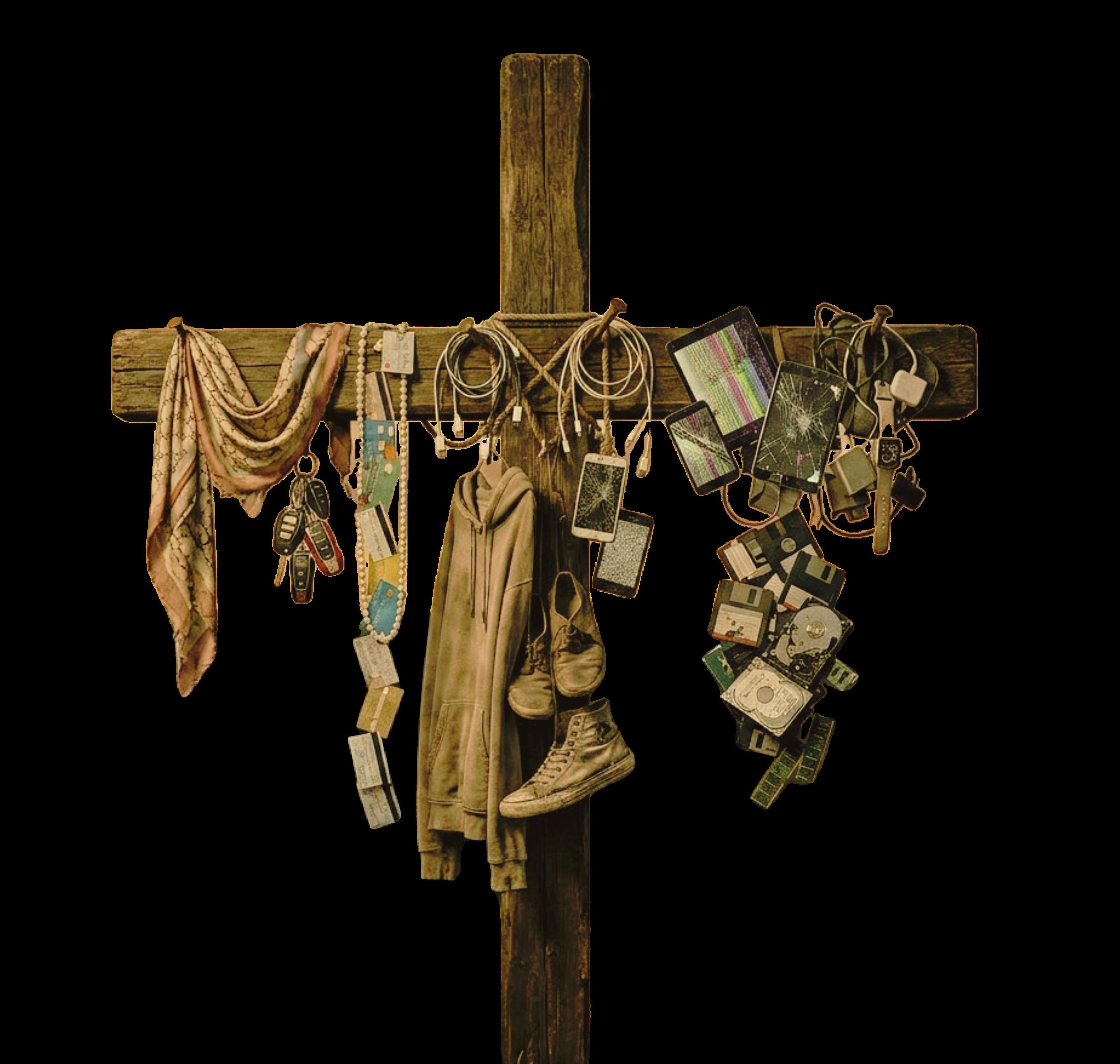
THE GOD WHO WON’T COSIGN THE YOU THAT YOU CREATED
-Dr. Gladys Childs
“For you have died, and your life is hidden with Christ in God” (Colossians 3:3, ESV).
Somewhere along the way, we picked up a belief so widespread it started to feel like gospel: the highest thing we can do is be ourselves. Discover who you are, own it, and build a life around it. The language is everywhere. Podcasts, therapy sessions, motivational reels, and even Sunday sermons. It sounds so right.
But then we open Scripture, and God says something disorienting.
You have died.
You have died, and your life is hidden with Christ in God.
The word hidden doesn’t sit well with a generation trained to be seen. We’ve learned to curate, project, name, and claim every layer of our identity. We speak about living “in our truth,” the way an earlier generation spoke about living in obedience. And when someone, even God, challenges the version of ourselves we’ve spent years constructing, it doesn’t feel like an invitation. It feels like an attack.
So we push back. We look for churches, friendships, and theology confirming what we’ve already decided about ourselves. We filter Scripture through the self rather than filtering the self through Scripture. And if a passage doesn’t affirm the identity we’ve built? We skip it. Reinterpret it. Or set it aside and hope nobody notices.
This is the Christ-following life many of us are actually living, and we need to be honest about it.
Because something strange has happened inside the church. Self-discovery and discipleship have become so tangled that we can barely tell them apart. We treat knowing ourselves as if it’s the same thing as knowing God, when Jesus made the cost of following him painfully clear: “If anyone would come after me, let him deny himself and take up his cross daily and follow me” (Luke 9:23, ESV).
Those words are supposed to sting. If they don’t, we’ve probably domesticated them.
Colossians 3:3 takes it even further. Paul doesn’t say our old identity needs improvement or an upgrade. He says it’s dead. And the new life, the real one, the one with eternal weight, isn’t found by digging around inside ourselves. It’s hidden. Tucked into Christ, held by God, and revealed on his terms, not ours.
Think about what it means for our lives to be hidden. We stop being the main character. The answer to “Who am I?” doesn’t start with our feelings, preferences, or personality test results. It starts and ends with Jesus. Our identity isn’t a project we manage. It’s a gift we receive from a God who reserves the right to reshape it.
“Letting go of a self we built, even when it was never God’s design, hurts. We mourn it the way we mourn anything we loved. And God, who is not cruel, knows it. He doesn’t mock the ache. He doesn’t shame the struggle.”
And here’s where this gets uncomfortable in the gut rather than just the mind: What happens when God puts his finger on a part of our identity we love? A relationship we’ve woven into our sense of self. An ambition we’ve called destiny. A lifestyle we’ve convinced ourselves is just “how God made me.” A theology we’ve shaped to protect something we don’t want to surrender.
We feel it in the chest before we can articulate it. The tightening. The resistance. The flicker of anger dressed up as righteous conviction. And in the middle of it, we face the real question: Is God Lord over the parts of us we haven’t volunteered?
Because surrender isn’t surrender if we set the terms. Giving God the pieces we were already done with costs nothing. Handing over the thing we built our whole identity around, the thing we’d fight to keep? That’s where the word “Lord” either means something, or it doesn’t.
The culture tells us to look inside for truth. Scripture tells us that truth walked into a room in sandals and said, “I am the way, and the truth, and the life” John 14:6, ESV. These two paths don’t merge. At some point, every one of us reaches a fork where the self we’ve been building and the Christ we claim to follow are heading in different directions. We can only walk one road.
That’s the tension Paul was writing into. The Colossian believers were surrounded by philosophies telling them spiritual growth came through self-knowledge, personal experience, and mystical discovery. Paul’s response was blunt. You died. Stop rummaging through your old life looking for meaning. Your real life is somewhere you can’t see yet, held by someone you can trust completely.
And here is the part we need to sit with before rushing to a resolution: this is grief. Letting go of a self we built, even when it was never God’s design, hurts. We mourn it the way we mourn anything we loved. And God, who is not cruel, knows it. He doesn’t mock the ache. He doesn’t shame the struggle.
But he also doesn’t change the invitation.
The version of God who won’t be “our vibe” is the same God who loved us enough to refuse to leave us as we are. And the life hidden in him, the one we can’t see yet, the one we don’t control, is the only life that lasts beyond the grave.
We get to choose. The self we built, or the life he’s hidden for us.
One is familiar. The other is eternal.
Dr. Gladys Childs, host of Bare Faith and known as the “Truth Doctor,” boldly exposes lies that keep people from God’s truth, speaking with authority and real-life grit as a pastor’s wife, author, speaker, and former professor. Her new book, Chasing Emptiness, Finding Fullness, invites weary hearts to stop striving for what cannot satisfy and encounter the Spirit’s fullness in everyday life.
AND THOSE WHO BELONG TO CHRIST JESUS HAVE CRUCIFIED THE FLESH WITH ITS PASSIONS AND DESIRES
BECOMING
From
-Daya Raja
Self-Appointed
to Surrendered
-Daya Raja
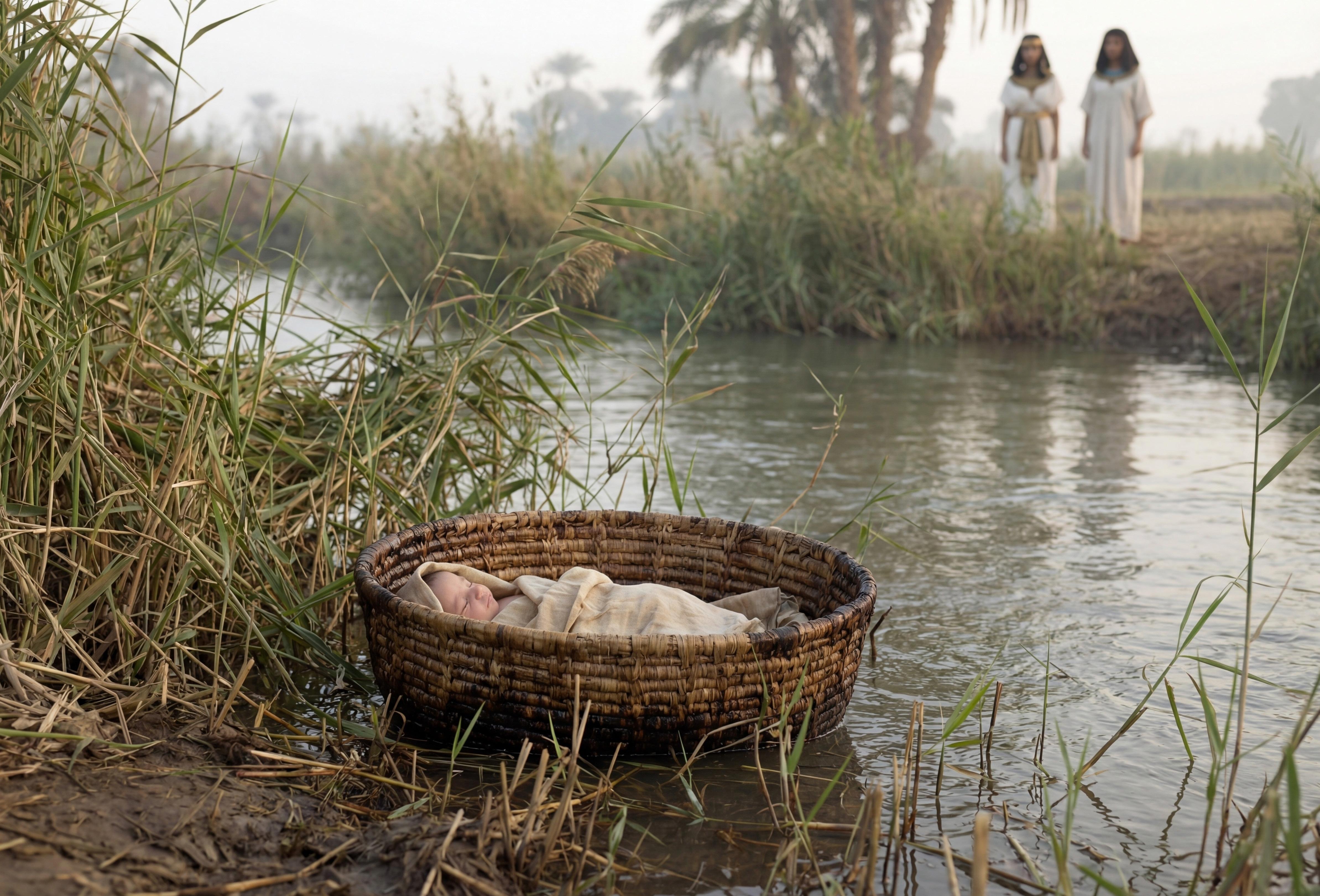
The Book of Exodus in the Old Testament introduces us to the character Moses. He was born in a time when baby boys of Israel were killed mercilessly by the Pharaoh of Egypt. Imagine, growing up and realising that he was the only one who survived a genocide and the weight it must have had on him.
It is not just that he survived the Pharaoh’s order to kill. He also was handpicked by the Pharoah’s daughter and grew up as a prince in the palace with access to immense wealth, best quality training and the most influential people of that time. Imagine how powerful he must have felt.
In the Chapter 2 of Exodus we see the grown up Moses for the first time. “One day, after Moses had grown up, he went out to where his own people were and watched them at their hard labor. He saw an Egyptian beating a Hebrew, one of his own people. Looking this way and that and seeing no one, he killed the Egyptian and hid him in the sand. The next day he went out and saw two Hebrews fighting. He asked the one in the wrong, “Why are you hitting your fellow Hebrew?” Exodus 2: 11-13. Here we see him as a powerful, articulate and determined young man. He was burdened by what he saw and took the matter into his own hands.
“Interestingly,
in chapter 2, Moses did not have an issue with speech when he was questioning the Egyptian. But years of desert life and wilderness did something to his heart, his view of himself and his attitude towards the call of God towards his people.”
A few years later, when the Lord meets him in Chapter 4, we see a very different version of Moses. In those few years, Moses had to flee to the desert where he got married and slowly built a life. When the Lord talks to him about going back to Egypt, he says “Pardon your servant, Lord. I have never been eloquent, neither in the past nor since you have spoken to your servant. I am slow of speech and tongue.” Exodus 4:10 after many other excuses.
Interestingly, in chapter 2, Moses did not have an issue with speech when he was questioning the Egyptian. But years of desert life and wilderness did something to his heart, his view of himself and his commitment towards his people. In chapter 4 he says, “Pardon your servant, Lord. Please send someone else.” Exodus 4: 13.
I think we all can resonate with the story of Moses in some ways. The call of God weighs on us differently. But often we do not take enough time to sit with God to understand how to navigate it and unfortunately we take it into our own hands. This inevitably ends in failure and set back.
When we feel like we have blown the opportunity, we crawl under the weight of our mistakes and eventually resign mentally and emotionally from our calling. We identify and define ourselves by the mistakes we have made and the current situation we find ourselves in. Exactly in those times and places, the Lord comes and speaks, not to shame us, or replay our failures, but to remind us of His plan and purpose for us.
Moses must have thought his impulsiveness, his anger, his years away had somehow cancelled the call. But the desert was not a detour; it was formation. The palace gave him training and confidence. The wilderness gave him humility. Both were necessary.
Becoming is rarely a straight line. It is often a journey from confidence to collapse to calling. From “I can handle this” to “Please send someone else.” And somewhere in that tension, God shapes a leader who no longer acts out of impulse, but out of obedience.
Perhaps the very place where you feel most inadequate is the place where God is preparing to use you. The insecurity, the delay, the silence are not signs of rejection. They are invitations to dependence.
Moses went back to Egypt not as a self-appointed deliverer, but as a surrendered servant. And that made all the difference.
HARD TRUTH
COMMON LIES OF THE ENEMY: DISCERNING DECEPTION AND
STANDING IN TRUTH
Many spiritual battles begin quietly in the mind. A thought of doubt, a feeling of inadequacy, or a whisper of discouragement can slowly influence how a believer sees God, life, and themselves. Scripture warns that deception is one of the primary strategies of the enemy. In Gospel of John 8:44 (ESV), Jesus Christ described Satan as the one who “does not stand in truth, because there is no truth in him.” This reveals that the enemy’s greatest weapon is not force but falsehood.
Daya thinks it’s absolutely cool to be known by Jesus. She deeply appreciates nature, art and silence. Her dream is to fall in love with Jesus and humanity every day. Daya can be reached at dayaraja95@gmail.com
Modern research in psychology also recognizes that human thinking can be shaped by distorted beliefs. Cognitive psychology describes “cognitive distortions’, patterns of irrational or inaccurate thinking that influence emotions and behavior (Shickel et. al., 2019). When these distorted thoughts remain unchecked, they can create cycles of discouragement, anxiety, and hopelessness. For believers, many of these distortions resemble the spiritual lies Scripture has warned about for centuries.
One common lie is the belief that we are not good enough for God’s purposes. After failure or weakness, people may begin to think they are too flawed to serve God. Yet the Bible teaches that God’s grace work precisely through human weakness. In 2 Corinthians 12: 9 (ESV), the Lord tells the Apostle Paul, “My grace is sufficient for you, for my power is made perfect in weakness.” In God’s kingdom, weakness does not disqualify a person. It often becomes the place where God’s strength is revealed.
Another lie is the idea that God has abandoned His people. During seasons of hardship or unanswered prayer, believers may feel forgotten. Feelings, however, are not always reliable indicators of truth. In book of Hebrews 13:5 (ESV), God’s promises, “I will never leave nor forsake you.” Faith calls believers to trust God’s character even when circumstances appear uncertain.
Another persistent deception is the belief that sin will satisfy the human heart. Temptation often promises fulfilment or happiness apart from God. Scripture warns about this pattern clearly. In the book of James 1:14-15 (ESV), it clearly explains that desire leads to sin, and sin ultimately leads to death. Studies on self-deception also show that individuals sometimes justify harmful actions by adopting beliefs that support their behavior (Bortolotti & Mameli, 2012). This connection between belief and action highlights why guarding the mind is so important.
“Deception may whisper quietly, but God’s Word speaks with greater authority. Each time believers choose truth over lies, they strengthen their faith and walk more confidently in the freedom that Christ provides.”
Thinking that living in sin is the ultimate freedom is another lie the enemy has planted in many people’s minds. Going out to the club every day, having an uncontrollable temper, or living with constant contempt, just to list a few fruits of living in the flesh, might look cool or powerful, but many people never stop to ask themselves how their character affects themselves and other people, and whether they can actually break free from it if they decided to. Sadly, many live in prisons they are not even aware of, because everyone who practices sin becomes a slave to it (John 8:34). The good news is that Jesus has already paid the price for freedom from the yoke of sin. As Scripture says, “So if the Son sets you free, you will be free indeed” John 8:36. Today, accepting Jesus and abiding in Him transforms people from the inside out. Instead of being slaves to sin, believers become servants of righteousness (Romans 6:18), and their lives become a blessing to humanity as they shine as lights in the world (Matthew 5:16).
The Christian life therefore involves learning to recognize deception and replacing it with truth. The apostle Paul instructs believers to stand firm in spiritual battles by fastening “the belt of truth” (Ephessians 6:14, ESV). When believers fill their minds with Scripture and remain grounded in God’s promises, the lies of the enemy lose their influence.
You are of your father the devil, and your will is to do your father’s desires. He was a murderer from the beginning, and does not stand in the truth, because there is no truth in him. When he lies, he speaks out of his own character, for he is a liar and the father of lies.
Here the words of Jesus are very clear and insightful about the character of the devil. Anything that comes from the devil is an absolute lie because he is the father of lies. As believers, we are not called to live based on the opinions or the lies of the enemy, but on the opinions and truths of the sovereign God.
Deception may whisper quietly, but God’s Word speaks with greater authority. Each time believers choose truth over lies, they strengthen their faith and walk more confidently in the freedom that Christ provides.
A MOMENT TO REFLECT
Before answering the questions below, take a moment to pause and reflect honestly. Faith is not merely about knowing the right words or agreeing with the right ideas. It is about a genuine relationship with God that shapes how we think, choose, and live each day. In a culture that often encourages comfort, personal preference, and selective truth, believers are challenged to examine whether their faith is truly surrendered to Christ or quietly shaped by their own desires.
These reflection questions are meant to help you evaluate your heart, your obedience, and your commitment to God’s Word. Allow them to guide you into deeper self-examination, prayer, and realignment with the truth of Scripture.
●In what areas of your life is God calling you to trust Him beyond your comfort?
●What practical steps can you take to align your beliefs and lifestyle fully with God’s Word?
●How can selective obedience damage a believer’s testimony to others?
●Is Jesus truly Lord over every area of your life, or only the parts you are comfortable giving Him?
An Invitation to Salvation
Salvation is a gift of God’s grace, not something we earn. We are saved by trusting in Jesus Christ, who died for our sins and rose again to give us new life (Ephesians 2:8–9).To respond to Jesus is to repent and believe, to turn away from sin and place our faith in Him.
True faith includes confessing Jesus as both Savior and Lord, surrendering our lives to His authority (Romans 10:9). Salvation is the beginning of a transformed life, where God forgives, renews, and gradually shapes us through the Holy Spirit as we learn to follow Christ daily.
A Prayer of Repentance and Faith
Lord Jesus Christ, I confess that I am a sinner and that I need Your mercy. I turn away from my sins and place my trust in You alone. I believe that You died for my sins and rose again. I receive You as my Savior and submit to You as my Lord. Change my heart, lead my life, and help me follow You. Amen.
If you prayed this prayer, please tell someone you trust, connect with a Bible-believing church, and begin walking with believers who will help you grow spiritually. We would be honored to hear from you and walk alongside you as you begin your new life in Christ.