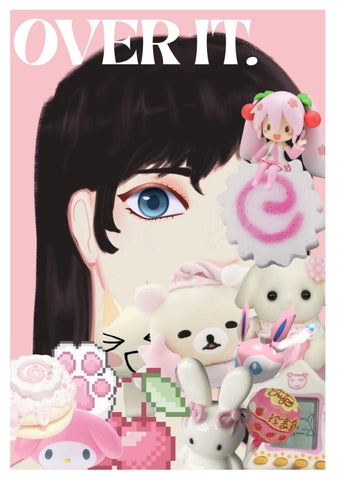
OVER IT.











How your brain gets hooked



That's why the thrill of placing an order online can feel more powerful than actually receiving it.
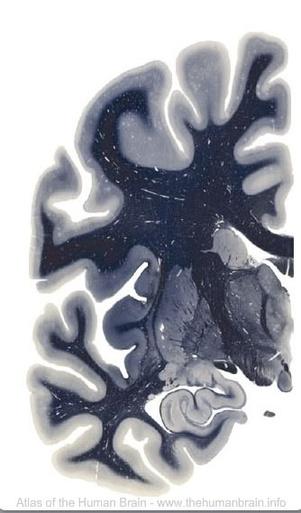
When we do something enjoyable,like eating chocolate or getting likes on a post, our brains release dopamine, the chemical messenger behind reward and motivation. But dopamine doesn't just reward you for doing something – it kicks in before you get the thing,during anticipation.
The dorsal striatum, a brain region activated in both pleasurable behaviors and addictive patterns, ‘lights up’ when we anticipate some form of rewards. Over time, our brains build “reward loops” that push us to repeat those behaviors – shopping included.
Humans are social creatures, that's a common fact by now. We rely on community, status, and connection to navigate the world. That's why influencers are so powerful – they tap into our biological need to belong.
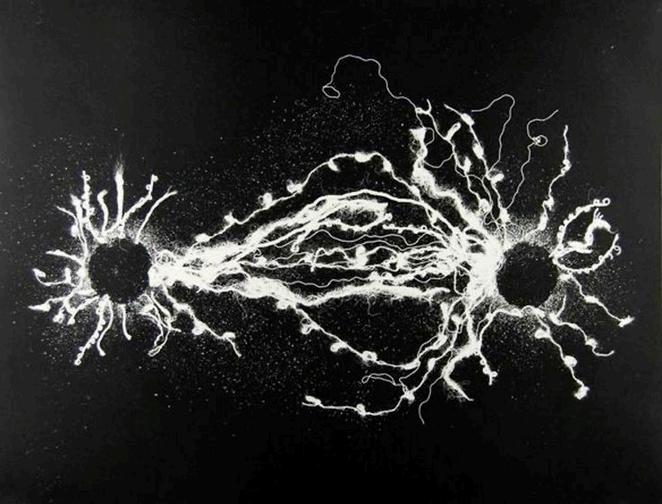
Seeing someone you admire show off a haul or unbox a product activates mirror neurons in your brain, simulating the experience as if you ' re in their place, that you ' re the one buying. This kind of simulation makes you want it too and suddenly, consumption isn't just personal –it's social currency.
Combine that with algorithms that push what's trending, and overconsumption becomes a performance,not just a purchase.
Modern advertisement doesn't just guess what works anymore. It tests your brain.
Neuromarketing is a field that uses tools like fMRI, EEG, eye tracking, and heart-rate monitoring to figure out how we unconsciously respond to products. The studies for these results are done with volunteers who agree to be monitored – some sim soda in fMRI scanners, others watch ads while their eye movements and brainwaves are tracked. It's all part of understanding the unspoken side of consumer behaviors. It's a field that goes beyond what people say in surveys and look directly at the brain.
Coke vs. Pepsi study conducted by Read Montague at Baylor College of Medicine, 2004:
When participants tasted Coke and Pepsi without labels,brain reactions were equal. Once they saw the Coke logo, emotion and memory centers in the brain lit up.
Wine Price Study carried out by Antonio Rangel at Caltech, 2008:
In this study,participants drank identical wine – but rated the one labeled as “expensive” as better. Once scanned by fMRI, results showed that once the participants thought they were tasting a more expensive wine – there was increased activity in the medial orbifrontal cortex, the region in your brain associated with pleasant experiences.
Of course,all this raises the question: are we really in control? Maybe people don't like being reminded that their brains can be hacked.
In 2015,a political neuromarketing scandal in Mexico revealed how brain-targeted messaging had been used to sway voters without their knowledge. That scandal highlighted the ethical tightrope brands (and governments) walk when using neuroscience to influence people.
Most consumers don't realize that their brain activity is being tracked, measured, and used to make them more likely to buy. And with up to 95% of decisions happening subconsciously, according to Harvard professor Gerald Zaltman and cognitive science research, we ' re not exactly choosing with full awareness most of the time before we even realize we ' ve made a choice.
And if thorough studies don't relate to you too much, there are also examples of real-world brands using classic neuromarketing methods:
Frito-Lay swapped shiny chip bags for matte ones – because we all know shiny is subconsciously linked to “cheap”.
IKEA designs the maze-like stores we all dread on purpose: the layout boosts the likelihood of impulsive buys.
FedEx's hidden arrow logo? A subliminal in its own way – designed to subtly cue “speed” and reliability without saying a word.
Here's the good news: the same brain that forms habits can also unlearn them!
Becoming aware of these neural triggers is step one. You can start to break the cycle by disrupting your cues:
Unfollow impulse-triggering accounts
Delay online purchases by 24 hours
Reframe shopping as emotional regulation (and find alternatives that feel just as rewarding)
“Dopamine may play a bigger role in the motivation to get a reward than the pleasure of the reward itself. Wanting more than liking.”
– Anna Lembke, Dopamine Nation:
Finding
Balance in the Age of Indulgence
Overconsumption isn't just a social trend. It's a neurochemical loop built on desire, pressure, and precision marketing. And the more we understand it, the more power we have to pause and choose differently.