Oxford University Press is a department of the University of Oxford. It furthers the University’s objective of excellence in research, scholarship, and education by publishing worldwide. Oxford is a registered trademark of Oxford University Press in the UK and certain other countries.
Published in the United States of America by Oxford University Press 198 Madison Avenue, New York, NY 10016, United States of America.
All rights reserved. No part of this publication may be reproduced, stored in a retrieval system, or transmitted, in any form or by any means, without the prior permission in writing of Oxford University Press, or as expressly permitted by law, by license, or under terms agreed with the appropriate reproduction rights organization. Inquiries concerning reproduction outside the scope of the above should be sent to the Rights Department, Oxford University Press, at the address above.
You must not circulate this work in any other form and you must impose this same condition on any acquirer.
Library of Congress Cataloging-in-Publication Data
Names: Shambaugh, David L., author.
Title: Where great powers meet : America and China in Southeast Asia / David Shambaugh.
Description: New York : Oxford University Press, 2020. | Includes index. | Identifiers: LCCN 2020022184 (print) | LCCN 2020022185 (ebook) | ISBN 9780190914974 (hardback) | ISBN 9780190914998 (epub) | ISBN 9780190091132
Subjects: LCSH: Southeast Asia—Foreign relations—21st century. | United States—Foreign relations— China. | China—Foreign relations—United States. | United States—Foreign relations—Southeast Asia. | Southeast Asia—Foreign relations—United States. | China—Foreign relations—Southeast Asia. | Southeast Asia—Foreign relations—China. | United States—Foreign relations—21st century. | China—Foreign relations—21st century.
International Relations of Asia (co-edited, 2008 and 2014)
China Goes Global: The Partial Power (2013)
Tangled Titans: The United States and China (edited, 2012)
Charting China’s Future: Domestic & International Challenges (edited, 2011)
China’s Communist Party: Atrophy & Adaptation (2008)
China-Europe Relations: Perceptions, Policies, and Prospects (co-edited, 2008)
China Watching: Perspectives from Europe, Japan, and the United States (co-edited, 2007)
Power Shift: China & Asia’s New Dynamics (edited, 2005)
The Odyssey of China’s Imperial Art Treasures (co-authored, 2005)
Modernizing China’s Military: Progress, Problems, and Prospects (2002)
Making China Policy: Lessons from the Bush and Clinton Administrations (co-edited, 2001)
The Modern Chinese State (edited, 2000)
Is China Unstable? (edited, 2000)
The China Reader: The Reform Era (co-edited, 1999)
China’s Military Faces the Future (co-edited, 1999)
Contemporary Taiwan (edited, 1998)
China’s Military in Transition (co-edited, 1997)
China and Europe: 1949–1995 (1996)
Greater China: The Next Superpower? (edited, 1995)
Deng Xiaoping: Portrait of a Chinese Statesman (edited, 1995)
Chinese Foreign Policy: Theory & Practice (co-edited, 1994)
American Studies of Contemporary China (edited, 1993)
Beautiful Imperialist: China Perceives America, 1972–1990 (1991)
The Making of a Premier: Zhao Ziyang’s Provincial Career (1984)
0.1
0.2
0.3
0.4
0.5
0.6
2.1
2.2
2.3
2.4
2.5
2.10
3.2
3.3
4.1
5.1
5.2
List of Figures
5.4
5.5
5.6
5.7
5.8
5.9
5.10
5.11
5.12
6.1
6.2
6.3
6.4
7.1
3.1
5.1
5.2
5.3
5.4
5.5
Preface
Being on the deck of an American aircraft carrier is an awe-inspiring experience. In a different way, so too is witnessing a land reclamation construction project as far as the eye can see. These two experiences that I had within a month during 2017 encapsulated and brought home to me the respective differences between the United States and China in Southeast Asia.
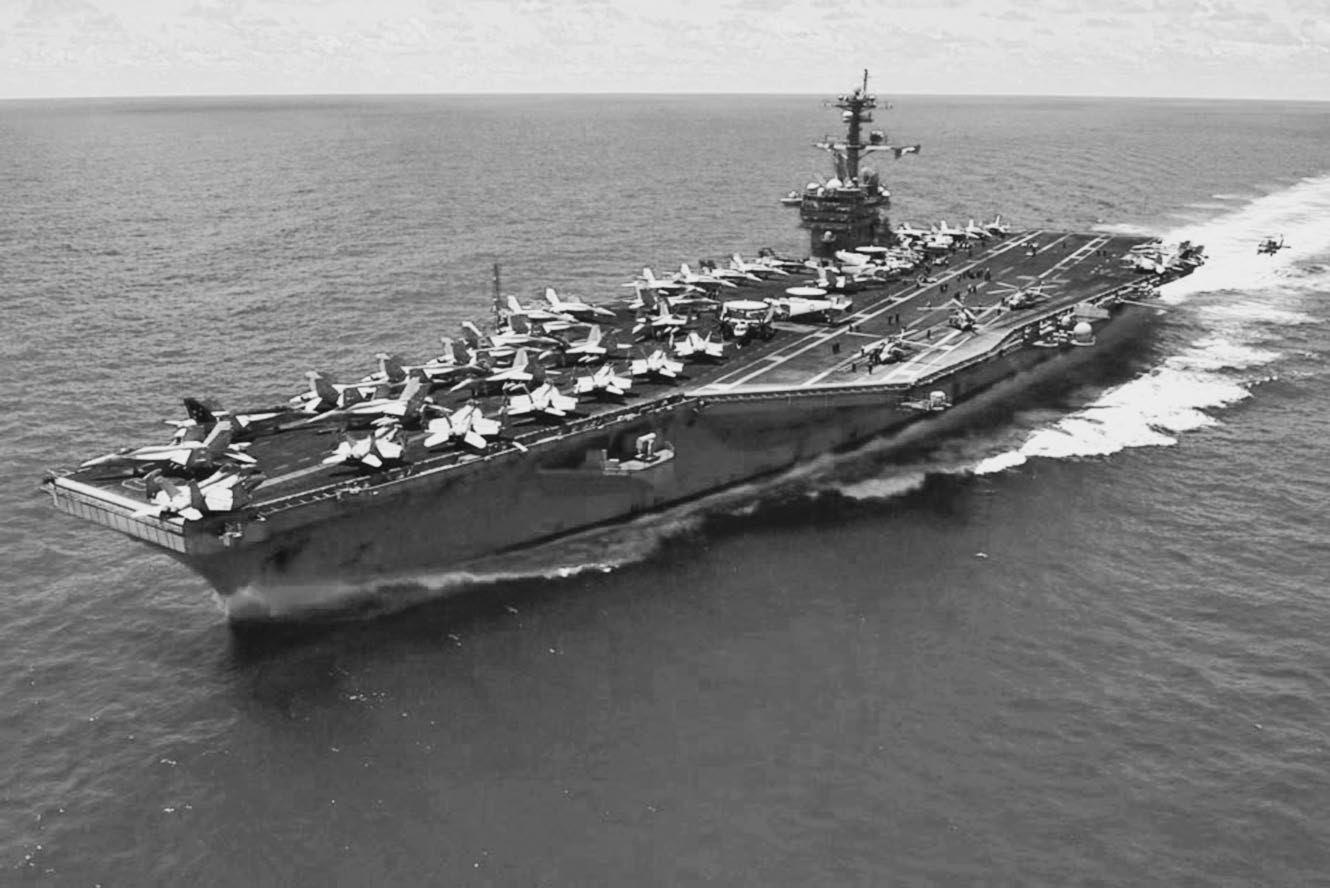
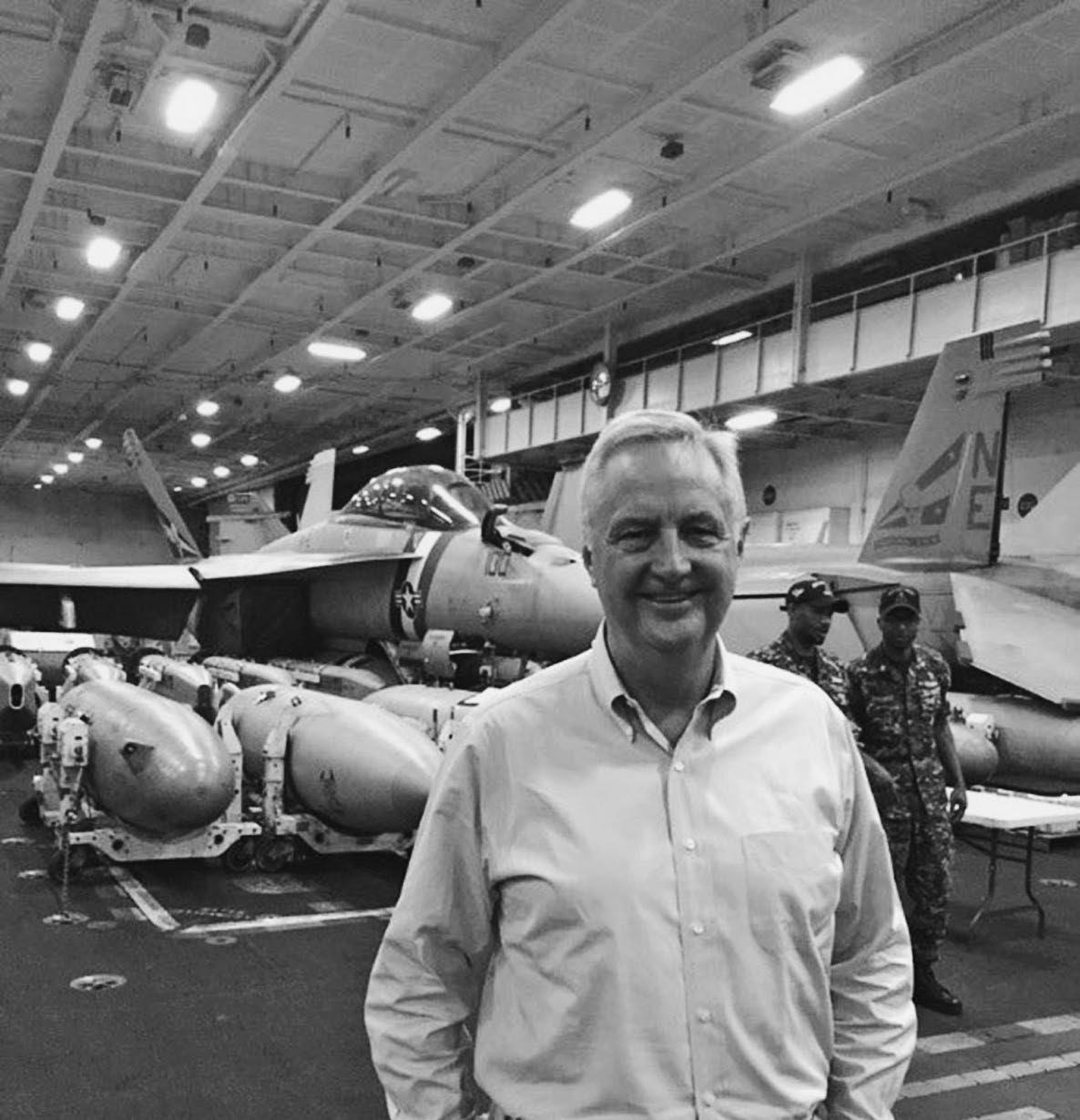
I first visited the Changi Naval Base in Singapore and went aboard the massive aircraft carrier USS Carl Vinson (Fig. 0.1)—the 101,300-ton Nimitz-class flagship of Carrier Strike Group 1 of the US Third Fleet (home-ported in San Diego but part of the Pacific Fleet).
With its accompanying carrier battle group of guided missile destroyers, cruisers, submarines, and supply ships, the Carl Vinson had docked at Changi following back-to-back exercises near North Korea in the Sea of Japan and Chinese-occupied islands in the South China Sea—sending powerful deterrent signals in each case. Walking the massive deck of the supercarrier past an array of F-18 Super Hornet fighters, anti-submarine warfare planes, electronic attack and
Source: US Navy photo by Mass Communication Specialist 3rd Class Eric Coffer
Figure 0.1 USS Carl Vinson
early warning aircraft, and helicopters, with more planes and lethal munitions below deck (Fig. 0.2), and speaking with the dedicated sea and air men and women onboard was a moving and memorable experience.
The carrier visit was a potent reminder of America’s unrivaled military power—which has been projected throughout East Asia and the western Pacific for more than seven decades. Quietly but firmly, every day of the year, the US Navy and other military forces contribute to securing and stabilizing this dynamic and strategically important region of the world, supporting America’s five allies and many partners in the region, and giving daily credence to the centurylong presence of the United States as an Asian and Pacific power.
Subsequently, two weeks later, I crossed the causeway that connects Singapore to Malaysia and traveled up to the scenic port city of Malacca (Melaka in Malay). First, 20 miles or so into the southern Malaysian state of Johor, one
Figure 0.2 The author aboard USS Carl Vinson
Source: Author’s photo
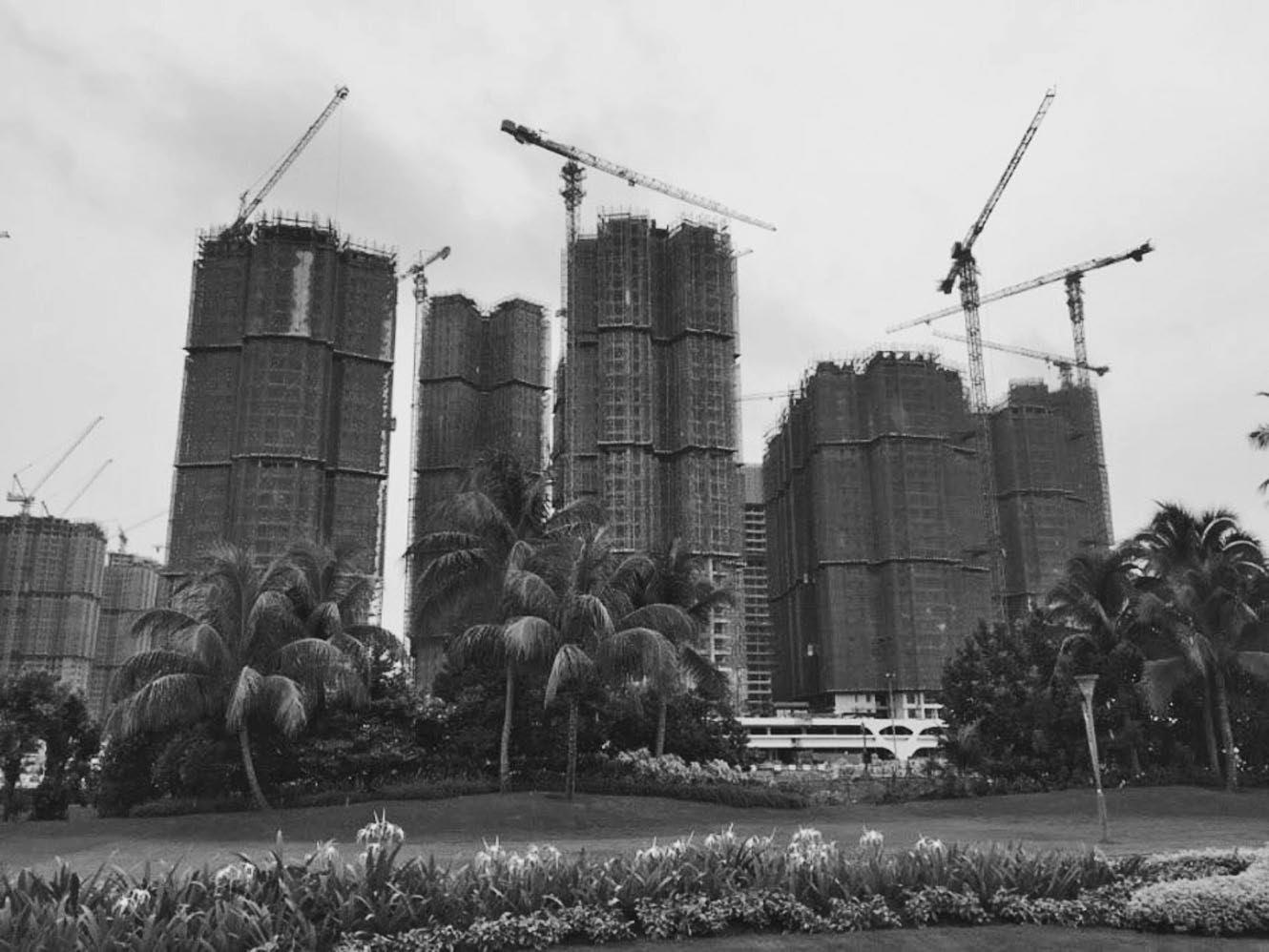
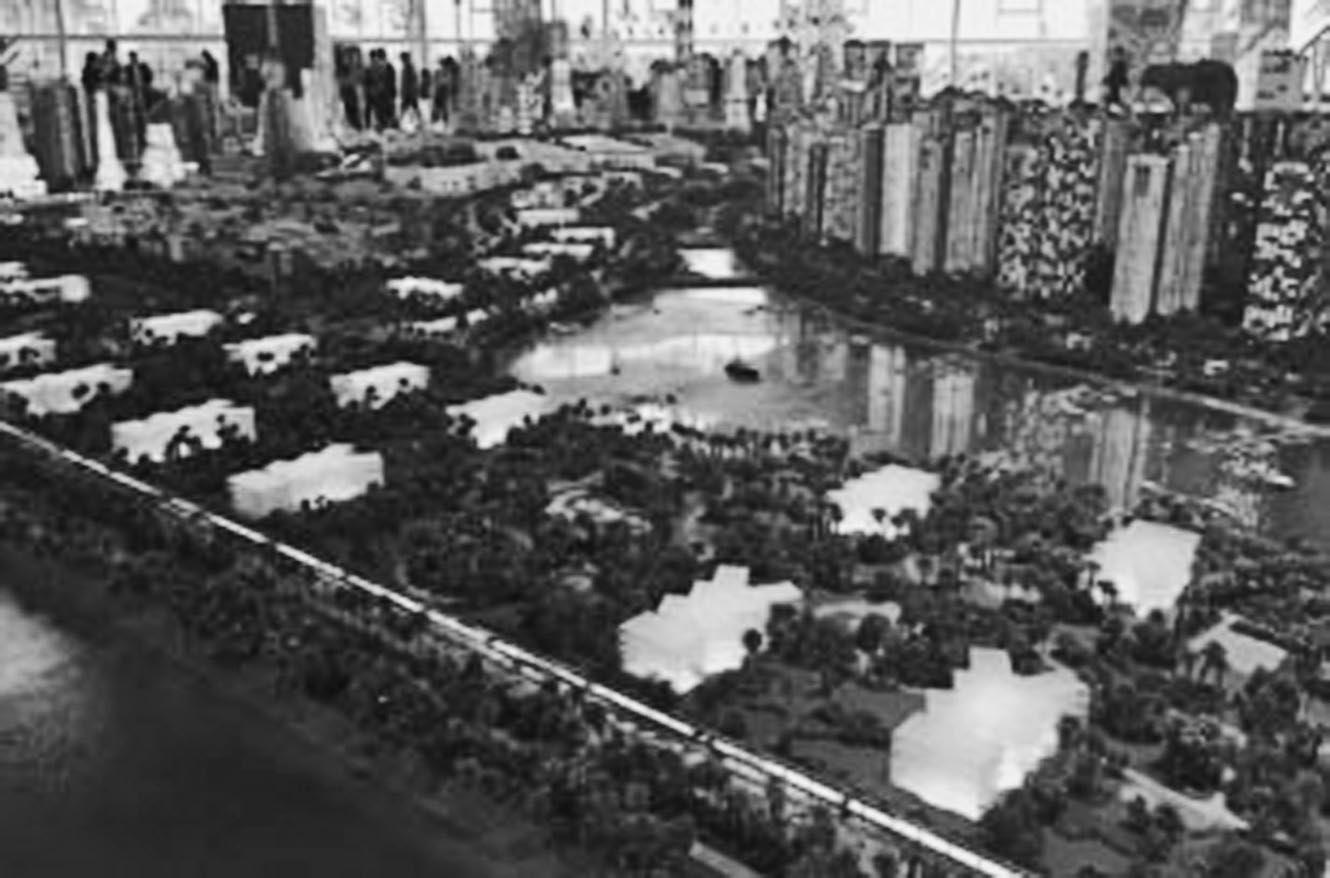
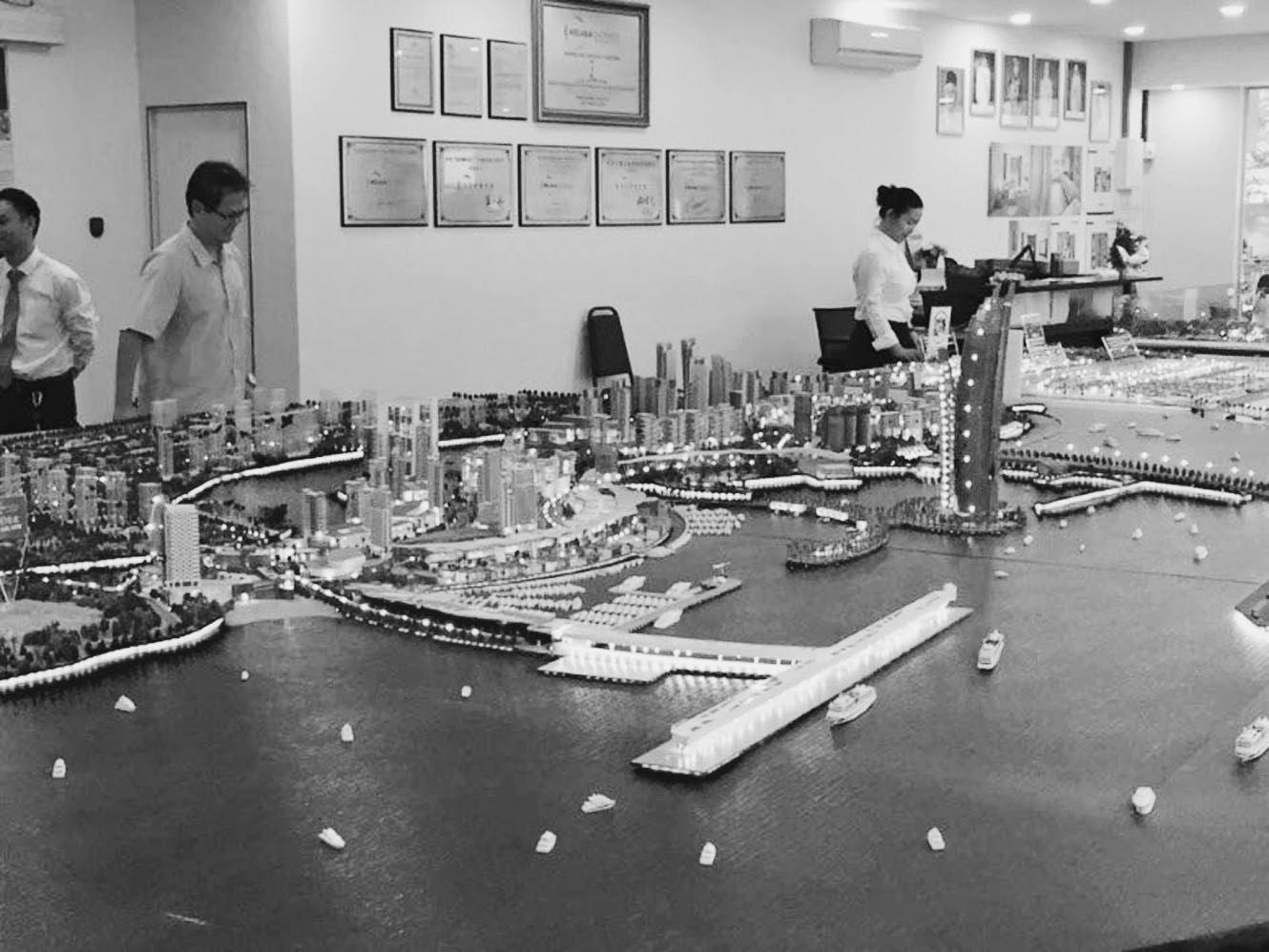
encounters the massive Chinese residential development of Forest City—a joint project between Johor and a Chinese company. A sprawling multipurpose complex encompassing 20 square kilometers and four separate islands, Forest City bills itself as the “largest residential complex in the world” and as an “Exclusive Island Living Paradise.”1 It is still in the early stages of construction (Figure 0.3), while Figure 0.4 is a scale model of what the whole project will look like upon completion by 2025.
Forest City’s developer, the Guangzhou-based developer Country Garden Group, is building enough residential housing for as many as 700,000 people. It will be a complete self-contained “eco city”—with schools, hospitals, entertainment, three 18-hole golf courses, and other amenities. Although within commuting distance of Singapore, most of the residents are intended to live there or use it as weekend getaways from China. The apartments were selling quickly to mainland Chinese citizens prior to 2018, when the Chinese government slapped stricter controls on the movement of private capital out of the country. For a while, the developer was offering Shanghai residents a “two for one” opportunity—buy a flat in Shanghai and get one free in Forest City. While PRC capital controls slowed sales somewhat, the young saleswoman
Figure 0.3 Forest City development
Source: Author’s photo
Source: Author’s photo
I met (“Charlotte,” an information technology graduate from Beijing Normal University) maintained that 40 percent of all planned units had been bought.
As one walks into the sales gallery you are greeted with the soothing background music of John Denver’s “Country Roads,” and the sprawling gallery opens out on to idyllic pools and a beach with Bali-style umbrellas (although no swimming is permitted). I toured several model apartments, pretending to be a potential buyer (speaking Chinese with her may have helped my credibility). A three-bedroom, 635-square-foot flat was going for $198,200, while a 1,141square-foot three-bedroom with small yard was going for $450,000. I thanked Charlotte and told her I would get back to her. While an ambitious development, Forest City has also encountered scathing criticism for the size of the footprint of the project, the environmental damage that it has caused, lack of consultation with the local community, around-the-clock construction, and the imported labor from China.2
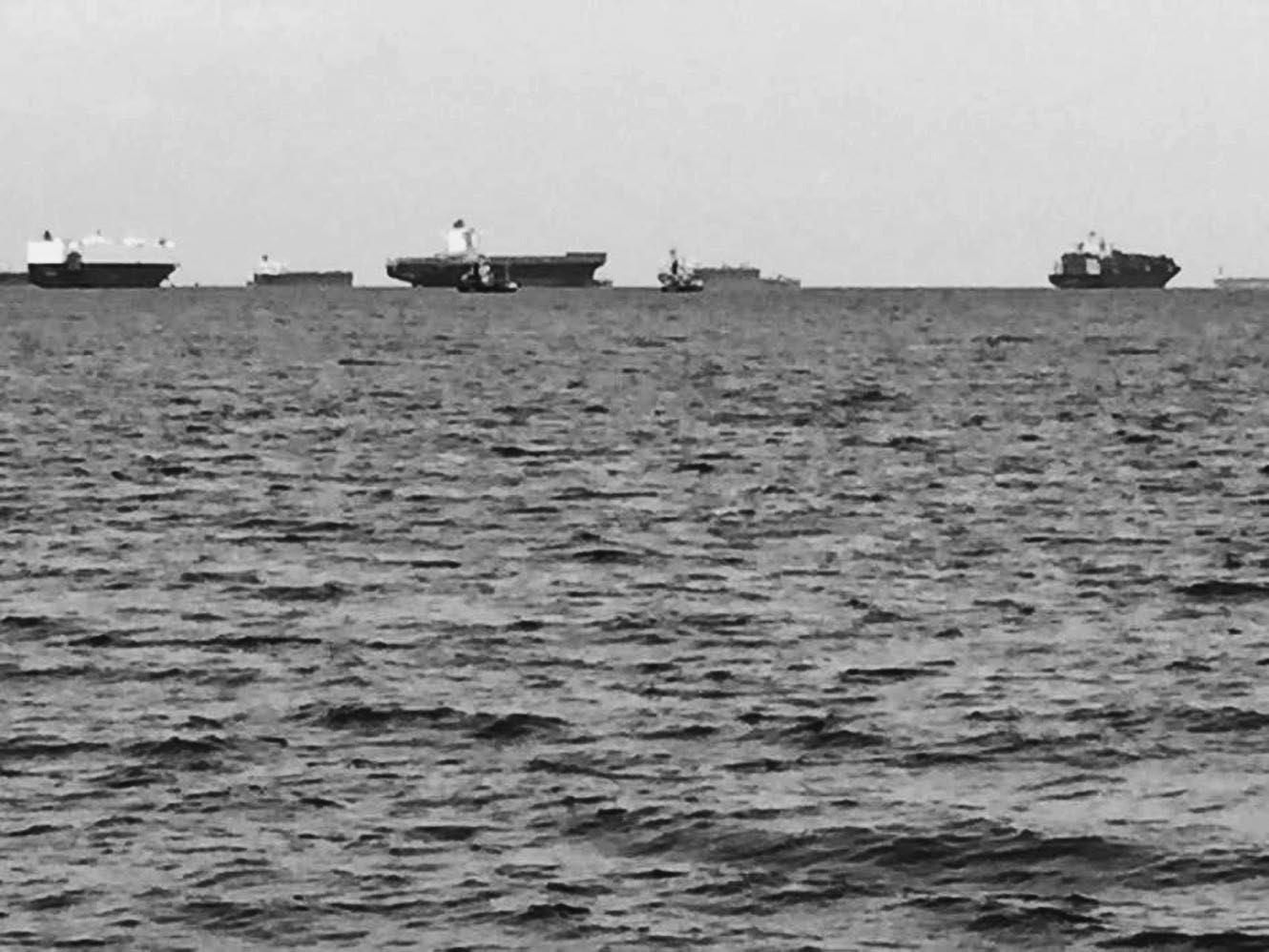
Several hours beyond Forest City one reaches the ancient seaside city of Malacca. The somewhat sleepy fifteenth-century enclave occupies an incredibly important strategic location astride the Malacca Strait (see Fig. 0.5).3 The strait— which runs between Malaysia, Indonesia, and Singapore—is one of the busiest shipping lanes and trade routes in the world, with approximately 50,000 vessels ferrying 40 percent of the world’s merchandise trade and 25 percent of all oil shipments carried by sea annually.4 At its narrowest point near Singapore, the
Figure 0.4 Scale model of Forest City
strait is only 1.5 miles wide, making it a strategic chokepoint in times of conflict. The Chinese refer to their “Malacca dilemma”—a reference to the potential that, in wartime, the US Navy could close the strait and thus inhibit China’s energy imports and merchandise exports. Dozens of massive ships—oil supertankers, vehicle carriers, container ships, naval vessels—all ply this narrow isthmus at close proximity with each other daily.
Given their dependence on imported energy supplies, all Asian states— particularly those in Northeast Asia—would be profoundly affected if a blockade or naval conflict shut down this strategic passageway.
As one leaves the charming central quarter of Malacca City—which is filled with quaint “shop houses,” open-air food stalls, vibrant markets, and old-world architecture—one drives across a causeway to a connecting islet where one is greeted with a massive billboard announcing the entrance to the multipurpose “Melaka Gateway” project being built by the Chinese in cooperation with Malaysian partners.5 It is a somewhat typical example of China’s vaunted “Belt and Road” Initiative. When I visited the Melaka Gateway project in 2017, I was stunned by its potential scale. Sitting directly adjacent to the strategically sensitive Malacca Strait, Malacca Gateway spans 750 acres and will encompass four distinct islands (mainly reclaimed land).
Source: Author’s
Figure 0.5 The Malacca Straits near Singapore
photo
Source: Author’s photo
The project includes a large residential district with hotels and condominiums, hospitals and schools, a Ferris wheel, a marina for 600 private yachts, and a major terminal that can berth up to four Royal Caribbean cruise ships at once. Next door will be a high-rise financial center and free trade zone see Fig. 0.6).
Melaka Gateway, which is due for completion in 2025, also includes a mammoth deep-water port (that can handle vessels up to 12,000 TEUs, a measure essentially equal to a cargo container). The port will be 25–30 meters deep with a 3-kilometer-long wharf that can accommodate huge container vessels and tankers carrying oil and liquefied natural gas, and is projected to accommodate more shipping traffic than Singapore. Next to the port will be a storage facility with capacity for 5 million containers. Finally, Melaka Gateway will include a Maritime Natural Park.
Melaka Gateway is one of the largest “One Belt, One Road” infrastructure projects that China is building across Malaysia. As chapter 5 describes in more detail, OBOR—or the Belt & Road Initiative (BRI) as it has been officially rebranded by Beijing—is a gargantuan $1.2 trillion megaproject that spans the globe; it connects Asia to Europe through an overland route across Eurasia (the “Silk Road Economic Belt”), and a second one spanning the South China Sea through the Indian Ocean and Red Sea to the Mediterranean (the “21st
Figure 0.6 Melaka Gateway
Century Maritime Silk Road”). Numerous commercial infrastructure projects— including construction of ports, power plants, electricity grids, railroads, highways, industrial parks, commercial and financial centers, telecommunications facilities, and residential housing—are already under way, with many more on the drawing board.
***
These two respective experiences—one highlighting America’s hard military power and the other China’s soft economic power—are emblematic of the respective roles of the two competing powers where they meet in Southeast Asia today. While illustrative, they both are somewhat stereotypical and misleading. That is, both the United States and China use a much broader range of mechanisms and have established much deeper footprints across the region than their respective military and economic presence would suggest. While each power has its own comparative advantages, both possess and deploy an array of instruments in a range of sectors—diplomatic, commercial, cultural, military, technological, and other spheres—and they bring these comprehensive capabilities to bear both visà-vis regional countries and in their incipient competition with each other.
In this book I examine these instruments in Beijing’s and Washington’s “toolboxes,” the legacies of each power’s historical interactions with the region, how the ten different Association of Southeast Asian Nations (ASEAN) states in the region all interact with—and navigate between—the United States and China, and I peer into the future to anticipate how their incipient rivalry may play out. As comprehensive rivalry between the United States and China is now the major defining feature of international relations, indefinitely into the future, it is of global significance and consequence how this strategic competition evolves out in Southeast Asia. The region is extremely important in its own right, but it is also a microcosm of many of the features of US-China great power rivalry that is taking place worldwide.
For many decades I have written about US-China relations and Chinese foreign policy, publishing numerous books and articles about various aspects of these subjects. But Southeast Asia had never attracted my close attention. I regret this, as I have come to “discover” it late in my career. But better late than never, as they say. Having now done so, I find myself absolutely fascinated by the rich cultures and complexities of the societies and states in the region—and this is a new love affair that will continue for the rest of my life. In my scholarship, I also very much like to research and write about things that are new and about which I do not know much. Thus, book writing for me has always been a true educational exploration. Some scholars, indeed most, spend their entire careers working on one or two relatively narrowly defined subfields. I have never
been this way. I like new puzzles. And this volume has been a particularly challenging—but rewarding—experience.
However, precisely because I am not an expert and do not have a long career of working on Southeast Asia, I am hyperconscious of what I do not know about the region (a great deal). I thus must offer a sincere apology to those many specialists in the field of Southeast Asian studies for the “overview” nature of this study, and any errors contained herein. Both China’s and America’s relations with the region, and the histories of the individual countries themselves, are all exceedingly complex. It is indeed a daunting and impossible task—indeed probably a superfluous undertaking—to try and capture these complex histories (particularly in chapters 2 and 4). I can hear many readers asking, “What about this or that?” There is, therefore, an inevitable degree of generalization in this study. I am also not an historian by training—but I have tried my best to capture these histories accurately and to provide readers with a broad sense of how the past has shaped the present. With these caveats, I have done my best to explore and capture the multilayered chessboard of interactions by the United States and China with the nations by Southeast Asia.
1
Sino-American Competition in Southeast Asia
“Everything in Southeast Asia now has to do with U.S.-China relations.”
Professor Wang Gungwu, National University of Singapore1
“We do not wish to choose between China and the United States. Any competition between these two is not beneficial to us or the region.”
Desra Percaya, Director-General for Asia-Pacific, Indonesian Ministry of Foreign Affairs2
“Great Power competition isn’t all bad for Southeast Asia since it can provide opportunities to hedge and secure benefits from rival camps.”
Jonathan Stromseth, Brookings Institution3
Great power rivalry is back. On the complicated landscape of international relations today one predominant factor is rising to the fore: comprehensive competition between the United States and People’s Republic of China. This competition is now playing out across all functional domains—diplomacy, commerce, security, intelligence, ideology and values, science and technology, and others— as well as across all continents and many countries.4 This book is about how the two powers are competing in one geostrategically important part of the world: Southeast Asia.
For the United States, the shift from “engagement” to “competition” and rivalry with China has been the product of a seismic shift in American thinking about China in recent years. Over the past decade a variety of constituencies became progressively more frustrated with Chinese behavior in their respective professional spheres: the US military, diplomats, educators, members of Congress, media and journalists, NGOs of a wide variety, intelligence and law enforcement agencies, and the business community. As a result of
these growing frustrations with trying to carry on what should be normal cooperative interactions with Chinese counterparts, a progressive groundswell in antipathy and shift in attitudes about China occurred among these constituencies and across the United States.
The consequence of this national gestalt has been a sea change in American thinking about China.5 In many publications, and particularly on Capitol Hill, there has been an evident and widely shared shift toward advocating a “tougher” and more “competitive” strategy. Today’s competition between the United States and China affects multiple realms: military/security; political systems; diplomacy; economic/commercial; ideology; values; media; culture and soft power; governance practices; public diplomacy and “influence operations”; espionage; technology; innovation; Indo-Pacific regional and global competition in all of the aforementioned areas; and in some international institutions and areas of “global governance.” In every one of these areas the United States and China find themselves in disagreement and competition for advantages vis-à-vis the other. Two-thirds of Americans now view China unfavorably,6 while politicians and pundits alike now call for full-blown “competition” with China.7 The Trump administration’s National Security Strategy of the United States and United States Strategic Approach to the People’s Republic of China both reflect and drive this hardened perspective.8 China policy seems to be the one policy area where there is also considerable bipartisan consensus and a shared approach between the Congress and executive branch in the administration.9 This is also reflected in an apparent overall shift in public opinion which, according to a 2019 Chicago Council on Global Affairs survey, has shown a sharp uptick in the number of Americans who now view China as a “rival.”10
The new great power rivalry bears some similarities to Cold War 1.0, but it also has significant dissimilarities. One is that China, unlike the Soviet Union, is thoroughly integrated into the international institutional order and has a multidimensional presence in most countries around the world. A second obvious difference is China’s domestic economic success and its international influence. China’s science and technology base is also more diversified than the Soviet Union’s (which was dominated by the militaryindustrial complex). While the United States and China possess antithetical political systems and ideologies, the PRC is just beginning to actively export its ideology and create political client states (economic client states as well) as the Soviet Union did. As Kurt Campbell and Jake Sullivan have astutely observed: “China today is a peer competitor that is more formidable economically, more sophisticated diplomatically, and more flexible ideologically than the Soviet Union ever was.”11
There are other differences, as well as similarities, in the emerging superpower struggle. One other is that it has not—yet—become an action-reaction,
zero-sum, type of geostrategic contest. During the Cold War, Moscow and Washington carefully gauged their actions in response to what the other was doing in different domains. While this has been occurring in the military procurement sphere between the American and Chinese militaries for a number of years, it has not yet spread to an explicit contest for influence and clients around the world. Nor are there clearly defined spheres of influence, as was the case in Europe and Latin America during the Cold War—today the United States has a long-standing and deep presence throughout Asia, while Beijing is building a significant presence throughout the western hemisphere, in Europe, Africa, and elsewhere.
This said, we are witnessing during the Trump administration, for the first time, American strategy and actions being taken intentionally to counter China. We have seen this in critical speeches by the US secretary of state concerning China’s presence in Africa and Latin America as well as China’s Belt and Road Initiative; we have seen it in the public diplomacy (PD) realm (the State Department’s Global Engagement Center as well as tailored PD programs to counter Chinese propaganda around the world); we are seeing it in the economic area with the rollout of the BUILD Act (an explicit counter-action to Belt and Road) and the Asia Reassurance Act; we are seeing it in the intelligence and espionage domain (especially cyber); we see it in exposure of Chinese influence and united front operations abroad; and we are seeing it in a number of US military actions to counter the rapidly growing capabilities of the People’s Liberation Army (PLA). So, for the first time, under Donald Trump, a presidential administration has gone on offense against China.
Since comprehensive competition between the United States and China is the most distinguishing feature of international relations at present and indefinitely into the future, it is affecting all regions and most countries in the world, including in Southeast Asia. This book is about both the comprehensive SinoAmerican competition, as well as the individual elements of each power’s respective positions, using that region as a case study of the global contest. Both scholarly analyses and public opinion polls indicate that the Sino-American competition in the region is intensifying. One 2019 poll, conducted by the ISEAS-Yusof Ishak Institute ASEAN Studies Center in Singapore, surveyed over 1,000 Southeast Asia experts and officials and asked: “Do you think the US and China are on a collision course in Southeast Asia?” Fully two-thirds of respondents (68.4 percent) answered “yes.”12 Some observers see not only rivalry (which suggests a kind of balanced competition), but actually a shift in relative power and influence—from America to China.13
In this book I will examine the competition broadly, their respective capabilities more narrowly, and will assess the relative balance of power between the two. However, some cautionary caveats are in order at the outset.
First, the US-China competition is not merely dyadic, as if no other actors matter. Quite to the contrary, the superpower competition is ameliorated and adjudicated by the ten member states of the Association of Southeast Asian Nations (ASEAN). Indeed, other regional “middle powers”—notably Japan, India, Australia, and the European Union, and to a lesser extent Russia—are also involved on the strategic chessboard of Southeast Asia.14 Each of these actors has its own interests and possesses its own agency in the complex and fluid environment—thus buffering the Sino-US rivalry to some extent. ASEAN states also exercise their own agency, as is explored in chapter 6. Indeed, born out of their colonial histories, ASEAN states have a long history of protecting their independence and warding off interference and great power competition. Southeast Asia is not like Europe and other regions during the Cold War where each major power had its sphere of influence and client states. Today, Beijing and Washington compete within and among the same states. Moreover, these states and societies do their best to maximize gains from each big power, not wishing to become beholden to either one. Yet, as China is increasingly able to pre-empt Southeast Asian states—individually or collectively—from issuing public statements or undertaking certain actions, it reveals compromised independence and “agency” on their parts. So, the strategic contest between the United States and China in Southeast Asia is complicated.
The second caveat flows from the first. Thus far, as noted earlier, the US-China competition is not (yet) a Cold War–style one—either in Southeast Asia or elsewhere in the world. During the Cold War, the United States and Soviet Union largely engaged in an action-reaction direct competitive contest whereby each side calculated its moves based on what the other was doing. While China is certainly taking its own initiatives that affect American interests across many spheres, and some are covert or opaque, I only see Beijing taking minimal actions specifically to counter the United States. Beijing takes actions more to advance its own position than to counter and undermine the US. Thus, there is not yet a real tit-for-tat dynamic in the US-China global competition. This is what I call soft rivalry or soft competition rather than hard rivalry or hard competition. That is, the two powers are kind of shadow-boxing with each other. It also reflects the fact that the two powers have very different toolboxes of instruments that they use in pursuit of their international goals. The most apparent difference lies in China’s economic strengths versus America’s military strengths. This dichotomy is quite apparent in Southeast Asia.
Thus, in the new twenty-firstcentury great power environment, both Beijing and Washington—but particularly China—are operating mainly on their own
without calibrating their global moves vis-à-vis the other. For the United States, there has been a large element of “autopilot”—whereby Washington has based its global activities around its allies and traditional friends. But, as noted earlier, this has changed under the Trump administration—which has taken a much more explicit approach to competing with and confronting China. This is a result of a sea change in American strategic thinking about China and is highly likely to last well beyond Trump’s time in office.
For its part, China constantly and stealthily maneuvers in “grey zone” regions and with countries neglected by the Americans. This is notably the case in Central Asia, Africa, and Central Europe. But China is also attempting to peel off traditional US allies and partners in Asia, Europe, and Latin America. Southeast Asia must be viewed in this broader context—as there is enormous fluidity across the region.
In this context, and with these two caveats, this book has several principal findings. First, China is intensively beavering away to broaden and deepen its presence in all Southeast Asian countries, while the United States remains much more neglectful in its attention and static in its actions. Second and relatedly, there is a resulting pervasive and predominant narrative across the region that China is the “inevitable” dominant power, while the United States is in inexorable eclipse and decline. Third, when examined empirically, however, this book finds that this narrative (meme) is not accurate. That is, I counterintuitively find that the United States still has deep roots and possesses far more comprehensive power in the region than China. The United States is hence an “underappreciated power,” whereas China is an overestimated one.15
I find this to be the case certainly with respect to relative capabilities, but not necessarily with respect to power as defined by influence. American influence has definitely waned—notably among its traditional allies Thailand and the Philippines—while China now casts a long shadow across Southeast Asia, which has resulted in Beijing having a virtual “veto power” over every ASEAN state. That is, no Southeast Asian government is willing to openly criticize or stand up to China or premise its foreign and security policies on countering China’s expanding reach into the region. Yet, precisely because of the United States, the “middle powers” noted above, and the independent agency of each Southeast Asian state, Southeast Asia can by no means be considered China’s sphere of influence.
Because ASEAN states have their own “agency” (as described in chapter 6) domestic politics in these countries actually have a significant influence on a nation’s orientation vis-à-vis China and the United States (witness the Philippines under Duterte, Malaysia under Najib and subsequently Mahathir, Indonesia under Jokowi, and Thailand under Prayut).
As a result, the game will go on and the strategic contest between China and the United States will be protracted. My guess is that the ultimate “winner” will