https://ebookmass.com/product/well-what-we-need-to-talkabout-when-we-talk-about-health-1st-edition-sandro-galea/
Instant digital products (PDF, ePub, MOBI) ready for you
Download now and discover formats that fit your needs...
What Do We Mean When We Talk about Meaning? Steven Cassedy
https://ebookmass.com/product/what-do-we-mean-when-we-talk-aboutmeaning-steven-cassedy/ ebookmass.com
Let's Talk About It Paul L. Marciano
https://ebookmass.com/product/lets-talk-about-it-paul-l-marciano/
ebookmass.com
Something to Talk About (Rose Hill, #2) Rachael Johns
https://ebookmass.com/product/something-to-talk-about-rosehill-2-rachael-johns/
ebookmass.com
Policy Design in the European Union: An Empire of Shopkeepers in the Making? 1st Edition Risto Heiskala
https://ebookmass.com/product/policy-design-in-the-european-union-anempire-of-shopkeepers-in-the-making-1st-edition-risto-heiskala/ ebookmass.com
Autism Spectrum Disorders: Foundations, Characteristics, and Effective Strategies 2nd Edition – Ebook PDF Version
https://ebookmass.com/product/autism-spectrum-disorders-foundationscharacteristics-and-effective-strategies-2nd-edition-ebook-pdfversion/ ebookmass.com
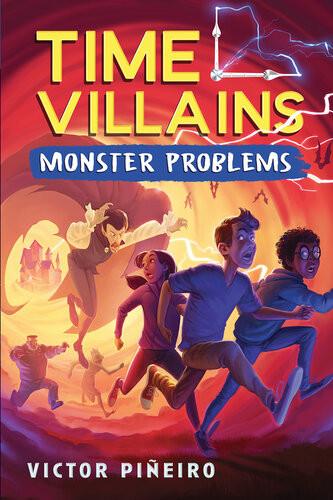
Monster Problems Victor Piñeiro
https://ebookmass.com/product/monster-problems-victor-pineiro-2/
ebookmass.com
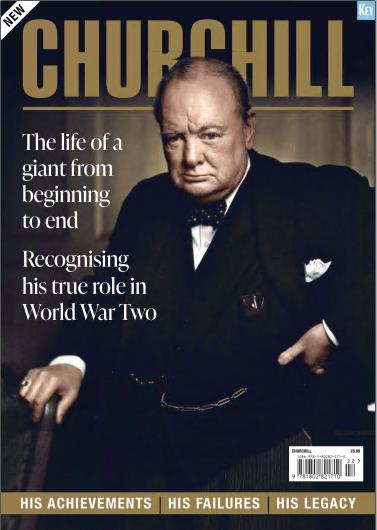
The Second World War - Churchill, 2022 John Greehan (Ed)
https://ebookmass.com/product/the-second-world-warchurchill-2022-john-greehan-ed/
ebookmass.com
Winter Wonderland Romance: A Sweet Winter Romance Shanna Hatfield
https://ebookmass.com/product/winter-wonderland-romance-a-sweetwinter-romance-shanna-hatfield/
ebookmass.com
QuickValue: Discover Your Value and Empower Your Business in Three Easy Steps 1st Edition Phillips
https://ebookmass.com/product/quickvalue-discover-your-value-andempower-your-business-in-three-easy-steps-1st-edition-phillips/
ebookmass.com
Statistics for Food Science with R Abdulraheem Alqaraghuli
https://ebookmass.com/product/easy-statistics-for-food-science-with-rabdulraheem-alqaraghuli/
ebookmass.com
EARLY PRAISE FOR SANDRO GALEA’S WELL
“Galea elevates our understanding of what forces influence our health and shape our well-being, writing with sensitivity, nuance and authority.”
Joseph Amon, Drexel University, former director of Health and Human Rights Division, Human Rights Watch
“Conversations around healthcare mean more if we live in a society that actively values health—not just medicine. Sandro Galea’s case for change in America is bold, disarming, and eminently achievable. Well is the starting point for a conversation we need to have.”
Jeff Arnold, Chairman and CEO, Sharecare
“Well should be required reading for anyone interested in understanding what is necessary for health in the U.S. Galea applies his remarkable breadth of knowledge to some of the most complex issues facing humanity—and does so with such clarity and insight that even the most complex topics suddenly seem crystal clear.”
John Auerbach, President and CEO, Trust for America’s Health
“Galea moves beyond a numbing rhetoric of numbers to tell how societal forces mold people’s health.”
Mary Bassett, Harvard University, former New York City Health Commissioner
“A brilliant exposé of the societal factors that profoundly impact individual and population health.”
Georges C. Benjamin, Executive Director, American Public Health Association
“A radical new perspective on the true drivers of health—and a set of truly disruptive conclusions to inspire those designing health systems. A defining manifesto for the years ahead.”
Arnaud Bernaert, World Economic Forum
“A sensitive and nuanced perspective on often overlooked issues—compassion, fairness, freedom—that matter most to our health.”
David Blumenthal, President, The Commonwealth Fund
“For 45 years I have fought for equity, compassion, and inclusion in mental health, so I am thrilled to see Sandro Galea’s Well take the revolutionary and compelling stance that these principles can have a more beneficial effect upon public health than any scientific discovery.”
Rosalynn Carter, former First Lady
“Americans have long struggled with the idea that health is about anything other than doctors and medicine. With Well, Sandro Galea may fix that. With storytelling like this, we can shift the common understanding of health from the doctor’s office to the community.”
Brian C. Castrucci, CEO, de Beaumont Foundation
“Every politician who has to raise taxes and starve other investments to pay for medical care should read this book.”
Helen Darling, former President and CEO, National Business Group on Health
“Well fully encompasses the complexity of health, and with the perfect blend of historical and modern-day examples, delivers a deeper understanding of the confounding factors of health as we know it today.”
Lord Ara Darzi, Institute of Global Health Innovation, University College London
“An elegant, jarring examination of the public’s health in America—which for all of its flaws remains the source of our greatest hope for the future.”
Karen DeSalvo, University of Texas at Austin, former Acting Assistant Secretary for Health, U.S. Department of Health and Human Services
“This book will change the way you think about health—not just yours, but the world’s.”
John DeSouza, President, Ample, Inc.
“Drawing on philosophy, literature, and popular culture, Galea offers an accessible and articulate explanation of how good public health policy can deliver a fairer and healthier America.”
Peter Donnelly, President and CEO, Public Health Ontario
“Forcefully argues that America must focus on the true economic, social, and environmental drivers of health. We all should pay attention to this powerful message.”
Andrew Dreyfus, President and CEO, Blue Cross Blue Shield of Massachusetts
“This is where our public conversation about health has to be. Galea offers a disarming, clear-eyed examination of health in America, asking the questions that don’t get asked in our medicine-first culture. The result is jarring, empowering, and beautiful.”
Abdul El-Sayed, former Executive Director of the Detroit Health Department
“A timely reminder that when it comes to public health challenges like gun violence, civic engagement is the closest thing we have to a miracle drug.”
John Feinblatt, President, Everytown for Gun Safety
“Explains, convincingly, that history is the principal determinant of population health and why collective action to promote socio-economic justice is the most effective way to improve it.”
Daniel M. Fox, President Emeritus, Milbank Memorial Fund
“A fresh, rich, and practical discussion of health as a social imperative and the multiple forces that shape it. From one of the most creative and influential thinkers in the public health field, this book will become an essential companion to practitioners and scholars alike.”
Julio Frenk, President, University of Miami
“Sandro Galea’s work deftly captures the disconnect between healthcare spending and what actually determines our health. His work is a clarion call for changes in how we invest to make America healthier.”
Paul S. Grogan, President and CEO, The Boston Foundation
“With healthcare increasingly a political football, Well guides us toward what is truly needed for a healthier world. Its power comes from Galea’s remarkable ability to draw on the power of individual stories and lived experience to humanize the issues and inspire commitment to improved health for all.”
Margaret Hamburg, former FDA Commissioner
“Well is the essence of good health for all and a call to action to get us there. A must-read for all those who share this universal goal.”
Ruth J. Katz, The Aspen Institute
“Vested in both personal experience and stark data, Galea’s Well provides a refreshingly accessible, novel and important break down of many of the reasons why we really get sick—and the opportunities to be well.”
Vanessa Kerry, Seed Global Health
“A clear and compelling case that health inequities resulting from environmental, societal, and political forces are holding all of us back. It’s time to reinvest in our health—not just our healthcare.”
Gina McCarthy, Harvard University, former EPA Administrator
“Weaving together history, philosophy, social science data, and current events, Galea has created a powerful narrative advocating for a more holistic understanding of population health.”
Travis McCready, President and CEO, Massachusetts Life Sciences Center
“An engagingly written and heartfelt cry for us all to recognize the connection between our collection action and personal health.”
David Miller, C40 Cities Climate Leadership Group, former Mayor of Toronto
“Shows clearly how society’s continued focus on high-tech healthcare is blinding us to the broader determinants of health.”
C. David Naylor, President Emeritus, University of Toronto
“A superb account of how money, power, politics, and the luck of the draw affect the health of individuals and populations. It should inspire all of us to follow Galea in championing public health as an essential public good, and in treasuring and preserving the core values of public health—fairness, justice, and compassion for all.”
Marion Nestle, New York University, author of Unsavory Truth
“Galea captures the ways society values—and devalues—health. For the wellness of people and planet, Well is a must read.”
Ali Noorani, Executive Director, National Immigration Forum
“Well shows that behind our national health crisis lies a moral crisis. Sandro Galea has written a valuable primer on the forms of injustice, myopia, and selfishness that have made our country so sick.”
Nathaniel Rich, author of Losing Earth: A Recent History
“Those who see health as the sum total of genetics and behavior are missing the big picture. In this compelling and highly readable book, Sandro Galea takes a step back and reveals the rest of the story. Where we live, what we earn, and how we access health care are as central to health as our family’s medical history. This book is for anyone who wants to see a healthier world.”
Joshua M. Sharfstein, Johns Hopkins University, former Secretary of Maryland Department of Health and Mental Hygiene, former Principal Deputy Commissioner of FDA, former Commissioner of Health for Baltimore City
“Galea goes beyond the argument of health as a basic human right, making clear that sustainable health comes from social and economic justice. A great example of leadership, compassion, and hope for all people.”
Donato Tramuto, CEO, Tivity Health
“The passionate argument we need for the health we deserve. What an important frame for the right to health!”
Leana Wen, President, Planned Parenthood Federation of America
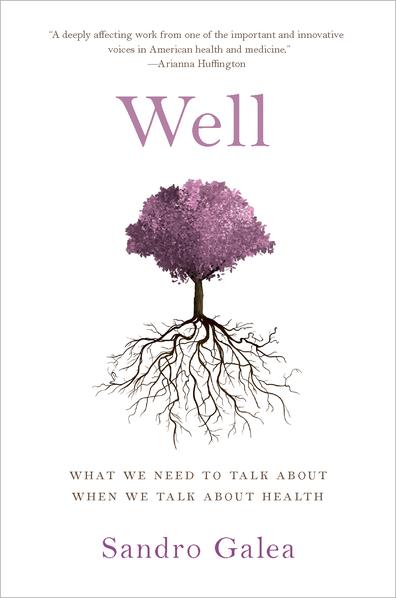
Well
What We Need to Talk About When We Talk About Health
SANDRO GALEA
Oxford University Press is a department of the University of Oxford. It furthers the University’s objective of excellence in research, scholarship, and education by publishing worldwide. Oxford is a registered trade mark of Oxford University Press in the UK and certain other countries.
Published in the United States of America by Oxford University Press 198 Madison Avenue, New York, NY 10016, United States of America.
© Oxford University Press 2019
All rights reserved. No part of this publication may be reproduced, stored in a retrieval system, or transmitted, in any form or by any means, without the prior permission in writing of Oxford University Press, or as expressly permitted by law, by license, or under terms agreed with the appropriate reproduction rights organization. Inquiries concerning reproduction outside the scope of the above should be sent to the Rights Department, Oxford University Press, at the address above.
You must not circulate this work in any other form and you must impose this same condition on any acquirer.
Library of Congress Cataloging-in-Publication Data
Names: Galea, Sandro, author.
Title: Well : what we need to talk about when we talk about health / Sandro Galea. Description: Oxford ; New York : Oxford University Press, [2019] | Includes bibliographical references and index.
Identifiers: LCCN 2018043016 | ISBN 9780190916831 (hardback)
Subjects: LCSH: Public health—United States. | Medical care—United States. | BISAC: SELF-HELP / General. | MEDICAL / Alternative Medicine. | MEDICAL / Public Health.
Classification: LCC RA445 .G35 2019 | DDC 362.10973—dc23 LC record available at https://lccn.loc.gov/2018043016
This material is not intended to be, and should not be considered, a substitute for medical or other professional advice. Treatment for the conditions described in this material is highly dependent on the individual circumstances. And, while this material is designed to offer accurate information with respect to the subject matter covered and to be current as of the time it was written, research and knowledge about medical and health issues is constantly evolving and dose schedules for medications are being revised continually, with new side effects recognized and accounted for regularly. Readers must therefore always check the product information and clinical procedures with the most up-to-date published product information and data sheets provided by the manufacturers and the most recent codes of conduct and safety regulation. The publisher and the authors make no representations or warranties to readers, express or implied, as to the accuracy or completeness of this material. Without limiting the foregoing, the publisher and the authors make no representations or warranties as to the accuracy or efficacy of the drug dosages mentioned in the material. The authors and the publisher do not accept, and expressly disclaim, any responsibility for any liability, loss or risk that may be claimed or incurred as a consequence of the use and/or application of any of the contents of this material.
1 3 5 7 9 8 6 4 2
Printed by Sheridan Books, Inc., United States of America
This book is dedicated, as always, to Isabel Tess Galea, Oliver Luke Galea, and Dr. Margaret Kruk.
Acknowledgments 211
References 213 Index 263
Iam a physician and an epidemiologist (a doctor who studies how diseases spread) by profession. I am also an immigrant, twice over, and a father.
I was born in Malta, a small island about one-tenth the size of Rhode Island, located in the Mediterranean between Sicily and Tunisia. During my childhood, Malta went through a period of political unrest, mass civil disobedience, and violence. The changes did not bode well for my family, and we left the island in 1985, when I was a teenager.
We moved to Canada, which at the time was one of two countries (Australia was the other) accepting Maltese immigrants. There we lived with my aunt, who had immigrated previously, in a Toronto suburb called Scarborough, where a fair
number of immigrants lived (and still do). Later we moved to a housing project nearby. I did a year and a bit of high school, then attended Scarborough College, a commuter campus of the University of Toronto.
I went to medical school in Canada and then practiced medicine in a rural part of Northern Canada. I also worked in places like Papua New Guinea and the Philippines and with Doctors Without Borders in Somalia. When I was approaching 30, I immigrated to the United States to study public health. I have since made my professional living here, conducting research and teaching at the University of Michigan, Columbia University, and now Boston University.
My children are fully American, and I am now very much at home here. But I have little doubt that my sensibility is shaped by a personal journey that gives me deep empathy with vulnerable and marginalized groups. At the same time, my journey imbues me with genuine optimism about the potential to always improve the human condition. And, by professional orientation, I want us to be better on health. Experience living around the world has taught me that health is universally valued and that all members of the human family wish to be healthier. My training in medicine and public health tells me that we can do just that, provided we first change what we talk about when we talk about health. That is what this book is about.
Sandro Galea July 18, 2018 Boston
In 1977, NASA launched the unmanned Voyager One space probe, the goal of which was to explore the outermost reaches of space and transmit data back to earth.1 On board was a goldplated record containing a range of sounds that would convey, to any alien being that discovered it, the breadth and diversity of the human experience on earth.2 One song on the record is “Dark Was the Night, Cold Was the Ground,” a recording from 1927 by the blues singer Blind Willie Johnson. Blind Willie Johnson had a difficult life.3,4 The story goes that when Willie was seven years old, as his father was beating Willie’s stepmother over allegations of infidelity, the stepmother angrily threw lye in Willie’s face, blinding him. Willie experienced poverty throughout the life that followed, getting
by on money earned playing music and preaching in the streets. In 1945, his house burned to the ground.5 With nowhere to go, he lived in the ruins, sleeping on a damp bed. Amid these living conditions he soon caught malaria and died. His wife said that he had been refused treatment at a hospital, either because he was blind or because he was black.6
When I tell this story to groups, I ask them a question: what killed Blind Willie Johnson? The answer may seem obvious: malaria killed Blind Willie Johnson. If he had received treatment for it, Blind Willie would have lived.
But would he have lived much longer? Anyone who appreciates the sum of hardships that were building up in Blind Willie’s life will recognize that if malaria had not killed him on September 18, 1945, something else was likely going to kill him soon thereafter. In fact, one might fairly argue that he was killed by poverty, by racism, by domestic violence, by homelessness, and by limited access to care. And, in this regard, he was not alone. Today, black children in America are far more likely to witness domestic violence than white ones, and while doctors may not be able to turn patients away on account of race anymore, pernicious gaps in treatment remain.
Blind Willie Johnson’s health was shaped by being born at a certain time, in a certain place, in a certain skin, under certain social and economic circumstances. The sum of all these factors is what ultimately defined his life experience and killed him at an early age.
On hearing this story, most will regret what happened to Johnson, lamenting how such things continue to happen to people today. One may even hope to do something to help those who are affected by adverse conditions today so that those people can be healthier.
These are admirable sentiments, but they miss a core truth: we are all Blind Willie Johnson. Each of us is shaped by the conditions around us—the combination of place, time, power, money, and connections, by what we know, and by the compassion of the people we encounter. And, importantly, our health depends on these things, too.
This book aims to make this case: that our health is not defined by things like seeing doctors or taking medicines or getting in our 5,000 steps a day. Rather, it’s defined by the full spectrum of our life circumstances, from the families we come from to the neighborhoods where we live to the people we see and the choices we make. And unless we understand those forces, our health is never going to improve.
The room for improvement in Americans’ health is well documented. In fact, by most measures, American health is worse than that of any other rich country. Child mortality in the United States is about 7 per 1,000; in Finland it’s 2 per 1,000. A child born today in America can expect to live until age 79; in Japan, that child would live to 84. Yet, somehow, we spend nearly twice as much as Japan does on health per capita.7
Most well-informed Americans are aware of this trend. It has become accepted that we live sicker and die earlier than
people in other rich countries. What most do not realize is that this is a relatively new development. While the United States has made continuing progress on improving life expectancy and reducing mortality from various diseases, these improvements have occurred at a much slower rate than in other countries over the past 40 years. For example, Chilean life expectancy was 68 in 1980; it was 81 by 2014. By comparison, U.S. life expectancy was 74 in 1980, and, by 2014, it lagged behind Chile’s at 79. And the United States is not just faring worse than other high-income countries. In 1980, Cuban life expectancy was 74. In 2005, it was 79, higher than 77 in the United States.7 Today, children born in America are likelier to live shorter lives than children born in a range of other countries, including Singapore (life expectancy 83) and Greece (life expectancy 81).8
Is this because Americans care less about health than do people in other countries? Far from it. The United States spent $3.3 trillion in 2016 on health.9 That is the same as the entire gross domestic product of Germany.10 America spends about 18% of its annual gross domestic product on health. The country that spends the second most is Switzerland, which spends 12%. Most of the 37 countries that are part of the Organization for Economic Cooperation and Development spend somewhere around 9%.11
Much of Americans’ health expenditures go toward doctors and medicines—that is, money spent on getting better after we are sick. The inefficiency of this approach shines a light on how Americans historically conflate the concept of health with the practice of medicine and how our national health conversation
is dominated by a belief that treating illness is somehow easier or better than preventing that illness in the first place.
It is hard to think of any other aspect of American life where the country’s shortcomings are as stark as with its health, let alone one where it would be remotely as accepted. Would Americans accept spending more than anyone else on its military if it was understood that our military was weaker than those of other countries? How would we feel if we continued to spend more on our military over a period of decades only to fall further and further behind other countries? It would probably amount to a national crisis and prompt some real soul-searching and hand-wringing around why we have been spending ever more while getting ever less.
All this happens because we think about health in the wrong way. We think that improving health is an individual enterprise focused on the individual. We think that lifestyle will amount to living longer as long as we can afford all the medicines we need to keep going. But study after study shows that our country’s health output per dollar is worse than any of our peer countries, and study after study also shows that efforts to change our lifestyle generally fall short just a few months after we make these efforts. This means we’ve been spending our money on ineffectual, finger-wagging efforts to modify behaviors, then later on medicine to help us after we get sick. Based on the evidence, that appears to be the wrong approach.
This book is about the forces around us that shape health, most of which we do not think about. These are forces that are
typically not in the health discussion—but, based on research, should be. To take that statement a step further, this book is about factors that have to align with the goal of creating the healthiest possible people if we are to reap the benefits of our investment in health.
We spend an inordinate amount of money on health, yes. Most of the time we have been spending that money incorrectly. We have been spending on trying to do things by ourselves, to change behaviors that aren’t likely to change in light of the vortex of factors that contributed to the behaviors in the first place. We have been spending our money on medicine, looking to cure ourselves after we have become sick, rather than investing in the things that will prevent us from getting sick in the first place.
The fact that we spend so much and get so relatively little for it is evidence that we cannot buy our way out of this problem. Despite having the best hospitals in the world, Americans will still get sick more than people living in other countries and will then die at a younger age. And, for all our best intentions in health—to eat better, to exercise more—we will keep falling short because our world and environment are not aligned to encourage us to do these things. The society we have created is simply not oriented to keep us healthy.
Until our world is oriented in a way that is conducive to health, we will continue to fall behind on health and never come close to realizing our full potential, even amid extraordinary health-related spending. Our efforts to make ourselves healthy
without a world around us that encourages health will never be sufficient. At the end of the day, it does not matter so much how great our hospitals are or how advanced our technology. Our health is determined by, and limited by, the world in which we live.
The good news is that introducing the matters of actual consequence to our dialogues around health doesn’t cost any more than we’re already spending. But it will require that we pay greater attention to certain things than we do now, and that sort of behavior change is no small trick. The goal here has to be to shift what we talk about when we talk about health. The chapters of this book show how what we value, how we live, where we live, and who is in power are all drivers of our health, individually and collectively. It explains how, until we have a more just world, health will continue to suffer. And it explains why forces as abstract as empathy and humility matter for our health—and, critically, why we must embrace their influence.
My bias—as a writer, as a doctor, as an immigrant, as an academic, as a father—is that I hope to live in a healthier world, for all. In this book, I attempt to explain the various factors in our broader context that we know create good health. It’s important to note that I am not interested in disease, and I seldom talk about sickness. I am interested in health, in the creation of a world where as many of us as possible are healthy for as long as possible.
While our health is personal, I am interested in how everyone, as many people as possible, can be as healthy as possible
for as long as possible. To that end, I hope that this book can serve as a meditation of sorts, guiding the reader to better understand the forces that actually shape our health. From there, maybe we can turn to investing in these very forces and creating a healthier world.
In many ways, this book is a reflection of my own personal journey in health. I was born in Malta and immigrated to Canada, where I was trained as a physician in primary care medicine. I spent time working in rural and remote parts of the world, including Somalia, where I worked as a field physician with Doctors Without Borders. It was in Somalia in the late 1990s where I was truly immersed in the most acute form of clinical medicine: dealing with sick people coming through the door whose lives, literally, depended on me and what I did to help them. People whose malaria (and there was a lot of malaria) depended on my treating it properly in order for them to live.
While in Somalia, treating mostly preventable diseases and injuries, I felt very much like the proverbial man at the side of the river who sees one person drowning and jumps in to save her, then sees another person drowning and jumps in to save him, and then yet another person and jumps in to save her. After a while I stopped to ask: Who is throwing people in the river to begin with?
With that question began my academic journey. My professional life has been focused on finding out who is throwing
people in the river and what I can do about that upstream influence so that we are not all drowning and depending on doctors to fish us out.
The forces around us are what throws us in the river. They are our past, money, power, place, people, love and hate, compassion, the choices we make, luck, fairness and justice, and our values. My hope is that if we all understand these forces a little bit better, we will have fewer people drowning in the river and that the Blind Willie Johnsons of the world will live another day.