Science Interrupted: Rethinking Research Practice with Bureaucracy, Agroforestry, and Ethnography (Expertise: Cultures and Technologies of Knowledge) Timothy G. Mclellan
Current Trends and Future Developments on (Bio-) Membranes: Techniques of Computational Fluid Dynamic (CFD) for Development of Membrane Technology Angelo Basile
Oxford University Press is a department of the University of Oxford. It furthers the University’s objective of excellence in research, scholarship, and education by publishing worldwide. Oxford is a registered trade mark of Oxford University Press in the UK and certain other countries.
Published in the United States of America by Oxford University Press 198 Madison Avenue, New York, NY 10016, United States of America.
All rights reserved. No part of this publication may be reproduced, stored in a retrieval system, or transmitted, in any form or by any means, without the prior permission in writing of Oxford University Press, or as expressly permitted by law, by license, or under terms agreed with the appropriate reproduction rights organization. Inquiries concerning reproduction outside the scope of the above should be sent to the Rights Department, Oxford University Press, at the address above.
You must not circulate this work in any other form and you must impose this same condition on any acquirer
Library of Congress Control Number: 2021942901
ISBN 978–0–19–758786–7 eISBN 978–0–19–758788–1
DOI: 10.1093/oso/9780197587867.001.0001
For Yara, Creativity itself
Contents
Preface
Acknowledgments
PART I. THE LITERARY APPROACH TO THE EARLY DISCOURSES
1. Introduction: Rereading the Udumbarika-sutta
A First Textual Analysis: Why the Udumbarika-sutta?
The Formulaic Opening of the Mahāsakuludāyi-sutta as a Literary Preamble to the Udumbarika
The Opening of the Pāli Udumbarika-sutta
The Philosophy of the Udumbarika
Versions of the Udumbarika-sutta
Conclusion
2. Literary Design in the Early Discourses
Multivalence in the Majjhima Nikāya: A Reading of the Cūlataṇhāsankhaya-sutta
The Art of Narrative in the Sīla-kkhandha-vagga I: The Brahmajāla
The Art of Narrative in the Sīla-kkhandha-vagga II: The Sāmaññaphala
Applying and Reapplying the SKV Formula
What Is Editing?
Conclusion: The Art of Interpretation in the Nikāyas
PART II. INNER AND OUTER WORLDS OF LITERARY EXPRESSION
3. Mindfulness of the Buddha in the Mahāparinibbāna-sutta
Reading and Listening to the Mahāparinibbāna-sutta (MPS)
The Climax: The Buddha Relinquishes His Life
Nearing the Buddha’s Death
Death and Its Aftermath
Epilogue: Ānanda’s Visualization of the Buddha before Enlightenment
4. The Folklore of Sutta: Performance in the Early Discourses, and Texts as Versions
Buddhist Fun in the Pāṭika-sutta
The Pāṭika as a Version
A Doctrinal Version
The Buddha’s Perplexing Austerities in the Mahāsīhanāda
Bring in the Jātakas
The Closing Section of the Pāṭika
Conclusion
PART III. COMPOSING BUDDHIST SCRIPTURE THROUGH THE PLAY OF FORMULAS
5. The Play of Formulas: Toward a Theory of Composition for the Early Discourses
The Perils of Historicism in Buddhist Studies
Literary Solutions to Historicist Fallacies
The Primacy of the Formula
An Alternative Approach
The Play of Formulas and the Unanswered Questions
Playing with Formulas on Brahmin-Householders
Conclusion: Buddhist Orality Revisited
6. Retelling the Buddha’s Enlightenment in the Majjhima Nikāya
Awakening in the Bhayabherava-sutta (“The Discourse on Fear and Dread,” MN 4)
The Dvedhāvitakka-sutta (“The Discourse on Two Types of Thoughts,” MN 19)
The Ariyapariyesanā-sutta (“The Discourse on the Noble Search,” MN 26)
The Mahāsaccaka-sutta (“The Greater Discourse with Saccaka,” MN 36)
The Bodhirājakumāra-sutta (“The Discourse to Prince Bodhi,” MN 85)
The Saṅgārava-sutta (“The Discourse to Saṅgārava,” MN 100)
Conclusion
7. Conclusion: The Play of Formulas and Meditative Practice
Bibliography Index
Preface
The main idea raised in this book is quite simple—that the early discourses attributed by tradition to the historical Buddha, the texts that purport to reveal his words, ideas, and instructions, are no less a creative act of the Buddhist textual tradition and imagination than an attempt to preserve his words or to relate the historical events of his life. This understanding of the texts is quite different from the one that is common both in popular perception and in scholarly understanding, in the Buddhist world and in the modern West alike. Even if some of us have learned to be suspicious of our intellectual tendency to take scripture as an immediate and self-evident source of authority, scripture has a special power, and it speaks authority effortlessly; there still, we may admit, lurks in our minds an underlying security—that the texts offer an epistemological foundation, that somewhere in their midst can be found the truth, so that if we clear away the right kinds of debris, we will know what underlies the later accumulation of fantasy.
And indeed, this must be right; so much has been put into the texts, perhaps the very best of human endeavor, of the humane hope for a better reality and a more fulfilling life, so much effort has been invested in the beautification of textual vision, that the texts must tell us something very real about the life of tradition in its earlier stages and about its foundational moments. Texts, in the present case—foundational religious texts—are a very serious business. But are they not playful as well? Are they not moved by a vision or inspiration that explores its own potential no less than it describes clearly defined ideas or portrays its idiosyncratic understanding of historical events? And is this understanding not itself a creative act of the imagination, driven both by lived realities and by an impulse to change and retell them, and thereby to find new expression for religious, or plainly human, consciousness? Would one’s intuitions
and insights about the Buddha not be part of the way one told his or her story?
The texts are about the real; or better—they are about envisioning and founding the real, about a creative, constitutive act that is at the heart of scripture. Yet even this understanding, which posits scripture as a subjective act rather than as an objective reality, rests on a dichotomy between the real and the unreal that we can no longer uphold. If we are to understand religious scripture, we must shake away the remnants of an intellectual heritage that distinguishes between essence and form, between abstract and concrete, between underlying reality and surface facts, between the historical or philosophical and the fantastical, between true and false.
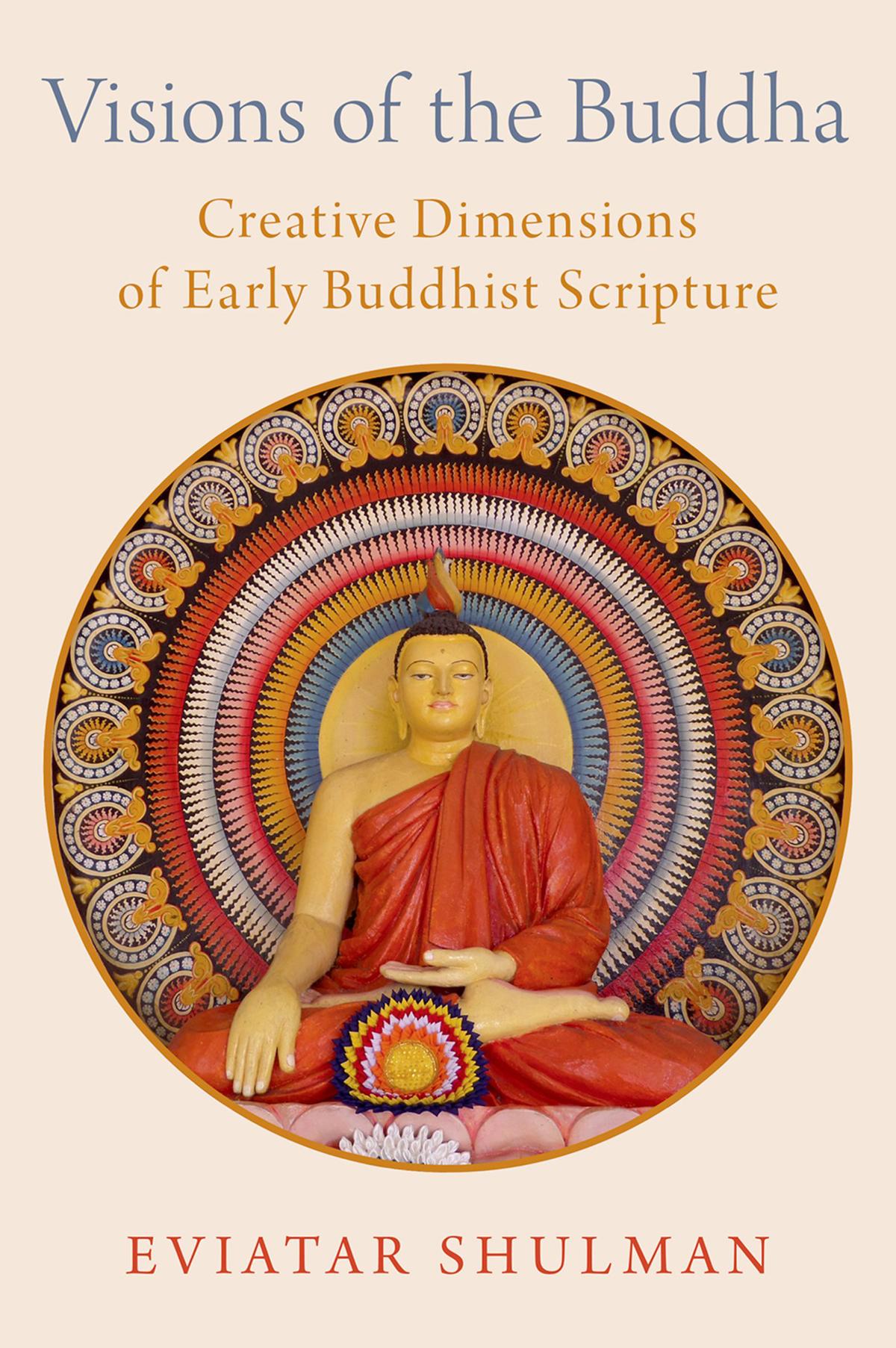
Religious scripture—for us, again, mainly the words represented as the Buddha’s own—conveys the truths of the Buddha’s time, together with the truths of the times that shaped and reworked the texts, yet this or these truths were never one-dimensional, never straightforward and carefully bounded, never static and uniform. Like our own speech, and probably even more so, the Buddha’s words spoke on different levels to different crowds and peoples. As these words were put into narrative context, they further changed according to the consciousness of the time, in tandem with new needs and impulses, fitting and giving voice to the new visions of the people that shaped them—authors, editors, collectors, reciters, and audiences. The Buddhist texts are, in this sense, visions of the Buddha, both searching for him in the abysses of memory or of history, and creating him anew ever again in the evolving realities of tradition. The texts aim to reveal not just what happened in the past, but how the past is perceived during the very act of constituting scripture in the present.
The present work is mainly a detailed analysis of a selection of prominent early Buddhist discourses from the so-called Pāli canon, which aims to shed light on some of these texts’ creative dimensions. Whether and to what degree these works were considered “canonical” is less important for now than the fact that these are distinctive and cherished specimens of foundational Buddhist scripture. Religious Buddhist texts are deeply imaginative and inventive; one of the main goals of this study is to identify some
of the rhetorical and artistic vectors within the corpus of Buddhist scripture, and to draw the contours of the literary and aesthetic faces of the early discourses. Observing some of the literary techniques active in the suttas (the early discourses) will lead us to see the contemplative, visionary element alive in the tradition, as part of the established meditative practice of Buddha-anusmṛti, “mindfulness of the Buddha.” Buddhist texts are meant to move people, to cause them to engage emotionally with the master, to feel his unique presence even in his absence, and to delve ever more deeply into the mystery of his presence. The texts are designed to produce a sense of beauty at his unique being, and to allow devotion to grow in his followers’ hearts. The texts, also, aim to entertain.
There is one particularly fascinating manner in which the creative activity we are identifying is materialized in the suttas. These “discourses” were originally an oral literature, which was composed of generally fixed and carefully patterned prose formulas. There is a vast pool of such formulas that was available to the authors of the discourses, some of which are more narrative in their character, while others concern doctrine. A key idea of this study, which I call the play of formulas, is that formulas, rather than discourses, are the base level of the early literature, so that a legitimate discourse can be composed by playfully combining formulas in whatever way tells a good story; good stories can also bring out the deeper significance of doctrine. This means that formulas are not a mere mnemonic technique, but an aesthetic device as well. There are specific formulas used to depict encounters with particular crowds—such as Brahmins or rival ascetic teachers—and fixed literary trajectories according to which a text may be put together. Although there was always room for more creativity, and new formulas must have been added with time, and although formulas could be combined with each other and reworked in different ways, the basic technique of composing the texts that we find today in the “Basket of Discourses” (Sutta-piṭaka), and especially in the collections of “Longer and Middle-Length Discourses” (Dīgha and Majjhima Nikāya), involved making aesthetically pleasing combinations of the legitimate building blocks of formulas.
There was much inspiration at work while the Buddhist textual corpus was evolving. Authors were trying not only to record, but to express; editors were not just collecting, but shaping and reshaping; transmitters were not merely preserving but emotively playing on their own and their audiences’ sensitivities, offering consolation and entertainment. This work thus aims to retrieve the Buddhist texts from the forceful grasp of overly conservative, even defensive, scholarship. Although the tradition surely had its conservative sides, and these are also important for understanding Buddhist scripture, the almost exclusive focus these aspects of the texts have received from scholars may obscure a crucial element of religious life.
While the heart of the argument I develop concerns the nature of Buddhist texts, it is important to notice the broader point that emerges in the analysis of scripture as an analytical category in the study of religion. This is that scripture is never a dry recording of events or doctrines, but is a creative act, which is reconstituted at every moment in which it is used. Yes, the texts are ostensibly about the Buddha. But the act of returning to the Buddha happens in the here and now, and the Buddha of today is not that of yesterday, not only because the times have changed, but also because the very act of repetition and reconstitution changes both the subjects performing the act and the object they are turning toward. Scripture is the act of shaping memory into the present, and this act is inspired and innovative, while being at the same time a faithful representation of traditional patterns of thought. The act of scripture is filled with longing and care (even if not only that), so that the Buddha—in the present case; the same could be said about other foundational figures and events—is, at times, almost an excuse for the working of inspiration. This is a pragmatic understanding of scripture as revelation.
We often think of the earthly motivations behind religion, and indeed these are not always inspiring. And certainly, ritual, the body, and the material constitute important aspects in the cultural role played by these foundational texts. But when we look at scripture, we must also see how carefully crafted it is, how much inspiration is ensconced within the words of the texts, how much longing the words carry. We know very well that so much of the genius of art in
the history of humanity has worked in the service of religious expression; it is only natural to find much of the same creative capacity alive in the texts, at first oral and later written, so that this creativity must have been part of what put the texts together to begin with. This means that the texts carry some of the central impulses in the founding of the tradition, which may reveal some of the ways the religion came together, but at the same time they do this through much inventive inspiration and even playful engagement. Experiencing and reporting the events of the time, and of the later times that left their imprints on the texts while they were taking shape, happened through a creativity that is a vital element in the nature of scripture. As scholars, our job in deciphering the tradition and facing its mysteries is thus not only to see how texts took shape as artifacts, but also to understand the subjective attitudes and processes that shaped the texts; this will probably tell us more about the tradition than a study that focuses on texts as things.
In the kaleidoscopic reality of change the Buddhists call paṭiccasamuppāda—dependent origination, in which each and every fact or idea is a product of a vast web of conditioning, which will never be exhausted1—scripture mixes fact and fantasy, and is packed with the different voices and dimensions it gives expression to, while these continue to change and evolve within themselves. The texts have some historical memory in them; they are also literature—good, inspiring, and edifying stories, well told by expert storytellers; they relate a philosophy, or a set of philosophies, but at the same time are meant to arouse and to generate aesthetic and emotional experiences. These emotions play on different psychological registers, reminding people of what to them was or is home or love, or of what home and love can never be. These emotions can also be devotional, and they can work just as much to create a sense of community and of social order, telling us who and what we are and what we believe. The stories can also be plain fun, quality entertainment, which also reinforces ethical boundaries and teaches society its moral structures. The texts express all this and more—the depths of ideology and cultural understanding, as well as the weaving together of personal and public identities.
The early Buddhist discourses, and with them scripture in general, is thereby kaleidoscopic in the manner in which different domains are reflected in each other. Yet much like the kaleidoscope, these domains continue to change and evolve, drawing in new materials and creating new meaning, not only through the passage of time, but by their dense constitution, which can never be exhausted by study. When the Buddha meets a rival teacher, for example, there is so much that is happening on so many of these levels, that the kaleidoscope is continuing to revolve and reflect.
And the texts were created with some of these understanding at least semi-conscious in the minds of their authors. The Buddhist visions that were alive as the texts were composed were legitimate patterns of perception that told the truth, even though this was not what we define as historical truth, or if they traveled a great distance as they were codified and continued to evolve afterward. This is not a mistake on the part of authors who were just, as it were, not sharp enough to analytically distinguish between fact and fantasy. The mistake, rather, is ours, who cannot contemplate enough dimensions, who must flatten things down to yes-or-no, black-orwhite, true-or-false, so that we fail to see how much our own consciousness is creative as we speak, think, and act. Yes, we know that perspective colors objects. Yet we think that the objects are just out there waiting to be taken in, and that our minds are adding hues to what is already established of itself. We see flat and twodimensional, when the world is round, multidimensional, and dynamic. As discovered in the psychology of perception, the senses reach out to objects just as much as they are receptive organs, so that perception is innovative by definition;2 and certainly so in the life of religion.
Perhaps these statements seem extreme—scripture becomes fixed, written words; its patterns of thought have been cultivated over centuries within the life of tradition; its meanings not only derive from personal and historical contexts but continue to echo over vast expanses of time; the creativity they generate is bounded. Surely these observations are true. But they do not change the fact that the meaning of scripture becomes alive again and again through its use, that the echoes are truly powerful, that the tradition relives itself
through the individual, who constitutes his or her very identity while becoming an agent of the tradition; and that the live event of today can never be the same as that of yesterday. Perhaps, when we are studying the Buddhist case, which has little claims to transcendence, and for which truth is immanent and potentially accessible, it may be easier to see the full power of creativity that the texts generate and give life to, and by which they were constituted to begin with. This is thus a reflection on the creative potency of text as a basic human phenomenon.3
In the attempt to delineate the creative sides of early Buddhist scripture that I offer in this monograph, I often argue, as I have done in these opening words, that the texts are literature rather than history, folklore no less than philosophy, visionary contemplation rather than dry documentation. This kind of argument is meant to shed light on the mostly underappreciated, inventive sides of Buddhist scripture. At times, we pay a price for such dichotomies, since this way of thinking seems to prefer one side of a continuum, while arguing against the necessity of the other. However, the deeper point is that history and narrative are modes of each other to begin with, that philosophy and folklore are points on the same spectrum, that contemplation also documents, while documentation is also inspired. Again, the creative reality of scripture works at the intersection of these tensions, which is, perhaps, what makes it so potent to begin with—being moved, in such a humane way, by competing, and complementary, vectors.
1 In the opening of the Mahānidāna-sutta (DN 15, II 55 7–9), Ānanda suggests that he penetrates the concept of paṭiccasamuppāda and sees it clearly; Buddha rebukes him and suggests this is impossible
2 A classic study here is Gibson (1979), in which he elaborates on his ecological theory of perception; more recent approaches include the enactivist stance, as developed by Thompson (2015).
3 For intriguing ideas on revitalizing the study of scripture within the study of religion, see Blackburn (2012).
Acknowledgments
This work has matured over a number of years, and there are many people and institutions to whom I am grateful for making it happen. Interestingly, while Jerusalem is obviously the center of the world, it is somehow on the margins of academic travel routes, so that this book emerged very much through conference presentations and lectures. The project began—if one can really define such a beginning—when I was invited by Natalie Gummer and the late Luis Gomez to participate in a conference on “The Language of the Sūtras” at the Maṅgalam Institute in Berkeley in the summer of 2015. Inspired by their call, I first gave voice to the intuitions about text I had been cultivating. In the same spring I gave two talks in Germany, which helped me refine my ideas. The first was at the CERES Center at Bochum University, one of the best places I have found to discuss religion, and particularly so with my hosts Carmen Meinert and Volkhard Krech. The second was at the Indology Institute at Leipzig, which was followed by enriching discussions with Eli Franco. Later, I spoke about the key ideas expressed in Chapter 3 in a conference on Buddhaghosa organized by Maria Heim at Amherst in the fall of 2016, and then in a panel on “Buddhist ways of reading” in the conference of the International Association of Buddhist Studies, organized, again, by Natalie Gummer and Maria Heim, and yet again at Bochum in a conference on “Self-reflective traditions.” The responses I received on all these occasions were very important for me as well. Materials from Chapter 4 were presented in a February 2019 conference of the “Belief Narratives Network” in Guwahati, Assam. There I learned much about the real life of religion at its intersection with folklore, and was greatly enriched by the feedback of participants, and especially that of Ülo Valk. A more mature presentation of my ideas was given in Jerusalem in December of the same year in the conference on “The Idea of Text in Buddhism,”
generously funded by the Khyentse Foundation, where I had the opportunity to share my ideas with some of the great luminaries of Buddhist studies and to feel that my ideas—and especially the more radical theory of the play of formulas—received good resonance. There, the responses from Paul Harrison and Mark Allon were of special value to me. Mark also read and commented on significant parts of the manuscript, as did Petra Kieffer-pülz, to whom I offer my sincere thanks. Charles Hallisey was present in many of these events, and has taught me more about Buddhism, and about text, than anyone else. He has been a wonderful inspiration and support all along, and has had a profound effect on my academic path.
When all this began, I was in my second year as a Mandel postdoctoral fellow at the Mandel Scholion Research Center at the Hebrew University, which was for me a rich and valuable intellectual home and which gave me wonderful space in which to mature. I entered the Center with a project on “The Nature of a Buddha,” which quickly proved to be a question about what the texts that describe the Buddha actually are. I am extremely grateful to the Center and the people behind it, and particularly to its director during my tenure, Prof. Daniel Schwartz, for offering such a consistently supportive environment, and for the trust in my scholarship.
Most of this book was written, however, as a new faculty member at the Hebrew University of Jerusalem, which offered me an intellectual environment I could only dream of. I am thankful first and foremost to my students, who put up with my somewhat erratic chiseling of the notion of textuality expressed in this study, and especially to the ones who participated in the graduate seminar on “Text and Its Sacrality in Buddhism” in the fall of 2017. Among my students who helped me think through many of these ideas in an especially significant way are Aviran Ben-David, Odeya Eshel, Gadi Eimerl, who provided invaluable help in comparison with Chinese materials, and Mathias Jalfim-Marashkin, who also assisted with bibliographical work. Among my colleagues, I benefited much from discussions with Uri Gabbay, Eitan Grossman, Naphtali Meshel, Yonatan Moss, and Dani Schrire. Many more are responsible for the warm academic, and emotional, welcome at the University, which allowed me to find my ground so easily. Among the ones I wish to
mention and thank are my colleagues in the Departments of Comparative Religion and Asian Studies, and especially those in the Indian and Indonesian Studies Program, Ronit Ricci and Yigal Bronner, as well as Brouria Bitton-Ashkelony, David Satran, Orna Naphtali, Gideon Shelach-Lavi, Yuri Pines, and Nissim Otmazgin and Rotem Geva. Discussions with Roy Tzohar of Tel-Aviv University over the years have also been illuminating.
The research conducted in this study was financed in large part by a grant from the Israel Science Foundation, to whom I am also indebted. Thanks also to Gilly Nadel, who meticulously went through the work before submission and helped me organize my ideas. Further words of thanks are due to the two anonymous readers at Oxford University Press, whose comments proved to be extremely valuable.
Obviously, it is my family who not only bore much of the burden, but who also provided me with so much inspiration. My parents, Eileen and David Shulman, are always there, and lovingly so, while my father is there academically as well. My in-laws, Silvana and Dov Winer, are also responsible for so much of my well-being. Even closer are my fabulous children, Nahar, Inbal, Laila, Be’er, and Geshem, who teach me so much about life and about myself, so that one can write a book even among all this dense turmoil; each one of you is a sparkling light that has guided my way and given me insight. Beyond all these wondrous hearts stands, amazingly, Yara, my true partner, my guide, my love and best friend—I dedicate this book to you—by your very being, you have taught me more about creativity than anything, or anyone, else.
PART I
THE LITERARY APPROACH TO THE EARLY DISCOURSES
1 Introduction
Rereading the Udumbarika-sutta
What are the “discourses”—suttas, sūtras—that present themselves as the historical teachings of the Buddha? Are these texts simply efforts to preserve the Buddha’s teachings, or are they literary creations driven by other concerns? The first option receives much support among scholars of Buddhism and Buddhist practitioners from both East and West, as well as in popular perception. The second perspective, which would allow a more nuanced understanding of the religious motivations, literary proclivities, aesthetic inspirations, and perhaps even the philosophical intuitions and dynamics of meditative practice that moved the early Buddhist tradition, receives little attention. This study therefore addresses the nature of early Buddhist textuality and aims to refine our understanding of what the early texts are about. While these scriptures certainly demonstrate care for the Buddha’s philosophy and teachings and are inspired by his instructions for life, his guidelines for practice, and his ideas, the way they engage with them is far richer and more complex than a mere attempt to record and transmit his words and thought.1
The main goal of this study is thus to expand and enrich the concept of “text” that scholars employ in the study of Buddhism, specifically in relation to the early discourses attributed to the Buddha. Scholarship is still dominated by a relatively flat idea of text, which takes Buddhist scripture as conveying mainly informational content. The central project of the texts is conceived as an effort to preserve the Buddha’s teachings, a project that began orally, so that the technical features of the literature—most importantly the reliance
on formulas—is understood only as a technology for recording the Buddha’s words and ideas. Even though scholars have developed sophisticated understandings of how the texts developed over time, thereby allowing “the Word of the Buddha” (Buddha-vacana) a remarkable degree of elasticity,2 the project is nevertheless understood as a conservative, traditional effort to safeguard the Buddha’s teachings.3
This leaves our understanding of the nature of early Buddhist textuality surprisingly close to the one held in traditional circles, according to which the texts were set for recitation in the first council after the death of the Buddha, then to be kept and transmitted by professional reciters. Although scholars doubt the account of the first council and realize that the texts changed over time, the lack of any other conceptual option regarding the composition of the discourses causes scholarly perception to gravitate back toward the traditional vision. Today—although this view has by no means taken over scholarly perception—more and more authors see the texts as records of the Buddha’s concrete teaching events.4 A key argument of the current study is that the articulation of the full text of “discourses” is too highly valued in the appraisal of the literature and too easily assumed to be the basic category of “text” in early Buddhism. Rather, it is formulas that are the primary level of textual utterance, so that discourses are end products of different dynamics of formula-combination.5 There is a rich web of creative practices through which formulas can be combined, which eventually leads to the shaping of full discourses—so long as one uses the right formulas, any “discourse” is legitimate and can be taken as Buddhavacana, often with complete disregard for historical semblance. Texts are composed according to techniques we will call the play of formulas in a manner that is sensitive at least as much to beauty, narrative form, and compelling rhetoric than to any historical or philosophical content they may happen to contain.
Of course, one of the driving impulses behind the Pāli Nikāyas (as well as their counterparts in other Buddhist languages, such as Chinese, Gāndhārī, Sanskrit, and Tibetan6) was to preserve early Buddhist teachings, whether these were the Buddha’s real words or
idealized versions of them. Accordingly, much critical scholarship has accepted the texts mainly as consisting of doctrinal information, and has focused on asking whether this information is reliably attributed to the Buddha.7 Yet, as important as this question is, it only scratches the surface of the texts and avoids penetrating the inner, creative realities of these Buddhist scriptures. As in almost any religious tradition that relies on scripture, whether oral or written,8 the early discourses are not mere philosophical or doctrinal texts but also literary creations, spurred by diverse motivations, and they are meant not only to transmit the Buddha’s doctrine, but also to generate rich, diverse patterns of Buddhist emotion and aesthetic perception—to shape and channel Buddhist imagination. Their main vector is a forward-moving, creative one, which nominally harks back to the Buddha not in order to preserve, but rather to establish a Buddhist cosmos with the Buddha as its axial pole.9
Modern scholarship, dominated by philological, historical, and philosophical paradigms, places us in a position where we can examine and appreciate the nature of the early Buddhist texts. Yet it relies on assumptions that are rarely discussed and analyzed— especially the one that text, or discourse, is a straightforward category. In what follows, I unpack and critically assess some of the main ideas behind such scholarship, in order to question what we actually mean by discourse in early Buddhism. I do not intend to supplant the “old” paradigm, however, but rather to broaden and complement it and to offer new tools and perspectives within it. The main part of the present study is thus constructive, enabling a new understanding of the texts to emerge, one that will be sensitive to underappreciated dimensions of their historical project. In a sense, I offer a new map of the well-known ground of sutta, in order to facilitate further expeditions.
To do this, I introduce four interrelated perspectives, moving from the simpler to the more sophisticated and specialized. Each of these approaches could easily take up a book in its own right, so this work should in no way be seen as the last word on the matter, and much terrain will remain unexplored. The discussion here is also necessarily selective in the texts analyzed, with the Dīgha Nikāya (DN, the Buddha’s “Long Discourses”) and Majjhima Nikāya (MN,
“Middle-Length Discourses”) receiving the bulk of attention. There will thus be room to refine these approaches in applying them to other textual collections.10
The first and most encompassing perspective is a treatment of early Buddhist discourses as literature. We will observe the narrative styling and aesthetic dimensions of the discourses and begin to examine some of the motivations underlying their composition, including the emotional realities they aim to generate. We will see that the texts do much more than offer concrete presentations of Buddhist philosophy, and that there is a subtle interplay between ideas and their expression. Questions regarding the relation between editing and authorship will come to the fore, and we will notice that while narrative can be a vehicle to transmit philosophy, often philosophy is an excuse for allowing narrative to have its say This level of our discussion, developed in this chapter and the next, will frame a general appreciation of the literary project of the Nikāyas.
This understanding of the early discourses raises questions about the literary imagination that is active in the discourses and the contexts for which it was intended, setting the stage for the analysis of a second dimension of Buddhist textuality—the contemplation of the Buddha. The texts are, more often than not, meditations upon the figure of the Buddha and a creative reflection upon his nature. We will see that Buddhist textuality is often best interpreted as a contemplative act of Buddha-anusmṛti (anussati), the traditional practice of “mindfulness of the Buddha.” The Buddha is the key to the Buddhist world; in Buddhist texts he appears no less divine than human, no less cosmic than embodied. These texts not only establish the Buddhist world order, but depict what is most meaningful within it—the image of the Buddha. The unique nature of the Buddha is thus an integral part of the philosophy presented by the authors of the discourses, a theme that is the focus of Chapter 3.
Complementing the contemplative focus of Chapter 3, Chapter 4 addresses the texts’ folkloric aspect and examines their life in more public settings. “Folklore” is a loose and dynamic term, which often does not command enough respect in academia, perhaps because of a commitment to the primacy of the written word; some intellectuals still prefer not to let “popular culture” into their spotlight.
However, the texts clearly emerged from a broader cultural context than strict monkish education and are also meant to entertain. Often, this level of entertainment is subtle, but here we will examine some of the more salient cases that will demonstrate that texts can have strong performative dimensions. Although I do not argue that the texts are records of live performances, an idea that has been heavily contested in Buddhist studies (see later discussion), I will offer support for the view that the texts were meant to do much more than be repeated verbatim by expert transmitters. While the relation between text and performance seems to have been complicated, texts can be seen as versions, in the strong sense that each discourse we find today is one possible articulation of the themes that the text is interested in. These may include the outline of a story, specific characters, related ideas and doctrines, etc., which can be further developed according the focus of each particular narration.
The idea of texts as versions relates not only to their possible performative dimension, but also to their literary aspect and to their very nature as written, and earlier oral, documents. Texts pretend to be historical reports, but are actually creative statements within a vast web of possibilities. The idea of texts as versions combats the common philological approach that assumes that “parallel” texts, i.e., different versions of a text preserved in distinct canons and languages, can be compared to each other in order to identify more reliable, authentic, or “earlier” versions, and then to mark processes of change or development. While this procedure may produce revealing results in certain cases, other examples suggest that a text is a potential more than a finalized reality, a course of articulation more than a finite set of ideas that are set in a clearly defined sequence. This means that there most commonly is no “Ur-text,” as discussed insightfully by Jonathan Silk (2015).11 The changes a text supposedly underwent are, actually, an integral part of its nature.
Understanding texts as versions brings us to the last dimension of the texts we will discuss, which involves a re-evaluation of early Buddhist oral culture. Oral formulas, I suggest, are primary to full texts, so that these are the most significant “texts” of early Buddhism. Full discourses offer rich narrative materials that relate important values of early Buddhism, but they should not be
prioritized over the formulas from which they are made. As end products of a dynamic that engages with formulas, full discourses offer valuable communications that teach us much about the life of the texts in the early tradition, but these are each only one possible version, a conceivable articulation, a later encrusting of a much more vibrant dynamic, in which authors—we can perhaps call them “textual practitioners”—created novel texts through new combinations of authorized formulas, at times making additions or subtractions. This I define as the early Buddhist “play of formulas,” which can be seen as an important element in the composition of the early suttas. Formulas are much more than a technology for preserving ideas in a culture that did not yet discover writing. Rather, they are fundamental, authorized textual elements with which one can compose legitimate discourses. Formulas also have powerful aesthetic and expressive sides, which make them attractive for different narrative settings. Composing a sutta is thus similar to building a castle with bricks or Legos; hence, the play of formulas.12 True, in building a castle with Legos, one has a broader picture in mind than the pieces themselves. But based on the analysis of the diverse creative vectors of the early tradition conducted in the previous chapters, at this stage we will be able to see that the castle of a discourse is not only built top-down as a materialization of a particular vision, but also bottom-up through a mix of playful dynamics. Notice that the idea of play employed here is not meant to allude to frivolity or lightheadedness; play can be quite serious. At this level of analysis, we will observe some of the ways in which formulas combine in the texts according to set patterns and methods and appreciate their aesthetic role. At first, mainly in Chapter 5, the focus will be more on narrative materials, but in Chapter 6 we will examine philosophy, including that most cherished idea of the Buddha’s liberation.13 Here we will observe the telling of the Buddha’s enlightenment according to the logic of the play of formulas.
Thus, when a monk was sutavā or bahussuta—“well-taught” or “learned,” according to the dictionaries and translations14—he or she was actually, quite literally, “one who has heard” or “heard much.”
This means—I suggest—that he or she knew many formulas by heart, and probably worked with them in meaningful ways.
Tradition tells us that at the first council—the first joint recitation of Buddhist texts following the Buddha’s death15—the discourses were set for recitation and, from then on, were transmitted faithfully by professional reciters called bhāṇakas until they were set to writing.16 According to the reading I offer here, these people did much more than recite; they also preached and probably created new texts from combining the formulas they knew by heart.17 This means that in accepting the idea of bhāṇakas as transmitting full “texts,” i.e., complete discourses, which evolved only later, the scholarly community has come too close to accepting the traditional account. This approach also ignores much of the beauty of the texts.
Once again, my point is not that the Buddha’s teachings are not part of the literature; rather, it is that if we are to appreciate these teachings and to understand how the early Buddhists understood them, we must expand our notion of what the texts we are reading actually are. The four perspectives we will use to broaden our reading—the literary, contemplative, folkloric, and oral—are all densely intertwined within the texts, but each will receive separate attention based on representative texts. As an introduction to these four levels of analysis, this chapter offers a close reading of the Udumbarika-sutta of the DN, first on its own in the Pāli, then as compared with other extant versions. This will give us a more reliable and comprehensive appreciation of what a discourse is trying to achieve and will allow us to question more boldly what it is that we are reading. It will also provide theoretical justification for my reliance on the Pāli materials alone. While comparison to other traditions can be rewarding, in the effort to conceptualize the nature of the early texts it can easily lead us astray; when each text is a viable version, the voice of each tradition can and should be analyzed on its own, and each tradition serves as an example of the creativity involved in the production of the texts.