CHRISTOPHER S. BROWNING, PERTTI JOENNIEMI, AND BRENT J. STEELE
Oxford University Press is a department of the University of Oxford. It furthers the University’s objective of excellence in research, scholarship, and education by publishing worldwide. Oxford is a registered trade mark of Oxford University Press in the UK and certain other countries.
Published in the United States of America by Oxford University Press 198 Madison Avenue, New York, NY 10016, United States of America.
All rights reserved. No part of this publication may be reproduced, stored in a retrieval system, or transmitted, in any form or by any means, without the prior permission in writing of Oxford University Press, or as expressly permitted by law, by license, or under terms agreed with the appropriate reproduction rights organization. Inquiries concerning reproduction outside the scope of the above should be sent to the Rights Department, Oxford University Press, at the address above.
You must not circulate this work in any other form and you must impose this same condition on any acquirer.
Library of Congress Cataloging-in-Publication Data
Names: Browning, Christopher S., 1974– author. | Joenniemi, Pertti, author. | Steele, Brent J., author. Title: Vicarious identity in international relations : self, security, and status on the global stage / Christopher S. Browning, Pertti Joenniemi, Brent J. Steele.
Description: New York, NY : Oxford University Press, 2021. | Includes bibliographical references and index. Identifiers: LCCN 2020037926 (print) | LCCN 2020037927 (ebook) | ISBN 9780197526385 (hardback) | ISBN 9780197526392 (updf) | ISBN 9780197526408 (epub) | ISBN 9780197526415 (oso)
Subjects: LCSH: Alliances. | National interest. | United States— Foreign relations—Israel. | Israel—Foreign relations—United States. | United States—Foreign relations—Great Britain. | Great Britain— Foreign relations—United States. | United States—Foreign relations—Denmark. | Denmark—Foreign relations—United States. Classification: LCC JZ1314 .B76 2021 (print) | LCC JZ1314 (ebook) | DDC 327.101—dc23
LC record available at https://lccn.loc.gov/2020037926
LC ebook record available at https://lccn.loc.gov/2020037927
DOI: 10.1093/oso/9780197526385.001.0001
1 3 5 7 9 8 6 4 2
Printed by Integrated Books International, United States of America
1.
2.
3.
4. Vicarious Identification as Foreign Policy Strategy:
5. Aspiring for Vicarious
1.1.
2.1.
3.1. Raid on Entebbe (movie), 1977
4.1. A Family Affair— the Obamas Meet the Windsors
5.1. Prime Minister Anders Fogh Rasmussen Meets President George W. Bush at the Bush Ranch in Crawford, Texas, March 2008
List of Tables
1.1. Definitions 17
2.1. Three models of state-based vicarious identification in international relations 79
3.1. Republicans’ Sympathies with the Israelis Consistently Outpace those of Other Party Groups 116
3.2. Does the US relationship with Israel do more to strengthen US national security or weaken national security? 118
3.3. Should the US send troops to defend Israel in case it is “attacked by its neighbors”? 118
Acknowledgments
This book project has developed over a number of years and is due in no small part to the input and support we’ve received from a host of colleagues and friends. We want to especially thank Angela Chnapko for taking interest in this project and procuring two helpful reviews of the manuscript. We thank her and the reviewers for making this a stronger book. We also thank all of the Oxford University Press team for their tireless work in getting the manuscript ready for production.
Earlier versions of this project were presented in 2014 and 2016 at the University of Warwick. We benefited greatly from feedback we received by our Warwick colleagues such as James Brassett, Alexandra Homolar, and Charlotte Heath-Kelly and the PhD community of ontological security scholars, not least Ilke Dagli. We especially want to thank Joe Haigh for his incredibly helpful insights on this topic, and his own research on vicarious militarism and Jakub Eberle for his thoughtful comments and research perceptively linking Lacanian approaches with ontological security.
Drafts of the case study chapters were presented at the 2017 “Politics of Identity” workshop at the University of Utah, which was made possible by the Francis D. Wormuth Presidential Chair. We thank Aaron Coombs, Porter Morgan, and Daniel Patterson for their vibrant and beneficial critical comments on our chapters. We presented a paper that would become our methods sections of this book at the 2017 annual meeting of the Western Political Science Association in Vancouver. We thank Richard Aidoo for his detailed and incredibly useful feedback as our discussant at that conference.
Thanks to Zach Stickney and Charles Turner who did exceptional work as research assistants in getting the manuscript prepared for delivery.
We would also like to thank the growing community of ontological security scholars with whom we have discussed various of the ideas in this book in many different settings. You know who you are, but in particular we would mention Catarina Kinnvall and Jennifer Mitzen, who over the years have done so much to build this community in such a productive, supportive and open direction.
Chris Browning wishes to thank Tess, whose support knows no bounds, and Abigail through whom he lives more and more every day. He would also like to thank his parents, Ann and Andy, the latter who sadly passed away during the writing of this book.
Pertti Joenniemi wishes to express his gratitude to Sirpa for her generous support allowing the contribution to this book.
Brent Steele wishes to thank Mindy, Annabelle, Joe and Chase for their support over the years and their tolerance of his time away from home, including travel to Britain, to work on this book.
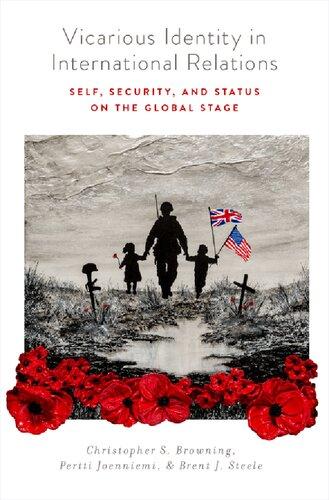
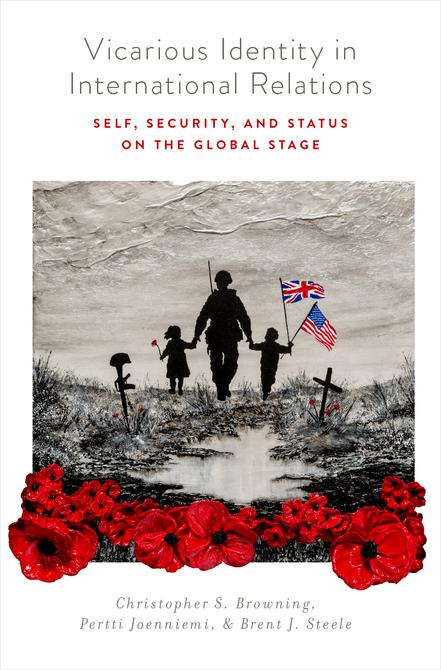
Finally, we would like to thank the artist, Jacqueline Hurley, whose work ‘Patriot’ adorns the cover of this book and which so wonderfully captures the generational, militarized and inter-state nature of vicarious identity in much contemporary international relations.
Introduction
This book focuses on the largely unexplored politics of vicarious identity in international relations (IR). Vicarious identity refers to the processes by which actors (individuals, groups, and states) gain a sense of self-identity, purpose, and self-esteem through riding on (and appropriating) the achievements and experiences of others. Although the concept of vicarious identity has been studied in social psychology (e.g., Goldstein and Cialdini 2007; Cochrane 2014; Norrick 2013), and a cottage industry has emerged applying social psychological concepts to IR, we know of no book-length study that has applied vicarious identity to IR. Vicarious identification is relatively common and normal for individuals, it is often—though not always (see Dolezal 2017)—accepted by salient audiences, and when reached for can function as a core foundation for individual and group identities. Practices of vicarious identification and vicarious identity narratives are commonplace and often viewed as both authentic and legitimate. Most commonly we see this in relationships between parents and their children, when parents draw a sense of pride and self-esteem through the achievements of their offspring. Such relationships become vicarious at the point at which parents begin to internalize some of the credit for the achievement—they did this because of my help, my coaching, my genes—but also bathe in the reflected glory the achievement brings—people know this is my child. Practices of vicarious identification are readily apparent between fans and their sports teams, where a team’s performance can bring joy or despair, where ardent fans brand themselves with their teams’ symbols through clothing and even tattoos. Conversely, fans who “jump” teams are considered “bandwagoners,” “glory hunters,” and inauthentic.
Further still, consumerist culture drives people to cultivate notions of selfidentity explicitly through cultivating (and consuming) corporate brands and branded products (Banet-Weiser 2012: 4). Consumers seek to append to themselves—and in doing so demonstrate to others—particular images and idealized notions of self-identity by wearing certain branded products, using particular types of technology (Mac vs. PC) (Livingstone 2011), consuming certain foods in certain places, or driving specific cars.
Moreover, such practices at the individual level are at least implicitly recognized in the ontological security literature in IR. This is evident in how collective actors (like states, nations, and religious movements) are often seen as a source of ontological security for individuals who essentially gain a sense of order, status, purpose, and identity by living through the achievements of the broader community (Krolikowski 2008; Marlow 2002; Kinnvall 2004). And yet, vicarious identity at the collective level of state action, while arguably less common, has been largely ignored or unrecognized. Aside from rectifying the current lack of engagement with vicarious identification in IR, the book argues that drawing attention to the phenomenon is of urgent notice in a context where IR is faced with considerable challenges. These are most notably connected to tensions between evidently competing pressures of increasing interdependence and globalization and the populist backlash they generate. In turn, the dynamics of vicarious identity profoundly impact contemporary identity politics and, more specifically, provide challenges for communities seeking to establish identities that are felt to be both firm and stable.
The book has several purposes. First, it provides an overview of how vicarious identity is treated and utilized in social psychology while noting that social psychology has a tendency to treat identities in overly static terms. To rectify this, vicarious identity is re-theorized by embedding it within a Jacques Lacan–inspired (Lancanian) psychoanalytical account of the nature of subjectivity and further situated within broader literatures on ontological security, status, and friendship in IR. Second, the book demonstrates how at the national level vicarious identity is central to the politics of citizenship, doing so by drawing on examples exploring the politics of race, nationalism, and militarism. Third, the book makes its core intervention by exploring vicarious identity at the level of collectives through a series of case analyses centered on the United States, Denmark, Israel, and the United Kingdom as varying participants and targets of practices of vicarious identification. Fourth, in doing so, it delineates the endogenous and exogenous resources and influences that shape vicarious identity in IR. Finally, it proposes how the politics of vicarious identity plays out via a variety of contexts and indicates how vicarious identification—while underpinning ontological security, status, and friendship—may also be manipulated by particular actors.
Plan of the Book
Chapter 1 reviews the theoretical underpinnings of vicarious identity. In that chapter, using examples from the case of Rachel Dolezal, we begin with how vicarious identity has been treated in social psychology and psychoanalytical approaches at the level of individuals, leaving the task of exploring vicarious identity in IR and at the collective level of state action to Chapter 2. The chapter focuses on explaining why subjects sometimes become tempted by vicarious identification, the mechanisms through which vicarious identification may be enacted and identified in practice, and it also considers how vicarious identification is inevitably normatively circumscribed. In other words, why is vicarious identification accepted in some contexts yet resisted in others? This highlights the inherently social, intersubjective, but also political (and occasionally politicized) nature of the phenomenon.
Chapter 2 seeks to “scale” vicarious identity to IR through theoretical and methodological deliberations. Direct discussions of vicarious identity in IR are limited, a surprising omission since the phenomenon provides a fundamental underpinning to various treatments of collective identity within the discipline and thus has remained hidden in plain sight. We demonstrate the possibility of vicarious identity in IR theoretically through a rereading of debates on ontological security, status, and recognition, which have become increasingly prevalent in IR, and show how vicarious identification processes actually provide central underpinnings for how states might (re)gain a sense of self-certainty and self-esteem in everyday life. In this respect, we pay particular attention to the question: In which contexts is an emphasis on vicarious identity likely to emerge? In answering, we suggest that at the state level reliance on vicarious identity and vicarious identification practices typically emerge in situations where established conceptions of self-identity appear to be in trouble due to internal struggles and contestations or external critique. To this extent, we consider whether at the international level vicarious identity is less normal and more exceptional than among individuals, which in turn raises questions addressed in the case analyses as to the extent to which it can be viewed as a risky strategy entailing potential vulnerabilities.
Chapter 3 investigates the United States’ vicarious identification with Israel. We advance the argument that Israel has, since the 1967 Six-Day War (juxtaposed with US failures in Vietnam) and especially in the 1990s and
2000s, served as a positive identity proxy for the United States, although with some caveats. Two features of Israeli military might have proven attractive for the United States’ vicarious identification with it: its pre-emptive actions and its resounding military “successes.” Using generational analysis, we surmise that the increased connections made to Israel in the 1990s and 2000s by the United States are a result of the US Baby Boomer generation’s admiration of Israel as heroic, right, and assertive. This image served as a formative experience for that generation at the same time the United States was at its military, moral, and cultural nadir in Vietnam and during the broader tumult of the 1960s and 1970s. This generational take may also (along with features of late modernity more broadly) explain the increased tensions between the two countries during the Obama administration (2009–2017), and the recent reinforced references by the Trump administration to Israel as a once again positive identity model.
Chapter 4 reinterprets the United Kingdom’s “special relationship” with the United States through the lens of vicarious identification. Its opening point of focus is the speech of British Prime Minister Theresa May to the Republican Party conference in Philadelphia on January 26, 2017, in which she sought to counter fears about an impending future “eclipse of the West” by proposing its rejuvenation through a “renewed special relationship” between Britain and the United States. The chapter argues that the confidence in May’s proclamation masks—and directly sought to respond to—the deep levels of anxiety that the vote on Brexit and the ascendancy of President Trump have raised in the United Kingdom in terms of how to position Britain in world politics. These anxieties have existential dimensions to them, raising fundamental questions about British identity and British values. Proclamations of a “renewed special relationship” therefore exist as an attempt to answer these questions by binding Britain to America in an intensely vicarious relationship, and one that the chapter argues has a long heritage extending back before Winston Churchill’s initial coining of the “special relationship” in 1944. Indeed, the chapter argues that it is precisely this historical legacy that makes proclamations of a renewed special relationship both possible and emotionally appealing. However, while it is argued that such a strategy of vicarious identification is not in and of itself a new phenomenon, in many aspects May’s emphasis in favor of a much more “Anglospheric” West appears at odds with that propounded by Trump via his assault on international institutions, norms, and the Western defensive alliance of NATO. The chapter, therefore,
not only explores the temptations of vicarious identification as a form of foreign policy strategy but also some of its vulnerabilities.
Chapter 5 explores Denmark as an ontological security seeker that has applied a vicarious approach in order to regain ontological security in a rather distinctive manner. Instead of aiming at restoring normalcy, a durable and ontologically safe standpoint has been sought by contesting and questioning extant certitudes. It thus examines the internal contests and the rather drastic changes that have taken place in Denmark’s foreign policy since the end of the Cold War. Central to this has been how previous anti-militarism and skepticism toward great power politics has been replaced by an emphasis on active military engagement and preparedness to participate in war, with Denmark now seen as a guardian of a norm-based international order. Rather than continuing the tradition of “laying low,” the aim has become one of “making a difference” in IR. It is now claimed that during the Cold War, Denmark betrayed its own ideals and its allies by appearing as a “reluctant ally” and a “footnote country.” In consequence, it is argued that ontological security can only be restored through actively contributing—if need be through military engagement—to upholding and defending a value-based international order. Since the end of the Cold War, Denmark has therefore participated in a considerable number of wars and has done so mainly by bonding vicariously with the United States. The chapter ends, however, by noting how more recent changes in the US approach to IR have ultimately meant that the previous emphasis on vicarious identification has in turn become a source of renewed anxiety, with vicarious identification with the United States declining as a result.
The book concludes by reviewing our findings and then assessing what insights a focus on vicarious identity might provide in a context of significant change and uncertainty in IR. Vicarious identity, we argue, is connected to tensions between interdependence and globalization and the populist backlash they generate. In turn, vicarious identity continues to impact contemporary identity politics and, more specifically, provides challenges for communities seeking to establish identities that are felt to be both firm and stable. The book therefore concludes by considering whether vicarious identification offers a viable and durable solution to this situation, essentially posing the question of whether instances of vicarious identification as a foreign policy strategy are likely to increase or decline in the contemporary environment.
1 Vicarious Identity
An Overview
As long as I can remember, I saw myself as black.
Rachel Dolezal, quoted in McGreal 2015
Rachel has wanted to be somebody she’s not. She’s chosen not to be herself, but to represent herself as an African American woman or a bi-racial person and that’s simply not true.
Ruthanne Dolezal, Rachel Dolezal’s biological mother, quoted in Elgot 2015
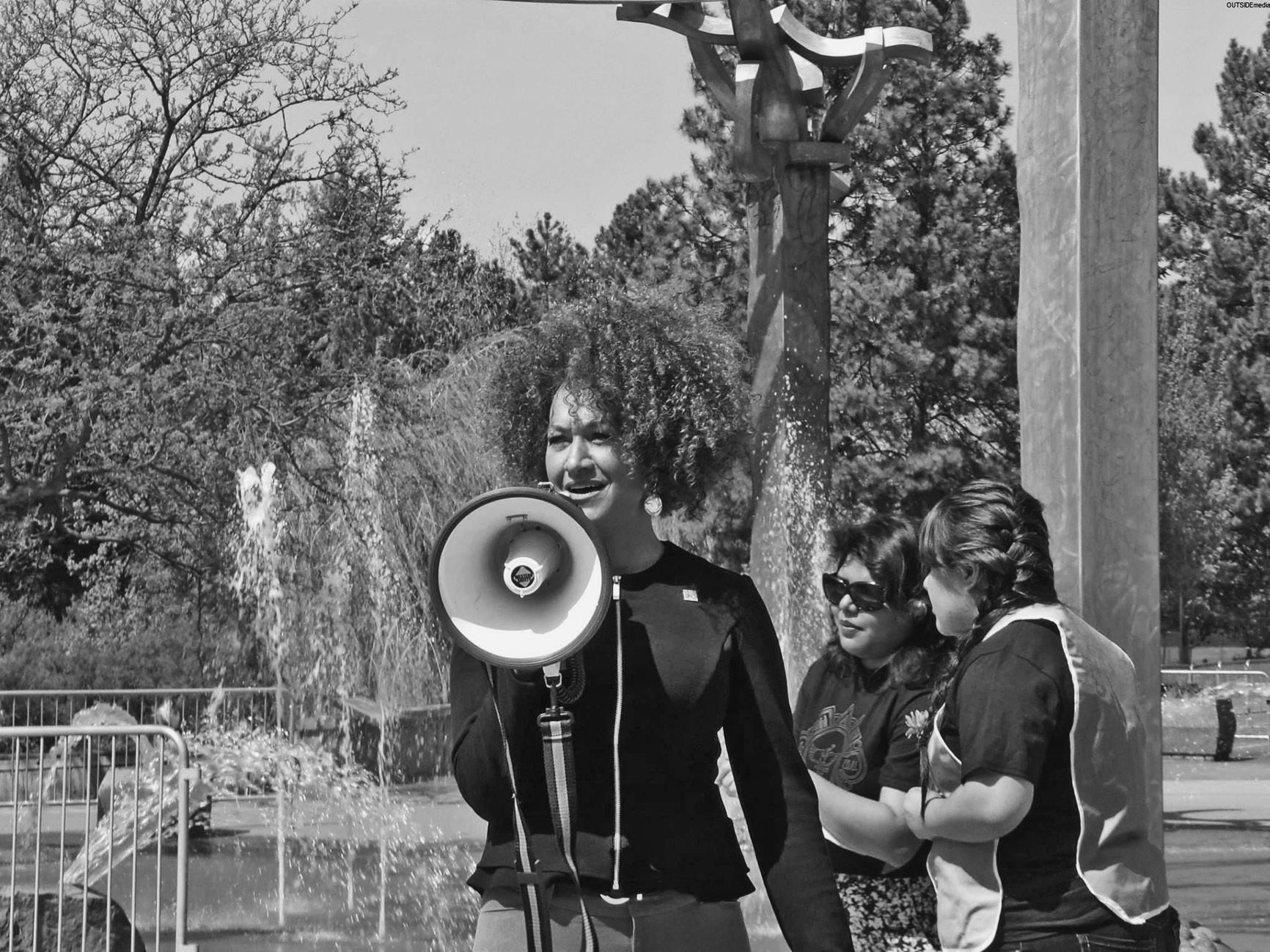
In 2015, Rachel Dolezal, an American civil rights activist living in Spokane, Washington, made national headlines in the United States, and globally, after her biological parents “outed” her as racially White, despite her claims to a Black identity. Her case polarized opinion. On the one side were those who felt that her proclaimed social identity was her own business. In a world in which identity is widely understood to be socially constructed, and where citizens and consumers are encouraged to embrace the “entrepreneurial subject” within, why shouldn’t she construct an identity with which she feels comfortable and reflects her “true self” (Dolezal 2017: 91), Why shouldn’t she be whom she wants to be, and why should anyone else care? But care they did, and such supportive voices were largely drowned out in a media frenzy of criticism in which Dolezal was pilloried. Dolezal got people animated, and often angry. There is a laundry list of things she was accused of: deception, being a “race faker” and a fraud (Dolezal 2017: 245; Young 2015; McGreal 2015), cultural appropriation, racism, “blackface” (playing Black to secure financial benefits), being a “white traitor,” and, not least, being “mentally unstable” and suffering from a psychological condition (McGreal 2015; Mohney 2015). The consequences for Dolezal personally were significant. Amid death
threats, she also lost friends, lost her job lecturing African studies at Eastern Washington University, and lost her position as president of the National Association for the Advancement of Colored People (NAACP) in Spokane (Dolezal 2017; McGreal 2015).
There are several issues to note regarding Dolezal’s situation. First, insofar as her claims to a Black identity were challenged, they show how her selfidentity narrative was viewed as inherently vicarious. She was, some argued, seeking to appropriate and live through the lives and experiences of others as a means of trying to improve her self-esteem (Mohney 2015). Second, her claims were viewed as inauthentic and illegitimate. As one psychiatrist asserted, it is one thing for her to identify with Black culture, but to shift from there to proclaiming a Black identity “is an issue,” “[she] can’t claim to be black” (Priscilla Dass-Brailsford, quoted in Mohney 2015). The accusation, therefore, was essentially that she had no right to do this.
Yet, as we noted in the Introduction, not all cases of vicarious identity are considered illegitimate. Third, then, this suggests that in Dolezal’s case, she was seen to have transgressed some normative limits. Her vicarious self-identity narrative became viewed as being both unacceptable and even offensive—with this obviously inscribed in the racial politics of America (and elsewhere) as we will discuss later. Fourth, the strength of reaction generated by the outing of Rachel Dolezal also shows how the vicarious identity claims of one subject can be experienced as destabilizing and threatening to others when key understandings of their own self-narratives are challenged.
The task of the current chapter is to attend to the first purpose stated in the Introduction, specifically to explore the theoretical underpinnings of vicarious identity. Here we focus on practices of “living through the other” by looking at how vicarious identity has been treated in social psychology and psychoanalytical approaches at the level of individuals, leaving the task of exploring vicarious identity in international relations (IR) and at the collective level of state action to Chapter 2. The chapter draws on both social psychological and psychoanalytical theories. In doing so, the chapter highlights that while these approaches have complementary elements, for example in terms of addressing what vicarious identities are and do and accounting for how they can generate ontological security, they also entail some notable differences. For example, while social psychological theories presume identities to be relatively fixed and stable, psychoanalytical theories view identities as always in the making and never fully closed or final. Thus, while identities may exhibit some stability over time, which contributes to
a sense of ontological security, psychoanalytical approaches anticipate that the inherent instability that underpins all identities will ultimately resurface sooner or later. In the chapter we argue that this enables psychoanalytical approaches to push our understanding of practices of vicarious identification further than an account relying solely on social psychological approaches.
The current chapter explores and answers five theoretical and methodological questions. First, what is vicarious identity/identification? We analyze how vicarious identity has been conceptualized in social psychology, drawing a distinction between it and related concepts. The second question considers why is vicarious identification tempting for subjects? In answering this we show how vicarious identity can operate as one mechanism (among others) by which subjects are able to secure a sense of ontological security, stability, and self-esteem. This paves the way for the third question, how is ontological security generated through vicarious identity? Here we embed vicarious identity within a (primarily Lacanian) psychoanalytical account of the nature of subjectivity (further developed in Chapter 2). The fourth section considers what are the legitimate limits of practices of vicarious identification? which we address by exploring issues of telling rights, normative
Figure 1.1 Rachel Dolezal
limits, and some of the inherent vulnerabilities of vicarious narratives of selfidentity. Finally, the last section of the chapter addresses questions related to methodological issues asking, how can vicarious identification be identified at the individual level?, and what are the strategies subjects use when vicariously identifying with others?
As an overview, we utilize in what remains of this chapter the examples foregrounded earlier in the chapter and in the Introduction, with an enhanced focus on the Dolezal case, in order to help better illustrate the nature of the processes under discussion throughout this book. Our goal here is to establish how commonplace vicarious identity is, what benefits it provides, and what vulnerabilities, as well as political tensions, it enables and reinforces. Subsequent chapters will explore these dynamics at the level of international politics.
Before we proceed further, a brief disclosure about the focus on Rachel Dolezal in this chapter, including her story and experiences regarding race as a set of illustrations regarding vicarious identity. In examining her story, we are not making any judgments about it, her, or the reactions her story has generated over the years. What interests us is what the controversy tells us about the (normative) politics of vicarious identity. In this cautious stance, we recognize that we could be read as sympathetic to what Dolezal experienced, at least insofar as we highlight the constituted (and therefore somewhat arbitrary) nature of such norms. In that respect, while we focus to some degree on the practices and routines she draws upon to make the claim, much of the analysis is also about audience reception—these moments and experiences are thus not just about Rachel Dolezal, but also about how society treats claims of vicarious identity. This is important, here, at the level of individuals and the belonging to/of communities, but it also proves important for our analysis in Chapters 3 through 5 on how such dynamics work in international politics.
From Vicarious Experience to Vicarious Identity
The first question, then, is what is vicarious identity/identification? A good way into the concept is to start by unpacking vicarious identity’s core elements and distinguishing them from a number of related concepts in order to grant them sufficient analytical specificity. Etymologically, the adjective “vicarious” derives from the Latin vicarius, meaning “substituted, delegated,”
and from vicis, meaning “a change, exchange, interchange, succession, alternation, substitution” (Online Etymological Dictionary). Vicarious relationships are therefore those in which one thing is taken to stand in or substitute for another. There is, in a sense, something “second hand” about them. For example, vicarious is also related to the word “vicar,” meaning “one who holds authority as the delegate or substitute of another” (Chambers Twentieth Century Dictionary 1977: 1510). In church contexts, the vicar is one through whom someone else (e.g., the pope for Catholics) speaks vicariously (Collins Concise Dictionary 1995: 1501). Here, a vicarious identity is one that can be delegated, substituted, or understood as interchangeable with the identity of another.
Since many relationships can have vicarious elements to them—as evident, for example, in how we can talk about vicarious authority, vicarious suffering, vicarious pleasure, vicarious punishment, etc.—to crystallize our understanding further, it is useful to distinguish vicarious identity from the broader concept of “vicarious experience.” It is worth focusing on vicarious experience because it helps illustrate the fact that vicarious relationships are not unusual. Indeed, they are commonplace with vicarious experiences actually central to the constitution of subjects and their engagement with reality in general. Vicarious experience and vicarious identity, however, are not the same thing.
“Vicarious experience” can be defined as people telling “stories about other people engaged in actions that the tellers did not witness” (Norrick 2013: 385), where such narratives are a central component of social interaction. Narratives and storytelling are central to the constitution of identity and social action, and narratives come to shape—and are in turn reproduced through—everyday practices and routines. As Horsdal (2012) indicates, however, our narratives and stories of everyday life are often inherently vicarious. Vicariousness is impregnated in the very way we experience and relate to social reality through listening to and telling stories. For instance, even fictional stories are designed to evoke feelings and induce/tempt us toward identifying with the life-worlds of the characters portrayed, to experience their joys, happiness, pains, and anxiety, even though we obviously have no direct experience of them:
Stories can lift us above the perspective of here and now and make a cultural transmission possible, and bring about identification with experiences from other places in other times. . . . Narratives give us the opportunity to
learn through vicarious experience. We may sit safely in an armchair and experience dangerous and life-threatening incidents through stories, we may be affected emotionally and scared by identification with the narrative, but we do not get physically hurt. So we safely acquire a large narrative repertoire of lived experience, way beyond what we could possibly assemble in our individual lives. (Horsdal 2012: 26–27)
Moreover, one consequence of the inherently relational nature of selfidentities is that our own personal stories inevitably contain elements of other people’s, with this making vicarious experience central to the human condition. It is, in short, impossible to narrate the self without drawing on others’ lived experiences (Neumann and Nexon 2006: 7). Indeed, Nair suggests that a capacity for vicarious experience and a capacity to narrate vicarious experiences to others is biologically programmed into us, providing “human beings with a remarkable evolutionary advantage” (Horsdal 2012: 27).
However, while vicarious experience may be a prerequisite for vicarious identity, it is not synonymous with it. As Norrick (2013: 404) argues, much narration of vicarious experience passes for little more than gossip, but it may also be used to make a point, share news, or entertain (also Cochrane 2014: 174). What distinguishes vicarious identity from vicarious experience is that the former relates to actually “living through” others’ experiences, as opposed to just drawing on and identifying with their experiences in the navigation of social life. Vicarious identity can therefore be identified in those moments when people actually appropriate others’ stories as their own, as if they happened to them, integrating them as part of their own biography. Whereas stories of vicarious experience are rendered in the third person, using the pronouns she, he, they, them, and theirs, stories of vicarious identity are narrated in the first person, using the pronouns I, me, we, us, and ours. In cases of vicarious identity, therefore, events that the self did not experience directly are presented precisely as if they were.
Instances of this are not hard to find. They are evident in the “we won the cup” chants of sports fans, the callers into postgame radio shows talking about how “we” did out there on the field, and so on. From a literal perspective, of course, it was not the fans who won the cup, but the players on the field, selected because of a combination of innate skills, hard training, perseverance, and often a certain amount of luck. Yet fans nevertheless elide the difference between themselves and the players. The players’ exploits are internalized and reconfigured not as individuals but as representatives of a
community of belonging of which the fans are fundamental members. The players’ achievements and glory are collectivized such that fans also experience the sensation of winning and the enhanced sense of status and esteem that provides. Notably, such esteem also generates competition against fans of other teams in the everyday places where the groups may come into contact with one another. Once sports go international, they also provide one important avenue through which fans vicariously identify with their nation, where matches become reconfigured as between “our boys/girls” and “their boys/girls,” matches between “us” and “them.”
Rachel Dolezal provides another example of this use of first-person pronouns. In an article she wrote for The Inlander, a community newspaper covering Spokane and the greater inland Northwest, which was reflecting on the experiences of Black women in the context of the #BlackLivesMatter campaign, she made multiple references to this being “our lives,” “our sisters,” “our sons,” “our legacy.” For example, the article opens with this sentence: “From the moment black women arrived on the shores of North America, our foremothers fought in strong and strategic ways to realize emancipation and equity for themselves and the African American community as a whole” (Dolezal 2015; emphasis added). Elsewhere she refers to “our cultural memory” and “what happened to our hair here in America” (hair, as noted later, features prominently in Dolezal’s vicarious identification with the Black community) (quoted in Elgot 2015). It is this invocation of first-person pronouns that shifts Dolezal’s narrative from one of vicarious experience—where she might have spoken in terms of learning lessons from the experiences of a community of people she identifies with—into a narrative of vicarious identity, characterized by subsuming herself into and as a constitutive member of that community and its experiences, and, as such, someone with rights who is empowered to speak in its name.
At stake, therefore, is that vicarious identity narratives entail an expansion or in some cases a re-anchoring of the concept of selfhood. Vicarious identity is therefore not only distinctive from vicarious experience but also needs to be distinguished from “identifying with” or “admiration for” others, which at times might be expressed through the concept of “friendship” (Berenskoetter 2007, 2010; Smith 2011).1 While each of these concepts may potentially support a process of vicarious identification—and may even be viewed as necessary conditions for it—they also all ultimately fall short of it. As Goldstein and Cialdini (2007: 403) argue, vicarious identity entails more than identifying with, friendship, or admiring other’s actions and aspiring to be like