Under the Banner of Islam
Turks, Kurds, and the Limits of Religious Unity
G Ü LAY T Ü RKMEN
3
Oxford University Press is a department of the University of Oxford. It furthers the University’s objective of excellence in research, scholarship, and education by publishing worldwide. Oxford is a registered trade mark of Oxford University Press in the UK and certain other countries.
Published in the United States of America by Oxford University Press 198 Madison Avenue, New York, NY 10016, United States of America.
© Oxford University Press 2021
All rights reserved. No part of this publication may be reproduced, stored in a retrieval system, or transmitted, in any form or by any means, without the prior permission in writing of Oxford University Press, or as expressly permitted by law, by license, or under terms agreed with the appropriate reproduction rights organization. Inquiries concerning reproduction outside the scope of the above should be sent to the Rights Department, Oxford University Press, at the address above.
You must not circulate this work in any other form and you must impose this same condition on any acquirer.
Library of Congress Cataloging-in-Publication Data
Names: Türkmen, Gülay, author.
Title: Under the banner of Islam : Turks, Kurds, and the limits of religious unity / Gülay Türkmen.
Description: New York : Oxford University Press, 2021. | Includes bibliographical references and index.
Identifiers: LCCN 2020039695 (print) | LCCN 2020039696 (ebook) | ISBN 9780197511817 (hardback) | ISBN 9780197511831 (epub)
Subjects: LCSH: Kurds—Turkey—Politics and government—21st century. | Islam and politics—Turkey—21st century. | Turkey—Politics and government—21st century. | Turkey—Ethnic relations—21st century.
Classification: LCC DR4 3 5.K8 7 T8725 2021 (print) | LCC DR4 3 5.K8 7 (ebook) | DDC 956.104/1—dc23
LC record available at https://lccn.loc.gov/2020039695
LC ebook record available at https://lccn.loc.gov/2020039696
DOI: 10.1093/oso/9780197511817.001.0001
1 3 5 7 9 8 6 4 2
Printed by Integrated Books International, United States of America
To my parents, Femriye and Ali
1. “Green Kemalism”: The Evolving Role of Islam in
3.
4. “Only Turks Can Lead a Muslim Union”: The Case for Ethno-Religious
‘the Kurd’s Qur’an’ to ‘the Turk’s Flag’
Acknowledgments
This book would not have been possible if it were not for the help and generosity of so many people I am privileged to have in my life. At the University of Virginia, where the seeds of this book were sown, I extend my thanks to Jeffrey Olick, Krishan Kumar, and Allison Pugh, for their support and encouragement. Yale University was where I started the research for the book and completed considerable portions of it. At Yale, my deepest thanks and gratitude go to Philip Gorski. It is to his mentorship and his oeuvre that I owe the fruition of the ideas that make up this book. I cannot thank Julia Adams enough. She has always been there whenever I needed crucial advice and feedback. I am deeply thankful to Jonathan Wyrtzen for his intellectual input and academic guidance. I benefitted immensely from conversations with Sigrun Kahl, Ron Eyerman, Jeffrey Alexander, Emily Erikson, and Frank Griffel. Thanks go to everyone that I had the chance to read, think, and discuss together at the Yale Center for Comparative Research, the Yale Center for Cultural Sociology, the Yale MacMillan Center Initiative on Religion and Politics, and the Yale MacMillan Center Council on Middle East Studies.
Conversations with Elisabeth Becker, Shai Dromi, Samuel Stabler, Luke Wagner, Jeffrey Guhin, Ateş Altınordu, Xiaohong Xu, Sadia Saeed, Dolunay Uğur, Sam Nelson, Alison Gerber, Joe Klett, Kristin Plys, Jin Su Joo, and Roger Baumann helped improve this book in many ways. Special thanks go to Mustafa Yavaş for providing me with the academic resources I would have otherwise not been able to obtain. I got lucky when Mehmet Kurt came to Yale; he has not only been a valuable friend and colleague since then but he also introduced me to “the gatekeepers” in Diyarbakır.
I would like to extend my sincerest thanks to everyone in Diyarbakır and Batman who facilitated my research. All of my interviewees deserve heartfelt thanks for putting their trust in me. I can only hope that I have done justice to their stories and ideas. I am grateful to Ahmet Şık for putting me in touch with his contacts in Diyarbakır and Batman. Reha Ruhavioğlu also deserves thanks for introducing me to several key interviewees in Diyarbakır. I completed the book during my time at the University of Goettingen. I am indebted to Matthias Koenig for his ongoing support and encouragement.
The Institute of Sociology and Forum for Interdisciplinary Religious Studies provided me with the necessary institutional and intellectual environment to complete the book. Defne Över, Madeleine Elfenbein, Yektan Türkyılmaz, Kirsten Wesselhoeft, Sinem Adar, and Jennifer Silva all offered critical feedback on different parts of the book at different stages. Carmen Cvetkovic, Eunike Piwoni, Marie-Pier Joly, and Lisa Harms have kept me grounded with their friendship and advice.
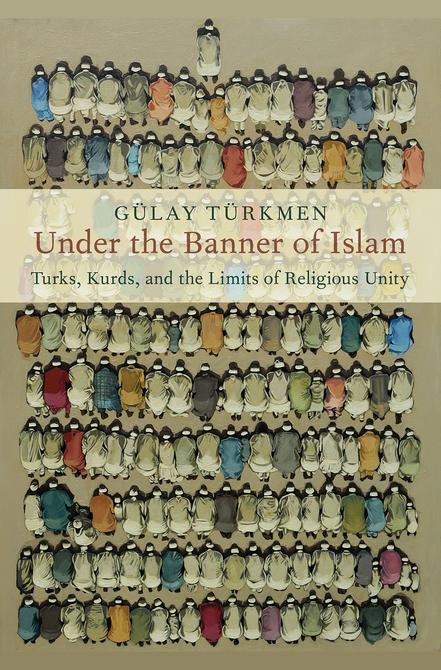
At Oxford University Press, it is thanks to Cynthia Read’s belief in the project and her meticulous editorial guidance that the book has come to life. Thoughtful feedback by the two anonymous readers has significantly improved the manuscript. I thank Drew Anderla, Prabhu Chinnasamy, and the editorial team for carefully overseeing the production and marketing process. I am obliged to İhsan Oturmak for generously providing the beautiful cover image.
Funds by the Yale Graduate School of Arts and Sciences and the Yale Macmillan Center made possible the research for the book, while fellowships by the University of Goettingen ensured its completion. Parts of the Introduction (and some quotes from Chapters 2, 3, and 4) were published in the Oxford Research Encyclopedia of Politics and Religion, and in Qualitative Sociology. I presented parts of the book at the annual meetings of the American Sociological Association, the Middle Eastern Studies Association, the Social Science History Association, and the Association for the Study of Ethnicity and Nationalism, as well as at the UCSIA Summer School at the University of Antwerp, and at the workshop “Imagining and Regulating Ethnic and Religious Diversity in Turkey” at the Max Planck Institute for Religious and Ethnic Diversity in Goettingen. I am grateful to all the participants who provided comments at these meetings.
Gülbeyaz and Şensöz Dervişoğlu have offered continuous familial help and affection. It is to Gülbeyaz Anne that I owe the last sprint that made the completion of this book possible. My brother Eray Türkmen ran to my help countless times when I needed uninterrupted writing time. I would also like to thank him for his life-long support and love, and for his sharp sense of humor, which has never failed to keep my spirits up. I am grateful to have the caring sisterhood of Işıl Eğrikavuk, Funda Küçükyılmaz, Ceylan Harman, Pınar Kemerli, and Elif Erol to fall onto whenever I falter.
I would have never been able to write this book without my spouse Rıza Dervişoğlu’s comforting presence by my side. His optimism and his unconditional love were what kept me going throughout the writing process. He is
my anchor in this nomadic life of ours, and I am so extremely lucky to have him in my life. Our son Atlas has not made writing easier with his constant demand for attention. However, it is in his shiny, bright eyes and his invigorating laughter that I have sought refuge whenever I needed to remind myself to “hang in there.” I am looking forward to discovering the tiny little wonders of life with him for years to come.
I owe the biggest thanks to my parents, Femriye and Ali Türkmen, for their unwavering support over the years. They have never ceased to put their trust in me and I am truly grateful for that. I feel so fortunate to have their wisdom, wit, kindness, and generosity illuminate my way. I dedicate this book to them.
Prologue
“Write my words down! Do not keep them to yourself,” he said, with a stern voice. “Write these words down, and tell them, not all of us are ‘terrorists.’ Those TV channels they are watching, they are lying; those newspapers they are reading, they are lying. The truth is so simple, so easy to see for those who want to see it. Look at you! You came all the way from the United States to listen to us, to give us a voice; they are so close but they don’t want to listen to us, they don’t want to see us, they turn their heads away. That is why you should write these down. Let them know, make them read; all we want is equality, all we want is to be able to speak in our own language freely. I will talk with you only if you promise me that you’ll write these down.”
Sitting across me on the floor is a Kurdish imam seyda1 or mele, 2 as the locals call them—in his late seventies. His religious attire is complete with a white beard and a green takke. “All right, I promise, I’ll write them down,” I say, with a quiet voice.
He looks straight in my eyes. I can tell by his looks that he is still very tense; he doesn’t trust me yet, at least not fully. Before going on any further, he reiterates: “Write these down. Do not let these words fly away. Write them down.”
At that very moment, with those very words, he seals the fate of this book. From that moment on, I knew that, whatever happens, sooner or later, I had to write and finish this manuscript. If not for myself, I had to do it for the sake of that old seyda and for the fulfillment of the promise I made to him. In one way or another, I had to convey his words to whom they really belong, namely, you, the reader. His words have kept me company since; they have saved me from falling into total despair when I have lost all faith in my ability to complete this task. Hereby, I trust you with his words and those of numerous others who have been generous enough to spare some time to talk
1 Seyda is a title given to those who have obtained the highest level in the madrasa education system. They not only conduct prayers but also give lectures in a madrasa (Islamic education schools, which have been banned in Turkey since 1924).
2 The word mele is used as a local title for those clerics who lead a prayer.
with me—a complete stranger—to discuss with me what is for them a quite sensitive topic, to share with me their ideas and emotions, and more than anything, to put their trust in me.
I am just a messenger, though; my mission ends here. It is now up to you to decide what to do with these words. I hope they will serve you well.
Introduction Ethnicity and “Muslim fraternity”
And hold firmly to the rope of Allah all together and do not become divided. And remember the favor of Allah upon you—when you were enemies and He brought your hearts together and you became, by His favor, brothers.
Qur’an 3:103
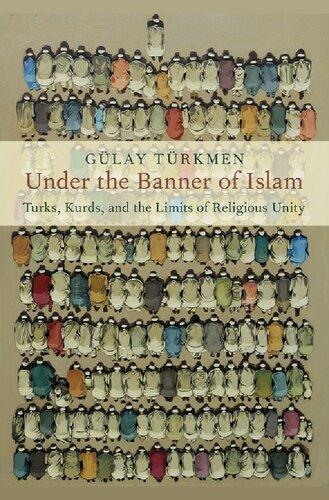
On a hot, dry morning in June 2012, during the very early days of my research in Diyarbakır, a Kurdish-majority city in southeastern Anatolia, Hamdi Abi1 a municipal police officer who was later to become my right hand man calls me and asks in a hurry: “You still want to go to the Civil Friday Prayer?” “Yes, of course,” I say, “that’s what I’m here for.” “OK, then I’ll come pick you up from the hotel. We need to rush; the prayer is going to start in 10 minutes.” Luckily, my hotel room faces the Dağkapı Square where the prayer will take place. While waiting for Hamdi Abi I watch the Square from my window and see groups of men arriving. As the time for prayer approaches, the crowd gets bigger. There is no mosque in sight, though. That’s the whole point of this prayer. In contrast to regular Friday prayers, which are held in mosques all over Turkey, Civil Friday Prayers (Sivil Cuma Namazları) take place in the street. Refusing to be led by state-appointed imams who give the Friday sermons (khutba) in Turkish, these men prefer to pray behind local Kurdish imams (meles) who give their sermons in Kurdish.
Hamdi Abi arrives shortly. Together we walk to the Square. To my astonishment, there are only a few men left there! “Where did the others go?” I ask. Hamdi Abi laughs: “It’s unbearably hot today (about 40ºC/100ºF); no one would be able to pray under direct sunlight, so they’ve decided to pray downstairs.” Downstairs? A spacious area right below the Square, home to several stores that
1 All given names have been changed to protect the identity of the respondents. Abi is a form of address, meaning “elder brother” in Turkish; it’s used as a sign of respect.
Under the Banner of Islam. Gülay Türkmen, Oxford University Press (2021). © Oxford University Press. DOI: 10.1093/oso/9780197511817.003.0001.
are all closed for prayer. I slowly start to descend the stairs, but hesitate to go down any further as the prayer is already in progress and I don’t want to disturb the jamaat (the community). Moreover, as is customary with Friday prayers, it’s a men-only jamaat. There are only a few women and they are praying separately at the top of the stairs. To top it all off, my attire is not suitable for prayer: short sleeves, no headscarf. . . . Seeing my hesitation, Hamdi Abi says: “What are you waiting for? Why don’t you go down? Go, go! Take some pictures while the prayer lasts.” I had told him that I would like to take pictures. “I don’t want to disturb them,” I say. “Well, don’t you see those three cameramen who go around recording the whole thing? If the jamaat is not distracted by those men I’m sure they won’t be distracted by your presence either. Now go; I’ll be waiting here!”
Still hesitant, I obey reluctantly and go downstairs. There are about 500 men, sitting in rows, in prayer style. Staying on the side, I take a couple of pictures, paying attention to not distract too much those who are praying. I enter a side room where the mele is giving the Friday sermon, in Kurdish. I get a couple of curious looks. Meanwhile, the men with cameras don’t show any sign of worry, they go around quite comfortably. One of them stays put and records the mele while the other two walk in between rows and hold the camera straight onto people’s faces. After recording a few minutes of the sermon, I leave the room and go upstairs to ask Hamdi Abi about the cameramen: “Who are they? Why are they recording the prayer?” “They are plain-clothes police officers,” he says. “They record the whole session. They then take the recordings to the police station, transcribe and translate the sermon from Kurdish to Turkish and check the text to make sure that nothing ‘harmful’ is said.” “Harmful? Harmful to whom? How harmful can a sermon be?” I think to myself.
Apparently it can be very harmful, according to the Turkish state. From my later observations in the region and interviews with imams and other religious and political actors I would learn that the state considers these prayers to be of great threat to its authority. And for good reason: initiated as acts of “civil disobedience” (Thoreau 1942 [1849]) in 2011 by pro-Kurdish movement imams and terminated in July 2013, these prayers emerged in the midst of a period when the ruling Justice and Development Party (Adalet ve Kalkınma Partisi/AKP) highlighted Sunni Islam as an overarching supranational identity that would annul ethnic divisions between the predominantly Sunni Muslim Turks and Kurds.2 To that end, the AKP promoted “Muslim
2 Note that about 15% of the Kurdish population in Turkey is deemed to be Alevis—a heterodox branch of Shi‘a Islam. Kurdish Alevis are thought to comprise 15% of the overall Alevi population in
fraternity” as a remedy to the 34-year-long armed conflict between the outlawed Kurdistan Workers’ Party (Partiya Karkerên Kurdistanê/PKK) and the Turkish Armed Forces (Türk Silahlı Kuvvetleri/TSK).
As such, Civil Friday Prayers challenged the government’s authority both politically and religiously: politically, because the Friday sermon was given in Kurdish, which is not allowed;3 religiously, because they were held out in the streets (rather than in state-run mosques) and the meles prepared their own sermons rather than reading the text prepared by the Presidency of Religious Affairs (Diyanet İşleri Başkanlığı/Diyanet from hereon). During the two years they were held, they became quite widespread in most Kurdish-majority cities in eastern and southeastern Anatolia. At their peak, they attracted around 5,000 people in Diyarbakır. Aiming to highlight the ban on Kurdish sermons in particular and the limitations on the Kurdish language in general, they drew attention to the assimilation of Kurds in Turkey. Most importantly, along with other factors, they played an important role in forcing the state to give de facto permission to sermons in Kurdish, if not de jure.
Intrigued by these prayers, in this book I focus on the ambivalent role Sunni Islam has played in Turkey’s Kurdish conflict—both as a conflictresolution tool and as a tool of resistance. Although the Kurdish conflict has historically been characterized by a secular nationalist ideology both on the side of the PKK and on the side of the Turkish state, since the 1980s different governments have at times resorted to religion to subdue Kurdish nationalism. However, none had advocated “Muslim fraternity” as strongly as the AKP governments have. Moreover, never before did the secular PKK, with
Turkey (see Erdal Gezik’s Alevi Kürtler (2014), for a detailed account of Kurdish Alevis). According to Markus Dressler, “Alevism is part of the Islamic tradition, although located on its margins—margins that are marked with indigenous terms such as Sufi and Shi‘a, or with outside qualifiers such as heterodoxy or syncretism. It is further widely taken for granted that Alevism constitutes an intrinsic part of Anatolian and Turkish culture. [ . . . ] The question of where to locate the ethnic and religious origins of Alevism continues to be highly contested” (2013: xii). For another informative study on the Alevis, see Ayfer Karakaya-Stump’s Vefailik, Bektaşilik, Kızılbaşlık: Alevi Kaynaklarını, Tarihini, ve Tarihyazımını Yeniden Düşünmek (2015). Because my research question requires me to hold sectarian identity constant, I have left Kurdish Alevis out of the scope of this book and have interviewed only Sunni Kurds.
3 There is no official ban on Kurdish language in Turkey, but Kurdish has been de facto criminalized since the very early days of the Republic. (The speaking of Kurdish in public was outlawed between 1983 and 1991). The current constitution, penned in 1980, recognizes only Turkish as the country’s official language, and article 42 of the constitution states that no language other than Turkish can be taught as a mother tongue to Turkish citizens in educational institutions. Moreover, since the coup attempt in 2016, scores of Kurdish-language TVs, newspapers, and Kurdish-language courses have been closed down by emergency decrees.
Marxist origins, display as positive a stance toward Islam as it has during the AKP rule. Especially during the peace talks that took place between 2012 and 2015, the role of religion has become so pronounced in the conflict that both Recep Tayyip Erdoğan and Abdullah Öcalan, the imprisoned leader of the PKK, went on to cite the same Qur’anic verses to emphasize “Muslim unity and solidarity.” Yet, in June 2015 the ceasefire was broken, and in January 2016 Erdoğan declared that the “peace process is over for good.” Since then, clashes between the Turkish Armed Forces and the PKK have resumed; more than 3,500 people died, and thousands have been internally displaced.
Against this background, I inquire why “Muslim fraternity” has not resonated well among Sunni Turks and Kurds. Using the Kurdish case as an opportunity to explore the intricate relationship between religion, ethnicity, and nationalism, I scrutinize the role of religion in ethnic conflicts, and ask: How do religious, ethnic, and national identities diverge and converge in religiously homogeneous ethnic conflicts? Is it possible for religion to act as a conflict resolution tool? Why? Why not? More specifically, why is it that, despite the global increase in the importance of religion (Casanova 1994) and despite the changing stances of the Turkish state and the Kurdish movement, the two parties have failed to unite “under the banner of Islam”?
In search for answers to these questions, I take the reader on a journey into the inner circles of religious elites from different backgrounds: non-stateappointed local Kurdish meles, state-appointed Kurdish and Turkish imams, heads of religious nongovernmental organizations (NGOs), members of religious orders (tariqahs), and pious politicians. Relying mainly on participant observation in Friday prayers, systematic analysis of newspapers, and 62 interviews conducted over the course of a year (between June 2012 and June 2013) in three different cities (İstanbul and the majority-Kurdish Diyarbakır and Batman)4 I develop the concept of “religio-ethnic” identity and put forward a fourfold typology capturing the convergence and divergence of religious and ethnic identities, as conceptualized by Kurdish and Turkish religious and political elites: (1) ethno-religious; (2) religio-ethnic; (3) religious; (4) secular.
Because these categories cannot be considered in isolation from the evolution of certain ideas and institutions since the late Ottoman period, the structural changes the political and religious fields have undergone in Turkey since 2002, and the repercussions these changes have had on various
4 Please refer to Appendix for detailed information about the interviews and the methodology.
actors, I claim that different identity categories, along with institutional and political changes, and the ensuing transformation of power and network relations, prevent Islam from acting as a unifying conflict-resolution tool in the Kurdish conflict. Blending interview data with historical institutional analysis and secondary sources, I demonstrate the symbiotic relationship between the changes in Turkey’s religious and political fields and the religious and political elites’ conceptualizations of religious and ethnic identities.
To that end, I employ a theoretical framework that attends to not only micro-level identity-formation processes or macro-level doctrinal debates, but also a meso-level analysis of religious and political actors and how in their hands theological contents might change shape. Drawing on theories of symbolic boundary making (Lamont and Fournier 1992; Lichterman 2008; Lamont and Molnar 2002; Bail 2008; Wimmer 2008, 2009, 2013) and Bourdieusian field theory (Bourdieu 1991, 1993, 1996; Bourdieu and Wacquant 1992), and expanding on the literatures on ethnicity, religion, and conflict, I promote a theoretical intervention regarding the role of religion in conflict resolution, as well as the formation and conceptualization of religious and ethnic identities in conflict zones. The resulting narrative is not only a story of religion, ethnicity, and nationalism in Turkey’s Kurdish conflict, but also a story of how ethnic and religious identities are negotiated in conflict resolution and how symbolic boundaries are drawn in ethnic conflict zones.
“Under the Banner of Islam”?
On June 1, 2011, at an election rally in Diyarbakır, a Kurdish-majority city in southeastern Anatolia, then Prime Minister Recep Tayyip Erdoğan addressed a crowd composed mainly of Kurdish citizens and said: “We are brothers since time immemorial, and we will be so forever. We both descend from Adam and Eve, right? End of discussion! That’s why we are one. Oh my brothers, the jamaat in Diyarbakır’s Great Mosque (Ulu Camii) pray towards the same direction (qiblah5) as those in İstanbul’s Süleymaniye Mosque, in
5 Qiblah is the direction Muslims pray toward during salah (namaz), one of the five pillars of Islam and an obligatory religious duty for every Muslim. It is fixed as the direction of the Kaaba in Mecca.
Edirne’s Selimiye Mosque and in Ankara’s Hacıbayram Mosque. See? Our qiblah is one and the same. Is there any difference here? No, none!”6
Coming from Erdoğan, the leader of the pro-Islamist AKP, this emphasis on “Muslim fraternity” was not surprising. After all, several politicians in Turkey, including the leader of the 1980 military coup, Kenan Evren, and the leader of the islamist Welfare Party (Refah Partisi/RP), Necmettin Erbakan, had underlined Sunni Islam as the tie that binds Kurds and Turks. In line with this thinking, Erdoğan’s AKP embraced a supranational religious approach in dealing with the Kurdish conflict. The AKP cadres envisioned Sunni Islam as an overarching identity that could bridge ethno-nationalist divisions between the predominantly Sunni Muslim Kurds and Turks and hoped that an increasing emphasis on “Muslim fraternity” would help solve the conflict. To that end, in December 2011, the Diyanet declared its intention to hire 1,000 Kurdish meles as state-employed imams, after giving them a six-month intensive course.7 A few months later, at a National Security Council (Milli Güvenlik Kurulu/MGK) meeting in February 2012, the government decided to assign a more active role to the Diyanet in “the fight against terrorism” (Çiçek 2013: 159).
Some commentators were optimistic about the success of this strategy (White 2013; Mitchell 2012). However, numerous others were deeply suspicious (Çakır 2011;8 Gürses 2015; Houston 2001; Sarıgil and Fazlıoğlu 2013; Yavuz and Özcan 2006). After all, despite the well-documented importance of religion among Kurds in Turkey (Atacan 2001; Sakallıoğlu 1998; Çevik 2012; Houston 2001; Jacoby and Tabak 2015; Özoğlu 2007; Sarıgil and Fazlıoğlu 2013; Bruinessen 1984, 1991, 1992, 2000) the leading cadres of the Kurdish movement9 have historically been characterized by secular nationalism.
6 Erdoğan’s election campaign speech in Diyarbakır, June 1, 2011, http://www.akparti.org.tr/site/ haberler/1-haziran-diyarbakır-mitingi-konusmasinin-tam-metni/8230 (retrieved July 20, 2015).
7 Because the peace talks between the government and the Kurdish movement took place in secret, it is not possible to know how active a role these meles were given in the peace process.
8 Ruşen Çakır, “İslam Kardeşliği Kürt Sorununun Çözüm Anahtarı Olabilir mi?” [Can Islamic Fraternity Be the Key to the Solution of the Kurdish Problem?], Vatan, June 2, 2011, http://www. gazetevatan.com/ rusen-çakır- 381112- yazar- yazisi- - islam- kardeşligi- - kürt- sorununu- cozumunanahtari-olabilir-mi-/ (retrieved August 20, 2015).
9 “Kurdish movement” includes the complex set of legal and illegal Kurdish organizations associated with the Kurdish struggle for greater political and cultural rights and political autonomy. It comprises the illegal PKK (Partiya Karkerên Kurdistanê/Kürdistan İşçi Partisi/Kurdistan Workers’ Party) and TAK (Teyrêbazên Azadiya Kurdistan/Kürdistan Özgürlük Şahinleri/Kurdistan Freedom Hawks), a PKK offshoot, and the legal HDP (Halkların Demokratik Partisi/People’s Democratic Party), DBP (Demokratik Bölgeler Partisi/Democratic Regions Party), DTK (Demokratik Toplum Kongresi/Democratic Society Congress), and HDK (Halkların Demokratik Kongresi/People’s Democratic Congress). Note that the PKK is listed as a terrorist organization by the government of Turkey, the United States, the European Union, and NATO.
The PKK was established in 1978 as a secular, Marxist, armed insurgent organization by a small group known, at the time, as Apocular, led by the now-imprisoned Abdullah Öcalan. They undertook their first armed attack against the Turkish Armed Forces in 1984. Blending Kurdish nationalism with orthodox Marxism, they aimed to organize a revolutionary Kurdish uprising and establish an independent Kurdish state that would encompass Kurdish-majority lands located in Turkey, Syria, Iraq, and Iran (Marcus 2007; McDowall 2004; Romano 2006). As such, religion had no role to play in their revolutionary agenda. It was only in the late 1980s, when the PKK started becoming popular among the masses, that religion made its way into the PKK discourse. The PKK adopted a much more conciliatory tone toward Islam in the 1990s when the Kurdish-Islamist Hizbullah (see Kurt 2017 for a detailed ethnographic account of the Kurdish Hizbullah) emerged as a rival organization (Gürbüz 2016) in southeastern Anatolia. In 1995, to counter Hizbullah’s growing impact on religious Kurds, Öcalan “declared the PKK to be the real fighter for Islam understood as a religion of justice against all kinds of oppression” (Özsoy 2010: 148).
Under the AKP rule, with religion regaining importance in the political sphere, Islam started occupying a much more prominent place in the discourse of the Kurdish movement (Gürses 2015; Sarıgil 2018). For example, in March 2013, during the Newroz ceremony in Diyarbakır, in a letter he sent from prison, Öcalan underlined the importance of Muslim identity and reminded the Turkish people, “their thousand-year co-existence with Kurds under the banner of Islam rests on the principles of fraternity and solidarity” (Akşam 2013).10 Successive to Öcalan’s letter, in April 2014, the predecessor of People’s Democratic Party (Halkların Demokratik Partisi/HDP), the now defunct Peace and Democracy Party (Barış ve Demokrasi Partisi/BDP) organized a mass ceremony (mawlid) in Diyarbakır to celebrate the birth of the Prophet Muhammad. A month after this, in May 2014, the Democratic Society Congress (DTK)—a platform that brings together NGOs close to the Kurdish movement—organized the first Democratic Islam Congress in Diyarbakır. It was called for by Öcalan (Dağ 2014),11 who, in a meeting with the BDP lawmakers in October 2013, had suggested that a congress
10 For the full-text in Turkish, see “İşte Öcalan’ın Mektubu,” Akşam, March 22, 2013, http://www. aksam.com.tr/siyaset/iste-öcalanin-mektubu/haber-179573. (retrieved August 20, 2015).
11 Rahman Dağ, “Democratic Islam Congress and the Middle East,” Open Democracy, June 13, 2014, https://www.opendemocracy.net/arab-awakening/rahman-dağ/democratic-islam-congressand-middle-east (retrieved January 11, 2016).
modeled after the Prophet Muhammad’s council (shura) should be convened in Diyarbakır against groups “betraying Islam,” in particular al-Qadea and al-Nusra.12 In a three-page letter he sent to the congress, Öcalan stated that he “find[s] very meaningful the ‘national unity’ of modern Islamic ummah.”13 This first congress was followed by another one held in Hagen, Germany, by the Federation of Kurdistan Islamic Community on May 24–25, 2014. Whether out of pragmatism or out of sincere acceptance, it seemed that Öcalan now considered religion as too important a social force to be ignored.
Meanwhile, after two failed peace initiatives in 2005 and 2009, the state and the PKK had started a third round of peace negotiations in 2013. On February 12, 2013, Erdoğan said that he would “go as far as drinking hemlock poison” if it meant “putting an end to terror” and achieving peace.14 In May 2013, the PKK announced its withdrawal outside Turkish borders (though it has never fully withdrawn). In August 2014, Öcalan claimed that “the 30-year long war is about to come to an end by means of democratic negotiations,”15 and by March 2015 he announced a 10-article draft about disarmament.
As such, it seemed as if the “Muslim fraternity” plan was working successfully, to the extent that Öcalan and Erdoğan had quoted the same hadith16 “no Arab has superiority over an Ajami, 17 and no Ajami has superiority over an Arab”—to foreground Islam’s capacity to carry different ethnicities side by side. This was what led some scholars to conclude that Islam could act as a successful peacemaker and “that Turkish Islamists have more ideological potential to successfully manage ethnic diversity than their secular counterparts” (Somer and Glüpker-Kesebir 2016: 530).
12 “Öcalan calls for Democratic Islam Congress,” Hürriyet Daily News, October 15, 2013. http:// www.hurriyetdailynews.com/öcalan-calls-for-democratic-islam-congress.aspx?pageID=238&nID= 56274&NewsCatID=338 (retrieved January 11, 2016).
13 For the full text, see “Öcalan’dan İslam Kongresi’ne mesaj,” Bianet, May 10, 2014, http://bianet. org/bianet/siyaset/155582-öcalan-dan-islam-kongresi-ne-mesaj (retrieved January 11, 2016).
14 “Terörü bitirmek icin Başbakan zehir bile içer,” Milliyet, February 12, 2013, http://www.milliyet. com.tr/teroru-bitirmek-icin-basbakan-zehir-bile-icer/siyaset/siyasetdetay/12.02.2013/1667676/default.htm (retrieved January 11, 2016).
15 For the full statement, see “Öcalan: 30 yıllık savaş sonuçlanma aşamasında,” in BBC Turkce, August 16, 2014, http://www.bbc.com/turkce/haberler/2014/08/140816_öcalan (retrieved January 12, 2016).
16 Aram Ekin Duran, “Öcalan ile Erdoğan’ı buluşturan Hadis-i Şerif,” T24, February 27, 2013, http://t24.com.tr/haber/öcalan-ile-erdoğani-bulusturan-hadis-i-serif,224691 (retrieved January 11, 2016).
17 In Arabic, Ajami is used to denote primarily “non-Arabs,” but it is also used when referring to the Persians.
It was during these developments, between 2012 and 2013, that I conducted my research in the region, and realized that under the seemingly successful “Muslim fraternity” project lay a shaky ground consisting of a complex web of religious and ethnic identities. In the meantime, the war in Syria, especially the establishment of a de facto autonomous Kurdish federation in northern Syria (known as Rojava), had its repercussions on the peace process in Turkey. On October 6–8, 2014, Kurds in Turkey took to the streets to protest the Turkish government, which they accused of implicitly supporting the Islamic State (ISIS) in the siege of the Syrian-Kurdish city of Kobanî 18 More than 50 people died in the two-day-long clashes that took place not only between the Turkish security forces and the Kurdish movement supporters, but also between the pro-PKK and pro-ISIS/pro-Hizbullah Kurds (Coşkun 2015). As a result, the growing mistrust between the Turkish government and the Kurdish movement turned into a crisis (Güneş and Lowe 2015; Resch 2017). In March 2015, a few days after the HDP leader Selahattin Demirtaş had stated that they “will not let Erdoğan become president” (Cumhuriyet 2015), Erdoğan declared he was against Öcalan’s 10article disarmament draft (Yeğen 2015). Following Erdoğan’s criticism, the AKP government declared that it would take no further steps until the disarmament of the PKK. In the general elections held on June 7, 2015, the HDP got 13% of the votes, becoming the first pro-Kurdish political party to pass the 10% electoral threshold.
In July 2015, following an ISIS bombing in Suruç (a town located on Turkey’s Syrian border in the southeast) that killed 33 young people carrying aid to Kobanî, and the killing of two police officers in Șanlıurfa by the PKK,19 the ceasefire officially came to an end. On January 20, 2016, Erdoğan declared that the peace process was over, once and for all: “We will no longer be in touch with the terrorist organization, nor with ‘its party’ [alluding to the HDP],” he said; “that project is over!”20 From July 20, 2015, to September 19, 2017, 3,132 people, 417 of whom were civilians, died in the clashes.21
18 Kadri Gürsel, “Is Turkey Heading Toward Civil War?” Al-Monitor, September 13, 2015. https:// www.al- monitor.com/ pulse/ originals/ 2015/ 09/ turkey- pkk- clashes- heading- to- turk- kurd- strife. html (retrieved September 29, 2017).
19 The PKK later denied any responsibility in the murder and claimed that it was undertaken without their knowledge, by an organization called the “Apoist Revenge Team.” The nine suspects on trial were all acquitted in 2019. For details, see https://www.birgun.net/haber/cozum-surecinibitiren-cinayet-sis-perdesi-ardinda-262529 (retrieved January 1, 2020).
20 “Erdoğan: Bundan sonraki süreçte ne terör örgütü ne de partisi asla muhatap alınmayacak”, in T24, January 20, 2016, http://t24.com.tr/haber/erdoğan-bundan-sonraki-surecte-ne-teror-orgutune-de-partisi-asla-muhatap-alinmayacak-o-is-bitti,324930 (retrieved January 22, 2016).
21 Numbers taken from http://www.crisisgroup.be/interactives/turkey/ on September 29, 2017.