Accidental
https://ebookmass.com/product/accidental-plus-one-julia-london/
ebookmass.com
TribologyontheSmallScale
AModernTextbookonFriction,Lubrication,andWear
SecondEdition
C.MathewMate and RobertW.Carpick
GreatClarendonStreet,Oxford,OX26DP, UnitedKingdom
OxfordUniversityPressisadepartmentoftheUniversityofOxford. ItfurtherstheUniversity’sobjectiveofexcellenceinresearch,scholarship, andeducationbypublishingworldwide.Oxfordisaregisteredtrademarkof OxfordUniversityPressintheUKandincertainothercountries
©OxfordUniversityPress2019
Themoralrightsoftheauthorshavebeenasserted
FirstEditionpublishedin2008
SecondEditionpublishedin2019
Impression:1
Allrightsreserved.Nopartofthispublicationmaybereproduced,storedin aretrievalsystem,ortransmitted,inanyformorbyanymeans,withoutthe priorpermissioninwritingofOxfordUniversityPress,orasexpresslypermitted bylaw,bylicenceorundertermsagreedwiththeappropriatereprographics rightsorganization.Enquiriesconcerningreproductionoutsidethescopeofthe aboveshouldbesenttotheRightsDepartment,OxfordUniversityPress,atthe addressabove
Youmustnotcirculatethisworkinanyotherform andyoumustimposethissameconditiononanyacquirer
PublishedintheUnitedStatesofAmericabyOxfordUniversityPress 198MadisonAvenue,NewYork,NY10016,UnitedStatesofAmerica
BritishLibraryCataloguinginPublicationData Dataavailable
LibraryofCongressControlNumber:2019941494
ISBN978–0–19–960980–2
DOI:10.1093/oso/9780199609802.001.0001
PrintedinGreatBritainby Bell&BainLtd.,Glasgow
LinkstothirdpartywebsitesareprovidedbyOxfordingoodfaithand forinformationonly.Oxforddisclaimsanyresponsibilityforthematerials containedinanythirdpartywebsitereferencedinthiswork.
Frontcoverimage: Moleculardynamicssimulationofanasperitycoveredwithanoxidelayermakingcontact withaflatmetalsurfacewherethecontactareaconsistsofonlyafewatom-to-atomcontacts.Inthisimage, oxygenatomsarerepresentedbybluespheres,oxidizedplatinumatomsbywhitespheres,andmetallicplatinum atomsbygreyspheres.ImagecourtesyofProf.AshlieMartiniandRimeiChenattheUniversityofCalifornia, Merced.
Preface
Theimportanceoffriction,lubrication,adhesion,andwearintechnologyandeveryday lifeiswellknown;theyareencounteredwhenevertwosurfacescomeintocontact,suchas whenyouwalkacrossaroom,pushapencilacrossapieceofpaper,orstrokeyourfavorite pet.Whilemanyexcellentbookshavebeenwrittenontribology,mosthavefocusedon analyzingthemacroscopicaspects,withonlyslightattentionpaidtotherichinterplay betweentheatomsandmoleculesatthecontactingsurfaces,asthesehavehistorically beenpoorlyunderstood.Inrecentdecades,however,manytalentedphysicists,chemists, engineers,andmaterialsscientistshavebeguntodecipherthenanoscaleoriginsof tribologicalphenomena.Giventhetremendousprogressandexcitementgeneratedby thisendeavor,nowseemstheopportunetimeforamoremodernapproachontribology emphasizinghowmacroscopictribologicalphenomenaoriginateattheatomicand molecularlevel.
Thegoalofthisbookistoincorporateabottomupapproachtofriction,lubrication, andwearintoamoderntextbookontribology.Thisisdonebyfocusingonhowthese tribologicalphenomenaoccuronthe smallscale—theatomictothemicrometerscale. Wehopetodemonstratethatfocusingonthemicroscopicoriginsleadstoamore scientificallyrigorousunderstandingoftribologythantypicallyachievedbytribology booksthattakeamacroscopicempiricalapproach.Itisalsohopedthatthereader becomesenthusedwiththesameexcitementasthoseworkinginthefieldhavefor unravelingthemysteriesoffriction,lubrication,andwear,aswellasanappreciation forthemanychallengesthatremain.
Thisbookcoversthefundamentalsoftribologyfromtheatomicscaletothe macroscale.Thebasicstructure—withchaptersontopography,friction,lubrication,and wear—issimilartothatfoundinconventionaltribologytexts.Thesechapterscoverthe microscopicoriginsofthemacroscopicconceptscommonlyusedtodescribetribological phenomena:roughness,elasticity,plasticity,frictioncoefficients,andwearcoefficients. Somemacroscaleconcepts(likeelasticity)scaledownwelltothemicro-andatomicscale,whileothermacroscaleconcepts(likehydrodynamiclubricationandwear)donot. Thisbookalsohaschaptersonsurfaceenergyandsurfaceforces,andcoversothertopics nottypicallyfoundintribologytexts,butwhichbecomeincreasinglyimportantatthe smallscale:capillarycondensation,disjoiningpressure,contactelectrification,molecular slippageatinterfaces,andatomicscalestick-slip.
Tribologyisacontinuallyevolvingfield,andnanoscalestudiesoftribologyhavean especiallyrapidpaceofprogress.Thesefactors,combinedwithfeedbackfrommany readersofthefirstedition,includingstudentsanduniversityteachers,havemotivated thewritingofasubstantiallyrevisedsecondeditionof TribologyontheSmallScale. For thesecondedition,allthechaptershavehadnumerousnewsectionsaddedandtherest
ofthechapterupdatedandrevised.Someofthenewsectionsaddexamplesfromrecent experimentsthatillustratemodernnanoscaletribologicalconcepts.Othernewsections incorporatethemostsignificantadvancementsthathaveoccurredinnanoscaletribology sincethepublicationofthefirstedition,suchasPersson’scontacttheory;thepower spectrumtreatmentofsurfaceroughness;andtheapplicationoftransitionstatetheoryto wear,viscosity,andfriction.Anotherimportantenhancementofthesecondeditionover thefirsteditionistheadditionofproblemsattheendofeachchapter.Theseproblems aredrawnfromclassestaughtatUniversityofPennsylvaniabyProf.Carpick,which werereviewedandimprovedbybothauthors;alsomanynewproblemswerespecifically createdforthesecondedition.
Thisbookisintendedtobesuitableasatextbookfortribologycoursestaughtatthe advancedundergraduateandgraduatelevelinmanyengineeringprograms.Intermsof thescientificandmathematicalbackgroundexpectedofthereader,nospecialknowledge isassumedbeyondthattypicallyencounteredbyscienceandengineeringstudentsin theirfirstfewyearsatauniversity.
Inadditiontocollegestudentslearningabouttribologyforthefirsttime,thisbookis intendedforseveralotheraudiences:
• Academicsandscientistswhowishtolearnhowfriction,lubrication,andwear occuratthemicroscopicandatomicscales.
• Engineersandtechnicianswhodonotconsiderthemselvestribologists,butwho workwithtechnologies(suchasMEMS,diskdrives,andnanoimprinting)wherea goodgraspofhowtribologicalphenomenaoccuronthesmallscaleisessential.
Wewouldliketothankallthosewhoprovidedhelpandencouragementduringthe writingofthisbook:
• OxfordUniversityPressforprovidingustheopportunitytopublishthisbookwith themandfortheirencouragementandpatienceduringthewritingofthefirstand secondeditionsofthisbook.
• ProfessorSteveGranickattheUniversityofIllinois,Urban-Champaignand ProfessorCurtFrankatStanfordUniversitywhohostedoneofus(C.M.Mate) asavisitingscholarattheiruniversitiesduringthewritingofthefirstedition (S.Granick)andthesecondedition(C.Frank).
• Ourcolleagueswhowerekindenoughtocommentonvariousdraftchaptersand provideadviceonparticularaspectsoftribology:
oFirstedition–PeterBaumgart,Tsai-WeiWu,Run-HanWang,RobertWaltman, BrunoMarchon,FerdiHendriks,BernhardKnigge,QingDai,XiaoWu,Barry Stipe,BingYen,ZvonimirBandic,KyosukeOno,andYasunagaMitsuya. oSecondedition–AndrewJackson,RobertSmith,GregRudd,TevisJacobs, JoelLefever,HarmanKhare,AshlieMartini,JackieKrim,NicholasSpencer, MarkRobbins,LarsPastewka,ArupGangopadhyay,andallofthestudentsof ProfessorCarpick’snanotribologyclass.
• Ourfamiliesandespeciallyourspouses,whohavealwaysbeenconstantsourcesof supportandencouragement.
1.2.1Tribologysuccessstory#1:reducingautomotivefriction
1.2.2Tribologysuccessstory#2:solvingadhesioninMEMSdevices6
1.2.3Tribologysuccessstory#3:slider–diskinterfacesindiskdrives9
2.4.2.1Example:
2.4.3Asperitysummitsroughnessparameters
2.4.3.1Example:summitparametersforadiskfroma
3.2.2Elasticdeformationofasingleasperitycontact
3.2.2.1Approximatinganasperitycontactassphereonflat
3.2.2.2Elasticcontactareaforasphereonaflat
3.2.2.3Approximatinganasperitycontactasaflatpunch
3.2.3Elasticdeformationfromtangentialloading
3.3.3Plasticdeformationinthesphere-on-flatgeometry
3.4Realareaofcontact
3.4.1GreenwoodandWilliamsonmodel
3.4.1.1Example:TiNcontacts
3.4.1.2RealareaofcontactusingtheGreenwoodand
3.4.1.3Example:recordingheadonalasertextured
3.4.2Perssontheoryofthecontactmechanicsofroughsurfaces
4.1Amontons’andCoulomb’slawsoffriction
4.1.1Coefficientsoffriction
4.2Physicaloriginsofdryfriction
4.2.1Adhesivefriction
4.2.2Plowingfriction
4.2.3Workhardening
4.3Staticfriction
4.3.1Stick-slip
4.3.1.1Velocity-controlledstick-slip
4.3.1.2Time-controlledstick-slip
4.3.1.3Displacement-controlledstick-slip
4.4Problems
5.1Liquidsurfacetension
5.2Capillarypressure
5.2.1Capillarypressureinconfinedplaces
5.2.2TheKelvinequationandcapillarycondensation
5.2.2.1Example:capillarycondensationofwaterina nano-sizepore
5.2.2.2Example:capillarycondensationofanorganic vaporatasphereonflatgeometry
5.3Interfacialenergyandworkofadhesion
5.4.1Typesofwetting
5.4.1.1Superhydrophobicity
5.4.2.1Contactanglehysteresis
5.5Surfaceenergyofsolids
5.5.1Whysolidsarenotlikeliquids
5.5.2Estimatingsolidsurfaceenergiesfromcontactangles
5.5.2.1Equationofstatemethod
5.5.2.2Surfacetensioncomponentsmethod
5.5.3Othermethodsforestimatingsolidsurfaceenergies
5.6Adhesionhysteresis
5.6.1Mechanicaladhesionhysteresis
5.6.2Chemicaladhesionhysteresis
6.1.1DerivationoftheDerjaguinapproximation
6.2.1Forcebetweenasphereandaflat
6.2.1.1Example:adhesionforcebetweentwopolystyrene spheres
6.2.1.2Example:adhesionforcebetweenapolystyrene sphereandaPTFEflat
6.2.1.3Example:adhesionforceforanatomicallysharp asperity
6.2.2Adhesion-induceddeformationatasphere-on-flatcontact
6.2.2.1TheJohnson–Kendal–Roberts(JKR)theory
6.2.2.2Derjaguin–Müller–Toporov(DMT)theory
6.2.2.3Adhesiondeformationinnanoscalecontacts
6.2.3Effectofroughnessonadhesioninadryenvironment
6.2.3.1Example:effectofroughnessonAFMadhesion
6.2.4Criterionforstickysurfaces
6.2.4.1Examplesofwhensurfacesaresticky 158
6.3Wetenvironment 159
6.3.1Forceforasphere-on-flatinawetenvironment
6.3.1.1Example:lubricantmeniscusforceonanAFMtip 161
6.3.1.2Solid–solidadhesioninthepresenceofa liquidmeniscus 162
6.4Menisciinsandandcolloidalmaterial
6.5Meniscusforcefordifferentwettingregimesatcontactinginterfaces168
6.5.1Toedippingregime 168
6.5.1.1Example:toedippingadhesionwithanexponential distributionofsummitheights 169
6.5.2Pillboxandfloodedregimes
6.5.3Immersedregime
6.6Example:liquidadhesionofamicrofabricatedcantileverbeam
6.7Example:surfaceforcesinbiologicalattachments
6.8Problems
7PhysicalOriginsofSurfaceForces
7.1Normalforcesignconvention
7.3.1VanderWaalsforcesbetweenmolecules
7.3.1.1Retardationeffectsfordispersionforces
7.3.2VanderWaalsforcesbetweenmacroscopicobjects
7.3.2.1Molecule–flatsurfaceinteraction
7.3.2.2Flat–flatinteraction 189
7.3.2.3Sphere–flatinteraction
7.3.3TheHamakerconstant
7.3.3.1DeterminingHamakerconstantsfromLifshitz’stheory191
7.3.3.2Example:vanderWaalsforceonapolystyrenesphere aboveaPTFEflat 196
7.3.4SurfaceenergiesarisingfromvanderWaalsinteractions 197
7.3.5VanderWaalsadhesivepressure 199
7.3.6VanderWaalsinteractionbetweencontactingroughsurfaces200
7.3.6.1Example:stuckmicrocantilevers 202
7.3.7Example:geckoadhesion 204
7.3.8VanderWaalscontributiontothedisjoiningpressureofa liquidfilm 206
7.4Liquid-mediatedforcesbetweensolids
7.4.1.1Example:experimentalobservationofsolvation forcesbyAFM
7.4.2Forcesinanaqueousmedium
7.4.2.1Electrostaticdouble-layerforce
7.4.2.2Hydrationrepulsionandhydrophobicattraction
7.5Contactelectrification
7.5.1Conductor–conductormechanismofcontactelectrification221
7.5.2Metal–andinsulator–insulatormechanismsofcontact electrification
7.5.2.1Electrostaticdischargeandtriboluminescence
7.5.3Example:contactelectrificationinducedforceforaPVC spherecontactingaPTFEflat
8MeasuringSurfaceForces
8.1Surfaceforceapparatus(SFA)
8.2Atomicforcemicroscope(AFM)
8.2.1AFMcantileversandtips
8.3.1VanderWaalsforcesundervacuumconditions
8.3.2Atomicresolutionofshort-rangeforces
8.3.3Capillarycondensationofcontaminantsandwatervapor
8.3.4Bondedandunbondedperfluoropolyetherpolymerfilms
8.3.5Electrostaticdouble-layerforce
9.1Lubricationregimes
9.2.1Definitionandunitsofviscosity
9.2.2Non-Newtonianbehaviorandsheardegradation
9.2.3Eyringmodelforviscosityandshearthinning
9.2.4Temperaturedependence
9.3Fluidfilmflowbetweenparallelsurfaces
9.4Slippageatliquid–solidinterfaces
9.4.1Definitionofsliplength
9.4.2Example:shearstressinthepresenceofslip
9.4.3Example:measuringsliplengthsusingviscousforce duringdrainage
9.4.4Mechanismsforslipatliquid–solidinterfaces
9.4.4.1Theoriesfordefectslip
9.4.4.2Globalslipofpolymermelts
9.4.4.3Apparentslip
9.4.5Whydoestheno-slipboundaryconditionworksowell?280 9.5Fluidfilmlubrication
9.5.1Hydrodynamiclubrication
9.5.1.1Inclinedplanebearing
9.5.1.2Rayleighstepbearing
9.5.1.3Journalbearing
9.5.1.4Cavitation
9.5.2Gasbearings
9.5.2.1Slipflowingasbearings
9.5.3.1Pressuredependenceofviscosity
9.5.3.2Pressureinducedelasticdeformation
9.5.3.3ExperimentalmeasurementsofEHL
10.2.4.1Exampleoftheimportanceofend-groupsina liquidlubricantfilm
10.3.1Disjoiningpressureofaliquidlubricantfilm
10.3.4Meniscusforce
10.3.4.1Example:stictionofarecordingheadslider
10.3.4.2Calculatingthemeniscusforce
10.4Capillarycondensationofwatervapor
10.5Exampleofcoldwelding:whathappensintheabsenceoflubrication340
11.1Conceptofadhesivefriction
11.1.1Cobblestonemodel
11.2.1Frenkel–Kontorovamodel
11.2.2Superlubricity
11.2.2.1Superlubricityofagraphiteflakeongraphite
11.2.2.2Otherexamplesofsuperlubricity
11.2.2.3Impactoffinitecontactareaonsuperlubricity359 11.2.3Exampleofextremeatomisticlocking:coldwelding
11.2.4.1Example:anAFMtipslidingacrossanNaCl crystalatultra-lowloads
11.2.4.2Thermalactivationofstick-slipevents
11.2.5RoleofstiffnessintheFrenkel–Kontorovaand Prandtl–Tomlinsonmodels
11.2.6Moleculardynamic(MD)simulations
11.2.7Whystaticfrictionoccursinreal-lifesituations
11.3.1Frictionofatoms,molecules,andmonolayerssliding oversurfaces
11.3.1.1Quartzcrystalmicrobalance
11.3.1.3Phononicfriction
11.3.1.4Electronicfriction
11.3.1.5Pinningofanabsorbedlayer
11.3.2Frictionaldissipationmechanismsinsolid–solidsliding380
12.6.1.1Example:load–displacementcurvesonsingle
12.6.1.2Example:fractureandplasticityinahardcarbonfilm420
Introduction
Startinginchildhood,weallacquiredasufficientworkingknowledgeoftribologytolead happy,productivelives.Crawlingasinfants,wemasteredthefrictionalforcesneeded togetuswherewewantedtogo.Eventually,wegraduatedfromcrawlingtowalking toschool,whereanoccasionalicysidewalk,ifonelivedinacoldclimate,provideda challenginglessononslippageandtraction.Ifourteacheratschoolaskedustomove ourchairbackwards,weknewintuitivelythatthechairwouldbeeasiertoslideifnoone wassittingonit.Masteringfrictionwasalsoacriticalcomponentinmanyofthegames thatweplayed,whetheritwasgrippingabat,maintainingtractionwhenrunningand stopping,orputtingadevilishspinonaping-pongball.
Inadditiontofriction,wealsoencounteredwearandadhesionatayoungage.The detrimentalaspectsofwearmayhavebeenfirstlearntwhenourfavoritetoysworeout quickerthanwefelttheyshould.Themorepositiveaspectsofwearmayhavebeen firstappreciatedaswesandedourfirstwoodworkingprojectsandpolishedourfirstart sculpturesintotheirfinalartisticshapes.Wealsoquicklylearntthatcrayonsandpencils becomedullwhenrubbedagainstpaper,butcanbesharpenedbackupbygrindingina pencilsharpener.Ourfirstawarenessofadhesionmayhavebeenonahumiddaywhen someonecommentedonhow“sticky”itfeels.Orperhapsitwaswhenwefirstwondered whyspidersandfliescanwalkontheceiling,butdogsandcatscannot.
Onceincollege,scienceandengineeringclassesusuallyonlycoverthetopicsof friction,lubrication,adhesion,andwearatarudimentarylevel.Forfriction,allthatis usuallytaughtisthatstaticfrictionisgreaterthankineticfriction,frictionisproportional tothenormalcontactforcewithdifferentcoefficientsfordifferentmaterials,andviscous frictioninafluidisproportionaltovelocity.Theprinciplesofthinfilmlubricationare coveredonlyinanadvancedclassonfluidmechanicsasanexampleofsolvingReynolds’ equation.Wearisonlybrieflycoveredinspecializedengineeringclassesontribology, despiteitspervasivenessasafailuremechanism,andadhesioniscoveredincidentallyin coursesonchemicalbondingorpolymerphysics.
Consideringhowmuchweencounterthetribologicalphenomenaoffriction,lubrication,adhesion,andwearinourdailylivesandthewideextentofthesephenomena inindustryandtechnology,onemightbepuzzledwhythesetopicsareonlymarginally coveredinourcurrenteducationsystem.Intheauthors’opinion,thefaultliesnotwith collegesanduniversities,butratherwiththeinherentlycomplicatedandinterconnected
physicaloriginsofmosttribologicalphenomena.Thismultifacetednaturehasmade itdifficultforscientistsandengineerstodeveloppredictivetheoriesformosttribologicalphenomena.Instead,empiricallyderivedtrends(forinstance,thatfrictionis proportionaltotheloadingforce)areoftentheonlypredictivetoolsavailable.These empiricalapproacheshavethedrawbackofbeingpredictiveonlyoveralimitedrangeof parameters.Sincetheunderlyingphysicalmechanismsarenotwellunderstood,oftenone doesnotevenknowwhattheimportantparametersareoroverwhatrangetheobserved trendsarevalid.Similarly,ifapurelyanalyticalapproachisattempted,thelackof knowledgeoftherelevantparametersoftenleadstoinaccuratepredictionsoftribological behavior.Thispoorpredictivepowerhasledtothefieldoftribologybeingperceivedin manyscientificquartersasmoreofa“blackart”thanasascientificdiscipline.Thislack ofpredictivepowermayalsobethereasonwhyeducatorsarereluctanttospendmuch timeontribologyconceptswhoseapplicationmaybedubiousinmanysituations.
Forexample,ifonewantedtoanalyzethefrictionforceactingonachairsliding acrossahardwoodfloor,themostexpedientapproachwouldbetotakeadvantageof pastempiricalstudiesthathaveshownthatfrictionisgenerallyproportionaltothe loadingforce(theweightofthechairandthepersonsittingonit)withaproportionality constantcalledthecoefficientoffrictionor μ.Usingthisapproach,thenextstepisto determinefromexperimenthow μ dependsontheparameterssuspectedofinfluencing friction:slidingvelocity,hardnessofthewood,typeoffloorwax,etc.Afterafewhours ofexperiment,onewouldbegintohaveagoodideahowfrictiondependsonthese parameters,butwouldhavetroublepredictingwithoutfurtherexperimentationhowthe frictionmightchangeifnewparameterswereintroduced,forexample,byaddingfelt padstothebottomofthechairlegstopreventthemfromscratchingthehardwoodfloor.
Whilemanytribologyproblemsarestillbestapproachedthroughempiricalinvestigations,thesetypesofinvestigationsarenotthefocusofthisbook.Instead,thefocus isonthephysicaloriginsoftribologyphenomenaandhowunderstandingthesecanbe usedtodevelopanalyticalapproachestotribologicalproblems.Inessence,thegoalisto maketribologylessofablackartandmoreofascientificendeavor.Thiswillbedone byemphasizinghowthetribologicalphenomenaoffriction,lubrication,adhesion,and wearoriginateatthesmallscale.Or,equivalently,howphysicalphenomenaoccurringat theatomictomicronscaleeventuallyleadtomacroscaletribologicalphenomena.The hopeisthat,oncereadershavegainedasolidunderstandingofthenanoscaleorigins oftribologicalphenomena,theywillbewellequippedtotacklenewtribologyproblems, eitherbyapplyinganalyticalmethodsordevelopingbetterempiricalapproaches.
1.1Whyisitcalledtribology?
Thepursuitofthemicroscopicoriginsoffriction,lubrication,adhesion,andwearisnot arecentscientificactivity.Overthecenturies,manyhaveponderedontheseorigins,and inrecentdecadesithasbecomequitefashionableforleadingscientiststotakeupthe challenge.Oneoftheearlypioneersandchampionsofthemicroscopicapproachwas Prof.DavidTabor(1913–2005)ofCambridgeUniversity.Oneofthefrustrationsfaced
byTaborandothersworkinginthisfieldatthattimewasthelackofascientificnamefor theareaofstudyencompassingallthephenomenaoccurringbetweencontactingobjects. Itwasfeltthatthislackofterminologywasdeprivingthefieldofacertainlevelofstatus andrespectwithinthescientificcommunity.(Forexample,someofTabor’scolleagues attheCavendishLaboratoryinCambridgewoulddisparaginglyrefertohisresearch groupasthe“RubbingandScrubbingDepartment”(HahnerandSpencer1998).)To counterthis,Taborcoinedthename tribophysics fortheresearchgroupthatheheaded whileinvestigatingpracticallubricants,bearings,andexplosivesatMelbourneUniversity duringtheSecondWorldWar,whichhederivedfromtheGreekword tribos,meaning rubbing.
In1966,H.PeterJostledaCommitteeoftheBritishDepartmentofEducationand Sciencetoproducethe“JostReport,”whichofficiallylaunchedtheword tribology to describetheentirefieldandwhichwasderivedfromTabor’searlierword,tribophysics (Jost1966).Whiletheliteraltranslationoftribologyis“thescienceofrubbing,”inthe JostReport,thisdefinitionwasadopted:“Thescienceandtechnologyofinteracting surfacesinrelativemotionandofassociatedsubjectsandpractices.”AftertheJost Report,thetermtribologyquicklybecameestablishedasthefield’sofficialname,and thewordnowcommonlyappearsinthetitlesofpapers,books,journals,professorships, andinstitutionsconcernedwiththistopic.
Whilethenametribologyhascertainlyincreasedthecredibilityofthefieldasavalid disciplineofscientificandengineering,thetermremainssomewhatunknownoutside thefield.So,tribologistsneedtobepreparedtoexplainthewordtothosewhohavenot heardofitbefore,orwhomistakeitforthestudyoftribesorofthenumberthree.
1.2Economicandtechnologicalimportanceoftribology
Oneofthegoalsofthe1966JostReportwastodocumentthepotentialeconomicsavings thatcouldbeachievedthroughthedevelopmentandadoptionofbetterengineering practicesforminimizingtheunnecessarywear,friction,andbreakdownsassociatedwith tribologicalfailures.ThepossiblesavingswithintheUnitedKingdomwereestimatedto beroughlyequivalentto1%ofitsGNP.SincetheJostReport,otheragencieshavealso evaluatedpossiblesavings,andtheconsensusviewnowisthatbetween1%and2%of mostindustrializednations’GNPcouldbegainedthroughproperattentiontotribology (Dakeetal.1986,Jost1990,Chattopadhyay2014);forexample,thiswouldcorrespond to$186–$371billionfortheUnitedStatesin2017.
Whilethesepotentialeconomicbenefitshavelongbeenrecognized,thishasnotalways beenfollowedupwiththelevelofinvestmentintribologyresearchanddevelopment felttobewarrantedbymanytribologists.Possiblyamajorfactorinthisreluctanceto backtribologyprojectscomesfromitshistorical“blackart”character,whichtends tocastdoubtonhowsuccessfulaproposedtribologyprojectwillbe.Hopefully,this bookwillhelpdiminishthesedoubtsbydemonstratingarationalandscientificbasisfor approachingtribologicalproblems.Anotherwayofdiminishingdoubtsaboutthescience oftribologyisthroughafewsuccessstories.
1.2.1Tribologysuccessstory#1:reducingautomotivefriction
Improvingthefueleconomyofcarsandtruckshaslongbeenamajortechnologygoal oftheautomotiveindustry(TungandMcMillan2004,Holmbergetal.2012,Leeand Carpick2017).Anobviouswayforimprovingfuelefficiencyisreducingtheenergyloss throughfriction.Fortheaveragepassengercar,theanalysisbyHolmbergetal.(2012) indicatesthatonlyabout21.5%ofthefuelenergygoestoactuallymovingthecaralong theroad,while33%islostovercomingfrictionwithintheautomobile(Figure1.1).
Duetothefairlymaturenatureofautomotivetechnology,generallyonlyincremental improvementsareachievedeachdesigncycle;however,thecumulativeeffectofthese incrementalimprovementshasbeenquitesubstantial.Forexample,from1980to2016, theaveragefueleconomyofcarsandtruckssoldintheUnitedStatesincreasedfrom 19.2to24.7milespergallon,despitetheaveragehorsepowermorethandoublingfrom 104to230(U.S.EnvironmentalProtectionAgency2017).Inaddition,thereductionin automotivefrictionandimprovementsinthewearresistanceofautomotivecomponents hasledtothemedianageofautomobilesontheroadincreasingfrom5.1yearsin1969 to11.6yearsin2016(BureauofTransportationStatistics2017).
AsshowninFigure1.1,automotivefrictionallossescomefrom
• thefrictionwithintheengine,
• thefrictionwithinthetransmissionsystem,
• therollingresistanceandtractionofthetiresagainsttheroad,and
• thefrictionduringbraking.
Eventhoughautomobilespoweredbyinternalcombustionhavebeenaroundforover acentury,theautomotiveindustrystillcontinuestofindwaystolowerfrictionlosses
Figure1.1 Breakdownofhowthefuelenergyintheaveragepassengercarisusedanddissipatedasit isconvertedintousefulworktomovethecar.ReproducedfromHolmbergetal.(2012)withpermission fromElsevier,copyright2012.
Figure1.2 Improvementinfuelefficiencyduetothereductioninenginefrictionachievedthrough changesinengineoilsforgasolinefueled(GF)vehicles.GF-1toGF-5engineoilspecificationscorrespond tochangesinbaseoilandadditivechemistry.Reducingtheoilviscosityfrom5W-30to5W-20provides anadditional0.5%improvement.ThebaselineisEnergyConservingIIengineoilsavailablepriorto 1993.CourtesyofArupGangopadhyayatFordPowertrainResearchandAdvancedEngineering.
inautomotivepowertrainsandtires.AnexampleofthisisshowninFigure1.2,which illustratestheimpactthatimprovedengineoilshavehadonfuelefficiency.From1993 to2010,changesinengineoil,includingreducingtheirviscosity,resultedina1.6% improvementinfuelefficiencythroughthereductionofnon-viscousenginefriction. Alongwiththeimprovementinfueleconomy,thesenewerengineoilsalsoachieve higherwearprotection,higherresistancetooxidation,andlessformationofsludgeand varnishwithintheengines.Overthe1993–2006period,anadditional1%improvement inautomotivefuelefficiencywasachievedbyusinglowerviscositytransmissionfluids andanother1%byusinglowerviscositygearlubricant(Gangopadhyay2006).
Duetothedesiretoreducethetransportationsector’scontributiontoglobalCO2 emissions,theautomotiveindustrycontinuestostrivetoimprovefueleconomy,with furtherreductioninautomotivefrictionstillexpectedtobeanimportantcontributorto thisgoal.Theamountofpossiblegainsinfueleconomythatcouldpotentiallybeachieved byreducingfrictionhasbeenanalyzedbyHolmbergetal.(2012),whoestimatethat frictioncouldbereducedbyupwardsof18%ifonecouldbuildacaroutofcomponents withfrictioncoefficientsaslowasthelowestdemonstratedinresearchlabs.
A2017reporttotheU.S.DepartmentofEnergy(DOE;LeeandCarpick2017, Chapter2)discussesawidevarietyoftechnologicalopportunitiesforfurtherimproving fueleconomyrelatedtotribology.Theseincludefurtherimprovingengineanddrivetrain lubricants,optimizingcomponentdesign(e.g.,throughthinfilmcoatingsandsurface
finishesofparts,orimprovingthedesignofpistons),designinglubricantsintandem withtheengineanddrivetrain,incorporatingadvancedenginesensingandactuation, improvingcomputationally-aideddesignandmodeling,anddevelopingadvancedcoatings,finishesandlubricants.ThisDOEreport“estimatesthatcontinuedeffortsinthis area...couldeasilyachieve2–5%additionalfueleconomygains.”
1.2.2Tribologysuccessstory#2:solvingadhesionin MEMSdevices
Ithaslongbeenrealizedthatminiaturizationofmachinescanresultinmajornewtechnologies.Inrecentyears,themostpromisingwayforfabricatingmicroscalemechanical deviceshasbeentouseprocessesoriginallydevelopedforfabricatingsemiconductor electronicdevices.Byusingthesefabricationprocesses,mechanicalfunctions(such asactuation,fluidflow,thermalresponse,etc.)canbeintegratedonasmallarea ofachipalongwithelectronicsignalprocessing.Amajoradvantageoffabricating these microelectromechanicalsystems (MEMS)withsemiconductorprocessingtechniques isthattheyachieveexcellenteconomiesofscale,sincemanydevicesarefabricated simultaneouslyontoasinglechip.Thislowunitcost,alongwiththeintegrationof mechanicalandelectricalfunctionsintoasmallspace,enableswholenewtypesof technologiestobecomecommerciallyviable.
MEMSdevicescanbecategorizedasfollowsbasedonhowtheirmechanicalconstituentsmoveandcontact(Romigetal.2003):
• ClassI—nomovingparts(e.g.,pressuresensors,inkjetprinterheads,andmicrophones);
• ClassII—movingparts,butnorubbingorimpactingsurfaces(e.g.,accelerometers, gyros,andradiofrequency(RF)oscillators);
• ClassIII—movingpartswithimpactingsurfaces,(e.g.,digitalmicromirrordevices (DMDs),RFcontactswitch);
• ClassIV—movingpartswithimpactingorrubbingsurfaces(e.g.,micromotors).
Theseclassesarelistedinorderofincreasingtribologycomplexity,whichtypically correspondstoanincreasingtendencyforfailurefromtribologicalphenomenasuchas adhesion,friction,mechanicalstress,wear,andfracture.MostoftheMEMSdevices thathavebeensuccessfullycommercializedbelongtoClassIandII,withonlyafewin ClassIII,andnoneinClassIV.Asthelackoftribologicalinteractionscontributesto higherreliability,thebestwaytoavoidatribologyreliabilityissueinaMEMSdeviceis todesignitsothatitmovesaslittleaspossibleandwithoutimpactingcontacts!
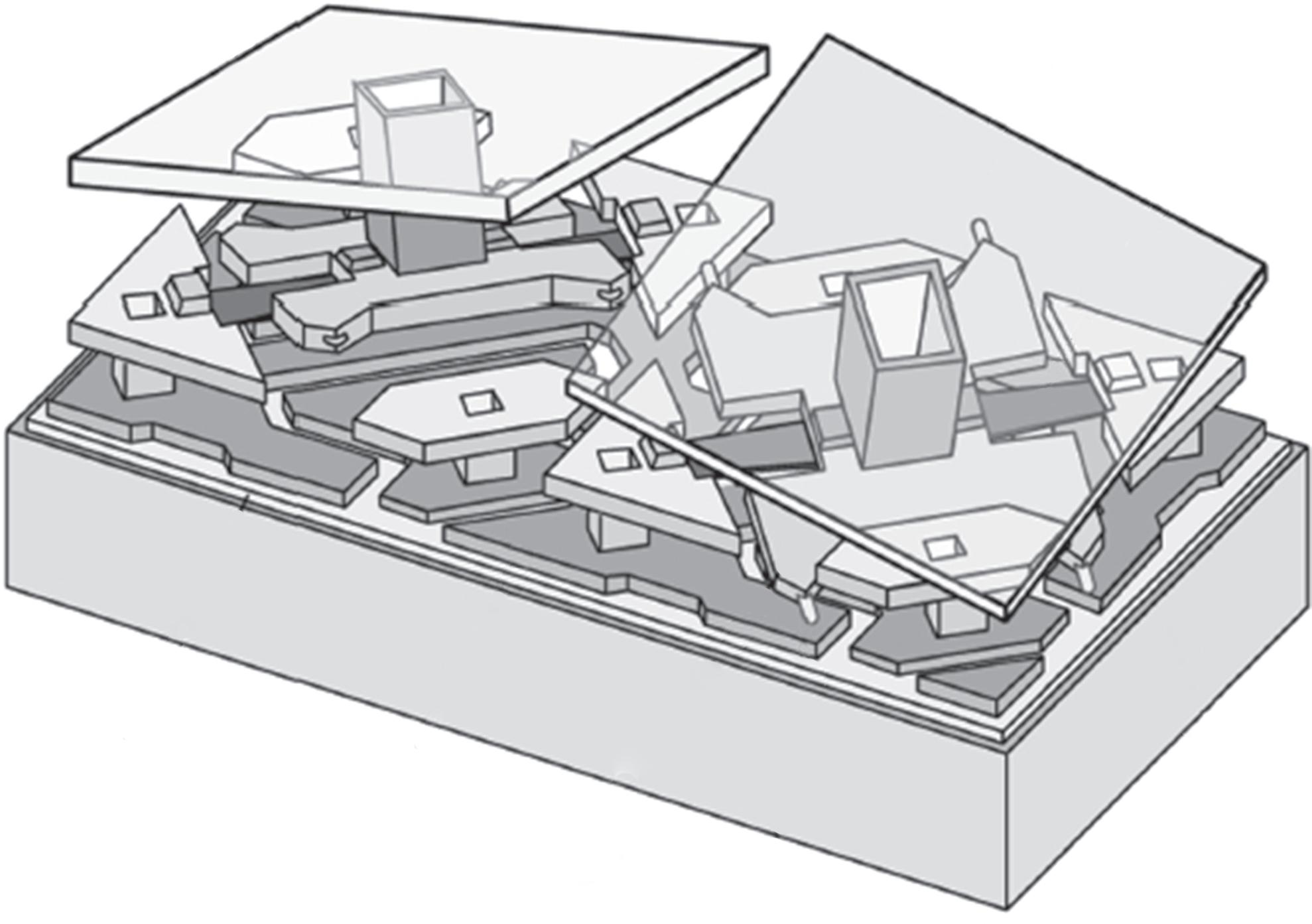
ThemostwidelyusedClassIIIMEMSdeviceistheDMD,developedbyTexas Instruments(TI)andusedindigitallightprocessing(DLP)videoprojectiondevices suchaslargescreentelevisions(Hornbeck2011).ThedevelopmentoftheDMD providesagoodsuccessstoryofhowsolvingmicroscaletribologyissuescanenable
Figure1.3 Twoofthemirrorsinadigitalmicromirrordevice(DMD).Electrostaticattractionisused torotatethemirrors ±10◦ tothemechanicalstopswherethespringtipsmakecontact.Reprintedfrom Hornbeck(2011)withpermissionfromCambridgeUniversityPress,copyright2011.
anewtechnologytogainsufficientreliabilityforcommercialization.InaDMD,an arrayofmirrors,eachabout16 μmacross,isusedtoprojectanimageontoavideo screen.AsillustratedinFigure1.3,theintensityofeachpixeliscontrolledbyrotatingthe individualmicromirrorsthrough ±10◦ byusingelectrostaticattraction.Beforeshipping itsfirstDMDproductin1996,TIcarriedoutextensivereliabilityengineeringand testing(Douglass1998,VanKesseletal.1998),andanumberofreliabilityissueswere addressed:stuckmirrors,fatigueofthemirrorhinge,excessivehysteresisinhingedeflection,mirrorsbreakingasresultofvibrationandshock,andparticlespreventingmirrors fromrotating.Herewefocusonthestickingofthemirrorsagainsttheirmechanicalstop, whichwasapersistenttribologyproblemforwhichtheTIengineersimplementedacombinationofcleversolutionsbasedonathoroughmicro-understandingoftheadhesive mechanism.
InaDMD,theindividualmicromirrorsarerotatedfromtheontooffpositions.To ensurethateachmirrorhasthecorrectangularpositionattheendoftherotation,the mirroryokeisdesignedtocometorestagainstamechanicalstop,asillustratedinFigure 1.3.DuringthedevelopmentoftheDMD,itwasfoundthatadhesiveforcesactingatthis contactwouldsometimesbelargeenoughtoresultinthemirrorstickingagainstthestop, makingitnon-functional.Theseadhesiveforcesoriginatefromthemeniscusforcedue towatervaporcondensingaroundthecontact(discussedinChapter6)andfromvander Waalsforces(discussedinChapter7).Anumberofdesignchangeswereimplemented intheDMDtoreducethemagnitudeoftheseadhesiveforcesandtoimprovetherelease function:
CMOS memory substrate
Spring tip
Yoke Metal 3
Mirror –10°
Mirror +10°
CMP oxide
• TheDMDwashermeticallysealedinadryenvironmenttominimizethecapillary condensationofwater.
• Thecontactingpartswerecoveredwithalowsurfaceenergy“anti-stick”material tominimizethevanderWaalsforce.
• Miniaturespringswereaddedtothepartsofthemirroryokethatmakescontact— the“springtips”showninFigure1.3.Thesespringtipsstoreelasticenergywhen thepartscomeintocontact,whichhelpspushthemirrorawayfromthesurface whentheelectrostaticattractiveforceisreleased.
Thesedesignmodificationsdramaticallyreducedthetendencyofthemicromirrors tostick,greatlyimprovingtheDMDoperatingmargins(Douglass1998,VanKessel etal.1998).From1996to2010,TIsoldover20millionDLPsystemswithDMDs, demonstratingthat,whenproperattentionispaidtothemicroscaletribologyissues,a reliableproductcanincludeaMEMSdevicewithcontactingcomponents.
TheRFMEMSswitchisanotherClassIIIMEMSdevicethatwasfirstcommercializedbyAnalogDevices.TheseMEMSdevicesuseaconductivegoldcantilever thatispulledbyelectrostaticforcesintocontactwithanotherelectrode,therebyclosing anelectronicpathforRFconductivity(Gogginetal.2015).Thesmallsizeofthe MEMSswitchisnotonlybeneficialintermsofspaceandweight,butalsoconsumes farlesspowerthanlargerconventionalswitches,aswellasprovidinganumberofother improvementsinelectricalperformance(Rebeiz2004).
InitialattemptstocommercializeMEMSswitcheswereunsuccessfullargelydueto tribologicalreliabilityissuesofthecontact,whichmustsurvivebillionsofswitching cyclestobecommerciallyviable.Byengineeringthepackagingenvironmenttoinclude hermeticsealingtopreventcontaminationandelectrostaticchargingfromtheenvironmentandbydevelopingmaterialsatthecontactjunctionthatminimizedwearand adhesion,AnalogDeviceswasabletoproduceareliablecommercialdevice.
AsdiscussedinSection1.4.2,miniaturizationofMEMScontactswitchestohave sub-100nmfeaturesizes(ananoelectromechanicalcontactswitch)isbeingdeveloped asanewtechnologyforpotentiallycompetingwithcomplementarymetal–oxidesemiconductor(CMOS)transistors,oncethereliabilityissuesassociatedwiththerepeated contactandthemanufacturingissuescanbesolved.
ForClassIVMEMSdeviceswheresurfacesrubagainsteachother,solvingthe tribologyissuesismuchmorechallenging(WilliamsandLe2006,AchantaandCelis 2015).Forexample,muchfanfarewasmadeaboutthefirstworkingMEMSmicromotor in1988(Fanetal.1989).Whilethesemicromotorsrotatedasdesired,therotors needtosupportedbyabearingthatistypicallymadebysiliconmicrofabrication technologies;thistypicallyresultsinthecontactingsurfaceshavinghighfrictionand wear,severelylimitingthereliabilitylifetimesofthemicromotor.Whilemicromotors havebeendemonstratedwithalowfrictionliquidbearing,agas-lubricatedbearing,a contactlessmagneticbearing,andanelectrostaticbearing(Shearwoodetal.2000,Wong etal.2004,Chanetal.2012,Sunetal.2016),micromotorswithsufficientreliabilityfor commercializationstillhavenotbeendemonstrated.
1.2.3Tribologysuccessstory#3:slider–diskinterfaces
indiskdrives
Theharddiskdrive(HDD)industrymaybethemoststrikingexampleofwherean exponentialimprovementofatechnologyovermanydecadeshasbeensustainedthrough thecontinualsolvingoftribologicalproblems.
Thefirstdiskdrivewasintroducedin1956aspartoftheIBMRAMACcomputer. TheRAMACdiskdrivestoredanimpressive4.4megabytes,foritsday,inaspacethe sizeofasmallrefrigerator.Diskdrivetechnologyhasadvancedtothepointthataterabyte ormoreofdatacannowbestoredonanHDDinalaptopcomputer.Thistremendous increaseinstoragecapacityhascomeaboutlargelyfromtheexponentialgrowthinthe arealstoragedensity(thenumberofbitsthatcanbestoredpersquareinchonadisk surface):from1956to2018,thearealstoragedensityofdiskdrivesincreasedbyafactor of107 ,withthedensityannualgrowthraterangingfrom30to100%.Tosustainthis tremendousgrowthinarealdensityoveraperiodoftimespanningmanydecades,all aspectsofdiskdrivetechnologyhadtobecontinuallyimproved.Herewefocusonthe tribologicalchallengesfacedbythediskdriveindustryintherecentpasttosustainthis rapidriseinarealstoragedensity.
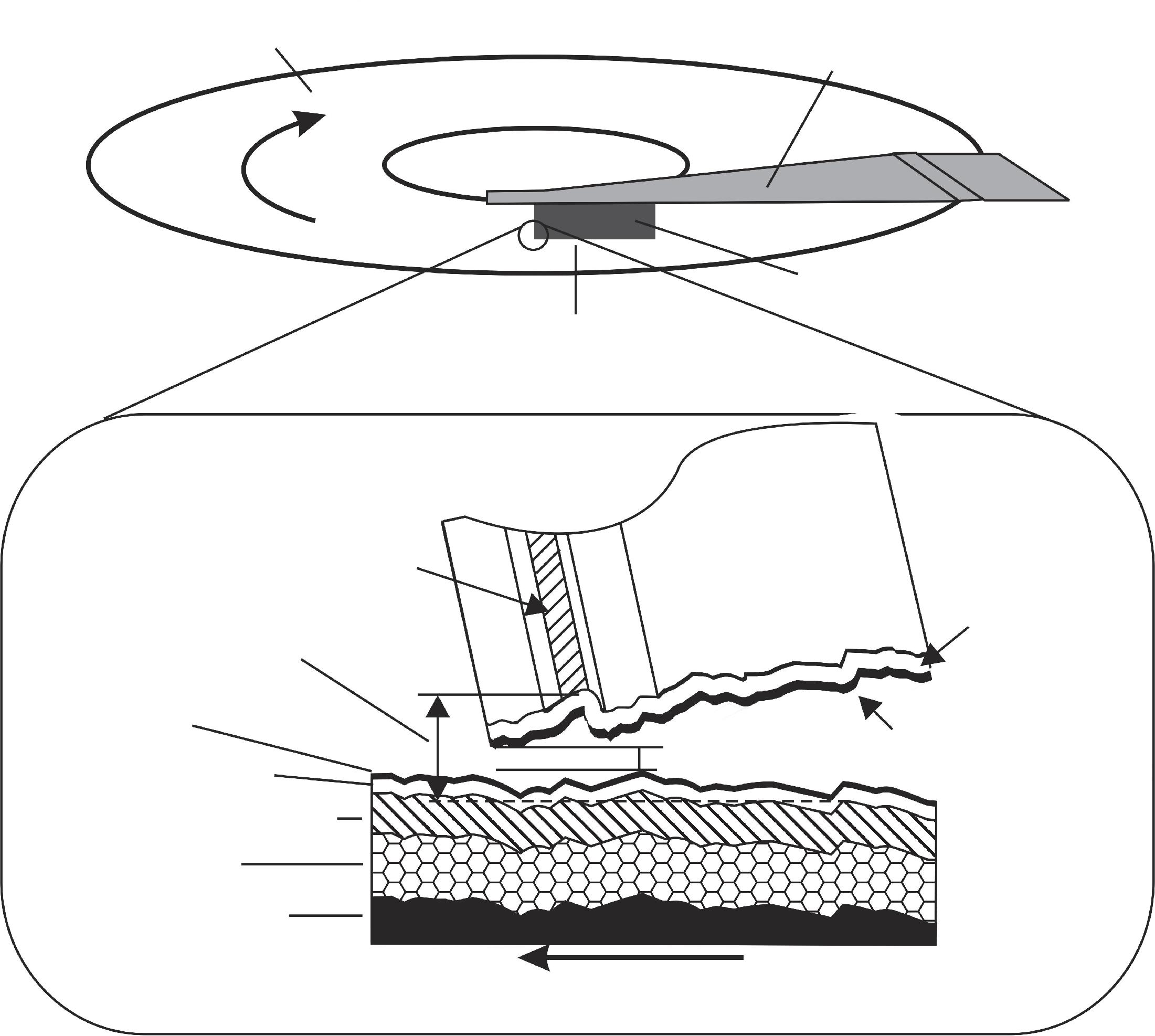
Insideadiskdrive,asliderawithread/writerecordingheadfliesoverarotatingdisk, asillustratedinFigure1.4.Theinformationisstoredasmagneticbitsinathinlayerof magneticmaterialonthedisksurface.Sincethemagneticfieldfromthesebitsdecays rapidlyawayfromthediskmagneticmediumwithadecaydistancethatscaleswithbit size,themagneticspacingbetweentheheadsensorandthemagneticmediumonthe diskneedstoscalewiththelateralsizeofthemagneticbitonthedisk(Marchonand Olson2009):so,asthearealdensitygoesup,thespacingmustgodown.
Sincetherecordingheadsliderfliesathighspeeds(typicallyaround10m/s)witha clearanceofjustafewnanometersoverthedisksurface,carefulattentionneedstobe paidduringtheproductdevelopmentandmanufacturetowardsminimizingtherisks fromhighspeedcontactsbetweentheslideranddisk.Tominimizethenumberofthese contacts,thesliderisdesignedtoflyonanairbearinggeneratedbythediskpullingair underneaththesliderandoveraseriesofstepsandpocketspreciselyfabricatedonto thebottomsurfaceoftheslider.Thesesurfacefeaturesformanairbearingsurface (ABS)thatgeneratesaliftingforce,whichbalancestheloadingforcefromthesuspension enablingtheslidertoflyoverthediskwithitstrailingedgeafewnanometersabovedisk surface.Toprotectagainstoccasionalimpacts,thediskandslidersurfacesarecoated (about3–4nmfor2005drives)withahardmaterial,usuallydiamond-likecarbon.To furtherensurethattheslider–diskinterfaceisnotdamagedbythehighspeedimpacts,a molecularlythinfilmoflubricant(typicallyabout1nmthick)isappliedoverthecarbon overcoateddisk.
Eventhoughthespaceavailablebetweentheheadsensorandthediskmagnetic layerfortheseprotectivelayershasbeenrapidlydiminishing,thedramaticreduction inmagneticspacingfrom96nmin1995to~10nmin2013(Marchonetal.2013)was notachievedthroughanymajortechnologicalinnovations,butratherthroughcareful attentiontotribologicaldetail,inparticular:
Rotating disk
Suspension load beam Slider
Recording head sensors
Magnetic spacing
Lubricant
Disk overcoat
Magnetic medium
Underlayer
Disk substrate
Trailing edge of slider Head overcoat
Air bearing surface (ABS) Clearance 5–50 m/s
Figure1.4 Arecordingheadsliderflyingoverarotatingdisksurfaceinadiskdrive(top).Anenlarged viewofthetrailingedgeofthesliderwheretherecordingheadislocated(bottom).Thecrosssection illustratesthevariouscomponentsoftherecordingheadanddiskthatcontributetothemagnetic spacing,whichisdefinedasthedistancefromthetopofthediskmagneticmediumtothebottomofthe headsensor.Thehigherthearealstoragedensity,thesmallerthemagneticspacingneedstobe.
• introductionofdensercarbonovercoatsthroughchangesincompositionand depositionprocesses;
• designoflubricantsystemsthatpreserveatleastamonolayeroflubricantondisk surfacesoveradiskdrive’slifetime(Mate2013);
• carefulcontrolofdisktopographytoachievesub-nanometerroughness(seeSection 2.4.3.1);
• improvedfabricationprocessesandbettertolerancecontrolforthesliderABS, resultinginbettercontroloftheslider–diskspacing;
• developmentof“flyingheightcontrol”whereasmallheaterisintegratedintothe recordingheadtoactivelycontrolthefinaloftheslider–diskclearance(Suketal. 2005,Mateetal.2015).
Withtheseimprovements,diskdrivesachieveexcellentlongtermreliabilitywhiletheir slidersflyoverthedisksurfacesathighspeedswithincrediblysmallclearances,~1.5 nmfor2013drives(Marchonetal.2013).Thediskdriveindustryplanstocontinue
increasingarealstoragedensities,whichwillmeanreducingthemagneticspacingto lessthan7nm(Wood2000,Mateetal.2005,Marchonetal.2013).However,the variousconstituentsofthemagnetic—overcoats,lubricant,roughness,andclearance— areapproachingtheirphysicallimitsastohowthintheycanbemadeandstillprovide thedesiredlevelofprotection(Mateetal.2005,Marchonetal.2013).Thiswillproveto beparticularlychallengingforthetwonewtechnologiesthatindustryhasbeenintensely developingforachievingfutureincreasesinarealdensity:
• Heatassistedmagneticrecording(HAMR)—InHAMR,asmalllaserandwaveguide areincorporatedintotherecordingheadandareusedtobrieflyspot-heatatiny areaofthedisksurfaceduringtherecordingwriteprocess.Themagneticmediain thisareaistemporarilyheatedabovetheCurietemperature,makingitpossibleto writeanindividualmagneticbitthatisonlyafewnanometersacross(Shiroishietal. 2009).Sincethemagneticmediaisheatedlocallyto >400◦ CduringtheHAMR writeprocess,thishightemperaturecannegativelyimpactthediskdrivetribology bythermallydegradingthecarbonovercoatandlubricant,andbycreatingthermal protrusionsontheheadanddisksurfacesthatgreatlyincreasethefrequencyand severityofintermittentcontacts(Marchonetal.2014,Kielyetal.2018).
• Bitpatternedmedia(BPM)—InBPM,ratherthanstoringthebitsasmagnetic domainsinacontinuousmagneticmediaasisconventionallydone,eachbit isstoredonasmallislandofmagneticmaterial.Theweakmagneticcoupling betweenneighboringislandsmakesitispossibletopackmorebitsintoaunit areainBPMthanwithcontinuousmedia.Thepatterningprocesstofabricatea BPMdisk,however,createsinamuchrougherdisksurfacethanforconventional continuousmedia,makingitdifficultfortherecordingheadslidertoflyoverthe diskwithoutexcessivewearatasmallenoughmagneticspacingtotakeadvantage oftheincreasedarealdensity(Albrechtetal.2015).
1.3Abriefhistoryofmoderntribology
Thepracticeoftribologygoesasfarbackastheprehistorichumans,whofirstusedwear tofashiontoolsandfrictiontostartfires.AncientEgyptianartworkfrom4000years agoshowsslavesdraggingofsledgesbearingheavystatuesandincludesthedepictionof anearliertribologistpouringaliquidattheslidinginterfacetoreducefriction(Dowson 1998,Ayrinhac2016).InChina’sForbiddenCity,thehugestonesthereareconjectured tohavebeentransportedinthefifteenthandsixteenthcenturiesbyslidingthemoveran icepath(Lietal.2013).
ScientificinvestigationoffrictionbeganwithLeonardodaVinciwhorecordedin hisnotebookstheobservationthatfrictionwasproportionaltoloadandindependent oftheapparentareaofcontact.ThislawoffrictionwasrediscoveredbytheFrench physicistGuillaumeAmontons,whopublishedhisfindings,nowreferredtoAmontons’ LawsofFriction,in1699.Amontons’resultsimmediatelyprovokedcontroversyabout
themicroscopicoriginsoffriction,whicheventodayhasnotbeenfullyresolved.The possibleoriginsoffrictionarediscussedinChapter4and11.
Withtheindustrialrevolution,machineryofallsortscameintowidespreaduse andwithitagrowingneedforabettercontroloffriction,lubrication,andwear. Duringthisperiod,theprinciplesofhydrodynamiclubricationwerefirstdiscovered throughtheexperimentalworkofBeauchampTower(1884)andthetheoreticalworkof OsborneReynolds(1886).Thesubsequentdevelopmentofthistheoryofhydrodynamic lubricationenabledreliablebearingstobedesignedforlubricatingthemachineryofthe modernage.LubricationisdiscussedinChapters9and10.
Duringthetwentiethcentury,enormousindustrialgrowthanddevelopmentofnew technologiesfurtherfueleddemandforbettertribology.Tomeetthisdemand,numerous tribologicalengineeringsolutionshavebeendevelopedoverthelastcentury,notably:
• hydrodynamicbearingdesign(Chapter9);
• theoryofcontactmechanics(Chapter3);
• syntheticlubricants;
• solidlubricants;
• wear-resistantmaterials.
Ithaslongbeenthoughtthatalackofunderstandingofthemicroscopicoriginsof tribologicalphenomenahasimpededthedevelopmentofthebesttribologytechnology. Inthemiddleofthetwentiethcentury,severalscientistsconductedpioneeringstudies onthemicroscopicoriginsoffriction,lubrication,andwearproducing:
• 1925—Hardy’sstudiesofboundarylubrication(Chapter10)
• 1940s—BowdenandTabor’stheoryofmolecularadhesionforfriction(Chapter4 and11)
• 1953—Archard’slawforadhesivewear(Chapter12)
• 1966—GreenwoodandWilliamson’sanalysisofmulti-asperitycontactarea (Chapter3)
Sincethelatterpartofthetwentiethcenturytherehasbeenanacceleratedeffortto determinethemicro-toatomicscaleoriginsoftribologyphenomena.Besidesthedesire toreducedetrimentalfrictionandwearintechnologicalapplications,thisefforthasalso beendrivenbynewexperimentalandtheoreticaltechniquesforcharacterizingmaterials atthenanometerscale,facilitatingthediscoveryoftheatomicandmolecularoriginsof friction,lubrication,adhesion,andwear.Thisemergingsubfieldoftribologyhasbeen christened nanotribology asitseekstounderstandtribologyphenomenaattheatomicand nanometerscale.
1.3.1Scientificadvancesenablingnanotribology
Thenatureofcontactmakesitsmicroscopicandnanoscopicoriginsdifficulttostudy. Generallycontactoccursatamultitudeofcontactzonesattheapexesofsmall
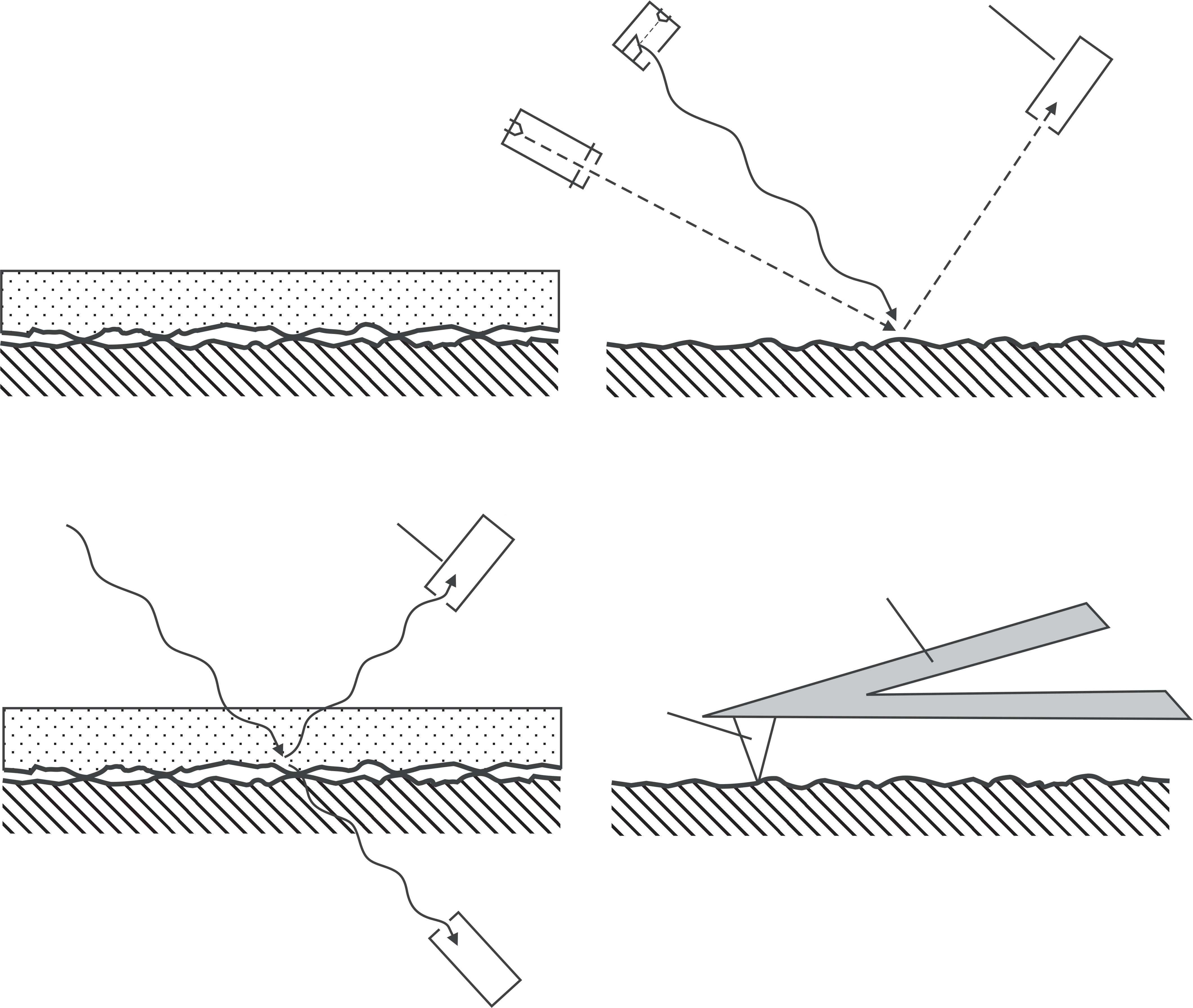
protrusionsorasperitiesonopposingsurfaces,asillustratedinFigure1.5(a).Since thesecontactsaresandwichedbetweentwosolids,theyareinaccessibletomostscientific characterizationtechniques.Addingtothisdifficulty,thecontactoccursprincipallyatthe summitsofthesurfaceroughness,meaningthatthematerialvolumeaffectedbycontact tendstobenanoscopicallysmallanddifficulttodetect.Thepushandpulloftheasperities rubbingagainsteachotherfurthercomplicatesmattersasthecontactingmicrostructures arenotstaticbutevolveasslidingprogresses.
Fortunately,numeroustechniqueshavebeendevelopedoverthepasthalfcentury forcharacterizingsurfacesandnanoscaleamountsofmaterials.Thesenewertechniques haveledtoawealthofinformationonhowthestructureandchemistryofsurfacesevolve duringcontactandhowtheyinfluencetribologicalphenomena.
Foronecategoryofsurfaceanalyticaltechniques(illustratedinFigure1.5(b)),the individualsurfacesareplacedinhighvacuumandirradiatedwithelectrons,ions,or X-rays,andthekineticenergyoftheejectedelectronsorionsaremeasuredwithan energyanalyzer.Sinceonlyelectronsorionsnearthesurfacecanbeejectedtoward
Figure1.5 (a)Duetosurfaceroughness,contactbetweentwosolidsurfacesoccursprimarilyatthe summitsofthesurfaceasperities.(b)Vacuumtechniquesforanalyzingsurfacesbeforeoraftercontact. AES:impingingelectrons,energyofejectedelectronsanalyzed;ESCA/XPSorXAS:impingingX-rays, energyofejectedelectronsanalyzed;SIMS:impingingions,energyandcharge-to-massratioofscattered andejectedionsmeasured.(c)OpticaltechniqueslikeRamanspectroscopy,fluorescencespectroscopy, surfaceplasmonresonance,FTIR,andsumfrequencygenerationcannowbeusedtoanalyzeaburied contactinterface.(d)AnAFMtiprubbingagainstasurfacecanbeusedtosimulateasingleasperity contact.
Electron energy analyzer or ion detector
Photodector or spectrum analyzer
AFM cantilever
Incominglight
(a)
(b)
Tip
(c)
(d)
thedetector,theseareverysensitivetechniquesfordeterminingsurfacestructureand chemistry,butthenecessityofvacuumoperationmeansthesetechniquesareonlyused foranalyzingsurfacesbeforeandaftercontact.Someofthevacuumtechniquesvaluable forcharacterizingthechemicalcompositionandmolecularstructureoftribological surfacesinclude:
• Augerelectronspectroscopy(AES);
• electronspectroscopyforchemicalanalysis(ESCA),alsoknownasX-rayphotoelectronspectroscopy(XPS);
• X-rayabsorptionspectroscopy(XAS);
• secondaryionmassspectrometry(SIMS).
FullerdescriptionsofthesetechniquescanbefoundinBriggsandSeah(1990)and Somorjai(1994,1998).
AsillustratedinFigure1.5(c),severalopticalandX-rayprobeshavebeendeveloped thatallowforinsitucharacterizationoftheburiedcontactingsurfaces:
• Fouriertransforminfrared(FTIR)spectroscopy(Mangolinietal.2012);
• fluorescencemicroscopy(McGheeetal.2018);
• surfaceplasmonresonancespectroscopy(Kricketal.2013);
• Ramanspectroscopy(CampionandKambhampati1998,Wahletal.2007);
• sumfrequencygeneration(Shen1994);
• X-raydiffractionandX-rayreflectivity(Mateetal.2000).
Forareviewoftheseandothertechniquesusedtostudyburiedtribologicalinterfaces, seeSawyerandWahl(2008).
Sincecontacttypicallyoccursatthesummitsofasperities,characterizingthetopographyofcontactingsurfaceshasalwaysbeenanimportantstartingpointforcharacterizing atribologicalsurface.Initiallythiswasdonewithstylusprofilometersthatonlymeasured profileswithmicronresolutionalongsinglelines.Nextcamethescanningelectronmicroscope(SEM),whichiscapableofimagingsurfaceswithnanometerlateralresolution,but isunabletoquantifytheheightsofthesurfacefeatures.Opticalinterferometryprovides veryhighverticalresolution,butislimitedbydiffractionto~1μminthelateraldirections. Morerecently,surfacetopographymeasurementshavebeendominatedbyscanning probetechniques—thescanningtunnelingmicroscope(STM)and,moreimportantly, theatomicforcemicroscope(AFM)—whichcangeneratethree-dimensionaltopography imageswithtrueatomicresolution.TheuseofopticalinterferometryandtheAFMfor topographymeasurementsisdiscussedinChapter2.
Inadditiontotopographymeasurements,theAFMisalsoabletomeasurethecontact forcesactingonasingleasperitytip,asillustratedinFigure1.5(d).Consequently,since itsinventionin1986,theAFMhasbecomeoneoftheprincipaltoolsforinvestigating