Great Clarendon Street, Oxford, ox2 6dp, United Kingdom
Oxford University Press is a department of the University of Oxford. It furthers the University’s objective of excellence in research, scholarship, and education by publishing worldwide. Oxford is a registered trade mark of Oxford University Press in the UK and in certain other countries
All rights reserved. No part of this publication may be reproduced, stored in a retrieval system, or transmitted, in any form or by any means, without the prior permission in writing of Oxford University Press, or as expressly permitted by law, by licence or under terms agreed with the appropriate reprographics rights organization. Enquiries concerning reproduction outside the scope of the above should be sent to the Rights Department, Oxford University Press, at the address above
You must not circulate this work in any other form and you must impose this same condition on any acquirer
Published in the United States of America by Oxford University Press 198 Madison Avenue, New York, NY 10016, United States of America
British Library Cataloguing in Publication Data Data available
Library of Congress Control Number: 2020943929
ISBN 978–0–19–887068–5
Printed and bound by CPI Group (UK) Ltd, Croydon, cr0 4yy
Links to third party websites are provided by Oxford in good faith and for information only. Oxford disclaims any responsibility for the materials contained in any third party website referenced in this work.
In memory of Gil Loescher (1945–2020), who inspired me to believe that research can make a difference.
Acknowledgements
The title of this book borrows from Adam Smith’s 1776 The Wealth of Nations, arguably the founding text of modern economics. It plays on the fact that throughout the intervening 250 years, economics has rarely considered the economic lives of some of those people who fall outside of the framework of the nation-state: refugees and other exiled populations.
Smith’s treatise, like this book, was not just a work of economics. It was a political economy text, integrating reflections on ethics, economics, politics, and policy—the four main sections of this book. At its core, the Wealth of Nations posited a simple idea: that, generally, allowing people the autonomy to make their own choices and pursue their own interests leads to the best collective outcomes. And yet these ideas have seldom shaped refugee governance, a domain in which even basic socio-economic freedoms are frequently denied. At a more trivial level, my choice of title is intended to signal the book’s focus on refugees’ economic lives, to emphasize refugees’ skills and capabilities, and to highlight the growing prevalence of displaced people around the world.
The numbers of displaced people and refugees are increasing due to a proliferation in the number of fragile states. And this problem is likely to be exacerbated by climate change and the economic legacy of coronavirus. The World Bank estimates that by 2050 some 140 million people may be displaced by climate change, and global economic recession threatens to amplify other drivers of displacement such as conflict and weak governance. And yet, rising populist nationalism is undermining the political willingness of rich and poor countries to admit migrants and refugees into their territories. Given these contradictory trends, I ask: how can we create sustainable refugee policies that can enable displaced people to live in safety and dignity, while still operating at scale?
My purpose in writing this book is to contribute towards practical solutions for refugees, and to do so based on social science research and evidence. In order to identify sustainable solutions, I focus predominantly on
just three countries in East Africa: Ethiopia, Kenya, and Uganda. Between them, they host more refugees than the whole of the European Union. They have quite different approaches to refugees—Uganda lets them work, Kenya does not, and Ethiopia has gradually started to move towards giving refugees greater socio-economic freedoms. In different ways, though, all three countries have experimented with specific, innovative approaches to refugee assistance.They provide important lessons relevant for the rest of the world.
I examine these case studies through qualitative and quantitative research, and relate the findings to other refugee-hosting regions of the world in which I have also worked, including Latin America, the Middle East, and Europe. I explore four sets of questions. First, the ethics—what is right? Second, the economics—what works to achieve what is right? Third, the politics—how can we get governments to do the things that work and are right? Fourth, the policy—what specifically do governments and other actors need to do next?
The book’s central argument is that, within this age of displacement, the key to sustainability lies in unlocking the potential contributions of refugees themselves. They bring skills, talents, and aspirations and can be a benefit rather than a burden to receiving societies. Realizing this potential relies upon moving beyond a purely humanitarian focus to fully include refugees in host-country economies, build economic opportunities in refugee-hosting regions, and navigate the ambiguous politics of refugee protection.
The scale of first-hand research involved in this book is vast, and I have not undertaken all of it alone. In particular, the work in Chapters 3–7 draws upon survey data collection that would have been impossible without the input of more than 200 refugee and host community research assistants, who worked with us across six main research sites in Ethiopia, Kenya, and Uganda. These chapters draw upon the analysis, guidance, and data collection of two senior researchers, Naohiko Omata and Olivier Sterck. They also relied upon the contribution of a number of research assistants and consultants, including Jordan Barnard, Raphael Bradenbrink, Imane Chaara, Antonia Delius, Eyoual Demeke, Leon Fryszer, Aregawi Gebremariam, Abis Getachew, Jonathan Greenland, Louise Guo, Helen Karanja, Jonas Kaufmann, Jana Kuhnt, Andonis Marden, Patrick Mutinda, Rashid Mwesigwa, Cory Rodgers, Jade Siu, Maria Flinder Stierna, and Clarissa Tumwine. Reflecting these contributons, Chapters 3–7 draw from work co-authored with several of these colleagues, originally published as part of the Refugee Economies
Programme policy papers series. Finally, that research also required significant coordination, for which I am grateful to Isabelle Aires and Madison Bakewell.
I am grateful to the UN Refugee Agency (UNHCR) for supporting my field research in Ethiopia, Kenya, and Uganda, including through the provision of transportation, accommodation, advice, and logistical support. I am especially appreciative of the contributions of Clementine Awu NkwetaSalami, Raouf Mazou, Yonatan Araya, Tayyar Sukru Cansizoglu, Fathia Abdalla, Mohamed Shoman, Eva Lescrauwaet, Ann Encontre, Jaime Bourbon de Parme, Joel Boutroue, George Woode, Dejan Tanaskovic, Tapio Vahtola, Anna Korneeva, Christine Fu, and Ziad Ayoubi. At the World Food Programme (WFP), Zippy Mbati provided support for the Refugee Economies Programme’s wider research in Kenya. I also thank the governments of Ethiopia, Kenya, and Uganda for granting me and my research teams permission to undertake first-hand research in cities and refugee camps within their countries.
A number of other people have facilitated research access in important ways. Heather Faulkner and Anna Haward were an invaluable source of guidance during my research in the UNHCR archives in Geneva. Felipe Muñoz and Vicente Echandia from the President’s Office in Colombia, and John Patterson from the United States Agency for International Development (USAID) kindly invited me to Colombia to better understand the Venezuelan refugee crisis. The Forum of Young Global Leaders (YGLs) of the World Economic Forum (WEF) collaborated on two visits to Kakuma and Nairobi in 2018 and 2019, which provided useful access, and reflection space for some of the ideas in the book. I am grateful to Mariah Lavin, Mahmoud Jabari, Silje Ditlefsen, Adrian Monck, Ed Hough, and Peter Holmes à Court, as well as my fellow YGLs. Laura Hammond of the School of Oriental and African Studies (SOAS) convened a useful symposium in Addis Ababa for UKRI’s Global Challenges Research Fund (GCRF) grantees, and generously shared contacts with policy-makers in Addis.
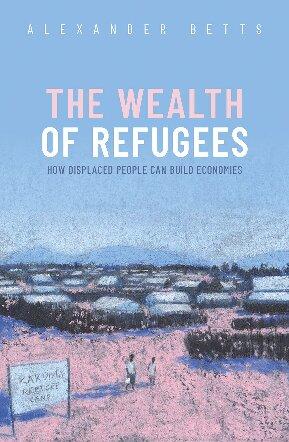
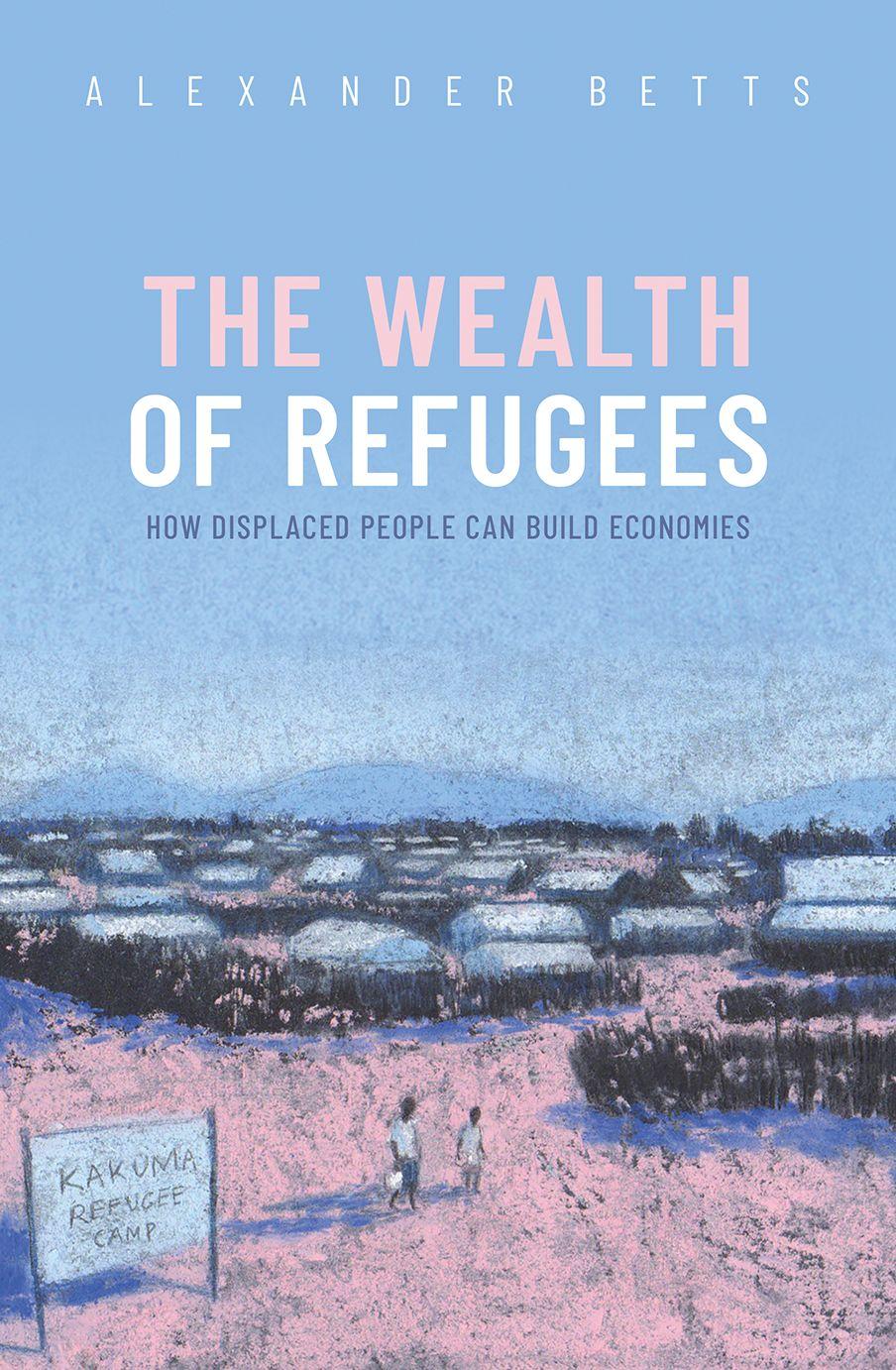
I am thankful to illustrator Sally Dunne for allowing me to use her award-winning sketch of the Kakuma refugee camps, as the basis for the front cover. Her illustration is part of a series entitled ‘At Home in Kakuma Refugee Camp’. The image captures both the remoteness and vibrancy of the camps, a theme that is present throughout the book.
The research in this book would not have been possible without several research grants. The IKEA Foundation generously funded the research of
the Refugee Economies Programme, which has informed Chapters 3–7. Within the Foundation, I am especially thankful to Per Heggenes, Annemieke De Jong, Annelies Withofs, Ly Nguyen, and Steven Chapman for their support. This research also benefited greatly from earlier support from Stephanie and Hunter Hunt, and the Danish Ministry of Foreign Affairs. The British Academy kindly awarded me a mid-career fellowship, which supported the research on which Chapters 8–11 are based. Research funded by an ESRC-AHRC (Economic and Social Research Council and Arts and Humanities Research Council) ‘Global Challenges’ grant contributed to some of the reflections on refugee-led organizations in Chapter 14. The research has also benefitted from the support of the WEF and WFP.
I am also grateful for the institutional support of the Refugee Studies Centre, Brasenose College, and the Department of International Development at the University of Oxford. And within Oxford numerous colleagues have supported research and writing for this book, whether directly or indirectly. They include John Bowers, Diego Ancochea-Sánchez, Graham Bray, Evan Easton-Calabria, Paul Collier, Cathryn Costello, Jeff Crisp, Stefan Dercon, Matthew Gibney, Andrew Hurrell, Kate Pincock, Eduardo Posada-Carbo, Isabel Ruiz, CarlosVargas-Silva, and Sarah Whatmore. I am also grateful to my Oxford-based running buddies, who have talked over the work and kept me sane throughout the research process—Ed Brooks, Richard Burman, and Rahil Sachak-Patwa.
Beyond Oxford, I have benefited from the opportunity to present and receive feedback on sections of the book through a number of public lectures and invited presentations. I am especially glad to have had opportunities to give the Chr. Michelsen Annual Lecture in Bergen, the Ispahani-Bhutto Annual Lecture at La Verne University, the Fung Global Fellows opening lecture at Princeton University, and a keynote lecture as part of the ‘Roots and Routes’ series at the Kenan Institute for Global Ethics at Duke University. I thank Jeremy Adelman, Ian Lising, Ottar Maestad, and Suzanne Shanahan for these invitations, all of which led to valuable feedback. Other colleagues around the world who have shaped my thinking through their ideas and suggestions include Alex Aleinikoff, Emily Arnold-Fernandez, Sasha Chanoff, Helen Dempster, Elena Fiddian-Qasmiyeh, Robert Hakiza, Bob Keohane, Ulrike Krause, Lam Joar, Barbara Moser-Mercer, James Milner, and Emily Paddon Rhoads.
The bulk of the research and writing for the book took place before the coronavirus pandemic began in 2020. However, I have updated the book,
notably through an additional chapter—Chapter 14. In that chapter, I make the case that the legacy of COVID-19 makes the book’s research and argument even more urgent and relevant. I suggest that the economic recession created by COVID-19 will exacerbate the premise on which this book is built: that the world faces rising numbers of displaced people but declining political will to protect refugees, and that reconciling these conflicting imperatives depends upon recognizing and building upon the contribution of refugees themselves.
At Oxford University Press, I am grateful for the support, enthusiasm, and guidance of my editor, Dominic Byatt, and his colleague Olivia Wells.
Last but not least, this book would not have been possible without the love, support, and distraction of my wonderful family—Emily, Leo, Soxy, and Thea.
ab October 2020, Oxford
List of figures and tables
Figures
3.1 Conventional understanding of the ‘migration hump’ relationship 94
8.1 Three-level bargaining model: global-, national-, and local-level roles within negotiating the right to work for refugees 217
12.1 Sustainable Refugee Economies Framework 303
Tables
3.1 Sample size from first wave of data collection 80
3.2 Sample size from second wave of data collection in Kenya 81
3.3 The ‘Refugee–Host Development Gap’—summary of estimated median welfare indicators for refugee and proximate host populations across all six sites 83
3.4 Approximate percentage of overall refugee population moving each year 96
5.1 Comparing Uganda’s and Kenya’s refugee policy models 122
5.2 Summary of the main positive findings relating to the impact of Uganda’s regulatory framework, when comparatively benchmarked against Kenya 125
6.1 Summary of self-reliance indicators 149
8.1 Variation in the right to work for refugees in East Africa 221
12.1 Sustainable Refugee Economies Framework applied to Dollo Ado, Kakuma, and Nakivale 319
14.1 The impact of global recession on the causes, consequences, and responses to forced displacement 342
Map of main research sites
DEMOCRATIC REPUBLIC OF CONGO
Nakivale
ETHIOPIA
UGANDA
KENYA
Addis Ababa
Dollo Ado
Kakuma
Nairobi
Kampala
SOMALIA
SOUTH SUDAN
ERITREA
SUDAN
RWANDA
1 Introduction
Humandisplacement is one of the defining issues of the twenty-first century. Amid oppression, violence, and economic collapse, more people than ever are now forced to flee their homes. Most are quite literally running for their lives, abandoning villages and towns bombed, burned to the ground, or targeted by men with guns. For the first time in history, more than 80 million people are displaced, greater than 1 per cent of humanity.1
Most displaced people remain within their own country. But more than 25 million are refugees, compelled to leave their country in order to survive. From Syria to Venezuela, the main cause is governments that either attack their own people or fail to prevent other terrible things happening. Such governments are unwilling or unable to ensure the most basic conditions for a dignified life—a life that you or I would think worth living. Leaving behind familiar communities and cultures, refugees face an uncertain and sometimes unwelcoming response in the countries they reach. And the scale of the challenge will soon worsen as climate change makes vast areas of the planet uninhabitable, and exacerbates crisis and conflict.
Of course, the ideal solution would be to address the underlying causes. Ending wars, overthrowing authoritarian governments, and cutting greenhouse gas emissions would reduce displacement numbers. But the world has struggled to find solutions to these root causes, and the international community has proved deficient at replacing bad governments. Consequently, we are mostly left to address the human consequences of global insecurity; finding ways to temporarily accommodate or permanently integrate displaced people in other communities, and enabling them to live in dignity and with purpose.
This too is challenging because many receiving societies are reluctant to accept large numbers of refugees, and populist politicians in rich
and poor countries often exploit public concerns for electoral gain. Rather than highlighting the contribution that refugees can make to receiving societies, or the moral obligation to host, politicians from the United States to Tanzania emphasize the threat to the economy, security, or identity. In this context, the question is: how can the world find ways to sustainably host growing numbers of refugees and displaced people?
This question matters for the rich world. In Europe, North America, and Australasia, upholding refugee rights is critical to maintaining liberal, democratic values.2 To be regarded as liberal and legitimate, rich countries cannot simply turn their backs on people who flee for their lives. One important way to assist refugees is to allow them enter the country, either by letting them arrive spontaneously as asylum seekers, or through organized resettlement programmes.
Asylum and resettlement in the rich world have an indispensable role to play, but they are only ever likely to be for the minority of displaced people. The overwhelming majority of displaced people do not travel to rich countries. Although some refugees embark on long and dangerous journeys; most cross the nearest border to nearby camps and cities. The biggest challenge for refugee policy is how to create meaningful and dignified lives within these mainly poor countries that are close to warzones and tyranny.
This is a book about what works. And what can work. It aims to be practical, relevant, and solutions-oriented. Importantly, it is evidence-based. In a policy field—refugees and migration—in which narrative, claim, and counter- claim are often made without recourse to fact, this book uses a range of social science methods to explore the kinds of policies and practices that can actually provide sustainable sanctuary to refugees and other displaced populations. It does so mainly by learning from the experience of three countries in East Africa which, despite hosting more refugees than the whole of the European Union (EU) and more than five times as many as North America, 3 have each adopted innovative, and in some ways progressive, refugee policies aimed at mutually benefitting refugees and host-country citizens. The goal is not to romanticize these countries’ experiences; they have been far from perfect. Nor is it to suggest they can simply be replicated elsewhere; context matters. Rather, the aim is to critically assess what has been effective, and under what conditions.
The search for sustainability
My starting point is three observations about trends in forced displacement and refugee movements, which are likely to endure, relating to geography, numbers, and politics.
First, contrary to popular belief, most refugees are not in Europe or North America. Some 85 per cent of the world’s refugees are in low- and middle-income countries.4 This is because such countries often neighbour crisis countries, and because they often have porous borders, meaning that the first country to which people flee is usually a neighbouring state. Most refugees do not have the means, aspiration, or freedom to travel further. They remain in camps or cities in the region they come from. And this may offer some advantages: sometimes a common language, a similar economy, and the ability to easily retain contact with the homeland. For example, Somalis fleeing to the so-called Somali region of southern Ethiopia are able to speak Somali with the host community, engage in similar income-generating activities as back home, and sometimes go back and forth to south-central Somalia to maintain farms or property.
However, both refugees in such countries and the low- and middle-income countries that host them frequently face significant challenges. Refugees are usually required to reside in camps, with restrictions on the right to work and their mobility. Their access to basic services such as education and healthcare may be inadequate. And, even close to home, they may face discrimination. It is unsurprising that a small, but probably growing,5 number choose to move onwards in search of a better life. For the countries that host them, the inequitable distribution of refugees around the world means that it is the countries with the fewest resources that bear the greatest responsibility. Although refugees often make an economic contribution to the areas that host them and most host countries respect the right of refugees to remain on their territory, large numbers may also be perceived as a source of insecurity, economic competition, or environmental degradation. For decades, Tanzania, for example, has repeatedly argued that despite hosting hundreds of thousands of refugees, it has lacked adequate support from the international community, sometimes scaling back on refugee rights in protest. 6
Second, numbers of forcibly displaced people and refugees are increasing, virtually year-on-year. The number of both displaced persons—including
those displaced within their own country and across borders—and refugees, who represent a large proportion of that group, is higher than at any time since the Second World War. Most flee from chronically fragile or failed states, with over half of the world’s recognized refugees from just Syria, South Sudan, and Afghanistan. But practically each year, the list of fragile, and hence refugee-producing, countries seems to expand. Venezuela and Yemen are among the countries that have recently gone from relative stability to societal collapse, and it will be many years before people can go home. Several factors underlie the trend in fragile states, but among them is the widening distribution of power in the international system, which is exacerbating big power rivalries between the United States, Russia, and China. These rivalries play out within small states of geo-strategic importance, and yet simultaneously paralyse the UN Security Council in its search for solutions. All the credible projections on the distribution of global power suggest that this trend is unlikely to abate unless China and the United States build a shared vision for responding to fragile states.
And a further trend is likely to further exacerbate displacement: climate change.7 Anthropogenic climate change is an incontrovertible fact and it will affect many areas of social life, which in turn have implications for migration and displacement. In extreme cases, such as natural disasters, desertification, and sinking islands the effects on displacement will be direct. In other cases, the effect will be to amplify and exacerbate other sources of displacement such as food insecurity and conflict.8 Where states are weak, climate change will have its greatest impact on displacement.9 Already, we are seeing the effects on forced displacement. In the Northern Triangle of Central America, the surge in forced movement of people from rural communities in Honduras and Nicaragua to the US has been partly attributed to the effects of climate change on food security, and its interaction with weak governance.10 Across the Sahel, resource competition attributable to climate change is exacerbating existing conflicts in ways that have led to displacement in Niger and the Central African Republic.11 Although there is nothing inevitable about future forced displacement scenarios, current trends strongly suggest that numbers will grow, possibly significantly.
Third, the politics relating to refugees and migration is increasingly divisive. In Europe, North America, and Australasia, migration has steadily risen in its political salience to become one of the most important electoral issues.12 In some countries and regions, it has become the most important political issue for voters. The so-called European refugee crisis of 2015–16
was opportunistically mobilized by populist politicians in a way that polarized societies, and ushered in electoral success for the far right.13 In the absence of the crisis, and the way in which it was politically represented, it is arguable that Brexit in the UK,14 as well as the rise of Alternative für Deutschland in Germany, would not have taken place.15 In the US, the politics of immigration has shaped growing societal division and escalating xenophobia.16 Across the Western world, immigration has become a scapegoat issue, serving as a proxy for other unrelated social problems such as the disappearance of labour-intensive manufacturing jobs and precarious financial markets.17 Regardless of how disingenuous much of the political narrative has been, the political consensus in the rich world is for strict limits on mass migration.18
The politics is not much more auspicious in many parts of the Global South. Xenophobia and the politics of immigration are not simply rich- world phenomena. Some governments observed Europe’s response to the refugee crisis and have mimicked the same restrictive policies towards refugees. In 2016, observing how Europe paid off Turkey to curtail the movement of Syrians across the Aegean Sea, Kenya threatened to immediately close the Dadaab refugee camps and expel all Somali refugees as a thinly veiled means to induce greater international support.19 Only slightly less cynically, concern about refugee numbers has been a key part of election campaigns at both national and municipal levels from Colombia to Lebanon. Anti-immigration rhetoric has become a global vote-winner, and asylum for the displaced is caught up in the maelstrom. There is, however, one significant difference between the positions of high-income counties, on the one hand, and low- and middle-income countries, on the other, when it comes to refugees. Relatively rich countries are, at least, in a position to engage in responsibility-sharing with relatively poor countries that host refugees, in ways that may be mutually beneficial for the states, if not always for refugees themselves.
And, as we will discuss in Chapter 14, the global economic recession created by the COVID-19 pandemic will exacerbate each of these trends, increasing levels of displacement and creating the conditions in which xenophobia thrives.
Given these three starting observations about current and future trends, there is a need to identify approaches that can be sustainable. So, what does sustainability mean in the refugee context? I argue that it has three key elements.
First, for refugees, a sustainable response must deliver their basic needs and legal entitlements. In the language of refugee governance, it needs to deliver protection, assistance, and solutions. Protection implies access to all rights under refugee and human rights law, most notably the right not to be forcibly returned to a country in which there is a serious risk of harm. Assistance means access to basic services to ensure a guaranteed minimum standard of living. Solutions relate to ensuring long-term integration within a society, whether through return to the country of origin, or integration and naturalization in a new country.
Second, sustainability requires a model that can maintain political support at local, national, and international levels. In order to endure over time, and to avoid backlash, refugee policies need to be able to retain the backing of politicians, and to remain in power those politicians need to be able to retain the support of their electorates and constituencies. Political authorities in hosting regions, whether at municipal or provincial level, need to be able to credibly argue that the local host community benefits from the presence of refugees. National host governments need to be able to credibly argue that hosting refugees brings benefits that are in the national interest. And the wider world of donor governments needs to derive benefits that justify the allocation of scarce national resources towards supporting host countries in other parts of the world.
Third, a sustainable refugee model must be able to function at scale and endure over time. Given rising numbers, the growing number of chronically fragile and failed states in the world, and the spectre of climate change, the world needs to envisage models that can not only work for 25 million refugees today, but potentially also for significantly larger populations, perhaps even of 50 or 100 million people crossing borders because they cannot access the minimum conditions for living in safety and dignity. To deliver at scale, approaches will need to be as efficient as possible in terms of economic, social, and political costs.
Reconciling these competing criteria is one of the key global policy challenges of the twenty-first century.The goal of this book is to begin the search for models that can resolve the challenge of providing sustainable sanctuary.
The book is written from the tradition of political realism. My aim is for my research to be politically relevant. Of course, not all research on refugees and forced migration needs to be politically relevant, and critical perspectives that distance themselves from politics have an important role to play, not least in challenging power structures and questioning the way we think about the world.20 My aim, though, is to engage policy-makers and
practitioners. That does not mean that I am uncritical of dominant power structures, but that I am chiefly concerned with providing insights that are applicable to the contemporary world.21
Achieving relevance relies upon working from within a framework of political constraint, and being explicit about the assumptions that define those constraints. From an ‘ideal-theory’ perspective, one might hope that it is values that ultimately shape political decisions regarding refugees.22 But my previous research and policy experience in the refugee field tells me that this is not always the case. And so, I work from a ‘non-ideal theory’ perspective, within which I regard national level politicians to be mainly concerned with preserving power and intergovernmental politics to be mainly shaped by the pursuit of interests and power. Of course, values and norms can and do play a role but their influence is mediated through political competition. When they are compatible with the interests of the powerful, they flourish; when they are not, they wither.23
This means that when I think about the refugee system, I am trying to find a model of sustainability that reconciles the moral obligation to ensure refugees’ access to protection, assistance, and solutions, with the constraints of world politics. In that sense, my approach might be broadly characterized as ‘migration realism’.24
Refugees and development
There is a growing consensus among policy-makers that the best way to achieve sustainability is to help refugees to help themselves. If refugees can be empowered to meet their basic needs independently of aid, and also contribute to the economy of the host society, this has the potential to benefit everyone. For refugees, it can support socio-economic inclusion and improve access to entitlements and opportunities. For host communities, it can allow them to share in the benefits of new job creation and the improvement of public services. For donor governments, it may provide a way to provide cost-effective refugee assistance at scale.
This idea is encapsulated in the concept of refugee ‘self-reliance’—the notion that rather than having long-term dependence on humanitarian aid, refugees can instead be supported to gradually support themselves through external investment in the long-term economic development of the regions that host them. The UN Refugee Agency (UNHCR) defines self-reliance as ‘the social and economic ability of an individual, a household, or a