Great Clarendon Street, Oxford, OX2 6DP, United Kingdom
Oxford University Press is a department of the University of Oxford. It furthers the University’s objective of excellence in research, scholarship, and education by publishing worldwide. Oxford is a registered trade mark of Oxford University Press in the UK and in certain other countries
All rights reserved. No part of this publication may be reproduced, stored in a retrieval system, or transmitted, in any form or by any means, without the prior permission in writing of Oxford University Press, or as expressly permitted by law, by licence or under terms agreed with the appropriate reprographics rights organization. Enquiries concerning reproduction outside the scope of the above should be sent to the Rights Department, Oxford University Press, at the address above
You must not circulate this work in any other form and you must impose this same condition on any acquirer
Published in the United States of America by Oxford University Press 198 Madison Avenue, New York, NY 10016, United States of America
British Library Cataloguing in Publication Data Data available
Library of Congress Control Number: 2020949094
ISBN 978–0–19–289457–1
DOI: 10.1093/oso/9780192894571.001.0001
Printed and bound by CPI Group (UK) Ltd, Croydon, CR0 4YY
Links to third party websites are provided by Oxford in good faith and for information only. Oxford disclaims any responsibility for the materials contained in any third party website referenced in this work.
This book is dedicated to Paul, John, and Anton—my own bloodline
PART ONE: BIRTHRIGHTS
PART TWO: A MELDED BLOODLINE
PART THREE:
Acknowledgements
One incurs many debts for a book that took sixteen years to bring to fruition. Acknowledging them all is a daunting task, and I ask forgiveness from those whom I have inadvertently left out. First, I would like to thank Princeton University for generous institutional support over the years. The chair of the Department of Art & Archaeology, Michael Koortbojian, and the office staff— Maureen Killeen, The late Susan Lehre (before her retirement), Stacey Bonette, Diane Schulte, and Julie Angarone—were most helpful in a myriad of ways. I benefited greatly from grants from the University Committee on Research in the Humanities and Social Sciences, as well as from the Ione May Spears Fund of the Department of Art & Archaeology for research travel and photography. The Department’s Barr Ferree Publication Fund afforded crucial support for reproduction fees and the acquisition of photographs. Support from the Program in Hellenic Studies, and its director, Dimitri Gondicas, allowed me to teach a course on Renaissance Crete, with a class trip that allowed me to familiarize myself with the island. In the final phases of manuscript preparation, Luciano Vanni, my talented graduate research assistant, offered much-needed assistance in acquiring images and permissions.
My research over the years was greatly facilitated by the staffs of the Marquand and Firestone libraries at Princeton; in Venice at the Archivio di Stato, Archivio Storico del Patriarcato di Venezia, Biblioteca del Museo Correr, Biblioteca Nazionale Marciana, the Fondazione Giorgio Cini, and the Istituto Ellenico; in Udine at Archivio di Stato, Biblioteca Civica Vincenzo Joppi, and Biblioteche Storiche Diocesane; in Trento and in Trieste at the Archivio di Stato; and at the Biblioteca Seminario Vescovile in Ceneda (Vittorio Veneto).
For practical help, advice, and various kinds of assistance, I would like to thank Bernard Aikema, Christopher Apostle, Benjamin Arbel, Lilian Armstrong, Joško Belamarić, Mauro Bondioli, Giulio Bono, Linda Borean, Donatella Calabi, Lorenzo Calvelli, Federica Caneparo, Giovanni Caniato, Stan Chojnacki, Paula Clarke, Leslie Contarini, Gigi Corazzol, Michela Dal Borgo, Giada Damen, Blake de Maria, Alex Eliopoulos, Peter Fergusson, Joanne Ferraro, Mary Frank, Edviljo Gardina, Paolo Giovannini, Edoardo Giuffrida, Olga Gratziou, Amy Gross, Jim Grubb, Jasenka Gudelj, Johanna Heinrichs, Charles Hope, Kristin Huffman, Frederick Ilchman, Eleni Kanaki, Elizabeth Kassler-Taub, Michelle Komie, Bianca Lanfranchi, the late Patsy and George Labalme, Laura Lepskchy, Margherita Losaccco, Piero Lucchi, Chryssa Maltezou, Rosella Mamoli, Vittorio Mandelli, Lia Markey, Georgios Markou, John Martin, Stefania Mason, Gabriele Matino,
Christine Morley, Reinhold Mueller, Jacki Musacchio, Daniela Omenetto, Susan Nalezyty, Andrea Nanetti, Alessandra Negrin, Giulio Ongaro, Luciana Osti, Gerassimos Pagratis, Nikolas Patsavos, Katja Piazza, Debra Pincus, Dennis Romano, Susannah Rutherglen, Claudia Salmini, Alessandra Sambo Alessandra Schiavon, Richard Schofield, the late Allison Sherman, Emily Spratt, Alan Stahl, Dr. Lucia Stefanelli, Helena Szépe, Giorgio Tagliaferro, Francesca Tamburlini, the late Dottoressa Maria Francesca Tiepolo, Francesca Toffolo, Irina Tolstoy, Eurigio Tonetti, Fra Apollonio Tottoli, Maria Vasilaki, Despoina Vlassi, Tim Wardell, and Marino Zorzi. I am also grateful for the gracious hospitality of Giuliana, Chiara, and Federica at the Hotel Suite Inn in Udine.
I am particularly indebted to Melissa Conn, director of the Venice Office of Save Venice and the Rosand Library & Study Center, for favours too numerous to cite. Special thanks go to Tracy Cooper, my intrepid travel companion to sites in the Veneto and the Friuli, for her insights throughout the process; to my sister Barbara Medwadowski for helping me explore Crete; to Monique O’Connell for sharing the manuscript of her book, Men of Empire, in advance of publication; to Nubar Gianighian for organizing a visit to the Castello di San Martino in Ceneda, where we were welcomed by Nice Vecchione and Don Adriano Dall’Asta; to Pallina Pavanini for help with transcriptions and for offering important perspectives on a draft of the first chapter of the book; to Ed Muir for vetting the second chapter; and to Gillian Malpass, Deborah Howard, and Sarah Blake McHam for their friendship, encouragement, and always welcome advice.
Finally, I am especially grateful to Michelle Lovric, who read a draft of the entire manuscript before I submitted it to a press and offered invaluable criticisms and suggestions for improvement; to the anonymous reviewers for Oxford University Press, who gave me further constructive feedback; and, finally, to my editors at Oxford University Press, Cathryn Steele and Katie Bishop, for their ongoing enthusiasm, support, and encouragement.
List of Illustrations
1.1. Valerio Belli, Pietro Bembo (obverse), bronze medal, dia. 3.45 cm, ca. 1532. Washington, National Gallery of Art. Samuel H. Kress Collection, inv. 1957.14.79.a. 6
1.2. Venice, Ca’ Bembo on Campiello Santa Maria Nova. Photo: Tony Hisgett. < https://commons.wikimedia.org/wiki/File:Campiello_S._Maria_Nova_ (7263292432).jpg> (15 February 2021). 9
2.1. Abraham Ortelius, Patria del Friuli, engraving with hand colour, 35.5 × 48 cm, 1573. From Theatrum Orbis Terrarum Abrahami Ortelii Antverp. Geographi Regii. Antwerp, Plantin Press, 1601. Photo: www.sanderusmaps.com. 20
2.2. Joseph Heintz il Giovane, attrib., View of Udine, oil on canvas, 146 × 233 cm, c. 1650–60. Udine, Civici Musei, Galleria d’Arte Antica, inv. 65. Photo: Fototeca. Civici Musei di Udine. 21
2.3. Earthquake in Udine after the Cruel Carnival of 1511, from MCVe, MS Correr 963, ‘Udine saccheggiata l’anno 1511, c. 29’, eighteenth century. By permission of Museo Civico Correr, Venice. 42
3.1. Castello di Villalta from the southwest. Photo: Alessandro Steffan. Reflexbook.net. 49
3.2. Castello di Villalta in 1480. BCUd, MS 208, Fondo Joppi. Biblioteca Civica ‘Vincenzo Joppi’ di Udine. 50
3.3. Castello di Colloredo di Monte Albano. Archivio fotografico della Soprintendenza Archeologia, Belle Arti e Paesaggio del Friuli Venezia Giulia, inv. ts 5749. 58
4.1. Joseph Heintz il Giovane, attrib., View of Udine (detail of Figure 2.2). Photo: Fototeca. Civic Musei di Udine. 67
4.2. Udine, Loggia del Lionello, 1448–55, with later repairs and modifications up to 1868. Photo: Udine2812. <https://commons.wikimedia.org/wiki/ File:Loggia_del_Lionello_(Udine).jpg> (15 February 2021).
4.3. Udine, Piazza Contarena (now Piazza della Libertà). Photo: Sailko. < https://commons.wikimedia.org/wiki/ File:Udine,_piazza_della_ libert%C3%A0_00.JPG> (15 February 2021).
76
78
5.1. Ceneda (Vittorio Veneto), Castello di San Martino. Photo: author. 87
5.2. Ceneda (Vittorio Veneto), Municipal loggia, 1537–8. Now Museo della Battaglia. Photo: author. 88
5.3. Paris Bordone, attrib. Count Girolamo Della Torre, oil on canvas, 126.4 × 95.5 cm, c. 1535–45. Private collection. Photo: Courtesy of New Orleans Auction Galleries. 89
5.4. ‘Corte del Palazzo Ducale di Venetia’ (The courtyard of the Ducal Palace of Venice), from Cesare Vecellio, Habiti antichi, et moderni di tutto il mondo, Venice: Giovanni Bernardo Sessa, 1598, c. 101. Amsterdam, Rijksmuseum, obj. no. BI-1938-0066-148. 100
5.5. View of tomb of Alvise II Della Torre, ca. 1549–50. Venice, Chiesa di Santa Maria Gloriosa dei Frari. Photo: Matteo da Fina. Courtesy of Save Venice, Inc. 104
5.6. Andrea Schiavone (attrib.), Tomb of Alvise II Della Torre, oil on panel, 320 × 380 cm, ca. 1549–50. Venice, Chiesa di Santa Maria Gloriosa dei Frari. Photo: Matteo da Fina. Courtesy of Save Venice, Inc. 105
5.7. Andrea Schiavone (attrib.), Murder of Alvise II Della Torre and Giambattista Colloredo, detail of Figure 5.6. Photo: Matteo da Fina. Courtesy of Save Venice, Inc. 105
5.8. Andrea Riccio, The Death of Della Torre, Bronze, height 37 cm, 1516–20. Paris, Museé du Louvre, OA9155 (orig. San Fermo Maggiore, Verona). Photo: (C) RMN-Grand Palais (Musée du Louvre) / Stéphane Maréchalle. 106
6.1. Titian (possibly after), Portrait of a Lady, oil on canvas, 63.5 × 51.8 cm, 1530–60. The Art Institute of Chicago, Max and Leola Epstein Collection, 1954.301.
6.2. ‘Ordinario (Everyday clothing worn by the entire Venetian nobility)’, from Cesare Vecellio, De gli habiti antichi, et moderni, 1598, c. 106. Amsterdam, Rijksmuseum, obj. no. BI-1938-0066-81.
6.3. Course of the River Brenta,, from Giovanni Francesco Costa, Le Delizie del fiume Brenta nei palazzi e casini situati sopra le sue sponde dalla sua sboccatura nella laguna di Venezia infino alla città di Padova, I, 1750.
6.4. ‘Spose non sposate’ (Brides before their weddings in our time) and ‘Spose sposate’ (Brides outside the house after they have married), from Cesare Vecellio, De gli habiti antichi, et moderni. Venice: Giovanni Bernardo Sessa, 1598, cc. 125, 126. Amsterdam, Rijksmuseum, obj. nos. BI-1938-0066-95 and BI-1938-0066-96.
7.2. Candia, from Bernhard von Breydenbach, Peregrinationes in Terram Sanctam, Mainz, 1486 (1st ed.); 1502 (2nd ed.). Woodcut by Erhard Reeuwich. The National Library of Israel, Eran Laor Cartographic Collection, Shapell Family Digitization Project and The Hebrew University of Jerusalem, Department of Geography—Historic Cities Research Project. 144
7.3. Eucharius Rösslin, Libro nel qual si tratta del parto de lhuomo, Venice, 1538, frontispiece. Library of Congress, Rare Book and Special Collections Division, shelfmark RG91.R715. 151
8.1. MCVe, Mariegola 56, Accademia degli Uniti, 1551, cover. Venice, Biblioteca del Museo Civico Correr. 165
8.2. MCVe, Mariegola 56, Accademia degli Uniti, 1551, frontispiece. Venice, Biblioteca del Museo Civico Correr. 166
8.3. ‘Bravo [armed retainer] of Venice and other cities of Italy’, from Cesare Vecellio, De gli habiti antichi, et moderni. Venice: Giovanni Bernardo Sessa, 1598, c. 165. Amsterdam, Rijksmuseum, obj. no. BI-1938-0066-127. 168
8.4. Maneas Klontzas, View of Candia (detail), drawing, early seventeenth century. By permission of Malcolm Weiner. Photo: Historical Museum of Crete, Heraklion. 171
9.1. Venice, Ca’ Morosini (now Hotel Ca’ Sagredo) on the Grand Canal in Cannaregio. Photo: Didier Descouens – Own work, CC BY-SA 4.0, <https:// commons.wikimedia.org/w/index.php?curid=15794062> (15 February 2021). 190
9.2. Scodella (Broth Bowl) on a High Foot: Birthing Chamber Scene, Maiolica (tin-glazed earthenware), h. 10.8 cm, diam. 14.4 cm, 1545–60. Princeton University Art Museum, Museum purchase, y1941–28. 193
9.3. German or Polish artist, Bona Sforza as a widow, oil on canvas, 210.5 × 111 cm, seventeenth century. The Royal Castle in Warsaw—Museum, inv. no. ZKW/60. Photo: Andrzej Ring, Lech Sandzewicz. 202
9.4. Giovanni Merlo, Vero e real disegno della inclita cita di Venetia (detail), 1676. Chicago, Newberry Library, Novacco 4F 288. Newberry Digital Collections. 215
10.1. Ceneda (Vittorio Veneto). Marble fountain in the cathedral square, 1555. Photo: author. 224
10.2. Ceneda (Vittorio Veneto). Aerial view of Castello di San Martino. Photo: Reflexbook.net. 225
10.3. Girolamo Romanino (attr.), Banquet of Bartolomeo Colleoni in honour of Christian I of Denmark in 1467 (detail), fresco, 1520s. Castello di Malpaga. Photo: Giorces. <https://commons.wikimedia.org/wiki/ File:Malpaga28.JPG> (15 February 2021). 230
10.4. Giovanni da Udine, Allegorical frescoes (detail), Studiolo, Castello di Colloredo di Monte Albano. Archivio fotografico della Soprintendenza Archeologia, Belle Arti e Paesaggio del Friuli, inv. Ud_R 867-11. 232
10.5. Commission of Lorenzo Bembo, capitano of Paphos, from Doge Nicolo Priuli, 1558. Houghton Library, Harvard University, MS Typ 330. 234
10.6. Cornelis Cort, Birth of the Virgin, engraving after Federico Zuccaro, 32.7 × 20.5 cm, 1568. Amsterdam, Rijksmuseum, RP-P-1888-A-12476. 239
10.8. Frontispiece of Francesco Sansovino, Vita della illustre Signora Contessa Giulia Bemba della Torre (Venice: Domenico & Gio Battista Guerra, fratelli, 1565). Shelfmark: Misc. 1215.007. Venice, Biblioteca Nazionale Marciana. 244
11.1. ‘Lutto’ (Mourning clothes outside Venice), from Cesare Vecellio, De gli habiti antichi, et moderni. Venice: Giovanni Bernardo Sessa, 1598, c. 166. Amsterdam, Rijksmuseum, obj. no. BI-1938-0066-128. 252
11.3. Girolamo Romanino (attr.), Hunting scene (detail), fresco, 1520s. Comune of Bergamo, Castello di Malpaga. Photo: Giorces. <https://commons.wikimedia.org/wiki/ File:Malpaga27.JPG> (15 February 2021). 271
11.4. Domenico Zenoi, Entry of Henri III, King of France and Poland, into Venice, etching, 19.7 × 27.1 cm, 1574. New York, Metropolitan Museum of Art. Acc. No. 59.570.432. The Elisha Whittelsey Collection, The Elisha Whittelsey Fund, 1959.
12.1. ‘Spose del Friuli’ (Brides of Friuli and places nearby), from Cesare Vecellio, De gli habiti antichi, et moderni, 1598, c. 217. Amsterdam, Rijksmuseum, obj. No. BI-1938-0066-149.
12.2. Castello di Valvasone. Photo: Ufficio Turismo di Valvasone.
12.3. Castello di Valvasone. Frescoes, fourteenth century. Photo: Ufficio Turismo di Valvasone.
12.4. Treviso, Ca’ da Noal. Photo: Appo92 <https://commons.wikimedia.org/ wiki/File:CaDaNoal1.JPG> (15 February 2021).
12.5. Castello di Villalta from the east. Photo: Reflexbook.net.
13.1. Bartolomeo Carducci [Bartholome Carducho], Portrait of Cardinal Michael Turrianus (Posthumous Portrait of Cardinal Michele Della Torre), oil on canvas, 140 × 155 cm, 1608. GASK—The Gallery of the Central Bohemian Region, Kutná Hora. Photo: Oto Palán.
13.2. Frontispiece, Adriano Grandi, Canzone nella morte dell’Illustrissimo Reverendissimo Cardinale di Ceneda, Monsignor Michele della Torre, Verona: Appresso Girolamo Discepoli, 1586. Shelf mark MISC 2525.008. Venice, Biblioteca Nazionale Marciana.
14.1. Palazzo Torriani of 1540, ink drawing made after 1589. Facade on Borgo Strazzamantello. ASUd, Archivio Della Porta, B. 12-3. Photo: author. By permission of the Archivio di Stato di Udine.
14.2. Palazzo Torriani compound in 1589. ASUd, Archivio Della Porta, B. 12-3. Photo: author. By permission of the Archivio di Stato di Udine.
273
280
281
281
284
286
291
297
308
309
14.3. Loggia in Palazzo Torriani compound in 1589. ASUd, Archivio Della Porta, B. 12-3. Photo: author. By permission of the Archivio di Stato di Udine. 309
14.4. Veronese and workshop, Coronation of Hebe, oil on canvas, 387 × 387 cm, 1580s. Boston, Isabella Stewart Gardner Museum, acc. no. P25c26. 312
15.1. Andrea Vicentino, Madonna of the Rosary, with Pope Pius V, St. Dominic, and the Queen of Cyprus, c. 1600. Church of St. Kvirin Museum. Krk, Croatia. 323
15.2. Portrait of Bishop Giovanni Della Torre. Oil on canvas, 1606. Musei Civici di Padova. Inv. 1479. Photo: Ghiraldini Giuliano. By kind permission of the Comune di Padova—Assessorato alla Cultura. 326
15.3. Lucio, Sigismondo, and Girolamo, sons of Carlo II Della Torre. BCUd, Fondo Principale, MS 541, cc. 25, 26, 27. Biblioteca Civica ‘Vincenzo Joppi’ di Udine. 334
15.4. Villa Pedrina, Azzo Decimo (Pordenone). Photo: Reflexbook.net. 337
15.5. Palazzo Torriani before 1717. Street facade of the main palace (lower left) and three views of the facades facing the interior courtyard. BCUd, Fondo Principale, MS 541, c. 29r. Biblioteca Civica ‘Vincenzo Joppi’ di Udine. 340
15.6. Column of infamy in Piazza del Fisco and Demolition of Palazzo Torriani in 1717. BCUd, Fondo Principale, MS 541, c. 30r. Biblioteca Civica ‘Vincenzo Joppi’ di Udine. 340
15.7. Della Torre and Villalta coats of arms, with a banderole inscribed with ‘Tranquilité’. Entry portal, Castello di Villalta. Photo: Tracy E. Cooper. 344
Note on Citations and Abbreviations
Printed sources are referred to in the notes by author and year of publication (anonymous works by short title and year). The bibliography at the end of the book, divided into primary and secondary texts, gives full references. The following abbreviations are used in the notes.
Archives and Libraries
ASDUd
Archivio Storico Diocesano, Udine
ASTr Archivio di Stato, Trento
ASTS Archivio di Stato, Trieste
ASUd Archivio di Stato, Udine
AT Archivio Torriani-Della Torre
ADT Archivio Della Torre
ADP Archivio Della Porta
ASVe Archivio di Stato, Venice
AC Avogaria di Comun
Barbaro, Genealogie Miscellanea codici, Storia Veneta, bb. 17–23 (I–VII), Marco Barbaro, Genealogie patrizie
CCX
Capi del Consiglio di Dieci
Coll. Collegio
CX
X Savi
LPF
Consiglio di Dieci
Dieci Savi alle Decime in Rialto
Luogotenente alla Patria del Friuli
MC Maggior Consiglio
NA Notarile, Atti
NT Notarile, Testamenti
SAV-MC
Segretario alle Voci, Elezioni in Maggior Consiglio
SAV-Sen. Segretario alle Voci, Elezioni in Senato
Sen. Senato
ASVic Archivio di Stato, Vicenza
BCUd Biblioteca Communale ‘V. Joppi’, Udine
MCVe Biblioteca del Museo Civico Correr, Venice
Barbaro, Genealogie MS Cicogna 2498–2504 (I–VII). Marco Barbaro, Genealogie e origine di famiglie venete patrizie
Cardinals The Cardinals of the Holy Roman Church: http://cardinals. fiu.edu/cardinals.htm
CSP/5
CSP/8
Cicogna, Ins. Ven.
DBI
Calendar of State Papers Relating To English Affairs in the Archives of Venice, Volume 5, 1534–1554. Edited by Rawdon Brown. London: Her Majesty’s Stationery Office 1873. British History Online, accessed 4 June 2020, http://www.britishhistory.ac.uk/cal-state-papers/venice/vol5.
Calendar of State Papers Foreign: Elizabeth, Volume 8, 1566–1568. Edited by Allan James Crosby. London: Her Majesty’s Stationery Office 1871. British History Online, accessed 4 June 2020, http://www.british-history.ac.uk/calstate-papers/foreign/vol8.
Cicogna, Emmanuele A. Delle inscrizioni veneziane, 6 vols in 7. Venice, 1824–53.
DU Leonardo and Gregorio Amaseo, with Giovanni Antonio Azio, Diarii udinesi dell’1508 al 1541, ed. Antonio Ceruti, Monumenti storici, 3rd ser., vol. 2, CronAChe e diarii, vol. I, Venice: R. Deputazione Veneta di Storia Patria, 1884.
DU, GA
DU, GAH
DA, LA
Moroni, Dizionario
Portion of diary by Gregorio Amaseo (225–492: 1511–41)
Appendix to diary by Gregorio Amaseo, Historia della crudel zobia grassa et altri nefarii excessi et horrende calamità intervenute in la città di Udine et patria del Friuli del 1511 (497–544)
Portion of diary by Leonardo Amaseo (1–191: Feb. 1508–10)
Moroni, Gaetano. Dizionario di erudizione storico-ecclesiastica da S. Pietro sino ai nostri giorni. 103 vols. Venice, 1840–61.
Pastor Pastor, Ludwig Freiherr von. The History of the Popes from the Close of the Middle Ages, 40 vols. London, 1891–1953.
Relazioni/Legnago
Relazioni/Friuli
Sanudo, Diarii
Relazioni dei Rettori Veneti in Terraferma. VIII. Provveditorato di Legnago, Milan, 1977.
Relazioni dei Rettori Veneti in Terraferma. I. Patria del Friuli, Milan, 1973.
Sanudo, Marin. I diarii. Edited by Rinaldo Fulin et al, 58 vols in 59. Venice, 1879–1903.
Vasari, LivesVasari, Giorgio. Lives of the Most Eminent Painters, Sculptors and Architects. Translated by Gaston du C. De Vere. 10 vols. London, 1912–15.
Vasari, Vite
Vasari, Giorgio, Le vite de’ più eccellenti pittori, scultori ed architettori (1568). Edited by Gaetano Milanesi. 9 vols. Florence, 1878–85.
b./bb. Busta/Buste
Other abbreviations
c./cc. Carta/carte (leaf/leaves)
fasc. Fascicolo
fu son or daughter of MS/MSS Manuscripts/s n. Note
q. quondam (son or daughter of)
r./rr. Registro/Registri
s. v. Sub voce v./vols. Volumes/volumes
Names
The names of Girolamo and Hieronimo were used interchangeably in this period. Gian Matteo Bembo might be called Zuan Matteo, Zan Matteo, Giammatteo, or Giovanni Matteo. The first version is used in this book for consistency. Likewise, Luigi might be referred to in the primary sources as Alvise, or Ludovico or Lodovico; or Jacopo as Giacomo; or Marco Antonio as Marcantonio; and so on. In general, a specific individual will be referred to with the same spelling throughout the book when possible. When the same name is repeated through the generations, the first so-named and his/her successors will be designated as Carlo I, Carlo II, Carlo III, and so on.
The Della Torre surname, generally used throughout the book, also appears in documents of the period with several spellings, including Dalla Torre, a Turre, a Torre, a Turri, Turriani, Torriani, and even delatore.
Patronymics: In primary documents, a living father is typically (but not always) designated by fu; a deceased father by q. (i.e., Gian Matteo Bembo fu Alvise; or Gian Matteo Bembo q. Alvise). The original spelling is retained in the book.
Dates
The Venetian year began on 1 March. Thus, dates in original documents that were cited as more Veneto have been changed to normal usage. The Venetian dating system was not used in the Friuli, where the year began on 1 January.
Translations
Unless otherwise noted, all translations are by the author.
Previous publications
In addition to material that was presented in a different context in my book, Private Lives in Renaissance Venice (Brown 2004), I have published articles on specific topics that are incorporated into the present book: Brown 2008, Brown 2013a, Brown 2013b, Brown 2013c.
Preface
In exploring Venice’s engagement with the ancient past for my book Venice & Antiquity (1996), I came across the curious statue of a wild man holding a solar disc inserted in a classical niche on the façade of a palace in Campiello Santa Maria Nova. I learned that the owner and patron, Gian Matteo Bembo (also called Zuan Matteo, Giovanni Matteo, and Giammatteo in the primary documents), had led a consequential life, not only in Venice, but also in its territories in the Terraferma and the stato da mar. Gian Matteo’s sculptural pastiche made a cameo appearance in the conclusion to Venice & Antiquity as an example of uniquely Venetian self-fashioning that engaged the republic’s classical past and imperial present.
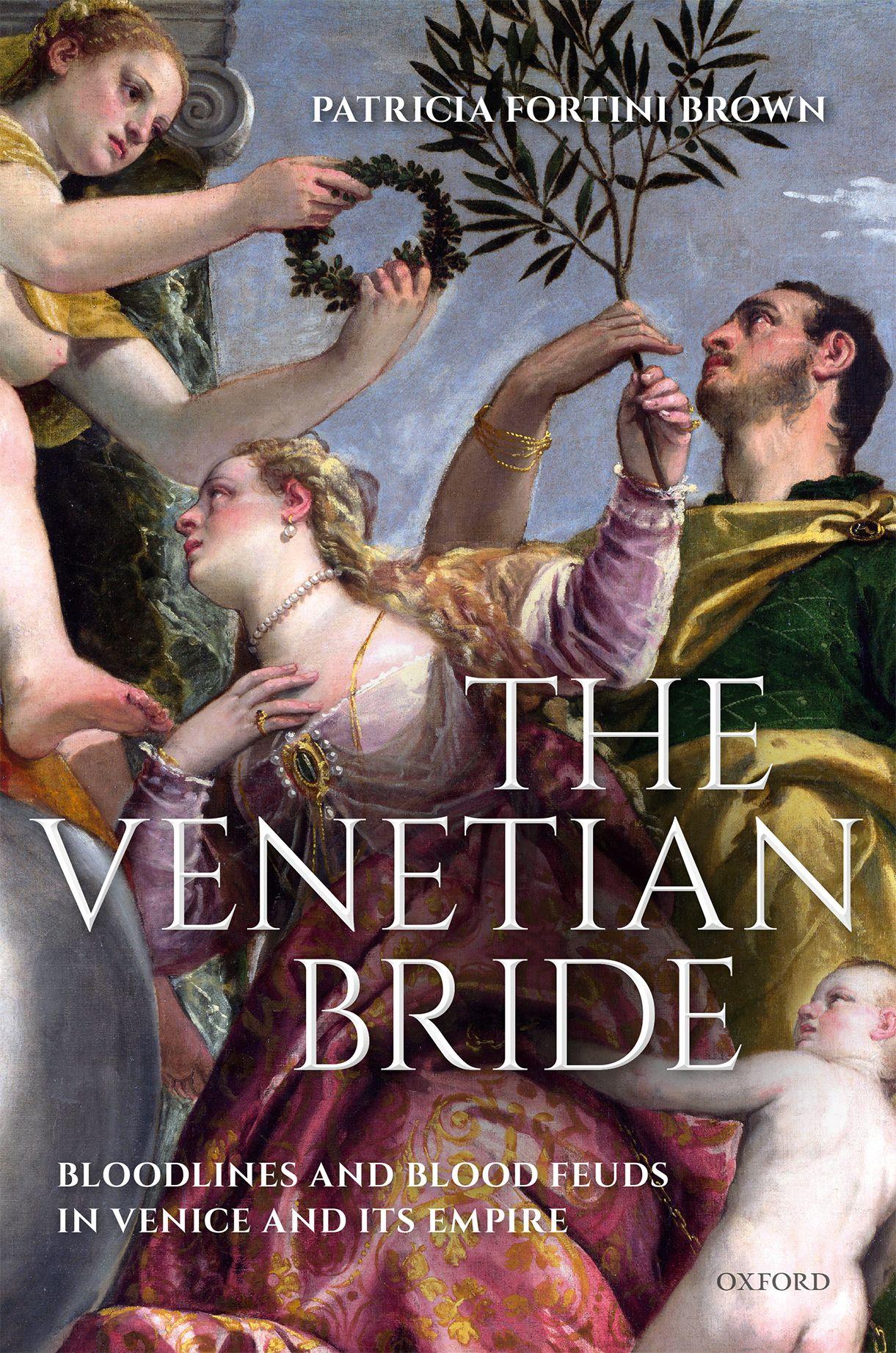
Gian Matteo would play a far more important role in my Private Lives in Renaissance Venice (2004). I became intrigued by his daughter Giulia’s marriage to Count Girolamo Della Torre, a mainland noble with a castle and other properties in the Friuli. A new book, the microhistory of a marriage, was in the making. My working title was The Venetian Bride.
Brides were central to the Venetian experience. Bejewelled brides played a major role in Venetian pageantry, put on display for foreign dignitaries as emblems of the city’s wealth and, as future bearers of sons, of its continual renewal. Indeed, Venice was itself a bride, its identity grounded in a bridal paradox. On the one hand, the city, its mythical foundation on the day of the Annunciation, was identified early on with the Virgin Mary, the mother and bride of Christ, as Venetia-Vergine. On the other hand, in the Festa della Sensa, the annual Marriage to the Sea, the city conveniently switched genders. Here, Venice, as represented by the doge, became a husband, espousing the sea as its bride in a metaphor of its dominion over its maritime empire. Over time, the trope of Venice as Virgin (chaste and undefiled) eventually incorporated a notion of Venice as Venus (sensual and fertile). In sum, the ideal bride.
But then what about Giulia Bembo’s husband, the feudal lord from Venice’s mainland empire? He was the other half of the bridal equation. The Friuli was new terrain for me, and the project entailed a number of trips to Udine to research the Della Torre family archive in the Archivio di Stato and related material in the Biblioteca Comunale. Three books—Edward Muir’s Mad Blood Stirring: Vendetta in Renaissance Italy; Antonio Conzato’s Dai castelli ai corti; and Laura Casella’s I Savorgnan—and a wealth of articles were essential for my understanding of the complex dynamic between the Venetian patriciate, the feudal nobility of the Friuli, and the Holy Roman Empire. But as I carried out my research, the playing
field was expanding both chronologically and spatially. For Gian Matteo’s career as a ‘man of empire’, and Girolamo’s exile to Crete, were other parts of the story.
Following this line of research brought me into contact with Venice’s maritime territories. The publications of Chryssa Maltezou, Maria Georgopoulou, Benjamin Arbel, Monique O’Connell, Lorenzo Calvelli, and Helena Szépe were particularly important for my journey into what was, for me, previously unexplored territory. In the course of two decades of research, I went on to publish several articles on various aspects of the topic, parts of which have been incorporated into this book. More recently, I had the opportunity to review Erin Maglaque’s book, Venice’s Intimate Empire: Family Life and Scholarship in the Renaissance Mediterranean. And I finally accepted the fact that my own book in progress was about more than a bride. It was about the mingling of the bloodlines of two families with contrasting notions of honour and justice in three spatial theaters over three centuries. A study of their lives opened a precious window into a past in which Venetian republican values clashed with the deeply rooted feudal traditions of the mainland. And thanks to an anonymous reader for Oxford University Press, I retitled the book to The Venetian Bride: Bloodlines and Blood Feuds in Venice and Its Empire—a far more accurate description of its contents.
And what happened to the notion of a microhistory? I would refer readers to Thomas Cohen’s masterful definition of the genre in his essay entitled ‘The Macrohistory of Microhistory’. He calls attention to a weariness with ‘the Linguistic turn and the rise of theory’ and the emergence of a desire for what he calls ‘suchness’, defined as ‘palpable reality, as experienced directly and as understood by its inhabitants’. How do we get at it? Through examinations of individual agency, material things, spaces, places, and time. In sum, a deep dive into the archives. Given the fragmentary nature of surviving evidence, we can only hope to piece together a patchwork of experiences that these inhabitants of the historical past—Girolamo Della Torre and Giulia Bembo and their extended families: past, present, and future—might recognize as their own, and to stitch this patchwork into a matrix that comprises the larger world in which they lived. One can never get it exactly right, but one can try to come close.
What is the significance of the marriage of Girolamo Della Torre and Giulia Bembo? I see it as emblematic of the Venetian experience, with the metropole at the center of a fragmented empire: the union of a Terraferma nobleman and the daughter of a Venetian senator, who raised their family in the stato da mar, in the stato da terra, and in Venice itself. And who, beyond that, established a bloodline that would survive the end of the Venetian republic. In sum, a microhistory embedded in a macrohistory.
PART ONE BIRTHRIGHTS
A Future Bride
Antonia Bembo was not blessed by marital good fortune. Daughter of the humanist diplomat Bernardo Bembo, and sister of Pietro, man of letters and later a renowned cardinal, she had married the noble Sebastiano Marcello in June 1493. On the face of things, his prospects were good. An experienced sopracomito (galley captain), he had already served as podestà of Montona (Istria) and castellano and camerlengo of Lepanto. Indeed, he seemed destined to become a prototypical Venetian man of empire. After the marriage, Sebastiano settled down with Antonia for a time, with government positions inside Venice, and Marcella, the first of three daughters, was born in February 1496.1
A New Malady
But soon, disquieting news emerges from Pietro Bembo’s correspondence. In a letter dated 3 December 1498, he consoles a close friend who had recently contracted the morbo francese. He knows how hard this is, because ‘the husband of my sister has been suffering from this malady already for many months, now healthy, now sick, and mostly bad’. He counsels his friend to continue with his treatment until it is complete, even though he may think himself healed.2
Antonia’s husband Sebastiano had fallen victim to a disease of disputed origins that had already been described by the Venetian diarist Marin Sanudo in July 1496, shortly after Marcella’s birth: