The Science of Animal Welfare
Understanding What Animals Want
Marian Stamp Dawkins
Department of Zoology
University of Oxford, UK
1Great Clarendon Street, Oxford, OX2 6DP, United Kingdom
Oxford University Press is a department of the University of Oxford. It furthers the University’s objective of excellence in research, scholarship, and education by publishing worldwide. Oxford is a registered trade mark of Oxford University Press in the UK and in certain other countries
© Marian Stamp Dawkins 2021
The moral rights of the author have been asserted
First Edition published in 2021
Impression: 1
All rights reserved. No part of this publication may be reproduced, stored in a retrieval system, or transmitted, in any form or by any means, without the prior permission in writing of Oxford University Press, or as expressly permitted by law, by licence or under terms agreed with the appropriate reprographics rights organization. Enquiries concerning reproduction outside the scope of the above should be sent to the Rights Department, Oxford University Press, at the address above
You must not circulate this work in any other form and you must impose this same condition on any acquirer
Published in the United States of America by Oxford University Press 198 Madison Avenue, New York, NY 10016, United States of America
British Library Cataloguing in Publication Data Data available
Library of Congress Control Number: 2020949499 ISBN: 978–0–19–884898–1 (hbk.) 978–0–19–884899–8 (pbk.)
DOI: 10.1093/oso/9780198848981.001.0001
Printed and bound by CPI Group (UK) Ltd, Croydon, CR0 4YY
Links to third party websites are provided by Oxford in good faith and for information only. Oxford disclaims any responsibility for the materials contained in any third party website referenced in this work.
The welfare of animals must depend on an understanding of animals and one does not come by that understanding intuitively: it must be learned.
P. B. Medawar (1972) The Hope of Progress
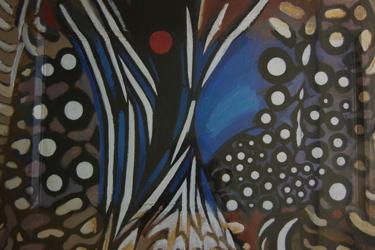
I would like to thank Jonathan Kingdon for allowing me to use part of one of his paintings for the cover of this book. The full painting shows the red eye and striking plumage of a male vulturine guinea fowl as a female might see him, with the margins suggesting how adult plumage derives from juvenile camouflage.
Preface
I wrote this book for two reasons. One was to clarify what is meant by animal welfare in a way that would be accessible to anyone, whatever their views on animals and whether they are scientists or non-scientists. The other was to put an animal’s point of view at the centre of how we assess their welfare.
The book is not intended either as a textbook or as a campaigning book. It is more a guide for anyone who is interested in animals and how their welfare can best be assessed scientifically. There are full references to the scientific literature so I hope that it will be useful to scientists and to students, particularly in biology and veterinary medicine, but I also hope that it is self-contained enough to be clear to everyone else, whatever their background or previous knowledge. My aim is to show how science can be used to discover what is best for animal welfare, but to do so in a way that leaves it up to each individual reader to decide for themselves how the facts we have discovered should be used to change, or not change, the way animals are treated.
I would like to thank numerous colleagues for discussions that have helped in the writing of this book, including Christine Nicol, Sabine Gebhardt-Henrich and Edmund Rolls. Conversations with David Wood-Gush are still vividly remembered.
One small point. I have used the term ‘animal’ throughout the book to mean ‘nonhuman animal’. Of course we humans are animals too, but to keep saying ‘non-human’ gets tedious after a while and makes sentences clumsy. So please take the term ‘animal’ as a convenient shorthand, not as a statement about our wider relationship to the rest of the animal kingdom.
M.S.D.
Oxford October 2020
What Is Animal Welfare?
Fifty years ago there was no recognized science of animal welfare. There was just a collection of vets, ethologists, geneticists and other people scattered around the world who were linked by the belief that animal welfare was important and deserved to be taken seriously as a science in its own right. With such diverse starting points, a single definition of ‘welfare’ was unlikely to emerge easily.
What is more surprising is that now, with animal welfare science an established discipline, with its own journals and textbooks and international societies, there is still no agreed definition of ‘welfare’ or a consensus on how to improve it (Green and Mellor 2011; Ede et al. 2019; Weary and Robbins 2019; Polgár et al. 2019). Some people, for example, argue is that the only way to guarantee the welfare of an animal is to make its environment as ‘natural’ as possible, whereas others will claim that a natural life does not guarantee good welfare and that animals’ needs can be better met in a controlled, if artificial, environment. Each side here is using a different definition of ‘welfare’, different methods for assessing it and coming up with a completely different answer as a result. About the only thing that commands a measure of universal agreement is that welfare is very complex and that assessing it requires evidence from many different sources (Mason and Mendl 1993; Fraser 2008; Mellor 2016a). But from a practical point of view, this is clearly not good enough. For something as important to many people as animal welfare, and certainly for trying to make improvements to the lives of animals, we need to know what welfare is, not just that it is difficult to define.
We therefore start our exploration of animal welfare (or ‘well-being’ as it is sometimes called) by trying to say exactly what it is we are talking about. Furthermore, this needs to be done in terms that everyone—farmers, vets, politicians, philosophers, scientists and the general public—can all understand and buy into. Animal welfare may now be a scientific discipline but it is one that touches the rest of the world very directly. People everywhere therefore want access to the important advances that are being made in understanding the worlds of animals.
In this chapter, we will see that there are two main reasons why people disagree about what the term ‘animal welfare’ should mean. One is the multiplicity of different ways that are now used to measure ‘welfare’, including physiology, health, hormone levels, behaviour, immunology and choice tests, which may all give conflicting answers. This leaves people unable to agree on which ones to rely on and which ones deserve top priority in the definition of ‘good welfare’. The other is the widespread desire to put subjective
experiences—that is, the way animals consciously experience pain, pleasure and suffering—at the core of the definition. Consciousness, however, is difficult enough to study in humans and even more so in other species, which means that making conscious feelings an essential part of the definition of welfare has inevitably lead to controversy. We can refer to these two issues as the complexity problem and the consciousness problem, respectively. Neither need prove fatal to a universally agreed view of what good welfare is, but before we can arrive at an agreed definition of animal welfare, we need to deal with each of them in turn.
The complexity problem
Animal welfare does not lack ‘measures’ of welfare. Among the many ways of measuring welfare that have been proposed we find: longevity, surface injuries, immune function, increase in activity, decrease in activity, H-index (a measure of behavioural diversity), sleep, play, stereotypies, exploration, response to novel objects, approach distance to humans, choice, grooming of self, grooming of others, telomere length, skin temperature, eye temperature, hormone levels, pupil size, cognitive bias, time to build a nest and running speed. There are many more. The problem is not too few measures of welfare but how to make sense of the many that are available and which ones can be most reliably used to define good welfare.
Early on in the development of animal welfare science, the first attempts to measure animal welfare acknowledged that this was indeed a very complex problem and that the best approach was to make as many different measures as possible and hope that a composite picture would somehow emerge (Dawkins 1980; Broom and Johnson 1993). This was a bit like being unable to get into a room but looking in through many different windows, as Jane Goodall (1990) put it. The different windows were things like measuring stress hormones, weighing adrenal glands, looking for unusual behaviour, assessing the animal’s health and so on. It was soon realized, however, that these different measures did not always show the same thing (Mason and Mendl 1991) and that what seemed to be going on in the room depended on which window you looked through. For example, animals might show a rise in corticosteroid hormone (sometimes called ‘stress’ hormone) not just when they were in an obviously stressful situation such as being chased by a predator but also when they were anticipating food, having sex or given access to a preferred environment (Rushen 1991).
A widely adopted solution of how to deal with such ‘contradictory’ measures is to make as many different measurements as possible and then take a balanced consensus view of all of them. For example, Welfare Quality® (2009, 2018), a European-wide project with the ambitious aim of defining welfare for different farmed species, involves a series of detailed protocols for assessing four key welfare area of good housing, good feeding, good health and appropriate behaviour. For each area there are 50 or more measurements, which are then combined into a final score of ‘excellent’, ‘enhanced’, ‘acceptable’ or ‘not classified’ (Buijs et al. 2017). Welfare is thus defined as the weighted sum of its many component parts. Of course, the final answer depends critically on how
What is animal welfare? 5
much weight is given to each component, so the issue of how to combine or reconcile the different measures does not go away. The room still looks different depending on which window you look through most often.
So the first requirement for a universal definition of animal welfare is that it must somehow be able to accommodate the wide variety of different ways that people now have of measuring welfare. It must also justify the priority given to these different measures in arriving at the final combined answer of what good welfare actually is. But before we can do that, we have to deal with an even greater problem that has also got in the way of a universally agreed definition of animal welfare—the issue of what animals consciously feel.
The consciousness problem
The belief that non-human animals have the capacity to consciously feel pain and pleasure (often referred to as ‘sentience’) is what for many people distinguishes animal welfare from, say, the care of plants or the curation of valuable works of art (Singer 1976; Midgley 1983; Rollin 1989). The central importance of sentience in shaping attitudes to animals is often traced back to Jeremy Bentham’s (1789) famous statement about dogs and horses: ‘The question is not, Can they reason? nor Can they talk? but, Can they suffer?’ More recently, Singer (1976) and other philosophers have argued that sentience— particularly the capacity to suffer—should be the deciding factor in our concern for animals, and many biologists have also argued for defining welfare in terms of what animals consciously feel (Dawkins 1990; Duncan 1993; Webster 1994; Fraser 2008; Broom 2014; Mellor 2019). Across the world sentience is now used as the basis of animal welfare legislation, a notable example being the European Union’s (2009) Lisbon Treaty, which explicitly states that animals are sentient beings. Many people take the view that it is so obvious that non-human species consciously experience feelings of pleasure, pain and suffering that the same mixture of intuition, guesswork and a willingness to give the benefit of the doubt that we use to conclude that other people are conscious can be used, suitably adjusted for biological differences, to conclude the same for other species as well (e.g. Panksepp 1998, 2011; Balcombe 2006; Bekoff 2007; UrquizaHaas and Kotrschal 2015).
But this growing assumption of sentience in other animals only makes it more difficult to agree on a definition of animal welfare that suits everyone. Consciousness is the most elusive and difficult to study of all biological phenomena (Koch 2004; Blackmore and Troscianko 2018). Even with our own consciousness, we still do not understand how the lump of nervous tissue that makes up our brain gives rise to private subjective experiences—such as a pain that hurts us, a feeling of cold that is unpleasant or a sensation of seeing a red light that feels like anything at all. And because we do not understand how the human brain makes us conscious, we do not know what to look for in other species to decide if they, too, have conscious experiences like us. Perhaps they do, but how would we know? And what if the ‘feelings’ of a fish were so different from those of a dog that we would find it difficult to bring them into the same definition?
The past 20 years have seen an explosion of interest in trying to solve what has come to be known as the hard problem of consciousness (Chalmers 1995) and there are now a number of widely held theories about how it might be possible to recognize when a human brain switches from unconscious to conscious processing, which we will discuss more fully in Chapter 8. We have brain imaging techniques that effectively show us what is going on inside a living, thinking brain and a far greater knowledge than ever before about what different parts of the brain are doing as we go about different tasks, recall memories and slip in and out of consciousness. All this new information should have made it easier to determine which other species have conscious experiences more or less like ours. It would seem obvious that the better we understand what brain mechanisms make us conscious, the better equipped we would be to judge whether other species have similar mechanisms, but in fact just the opposite seems to have happened. Depending on which theory of consciousness you choose to believe, it is now possible find an extraordinary range of conclusions being drawn about which animals are conscious. At one extreme, we find claims that almost all of them are, to, at the other, that none of them are. Proposals for membership of the ‘consciousness club’ include that it is for humans only (Macphail 1987), for language users only (Rosenthal 1993, 2005), for humans and apes only (Bermond 2001), for all mammals (Boly et al. 2013), for mammals and birds (Seth et al. 2005), for mammals, birds and reptiles but not fish or amphibia (Cabanac et al. 2009), for all vertebrates including fish (Denton et al. 2009; Mashour and Alkire 2013; Braithwaite 2010; Sneddon 2019), for all vertebrates and a few invertebrates such as octopuses (Tye 2017), for many invertebrates especially insects and crustacea (Barron and Klein 2016; Bronfman and Ginsberg 2016) or that it should be for all living things, including plants (Margulis 2001). It has even been claimed that consciousness is everywhere, even in inanimate objects (Chalmers 2016; Kastrup 2018). This lack of agreement among scientists about animal consciousness or even which animals are capable of having conscious feelings at all leaves the study of animal welfare at risk of looking vague, unscientific and unable to agree on its own core concept. Seeing what appears to be the inability of animal welfare science to understand animal consciousness, people outside the scientific community feel entitled to argue that their views are as good as anyone else’s, including, perhaps particularly, those of scientists. The problem of how to understand what animals feel arouses strong and divergent opinions well outside animal welfare science itself. As a consequence, ‘animal welfare’ has come to means very different things to different people, united by the belief that it is about what animals feel but divided by how and even whether this can be studied scientifically. Since finding a universally agreed definition of animal welfare has been made so difficult by the widespread desire to define it largely, if not exclusively, in terms of what animals feel, some animal welfare scientists have started to think that the best way to make progress is to use a definition that does not depend on conscious feelings at all (Arlinghaus et al. 2009; Würbel 2009; Dawkins 2012). This view does not deny consciousness to animals. On the contrary, it allows for the strong possibility that many of them do have vivid conscious experiences, perhaps very like our own, a possibility that we will discuss further in Chapter 8. All it says is that, for now, we need a definition of animal welfare that everyone, whatever their views on animal consciousness, can agree
What is animal welfare? 7 on. A possible way forward, therefore, is to define animal welfare without any mention of consciousness, sentience or subjective experiences whatsoever. In that way, everyone is free to have their own views about consciousness in other species, but consciousness does not form part of the definition of animal welfare itself. This has the important consequence that we do not have to have solved the hard problem of consciousness—the hardest problem in the whole of biology—before we can have a scientific study of animal welfare. Animal welfare without consciousness allows for the possibility of consciousness in other species but avoids the confusion and controversies that are created by trying to put conscious feelings into the definition itself (Dawkins 2015, 2017).
The two main reasons, then, why it has been so difficult to arrive at a definition of ‘good welfare’ that everyone can agree on are the complexity problem (so many different measures of welfare) and the consciousness problem (subjective feelings). We will now see that there is a relatively simple definition of animal welfare that can provide solutions to both of these problems and at the same time gives a solid framework for a scientifically based science of animal welfare. This definition has the ability to make sense of the many different ‘measures’ of welfare that are now in use and also avoids (while not denying) the possibility that animals have conscious experiences. It has the further advantage that it is very simple and so can be easily understood by scientists and non-scientists alike.
A basic definition of animal welfare
‘Welfare’ means literally ‘going well’ (it has the same two components as ‘farewell’). In nature, success is measured in terms of survival and producing offspring, so an animal that is ‘going well’ is one that is not just alive now but is on course for still being alive in the future, at least for long enough to reproduce and pass its successful traits on to the next generation. The essence of good welfare is therefore being currently healthy and also having good prospects for future health. In that simple sentence lies the key to defining animal welfare.
Let us start with current health, which is universally accepted as the foundation of good animal welfare. For example, the Five Freedoms (Brambell 1965; Webster 1994), a widely used system for assessing welfare around the world, lists freedom from disease and injury as a key indicator of welfare. This is emphasized just as strongly in more recent versions such as the Ten General Principles (OIE 2012; Fraser et al. 2013), the Five Provisions or Domains (Mellor 2016a, 2016b) and the Four Principles put forward by the European Welfare Quality assessment (Welfare Quality® 2009). At least half of the criteria put forward by these and other welfare schemes are specifically aimed at maintaining animal health—such as making sure that animals have adequate food and water, and are kept in safe comfortable environments in which they are not injured. So there is no controversy over the importance of the current state of an animal’s health to its welfare. We can, in line with all current thinking, list good health as the first part of the definition of animal welfare.
Indeed, many of the most outstanding welfare issues are regarded as serious precisely because they involve obvious physical injury and ill-health (Arlinghaus et al. 2009;
Würbel 2009; Dawkins 2012). For example, feather-pecking in laying hens (Gunnarsson et al. 1999) and tail-biting in pigs (Taylor et al. 2012) can lead to serious injury and even death. Death, injury and disease are clear health outcomes that can be measured in objective, scientific ways and so using them brings ‘welfare’ easily into the realm of scientific measurement and hypothesis testing.
However, most people would also argue that there is more to good welfare than just physical health and so, while current health status is important, it cannot, on its own, fully define welfare. Physical health tells us how well an animal’s body is functioning now and perhaps about its likely health prospects for the future. It does not tell us how the animal itself is responding to the world around it, whether, for example, it is searching for something it cannot find (deprivation) or attempting to escape from something it cannot avoid. In other words, physical health alone does not give us the animal’s own point of view (Dawkins 1990). It does not tell us what the animal itself wants.
‘What the animal wants’ is the second key component of a definition of animal welfare. Although it may sound a rather odd way of putting it, on closer examination ‘what animals want’ actually puts into understandable words what most people mean when they talk about good welfare. For example, if someone expresses concern about an animal kept in a zoo on the grounds that it is not free to carry out its natural behaviour, what they really mean is that the animal is unable to do many of the behaviours it wants to do and would do if it could. Or, if they describe a bird fluttering against the bars of its cage as ‘suffering’, what they mean is that here is a bird that wants to escape. Describing these situations in terms of what animals want (or do not want) avoids the pitfalls of using words like ‘deprived’, ‘suffering’ and so on that describe situations as we humans might see them. It asks the animals how they see things and points us clearly to how we can find out, as we will see in Chapter 4.
Using the very down-to-earth phrase ‘what animals want’ also helps us deal with the two problems with defining animal welfare that we discussed earlier in this chapter. It helps with the complexity problem because finding out what the animals themselves want allows us to validate a whole range of measures such as hormone levels, skin temperature or activity levels that, on their own, are difficult to interpret in welfare terms (Boissy et al. 2007; Dawkins 2008; Mendl et al. 2010). Finding out what the animals themselves want allows us to categorize these in terms of whether the animal regards a given situation as positive (to be approached and repeated) or negative (to be avoided). This positive–negative categorization is sometimes called ‘valence’ (Mendl et al. 2010) and, as we will see in the following chapters, is key to the correct interpretation of the different measures of welfare that have been proposed. Many questions, such as whether animals should be able to do all their natural behaviour or what level of stress hormone indicates poor welfare, immediately become much more tractable, once they are subjected to the test of what the animal itself wants. Positive valence is key to good welfare.
‘What animals want’ also provides a way of dealing with the consciousness problem that makes it so difficult for people with different views on animal sentience to agree on a definition of welfare. By being animal-centred but at the same time not making any assumptions, one way or the other, about conscious experiences in animals, it provides
Figure 2.1 How to put a variety of emotions into one diagram. The ‘core affect’ representation describes each emotion in two dimensions - valence (whether it is positive or negative) and intensity (how strong it is). The right half of the diagram shows positive emotions, associated with what is pleasurable or rewarding, while the left half shows negative emotions, associated with what is aversive or punishing. The core affect was originally developed to describe human emotions but is increasingly used in animal welfare science to describe emotions in animals. (Redrawn from Mendl et al. 2010).
a unifying definition that most people can subscribe to. The value of this approach can best be illustrated by showing how ‘what animals want’ relates to one of the most important recent developments in animal welfare science, namely, the use of the ‘affective state’ framework (Mendl et al. 2010; Anderson and Adolphs 2014).
‘Affective state’ is a concept originally developed for describing human emotions (Russell and Barrett 1999; Russell 2003) and involves classifying all emotions along two dimensions: valence and arousal (Figure 2.1). Valence, as we have seen, refers to whether an emotion is positive or negative, so happiness and pleasure would have positive valence, while fear, anxiety and boredom would have negative valence (Figure 2.1). Arousal, on the other hand, indicates how strongly that emotion is felt—its intensity—and so can be a feature of either positive or negative emotions.
As applied to humans, affective state explicitly includes subjective feelings as part of the description of an emotion, so a positive emotion would be one that is consciously experienced as pleasurable, while a negative emotion such as fear or anger would be consciously experienced as aversive or unpleasant. However, in the human literature, it is also fully recognized that all emotions—positive and negative—have three separate components—the behavioural expression of that emotion, the physiological changes that occur, and the subjective feelings that may or may not accompany that behaviour and physiology (Keltner et al. 2013; Oatley and Jenkins 1996). Usually, of course, all
three components occur together. When we get angry, we start shouting (behaviour), become red in the face (physiology) and feel furious (conscious experience). When we become fearful, we prepare to escape (behaviour), our hearts start racing (physiology) and we experience fear (subjective experience). But these components do not always go together and the conscious experience of an emotion can be, and often is, dissociated from the behavioural and physiological changes that normally accompany it. For example, fear-reducing drugs that alter the way people behave do not necessarily make them subjectively feel any less fearful (Le Doux 2014). People on such medication can appear calmer on the outside and even show a reduction in heart rate and other physiological indicators of fear but they still say they feel as anxious and fearful as ever (Le Doux and Hofmann 2018). This appears to be because, in humans, there are two separate brain circuits involved in fear: one involving the amygdala that controls the behavioural and physiological response to threats, and a completely separate cortical circuit that underlies the conscious experience of fear. Conscious feelings of fear do not require the amygdala (Anderson and Phelps 2002), and medication that targets the amygdala does not necessarily relieve subjective feelings of fear (LeDoux and Pine 2016; LeDoux and Hofmann 2018).
But difficult though it is to make the distinction between the behavioural, physiological and subjective components of emotion in humans, when it comes to applying the same ideas to non-human animals, the distinction is often lost altogether. Very confusingly, different researchers differ on whether or not they are talking about conscious feelings. For example, Mendl et al. (2010) carefully say that the concepts of affect, emotion and mood do not imply anything, one way or the other, about conscious feelings when transferred to animals. They write: ‘Of course, even if we can use measurable components of emotional responses to locate an animal’s position in core affect space, we cannot be certain that they experience the conscious components too.’ They then go on to describe animal emotions as states that ‘may or may not be experienced consciously’ (p. 2896).
On the other hand, Ede et al. (2019) begin a recent review of cattle welfare by saying ‘we use the words “affect”, “emotion” and “feeling” synonymously’, thus implying that for them ‘affective state’ does imply conscious feelings. Many papers on animal welfare use words such as ‘emotion’, ‘optimism’, ‘pessimism’, ‘fear’ and ‘anxiety’ in ways that also blur the distinction between observable behaviour and private subjective feeling, leaving the reader unclear whether conscious feelings are or are not implied. Even with disclaimers, the words that are used still carry with them the message of conscious experience because in everyday language, that is the message they are used to convey (LeDoux 2014).
The ambiguity about conscious feelings that is, often quite inadvertently, introduced into discussions of animal welfare by the use of the affective state language can be easily overcome by substituting ‘having what it wants’ for an animal with positive affect and ‘not having what it wants’ or ‘having what it does not want’ for negative affect. ‘Valence’ is directly equivalent to ‘what the animal wants’, but ‘valence’ too can be used in different ways, so tends to increase rather than to reduce ambiguity. Whereas Mendl et al. (2010) say that valence does not necessarily imply any subjective experiences, Webb et al. (2019)
What is animal welfare? 11
explicitly equate valence with ‘subjective experience of pleasantness or unpleasantness’ (p. 62). Furthermore, if you say ‘valence’ to someone who is not a scientist, they will probably not know what you are talking about. Say ‘what the animal wants’ and they will immediately see the point. ‘Valence’ sounds good but what it actually means is what the animal itself wants.
There is one further point that needs to be clarified. The term ‘wanting’ is already used in a quite specific way by people who study the way animals learn. When an animal successfully learns a task, such as pressing a lever to get a reward of a piece of food, a whole chain of events happens (Berridge and Robinson 1998). First, the animal has to ‘want’ something it does not have—that is, it must be motivated to obtain the food. Second, the animal has to ‘like’ what it gets—that is, it must find the food pleasurable or it would not want to repeat the experience. Third, it has to learn how to get what it wants by associating its own behaviour with the subsequent reward of obtaining the food. Usually, of course, all this happens smoothly as a unified process of learning a new task. Animals ‘want’ what they ‘like’ and ‘like’ what they ‘want’. But not always. We all know that it is possible to want something and then not like it when you get it and, as confirmation of this intuition, it is now known that ‘wanting’ and ‘liking’ are in fact associated with different brain mechanisms (Anselme and Robinson 2016). However, for the purposes of this book, ‘what animals want’ will be taken to include both. In other words, an animal that has ‘what it wants’ is one that is in a state where it ‘likes’ rather than ‘dislikes’ its current situation (Boissy et al. 2007; Webb et al. 2019) and is not highly motivated to obtain something it wants but cannot have (or get away from something it wants to avoid) (Dawkins 1990; Gygax 2017). As we will see in subsequent chapters, we can then establish what animals want by discovering what they find rewarding (i.e. what they like enough to learn to obtain) or punishing (i.e. what they dislike enough to learn to avoid). Thus, although ‘liking’ and ‘wanting’ are distinct aspects of reward, in the context of animal welfare, it is important to establish both that animals have what they want and that they like what they have.
In the rest of this book, we will use the definition of animal welfare as being a state where an animal is both healthy and has what it wants, to include liking what it has (Dawkins 2008; Gygax 2017). By applying this definition to different areas of animal welfare science, we will see that it has the ability to provide a meaning to ‘good welfare’ that can be easily understood by everyone, provides a simple but comprehensive guide to how to improve animal welfare in practice and can accommodate a wide range of views on consciousness in non-human animals. It thus aims to be the universally agreed definition of welfare that animal welfare science has so far been missing.
How ‘health and what animals want’ relates to other definitions
‘Health and what animals want’ is not a new definition of welfare. It is a condensed version of many current definitions that are already in use. For example, the first three of
the Five Freedoms (FAWC 1979, 2009) refer to keeping animals healthy—freedom from hunger and thirst, freedom from discomfort, and freedom from injur y and disease— while the remaining two refer to giving them what they want. Freedom 4 is freedom to perform most normal behaviour and Freedom 5 is freedom from stress. The implication behind these last two freedoms is that animals want to perform their natural behaviour and do not want to be stressed, which can both be tested by finding out what the animals themselves really want. Welfare Quality® (2009) lists ‘appropriate behaviour’ as one of its Welfare Principles, leaving a question over what is meant by ‘appropriate’, which can be best answered by asking the animals themselves what it is they want to do. All that the definition of ‘health and what animals want’ does is to clarify what many people have already said about welfare and to point clearly in the direction of what needs to be done to improve it.
‘What animals want’ is also in line with the recent trend to move away from defining welfare negatively as absence of suffering to defining it more positively (Boissy et al. 2007) so that animals have a life worth living (LWL) or, even better, a positively ‘good life’ (FAWC 2009; Wathes 2010; Green and Mellor 2011; Webb et al. 2019). What constitutes a good life from an animal’s point of view can be made real by practical research on what they need to keep them healthy but also on what they demonstrate to us that they want. It can even be used by those who have suggested that animal welfare is not just a scientific concept but should also include keeping animals in ways that the public believes they should be kept (McInerney 1991; Yeates 2017). Practical information on what keeps animals healthy and what they want is the best way to ensure that animal interests are not overruled by well-meaning but erroneous public views on how animal should be kept.
Conclusions
In this chapter, we have seen that many of the problems of defining welfare come partly from the fact that there are now so many different ‘measures’ of welfare and partly from persistent difficulties of trying to incorporate conscious feelings into the definition. We have also seen, however, that defining welfare in terms of two basic elements of welfare— health and what animals want—is a way of addressing both of these problems by focusing on what is measurable and what needs to be tested. Defining animal welfare without explicitly including subjective feelings does not preclude the possibility that one day, when we understand consciousness better than we do now, we can then include conscious feelings in an ultimate definition of welfare, and it certainly does not rule out the idea that many non-human animals are able to consciously experience pain, pleasure, frustration and a host of other positive and negative emotional states. It just points out that trying to include in a definition of welfare something as elusive and little-understood as conscious feelings has led to confusion and an inability to arrive at a definition of welfare on which everyone can agree. This is not good for animal welfare science, and it is not good for animals or the prospects of improving their welfare. It is important to start with what we can measure and what we can agree on.
is animal welfare?
‘Health and what animals want’ also has the advantage that it includes at least part of what everyone, both inside and outside science, already seems to mean by welfare even though they may not put it in quite these terms. It fits comfortably with widely used welfare schemes such as the Five Freedoms, the 12 principles and the Five Domains, and even lends itself to concepts such as quality of life and positive welfare. In fact, as we will see in more detail in the following chapters, it does not just fit in with such ideas; it underpins them, validates them, gives them concrete reality and even clears up some of the ambiguity that they often come with. Outside science, too, ‘health and what animals want’ is readily understood by everyone from pet owners to farmers to politicians and scientists. It gives people a chance to see what evidence about welfare actually looks like and how necessary that evidence is to making sure we have really improved the welfare of animals.
Neither component is sufficient on its own. Health without what animal want misses a key part of what many people mean by welfare (Dawkins 2008), while, as we shall see next, what animals want on its own does not ensure good welfare either (Fraser and Nicol 2011; Franks 2019). Welfare assessment needs both, not just one or the other. Together, they form a powerful partnership for defining animal welfare. But the very fact that each partner brings a different perspective itself raises the issue of how those different perspectives can be resolved when they point in different directions. Before we get on to showing just how powerful the combination of ‘health’ and ‘what animals want’ can be together, we have to understand what happens when they conflict.