Flexible and Focused: Teaching Executive Function Skills to Individuals with Autism and Attention Disorders (Critical Specialties in Treating Autism and other Behavioral Challenges) 1st Edition, (Ebook PDF)
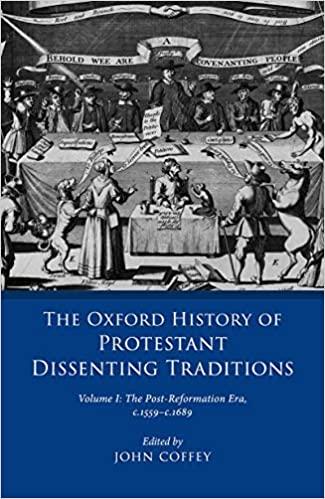
OXFORD HISTORY OF PROTESTANT DISSENTING TRADITIONS, VOLUME I
The Oxford History of Protestant Dissenting Traditions, Volume I : The Post-Reformation Era, 1559-1689, edited by John Coffey, Oxford University Press USA - OSO, 2020. ProQuest Ebook Central, http://ebookcentral.proquest.com/lib/nottingham/detail.action?docID=6207080. Created from nottingham on 2021-06-05 02:16:58.
THE OXFORD HISTORY OF PROTESTANT DISSENTING TRADITIONS
General Editors: Timothy Larsen and Mark A. Noll
The Oxford History of Protestant Dissenting Traditions, Volume I The Post-Reformation Era, c.1559–c.1689
Edited by John Coffey
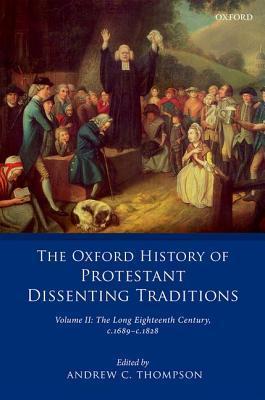
The Oxford History of Protestant Dissenting Traditions, Volume II The Long Eighteenth Century, c.1689–c.1828
Edited by Andrew C. Thompson
The Oxford History of Protestant Dissenting Traditions, Volume III The Nineteenth Century
Edited by Timothy Larsen and Michael Ledger-Lomas
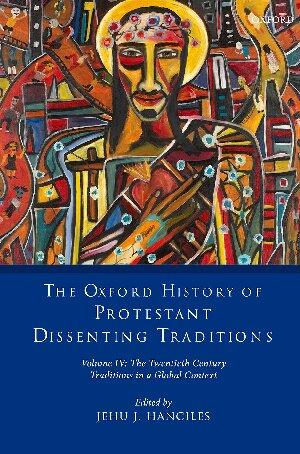
The Oxford History of Protestant Dissenting Traditions, Volume IV The Twentieth Century: Traditions in a Global Context
Edited by Jehu J. Hanciles
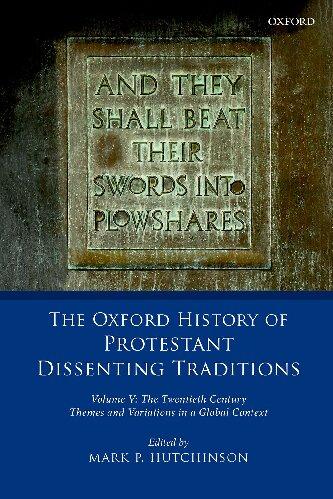
The Oxford History of Protestant Dissenting Traditions, Volume V The Twentieth Century: Themes and Variations in a Global Context
Edited by Mark P. Hutchinson
The Oxford History of Protestant Dissenting Traditions Volume
The Post-Reformation Era, c.1559–c.1689
Edited by JOHN COFFEY
1
Great Clarendon Street, Oxford, OX2 6DP, United Kingdom
The moral rights of the authors have been asserted
First Edition published in 2020
Impression: 1
All rights reserved. No part of this publication may be reproduced, stored in a retrieval system, or transmitted, in any form or by any means, without the prior permission in writing of Oxford University Press, or as expressly permitted by law, by licence or under terms agreed with the appropriate reprographics rights organization. Enquiries concerning reproduction outside the scope of the above should be sent to the Rights Department, Oxford University Press, at the address above
You must not circulate this work in any other form and you must impose this same condition on any acquirer
Published in the United States of America by Oxford University Press 198 Madison Avenue, New York, NY 10016, United States of America
British Library Cataloguing in Publication Data Data available
Library of Congress Control Number: 2020934336
ISBN 978–0–19–870223–8
Printed and bound in Great Britain by Clays Ltd, Elcograf S.p.A.
Links to third party websites are provided by Oxford in good faith and for information only. Oxford disclaims any responsibility for the materials contained in any third party website referenced in this work.
Acknowledgements
A substantial work like this is a collaborative project, the product of many hands. The series was conceived in the minds of Tim Larsen and Mark Noll, and I am grateful to them for inviting me to edit Volume I. It exemplifies the biblical maxim that the first shall be last, but with its publication, the series is now complete. Throughout the long wait, Tim and Mark have provided constant support and expert guidance. Over the past few years, the twenty-three contributors have displayed a range of qualities, including professionalism, patience, enthusiasm, and collegiality. I owe special thanks to those who delivered first and waited longest, and to those who stepped in during the later stages of the project. At OUP, Tom Perridge and Karen Raith have always been on hand to offer prompt and wise advice. Our copy-editor Camille Bramall read the manuscript with great care and attention, and we are also indebted to the team at SPi Global led by Bharath Krishnamoorthy. I have been editing this volume while working with N.H. Keeble, Tom Charlton, and Tim Cooper on the most prolific of all dissenting divines, Richard Baxter. Our major OUP edition of Baxter’s memoir, Reliquiæ Baxterianæ, has come to completion at the same time as the Oxford History, and I have benefited enormously from discussions with Neil, Tom, and Tim. My Leicester research students have also been valued conversation partners on the history of Dissent. Finally, I am thankful to (and for) my family, especially Cate, who teaches some of this history herself, and knows the things that matter.
John Coffey
Leicester January 2020
The Oxford History of Protestant Dissenting Traditions, Volume I : The Post-Reformation Era, 1559-1689, edited by John Coffey, Oxford University Press USA - OSO, 2020. ProQuest Ebook Central, http://ebookcentral.proquest.com/lib/nottingham/detail.action?docID=6207080. Created from nottingham on 2021-06-05 02:16:58.
PART I. TRADITIONS WITHIN ENGLAND
1. Presbyterianism in Elizabethan and Early Stuart England 41 Polly Ha
2. Presbyterians in the English Revolution 55 Elliot Vernon
3. Presbyterians in the Restoration 73 George Southcombe
4. Congregationalists 88 Tim Cooper
5. Separatists and Baptists
Michael A.G. Haykin
6. Early Quakerism and its Origins
Ariel Hessayon
PART II. TRADITIONS OUTSIDE ENGLAND
7. The Dutch Republic: English and Scottish Dissenters in Dutch Exile, c.1575–1688 163 Cory Cotter
8. Scotland
R. Scott Spurlock
9. Ireland
Crawford Gribben
10. Wales, 1587–1689
Lloyd Bowen
11. Dissent in New England
Francis J. Bremer
12. Colonial Quakerism
Andrew R. Murphy and Adrian Chastain Weimer
13. Dissent in the Parishes
W.J. Sheils
14. Dissent and the State: Persecution and Toleration
Jacqueline Rose
15. Dissent Empowered: The Puritan Revolution
Bernard Capp
16. The Print Culture of Early Nonconformity: From Martin Marprelate to Reliquiæ Baxterianæ
N.H. Keeble
17. The Bible and Theology
19. Sermons and Preaching
David J. Appleby
List of Contributors
Rachel Adcock is a Lecturer in English at Keele University. Her publications include Baptist Women’s Writings in Revolutionary Culture, 1640–80 (2015), Flesh and Spirit: An Anthology of Seventeenth-Century Women’s Writing (2014), and several articles on women and dissenting culture, particularly women’s textual participation in dissenting networks. She is currently editing The City Heiress and The Roundheads for The Cambridge Edition of the Works of Aphra Behn, and researching a new project on dissent, ritual, and memory.
David J. Appleby is a Lecturer in Early Modern British History at the University of Nottingham. He is author of Black Bartholomew’s Day: Preaching, Polemic and Restoration Nonconformity (2007), and has written widely on preaching, audiences, and Nonconformity. David is a member of the Arts and Humanities Research Council-funded Civil War Petitions project, and (with Andrew Hopper) has recently co-edited Battle-Scarred: Mortality, Medical Care and Military Welfare in the British Civil Wars (2018). He is an adviser to the National Civil War Centre, and is currently writing a history of the Civil Wars for I.B. Tauris’ Short Histories series.
Lloyd Bowen is Reader in Early Modern History at Cardiff University. He has published widely on politics, religion, and society in sixteenth- and seventeenth-century Wales, including The Politics of the Principality: Wales, c.1603–42 (Cardiff, 2007). He also works on the culture of British royalism during the civil wars and is a Co-Investigator on the AHRC-funded project, ‘Conflict, Welfare and Memory During and After the English Civil Wars, 1642–1710’.
Francis J. Bremer is Professor Emeritus of History at Millersville University of Pennsylvania and Editor of the Winthrop Papers for the Massachusetts Historical Society. He has published sixteen books on puritanism in the Atlantic World, including John Winthrop: America’s Forgotten Founding Father (2003); Building a New Jerusalem: John Davenport, a Puritan in Three Worlds (2012); and First Founders: American Puritans and Puritanism in the Atlantic World (2012). His most recent work is Lay Empowerment and the Development of Puritanism (2015). In 2020 Oxford University Press will publish ‘. . . One Small Candle’: The Story of the Plymouth Puritans and the Beginning of English New England
Bernard Capp is Emeritus Professor of History at the University of Warwick, and an FBA. His publications include England’s Culture Wars. Puritan Reformation and its Enemies in the Interregnum, 1649–1660 (2012), The Ties
that Bind. Siblings, Family and Society in Early Modern England (2018), and ‘The Religious Marketplace: Public Disputations in Civil War and Interregnum England’, English Historical Review, 129 (2013).
John Coffey is Professor of Early Modern History at the University of Leicester. He is the author of monographs on the Scottish Covenanter Samuel Rutherford and the English Independent John Goodwin, as well as Persecution and Toleration in Protestant England, 1558–1689 (2000), and Exodus and Liberation: Deliverance Politics from John Calvin to Martin Luther King Jr. (2014). He co-edited The Cambridge Companion to Puritanism (2008), and with N.H. Keeble, Tom Charlton, and Tim Cooper has edited Richard Baxter’s Reliquiæ Baxterianæ, 5 vols (Oxford, 2020).
Tim Cooper is Associate Professor of Church History at the University of Otago, New Zealand. He has published widely on the Puritans, especially Richard Baxter and John Owen. He is the author of Fear and Polemic in Seventeenth-Century England: Richard Baxter and Antinomianism (2001) and John Owen, Richard Baxter and the Formation of Nonconformity (2011), and he is one of the editors of the forthcoming critical edition of Richard Baxter’s Reliquiæ Baxterianæ (Oxford, 2020).
Cory Cotter is currently an independent researcher. His doctoral dissertation (University of Virginia) focused on ‘Anglo-Dutch Dissent: British Dissenters in the Netherlands, 1662–1688’ (2011). His publications include ‘Going Dutch: Beyond Black Bartholomew’s Day’ in N.H. Keeble, ed., Settling the Peace of the Church (2014). Expanding the scope of his scholarship, he is now writing a history of English exiles in the early modern Atlantic world.
Michael Davies is a Senior Lecturer in English at the University of Liverpool. Among his publications is Graceful Reading: Theology and Narrative in the Works of John Bunyan (2002). He has co-edited with W.R. Owens The Oxford Handbook of John Bunyan (2018) and, with Anne Dunan-Page and Joel Halcomb, Church Life: Pastors, Congregations, and the Experience of Dissent in Seventeenth-Century England (2019). For Oxford University Press he is currently preparing a critical edition of The Bunyan Church Book, 1656–1710.
Anne Dunan-Page is Professor of Early Modern British Studies at AixMarseille Université, where she directs the Research Centre on the Anglophone World. Her publications include Grace Overwhelming: John Bunyan, ‘The Pilgrim’s Progress’ and the Extremes of the Baptist Mind (2006), The Cambridge Companion to Bunyan (2010), and L’Expérience puritaine. Vies et récits de dissidents, XVIIe–XVIIIe siècle (2017). She is currently co-editing the correspondence of Sir Thomas Browne for a new edition of his Complete Works (forthcoming).
Crawford Gribben is Professor of Early Modern British History at Queen’s University Belfast. He is the author of John Owen and English Puritanism: Experiences of Defeat (2016), God’s Irishmen: Theological Debates in Cromwellian Ireland (2007), and several other books on early modern religious history, and a co-editor of, among other titles, Cultures of Calvinism in Early Modern Europe (2019) and Dublin: Renaissance City of Literature (2017). He also co-edits the Palgrave series ‘Christianities in the Trans-Atlantic World’ and the Edinburgh University Press series ‘Scottish Religious Cultures’.
Polly Ha is Reader in Early Modern History at the University of East Anglia. She is the author of English Presbyterianism, 1590–1640 (2011); co-editor, with Patrick Collinson, of The Reception of European Reformation in Britain (2010); and chief editor of The Puritans on Independence (2017). She has been a member of research networks on Freedom and the Construction of Europe, Toleration in the Modern World, and Alternative Religious Settlements in Britain and Ireland. She recently completed another critical edition of sources for Oxford University Press and is currently working on conspiracy and innovation in the sixteenth and seventeenth centuries.
Joel Halcomb is a Lecturer in Early Modern History at the University of East Anglia and one of the founding members of the ‘Dissenting Experience’ project. His research focuses on religious practice and religious politics in Britain and Ireland during the British civil wars. He was assistant editor for The Minutes and Papers of the Westminster Assembly, 1643–1652 (2012). With Patrick Little and David Smith, he is co-editing Volume 3 of The Writing and Speeches of Oliver Cromwell (forthcoming). He is also preparing a monograph on the Congregational movement during the British civil wars.
Susan Hardman Moore is Professor of Early Modern Religion at the University of Edinburgh. Her publications include Pilgrims: New World Settlers and the Call of Home (2007), The Diary of Thomas Larkham, 1647–1669 (2011), and Abandoning America: Life-Stories from Early New England (2013).
Michael A.G. Haykin, FRHistS, is Chair and Professor of Church History at The Southern Baptist Theological Seminary in Louisville, Kentucky, and Director of the Andrew Fuller Center for Baptist Studies, which is based at Southern Seminary and Heritage Theological Seminary, Ontario, Canada. His areas of research and writing are early Christianity and British Dissent in the long eighteenth century. He is also the General Editor of a complete and critical edition of the works of Andrew Fuller (De Gruyter, 2016‒).
Ariel Hessayon is a Reader in the Department of History at Goldsmiths, University of London. He is the author of ‘Gold Tried in the Fire’. The Prophet TheaurauJohn Tany and the English Revolution (2007) and co-editor/editor of
List of Contributors
several collections of essays as well as collections of primary sources. He has also written extensively on a variety of early modern topics: antiscripturism, antitrinitarianism, book burning, communism, environmentalism, esotericism, extra-canonical texts, heresy, crypto-Jews, Judaizing, millenarianism, mysticism, prophecy, and religious radicalism.
N.H. Keeble is Professor Emeritus of English Studies at the University of Stirling, Scotland. His academic and research interests lie in English cultural (and especially literary and religious history) of the early modern period, 1500–1725. His publications include studies of Richard Baxter: Puritan Man of Letters (1982), The Literary Culture of Nonconformity in Later SeventeenthCentury England (1987), The Restoration: England in the 1660s (2002) and a two-volume Calendar of the Correspondence of Richard Baxter (1991; with Geoffrey F. Nuttall). He has edited five collections of original essays, texts by John Bunyan, Daniel Defoe, Lucy Hutchinson, Andrew Marvell, and John Milton, and Richard Baxter’s Reliquiæ Baxterianæ (forthcoming; with John Coffey, Tim Cooper, and Thomas Charlton).
Andrew R. Murphy is Professor of Political Science at Virginia Commonwealth University. He has written extensively on the theory and practice of religious liberty in England and America, from his first book, Conscience and Community: Revisiting Toleration and Religious Dissent in Early Modern England and America (2001), to his most recent: a biography of William Penn entitled William Penn: A Life (2018). He is the author of Liberty, Conscience, and Toleration: The Political Thought of William Penn (2016); and co-editor of The Worlds of William Penn (2019).
Jacqueline Rose is a Senior Lecturer in History at the University of St Andrews and researches and teaches sixteenth- and seventeenth-century religious, political, and intellectual history. She is author of Godly Kingship in Restoration England (2011) and edited The Politics of Counsel in England and Scotland, 1286–1707 (Proceedings of the British Academy, 204, 2016).
W.J. Sheils is Professor Emeritus of History at the University of York and a former President of the Ecclesiastical History Society. His first book was on Puritans in the Diocese of Peterborough 1558–1610 (1979) and he has subsequently worked across the denominational spectrum, being the recipient of a festschrift, N. Lewycky and A. Morton eds, Getting Along? Religious Identities and Confessional Relations in Early Modern England (2012).
George Southcombe is Director of the Sarah Lawrence Programme, Wadham College, Oxford. He is the author of The Culture of Dissent in Restoration England: ‘The Wonders of the Lord’ (2019), the editor of English Nonconformist Poetry (2012), and co-author (with Grant Tapsell) of Restoration Politics, Religion, and Culture: Britain and Ireland, 1660–1714 (2010). He is also the
co-editor (with Almut Suerbaum and Benjamin Thompson) of Polemic: Language as Violence in Medieval and Early Modern Discourse (2015), and (with Grant Tapsell) of Revolutionary England, c.1630–c.1660: Essays for Clive Holmes (2017).
R. Scott Spurlock is Professor of Scottish and Early Modern Christianities at the University of Glasgow. He is author of Cromwell and Scotland: Conquest and Religion (2007) and co-editor (with Crawford Gribben) of Puritans and Catholics in the Trans-Atlantic World (2015). Currently he is completing Reformed Polity and Church–State Relations in the Atlantic World, 1609–1690 for Palgrave Macmillan and is a Research Associate at the Faculty of Theology, Stellenbosch University.
Elliot Vernon is a barrister of Lincoln’s Inn and the author of a number of articles on the topics of London, the Levellers, and English Presbyterianism during the English Revolution. Currently completing a monograph entitled London Presbyterians and the Politics of Religion, c.1636–1663, he is editor (with Philip Baker) of The Agreements of the People, the Levellers and the Constitutional Crisis of the English Revolution (2013) and (with Hunter Powell) Church Polity and Politics in the British Atlantic World, c.1635–66 (2020).
Adrian Chastain Weimer is Associate Professor of History at Providence College. Her publications include Martyrs’ Mirror: Persecution and Holiness in Early New England (2014) and articles on colonial Puritan devotional and political culture, on the Quaker Elizabeth Hooton, and on Huguenots in New England. She has also contributed to the volumes The Worlds of William Penn (2018) and Puritanism and Emotion in the Early Modern World (2016).
The Oxford History of Protestant Dissenting Traditions, Volume I : The Post-Reformation Era, 1559-1689, edited by John Coffey, Oxford University Press USA - OSO, 2020. ProQuest Ebook Central, http://ebookcentral.proquest.com/lib/nottingham/detail.action?docID=6207080. Created from nottingham on 2021-06-05 02:16:58.
Series Introduction
Timothy Larsen and Mark A. Noll
There is something distinctive, if not strange, about how Christianity has been expressed and embodied in English churches and traditions from the Reformation era onwards. Things developed differently elsewhere in Europe. Some European countries such as Spain and Italy remained Roman Catholic. The countries or regions that became Protestant choose between two exportable and replicable possibilities for a state church—Lutheran or Reformed. Denmark and Sweden, for example, both became Lutheran, while the Dutch Republic and Scotland became Reformed. The Peace of Westphalia (1648) established the right of sovereigns to choose a state church for their territories among those three options: Roman Catholic, Lutheran, or Calvinist. A variety of states adopted a ‘multi-confessional’ policy, allowing different faiths to coexist sideby-side. The most important alternative expression of Protestantism on the continent was one that rejected state churches in principle: Anabaptists.
England was powerfully influenced by the continental Reformers, but both the course and outcome of its Reformation were idiosyncratic. The initial break with Rome was provoked by Henry VIII’s marital problems; the king rejected the Reformation doctrine of justification by faith and retained the Latin mass, but swept away monasteries and shrines, promoted the vernacular Scriptures, and had himself proclaimed Supreme Head of the Church of England. Each of his three children (by three different wives) was to pull the church in sharply different directions. The boy king Edward VI, guided by Archbishop Cranmer and continental theologians like Martin Bucer and Peter Martyr Vermigli, set it on a firmly Reformed trajectory, notably through Cranmer’s second Prayer Book (1552) and the Forty-Two Articles (1553). Mary I reunited England with Rome, instigating both a Catholic reformation and a repression of Protestants that resulted in almost three hundred executions. Finally, Elizabeth I restored the Edwardian settlement (with minor revisions), while sternly opposing moves for further reformation of the kind favoured by some of her bishops who had spent the 1550s in exile in Reformed cities on the continent. In contrast to many Reformed churches abroad, the Church of England retained an episcopal hierarchy, choral worship in cathedrals, and clerical vestments like the surplice.
The ‘half reformed’ character of the Elizabethan church was a source of deep frustration to earnest Protestants who wanted to complete England’s reformation, to ‘purify’ the church of ‘popish’ survivals. From the mid-1560s, these reformers were called ‘Puritans’ (though the term was also applied indiscriminately to
many godly conformists). They represented a spectrum of opinion. Some were simply ‘nonconformists’, objecting to the enforcement of certain ceremonies, like the sign of the cross, kneeling at communion, or the wearing of the surplice. Others looked for ‘root and branch’ reform of the church’s government. (All Dissenting movements would remain expert at employing biblical images in their public appeals, as with ‘root and branch,’ taken in this sense from the Old Testament’s book of Ezekiel, chapter 17.) They wished to create a Reformed, Presbyterian state church, that is, to make over the Church of England into the pattern that ultimately prevailed north of the border as the Church of Scotland. Still others gave up on the established church altogether, establishing illegal separatist churches. Eventually, England would see a proliferation of home-grown sects: Congregationalists (or Independents), General Baptists, Particular Baptists, Quakers (or Friends), Fifth Monarchists, Ranters, Muggletonians, and more. These reforming movements flourished during the tumultuous midcentury years of civil war and interregnum, when the towering figure of Oliver Cromwell presided over a kingless state and acted as protector of the godly. But when the throne and the established church were ‘restored’ in 1660, reforming movements of all sorts came under tremendous pressure. The term ‘Dissent’ came to serve as the generic designation for those who did not agree that the established Church of England should enjoy a monopoly over English religious life. Some of the sects—such as the Ranters, Muggletonians, and Fifth Monarchists—soon faded away. Others, especially Independents/Congregationalists, Baptists, and Quakers survived. Crucially, they were now joined outside the established church by the Presbyterians, ejected from the livings in 1660–62. Although Presbyterians continued to attend parish worship and work for comprehension within the national church, they were (as Richard Baxter noted) forced into a separating shape, meeting in illegal conventicles. In 1689, Parliament confirmed the separation between Church and ‘Dissent’ by rejecting a comprehension bill and passing the so-called Act of Toleration. The denominations of what became known as ‘Old Dissent’—Presbyterians, Congregationalists, Baptists, and Quakers—now enjoyed legally-protected freedom of worship, even as their members remained second-class citizens, excluded from public office unless they received Anglican communion.
Over the course of the seventeenth century, all of these Dissenting movements had established a presence in the British colonies of North America. (They became ‘British’ and not just ‘English’ colonies in 1707, after the Union of England and Scotland that created ‘Great Britain’.) In the New World began what has become a continuous history of English Dissent adapting to conditions outside of England. In this instance, Congregationalists in New England set up a system that looked an awful lot like a church establishment, even as they continued to dissent from the Anglicanism that in theory prevailed wherever British settlement extended.
Complexity in the history of Dissent only expanded in the eighteenth century with the emergence of Methodism. This reforming movement within the Church of England became ‘New Dissent’ at the end of the century when it separated from Anglican organizational jurisdiction. In America, that separation took place earlier than in England when the American War of Independence ruled out any kind of official authority from the established church across the sea in the new nation.
In the great expansion of the British Empire during the late eighteenth and throughout the nineteenth century, Anglophone Dissent moved out even farther and evolved even further. Canada, Australia, New Zealand, South Africa, and other imperial outposts in Africa and Asia usually enjoyed the service of Anglican missionaries and local supporters. But everywhere that Empire went so also went Dissenting Protestants. The creation of the Baptist Missionary Society (1792) and the London Missionary Society (1795) (which was dominated by Congregationalists) inaugurated a dramatic surge of overseas missions. Nowhere in the Empire did the Church of England enjoy the same range of privileges that it retained in the mother country.
Meanwhile, back in England, still more new movements added to the Protestant panoply linked to Dissent. Liberalizing trends in both Anglican and Presbyterian theology in the later eighteenth century saw the emergence of the Unitarians as a separate denomination. Conservative trends produced the (so-called Plymouth) Brethren who replicated the earlier Dissenting pattern by originating as a protest against the nineteenth-century Church of England—as well as lamenting the divisions in Christianity and longing to restore the purity of the New Testament church. The Salvation Army (with roots in the Methodist and Holiness movement) was established in response to the challenges of urban mission.
Even further complexity appeared during the twentieth and twenty-first centuries when Pentecostal movements arose, usually with an obvious Methodist lineage, especially as developed by the Holiness tradition within Methodism, but also sometimes with a lineage traceable to representatives of ‘Old Dissent’ as well. Historically considered, Pentecostals are grandchildren of Dissent via a Methodist-Holiness parentage.
Whether ‘New’ or ‘Old’—or descended from ‘New’ or ‘Old’—all of these traditions have now become global. Some are even dominant in various countries or regions in their parts of the globe. To take United States history as an example, in the eighteenth century Congregationalism dominated Massachusetts. By the early nineteenth century, Methodism was the largest Christian tradition in America. Today, the largest Protestant denomination in the United States is the Southern Baptist Convention. Or with Canada as another example, Anglicans remained stronger than did Episcopalians in the United States, but Methodists and Presbyterians often took on establishment-like characteristics in regions
where their numbers equalled or exceeded the Anglicans. In different ways and through different patterns of descent, these North American traditions trace their roots to English Dissent. The same is true in parallel fashion and with different results in many parts of Africa, Asia, Latin America, and elsewhere, where Pentecostalism is usually the dominant style of Protestantism.
THE FIVE VOLUMES OF THIS SERIES
The five-volume Oxford History of Dissenting Protestant Traditions is governed by a motif of migration (‘out-of-England’, as it were), but in two senses of the term. It first traces organized church traditions that arose in England as Dissenters distanced themselves from a state church defined by diocesan episcopacy, the Book of Common Prayer, the Thirty-Nine Articles, and royal supremacy, but then follows those traditions as they spread beyond England—and also traces newer traditions that emerged downstream in other parts of the world from earlier forms of Dissent. Second, it does the same for the doctrines, church practices, stances toward state and society, attitudes toward Scripture, and characteristic patterns of organization that also originated in earlier English Dissent, but that have often defined a trajectory of influence independent ecclesiastical organizations. Perhaps the most notable occasion when a major world figure pointed to such an influence came in 1775 when Edmund Burke addressed the British Parliament in the early days of the American revolt. While opposing independence for the colonies, Burke yet called for sensitivity because, he asserted, the colonists were ‘protestants; and of that kind, which is the most adverse to all submission of mind and opinion’. Then Burke went on to say that ‘this averseness in the dissenting churches from all that looks like absolute government’ was a basic reality of colonial history. Other claims have been almost as strong in associating Dissenters with the practice of free trade, the mediating structures of non-state organization, creativity in scientific research, and more.
This series was commissioned to complement the five-volume Oxford History of Anglicanism. In the Introduction to that series, the General Editor Rowan Strong engaged in considerable handwringing about the difficulties of making coherent, defensible editorial decisions, beginning with the question of how fitting the term ‘Anglicanism’ was for the series title. If such angst is needed for Anglicanism, those whose minds crave tidiness should abandon all hope before entering here. Beginning again with just the title, ‘Dissenting’ is a term that obviously varies widely in terms of its connotations and applicability, depending on the particular time, place, and tradition. In some cases, it has been used as a self-identifier. In many other cases, groups whom historians might legitimately regard as descendants of Dissent find it irrelevant, incoherent, or just plain wrong. An example mentioned earlier suggests some of the
complexity. In colonial Massachusetts, ‘Dissenting’ Congregationalists in effect set up an established church supported by taxes and exercising substantial control over public life. In that circumstance, ‘Dissent’ obviously meant something different than it did for their fellow Independents left behind in England. Nevertheless, Massachusetts Congregationalism is still one of the traditions out-of-England that we have decided to track wherever it went—even into the courthouse and the capitol building. Much later and far, far away, Methodism in the Pacific Island of Fiji would also take on some establishmentarian features, which again suggests that ‘Dissent’ points to a history or affinities shared to a greater or lesser extent, but not to an unchanging essence. Indeed, because Dissent is defined in relation to Establishment, it is a relative term.
Another particularly anomalous case is Presbyterianism, which has been a Dissenting tradition in England but a state church in Scotland and elsewhere. When one examines it in other parts of the world, a sophisticated analysis is required—for example, in the United States and Canada (where Presbyterianism was once a force to be reckoned with) and in South Korea (where it still is). In these countries one encounters a tradition originally fostered by missionaries and emigrants with both Dissenting and establishmentarian roots. By including Presbyterians in these volumes, we communicate an intention to consider ‘Dissent’ broadly construed.
Other terms might have been chosen for the title, such as ‘Nonconformist’ or ‘Free Churches’. Yet they suffer from the same difficulty—that all groups that might in historical view be linked under any one term will include many who never used the term for themselves or who do not acknowledge the historical connection. Yet ‘Dissenting Studies’ is a recognized and flourishing field of academic studies, focussed on the history of those Protestant movements that coalesced as Dissenting denominations in the seventeenth century and on the New Dissent that arose outside the established church in the eighteenth and nineteenth centuries.
Still, the problem of fitting terminology to historical reality remains. The further in geographical space that one moves from England and the nearer in time that one comes to the present, the less relevant any of the possible terms becomes for the individuals and Protestant traditions under consideration. Protestants in China or India, for example, generally do not think of their faith as ‘Dissenting’ at all—at least not in any way that directly relates to how that word functioned for Unitarians in nineteenth-century England. Even in the West, a strong sense of denominational identity or heritage has been waning due to increasing individualism and hybridization. Such difficulties are inevitable for a genealogy where trunks and branches outline a common history of protest against church establishment, but very little else besides broadly Protestant convictions.
The five volumes in this series, as well as the individual chapters treating different regions, periods, and emphases, admittedly brave intellectual anomalies
and historical inconsistencies. One defence is simply to plead that untidiness in the volumes reflects reality itself rather than editorial confusion. Church and Dissent, Anglicanism and Nonconformity, were defined by their relationship, and the wall between them was a porous one; while it can be helpful to think it terms of tightly defined ecclesiastical blocs, the reality of lived religion often defied neat lines of demarcation. Many eighteenth- and nineteenth-century Anglicans read Puritan works, while many Dissenters imbibed the works of great Anglicans. Besides, an editorial plan that put a premium on tidiness would impoverish readers by leaving out exciting and important events, traditions, personalities, and organizations that do fall, however remotely or obscurely, into the broader history of English Protestant Dissent.
Which brings us to the second, more significant justification for this fivevolume series. On offer is nothing less than a feast. Not the least of Britain’s contributions to world history has been its multifaceted impact on religious life, thought, and practice. In particular, this one corner of Christendom has proven unusually fertile for the germination of new forms of Christianity. Those forms have enriched British history, while doing even more to enrich all of world history in the last four centuries. By concentrating only on the history of Dissent, these volumes nonetheless illuminate the extraordinary contributions of some of the greatest preachers, missionaries, theologians, pastors, organizations, writers, self-sacrificing altruists and (yes, also) some of the most scandalous, self-defeating, and egotistical episodes in the entire history of Christianity. Taken in its broadest dimensions, this series opens the story of large themes and new ways of thinking that have profoundly shaped our globe—on the relationships between church and state, on the successes and failures of voluntary organization, on faith and social action, on toleration and religious and civil freedom, on innovations in worship, hymnody, literature, the arts, and much else. It is a story of traditions that have significantly influenced Europe, North America, Latin America, Africa, Asia, the Pacific Islands, and even the Middle East (for example, the founding of what is now the American University of Beirut). Especially the two volumes on the twentieth century offer treatments of vibrant, growing forms of Christianity in various parts of the world that often have not yet received the scholarly attention they deserve. All five volumes present the work of accomplished scholars with widely recognized expertise in their chosen subjects. In specifically thematic chapters, authors address issues of great current interest, including gender, preaching, missions, social action, politics, literary culture, theology, the Bible, worship, congregational life, ministerial training, new technologies, and much more. The geographical, chronological, and ecclesiastical reach is broad: from the Elizabethan era to the dawn of the twentieth-first century, from Congregationalists to Pentecostals, from Cape Cod to Cape Town, from China to Chile, from Irvingite apostles in nineteenth-century London to African apostles in twenty-first-century Nigeria. Just as expansive is the roster of
Dissenters or descendants of Dissent: from John Bunyan to Martin Luther King, Jr, from prisoner-reformer Elizabeth Fry to mega-mega-church pastor Yonggi Cho, from princes of the pulpit to educational innovators, from poets to politicians, from liturgical reformers to social reformers. However imprecise the category of ‘Dissent’ must remain, the volumes in this series are guaranteed to delight readers by the wealth of their insight into British history in the seventeenth and eighteenth centuries, by what they reveal about the surprising reach of Dissent around the world in later periods, and by the extraordinary range of positive effects and influences flowing from a family of Christian believers that began with a negative protest.
The Oxford History of Protestant Dissenting Traditions, Volume I : The Post-Reformation Era, 1559-1689, edited by John Coffey, Oxford University Press USA - OSO, 2020. ProQuest Ebook Central, http://ebookcentral.proquest.com/lib/nottingham/detail.action?docID=6207080. Created from nottingham on 2021-06-05 02:16:58.
Introduction*
John Coffey
Four major Dissenting traditions emerged out of the religious and political crises of seventeenth-century England: Presbyterians, Congregationalists, Baptists, and Quakers. By 1715, it has been estimated that there were approximately 180,000 English Presbyterians (comprising more than half of all Dissenters), 60,000 Congregationalists, 60,000 Baptists (with two-thirds being Particular or Calvinistic Baptists, and the other third General or Arminian Baptists), and some 40,000 Quakers. Gathered in almost 2,000 congregations, they comprised at least 6 per cent of the English population, though this may underestimate their strength.1 In Wales, their percentage share of the population was comparable, if a little lower, while in London, Bristol and other cities, they loomed larger. Ireland was anomalous, with a Catholic majority and an Anglican state church; in Ulster, Presbyterian Dissenters were the largest Protestant community, and in some areas the largest religious group. In Scotland, after 1689, Presbyterians formed the Established Church, and Episcopalians were the dissenters. More dramatically still, Protestant Dissent had been exported to England’s New World settlements: New England, the Middle Colonies, Virginia, the Carolinas, and the Caribbean. Congregationalists dominated New England, while in New Jersey and Pennsylvania the most radical of Dissenting denominations, the Quakers, found themselves in power.
The contrast with a century earlier is stark. During the reign of Elizabeth I (r. 1558–1603), England had no permanent settlements in America, and little Protestant dissent from the Established Church. By 1600, the internal Presbyterian challenge to the episcopal polity of the Church of England appeared to have
* For comments on this Introduction, I am grateful to Neil Keeble, Tim Larsen, Mark Noll, and Rosemary Moore. At an earlier stage, Joel Halcomb and Bob Owens provided valuable advice.
1 Michael Watts, The Dissenters: From the Reformation to the French Revolution (Oxford, 1978), pp. 269–70. Geoffrey Holmes estimates that by 1715 there were at least 400,000 Dissenters in England and Wales, comprising around 7 per cent of the population: The Making of a Great Power: Late Stuart and Early Georgian Britain, 1660–1722 (London, 1993), pp. 353, 459–61.
2 The Oxford History of Protestant Dissenting Traditions, Volume I
been foiled. Separatists had been brutally suppressed in the 1590s, and while some breakaway congregations persisted in London, East Anglia, and the Midlands, they were tiny, scattered, and exceedingly vulnerable. As yet, there were no Congregational ‘gathered churches’, no English Baptists, and no Quakers. With the exception of a few thousand Separatists and perhaps 40,000 Catholic recusants, the English (and Welsh) worshipped in the 9,000 or so parishes of the national Church. Indeed, compared to the Dutch republic and other European multiconfessional polities, the religious map of England was remarkably homogeneous. As in Lutheran Sweden, Church and commonwealth were seen as coterminous; Richard Hooker could write that there was not ‘any man a member of the commonwealth, which is not also of the Church of England’.2 England’s century of revolution shook that assumption. The institutional unity of English Protestantism was shattered. In 1600, barely a few thousand Protestants were gathered in isolated congregations beyond the parish churches; by 1700, the Dissenters boasted around 2,000 congregations in England and Wales, many with hundreds of members. Despite determined efforts to force or negotiate reunification, England had become a religiously fragmented society, divided between different denominations, and between ‘Church’ and ‘Dissent’.3
This Oxford History examines the emergence of Protestant Dissenting traditions in the post-Reformation era, between the Elizabethan Act of Uniformity in 1559 and the so-called Act of Toleration in 1689 that legalized, within strictly defined limits, the new reality of denominational pluralism. The volume traces the process whereby a national Church that had accommodated ‘the hotter sort of Protestant’, ended up driving most of these ‘Puritans’ into dissent. As Jacqueline Rose notes in her chapter, ‘Dissent was a legal category–those who refused to conform to the Acts of Uniformity’.4 For this reason, ‘Dissent’ and ‘Nonconformity’ can be used as practically synonymous terms. Alternatively, some historians use ‘nonconformity’ to indicate a phenomenon occurring within established churches, whereas ‘dissent’ formed outside or beyond it. In Crawford Gribben’s formulation, the national Churches of England, Scotland, and Ireland ‘prevented dissent by allowing space for nonconformity’.5 In due course, however, internal nonconformity was transformed into external dissent, or we might say that ‘dissent’ was transformed into ‘Dissent’, ‘nonconformity’ into ‘Nonconformity’.6
2 Richard Hooker, Of the Laws of Ecclesiastical Polity, ed. A.S. McGrade (Cambridge, 1989), p. 130.
3 See John Coffey, Persecution and Toleration in Protestant England, 1588–1689 (Harlow, 2000).
4 Jacqueline Rose, ‘Dissent and the State’, Chapter 14 in this volume.
5 Crawford Gribben, ‘Ireland’, Chapter 9 in this volume.
6 Richard Baxter distinguished between ‘the old Non-conformists’ prior to 1640, who had remained Church of England ministers, and Restoration Nonconformists, who had been ejected from their ministry because of ‘the new Conformity’ (see Reliquiæ Baxterianæ (1696), pt II, p. 430; pt III, pp. 130, 137).
This introductory chapter sets the scene. It begins with a thumbnail sketch of the emergence of Protestant Dissent in post-Reformation England. It then introduces the tradition of denominational historiography, before examining how this ‘vertical’ approach to Dissenting history has been challenged by historians who focus on the ‘horizontal’—the politics of religion in a specific era or moment. Early modernists have charged traditional denominational historians with writing Whiggish history: teleological, anachronistic, martyrological, heroic, and partisan. They have proposed instead to write a broader history of the dissenting tradition. In doing so they have transformed the field, forcing a fundamental rethink of the relationship between Anglicanism and Puritanism, Church and Dissent. Increasingly, historians have concluded that Dissent was not an inevitable by-product of Puritanism, but the unintended outcome of a protracted struggle to define and control the Church of England. The Dissenters were the losers in that contest, though they would soon learn to celebrate their outsider status and embrace it as an essential part of their identity. This volume stresses the contingency of Dissent, as well as the fluidity of seventeenth-century denominational identities. At the same time, the contributors recognize that the Stuart era witnessed the formation of Dissenting denominations, as religious communities went to great lengths to sharpen the boundaries of group identity. The chapter ends by reviewing some recent trends in the scholarship, and by explaining how this volume (like the series as a whole) traces the diffusion and migration of Dissent beyond England, Scotland and Ireland, to the Netherlands and the British Atlantic world.
THE RISE OF DISSENT
The history of Protestant Dissent can seem bewildering in its complexity, so we will begin with a brief sketch of its rise. We can identify a pre-history, a starting point, and a series of turning points. Later Dissenters liked to trace their origins back to the Lollards, the late medieval movement inspired by the writings of the Oxford theologian John Wycliffe and devoted to searching the Scriptures. Historians are still divided over the influence of Lollardy on the early English Reformation, however much some have sought to construct a genealogy stretching ‘from Lollards to Levellers’.7 As Peter Marshall observes, ‘no important English reformer came from the ranks of the Lollards’, and ‘the first evangelicals tended to come from the heart, not the margins, of the late medieval religious establishment’.8 Nevertheless, Reformers such as John Foxe (in his Acts and Monuments of 1563), as well as later Dissenters, saw Wycliffe as a
7 Compare Christopher Hill, ‘From Lollards to Levellers’, in M. Cornforth, ed., Rebels and their Causes (London, 1978), with Richard Rex, The Lollards (Basingstoke, 2002), ch. 5.
8 Peter Marshall, ‘The Reformation, Lollardy, and Catholicism’, in Kent Cartwright, ed., A Companion to Tudor Literature (Oxford, 2010), pp. 20–1.
4 The Oxford History of Protestant Dissenting Traditions, Volume I
precursor of the Reformation. Lollardy would be used to justify not merely the break with Rome, but various departures from the Protestant mainstream.9
We can identify a fault line running through the early evangelical Reformation: an establishment orientation personified by Thomas Cranmer, and a more radical tendency represented by William Tyndale who repudiated diocesan episcopacy and envisaged a non-hierarchical church. The tensions between these two visions of reformation were to resurface in debates between Elizabethan conformists and their Puritan critics, who itched and agitated for further reformation.10 From the beginning, evangelical Reformers oscillated between the opposite poles of establishment and dissent. Under Henry VIII, Cranmer became Archbishop of Canterbury, whereas Tyndale was burned at the stake. Under Henry’s son, the Protestant King Edward VI (1547–53), erstwhile dissenters like John Bale became bishops, as the English reformation shifted rapidly from its Henrician middle way between Rome and Wittenburg towards Lutheranism and then towards the Reformed Protestantism associated with Zurich, Geneva, and Strasbourg. This was reflected in successive versions of Cranmer’s Book of Common Prayer, authorized by Acts of Uniformity in 1549 and 1552. Radical Protestants dissented from the new Protestant establishment. The Freewillers rejected Reformed teaching on predestination, and two antiTrinitarians were burned at the stake in 1550 and 1551, setting a Protestant precedent for the far more famous execution of Michael Servetus in Geneva under Calvin in 1553. With Edward’s death and the accession of the Catholic Mary I (1553–8), the tables turned once more, and Archbishop Cranmer was himself burned at the stake for heresy in 1556. The English Reformation offered a startling case study in sudden role reversal, as outsiders became insiders, and persecutors became victims. The line between establishment and dissent was not fixed but alarmingly unstable.11
Seventeenth-century commentators and later historians often traced the divide between conformists and nonconformists, Anglicans and Puritans to ‘the troubles at Frankfurt’ in 1554–5, where Protestant exiles split into rival factions led by Richard Cox and the Scottish reformer John Knox: the ‘Coxians’ versus the ‘Knoxians’. Yet the Coxians did not give a free hand to the magistrate to order ‘things indifferent’ (adiaphora, i.e. not determined by Scripture), and both groups had much in common with Elizabethan Puritans.12 What we do see in the mid-Tudor period is a vigorous contest over the shape of English
9 Susan Royal, ‘John Foxe’s Acts and Monuments and the Lollard Legacy in the Long English Reformation’ (PhD thesis, Durham University, 2014).
10 Karl Gunther, Reformation Unbound: Protestant Visions of Reform in England, 1525–1590 (Cambridge, 2014), ch. 1.
11 On the mid-Tudor reformations and their Elizabethan aftermath, see Diarmaid MacCulloch, The Later Reformation in England, 1547–1603, second edn (Basingstoke, 2000).