ABOUT THE EDITORS
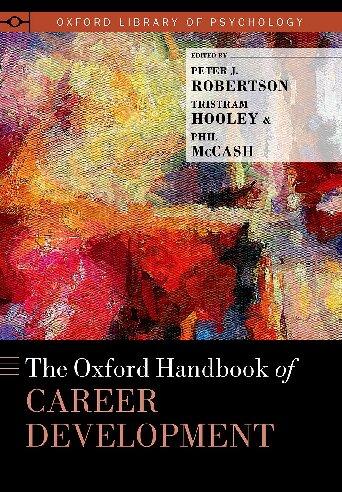
Peter J. Robertson is a qualified career adviser and a chartered psychologist. He teaches career theory and policy to postgraduate students at Edinburgh Napier University, and he is a Fellow of the National Institute for Career Education and Counselling (NICEC) and an editor of the Institute’s Journal. His research interests focus around the links between careers, health, and well-being; and employment support services for disadvantaged groups.
Tristram Hooley is a researcher and writer specializing in career and career guidance. He has published nine books and numerous articles and reports. He is Professor of Career Education at the University of Derby, Professor II at the Inland Norway University of Applied Sciences, and Chief Research Officer at the Institute of Student Employers. His work is focused on the inter-relationships between career, politics, technology, and social justice.
Phil McCash is a qualified career development practitioner with experience of working with young people and adults in a variety of contexts and settings. He was elected a Fellow of the National Institute for Career Education and Counselling (NICEC) in 2008 and edits the NICEC journal. He currently works as an Associate Professor at the University of Warwick’s Centre for Lifelong Learning where he is Course Director for the Master’s in Career Education, Information, and Guidance in Higher Education and Director of Graduate Studies.
CONTRIBUTORS
Sajma Aravind
The Promise Foundation
Bangalore, India
Gideon Arulmani
The Promise Foundation
Bangalore, India
Anthony Barnes
National Institute for Career Education and Counselling
England, UK
Barbara Bassot
Canterbury Christ Church University
Canterbury, UK
Jenny Bimrose
University of Warwick
Coventry, UK
David L. Blustein
Boston College
Chestnut Hill, MA, USA
Tibor Bors Borbély-Pecze
John Wesley Theological College
Budapest, Hungary
Jason Brown
University of Southern Queensland Toowoomba, Queensland, Australia
Paulo Miguel Cardoso
University of Évora Évora, Portugal
Vanessa Dodd
Nottingham Trent University
Nottingham, UK
Maria Eduarda Duarte
University of Lisbon Lisbon, Portugal
Whitney Erby
Boston College
Chestnut Hill, MA, USA
John Gough
University of Warwick
Coventry, UK
Hugh Gunz
University of Toronto
Toronto, Ontario, Canada
Ellen R. Gutowski
Boston College
Chestnut Hill, MA, USA
Sara Hammer
University of Southern Queensland Toowoomba, Queensland, Australia
Michael Healy
University of Southern Queensland
Toowoomba, Queensland, Australia
Tristram Hooley
University of Derby Derby, UK
Barrie A. Irving
Edinburgh Napier University Edinburgh, Scotland, UK
Elnaz Kashefpakdel
Education and Employers
London, UK
Maureen E. Kenny
Boston College
Chestnut Hill, MA, USA
Sachin Kumar
Government College of Teacher Education
Dharamshala, India
Kate Mackenzie Davey Birkbeck College, University of London London, UK
Wolfgang Mayrhofer
Vienna University of Economics and Business Vienna, Austria
John McCarthy
International Centre for Career Development and Public Policy France
Phil McCash
University of Warwick Coventry, UK
Peter McIlveen
University of Southern Queensland
Toowoomba, Queensland, Australia
Siobhan Neary
University of Derby Derby, UK
Christian Percy University of Derby Derby, UK
Harsha N. Perera
University of Nevada Las Vegas, USA
Ashley E. Poklar
Cleveland State University Cleveland, Ohio, USA
Contributors
Marcelo Afonso Ribeiro University of São Paulo
São Paulo, Brazil
Peter J. Robertson
Edinburgh Napier University Edinburgh, Scotland, UK
Jérôme Rossier
University of Lausanne Lausanne, Switzerland
Sunita Shrestha
Antarang Psychosocial Research and Training Institute
Kathmandu, Nepal
Tom Staunton
University of Derby Derby, UK
Graham B. Stead
Cleveland State University Cleveland, Ohio, USA
Ronald G. Sultana
University of Malta
Msida, Malta
Maribon Viray
Martin Luther Christian
University Meghalaya, India
Tony Watts
National Institute for Career Education and Counselling, England, UK
Susan C. Whiston Indiana University Indiana, USA
Julia Yates
City, University of London London, UK
TABLE OF CONTENTS
Preface xiii
Tony Watts
1. Introduction: Rethinking Career Development 1
Phil McCash, Tristram Hooley, and Peter J. Robertson
Section 1 • Contexts
2. The Decline of Decent Work in the Twenty-First Century: Implications for Career Development 23
Ellen R. Gutowski, David L. Blustein, Maureen E. Kenny, and Whitney Erby
3. The Economic Outcomes of Career Development Programmes 35
Christian Percy and Vanessa Dodd
4. Career Development and Human Capital Theory: Preaching the “Education Gospel” 49
Tristram Hooley
5. Linking Educators and Employers: Taxonomies, Rationales, and Barriers 65
Christian Percy and Elnaz Kashefpakdel
6. Authentic Education for Meaningful Work: Beyond “Career Management Skills” 79
Ronald G. Sultana
7. Career Guidance: Living on the Edge of Public Policy 95
John McCarthy and Tibor Bors Borbély-Pecze
8. The Aims of Career Development Policy: Towards a Comprehensive Framework 113
Peter J. Robertson
Section 2 • Theory
9. Career Development Theory: An Integrated Analysis 131
Julia Yates
10. Organizational Career Development Theory: Weaving Individuals, Organizations, and Social Structures 143
Kate Mackenzie Davey
11. Organisational and Managerial Careers: A Coevolutionary View 155
Hugh Gunz and Wolfgang Mayrhofer
12. The Narrative Turn in Career Development Theories: An Integrative Perspective 169
Jérôme Rossier, Paulo Miguel Cardoso, and Maria Eduarda Duarte
13. The Positioning of Social Justice: Critical Challenges for Career Development 181
Barrie A. Irving
14. Cultural Learning Theory and Career Development 193
Phil McCash
15. The Cultural Preparedness Perspective of Career Development 213
Gideon Arulmani, Sachin Kumar, Sunita Shrestha, Maribon Viray, and Sajma Aravind
16. Career Development Theories from the Global South 225
Marcelo Afonso Ribeiro
17. Cross-Cultural Career Psychology from a Critical Psychology Perspective 239
Graham B. Stead and Ashley E. Poklar
Section 3 • Practice
18. The Career Development Profession: Professionalisation, Professionalism, and Professional Identity 257
John Gough and Siobhan Neary
19. Transformative Career Education in Schools and Colleges 269
Anthony Barnes
20. Labour Market Information for Career Development: Pivotal or Peripheral? 283
Jenny Bimrose
21. The Role of Digital Technology in Career Development 297
Tristram Hooley and Tom Staunton
22. Career Assessment 313
Peter McIlveen, Harsha N. Perera, Jason Brown, Michael Healy, and Sara Hammer
23. Client-Centred Career Development Practice: A Critical Review 325
Barbara Bassot
24. Career Counselling Effectiveness and Contributing Factors 337
Susan C. Whiston
25. Evidence-Based Practice for Career Development 353
Peter J. Robertson
Name Index 371
Subject Index 381
Introduction: Rethinking Career Development 1
Phil McCash, Tristram Hooley, and Peter J. Robertson
Abstract
This chapter introduces readers to The Oxford Handbook of Career Development and to the field of career development. The origins of the field are discussed in relation to vocational guidance, differential psychology, interactionist sociology, and life course development. The selection of the term career development for this volume is explained with regard to three interlocking themes: the broader contexts of career development, including government policy; the wide range of theory concerned with career-related experiences, phenomena, and behaviour; and the broad spectrum of career helping practices, including one-to-one work and group work. The inspiration and aims for the volume are set out, and the challenges associated with terminology in the field are acknowledged. The editors seek to provide a state-of-the-art reference point for the field of career development, and engender a transdisciplinary and international dialogue that explores key current ideas, debates, and controversies. The volume is divided into three sections. The first explores the economic, educational, and public policy contexts for practice. The second section focuses on concepts and explores the rich theoretical landscape of the field. The third section turns to practice, and the translation of ideas into action to support individuals and groups with their career development.
Keywords: career, career development, career theory, transdisciplinarity, vocational guidance
Origins of the Career Development Field
The field of career development has multiple roots. It has different origins in different nations, and indeed there is a need for further exploration of its history outside the Anglophone world and Western Europe. Its academic roots lie primarily in psychology and sociology and in the dialogue between these disciplines. The origins of its policy and practice lie in the drive to respond to major societal and economic challenges. Throughout history, individuals have experienced the trials, tribulations, and triumphs of life, supported each other through them, and reflected on this process. This process has generally taken place within specific family, educational, religious, work, and community contexts, and it has played a key role in the preservation and evolution of societies. For example, the ancient universities in India provided students with guidance and pastoral support for post-university life (Sharma & Sharma, 2004). There is also an extensive
classical literature that appears to connect with career-related themes. For example, Plato’s Republic, a Socratic dialogue from ancient Greece, proposes a threefold division of labour based on guardians, auxiliaries, and producers (Plato, 1974). It also contains the evocative ‘Myth of Er,’ which tells of the allocation of souls and life patterns. To take a further example, the Tao Te Ching, an anthology of wise sayings dating from 4th century bc China, advocates a quiet life of action through inaction, contemplation, and discernment (Lao Tzu, 1963). There are countless other examples in ancient literature. Many of the great religious and philosophical traditions contain teachings that address career-related topics, such as right living, service, and calling.
In addition, there are novels, plays, poems, and art with rich connected themes. For example, the novels of Miguel de Cervantes, George Eliot, Leo Tolstoy, and Henry James are saturated with career-relevant topics, such as situation, relations, vocation, culture, social impact, and the passage of time. And, as Sultana (2014) pointed out, the limitations and possibilities of career development were exercising the young Karl Marx in his 1835 essay ‘Reflections of a Young Man on the Choice of a Profession’.
Whilst such cultural practices and written texts brim with what we can now see as rich career-related themes, it would be anachronistic to claim them for the field of career development. It is in the context of changing societal beliefs and practices taking place in the last 150 years that the modern, formal evolution of the career development field can be traced in detail. In this section, we identify four important early strands to that process: vocational guidance, differential psychology, interactionist sociology, and life course development.
Vocational Guidance
The origins of the vocational guidance movement can be found in the late 19th century and early years of the 20th century. Rapid industrialisation, urbanisation, and the emergence of state education systems presented formidable social challenges. Occupational choice had become more complex, and the transition from school to employment raised novel problems. Individuals had to navigate the new forms of social organisation that emerged around the growing industries and cities. Modernity had also questioned the formerly comforting religious, political, and psychological verities of earlier times. Vocational guidance emerged from the pragmatic and intellectual responses to these challenges. Its pioneers were social reformers and innovators.
In the United States, Frank Parsons started a vocational guidance centre in Boston and wrote a landmark text on the topic: Choosing a Vocation (Parsons, 1909). The book advocated a threefold matching process of occupational choice: understanding yourself, understanding the requirements of different lines of work, and ‘true reasoning’ on the relationship between them. The influence of this text on the vocational guidance movement in America is well documented (Savickas, 2009). It is evident that Parsons’ work was motivated by a passion for social activism on behalf of disadvantaged groups (Mann, 1950;
O’Brien, 2001). Many of Parsons’ concerns, such as the assessment of individuals, use of occupational information, and the promotion of social justice, continue to be central themes in current writing and practice in the field. For some, the role of Parsons as the ‘father of vocational guidance’ represents a satisfactory origin myth. The story is, of course, more complicated, and the vocational guidance movement has multiple origins, with independent contemporaneous roots in different countries.
Some of the earliest attempts at public policymaking in vocational guidance were made in the United Kingdom. In 1904, Maria Ogilvie Gordon made a proposal for local education authorities and school boards across Britain to set up Educational Information and Employment Bureaux to support school leavers in finding suitable work (Heginbotham, 1951). She published A Handbook of Employments Specially Prepared for the Use of Boys and Girls on Entering the Trades, Industries, and Professions (Ogilvie Gordon, 1908). Around this time the U.K. government created a public employment service, bringing job seekers and employers together, but its network of ‘labour exchanges’ failed to adequately meet the needs of young people. So subsequent legislation, notably The Education (Choice of Employment) Act (1910), sought to implement Ogilvie Gordon’s vision. This began a long dialogue between employment and educational policy and the involvement of both national and local government in providing specialist employment support services for youth. In time, career services would emerge from these roots with a distinct and separate identity from the public employment service.
Worldwide developments are less well documented in the English-language literature but are equally important to acknowledge. These developments took place largely independently and can be illustrated with the following examples. In Norway, vocational guidance bureaus were opened in 1897 (Kjærgård, 2020). In Austria, over 30 child guidance clinics were established between 1898 and 1934; they drew from the psychoanalytic theories of Alfred Adler (Ansbacher & Ansbacher, 1956). In Germany, a vocational counselling department was opened in 1908, making support for information seekers available to schools (Savickas, 2008). In India, the first vocational guidance laboratory was opened in 1915 at the University of Calcutta (Sharma & Sharma, 2004). Finally, vocational guidance functions were also introduced in Japan between 1910 and 1915 (Watanabe & Herr, 1983).
Differential Psychology
The growing influence of differential psychology provided a scientific perspective on vocational guidance. The technology of psychometrics emerged from intelligence testing by educational psychologists, and it was underpinned by developments in statistics. Psychometricians applied their methods to questions of occupational choice at an early stage. There were pioneers of this scientific rationalist approach to vocational guidance in the United Kingdom (notably Burt, 1924), where the creation of the National Institute for Industrial Psychology by C. S. Myers in 1921 became a focus for the work (Peck, 2004). In the United States, the scientific approach combined with and complemented Parsons’
approach. At Harvard, the German applied psychologist Hugo Münsterberg addressed issues of occupational choice, and in 1910 he developed an early theory of vocation that incorporated thought, feeling, and behaviour (Porfeli, 2009). The technology of psychometrics was further developed through its use in military recruitment during World War I (and later during World War II). In addition, the University of Minnesota engaged in large-scale testing and placement of jobseekers in the 1920s and 1930s, using tests of arithmetic, practical judgement, dexterity, and vocational interests (Moore, Gunz, & Hall, 2008).
Interactionist Sociology
Arguably, the formal study of career began in earnest in the 1920s and 1930s in the pioneering Sociology Department at the University of Chicago. Clifford Shaw’s The JackRoller: A Delinquent Boy’s Own Story (1930/1966) and The Natural History of a Delinquent Career (1931) were perhaps the first academic texts to use the term career in an organised and intentional way. Shaw expanded the popular meaning of career, as a middle-class job, to include the nonwork roles of individuals at the margins of straight society. Shaw focused not on paid, middle-class work but on the social phenomenon of what was then called delinquency. His research also featured the rich and extensive use of life history. This enabled the unfolding process of career to be seen through the interpretive lens of the occupant.
Furthermore, Everett C. Hughes, in two articles entitled Personality Types and the Division of Labour (Hughes, 1928) and Institutional Office and the Person (Hughes, 1937), developed the first explicit career theory, that is, a conceptual grammar for the critical interpretation of career development. This technical vocabulary included collective life, culture, ecology, group, interaction, contingencies, call/mission, patterns, roles, meaning, rituals, offices, stages, status, and forms. In the latter article, Hughes (1937, pp. 64–67) provided one of the first systematic definitions of career, asserting that career is made up of the work and nonwork activities (‘vocations’ and ‘avocations’) of both men and women of all social classes. He referred to career as the ‘the moving perspective’ in which persons orient themselves with reference to other people, institutional forms, and social structures and interpret the meaning of their lives. He further argued that the study of career could help with understanding the nature and ‘working constitution’ of society.
Shaw and Hughes were influenced by their fellow Chicago sociologists Robert Park, Ernest Burgess, George Herbert Mead, and Herbert Blumer (Blumer, 1969; Mead, 1934/1967; Park, 1915; Park & Burgess, 1921; see also Barley, 1989). They also drew (particularly via Park) on the interpretivist approach of the German sociologist Georg Simmel, whose influence can be seen in their view of career as a continual process of social interaction involving themes of otherness and marginality, and in their use of career theory to construct an interpretive grammar of social life. They also gained from the work of scholars linked to the School of Social Service Administration at the university, such as
Jane Addams, Florence Kelly, and Edith Abbott, who were pioneers in social work, methodology, knowledge of the city, and the integration of theory and practice (Shaw, 2010). Their influence can be detected in Shaw’s and Hughes’ use of the case history, concern for social welfare, and contact with people at the margins of society.
The significance of Shaw’s and Hughes’ work for the career development field is threefold. First, career was reimagined in egalitarian terms as the moving perspective through which all individuals interpret the meaning of their lives. Second, the scope of career was extended from microsociology to the constitution of society, thereby considerably expanding its organisational and political reach. Third, another wave of Chicago scholars built on their work and mobilised career as a key interactionist term that crossed conventional boundaries of subjective/objective, individual/society, private/public, success/failure, work/nonwork, and familiar/strange (see Becker, 1966; Goffman, 1961/1968). The innovative scholarship of ‘Chicago School Sociology’ has occasionally suffered from neglect but is now acknowledged as one of the central traditions within career theory (see Barley, 1989; Gunz & Mayrhofer, 2018; Hodkinson, 2009; Law, 2009; McCash, 2018; Moore et al., 2008; Roberts, 1980; Savickas, 1996; Super, 1980).
Life Course Development
The study of the life course has preoccupied philosophers, playwrights, and artists since earliest times. It first became formalised by psychologists and sociologists in the early part of the 20th century. This section focuses on four contributions of particular relevance to the origins of the career development field. The first relates to the German psychologist Charlotte Bühler, who pioneered a whole-of-life approach to psychology in reaction to what she saw as the reductive approaches then prevalent in psychology. In an article entitled ‘The Curve of Life as Studied in Biographies’, Bühler (1935) systematically analysed hundreds of biographies featuring a wide range of individuals from business owners to factory workers. She postulated different stages in the life span, from an expansionist preparation phase, to a stable specification phase, a results-testing phase, and finally, a relinquishing phase where activities and positions were given up. She saw career in holistic, life-span terms and argued that these ideas could enhance the support of career development. The second example relates to one of the first career pattern studies. In Occupational Mobility in an American Community, the sociologists Percy E. Davidson and H. Dewey Anderson (1937) reported on a study of people living in San Jose, California. They developed a visual and theoretical representation of career patterns as contrasting patterns of participation in family, education, and work—, that is, temporal pathways through family environment, elementary school, senior school, college, first job, and more regular job. Third, in their book Industrial Sociology, Delbert Miller and William Form (1951) developed a more extensive approach to career patterns. They identified alternating phases of trial and stability, as well as four main types of career pattern: stable, conventional, unstable, and multiple trial. Finally, all the above mentioned psychological and sociological
approaches were synthesised by the social psychologist Donald Super, who designed a further, even larger, career pattern study. He developed the first comprehensive theory of career development and linked it to the practice of vocational guidance (Super, 1954, 1957).
The significance of these studies lies in their emphasis on the temporal, lifelong nature of career development. They distinguished between the experience of multiple individual jobs versus an overall career. This career was interpreted in relation to contrasting patterns of family experiences, educational participation, and job roles. These studies broadened the scope of vocational guidance practice from matching clients with jobs, to helping clients learn to prepare for, and engage with, an overall career consisting of multiple roles, situations, experiences, and life themes.
Summary
This brief review of the literature locates the origins of the career development field in four contrasting strands: vocational guidance, differential psychology, interactionist sociology, and life course development. Understandably, perhaps, some of the literature in the field focuses on only one strand, or even one element thereof, and this has led to questions about whether it really is a field at all. The extent of fragmentation and isolation can, however, be overstated. There are a number of important integrative texts dating from both the early era (see Ginzberg, Ginsburg, Axelrad, & Herma, 1951; Super, 1957) and the contemporary era (see Arthur, Hall, & Lawrence, 1989; Gunz & Mayrhofer, 2018; Patton & McMahon, 1998) that seek to synthesise the various strands in the field. This volume is intended as a further contribution to that process of integration.
What Is Career Development?
In this volume, the term career development is used as a key organising concept. This terminology, like all terminology, is imperfect and requires further discussion and explanation. Career development is seen as a transdisciplinary field that draws originally from the disciplines of sociology and psychology. It has developed significant links with education and organisational studies, and it also connects with aspects of economics, literary studies, cultural studies, history, geography, philosophy, and a number of other disciplines. Strictly speaking, career development is neither a discipline in its own right nor a subsection of another discipline. Rather, it is a transdisciplinary field within which a range of different traditions, topics, theories, epistemologies, and ontologies intersect. In different countries, different disciplines and traditions hold sway. One of the aims of this volume is to increase the amount of transdisciplinary dialogue and to bring the varied discussions within the field together.
The term career development has been selected because it allows for discussion of three interlocking themes: the wider contexts of career development, including government policy; the wide range of theory concerned with career-related experiences, phenomena, and behaviour; and the broad spectrum of career helping practices, including one-to-one
work and group work. In this section, the field is briefly discussed in relation to those three themes: contexts, theory, and practice.
Contexts
Career development is seen in context rather than viewed in individualistic terms. All individuals are regarded as part of an extensive career development system. This wider context includes geography, political decisions, labour markets, socioeconomic status, education, and the media. For example, career is not just about choosing what we want from an unlimited occupational and lifestyle menu. Our careers are also shaped by the place and communities in which we live. Geographical and family ties define the opportunities that are open to us, and influence our behaviours and expectations. We make career decisions, but we do not make them entirely within circumstances of our own choosing. Opportunity structures are shaped by the political economy. Career development is not just an individual series of choices, it is where the individual interacts with society. It is where our psychology intertwines with the social, and it relates to how we interact with social institutions, such as the education system, businesses, organisations, and the state.
Career Development Theory
Career development theory attempts to interpret the wide range of career-related experiences, phenomena, and behaviours, including negative experiences, such as bullying, precarity, or racism. It also relates to positive experiences, such as helping others, receiving respect, and personal achievements. Career theory seeks to link the wider context with the felt experience of career development. While the word development may have a problematically normative association with improvement and enhancement, it can also mean, as in photography, to emerge or to come into being. So, while individuals do not necessarily see their careers steadily and progressively improving, they do undoubtedly see them developing in the sense of emerging and coming into being. Not everyone encounters the same experiences or moves through stages in the same order, but we are born and ultimately die, and, in between, most of us will grow up and grow older, experience setbacks, and find new opportunities.
Our careers are the pathway that we take through life; therefore, the concept of time is critical to career. Our careers operate on at least two temporal dimensions. We have career choices to make every day. Should I stay at the office later or go home to my family? Should I finish my coursework or go to the pub? Should I stay in bed or get up and go to work? These are all cross-sectional career decisions, where we play off one activity against another. But, the concept of career also adds in another set of decisions: in addition to cross-sectional decisions, we have longitudinal career decisions to make. Working harder now might open more opportunities in the future. On the other hand, suspending our capacity to earn, whilst studying may ultimately increase our long-term earning power and capacity to control our lives. Enacting our career is a conversation between the present and
the future, and our pasts frame the way in which this conversation can happen. In this volume, we discuss a wide range of career development theories reflecting the contrasting traditions within the literature. We also ask authors to integrate existing ideas into new approaches that help advance the field.
Practice
Purposeful helping interventions, including one-to-one work and group work, form a rich and important literature in the career development field. In other texts, such interventions are variously described as career counselling, career coaching, and career guidance. However, throughout most of this book, we avoid using this terminology because it is sometimes associated with one-to-one interventions, rather than work with groups. We use terms like career development services to encompass work with individuals and groups. This wrangling with nomenclature raises a wider issue for anyone seeking to access career development support. Citizens seeking help with their career will encounter a bewildering array of terms, such as career counsellor, career coach, career adviser, career guidance adviser, career teacher, career development professional, guidance worker, counsellor, coach, life coach, work coach, psychologist, and so on. One report, drawing on U.K. job specifications, found more than a 100 job titles in use for career development workers (Neary, Marriott, & Hooley, 2014). This complexity is further increased by the fact that career development services are also provided by individuals in a wide range of additional occupations, including managers, trainers, learning and development professionals, teachers, and lecturers, to name but a few. In addition, career development support is provided on an informal basis as part of ordinary life. Because career is so central to all our lives, we inevitably speak to our friends, family, colleagues, and passing acquaintances about it, and they, despite their ‘lack’ of professional qualification or formal role, offer us information, advice, and ideas that form a kind of career development help.
In this volume, we have encouraged using terminology as inclusively as possible in the hope that each chapter speaks to any individual engaged in career development support, regardless of their job title or role. As indicated, the contributors to this volume have been encouraged to use terms like career development support and career development service(s) when referring to purposeful helping interventions. In some cases, contributors have opted to use alternative terms (for example, career enactment, career counselling, career guidance, or career education); in these cases, they have been encouraged to explain their terminology and to reflect on why their terminology is appropriate.
Why We Created This Handbook
Career is not a single moment of decision when we choose one job over another. It is deeply woven into the ongoing fabric of our lives. Our careers are conducted continuously, and they develop in social and political contexts that provide contrasting opportunities and limitations. Career is all around us and there is no escape from it, because it describes
the coming together of our life, our learning, and our work. Career is important to the lives of individuals across the world and to the societies in which they live. As the editors of, and contributors to, The Oxford Handbook of Career Development, we are no different. We are researchers, writers, and thinkers who are interested in career development, and we experience our own careers alongside the theories, research, and models found in this book. Since everyone has a career, and it matters for both individuals and societies, it is critical that we understand how careers work and that we consider how we can usefully intervene. This is one reason why we are so glad to be able to present this volume.
The decision to edit this volume emerged from the belief that career development is central to our understanding of social experience. Career acts as a framework for interpreting social realities and the place of individuals within them. It also acts as a framework for more specific action—i.e., practical interventions to help individuals. Career development work is an active practice informed by research and scholarship. This volume therefore aims both to deepen our understanding of career development, and to provide insights and inspiration to drive forward career development interventions.
The volume has been conceived and put together amidst our teaching, research, conference travel, and all the other aspects of our personal and professional lives. It is therefore related to our own personal journeys, statuses, and career aims. It is also a social act undertaken as part of our interaction with both the learned society of which we are all fellows, the National Institute of Career Education and Counselling (NICEC), and the wider field of career development (see Watts, 2014, for a history of NICEC). The handbook is intended as an intervention and a continuation of a bigger conversation about the past, present, and future of career development.
In this section, we describe the inspiration for this volume in relation to existing scholarship. We then proceed to discuss our central underpinning assumptions in relation to career development. These assumptions relate to inclusivity, the centrality of learning, internationalism, engagement with contemporary debates, transdisciplinarity, and pluralism.
Inspiration
The inspiration for this volume emerged out of a conference organised by NICEC in 2016. All the editors of the volume, and many of the contributors, attended the conference, where we challenged ourselves to ‘rethink career development for a globalised world’. The conference commemorated Rethinking Careers Education and Guidance: Theory, Policy and Practice (Watts, Law, Killeen, Kidd, & Hawthorn, 1996), which for many of us had long served as a touchstone for the field. The current volume began as an attempt to update Rethinking and to build on the discussions that had taken place at the NICEC conference. But it quickly became something more, as we recognised the need to make The Oxford Handbook of Career Development more international and more transdisciplinary, as well as to recognise the multiple traditions and perspectives that now characterise the field.
Rethinking was a landmark text in the United Kingdom in the 1990s, and it gave voice to over 20 years of thinking, research, and activism that had been conducted by the scholars involved in NICEC. It was a powerful attempt to resituate career development work beyond the subdiscipline of counselling psychology. Rethinking drew on education, organisational studies, economics, management, sociology, and political economy. It also found a central role for learning at the core of career development work and developed new career learning theory to underpin this (Law, 1996a).
In Rethinking, it was recognised that career development is unavoidably political and that individuals act in ways that are framed by their environment and by social and public policy systems (Killeen, 1996a; Watts, 1996a, 1996b). Furthermore, in drawing together a variety of different disciplinary traditions, Rethinking also recognised the lifelong and multicontext nature of career development. Career development activities are always situated; for example, they take place in schools (Law, 1996b), colleges (Hawthorn, 1996), universities (Watts, 1996c), businesses (Kidd, 1996), and career and public employment services (Killeen & Kidd, 1996). In each of these contexts, career development work is fighting for time, resources, and priority against a range of other functions. Yet, in each place, it also offers individuals and society huge benefits if its potential can be realised (Killeen, 1996b). Rethinking made a unique contribution to the field when it was published, because it was able to simultaneously summarise the state of play in the field and point the way forward. This is exactly the kind of contribution that we hope the current volume will make.
At the same time, we also acknowledge the huge contributions made by the many other multi-author volumes on career development. There have been various impressive attempts to draw together the field both before Rethinking (for example, Arthur et al., 1989; Brown & Brooks, 1990; Watts, Super, & Kidd, 1981) and after it (for example, Arthur & McMahon, 2019; Arulmani, Bakshi, Leong, & Watts, 2014; Athanasou & Perera, 2019; Collin & Young, 2000; Gunz & Peiperl, 2008; Lent & Brown, 2013; Maree, 2019). We have drawn on all these volumes, and many more, as we have planned and written The Oxford Handbook of Career Development. There are also important texts focusing on discrete issues, such as social justice (Hooley, Sultana, & Thomsen, 2018a, 2019), and key geographies (Cohen-Scali, Nota, & Rossier, 2017; Sultana, 2017). The current volume seeks to build on all this work by bringing together a variety of scholars and by summarising the state of the art in career development as we enter the third decade of the 21st century.
Within the Oxford Handbooks series itself, there are also a number of important and relevant contributions that intersect with the current volume and the field of career development, including volumes focusing on meaningful work (Yeoman, Bailey, Madden, & Thompson, 2019), participation in organisations (Wilkinson, Gollan, Marchington, & Lewin, 2010), personnel psychology (Cartwright & Cooper, 2009),
skills and training (Warhurst, Mayhew, Finegold, & Buchanan, 2017), the psychology of working (Blustein, 2013), and lifelong learning (London, 2011). The existence of these authoritative Oxford Handbooks in related thematic areas creates the ideal context for the current volume. Oxford Handbooks assemble a series of specially commissioned essays from leading figures in the discipline, critically examine key concepts, and shape the future of the relevant field. This volume seeks to do this in the field of career development, examining both how individuals develop and enact their careers in context and the kind of interventions that may be used to support them.
Career Development as an Inclusive Term
Career development is an inclusive term that relates to all individuals regardless of class, gender, sexuality, ability, location, or ethnicity. Career development does not relate only to individuals preparing for middle-class, volitional, paid work and advancing within it. Career, as Watts (2015, p. 31) once noted, is ‘richly ambiguous’. It is a concept not limited to hierarchical progression within an organisation or occupation. It encompasses a very wide range of activities, including formal or informal paid work, study, housework, caring work, voluntary or community work, political activism, and so on. It also includes religious practices, leisure interests, health maintenance, family time, and relaxing. Career development is a key concept because it draws together and integrates all these important activities. In our sense, individuals have only one career, within which they engage in a wide range of activities, situations, and roles throughout their lives.
The Centrality of Learning
Learning is central to career development both in theory and in practice. Learning helps us to understand career experiences both good and bad. It also helps us to see career development work, in all its forms, as a broadly educational enterprise within which the career learning of participants is a core concern (Hooley, Sultana, & Thomsen; 2018b; Krumboltz, 2009; Law, 1996a; Patton & McMahon, 1998). This provides a unifying vocabulary for understanding and framing the spectrum of helping activities, including oneto-one work and group work.
International Perspectives
We have adopted an avowedly internationalist perspective throughout the volume. For example, we have aimed to avoid what Ribeiro and Fonçatti (2018) described as top-down ‘globalised localisms’ (i.e., taking a local practice from one context, such as North American career counselling, and imposing it without adaptation globally). We have drawn authors from 14 countries across the world, and we have asked them to write for an international audience, to acknowledge an international context, and to recognise the situated nature of career development.