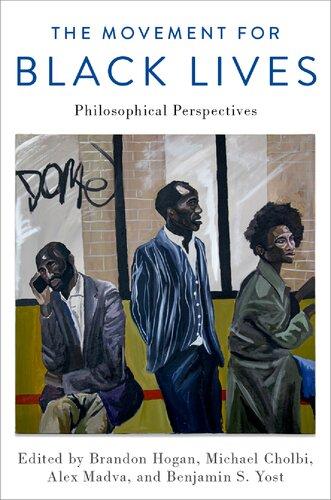
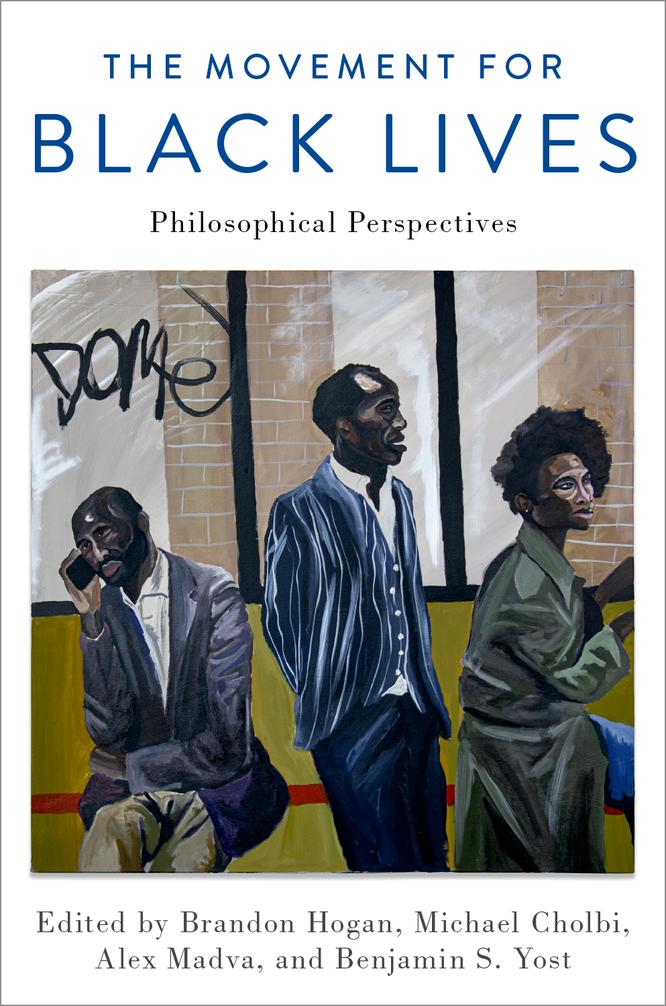
The Movement for Black Lives
Philosophical Perspectives
Edited by BRANDON HOGAN, MICHAEL CHOLBI, ALEX MADVA, AND BENJAMIN S. YOST
3
Oxford University Press is a department of the University of Oxford. It furthers the University’s objective of excellence in research, scholarship, and education by publishing worldwide. Oxford is a registered trade mark of Oxford University Press in the UK and certain other countries.
Published in the United States of America by Oxford University Press 198 Madison Avenue, New York, NY 10016, United States of America.
© Oxford University Press 2021
All rights reserved. No part of this publication may be reproduced, stored in a retrieval system, or transmitted, in any form or by any means, without the prior permission in writing of Oxford University Press, or as expressly permitted by law, by license, or under terms agreed with the appropriate reproduction rights organization. Inquiries concerning reproduction outside the scope of the above should be sent to the Rights Department, Oxford University Press, at the address above.
You must not circulate this work in any other form and you must impose this same condition on any acquirer.
Library of Congress Cataloging-in-Publication Data
Names: Hogan, Brandon, editor. | Cholbi, Michael, editor. | Madva, Alex, editor. | Yost, Benjamin S. (Benjamin Schertz), editor.
Title: The movement for Black lives : philosophical perspectives / eds., Brandon Hogan, Michael Cholbi, Alex Madva, and Benjamin S. Yost.
Description: New York, NY : Oxford University Press, [2021] | Includes bibliographical references and index.
Identifiers: LCCN 2021011724 (print) | LCCN 2021011725 (ebook) | ISBN 9780197507780 (paperback) | ISBN 9780197507773 (hb) | ISBN 9780197507803 (epub)
Subjects: LCSH: Black lives matter movement—Philosophy. | Black power—United States—History. | Civil rights movements—United States—History—21st century.
Classification: LCC E185.615 .M684 2021 (print) | LCC E185.615 (ebook) | DDC 323.1196/073001—dc23
LC record available at https://lccn.loc.gov/2021011724
LC ebook record available at https://lccn.loc.gov/2021011725
DOI: 10.1093/oso/9780197507773.001.0001
1 3 5 7 9 8 6 4 2
Paperback printed by Marquis, Canada Hardback printed by Bridgeport National Bindery, Inc., United States of America
OF BLACK LIVES
1. What “Black Lives Matter” Should Mean 15
Brandon Hogan
2. “And He Ate Jim Crow”: Racist Ideology as False Consciousness 35 Vanessa Wills
3. He Never Mattered: Poor Black Males and the Dark Logic of Intersectional Invisibility 59 Tommy J. Curry
PART II: THEORIZING RACIAL JUSTICE
4. Reconsidering Reparations: The Movement for Black Lives and Self-Determination 93
Olúfẹmi O. Táíwò
5. The Movement for Black Lives and Transitional Justice 116 Colleen Murphy PART III: THE LANGUAGE OF THE M4BL
6. Positive Propaganda and the Pragmatics of Protest 139 Michael Randall Barnes
7. Value-Based Protest Slogans: An Argument for Reorientation 160 Myisha Cherry
8. The Movement for Black Lives and the Language of Liberation 176 Ian Olasov
9. Can Capital Punishment Survive If Black Lives Matter?
Michael Cholbi and Alex Madva
10. Sentencing Leniency for Black Offenders
Benjamin S. Yost
11. The Violence of Leadership in Black Lives Matter
Dana Francisco Miranda
12. Speaking for, Speaking with, and Shutting up: Models of Solidarity and the Pragmatics of Truth Telling
Mark Norris Lance
13. Sky’s the Limit: A Case Study in Envisioning Real Anti-Racist Utopias
Keyvan Shafiei
Contributors
Michael Randall Barnes completed his PhD in the philosophy department at Georgetown University, writing his dissertation on how speech maintains oppression. He is currently a postdoctoral fellow at the Rotman Institute of Philosophy at Western University.
Myisha Cherry is Assistant Professor of Philosophy at the University of California, Riverside. Her research interests include the intersection of moral psychology and social and political philosophy. Cherry’s work has appeared in scholarly journals such as Hypatia and Critical Philosophy of Race. She has also written for the Los Angeles Times, Boston Review, Huffington Post, Salon, and New Philosopher Magazine. Her books include The Case for Rage (Oxford, 2020), The Moral Psychology of Anger (coedited with Owen Flanagan), and UnMuted: Conversations on Prejudice, Oppression, and Social Justice (Oxford, 2019). She is also the host of the UnMute Podcast, where she interviews philosophers about the social and political issues of our day.
Michael Cholbi is Chair in Philosophy at the University of Edinburgh. He has published widely in ethical theory, practical ethics, and the philosophy of death and dying. His books include Suicide: The Philosophical Dimensions (Broadview, 2011), Understanding Kant’s Ethics (Cambridge, 2016), and Grief: A Philosophical Guide (Princeton, forthcoming). He is the editor of several scholarly collections, including Immortality and the Philosophy of Death (Rowman and Littlefield, 2015); Procreation, Parenthood, and Educational Rights (Routledge, 2017); and The Future of Work, Technology, and Basic Income (Routledge, 2019). He is the coeditor of the textbook Exploring the Philosophy of Death and Dying: Classic and Contemporary Perspectives (Routledge, forthcoming). His work has also appeared in a number of scholarly journals, including Ethics, Mind, Philosophical Studies, Philosophy and Phenomenological Research, and Oxford Studies in Normative Ethics. In recent years, he has been an academic visitor at Australian National University, the University of Turku (Finland), and the Hastings Center. He is the founder of the International Association for the Philosophy of Death and Dying and serves on the editorial boards of the Journal of Applied Philosophy, Social Theory and Practice, Ergo, and the Journal of the American Philosophical Association. His current research interests include Kantian ethics, particularly respect for persons, equality, and rational agency; death and dying, including suicide and assisted dying, immortality, and grief; the ethics of work and labor; paternalism; and procreative and parental ethics.
Tommy J. Curry, Personal Chair in Africana Philosophy and Black Male Studies at the University of Edinburgh, is the author of The Man-Not: Race, Class, Genre, and the Dilemmas of Black Manhood (Temple, 2017), winner of the 2018 American Book Award. He also authored Another White Man’s Burden: Josiah Royce’s Quest for a Philosophy of Racial Empire (SUNY Press, 2018) and republished the forgotten philosophical works of William Ferris as The Philosophical Treatise of William H. Ferris: Selected Readings from The African Abroad or, His Evolution in Western Civilization (Rowman & Littlefield, 2016). He is the editor of the first book series dedicated to the study of Black males titled Black Male Studies: A Series Exploring the Paradoxes of Racially Subjugated Males with Temple University Press.
Brandon Hogan is Associate Professor of Philosophy at Howard University. He writes about legal punishment, racial justice, Hegel’s political philosophy, and Wittgenstein’s later philosophy. His work has appeared in Contemporary Pragmatism, The Journal of Pan African Studies, and the Berkeley Journal of African American Law and Policy. He earned a PhD from the University of Pittsburgh under the supervision of Robert Brandom and a JD from Harvard Law School.
Mark Norris Lance is Professor of Philosophy at Georgetown University. He has published two books and around forty articles in philosophy of language, epistemology, logic, metaethics, and applied political philosophy. He is also the cofounder, current codirector, and professor in the Program on Justice and Peace. He has served as national cochair of the Peace and Justice Studies Association and the Consortium on Peace Research Education and Development. He has also been an activist and organizer for over thirty years on a wide range of peace and social justice issues, speaking to audiences around the world and working directly with activist campaigns.
Alex Madva is Associate Professor of Philosophy and Director of the California Center for Ethics and Policy at Cal Poly Pomona. He coedited An Introduction to Implicit Bias: Knowledge, Justice, and the Social Mind (Routledge, 2020), and his work has appeared in journals, including Noûs, Ethics, The Journal of Applied Philosophy, Pacific Philosophical Quarterly, Ergo, Wiley Interdisciplinary Reviews (WIREs): Cognitive Science, and the International Journal of STEM Education. He has led numerous workshops and training sessions on bias, stereotype threat, and impostor syndrome for schools, courts, and wider audiences.
Dana Francisco Miranda is Assistant Professor of Philosophy and Faculty Fellow for the Applied Ethics Center at the University of Massachusetts Boston, as well as a Research Associate for the Philosophy Department at the University of Connecticut. He earned his doctorate in philosophy at the University of Connecticut in 2019 and his bachelor’s in philosophy at Bard College. His research is in political philosophy, Africana philosophy, and psychosocial studies. His current book manuscript, The Coloniality of Happiness, investigates the philosophical significance of suicide,
depression, and well-being for members of the African Diaspora. His most recent work has been published in Entre Letras, Disegno, Cosmos and History: The Journal of Natural and Social Philosophy, and The APA Blog: Black Issues in Philosophy. He also currently serves as the Secretary of Digital Outreach & Chair of Architectonics for the Caribbean Philosophical Association.
Colleen Murphy is the Roger and Stephany Joslin Professor of Law and Professor of Philosophy and Political Science at the University of Illinois at UrbanaChampaign, where she is also Director of the Women and Gender in Global Perspectives Program. She is associate editor for the Journal of Ethics and Social Philosophy, Journal of Human Development and Capabilities, and the Journal of Moral Philosophy. Professor Murphy is the author of The Conceptual Foundations of Transitional Justice (Cambridge, 2017), which received the North American Society for Social Philosophy Book Award, and A Moral Theory of Political Reconciliation (Cambridge, 2010).
Ian Olasov is a doctoral candidate in philosophy at the CUNY Graduate Center. His research focuses on the philosophy of language, moral theory, and social epistemology. He is also the founder and director of Brooklyn Public Philosophers, a philosophy event series for a general audience. His is the author of The Answers: Questions, Stories, and Insights from the Ask a Philosopher Booth (St. Martin’s, 2020).
Keyvan Shafiei is a PhD candidate in the department of philosophy at Georgetown University. He is currently working on a dissertation on the ideological and cultural underpinnings of mass incarceration in the United States. In this work, Shafiei explores the origins of the development of mass incarceration by investigating the ways in which ideologies, cultures, and persons are coconstitutive, and the ways in which mass injustices develop out of the interactions and interconnections therein.
Olúfẹmi O. Táíwò is Assistant Professor of Philosophy at Georgetown University. He completed his PhD at University of California, Los Angeles. He works on ethical theory and social/political philosophy, drawing from anticolonial thought, German transcendental philosophy, and the Black radical tradition.
Vanessa Wills is a political philosopher, ethicist, educator, and activist working in Washington, DC, where she is Assistant Professor of Philosophy at The George Washington University. Her areas of specialization are moral, social, and political philosophy, nineteenth-century German philosophy (especially Karl Marx), and the philosophy of race. Her research is informed by her study of Marx’s work, and she focuses on the ways in which economic and social arrangements can inhibit or promote the realization of values such as freedom, equality, and human development. Her recent publications include “Revolutionary Admiration” and “ ‘Man Is the Highest Being for Man’: Marx’s Radical Irreligion.”
Contributors
Benjamin S. Yost is Professor of Philosophy, Adjunct at Cornell University; he was previously Professor of Philosophy at Providence College. His specializations include the philosophy of punishment, especially punishment and inequality, and Kant’s practical philosophy. His book Against Capital Punishment was published with Oxford in 2019. Other published work appears in journals such as Utilitas, Journal of the American Philosophical Association, Kantian Review, and Continental Philosophy Review.
Introduction
The Movement for Black Lives (M4BL) has reshaped how Americans think about activism and shined a light on the ongoing problem of police violence against Black and Brown communities.* The Movement began with a passionate Facebook post in response to the acquittal of George Zimmerman for the murder of Trayvon Martin. The post’s author, Alicia Garza, intended her post to be a “Love Letter to Black People.” At the conclusion of her post, she writes, “Black people. I love you. I love us. Our lives matter.” This line morphed into the slogan “Black lives matter,” which, along with the help of activists Patrisse Cullors and Opal Tometi, was transformed into the Black Lives Matter organization (BLM).
In 2015, BLM joined forces with a coalition of over 150 activist organizations to form the M4BL. While the Movement’s first target was police violence, the M4BL has expanded the scope of its activism, issuing a platform titled “A Vision for Black Lives: Policy Demands for Black Power, Freedom and Justice.” The platform includes a call to abolish the death penalty and private prisons, a demand for reparations for American slavery, a demand for the retroactive decriminalization of drug-related offenses, and a proposal for large-scale wealth redistribution, among other things. In short, the Movement seeks to tear down all laws and policies that evince a lack of concern for Black Life.
The M4BL is also notable because it resists the notion that Black activist organizations must be headed by a charismatic leader. The Movement seeks to empower individuals and local groups to imagine solutions to problems facing Black people. In this way, the Movement is self-consciously egalitarian. Further, the Movement seeks to give voice to Black persons who have been historically marginalized even within Black spaces. These persons include Black women, and gay, lesbian, formerly incarcerated, poor, disabled, and trans members of the Black community. The M4BL seeks to be both democratic and inclusive.
* The editors would like to thank Amy Ramirez for her help preparing this volume for publication.
The Movement for Black Lives. Edited by: Brandon Hogan, Michael Cholbi, Alex Madva, and Benjamin S. Yost, Oxford University Press. © Oxford University Press 2021. DOI: 10.1093/oso/9780197507773.003.0001
Sadly, the work of the M4BL is just as necessary today as it was at its inception. In the spring of 2020, the world was again reminded that police officers often treat Black life as disposable. On March 13, 2020, Breonna Taylor was murdered in her apartment in Louisville, Kentucky, by police officers executing a no-knock warrant as part of a drug investigation. Believing that the plainclothes police officers were burglars, Taylor’s boyfriend fired a warning shot as deterrence. The police officers proceeded to fire thirty-two rounds into the apartment, killing Taylor only. Taylor was innocent, at home, and in her bed. No drugs were found. No officers were charged for her death.
On May 25, 2020, George Floyd was arrested for attempting to use a counterfeit $20 bill. During the arrest, Minneapolis police officer Derek Chauvin pinned Floyd to the ground, resting his knee on Floyd’s neck for over eight minutes. Other officers stood by and did nothing. Floyd pleaded with the officer and called out for his mother, to no avail. Floyd later died due to injuries sustained during the arrest. The officers were filmed as onlookers pleaded with them to help Floyd. They did not care. Unlike the Taylor case, officers were charged in Floyd’s death. Chauvin has been charged with second-degree murder, among other charges, and the onlooking officers have been charged with aiding and abetting. Hopefully, justice will be served in this case, though it is statistically unlikely.
Taylor and Floyd are the latest names to be added to a long list of Black people who were unjustly killed by the police. Until real changes are made, the list will continue to grow. Taylor and Floyd also serve as reminders that the work of the M4BL is far from over. Floyd’s death in particular sparked worldwide protests, led to the creation of Black Lives Matter Plaza in Washington, DC, and brought greater public attention to the work of the organizations that comprise the M4BL.
The inspiring work of the M4BL has garnered much scholarly attention. Currently, there are over one hundred academic articles on the BLM organization alone. The Movement has also given rise to several academic books. These works include Christopher Lebron’s The Making of Black Lives Matter: A Brief History of an Idea, Keeanga-Yamahtta Taylor’s From #BlackLivesMatter to Black Liberation, and Barbara Ransby’s Making All Black Lives Matter: Reimagining Freedom in the Twenty-First Century. While each book provides a take on the Movement’s practical activities and theoretical underpinnings, these works primarily offer a historical analysis of BLM and the M4BL.
While contributions to this volume draw on the rich scholarship on BLM and the M4BL, this work offers critical philosophical engagements with the themes, platforms, language, and organizational model of the M4BL. Chapters in this volume address the context in which the Movement exists, and the contributors aim to offer critiques, appraisals, and insights based in their training in academic philosophy. The M4BL is deeply philosophical, and this volume seeks to respect and participate in the thoughtful philosophical discussion began by the Movement. To be clear, the authors in this volume do not claim to speak for the Movement nor do they presuppose that they have a better understanding of the Movement than those who participate on the ground. We view the M4BL as a dynamic, novel, and necessary social movement. The contributors only seek to think philosophically about the Movement as we do about other social phenomena. As such, they hope that participants in the Movement will engage philosophically with their work. The conversation should by symmetrical. Indeed, as an act of good faith and solidarity, any proceeds from the sale of this volume will be donated to causes supported by the Movement.
This volume is organized into five parts: Part I: The Value of Black Lives; Part II: Theorizing Racial Justice; Part III: The Language of the M4BL; Part IV: The M4BL, Anti-Black Racism, and Punishment; and Part V: Strategy and Solidarity. Naturally, themes from each part overlap, and the philosophers in this volume can easily be put into conversation with one another. As such, this work is organized so as to initiate a fruitful and comprehensive philosophical discussion about the M4BL. The remainder of this introduction will provide an overview of the contents of each section.
Part I: The Value of Black Lives
This first section addresses the ideological and theoretical underpinnings of the M4BL. Persons appear to disagree about the meaning of “Black lives matter.” Some take the slogan to mean “Only Black lives matter,” while others take it to mean “Black lives matter, too.” In Chapter 1, “What ‘Black Lives Matter’ Should Mean,” Brandon Hogan examines the meaning of the slogan, focusing on the assumptions about social reality undertaken by persons who say “Black lives matter.” After reviewing several possible interpretations of the slogan, he concludes that there is no consensus about the meaning of “Black
lives matter.” He then turns to the question of what the slogan should mean, assuming that an attractive interpretation of “Black lives matter” should be both metaphysically plausible and useful to activists. He posits that the lives of Black people matter only in relation to a given population. As such, Black lives matter to some, but not to others. Thus, the slogan both expresses a truth (relative to some) and an aspiration (relative to others). He argues that both interpretations of the slogan are socially useful. It is useful, he argues, for activists to believe that Black lives do matter because this belief is a source of pride and inspiration. Hogan also argues that activists would do well to recognize that Black lives do not matter to some. This latter interpretation, Hogan argues, justifies certain forms of direct, nonsentimental activism.
One of the M4BL’s central aims is to challenge the dominant systems of belief and value that reinforce the subordination of Black people. In other words, the M4BL aims to transform racist ideology root and branch. But this is, of course, no easy task. In Chapter 2, “ ‘And He Ate Jim Crow’: Racist Ideology as False Consciousness,” Vanessa Wills argues that understanding the intransigence of racial oppression requires a deeper appreciation of racist ideology. Drawing from Marx and Engels, Wills argues that racist ideology is a form of false consciousness, which represents the world accurately at a very superficial level, but misrepresents the deeper facts that underlie the superficial appearances. Wills’s analysis insightfully distinguishes between two types of racist ideology: (1) first-order false consciousness, or the inaccurate beliefs related to objective social arrangements (e.g., “this group is impoverished because they are lazy,” rather than “this group is impoverished because they are oppressed”); and (2) second-order false consciousness, or the inaccurate beliefs about how our first-order beliefs are formed (e.g., “I believe this group is lazy because I am free-thinking rational person,” rather than “I believe this group is lazy because I want to believe that the system is meritocratic and the world is fair”). The practical upshots of Wills’s analysis are that we must both directly undermine oppressive social conditions and develop interventions that dislodge lay theories about the causes of race-based disadvantage.
Tommy J. Curry represents a dissenting voice. He is critical of BLM activists in particular. In Chapter 3, “He Never Mattered: Poor Black Males and the Dark Logic of Intersectional Invisibility,” Curry argues that problematic ideological trends have caused BLM activists and their sympathizers to unjustifiably marginalize or downplay the unique struggles faced by Black men. BLM began as a reaction to the unjustified killings of Black men at the hands of police officers. As Curry explains, Black men are still more likely to
face police violence than men or women in any other demographic. Curry contends that BLM activists have taken on a version of intersectional theory that contends that persons who suffer multiple forms of oppression (e.g., persons targeted by racism and heterosexism and classism) are rendered invisible in social justice movements. Because of this, Curry claims, activists seek to decenter the oppression of Black men. But, he claims, this decentering does not reflect the reality of Black male oppression. He further contends that this move has occurred because activists have become divorced from the Black communities they claim to serve, instead seeking praise and profits from white philanthropists. Curry calls on activists to move away from ideology and profit-seeking to focus on empirical findings about the nature and magnitude of anti-Black violence.
Part II: Theorizing Racial Justice
Chapters in this section engage directly with the vision of racial justice outlined in the M4BL platform. In Chapter 4, “Reconsidering Reparations: The Movement for Black Lives and Self-Determination,” Olúfẹmi O. Táíwò provides a philosophical appraisal of the M4BL’s call for reparations for American slavery and extends this discussion to address the issue of reparations for African colonization. Táíwò points out that many theorists justify reparations as a form of restorative justice. He contends that these sorts of views fail either because they operate on an underdeveloped notion of harm or because they fail to fully justify reparations, instead of, say, apologies, as the correct remedial measure. Táíwò instead argues for a forward-looking justification for reparations. Reparations, for Táíwò, provide historically oppressed groups with material resources that further the aim of group self-determination, that is, the tools necessary to take control of their own lives. This justification, Táíwò claims, is implicit in the M4BL policy platform.
In Chapter 5, “The Movement for Black Lives and Transitional Justice,” Colleen Murphy proposes that the Movement be conceptualized as an effort at transitional justice. Transitional justice is the process of dealing with wrongdoing committed in the context of conflict or repression for the sake of recognizing victims, holding perpetrators to account, and, most fundamentally, contributing to societal transformation. Among the measures societies use to advance transitional justice are truth commissions, reparations programs,
amnesty provisions, criminal trials, and memorials. Transitional justice succeeds to the extent that it transforms the political relationships among citizens and between citizens and their government. Contrasting US anti-racist movements in the Jim Crow era with similar movements in apartheid-era South Africa, Murphy highlights how the latter, unlike the former, succeeded in making the redressing of past racial wrongs a constitutive element of their social reforms. The M4BL thus operates in a contemporary American context wherein there remains widespread denial about the nature and scope of wrongdoing during Jim Crow, as well as inattention to ongoing structural inequality. Murphy sees the Movement as a catalyst for transitional justice within the United States, drawing attention to how racial facts continue to perpetuate inequality and human rights abuses. The Movement’s focus on transitional justice has already borne fruit in greater political attention to racial reparations, the establishment of governmental commissions on lynching, and memorials and museums focused on slavery and mass incarceration.
Part III: The Language of the M4BL
After the emphasis in Part II on foundational questions of racial justice, Part III turns to the role of language in the M4BL. Three authors offer different perspectives on the nature and significance of the slogans and counterslogans associated with the Movement, exploring, for example, the distinctive aims and consequences of chanting (or tweeting) “Black lives matter” in contrast to chanting “All lives matter” or “Blue lives matter.”
One might think that all of these slogans are mere propaganda, public statements that primarily function to either undermine or undergird democratic ideals (rather than to, say, give reasons or add new information to our shared conversation). Thus, in Chapter 6, “Positive Propaganda and the Pragmatics of Protest,” Michael Randall Barnes explores whether the “Black lives matter” slogan might simply be a “good” kind of propaganda, less about asserting information about Black lives than about pushing our nation toward justice. Taking Jason Stanley’s How Propaganda Works as a point of departure, Barnes ultimately disagrees that “#BlackLivesMatter” is mere propaganda, and instead interprets it as a speech act of political protest. On Barnes’s view—which generalizes to the moral and epistemic functions of protest more broadly—slogans like this foreground the moral authority of the protesters and challenge the unjust authority of the powerful.
Philosophers interested in social movement slogans often focus on their communicative nature, in particular the hermeneutical failures that arise in discourse. One of the most well-known of these is found in the infamous “All lives matter” retort to “Black lives matter.” In Chapter 7, “Value-Based Protest Slogans: An Argument for Reorientation,” Myisha Cherry contends that while highlighting and criticizing such failures provides insight into social movement slogans as a communicative practice, doing so risks placing too much importance on outgroup understandings. For Cherry, this emphasis on outgroups is misguided because social movement slogans need not gain external uptake in order to perform their functions. Cherry also worries that an outgroup emphasis can cause unproductive distractions for users. For her, protest slogans are first and foremost tools for their users. She urges a shift in focus to what these slogans (e.g., “Black is beautiful” and “Black lives matter”) do for users, as well as what they demand from users and enable them to express. Among other things, “value-based protest slogans,” as Cherry calls them, provide affirmation and comfort as well as moral and political guidelines for their users. As such, value-based protest slogans can successfully perform their key functions regardless of their uptake by nonusers.
Like Barnes and Cherry, Ian Olasov addresses the distinctive communicative tactics of the Movement. In Chapter 8, “The Movement for Black Lives and the Language of Liberation,” Olasov observes that the Movement’s tactics are continuous with those deployed in historical anti-racist, environmental, economic justice, and anti-war movements, including street protests, chants such as “No justice, no peace,” and the incorporation of African-American Vernacular English. However, the Movement also uses several novel communicative tools. These include the online hashtag #BlackLivesMatter, videos of police violence, the naming of the dead, and what Olasov calls “stereotype engineering,” wherein Movement supporters utilize known idioms (such as “white supremacist”) in accordance with their literal meaning but in ways that challenge the associations surrounding those idioms (for example, using “white supremacist” to refer not only to members of overtly racist groups such as the Klan but to liberals who blame mass Black incarceration on features of Black culture). On Olasov’s analysis, these novel tools respond to the distinctive challenges that Keeanga-Yamahtta Taylor has argued the Movement faces when compared to similar social movements. The Movement advances a systemic critique of long-standing institutions and practices, particularly in the United States, a critique that casts doubt on the popular embrace of color-blind policies, the trust in police and judicial
institutions, and the entanglement of race with opposition to social welfare and support for mass incarceration. While these communicative tools have limits, Olasov understands them as an attempt to generate a new “language of liberation.”
Part IV: The M4BL, Anti-Black Racism, and Punishment
The M4BL has been marked by a sustained focus on issues of criminal justice, including police brutality, the “criminalization” of blackness, and the harsh civil penalties and criminal sentences doled out to Black communities. As a result, the M4BL has demanded profound and radical reforms, with some members calling for the wholesale abolition of prisons. The two chapters in this section explore the relationships between the M4BL and criminal justice in greater depth.
In Chapter 9, “Can Capital Punishment Survive If Black Lives Matter?,” Michael Cholbi and Alex Madva defend the Movement’s claim that the death penalty is a “racist practice” that “devalues black lives” and ought to be abolished. They begin by surveying the jurisprudential history of race and capital punishment in the United States, noting that courts have occasionally expressed worries about racial injustice but have usually called for reform rather than abolition. Cholbi and Madva argue, however, that racial discrimination in capital contexts flows in part from implicit biases related to race, criminality, and violence. The body of research on implicit bias suggests that court-mandated reforms have and will continue to fail to remediate racial discrimination in capital punishment. Cholbi and Madva further argue that traditional debates about capital punishment have been overly individualistic, narrowly focused on the justice of the practice for particular defendants and victims. By contrast, drawing from the M4BL’s group-centered approach, Cholbi and Madva investigate the justice of the practice for the community as a whole, and they claim that the case for abolition rests on understanding Black Americans as a class subject to bias and thereby not accorded equal status under the law.
However, calls for the abolition of capital punishment, or prisons more generally, lead to what Benjamin S. Yost calls the “decarceration dilemma.” In Chapter 10, “Sentencing Leniency for Black Offenders,” Yost seeks to resolve this dilemma. The M4BL’s platform urges an end to policing and punishment “as we know them.” This exhortation responds to the well-documented
racial disparities that infect the American criminal justice system root and branch. Decarceration movements aim to reduce both the intensity and scope of policing and imprisonment. But, as Yost points out, letting violent offenses go unpunished leaves Black communities vulnerable. Wholesale penal abolition thus threatens to undermine the rights and liberties of Black Americans. Hence the dilemma: the most straightforward way to remedy the racial injustice of punishment imposes injustices of its own. After discussing how Tommie Shelby and Christopher Lewis attempt to resolve the dilemma, Yost lays out his procedural alternative, which he contends has advantages over Shelby and Lewis’s substantive, culpability-based approach. Yost’s view relies on the principle of expanded asymmetry, which holds that it is better to underpunish than overpunish. This principle obtains only under conditions of sentencing uncertainty; thus, Yost makes the case that virtually all trials of Black offenders meet this condition. If this effort is successful, he concludes, sentencing authorities are obliged to treat Black offenders leniently, though need not forgo punishment altogether.
Part V: Strategy and Solidarity
Part V concludes the volume by examining the M4BL’s forward-looking strategies for social change. One of the most striking departures of the M4BL from prior racial justice movements is its collective refusal to anoint figurehead leaders who purport to “speak for” the interests of the entire community. As a result, the Movement is often criticized for being “leaderless.” But members of the Movement reject this characterization. As the Founder of the Pasadena Chapter of #BlackLivesMatter, Jasmine Abdullah Richards, explains, “This is a leader-full movement. We empower each other. If we just have one leader then that depletes that person of all their resources, their energy and everything. But if we have more than one person then, when I fall I have this person and this person on the right and left of me to pick me up and give me some of their energy.” In Chapter 11, “The Violence of Leadership in Black Lives Matter,” Dana Francisco Miranda explains and defends the Movement’s alternative “leader-full” model, which replaces traditional hierarchical forms of leadership with more collaborative, decentralized, and democratized organizational structures and practices. Miranda draws from work by Barbara Ransby, Patrisse Khan-Cullors, and Frantz Fanon to contrast decentralized Black liberation movements—which boast an abundance of locally situated
leaders—from their centralized leadership forebears. The leader-full model, Miranda argues, represents a viable alternative to group accountability, service, and collective well-being.
Using concepts from the philosophy of language, Mark Norris Lance, in Chapter 12, “Speaking for, Speaking with, and Shutting up: Models of Solidarity and the Pragmatics of Truth Telling,” provides three distinct models of how those who are not members of an oppressed group can express solidarity with that group or advocate for its political goals. Lance is particularly concerned with the pragmatics of assertions that nonmembers make, that is, with how assertions intersect with facts about who makes the assertions, the language in which the assertions are couched, and the institutional context in which the assertions are made. The norms applicable to assertions about the M4BL made by white academics such as Lance will not be the same as the norms applicable to equivalent assertions made by Black activists allied with the Movement, for example. Inattention to such norms, Lance argues, can result in harm to the oppressed groups or to their causes due to “structural epistemic violence.” Lance’s three models of solidarity engagement are “speakingfor” an oppressed community, “speakingwith” members of an oppressed community, and “shuttingup” so as to cede the discourse to the testimony of the affected members of the oppressed group. Each of these can be defensible in particular contexts, but “speakingfor” and “speakingwith” have negative pragmatic effects that, according to Lance, must be taken into account in all speech contexts.
Many social and political theorists are openly hostile to utopian theorizing, such as the vision of racial justice outlined in the M4BL platform. In Chapter 13, “Sky’s the Limit: A Case Study in Envisioning Real Anti-Racist Utopias,” Keyvan Shafiei attempts to vindicate the claim that utopias can, and should, inform attempts to carry out programs of radical change. But on his view, social and political organizing has to be grounded in realisticutopian visions, even when it is responding to deeply intractable issues like systemic racial injustice. Refining Erik Olin Wright’s concept of realistic utopia and incorporating Elizabeth Anderson’s depiction of social movements as offering unique experiments in living morally, Shafiei argues that realistic utopian visions highlight the potential for radical change and force us to acknowledge the structural contestability of the boundaries of the possible. The M4BL serves as a valuable case study in how we can experiment with realistic utopias. For Shafiei, the M4BL is an experiment in transformative politics, one which draws on the resources of the present but also calls for
strategizing about new forms of organizing and activism that move us beyond the constraints of what is presently feasible.
This volume stems from both an admiration and a desire to think deeply about the work of the M4BL. This work should be viewed as a sustained engagement with the philosophical thought initiated by the Movement. Indeed, both the Movement’s platform and this collection are a part of a larger and older conversation about the nature of justice and equality for Black Americans and other oppressed groups. Further, while our contributors may disagree about substantive issues, this volume is rooted in the belief that Black lives do matter and the hope that philosophy can play a role in the struggle for Black liberation.