Popular Culture Has There Been a “Modern Family Effect”? 25
The Major Themes of This Text 26 Families Are Dynamic 26 Families Are Diverse 26
the Family 35
Importance of Objectivity 35 Popular Culture Evaluating the Advice and Information Genre 36 The Scientific Method 37 Concepts, Variables, Hypotheses, and Theories 37 Theoretical Perspectives on Families 38
Macro-Level Theories 39
Issues and Insights Conceptualizing the Effects of a Disaster 40
Micro-Level Theories 46
Applying Theories to Family Experiences 53
Conducting Research on Families 54
Ethics in Family Research 55
Survey Research 55
Clinical Research 58
Observational Research 58
Experimental Research 60
Applied Family Research 60
Exploring Diversity Researching Dating Violence
Cross-Culturally 61
How to Think about Research 62
Summary 62
3 Variations in American Family Life 64
American Families across Time 65
The Colonial Era (1607–1776) 65
Marriages and Families in the 19th Century 68
Marriages and Families in the 20th Century 71
Late Twentieth-Century Families 74
Families Today 76
Factors Promoting Change 78
How Contemporary Families Differ from One Another 81
Economic Variations in Family Life 81
Issues and Insights Marrying across Class 82
Class and Family Life 86
The Dynamic Nature of Social Class 89
Exploring Diversity Maintaining Strong Kin Ties: The Roles of Race and Class 90
Real Families Middle-Class Parenting, Middle-Class
Childhood 91
Racial and Ethnic Diversity 94
Defining Race, Ethnicity, and Minority Groups 94
Racial and Ethnic Groups in the United States 96
Popular Culture Blackish, Race, and Class 99
Summary 110
4
Gender and Family
112
What Gender Is, What Gender Isn’t 113
What Gender Is 113
Public Policies, Private Lives What Should We Call Each Other? 116
Popular Culture Television’s Transgender Faces 118
What Gender Isn’t 124
Gender Socialization 126
Socialization through Social Learning Theory 126
Exploring Diversity The Work Daughters Do to Help Families Survive 127
Learning Gender Roles and Playing Gendered Roles 129
Issues and Insights Gender and Bullying 137
Continued Gender Development in Adulthood 139
College 140
Marriage 141
Parenthood 141
The Workplace 142
Gendered Family Experiences 142
Women’s and Men’s Roles in Families and Work 144
Continued Constraints of Contemporary Gendered Roles 147
Transgender Family Experience 147
Gender Movements and the Family 148
Real Families Making Gender Matter Less 150
What about Men? 150
Summary 151
5 Intimacy, Friendship, and Love 153
The Need for Love and Intimacy 155
The Intimacy of Friendship and Love 155
Why It Matters: The Importance of Love 156
Love and Families in the United States 156
The Culture of Love 157
Exploring Diversity Isn’t It Romantic? Cultural Constructions of Love 158
Gender and Intimacy: Men and Women as Friends and Lovers 159
Gender and Friendship 160
Gender and Love 161
Showing Love: Affection and Sexuality 162
Exploring Diversity A Kiss Is Just a Kiss? It Depends 163
Gender, Love, and Sexual Activity 164
Sexual Orientation and Love 165
Love, Marriage, and Social Class 166
What Is This “Crazy Little Thing Called Love”? 166
Studying Love 167
Love and Attachment 169
Love and Commitment 171
Finding Love and Choosing Partners 171
The Relationship Marketplace 173
Physical Attractiveness: The Halo Effect, Rating, and Dating 173
Going Out, Hanging Out, and Hooking Up 175
Dating 178
Problems in Dating 179
Hooking Up 181
Jealousy: The Green-Eyed Monster 182
Breaking Up 184
Popular Culture Chocolate Hearts, Roses, and . . . Breaking Up? What about “Happy Valentine’s Day”? 185
Lasting Relationships through the Passage of Time 188
Summary 189
6 Understanding Sex and Sexualities 191
Sexual Scripts 192
Gender and Sexual Scripts 193
Contemporary Sexual Scripts 194
How Do We Learn about Sex? 194
Parental Influence 194
Siblings 196
Peer Influence 196
Media Influence 197
Popular Culture Sex, Teens, and Television 198
A Caution about Data on Sex 200
Attitudes about Sex 200
Sexuality in Adolescence and Young Adulthood 201
Adolescent Sexual Behavior 201
Public Policies, Private Lives “Sexting” 204
Unwanted, Involuntary, and Forced Sex 204
Virginity and Its Loss 206
Gay, Lesbian, and Bisexual Identities 207
Issues and Insights The Different Meanings of Virginity Loss 208
Counting the Gay, Lesbian, and Bisexual Populations 209
Identifying Oneself as Gay or Lesbian 209
Sexual Frequency and Exclusivity 212
Anti-LGBT Prejudice and Discrimination 212
Bisexuality 214
Exploring Diversity The Good, the Bad, and the Ugly: Trends in the Status of the LGBT Population in the U.S. and Abroad 215
Sexuality in Adulthood 216
Developmental Tasks in Middle Adulthood 217
Sexuality and Middle Age 217
Psychosexual Development in Later Adulthood 218
Adult Sexual Behavior 218
Autoeroticism 218
Interpersonal Sexuality 219
Oral–Genital Sex 220
Sexual Expression and Relationships 222
Nonmarital Sexuality 223
Marital Sexuality 224
Relationship Infidelity and Extramarital Sexuality 226
Sexual Enhancement 229
Sexual Problems and Dysfunctions 229
Causes of Sexual Problems 230
Psychological or Relationship Causes 230
Resolving Sexual Problems 231
Issues Resulting from Sexual Involvement 232
Sexually Transmitted Infections, HIV, and AIDS 232
Protecting Yourself and Others 236
7 Communication, Power, and
Conflict 239
Verbal and Nonverbal
Communication 241
The Functions of Nonverbal Communication 241
Popular Culture Staying Connected with Technology 242
Proximity, Eye Contact, and Touch 244
Gender Differences in Communication 246
Gender Differences in Partner Communication 247
Communication Patterns in Marriage 247
Premarital Communication Patterns and Marital Satisfaction 248
Sexual Communication 248
Demand–Withdraw Communication 249
Communicating Too Much? 251
Other Problems in Communication 251
Topic-Related Difficulty 251
Barriers to Effective Communication 252
Positive Communication Strategies 253
Power, Conflict, and Intimacy 254
Power and Intimacy 254
Sources of Marital Power 255
Explanations of Marital Power 256
Intimacy and Conflict 259
Experiencing Conflict 259
Dealing with Anger 260
How Women and Men Handle Conflict 260
Exploring Diversity Gender and Marital Conflict 261
Conflict Resolution and Relationship Satisfaction 262
Public Policies, Private Lives “Can We Learn How to Manage and Avoid Conflict?” 264
Common Conflict Areas: Sex, Money, and Housework 264
When the Fighting Continues 268
Consequences of Conflict 268
Mental Health 268
Physical Health 268
Familial and Child Well-Being 269
Can Conflict Be Beneficial? 270
Resolving Conflicts 270
Agreement as a Gift 270
Bargaining 270
Coexistence 270
Forgiveness 271
Helping Yourself by Getting Help 271
Issues and Insights Should I Stay or Should I Go?
Should We Try or Should We Stop? 272
Summary 273
8 Marriages in Societal and Individual
Perspective 275
Marriage in American Society 276
Behavior Trends 277
Attitudes about Marriage 278
The Economic and Demographic Aspects Discouraging Marriage 280
What about Class? 280
Does Not Marrying Suggest Rejection of Marriage? 282
Somewhere between Decline and Resiliency 282
Religion and Marriage 283
Exploring Diversity Arranged Marriage 285
Who Can We Marry? 286
Marriage between Blood Relatives 286
Age Restrictions 287
Number of Spouses 287
Marriage Equality: The Controversy over Same-Sex Marriage 287
Who Do We Marry?: The Marriage Market, Who and How We Choose 289
Homogamy 289
Black–White Intermarriage 291 Religion 292
Socioeconomic Status 294
The Marriage Squeeze and Mating Gradient 294
Marital and Family History 296
Residential Propinquity 296
Understanding Homogamy and Intermarriage 296
Theories and Stages of Choosing a Spouse 297
Public Policies, Private Lives “Will You Marry Us?” 298
Why Marry? 299
Benefits of Marriage 299
Is It Marriage? 300
Or Is It a Good Marriage? 301
Predicting Marital Success 302
Background Factors 303
Personality Factors 303
Relationship Factors 304
Engagement, Cohabitation, and Weddings 305
Engagement and Cohabitation 305
Weddings 306
In the Beginning: Early Marriage 308
Establishing Marital Roles 308
Establishing Boundaries 309
Popular Culture Can We Learn Lessons about Marriage from Wife Swap and Trading Spouses? 310
Social Context and Social Stress 311
Marital Commitments 312
How Parenthood Affects Marriage 312
Middle-Aged Marriages 313
Families as Launching Centers 314
The Not-So-Empty Nest: Adult Children and Parents Together 314
Reevaluation 315
Aging and Later-Life Marriages 315
Marriages among Older Couples 316
Widowhood 316
Enduring Marriages 318
Summary 321
9
Unmarried Lives: Singlehood and Cohabitation 323
Singlehood 324
The Unmarried Population 325
Popular Culture Celebrating and Studying Singlehood 326
Never-Married Singles in the United States: An Increasing Minority 326
Types of Never-Married Singles 329
Singlism and Matrimania 329
Cohabitation 330
The Rise of Cohabitation 330
Types of Cohabitation 333
What Cohabitation Means to Cohabitors 335
Cohabitation and Remarriage 335
Cohabitation and Marriage Compared 336
Effect of Cohabitation on Later Marriage 341
Public Policies, Private Lives Some Legal Advice for Cohabitors 342
Issues and Insights Living Apart Together 344
Common Law Marriages and Domestic Partnerships 346
Real Families Heterosexual Domestic Partnerships 348
Gay and Lesbian Cohabitation 349
Same-Sex Couples: Choosing and Redesigning Families 351
When Friends Are Like Family 352
Real Families Elective Co-Parenting by Heterosexual and LGB Parents 353
Summary 354
10
Becoming Parents and Experiencing
Parenthood 355
Fertility Patterns and Parenthood Options in the United States 356
Unmarried Parenthood 358
Forgoing Parenthood: “What If We Can’t?” “Maybe We Shouldn’t” 359
Waiting a While: Parenthood Deferred 361
How Expensive Are Children? 362
Choosing When: Is There an Ideal Age at Which to Have a Child? 363
Popular Culture 16 and Pregnant, Teen Mom , and the Reality of Teen Pregnancy and Motherhood
With Bridget McQuaide and Clarissa Roof 364 Pregnancy in the United States 366
Being Pregnant 366
Sexuality during Pregnancy 369
Men and Pregnancy 369
Experiencing Childbirth 370
The Critique against the Medicalization of Childbirth 370
The Feminist Approach 370
What Mothers Say 370
Giving Birth 371
Real Families Men and Childbirth 372
Infant Mortality 372
Coping with Loss 373
Choosing How: Adoptive Families 374
Why People Adopt 375
Characteristics of Adoptive Families 375
Open Adoption 376
Becoming a Parent 376
Public Policies, Private Lives When Adoptions
Dissolve 377
Taking on Parental Roles and Responsibilities 378
Parenthood and Traditionalization 380
Parental Roles 380
Motherhood 380
Fatherhood 383
What Parenthood Does to Parents 386
Strategies and Styles of Child Rearing 388
Contemporary Child-Rearing Strategies 389
Styles of Child Rearing 390
Public Policies, Private Lives To Spank or Not to Spank? 391
What Do Children Need? 392
What Do Parents Need? 393
Diversity in Parent–Child Relationships 393
Effects of Parents’ Marital Status 393
Ethnicity and Parenting 394
Gay and Lesbian Parents and Their Children 395
Real Families Having a Gay Parent 396
What about Nonparental Households? 398
Parenting and Caregiving throughout Life 398
Parenting Adult Children 398
Grandparenting 401
Children Caring for Parents 403
Adults and Aging Parents 403
Summary 404
Marriage, Work, and Economics 406
Workplace and Family Linkages 408
It’s about Time 408
Time Strains 410
Work and Family Spillover 411
The Familial Division of Labor 414
The Traditional Pattern 414
Exploring Diversity Industrialization “Creates” the Traditional Family 415
Men’s Traditional Family Work 416
Women’s Traditional Family Work 416
Women in the Labor Force 417
Why Did Women’s Employment Increase? 418
Attitudes of and about Employed Women 419
Women’s Employment Patterns 420
Dual-Earner and Dual-Career Families 421
Typical Dual Earners 421
Housework 421
Emotion Work 424
Caring for Children 424
How the Division of Household Labor Affects Couples 426
Atypical Dual Earners: Shift Couples and Peer Marriages 427
Shift Work and Family Life 428
Peer and Postgender Marriages 430
Coping in Dual-Earner Marriages 431
At-Home Fathers and Breadwinning Mothers 431
Family Issues in the Workplace 432
Discrimination Against Women 432
The Need for Adequate Child Care 434
Older Children, School-Age Child Care, and Self-Care 435
Inflexible Work Environments, Stressful Households, and the Time Bind 437
Living without Work: Unemployment and Families 438
Families in Distress 439
Emotional Distress 440
Real Families “Like an Unstoppable Illness . . .” 441
Coping with Unemployment 442
Reducing Work–Family Conflict 442
Public Policies, Private Lives The Family and Medical Leave Act 445
Summary 445
12
Intimate Violence and Sexual Abuse 447
Abuse, Intimate Partner Violence, and Family Violence: Definitions and Prevalence 450
Types of Intimate Partner Violence 451
Prevalence of Intimate Violence 452
Issues and Insights Does Divorce Make You Safer? 453
Why Families Are Violent: Models of Family Violence 455
Individualistic Explanations 455
Ecological Model 455
Feminist Model 456
Social Stress and Social Learning Models 456
Exchange–Social Control Model 456
The Importance of Gender, Power, Stress, and Intimacy 457
Women and Men as Victims and Perpetrators 458
Female Victims and Male Perpetrators 459
Characteristics of Male Perpetrators 460
Female Perpetrators and Male Victims 460
Familial and Social Risk Factors 461
Socioeconomic Class and Race 461
Socioeconomic Class 461
Race 461
LGBT Experience of Intimate Violence 462
Emotional and Psychological Abuse 464
Spousal and Intimate Partner Sexual Violence 465
Dating Violence and Date Rape 466
Tweens, Teens, and Young Adults: Dating Violence and Abuse 466
Issues and Insights “CALL ME!!! Where ARE U? ” 467
Date Rape and Coercive Sex 468
When and Why Some Women Stay in Violent Relationships 469
The Costs and Consequences of Intimate Violence 470
Children as Victims: Child Abuse and Neglect 471
Prevalence of Child Maltreatment 472
Families at Risk 475
Hidden Victims of Family Violence: Siblings, Parents, and the Elderly 476
Sibling Violence 477
Public Policies, Private Lives “Nixzmary’s Law,” “Elisa’s Law,” and “Erin’s Law” 478
Parents as Victims 478
Elder Abuse 479
The Economic Costs of Family Violence 480
Real Families Working the Front Line in the Fight against Child Abuse 481
Responding to Intimate and Family Violence 481
Intervention and Prevention 482
Intimate Partner Violence and the Law 482
Working with Offenders: Abuser Programs 483
Confronting Child and Elder Abuse 484
Child Sexual Abuse 484
Children at Risk 485
Forms of Intrafamilial Child Sexual Abuse 485
Sibling Sexual Abuse 485
Effects of Child Sexual Abuse 486
Summary 487
13
Coming Apart: Separation and Divorce 489
The Meaning of Divorce 490
The Legal Meaning of Divorce 490
The Multiple Realities of Divorce 491
Divorce in the United States 492
Measuring Divorce: How Do We Know How Much Divorce There Is? 492
Divorce Trends in the United States 494
Factors Affecting Divorce 495
Societal Factors 495
Demographic Factors 496
Exploring Diversity Divorcing in Iran and India, but NOT the Philippines 497
Life Course Factors 499
Family Processes 502
Issues and Insights Ending a “Not Quite Good Enough” Marriage 503
No-Fault Divorce 504
Uncoupling: The Process of Separation 504
Initiators and Partners 505
The New Self: Separation Distress and Postdivorce Identity 505
Establishing a Postdivorce Identity 506
Dating Again 506
Popular Culture Making Personal Trouble Public: Sharing One’s Divorce Online or in Print 507
Consequences of Divorce 508
Economic Consequences of Divorce 508
Noneconomic Consequences of Divorce 511
Children and Divorce 511
How Children Are Told 512
The Three Stages of Divorce for Children 513
Children’s Responses to Divorce 513
Perspectives on the Long-Term Effects of Divorce on Children 516
Just How Bad Are the Long-Term Consequences of Divorce? 517
Issues and Insights What Would You Do? 518
Child Custody 518
Types of Custody 519
Noncustodial Parents 519
Divorce Mediation 521
What to Do about Divorce 522
Public Policies, Private Lives Covenant Marriage as a Response to Divorce 523
Summar y 524
14
New Beginnings: Single-Parent Families, Remarriages, and Blended Families 526
Single-Parent Families 527
Children in Single-Parent Families 532
Successful Single Parenting 533
Binuclear Families 534
Subsystems of the Binuclear Family 535
Recoupling: Relationship Development in Repartnering 535
Remarriage 537
Rates and Patterns of Remarriage 537
Characteristics of Remarriage 538
Marital Satisfaction and Stability in Remarriage 539
Remarried Families 540
Real Families Are We Family? When Families Blend and Unblend 541
A Different Kind of Family 542
Issues and Insights Different Families, Different Obligations 543
The Developmental Stages of Stepfamilies 544
Stepparenting 546
Problems of Women and Men in Stepfamilies 546
Issues and Insights Claiming Them as Their Own: Stepfather–Stepchild Relationships 548
Children in Stepfamilies 549
Conflict in Stepfamilies 551
Public Policies, Private Lives Inconsistent to Nonexistent: Lack of Legal Policies about Stepfamilies 552
Strengths of Stepfamilies 553
Summary 554
Glossary 556
Bibliography 565
Index 598
Characteristics of Single-Parent Families 528
Boxes
Exploring Diversity
Ghost or Spirit Marriage 8
Researching Dating Violence Cross-Culturally 61
Maintaining Strong Kin Ties: The Roles of Race and Class 90
The Work Daughters Do to Help Families Survive 127
Isn’t It Romantic? Cultural Constructions of Love 158
A Kiss Is Just a Kiss? It Depends 163
Popular Culture
Has There Been a “Modern Family Effect”? 25
Evaluating the Advice and Information Genre 36
Blackish, Race, and Class 99
Television’s Transgender Faces 118
Chocolate Hearts, Roses, and . . . Breaking Up? What about “Happy Valentine’s Day”? 185
Sex, Teens, and Television 198
Staying Connected with Technology 242
Issues and Insights
Cyber Caregiving and Technological Togetherness 19
Red and Blue Families 24
Conceptualizing the Effects of a Disaster 40
Marrying across Class 82
Gender and Bullying 137
The Different Meanings of Virginity Loss 208
The Good, the Bad, and the Ugly: Trends in the Status of the LGBT Population in the U.S. and Abroad 215
Gender and Marital Conflict 261
Arranged Marriage 285
Industrialization “Creates” the Traditional Family 415
Divorcing in Iran and India, but NOT the Philippines 497
Can We Learn Lessons about Marriage from Wife Swap and Trading Spouses? 310
Celebrating and Studying Singlehood 326
16 and Pregnant, Teen Mom, and the Reality of Teen Pregnancy and Motherhood With Bridget McQuaide and Clarissa Roof 364
Making Personal Trouble Public: Sharing One’s Divorce Online or in Print 507
Should I Stay or Should I Go? Should We Try or Should We Stop? 272
Living Apart Together 344
Does Divorce Make You Safer? 453
“CALL ME!!! Where ARE U? ” 467
Ending a “Not Quite Good Enough” Marriage 503
What Would You Do? 518
Different Families, Different Obligations 543
Real Families
The Care Families Give 14
Middle-Class Parenting, Middle-Class Childhood 91
Making Gender Matter Less 150
Heterosexual Domestic Partnerships 348
Elective Co-Parenting by Heterosexual and LGB Parents 353
Public Policies, Private Lives
Obergefell v. Hodges 9
What Should We Call Each Other? 116
“Sexting” 204
“Can We Learn How to Manage and Avoid Conflict?” 264
“Will You Marry Us?” 298
Some Legal Advice for Cohabitors 342
Claiming Them as Their Own: Stepfather–Stepchild Relationships 548
Men and Childbirth 372
Having a Gay Parent 396
“Like an Unstoppable Illness . . .” 441
Working the Front Line in the Fight against Child Abuse 481
Are We Family? When Families Blend and Unblend 541
When Adoptions Dissolve 377
To Spank or Not to Spank? 391
The Family and Medical Leave Act 445
“Nixzmary’s Law,” “Elisa’s Law,” and “Erin’s Law” 478
Covenant Marriage as a Response to Divorce 523
Inconsistent to Nonexistent: Lack of Legal Policies about Stepfamilies 552
Preface
This edition is the 13th in the long literary lifetime of The Marriage and Family Experience. Stretching across more than three decades, its contents have changed greatly in keeping with the immense social, cultural, and familial shifts that have occurred since Bryan Strong wrote the first edition. We have witnessed considerable change in definitions of who and what counts as a family, including most recently with the legal recognition of same-sex marriage in 2015. The expectations and experiences people have of their intimate relationships, their marriages, and their relationships with their parents and their children continue to change, alongside shifts in the economy, advances in technology, and changes in the culture, perhaps most notably around issues related to gender, sexuality, and intimacy. The book you have before you is a product of and reflects those changes.
families, adoption, abuse, the division of housework, and connections between paid work and family life. Once again, there are hundreds of new references in this edition, drawn mainly though not exclusively from research in sociology, psychology, and family studies. I have again tried to feature some of the most interesting issues, controversies, and real-life examples, sometimes drawn straight from recent news stories, popular culture, or narrative accounts, to give readers a better appreciation for how the more academic content applies to real life and to stimulate their fascination with families.
However, in its objectives, much remains the same. From its first to its present edition, The Marriage and Family Experience has sought to engage students from a range of academic and applied disciplines across a number of different types of institutions, and to stimulate their curiosity about families. The present edition retains that mission by characterizing and conveying the rich diversity of family experience, the dynamic nature of both the institution of family and of individual families, and the many ways in which experiences of relationships, marriages, and families are affected by the wider economic, political, social, and cultural contexts in which we live.
My personal involvement with The Marriage and has a shorter history. By the time I entered its life, it was a successful textbook some seven editions old. Now, for the sixth time, I have had the opportunity to revise and update the text. Each time, I have incorporated the latest available research and official statistics on subjects such as sexuality (sexual orientation and expression), marriage, cohabitation, childbirth, child care, divorce, remarriage, blended
Thinking about my own many years of involvement with The Marriage and Family Experience, I marvel at how much has changed, both in the wider society and in my own family. I have been reminded, on a profoundly personal level, of the range of family experiences people have and of the dynamic and unpredictable quality of family life. When I first began working on the eighth edition of this book, I was more than 20 years into a stable marriage and had no reason to imagine ever being single again or remarrying. My wife and I had two young teenagers who formed the center of our too-hectic life together. I was a husband and father, two roles that I valued above all others and that I juggled along with my career as a sociologist and teacher. In the years since, I have been a full-time caregiver when my wife became ill, a widower after her passing, a single parent, a partner in a long-distance relationship, a remarried husband, a stepfather, and an ex-spouse. Both my son, Dan, now 30 and living more than 2,000 miles away with his girlfriend, Marissa, and my daughter, Allison, now married and living with her husband, Joe, and their two cats, have wonderful and busy lives. Most important, both my kids and their partners seem happy. The two stepsons and stepdaughter that I gained when married to their mom have reached their own milestones: Daniel has graduated college, Molly is about to enter college, and
the youngest, Brett, is finishing his first year of high school. During my involvement with this book I have seen what a rollercoaster ride family life can feel like, with its many ups and downs. Just in the past year, I have had the joy of witnessing my daughter’s wedding and the sadness of being at my mother’s funeral. None of this is unique to my life. If anything, my experiences of marriage, fatherhood, caregiving, widowerhood, single parenting, remarriage, stepfatherhood, separation, divorce, and parental loss all just serve to heighten my sensitivity to and appreciation of the many twists and turns that families take and the various roles and relationships covered in this book. They also are constant reminders to me of how—whether in a single lifetime or across a society—we can neither completely anticipate nor fully control the directions our families may take.
New to This Edition
The changes returning users will see in this edition are mostly content related. In updating the text, I have drawn heavily from reports by such sources as the Pew Research Center, the National Center for Family and Marriage Research, the National Council on Family Relations, the Council on Contemporary Families, or from official sources, such as the U.S. Census Bureau, the Bureau of Labor Statistics, the Centers for Disease Control and Prevention, the National Institute of Justice, the World Health Organization, and many others. These, along with published research from books and journals, are incorporated, where relevant, throughout this revision. Furthermore, this edition continues to make great use of data from such national surveys as the National Survey of Family Growth, the National Survey of Sexual Health and Behavior, the Global Study of Sexual Attitudes and Behavior, the National Survey of Adoptive Parents, the National Intimate Partner and Sexual Violence Survey, and the National Survey of Children’s Exposure to Violence. As with previous editions, the 13th edition attempts to capture and characterize the current state of marriage and the family experience.
Second, attention to diversity remains one of the central themes of the book. Therefore, substantial and repeated attention is paid to how our experiences of intimate relationships, marriage, parenthood, work and family, divorce, remarriage, abuse, and so on, are differently experienced across lines of class, gender, race, ethnicity, and sexuality. What is perhaps most noteworthy is the enlarged and more sustained
attention to gender and sexuality issues, most evident in Chapters 1, 4, 6, and 9. There is also increased attention to racial and ethnic diversity (including greater coverage of multiracial family experience), and continued attention to religion as it shapes people’s attitudes, values, and experiences of many of the topics covered.
Third, I have attempted to reflect wider economic and technological changes as they impact family experiences. Thus, the recession and its aftermath are mentioned in a number of chapters. Even more notably, numerous examples throughout the text illustrate the impact of technological innovations on aspects of people’s family experiences, including how people meet and form relationships, communicate with loved ones, and monitor or care for family members.
Fourth, I have made a number of additions to the features of the text that I hope will capture students’ interest and engage their curiosity. Roughly two dozen of the almost 60 features are either new to this edition of significantly updated or enlarged. The What Do You Think? self-quiz at the start of each chapter has been extensively revised with new true/false questions that follow the content order of the chapter. The true/false quiz questions are treated almost like learning objectives, and instead of providing an answer key close to the quiz, the answers are now provided within the body of the text to highlight the key points made by each question. More specific additions and changes are as follows.
Content Changes by Chapter
The most notable changes in Chapter 1, “The Meaning of Marriage and the Family,” include a new section, “Dramatic Changes, Increasing Diversity, and Continuing Controversy” addressing the challenges inherent in studying families. Other additions include coverage of the U.S. Supreme Court decision in Obergefell v. Hodges, new material addressing cross-cultural data on marriage and extended families, and more attention to gender, sexuality, and race as sources of diversity in attitudes about family issues and in effects on families. I have updated statistics on marital status and household composition in the United States. Once again, I have changed or added to the chapter opening examples of controversial and contested family issues. The examples used in the new edition include a court case over ownership of frozen embryos, an updated discussion of the Kody Brown suit challenging Utah’s antipolygamy law, and the domestic violence cases
Preface xviii
of National Football League players Ray Rice and, especially, Adrian Peterson. As in the past, these are designed to reflect the chapter’s continued emphasis on different and competing viewpoints about the meaning of family and the interpretation of changing family patterns. The chapter also contains an up-todate discussion of the increase in multigenerational households. Changes and additions have been made to some of the boxed features. There is a new Public Policies, Private Lives feature on the Obergefell decision, an updated Issues and Insights box, “Red and Blue Families,” which includes recent research (Wilcox and Zill) on the “reddest” and “bluest” states and on red and blue counties, and a new Popular Culture feature on a possible Modern Family effect on acceptance of gay marriage.
Chapter 2, “Studying Marriages and Families,” contains updated data on exposure to popular culture, especially television, new examples of “reality television” programs on families, updated examples of the advice and information genre online, on air, and in print. In discussions of theories, there is a new example illustrating a functionalist approach to wedding rituals, and discussion of intersectionality in the section on feminist perspectives. In discussing research, there is a section on demography—what it is and why it is useful in studying families. Using comments by sociologist Paul Amato, the chapter concludes with more explicit mention of why it is impossible to formulate “universal laws” that apply to everyone’s experience of family life.
In Chapter 3, “Variations in American Family Life,” the coverage of American families across history now includes material from Andrew Cherlin’s Labor’s Love Lost, a history of working-class families in the United States, as well as two new sections—“Late TwentiethCentury Families” and “Families Today”—to better reflect the extent and nature of changes in family life over the past four decades. The section on social class variations now includes material on problems faced by affluent youth, neighborhood effects on opportunities for mobility, and effects of the recession on marriage and divorce, births, and multigenerational families. Data on poverty, the working poor, and children in poverty have all been updated with the latest data available. Material on racial and ethnic variations now includes a more detailed discussion of how the census has defined and measured race, a greatly enlarged discussion of multiracial families, and more attention to diversity of experiences within racial or ethnic groups. In discussing multiracial families,
attention is paid to racial socialization and to experiences of microaggressions, sometimes within one’s own extended family. On diversity within groups, there is material differentiating experiences of African Americans and Caribbean black immigrants, and new material on diversity among Asian American groups in their educational attainment, life goals, and where marriage and parenthood rank in their priorities.
Chapter 4, “Gender and Family,” is the most substantially changed chapter, so as to capture and characterize the recent and ongoing social and cultural changes in how we think about gender. In discussing the concept of gender, there are now sections addressing “what gender is” and “what gender isn’t.” These are offered as ways to address possible misconceptions as well as to show the breadth of how gender affects our lives. These sections reflect challenges to binary conceptualizations of gender, consideration of gender as a spectrum, and include considerable attention to transgender experience. The new material on transgender experience includes two new features and a later discussion of survey data on transgender family relationships and experiences. The remainder of the chapter has been updated with more recent data, including sections on gender inequality; gender, sexuality, and bullying; media as socialization; gender and religiosity; data on housework and child care; and data on attitudes in support of greater familial gender equality.
Chapter 5, “Intimacy, Friendship, and Love,” includes much new and/or updated material on the use of websites, smartphones, and texting in initiating, maintaining, and/or ending dating relationships. Additionally, there is new material on women and emotion work; love and sexual intimacy among same-sex and heterosexual couples; friends with benefits relationships; “churning” or relationship cycling; dating in older adulthood; and recent data on breakups and their consequences. In talking about popular cultural emphasis on romantic love, there is also updated data on the romance fiction literary genre, and new popular culture references to love themes in film, using both 2013’s Her, and 2014’s The Fault in Our Stars as recent examples.
Chapter 6, “Understanding Sex and Sexualities,” continues to look at recent data on sexual expression across the life span. It has been updated with data from more recent waves of the National Survey of Family Growth (2011–2013) and the Youth Risk Behavior Survey (2013) in discussing adolescent and young adult sexual experience, as well as more recent
General Social Survey data (on attitudes about different types of sexual expression), Pew Research Center data (survey of LGBT Americans), and Centers for Disease Control and Prevention data on such issues as STI’s, including HIV/AIDS. The chapter also contains significantly expanded coverage of LGB sexual issues and experiences, including population estimates, coming out experiences, experience of sexual stigma (including mention of monosexism and biphobia). The new boxed feature, “The Good, the Bad, and the Ugly: Trends in the Status of the LGBT Population in the U.S. and Abroad,” focuses on positive indicators suggesting greater acceptance as well as negative indicators such as continued inequality and harassment/ violence directed at the LGBT population. The boxed feature on sexting has been updated.
Chapter 7, “Communication, Power, and Conflict,” has new material on each of the topics in the chapter title. New or updated material on communication includes discussions of sexual communication, aging, and the use of demand-withdraw communication, the question of problems in too much communication, and consideration of positive communication strategies (such as “intentional dialogue”). Material on conflict and conflict management has been updated, with specific sections continuing to focus on conflicts about sex, money, and housework. Material on destructive conflict management and on conflict in same-sex and heterosexual relationships has been updated. The Popular Culture feature, “Staying Connected with Technology,” has been updated with data from the Pew Research Center’s survey, “Couples, the Internet, and Social Media,” as well as other recent research. The new feature, “Should I Stay or Should I Go? Should We Try or Should We Stop?” addresses a recent therapeutic strategy of discernment counseling. In Chapter 8, “Marriages in Societal and Individual Perspective,” the most notable changes result from keeping up to date with data on changing marriage rates and shifting attitudes about marriage. The chapter has moved from a consideration of “the marriage debate,” to a discussion that highlights the ambiguous status of marriage in the United States, which includes special attention to attitudes and outlooks of millennials. There is new consideration of earlier historical fluctuations in marriage rates, new material on weddings and their costs, new data on marriage and social ties (including to family and in volunteering and charitable giving). The discussion of religion and marriage has been broadened, and the data on racial homogamy versus intermarriage (and roles played by
education and income), religious homogamy, and age-discrepant marriages have all been updated. In the section on who we can marry, the attention to samesex marriage now includes the Obergefell decision, and recent estimates of the numbers of married lesbian or gay male couples. The section on marriage typologies now also includes a typology from the work of John Gottman, and the chapter closing section on the future of marriage now includes reference to Cherlin’s Labor’s Love Lost. The new Public Policies, Private Lives feature, “Will You Marry Us?” examines the use of friends and family members as wedding officiants.
In Chapter 9, “Unmarried Lives: Singlehood and Cohabitation,” data on numbers of singles and the extent of cohabitation again have been updated. Pew Research Center data on why unmarried women and men haven’t married are included. The chapter has updated discussions of both premarital and postmarital (prior to remarriage) cohabitation. There is updated and/or enlarged discussion of cohabitation and remarriage, pooling of finances among cohabiting couples, relationship satisfaction among cohabiting couples, and the impact of cohabitation and serial cohabitation on marriage. The material on same-sex cohabitation has been updated, and where available comparisons are made between same-sex and heterosexual married and cohabiting couples. The features titled “Living Apart Together,” “Elective Co-Parenting by Heterosexual and LGB Parents,” and on “Heterosexual Domestic Partnerships” all have been updated.
Chapter 10, “Becoming Parents and Experiencing Parenthood,” once again contains updated statistics on fertility, births, unmarried childbirth, infant mortality, pregnancy, mistimed or unwanted pregnancies, pregnancy loss, adoption, voluntary childlessness, and infertility. Updated estimates are given from the U.S. Department of Agriculture on the costs associated with raising children. New data from the third wave of the “Listening to Mothers” survey are used to address women’s experiences giving birth. The chapter also includes consideration of competing mothering ideologies (“intensive mothering” versus “extensive mothering”), comparisons of employed versus athome mothers, and updated data on the wage impact of motherhood for women. More recent data are included on fathers, especially regarding housework and time spent with children. There are also updated discussions of single fathers and at-home fathers. Using the National Survey of Children’s Health and the National Survey of America’s Families, the
chapter consideration of the pleasures and pains of parenthood has been updated. New data or discussions about parents’ self-assessments, contact between adults and aging parents, parenting adult children, grandparents raising children, and on nonparental households are included. The section on gay or lesbian parents has been updated and enlarged. A new Popular Culture feature looks at research on the potential effects of MTV’s 16 and Pregnant and Teen Mom on teen pregnancy and childbearing.
Chapter 11, “Marriage, Work, and Economics,” contains updated employment and labor force participation data along with data on women’s and men’s work experiences and dual-earner households. In addressing how work impacts family life, we present 2015 Pew survey data of parental time strains, updated discussions of work-family conflict, and parental guilt by gender; American Time Use Survey data on time spent in housework; and a 2015 comparison of 50 years of time use data from 14 countries. We also update with 2014–15 data the costs of outside child care, and consider trends in unemployment, telecommuting, and flextime. Data on availability of family supportive policies have been updated.
Chapter 12, “Intimate Violence and Sexual Abuse,” has much new material. This includes new examples to open, and later throughout the chapter reflecting the breadth of family violence and intimate partner violence. We include newer data from the National Intimate Partner and Sexual Violence survey, estimating the prevalence of “minor” and “more severe” intimate partner violence, emotional and psychological abuse (including threats, insults, and excessive efforts to monitor and control), and the impact of abusive behavior on recipients. In addressing dating violence and date rape, there is a new discussion of the concept of “affirmative consent.” We have updated the data and discussion on child maltreatment, and consider age, race, parental age, and type of maltreatment. We include new data on sibling violence and on the estimated economic impact of family violence. The discussion of policies to address family violence now better reflect both the advocacy for and the criticisms of mandatory arrest and no-drop prosecution.
Chapter 13, “Coming Apart: Separation and Divorce,” has updated data on divorce, custody, child support, and alimony, and enlarged coverage of these issues. This is accompanied by a brief discussion of the limitations of divorce data, due to incomplete reporting across the United States (data on divorce does not include data from all 50 states). The chapter uses
2013–14 data to illustrate the different measures of divorce rates. New to the chapter are discussions of the trend in “gray divorce,” the risks involved in marrying either too young or too old, and the economic impact of divorce. New or updated box features include “Divorcing in Iran and India, but NOT the Philippines,” “Making Personal Trouble Public: Sharing One’s Divorce Online or in Print,” and “Covenant Marriage as a Response to Divorce.”
Chapter 14, “New Beginnings: Single-Parent Families, Remarriages, and Blended Families,” offers updated discussions of trends in single parenting and remarriage, and of the economic status and diversity of living arrangements of single parents. The variations in single-parent households and in remarriage, especially by gender, race/ethnicity, and poverty status, are highlighted. The “benefits” of remarriage are considered, especially as they compare to the benefits of first marriage. In addition, the chapter pays more attention to stepfamilies, including new material on the effects of stepfamily life on marital quality, age differences in children’s adjustment to stepfamily life, and the different ways children refer to stepfathers. Data on remarriage and stepfamily life include estimates of how many U.S. marriages are remarriages, how many adults have at least one step-relative, and how that varies along with education, age, and ethnicity.
Features
What Do You Think?
Self-quiz chapter openers let students assess their existing knowledge of what will be discussed in the chapter. We have found these quizzes engage students, drawing them into the material and stimulating greater interaction with the course.
Chapter Outlines
Each chapter contains an outline at the beginning of the chapter to allow students to organize their learning.
Public Policies, Private Lives
These 12 boxed features focus on legal issues and public policies that affect how we think about and/or experience family life. Among them are new features on the lack of adequate language and policies regarding transgender identities, the Supreme Court decision in Obergefell v. Hodges, and the trend toward having friends or family
conduct one’s wedding, as well as updated features on sexting, the Family and Medical Leave Act, adoptions that dissolve, covenant marriage, and spanking.
Exploring Diversity
These 11 boxes let students see family circumstances from the vantage point of other cultures, other eras, or within different lifestyles in the contemporary United States. New to this edition are boxes on cross-cultural research on kissing; race, class, and the maintenance of kin ties; and positive and negative trends in the status of LGBT population, both domestically and abroad. Among returning features, the box on divorce in India and Iran now also looks at the lack of divorce in the Philippines. Other retained features address arranged marriage, collectivist versus individualistic cultural constructions of love, dating violence cross-culturally, and the phenomenon of posthumous marriage.
Issues and Insights
These 14 boxes once again focus on current and high-interest topics. They address such issues as virginity loss; gender, sexuality, and bullying; “living apart together”; and differences in obligations felt toward biological and stepfamily members. The two new Issues and Insights features focus on cross class marriage and discernment counseling for troubled couples. Two returning features on the uses and abuses of technology in families and relationships have been updated, as have the boxes on “red and blue” families, stepfather-stepchild relationships, and living apart together.
Popular Culture
These 11 features discuss the ways family issues are portrayed through various forms of popular culture. Topics new to this edition include boxes on the possible effects and implications of certain television portrayals, including features on a “Modern Family effect” on attitudes about gay marriage, race and class as portrayed in Blackish, and whether and how teen pregnancy rates may be affected by such programs as 16 and Pregnant and Teen Mom. Another new feature, “Transgender Faces,” looks at popular media attention on Caitlyn Jenner, Jazz Jennings, Chaz Bono, and Laverne Cox, and their possible influence on attitudes toward trans individuals. There is also a new feature,
“Making Personal Trouble Public: Sharing One’s Divorce Online and in Print,” on some ways in which divorced individuals choose to share their story.
Real Families
These 10 features give up-close, sometimes firstperson, accounts of issues raised in the text as they are experienced by people in their everyday lives. In this edition, there are updated boxes on elective coparenting by heterosexual and LGB parents, middleclass parenting, and heterosexual domestic partnerships. Returning features include those on blending and unblending families, family caregivers, and a feature on men and childbirth.
End-of-Chapter Features
Each chapter also has a Chapter Summary and a list of Key Terms, all of which are designed to maximize students’ learning outcomes. The chapter summary reviews the main ideas of the chapter, making review easier and more effective. The key terms are boldfaced within the chapter and listed at the end, along with a page number where the term was introduced. Both chapter summaries and key terms assist students in test preparation.
Glossary
A comprehensive glossary of key terms is included at the back of the textbook.
Instructor and Student Resources
The Marriage and Family Experience, 13th edition, is accompanied by a wide array of supplements prepared for both instructors and students. Some new resources have been created specifically to accompany the 13th edition, and all of the continuing supplements have been thoroughly revised and updated.
Resources for Instructors
Instructor’s Resource Center
Available online, the Instructor’s Resource Center includes an instructor’s manual, a test bank, and PowerPoint slides. The instructor’s manual will help instructors organize the course and captivate students’ attention. The manual includes a chapter focus
statement, key learning objectives, lecture outlines, in-class discussion questions, class activities, student handouts, extensive lists of reading and online resources, and suggested Internet sites and activities. The test bank includes multiple-choice, true/false, short answer, and essay questions, all with answers and text references, for each chapter of the text. The PowerPoints include chapter-specific presentations, including images, figures, and tables, to help build your lectures.
Cengage Learning Testing Powered by Cognero Cognero is a flexible, online system that allows you to:
● Import, edit, and manipulate test bank content from The Marriage and Family Experience test bank or elsewhere, including your own favorite test questions.
● Create multiple test versions in an instant.
● Deliver tests from your LMS, your classroom, or wherever you want.
Resources for Students and Instructors
MindTap for The Marriage and Family Experience, 13th Edition
● MindTap engages and empowers you to produce their best work—consistently—by seamlessly integrating course material with videos, activities, apps, and much more, MindTap creates a unique learning path that fosters increased comprehension and efficiency.
● MindTap delivers real-world relevance with activities and assignments that help students build critical thinking and analytical skills that will transfer to other courses and their professional lives.
● MindTap helps students stay organized and efficient with a single destination that reflects what’s important to the instructor, along with the tools students need to master the content.
● MindTap empowers and motivates students with information that shows where they stand at all times—both individually and compared with the highest performers in class.
Additionally, for instructors, MindTap allows you to:
● Control what content students see and when they see it with a learning path that can be used as is or matched to your syllabus exactly.
● Create a unique learning path of relevant readings and multimedia and activities that move students up the learning taxonomy from basic knowledge and comprehensions to analysis, application, and critical thinking.
● Integrate your own content into the MindTap Reader using your own documents or pulling from sources like RSS feeds, YouTube videos, websites, Google Docs, and more.
● Use powerful analytics and reports that provide a snapshot of class progress, time in course, engagement, and completion.
Acknowledgments
This book remains the product of many hands. Bryan Strong and, later, Christine DeVault, created a wonderful book from which to teach or study families and relationships. I hope that once again I have retained their emphasis on the meaning and importance of families, along with their effort to engage students’ curiosity and interest. I am gratified to continue their efforts. A number of people at Cengage Learning deserve thanks. Elizabeth Beiting-Lipps, sociology editor, showed considerable enthusiasm, consistent faith, and continued support for this book. I owe her much thanks and appreciation. My developmental editor, Trudy Brown, was truly outstanding. She provided encouragement, reminded me of deadlines (and helped me meet them), offered thoughtful suggestions and wise commentary as she read through the drafts of each chapter, and assisted in the selection of photos used throughout the text. This book has been made stronger, and the processes of writing and revising have been made easier and more gratifying because of her involvement.
I want to extend my thanks to Cheri Palmer, the senior production project manager at Cengage, who oversaw the complex production process with great skill. As always, with patience and flexibility, Jill Traut, project manager at MPS Limited, did an outstanding job on all phases of production. Heather McElwain was tremendously helpful and highly competent in the copyediting. The text looks and reads better because of their involvement. My appreciation also goes to Lumina Datamatics, for finding such good examples of what were occasionally vaguely requested subjects. Once again, I wish to express deep appreciation to my colleagues and friends at Ohio Wesleyan University for the support they provided me. My
Ohio Wesleyan colleagues, Mary Howard, Jim Peoples, John Durst, Paul Dean, Alper Yalcinkaya and Pam Laucher make me very fortunate to have spent more than 30 years as a member of such a supportive department. They have been exceptional colleagues and remain always treasured friends. The many enthusiastic and curious students I have had in classes make me realize how very fortunate I have been to spend my academic career in Ohio Wesleyan classrooms. Their interest and curiosity about matters of families and relationships helps sustain my own.
I want again to express my appreciation to my family: my parents, Kalman and the late Eleanor Cohen, and my sisters, Laura Cohen and Lisa Merrill, who
always formed an especially supportive group. Most importantly, they have been there for me through many life changes and challenges. I cannot adequately thank them.
Finally, my son Dan and daughter Allison will always be in the center of my heart. They have brought more joy to my life than I ever could have expected. As they move through their now adult lives, they continue to make me incredibly proud and remind me how immensely fortunate I am to be their dad and their friend. They are wonderful legacies to their beautiful mother, the late Susan Jablin Cohen, who, in sharing a quarter century of her life with me, shared too in the pride and joy of raising two such incredible people.
The Meaning of Marriage and the Family 1
What Do You Think?
Are the following statements True or False? You may be surprised by the answers as you read this chapter.
1. Now, same-gender couples may legally marry anywhere in the United States.
2. Though many allow polygamy, all cultures throughout the world prefer monogamy—the practice of having only one husband or wife.
3. Families are easy to define and count.
4. Being related by blood or through marriage is not always sufficient to be counted as a family member or kin.
5. Most families in the United States are traditional nuclear families in which the husband works and the wife stays at home caring for the children.
6. All cultures traditionally divide at least some work into male and female tasks.
7. The number of multigenerational households in the United States is increasing.
8. There is widespread agreement about the nature and causes of change in family patterns in the United States.
9. African Americans tend to express more conservative views on such family issues as premarital sex, divorce, and gay marriage.
10. Researchers agree that when parents divorce, children inevitably suffer long-term trauma.
Chad Baker/Jason Reed/Ryan McVay/Photodisc/Getty Images
Chapter Outline
Personal Experience, Social Controversy, and Wishful Thinking 2
What Is Marriage? What Is Family? 5
Extended Families and Kinship 16
Acourse in marriage and the family is unlike almost any other course you are likely to take. At the start of the term—before you purchase any books, attend any lectures, and take any notes—you may believe you already know a lot about families. Indeed, each of us acquires much firsthand experience of family living before being formally instructed about what families are or what they do. These experiences and the relationships in which we have had them are likely among the most important experiences and closest relationships we have known. Whether with parents and siblings; past, present, or future partners and spouses; wider kin or even close nonkin who are “just like family,” we are, in part, products of those relationships.
Furthermore, each of us comes to this subject with some pretty strong ideas and personal opinions about families: what they’re like, how they should live, and what they need. Our personal beliefs and values shape what we think we know as much as our experiences in our families influence our thinking about what family life is or should be like. But if pressed, how should we describe family life in the United States? Are our families “healthy” and stable? Is marriage important for the well-being of adults and children? Are today’s fathers and mothers sharing responsibility for raising their children? How many spouses cheat on each other? Are same-sex couples and heterosexual couples similar or different in how they structure and experience their lives together? What happens to children when parents divorce? Do stepfamilies differ from biological families? How common are abuse and violence in families? Questions such as these will be considered throughout this book. In looking them over, consider not only what you believe to be correct but also why you believe what you do. In other words, think about what we know about families and where our knowledge comes from.
In this chapter, we examine how individuals and society define marriage and family, paying particular attention to the existence of different viewpoints and assumptions about families and family life along with the discrepancies between the realities of family life as
Multiple Viewpoints of Families 19
The Major Themes of This Text 26 Summary 28
uncovered by social scientists and the impressions we may have formed elsewhere. We then look at the functions that marriages and families fulfill and examine extended families and kinship. We close by introducing the themes that will be pursued in the remaining chapters.
As we begin to study family patterns and issues, we need to understand that our attitudes and beliefs about families may affect and distort our efforts. In contemplating the wider issues about families that are the substance of this book, it is likely that we will consider our own households and family experiences along with those of people closest to us. How we respond to the issues and information presented throughout the chapters that follow may be influenced by what we have experienced, seen firsthand, and come to believe about families.
Experience versus Expertise
For some of us, family experiences have been largely loving ones, and our family relationships have remained stable. For others, family life has been characterized by conflict and bitterness, separations and reconfigurations. Most people experience at least some degree of both sides of family life, the love and the conflict, whether or not their families remain intact.
The temptation to draw conclusions about families from personal experiences of particular families is understandable. Thinking that experience translates into expertise, we may find ourselves tempted to generalize from what we experience to what we assume others must also encounter in family life. The dangers of doing that are clear; although the knowledge we have about our own families is vividly real, it is also both highly subjective and narrowly limited.
We “see” things, in part, as we want to see them. Likewise, we overlook some things because we don’t want to accept them. Our own family members are likely to have different perceptions and attach different meanings to even those same experiences and relationships. Thus, the understanding we have of our families is very likely a somewhat distorted one.
Furthermore, no other family is exactly like one’s own family. We don’t all live in the same places, and we don’t all possess the same financial resources, draw from the same cultural backgrounds, face the same circumstances and build on the same sets of experiences. These make our families somewhat unique. No matter how well we might think we know our own families, they are poor sources of more general knowledge about the wider marital or family issues that are the focus of this book.
Dramatic Changes, Increasing Diversity, and Continuing Controversy
Learning about marriage and family relationships can be challenging for other reasons. Family life continues to undergo considerable social change. As we will begin to explore in more detail in Chapter 3, for a variety of reasons and in response to a number of influences, the contours and characteristics of U.S. families are in flux.
The rise in cohabitation, the increase in the nevermarried and formerly married populations, the prevalence of dual-earner couples and single-parent households, and the legalization of same-sex marriage, are some of the more notable examples of how families have changed in recent decades and where we continue to see quite dramatic change. Hence, talking about “marriage and family” as well as writing and reading about them can be difficult given the pace and extent of change. For example, when the previous edition of this textbook went to press, some nine states had legalized same-sex marriage. As these words were first being typed for this edition, same-sex couples could marry legally in 36 states. Then on June 26, 2015, the U.S. Supreme Court rendered a decision in the case of Obergefell v. Hodges, which legalized samesex marriage throughout the United States. Similarly, technology continues to contribute to changes in the ways we meet potential partners, interact with loved ones, bear and later monitor and raise
our children, and manage our home and work lives. Communications technology has enabled a level of access and interaction between romantic partners or spouses, parents and children, and other family members previously not possible. This raises new questions about such things as how much access we should expect and how frequent our communication should be. Advances in reproductive science have enabled some individuals and couples who previously would have been infertile to bear children. Equally true, same-sex couples can, if they so choose, use surrogates and sperm or egg donors to have children who are biologically related to at least one of the partners. In the past year the United Kingdom legalized an in vitro fertilization technique that could help prevent children from being born with mitochondrial disease. The process uses the genetic material of three people (by mixing the mother’s egg nucleus, with a donor’s mitochondria, and then fertilizing the egg with sperm from the father). Reaction to news of such a procedure led some to fear that such “three-parent babies” could be a first step toward “designer babies” (Gallagher 2015).
In part as a by-product of changes such as these and in part as a reflection of the considerable cultural, ethnic, racial, economic, sexual, and religious diversity of the wider population, “the marriage and family experience” differs greatly, even within the United States. Commencing with Chapter 3 but extending throughout the remainder of the text, we strive to capture and convey some of the richly different ways family life is experienced and expressed. The reality of such diversity, however, makes it difficult to capture all the different ways things such as marriage, parenting, and divorce are experienced within a single population, and limits many generalizations, even if they illustrate how most people experience things.
Finally, few areas of social life are more controversial than family matters. Just consider the following recent examples of some family matters. What underlying issues can you identify? What is your position on such issues?
● The practice of polygamy, in which one has more than one spouse at a time, has been illegal in the United States since a U.S. Supreme Court decision in 1879, because it was considered a potential threat to public order (Tracy 2002). Despite this, over the past decade many Americans became more aware of the existence of polygamous families
living openly in parts of the southwestern United States, especially among some fundamentalist Mormon groups. One of the most well-known examples is the Brown family, of TLC’s television series, Sister Wives, consisting of Kody Brown, his four wives, Meri, Janelle, Christine, and Robyn, and their 17 children. The Browns successfully challenged part of the Utah law banning bigamy, and asked specifically that the prohibition against unmarried people living together and having sexual relations together be overturned. On August 27, 2014, U.S. District Court Judge, Clark Waddoups, issued a ruling that struck down part of Utah’s antipolygamy law, contending that its provision prohibiting cohabitation violated the Browns’ freedom of religion. The ruling made it legal for Utah residents to be legally married to one spouse but live with others they also consider to be their spouses (Whitehurst 2014a, 2014b). Yet polygamy remains illegal in Utah and the other 49 states in the United States. Thus, Kody Brown can be married legally to only one of his wives. In February 2015, he divorced Meri, his first wife, and married Robyn, his most recent wife, to provide her children with certain protections. The Browns, along with perhaps 30,000 to 40,000 other individuals living “polygamist lifestyles” in the United States exemplify what legal scholar Ashley Morin characterizes as an “illogical middle ground,” in which polygamy laws are only selectively enforced and “even when polygamists openly display their lifestyle,” law enforcement generally ignores the practice (Morin 2014). Although most polygamist families reside in Utah and other western states, there are also polygamous Muslim families living elsewhere in the United States, such as Philadelphia, Pennsylvania (Dobner 2011; Morin 2014; Whitehurst 2014a; Young 2010).
● When couples with children separate or divorce, decisions about child custody loom large. For samegender couples with children, decisions to separate or divorce often take on additional complexity. So it was for a lesbian couple in Florida who had separated after more than a decade together. Years into their loving, committed relationship, they’d decided to have a child together. Because one of the women was infertile, her partner donated the egg that was fertilized with sperm from an anonymous donor and then implanted into the womb of the infertile partner. Their daughter was born in January 2004, given a hyphenated version of both
women’s last names, and came to consider both women as her parents. Unfortunately, after the couple split up, in keeping with Florida law, only the woman who gave birth to the girl was legally considered the mother, and, therefore, was awarded custody. However, on December 23, 2011, an appeals court overturned the initial ruling and ruled that both women had parental rights to the child. In its decision, the appellate court asked the Florida Supreme Court to consider and clarify the following issue, “Does a woman in a lesbian relationship who gives her egg to her partner have no legal right to the child it produces?” (Stutzman 2011). On November 12, 2013, the Florida Supreme Court ruled that, in fact, both women had parental rights to the child (Farrington 2013).
● Other legal complexities arise from advances in reproductive medicine. On June 12, 2015, a Chicago appeals court ruled that Dr. Karla Dunston could use embryos that she and her ex-boyfriend, Jacob Szafranski, created. Dr. Dunston was receiving cancer treatment when she and Mr. Szafranski reached an agreement for him to donate sperm to create embryos that could be used once her cancer treatment ended. Because they broke up while she was in treatment and before the embryos could be used, Mr. Szafranski was denying her permission to use them. After three court cases, the embryos were awarded to Dr. Dunston, though Mr. Szafranski is again appealing. According to New York Times journalist Tamar Lewin, throughout the United States, hundreds of thousands of embryos “in storage” are left over from in vitro fertilization (Lewin 2015).
● Decisions to get or stay married are assumed to be decisions based on falling in or out of love. Sometimes, though, as was the case for Bo and Dena McLain of Milford, Ohio, such decisions are also heavily influenced by much more practical and mundane motives, such as the need to attain or retain health insurance. The McLains married so that Dena could be added to Bo’s health insurance plan and thus meet the requirement for insurance imposed by her nursing school. Likewise, many couples whose marriages have effectively ended may stay married to retain health insurance coverage and other benefits that they would lose if they divorced. Most such couples do separate and, though they may live apart, remain married, sometimes for years. Journalist Pamela Paul called them “the un-divorced” (Paul 2010), while Juliet
Bridges, writing in The Telegraph in the United Kingdom, called them “not quite married.” Much like the McLains’ decision to marry, the decision to remain less-than-happily married often partly reflects the privileges found in marriage. Health insurance, pensions, tax advantages, eligibility for Social Security benefits—all may be among the practical matters that sustain such marriages. In the words of couples therapist Toni Coleman, such couples “. . . enjoy the benefits of being married: the financial perks, the tax breaks, the health care coverage. . . . [T]hey just feel they can’t live together” (Paul 2010; Sack 2008).
● During the 2014 National Football League season, the league was rocked by arrests of some of its star players for sexual and/or domestic violence. Baltimore Raven running back Ray Rice was suspended after video evidence surfaced revealing him assaulting his fiancé in a hotel elevator and dragging her unconscious body from the elevator. Minnesota Viking, Adrian Peterson, was indicted by a Texas grand jury on charges of reckless or negligent injury to a child after he used a tree branch to spank his four-year-old son, causing “cuts and bruises to the child’s back, buttocks, ankles, legs, and scrotum, along with defensive wounds to the child’s hands” (Boren 2014). These and other cases led to much public discussion and scrutiny of the National Football League’s handling of acts of violence perpetrated by current and former players. As
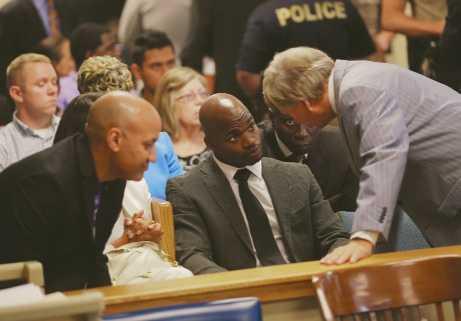
At a hearing on charges of reckless or negligent injury to a child, Adrian Peterson of the National Football League’s Minnesota Vikings consults his attorney, Rusty Hardin. Peterson’s case was one of a number of high profile cases that led the league to form a special committee to deal with players charged with family violence and abuse.
part of its response, the NFL suspended the players involved and formed a special committee of four women with expertise on issues related to sexual and domestic violence. The league ultimately reformed its personal conduct policy to reflect a strengthened stance against sexual assault and domestic violence. While the Rice case was met by fairly uniform condemnation of Ray Rice’s behavior, the Peterson case triggered somewhat more divided discussions about corporal punishment, race, and parenting, even among those who agreed that Peterson had crossed the line in the discipline of his young son.
Stories such as these illustrate just some of the kinds of topics and issues raised throughout the remainder of this book. They also raise interesting questions that frequently lack clear answers. For example, how much should the state restrict people’s marriage choices? How do policies that privilege married couples influence decisions to enter, exit, or remain in a marriage? How do wider economic conditions influence the internal dynamics of and decisions made by families? Has family law kept pace with advances in reproductive technology, and is it adequate to address diverse sexual lifestyles? At what point should the protection of children take precedence over the privacy of family life? As a society, we are often divided, sometimes strongly and bitterly, on many such family issues. That we are so deeply invested in certain values regarding family life makes a course about families a different kind of learning experience than if you were studying material to which you, yourself, were less connected or invested. Ideally, as a result, you will find yourself more engaged, even provoked, to think about and question things you take for granted. At minimum, you will be exposed to information that can help you more objectively understand the realities behind the more vocal debates.
To accurately understand marriage and family, it is important to define these terms. Before reading any further, think about what the words marriage and family mean to you. As simple and straightforward as this may seem, you may be surprised at the greater complexity involved as you attempt to define these words.
David J. Phillip-Pool/Getty Images
Defining Marriage
Globally, there is much variation in the percentage of adults who are married and what marriage is like. Sociologists Laura Lippman and W. Bradford Wilcox, reporting on the prevalence of marriage across 43 different countries, state that adults 18 to 49 are most likely to be married in countries in Asia and the Middle East and least likely to be married in Central and South America. Countries in Africa, Europe, North America, and Oceania are said to fall in between. More than 60 percent of adults in South Korea and Malaysia, and more than 70 percent of adults in Indonesia and India are currently married. Among the Middle Eastern countries in their sample, the percentage of adults who are married ranges from 55 percent in Israel to over 60 percent in Turkey and Jordan, to a high of 80 percent in Egypt. At the other end of the spectrum, at 20 percent married, Colombia represents the worldwide low.
As shown in Figure 1.1, slightly over half (53.1 percent) of all adults in the United States, age 18 and older, are married (including those married and living apart). If one includes those currently separated but not divorced, the percentage reaches 55.3 percent. Among males, 54.9 percent are currently married, living with or apart from their spouse. Another 1.9 percent are separated but not divorced and, all told, 68.7 percent have at least experienced marriage (this is, are married, divorced, separated, or widowed). Although a smaller percentage of females is currently married (51.5 percent) or separated (another 2.5 percent), 74.9 percent of females 18 and older are or have at some time been married (U.S. Census Bureau 2014).
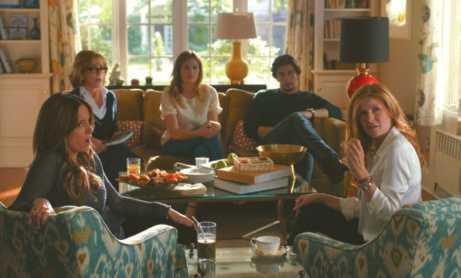
Family relationships are often the focus of popular movies. In 2014, This is Where I Leave You, featured and exposed the tensions resulting from the coming together of adult siblings and their widowed mother after the death of their father.
What is it that these many men and women have at some point entered and experienced? As one goes about trying to define marriage, one might proceed in a number of different directions. Thinking mostly about marriage in the 21st-century United States, for example, might lead one to emphasize marriage as a deeply emotional, sexually intimate, and highly personal relationship between two people in love. Given the past two decades worth of effort expended on marriage equality for gay men and lesbians, one might be inclined to emphasize the legal recognition and more than a thousand rights and protections that accompany marriage in the United States. Still others might approach marriage as a religiously sanctioned relationship. Fans of television programs such as Say Yes to the Dress or Bridezillas might even associate marriage mostly with the ceremonial celebrations and rituals accompanying weddings. In some ways, all of these have merit, as they reflect the multiple dimensions of marriage.
Anthropologists James Peoples and Garrick Bailey point out that there is so much cultural diversity in how societies define marriage that it is difficult to arrive at a single comprehensive definition that includes all the meanings marriage conveys. Perhaps minimally, marriage is a socially and legally recognized union between two people, in which they are united sexually, cooperate economically, and may give birth to, adopt, or rear children. The union is assumed to be permanent, as in “till death do we part,” though it may be and often is dissolved by separation or divorce. As simple as such a definition may make marriage seem, it differs among cultures and has changed considerably in our society.
SOURCE: U.S. Census Bureau, Families and Living Arrangements in the United States, Table 1A.