1
Great Clarendon Street, Oxford, OX2 6DP, United Kingdom
Oxford University Press is a department of the University of Oxford. It furthers the University’s objective of excellence in research, scholarship, and education by publishing worldwide. Oxford is a registered trade mark of Oxford University Press in the UK and in certain other countries
© Guy G. Stroumsa 2021
Te moral rights of the author have been asserted
First Edition published in 2021
Impression: 1
All rights reserved. No part of this publication may be reproduced, stored in a retrieval system, or transmitted, in any form or by any means, without the prior permission in writing of Oxford University Press, or as expressly permitted by law, by licence or under terms agreed with the appropriate reprographics rights organization. Enquiries concerning reproduction outside the scope of the above should be sent to the Rights Department, Oxford University Press, at the address above
You must not circulate this work in any other form and you must impose this same condition on any acquirer
Published in the United States of America by Oxford University Press 198 Madison Avenue, New York, NY 10016, United States of America
British Library Cataloguing in Publication Data
Data available
Library of Congress Control Number: 2021932091
ISBN 978–0–19–289868–5
DOI: 10.1093/oso/9780192898685.001.0001
Printed and bound by CPI Group (UK) Ltd, Croydon, CR0 4YY
Links to third party websites are provided by Oxford in good faith and for information only. Oxford disclaims any responsibility for the materials contained in any third party website referenced in this work.
For Tema and Mark Silk
Acknowledgements
Although most chapters of this book were written in Jerusalem, I have used library facilities also in Oxford, Ann Arbor, Chicago, Berlin, and Paris. I started working on it during my Oxford stint, as the frst Professor of the Study of the Abrahamic Religions. My College, Lady Margaret Hall, is located at the end of Norham Gardens, where Max Müller once lived. My original puzzlement at the fact that the Chair had only been established in 2009, rather than in his days, a century-and-a-half earlier, lies at the root of this book.
A generous Research Award from the Alexander-von-Humboldt-Stifung, in 2008, permitted the initial research on this project. My intensive involvement with its topic started as I worked on the Jordan Lectures in Comparative Religion, which I delivered in the spring of 2013 at the School of Oriental and African Studies in London. I wish to thank Catherine Hezser for her kind invitation. I did not guess at the time that it would take me so long to transform these lectures into a book. My gratitude also goes to Peter Mack for the Workshop on “Judaism and Islam in the Mind of Europe” that he asked me to organize at the Warburg Institute, of which he was then Director, on June 6, 2013. I am grateful to the Frankel Center for Judaic Studies at the University of Michigan in Ann Arbor for a Fellowship in 2015, and to the John U. Nef Committee on Social Tought at the University of Chicago for a Kohut Visiting Professorship in 2016. I was able to pursue research on this book with the help of remarkable libraries in Ann Arbor and Chicago. I wish to thank Luca Guliani, former Rector of the Wissenschafskolleg zu Berlin, for having extended to me a Fellowship at this remarkable institution in 2017. Te excellent conditions at the WiKo did much to facilitate my research. Te lecture I gave at the reception (jointly with Sarah Stroumsa) of the Leopold-Lucas Prize in Tübingen on May 8, 2018 provided further incentive to publish my views on the topic (Guy G. Stroumsa and Sarah Stroumsa, Eine dreifältige Schnur: über Judentum, Christentum und Islam in Geschichte und Wissenschaf [Tübingen: Mohr Siebeck, 2020]). I wish to express my gratitude to the Evangelical Teological Faculty at the University of Tübingen for this award.
I am beholden to Rajeev Bhargava (CSDS, Delhi), Corrine Bonnet (Toulouse), Arthur Bradley (Lancaster), Renaud Gagné, Simon Goldhill and Geofrey Lloyd (Cambridge), Charles Stang (CSWR, Harvard), and Carsten Wilke (Central European University, then Budapest) for having invited me to present parts of this work at a number of workshops and conferences. Over the years, Dominique Bourel (CNRS, Jerusalem) read a number of the chapters in their draf form and discussed their content with me. In acts of true friendship, both Philippe Borgeaud (Geneva) and Maurice Kriegel (EHESS, Paris) read the whole typescript; I am much indebted to them for their important comments. Naphtali Meshel (Jerusalem) and Perrine Simon-Nahum (CNRS, Paris) kindly agreed to read various chapters. Teodor Dunkelgrün (Cambridge) and Robert Priest (Royal Holloway, London) commented on Chapter six. My own refection on Renan has benefted from almost daily conversations with François Hartog (EHESS, Paris) in Chicago during the fall of 2016, when we were both teaching in the John U. Nef Committee on Social Tought at the University of Chicago. A French version of the frst half of Chapter four, published in Asdiwal in 2018, was dedicated to the distinguished Parisian Sanskritist Charles Malamoud, in recognition of his friendship and generosity over the past fve decades. Jacques Le Brun, with whom I discussed various aspects of this book, will not be able to read it: he became a victim of Covid-19 in early spring 2020.
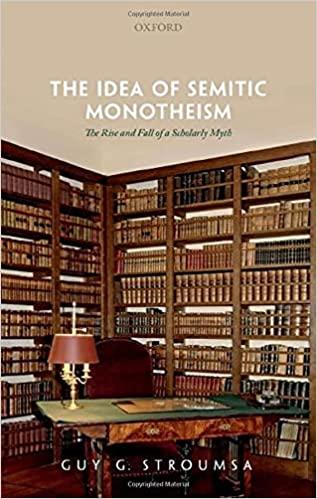
At Oxford University Press, I was lucky to have Tom Perridge as a thoughtful and gracious editor. I am most grateful to the anonymous readers, who called my attention to a number of serious problems in the original typescript. Te reports they produced helped me to clarify and sharpen my thought and to prune my text of many errors and typos. Once more, Sara Tropper’s excellent editing saved me from many oddities and infelicities. I am beholden to Marc Sherman, who compiled the indices with great care. I wish to thank the Centre des monuments nationaux in Paris for allowing me to use their photo of Renan’s study at the Collège de France, as reconstituted in Renan’s native home in Tréguier, for the dust jacket. My gratitude goes to Margo Stroumsa-Uzan for suggesting this photo.
Troughout the years, Sarah Stroumsa has been my frst, last, and toughest reader. My debt to her is infnite.
I dedicate this book to Tema and Mark Silk, in gratitude for half a century of constant friendship and intellectual exchange.
Jerusalem, January 2021
Les feurs de l’histoire religieuse sont des feurs étranges.
[Te fowers of religious history are strange fowers’]
Ernest Renan, Nouvelles études d’histoire religieuse, Preface
Es gelingt dem Gelehrten erst mit Hülfe der Geschichte (aber nicht von seiner persönlichen Erfahrung aus), es gegenüber den Religionen zu einem ehrfurchtsvollen Ernste und zu einer gewissen scheuen Rücksicht zu bringen . . .
[It is only with the help of the study of history (but not from personal experience) that a scholar becomes able to treat religions with a reverent seriousness and a certain shy regard . . . ]
Friedrich Nietzsche, Jenseits von Gut und Böse, 58
Car c’est inouï, la rage des gens d’une religion à étudier celle des autres.
[It’s unbelievable, the craze that people of one religion bring to study the religion of others.]
Marcel Proust, Le côté de Guermantes, Part II, Chapter Two
Wie unfassbar bescheiden sind die Menschen, die sich einer einzigen Religion verschreiben! Ich habe sehr viele Religionen, und die eine, die ihnen übergeordnet ist, bildet sich erst im Laufe meines Lebens.
[How incomprehensibly modest are people who only subscribe to one religion! I have a great many religions, and the one towering above them all is constructing itself throughout my life.]
Elias Canetti, Die Provinz des Menschen, Aufzeichnungen 1942–1972
le chercheur, lorsqu’il entreprend d’explorer les rapports entre l’esprit humain et les cultures, fabrique lui-même des mythes.
[. the very scholar who seeks to explore the relationship between the human mind and human cultures, concocts myths.]
Charles Malamoud, “Histoire des religions et comparatisme: la question indo-européenne” (1991)
Te Study of Religion and the Spirit of Orientalism
Tis book is a sequel to A New Science: Te Discovery of Religion in an Age of Reason, where I analyzed new intellectual approaches to religion in early modernity, from the sixteenth to the eighteenth century.1 In the present work, I study some major aspects of the scholarly study of religion during the long nineteenth century. More precisely, I seek here to understand the implications, in a secular age, which was also the formative period of the new discipline, of a major paradigm shif. Te nineteenth century witnessed the transformation of the taxonomy of religions. According to the traditional model, in place since late antiquity, Judaism, Christianity, and Islam were cognate religions, all stemming from the biblical patriarch Abraham’s discovery of monotheism. Tis model was largely discarded during the Enlightenment, and would be later replaced by a new one, according to which Christianity, the religion of Europe, essentially belonged to a postulated family of the Aryan, or Indo-European religions, while Judaism and Islam were identifed as Semitic religions.
In the mid-nineteenth century, Ernest Renan coined the term “Semitic monotheism” to describe the belief in one single God, supposedly emblematic of the Semitic peoples, in contrast to the purportedly polytheistic systems of the Indo-European peoples. In doing so, Renan was creating a potent scholarly myth that would be espoused for decades by European scholars of religion, only to unravel towards the end of the century and fall by the scholarly wayside. Te myth of Semitic monotheism is intricately associated with important aspects of European religious, intellectual, and social history, and should be understood within the broader framework provided by growing secularization, colonialism, the fowering of the missionary movement, and the rise of the modern university. Trough the prism of Semitic monotheism, I hope to shed light on some fundamental aspects of the modern study of religion in Europe in the long nineteenth
1 Guy G. Stroumsa, A New Science: Te Discovery of Religion in the Age of Reason (Cambridge, MA: Harvard University Press, 2010).
The Idea of Semitic Monotheism: The Rise and Fall of a Scholarly Myth. Guy G. Stroumsa, Oxford University Press (2021). © Guy G. Stroumsa. DOI: 10.1093/oso/9780192898685.003.0001
century, from the sequels of the Enlightenment in the late eighteenth century to the eve of the First World War. In this book, I propose to repurpose this prism, deploying it to decipher how, in this period, traditional categories of religion were radically transformed and new taxonomies invented.
Tis transformational passage was even more profound than an apparently simple shif from religious to scientifc categories would imply. Just as the old thought patterns were based on ancient myths, so new myths were forged to establish new patterns. Te nineteenth century, which Jürgen Osterhammel has dubbed the “foundational century” (Gründungsjahrhundert),2 was indeed the foundational period not only of our contemporary, globalized world, but also of no small number of the scholarly disciplines taught in modern universities. Among them is the academic study of religions, alternatively called “science of religion,” “history of religions,” or “comparative religion.” I seek here to identify, in the study of religions, one such foundational myth and to present and analyze some of its abiding consequences.
While all branches of knowledge have a history, important features of these histories are ofen obscured from view. It remains a puzzling fact that the history of science, as a discipline, focuses mainly on the natural sciences, in which the past of the discipline matters less to the practicing scientist than in the humanities, where the historical tradition of a discipline has a powerful efect on both the problems tackled and the methods used. Te history of Western scholarship, however, cannot be studied in isolation from its broader societal context; it also forms part of European intellectual and cultural history, and it is as such that it should be approached.3
Towards the end of the nineteenth century, the “science of religion” stood at the very forefront of knowledge. Its claims, which tended to be made in the form of combative statements, had immense implications for society at large. It is this broader, public signifcance of a discipline that today is ofen assessed as arcane, which I hope to showcase in the following pages.4
2 See Jürgen Osterhammel, Te Transformation of the World: A Global History of the Nineteenth Century (Princeton, NJ, Oxford: Princeton University Press, 2014).
3 I concur here with Timothy Fitzgerald, Te Ideology of Religious Studies (New York, Oxford: Oxford University Press, 2000), IX, who criticizes a “mystifying ideology” for attempting to reconstruct a decontextualized, ahistorical phenomenon and divorce it from questions of power.
4 See, for instance, Mircea Eliade’s refection, dating from 1959: Te adventurous and the bold, creative minds are no longer coming to philology, to Orientalism, or to the history of religions as they were in 1870–1880; they are oriented rather towards the physical sciences and mathematics . . . We attract only paltry types who haven’t a virile enough soul to face a world in a state of crisis or risk their career for a daring idea.
In A New Science: Te Discovery of Religion in the Age of Reason, I sought to call attention to an early chapter in the formation of the modern study of religion, to a time before the academic discipline was established. Taking the seventeenth and eighteenth centuries as my focal point, before the birth of scholarly institutions devoted to this study, I demonstrated how individual scholars frst set modern parameters for the non-theological study of the religions of humankind, past and present. Te present work takes as its point of departure the Enlightenment. In the nineteenth century, the study of religion surfaced as a new discipline, complete with its own institutional frameworks. Tis nascent research feld emerged at the nexus of several existing disciplines, including philosophy and theology, linguistics and philology, Oriental studies and ethnology (or social anthropology, as it would later be called). It could not have emerged without a prolonged, intense, and complex interface between these disciplines. From its inception, the use of comparative methods was integral to this “science of religion,” as it was at the time in a number of disciplines. It can be said that the new mental map of religion, as it materialized during the nineteenth century, amounted to nothing less than a reconstruction of the idea of religion as it had been known since early modernity.5
Oddly enough, the concept of “monotheism,” which one might have assumed to have been around for quite some time, is an early modern invention, attributed to the Cambridge Platonist Henry More and dating from 1660. Moreover, for most of its lifespan, the concept seems to have enjoyed a rather limited popularity. Judging from its written usage in both English and other European languages, even as late as the early nineteenth century the term was relatively rare. Te usage had already reached its peak, however, by the fnal decade of that century, between 1890 and 1895.
Mircea Eliade, Journal II, 1957–1969 (Chicago, IL, London: Chicago University Press, 1977), 47.
5 Among the studies on the history of the concept of religion, see in particular Ernst Feil’s monumental Religio (Göttingen: Vandenhoeck & Ruprecht, 1986–2012); the fourth and last volume goes up to the early nineteenth century. See further Michel Despland, La religion en occident: évolution des idées et du vécu (Montréal: Fides, 1979); Daniel Dubuisson, Te Western Construction of Religion: Myths, Knowledge, and Ideology (Baltimore, MD: Johns Hopkins University Press, 2003) [French original: L’Occident et la religion: mythes, science et idéologie (Paris: Complexe, 1998)]; and Brent Nongbri, Before Religion: A History of a Modern Concept (New Haven, CT, London: Yale University Press, 2013); cf. the earlier Eric J. Sharpe, Comparative Religion: A History (London: Duckworth, 1975). See further Jonathan Z. Smith, “A Twice-Told Tale: Te History of the History of Religions’ History,” in his Relating Religion: Essays in the Study of Religion (Chicago, IL: Chicago University Press, 2004), chapter 16, 362–374.
Te modern study of religion developed during the nineteenth century, up to the establishment, in its last third, of the frst academic Chairs, journals and conferences exclusively devoted to the new discipline. At that time, the religious systems of newly “discovered” peoples, throughout Asia, the Americas, and Africa, as well as of those from Mediterranean and Near Eastern antiquity, were the main objects of investigation. Tese systems were now analyzed thanks to new philological tools and courtesy of newly unearthed archaeological evidence. In this context, the understanding of polytheistic (or, as in the case of Buddhism, non-theistic) systems, approached for the frst time in a non-polemical fashion, sine ira et studio, played a central role.
Medieval Christian societies, both in Byzantium and in the Latin West, knew a single taxonomy of the world’s religions.6 For a full millennium, roughly from the eighth to the eighteenth century, Christian thinkers had divided the world among the religious families of Christianity, Judaism, and Islam, side by side with all other religions of humankind, past and present, usually considered under the single category of “heathenism.” As a rule, this fourfold classifcation did not admit of what one may call the later “Triple Alliance” between the monotheistic traditions. Polemics remained the usual medium of communication between them. Christianity (or, more precisely, its orthodox version) was the only true religion (or vera religio in Augustine’s terms), while Judaism and Islam were considered to be false religions (falsae religiones), one upstream and one downstream of Christianity, as it were. From Epiphanius of Salamis, in the fourth century, for whom Judaism was the frst heresy to John of Damascus in the eighth, who considered Islam to be the last—and worst—one, patristic heresiologists could even present these two religions as heresies of sorts.7 In diferent ways, Jews and Muslims were considered inveterate enemies of the true faith. As monotheists, however, they were recognized as profoundly akin to the Christians.
To be sure, the scholarly quadripartite classifcation of religions was at times transformed in popular tradition into a tripartite one, in which Muslims were simply presented as pagans, as in the famed Palästinalied of
6 On early Christian taxonomies of religions, see Francesco Massa, “Nommer et classer les religions aux IIe–IVe siècles: la taxonomie ‘paganisme, judaïsme, christianisme,’ ”Revue de l’Histoire des Religions 234 (2017), 689–715.
7 Te transformation of Judaism into a Christian heresy is, of course, less intuitive than the Christian perception of earliest Islam as a heresy. But Epiphanius explicitly called Judaism a heresy, while Justinian’s rulings can be said to treat the Jews as heretics. See Guy G. Stroumsa, “Barbarians or Heretics?,” in his Te Making of the Abrahamic Religions in Late Antiquity (Oxford: Oxford University Press, 2015), 175–188.
Walther von der Vogelweide, the illustrious lyric poet of Middle High German literature. Te text, written at the time of the Fifh Crusade (1217–1221), refers to Christians, Jews, and pagans (“Kristen, juden und die heiden,” 11) who all consider the Holy Land to belong to them. By “pagans,” Muslims are obviously meant. But even such nomenclature, through its exclusive focus on Jews, Christians, and Muslims, refects a “trinitarian” perception of kinship between the three monotheistic religions. It goes without saying that this kinship did not stop Christians from perceiving the Jews as a generally tolerated but usually reviled (as children of the devil [John 8: 44]) religious community, and the Muslims as simply enemies from without.8
In modern times, Christian encounters with diferent societies and their traditional cultures demanded that the aforementioned classifcation be abandoned, as the category of “heathenism” no longer sufced to encompass the great variety of religions in the world. Tis setting aside of the old taxonomy weakened the centuries-old family relationship between the three monotheistic religions. When William Jones, speaking in 1786 at the recently founded Calcutta Asiatic Society, announced that he had discovered similarities between Sanskrit, Greek, and Latin, he was in fact launching a new classifcation of languages and peoples.9 Tis new ethnological taxonomy would fast become the main paradigm, alongside the linguistic one, for a number of disciplines in the nineteenth century. Semites and Aryans now took the traditional place of the ofspring of Shem and Japheth, two of Noah’s three sons.10 Te Semites were imagined through the model of the Hebrews (and the Jews; from the 1880s on, the newly coined term “anti-Semitism” never referred to the hatred of anyone but the Jews), while the Greeks represented the model of the Aryans. Monotheism would now be conceived as a characteristic of a postulated ancient Semitic religion,
8 Judaism and Islam did not always reciprocate the compliment paid to them by Christianity, as Jewish and Muslim medieval thinkers rarely considered Christianity to be monotheistic.
9 See Bruce Lincoln, “Isaac Newton and Oriental Jones on Myth, Ancient History, and the Relative Prestige of Peoples,” History of Religions 42 (2002), 1–18. Lincoln demonstrates how Jones transformed the old paradigm of Noachide humanity according to Newton, and how his wish to reduce the historical privilege of the Hebrews, in particular over Indians and Iranians, refected a resentment against Israel, with its horrifc ultimate consequences.
10 Troughout history, Ham, Noah’s third son, traditionally identifed with blackness, has remained the incarnation of blacks and slaves. See Benjamin Braude, “Race, esclavage et exégèse entre islam, judaïsme et christianisme,” Annales. Histoire, Sciences Sociales 57 (2002), 93–125, as well as David M. Goldenberg, Te Curse of Ham: Race and Slavery in Early Judaism, Christianity and Islam (Princeton, NJ, Oxford: Princeton University Press, 2005).
while polytheism would be linked to the Aryan religion. Tis new paradigm gave the old taxonomy the coup de grâce. New categories had to be created, and this was one of the major tasks of the fedgling “science of religion.” A Europe whose identity was perceived as torn between the Semitic roots of its religion and the Aryan nature of its languages and ethnicities saw the emergence of a deep ambivalence to monotheism. Tis ambivalence echoed and amplifed those trends in the radical Enlightenment that had grown strongly critical of Christianity beyond the established churches, more broadly of monotheism, and even of the very idea of religion.
Te new European discovery of isomorphisms between Sanskrit and most European languages led to the identifcation of families of languages, and also of families of religions, in particular the Aryan and the Semitic religious families.11 Yet, deducing religion (and ethnicity) from linguistics yields a fallacy, a fact vividly underscored towards the end of the nineteenth century by Salomon Reinach in his seminal article “Le mirage oriental.”12 Important European intellectuals now started to identify European languages and peoples as belonging to the Indo-European (or Indo-Germanic) or Aryan family. Loath to consider their own religion, Christianity, as related in any signifcant way to Judaism and Islam, the main extant Semitic religions, they preferred to see in it a religious expression of the Aryan race. It is important to bear in mind, however, that pan-Aryanism hardly represented a leading trend in nineteenth-century European thought. Most intellectuals in Europe placed little value on this kind of racialism. To trace back the early nature of racialist thought patterns from their radical, murderous consequences in the twentieth century would amount to teleological reasoning. Nevertheless, as the following chapters argue, the Aryan-Semite taxonomy did play a formative role in the study of religion.13
11 Maurice Olender, Te Languages of Paradise: Race, Religion, and Philology in the Nineteenth Century (Cambridge, MA: Harvard University Press, 1992 [French original: Les langues du paradis. Aryens et Sémites: un couple providentiel (Paris: Gallimard, Le Seuil, 1989)]). Olender discusses some of the fgures we shall encounter in the following chapters, such as Ernest Renan, Max Müller, and Ignaz Goldziher, although the book itself does not focus, as I do here, on the study of religion.
12 Salomon Reinach, “Le mirage oriental,” L’anthropologie 4 (1893), 539–579 and 699. See Chapter 10 in this volume. For another use of this metaphor, see Louis Bertrand, “La réalité et le Mirage oriental,” Revue des Deux Mondes 48: 5 (1908), 139–172. Bertrand later published a novel entitled Le mirage oriental (Paris: Perrin, 1920).
13 See Stefan Arvidsson, Aryan Idols: Indo-European Mythology as Ideology and Science (Chicago, IL: Chicago University Press, 2006), also on de Lagarde and Chamberlain; cf. Chapter 8 in this volume.
Christianity remained paradoxically peripheral to the development of the new discipline. Indeed, while the traditional refection on religion had been the object of theological and philosophical inquiry, the modern study of religion grew mainly at the interface of philology, Oriental studies, and ethnology. Te religion of biblical Israel remained within the purview of Christian theology, while post-biblical and rabbinic Judaism were set aside, refecting the Christian perception of the decadence that had overtaken the Hebrews following the prophetic period, and certainly since Jesus. Moreover, the historical study of Christianity and the critical, philological approach to the Bible in our period continued to be the province of liberal Protestant theologians; Catholics were still forbidden by ecclesiastical authorities to deal with higher biblical criticism.
Te study of Islam, by contrast, stayed mainly in the hands of Arabic scholars. Some of these scholars showed remarkable intellectual curiosity and open-mindedness and made signifcant achievements in understanding major documents of an alien civilization and religion. At the same time, however, many among these scholars had for centuries displayed a disparaging attitude towards Muhammad, dubbed a false prophet, and to his religion.14 Remarkably, then, Judaism, Christianity, and Islam found themselves, to some extent, ofen outside the core of the new discipline.15 By and large, this important fact has not attracted the attention it deserves in contemporary scholarship. In this book, I frst and foremost wish to appreciate the consequences of this fact on the study of monotheism—and, in particular, on the scholarly approaches to Judaism and Islam, two religions that now came to be perceived as distinctly alien to Christian Europe.
Unlike the abstract history of ideas, intellectual history seeks to understand ideas within their full cultural, social, and political context. When dealing with approaches to religion in the nineteenth century, accelerated secularization, growing nationalism, and imperial colonialism provide the immediate context. Te analysis of scholarly discourse on religion must refect the new status of religion in societies that were undergoing intensive
14 On the ambivalence shown by early modern scholarship on Islam, see Stroumsa, A New Science, chapter 6, 124–144 and notes. On perceptions of Islam in the Enlightenment, see Alexander Bevilacqua, Te Republic of Arab Letters: Islam and the European Enlightenment (Cambridge, MA: Belknap Press of Harvard University Press, 2018).
15 On the complex relationship between these religions from the perspective of a comparative historian of religions, see Kurt Rudolph, “Juden – Christen – Muslime: Zum Verhältnis der drei monotheistischen Religionen in religionswissenschaflicher Sicht,” chapter 11 in his Geschichte und Probleme der Religionswissenschaf (Studies in the History of Religions, Vol. LIII (Leiden, New York, Cologne: Brill, 1992), 279–300.
processes of secularization. On the one hand, with the industrial revolution and the growth of cities, the working classes were learning to free themselves from ecclesiastical control and the churches were losing their traditional grip on Western European societies. On the other hand, powerful thinkers, pursuing the radical Enlightenment onslaught on traditional Christianity, were in search of new forms of spirituality. Concepts such as Hegel’s “spirit of the age” or Comte’s “religion of the future” seduced many, including, for example, the theologian David Friedrich Strauss in Germany and the historian and intellectual Edgar Quinet in France. Te second half of the century saw a signifcant decline in the number of churchgoers, together with the growth of the historical and comparative study of religion.16
Tis did not mean that religion was waning, as many feared, and many others hoped. It meant, rather, that its status and function in society were undergoing a profound transformation. Expressions of religion were increasingly regressing from the public sphere to the private one. Of course, the Christian dimension of European identities was in no way disappearing. Rather, the semiotic range of Christianity shifed, moving from representing Europe’s core religious identity to representing its cultural memory. Tis was perhaps clearest in the case of the Bible in Protestant countries, where it became in the nineteenth century, in its vernacular translations, an essential element of education and culture.17 Even though Christianity did not always embody shared beliefs and practices, it certainly remained at the center of historical consciousness and national identity. For Hegel, this was the transformation, or Aufebung, of Christianity in the fully fedged Geist. 18
In his seminal book A Secular Age (2007), the reception and intellectual impact of which has been resounding, the Canadian philosopher Charles Taylor aimed to analyze the conceptual transformations of religion in the
16 For an analytical description of the period, see Owen Chadwick, Te Secularization of the European Mind in the Nineteenth Century (Cambridge: Cambridge University Press, 1975). As the present book deals with a number of countries, across a signifcant period, it will be impossible to ofer an adequate discussion of the diferent conditions in each case.
17 See Jonathan Sheehan, Te Enlightenment Bible: Translation, Scholarship, Culture (Princeton, NJ: Princeton University Press, 2005); cf. Chapter 3 in this volume, note 8.
18 See, for instance, Jean-Claude Monod, La querelle de la sécularisation de Hegel à Blumenberg (Paris: Vrin, 2002). On the relationship between philosophical and theological perceptions of secularization, see Hans Blumenberg, Säkularisierung und Selbstbehauptung (Frankfurt: Suhrkamp, 1974 [1966]). Blumenberg is reacting to the views expressed by Karl Löwith, in his Meaning in History: On the Teological Implications of the Philosophy of History (Chicago, IL: Chicago University Press, 1949), according to whom modern European thought amounts to a secularization of Christian ideas about salvation.
modern age.19 Taylor, one must note, was not so much interested in studying secular society in itself as in understanding the conditions under which religion in general, and Christianity in particular, remains possible in secularizing, modern societies. Secularity, he argued, can be understood in many ways. For example, it can mean the separation of religion and public life. Secularity can also indicate a decline, sometimes drastic, of religious belief and practice. Tus, secularization points to a process rather than to a steady state—a “secular age”—and always remains an unfnished business. Indeed, our societies can by no means be considered as fully secularized, a global fact we have learned the hard way to recognize in the past decades. In other words, one could say that a secular age does not refer to a world from which religion has disappeared, but rather to one in which religious and secular ideas both circulate freely, in a complex, sometimes hidden, but always present dialectic, each one in need of the other.
Secularization alone, however, cannot fully explain the transformation of Christianity in European consciousness from representing Europe’s religious identity to encapsulating its cultural capital. An account of this transformation requires a consideration of both the rapid growth of nationalism and the expansion of colonial conquests in the age of imperialism. Such a consideration, however, cannot be attempted here, as nationalism and colonialism played out diversely in various countries, and at diferent times. In the second half of the nineteenth century, the growing feelings of European superiority versus Asian and African peoples and cultures would be expressed in a new key, that of “scientifc racism.” Tis particular expression of disparaging attitudes to foreign peoples and their cultures lef an immediate, potent, and lasting impression on scholarly conceptions. A great deal of research, including, for example, Martin Bernal’s work on Greek antiquity, has shown how the categories forged in nineteenth-century scholarship refected racist ideas.20
19 Charles Taylor, A Secular Age (Cambridge, MA, London: Harvard University Press, 2007). For a similar attempt at identifying major religious transformations in human history, see Robert N. Bellah, Religion in Human Evolution: From the Paleolithic to the Axial Age (Cambridge, MA, London: Harvard University Press, 2011); cf. Guy G. Stroumsa, “Robert Bellah on the Origins of Religion: A Critical Review,” Revue de l’Histoire des Religions 229 (2012), 467–477.
20 In Black Athena: Te Afroasiatic Roots of Classical Civilization. Vol. I: Te Fabrication of Ancient Greece 1785–1985 (New Brunswick, NJ: Rutgers University Press, 1987), Bernal insisted on the major role played by the intensifcation of racism and the central importance of “ethnicity” as a principle of historical explanation. He demonstrated the crucial part they played in the formation of new taxonomies opposing “Aryans” to “Semites.”
In one of the paradoxical consequences (and most insidious aspects) of this transformation, Judaism and Islam, which had long belonged, together with Christianity, to the family of the monotheistic religions (although they were perceived, of course, as its parents pauvres), became increasingly seen as inherently foreign to the spirit of Christianity and the nature of Christendom. Tis constituted a major fracture in European identity, yet another crisis of European consciousness, afer the crisis of the Enlightenment, analyzed in such a masterful way by Paul Hazard.21 Te depth of this fracture, as well as its efect on the status of Judaism and Islam in the European mind, has yet to be fully assessed.22
Prior to the Enlightenment, the Near East, which was then generally referred to as simply “the East,” was considered the seedbed of human religious origins. All religions had come from the Ancient Near East, from Egypt to Babylonia, through the lands of the Bible.23 As Christianity was perceived as the quintessential European religion, Judaism and Islam represented for the European mind the two surviving religions from the Ancient Near East. Tis is true notwithstanding the continuing power of both deep prejudices against the Jews, marginalized in the ghettos’ enclave societies, and of persistent animosity (or at the very least contempt) towards, as well as fear of, Muslim societies outside Europe, in particular the Ottoman Empire. Now, however, Judaism and Islam started to be understood as belonging to “the East of the West,” or as “the West of the (deep and true) East,” as it were, that of India and China.
Judaism and Islam thus fell between Europe and India, between the two poles of Indo-European cultural and religious creativity. To be sure, scholars recognized the impressive geographical spread of Islam, and that both Jews and Muslims believed in one God. Yet, all in all, racial prejudice against the Jews (as distinct from traditional religious anti-Semitism), which had been on the rise since the Enlightenment, and condescending attitudes towards Islam and Islamic societies, entailed a strong devaluation of both Judaism and Islam. At the same time, despite continuing suspicions towards Asian religions such as Buddhism, some literati learned to express a
21 Paul Hazard, Te Crisis of the European Mind 1680–1715 (New York: New York Review of Books, 2013 [French original: La crise de la conscience européenne, 1689–1715 (Paris: Fayard, 1961 [1935])]).
22 Markus Messling, Gebeugter Geist: Rassismus und Erkenntnis in der modernen europäischen Philologie (Göttingen: Wallerstein, 2016).
23 See, for instance, Guy G. Stroumsa, “John Selden et les origines de l’orientalisme,” in Quentin Epron, ed., John Selden: juriste européen, Annuaire de l’Institut Michel Villey 3 (2012), 1–11.
preference for Indo-European religious systems and cultural traditions over Semitic religions and cultures. European Christians thus contrived to liberate themselves from the Jewish, Near-Eastern origins of their religion. Te close relationship of Christianity with European culture, it was claimed, did not abnegate its universal nature, and it was therefore Europe’s duty to promote Christianity throughout Asia and Africa, along the model of its earlier conquests in the Americas.
Intellectual perceptions of Judaism and Islam, moreover, are directly related to social attitudes toward Jews and Muslims in European societies—a point which there is surely no need to belabor. In the early stages of Jewish emancipation, a process that had started with the French Revolution, the Jewish presence in Western European societies changed at a rapid pace. Emancipation and reduced exclusion from society at large was accompanied by new tensions. Te traditional forms of Christian anti-Semitism, which had never quite disappeared, were reactivated in a new, racial key, and fresh forms of prejudice were devised. It is a striking paradox, which merits attention, that at the very time when they were starting to become part of society at large, the Jews began to be experienced as more alien than in the old days, when their liminal existence, on the fringes of Christian society, was anchored as a permanent reminder of the abiding truth of Christianity. Now, with the opening of the ghettos and the invitation to integrate in the mainstream of society, the Jews came to be perceived as an essentially Asian people; in that sense, they were ofen thought of as remaining essentially marginal to Europe, not quite belonging to it.
At the same time, Islam was identifed as the religion of Europe’s immediate neighbor, the Ottoman Empire, and that of colonized peoples from the Maghreb to the Indian subcontinent and beyond. As such, Muslims were ofen scorned by Europeans. Of course, signifcant Muslim communities had long been present on European soil, mainly in the Balkans. In southern European imagery, Muslims were ofen portrayed as peaceful traders. Yet, more ofen than not, they remained marginalized in Western European perception. In diferent ways, British, French, Belgian, and German imperialism and colonialism, in Africa, the Near East, South and East Asia only strengthened negative attitudes towards Islam and Muslims and reactivated existing prejudices. Furthermore, as is well known, Orientalist trends in art and literature in the nineteenth century accentuated such negative attitudes towards Islam and Muslims.
In the mid-nineteenth century, the French historian and philosopher Edgar Quinet introduced the phrase “la Renaissance orientale,” by which he
meant the new European scholarly interest in, and cultural sensitivity to, the civilizations of Asia.24 Since Quinet’s days, European perceptions of the Orient have been a highly loaded topic: witness the fate of Edward Said’s Orientalism, which quickly became a cult classic.25 Tere is no need to revisit here either the book’s important contributions or its various shortcomings.26 One of its features, however, has direct implications for the present inquiry: it dismissed the colossal efort made by courageous scholars to open new vistas to whole civilizations far beyond the borders of Europe.
Tese scholars appear to have had boundless intellectual curiosity. Several fne monographs on aspects of nineteenth-century Orientalism have revealed its rich and complex history, as well as the many links, both obvious (starting with linguistic demands) and implicit, between Orientalism and the study of religion.27 Some recent studies, moreover, have brilliantly surveyed the world of modern Orientalism, showing its embeddedness in intellectual and social history. Urs App’s remarkable work on the intellectual origins of Orientalism, for example, ofers broad perspectives on its beginnings, from Voltaire to Volney.28 On her part, Suzanne Marchand published an outstanding volume on Orientalism in nineteenthcentury Germany.29 App, however, concentrates on the cultures and religions of South and East Asia, and does not deal with Islam and Judaism, whereas the core of Marchand’s book concerns developments that took place during the Second German Reich, that is, afer 1871, leaving most of those occurring elsewhere beyond the scope of her inquiry. From the
24 Edgar Quinet, Du génie des religions (Paris: Charpentier, 1842), 65–77: “De la renaissance orientale”. A century later, the literary scholar Raymond Schwab would use the expression as the title of his masterpiece, La Renaissance orientale (Paris: Payot, 2014 [1950]) [N.B.: page numbers are diferent from those in the 1950 original publication. English translation: Oriental Renaissance: Europe’s Rediscovery of India and the East 1680–1880 (New York: Columbia University Press, 1984)].
25 Edward W. Said, Orientalism (New York: Random House, 1978).
26 Cf. Robert Irwin, For Lust of Knowing: Te Orientalists and their Enemies (London: Penguin, 2006), 3–5. On the vitriolic polemics to which the book gave birth, see, for instance, the exchange between Said and two distinguished Arabists and Islamic scholars, Oleg Grabar and Bernard Lewis, in Te New York Review of Books (12 August 1982). Quite oddly, the polemics continues unabated, more than forty years afer the publication of Orientalism. See, for instance, Adam Shatz, “ ‘Orientalism,’ Ten and Now,” New York Review daily (May 20, 2019), www.nybooks.com/daily/2019/05/20/orientalism-then-and-now.
27 Tese studies will be repeatedly referred to in the chapters that follow.
28 Urs App, Te Birth of Orientalism (Philadelphia, PA, Oxford: University of Pennsylvania Press, 2010).
29 Suzanne L. Marchand, German Orientalism in the Age of Empire: Religion, Race, and Scholarship (Washington, Cambridge: German Historical Institute and Cambridge University Press, 2009).
perspective of the present book, a crucial dimension of the study of religion lies in its transnational character. More precisely, only by taking cultural transfers into consideration (in particular, between Germany, France, and Britain, as well as the Netherlands, Switzerland, and Sweden) can one explain the genesis and structure of this study. Hence, any research on one specifc national or linguistic domain is bound to be limited.30
While the study of Islam and that of Judaism form part of the Orientalist enterprise, they obviously also belong to the study of religion. Like Orientalism, the latter expanded in the course of the nineteenth century, eventually becoming a fully fedged scholarly discipline. How and when was the modern, critical study of religion born? Among the branches of humanistic scholarship, the study of religion seems to have particularly sufered from a lack of refexivity concerning its own history.31 In the past generation, however, sophisticated accounts of the history of religion have done much to remedy this sorry state of afairs, shedding new light on the history of the modern study of religion. Tese books naturally focalize the second half of the nineteenth century, the period when the frst university Chairs and scholarly journals were established across Europe. In countries with a predominantly Protestant culture, the study of religion became established in theological faculties. Consequently, as Jonathan Z. Smith has shown regarding the religions of late antiquity and the world of Early Christianity, the study of religion long remained entwined with theological conceptions.32
In his Discovering Religious History in the Modern Age, Hans Kippenberg ofers an incisive analysis of major trends in the study of religion at the time of its early development, read in their broader cultural context.33 In doing
30 Te theory of cultural transfers, developed, in particular, in France in the 1980s, at frst focusing on philology and literary studies between France and Germany, but which has now become much more broadly applied. See, for instance, Michel Espagne, Svetlana Gorshenina, Frantz Grenet, Shahin Mustafayev and Claude Rapin, eds, Asie centrale: Transferts culturels le long de la route de la soie (Paris: Vendémiaire, 2016), Introduction, 8–9. On Pierre Bourdieu’s concept of intellectual feld as a system of relations between the agents of intellectual production, see, for instance, Pierre Bourdieu, “Genèse et structure du champ religieux,” Revue française de sociologie 12 (1971), 295–334.
31 Robert Orsi, “Te ‘So-Called History’ of the Study of Religion,” Method and Teory in the Study of Religion 20 (2008), 134–138: “Te past of religious studies has been until recently largely invisible .” (134).
32 Jonathan Z. Smith, Drudgery Divine: On the Comparison of Early Christianities and the Religions of Late Antiquity (Chicago, IL: University of Chicago Press, 1990).
33 Hans G. Kippenberg, Discovering Religious History in the Modern Age (Princeton, NJ, Oxford: Princeton University Press, 2002). Te original version was published as Die Entdeckung der Religionsgeschichte: Religionswissenschaf und Moderne (Munich: Beck, 1997).
so, he explicitly sets out to reintroduce the category of “history” into religious studies. Although he starts more broadly, with various views of religion among diferent Enlightenment thinkers, Kippenberg soon hones in on the second half of the nineteenth and on the frst half of the twentieth centuries. Unlike Marchand, he works as a historian of religion rather than of Orientalism, and he deals at length not only with Germany, but also with scholarship in other countries. Moreover, unlike App, his net is cast wide, well beyond the study of the “Asian religions,” although his interest in the study of Judaism and Islam remains rather limited—a refection, no doubt, of mainstream research in the nineteenth century.
Tomoko Masuzawa’s Te Invention of World Religions is particularly pertinent to the present discussion.34 Like Kippenberg, Masuzawa mainly tackles the fnal decades of the century—the period in which the new discipline fourished. She rightly notes that her inquiry exposes important aspects of the new European self-consciousness and modern European identity. Masuzawa’s focal point is the role played by the new category of “world religions” in the reinterpretation of religious phenomena and historical religions. For her, the nineteenth-century scholarly European discovery and study of the religions of South and East Asia, principally Buddhism and Hinduism, as well as Confucianism and Shintoism (all terms introduced by European scholars), diverted attention from the religions born in the Near East, frst and foremost Islam, but also Judaism.
We see a strikingly diferent approach in the work of Philippe Borgeaud, whose Aux origines de l’histoire des religions inscribes itself defnitively in the longue durée. Borgeaud follows the long and entangled thread from comparative attempts in the refection about religion in antiquity, through the approaches of paganism by the Church Fathers and the early modern perceptions of Christian missionaries, to the establishment of university Chairs devoted to the study of religion in the fnal third of the nineteenth century.35 In this discursive tracking mode, Borgeaud demonstrates both
34 Tomoko Masuzawa, Te Invention of World Religions, Or, How European Universalism Was Preserved in the Language of Pluralism (Chicago, IL, London: University of Chicago Press, 2005).
35 Philippe Borgeaud, Aux origines de l’histoire des religions (Paris: Seuil, 2004); cf. my review in History of Religions 45 (2006), 257–259. See also Philippe Borgeaud, “Le problème du comparatisme en histoire des religions,” in his Exercices d’histoire des religions: Comparaison, rites, myths et émotions (Jerusalem Studies in Religion and Culture 20; Leiden, Boston, MA: Brill, 2008), 3–20. See further Philippe Borgeaud, La pensée européenne des religions (Paris: Le Seuil, 2021). In this new volume, Borgeaud insists on the comparative nature (either explicit or implicit) of the scholarly study of religion, which starts for him with the comparative study of rituals and myths. He also highlights the fact that such a conception of the comparative method