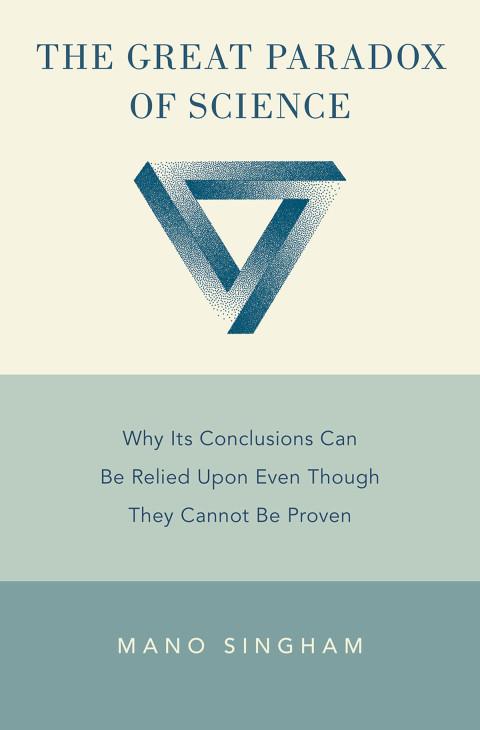
GreatParadoxofScience:WhyItsConclusions CanBeReliedUponEvenThoughTheyCannotBe ProvenManoSingham
https://ebookmass.com/product/the-great-paradox-of-sciencewhy-its-conclusions-can-be-relied-upon-even-though-theycannot-be-proven-mano-singham/
Instant digital products (PDF, ePub, MOBI) ready for you
Download now and discover formats that fit your needs...
Facials Can Be Fatal Cohen
https://ebookmass.com/product/facials-can-be-fatal-cohen/
ebookmass.com
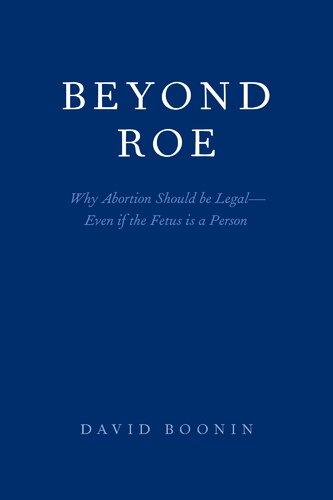
Beyond Roe: Why Abortion Should be Legal--Even if the Fetus is a Person David Boonin
https://ebookmass.com/product/beyond-roe-why-abortion-should-be-legaleven-if-the-fetus-is-a-person-david-boonin/
ebookmass.com
Can Animals Be Persons? Mark Rowlands
https://ebookmass.com/product/can-animals-be-persons-mark-rowlands/
ebookmass.com
The Halal Food Handbook Abd El-Rahim
https://ebookmass.com/product/the-halal-food-handbook-abd-el-rahim/
ebookmass.com
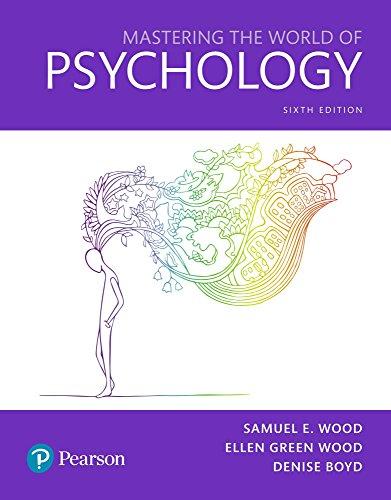
Mastering the World of Psychology: A ScientistPractitioner Approach 6th Edition – Ebook PDF Version
https://ebookmass.com/product/mastering-the-world-of-psychology-ascientist-practitioner-approach-6th-edition-ebook-pdf-version/
ebookmass.com
Public & Private Families. 1st Edition Andrew J. Cherlin.
https://ebookmass.com/product/public-private-families-1st-editionandrew-j-cherlin/
ebookmass.com
Pédiatrie médico-légale: Mineurs en danger : du dépistage à l'expertise pour parcours spécialisé protégé Sfpml
https://ebookmass.com/product/pediatrie-medico-legale-mineurs-endanger-du-depistage-a-lexpertise-pour-parcours-specialise-protegesfpml/
ebookmass.com
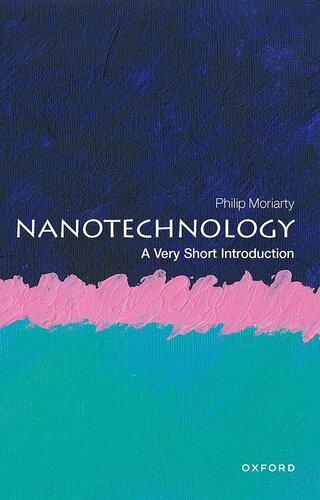
Nanotechnology: A Very Short Introduction Philip Moriarty
https://ebookmass.com/product/nanotechnology-a-very-shortintroduction-philip-moriarty/
ebookmass.com
Lone Star Rescue: Former Military Romantic Suspense (Hard Justice Book 1) Delores Fossen
https://ebookmass.com/product/lone-star-rescue-former-militaryromantic-suspense-hard-justice-book-1-delores-fossen/
ebookmass.com
Modern Vintage Homes & Leisure Lives: Ghosts & Glamour
1st Edition Samantha Holland (Auth.)
https://ebookmass.com/product/modern-vintage-homes-leisure-livesghosts-glamour-1st-edition-samantha-holland-auth/
ebookmass.com
Introduction
The great appeal of science has been its undoubted success in enriching our lives not only in practical ways but also in showing how over time things that on the surface once seemed so inexplicable became understandable, and how vastly diverse phenomena are unified by being revealed to be based on a few underlying principles. All these seemed so fascinating to me from my early teens that I could not imagine a better way of spending my life than studying science more deeply. The world of physics, with its logical structure and underlying mathematical elegance, seemed to promise unlimited frontiers for a lifetime of fascinating investigation.
But upon graduating from high school in Sri Lanka, my hopes for entering university to pursue a physics degree lay in serious doubt because I had failed to pass a language requirement. Disappointed, I looked for a backup career to make a living and went into accountancy. During the training program, it turned out that I did quite well, mainly because the mathematics and logic involved came easily to me. I was quite comfortable with double-entry bookkeeping and could distinguish assets from liabilities and debits from credits. But my heart was not really in it. So when I overcame the language barrier at the last minute and thus qualified for university, I was elated. I went to the head of the accountancy school and told him that I was dropping out to pursue a physics degree. He tried to dissuade me, saying that he thought I was making a mistake and that I had a gift for accountancy. He then added what he must have thought was the clinching argument. He said that with accountancy, there is a fixed body of knowledge and that with diligent study one could eventually have the satisfaction of having mastered all of it. But when it came to science, one could never achieve that state and would always be left with unanswered questions. He thought I would find that extremely frustrating.
That well-meaning educator did not realize that he had said exactly the wrong thing. I can see why the prospect of a never-ending search for new knowledge, and the idea that one might never reach the goal of knowing everything in one’s field of study, might be unsettling for some. But for me, that was the main allure of science, to seek and find answers to interesting and important problems, but yet never run out of fascinating questions to explore.
But after completing my undergraduate studies and then pursuing graduate work toward a doctoral degree in theoretical physics, it seemed like my idea that
physics provided unlimited frontiers for exploration might be mistaken. The last quarter of the twentieth century saw one spectacular success in physics after another that raised the possibility that we were getting close to uncovering the fundamental particles that make up the universe and the underlying laws that govern their behavior. There was even talk of finding the “theory of everything” and even of “the end of science.”
Similar talk had emerged a century earlier, before the physics revolutions in relativity and quantum mechanics in the first few decades of the twentieth century shattered those expectations and opened up radically new ways of viewing the world. But hubris is part of human nature and tempts us to think that this time things are different, that we have finally got it right, and are not prone to the same errors as our predecessors. So while the scope of scientific knowledge is now so vast that no single individual can know everything, as the head of the accountancy school seemed to think was possible in his field, it seemed like as a community of scientists we were approaching a time when we would know all there is to know, at least in their broad outlines, with only mopping-up operations remaining. We seemed tantalizingly close to uncovering the ultimate truths about the nature of the universe.
I had mixed feelings about this. Scientists are puzzle-solvers at heart and while there is something exhilarating about sensing that one is close to cracking open a difficult puzzle and arriving at a solution, achieving such success, like coming to the end of an ingenious mystery novel, also brings with it a sense of anti-climax, a wistful feeling of “Is that all there is?” and the wish for more. The thought that future generations of scientists would not have the same excitement of tackling major open questions brought with it a tinge of sadness, similar to the sentiment expressed by eminent physicist Paul Dirac in 1939 that “In 1926 it was possible for people who were not very good to solve important problems, but now people who are very good cannot find important problems to solve” (Livio 2013, 159).
But after obtaining my doctorate and anticipating playing my own small role in what might possibly be the twilight of science, I stumbled upon the book The Structure of Scientific Revolutions by Thomas Kuhn (Kuhn 1970) that looked more deeply at the history and philosophy of science. I was startled by Kuhn’s claim that while the progress of science was undeniable, there was no reason to think that there was any final frontier at all that science was progressing toward, let alone that it was a finite distance away and that we were close to it.
My prior ignorance of the work of Kuhn and other philosophers of science is not surprising. The formal study of the history and philosophy of science does not form part of the curriculum in science graduate programs. Instead, what scientists acquire is folklore about the nature of science that practicing scientists share amongst themselves and pass on to their students. This folklore is then spread to the general public via popular books, articles, and talks by scientists.
My curiosity was piqued by the fact that there was a vast discrepancy between that folklore and what historians, philosophers, and sociologists of science were uncovering. This resulted in my pursuing two parallel tracks of study, physics on the one hand and philosophy of science on the other. In so doing, I became increasingly convinced that philosophers of science were shedding important light on the nature of science that needed to be better known both by scientists and the general public (Okasha 2016).
The major question that came to the fore in my investigations was how it could be that science seemed to be progressing so rapidly and the knowledge it produced so successful in revolutionizing our lives if it was not, as so many of the philosophers claimed, approaching something that we could call “the truth.”
While deeper knowledge about the nature of science is not essential for the actual practice of scientific research, which is why scientists have done very well without bothering too much about it, I have two other, much more practical, goals for this book as well. The first is that the methods and reasoning by which scientists arrive at their conclusions would enable people, if they became familiar with it, to make much better decisions in all aspects of their lives, what we can call “practical rationality.” The second arises from the fact that science has a huge impact on public policy, and when we enter that area of intersection, the misconceptions, lack of understanding, and outright distortions about the logic and nature of science become increasingly significant. I am concerned that the lack of general awareness of how scientists arrive at their knowledge and why that knowledge is so reliable and has proven to be so powerful has enabled those who have agendas that go against the scientific consensus, such as those groups opposed to vaccinations or the teaching of evolution or who are climate change skeptics or who market questionable products, to sow confusion and doubt and prevent meaningful action that can save lives and the planet. These groups use anecdotal evidence or cherry-pick data or rely on people who are not credible experts to advance their causes, whereas the reliability of science arises because of the creation of consensus conclusions by credible experts using comprehensive bodies of evidence that are systematically acquired and evaluated using scientific logic and must pass through institutional filters such as legitimate peer-reviewed publications
Successfully combating powerful groups that seek to undermine the scientific consensus on important issues requires much more than knowledge of the folklore of science because the more sophisticated members of those groups exploit that folklore, with its shaky epistemology, to their advantage. Supporters of science need to understand the weaknesses of their folkloric understanding of science and then go beyond them and reach deeper levels, as this book seeks to do, in order to better combat the false narratives of science’s opponents. As philosopher of science H. M. Collins wrote:
So long as scientific authority is legitimated by reference to inadequate philosophies of science, it is easy for laymen to challenge that authority. It is easy to show that the practice of science in any particular instance does not accord with the canons of its legitimating philosophies. The fears of those who object to relativism on the grounds of its anarchic consequences are being realized, not as a result of relativism, but as a consequence of an over-reliance on the very philosophies that are supposed to wall about scientific authority. Those walls are turning out to be made of straw. If new walls are to be constructed, they will have to have their foundations laid in scientific practice—in our understanding of the role of the tacit elements of scientific expertise, and the way this expertise, not a philosophical system, can give justification to an opinion about the natural world. (Collins 1983, 99–100)
If we are to more effectively counter the misunderstandings and distortions, some deliberately fostered, that surround public understanding of science, a deeper understanding of the logic of science is required and this necessitates coming to grips with profound questions of proof, theories, laws, and how we establish the existence and nonexistence of entities.
I have written this book to address both philosophical and practical needs. My book seeks to help build a firmer foundation for science by taking the conclusions of the philosophers, historians, and sociologists of science seriously and addressing the resulting paradox of how scientific theories can be so successful in explaining the world around us despite the lack of any assurance that those theories are true or have an increasing level of correspondence with reality. I argue that those two requirements are unnecessary for understanding the success of science and rather than buttressing its credibility, are actually a hindrance and a distraction because they raise metaphysical questions that cannot be resolved, where I use the word “metaphysical” not in its original sense of first principles or ultimate causes but in the more common and slightly pejorative sense of being abstruse and undecidable using standard methods of reasoning. Furthermore, the new understanding of science that will replace the folkloric knowledge will provide people and policymakers with better tools to make sound rational decisions on matters that they encounter in their everyday lives and in public policy areas, using the same methods that scientists use to arrive at judgments on important questions.
This book is aimed at those people who are interested in science even if they have little or no formal training in it, but practicing scientists will, I hope, also gain a deeper understanding of the underlying knowledge structure of their own work. It starts by dispelling many of the myths and misconceptions and folklore surrounding the nature of scientific knowledge, thus laying the groundwork for why we need a deeper understanding of how science arrives at its knowledge
structures and why we are justified in having such trust in them. This leads to the formulation in chapter 20 of what I refer to as the Great Paradox, the fact that despite what many believe, the success of science need have little to do with truth or correspondence with an objective reality. The last two chapters provide a model for the resolution of that paradox.
In order to guide the reader, I will start by laying out the outline of the argument in the book, and each chapter summary will be reproduced at the beginning of each chapter to aid in following the argument.
The structure of the book
Chapter 1 introduces the main themes of the book and argues that it is science that enables us to go well beyond the world that we can access purely via our senses, but that doing so requires the use of advanced equipment and technology to gather data and deep inferential reasoning to extract useful information from that data.
Chapter 2 looks at how popular accounts of scientific history tend to be viewed through the lens of present-day science, focusing largely on those developments that led to the current state and presenting that history as a more-or-less linear process toward that end. By largely ignoring all the cross-currents and confusion that are almost always present in science, the resulting accounts tend to be seriously distorted and should be treated with a great deal of skepticism, even though they can serve useful pedagogical purposes.
Chapter 3 examines popular misconceptions about the nature of science. The notion of scientific truth as correspondence with reality is argued to be not necessary to do science but is helpful in communicating the ideas of science amongst scientists and the general public. Scientists are always seeking what works and thus tend to be philosophical and methodological opportunists, quite willing to abandon one approach and shift to an alternative if they think that it will produce better results.
In chapter 4, I discuss how science investigates phenomena that lie outside our direct sensory experience and the difference in the logical arguments used to infer the existence of entities from those used to establish nonexistence. Applying the same logic and reasoning that scientists have used to establish the nonexistence of many things would enable people to rid themselves of many unsupported and superstitious beliefs.
Chapter 5 deals with how despite the counterintuitive nature of many scientific conclusions, it is because science works so well that people accept them. While the problem of induction prevents us from generalizing from a few instances and predicting the future purely by what we have observed in the past, it is the belief
that the laws and theories of science are the best that we have and getting better with time that gives us confidence in their predictions. The importance of having a better understanding of the way that the scientific community uses the words “law,” “theory,” “hypothesis,” and “fact” is emphasized.
Part Two of the book begins with chapter 6, in which a detailed case study of the search for the answer to the question of how old the Earth is serves as a paradigm for how scientific “facts” need not be unchangeable. The age has oscillated wildly before settling on the currently accepted value of 4.54 billion years, with religion, politics, and other nonscience factors influencing the search along the way. The final consensus involves a complex interplay of theories from geology, biology, physics, chemistry, and paleontology.
In chapter 7, I discuss how the way we arrived at the current age of the Earth shows that reversals of seemingly firm conclusions are the norm in science, not the exceptions, and form an integral part of its process. They are thus not a cause for alarm and the community of scientists has over time developed ways to arrive at consensus judgments that, while not infallible, can command considerable confidence.
Part Three of the book begins with chapter 8, which takes a historical look at the search for true knowledge and how scientific consensus conclusions have changed from being thought of as unchanging and infallible to now being considered as just provisionally true, the best we have at any moment. Establishing the validity of scientific propositions has become so difficult that it is now the preserve of a few specialists who have the time, resources, and expertise to carry out the required investigations.
Chapter 9 deals with the importance for all of us to understand the epistemology of science in order to better counter those who selectively use such knowledge to advance dangerous anti-science agendas, such as arguing that science is just another species of opinion and requires faith. While doubt is always present in science, even in the absence of absolute certainty we can still have a high degree of confidence in scientific consensus judgments.
Chapter 10 addresses some popular misconceptions about the nature of scientific theories. It discusses why they cannot be proven true or false, that scientific revolutions always involve at least a three-cornered struggle involving at least two theories and experiment, and that experimental data are never sufficient to uniquely determine a theory. Although we have not been able to specify both necessary and sufficient criteria to distinguish science from nonscience, there do exist necessary conditions that any scientific theory and law must satisfy, and that is that they must be both naturalistic and testable.
Chapter 11 expands upon the point touched on in the previous chapter of how scientific theories are so deeply interconnected that they cannot be investigated in isolation, and how this prevents individual theories from unequivocally being
proven true or false and creates difficulties when choosing between two competing theories.
Chapter 12 looks at how we have a natural propensity to invent theories all the time based on our experiences, and it is the testing of these theories and their refutation and replacement with new theories that more accurately represents scientific practice.
Part Four of the book begins with chapter 13, which looks at what we can learn from axiomatic systems and the role of proofs in arriving at truths. It discusses why there are limits to what we can prove to be true even in mathematics because we cannot construct a framework that is both complete and consistent for any nontrivial system. Science is slightly different in that we deal with quasi-axiomatic systems with the additional element of experimental data or observations that we can compare with the predictions of theories, but it faces the same problem.
Chapter 14 looks at how scientific logic has strong similarities to the way that the legal system uses logical arguments and evidence to arrive at judgments. The logic used depends on whether a proposition is an existence claim or a universal one, and this determines where the burden of proof lies. That same kind of logic is used also in everyday life, though many people may not consciously realize that they are doing so.
Chapter 15 looks at mathematical proofs that use the method of logical contradiction and examines how far this can be taken in science. While the existence of any entity can never be proven by this method, the nonexistence of certain entities can.
Chapter 16 looks at the important role that negative evidence, the things we do not observe, plays in scientific logic. This is illustrated by the example of why we so strongly believe that only two kinds of electric charges exist, to the extent of basing our entire modern technology on it, even though we have not proved it to be so, and indeed cannot even hope to do so.
Chapter 17 uses what we have learned about scientific logic to evaluate the status of four theories that are currently at the frontiers of physics and command much attention in the media: dark matter, dark energy, string theory, and the multiverse.
Part Five of the book begins the process of weaving together all the earlier threads, with this chapter looking at what historians, philosophers, and sociologists of science have uncovered about the way that the scientific community chooses between competing theories and how the process proceeds rationally and systematically even if questions of truth are not determinative.
Chapter 19 looks at why achieving consensus in science can be slow and getting unanimity of views on some scientific questions is almost impossible, because those who are determined to find ways to preserve their beliefs can always find ways to do so.
Chapter 20 finally confronts the Great Paradox: If science is progressing, what could it possibly be progressing toward if not the truth? It argues that the way that scientific paradigms evolve is analogous to the process of biological evolution, in that both are conditional on the environment that exists at any time and thus there is no reason to believe that the evolution of scientific theories is heading toward a unique truth. The strong impression of directionality is because scientific history in textbooks is reconstructed after the fact. Scientific evolution, like biological evolution, is not teleological.
Chapter 21 builds on Charles Darwin’s metaphor of the Tree of Life to construct two other tree metaphors that illustrate the nonteleological nature of science. One is the Tree of Scientific Paradigms that exemplifies the process by which scientific paradigms evolve, with new ones emerging over time that have resulted in their present variety and diversity. The other is the Tree of Science that represents the evolution of scientific knowledge as a whole.
Chapter 22 uses the Tree of Science to resolve the paradox of how scientific theories can work so well and be so successful in explaining the world around us despite the lack of any assurance that those theories are true, that they are even approaching something that we can call the truth. It argues that the ideas of truth and correspondence with reality are unnecessary for understanding the success of science and are actually a hindrance and a distraction, because they raise metaphysical questions that cannot be resolved.
Did dinosaurs have tea parties?
[This chapter introduces the main themes of the book and argues that it is science that enables us to go well beyond the world that we can access purely via our senses, but that doing so requires the use of advanced equipment and technology to gather data and deep inferential reasoning to extract useful information from that data.]
A friend of mine recounted to me a question that had popped into his mind when he had been visiting the Grand Canyon. The park ranger was telling the group the importance of not littering by specifying how long different kinds of trash last, saying that aluminum cans would take as long as 200 years to decompose, plastic bottles would take 450 years, glass bottles would take the longest at about a million years, and so on. What struck my friend was that these times, although long by our human time scale, were small when compared to geological time scales.
It occurred to him that dinosaurs went extinct about 65 million years ago. We think of many of the dinosaurs as impressive in their size and the way they dominated the world in their time, roaming freely over the Earth with everything as their prey and with few predators to fear. But we don’t associate them with any culture. We don’t associate them with discovering fire or building homes or creating artifacts such as pottery and tools for their use.
But my friend wondered how we know that they didn’t do any of these things. Could it be that they were actually more advanced than we give them credit for and did at least some of those things but that all the evidence has disappeared over the long time since they were wiped out? It is true that we have not discovered any artifacts dating back to the same period as the dinosaurs that show signs of conscious design. But once all the dinosaurs went extinct, anything they created would start to decompose, with most returning at various times to their elemental forms. Is there anything at all that could and perhaps should have survived until the present day that would suggest that dinosaurs had some sort of culture? We think they didn’t because we have not found anything other than their fossils. But can we be certain about this? The process of fossilization occurs when, under suitable conditions, water infiltrates the pores and cavities in bone, wood, and shell, and minerals in the water replace the organic matter and become hardened. These stony fossils are the things that last almost indefinitely, but dinosaur artifacts may not have been amenable to that process.
Let’s pose the question in another way. Human beings have created a vast number of artifacts that cover the surface of the globe. If all of us, like the dinosaurs, were to some day disappear, relatively suddenly due to some catastrophe or slowly because we failed to properly protect our environment, would at least some traces of our civilization last forever or would there come a time when there would be no sign that we lived lives that went beyond mere existence? If extraterrestrials were to arrive on Earth hundreds of millions or even billions of years after our disappearance, would they find only human fossils like we now find with dinosaurs or would they also uncover evidence that a sophisticated civilization once existed?
It seems hard to imagine that there would be no traces at all of our civilization, given the extent of the things that we have created. But it may well be the case, since there does not seem to be anything that lasts for more than a few million years or so before decomposing into elemental forms or becoming buried deep underground due to plate tectonics. If so, then why could it not be the case for dinosaur artifacts too? After all, humans have been around for a mere two million years (and modern humans only for 200,000 years) and thus produced all these things in a much shorter period than the dinosaurs who roamed the Earth for around 150 million years. Why do we believe that dinosaurs did not do anything at all during that time other than eat, sleep, and reproduce? Why could it not be that they too developed some kind of society, however rudimentary, whose traces have disappeared in the 65 million years that have elapsed since they went extinct? We can immediately think of some obvious hindrances to such advancements, such as their lack of opposable thumbs, but can we be sure that such deficiencies completely rule out any kind of culture?
The idea of dinosaurs having a culture seemed so preposterous that my friend was too embarrassed to pose this question to the park ranger in the Grand Canyon. But actually it is a good question because trying to answer it requires coming to grips with the entire structure of deep inferential knowledge, of how we know things that are not directly accessible via our senses. Our human senses have extremely limited ranges. Gaining knowledge of deep time (i.e., going back to the biological origins of life on Earth or the physical origins of the Earth and the universe) or of deep space (the outer limit of the visible universe) or the world of the very small (such as the electron) or the very fast (such as light) lies outside the abilities of any individual. It can only be obtained indirectly and needs the collective expertise of many people, often using extremely long chains of subtle reasoning and advanced mathematics applied to data gleaned from complicated instruments. Science uses precisely such methods to arrive at much of its knowledge, and has been extremely successful in utilizing the answers obtained. Science is what we turn to in trying to answer important questions
about phenomena that lie outside the range of direct human experience and deciding how sure we are of that knowledge.
There are those who use the deep inferential nature of scientific knowledge to argue that it is less sound than other forms of knowledge that are more readily and transparently accessible. But in fact, apart from those things that we personally experience, inferential knowledge is pretty much all that we have, except that some forms of it seem, on the surface, to be more concrete and reliable than others. For example, take records of historical or even contemporary events. We may think that because they were recorded by eyewitnesses or by people taking the testimony of eyewitnesses, those records can be considered as factual. But we know that eyewitness testimony and memories can be notoriously unreliable and that recorders, even if they are diligent and sincere in their attempts at being accurate, must necessarily be selective about what they document, and can find it hard to avoid subjective factors coloring their accounts. This is why we have long-lasting debates about historical events even when there are contemporaneous accounts by supposed eyewitnesses. What we think of as incontrovertible, objective, historical facts are often the consensus verdicts of a few people who have analyzed the raw data and produced a narrative that is plausible and supported by evidence. As consumers of such accounts, we are usually unable to do an independent analysis and need to rely upon the credibility of those experts for our “facts.”
Almost all knowledge consists of this kind of deep inferential knowledge. The knowledge that we obtain from science is different only in degree from the knowledge obtained in other fields, in that the inferential chains are often longer, more abstract in nature, and require more esoteric tools to uncover. Scientific knowledge also seems much more unfamiliar because it is usually exploring a world that we cannot imagine easily because it lies beyond the reach of our senses, or because it deals with events that took place a long time ago before humans were even around to record them, or in distant parts of the universe that we can never hope to get to. Those who seek to pursue agendas that go against the scientific consensus in some areas have tried to exploit this unfamiliarity of the deep inferential knowledge structure of science, to sow doubt as to the validity of conclusions about phenomena that are so far removed from our immediate experience.
One group of people who have adopted the most extreme forms of this skepticism are the religious fundamentalists who believe, based on their interpretation of religious texts, that the Earth has existed for less than ten thousand years and that the theory of evolution is false. One such sect instructs the children of its followers to challenge teachers who make assertions about anything that predates recorded history by asking them “Were you there?,” implying that only those things that have been directly witnessed by humans are the things we can
know for sure and that everything else is of doubtful validity (Patterson 2015). Astrologers, psychics, faith healers, and others of that ilk assert the existence of supernatural and other processes that they claim are beyond the ability of science to investigate.
But religious fundamentalists and believers in the supernatural are not the only ones who have sought to find ways to challenge the robustness of scientific conclusions. There are also business interests that have challenged the conclusions of science about the health risks of smoking and the damage caused by acid rain and chlorofluorocarbons. Opponents of childhood vaccinations similarly deny the scientific consensus on the safety, effectiveness, and necessity of vaccines. Climate change denialists challenge the conclusion that the planet is in danger of undergoing irreversible and potentially catastrophic changes by questioning the validity of climate models and the estimates of long ago temperatures. All these groups suggest that some piece of contradictory evidence, or making an ad hoc change somewhere, can decisively refute the consensus conclusions of the scientific community.
These concerted efforts to undermine confidence in scientific conclusions need to be countered because of the harmful effects of the policies that these critics seek to advance. But in doing so we must be cautious and not make claims in support of science that cannot be sustained, because those can be exploited to sow further doubt as to the credibility of science. Some of the critics of science use quite sophisticated arguments from the fields of history and philosophy of science, and countering them requires equal or even greater levels of sophistication about the knowledge generated by those fields.
The success of science is such that surveys find overwhelming majorities in America who say that science has had a mostly positive effect on society and that science has made life easier. Scientists rank third in public esteem, behind the military and teachers but ahead of medical doctors, engineers, clergy, journalists, artists, lawyers, and business executives (Pew Research Center 2009). This support exists in spite of the fact that most people do not really understand how science works. Why should this lack of understanding be a source of concern? After all, many people don’t understand how planes fly and yet they board them for long distance travel without any qualms. Many people do not understand how smartphones work and yet use them for all manner of communications. They don’t understand how microwave ovens work and yet can use them to cook and heat their food with facility. In living our lives today, we are surrounded by technology that we have little understanding of and yet we are unfazed and use it effectively and easily. What is wrong with treating science the same way, with little or no understanding of its inner workings but using the information and products created by science for our benefit? Why bother to go to all the trouble of trying to understand how all that knowledge was obtained and why it is so reliable?
There are good reasons why achieving more widespread and deeper understanding of the nature of science is beneficial. Very little actually hinges on whether or not we understand how our everyday appliances work. But a lot hinges on understanding the deep inferential reasoning used in acquiring scientific knowledge. Science is not just a collection of factual information that underlies modern technology. Arriving at that information involves making difficult decisions about which scientific theories we can rely on and which should be rejected. Since the consequences of those decisions are so important, over time the community of scientists has developed ways that enable them to make reasoned and reliable judgments. Although this book is mostly concerned with the evolution of science and not technology, the importance of technological advances in spurring scientific curiosity and enabling the investigation of scientific theories cannot be overemphasized.
Many of the ways of making scientific judgments have practical relevance in all aspects of our daily lives and can be enormously helpful in decision-making for individuals and for public policy. Indeed we often unconsciously use many of those scientific decision-making strategies but because we are not explicitly aware that we are doing so, our everyday decision-making is often idiosyncratic and inconsistent. By becoming explicitly aware of how the scientific community arrives at its conclusions about which theories can be relied upon and which ones should be jettisoned, we not only gain more confidence in those theories, we become able to make better judgments about important questions concerning our society and even the more mundane aspects of our own lives. But getting to that happy state of a deeper understanding of the way science works is not straightforward.
To really understand how science works, we need to understand the logic of science, how the scientific community reasons its way to conclusions. Learning about the principles of logic in science is important because one needs a common framework in order to adjudicate disagreements. A big step toward resolving arguments lies in either agreeing to a common framework by which a judgment can be arrived at or deciding that one cannot agree and that further discussion is pointless in the absence of new information. Either outcome is more desirable than going around in circles endlessly, not recognizing what the ultimate source of disagreement is.
For example, one important recurring issue in science is how we decide on the existence or nonexistence of postulated entities. Why do we believe that electrons exist but that the aether does not? Establishing existence seems the more straightforward of the two possibilities. For example, we believe in the existence of horses because there is direct evidence for them. But establishing nonexistence is more problematic. We (or at least many of us) do not believe in the existence of unicorns, leprechauns, pixies, dragons, centaurs, mermaids, fairies,