‘Arvid Ågren has undertaken the most meticulously thorough reading of the relevant literature that I have ever encountered. And he deploys an intelligent understanding to pull it into a coherent story. As if that wasn’t enough, he gets it right.’ -Richard Dawkins
‘The idea of the selfish gene revolutionised evolutionary thinking and led to many new insights. But from the outset, it received strong criticism, not all of it baseless. In the first dedicated book on the topic, Arvid Ågren expertly sets out the power and nuances of the selfish gene concept. At times taking sides, at others leaving history to decide, he is always perceptive, scholarly, balanced, and good natured. Interwoven with asides on the principal players, this fine book succeeds in being both enlightening and engaging.’ -Andrew Bourke, Professor of Evolutionary Biology, University of East Anglia, UK
‘Since its inception in the 1970s, the “gene’s eye view of evolution” has been a controversial idea in evolutionary biology. In this lucid and scholarly book, Arvid Ågren provides a masterful treatment of the intricate and often confusing debates over the value and limitations of the gene’s eye view. I highly recommend his book to anyone seeking a deeper understanding of this important issue.’ -Samir Okasha, Professor of Philosophy of Science, University of Bristol, UK
‘This book’s conversational style, clear presentation and wellplanted surprises make it ideal for both general readers and students in a broad range of fields. The selfish gene is alive and well and continues to inspire and irritate, which is why we see gene level arguments of fans and critics alike in past and present debates. Best of all, as we follow the gene’s eye view around in Agren’s book, we find ourselves educated about current views in exciting subfields-from evolutionary systems theory to Major Transitions and Selfish Genetic Elements- and rewarded with a treasure trove of references.’ -Ullica Segerstrale, Professor of Sociology, Illinois Institute of Technology, Chicago, USA
‘Science needs ingenious points-of-view that help us understand the world. Few perspectives are more famous—or notorious—than that of the selfish gene. Merging biology and history of science, Ågren unravels its origins, explains why it is useful, and when its utility has been overstretched. Whether you’re a fan or a critic, this is an essential guide to the gene’s eye view.’ -Tobias Uller, Professor of Evolutionary Biology, Department of Biology, Lund University, Sweden
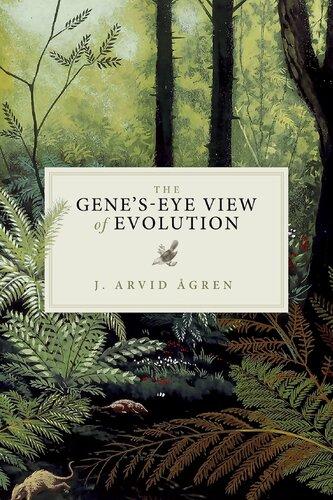
THE GENE’S- EYE VIEW OF EVOLUTION
by J. ARVID ÅGREN
Wenner-Gren
Fellow
Department of Organismic and Evolutionary Biology
Harvard University
1
Great Clarendon Street, Oxford, ox2 6dp, United Kingdom
All rights reserved. No part of this publication may be reproduced, stored in a retrieval system, or transmitted, in any form or by any means, without the prior permission in writing of Oxford University Press, or as expressly permitted by law, by licence or under terms agreed with the appropriate reprographics rights organization. Enquiries concerning reproduction outside the scope of the above should be sent to the Rights Department, Oxford University Press, at the address above
You must not circulate this work in any other form and you must impose this same condition on any acquirer
Published in the United States of America by Oxford University Press 198 Madison Avenue, New York, NY 10016, United States of America
British Library Cataloguing in Publication Data
Data available
Library of Congress Control Number: 2021931952
ISBN 978–0–19–886226–0
DOI: 10.1093/oso/9780198862260.001.0001
Printed and bound by CPI Group (UK) Ltd, Croydon, cr0 4yy
Links to third party websites are provided by Oxford in good faith and for information only. Oxford disclaims any responsibility for the materials contained in any third party website referenced in this work.
For my father, the biologist and my mother, the cultural historian
Preface
One of my biggest embarrassments in life is that I am such a poor naturalist. My botanical skills are distinctly average and my ornithological knowledge is downright appalling. Rather than a love of natural history, what attracted me to biology was a fascination with the logic of the theory of evolution by natural selection. No other theory explains so much with so little. It is truly deserving of the title of ‘the single best idea anyone has ever had’, as Daniel Dennett once put it. And in contrast with other great theories of science, like general relativity or quantum mechanics, it can be (mis-)understood by anyone. I have always been drawn to the conceptual issues of evolutionary biology, questions that my hard-nosed empirical colleagues would dismiss as too theoretical, too abstract, and, if they wanted to be really mean, too philosophical.
This is a book about one of those issues, the gene’s-eye view of evolution.The book came about thanks to Francis Crick’s Gossip Test. According to Crick, your true interests are revealed by what you gossip about. For me, that has long been the gene’s-eye view, and the vituperative debate that has surrounded selfish genes for the past halfcentury. As this book will make clear, the story of the gene’s-eye view deals with many abstract questions, but it also has innumerable empirical implications. It strikes right at the heart of the question of what evolution is, and how we go about studying it.
I have been thinking about the disagreements over the gene’s-eye view for the past decade, ever since I moved to Toronto, Canada, to begin my graduate research. Arriving in Toronto after growing up in Sweden and receiving my undergraduate training in Scotland meant
Preface
that I for the first time came in close contact with students from North America. One thing that struck me about my new colleagues was that they often had a very different perspective on theoretical issues in evolutionary biology than I did. To exaggerate and overgeneralize a bit: if when I was a teenager and expressed an interest in the big questions of evolutionary biology I was handed a book authored by Richard Dawkins, they had been given one of Stephen Jay Gould’s. I learned a tremendous amount discussing these issues in the lecture halls, seminar rooms, and, especially, in the Graduate Student Union pub located right next to the Department of Ecology and Evolutionary Biology of the University of Toronto. The genesis of this book owes a lot to those intellectual sparring sessions.
More concretely, several people were instrumental in making this book a reality. In particular, David Haig, and his Fundamental Interconnectedness of All Things discussion group, provided an environment that encouraged tackling the foundational questions of our field. Few have thought more about the gene’s-eye view than David and he has been reliable source of advice and support throughout this project.
I am grateful a large number of colleagues who took the time to read and provide comments on my writing. For help with individual chapters, I thank Alan Grafen, Alister McGrath, Andrew Bourke, Anthony Edwards, Cédric Paternotte, Charles Goodnight, Dan Dennett, Dan Hartl, Denis Noble, Ellen Clarke, Erik Svensson, Jack Werren, Jim Mallett, John Durant, Jonathan Birch, Kevin Foster, Lutz Fromhage, Megan Frederickson, Michael Bentley, Michael Rodgers, Stephen Wright, Stu West, and Tim Lewens. Others, including David Barash, Brian and Deborah Charlesworth, Andy Clark, James Marshall, and Martin Nowak, answered questions and pointed me to resources that have been tremendously helpful. For reading the entire manuscript, at one point or another, I am indebted to Chinmay Sonawane, Cody McCoy, David Haig, Jon Ågren, Manus Patten, Richard Dawkins, Samir Okasha, Steve Stearns, and Tobias Uller.
Their comments greatly improved the text, clarified my thinking, and offered much needed encouragement. On occasion, they also saved
me from some embarrassing misunderstandings. They did not always agree with my argument; sometimes they were just kind enough to explain why I was wrong. Any remaining mistakes are, of course, mine.
Several people helped me understand how the gene’s-eye view has been received around the world. I am grateful for the insight from Adrian Stencel, Amitabh Joshi, Ehud Lamm, Ian Caldas, Israt Jahan, Jae Choe, Jun Otsuka, Kazuki Tsuji, Leonardo Campagna, Philippe Huneman, Snait Gissis, Sakura Osamu, and Victor Luque. Only a small portion of this topic made it into the book in the end, but I hope to return to it in the future.
It has been said that being published by Oxford University Press is like ‘being married to a duchess: the honour is greater than the pleasure’.That has not been my experience. Ian Sherman and Charles Bath have been extremely supportive and helpful since the first day of this project. I am grateful to Spencer Barrett for introducing me to Ian, and to Spencer and Locke Rowe for helping me draft the proposal.
Two chapters are partly based on material from my previously published papers and I thank the publishers for letting me reuse some of the text. Chapter 4 draws on Ågren JA. 2018. The Hamiltonian view of social evolution. Studies in History and Philosophy of Biological and Biomedical Sciences. 68–69: 88–93. Chapter 5 incorporates material from Ågren JA. 2016. Selfish genetic elements and the gene’s-eye view of evolution. Current Zoology. 62: 659–665 and Ågren JA and AG Clark. 2018. Selfish genetic elements. PLoS Genetics. 14: e1007700.
Throughout the time of writing I was financially supported by the Wenner-Gren Foundations, whose generous support I am very thankful for. I also indebted to the staff at the Ernst Mayr Library at the Museum of Comparative Zoology at Harvard for their help and assistance, especially for their ingenuity during the extraordinary circumstances of a global pandemic.
Finally, I am forever grateful to my wife, Utako, for her neverending love and support. And for insisting that I write this book.
J. Arvid Ågren
March 2021
4.3
5.3
5.4
Introduction: A New Way to Read Nature
There really is something special about biology. The French biochemist and Nobel Prize winner Jacques Monod described its position among the sciences as simultaneously marginal and central (Monod 1970, p. xi). It is marginal, because its object of study—living organisms—are but a special case of chemistry and physics, contributing to only a minuscule part of the universe. Biology will never be the source of natural laws in the way physics is. At the same time, if, as Monod believed, the whole point of science is to understand humanity’s place in the world, then biology is the most central of them all. No other field of study deals so directly with the question of who we are and how we got here in the first place.
The location of biology among the sciences means that its theories can never be just theories. They will always touch us in a deeper way than those in other subjects. This is especially true for the theory of evolution. On one level, it is simply a theory of how different rates in sex and death lead to different configurations of carbon molecules. On another, it is our story of creation. How we think about the theory of evolution therefore matters more than the way we think about other scientific theories.
heritable traits, and if any of them make the individual more likely to survive and reproduce, these traits will become more common in the population as the generations go by. The gene’s-eye view represents a subtle but radical shift in perspective. Building on the insight from population genetics that evolutionary change can be described as the increase or decrease of certain genetic variants, it argues that evolution is best thought of from the perspective of genes. By this reasoning, organisms are nothing but temporary occurrences—present in one generation, gone in the next. And, as a consequence, organisms cannot be the ultimate beneficiary in evolutionary explanations.
Instead, this role is filled by the gene. Genes are considered immortal and they pass on their intact structure from generation to generation. This way of thinking is also called selfish gene thinking, because natural selection is conceptualized as a struggle between genes, usually through the effects they have on organisms, for replication and transmission to the next generation. Here, ‘genes’ is used in a somewhat lax way. The evolutionary struggle is not between different genes within the same organism (though, as will become clear, the gene’s-eye view offers a powerful way to think about such genetic conflicts) but between different alleles of the same gene within a population.
The origin of the gene’s-eye view involved many people, but two stand above the rest: the American George C. Williams (1926–2010) and the Brit Richard Dawkins (1941–). The idea was first explicitly laid out by Williams in Adaptation and Natural Selection (Williams 1966), and then 10 years later more forcefully by Dawkins in The Selfish Gene (Dawkins 1976). Few phrases in science have caught the imagination of laypeople and professionals alike the way that ‘selfish gene’ has done, and it changed how both groups thought about evolution and natural selection. Among both groups, the gene’s-eye view, has subsequently amassed both strong supporters and fierce critics.
The debate over the value of the gene’s-eye view has raged for over half a century. It has pitted 20th century Darwinian aristocrats such as John Maynard Smith and W.D. Hamilton against Richard Lewontin and Stephen Jay Gould in the pages of Nature as well as those of The
New York Review of Books. Even today, commentators cannot agree. For example, in 2015 when the science historian Nathaniel Comfort reviewed the second volume of Dawkins’s autobiography for Nature he referred to the gene’s-eye view as ‘looking increasingly like a twentiethcentury construct’ (Comfort 2015). In contrast, writing for the same journal only a few months later, the biologist turned journalist and businessman Matt Ridley concluded that ‘no other explanation [for evolution] makes sense’ (Ridley 2016). Professional biologists remain equally divided. Simon Conway Morris dismissed it as ‘an exploded concept that was almost past its sell-by date as soon as it was popularized’ (Conway Morris 2008, p. ix). Similarly, a senior colleague of mine who I showed an early draft of this manuscript wondered if he really would be a suitable person to provide feedback as he disagreed with ‘virtually every aspect of the field’ and as a result he has ‘trouble separating their bad science from good faith attempts to describe it’. Yet, Andy Gardner called The Selfish Gene ‘unequivocally the most important popular book on evolutionary biology of the 20th century’ (Gardner 2016), a view shared by the Royal Society who in July 2017 announced that, after a public poll, The Selfish Gene had been voted ‘the most inspiring science book of all time’.
Much of the discomfort over the gene’s-eye view comes from its surrounding vocabulary. Genes are ‘selfish’, organisms mere ‘survival machines’, and bodies nothing but ‘lumbering robots’. The philosopher Roger Scruton complained that these ideas made ‘cynicism respectable and degeneracy chic’ (Scruton 2017, p. 49). Along these lines, a commonly told story (meaning it is seemingly impossible to track down the original source) is that The Selfish Gene was the favourite book of the disgraced Enron CEO Jeffrey Skilling, and that he used the book to justify the exploitative cutthroat culture of the company.
But the debate over the gene’s-eye view is about so much more. It overthrows our conception of familiar biological terms like gene, fitness, and organism. It brings to the forefront evolutionary biologists’ peculiar habit of speaking of biological entities as having intentions, deploying strategies, and pursuing goals. It drills to the core of what
we mean by causality in evolutionary explanations. The gene’s-eye view has featured in many major debates in evolutionary biology over the past half century, including in technical disagreements over epistasis, heterozygote advantage, and inclusive fitness, and in public discussions over what it means to be human. This book is about all of that.
How to think like a selfish gene
The gene’s-eye view occupies a peculiar position within theoretical biology. In his review of The Selfish Gene, W.D. Hamilton called it a ‘new way to read nature’ (Hamilton 1977). What does that mean? The gene’s-eye view is not a concrete empirical hypothesis (though it certainly helps us come up with such) and it is not an all-encompassing mathematical framework (though general models can be constructed). Instead, it is a way to make sense of the biological world. Dawkins once described it as: ‘a particular way of looking at animals and plants, and a particular way of wondering why they do the things they do’ (Dawkins 1982a, p. 1). Put like that, one can easily see why it would be difficult to come up with experiments that would reject it. This could be viewed as a strength or as a weakness. Take for example, one of the most quoted passages from The Selfish Gene:
Now they [genes] swarm in huge colonies, safe inside gigantic lumbering robots, sealed off from the outside world, communicating with it by tortuous indirect routes, manipulating it by remote control. They are in you and in me; they created us, body and mind; and their preservation is the ultimate rationale for our existence. (Dawkins 1976, p. 25)
Dawkins’s statement contains the essence of the gene’s-eye view: while Earth is inhabited by organisms, what ultimately matters for evolution is the propagation of genes, a process that genes play an active part in. The gene’s-eye view prompts us to look at biological phenomena and ask cui bono? Who benefits? (Dennett 1995, p. 325). The perspective treats adaptations as the central problem of evolutionary biology and argues that it is only by understanding that genes,
not organisms or groups, are the ultimate beneficiaries of natural selection that they can be understood.
As Denis Noble has pointed out, however, this notion is unfalsifiable. The only empirical content of the above statement is that genes are located inside organisms (Noble 2006, pp. 12–13). Noble rewrites the statement, removing what he considers to be unsubstantiated speculation:
Now they [genes] are trapped in huge colonies, locked inside highly intelligent beings, moulded by the outside world, communicating with it by complex processes, through which, blindly, as if by magic, function emerges. They are in you and me; we are the system that allows their code to be read; and their preservation is totally dependent on the joy we experience in reproducing ourselves. We are the ultimate rational for their existence. (Noble 2006, pp. 12–13).
In Noble’s version the organism is in control; genes are passive prisoners. There is no clear cut empirical data or ingenious mathematical model that can distinguish Noble’s version from Dawkins’s.
To make sense of disagreements like this, Ullica Segerstrale has suggested that the right way to approach the gene’s-eye view is with a logical rather than a literal mind (Segerstrale 2000, p. 261). By a logical mind, she meant that the gene’s-eye view grew out of an intellectual environment where it was common to design, often quite elaborate, thought experiments to explore how evolution works. In the preface of The Selfish Gene, Dawkins makes this point explicitly when he describes the book as being ‘designed to appeal to the imagination’ (Dawkins 1976, p. xi). Segerstrale contrasts such a logical environment with the literal intellectual milieu that tends to characterize experimental and molecular biologists. Here, the focus is less on exploring possible theoretical scenarios and more on carefully describing the features of the biological system at hand. Someone trained in the logical tradition will have no problem asking themselves ‘if I was a gene, what would I do in this situation?’, whereas a biologist from a literal background will find the question absurd.
The emphasis on the logic of evolution and natural selection shares many features with how philosophers do their work. Segerstrale
argues—as do Sterelny (2001, pp. 4–6), Ruse (2003, p. 164), and Noble (2006, p. 11)—that this philosophical approach to evolution is more common among British biologists than among their colleagues from other countries. This may at first seem strange, as it has been said of the British that they do not do philosophy. For example, Ernst Mayr complained about ‘illiterate Anglo-Saxons’ who had not read enough Hegel (Kohn 2004, p. 329), and Iris Murdoch described the picture of the world painted by English philosophers as one in ‘in which people play cricket, cook cakes, make simple decisions, remember their childhood and go to the circus’ (Murdoch 1953, p. 35). The debate over the gene’s-eye view shows why Mayr and Murdoch were being unfair. Disagreements over the value of the ideas in Adaptation and Natural Selection and The Selfish Gene raised the bar for conceptual discussions of biological phenomena considerably and were instrumental in the emergence of the philosophy of biology as a distinct field of study. This book is about how to think like a selfish gene. Darwin once described the term ‘natural selection’ as ‘in some respects a bad one, as it seems to imply conscious choice; but this will be disregarded after a little familiarity’ (Darwin 1868, p. 6; my emphasis). My goal is to provide a little familiarity to the gene’s-eye view: what it is, where it came from, how it changed, and why it still evokes such strong emotions. In so doing, I will argue that the gene’s-eye view is one of the most powerful heuristics or thinking tools there is in biology. Like all tools, however, to get the most out of it you must understand what task it what designed to solve.
Aims and outline of the book
I have written the book I wish already existed. There was no booklength treatment of the history and current state of the gene’s-eye view. Instead, anyone looking for a systematic summary of the topic has typically had to scramble together papers and chapters from multiple sources. Furthermore, much of the debate about the value of the gene’s-eye view and its role in modern evolutionary theory has been
conducted in the philosophical literature, which has meant that many biologists are unaware of the many nuances of the case for and against selfish genes. Though things are improving, especially in evolutionary biology, it would be going too far to say that the attitude often attributed to Richard Feynman that ‘philosophy of science is as useful to scientists as ornithology is to birds’ has completely disappeared.
This books aims to teach the controversy. The term ‘teach the controversy’ has a bad reputation among evolutionary biologists, and for good reason. For the past decades it has been the cornerstone of the strategy applied by the Discovery Institute to discredit the status of evolutionary theory and to promote the teaching of intelligent design in American public schools. It played a key role in the Kitzmiller vs Dover Area School District trial of 2005, which ruled that intelligent design ‘cannot uncouple itself from its creationist, and thus religious, antecedents’, meaning that its teaching violated the constitutionally mandated separation of church and state. It is therefore ironic that the term was originally coined by a self-described secular liberal professor of English, Gerald Graff, with the aim of showing students that academic knowledge is the product of a dynamic process with disagreements that are settled through empirical observations and deductive reasoning (see Graff 1992). Personally, I have always enjoyed popular accounts of scholarly debates, whether about string theory in The Trouble with Physics (Smolin 2006) and Not Even Wrong (Woit 2006), or the role of mathematical modelling in economics and physics in Economic Rules (Rodrik 2015) and Lost in Math (Hossenfelder 2018), and I carefully followed the debate about participant–observer ethnography in the aftermath of the publication of On the Run (Goffman 2014). Learning the controversy is a thrilling way to be introduced to a new field and this book is written in that original Graffian spirit.
The book spans five core chapters. In Chapter 1, I outline the historical origins of the gene’s-eye view. I argue that its intellectual core stands on three legs. The first is the tradition that takes adaptation, the appearance of design in the living world, as the central problem that the theory of evolution must answer. This view of the field has been
particularly prominent in the United Kingdom and I trace this back to the historically strong standing of natural theology in the country. The second leg is the emergence of population genetics during the development of the Modern Synthesis. J.B.S. Haldane, Sewall Wright, and R.A. Fisher all showed how evolution can be mathematically captured as a change in allele frequencies, which moved the attention of biologists from organisms to genes. I will argue that Fisher was especially important and that he introduced a novel conception of the environment fundamental to the gene’s-eye view. The final leg is the levels of selection debate. This is the debate over whether natural selection can act on levels above or below the individual organism. In particular, both Williams and Dawkins identified the widespread, and in their view misguided, popularity of group selection as providing the direct impetus to write their books.
Both Adaptation and Natural Selection and The Selfish Gene received a lot attention upon publication and the ensuing debate quickly resulted in a rather confusing vocabulary. In Chapter 2, I describe how the gene’s-eye view uses familiar terms in unfamiliar ways. Most important of these terms is ‘gene’ itself, which is used in a rather abstract way, agnostic about any molecular details. I also outline how the gene’s-eye view matured in light of the criticism it received and how the abstract use of the term gene was integral to one of the gene’s-eye view’s most fundamental claims: that evolution requires two entities, replicators and vehicles. I discuss how this formulation of selection and evolution fares relative to other general accounts, such as Lewontin’s principles, and how this relationship has changed in light of the growing interests in the major transitions. Finally, I evaluate the concept of memetics, the application of the gene’s-eye view to cultural evolution and outline why it has failed to have the same influence there as it has on the study of organic evolution.
In Chapter 3, I tackle some of the most common criticisms of the gene’s-eye view. I first discuss the use of intentional language and the anthropomorphizing involved in calling genes selfish. I show how this habit has greatly annoyed critics within biology and beyond, and that
this debate is the most recent instantiation of the old conflict over whether teleological explanations have a place in biology. Next, I outline the criticisms that came from mathematical population geneticists. I revisit the classic cases of epistasis and heterozygous advantage to evaluate how the gene’s-eye view handles interactions between genes, and whether it is bound to commit the so-called averaging fallacy. I also discuss the charge from developmental biologists that the gene’seye view affords unwarranted amounts of causal power to genes in the process of development and in so doing ignores too many other interesting biological processes. Lastly in this chapter I deal with how the gene’s-eye view fits into evolutionary biology’s troubled relationship with the concept of human nature and morality. This is a debate that raged intensely in the early days of the gene’s-eye view but which has by now largely calmed down. Nevertheless, I show how a close reading of the views of Williams and Dawkins on these issues reveals interesting parallels with those of T.H. Huxley.
Chapter 4 examines the long and intimate association between the gene’s-eye view and the work of W.D. Hamilton. Hamilton was crucial to the emergence of the gene’s-eye view, especially through his work on inclusive fitness and what is now known as Hamilton’s Rule. Hamilton’s key insight was that individual organisms can affect the transmission of their genes not only through personal reproductive success but also through the success of close relatives. Inclusive fitness provides a way to view this process from the perspective of the individual organism, but it can also be seen from a gene’s-eye view. Dawkins and others have repeatedly emphasized the formal equivalence of the two perspectives.Yet, as I will argue in this chapter, there is an under-appreciated potential tension between the two. I demonstrate how this tension shows up in both the disagreements over the value of inclusive fitness theory stemming from Nowak et al. (2010) and in Alan Grafen’s ongoing Formal Darwinism Project. I end the chapter by discussing two recent attempts to resolve this tension.
The gene’s-eye view initially earned its stripes by helping the field make crucial strides in the study of old problems in evolutionary biology,
in particular related to social behaviour. It also helped launch new avenues of empirical research. Chapter 5 is dedicated to three such new areas. The first is extended phenotypes, which are examples of phenotypic effects that occur outside of the body in which the gene is located. The second area is greenbeard genes, which gets its name from the thought-experiment devised to show that for altruism to evolve it is the relatedness between the actor and the recipient at the locus underlying the altruistic behaviour that matters, not the genomewide relatedness. Finally, selfish genetic elements are genetic elements that have the ability to promote their own transmission even if it comes at the expense of the fitness of the individual organism. I discuss the state of the current understanding of these phenomena and the role of the gene’s-eye view in uncovering them. I also show how all three examples add ammunition to the gene’s-eye view’s attempt to undermine the centrality of the individual organism in evolutionary explanations by demonstrating how individual organisms may fail to maximize their own fitness.
The book is primarily aimed at graduate students in biology, upper year undergraduates, and others seeking an introduction to the gene’seye view of evolution. I also hope that it will be useful to more senior people in evolutionary biology and neighbouring fields looking for a fresh perspective on a familiar debate, as well as to philosophers and historians of biology who are interested in how biologists view this part of their recent history. Any primer struggles to find the balance between being cohesive and being comprehensive. In writing this book, I have had two aims: firstly to produce a book that would be cohesive enough to offer a one-stop introduction to the many debates surrounding the gene’s-eye view, and secondly to make it comprehensive enough to show just how vast and nuanced these debates have become and to provide a road map to anyone who wants to go on and further explore this rich literature on their own.
1 Historical Origins
1.1 Introduction
Severalbooks and papers were crucial for the emergence of the gene’s-eye view, but it culminated with the arrival of The Selfish Gene in the fall of 1976. The exact timing of the book’s publication owes much to two defining conflicts of modern British history. The first was the industrial conflict between the UK National Union of Mineworkers and Edward Heath’s Conservative government. In the 1970s, coal burning was responsible for the majority of British electricity production, and strike action by coal miners had led to serious power shortages. The situation climaxed on New Year’s Day 1974 when the government introduced the so-called ‘three-day week’. One consequence of the lack of power was that Richard Dawkins, then a young lecturer who had recently returned to Oxford after a stint as Assistant Professor at the University of California at Berkeley, stopped his research on cricket behaviour and turned to writing. When the conflict was over, and power returned to normal, one chapter was complete. It lay forgotten in a drawer until a sabbatical in 1975, which Dawkins spent at home in Oxford writing the next chapters of the book in a ‘frenzy of creative energy’ (Dawkins 2016, p. xiii).
The other was the Battle of Trafalgar. Michael Rodgers, the Oxford University Press editor who would eventually acquire the book, was first told about the project by the physicist Roger Elliott, one of Dawkins’s colleagues at New College, Oxford, and then later came