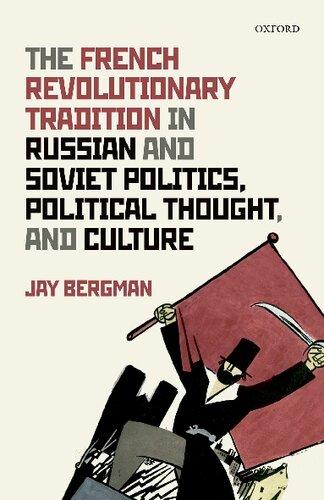
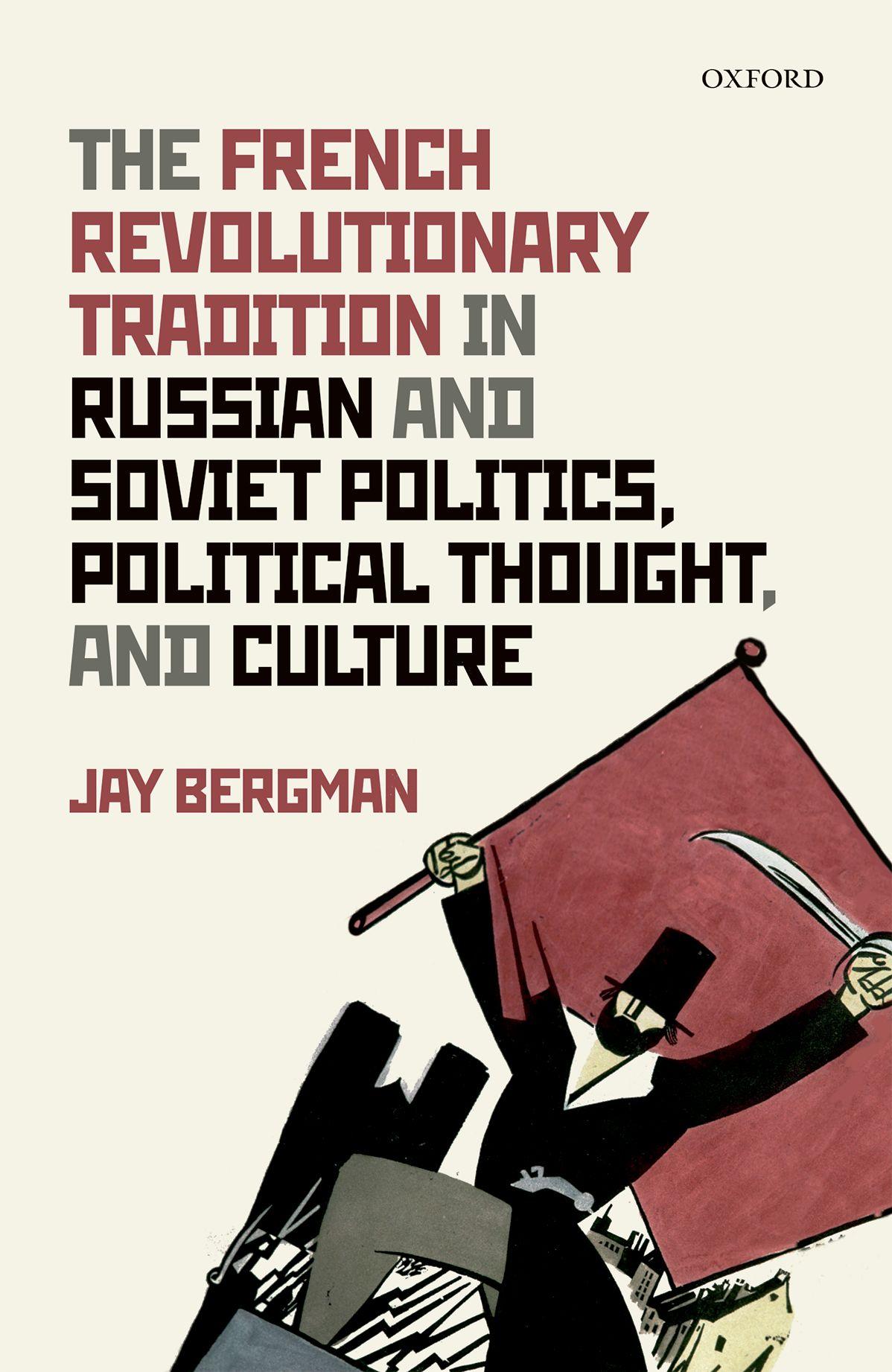
TheFrench RevolutionaryTradition inRussianandSoviet Politics,Political Thought,andCulture
JAYBERGMAN
GreatClarendonStreet,Oxford,OX26DP, UnitedKingdom
OxfordUniversityPressisadepartmentoftheUniversityofOxford. ItfurtherstheUniversity’sobjectiveofexcellenceinresearch,scholarship, andeducationbypublishingworldwide.Oxfordisaregisteredtrademarkof OxfordUniversityPressintheUKandincertainothercountries ©JayBergman2019
Themoralrightsoftheauthorhavebeenasserted FirstEditionpublishedin2019 Impression:1
Allrightsreserved.Nopartofthispublicationmaybereproduced,storedin aretrievalsystem,ortransmitted,inanyformorbyanymeans,withoutthe priorpermissioninwritingofOxfordUniversityPress,orasexpresslypermitted bylaw,bylicenceorundertermsagreedwiththeappropriatereprographics rightsorganization.Enquiriesconcerningreproductionoutsidethescopeofthe aboveshouldbesenttotheRightsDepartment,OxfordUniversityPress,atthe addressabove
Youmustnotcirculatethisworkinanyotherform andyoumustimposethissameconditiononanyacquirer
PublishedintheUnitedStatesofAmericabyOxfordUniversityPress 198MadisonAvenue,NewYork,NY10016,UnitedStatesofAmerica
BritishLibraryCataloguinginPublicationData Dataavailable
LibraryofCongressControlNumber:2019938179
ISBN978–0–19–884270–5
PrintedandboundinGreatBritainby ClaysLtd,ElcografS.p.A.
LinkstothirdpartywebsitesareprovidedbyOxfordingoodfaithand forinformationonly.Oxforddisclaimsanyresponsibilityforthematerials containedinanythirdpartywebsitereferencedinthiswork.
ForMarshallShatz teacher,mentor,scholar,critic,friend exemplaryineveryrespect
Preface
Asrevolutionaries,theBolsheviksinRussiawereintentoncreatinganewsociety superiorineverywaytoallthosethatprecededit.Thismightsuggestthathistory hadnopurposeforthem,that,liketheJacobinsinFrance,whointroducedanew calendartoindicatethattimebeganwiththeFrenchRevolution,theyconsidered thepastdevoidofanyrelevanceandvalue.¹ButtheBolsheviks,inthisrespect, werenotliketheJacobins.Historywasusefultothem;insteadofdevisinganew calendar,in1918theyadoptedadifferentexistingone.²ProfessingaMarxist worldviewthatconsideredhistoryalinearprocessinwhichseeminglydiscrete eventswereactuallyapartofalargerandunifyingdevelopmentanddesign,the Bolshevikscouldnomoredisregardwhathadprecededthemthantheycould ignorewhatMarxhadwritten,howeversketchily,aboutthecommunismthe futurewouldbring,andindoingsobringhistorytoanend.Containedwithinthe sequentialdichotomiesMarxismpositedofthepowerfuloppressingthepowerless inslavesocieties,underfeudalism,andunderindustrialcapitalism there was,infact,transcendentmeaning:theunfoldingovertimeofasagaofhuman sufferingthat,initsnegation,foreshadowedtheemancipationoftheindividual personalitythatwouldoccurafterhistoryended,whenpeoplewouldbeprosperous,enjoytheirlabour,andhavetheleisuretorealize,atlast,theirfullpotentialas humanbeings.
History,therefore,wasmeaningfultotheBolsheviks.Butonemustbeprecise aboutthebenefitsitprovided.Wasthepastsomethingtheyminedselectivelyfor guidanceastohowthecommunistsocietytheyintendedtobringaboutshouldbe constructed?Couldthetemplateofsuchasociety,thewayitwouldbeorganized, befoundinhistory ifnotinfull,thenasanadumbrationofitsactualarrangements?Orwasthepastusefulinanentirelydifferentway,asasourceofthe inspirationandmorallegitimacythatrevolutions,preciselybecausetheyare disruptive,violent,illegal,andalmostalwaysunexpected,usuallyrequire?These aresomeofthequestionsthisstudytriestoanswer.
¹The firstdayoftheJacobincalendar,whichwasintroducedin1793,was22September1792,the dayonwhichtheConvention firstmetinParis.ByadoptingittheJacobinshelpedtochangethevery meaningof ‘revolution’ fromreturningtosomethingoldtocreatingsomethingnew:LynnHunt, Politics,CultureandClassintheFrenchRevolution (BerkeleyCA,2004),p.34.
²ByreplacingtheJulianCalendarwiththeGregorian(orWestern)one,whichinthetwentieth centurywasthirteendaysaheadofit,theBolshevikssubsequentlycelebratedtheOctoberRevolutionin November.
BecausetheywereMarxists,theBolsheviksbelievedthatthepastwasprologue: thatembeddedinhistorytherewasaHolyGrail,aseriesofmysteriousbut nonethelessaccessibleandcomprehensibleuniversallawsthatexplainedthe courseofhistory,inallofitsmultifariousmanifestions,frombeginningtoend; thosewhounderstoodtheselawswouldbeabletomouldthefuturetoconformto theirownexpectations.ButwhatshouldtheBolsheviksdoiftheirMarxist ideologyprovedtobeeithererroneousorinsufficient ifitcouldnotexplain, orexplainfully,thecourseofeventsthatfollowedtherevolutiontheycarriedout? Somethingelsewouldhavetoperformthisessentialfunction.Theunderlying argumentofthisbookisthattheBolshevikssawtherevolutionsinFrancein1789, 1830,1848,and1871assupplyingpracticallyeverythingtheirMarxismlacked. TheEnglishRevolutionandthePuritanCommonwealthoftheseventeenth centurywerenotwithoututility theBolshevikswouldcitethemoccasionally andattimesutilizethemaspropaganda butthesepaledincomparisontowhat therevolutionsinFranceacenturylaterprovided.³
Onemustbearinmindthatinanyrevolutioncarriedoutforthepurposeof establishingsocialismandcommunism,Marxismpostulatedthattheproletariat wouldhavetoplayaleadingrole,andthat,absentitsdoingso,anyrevolution carriedoutinitsnameandonitsbehalfwasideologicallyillegitimate.The problemfortheBolshevikswasthatbyeverymeasureofeconomicandpolitical development,Russiainthelatenineteenthandearlytwentiethcenturieswasnot readyforaproletarianrevolution.Itsproletariatwassimplytoosmalland politicallyimmature.Whenitwouldbewasanyone’sguess.Buttheanarchy andchaosinRussiain1917openedawindowofopportunitythatmightquickly closeandneveropenagain.Fortunately,theleaderoftheBolsheviks,Vladimir Lenin,wasastactically flexibleashewasunswervinginhisultimateobjectives, andhetookfulladvantageofthisuniqueconstellationofforcesintheRussian capital,andinafewothercitiesofRussia,totakepowerinaninsurrectionthat wouldnotbechallengedseriouslyforalmostayear;bytheendofitthe Bolshevikshadcreatedanarmycapableof fightingtheforcesthathadformed againstthem.ButthisdidnotmeanthatLenin ’sideologicalconundrumhad
³Intheearly1920s,A.V.Lunacharskii’splayaboutOliverCromwellachievedconsiderable notoriety,particularlyinMoscow,wheretheMalyTheatreproduceditasacostumedramarather thanasaplayaboutideas,thusobscuringthecomparisonLunacharskii,whoservedascommissarof educationinLenin’ s firstgovernment,hadhopedaudienceswoulddrawbetweenLeninandCromwell: SheilaFitzpatrick, TheCommissariatofEnlightenment:SovietOrganizationofEducationandtheArts underLunacharsky,October1917-21 (Cambridge,1970),pp.152–3,158.NeitherLeninnoranyofthe otherleadingBolshevikstriedtoexplainCromwellorthecommonwealthheestablishedinanyserious orsystematicfashion,thoughsomeMarxisthistoriansofRussiahavedrawnanalogiesbetweenthe PuritansandtheBolsheviks;themostenthusiastic,IsaacDeutscher,evencomparedCromwelltoStalin, in Stalin:APoliticalBiography (NewYork,1967),pp.569–70.TheleaderoftheSocialistRevolutionary Party,ViktorChernov,statedinhisrecollectionsof1917, RozhdenierevoliutsionnoiRossii (Paris, 1934),p.405,thatthePuritanRevolution,whilerespectedinRussiaatthetime,wasnonetheless ‘ more distantandmoreforeign’ thantheFrench.
disappeared.Onthecontrary,itrequiredintellectualgymnasticsofworld-class calibertoresolve.IntakingpowerinRussiain1917LeninandtheBolshevikshad reversedtheorthodoxMarxistrelationshipbetweenbaseandsuperstructure. Insteadofeconomicconditionsdeterminingpolitics,in1917politicsprevailed. ParaphrasingGrigoriiPiatakov’smuch-quotedcommentin1928,Leninmadea proletarianrevolutionandthensetaboutcreatingtheobjectiveconditions necessaryforittooccur.⁴
InthelightofthisreversalofMarxistcauseandeffect,LeninandtheBolsheviks neededrevolutionspriortotheOctoberRevolution,preferablyproximatetoit temporallyandgeographically,tojustifyitandtoprovideguidanceinconstructingthenewsocietythatwouldfollowit.Revolutionsincountrieswherecapitalism hadalreadyemergedwouldbeespeciallysuitable.Itwouldseem,at firstglance, thattherewasaplethoraofrevolutionstochoosefrom,evenifthesewerelimited toEuropebecauseitwastherethatcapitalism firstexisted.ButmanyEuropean revolutionswerenotsuitableforthoroughgoingMarxistsliketheBolsheviksto utilize,eitherbecausetheseweretooliberal(aswasthecaseforSpainin1820),too national(Greecein1821andLombardyin1848),ortooliberalandtoonational simultaneously(theGermanstatesin1848).⁵ Instead,theBolsheviksturnedfor theantecedentstheyneeded onepresumeswithacollectivesighofrelief to France.Marx,manyyearsearlier,hadlocatedthebeginningofmodernityand modernhistoryintheFrenchRevolution.Andsinceadditionalrevolutions, accordingtoMarx,wereneededaftertheBourbonrestorationin1814to finish whattheFrenchRevolutionbegan,thesubsequentrevolutionsinFrancein1830, 1848,and1871becamemilestonesinarevolutionaryteleology,adialectical unfoldingofhistory,thatoriginatedin1789andwouldculminateinsocialism andcommunism.Asaresult,bythetimetheyemergedin1903asanidentifiable factioninRussianSocialDemocracy,theBolshevikshadallthecomponentsofa revolutionarytradition onethatbeganinFrancein1789andendedinFrancein 1871 attheirdisposal.
OfcoursetherelationshipbetweenRussianrevolutionaries notjustthe Bolsheviks andtheirFrenchequivalentsin1789,1830,1848,and1871wasa dynamicone.Itchangedovertime.Infact,theredevelopedbetweentheFrench revolutionsandtheRussianswhoreactedtothemamutuallyreinforcingrelationship:theconclusionsRussianrevolutionariesdrewaboutFrance’srevolutions affectedwhattheythoughtabouttheirownprospectiverevolution,whilethe notionstheyhadabouttheirownrevolutioncolouredtheirevaluationofFrance’ s. WithinthementaluniverseRussianrevolutionariesinhabited,FranceandRussia werethepolaritiesinadialecticalprocessyieldinglessonsaboutthehistoryof
⁴ N.Valentinov, ‘Sut’ bol’shevizmavizobrazheniiIu.Piatakov’ , Novyizhurnal,52(1958):p.149.
⁵ GodfreyElton, TheRevolutionaryIdeainFrance1789–1871 (NewYork,1971),p.180.
bothcountriesthat,whenusedproperlyandtogoodadvantage,wouldchangethe courseofhistoryinRussia,andperhapseventhecourseofhistoryinFrance.
Inbrief,mybookexplorestheroleFrenchrevolutionsin1789,1830,1848, and1871 whichtogethercomprisedwhatcanfairlybecalledaRevolutionary Tradition playedinthehistoryofBolshevismandSovietCommunism.Italso shedslightonhowtheserevolutionsinfluencedtheevolvingmythologyofthenew Sovietregime.Thesearelargetopics,whichcanbeconsideredwithintherubricof anevenlargerone,namelytheinteractionbetweentwonationalhistoriesand culture,inthiscasethoseofRussiaandFrance.Thespecificissuesthebookis concernedwith,andtheconclusionsthatarestatedattheendofit,clearlysuggest thatthecausalarrowinthisinteractiontravelledmostlyeastward thatRussia receivedfromFrancemorethanitgaveinreturn.⁶ Asithappens,thisviewis consistentwiththeroughconsensusamonghistorianswhohaveconcerned themselveswiththerelationshipbetweenRussiaandtheWestgenerallythata similardisparityobtains.Likeitornot,EuropeinfluencedRussiamorethan RussiainfluencedEurope.⁷
Itisimportanttobearinmindwhatthisbookisnot.Itisnotastudyin comparativerevolution,anditcertainlyisnotconcernedwithdevelopinga generictemplateofrevolution,inwhichthefactorscommontoallrevolutions theirorigins,evolution,andeventualend aredefinedanddescribed. ThishasbeendonebyhistoriansandpoliticalscientistssinceCraneBrinton’ s pioneeringstudy, TheAnatomyofRevolution,appearedin1938.⁸ Norisit concernedwithestablishingtypologiesofrevolutions,anendeavourthat,instead
⁶ Historiansarenottheonlyoneswhohavecometothisconclusion.PëtrChaadaev,inhis ‘First PhilosophicalLetter’,composedin1829,andaccessibleinP.Ia.Chaadaev, Polnoesobraniesochineniii izbrannyepis’ ma (Moscow,1991),vol.I,pp.90–3,argued withthegrandiloquenceandpropensityfor takingthemostextremepositiononeveryissue,towhichtheRussianintelligentsiawasnaturally inclined thatRussiahadcontributednothingofvaluetotheworld,andtotheWestinparticular. OtherRussians,notsurprisingly,disagreed.
⁷ NoneofthisismeanttosuggestthatRussia’sinfluenceonFranceisnotworthexploringandthata bookthatdoeswhatthisonedoes ‘inreverse’ isnotworthwriting.Infact,MartinMaliahaswrittenon theinfluenceofRussiaonEuropefromtheearlyseventeenthcenturytotheearlytwentiethcenturyin WesternEyesfromtheBronzeHorsemantotheLeninMausoleum (NewYork,2000).AndDavidCaute, in CommunismandtheFrenchIntellectuals (NewYork,1964),andPaulHollander,in Political Pilgrims:TravelsofWesternIntellectualsinSearchoftheGoodSociety (NewYork,1981),haveexplored theattractiontheSovietUnionhadforintellectualsintheWest.Butbothascribedittotheattributesof intellectualsgenerally,ratherthantofactorsparticulartoFranceorRussia.Forthatreasonthislacuna inthehistoricalliteratureonthetwocountriesandtherelationshipbetweenthemremains,regrettably, unfilled.
⁸ CritiquesofBrinton’sthesiscanbefoundinBaileyStone, TheAnatomyofRevolutionRevisited:A ComparativeAnalysisofEngland,France,andRussia (NewYork,2014),especiallypp.1–44;Martin Malia, History’sLocomotives:RevolutionsandtheMakingoftheModernWorld (NewHavenCT,2006), pp.302–5;andfromtheperspectiveofMarxism–Leninism,Iu.A.Krasin, Revoliutsieiustrashennye. Kriticheskiiocherkburzhuaznykhkontseptsiisotsial’noirevoliutsii (Moscow,1975),pp.278–82.An approachmorecongenialtopoliticalscientiststhantohistoriansistodistinguishrevolutionsnotbythe ideologiesandobjectivesoftheindividualswhocarrythemout,butbythestructuraldifferencesinthe institutionsofgovernanceinthecountrieswhererevolutionsoccur.Theresult,perhapsunavoidable,is auniversallyapplicabletheoryorscenarioofrevolutioninwhich ‘therealmofthestateislikelytobe
ofstressingcommonalitiesamongrevolutions,asBrinton’sdid,emphasizes differences.ChalmersJohnsonandBarringtonMoorehavewrittenextensively onthis;whetherthetaxonomiestheyconstructedareaccurateandusefulremains amatterofdebate.⁹
Nordoesmybookdealwiththegenericphenomenonofwhatissometimes called ‘thinkingbyanalogy’—althoughtheanalogiestheBolsheviksdrewwith Frenchrevolutionsarecloselyanalysedforthepurposeofascertainingthelessons theBolsheviksbelievedtheycontained.¹⁰ Nor,forthatmatter,doesitpurportto resolvethequestionofwhetherthinkingbyanalogyisusefulforpolicymakers, anditplainlydoesnotevaluatedifferentkindsofanalogiesforthepurposeof determiningtheirreliability.RichardNeustadtandErnestMayhavewritten cogentlyontheformer;RobertJervishasdonesoonthelatter.¹¹Nor, finally,is thebookaretrospectivecomparisonofFrenchrevolutionsandtheOctober RevolutioninRussia,muchlessanattempttoproveacausalrelationshipbetween them;toooftenthisleadstoahistoricalabsurdities,suchastheassertionthatthe ConventionoftheFrenchRevolutionwas ‘inembryo...somethingresembling Stalinism’.¹²
central’:ThedaSkocpol, StatesandSocialRevolutions:AComparativeAnalysisofFrance,Russia,and China (NewYork,1979),p.293.
⁹ In RevolutionandtheSocialSystem (StanfordCA,1964),Johnsondistinguishessixtypesof revolution:peasant,millenarian,anarchistic,JacobinCommunist,conspiratorial,andmilitarized. TheseareanalysedsuccinctlyinLawrenceStone, ‘TheoriesofRevolution’ , WorldPolitics,18 (1965–6):pp.159–76,andEugeneKamenka, ‘Revolution – TheHistoryofanIdea’,in AWorldin Revolution? editedbyEugeneKamenka(Canberra,1970),pp.7–8.In SocialOriginsofDictatorship andDemocracy:LordandPeasantintheMakingoftheModernWorld (Boston,MA,1967),Moore considersrevolutions whichhebelievescanoriginatepeacefully ‘fromabove’ aswellasthrough violence ‘frombelow’—awayofnavigatingthetransitionfromapredominantlypeasantsocietytoa modernindustrializedone,andarguesthathowthistransitionismanageddetermineswhetherthe governmentsthatissuefromrevolutionswillbedemocraticordictatorial.
¹⁰ AnintelligentanalysisofthiskindofthinkingisMicheldeCoster, L’analogieensciences humaines (Paris,1978).
¹¹RichardNeustadtandErnestMay, ThinkinginTime:TheUsesofHistoryforDecisionMakers (NewYork,1986);ErnestMay, LessonsofthePast (NewYork,1973);RobertJervis, Perceptionand MisperceptioninInternationalAffairs (PrincetonNJ,1976).Ausefultaxonomyoftheerrorspolicymakersarepronetowhentheylooktohistory,andspecificallytohistoricalanalogies,forguidanceis providedinYaacovY.I.Vertzberger, ‘ForeignPolicyDecision-MakersasPractical-IntuitiveHistorians:AppliedHistoryanditsShortcomings’ , InternationalStudiesQuarterly,no.30(1986):pp.223–47. Muchhasbeenwrittenonhowspecifichistoricalanalogieshaveinfluencedhistory.Aprimeexampleis thatbetweentheappeasementembodiedintheMunichagreementin1938andfailingtostop communistexpansionisminSouthEastAsia.OnhowthiscontributedtoAmericaninvolvementin theVietnamWarinthe1960s,seeFoongKhongYuen, ‘FromRottenApplestoFallingDominoesto Munich:TheProblemofReasoningbyAnalogyaboutVietnam’ (PhDdissertation,HarvardUniversity, 1987).
¹²PhilippedeVilliersquotedinStevenLaurenceKaplan, FarewellRevolution:DisputedLegacies: France1789/1989 (IthacaNY,1995),p.55.EvenmoreaudaciousweretheeffortsofJacobTalmon,in TheOriginsofTotalitarianDemocracy (NewYork,1952),tolocatetheintellectualoriginsof ‘totalitarianism’ intheEnlightenmentandtheFrenchRevolution.IncisivecriticismofTalmon’sthesiscanbe foundinPeterGay, ThePartyofHumanity:EssaysintheFrenchEnlightenment (NewYork,1963), pp.279–86.
WhatthebookisisastudyofwhattheBolsheviksthemselvesbelievedabout theserevolutionsinFrance,andoftherolestheirbeliefsplayedinthemythology theyconstructedthatwouldlegitimizethenascentSovietstateandjustifythe entireenterpriseofconstructingsocialismintheSovietUnion.¹³Inthisendeavour theBolsheviksofcourseinvokedMarxistdoctrine,whichlongbeforetheOctober Revolutionhadacquiredthestatusofholywrit.Butasaguidetoactualpolicy Marxismwassadlydeficient,inlargepartbecauseitlookedtoWesternEurope, ratherthantoRussia,astheplacewheresocialistrevolutionswould firstoccur.
TheBolshevikswerewellawareofthis,andforthatreasonmanyofthem thoughnotLenin thoughtthatanyrevolutiontheyattemptedwouldbepremature:itwouldeitherfailorprovesoproblematicalthateveniftheBolshevikstook power,theywouldnotbeabletoholdontoit.Butin1917theBolsheviksdidtake powerinRussiaandruleditforthenextseventy-fouryears.Thisdidnotmean, however,that,increatingtheSovietstate,theproblemofreconcilingtheir ideologywithempiricalrealitywasanylessforbiddingthanitwasin1917.The Bolshevikshadtoimproviseatmanyjuncturesintheirrule,andwithoutMarxist ideologytoguidethem,formanyofthemtheirimpulsewastolooktoFranceand itstraditionofrevolutiontoprovideatleastamodicumofassistance.Theresult wasthatlargeswatchesofFrenchhistoryinformedagooddealofwhatthe BolsheviksdidwhilerulingRussia fromtheearlydisputationsoverRobespierre andtheJacobins,throughtheheatedpolemicsduringtheNEPovertheSoviet Union’sostensible ‘growingover’ intoThermidor,totheallegeddangerof ‘Bonapartism’ intheStalineraandthen,underKhrushchev,inthepersonofMarshal Zhukov.InthelastyearsoftheSovietUnion,theFrenchRevolutionandtheParis CommunewereoccasionallyinvokedbytheGorbachevregimetosanctionits policyof perestroika (reconstruction).
ThereadershouldknowattheoutsetthatthefourFrenchrevolutionsthat comprisethisrevolutionarytraditionaretreatedseparatelyandinchronological order.Theresult,totakejustoneexample,isthatwhatRussiansthoughtaboutthe FrenchRevolutionfromthetimeitbeganin1789allthewaytotheSovietUnion’ s collapsein1991isfollowed(inaseparatechapter)bywhatmanyofthesesame RussiansthoughtabouttheFrenchrevolutionthatoccurredin1830.Inother words,thereisinthebook ‘ajumpingbackandforth’ inRussianhistory though
¹³Tobesure,onehistorianofRussiaandtheSovietUnion,DmitryShlapentokh,hasproduced worksthat,takenasawhole,constituteastudysimilartomine: TheFrenchRevolutioninRussian IntellectualLife1865–1905 (NewBrunswickNJ,2009); TheFrenchRevolutionandtheRussian Anti-DemocraticTradition:ACaseofFalseConsciousness (NewBrunswickNJ,1997); TheCounterRevolutioninRevolution:ImagesofThermidorandNapoleonattheTimeoftheRussianRevolutionand CivilWar (NewYork,1999);and ‘TheImagesoftheFrenchRevolutionintheFebruaryandBolshevik Revolutions’ , RussianHistory,16,no.1(1989):pp.31–54.Butnoneoftheseworksgomuchbeyondthe BolshevikRevolutionin1917andinanyeventwerewrittennolaterthantwodecadesago.Perusalof thesourcematerialinmyownbookwillshowthatittakesintoaccountthescholarshipbothinthe WestandintheformerSovietUnionthathasbeenproducedsincethenonmanyoftheissues Shlapentokhaddressed.
notinFrenchhistory thatmay,forsomereaders,bedisconcerting.Buttheonly alternativetothisapproach tracingchronologicallyfrom1789to1991what RussiansthoughtofallfourFrenchrevolutions wouldbeuntenable:readers wouldhavetokeepseparateintheirmindswhat,say,Leninwasthinkingabout fourrevolutionsatanyparticulartime,whilesimultaneouslyrememberinghowhis viewsonone,some,orallofthemchangedfromoneperiodinhislifetothenext.
Thelastthingthereadermightwanttobearinmindbeforeproceedingtothe actualtextofthebookisthatdefinitionsofrevolutionsinhistoryandpolitics in contrasttohowthewordisusedandunderstoodinscienceasaformofspinor rotation arelegion,andnosingledefinitionisimmunetocriticismorfalsi fication.Everydefinition,inotherwords,iseitherincompleteordeficientinoneway oranother.Butanalysingrevolutionswithoutdefiningthephenomenonitself,as ithasmanifesteditselfinhistory,wouldbeunwise.Theresultwouldnotbeclarity butratherevengreaterconfusion.Whatseemstheleastobjectionabledefinition andtheonethatinformstheanalysisinthisbook isSamuelHuntington’ s: ‘arapid,fundamental,andviolentdomesticchangeinthedominantvaluesand mythsofasociety,initspoliticalinstitutions,socialstructure,leadership,and governmentactivityandpolitics’.¹⁴ Tothisdefinitiononemightobjectthatit underestimatestheambitionsofmodernrevolutionsliketheFrenchandthe Bolshevikthatweredrivenbyideologiespromisingthetransformationnotonly oftheentitiesHuntingtonmentions,butofhumanityitself.Infact,thevery magnitudeofwhattheserevolutionsintendedrequirednotjustaradicalbreak withthestatusquo,buttheconvictionthatthepasthadmeaningprimarilyfor whatitrevealed,inembryonicform,ofwhatthefuture,inallofitssalubrious manifestations,wouldbringnotjusttotheFrenchandtheRussians,butto everyone.AlthoughtheBolsheviks,unliketheJacobinsinFrance,chosenotto altertheircalendar,theywere,ifanything,evenmorecommittedtotheradical transformationofhumanity.Butoneofhistory’smanyironiesisthat,inattemptingtoachievethisgrandioseobjective,theBolsheviksoftenfoundthemselves lookingbackwardstoaseriesofrevolutionsinFrancethathadendedbefore almostallofthemwereborn.
Tobesure,theFrenchRevolutionaryTradition,byprovidinglegitimacy, inspirationand,notleast,avocabularyusefulin adhominem polemicsintended togainpoliticaladvantage,provedhelpfultotheBolsheviks.Butitalsohampered them,attimesseverely.TheanalogiestheBolsheviksdrewwiththefourrevolutionscomprisingthistraditionusuallygeneratedmoreheatthanlight,notonlyin
¹⁴ SamuelHuntington, PoliticalOrderinChangingSocieties (NewHavenCT,1968),p.264. Otherworksconcernedwithrevolutionsthatprovideaworkingdefinitionare,amongothers, JackGoldstone, RevolutionandRebellionintheEarlyModernWorld (BerkeleyCA,1991);Charles Tilly, EuropeanRevolutions,1492–1992 (NewYork,1996);JohnDunn, ModernRevolutions:An IntroductiontotheAnalysisofaPoliticalPhenomenon (Cambridge,1989);andNoelParker, RevolutionsandHistory:AnEssayinInterpretation (Cambridge,1999).
explainingthecourseofeventsintheSovietUnion,butalsointheBolsheviks’ understandingoftheoriginalrevolutionsinFrancetowhichtheseeventswere analogized.ForthatreasontheBolshevikswouldhavebeenbetteroffeither ignoringtheFrenchRevolutionaryTraditionentirely,oratleastdrawinganalogieswhilebearinginmindthestubbornrefusalofhistoricaleventstocorroborate facilecomparisonsthatbelie,orseriouslyminimize,theirsingularity.Tothe extentthatmybookdemonstratesthatreality,itmayhaveutilityforallhistorians, notjustthoseofRussiaandFrance.
Acknowledgements
Writingabookisnotanentirelysolitarytask.Inwayslargeandsmall,many peoplehelpedme.
TheideaforthisbookoriginatedindiscussionswithEricEdelman,my roommateandclosestfriendingraduateschool,whoencouragedmetowriteit. Yearslater,mycolleagueatCentralConnecticutStateUniversity,BolekBiskupski, proddedme firsttostarttheproject,andlateronto finishit.Inbetween,hewas alwayswillingtoreadpassagesIsenthimandtocommentonthemperceptively. Othercolleagues,indifferentways,werejustasgenerouswiththeirtimeand assistance.PaulKarpukprovidedguidanceonthe finerpointsofRussian–English translation,andGlennSunshine,whoseknowledgeofthe ancienrégime inFrance Icouldneverhopetomatch,patientlyansweredmymanyquestionsaboutits demise.PerhapsmymostvaluableresourceattheuniversitywasSarahWhite, theInterlibraryLoanManagerattheElihuBurrittLibrary,whorespondedtomy seeminglyinterminablerequestsforobscuredocumentsinalanguageshedidnot understandwithunfailinggoodhumourandimpeccableefficiency.Icouldnot havewrittenthisbookwithoutherassistance.
Iwasalsofortunateinthehistorianselsewherewhoassistedme.MarisaLinton ofKingstonUniversitykindlyansweredqueriesabouttheJacobinsandthe Girondins;JonathanSperberoftheUniversityofMissouriclarifiedtheprovenanceofMarx’swritingsontheFrenchrevolutionswithwhichmybookis concerned.MatthewRendleoftheUniversityofExeterreadanearlyversionof themanuscriptandmadevaluablesuggestionsforimprovement.Christopher ReadoftheUniversityofWarwickdidthesameandevenproposedatitle whichIquicklyadopted thatreflectedhisbeliefthatwhatRussianrevolutionariespriortotheBolsheviksthoughtoftheFrenchRevolutionaryTradition shouldconstitutetheopeningchaptersofthebook.Finally,Iwillbeforever gratefultoMartinConwayofBalliolCollege,UniversityofOxford,whoselflessly tooktimeawayfromhisownscholarshiptoreadandcommentontheoriginal manuscriptinsightfullyandatconsiderablelength,therebydemonstratingthat theAtlanticOceanisnoimpedimenttocollegiality.Hisquipintheevaluationhe sentmethattheFrenchheldtheirrevolutionssothatRussianscouldcommenton themseemsfrommyperspectivetocontainatruthmoreprofoundthanhemay haveimagined.
Allbooks,irrespectiveoftheirauthors,areinmanywaysonlyasgoodastheir publishers.InthisregardIwasexceedinglyfortunate;theeditorsIdealtwithat OxfordUniversityPresseasilymetmyexpectations.TheconsiderationChristina
PerryandCathrynSteeleunfailinglyshowedmeatvariousjuncturesinthe multistageprocessoftransformingmymanuscriptintoabookwasexceeded onlybytheirprofessionalismandcoolefficiency.Happily,thesamewastrueof SaranyaJayakumar,theSeniorProjectManagerforSPiGlobal,oneofthepartner productioncompaniesofOxfordUniversityPress,whooversawthecopyediting, whichwasdonebyBrianNorthwithmaximalprecisionandkindunderstanding ofmy crisdecoeur whenafunctiononMicrosoftWordprovedrecalcitrant.His ‘jeweller’ seye ’ fortheerrantcitationandthewrongly-wordedbibliographicalentry wasremarkable.NolesssowasthedeftnesswithwhichChristopherSummerville preparedtheindex.
Othersmadethisbookpossiblewithoutevenknowingit.MaryandGerry Creankeptmyspiritsupwhenthedrudgeryofresearchandrevisionwould otherwisehaveleftmetootiredanddepressedtopersevere.GeraldineLenzwas asourceofmuch-neededmoralsupport,andherinsightsonmattersfarremoved fromtheFrenchRevolutionaryTraditionhadthesurprisingeffectofenhancing myunderstandingofit.MycousinsNeilCordayandPaulStanzlerkeptmymind sharpwithprobingquestionsabouttheobjectivesandlargerpurposeofthe project,whilemyoldestandclosestfriend,ScottSeminer,providedanexample ofquietcourageinthefaceofadversitythatshowedmyownoccasionaldifficulties inwritingchapterstobetrivialbycomparison.HeandhiswifeDianaopened theirhometomewheneverIneededtogetawayfrommynotesandroughdrafts withthesamehospitalityhislateparents,EdithandMaxwellSeminer,showedme earlierinmylife.AndIwouldberemissifIdidnotthankDrsJeffreyLautand StuartKeslerforsavingmylife.
Whatevervirtuesinhereinthisbookaretraceableultimatelytoinspiring teachersincollegeandgraduateschool.AsanundergraduateatBrandeisUniversitymanyyearsagoIhadthegoodfortunetotakeacourseoncivillibertiesin AmericataughtbyJeroldAuerbach.Theanalyticalrigourhedemandedofhis studentsbecameformeastandardofacademicexcellencethatIhavetriedto upholdinmyownscholarshipandteaching.AsadoctoralcandidateatYale UniversityIlearnedfrombothBarbaraMalamentandFiruzKazemzadehthe skillsthatwritinghistoryrequires;thelatterablydirectedmydoctoraldissertation.Inthelucidityandconcisionwithwhichheboileddowncomplexissuesof historicalinterpretationtotheiressentials,anotherofmyteachersatYale,Robert Crummey,impressedmetothepointwhereIalmostabandonedmodernRussian historyforitspre-Petrineantecedent,whichwashisspecialty.AnditwasatYale thatHenryA.Turner,Jr.,inamarvellouscourseonfascisminformedbyhis insistenceonrigorousargumentandscrupulousanalysisofempiricalevidence, becameformetheembodimentoftheprofessionalhistorianathisbest;the wisdomheimpartedhasremainedvividinmymindtothisday.Oneofmyfew regretsaboutthisbookisthathedidnotlivetoseeit.
Thesame,unfortunately,istrueformyparents,MoeandHannahBergman, whopassedawaynotlongafterIhadbegunmyresearch.Buttheirunstinting supportofmyearlieracademicendeavours,andtheirconvictionthatIcould overcomeallobstaclesandachievewhatevergoalsIsetformyself,stillresonate. ForthatreasonIbelievethatmywritingshelptohonourandperpetuatetheir blessedmemory.
MywifeJuliehasbeenmymosthelpfulcriticwhilesharingherlifewithme.She enduredwithremarkableequanimitythelonghoursonweekendswhenIwas awayfromhome,ensconcedinmyofficeattendingtosomethingaboutwhichshe hadlittlereasontocareotherthanforthefactofourmarriage.Icouldnothave completedthisprojectwithoutherlove,forbearance,andencouragement.Ofall thejoyswehaveexperiencedtogether,byfarthegreatesthasbeentowatchthe developmentofoursonAaronfromchildhoodintoawonderfullyempathicand highlyethicaladult.Inwaystoonumeroustomention,healsoremindedmewhile IwasresearchingandwritingthatthereismoretolifethanJacobinsand Bolsheviks.
MarshallShatzwasmy firstteacherofRussianhistory.Itwashisexampleat Brandeisthatinspiredmetofollowhimintohisprofession,andthroughoutthe manyyearssinceourpathsdivergedhehasremained,insomesense,atmyside, commentatingonmyworkwiththelucidityandcriticalintelligencethatinform hisownimpeccablescholarship.Mydedicationofthisbooktohim,nomatter howprofuseandall-encompassingitmayappear,cannotcapturethefullextentof myindebtedness.
OfcourseIaloneamresponsibleforanyerrorsandomissionsreadersmay discover.
JayBergman
January2019
NoteonTransliteration xxi
PARTI.1789
1.TheInitialReceptionoftheFrenchRevolution3
2.TheFrenchRevolutionintheRussianRevolutionary Movement31
3.TheMarxistInheritanceoftheFrenchRevolution51
4.Lenin:TheRussianRobespierre79
5.BolsheviksandMensheviksontheJacobinsand theGirondins110
6.1917 RussianJacobinsCometoPower139
7.MythologizingtheNewSovietRegime170
8.ThePhantomoftheSovietThermidor234
9.Stalin:TheJacobinsasProto-Stalinists274
10.ReturningtotheLeninistLineunderKhrushchev andBrezhnev301
11.TransgressingtheLeninistLineintheGorbachevEra318
PARTII.1830
12.TheRevolutionThatStoppedTooSoon339
PARTIII.1848
13.TheRevolutionThatFailed357
14.ThePhantomoftheRussianBonaparte393
Bibliography 499
Index 525