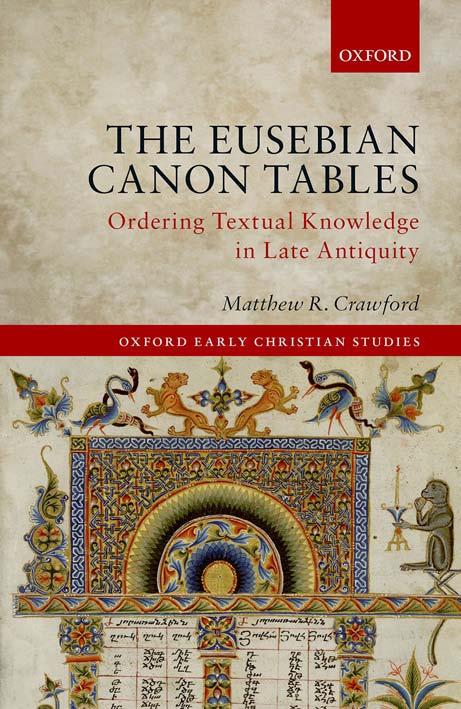
TheEusebianCanonTables:OrderingTextual KnowledgeinLateAntiquity(OxfordEarly ChristianStudies)MatthewR.Crawford
https://ebookmass.com/product/the-eusebian-canon-tablesordering-textual-knowledge-in-late-antiquity-oxford-earlychristian-studies-matthew-r-crawford/
Instant digital products (PDF, ePub, MOBI) ready for you
Download now and discover formats that fit your needs...
Education in Late Antiquity Jan R. Stenger
https://ebookmass.com/product/education-in-late-antiquity-jan-rstenger/
ebookmass.com
Graphic Signs of Authority in Late Antiquity and the Early Middle Ages Ildar Garipzanov
https://ebookmass.com/product/graphic-signs-of-authority-in-lateantiquity-and-the-early-middle-ages-ildar-garipzanov/
ebookmass.com
Neoplatonism in Late Antiquity Dmitri Nikulin
https://ebookmass.com/product/neoplatonism-in-late-antiquity-dmitrinikulin/
ebookmass.com
Home for the Holidays Terry Spear [Spear
https://ebookmass.com/product/home-for-the-holidays-terry-spear-spear/
ebookmass.com
Palaeopathology and Evolutionary Medicine: An Integrated Approach Kimberly A Plomp
https://ebookmass.com/product/palaeopathology-and-evolutionarymedicine-an-integrated-approach-kimberly-a-plomp/
ebookmass.com
Cultivating Democracy: Politics and Citizenship in Agrarian India Mukulika Banerjee
https://ebookmass.com/product/cultivating-democracy-politics-andcitizenship-in-agrarian-india-mukulika-banerjee/
ebookmass.com
Rethinking American Grand Strategy Elizabeth Borgwardt
https://ebookmass.com/product/rethinking-american-grand-strategyelizabeth-borgwardt/
ebookmass.com
Bridger's Lost Duckie (Found by Daddy Book 1) Della Cain & Kaytea Kat
https://ebookmass.com/product/bridgers-lost-duckie-found-by-daddybook-1-della-cain-kaytea-kat/
ebookmass.com
The Role of Alternative and Innovative Food Ingredients and Products in Consumer Wellness Charis M. Galanakis
https://ebookmass.com/product/the-role-of-alternative-and-innovativefood-ingredients-and-products-in-consumer-wellness-charis-m-galanakis/
ebookmass.com
Failure Analysis of Engineering Materials (McGraw Hill Professional Engineering) 1st Edition, (Ebook PDF)
https://ebookmass.com/product/failure-analysis-of-engineeringmaterials-mcgraw-hill-professional-engineering-1st-edition-ebook-pdf/
ebookmass.com
OXFORDEARLYCHRISTIANSTUDIES
GeneralEditors
GILLIAN CLARK ANDREW LOUTH
THEOXFORDEARLYCHRISTIANSTUDIESseriesincludesscholarlyvolumeson thethoughtandhistoryoftheearlyChristiancenturies.Coveringawiderangeof Greek,Latin,andOrientalsources,thebooksareofinteresttotheologians,ancient historians,andspecialistsintheclassicalandJewishworlds.
Titlesintheseriesinclude: LiturgyandByzantinizationinJerusalem DanielGaladza(2017)
TheRomanMartyrs Introduction,Translations,andCommentary MichaelLapidge(2017)
PhiloofAlexandriaandtheConstructionofJewishnessinEarlyChristianWritings JenniferOtto(2018)
StTheodoretheStudite’sDefenceoftheIcons TheologyandPhilosophyinNinth-CenturyByzantium TorsteinTheodorTollefsen(2018)
GregoryofNyssa’sDoctrinalWorks ALiteraryStudy
AndrewRadde-Gallwitz(2018)
TheDonatistChurchinanApocalypticAge JesseA.Hoover(2018)
TheMinorProphetsasChristianScriptureintheCommentariesof TheodoreofMopsuestiaandCyrilofAlexandria HaunaT.Ondrey(2018)
PreachingChristologyintheRomanNearEast AStudyofJacobofSerugh PhilipMichaelForness(2018)
Augustine’sEarlyThoughtontheRedemptiveFunctionofDivineJudgment BartvanEgmond(2018)
GodandChristinIrenaeus AnthonyBriggman(2018)
TheIdeaOfNicaeaInTheEarlyChurchCouncils, AD 431–451 MarkS.Smith(2018)
TheEusebian CanonTables
OrderingTextualKnowledgeinLateAntiquity
MATTHEWR.CRAWFORD
GreatClarendonStreet,Oxford,OX26DP, UnitedKingdom
OxfordUniversityPressisadepartmentoftheUniversityofOxford. ItfurtherstheUniversity’sobjectiveofexcellenceinresearch,scholarship, andeducationbypublishingworldwide.Oxfordisaregisteredtrademarkof OxfordUniversityPressintheUKandincertainothercountries
©MatthewR.Crawford2019
Themoralrightsoftheauthorhavebeenasserted
FirstEditionpublishedin2019
Impression:1
Allrightsreserved.Nopartofthispublicationmaybereproduced,storedin aretrievalsystem,ortransmitted,inanyformorbyanymeans,withoutthe priorpermissioninwritingofOxfordUniversityPress,orasexpresslypermitted bylaw,bylicenceorundertermsagreedwiththeappropriatereprographics rightsorganization.Enquiriesconcerningreproductionoutsidethescopeofthe aboveshouldbesenttotheRightsDepartment,OxfordUniversityPress,atthe addressabove
Youmustnotcirculatethisworkinanyotherform andyoumustimposethissameconditiononanyacquirer
PublishedintheUnitedStatesofAmericabyOxfordUniversityPress 198MadisonAvenue,NewYork,NY10016,UnitedStatesofAmerica
BritishLibraryCataloguinginPublicationData Dataavailable
LibraryofCongressControlNumber:2018957123
ISBN978–0–19–880260–0
Printedandboundby CPIGroup(UK)Ltd,Croydon,CR04YY
LinkstothirdpartywebsitesareprovidedbyOxfordingoodfaithand forinformationonly.Oxforddisclaimsanyresponsibilityforthematerials containedinanythirdpartywebsitereferencedinthiswork.
Acknowledgements
EusebiuswasabletocreatehisCanonTablesonlybecauseoftheprior intellectuallabourofAmmoniusofAlexandria,andtheingenuityapparent inhiscreationowesagreatdealtothestimulatingenvironmentofthe Caesareanlibrary.Thepresentprojectissimilarlyindebtedtoanumberof scholarswhohaveofferedinsightfulsuggestionsandcriticismsalongtheway, andwassimilarlynurturedbytwointellectuallyfertileinstitutionalsettings. Ibeganwritingthisbookwhileemployedasapostdoctoralresearcherinthe DepartmentofTheologyandReligionatDurhamUniversityandcompletedit aftermakingatransitiontotheInstituteforReligionandCriticalInquiryat AustralianCatholicUniversity.Theinitialresearchwassupportedbyagrant fromtheUKArtsandHumanitiesResearchCouncilfortheproject ‘The FourfoldGospelanditsRivals’,whosechiefinvestigatorwasFrancisWatson ofDurham.ThebookowesmoretoFrancisthantoanyothersingleperson, sincehewastheonewhointroducedmetotheCanonTablesandconvinced methatitwasaworthyobjectofscholarlyscrutiny.Hisinfluenceonmy thinkingonthismatterextendswellbeyondthecitationstohisownscholarshipinthepagesthatfollow.
The firstpresentationIgaveontheCanonTableswastotheNewTestamentresearchseminaratDurhaminearly2013,andshortlythereafterthe ReverendCanonRosalindBrownkindlyinvitedmetogiveapubliclectureon thetopictoalunchtimecrowdatDurhamCathedral,inconnectionwiththe LindisfarneGospelsexhibitinsummer2013.Oneofthesurprisingoutcomes ofboththoseevents(surprisingtomeatleast)wasthedegreeofinterest showninthetopic,anexperiencethathasbeenreplicatedmanytimesoverin thesubsequentfourandahalfyears.Infact,Ineverwouldhaveimagined IwouldwriteabookontheEusebianCanonTables,butafterrepeatedly seeingtheenthusiasmthematerialgeneratedamongscholarlyaudiences I finallyrealizedthattodosowasimperative.Papersthateventuallybecame chapterswerepresentedattheannualmeetingsoftheNorthAmerican PatristicsSociety,theSocietyofBiblicalLiterature,theAustralasianAssociationforByzantineStudies,andtheAsia-PacificEarlyChristianStudies Society,andIamgratefulforthefeedbackIreceivedoneachofthose occasions.Anearlierversionofchaptertwowaspublishedasanarticlein NewTestamentStudies in2015,andanearlierversionofchaptersixwas publishedin2017inaneditedcollectionentitled ProducingChristianCulture: MedievalExegesisandItsInterpretativeGenres,editedbyGilesGasper,Francis Watson,andmyself.AlessandroBausigenerouslyinvitedmetogiveatalkon CanonTablesataconferenceonmultiple-textmanuscriptsorganizedbythe
CentrefortheStudyofManuscriptCulturesinNovember2016,which proddedmetodelveintotheworldofmanuscriptstudies,andheinvited metoreturninMay2018forastimulatingconferenceentirelydevotedto CanonTables.InOctober2017IwasabletoreturntoDurhamand,thanksto theinvitationofJaneHeath,presentsomeofthematerialinmoredeveloped formtotheNewTestamentresearchseminar,whereIwasonceagainremindedthattherearefewplacesthatareascollegialandintellectually engaging.Inadditiontothesepublicevents,chaptersorportionsofchapters invariousstageswerereadbyLewisAyres,JeremiahCoogan,BenEdsall,Jaś Elsner,BrianGronewoller,WillKynes,MargaretMitchell,JudithMcKenzie, DawnLaValleNorman,AdamPloyd,RobertThomson,andJonathanZecher, allofwhomofferedcommentsthathaveimprovedthe finalformofthebook.
Otherscholarsprovidedassistanceinavarietyofways.StephenCarlson helpedmeonmorethanoneoccasionwithconversationsabouttheSynoptic ProblemandtrackingdownandcitingGreekmanuscripts.MichaelPapazian answeredmultiplequeriesaboutArmeniangrammar.AndrewRiggsbyand NathanSidolisharedpre-publicationversionsoftheirworkwhichturnedout tobecrucialforcertainstagesoftheargument,andPeterWilliamsintroduced metothefascinatingCodexClimaciRescriptus,whichIdiscussinAppendix3. Forpressingmetoconsiderthegranderimplicationsofthetopicandfor introducingmetothescholarshipofMaryCarruthers(citedintwoofthe followingchapters),IamparticularlygratefultoT.J.Lang,whomIhadthe pleasureofhavingasacolleagueduringmy finalyearatDurham.Theisolated hallwayinthetopleveloftheDunCowCottagewherewehadouroffices witnessedmanyconversationsaboutparatexts,memory,andinterpretation, whichresultedinaco-authoredarticleandprovidedthecontextwithinwhich theshapeforthepresentbookemerged.Fourresearchassistantshavehelped inavarietyofwaysatdifferingstagesoftheproject:CliftWard,Carolyn Alsen,EdJeremiah,andJonSimons.IshouldalsothanktheResearchOfficeof ACUforprovidingthefundstocovercostsassociatedwithsecuringcopyright permissionsandprintingtheimagesincludedinthebook,aswellasfundsfor researchtripstoUCLAinApril2017andtotheBritishLibraryinOctober 2017duringwhichIwasabletoexamineseveralGreek,Latin,Syriac,and Armeniangospelbooksrelatedtothisproject.This financialsupportcameas partofa five-yeargrantprojecttitled ‘ModesofKnowingandtheOrderingof KnowledgeinEarlyChristianity’ (2017–21),a fittingthemesincethepresent volumedrawsattentiontooneofthemostinnovativeattemptsatordering knowledgeinlateantiquity.
Finally,Ishouldmentionthelibrariesandindividualswhohaveassistedme with findingtheimagesthatappearinthebookandarrangingthepermissions topublishthemhere,includingJudithMcKenzie(FacultyofOrientalStudies, Oxford),SimonElliott(CharlesE.YoungResearchLibrary,UCLA),Julia Rodwell(NationalGalleryofVictoria,Melbourne),SandraPowlette(British
Library,London),AlexanderDevineandAnneMcLaughlin(TheParker Library,CorpusChristiCollege,Cambridge),CarlGraves(EgyptExploration Society,London),AlessandroMoro(ShylockE-Solutions,Venice,whoprovidedimagesofmaterialsintheBibliotecaNazionaleMarciana),Gevorg Ter-Vardanian(Matenadaran,Erevan),MichaelGervers,MikheilTsereteli (GeorgianNationalMuseum,Tbilisi),SimoneVerde(ComplessoMonumentaledellaPilotta,Parma),FlorentPalluault(MédiathèqueFrançois-Mitterrand, Poitiers),KerstinHerzog(Universitätsbibliothek,Augsburg),MaryHaegert (HoughtonLibrary,Harvard),SharonSutton(TheLibraryofTrinityCollege Dublin),BenedictaErny(Universitätsbibliothek,Basel),StefanoGrigolatoand MaddalenaPiotti(BibliotecaQueriniana,Brescia),andAnnaRitaFantoniand EugeniaAntonucci(BibliotecaMediceaLaurenziana).
Thisbookisdedicatedtotwopeoplewhowillprobablyneverreadit,but withoutwhosefriendshipandkindnessitwouldneverhavebeencompleted: HamishandAndy.
1.Eusebius
2.TheOriginsofScholarshipontheFourfoldGospel:
4. ‘TheDiversityofAgreementamongtheFourEvangelists’ :
’sUsageoftheCanonTables125
’sAccesstoJerome’sVulgate
fications
’sDependenceupontheCanonTablesin DeConsensu
, MemoriaVerborum,andtheTruthoftheGospel
5.CanonTables2.0:ThePeshittaVersionoftheEusebianApparatus156 TheSyriacVersionofEusebius’ LettertoCarpianus
MarginalConcordanceTablesinSyriacManuscripts
ThePeshittaRevisionofEusebius’ SectioningandParallels
6.ScholarlyPractices:TheEusebianCanonTablesinthe Hiberno-LatinTradition195
7.SeeingtheSalvationofGod:ImagesasParatextinArmenian CommentariesontheEusebianCanonTables228
anditsPossibleConnectiontoAmmonius’ Diatessaron-Gospel
ListofIllustrations
1.Mk§64(inGreek ξΔ =Mk6:35ff.)inTheGospelBookof Theophanes(secondquarterofthetwelfthc.)4 NationalGalleryofVictoria,Melbourne,FeltonBequest, 1960(710-5),fol.94r.
2.CanonIinTheGospelBookofTheophanes5 NationalGalleryofVictoria,Melbourne,FeltonBequest, 1960(710-5),fol.3r.
3.Mt§147(inGreek ρμζ =Mt14:14ff.)inTheGospelBookof Theophanes6 NationalGalleryofVictoria,Melbourne,FeltonBequest,1960 (710-5),fol.40r.
4.Lk§93(inGreek ϘΓ =Lk9:12ff.)inTheGospelBookof Theophanes6 NationalGalleryofVictoria,Melbourne,FeltonBequest, 1960(710-5),fol.152v.
5.Jn§49(inGreek μθ =Jn6:5ff.)inTheGospelBookof Theophanes6 NationalGalleryofVictoria,Melbourne,FeltonBequest, 1960(710-5),fol.211r.
6.ThebeginningofthegospelofJohninCodexSinaiticus (midfourthc.)8 London,BritishLibrary,AddMS43725,fol.247r (©TheBritishLibraryBoard).
7.Lk§305–9(=Lk23:10ff.)intheStAugustineGospels(sixthc.)9 TheParkerLibrary,CorpusChristiCollege,Cambridge, MS286,fol.199v.
8.CanonIVinPeshittaGospels(sixthc.)10 Paris,BibliothèquenationaledeFrance,syr.33,fol.5v.
9.Lk§215–18(=Lk18:14ff.)inCodexArgenteus(sixthc.)11 Uppsala,UppsalaUniversityLibrary,MSDG1,fol.170r.
10.CanonsVIandVIIintheGladzorGospels(c.1300)12 GladzorGospels,LibrarySpecialCollections,Charles E.YoungResearchLibrary,UCLA,ArmenianMS1,p.16.
11.CanonIinTheBert’ayGospels(tenthc.)13 Cambridge,MA,HarvardUniversity,HoughtonLibrary, MSGeorgian1,fol.3v.
ListofIllustrations
12.CanonIIinAbbaGarimaI(sixth–seventhc.)15 Ethiopia,AbbaGarimaMonastery,AGI,fol.12r (©MichaelGervers,2004).
13.CanonVIII,IX,andXMt oftheLondonCanonTables (sixth–seventhc.)26 London,BritishLibrary,Add.5111/1,fol.11r (©TheBritishLibraryBoard).
14.FragmentofGreekCanonTablesfromapapyruscodexfound amidsttheruinsofamonasteryinThebes(sixth–seventhc.)36 NewYork,MetropolitanMuseumofArt,accessionno.X.455,P.Mon. Epiph.584.
15.CanonIXinCodexBrixianus(sixthc.)37 Brescia,BibliotecacivicaQueriniana,ManoscrittoPurpureo,fol.11v.
16.P.Oxy.4168,sideb.Fragmentsofacodexcontaining Ptolemy’ s HandyTables,datedtothefourthcentury47 CourtesyofTheEgyptExplorationSocietyand theUniversityofOxfordImagingPapyriProject.
17.P.Oxy.4169,sidea.Fragmentsofacodexcontaining Ptolemy’ s HandyTables,datedtothethirdcentury48 CourtesyofTheEgyptExplorationSocietyandtheUniversityof OxfordImagingPapyriProject.
18.PortraitofEusebiusabovethebeginningofhis Letterto Carpianus intheGladzorGospels(c.1300)58 GladzorGospels,LibrarySpecialCollections,CharlesE.Young ResearchLibrary,UCLA,ArmenianMS1,p.4.
19.PortraitsofAmmonius(right)andEusebius(left)inthe RabbulaGospels(sixthc.)88 Florence,BibliotecaMediceaLaurenziana,MS.Plut.1.56,fol.2r.
20.ImageofEusebius(topleft),Carpianus(topright),and Ammonius(bottom)intheParmaGospelbook(latterhalfof eleventhc.)89 Parma,BibliotecaPalatina,MS.gr.5,fol.12v(bypermission oftheMinistryofCulturalHeritageandActivitiesandTourism).
21.Mk§156(Mk§ρνς =Mk14:1a)inCodexBasilensis A.N.III.12(ninthc.)115 Basel,Universitätsbibliothek,A.N.III.12,fol.143r.
22.Mt§211(Mt§CCXI=Mt21:12–13)intheLindisfarne Gospels(eighthc.)116 London,BritishLibrary,CottonMSNeroDIV,fol.68v (©TheBritishLibraryBoard).
23.Lk§94(Lk§ϘΔ =Lk9:18–20)inTheGospelBookofTheophanes (secondquarterofthetwelfthc.)118 NationalGalleryofVictoria,Melbourne,FeltonBequest,1960(710-5), fol.153r.
24.TheJohannineversionofPeter’scommissionin TheLindisfarneGospels(eighthc.)120 London,BritishLibrary,CottonMSNeroDIV,fol.258v (©TheBritishLibraryBoard).
25.Firsthalfofthe LettertoCarpianus intheRabbulaGospels (sixthc.)160 Florence,BibliotecaMediceaLaurenziana,MS.Plut.1.56,fol.2v.
26.Mt§343–7(=Mt26:35ff.)intheRabbulaGospels(sixthc.)166 Florence,BibliotecaMediceaLaurenziana,MS.Plut.1.56,fol.84r.
27.Mt§354–5inCodexSangallensis1395(firsthalfof fifthc.)169 StGall,Stiftsbibliothek1395,p.132.
28.Jn§55–8(Greeknumerals ΝΕ, ΝϚ, ΝΖ, ΝΗ)inCodex BasilensisA.N.III.12(ninthc.)170 Basel,Universitätsbibliothek,A.N.III.12,fol.269r.
29.Thepoem CanonEvangeliorum byAileránofClonardin theAugsburgGospels(eighthc.)201 Augsburg,Universitätsbibliothek,Cod.I.2.4°.2,fol.1v.
30.CanonIIinTheBookofKells(c.800)202 Dublin,TrinityCollegeLibrary,MS58,fol.2v. (©TheBoardofTrinityCollegeDublin).
31.AwordsquarefacingAilerán’spoemintheAugsburg Gospels(eighthc.)206 Augsburg,Universitätsbibliothek,Cod.I.2.4°.2,fol.2r.
32.ChristinMajestyinLivred’Evangilesdel’abbayeSainte-Croix (eighthc.)208 Poitiers,MédiathèqueFrançois-Mitterrand,MS17(65),fol.31r.
33.CanonsV,VI,VII,andVIIIinTheBookofDurrow(seventhc.)232 Dublin,TrinityCollegeLibrary,MS57,fol.9v (©TheBoardofTrinityCollegeDublin).
34.CanonsXLk andXJn inAbbaGarimaIII(fifth–seventhc.)234 Ethiopia,AbbaGarimaMonastery,AGII,fol.260v (©MichaelGervers,2004).
35.CanonVintheLindisfarneGospels(eighthc.)235 London,BritishLibrary,CottonMSNeroDIV,fol.15r (©TheBritishLibraryBoard).
36.CanonXJn inTheGospelBookofTheophanes(secondquarter ofthetwelfthc.)236 NationalGalleryofVictoria,Melbourne,FeltonBequest,1960(710-5), fol.7v.
37.TholosimageinAbbaGarimaI(sixth–seventhc.)238 Ethiopia,AbbaGarimaMonastery,AGII,fol.258v (©MichaelGervers,2004).
38.FountainoflifeimageintheGospelsofStMédarddeSoissons (before827)238
Paris,BibliothèquenationaledeFrance,MSlat.8850,fol.6v.
39.Tholoswitha hypothesis inscription,servingasafrontispiece forthesequenceofCanonTablesthatfollowinaGreek gospelbook(ninthc.)239 Venice,BibliotecaNazionaleMarciana,MSgr.I8,fol.3r.
40.TholosimageintheAdishiGospels(897),fol.5v239 Mestia,SvanetiMuseum,GeorgianNationalMuseum.
41.CanonIIintheGospelsofStMédarddeSoissons(before827)245 Paris,BibliothèquenationaledeFrance,MSlat.8850,fol.9r.
42.PortraitsofMatthew(right)andJohn(left)alongsideCanon VIIintheRabbulaGospels(sixthc.)247 Florence,BibliotecaMediceaLaurenziana,MS.Plut.1.56,fol.9v.
43.First xoran intheEtchmiadzinGospels(989)261
Erevan,Matenadaran,MS2374,fol.1r.
44.Fourth xoran intheEtchmiadzinGospels(989)262
Erevan,Matenadaran,MS2374,fol.2v.
45.Seventh xoran intheEtchmiadzinGospels(989)263 Erevan,Matenadaran,MS2374,fol.4r.
46.ApairofdovesintheEtchmiadzinGospels(989)264 Erevan,Matenadaran,MS2374,fol.6v.
47.Partridgesperchedatopthefourth xoran intheEtchmiadzin Gospels(989)264 Erevan,Matenadaran,MS2374,fol.2v.
48.Cocksontopof xoran eightintheGladzorGospels(c.1300)265 GladzorGospels,LibrarySpecialCollections,CharlesE.Young ResearchLibrary,UCLA,ArmenianMS1,p.17.
49.Heronsperchedatoptheeighth xoran intheEtchmiadzin Gospels(989)265 Erevan,Matenadaran,MS2374,fol.4v.
50.Peacocksabovethe first xoran intheEtchmiadzinGospels(989)266 Erevan,Matenadaran,MS2374,fol.1r.
51.Pomegranatesgrowingabovethethird xoran intheEtchmiadzin Gospels(989)266 Erevan,Matenadaran,MS2374,fol.2r.
52.Datepalmgrowingalongside xoran tenintheGladzor Gospels(c.1300)267 GladzorGospels,LibrarySpecialCollections,CharlesE.Young ResearchLibrary,UCLA,ArmenianMS1,p.21.
Abbreviations
BOBiblicaetOrientalia
CCSLCorpusChristianorumSeriesLatina
CSCOCorpusScriptorumChristianorumOrientalium
CSELCorpusScriptorumEcclesiasticorumLatinorum
GCSDiegriechischenchristlichenSchriftsteller
LCLLoebClassicalLibrary
LSJLiddell,Scott,Jones, AGreek-EnglishLexicon (Oxford,1843;9thedn1940)
LXXSeptuagint
OECSOxfordEarlyChristianStudies
OECTOxfordEarlyChristianTexts
PGPatrologiaCursusCompletus:SeriesGraeca
PLPatrologiaCursusCompletus:SeriesLatina
PTSPatristischeTexteundStudien
SCSourcesChrétiennes
STStudietesti
STACStudienundTextezuAntikeundChristentum
TUTexteundUntersuchungenzurGeschichtederaltchristlichenLiteratur
VCSupSupplementstoVigiliaeChristianae
Introduction
WhenmodernreadersopenupnearlyanyeditionoftheBibleavailablefor purchasetoday,theyencountermuchmorethanthebaretextoftheancient documentsthatcomprisethecanonofChristianscripture.Anymodern readeroftheBiblewillinsteadbeconfrontedwithapenumbraofadditional materialintendedbyeditorsasaidsforthereadingorinterpretationofthe maintext.Insomecases,suchaswithstudyBibles,thissecondarymaterial perhapsoutweighstheprimarytext,withtheinclusionoftablesofcontents, prefaces,explanatorynotes,alternativetranslationsortextualtraditions,sectionheadings,cross-references,andmaps nottomentionchaptersand verses.MostBiblescontainlessthanthis,butalmostallhaveataminimum cross-referencestoguidethereadertootherpertinentpassages,orperhaps indexestoallowareaderto findwitheasepassagesthatspeaktoagiventopic. Socommonarethesereadingaidsthattheyhardlyseemremarkable,just anothermundanefeatureofmodernlifethatonecancountonalwaysbeing present,justasonecanassumethatthelocalcoffeeshopwillhaveWi-Fi availableforitscustomers.Yetitwasnotalwaysso.Justasthetechnologythat allowsalaptoptoconnecttothewiderworldthroughtheInternethasa distincthistoryofitsdevelopmentanduse,soalsothetechnologyofreading aids forthatiswhattheyare,atechnology didnotalwaysexistinthe ‘taken forgranted’ categorythatwenowperceivethemtobe.Rather,theytoohavea certainbackgroundoutofwhichtheyemerged,and,again,justlikethe Internet,thepersonalcomputer,ormoveabletype,theywereatechnological advancethatcreatedhithertounforeseenpossibilities.
Thisbookisaboutonespecificformofreadingtechnologythatarosein theearlyfourthcentury CE andhasinfluencedthereadingoftheChristian scriptureseversince.ThemostprolificChristianauthorofthisperiod,who experimentedwithanastonishinglydiverserangeofgenres,topics,and technologies,wasEusebiusPamphili,wholivedthroughthegreatpersecution underDiocletian,thenbecamebishopofCaesareaMaritima,waspresentat theCouncilofNicaeain325,anddeliveredanorationforthethirtieth anniversaryofConstantine’sreignin335.Famousastheauthorofthe earliestsurvivingecclesiasticalhistory,Eusebiusalsolefttoposterityaworld
chronicle,commentariesonbiblicalbooks,theologicaltractates,apologetic works,andageographicalhandbook,whilealsomanagingthemostsignificant Christianlibrarytheninexistenceandspearheadingthemostambitious productionofbiblicalmanuscriptsofhistime.¹Yetthemostsuccessfulof allhisliteraryendeavourswasthecross-referencingsystemhedevelopedfor thechurch’sfourfoldgospelcanon,commonlyknownasthe ‘CanonTables’ .
BythetimeEusebiusbecameabishop,therewaslittledoubtthatatthe centreoftheemergingChristiancanontheresatthefouraccountsofJesus’ life traditionallyattributedtoMatthew,Mark,Luke,andJohn,the firstandlast beingapostleswhilethesecondandthirdwereassumedtohavebeenfollowers oftheapostlesPeterandPaulrespectively.Despitethefactthateachofthese bookspresentsitselfasaself-containedandsufficientaccountofJesus’ story, Christiansfromthelatesecondcenturyonwardsmadetheratherecumenical decisiontopreserveallfour.Thischoicehadcomplicationsforusersofthese texts,for,asevenmodernreadersofthegospelscanattest,thefouraccounts aresosimilarandyetsodistinctthatitisoftendifficulttorecallwhichofthe gospelscontainsacertainstoryorteaching,orhowtheparallelstoriesin multiplegospelsdifferfromoneanother.DidJesuspronounceablessing uponthe ‘ poor ’ withoutqualificationorwasthesayingmorespecificallyfor the ‘poorinspirit’?DoestheparableofthegoodSamaritanoccurinonly onegospelorinmultiplegospels?Don’tallthegospelsreportthefeedingof the5,000?Orwasitthefeedingofthe4,000?Suchdifficultiesareonly compoundediftheeditionofthegospelsoneusesisdevoidofanychapters andversesandtheotheraidsmodernreadersenjoy.Navigationwithinand amongthesefournarrativesbecomesatime-consumingprocessofrelyingon often-faultymemoryaccompaniedbymuchscanningofpages.
ItwasthisproblemthatEusebius’ CanonTablessoughttoaddress.His solutionwasamarginalapparatusthatcomprisedthreeelements.First,atthe beginningofthefourgospelsheplacedhis LettertoCarpianus,asortofbrief instructionmanualinwhichheexplainedtothereaderwhyhecreatedthe systemandhowitoperated.²Second,withineachgospelitself,Eusebius dividedthetextintonumberedsections,beginningwith1andcontinuing ontotheendofeachgospel.³Thesesectionsweredemarcatedonthebasisof
¹ForanintroductiontoEusebius,seeAaronP.Johnson, Eusebius,UnderstandingClassics (London:I.B.Tauris,2014).Tworecentcollectionsofessaysillustratethelinesofresearch currentlyunderwayonthisimportant figure:SabrinaInowlockiandClaudioZamagni,eds, ReconsideringEusebius:CollectedPapersonLiterary,Historical,andTheologicalIssues,VCSup 107(Leiden:Brill,2011);AaronJohnsonandJeremySchott,eds, EusebiusofCaesarea:Tradition andInnovations,HellenicStudies60(Washington,DC:CenterforHellenicStudies,2013).
²Foratranslationoftheletter,seeAppendix1.
³ForthefollowingstudyIwillberelyingontheeditionoftheGreekCanonTablesfoundin theNestle-Aland28thedition.Inthisversion,Matthewhas355sections,Markhas233,Lukehas 342,andJohnhas232.Forthebiblicalcitationsthatfollow,Ihaveincludedboththemodern chapterandverseenumerationalongsidetheEusebiansectionnumber,usingthesymbol§to
whetherornottheyhadparallelsinothergospels,and,ifso,howmanyother gospels,withtheresultthatsomesectionsarelongerthanasinglechapterin today’sreckoning,whileothersaremerelyhalfaverse.Finally,Eusebius collatedthenumbersforeachofthegospelsintentables,called ‘Canons’ , whichheplacedatthebeginningofthefourfoldgospel,followinghis Letterto Carpianus. ⁴ EachoftheseCanonsrepresentsadifferentsetofpassagesthat couldbeclassifiedtogetheronthebasisofwhichgospelstheyappearedin.⁵ So, forexample,CanonIpresentedthenumbersforthosepassagesthatoccurred inallfourgospels,withthenumbersforeachsetofparallelpassagesgrouped together,placedalongsideoneanotherinagivenrowofthetable.He continuedoninthisfashionasfollowsfortheremainingtables:⁶
CanonIIMatthew–Mark–Luke
CanonIIIMatthew–Luke–John
CanonIVMatthew–Mark–John
CanonVMatthew–Luke
CanonVIMatthew–Mark
CanonVIIMatthew–John
CanonVIIILuke–Mark
CanonIXLuke–John
CanonXMt Matthewalone
CanonXMk Markalone
CanonXLk Lukealone
CanonXJn Johnalone
Therationaleofthesystemisthatbyreadinghorizontallyacrosstherows withinthe firstninetablesonecan findpassagesthataresimilarinanother
markthelatter.Ausefulconversiontablebetweenthetworeferencesystemscanbefoundat https://danielbwallace.files.wordpress.com/2014/04/eusebian-canons-conversion-table.pdf[accessed on21Dec2017].
⁴ Althoughstrictlyspeakingonlytheseprefatorytablesarethe ‘CanonTables’,inkeeping withpriorscholarlyconventionIwillonoccasionusethephrasetorefertotheentireparatextual system,comprisingthetentables,themarginalnotationthroughoutthegospels,andthe Letter toCarpianus
⁵ InkeepingwiththeconventionoftheNA²⁸,IwillalwaysgivethesectionnumberinArabic numeralsandCanonnumbersinRomannumerals.Eusebiusmadeasimilartypographic distinction,writingthesectionnumberinblackandtheCanonnumberbelowitinred(both ofcourseasGreeknumerals),aconventionthathedescribesinhis LettertoCarpianus pace ThomasO’Loughlin,whoassertedthatthecolourdistinctionandplacementofonenumeral abovetheotherinthemarginwereinnovationsintroducedbyJeromeinhisLatintranslation: ThomasO’Loughlin, ‘TheEusebianApparatusinSomeVulgateGospelBooks’ , Peritia 13 (1999):p.4;ThomasO’Loughlin, ‘HarmonizingtheTruth:EusebiusandtheProblemofthe FourGospels’ , Traditio 65(2010):p.14;ThomasO’Loughlin, ‘TheEusebianApparatusinthe LindisfarneGospels:Ailerán’ s KanonEuangeliorum asaLensforItsAppreciation’,in The LindisfarneGospels:NewPerspectives, ed.RichardGameson(Leiden:Brill,2017),p.99.
⁶ Thereaderwillobservethatthetenthand finalCanonactuallycomprisesfourseparate tables.Onthisaspectofthesystem,seethediscussioninchaptertwo.
gospelorgospels,or,byreadingthepassageslistedinthetenthCanon, find passagesuniquetoeachgospel.
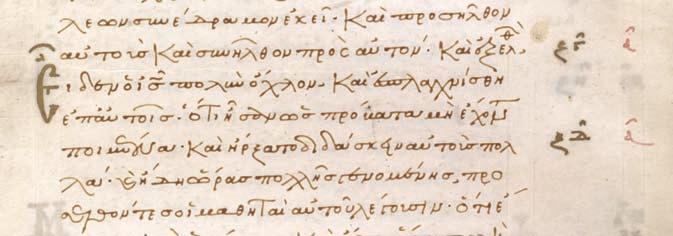
Asimpleexamplewillillustratetheuseoftheapparatus.Supposeyouare readingalongintheGospelofMarkandcomeacrossMark’stellingofthe feedingofthe5,000(Mark6:35-44inmodernreckoning). ‘Doesn’tthisalso occurinoneoftheothergospels?’ youwonder.Eusebius’ systemisdesignedto answerthisquestionforyou.Inaneditionofthegospelsequippedwithhis apparatus,ifyoulookalongsidethepassage,inthemarginofthepage,youwill seetwonumbers.The firstnumber,inblack,isthenumberforthissection withinMark’sgospel,whichhappenstobe§64(inGreek ξΔ)(see fig.1).
Fig.1. Mk§64(inGreek ξΔ =Mk6:35ff.)inTheGospelBookofTheophanes(second quarterofthetwelfthc.).
NationalGalleryofVictoria,Melbourne,FeltonBequest,1960(710-5),fol.94r
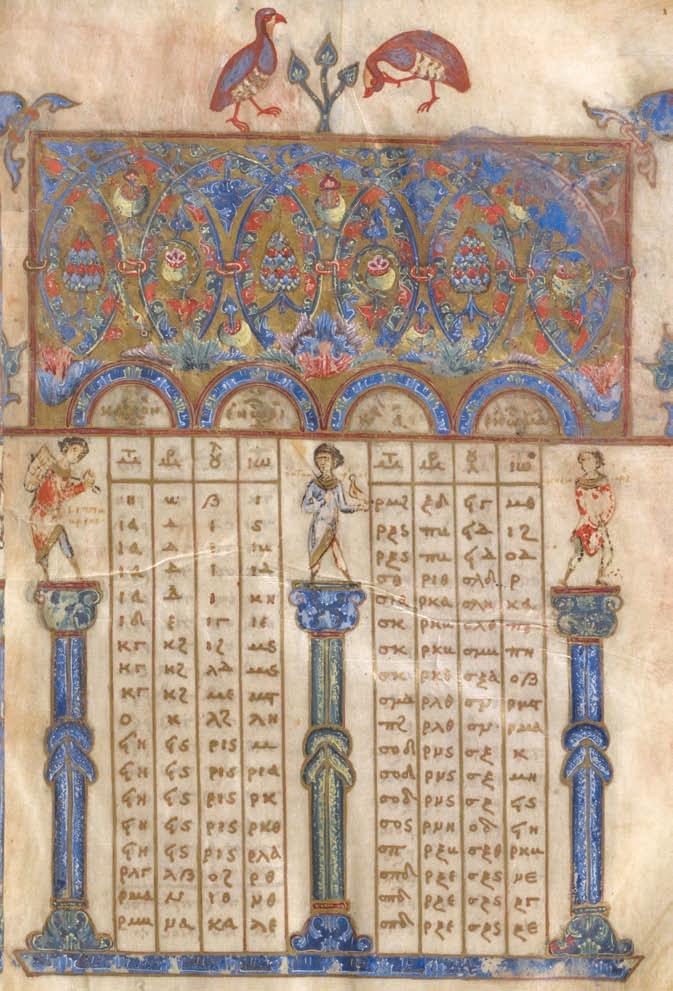
Beneathoralongsidetheblacknumberisanothernumberinredthattells youinwhichofthetablesyoushouldlookto findthispassage.Herethered digitis α (=1),soyouturntothe firstCanon,whichreportsparallelsamong Matthew,Mark,Luke,andJohn.Immediately,then,yourealizethatthisisa storythatoccursinallfourgospels.Now,withinCanonI,ifyouscandownthe columnthatlistsnumbersforMark,youshouldeventuallycometothe number64(see fig.2).Forthesakeofillustration,hereistherowthatincludes thisnumber,withtheprecedingandsubsequentrowsincludedforcomparison:
OnceyouhavelocatedMarksection64,youcanreadhorizontally,tothe leftandtotheright,to findthatthatthefeedingofthe5,000is§147in Matthew,§93inLuke,and§49inJohn.Then,ifyouweretoturntothose numberedpassagesintheothergospels,youwould findtheparallelaccounts
Fig.2. CanonIinTheGospelBookofTheophanes.Eachcolumncontainsnumbers forpassageswithinagivengospel,asindicatedbythetwo-letterabbreviationsat thetopofeachcolumn.ThesecondcolumnisforMarkandthe firstnumberlistedon therightsideofthepageis ξδ (=Mk§64).(Notethatthescribehasherewrittena lowercasedelta,whereasinthepageofMarkshownpreviouslyhehasusedan uppercasedelta.)
NationalGalleryofVictoria,Melbourne,FeltonBequest,1960(710–5),fol.3r