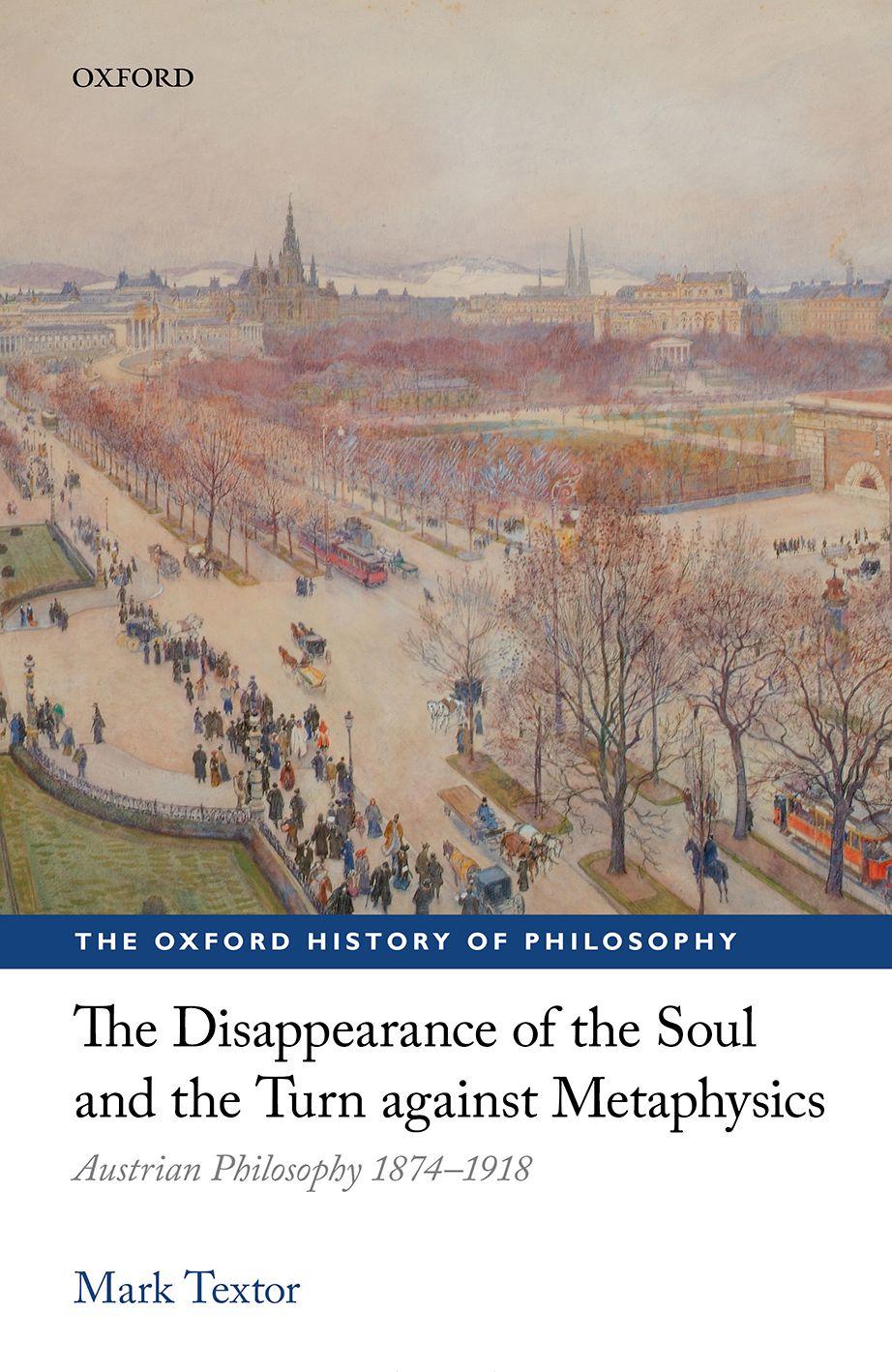
TheDisappearanceof theSoulandtheTurn againstMetaphysics
AustrianPhilosophy1874–1918
MARKTEXTOR
GreatClarendonStreet,Oxford,OX26DP, UnitedKingdom
OxfordUniversityPressisadepartmentoftheUniversityofOxford. ItfurtherstheUniversity’sobjectiveofexcellenceinresearch,scholarship, andeducationbypublishingworldwide.Oxfordisaregisteredtrademarkof OxfordUniversityPressintheUKandincertainothercountries
©MarkTextor2021
Themoralrightsoftheauthorhavebeenasserted FirstEditionpublishedin2021
Impression:1
Allrightsreserved.Nopartofthispublicationmaybereproduced,storedin aretrievalsystem,ortransmitted,inanyformorbyanymeans,withoutthe priorpermissioninwritingofOxfordUniversityPress,orasexpresslypermitted bylaw,bylicenceorundertermsagreedwiththeappropriatereprographics rightsorganization.Enquiriesconcerningreproductionoutsidethescopeofthe aboveshouldbesenttotheRightsDepartment,OxfordUniversityPress,atthe addressabove
Youmustnotcirculatethisworkinanyotherform andyoumustimposethissameconditiononanyacquirer
PublishedintheUnitedStatesofAmericabyOxfordUniversityPress 198MadisonAvenue,NewYork,NY10016,UnitedStatesofAmerica
BritishLibraryCataloguinginPublicationData Dataavailable
LibraryofCongressControlNumber:2021943359
ISBN978–0–19–876982–8
PrintedandboundintheUKby TJBooksLimited
LinkstothirdpartywebsitesareprovidedbyOxfordingoodfaithand forinformationonly.Oxforddisclaimsanyresponsibilityforthematerials containedinanythirdpartywebsitereferencedinthiswork.
Contents
Acknowledgements xi ThePlayers xiii
Introduction1
1.Soul-SearchinginCentralEurope1
2.AustrianPhilosophyanditsSignificance7
3.Methodology:RugDealersandEccentricColleagues14
PARTI.THEEVAPORATIONOFTHESOUL ANDOTHERSUBSTANCES
1.Psychology,theScienceoftheSoul17
1.Introduction17
2.Herbart:PuttingMetaphysicsintoPsychology18
3.TheImpossibilityofSelf-ObservationandMetaphysical Psychology20
4.BacktoParmenides:TheGivenandHerbart’sEleatic ConceptionofSubstance26
5.TheNeo-SoulMovement:TheHerbartiansandLotze29
6.TheSoulandthePossibilityofPsychologyasanIndependent Science33
7.TheSoulandtheUnityofConsciousness34
8.AFalseLead:CompositionviaSubstance36
9.ActiveAttentionandtheUnityofConsciousness37
10.FromtheUnityoftheAttentionProcesstotheLotzeanSoul39 11.LookingAhead:FromtheUnityofConsciousnesstoCognition42
2. ‘PsychologywithoutaSoul’ 44
1.Introduction:HumeandLichtenberg:NoSoulinSight44
2.Lange:PsychologyasaSubjectwithoutanObject49
3.IntroducingBrentano50
4.WhatisPsychologyaScienceof?Brentano’sAnswer51
5.BrentanoonObservingMentalPhenomena53
6.Herbart’s(andKant’s) ‘GreatError’ 56
7.Wundt:NoMentalSubstance,butaLogicalSubject59
8.IntroducingMach64
9.MachI:TheEgoMustBeGivenup!66
10.MachII:PracticalUnityandthePictureTheory67 11.LotzeRespondstotheEmpiricists:TheSoulISObservable69 12.CanSensationsBePriortotheEgo?LotzeversusMach73
3.FromSubstanceandAccidenttoComplexandElement78 1.Introduction78
2.LotzeandStumpfagainstSubstance79
3.AvenariusandMachagainstSubstance81
4.Persistence:LawsSqueezeoutSubstances87
5.MachagainsttheAppearance/RealityDistinction89
6.IsAntimetaphysicsSelf-Undermining?94
7.FromPropertiestoElements96
8.CantheSameElementBePartofDifferentComplexes?100
9.ObjectsPerceivedbyDifferentIndividuals:Schlick againstMach102 10.Summary103
PARTII.MANAGINGWITHOUTTHESOUL: INTENTIONALITY,DUALISM, ANDNEUTRALMONISM
4.TheMentalandthePhysical,OnlyaMatterofPerspective107 1.Introduction107
2.Fechner,thePioneerofNeutralMonism110 2.1.TheInnerandtheOuterStandpoint110
2.2.NeutralAppearancesinFechner’ s Atomenlehre 113
3.NeutralMonism:MainThemeandProblems117
4.Mach:DualDependenceandNeutrality119
5.Wundt:TwoStandpointsorNeutralMonismwitha Subject123
6.Lipps:NeutralMonismandtheWill125
7.Riehl:Neo-KantianNeutralMonism127 8.Preview130
5.TheMentalandthePhysical,anIntrinsicDistinction131 1.Introduction131
2.AnotherWaydown:Brentano’sConcept-Empiricism132
3.Clarifying ‘MentalPhenomenon’ and ‘PhysicalPhenomenon’ 134
4.TheBasicsoftheAristotelian-ScholasticViewoftheMind140
5.TheFundamentalityofIntentionality142
6.Akt/Inhalt/Object:TheTripartiteDistinction145
7.DiaphaneityAKAWahrnehmungsflüchtigkeitin Austro-GermanPhilosophy150
8.DiaphaneityandtheSpectreofNeutralMonism155
6.TheIntentionalityChallenge156 1.Introduction156
2.TheIntentionalityofSensation157 2.1.AgainstMach’sIdentityThesis157
2.2.PerceptualConstancies:HusserlagainstMach163
3.TheIntentionalityofThought164
3.1.Mach’sPictureTheoryofJudgementandCognition164
3.2Brentano’sSelf-FulfillingExpectationArgument169
3.3IntellectualUnease174 4.Preview175
PARTIII.FROM PSYCHOLOGYWITHOUTA SOUL TO PSYCHOLOGYWITHASELF ANDBEYOND:THEANGLO-AUSTROGERMANAXIS1886 – 1918
IntroductiontoPartIII: ‘ShockedandDisappointed’ 177
7.CambridgePsychologybetweenLotzeandBrentano183
1.Ward:PsychologywithaSubject,butwithoutan Object/ContentDistinction183
1.1.TheMetaphysicallyNeutralSubject183
1.2.TheBiologicalDog,theIndividualMind,andthePsychological Subject189
1.3.ThePersonificationofConsciousnessandthe ‘Ghostofthe Subject’ 191
1.4.OntheWrongTrack193
2.Stout:PsychologywithoutaSubject,butwithanAct/Content/ ObjectDistinction193
2.1.TheBrentanianTripartiteDistinctionandPerceptualConstancy193
2.2.ExpungingtheSubject199
8.TheRiseandFalloftheSubject:ACaseStudy202
1.Introduction:TheFundamentalRoleoftheSubject202
2.Russell1911–13:SavingtheSubjectfromtheNeutralMonists203
3.Russell1913:MakingtheSubjectIntelligibleandtheUnity ofExperience208
4.Russell1918:PersistentPersonsandMomentarySubjects212
9.Act/Content/Object,Act/Object,orJustObject?215
1.Introduction:FourPositions215
2.Background:IdealismandIntentionality217
2.1. ‘GettingOutsidetheCircleofOurOwnIdeas’ 217
2.2.Russell’ s ‘ExceedinglySimpleArgument’ againstIdealism220
2.3.TheFundamentalDistinctionbetweenMindandMatter221
3.AgainsttheContent/ObjectDistinction223
3.1.IsIntentionalityanInternalRelation?223
3.2.AreContentsSuperfluous?225
4.TheDebateabouttheAct/ObjectDistinction229
4.1.Diaphaneity,orHasMooreShotHimselfintheFoot?229
4.2.James’sResponsetoMoore231
4.3.JamesonMentalPointing234
4.4.Moore’sSearchfortheAct/ObjectDistinctionfrom1903to1910237
4.5.RussellChangesTack:ANon-IntrospectiveAct/Object Distinction240
4.6.Russell’sArgumentfortheNeutralityofSensation243
4.7.Russell’sDefenceoftheTripartiteDistinctionforThought246
5.ConclusionofPartIII248
PARTIV.INTUITION,METAPHYSICS, ANDTHELIMITSOFKNOWLEDGE
IntroductiontoPartIV249
1.GermanPragmatismandVoluntarism249
2.SchopenhauerandMachonHowCognitionServestheWill251
3.Mach’sAlly:Jerusalem’sVoluntarism255
4.ConstructiveCriticismandSynthesiswithCriticism:Schlick257
5.TheRoadAhead:TwoTermsorOne?259
10.Brentano’sOne-TermViewofJudgement261
1.Introduction261
2.TheTwo-TermDogma261
3.Brentano’sEmpiricismatWork264
4.Brentano’sArgumentfromPerception266
5.BrentanoagainsttheTwo-TermPrejudice273 6.Summary275
11.JudgementintheServiceoftheWill:MachandJerusalem277
1.Mach:Memory,Judgement,andWell-Being277
2.Jerusalem’ s Urteilsfunktion 281
3.Jerusalem’sCircularityArgumentagainstBrentano’sJudgement Primitivism282
4.TheTokenComplexityThesisandtheLinguisticArticulation Argument283
5.TheArgumentfromtheFunctionofJudgement287
6.AResponsetotheArgumentfromtheFunctionofJudgement291
12.TheNatureofKnowledge:AvenariusandSchlick293 1.Introduction293
2.Riehl’sCriticism+Avenarius’ EconomyTheory=Schlick’ s Erkenntnislehre 293
3.AvenariusandSchlick: ‘CognitionisRe-Cognition’ 299
4.ScientificKnowledge,CognitiveSloth,andTheoreticalEconomy301
5.CognitiveEconomyandIntellectualHedonism304
6.MundaneKnowledgeandGeneralPresentations306
7.ScientificKnowledgeandConcepts308
8.ScientificConceptsandImplicitDefinition311
9.TheConceptofExistenceandNecessaryIgnorance312
10.SchlickversusBrentano315
13.DrawingtheLimitsofKnowledge318 1.Introduction318
2.MetaphysicsandIntuitiveKnowledge318
2.1.WhatisMetaphysics?318
2.2.InductiveMetaphysicsandIntuition321
3.IntuitionastheSourceofMetaphysicalKnowledge325
3.1.SchopenhauerandBergson325
3.2.Lotze: CognitioRei versus CognitioCircaRem 329
3.3.HusserlontheaPrioriScienceofEssence330
3.4.AvenariusandMach331
4.SchlickagainstIntuitiveKnowledge332 4.1.Overview332
4.2.TheArgumentfromtheMetaphysicsoftheKnowledge Relation332
4.3.FromtheAimofCognitiontoitsMetaphysics334
4.4.Knowledge,Foreknowledge,andFactivity335
14.BeyondtheLimitsofKnowledge:IntuitionandValue338 1.Introduction338
2.TheDrivetoPerceiveandSensoryPleasure338
3.TheTheoreticalversusthePracticalStandpoint341
4.Non-ConceptualEvaluationandLife342
5.SchlickandSchopenhaueronAcquaintanceasImmersion347 6.Conclusion350
Acknowledgements
Iwanttobeginatthebeginning:thisbookgrewoutofanideathatPeter Momtchiloffsuggestedtome.Iamgratefultohimforthesuggestionandhis comments.IntheearlystagesoftheprojectCharlesSiewertandThomasUebel gavemefeedbackandencouragement:thankyou.IamgratefultoNickAllott, MariaRosaAntognazza,MichaelBeaney,ThomasBinder,JohannesBrandl,Bill Brewer,JohnCallanan,NilanjanDas,JeremyDunham,LandonElkind,Alex Grzankowski,KeithHossack,SamLebens,JessicaLeech,RoryMadden,Fintan Malory,EliotMichaelson,MattSoteriou,JamesStazicker,BobStern,andSarah Tropperforcommentsonanddiscussionofpartsofthebook.NilsKürbisand HamidTaiebdeservespecialthanksforreadingbig ‘chunks’ ofevolvingdraftsof thebook.ChristianBeyerandDolfRamiorganizedtheworkshop VonBrentano zumWienerKreis inGöttingenin2017atwhichIpresentedearlydraftsof PartIV.Manythanksfororganizingandparticipatinginthisenjoyableworkshop. In2017IparticipatedalsointheFranzBrentanoCentenaryConferenceinVienna. IamgratefultoJohannesBrandl,KevinMulligan,DagfinnFøllesdal,andDavid WoodruffSmithforcriticism,comments,andsuggestions.ItaughtanMPhilStud seminarontopicsinPartsIandIIofthebookatKing’sCollegeLondonin2018. Iamgratefultothestudentsandmycolleagues firstandforemostDavid Papineau forhelpingmetoimprovemyhalf-bakedideas.In2019Arnaud DewalqueorganizedaworkshopinwhichIpresentedthemainideasofPartsI–III. Theworkshopwasveryhelpfultosharpenmythoughts.IamgratefultoArnaud, DavideBordini,CharlotteGauvry,GuillaumeFréchette,AndreaMarchesi,and AlbertoVoltolinifortheirfeedback.Abig ‘Thankyou’ toGuillaumefordiscussions andforsendingmemanuscriptsandpapersthatarehardto find.In2019Ialso participatedin,andpresentedapaperat,RoryMadden’sseminar ‘TheSelfinEarly AnalyticPhilosophy’ atUniversityCollegeLondonandgotalotoutofit.Thanksto Rory,MarkKalderon,andTimButtonforfeedbackanddiscussion.
ManythankstoDenisFisette,GuillaumeFréchette,andJosefStadler,the editorsofaspecialissueofthe ViennaCircleYearbook,forallowingmetoreprint partsofthepaper ‘HowManyTermsDoesaJudgementHave?Jerusalemversus Brentano’ (ViennaCircleYearbook 24(2020)).Iamalsogratefultothe Journalof theAmericanPhilosophicalAssociation forthepermissiontoreprintpartsofmy paper ‘SchlickontheSourceofthe “GreatErrorsinPhilosophy”’ (JAPA 4.1 (2018),105–25)andto HOPOS:TheJournalfortheInternationalSocietyfor PhilosophyofScience forpermittingmetoreprintmeaportionofmypaper ‘Mach’sNeutralMonism’ (forthcoming,April2021).
FinallyIamgratefultotheLeverhulmeTrustforawardingmearesearch fellowshipthatallowedmetofocusonthebookproject.
ThePlayers
Thebookdrawsontheworkofanumberofphilosophers.Itwillthereforebe helpfulforthereadertohaveanoverviewofthe ‘players’.Belowarethemain figuresthat,Ithink,needanintroduction.IwillintroduceAvenarius,Brentano, Lotze,Mach,andSchlickinfurtherdetaillater.
RichardAvenarius (1843–96):German-Swissphilosopher.Heworkedwith WundtinLeipzig;from1877untilhisdeathheheldaprofessorshipforphilosophyinZurich.In1877hefoundedthe Vierteljahrsschriftfürwissenschaftliche Philosophie.
FranzBrentano (1838–1917):Germanphilosopher.Hemovedin1874from WürzburgtoachairinViennaandbecameoneofthefoundingfathersof AustrianPhilosophy.
GeorgeDawesHicks (1862–1941): firstprofessorofMoralPhilosophyin UniversityCollegeLondon.HedidhisgraduateworkinLeipzigandhehelped tointroduceAustro-GermanphilosopherssuchasLotze,LippsandMeinonginto theBritishphilosophy-scene.
GustavTheodorFechner (1801–87):Germanphilosopherandpsychologist basedinLeipzig.Hisworklaidthefoundationsofexperimentalpsychologyand heisthepioneerofpsychophysics:thescientificstudyoftherelationshipbetween physicalstimulusandpsychologicalresponse.Philosophically,Fechnerisatheisticpanpsychist.
JohannFriedrichHerbart (1776–1841):Germanphilosopher,psychologist,and founderofpedagogyasascientificdiscipline.AfterstudiesinGöttingen,hewas appointedtoaprofessorship,previouslyheldbyKant,inKönigsbergin1809.In 1833hereturnedtoGöttingen.Herbart’sworkisthestartingpointofattemptsto developascienceofpsychology.
AloisHöfler (1853–1922):Austrianphilosopher,psychologist,andpedagogue. StudentofBrentanoandMeinong.ProfessorforpedagogyinViennafrom1907 onwards.
EdmundHusserl (1859–1938):FounderofthePhenomenologicalMovement. StudentofbothBrentanoandStumpf.
WilliamJames (1842–1910):Americanphilosopherandpsychologist(and brotherofHenryJames).Heranoneofthe firstpsychologicallaboratoriesin Harvardin1874–6.Hisphilosophicalandpsychologicalworkisinfluencedby Brentano,Lotze,Mach,andStumpf.
WilhelmJerusalem (1854–1923):Austrianphilosopher,pedagogue,andpsychologist.Heisoneofthepioneersof ‘GermanPragmatism’
FriedrichAlbertLange (1828–75):Germanphilosopherandsocialreformer. Oneofthefoundingmembersofthe ‘Marburgschool’ ofNeo-Kantianism.His mainwork GeschichtedesMaterialismusundKritikseinerBedeutungfürdie Gegenwart is ‘thebibleofthethinkingnaturalscientist ’ (Stumpf1918,25).
TheodorLipps (1815–1914):Germanphilosopher,wellknownforhisworkon empathyandhisdefenceofunconsciousmentalstates.
HermannLotze (1817–81):Germanphilosopherandmedic.Hestudiedand workedinLeipzigandsucceededHerbartasprofessorofphilosophyinGöttingen in1844.Inthelatenineteenthandearlytwentiethcenturies,hewas ‘thesingle mostinfluentialphilosopherinGermany,perhapseventheworld’ (Sullivan, StanfordEncyclopediaofPhilosophy).LikehisLeipzigcolleagueFechner,Lotze isanIdealist.
ErnstMach (1838–1916):Austrianphysicistandpsychologist.Machheldfrom 1895to1901thenewlyfoundedchairinthehistoryandphilosophyofthe inductivesciencesinVienna.InphysicshiscriticismoftheNewtonianviewof absolutespaceinfluencesEinstein’sdevelopmentofthetheoryofspecialrelativity. InphilosophyandpsychologyhedevelopsaninfluentialversionofNeutral Monism.
AntonMarty (1847–1914):SwissAustrianphilosopher,astudentofBrentano inWürzburg(1868–70)whotaughtfrom1880onwardsattheCharlesUniversity inPrague.ThephilosopheroflanguageoftheBrentanoSchool.
AlexiusMeinong (1853–1920):Austrianphilosopherwhostudiedwith BrentanoinVienna.Nowwell-known(notorious)forhisacceptanceofnonexistentobjects.Hemovedin1882toGrazwherehefoundedin1894the first psychologicallaboratoryintheHabsburgEmpire.
PaulNatorp (1854–1925):amemberoftheMarburgschoolofNeo-Kantianism whomadecontributionstothefoundationsofpsychology(‘criticalpsychology’).
OttoNeurath (1882–1945):Austrianphilosopher,sociologist,andpolitical economist.MemberoftheViennaCircleandhistorianofitsprehistoryinAustria.
AloisRiehl (1844–1924):AustrianNeo-Kantianphilosopher.Hestartedoutas aprofessorinGraz,thenmovedtoFreiburg,Kiel,Halle,and finallyBerlinduring 1905–21.HisNeo-Kantianism(Criticism)hascloseaffinitiestothePositivismof AvenariusandMach.Riehlbecameoneoftheeditorsof Vierteljahrsschriftfür wissenschaftlichePhilosophie afterAvenarius’ death.¹
MortizSchlick (1882–1936):Germanphilosopherofscience(physics)(‘thevery first professional scientificphilosopher’ (Friedman2012,2))andethics.HesucceededMachinthechairforthephilosophyofinductivesciencesin1922and becamethecentral figureintheViennaCircle.
¹FormoreonRiehlseeHeidelberger(2004)andBeiser(2014,chapter14).
GeorgeFrederickStout (1860–1944):Britishphilosopherandpsychologist. StudentofJamesWardandateacherofG.E.MooreandBertrandRussell.As editorof Mind (1892–1920)andteacherofMooreandRussellheisalinkbetween Austro-German(Brentano,Herbart,Lotze,Twardowski)andCambridge philosophy.
CarlStumpf (1848–1936):Germanphilosopherandpsychologist,studentof bothBrentanoandLotze.BecameprofessorinWürzburgattheageof25,later professorinHalle,Munich,andBerlin.OneofthefoundersofGestaltpsychology.
KazimierzTwardowski (1866–1938):Austrianphilosopherwhostudiedin ViennawithBrentano,inLeipzigwithWundt,andinMunichwithStumpf.In 1895hebecameanextraordinarusinLvov(thenLemberg)inPoland(nowin Ukraine)wherehefoundedtheLvov-WarsawSchool.
JamesWard (1843–1925):StudentofLotze, firstprofessorforMental PhilosophyandLogicatCambridgein1897.TeacherofMoore,Russell,andStout.
StephanWitasek (1870–1915):Austrianphilosopherandpsychologist,basedin GrazhebecametheheadofGraz’spsychologicallaboratoryin1914.
WilhelmWundt (1832–1920):Germanphilosopherandpsychologist;founded in1879the firstinstituteofpsychologyinLeipzigandin1883the firstjournalfor psychology,theaptlytitled PhilosophischeStudien.
Introduction
1.Soul-SearchinginCentralEurope
Theythatknowtheentirecourseofthedevelopmentofscience,will, asamatterofcourse,judgemorefreelyandmorecorrectlyofthe significanceofanypresentscientificmovementthanthey,who, limitedintheirviewstotheageinwhichtheirownliveshavebeen spent,contemplatemerelythemomentarytrendthatthecourseof intellectualeventstakesatthepresentmoment.
ErnstMach, TheScienceofMechanics (1883)
Thisbookaimstogivea problem-oriented accountofAustrianphilosophyandits roleintheconceptionofanalyticphilosophyandlogicalempiricism. ‘Problemoriented’ becausegiventhewealthofhistoricalfacts,developments,andviews thatdeservetobecalled ‘Austrianphilosophy ’ oneneedstoseparatetheimportantfromtheunimportant,thephilosophicallyinterestingfromthephilosophicallyuninteresting.InordertodosoIhaveorganizedthebookaroundquestions thatthephilosopherswhoshapedAustrianphilosophy FranzBrentanoandhis contemporaryErnstMach,aswellasphilosophersinfluencedbythem posed andpursued.Thesequestionsconcernmindandmatter,substanceandaccident, andknowledgeandexperience.TheanswersgiventothembyAustrianphilosophersconstitutedafundamentalchangeinhowphilosophersconceivedofthe fundamentalbuildingblocksoftheworldandourrelationtothem.Working throughtheargumentsforthischangewillhelpustounderstandthephilosophicalissuesunderconsiderationaswellasanimportantstrandinthehistoryof philosophy.
The firstthreepartsofthebookrevolvearoundthequestionwhetherthe totalityofspatio-temporalobjectsandprocessesisdividedinto mindsandthe mental ononeside,and non-mentalobjectsandevents ontheotherside. Weare allinclinedtoanswer: Ofcoursethereissuchadistinction. Wedistinguishbetween thoughtsandthings,betweenthementalandthephysical.Webelievethatthere arethings,ourselvesamongthem,thatperceiveand/orfeeland/orreason.These things,wesay,haveamind.Otherthings mybikeorBenNevis,forinstance don’thaveminds:theydon’tperceiveand/orfeeland/orreason.Webelieve,too, thatthoughts,feelings,andperceptions, mentalactsandstates,areverydifferent
fromeventsandprocesseslikecombustionetc.¹Ourrelationshipwithobjectsthat havenomentalstatesetc.isofanentirelydifferentkindthanourrelationshipwith thingsthathavethem.Wehaverespectforotherpeopleandwefeelsorryforthe dogthatinjuredhispaw.Butwedon’tpitythetablethatlostitsleg.Hence,the distinctionbetweenthementalandthephysicalisofimportanceforusand appearstobeafundamentaldivide.
Aclari ficationisnecessaryatthispoint.InthedebatesthatIwillbeconcerned with, ‘mental’ and ‘physical’ arecorrelativeterms.Ifonehasdeterminedtherealm ofthemental,onehastherebyalsodeterminedtherealmofthephysicalornonmental.Thereisnoindependentdeterminationofwhatisphysical.Forexample, thephysicalisnot, ‘whatisdealtwithinphysics’.²Thescienceofphysicschanges andwecannotpredictwhatfuturephysicswilldealwith.TheauthorsIwillbe concernedwithuse ‘physical’ basicallytomeanthepropertyofbeingnon-mental anddebatewhetherthementalversusnon-mentaldistinctionisajointinnature.
Now,common-sensedistinctionsandbeliefsarenotsacrosanct.Often,whileof practicaluse,theyarecorrectedandreplacedafterreflection.Commonsense,for instance,distinguishesbetween fivesenses.Butitturnsoutthatthedistinction betweenthesensesishardtoarticulateanddifficulttoincorporateintoscience. Yetmanyphilosophershavenotthoughtofthedistinctionbetweenthemental andphysicalasrevisable.Whynot?
Descartesansweredthathecanascertainfromthe first-personpointofview thatheisessentiallyathinkingthing,whilemanyofthethingshethinksaboutare notessentiallythinking,butessentiallyextended.Descartesisathinking substance hedependsforhisexistenceonlyonGod andsomeoftheessentially extendedthingsaresubstancestoo.Thereare,then,twokindsofsubstancesthat differintheirnature:thinkingandextendedsubstances.Nothinkingsubstanceor soulcanbeanextendedsubstanceandviceversa.³Extendedandthinking substanceshavedifferentkindsofproperties(modes).Mentalactsandstatesare supposedtobedistinctfromphysicaleventsandstatesbecausetheyareproperties onlyofathinkingsubstance,whereasphysicaleventsandstatesbelongonlyto extendedsubstances.
Ifthedistinctionbetweenthementalandthephysicalisgroundedina distinctionbetweentwokindsofsubstancesandtheirproperties,andifthisisa fundamentaldistinctioninreality,onemightthinkthatbothsidesofthedistinctioncanbetheobjectsofscience.Hence,onewillexpecttheretobetwo
¹SeeMoore(1953,chapter1)foradetailedarticulationofourcommon-senseviewofthoughtsand things,especiallypp.16and25.Moore’slecturesweregivenin1910.SeealsoRussell(1913a,6): ‘The division[betweenmindandmatter]issofamiliar,andofsuchrespectableantiquity,thatithasbecome partofourhabits,andscarcelyseemstobeatheory.’
²See,forexample,Russell(1914,145).SeeHempel(1980)forproblemsforthe ‘whatisdealtwithin physics’ idea.SpurrettandPapineau(1999)recommendrestatingthesesaboutthemental/physical distinctionasthesesaboutthemental/non-mentaldistinction.
³SeeDescartes(1644,210).
fundamentalsciences:psychology thescienceofthesoul andphysics the scienceofextendedsubstance.Ifpsychologyisthescienceofthesoul,whatis itssourceofknowledge?
Atthispointthingsgetinteresting.HumeandLichtenbergcouldnot findthe soulwhentheytriedtoobserveitinintrospection;Kantunderminedthesoulin otherways.Ifthereisnosoulorthesoulismerelyanobjectoffaith,not knowledge,psychologycannotbethescienceofthesoul.Twoquestionsarise fromthisproblem.
First,isthedistinctionbetweenthementalandthephysicalnothingmorethan a ‘ superficial’ distinctionthatwillberevisedwhenscienceprogresses?
Second,canonereconceivepsychologyinsuchawaythatitisstillafundamentalscience,butnotthescienceofthesoul?
EnterBrentano,Mach,andco.Mytwoprotagonistsandtheirfollowerspursue thesequestions.⁴
MachansweredYEStoour firstquestionandsetthesecondquestionaside. Thereisnosoulandconsequentlythedistinctionbetweenthementalandthe physicalisonlyofpracticalvalue.Wecarveuptheworldintothoughtsand thinkersasopposedtophysicalobjects, butthisisanentirelypracticalmatter.The distinctiondoesnotmarkajointinnatureanddoesnotgroundthedistinction betweentwofundamentalsciences.Machisa(Neutral) Monist.Theresulting scientificworld-viewisclosertoBuddhismthantothetraditionofWestern philosophy.Machwroteinaletterthathecouldnotmakeanyclaimsoforiginality withrespecttoBuddhism. ⁵
Inhis PsychologyfromanEmpiricalStandpoint (1874)Brentanoalsorejected thesoul,butarguedthatpsychologyisthescienceofmentalphenomena. BrentanofoundthepropertythatunifiesmentalphenomenainAristotleand theScholastics:Allandonlymentalphenomenaareintentionalordirected. Psychologyistheempiricalscienceofintentionalphenomenaandconsciousness isthesourceofpsychologicalknowledge.Thedistinctionbetweenthoughtsand things,then,isthedistinctionbetweensomementalacts,perceivings,andwhat theyareabout.Brentanoisa Dualist,butnotaSubstanceDualist.InBrentano’ s picturetheroleofthesoulisplayedbymentalphenomenaormentalacts.The questionsthatHumeandLichtenbergaskedaboutthesoularisenowfor ‘actsof consciousness’:Whenwe,forexample,hearanote,areweawareofourmental activityaswellasthenote?Iftheanswerisnegative,whyshouldwetreatmental actsanydifferentlyfromthesoul?Ifwetrustourobservations,neitherthesoul normentalactsexist.Thereareonlyobjectsthatappeartous.
⁴ Thethemesdiscussedhereoverlapwiththetopicsdiscussedinthe firstpartofRorty(1979).Buthe showsneitherawarenessofnorinterestinthedetaileddiscussionsthattookplaceinnineteenthcenturyAustrianphilosophy.
⁵ SeeMach’slettertoMauthner22.10.1912reprintedinHallerandStadler(1988,242).
Withtheseguidingquestionsaboutthenatureandexistenceofthesoulandthe subject-matterofpsychology,ifany,inmind,wecannowlookatthestructureof partsItoIIIofthebook.
Thebookisdividedintofourparts.PartIisanopinionatedintroductioninto thedebateaboutthesoulinAustro-Germanphilosophybetween1850and1918.⁶ Theresultofthedebateisthatthesoulisrejectedasthecentralpositof psychology.Themainpartiesofthedebateare,ontheonehand,theso-called MetaphysicalPsychologists and,ontheother,the EmpiricalPsychologists
MetaphysicalPsychologistslikeJohannFriedrichHerbartandHermannLotze regarded ‘psychologyasapartofphilosophicalmetaphysics,itschiefeffortis directedtowardthediscoveryofadefinitionofthe “natureofsoul” thatshallbein accordwiththewholetheoryofthemetaphysicalsystemtowhichtheparticular psychologybelongs’ (Wundt1897,6–7).⁷ ConsiderthetellingtitleofHerbart’ s influentialbook PsychologyasScience:NewlyFoundedonExperience,Metaphysics andMathematics (Herbart1824/5).Psychologyisanempiricalscience hence the ‘experience’ inthetitle basedonandcomplementedbymetaphysics,a metaphysicsofthesoul.
Thesloganofempiricalpsychologistsis ‘psychologywithoutasoul’ (Albert FriedrichLange).Brentano,Mach,andWundtarefullysigneduptothisproject.⁸ Forinstance,Mach(1914,§12)famouslydeclaredtheegotobeunsavable. Chapter1introducesthemainmetaphysicalpsychologists,HerbartandLotze, andtheirargumentsfortheexistenceofthesoul.Theargumentswilldrawonthe problematicnatureofintrospectionandtheunityofconsciousness.Chapter2 detailstheresponsesbyempiricalpsychologists.InspiredbyHume,Lichtenberg, (andBuddha)thesephilosophersandpsychologistsdenythatthesoulisneeded inpsychology.Theiraimistoshowthatpsychologycanbedoneindependently ofmetaphysics.Theantimetaphysicalorientationofempiricalpsychology inspiresandprovidesamodelforthecriticismofthetraditionalmetaphysics ofsubstanceandaccident.Avenarius,Mach,andStumpfarguethatoneshould replaceitwithanelement/complexontology.ThisisthetopicofChapter3that concludesthe fi rstpart.
OntoPartII.WhilebothBrentano(foraperiodoftime)aswellasMachand otherPositivistsrejectedthesoulandothersubstances,theydisagreedaboutthe philosophicalconsequencesofthismove.Broadlyspeaking,Machetal.argued thatifthereisnosoul,thedistinctionbetweenthementalandphysicalisnot fundamental.Incontrast,Brentanoetal.takethedistinctionbetweenthemental
⁶ ThesoulisstillaconcernintheViennaCircleManifestoof1929.TheauthorsoftheManifestosee themetaphysicsofthesoulashamperingthedevelopmentofpsychology,seeCarnap,Hahn,and Neurath(1929,312).
⁷ Juddmistranslates ‘Seele’ as ‘mind’.Ihavechangedthetranslation.
⁸ LaterBrentanowouldreintroducethesoul.SeeTextor(2017b)fordiscussion.
andthephysicaltobeafundamentaldistinction evenifthereisnosoul.PartIIis devoted,aswewillsee,totheratherone-sided ‘debate’ betweentheseparties.
NeutralMonism’sbasicthoughtisthatfundamentalrealityisintrinsically neithermentalnorphysical.NeutralMonismisnow firmlyassociatedwith BertrandRussell’sworkafter1918.Butwhiletheterm ‘NeutralMonism’ isdue toRussell,heisbyhisownadmissionalatecomertoNeutralMonism.ForNeutral Monism,underdifferentnames,wasalreadyformulatedintheworkofGustav TheodorFechner,AloisRiehl,andErnstMachbeforeWilliamJamesandlong beforeRussellpickeditup.Chapter4isdevotedtotheargumentsofthese pioneersofNeutralMonism.
Chapter5introducestheviewofpsychologyarticulatedbyBrentanoinhis Psychology.Thereisnosoulandtheremaybenophysicalsubstance.Butthereis anintrinsicdistinctionbetweenthementalandthephysical:mentalphenomena andonlytheyaredirectedonsomething(haveintentionality).Thedistinction betweenthoughtsandthingsisnotmerelypractical.Soitdoesproperlygiverise todifferentsciences:psychologyandphysics.
Whoisright,BrentanoorMach?BrentanoengagedwithMach’sNeutral Monismindetail.InChapter6IwillworkthroughBrentano’sargumentsagainst Mach.AccordingtoMach’sNeutralMonism,intentionalityisnotafundamental featureofthemental.Brentanoandhisstudentswentontoteaseoutthecounterintuitiveconsequencesoftherejectionoftheintentionalityofsensationand thought.Chapter6probesthesearguments.
OntoPartIII.Atleastsincethe1980stheinfluenceofAustrianphilosophers ontheformationofanalyticphilosophyhasbeenatopicintheliteratureonthe historyofanalyticphilosophy.Simons(1986)proposedtospeakofan ‘AngloAustrianAnalyticAxis’;Dummett(1993,1)arguedthatanalyticphilosophy,given itshistoricalcontext,isbettercalled ‘Anglo-Austrian’ than ‘Anglo-American’
InPartIIIIwilllookattheinfluenceofAustrianphilosophersontheinception ofanalyticphilosophyindetail.IwillarguethatAustrianphilosophyisonlyone importantinfl uenceonanalyticphilosophy.Fortheleadingphilosophersof mindandpsychologyinCambridgeintheperiodbeforetheFirstWorldWar, JamesWardandFrederickStout,wereinfluencedbybothBrentano and Lotze. WardandStout,inturn,weretheacademicteachersofG.E.Moore(1873–1958) andBertrandRussell(1872–1970).Moore’sandRussell’ s ‘revoltagainstidealism’ isnowwidelyseenasoneoftheeventsthatstartedanalyticphilosophyin Britain.PartIIIwilldiscusshowideasfromAustro-Germanphilosophyoperated inthisrevolt.
InChapter7IwillintroducethebackgroundofMoore’sandRussell’scontributions.WehaveseeninPartIthatAustro-Germanphilosophersgaveupthe soul.AstrikingfeatureofCambridgephilosophyatthetimeofRussellandMoore isitsLotze-inspiredrelianceon ‘thesubject’,areplacementofthesoul.Moore’ s andRussell’srevoltagainstidealismisbasedontheideathat asubject canrelatein
thoughttoobjectsthatareindependentofthisthought.InChapter8Iwillwork throughRussell’sattemptstosavethesubjectfromitscritics.Thesubject figures importantlyinWittgenstein ’ s TractatusLogico-Philosophicus.However,asatisfactorytreatmentofWittgenstein’sremarksonthetopicisbeyondthescope ofthisbook.PartIIIcanbeseenasprovidingthehistoricalbackgroundfor Wittgenstein’sthoughtsonthesubject.Chapter9isdevotedtoRussell’sand Moore’sreworkingoftheBrentaniandistinctionbetweenact,content,andobject andlooksindetailattheirresponsetothediaphaneityproblem.
OntoPartIV.Ifthinkingisnotanactivityofanimmaterialsimplesubstance,it canbestudiedlikeanyothernaturalphenomena.InAustriaMachisatthe forefrontofthisnewapproachtothought.InhisinaugurallectureasRectorof theUniversityofPraguein1883Machsaid:
ScarcelythirtyyearshaveelapsedsinceDarwin firstpropoundedtheprinciplesof histheoryofevolution.Yet,alreadyweseehisideas firmlyrootedineverybranch ofhumanthought,howeverremote.Everywhere,inhistory,inphilosophy,even inthephysicalsciences,wehearthewatch-words:heredity,adaptation,selection. (Mach1883,216–17[245–6])⁹
Ourmentalfacultieshaveevolvedlikeotherfaculties,too.Hence,weshouldtryto extendtothemtheframeworkprovidedbyDarwin.¹⁰ Thephilosophicalnaturalists,Avenarius,Mach,Jerusalem,applytheideasofselectionandsurvivalvalueto cognition,especiallyjudgement.Theysupposethatjudgementhasabiological purpose tomakeanunfamiliarobjectfamiliarbyapplyingageneralrepresentationtoit.WilhelmJerusalemdevotedawholebooktojudgementbecause:
[t]hepsychologyoftheactofjudgementisthegroundandpresuppositionofthe completetheoreticalphilosophy.(Jerusalem1895,2)
Jerusalemcoinedasloganforthecoreidea: ‘judgementhastwoterms’.Whatdoes thismean?
Ajudgement,thephilosophicalnaturalistsclaim,relatestheunfamiliartothe familiar so,onetermtotheother.Onemaythinkof ‘terms’ hereasperceptions relatedtostereotypesand/orrepresentationsofkinds.Thisbringsustothe questionthatwillbeatthecentreofthefourthpartofthebook:
Doescognitionandjudgementnecessarilyhaveseveralterms?
⁹ Iwillfollowinthisbookthispolicy:ifthereisanEnglishtranslationofaGermanprimarytext, Iwillgive firstthepaginationofthetranslation,thenthepaginationoftheoriginalinsquarebrackets.If therearenosquarebrackets,thereferenceistotheoriginalpaginationandthetranslationismine.
¹⁰ OnMach’sBiologismsee Čapek(1968).
Brentanoprovidedargumentsforthenegativeanswertothisquestion.Heargues thattherearejudgementsthathaveonlyonetermandusesthemtoanalyseinner andouterperception.IwillexpoundtheseargumentsinChapter10.In Chapter11IwillturntoJerusalem’sargumentsagainstBrentano.Jerusalem triedtoshowthat(a)judgementsatisfiesafunctionalneedand(b)itcanonly satisfythisneedifithasatleasttwoterms.
Themostsophisticatedproponentoftheviewthatajudgementorcognition musthavetwotermsisMoritzSchlick.Inhis GeneralTheoryofKnowledge (1st edition1918,2ndedition1925)hetookupthetwo-termsloganandranwithit. ForSchlicktheviewthatknowledgemusthavetwotermsisthecentralpremisein hisNeo-Kantianproject.Heisa Criticist:hewantstodrawthelimitsofknowledge.Thereisnometaphysics abodyofknowledgeofthetrulyreal because metaphysicalknowledge,iftherewereany,wouldneedtoconsist perimpossibile inanattitude withonlyoneterm.Thereisonlyscientificknowledgeandphilosophyitselfisascience.Butthe ‘uptake ’ ofvalueisnotsubjecttothedemandsof knowledge.Beyondthelimitsofknowledgeliesourengagementwithvalue. IunpackthislineofthoughtinChapters12–14.
InPartIVIwilldiscusswhatliesinandwhatliesbeyondthelimitsofknowledge. IwilltreatSchlickasthephilosophicalhighpointofonelineofAustrian philosophyandtakehisarticulationofthelimitsofknowledgeasmyendpoint.
2.AustrianPhilosophyanditsSignificance
ThisbookisnotintendedasastudyoftheinternalunityofAustrianphilosophy, ratheritaimstohighlightthephilosophicalcontributionsmadebyAustrian philosophers,puttheminhistoricalcontext,andassesstheirphilosophicalsignificance.Althoughthebookisnotaworkofhistoriography,writingitcommits metotakeastandontheexistenceandunityofAustrianphilosophyor,tobe morecautious,ofaperiodinAustrianphilosophy.Weneedthereforetosharpen ourunderstandingof ‘Austrianphilosophy’.Iwilldosobyconsideringthesocalled ‘Neurath-Hallerthesis’.Forreasonsthatwillemergesoon,Iprefertosplit thethesisupintoaNeurathandaHallerThesis.IwillstartwithNeurath’sThesis. OttoNeurathoutlinedinseveralarticlestheprehistoryoftheViennaCircle.He wrote:
InEngland,France,Poland,andfurthercountrieswecandrawacontinuingline, whichapproximatelyrunsfromNominalismviaPositivismandMaterialismto theLogicalEmpiricismofourtime.ThisdoesnotholdforGermany;no contributionstoanempiricaldirection,whichcouldremindoneofComte, eveninsub-areas,whichcouldremindoneofscientism,havebeenseriously undertaken.(Neurath1936a,685)
Neurath’shistoricalthesisconcerns Germany,not theGerman-speakingworld apartfromtheAustro-HungarianEmpire.Histhesisisthatthereis notradition of EmpiricismandscientificphilosophyinGermany,whilethereisoneinother Europeancountries.EnglandhastheEmpiricists,FranceHenrideSaint-Simon (1760–1825)andAugusteComte(1798–1857),thefatherofPositivism.In GermanythereisnocomparablecontinuousdevelopmentofEmpiricism.¹¹ Ratherthereisatraditionofaprioriphilosophicalsystem-buildingassociated withKant,Hegel,andSchelling.¹²IntheAustro-HungarianEmpire,especiallyin Vienna,theabsenceofKantianismallowsHerbart’sempirical-orientedphilosophytotakehold;later,BrentanobuildsonComte’sPositivism.
NowtoHaller ’sThesis.Itiscomposedoftwotheses.Hallersetouttodefend:¹³
[F]irst,thatinthelast100yearstherehastakenplaceanindependentdevelopmentofaspeci fically Austrianphilosophy,opposedtothephilosophical currentsoftheremainderoftheGerman-speakingworld;andsecondlythat thisdevelopmentcansustainageneticmodelwhichpermitsustoaf firman intrinsichomogeneityofAustrianphilosophyuptotheViennaCircleandits descendants.(Haller1981,2)
Whatare ‘thephilosophicalcurrents’ Hallerhasinmindwhenproposinghis firstthesis?
Austrianphilosophyislargelycharacterizedindeed,initsoppositiontoall transcendentalandidealistictendencies,byitsrealisticline.(Haller1981,4)
HallerdoesnotsaywhatthedistinctiveAustrian ‘realisticline’ is.Aswewillsee later,Mach,forexample,isdifficulttocharacterizeasarealistinmanysensesof ‘realist’.Butwecanusetheallegedoppositiontoidealismandtranscendental philosophytosharpenHaller ’ s firstthesis.Thephilosophicalcurrentsinthe ‘remainderoftheGerman-speakingworld’ aresupposedtobeidealismand transcendentalphilosophyandAustrianphilosophyischaracterizedbyitsoppositiontothem.
Haller’ s firstthesis Austrianphilosophyisopposedtothephilosophical currentsintheremainderoftheGerman-speakingworld isdifferentfrom Neurath’sthesisaboutdifferencesinthedevelopmentofphilosophyin
¹¹AccordingtoDamböck(2017),therewasanEmpiricisttraditioninGermany. ‘German Empiricism’ (usedinatechnicalsense)is,roughly,theviewthatphilosophyisitselfanempirical sciencewhosemethodisdescriptiveandmetaphysicsanti-platonist,see,forinstance,Damböck(2017, 35–6f). ‘GermanEmpiricism’ isdistinctfromthescientificphilosophyandthetraditionalviewof empiricismthatseeexperienceastheonlysourceofconceptsandknowledge.Brentanoisnota ‘GermanEmpiricist’,see112ff.Neurath’sthesisconcernsonlyempiricisminthesensejustoutlined. FordiscussionseeFréchette(2020).
¹²SeeNeurath(1936b,705).¹³SeealsoSmith(1997).
GermanyandtheHabsburgEmpire.Forinstance,theremaybeno tradition of scientificphilosophyandEmpiricisminGermany,yetthesephilosophicaltrends maybe ‘ newcomers ’ thattookholdwithoutsuchatradition.
IsHaller’ s firstthesisplausible?FortworeasonsIdon’tthinkso.
First, ‘thephilosophicalcurrentsoftheremainderoftheGerman-speaking world’ arenotexhaustedbytranscendentalandidealistictendencies.Ifwetake allmainstreamphilosophicalcurrentsinGermanyandpartsofSwitzerlandatthe endofthenineteenthcenturyandbeginningofthetwentiethcenturyinto account,theallegedoppositionbetweenAustrianphilosophyandphilosophyin therestoftheGerman-speakingworldbecomesdifficulttomaintain.¹⁴ For example,Simonsnotesproblemswiththegeographicalterm ‘Austrian ’ aswell asthe ‘opposition ’ totrendsbeyondtheborderoftheAustro-Hungarian Empire:¹⁵
Prague,Vienna,Graz,andLwówwereallcitiesintheAustrianhalfofthedual Monarchy,sharingthesameeducationsystemandbeholdentothesamebureaucratsinVienna.Butinviewoftheaffinitiesandconnectionswiththe developmentsoutsidetheborderoftheEmpire LotzeinGöttingen,Fregein Jena,StumpfinBerlin,RussellinEngland theepithet ‘Austrian’ wouldhave beentoonarrow,evenwithoutthemisunderstandingitisnowapttoprompt.
(Simons1992a,5)
PartsI,II,andIIIwillsupportSimons’sextensionofthereachofthe ‘Austrian’ tradition.Attheendofthenineteenthcenturytherearedifferenttrendsin Germanphilosophy.AmongthemaretheHerbartians(Drobisch,Waitz, Volkmann)thatwanttoeliminatemetaphysicsfrompsychology,German Pragmatists(Ostwald,Simmel,Vaihinger),theLeipzigpsychophysicistsand psychologists(Avenarius(foratime),Fechner,Lotze(forsometime),Wundt), thescientificallyorientedNeo-Kantians(Riehl,Helmholtz)andBrentanians (Stumpfafter1894)inBerlin,andphenomenologistsandpsychologistsin Munich(Lipps).¹ ⁶ ThesetrendsandschoolsarenotopposedtoAustrianphilosophy Quitetheopposite.Forinstance,MachcalledFechnerhis ‘fatherlymentor’ and stressedthattheaffinitybetweenhisandRichardAvenarius’ views ‘isasgreatas canpossiblybeimaginedwheretwowritershaveundergoneadifferentprocessof
¹
⁴ ForanoverviewofthephilosophicallandscapeinGermanyaround1870byacontemporaryof Brentanoetal.seeWundt(1877).
¹
⁵ SeealsoGlock(2008,74).InaresponseMulligan(2011,106)triestodefendthethesisbyclaiming thataffinitiesobtainonlybetweenAustrianphilosophersandphilosophersin southern Germany. Giventhat,tonameafew,Göttingen(Lotze),Leipzig(Avenarius,Fechner,Wundt),andZurich(later Avenarius)are not insouthernGermany,Iremainunconvincedoftheweakenedthesis.
¹
⁶ SeeDamböck(2020,175)foralistofinfluentialnineteenth-andtwentieth-centuryphilosophers inGermanyandAustriathatoverlapswithmine.Iagreewithhismainpoints.OnGermanpragmatism seeMarcuse(1955).