Introduction
In the Shadows of the Chinese Tradition
In his famous exploration of madness and civilization, Michel Foucault claims, “The Reason-Madness nexus constitutes for Western culture one of the dimensions of its originality.”1 This claim, like many claims about the distinctiveness of Western culture, philosophy, and tradition by scholars over the years, is demonstrably false. Part of my aim in this book is to offer such a demonstration. It is nearly impossible to encounter non-Western traditions in any kind of depth and fail to recognize a distinction made between reason and madness, between the cultivated and the wild, between sanity and insanity. Indeed, this distinction seems a hallmark of human society, and perhaps it is even necessary to form the boundaries of a society. In this sense, at least, Foucault is on to something. Human societies are defined not only by characteristic actions and cultural norms but also by what is deemed as outside of these boundaries, transgressive of the norms. Madness is indeed a necessary category for the creation and maintenance of a society and social norms.
If this is the case, then claims like the one from Foucault entail that nonWestern cultures were not and are not capable of societies at all, as long as they do not contain this essentially Western idea of the reason-madness dichotomy. This is so bold and astonishing a claim as to be truly absurd, especially when not a shred of support is supplied for such a claim. If one is going to make such a sweeping claim, one had better have a mountain of evidence to back it up. One can be forgiven for claiming that the moon is made of rock without providing evidence, but when one claims that the moon is made of cheese supplied by Wisconsin farmers as part of a CIA conspiracy, one places a heavy burden of proof on oneself. And Foucault’s claim is more extreme than the claim about the cheesiness of the moon. Could one really believe that non-Western people have been incapable of the most basic distinctions
1 Madness and Civilization, xi.
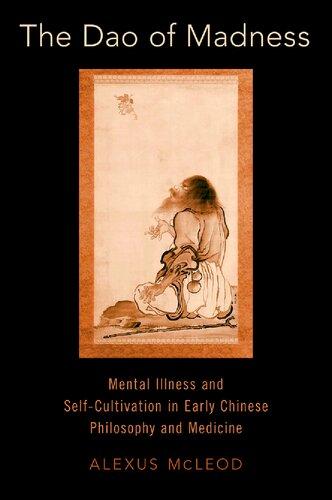
The Dao of Madness. Alexus McLeod, Oxford University Press (2021). © Oxford University Press. DOI: 10.1093/oso/9780197505915.001.0001
underpinning developed society, and that insofar as any non-Western people today have such society, it is only through their adoption of Western categories? This position is so absurd as to be a reductio of itself. Nonetheless, people did, and many still do, believe it.
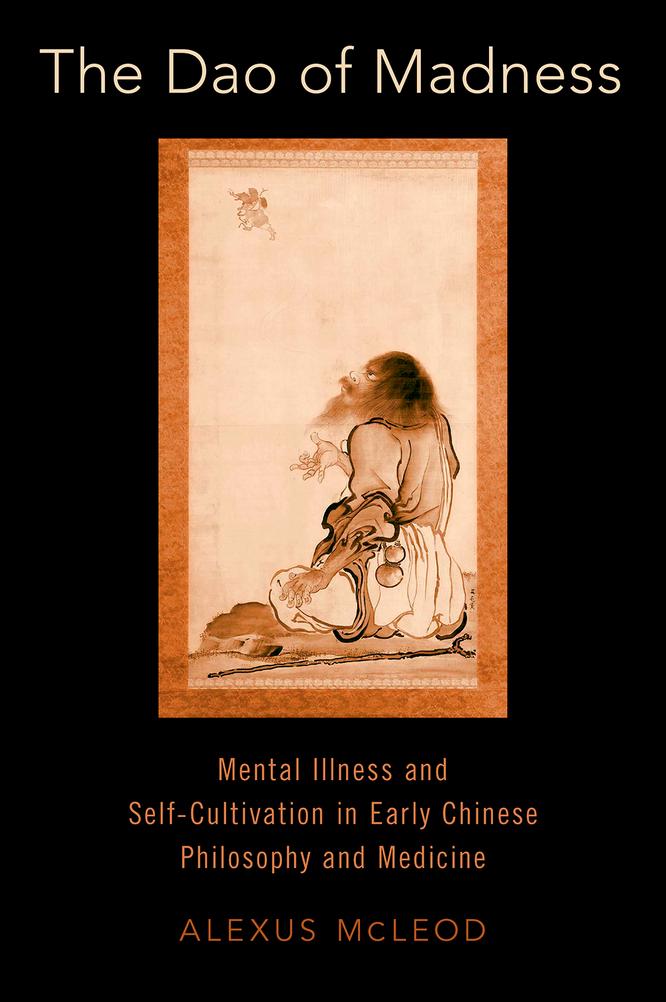
In this book, I offer a picture of madness as a category and a tool in the early Chinese tradition, offering an account of how early Chinese thinkers developed a conception of mental illness connected to both medicine and ethics (which were never seen as wholly separable, although they become more clearly distinct during the Han Dynasty). Specifically, I am concerned with the connections between madness, mental illness in general, and philosophical positions on personhood, moral agency, responsibility, and social identity. Madness, I argue, is a near universal category in human thought. In early China, madness (kuang 狂) has particular unique forms, shaped through consideration of the features of mind and body, cultural norms, and illness and health. While madness and other forms of mental illness were taken as either foils or ideals by different thinkers in early China, they were nearly always contrasted with operability, proper communal development, and progress on a specifically moral path.
A personal note here can help explain the genesis of this project, as well as how I hope it will contribute to the historical discourse on mental illness. Two major topics in my own life are unified in this book: early Chinese philosophy and mental illness. I have struggled with a severe mental illness (known clinically as bipolar I disorder) since I was young (though I have not always known what it was—this lack of awareness by mentally ill characters is a theme that will recur throughout this book in the various early Chinese figures we will meet). Sometimes it has been managed well, and sometimes it has been debilitating. I have studied, taught, and written about Chinese philosophy for close to twenty years now, and throughout that time I have been in and out of institutions and dealt with all manner of psychiatrists and mental health experts. With my difficulties, getting through undergraduate and graduate schools intact, and then landing and keeping a job as a philosophy professor was even more difficult than this track usually is. Learning Chinese, first Mandarin and then Classical Chinese, and learning the rich and enormous tradition of early Chinese philosophy—these tasks were made far more difficult than they otherwise might have been due to mental illness.
Mental illness has often made it difficult, if not impossible, for me to function in even the most basic of ways.
I have always thus had a special fascination with the depiction of mental illness in ancient texts, and with mentally ill characters in philosophy, literature, and history. One of my favorite works of fiction is the second part of Don Quixote, the madman’s reflections on death and meaning. In the early Chinese tradition, it was Jieyu, the infamous “Madman of Chu” (楚狂), who first caught my attention. The cryptic stories from the Analects and the Zhuangzi concerning the Madman piqued my interest—especially the seemingly positive evaluation of the Madman in the Zhuangzi version. I continued to work on early Chinese philosophy without thinking much about the Madman of Chu or other similar characters. Though the Madman himself made it into some of my work looking at personhood and agency,2 I hadn’t thought of the Madman as a key character in early Chinese philosophy. This changed when I recently, when going through a number of early Chinese texts mentioning madmen and other plausibly mentally ill persons. I recognized that mental illness arose as a theme in early Chinese texts an unusually large number of times. I wondered what role mental illness played in these texts. This issue became even more interesting to me when I reflected on the self-cultivation in early Chinese texts and related this to my own difficult experiences both developing a career and growing as a person throughout my life. The instructions for moral development in ancient texts such as the Analects, Mengzi, and even Zhuangzi seemed to presume a roughly general agentive self, and one without compromised features. What, I wondered, could a person with mental illness hope to achieve in following such systems? Did these ancient philosophers think it was possible for a mentally ill person to engage successfully in moral self-cultivation? Or did they think their processes of reasoning, choice, action direction, and motivation were too badly compromised by their illness? As I looked to the ancient texts to try to discern answers to these questions, I discovered that there seemed to be a variety of different views on offer. And not only this, but almost none of this had been discussed in previous scholarship on early Chinese thought. Indeed, most scholars who discussed mental illness in China at all seemed to think that the concept of mental illness in China began only in the modern period, with Western influence. This series of puzzles concerning madness
2 In particular, my 2012 paper “In the World of Persons: The Personhood Debate in the Analects and Zhuangzi.”
(kuang 狂), agency, and moral self-cultivation had gone almost completely unrecognized. Why, I wondered, was this the case? A large part of the reason I noticed this problem and the host of different answers to it in early Chinese texts, I concluded, was my own sensitivity to the issue as someone for whom mental illness has always been a key obstacle to activity, tied into the issue of agency. I resolved to reveal this issue in early Chinese texts—and this became the origin of the project that forms the basis of this book.
Meeting with madmen, the excited and manic, as well as the immobile anxious, the catatonic, and the depressed—I recognized at least some of what I saw in the stories of these figures. I was also intrigued that they always seemed to be part of the story, part of the lesson of the texts I was reading. This lesson was not always (or even often) a positive one, but the fact that madness had been made part of the issue at hand struck me as interesting and unique. Especially given that the issue at hand always seemed to have to do with self-cultivation and success in action. I noticed that hardly any scholarly work that touched on passages or texts in which madness, mad characters, or mental illness played a role actually discussed these aspects of the texts in question. I had always experienced mental illness as an obstacle to activity— social as well as intellectual. As I read these accounts of mental illness and surrounding issues in early China, I came to think that my experiences with mental illness and my intellectual life, much of which surrounded Chinese philosophy, could not be as easily kept separate as I had believed. Reading and reflecting on the accounts of Zhuangzi and Huainanzi, I came to realize that perhaps my old belief that I had succeeded in becoming a scholar and a philosopher despite my mental illness was, if not wrong, not the whole story. Some of the accounts of madness I encountered in early Chinese literature (in particular that of the Zhuangists) suggested that it is at least sometimes the divergent mental states and worldviews of the mad and otherwise mentally ill that allow them to see possibilities that others miss.
I began to recognize that the various accounts and discussions of mental illness, particularly “madness,” playing out across Chinese texts in Warring States and Han periods represented this very same tension writ large. Is mental disorder (in its various forms, which the early Chinese certainly understood differently than most contemporary people) a problem, a failure, or even an illness—or is it instead a boon, an assistant to freedom and creativity? I found these questions and others surrounding mental illness and moral self-cultivation in early Chinese philosophical and medical texts. Indeed, what I initially thought was a modest amount of discussion I came
to find was truly enormous, and the project I originally envisioned as an article (perhaps even a short one) on mental illness and issues in ethics in the Chinese tradition turned into this book. At each stage, I became more convinced that there was something crucially important here, something that was being missed in other studies of early Chinese thought. Important not only for developing our understanding of self-cultivation and surrounding issues in early Chinese philosophy but also for aiding our understanding of mental illness itself and the role of mental illness in moral development and agency.
Thus, this book has both philosophical and personal significance for me, and I hope for others interested in Chinese philosophy, ethics, and the possibilities for those with mental illness and other forms of illness of living meaningful lives. As with much of early Chinese philosophy, the ultimate aim is to help us to live better lives. Though I cannot claim to have mastered their ways, in encountering these early Chinese texts, I learned new ways I might be in the world with mental illness, learned new strategies to try to cope with or see meaning in the endless struggles I endure. I hope this book serves not only to illuminate views and answer problems in philosophy but also to help other people struggling with mental illness of whatever kind to better understand themselves, their role in the world, how to cope with their illness, and ultimately how to achieve a thriving life.
I present in this book, as is apparent in the title, the idea of madness as a dao (way of being). This book is about the ways of being and conceiving of the kuang person, from the perspective of a number of traditions—evaluations of them, in terms of their value, and the connection of the kuang to personhood and self-cultivation. A dao is not always a good thing. And here it is ambiguous, too. Sometimes a path is a dangerous or misguided one. The kuang ren’s dao, insofar as it is a characteristic way of the kuang person as kuang, is a disorder and a failure according to the “traditional” view, while it represents a higher form of knowledge or ability according to the Zhuangist view. This book is not only an attempt to investigate the different conceptions of the dao of the kuang person but also to understand the true dao of the kuang person. This book is an attempt to understand different conceptions of, as well as to find, the dao of madness.
The various characters and the discussions of the mentally ill and mental illness I cover in this book are, all parties would agree, at the periphery, in the shadows of the early Chinese tradition. This is the reason such people are ultimately rejected by people such as Confucians, while praised and idealized
by Zhuangists, who take the peripheral, unusual, or socially unacceptable as representative of a deeper wisdom. It is my attempt here to take these figures from the shadows and bring them into the light—to offer a coherent account of views of and about these people and of mental illness in early China, and to understand how we might incorporate the best of these views into our own accounts today.
Another peculiar thing about this issue is the distance between a number of views of mental illness in early China and those of later times closer to our own. The concept of mental illness as it is understood in the West is relatively new to China (although there is an important analog in early China), and understandings of mental illness are undergoing radical changes in Chinese society today, as rates of mental illness rise precipitously in the nation.3 According to a 2009 article from the medical journal Lancet, 17.5 percent of China’s population has some form of mental illness.4 While this number is smaller than the 26.4 percent of the US population diagnosed with mental illness, it also means there are far more mentally ill people in China than in the United States—the mentally ill population of China alone is equal in number to about 75 percent of the entire US population. The reasons for this rise in mental illness are unclear. There have been many explanations offered for it, attributing causes to everything from increasing industrialization and “modernization” to better diagnostic techniques that reveal mental illness that simply would not have been attended to as such in earlier years. And there is also the possibility that the rise in mental illness (in China as well as the West) is due to the outsized influence of pharmaceutical companies and others, who have effectively created mental illness as a widespread phenomenon.5
All of this is particularly interesting in the face of early Chinese thought, in which we see a number of views of mental illness very close to or consistent with modern conceptions. That modern understandings of mental illness in China represent such an abrupt and dramatic shift from ones of previous years, one of the large questions we must grapple with is, What happened? How did things change in the years from the early Han to the end of the Qing period in the twentieth century, to move the dominant view of mental illness away from approaches like those of modern medicine, and toward the kind of “cultivational” views dominant in early Confucian texts?
3 Cyranoski 2010.
4 Phillips et al. 2009.
5 As I discuss later, this is a common criticism of the “anti-psychiatry” movement.
While I do not fully answer this question in the book, I do offer an account of early Confucian texts that explains their views on mental illness. The story of how the Confucian views became the dominant and entrenched position in Chinese society until the modern day is a major story, told by numerous scholars, and far bigger than the subject of this book.
Understanding the role of madmen, the catatonic, and other mentally ill people in ancient China also, and perhaps most importantly, has implications for views of personhood, agency, and self-cultivation in the tradition. The various philosophers and others who dealt with the issue of mental illness almost always recognized its connection to moral self-cultivation, either as a problem for theories of cultivation or as a result or example of proper cultivation. We see a variety of radically different views on the status and value of madness and mental illness in general, as well as what exactly it is. Not everyone in the early Chinese tradition would agree that mental illness is illness at all. We find a variety of attitudes about what we might call mental or behavioral “dysfunction” in early China even broader than what we find in the modern world. Today, there is widespread agreement about the nature of mental illness, its causes, manifestations, categories, and even its implications for law, ethics, and personhood more generally. Despite some resistance to modern medical or scientific ways of thinking about mental illness (represented by figures like Thomas Szasz and the “anti-psychiatry” movement, which we will encounter in Chapters 2 and 4, the contemporary world has largely accepted a particular understanding of mental illness—and this despite the fact that psychiatry has perhaps the most problematic track record of the sciences, with the level of uncertainty about even its most basic concepts and premises demonstrated by the fact that foundational texts like the American Psychiatric Association’s Diagnostic and Statistical Manual of Mental Disorders radically changes with every edition. The history of psychiatry is one of radical revisions and rethinking, rather than progressive construction. None of this is to say that modern psychiatry has not helped many people and overall been a positive development. Rather, it is curious that such acceptance and certainty have been achieved in our society in the case of the most provisional and incompletely understood of areas in medicine and the science of the self.
Of course, it would be unfair to conclude that psychiatry is uniquely unscientific because it has been provisional and often revised. Every scientific field has undergone radical revision through its existence, particularly in its early stages, and even major shifts in its foundations. When Newtonian mechanics
gave way to the theories of relativity, no one questioned the objectivity or truth of physics. Contemporary physics is still unable to give us certainty or explanation of many topics and outstanding questions, yet it does not arouse the same suspicion and rejection as psychiatry often does. Nonpsychiatric medicine constantly changes, revises, and updates, yet we generally do not question its objective nature. Medicine as a whole is highly provisional and revisionary. We do not understand what causes most cancers, for example, or ultimately how to treat them successfully. There are a host of physical conditions about which medicine provides little if any understanding. Indeed, there are conditions on which experts have disagreed that they are conditions, and which are continually being reformulated. Examples of this include irritable bowel syndrome, which has not been linked definitively with a single cause. The condition is thus diagnosed through symptoms, and similar presentations may have different causes in different individuals. In many ways, “irritable bowel syndrome” is a catch-all term for a host of functionally related conditions. To require some specific single biological etiology for the reality of a medical condition would mean that irritable bowel syndrome could not exist as a condition. Nonpsychiatric medicine is also continually in flux concerning causal claims about connections between particular activities, substances, and disorders. Knowledge about what patterns or levels of consumption of things such as alcohol, sugar, or caffeine (for example) lead to or whether they leave one at greater risk for particular illnesses is continually changing, which leads to continual changing in the recommendations for consumption given by health institutions such as the US Centers for Disease Control and Prevention (CDC).6
Part of the reason that psychiatry receives skepticism that the rest of medicine, which can be shown equally as volatile and frequently revised, does not, is that many are skeptical of the very existence of mind as such (as the continued influence of some eliminativist theories of mind in the philosophy of mind demonstrates).7 Many people, adopting universal physicalist views, take seriously the idea that mind either does not exist or must be somehow reducible to physical stuff. I suspect that this suspicion of mind, and the scientific respectability of the category of mind, is behind much of
6 A recent example of this is the revision of the Dietary Guidelines for Americans recommendation by the US Department of Health and Human Services for the maximum healthy amount of alcohol consumption for men from 2 drinks per day (where 1 drink = 12 oz of 5% ABV) to 1 per day. https:// thehill.com/opinion/healthcare/503508-theres-now-progress-on-alcohol-in-the-dietary-guidelines
7 Churchland 1981; Rey 1983.
the suspicion of psychiatry and the “anti-psychiatry” movement. It is difficult to take seriously a science based on a category of thing that one will not allow into their basic ontology. Though there are surely many physicalists among psychiatrists and those who take psychiatry seriously, no one can give an adequate account of just how mind reduces to the physical, and without such an account, physicalistically-minded skeptics will continue to have something to sink their teeth into (just as the skeptic in epistemology depends on our inability to demonstrate the inerrancy of any justification). In addition, some of the central arguments of anti-psychiatry skeptics (including Szasz himself) are inadequate to demonstrate that mental illness is a particularly problematic natural kind. As I argue in Chapter 2, demonstrating that social and cultural factors are relevant to what constitutes mental illness does not show that mental illness does not exist as a natural kind or is simply a social construct, any more than the fact that there are social and cultural factors that determine what constitutes illness of any kind undermines the reality of physical illnesses. Szasz’s criticisms simply do not hit the mark—he cannot show that mental illness has any particular conceptual difficulties that physical illness does not have, yet he is not prepared to jettison the concept of physical illness as a natural kind—indeed, he explicitly claims that all illness should be understood in terms of physical illness. This is simply a misguided commitment to physicalism, and it masks the fact that the reality of physical things is often no less culturally determined than the reality of mental states (and illness). Indeed, this is one of the driving insights behind conventionalism about objects in metaphysics, both in its early Chinese and contemporary Western guises.8 Rudolf Carnap expressed this in his conventionalist view of the connection between language and reality:
“Are our experiences such that the use of the linguistic forms in question will be expedient and fruitful?” This is a theoretical question of a factual, empirical nature. But it concerns a matter of degree; therefore a formulation in the form “real or not” would be inadequate.9
My usage of the phrase “mental illness” here and throughout the book could be taken as anachronistic in the case of early China, especially if one
8 The Zhuangzi can be read as endorsing a kind of conventionalism about language and kinds, in which things (wu 物) are constructed via conceptualization, rather than by the world itself independently of humans. See Coutinho 2014, 161.
9 Carnap 1956, 213.
is inclined to skepticism about psychiatry and its basic concepts. I use the phrase for a few reasons. First—I am assuming the category of mental states, behavioral dysfunctions, and phenomena that we in 2017 refer to as “mental illness,” which surely also existed in fourth century bce China, even if they were thought of very differently. That is, psychiatry is a legitimate science (just as are nonpsychiatric medicine, meteorology, geology, and physics) and deals with natural kinds. While this must remain here largely an assumption (as it would take another entire other book on its own to argue for this, as many have), it is not a problematic assumption in our modern-day context. Many people in the scientific and medical communities take psychiatry seriously and view mental illnesses as real illnesses, real disorders that obtain in humans. Much, if not all, of the modern apparatus of our society takes for granted that mental illness is a real and natural phenomenon, even if we have not fully integrated appreciation of this into all of our institutions. The Americans with Disabilities Act of 1990 distinguishes between physical and mental disability, including in its very first line: “physical or mental disabilities in no way diminish a person’s right to fully participate in all aspects of society.”10 The text goes on to discuss “mental disabilities” and “mental impairment” as distinct from physical disability and impairment throughout. Given this widespread acceptance of the reality of mental illness in our society, the burden is on the skeptic to demonstrate that we are mistaken in our acceptance of this category, and its defense is a task I leave to others.
Assuming that mental illness is a natural kind, we can refer to mental illness in early China, even if they did not have such a concept (although as I argue here, they did), in much the same way we can refer to molecules or economies in early China, even though people in early China did not think of these things in the same ways as we do, or even differentiate them as particular concepts. Early Chinese people did interact with and use molecules, even if they did not think of them as such. They also did have economies, even if there was no theoretical structure through which they thought of them as such. The same can be said of mental illness. If mental illness is a real thing, including conditions and dysfunctions human beings can have, independently of their cultural context, then mental illness existed in early China as much as it exists in the twenty-first century United States. It will, of course, be more difficult for us to identify cases of mental illness, because the
10 Americans with Disabilities Act of 1990, Title 42, Ch. 126, Section 12101. https://www.ada.gov/ pubs/adastatute08.htm
descriptions and classifications people in early China used to discuss it were different than those we use in the modern world. But there is also a great deal of overlap in the ways mental illness is conceptualized in early China and in our modern context, as I show in Chapter 2. This is perhaps surprising, given the vast differences between early Chinese society and our own modern societies (whether this is contemporary China, the contemporary West, or elsewhere). As I show, however, early Chinese thought about mental illness was much closer to current ways of thinking about these issues than the thought of much of the West for the entirety of its history, as well as other areas of the world during this time and later. Part of demonstrating this is to show that in early medical and other texts, there is a distinction drawn between mind and body, and a particular conception of illness (bing 病) as applicable to mind as a distinct kind of illness or disorder, though treated through similar methods as other kinds of illness.
The proximity of early Chinese thought about mental illness and its implications for philosophy make it possible for us to consider how these issues might be integrated into the ways we think about these issues within ethics and metaphysics. One of the key features of mentally ill figures discussed in early Chinese texts is that they are almost always mysterious, outside of society, ineffable, wandering in the shadows. Most of the time, such characters are peripheral to the main interests and themes of the situations, discussions, and stories in which they appear, and it is likely for this reason that their importance is often overlooked. But they appear so frequently as a trope in early Chinese philosophy, and are connected with such a variety of different positions, lessons, and assumptions, that there is much we can learn through them about early Chinese conceptions of the person, selfcultivation, and agency, in addition to their views about mental illness and the distinction between normal and abnormal or dysfunctional behavior and mental processes. There is much to be gained from hunting around in the shadows of the early Chinese tradition to draw out these hermits, madmen, shell-shocked ministers, and various other mentally ill persons. Just as in any society, including our own, we can learn much about a people from investigating the “dysfunctional,” including the concept of (in this case mental) dysfunction, people who are so dysfunctional, and the ways these people are conceived of in the society.
The particular states I will consider in this book, such as “madness” (kuang 狂), anxiety (chu 怵), depression (dian 癲), and a number of emotional excesses deemed as bing 病 (illness), have a very different history and
construction in the early Chinese context than they do in contemporary or modern Western thought. We see a narrative surrounding these states as limiting or creating obstacles. Mental disorder or illness is thought of as something that makes it impossible to live in the world with others in the expected ways. It is causative and constitutive of unusual ways of thinking and behaving, ways that fall outside of both the normal activity of people in society and norms concerning what acts should be performed in society. As we will see, the conception of mental illness in early China, as in the contemporary world, is descriptive as well as normative.
Although there are a number of concepts in early Chinese texts that suggest mental disorder, distress, or difficulty, the central focus of this book is on the particular concept of kuang 狂 (madness). The reason for this is that kuang appears in a number of texts as a particularly potent image, and it is used as a tool in arguments for particular conceptions of personhood, agency, and value. While I look at a few of these concepts through the book, the central focus remains on kuang as a frame for a particular debate between three strains of thought in early China concerning madness and personhood (that do not easily align with “schools”). This debate is directly relevant to the numerous early Chinese understandings of kuang, which range from the more traditional and “mainstream” views of kuang as a disorder or illness to alternative views of kuang persons as wise, guides, or extranaturally knowledgeable. This range of meanings of kuang does not represent independent innovation or differences, but rather emerged out of a sustained debate surrounding personhood, social norms, and community that raged among early Chinese thinkers, who often responded to one another in their texts, sometimes explicitly and sometimes less so. Kuang thus serves as a particularly powerful concept through which to focus the multifaceted debates surrounding personhood, agency, moral and social norms, and physical and mental illness in early China. Interestingly enough, many of the same debates going on today concerning personhood, character, and mental illness (some of which are discussed in Chapter 2) can be found in early Chinese texts. The topic is clearly one that taxes people in the contemporary West no less than it did people in ancient China.
As I explain in the chapters that follow, part of the reason that kuang plays such a central role in this debate tying mental illness to personhood and norms is that kuang is the mental state most closely tied to the “uncultivated” and wild, the ignoring or flouting of social norms. The broad range of what we might call mental disorder ranges from pure ignorance and incorrect or
improper synthesis of the senses to pathological states like anxiety, depression (dian 癲), and kuang. Only kuang, as associated with openly and loudly flouting norms and living outside of respectable social boundaries, became a symbol for the rejection of dominant and traditional social norms and conceptions of personhood. The symptoms of kuang documented in texts such as the Huangdi Neijing show that such a state is inconsistent with the ritual activity deemed proper in early Confucian, Mohist, and other texts. The kuang person is not only mentally disordered, but this disorder manifests itself through socially problematic behavior. The kuang person is one whose activity disrupts and throws into disorder the harmonious working of society, and thus presents a danger to this society. In this way, the kuang person is associated also with the wilds, uncultivated, and unshaped, which is unsuitable for human life and must be formed and reshaped in order to be habitable for humans (as I discuss in Chapter 4). Most parties seem to agree that there is a connection between the mad, the wild, and the uncontrolled. And this shows that the activity of the mad person is somehow connected to human nature and does not arise from outside of it. A key difference between the kuang person and the sane, civilized person, however, is that the latter has, through proper socialization, controlled and subordinated the “natural” responses to put them in their proper places and allow their manifestations to be expressed properly and curbed through social norms. This is also why the wild and the mad are connected to the concept of barbarity. The barbarians are those without civilization, those without proper norms, and thus those always in some state similar to kuang. If we think about symptoms of kuang (which seem to mirror symptoms of our concept of mania), we cannot say these are “unnatural” in the sense of activities that cut against normal human tendencies. Rather, kuang actions are done without the restraints or modifications of social norms, as if the subconscious of the individual has been given free rein as in individual imagination without the constraints of social demands. The pure individual demand for gratification, excitement, and immediate expression of emotion is unfiltered through the social demand on shaping or constraints on such expression. So anger immediately results in bursts of shouting and abuse, feelings of joy result in spontaneous outbursts of singing or dancing, and sexual arousal results in immediate satisfaction, even in public. Madness thus has a special place in consideration of the issues of personhood and self-cultivation. Michel Foucault, like the Zhuangists, recognized this uniquely transgressive quality of madness and its link to social norms and personhood. He discusses the link between
madness and “animality” in the West (mirroring the Chinese link between madness and the wilds and uncultivated).11 Foucault wrote:
We see why the scandal of madness could be exalted, while that of the other forms of unreason was concealed with so much care. The scandal of unreason produced only the contagious example of transgression and immorality; the scandal of madness showed men how closely to animality their Fall could bring them; and at the same time how far divine mercy could extend when it consented to save man.12
We see much the same in early China, with ritual (li 禮) and social norms more generally playing the role of Foucault’s “divine mercy” in its transformative power, shaping the raw, “animal” stuff of human nature to the uniquely and properly human, in its constrained and socially contextualized full formulation. Thus we can see why madness would become a central fulcrum for a debate between cultivationists like Confucians and Mohists and advocates of a less constrained and more “natural” expression of human activity, such as the Daoists and Zhuangists.13
This book is organized into six chapters. The first lays out the dominant views of self, agency, and moral responsibility in early Chinese philosophy. The reason for this is that these views inform the ways early Chinese thinkers approach mental illness, as well as the role they see it playing in selfcultivation as a whole (whether they view it as problematic or beneficial, for example). In this chapter I offer a view of a number of dominant conceptions of mind, body, and agency in early Chinese thought, through a number of philosophical and medical texts.14
11 Foucault 1988, 78.
12 Foucault 1988, 81.
13 I discuss later the extent to which these can be taken as distinct but related groups, or even as coherent groups at all.
14 The distinction between “philosophy” and “medicine” is somewhat artificial when applied to early Chinese texts. While I separate the two here for purposes of bringing focus to medical texts that have not commonly been considered part of the early Chinese philosophical tradition, there is a great deal of philosophy done in “medical” texts in early China. One of the things I hope to show in this book is that philosophers and others interested in philosophy in the early Chinese context cannot afford to ignore medical literature and other relevant literature. Zhou Guidian put this well in his book Qin Han Zhexue 秦漢哲學, writing: “Chinese philosophy and science have a considerable amount of connection. Philosophy speaks about ‘the oneness of Heaven and persons’ [天人合 tian ren he yi], and this is closely connected to astronomy and medicine. Since we are discussing Qin and Han philosophy, one also needs to investigate traditional Chinese sciences, and this requires investigation of the systems of astronomy and medicine.” Zhou 2006, 190.
In Chapter 2, I consider the question of “mental illness” more specifically, looking to both modern accounts and early Chinese accounts mind and body, of what illness is in a broader medical sense, and mental illness in particular as a form of illness. I offer a view of illness in general in early China, linking it to development of the person, and consider mental illness in terms of qi 氣 (vital essence), mind, and community based on the conception of person of the first chapter. I consider here also how illness affects agency— both physical and mental.
In Chapters 3 and 4, I look at two distinct reactions to madness and mental disorder broadly seen running throughout early Chinese philosophy, the “feigning” and “celebratory” accounts. While there is temptation to connect these to Confucianism and Zhuangism, respectively, I show that the positions are intertwined in a number of texts and cannot be associated with particular schools. The celebratory approach focuses on the ways in which the mad and “disordered” are rendered valueless based on certain social choices. The Zhuangist, among others, focuses on the way we can understand there being an inherent value in these states depending on how we conceive of situations in given perspectives, and that we have reason to resist understanding particular people as mad or disordered objectively. The idea here is to include any mental state that is regularly seen as problematic or getting in the way of efficient or proper human functioning. Certain texts, I argue, have as a goal getting rid of these states, as do the Buddhist and Hellenistic texts. One thing numerous scholars have missed, because of comparisons with these texts, is that a host of other early Chinese texts reject the view that we should aim to get rid of problematic mental states such as kuang or chu. Texts such as Zhuangzi and Huainanzi argue that we need to understand how to use these states to see their value. In this chapter I also discuss a host of mad or mentally disordered individuals found in early Chinese texts, with the aim of understanding how they fit into the structure built thus far, and how various appearances of these characters (such as the “Madman of Chu”) in different texts will often serve to illustrate the divergent messages about mental disorder we find in these texts.
In Chapter 5, I discuss what I call the syncretic view of madness and mental illness in early Chinese texts. This view, I argue, is the most plausible account of mental illness and self-cultivation of those on offer in early Chinese philosophy. This view is mainly associated with the syncretistic texts of the early Han Dynasty, such as Huainanzi and Chunqiu Fanlu,
though the seeds of this view can be found earlier in Warring States material. The syncretists reject both the negative and positive views, arguing that a complex of nature, circumstances, and individual activity is responsible for most mental illness, and that the key to avoiding or eliminating mental illness is the undermining of conceptualization and elimination of desires. The syncretic view of mental illness and cultivation creates the groundwork for the development of naturalistic medical texts such as the Huangdi Neijing, constructed during the Han. The conception of “controlled madness” based on the synthesis of views found in texts such as Huainanzi suggests that a view like this not only had some influence in later Chinese philosophy, but that it can also help us better understand the connections between illness and agency. The problem is recognized and worked out with an eye to avoid what we might see as the shortcomings of the two approaches discussed in Chapter 3. I consider also whether the syncretist approach solves the problems with the other two without creating difficult problems of its own. Finally, I tie the developments of the early Han syncretic movement to the “medicalization” of mental illness in the Huangdi Neijing and later medical texts.
In the conclusion, I consider some of the implications of early Chinese views of mental illness and self-cultivation for contemporary thought concerning mental illness. I argue that some of the views of early Chinese thinkers can be adapted using contemporary conceptions of mental illness, and that difficulties for certain kinds of character, virtue, and role ethics that arise surrounding issues of mental illness might be solved by adapting these views to contemporary contexts.
Note on Primary Sources
I would like to make a final note concerning citations of early Chinese texts. My citation practice in this book is to use the chapter and line numbering of the Chinese Text Project (ctext.org) website. Many scholars of early China today are using such online sources, most of which (like ctext) contain notes linking to print versions for those who would like to consult these versions. Given that our practice of using digital sources has become standard, it seems to me appropriate to cite the digital sources, especially when one’s preferred print version can be easily located by consulting the digital source (the
Chinese Text Project site contains links to numerous print editions, while locating a passage in one print edition from another is more difficult to do).15
Thus, for all early Chinese texts (with the exception of some not included on the site, flagged in the text that follows), citations follow Chinese Text Project numbering.
15 It is true, of course, as a reviewer points out, that the digital version on ctext.org sometimes contains mistakes. This, of course, can happen in print versions as well. For any early text, readers are encouraged to consult multiple sources.