“This is political biography at its best. By reviewing the careers (and selfreflections) of politicians who devoted themselves to advance LGBT rights from around the world, Reynolds illustrates the idea that the struggle for LGBT rights faces universal as well context-specific challenges. Reynolds’s central claim is that gay rights don’t emerge by themselves. They require the courage, astuteness, and perseverance of dedicated politicians to make them happen.”
—Javier
Corrales, Professor of Political Science, Amherst College
“A must read in an era of relativism and complacency. In The Children of Harvey Milk, Andrew Reynolds reveals the political heroes and the personal journeys who contributed and are contributing to a radical shift in public attitudes on LGBT rights in parts of the World. Reynolds sensibly paints the way LGBTI leaders excel in turning their personal hardship in the precursor to beauty and triumph. More importantly, Children of Harvey Milk identifies ingredients of a recipe for a much-needed global social change starting with political participation and representation of LGBTI people.”
—Fabrice Houdart, Human Rights Officer at the United Nations Human Rights Office
“Andrew Reynolds tells inspiring stories of people—some familiar, some not— who were courageous enough to say ‘this is who I am’ and fight for a place at the table. They helped bring a community out of the shadows and into the light in ways both large and small.”
—Jim Obergefell, co-author of Love Wins and named plaintiff of the marriage equality decision Obergefell v. Hodges
“Andrew Reynolds’ The Children of Harvey Milk is a compelling work of LGBTQ history and at the same time a clarion call for queer people to resist, to reform— and to get involved in politics. The book’s true heart and soul are the stories of the army of LGBTQ politicians who have transformed our world in the decade’s since Milks’ assassination. A must read for anyone interested in how social change happens.”
—Steven Petrow, Columnist, USA Today, and Former President, National Lesbian & Gay Journalists Association
“It takes many players, many methodologies, and many contributions to achieve transformative change such as our winning the freedom to marry in 25 countries so far (up from zero when we started). By collecting for the first time such a broad sweep of the emerging group of openly LGBT elected officials, Andrew Reynolds gives us their perspectives on the ways in which they make it into office, figure out how to use their voices and votes, work with activists (and sometimes butt heads with them), influence their colleagues, balance the pressures and expectations on them (both typical and singular), represent their own communities, find the courage to lead, and, sometimes, prove pivotal.”
—Evan Wolfson, Founder, Freedom to Marry
“Andrew Reynolds tells moving stories of politicians whose openness about being LGBT is reshaping laws and policies. Some led us out of the closet, while others had to be led—but all have helped create a more welcoming world. Reynolds links the stories with social science research to create a convincing picture of the past and the future of change.”
—M. V. Lee Badgett, Prof of Economics, University of Massachusetts Amherst
“Mandatory reading for all of those interested social justice movements, The Children of Harvey Milk is smart, educational, and entertaining. Reynolds draws his readers in by humanizing a movement that is all but exclusively politicized. Not only does this book fill a giant gap in the academic literature, it also manages to remain engaging and accessible to both academic and non academic readers alike. I can’t recommend it any more highly.”
—Melody Moezzi, Author of Haldol and Hyacinths: A Bipolar Life and War on Error: Real Stories of American Muslims
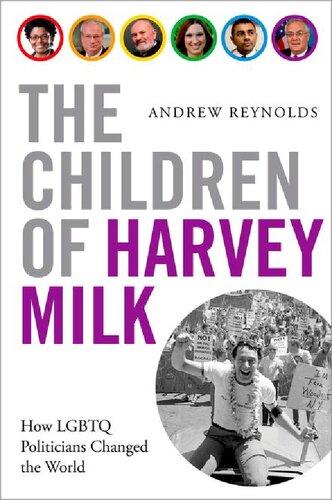
The Children of Harvey Milk
The Children of Harvey Milk
How LGBTQ Politicians Changed the World
ANDREW REYNOLDS
Oxford University Press is a department of the University of Oxford. It furthers the University’s objective of excellence in research, scholarship, and education by publishing worldwide. Oxford is a registered trade mark of Oxford University Press in the UK and certain other countries.
Published in the United States of America by Oxford University Press 198 Madison Avenue, New York, NY 10016, United States of America.
All rights reserved. No part of this publication may be reproduced, stored in a retrieval system, or transmitted, in any form or by any means, without the prior permission in writing of Oxford University Press, or as expressly permitted by law, by license, or under terms agreed with the appropriate reproduction rights organization. Inquiries concerning reproduction outside the scope of the above should be sent to the Rights Department, Oxford University Press, at the address above.
You must not circulate this work in any other form and you must impose this same condition on any acquirer.
Library of Congress Cataloging-in-Publication Data Names: Reynolds, Andrew, 1967– author.
Title: The children of Harvey Milk : how LGBTQ politicians changed the world / Andrew Reynolds. Description: New York, NY : Oxford University Press, [2019] | Includes bibliographical references.
Identifiers: LCCN 2018005204 (print) | LCCN 2018007708 (ebook) | ISBN 9780190460969 (updf) | ISBN 9780190460976 (ebook) | ISBN 9780190460952 (hardcover)
Subjects: LCSH: Gay rights—History. | Gay politicians—History. | Sexual minority politicians—History. | Gays—Political activity—History. | Sexual minorities—Political activity—History.
LC record available at https://lccn.loc.gov/2018005204
1 3 5 7 9 8 6 4 2
Printed by Sheridan Books, Inc., United States of America
for
Atticus, Scout, Cecilia, Tess, and Owen my children
CONTENTS
Acknowledgments xiii
Prologue xv
GILBERT AND HARVEY, SAN FRANCISCO 1978 xv
1. The Milk Principle 1
A MĀORI LOVE SONG 1
AUSTRALIA JOINS THE DUET 5
YOU CAN’T HATE US IF YOU KNOW US 7
2. The Ballad of Peter and Simon 21
THE INFAMOUS BERMONDSEY BI-ELECTION 26
SIMON IN THE HOUSE, PETER IN THE STREETS 31 TORN LABELS 36
3. I Have Quite a Powerful and Carrying Voice 41
DAVID AND PATRICE, LEOPOLDVILLE, THE BELGIAN CONGO 41 KATHERINE AND ANN LOUISE: SURPRISED BY LOVE 45 THE IMPORTANCE OF BEING EARNEST 51 ARE YOU COMING HOME FOR CHRISTMAS? 53 THE POWER OF PANTI 56
4. I Have Never Come Across a Homo in This House 63
LORD PETER PAN 68 THE ONLY GAY IN THE VILLAGE 73
5. From Mississippi to Marriage 81
BARNEY FRANK, MISSISSIPPI, SUMMER OF 1964 81
I DO 89
6. Being First 103
COOS HUIJSEN: THE UNKNOWN SOLDIER 103 THEY’RE HERE, THEY’RE THERE, THEY’RE (ALMOST) EVERYWHERE 106 THE MARCH OF WOMEN 109 MAKING A DIFFERENCE, NOT MAKING HISTORY 112
7. St. Christopher 117
I’M CHRIS SMITH 117 THE LAST TABOO 122
8. More Like Hell Than Heaven 133
THE DANGEROUS PLACES IN BETWEEN 133
THE SPEAR OF THE NATION: THE FIRST AFRICAN 137 SHIRA AND ITZAK, 2015 143 BLACK, BROWN, AND GAY 144
9. Cinders Goes to the Ball 149
SARAH MCBRIDE AND THE FUTURE OF TRANSGENDER POLITICS 149
10. Mel and the Bees 169 ROUND ONE 169 ROUND TWO 175
11. Southern Queers 181
WHATTHEFUCK MOUNTAIN, NORTH CAROLINA 181 THE MOTHER’S NAME IS HARRIET 191 KEN SHERRILL AND THE EXPRESSION OF AFFECTION 196
12. The Washington 43rd 201
THE PROTÉGÉE: ED MURRAY 205 SO IT CONTINUES 208 TIME FOR A WOMAN IN THE 43RD? 213
13. The Right Gays 223
CRISPIN BLUNT: THE CHAMELEON 223
HIDING IN PLAIN SIGHT 228
WHAT’S WRONG WITH THE GRAND OLD PARTY? 238
14. Britain Goes Gay at the Polls 243
SCOTLAND THE GAY 253
15. You Win Some, You Lose Some 259
PETER AND SIMON: THE PARTY’S OVER 259
THE IRISH GENERAL ELECTION OF 2016 266
Conclusion 277
BE GAY, JUST NOT QUEER 277
SOMETHING GAINED, SOMETHING LOST 280
THE HEISENBERG PRINCIPLE 285
THE VOICE WAS QUITE YOUNG: IT WAS FROM ALTOONA, PENNSYLVANIA 288 WHERE ARE THEY NOW? 291 THEY SHALL GROW NOT OLD 294
Appendix A: Interviews Conducted 297
Appendix B: Out LGBTQ Parliamentarians 1976–2017 301 Bibliography 323 Index 343
ACKNOWLEDGMENTS
This book has been a decade-long journey made with a handful of trusted companions. My Sancho Panza, Ali Stoyan: we tilted at windmills across the globe and no one could wish for a finer collaborator and travel companion. Leah Elliott, who picked up the reins and drove forward. Ines Blaesius, who joined for the final lap and pushed me over the line.
Pete Lesser gave great advice in the early days of conceptualizing the book and Kathleen Kearns helped me evolve the story structure. Dave McBride was my enthusiastic and patient editor at Oxford, ably assisted by Emily Mackenzie. I cannot thank enough all the individuals who gave of their time and thoughts in interviews (listed in the appendix). Many others contributed along the way: Chad Blair, Javier Corrales, Christian Correa, Andrew Flores, Tanner Glenn, Charles Gossett, Rob Hayward, Andrew Hollingsworth, Olivia JacksonJordan, Kaitlyn Karcher, Caroline Kennedy, Anna Kirey, Marieka Klawitter, Mary Koenig, Dennis Mumby, Georges Nzongola-Ntalaja, Harry Prance, Tom Tuner, Sarah Pedersen, Marc Solomon, and Tana Stamper.
The manuscript was mostly written at Enzo’s (thank you, Heinz); Brown Bear Bakery (thank you, David and Lee); the public library on Orcas Island, Washington state; and Café Driade and the Open Eye (thank you, Scott and Elizabeth) in Chapel Hill, North Carolina; and wrapped up in Berlin at the Hertie School of Governance (thank you, Mark). Thank you also to Morgan, Erin, Jeff, Mary, Emma, and Annie on Orcas for making life fun.
This book is for my children, but of course every day is for Layna (“have you finished yet?”) Mosley.
PROLOGUE
Gilbert and Harvey, San Francisco 1978
Gilbert Baker was nineteen when he was enlisted into the Army to go to Vietnam. But it turned out he was not a fighter. Rather than being discharged, he was transferred to San Francisco to be an Army nurse. Gilbert appreciated this— San Francisco in the 1970s was gay Nirvana. After leaving the Army, Gilbert stayed on and became a fixture of the Castro. He taught himself to sew. He dressed up. He had fun. A couple of days before the June 25, 1978, Gay Freedom parade the Mayor of Castro Street called him on the phone. “Gilbert,” Harvey said. “We need a logo, a symbol. We need a positive image that can unite us.” Gilbert thought, I sew my own dresses, so why not a flag? Gilbert was twenty-seven. Harvey had just turned forty-eight. Five months later Harvey Milk was dead. The flag Gilbert created would live and grow.
In 1978 it was a rebel flag. The rainbow frightened people. The flag began with eight stripes, but Gilbert ran out of hot pink dye. What sort of gay man runs out of hot pink dye? Then they decided to hang the flags vertically on the lampposts of San Francisco, but it only worked if there was an even number of colors, so Gilbert changed the flag to six stripes. Indigo was out. To most straight people the rainbow flag symbolized queer things, unknown things, sparked uncomfortable thoughts and conversations, gave rise to images of isolation and shame, and then, disease.
Forty years later the pride flag is everywhere—it makes people smile inside, feel warm, happier. Gay pride flags are given to children to wave. It is flown for head of state visits and above government buildings. It is the symbol of every pride parade in the world. A mile-long pride flag was flown in New York to celebrate twenty-five years of the gay rights movement; it was the largest flag ever made. The White House transformed its façade into a facsimile of Gilbert’s flag
on the occasion of marriage equality coming to all of America in June 2015. In December 2016 when Vice President–elect Mike Pence moved into the Chevy Chase neighborhood outside of Washington, DC, before taking residence at the vice president’s house, his neighbors blanketed the streets with rainbow flags. “We want to make clear how we feel about how other people should be treated,” one neighbor told CBS News. “I think he’s a man who can use a little reminder of American values, so I think that’s a good gesture,” said another.
The history of Gilbert Baker’s flag is much like the history of openly gay elected officials. Not everyone embraces them, but a lot more people do than they did forty years ago. In 1978 the flags were rare and exotic. There were a few on the streets of San Francisco and in urban gay enclaves, but not many. Likewise, there were very few openly gay elected officials anywhere in the world. By 1980 there had been Harvey Milk in San Francisco; Elaine Noble in Massachusetts; Nancy Wechsler, Jerry DeGrieck, and Kathy Kozachenko in Michigan, Alan Spear in Minnesota; Coos Huijsen in the Netherlands and Angelo Pezzana in Italy, but very few others. Today the rainbow flag is flown over large swaths of the globe where thousands of gay, lesbian, bisexual and transgender elected officials hold office—from Brazil to Belgium, Cape Town to Canberra. The flag that spurred hate now is the universal symbol for love. The rainbow still symbolizes queer things, but queer is not so frightening anymore.
In Charles Dickens’s novel Betsy Trotwood warns the young David Copperfield that “it is in vain to recall the past, unless it works some influence upon the present.” But who determines history, the lessons of the past? Individuals write it, but the big picture is painted with brushes way beyond the scope of one pair of hands. Humanity floats along on a pulsating tide of economic imperatives and social transformation. But the stories in this book demonstrate that individuals can change the flow of history. They divert the current, build tiny dams, and imperceptibly cause the river to take a slightly different course. At different places and in different times, leaders take on different tasks. While most politicians appear to revel in the darker sides of their personalities, a minority rise to the task. The legendary biographer Robert Caro notes that power doesn’t always corrupt; sometimes it cleanses, but what power always does is reveal. Some leaders scrape away at the edges of long-welded-shut windows, while others continue the job by prizing open the frames to let fresh air force out the stale, giving the next generation the courage to jump through.
As individuals we adapt remarkably quickly—on a one-to-one basis we cook for each other, go to one another’s birthday parties, our children have play dates, we work together, sing together, and increasingly love across boundaries: we interact. But as groups we have a propensity to retreat to our silos. The herd is more risk-averse than the individual. The gay rights movement became successful when it became personal, about people. When it became about Fred, not the
gay person. When people saw Chloe, not the faceless transgender woman, they had a reference point. With visibility gay people became the neighbor and not an abstract, disconcertingly aberrant other.
The treatment of gay men and lesbians around the world still dominates the headlines on a daily basis. In Europe and the Americas, it has become the issue that exemplifies how dramatic social and legal change can happen, and happen at a dizzying pace. It is the issue on which law and popular opinion have moved more substantively, and more quickly, than any other issue of the last century. In much of the world, gay people can now marry, serve, lead, and are welcome at the tables of their straight neighbors. Gay rights continue to spread globally—on the heels of the introduction of same-sex marriage in Australia, Austria, Belgium, Germany, Iceland, Ireland, Scotland, and the United States, marriage equality is being discussed in surprising places around the world. At the start of 2018 over one billion people lived in countries where they could marry someone of the same sex: twenty-five nation-states and forty-three other jurisdictions.
But the brightening dawn for many contrasts with an ominous darkness cloaking large swaths of the world with re-energized homophobia. Laws designed to intimidate and invalidate have emboldened thugs to kill, maim, and drive underground gay Africans, Russians, and West Indians. Hope and despair have rarely been more vividly juxtaposed. Nearly three billion people live in countries where just being gay is a crime.
How do gay rights become a reality? Why do people change their view on whether homosexuality is acceptable and homosexuals are deserving of respect and legal equality? The answers lie in a compelling web of deeply personal stories of individual gay men and women transforming the views and votes of those around them. Many of these men and women were—and are—advocates, activists, teachers, entertainers, athletes, and journalists. But some of the most important figures have been politicians. In the 1970s Harvey Milk justified his run for office in San Francisco with the mantra that for gay people to be treated equally they must have a seat at the table. Visible gay leaders, out of their closets, needed to run for and be elected to public office to shatter the fear generated by the myths swirling around their invisibility.
Fast-forward from San Francisco in the 1970s to Carson City, Nevada, in 2013. The Nevada State Senate was considering same-sex marriage. Up until the very last minute the vote was too close to call. Though Nevada’s unofficial tagline is “What happens in Vegas, stays in Vegas,” the state has long been much more conservative than this would suggest. In 2002 voters amended the state constitution to ban same-sex marriage with nearly 70 percent of the vote. In 2009 the legislature introduced civil unions for gay couples, but only after overriding a Republican governor’s veto. Approving full marriage equality was always going to be an uphill battle. With its large Democratic majority, the Nevada
Assembly was unlikely to be the roadblock to gay marriage, but the Senate, where the Democrats held a wafer-thin 11 to 10 majority, was going to be difficult. In the run-up to the vote Mormon and Catholic Democrats, in alliance with Republicans, were seen as likely to give the no vote the edge. But midway through the debate Senator Kelvin Atkinson of Las Vegas slowly got to his feet. He began tentatively: “I’m forty-four years old. I have a daughter. I’m black.” There he paused. His eyes scanned the room; he took a deep breath and said, “I’m gay.” Atkinson took a moment before continuing, “I know for some of you it’s the first time you’re hearing me say that . . . that I am a black gay male.” Atkinson had not planned to come out so publicly that day, but he was moved to do so as the debate challenged the essence of who he was as a man. A few hours later, when it came to the vote, one Republican, Ben Kieckhefer of Reno, joined all eleven Democrats, including the Democratic doubters, Ruben Kihuen (an observant Catholic) and Justin Jones (a Mormon), in voting yes. A new tone had been set. By February 2014 neither the Republican governor nor the Democratic attorney general of Nevada would seek to defend the state’s gay marriage ban in federal court, effectively signing the death knell of opposition to marriage equality. On October 9 Atkinson and his partner, Sherwood Howard, were the first same- sex couple to marry in the state.
It is no shock to learn that knowing someone who is gay affects the way people think about homosexuality and gay rights. Indeed, the number of Americans who support same-sex marriage in the United States has tracked closely with the number of people who say they know a gay person. As more and more people say they have a family member, close friend, or coworker who is gay, support for marriage equality and other gay rights increases. Still, openly gay or lesbian elected officials have a surprisingly large effect on legislation and attitudes. This is surprising given that politicians today, of every stripe, have such a poor reputation for doing anything much of any good at all.
It is true that growing numbers of women in office change the way we think about gender and politics, while ethnic minority legislators give a face and a voice to marginalized communities. However, the direct link between descriptive representation and policy change for these groups is often murky and tenuous. But there is powerful evidence to show that openly gay representatives—members of Parliament, senators, state legislators, mayors, and councilors—have a dramatic impact on the progress on gay rights in their countries, states, and towns. The effect of these elected officials is bigger than any other comparable group. The connection between having even a single out gay representative and policy change—from Washington to London, Mexico City to Kathmandu—is bold and irrefutable. Other things matter as well. Social norms and values change, countries become more democratic and developed, positive role models become more common in the spaces where we live our lives: at school and work,
on TV and in movies, music and sport; advocates for change become more savvy and strategic. But in this mix, the payoff of a few nationally recognized political leaders, who happen to be gay and open about it, is huge.
A note: I use the abbreviation LGBTQ to refer to the lesbian, gay, bisexual, transgender, and queer community. This is a wide lens, including those who identify as gender nonconforming, nonbinary, intersex, and queer. On occasion, the abbreviation LGB is used when the focus is sexual orientation and not on issues of gender identity. LGBT refers to both sexual orientation and gender identity.
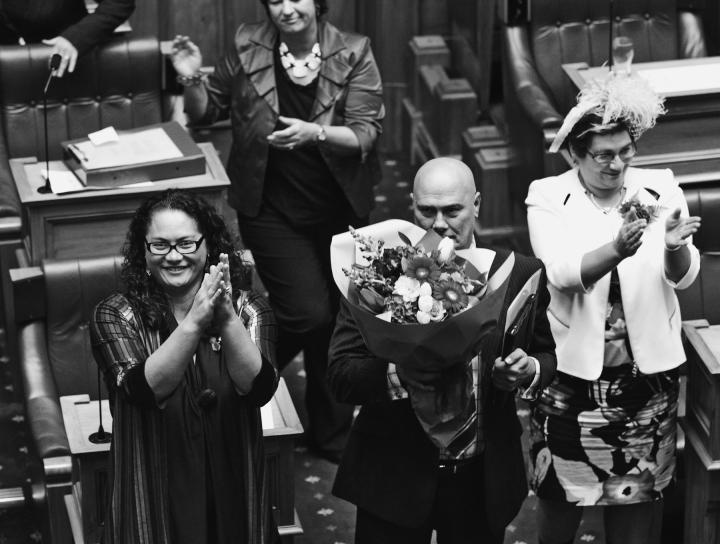
Figure 1.1 Louisa Wall, Tau Henare, and Metiria
marriage equality vote, April 17, 2013. Credit: Stuff/DominionPost New Zealand.
Turei,
The Milk Principle
A Māori Love Song
On April 17, 2013, the parliament of New Zealand met in the modernist dome of a parliamentary building, affectionately known as the Beehive, in the capital Wellington, to debate and vote on the final reading of the Definition of Marriage Amendment Bill. The law to open up the institution of marriage to same-sex couples had gone through months of review, public submissions, and campaigning; the issue had percolated through New Zealand society for years. As the votes were counted, Louisa Wall, the Labour MP for the working-class suburb of Manurewa in Auckland, made her way to the well of the chamber. The public gallery overhanging them was heaving. Before reading out the result of the vote, Lindsay Tisch, the National Party representative in the speaker’s chair, reminded the spectators that parliamentary rules forbade them from commenting on the announcement. The dignity of parliament was to be respected with silence.
Wall is many things: a woman, a Māori, a Member of Parliament, a black fern (a member of New Zealand’s world champion rugby team), and a professional health researcher. Louisa Wall is also a lesbian. In May 2012, on her second attempt, she was able to submit her bill to open the institution of marriage to all New Zealanders. Some gay rights were introduced comparatively early on in New Zealand. Sex between men was decriminalized in 1986, a Human Rights Act covered sexual orientation and gender identity in 1993, and same-sex civil unions were introduced in 2005. But it took twenty years since the first out elected representative, and a host of failed bills, to reach that day in Wellington in April 2013.
As Speaker Tisch read out the vote on marriage equality on that autumn day in Wellington:—“members, the ayes are seventy-seven, the nos are fortyfour”—cheers and applause filled the Beehive. Metiria Turei, the leader of the Greens, wearing an elaborate pink hat topped with a long feather, presented a huge bouquet of flowers to Wall. As she did, a single male voice broke into song;
in turn the entire gallery harmonized in a moving rendition of the Māori love song Pokarekare Ana, which was popularized by Māori soldiers in training before embarking for the war in Europe in 1914. As the parliamentarians looked upward some sang along with the gallery, some cried, while others filed down to congratulate Wall. Tau Henare, a Māori representing the conservative National Party, was the first to embrace her. Turei presented flowers to all the reps in the chamber who happened to be gay. Wall rubbed noses with the Māori Party figure Te Ururoa Flavell. Nobody who saw that moment felt that the dignity of parliament had been diminished: it had been enriched.
The New Zealand story—out gay elected officials transforming views and votes—is one that has been replicated across the world in national legislatures, state houses, and local town halls countless times. Angela Eagle was the first out lesbian Member of Parliament in the United Kingdom, and has held the highest party and government positions over her quarter-century career. She was a government minister under Prime Minister Gordon Brown and was the first to challenge Jeremy Corbyn’s Labour Party leadership in the summer of 2016. We spoke in her Palace of Westminster office next to Big Ben, looking out over the Thames, Westminster Bridge, the London Eye, and the sweeping history that is central London. When I mention the New Zealand gallery’s Pokarekare Ana song Eagle welled up, her eyes reddened as she fought back tears, overtaken by the emotion of what that moment meant not just to Kiwis but to people the world over.
A week later, when describing the moment in Eagle’s office to Lord Ray Collins, I offhandedly mentioned that I could understand why she had begun crying. Collins, who had been a high-ranking openly gay trade union official in Britain before his elevation to the Lords, fixed me with his eyes and softly said, “Can you . . . can you really?” I knew instinctively in my gut what he was saying was true. I said I understood Eagle’s reaction because I myself cannot watch the video of the singing gallery in New Zealand without tearing up, but I could never understand what she had gone through as a one-of-a-kind for over fifteen years: by far most prominent lesbian in British politics. A woman who had in equal parts been vilified, interrogated, mistrusted, and underestimated simply because of her sexual orientation. All humans have stories, but the stories told by the children of Harvey Milk change hearts and minds in a powerful way. Sometimes just being in the room is more powerful than any argument, spreadsheet, analysis, or ideology.
Louisa Wall first entered parliament in 2008 when she replaced a retiring representative from the Labour Party list, avoiding the spotlight of a district election. But three years later she won her Manurewa district with a margin 10 percent larger than her predecessor’s. At the time marriage equality was passed she was one of six openly gay members of the New Zealand Parliament, representing all
four main parties and very different parts of the island nation. Three men, three women. New Zealand has always been on the cutting edge of diversity—the first nation to enfranchise women in 1893 and in 1999 electing Georgina Beyer, the first-ever transgender politician in office, who was re-elected twice before stepping down in 2007.
Wall brings so many colors to the conversation: a Māori, sports star, health professional, lesbian. Unlike countries such as France and Spain, where legislation to enact gay marriage was introduced and shepherded by straight allies, in New Zealand Louisa and her gay colleagues led the charge. They were able and willing to make the debate very personal. All were in the chamber for the final debate and were among the representatives who spoke. Kevin Hague, the Green MP, reflected on the twenty-eight-year journey he and his partner had taken to that date. “When we got together our relationship was against the law. We were outsiders. We did not belong,” he said. After describing the letters he had received detailing how gay men in his country had lived in fear and shame and at greater risk of suicide, depression, and disease, Hague said: “That is why this bill is so much more than achieving equality under the law. It is about saying these lives matter. Our society is big enough for all. You belong unequivocally and without having to compromise who you are.” He closed by relating the words of a young girl named Alicia. “Imagine you are me for a second, or any other queer teenager in New Zealand . . . starting to come to grips with who you are. All around you, your family and religious community, perhaps even your friends, are buzzing with talk about a bill, which affects you more than you dare let on. What they say makes it clear that if they knew what you were, what you really are, they would not accept you. There is a reason so many of us have considered suicide as an acceptable way out at some point, and this is it.” Alicia told Hague: “What your support of this bill has meant is immeasurable.”
To succeed, Louisa Wall and her gay colleagues needed to make alliances with straight representatives. There were just five gay MPs alongside Wall and to win, they needed at least sixty votes. Traditional allies on the Left could be relied upon, but the key was to win over the socially conservatives representing parties and places slow to come to terms with new worldviews. To do this they were aided by politicians like Maurice Williamson from the conservative National party, whose comedic speech mocking those who thought gay marriage was the end of times went viral on the web. Intermingled with the jokes, Williamson poignantly expressed that he wanted loving sex-same couples to be able to feel the joy of adopting children, as he had done with his three. The Green MP Mojo Mathers, who is deaf, spoke in emotional terms about what this law meant to her lesbian daughter. “For me, one of the highlights of being a mother is when my daughter snuggles up to me on the sofa and shares with me her hopes, her dreams, her aspirations for her future. Like countless other young women, she
hopes for love, marriage, children, a good job, and a house with a white picket fence. All of these options are available to her older sister. When this bill passes tonight, which I hope it does, it will give both my daughters the equal opportunity to marry the person they love. No mother could be more proud of her daughters than I am, and to see them have equal rights before the law is very important to me.” Mathers’s remarks echoed the core strategic ethos of the equality campaign, centering on traditional values of “love, family, and commitment.”
Louisa Wall also marshaled groups outside of Parliament to lobby, such as Legalise Love and the Campaign for Marriage Equality, along with local groups in the cities and university. The public made 21,533 submissions made on the bill, with 60 percent in favor of the legislation. As a Māori, Wall also brought her indigenousness to the table. She told me that had had no more important ally in her cross-party working group on marriage equality than the Māori Party MP Te Ururoa Flavell. Wall notes that Māori culture is not predisposed to discriminate on the basis of identity. Indeed, she argues that homophobia in New Zealand was a colonial import: “Pre-colonization we didn’t discriminate against any members of our tribe or clan.”
Elizabeth Kerekere writes that pre-colonial Māori were sexually experimental people who openly accepted gender and sexual fluidity. Anyone who didn’t fit into heterosexuality was considered takatāpui, meaning “devoted partner of the same sex.” “Takatāpui were part of the whanau [community], we were not separate, we were not put down, we were not vilified for just being who we are. Sex was a normal part of life. There was a lot of pride in skill. If you wanted to have sex you should be good at it,” Kerekere notes. But she also notes that “colonization changed everything—our expression of sexuality, women having control of their own body, female leadership. We lost all of that, having fluidity, being polyamorous . . . our sexuality was stolen.”
In his speech on the marriage equality bill, Te Ururoa Flavell noted that in 1888 the English had made customary Māori marriages illegal and rendered children illegitimate. “So when opponents of this bill criticize a change to the definition of marriage as contravening our sacred tradition, I would have to say, ‘Whose traditions are we talking about?’ ”
To Wall passing marriage equality was the touchstone, if not the endpoint. She said that passing the bill was like winning a World Cup final (an experience she knows well) and as momentous as the Treaty of Waitangi, which had given Māori the rights of British subjects in New Zealand in the mid-nineteenth century. I asked her about the proximate triggers to the final push for legal equality. She mentioned events in America and how Kiwis watch the other side of the globe. (This is ironic, given that the LGBT rights movement was spurred in large part in response to the Māori academic Ngahuia Te Awekotuku being barred from entry to the United States for being a lesbian in 1972.) But Wall says that
President Barack Obama coming out for gay marriage started a “global conversation,” and the 2012 Macklemore song “Same Love” gave the hip-hop crowd validation of same-sex love, family, and commitment. Wall credits two LGBT leaders who came before her as paving the way: Chris Carter, the first out gay man in the New Zealand Parliament serving between 1993 and 2011, and Georgina Beyer, the groundbreaking Māori and first transgender elected MP in history.
For Wall, presence in politics is the intimacy of reducing the degrees of separation between LGBT to straight. Over twenty religious ministers asked her personally to withdraw the bill but instead she met them, talked through the issues that were important to them, and brought many of them around. The joyful singing in the Beehive caused tears far beyond the South Pacific. “Did you know the song was coming?” I asked. She smiles. She also sees that moment in New Zealand’s history as wrapped up with the state’s attempts to reconcile with their indigenous population. The equality law not only showed respect for LGBT Kiwis, but also the relevance of indigenous culture. “There was so much love in the room,” she tells me, “in contrast with France when their bill went through. For me it was about respect, tolerance, and the ability to move on.”
Australia Joins the Duet
Four years after the New Zealand Parliament erupted into song, Australia joined the duet. The gallery in Canberra sang, “We are one, but we are many. And from all the lands on earth we come. We’ll share a dream and sing with one voice. I am, you are, we are Australian.” With only four MPs voting against—which was unrepresentative of the conflict and trauma it took to get there—Australia had marriage equality. As in New Zealand, the change had been led by out LGBT Australians in alliance with passionate allies. The New South Wales State Sydney MP Alex Greenwich was the public face of the marriage equality campaign, and the newly minted federal out gay MPs (Trevor Evans, Trent Zimmerman, Tim Wilson, and Julian Hill) made the vote personal in the Senate and House. While the lower house only saw its first out MP elected in 2015, Penny Wong had been in the Senate for fifteen years and a minister in the governments of Labour Prime Ministers Kevin Rudd and Julia Gillard. For Wong, the moment was a powerfully emotional validation of her career. The first out gay Liberal Party Senator, Dean Smith, had the honor of introducing the bill in the upper house, and the Green Party Senator Janet Rice spoke about how marriage equality would make her own marriage whole. When Rice’s partner Penny transitioned they “went from being a perfect family in the eyes of others, to being weird.” They stopped holding each other’s hands in public because of the “blatant transphobia” and the omnipresent fear of violence. The MP for