The Biology of Caves and Other Subterranean Habitats
THE BIOLOGY OF HABITATS SERIES
This attractive series of concise, affordable texts provides an integrated overview of the design, physiology, and ecology of the biota in a given habitat, set in the context of the physical environment. Each book describes practical aspects of working within the habitat, detailing the sorts of studies which are possible. Management and conservation issues are also included. The series is intended for naturalists, students studying biological or environmental science, those beginning independent research, and professional biologists embarking on research in a new habitat.
The Biology of Rocky Shores Colin Little and J. A. Kitching
The Biology of Polar Habitats G. E. Fogg
The Biology of Lakes and Ponds Christer Brönmark and Lars-Anders Hansson
The Biology of Streams and Rivers Paul S. Giller and Björn Malmqvist
The Biology of Mangroves Peter J. Hogarth
The Biology of Soft Shores and Estuaries Colin Little
The Biology of the Deep Ocean Peter Herring
The Biology of Lakes and Ponds, 2nd Edition
Christer Brönmark and Lars-Anders Hansson
The Biology of Soil Richard D. Bardgett
The Biology of Freshwater Wetlands Arnold G. van der Valk
The Biology of Peatlands Håkan Rydin and John K. Jeglum
The Biology of Mangroves and Seagrasses, 2nd Edition Peter J. Hogarth
The Biology of African Savannahs Bryan Shorrocks
The Biology of Polar Regions, 2nd Edition David N. Thomas et al.
The Biology of Deserts David Ward
The Biology of Caves and Other Subterranean Habitats David C. Culver and Tanja Pipan
The Biology of Alpine Habitats Laszlo Nagy and Georg Grabherr
The Biology of Rocky Shores, 2nd Edition Colin Little, Gray A. Williams and Cynthia D. Trowbridge.
The Biology of Coral Reefs Charles R.C. Sheppard, Simon K. Davy & Graham M. Pilling
The Biology of Caves and Other Subterranean Habitats
David C. Culver and Tanja Pipan
Great Clarendon Street, Oxford OX2 6DP
Oxford University Press is a department of the University of Oxford. It furthers the University’s objective of excellence in research, scholarship, and education by publishing worldwide in
Oxford New York
Auckland Cape Town Dar es Salaam Hong Kong Karachi
Kuala Lumpur Madrid Melbourne Mexico City Nairobi
New Delhi Shanghai Taipei Toronto
With offices in
Argentina Austria Brazil Chile Czech Republic France Greece
Guatemala Hungary Italy Japan Poland Portugal Singapore
South Korea Switzerland Thailand Turkey Ukraine Vietnam
Oxford is a registered trade mark of Oxford University Press in the UK and in certain other countries
Published in the United States by Oxford University Press Inc., New York
The moral rights of the authors have been asserted Database right Oxford University Press (maker)
First published 2009
All rights reserved. No part of this publication may be reproduced, stored in a retrieval system, or transmitted, in any form or by any means, without the prior permission in writing of Oxford University Press, or as expressly permitted by law, or under terms agreed with the appropriate reprographics rights organization. Enquiries concerning reproduction outside the scope of the above should be sent to the Rights Department, Oxford University Press, at the address above
You must not circulate this book in any other binding or cover and you must impose the same condition on any acquirer
British Library Cataloguing in Publication Data
Data available
Library of Congress Cataloging in Publication Data
Data available
Typeset by Newgen Imaging Systems (P) Ltd., Chennai, India
Printed in Great Britain on acid-free paper by CPI Antony Rowe, Chippenham, Wiltshire
ISBN 978–0–19–921992–6 (Hbk.) 978–0–19–921993–3 (Pbk.)
Preface
We are in a golden age of the study of subterranean biology. Twenty-five years ago, when one of us (DCC) wrote a book on the biology of caves, it was easy to read and discuss all the non-taxonomic literature on cave biology written in English. The only book length treatment of cave biology at that time in English was the translation from the French of Albert Vandel’s Biospeleology. Most speleobiologists were not writing in English and the discipline remained largely a national one. Art Palmer, the author of a recent introductory text on cave geology, points out that theories of cave development were developed independently (and in strikingly parallel ways) three times—fi rst in Serbo-Croatian, next in French, and fi nally in English. Speleobiologists as well kept reinventing the wheel— who knows how many biologists discovered and rediscovered that the Pleistocene may have driven animals into caves. Twenty-five years ago, for American speleobiologists, but much less so for European biologists, speleobiology meant the biology of caves. There was scarcely any recognition or awareness of non-cave subterranean environments among American speleobiologists.
How times have changed. The scope of speleobiology has expanded to include those subterranean1 habitats whose inhabitants include blind, depigmented species with compensatory increases in other sensory structures. The globalization of subterranean biology and collaboration among speleobiologists has been made possible, especially because of Internet and World Wide Web. The growing and now nearly universal use of English as the language of scientific communication has opened up new avenues for cooperation and collaboration. New technology, including the possibility of sequencing DNA molecules (Porter 2007), the availability of increasingly sophisticated soft ware for phylogenetic reconstruction, and the possibility
1 We use subterranean in the sense of organisms living in natural spaces. The word subterranean is also frequently applied to organisms that create their own spaces— especially mammals such as mole rats, termites, and plant roots. The word hypogean is sometimes used in the sense we use subterranean, but its use is uncommon, and we use enough uncommon words as it is. There are many precedents for the way we use the word, such as the International Society for Subterranean Biology and its journal Subterranean Biology.
of storing and analysing large quantities of spatial information (especially databases and Geographic Information Systems), has created new potentialities in the analysis of subterranean species and communities. This combined with new conceptual advances, such as vicariance biogeography, the joint analysis of evolution and development (evo-devo), and ecosystem models, has led to the current golden age, with an accompanying explosion of published information.
In the past 20 years, several milestone books on subterranean biology have been published, including Groundwater Ecology (Gibert et al. 1994a), the three-volume Encyclopaedia Biospeologica (Juberthie and Decu 1994–2001), Subterranean Ecosystems (Wilkens et al. 2000), Encyclopedia of Caves (Culver and White 2005), and Encyclopedia of Caves and Karst Science (Gunn 2004). Collectively they have advanced the field of subterranean biology by leaps and bounds, but none of them are introductory accounts. Hence this book.
We hope that this book is accessible to a wide variety of readers. We have assumed no training in biology beyond a standard university year-long course, and we have tried to make the geological and chemical incursions self-contained. An extensive glossary should help the readers through any terminological rough spots.
We have organized this book around what seem to us to be the major research areas and research questions in the field. To provide a context for these questions, we review the different subterranean environments (Chapter 1), what the energy sources are for subterranean environments given that the main energy source in surface environments— photosynthesis—is missing (Chapter 2), and the main inhabitants of these underground domains (Chapter 3). The research areas that we focus on are as follows:
How are subterranean ecosystems defined and organized, and how in • particular does organic carbon move through the system (Chapter 4)? How do species interact and how do these interactions, such as competi- • tion and predation, organize, and constrain subterranean communities (Chapter 5)?
How did subterranean organisms evolve the bizarre morphology of • elongated appendages, no pigment, and no eyes (Chapter 6)?
What is the evolutionary and biogeographic history of subterranean • species? Are they in old, relict lineages (Chapter 7)? How does their distribution relate to past geologic events? What is the pattern of diversity of subterranean faunas over the face of • the earth (Chapter 8)?
We close by “putting the pieces together” and examining some representative and exemplary subterranean communities (Chapter 9), and how to conserve and protect them (Chapter 10).
With the exception of Chapters 1–3, where we have attempted to provide a comprehensive geographic and taxonomic review of the basics, we have focused on a few particularly well-studied cases. Although we have provided case studies from throughout the world, readers from South America and Asia will no doubt find a North American and European bias. Of this we are certainly guilty, but in part this bias is because of longer traditions of study of subterranean life in Europe and North America. We have provided an extensive bibliography and hope that interested readers will pursue the subjects further. When English language articles were available, we have highlighted them but we also have not hesitated to include particularly important or unique papers in other languages.
A cautionary word about place names. Many species are limited to a single cave, well, or underflow of a brook, and, if for no other reason, this makes it important to accurately give place names. Throughout the book we have identified the country and state or province in which a site is located. We have, whenever possible, retained the spelling of the local language. Translation runs the risk of confusing anyone trying to identify a particular cave or site, and also runs the risk of repeating the word cave in different languages, as in Postojnska Jama Cave (Postojna Cave Cave). Postojnska Jama already has names in three languages (Slovene, Italian, and German) and there is no need to add a fourth. Maps of sites mentioned in the text are provided.
Even to us, the field of subterranean biology seems especially burdened with obscure terminology. While there is a temptation to ignore it as much as possible, it is widespread in the literature and some of it is even useful. We have defined many terms in the text when we first use them, and have included an extensive glossary to aid readers.
Besides the fascination of their bizarre morphology (which cannot really be overrated), there are two main reasons for biologists to be interested in subterranean faunas. One is numerical. Nearly all rivers and streams have an underlying alluvial system in which its residents never encounter light. Approximately 15% of the Earth’s land surface is honeycombed with caves and springs, part of landscape called karst that is moulded by the forces of dissolution rather erosion of rock and sediment. In countries such as Cuba and Slovenia, this is the predominant landform.
But there is a more profound reason for biologists to study subterranean biology. Subterranean species can serve as model systems for several important biological questions. As far as we can determine, it was Poulson and White (1969) who first made this notion explicit but it is implicit in the writings of many subterranean biologists. This is a recurring theme throughout this book, and we just list some of the possibilities here:
Subterranean ecosystems can serve as models of carbon (rather than • nitrogen and phosphorus) limited ecosystems and ones where most inputs are physically separated from the community itself.
Subterranean communities can serve as a model of species interactions
• because the number of species is small enough that all pairwise interactions can be analysed and then combined into a community-wide synthesis.
The universal feature of loss of structures (regressive evolution) is espe-
• cially obvious in subterranean animals, with a clear basis, that in turn can allow for detailed studies of adaptation.
The possibilities of dispersal of subterranean species are highly con-
• strained and so the species (and lineages) can serve as models for vicariant biogeography.
The highly restricted ranges and specialized environmental require-
• ments can serve as a model for the protection of rare and endangered species.
Whatever reasons you have for reading this book, we hope it leads you to a fascination with subterranean biology, one that lasts a lifetime.
Acknowledgements
The field of subterranean biology is blessed with a strong, cooperative group of scholars from all over the world, and we could not have written this book without the help of many of them. We especially thank Janez Mulec for reading the entire manuscript and making many helpful suggestions. Daniel W. Fong, Horton H. Hobbs III, William R. Jeffery, William K. Jones, Megan Porter, Peter Trontelj, and Maja Zagmajster all read selected chapters and helped us avoid many mistakes. Several colleagues provided unpublished photographs and drawings—Gregor Aljančič, Marie-Jose Dole-Olivier, Annette Summers Engel, Horton H. Hobbs III, Hannelore Hoch, William R. Jeffery, Arthur N. Palmer, Borut Peric, Slavko Polak, Megan Porter, Mitja Prelovšek, Nataša Ravbar, Andreas Wessel, Jill Yager, and Maja Zagmajster. Colleagues also provided us with preprints and answered sometimes naive questions—Louis Deharveng, Marie-Jose DoleOlivier, Stefan Eberhard, Annette Summers Engel, Daniel W. Fong, Franci Gabrovšek, Janine Gibert, Benjamin Hutchins, Florian Malard, Georges Michel, Pedro Oromi, Metka Petrič, Megan Porter, Katie Schneider, Boris Sket, Peter Trontelj, Rudi Verovnik, and Maja Zagmajster. Jure Hajna and Franjo Drole of the Karst Research Institute ZRC SAZU devoted many hours to scanning and producing diagrams. Maja Kranjc, in charge of the magnificent library at the Karst Research Institute, has constantly helped even in the face of increasingly panic-stricken requests for books and journals. Daniel W. Fong, Benjamin Hutchins, Karen Kavanaugh, and Wanda Young cheerfully handled our many requests for materials from American University while we were writing the book at the Karst Research Institute in Slovenia.
We are especially grateful to the Karst Research Institute ZRC SAZU, especially the head of the institute, Dr. Tadej Slabe and the administrative assistant, Sonja Stamenković, for making the writing go as smoothly as possible. Tadej Slabe provided time for TP to work, space for DCC to work, and an appointment to DCC as Associate Researcher. Financial support was provided by Ad Futura (Javni sklad Republike Slovenije za razvoj kadrov in štipendije) to DCC during his stay in Slovenia.
A project of this magnitude was a burden on both of our families, and we are especially grateful to our spouses, Gloria Chepko and Miran Pipan, for providing both understanding and support.
Postojna, Slovenia March 2008
5.7
5.8
Site Maps and Gazetteer
List of sites mentioned in text. The associated number refers to the numbers on the maps. Several sites in Bosnia & Herzegovina, France, Slovenia, and West Virginia (USA) were so close to each other that they are represented by the same number. All sites can be found on one of the three maps, except for sites 29 and 51.
Abisso di Trebiciano, Italy
Alpena Cave, West Virginia, USA
Ayyalon Cave, Israel
Baradla/Domica, Slovakia/Hungary
Bayliss Cave, Queensland, Australia
France
Blue Lake Rhino Cave, Oregon, USA
Bracken Cave, Texas, USA
Carlsbad Caverns, New Mexico, USA
Lechuguilla Cave, New Mexico, USA
Cave Spring Cave, Arkansas, USA
Cesspool Cave, Virginia, USA
Col des Marrous, France 65
Columbia River basalt, Washington, USA 11
Cueva de Villa Luz, Mexico
Devil’s Hole, Nevada, USA
Dillion Cave, Indiana, USA
Dorvan-Cleyzieu, France
Edwards Aquifer, Texas, USA
Flathead River, Montana, USA
Greenbrier Valley, West Virginia, USA
Grotta di Frasassi, Italy
Grotte de Sainte-Catherine, France
Gua Salukkan, Sulawesi, Indonesia
HaLong Bay, Vietnam
Hellhole, West Virginia, USA
Hidden River Cave, Kentucky, USA
Inner Space Caverns, Texas, USA
Jameos del Agua, Tenerife, Canary Islands
Kartchner Caverns, Arizona, USA
Kavakuna Matali System, Papua New Guinea
Kazumura Cave, Hawaii, USA
Križna jama, Slovenia
Lachein Creek, France
Lobau Wetlands, Austria
Logan Cave, Arkansas
Logarček, Slovenia
Lower Kane Cave, Wyoming, USA
Lower Potomac, District of Columbia, USA
Lubang Nasib Bagus, Sarawak, Malaysia
Mammoth Cave, Kentucky, USA
McClean’s Cave, California, USA
Grotte de Moulis, France 20
Old Mill Cave, Virginia, USA
Organ Cave, West Virginia, USA
Otter Hole Cave, Wales, United Kingdom
Paka, Slovenia 41
Peştera Movile, Romania
Peştera Urşilor, Romania
Pivka River, Slovenia 46
Pless Cave, Indiana, USA 44
Popovo Polje, Bosnia & Herzegovina 45
Postojna-Planina Cave System, Slovenia 46
Rhône River at Lyon, France 47
Robber Baron Cave, Texas, USA 48
Robe River, Western Australia, Australia 49
San Marcos Spring, Texas, USA 50
São Mateus Cave, Goiás, Brazil
Sarang and Subis Karst, Borneo, Malaysia
Scott Hollow Cave, West Virginia, USA
Segeberger Höhle, Germany
Shelta Cave, Alabama, USA
Shihua Cave, China 55
Sierra de El Abra, Mexico 56
Silver Spring, Florida, USA 57
Sotano de las Golandrinas, Mexico 60
South Platte River, Colorado, USA 61
Šipun, Croatia 58
Škocjanske jame, Slovenia 59
Tantabiddi Well, Western Australia, Australia 62
Thompson Cedar Cave, Virginia, USA 63
Thornhill Cave, Kentucky, USA 64
Tour Laffont, France 65
Trebišnjica River System, Bosnia & Herzegovina 45
Triadou well, France 66
1 The subterranean domain
1.1 Introduction
Beneath the surface of the earth are many spaces and cavities. These spaces can be very large—some cave chambers such as the Sarawak Chamber, with an area of over 21,000,000 m3 in Lubang Nasib Bagus (Good Luck Cave) in Sarawak, Malaysia (Waltham 2004), can easily accommodate the world’s largest aircraft. They can also be very small, such as the spaces between grains of sand on a beach. These spaces can be air-fi lled, waterfi lled, or even fi lled with petroleum. All of these spaces share one very important physical property—the complete absence of sunlight. This is a darkness that is darker than any darkness humans normally encounter, a darkness to which our eyes cannot acclimate no matter how long one waits. There are some habitats that are dark and yet have some light. The ocean abyss is nearly without light but many organisms of the abyss, such as the well-known angler fish, produce their own light with the help of microbes. In addition, the heat of deep sea vents is high enough that light is emitted (Van Dover 2000). In subterranean habitats, with very rare exceptions, this does not happen. The most notable exception is that of glow-worms (actually fungus gnat larvae) in a few caves in Australia and New Zealand. But even in these special cases, organisms cannot use light to find their way about, to find food, to find mates, and so on.
Taken together, the water-fi lled and air-fi lled cavities are quite common, perhaps more common than surface habitats. Over 94% of the world’s unfrozen freshwater is stored underground, compared with only 3.6% found in lakes and reservoirs, with the rest in soil, rivers, and the atmosphere (Heath 1982). Heath estimates that there are 521,000 km3 of subsurface spaces and cavities in the soils and bedrock of the United States, and most of these contain water. Whitman et al. (1998) indicate that between 6% and 40% of the total prokaryotic (organisms with no nuclear membrane such as bacteria) biomass on the planet may be in the
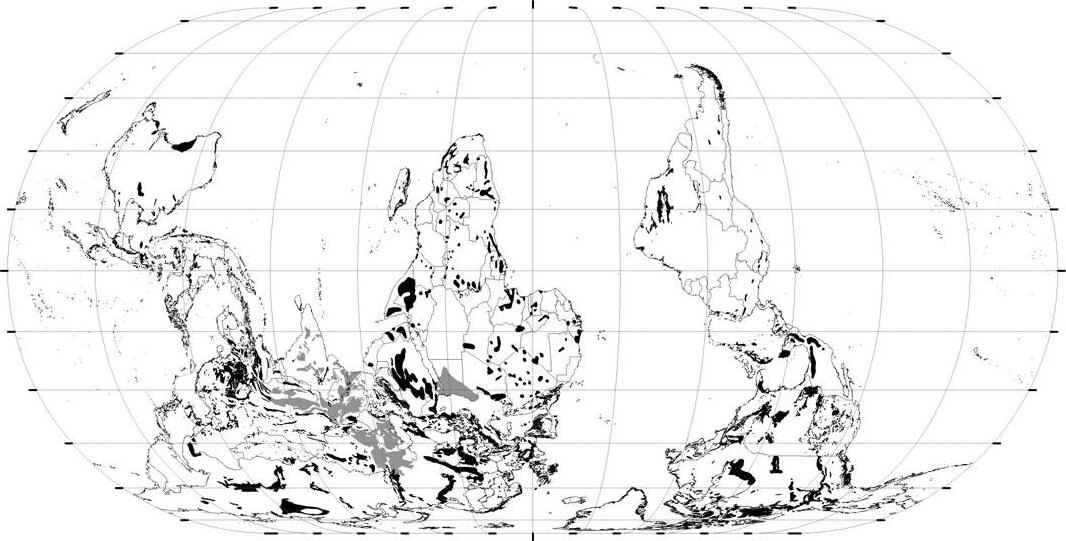
1.1 Global distribution of major outcrops of primary cave-bearing (carbonate) rocks shown in black. Not included in the figure are areas of volcanic rock with lava tubes. Impure or discontinuous carbonate regions are in grey. Map by P. W. Williams, used with permissi on.
Fig.
terrestrial subsurface. The number of caves is also large—for example, the Karst Research Institute of Slovenia has records of more than 9,000 caves in a country with an area of about 20,000 km 2 . More than 100,000 caves are known from Europe, and nearly 50,000 are known from the United States (Culver and Pipan 2007). All of the continents except Antarctica have caves, as do most countries. A map (Fig. 1.1) of cave regions shows that North America and Eurasia are especially rich in cave-bearing rocks.
The absence of light has profound effects on the organisms living in such habitats. Eyes and the visual apparatus in general have no function there. There are no photons to capture; therefore, no increase in visual acuity will have any benefit to the organisms exclusively living in darkness. Foodfinding, mate-finding, and avoidance of competitors and predators, all must be accomplished without vision. As discussed in more detail in Chapter 6, this is a profound barrier that surface-dwelling animals must overcome to successfully colonize subsurface habitats. The absence of light means an absence of both photosynthesis and primary producers (plants, algae, and some bacteria). In some rare but very interesting cases, microorganisms can obtain energy from the chemical bonds of inorganic molecules (Engel 2005), but most subsurface communities rely on food transported in from the surface. This will be taken up in detail in Chapter 2, and we just note in this chapter that the general absence of autotrophy means the amount and variety of resources are usually reduced.
For all subsurface habitats, the amplitude of variation of environmental parameters, especially temperature, is much less than that of the surface habitats. Th is reduction in amplitude is especially noticeable in regions where variation in surface temperatures is extreme. In Kartchner Caverns, Arizona, USA, the daily average temperature on the surface varies by more than 17°C, whereas temperatures within the cave vary less than 1°C (Fig. 1.2) (Cigna 2002). The range of variation in most spots in Kartchner Caverns was around 1% or 2% of the surface variation. Nevertheless, in Kartchner Caverns, as in nearly all subterranean habitats, there is still an annual temperature cycle. With the possible exception of groundwater aquifers at depths of hundreds of metres, there are no truly constant subsurface environments. In many older references (e.g., Poulson 1963), environmental constancy is overemphasized. With the availability of better monitoring devices, especially ones taking multiple measurements, environmental variability can be detected. Other parameters besides temperature vary include air currents, water levels, and the amount of food brought into the caves. The pulse of spring flooding may be an important cue for reproduction for many cave animals (Hawes 1939). It varies in amplitude, predictability, and seasonality in different caves, but shows the general lack of constancy of the subterranean environment.
Fig. 1.2 Temperature profiles from Kartchner Caverns, Arizona, USA. Sampling began on January 1, 1996 and continued for 5 years. Solid line is a sinusoidal fit to the data. Time (in days) is shown on the x -axis and temperature (°C) is shown on the y -axis. From Cigna (2002). Used with permission of Inštitut za raziskovanje krasa ZRC SAZU.
Traditionally, subsurface habitats are divided into large cavities (caves) and small cavities (interstitial habitats). We follow this division but add a third category—superficial subterranean habitats, which fit uneasily into the traditional dichotomy.
1.2 Caves
Caves are more difficult to defi ne than one might expect. Geologists (e.g., White 1988) often defi ne caves as natural openings large enough to admit a human being, but this is not an especially useful biological defi nition. A more useful defi nition is a natural opening in solid rock with areas of complete darkness, and larger than a few millimetres in diameter. The fi rst criterion excludes spaces among sands, gravels, and stones because they are not openings in solid rock. The second criterion excludes some geographic features that are sometimes called caves, such as rock shelters and natural tunnels, which have no zone of complete darkness. The third defi nition is a more technical restriction which eliminates very tiny tubes that are too small to have turbulent water flow. Eventually, many of these tiny tubes will develop into caves but below this critical diameter processes of enlargement and dissolution are very slow indeed, taking up to hundreds of thousands of years (Dreybrodt et al. 2005, Ford and Williams 2007).
1.2.1 Caves formed by dissolution of rocks
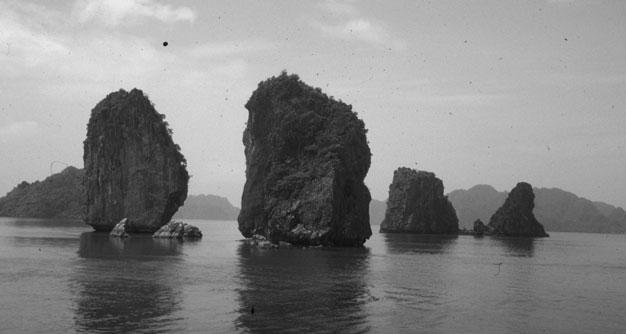
Landscapes in which the primary agent moulding the landscape is dissolution rather than erosion are called karst landscapes (Fig. 1.3). That is, the features of karst landscape (caves, sinkholes, springs, blind valleys, and the like) result from the action of the hollowing out of rocks by weak acids rather than by erosion, volcanic activity, earthquakes, and so on. Caves are the most biologically interesting part of this landscape, but there are karst landscapes with very few caves (the extreme northern Shenandoah Valley in Virginia, USA, and Krk Island, Croatia, are examples); apparently, the result of the absence of suitable hydrological conditions for caves to form. Comprising approximately 15% of the earth’s surface (see Fig. 1.1), karst represents 75% of the land area of Cuba, 45% of Slovenia, 25% of France and Italy, and 40% of the United States east of Tulsa, Oklahoma (White et al. 1995). Caves are present in rocks more than 400 million years old to rocks less than 10,000 years old.
Many caves are formed by the action of acidic waters on carbonates (particularly limestone but sometimes dolomite and marble) and evaporites (particularly gypsum but sometimes rock salt). Most large caves form in limestone rock, which consists mostly of the mineral calcite (CaCO3). Calcite barely dissolves in pure water but readily dissolves in the presence of an acid (Palmer 2007):
1.3
of the karst landscape of Halong Bay, Vietnam. Karst landscapes take many different shapes and forms in different regions. Among the most spectacular are the towers and pinnacles of Halong Bay, a UNESCO World Heritage site. The remaining limestone is slowly being dissolved away.
CaCO3 H ↔ Ca 2 HCO 3
Fig.
Photo
The bicarbonate ion is in solution and as a result the calcite is dissolved. The question is where the hydrogen ion comes from? Usually it comes from the action of atmospheric CO2 and of biological activity in the soil. The metabolism of bacteria and other soil organisms produces CO2. CO2 dissolves in water to form hydrogen and bicarbonate ions:
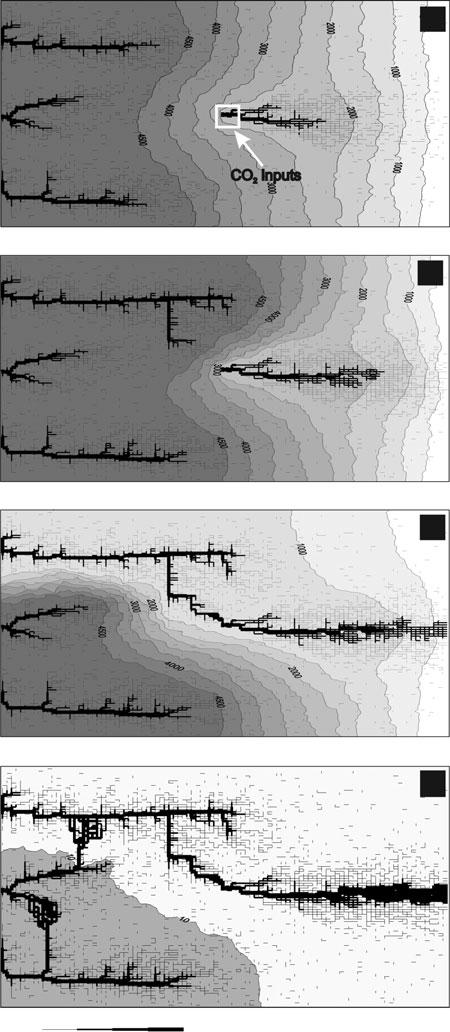
Initially, small fissures in the rock are created in this way. Once they reach a diameter of about 0.2 mm they rapidly enlarge (Dreybrodt et al. 2005), forming a network of passages (Fig. 1.4). Some caves may be many millions of years old (Osborne 2007), but significant cave development can occur in tens of thousands of years (Bosák 2002; Dreybrodt and Gabrovšek 2002). In some geological settings, especially those with a protective sandstone cap rock over the cave, cave development can be extensive. The most spectacular example of this is the Mammoth Cave System in Kentucky, USA, with 590 km of passage (Palmer 2007) (Fig. 1.5).
In some regions where there is considerable underground sulphur, especially in areas of petroleum deposits, sulphuric acid rather than carbonic acid is the source of hydrogen ions in the dissolution of limestone (Egemeier 1981). Since sulphuric acid is a much stronger acid than carbonic acid, large caves can form, and they form more rapidly. Hydrologically, caves formed by sulphuric acid are disconnected from surface waters. These caves are formed by water rising from depth where the sulphur is, rather than developed from surface waters seeping downwards. The best examples of caves formed by sulphuric acid are those in the Guadalupe Mountains of New Mexico, USA, including Carlsbad Caverns and Lechuguilla Cave, which may be the most beautiful cave known. Both extend many tens of kilometres.
Caves also often form in gypsum (CaSO4 ⋅ H2O), which is readily soluble in water (Klimchouk 1996).
CaSO4 ⋅ 2H2O ↔ Ca 2 SO2 4 2H2O
Gypsum caves can be more than 100 km long (Klimchouk 2005). However, they are typically dry and much younger and short-lived than limestone caves [gypsum erodes more quickly, up to 1,000 times more quickly (Klimchouk 2002)]. Consequently, there is relatively little life in gypsum caves.
All karst caves have a few basic components (Ravbar 2007). Water enters the subterranean karst system at the rock–soil interface, which typically has many small solution pockets and cavities with complex horizontal and vertical pathways—the epikarst. Eventually, water percolating through the epikarst reaches a cave stream. The cave stream may be entirely fed from epikarst flow or it may also be fed by a surface stream that sinks into the