Oxford University Press is a department of the University of Oxford. It furthers the University’s objective of excellence in research, scholarship, and education by publishing worldwide. Oxford is a registered trade mark of Oxford University Press in the UK and certain other countries.
“What Everyone Needs to Know” is a registered trademark of Oxford University Press.
Published in the United States of America by Oxford University Press 198 Madison Avenue, New York, NY 10016, United States of America.
All rights reserved. No part of this publication may be reproduced, stored in a retrieval system, or transmitted, in any form or by any means, without the prior permission in writing of Oxford University Press, or as expressly permitted by law, by license, or under terms agreed with the appropriate reproduction rights organization. Inquiries concerning reproduction outside the scope of the above should be sent to the Rights Department, Oxford University Press, at the address above.
You must not circulate this work in any other form and you must impose this same condition on any acquirer.
Library of Congress Cataloging-in-Publication Data
Names: Dodds, Klaus, author. | Nuttall, Mark, author. Title: The Arctic : what everyone needs to know / Klaus Dodds and Mark Nuttall.
Description: New York, NY : Oxford University Press, 2019. | Includes bibliographical references.
Identifiers: LCCN 2018055473| ISBN 9780190649814 (hardback : alk. paper) | ISBN 9780190649807 (paperback : alk. paper)
Subjects: LCSH: Arctic regions. | Arctic peoples. | Arctic regions—Environmental conditions. | Environmental degradation—Arctic regions. | Conservation of natural resources—Arctic regions. | BISAC: HISTORY / Historical Geography. | HISTORY / Polar Regions. | SCIENCE / History.
Classification: LCC G606 .D64 2019 | DDC 998—dc23 LC record available at https://lccn.loc.gov/2018055473
1 3 5 7 9 8 6 4 2
Paperback printed by Sheridan Books, Inc., United States of America Hardback printed by Bridgeport National Bindery, Inc., United States of America
FOREWORD
Now when I was a little chap I had a passion for maps. I would look for hours at South America, or Africa, or Australia, and lose myself in all the glories of exploration. At that time there were many blank spaces on the earth, and when I saw one that looked particularly inviting on a map (but they all look that) I would put my finger on it and say, “When I grow up I will go there.” The North Pole was one of these places, I remember. Well, I haven’t been there yet, and shall not try now. The glamour’s off. Other places were scattered about the hemispheres. I have been in some of them, and . . . well, we won’t talk about that. But there was one yet — the biggest, the most blank, so to speak — that I had a hankering after.
Joseph Conrad, The Heart of Darkness
Everything—our culture is based on the cold, the snow, and the ice.
Sheila Watt-Cloutier, “Climate Change Is a Human Rights Issue: An Interview with Sheila Watt-Cloutier,” March 4, 2016
The Arctic occupies a contradictory space in the popular imagination—remote and uninhabitable yet also fantastical and alluring. It is also understood to be under threat from rapid climate change; the future of its peoples, wildlife, and
environments imperiled by a warming trend that is affecting the region twice as fast as the rest of the world. The Arctic is in trouble.
For those who have never visited the Arctic, it is a region of ice and polar bears. Children can and do imagine a magical world where Santa Claus and his reindeer live somewhere near the North Pole. The northern reaches of the world are, of course, replete with fairy tales, sagas, and adventures in volcanic, wind-swept, and ice-filled kingdoms. The dramatic, mysterious, and heroic are the stuff of adult storytelling as well—a litany of explorers, sailors, and aviators have encountered fame, misfortune, and disaster in the Arctic. There is no shortage of candidates: from Sir Hugh Willoughby and his crew, who disappeared on the coast of Russia’s Kola Peninsula in the mid-sixteenth century, to the unknown fate of Henry Hudson in the bay that bears his name in 1611, to Sir John Franklin’s doomed Northwest Passage expedition in the mid-nineteenth century and the disappearance of Roald Amundsen on his way to Spitsbergen in the late 1920s and Gino Watkins in East Greenland in the early 1930s.
But the impact of outsiders on the Arctic has been more than an occasional expeditionary foray. From exploration, trapping, whaling, sealing, and fishing to coal mining, oil and gas exploration, and marine insurance, and scientific research, the footprint of others is various and varied. In Britain, a legion of whalers and traders started their Arctic adventures in cities such as Aberdeen, Bristol, Cambridge, and London. Elizabethan explorers such as Martin Frobisher voyaged to what is now known as the Canadian Arctic in the 1570s, and persuaded the Anglo-Russian Muscovy Company to sponsor exploratory work. Sailing into the bay he named for himself in the southeastern part of Baffin Island (naming other parts of the island after his political and commercial sponsors, e.g., Cape Walsingham after Sir Francis Walsingham), Frobisher hoped to find a northern maritime passage to Asia—in essence, a shorter trade route—as well as assess the potential for gold
discoveries along the way. Material he found on the southern coast of Baffin Island turned out to be iron pyrite—fool’s gold rather than gold—but Frobisher did not arrive home emptyhanded. On their return from a second voyage in 1577, the crew forcibly brought three Inuit with them from Baffin Island. They died shortly after their arrival in England.
The Northwest Passage was thought to be a strait that separated Baffin Island from another stretch of land. However, it remained undiscovered by Frobisher. Later, the Hudson’s Bay Company was active in the area Frobisher had traveled in, setting up a trading post in 1914 and, at the head of Frobisher Bay, the US Air Force established the beginnings of what is now the community of Iqaluit in 1942. At the time, this was the largest air base in the North American Arctic. The runway (which is over 2,700 meters long) serves as an emergency landing site for transatlantic flights and was an alternative NASA landing site for the Space Shuttle. The town of Frobisher Bay was renamed Iqaluit by the community in 1986 (it was formalized the following year), and it became the capital of the newly established Canadian territory of Nunavut in 1999.
The search for the Northwest Passage remained an obsession. Franklin and his men set off in 1845 to navigate through the last unknown section of the passage in the central Canadian Arctic. Their two ships became icebound near Victoria Strait and all 129 crew disappeared. “The lost men’s bodies, waiting, drift and freeze,” wrote the American poet Helen Hunt Jackson in An Arctic Quest. After multiple search expeditions from the mid-nineteenth century onward, Franklin’s two vessels, HMS Erebus and HMS Terror, were finally found in northern Canadian waters in 2014 and 2016 respectively. Inuit knowledge contributed to determining where the wrecks lay on the seabed off King William Island, though previously Inuit oral testimony had been largely ignored. The ships have been designated national Canadian historic sites and are under the jurisdiction of Environment Canada. In October 2017, it was announced that the United Kingdom was gifting the wrecks to
Canada; Parks Canada has hired a number of Inuit guardians to watch over the sites. An extraordinary ending for vessels that were used initially by the Royal Navy as warships, including service in patrolling the Mediterranean, and which were then refitted for Antarctic and Arctic adventures.
In northern British cities, such as Dundee and Hull, the Arctic whaling and fishing trades respectively were pathways to wealth. Orkney was a major recruitment ground for the Hudson’s Bay Company from the early eighteenth century onward. By the late eighteenth century, the Hudson’s Bay Company workforce in Canada was overwhelmingly sourced from the small farms and fishing villages of many of the Orkney islands. The relationship between the company and the archipelago lasted until the early twentieth century.
Connections between the British Isles and the Arctic continued to be reinforced by disaster. The sinking of the British trawler Gaul in mysterious circumstances in February 1974 while fishing in northern Norwegian waters was headline news. Stories abounded that the trawler was a spy vessel and might have been sunk by a Soviet submarine. Fame and fortune in the Arctic were always counterbalanced by disaster and loss.
The vast majority of humanity will never visit the Arctic, although the growth of polar tourism does mean more people are heading north, many of them on cruise ships to the Northwest Passage, to Greenland, Iceland, and Svalbard. They are venturing into areas, though, that are being increasingly affected by human activities. But it is important to remember the Arctic has been a zone of human interaction for centuries, and social and ecological relationships have been profoundly disrupted in the past. For example, colonial powers and commercial expeditions made their presence felt on indigenous peoples and hunted and extracted fish, seals, minerals, and fur pelts. What has changed in the intervening period is the scale and intensity of human and climatological forces.
Climate change and ongoing resource extraction bring different kinds of threats and challenges—in the Arctic we face the ultimate paradox of human existence. How can we learn to live sustainably with our planet? Will Arctic resources be left in the ground and below the subsea floor as part of a global climate change mitigation strategy? There is an urgent need to understand the Arctic and more and more people are responding to this. In some cases, they do this by simply wanting to visit the Arctic and experience what they can of a region punctuated with ice, water, mountains, and extreme weather. Or else they visit in considerable numbers as part of Arctic exhibitions organized by august institutions such as the British Library and National Maritime Museum in London.
The task of this book is to make sure that Arctic fairy tales don’t obscure other stories that can and should be told about this part of the world. The Arctic is in motion.
ACKNOWLEDGMENTS
As ever, we have accumulated a reservoir of debts to people and organizations who sponsor and support our research in the Arctic/High North. Our thanks to Tim Bent at Oxford University Press who commissioned us to write the book in the first place and to the proposal reviewers for their supportive comments. Klaus Dodds is thankful to the Leverhulme Trust for the award of a Major Research Fellowship (2017–2020), which gave time and space for completing this book. He thanks the British Academy for an International Partnership and Mobility Award (2016–2018), which also supported his Arctic-related research. Mark Nuttall thanks the Department of Anthropology at the University of Alberta as well as Ilisimatusarfik/University of Greenland and the Greenland Climate Research Centre for research funding and institutional support. We owe a debt of gratitude to our polar networks of physical/natural and social scientists, artists and filmmakers, policy officials, journalists, and many people from northern communities; colleagues and friends who have contributed to conversations about the Arctic—past, present, and future. None of the above bear any responsibility for our analysis, observation, and judgment about Arctic affairs. Above all, however, we thank our respective families, who continue to be immensely supportive of our endeavors, which often take us away from our homes to various northern places.
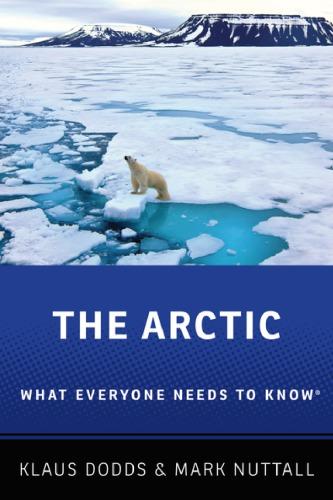
THE ARCTIC
WHAT EVERYONE NEEDS TO KNOW®
INTRODUCTION
ONE ARCTIC, MANY ARCTICS
Every week, stories about the Arctic, usually addressing the state of sea ice extent and thickness, diminishing glaciers, rapidly thawing permafrost, acidification of the Arctic Ocean, the resource potential of the region, the opening of new shipping routes, and possible geopolitical tensions, appear in the media. The headlines and accompanying reports are often grounded in the experiences of the five coastal Arctic states—Canada, Norway, Denmark/Greenland, Russia, and the United States— or linger on the Arctic-focused aspirations of countries such as China, India, Singapore, South Korea, and Japan. Asian states are noticeably investing in polar infrastructure, science, and resource-development projects.
As sea ice recedes, there is a widespread suggestion that Arctic countries are determined to secure ever-more territory in the Far North, while non-Arctic states seek greater access to it. The ownership of the continental shelves of the maritime Arctic will determine who has sovereign rights to exploit natural resources. Canada, Denmark/Greenland, and Russia are in pole-position due to their geographical proximity to the North Pole.
Much of this discussion is framed within a context of climate change and the rapid melting of Arctic ice, which, it is often suggested, might then facilitate further commercial extraction of resources, as well as pose a threat to the region’s indigenous cultures and to its wildlife. It provides plenty of raw material for intrigue and speculation. The media is fond of pointing out that there are some big numbers in the mix. The hydrocarbon potential of the Arctic region, according to some assessments and estimates, including those of the US Geological Survey, may amount to 13% of the world’s undiscovered oil and 30% of its undiscovered natural gas.
These stories draw from and simplify the work of Arctic social scientists and natural and physical scientists. They trivialize the geographies of the Arctic, simplify its geopolitics, and are knowingly selective of what may make for eye-catching news—there is more attention on diminishing ice in the Arctic Ocean and starving polar bears, or on ships attempting to transect the Northwest Passage, than on the sensitivity of Finland’s boreal forests to changing temperatures, for example, the decline of Iceland’s fox population, or the health and well-being of the Arctic’s indigenous peoples. Some scientists write popular books with titles that indicate dramatic change and an uncertain future for the Arctic as ecosystems approach tipping points—A Farewell to Ice by noted Cambridge oceanographer and polar scientist Peter Wadhams being one example, while Danish journalist Martin Breum’s recent book Cold Rush is one of the latest additions to a literature concerned with threats to Arctic security and potential conflicts over territory and resources as the region warms. When indigenous peoples are mentioned in these accounts, they are written about as trying to maintain traditions under threat from globalization, global warming, and resource development, or struggling with issues of self-determination.
These are, of course, critical issues. And, true, hunting, fishing, and reindeer herding remain vitally important activities for the livelihoods of many indigenous peoples; but
human life in the Arctic is diverse and increasingly so. The vast majority of Arctic residents live in towns and cities—some of them small, but still predominantly urban in character—and sometimes, on the surface at least, their daily lives are not often dissimilar to their counterparts in more southerly parts of North America, Nordic Europe, and Russia. In Greenland’s capital, Nuuk, a city of 17,000 people, commuters have to contend with an often frustrating morning rush hour on their way to drop their children at school or headed to their jobs in offices, retail, or fish-processing plants; Tromsø in Arctic Norway has a population of almost 72,000 who have access to large shopping malls and the same kind of retail experience one can find in Oslo; and Oulu in northern Finland, with a population of some 200,000, is a hub for research and innovation in technology and has recently branded itself as a smart city. And across the Arctic today, there are many indigenous communities actively involved in extractive industries and engaged in businesses with an international reach.
A point we reinforce in this book is that the Arctic is not disconnected from the rest of the world and has long been affected and shaped by global influences. However, this history is often little understood. There seems to be greater interest in the Arctic than perhaps ever before, and this raises a series of questions, some of which we consider and answer in the following chapters. But where and what is the Arctic? Where does it begin, and where does it end? Attempting to answer this seems a good place to start.
Where does the Arctic begin and end?
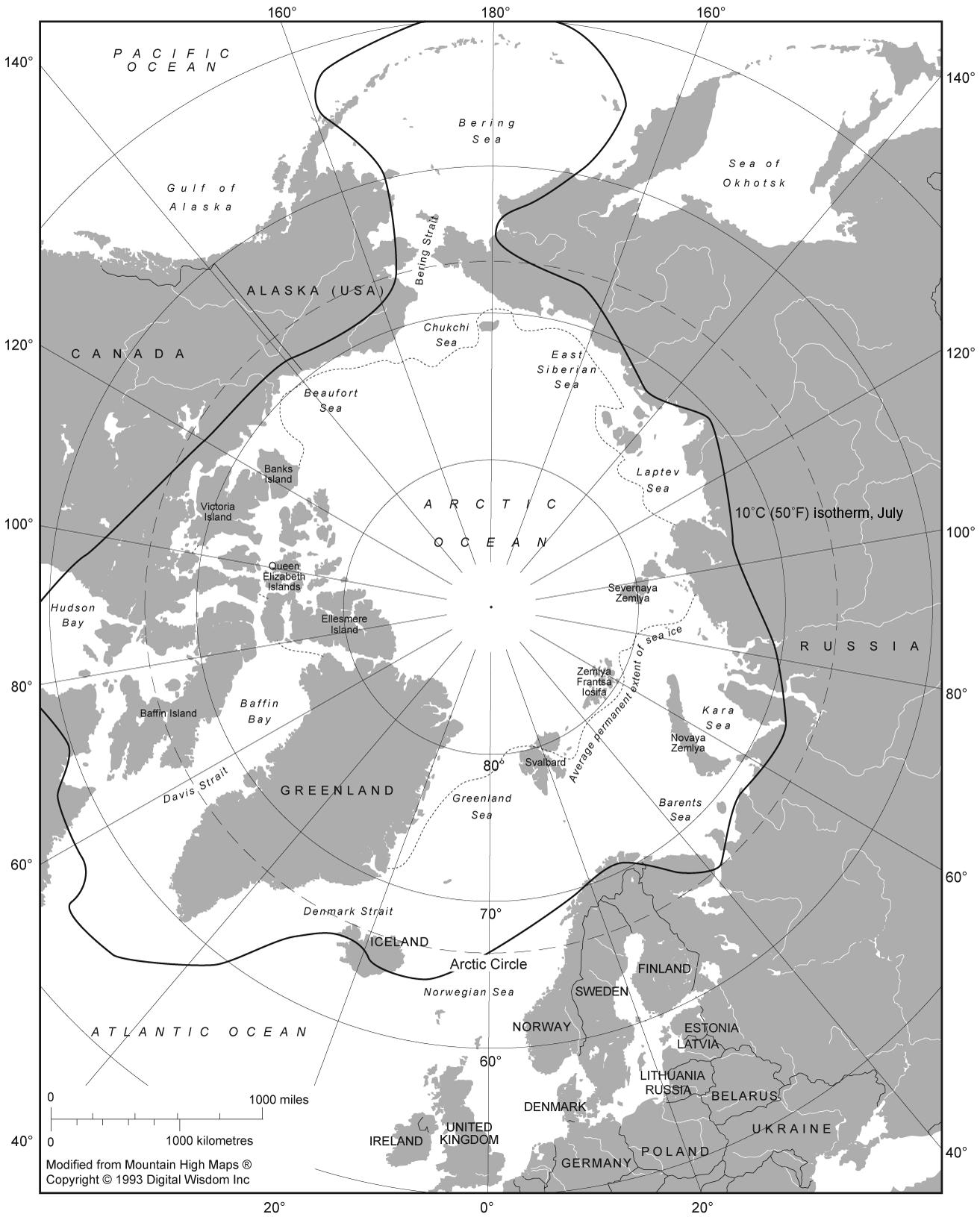
Defining places and regions is rarely free from controversy. As we will show in the next chapter, definitions of the Arctic vary and diverge considerably, according to any number of scientific, environmental, geographical, political, and cultural perspectives and biases. And to complicate this further, climate change is contributing to shifting many physical boundaries
that had been drawn as fixed points and zones and marked ecosystems on maps and charts.
The Arctic is also synonymous with the “North” and the “circumpolar North.” We also use these terms, although many high latitude places defined as “northern” in this sense are not necessarily “Arctic.” If anything, we show in this book that the Arctic is a dynamic, complex, diverse, and integral part of the world, a place with rich histories and disagreements about its nature and about its future, rather than an empty, remote, distant, and forbidding region at the top of the globe. It is also a place in motion.
So, an initial answer to our first question is that locating and defining the Arctic is not so straightforward. And like any definition, it can reveal and obscure the multiple ways we divide the world into places and regions. Canadians refer to “the North,” “mid-North,” and the “provincial Norths,” while Norwegians talks about the “High North.” In Russia, they get around that issue by not only identifying a “Far North” but also use the term “areas equivalent to it,” which allows slippage southward depending on the criteria used.
What makes this question a lot harder to answer than it should be is unrelenting change. Once we might have thought the Arctic could and should be defined by lines on maps such as the Arctic Circle. Coupled with that latitudinal definition, we might also point to adjectives like cold, ice, and snow as material, sensory, and elemental markers of the Arctic. We contend that the scale and scope of change scrambles a commonsensical perception and understanding of the Arctic.
In January 2017, it was reported that 2016 had been the warmest year on record for the globe as a whole, and that warming ocean waters off Alaska were bringing widespread ecological changes; that Norway’s Statoil was optimistic its Korpfjell license area in the Barents Sea could contain 10 billion barrels of oil; and that Russian president Vladimir Putin was pushing to strengthen national interests in the Arctic by bolstering Russia’s military presence in its northern regions.
Responding to the news that Russia was investing in more nuclear icebreakers and equipping its Northern Fleet (based near Murmansk on the Kola Peninsula) with ice-capable corvettes carrying cruise missiles, US Defense Secretary James Mattis commented that Moscow was taking “aggressive steps” in the Arctic. It was a news-filled month for an increasingly globally significant region.
A couple of months later, at the end of March 2017, scientists from the National Snow and Ice Data Center (NSIDC) in Boulder, Colorado, published the results of research that suggested a new record for low levels of winter ice in the Arctic Ocean had been set. A number of scientists were quoted in various media as saying the findings were “disturbing” and that the Arctic was now in a “deep hole.”
In April, a paper published in Science reported on research carried out in the eastern Eurasian basin—north of the Laptev and East Siberian Seas—that found that warm Atlantic water is increasingly pushing to the surface and melting floating sea ice. This mixing, the authors said, has not only contributed to thinner ice and to larger areas of previously ice-covered open water, but it is also changing the state of Arctic waters in a process they termed “Atlantification”—and they warned this could soon spread across more of the Arctic Ocean, transforming it fundamentally. Other scientists speak of “Pacification” and report farther movements of warmer and denser waters into the previously frozen ocean. Heat, nutrients, lower latitude species, pollutants, and microplastics are following in their collective wake.
So, in that one year, 2017, we can point to reports of Arctic change on many different fronts—biological, geophysical, and resourceful. Move forward to summer 2018, forest fires raged north of the Arctic Circle in Sweden, and research published by scientists working for NASA, who had constructed a sixtyyear overview of Arctic sea ice thickness beginning in 1958, concluded, since scientists began observing and recording it, that the Arctic Ocean’s ice cover is now younger and thinner.
Meanwhile, in August 2018 it was reported that sea ice off the north coast of Greenland, which is the oldest and thickest in the Arctic Ocean, and compacted by the Transpolar Drift, had started to break up. Scientists from the Danish Meteorological Institute expressed alarm that this ice was becoming more mobile in waters where ice is, on average four meters thick and not easily moved. The following month, Danish shipping company Maersk announced that its container vessel Venta Maersk had completed a trial passage of Russia’s Northern Sea Route (NSR), from Vladivostok to St. Petersburg, while at the end of October Sovcomflot’s oil tanker Lomonosov Prospect, which is powered by liquified natural gas (LNG), voyaged over 2,000 nautical miles in under eight days through the NSR carrying petroleum products from South Korea to northern Europe. Lomonosov Prospect only required nuclear icebreaker assistance in the region of the Ayon ice massif in the East Siberian Sea. These trends, movements, and mobilities are set to continue.
Who lives in the Arctic, and is that changing?
So much of what we are told about the Arctic is partial, out of date, and simply wrong. Many children grow up imagining the Arctic as populated by native peoples (simplified as “Eskimos”) living in igloos. Indigenous cultures are diverse, and many indigenous peoples live below the Arctic Circle. In most parts of the circumpolar North, non-indigenous residents far outnumber indigenous Arctic peoples, largely because of the legacies of colonialism and settlement, but also because of recent trends in immigration, rural-urban migration, and the global processes of demographic change. The communities living in the Arctic are not unchanging. Arctic regions are also cosmopolitan places, with indigenous writers such as Greenland’s Niviaq Korneliussen charting their social, cultural, and sexual—and urban—complexities.
In chapter 3 we will explore the ways in which indigenous peoples think about their Arctic surroundings as homelands and how this is central to land claims, self-determination, and self-government. In some parts of the Arctic, however, everyone is a migrant, an incomer, or a settler who nurtures their own relationships and senses of place with their surroundings— and the composition of Arctic towns and communities is far more diversified than many people imagine. In Longyearbyen, the administrative center of Svalbard (Norway’s Arctic Ocean archipelago, which has a population of around 2,600), a Thai community has grown there since the early 1980s. Working mainly in the hotel sector, Thais make up the second-biggest community, after Norwegians, but the town’s international character is also defined by many other foreign long-term and seasonal residents. Longyearbyen may have its origins in a settlement established by the Boston-based Arctic Coal Company in 1906, but now you are far more likely to meet people working there who are from Malaysia, Armenia, and Argentina, and see Asian tourists rather than coal miners. Longyearbyen is also a busy place throughout the year, not just when a large number of cruise ships visit during summer—international students study changing Arctic ecosystems at UNIS, the University Centre in Svalbard, while the town is host to a number of festivals, even during the coldest winter months. Svalbard has been branded the “the cultural capital of the High Arctic” by the archipelago’s official tourist board. Longyearbyen plays host to the world’s most northerly Oktoberfest, the annual Polarjazz festival at the end of each January, and the annual Dark Season Blues festival, among many others.
In Greenland, people from Thailand and the Philippines work in low-wage service sectors, especially in hotels, restaurants, and housekeeping, but they also run their own successful businesses. Many have families—some have married Greenlanders and Danes—and their children learn Greenlandic and Danish in school; an earlier generation born in Greenland, and now in their early twenties, are making