Introduction
Dream On
Rock, having evolved among the poor, and appealing to the young before they learned to cooperate, seemed the music of those who could not or would not take part in the orderly business of society It flowed through the air, straight to the nerves, immune to the settling influence of any status quo It appeared to have great liberating potential: all those people, moving in bliss to the same beat, might accomplish anything
Mark Crispin Miller, “Where All the Flowers Went”
At the 2016 Republican Party Convention in Cleveland, Ohio, the delegates who ultimately chose Donald Trump as the GOP’s presidential candidate attended a historic political event driven by what critics charged were dangerous currents of xenophobia and demagoguery. Few of the people in the crowds in the Quicken Loans Arena may have noticed that the official logo of the proceedings combined the party’s traditional symbol of an elephant with a silhouette of a Fender Stratocaster electric guitar, a reference to the convention’s locale in the so-called birthplace of rock ‘n’ roll and home of the Rock and Roll Hall of Fame; the red-white-and-blue design was realized by the Cleveland firm of Falls Communications. “The elephant marching forward represents strength with a positive attitude,” explained company head Rob Falls. “The guitar is a proud symbol of the rock and roll history of Cleveland.”1
The Fender Stratocaster was the instrument favored by celebrated rock performers including Buddy Holly, Eric Clapton, and the African American genius Jimi Hendrix. Hendrix, who died in 1970 at age twenty-seven, was the best-known exponent of the psychedelic
sound, a musical style of spacey electronic noises and surrealist lyrics conducive to the hallucinatory perceptions of listeners experiencing the effects of marijuana and LSD. Hendrix, Clapton, Holly, and other players of the classic “Strat” were also countercultural heroes, whose lives and work had aroused much suspicion among older people for the provocations of their songs and the rebellious implications of their fame. The futuristic cutaways and curves of the Stratocaster, first marketed in 1954, had long been associated with the racial and moral upheavals that had transformed society through the last half of the twentieth century Yet here was the guitar’s outline being employed to advertise the official ascendancy of a man who promised to Make America Great Again— or, to his opponents, threatened to turn back the clock on decades of hard-won social progress.
In the weeks leading up to July’s convention, the Trump campaign had also played a number of classic rock tunes at the candidate’s increasingly well attended and increasingly controversial rallies. Through representatives, many of the artists issued cease-anddesist notices requesting that their songs not be used at such gatherings. Among the acts whose work had sounded out over venues full of baseball-hatted, media-hating, Hillary Clinton–loathing Trump supporters were Aerosmith (“Dream On”), Queen (“We Are the Champions”), Neil Young (“Rockin’ in the Free World”), the Beatles (“Here Comes the Sun”), and the Rolling Stones (“Start Me Up” and “You Can’t Always Get What You Want”). That the performers—most of them veterans of drug busts and other debaucheries, and several not even American citizens—would be embarrassed by their appropriation by the Republican upstart was hardly surprising. Less noticed, though, was the remarkable fact that Republicans were celebrating their upstart ascendancy to the accompaniment of classic rock ‘n’ roll.
What had happened? How had the roiling wave of conservative American populists co-opted the iconography of sex, drugs, and rock music? Or was conservative populism now expressed through electric guitars, and had the co-optation gone the other way?
One possible clue to those puzzles lies in a particular strain of rock ‘n’ roll itself. With the form now several decades old, spanning
several generations of fans and an entire planet of audiences, numerous genre subcategories have emerged: heavy metal, punk, new wave, alternative, folk, and even smaller offshoots within each, like death metal, grindcore, emo, new romantic, power pop, and on and on. Among the most enduring of these tangents is the music that emerged in the late 1960s as a response to the kaleidoscopic indulgences of psychedelia and the acoustic introspections of folkschooled singer-songwriters. This work maintained the volume and energy of electric rock but coupled it with a down-to-earth fatalism that over the next twenty years and down to our own era has proven enormously appealing to a major segment of the entertainment market—and also, perhaps, to a crucial segment of the electorate in Western nations.
That fragmentation of the listening public, no less than of the artistic choices available to the public itself, might be another explanation of the merging of rock sound and imagery with Republican platforms, as seen in Cleveland in 2016. By the early 1970s, rock ‘n’ roll had become so popular that scarcely any young person would admit to rejecting the entire medium on general principles; they might eagerly approve of one band but scornfully dismiss another appearing on the same bill. Conversely, the vast baby boom cohort that comprised rock’s commercial base was so populous that few in the music industry would present any new act as a one-size-fits-all product. Everyone under a certain age liked rock, but not everyone liked it for the same reasons. Instead, managers, promoters, record company executives, and music writers tried to identify different areas of generational, regional, or cultural preference, just as distinct generations, regions, and subcultures began to understand and articulate what their own preferences were.
The particular preference of a particular audience, it emerged, was for the rock ‘n’ roll music considered in this book. This ranged from the homespun urgency of Creedence Clearwater Revival to the good-time oafishness of Ted Nugent, Grand Funk Railroad, and Black Oak Arkansas; from the New England snarl of Aerosmith to the heartland grit of Molly Hatchet, Bachman-Turner Overdrive, and the Texas blues of ZZ Top; from the raspy earnestness of Bob Seger
and George Thorogood to the more nuanced proletarianism of Bruce Springsteen and John Mellencamp; from the overseas attitude of Bad Company, Nazareth, Thin Lizzy, Foghat, and Motörhead to the twin titans of the denim demographic, Australia’s AC/DC and the unrepentant American southerners Lynyrd Skynyrd. All the artists— apolitical but anti-elitist, socially tolerant but sternly ethical, products of both international uprising and local loyalty—provided the anthems of a young working-class contingent that has since grown into a maligned and misunderstood division of postindustrial society. Those anthems are still revered now, even as their enthusiasts are not. They are songs of allegiance to place: “Sweet Home Alabama,” “Mississippi Queen,” “Born on the Bayou,” “Born in the USA.” They are songs of allegiance to no place: “Turn the Page,” “Highway to Hell,” “Eight Days on the Road,” “(We Are) The Road Crew.” They are songs of work: “Just Got Paid,” “Working Man,” “Takin’ Care of Business,” “Workin’ for MCA.” They are songs of desperate hope: “Dream On,” “Born to Run,” “Jailbreak,” “Breaking the Law,” and songs of bitter resignation: “Lodi,” “Against the Wind,” “Racing in the Streets,” “Rain On the Scarecrow.” They are songs of macho bluster: “The Boys Are Back in Town,” “We’re an American Band,” “Run with the Pack,” “Bad to the Bone”; songs of puerile lasciviousness: “Go Down,” “Wang Dang Sweet Poontang,” “Pearl Necklace,” “Muscle of Love”; songs of grassroots defiance: “Fortunate Son,” “Just’ Cos You Got the Power,” “Stormtroopin’,” “Gimme Back My Bullets.” Remembered by millions, these tracks comprise the playlist of the forgotten man. Certified classics of long standing, they are the soundtracks of an inchoate insurgency.
Just what that insurgency means, or where it may ultimately lead, is as yet unknowable. More verified today is the long shadow cast by rock ‘n’ roll over hundreds of millions of citizens around the world— not just over reckless kids but over wage-earning parents and retired elders; not just over student agitators but over registered voters; not just over indignant youth challenging authority but over indignant adults challenging their own definition of it. Not only have the politics of rock drifted surprisingly rightward since 1970, but some rock, at least, has reset the boundaries of left and right themselves. That God, guns, and Old Glory can be paid fitting tribute in a heavy guitar
riff delivered by a long-haired reprobate in blue jeans but #Me Too, Occupy Wall Street or Black Lives Matter might not, hints at where those boundaries now lie. The improbability of rock’s political realignment across a fifty-year span is matched only by the improbability of the public’s.
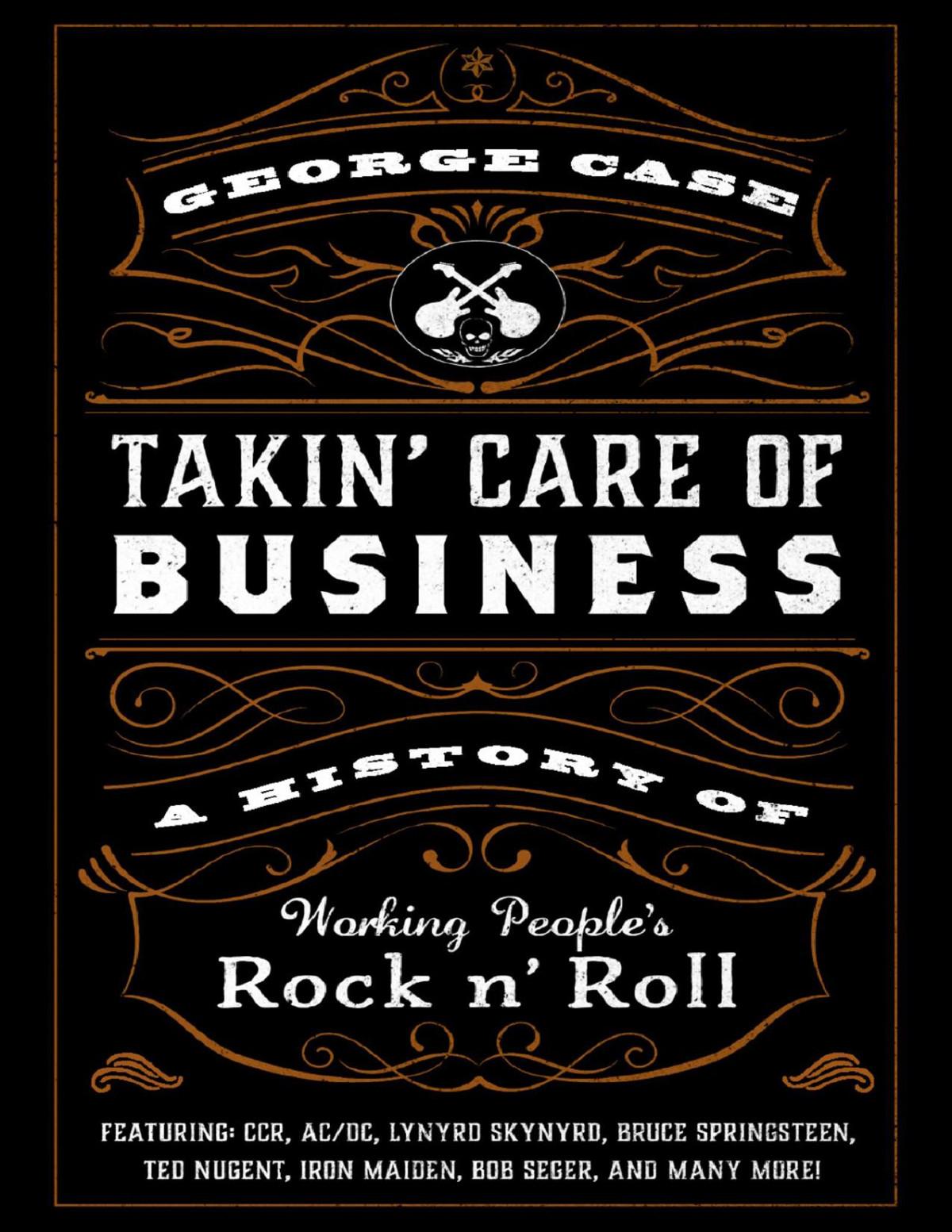
And though the sound of rock has hailed a lot of good times, some rock, since 1970, has supported its listeners through lengthening stretches of bad ones. Rock ‘n’ roll was created by the wealthiest populations ever to have lived; it was sustained and elaborated on by populations whose wealth was less secure than they had once thought. This subdivision of the audience evolved into a “base” well before the word was ever applied to poll results, mailing lists, and swing states. They knew what they liked but, equally, what they didn’t—and their dislikes included some artists elsewhere critically sacrosanct, and some themes otherwise philosophically inviolable. Seldom recognized for it, their numbers were large enough to sway the operations of the entire music industry, just when many other industries were beginning to falter. And scarcely conceded by music historians, their choices are singular enough to change our reading of the music altogether, just when so much other historic change unfolds. It is these fans, and the objects of their fandom, that Takin’ Care of Business will consider. To the extent that “working-class populism” describes an authentic political current, it’s now beyond a doubt that certain musicians and certain of their songs helped define that current, to both outsiders and to the populists themselves. Assessing the social history of the last few decades, we learn a lot from studying important elections, pivotal legislation, traumatic wars, and transformative new technologies. But we can also learn a lot from picking through a stack of legendary vinyl records.
Yes, this is pretty arbitrary. The same era in pop music covered here, and a lot of the same pop music, could be selectively applied to a completely different analysis. Maybe the spreading attraction of reggae, and the occasional use of South Asian or Near Eastern sonorities in rock songs (e.g., “Norwegian Wood” or Led Zeppelin’s “Kashmir”), says something about the rise of multiculturalism; maybe the prominence of female performers like Janis Joplin, Joni Mitchell, Aretha Franklin, and Heart indexes the impact of feminism on
Western society; maybe glitter, disco, and Elton John and Freddie Mercury were early pointers toward today’s broad acceptance of the LGBTQ community. You can choose a few key names from within any few years of show business history to illustrate just about any wider tide outside it, if you’re sure to overlook the contradictions and qualifications that argue the other way.
An overview of rock ‘n’ roll populism, further, implies an unasked question: whose populism? Is one audience more valid, more real, than another? Many of these performers would happily have boasted of playing their music “for the people” (or would happily have press agents and compliant journalists do the boasting for them), but in fact their products were frequently aimed at discrete slices of a much broader clientele. In some cases, artists and audiences were surprised to discover each other and encouraged by the spontaneous community that developed between them. But elsewhere, musicians and fans were artificially brought together by advertising, media opportunism, and self-interest—hype, in other words.
Consider: there has never been a requirement to show a pay stub or a bank statement to get into a Bruce Springsteen concert. Affluent people can like AC/DC too; auto workers can take a shine to Gilbert and Sullivan. Most of the supposedly ordinary-dude musicians described herein are, in fact, rich and famous. The record labels that retailed their output in Middle America, industrial England, and smalltown Canada belonged to multinational corporations. There is no section of music stores labeled “Blue-Collar Rock,” and music trade publications have never featured special “Working People’s Music” rankings. In 1977, for example, Bob Seger’s heartland ode “Mainstreet” was on the Billboard singles chart a few notches below Marvin Gaye’s “Got to Give It Up (Part 1),” Fleetwood Mac’s “Dreams,” and KC and the Sunshine Band’s “I’m Your Boogie Man.” It seems unlikely that the same people were buying the Seger record along with those of Marvin Gaye, Fleetwood Mac, or KC and the Sunshine Band, or that the same people were requesting each of those songs to be played on their hometown AM broadcasters—but who really knows? Today such micromarketing certainties are probably possible through online algorithms and web analytics, but
forty or fifty years ago the performers, the A&R staff, and the public themselves could only make educated guesses as to whose material meant how much to which people. It’s since fallen to music journalists and music historians to sort music into neat (and often false) denominations that conveniently ignore the flukes of timing and taste that produce hit tunes and successful acts. The curatorial selectiveness that isolates “Mainstreet” from “I’m Your Boogie Man,” even though both songs were about as popular about the same time, takes some justification and no little amount of personal bias. In that sense, all of this is as much about rock criticism as rock itself.
In some ways, it’s not even about rock at all. What makes the music significant is partly the mechanics of the songs and the dynamics of the business, but the changes in the wider society also need to be reckoned with. Some of the reckonings are not pretty: undertones of white racism in an environment where minority rights were advancing, crudely sexist lyrics and stage poses coinciding with feminism’s second wave, and an exaggerated masculinity during a time of gay emancipation. In these years, the music industry offered a haphazard, organic preview of the balkanization that cable networks and online news outlets would later promote deliberately and artificially. Rock ‘n’ roll—and its country cousin—anticipated how every kind of mass entertainment would one day become political, and how politics would one day become a form of mass entertainment.
More broadly, what’s considered here is how notions of status and identity were evolving alongside realities of labor, ethnicity, gender politics, and world affairs. Like actors typecast following memorable roles they only played once or twice, the rock ‘n’ rollers discussed in these pages came to represent outlooks they may never have meant to advocate for. As with movies, television, or novels, it’s now possible to pick out trends in the history of the medium to which the artists themselves were oblivious. Eventually, somehow, rock ‘n’ roll decadence came to be hailed as old-fashioned dignity Somehow, rock ‘n’ roll’s teenage ardor persisted into its fans’ middle age. Somehow, the inherent rebelliousness of rock ‘n’ roll was adapted to stand for the traditionalist values of a beleaguered economic caste.
Somehow, a vital brand of rock ‘n’ roll was turned into an idealized self-portrait of a vulnerable people beginning a long decline. Admittedly, few things are as nerdy as a rock critic striving to define what’s cool. And nothing says amateur sociology as much as someone sorting his record collection according to ZIP code and income bracket. Devising elaborate taxonomies of pop genres— carefully delineating the subtle differences between glam rock and shock rock, or hotly debating whether to file the MC5 under heavy metal, garage, or proto-punk—is indeed a cliché of rock texts. But not all of those taxonomies have been established retrospectively; as we’ll see, contemporary listeners in 1969, 1974, and 1986 were already classing some soloists and bands by their currency with downmarket white males eager for high-volume, no-bullshit performance. Even back then, the music business had a hand in determining who its wares were sold to: advertising certain acts in certain publications, promoting them in certain venues in certain towns, pushing airplay on certain radio stations, and so on. Sure, there were probably some upwardly mobile MBAs cranking ZZ Top’s “Beer Drinkers and Hell Raisers” while they scanned the day’s stock reports, just as some factory grunts probably came home and cracked a brew and lit a joint to David Bowie’s “Lady Grinning Soul,” but some general conclusions about popular music and its diverse consumers remain valid. One is that the diverse consumers of popular music really do favor some kinds of music over others, motivated not by hype or fashion but by genuine conviction. Another is that integrity can’t be manufactured, even by a booming, often cutthroat business with millions of customers. And one more is that there really was once such a thing as working folks’ rock ‘n’ roll, just as there really was such a thing, or a lot more of such a thing, as real working folks.
Salt of the Earth
A transitional period, the Sixties witnessed a shift from a society weakly held together by a decaying faith to a rapidly desocializing mass of groups and individuals united by little more than a wish for quick satisfaction; from a sheltered assumption of consensus, hierarchy, and fixed values to an era of multiplying viewpoints and jealously leveled standards; from a naive world of patient deferral and measurable progress to a greedy simultaneity of sound-bite news and thought-bite politics; from an empty and frustrating moral formality to an underachieving sensationalism.
Ian MacDonald, Revolution in the Head
Rock ‘n’ roll had always been the music of poor people. Its antecedents in blues, gospel, and country were songs of Blacks and whites toiling on hardscrabble farms, down dangerous mine shafts, and in hellish industrial mills. They were songs of poverty and humiliation, of release and rejoicing. They were songs of lonesome highways, big steel rails, steady rollin’ men, the killing floor, the range, the House of the Rising Sun, and the boss. The folk idioms of labor, struggle, resentment, and resilience were deeply embedded in the words and rhythms of what became the mass-marketed medium of rock.
These roots were not always apparent when the music appeared in the early 1950s. Both teenage acolytes and adult detractors noted only that the new sounds were part of a new affluence, coinciding with the post–World War II economic boom that saw historic levels of material wealth across Western nations. Driven in America by the federal government’s New Deal programs designed to alleviate the worst effects of the Great Depression and to prevent future collapses of a similar scale, and by technological innovations in aerospace,
electronics, and consumer products, the unprecedented wealth made affordable even such frivolous, faddish trinkets as rock ‘n’ roll. The commercialized hybrid of rhythm and blues and hillbilly that increasingly seduced the ears and minds of young people was merely the most indulgent leisure item yet marketed to the most indulged population of all time.
But underneath the novelty and the outrage surrounding the first era of rock ‘n’ roll there remained distinct ties to working-class sensibility. In the 1950s almost one in three employed Americans were a member of a labor union, while industrial manufacturing was at the heart of US economic ascendancy. Rock ‘n’ roll may have been only one ephemeral strand of the entertainment business—in the beginning not even a particularly significant one, in the minds of its corporate sponsors—yet it was nonetheless enabled by the secure jobs and substantial wages that gave parents disposable income enough that their children could spend it on 45 rpm records, jukebox selections, home phonographs, and fan magazines. Whether he knew it or not, the stereotypical suburban 1950s adolescent, cruising his Chevy to the sock hop while AM radio blared Elvis or Chuck Berry or Buddy Holly, enjoyed all the benefits of generous collective bargains, busy assembly lines, and billowing smokestacks. Rock ‘n’ roll may have been television and tail fins, but it was made possible by foundries and factories. The music was pop culture; its base was proletarian.
Occasionally, that base showed through. Though most of the songs were obviously built around themes of juvenile fun or romance, some material addressed more grown-up responsibilities. Bill Haley’s epochal “Rock around the Clock” (1954) applied the language of shift work to its twenty-four-hour party, while Little Richard’s “Rip It Up” (1956) started on Saturday night when the singer just got paid; the same year, Fats Domino’s “Blue Monday” went through a work week capped by a Friday payday and weekend fun; Chuck Berry’s “Too Much Monkey Business” (1956) griped about workin’ in both the mill and the fillin’ station, and his “Almost Grown” (1959) boasted about that most adult of attainments, a little job; the Silhouettes’ “Get a Job” (1957) told an infectious doo-wop story of trying to find one. Clearly, the strains of holding an
occupation and the rewards of nights off still resonated with a young audience only beginning to enter the labor market. Rock ‘n’ roll was not all about living at home on dad’s allowance. The artist most identified with this semi-maturity was Eddie Cochran, whose “Summertime Blues” (1957) and “Somethin’ Else” (1959) addressed, through Cochran’s influential rockabilly guitar style, the basic concerns of earning money, saving it, spending it, not having enough of it, and taking two weeks for a fine vacation.
And it was not only the songs but the singers themselves who gave early rock its blue-collar character This founding generation of rock ‘n’ roll stars were all children of the Depression, who had known want and dislocation and who carried at least ancestral memories of economic hardship. Elvis Presley was employed as a delivery driver by the Crown Electric Company in Memphis, Tennessee, when he made his first record; during his childhood his parents, Vernon and Gladys, had occasionally drawn on social assistance and the generosity of neighbors to stay solvent, and father Vernon was regularly in and out of various jobs, at one point losing the family home after an altercation with his boss and landlord. In 1956 he was already amazed at how far he had risen: “My daddy and I were laughing about it the other day,” the young Elvis noted. “He looked at me and said, ‘What happened, El? The last thing I remember is I was working in a can factory and you were still driving a truck.’ ”1 To another reporter he explained his accumulations of cars and clothes: “When you ain’t had nothing, like me, you keep count when you get things.”2 Roy Orbison’s father worked on Texas oil wells and as an auto mechanic. Carl Perkins was the son of sharecroppers—that is, tenant farmers. Buddy Holly had moved several times while growing up in Lubbock, Texas, in the 1930s, and Jerry Lee Lewis was also a product of a poor rural region of Louisiana.
This working-class aspect of rock ‘n’ roll was often insinuated its opponents’ critiques. Though racial and sexual anxieties were at the forefront of conservative denunciation, there was also the subtler disapproval of personal styles associated with a hitherto compliant menial or agricultural social order. Americans may have preferred to think of themselves as sharing an egalitarian society where origin and accent didn’t matter, but their harshest reactions to the new
music revealed otherwise. Performers like Elvis were derided as vulgar hillbillies, lowering public taste; they embodied an establishment caricature of the backward, hopelessly tacky southern United States. “Stick to the Heartbreak Hotel, and stay away from the Waldorf,”3 Milton Berle kidded Presley, none too subtly, when the young singer appeared on the established comedian’s television show. Elvis’s 1956 detonation, the snare-savage cover of Big Mama Thornton’s “Hound Dog,” brazenly called out its subject’s—by implication, its listener’s—spurious claim to be high-class. Sociologists observed that rock ‘n’ roll appealed to the high school “rough crowd,” the teens less academically inclined and more likely to smoke and drink. “Rock and roll is phony and false, and it’s sung, written, and played for the most part by cretinous goons,” Frank Sinatra infamously complained in 1957. “Rock and roll is the most brutal, ugly, degenerate, vicious form of expression—lewd, sly, in plain fact, dirty—a rancid-smelling aphrodisiac and the martial music of every side-burned delinquent on the face of the earth.”4
Aside from rock’s racy lyrics and broadcast images of white kids cheering flamboyant Black showmen, it was also an affront to bourgeois codes of dress, manner, and language. Its typical listener was portrayed as a “greaser,” a drawling garage hand or a seventeen-year-old hoodlum, just as its typical practitioner was an undereducated, garishly dressed guitarist or piano player. The landmark 1955 film Blackboard Jungle not only introduced “Rock around the Clock” to a wide viewership but associated the music with inner-city high school thugs. The next year, the trade paper Variety added that rock ‘n’ roll was “suggestive and vulgar, tinged with the kind of animalism that should be confined to dives and bordellos.”5
At a 1956 episode of unrest at a rock ‘n’ roll show in Saint Paul, Minnesota, it was said that “the general brand of people and type of behavior at the dance were not conducive or beneficial in any respect to the proper environment of juveniles,”6 and after violence broke out at a 1958 concert in Boston where Jerry Lee Lewis was on the bill, Mayor John Hynes pronounced, “This sort of performance attracts the troublemakers and the irresponsible.”7 Outside a 1950s rock event at a Brooklyn theater, author Jeff Greenfield remembered
that his fellow attendees had “the hard faces of the children of the working poor . . .[who] read auto specs at night, not college catalogues.”8
Into the next decade, rock acquired both a broader audience and a broader authorship. Its class stigma remained, but that reputation was complicated by new names who were neither Black nor indigent white southerners, nor even American. The Beatles and Bob Dylan each released their first records in 1962, at first to divergent markets but, by the middle of the 1960s, together reaching a vast baby boom demographic that became the defining constituency of popular music. Dylan, a middle-class Minnesotan (his father owned an appliance store), was at first tied to the wave of folk music that had become popular with students and progressives; it was also considered “protest music” for its recurring messages against war and racial discrimination. Some heard him as an heir to Woody Guthrie, the great balladeer of marginalized Americana, and the young singer’s visit to the hospitalized and terminally ill Guthrie made the comparison inevitable. Though Dylan himself had been a fan of early rock ‘n’ rollers like Elvis and Little Richard, his initial works bore little relation to what most in his genre felt was an artificial, consumerist product foisted on teenagers, which he mocked in songs like “Talking World War III Blues” and “Bob Dylan’s Blues.”
Dylan sang of poverty, inequality, and exploitation (“The Ballad of Hollis Brown,” “When the Ship Comes In,” “North Country Blues”), but few of his followers were poor, unequal, or exploited. He was no fraud, of course—his commitment to civil rights and against militarism was sincere, and to many his most important music, like “Masters of War,” “Blowin’ in the Wind,” and “The Times They Are aChangin’,” came from this period. His strongest support, however, came from the intelligentsia. Folk music itself represented collegians’ ideal of the common man, something even those who acknowledged Dylan’s originality could see: “More and more [folk singers] are neither rural nor representative of centuries-old family and regional traditions,” wrote Nat Hentoff in a 1964 New Yorker appreciation. “They are often city-bred converts to the folk style,” whose main listeners consisted of “the restless young.”9
In contrast to the cultish appeal of Dylan, the Beatles’ first impact was explosive. Media sensations in Britain and, by early 1964, the US and the rest of the world, they too had been inspired by rock ‘n’ roll’s pioneers but scored most with their own songs, whose music and (especially) lyrics were more inventive than that of their models. At home and abroad, the four were often hailed for a “working-class” irreverence, but their individual origins varied: despite a history of family trauma, John Lennon had grown up in a fairly secure middleclass home, while Paul McCartney (father a cotton salesman), George Harrison (father a city bus driver), and Ringo Starr (mother a barmaid, stepfather a house painter) each represented descending steps on the English socioeconomic ladder. Ringo was the only Beatle who had known the genuine deprivation of Liverpool’s slum district, the Dingle. Compared with America, though, all of warravaged, empire-divesting Britain was a poorer cousin to the affluent superpower. London’s Communist Daily Worker newspaper asserted of the Beatles and their hometown peers: “The Mersey sound is the voice of 80,000 crumbling houses and 30,000 people on the dole.”10 “Up the workers, and all that stuff,” Paul says to an uptight business traveler in A Hard Day’s Night. And in a notorious New Statesman essay of 1964, conservative writer Paul Johnson lamented that the Beatles’ fans were “the least fortunate of their generation, the dull, the idle, the failures: their existence, in such large numbers is a fearful indictment of our education system.”11
As the rock renaissance flourished through the mid-1960s, though, it was clear that the declassé qualities ascribed to the music ten years before had been obviated. Whatever the reactions to the burgeoning success of the form—which was now dominating the record business and increasingly affecting other entertainments as well—few would have said that rock ‘n’ roll was merely something by and for small-town yokels, teenage hot rodders, and manual laborers. With the Beatles and Dylan in the lead, pop records were increasingly lauded for their sophistication and their relevance to an educated and prosperous generation adopting new standards of dress and morality. Premarital sex, illegal drugs, antiauthoritarian politics, non-Western spiritualities, long hair and miniskirts—all were
encompassed in the revolutionary sweep of rock ‘n’ roll. Who could resist its momentum?
Certainly not the critics. With the oldest boomers entering postsecondary education, serious writing on rock ‘n’ roll began to appear in college newspapers and commercial magazines including Crawdaddy (founded in 1966) and Rolling Stone (1967). Countercultural broadsheets such as the Village Voice and the Boston Phoenix also set aside ongoing space for coverage of rock releases and events. Until the mid-1960s, few professional music reviewers had much background in youth culture, but as the industry expanded, the opportunities for journalists, scholars, collectors—and advertisers—opened up as well. The first full-time rock writers tended to rate artists and records by aesthetic and sociopolitical standards that seem almost quaint today. They were very earnest, very erudite, and very elevated from the majority of their peers actually buying the discs and attending the concerts. Against a backdrop of the Vietnam War and all manner of social change, they hoped rock would be an instrument of revolution. It was, but not the revolution they were hoping for.
Naturally, the critics tended to focus their analyses on the most “important” acts—Dylan, the Beatles, the Rolling Stones, some of the psychedelic bands emerging from San Francisco, and then phenomena like Jimi Hendrix and the Doors—at the same time as they were complicit in defining for themselves who exactly was important and who wasn’t. A few critical ground rules were established: gnomically poetic verses were good; clichéd rhymes were not. Ambitious sonic and musical effects were to be admired, but technique alone was not enough. Expansive albums were increasingly the preferred medium of rock ‘n’ roll artistry; hit singles were just commercial gimmicks. Authenticity in background or personality was what made performers significant; mere fame was suspect. In the coming years, rock critics like Paul Williams, Paul Nelson, Richard Goldstein, Ellen Willis, Greil Marcus, and Robert Christgau would become gatekeepers of rock ‘n’ roll respectability.
The irony such figures faced (and at their best acknowledged) in their work was that they were attempting to set the artistic parameters of a field built almost wholly around marketing,
promotion, and turnover They sought the revolutionary potential in capitalist product, and they thought long and hard about works made spontaneously and intuitively. Their publications drew revenue from advertising placements by the record companies whose output was to be judged, and while the problem of payola never surfaced in rock reporting as much as in rock radio, the lures of free tickets and interview access to top personalities could be compromising. Even less than for fiction or film, reviewers of pop music had little real effect on actual public response to available material; as more and more records were retailed and more and more new bands and soloists were put before the audience, critics had to either “interpret” the music (especially the lyrics) with ever-more elaborate explanations or situate the artists within particular sub-categories of style, influences, audience, and so on. They knew they could not effectively recommend buying or not buying a given artist’s release, but they could at least offer readers a way to understand what the release meant, and to whom. In the beginning, the tensions between these imperatives—between scholarly appraisal and popular demand, between critical theory and everyday reality, between expert authority and average punter—were easy to ignore.
No doubt, this era of Aftermath, Pet Sounds, The Doors, Blonde on Blonde, Revolver, Sgt. Pepper’s Lonely Hearts Club Band, Disraeli Gears, and Are You Experienced? marked the greatest flourishing of creative achievement and commercial success in the music to date. Indeed, many listeners now called it “rock,” implying heavy substance, rather than the old “rock ‘n’ roll,” meaning shortlived good times. Whether for Greil Marcus or Joe Blow, it was a rewarding time to be a fan. Yet in among the pantheon of immortals were many other acts that came and went without leaving much of a legacy. They could boast a suitably psychedelic or acidic identity, but they would never attain the jet-set status of the Beatles or the Rolling Stones; they might score a hit or two, or a much-viewed television spot, but never win the long-term managerial attention and label support that sustained the big stars. Very subtly, a distinction had arisen that separated rock’s aristocracy from its serfs. This distinction would later be made explicit in the cataloguing of “garage rock,” as in the 1972 compilation record Nuggets: Original Artyfacts
from the First Psychedelic Era, 1965–1968, featuring gems such as the Count Five’s “Psychotic Reaction” and the ersatz Beatles of the Knickerbockers’ “Lies.” Garage rock, whether termed as such or not, was the music of inexpert young singers and instrumentalists, often recorded in primitive studios and issued to only limited or local exposure. But these were portents of a rift in rock ‘n’ roll that would widen. While some musicians were courted by the international press (both mainstream and alternative) and widely studied for the lessons they were supposedly imparting to their generation, an underclass of provincials and plebeians was building. These were the foot soldiers in the swelling ranks of the rock army —the faceless, forgettable players who dutifully stoked public interest in the sound, but from whom no one was expecting the Word. They were the Young Rascals (“Good Lovin’,” “Groovin’ ”), the Box Tops (“The Letter,” “Cry Like a Baby”), the Bobby Fuller Four (“I Fought the Law”), the Grass Roots (“Let’s Live for Today”), the Standells (“Dirty Water”), and Mitch Ryder and the Detroit Wheels (“Little Latin Lupe Lu,” “Devil with a Blue Dress On”). Even a scattering of tracks by earlier performers had somehow become staples of bar bands and teenage wannabes, like the Kingsmen’s “Louie Louie” (1963) and the Premiers’ “Farmer John” (1964). In a subculture increasingly attending to celebrity, wealth, and newsworthiness, it was these acts’ very lack of each that stood out. By 1968 the fissures in the wider society were penetrating the world of pop music. This was the year of the Tet Offensive in Vietnam in January, which made unmistakable the futility of US military involvement in that country; the assassination of Martin Luther King Jr. in April, triggering a wave of violent Black protest in American cities; the huge student uprisings in Paris in May; the assassination of Robert Kennedy in June; clashes between young demonstrators and police at the Democratic national convention in Chicago in August; and the election to the US presidency of Republican Richard Nixon in November The polarization between radicals and traditionalists, between the forces of protest and the forces of status quo, between advance and backlash, was no longer just a matter of cultural style but one of political stance. Rock ‘n’ roll
was caught between opposing sides, and the responses to the turmoil were ambivalent.
The Rolling Stones’ “Street Fighting Man” implied support for the violence of the antiwar and antigovernment demonstrations, while denying poor rock singers could do much to contribute, and two versions of the Beatles’ “Revolution” (45 single and album track from The Beatles) carried John Lennon’s avowal that he could either be counted in or out of destructive action. Hit songs that year ranged from the reassuring strains of Louis Armstrong’s “What a Wonderful World,” Dionne Warwick’s “Do You Know the Way to San Jose,” and Mary Hopkins’s “Those Were the Days” to the countercultural kick of the Who’s “Magic Bus,” Sly and the Family Stone’s “Everyday People,” and the Doors’ “Hello, I Love You.” Older people tended to regard all the student generation’s music as equally subversive, even as conflicting views on how far subversion should go emerged within the generation itself. But the deeper trend in rock was found less in any lyrical statements as in the overall tonal and visual identity of the artists, both established and new.
In December 1967 Bob Dylan’s John Wesley Harding album appeared. After an intense period when other acts had repeatedly sought the extreme possibilities of electronic recording tricks and abstract lyrics—Sgt. Pepper, Magical Mystery Tour, and the single “Strawberry Fields Forever / Penny Lane,” the Stones’ Their Satanic Majesties Request, Cream’s Disraeli Gears, the Beach Boys’ “Good Vibrations,” and numerous other freakouts—the Dylan record was an unexpectedly low-key, acoustic product that harked back to his early folk music. The songs “All Along the Watchtower” and “The Ballad of Frankie Lee and Judas Priest” seemed to reflect a preindustrial, almost atavistic rusticity rather than the hallucinatory fancies of Jimi Hendrix’ “Purple Haze,” Jefferson Airplane’s “White Rabbit,” or the Doors’ “Light My Fire”; even the cover of John Wesley Harding was a sepia-toned outdoor portrait of the artist and some friends, instead of the then-familiar space-age whirl of colors and optical distortion. Given his critical and popular stature as a songwriter and youth guru, the reverberations from Dylan’s about-face were considerable.
The Beatles and the Rolling Stones made the clearest comparisons. Both Beggars Banquet and the two-record The Beatles
were issued in the late fall of 1968, each band returning to straightforward, unadorned rock with songs like “Stray Cat Blues,” “Factory Girl,” “Parachute Woman,” “Back in the USSR,” and “Birthday.” The albums also featured unplugged pastorals such as the Beatles’ “Julia,” “I Will,” and “Mother Nature’s Son” and the Stones’ blues cover “Prodigal Son,” as well as a striking JaggerRichards original, “Salt of the Earth,” which celebrated the hardworking people, uncounted heads, and stay-at-home voters so often ignored in the shifting cultural and political fashions of the day. Psychedelia’s moment had passed, at least with the acts that had once personified it more than any others.
Just a few months earlier, the hitherto lysergic Byrds had released Sweetheart of the Rodeo, a strongly country-flavored work recorded in the country capital of Nashville and reflecting the input of new recruit Gram Parsons. Parsons was a scholar of folk and bluegrass Americana, whose rural, traditionalist tones, so unhip a year or two before, had now come full circle into antiestablishment coolness: Sweetheart of the Rodeo’s songs included the traditional “I Am a Pilgrim,” Woody Guthrie’s Depression ballad “Pretty Boy Floyd,” and Parsons’ achingly beautiful “Hickory Wind.” Acoustic and pedal-steel guitars, honky-tonk piano, and hymnal harmonies were heard throughout. The Byrds’ departure was no epic commercial smash (no more than was the Lovin’ Spoonful’s “Nashville Cats” in 1966), but the potential of their old-new, wooden-electric amalgam was clear. When the group played Nashville’s Grand Ole Opry in March 1968, it indicated that a musical style once identified with racists and Republicans had been fully co-opted by drug-taking dropouts. Other LA acts, the Nitty Gritty Dirt Band and former teen idol Rick Nelson’s Stone Canyon Band, affected a similar crossbreeding, and San Francisco’s Grateful Dead also borrowed hootenanny and jug band devices.
Country rock, so-called, was like most industry developments in being a product of manipulation (who got signed by what label and recorded by which producer) and publicity (how they were described in ads and press writeups) rather than of any conscious ploy by the people actually making it. Perhaps the deeper meaning of Sweetheart of the Rodeo, and Gram Parsons’ subsequent group the
Flying Burrito Brothers, was that young coastal metropolitans were so secure in their place atop the pop mountain that they could do a bit of slumming and sound like hicks. The risks to their popularity with teenagers and college kids were limited—maybe. “Our fans were heartbroken that we’d sold out to the enemy,” Byrd Roger McGuinn recalled. “Politically, country music represented the right wing—redneck people who liked guns.”12
Meanwhile, another trend had arisen in the international pop community: blues rock. The success of conspicuously blues-based acts like the Stones, the Yardbirds, Cream, and Hendrix spurred various new artists who proudly asserted their gutbucket pedigrees: Fleetwood Mac, Free, Chicken Shack, Ten Years After, the Jeff Beck Group, and Savoy Brown from Britain and Electric Flag, Canned Heat, Johnny Winter, and Paul Butterfield in the States. Few scored really big for any great period, at least in their original lineups, but they established a template that would prove highly durable in the coming decade: they updated the licks and riffs of 1950s Chicago and the 1930s Mississippi Delta with distorted electric guitars and powerful rhythm sections; they depicted themselves in the rugged, denim-clad anonymity of truck drivers or ranch hands (albeit with shaggy beards and shoulder-length hair); and they mostly avoided the contemporary politics that preoccupied the rest of their generation. Perhaps most significantly, despite playing songs first developed by Black people, these groups were all comprised of young white men and women. The contrast between the sources of the original material and the audience and performers now embracing its modern editions could be painfully obvious—what did affluent university students and suburban harmonica players really know about the blues?—but the organic appeal of the music was inarguable; even the Beatles’ White Album song “Yer Blues” commented on it. And there was no doubting the genuine blues feel of guitarists Peter Green in Fleetwood Mac or Mike Bloomfield with Butterfield and his own unit, the Electric Flag. Janis Joplin’s wracked vocals on her bitterly comic plea “Mercedes Benz” (from Pearl, 1971) were the blues transposed to the tract-home milieu of working hard, nights on the town, and Dialing for Dollars on television.