All rights reserved. No part of this publication may be reproduced, stored in a retrieval system, or transmitted, in any form or by any means, without the prior permission in writing of Oxford University Press, or as expressly permitted by law, by licence or under terms agreed with the appropriate reprographics rights organization. Enquiries concerning reproduction outside the scope of the above should be sent to the Rights Department, Oxford University Press, at the address above
You must not circulate this work in any other form and you must impose this same condition on any acquirer
Published in the United States of America by Oxford University Press 198 Madison Avenue, New York, NY 10016, United States of America
British Library Cataloguing in Publication Data Data available
Library of Congress Control Number: 2022940113
ISBN 978–0–19–286299–0
Printed and bound in the UK by Clays Ltd, Elcograf S.p.A.
Links to third party websites are provided by Oxford in good faith and for information only. Oxford disclaims any responsibility for the materials contained in any third party website referenced in this work.
Abbreviations
AN Archives Nationales, Paris
A/S Au sujet de (‘About’)
CCCA Churchill College Cambridge Archive
DBFP Documents on British Foreign Policy
DDF Documents diplomatiques français
DRC Defence Requirements Committee
EHR English Historical Review
HJ Historical Journal
IMCC Inter-Allied Military Commission of Control
INS Intelligence and National Security
IWM Imperial War Museum, London
ODNB Oxford Dictionary of National Biography
PCO Passport Control Office(r)
PRO Public Record Office
SHD Le Service Historique de la Défense, Paris
SIS Secret Intelligence Service
SR Service de Renseignements
TNA The National Archives, Kew
A Note on Sources
Documentary sources for the pre-war period are highly fragmentary. Many secret French and German archives were lost or destroyed— sometimes deliberately—during the Second World War. Nor did the French governments of the Third Republic keep official records of their discussions. Although since 1916 British governments have kept records that are usually released to the public after thirty years, SIS reports remain closed to the public. This book has attempted to piece together some of the surviving fragments, and the clues to and glimpses of this secret world that emerge from public records and published memoirs.
List of plates
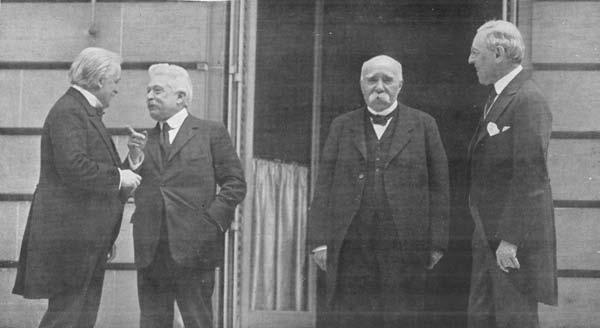
Plate 1: The Treaty of Versailles (1919) was formulated at the Paris Peace Conference after World War 1. Pictured here, at the conference, are (from left) David Lloyd George, Vittorio Orlando, Georges Clemenceau and Woodrow Wilson.
Alamy: D95YEC
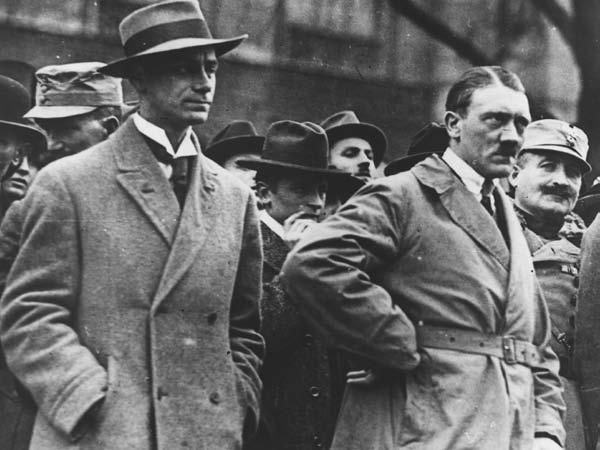
Plate 2: Hitler in Munich in the 1920s.
Alamy: 2BH9G1W
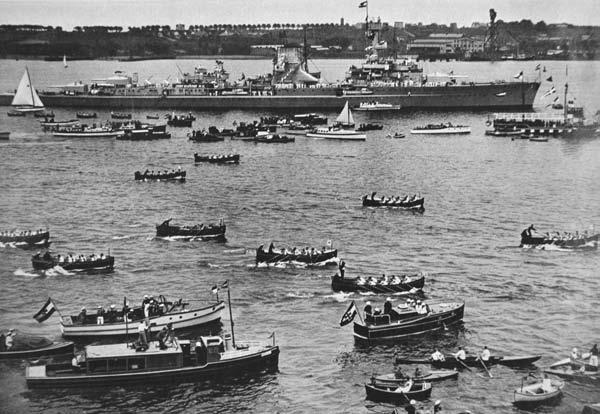
Plate 3: Key units of the German navy assemble at Kiel in 1934.
Alamy: P66WCM
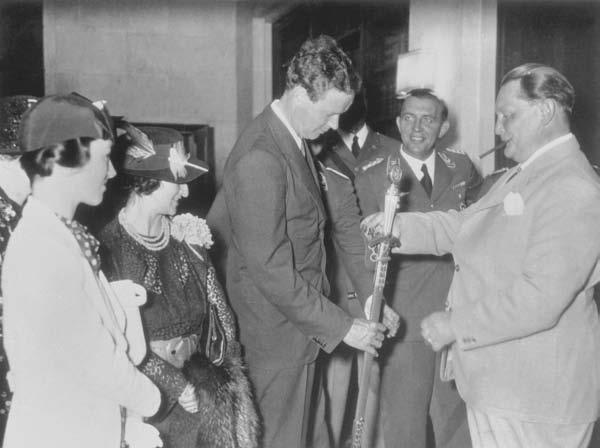
Plate 4: Göring with Charles A. Lindbergh and his wife. Library of Congress: 2002712457
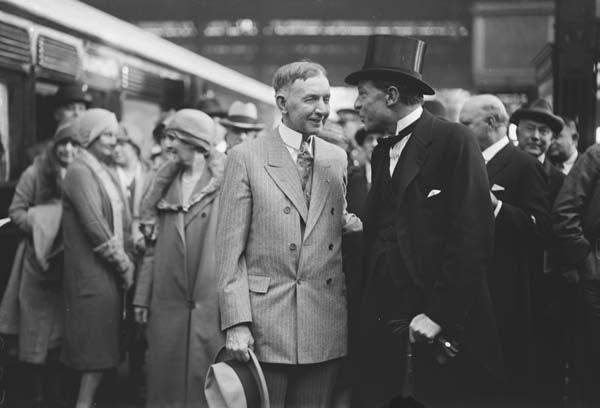
Plate 5: Great Britain’s top diplomats – The 1st Earl of Halifax, on the right, with Sir Alexander Cadogan.
Alamy: 2BW24HB
Plate 6: Sir Stewart Menzies, later head of the SIS, pictured here in the 1920s. Getty: 3140523
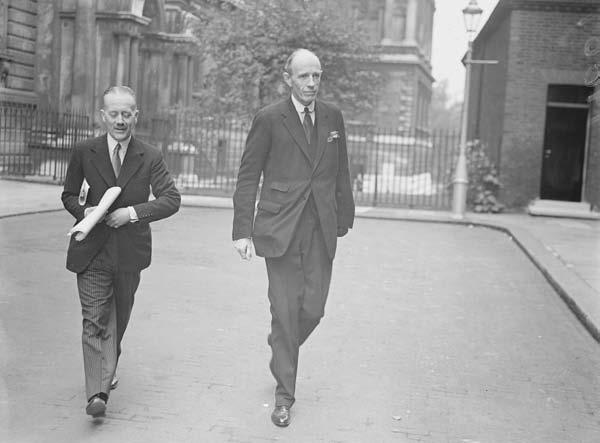
Plate 7: Sir Robert Vansittart, a senior British diplomat before and during the Second World War, and a strong critic of the appeasement of Nazi Germany.
Alamy: 2BW8DMN
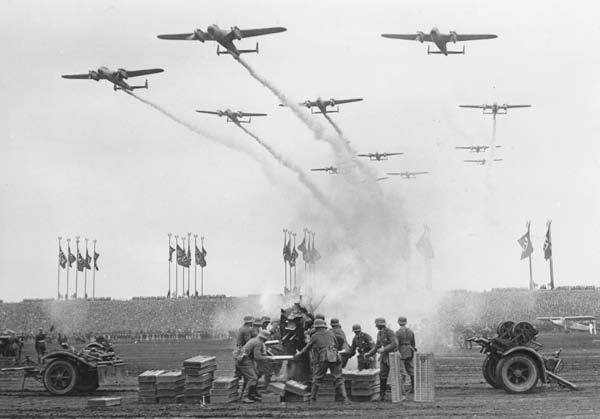
Plate 8: A Luftwaffe display at the Nuremberg Rally in 1938. The Nazis used these displays to intimidate their opponents, and project an exaggerated image of their military strength.
Alamy: E8PHTE
‘I have an instinctive mistrust of diplomats who want to convey the impression of being well informed, of rumours that are manipulated by private agendas, and of fake news spun out by Goebbels’ press service a piece of information, from a trustworthy source and with value, can be distorted by the time foreign embassies get hold of it and put it onto a secret telegram.’
Paul Stehlin, French Air Attaché Berlin (1936–9)
‘Many intelligence reports in war are contradictory; even more are false, and most are uncertain . . . In short, most intelligence is false.’
Carl von Clausewitz, On War
Map 1. Europe in 1920, after the territorial changes imposed by the Treaty of Versailles
Plate 1. The Treaty of Versailles (1919) was formulated at the Paris Peace Conference after World War 1. Pictured here, at the conference, are (from left) David Lloyd George, Vittorio Orlando, Georges Clemenceau and Woodrow Wilson.
Alamy: D95YEC
Plate 2. Hitler in Munich in the 1920s.
Alamy: 2BH9G1W
Plate 3. Key units of the German navy assemble at Kiel in 1934.
Alamy: P66WCM
Library of Congress: 2002712457
Plate 4. Göring with Charles A. Lindbergh and his wife.
Plate 5. Great Britain’s top diplomats – The 1st Earl of Halifax, on the right, with Sir Alexander Cadogan.
Alamy: 2BW24HB
Plate 6. Sir Stewart Menzies, later head of the SIS, pictured here in the 1920s. Getty: 3140523
Plate 7. Sir Robert Vansittart, a senior British diplomat before and during the Second World War, and a strong critic of the appeasement of Nazi Germany. Alamy: 2BW8DMN
Plate 8. A Luftwaffe display at the Nuremberg Rally in 1938. The Nazis used these displays to intimidate their opponents, and project an exaggerated image of their military strength.
Alamy: E8PHTE
Introduction
Early in the afternoon of 1 February 1939, a middle-aged man called Walther Friedrich Marath arrived at the Hebron Hotel in central Copenhagen. He showed the receptionist his passport to prove who he was and then made his way, suitcase in hand, to his comfortable, although simple and sparse, single room on the top floor. To the hotel staff, there was nothing about this guest that seemed unusual, other than the fact that he had a noticeably strong German accent. Such visitors were always coming and going.1
His real name was Felix Waldemar Pötzsch and he was in fact a highly valued British Intelligence agent who was tasked with obtaining vital information about what was happening inside Hitler’s Reich. His spy handler—an Englishman he knew only as ‘Karl’—had provided him with a forged passport that had allowed him to reach Danish shores and get through customs unchallenged. And it was Karl’s substantial cash payment that would pay his expenses over the months ahead.
In return, Karl wanted information about Hitler’s Reich. And alone in his room, Pötzsch looked out to the harbour, a few hundred yards before him, and across to the sea beyond, and began to draw up plans to obtain it.
This was not the first time that the mysterious Englishman had helped him. Over the preceding year, Karl had enabled him to evade the clutches of the Belgian and Dutch governments: both of these neutral countries had come under strong German pressure to crack down
1. This account is based on the proceedings of the Copenhagen City Court. See Københavns Byret. 10. A Afd. Særlige Straffesager. A-1 1939–1967. Retsbog 1939 1 2–1949 12 30.
on the British and French spy rings that operated from this foreign soil against Germany. And in Holland, where the Nazi secret services had infiltrated British Intelligence operations with stunning success, the Gestapo had also been hot on his heels until Karl had once again helped him keep one step ahead and slip unnoticed into Denmark.
There was one simple reason why the British Secret Intelligence Service (SIS) was prepared to go to such lengths, and to some expense, to help Pötzsch. The British government was desperately short of accurate, up-to-date information about the state of the German armed forces, and it was on this vital matter that this well-networked individual had something to offer.
Born in Bad Schmiedeberg near Wittenberg in Saxony, Pötzsch had joined the German navy in 1911, when he was just 18, and served on the cruiser Emden as a seaman. It was not long before he saw action, for within just months his ship had been ordered to suppress an uprising of native people in the Pacific Islands against German rule, a brief and bloody episode that was by all accounts marred by brutality on the part of the overlords. Later, in the First World War, he took part in pitched sea battles and skirmishes against the Royal Navy in the North Sea.
But Pötzsch had always had another interest besides seamanship. He had joined the left-wing Social Democratic Party when he was a teenager and subsequently became closely involved in its activities, and those of some international Marxist groups, in and around the port of Bremen. Before long, he had been appointed as one of the party’s local representatives, and by the early 1920s was helping to organize strikes, protests, and demonstrations, as well as fighting street battles, against a variety of political opponents, including Adolf Hitler’s fast-growing National Socialist Party.
Hitler’s accession to power, in early 1933, put the fear of God into Pötzsch, who soon fled his homeland, narrowly escaping arrest by crossing firstly into Holland and then, shortly afterwards, to Belgium. But he had no intention of giving up the fight against his political opponents. He immediately made contact with his fellow exiles, who were equally determined to rally domestic opposition to Hitler and to help other political exiles find places to live and work. And he kept in regular touch with his contacts in the German underground back home, sending them anti-Nazi leaflets and pamphlets that they could quietly distribute. But in early 1937 he fell out with his fellow exiles and was expelled from their governing committee.
It was at this point that Pötzsch had become acquainted with a British official called Edward Kayser, who was based at the British Passport Control Office (PCO) in Brussels. In Belgium, as elsewhere, the PCO provided a cover for British Intelligence operations, and in this role Kayser was responsible for recruiting and running agents. Foreign intelligence services generally considered exiles to be a suspect source of information but Kayser was willing to take a chance. He introduced himself as ‘Karl’—Pötzsch never discovered his real name— and the two men soon struck up a good rapport.2
The German exile now became a full-time paid British agent, lured by a tempting amount of money and wanting to do something to undermine Hitler’s regime. He had numerous contacts amongst his friends, family, and comrades back in Germany who were in a position to tell him what he, and Karl, wanted to find out. He would write to them, using a series of post office boxes to make contact and employing a similarly discreet method to pick up the anonymous and carefully worded letters they sent back. Soon he had cast light on some of the Reich’s military secrets, including a number of technical developments the Germans had implemented, notably to the armour plate used by their new battleships.
But Karl’s most pressing priority was to obtain accurate and up-todate information on the state of the German navy, which the SIS had been instructed to ‘make every endeavour’ to find out more about. Nearly two years before, in the summer of 1937, he had instructed Pötzsch to visit Denmark to investigate reports that the Germans were building ports and harbours on the island of Sylt in the North Sea, a capability that would have serious repercussions for the Royal Navy and for British security. Rumours had also long been flying about topsecret aviation experiments that the Nazis were supposedly carrying out in the area [see below Chapter 2]. But if Hitler’s ships were dangerously below the radar, Denmark was a good place to find out more because, as the head of the SIS argued, it was ‘by its geographical
2. Exiles—‘alarmist statements seem to be always prevalent among refugees and/or prominent anti-Nazis’: see ‘Most Secret Memorandum’, 9 Mar 1939, FO 1093/86 TNA. ‘Too much attention should not be paid to the views of emigrés whose connections (in the Reich) are solely with the opposition’—Memo from British consul in Vienna to Kirkpatrick, 19 May 1939, FO 371/23008 TNA.