Oxford University Press is a department of the University of Oxford. It furthers the University’s objective of excellence in research, scholarship, and education by publishing worldwide. Oxford is a registered trade mark of Oxford University Press in the UK and certain other countries.
Published in the United States of America by Oxford University Press 198 Madison Avenue, New York, NY 10016, United States of America.
All rights reserved. No part of this publication may be reproduced, stored in a retrieval system, or transmitted, in any form or by any means, without the prior permission in writing of Oxford University Press, or as expressly permitted by law, by license, or under terms agreed with the appropriate reproduction rights organization. Inquiries concerning reproduction outside the scope of the above should be sent to the Rights Department, Oxford University Press, at the address above.
You must not circulate this work in any other form and you must impose this same condition on any acquirer.
Library of Congress Cataloging-in-Publication Data
Names: Schrad, Mark Lawrence, author.
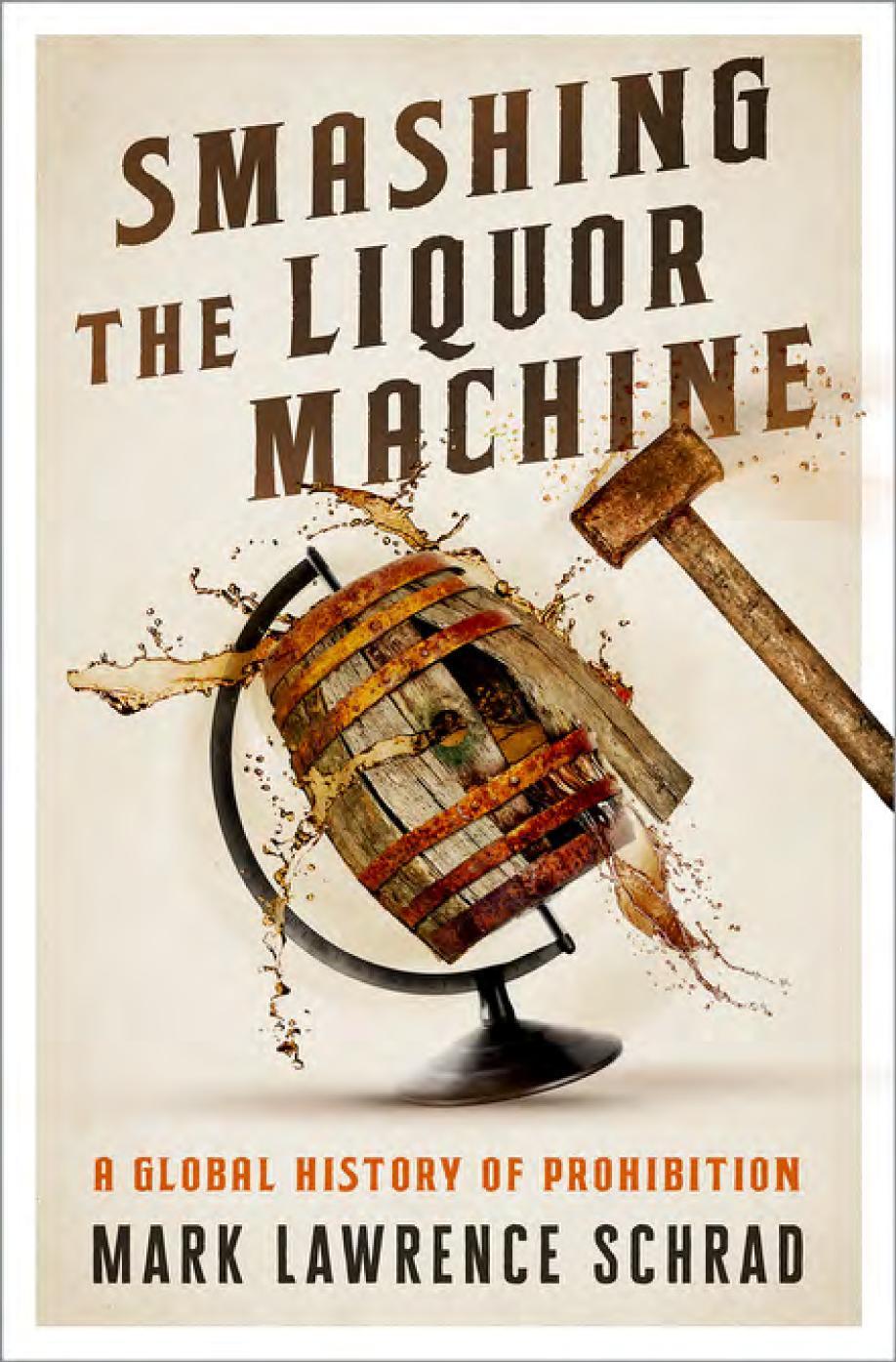
Title: Smashing the liquor machine : a global history of prohibition / Mark Schrad. Description: New York, NY : Oxford University Press, [2021] | Includes bibliographical references and index.
Identifiers: LCCN 2021000207 (print) | LCCN 2021000208 (ebook) | ISBN 9780190841577 (hardback) | ISBN 9780190841591 (epub) | ISBN 9780197523322
LC record available at https://lccn.loc.gov/2021000207
LC ebook record available at https://lccn.loc.gov/2021000208
DOI: 10.1093/oso/9780190841577.001.0001
1 3 5 7 9 8 6 4 2
Printed by LSC Communications, United States of America
For my son, Alexander. I wish you the joy of curiosity, the curse of tenacity, and the satisfaction of crafting your desires into reality.
TABLE OF CONTENTS
Note on Transliteration of Names ix
Preface xi
Archival Sources xvii
1. Introduction—Everything You Know about Prohibition Is Wrong 1
PART I THE CONTINENTAL EMPIRES
2. Two Tolstoys and a Lenin—Temperance and Prohibition in Russia 25
3. The Temperance Internationale— Social Democrats against the Liquor Machine in Sweden and Belgium 53
4. Temperance, Liberalism, and Nationalism in the German and Austro-Hungarian Empires 89
PART II THE BRITISH EMPIRE
5. Temperance and Self-Determination in the British Isles 127
6. Black Man’s Burden, White Man’s Liquor in Southern Africa 166
7. Gandhi, Indian Nationalism, and Temperance Resistance against the Raj 194
8. The Dry Man of Europe—Ottoman Prohibition against British Domination 225
9. First Peoples, First Prohibitionists 257
10. Liquor and the Ethnic Cleansing of North America 279
11. “All Great Reforms Go Together”—Temperance and Abolitionism 308
12. The Empire Club Strikes Back 333
13. A Tale of Two Franceses—Temperance and Suffragism in the United States 358
14. The Progressive Soul of American Prohibition 395
15. Prohibition against American Imperialism 418
16. A People’s History of American Prohibition 450
17. The Battle for a Dry America 487
18. Conclusion—W here Did We Go Wrong? 527
Notes 561
Index 697
NOTE ON TRANSLITERATION OF NAMES
In this book, Russian names generally follow the British standard (BGN/PCGN) transliteration, with some alterations to accommodate the widely accepted English equivalents of familiar historical figures (for example, Leo Tolstoy and Leon Trotsky, instead of Lev Tolstoi and Lev Trotskii). These alterations do not apply to the bibliographic references in the notes, which maintain the standard transliteration for those who wish to consult the original sources.
Windhaven Assisted Living Center, Cedar Falls, Iowa: July 8, 2018
“Prohibition?” my grandma Betty Nyberg replied, with a knowing smile and a dismissive wave of her hand.
“Oh, dear. Prohibition—that’s when Peoria really started going downhill.”
Grandma knew I’d long been fascinated with prohibition. We were very close. She knew I’d been researching this book on it for a decade already. Still, I never missed a chance to ask her to reminisce about prohibition. She lived it, after all. She was a teenager by the time prohibition was ultimately repealed. I’d heard all her stories before, but that didn’t diminish my joy of hearing them, or her joy of recounting them.
She was born Betty Jane Dixon on July 10, 1918. Her father and uncle built Peoria’s most successful fishing business: still running today on the east bank of the Illinois River. Grandma hated fish; the embarrassing stench clung to your hands, shoes, and clothes.
“Still, the fish were free, dear,” she’d say. “You just had to go out and get them.”
During the Great Depression, the Dixons hired scores of destitute men—many laid off from the nearby Caterpillar tractor factory—to pilot the boats and pull the carp from the river. Those fish put her through college, and bankrolled the Dixons’ other moneymaking schemes: running a paddlewheel steamship line to St. Louis; a short-lived bus line overland to Quincy, Illinois; and—most notably—building their own plant for the rectification of whiskey. With plentiful grain, water, and coal, and easy access to transportation, Peoria was among the distilling capitals of the United States prior to prohibition. But unlike distilled whiskey that was aged in barrels to acquire its distinct taste, rectified whiskey was just industrial distillate with flavors and colors added. It was what Theodore Roosevelt would call “artificial whiskey,” which was cheaper and easier to make, and thus far more profitable
than the genuine article. Apparently that’s what my great-grandparents were selling, when they weren’t selling fish.
The men who ran the whiskey trucks were universally shifty and unscrupulous, Grandma remembered.
It’s strange that the whiskey was what I remembered most about Grandma Betty. Every day at 5 p.m., she’d mix her evening Manhattan: two parts bottom-shelf blended whiskey, one part sweet vermouth, stirred. Some times she’d try to share it with me, but I always thought Manhattans tasted like gasoline.
In 2018, her entire extended family gathered over Fourth of July weekend to toast Manhattans to Betty’s one hundredth birthday. But when it came time for our long drive back east, Grandma kept my wife and I rapt with prohibition and family stories, even as the last rays of a brilliant Iowa sunset passed through the blinds at her retirement-community apartment.
She bid us farewell with her trademark mischievous giggle, and the “See you later, alligator!” that was our send-off since I was a child.
“After a while, crocodile!” I smiled, closing the door behind us.
Grandma Betty passed away peacefully just a few hours later. We were the last to see her.
Something strange happened after Grandma’s funeral, though. As we cleaned out her apartment, we found gallon after gallon of Grandma’s whiskey and sweet vermouth. And after drinking one too many Manhattan tributes to her, I found myself actually enjoying that gasoline taste. In drinking habits at least, I’ve become my grandma, which is not at all a bad thing.
Grandma Betty was my personal link to the long-ago world of the Prohibition Era: that fascinating time between World War I and the Great Depression, which we sometimes glamorize, sometimes disparage, and frequently struggle to understand objectively. But just as we cannot bracket off my grandmother’s upbringing in that era and relegate it to some distant past, neither can we quarantine prohibition history to some discrete timeframe, to be studied in isolation from ongoing social, political, and economic struggles. Indeed, many of the same dynamics of economic and political domination, exploitation, and resistance that I write about in this book still make headlines today: the Sioux Tribe of Standing Rock asserting their community’s sovereignty against big-business backed by the coercive forces of the US government; the #MeToo movement truth-telling against an entrenched patriarchal system; and Black Lives Matter, reckoning with the deeply rooted political, social, and economic subordination of African American communities.
In each of these cases, the dynamics are crystal clear: historically marginalized groups—suffering—take it upon themselves to challenge the status quo of traditional power and privilege. In doing so, they force us into the discomfort of confronting the yawning chasm between who we are as a nation and who we imagine ourselves to be. On one side is soaring patriotic rhetoric about freedom and equality; on the other is a reality where women and minorities are neither free nor
equal. On one side are allusions to the American promise of economic liberty, while on the other are those who suffer poverty and bear the real human costs of others’ liberty. And—insofar as we’re talking about allusions to the United States as a “Christian nation”—we have the image of Christ’s love, forgiveness, and care for the marginalized and downtrodden, juxtaposed against the unscrupulous predations of those who wield political and economic power under the guise of being a good Christian.
Prohibitionism shared the same underlying ethos as all of these contemporary movements—not just in the United States, but around the globe. Prohibitionism wasn’t moralizing “thou shalt nots,” but a progressive shield for marginalized, suffering, and oppressed peoples to defend themselves from further exploitation. “All great reforms go together,” as Frederick Douglass reminded us: abolitionism, women’s suffrage, and liberation from the liquor traffic through temperance and prohibition.
For contemporary activists and those who study social movements, this book offers a cautionary tale as to what happens when the movement ends. If, like abolitionism or suffragism, the movement “wins” and everyone sees the natural rightness of their cause, its trailblazers and pioneers—like William Lloyd Garrison, Elizabeth Cady Stanton, Frederick Douglass, Susan B. Anthony, or Abraham Lincoln—are lionized as national heroes. Their statutes adorn government buildings, and their likenesses are coined on our currency.
But if the established economic and political powers-that-be w in—as w ith the Twenty-First Amendment repealing the prohibitionist Eighteenth Amendment— woe be to the reformers’ legacies. Many are simply ignored or written out of the textbooks. Those who were too well known to be ignored, like Carrie Nation or Wayne Wheeler, are recast as history’s villains. Most interestingly, though, is what happens to the images of those leaders whose activism spans interrelated causes— not just the Garrisons, Stantons, Douglasses, Anthonys, and Lincolns, but the Leo Tolstoys, Mahatma Gandhis, Kemal Atatürks, Tomáš Masaryks, and Hjalmar Brantings of the world. Their biographers go auspiciously silent when it comes to their subjects’ prohibitionism, as such a supposedly villainous trait doesn’t jive with their otherwise heroic accomplishments. Best leave it out.
Writing this book was challenging and transformative for me too, especially as it meant branching out of my own comfort zone into areas where I admittedly have no lived experience. It was the question of prohibitionism that led me to write on Native American history, though I am not Native American. Similarly, I write on abolitionism without having experienced the everyday challenges of black life. I write about suffragism while not a woman; I write about Russia, India, and Africa, while not being Russian, Indian, or African. I wrote an entire book on temperance, often with one of my grandma’s Manhattans in hand.
This disconnect troubled me deeply. It still does. But three things have helped me grapple with this issue. First is that the sources that I draw upon from generations
and centuries ago are the same source materials that are available to every historical researcher, regardless of race, religion, ethnicity, gender, or sexual orientation. Second, I have actively sought out native-language primary source materials in every case, hoping to give a voice to subaltern experiences that have long been ignored. And finally, if research is limited to those who share the same lived experience as their subject matter, then who would be better positioned to chronicle political domination and oppression than a straight, white, middle-aged, middle-class American man? Even before my grandma told me that our family was once in the whiskey-selling business in Peoria, I’ve been aware of the privileges afforded to me based on my identity, and that power dynamic lies at the heart of this study.
This awareness extends to a deep scrutiny of the language we use to portray history. Many of the subjects in this book used vulgar, racist, misogynist, and degrading language—often because they were racists and misogynists, conveying vulgar and degrading ideas. Demeaning vulgarities and slurs—the “n-word” and beyond— are as tough to write as they are to read; but I purposely have not censored or sugarcoated the language, actions, or ideas of these historical figures. In fact, they underscore the central theme of this book, which is that norms change: things that were once commonly accepted (slavery, subordination of women, discrimination based on a racial hierarchy, etc.) are no longer considered appropriate. So when coming across the language of white supremacy that makes you feel uncomfortable, I ask that you reflect momentarily on what those words and actions represent in that historical moment, and why they were considered socially appropriate then, but are inappropriate today.
Ultimately, rights, justice, and progress are possible, though they often come in unexpected forms, and that’s what we find here.
My list of personal debts is far shorter than my previous books: all the family members, friends, mentors, and inspirations for my earlier works helped me through this one, too. My loving wife, Jennifer, and our children, Alexander, Sophia, and Helena, have put up with more of my nonsense than anyone should ever have to. I thank my colleagues at Villanova University, and not merely for the subvention to assist with publication of this volume. Department chair Matt Kerbel provided tremendous guidance, and Jennifer Dixon, whose simple question of “If prohibitionism was really anticolonialism, why aren’t you exploring Native Americans?” easily added three chapters to the manuscript. Dr. Dixon likewise helped me immensely in translating prereform Ottoman Turkish for inclusion into the book. J. D. Shindelar was most helpful in drafting the maps that appear throughout the book. Steven Schultz again agonized over every chapter, and put up with even my most petty semantic quibbles. Thank you all most deeply, in addition to the anonymous peer reviewers. Back in the pre-Covid beforetimes, I remember how, at every Schrad family gathering, my uncle Dick Schrad would not-so-subtly inquire when the next book was coming out. So I began sending him draft chapters, and he replied with insights that made the final manuscript that much better, even
while enduring tremendous personal hardships. Much love to you, Dick and Pat, Cindy, Kevin and family; I’d hoped Doug would’ve loved this, the ever-curious world traveler he was.
Completing the manuscript in the spring of 2020—just as the Covid-19 pandemic hit—I had hoped quarantine might actually boost my productivity. I was wrong. Between learning new teaching modalities for my own courses, and helping our kids adapt to their new online educational reality, the final chapters were largely written between the hours of four and nine in the morning. Covid-19 also forced the closing of archives and special collections across the country and around the globe, causing further delays. But quarantine did allow me to get feedback on the first drafts from my son Alexander, to whom this book is dedicated, which was immensely gratifying.
Months in lockdown also gave me greater appreciation for the countries and archives that I was able to visit in person, as well as the global friends I’d made along the way. They include Dmitry Fedotov and Mikhail Teplyansky, hosts of the annual Alcohol in Russia conference in Ivanovo, Russia; Marie-Laure Djelic and Sigrid Quack, for their transnationalism conference in Cologne, Germany, Harald Fischer-Tiné, Jana Tschurenev, and their students at ETH-Zürich for organizing the Global Anti-Vice Activism conference in Monte Verità, Switzerland; Yanni Kotsonis for hosting The Great War and the Great Prohibitions workshop at NYU Abu Dhabi; Ernesto Savona and Francesco Calderoni of Università Cattolica in Milan, Italy; and Susannah Wilson at the University of Warwick for organizing the Prohibition: Perspectives from the Humanities and Social Sciences conference in conjunction with the British Academy in London, along with Cecilia Autrique Escobar for planning a follow-up colloquium at the Universidad Iberoamericana in Mexico City, which was ultimately cancelled due to Covid-19. All of this is on top of the countless librarians and archivists—many in far-flung corners of the globe— willing to help track down original documents and other archival materials that provide the granular substance of this book. You have my deepest gratitude and respect. I save my most heartfelt appreciation, though, for the team at Oxford University Press: Emily Mackenzie, Angela Messina, Alison Block, Cheryl Merritt, and especially David McBride. For reasons that are still unclear to me, a decade ago, David took a chance on a young scholar (who’d already received more than a few politely worded rejections), and his weird obsession with the politics of alcohol. It was by his faith that The Political Power of Bad Ideas ever saw the light of day, only to be followed up by Vodka Politics, and now Smashing the Liquor Machine as the third installment in the trilogy. None of them would have been possible without him, and all three were enriched tremendously by his guidance.
ARCHIVAL SOURCES
Australia
State Library of New South Wales (Sydney)
Sir Joseph Banks Papers
University of Melbourne Archives (Melbourne)
Independent Order of Rechabites, Victorian District, 1861
Woman’s Christian Temperance Union of Victoria, 1887– 1999
Belgium
Archives et Bibliothèque de l’Institut Emile Vandervelde (Archives and Library of the Emile Vandervelde Institute, Brussels)
Archives Emile Vandervelde
Parliamentary Papers
Canada
Library and Archives Canada (Ottawa, Ontario)
Department of External Affairs Fonds
Department of Justice Fonds
Records Relating to the House of Representatives
United Church of Canada Archives (Toronto, Ontario)
The Dominion Alliance for the Total Suppression of the Liquor Traffic Fonds
Czech Republic
Masarykův ústav a archiv Akademie vĕd ČR (Masaryk Institute and Archive, Academy of Sciences of the Czech Republic, Prague)
Tomáš Garrigue Masaryk Collection
Finland
Työväenliikkeen kirjasto (Library of the Labour Movement, Helsinki)
France
Bibliotheque Nationale de France (National Library of France, Paris)
Bulletin Consulaire Français
Germany
Geheimes Staatsarchiv Preußischer Kulturbesitz (Secret State Archives
Prussian Cultural Heritage Foundation, Berlin)
Niedersächsische Staats- und Universitätsbibliothek, Göttingen (Göttingen
State and University Library, Göttingen)
Staatsarchiv (State Archives, Hamburg)
Greece
The Service of Diplomatic and Historical Archives, Ministry of Foreign Affairs (Athens)
India
Maharashtra State Archives (Mumbai)
Home Department
Political Department
Ireland
Provincial Archives, Capuchin Friary of St. Mary of the Angels, Dublin
Fr. Theobald Mathew: Research and Commemorative Papers (CA/FM/RES)
Robert Elliott Speer Manuscript Collection, 1867–1947
Rockefeller Archive Center (Sleepy Hollow, NY)
John D. Rockefeller Papers, 1855–1942
Southern Historical Collection, Louis Round Wilson Special Collections Library, University of North Carolina (Chapel Hill, NC)
Edwin Yates Webb Papers, 1901–1955
Swarthmore College (Swarthmore, PA)
Friends Historical Library of Swarthmore College
Wichita State University Libraries (Wichita, KS)
Special Collections and University Archives
Wisconsin Historical Society (Madison, WI)
Draper Manuscript Collection: William Clark Papers
Draper Manuscript Collection: Thomas Forsyth Papers
University of California at San Diego, Special Collections and Archives (San Diego, CA)
Joseph Gusfield Papers
University of Michigan, Bentley Historical Library (Ann Arbor, MI)
Prohibition Party Series, 1868–1933
University of Wisconsin–Madison Special Collections (Madison, WI)
Guy Hayler Temperance Tracts
University of Pittsburgh Archives (Pittsburgh, PA)
Thomas G. Masaryk Papers
University of Illinois at Urbana- Champaign (Urbana, IL)
Frederic Wines Collection on Social Problems
Woman’s Christian Temperance Union Archive (Evanston, IL)
Woman’s Christian Temperance Union Series, 1853–1939
Introduction—Everything You Know about Prohibition Is Wrong
Kiowa, Kansas: Thursday, June 7, 1900, 8:30 a.m.
For weeks before the vigilante rampage that would make her a household name, fifty-three-year-old Carrie Amelia Nation quietly walked the roadsides near the successful hotel she owned and operated in Medicine Lodge, Kansas. Deep in contemplation, she scoured the ground, picking up palm-sized rocks and brickbats. Purposeful and deliberative, she smuggled home those that had the right feel and heft, wrapping each one in old newsprint to look like innocent parcels.
“I did this until I got quite a pile,” she recalled.1
Carrie (later “Carry”) A. Nation was a God-fearing Christian of the purest sort—which brought her into frequent conflict with the organized church. For her, justice, love, and benevolence were not things to be talked about on Sunday and forgotten the rest of the week.2 At her upscale hotel, she fed, clothed, and lodged the downtrodden and destitute—both white folks and black—in some cases for years at a time. Harboring and defending the undesirables and castoffs of the community irked her more “respectable” fellow parishioners. First, she was expelled from the local Methodist church; then the Episcopal church. When the preacher in the pulpit of the Medicine Lodge Christian Church denounced her neighbor as an “adultress” in the middle of services—based on nothing but the word of the woman’s alcoholic husband—Carrie could not keep quiet. She shouted down the unjust allegation, and the preacher himself, in front of the entire congregation.
Imagine the scene as church elders tried—and failed!—to drag her bodily from the pews. And while they couldn’t physically throw her out of the sanctuary that day, they did later expel her from the parish.3
No matter. Carrie still rode the width and breadth of Barber County, Kansas, collecting donations of food and clothing. She pressured storekeepers to donate additional groceries for the needy, lest she step onto the street and publicly denounce them as “thieving gougers of widows and orphans.”4 They usually complied.