Andrews’ Diseases of the Skin Clinical Atlas by William James, Dirk Elston, Patrick McMahon Andrews’ Diseases Of The Skin Clinical Atlas By William James
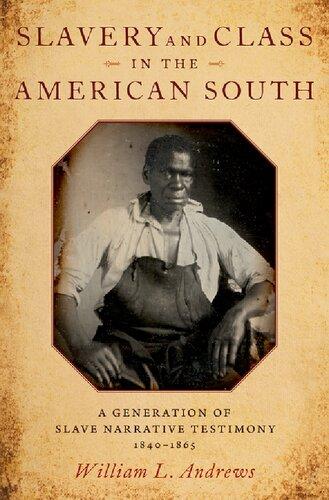
A Generation of Slave Narrative Testimony, 1840– 1865
WILLIAM L. ANDREWS
1
Oxford University Press is a department of the University of Oxford. It furthers the University’s objective of excellence in research, scholarship, and education by publishing worldwide. Oxford is a registered trade mark of Oxford University Press in the UK and certain other countries.
Published in the United States of America by Oxford University Press 198 Madison Avenue, New York, NY 10016, United States of America.
All rights reserved. No part of this publication may be reproduced, stored in a retrieval system, or transmitted, in any form or by any means, without the prior permission in writing of Oxford University Press, or as expressly permitted by law, by license, or under terms agreed with the appropriate reproduction rights organization. Inquiries concerning reproduction outside the scope of the above should be sent to the Rights Department, Oxford University Press, at the address above.
You must not circulate this work in any other form and you must impose this same condition on any acquirer.
Library of Congress Cataloging-in-Publication Data
Names: Andrews, William L., 1946– author.
Title: Slavery and class in the American South : a generation of slave narrative testimony, 1840–1865 / William L. Andrews.
Description: New York, NY : Oxford University Press, [2019] | Includes bibliographical references and index.
Identifiers: LCCN 2018028428 (print) | LCCN 2018048437 (ebook) | ISBN 9780190908393 (Updf) | ISBN 9780190908409 (Epub) | ISBN 9780190908386 (hardcover : alk. paper)
Subjects: LCSH: Slaves’ writings, American—History and criticism. | Slaves—Southern States—Biography—History and criticism. | African Americans—Southern States—Biography—History and criticism. | Slaves—Southern States—Social conditions—19th century. | Slavery—Southern States—History—19th century.
LC record available at https://lccn.loc.gov/2018028428
1 3 5 7 9 8 6 4 2
Printed by Sheridan Books, Inc., United States of America
to Norah and David
The distinction among slaves is as marked, as the classes of society are in any aristocratic community. Some refusing to associate with others whom they deem beneath them in point of character, color, condition, or the superior importance of their respective masters.
Henry Walton Bibb, Narrative of the Life and Adventures of Henry Bibb, an American Slave, Written by Himself (1849)
There is no doubt that Nelly felt herself superior, in some respects, to the slaves around her. She was a wife and a mother; her husband was a valued and favorite slave. Besides, he was one of the first hands on board of the sloop, and the sloop hands—since they had to represent the plantation abroad—were generally treated tenderly. The overseer never was allowed to whip Harry; why then should he be allowed to whip Harry’s wife? Thoughts of this kind, no doubt, influenced her; but, for what ever reason, she nobly resisted, and, unlike most of the slaves, seemed determined to make her whipping cost Mr. Sevier as much as possible.
Frederick Douglass, My Bondage and My Freedom (1855)
These fugitives may be thought to be a class of poor, thriftless, illiterate creatures, like the Southern slaves, but it is not so. They are no longer slaves; many of whom have been many years free men, and a large number were never slaves. They are a hardy, robust class of men; very many of them, men of superior intellect; and men who feel deeply the wrongs they have endured.
Austin Steward, Twenty-Two Years a Slave, and Forty Years a Freeman (1857)
The months passed on. I had many unhappy hours. I secretly mourned over the sorrow I was bringing on my grandmother, who had so tried to shield me from harm. I knew that I was the greatest comfort of her old age, and that it was a source of pride to her that I had not degraded myself, like most of the slaves.
Harriet Jacobs, Incidents in the Life of a Slave Girl (1861)
CONTENTS
Preface ix
Acknowledgments xiii
Introduction: Slaves and Privileges 1
1. Emerging Class Awareness 26
2. Work, Status, and Social Mobility 63
3. Class and Conflict: White and Black 168
4. The Fugitive as Class Exemplar 248
Epilogue: “The record of which we feel so proud to-day” 317
Appendix: African American Slave Narratives, 1840–1865 323
Notes 329 Index 373
PREFACE
I was born in Richmond, Virginia, in 1946, in a hospital on Monument Avenue named in honor of Robert E. Lee’s cavalry commander, James Ewell Brown “Jeb” Stuart. Among my paternal and maternal forbears are more men who fought for the Confederacy than I can easily count. Half of my great-great-grandfathers were slaveholders; the others, as far as I can tell, weren’t. In the 1860 US census, Edwin Garnett Andrews (1805–1861), who farmed in Caroline County, Virginia, claimed 6 human beings, ranging in age from 4 months to 53 years, as his property. John Ferneyhough Jr. (1788–1860), a prosperous coach-maker, enjoyed the profits of a small estate near Fredericksburg, Virginia, maintained by 16 men and women whom he enslaved. In 1835, Ferneyhough joined an anti-abolition vigilance committee in Fredericksburg, the purpose of which, according to a local newspaper, was “to aid the Civil Authorities, in detecting and bringing to justice, the abolitionists . . . engaged in disseminating their nefarious publications and prosecuting their incendiary projects.”
These two great-great-grandfathers of mine would have never imagined that a descendant of theirs would one day devote almost forty years of his life to studying and reprinting “nefarious publications” of American abolitionism that Ferneyhough and his committee tried to criminalize and suppress. Though undoubtedly an outrage to slaveholders like Ferneyhough, the narratives of former slaves who testified against chattel slavery have become for me the most instructive and inspiring, albeit often appalling, human documents ever produced by the antebellum South. From these narratives I’ve realized that along with democracy, capitalism, Protestant Christianity, and marriage, slavery was so powerful and pervasive as to constitute one of the five fundamental institutions that defined the United States at its inception.
The basic political institution of the United States has always been representative democracy. But in a country that from its founding denied the franchise to anyone who was enslaved—and, in some antebellum Northern states, to anyone
of African descent—the new nation’s experiment in representative democracy was imperiled from the outset. The notorious “three-fifths compromise” of 1787, by which the slave states were permitted to count each enslaved individual in their population as three-fifths of a person for the purposes of congressional apportionment, perverted the Constitution of the United States into a pro-slavery document. The author of the first fugitive slave narrative in American history, my fellow Virginian William Grimes, closed his 1825 autobiography with a sardonic offer: he would leave his whip-scarred skin “a legacy to the government, desiring that it might be taken off and made into parchment, and then bind the constitution of glorious happy and free America.”
In economics, the defining institution of the United States is capitalism. But before the Civil War, free enterprise and free markets had little meaning to enslaved African Americans, despite the fact that their minds and bodies were the most profitable commodities made in America. In 1849 Kentucky fugitive Henry Bibb diagnosed the power of rich slaveholders over the “poor laboring man” who “whether he be moral or immoral, honest or dishonest . . . white or black; if he performs manual labor for a livelihood,” he is “but little better off than the slave, who toils without wages under the lash.” Profoundly dependent on a self-perpetuating caste of lifelong unpaid labor, Southern slaveholders and Northern industrialists allied to pit Southern working-class whites and enslaved blacks against each other throughout the nineteenth and most of the twentieth centuries.
American religious life at the founding of the United States was cast in the mold of Protestant Christianity. The basic tenet of Protestantism was and is the priesthood of all believers. In its most radical form, this revolutionary idea prescribed literacy for the laity so that each Christian could read the Bible and become his or her own interpreter of the Scripture. In the Southern slaveocracy, however, especially after the Nat Turner revolt of 1831, the idea of slaves’ reading and interpreting the Bible freely was anathema. In his 1860 narrative, fugitive James Watkins denounced Southern ministers for declaring “that it would not do to give [the enslaved] the Bible” because “it would unfit them for their duties, they would become impudent and above their business.” The interests of slavery defiled and in many cases blunted the central evangelical aim of Protestant Christianity in half the United States.
In the social realm, where the defining institution of the young Republic was marriage and the nuclear family, slavery’s corrosive effects in the South were perhaps most damaging—and, therefore, most often denied. For the enslaved, family ties could be sundered whenever a slaver decided to sell a mother, father, son, or daughter. The majority of antebellum slave narratives recount at least one such sale in the narrator’s own family. Some slaveholders allowed or even encouraged their human property to marry, but everyone knew these marriages
had no legal standing. Many male slaveholders were as indifferent to their own marriage vows as they were to the sanctity of the marriages of their slaves. Mary Boykin Chesnut, wife of a slaveholding US Senator from South Carolina, confided to her diary in March 1861: “Like the patriarchs of old our men live all in one house with their wives and their concubines, and the mulattoes one sees in every family exactly resemble the white children—and every lady tells you who is the father of all the mulatto children in everybody’s household, but those in her own she seems to think drop from the clouds, or pretends so to think.”
With representative democracy, capitalism, Protestant Christianity, and marriage, slavery belongs among the five most influential institutions in the founding of the United States simply because slavery was so deeply rooted in the country that it distorted and subverted the other four. Today the United States is still swimming—and trying not to drown—in the noxious backwash of slavery.
One way to chart our course away from destructive misunderstandings of our national past is to consult the personal histories of African American men and women who resisted their enslavement and extricated themselves from it. Between 1840 and 1865, the quarter-century international heyday of the African American slave narrative, the narratives of former slaves such as Frederick Douglass, William Wells Brown, Josiah Henson, Sojourner Truth, and Solomon Northup captured the imagination and aroused the social conscience of thousands of readers across America, Great Britain, and Western Europe. Since the 1960s, scholars have revived the testimony of many other former slaves, from William Grimes in 1825 to Harriet Jacobs in 1861, so that readers today may learn more about the best and worst aspects of our national history. The great slave narratives of the antebellum United States reveal in chilling detail the depths of depravity into which slaveholding led many white people. The most inspiring features of the same narratives recount the fortitude, faith, bravery, and dignity of those who committed themselves to the highest ideals of America despite the crushing burden of slavery. How these men and women attained their freedom and then witnessed fearlessly against slavery when it was the law of the United States offers every reader a heroic model from a conflictridden past, fully deserving of memorials, if not monuments, in the present.
ACKNOWLEDGMENTS
The subject of this book has been on my mind since Deborah H. Barnes made an observation about Frederick Douglass one summer morning in 1992 during a National Endowment for the Humanities Summer Seminar for College Teachers that I led while on the faculty at the University of Kansas. I can’t begin to enumerate all the scholars, critics, writers, and students who have influenced my thinking on slavery and class in the antebellum South. Blyden Jackson introduced me to African American autobiography in a graduate seminar on that topic in the spring of 1970. For more than two decades the late Nellie McKay listened to my inchoate, often half-baked, ideas about the history of African American autobiography and encouraged me to continue that vein of research. When I started writing this book, I received valuable criticism and advice about this project from University of North Carolina–Chapel Hill English Department colleagues Rebecka Rutledge Fisher and James Thompson. Joycelyn Moody, Giulia Fabi, and Gabrielle Foreman took the project seriously in its nascent stages and gave me the benefit of their considerable expertise. John Ernest read an early version of a chapter and gave me his always insightful comments. Joy Goodwin volunteered to read a large part of an early draft, providing instructive reflections and encouragement. Two graduate seminars I conducted at UNC–Chapel Hill helped me explore class in early African American literature and learn from the questions posed and research papers submitted by students in those seminars.
Useful responses and recommendations came from colleagues on research leave with me in the fall 2012 at the Institute for the Arts and Humanities at UNC–Chapel Hill. Andrea N. Williams and other fellows at the National Humanities Center in 2018 offered valuable feedback on class in African American history during an informal discussion. David Blight, Ezra Greenspan, Carla Peterson, Jean Fagan Yellin, Mary Maillard, and Bryan Sinche answered questions, pointing me in fruitful directions. Anne Bruder and Sarah Boyd provided excellent research assistance. Jason Tomberlin and Ashley Werlinich at the
UNC-Chapel Hill Library prepared many of the images that appear in this book. Brian Gharala provided timely technical expertise. Susan Ferber of Oxford University Press improved the book in countless ways through her line-by-line editorial revisions of and recommendations about the manuscript. I owe a special, enduring debt of gratitude to Kari J. Winter, who patiently read the entirety of this long book in its first iteration and sent me illuminating, tough-minded, consistently constructive criticism of the most precious kind.
Several venues have provided particularly rewarding opportunities for researching and sharing my evolving thoughts about the subject of this book. Symposiums at the University of Haifa (1997), the University of California–Riverside (1998), Peking University (1999), Pace University (2006), and the Autobiography across the Americas conference in San Juan, Puerto Rico (2013) let me articulate preliminary ideas about slavery and class. Invited lectures at the 2013 AISNA conference in Trieste, Italy, the University of Delaware in 2015, and Duke University in 2016 gave me opportunities to outline themes of this book to thoughtful and engaged audiences. Queries and comments during these occasions taught me a great deal. Fellowships from these UNC-Chapel Hill entities – the College of Arts and Sciences, the Office of the Provost, and the Institute for the Arts and Humanities – and from the Center for American Studies at the University of Heidelberg made possible sustained attention to researching, writing, and re-writing this book.
To my wife, Charron, who has patiently listened to, counseled, and encouraged me through the decades it has taken me to conceive, research, and write this book, I cannot express in words how deeply grateful I am. I thank my adult children, to whom this book is dedicated, for their interest in their father’s work and the inspiration they have given me throughout their lives.
Slavery and Class in the American South
Introduction
Slaves and Privileges
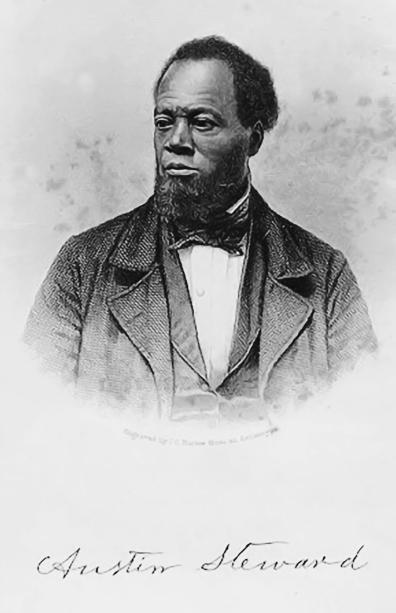
In his 1857 autobiography Twenty-Two Years a Slave, and Forty Years a Freeman, Austin Steward (1794–1860), fugitive slave, merchant, teacher, and anti-slavery leader in New York, recalled “a grand dance” put on by a group of domestic slaves on a Virginia plantation near the one where Steward had been born and raised. On the night of the dance, all over the neighboring plantation “could be heard the rude music and loud laugh of the unpolished slave. It was about ten o’clock when the aristocratic slaves began to assemble, dressed in the cast-off finery of their master and mistress, swelling out and putting on airs in imitation of those they were forced to obey from day to day.”1 “House servants were of course, ‘the stars’ of the party,” Steward continued. “All eyes were turned to them to see how they conducted, for they, among slaves, are what a military man would call ‘fugle-men.’ The field hands, and such of them as have generally been excluded from the dwelling of their owners, look to the house servant as a pattern of politeness and gentility. And indeed, it is often the only method of obtaining any knowledge of the manners of what is called ‘genteel society’; hence, they are ever regarded as a privileged class; and are sometimes greatly envied, while others are bitterly hated.”2
The ironic italics with which Steward deployed the term “aristocratic slaves” in his text suggest that at some point in his life the author had developed a negative attitude toward domestic slaves for “putting on airs” and otherwise lording it over “the field hands.” The son of his enslaver’s cook, Steward grew up working as a domestic slave himself, the “errand boy” in “the great house” of a wealthy Prince William County slaveholder on whose bedroom floor Steward slept each night of his childhood (26). Yet he seems to have believed that belonging to “a privileged class” of slaves was socially and morally suspect from the standpoint of unprivileged field hands. Nevertheless, Steward acknowledged that field hands also “greatly envied” domestic slaves. No doubt the “cast-off finery” of upper-crust whites donned by domestic slaves impressed enslaved agricultural
Fig. I.1 Austin Steward, frontispiece to Twenty-Two Years a Slave, and Forty Years a Freeman (1857). Courtesy of Documenting the American South, University of North Carolina at Chapel Hill University Library.
laborers whose wardrobes consisted largely of drab outdoor work clothing. For agricultural laborers, the only way of learning from the movers and shakers of white Southern society was to consult their enslaved counterparts in the big house. Combining both desirable material resources and social sophistication could easily make domestic slaves seem like a privileged class in the eyes of those lacking access to such advantages.
The sumptuous event came to a tragic end after armed white patrollers attacked the merry-makers late at night. The county patrol, Steward noted, “had long had an eye on” the slaves whose wealthy and “indulgent master” had given them permission to hold the dinner and dance. These black men and women were “better fed, better clad, and had greater privileges” than any other slaves Steward had encountered in Virginia. Such advantages probably aroused envy and resentment among the poorly fed and shabbily clothed white patrollers. Not surprisingly, the patrol amply gratified its yearning “to flog some of ‘those pampered niggers,’ who were spoiled” and needed to be taught a lesson.3
Steward’s account of the dance and feast presided over by what he termed a privileged class of domestic slaves is one of the more intriguing examples of commentary on slavery and class in the antebellum African American slave narrative. As he recounted the incident, Steward offered his readers insights into its contested intraracial as well as interracial social terrain. Steward explained why the domestic workers on this Virginia plantation could be considered privileged when the resources and access to information at their disposal were contrasted to those of agricultural laborers on the same plantation. Steward’s account of the violent reprisals unleashed by the patrollers showed readers that the domestic workers’ privileged status was real, but very limited. They were still subject to life-and-death white power. As Steward recounted the motives of the patrollers, he drew implicit parallels between them and the enslaved field workers. Both groups had reason to take offense at the sight of slaves whose access to food, clothing, and social advantages obviously out-classed those, whether black or white, whose poverty and lack of social standing made the domestic slaves seem privileged indeed.
Steward’s use of the term “privileged” to describe the domestic slaves on a neighboring Virginia plantation was deliberate and nuanced. Privileges signified material or social benefits that virtually all slaves desired and valued. However, judging a slave to be enviably privileged said as much about the socioeconomic status of the person making the judgment as it did about the status of the privileged slave. The material resources, special manners, and comparative social sophistication of the domestic workers, no matter how gaudy or merely imitative they may have seemed to their white enslavers, could remind both enslaved blacks forced to labor in the fields and poor whites obliged to do the dirty work of white elites of just how few resources and how little social standing they had. Yet even a privileged class of slaves was still enslaved, still subject to deadly white supremacist authority.
More ambiguous in Steward’s account was what he meant by “class.” Readers are left to wonder if Steward thought that the material resources and social advantages that the house servants could marshal put them in a socioeconomic class superior to a field-hand class. Alternatively, by “class” Steward may have meant only that the house servants belonged to a set of enslaved persons who had something in common—most obviously, the kind of work they did—that distinguished them from other sets of enslaved persons who did different kinds of work. Steward’s narrative is ultimately unclear as to whether he believed that privileges could or did divide the enslaved, whether on one Virginia plantation or more widely across the antebellum South, into hierarchical social strata.
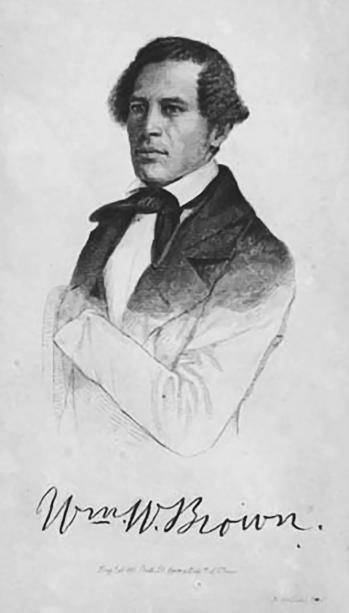
The idea of an identifiable group of enslaved workers forming a privileged class in the antebellum American South was not Steward’s alone. William Wells Brown, one of the most eminent fugitive slave narrators of the nineteenth
century, stated in his final autobiography, My Southern Home (1880): “House servants in the cities and villages, and even on plantations, were considered privileged classes.”4 Brown wrote from personal experience, having been raised to work as a house servant from his early childhood in Kentucky. Like Steward, Brown did not pause in My Southern Home to explain in what sense he considered domestic slaves to have been privileged classes, whether in urban or rural areas. In 1912, W. E. B. Du Bois, the most influential African American intellectual of the twentieth century, wrote in an essay on “the ante-bellum Negro artisan”: “Such slaves were especially valuable and formed usually a privileged class” that could be found “in nearly all Southern cities” of the pre–Civil War era. These slaves “owned property, reared families and often lived in comfort.” “Many if not most of the noted leaders of the Negro in earlier times belonged to this slave mechanic class, such as [Denmark] Vesey, Nat Turner, Richard Allen and Absalom Jones.”5 If enslaved urban artisans, mechanics, and similarly skilled tradesmen constituted a privileged class in the antebellum African American South, despite their enslavement, then the authors of some of the most celebrated mid-nineteenth-century fugitive slave narratives, including those by Frederick Douglass (1818–1895), James W. C. Pennington (1808–1870), and William Craft (c. 1824–1900), should be included in this privileged class. However, the same questions arise about what Du Bois meant when he assigned enslaved artisans and mechanics to a privileged class in Southern cities.
Careful readings of all the antebellum narratives produced by former slaves reveal that many of these narratives refer to privileges that enslaved men and women—often including the narrators themselves—sought or received, earned or negotiated, and won or lost. While no other antebellum slave narrator except Steward labeled a group of enslaved workers a privileged class, comments on class, whether the word is explicitly deployed or invoked indirectly, crop up often in slave narratives, especially those published between 1840 and 1865, when the African American slave narrative and fiction based on it became the United States’ principal literary claim to fame—or infamy—in world literature. This book aims to excavate and elucidate the complex, highly nuanced, sometimes incisive, and almost always provocative discourse in African American slave narratives concerning both privilege and class as they shaped the lives and fortunes of enslaved blacks as well as free whites in the antebellum South.
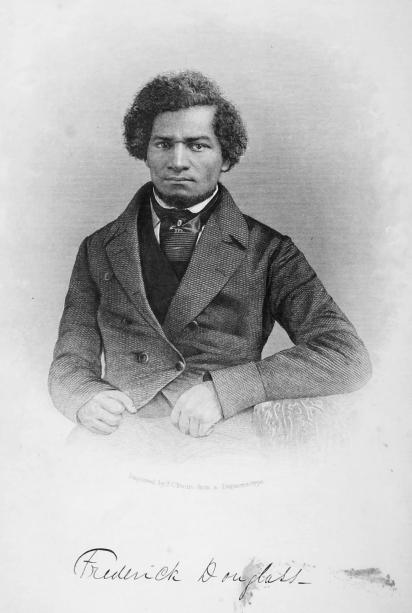
Frederick Douglass, a Baltimore house slave who became a skilled tradesman in slavery, identified himself in his antebellum autobiographies as the sort of urban mechanic who would have qualified for membership in Du Bois’s privileged class of skilled urban slaves. Douglass never called himself a privileged slave, nor did he identify himself in any of his autobiographies with a particular socioeconomic class either before or after he seized his freedom. Nevertheless, in his recollections of his years in slavery, Douglass was forthright about the
Fig. I.2 William Wells Brown, frontispiece to Narrative of William W. Brown (1849). Courtesy of Documenting the American South, University of North Carolina at Chapel Hill University Library.
privileges he received or actively sought. In his second autobiography, My Bondage and My Freedom (1855), he stated that as an enslaved eight-year-old living on the isolated Maryland Eastern Shore plantation of his birth, he and he alone received from his enslaver “the high privilege” of removal to Baltimore,6 where he began working as an urban house slave. Had not that privilege fallen to him, Douglass thought it “quite probable” that instead of writing his autobiography he might still “have been wearing the galling chains of slavery.”
During the last months of his bondage, when Douglass was twenty years old, the young ship caulker on the docks of Baltimore importuned his master “for the privilege of hiring my time” to earn wages at his trade.7 Hugh Auld drove “a hard bargain” before he granted the opportunity to his slave. Permitting the enslaved caulker to hire his time was hardly a sacrifice for Auld, but self-hire, though a privilege, entailed an enlarged set of responsibilities and obligations for Douglass. Antebellum slave narratives depict many instances in which ambitious slaves like Douglass bargained with their enslavers for opportunities to advance themselves economically and socially.
Fig. I.3 Frederick Douglass, frontispiece to My Bondage and My Freedom (1855). Courtesy of Documenting the American South, University of North Carolina at Chapel Hill University Library.
Mid-nineteenth-century fugitive slave narrators often acknowledged, as did Douglass, the crucial role that privileges, whether granted or earned, played in the upward arc of their lives in Southern bondage. Gaining a privilege, many narrators explained, could bring with it a reputation, a standing or social status, in the eyes of blacks as well as whites, that could form the basis from which to push for further privileges. In some cases, certain kinds of privileges accrued to slaves who did certain kinds of work reliably and profitably. In other cases, a privilege might descend to a fortunate enslaved boy or girl simply by white fiat. Harriet Jacobs recalled in her acclaimed autobiography, Incidents in the Life of a Slave Girl (1861), that the wife of her enslaver “taught me to read and spell,” a “privilege, which so rarely falls to the lot of a slave” and for which, Jacobs added, “I bless her memory.”8
A privilege granted to a slave was not a legal or human right. Slaves of the Old South were taught through perpetual violations of their bodies, minds, and hearts and through daily exploitation of their energy, creativity, and labor that they had no legal or officially recognized rights as human beings, much less as
citizens of the United States.9 When US Supreme Court Chief Justice Roger Taney decreed in the 1857 Dred Scott decision that the American Negro “had no rights which a white man was bound to respect,” his judgment rendered null and void any pretense to civil rights for African Americans, free or enslaved. Nevertheless, although a slave could have neither citizenship nor rights, antebellum slave narrators repeatedly attested to the availability of privileges—to some slaves, never to all—depending on an enslaver’s profit motive, management strategy, or whim as well as a slave’s hard work, initiative, or good fortune.
In most instances, a privilege represented an opportunity or dispensation granted to an adult slave as a reward or favor for an action or service rendered or a future action or service expected. One of Wells Brown’s St. Louis, Missouri, masters “decided to hire me out, and as I had been accustomed to service in steamboats, he gave me the privilege of finding such employment.”10 Brown knew that few slaves were ever privileged to select their work, much less the men they were willing to work for.11 Like Brown, Jacobs and Douglass knew that a privilege was seldom an outright gift from a master or mistress, even to a comparatively favored slave. Privileges were almost always part of a quid-pro-quo arrangement in which a slaveholder expected payback for his or her largesse. As Douglass informed a British audience in 1846, “The slave has no privilege or enjoyment save those which the slave-holder thinks will be a means of increasing his value as a slave.”12
Most of the privileges that antebellum slaves worked and strived for would have been regarded by nineteenth-century white Americans as their due by virtue of their presumed whiteness. What is today termed “white privilege” was jealously guarded by antebellum Americans who adjudged themselves to be white or who aspired to become white.13 The often-unconscious presumptions of racial privilege that most white Americans still take for granted are owing, to a significant degree, to the longevity of white privilege preserved in law and custom since the founding of the United States as what many nineteenth-century Americans called “a white man’s country.”14
For enslaved African Americans, white privilege was, of course, out of reach. They knew that whatever degree of privilege they might earn or finagle from their enslavers would come only as a result of careful thought, conscious planning, and judicious self-assertion. Slave narratives tell us that many slaves sought personal privileges for four reasons: 1) to a people who had no legal rights, a privilege, no matter how tenuous, was the next-best thing; 2) privilege constituted personal recognition and upgraded social status for men and women who were routinely denied recognition, much less appreciation, of their personhood; 3) certain relatively privileged situations and occupations gave some slaves a degree of self-affirming freedom, however fleeting or circumscribed; and 4) a privilege could bring enhanced material resources, social advantages, or prerogatives
that could make an almost unbearable situation to some degree more tolerable. A privilege could be a prized reprieve from the depressing monotony and hopelessness of perpetual enslavement. Privileges rescinded could precipitate strong oppositional reactions that in some cases led to physical altercations and running away.15
In his 1845 Narrative, Douglass showed how the prospect of privilege could motivate even the most disadvantaged of slaves on the plantation where he was born. “Few privileges were esteemed higher, by the slaves of the out-farms, than that of being selected to do errands at the Great House Farm,” he wrote.16 Selection for this privilege “was associated in their minds with greatness.” Douglass’s tone and choice of language (especially his reference to “their”) indicate that he had never been one of “the slaves of the out-farms.” Still, he felt he understood why those harshly worked agricultural laborers aspired to the privilege of running errands at the epicenter of the Colonel’s estate. “They regarded it as evidence of great confidence reposed in them by their overseers; and it was on this account, as well as a constant desire to be out of the field from under the driver’s lash, that they esteemed it a high privilege, one worth careful living for. He was called the smartest and most trusty fellow, who had this honor conferred upon him the most frequently.”
In this observation, Douglass offered his Northern readers a succinct analysis of why such a seemingly minor opportunity, hardly anything a white person or a self-respecting free black person would associate with “greatness,” could become a “high privilege” to a lowly enslaved field laborer used to toiling from can-see-to-can’t the better part of six days a week. When Douglass added that “the competitors for this office [of errand-runner] sought as diligently to please their overseers, as the office-seekers in the political parties seek to please and deceive the people,” his ambivalence about such competitions for privilege became clearer. The Eastern Shore slaves’ desire to avoid the overseers’ lash made their competition for the errand-runner privilege understandable and justified. But currying favor with overseers to gain such an honor cast the black privilegeseekers in a less positive light.17 Douglass was certainly not the only antebellum slave narrator to express such ambivalence about slaves’ pursuit of privilege as well as those whose status in slavery conferred privilege on them. One purpose of this book is to explore the purpose and implications of the lexicon of privilege in mid-century narratives.
Privilege and the status that privilege could confer on a slave, an enslaved family, or slaves who did certain kinds of work were not simply social phenomena observed and reported by mid-century narrators. For the majority of these narrators, privilege was something they lived with and for as they struggled for scarce opportunities and precious knowledge. As a very small boy on a very large plantation, Douglass gained his first inkling of privilege when he discovered that
his curiosity about his birthday was deemed “impertinent” by his enslaver. He painfully realized that people of his color and condition were not supposed to know or be concerned about their origins as individuals. In the famous opening paragraph of his 1845 Narrative, Douglass wrote: “I have no accurate knowledge of my age, never having seen any authentic record containing it. By far the larger part of the slaves know as little of their ages as horses know of theirs, and it is the wish of most masters within my knowledge to keep their slaves thus ignorant. I do not remember to have ever met a slave who could tell of his birthday.” Yet for reasons not explained in the Narrative, Frederick compared himself to a group of unnamed white children who knew their birthdays. “The white children could tell their ages. I could not tell why I ought to be deprived of the same privilege. I was not allowed to make any inquiries of my master concerning it. He deemed all such inquiries on the part of a slave improper and impertinent, and evidence of a restless spirit.”18
Ignorance of his birthday gave the enslaved boy his first glimpse into the chasm between master and slave, white self and black other, that consigned the enslaved to “the status of livestock.”19 Insights such as these, which focus on the dynamics of white supremacist power over black minds and control over black bodies, pervade slave narrators’ denunciations of slavery. Recognizing systemic modes of white-over-black exploitation and slave resistance to it is essential to appreciating the import of mid-century narratives such as Douglass’s. But the opening paragraph of Douglass’s Narrative invites a dual perspective attuned to horizontal, intraracial social relationships as well as vertical interracial power relationships. Attention to intraracial social relationships prompts questions about causes as well as effects, not just why the slave boy was forbidden the knowledge of his birthday but how he learned about birthdays in the first place. Why did this enslaved boy find it so hard to understand why he “ought to be deprived of the same privilege” that the white children had? Why did this black boy resentfully compare himself to the white children who knew their birthdays, rather than to the slaves who didn’t know theirs? How did this black boy end up associating so much with white children that he learned about birthdays in the first place? If slavery was designed to maintain a fixed barrier between enslaver and slave, why did this enslaved boy try to breach that barrier?20
Douglass’s 1845 Narrative sheds only hazy light on the relationships, particularly within the author’s own extended family, that, according to his illuminating second autobiography, My Bondage and My Freedom (1855), shaped Douglass’s sense of himself vis-à-vis whites and his enslaved peers. The portrayal of Douglass’s enslavement in the Narrative centers on hierarchical, power-based relationships between dominant whites and an increasingly resistant black youth determined to recreate himself into a free man. However, in My Bondage and My Freedom the author’s Eastern Shore youth is characterized by a much thicker