https://ebookmass.com/product/shakespeare-and-east-asia-
Instant digital products (PDF, ePub, MOBI) ready for you
Download now and discover formats that fit your needs...
National Security, Statecentricity, and Governance in East Asia Howe
https://ebookmass.com/product/national-security-statecentricity-andgovernance-in-east-asia-howe/
ebookmass.com
War and Trade in Maritime East Asia Mihoko Oka
https://ebookmass.com/product/war-and-trade-in-maritime-east-asiamihoko-oka/
ebookmass.com
Gender, Care and Migration in East Asia 1st Edition Reiko Ogawa
https://ebookmass.com/product/gender-care-and-migration-in-eastasia-1st-edition-reiko-ogawa/
ebookmass.com
An Anonymous Girl Greer Hendricks & Sarah Pekkanen
https://ebookmass.com/product/an-anonymous-girl-greer-hendricks-sarahpekkanen/
ebookmass.com
Cross Plains Universe: Texans Celebrate Robert E. Howard
Scott A Cuup & Joe R. Lansdale (Eds)
https://ebookmass.com/product/cross-plains-universe-texans-celebraterobert-e-howard-scott-a-cuup-joe-r-lansdale-eds/
ebookmass.com
Advocacy Practice for Social Justice 4th Edition Richard Hoefer
https://ebookmass.com/product/advocacy-practice-for-socialjustice-4th-edition-richard-hoefer/
ebookmass.com
Energy transition in metropolises, rural areas, and deserts Al Kabbani
https://ebookmass.com/product/energy-transition-in-metropolises-ruralareas-and-deserts-al-kabbani/
ebookmass.com
The Disaster Days Rebecca Behrens
https://ebookmass.com/product/the-disaster-days-rebecca-behrens-2/
ebookmass.com
Consciousness, Life and the Universe Xue Fan
https://ebookmass.com/product/consciousness-life-and-the-universe-xuefan/
ebookmass.com
El psicoanalista en la mira John Katzenbach https://ebookmass.com/product/el-psicoanalista-en-la-mira-johnkatzenbach/
ebookmass.com
OXFORDSHAKESPEARETOPICS PublishedandForthcomingTitlesInclude:
DavidBevington, ShakespeareandBiography
ColinBurrow, ShakespeareandClassicalAntiquity
MichaelCaines, ShakespeareandtheEighteenthCentury
LawrenceDanson, Shakespeare’sDramaticGenres
JanetteDillon, ShakespeareandtheStagingofEnglishHistory
PaulEdmondsonandStanleyWells, Shakespeare’sSonnets
GabrielEgan, ShakespeareandMarx
JohnS.Garrison, ShakespeareandtheAfterlife
AndrewGurrandMarikoIchikawa, StaginginShakespeare’sTheatres
JonathanGilHarris, ShakespeareandLiteraryTheory
RussellJackson, ShakespeareandtheEnglish-speakingCinema
AlexaAliceJoubin, ShakespeareandEastAsia
JohnJowett, ShakespeareandText:RevisedEdition
DouglasLanier, ShakespeareandModernPopularCulture
HesterLees-Jeffries, ShakespeareandMemory
AniaLoomba, Shakespeare,Race,andColonialism
RaphaelLyne, Shakespeare’sLateWork
RussMcDonald, ShakespeareandtheArtsofLanguage
RandallMartin, ShakespeareandEcology
StevenMarx, ShakespeareandtheBible
RobertS.Miola, Shakespeare’sReading
MarianneNovy, ShakespeareandOutsiders
PhyllisRackin, ShakespeareandWomen
CatherineRichardson, ShakespeareandMaterialCulture
DuncanSalkeld, ShakespeareandLondon
StuartSillars, ShakespeareandtheVictorians
BruceR.Smith, ShakespeareandMasculinity
Zdene kStříbrný, ShakespeareandEasternEurope
MichaelTaylor, ShakespeareCriticismintheTwentiethCentury
AldenT.VaughanandVirginiaMasonVaughan, ShakespeareinAmerica
StanleyWells,ed., ShakespeareintheTheatre:AnAnthologyofCriticism
MartinWiggins, ShakespeareandtheDramaofhisTime
GENERALEDITORS : PETERHOLLAND , ANDSTANLEYWELLS Shakespeareand EastAsia ALEXAALICEJOUBIN GreatClarendonStreet,Oxford,OX26DP, UnitedKingdom
OxfordUniversityPressisadepartmentoftheUniversityofOxford. ItfurtherstheUniversity’sobjectiveofexcellenceinresearch,scholarship, andeducationbypublishingworldwide.Oxfordisaregisteredtrademarkof OxfordUniversityPressintheUKandincertainothercountries ©AlexaAliceJoubin2021
Themoralrightsoftheauthorhavebeenasserted
FirstEditionpublishedin2021
Impression:1
Allrightsreserved.Nopartofthispublicationmaybereproduced,storedin aretrievalsystem,ortransmitted,inanyformorbyanymeans,withoutthe priorpermissioninwritingofOxfordUniversityPress,orasexpresslypermitted bylaw,bylicenceorundertermsagreedwiththeappropriatereprographics rightsorganization.Enquiriesconcerningreproductionoutsidethescopeofthe aboveshouldbesenttotheRightsDepartment,OxfordUniversityPress,atthe addressabove
Youmustnotcirculatethisworkinanyotherform andyoumustimposethissameconditiononanyacquirer
PublishedintheUnitedStatesofAmericabyOxfordUniversityPress 198MadisonAvenue,NewYork,NY10016,UnitedStatesofAmerica
BritishLibraryCataloguinginPublicationData
Dataavailable
LibraryofCongressControlNumber:2020950684
ISBN978–0–19–870356–3(hbk.)
ISBN978–0–19–870357–0(pbk.)
DOI:10.1093/oso/9780198703563.001.0001
Printedandboundby
CPIGroup(UK)Ltd,Croydon,CR04YY
LinkstothirdpartywebsitesareprovidedbyOxfordingoodfaithand forinformationonly.Oxforddisclaimsanyresponsibilityforthematerials containedinanythirdpartywebsitereferencedinthiswork.
ForBasile 1. “Tounpath’dwaters,undream’dshores” : SoundandSpectacle22
2. “Ourtoilshallstrivetomend”:PoliticsofRemediation63
3.An “isle...fullof noises”:PolyphonicReception106
4. “Dividedinthreeourkingdom”:Multilingualism andDiaspora142
Contents Prologue1
Plays: TwelfthNight, AsYouLikeIt, Hamlet
Media:theatrical filmandcinematicstage
1.SoundandSpectacle22
Play: Macbeth
MediaandGenres:Japanese samurai film;Kabuki;Noh; anime film;Asian-Americantheatre
Directors:AkiraKurosawa,YukioNinagawa,SatoshiKon, JohnR.Briggs
2.PoliticsofRemediation63
Plays: RomeoandJuliet, Hamlet, KingLear, AMidsummer Night’sDream
MediaandGenres:American film,British film, British-Chinesetheatre,HongKongcomedy film, Chinese wuxia and kungfu films,Tibetan film, TaiwaneseBeijingopera, huaju parody
Directors:AnthonyChan,FengXiaogang,SherwoodHu, WuHsing-kuo,LeeKuo-hsiu,MichaelAlmereyda, EdgarWright
3.PolyphonicReception106
Plays: KingLear, TheTempest, RomeoandJuliet, Hamlet, TheTamingoftheShrew
MediaandGenres:Koreanperioddrama film,transgender performance,modernKoreantheatre, t’alch’ um masked-dancedrama,Britishreceptionoftouringtheatre
Directors:KimMyung-gon,LeeJoon-ik,OhTae-suk, YukioNinagawa
x Contents
4.MultilingualismandDiaspora142 Plays: Hamlet, KingLear, Othello, RomeoandJuliet
MediaandGenres:Singaporean filmandtheatre multilingualtheatre,BritishEastAsiantheatre, American film
Directors:OngKengSen,CheeKongCheah, DavidTse,BazLuhrmann
Epilogue187
Plays: Macbeth, TheTempest, Hamlet
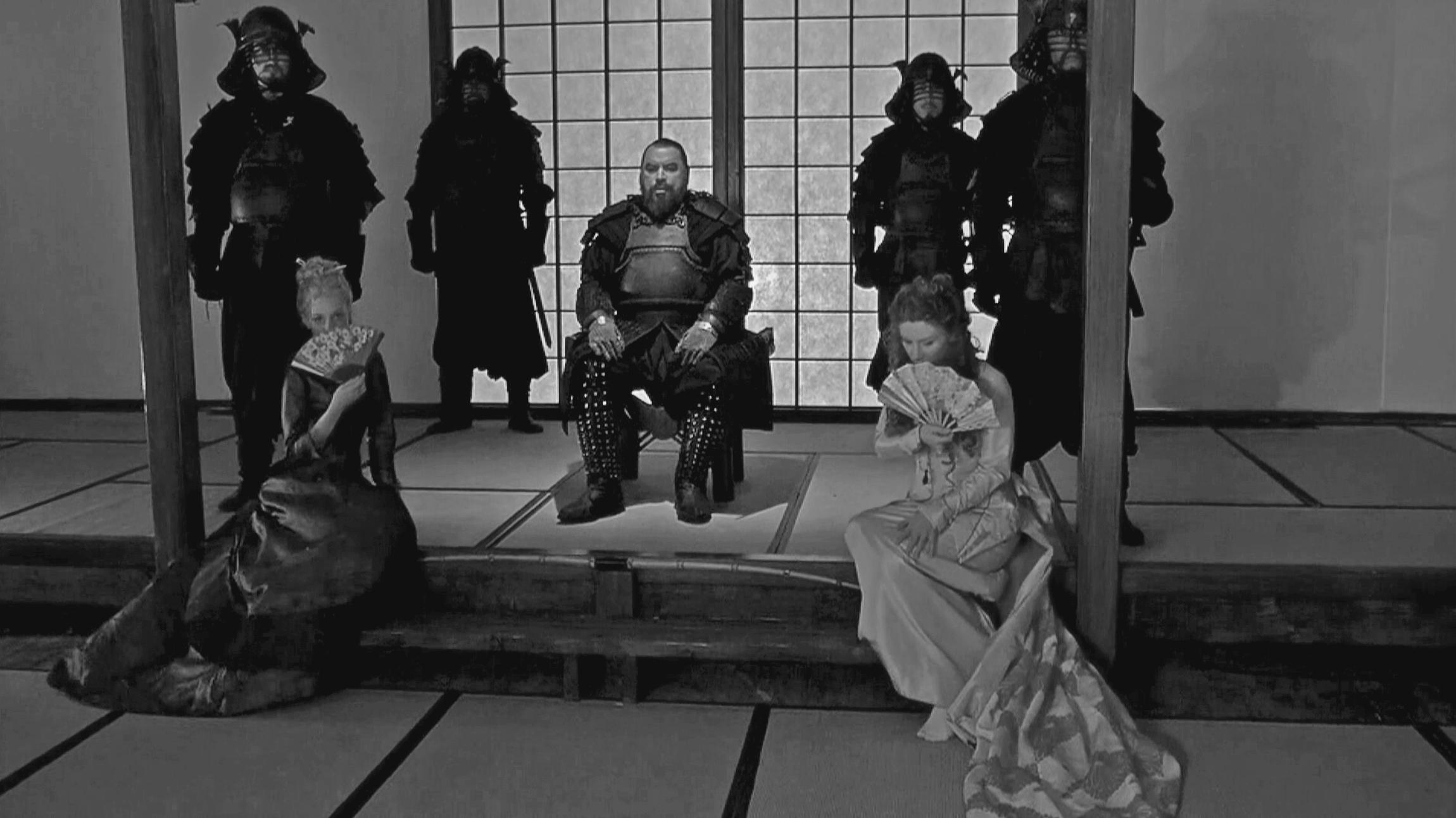
Prologue.1 AsYouLikeIt,dir.KennethBranagh(BBCand HBO,2006),setinMeijiJapan.Rosalin(BryceDallas Howard),Celia(RomolaGarai),andDukeFrederick (BrianBlessed)atthe sumo matchbetweenOrlando (DavidOyelowo)andCharles(NobuyukiTakano).5
1.1 Macbeth (dir.YukioNinagawa,LincolnCenterNewYork, 2018).Fallingcherrypetalsbehindsemitranslucent screens.ReproducedbypermissionofStephanieBerger.23
1.2 ThroneofBlood (dir.AkiraKurosawa,TohoCompany, 1957).SoldiersshootarrowsatMacbeth-Washizu (ToshirôMifune).60
1.3 MillenniumActress (dir.SatoshiKon,Bendai,2001). CameramanIdaKyōji(MasayaOnosaka)beingshotby arrows.60
2.1 TheBanquet (dir.FengXiaogang,HuayiBrothers,2006). Ophelia-QingNü(ZhouXun)huggingHamlet-Wu Luan(DanielWu)inarainycourtyard.78
2.2 PrinceoftheHimalayas (dir.SherwoodHu,Hus Entertainment,2006).Ophelia-Odsaluyang(Sonamdolgar) diesinNamtsoLakeinTibetaftergivingbirthtoher andHamlet’sbaby.82
2.3 Hamlet (dir.MichaelAlmereyda,doubleAFilms,2000). FootageofVietnameseBuddhistmonkonthetelevision inHamlet’sapartment.Hesays “Wehavetheword ‘tobe,’ butIproposetheword ‘tointerbe.’” Hiswordsecho repeatedvideoloopsofHamletrecitingthehalf-line “tobe ornottobe” whilemakingsuicidalgestures.91
2.4 OneHusbandTooMany (dir.AnthonyChan,BoHoFilm, 1988).Yuan-tung(AnitaMuiYim-Fong)playsJulietwho wakesupintheCapulet’stombinthe finalsceneona
makeshiftstageatanightmarket.Theaudiencesare disruptive.94
3.1 TheKingandtheClown (dir.LeeJoon-ik,EaglePictures, 2005).Inanintimatescene,JangNok-su (KangSung-yeon)pressestheking(JunngJin-young)on Gong-gil’s(LeeJoon-gi)genderidentity.118
4.1 WilliamShakespeare’sRomeo+Juliet (dir.BazLuhrmann, TwentiethCenturyFox,1996).ATVnewsanchor (EdwinaMoore)framedbyanantiquatedtelevisionset deliveringthePrologue.156
4.2 ChickenRiceWar (dir.CheeKongCheah [CheeK],MediacorpRaintreePictures,2000). TheCantonese-speakingMalaycharacterFatLady (ZalinaAbdulHamid)singsanalternativeversion ofthePrologue.156
Shakespeareanquotations,unlessotherwisenoted,arefromWellsand Tayloretal.,eds., CompleteWorksofWilliamShakespeare,Second Edition (OxfordUniversityPress,2005).Alltranslationsaremine unlessotherwisenoted.
EastAsiannamesappearintheorderoffamilynamefollowedby givenname,inrespectofEastAsiancustoms,exceptwhentheyare morefamiliarinverted(forinstance,internationallyknownplaywrightsorscholarswhopublishinEnglish).Thisbookadoptsthe pinyin romanizationsystemforChinese,RevisedRomanizationof Korean,andRevisedHepburnforJapaneseexceptwhennamesor phrasesarecommonlyknowninadifferentform.WorldEnglishes suchasSinglisharepreservedtoreflectoriginalspellingandsentence structure.Historicalorofficialnamesarealsopreserved(e.g.,Canton andPekingUniversity).
Videos,photos,transcriptions,scripts,andcriticalnotesforselected filmsandproductionsareavailableonlineat MITGlobalShakespeares (globalshakespeares.org),anopen-accessdigitalperformancearchive cofoundedandcoeditedbyPeterS.DonaldsonandAlexaAlice Joubin.
Readersarealsoinvitedtoconsulttheglossary,chronology,chapter notes,andfurtherreadings.
TheCulturalMeaningsof Performanceisadoublyactedaffairthatisshapednotonlybythe charactersbutalsobytheactors.Actorsembodycharactersacross historyandculture.Adaptations,meanwhile,arestrangersathome. Theydefamiliarizecanonicalworksandeverydayutteranceswhile offeringsomethingrecognizablethroughanewlanguageandform.
WhenViola,disguisedaspageboyCesario,and findingherself pursuedbythelovelornOlivia,declaresthat “Iamtheman...she werebetterloveadream” in TwelfthNight (2.2.25–26),shespeaks withdoubleironyasadoublycross-dressedboyactorontheearly modernEnglishstage(suchasNathanField,1587–1619)andas anadultmaleactor(JohnnyFlynn)inMarkRylance’sall-maleproductionattheGlobeTheatreinLondonin2012(dir.TimCarroll).In YukioNinagawa’s2005Kabuki TwelfthNight,OnoeKikunosuke Vbroughtanewperspectivetothenotionofgender fluiditywhen heplayedinrapidsuccessionViola,hertwinbrotherSebastian,and heralteregoCesario.Asan otokoyaku (actressspecializinginmale roles)intheall-femaleTakarazukamusicalproduction(dir.Kimura Shinji,1999)derivedfrom shōjo (teengirl)mangas,YamatoYuga’ s Violawouldembodyenticinggender fluiditywhenspeakingJapanese, alanguagethatoftenelidesthesubject.SincethegenreofTakarazuka isanall-femaleproduction,Viola’sCesariowouldnotbetheonly cross-dressingcharacter. Otokoyaku actressespresentthe “sensitive masculinity” ofidealizedmalecharactersforapredominantlyfemale audience.1 Inadditiontomakingtherightchoiceofemploying thefamiliarorthepoliteregister,basedontherelationbetweenthe
ShakespeareandEastAsia.AlexaAliceJoubin,OxfordUniversityPress(2021).©AlexaAliceJoubin.
2 ShakespeareandEastAsia
speakerandtheaddressee,maleandfemalespeakersofJapanese arerestrictedbythegender-specific first-personpronounsavailable tothem.Thegenderdynamicsin TwelfthNight workedwellfor Takarazuka,whichisknownforitsromantic,extravagantmusicals.2 Similarly,genderedcode-switchingcreatessemanticambiguityinKei Otozuki’sdoubleperformanceofbothtwins,ViolaandSebastian. HavingplayedexclusivelymalerolesintheTakarazukaRevueuntil herretirementin2012,Keibringsauniqueperspectivetoherrolesin TwelfthNight,thesecondShakespeareproductioninJapanese,witha Japanesecast,directedbyJohnCaird,honoraryassociatedirectorof theRoyalShakespeareCompany(NissayTheatre,Tokyo,March 2015).3 Itwasarareopportunitytoseeanactressspecializingin malerolesplayViola,Cesario,andSebastian.
Ingeneral,syntacticaldifferencescreatelinguisticandcultural opportunitiesinarticulatinganewOrsino’scommentsaboutlove fromamasculinistperspectiveandViola’sapologyforawoman’ s lovewhenindisguise(2.4.78–125) ortheexchangebetweenOliver andRosalindindisguiseasGanymedeonher “lackingaman’sheart” whensheswoons,nearlygivingherselfawayin AsYouLikeIt (4.3.164–76).Thesearebutafewexamplesofhowthephenomenon ofglobalShakespearereshapesacademia,festivals,andtheatrecircuits. TouringShakespeareperformancesandgloballycirculated filmshave becomeastapleatinternationalfestivals,allowingaudiencestoappreciatethevitalityofworldcinemaandtheatre.
Sincethenineteenthcentury,stageand filmdirectorshavemounted hundredsofadaptationsofShakespearedrawnonEastAsianmotifs andstylesandperformedinJapanese,Korean,MandarinChinese, Cantonese,Taiwanese,English,Singlish,Hokkien,andawiderange ofdialects.SomeoftheworkshaveoriginatedoutsideAsia,whereas othershavetouredfromAsiatotheWesttocriticalacclaim.They havebeenrecognizedasamongthemostinnovativeintheworld. The firstAsian-languageperformancesofShakespearetookplaceat differentpointsinhistorywithincomparablecontextsofmodernization:1885inJapan,1913inChina,1925inKorea,and1949in Taiwan.4 PerformingShakespeareinAsianstyleshasconstitutedan actofdefamiliarizationforaudiencesathomeandabroad.Bythelate twentiethcentury,Shakespearehadbecomeoneofthemostfrequently performedplaywrightsinEastAsia.
Hamlet hasbeenapopularplayforpoliticalappropriation.Notably, ChinesedirectorLinZhaohuastagedhisproductionof Hamlet (Hamulaite)inthewakeofthestudentdemonstrationinTian’ anmen SquareandtheChinesegovernment’scrackdownonthedemocratic movementinBeijing,whichculminatedinthemassacreonJune4, 1989.Lin’ s Hamlet (1989,1990,1994),setincontemporaryChina, usedthreeactorstoplaythetitularcharacter(amongotherroles)in ordertodemarcatedifferentstagesofpsychologicaldevelopmentof theprince.Thedirectorextrapolatedsomethingextraordinaryfrom Hamlet’ s “Tobeornottobe” soliloquy(3.1.58–92;deliveredalternatelyandcollectivelybythethreeactors)todrivehomethemessage that,inhispostsocialistsociety, “everyoneisHamlet,” andHamletis oneofus.Theproductionpaidtributetothestudentprotestors’ boldnessinawakeningChinatothevisionofademocratic,civil society.Toviewthefullproduction(1995version),visitthepage curatedbyAlexaAliceJoubinonthe MITGlobalShakespeares:global shakespeares.mit.edu/hamulaite-lin-zhaohua-1995/ TwocenturiesofAsianinterpretationsofShakespeare’splayssuch as Hamlet and Macbeth arenowmakingaworldofdifferenceinhow weexperienceShakespeare.AkiraKurosawa’ s ThroneofBlood (based on Macbeth,TohoStudios,1957;starringToshirôMifune)and Ran (basedon KingLear,HeraldAceandNipponHeraldFilms,1985) whilenowcanonicalinthestudyofShakespeare arefarfromthe earliestortheonlyShakespeare filmsfromEastAsia.Thereareseveral notableearlytwentieth-centurysilent filmadaptations.Aroundthe timethatAstaNielsen’ sgender-bending Hamlet (dir.SvendGade andHeinzSchall,1921)was fi lmed,silent-fi lmadaptationsof The MerchantofVenice ( Nülüshi [WomanLawyer],alsoknownas Rouquan [BondofFlesh],dir.QiuYixiang,TianyiFilm,1927;starring HuDie[akaButter fl yHu]asPortia)and TheTwoGentlemenof Verona ( Yijianmei [ASprayofPlumBlossoms],dir.BuWancang, LianhuaFilm,1931;starringRuanLingyuasJulia[HuZhuli])were beingmadeinShanghaiandmarketedtotheEuropeanexpatriate andChinesediasporiccommunitiesthereandinCanton(today’ s Guangzhou)andSoutheastAsia.AnexplosionofboldandimaginativeinterpretationsofShakespeare’ splayshasoccurredsince the1990s,manyofwhichaimtoattractaudiencesinmultiple locationsaroundtheworld.Thebeginningofthenewmillennium Prologue:MeaningsofShakespeareandAsiaToday
wasforAsianShakespearesasthe1990swereforAnglo-American Shakespeareon fi lm.
Thisbooktracessharedanduniquepatternsinpost-1950sappropriationsofAsianandWesternmotifsacrosstheatricalandcinematic genres.ThesevisionsofothernessarelocatedinEastAsia,theUSA, theUK,andothercultures.TheCzech-basedartistNoriSawacombinedJapaneseBunrakuandCzechpuppetsinhiswidelytouredsolo marionettetheatreadaptationsof Macbeth (1999), RomeoandJuliet (2000),and KingLear (2004).Theculturallyhybridapproachto performancehasbeenasignatureinhisinternationalcareersince 1992.5 ABunrakupuppetrepresentsArielinJulieTaymor’s1986 Off-Broadwayproductionof TheTempest fortheClassicStageCompanyinNewYorkCity.6 Thepuppet’shead floatedabovethestage workingitsmagicinvariousscenes.Prosperofreedboththespiritand thepuppeteerinthe finalscene,fusing fictionwithreality.Similarto Sawa,TaymorbroughttogetherclassicalJapanesetheatreandthe Italian commediadell’arte inavisualfeast.KennethBranagh’sJapanesque film AsYouLikeIt (BBCandHBO,2006)attemptssomeform ofculturalventriloquismthroughitsuseof filmandimaginarylocations:WakehurstPlacedressedupwithaZengarden,shrinegate,and trappingsofanineteenth-centuryJapantornbetweensamuraiand Europeanmerchants.TheinterculturalfusionisreflectedbyRosalin’ s andCelia’sVictoriandressesduringthesumomatchbetween OrlandoandCharles(Fig.1).Sittingbehindthem,DukeFrederick donsdarksamuraiarmor.Both AsYouLikeIt andthedreamof Japanaredeployedornamentallyinthe filmmaker’ssignaturevisual romanticism(e.g.,Orlando’slovelettersinJapanese kanji).7 Theseare butafewexamplesofhybridAsian-Westernaesthetics.More recently,SouthKoreandirectorChan-wookPark’sAmericandebut film Stoker (FoxSearchlight,2013)featuresIndiaStoker(Mia Wasikowska)asafemaleHamlet figure.Wellknownforhiseclectic, Korean-languagerevengethriller Oldboy (CJEntertainment,2003), ParkventuresintoEnglish-language filmmakingwith Stoker,whichis notexplicitlymarketedasanAsianadaptationof Hamlet butis recognizedbymanyreviewersasa filmwithFreudian-inflected, Hamletianelements.8
HowdoAnglophonedirectorssuchasTaymorandBranaghuse imaginariesofAsiadifferentlyfromdirectorsbasedinAsia,suchas
Fig.Prol.1 Branagh’ s AsYouLikeIt.Rosalin(BryceDallasHoward),Celia (RomolaGarai),andDukeFrederick(BrianBlessed)atthesumomatchbetween Orlando(DavidOyelowo)andCharles(NobuyukiTakano).
thelarger-than-lifecherrytreeinthewidelytouredproductionof Macbeth (1980)directedbyYukioNinagawa?Conversely,whatculturallogicgovernsthecirculationandreceptionofworksbyEast Asiandirectors,suchas Stoker byPark,NoriSawa’spuppettheatre, and ThroneofBlood byKurosawa?Whydocriticsrepeatedlyusethe adjective “Shakespearean” todescribethegenre fluidityofSouth KoreandirectorBongJoon-ho’squadrupleAcademyAward-winning Parasite (BarunsonE&A,2019),whichfeaturesauniquetonalblend oftragic,comic,lyrical,andhorrorelements?9 MoresothanKurosawa ’ s films,Bong’sKorean-language filmhastranscendedwhathe called “theone-inch-tallbarrierofsubtitles” toreachlarge,internationalaudiences.10 Howdothecrossoversbetweentheatricalization andcinematicconventionsenrichperformances?Directorsseethe copresenceofShakespeareanandnon-Westernmotifsasaunique opportunity,andtheyuseselectculturalelementsdrawnfromdisparategenres,suchasconventionalizedgenderpresentationsand Chinesemartialartssequences,ascommondenominatorsandbondingagentsbetweendifferentperiodsandculturallocations.Theartists’ racialidentitiescansometimesincriminatetheminethnicsellingout orculturalimperialism.Inothercontexts,however,theircultural originsandlocationsexoneratethemfromculturalappropriation.
Directors regardlessoftheirculturalaffiliations workingwith Asianmotifsoftenhavetocontendwiththeirregionallymarked culturalidentity.Theirworksarecompelledtorespondtothecompetingdemandstoinhabitsimultaneouslythelocalandtheglobal,to beinnovativebutconservativeenoughtobepalatable,torepresent Asiaontheworldmarket,andtobetheconveyorofanAnglophone WesttoAsianaudiencesandviceversa.
Thisbookistitled ShakespeareandEastAsia,ratherthan ShakespeareinEastAsia ,tosignaltheinterplaybetweenthetwo condensedculturalsignifi ersandtoemphasizeashiftawayfromthe linear,one-way-streetmodeloftracingthetransplantationofa British “giant ” intoacolonialculturalcontext.Thisfalsedichotomy betweenthenativeandtheforeigncanbebrokendownwhen weconsiderglobalShakespeareperformancesinthecontext ofcross-mediaandcross-culturalcitations,theculturalvibration linkingproductionsindifferentcultures.Adaptationsreferenceor echooneanother,acrossculturesandgenres,inadditiontothe Shakespeareanpretext.
AsianinterpretationsofShakespearemattertoWesternreaders becauseoftheirimpactonAmericanandEuropeanperformance cultures,asexemplifiedbytheworldwiderecognitionoftheworksof AkiraKurosawa,OngKengSen,andOhTae-suk.Thepairingofa WesternplaywrightwithasetofAsianperformancepracticesprovides historicallynecessaryandheuristicallyilluminatingcasesof filmmakingandtheatremaking.11 TheclashesandconfluencesofAsiaand Shakespearegivea “localhabitation” tothe “airynothing” ofglobalization(AMidsummerNight’sDream,5.1.17–18).AsianShakespearesare sufficientlycomplexandcoherentasasystemofsignificationtointerface globalculturalstudies.Forinstance,throughAsianShakespeares metacriticalinquiriesmaybelaunchedintohowShakespeareandAsia havebeenusedasculturalsignifiersincompetingnarrativesabout gender,race,andnation.Further, non-Anglophoneinterpretations ofShakespearesmattertoreadersbecausetheexpansionofEnglish studiesiscurrentlyoccurring “outsidethediscipline’ straditional Anglophone...base.” Inhisstudyofliteraryprestige,JamesEnglish hascalledforscholars “atthepresumptivecenterofthingstobegin payingmoreattentiontotheformsourdisciplineistakingat[those] sitesofrapidexpansion.”12
CompulsoryRealpolitik Performancecreatesvariedpathwaystodramaticandculturalmeaningsacrosshistory,butpolity-drivenhistoriographyhasconstructed linear,synchronicnarrativesthathavebeen flattenedbynational profiling,atendencytocharacterizeanon-Westernartworkbased onstereotypesofitsnationoforiginandtoregard,forexample, SouthKoreanadaptationsofShakespeareaspoliticalallegoriesof thepostwartensionsontheKoreanPeninsula.Theproblemhere isoneof compulsoryrealpolitik theconvictionthatthebestway tounderstandnon-Westernworksisbyinterpretingtheirengagementwithpragmaticpolitics.Thisapproachmayimposeintentionalityupondirectorsandimplythattheirworksareofinterestsolely becauseoftheirtestimonialvalue.Theapproachrunstheriskof turningglobalShakespearesinto “merecuriositiesorcolonial remnants.” 13
Asaculturalinstitution,Shakespeareregistersabroadspectrumof valuesandpracticesthatrivalsthecomplexityofthefreightednotion ofAsia.Consider,forexample,thedivergentShakespearesparadoxicallybrandedbytheGlobeTheatreinLondon,14 bytheAmerican ShakespeareCenterandBlackfriarsPlayhouseinStaunton,Virginia, andbyaslewofsuchinstitutionsasthePanasonicGlobeinTokyo (1988–2002)andreplicasofthe first(1599)andsecond(1614)Globe theatresbeingplannedforBeijing,Stratford(Connecticut),andRio deJaneiro.15 Likewise,thedisseminationofknowledgeofAsianstyles ofperformancehasbeenfraughtwiththepoliticsofrecognitionand branding.EarlyexamplesincludeMadameSadayakko’s(1871–1946) quintessentiallyJapaneseperformancesintheUnitedStatesand Europe16 andMeiLanfang’s(1894–1961)transformationof jingju (Beijingopera)into guoju (nationalopera)andaformof “tactical Orientalism” inMoscow(whereBertoltBrechtwasinspiredtocreate histheoryofthealienationeffect),inWashington,DC,andeventually onBroadway.17 AsFredricJamesonputsitinhisworkingdefinition, globalizationhasbecome “anuntotalizabletotalitywhichintensified binaryrelationsbetweenitsparts.”18
The firstphaseofsustainedstudyofglobalShakespeareperformanceunfoldedoverthepasttwodecadesandhasbroughtnational politicalhistoriestobearonthestoryofShakespeareinglobal
contexts.TherearedetailedhistoriesofnationalShakespearesin which “ShakespeareinIndia” isshorthandforpostcolonial,political meritsofadaptationsofShakespearethatserveasatoolforresisting Westernhegemony.SouthKoreanShakespeareswouldbeseenas allegoriesofthedividebetweenNorthandSouthKorea,whilemainlandChineseworksonworldtourswouldbethoughttocontainattenuatedallusionstotheCulturalRevolution.AnglophoneShakespeares areassumedtohavebroadtheoreticalapplicabilityandaestheticmerits, whereasforeignShakespeares evenwhentheyfocusonartisticinnovationonapersonalratherthananepiclevel arecompelledtoprove theirpoliticalworth.Criticsareonthelookoutforpotentiallysubversive politicalmessagesintheseworks,whicharecompulsorilycharacterized asallegoriesofgeopoliticalissues.
Thereareanumberofimplicationsofthisapproach,whichisolates performancesintheirperceivedculturalorigins.Itcouldmisstherich intertextsbetweenperformancetraditions;mostadaptationsborrow frommorethanoneculture.Itcouldsubsumelocalhistoryunder Shakespearecriticismorviceversa.Itcouldalsoimplythatworksfrom theGlobalSouthorAsia,assumedtobeoperatingasnationalallegories,arevaluableonlyfortheirpoliticalmessagesratherthantheir aestheticmerits,leadingtoresearchquestionsdrivenbypolity for example, “WhyaretheresomanyglobalShakespeareanadaptationsin cultureswithnoloveforGreatBritain?”19 Last,butnotleast,the fetishizationofpoliticalmeritscouldundulyemphasizeglobalShakespeares ’ allegeddeviationfromAnglophonepracticesand,inturn, instrumentalizeglobalShakespearesforthepurposeofdiversifyingthe scholarshipandcurriculaintheUnitedKingdom,theUnitedStates, andCanada.20 Thoughtherearevaluablemonographsonnational Shakespeares,thesamecannotbesaidofperformancesacrossgenres thatinterfacewithmorethanonecultureorregion.21
Nationalprofiling thetendencytobracket,forexample, “ShakespeareinJapan” inisolationfromotherculturalinfluences is asymptomoftheaforementionedassumptionthatperformancesin theUnitedKingdom,theUnitedStates,andCanadaarenormative andaestheticallyuniversal,whereasShakespeareinJapanbears location-specific,oftenpolitical,meanings itsaestheticmeanings areeitherindecipherableoruninteresting.AsReyChowobserves, despite “thecurrentfacadeofwelcomingnon-Western ‘others’ into
putatively...cross-culturalexchanges,” thereisstill “acontinual tendencyto...ghettoizenon-Westerncultures...bywayofethnic,nationallabels.”22 Duetothecurrentstructureofacademia andhierarchiesofculturalprestige,Asianistshavealwaysbeenobliged toknowtheirSophocles,Shakespeare,Molière,Ibsen,andAngloEuropeancriticaltheories,thoughscholarsofShakespeareand EuropeanliteraturetendtoregardknowledgeofAsianwritersand directorsastheresponsibilityofthosewhospecializeinthesubfields.
Asaresult,worksbynonwhiteauthorsareimaginedto fix theirintellectualcontent “bywayofanational,ethnic,orcultural location.”23 Western,whiteexamplesareassumedtobemoreeffective intheirexplanatorypower,whileAfrican,Asian,andLatinAmerican materialsarerecruitedtoserveastheexceptionalparticular.Henry LouisGatesJr.makesasimilarobservationinhiscallfordevelopinga “blacktheory” specificallyfortheinterpretationofAfricanAmerican literaturetocounterthetendencynottoseeaestheticmeritinblack literature.Hewritesthat “blackliteratureanditscriticism...have beenputtousesthatwerenotprimarilyaesthetic;rather,theyhave formedpartofalargerdiscourseonthenatureoftheblack,andofhis orherroleintheorderofthings.”24
Equallyproblematicisthetendencytoregardtheglobalandthe localaspoliticallyexpedient,diametricallyopposedcategoriesofdifferenceinanoften-unarticulatedagendatopreservealiteraryelite. Theglobalisimaginedtobe “whatevertheUnitedStates”—andby extensionGreatBritain—“isnot.”25 Inreferencetothesuccessof HarukiMurakami’sandOrhanPamuk’snovelsintranslationonthe Westernliterarymarket,TimParkscoinedthephrase “thedullnew globalnovel” todescribewhatsomecriticsbelievetobeaneutralstyle ofwritingthatlendsitselftotranslation.26 Inthisview,thesenovelsdo nottendtocontainculturallyspecificreferencesorcomplexlinguistic featuresoftheirlocallanguages.TheyuseWesternmotifstocaterto thetasteofWesternreaders.KarolinaWatrobahascritiquedthisline ofargumentaboutworksthatare “eminentlytranslatable” dueto theirtransparencybypointingoutthatcriticsofthistypeofworks assignlowaestheticvaluetotheminthe firstplace: “Anundercurrent ofelitismisrevealedinanostensiblymaterialistargument: ‘thelocal’ and ‘theglobal’ starttosoundlikecodewordsfor ‘highbrow’ and ‘lowbrow.’”27
AsianShakespearesgiveusacategorythatwecanusetodevelopa site-specificcriticalvocabularytoaddresstheepistemologicalfoundationofhistoriesofculturalglobalization.Theyprovidehistoricalmaterialstobearonthetensionbetweenculturalhomogenizationand heterogenizationinglobalcommunities.28 Thisisnottosaythatstudies ofShakespeareinperformanceshouldbeeclipsedtogivewaytoAsian filmandtheatrehistoryjustbecauseAsiaasawholematterspolitically andeconomicallyinwhatthejournalisticdiscoursebillsasan “Asian century.” TheapproachwouldriskcreatingnewformsofColdWarspeakandepistemologicalOrientalism.29 “Asiacentricity” isasproblematicas “Eurocentricity.”30 AsRossellaFerrariwrites,scholarship shouldtreatAsianperformingartsas “activeproducersoforiginal epistemologiesratherthanmerelyasprovidersofethnographiesand derivativeadaptations.”31 ThestoryofAsianperformanceisnotand shouldnotalwaysbepolitical,thoughtheWesternmediaoftengravitatetowardstoriesofpoliticaldissidents.Storiesofpoliticaloppression mustbetold,butdichotomizedviewsdonotgetusveryfar.32
WhileAsiamay,inGayatriChakravortySpivak’swords,bean “impossibleinterpellation” duetoitsinherentdiversityandincongruity,33 and Shakespearearepositoryofendless recursivemimesisandtheatrical repetition,eachoftheseculturalconglomeratescanbecon fi gured bothtooperateasalocalcanonandsi multaneouslytoprojectaselfimageinnewcontextsofsigni fi cation,whichisparticularlytrueat internationalfestivalsandintouri ngproductions.Thecriticaltendencytoprioritizerealpolitikinnon-Westernworksleadstoblind spotsinourunderstandingofthelogicandsigni fi canceofAsian Shakespeares.
ThePostnationalSpace Granted,somedirectorsdotapintorealpolitiktoconceiveandmarket theirworks.ArtistsandfestivalorganizershaveusedShakespeareand Asiaasgeopoliticalandvisualmarkersinpastdecadestopropagate theirworldviews.Manyartistsrelyoninternationalspectatorsto disseminatetheirdecidedlylocalworks,andmoreandmorefestivals thriveontheideologicalpurchaseofbeing “global.”34 However,they dosoastheyengageingenericinnovationandformalisticexperiments,bothofwhichaspectstendtobeoverlookedbycritics. 10 ShakespeareandEastAsia
Wehavenowarrivedatthecuspofthesecondphaseofglobal Shakespeareperformance;theatreand filmartistsarechallenging fixed notionsoftraditionandanarrowdefinitionofculturalauthenticity. Shakespeareperformanceshaveenteredapostnationalspace,where identitiesareblurredbythepresenceofinternationalperformers, touristaudiences,transnationalcorporatesponsors,andthelogicof internationalfestivals.Thepostnationalspacesharescharacteristicsof liminalspacesthatarediscursivelyformed.AsIanWatsonwritesin hisobservationofculture(whichisdefinedbyinclusion,exclusion, andasenseofbelonging),theliminalspacesaresitesof “ conflict, eruption,compromise,debate,andaboveall,negotiation.”35 Cultural ownershipisa fiction,andfamiliaritywithtraditionalculturalpractices doesnotalignwithethnicity.Infact,certainAsiantheatricalpractices suchas jingju andNohareunfamiliargenresontheirhometurfs today,andShakespeare’slanguagehasmoreimmediateimpactin moderntranslations,evenasitgrowsmoredistantfromtheuniverse ofEnglishspeakers.Outsidetheregion,Asiancinematicandtheatricalidiomssuchas kungfu and jingju arebecomingmorecommonin English– andEuropean-languageperformances.
Thetransnationalcultural flowsgobeyondthescopeofgeopolitical divisionsofnation-statesandculturalprofiling.Inotherwords,performanceshavedeterritorializingandreterritorializingeffectsthat unmarktheculturaloriginsofinterculturalinterpretationsbecause theyworkagainstassumptionsaboutpoliticallydefinedgeographies. Theseperformancestendtoregardsuchgeographiesasartificial constraintsthatnolongerspeaktotherealitiesofglobalizedart.Gilles DeleuzeandFélixGuattaridevelopedtheconceptofdeterritorializationtoanalyzeculturalrelationsthatarein flux. Deterritorialization is aprocessthatseparatesculturalpracticesfromtheir “native” habitats orpointsoforigin.PerformancestylessuchasKabukiareavailablefor appropriationbyallartists,and,conversely,Japanesedirectors’ useof KabukiisnotbydefaultmoreauthenticthanaFrenchpractitioner’ s deploymentofKabukielements.Touringproductionscanalso reterritorialize theplaysuponarrivinginanewlocation,takingrootina newvenueandtakingonlocalcolors.36 Asaresult,interculturalworks arebestunderstoodthroughtheatricallydefinedculturallocations influencedbytransnationalnetworksofcollaborationandfunding (e.g.,aFrench–Japanese RichardII byArianeMnouchkineinParis