Oxford University Press is a department of the University of Oxford. It furthers the University’s objective of excellence in research, scholarship, and education by publishing worldwide. Oxford is a registered trade mark of Oxford University Press in the UK and certain other countries.
Published in the United States of America by Oxford University Press 198 Madison Avenue, New York, NY 10016, United States of America.
All rights reserved. No part of this publication may be reproduced, stored in a retrieval system, or transmitted, in any form or by any means, without the prior permission in writing of Oxford University Press, or as expressly permitted by law, by license, or under terms agreed with the appropriate reproduction rights organization. Inquiries concerning reproduction outside the scope of the above should be sent to the Rights Department, Oxford University Press, at the address above.
You must not circulate this work in any other form and you must impose this same condition on any acquirer.
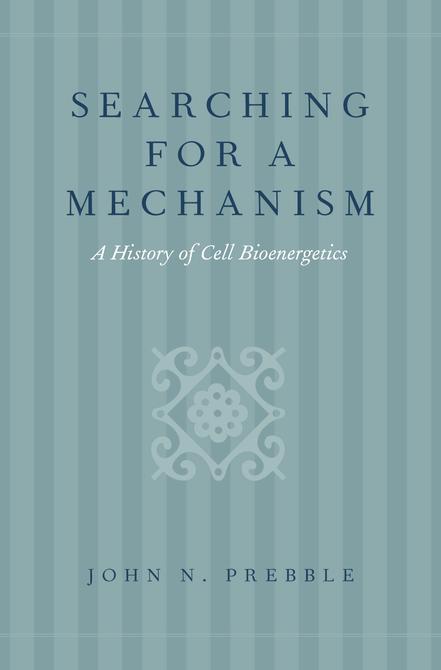
Library of Congress Cataloging-in-Publication Data Names: Prebble, J. N. (John N.), author. Title: Searching for a mechanism : a history of cell bioenergetics / by John N. Prebble. Description: New York, NY : Oxford University Press, 2019. | Includes bibliographical references and index. Identifiers: LCCN 2018023975 | ISBN 9780190866143 Subjects: LCSH: Bioenergetics—History. Classification: LCC QH510.P74 2018 | DDC 572/.43—dc23 LC record available at https://lccn.loc.gov/2018023975
1 3 5 7 9 8 6 4 2
Printed by Sheridan Books, Inc., United States of America
In memory of Peter Mitchell (1920–1992), whose genius laid the foundation for the revolution in our understanding of cell bioenergetics.
To Pat
Preface xi
Acknowledgments xv
List of Abbreviations xvii
1. Introduction: Respiration, phosphorylation, and mechanism 1
1.1 Respiration, photosynthesis, and bioenergetics 2
1.2 Vitalism 3
1.3 Historical questions 5
1.4 Phosphorylation 13
1.5 Mechanisms 14
1.6 The relevance of cell bioenergetics to the question of mechanism 15
2. From physiology to biochemistry: Respiration and oxidation from 1600 to 1900 17
2.1 Initiation of the experimental study of respiration 18
2.2 John Mayow’s Tractatus Quinque 20
2.3 Stephen Hales’s Vegetable Staticks 22
2.4 Respiration and combustion 23
2.5 The location of respiration 26
2.6 Thermodynamic questions 28
2.7 Bernard’s criticism of slow combustion 31
2.8 Hofmeister’s integration of cell biology 32
2.9 O 2 and oxidation 33
2.10 Spectroscopy, hemoglobin, and animal pigments 35
2.11 Cell-free systems 38
3. Relating phosphorylation, respiration, and oxidation: 1900–1945 41
3.1 Resolving nineteenth-century questions 41
3.2 Achievements of the first half of the twentieth century 42
3.3 Yeast and animal juices: The importance of phosphate 43
3.4 Thunberg, Wieland, and the nature of biological oxidation 47
3.5 Warburg’s Atmungsferment 51
3.6 Keilin’s cytochrome 54
3.7 DPN (NAD) and its oxidation 59
3.8 Muscle, lactic acid, and energy 61
3.9 Adenosine triphosphate and muscle phosphates 62
3.10 Aerobic ATP synthesis: Engelhardt and Kalckar 65
3.11 Phosphorylation linked to respiration: Belitzer and Ochoa 68
3.12 Lipmann: The significance of phosphorylation 69
4. Emergence of the field of cell bioenergetics: 1945–1960 73
4.1 Emergence of a new field 73
4.2 The mitochondrion as the location of respiratory activity 74
4.3 Further elucidation of the respiratory chain 76
4.4 Phosphorylation 82
4.5 Sites for phosphorylation 85
4.6 Seeking to understand the mechanism of phosphorylation 87
4.7 The phosphorylating enzyme 91
4.8 Fragmenting mitochondria 91
4.9 Physiological aspects of mitochondria 94
5. Defining the mechanism: 1960–1977 97
5.1 What mechanism? 97
5.2 The first proton theory: Robert J. P. Williams 99
5.3 The chemiosmotic hypothesis of Peter Mitchell 100
5.4 Revising the respiratory chain 104
5.5 Exploring the ATP synthase 108
5.6 Reconstituting oxidative phosphorylation 111
5.7 Bacteriorhodopsin 112
5.8 Conformational theories 113
5.9 Mitochondrial membranes 117
5.10 Ion movements across the mitochondrial membrane 119
5.11 Resolving the mechanism 122
6. Discovering photosynthesis 128
6.1 The development of ideas on photosynthesis 128
6.2 Initial studies of photosynthesis 129
6.3 The importance of water and CO 2 131
6.4 Energy 132
6.5 Discovering chlorophyll and chloroplasts 133
6.6 Understanding the nature of photosynthesis 137
6.7 Photosynthetic bacteria and an oxidation–reduction mechanism 139
6.8 Light and dark reactions 141
6.9 O 2 evolution and the Hill reaction 143
6.10 CO 2 assimilation 146
6.11 Discovering photophosphorylation 149
7. Elucidating the photosynthetic light reaction 154
7.1 The fourth period of photosynthetic history 154
7.2 Seeking a coherent model of photosynthesis 155
7.3 The photosynthetic unit 158
7.4 Two light reactions and a reaction center 161
7.5 The Z-scheme and two photosystems 162
7.6 The contribution from bacterial photosynthesis 167
7.7 The chloroplast electron-transport chain 171
7.8 Chloroplast photophosphorylation 175
8. The impact of protein technology: 1977–1997 181
8.1 The fifth period of investigation 181
8.2 The chemiosmotic mechanism for oxidative and photosynthetic phosphorylation 182
8.3 The Q cycle 183
8.4 Stoichiometric problems in mitochondria 186
8.5 Uncoupling and uncoupling proteins in mitochondria 188
8.6 Bacteriorhodopsin, a bioenergetic protein 190
8.7 Understanding the respiratory chain 194
8.8 Elucidating the mechanism of respiratory chain complexes 195
8.9 Photosynthetic complexes 200
8.10 Adenine nucleotide transport 205
8.11 The ATP synthase 207
9. The search for mechanism 214
9.1 Photosynthetic and oxidative biochemistry—the relationship 214
9.2 The course of bioenergetics history 216
9.3 Does methodology drive bioenergetics? 218
9.4 The significance of the membrane 223
9.5 Membrane proteins 224
9.6 The concept of mechanism 225
9.7 Revolution, hypothesis, and crisis 229
9.8 Resolving the crisis: Accepting the chemiosmotic theory 233
References 237 Index 267
Preface
The twentieth century saw the elucidation of many of the fundamental problems of the biological sciences. A major achievement was the development of metabolic biochemistry. However, within this general field, one of the most significant challenges was the endeavor to understand the mechanisms of bioenergetics. The complexity of this field became apparent when the links between the mechanisms of various processes in oxidative phosphorylation, photosynthesis, and cellular transport across membranes began to be appreciated. These areas had previously been studied independently, but in the middle of the century their relationships were increasingly understood and the term bioenergetics was often used to cover the emerging field.
Biologists have been concerned with mechanisms for several centuries, but with the development of modern methods, the significance of the term mechanism has been recognized. Philosophers, in a rather different way, have long had an interest in mechanism but this has been revitalized in recent times with the application of this concept to the philosophy of the biological sciences. So the idea of searching for a mechanism seems to be particularly appropriate to the consideration of the history of scientific studies about respiration. These developed through basic issues of metabolism to the crunch question of how cells acquire their energy from the oxidation of foodstuffs such as carbohydrates. Here I trace the history of the search for mechanisms in a group of key biological fields that progressively merged toward the end of the twentieth century. This study is not intended to add to the philosophical ideas on mechanism, but rather to see the way in which mechanisms in one specific area were elucidated over time, from the early seventeenth to the end of the twentieth century.
Few problems have taxed biologists as much as the fundamental mechanisms of bioenergetics. This book is designed partly to explore the often-heated debates particularly in the 1960s and 1970s, when theories and experimental interpretations in bioenergetics were fought over so passionately that the period was known by some as the Ox phos wars. It is also intended to place this important period in biological research in its historical setting. Thus the story of what is now known as bioenergetics is traced from the first experimental studies of respiration and photosynthesis in the enlightenment of the seventeenth and eighteenth centuries to the modern period. The climax of the account comes in the brilliant resolution of the mechanism of adenosine triphosphate (ATP) synthesis in animals, plants, and microorganisms by the proton-translocating ATP synthase at the end of the twentieth century. Such a history reflects the history of biology as a whole as it moved from a primarily observational study to the highly technical investigations of the second half of the twentieth century.
Like most history, writing a science history raises questions about defining the margins of the discussion both in time and in subject matter. A major issue has been where to start. In his history of respiration, David Keilin went back to the second-century Greek physician and philosopher Galen. I have chosen to start with a brief discussion of seventeenth-century ideas, when a truly experimental approach to the study of respiration was initiated. The photosynthesis story is best begun at the beginning of the eighteenth century with the work of Stephen Hales, whose ideas also contributed to the respiration story. I have concluded the story at the end of the twentieth century with a discussion of the enzyme-synthesizing ATP because of its innate interest and because it demonstrated an important result of the search for mechanism. The scope of the book has been slightly narrow, being confined to the discussion of respiration, oxidative, and related aspects of phosphorylation, photosynthesis, and cognate areas, such as facets of membrane transport and specific issues in microbial biochemistry. Fields such as muscular contraction, which might arguably have been included in a discussion of bioenergetics history, have been mostly omitted and similarly some areas of microbial energetics.
Of course, restrictions of space have entailed selecting issues to which particular attention should be given in order to maintain a comprehensible narrative, and this has necessitated some rather difficult choices. Thus judgments have had to be made about which particular scientific contributions should be included, which contributions should be seen as central to the history of bioenergetics, and which might be set aside in order to focus on the major lines of development. This is particularly so in the later part of the twentieth century in which there is a vast amount of material and a wide range of approaches to the subject. Inevitably many rather personal choices have been made. I apologize to those who feel that important aspects of the subject have been omitted or that the work of particular scientists who made valuable contributions has been ignored or should have been given more weight. Another issue that has emerged arises from the nature of the field of bioenergetics that has been noted for its lack of consensus. Although I have covered most of the most obvious disagreements in my discussion I have been advised that in some more recent research, I may not have been sufficiently sensitive to the varying viewpoints. I apologize to those who feel I have misrepresented particular aspects of their interests.
The history has been divided into several phases, each initiated by a major advance often outside the field of bioenergetics and affecting biochemistry more generally. These phases do not have broad applicability as the phases I have recognized for respiration and phosphorylation are not identical with those identified for photosynthesis. After having much in common at the beginning, the two areas of study have tended to proceed separately, partly because the events associated with the light reaction had no counterpart in animal cell respiration. However, in the second half of the twentieth century, the two fields have been more or less merged in the field of bioenergetics. Indeed it is not possible to consider the one without the other as each has made major contributions to the other.
In telling this story I have felt it right to make points through appropriate quotations of the leading workers in the field. This allows the historical figures to be heard. However, in the later period this becomes more difficult; frequently a wide variety of workers are jointly developing the field, and a somewhat random choice has been made. I have also attempted to minimize the technical aspects as much as possible, although it is not
possible to describe the development of ideas in a subject such as biochemistry without recourse to a certain amount of chemistry. Further, in the later stages, the use of highly complex techniques has been discussed without much explanation of what is actually involved.
What is the justification for a book on the history of cell bioenergetics? The history of science is a discipline in which it is important that both historians and scientists participate. This story is told by a scientist in the hope that his approach will provide some illumination on an area generally enlightened by contributions of historians and also philosophers. What I have sought to do here is to give a coherent though brief account of the history of those events associated with the energetics of cell respiration and photosynthesis over more than three centuries. There is already a widely acclaimed book by Joseph Fruton on the history of biochemistry as well as the extensive account by Marcel Florkin; both of these present aspects of bioenergetics within a broad discussion of biochemistry but do not give it the detailed attention it deserves. There have been a number of essays on specific events and short periods of biochemical history but there is clearly a need to put all of these within a broad historical perspective. That perspective also illustrates some of the effects of the major developments in the chemical aspects of biological science, the preparation of cell-free systems at the turn of the twentieth century, the ability to describe metabolic pathways, the development of techniques for handling membrane proteins, and so on. However, the justification for the book is in my view the need for a history of bioenergetics comparable to that of Michel Morange’s A History of Molecular Biology. I hope I have come some way in achieving that goal.
But why single out bioenergetics? Metabolic biochemistry developed only slowly in the earlier part of the twentieth century, but its achievements were substantial—the glycolytic pathway, the citric acid cycle, and so on. The same period began to identify aerobic phosphorylation as a major source of ATP but the mechanism was not apparent. By the 1950s it was clear that there was a challenging problem to solve. The difficulties in finding a solution, the choice between different hypotheses, and the problem of successfully working with membranes provide interesting historical developments not as apparent in other areas of metabolic biochemistry. Such problems were solved by bringing together quite diverse researches, many drawn from cell biology. Thus the roots of this endeavor are to be found in several almost independent lines of research that come together to create the field in the 1950s. Such a story surely needs to be told.
I came into the study of bioenergetics in the 1960s, a most exciting period in the history of this field. I am grateful to those who encouraged me in this early period, particularly Dudley Cheesman, who taught me the value of the historical approach to biochemistry, to my colleagues Peter Zagalsky and particularly John Lagnado, who encouraged me to take up the teaching of bioenergetics in the single Honours biochemistry course at Bedford College, University of London. An abiding inspiration from that period was the occasional lectures of Peter Mitchell that sparked my enthusiasm for the subject. I should also record my appreciation of brief but sound advice on writing science history from my friend of student days, Bob Olby. I am grateful to colleagues who kindly read part or most of the manuscript and provided valuable comment, Bruce Weber and Peter Rich and also Ann Marshall. I also wish to record my appreciation of the detailed and constructive comments of two anonymous
reviewers and the staff of the Oxford University Press. Finally, I wish to record my immense debt to my wife, Pat, who has encouraged me over the years and who has had the patience to read and reread my manuscript.
John
N. Prebble
School of Biological Sciences
Royal Holloway, University of London
November 2017
Acknowledgments
I wish to express my appreciation to Professor Mikuláš Teich for permission to reproduce several textual extracts from his A Documentary History of Biochemistry 1770–1940. I wish to record my thanks to those who gave me photographs for my earlier book on the subject and that I have reused here, Professor Stanley Bullivant (Fig. 4.1), Professor Humberto Fernández-Morán (Fig. 5.4), Professor Lester Packer (Fig. 5.6), and Dr. Jean Whatley (Fig. 7.1).
I acknowledge the permission to reproduce figures by the American Chemical Society (Fig. 8.5), Elsevier (Figs. 5.6, 6.6, 7.2, and 8.3), Glynn Research Ltd. (Fig. 8.1), Nature Publishing Ltd. (Figs. 7.4, 8.4, and 8.6), Oxford University Press (Figs. 3.9 and 3.10), Pearson Educational Ltd. (Figs. 4.1b and 7.1), Rockefeller University Press (Figs. 5.4 and 5.5), Springer (Figs. 6.1, 6.4, and 8.7), and Wiley (Fig. 3.15).
Abbreviations
Δψ membrane potential
Δp proton motive force
ADP adenosine diphosphate
ATP adenosine triphosphate
ATPase adenosine triphosphatase, ATP synthase
BChl bacteriochlorophyll
Bph bacteriopheophytin
Chl chlorophyll
CoA coenzyme A
Cu copper
Cyt cytochrome
DCPIP dichlorophenol indophenol
DCMU dichlorophenyldimethylurea
DNA deoxyribonucleic acid
DNP dinitrophenol
DPN, DPNH diphosphopyridine nucleotide, oxidized and reduced, respectively (also known as NAD, NADH)
E m midpoint potential
EPR electron paramagnetic resonance
ETP electron-transport particle
Fo, F1 the two major components of the ATP synthase (ATPase)
FAD flavin adenine dinucleotide
Fd ferredoxin
Fe-S iron-sulfur center or protein
FMN flavin adenine mononucleotide
Fp flavoprotein
GDP guanosine diphosphate
GTP guanosine triphosphate
[H] reducing equivalent
Mn manganese
NAD, NADH nicotinamide adenine dinucleotide, oxidized and reduced, respectively (also known as DPN, DPNH, or coenzyme I)
NADP, NADPH nicotinamide adenine dinucleotide phosphate, oxidized and reduced, respectively (also known as TPN, TPNH, or coenzyme II)
P680, P700, P870 reaction center pigments
PC plastocyanin
PETP phosphorylating ETP
Pi inorganic phosphate
PMF proton motive force
PQ plastoquinone
PSI, PSII photosystems I and II, respectively
Q quinone (as in Q-cycle), used for ubiquinone also to denote electron acceptor for PSII
SDS sodium dodecyl sulfate
TPN, TPNH triphosphopyridine nucleotide, oxidized and reduced, respectively (also known as NADP and NADPH)
UCP uncoupling protein
X electron acceptor for PSI
Z electron donor for PSII
Searching for a Mechanism
1 Introduction
Respiration, Phosphorylation, and Mechanism
Toward the end of the Second World War, just before the development of much modern biology began, the Austrian physicist Erwin Schrödinger (1887–1961) considered, in a small influential book, what were the essential features of life?1 His prime concern was what might be described as the genetic aspect, but his other major concern was with energy. The former aspect, which has been well documented, became the molecular biological revolution and has been a major subject of interest for historians of biology. Because it developed simultaneously, the bioenergetics revolution was overshadowed by the development of molecular biology. So, it has been largely overlooked although recently the Belgian cell biologist and Nobel Laureate2 Christian De Duve (1917–2013) drew attention to what he referred to as “the other revolution in the life sciences,” that concerning cell bioenergetics.3 Indeed De Duve felt that the energetic aspect is arguably as fundamental as the information element and in fact preconditions it.4 This history is an attempt to rebalance the view of biology so that those cellular processes that provide the energy for life are brought into sharper focus.
The story of cell bioenergetics is primarily concerned with the synthesis of adenosine triphosphate (ATP), sometimes referred to as the energy currency of the cell.
Its central theme is the processes of oxidative phosphorylation and photophosphorylation, whose mechanisms remained obscure for many years. Indeed, understanding oxidative phosphorylation and photophosphorylation proved to require an appreciation of the energetics of other aspects of cellular processes, particularly those
1 Schrödinger 1944. Schrödinger shared the Nobel Prize in physics in 1933 “for the discovery of new productive forms of atomic theory”
2 The Nobel Prize in Physiology or Medicine for 1974 was awarded jointly to Albert Claude, Christian De Duve, and George E. Palade “for their discoveries concerning the structural and functional organisation of the cell”
3 De Duve 2013.
4 An unusual approach to this relationship between molecular biology and photosynthesis has been provided by Doris Zallen (1993a) who, when considering the bioenergetics of photosynthesis, felt that this field of study should logically be included within molecular biology. This view was based on a rather general set of criteria for defining “molecular biology” that were then seen to cover the molecular side of photosynthesis research since about 1920. This does not sit comfortably with the history of photosynthesis and is not pursued further here.
associated with membranes and membrane transport so that the field can readily be referred to as cell bioenergetics. In fact, the term bioenergetics was probably not introduced into the field until Albert Szent-Györgyi published a small book under that title in 1957; it was also similarly used by Albert Lehninger in 1963 and came into more general use at about that time, although some thought it was “too flashy”!5 Nevertheless, after the field had become well established in the 1950s, specialist journals began to appear. A dedicated set of volumes within the journal Biochimica et Biophysica Acta was published from 1968 onward, known simply as BBA Bioenergetics. In 1973 BBA Reviews in Bioenergetics began publication. A totally independent journal, The Journal of Bioenergetics6 was produced from 1970 onward. These journals dealt with problems of photosynthesis as well as oxidative phosphorylation, although specialist photosynthetic journals also emerged around the same time.7
1.1
RESPIRATION, PHOTOSYNTHESIS, AND BIOENERGETICS
This history commences with the work of those in the seventeenth century who sought to understand the process of breathing and passes through metabolic biochemistry, concluding with the elucidation of the molecular mechanisms of key enzymes in bioenergetics. Although the story of metabolic biochemistry (which is often taken to include bioenergetics) essentially belongs to the twentieth century, progress in this area cannot be understood without recourse to previous centuries. Thus from the seventeenth century onward it is possible to trace a path of early thinking that eventually laid the groundwork for the dramatic success of twentieth-century studies.
In the seventeenth century, the development of a fruitful experimental approach to science opened new possibilities. A new generation of those perhaps best described as experimental natural philosophers began to pursue physiological issues including the mechanism of respiration. Such activities also expressed themselves in the founding of the Royal Society in 1660 in England and in France the Académie Royale des Sciences in 1666. These early physiologists initially investigated questions concerned with breathing, but this quickly led to others about the role of air and its influence on the properties of blood. It was particularly the chemical revolution at the end of the eighteenth century that combined with these early studies on respiration to provide a serious field of respiration for the nineteenth and early twentieth centuries. However, prior to the twentieth century principally physiologists and chemists led the field. Thus I start the discussion in the seventeenth century, although others such as David Keilin and Marcel Florkin have traced the influence of the classical world, especially Aristotle and Galen, on this period.
The story of photosynthesis can similarly be traced back to the beginning of the eighteenth century when it shares some of the same origins as studies on respiration. However,
5 See Edsall 1973; Lehninger 1965.
6 This later became the Journal of Bioenergetics and Biomembranes.
7 Photosynthetica began publication in 1967 and Photosynthesis Research in 1980. Earlier work on photosynthesis had tended to be published in journals of plant physiology.
the development of the field in the nineteenth century is much dominated by questions about the role of light and chlorophyll, thus following a path independent of respiration. The second half of the twentieth century brought the realization that many of the problems faced by those working on photosynthesis are similar to those in oxidative phosphorylation, and this resulted in the two streams coming together, so justifying the treatment of both histories as one.
The history of respiration has been explored by others, including the Cambridge biochemist David Keilin (1887–1963), who first formulated the respiratory chain, and the Belgian biochemist Marcel Florkin (1900–1979); they have probed earlier issues in more detail than I have.8 However, in general they have not pursued questions relating to bioenergetics, although there is a good introduction in Florkin.
1.2 VITALISM
This history is concerned with those who sought to establish the mechanisms that underlie the process of respiration and later the conservation of metabolic energy as ATP together with those operative in photosynthesis. In all this, there is an underlying assumption that the processes being discussed can be understood in terms of the chemical and physical sciences. The quest for mechanism has been primarily an attempt to explain the relevant cellular processes more or less exclusively in terms of normal laboratory investigation. Thus there is no need to resort to the concept of a vital principle or a vital force in order to explain the operation of living things. Such ideas hold that some processes that are part of living things but are not evident in the nonliving lie beyond the realm of laboratory science. Particularly in the nineteenth century, many scientists invoked the idea of vital forces in order to explain the mysterious properties of living things; such vital forces did not appear to be open to normal scientific investigation. The idea seemed necessary when nineteenth-century advances in the physics and chemistry of the inanimate world did not seem to be capable of application to living things.
The idea that living things possess a quality that cannot be explained in material terms can be traced back to Aristotle. It was suggested that there was something special about living things that distinguished them from the inorganic world, a view present through most of scientific history. In essence it was the question as to whether living organisms could be explained in terms of chemistry and physics without recourse to vitalistic ideas.
During the eighteenth century, the idea of a vital force developed in order to explain the inability to replicate living processes in the laboratory. As physicist and physiologist Hermann von Helmholtz (1821–1894) put it in 1861,
The majority of the physiologists in the last century [eighteenth century], and in the beginning of this century, were of opinion that the processes in living
8 The discussion here is only brief. Readers are referred to the coverage of nineteenth-century respiration and related issues in Florkin (1972, 1975a), Fruton (1999), Keilin (1966), Needham (1971), and Teich (1992).
bodies were determined by one principal agent, which they chose to call the vital principle.9
The precise meaning attached to the terms vital force or vital principle varied from author to author, but it became an integral part of biological and chemical thinking. One of the leading German chemists of the mid-century, Justus von Liebig (1803–1873), professor of chemistry at Giessen, Germany, wrote in his Animal Chemistry,
Viewed as an object of scientific research, animal life exhibits itself in a series of phenomena, the connection and recurrence of which are determined by the changes which the food and the oxygen absorbed from the atmosphere undergo in the organism under the influence of the vital force.10
Here vitalistic ideas are used to explain those aspects of the living that cannot be explained by the use of chemistry and physics.
But toward the end of the nineteenth century, the belief that materials were produced in the organs under the influence of the vital force was being challenged. By 1878, Claude Bernard (1813–1878) was strongly opposing vitalism and questioned Liebig’s previous statement and asked what is this vital force?
The chemistry of the laboratory and the chemistry of the living body are subject to the same laws; there are not two chemistries; this Lavoisier said. Only the chemistry of the laboratory is carried out by means of agents and apparatus that the chemist has created while the chemistry of the living being is carried out by agents and apparatus that the organism has created.11
Many developments at the end of the nineteenth century and at the beginning of the twentieth century challenged the vitalist’s approach, such as the demonstration that the process of yeast fermentation could be shown outside the living cell, the isolation of enzymes, and so on.
Thus, by the beginning of the twentieth century, there was a prevailing view that the functioning of biological systems could be explained in terms of chemistry and physics and that biological systems were fully open to scientific investigation. True, vitalism was not quite dead, but it was certainly in terminal decline.
So even in 1912, Sir Frederick Gowland Hopkins (1861–1947), one of the founders of modern biochemistry, could talk about the “spectre of vitalism” in his classic paper to the British Association.12 Indeed it was at the end of this paper that Hopkins expressed his
9 Helmholtz 1861, p.120.
10 Liebig 1842, p.9.
11 Bernard 1878, p.161. Although Bernard’s anti-vitalist view is strongly expressed here in this late lecture, earlier notes suggest that his view on vitalism was much more ambivalent in his earlier years. (See Holmes 1974, p.407.)
12 Hopkins 1913, p.159.
view on the application of physics and chemistry to the study of life, which he regarded as the mission of the biochemist:
All of us who are engaged in applying chemistry and physics to the study of living organisms are apt to be posed with questions as to our goal, although we have but just set out on our journey. It seems to me that we should be content to believe that we shall ultimately be able at least to describe the living animal in the sense that the morphologist has described the dead. If such descriptions do not amount to final explanations, it is not our fault. If in “life” there be some final residuum fated always to elude our methods, there is always the comforting truth to which Robert Louis Stevenson gave perhaps the finest expression, when he wrote:
“To travel hopefully is better than to arrive, And the true success is labour.”13
The mission of the biochemist was clear—to account for life in physical and chemical terms, and if that left something unaccounted for, that did not invalidate the mission.
In the event, a century after Hopkins wrote those words, the success of scientific investigation of livings things has been such that it does not seem reasonable to assume that there is something we cannot investigate in this way. Although the specter of vitalism arises from time to time even now, it is always rejected. Such a cultural shift has been essential in opening the way for the explosion of biochemical and biophysical knowledge that became one of the characteristics of twentieth-century history and of biology in particular.
1.3 HISTORICAL QUESTIONS
There are other critical features that need to be noted. One of these is the way in which the field of bioenergetics achieved coherence in the late 1940s by the merging of several different and to some extent independent lines of investigation. One of these lines, the study of subcellular particles, was investigated by William Bechtel, who saw this process in rather different terms, those of the interfield excursions between biochemistry and cell biology.14 Once established, the new field continued to draw significantly on other areas of biology, particularly the study of transport across membranes and ultimately the techniques of protein chemistry developed by the molecular biologists. Such a relationship between studies in cell biology and the development of biochemistry is not confined to the twentieth century, and, as will be seen, it occurred in the nineteenth century. But up until the late 1970s, the question hanging over most research in the field concerned the nature of the underlying mechanism of oxidative phosphorylation and photophosphorylation: How was the energy from oxidation of foodstuffs or from light used for the synthesis of ATP? Beyond that time serious questions presented themselves about more detailed aspects of the mechanisms such as those operating in and around the central enzyme of oxidative phosphorylation and photophosphorylation, the ATP